One of our beloved cast of characters on this blog has gone home to be with the Lord this week. Following the publication of Saturday’s edition, postings on this blog will be suspended for a time.

One of our beloved cast of characters on this blog has gone home to be with the Lord this week. Following the publication of Saturday’s edition, postings on this blog will be suspended for a time.
A grande dame of British theatre, Judi Dench, spoke with Anderson Cooper just before the release of the movie The Best Exotic Marigold Hotel in 2012 making crystal clear she has no plans to rest on her laurels and retire. In another interview she remarks about retirement: “I just think you ought to go on if you got the energy. If you got the energy, then everything is possible. But I think if you give up, then nothing presents itself to you anymore.”
My definition of retirement fits hers precisely: This phase in life for me is a time to re-tool, re-tire as in “put on new tires and roll on.” After decades in the teaching world, I literally took off my graduation regalia for the last time and tried on other robes: I began taking “The Lowrey Magic Organ Course” with a group (ugh), had to re-take many of the unit “speaking” quizzes in Rosetta Stone French (ugh-ugh), took up sky-diving (okay, an exaggeration!). But I had lunch in the middle of the week with friends, reveled in grandmother-hood full tilt.
I still relish the grandmother role and I often have lunch mid-day with friends or a pedicure mid-week, but my writing life has taken over the hours I spent in the classroom and grading papers after-hours. Blogging/writing is my new calling, requiring both head and heart, what I missed most about teaching anyway.
Recently, at Mother’s house I picked up the July 2014 issue of PURPOSE, a Mennonite publication containing “stories of faith and promise,” similar to those offered in Guideposts magazine. Here are some choice bits, including one from a 20-something:
Finally, a 20-something, Marcus Rempel, acknowledges that though dreams of a well-insured future lie “crumpled at [his] feet like a balled-up newspaper,” he values the safety network of family in this life and eternal life in the age to come.
The idea of retirement is a fairly new one. In the early twentieth century when life expectancy for men and women was in their 40s and 50s, retirement was practically unknown, certainly not seen as a sizable chunk of time. Now many men and women can expect to live 20-30 years beyond retirement age.
In the movie The Best Exotic Marigold Hotel, the Judi Dench character, Evelyn Greenslade, supplies the narration “book-end to bookend . . . and keeps a blog of her activities” from the opening sequence to the Day 51 moral that ends the film ‘We get up in the morning, we do our best.'”
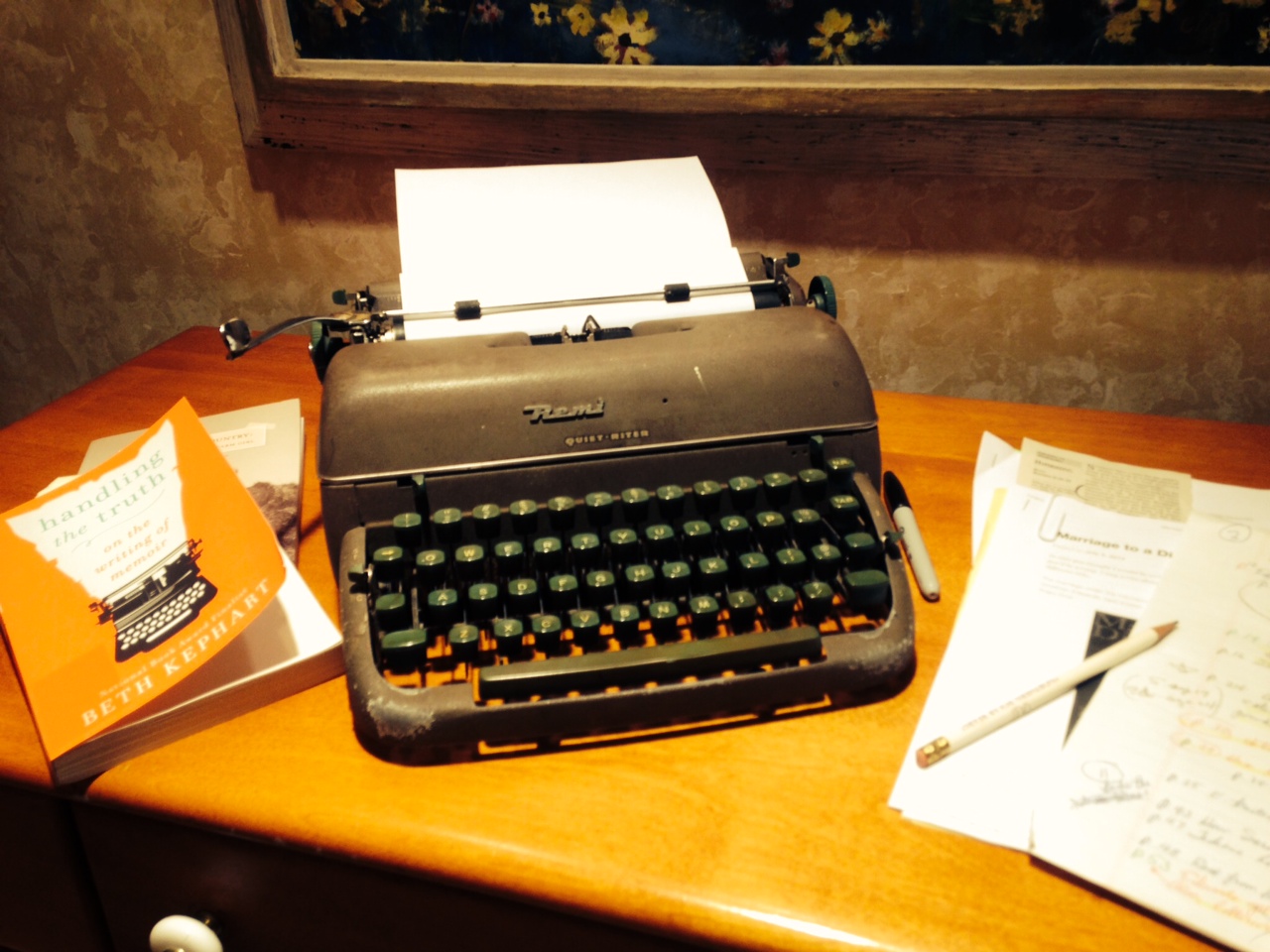
Like her, when I get up in the morning I aim to do my best, especially on days I can connect with my friends in the blog world.
Your aim – in the morning?
In retirement? We value your thoughts!
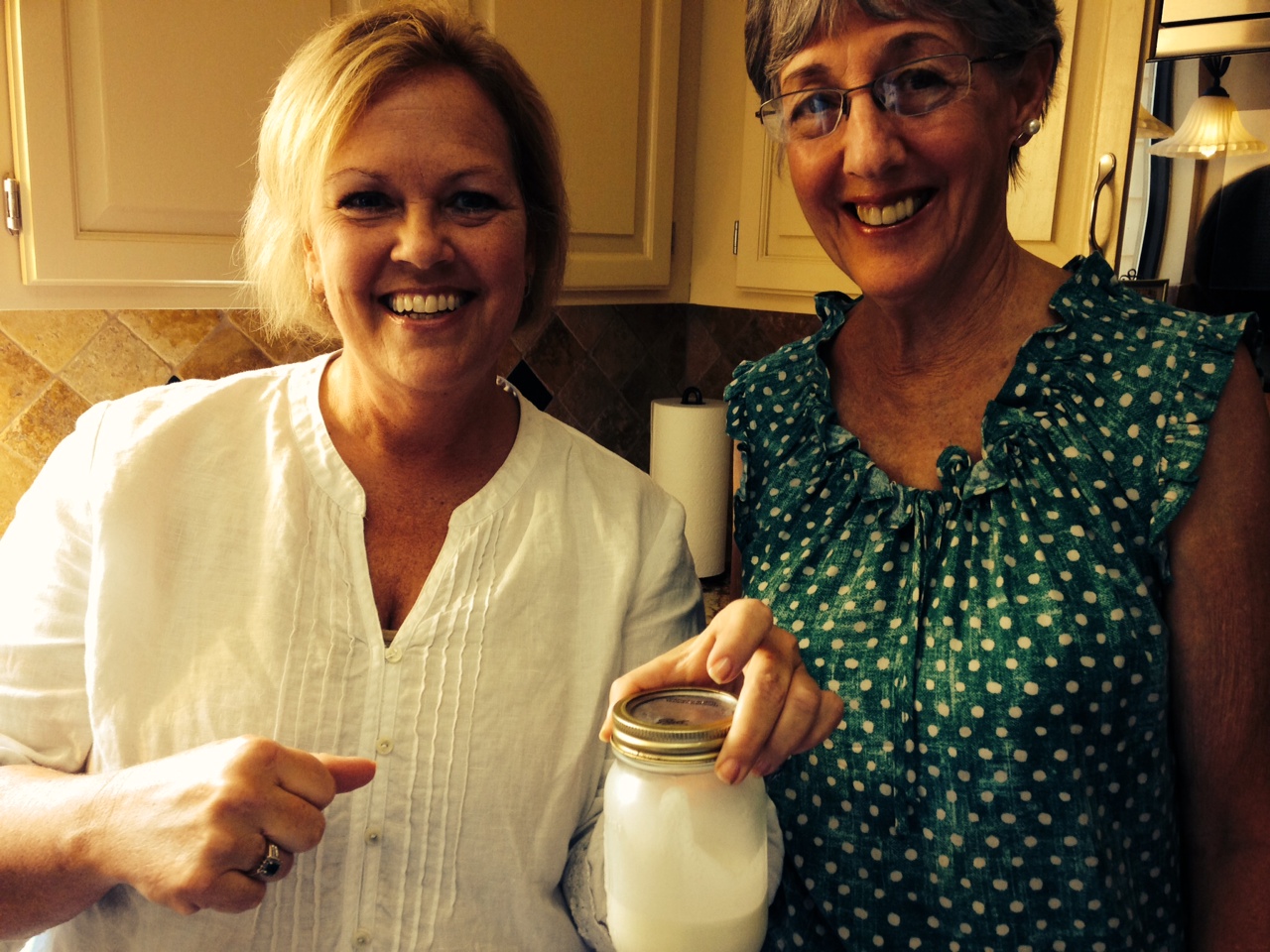
You may remember when I visited Pennsylvania last month we made butter the old-fashioned way, my mother, sister and I shaking cream in a 2-quart jar. This week my Southern friend Carolyn threw a birthday bash that included friends making butter together. We did just that – working in pairs, taking turns shaking, and doing it all to music of the 1950s and 60s.
Here is Carolyn explaining how it’s done. Now girls, “Shake the cream until it curdles into butter. Add a pinch of salt. And then to spice it up a notch, choose a combination of honey, cinnamon, mixed herbs, or garlic salt to give your butter some personality . . . .”

Next the ten of us pair off with pint jars of cream, handing off the jar to our mate when our arms are about to fall off . . .
And away we go!
To the tunes of Let’s Have a Party and All Shook Up, we Shake, Rattle, and Roll, way past curds and whey. Finally, with our butter balls all molded and labeled we sit down to a fancy feast, enhanced by the fruits of our labors.
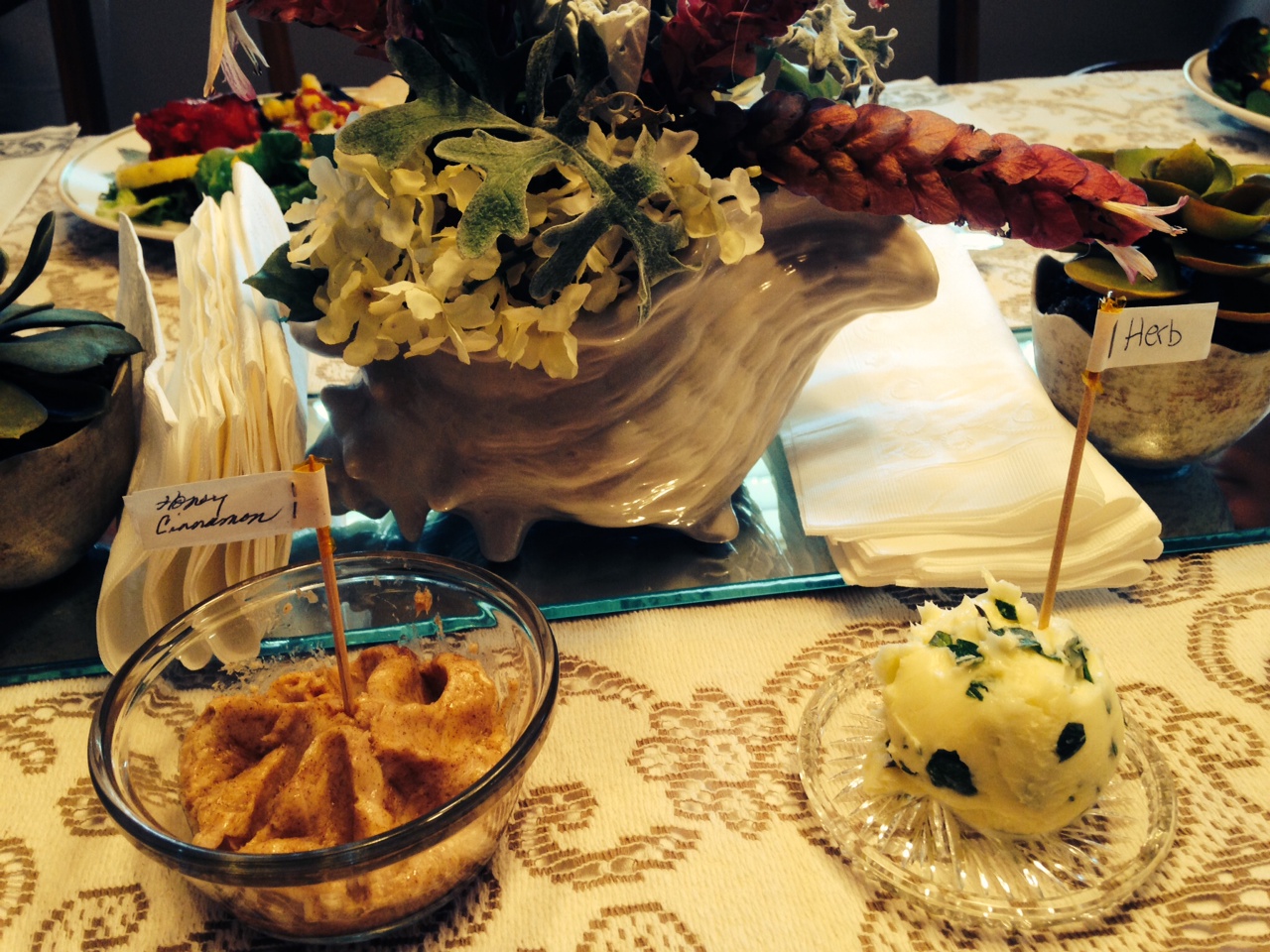
In the 1960s, you could eat anything you wanted, and of course . . . there was no talk about fat and anything like that, and butter and cream were rife. Those were lovely days for gastronomy, I must say. Julia Child
* * *
Have you attended a memorable party, birthday or otherwise? Tell us about it. We’re curious.
Maybe we’ll copy-cat it. You know, imitation is the sincerest form of flattery.
Coming Saturday: The R-Word and You
My policy on cake is pro having it and pro eating it. – Boris Johnson
* * *
July is the birthday month for four our immediate family. If you count our extended family, there are three or four more birthdays this month.
This month I celebrate the birthdays of three of my one and õn-lies:
The Inimitable Mother Ruth Metzler Longenecker

My One and Only Son

My One and Only Grand-Daughter Jenna Skye Dalton

July Birthdays
July birthdays in our family span four generations. Apparently, I tried very hard to become my mother’s first birthday present after her marriage the previous year, having missed being born on her own birthday by just one day. Our son and grand-daughter are birthday presents to me – Joel born two days after my birthday and Jenna preceding my birthday by a mere five days.
Who are your one and ôn-lies – birthdays or otherwise?
Coming tomorrow: Birthday Butter Shake Sequel
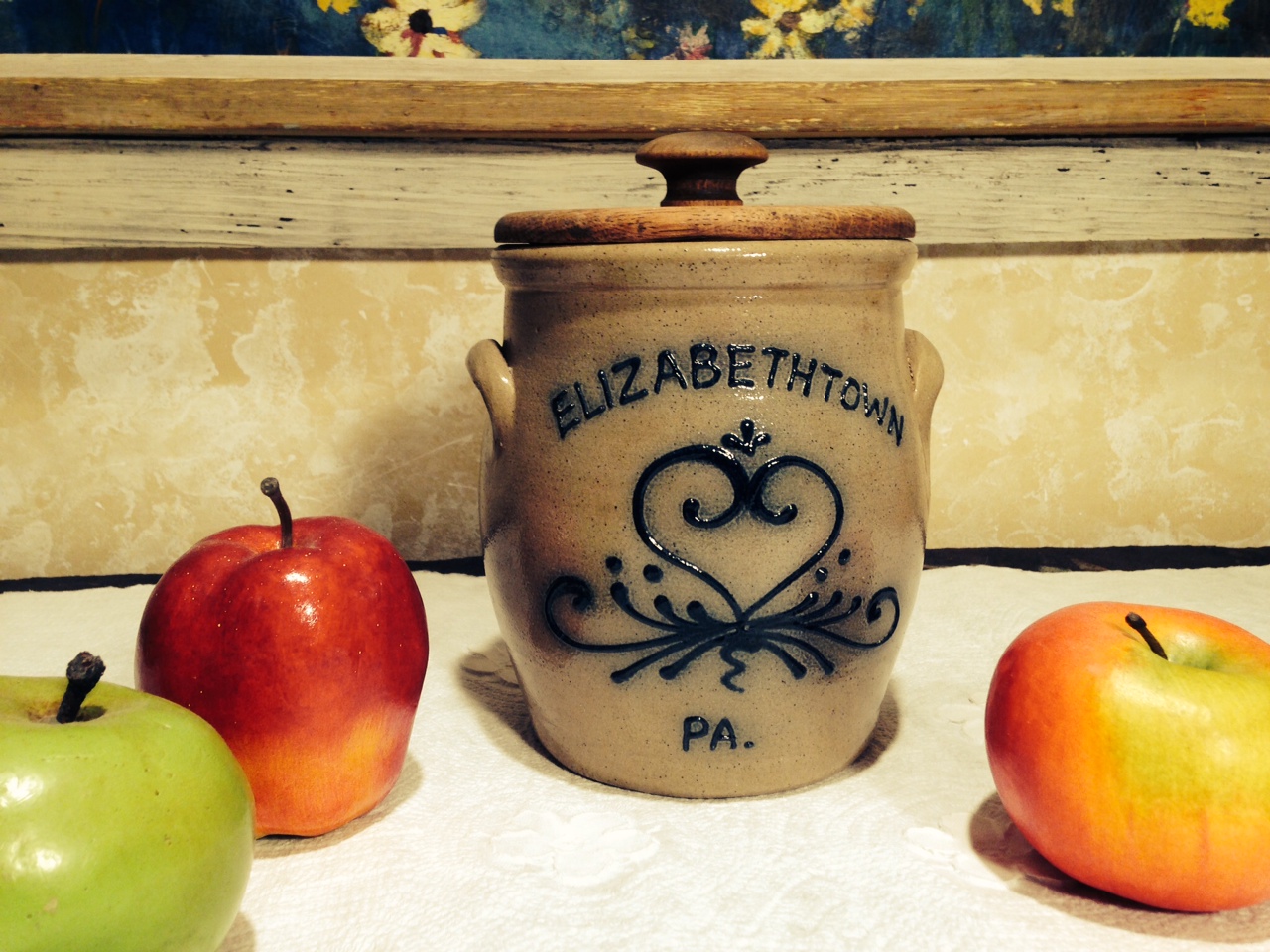
In June, my sister Jan and I visited our Longenecker kin in Elizabethtown and the village of Rheems close by. One morning we took a stroll around the square in E-Town and found that though the town clock was still planted in place, the merchants we knew had disappeared. Dorsheimer’s News, Bishop’s Photography, Moose’s Five & Ten, The David Martin Store, and Zarfoss Hardware had changed into something else entirely: a bakery, a coffee shop, a train specialty store, and further down Market Street, an antique shop about to open.
These signs caught our eyes at the opening-soon antique shop:


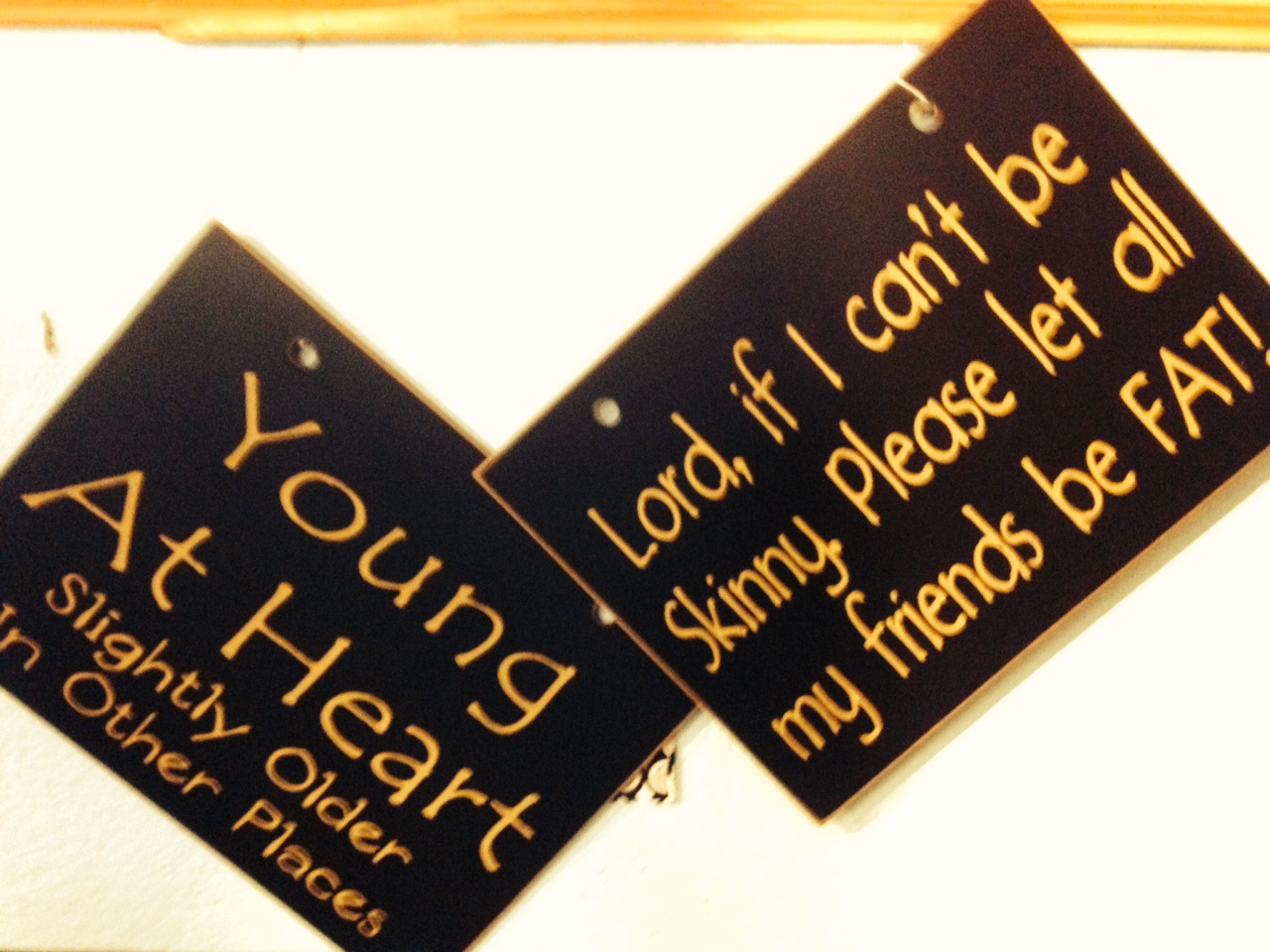
Next we visited The Shoppes on Market, brim full of signs and mottoes for sale:


Then we admired the always festive store front of Flowers in the Kitchen Cafe all gussied up for the Fourth of July celebration:

Greek Gus @ Gus’ Keystone Restaurant tweaks his menu to suit Pennsylvania Dutch palates. Dried beef gravy on mashed potatoes, Wenger’s ham loaf, pork and sauerkraut any day, and pig stomach just on Wednesdays. As I snap this photo, one obliging soul obligingly rubs the belly of the greeter.

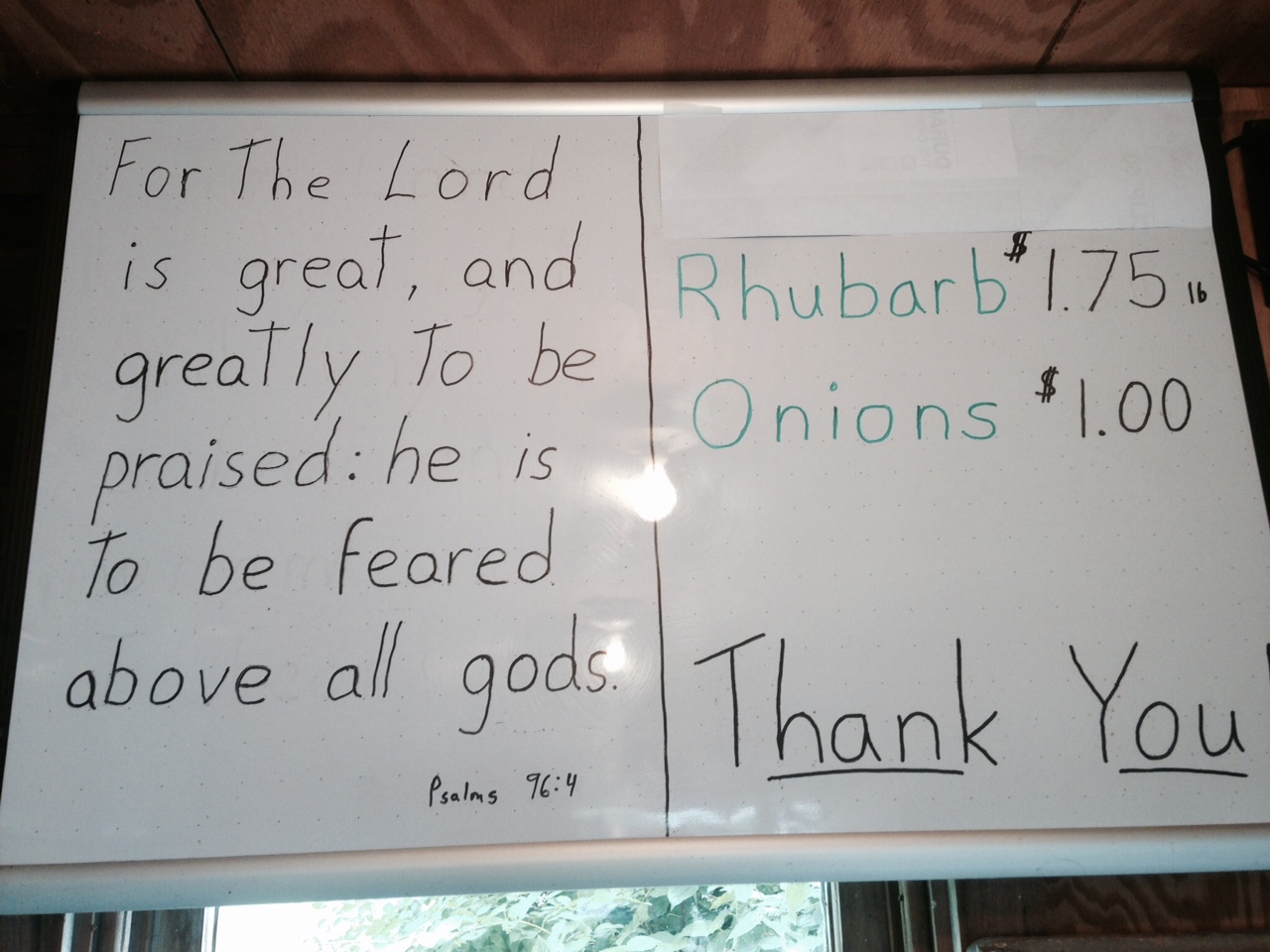
Less than a mile from Bossler’s Mennonite Church, the truck on the Kevin Charles farm delivers fresh bounty from the field. We buy 2 boxes of strawberries, a pint box of sugar peas, and 5-6 stalks of rhubarb. (See recipe for rhubarb sauce below.)

Miniature tractors for sale at Darrenkamp’s Grocery Market near Mt. Joy, PA

* Mom’s Rhubarb Sauce Recipe
Soak 5-6 stalks of fresh rhubarb
in water to “cut the bitterness,” Mom says.
Drain off the water.
Add fresh water.
Cut up stalks into 1/2 inch chunks and bring to a boil.
Add sugar to taste “. . . until it’s sweet enough”
and 2 tablespoons of tapioca “. . . just what you think,” Mom says.
Mixture will thicken as it cools.
Have you returned to your home town recently and found it changed?
How have these changes affected your memory, your emotions?

Birthdays
The great thing about getting older is that you don’t lose all the other ages you’ve been. – Madeleine l’Engle
The secret of genius is to carry the spirit of the child into old age, which means never losing your enthusiasm. – Aldous Huxley
There are years that ask questions and years that answer. – Zora Neal Hurston
It takes a long time to grow young. – Pablo Picasso
Friendship
Throughout our lives, friends enclose us like pairs of parentheses. They shift our boundaries, crater our terrain. They fume through the creaks of our tentative houses, and parts of them always remain . . . .
– Beth Kephart, memoirist and National Book Award nominee.
Friendship is the source of the greatest pleasures, and without friends even the most agreeable pursuits become tedious. – St. Thomas Aquinas
Friends are a reflection of the issues we are working on. – Melody Beattie
Be Yourself
Today you are you! That is truer than true! There is no one alive who is you-er than you! – Dr. Seuss
Do not free a camel of the burden of his hump; you may be freeing him from being a camel. – Gilbert K. Chesterton

Humor
Some of us suffer from a debilitating mental disorder called irony deficiency. Seeing a doctor won’t help, but seeing a paradox will.” – Swami Beyondananda
Yesterday’s the past, tomorrow’s the future, but today is a gift. That’s why it is called the present. – Bill Keane, comic strip creator “The Family Circus”
And a Question:
Why should the aged eagle stretch its wings? – T. S. Eliot
Your answer: _ _ _ _ _ _ _ _ _ _ _ !
I look forward to your response and to your musings on anything else that strikes your fancy. While you’re at it, why not add a quote too. The humor section could use some beefing up. 🙂
Thank you.
We have to try it again. Here’s another shirt,” Jane said as she plucked one of Dad’s blue work shirts out of a plastic bag full of shirts—clean, sprinkled and rolled—all ready to iron. “Start with the yoke,” she directed.
I grabbed the damp shirt out of her hand and flopped it onto the ironing board. “I know where to start,” I huffed. I knew to start with the yoke, then iron the collar, then the left sleeve and cuff, front and back, then the right sleeve and cuff, front and back, then the right front, taking particular care around the buttons . . . and with the button hole placket where it was so easy to iron in wrinkles.
So begins Carol Bodensteiner’s chapter “Laundry Lessons” in her memoir Growing Up Country, a chapter that describes to a tee the washing, drying, folding, sprinkling, and ironing of laundry, chores that were also observed in the Longenecker family.
Mother’s work week was regulated by the pendulum of ritual. Certain tasks were done on certain days in her 1950s household. If it was Monday, she washed clothes, on Tuesday she ironed them, and so on through the week to Friday, the big cleaning day.
Her wringer washer and a rinse tub was pulled out to the middle of the “washhouse,” a room next to the kitchen every Monday. Sometimes I helped by feeding clothes from the rinse tub into the washer wringer, a tricky task for a child. At least once I got my arm caught in the wringer. Of course, my screams and yells summoned Mother to fly out of the kitchen, bang on the release apparatus to make the two rollers fly apart. After the fright and the pain subsided, I was amazed my arm wasn’t as flat as a paper doll’s.
When I was tall enough to reach the clothes line, I hung up wash clothes, towels, shirts, and dresses, instructed to “hide” underwear in one of the inner lines so neighbors wouldn’t see. To this day, if there is a sunny day with a breeze in Florida, I hang sheets out to dry.

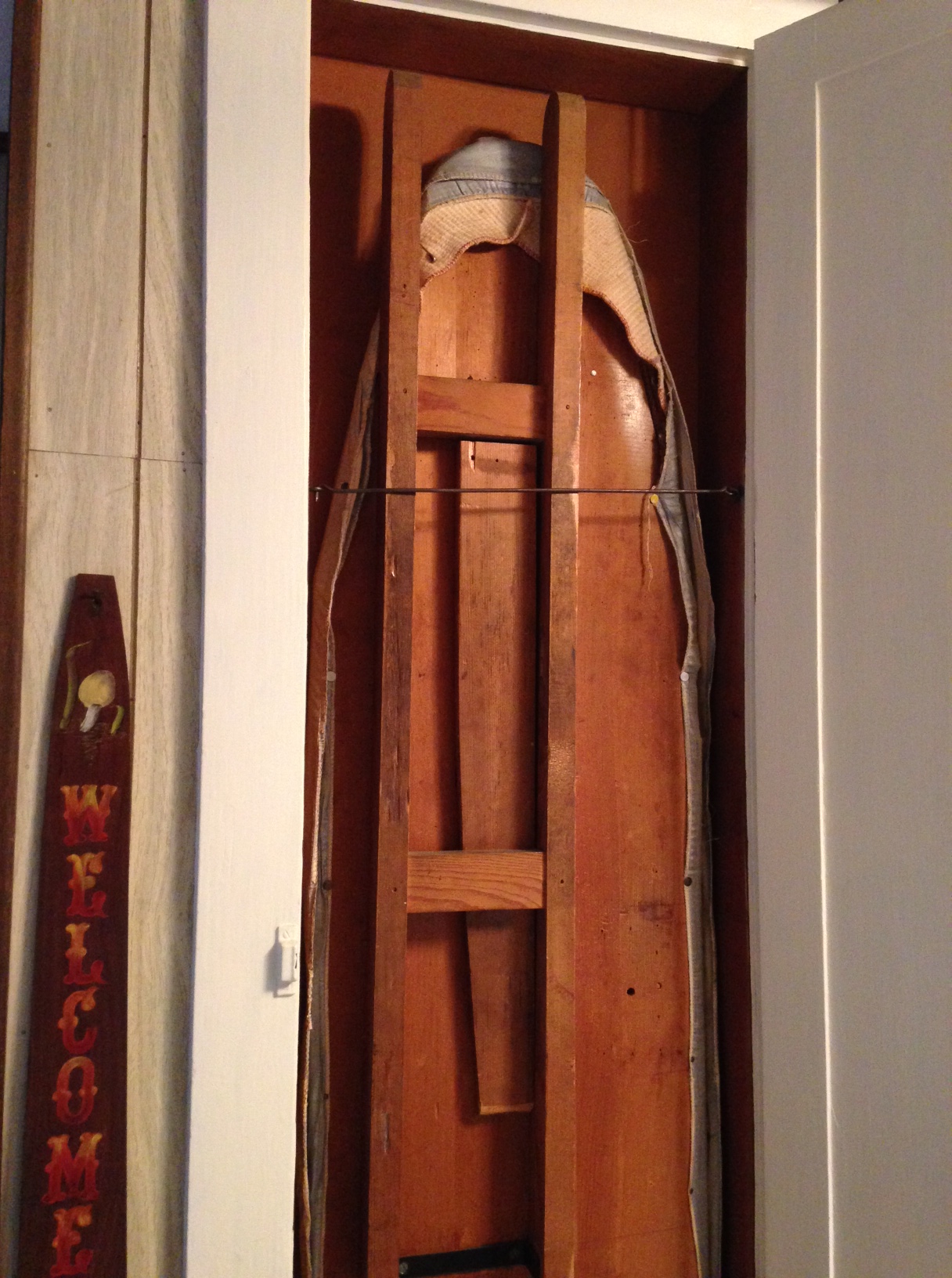
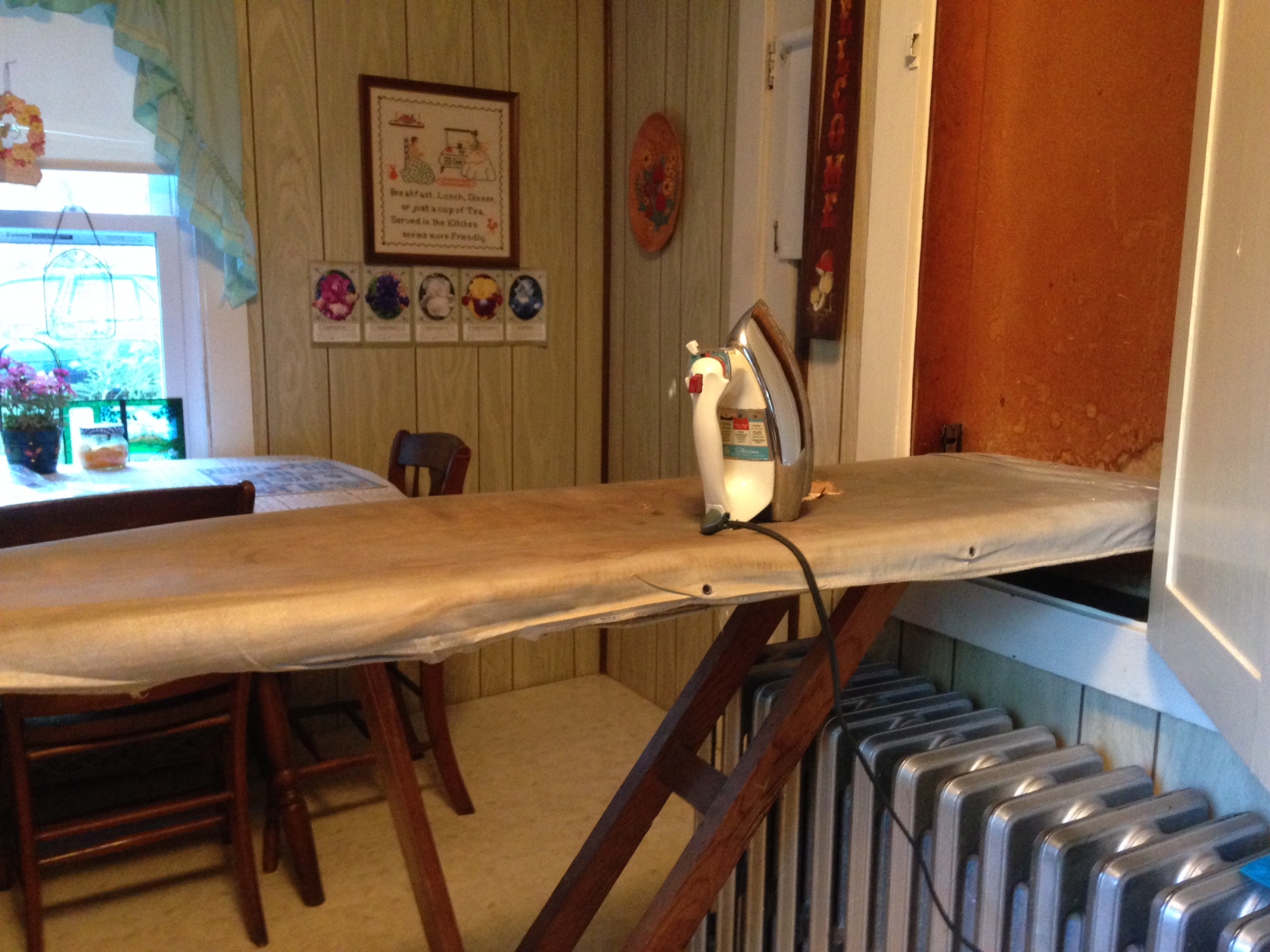
On Tuesdays, Mom pulled the ironing board out of the wall, set up the iron and away I went, attacking first the easy stuff like hankies. I nourished my sense of order and accomplishment letting the point of the heavy, hot iron smooth out all the wrinkles in the garments that followed: school blouses and skirts, finally graduating to Daddy’s white, starched Sunday shirts.
We never ironed sheets though one Mennonite woman we knew, Pearl Longenecker, sat down (probably on Tuesdays too) in front of her ironer, a white appliance shaped like a miniature piano, with a hot roller that smoothed each crease in her sheets and pillow cases, pressing them into lovely squares and rectangles to fit her closet space.
Grandma Longenecker’s ritual matched our own though it took place on her back porch. Like Colonial American women before her, she made her own soap cooking together grease and lye in a big metal tub, stirring the whole mess as it boiled. Though the smell was pungent and slightly disagreeable, Grandma smiled as she cut the congealed mixture into squares and rectangles, knowing the grease and grime would be erased from her laundry on wash day. If there were spots that wouldn’t come out with lye soap, she spread the stained garment, usually white, on the grass because she was sure “the sun will draw it out.” And it usually did!

Share your laundry rituals, past or present. Something historical–or hysterical!

Sarah’s Flair for House-keeping
She was the kind of woman who took the trouble to tie her hair with a ribbon for breakfast when many wives came down tousled; who spent an extra minute to stamp a design on a block of home-churned butter; who knew how to give a flourish to simple dishes with parsley, spearmint or sage, all grown in a square of herbs by the kitchen door; who, when she had a bowl of peas to shell, would take it out into the sunshine in the garden. She put in day lilies, hollyhocks, pansies, pinks–the flowers women loved to plant on the frontier, for it gave them a sense of putting down roots. (31)
Reviewer Jennifer Lee muses further on Sarah’s homey housekeeping, efficiency tempered by composure:
She knew how to keep a house clean at its vitals, without stuffy cupboards left unaired or parlors sealed off. The house was open, used, full of clues that the family living in it had vivid interests. Books were left on tables, actually being read, not used as parlor props. There would be needlepoint on a rack by a sunny window and a lute in a corner. Esther, singing, might be putting up a hem for Sukey [Susannah] while a boy did his Latin lesson. It was the opposite of the kind of house where things were preserved in mothballs in locked boxed. Its ambience was of windows flung open, of easy access.
Key to Harmony in Their Uncommon Union
Contrary to popular belief, the author of the fiery sermon “Sinners in the Hands of an Angry God” observed quiet passion in the pulpit but also preached on grace and redemption. And he treated Sarah “as a fully mature being, as a person whose conversation entertained him, whose spirit nourished his own religious life, whose presence gave him repose.” (35) Likewise, Sarah “let him be sure of her steady love, and then freed him to think.” (66)
A woman of charm, practicality and tact, Sarah like her mate was strong as iron, realizing that “she had chosen to marry the sort of man who did not give in when he believed a matter of deep principle was at stake.” (112)

Edwards’ Parting Words to Sarah
Remembering the love of his life, the charming but stalwart Sarah, who wore a “pea-green satin brocade with a bold pattern” to their wedding (24), Jonathan Edwards spoke these words “not about heaven or hell, or about books or theories.” He spoke of Sarah:
Give my kindest love to my dear wife, and tell her that the uncommon union which has so long subsisted between us has been of such a nature as I trust is spiritual and therefore will continue forever. (201)
* * *
Coming next: Laundry at the Longeneckers
In case you thought I would be writing an exposé about my difficult marriage to artist Cliff, you’d be wrong. I may write about my own marriage at some point, but it would have a different title.
The marriage under the microscope is that of Sarah Edwards to the famous colonial theologian, Jonathan Edwards, best known for his fire-and-brimstone-sermon, “Sinners in the Hands of an Angry God.”

You may surmise that the title comes from the mouth of a fed-up wife to her biographer. However, the book is Elisabeth Dodd’s commentary on the unique union of Jonathan & Sarah Edwards often using primary sources like diaries and letters to show the personal, human side of this towering figure of faith. The blurb from Amazon touts this 1971 classic on the domestic life of Sarah and Jonathan Edwards, the most famous theologian of colonial America, as a “tempting blend of family guidance, sociological study, . . . and devotionally-oriented American historical biography.”
According to Dodds, Jonathan was a “moody, socially bumbling, and very shy young man of twenty” already a college graduate and professor at Yale, when he first met the vibrant thirteen-year-old Sarah, who had “burnished manners, and skilled at small talk.” Completely smitten by Sarah, Edwards
. . . took to walking past her her house at night for a glimpse of a candle flickering behind an upstairs shutter. When a boat came into Long Wharf with a cargo from England, he would manage to be around as it was unloaded. Almost every ship from England brought a box for the Pierreponts, and there was a chance that James [Pierrepont] would bring a daughter down with him as he checked his orders […]. Edwards even tried to improve his social dexterity, and admonished himself, “Have lately erred, in not allowing time enough for conversation. (16)
Both avid readers and nature lovers, Jonathan and Sarah married and raised a family of eleven children, in whose education both parents were heavily invested. At the end of the day this firebrand preacher and proponent of the Great Awakening of the eighteenth century, took off his jacket and wig and, smoking his pipe, devoted a full hour to his children and took them on trips with him individually.
What about Sarah though? It’s true, when he wasn’t preaching, Edwards was usually holed up with his books, but he often “read aloud to her from his skull-cracking sessions in his study,” recognizing her as his intellectual partner. (164) And Sarah knew he would reserve time for her alone away from the house, often spent horse-back riding.
Why is this Puritan Preacher called difficult then, as the book’s title would suggest? Actually, I get the impression he was more eccentric than harsh, more odd than obstinate at home as this quote suggests:
Edwards was less than helpful as a host, for he was still a light eater and would often finish his meal before the others did. He would then slip out to his study, returning to the table only when he was alerted that the others had finished and he was needed to preside over the grace which was always said at the end of meals as well as at the beginning. (56)
Peculiar in his eating habits, Edwards was also either eccentric or just being practical in recording his sermon notes. “He kept old bills and shopping lists, stitching them together into handmade notebooks in which he copied out his sermons on the unused side of the papers. Because his sermons were saved, we have a record of the everyday details of his family’s life together.” (31)
One reviewer comments that “Suffering was a part of Sarah’s life, too. Her husband’s brilliant mind and heart were never adequately recognized until shortly before his death. An insane man once spread false accusations about him.” Their teenage daughter Mary died of tuberculosis. Money was sometimes scarce.
Sarah herself went through a short period of mental breakdown, “nerves stretches like an over-tuned viola.” (72) Her support and comfort, Edwards persuaded her to take a trip to Boston with him, taking her away from the fish-bowl of the parish and the constant demands as mother and hostess to a steady stream of visiting preachers.
Nevertheless, Sarah herself a woman of heart, intellect and purpose maintained a contented home, a home that produced healthy, well-balanced children all of whom carried on the genius of their parents. As author Dodds implies, a trust in the living God runs as a common thread throughout Sarah’s life story, giving her strength to carry on.
Part II will answer the questions:
1. What kind of house-keeper was Sarah?
2. Why was their union called uncommon?
3. What were Edwards’ parting words to his wife?
Do these details about the Edwards’ marriage surprise you?
Is there an “uncommon union” in your family’s past? Your own history?
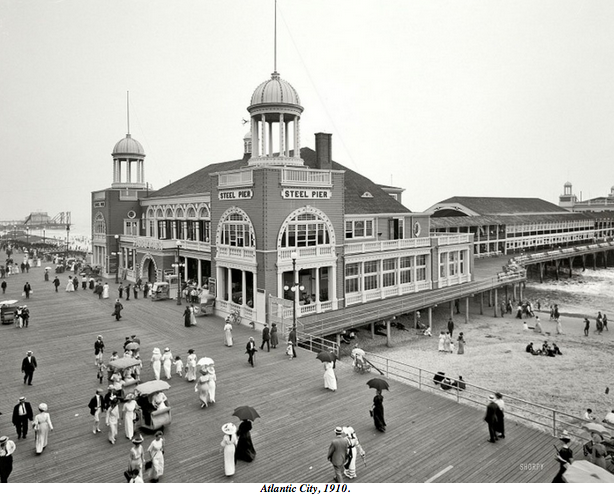
Atlantic City, New Jersey was the beach mecca for vacationers on the East Coast in the early 1900s. Still dressed in fancy Victorian formality, vacationers caught the salt air as they strolled along the famous board-walk at the Steer Pier, a combination theatre and amusement park: “Rain or Shine … There’s Always a Good Show on Steel Pier” the saying goes. But for most Mennonites, the Steel Pier was an elegant building to ogle only. The theatre was worldly and therefore strictly forbidden by church rules.
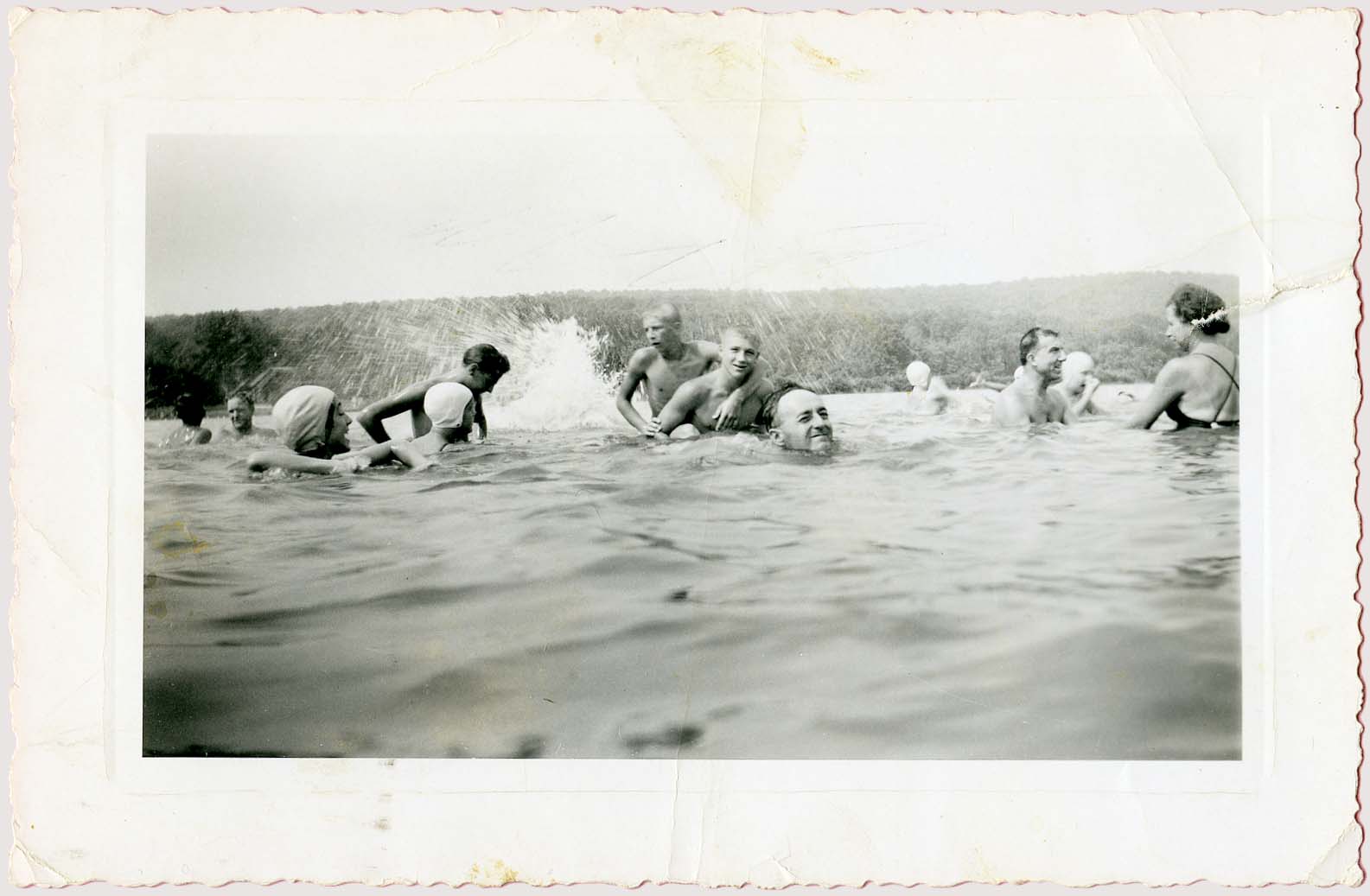
But Mennonite families liked the ocean, including my own. Many summers Daddy took Mother and the family to Atlantic City or Ocean City, New Jersey for a day. Mother just loved the water. From the time she pulled on her white latex bathing cap over her bun and donned her black, satin bathing suit with a fluffy skirt, she was bobbing up and down in tune with the waves.
Daddy in his maroon, scratchy-wool, full-body suit was usually at the shore line yelling to her, “Waaatch ooouut for the un-der-tow!” By the end of the day, he was sun-burned and out of sorts, insisting on taking his thirsty, sandy-toed family straight home, a 3-hour drive. In spite of our protests, there was no stopping for a meal let alone an over-night stay in a motel. Daddy was much too frugal for that. Yet he’d dutifully come back for more next year.
Uncle Leroy and Aunt Clara liked visits to Atlantic City too. I don’t remember them in bathing suits, but they liked riding the bicycle built for two on the boardwalk.

And so did my parents!

On a Bicycle Built for Two . . .
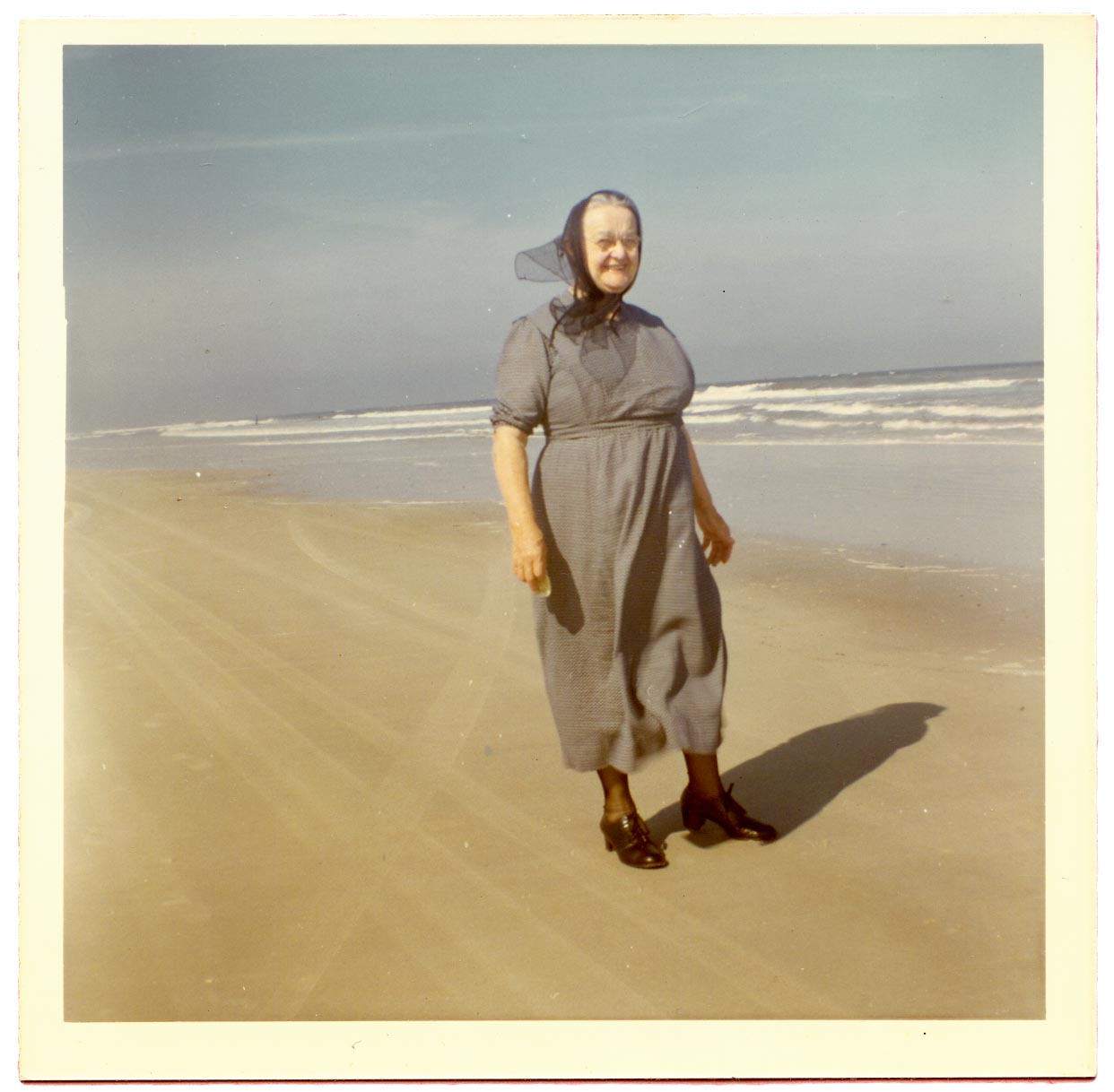
When Grandma Longenecker came to Florida the year our daughter Crista was born, she strolled Jacksonville Beach with plenty of sun-protection: black bandanna on top of her covering, caped dress, black stockings and black-heeled shoes, apparently enjoying herself.
What family vacations stand out as memorable, past or recent? The beach, the mountains, or some place else?
* * *
Coming next: Marriage to a Difficult Man: Parts I and II

 Plain and Fancy