Remember punching out valentine cards that came 8-10 to a page and addressing them to send to your classmates? Back then the do-it-yourself craze hadn’t caught on in the Valentine’s Day department. A least, not at Rheems Elementary School. Though we may have made a special card for Mom in art class, shiny, mass-produced cards were de rigueur for others.
Now websites galore displays steps, even videos, for creating your signature card. Author and Visual artist Kathryn McCullough suggests: “If spending a small fortune on store-bought greeting cards doesn’t appeal to you and you have an old phone book, scissors, and glue, maybe a bottle cap or two (and a bit of imagination), you can create a Valentine that expresses love for both your partner and the planet.” She promises that if you can cut and paste, you can create a card from scratch that looks like this:
My husband Cliff, like Kathryn, is a visual artist and sometimes comes up with hand-made cards, none of which requires a button or a glue gun.
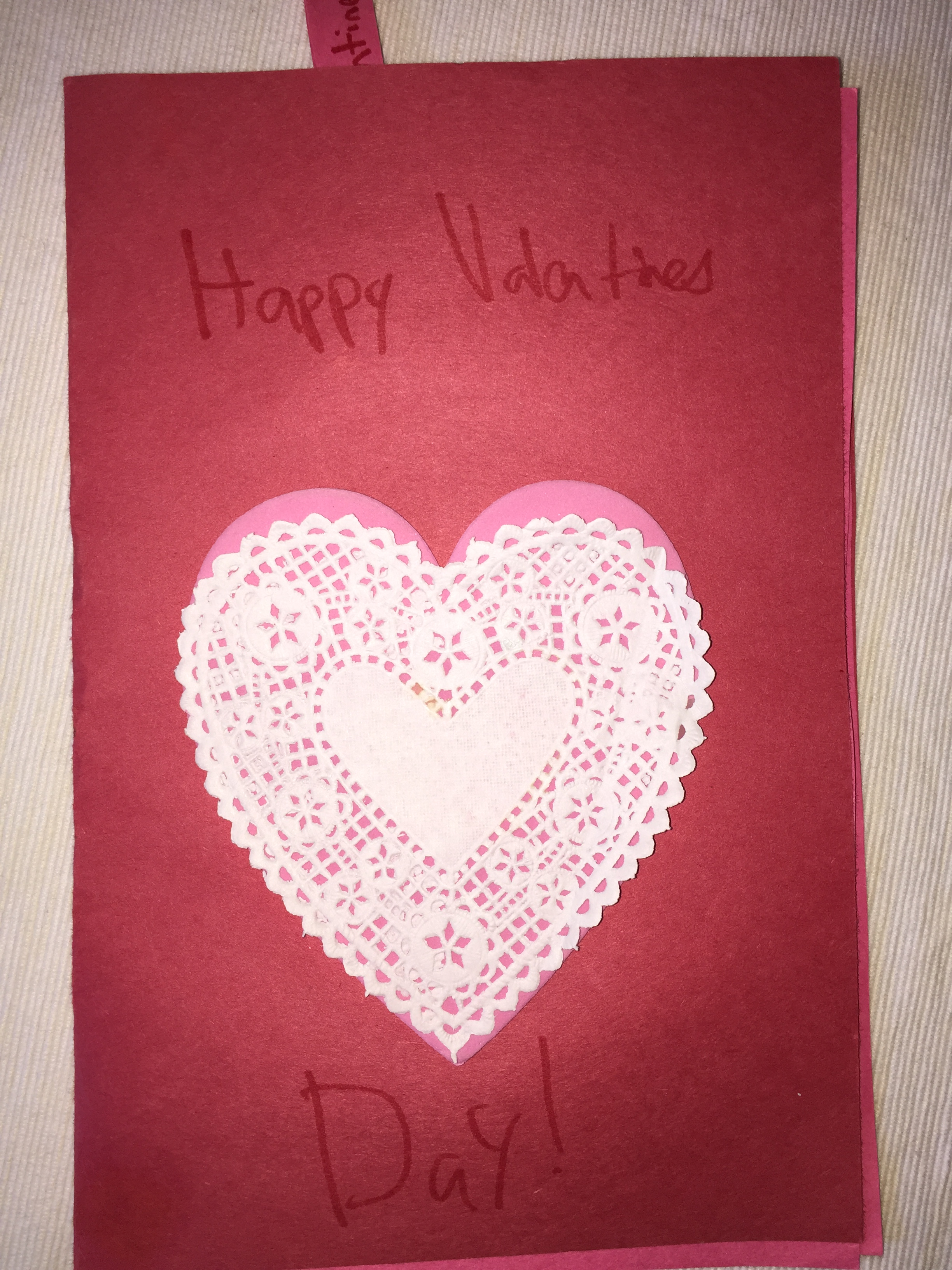
I, on the other hand, buy my valentines in a store. Once though I got up the nerve to make my own card, raiding my sewing closet and cutting up old cards, fashioning lace and felt paper into my version of a DIY Valentine. Here is the result, a little worse for the wear:
Kids create spontaneously and usually don’t want to bother with bottle caps, lace or fancy paper. Crayons, construction paper and doily hearts will do too.
Jenna’s ValentinePatrick’s card
Did you ever create a valentine from trash? When was the last time you made (or received) a home-made valentine?
My high school yearbook The Elizabethan sports such 3-syllable last names as Aschendorf, Biesecker, Espenshade, Hippensteel, Oxenrider, and Zimmerman. In Lancaster County, Pennsylvania any roster of names would be heavily represented by families of German-Swiss origin.
Yes, there were Smiths, McLaughlins, and Youngs, but the Pennsylvania Dutch names far outnumbered them. On class rosters there were no names from the Cyrillic alphabet like Lyashchenko or like Chang, formed of Asian characters. Not a one. Yet as our world has grown more culturally diverse, so have the class rosters and phone directories of small towns like Elizabethtown, Pennsylvania.
In the January 6, 2015 edition of Performance Today, Fred Child referred to a list of musicians with jaw-breaking names. You can find the complete list on their Facebook page, but here are a few choice ones:
Composer Carl Ditters von Dittersdorf
Conductor Hans Knappertsbusch
Poet Walther von der Vogelweide
Composer Einojuhani Rautavaara
Composer Heinrich Ignaz Franz von Biber
Conductor Gennady Rozhdestvensky
Musicologist Cuthbert Girdlestone
Tenor Wolfgang Windgassen
Ditters von Dittersdorf rolls most trippingly off the tongue as does the very onomatopoetic Windgassen. Imagine a tenor named Wind-gassen. Or even a wood-wind player with such a name!
My journal of our trip to the English countryside records place names that also tickle the tongue and the funny-bone. As I admonished my husband/driver to keep left while driving with a right-sided steering wheel, cute towns whizzed by with no-kidding names like Gigglewick, Blubberhouse, Wigglesworth, Nook, Cow Brow, Button Moon, and Hutton Roof. No, I didn’t make these up! There was even a Curl Up and Dye Hair Salon.
In Scotland menus feature haggis (chopped sheep hearts, livers, mixed with oats and spices), bashed neeps (turnips), and champit tatties (mashed potatoes). In Ireland we encountered the quaint village of Ballyvaughan, and Cairig Beag, a Bed & Breakfast not far from the town of Sneem with houses colored bright orange, Kelly green, and sunny yellow.
What’s in a name? that which we call a rose / By any other name would smell as sweet . . . .
In Act II of Romeo and Juliet, Shakespeare writes of the star-crossed lovers who bear the names of their feuding families, Montague and Capulet, implying that the names of things [people] do not affect who they really are or their love for each other.
“A rose is a rose is a rose . . . ” Gertrude Stein
Actually, in the expression “a rose is a rose is a rose,” Ms. Stein was referring to the English painter Sir Francis Rose, not to the flower as is commonly supposed. Now the phrase has come to define anything that is incapable of explanation.
What place or people names strike you as fanciful or interesting in another way?
I love words! Share some of yours.
Bonus: As it happens, this week memoirist/friend Shirley Showalter blogs on the power of naming as a way to find one’s vocation and calling. Read about it here.
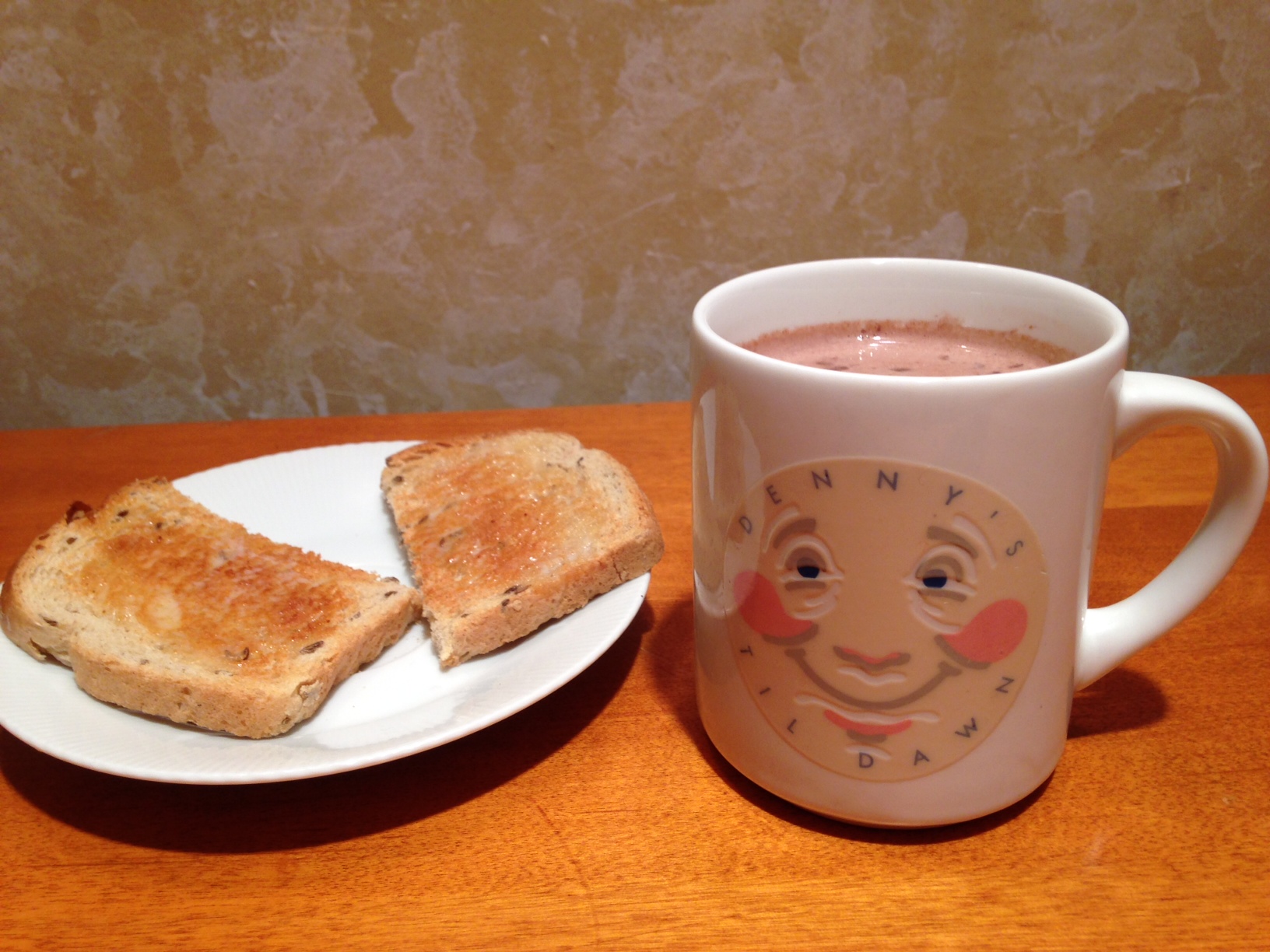
What is your favorite warm beverage? It’s February, and by now you have tweaked the art of finding comfort in a cup. Is it tea, coffee or a hot toddy?
Maybe it’s hot chocolate!
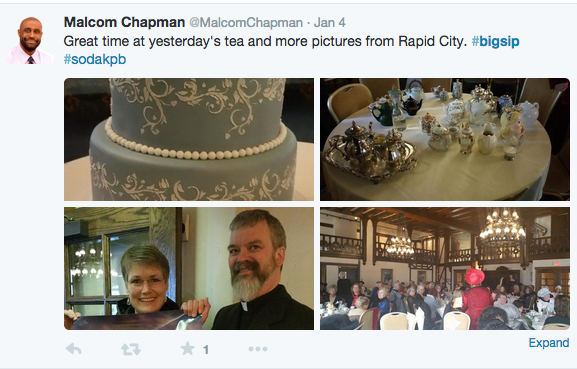
In promoting the Fifth Season of Downton Abbey, PBS used tea to tantalize. Twitter was chirping with the hashtag #BIGsip and illustrations of how to party like the British:
The tea at these fancy gatherings was probably brewed through ceramic or metal sieves. I doubt there was a tea bag in sight!
Once I was invited to a tea party at my professor’s home. There was a bold disclaimer on the invitation: Tea will NOT be served. Instead, there were other fanciful beverages, none of which was served warm. Twice I invited faculty to my home, and we actually had flavored tea – and coffee.
So, back to the question: What is your favorite warm beverage (and/or treat) this time of year? Spread some sugar, honey, or . . . .
A woman is like a tea bag ~ you can’t tell how strong she is until you put her in hot water. Eleanor Roosevelt
Bonus: RANDOM ACTS OF COFFEE! Coffee drinker pays it forward ordering coffee for the next 500 (gasp!) customers at Canadian coffee shop.Read all about ithere!
Do you have winter fun – sledding, tobogganing, ice skating, even skiing? Maybe now it’s a vicarious experience with kids or grandkids. I wrote about it last year in another post. Since then, I’ve paged through albums to find photos of our Floridian family having fun in the ice and snow.
In winter, skating was even better, the whole body thrown into orbit. Ice-skating was my sport, the only athletic passion of my piano-playing, book-reading, indoor girlhood: A northern pleasure, a cold-weather art form (129).
SKATING
Grandson Ian wobbly at first on cold ice on a warm day in St. Augustine, Florida. Outside temperature was almost 70 degrees, the ice got slushy, maybe a good thing for beginners.
SKIING Gliding, sliding down a hill, that’s what skiing is under the best possible circumstances.
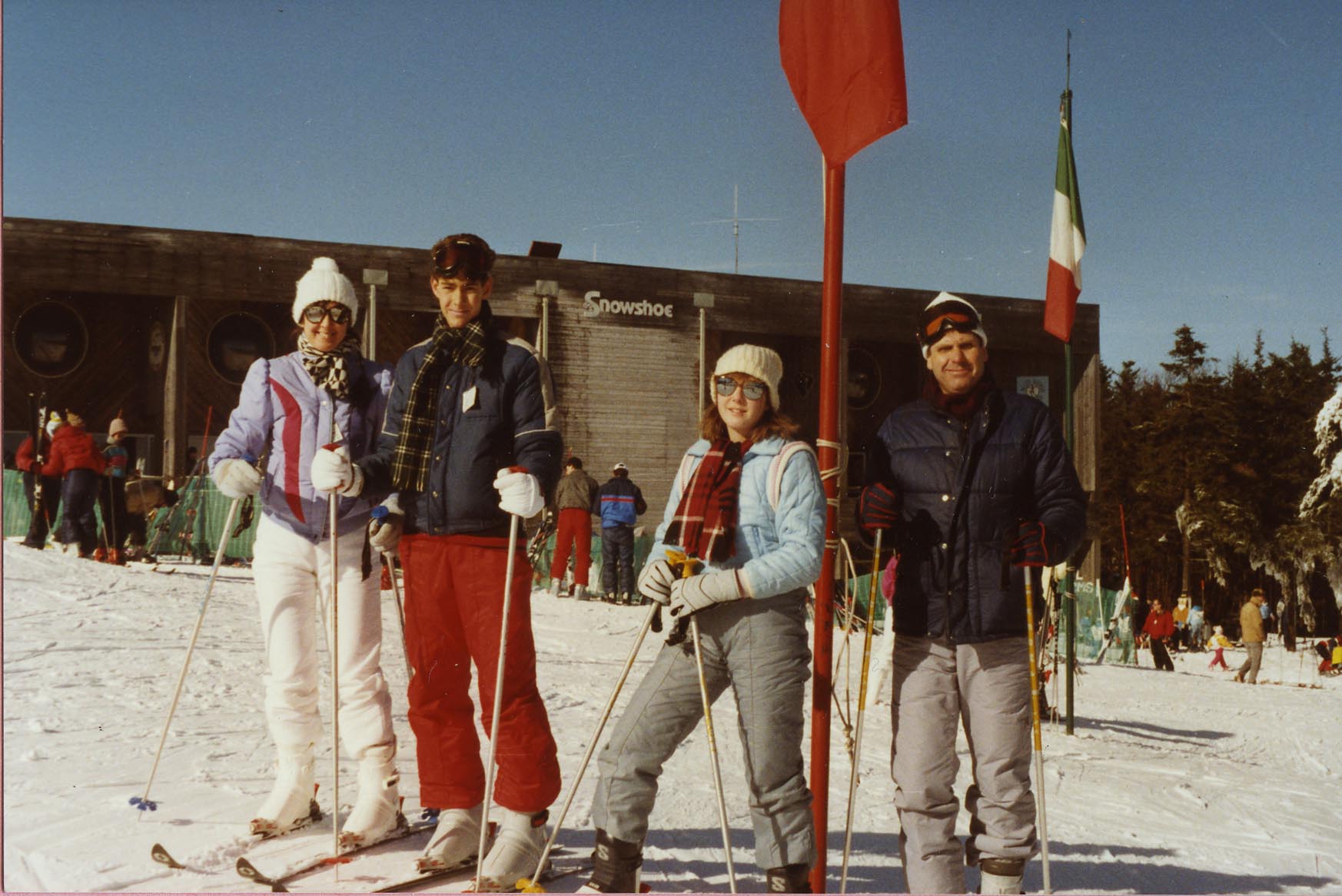
Before they left the nest, Joel and Crista with parents in Snowshoe, WV
What’s so hiliarous?: Helen and Charles Blankenship warming up with us after a cold day on the slopes at Lake Tahoe, California
SNOWFLAKES
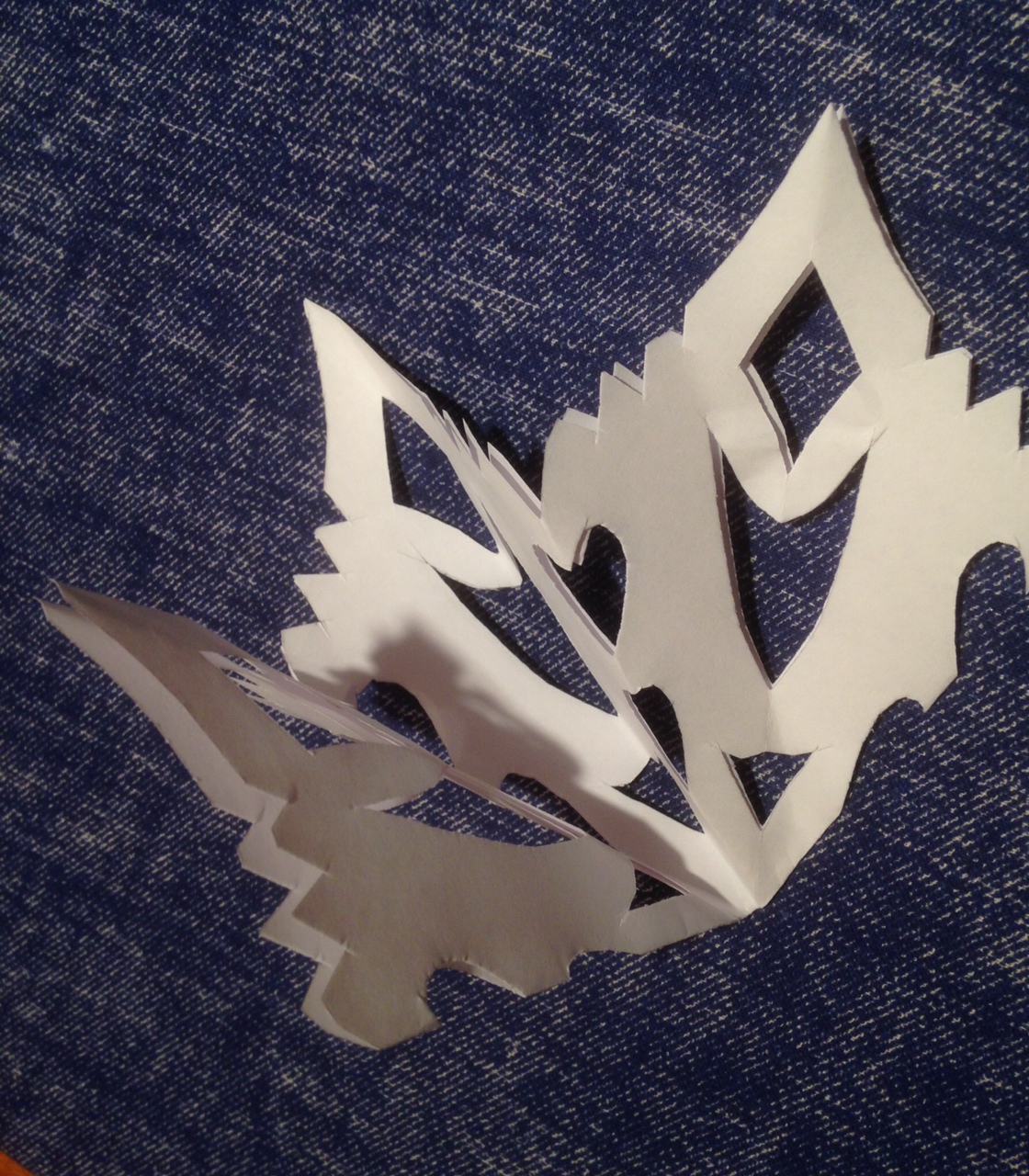
Do you remember cutting out paper snowflakes like this?
For detailed instructions with a video, click here.
Snowflakes make Emily Dickinson want to dance a jig, so she says!
I counted till they danced so
Their slippers leaped the town,
And then I took a pencil
To note the rebels down.
And then they grew so jolly
I did resign the prig,
And ten of my once stately toes
Are marshalled for a jig!
Your turn: What is your winter fun? Sledding, tobogganing, ice skating, even skiing? Maybe now it’s a vicarious experience with kids or grandkids. We’re dying to find out.
January 28, 2014 – It is six months to the day since Mother passed away. I feel melancholy now. Maybe the cold weather has something to do with it, but more and more I miss the warmth of our Saturday morning long-distance phone calls and sitting around her dining room table, the tingly warmth of homemade vegetable soup in my belly.
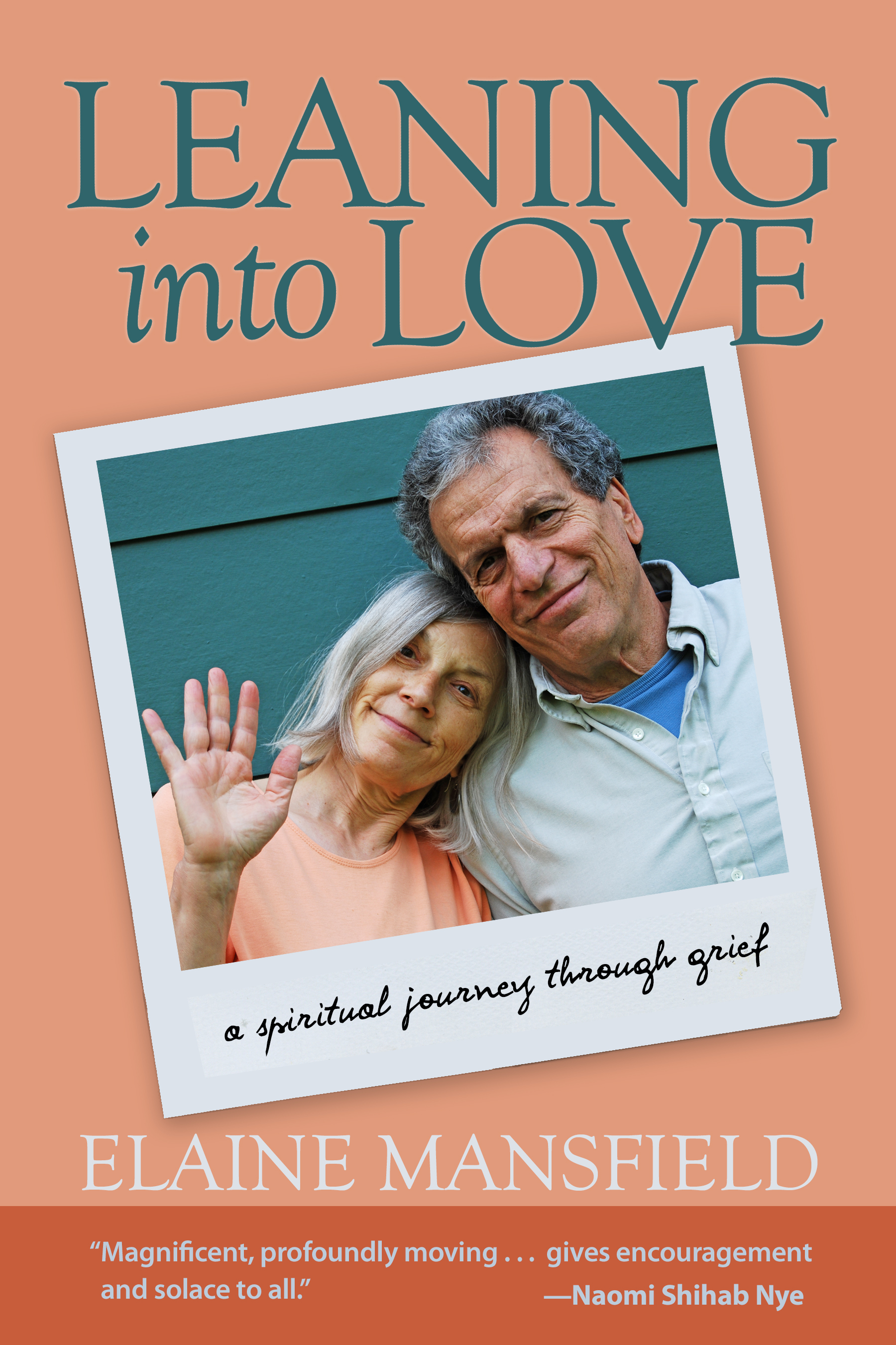
Elaine Mansfield too has experienced loss – of her mother and of her husband both in a 13-month time span. She eloquently records the loss of her husband in a memoir entitled Leaning into Love: A Spiritual Journey through Grief (October 2014)
Elaine and I definitely differ in our world view and philosophy of life, hers based on Jungian psychology and meditation, and mine with a distinctively Christian perspective. Yet pain is pain, and we share the intimate, human experience of grief.
Here is our conversation about Elaine’s unique journey:
MB:How did your mother’s passing in 2007 affect you and Vic?
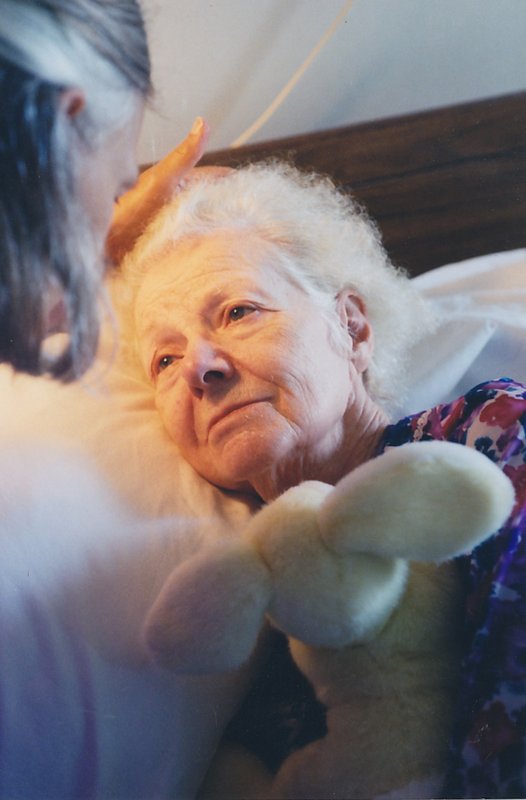
EM: My mom had Alzheimer’s Disease for twelve years. Her body was curled in a fetal position and her eyes were closed. She had been unresponsive for years. She died quietly during a lull in Vic’s cancer treatment, so grieving for my mother merged with anticipatory grief for Vic.
MB:Why did you write Leaning into Love: A Spiritual Journey Through Grief?
EM: At first, I wrote to digest and understand what had happened. When times are rough, I pay attention to life’s lessons. Writing was my way of doing that. During Vic’s illness, I kept journals so I could remember every detail during an emotional time. Five years after his death, my experiences became a book to help others deal with love and loss. I also hoped to create an engaging memoir that would interest any reader.
MB:What is the main theme of your book?
EM: The book is about a strong marriage and the initiation of losing a trusted partner: dissolution of the old order, then a period of confusion and despair, then a slow return to new life and possibility.
MB:In the book you promise your dying husband of 42 years, “I’ll find a way to be all right.” What lies behind this statement?
EM: Vic and I shared every joy, sorrow, and dream. We’d had an intimate relationship since I met him when I was 21. He was concerned about leaving me and concerned about my grief. Even while I did all I could to help him live, I felt determined to find a way to make life work after his death. He was relieved when I said so. Of course, I had no idea how challenging that would be.
MB: Just like in your blog posts, you use poetic language in your book to describe bereavement and your slow recovery. For example, you describe a group of dolphins as “luminous revelations leaping from the great unconscious sea.” What other descriptive lines from the book are you especially proud of?
EM: “Our first kisses taste of tears and the knowledge that our time together is finite.”
“Mostly he sleeps, but when he’s awake, he whispers words of sweet gratitude.”
“Despite my better judgment, hope floats in, ethereal and transient as a feather.”
MB: What will readers learn from the book? What is the take-away?
EM:Everyone loses things they love—people, jobs, homes, health, dreams. It’s natural to grieve and long for what we cherish. I’ve learned that facing our losses and sorrows makes us more realistic and open-hearted human beings. We understand what matters in life and see that everyone suffers. In this way, sorrow leads us to kindness.
MB: Your book attracts readers who have dealt with or are now dealing with loss. What is your best advice to them?
EM: Experiment and find what comforts you: solitude, friends, nature, music, therapy. The smallest rituals helped me. I left flowers at the gravesite and said prayers there. Writing brought me daily comfort.
Watch for small signs of joy and hope. A bird chirping. The first spring flower. A child’s laughter. Grief is part of life. Give yourself time to feel what you feel. Open to grief and let it open your heart to love.
After a career as a health counselor and writer, Elaine’s work has focused on bereavement and loss since her husband’s death in 2008. Elaine facilitates bereavement support groups at Hospicare and Palliative Care Services in Ithaca, NY and writes for the Hospicare newsletter and website. She also writes a weekly blog about the adventures and lessons of life and loss, leads workshops, and lectures on bereavement topics. Her articles have been published in The Healing Muse, Open to Hope, Shambhala Sunspace, KirstyTV, Caring.com, Alzheimers.net, GriefHealing, and elephantjournal.
About Leaning into Love:
“Reading this beautiful memoir of love and loss and triumph felt to me like a sacred journey into the very heart and soul of the courageous woman who writes it.” Marty Tousley of Grief Healing.
“Not only a touching and courageous memoir about love, illness, death and grief, Elaine Mansfield’s Leaning into Love is a manual for healing that offers us the emotional and spiritual tools needed to grow and even flourish through Life’s deepest crises.” Dale Borglum, Living/Dying Project
Remember the days when kisses and hugs displayed affection at the end of hand-written letters? XXX OOO
Then came smiley faces with a circle, two dots for eyes, and curvy mouth, maybe even a dot for the nose. Hugs were shown as parentheses: (((( )))) They still are!
With online communication, showing mad, sad, or glad emotions has become sophisticated, expressed graphically as emoticonswhichcan be divided into three styles, western or European, Asian, and a two-channel style which includes Japanese.When I write an email message, I can choose from these icons shown below. Just hover over the desired icon, click on it, and I can be cool, with glasses, cry, feign innocence, wink, claim my lips are sealed, ask for money, even YELL (last icon).
Facebook has even more choices: Confusion conveyed here!
Some Facebook icons are called stickers. And they are large and sticky! If perchance, you click on one of these, the emoticon swells to a one-inch size, gobbling up your text. I have learned to refrain!
If you want to get really fancy on Facebook, Beep the Meep is available, a fictional alien who appeared in the weekly comic strip Dr. Who Weekly.
If felines are your friends, by all means click on Pusheen the Cat, a roly-poly character in an animated comic series.
Author Angela Ackerman has commented on how writers can use words so they appear as pictures in readers’ minds in her book, The Emotion Thesaurus: A Writer’s Guide to Emotional Expression co-written with Becca Puglisi. The Amazon overview says this about her guide:
One of the biggest problem areas for writers is conveying a character’s emotions to the reader in a unique, compelling way. This book comes to the rescue by highlighting 75 emotions and listing the possible body language cues, thoughts, and visceral responses for each. Using its easy-to-navigate list format, readers can draw inspiration from character cues that range in intensity to match any emotional moment.
In other words, show in graphic detail that your character is angry, don’t announce it, easier said than done.
Blogger A. Piper Burgi has posted more vivid word choice suggestions for writers in a recent blog postentitled Increase Your Emotional Vocabulary.
+ + + + +
What do you think of the emoticon craze online? Is it right down your alley or do you think the icons are goofy or fake?
If you are a writer, what are your secrets to conveying emotion with words?
Bonus: A curious story: The man with a frozen smile (Jonathan Kalb, “Give Me a Smile,” The New Yorker, January 12, 2015)
Coming next: Acquainted with Grief: Author Elaine Mansfield Speaks
Nestled in the marshes east of Brunswick, Georgia, is charming St. Simons Island. Golfers, bicyclers, and fishermen revel in its delights. Fresh Atlantic shrimp were available at the Mullet Bay Cafe during our week-end getaway. Tourists, like us, strolled along the streets of St. Simons village, canopied with centuries-old live oaks.
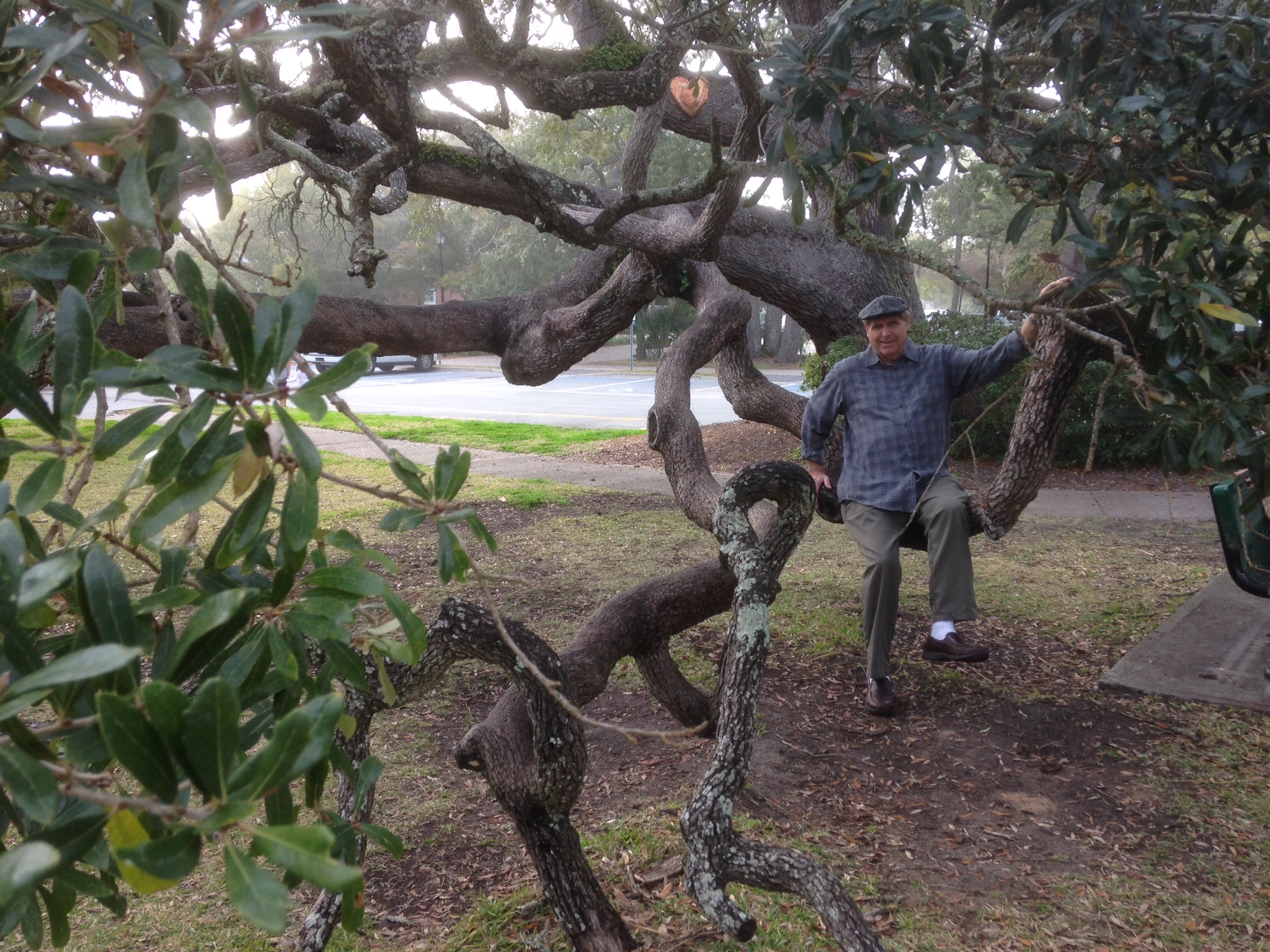
Some of the oaks had mutated into this:
Here the limbs from ancient live oaks gracefully curved downward, touched the soil, forming a self-sustaining tree, and then over the years grew upwards until it grafted into its mother tree, a type of amazing Möbius structure.
Cute shops, one which boasts “Extraordinary Things You Don’t Need,” display books, curios and signs like these:
And for the canine lovers:
If you are crafty, Pane in the Glass is your source for stained glass hobby supplies. You need a week, not just a weekend to explore St. Simons Island.
Away from town, two other attractions grabbed our attention: Fort Frederica, a military town on the colonial Georgia frontier, which defended the settlers from Spanish invaders and Old Frederica Church, also called Christ Episcopal Church, where Charles and John Wesley preached.
In 1961 author Eugenia Price discovered St. Simons Island on a book-signing tour, “In the cemetery for Christ Church, she saw a tombstone for the Reverend Anson Dodge and his two wives.This inspired her to research the area, including history and famous figures. She would spend the remainder of her life writing detailed historical novels set in the American South, many of which were critically acclaimed. Her early works, particularly the “St Simons Trilogy” which consists of the books “The Beloved Invader” (1965), “New Moon Rising” (1969) and “Lighthouse” (1972) were extensively researched and based on real people.”
Finally, we behold a lovely wonder, the signature stained glass window in the church, depicting the original plain structure, which could easily pass for an early Mennonite meetinghouse, without the steeple of course.
Have you visited an historic town recently? A charming town you can recommend for a weekend getaway?
Coming next: Mad, Sad, Glad: Emoticons Show It All
On December 29, author/blogger Joan Rough published a post declaring her optimistic intentions for 2015 and pondering a single word to characterize this new year while contemplating words of wisdom used other years. Some choices she suggested: Believe, Dare, Trust, Patience, Forward. Even the word Intention would be a good star to steer by, she mused.
Other commenters suggested words like Flow and Connection. Thus, Purple Passages for January is constructed from 3 of these words: Dare, Intention, Flow
DARE
“Daring ideas are like chessmen moved forward. They may be beaten, but they may start a winning game.”
― Johann Wolfgang von Goethe
“Somewhere over the rainbow, skies are blue, and the dreams that you dare to dream really do come true.”
― E.Y. Harburg
INTENTION
Any time women come together with a collective intention, it’s a powerful thing. Whether it’s sitting down making a quilt, in a kitchen preparing a meal, in a club reading the same book, or around the table playing cards, or planning a birthday party, when women come together with a collective intention, magic happens.
I learned this, at least, by my experiment; that if one advancesconfidently in the direction of his dreams, and endeavors to live the life which he has imagined, he will meet with a success unexpected in common hours. Henry David Thoreau, Walden
What do you think?
“Just go with the flow” is an expression offered sometimes as advice for tough times. How do you experience “flow” in your life now? How about daring, ― or intending?
Have you picked a guide word for 2015?
* * *
A final word: Trust in the Lord with all your heart; and lean not unto your own understanding. Proverbs 3:5
Coming next: Signs and a Wonder: St. Simons Island
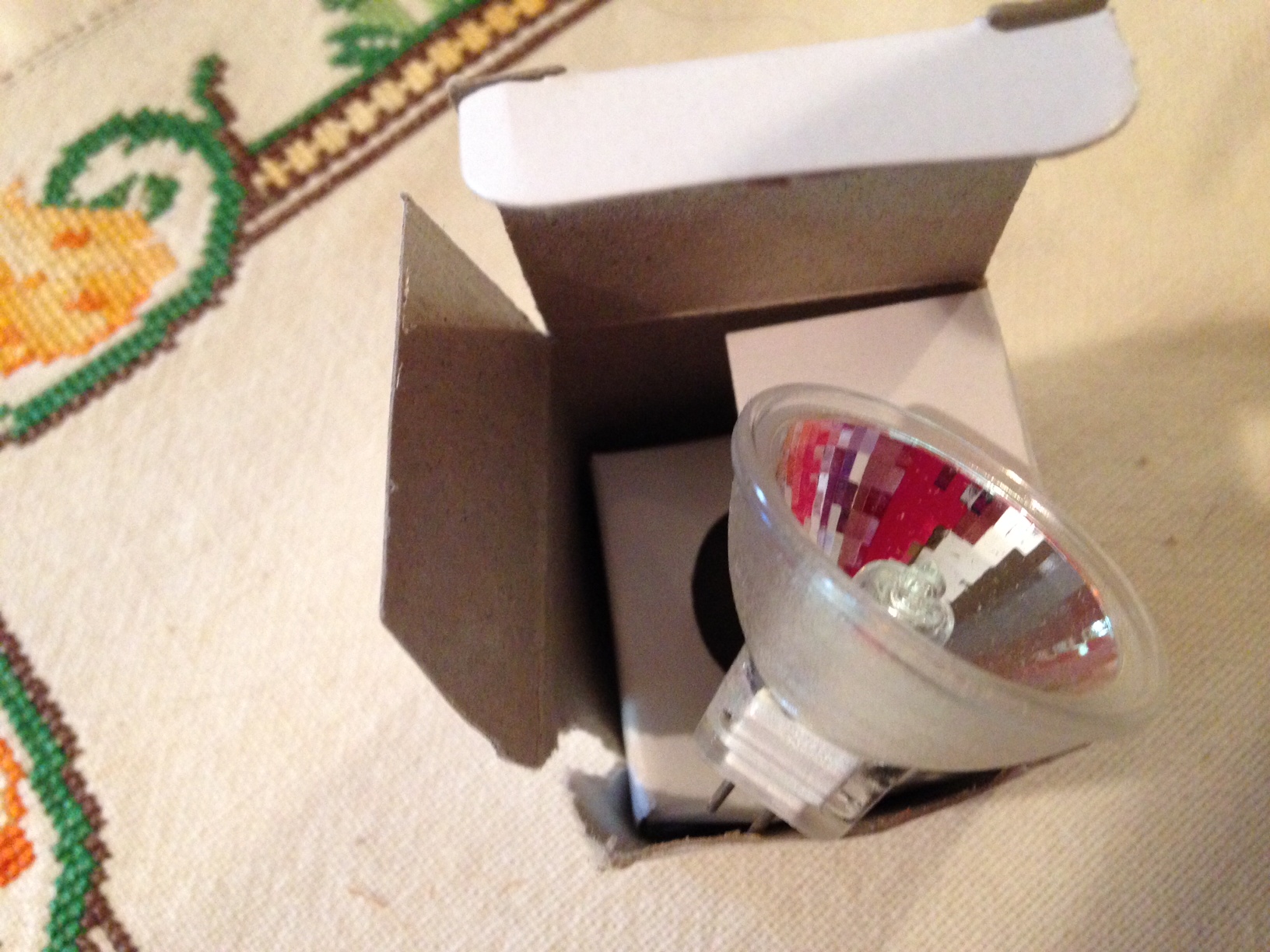
A snapshot of a baby boy dressed as a girl and an old flash bulb. Those are some of the items we find clearing out Mother’s house. Last October my sisters and I began the arduous task of sorting, saving, or recycling the accumulated store of her possessions having lived in the same house for over 73 years. You can read about it here.
Today’s post features snapshots, both photos and artifacts, from both Mother and Daddy with a surprising find at the end.
MOTHER: Some of what I found from Mother could be filed into 3 categories of nurturing:
Feed
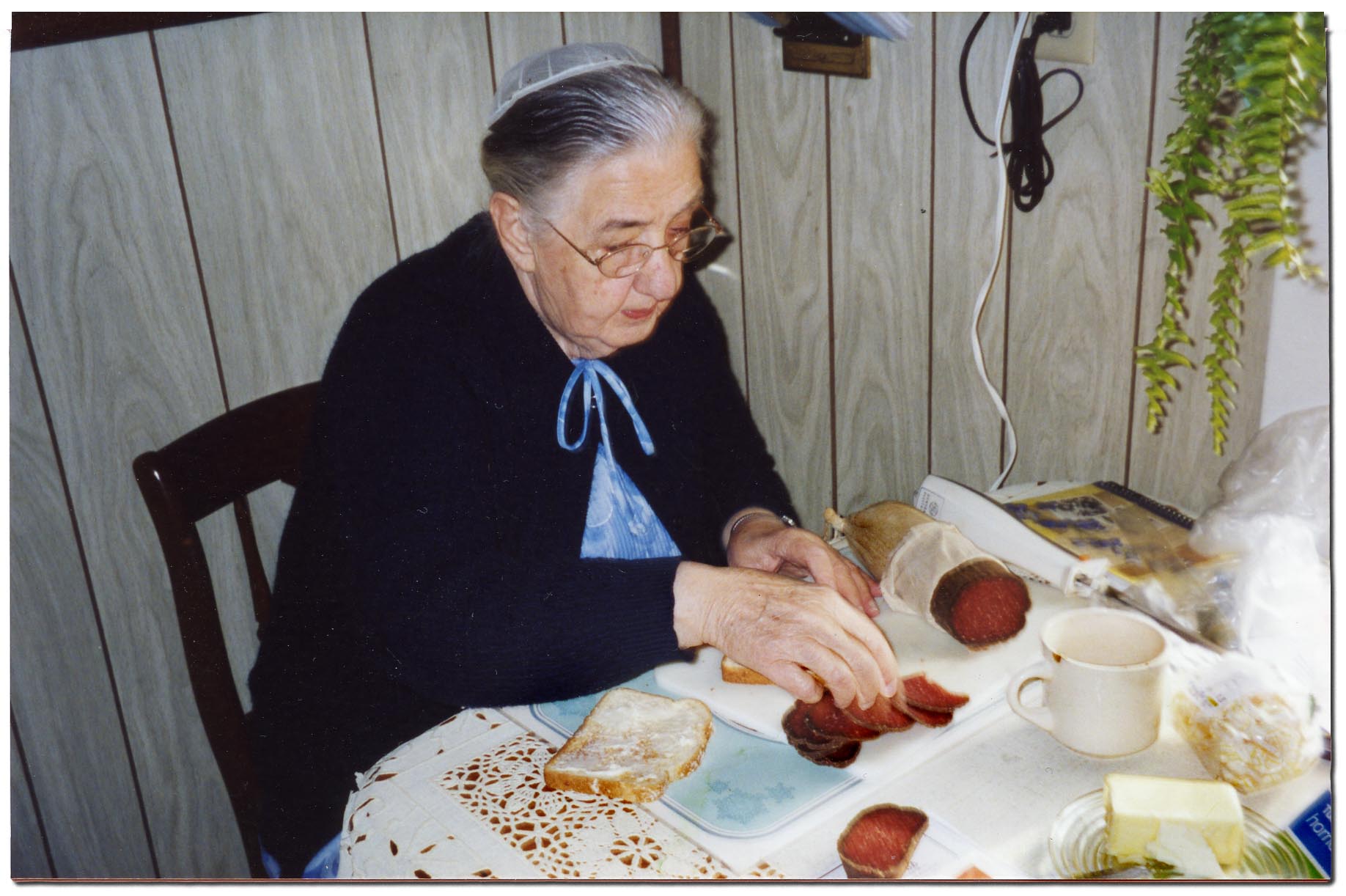
Our metal lunch pails carried many a bologna sandwich, usually Baum’s Bologna from their shop north of E-town. After Mother pulled back the burlap, she sliced thick rounds for sandwiches on buttered bread – always butter . . .
Read
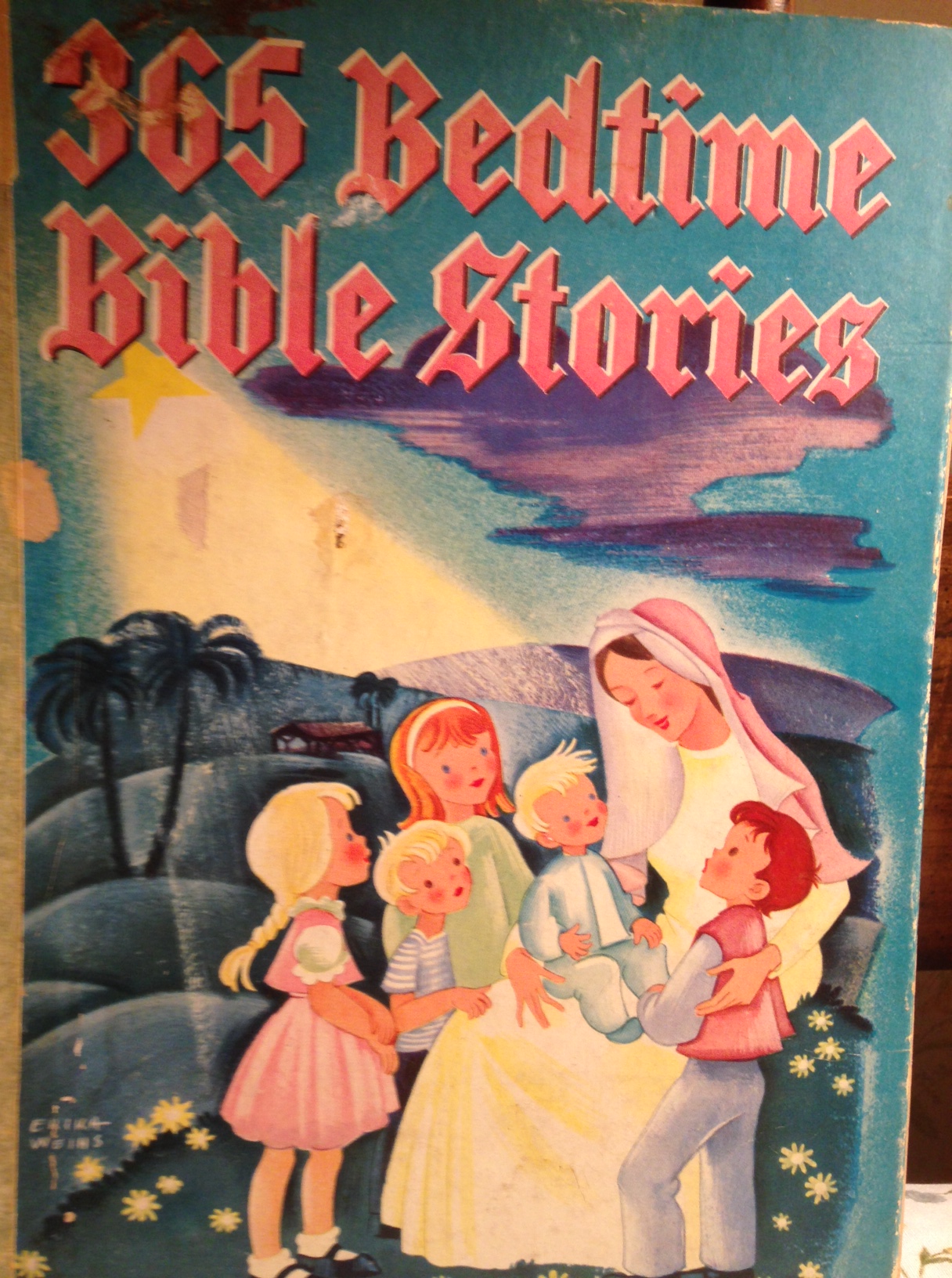
Every picture, every story seems familiar in this Bible Story Book with pages, crackly brown with age. Sniffing into the spine, I roll back in time to the little girl on her lap. I loved the art work then. Now I love its charm even more. Did Daddy read these stories to me too? Maybe so, but I can’t remember.
Remember
Cameras freeze time, preserving memories. Mother didn’t write in a journal, but she consistently recorded our family’s story over time. The old box camera is long gone, but here is a “flash” of memory possibly from her last camera . . .
DADDY Some of what I found representing my father was surprising:
Although I have several photos of Daddy holding me as a baby, my father was a man’s man: a tractor-driving, motor-fixing, field-plowing, deer-hunting guy. He even hammered on the piano keys. His work clothes were of black moleskin cloth, matching the grease he was in close contact with at the shop. I am certain he never wore pink. Yet here he is posed for the camera in a dress, flanked by his parents, Henry and Fannie Longenecker, my Victorian grandma not yet attired in Mennonite garb that would characterize the rest of her life. Daddy’s dress is not a christening outfit. There was no christening among Mennonites. I suspect that babies of both genders wore dresses to make diaper changing easier.
Henry and Fannie Longenecker with son Ray
Needlework
Our scavenging took us to the attic chest filled with treasured quilts. My sister Jean and Mother tagged each one a few years ago, so there would be no doubt as to their provenance. Apparently, Daddy drew his needle through a white quilt, stitching animals in red. I see a camel, sheep, chicken, pig, duck, an elephant. Even an ostrich.
Here is just a teaser. (Look for Daddy’s full quilt on a later post!)
Quilt with animal stitching by my father, Ray M. Longenecker
Nickname
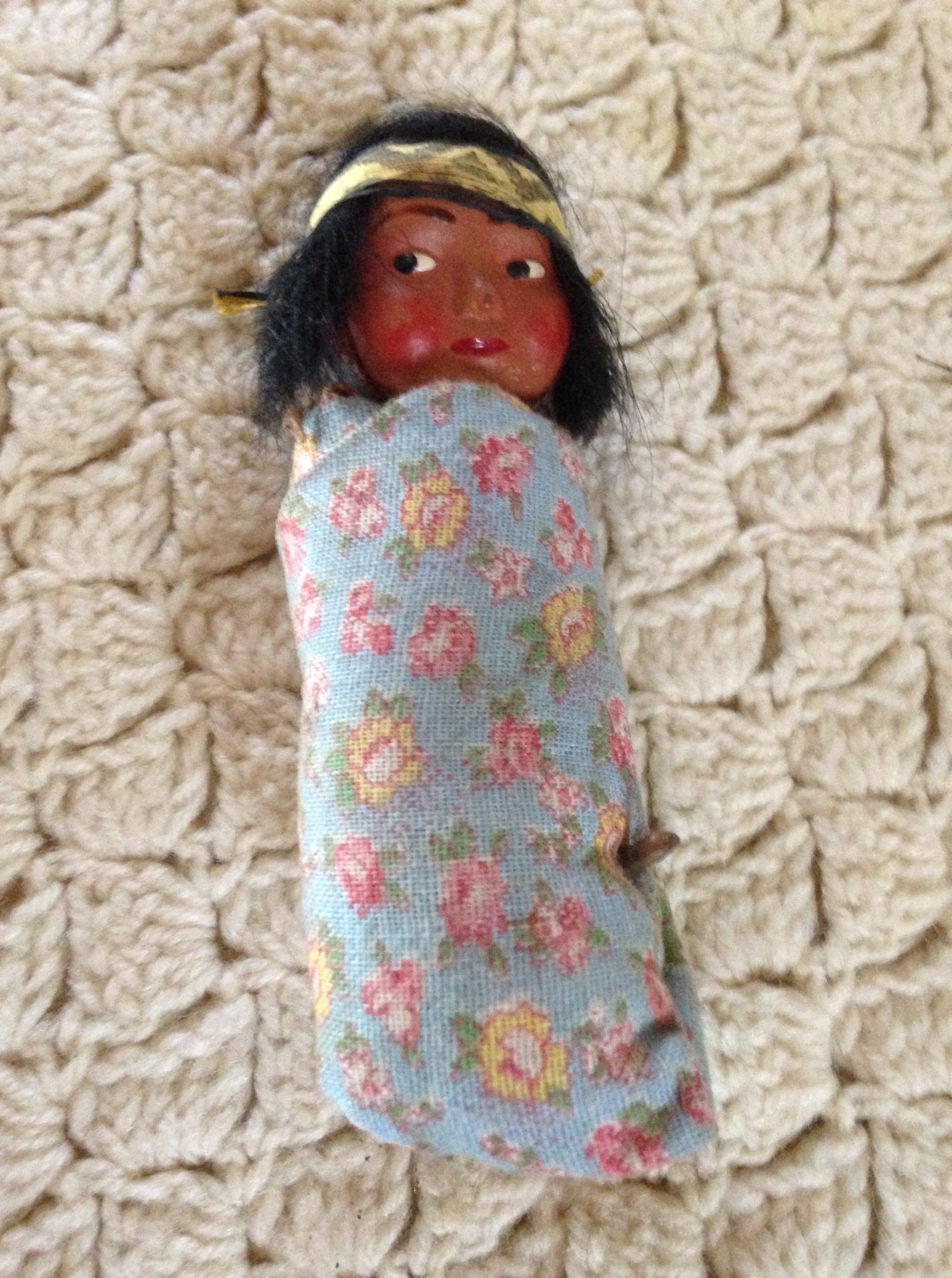
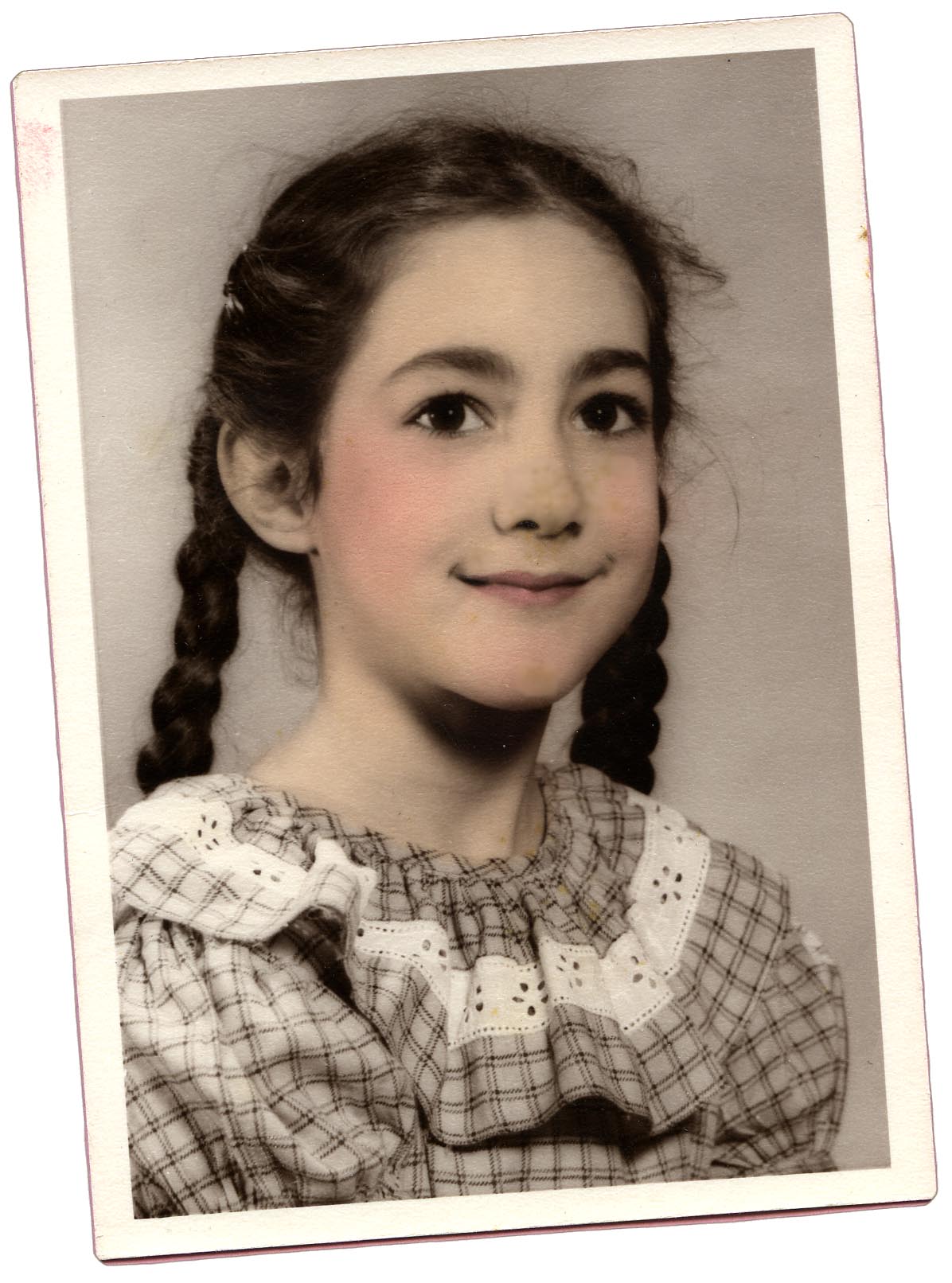
Daddy’s nickname for me was Pocahontas, not so much because I looked native American, but probably because of my thick, dark braids and big eyes. When I found this doll, I decided it shouldn’t be given away, sold, or recycled. It now sits on the dresser in our bedroom with “strubbly” hair, not braided!
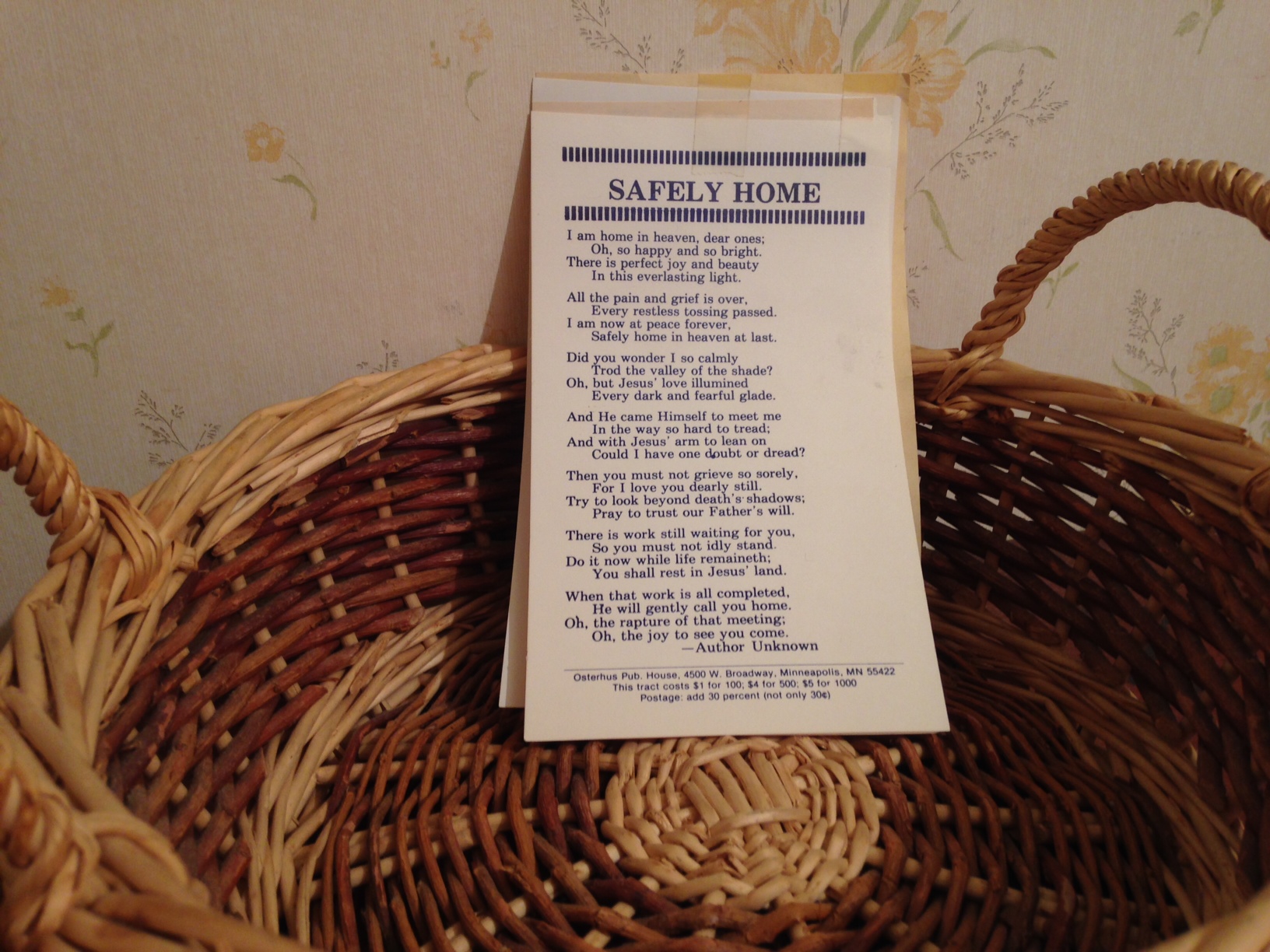
Final Note: A Curious Find On our first visit to Mother’s house in October after the funeral, we saw a wicker basket on top of a hallway chest with a poem entitled “Safely Home,” something we had never noticed before. Were we blind to it earlier? Having a premonition of what was to come, did Mother put it there for us?
I am home in heaven, dear ones; / Oh, so happy and so bright. / There is perfect joy and beauty / In this everlasting light . . . .
(Anonymous, Osterhus Publishing House) . . . a mute but eloquent affirmation
Your turn: Are you holding on to something you treasure from a loved one? A photograph? A small gift?
Every single memory of snow in my childhood is pleasant. Sparkling flakes in luminous free-fall as I look out the kitchen window. Snow festooning evergreen boughs. Then bundling up in snowsuits, knitted caps, mittens. Getting out the sleds.
After more than one snowstorm, Aunt Ruthie grabbed her movie camera and trained her sharp eye on some big, tall sledders who went coasting down the hill from our house to Grandma Longenecker’s.
Then she captured our anticipation of trumping through nearly hip-high snow and finally (my favorite) Mother pulling my sister Janice and I on the Flexible Flyer sled along Anchor Road.
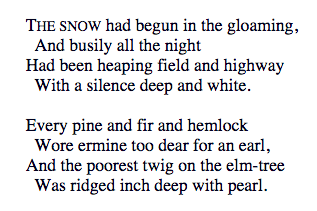
Another parent and daughter are observing the snow in The First Snowfall by American poet James Russell Lowell, a poem I remember Mother reciting.
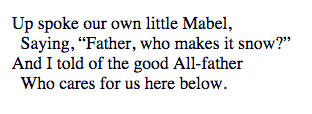
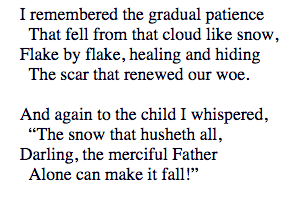
Mabel marvels at the beauty of the snow and inquires of its origin . . .
. . . but as the father’s replies to Mabel, he remembers the snow which hides the scar of another child’s burial plot.
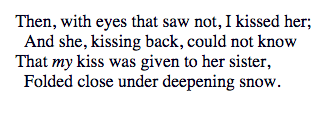
Then Mabel feels her father’s gentle kiss, a kiss she will never know was intended for the daughter beyond his touch. The last stanza leaves Mabel in child-like wonder, her father in pensive grief.
This post began with snapshots of fun in the snow and ended with a reflection on loss. But snow can be the setting for other memorable events: a frolic with friends, a car accident, a marriage proposal (I’ll save that for another post!)
You probably have memories of snow, recent or long ago. Here’s your chance to share them.



















 Plain and Fancy