Think of February as God’s special gift of time sandwiched between all the hubbub of past holidays and the upcoming arrival of a busy spring. To me, February is the ideal month to regroup . . . to review where I’ve been and to rethink where I’m going. I have found it is the best time of the entire year to pause for several concentrated weeks of deliberate reflection.
Chuck Swindoll, Insight for Living 1999
February is merely as long as is needed to pass the time until March. — Dr. J. R. Stockton
LOVERS
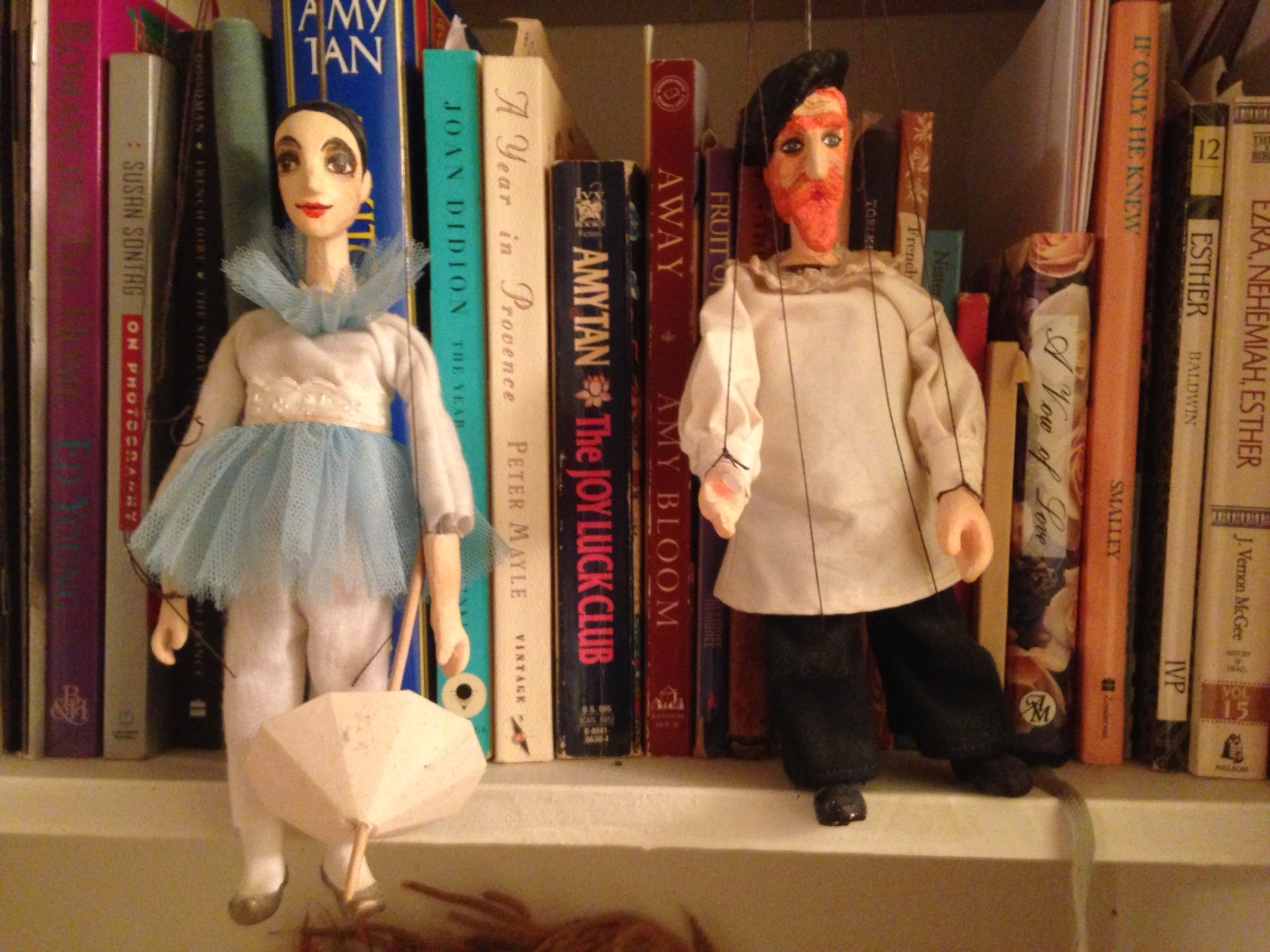
Marionettes from Prague – Books from all over
MUSIC: The Mozart Effect (Notes from Lecture) March 2000
Classical music, like Mozart or Hayden stimulates Beta waves suited for high-quality, analytical thinking.
Jazz: like Miles Davis or John Coltraine, creates order from chaos, good for thinking that does not lend itself to simple linear solution. Generates theta waves: highly creative brain consciousness associated with out-of-the-box creativity, spiritual insight.
Rock: Makes a statement about TIME, especially suited to people who need to be vigilant like those in an inner city environment. Sharpens awareness!
New Age / Alternative: Music organized around SPACE; suited for people who live in a highly mental structure.
Music creates a current on which images flow. It can catch an image in its nets so it can be looked at, analyzed. Glamour, January 1999
IN THE ZONE/ATTITUDE
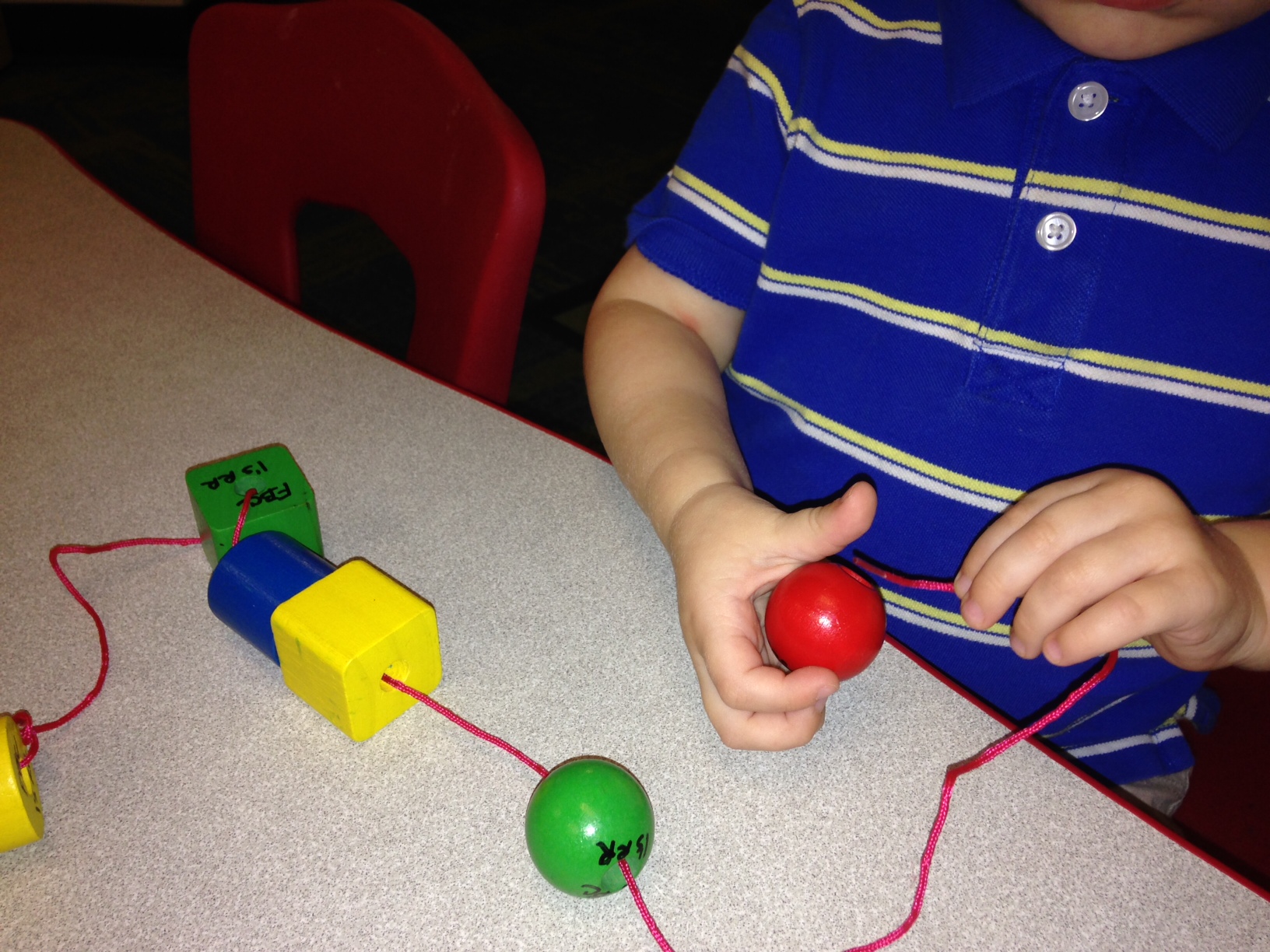
I learned that you should feel when writing, not like Lord Byron on a mountain top, but like a child stringing beads in kindergarten, happy, absorbed, and quietly putting one bead one after another. Brenda Ueland
And frame your mind to mirth and merriment / Which bars a thousand harms and lengthens life.” Wm. Shakespeare, The Taming of the Shrew
We do not see things as they are; we see things as we are. Anais Nin
Your turn:
Add a quote? Comment on one or two you have just read?
But January 2014 was tough in Florida: two nights in the 20s and several days around the freeze point. And so the plants in my garden took a beating. The impatiens, in spite of being covered, froze to death. The pentas bushes were reduced to black, ashy stems and had to be trimmed back. Daughter Crista, the green thumb in our family, assures me they will come back strong.
Last night, there came a frost, which has done great damage to my garden. . . . It is sad that Nature will play such tricks on us poor mortals, inviting us with sunny smiles to confide in her, and then, when we are entirely within her power, striking us to the heart.
~Nathaniel Hawthorne, The American Notebooks
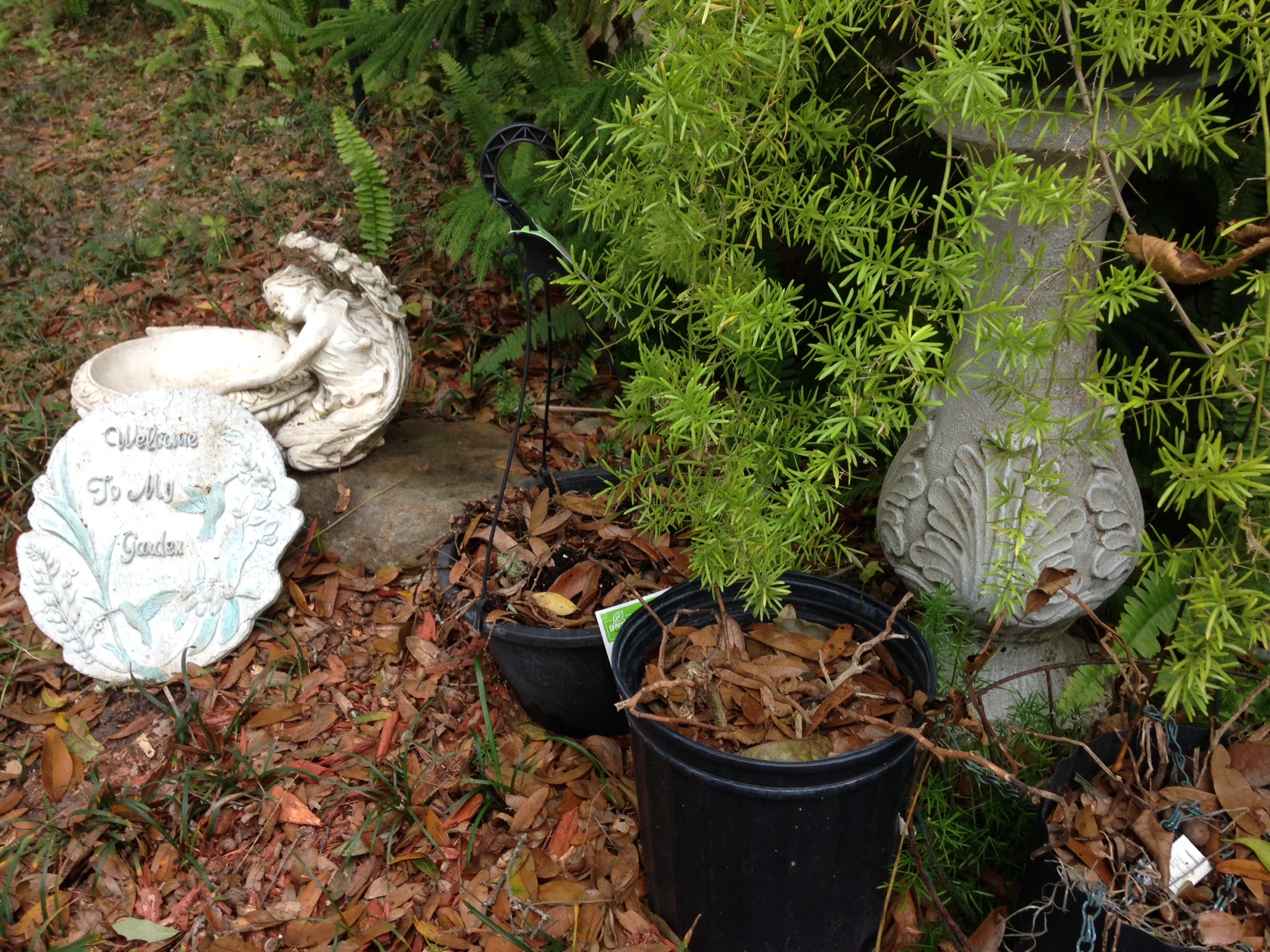
Welcome to My Garden: dead impatiens, live asparagus fern
If you live in Hawaii, my garden may seem forlorn. Alaska your residence? Well, then it may look just fabulous.
Wisteria and passion flower vines are gone, leaving a naked metal fence, still bent where it took a hit from a falling oak tree branch. What remains? Red sister, rose bush in a planter, aloe shoots, asparagus fern, bromeliad with perky red flower.
Soon the passion flower and wisteria vines will intertwine to soften the metal fence. The pentas will flower up, and I’ll buy new impatiens. There’s hope!
While the earth remaineth, seedtime and harvest, and cold and heat, and summer and winter, and day and night shall not cease.
Genesis 8:22 KJV
Do you like to garden with either indoor and outdoor plants?
I remember Grandma and Aunt Ruthie paging with intent through the Burpee seed catalogs in February or March each year picking out the varieties they like best. What about you?
Now you are probably thinking . . . age 72 is a long way off, or it’s just around the corner. Either way, it’s a question worth pondering.
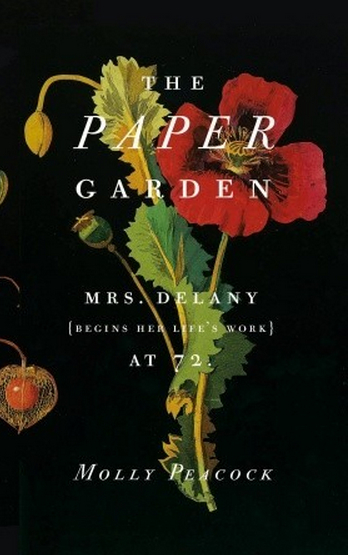
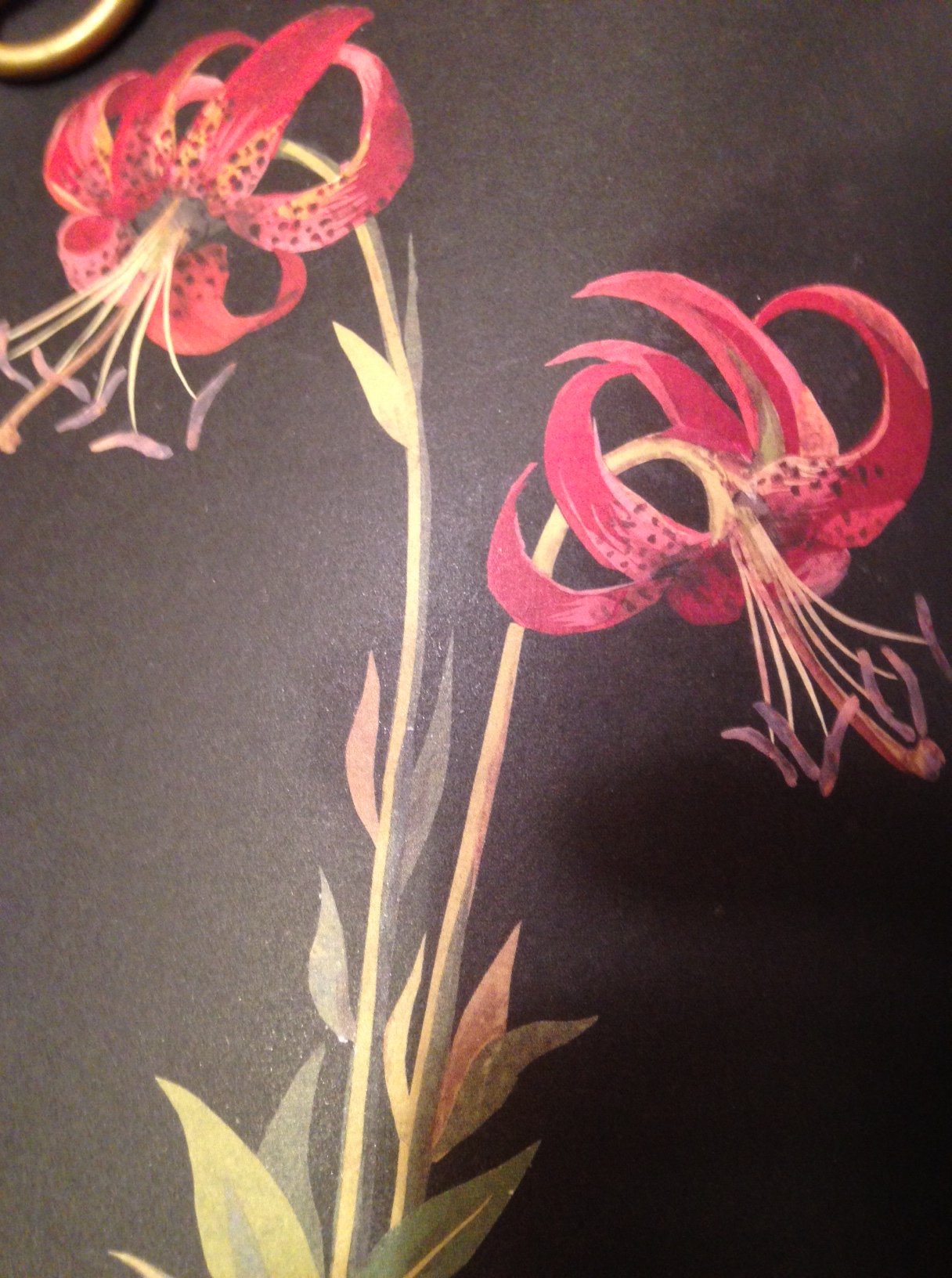
In 1700 the average life expectancy was 37. In fact, 40 would be pushing it. Yet, in that very year Mary Granville Pendarves Delany was born and lived to be 88. More impressive is the fact that at age 72 she invented mixed media collage and eventually created “an astonishing 985 botanically correct, breathtaking cut-paper flowers, now housed in the British Museum and referred to as the Botanica Delanica.”
Image: Courtesy of Good Reads
Poet Molly Peacock, author of The Paper Garden: Mrs. Delany begins her life work at 72, recreates the “Aha!” moment for Mary Delany early in the book:
One afternoon in 1772 [the recently widowed Mary Delany] noticed how a piece of colored paper matched the dropped petal of a geranium. After making that vital . . . connection between paper and petal, she lifted the eighteenth-century equivalent of an X-Acto blade . . . and began to maneuver, carefully cutting the exact geranium petal shape from the scarlet paper.
Then she snipped another and another, beginning the most remarkable work of her entire life.
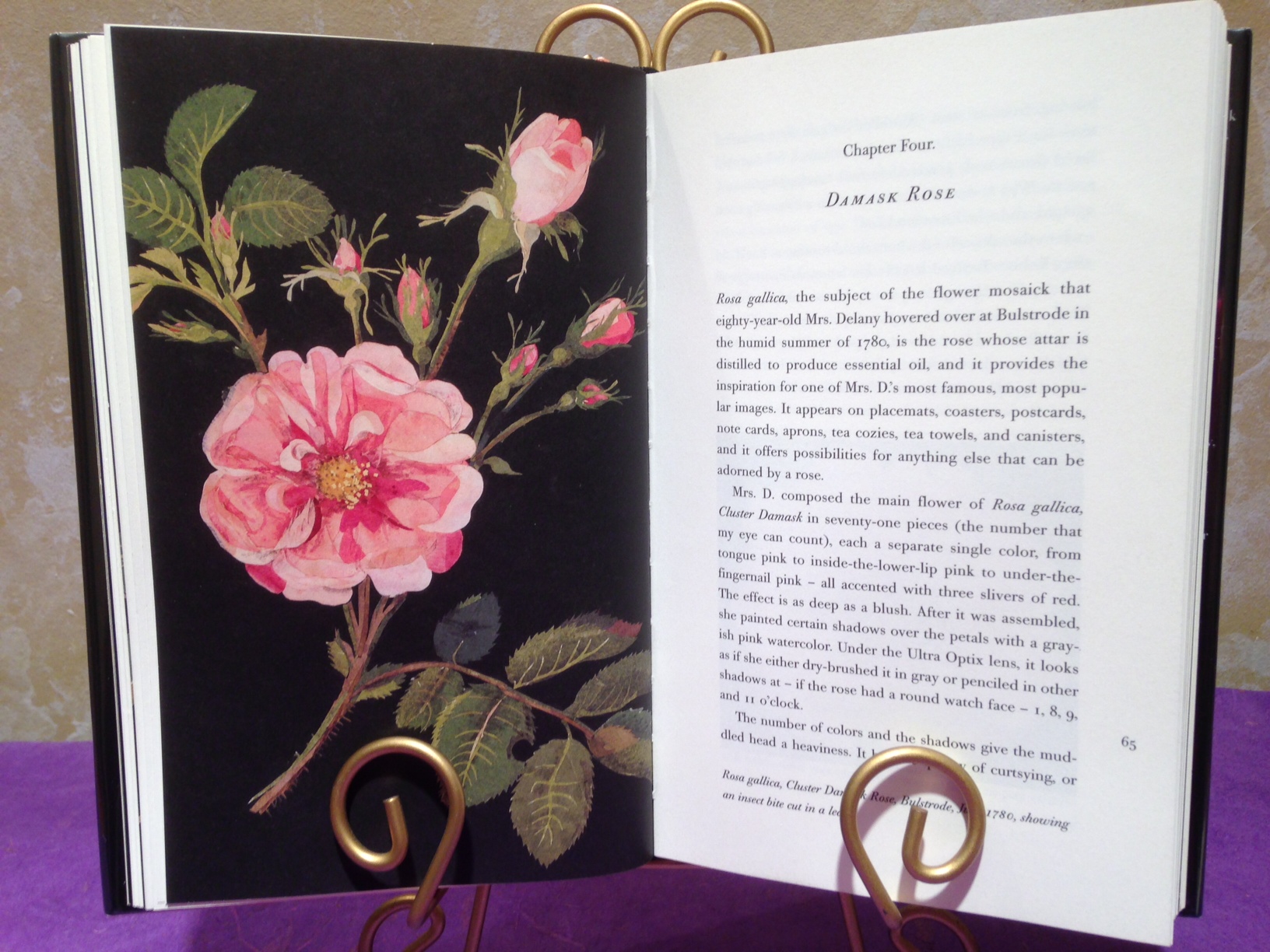
“. . . if a rose had a round watch face” (65)
Her most famous and popular image is the Damask Rose, appearing on postcards, place-mats, tea towels, and canisters. The main flower includes about 71 pieces of carefully cut papers, covering the gamut of pinks from slivers of red to blush and “under-the-finger-nail pink.”
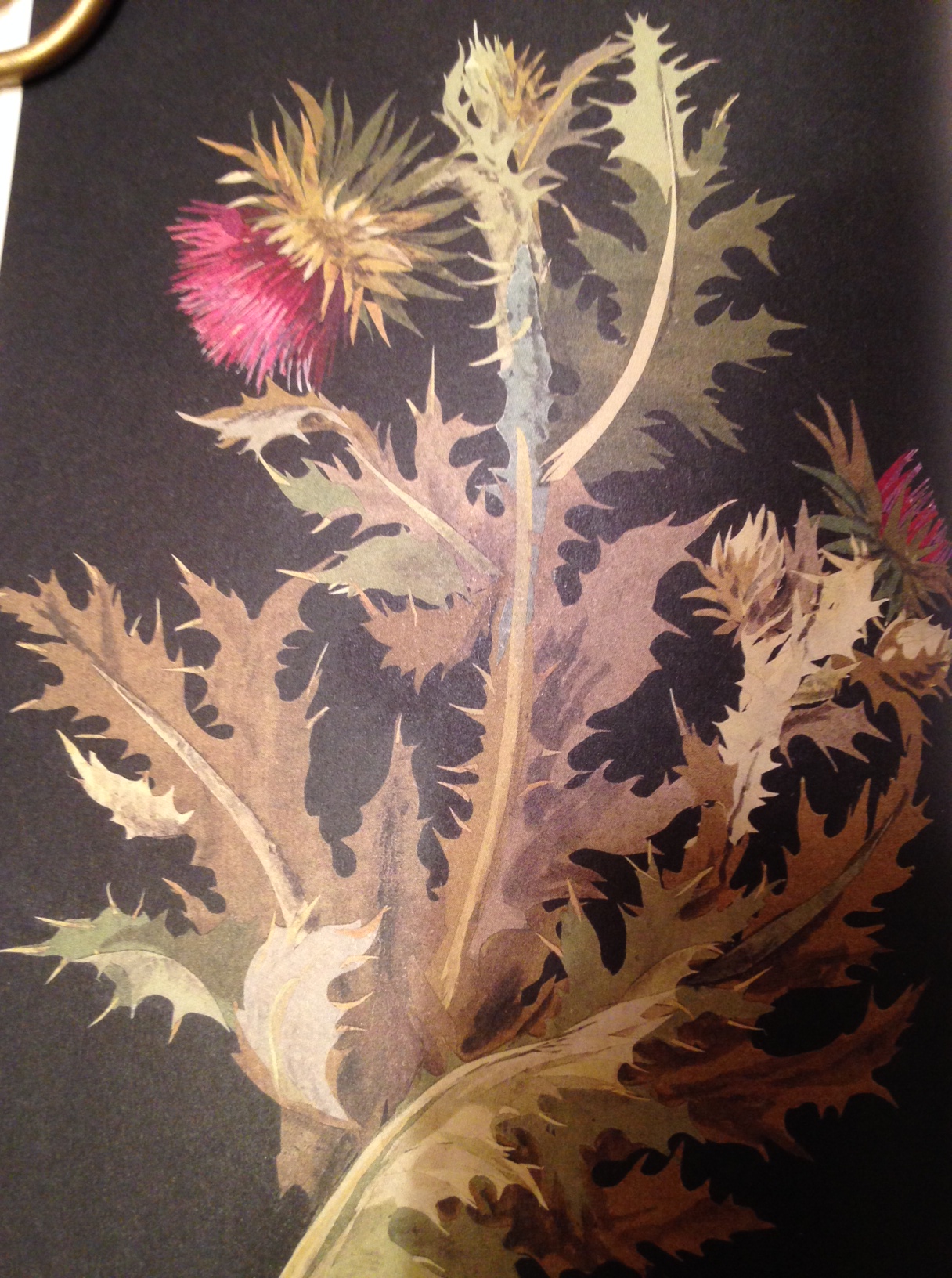
Nodding thistle, a cousin of the dandelion, with swirling foliage
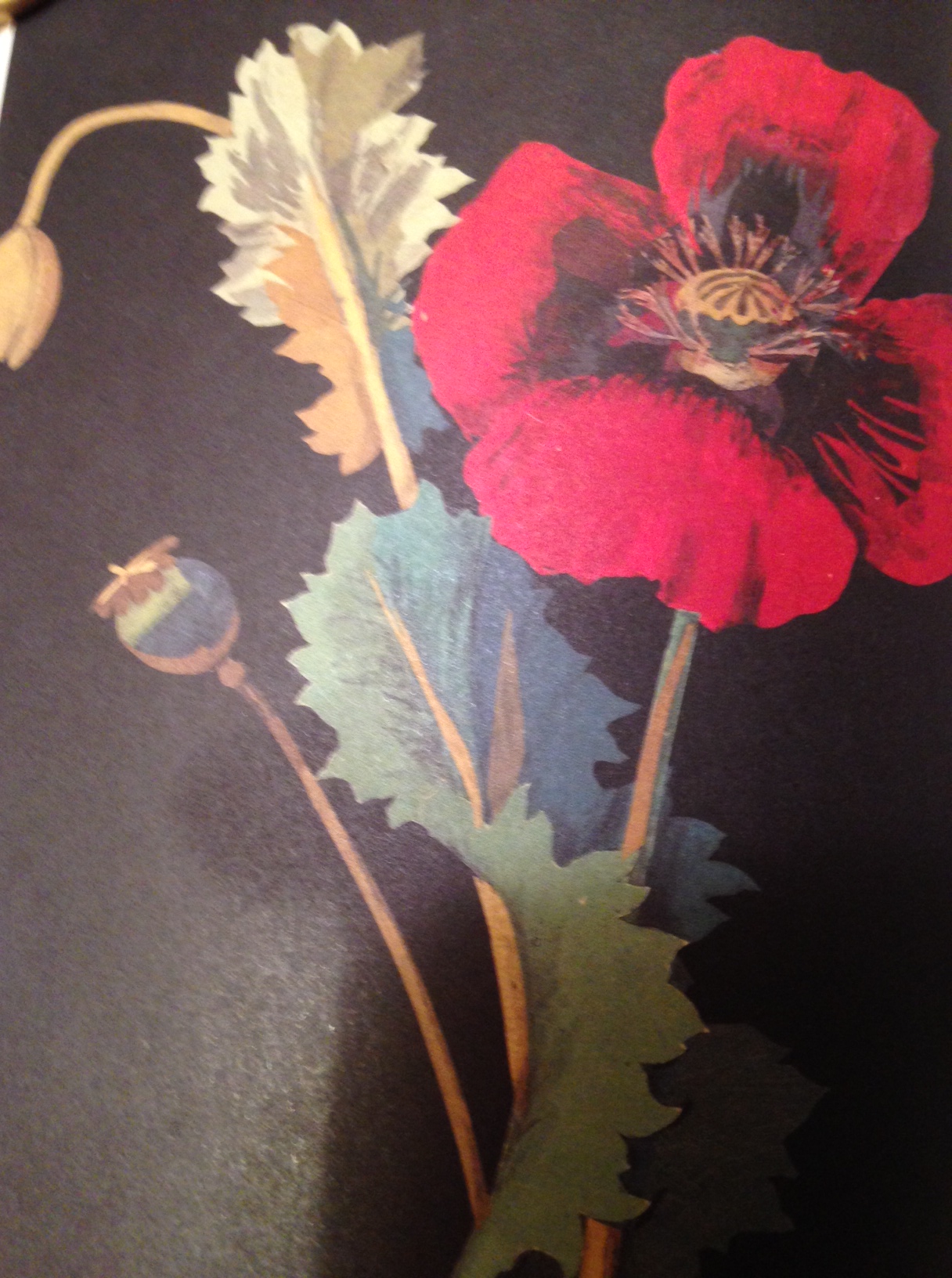
Operatic Opium Poppy
The theatrical-looking opium poppy is cut from a single green piece of paper. “The whole effect is of a kimono-like gown billowed by a breeze, like the robe of a star soloist falling down from her shoulders” upside down (118).
” . . . lines swoop and swoon with freckled energy” (141)
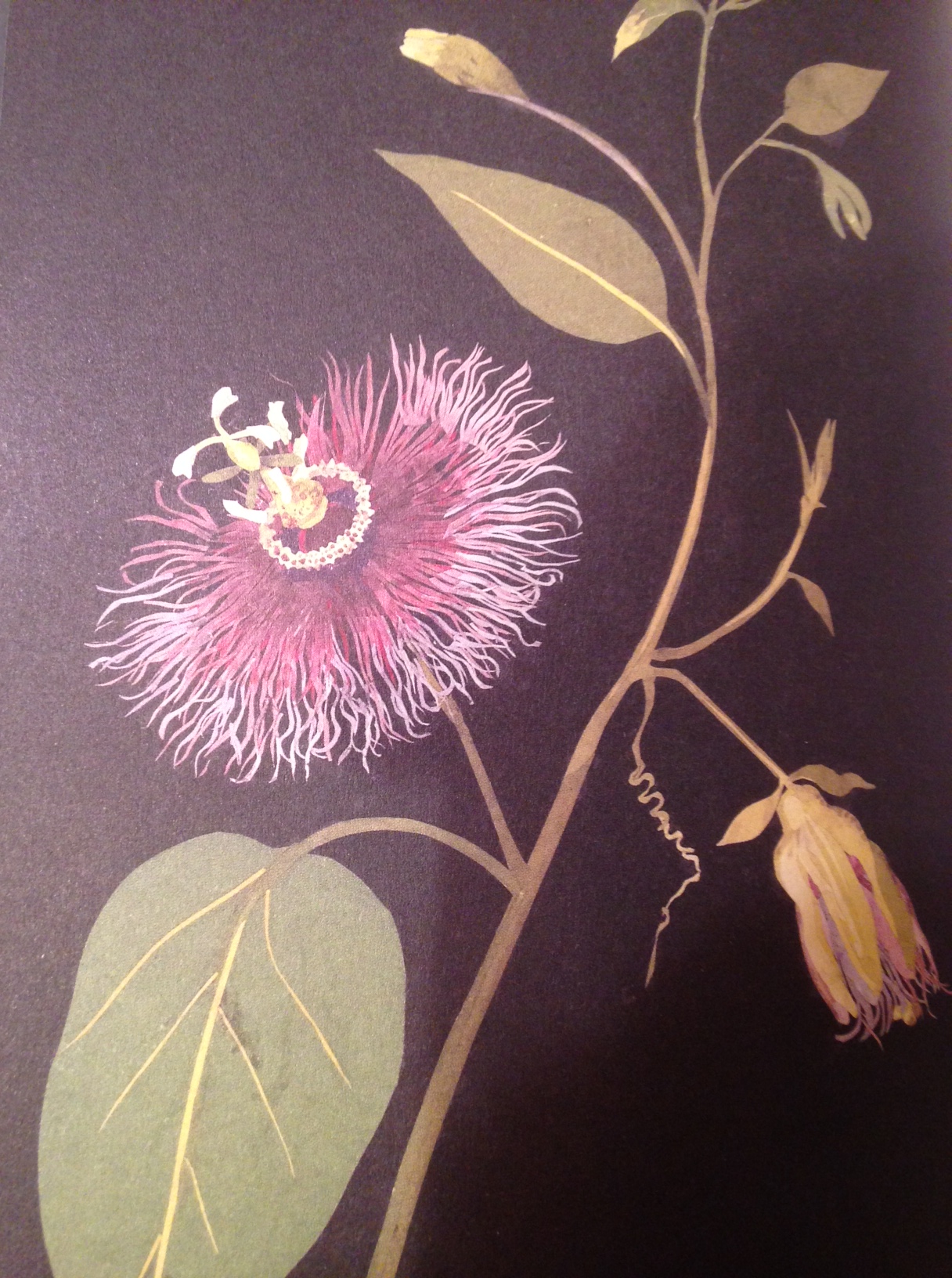
Mary Delany’s output was phenomenal. In 1777, the year she constructed the passion flower, she cut out her collage/mosaics at the rate of one per day, and between the ages of 77-87 creating one every four days (185).
For the passion flower, Mary Delany cut out 230 petals scissored “like little grass skirts, where the strands of grass are attached to a belt” (169). She made up her colored papers . . . washing whole sheets of paper in varying hues. In the case of the passion flower, olive, loden, beige ivory for the leaves, and the flower rust, red, purples, deep and pale pinks, lavender. To the pigments she added gum arabic, honey, ox gall to prepare and preserve the papers. All done on a matte black background, always on dramatic black.
Mrs. Delany was born into the aristocracy with a wide circle of friends which included composer George Frederic Handel and the satirist Jonathan Swift. John Wesley even courted her. Yet her posh outer life was checkered with challenge: an arranged teen-age marriage to an aging drunken sot, problems with cash flow, at mid-life the loss of her soul-mate, Patrick Delany, a man who knew her worth, then deaths of close relatives, and finally her own illness.
Yet like her flowers, cut with a blade, not outlined by a brush, Mary Delany blazed a path for herself with a scissors, scalpel, tweezers, and needle. Combined with her imagination and gutsy determination, she made art that endures.
Age is the sum of all we do.
Charles Bulkowski, quoted by Molly Peacock (343)
The root of the word inspiration is “breath.” What activity do you do that inspires you, gives you energy?
Or takes your breath away – maybe even give you a second wind?
What will you be [still] doing at age 72?
The career of flowers differs from ours only in audibleness.
If I swallow a water-melon seed, my stomach might swell up.
If I touch freckle-faced Ricky with the dirty fingernails, I might grow a baby. Oh no!
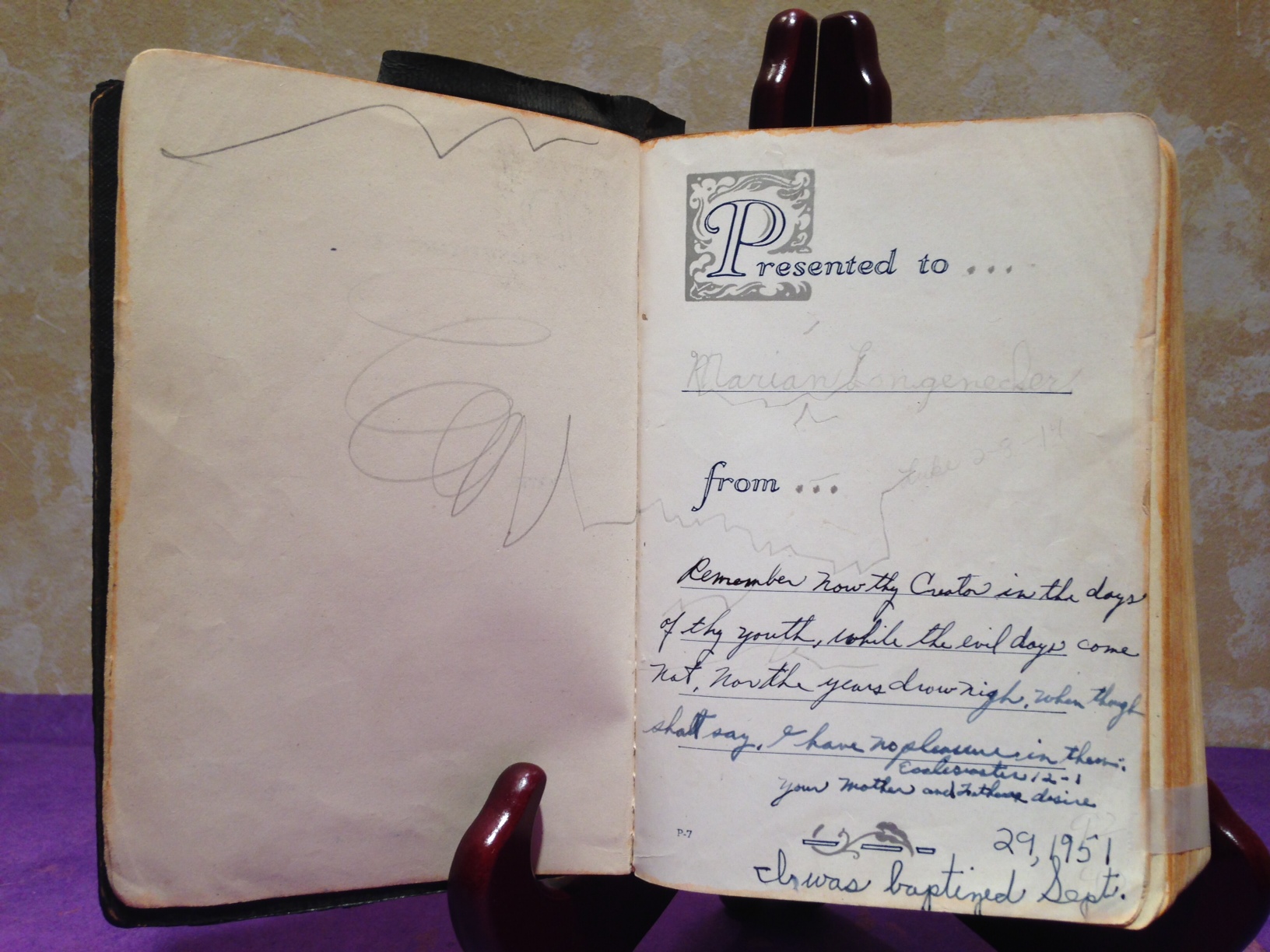
Those were my childhood fears. With a limited sex education, I tried never to swallow watermelon seeds or touch grimy Ricky. But my parents also had fears, largely unfounded. What my Daddy dreaded most as the father of three adolescent girls is that one of us might turn up pregnant some day and bring shame and disgrace upon the family. “We don’t ever want to hear of that happening in our family,” he exhorted. In my Bible he wrote this not-so-veiled admonition from Ecclesiastes:
Daddy’s inscription of Ecclesiastes 12:1 in the flyleaf of my Bible
Why he worried about my falling into mortal sin was beyond my comprehension: I always had my nose in a book and rarely dated Mennonite farm boys, or any other boys for that matter.
My experience with the lusts of men were of the non-Mennonite variety in my early teens. Summers I worked behind the meat counter for the Kleinfelters at Middletown Merchandise Mart. No worries with Mr. Kleinfelter, though he was often a bit tipsy, but some of his suppliers were another matter. Oily-haired Mr. Zapcic would creep up to the counter and invite me to “help” him in his produce business in Lancaster. “I need somebody to work behind the counter. You would be perfect!”
“That’s pretty far from Elizabethtown,” I mentioned innocently. Lancaster was almost 20 miles away.
Without my asking, Mr. Z. offered: “Oh, I’d see that you got there. You could ride with me.” It finally dawned on me what he was after and afterwards tried to ignore him. Yet he continued to harass me. Like Pamela in Samuel RIchardson’s novel, I rebuffed the man’s advances. Finally, I had to solicit some Kleinfelter help to get him to let me alone.
* * * * *
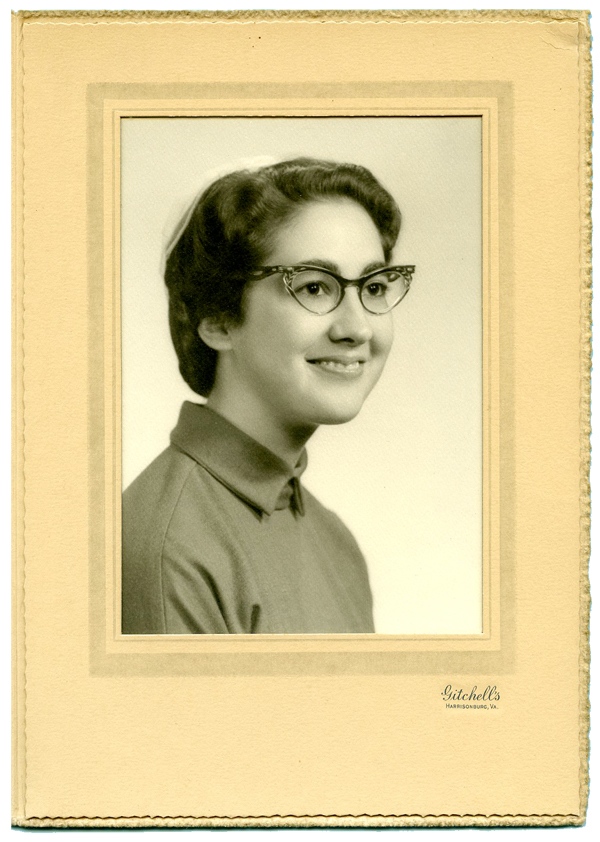
Senior Photo: Eastern Mennonite College
During the summer of 1964 my Aunt Ruthie and I attended Temple University, she to complete her Master in Education degree and me to begin it. From the hamlet of Rheems at 4:30 in the morning, we drove to Lancaster, took a train from Lancaster to Philadelphia, then rode the subway into north Philadelphia and walked eleven blocks to the campus of Temple University with classrooms filled with students who chain-smoked. I still wore a prayer veiling with a crown of dark brown braids fastened with hairpins underneath, ever the epitome of moral innocence. Ruthie’s classes lasted longer than mine, so I waited for her on a circular, wooden bench on the grassy campus outside the classroom.
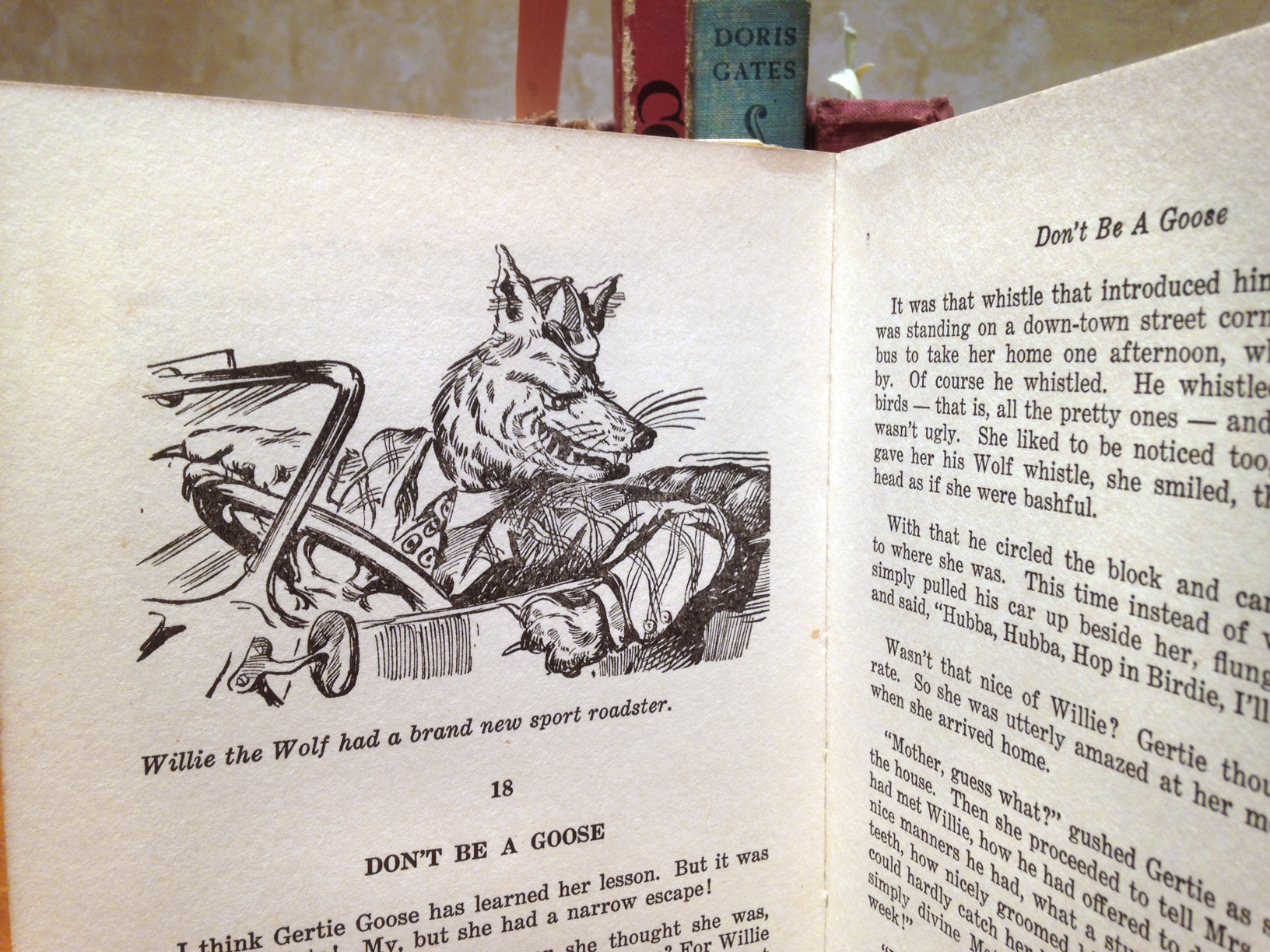
A suave older man approaches me and raves about my hair. It could be a scene right out of Bird Life in Wington, Gertie the Goose meets Willie the Wolf.
I notice at once his pearly white, even teeth and brushed back hair. Is he a college student? He for sure doesn’t look like one. Other students are milling around, I notice, so what could be the harm in talking to this stranger?
Willie: “Sprechen ze deutsche?” Not waiting for an answer, he spouts, “You have gorgeous hair. It’s so thick and glossy.”
Willie: I own a hair salon in the suburbs of Philly. I’d take you there and give you a different hair-do. It would frame your face really nice.
Gertie: Really?
Willie: Of course, I wouldn’t charge you anything.
Gertie: Well, thank you.
The dialogue continues for another minute or two, and then two things happen: I feel an electrical zap down my spine and a visitation from the Holy Spirit, who urgently whispers — “NO!” in my ear: “Run for your life. This guy is up to no good.”
Scales fall from my eyes as I swiftly dismiss his cunning ideas–and find an excuse to leave the bench and search desperately for Aunt Ruthie. Her class must be over. Soon, I hope. God, I hope soon!
Willie the Wolf in roadster tries to seduce Gertie the Goose in Calvin Reid’s cautionary tales
It’s your turn. Any narrow escapes from unsavory characters in your early years? Other threats to your moral virtue?
Your story is welcome here, and I will always reply.
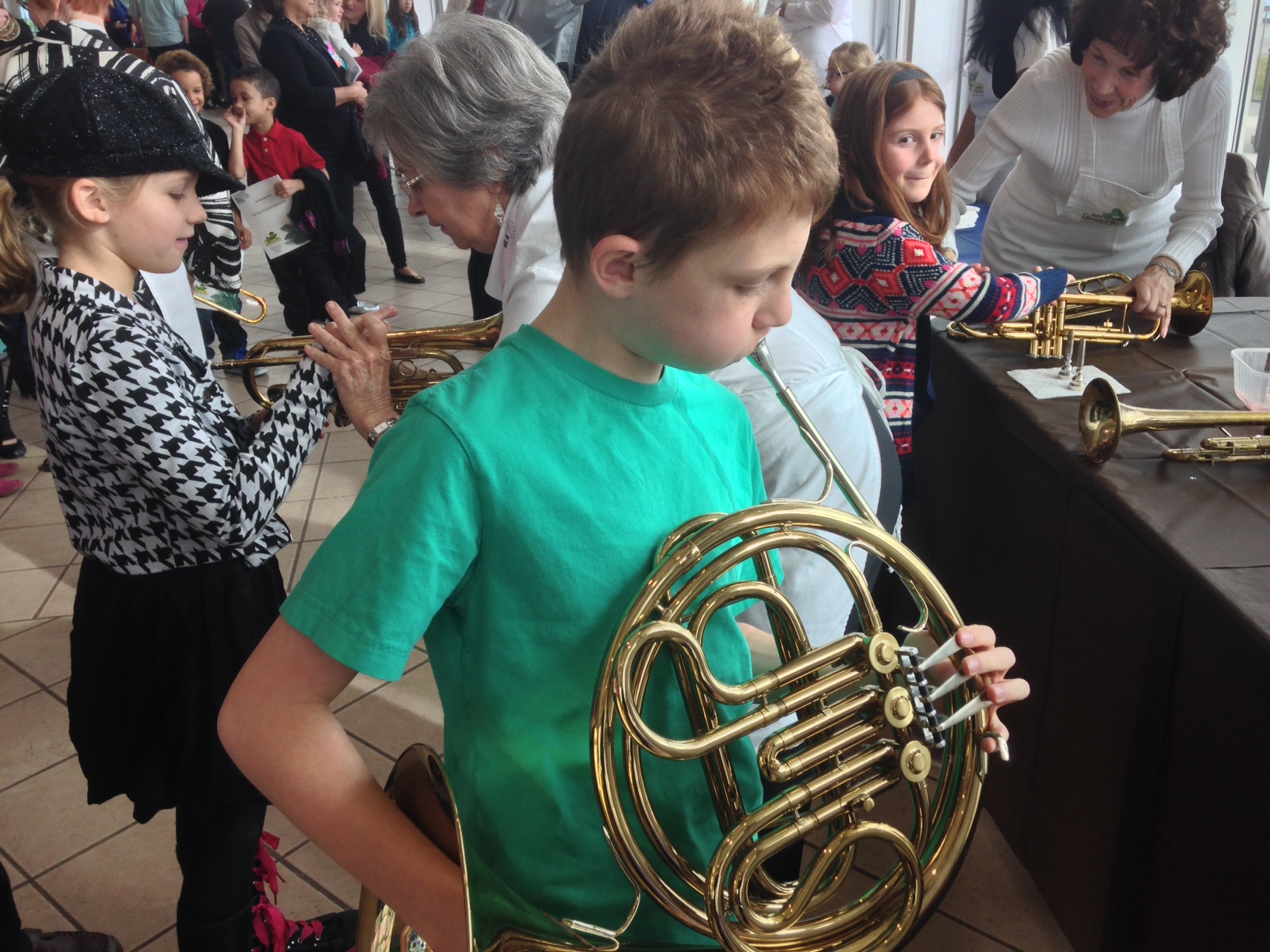
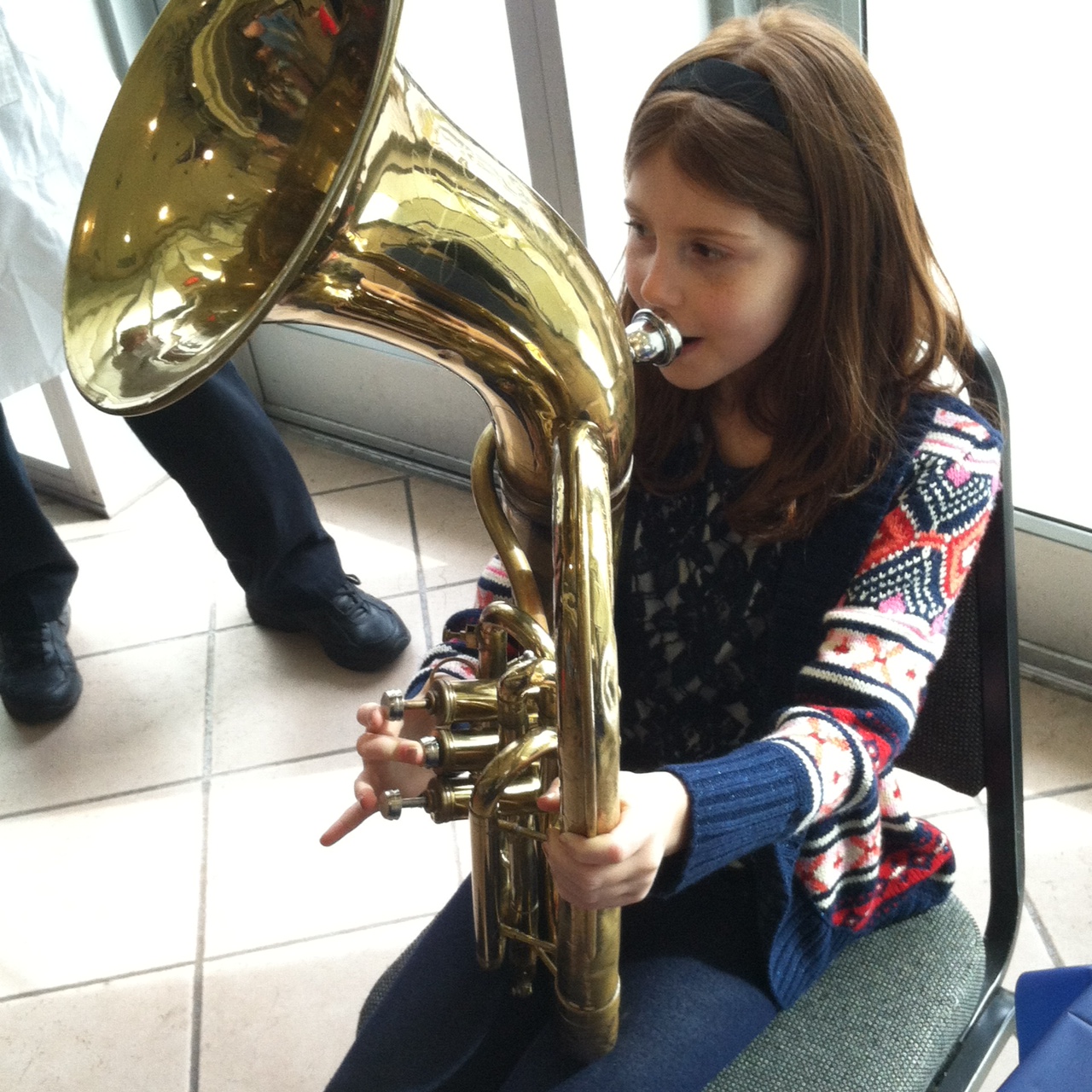
Last Sunday afternoon, we took our red-haired grand-kids, the Daltons, to the Jacksonville Symphony Family Series, featuring The Sneetches. There was a pre-concert Orchestra Zoo with dozens of kids standing in lines to bang on, blow into, or saw the strings of grown-up instruments.
Patrick & French Horn at the Orchestra Zoo
Jenna & Tuba at the Instrument Zoo
During the concert, the conductor asked each section of the orchestra to play a segment of a piece separately to let the kids hear the true sounds of the various instruments.Then came the pictorial story of the Sneetches animated on screen and read by a narrator, all accompanied by the whimsical strings, the complaining woodwinds, and the booming drums in Jacoby Symphony Hall.
If you need a brush-up on the Dr. Seuss plot line, two camps of yellow, fantastical creatures called Sneetches are separated by whether or not they have stars tattooed on their bellies. The Star-Belly Sneetches think they are best and make their Plain-Belly counterparts feel sad and inferior. Magically, Sylvester McMonkey McBean comes along with his Star-on and Star-off machines. Now the Plain-Bellies are thrilled because they match the elite. But the original Star Bellies are angry because they no longer stand out as special. Now no one is happy.
Between the Star Bellies and the Plain-Bellies there is plenty of bad feeling to go around. Then the conniving Star Bellies hatch an idea: Let’s get Sylvester McMonkey McBean to remove all the stars from bellies. Determined to find a solution, money from both belly camps gets stuffed into McBeans’ pockets, and he leaves town a rich monkey. Poorer in pocket, but richer in understanding, none of the Sneetches can remember who was what originally now that they all look the same. Finally, there is a level playing field.
The Sneetches’ conclusion: It doesn’t really matter what they look like—they can all be friends, stars or no stars. As the story ends, conviviality reigns.
In the car on the way home:
Jenna: “I really liked it! Those Sneetches were really cool, and they all liked each other at the end.”
Patrick: “It doesn’t matter what you look like. Everyone is the same. Oh, and there’s another thing: Don’t give away all your money away for a dumb reason.”
Grandpa: “You are special whether you have a star on your belly or not.”
First of all, I wouldn’t want a star on my belly, would you? I wouldn’t want to draw attention to my worst feature whether it looked cool or not.
If you are human, you probably are a Sneetch, prone to some of the dark emotions these yellow bellies felt: feelings of inferiority, pride, dis-content, fear, frustration, and envy.
You may or may not agree with Alex Daydream (that has to be a pseudonym!) who claims that no emotion is strictly good or bad.
Anger clouds our judgement
Love can make us blind
If emotions are so ruinous
What good one can I find?
Empathy makes us better people
Pain brings us back always stronger
Sadness gives way to happiness
Meaning a better life lived longer.
Alex Daydream
Some of the writer’s conclusions may be questionable (I have to wonder does “Pain bring us back always stronger”?) Growing up a Mennonite in the Longenecker family of Lancaster County, we children were not encouraged to show our real emotions, especially not in public. In my memory, there was a huge gulf between feeling emotions and being able to truly express them.
But what matters is what you think.
Were you encouraged to express your true feelings as a child?
As the poet claims, does allowing oneself to feel emotions make for a more meaningful life? What about expressing them?
The British poet Robert Herrick writes a fine sonnet about the allure of the slightly askew, the saucy, the off-beat–the messy in dress! Well, he has a point, but I don’t agree in general. I like neatness and appreciate the beauty of orderliness.
Too precise hand-writing clothes hanger, college days EMC
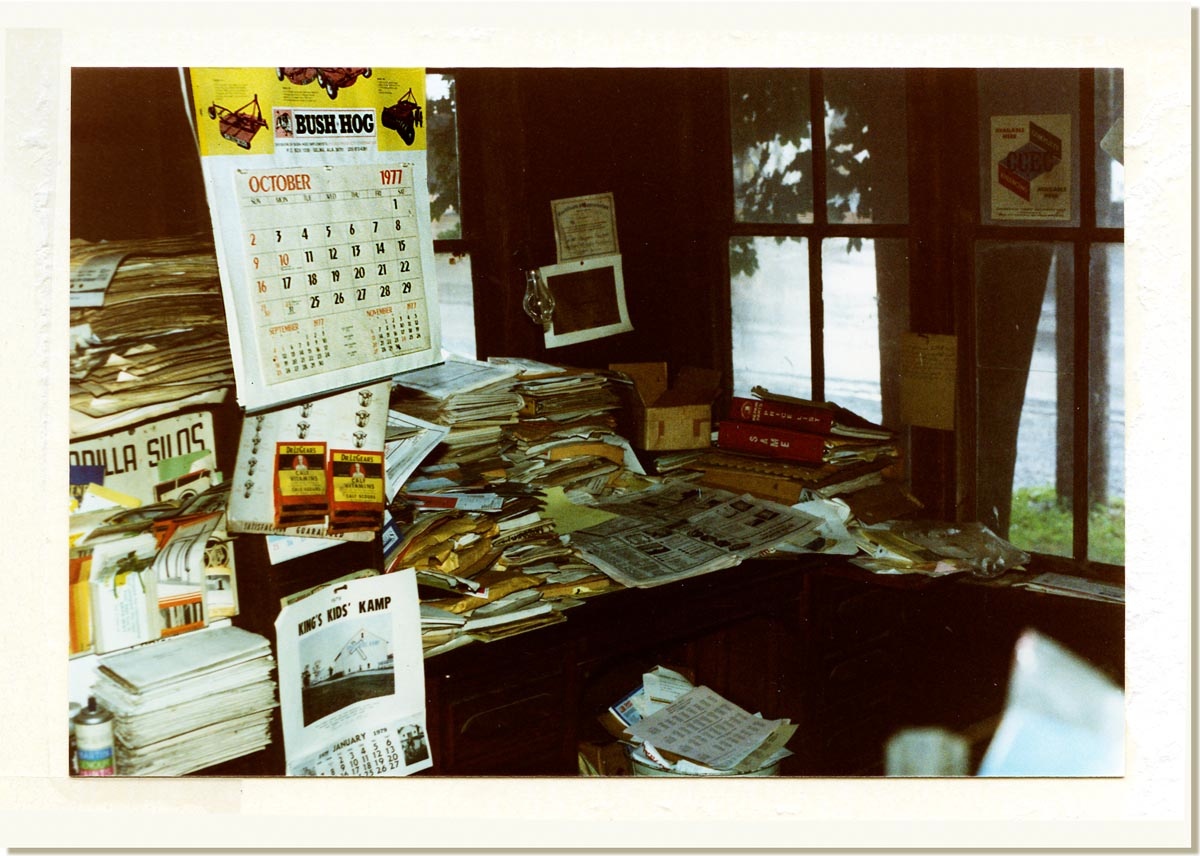
Mother was a neatnik too, every hair in place under her prayer covering, the whole house scrubbed clean every Friday, a place for everything and everything in its place. On the other hand, my dad, who was precise in the mechanics of fixing machinery in his farm supply business, was by nature messy, messy, messy–in his office, inside his truck, on the porch of his shop.
Brother Mark before sale of business
Daddy’s messy manner drove me crazy. Besides, it was embarrassing! In the middle of the village of Rheems, the shop faced Harrisburg Avenue with two main sections, one behind the other. The front part housed dozens of storage bins for nuts, bolts, screws, odd implements and, curiously, a Victrola sitting squat right beside the door to the sales office. During planting season, bags of Royster fertilizer for sale would be deposited off to the side near a loading/unloading door. As you walked to the rear, a long wooden ramp led to the back section where the dirty work was done, Daddy and his helpers fixing disk harrows, plows, or welding broken parts. Behind the shop was an assortment of implements stored Sanford & Son-style from which the mechanics harvested parts.
Occasionally, when Daddy said, “It’s time to sweep the shop,” I shuddered because I would be working in the cold with piles of stuff everywhere. Spritzing soapy water from a bucket to settle the dust, I watched charcoal-grey pustules of dirt and grease bead up on the cement floor, then tried to push-broom the filth into a dust pan, often an exercise in futility.
Though Daddy was messy, he had a strong Pennsylvania Dutch work ethic. At the shop six days a week, he caught up with office work and telephone sales in the evenings. “I worked like a Trojan today, and still didn’t get the Fox Harvester ready for Phares Weaver in time,” he’d say to Mother as he walked in the door. And he did so well in sales, dealerships would send him and Mother as VIPs on all-expense paid trips to Ohio, Florida, or Arizona to learn about new farm equipment. Once his sales were so high, his whole family, including three married daughters and son enjoyed a week-long vacation in Jamaica.
Daddy in his later years, taking a breather
So there’s neat and there is messy. “God is a God of order!” shouts one. The other camp retorts: “But you can’t be creative and neat at the same time!”
This post began with an homage to the slightly slovenly, the off-kilter. It ends with a writer lamenting her neat freakiness.
Being A Neat Freak
Being a neat freak, is certainly not a
blessing! No one enjoys, being this
way. When I find everything thrown
all around, on impulse, I have to put
them all away. I have always lived by
the creed, there’s a place for everything
and everything, in its place! It’s
aggravating, dealing with this, but I
know it’s something, I’ve got to face.
I’ve often wondered, how does a
person, get to be this way? It didn’t
happen over night, or in just a day.
Perhaps, it’s what we learned, when
we were young. And frankly speaking,
I’m tired of hearing people say, try not
to be so high strung! I’d like nothing
better, if I could let up, just a little bit,
by not letting myself become so
perturbed. Upon giving this some
thought, I realize, isn’t all of this, quite
absurd!
I have just finished reading The Dirty Life, On Farming, Food, and Love by Kristin Kimball. And today my blogger friend, Susan Nicholls, has posted a piece entitled “Canned” complete with appetizing photos of the canned goods, stored on shelves for savory eating on wintry days like these.
Kimball’s book describes how she trades a life in the publishing world of Manhattan for growing vegetables, raising pigs and cattle on the farm of a man she had interviewed just months earlier. The story is told with the backdrop of the old/new movement toward local food, community-supported agriculture, a network of consumers and farmers who share the benefits (and risks) of food production. Consumers pay at the beginning of the growing season for a share of the anticipated harvest and then receive honey, eggs, meat, and dairy products, fruits and vegetables, whatever is in season.
Susan’s blog post “Canned” is a reminiscence on the stored wealth of nourishment in the cellar of her childhood. In her post today she recalls her grand-parents’ farmland and the “garden” of one and one-half acres her own family cultivated when her children were little. She reminds us of so much we take for granted in our land of abundance. Read it above!
I was in the grocery store yesterday and browsing the local produce…much of it not so local, being shipped from Chile, Spain, Costa Rica, California, and Mexico, but fresh nonetheless. Fresh watermelon and cantaloupes year around!
It is January and there were fresh beans, peas, broccoli, cauliflower, lettuce, asparagus, squash, cucumbers, cabbages, snow peas, avocados, apples, pears, oranges, tomatoes. We take so very much for granted in this global economy. I am not talking smartphones, computers, and tablets, but simple luxuries, like fresh food.
My grandparents had a huge farm, and they had a garden that covered three acres. They taught me about gardening and harvesting.
When my own children were growing up, we had an acre and a half that was garden space.
I can’t say that we grew organic, because pesticides and herbicides were used. I can’t say it was better or worse for us, but it…
On the eve of the Gulf War exactly 23 years ago today, I took a walk in the brisk evening air. As I rounded the curve of Emerald Isle Circle West in our neighborhood, I noticed the scarlet blush in the sky at sunset. With that striking image in mind and an imminent war on the national consciousness, I wrote these words:
CRIMSON SKY AT DUSK
The throat of the sky is inflamed,
livid with anger at the war it must swallow,
gagged by the bloodshed which rages in the jaws
of Babylon.
An olive branch on its tongue,
the dove of peace
touches the parched flesh with healing.
constrained by love
which sends streams
into the desert.
January 21, 1991, eve of Gulf War
Mennonites are pacifists, adhering to the tenets of nonresistance: opposed to war, not participating in military service, but sharing love and overcoming evil with good. I am no longer a Mennonite, but I choose peace over war, whenever possible.
Dove of Peace: Mennonite Central Committee logo
On her show last week, Diane Rehm interviewed the former Secretary of Defense, Robert Gates, on the publication of his book, Duty: Memoirs of a Secretary at War. Having served under eight Presidents, Mr. Gates reflected on the hard decisions national leaders must make concerning going to war and keeping the peace. One memorable line from the former Secretary, who often spoke in terms of pros and cons: “We [Americans] over-estimate our ability to shape events in other countries.” At the end of 51 minutes, Diane Rehm concluded the interview with another memorable remark: “I wasn’t supposed to say this on air, but thank you to all who serve.” And the piped in music carried her voice away.
I suppose that’s how I think about war, with ambivalence: I don’t applaud war. Peace is preferable, peace is the goal in all conflict, in my opinion. But when I see a man or woman dressed in a military uniform, often at an airport, I often approach them and say “Thank you” too.
Do you side with either viewpoint about war? Is it hypocritical to embrace both?
Were there war heroes or conscientious objectors in your family history? Inquiring minds want to know.
I love when you read and comment. And I will always reply.
This week we celebrate Martin Luther King Day, a tribute to the man with a vision for racial equality in the twentieth century and beyond. Just so, this post pays tribute to his dream and his legacy through a Mennonite lens.
“Jesus Loves the Little Children, All the Children of the World, Red, Brown, Yellow, Black and White,They are Precious in His Sight, Jesus Loves the Little Children of the World.”
As a tiny tot I was taught this song in Sunday School at Bossler’s Mennonite Church in the 1950s though the entire congregation was white. I saw children with slanted eyes and yellowish skin in picture books and a few black people in Lancaster and Harrisburg or maybe on the PRR train on our way to Philadelphia. But there were no children of a different skin color at Rheems Elementary School. Or even at Elizabethtown High School. Not a one!
It was ancestry, not skin color, that made a difference in my family. Grandma Longenecker, benign soul though she was, did make disparaging remarks about other ethnic groups. She called a woman she was slightly acquainted with in Bainbridge “The Hunky Lady.” From her tone, I think Grandma Fannie was referring to the woman’s origins in Hungary, and therefore different from us, the Pennsylvania Dutch. And she made no bones about her view of Irish housekeeping. If we made a mess playing in her big kitchen, she’d remark, “It looks Irish in here,” and we’d be tidying up behind her broom. Fast!
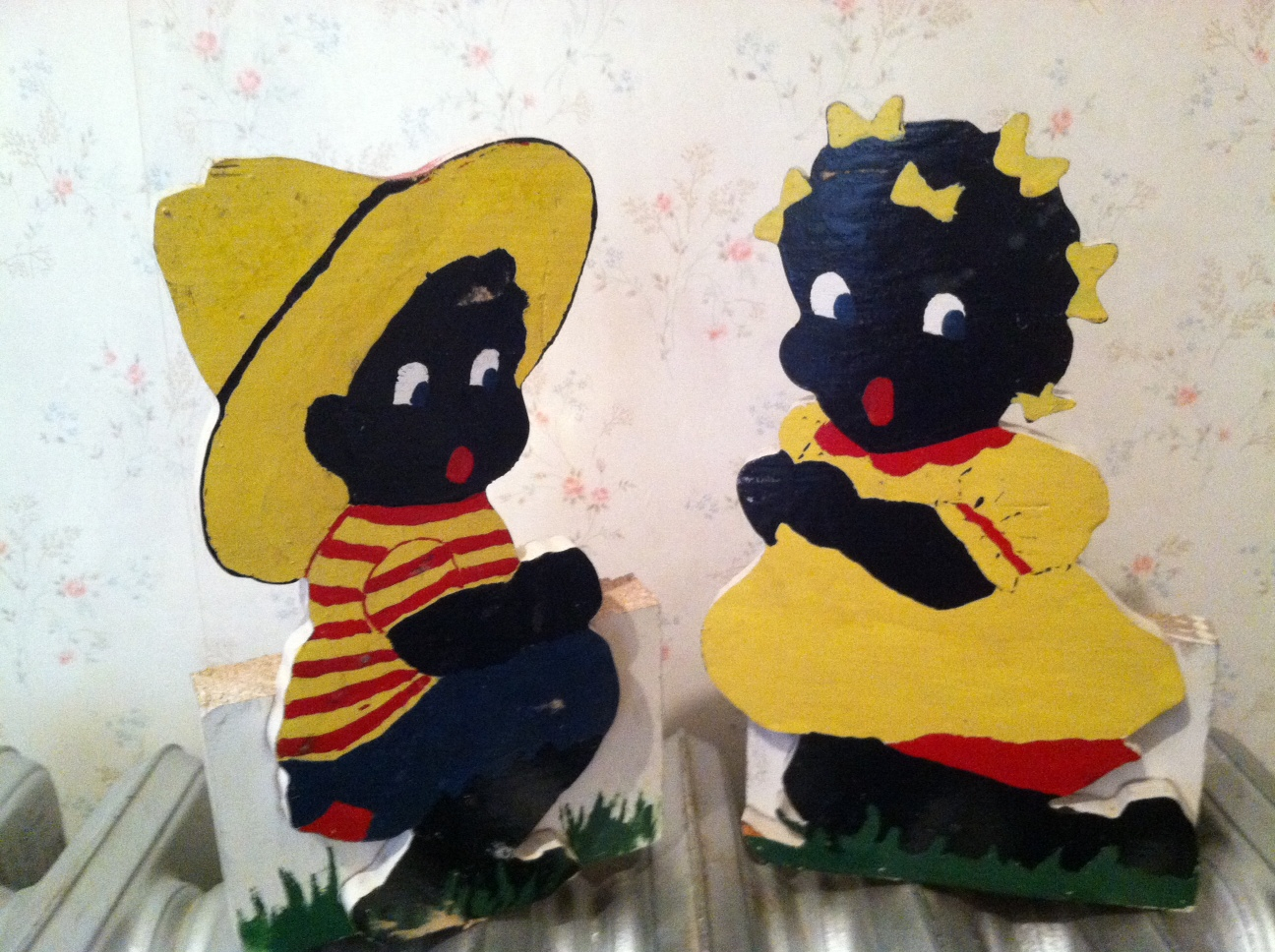
In a recent visit to the attic, I came upon a pair of bookends featuring two pop-eyed black faces, a boy and a girl, painted in grade school. Were such children curiosities to us? Novelties? Why would my teacher approve of such an art project? Along with stories like Little Black Sambo, they were obviously part of the folklore of another era, not at all politically correct by today’s standards.
My first encounter with a black person, up close and personal, was with little Chico Duncan, a black boy from New York City, who came to our home for a week in the “Fresh Air” program in which volunteer families would give city children summer vacations in the country. (Shirley Showalter’s book Blush devotes an entire chapter to her friendship with their family’s Fresh Air girl.) The most fascinating thing about Chico was his hair, kinky black and glistening. Was his hair naturally oily or did he put on something from a bottle? I longed to touch it and feel the texture, but fear or embarrassment or both restrained me from even asking. Besides, he was a BOY, and I had hoped for a girl to play with!
But that was years ago. Now at Bossler’s Church, children who sing “Jesus Loves the Little Children” may actually be sitting besides a child with a darker skin tone. The church treasurer, a former missionary, has an Ethiopian husband; one farm family has adopted African-American twin babies. There is a couple of Middle-Eastern descent. The Bishop, Director of African Programming with Eastern Mennonite Missions, has biological grand-children of Kenyan-American ancestry.
And my Grandma Longenecker? For at least two decades through Lutheran Social Services, she and Aunt Ruthie sponsored families from all over the world—particularly Viet Nam, Africa, and eastern Europe. They, along with many other Lancaster County families, welcomed the immigrants and refugees from countries at war for weeks or months at a time until they could get a job, an apartment of their own, even acquire an education.
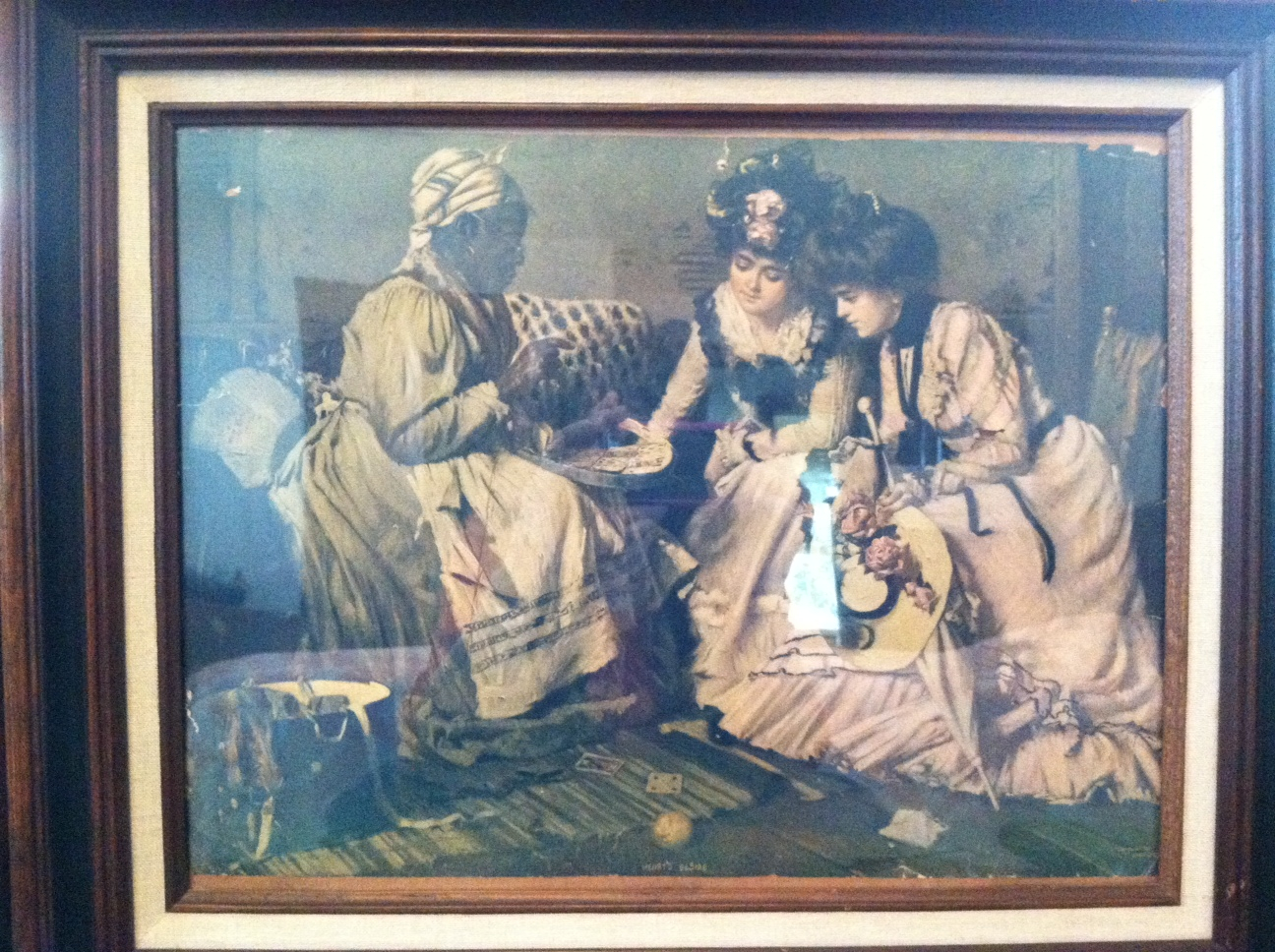
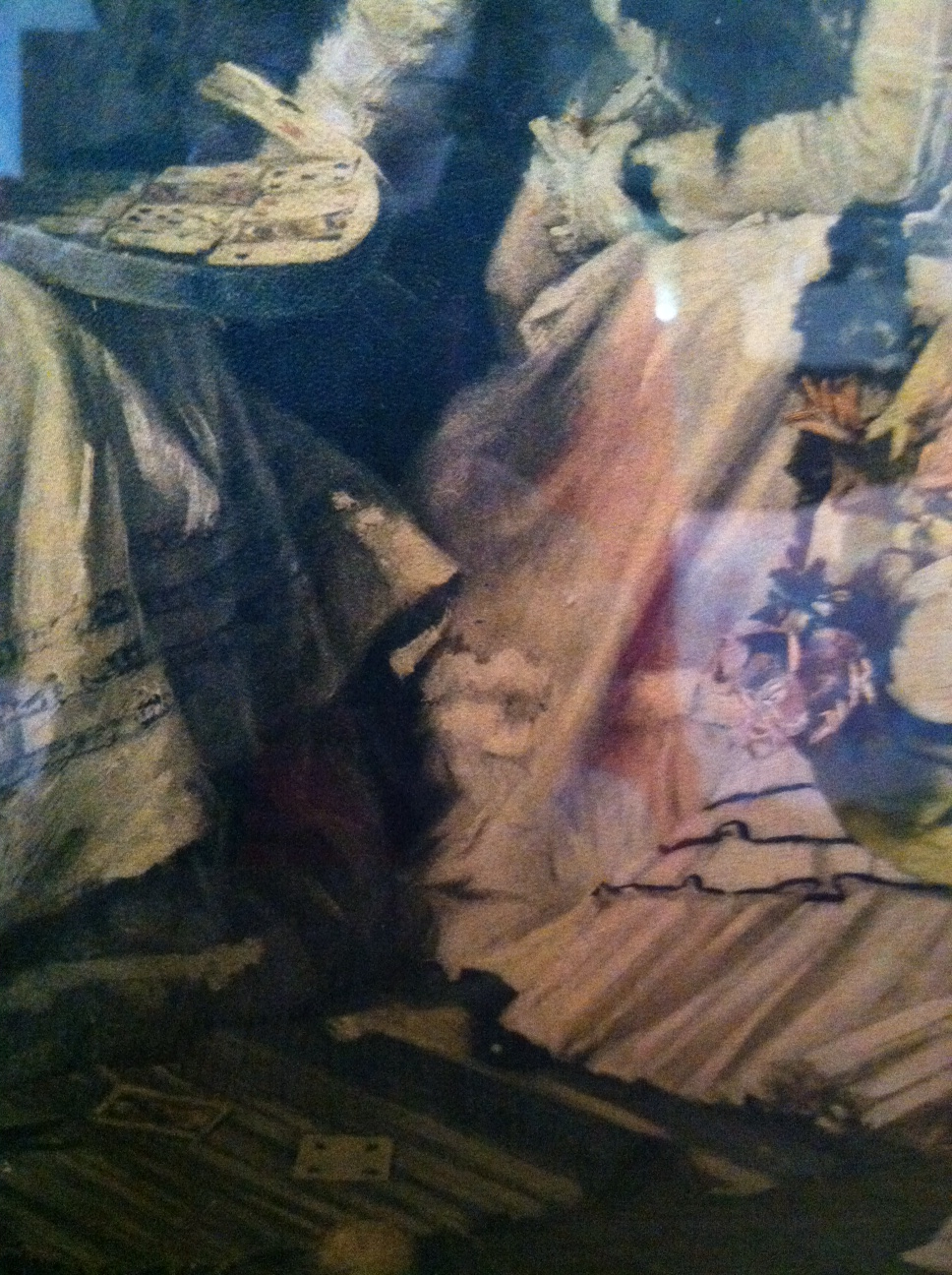
A few months ago, I re-visited Aunt Ruthie’s bedroom, (now unoccupied because she lives at Landis Homes) and saw on the wall as if for the first time, a framed picture of three women:
Two elegantly dressed Victorian women and a black woman, obviously a maid, playing cards. Is the maid holding the card tray for the other two? Is she teaching the ladies tricks of the trade? Are all three playing the game? Three would make a better game, don’t you think?
Detail: Women Playing Cards
What experience with race did you encounter as a child? What story or anecdote can you add? I love when the bell chimes with your comment!
A man must have dreams–memory dreams of the past and eager dreams of the future. I never want to stop reaching for new goals. – Maurice Chevalier
Then the Lord answered me and said: “Write the vision And make it plain on tablets, That he may run who reads it. Habakkuk 2:2 New King James Version (NKJV)
Between your dream‘s inspiration and its manifestation, there’s going to be a lot of perspiration. Daily Devotional: The Word for you Today, January 2, 2014 entry
A [wo]man is not old until regrets take the place of dreams. John Barrymore
MEMORY
Yesterday is today’s memory and tomorrow is today’s dream. Kahlil Gibran
Memory is the script of the soul. Aristototle
Each day of our lives we make deposits in the memory banks of our [grand]children. Charles R. Swindoll
God gave us memory so we might have roses in December, (January, February . . )
From my JOURNALS 1996-1998
Gratitude is the heart’s memory. French proverb
Puttering is creating a fresh interior landscape. Sarah Ban Breathnach in Simple Abundance
Women share with men the need for personal success, even the taste for power, and no longer are we willing to satisfy those needs through the achievements of surrogates, whether husbands, children or merely role models. Elizabeth Dole
On Music:
“The auditory nerve is very closely connected to the limbic system so that sound (i.e. music) does not have to go through the cortex of the brain but goes directly to the heart, the senses.” unknown source (noted April 9, 1998)
Rhythm in music imprints language on the brain in a way pure auditory words will not. Slower tempo in classical music develops a framework for learning to occur. NPR report on “The Mozart Effect” (1998)
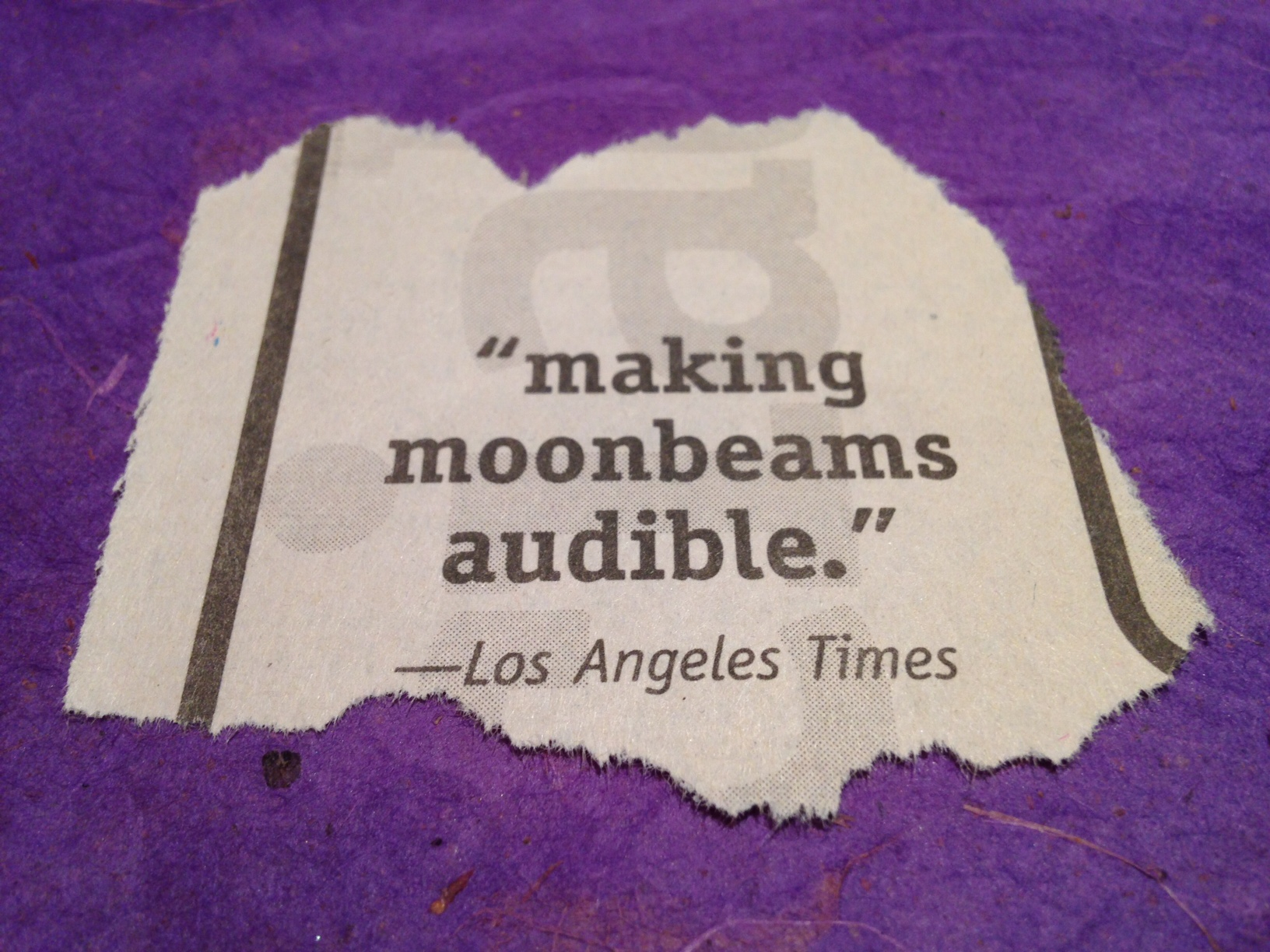
What Makes a Moonbeam Audible for you?
Feel free to comment also on any of the categories about: visions, dreams, memory, music, or something else. I will always reply!
Still time to vote for my story in Sonia Marsh’s My Gutsy Story Contest. Thank you, thank you to all who have already voted. You make a difference!











 Plain and Fancy