What Lights Your Fire?

My mother wore many hats both literally and figuratively. Most of her head coverings were prayer veilings worn every day. As a young woman, her coverings were large, decreasing in size as she got older and church rules had progressively relaxed.

Mom+Marian_2 mos_5x9_300


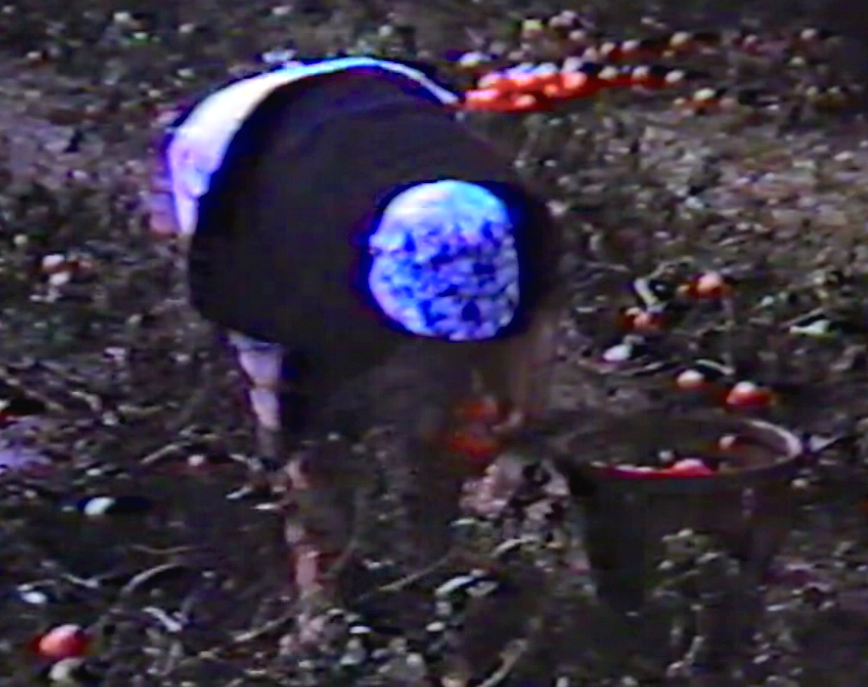
Mother wore a sunbonnet in the tomato patch in Bainbridge, PA. As far as I could tell, Mennonite women in the 1940s and 1950s, paid no attention to Coppertone ads. (Remember billboards with that sneaky cocker spaniel pulling on a little girl’s swimsuit bottom, exposing her pale cheeks?) No one that I knew then wore sun tan lotion regularly, except maybe to the shore at Atlantic City or Ocean City. Country women, including my mother, wore bonnets in the garden and fields to protect their skin.
MomBonnetTOMATOES

The details are fuzzy here because this photo is another movie “still” captured from Aunt Ruthie’s 16 mm camera (circa 1955).

I look at this image of Mother’s sunbonnet worn in the tomato patch with two lenses, viewing the blurry film now and remembering the scene vividly then as an eyewitness:

I’m looking at a film clip of Mother in rows of the tomato patch just now, humped-over body bending toward a flush tomato bush facing the camera, her blue and white speckled sunbonnet sewn with three tiers of matching ruffles, a row along the bill, a row at the crease, another row near the crown of the hat—come to think of it now, headgear much fancier than her everyday prayer cap.


Figuratively too, she wore many hats:

Sister

Wife

Mother

Friend

Gardener

Tomato Picker

Cook/preserver

PTA/Treasurer

Dresser of chickens

Sewing circle seamstress

Volunteer – MCC Gift and Thrift

Volunteer – Choice Books in Salunga, PA

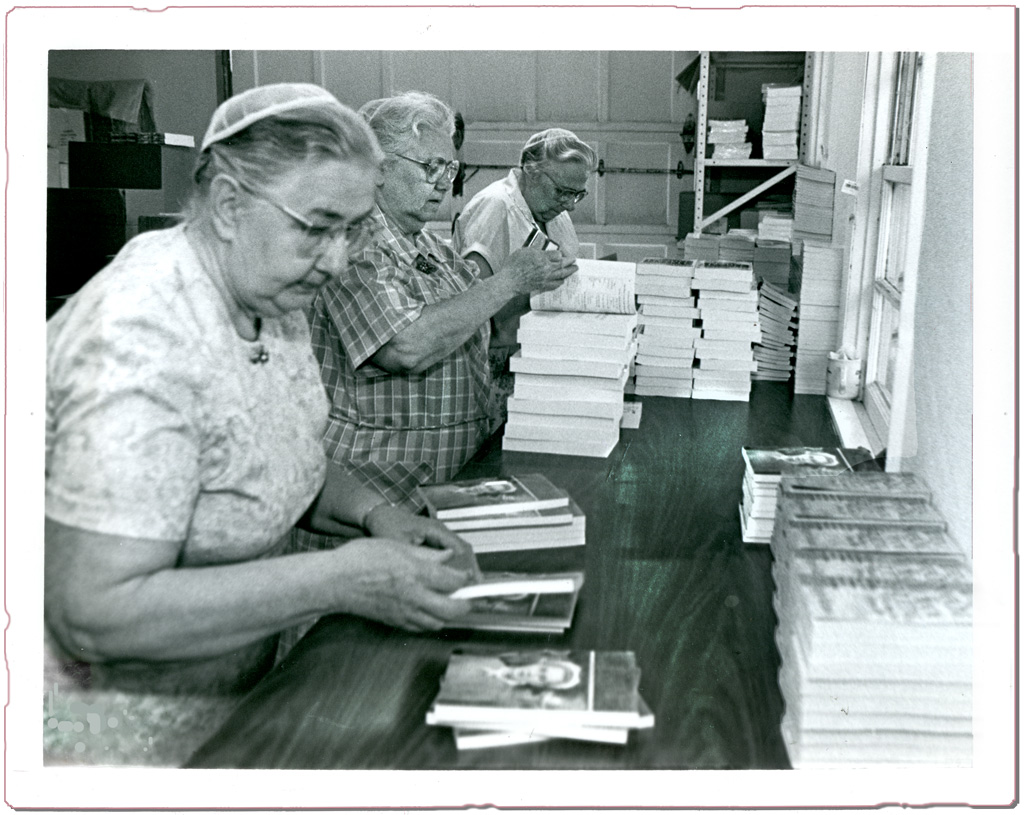
Mother particularly enjoyed her last volunteer job, stamping the Choice Books logo onto inspirational books for display on kiosks in stores around the country. During her “morning away,” she got to see her niece Dotty Metzler Martin often, met her friend Bertha, and ate lunch with other friends. She always sounded thrilled to describe this excursion when we talked on the phone Saturday mornings.
MomChoiceBooks

Even in her early nineties, she got excited about this bright spot in her life. I thought about her experience and examined my own passions when I read this verse from Psalm 39:3

My heart grew hot within me . . . and as I meditated, the fire burned. (NIV)

If someone asked Mother, “What lights your fire?” She would probably answer, “Serving others,” a motto she lived by.

The 16 x 22 inch poster created for her 90th birthday party and later, displayed on an easel at her memorial service, shows flash points of service, including her stint at Choice Books.

PosterMom2008


How would you answer these burning questions?

  • What lights your fire?
  • What burns “hot” within you?

“When God gives you an 11-by-17 mindset, you’ll never be happy living in a 3-by-5 mental framework.” Daily Devotional: The Word for You Today, April 10, 2016


Hearing from you lights my fire. Thank you for commenting here!


Coming next: All Creatures Great & Small: The Power of Pets
 

Moments of Discovery # 10: a Bubble, a Dome, a Mirror

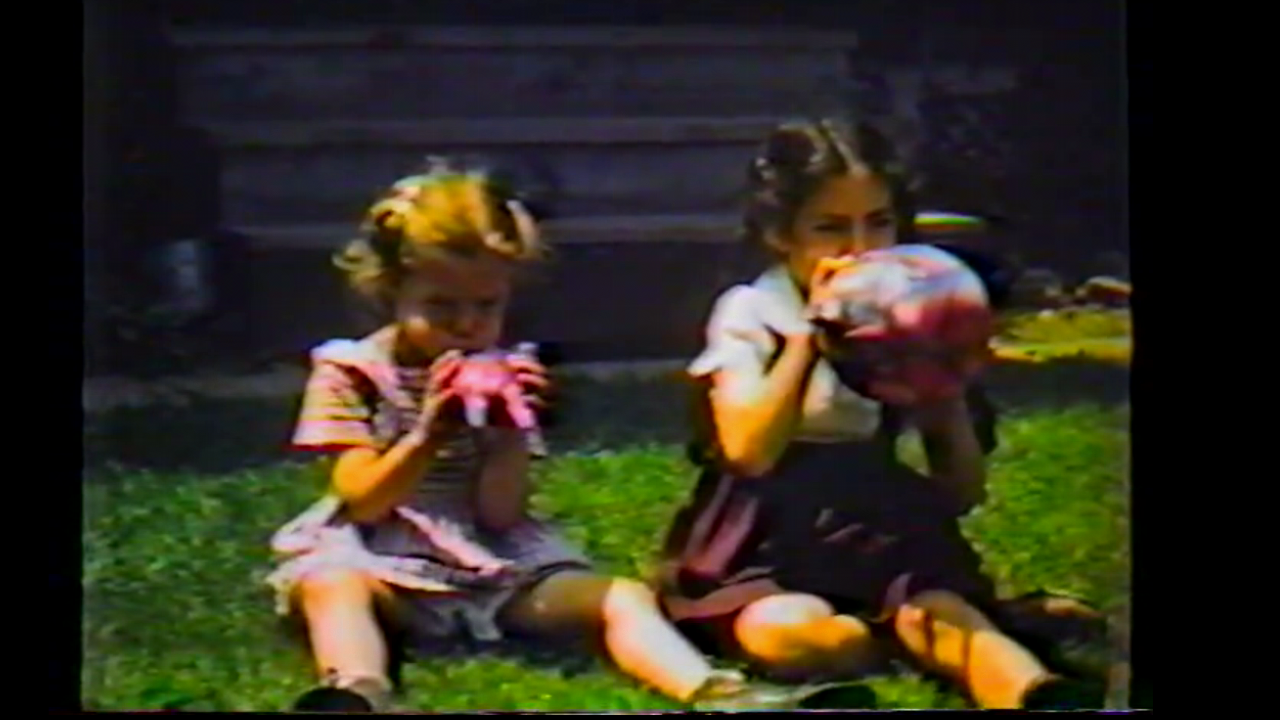
My sister Janice and I blew up balloons when we were little. Here is a stop-action snap from Aunt Ruthie Longenecker’s 16 millimeter movie film. The balloons were thick, rubbery and multicolored.

MarianJanBalloonBlow copy

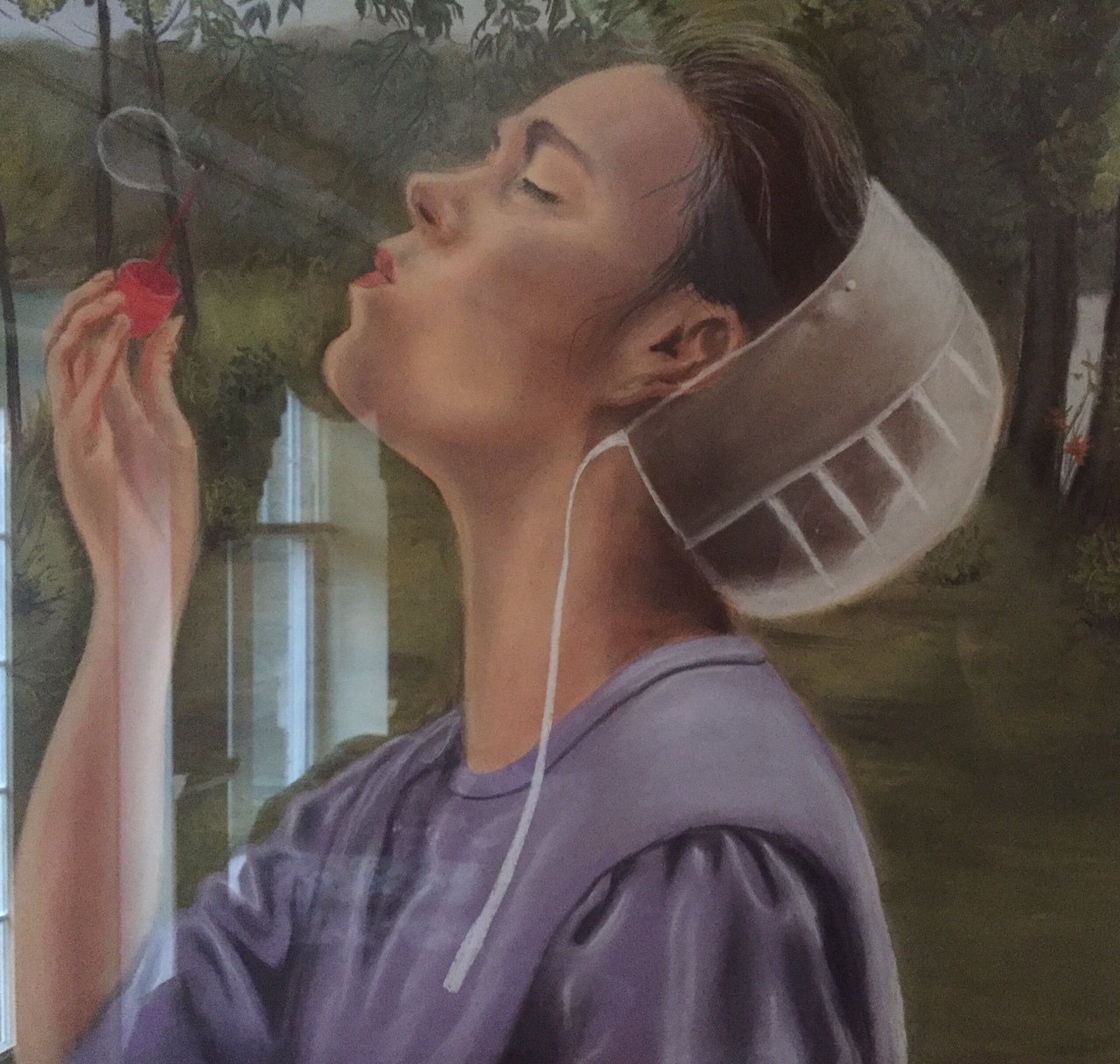
We also blew bubbles sitting on the porch swing or standing in the back yard. I don’t have pictures of those, but on one of the walls at Landis Homes, where Aunt Ruthie now lives, an Amish girl is forever blowing bubbles, possibly expressing her wishes and dreams.

Picture displayed in Manheim House, Landis Homes, Lititz, Pennsylvania
Picture displayed in Manheim House, Landis Homes – Lititz, Pennsylvania

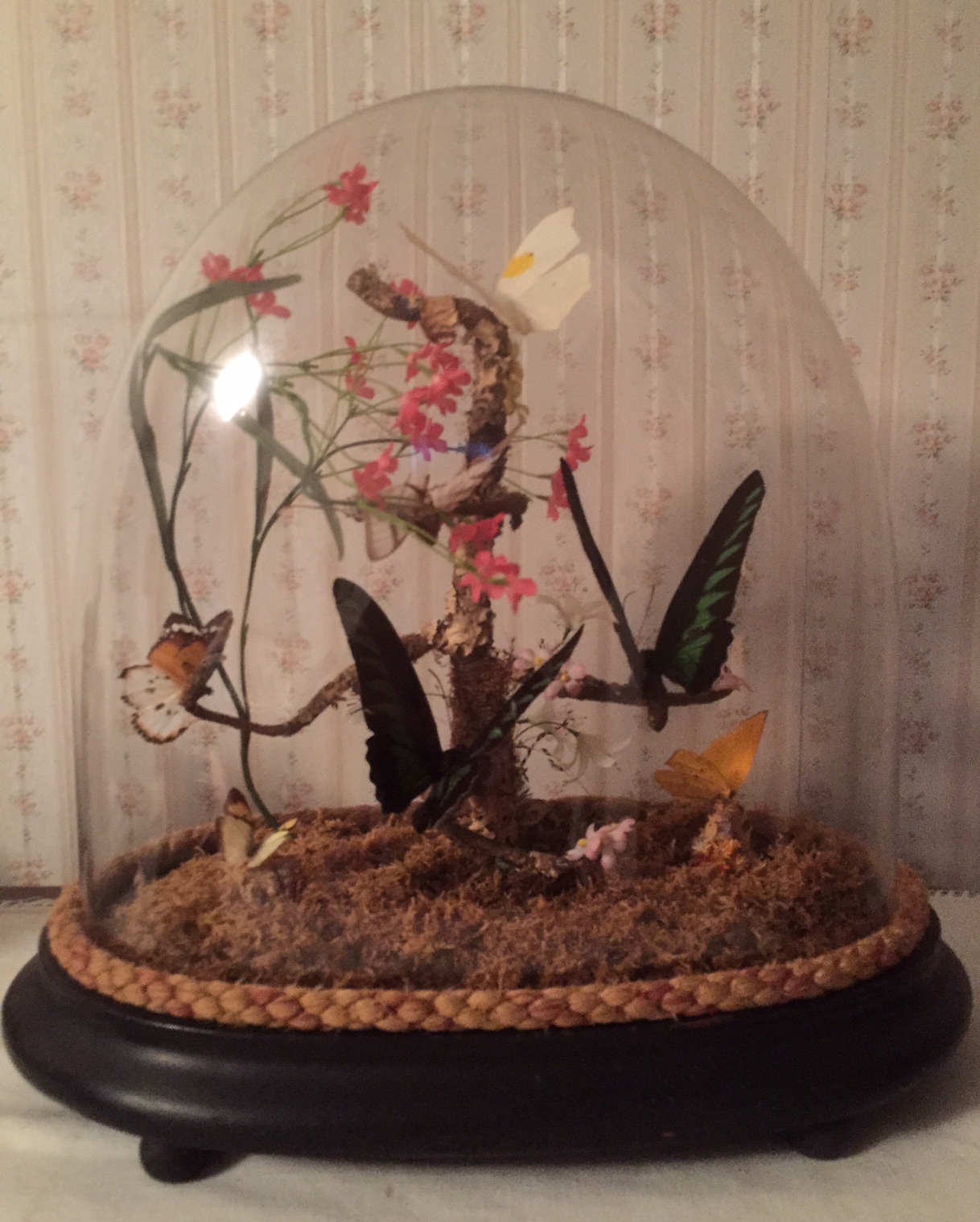
On top of a chest of drawers in Aunt Ruthie’s former bedroom sits a terrarium, a bubbly dome, covering butterflies in suspended animation on branches that rise above a blanket of lichen.

TerrariumVictorian

Terrariums, popular during Victorian times, usually contain live plants. Moss, ferns, and other flora thrive in the warm humid environment. During short winter days, weak slants of sunlight draw moisture to the top of the dome during the day, which circulates back down to the soil in the evening, creating a hermetic climate. You can read about the history of the terrarium here. The author features dish terrariums, pickle jar and wine glass terrariums, terrariums with waterfalls.

Grandma Fannie Longenecker had terrariums too, a miniature world of green we peered into when the ground was snow white in winter. Some of her glass containers were cookie-jar shaped, crowned with a knobby top. Others were rectangular and covered with a thin pane of glass.

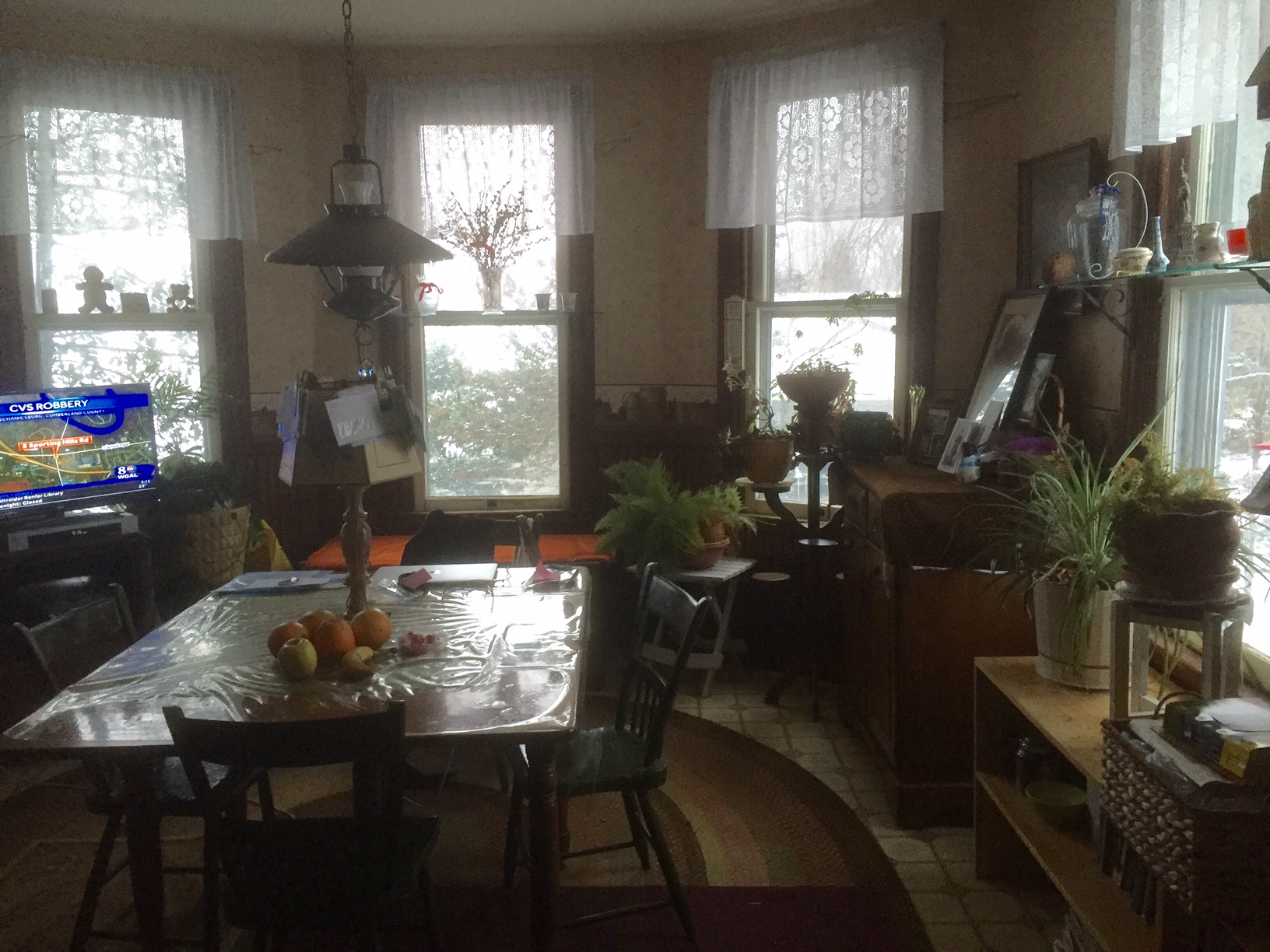
A few ferns, though not in terrariums, still grace the bay windows at Grandma’s house. She never had a TV.

GrandmaBayWindow

Something else shiny and green I played with upstairs, a little-girl dresser. But now a grown-up girl gazes back at me when I angle the mirror just right.

DressGirlVictorian

For now we see only a reflection as in a mirror; then we shall see face to face. Now I know in part; then I shall know fully, even as I am fully known.

~ I Corinthians 13:12 NIV

Crista's maidenhair fern under a cloche
Daughter Crista’s maidenhair fern under a cloche, bell-shaped


Your discovery this week may not have been a balloon, a dome, or a mirror. It may have been something else. Inquiring minds want to know!


Coming next: Any Hats in Your History?

Climbing the Swiss Alps: 7 Steps Toward a Narrative Arc

Events in our lives happen in a sequence in

time, but in their significance to

ourselves they find their own order . . . the

continuous thread of revelation.

—Eudora Welty, One Writer’s Beginnings

Writers find real life images to compare what happens as they mold life events into stories:

  • To fabric (thread and weaving)
  • To clay (molding a lump into a recognizable form)
  • To construction (building a house from the foundation up)

Finding the right shape for telling our story is a critical step in the memoir writing process. Writers call it the narrative arc.

Paging through a photo album of my trip to Switzerland, I have found another metaphor for structuring my memoir: Contours of the Swiss Alps

All photos: Marian Beaman
All photos: Cliff and Marian Beaman

Climbing the Alps fits with the theme and title of Journey of Memoir by Linda Joy Myers and Brooke Warner. “One of the most challenging aspects of writing a memoir, which of course is based on true and real events in your life, is to create a plot out of what happened.” (104)

I know my life story. I don’t have to make up events and characters. Through trial and error, I have decided that my theme is the quest for my true self as a sheltered Mennonite girl growing up in Lancaster County, Pennsylvania.

Still, I have to mold my tale into a story of transformation, one that will grip readers’ imagination and keep them turning the pages.

* * *

Aristotle affirms that every story needs a beginning, a middle, and an end: Act One, Act Two, Act Three.

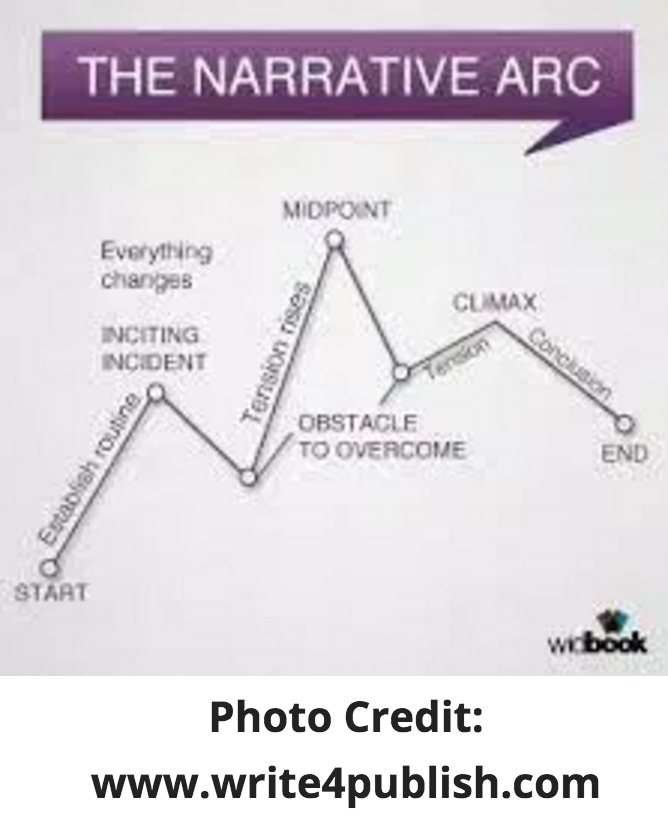
Stories that intrigue have conflict too. For example, when you saw a play like Our Town or Macbeth, you were transported into another world through exposition, rising action (the story builds), a crisis, a climax, and finally a resolution.

Crisis (all seems to be lost) Climax (major conflict narrator must resolve) Conclusion (epiphany - so that's it!)
Crisis at midpoint (all seems to be lost) Climax (major conflict narrator must resolve) Conclusion (epiphany – Ah,  so that’s it!)


My 7 Steps . . .

  1. I created a timeline of vivid memories in my life. This is how I hoped to arrive at my turning points, moments of significant change. As I drew, I thought in terms of chronology. What is my first memory? What stands out in elementary school? What family events pop up? Who looms large as a mentor? Answers to these questions could become turning points, I believed.

TimelineMemoir copy

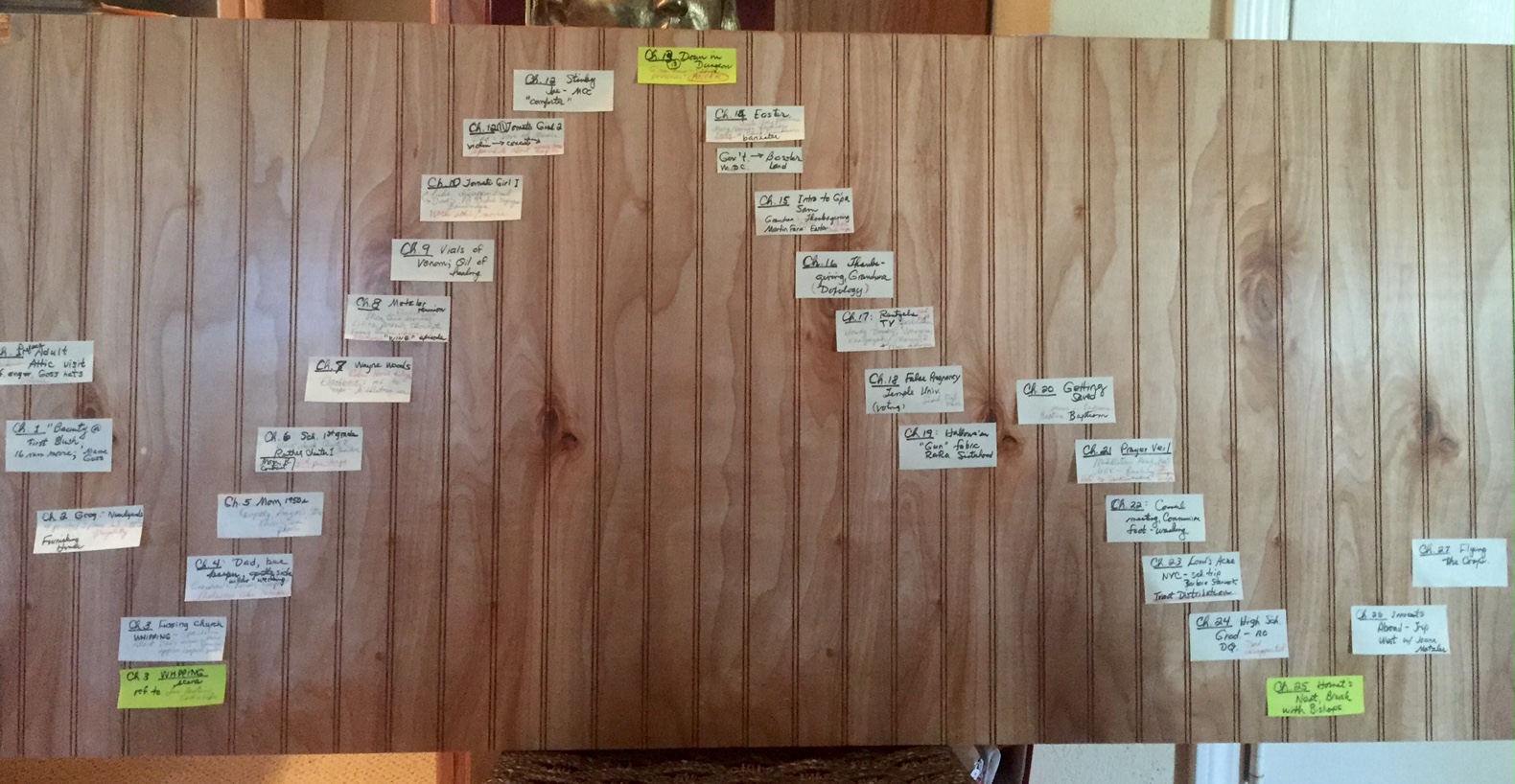
  1. Then I thought about scenes. On colored stickies I randomly wrote phrases that came to mind. For example: The phrase “Daddy yodeling” could turn into a scene about my sisters and me taking turns singing with Daddy at the piano, relating to the impact of music upon my formative years.

TimelineStickies

ColoredStickies

3. Next I gathered random scenes into a sensible order.  Writers choose scenes based on how well they relate to their theme, the message of their memoir. For example, a theme can be traveling and what you learned on the journey, recovering from a challenging situation like an illness or abuse, or the struggles of becoming a chef. My own theme can be stated as a question: How can a girl from a sheltered and restrictive Mennonite culture find her place in an emerging new life?

A memoir is not an autobiography. I couldn’t include every detail of my entire life. I selected only those scenes that related to my theme. I write about this in a previous post.

W-FormRevise copy

  1. Sometimes I felt stuck. Fatigue sets in on a long climb. Air is more rare as one moves into the higher altitudes (Alp-titude in Swiss terms). Sometimes I felt faint-hearted.

PuzzledWgraphMarianMarch1 copy

  1. I constructed a narrative arc composed of scenes relating to my theme. A narrative arc can take several forms: curvy like a hill or jagged like the Swiss Alps.

The core of mine turned into an upside-down V-shape, rather like a peak in the Swiss Alps

AlpsOutline1997

W-StructureBoard copy

The sticky notes make it possible for me to move ideas around easily. In fact, I’ve moved some notes into a different order since the photo was taken.

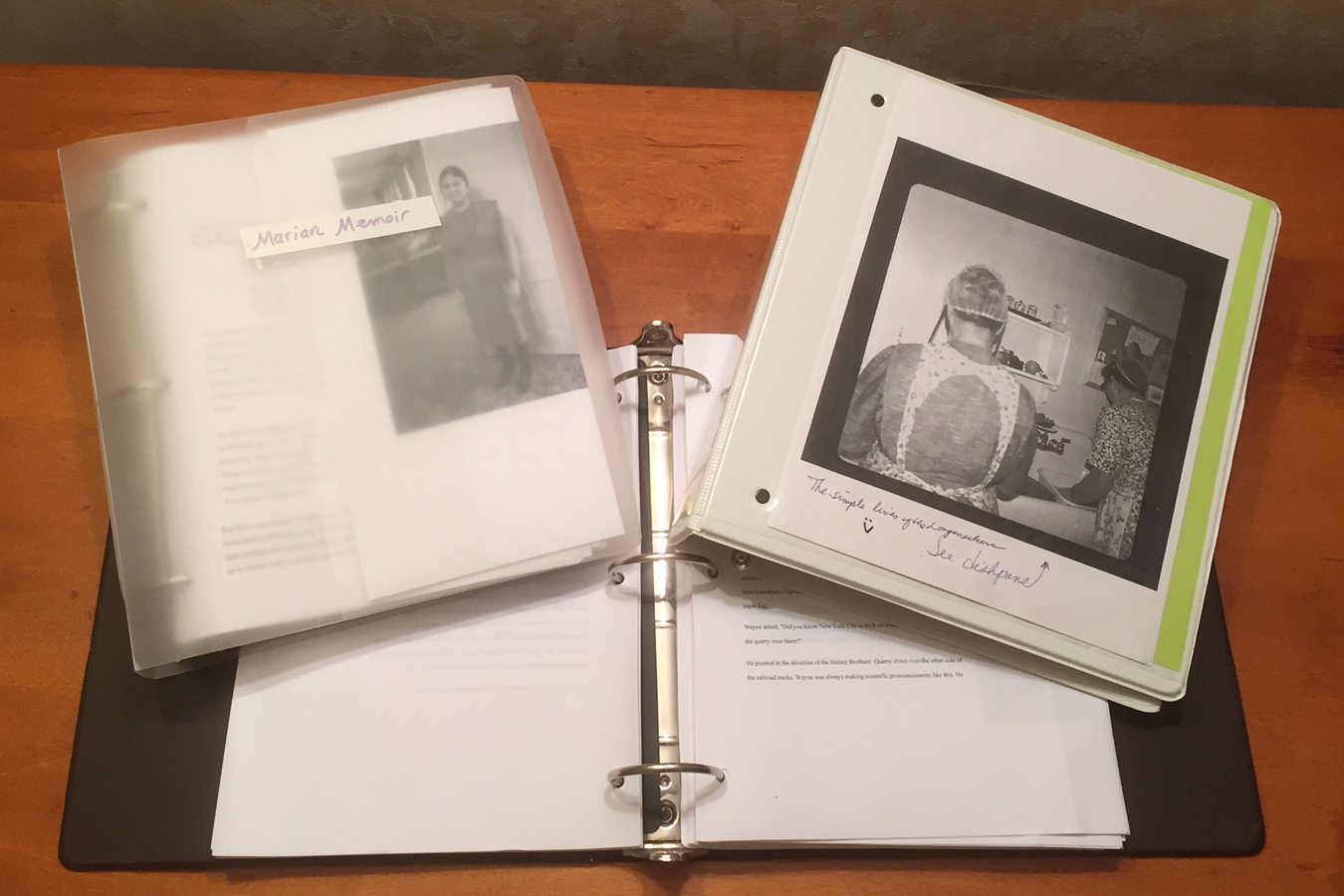
6. I’ve printed out copies of drafts. As I’ve progressed, I’ve stored manuscripts in labeled folders on my computer desktop. But I’ve also printed out copies of my drafts from my laptop because I find it helpful to touch the pages and make marginal notes in colored ink. Pages in the binders feel book-like, real.
BinderManuscripts3 copy

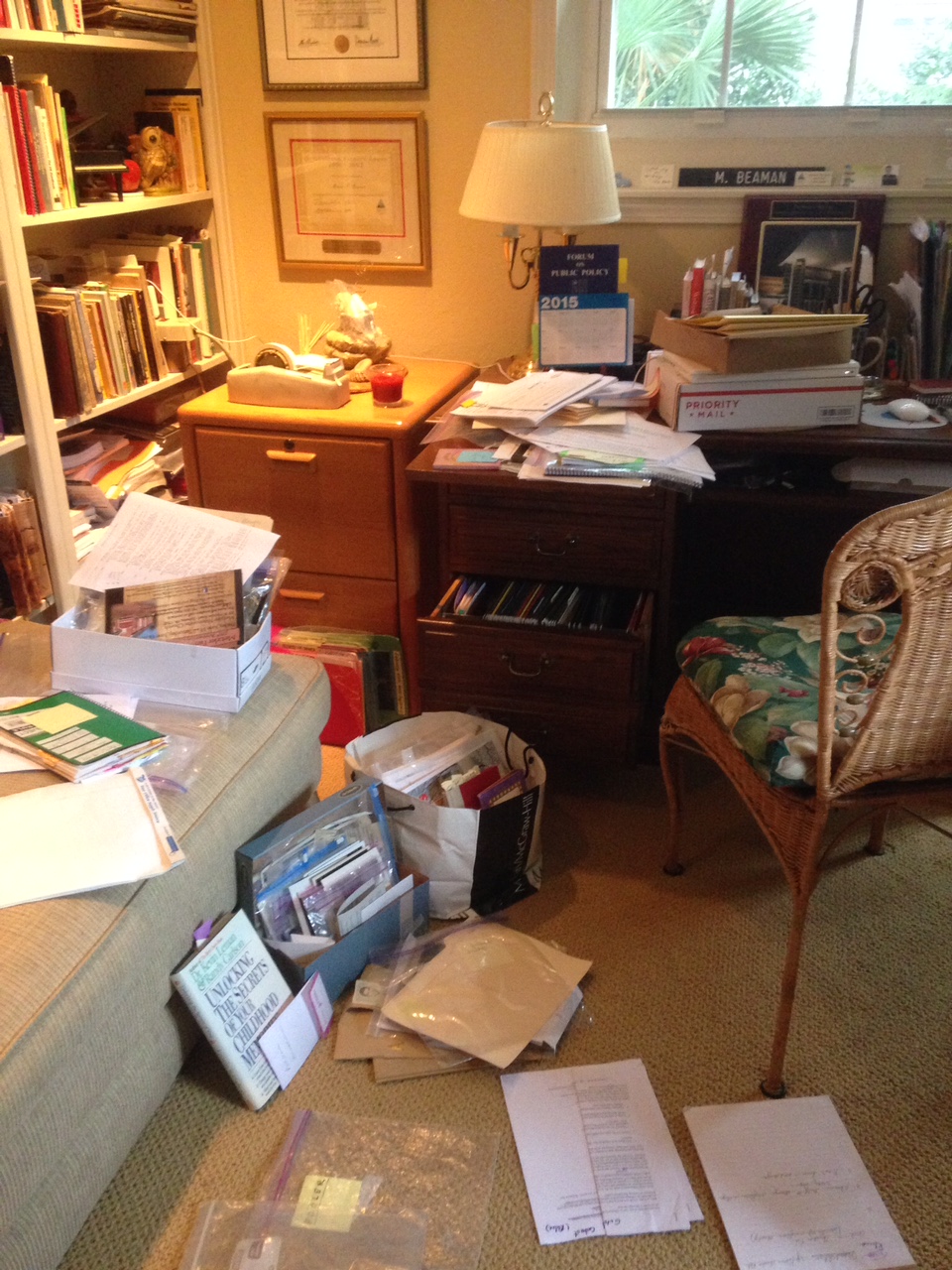
7. I try to overlook messiness in my work space. Generally, I’m a neatnik, but worries about order, except in my writing, distract from my creative process.

MessyDesk copy

So, that’s where I am now!

I began with an impulse to tell my story which progressed from

Journals –>  Blog posts –>  Memoir Drafts

At the moment, I’m in the muddy middle, aiming to complete the journey across the Alpine-scape of memoir.

More to come . . .


How about you?

Have you made a similar journey with memoir? How would you chart your narrative arc? 


Coming next: Moments of Discovery, a Bubble, a Dome, a Mirror

Easter Passion: Then and Now

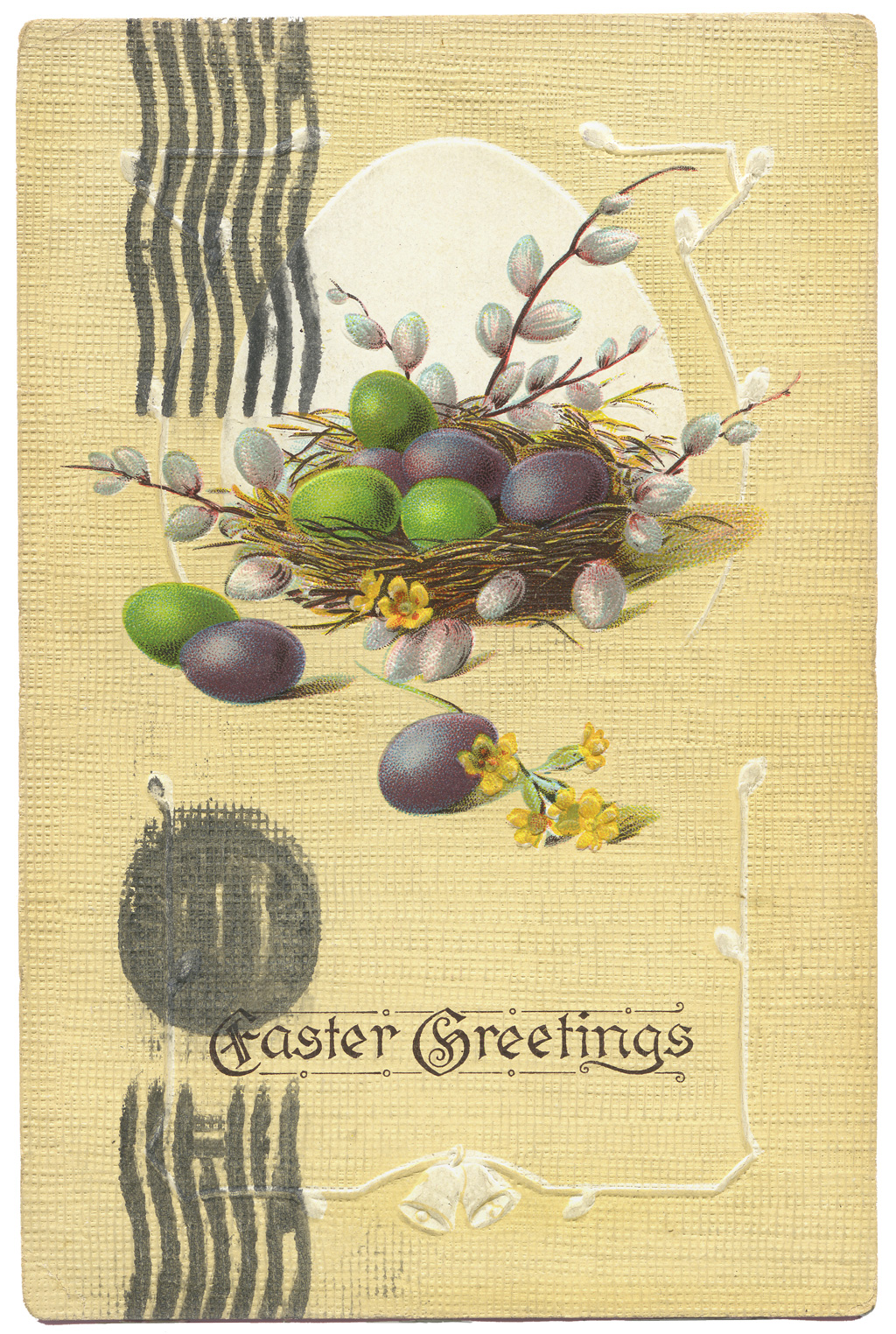
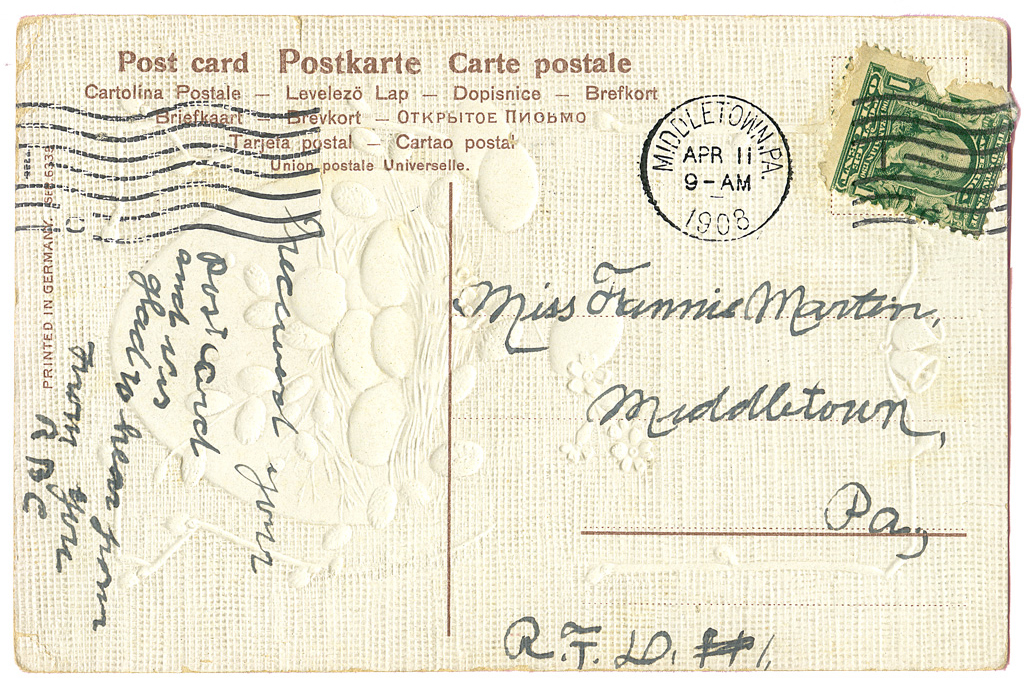
At Easter-tide I’m dipping once again into my Grandma Fannie Martin Longenecker’s stash of vintage post cards. Here is one dated April 1908 from “your RBC,” it says, with the postmark wrapped around the face of the card.

EasterPostcard1908?Front

EasterPostcard1908?Back


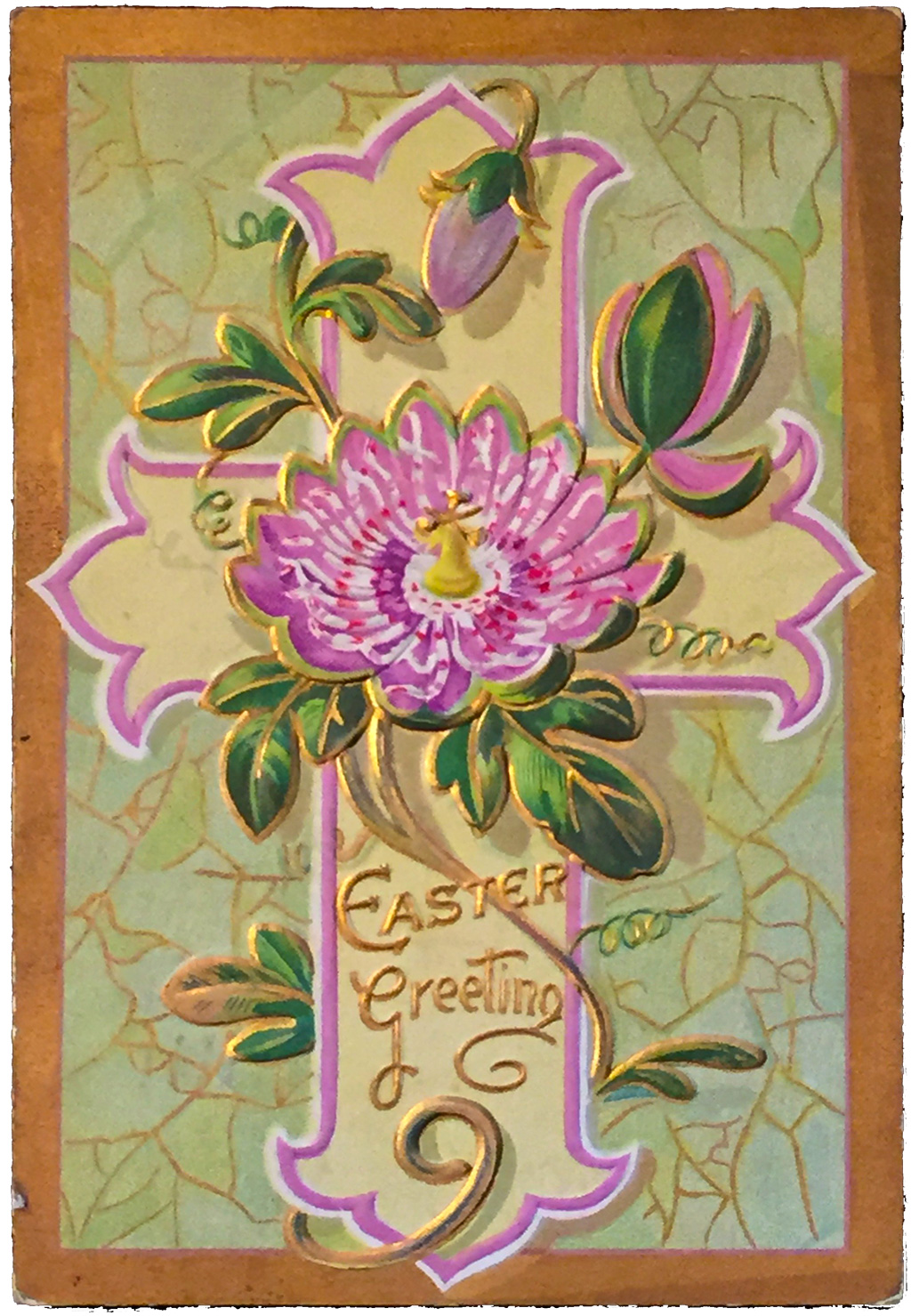
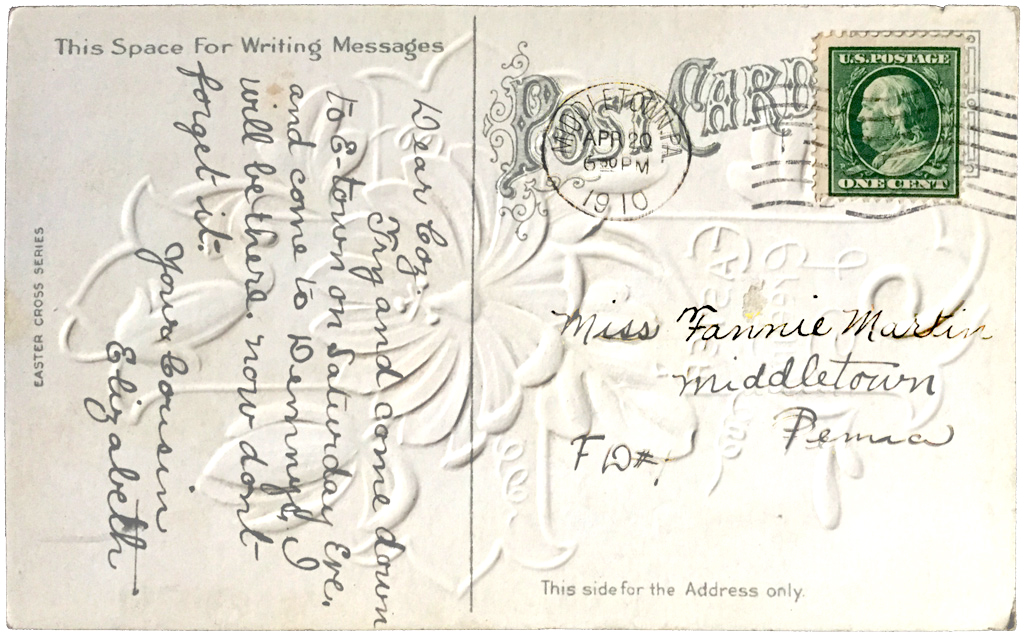
Another, from 1910, displays the marvelous passion flower adorning the cross.

EasterPostcard1910FRONT


EasterPostcard1910Front

The message from Grandma’s cousin Elizabeth begins with “Dear Coz” and in black flowing fountain-pen ink cursive begs her for a visit: “Try and come down to E-Town on Sat. Eve and come to Demmys. I will be there now don’t forget it.”


The passion flower which blooms in the spring has come to symbolize the suffering and death of Christ, hence the nickname “passion.” Mary Delany, herself a late-blooming artist, constructed a lovely flower with 230 petals with her scissors art.

passionFlower

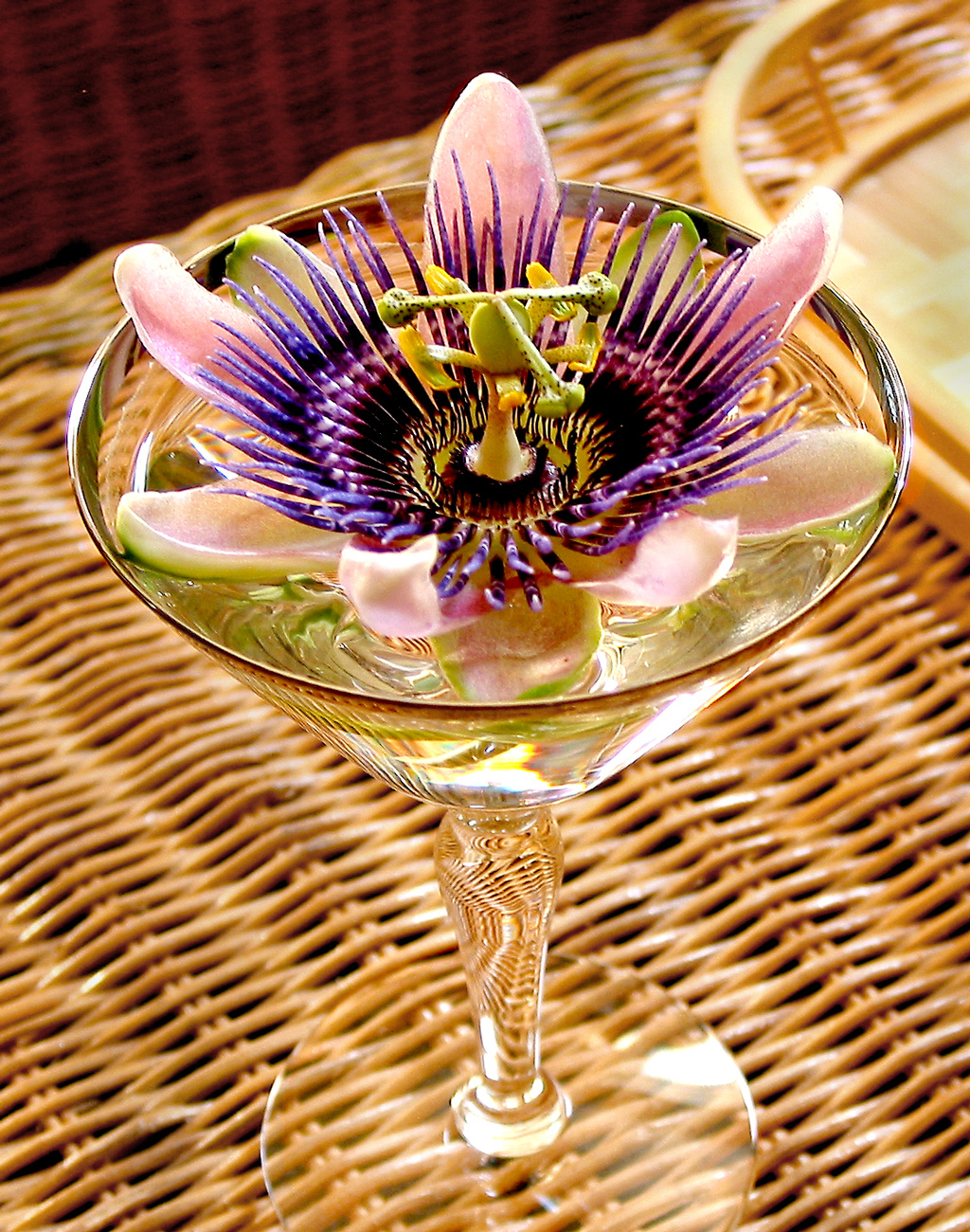
The bloom (Passiflora) grown in my garden illustrates the religious symbolism explained below.

PassionFlower2012vase

One writer, a Franciscan sister, has expressed the meaning of the flower parts in this way.

In the 15th and 16th centuries, Spanish Christian missionaries adopted the unique physical structures of this plant, particularly the numbers of its various flower parts, as symbols of the last days of Jesus and especially his crucifixion:

* The pointed tips of the leaves were taken to represent the Holy Lance.
* The tendrils represent the whips used in the flagellation of Christ.
* The ten petals and sepals represent the ten faithful apostles (less St. Peter the denier and Judas Iscariot the betrayer).
* The flower’s radial filaments, which can number more than a hundred and vary from flower to flower, represent the crown of thorns.
* The chalice-shaped ovary with its receptacle represents a hammer or the Holy Grail
* The 3 stigmata represent the 3 nails and the 5 anthers below them the 5 wounds (four by the nails and one by the lance).
* The blue [purple] and white colours of many species’ flowers represent Heaven and Purity.


This is the season of spring, Easter, and Passover. Happy Holy-day to you!


Coming next: Climbing the Swiss Alps: 7 Steps Toward a Narrative Arc


Wanted: Forty More Winks

A Shock to Our Systems

Do you live where Daylight Saving Time has gone into effect recently? If so, today you may feel out of sync, sleep-deprived. The loss of even one hour of sleep pushes one’s biorhythms out of kilter.


Who’s to Blame: Daylight Saving Time

In the wee hours of Sunday clocks moved forward one hour, delaying sunrise and adding evening daylight. According to one source, a New Zealander proposed the modern idea of DST in 1895. Germany followed in 1916. Many other country since then have followed the spring ahead/fall behind routine, especially since the energy crisis of the 1970s.

The time change has been loved or hated ever since. My author friend Janet Givens provides a well-researched blog post on the topic. Her research explodes the myth that Daylight Saving Time is supported by farmers.


Sleep: A Cure

Medical journals including Psychology Today, often publish articles about sleep or the lack thereof. Such pieces also regularly appear in the table of contents of women’s magazine and AARP journals.

Literature is replete with references to sleep. In Shakespeare’s tragedy, Macbeth, who has recently murdered King Duncan, knows his sleep will be troubled or interrupted even as he ruefully ticks off its benefits:

“Sleep that knits up the raveled sleeve of care / The death of each day’s life, sore labour’s bath / Balm of hurt minds, great nature’s second course, Chief nourisher in life’s feast.” Act 2, Scene ii

  • Sleep repairs the unraveled parts of our lives, knits them up.
  • Sleep comes at the end of the day; it looks like a little death.
  • Sleep brings bodily relief from pain as do baths.
  • Sleep refreshes the mind.
  • Sleep is essential to life. We can’t do without it.

In Search of Forty Winks, Patricia Marx comments:

. . . party and then firing the cleanup committee. The New Yorker, February 8, 2016
 party and then firing the cleanup committee. (The New Yorker, February 8, 2016. pages 56. 57)


Ben Franklin and the Bible on Sleep

Early to bed and early to rise makes a man healthy, wealthy and wise.   ~ Benjamin Franklin

The sleep of a laboring man is sweet, whether he eat little or much: the abundance of the rich will not suffer him to sleep.     ~ Eccl. 5:1


Sleeping Child

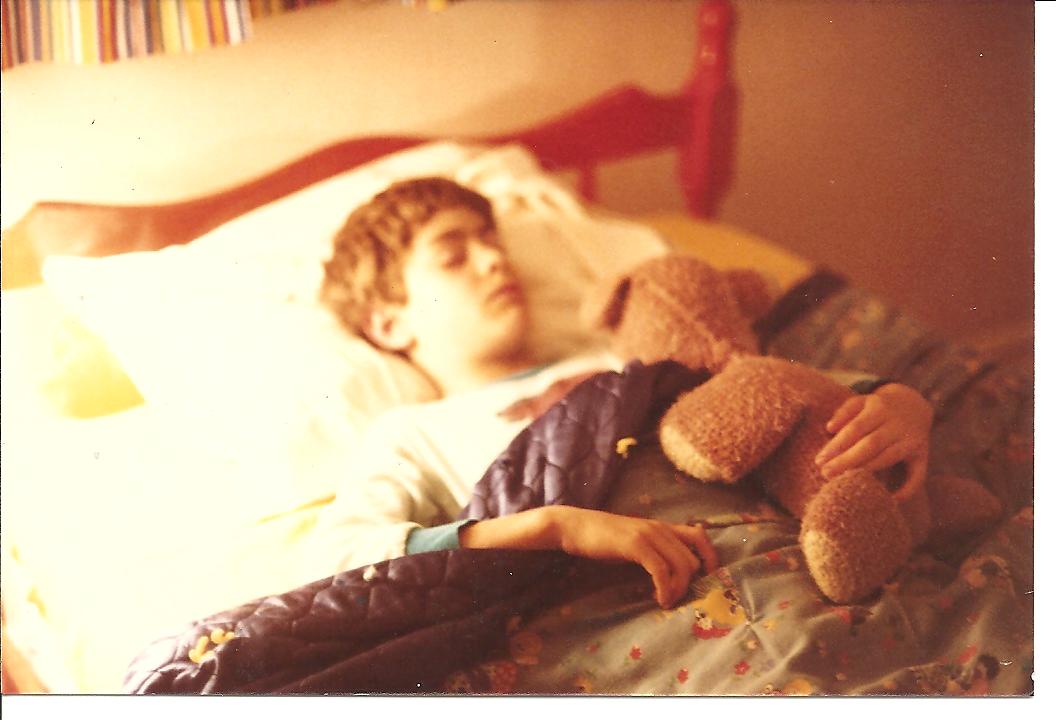
Joel sleeping with teddy bear, age 8
Joel sleeping with teddy bear, age 8 or 9

Our son Joel was fast asleep embracing his teddy bear knitted by his Great Aunt Ruthie. He may have been dreaming of riding his skate board or playing with match-box cars. As a nine-year-old, he was certainly not worrying about caring for children, the needs of a wife, mortgage payments, or at-work performance.

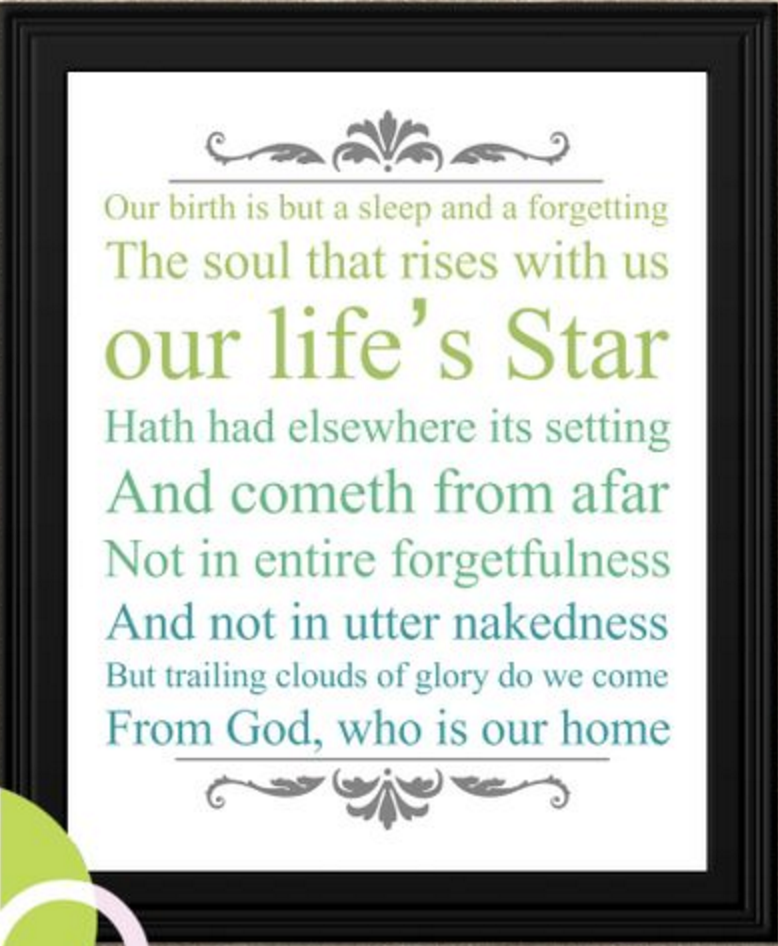
Wordsworth offers a philosophical perspective on sleep:

Ode: Intimations of Immortality, William Wordsworth Source: Pinterest


Here is the first stanza of a nursery rhyme Joel probably heard before he fell asleep:

Wee Willie Winkie runs through the town,

Up stairs and down stairs in his night-gown,

Tapping at the window, crying at the lock,

Are the children in their bed, for it’s past ten o’clock?


Comments about sleep, advice about getting more of it?  Your wisdom welcome here. All creatures need down time, even inanimate ones. Note that there is a sleep button on your computer, just above re-start.


Answer key to limericks published March 9, 2016 

1. lewd

2. dinner

3. divinity

4. weeds


How to Teach a Piano Lesson

“Joel, I’m going to the Christian Light Press in E-Town for some birthday cards, do you want to go along?”

“Okay, Mommy, do you think they have lollipops?” queried my mischievous son.

“I don’t think bookstores have lollipops at the counter like doctor’s offices do, but maybe they have other fun things to look at,” I said, thinking he would enjoy an excursion into town while visiting his cousins in Pennsylvania.

Entering the store, I spied precious novelties tempting to touch, a fact that struck me with a fearsome shudder because I had an 8-year-old in tow.

“Now don’t touch anything. Just look. Do you see the sign on the display? It says ‘If you break it, you buy it!’”

“Uh huh,” he said racing to the music boxes and other curios.

I turned to the bank of colorful greeting cards not far away eyeing cards appropriate for Mother and sister Jean.

“Squeak-thunk,” was the next sound I heard across the aisle, close to where I saw the top of Joel’s thatch of brown wavy hair.

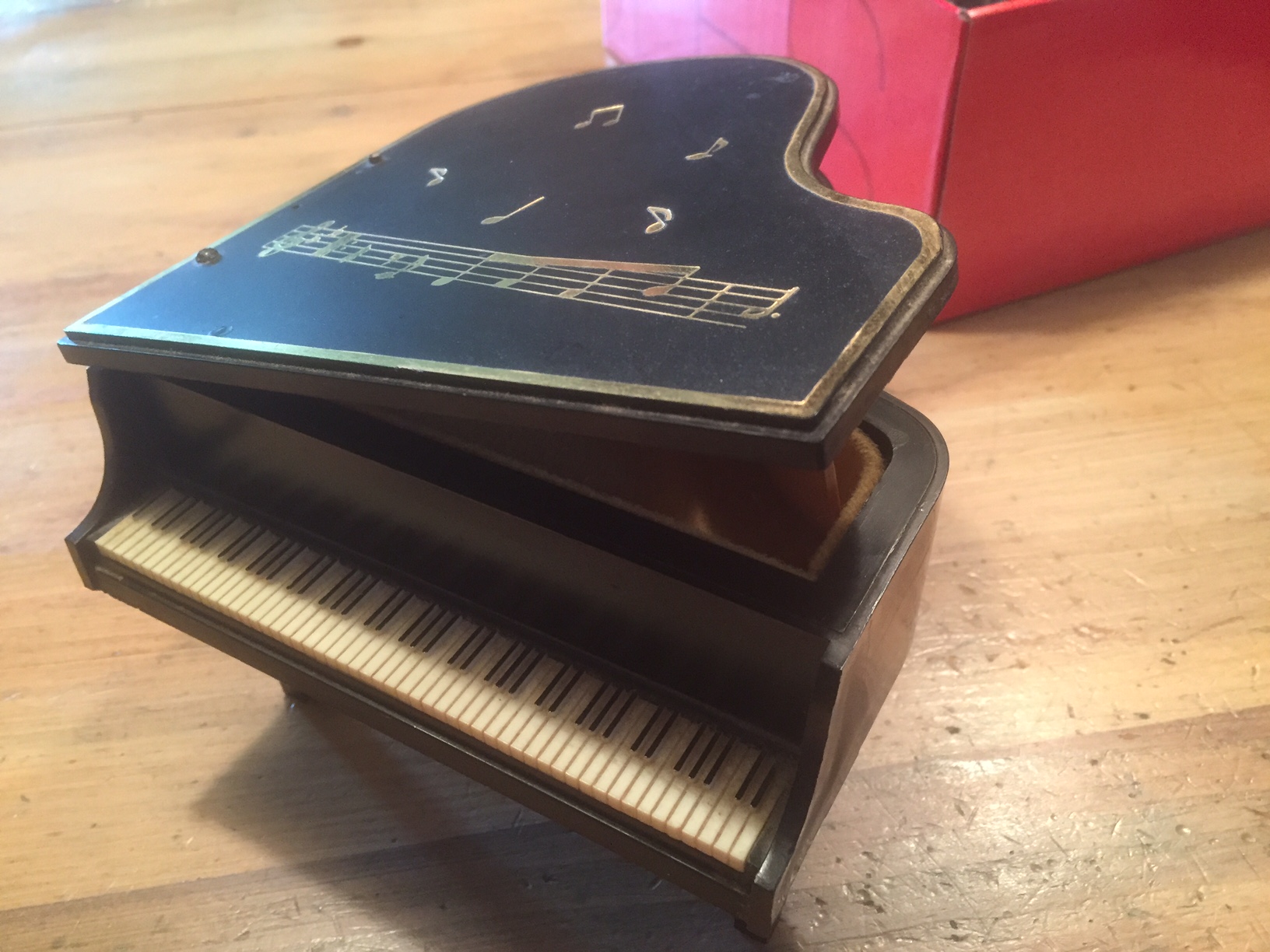
Cards in hand I strode over toward Joel and saw him holding a toy baby grand piano. As I looked closer, I noticed the hinge to the piano lid was halfway broken off. Turning the piano upside down to reveal a music box attached underneath, I noted a sticker. The price tag announced: $ 13.95. Please understand, we were a struggling young family in the 1970s, my husband and I both teachers, so the money registered on my mental calculator as a staggering figure.

Right there and then I had a double D attack: disappointment at my son’s disobedience and dread coursing from head to toe knowing we had to face the owner and admit to the breakage.

My feet felt like lead as I led Joel by the hand and I trudged down the aisle toward the clerk/owner who appeared to be glowering at us behind a tall metal cash register with raised keys and a bottom drawer that slammed shut.

I approached the counter speechless but managed to turn over the music box revealing the price tag. Swallowing slowly I formed words, “I guess we’ll need to pay for this. My son broke it accidentally.”

“Yes, you will. You see what the sign says.” I knew the warning only too well.

Opening my wallet hesitantly, I shelled out the dollars and cents, Joel standing by my side his head hanging, embarrassed and chastened.

* * *

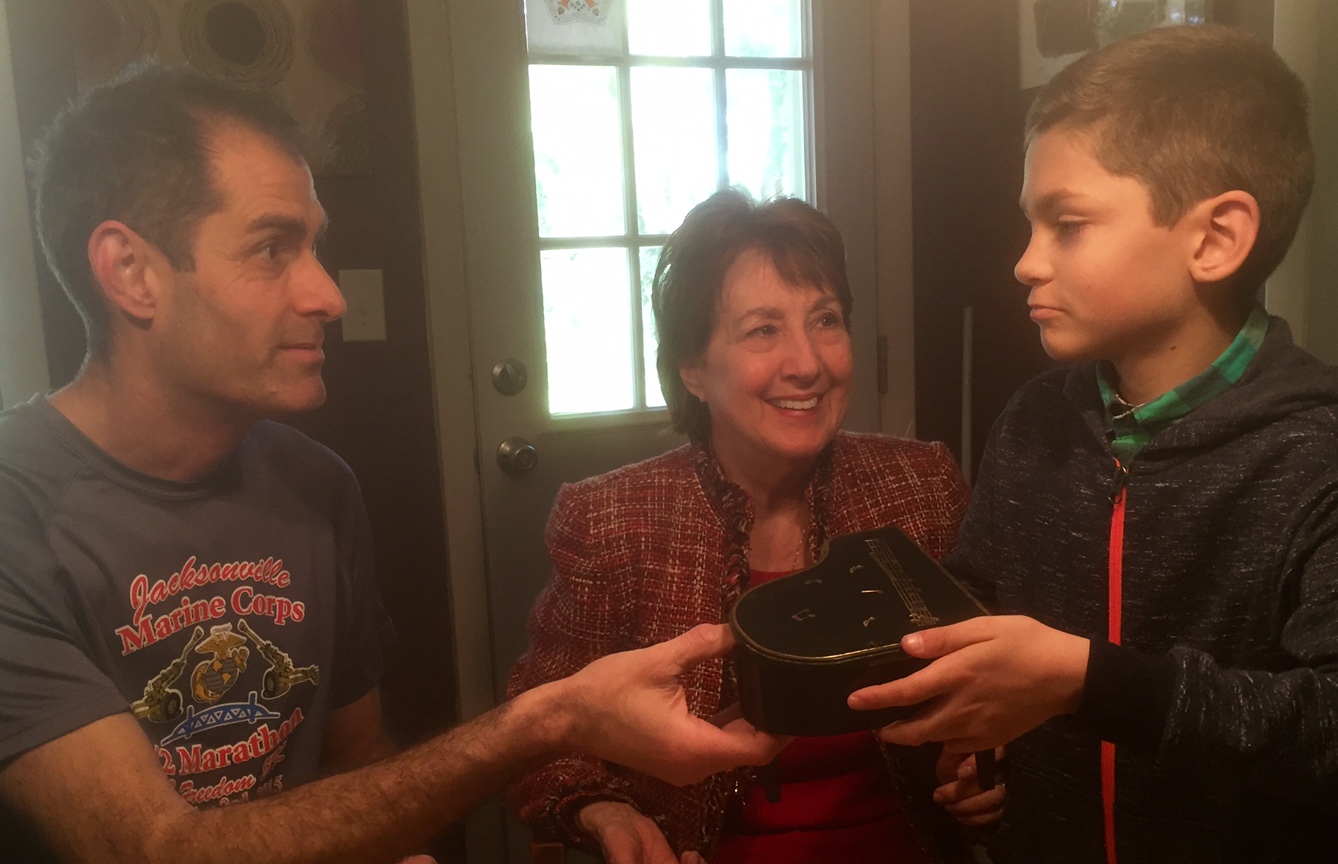
Leap forward over thirty years, and son Joel now has his own son Ian, also age eight.

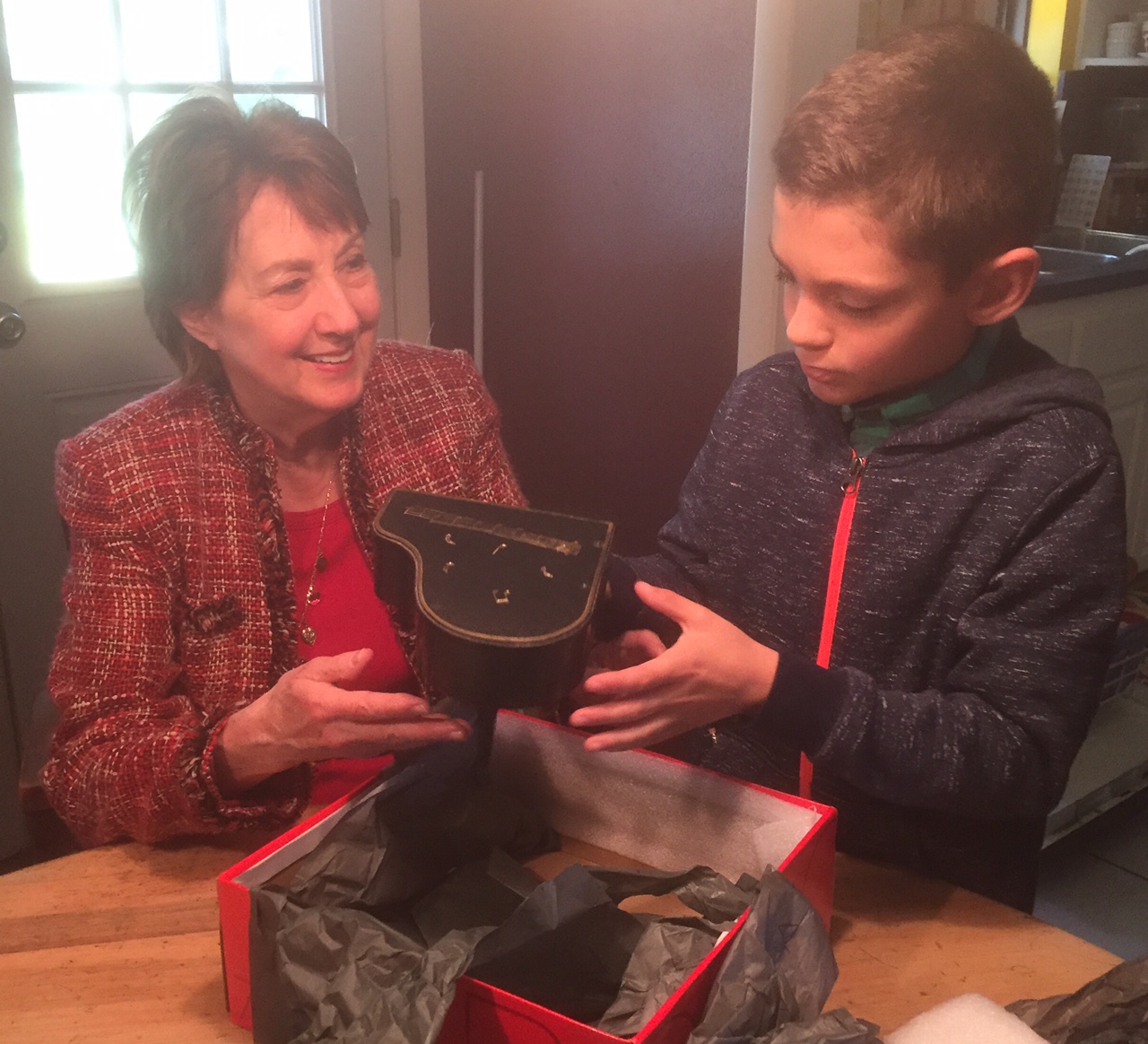
Several weeks ago I presented Ian with this same piano that has sat on my bookshelves for decades, occupying space between American poetry and art history books. Because we are downsizing, I have been passing along keepsakes to the next generation.

Joel was privy to my intention and approved my gifting the piano that plays the Lord’s Prayer as a tinkling, lullaby tune.

The presentation of the bequest began with a sturdy, red shoebox surrounded by tissue and foam padding. And then the unveiling . . .

IanOpeningPiano

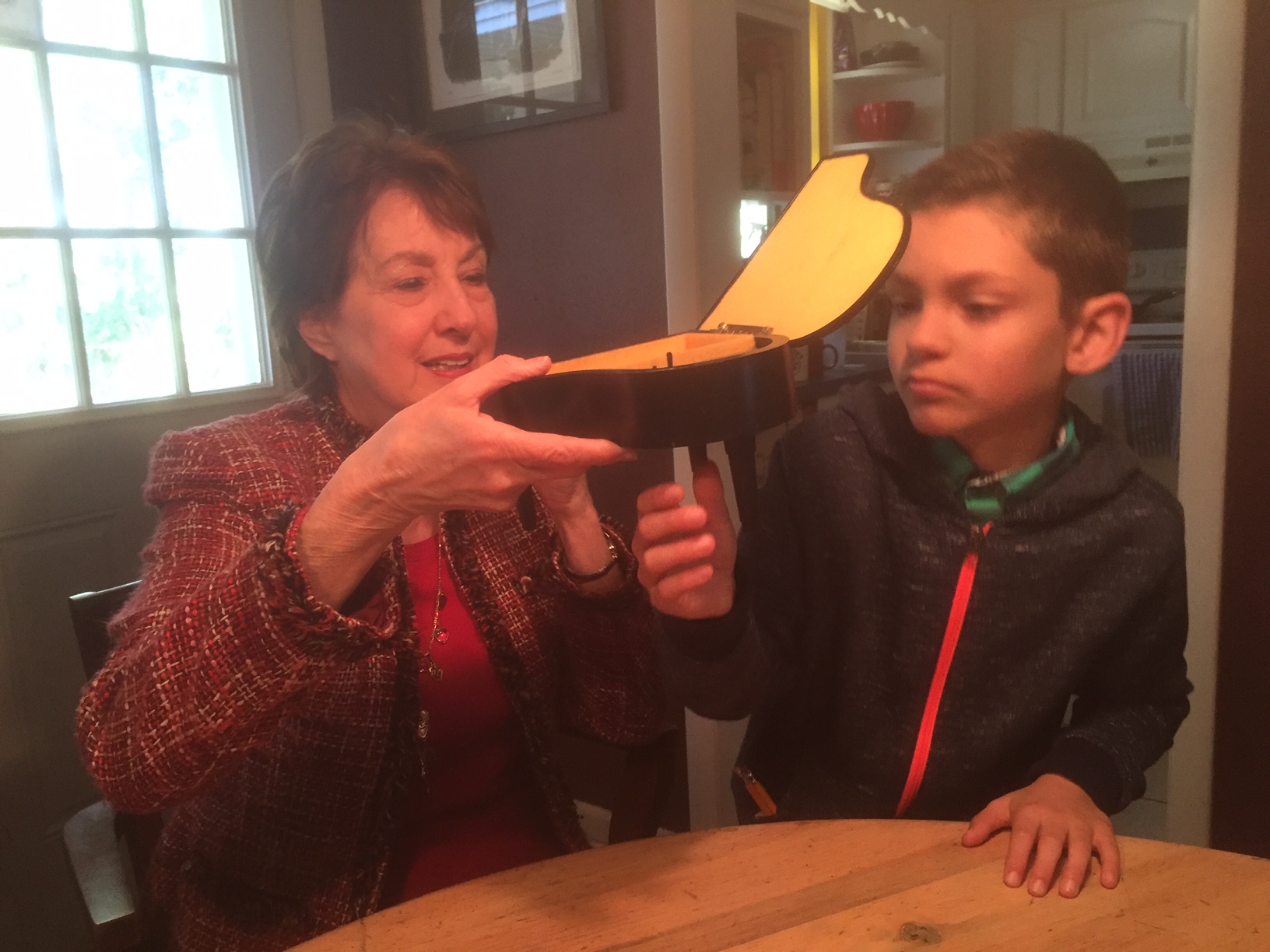
Turning the wind-up key, voilá – sweet music filled the air.

PianoTwist Key

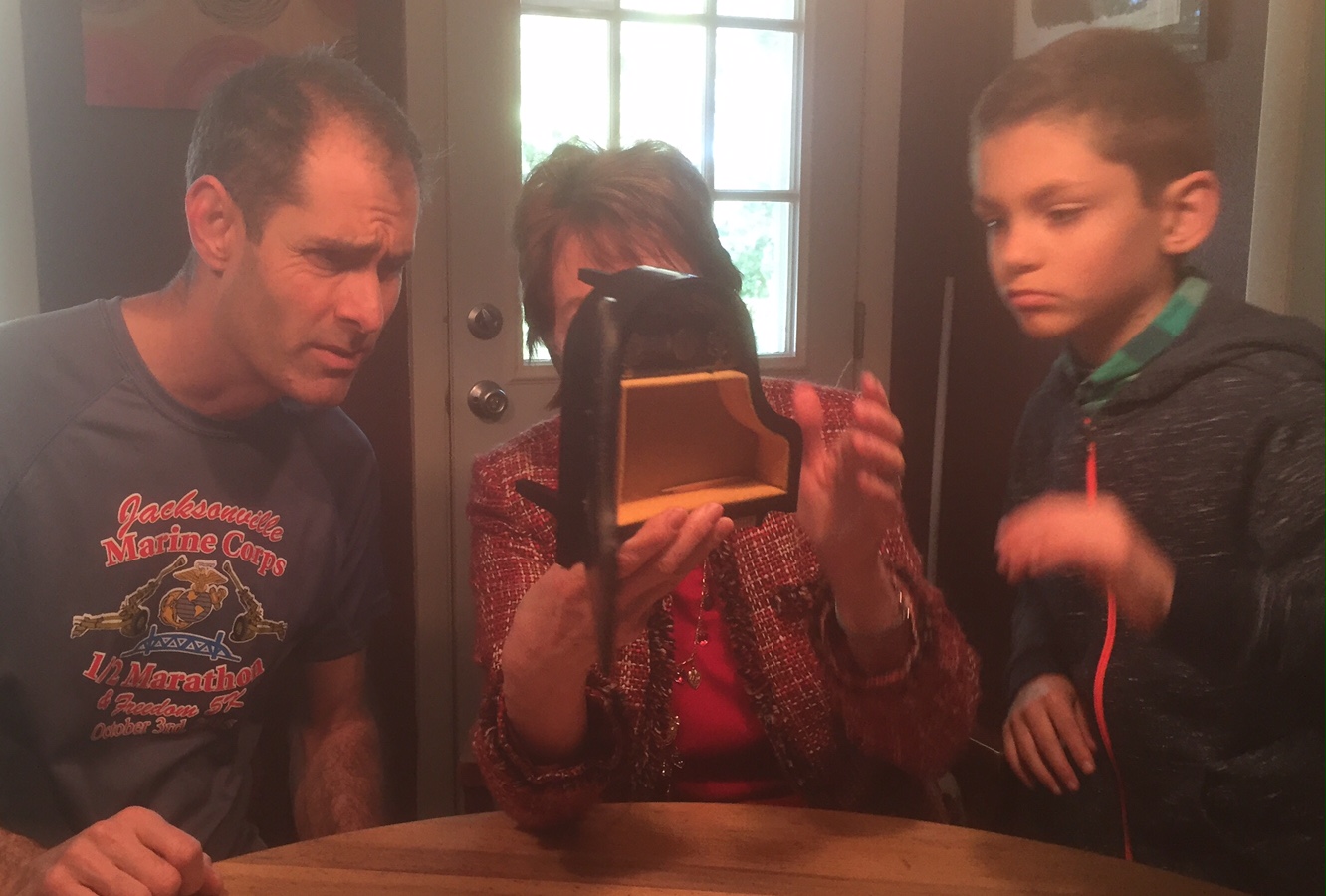
I announced, “When, he was your age, your dad broke off one of the legs on this toy piano.”

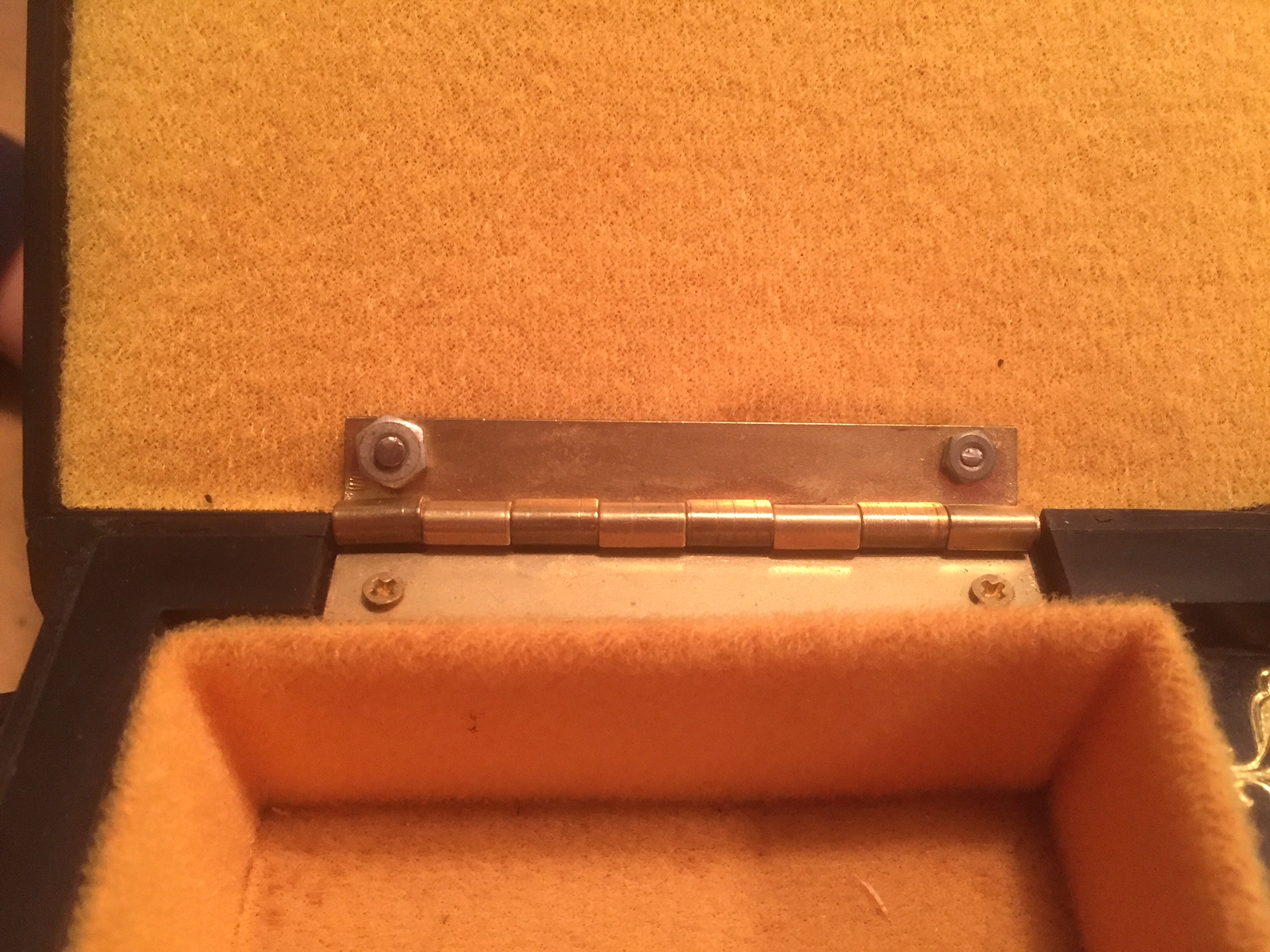
“Oh, no, not a leg, the hinge was broken off,” Joel corrected.

JoelPassingToIan

My memory had played tricks on me and the cause of the accident had morphed into something else.

Memory can be fuzzy sometimes. It’s not fixed as a photograph / locked in an album, / but it changes, it develops, mixed with time,” as Barbara Crooker wisely observes in her poem, Not a Spoon, a Key. Sometimes memory can even be wrong.

Squinting now at the underside, I see the replacement on the left, slightly larger screw and bolt than those on the other side. Lid held up with two toothpicks.

IngeFixed

ChristianLightPress13.95

And here it is, good as new!

PianoUpClose


Not a word was spoken about doing the right or wrong thing.

Words weren’t necessary.


Can you relate to my dilemma here?

Has your memory of family incidents every played tricks on you? Readers will enjoy your story and so will I.


Coming next: Raise a Mug to the Irish

Are You Ready for Spring?

Today marks the end of February. In less than a month spring will have sprung, Still, you may be ready for spring now, not in three weeks. Here are the thoughts of Jane Kenyon, once New Hampshire’s poet laureate, anticipating the blooms of spring in her meditation “February Thinking of Spring”

Screen Shot 2016-02-23 at 8.07.19 AM

. . . or the appearance of blooms on dogwood

Dogwood

Before winter turned into spring, visits to the flower show in Philadelphia restored my Grandma Longenecker’s spirits. Or leafing through a Burpee Seed catalog.

In a letter to me during my sophomore year in college Grandma wrote about her May flowers that followed a harsh winter:

Lots of people have colds but daffodils are out “with their yellow frilled bonnets” (I have 5 kinds of them) were a joy to behold. Double tulips are at their best. Next the lilacs and valley lilies.


Yes, fickle February will soon melt into March madness. To herald the coming month, I shall make a poetic prediction. My good friend/muse Merril Smith has inspired me to try a new form, the shadorma, one of the many poetry challenges she has embraced on her website recently along with echo poems, triolets, and lantern shapes.

The shadorma must form 6 lines of 3-5-3-3-7-5 syllables and make sense.

Fickle month

Bye, February

St. Pat’s Day

Irish rule

Daylight Savings Time, Oh Dread

Celebrate: Easter!


Did you count the syllables?   🙂

What flowers populate your dreams of spring?

If you live in South Africa or Australia, your seasons are reversed so you may have a different vision. What in nature lifts your spirits right now?

* * *

Coming next: How to Teach a Piano Lesson

Are You Too Big for Your Pot?

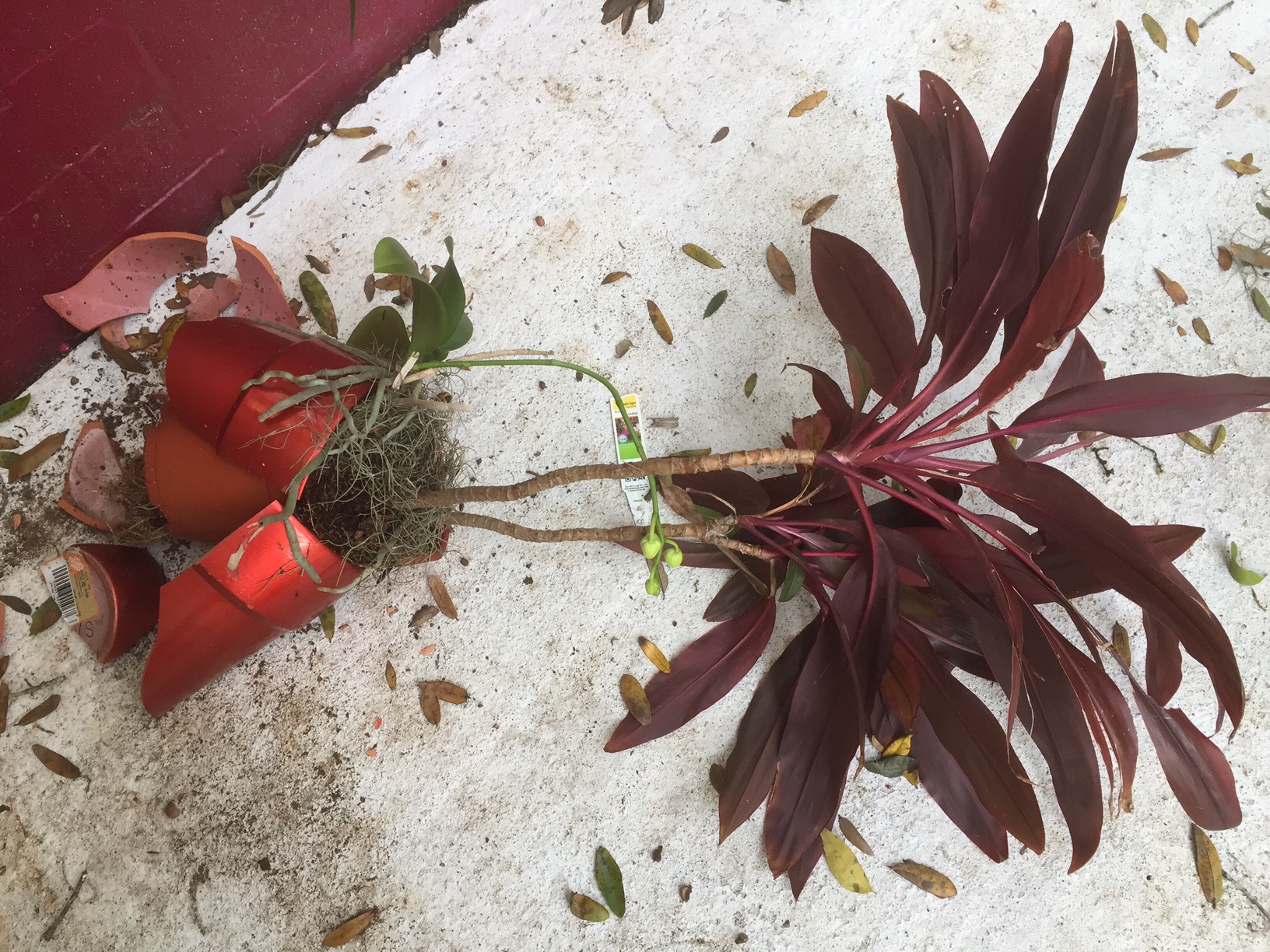
I didn’t hear a Bang. I didn’t see the pot Fall. But when I looked from the upstairs bedroom window, I saw shiny red chards of pottery on the patio floor. I really liked that red pot and now it was in pieces.

Broken Pot

How did that happen?

There was no wind. I was not aware that a storm had come through during the night. Still the pot had apparently fallen from its perch on the maroon planter, three feet above the concrete. Now it was smashed to bits on the patio.

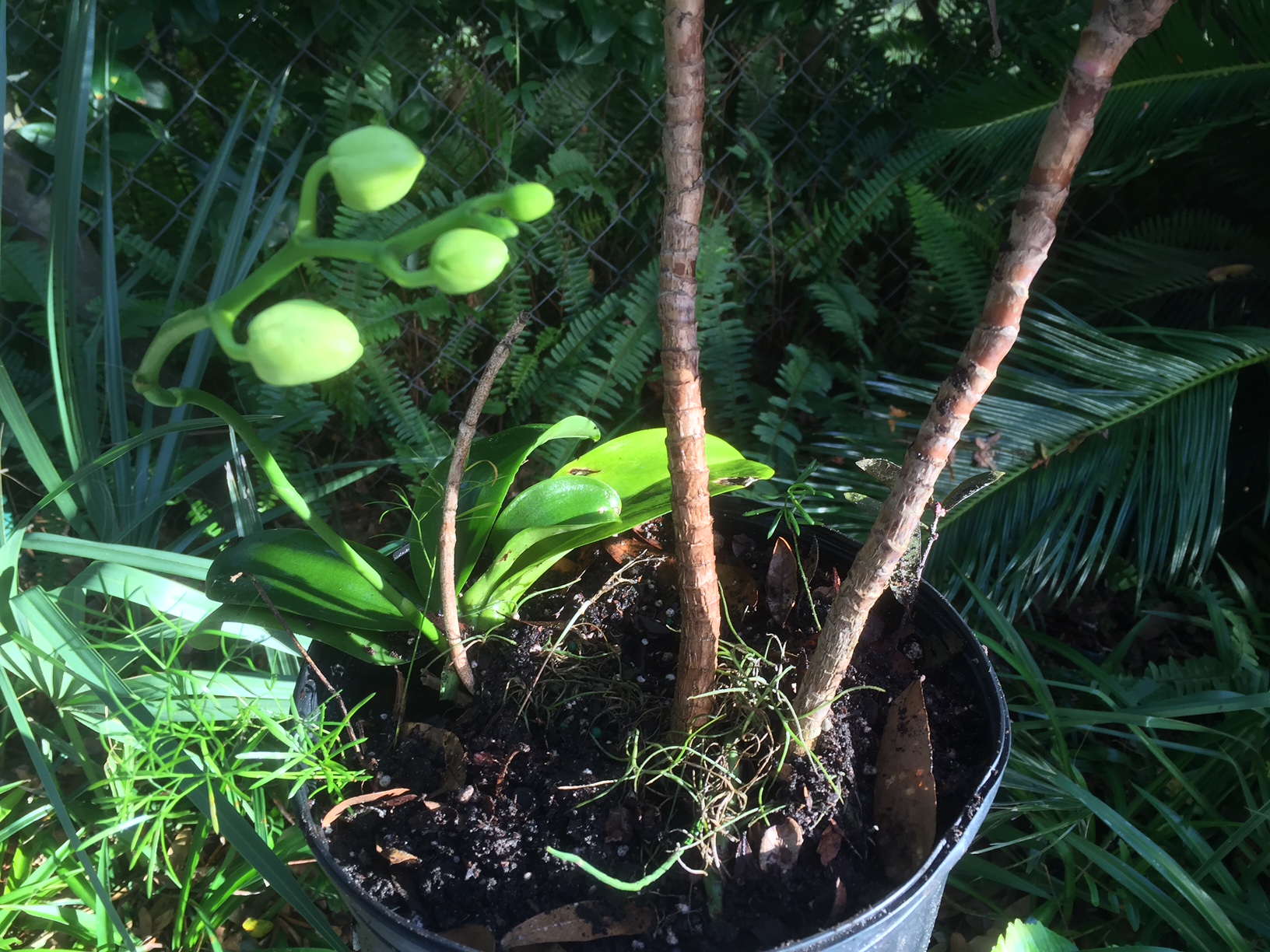
Encased within the pottery was a plastic inner pot from which roots were dangling. The plant was apparently pot-bound, “longing to break free”!

RootBoundInnerPOT

It doesn’t take a genius to see these tall plants had outgrown their tiny pot: roots bursting through the pot hole.

My solution? Re-pot the plant. Add fertile soil. Use a bigger pot.

Plant Re-pot

I heard my orchid, a rare re-bloom, sing morning praises.

And then I made the planter pretty too – with an unbreakable basket

BasketPotPlant

Some of the most memorable lines in Leonard Cohen’s “Dance Me to the End of Love” speak of cracks ~ “Ring the bells that still can ring / Forget your perfect offering / There is a crack, a crack in everything / That’s how the light gets in.”

I see at least 3 lessons here:

  1. Even cracks have a function: they can let the light in.
  2. You don’t have to be perfect to be beautiful. What’s broken in you can be a metaphor for human aspiration. Your flaw can show effort and growth.
  3. When you are pot-bound, move into a bigger pot.

My blog friend writer Dorothy Sander recently published a post with a poem “Finding Her Here” exalting our cracked and broken parts. You can find encouragement by reading it here.


Psalm 51:17 “A broken and a contrite heart thou wilt not despise.”

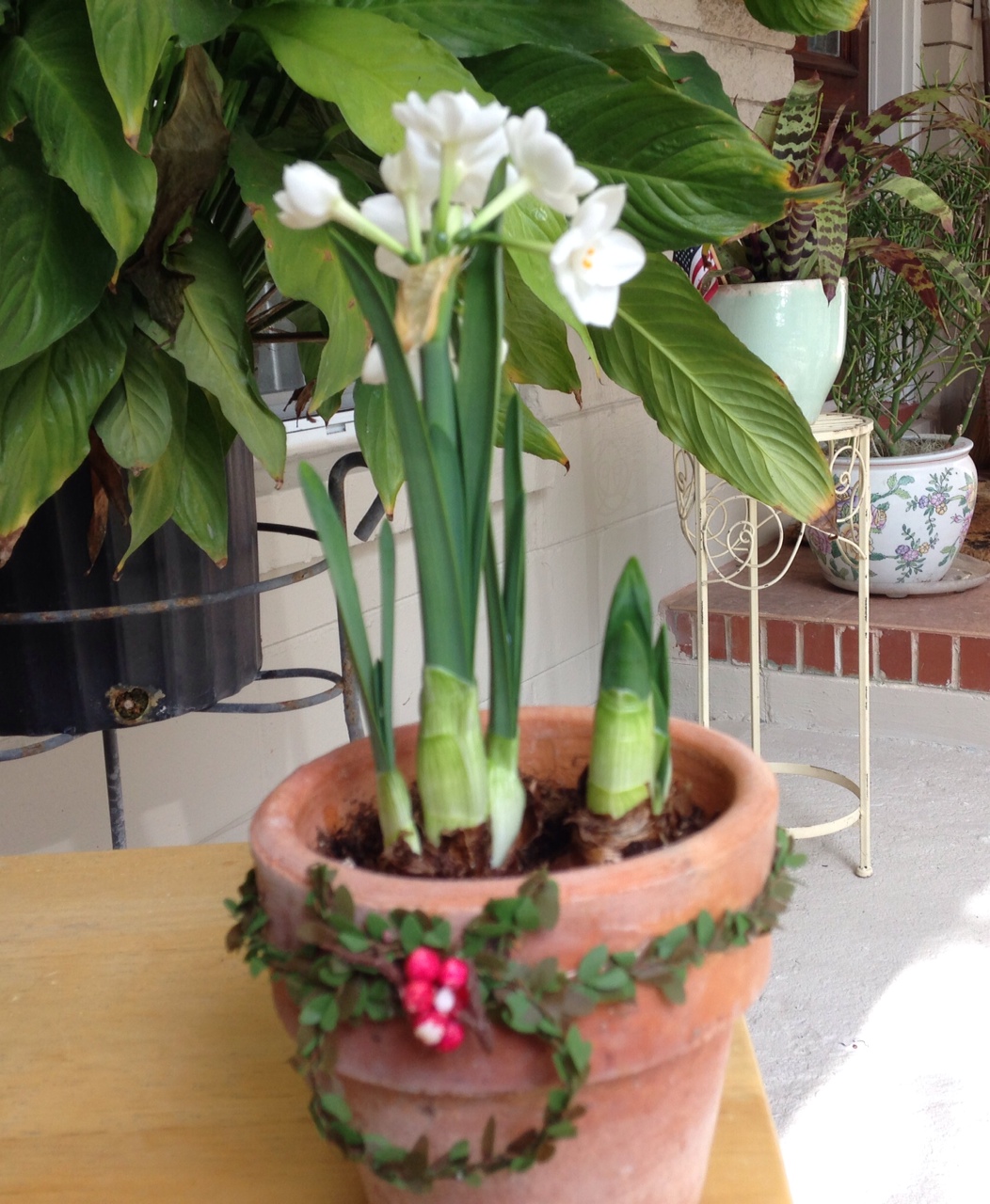
Paperwhites

What are your thoughts about the broken pot? Is there an explanation I may be overlooking, either literally or metaphorically?

Have you outgrown the pot you are planted in?

Or, when you outgrew your “pot,” how did you find a bigger one?

Coming next: Are you ready for spring?

Comparison Shopper Finds His Valentine

Gump-a-bump-a-rump-a! (Repeat – repeat)

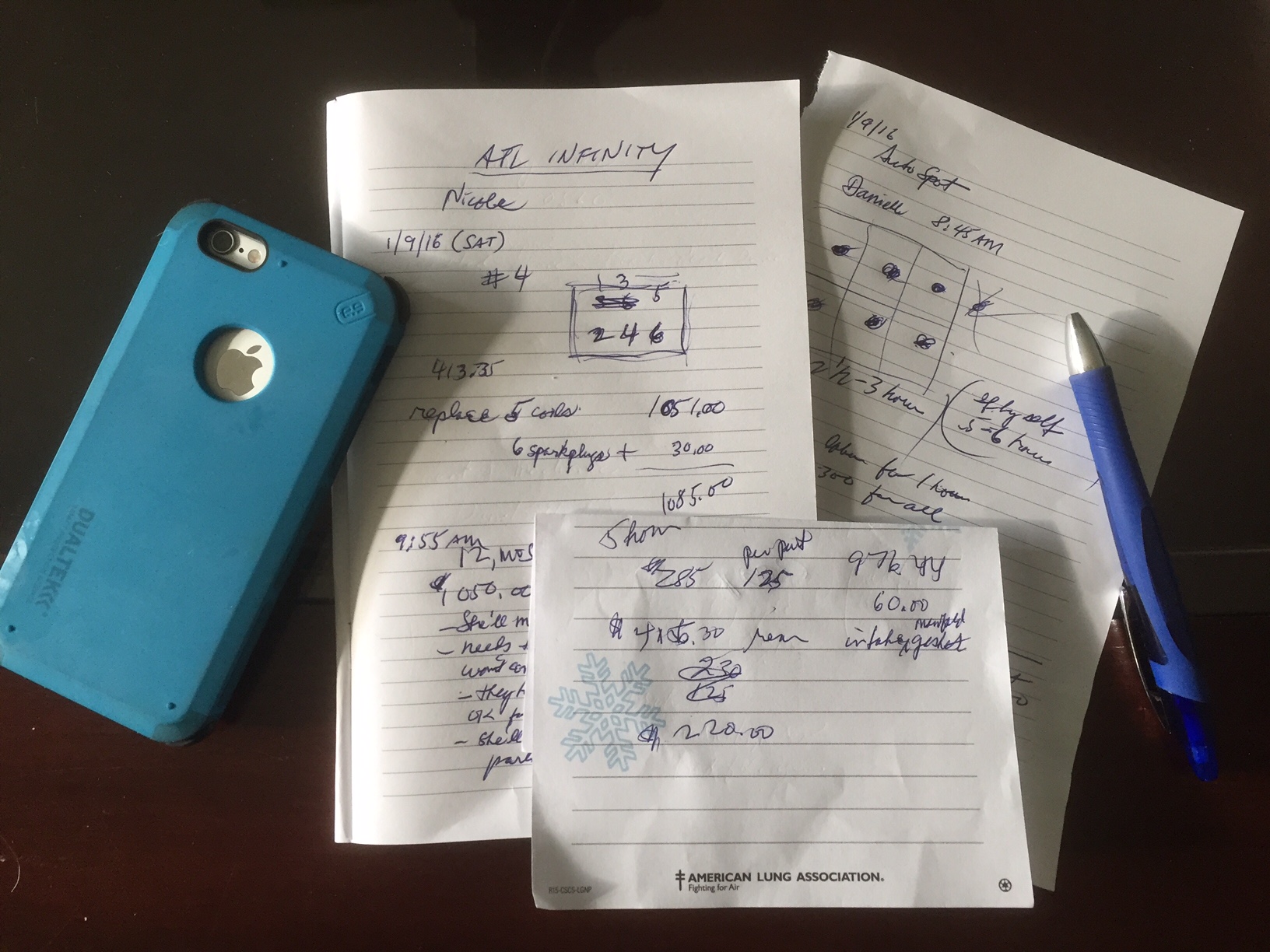
No driver wants to hear this coming from under her car hood, even if it is my aging Infiniti. When I reported these scary noises to my husband Cliff, he immediately went into Investigator Mode. His problem-solving scenario proceeded like this: visiting a neighbor who restores antique cars, checking with an auto shop we’ve used before, and then contacting the dealership, the most expensive option. He wrote down notes for each, notes with names, dates, schematics, and most importantly, dollar signs.

ComparisonShopperNotes

He handles plumbing problems at home or HVAC hang-ups the same thorough way. Whether buying a new lawnmower, computer equipment or making travel plans, my husband Cliff is a comparison shopper supreme.

Once upon a time, Cliff used this same methodical system to find suitable dates. During college he had a little black book in which he entered names of girls to date. After they passed the sensational-physical-attributes test, their names and interests were entered into this book. Some girls’ names were crossed off the list because they were too giggly, walked like a duck, or were unable to sing on key.

Cliff went into serious search mode to find a mate after an unofficial engagement fell apart. Then his college roommate suggested he meet his next-door neighbor, a teacher and a Mennonite, during Christmas vacation. We met on a blind date In December 1965. I say blind because the normal-looking Mennonites he had known from the West were very unlike the girl standing in front of him, plain with hair coiled up under a prayer cap – me.

Maybe because of the mystique of our differences or because we had similar interests, ours was a whirlwind romance sustained by letters for months after Cliff returned to post-graduate work and me to teaching. Then his letters dwindled, probably because of his hesitation about dating a girl like me from such a strange background.

He went into comparison shopping mode again as he began his first year teaching, dating a nurse from a fine family. Later, he said after he had come to his senses, “I couldn’t get you out of my mind. I thought I would miss something if I said goodbye to you forever.”

According to Cliff, two things I did sealed the deal for him.

  • I made him a monogrammed bath robe for Valentine’s which kept him from freezing on off-campus housing his last few months in college
  • I called various hospitals to try to figure out in which hospital he was a patient when he had pneumonia and was too sick to contact me.

Fortunately our friendship was rekindled when we both attended the August 1966 wedding of the couple who introduced us. Now it was Christmas 1966, and Cliff drove from Jacksonville Florida to pick me up in Charlotte, North Carolina where I was teaching. From there we headed to my hometown, in Elizabethtown, Pennsylvania in his white Plymouth Savoy.

Replica of Cliff's 1963 Plymouth Savoy now offered on eBay, poster
Replica of Cliff’s 1963 Plymouth Savoy now offered on eBay, poster

There one snowy evening before Christmas Cliff said, “Let’s take a drive.” So we bundled up and headed out, crunching footprints in the new fallen snow. Fat flakes were falling from the sky even thicker as we slid into the car, the plastic seats crackling from the cold. Memories of the evening have become a movie in my mind.

“Where are we going?” I quizzed.

“Oh, I don’t know. We’ll just take a drive in this beautiful snow,” Cliff replied rather lamely.

As he tried hard to urge the heater to warm us up, we reminisced about our first dates the Christmas before. “Do you remember how deep the snow was when we went to see the Sound of Music?”

“Of course I do!” The car’s windshield wipers were swishing away mini-cotton balls of snow now.

In the back of his mind, Cliff wondered, “What will she say if I ask her to marry me?”

As we approached the archway between Rheems and Mount Joy, I exclaimed, “The road hasn’t been plowed any farther. We’re at a standstill!” We had come to a crossroads.

Then he said, “If you thought it was God’s will, would you marry me?”

Quickly I responded, “Of course I would.” But in an instant I recognized this as a marriage proposal encased in a tricky question, a snowy fleece.

“Well, then, will you marry me?”

With a “Yes,” the camera dissolved into hugs and kisses.

And yes, the little black book has been destroyed long ago.

Vintage Cut-out Card, Cliff Collection


Is there a comparison shopper in your family? Are you such a shopper?

You are invited to share your marriage proposal story here too.


Coming next: My Day of Change @ a Middle School

Hoorah, 300th Blog Post with an Oops and an Aah!

Oops!

An apple cake with half the recipe batter left out . . . the baked remainders landing on the floor. Double dumb mistakes.

That’s not the way I envisioned marking my 300th blog post.

The Plan

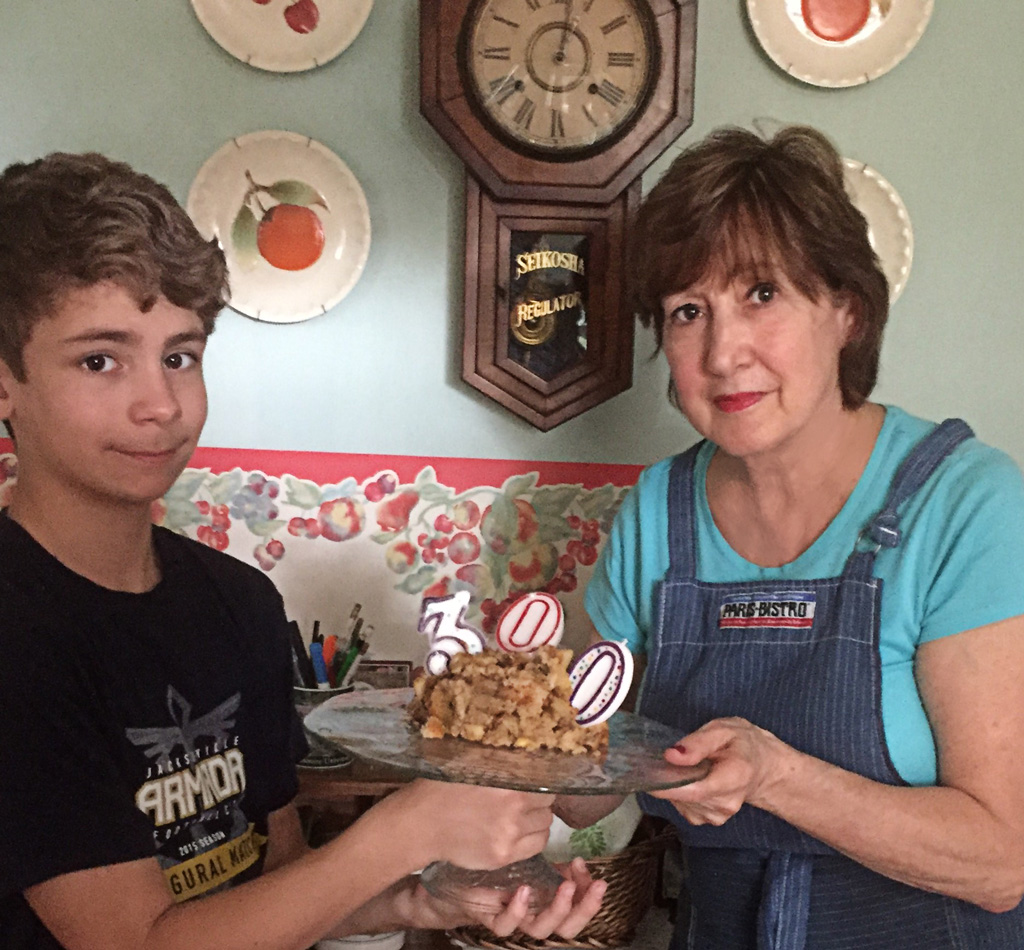
To mark this milestone, grandson Curtis and I planned to make an apple cake together, perfect for feasting two days before Christmas 2015. He likes to be in the kitchen and remembered our success with a spiced pork recipe a few weeks earlier.

The ingredients were laid out, I placed cups and spoons on the counter, the tube pan at the ready.

Curtis and I both donned aprons (his flowery, mine denim) and got to work. He helped core and dice the apples, careful to curl his fingers away from the knife blade. We both chatted happily over the hum of the mixer, adding apples, nuts, cinnamon, and vanilla to the mix.

CurtisCakeBeaters


What Happened Next

When the batter was ready, I poured the mixture into the tube pan and set the timer on my iPhone to a “check-me” time. Then Curtis and I sang Christmas carols around the piano, a first for just the two of us.

I heard the ping, ran to the kitchen, switched on the oven light and gasped. The cake had risen to only half of the height I had expected. Then my eye caught a glimpse of a bag on the counter with half of the mix inside. Sadly, I’d failed to fold it into the batter. That could account for the low rise. Still, the cake looked edible as I pulled it out of the oven, rounded and fragrant, and placed it on a rack to cool.

Just when I tilted the tube pan, the whole thing went SPLAT. Half of the cake flopped into the sink and the other half plopped onto the floor.

CakeMess300

There were moments of silence. 10 . . . 20 . . . 30 seconds?

Then Curtis quietly asks, “Nana, where do you keep your broom and dustpan?”

Here is the space for the cleanup photo:

(Imagine broom and dustpan)

Disappointment

AppleCakeSadFaces


After the Dust Settled

We ate a few morsels that fell into the sink. They were actually quite tasty. Then I asked Curtis what he had learned from the experience. Of course, I expected a snarky remark about his addle-brained grandma.

Instead, he began recalling bits of advice I gave him over the mixing bowl:

  1. Drizzle a little lemon juice over the apples to keep them from turning brown.
  2. Use a toothpick to test for cake “done-ness” even if you use a timer.
  3. Insert a toothpick between pan and its lid on the stove to keep a simmering mixture from boiling over (his Great Grandma Longenecker’s trick).
  4. When you remove a pot from a hot burner, put a teakettle with a small amount of cool water over the burner to absorb the heat, especially during hot weather.

Was he just being kind?


What I Learned

  1. “It’s not that bad,” one of Curtis’ own sayings when things go awry.
  2. Even baking disasters can taste good. (The result was a passable apple “cobbler” even if it didn’t have the consistency of cake.)
  3. “Life doesn’t have to be perfect to be wonderful,” another wise saying making the rounds these days.

Epilogue

Curt and I played Scrabble afterwards. He won, but not by much!


The Apple Cake Recipe, donated by my friend Bonnie Evans

1 yellow cake mix  (All of it!)

2 cups chopped/diced apples

1 cup chopped walnuts

I teaspoon vanilla

1 teaspoon cinnamon

brown sugar for sprinkling on top of cake

Blend oil and eggs into cake mix as directed. Add vanilla & cinnamon. Then add apples & nuts. Pour into tube pan and sprinkle brown sugar on the top. Bake at 350 degrees until done. Pour icing over top of the cake.

Icing

Melt 1cup brown sugar, 1 stick of butter and ½ tsp. vanilla. Stir until dissolved. Pour over top of cake.


A Miracle – Ahh!

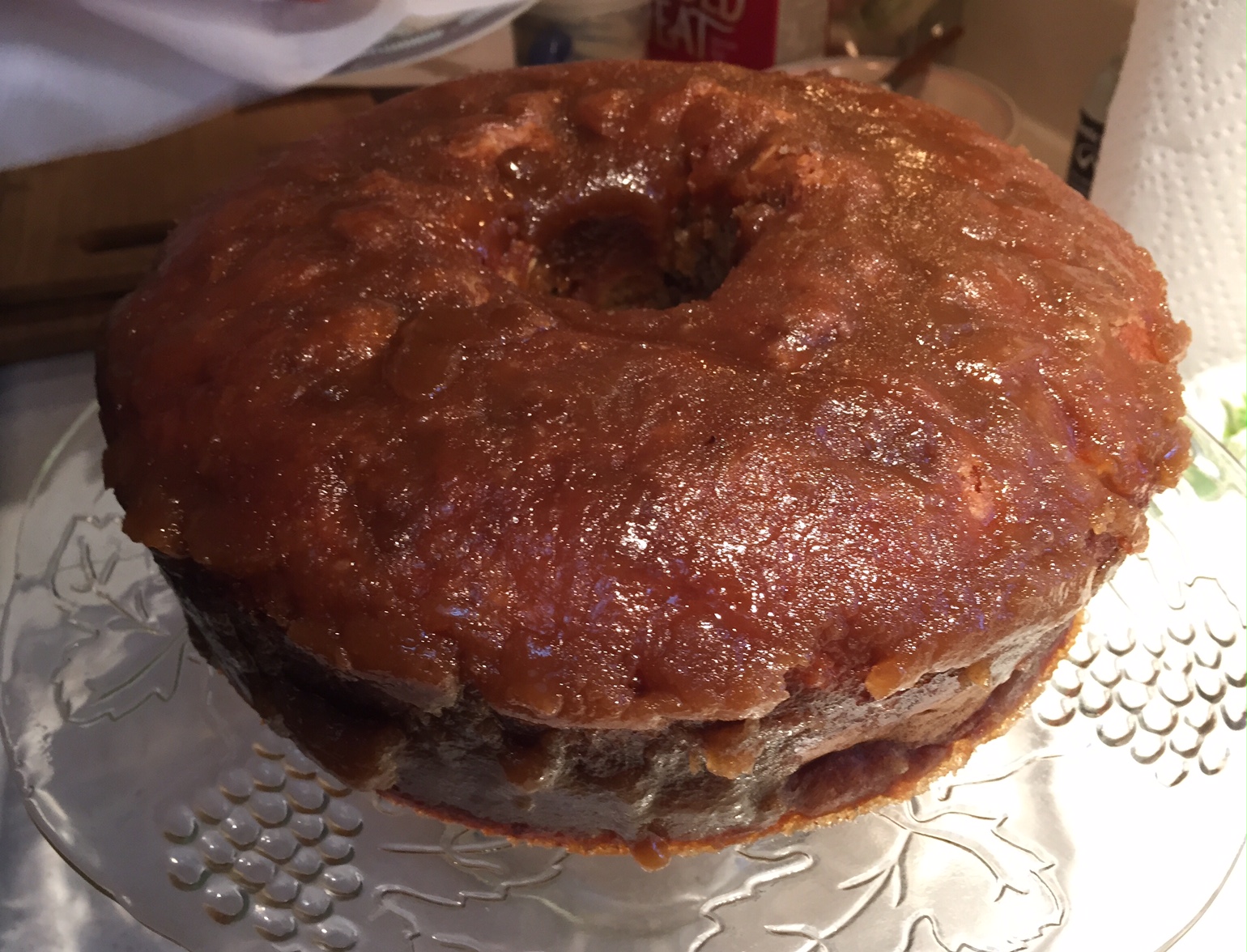
Out of the blue, the very next day at breakfast my long time friend Wanda Rogers Long presented me with a perfectly baked apple cake – glittering in cellophane and topped with a red bow!

WandaMarianCake

All’s well that ends well . . .

CakeTriumph


Several weeks later I baked the same cake with better results for my husband Cliff’s January birthday . . .

AppleCakeSuccess

Most everyone has a similar story whether it’s a mishap in the kitchen or someplace else. Here’s where you can tell yours.

Was there a happy ending to your story – Yes? No?


Coming next: Comparison Shopper Finds His Valentine