Purple Passages and Feet in the Creek

Dreams

Hold fast to dreams, for if dreams die, life is a broken-winged bird that cannot fly.

– Langston Hughes in Dreams


Dreams always come in a size too big so we can grow into them. – Josie Bisset


. . . if one advances confidently in the direction of his dreams, and endeavors to live the life which he has imagined, he will meet with a success unexpected in common hours.

– Henry David Thoreau in Walden Pond


Grandparents

“But grandparents, imbued with a different sense of time, create a narrative arc across generations. If parents are the forward momentum of a child’s llife, we become the curators of traditions.”    –  Ellen Goodman/Washington Post Writers Group quoted in the Florida Times Union.

“Our echoes roll from soul to soul and grow forever and forever.”  – Alfred, Lord Tennyson in The Splendour Falls on Castle Walls from The Princess


Psalm 78: 2-4

2 I will open my mouth with a parable;

I will utter hidden things, things from of old—

3 things we have heard and known,

things our ancestors have told us.

4 We will not hide them from their descendants;

we will tell the next generation

the praiseworthy deeds of the Lord,

his power, and the wonders he has done.

New International Version


Being Special, Unique

There are no ordinary people. You have never talked to a mere mortal.   – C. S. Lewis

While we have the gift of life, it seems to me the only tragedy is to allow part of us to die – whether it is our spirit, our creativity or our glorious uniqueness.    – Gilda Radner

Conventional is not for me. I like things that are uniquely Flo. I like being different.          – Florence Griffith Joyner, Olympic track and field star


Deep Summer

Heat Wave: “Deep summer is when laziness finds respectability.”    – Sam Keen

Summer afternoon, summer afternoon; to me those have always been the two most beautiful words in the English language.     – Henry James

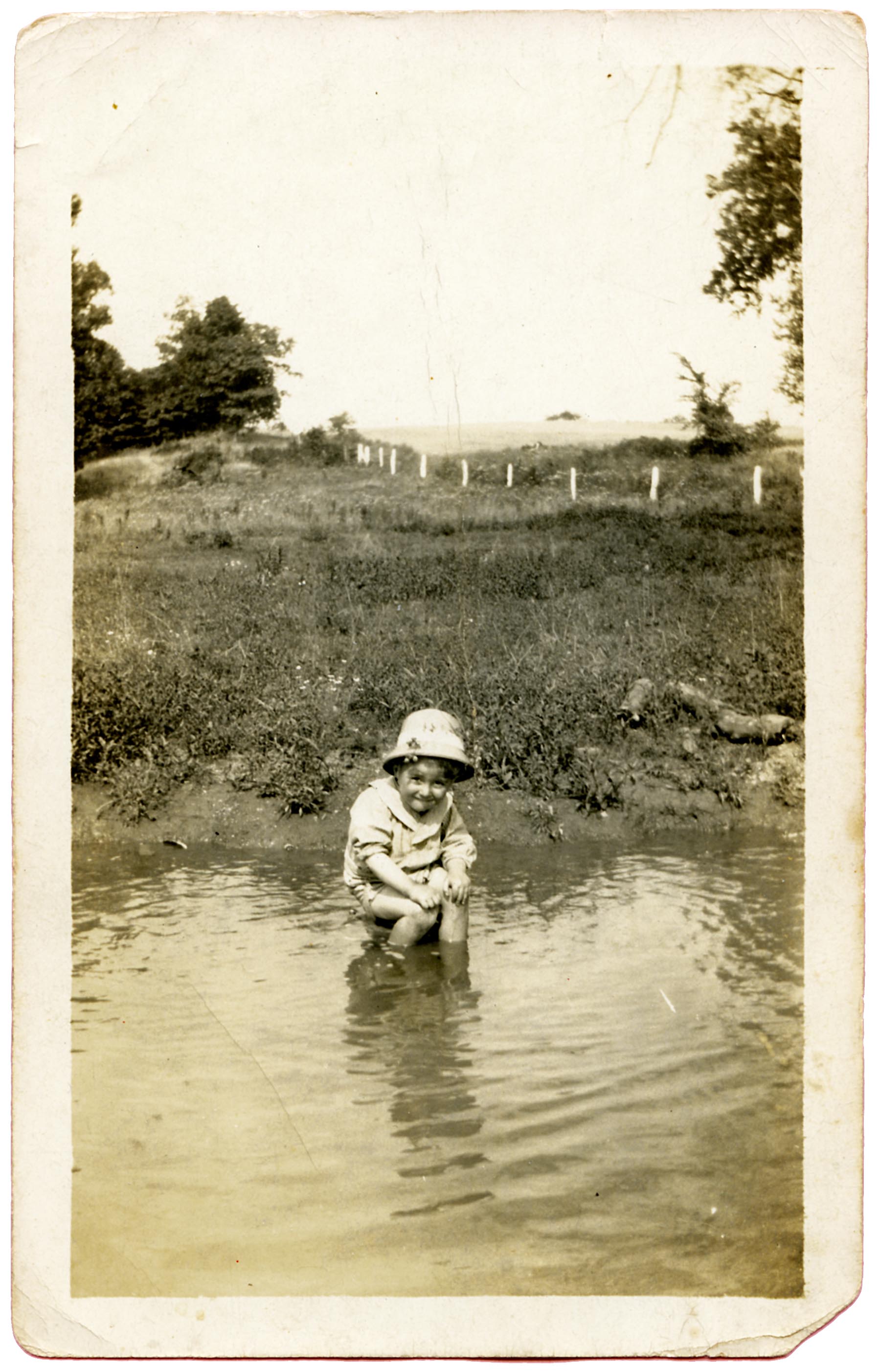
My dad at the Grandpa Martin farm
My dad Ray Longenecker at the Grandpa Martin farm,  circa 1920

People don’t notice whether it’s winter or summer when they’re happy.

– Anton Chekhov


Your turn!

Did any of these quotes feel like an “Aha” moment for you? Will you add one?

Coming next: “I’m All Ears” with a Cliff & Marian tiff

Root’s Country Market & Auction: Your Personal Tour

Are you hankering for chocolate-covered bacon, do you want to buy a rooster for your flock? A hat for the next Downton Abbey gala? Welcome to Root’s Country Market and Auction, a fixture from my childhood my sisters, husband, and I re-visit near Manheim, Pennsylvania.

RootsSign

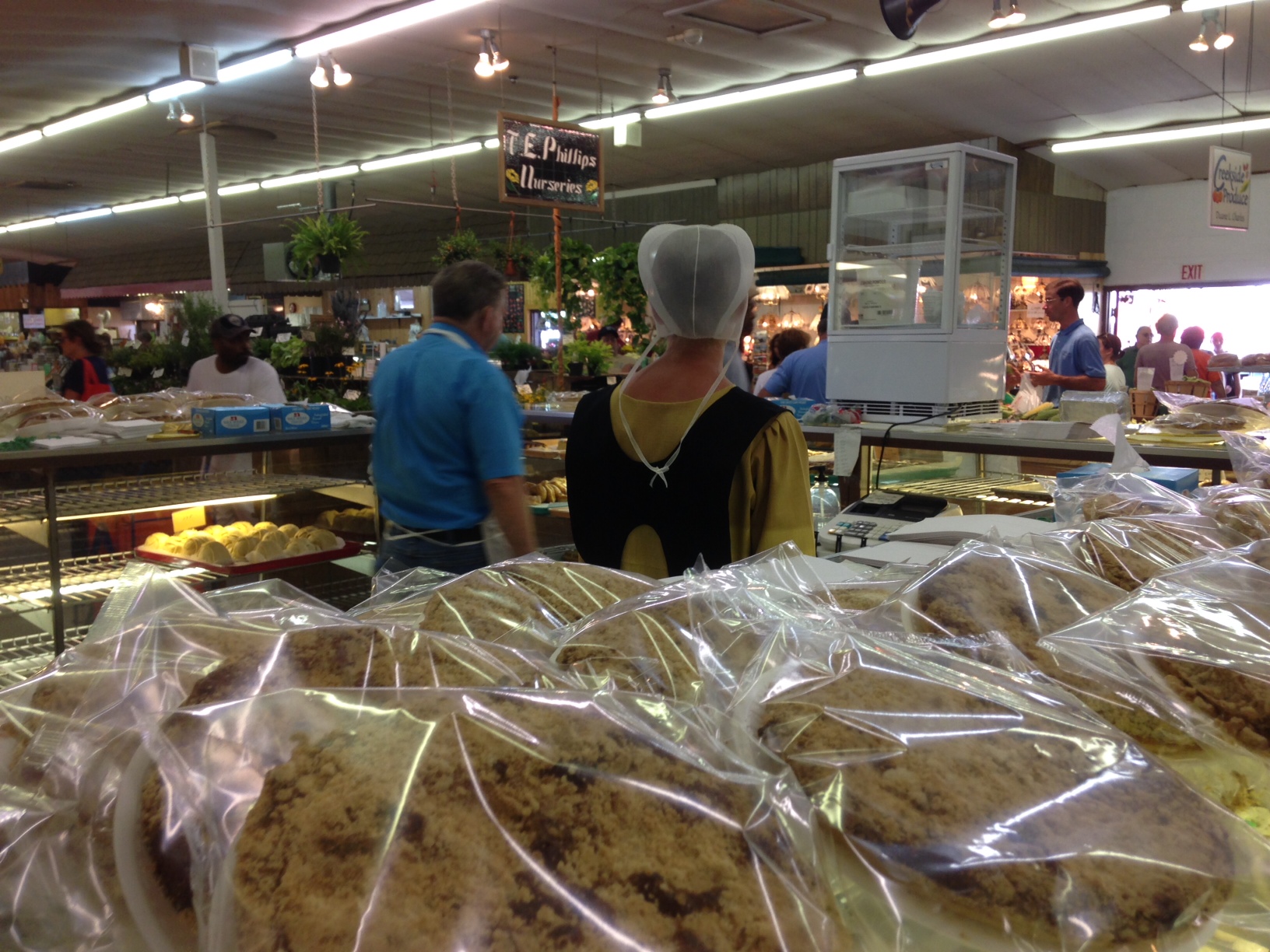
Root’s, with over 200 stand-holders, is the oldest single family-run country market in Lancaster County. Beginning as a poultry auction in 1925, Root’s “has evolved over the years to become a piece of Lancaster County heritage.” Come walk with me along the aisles of stands, some housed in long sheds, others outdoors under awnings.

Did I say you can get all gussied up for next Downton Abbey series? At our first stop, we try on funny Brit hats rivaling those of Princesses Beatrix and Eugenie we remember gasping over at the William and Kate’s royal wedding.

purple hat

From fancy we meet plain at many of the produce stands either selling or buying vine-ripe tomatoes.

TomatosPrayerCap

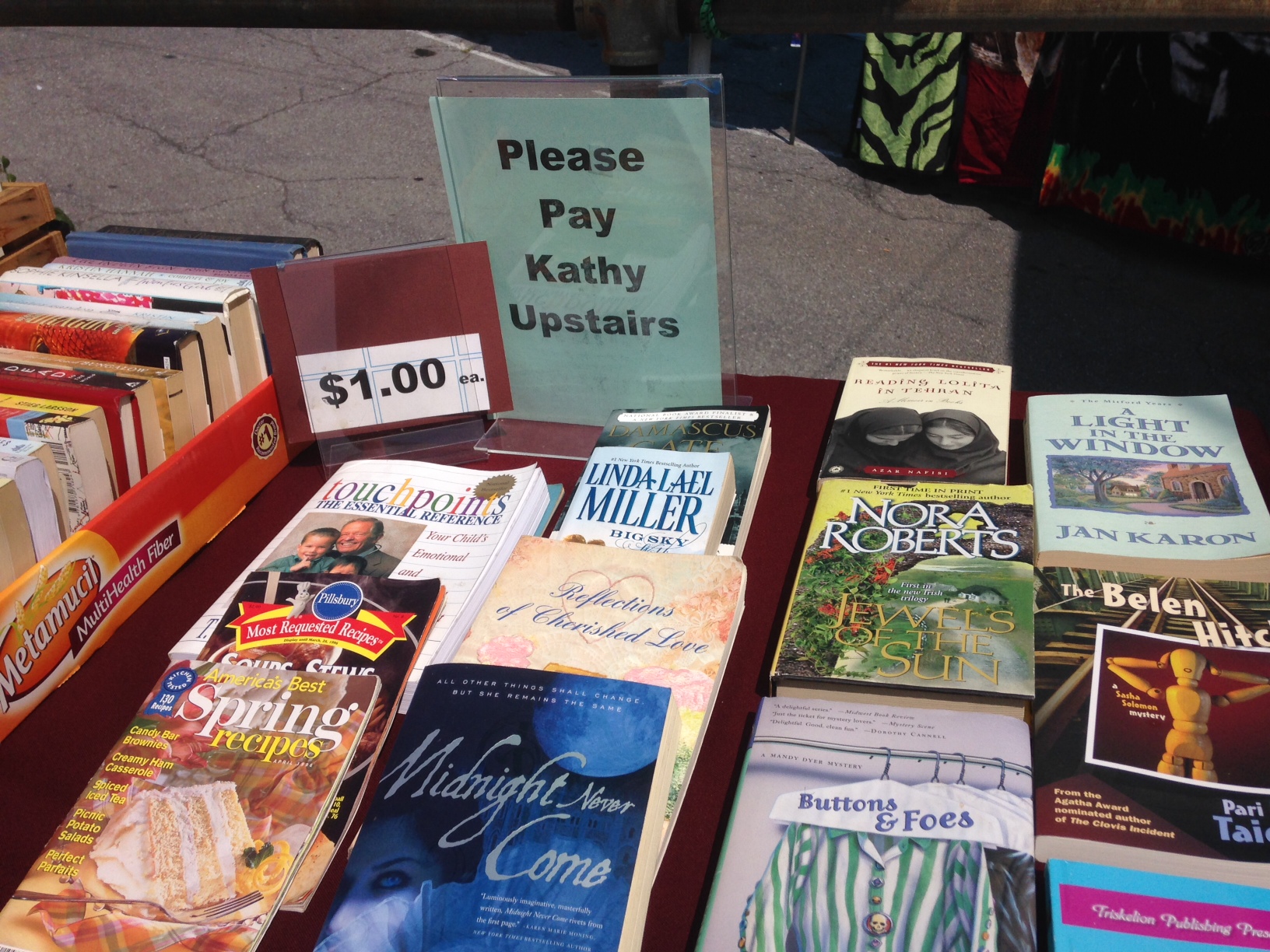
KathyBooks

Here is a trusting book-selling, my new online friend, Kathy Heistand Brainerd, a distant cousin, whose mother Esther Longenecker is the author of Pitchforks and Pitchpipes, a pictorial and narrative portrait of one branch of the Lancaster County Longeneckers.

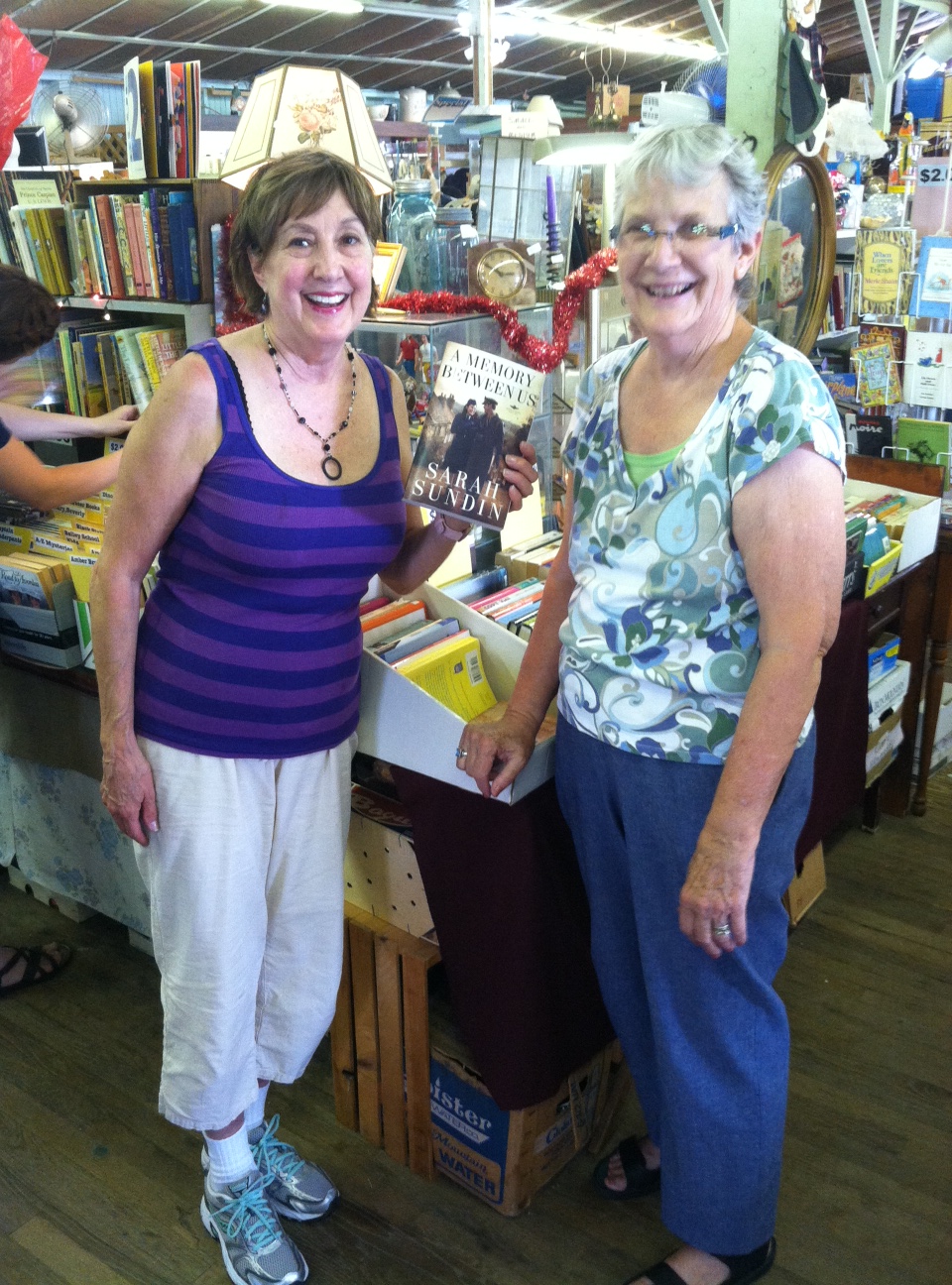
KathyMarian

Yes, there are household items and books galore, but many stands cater to shoppers wanting fresh meats, produce, deli and bakery items–and flowers. This farmer boasts fresh blooms from his Manheim farm.

FlowersRoots

I promised you chocolate-covered bacon. Here is a look at a taste-tester. Yes, I had a bite too!

ChocBacon

Then on to pickles, funnel cakes, and shoofly pies with wet bottoms satisfying the sweet and sour tastes:

7DayPicklesfunnelCakeAmishShooflyPie

Root’s is a market, and yes, we buy from not just photograph the vendors, but the market is also an auction house. Walking from one of the parking lots, we spy a warning sign urging bidders to uphold the integrity of the auction:

AuctionWarning

Wanna bid on a coop of roosters?

Our tour ends with Rosa, who graciously invites me to sample and buy one of her multi-colored angel-food cakes, pies, or whoopie pies at Miriams’s Pies. All home-made, of course. That’s the only way in Pennsylvania Dutch land. When I asked her permission to photograph and promote her wares, she admits with shy pride, “One of our customers put us on Facebook!”

RosaMiriamPies

I wonder . . . is there a piece of your past you want to re-visit? We are dying to know the “what – where – who” of your story. As always, you are invited to be part of our conversation.

Marriage to a Difficult Man: Part II

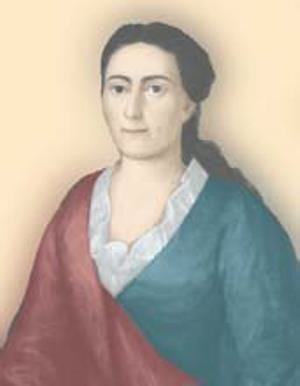
Sarah Edwards portrait: Google Images

Sarah’s Flair for House-keeping

She was the kind of woman who took the trouble to tie her hair with a ribbon for breakfast when many wives came down tousled; who spent an extra minute to stamp a design on a block of home-churned butter; who knew how to give a flourish to simple dishes with parsley, spearmint or sage, all grown in a square of herbs by the kitchen door; who, when she had a bowl of peas to shell, would take it out into the sunshine in the garden. She put in day lilies, hollyhocks, pansies, pinks–the flowers women loved to plant on the frontier, for it gave them a sense of putting down roots.  (31)

Reviewer Jennifer Lee muses further on Sarah’s homey housekeeping, efficiency tempered by composure:

She knew how to keep a house clean at its vitals, without stuffy cupboards left unaired or parlors sealed off. The house was open, used, full of clues that the family living in it had vivid interests. Books were left on tables, actually being read, not used as parlor props. There would be needlepoint on a rack by a sunny window and a lute in a corner. Esther, singing, might be putting up a hem for Sukey [Susannah] while a boy did his Latin lesson. It was the opposite of the kind of house where things were preserved in mothballs in locked boxed. Its ambience was of windows flung open, of easy access.


Key to Harmony in Their Uncommon Union

Contrary to popular belief, the author of the fiery sermon “Sinners in the Hands of an Angry God” observed quiet passion in the pulpit but also preached on grace and redemption. And he treated Sarah “as a fully mature being, as a person whose conversation entertained him, whose spirit nourished his own religious life, whose presence gave him repose.” (35) Likewise, Sarah “let him be sure of her steady love, and then freed him to think.” (66)

A woman of charm, practicality and tact, Sarah like her mate was strong as iron, realizing that “she had chosen to marry the sort of man who did not give in when he believed a matter of deep principle was at stake.” (112)

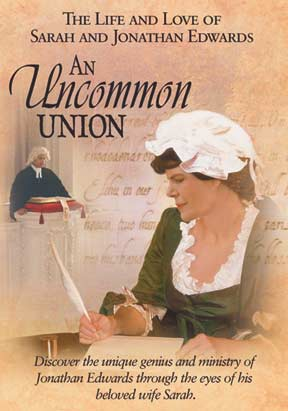
Cover: Google Images

Edwards’ Parting Words to Sarah

Remembering the love of his life, the charming but stalwart Sarah, who wore a “pea-green satin brocade with a bold pattern” to their wedding (24), Jonathan Edwards spoke these words “not about heaven or hell, or about books or theories.” He spoke of Sarah:

Give my kindest love to my dear wife, and tell her that the uncommon union which has so long subsisted between us has been of such a nature as I trust is spiritual and therefore will continue forever.  (201)

*  *  *

Coming next: Laundry at the Longeneckers

Marriage to a Difficult Man: Part 1

In case you thought I would be writing an exposé about my difficult marriage to artist Cliff, you’d be wrong. I may write about my own marriage at some point, but it would have a different title.

The marriage under the microscope is that of Sarah Edwards to the famous colonial theologian, Jonathan Edwards, best known for his fire-and-brimstone-sermon, “Sinners in the Hands of an Angry God.”
MarriageDifficultCOVER

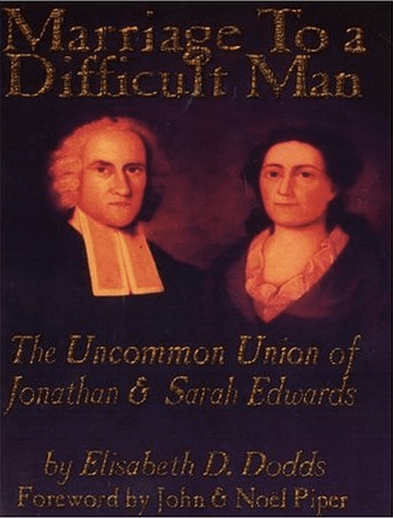
You may surmise that the title comes from the mouth of a fed-up wife to her biographer. However, the book is Elisabeth Dodd’s commentary on the unique union of Jonathan & Sarah Edwards often using primary sources like diaries and letters to show the personal, human side of this towering figure of faith. The blurb from Amazon touts this 1971 classic on the domestic life of Sarah and Jonathan Edwards, the most famous theologian of colonial America, as a “tempting blend of family guidance, sociological study, . . . and devotionally-oriented American historical biography.”

According to Dodds, Jonathan was a “moody, socially bumbling, and very shy young man of twenty” already a college graduate and professor at Yale, when he first met the vibrant thirteen-year-old Sarah, who had “burnished manners, and skilled at small talk.” Completely smitten by Sarah, Edwards

. . . took to walking past her her house at night for a glimpse of a candle flickering behind an upstairs shutter. When a boat came into Long Wharf with a cargo from England, he would manage to be around as it was unloaded. Almost every ship from England brought a box for the Pierreponts, and there was a chance that James [Pierrepont] would bring a daughter down with him as he checked his orders […]. Edwards even tried to improve his social dexterity, and admonished himself, “Have lately erred, in not allowing time enough for conversation. (16)

Both avid readers and nature lovers, Jonathan and Sarah married and raised a family of eleven children, in whose education both parents were heavily invested. At the end of the day this firebrand preacher and proponent of the Great Awakening of the eighteenth century, took off his jacket and wig and, smoking his pipe, devoted a full hour to his children and took them on trips with him individually.

What about Sarah though? It’s true, when he wasn’t preaching, Edwards was usually holed up with his books, but he often “read aloud to her from his skull-cracking sessions in his study,” recognizing her as his intellectual partner. (164)  And Sarah knew he would reserve time for her alone away from the house, often spent horse-back riding.

Why is this Puritan Preacher called difficult then, as the book’s title would suggest? Actually, I get the impression he was more eccentric than harsh, more odd than obstinate at home as this quote suggests:

Edwards was less than helpful as a host,  for he was still a light eater and would often finish his meal before the others did. He would then slip out to his study, returning to the table only when he was alerted that the others had finished and he was needed to preside over the grace which was always said at the end of meals as well as at the beginning. (56)

Peculiar in his eating habits, Edwards was also either eccentric or just being practical in recording his sermon notes. “He kept old bills and shopping lists, stitching them together into handmade notebooks in which he copied out his sermons on the unused side of the papers. Because his sermons were saved, we have a record of the everyday details of his family’s life together.” (31)

One reviewer comments that “Suffering was a part of Sarah’s life, too. Her husband’s brilliant mind and heart were never adequately recognized until shortly before his death. An insane man once spread false accusations about him.” Their teenage daughter Mary died of tuberculosis. Money was sometimes scarce.

Sarah herself went through a short period of mental breakdown, “nerves stretches like an over-tuned viola.” (72)  Her support and comfort, Edwards persuaded her to take a trip to Boston with him, taking her away from the fish-bowl of the parish and the constant demands as mother and hostess to a steady stream of visiting preachers.

Nevertheless, Sarah herself a woman of heart, intellect and purpose maintained a contented home, a home that produced healthy, well-balanced children all of whom carried on the genius of their parents. As author Dodds implies, a trust in the living God runs as a common thread throughout Sarah’s life story, giving her strength to carry on.


Part II will answer the questions:

1. What kind of house-keeper was Sarah?

2. Why was their union called uncommon?

3. What were Edwards’ parting words to his wife?

*  *  *

Do these details about the Edwards’ marriage surprise you?

Is there an “uncommon union” in your family’s past? Your own history?
Blog Tour

MarianStudyLong2

Here is my study. When the magic happens, it happens here. Actually, it might happen in the flower garden just outside my window in the form of a thought or image which gets transferred from my head to my fingers at my desk. . . .

Every once in a while, fellow bloggers alert me to a writing challenge, many of which I pass over for lack of time or interest. This time, Traci Carver invited me to participate in a Blog Tour. I couldn’t turn her down. Why, just last week we had lunch together. Besides the “tour” is an intriguing way to play tag and learn about other writers’ habits and sources of inspiration while sharing my own. So, a big shout out goes to Traci, story-teller extraordinaire, who turns the cotton of her everyday experience as an English teacher into pure gold. A true Southern belle, Traci is a master of the anecdote. Her stories derive from the small Georgia town she grew up in, the fishing villages of Southeast Asia where she lived for 7-8 years, or from European travel. Now to the questions:

1. What am I working on now?

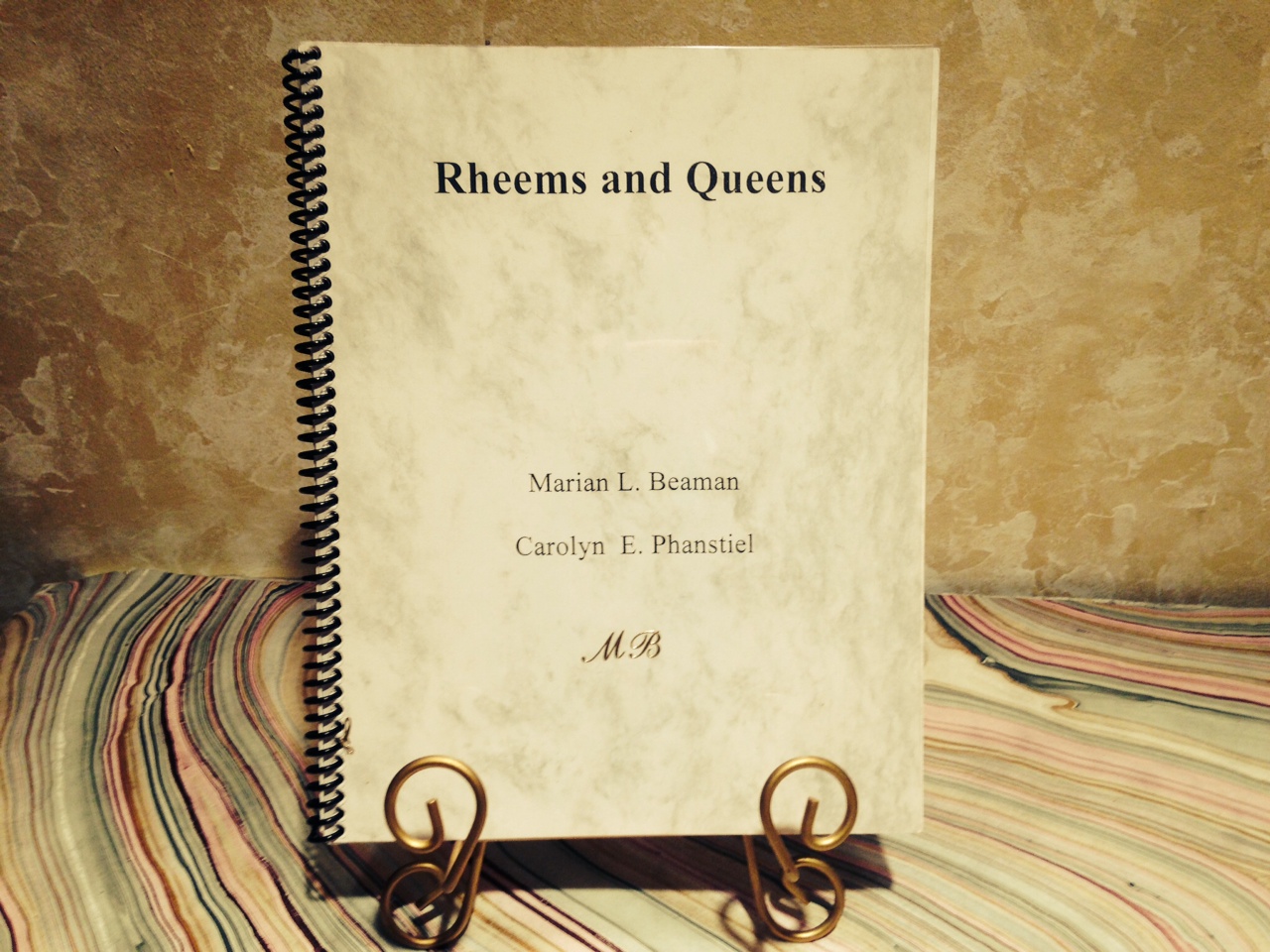
Three unrelated things at the moment: Preparing for a trip to Pennsylvania soon where I will mine more stories for this blog, purging clothes from the spare bedroom closet to make space for a long-term guest, and writing every single day. My blog has taken shape from 8-9 journal scribblings along with a set of paired stories written with my friend Professor Carolyn Phanstiel before we both retired from teaching.

MarCarBOOK

There is a .doc on my computer desktop where my memoir is taking shape. Right now, it doesn’t have enough structure to “roll it through a printing press,” as Traci wisely observes.

2. How does my work differ from others in the genre?

According to Jerry Waxler, a Memoir Revolution is in full swing. Each year thousands of new memoirs pour onto the shelves. Millions are writing memoir right now. Even in the Mennonite sub-culture, hundreds of memoirs have been published since Canadian Mennonite Katie Funk Wiebe’s publication of Good Times with Old Times, touted as “an egg with a double yolk” because it is part memoir, part how-to-write-your-own-story book.

So how is my writing different? Well, my world view has been tempered by time and place. No longer a Mennonite, I still identify with many aspects of an Anabaptist vision. Also, I was transplanted to Florida as a newly wed which would affect my perspective. Then too, I have a large set of artifacts and some living relatives that connect me firmly to my past. Like other memoirists, especially of the academic variety, I tend to weave the literary with the familiar. Sometimes readers say they can detect humor in my writing voice, which I hope makes my writing appealing, if not unique.

3. Why do I write what I do? 

What motivates me to write is my compulsion to leave a legacy for those who follow, particularly my family. Beyond that, I write what I know and to find out what I don’t know. Many stories are nostalgic, some reflect strong feelings of embarrassment, surprise, endearment (Search the “Moments of Extreme Emotion”); others are historical or hysterical.

4. How does my writing process work?

I was asked that question a few months ago, and the answer turned into a post on the blog of Kathy Pooler, whose memoir launches in this July. A legal-size pad, colored sticky notes, WORD docs, and photos are often part of the process.

Like Traci, I will tag two innocent bystanders, Merril Smith of Yesterday and Today: Merril’s Historical Musings, and Judy Berman of earthriderdotcom.

A published author of encyclopedic proportions (and I mean that literally) Merril’s blog posts frequently become meditations on the mundane, for example “Airing Out Some Thoughts on Laundry.”  Her About page describes her as writer, editor, independent scholar, focusing on the history of women, sexuality, and culture. She has published consistently since 1997 with a forthcoming book with the titillating title: Cultural Encyclopedia of the Breast.

Judy invites you to travel down the corridors of her mind as she narrates stories she heard growing up, from her travels, her family, and experiences in various jobs as radio and newspaper reporter and English teacher. Judy has received numerous blog awards, including The Versatile Blogger Award and The Sunshine Blog Award. In a Father’s Day tribute, Judy included a photo of Dad and her stranded alongside the road trying to fix an over-heated motor.

Merril and Judy: You’re “it”!


Purple Passages with a June Bride

Creativity

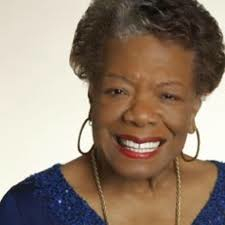
You can’t use up creativity. The more you use the more you have.       ―  Maya Angelou

MayaAngelou2

[Hear her read her valiant poem “Still I Rise” here.]

Creativity is intelligence having fun.     ― Albert Einstein

Make a careful exploration of who you are and the work you have been given, and then sink yourself into that. Don’t be impressed with yourself. Don’t compare yourself with others. Each of you must take responsibility for doing the creative best you can with your own life.

           Galatians 6: 4-5  The Message


Giving and Health

Dr. Stephen Post conducted a survey at forty-four major universities that revealed that giving protects your overall health twice as much as an aspirin protects your heart against disease. Why Good Things Happen to Good People (7)

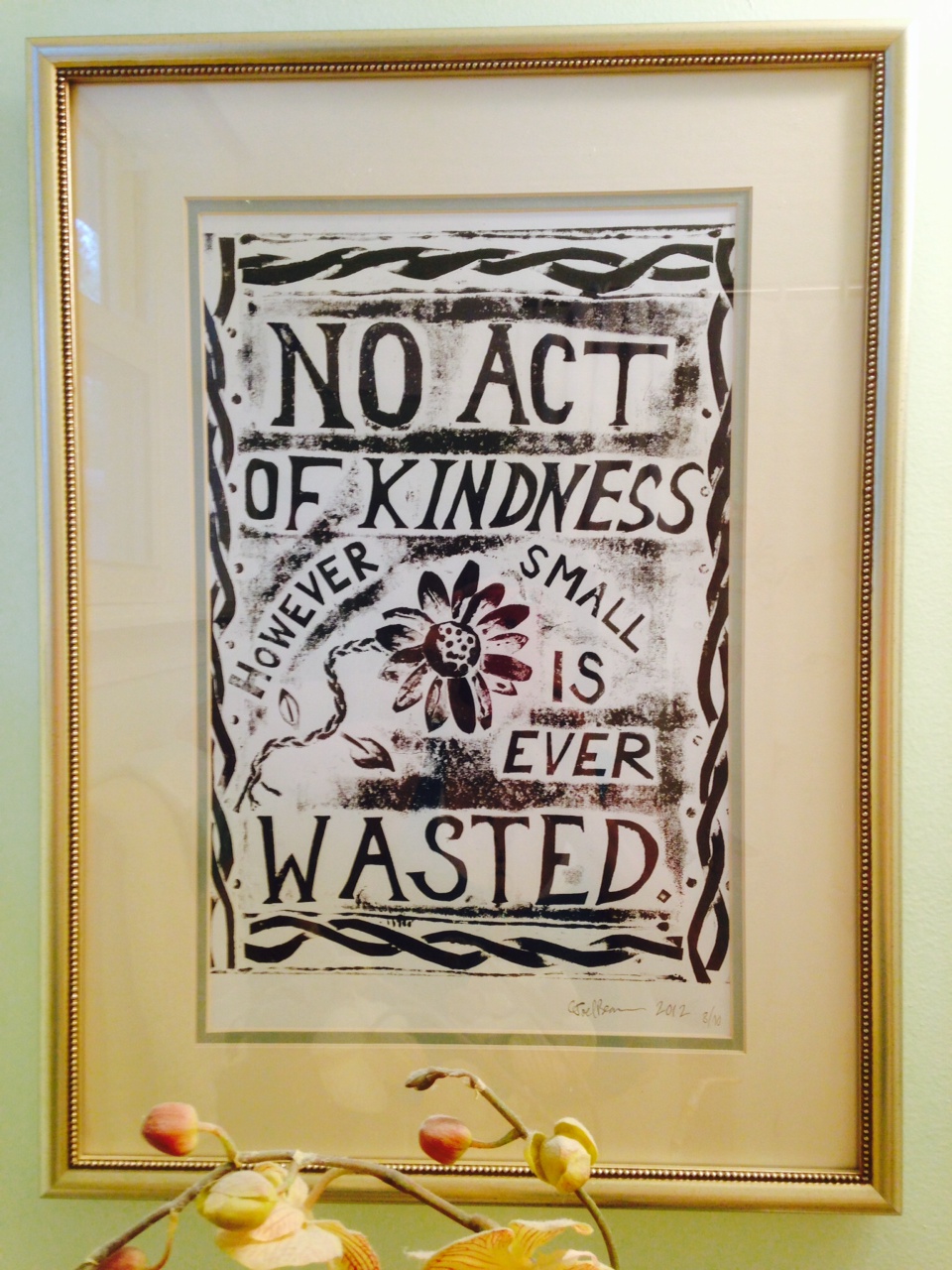
Original art: C. Joel Beaman
Relief print: C. Joel Beaman


Being Young in Heart

Another belief of mine is that everyone else my age is an adult whereas I am merely in disguise.”  ― Margaret Atwood, Cat’s Eye


June Brides & Marriage

Wedding of Ruth Longenecker and John Weaver, 1950s
Wedding of Ruth Arlene Longenecker and John Weaver, Bossler’s Mennonite Church, 1950s Bride carries white Bible with lacy handkerchief Groom wears plain (frock) coat


Marriage is more like an airplane than a rock.

You have to commit the thing to flight, and then it creaks and groans, and keeping it airborne depends entirely on altitude attitude. Working at it, though, we can fly forever.             ― Michael Grant in the San Diego Union


The Educated Mind & an Opposing Viewpoint

It is the mark of an educated mind to be able to entertain a thought without accepting it.

― Aristotle, Metaphysics


Life’s Irritations

Everything that irritates us about others can lead us to an understanding of ourselves.      ―  Psychiatrist Carl Jung


Memory and Time

Remembering is so basic and vital a part of staying alive that it takes on the strength of an instinct of survival, and acquires the power of art. Remembering is done through the blood, it is a bequeathment, it takes account of what happened before a man is born . . . . It is a physical absorption through the living body, it is a spiritual heritage. It is also a life’s work.      ― Eudora Welty in                her book On Writing in which she quotes Faulkner (103).

In fiction, time can throb like a pulse, tick like a bomb, beat like the waves of a rising tide again the shore; it can be made as the whisper of attrition, or come to an end with the explosion of a gun  (98).

Memory is deceptive because it is colored by today’s events. ― Albert Einstein

Memory. . . is the diary that we all carry about with us.  ― Oscar Wilde
 *  *  *
Add more color to June’s Purple Passages!
Reply with your own quote. Or respond to one above. 

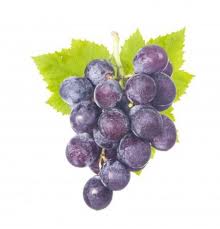
grapes

I promised an answer to the puzzling question from the last post.

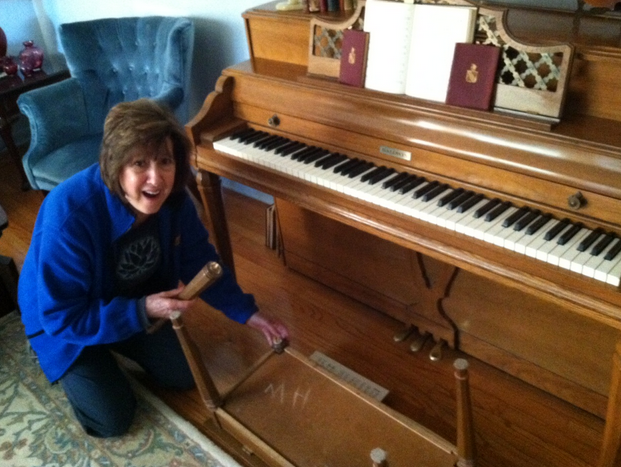
BrokenPianoBenLeg

How did this happen? Here is our best guess:

Our children, now in their forties, were in their late teens when Cliff and I decided to leave them at home alone while we took a short weekend trip. One of the children was very mature and responsible (or so we thought), so we felt safe to leave. When we returned home, pictures on the walls were askew, there was evidence of under-age drinking, and one leg on the piano bench had obviously been broken off but bandaged up with rough, brown U-Haul tape. Our kids’ explanation then was that they had a small party but more came, uninvited, when word spread that there were no parents at home. Yes, the cliché fits here exactly: “When the cat’s away . . . !”

At the time of the first break, Cliff repaired the leg with a wooden dowel, which has lasted until a few weeks ago. Then Mr. Repairman had to reinforce the leg with a sturdier steel dowel. The END. (We hope!)

Coming next:  Hats Off to Dad

HatsOffGift


Two Mennonite Nonagenarians: Mother Ruth & Aunt Cecilia

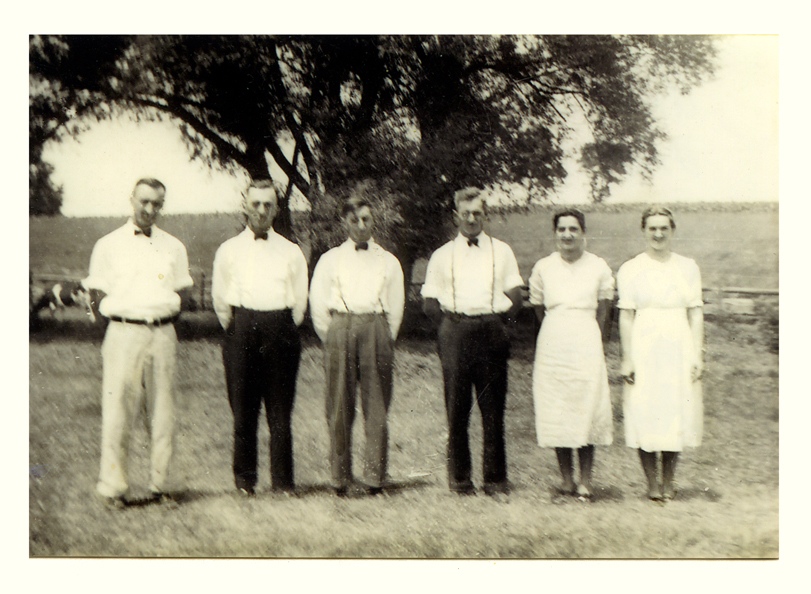
Here is my mother’s family of four brothers and one sister in a farm meadow in the 1940s. They are children of Abram Hernley Metzler and Sadie Landis Metzler, a Mennonite family of Lancaster County, Pennsylvania.

Metzler_Uncles_Aunts_young_5x4_150

Standing in birth order are her brothers Landis, Leroy, Clyde, Abram, Jr., with my mother and her sister Verna. Two of her siblings died in their sixties, the others in their seventies. Only my mother is still alive at age 95.

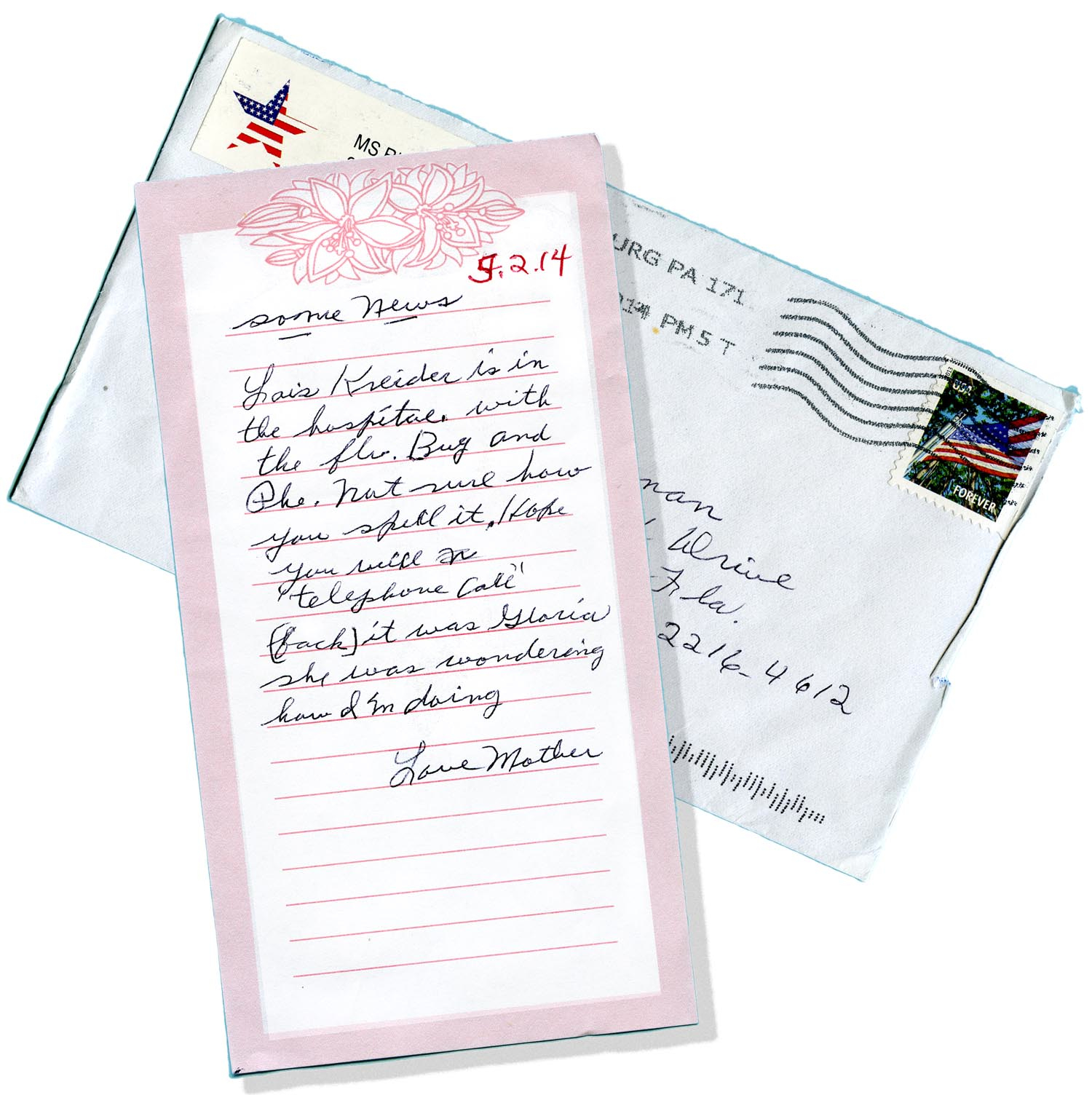
When Mother turned 90 in 2008, her 94-year-old sister-in-law Cecilia Metzler, married to my Uncle Clyde, said to her: “Ninety’s nothing . . . . You have to live past that to make your mark these days.” (Then I saw a quick smile and heard an I-got-you-there chuckle.) Aunt Cecilia, who calls herself Cece now, has always been energetic and feisty, a farm wife and a pastor’s wife. Up until 2011, she has sent me Christmas cards – always the first week of December. And via her daughter Erma’s account, I would occasionally even get email messages from her.

Aunt CeCes card_9x7_300

Mother too has always been strong and hardy all these years. She still lives alone but has watchful neighbors along with my brother Mark who checks in with her regularly. Her mind is still sharp though her hearing, which has always been in a category I’d call bionic, is failing now. When I asked her a few weeks ago, “Do you remember wearing Evening in Paris cologne?” She questioned me back, “Carrots, what do you mean carrots?” This from a woman who most of her life had to hold the telephone receiver away from her ear because the sound was too loud. Oh, my.

I call her often, but she says she likes to get something in the mail, a letter with a stamp on it, she hints. As if to demonstrate how it’s done, last week she sent me a short note with concern about a friend’s health along with a check for special vitamins I send to her. Yes, she still pays her own bills.

Thankfully, her friend is fine now.
"Cecilia Do you really think we are going to live to be 100?" my mother might be asking.
“Cecilia, do you really think we are going to live to be 100?” my mother may be asking.  (Photo: Mother’s 90th party at The Gathering Place, Mount Joy, PA.)

*  *  *

Recently, “60 Minutes” aired a show entitled Living to 90 and Beyond hosted by correspondent Lesley Stahl. The show featured interviews of some of the more than 1600 men and women who participated in a study named “90+” funded by the National Institute of Health. All of the data was collected in the 1980s from residents of a community south of Los Angeles called Leisure World, now re-named Laguna Woods. The study was launched to determine the secrets of longevity and perhaps find clues to preventing diseases like Alzheimer’s often associated with advancing age.

On air, the interviewees, all over 90, were shown undergoing physical testing: reflexes, pace of walking, how quickly they could sit down and stand up again. Their mental acuity was checked as well: Tell me today’s date, spell w-o-r-l-d backwards, remember these words (brown, shirt, charity) – I’ll ask you to repeat them to me in a minute. And so on.

Claudia Kawas, spokesperson for the NIH study, concluded with some statements that weren’t at all surprising. And some that were:

  • People who exercise definitely live longer than those who don’t.
  • Board games, socializing with friends, working in the garden enhance mental health.
  • Taking vitamins doesn’t seem to make much difference.
  • It’s not good to be skinny when you are old.
  • Drinking 1-3 cups of coffee seems to be beneficial.
  • One or two glasses of wine daily is recommended.

My Mother, almost 96, and Aunt Cecilia, now age 99, were part of the “Game Girls” crowd in their prime. They loved playing Uno, Skip-Bo, and Hand & Foot with friends. And they probably both still drink one or two cups of coffee with breakfast.

But rest assured, neither of these good, elderly Mennonite ladies ever imbibes a glass of wine with dinner.

 WineForbidden

*  *  *

Most of us know one or more friends or family members over 90. Does longevity run in your family?
Do you have a story about a nonagenarian you know?
Coming next: A visit with author Kathleen Pooler and introducing her new book!

Secrets of My Report Card & Other Tall Tales

My mother saved all my report cards. When I retrieved them from the attic, only grade 8 was missing. They are tall documents, sheathed in a coarse, brown envelope. And they speak for me as a student: mostly A’s with a smattering of Bs. Once I got a C- on a history final exam the year my brother Mark was born.

Marian_2nd grade report card_outside_4x4_300

Aside from letter grades A – F (No S’s, N’s or U’s in the 1950s), there is a full page of my elementary school report card devoted to behavior, including attitude toward school work, recitation, and conduct. In second grade, Miss Longenecker checked the box for “Gives Up too Easily.” I was beyond surprised. I was stunned that my teacher who was also my aunt would think that I was a quitter. What made her think that, I wondered. Did I throw down my pencil when I couldn’t do arithmetic? Or start bawling? The next marking period, the box for “Shows improvement” was checked.

Marian_report card_inside_8x6_300

In 5th grade negative check-marks showed up for my conduct. Imagining my teacher Mrs. Elsie Kilhefner would not notice or care, I whispered, earning the tick beside the box “Whispers too much.” The report cards following show I whispered constantly, every once in a while showing a tendency to reform my chatty ways.

Of the 23 ways behavior could be described on these old-fashioned report cards most were negative. Only three indicate something positive, one for each category: very commendable (attitude), very satisfactory (recitation), and very good (conduct). The adage “Children are to be seen and not heard” was prominent in the adult-centered society of the 50s. Not one teacher that I remember told us we were special and destined for greatness.

Since then American culture has leaned more toward the child-centered. In the 1970s my children Crista and Joel heard Mr. Rogers tell them on TV “You are my Friend, You are Special.”

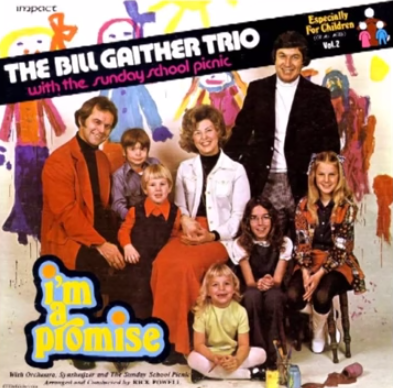
They sang along with the Gaither tune: I am a Promise, I am a possibility. I am a promise with a capital “P” with one stanza that shouts: “You can climb the high mountain and cross the broad sea . . . .”

Cover: Gaither "I am a Promise" album
Cover: Gaither “I am a Promise” album

In 2012 David McCullough Jr. made a 12 3/4-minute speech to the graduating class of Wellesley High School in Massachusetts before a group of privileged, upper-class teens and their perceived-to-be “helicopter” parents.  The speech went viral on YouTube. Entitled “You are Not Special,” McCullough argues that if everyone is special, then no one is.

Other rich points:

1. We have come to love our accolades more than our achievements.(Don’t go to Guatemala so you can impress admissions at Harvard or Yale. Go because you want to serve the people there.)

2. “Selflessness is the best thing you can do for yourself.”

3. Climb the mountain so you can see the world, not so that world can see you.

YourTube screen capture
YouTube screen capture

In other words, through service to others, stand tall  – like my report card from days of yore.

I’m always happy to see your thoughts here – thanks!

Fighting Spirit: Rhetoric, Rotten Rulers, and a Sex Strike

Is a family graduation on your calendar this year?

As a faculty member at Florida State College at Jacksonville (then Florida Community College), I attended graduation every year in full regalia with hundreds of ecstatic grads, joyful families, and proud faculty and administration.

The Tawdry Tale

One year stands out though: 2001. State Representative X rose to the podium to deliver the commencement address and announced that his remarks would be short and to the point. Relieved, the audience sat back to enjoy a brief speech entitled A Short Guide to a Happy Life.  Hmm . . . the title sounded familiar, I thought. Then he went on to tick off the main points: 1. Don’t confuse life with work. 2. Life is what happens when you are making other plans. 3. If you win the rat race, you are still a rat. . . . Then it dawned on me. I have heard this all before. In fact I’ve read it. Recently. In a book. In a book by Anna Quindlen with the same title. This man with an honorable title in high office is plagiarizing his speech, giving no credit to Quindlen or reference to her book. His whole speech. Boldly. Baldly. With no bones about honesty!

QuindlenShortGuide

My sense of justice on high alert, I set out to right the wrong. No, to expose the guilty. I contact the campus president in charge of graduation. Yes, she will check up on my suspicion and she does follow through. There are more emails and phone calls, which in the end boil down to the critical question: Where is the audio recording of that address? Alas, it is never un-earthed. We are told the recording mechanism failed (?) and thus no incriminating evidence is available. Sadly, just my words remain which have now fallen. Flat. On deaf ears.

*  *  *

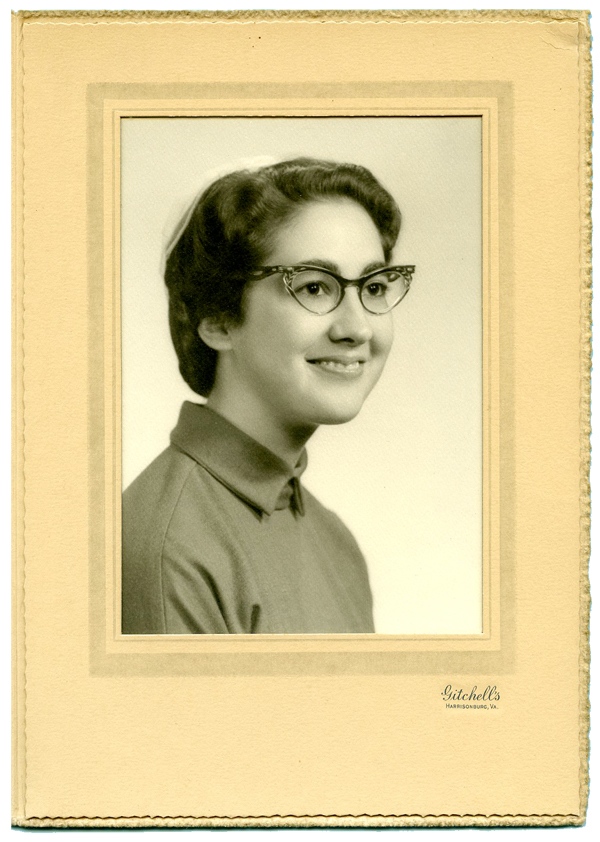
My own college graduation is a distant memory. When I graduated from Eastern Mennonite College with a degree in English, I was still a plain girl, but with a B. A. degree in English education. I don’t remember at all who spoke at the commencement address or what the topic was, but I am sure there was an emphasis on service to others, demonstrating peace while upholding justice, still strong tenets of my alma mater, now Eastern Mennonite University.

Senior Photo: Eastern Mennonite College


The Nobel Laureate

Tomorrow another graduation occurs. On Sunday, April 27, 2014 an honorable woman, Leymah Gbowee, co-winner of the 2011 Nobel Peace Prize and a 2007 EMU alumna, will give the 96th annual commencement address at Eastern Mennonite University. Gbowee was the focus of a documentary “Pray the Devil Back to Hell,” which demonstrates how women, both Christian and Muslim confronted then-Liberian President Charles Taylor “with a demand for peace and end a bloody 14-year-old civil war.” Her genius: Gbowee rallied women, all dressed in white from various ethnic groups to lock arms, protest, and over time literally pray the ruthless rebels, including the President, into retreat. They even staged a sex strike which her book describes in more detail. In 2007 Leymah Gbowee received a Master of Arts in Conflict Transformation from the Center for Justice and Peace-building at EMU, also her alma mater. No doubt in her graduation speech she will make reference to her book: Mighty Be Our Powers: How Sisterhood, Prayer, and Sex Changed a Nation at War.

BookLaymahGbowee

But I can assure you—she has plagiarized neither her book nor her speech!

*  *  *

When have you become outspoken against an injustice?  What were the results?

Have you heard of Leymah Gbowee? Anyone else you know with her qualities?

Happy Birthday, Will!

News Flash!

ShakesBirthdayCrown

To mark Shakespeare’s 450th birthday, “the Royal Shakespeare Company is spearheading a three year Jubilee, between 2014 and 2016, that will involve theatre performances, events and live streaming cinema around the world.”

*  *  *  *  *

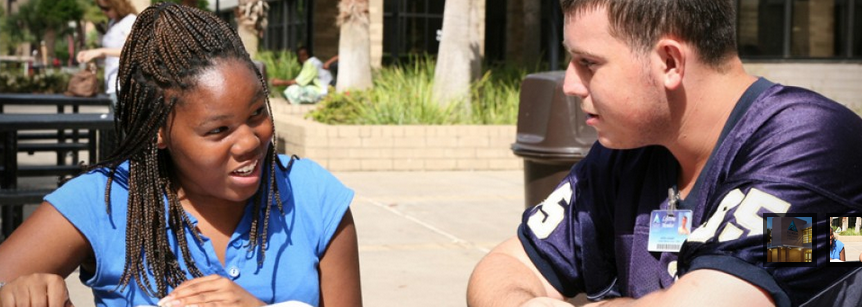
Florida State College students: Of course they're discussing Shakespeare!
Florida State College students: Of course they’re discussing Shakespeare!

It’s April 23 in my college class of English Lit students. Each has brought in a can of Coke, Dr. Pepper or bottled water. I bring cupcakes—chocolate and vanilla for the party.

Reputedly, April 23, 1564 is the birthday of William Shakespeare, the Bard of Avon. It is also the date of his death in 1616, but we are celebrating his life, especially the writing of his gushy love sonnets (“Shall I compare thee to a summer’s day?”) and his play, King Lear, which we have just read with all that fussing about a father’s will, sister sniping, revenge and murder. The body count is always high in Shakespeare’s tragedies.

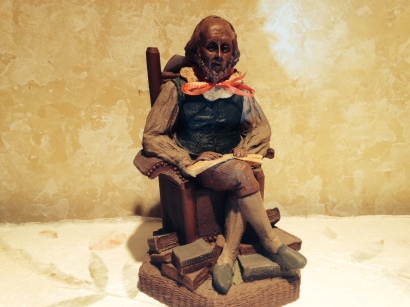
A fixture at every birthday party, Shakespeare wore a bow today.
A fixture at every birthday party, Shakespeare wears a bow today.

Until I was out of high school, I did not realize that my Mennonite Mom was referring to Shakespeare’s line “God has given you one face, and you make yourself another” (Hamlet) when she chided me for wearing makeup. “I’m happy with the face God gave me,” she would retort.

And Grandma Longenecker probably wasn’t aware she was quoting from Midsummer NIght’s Dream either when she tried to comfort me with the words of Lysander: “The course of true love never did run smooth” over my break-up with David, a boyfriend in college. And of various presidents, Truman, Eisenhower, or Kennedy, she would quote from Shakespeare’s Henry IV: “Uneasy lies the head that wears the crown.” I can still hear her cracking the “C” in crown.

Other quotes you may know: 

  • Better three hours too soon than a minute too late.
  • If music be the food of love, play on.
  • Suspicion always haunts the guilty mind.
  • No legacy is so rich as honesty.
  • What’s in a name? That which we call a rose by any other name would smell as sweet.
  • O, had I but followed the arts!
  • ‘Tis better to bear the ills we have than fly to others that we know not of.
  • With mirth and laughter let old wrinkles come.
  • This above all; to thine own self be true.

What special sayings do you remember from your childhood?


What quotes by Shakespeare can you add to the list?

I love it when you comment!

Please check it out: My writer friend, Traci Carver, teacher at Valwood School, a college prep high school in Valdosta, GA, posted on her blog a creative classroom scene from Shakespeare’s Romeo and Juliet featuring foam pool noodles and Twitter hashtags. Creative and memorable!