Mennonites and Race: A Longenecker Lens

This week we celebrate Martin Luther King Day, a tribute to the man with a vision for racial equality in the twentieth century and beyond. Just so, this post pays tribute to his dream and his legacy through a Mennonite lens.

Dr. Martin Luther King

“Jesus Loves the Little Children, All the Children of the World, Red, Brown, Yellow, Black and White,They are Precious in His Sight, Jesus Loves the Little Children of the World.”

As a tiny tot I was taught this song in Sunday School at Bossler’s Mennonite Church in the 1950s though the entire congregation was white. I saw children with slanted eyes and yellowish skin in picture books and a few black people in Lancaster and Harrisburg or maybe on the PRR train on our way to Philadelphia. But there were no children of a different skin color at Rheems Elementary School.  Or even at Elizabethtown High School. Not a one!

It was ancestry, not skin color, that made a difference in my family. Grandma Longenecker, benign soul though she was, did make disparaging remarks about other ethnic groups. She called a woman she was slightly acquainted with in Bainbridge “The Hunky Lady.” From her tone, I think Grandma Fannie was referring to the woman’s origins in Hungary, and therefore different from us, the Pennsylvania Dutch. And she made no bones about her view of Irish housekeeping. If we made a mess playing in her big kitchen, she’d remark, “It looks Irish in here,” and we’d be tidying up behind her broom. Fast!

In a recent visit to the attic, I came upon a pair of bookends featuring two pop-eyed black faces, a boy and a girl, painted in grade school.  Were such children curiosities to us? Novelties? Why would my teacher approve of  such an art project? Along with stories like Little Black Sambo, they were obviously part of the folklore of another era, not at all politically correct by today’s standards.
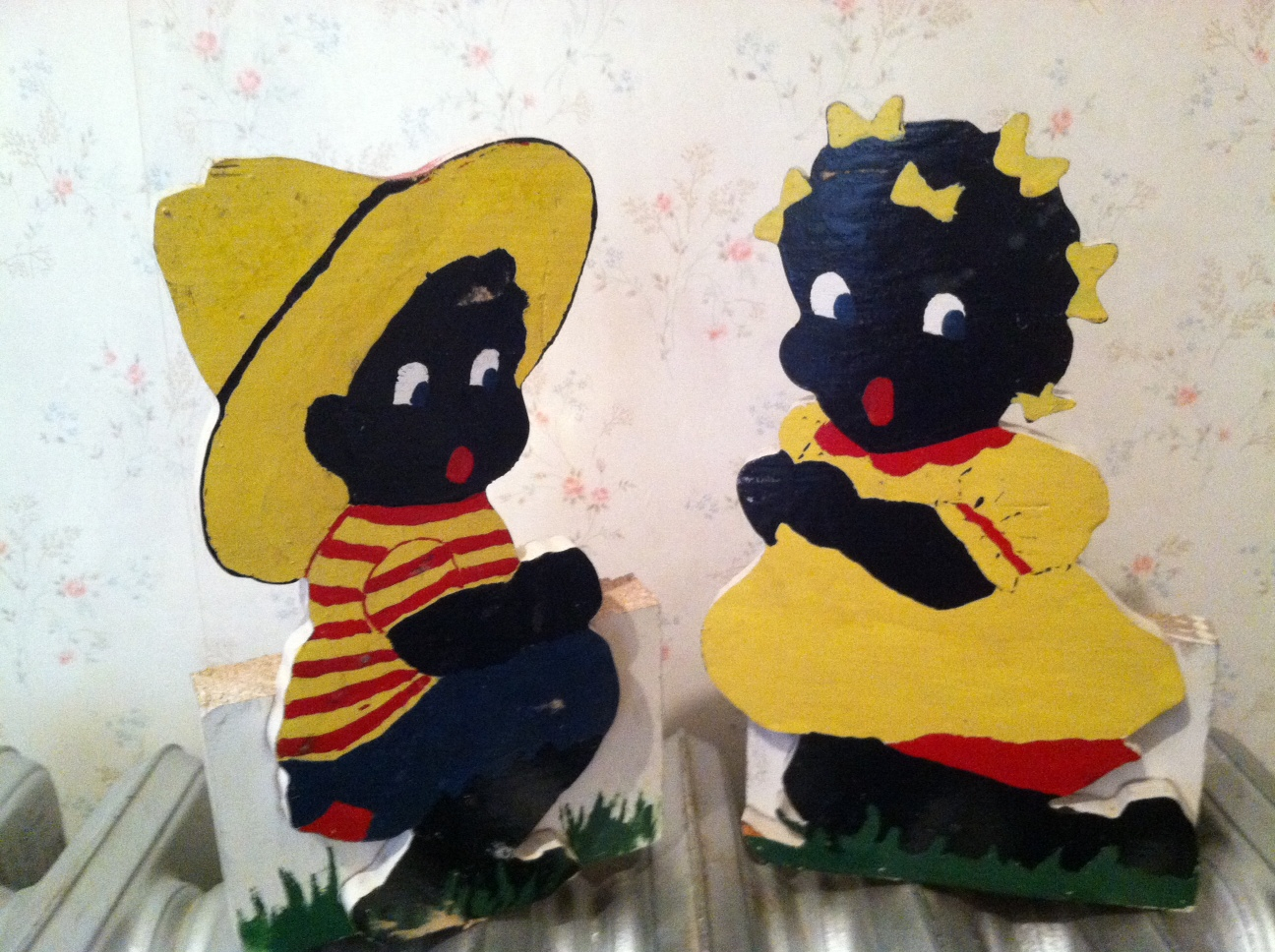
blackBookends

My first encounter with a black person, up close and personal, was with little Chico Duncan, a black boy from New York City, who came to our home for a week in the “Fresh Air” program in which volunteer families would give city children summer vacations in the country. (Shirley Showalter’s book Blush devotes an entire chapter to her friendship with their family’s Fresh Air girl.) The most fascinating thing about Chico was his hair, kinky black and glistening. Was his hair naturally oily or did he put on something from a bottle? I longed to touch it and feel the texture, but fear or embarrassment or both restrained me from even asking. Besides, he was a BOY, and I had hoped for a girl to play with!

But that was years ago. Now at Bossler’s Church, children who sing “Jesus Loves the Little Children” may actually be sitting besides a child with a darker skin tone. The church treasurer, a former missionary, has an Ethiopian husband; one farm family has adopted African-American twin babies. There is a couple of Middle-Eastern descent. The Bishop, Director of African Programming with Eastern Mennonite Missions, has biological grand-children of Kenyan-American ancestry.

And my Grandma Longenecker? For at least two decades through Lutheran Social Services, she and Aunt Ruthie sponsored families from all over the world—particularly Viet Nam, Africa, and eastern Europe. They, along with many other Lancaster County families, welcomed the immigrants and refugees from countries at war for weeks or months at a time until they could get a job, an apartment of their own, even acquire an education.

A few months ago, I re-visited Aunt Ruthie’s bedroom, (now unoccupied because she lives at Landis Homes) and saw on the wall as if for the first time, a framed picture of three women:
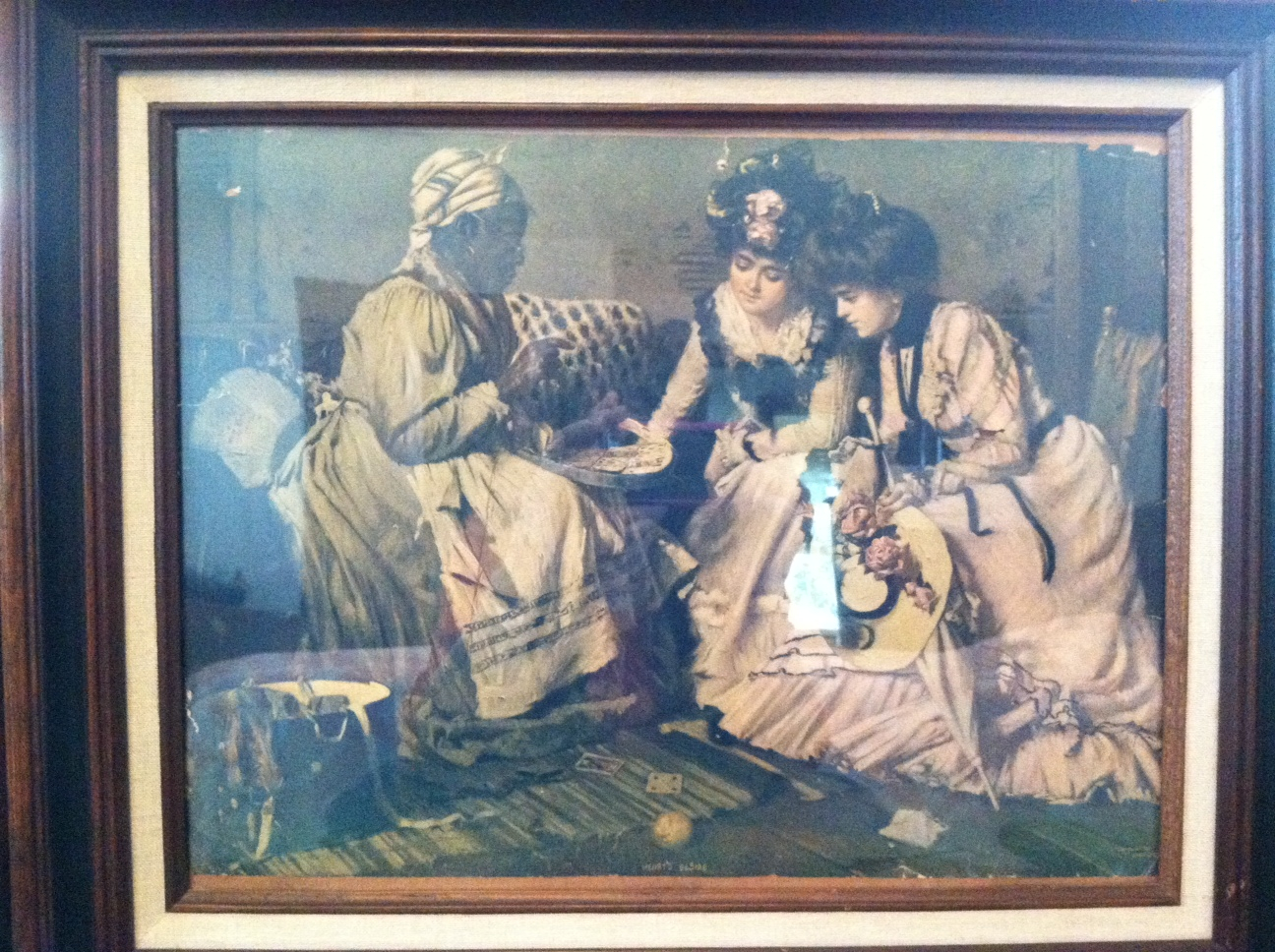
CardGame2

Two elegantly dressed Victorian women and a black woman, obviously a maid, playing cards. Is the maid holding the card tray for the other two? Is she teaching the ladies tricks of the trade? Are all three playing the game? Three would make a better game, don’t you think?
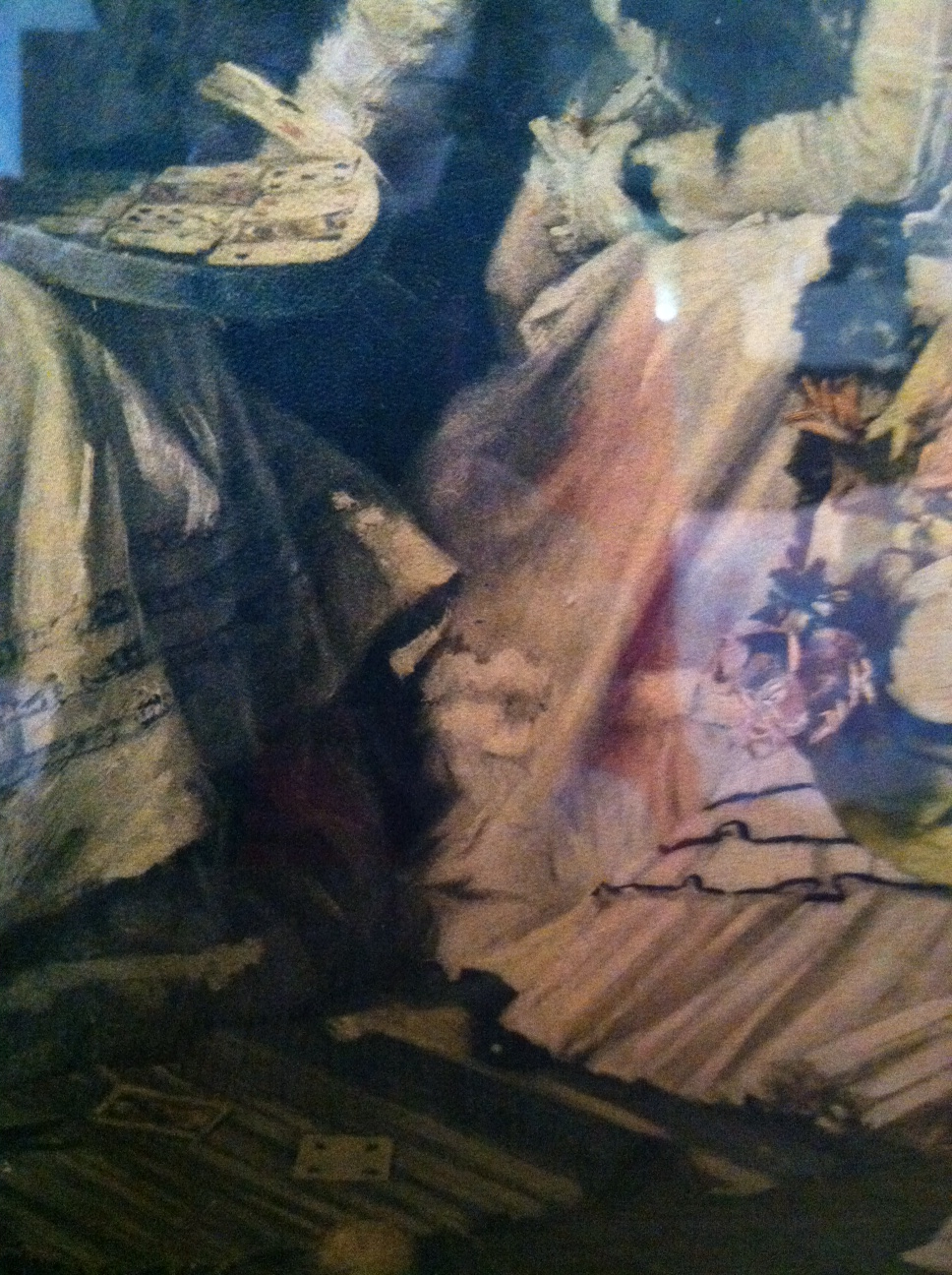
Detail: Women Playing Cards

What experience with race did you encounter as a child? What story or anecdote can you add? I love when the bell chimes with your comment!
Up in the Garret

MAtticReading

Books, books, books!

I had found the secret of a garret-room

Piled high with cases in my father’s name,

Piled high, packed large,—where, creeping in

and out

Among the giant fossils of my past,

Like some small nimble mouse between

the ribs

Of a mastodon, I nibbled here and there

At this or that box, pulling through the gap,

In heats of terror, haste, victorious joy,

The first book first. And how I felt it beat

Under my pillow, in the morning’s dark,

An hour before the sun would let me read!

My books!

Elizabeth Barrett Browning, Aurora Leigh

Anna Quindlen in her splendid 84-page book How Reading Changed My Life describes reading as her “perfect island.” She doesn’t say where the island exists, so it can be anywhere the reader imagines it to be.

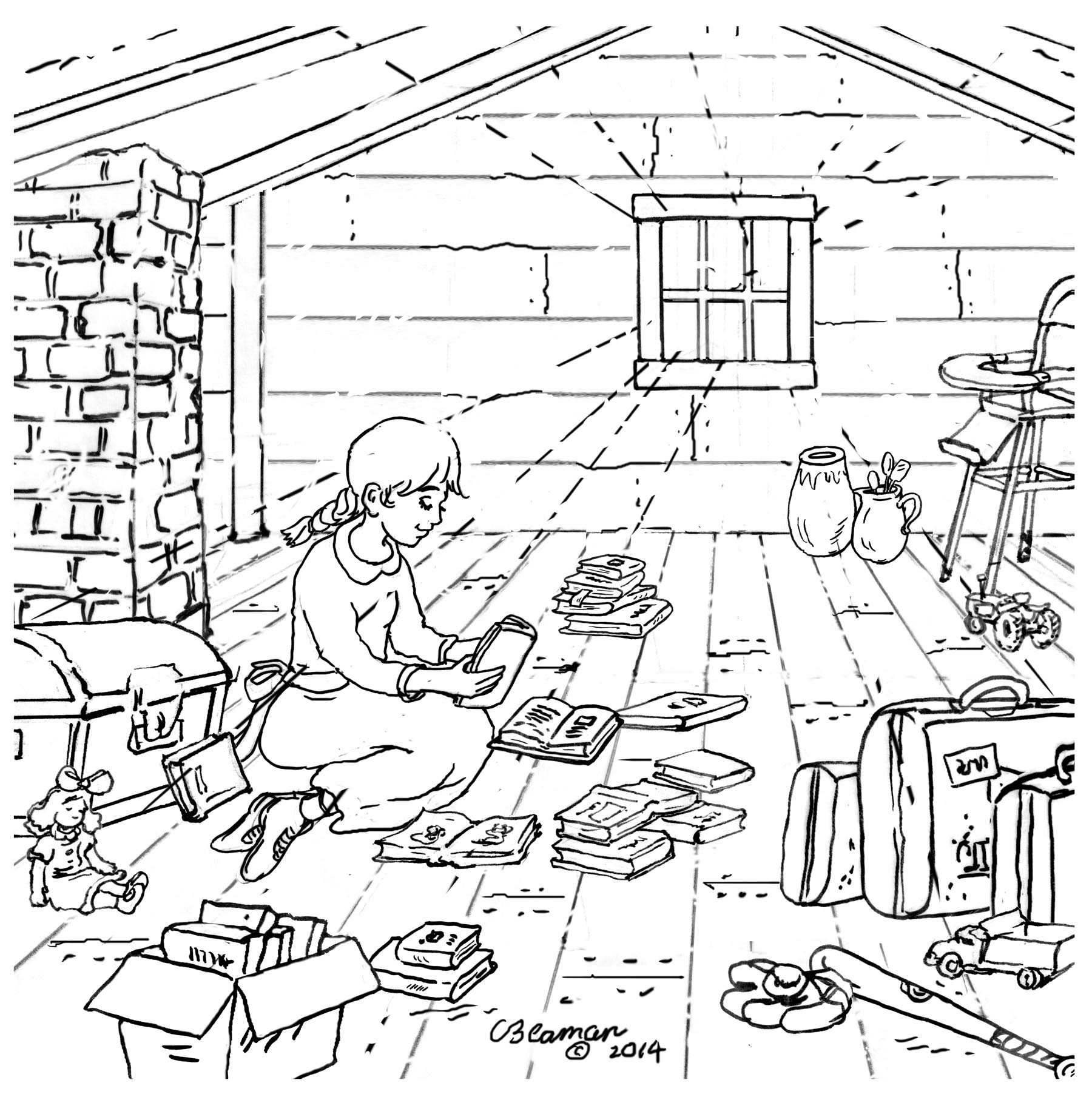
My perfect island as a girl was the attic under the sloping roof, unless it was summer steamy hot, or winter frosty cold. Then my nest was on my bed, or flopped on the davenport, across a chair, anywhere . . . .

My books were not like Quindlen’s list of “10 Books for a Girl Who Is Full of Beans.” I didn’t read her noble suggestions like Little Women, Anne of Green Gables, Madeline, or even A Wrinkle in Time as a young girl, but I did become addicted to the Cherry Ames series, books in the mold of Nancy Drew: Cherry Ames, Student Nurse, Army Nurse, Flight Nurse. If you have read them, you may know Cherry, short for “Charity,” is the heroine in a series of 27 mystery novels with hospital settings between 1943 and 1968.

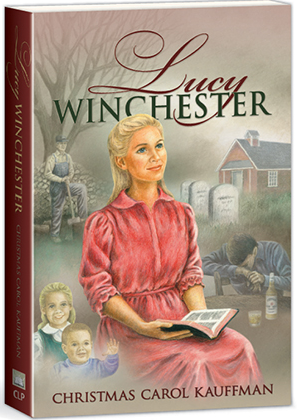
I slurped up Lucy Winchester by Mennonite author Christmas Carol Kauffman, the story of Lucy’s spiritual quest to find peace “set against the backdrop of two difficult marriages and many sorrows, broken promises, sickness, infant deaths, alcoholism, and poverty.”

LucyWInchester

In a trip up to the attic again as an adult, my sisters and I rummaged through the stash of antique books (they’re over 50!) and divvied them up among ourselves.

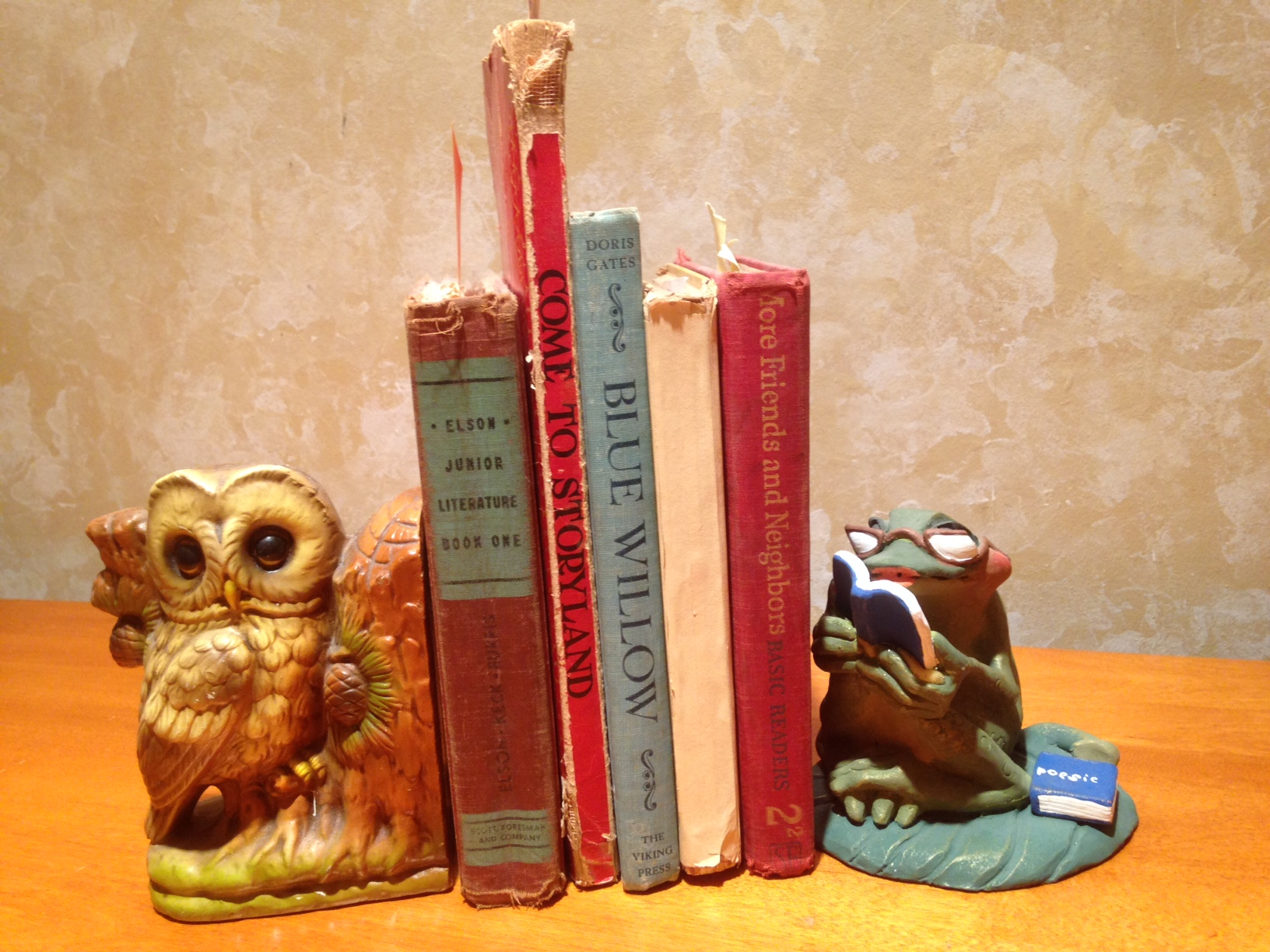
Yes, I read books, books, lots of them, but these are what remain from girlhood days:

ChildStorybooks

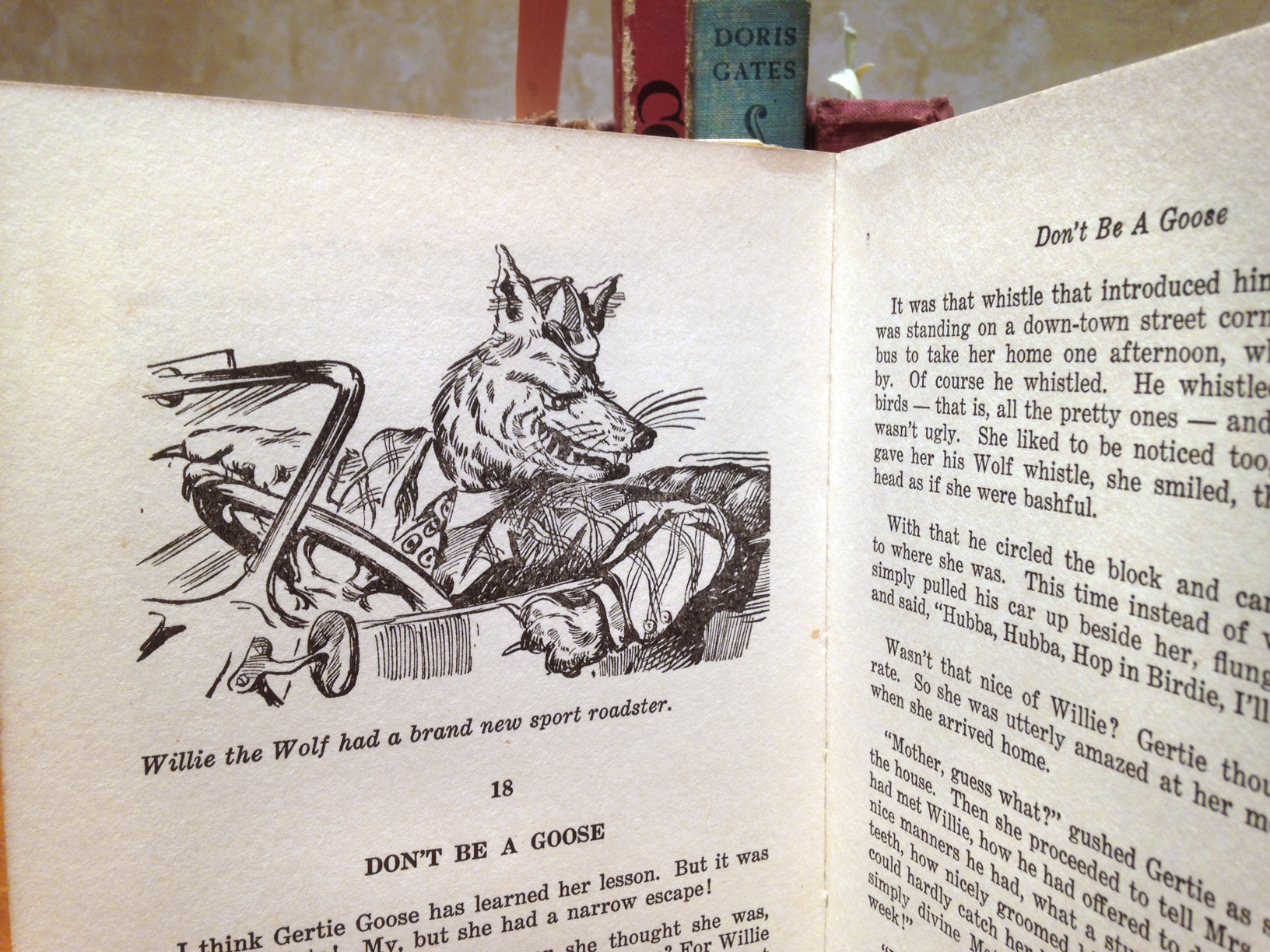
The book whose spine is taped up is entitled Bird Life in Wington (1948) a book of parables by Rev. J. Calvin Reid, pastor of  Mt. Lebanon Presbyterian Church in Pittsburgh,

Willie the Wolf in roadster tries to seduce Gertie Goose
Willie the Wolf with fangs in roadster ready to pounce on naive Gertie Goose

who invented the First Birderian Church of Wington to deliver sermonettes to parishioners named Professor Magpie, Baldy Eagle, Mr. Heron, a fisherman–you get the idea.

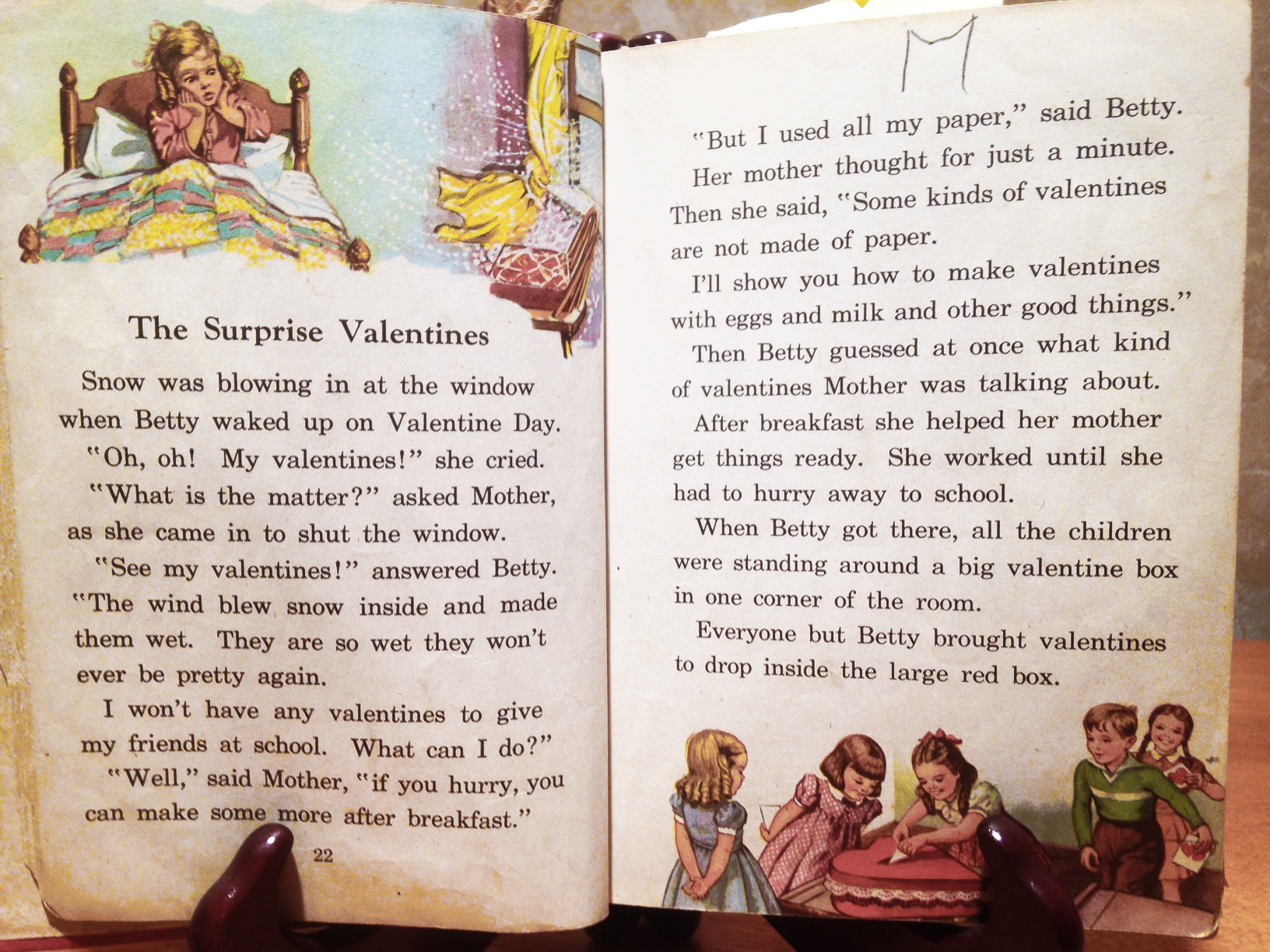
More Friends and Neighbors (Scott-Foresman & Company, 1941)

The images in this Valentine story are imprinted on my mind with cookie cutter precision, the secret to the surprise valentines that replace the snow-damaged paper cards by the window. This reader also contained the story of the “The Woman Who Used Her Head” by chopping a hole in her roof to accommodate the lofty altitude of her Christmas tree. 

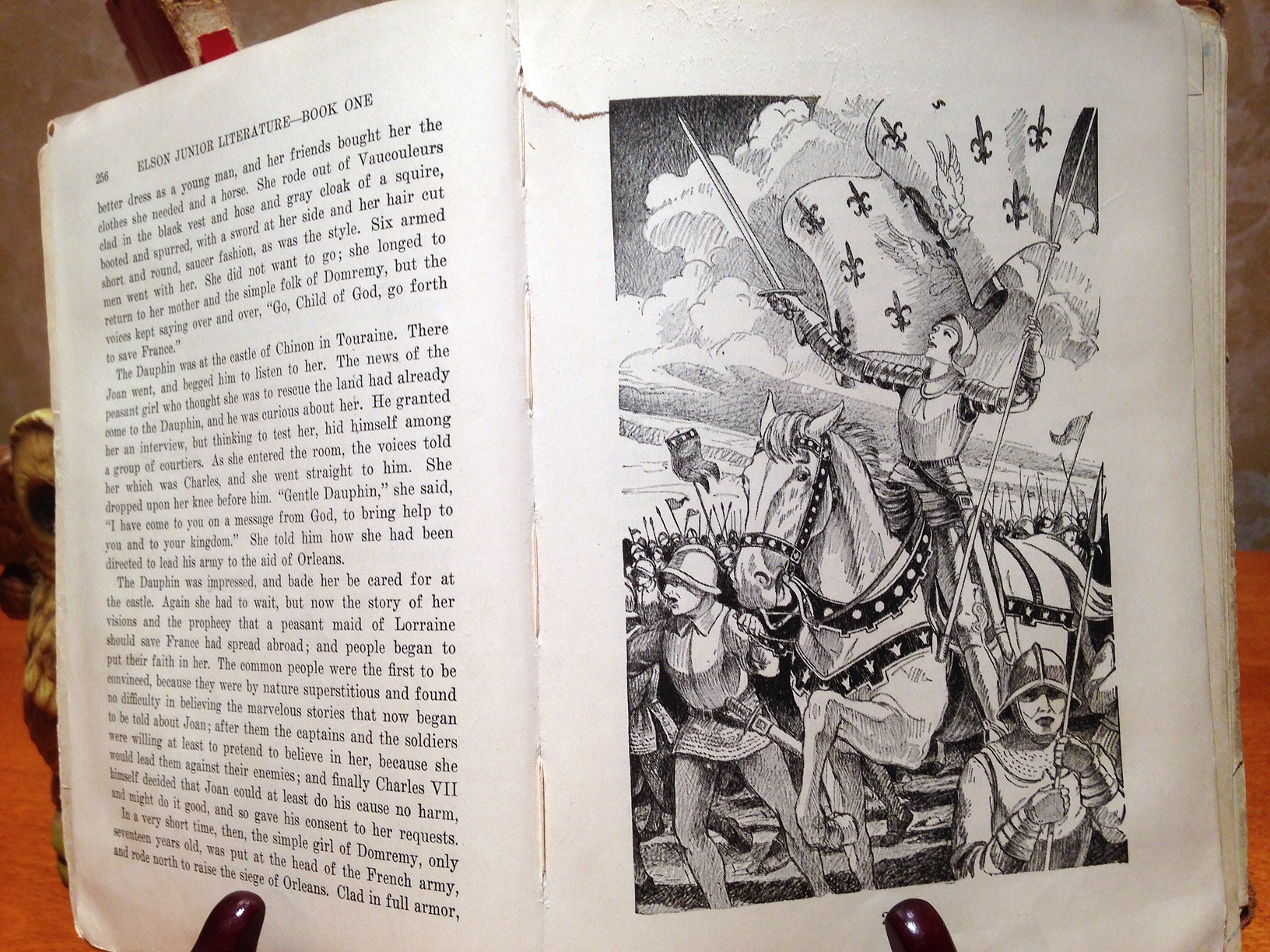
I always loved to turn the page and find an etching in the Elson Junior Literature Book One

Finally, a “real” literature book with Hawthorne’s The Great Stone Face, Emerson’s poem The Snowstorm, announced by “all the trumpets of the sky,” Longfellow’s The Courtship of Miles Standish, and Joan of Arc, the heroic maid who saved France from conquest. A vision, voices, an ancient prophecy–what could be more romantic for a plain Mennonite girl who dreamed of castles, and princes, and fulfillment, oh my!

Did this post jog your memory of textbooks, gift books, library books from your own past?

Please tell us about them.

Another invitation to vote for my story in The Gutsy Story Contest:

To Vote: http://soniamarsh.com/2014/01/vote-for-your-favorite-december-2013-my-gutsy-story.html

Sm.pleaseVote

To Read the Story:  http://soniamarsh.com/2013/12/rising-above-the-pettiness-to-focus-on-the-positive-by-marian-beaman.html

Huge Thanks to those who have already voted!

Divas of Downton Abbey: Southern Style

Watching episodes of Downton Abbey is like scarfing down balls of caramel corn while swilling champagne.                   The New Yorker

I encountered Julian Fellowes, writer and creator of the Downton Abbey series, when he played Kilwillie, a distillery-owning character in the British drama series Monarch of the Glen. As an actor, he never succeeded in winning the hand of Molly, the land-rich, but beleaguered widow, the girl of his dreams. But as master mind of an award-winning PBS series set in post-Edwardian England, Oscar-winning Fellowes is surrounded by drama and divas galore.

Presented in an Upstairs, Downstairs format, Downton Abbey, now in its 4th season, depicts the lives of the aristocratic Crawley family and the servants who work for them. If you are a devotee, you know that jealousy, revenge, and closely guarded secrets power the plot portrayed by glittering, gossipy, and beguiling men and women against a backdrop of history, politics, and the march of technology.

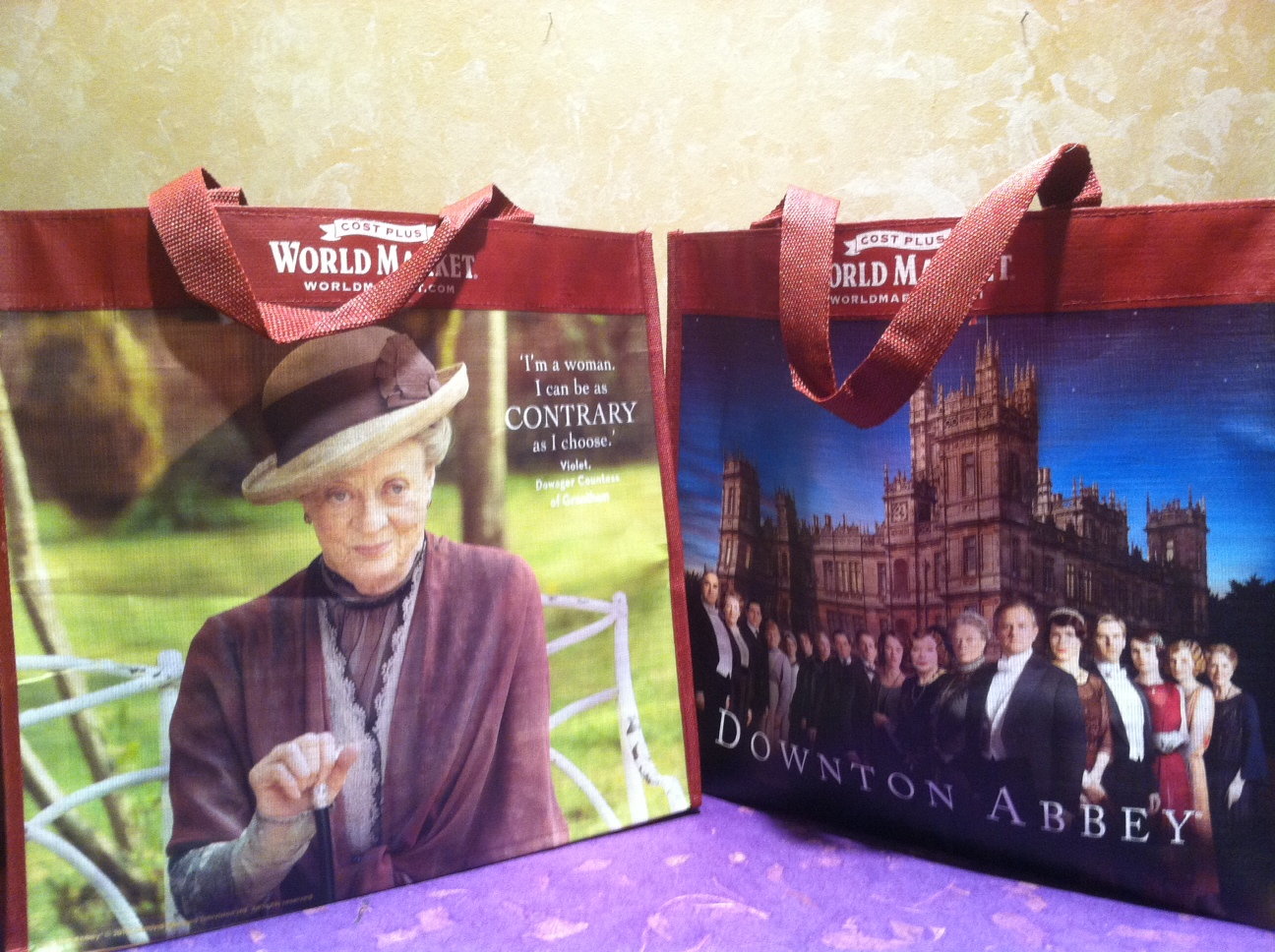
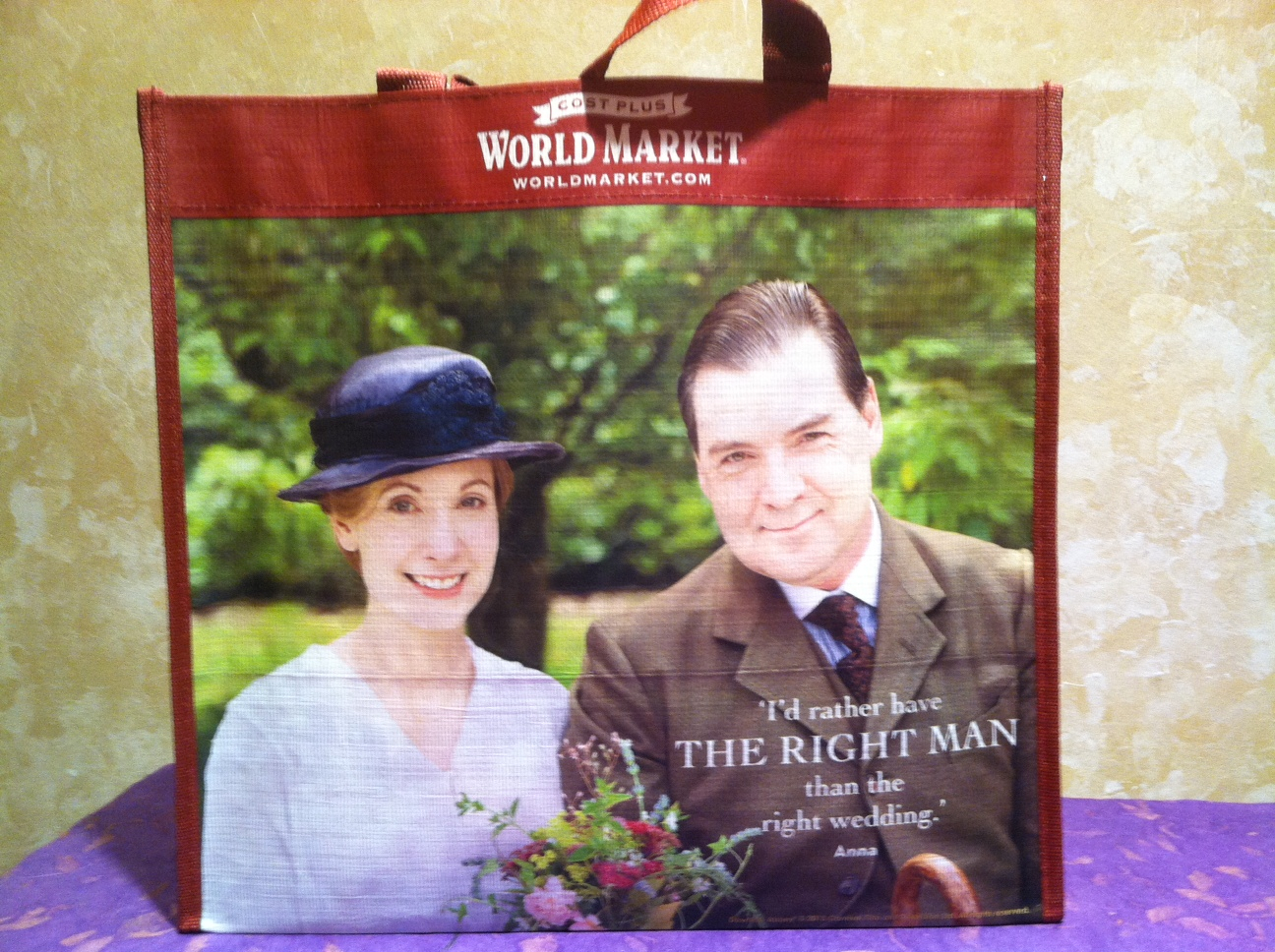
The series Downton Abbey, a Masterpiece Theatre classic, is now a flourishing brand and there is merchandising to match:

VioletDA

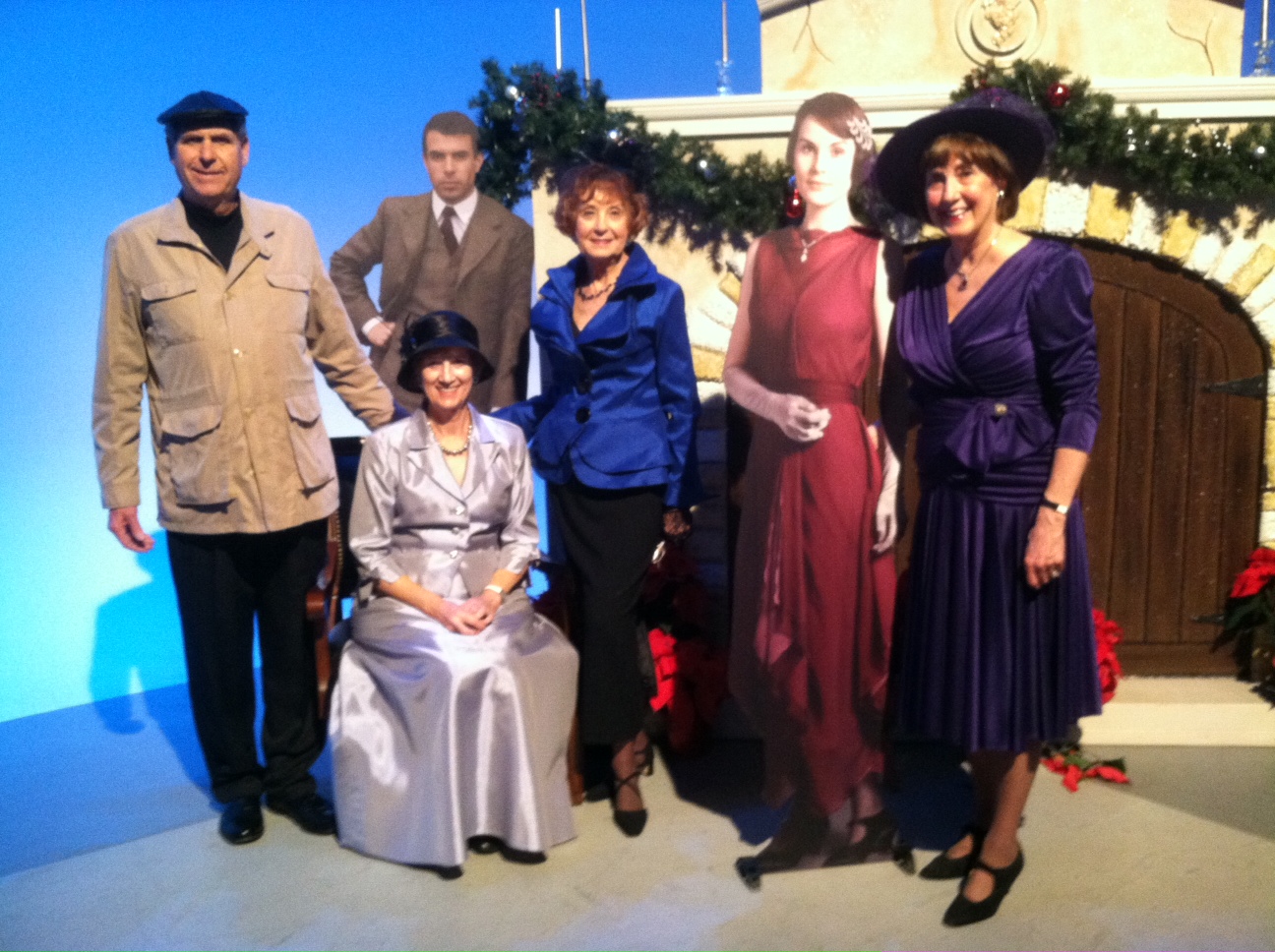
Tuesday evening, my Southern friends and I, escorted by husband Cliff, brave the mild wintry weather to attend a premiere of the 4th season at WJCT, Jacksonville’s PBS station. Period costumes are encouraged and attendees do their best to comply with apparel from the Edwardian period to the flapper age.

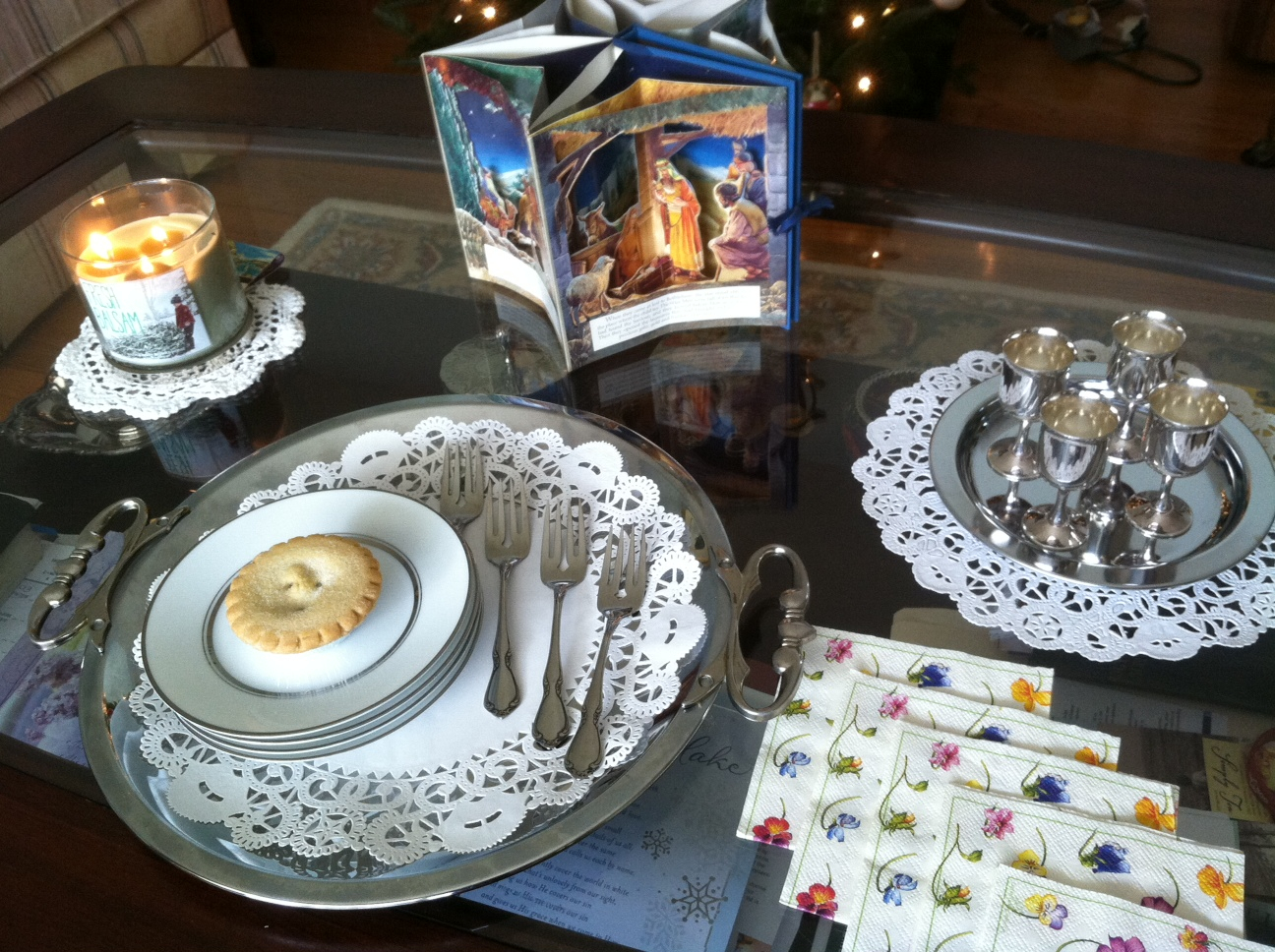
We begin with an appetizer at our house:

Mincemeat tarts from Scotland

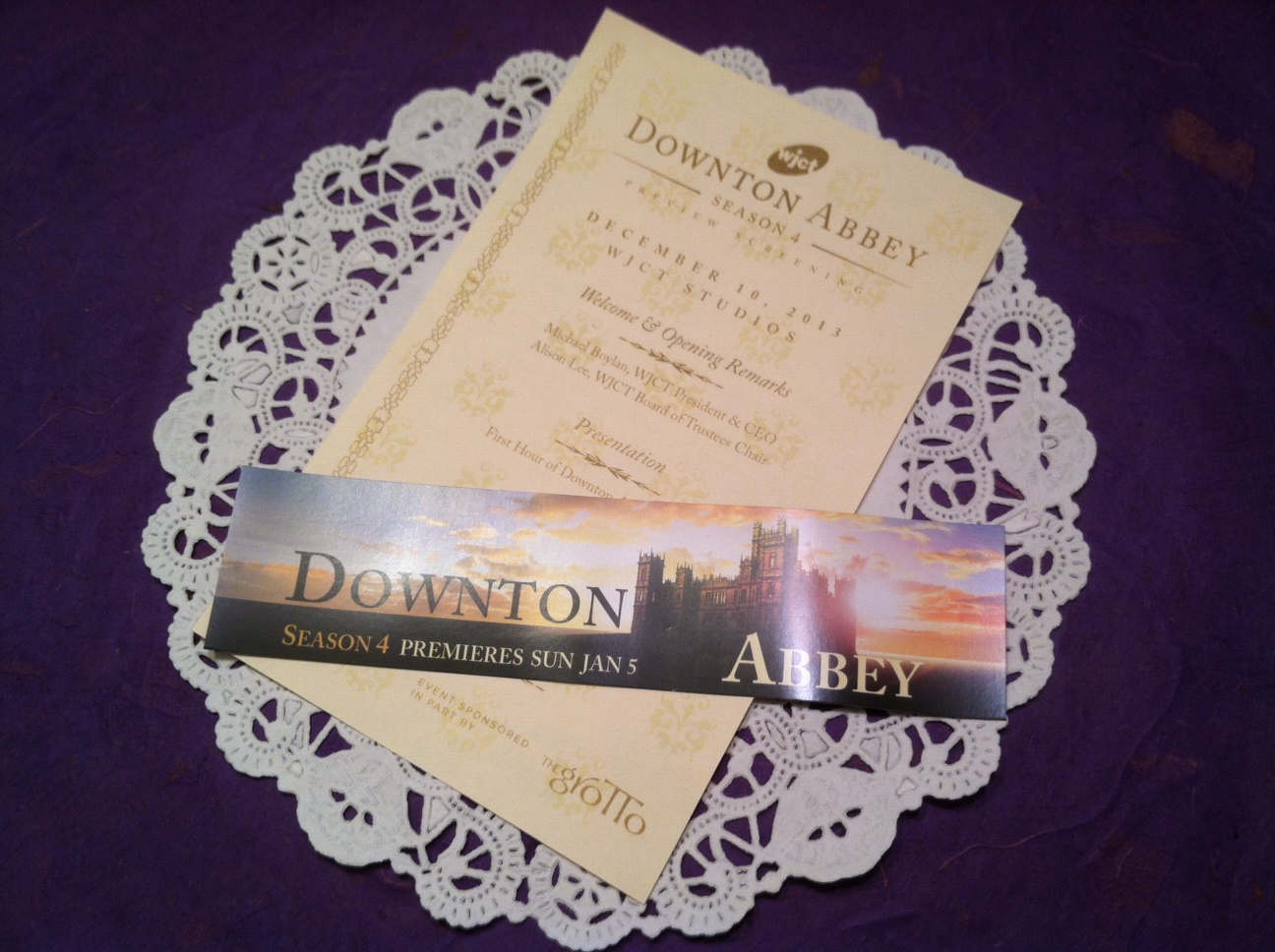
Tickets and a programme:

2DowntonTickets

Then oohs and aahs over wardrobe choices!

DowntonFour

And there is a flapper in our midst, heralding the coming decade!

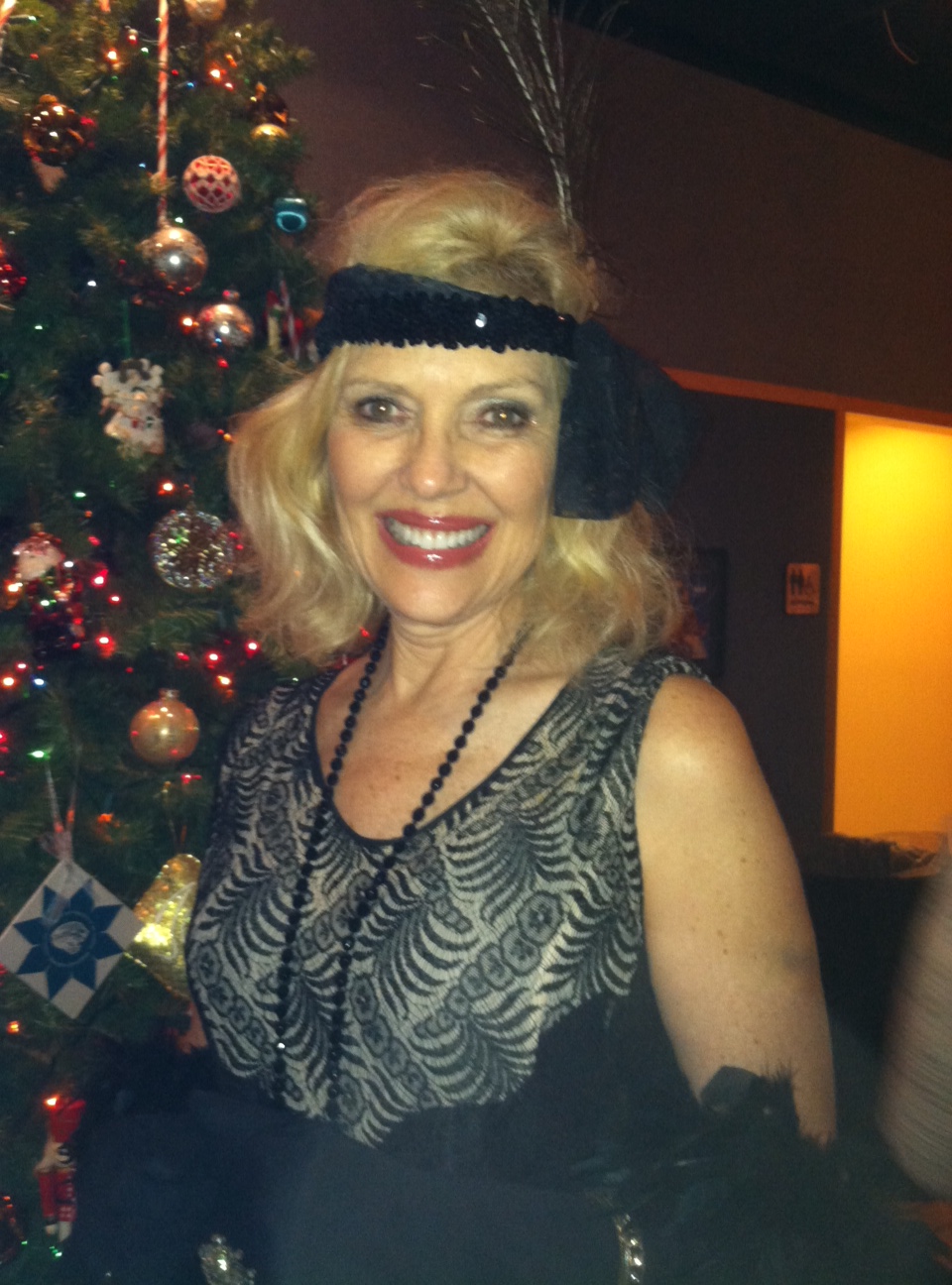
The lovely Susan Smathers

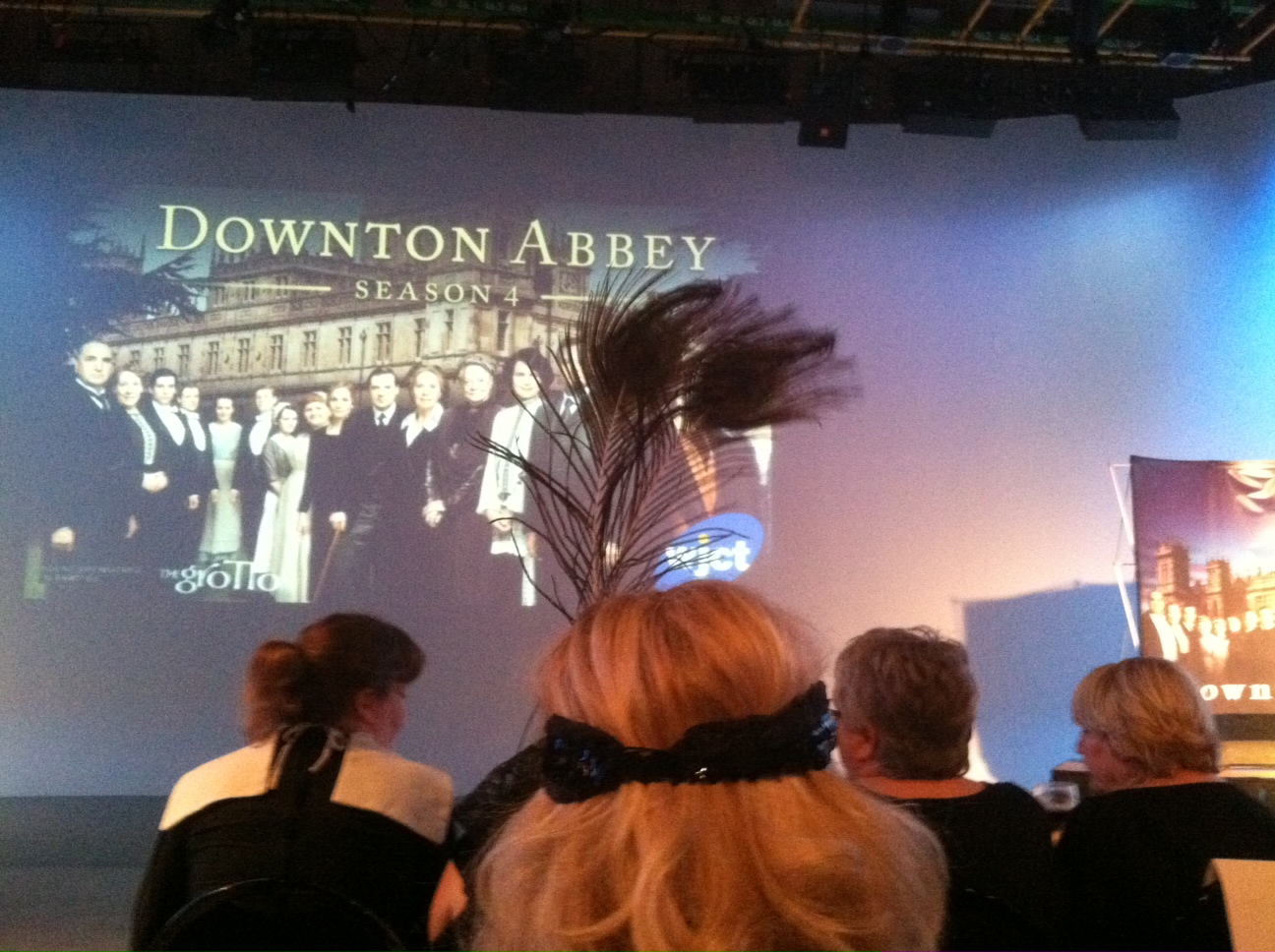
Finally, the new episode begins!

DowntonScreen

AnnaDowntonAbbey

After the screening, inquiring minds want to know:

What zingers did Lady Violet fire off?

After her period of mourning, who will be Lady Mary’s next love interest?

What new technology is introduced?

Who is in Carson’s arms at the end of the episode?

The mysteries of Downton Abbey are made all the more fascinating by the true story of the castle in which the series is filmed, Highclerc Castle, whose history is recounted narrative-style by its current owner, the Countess of Carnarvon, in her book Lady Almina and the Real Downton Abbey: The Lost Legacy of Highclerc Castle by the Castle of Carnarvon.

Are you a Downton Abbeyite? We are dying to know why. Or why not. Add your bit to the conversation!

There is still time to read and respond to my entry in the My Gutsy Story Contest posted on the website of award-winning author Sonia Marsh:

Rising Above the Pettiness to Focus on the Positive


Feeling Rich, in Touch with our Senses

Diane Ackerman  published years ago a “lusciously written” book entitled A Natural History of the Senses. My students enjoyed reading passages from the book for their summary assignments. Both poet and scientist in her approach, Ackerman has since written Cultivating Delight: A Natural History of My Garden, a book I have relished reading for its keen observations. Here is a passage:

Many things catch light prismatically–fish scales, the mother-of-pearl inside a limpet shell, oil on a slippery road, a dragonfly’s wings, opals, soap bubbles, peacock feathers, metal that’s lightly tarnished, the wing case of beetles, spiders’ webs smeared with early-morning dew.

shell

Author Kathy Pooler’s blog post yesterday, December 5, 2013 features actor and author Bryan Cohen who shares the knack of tapping into one’s senses to access childhood memories.

Read it here!

It’s the Gym, not a Spa

Tennis, touch football, swimming, sailing, horse-back riding . . . if it involved action, the Kennedy clan, including our 35th President, were at it! Though President Kennedy suffered from severe back pain, he was often photographed participating in sports.

Through Kennedy’s Council on Physical Fitness, Americans in the 1960s were challenged to become more active and physically fit. In these days of remembrance of President Kennedy’s assassination in November 1963, this post pays tribute to that part of his legacy, a call to shape up!

Decades later, I’m still at it, trying to avoid canes, walkers, and wheelchairs in the near future. And so, fitness classes at the gym have become a metaphor for my life in general: Pilates / PowerPump = hard / harder.

Lift it up!

RhodaWeightLife

Step it up!

Roll it up!

Quiet zone low light, deep breaths . . . ah!
Quiet zone, low light, deep breaths, ready for Pilates . . . ah!

Getting ready to roll . . .

Instructor Ananda doing perfect roll-ups.

My roll-ups are not perfect, but I try!

As I said, “It’s a gym, not a spa!”

Your comments welcome. I will always reply.

Upright: Downright Fabulous!

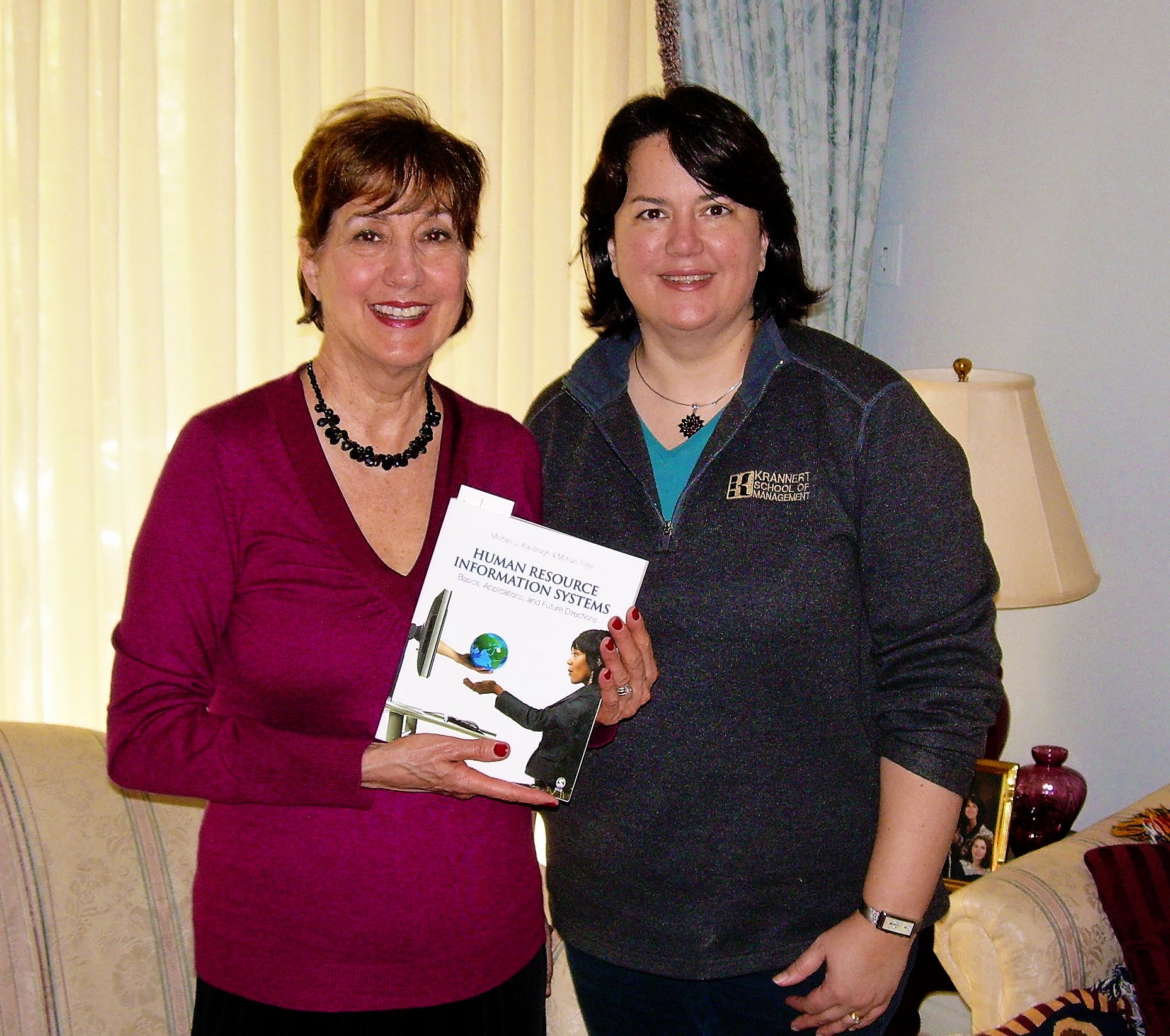
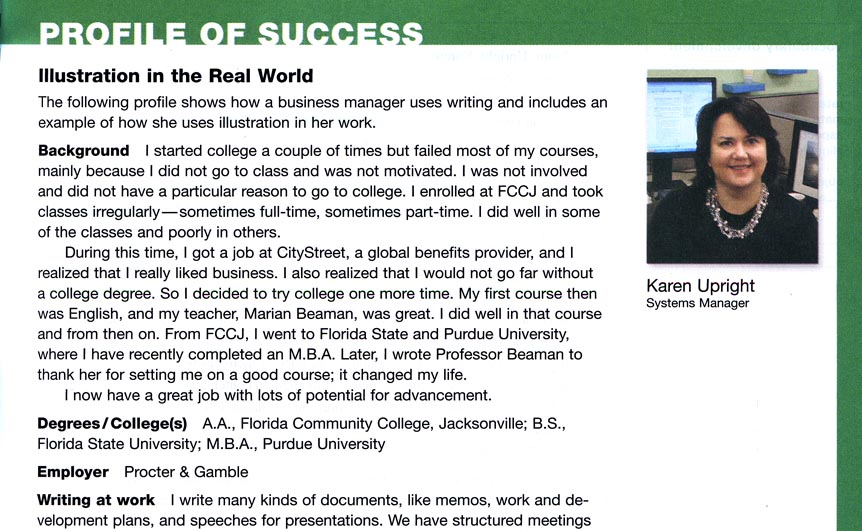
Last Wednesday, into my inbox popped a message which included an invitation to lunch from Karen Bruner Upright, my former student at Florida State College. The last time I saw her, she was a “surprise” visitor at Christmas, marching up the walkway to our house, book proudly in hand, with a chapter she co-wrote with a colleague.

cropKarenMeDec27

When we first met in my college classroom, Karen was my first-year composition student on her third try at getting through the course. Though she attributes her previous failures to not going to class and not feeling motivated, from the beginning, she was a stellar student, whose essays became examples I repeatedly used as models for other students. Revealing her occupation back then as a restaurant chef, one essay in particular stands out, an illustration-type paper with the line “The heat of a commercial kitchen comes from both the ovens and the chefs” as she proceeds to describe two other chefs and herself as “the most obnoxious chef I have ever known.”

When I pointed out her writing gift, she at first stared at me blankly, almost in disbelief. She has since gone on to complete her M.B.A. degree at Purdue University and is currently employed as Systems Manager for Proctor and Gamble–and become co-author of a chapter in a book about technology for human resources. There is no end to what this woman can accomplish. Oh, and did I mention, she still loves to cook, featuring her savory concoctions on her website plannedovers.com

Along the way, Karen has also become conversant in French, every Friday calling her friend in the south of France, so she can maintain her fluency. Also, she has been featured as a Profile in Success in a college textbook by Susan Anker entitled Real Writing with Readings.

Thumbnail of page 145 in Real Writing with Readings college text, 5th ed.

Of all the students who have paraded through my classroom, Karen Upright stands at the top my list of Students Who Inspire.

Downright fabulous!

Is there some you know, like Karen, who persisted and made it through high school, college–some other challenge? Do tell us about it.

Your comments welcome. I will always reply!