Train Lovers, Welcome Aboard

3 Snapshots from Memory

  • Aunt Ruthie Longenecker takes us to Philadelphia, my first recollection of a train trip. I feel the rocking motion of the Pennsylvania Rail Road train car we occupy, the clickety-clack of the wheels on the rails, and the prize of the big city zoo at the end of the trip: lions and tigers and elephants, oh my!
  • When I pick raspberries with Grandma Longenecker, I hear the train’s clatter-clack over segments of track speeding from Lancaster to Harrisburg. With our round aluminum kettles laden with berries and handles that cut into the palms of our hands, we stand just 50 yards from the track, feeling the vibration of the passing train through our shoes, gazing in awe.
  • Years later, the young Beaman family bridges the gap between Florida and Pennsylvania via Amtrak’s Silver Meteor. The miles disappear behind us effortlessly. Parents and children eat, read, stretch our legs as some passengers wonder “Who’s that little kid running in the aisle?”

Train Trips Engage the Senses:

  1. Rocking motion as the train speeds along
  2. Sound of the wheels on the rails
  3. Smells of warm exhaust, food in the dining car,
  4. Surprising views as train wends its way through towns, countryside
  5. Spontaneous, easy conversation sometimes with strangers

Alexander McCall Smith, known for his light mysteries that kindly expose the foibles of his characters, describes the mystique of train travel in his recent novel Trains and Lovers (2012):

Screen Shot 2014-10-02 at 6.30.12 PM

“I’m thinking that’s a fishing boat.”

It was. He saw it from the train, but not for more than a minute or two, as the line followed that bit of coastline only for a short time before it suddenly swerved off, as railway lines will do. The view of the North Sea was lost, and trees closed in; there was the blue of the sea one moment and then the blurred green of foliage rapidly passing the window; there was slanting morning sun, like an intermittent signal flashed through the tree.”

Train Poetry

Of course, nostalgic verse has been written about train travel, Sara Teasdale hearing and seeing from In the Train the “restless rumble,” the “drowsy people” and the “steel blue twilight in the world (1915).

Edna St. Vincent Millay reflects on viewing the distant steam locomotive in Travel (1921)

The railroad track is miles away,

And the day is loud with voices speaking,

Yet there isn’t a train goes by all day

But I hear its whistle shrieking.

All night there isn’t a train goes by,

Though the night is still for sleep and dreaming,

But I see its cinders red on the sky,

And hear its engine steaming.

My heart is warm with friends I make,

And better friends I’ll not be knowing;

Yet there isn’t a train I wouldn’t take,

    No matter where it’s going.

You can hear the rocking rhythm of the train in W. H. Auden’s lines from Night Mail – This is the night mail crossing the Border / Bringing the cheque and the postal order.

The Destination

Arriving in Pennsylvania from Philadephia more than ten years ago, grand-niece Heidi runs to meet Aunt Ruthie at the tiny Amtrak terminal in Elizabethtown – exchanging cold, wet weather for a warm, welcoming hug.
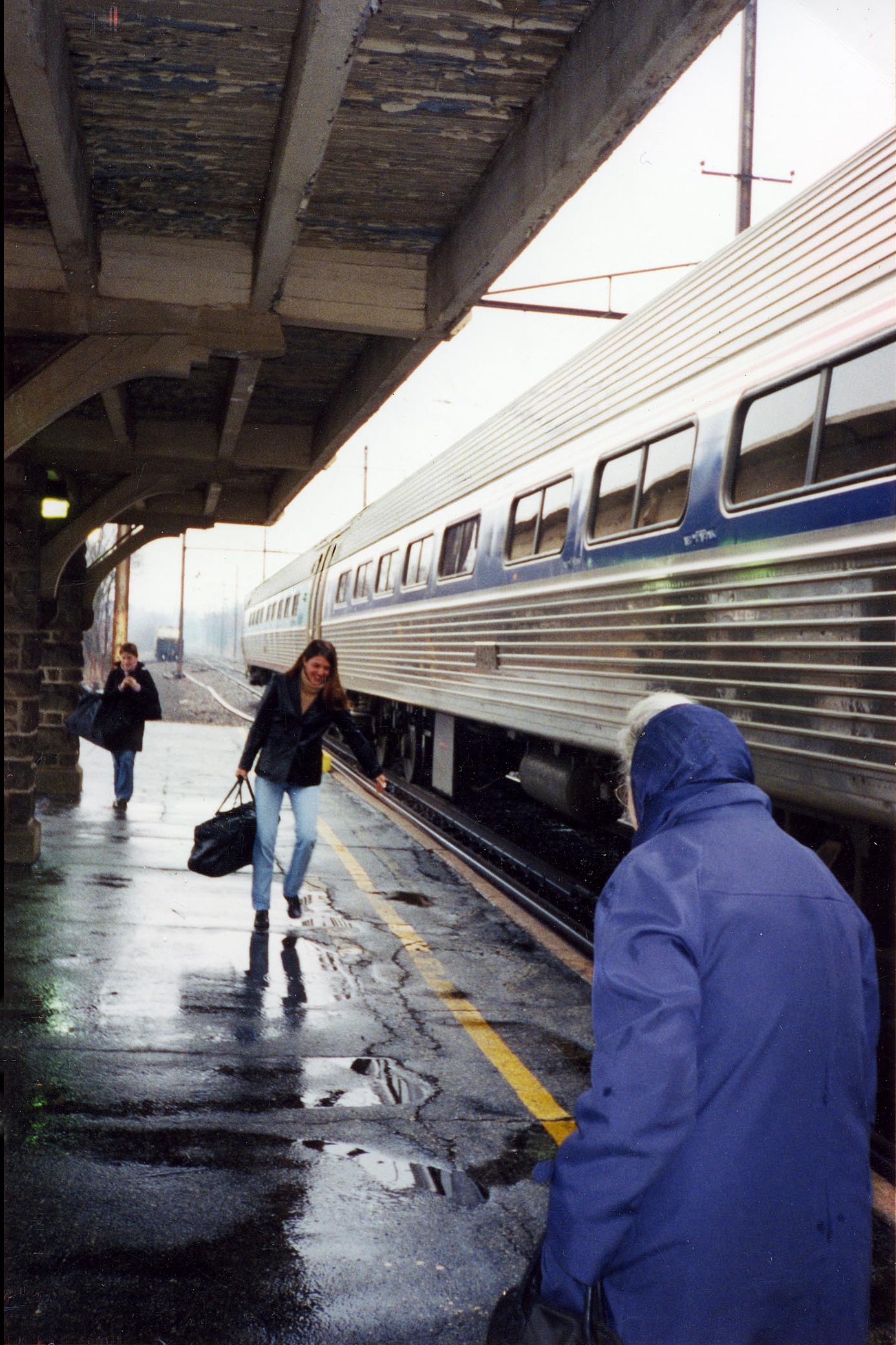
Aunt Ruthie meeting Heidi_2002-_300

Your experience with train travel . . . tell us about it.

A response to the anecdotes or poetry here? All replies welcome.

Coming next:

Moments of Discovery #2 – Daddy’s 1912 Report Card & Mother’s 1989 Dodge Spirit

Purple Passages and a Teddy Bear

 LEAVES

Autumn is a second spring when every leaf is a flower.   – Albert Camus

Autumn carries more gold in its pocket than all the other seasons.   – Jim Bishop

Original Photo: Autumn in Pennsylvania

Quotation, noun: The act of repeating erroneously the words of another.      – Ambrose Bierce

(In September’s Purple Passages, I published one of Bierce’s quotes on photography. The one above was contributed later by photographer son Joel.)


CAREBEAR

A bear grows more alive with age. No one with one ounce of sensitivity could ever consign a bear to the dustbin.    – Johnnie Hague

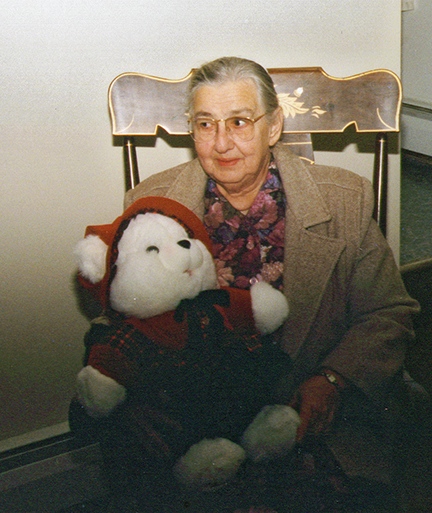
Mom with sheepish look holding teddy bear   1992
Mom with sheepish look holding teddy bear   1992


“Piglet sidled up to Pooh from behind. “Pooh?” he whispered.

“Yes, Piglet?”

“Nothing,” said Piglet, taking Pooh’s hand. “I just wanted to be sure of you.”

― A.A. Milne, Winnie the Pooh.


The cell phone has become the adult’s transitional object, replacing the toddler’s teddy bear for comfort and a sense of belonging.    – Margaret Heffernan

People go to the zoo and they like the lion because it’s scary. And the bear because it’s intense, but the monkey makes people laugh.    – Lorne Michaels


HUMOR

A person without a sense of humor is like a wagon without springs. It’s jolted by every pebble on the road.   – Henry Ward Beecher   (Contributed by blog reader Carolyn Stoner)

It is bad to suppress laughter. It goes back down and spreads to your hips.    – Fred Allen

*  *  *

Your opinion please: the quote about the teddy bear and cellphone.  A comment on something else? Obviously, I like to chat too.

Coming next: Train Lovers, Welcome Aboard

Purple Passages and a Mirror


FlowersHappy

The earth laughs in flowers.”     –  Ralph Waldo Emerson


MIRRORS

Life is a mirror and will reflect back to the thinker what he thinks into it.   – Ernest Holmes

 MirrorSandraC

Mirrors can both reflect and distort as Tennyson suggests:

And moving through a mirror clear

That hangs before her all the year . . .

But in her web she still delights

To weave the mirror’s magic sights . . .

– The Lady of Shalott

An old friend is the best mirror.   – George Herbert

 *  *  *

PHOTOGRAPHY

Definition of photograph before the digital era: a picture painted by the sun without instruction in art.    – Ambrose Bierce

Photography takes an instant out of time, altering life by holding it still.  – Dorothea Lange

Later we’ll look at photographs, the way every family does, making much of the frozen moments, the icons of ancestry, the dead laughing right in your face, or just staring that non-committal historical gaze.”     – Patricia Hampl   The Florist’s Daughter SadieLandisPortrait


What Tallulah Bankhead thinks about photographs: They used to photograph Shirley Temple through gauze. They should photograph me through linoleum. Ha!

*  *  *

Photographs and mirrors. Your thoughts or quotes about either.

Do you think they have anything in common?


Coming next: Milk Bread: Good for What Ails You

The Beach at Sunset: Crossing the Bar

Sunsets, especially sunsets on the beach are # 1 on the list of clichés to avoid in photography. Yet beach sunsets persist on Instagram and Facebook because they are breath-taking, evocative.

Photo credit: Jackie Gassett


. . . the gauzy hinge between sea and sky, the limitless horizon dividing the elements, the disappearing point where we were headed.”

                   Patricia Hampl  The Florist’s Daughter

My mother had a placid and accepting attitude toward life and death. At her funeral the hymns sung by the congregation were full of hope, “I Stand Amazed” and “The Love of God” among them. Another song in the Mennonite Church Hymnal entitled “Sunset and Evening Star” (which was not sung) pulls out the first four words of Tennyson’s poem “Crossing the Bar” written in 1889 just three years before he died.

Crossing the Bar

Tennyson, also appearing to accept death as part of life, uses the metaphor of the sandbar on the beach to paint a picture of the tide of life pushing out to the “boundless deep” to which we return. The poet hopes that though he may be carried beyond the limits of time and space as we know them “he will look upon the face of his ‘Pilot’ when he has crossed the sand bar.”

This past July Mother crossed the bar into eternal glory and there she has beheld the face of her Pilot. Oh, how we miss her.

But now I must cross the bar of challenge and opportunity ever looking for new horizons. How about you?

What bar of challenge and opportunity confronts you now?


Come to the Storybook Chair, the Storybook Chair . . .

So now it matters almost not at all to any of them except as a storybook matters; loved in childhood but outgrown in adolescence, it still matters, still instructs, still is part of what the adult becomes.

Phyllis Tickle, The Graces We Remember: Songs in Ordinary Time (126)

When our children Crista and Joel were little, a prelude to nap-time was their mother chanting in a sing-song voice: “Come to the storybook chair, the story book chair, the story book chair, and we’ll read . . . .” Hearing that, they’d head for the rocking chair and climb on my lap for colorful Richard Scarry pages or the clever tricks of a George and Martha book. I’m carrying on a tradition that began with my mother who read to me from picture books, and also recited poetry from her school days.

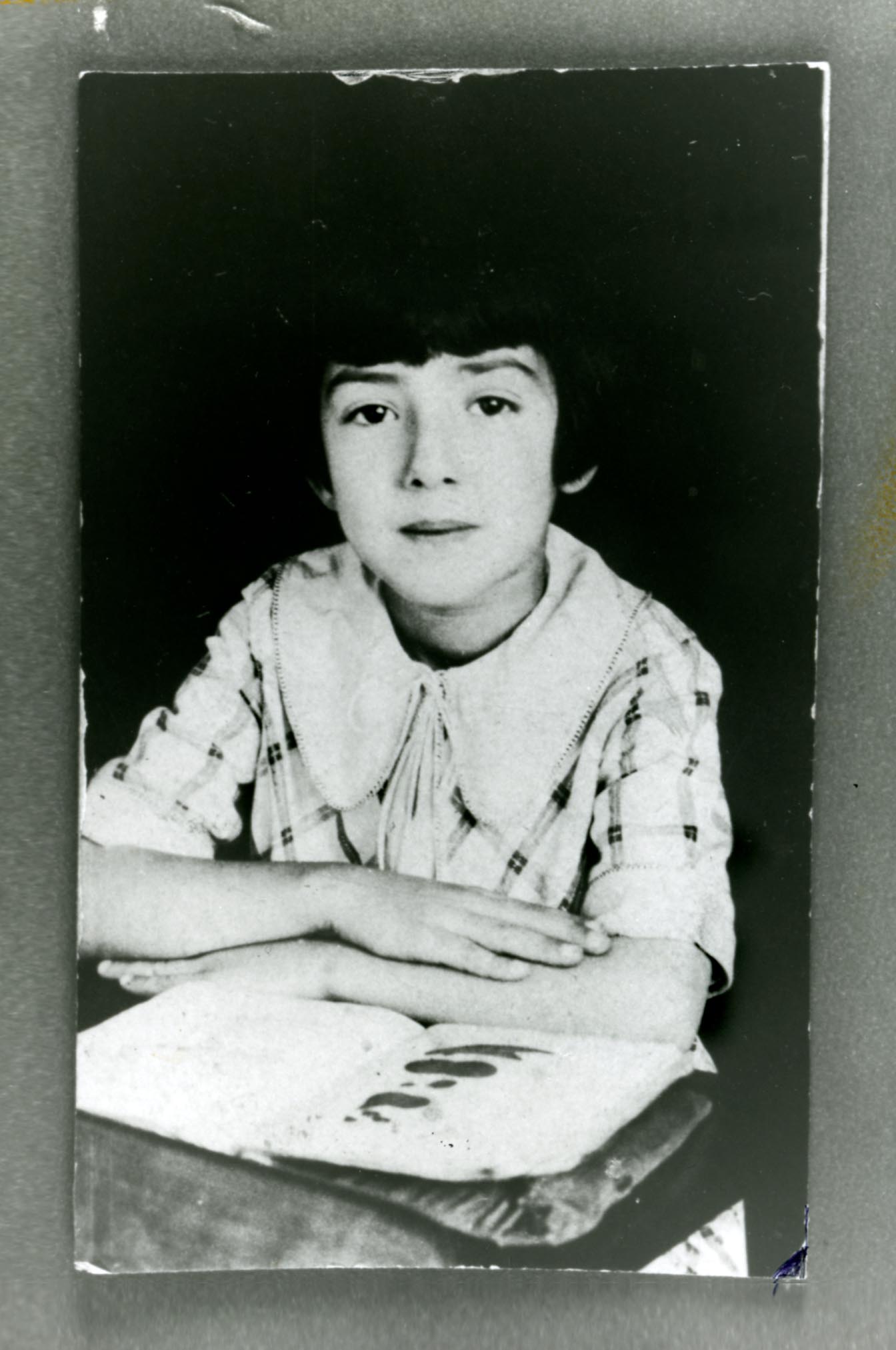
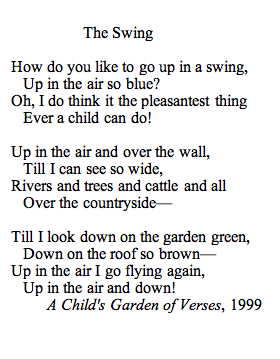
My journal tells me (and it does not lie) these are the poems by Robert Louis Stevenson that Mother recited to me in 1999 from her memories of Lime Rock School near Lititz, Pennsylvania in the mid 1920s.

Ruth Metzler  Lime Rock School  1920s
Ruth Metzler            Lime Rock School             1920s

The Swing PNG image


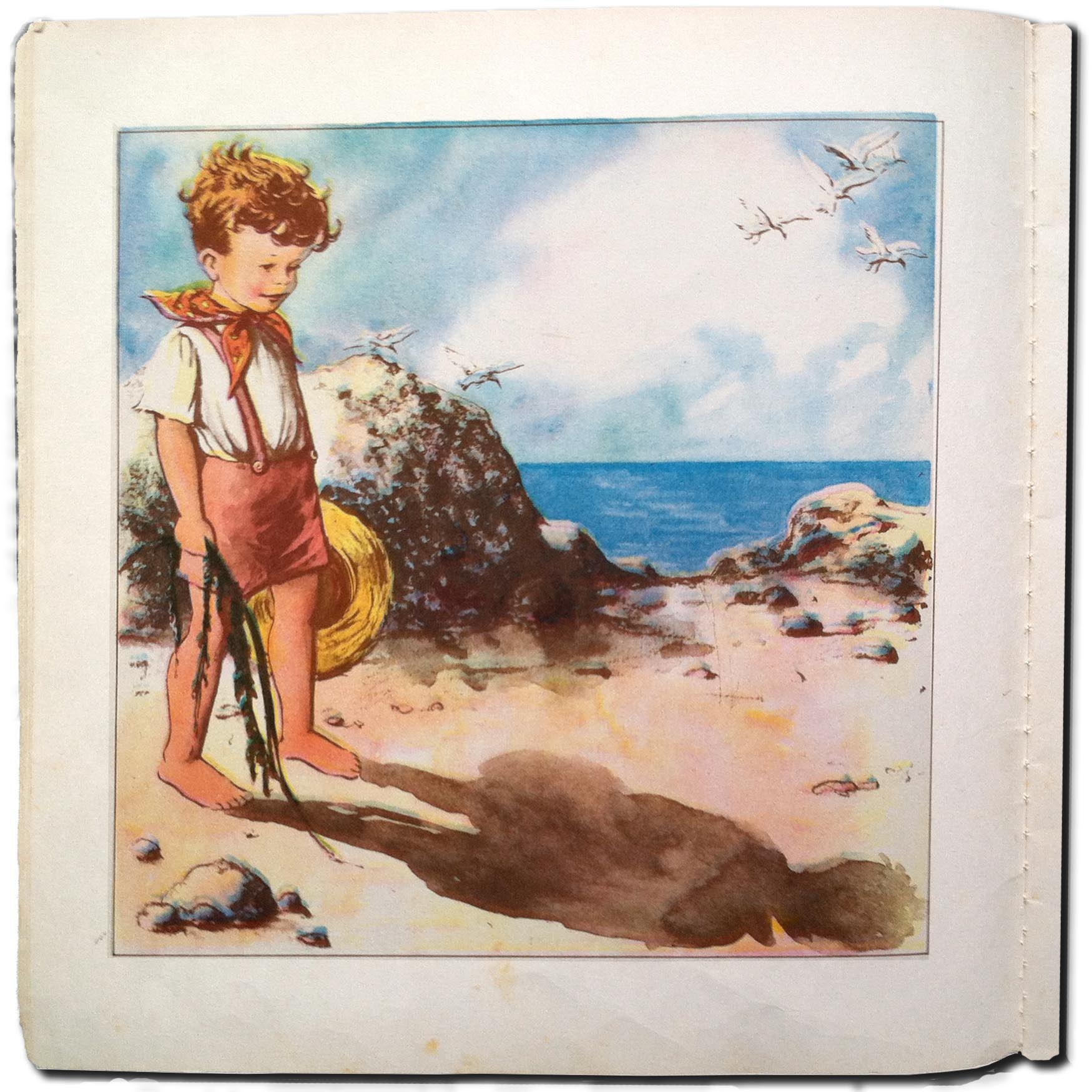
Illustrations from A Child's Garden of Verses, John Martin's House, Inc., circa 1945
Illustrations from A Child’s Garden of Verses, John Martin’s House, Inc., circa 1945

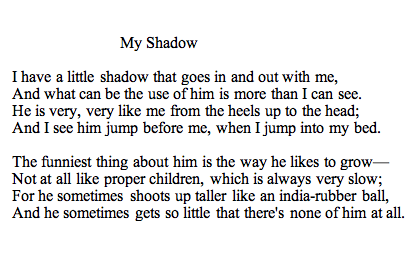
She also recited the verses of “My Shadow” from the “Golden Book of Poetry” 1947 with the familiar first two stanzas:

My Shadow png

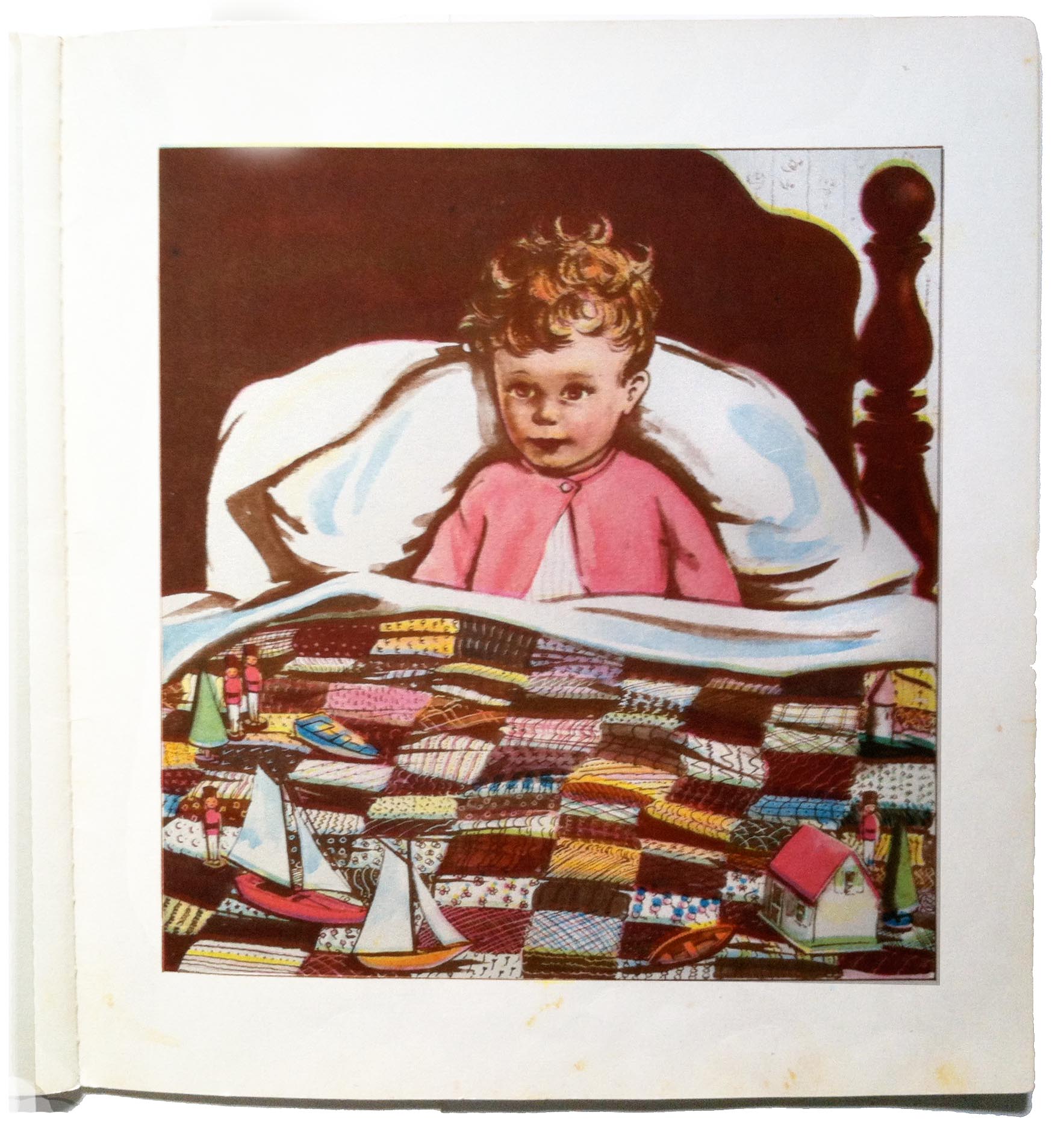
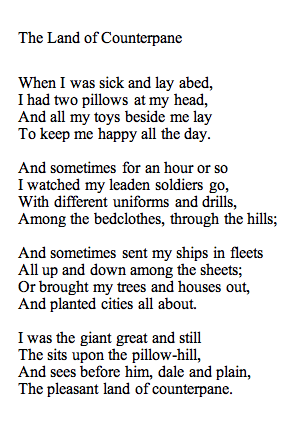
At the beginning of second grade, the summer I turned seven, I had my tonsils removed and among my memories (besides drinking chocolate milk through a straw and trying to swallow smashed bananas) is reading the poem “The Land of Counterpane” under a quilt that probably matched my own upon my sick-bed.

Land of Counterpane_6x6_300

LandOfCounterpane png

What are your early memories of reading? Did a friend or family member recite poetry or other words of wisdom to you?

Coming next: The Wonda Chair and the Heirloom

Dancing to a Different Tune: Kathy Pooler’s Memoir

Kathy and I are not old friends. In fact, our friendship is rather recent as we have explored each other’s blog posts early this year, discovering that we both were developing our writing skills after long, satisfying careers, hers in medicine and mine in education.

KathyPoolerBrighter

In March, she featured me on a blog post describing my writing process and in May I published a preview of her memoir now published in July 2014. Beyond this, we have discovered that our values are rooted in a strong Christian faith.

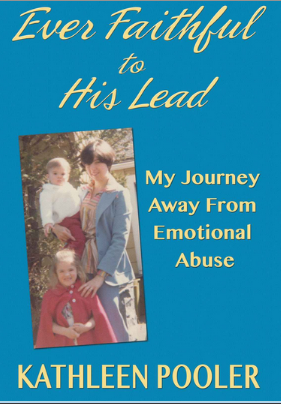
Kathy Pooler’s memoir Ever Faithful to His Lead is a smooth read but with a tale that is often tumultuous. Her memoir unfolds like a novel with pleasing dialogue and silky descriptions of her prom dress and her hand-made wedding gown in stark contrast to the rocky road she travels to become a strong, assertive woman.

In the course of her journey, Kathy earns several academic degrees among them the distinguished Certified Family Nurse Practitioner qualification. Yet she stumbles with poor choices in love, choosing one wrong partner after another in her search for a stable marriage like that she imagined her parents’ to be. In fact, she admits early on that she can trace her “inability to discern dangerous situations to a lack of exposure to anything out of the ordinary.”

Readers can applaud the resilient woman emerging from the frightened person who hid from her first husband in her hallway closet to a woman who is finally able to trust her own instincts. Her candor and vulnerability appear on every page. Kathy often pulls the reader aside to contemplate her motivation, as for example: “I was always second-guessing myself, quickly shoving doubts aside to paint the picture of what I needed the world to be.”

When you as reader want to snatch the blinders off the writer’s eyes and yell “Stop!” into her ears, you know the author has succeeded in pulling you into her world. This memoir is a cautionary tale for anyone on an elusive search for Mr. Right. For anyone already in an abusive relationship, Kathy’s story offers courage and hope. Admitting it is time to make big-girl choices, her last chapter promises, “Raw, hopeful, ready to dance to my own song—my new faith waiting patiently in the background.”

The book concludes with nine discussion questions for book clubs and a “Share the Hope” section with the notation that each purchase contributes toward the National Coalition of Domestic Violence Awareness Association. Author Pooler is already at work on a sequel: Hope Matters.

EverFaithfulCover

You can buy Kathy Pooler’s book at Goodreads and Amazon.

Kathy’s blog

Facebook page

Twitter page


Coming next: My Mother’s Recitations

August Wedding: Love Over Time

During the first week of August Cliff and I celebrate three wedding anniversaries, our son and daughter and their spouses along with our own. Our children are beginners at marriage (sort of), but for us it’s # 47, three years away from golden.

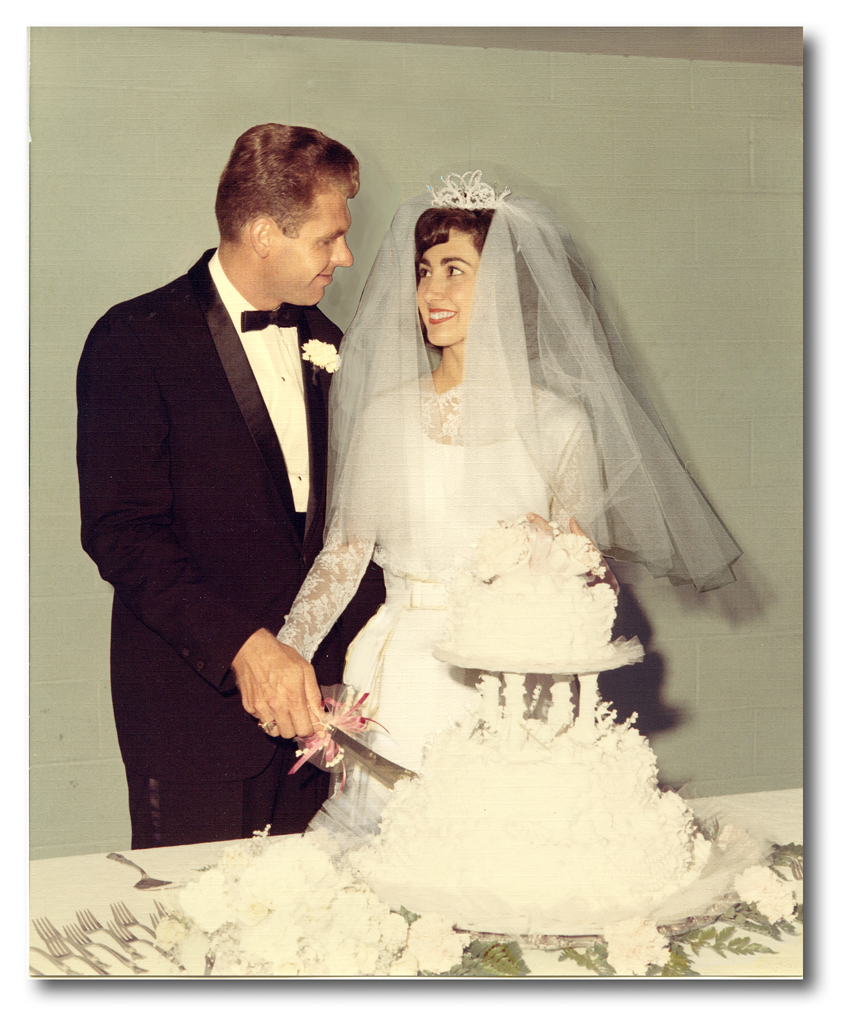
Cliff & Marian_Wedding Day_96dpi

Our romance was of the “Some Enchanted Evening” sort, recounted in an earlier blog post which near the end merely hints of conflict to come. In the beginning, there was the clash of cultures: a high-energy, pioneer-type from the Pacific Northwest marries a Mennonite school teacher from southeastern Pennsylvania. As my mother-in-law said on our wedding day, “You two will have a lot of adjustments to make.” I knew that was true in my head but naively imagined of course we will be the exception: Doesn’t love conquer all?

Because of Cliff’s career, we settled in Jacksonville as newyweds, a city with a semi-tropical climate and an overwhelming expressway system–a far cry from the gentle, rolling hills and farmlands of Lancaster County; Southern accents, not lilting Pennsylvania lingo. Our adventures included both the typical and the unconventional: Living in a 8’ x 24’ foot travel trailer for a year and a half with a two-year-old daughter and baby son. Starting a fledgling graphic arts business in our home where we experienced both feast and famine. A miscarriage. Working on graduate degrees while raising a family. Long separations as Cliff traveled the country with his own art show. The deaths of Cliff’s mother and my father. And other unwelcome events: a mammoth falling oak just grazing the side of our house, the dining room ceiling becoming a sieve as the roof leaked, my new car totaled putting my back out of whack. Larkin Warren in her vignette “Because love grows deeper over time” illustrates her own version of marital challenge:

In the early days it was all about him. His favorite foods . . . . favorite flavor of ice cream, and whether he liked my hair up or down. I loved to make him laugh, and worked hard not to cry in front of him. I cleaned my house before he came over, always wore mascara, always had champagne in the fridge.

[But] we’ve seen each other at our worst, and that’s not an exaggeration. Physically ill, emotionally grief-stunned, job-panicked, or angry enough to throw crockery at the wall . . . .  Red-faced, blotchy, hoarse from yelling. Our parents grow old, and ill, or nutty: our children make mistakes that drop us to our knees. Through it all, how on earth can he love me, given what a flawed, messy, moody person I am: The artifice is long gone; he see me.

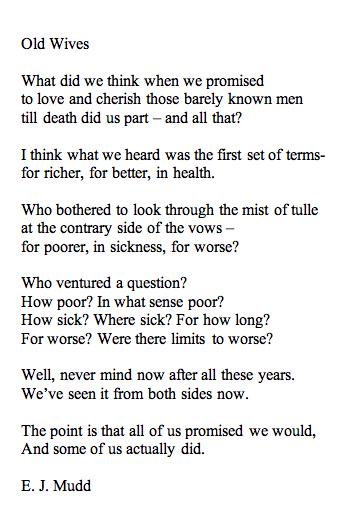
Yes, the artifice is gone. The scales, if there were any, have long since fallen from our eyes. In retrospect, we see clearly now. But we remember beholding the luster of un-tested love, the gritty struggles mingled with the shiny penny days. “We have seen it from both sides now,” says poet E. J. Mudd:

OldWivesPNG

Adam Gopnik adds metaphorical wisdom:  Love, like light is a thing that is enacted better than defined: we know it afterward by the traces it leaves on paper.

Dear reader, your traces on the “paper” of this post are welcome. Thanks for commenting. You may also enjoy reading secrets of a 20-year-marriage @ http://notquiteamishliving.com/2014/07/twenty-years-three-things-about-love-n-marriage/

*  *  *

One of the beloved members of our family has gone home to be with the Lord this week. Following the publication of this edition, postings on this blog will be suspended for a time.


Purple Passages with a Camel

via Google Images
via Google Images

Birthdays 

The great thing about getting older is that you don’t lose all the other ages you’ve been.    – Madeleine l’Engle

The secret of genius is to carry the spirit of the child into old age, which means never losing your enthusiasm.    – Aldous Huxley

There are years that ask questions and years that answer.    – Zora Neal Hurston

It takes a long time to grow young.    – Pablo Picasso

Friendship

Throughout our lives, friends enclose us like pairs of parentheses. They shift our boundaries, crater our terrain. They fume through the creaks of our tentative houses, and parts of them always remain . . . .

–  Beth Kephart, memoirist and National Book Award nominee.

Friendship is the source of the greatest pleasures, and without friends even the most agreeable pursuits become tedious.  – St. Thomas Aquinas

Friends are a reflection of the issues we are working on. – Melody Beattie

Be Yourself

Today you are you! That is truer than true! There is no one alive who is you-er than you!    – Dr. Seuss

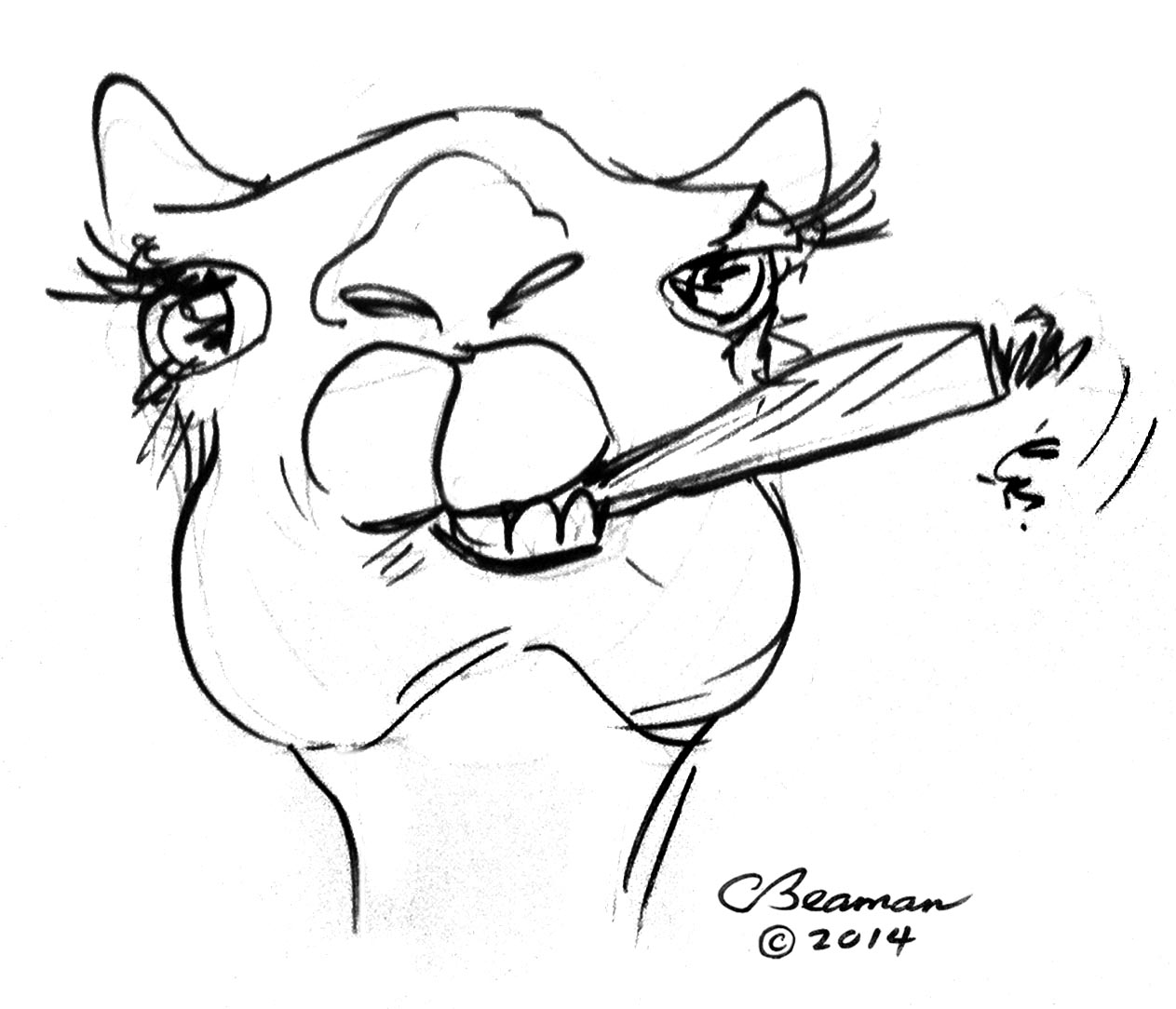
Do not free a camel of the burden of his hump; you may be freeing him from being a camel.   – Gilbert K. Chesterton

Camel w cigar_4x3_300

Humor

Some of us suffer from a debilitating mental disorder called irony deficiency. Seeing a doctor won’t help, but seeing a paradox will.”   – Swami Beyondananda

Yesterday’s the past, tomorrow’s the future, but today is a gift. That’s why it is called the present.   – Bill Keane, comic strip creator “The Family Circus”

GiftBag

And a Question:

Why should the aged eagle stretch its wings?    – T. S. Eliot

Your answer: _ _ _ _ _ _ _ _ _ _ _ !


I look forward to your response and to your musings on anything else that strikes your fancy. While you’re at it, why not add a quote too. The humor section could use some beefing up.    🙂

Thank you.

Marriage to a Difficult Man: Part II

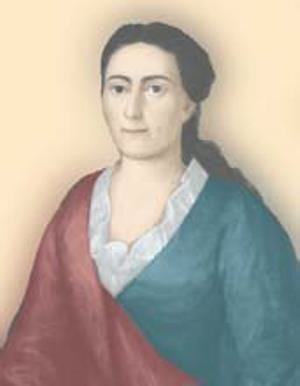
Sarah Edwards portrait: Google Images

Sarah’s Flair for House-keeping

She was the kind of woman who took the trouble to tie her hair with a ribbon for breakfast when many wives came down tousled; who spent an extra minute to stamp a design on a block of home-churned butter; who knew how to give a flourish to simple dishes with parsley, spearmint or sage, all grown in a square of herbs by the kitchen door; who, when she had a bowl of peas to shell, would take it out into the sunshine in the garden. She put in day lilies, hollyhocks, pansies, pinks–the flowers women loved to plant on the frontier, for it gave them a sense of putting down roots.  (31)

Reviewer Jennifer Lee muses further on Sarah’s homey housekeeping, efficiency tempered by composure:

She knew how to keep a house clean at its vitals, without stuffy cupboards left unaired or parlors sealed off. The house was open, used, full of clues that the family living in it had vivid interests. Books were left on tables, actually being read, not used as parlor props. There would be needlepoint on a rack by a sunny window and a lute in a corner. Esther, singing, might be putting up a hem for Sukey [Susannah] while a boy did his Latin lesson. It was the opposite of the kind of house where things were preserved in mothballs in locked boxed. Its ambience was of windows flung open, of easy access.


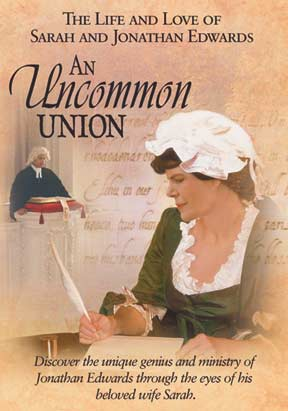
Key to Harmony in Their Uncommon Union

Contrary to popular belief, the author of the fiery sermon “Sinners in the Hands of an Angry God” observed quiet passion in the pulpit but also preached on grace and redemption. And he treated Sarah “as a fully mature being, as a person whose conversation entertained him, whose spirit nourished his own religious life, whose presence gave him repose.” (35) Likewise, Sarah “let him be sure of her steady love, and then freed him to think.” (66)

A woman of charm, practicality and tact, Sarah like her mate was strong as iron, realizing that “she had chosen to marry the sort of man who did not give in when he believed a matter of deep principle was at stake.” (112)

Cover: Google Images

Edwards’ Parting Words to Sarah

Remembering the love of his life, the charming but stalwart Sarah, who wore a “pea-green satin brocade with a bold pattern” to their wedding (24), Jonathan Edwards spoke these words “not about heaven or hell, or about books or theories.” He spoke of Sarah:

Give my kindest love to my dear wife, and tell her that the uncommon union which has so long subsisted between us has been of such a nature as I trust is spiritual and therefore will continue forever.  (201)

*  *  *

Coming next: Laundry at the Longeneckers

Marriage to a Difficult Man: Part 1

In case you thought I would be writing an exposé about my difficult marriage to artist Cliff, you’d be wrong. I may write about my own marriage at some point, but it would have a different title.

The marriage under the microscope is that of Sarah Edwards to the famous colonial theologian, Jonathan Edwards, best known for his fire-and-brimstone-sermon, “Sinners in the Hands of an Angry God.”

MarriageDifficultCOVER

You may surmise that the title comes from the mouth of a fed-up wife to her biographer. However, the book is Elisabeth Dodd’s commentary on the unique union of Jonathan & Sarah Edwards often using primary sources like diaries and letters to show the personal, human side of this towering figure of faith. The blurb from Amazon touts this 1971 classic on the domestic life of Sarah and Jonathan Edwards, the most famous theologian of colonial America, as a “tempting blend of family guidance, sociological study, . . . and devotionally-oriented American historical biography.”

According to Dodds, Jonathan was a “moody, socially bumbling, and very shy young man of twenty” already a college graduate and professor at Yale, when he first met the vibrant thirteen-year-old Sarah, who had “burnished manners, and skilled at small talk.” Completely smitten by Sarah, Edwards

. . . took to walking past her her house at night for a glimpse of a candle flickering behind an upstairs shutter. When a boat came into Long Wharf with a cargo from England, he would manage to be around as it was unloaded. Almost every ship from England brought a box for the Pierreponts, and there was a chance that James [Pierrepont] would bring a daughter down with him as he checked his orders […]. Edwards even tried to improve his social dexterity, and admonished himself, “Have lately erred, in not allowing time enough for conversation. (16)

Both avid readers and nature lovers, Jonathan and Sarah married and raised a family of eleven children, in whose education both parents were heavily invested. At the end of the day this firebrand preacher and proponent of the Great Awakening of the eighteenth century, took off his jacket and wig and, smoking his pipe, devoted a full hour to his children and took them on trips with him individually.

What about Sarah though? It’s true, when he wasn’t preaching, Edwards was usually holed up with his books, but he often “read aloud to her from his skull-cracking sessions in his study,” recognizing her as his intellectual partner. (164)  And Sarah knew he would reserve time for her alone away from the house, often spent horse-back riding.

Why is this Puritan Preacher called difficult then, as the book’s title would suggest? Actually, I get the impression he was more eccentric than harsh, more odd than obstinate at home as this quote suggests:

Edwards was less than helpful as a host,  for he was still a light eater and would often finish his meal before the others did. He would then slip out to his study, returning to the table only when he was alerted that the others had finished and he was needed to preside over the grace which was always said at the end of meals as well as at the beginning. (56)

Peculiar in his eating habits, Edwards was also either eccentric or just being practical in recording his sermon notes. “He kept old bills and shopping lists, stitching them together into handmade notebooks in which he copied out his sermons on the unused side of the papers. Because his sermons were saved, we have a record of the everyday details of his family’s life together.” (31)

One reviewer comments that “Suffering was a part of Sarah’s life, too. Her husband’s brilliant mind and heart were never adequately recognized until shortly before his death. An insane man once spread false accusations about him.” Their teenage daughter Mary died of tuberculosis. Money was sometimes scarce.

Sarah herself went through a short period of mental breakdown, “nerves stretches like an over-tuned viola.” (72)  Her support and comfort, Edwards persuaded her to take a trip to Boston with him, taking her away from the fish-bowl of the parish and the constant demands as mother and hostess to a steady stream of visiting preachers.

Nevertheless, Sarah herself a woman of heart, intellect and purpose maintained a contented home, a home that produced healthy, well-balanced children all of whom carried on the genius of their parents. As author Dodds implies, a trust in the living God runs as a common thread throughout Sarah’s life story, giving her strength to carry on.


Part II will answer the questions:

1. What kind of house-keeper was Sarah?

2. Why was their union called uncommon?

3. What were Edwards’ parting words to his wife?

*  *  *

Do these details about the Edwards’ marriage surprise you?

Is there an “uncommon union” in your family’s past? Your own history?