Fishing on the Delaware 1950s

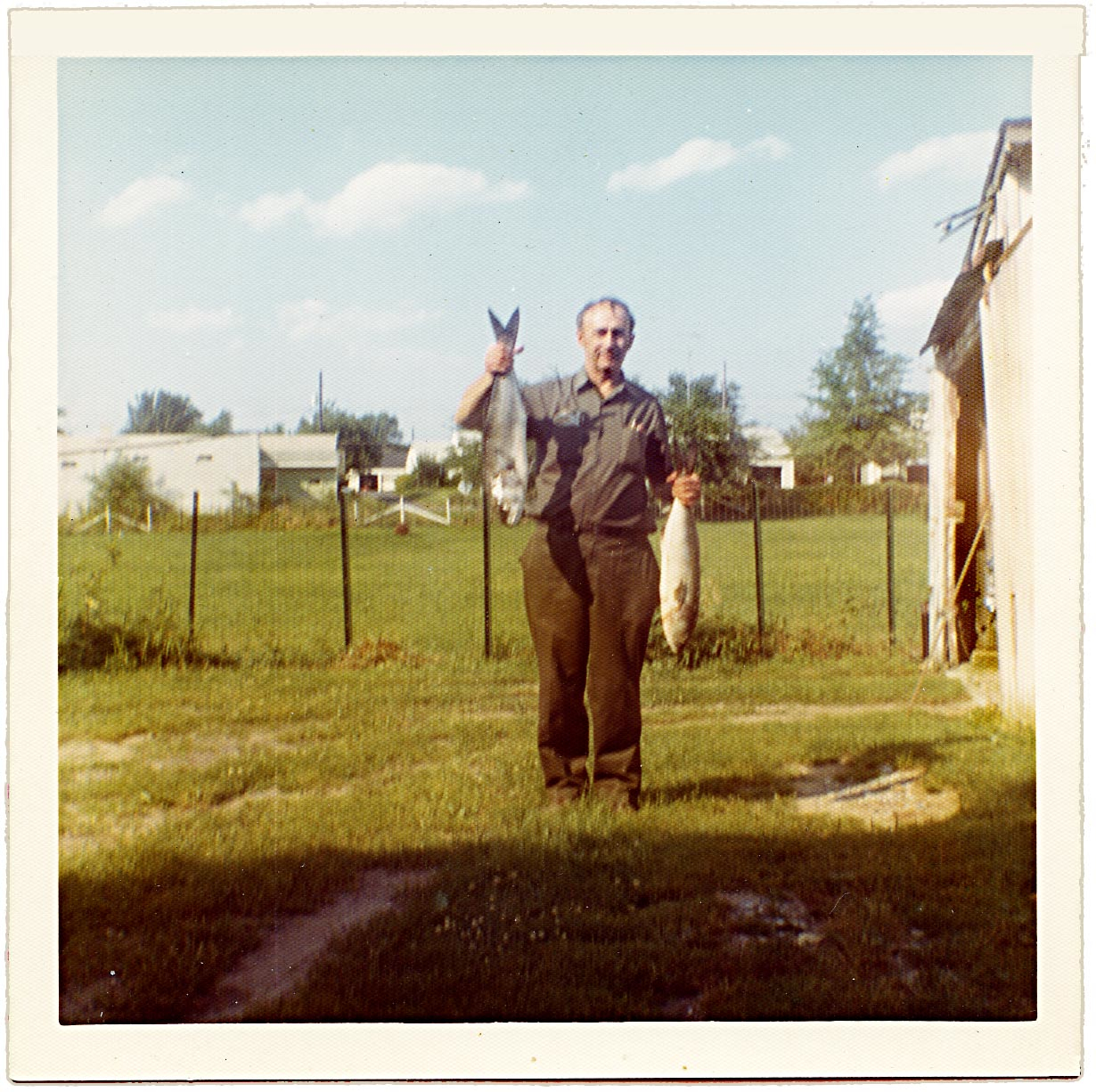
Daddy was an avid hunter (pheasants and deer mostly) and an eager fisherman. The outdoors took him away from the stresses of his business, Longenecker Farm Supply, and helped him literally recharge his batteries. I never went hunting with him, but he invited me once or twice on deep-sea fishing trips in my early teens.

Many summers ago, friends from Bosslers’ along with a few relatives chartered a boat and went deep sea fishing in the Atlantic south of the Delaware Bay. Unlike the New Testament disciples who fished with empty nets all night long until they followed the wisdom of Jesus, we PA Dutch fishermen hauled “em in right and left”– starboard and port. And unlike the disciples who had to cast their “nets” on the other side, we had a great catch without switching to a different strategy. Unbelievably, we novice fishermen were rewarded with a net-breaking haul of bass or trout. Somehow the figure of the number 68 (or maybe it was just 65) sticks in my mind as the amount of fish I caught single-handedly that day. Others easily topped my number. No fish tale here!

FishingDelaware

(I’m the one with the bandanna and sweater on the left side of the boat; Daddy is grinning behind Uncle Paul whose hand is raised.)
Ray holding fish_final_4x4_300 (1)

Generally, I had a strained relationship with Daddy. The stories of the ill-begotten bike and his unannounced violin purchase on earlier posts underscored his lack of knowledge of relating to me as his oldest daughter and subsequently my resistance to his overtures toward making a satisfactory connection.

But outside the walls of our house, taking walks or catching fish together, such barriers disappeared. These photographs evoke these pleasant memories, times when we were in tune with nature and with each other as father and daughter.

Childhood that place where purity of feeling reigns, was merging into adolescence, where ambiguity begins.

Mary Peacock in The Paper Garden  

And that is where I was, the age of ambiguity and change.

  *  *  *
Comments? A question? An anecdote from your own experience growing up. 

Fond Farewell

One of our beloved cast of characters on this blog has gone home to be with the Lord this week. Following the publication of Saturday’s edition, postings on this blog will be suspended for a time.

magnoliasCRISTA

The R-Word and You

A grande dame of British theatre, Judi Dench, spoke with Anderson Cooper just before the release of the movie The Best Exotic Marigold Hotel in 2012 making crystal clear she has no plans to rest on her laurels and retire. In another interview she remarks about retirement: “I just think you ought to go on if you got the energy. If you got the energy, then everything is possible. But I think if you give up, then nothing presents itself to you anymore.”

My definition of retirement fits hers precisely: This phase in life for me is a time to re-tool, re-tire as in “put on new tires and roll on.” After decades in the teaching world, I literally took off my graduation regalia for the last time and tried on other robes: I began taking “The Lowrey Magic Organ Course” with a group (ugh), had to re-take many of the unit “speaking” quizzes in Rosetta Stone French (ugh-ugh), took up sky-diving (okay, an exaggeration!). But I had lunch in the middle of the week with friends, reveled in grandmother-hood full tilt.

I still relish the grandmother role and I often have lunch mid-day with friends or a pedicure mid-week, but my writing life has taken over the hours I spent in the classroom and grading papers after-hours. Blogging/writing is my new calling, requiring both head and heart, what I missed most about teaching anyway.

Recently, at Mother’s house I picked up the July 2014 issue of PURPOSE, a Mennonite publication containing “stories of faith and promise,” similar to those offered in Guideposts magazine. Here are some choice bits, including one from a 20-something:

  • Katie Funk Wiebe, the grande dame of Mennonite Memoir in my opinion, writes in her essay Looking Back from the Mountaintop: “At age 89 I am standing on a mountaintop. Below me is my life journey: there I stumbled, there I found footholds, there the path took a hairpin turn into darkness, there I found light . . . .” Her conclusion? “There may still be a distance to climb.”
  • In her essay “From a Fire Escape,” Dorothy Beidler admits “I have more questions than answers and that is definitely okay with me. Later she urges, “Find your niche, your passion, your soul gift.” Even in retirement.
  • Former CEO and business owner Burton Buller notes the difficulty in relinquishing the idea of being in charge but now is being inspired by “a newfound sense of gratitude.”
  • Melodie Miller Davis ponders the name for her new phase with her title “Final Quarter, Final Third?” letting this time of her life reverberate with purpose and intention to the tune of Frank Sinatra’s “My Way” or Kris Kristofferson’s lyrics “Bread for the body and song for the soul.”
  • Marian Durksen Wiens speaks of the richness of being reused and recycled as she and her husband return to volunteer in Korea, a land where they had previously worked.

Finally, a 20-something, Marcus Rempel, acknowledges that though dreams of a well-insured future lie “crumpled at [his] feet like a balled-up newspaper,” he values the safety network of family in this life and eternal life in the age to come.

The idea of retirement is a fairly new one. In the early twentieth century when life expectancy for men and women was in their 40s and 50s, retirement was practically unknown, certainly not seen as a sizable chunk of time. Now many men and women can expect to live 20-30 years beyond retirement age.

In the movie The Best Exotic Marigold Hotel, the Judi Dench character, Evelyn Greenslade, supplies the narration “book-end to bookend . . . and keeps a blog of her activities” from the opening sequence to the Day 51 moral that ends the film ‘We get up in the morning, we do our best.'”

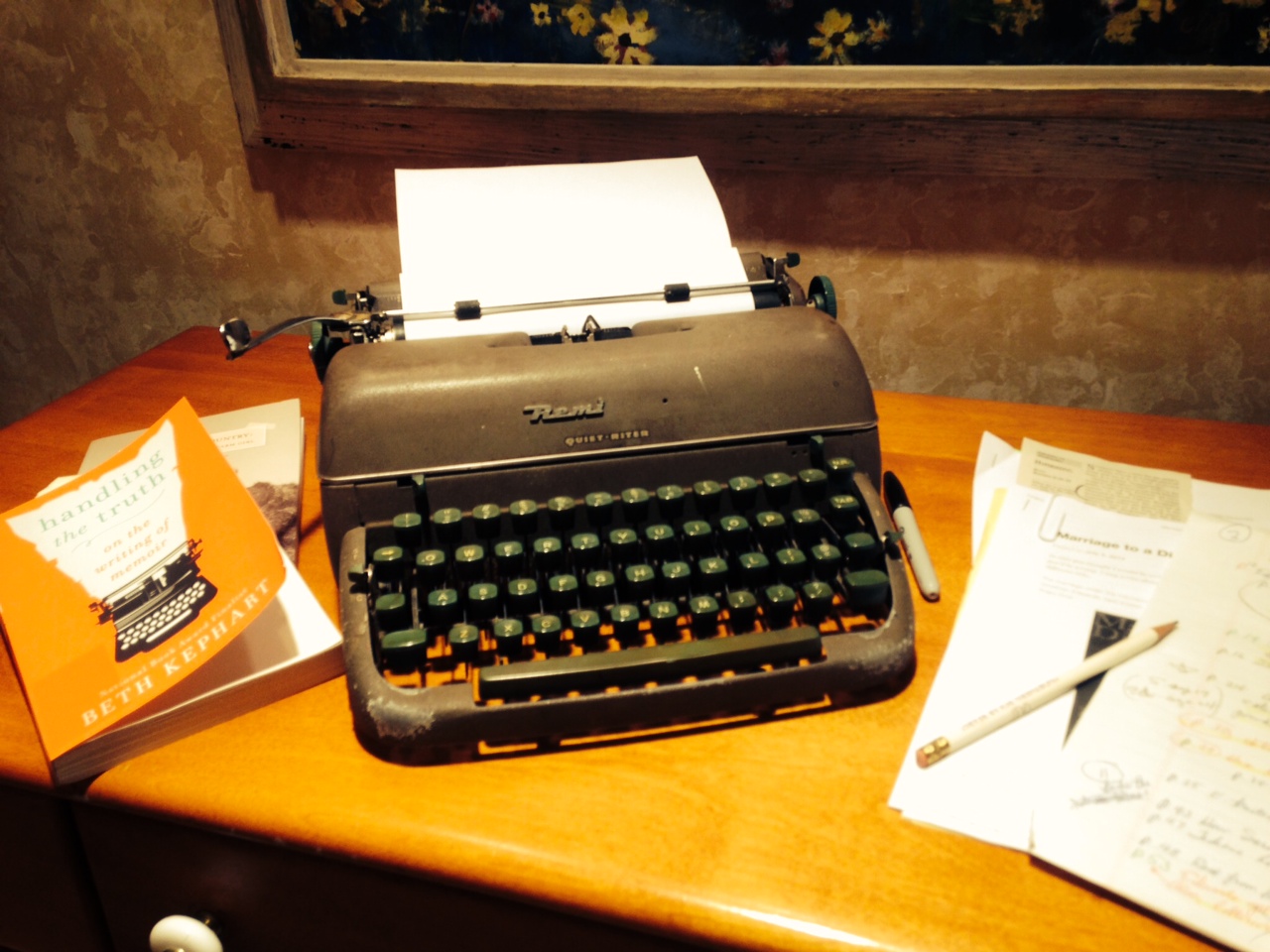
Old Remington typewriter from college days - 1960s
Old Remington typewriter from college days – 1960s

Like her, when I get up in the morning I aim to do my best, especially on days I can connect with my friends in the blog world.

Your aim – in the morning?

      In retirement? We value your thoughts!

Just for Fun: Signs around E-town

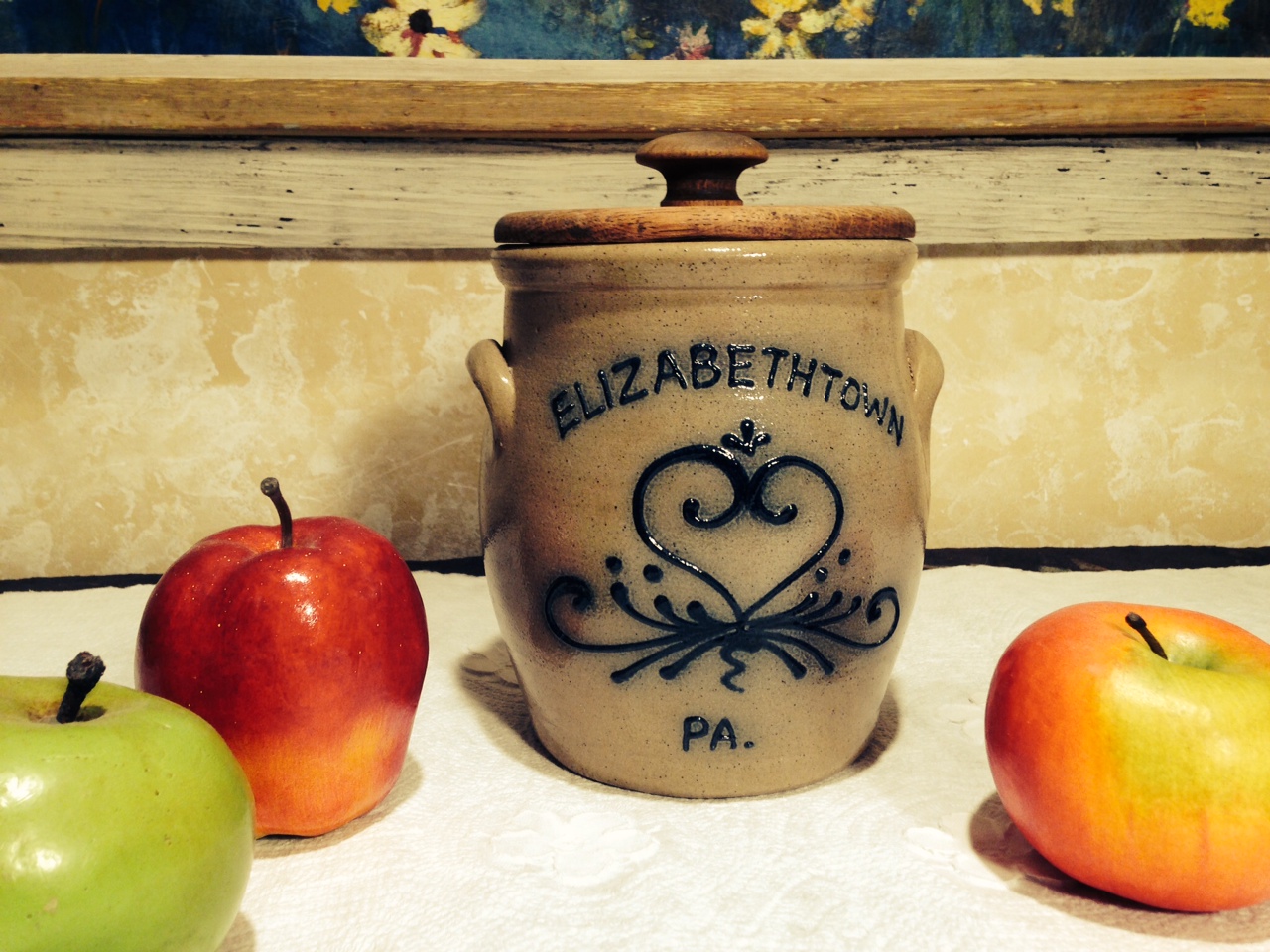
EtownJar


In June, my sister Jan and I visited our Longenecker kin in Elizabethtown and the village of Rheems close by. One morning we took a stroll around the square in E-Town and found that though the town clock was still planted in place, the merchants we knew had disappeared. Dorsheimer’s News, Bishop’s Photography, Moose’s Five & Ten, The David Martin Store, and Zarfoss Hardware had changed into something else entirely: a bakery, a coffee shop, a train specialty store, and further down Market Street, an antique shop about to open.

These signs caught our eyes at the opening-soon antique shop:

Not-so-discreet advice: Notation reads July 14, 1941 Reno - Las Vegas
Tactful notice: Notation reads July 14, 1941 Reno Hotel Association, Las Vegas


Pay up! Notation reads: Virginia Beach, VA  1943
Pay up! Notation reads: Virginia Beach, VA 1943

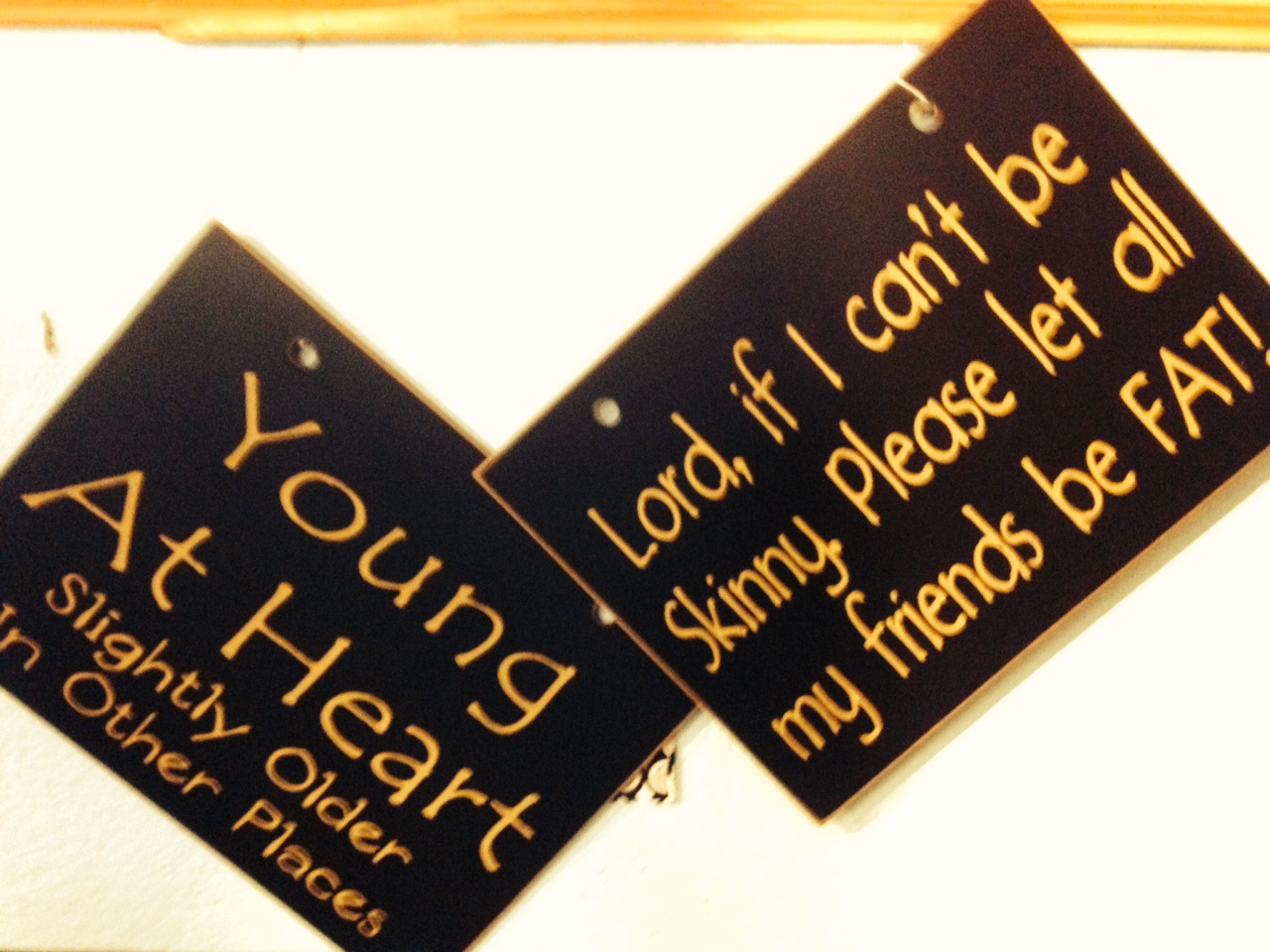
Next we visited The Shoppes on Market, brim full of signs and mottoes for sale:

SignDeerVestSigns2ShoppesOnMarketSleepKitchen

Then we admired the always festive store front of Flowers in the Kitchen Cafe all gussied up for the Fourth of July celebration:

Flowers in the Kitchen Cafe with patio dining. Used to be

Greek Gus @ Gus’ Keystone Restaurant tweaks his menu to suit Pennsylvania Dutch palates. Dried beef gravy on mashed potatoes, Wenger’s ham loaf, pork and sauerkraut any day, and pig stomach just on Wednesdays. As I snap this photo, one obliging soul obligingly rubs the belly of the greeter.

Gus'sSign

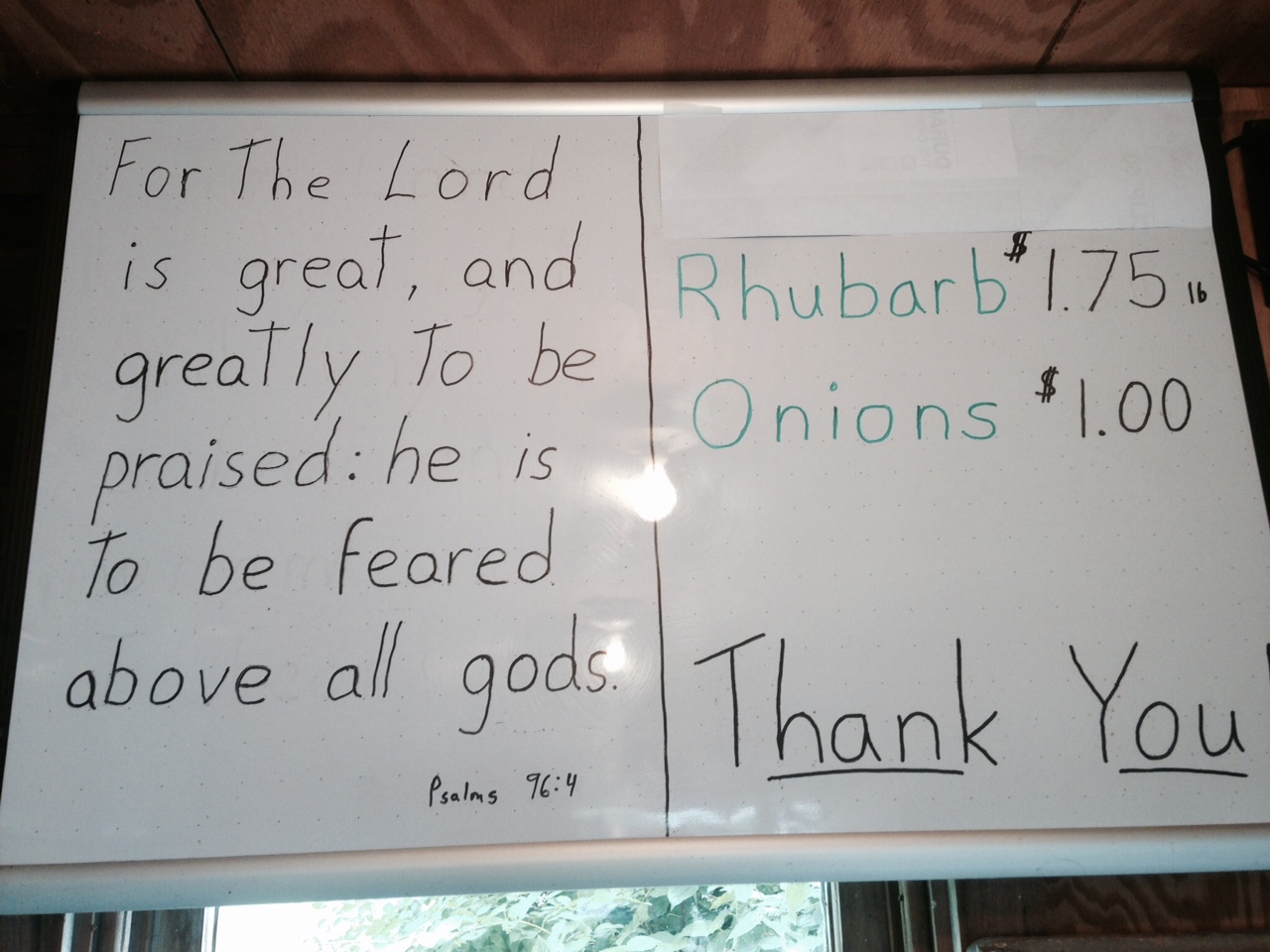
Less than a mile from Bossler’s Mennonite Church, the truck on the Kevin Charles farm delivers fresh bounty from the field. We buy 2 boxes of strawberries, a pint box of sugar peas, and 5-6 stalks of rhubarb. (See recipe for rhubarb sauce below.)

KevinCharlesTruckProduceSignKevin

Miniature tractors for sale at Darrenkamp’s Grocery Market near Mt. Joy, PA

GroceryStoreTractors

* Mom’s Rhubarb Sauce Recipe

Soak 5-6 stalks of fresh rhubarb

in water to “cut the bitterness,” Mom says.

Drain off the water.

Add fresh water.

Cut up stalks into 1/2 inch chunks and bring to a boil.

Add sugar to taste   “. . . until it’s sweet enough”

and 2 tablespoons of tapioca  “. . . just what you think,” Mom says.

Mixture will thicken as it cools.

  *  *  *

Have you returned to your home town recently and found it changed?

How have these changes affected your memory, your emotions?


♥ Coming next: Happy Birthday to my One and Onlies

Purple Passages with a Camel

via Google Images
via Google Images

Birthdays 

The great thing about getting older is that you don’t lose all the other ages you’ve been.    – Madeleine l’Engle

The secret of genius is to carry the spirit of the child into old age, which means never losing your enthusiasm.    – Aldous Huxley

There are years that ask questions and years that answer.    – Zora Neal Hurston

It takes a long time to grow young.    – Pablo Picasso

Friendship

Throughout our lives, friends enclose us like pairs of parentheses. They shift our boundaries, crater our terrain. They fume through the creaks of our tentative houses, and parts of them always remain . . . .

–  Beth Kephart, memoirist and National Book Award nominee.

Friendship is the source of the greatest pleasures, and without friends even the most agreeable pursuits become tedious.  – St. Thomas Aquinas

Friends are a reflection of the issues we are working on. – Melody Beattie

Be Yourself

Today you are you! That is truer than true! There is no one alive who is you-er than you!    – Dr. Seuss

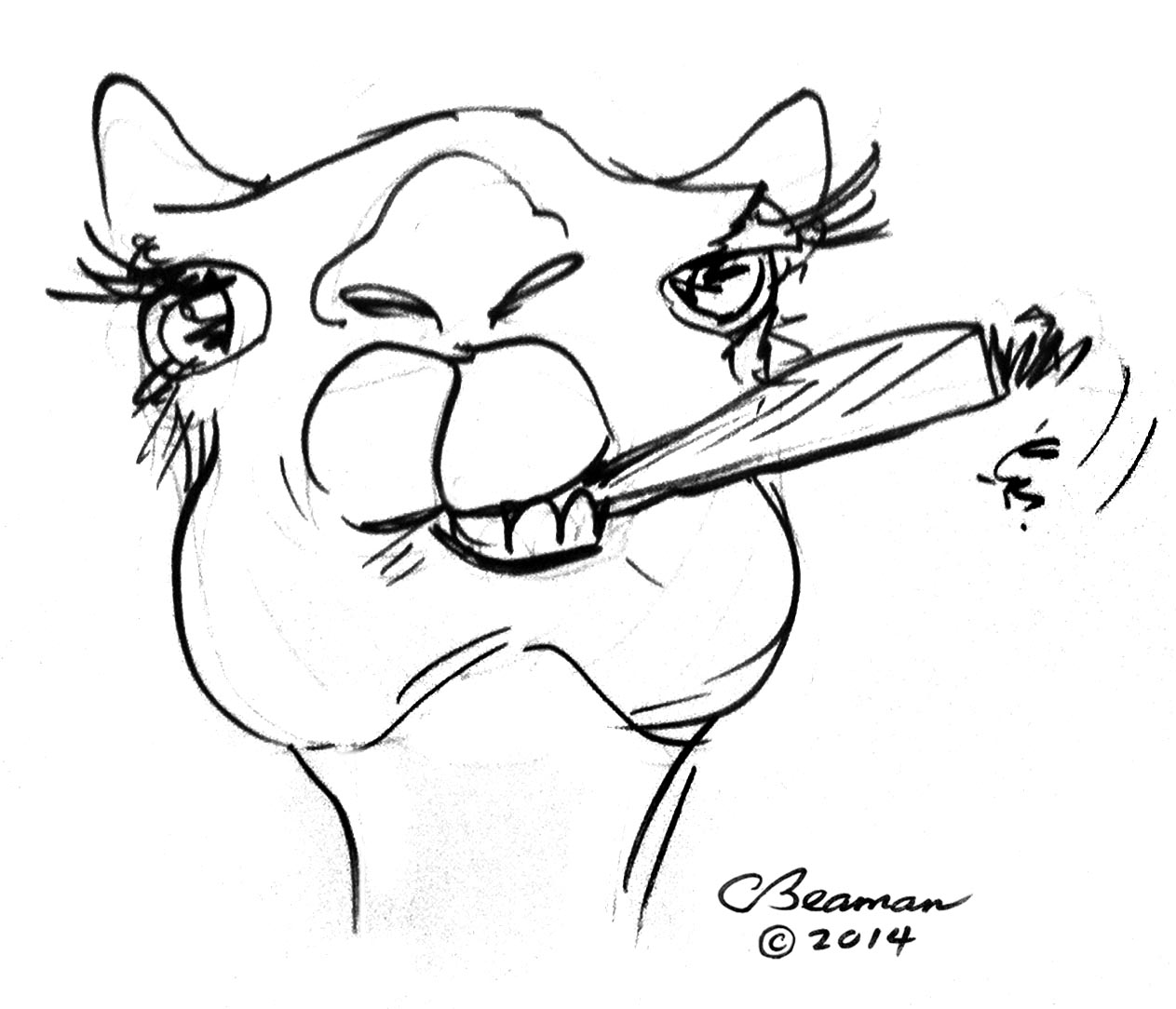
Do not free a camel of the burden of his hump; you may be freeing him from being a camel.   – Gilbert K. Chesterton

Camel w cigar_4x3_300

Humor

Some of us suffer from a debilitating mental disorder called irony deficiency. Seeing a doctor won’t help, but seeing a paradox will.”   – Swami Beyondananda

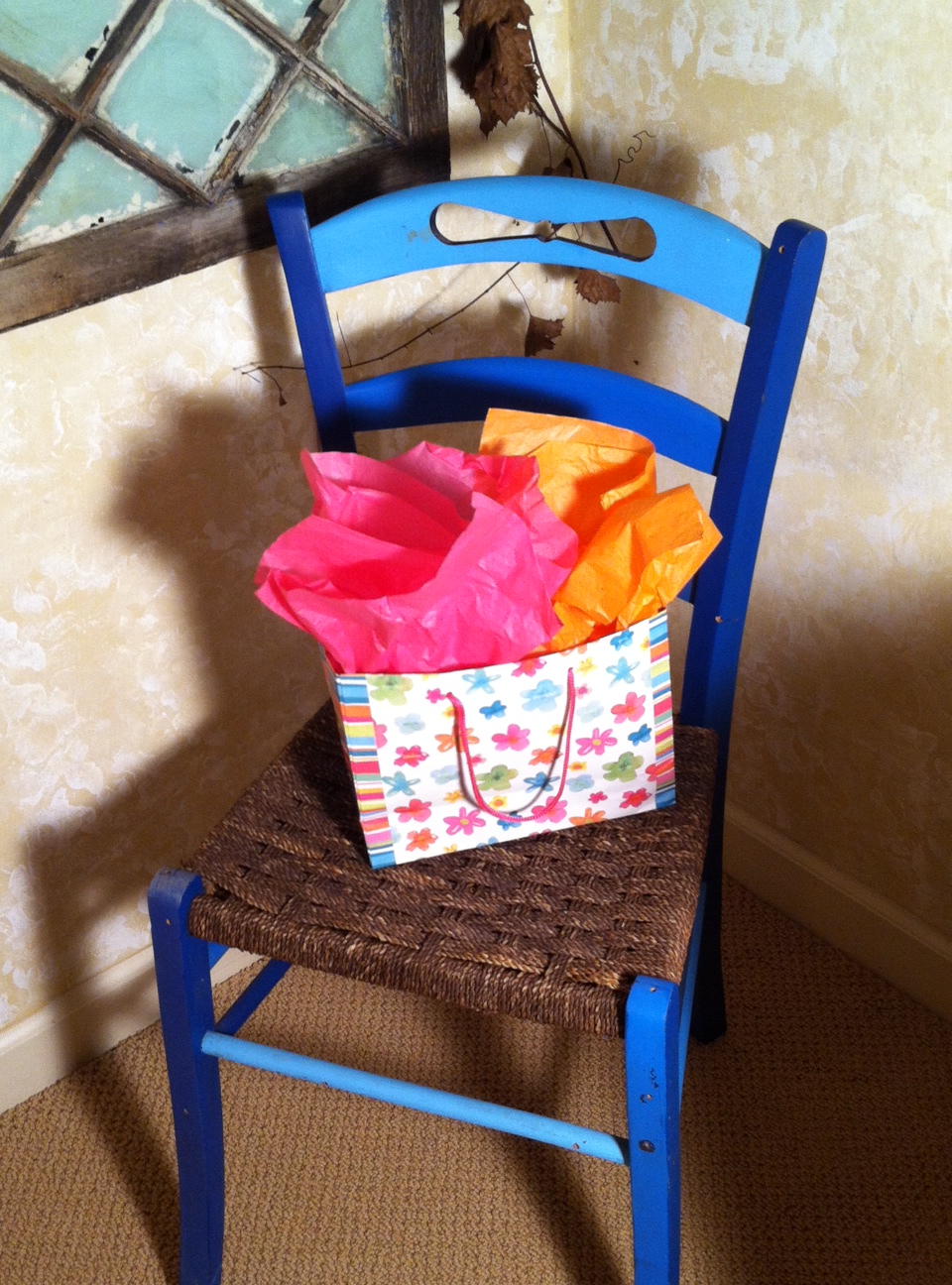
Yesterday’s the past, tomorrow’s the future, but today is a gift. That’s why it is called the present.   – Bill Keane, comic strip creator “The Family Circus”

GiftBag

And a Question:

Why should the aged eagle stretch its wings?    – T. S. Eliot

Your answer: _ _ _ _ _ _ _ _ _ _ _ !


I look forward to your response and to your musings on anything else that strikes your fancy. While you’re at it, why not add a quote too. The humor section could use some beefing up.    🙂

Thank you.

Laundry at the Longeneckers

     We have to try it again. Here’s another shirt,” Jane said as she plucked one of Dad’s blue work shirts out of a plastic bag full of shirts—clean, sprinkled and rolled—all ready to iron. “Start with the yoke,” she directed.

I grabbed the damp shirt out of her hand and flopped it onto the ironing board. “I know where to start,” I huffed. I knew to start with the yoke, then iron the collar, then the left sleeve and cuff, front and back, then the right sleeve and cuff, front and back, then the right front, taking particular care around the buttons . . . and with the button hole placket where it was so easy to iron in wrinkles.

So begins Carol Bodensteiner’s chapter “Laundry Lessons” in her memoir Growing Up Country, a chapter that describes to a tee the washing, drying, folding, sprinkling, and ironing of laundry, chores that were also observed in the Longenecker family.

Mother’s work week was regulated by the pendulum of ritual. Certain tasks were done on certain days in her 1950s household. If it was Monday, she washed clothes, on Tuesday she ironed them, and so on through the week to Friday, the big cleaning day.

Her wringer washer and a rinse tub was pulled out to the middle of the “washhouse,” a room next to the kitchen every Monday. Sometimes I helped by feeding clothes from the rinse tub into the washer wringer, a tricky task for a child. At least once I got my arm caught in the wringer. Of course, my screams and yells summoned Mother to fly out of the kitchen, bang on the release apparatus to make the two rollers fly apart. After the fright and the pain subsided, I was amazed my arm wasn’t as flat as a paper doll’s.

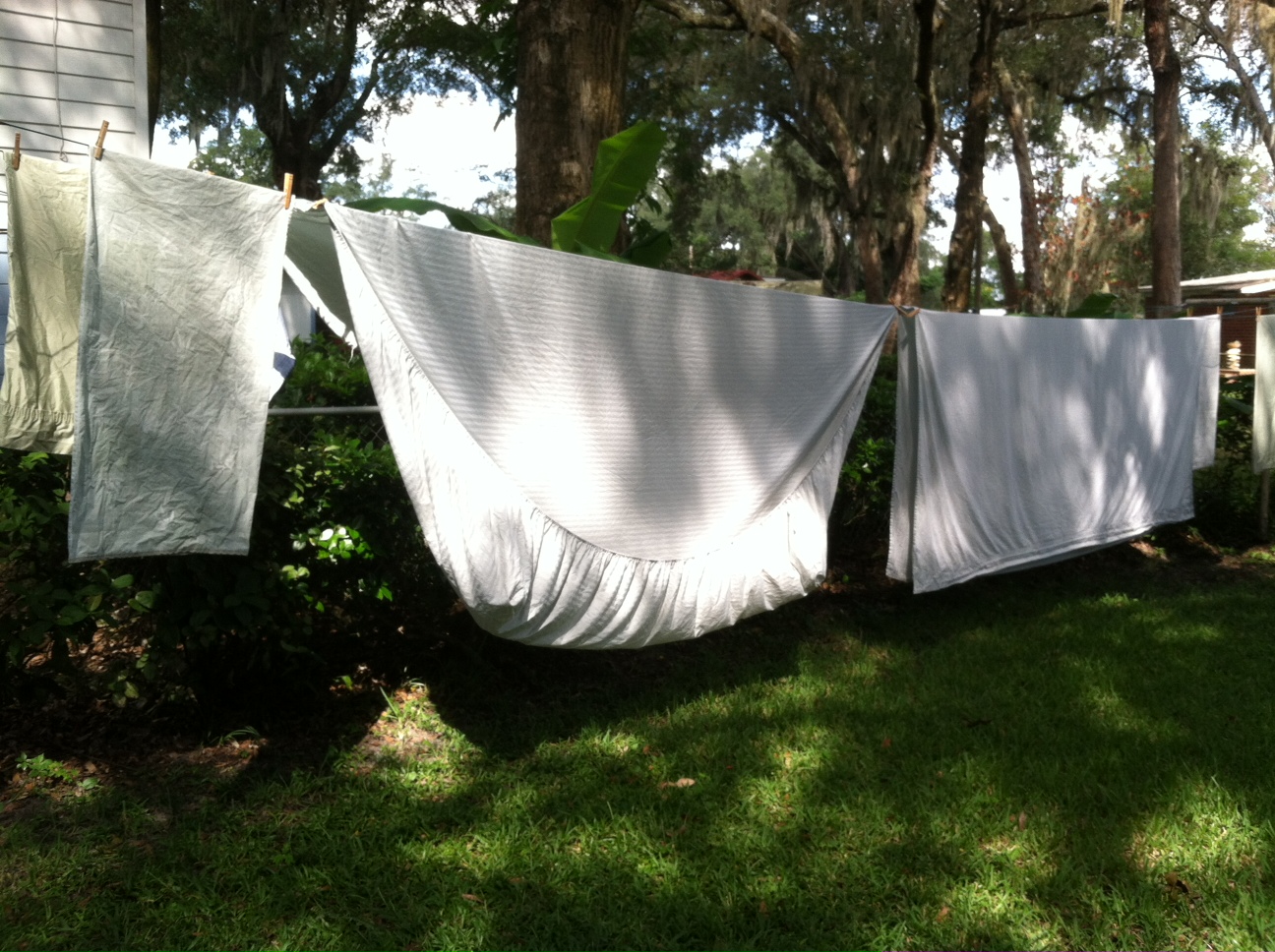
When I was tall enough to reach the clothes line, I hung up wash clothes, towels, shirts, and dresses, instructed to “hide” underwear in one of the inner lines so neighbors wouldn’t see. To this day, if there is a sunny day with a breeze in Florida, I hang sheets out to dry.

Sheets on Line

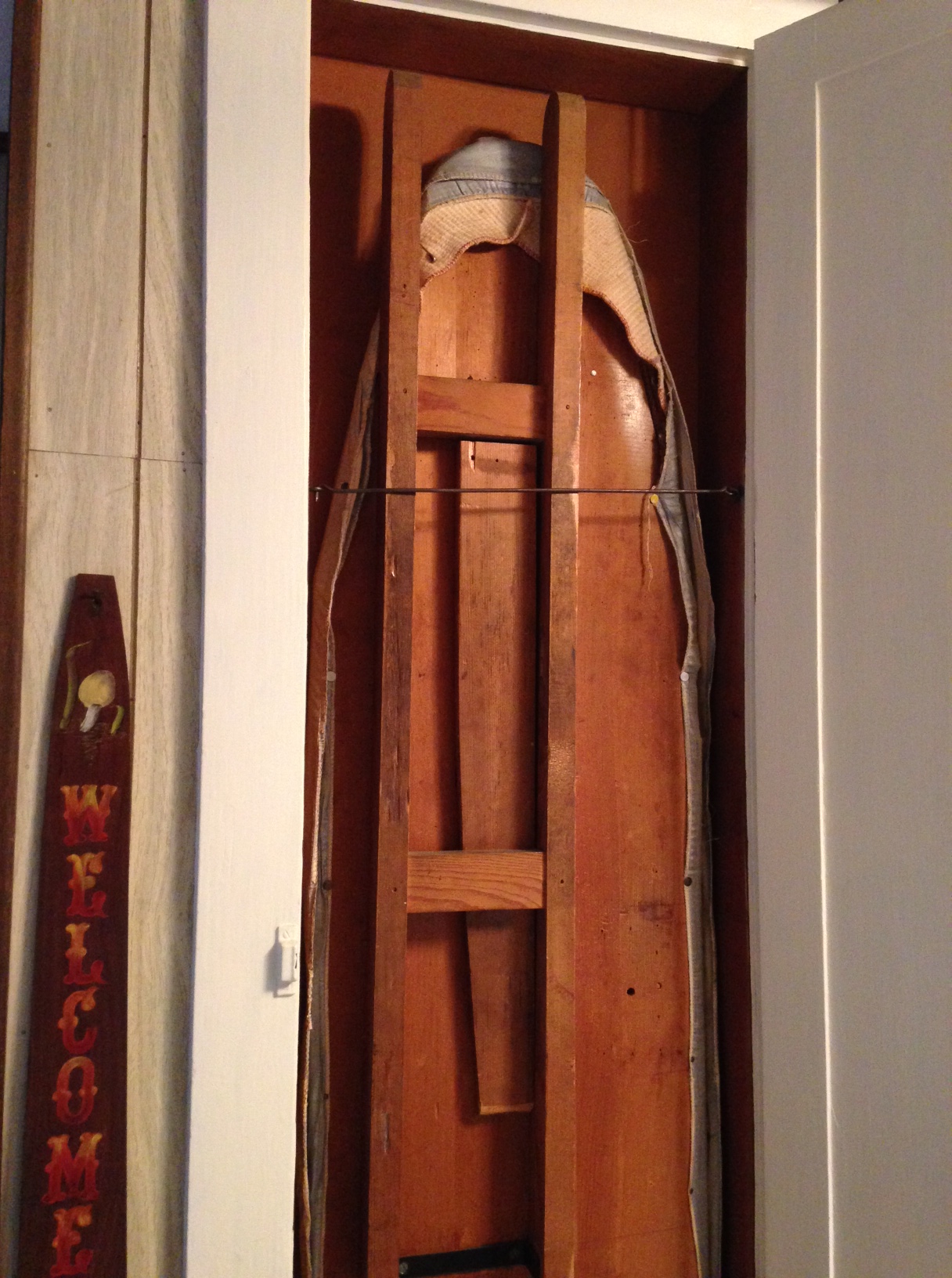
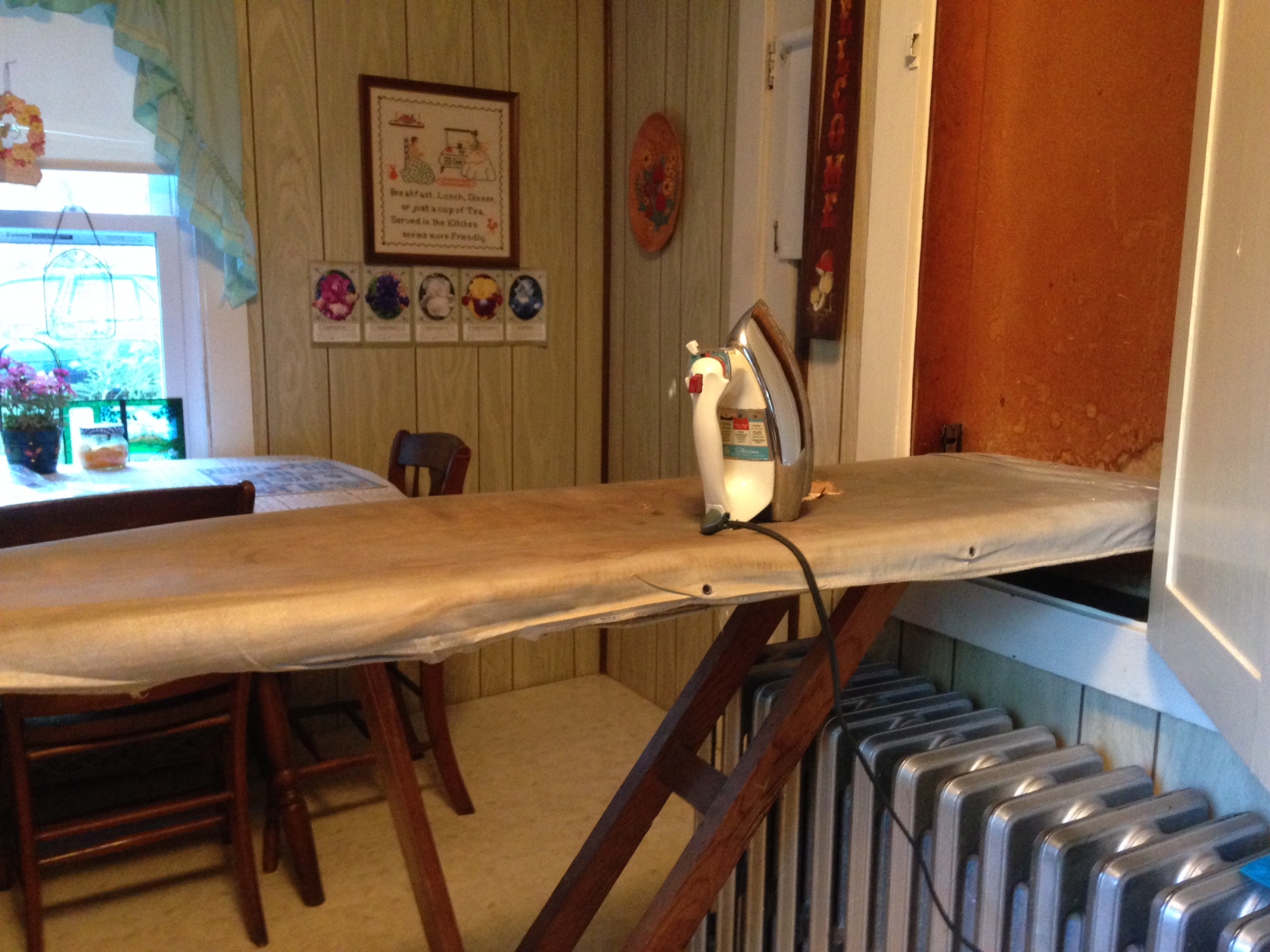
On Tuesdays, Mom pulled the ironing board out of the wall, set up the iron and away I went, attacking first the easy stuff like hankies. I nourished my sense of order and accomplishment letting the point of the heavy, hot iron smooth out all the wrinkles in the garments that followed: school blouses and skirts, finally graduating to Daddy’s white, starched Sunday shirts.

IroningBoardinWall

Same ironing board with vintage iron

We never ironed sheets though one Mennonite woman we knew, Pearl Longenecker, sat down (probably on Tuesdays too) in front of her ironer, a white appliance shaped like a miniature piano, with a hot roller that smoothed each crease in her sheets and pillow cases, pressing them into lovely squares and rectangles to fit her closet space.

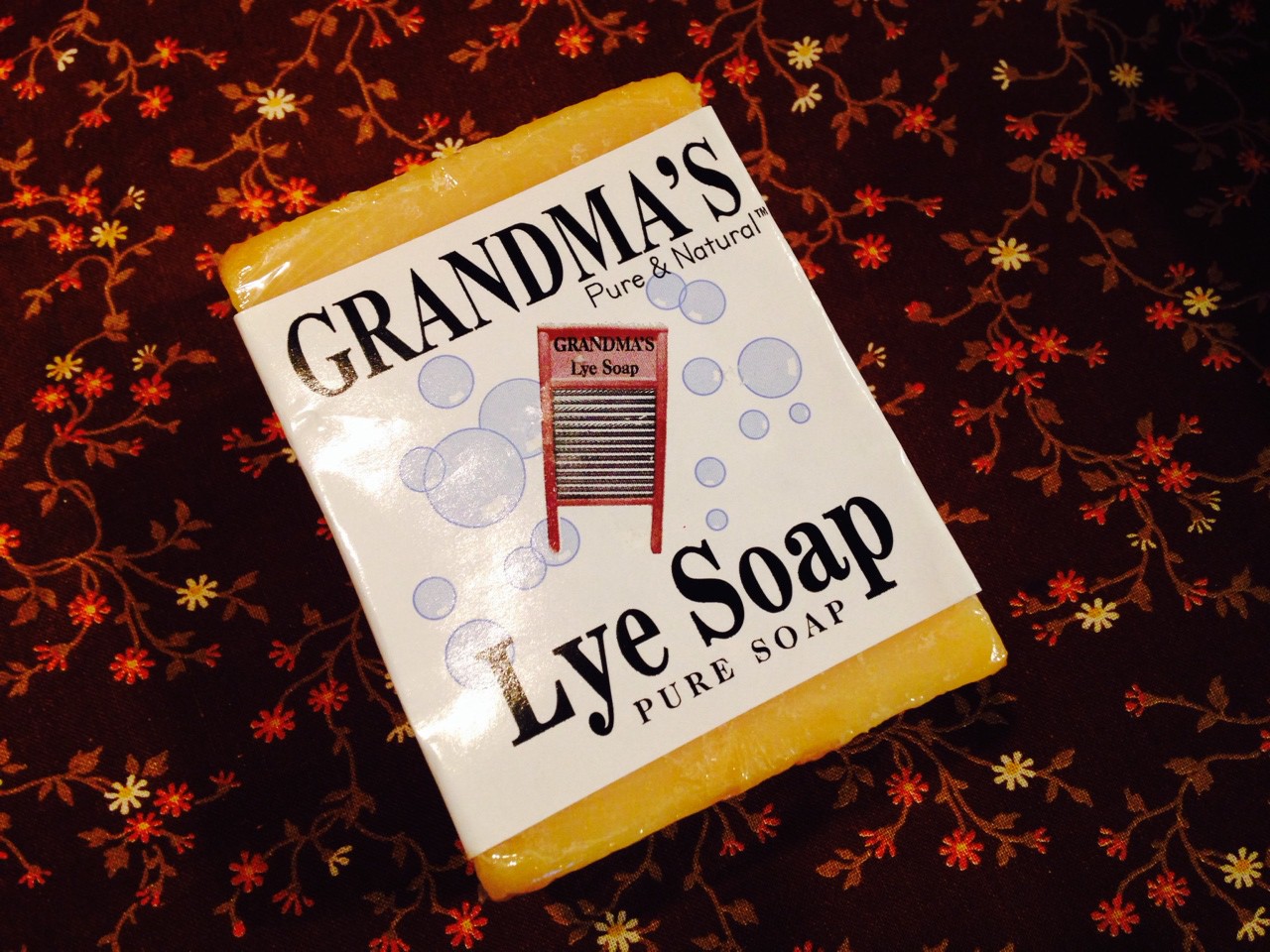
Grandma Longenecker’s ritual matched our own though it took place on her back porch. Like Colonial American women before her, she made her own soap cooking together grease and lye in a big metal tub, stirring the whole mess as it boiled. Though the smell was pungent and slightly disagreeable, Grandma smiled as she cut the congealed mixture into squares and rectangles, knowing the grease and grime would be erased from her laundry on wash day. If there were spots that wouldn’t come out with lye soap, she spread the stained garment, usually white, on the grass because she was sure “the sun will draw it out.” And it usually did!

LyeSoap

Share your laundry rituals, past or present. Something historical–or hysterical!

Mennonites at the Beach 1950s style

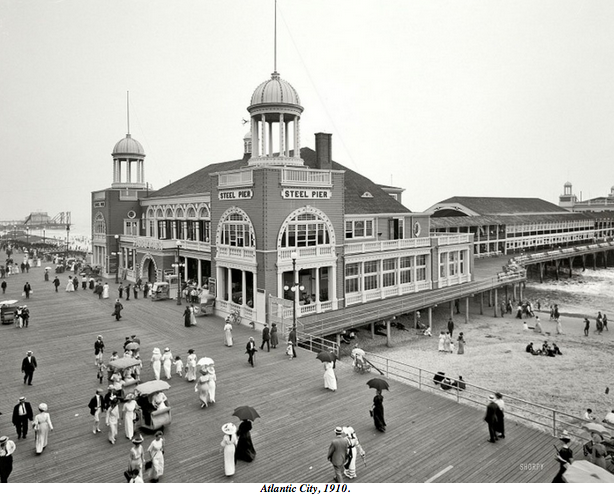
Atlantic City, New Jersey was the beach mecca for vacationers on the East Coast in the early 1900s. Still dressed in fancy Victorian formality, vacationers caught the salt air as they strolled along the famous board-walk at the Steer Pier, a combination theatre and amusement park: “Rain or Shine … There’s Always a Good Show on Steel Pier” the saying goes. But for most Mennonites, the Steel Pier was an elegant building to ogle only. The theatre was worldly and therefore strictly forbidden by church rules.

AtlanticCitySteelPier1910

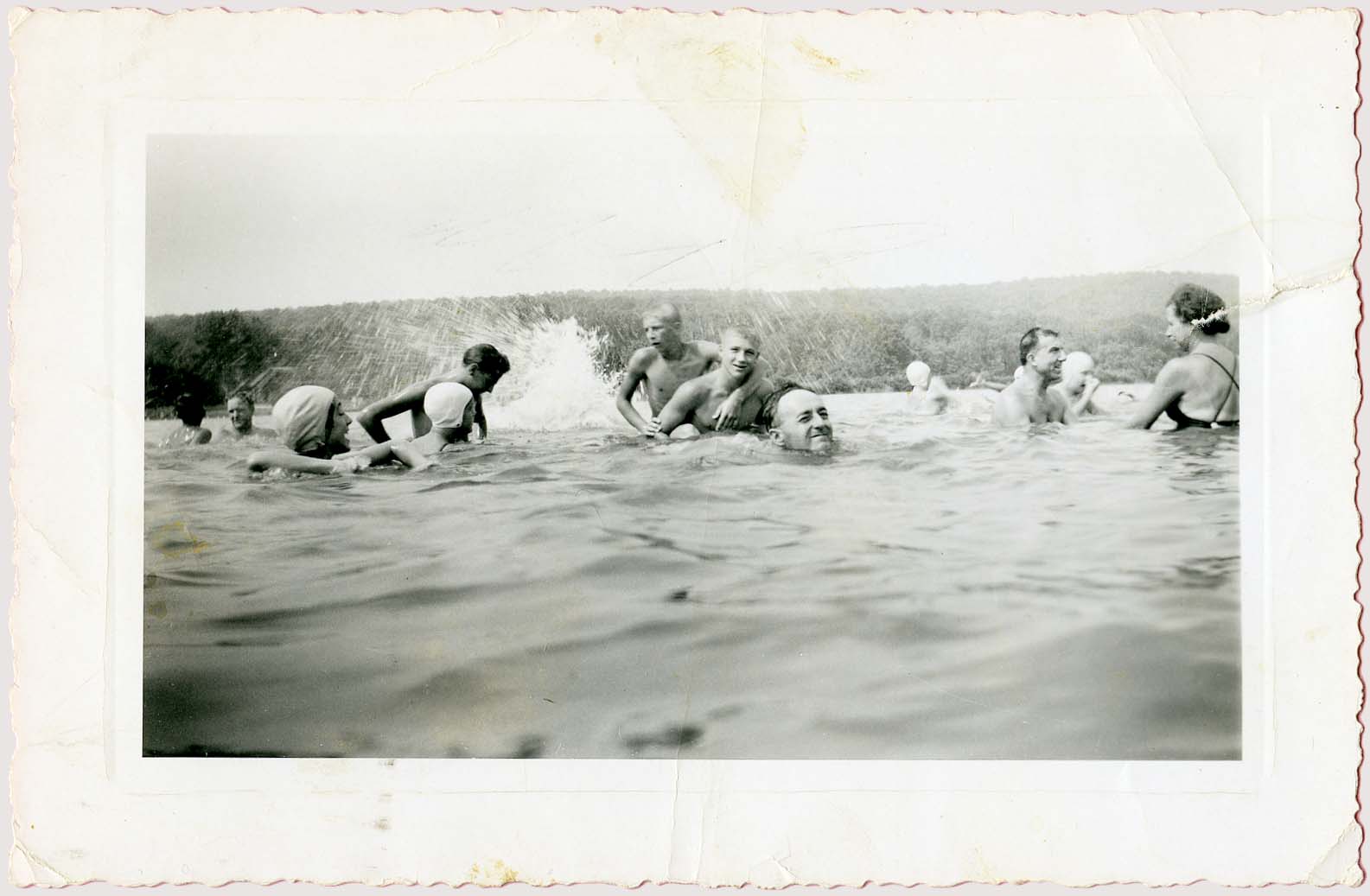
But Mennonite families liked the ocean, including my own. Many summers Daddy took Mother and the family to Atlantic City or Ocean City, New Jersey for a day. Mother just loved the water. From the time she pulled on her white latex bathing cap over her bun and donned her black, satin bathing suit with a fluffy skirt, she was bobbing up and down in tune with the waves.

Daddy in his maroon, scratchy-wool, full-body suit was usually at the shore line yelling to her, “Waaatch ooouut for the un-der-tow!” By the end of the day, he was sun-burned and out of sorts, insisting on taking his thirsty, sandy-toed family straight home, a 3-hour drive. In spite of our protests, there was no stopping for a meal let alone an over-night stay in a motel. Daddy was much too frugal for that. Yet he’d dutifully come back for more next year.

Daddy tames the undertow and gets into the water--finally!
Daddy tames the undertow and finally gets into the water!

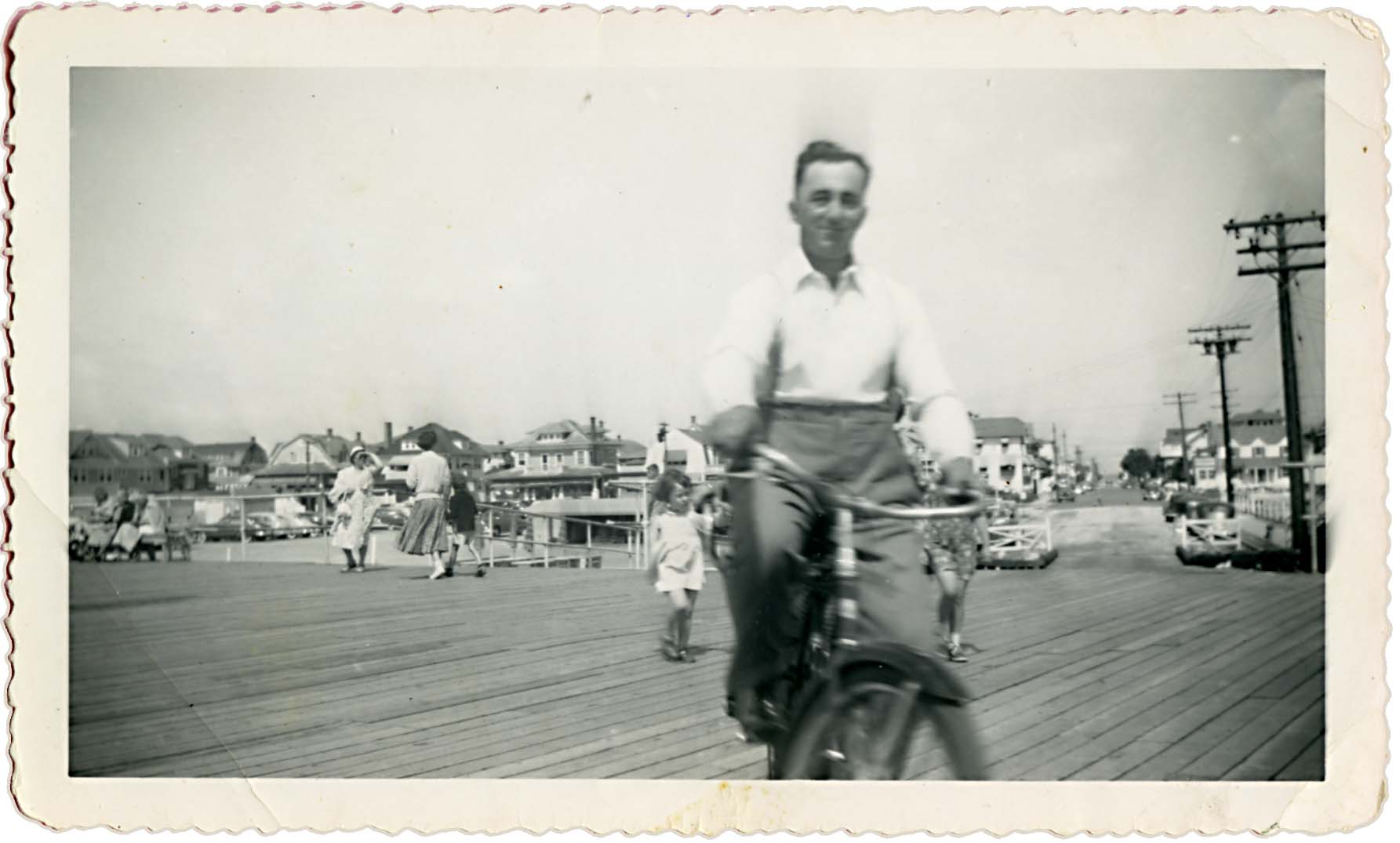
Uncle Leroy and Aunt Clara liked visits to Atlantic City too. I don’t remember them in bathing suits, but they liked riding the bicycle built for two on the boardwalk.


LeRoy Metzler_on Boardwalk

And so did my parents!

Ray and Ruth L_Bicycle built for two

On a Bicycle Built for Two . . .

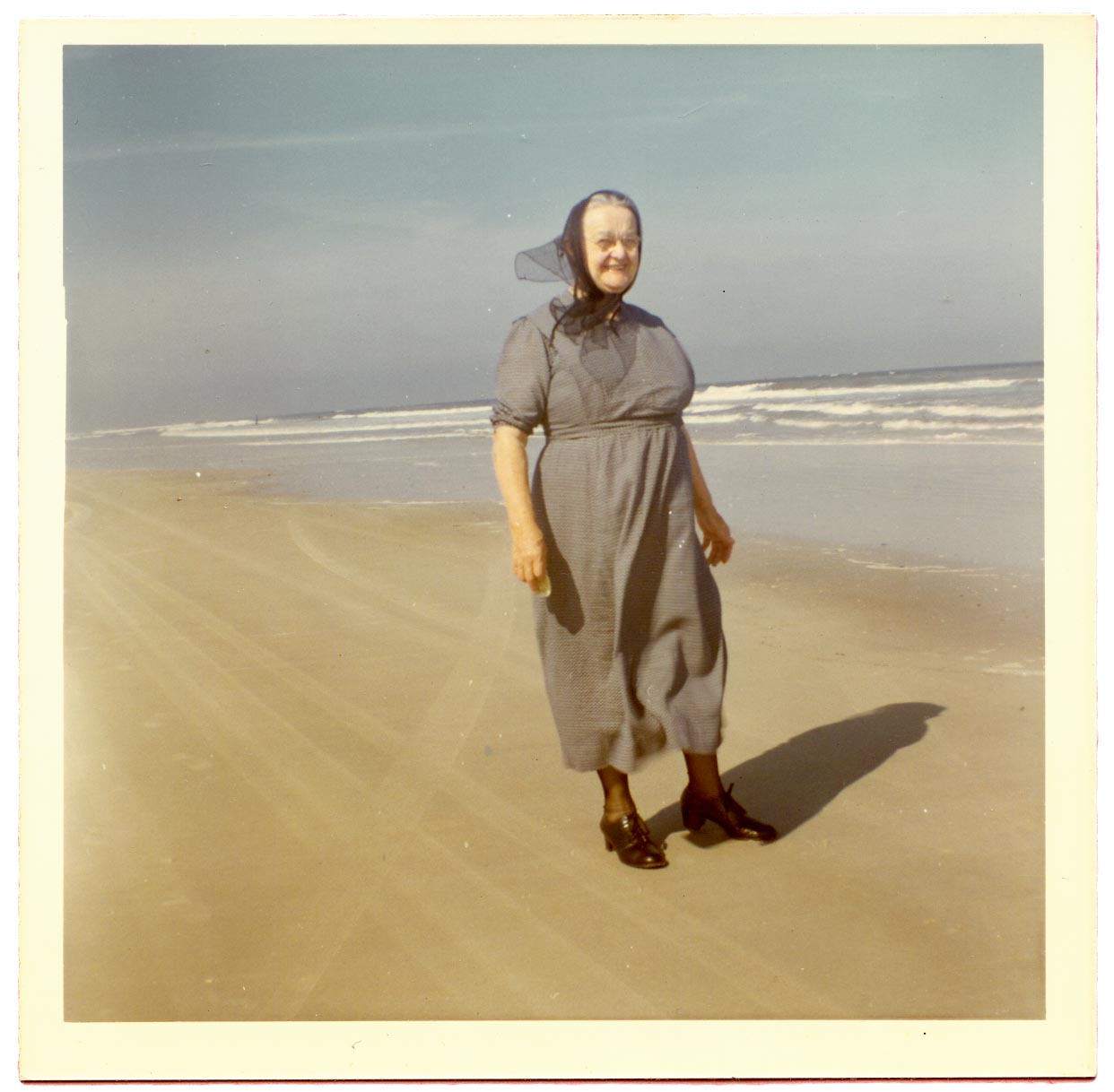
When Grandma Longenecker came to Florida the year our daughter Crista was born, she strolled Jacksonville Beach with plenty of sun-protection: black bandanna on top of her covering, caped dress, black stockings and black-heeled shoes, apparently enjoying herself.

Fannie Longenecker at beach

What family vacations stand out as memorable, past or recent? The beach, the mountains, or some place else?

*  *  *

Coming next: Marriage to a Difficult Man: Parts I and II

Home-made Butter: 3 Easy Steps

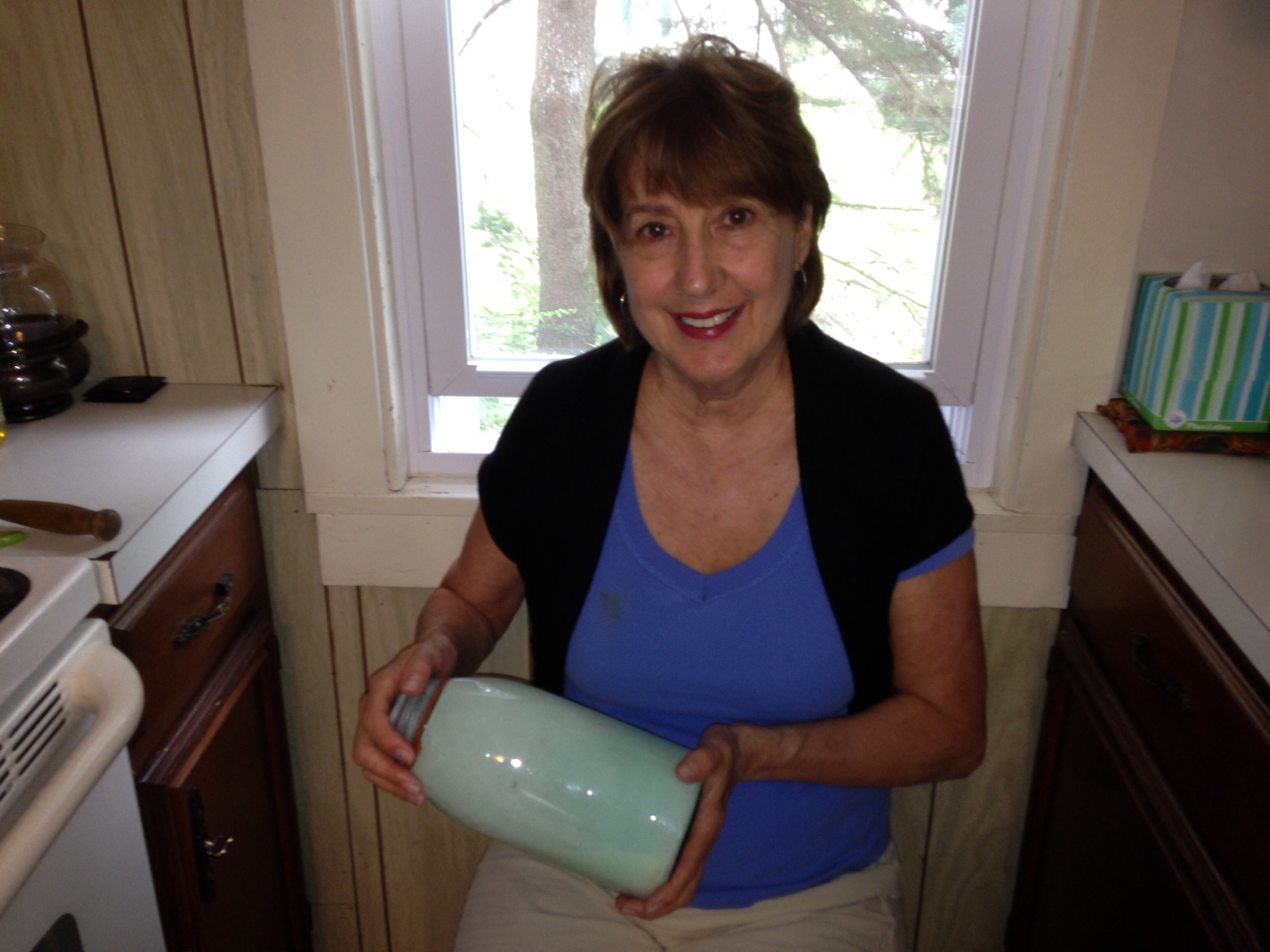
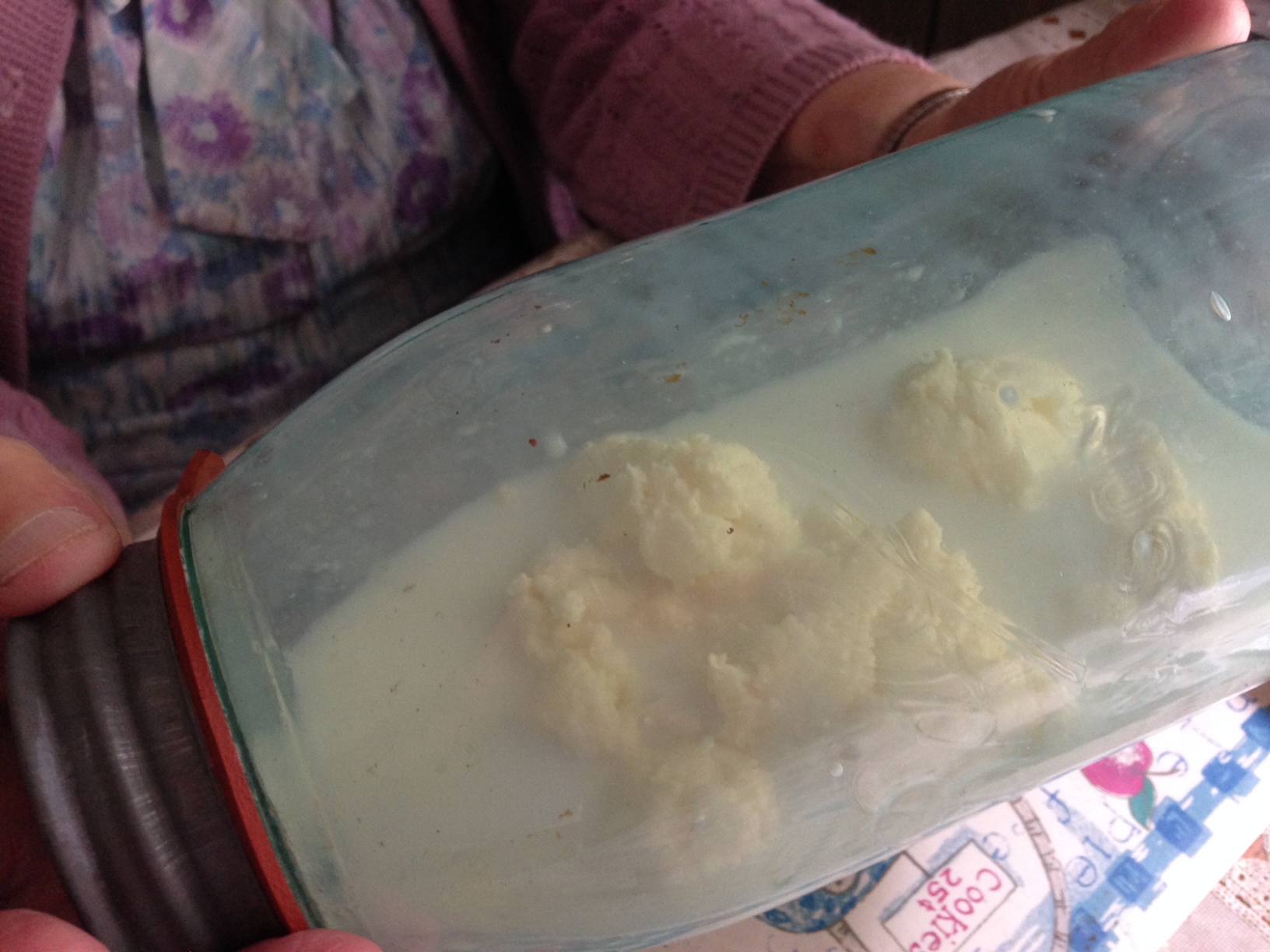
This week at Mom’s house, I attempted to re-create a scene from my childhood – in the same house, on the same chair, with one of the same Ball-Mason jars from the mother’s stash in the cellar. The kind with tiny bubbles crystallized within the glass of the jar. Mother says these jars are valuable.

The cream of bygone days for butter-making came from one of the Holstein cows that Sam and Mabel Hoffer kept on their tiny farm down the road from us on Anchor Road. For this re-enactment, I buy whipping cream from Giant Foods up the road toward town.

Butter 1

Did I mention that my sister Jan and Mother are both skeptical that store-bought cream will yield real butter.

Janice says, “You’re probably wasting your time shaking that jar back and forth with cream from the store. Think about all of the additives and preservatives they put in.”

Mother doesn’t say much but looks skeptical. I’m out to prove them wrong.

Butter 2

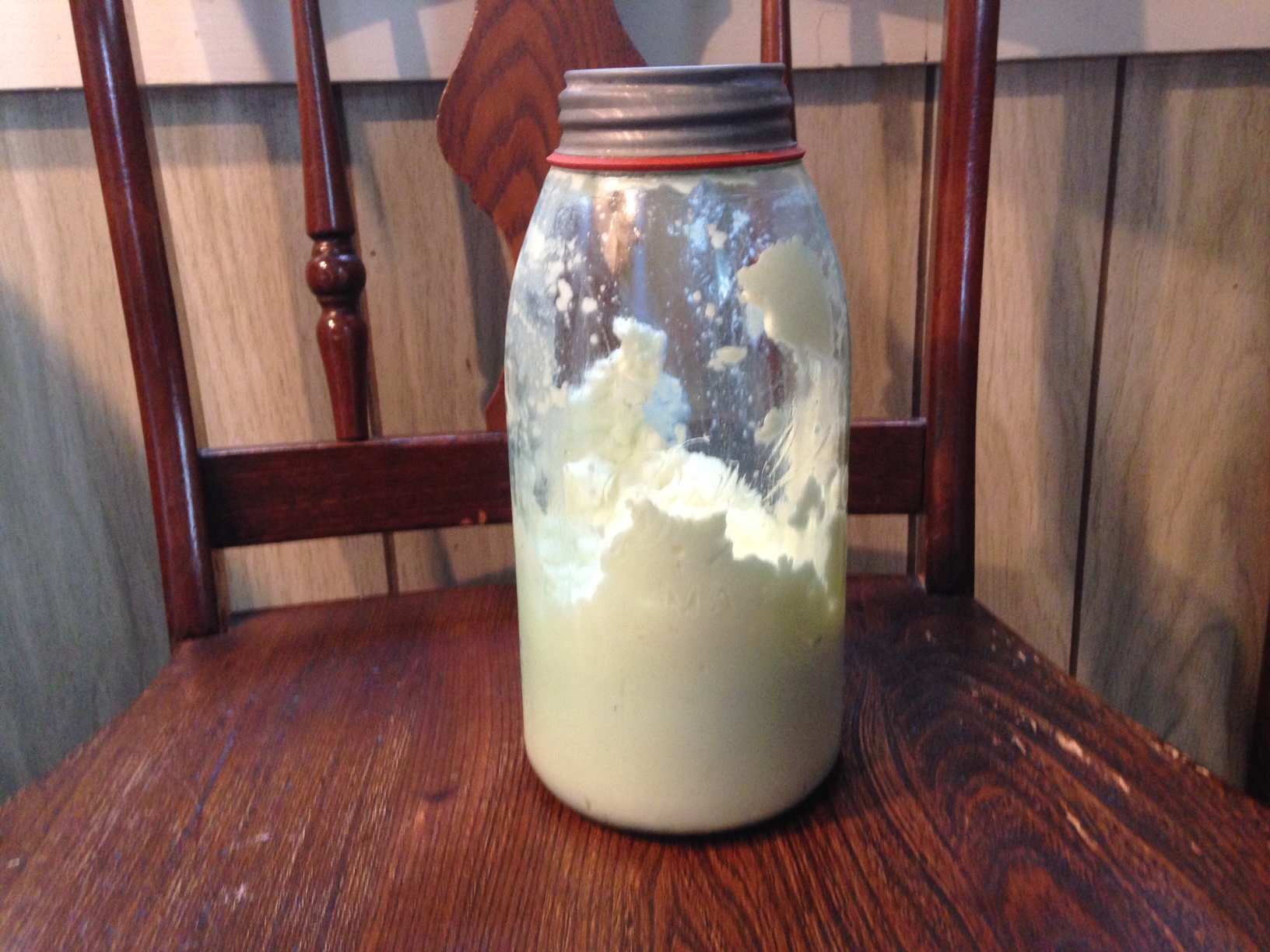
I stop the shaking long enough to notice that curdles of cream are clinging to the jar’s insides. That’s all it takes.

First, sister Jan and then Mother get in on the action, now past the 12-minute mark.

Without a shadow of doubt, real honest-to-goodness butter lumps are forming.

Butter 4

And voilá . . .

Butter 5

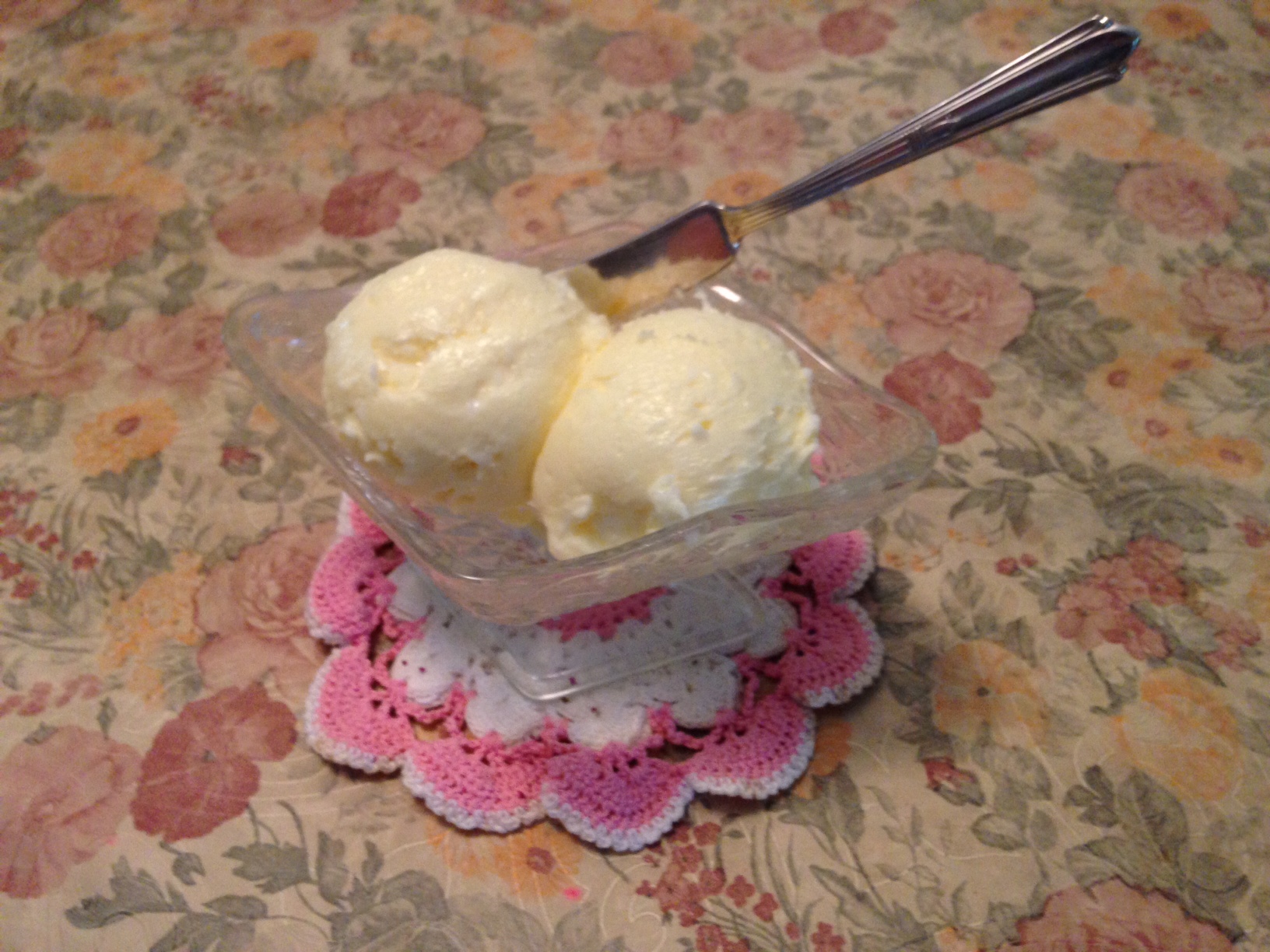
Fifteen minutes later, more or less, we have two fat butter-balls!

Did you catch the steps?

  1. Pour cream into 2-quart jar.
  2. Shake until you rattle and roll.
  3. Remove the congealed mass from the jar. Add a pinch of salt.

*  *  *

What scenes from your past have you tried to re-create?

Remembrance of Things Past: She Kept His Sweater

Jane Martin Walters never attended a single Elizabethtown High School Class Reunion, and Dr. Norman P. Will no longer attends college graduations as a president emeritus at Florida State College at Jacksonville. Yet, they both linger in my memory though Jane died in her mid-twenties and Dr. Will in his late-fifties. I have vowed to get rid of memorabilia in anticipation of down-sizing one day, but I can’t – I just CAN’T – part with the pieces of paper that attach their memory to mine.

Jane was smart, very smart, and excelled in college prep track classes in high school. Unlike mine, her learning appeared to be effortless. And her home life quiet and orderly too. After a snow day off from school one winter Jane remarked that she loved snow days because her Mom would pop popcorn, and she and her family would sit by the fireplace and read or play games. In contrast, after the thrill of sledding on traffic-free roads passed, our house was noisy, no hearth for refuge in sight.

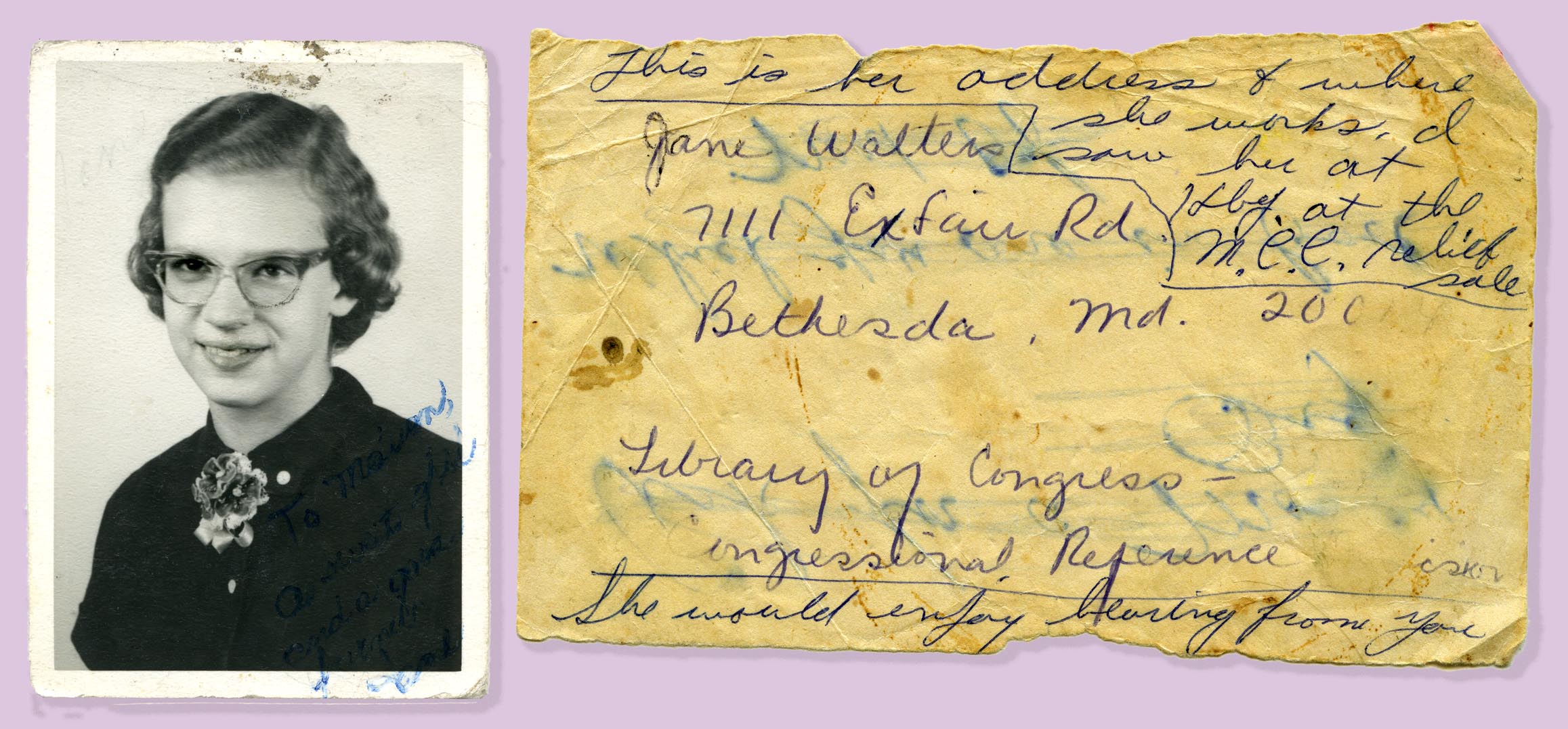
Jane and a note from my mother who saw her in Harrisburg at the MCC (Mennonite Central Committee) relief sale.
Jane and a note from my mother who saw her in Harrisburg at the MCC (Mennonite Central Committee) relief sale – 1960s

You might get the impression I felt envious. But I didn’t. Jane was poised on a pedestal in my eyes, and I admired what appeared to be her calm cadence through life. When I heard she married and worked at the Library of Congress in the Congressional Reference Department, I was pleased. Maybe I’d visit her in Washington D. C. some day. But some day never came. She died of cancer shortly after after her marriage and at the beginning of a promising career. Aunt Ruthie told me, “She ate a nice dinner with her family, said her goodbyes and died in her sleep that night.” I was devastated.

*  *  *

Dr Will_Campus newspaper_FCCJ

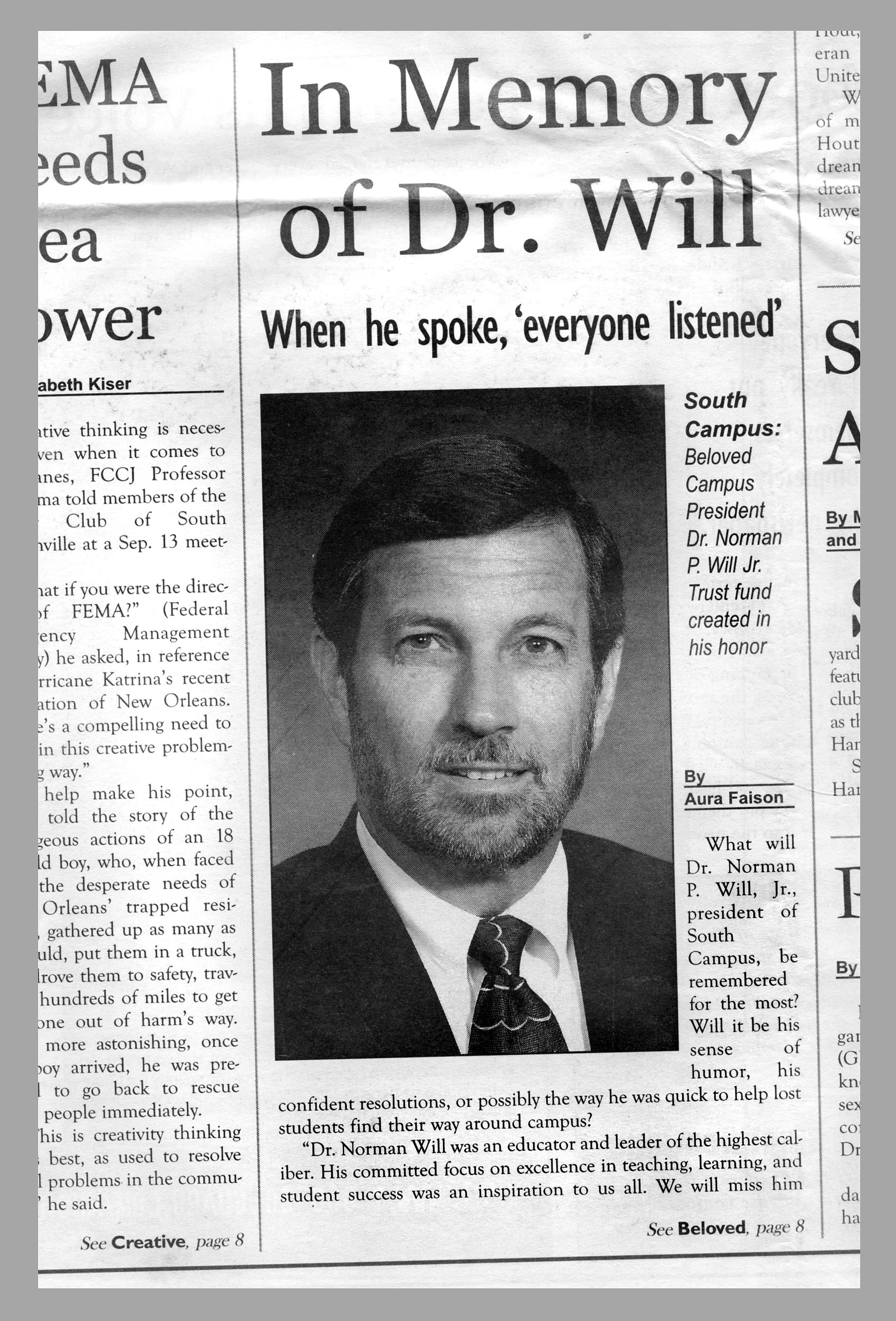
I admired Dr. Norm Will too, though in a vastly different way. An English professor had become a college president: All’s right with the world! College operations purred along smoothly with Dr. Will at the helm. He advocated free thought, offering friendly evening colloquia for faculty on diverse topics like current ideas in neuroscience and the health of Florida’s St. Johns River. But on the first day of Convocation in 2005, Dr. Will did not appear. He had died the night before while sipping wine and reading The History of God by Karen Armstrong, a text I later happened to reference in my paper for The Oxford Roundtable.

In her piece “Dealing with the Dead” (The New Yorker, October 11, 2010), Jennifer Egan discusses the deaths of three close family members and observes that she has kept an article of clothing from each: her grandmother’s 3-tiered necklace of fake pearls, her father’s navy-blue wool V-neck sweater, and her stepfather’s gray and burgundy argyle sweater. Though the pearls eventually broke as she rounded a corner in the East Village, Jennifer vows to wear the sweaters “until they unravel into shreds” because she likes their feel against her skin. Author Egan shares wisdom gained from loss as she opines:

  • “Wearing the garments of a person I loved was like being wrapped in a protective force field.”
  • “When the clock stops on a life, all things emanating from it become precious, finite, and cordoned off for preservation.”
  • Keeping items from those who have passed on “is a way of keeping them engaged in life’s daily transactions—in other words, alive.” [Italics mine.]

I will add a quotation of my own from Shakespeare’s King Richard III: So wise so young, they say, do never live long.” And then from Scripture:

  “So teach us to number our days that we may apply our hearts unto wisdom.”           Psalm 90:12  KJV

*  *  *

Have you experienced loss? Is your story like any of the stories I tell or very different? Here’s the place to share it.

Anna Mae and Hiram: A Mennonite Wedding

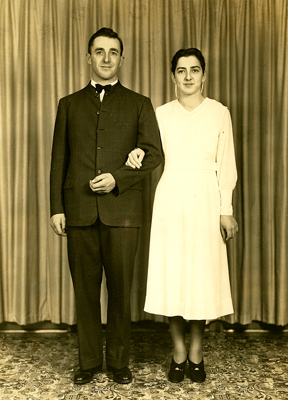
This is the wedding portrait of my mother and father

Ruth Landis Metzler and Ray Martin Longenecker 

October 26, 1940

Ray and Ruth Longenecker_4x5_72

June is the month for many American weddings. And so is August. Because many Mennonites were farmers, Mennonite weddings often took place in October, a month that signaled a break in heavy farm work after most of the crops had been harvested. My dad was a farm implement dealer, so his work cycle mimicked that of the farmers he served, which would probably explain the October date for the wedding.

The bride and groom, my parents, are dressed in Mennonite attire and comply with the rules for weddings prescribed by the church in this era: no bridal party prancing down an aisle to “Here Comes the Bride,” no flowers, and definitely no exchange of rings.

Excerpts from Article II, Separation and Nonconformity, Section 2. Public Worship. (19) from the Statement of Christian Doctrine and Rules and Discipline of the Mennonite Church, 1968:

  • “We deem it improper to employ instrumental music in worship and church activities.”
  • “Weddings shall be conducted in a Christian manner avoiding all vain display and in accordance with the prescribed regulations for weddings.” 

*  *  *

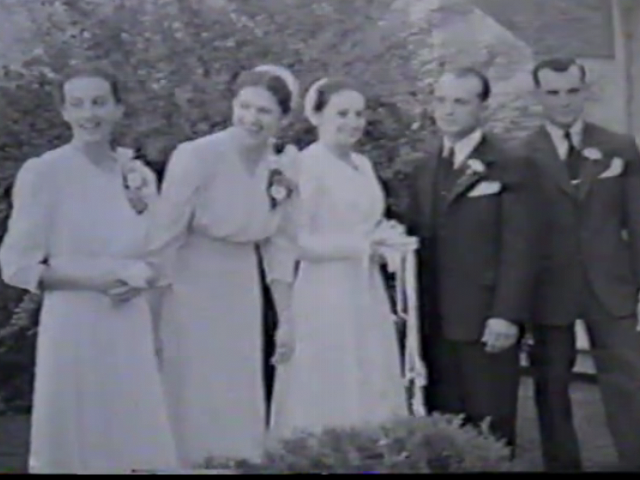
Anna Mae Longenecker’s father John is my dad’s first cousin on his father’s side of the family. Anna Mae with her brothers and sisters lived on the farm at Bosslers Corner, a farm bought from William and John Penn by Robert Allison in 1762,  and subsequently bought from Jacob Bossler by John and Nancy Longenecker and kept in the Longenecker family for five generations.  On the lawn of this homestead, one of John’s daughter’s, Anna Mae, poses  for wedding photographs with her new husband, Hiram Aungst.

Anna Mae Longenecker with her sisters on her wedding to Hiram Aungst.
Anna Mae Longenecker with her new husband and sisters posing for wedding photos on the lawn of the John Longenecker homestead.

Either the rules for wedding have relaxed a little in the ten or more years since my parents’ wedding, or brides have become more bold. This wedding accessories include corsages for attendants, a white Bible with streamers for the bride and the groom and groomsmen in non-Mennonite suits and neckties.

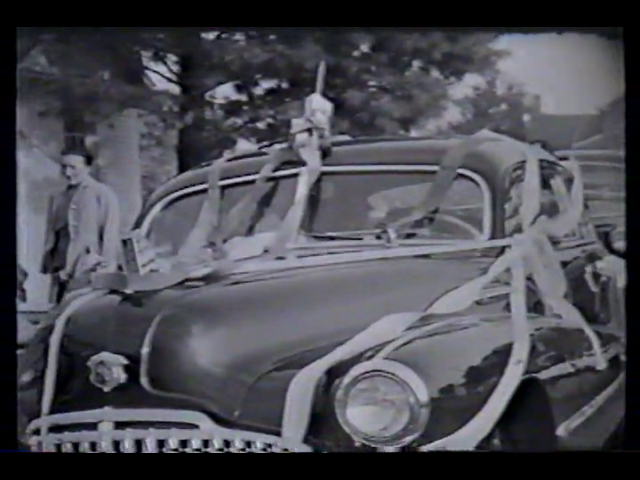
As the video shows, there was muted frivolity after the wedding which included rice throwing. Yes, it was real rice, not bird-seed!

Note the cars decorated in full post-ceremony regalia, worthy of any “fancy” wedding.

OldCar


Then and now: Your thoughts on wedding ceremonies welcome.