The Longenecker Christmas Tree & Charlie Brown

The Longenecker Christmas Tree.

Well, there was none. Not one. Not ever. Despite the fact that the Christmas song, “O Tannenbaum” is of German origin, most Pennsylvania Dutch Mennonite homes of the 1950s and 60s did not light Christmas trees. Decorated trees were lumped together with other worldly pleasures like jewelry, makeup, and movies and therefore not permitted. At least the Ray Longenecker family did not have one. We were plain and I longed for some fancy.

One year I found a limb from our maple tree out front with little branches that looked as forlorn as Charlie Brown’s tree. I brought it into the living room and tried to find trinkets and a red ribbon or two for decoration.

It was a sad little tree. It looked something like this, only wedged into our living room radiator and anchored by balled-up newspaper no doubt.

forlornTree

Good grief! I know how Charlie Brown must have felt. But at least his had “a wooden trunk and soft green needles” with a red ball on the end of a branch instead of a timid little ribbon.

CBrownSadTree

Charlie Brown’s luck seems to change when Lucy appoints him as director of the Christmas play in which Linus reads Luke 2 from scripture. After the play, the performers migrate outdoors toward Charlie’s sagging tree. Charlie Brown eventually gets his wish for a fine Christmas tree as the gang “donate” the festive string of lights from Snoopy’s doghouse to the dress up the little tree. Charity in action.

CBrownHappyTree

No, there was no Christmas tree in our home or in the sanctuary of my family’s home church, Bossler’s Mennonite Church. But like Linus and friends, we heard the Christmas story from Luke 2 faithfully recited and at the end of the service, we received hand-outs of navel oranges every year, the orange orbs passed hand to hand down the rows.

Nowadays in the Longenecker-Beaman home there is a happy fir tree, bedecked with ornaments from several generations. And we all rehearse the precious old story of the nativity in the Bible passage Luke 2 on Christmas morning.

A wondrous story, plain and simple, read beside a fanciful tree.

O Tannenbaum! Longenecker-Beaman Tree 2013
O Tannenbaum!  The Beaman Tree 2013

Hark, the Herald Angels Sing, Glory to the Newborn King!     Sung by Charlie Brown   and friends

Add a Christmas tree tale from your past . . . or present. Join the conversation and I will add my little bit as I always do. 

Merry Christmas~~Merry Christmas~~Merry Christmas!

Coming next: Purple Passages with Time and Tiny Tim

Vials of Venom, Oil of Healing

My mother and I are waiting in Doctor Garber’s examining room, which always has a sharp smell of rubbing alcohol. She’s the patient, and I’m with her sitting on a chair eyeing the metal tray holding at least a dozen tiny vials, so cute they look like they could fit in the kitchen of my doll-house. But they are vials of venom, possible culprits. Nurse Becky Longenecker carefully fills little syringes with each fluid, which puncture the skin of Mommy’s extended arm trying to determine whether it is house dust, hay, mildew, turpentine, or cat dander that is causing her frightful asthma attacks. I watch as some injections leave a puffy patch or a bright red spot. She leaves the office with a paper packet of pills to try. Maybe these will help.

But I guess they aren’t working either. Once again, Mother is propped up on feather pillows gasping for breath, her face blanched white with the effort. It’s scary for Daddy and my sisters too. We feel helpless. But Daddy knows about Ordinance # 7 in the Statement of Christian Doctrine of the Lancaster Conference of the Mennonite Church: “Anointing. According to James 5:10-18 we encourage our members to call for anointing with oil accompanied by the prayer of faith for healing.”

Olive oil in a Vial of Healing
Olive Oil in a Vial of Healing

So my dad has called for Pastor Martin R. Kraybill and Deacon John R. Kraybill, brothers, to come to Mom and Dad’s bedroom upstairs for the anointing of oil as prescribed in the New Testament passage of James 5:14 & 15.

Is any sick among you? Let him call for the elders of the church: and let them pray over him, anointing him with oil in the name of the Lord. And the prayer of faith shall save the sick, and the Lord shall raise him up; and if he have committed sins, they shall be forgiven him.

As Pastor Martin prays and reads the scripture to Mother and to the family assembled around her bed, Deacon John anoints her forehead with olive oil, an outward symbol of the healing that is transpiring within. Mom later describes a tingling sensation like a warm, electrical current radiating from the top of her spine to the bottom. “It felt wonderful!” she says. She has been healed immediately—and by the power of the Holy Spirit.

No more doctor visits for asthma ever again, the vials of venom to test for triggers, a thing of the past. Praise God!

Have you or someone you know had an experience similar to this? We’d love to hear your story.

Your comments welcome. I will always respond!

What’s on Your Wall? Signs, Mottoes, and more

Facebook asks boldly, “Do you want to post this on your wall?” meaning do you want this information available to your Facebook friends? Obviously, walls in the 1950s were not electronic. The only walls we knew then were made of plaster. But more on that later!

Longenecker Homestead in the family for five generations

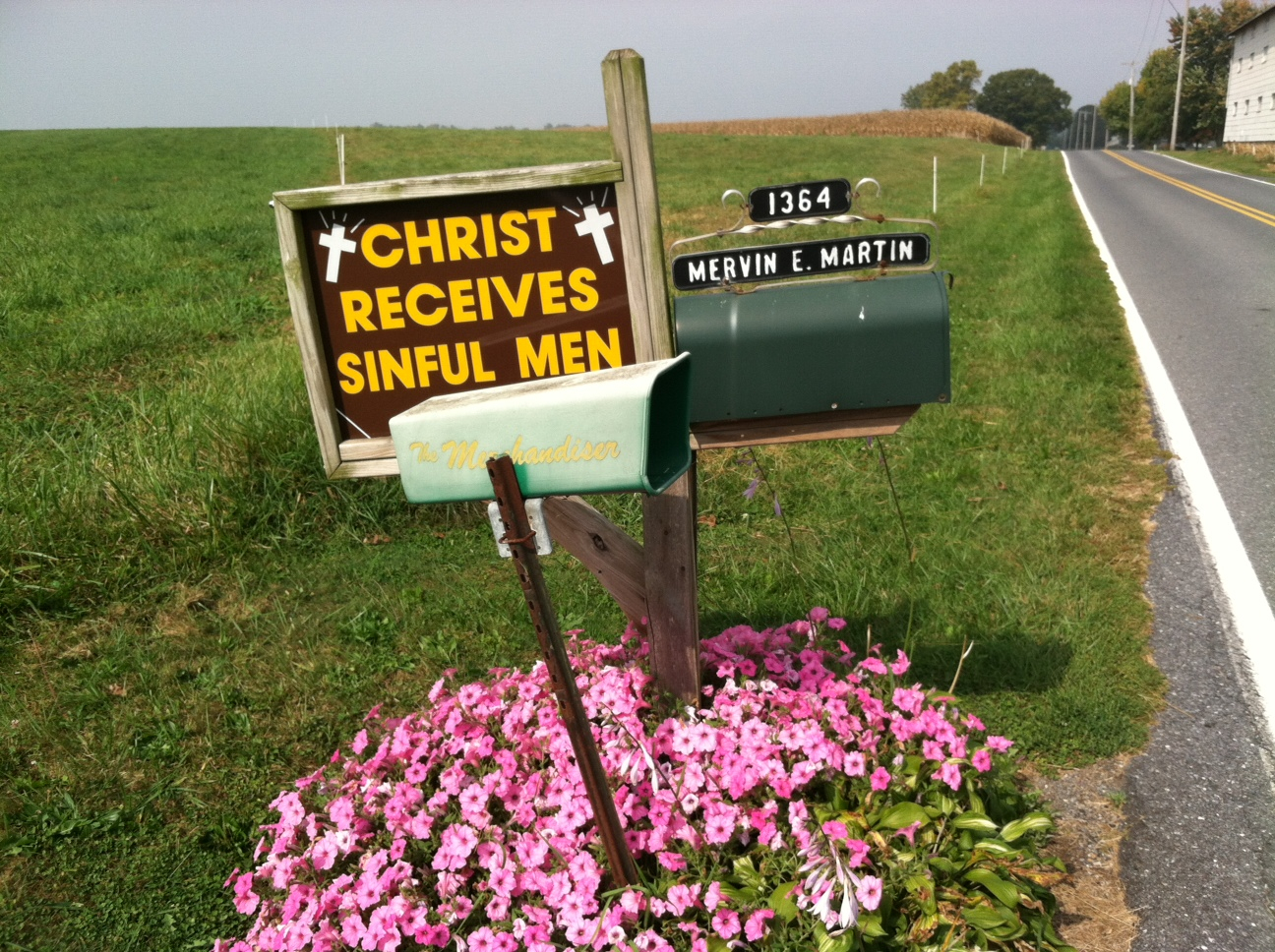
The John Longenecker homestead sits just across the road from Bossler Mennonite Church. The scene is bucolic, farms and land extending as far as the eye can see in this quiet niche of western Lancaster County. Poles that once attached electrical wiring to this house are gone, so I assume a plainer family, probably Amish, now lives in the house and farms the acreage.

Mailbox2        Mailbox1

Apparently the family is not bashful about proclaiming their convictions, broadcasting from their mailbox on both sides two biblical admonitions, one from John 8:11, words of Jesus to the Samaritan woman.

Usually painted scenes and pretty art adorn the walls of modern homes, but “back in the day” wall hangings we called mottoes were intended to exhort and encourage. Above the door leading from my Grandma’s kitchen to the sitting room is this stern commandment:

HonorFatherMotto

Upstairs in Grandma’s Victorian-style bedroom is a poem with a much softer touch, embroidered for her mother by my aunt, Ruth Longenecker:

My Mother's Garden, an embroidered poem
My Mother’s Garden, an embroidered poem by author Alice E. Allen

In our own home was this fixture from Proverbs 3:6 in the little walkway between our living and dining rooms. There it was from childhood to adulthood imprinting our minds and hearts until it eventually became invisible to us.

AllThyWaysAcknowledgeHim

The wall hanging that made the biggest impression on me was Rudyard Kipling’s “If, for Men” adapted into an the idealized version for women or girls. I never tried to memorize the whole poem, but the words “If you can hear the whispering about you . . . ” keep chiming in my mind even now:

IF – for Girls

If you can hear the whispering about you

And never yield to deal in whispers, too;

If you can bravely smile when loved ones doubt you

And never doubt, in turn, what loved ones do;

If you can keep a sweet and gentle spirit

In spite of fame or fortune, rank or place,

And though you win your goal or only near it,

Can win with poise or lose with equal grace;

If you can meet with Unbelief, believing,

And hallow in your heart, a simple creed,

If you can meet Deception, undeceiving,

And learn to look to God for all you need;

If you can be what girls should be to mothers:

Chums in joy and comrades in distress,

And be unto others as you’d have the others

Be unto you – – no more, and yet no less;

If you can keep within your heart the power

To say that firm, unconquerable “No,”

If you can brave a present shadowed hour

Rather than yield to build a future woe;

If you can love, yet not let loving master,

But keep yourself within your own self’s clasp,

And not let Dreaming lead you to disaster

Nor Pity’s fascination loose your grasp;

If you can lock your heart on confidences

Nor ever needlessly in turn confide;

If you can put behind you all pretenses

Of mock humility or foolish pride;

If you can keep the simple, homely virtue

Of walking right with God – – then have no fear

That anything in all the world can hurt you – –

And – – which is more – – you’ll be a Woman, dear.

by Elizabeth Lincoln Otis

We want to know. What was/is hanging on the walls of your home, past or present?

By the way, it’s not too late to enter the book giveaway contest for a chance to win a copy of Valerie Weaver-Zercher’s book The Thrill of the Chaste: The Allure of Amish Romance Novels.

Click HERE to post a comment and a chance to win. The contest closes on Saturday, November 9, 2013 at noon. Only comments logged into this website can be honored. The winner will be announced here on this blog and in an email.

Great Grandpa Sam: A Hoot and a Holler

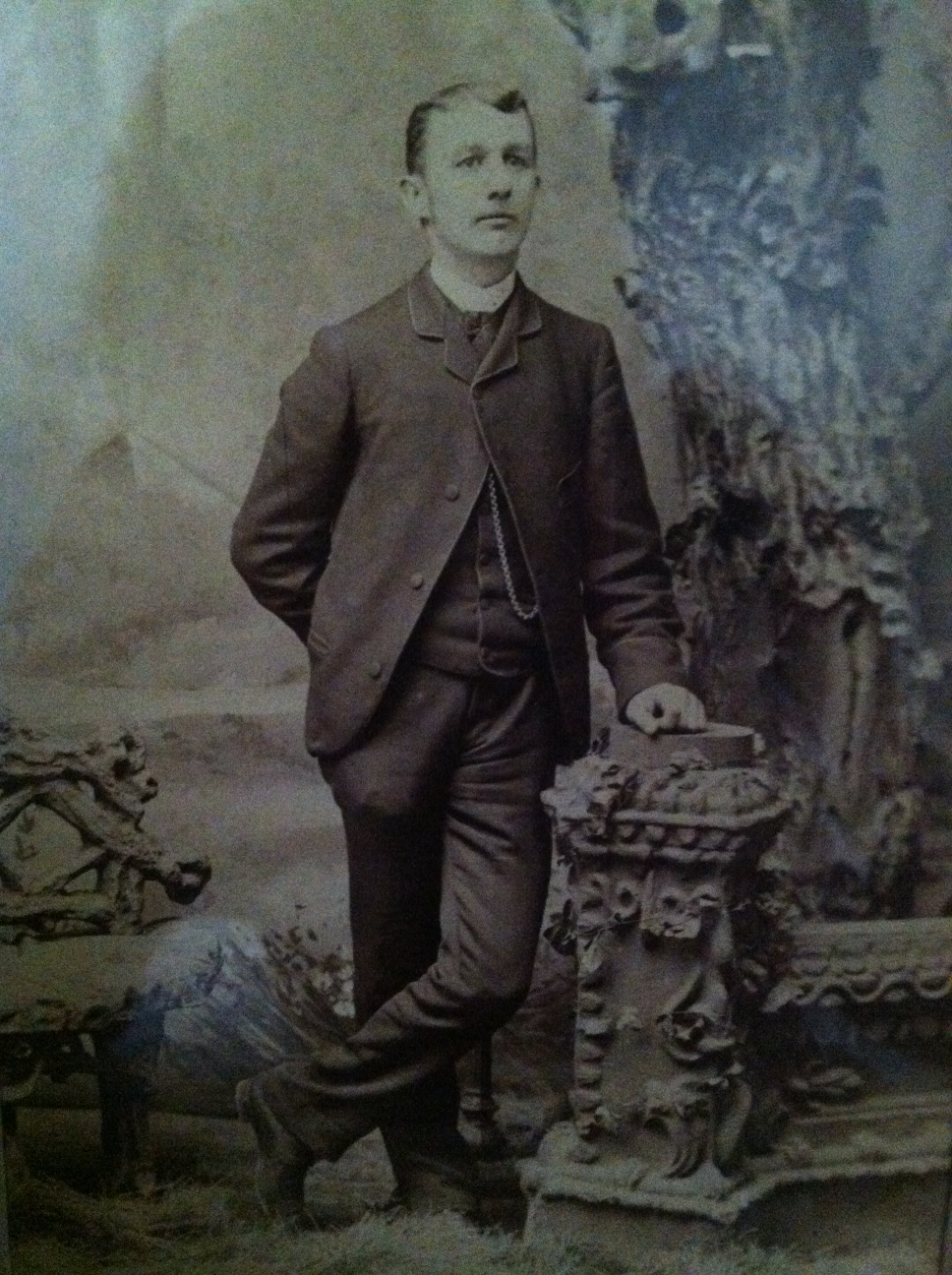
Samuel Brinser Martin 1863 -1957    Victorians didn't smile for photos!
Samuel Brinser Martin 1863 -1957                Victorians didn’t smile for photos!

Wiry Grandpa Martin, was a jolly little man. He had an Old MacDonald-type farm with chickens, a couple of cows, two horses, and maybe a pig though I never heard an oink-oink-oink either here or there.

Sycamore tree and bridge along lane leading up to the Martin farm Oil painting by Ruth Martin Longenecker
Sycamore tree and bridge along lane leading up to the Martin farm
Oil painting by Ruth Martin Longenecker
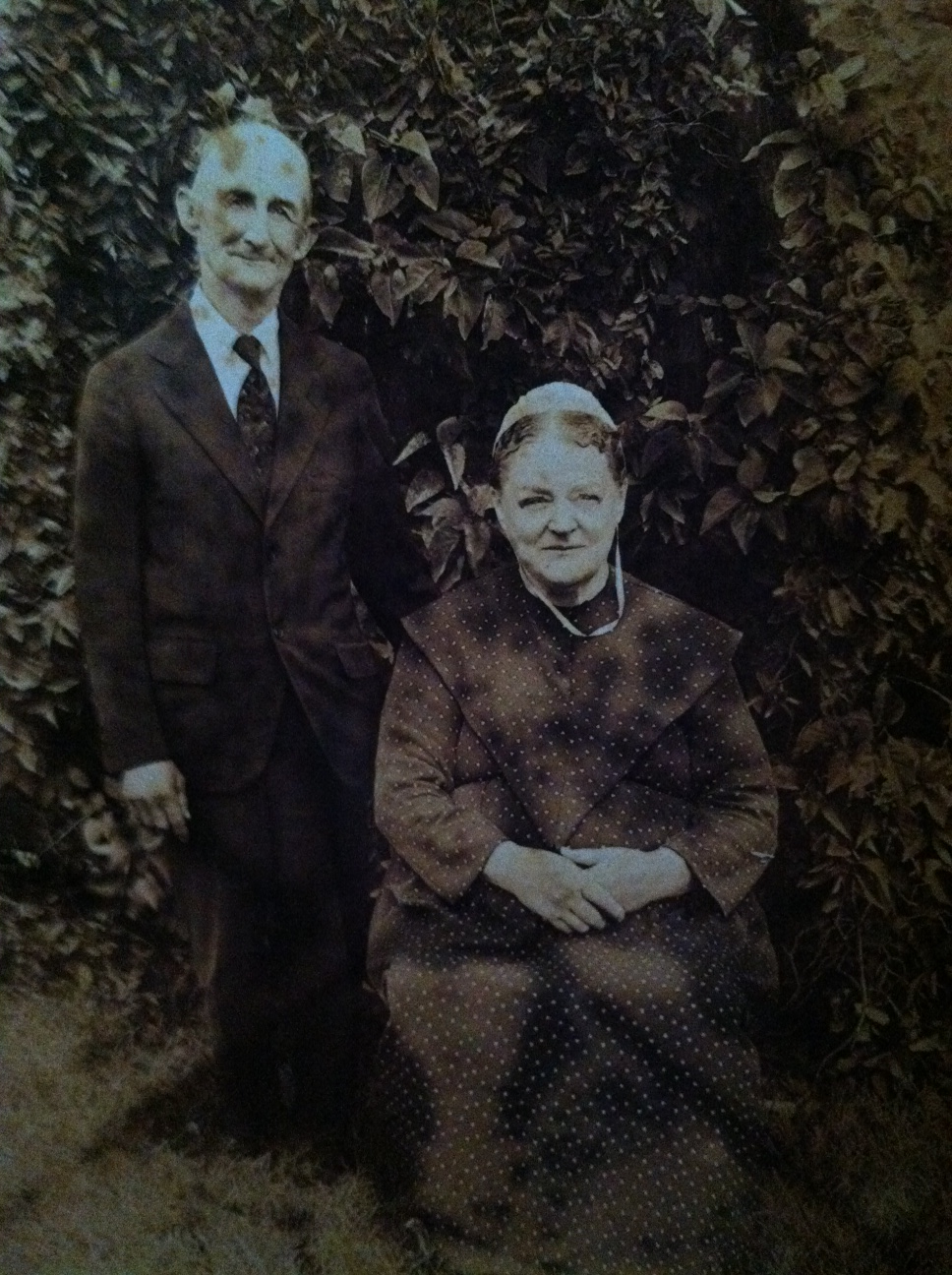
Samuel and Mary Martin

Theirs was a Jack Sprat-type union, with his wife Mary as generous as she was ample. Great Grandma Mary died before I was born, so I never met the big-hearted woman who often invited strangers to the family table.

My Grandma Longenecker’s dad, Great-Grandpa Samuel Brinser Martin, came to live with his daughter Fannie and grand-daughter, my Aunt Ruthie, in his later years. My sisters and I found him curious and amusing.

Great-Grandpa Sam has no teeth to speak of. What he had were rotted and drew his mouth into an O like an old mountaineer’s. After meals, he shook some salt into his hand, threw his head way back, opened up and sucked in the salt. It made a loud POP, his mouth an echo chamber.

He came to Grandma’s house toothless, blind, and deaf but not dumb. He was smart enough to know that we stole candy from his stash below his Emerson radio turned to high volume with static near the kitchen window. When he offered us pink Pepto Bismol-like lozenges, we snuck back and snitched the chocolate covered mints. Both his eyes were blind, but one eye was glass and sometimes rolled out of its socket and onto the green, beige, and brown blocked linoleum floor where it picked it up speed.

There were other sneaky things, too, some not involving us. His minister from Geyers Church near Middletown, Pennsylvania would visit, coming in the door with a Bible under one arm and a long, flat, telltale something or other in a brown bag under the other. As the minutes went by the laughing and talking in the upstairs bedroom got louder and louder, revealing the effects of the liberal libation of liquor the two were imbibing, for medicinal reasons of course. We observed the literal interpretation of the biblical teaching that  “A merry heart doeth good like medicine.”  Obviously, his preacher friend was not a strict Mennonite like us nor in favor of prohibition or abstinence.

Grandpa would tell us often: “There’s no feller quite so yeller like my liver.” Then a guffaw! He could pack a punch too. Asking me to make a fist to show my muscle, he’d pound the little mount of bicep flesh hard enough to make a dent.

When he died, there was a quiet spot near the bay window in Grandma’s kitchen – no candy – no tricks – no loud music. We missed Grandpa Martin.

We all have relatives, past or present, who are curious and interesting. We’d like to hear about yours!

Your comments welcome. I will always reply.

Homecoming: Old Friends, New Friend

“Going Home, going home, I’m just going home . . . .”  William Arms Fisher wrote a spiritual tune with nostalgic lyrics adapted from the famous largo in Dvorak’s 9th Symphony that hints of going home “through an open door.”

Last Saturday I walked through the open door back home to my college reunion during Homecoming weekend at Eastern Mennonite University. Nestled among the purple mountains of Virginia in the lush Shenandoah Valley, EMU‘s banner proclaims itself “A Chritian University Like No Other.”

OutdoorBanner

EMU was just a college when I attended. Now the campus seems twice as large and current students way younger than I remember. I kept having to adjust to the sensation of flipping between decades as I viewed the campus and my classmates in a time warp.

There were other adjustments too. College girls now were sporting blue jeans and serious jewelry; my female classmates, like me, all wore braids or buns with prayer coverings.

MarianCollege

Our class gift was the donation of the campus’ first piano. Now there was a magnificent pipe organ in the sanctuary, string ensembles playing folksy tunes, and (gasp!) a theatre department.

“Scatter seeds of loving deeds . . . till we are gathered home at last.” Walking Roots Band

Old Friends

My college room-mate Verna Mohler Colliver and me
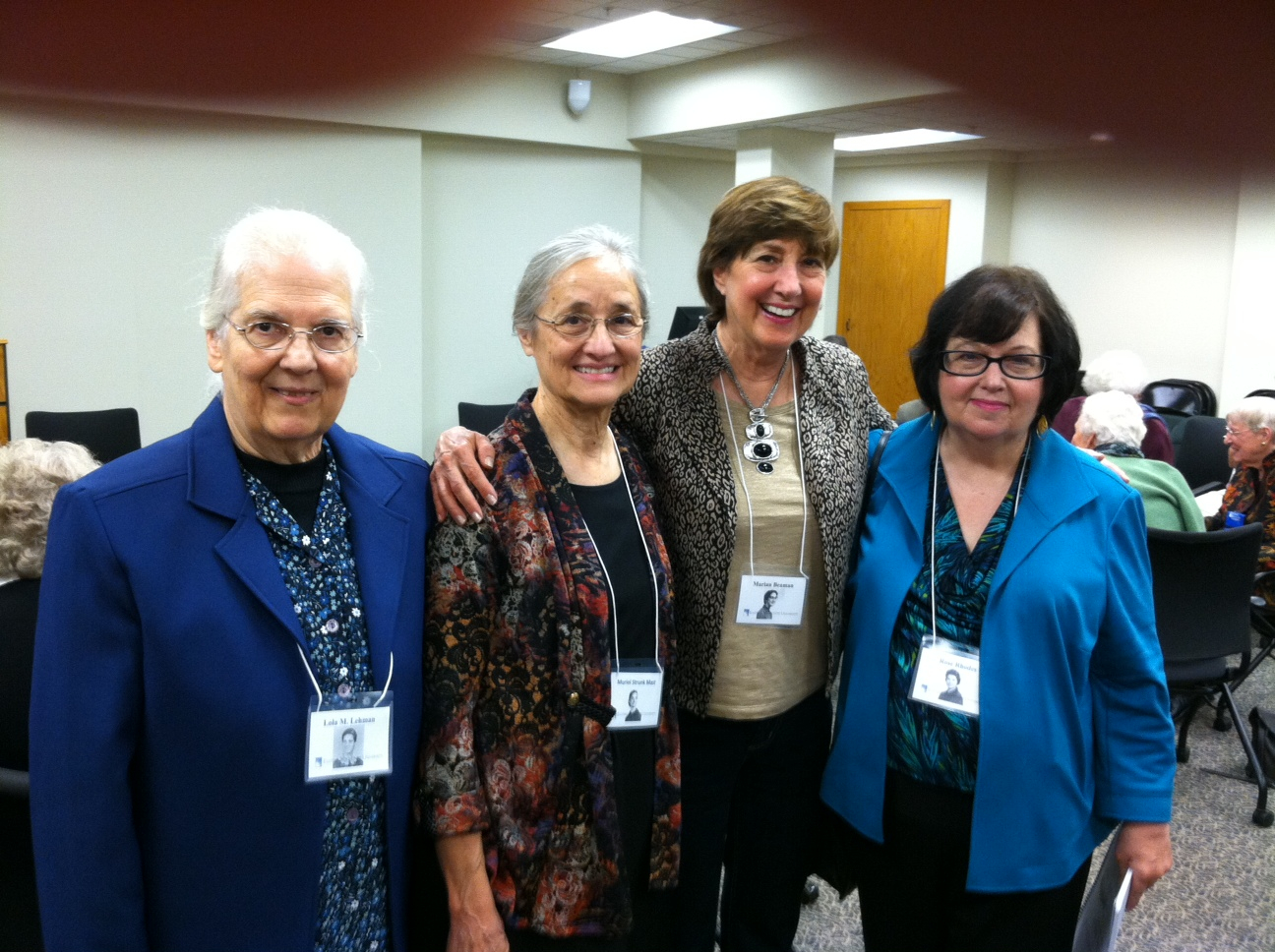
Other room-mates and friends: Our name tags imprinted with college yearbook photos.
Raymond Martin, motorcycle ridin' class-mate
Raymond Martin, motorcycle ridin’ class-mate

Yes, we have all changed. The institution has changed too, outwardly at least, but the mission of the university has remained the same: commitment to rigorous academics with an invitation “to follow Christ’s call, to bear witness to faith, serve with compassion, and walk boldly in the way of nonviolence and peace” in true Anabaptist Mennonite tradition. The motto that was displayed front and center in the sanctuary of the chapel when I was a student still remains: Thy Word is Truth John 17:17.

New Friend

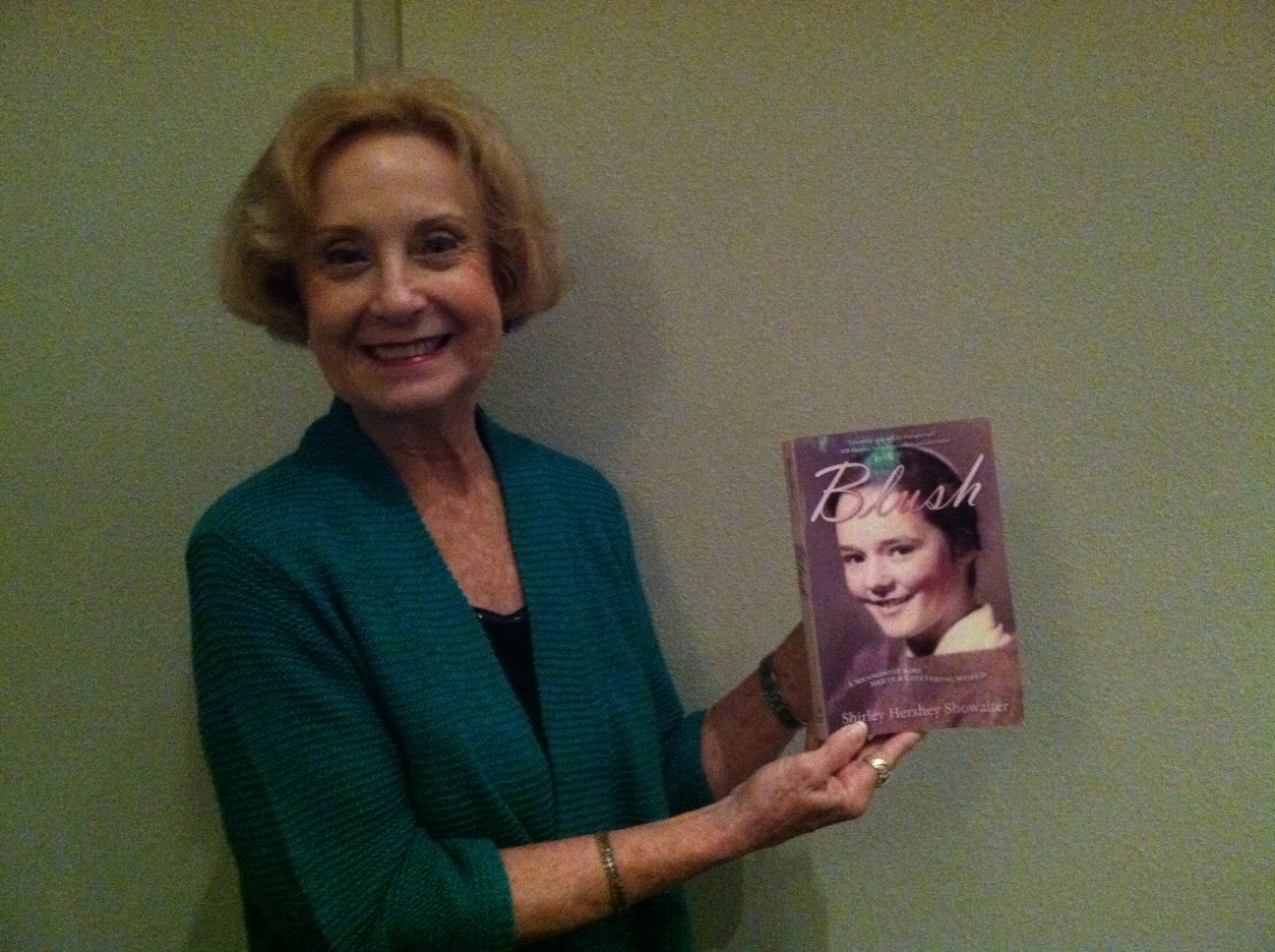
Shirley Hershey Showalter and I have been getting acquainted in the blog world by visiting each other’s websites since March 2013. In September of this year her memoir, Blush: A Mennonite Girl Meets and Glittering World was published and she has been on a whirlwind book tour, yet she made time for us to meet and visit over breakfast at her home in Harrisonburg, VA on the edge of the EMU campus.

SHSandME

Her breakfast room and office space overlook the gorgeous Massanutten Mountains. The office space includes what you would expect from a college English professor, turned college president and now author–tons of books and orderly files. However, I discovered that there is a special chair where she weaves the magic: a red upholstered swivel chair facing the mountain view. No wonder her book sings!

magic chair
magic chair

“I promise: you will be transported,” says Bill Moyers of her memoir. Part Mennonite in a Little Black Dress, part Growing Up Amish, and part Little House on the Prairie, this book evokes a lost time in Lancaster County, Pennsylvania, when a sheltered little girl with big dreams entered a family and church caught up in the midst of the cultural changes of the 1950s and `60s.

Her website and blog: http://www.shirleyhersheyshowalter.com

Carolyn Stoner, winner of BLUSH book giveaway contest

Carolyn reports that she loves, loves, loves the book and has underlined certain passages and even inserted little pink sticky notes to earmark special pages. (Stickies concealed for photo!) Carolyn’s name was chosen in a drawing by commenting on my review of Shirley new book: Book review and Contest

Your comments welcome! I will always reply.

Babes in an Urban Woods: Part I

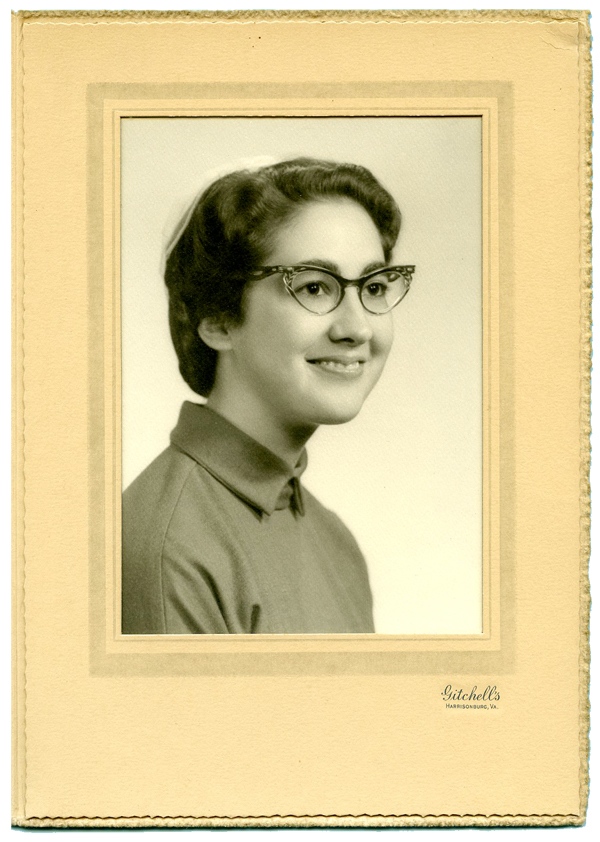
Age 14 1/2
Age 14 1/2

During our teens, my church friends–Miriam, Gladys, Hazel, and I congregate at each other’s houses after church on Sunday night for ice cream, chips, and stereo music: Songs from the West, anything by Mantovani, and The Singing Nun. We would rather have dates like Janie and Thelma, but since we don’t, we pretend that this weekly ritual is fun.

One of our other faux definitions for fun includes cultivating an acre of tomatoes. The youth group from church farm tomatoes on a fertile plot of land near Bossler’s Mennonite Church called The Lord’s Acre. We plant, water, weed, and harvest the tomatoes, giving the profit to missions. Another mission outreach is in New York City, where Ernest Kraybill, one of our deacon’s sons, drives taxi during the day and pastors a small mission church in Harlem. Some of us, along with young marrieds, are getting ready to board a bus and distribute gospel tracts in the Big City. A year ago, the freshmen from E-town High took a field trip to New York. Radio City Music Hall with its sunburst fan of a stage is my favorite memory: seeing the Rockettes was a dream come true for a sheltered girl from Rheems. After the show, we saw a movie–yes, an actual MOOOOOVEEE in dynamic sound and Technicolor, featuring Barbara Stanwyck, the very first movie star I had ever seen performing on the silver screen. Her flawless skin and hair, impeccable makeup, and a cream, cool voice mesmerized me.

On what turns out to be the hottest Saturday in August most of the teens and young adults from Bossler’s plan to spend all day Saturday bringing the gospel to poor, needy heathens in the inner city. It’s summer-time, and I wear my sheer voile lavender frock, so I won’t feel overheated with a modest cape over the dress. We are leaving in the early morning about 4:30 am, so we can spend the day giving out tracts in apartment buildings all over Harlem, With Hazel, my seat-partner, I board the bus for the 3 1/2 hour trip to New York City. Garbed in the plainest of clothing and christened with our white Mennonite caps, we are out to convert the world.

On the bus, we talk and doze, and doze and talk our way to the exotic lights, thrumming noises, and foreign smells of Harlem in north Manhattan, a neighborhood of about 1/4 million people. After we arrive, we proceed by twos among the tenement building in the concrete jungle of the 18th block of Harlem, armed with nothing but gospel tracts and innocence. Like the others, Hazel and I are assigned one tenement building with floors upon floors of apartments. Our strategy is to walk all the way to the top and do our distributing on the way down.

tenement building - courtesy: Google Images
tenement building – courtesy: Google Images

“Whew, it sure does stink in here!” The odors of stale air, dried blood, urine, and burnt cooking assault our country noses on the way up. There are beer bottles, Schlitz and Black Label–some broken, I notice, strewn on the landings between floors.

“Did you hear that?” I ask Hazel as we both witness a full-scale brawl going on inside one of the apartments. The sweaty-looking door-opener snatches a tract from our hands.

“I can’t believe these words,” Hazel comments as we gape at the graffiti on the pock-marked concrete walls: Call_____ for a good time . . . Go to #x!*X you dirty niggers . . . .  Undaunted, we manage to bless all the other apartment dwellers with our fliers as we descend. More screaming and yelling. Things are really getting violent on the other side of the wall.

“Are we going to make it out alive?” I wonder. But things are about to get even worse.

What happens next? Part II

                                                              *   *   *   *   *

GOOD NEWS! There is still time to enter the contest on my review of Shirley Showalter’s new memoir BLUSH, hot off the press. Just POST a COMMENT on the review! Read and Comment @ Shirley Showalter’s BLUSH – A Review and Book Giveaway

THE CONTEST

You can enter to win a copy of this book now!

Here are the details:

WHAT:  Read my review of Shirley Hershey Showalter’s memoir: Blush: A Mennonite Girl Meets a Glittering World.

PRIZE:   One lucky commenter will win a copy of BLUSH, after only one week now in its second printing!

WHEN:  Review posted Wednesday, September 25, 2013

WHERE:  Right here on Plain and Fancy Girl

And all you have to do is show up, read my review and leave a comment. Only comments posted on my blog will be counted as an entry.

The giveaway will close one week later on Wednesday, October 2, 2013 at 12:00 midnight. I will announce the winner here and by email.

I invite you to come by and enter the contest by commenting on the review. Feel free to invite your reading friends!

Again, here’s the link to the review: Shirley Showalter’s BLUSH: A Review and Book Giveaway and a chance to win a copy of Shirley’s book!


Shirley Showalter’s Memoir “Blush” – a Review & Book Giveaway

 
My Review

Shirley Hershey Showalter’s Blush: A Mennonite Girl Meets a Glittering World sings the song of her early life as a Mennonite girl in 250 pitch-perfect pages. Born into a family of Lancaster County Swiss Mennonite parents, the author recounts the story of the first 18 years of her girlhood on an 100-acre dairy farm in the 1950s and early ‘60s. The book delivers in its promise to play out her memories of  school, church, and home, “the three legs of my childhood stool,” as she puts it. “Each carried both sweet and sour memories” of ways this plain girl fit in and ways she stood out as different.

Her melody line bravely hits the sharps and flats of her experiences. She grabs her reader by the hand to walk into their farm meadow as she and her brother Henry play amid the Holstein cows and fragrant bluebells by the creek on a cloudless, spring day. We learn secrets of good Pennsylvania Dutch cookery in her mother’s kitchen and are privy to recipes of delicious dishes in an appendix to the book. She lets us hear the congregation joyously singing hymns of the faith a cappella in 4-part harmony though in a sex-segregated sanctuary. But her song turns to a minor key as she vividly describes the sudden death of her infant sister, her by turns affectionate and adversarial relationship with her conflicted father, and later in a brush with a rigid Mennonite bishop.

This memoir abounds in artful motifs. In the preface the author is sitting on the sandstone steps on the way down to the arch cellar of The Home Place, now known as Forgotten Seasons Bed & Breakfast. She describes the arch in this cellar as the entrance to a storehouse of provision for her parents and grandparents against the want of the Great Depression and a bunker of bounty during the Cold War. Indeed, the book succeeds as documentation of major political currents and cultural icons of the era: Eisenhower and later Kennedy, the Studebaker Lark, the Phillies, Elvis. Other visuals include a map of the Lititz environs, her family tree, along with beloved family portraits and snapshots.

For me as a reader, the most endearing arch in her story is the rainbow in her mother’s invented story of “The Magic Elevator,” which she, a diarist and aspiring writer herself, wrote at age fifteen and has adapted for her children and grand-children through the years. Her mother, Shirley’s first mentor, challenged the norm in a story she recounts early in the book: Although the Rules and Discipline of the Lancaster County Mennonite Conference condemned worldly weddings, including carrying a bridal bouquet, Shirley’s mother Barbara Ann craftily transformed the family’s plain living room into a fancy bower of flowers and palms for the ceremony. After all, at church we sing fervently of beauty in “This is My Father’s World,” she must have reasoned. Evidently, Shirley was not the first Mennonite in her family with moxie.

Shirley’s story sings because it rings true. And, yes, Shirley, you did go home again. The Oh! at the center of her story leads readers to a fresh discovery of home, where one’s heart is nourished and where, as T. S. Eliot puts it, we can all “arrive where we started / And know the place for the very first time.”

“There are many ways to arrive at a place, many of them unimaginable at the beginning of the journey.”    BLUSH

Meet the Author:

Her Memoir – Blush: A Mennonite Girl Meets a Glittering World

About Shirley

Shirley Hershey Showalter grew up on a family dairy farm in Lancaster County, Pennsylvania. She went on to become a Goshen College (IN) professor, then president, and then a foundation executive at the Fetzer Institute (MI).

Her childhood memoir, Blush: A Mennonite Girl Meets a Glittering World, has been published by Herald Press on September 19, 2013. Follow the journey of the book on her Facebook page and on her blog.

THE CONTEST

You can enter to win a copy of this book right now!

Here are the details:

WHAT:  Read my review of Shirley Hershey Showalter’s memoir: Blush: A Mennonite Girl Meets a Glittering World and comment.

PRIZE:   One lucky commenter will win a copy of BLUSH

WHEN:  Review posted Wednesday, September 25, 2013

WHERE:  Right here on Plain and Fancy Girl

And all you have to do is show up, read my review and leave a comment.

The giveaway will close one week later on Wednesday, October 2, 2013 at 12:00 midnight. I will announce the winner here and by email. Only comments posted on this blog will count as an entry.

I invite you to come by and enter the contest by commenting on the review. Feel free to invite your reading friends!

Mennonite Flashback II: Circles and Tubs

CIRCLES:

I am in a small room of our church standing in a circle of women and girls in the presence of our Bishop and Deacons who will ask each of us 2 questions:

* Are you in harmony with the rules and regulations of the Mennonite Church?

* Are you at peace with God and your fellow man?

We are all plain, wearing coverings on our heads and simple dresses with capes, and expected to answer “Yes” to each question and answer them truthfully with a pure heart. I wonder though about Della and Doris in the group. During the last Council Meeting, as this question is called, they each answered “As much as possible” when queried about their willingness to keep church rules. I have noticed that  they always push the envelope on fashion, wearing dresses with collars with piping, expensive fabrics, and shoes just a hair below chic. Their answers were acceptable apparently last time, for here they are back again in our close-knit circle.

It is a week or two before Communion at Bossler Mennonite Church, and we assemble in small groups, men and women separately to be examined in preparation for one of our most important ordinances, Communion (Article II, Section 2 of the Lancaster Conference Rules 1968). A memorial to Christ’s suffering and death, church members who have professed faith in Christ, stand in a line to partake of the sacred emblems of Christ’s broken body and shed blood symbolized by a morsel of bread and a sip of grape juice (never wine!) from a communal goblet. We share a common faith and common heritage, many of us branches of the same family tree at Bossler’s Mennonite Church: Garbers, Hesses, Kraybills, Kreiders, Weavers, Wengers, Zimmermans, and of course, Longeneckers.

Our church fathers feel responsible that none of their flock observe Communion unworthily. And we members fear damnation if we have unconfessed sin in our lives. Our pastor intones from the pulpit these words: I Cor. 11:29 “For he that eateth and drinketh unworthily, eateth and drinketh damnation to himself, not discerning the Lord’s body.”

Next Sunday, we sing lovely hymns a capella as we circle row by row around the sanctuary to observe the ordinance of Communion: “Bread of Heaven,” “Alas! And Did My Saviour Bleed?” “Saw Ye My Saviour?” and “When I Survey the Wondrous Cross” are among the oft-sung music selections:

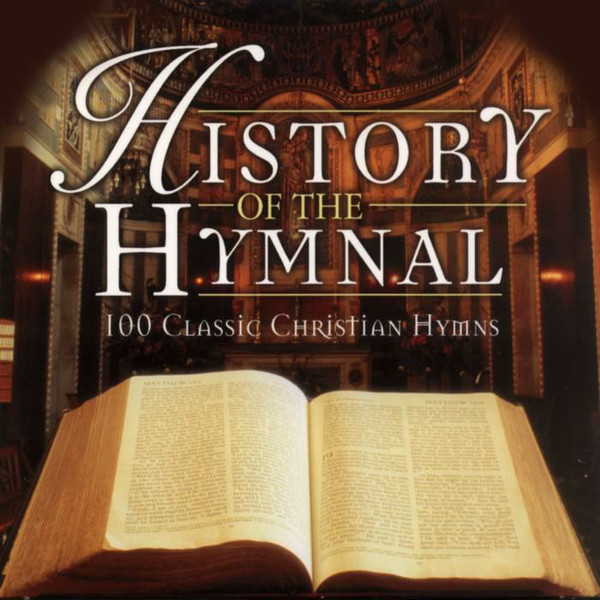
History of the Hymnal - 100 Classic Christian Hymns

When I Survey the Wondrous Cross

Like the cycles of the seasons, spring and fall, we repeat the circles of Council Meeting and Communion year after year.

TUBS:

After the Communion service in the church, men and women gather separately in their vestibules to observe the Feet Washing Ordinance, Article  II, Section 3 of our Conference rules, according to the gospel of John 13:1-9. Our fathers, uncles, and grandpas bring in oblong, galvanized basins of luke-warm water and then quickly disappear.

There is an awkward moment when I look around for a partner. My hope is to find someone else close in age. But a time or two I have been stuck with an older woman – bad breath and chin hairs, really off-putting for a girl of fourteen.

RevFootwashing

But I’m lucky to pair up this time with Gladys Garber, one of my teen-age friends. We take turns: each tying the terry cloth apron to our waistlines and washing each other’s feet. No scrubbing is involved here, just a gentle hand-pouring of water over one foot and then the other, drying each foot separately, tenderly.

But there’s more. After the foot-washing is finished, It is now time to observe the last ordinance, the Holy Kiss, an “expression of fervent love” (Romans 16:16). And, no, it’s not a peck on the cheek!

It was Socrates who said, “The unexamined life is not worth living.” It is not possible to accuse good Mennonite folk of that transgression. They are a people who share a common heritage, a common faith, and a common goal of a pure and holy life.

← Back

Thank you for your response. ✨

A Scrapbook: Bonnets, Bandannas, and Sex Ed

Bonnets

“Tie your head shut!” – An oft-heard admonition from my mother, my Aunt Ruthie, and Grandma Longenecker. Translation: If you tie your head shut, you won’t get sick with colds, sinus trouble, what not. And so our heads are tied shut with bonnets and bandannas and then adorned with the Mennonite prayer veiling. In other words, there is usually something besides my hair on top of my head or around my ears from babyhood on up.

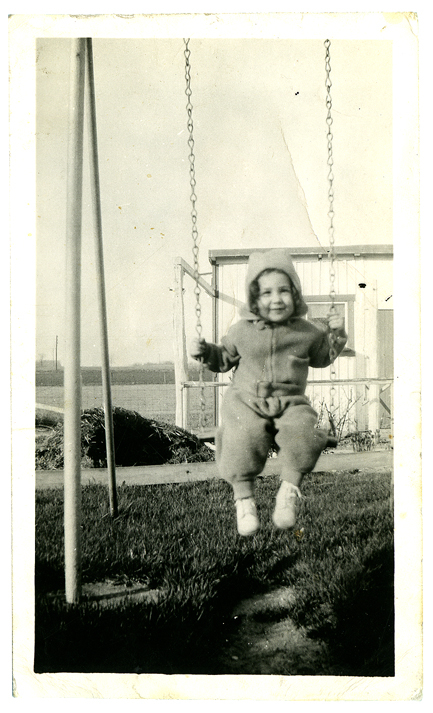
My photo at 10 months old features a machine-sewn miniature version of a bonnet that I remember my Grandma wearing in the garden.

Marian_Dad_10 mos_150

On billboards we see the little blond girl advertising a fake way to get sun-tanned. “Don’t be a paleface,” she says.  But we don’t need to buy Coppertone lotion to make our skins dark. We get our tans the honest way. Our skin turns brown naturally in the summer playing outside or working in the garden or tomato patch. To tell the truth, we depend on the sun-bonnet or the grace of God to not scorch our tough Swiss skins.

Bundled up in snowsuit
Another hat - on tricycle
Another hat – on tricycle

More Bonnets & Bandannas @ Work

Like Mildred Armstrong Kalish in her must-read memoir Little Heathens depicting rural life in Iowa during the Depression, we in Pennsylvania Dutch land are not offended or shocked by four-letter words that are part of our daily life either: cook, bake, wash, iron, dust, pick tomatoes, sweet corn, beans, or sweet potatoes.

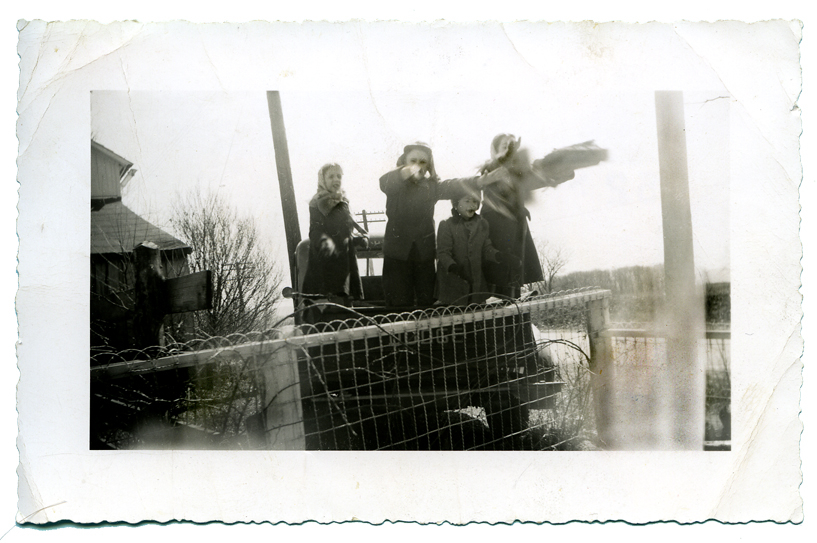
Sisters and I throwing wood for furnace
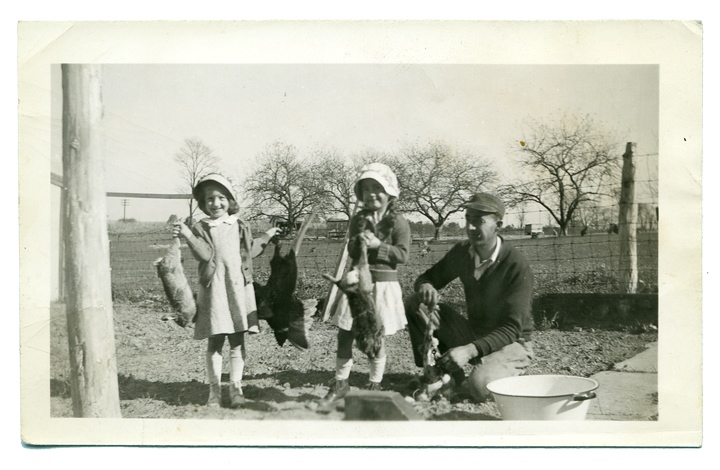
Cousin Janet and I say, "Rabbit for dinner!"
Cousin Janet and I say, “Rabbit for dinner!”
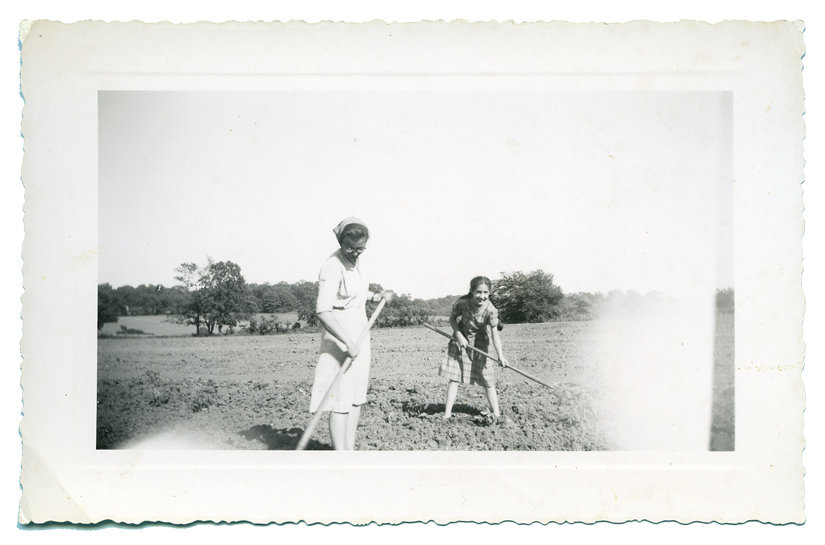
Aunt Ruthie with scarf and I hoeing in tomato field

WIth skirts and scarves we plant, hoe, and pick tomatoes in Bainbridge, PA. For details, see Tomato Girl, parts I and II.

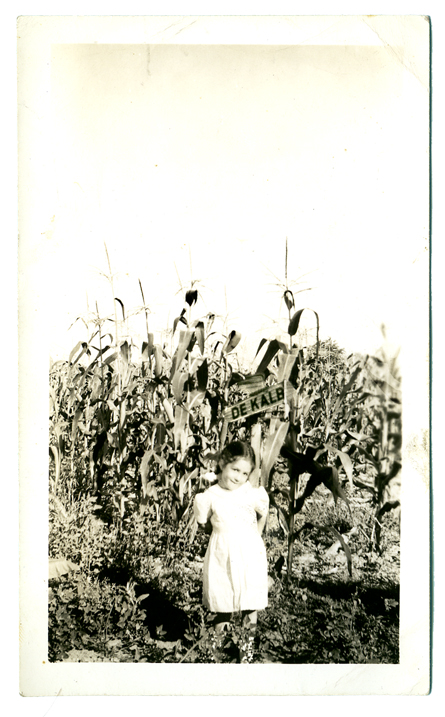
Proudly advertising DeKalb corn, no bonnet or bandanna

School and Sex Ed

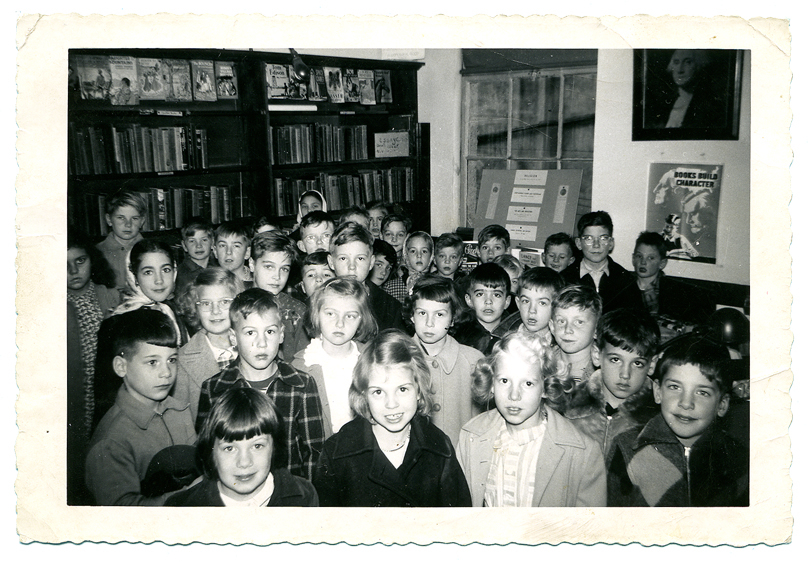
Surrounded by girls with curls visiting the Elizabethtown Library, I’m the one to the left with a floral bandanna, keeping my head tied shut, just like Mother expected.

My class at Elizabethtown Library

With all its books, this library is an impressive step up from the small bookcase at Rheems Elementary School. Yes, there is a library at Bossler Mennonite Church too, which is where I begin to get my sex education. In a blue and white book with a glossy, stiff cover, I discover that when a mommy and daddy “got very close” a baby was created. “Now what does “get very close” mean?” I wonder. Later I un-earth a book entitled Sane Sex Life with a red, black and white dust cover in my parents’ bedroom. Hidden in their wardrobe among sweaters, long-johns, and mothballs, this book adds a new dimension to my literary diet of Lippincott textbooks, church catechism, and storybooks. Whenever I think my mother won’t hear the sound of the wardrobe door open, I sneak a look at its realistic drawings (gasp!) and mind-boggling explanations, astonished that such a books exists.

Yes, I keep these strange revelations under my hat, bandanna, prayer veiling–whatever I am wearing on my head.

And Play

Picnicking with plain friends

Prayer coverings take no vacations. Because a woman is apt to pray any time or any place, the Church (Lancaster Mennonite Conference) ordains that we stay veiled morning, noon, and night.

What special outfits do you remember from your childhood or teen-age years?

Did they make you feel attractive? Out of place?

Night of Joy

The whole family crams into the gray 1951 Studebaker: Our family of five, Daddy, Mommy, Janice Jean and I (Mark isn’t born yet), Aunt Ruthie and Grandma–seven stuffed into an airplane cockpit, it feels like. We don’t take two cars because we are frugal. It saves gas if we all go together.

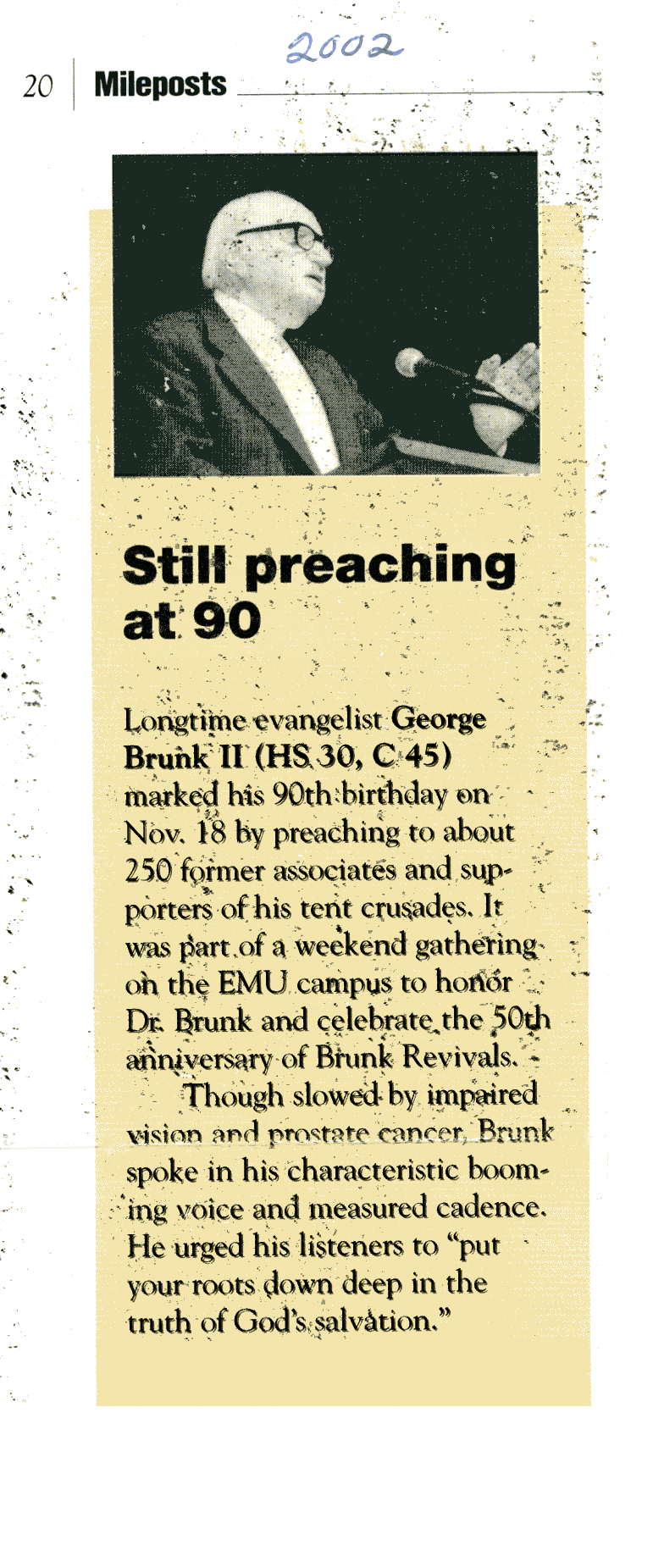
Tonight is the first night of the Brunk Tent Revival. Two brothers, George, the evangelist, and Lawrence, the song-leader, have brought a huge, unstriped tent all the way from Virginia in a tractor-trailer truck. As we approach the tent, I think we’re going to a circus except that there are pine plank benches crunched down on sawdust and spiral-bound, red, white, and powder blue songbooks on the seats. The crowd, of course, doesn’t look like circus-goers. They are polite, plain people, some pious-acting, but others even laughing. I notice the pig-tailed girls I play with when we have a “bunch” over for Sunday dinner: there are the Garber sisters, the Oberholtzers, the Brubakers, and Kraybills. We exchange shy smiles and find seats by families.

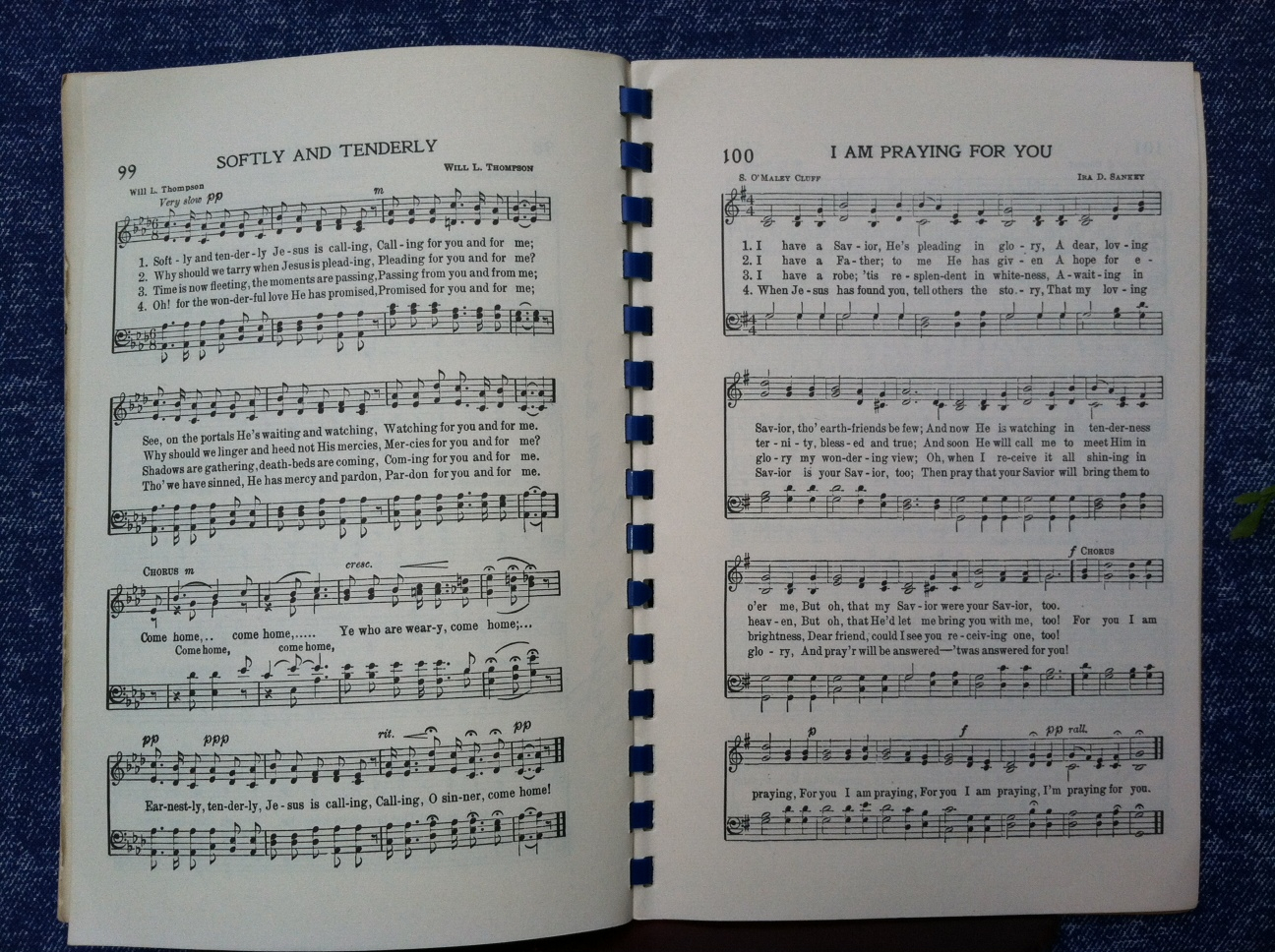
Songbook open

Since I was six weeks old, I have been taken to Bosslers’ Mennonite Church way out in the country where roads run at right angles according to each farmer’s acreage. In the corner of a white hanky, my mother always ties a shiny copper penny that I put into the little metal pig in my Sunday School class when we say, “Dropping, dropping, dropping, drop-ping, hear the pennies fall, every one for Jesus, He will take them all.” I like the pictures of Jacob and the Ladder of Angels or Joseph and his Coat of Many Colors I paste into my lesson book. We gather in the meetinghouse for sermons amply illustrated with biblical quotes from our pastor, Martin Kraybill. He is intent on inscribing our mental tapes with scriptural quotations. I am just beginning to join in with the four-part harmony I hear, blending with the sopranos and altos from the women’s side, and the tenors and basses on the men’s side of the aisle: I like the way the basses move up the scale to join the tenors in the hymn “More Holiness GIve Me” and the way the sopranos and altos get to sing two bars of music without the bass clef in “O Worship the Lord.”

Tonight at the revival service we also sing a cappella, keeping pace with the song-leader’s energetic gestures. Then Brother Brunk comes to the lectern, a hefty Bible in one hand. He starts off with a joke or silly comment, which my Grandpa Metzler criticizes with the comment, “He even makes the people laugh!” He then preaches about our guilt because of sin and God’s loving plan to save us through his Son Jesus. His words pierce my consciousness, and a sense of need fills my heart. I can visualize Jesus standing before me with outstretched arms.

Will you receive Jesus into your heart and have Him cleanse you of your sin tonight? Now is the day of salvation. Come to Jesus now!”

The invitation for people to come forward sounds like an appeal directed only to me. I begin to cry softly, tears falling onto the lap of my lavender and white dotted Swiss dress, hoping someone will pay attention and tell me what to do next. I cry louder and notice my parents discussing what to do with Marian. Daddy walks with me down the aisle and ushers me into a “prayer room,” a miniature tent off to the side. There I meet kind Anna Ruth Breneman who shows me more Bible verses and prays short phrases that I repeat, asking Jesus to come into my heart, take away all my sin and fill me with new life. I feel cleansed, happy, relieved.

There is another step in the process. Next, I am led to a platform where I as a nine-year-old make my first public speech, a testimony of four simple words: “I’m glad I’m saved.” Aunt Ruthie meets me after the benediction and gives me a kiss on the cheek, which takes me by surprise. She has never before shown much affection. Apparently she approves of my decision.

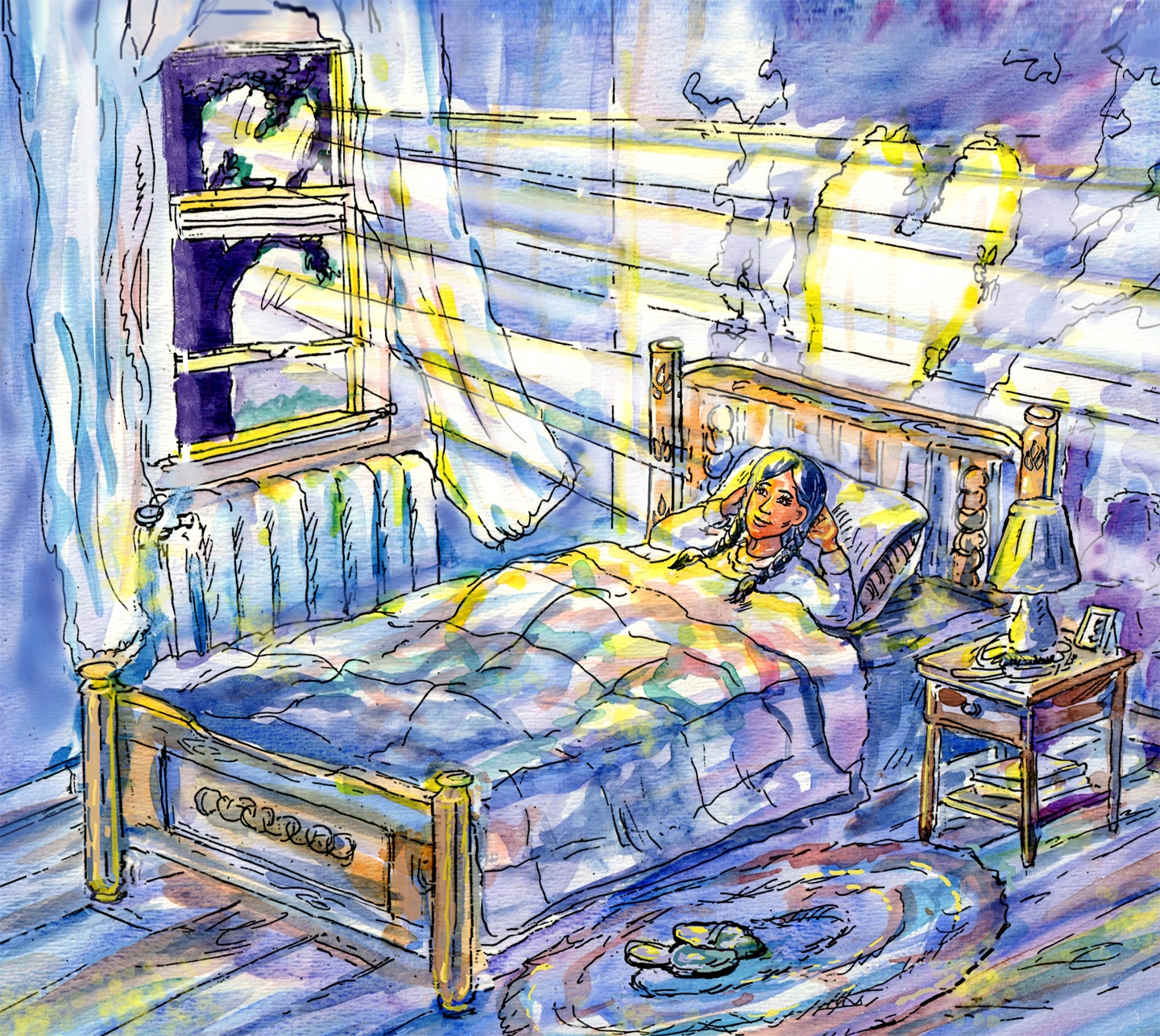
On the way home, I sit on the back seat next to the window and look up at the clear, starry sky and full harvest moon. I feel euphoric. Later on, I go to bed and see that same moon casting a shaft of pure radiance in through the window-panes, bathing the oak headboard with mellow light. It traces the interlocking circular patterns punctuated by an upright sprig of laurel on each bedpost. Silent night, holy night, all is calm, all is bright with the shaft of light that has penetrated the panes of glass magnifying the joy in my heart.

NightofJoyPIC

Years later, I learn that the proper word for this moment is epiphany, a manifestation of divinity in the life of a simple, trusting, Mennonite girl.

EMU Crossroads 2002
EMU Crossroads 2002