Mennonite Flashback III: Rabbits and Rings

This is a sequel to a previous blog post: Flying the Coop: Leaving Mennonite Land with a link to my original story on Mary Gottschalk’s website.

His Story:

I proposed to Marian my Mennonite girl friend one snowy evening, my car stuck in a snow-bank. When she accepted my proposal, I also asked her, “Would you be willing to wear a ring?” This is the plain girl I have fallen in love with: no make-up, no jewelry, especially no ring on her finger, ever.

Now it’s close to Easter and Marian is flying down from Charlotte to spend the weekend with me in Jacksonville. Technically, she’ll be with me most of the time though she will spend the night at Mom and Pop Rea’s house, members of Fellowship Bible Church where I am youth pastor. No sleeping together before marriage.

I’ve been wracking my brain to find a way to make the ring presentation unforgettable—and a surprise too. So this is what I’ll do. I’ll make a ham dinner for her finishing it off with dessert, a cake with her engagement ring baked inside. No, wait! A cake is too big; the ring may get lost in it. I’d better make cupcakes or muffins. That’s it. A blueberry muffin. She’ll find that ring for sure if I wrap it four or five times with tin foil.

And I’ll make some rabbit cutouts with toothpicks, blue for me and red for her, so I know which muffin the ring has been baked in.

Scanned from the original bunny sticks, 1967

Her Story:

Charlotte is my home this year, but with every stitch of my wedding gown, I dream of my life with soon-to-be-husband Cliff in Florida. Easter weekend I take an Eastern Airlines flight to Jacksonville. The carefree, goofy guy I have fallen in love with has hit real life, teaching sixth-graders in an inner city school. He has also exchanged a college dorm for a $ 50.00 per month, second-story garage apartment with a turquoise-teal kitchen, where I will live after our honeymoon. But his humble abode has not killed romance and his wish to entertain.

We sit down to a home-made ham dinner.

The Discovery:

Dessert is served. Oh, little bunny muffins, I think. How cute even if they’re from a mix. I take 2-3 bites and my teeth strike something hard and metallic. Uh-oh. I don’t want to embarrass Cliff by exposing his lack of baking expertise, so I try to hide the wad of foil under my plate. Eying what I think is a faux pas, he urges, “Why don’t you see what’s inside?” Cautious but obliging, I unwrap the layers and layers of foil, and my eyes pop with pleasure – a glittering diamond solitaire, my first ring ever.

Postscript: Years later when I am a young mother, I remove the ring to apply lotion to my hands, placing it on a top of the bedroom dresser. What happens later occurs out of sight and only in our reconstructed memory: Three-year-old daughter Crista finds the ring and puts it on. Wearing it to go potty, she flushes my diamond down drain. Screams ensue. Cliff digs frantically into the lawn hoping the ring has gotten lodged somehow in the trap of the drain pipe before flowing into the Neverland of the city sewer .  .  .  to no avail.

Stand-in for the Original

What story can you share about receiving a special piece of jewelry?


Have you ever lost something precious? A family heirloom?


We always learn something from your comments. Thank you!
Disappearing Images: 7 Items Missing in Mom’s Bedroom

Mother Longenecker still lives in the same house she and Daddy bought soon after they got married in 1940. Their bedroom looked the same for decades, but it’s changed over the years. Here’s what is missing . . . and what I remember from so long ago.

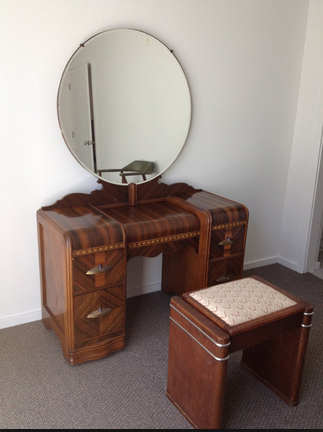
1. The Art Deco inlaid-wood vanity where Mother sits on a bench to comb her long, glossy black hair before twisting it into a bun topped with a Mennonite covering.

Courtesy Google Images

2. A matching wardrobe smelling of moth balls and a copy of Sane Sex Life, with a dust cover of scarlet red and white. Black and white pen illustrations included. Eyes wide in wonder.

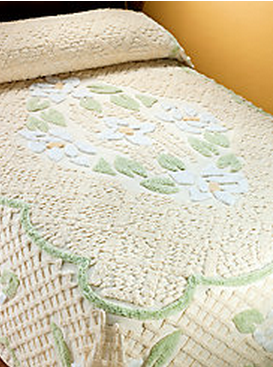
3. The chenille bedspread. I love the fluffy texture and the furry feeling under the pillows when I smooth the spread as I make my parents’ bed.

ChenilleBedspread 4. A skinny box with a silky slip inside wrapped in white tissue, brought home from a shopping trip to Hagar’s, Garvins, or Watt & Shand in Lancaster. We sometimes call them petticoats.

5. Evening in Paris cologne. Did Mom buy it for herself or was it a birthday gift from Daddy?

 EveningInParisCologne

6. A jar of Noxzema. Sticking a finger deep in and gouging out a spoon of cleansing cream that feels cold on my skin even in the summertime. Can you smell the camphor and menthol just now? Maybe a touch of eucalyptus?

7. Daddy. He died in 1985.


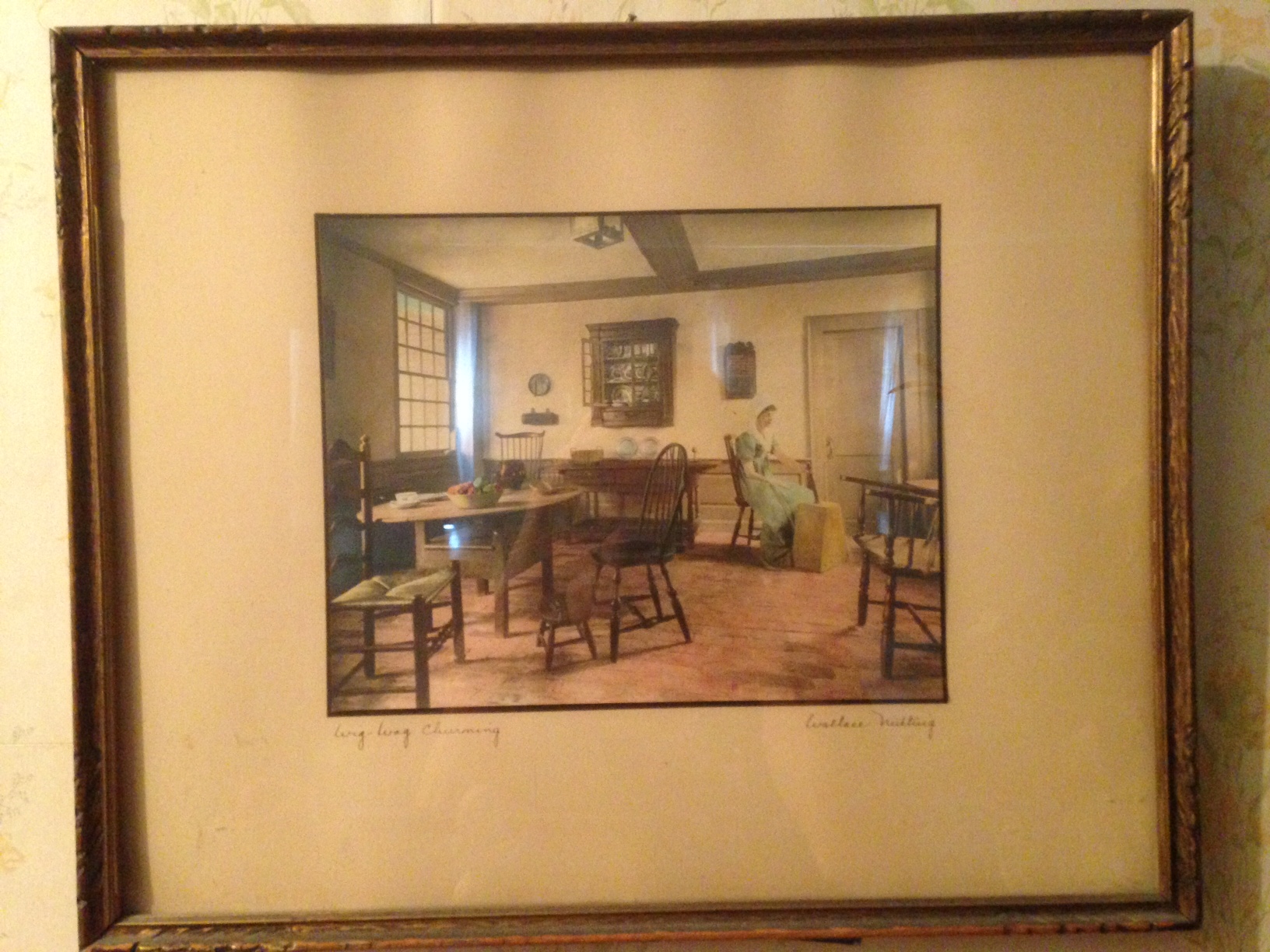
Postcript: What is still there? Hanging on the wall above a highboy, a framed pastel-tinted print by Wallace Nutting. The title on the left reads “Wig Wag Churning” (girl seated churning butter). A phrase on the right: “Wallace Nutting.” As a youngster, I kept looking for a boy named Wallace cracking nuts. Much later I figure out Mr. Nutting must be the artist.

WIgWagChurning

What images or scents do you associate with your mother?

Another loved one?

Flying the Coop: Leaving Mennonite Land (guest post)

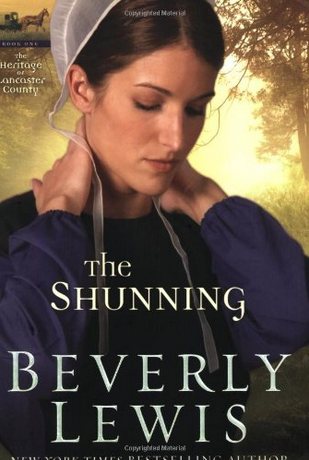
In the movie based on Beverly Lewis’ best-selling romance novel The Shunning, pretty Katie Lapp senses something is missing in her simple Amish life. Then a fancy woman comes to Lancaster County looking for the baby girl she gave up for adoption nearly 20 years earlier. When Katie makes the connection between this woman and her own existence, she takes a bus to explore life beyond the boundaries of her Amish upbringing.

Cover image via Amazon

I’m not a character in a best-selling novel, but I did venture beyond the limits of my own Mennonite life to explore a different style of life. Unlike Katie, I wasn’t shunned. But, like her, I did take a bus, a Greyhound bus, to move on.

Today my story is featured on the blog of Mary Gottschalk, who got out of her own comfort zone by sailing the open seas with her husband in a 13,000 mile adventure she recounts in her memoir Sailing down the Moonbeam. Click here to meet this fascinating author and also read my post on stepping into a new world.

2 Easter Vignettes: Sacred and Sentimental

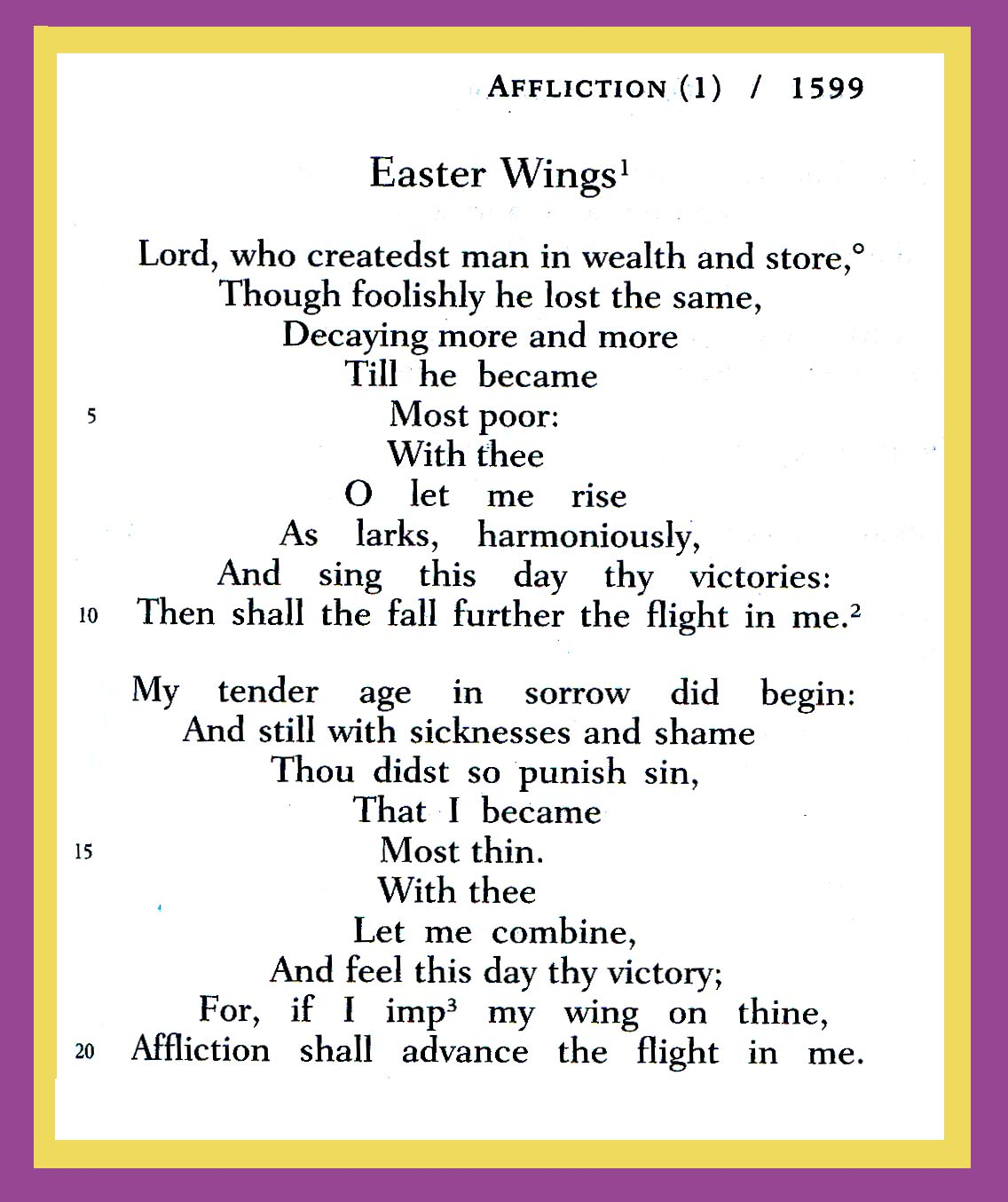
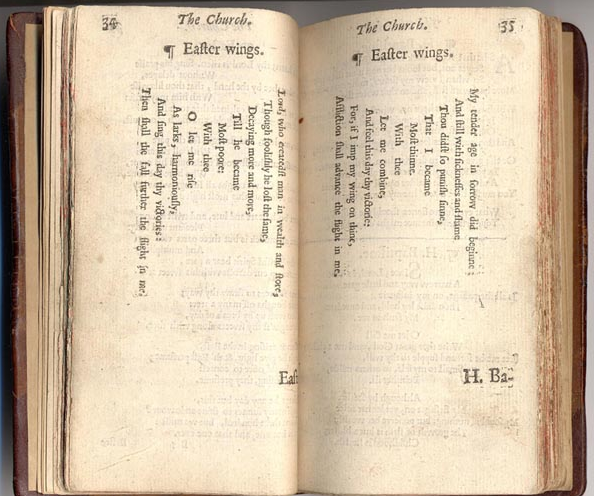
* Poem for Easter – British poet George Herbert loved to explore the soul’s inner architecture. He often wrote poems with shapes representing a theme, the resurrection in this case. The poetic lines, “increasing and decreasing to imitate flight,” also mimic the spiritual experience of rising and falling.

Easter WingsVertical_poem_4x5_300

Then viewed vertically the poem displays images of two butterflies, symbols of new life: Emblem poetry (technopaegnia) printed in a shape that reflects the subject of the poem.

Manuscript from the Bodleian Collection, Oxford University, 1633

Since by long centuries of custom the date of Easter is annually determined from the first Sunday after the full moon on or after March 21, the intertwining of physical and spiritual seasons is virtually inevitable.

Wisdom in Waiting: Spring’s Sacred Days by Phyllis Tickle

* Easter parade at Rheems Elementary School

My Mennonite school teacher, Miss Ruth Longenecker, was an artist. Though she dressed plainly with hair in a bun and a standard regulation prayer covering, her life brimmed with color, design, and pageantry. She painted in oils, preserving the old sycamore tree by the bridge at the old Martin home place on canvas:

Sycamore tree and bridge along lane leading up to the Martin farm Oil painting by Ruth Martin Longenecker
Sycamore tree and bridge along lane leading up to the Martin farm       Oil painting by Ruth Martin Longenecker

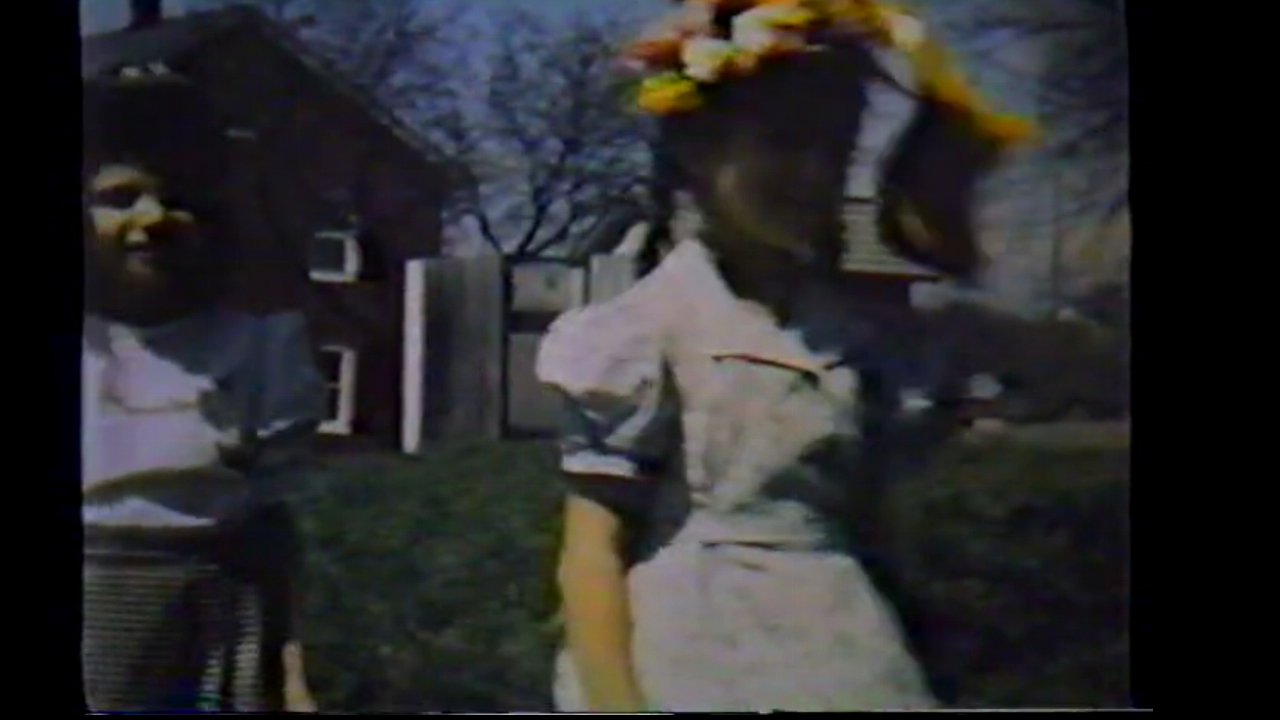
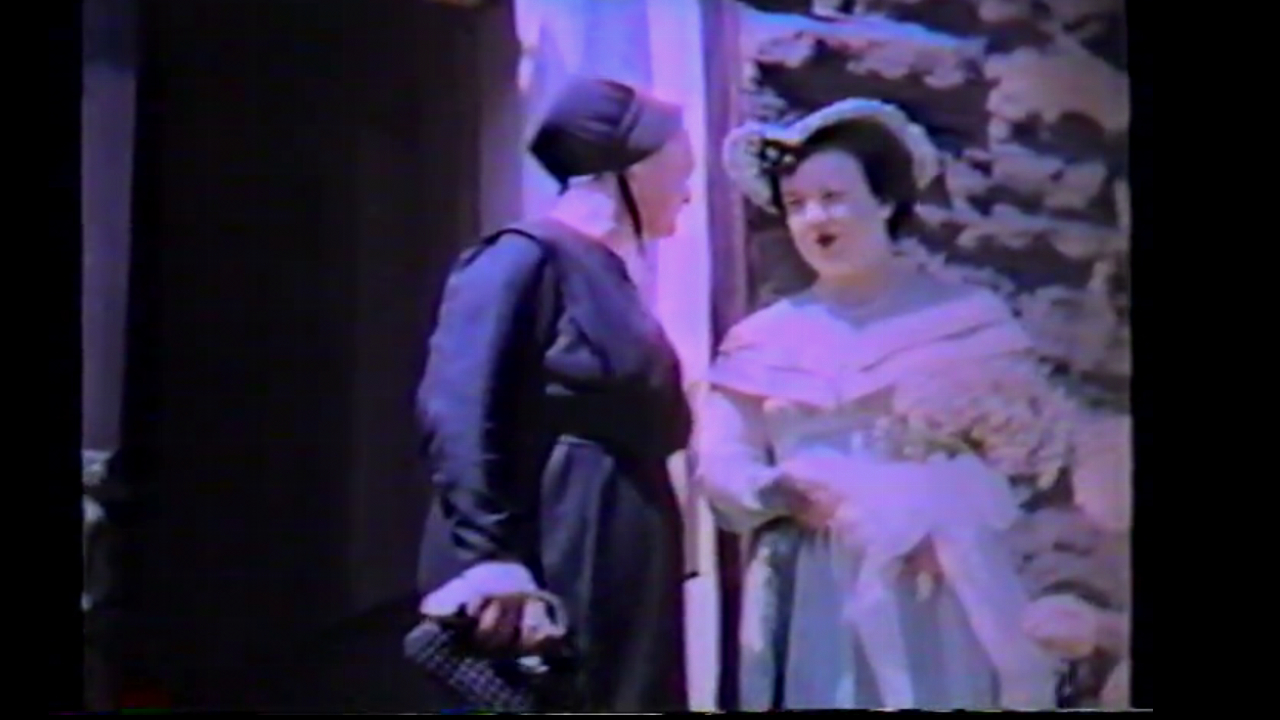
In her classroom at Christmas time was a tall tree laden with brilliant bulbs and glistening tinsel at school, though Mennonites were discouraged from having worldly Christmas trees at home. For St. Patrick’s Day, my classmates and I wore Derby hats and huge green shamrocks. But Easter was a real blow-out. Students brought hats and silky flowers from home to add to the creative collection (pasted, stapled, sewed). We paraded up and down the village streets near Rheems Elementary School, our teacher preserving the frivolity on her 16 mm movie film. Even the boys wore hats, some even more flower-encrusted than the girls.

Hand-made millinery on display at Rheems Elementary School

Thank you for commenting. You can count on me to reply.

The conversation continues . . . .

Coming Monday: Guest post on Mary Gottschalk’s blog: Flying the Coop: Leaving Mennonite Land

Easter at Grandpa Martin’s Farm: Freshest Eggs Ever

Easter eggs on the farm? Why sure – Fresh eggs from Aunt Sue’s chicken pen, popped into her kettle of water brought to a boil in the kitchen. And then in short order, eggs cooling on the counter soon ready for us to paint. With paint wands made of little wisps of cotton wrapped around tooth-picks, my sisters and I with all the other little cousins make squiggly lines, circles and scallop shapes on the curvy shells, filling them in with rainbow colors.  Sometimes we even add little bunny or flower stickers. But all that artistry happens after devouring the Easter ham.

Easter egg dyeGrandma Longenecker’s sister Aunt Sue Martin, who never married, lived on the farm and took care of Great-Grandpa Sam after his wife Mary died. I’m about six now, and Easter dinner is celebrated around the table at the old home place in Dauphin County close to Middletown, PA. Families of Uncle Joe, Uncle Frank, and Grandma surround the table laden with ham, turkey, home-preserved vegetables, and finally desserts. The clucking of chickens and a few dog barks offer background sound to the talk, usually about politics and family matters. Before or after the meal, Aunt Sue, actually my great aunt, feeds her other hungry brood, here with my sister Janice.

Women learn early that anything that is alive is a potential and probable responsibility.

Phyllis Tickle, The Graces We Remember: Sacred Days of Ordinary Time (61)

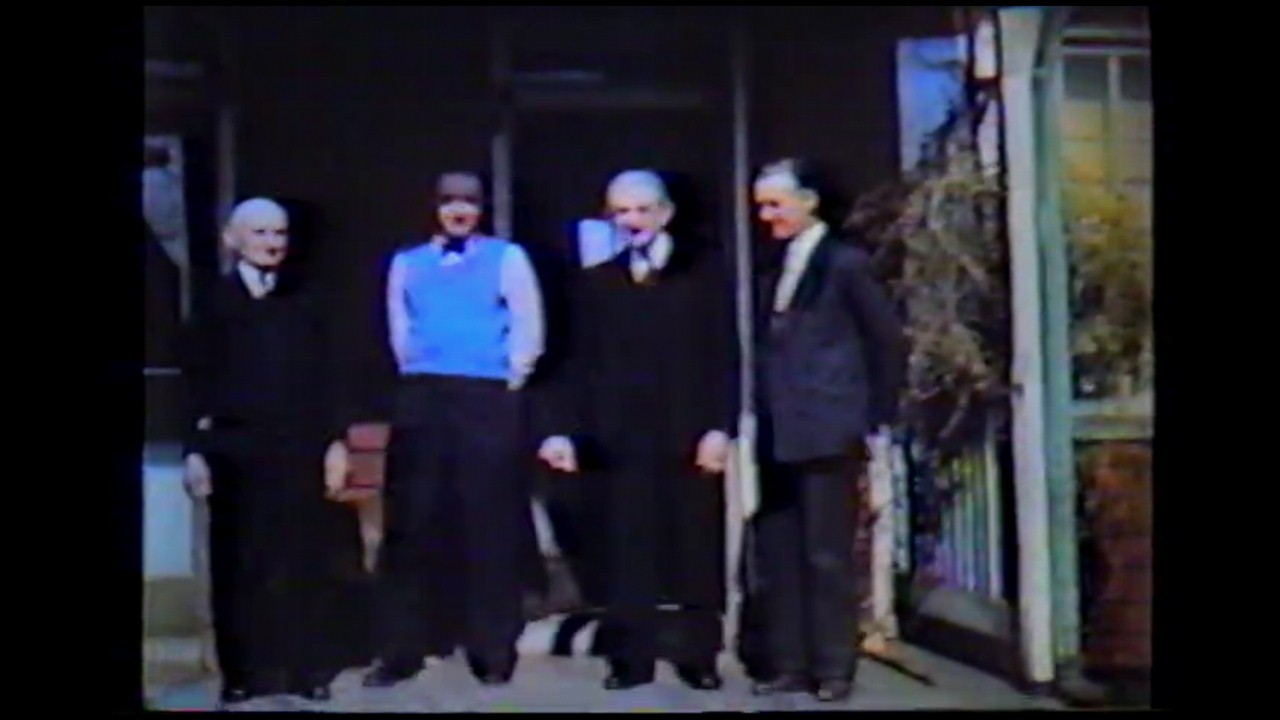
After the drowse-inducing pies and puddings, it is picture posing time. Aunt Ruthie with her new-fangled movie camera captures various relatives posing on the porch.

Grandpa Sam, my Dad, Cousin Leonard, Uncle Joe

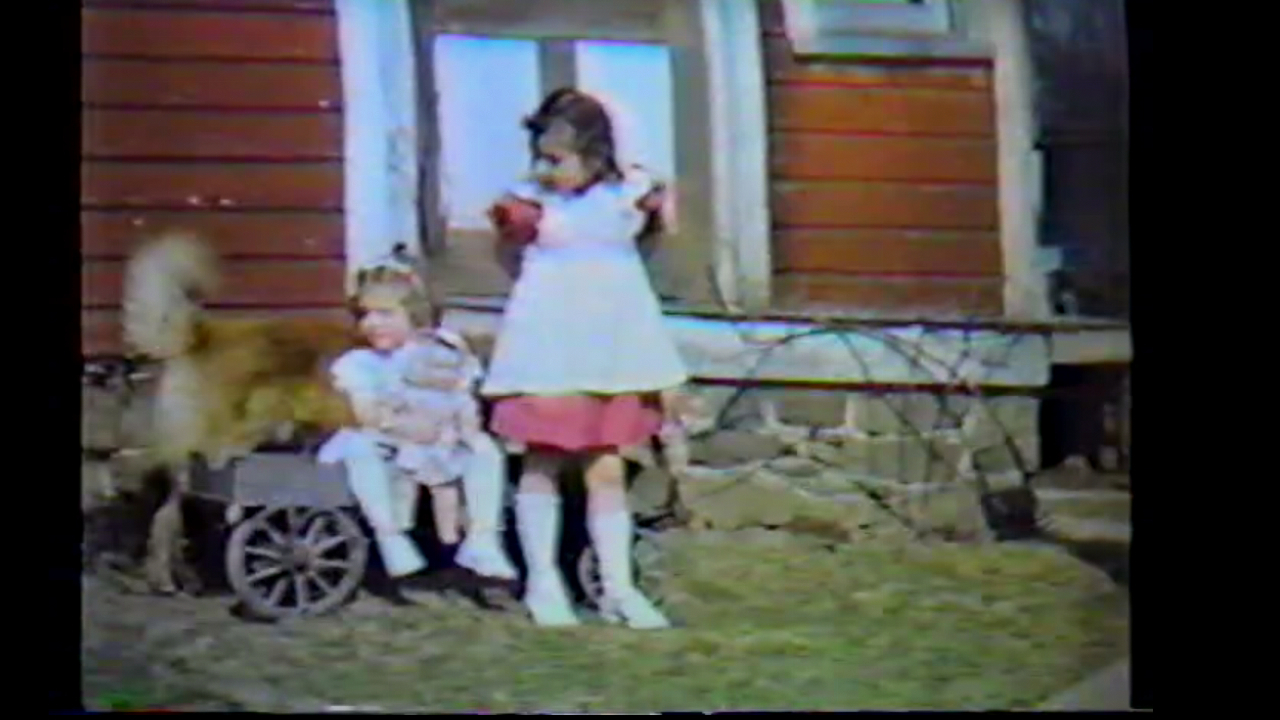
And then we play some more. Make up our own fun. Just the collie dog, a wagon, and the wide open meadows down by the creek are all it takes to keep us happy!

GrandpaSamWagonSnapshot000020
Marian and sister Janice with her dolly on Easter

Do your Easter memories include attending a church service? Eating a meal with relatives? Painting eggs? Hunting for Easter eggs?

What do you think of the quote by author Phyllis Tickle?

EggShells

Amish Buggies: They Come in Colors

When I bring 5-pound bags of Wenger’s famous ham-loaf frozen from Pennsylvania to Florida, the plastic-coated tubs of meat are wrapped in newspaper and then shrink-wrapped in plastic. The wrapping on one of the packages revealed answers to the intriguing question: Who make Amish buggies?

Amish Buggies1_5x5_300

Writer Jack Brubaker born in Bird-in-Hand, PA keeps Lancaster Countians informed about local culture, history, and humor in his syndicated column The Scribbler. In the Tuesday, October 1, 2013 edition of the Intelligencer Journal/Lancaster New Era, Jack noted that a reader from Mount Joy, PA requested more details about Amish buggies. The reader had never seen a used buggy lot and wondered if the Amish recycle buggies. Also, he had been to Indiana recently and saw the Amish using buggies with slanted undercarriages that looked like an armored Humvee. Here are the main points of Jack The Scribbler’s response to his reader:

  • “Jake King, the Amish operator of Weavertown Coach, along the Old Philadelphia Pike between Bird-in-Hand and Intercourse, says there are about 17 manufacturers of new Amish buggies in Lancaster County, Pennsylvania,” including his company which has its own wheelwright shop.
  • Buggy-making is a cooperative effort:  Five or six shops make buggy bodies, known as “the box.” Other businesses make axles, springs and wheels. Still others assemble fiberglass floors and side panels.
  • King says his various employees become good at one thing: “You have to be a good electrician, painter and upholstery trimmer.”
  • What is the cost of a new buggy? “The average carriage for the ‘young guys’ sells for about $ 8000, with a more elaborate dashboard and better grade of upholstery than the ordinary type of buggy which ranges from $ 6000-6500.
  • Buggy vs. car: Buggy resale is high. Buggies require a horse: $3000 for the animal plus harness and feed. But, King notes, “they also don’t drink $ 4-per-gallon gasoline.”
Courtesy Google Images
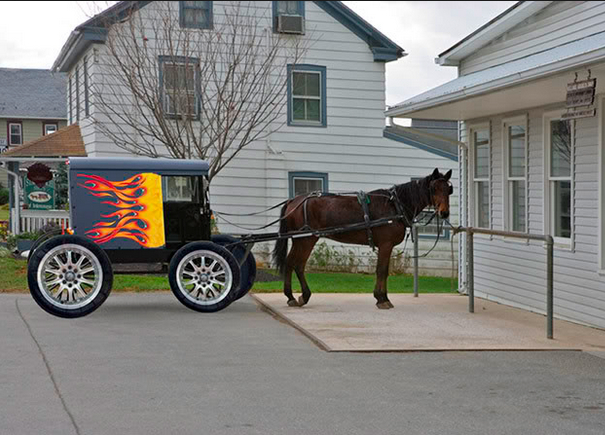
Courtesy Google Images                                          (Real . . . or a Photoshop job?)

The different colors and design reflect the owner’s community: Gray (PA), Black (Ohio and Indiana), Yellow (Byler Old Order Amish in Big Valley, Mifflin County, PA), White (Ohio), Brown (New Wilmington, PA and New York). Honestly, this surprised me as I think I’ve only ever seen black or dark gray buggies.

Like most Mennonites, Amish are thrifty, so of course they recycle their buggies, either through private sales or at spring “mud sales.”


Question Mark w border1_1x1_300


Are there Amish buggies in your community?

What new fact, opinion, or question can you add to the discussion?

10 Ways My Grandma & I are Alike (or Unlike)

Grandma Longenecker with niece and maid-of-honor Evelyn ("Honey")
Grandma Longenecker with niece and maid-of-honor Evelyn (“Honey”)

10 ways I’m like (or unlike) my Grandma Longenecker  

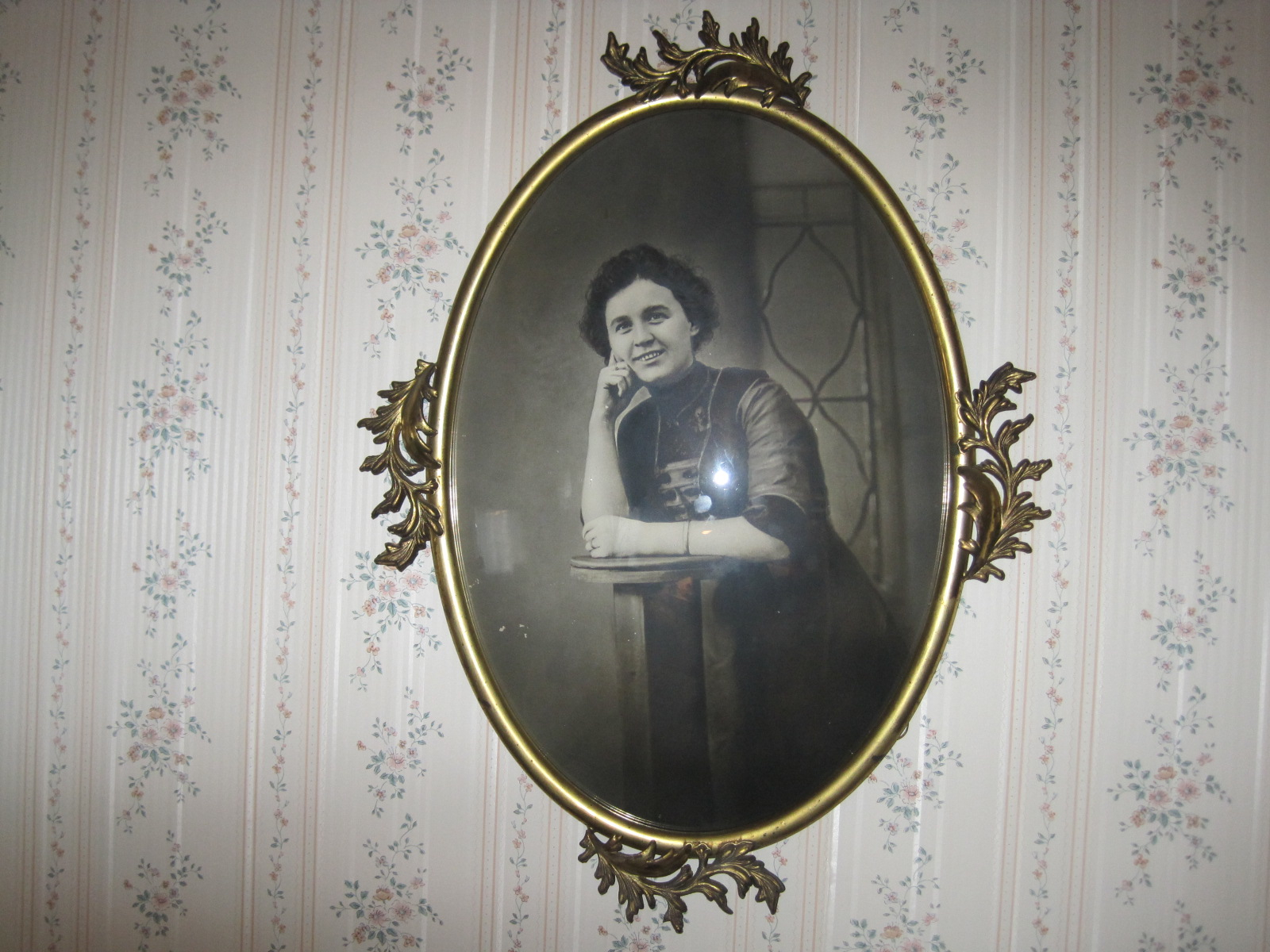
1. She started fancy and turned plain. I reversed the cycle, plain to fancy.

GrandmaPortrait

2. She always wore black laced-up shoes with heels to do housework. For me, it’s tennis shoes in winter and sandals in the summer. No heels in the kitchen.

3. She never voiced criticism about a person (except once). I am an exception to her rule.

4. She wished to have prettier hands. I love the compassion and service her work-worn hands reveal.

5. She never learned to drive. I passed my driver’s test on the third try.

6. She never watched television. I’m a Downton Abbey addict.

7. Her sewing machine was rarely silent. Mine has been stowed away in favor of a computer.

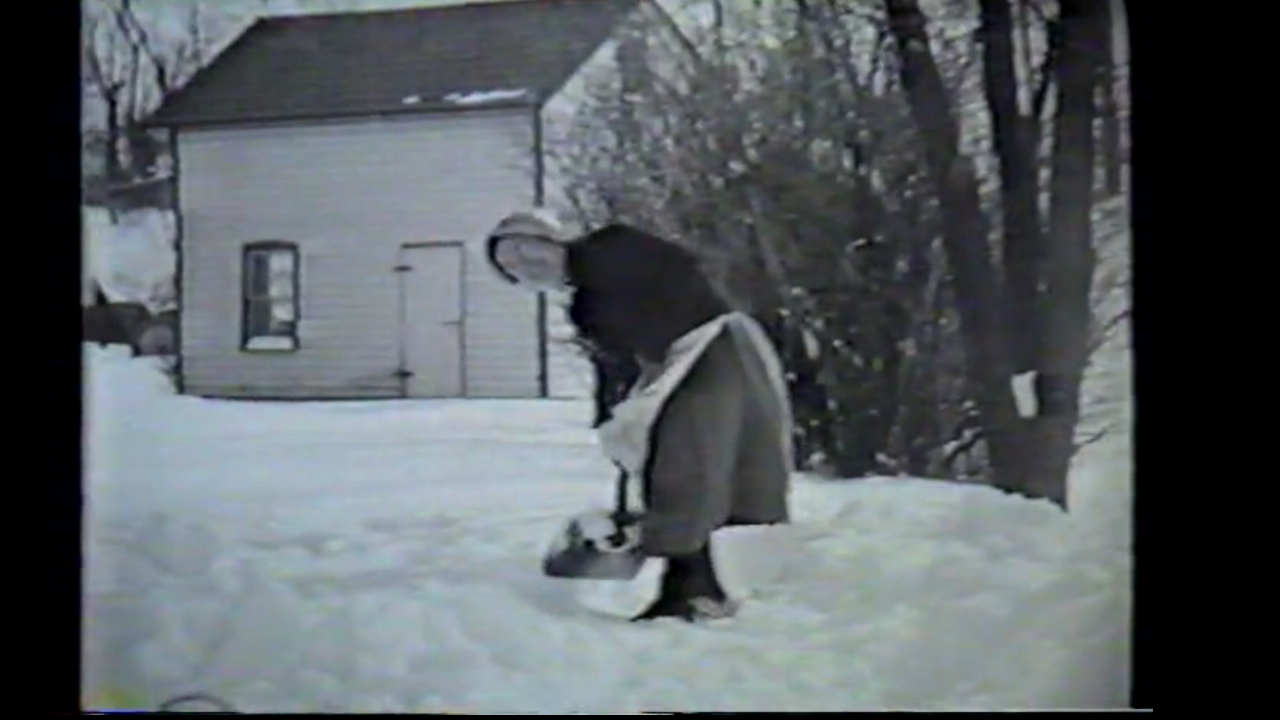
8. She shoveled snow in Pennsylvania. I now live in Florida sans snow…

Grandma in sun-bonnet shoveling snow in Pennsylvania, 1950s
Grandma in sun-bonnet, skirt,  and apron shoveling snow in Pennsylvania, 1950s

9. No one left her house without a garden snip or a tasty morsel from the table. I seem to have the same sharing habit. So does my sister Janice!

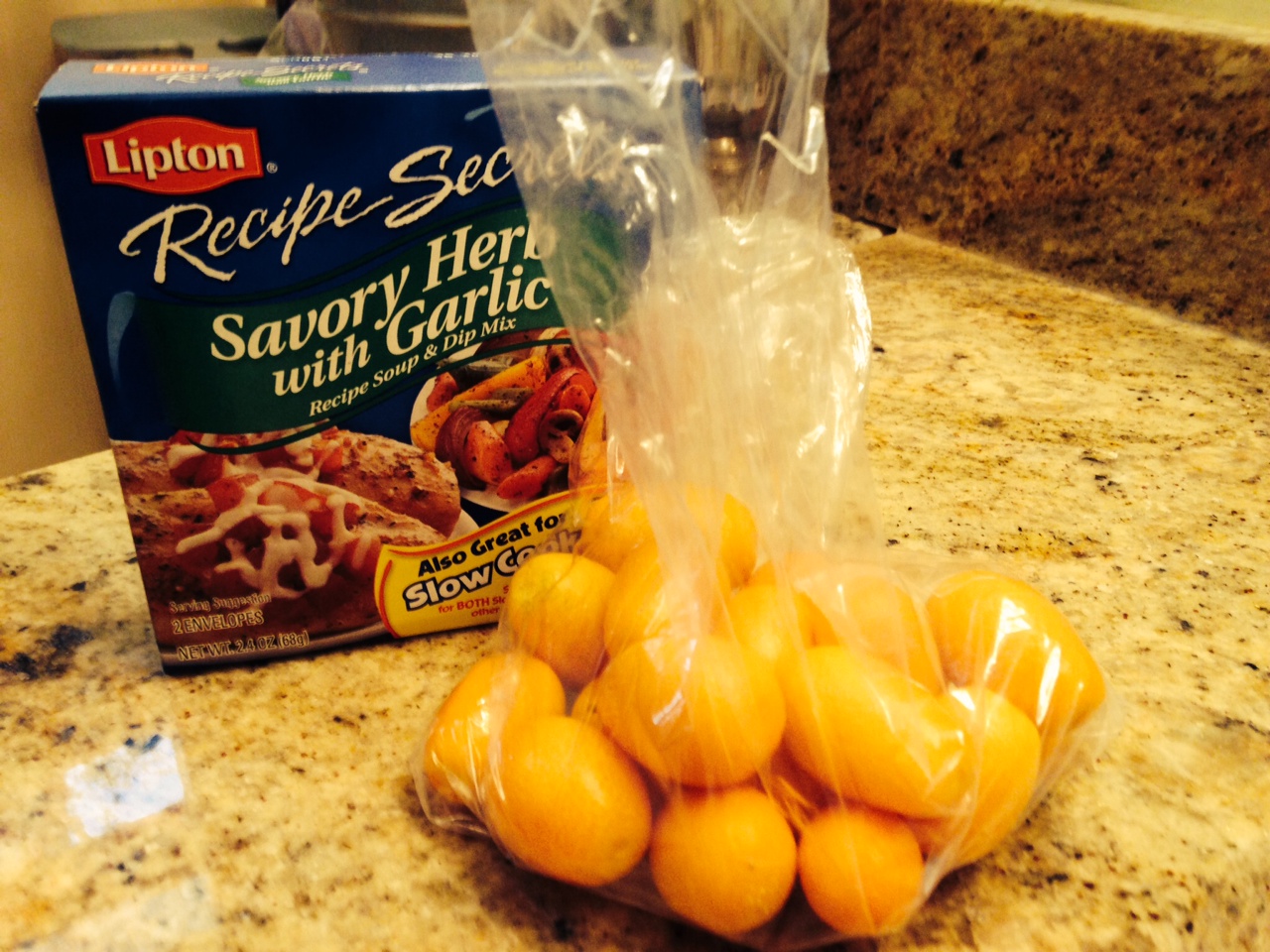
Home-grown kumquats and soup mix
Home-grown kumquats and soup mix for a recipe from sister Janice

10. Grandma loved knee-slapping humor. Sister Jan remembers she even fell off a chair once overcome by gales of laughter. I don’t need an excuse to laugh either.

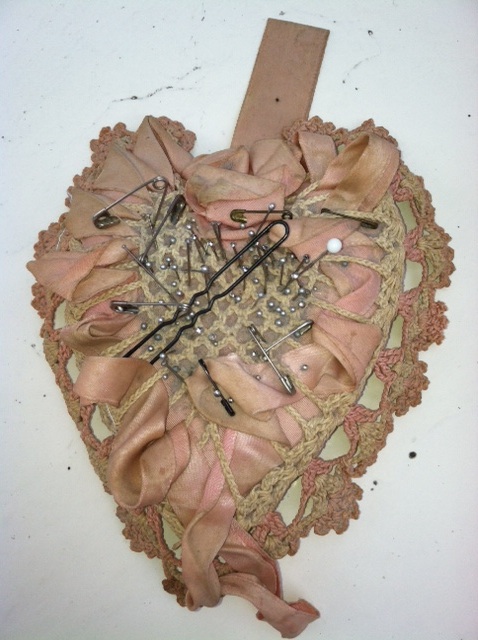
One of her pincushions - I'll never part with it!
One of her pincushions  I’ll never part with

Question Mark w border1_1x1_300

What habits or preferences have been passed to you from a relative?

What other similarities or differences have been passed between the generations?

Story of Hope: A Killer’s Wife Speaks

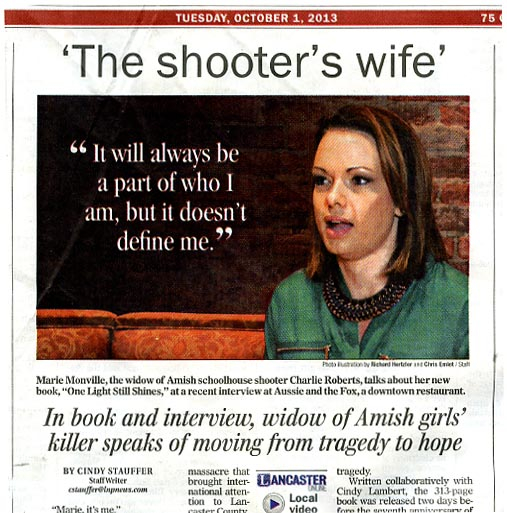
When I bring 5-pound bags of Wenger’s famous ham-loaf frozen from Pennsylvania to Florida, the plastic-coated tubs of meat are wrapped in newspaper and then shrink-wrapped in plastic. The wrapping on one of the packages (we need two to feed the clan now!) revealed the riveting story of Marie Monville, the widow of Amish school house shooter Charlie Roberts.

Shooters%20Wife_100113

What Happened

In a story that brought international attention to Lancaster County, Charles Roberts methodically shot ten Amish girls inside a one-room school-house, killing five, injuring five others, and then turning the gun on himself. Roberts’ wife Marie learned of the impending massacre through a letter Charles left for her directing her to his final phone call, which revealed the unresolved feelings he harbored after the deaths of two of his daughters, one a premature birth and the other an ectopic pregnancy. Though the couple went on to have three healthy children, the loss of Elise and Isabella, he says in the letter, “changed my life forever. I am filled with so much hate, hate toward myself, hate toward God, and unimaginable emptiness.”

Immediately After

Because he hid his clinical depression so well, Marie had no signs her husband was so deeply disturbed and headed for a psychotic break-down. Even the police queried, “Were there any signs of violence before the shooting?”  She also feared what the public may be thinking: Are you a liar, covering up a failure to act? Are you an idiot, blind to the obvious? But Marie had been blind-sided.

Her own family and her husband’s family were “stalwart,” Marie writes. “A beloved aunt and uncle gave her family a place to hide out from the media in their own home in Lititz, Pennsylvania, comforting and feeding them in their darkest hours.

Forgiveness from the Amish Community

1. Just hours after the horrible shooting, Marie’s father greeted a group of Amish men who knocked on the door. She writes: 

An Amish man with a long gray beard stepped toward my father and opened his arms wide. My father fell into those arms, his shoulders heaving, held and comforted by a friend. Grief met grief.

2. Shielding the family from the media, “the families of the slain girls went to the cemetery for Roberts’ burial. They also went to a meeting at the Bart Fire Hall for families and first responders, sharing their feelings” and saying they were praying for Marie and her children.

Her Book

Marie Roberts Monville intersperses her account of the tragedy with the story of her own life in rural Lancaster County and tells as a teen-ager meeting Charlie Roberts, the grandson of a church friend, at a dinner one day. After marriage, they had three children, aged 7, 5, and 18 months old at the time of the tragedy which occurred over seven years ago at Nickel Mines.

OneLightStillShines

One Light,” written from a Christian perspective, shows how the author’s faith in God has sustained her through unimaginable grief and brought healing. Now re-married, she is a stay-at-home Mom and blogger on whisperandwonder with the subtitle “quiet musings from my heart.” Marie wrote the book to tell her true story of how horror and tragedy met love and forgiveness. She also seeks to connect with readers who are in the midst of suffering by posing the question:

What is your story? Mistreatment, injustice, torment, suffering, grief or even the worst that humanity can do to one another? Receive the gift of love. And when again the lights go out, you too will see that one light still shines.

Though her experience is similar in some ways to that of Marina Oswald, wife of President Kennedy’s assassin, Marie Roberts Monville has refused to become a pariah, but now lives life to the fullest, sharing light and hope.

Question Mark w border1_1x1_300

Do you know someone who has survive trauma and grief?

Do you have a story of survival of your own to tell?

Blurry Images: The Mothering Instinct

Looking at indistinct footage from 16 millimeter home movies of the 1950s has invited me to examine from a distance the much younger, and in many ways different, version of myself. Not surprisingly, I appear in the “mothering” mode in many of the shots. I have always assumed such behavior was because I was the first-born child.

But where does the mothering instinct come from? Is it inborn? Learned from one’s own mother? Are some born without it? Who knows. The jury is still out on the answers to some of these questions.

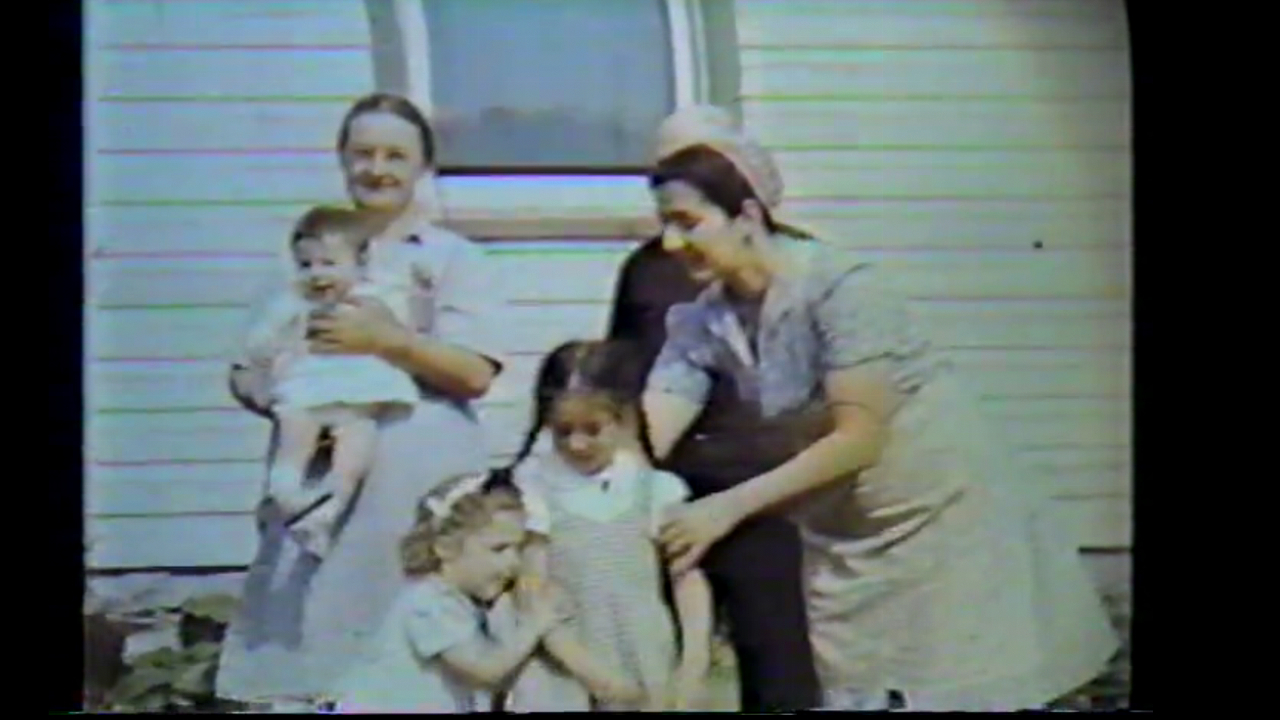
Mother guiding me with pigtails for the photo shoot with Grandma
Mother positioning me with pigtails for the movie shoot with Grandma

My mother was not the firstborn in her family but she was the oldest girl, so when her own mother died when she was nine, there were high expectations for her including milking two cows in the morning before she went to school. All too soon, she became a little mother alongside the house-keeper, nurturing her two younger siblings.

In the sit-com Everybody Loves Raymond, “Mother-ish” is the word Mama Marie Barone has used to describe her modus operandi.  Although I cringe to compare myself at any age to meddling mama Barone, it did seem natural for me to take on such a mothering role in my family. After all, I was the first-born, always ready to “tend” the younger ones.

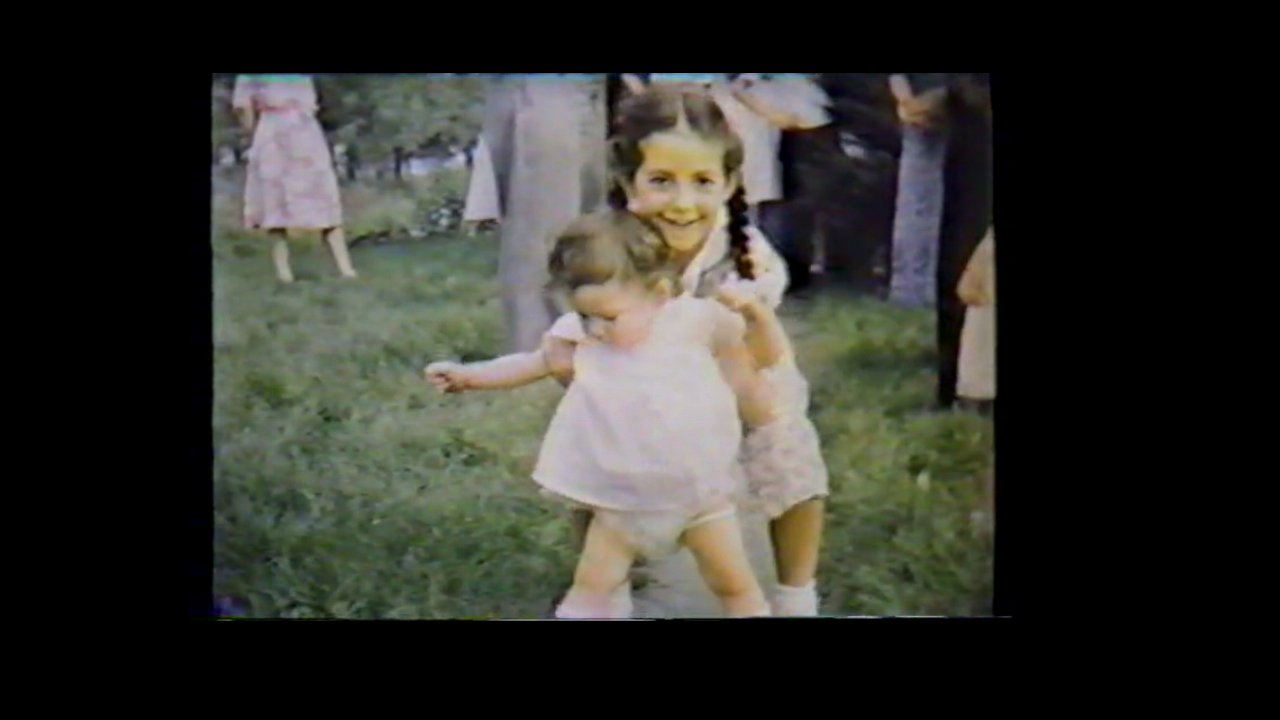
Big sister helping little sister Jean to walk

Even looking straight ahead, I was aware of wiggly little sister, who would spoil the photo if she crawled away in this video clip:

*  *  *  *  *

Several years later, with a prayer covering almost as big as my mother’s and with motherly aplomb, I held my baby brother Mark.

13-year-old "mother" holding baby brother Mark
13-year-old “mother” holding baby brother Mark, with sister Jean

Alfred Adler was one of the first theorists to suggest that birth order has a profound effect on personality. However, his ideas about birth order have been repeatedly challenged by other researchers, like Cliff Isaacson, who argue that birth order is not a fixed state but subject to other influencing factors. Other studies (Scientific American) claim that family size, rather than birth order, is a better predictor of personality than birth order. Yet the concept of the take-charge, bossy (did I say “mother-ish?”) first-born persists in popular psychology.

Question Mark w border1_1x1_300

I wonder where you are in your family’s birth order: first, middle, last, or an only child?

Do you think this has influenced your personality at all?

Thanks for replying. You will always hear from me and probably learn from other commenters too. The stories continue!

Mennonites, Ventriloquists, and Memoir

The wild, permissive Rentzels with a red porch light live next door to our family, the Mennonite Longeneckers, one of several plain families that live on Anchor Road.

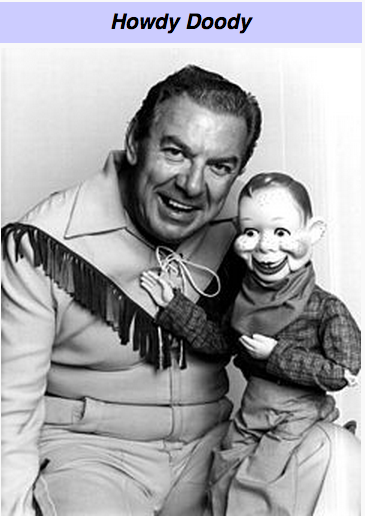
Image: Wikipedia
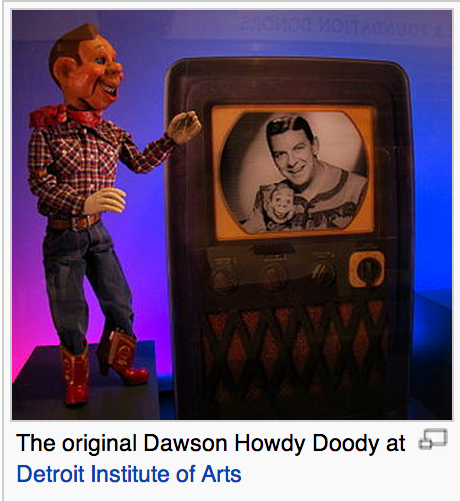
Image: Wikipedia

In their parlor, the Rentzel’s old Emerson black & white TV has introduced me to the wonders of The Howdy Doody Show with Buffalo Bob. As often as I can, I escape at 4 o’clock every day, running next door to ask Mammy Rentzel whether I may watch the show. Of course, she says Yes. I become part of the Peanut Gallery, mesmerized by Howdry Doody himself, a freckle-faced boy marionette with 48 freckles, one for each state of the Union in the 1950s.

EmersonTVHowdyDoody

My favorite parts are seeing Quaker Oats shot from guns, cannon-style and laughing along with the speechless Clarabell the Clown, who talks with a honking horn or squirts seltzer water. The shades are always pulled in the Rentzel’s tiny living room that smells like pipe smoke and mothballs, adding to the secretiveness of my television viewing. We’re not allowed to have a TV at home. Our church forbids it, but there is no rule to keep me from watching shows on somebody else’s TV! (Statement of Christian Doctrine and Rules and Discipline of the Lancaster Conference of the Mennonite Church,1968, Article V, Section 7):

Television programs are often destructive to the spiritual life and undermine the principles of separation from the world, the precepts of Christian morality, the proper respect for human life, and the sanctity of marriage and the Christian home.

Yet, Phineas T. Bluster, Clarabell the Clown, and Howdy Doody himself, continue to cast their spell upon me. Before I knew the word, I observed that Buffalo Bob Smith was a ventriloquist, himself voicing words that appear to come from the mouth of Howdy Doody.

The word ventriloquist derives from two Latin words: “venter” referring to the belly and “loqui,” to speak. Isn’t that what writers do? Speak on paper or computer screen from a place deep inside themselves where language mixes with thought and feeling.

Critic Brian Boyd says of writer Vladimir Nabokov, “In his novels Nabokov can not only ventriloquize his voice into the jitter and twitch of [his characters], but he can also” invent incidents . . . names, relationships.” Like a ventriloquist, Nabokov in his autobiography entitled Speak, Memory translates his life experiences into words.

Yes, memoir writers do just that: Give life to their memories by putting them into words. If your life is recorded as jottings in a journal or collected as photos in albums, you are “writing” memoir, perhaps starting out as amusement for yourself, but just so bequeathing a legacy to the next generation.

I’ll bet you may already have recorded your history, ventriloquizing your voice into something tangible: letters to family members in college, love letters, scrapbooks, family photo albums (physical or online) even recipes.

Question Mark w border1_1x1_300

How are you ventriloquizing your experience: art, journals, recipes, a memoir?

Inquiring minds want to know. The conversation starts (or continues) with you. As you know, I will always reply.