Tomato Girl, Part II

Our family has fertile, Lancaster County land in lots and parcels, scattered hither and yon: behind our house there is a small garden of beans, sugar peas, and cucumbers, embroidered with roses and peonies. Then there is a field of four acres in Rheems which Daddy plants in corn and sweet potatoes, besides the 9 acres of tomatoes over the river and through the woods near Bainbridge. That’s where I learn to really work–planting, hoeing, and picking the tomato crop.

TomatoOnVine

On the way home from the tomato field in July, I notice a few stars emerging from the twilight sky. The road from the field back to home seems more bumpy now because I’m tired, and I crave a soapy bath to scrub the green tomato plant “glue” from my legs and soak the dirt from under my fingernails. But there’s a happy spot in my mind with the picture of a beautiful bike in it.

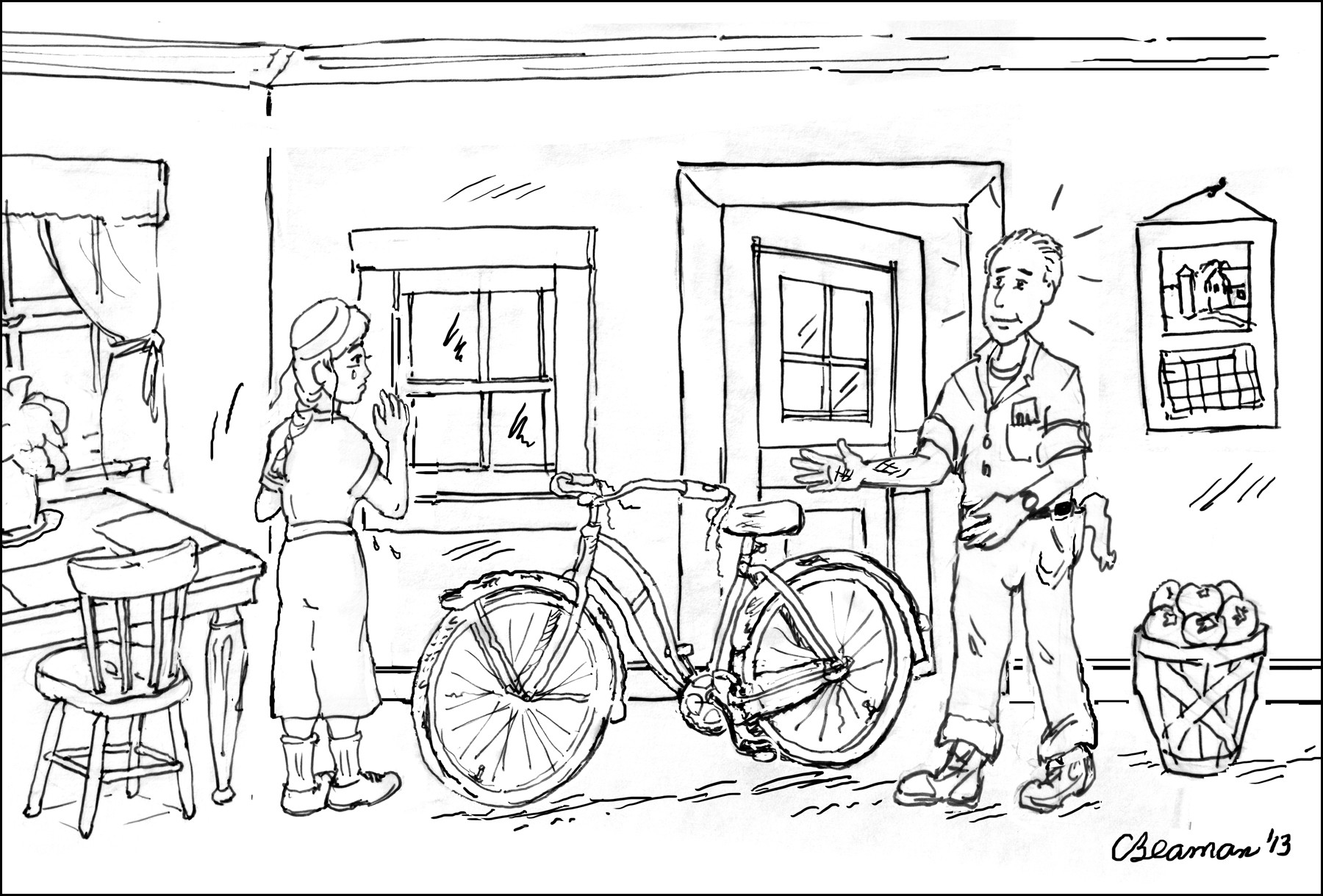
Days in the tomato patch come and go, and finally it’s time for my birthday. Mom tells me to go hide in the dining room and wait for the surprise. From my post in front of the long, lace-covered mahogany table, I hear the screen door open to the wash-house, then the kitchen door, and finally the sound of rubber bike wheels turning on the linoleum. I can hardly wait! The anticipation of the sleek bike I pictured weeks ago in the tomato patch is soon to become real. My daddy proudly holds the handlebars of this very special bike, a look of pleasure on his face.

Well, there is a bike. There before me sits a beat-up, second-hand relic with dents that have not quite been hammered out under ugly, flat paint from the shelves of Longenecker Farm Supply. The shiny blue and white bicycle I’ve anticipated all these weeks has morphed into a wreck of muddy blue and dull white the color of pale dirt. The picture in my mind deflates with my dream, a balloon punctured with a rusty nail.

Sad Bicycle Gift_12x8_150

For a few seconds, I act happy because I should, but I can’t possibly stifle the flood of tears burning my eyes. I turn and run through the dining room and up the stairs to find solace in my bedroom.

I’d rather have a bag of dimes.

I wonder why my Dad was so proud of his present to me, one I had a totally different perception of.  Is it frugality, cluelessness? Something else?

Tomato Girl, Part I

Tomato Girl, Part I

Lancaster County, early June 1953 – and I’m in the tomato patch with Mother and Daddy. Actually, it’s not a tomato patch, it’s over 9 acres of farm land not far from Elizabethtown in Bainbridge where we are about to plant a new tomato crop. Years earlier, my parents planted tobacco, but a Mennonite revivalist came through the county, preached powerfully against making a profit from plants that could be turned into deadly cigars and cigarettes, and so like others they switched to tomatoes or corn.

Rev.TomatoPlantMach_mod_11x8_72

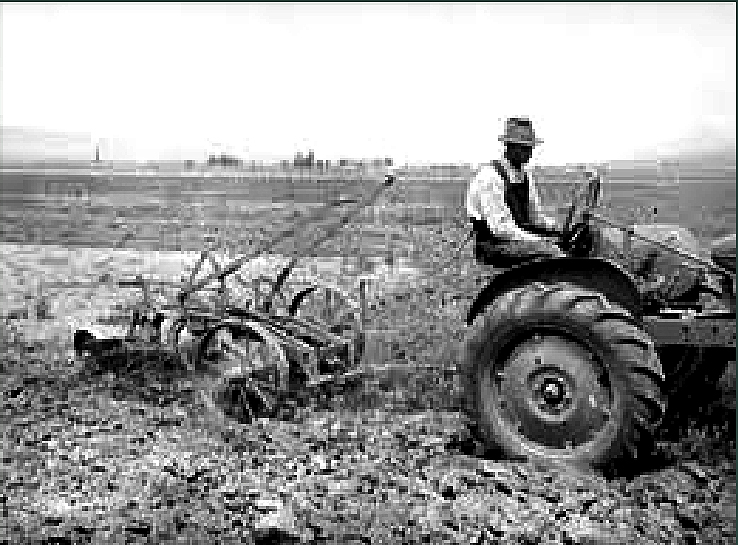
Today Mom and I sit side by side on the metal “tractor” seats at one end of the planter, each with a burlap bag laden with tomato plants in our laps. A trowel-like attachment of the machine attached to the Massey-Harris tractor carves a row and we take turns inserting a plant with dangly roots into the furrow.  As soon as a valve opens with a gush of water, two metal “hands” close over the plant, sealing it into the rich, humus soil. Usually Mom and I are synchronized, but if we can’t keep up with the click-clack of the mechanism, we yell at Daddy at the helm who hits the tractor brake so we can catch up.

TomatoBlossom     Move ahead to hot July now, and Monday starts another tomato-picking week. My time-conscious Mom keeps us all on schedule: “Marrrr-i-an, it’s soon time to go!’ So I schuss around and put the thermos on the porch so Ruthie sees we’re ready.” She will be at our house any minute now with the Longenecker Farm Supply pickup to take herself, my mom and me to our field near the village of Bainbridge. I can see it now: rows of warm, red globes in clusters on the bushes. Timmy Barnhart, ”Barney”—a squat, jolly farmer in bib-overalls will probably meet us there and help with the harvest. I like when he comes; he knows that twelve-year-old tomato pickers like the Reed’s butterscotch candy and red licorice packets he stuffs into his pockets to sweeten the labor.

TomatoOnVine

I’m paid ten cents a basket for my pains, but it’s hard to keep track of the number I fill, so I decide to put one green tomato on top of every 5/8 bushel basket, so I can add them all up and compute the dimes I’ll earn. Frugal Mom puts an end to this idea: “Don’t do that; you’re wasting perfectly good tomatoes. Why don’t you put your baskets in the middle of the row separate from the rest.” I know she’s telling me to do it this way, not asking if I really want to.

And so I plod—up and down the endless rows as the sun beats down on us. For awhile the grown-up chatter between my Mother, Aunt Ruthie, and Barney keeps me entertained, but then I stick my hand into a stinky, rotten tomato for the tenth time this morning, and I burst into tears. Dear Barney, now just a blue blur near the end of the row, hears the outburst and suggests a trip with the two of us going to Stauffer’s General Store down the alley and around the corner along a side street in Bainbridge. The store has oiled, wooden floors just like school and smiley Anna Mae Hess behind the counter. Barney, a widower, likes Anna Mae, and they chat for a while, giving me sweet reprieve from the blazing sun. Before we go, he orders two pints of Breyer’s neopolitan ice cream in a square box each cut in half with a butcher knife. Anna Mae puts four flat wooden spoons in a paper bag with the cold treat and we’re back in the field to share a late morning snack with Mom and Aunt Ruthie.

Tomato Girl_crop_9x7_150

Late afternoon brings Daddy in his flat-bed Reo truck to load the baskets in three or four staggered layers. If there is any room left over, Oscar Forrey, a farmer who patronizes my daddy’s shop, can add his picking to our harvest. “There’s no sense in two people driving half-filled trucks to the same place now is there?” Dad says. He’ll drive to the Mt. Joy depot for tomato farmers where the Heinz Company will truck the harvest way over to Hanover. My Dad has brought along a cold watermelon (wasser-ma-loon, he calls it) to save us from dehydration. Bless his heart! Mom must have told Daddy about my melt-down because he promises me a bike for my July 24 birthday. I picture a shiny blue and white Schwinn with a cute, white woven basket in front of the handlebars, maybe with fancy, pink dingle-dangles!

I don’t remember if my teachers ever assigned an essay “What I Did on My Summer Vacation.” But planting and picking tomatoes would have been my topic until I turned 15 and could work for real pay at Baum’s Bologna.  There I wrapped sweet bologna in clear cellophane and pasted on the label, festooned with a smiley Amish face with a beard and wide straw hat. Then I graduated to working in the dementia unit at Masonic Homes. But that’s another story.

Tell us something memorable about your summers as a child or a young teen. If you remember it after all these years, we’d certainly be interested in reading about it.

Ruthie the Cheater, Part II

I’ve told my students if they ever see me in a bank behind the teller’s window—RUN! Math has never been my strong suit, but I can spell well.

In fourth grade, I always win the spelling bees on Friday. In fact, my winning is so predictable that my friend Wayne tells me he’s going to find a word in the dictionary that I can’t spell. “Somebody else deserves to win sometimes,” he whines.

1975 Ruthie-Schoolphoto 3a_small           Marian_Fourth grade_1-5x2_150

Ruthie the Cheater                                   Cheater-in-Training, 4th Grade

And so he searches for just the right word, finds it, and whispers it into Miss Longenecker’s right ear. I see him form the word with his lips, but I can’t decipher what he is saying. That evening, Grandma invites the five of us—Mom, Daddy, Janice, Jean and me—down over the hill to Grandma’s house for chicken pot pie.

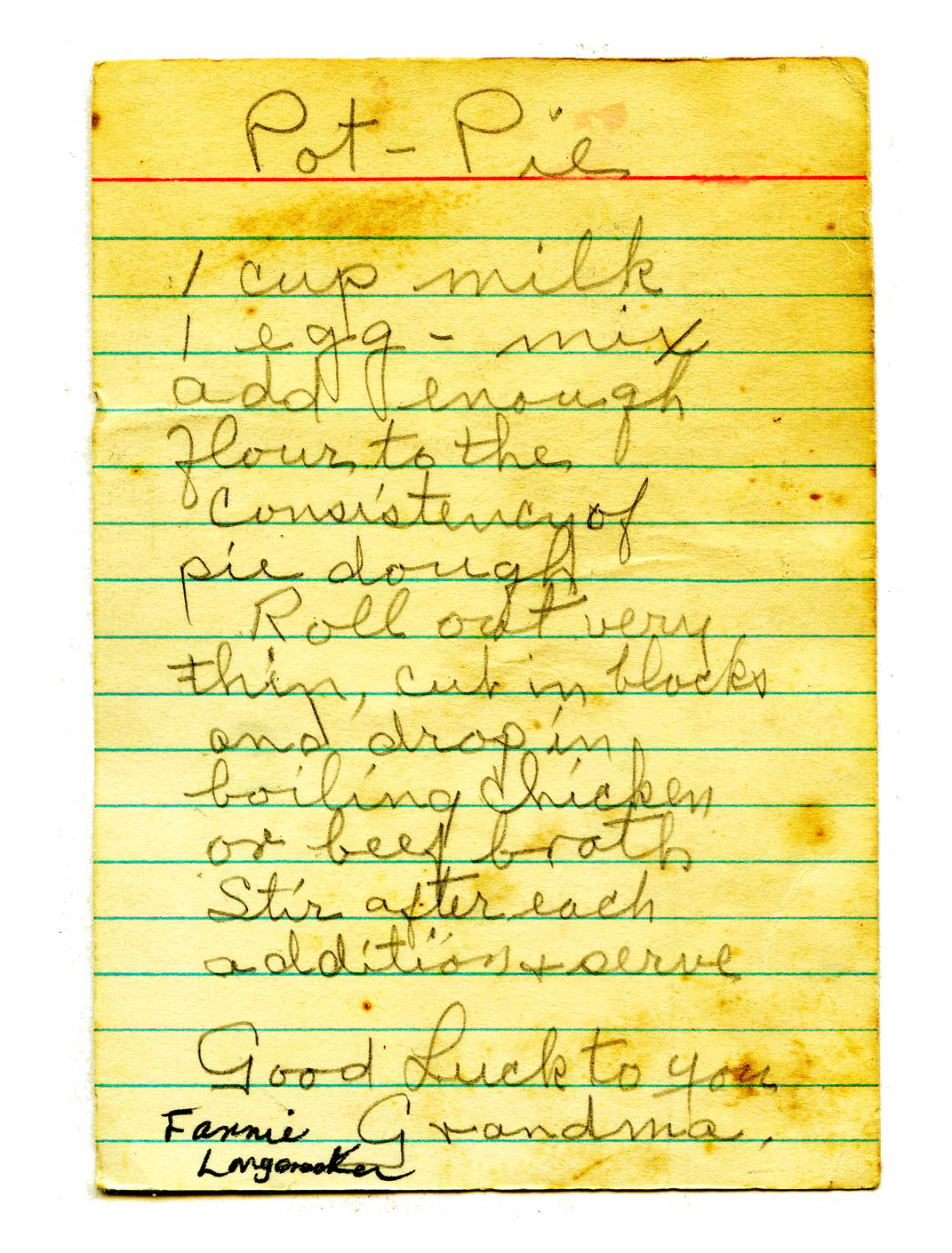
As always, before Dad parks our blue Studebaker, three-legged Skippy rushes out on the porch to greet us. Soon I’m standing on a chair beside the stove watching Grandma cut out little pieces of dough for me to place one by one carefully in the boiling liquid to cook. I love to find a little space of bubbling broth in the kettle and seal it over with a dough-y square. Chicken pot pie with fresh cabbage slaw . . . wunderbar.  

   GrandmaPotPie                                        

Aunt Ruthie comes in the back door from school with a yellow pencil over her ear. After she puts down her papers and books, she quizzes me, “How do you spell reconciliation?” Without hesitating, I enunciate: r-e-c-k-o-n-s-i-l-l-y-a-t-i-o-n!

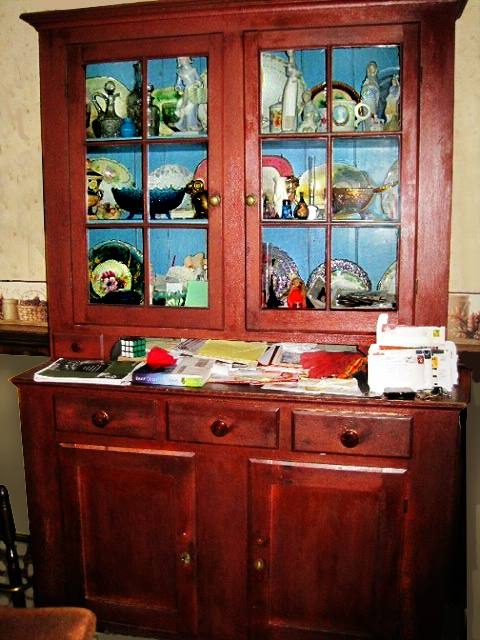
“That’s close, but not quite right,” she encourages, as she pulls down the dictionary from the left bottom door of the red cherry cupboard over by the kitchen table.

RedCupboardRev_7x9_72

“Here, take a look at this.” And I see how the dictionary says to spell it. Now I put the right letters in my memory bank for tomorrow’s spelling bee. When Teacher asks the class, “Does anyone have a word to stump Marian?” this might be the word, I surmise.

It’s Friday, and once again I’m the surviving speller. Wayne jumps to the mound to strike me out, but I deliver fourteen correct letters in rapid succession: reconciliation!” Wayne is dumbstruck for a few seconds and then mutters, “Holy Cow, Holy Cow,” as he reconciles himself to the fact that it’s useless to try to stump Marian.

Once again, Aunt Ruthie is a cheater, but so am I. We’re in cahoots!

Can you admit to a time when you got some unsolicited help? Some help that came with wobbly ethics? Tell us your story!

Like this post? Follow my blog and get many more free of charge! Just type in your email address at the top of the page and click “subscribe.” WordPress keeps your email address private.

Hair: Historical to Hysterical

Baskin-Robbins offers nearly 60 flavors of ice cream at their shoppes. The varieties of dress among Mennonites and Amish, who split from the Mennonites, is nearly as long and equally fascinating. In recent research, I counted dozens of sub-sects.

                                              stackIceCreamCone

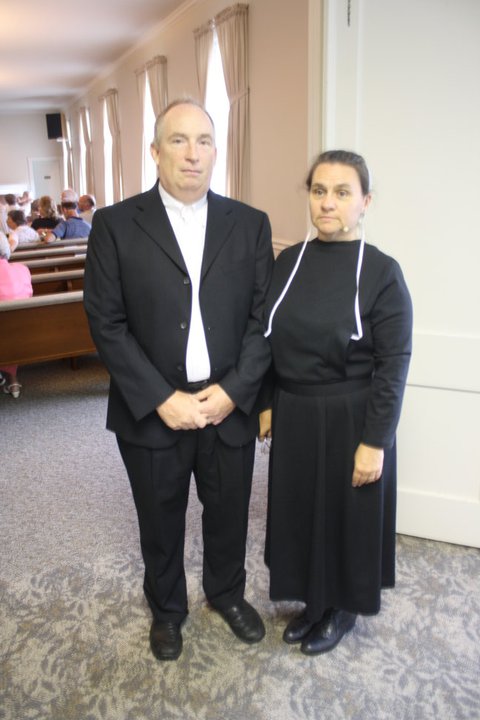
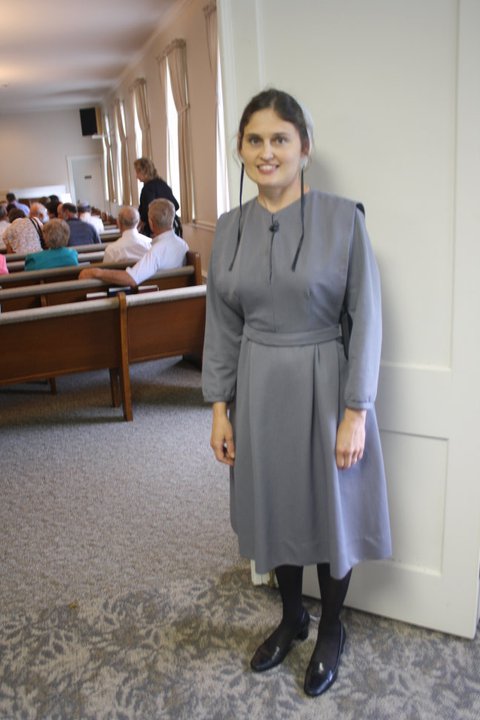
By far the most conservative group that maintains plain dress is the Old Order Amish church. The Amish have unfortunately reached pop culture status with hideous reality shows that exploit their way of life including their dress distinctives:

Amish men                AmishGirls

Herr                                                                                    Frau

Beards                                                                          Headcovering with tie strings

Hair cut off straight in back, banged in front                Uncut hair parted in center in bun

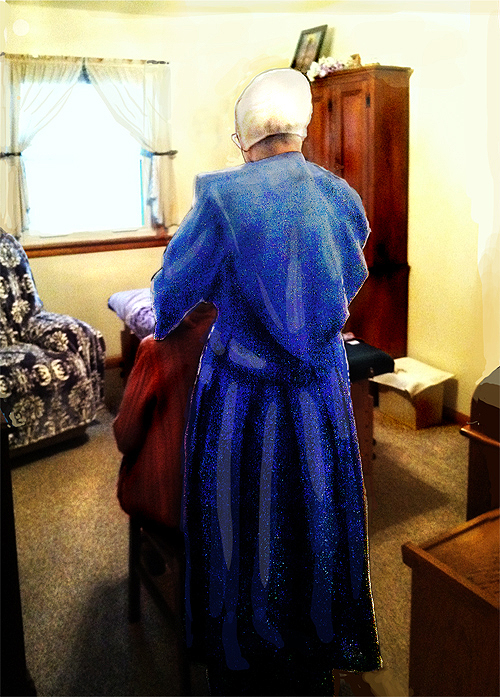
Coats, vets fastening with hooks & eyes                       Long dress with cape in solid color

Suspenders and broadfall pants                                  Pleated or gathered skirt

Wide brimmed hats                                                       Black shoes and stockings

As though frozen in time, attire of the Old Order Amish church has not noticeably evolved, reminiscent of their European origins.

Then there is the Brethren Church with its various branches. “The Old Order River Brethren continue to wear traditional garb.” The men look much like Amish but the women “wear opaque white headcoverings, capes, aprons, and a peplum on the dress bodice,” which tapers to a V-shape. An excellent source for detail of other sub-sects: http://www.gameo.org/encyclopedia/contents/D74ME.html

Typically, my visit to PA includes an appointment with a perky River Brethren woman who gives massages. You gasp “Massages!” but it’s true! Esther has my vote for the Most Modest Masseuse on Earth; she gives head-to-toe therapeutic massages in her home for a shockingly modest fee. Were she fancy, and not plain, she would fit perfectly in a chiroparactor’s office. Note peplum, short ruffle attached at waistline in photo below:

massage table                PlainMassageLady_13x18_72_brighten

Finally, there is not simply a Mennonite Church, but a cluster of branches, including a very conservative branch called Black-Bumpers, who drive cars but paint their shiny chrome bumpers black (less flashy)! Once in Lancaster I spotted a sleek Mercedes-Benz sedan with black bumpers and very plain girls spilling out—an image of paradox if there ever was one.

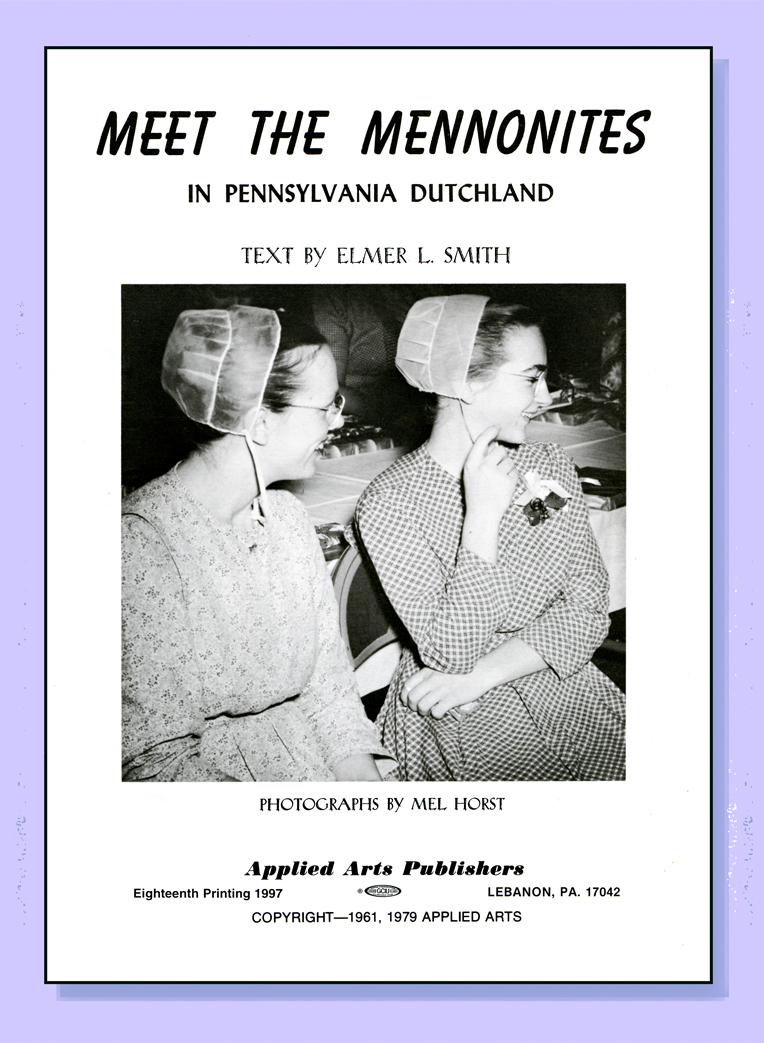
My own brand of Mennonites is the Lancaster Conference Mennonites, who have driven cars rather than horse and buggies but have long adhered to a strict code of dress since their emigration from Europe in the early 1700s. However, plain dress among these Mennonites has been falling by the wayside since the 1960s and 70s when these photos below were snapped.

3twogirlsMeet the Mennonites_Cover_5x7_150                      3MeettheMennonites

Smith, Elmer L. and Melvin Horst. “Meet the Mennonites in Pennsylvania Dutchland,”
Lebanon, PA: Applied Arts Publishers, 1997.

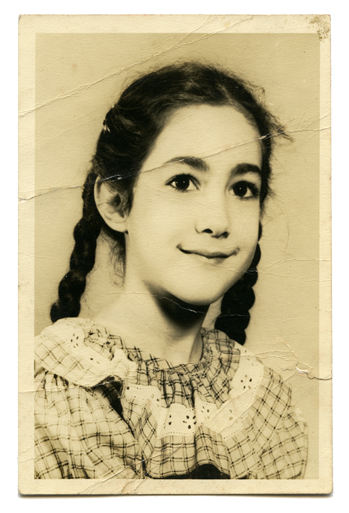
Marian_hair_braids_3x5_96     Marian_middleschool

Braids, also known as pig tails           Braids circling head with hairpins, middle school

Beaman_Longenecker_wedding_announce  Engagement: transition to fancy


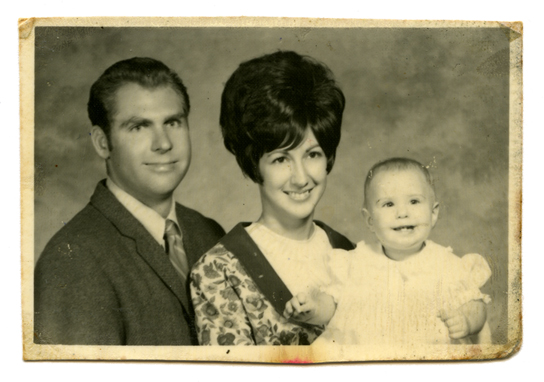
Cliff_Marian_hair teased_Crista_4x3_150

Marge Simpson wannabe

Little known fact: The family of Milton Snavely Hershey, the Chocolate King, were Reformed Mennonites; his mother was a member and his grandfather, Abram Snavely, was a bishop for 37 years. Milton married a non-Mennonite. (“Meet the Mennonites”)

                                         HersheyCocoa2

There is a connection, I think, between chocolate and access to memory both plain or fancy, expressed so distinctly by Barbara Crooker:

CocoaPoemRev.

“. . . for man looketh on the outward appearance, but the Lord looketh on the heart.

I Samuel 16:7


Dutch Goose 101

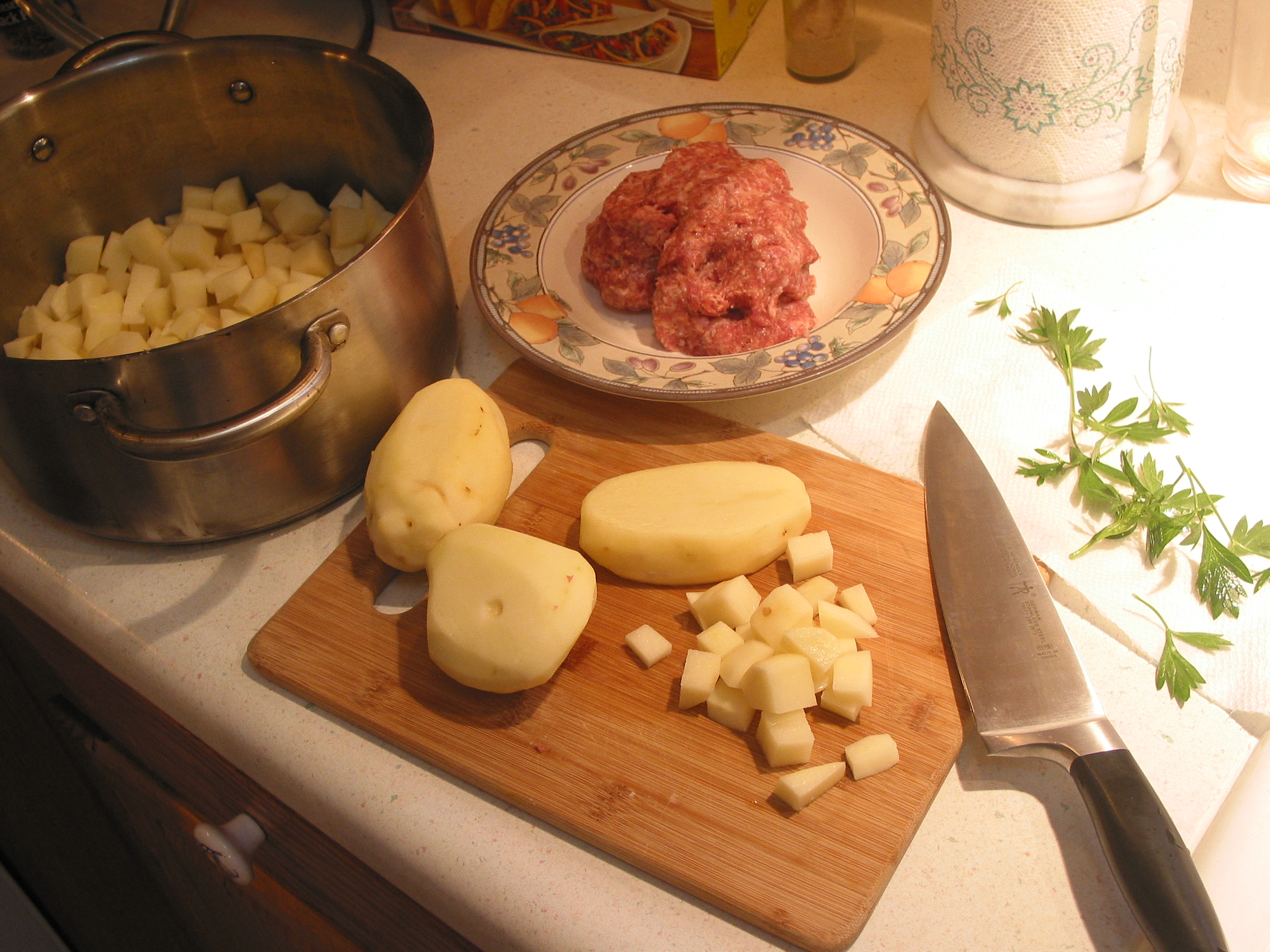
As I shove the casserole dish into the oven, I notice the olive oil spray can, the top of the paper towel holder, knives, and a scissors all besmirched with sausage. When did stuffing a Dutch goose (euphemism for pig stomach) take so much time and effort? It seems my mother just sits on her stool in front of the sink, peels and dices potatoes, mixes them with sausage, fills the stomach cavity, and slips it into the oven. A few hours later she asks me to take it out, all done. Easy as that!

On my last visit to Pennsylvania, I bought chipped beef, a pig stomach (yes, the organ from a hog) from Groff’s Meats, and 7 1/2 pounds of ham loaf from Wenger’s Meats in Elizabethtown. Now at home I’ve thawed the pig stomach and am preparing it as a mystery dish for our daughter’s family. For future reference, I must assemble all the tools required: knives for dicing potatoes, darning needle, white thread, scissors before I begin. And start sooner, for goodness sake!

                              IMG_2699

Has anyone ever written out a recipe for pig stomach? I don’t know, but I’ve never seen Mother use one, so I call her mid-way in the process to ask for direction.

“How many potatoes should I use?”

“Oh, just however many you think.”

“Eight . . . ten . . . twelve?”

“Oh, it doesn’t matter. You can always put the left-overs in a casserole dish on the side,” so I see now it’s a guessing game.

No other dish I know off blends the culinary and sartorial arts so handily as filling a pig stomach, hence the needle and thread. To begin: the organ does have several orifices: intake, outgo, and a pyloric valve in there somewhere. This particular one has a tear, so I’ll have to stitch up 4 openings. Heaven forbid any of the sausage-potato stuffing leaks out. Mid-way through my first sew-up, I realize I’m stitching the large opening best suited for stuffing, so I have to undo it all, retracting thread through a gooey mess of fleshy tissue. Drat!

IMG_2714  Finally the dish is ready for the oven . . . almost! As I pre-heat the oven, I recall the end of my phone conversation with Mom:

“How long do you bake it?” I ask.

“Oh, whatever you think.” she says.

“Well, I don’t know what to think . . . 2 hours? 3 hours?”

“Just take a look at it, and when it’s golden brown on top and a little bit around the side, it’s done.”

                                      IMG_2720

Using the convection feature on my oven part of the time, the baking time turns out to be about 2 1/2 hours and after “resting,” ready to serve.

After gobbling up his first serving, Patrick speaks up, “NaNa, this is as good as ham loaf! May I have some more?” Jenna joins in with yummy sounds. There are requests for more all around the table now, and I’m happy it’s a hit.

                                  Patrick_Jenna_pig stomach_crop_5x4_96

Sustenance for the body, that it is. But more than that, it has occurred to me, we are experiencing what always happens when family gets together: stuffing memories into the space of our hearts as well.

So, I’ll do it all again with our son’s family after my next trip north when I visit Groff’s. Incidentally, Groff’s Meats has begun selling pig stomachs already filled for the princely sum of $ 15.00.

I have to say, I’d charge $ 25.00, more if I have to re-stitch!

Like this post? Follow my blog and get many more free of charge! Just type in your email address at the top of the page and click “subscribe”! WordPress keeps your email address private.

 ã Marian Beaman

Secrets of the Ra-Ra Sewinghood

Thread 1

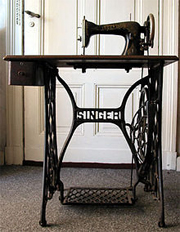
All Mennonite girls of the 1950s and 60s made their own clothes. Hager’s, Watt & Shand, or Garvin’s in Lancaster city was not the place to shop for dresses with capes or any other plain clothing. So, we made our own frocks on Mother’s foot-powered treadle machine.
                          180px-Singer_sewing_machin copy

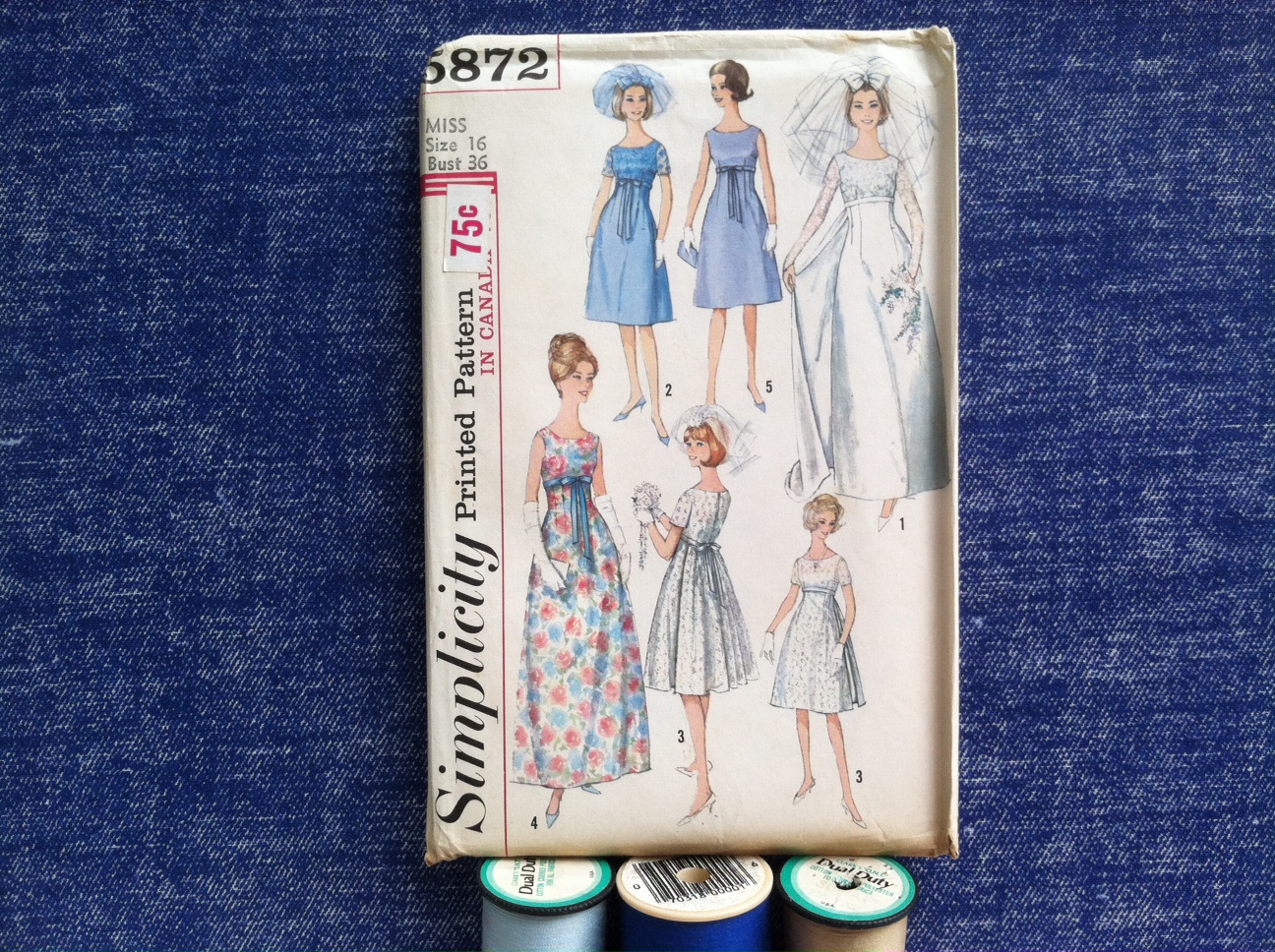
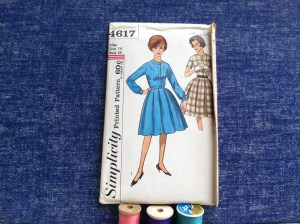
Creating a ward-robe entailed buying a pattern by Simplicity, McCall, or Butterick that we could adapt, finding fabric by the yard at one of the department stores or a specialty shop like Mohr’s Fabrics. Usually, my sisters and I were allowed to buy any material we wanted within reason. We knew solid bright red was out and probably purple, now two of my favorites. One shopping spree as a young teen, I found a pretty, multi-colored repeat pattern on a black background and pulled the bolt out of the stack for Mom to admire:

“Look at this!” I chirped.

Mom looked at the material with squinty eyes, and gasped, “Don’t you see there are guns!”

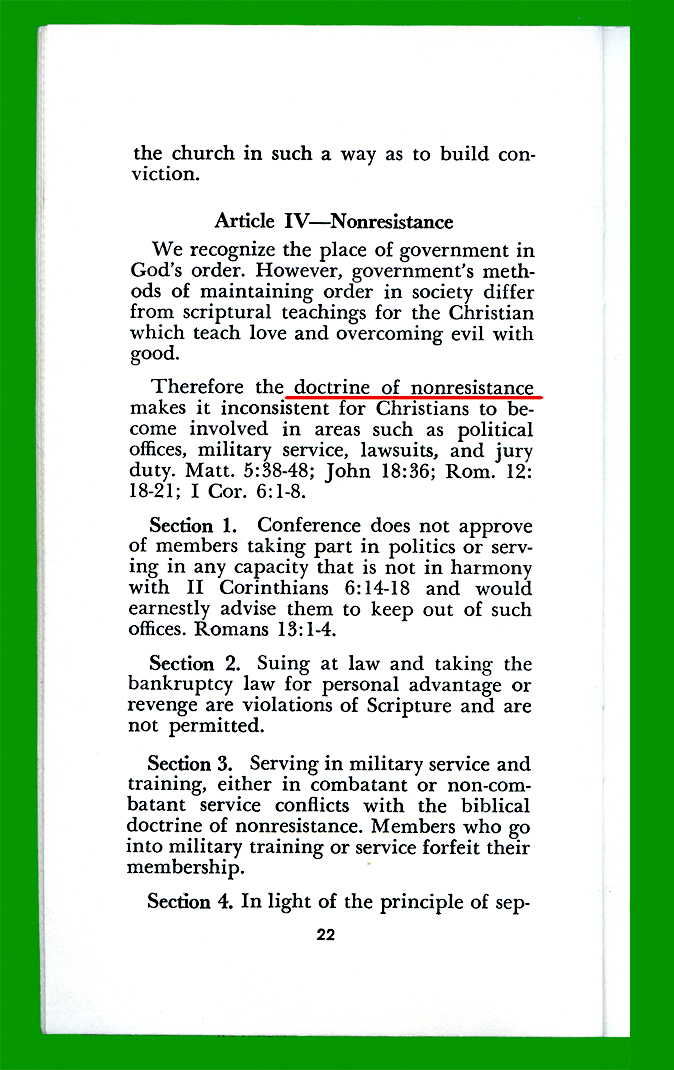
Now it was my turn to look squinty-eyed. “Guns!” I had to look harder. Yes, you could imagine that those tiny figures on black fabric were shaped like guns. On principle, guns were forbidden in the Mennonite church.  Our household had a little cap gun which we outfitted with rolls of red ribbon with black dots of ammunition for the 4th of July, but otherwise guns were used only for hunting deer, pheasants, and other game by men. Using guns to kill people, even during warfare, was strictly forbidden.

Christian Doctrine_cover_150_med Christian Doctrine_Nonresistance page_4x7_150

The fabric with the offensive repeat pattern? You guessed it—I did not buy it, which according to my mother, shrieked GUNS!

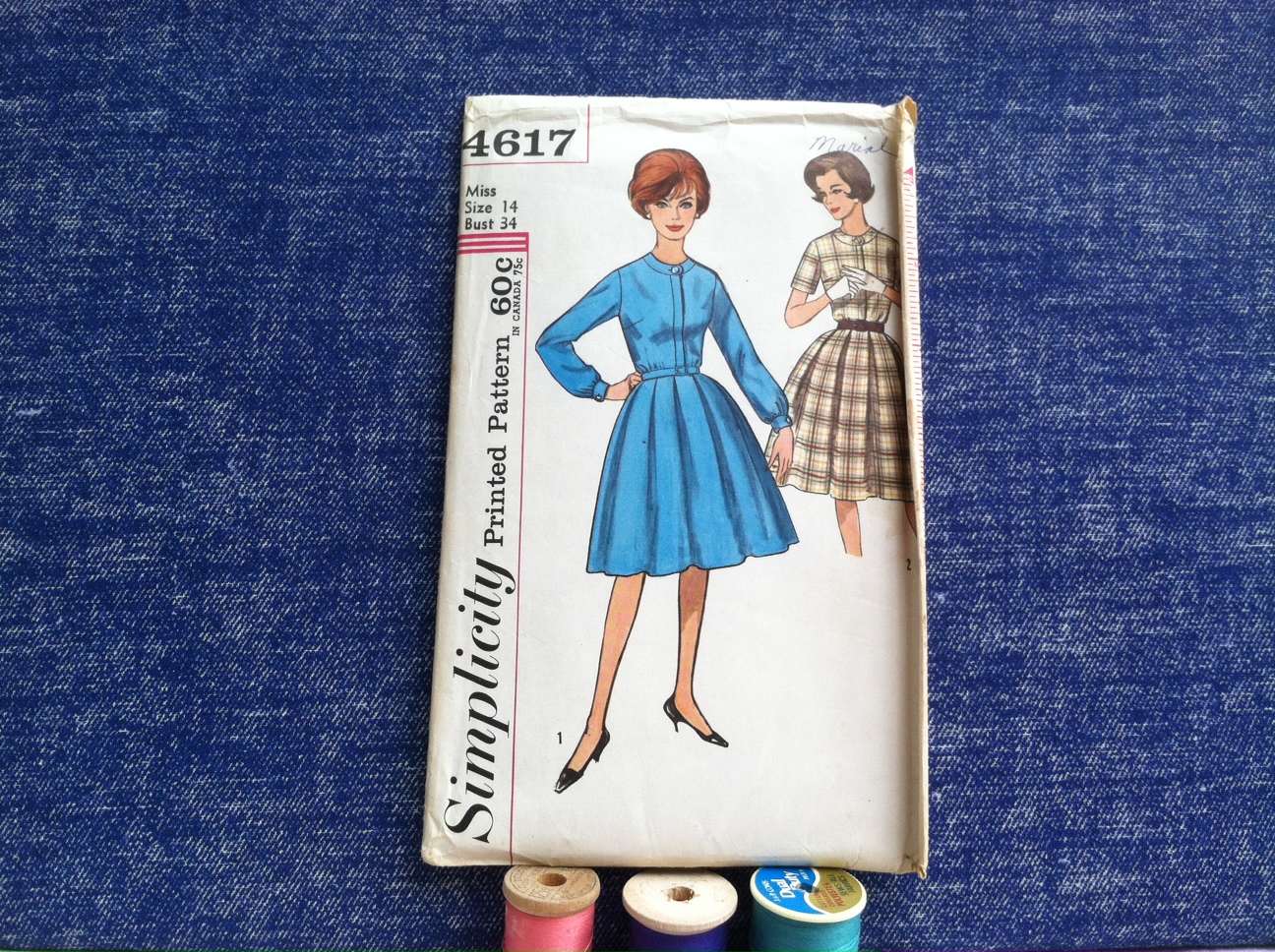
We always attended public school, and now that I think of it, our family observed a double standard: skirts and blouses for school but always caped dresses for church. When I joined the teaching staff  at Lancaster Mennonite School, caped dresses of course were de rigeur. And when my life took a different path, I gave away such dresses to a Mennonite consignment shop with strict instructions about my identity to the lady in charge so that no student would embarrass herself by showing up to class in a dress worn by the former Sister Longenecker. Here is a pattern with a pleated skirt and cute neckline I adapted into a “plain” dress:
plainDressPattern

Thread 2

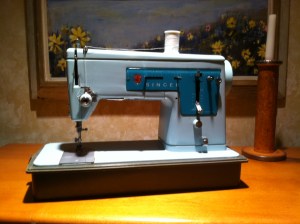
My light blue Singer sewing machine is portable, so I can use it at home on weekends or put it into the Studebaker to use at my campus home when I’m not making lesson plans or grading papers.
sewingmachine

Months earlier I have met my neighbor’s best friend, Cliff, who is now my boy-friend. Now that he has completed his Bachelor’s degree and working on his Divinity degree, he is allowed to live off campus with 3 other students with whom he shares rent, utilities, and fuel bills. He works in the dining common to pay tuition. Since December we have been writing letters back and forth. Of course, there were no cell-phones in the 1960s and long distance calls were way too expensive, so we made do with letters–lots of them.

Cliff: “It’s reee..aa..ll..y cold here.” A rare snow has fallen in the Carolinas and the nasty cold air wheezes beneath the open crawl space in the rental house. “We ran out of oil until the 25th when we get paid, so the guys and I are sleeping in overcoats and tons of blankets until we can get more oil.  The only way we can get drinking water is to thaw snow in a kettle on the stove. Every thing is frozen up.”

Marian, the nurturer, clicks into gear: “Really! That’s awful. Isn’t there something you could do—space heaters?

Cliff: “No, that would take too much electricity!”

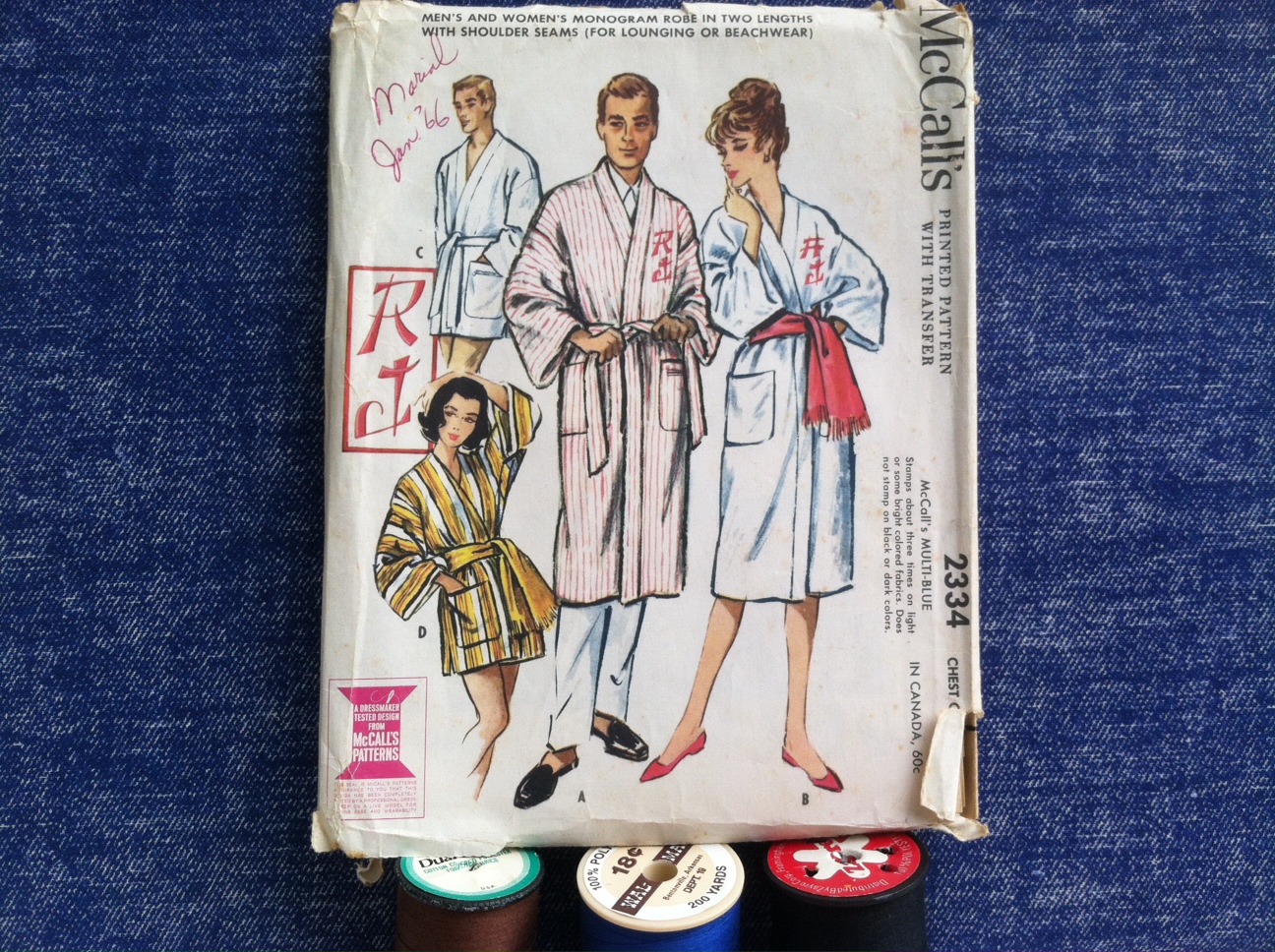
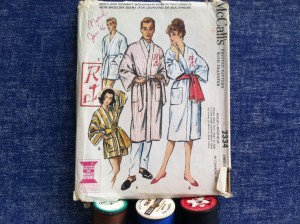
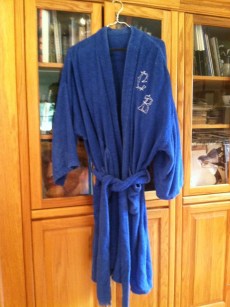
I formulate a plan to make him a robe for Valentine’s Day, so I buy heavy marine blue terry cloth and set to work, adding the appropriate initials in sturdy, white thread. Vintage robe below!
RobePattern Cliff'sRobe

My blue Singer sewing machine moves with me the next school year from Lancaster, PA to Charlotte, NC where I make the transition from very plain to less plain. During the year I get engaged to the formerly frozen student who has quickly thawed out, and we make plans for an August wedding. My machine goes into high gear in full fancy mode stitching the thick white peau de soie (French for “skin of silk”) gown with an empire waist and a train attached to a belted bow. First Lady Jackie Kennedy has an enormous influence on style evident in this pattern.

WeddingPattern

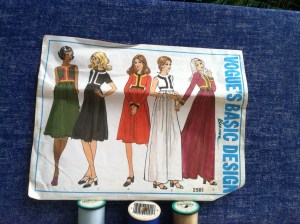
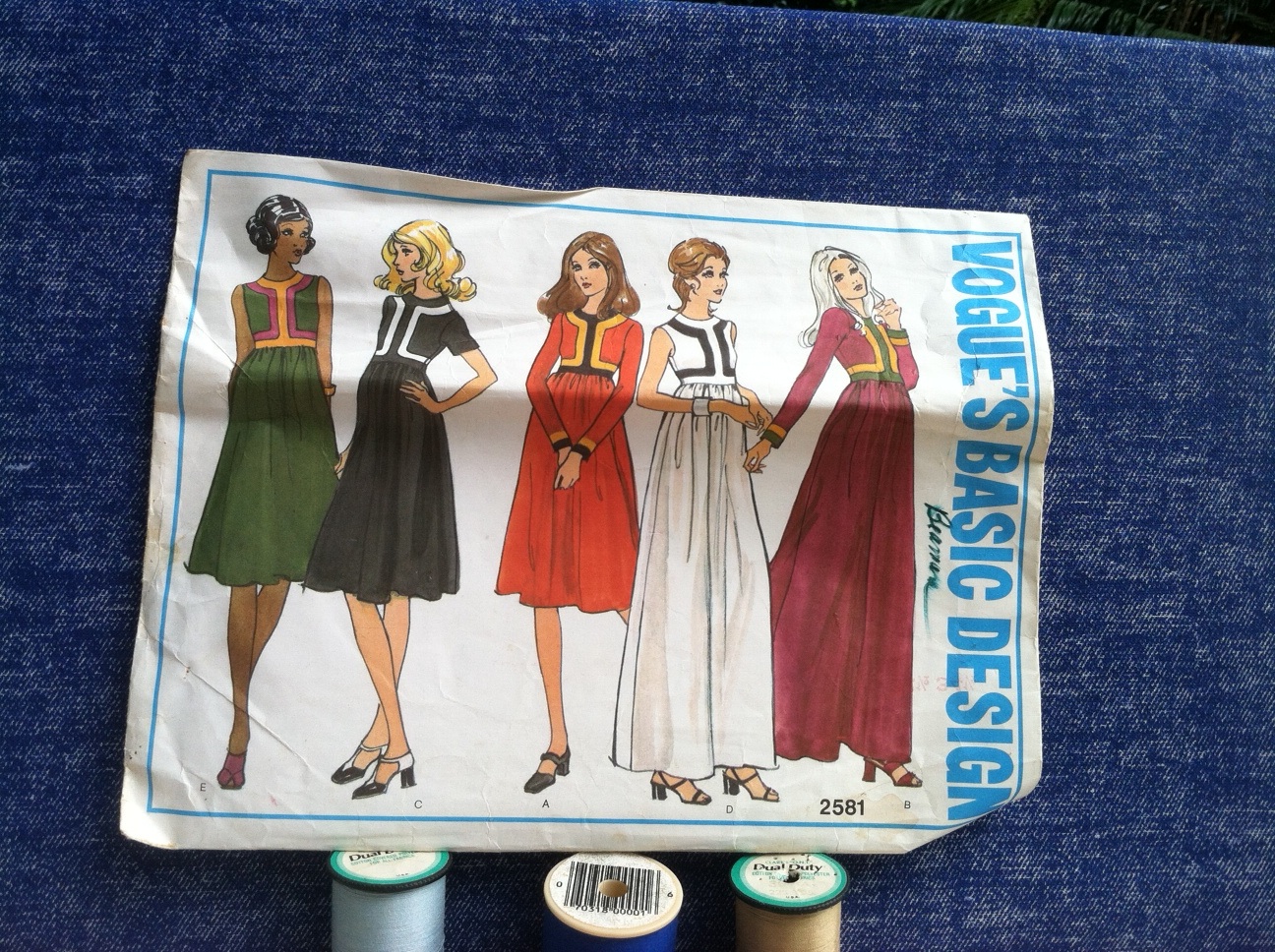
Settling into the hectic life of big city Jacksonville, I keep a connection with my roots with my trusty Singer. I am bold enough to use the fancier Vogue patterns, experimenting with multiple fabric colors in the same outfit.
VoguePattern

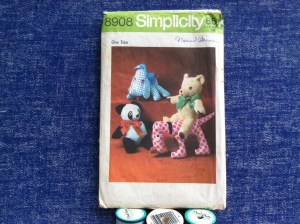
Next I buy a host of patterns for a little girl and boy to wear—and of course a teddy bear!
TeddyBear Pattern

What vintage clothing in your wardrobe have you hung onto? For sentimental reasons? Some other reason? Let us know: Click on Reply/Comment.

Like this post? Follow my blog and gets many more free of charge? Just type in your email address at the top of the page and click “subscribe”! WordPress keeps your email address private.

Loving Hands, Homes & Teddy Bears

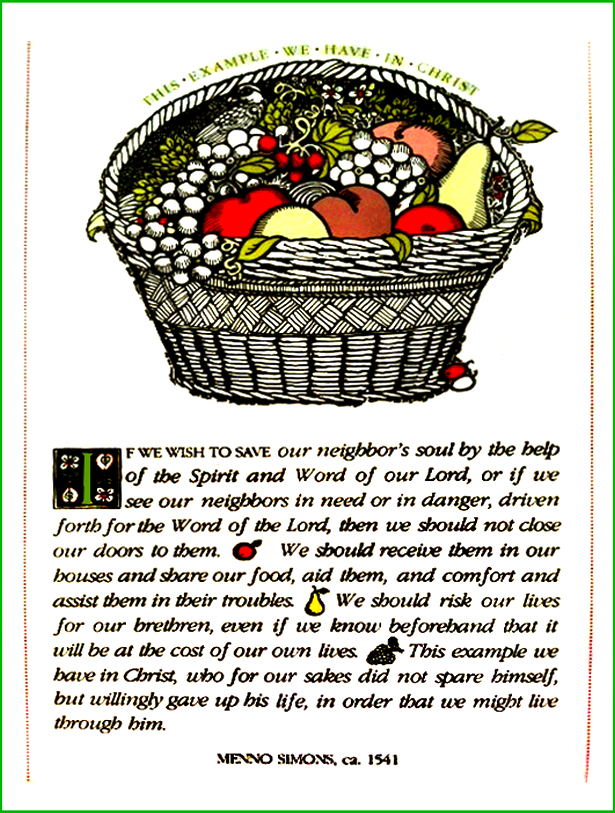
Hex signs on barns, fertile farms, plain dress, PA Dutch cooking: These are the first impressions many people have of Mennonites in Lancaster County. But the ethic of compassion of these folk draws from a deeper well: From their founder, Menno Simons, to the present day, the practice of helping others is deeply ingrained:

Menno Simons_mod_8x11_72                      

In fact, the mission statement on the website of the Mennonite Central Committee (MCC), echoes those words of Menno Simons in 1541:

The Mennonite Central Committee (MCC), a worldwide ministry of Anabaptist churches, shares God’s love and compassion for all in the name of Christ by responding to basic human needs and working for peace and justice. MCC envisions communities worldwide in right relationship with God, one another and creation.  

                         MCC_screen shot_2x2_150pix_72

Their logo expresses their mission as the cross and dove merge in a “dynamic, interactive relationship in which the cross empties into compassionate action fulfilling our call to global service.”

In a similar vein, loving hands was the image used for the theme of the 90th birthday celebration for my mother and aunt, her sister-in-law, both named Ruth Longenecker, have the same birth year and middle initial “M,” and live independently on the same street,

                            Hands clip

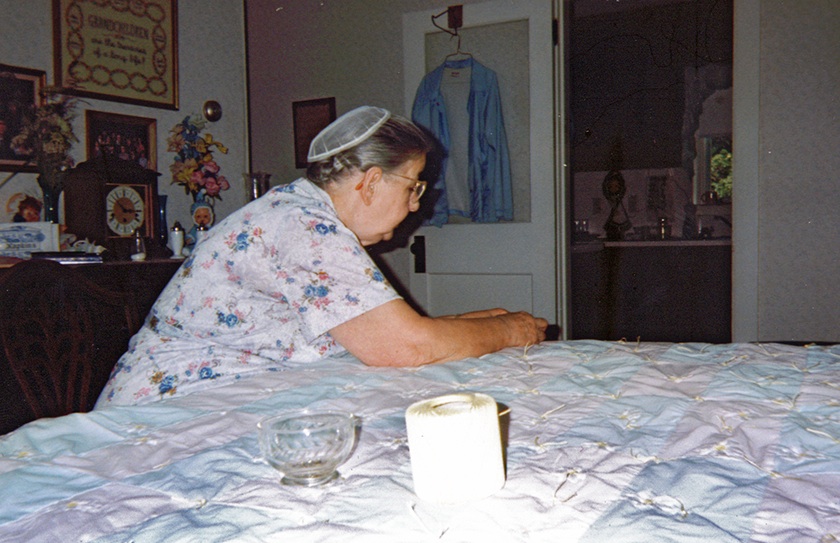
Mother is and was handy in many ways. Along with Daddy, my mother served on the board of New Life for Girls, an agency supporting the rehabilitation and guidance of young women in urban areas. For many years she volunteered at the Mennonite Home making beds. She served also at the MCC International Gift and Thrift Shop in Mt. Joy, PA. One Monday a month she went to sewing circle where she helped piece quilts and knotted comforters for overseas relief. My sisters and I also remember rolling long, long strips of gauze for bandages to send abroad.

             1995RuthKnottingComforter_small

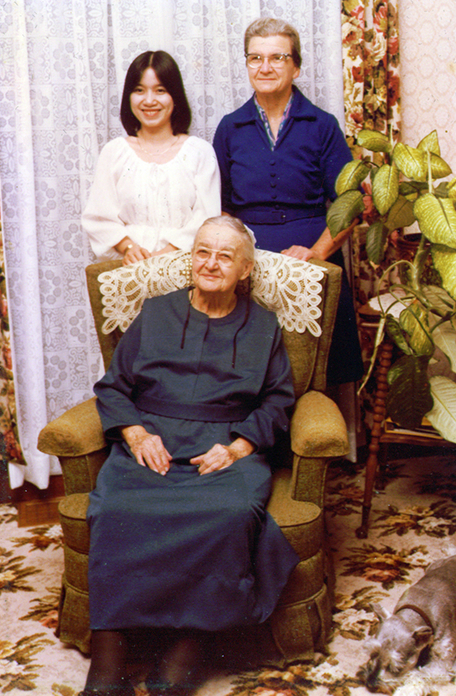
Aunt Ruthie, Principal of Rheems Elementary School and West Donegal Township tax collector, took her call to missions in a different direction. For over 25 years, she with Grandma, opened their home to refugees and immigrants, beginning with Phuong from Vietnam whom she sponsored. Her home was a warm cushion absorbing the cultural shock of leaving home and family. Aunt Ruthie was never married and has no biological children, so she was flummoxed by Phuong’s normal adolescent activity: She takes such long showers, she doesn’t know when to hang up the phone, and she wants to stay out so late!

      1989RuthieHouse 1979Grandma,Ruthie, Phuong_small

The house on Anchor Road was a safe haven, welcoming  refugees from a collage of countries in addition to Vietnam: Bosnia, Croatia, Serbia, Russia—anywhere there was political upheaval.

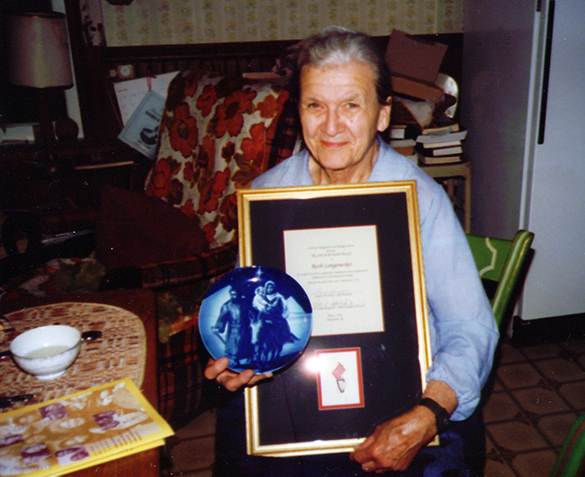
1990s SaltofEAward Salt of the Earth Award for 25 years of service through Lutheran Immigration and Refugee Services in recognition of “exceptional compassion in welcoming the stranger,” as Menno Simons admonished.

When I was a child, Grandma’s house was a Home Depot for relief: On the back porch she collected eggs from local farmers to help the needy. In a corner of the kitchen facing a window with a bird feeder, she parked her sewing machine with stacks of fabric in baskets to make baby clothes, blankets, shirts, pants, pajamas, and comforters. During the Great Depression, the needy were closer at hand, and Grandma would repair raggedy teddy bears with buttons for eyes, and red yarn or rick-rack for the mouth.

NormalTeddys TeddyBearDepression

Normal teddies                            Missing ears, detached arms

At the heart of all this giving is love, pure and simple. “And now abideth faith, hope, and charity, but the greatest of these is charity.” And nothing says “love” to a child like a teddy bear.

Like this post? Follow my blog and get lots more free of charge! Just type in your email address at the top of the page and click “subscribe.” WordPress keeps your email address private.


Plain and Fancy @ Bossler Mennonite Church

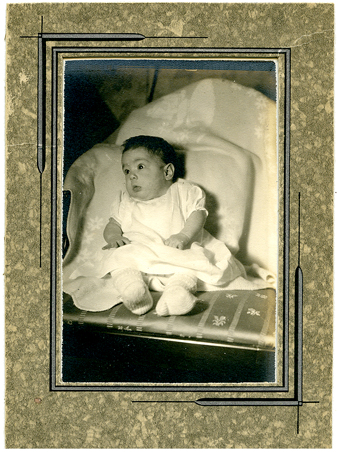
When I was about 6 weeks old, my parents took me to church–Bossler Mennonite Church close to Elizabethtown, PA. I was born in July–9 months, almost to the day, from my parents’ honeymoon night the previous October. When I got older and could figure out such things, my mother simply said, “Nothing happened before we were married.” She said it, so it must be true. In those days, abstinence was the professed norm for engaged couples, and a white dress almost certainly meant the bride was a virgin. A couple whose first child arrived too soon after the wedding date had to appear in front of the congregation and confess their sin of fornication.

Ray and Ruth Longenecker_5x7_150            Marian_as baby_5x5_72 19-05-17

The Christian Mingle of the 50s and 60s happened after the Sunday night service with girls and guys in separate groups lingering, a girl hoping for a guy to break out of his circle and ask her for a date. Weddings were frequently held in the fall, not in summer, after crops were harvested and the family and relatives had more time for big social events.
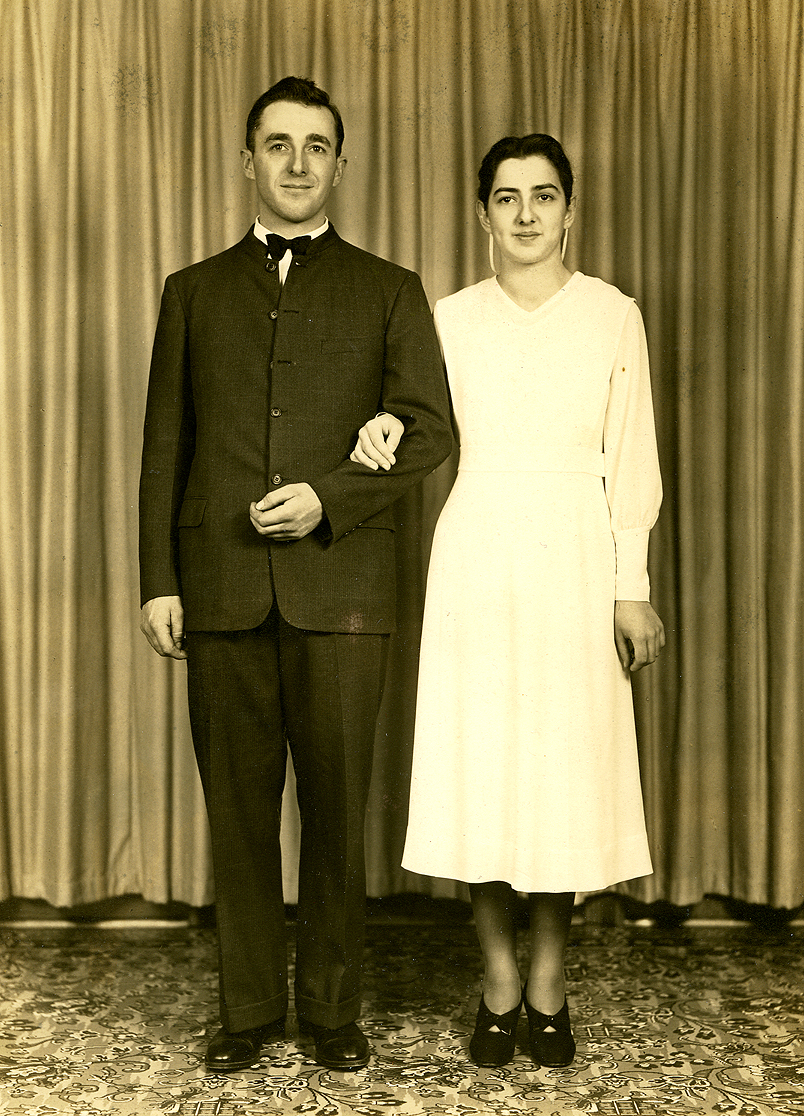
RuthL.bride Here is Dad’s first cousin, Ruth Longenecker, all decked out in her caped, white wedding dress and black shoes gazing at her tall, blond groom who wears a plain suit and no necktie. She carries a lacy handkerchief, something fancy, inserted into a white Bible (flowers were forbidden then) as she walked down the aisle.
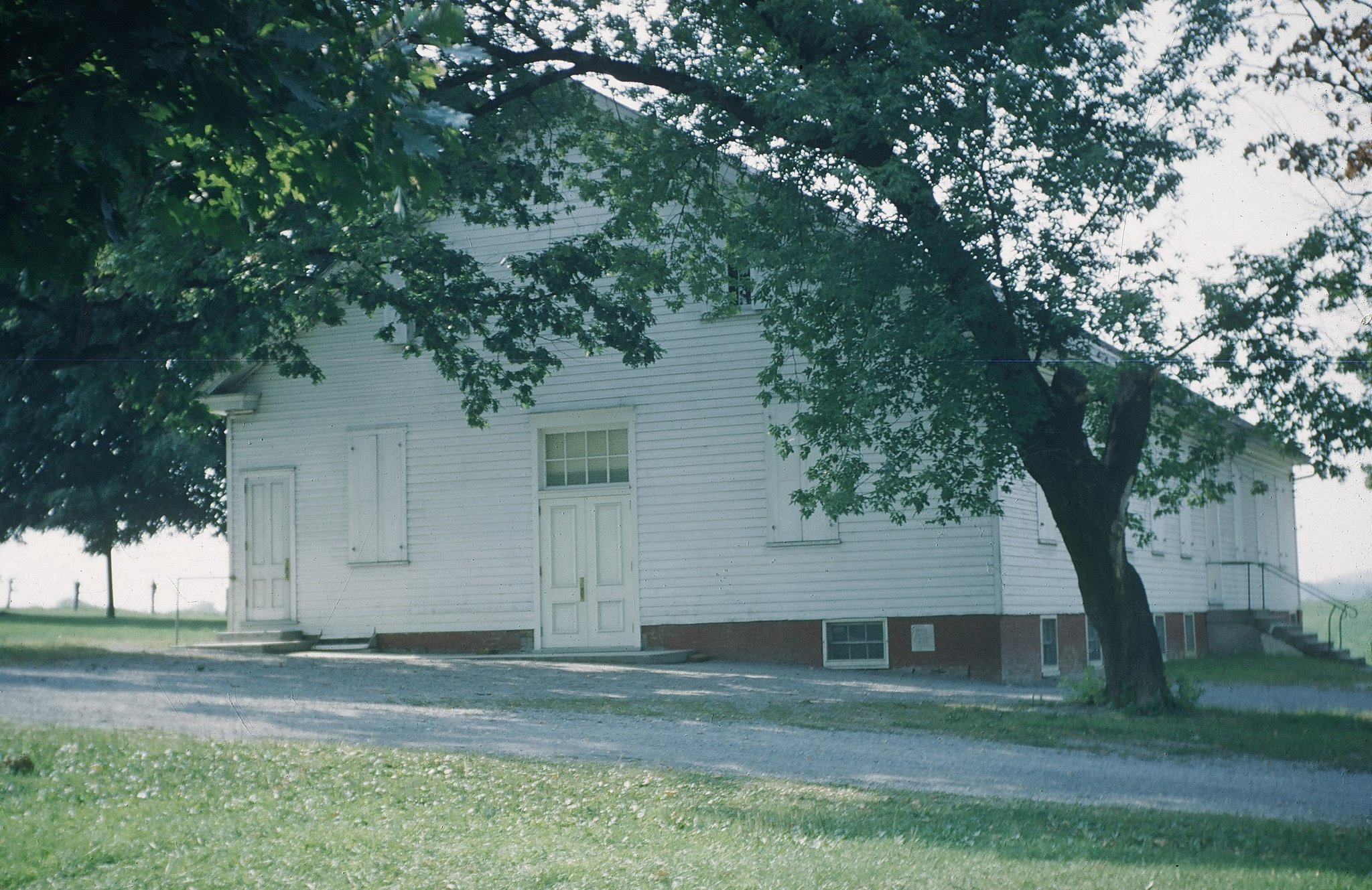
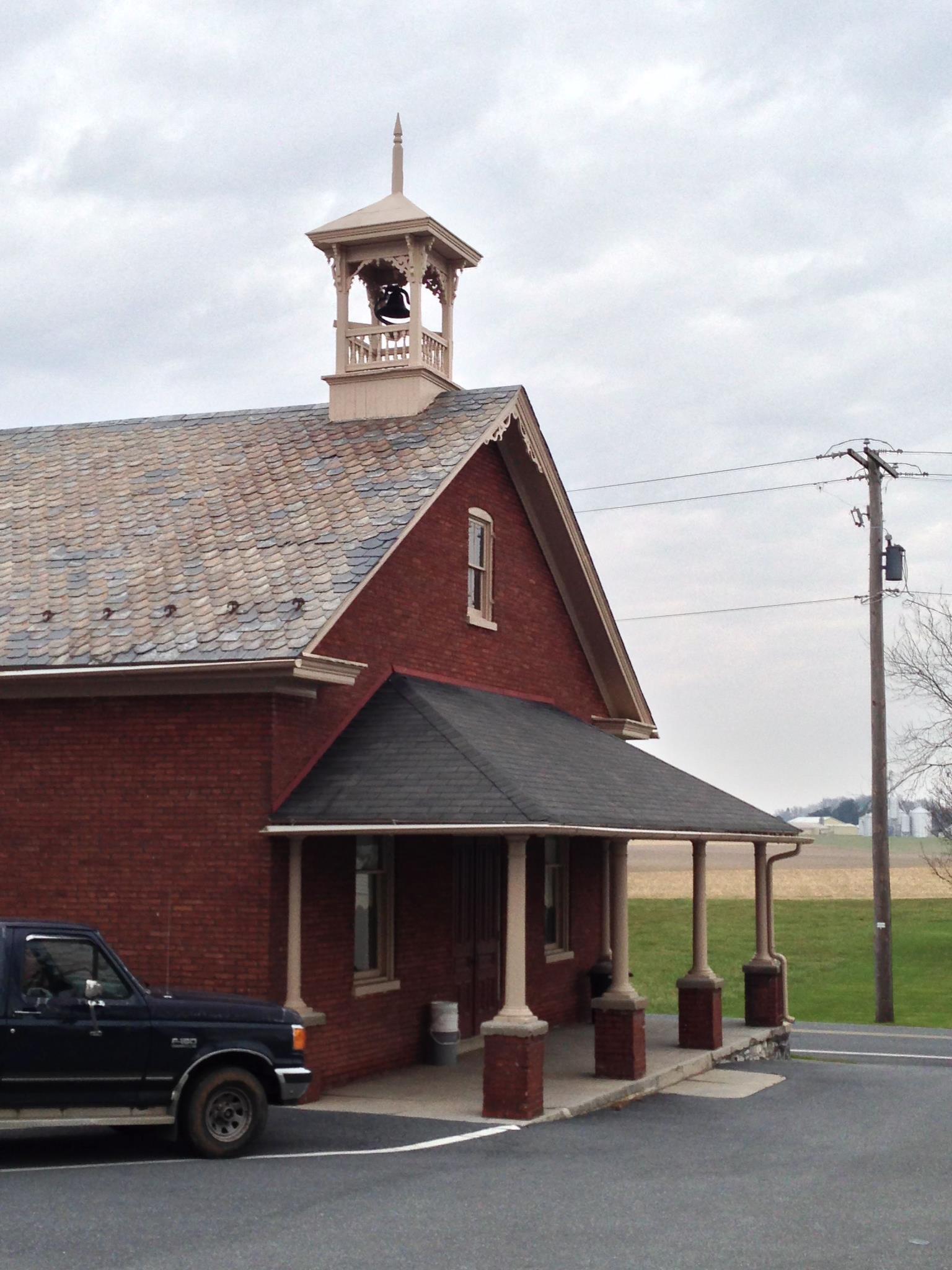
Bossler Church, which celebrated its bicentennial in 2011, was not at all fancy: white building with no steeple and a separate door for the women to enter at the left of the main entrance.

ChurchExterior

The interior too was spare with a middle aisle separating two rows of benches, the one on the right for the men. The other on the left for women. When Mr. Christian Clown Daring Do visited with me one Sunday, he plopped down on the women’s side, mortifying everyone including me.

Bossler Interior_mod_

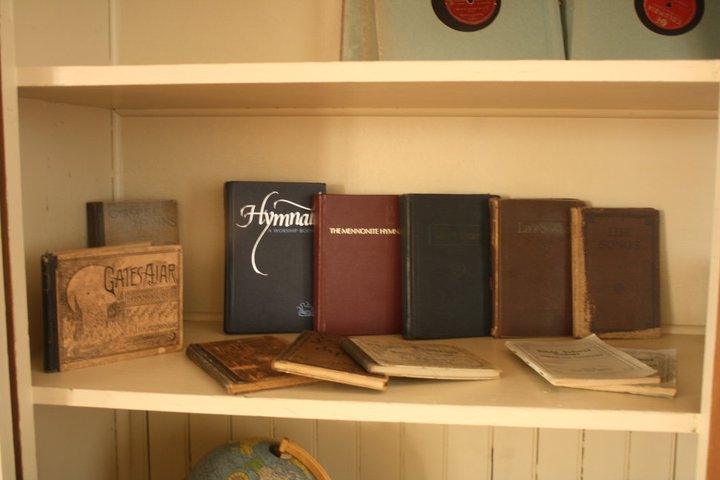
The separate sections, however, made for a wonderful blend of voices when we sang a capella in four-part harmony. No piano or organ in sight.

hymnbooks  Screen shot 2013-03-23 at 8.46.30 AM

Of course, no fancy garb for members or minister: plain coat and sometimes a beard for the men, and a caped dress with a prayer veiling for women. Usually the older women had black ribbon attached to the veiling while the younger ones had white ones.

PastorFred plainCoupleBlack plaingirl

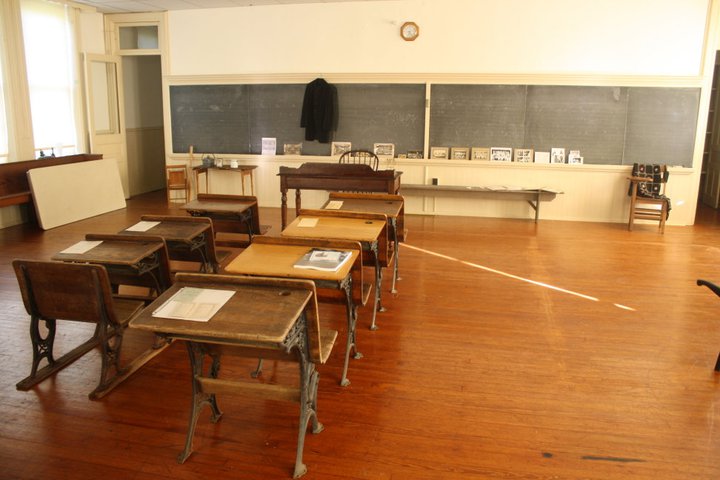
Next to the church was Washington School grades 1 – 8 with our church deacon once serving as schoolmaster: fancy bell tower, plain interior embellished only with replicas of

SchoolBell     Gilbert Stuart’s painting of Washington and Lincoln, an American flag, and little cards for each letter of the alphabet, printed lower and upper case set above the blackboard.

schoolexterior   schooldesks  original desks                                                                                                                       on display

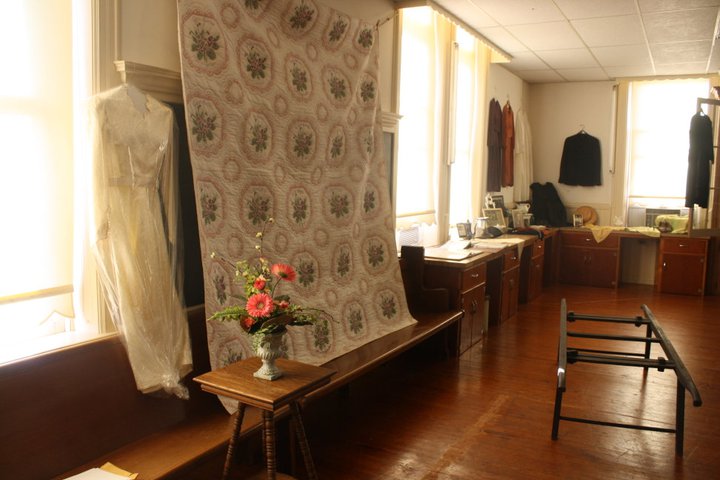
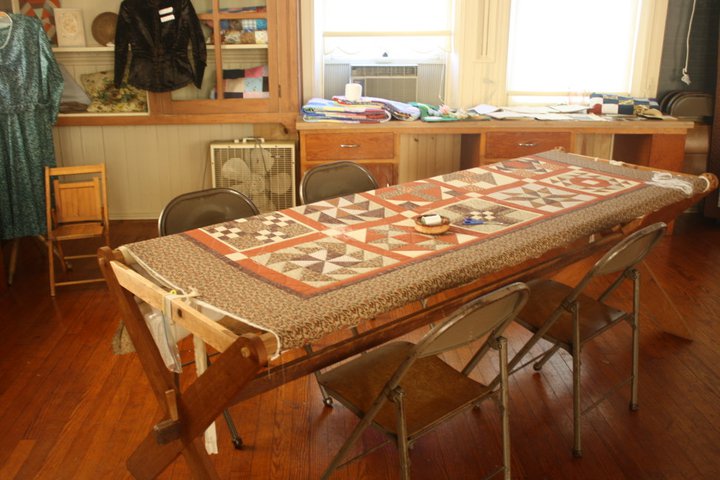
For Mennonites, the church was the hub of social life. When Howard Longenecker’s barn burned down, twice, men were on hand for the barn raising. Women gathered regularly in an anteroom at the church, or, later, at the school for sewing circle where they made comforters, baby blankets, and quilts.

quiltverticalquiltSchoolhouse

Plain or fancy? Which do I choose?  I choose both–as long as they are beautiful. “A thing of beauty is a joy forever.”      John Keats, Endymion

To some, my story seems quaint and odd. To others, it resonates because you share a similar heritage. What experiences in your childhood or teens do you think curious readers would like to know about?

Nice Ice, Snow Aglow

Credit: Guideposts
Credit: Guideposts

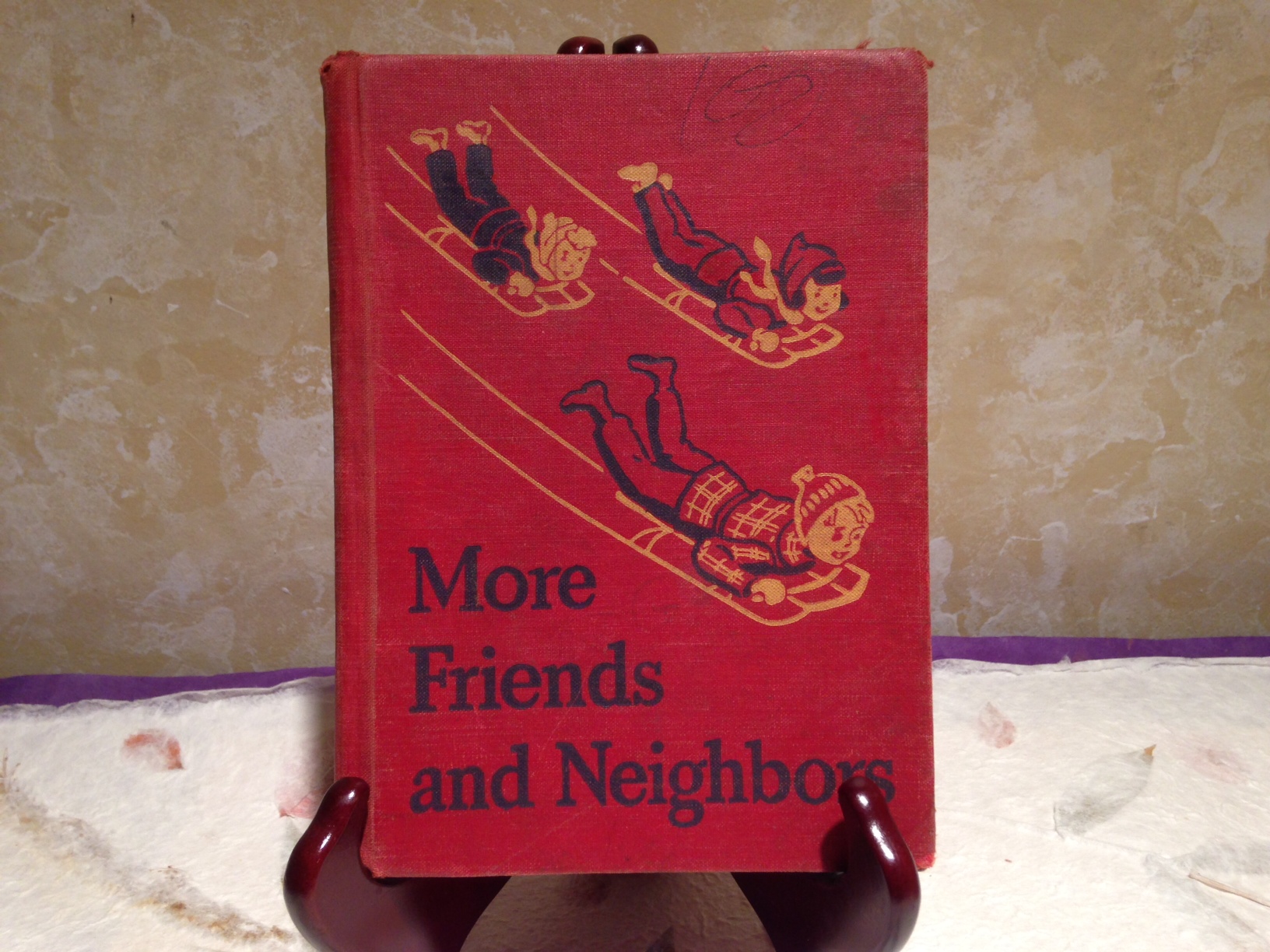
OldSchBook

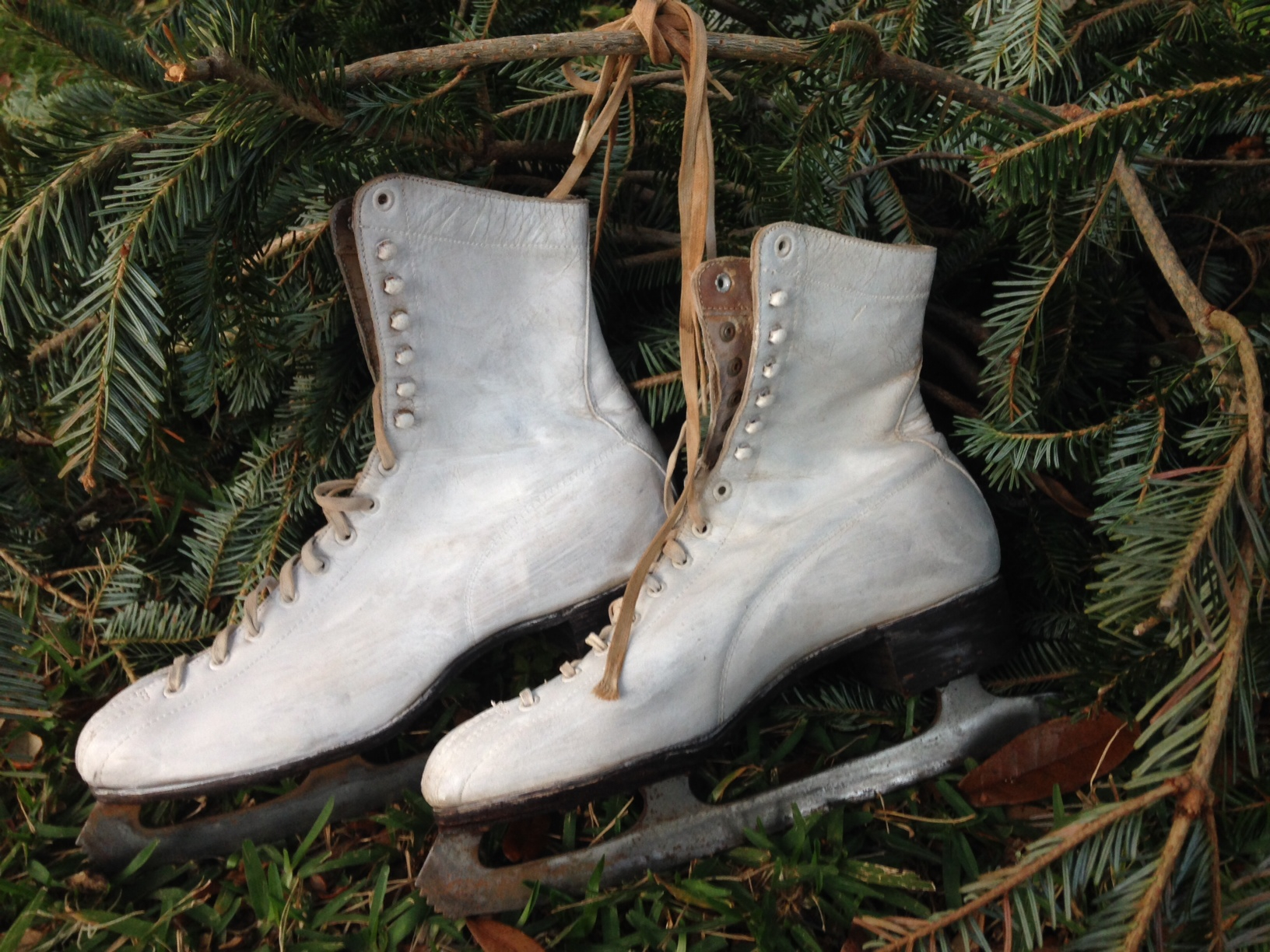
Prickly winter air . . . crunchy, crusty snow . . . Flexible Flyer sleds . . . wet mittens . . . white leather ice skates.


Vintage skates now in the recycling bin!
Vintage skates just before they were tossed into the recycling bin!

All my memories of winter time in Lancaster County, Pennsylvania, are good ones. Cold, soggy socks warmed up and dried out on the heat register in Grandma Longenecker’s kitchen. Frozen lips thawed by hot chocolate with fat little marshmallows bobbing up and down.

Yes, there was snow and there was ice, sometimes both the same weekend. On snowy days and nights when traffic was at a stand-still, two Longenecker Flexible Flyer sleds zipped down the curve of the long hill between our house and Grandma’s. (There were more children than sleds, so we had to take turns.) Alongside the woods, there was another, shorter hill with a steeper grade for a faster thrill.

FlexibleFlierSled

The ice was nice on Heisey’s pond. The Heiseys, Jap and Winnie, owned the limestone quarry on the edge of Rheems, and Winnie Heisey’s  pond was filled with skaters, including me, especially on Sunday afternoons. Some skaters waltzed around the perimeter of the pond. Some played crack the whip with most landing on their behinds as the tail of skaters at the end of the line flew off in other directions. Some wobbly beginners skated slowly. The expert ones skated forward and backwards. Since it required wiggling the behind just so, I could never master this move.

IceSkatingPond

Just now, can you hear the melody line of The Skater’s Waltz by Emil Waldteufel? His name would fit right in with the listings in a Lancaster County, PA phone book, but Waldteufel was not actually German, but an Alsatian Frenchman inspired by ice-skaters venturing onto the frozen Seine River in Paris. News to me!

In the orchestral piece, composer Waldteufel captures the mood of serene skaters with graceful rising and falling lines but then interjects exuberance with bouncy notes and even some sleigh bells.

The piano doesn’t do the waltz justice, but it should bring back a memory or two!

Tell us your winter memories. Do they involve sledding? Ice skating? Something else?

New year, new opportunity: Vote for My Gutsy Story @

Vote For Your Favorite December 2013 “My Gutsy Story®”

Blog_Please Vote_3x3_300

Haven’t read it yet? There’s still time!

http://soniamarsh.com/2013/12/rising-above-the-pettiness-to-focus-on-the-positive-by-marian-beaman.html

Voting for My Gutsy December 2013 Story began Jan. 2 and ends Jan. 15, 2014.

THANK YOU!