A Dozen Daughters: My Mother’s Other Family

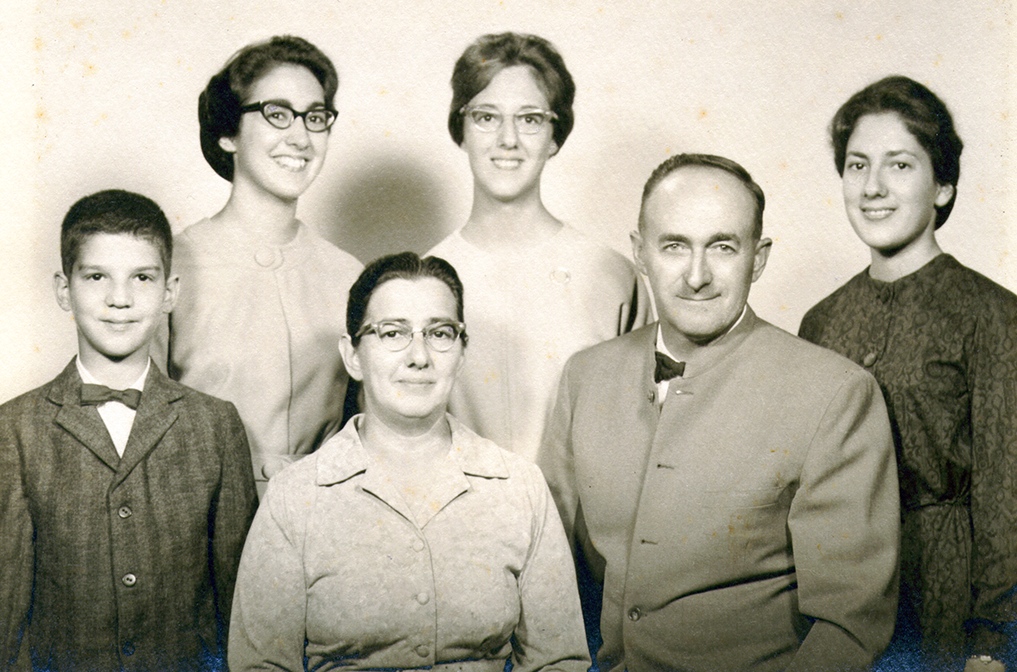
Longenecker family portrait circa 1961: Mark, Marian, Janice, Jean with parents

This is the family I grew up in: my parents Ray and Ruth with my two sisters and one brother. But after I left home and eventually married, my parents had more children. No, my mother was not a modern-day Sarah. She didn’t have babies in old age. But in their early sixties, Mother and Daddy “adopted” another set of children, about a dozen daughters in all, through an agency called New Life for Girls.

Because they entered my parents’ lives after I left home, I never felt jealous of them. They were simply unknown to me, mysterious. Oh, I did meet two of them, Gloria and Julie. They came to see my mother when she visited her first two grandsons born in Chicago in 2003. By then these girls both had grown children of their own.

Gloria’s Story

Gloria grew up in inner city Chicago with an alcoholic father who beat her mother and more than once tried to choke her with a dog chain. Her mother, single now with 8 children to feed, had to go to work. Alone in the world, Gloria turned to drugs and men, looking for love. She set her sights on rich men, men she hoped would take care of her. But the rich men were users, drug dealers or worse. Not surprisingly, Gloria became pregnant at age 14.

One day an evangelist named Brother Raymond, came into Gloria’s neighborhood. She responded to this kind man’s message of salvation and made a profession of faith in Jesus Christ. Though her heart had changed, Gloria’s life didn’t get any easier. Several times she slid back into her old ways and had more babies out of wed-lock. The hard times made her harder. She became tough as nails, always looking for a fight.

Finally, Brother Raymond suggested a way out. “There is an agency called New Life for Girls in Pennsylvania that might help you get your life on track. To enter their program though you would have to agree to their rules and stick by them. Also, your children would be staying in a separate facility.”

Gloria: “Oh no, I can’t be separated from my children!”

Brother Raymond: “Well, then we’ll try to find a host family for you, so that on weekends you can visit with them in a nice Christian home in the country.”

And that’s how my parents’ lives intersected with Gloria’s.

Weekends with the Longeneckers

Gloria was looking for an anchor and she found one in her weekend visits to the Longenecker family on Anchor Road near Elizabethtown. Pennsylvania. Most importantly, she could be with her children. Mother and Daddy would pick Gloria up at the train station with her four children who played with toys including the same marble-roller I played with as a child.
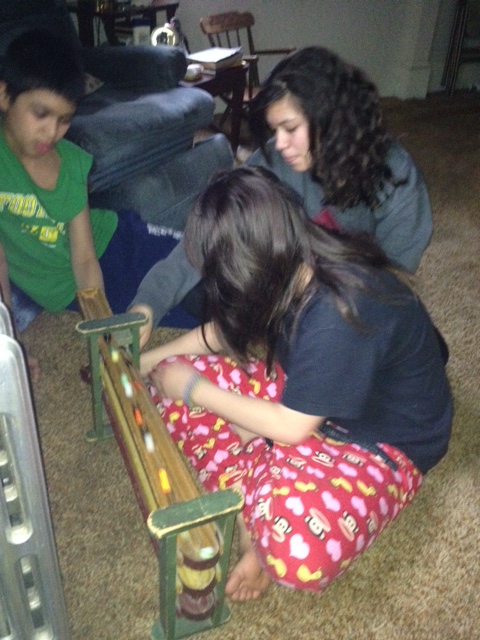
Gloria's grand-children playing with the same marble-roller we had as children: Demetri 12, Inani 13, and Samantha 10.
Gloria’s grand-children playing with the same marble-roller we had as children:
Demetri 12, Inani 13, and Samantha 10.

And she could enjoy Lancaster County abundance. “This is how life should be,” Gloria exclaims as she recalls some of her favorite things:

  • Going to Root’s Sale where fresh farm produce abounds.
  • Helping Mom make applesauce with her metal sieve and wooden mallet.
  • Turning the crank on the ice cream churn, always vanilla with Hershey’s chocolate syrup and peanut sprinkles.
  • Helping with quilting at Bossler’s Mennonite Church Sewing Circle.
  • Eating fresh corn on the cob – and fresh tomatoes out of the garden, both dripping juice.
  • Making tangy home-made root beer from Hires Root Beer Extract, the two-quart jars cooling on their sides in the cellar.
  • Having devotions with my parents on Sunday morning after which my dad would march over to the piano and bang out the melody to “Fill My Cup, Lord,” singing at the top of his lungs.
  • Following the Longenecker rules. And to the letter.

My brother Mark still lived at home when Gloria and her children visited, so she got some first-hand tips on getting children to obey. When Mark questioned Mother about why he had to get up and go to church Sunday morning, Mom would reply, “Because you’re in my house and that is the rule.”

But Gloria recalls Mother’s softer side when she tearfully called her at one point to break the news about yet another unplanned pregnancy: “She never criticized me; she stood by me, and said “’You just have to trust that God is still in control.’”
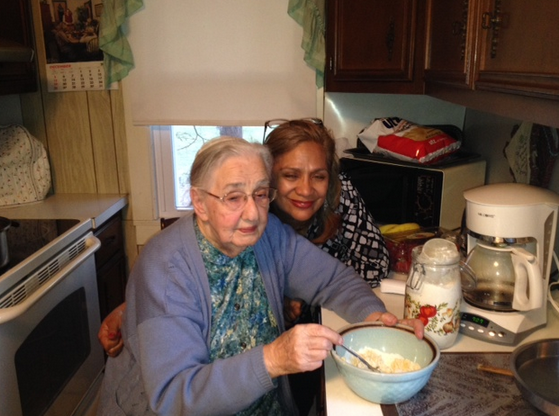
Gloria Araujo In kitchen with Mother (age 95)
Gloria Araujo in kitchen with Mother (age 95) April 2014

Gloria Today

Over the years, Gloria has told her own children and grand-children this same bold statement when they question her authority: “Because you’re in my house and that is the rule.” And she teaches her clients how to use firm discipline with their children in her role as a social worker at The First Baptist Church of Wheaton, Illinois, where she has recently been appointed deaconess.

“Now I work with many Cuban refugees, help them get into an apartment, find jobs and medical aid—set them on the right track. It feels so good to see lives changed,” she says.

In Retrospect

In a little green autograph book sitting on one of Mother’s living room end tables are listed all the names of the girls from New Life my parents have hosted. This April in her recent visit, Gloria noticed that her name was the first one to be signed in 1978, along with her sister Julie’s. After the signatures of 11-12 other girls, she signed the book again. “It’s only suitable that I sign the last page,” she says.

Therefore if any man is in Christ, he is a new creature:

the old things are passed away; behold, all things become new.

​​2 Corinthians 5:17

 Motto of New Life for Girls


Secrets of My Report Card & Other Tall Tales

My mother saved all my report cards. When I retrieved them from the attic, only grade 8 was missing. They are tall documents, sheathed in a coarse, brown envelope. And they speak for me as a student: mostly A’s with a smattering of Bs. Once I got a C- on a history final exam the year my brother Mark was born.

Marian_2nd grade report card_outside_4x4_300

Aside from letter grades A – F (No S’s, N’s or U’s in the 1950s), there is a full page of my elementary school report card devoted to behavior, including attitude toward school work, recitation, and conduct. In second grade, Miss Longenecker checked the box for “Gives Up too Easily.” I was beyond surprised. I was stunned that my teacher who was also my aunt would think that I was a quitter. What made her think that, I wondered. Did I throw down my pencil when I couldn’t do arithmetic? Or start bawling? The next marking period, the box for “Shows improvement” was checked.

Marian_report card_inside_8x6_300

In 5th grade negative check-marks showed up for my conduct. Imagining my teacher Mrs. Elsie Kilhefner would not notice or care, I whispered, earning the tick beside the box “Whispers too much.” The report cards following show I whispered constantly, every once in a while showing a tendency to reform my chatty ways.

Of the 23 ways behavior could be described on these old-fashioned report cards most were negative. Only three indicate something positive, one for each category: very commendable (attitude), very satisfactory (recitation), and very good (conduct). The adage “Children are to be seen and not heard” was prominent in the adult-centered society of the 50s. Not one teacher that I remember told us we were special and destined for greatness.

Since then American culture has leaned more toward the child-centered. In the 1970s my children Crista and Joel heard Mr. Rogers tell them on TV “You are my Friend, You are Special.”

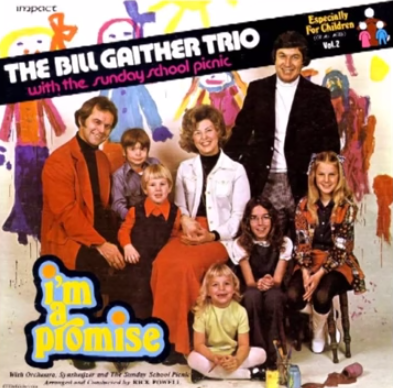
They sang along with the Gaither tune: I am a Promise, I am a possibility. I am a promise with a capital “P” with one stanza that shouts: “You can climb the high mountain and cross the broad sea . . . .”

Cover: Gaither "I am a Promise" album
Cover: Gaither “I am a Promise” album

In 2012 David McCullough Jr. made a 12 3/4-minute speech to the graduating class of Wellesley High School in Massachusetts before a group of privileged, upper-class teens and their perceived-to-be “helicopter” parents.  The speech went viral on YouTube. Entitled “You are Not Special,” McCullough argues that if everyone is special, then no one is.

Other rich points:

1. We have come to love our accolades more than our achievements.(Don’t go to Guatemala so you can impress admissions at Harvard or Yale. Go because you want to serve the people there.)

2. “Selflessness is the best thing you can do for yourself.”

3. Climb the mountain so you can see the world, not so that world can see you.

YourTube screen capture
YouTube screen capture

In other words, through service to others, stand tall  – like my report card from days of yore.

I’m always happy to see your thoughts here – thanks!

7 Things I Do that Remind Me of Home

Over forty years ago I left Lancaster county and my Mennonite life. Though I have visited dozens of times since then, Jacksonville, Florida, has been my home. Nonetheless, every single day I notice myself repeating rituals that reveal the imprint of my early training.

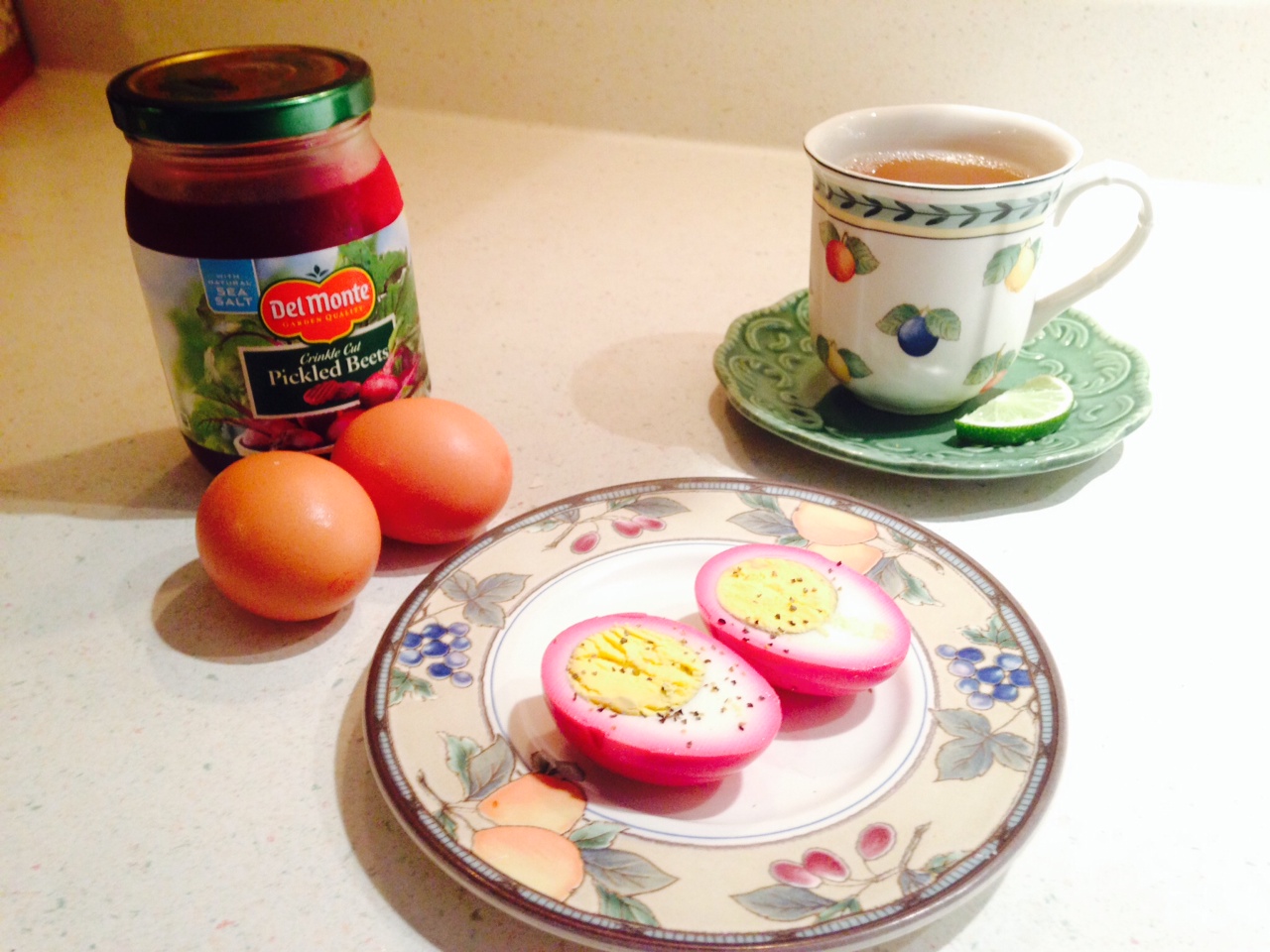
1. Eat pickled eggs – Usually reserved for Sunday dinners and picnics, I eat them for breakfast almost daily now.

Hard-boiled eggs pickled in beet juice

2.“Outen the light” – I don’t use that Pennsylvania Dutch expression any more, but when no one is in a room, I make sure the light switch is turned off. “Don’t burn a hole in the daylight” is a saying that has burned into my psyche.

3. Wash dishes – Mother never had a dishwasher, except her own hands. Though I’ve had a dishwasher most of my married life, I often wash dishes by hand: fine china, big kettles, forks. Sometimes warm, soapy water is soothing.

Daddy drying dishes - Only on Sundays after church!
Daddy drying dishes – Only on Sundays after church!

4. Re-use aluminum foil –  I never use Reynolds Wrap only once. It is cleaned off, folded and stored for multiple uses. (But I don’t scrape the residue from the wrapper of a stick of butter anymore unless it’s a big hunk. )

5. Tidy up – After retiring from full-time teaching, I dismissed my cleaning lady, so cleaning the house is in my domain once again. Dusting is the bane of my life, but I can’t abide dirty floors. Mother’s house was cleaned stem to stern once a week on a Friday with deep cleaning heralding the spring and fall seasons.

6. Water the maiden-hair fern – Grandma Longenecker loved ferns. She loved the misty, floaty, lacy aesthetic of ferns. My sister Janice has kept alive some off-shoots of Grandma’s. Here’s my maiden-hair fern:

fern

7. Go up and down stairs – The Longenecker home place has 2 floors and an attic. The staircase between them has 18 steps. When it was time for bed, Mother would say, “It’s time to go up the wooden hill!” Now at almost 96, she still uses her stairs, once in the morning and once at bed-time. Bowed with age into an L-shape she ascends, fiercely defending her independence.

Our tri-level has a pair of stairs, 7 steps each. Good for keeping those calf muscles in shape.

If you don’t know what to do, just take the first step. “To take the first step in faith, you don’t have to see the whole staircase.”    Martin Luther King, Jr.


StaircaseBeaman

Are any of these points similar to those in your life?

What can you add to the list from your own experience?


Mennonite Flashback III: Rabbits and Rings

This is a sequel to a previous blog post: Flying the Coop: Leaving Mennonite Land with a link to my original story on Mary Gottschalk’s website.

His Story:

I proposed to Marian my Mennonite girl friend one snowy evening, my car stuck in a snow-bank. When she accepted my proposal, I also asked her, “Would you be willing to wear a ring?” This is the plain girl I have fallen in love with: no make-up, no jewelry, especially no ring on her finger, ever.

Now it’s close to Easter and Marian is flying down from Charlotte to spend the weekend with me in Jacksonville. Technically, she’ll be with me most of the time though she will spend the night at Mom and Pop Rea’s house, members of Fellowship Bible Church where I am youth pastor. No sleeping together before marriage.

I’ve been wracking my brain to find a way to make the ring presentation unforgettable—and a surprise too. So this is what I’ll do. I’ll make a ham dinner for her finishing it off with dessert, a cake with her engagement ring baked inside. No, wait! A cake is too big; the ring may get lost in it. I’d better make cupcakes or muffins. That’s it. A blueberry muffin. She’ll find that ring for sure if I wrap it four or five times with tin foil.

And I’ll make some rabbit cutouts with toothpicks, blue for me and red for her, so I know which muffin the ring has been baked in.

Scanned from the original bunny sticks, 1967

Her Story:

Charlotte is my home this year, but with every stitch of my wedding gown, I dream of my life with soon-to-be-husband Cliff in Florida. Easter weekend I take an Eastern Airlines flight to Jacksonville. The carefree, goofy guy I have fallen in love with has hit real life, teaching sixth-graders in an inner city school. He has also exchanged a college dorm for a $ 50.00 per month, second-story garage apartment with a turquoise-teal kitchen, where I will live after our honeymoon. But his humble abode has not killed romance and his wish to entertain.

We sit down to a home-made ham dinner.

The Discovery:

Dessert is served. Oh, little bunny muffins, I think. How cute even if they’re from a mix. I take 2-3 bites and my teeth strike something hard and metallic. Uh-oh. I don’t want to embarrass Cliff by exposing his lack of baking expertise, so I try to hide the wad of foil under my plate. Eying what I think is a faux pas, he urges, “Why don’t you see what’s inside?” Cautious but obliging, I unwrap the layers and layers of foil, and my eyes pop with pleasure – a glittering diamond solitaire, my first ring ever.

Postscript: Years later when I am a young mother, I remove the ring to apply lotion to my hands, placing it on a top of the bedroom dresser. What happens later occurs out of sight and only in our reconstructed memory: Three-year-old daughter Crista finds the ring and puts it on. Wearing it to go potty, she flushes my diamond down drain. Screams ensue. Cliff digs frantically into the lawn hoping the ring has gotten lodged somehow in the trap of the drain pipe before flowing into the Neverland of the city sewer .  .  .  to no avail.

Stand-in for the Original

What story can you share about receiving a special piece of jewelry?


Have you ever lost something precious? A family heirloom?


We always learn something from your comments. Thank you!

Disappearing Images: 7 Items Missing in Mom’s Bedroom

Mother Longenecker still lives in the same house she and Daddy bought soon after they got married in 1940. Their bedroom looked the same for decades, but it’s changed over the years. Here’s what is missing . . . and what I remember from so long ago.

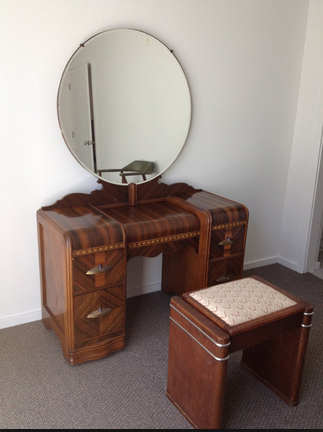
1. The Art Deco inlaid-wood vanity where Mother sits on a bench to comb her long, glossy black hair before twisting it into a bun topped with a Mennonite covering.

Courtesy Google Images

2. A matching wardrobe smelling of moth balls and a copy of Sane Sex Life, with a dust cover of scarlet red and white. Black and white pen illustrations included. Eyes wide in wonder.

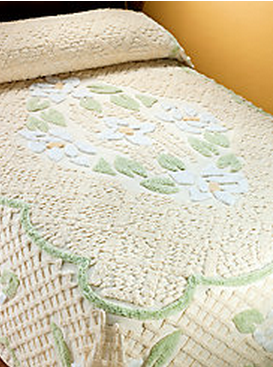
3. The chenille bedspread. I love the fluffy texture and the furry feeling under the pillows when I smooth the spread as I make my parents’ bed.

ChenilleBedspread 4. A skinny box with a silky slip inside wrapped in white tissue, brought home from a shopping trip to Hagar’s, Garvins, or Watt & Shand in Lancaster. We sometimes call them petticoats.

5. Evening in Paris cologne. Did Mom buy it for herself or was it a birthday gift from Daddy?

 EveningInParisCologne

6. A jar of Noxzema. Sticking a finger deep in and gouging out a spoon of cleansing cream that feels cold on my skin even in the summertime. Can you smell the camphor and menthol just now? Maybe a touch of eucalyptus?

7. Daddy. He died in 1985.


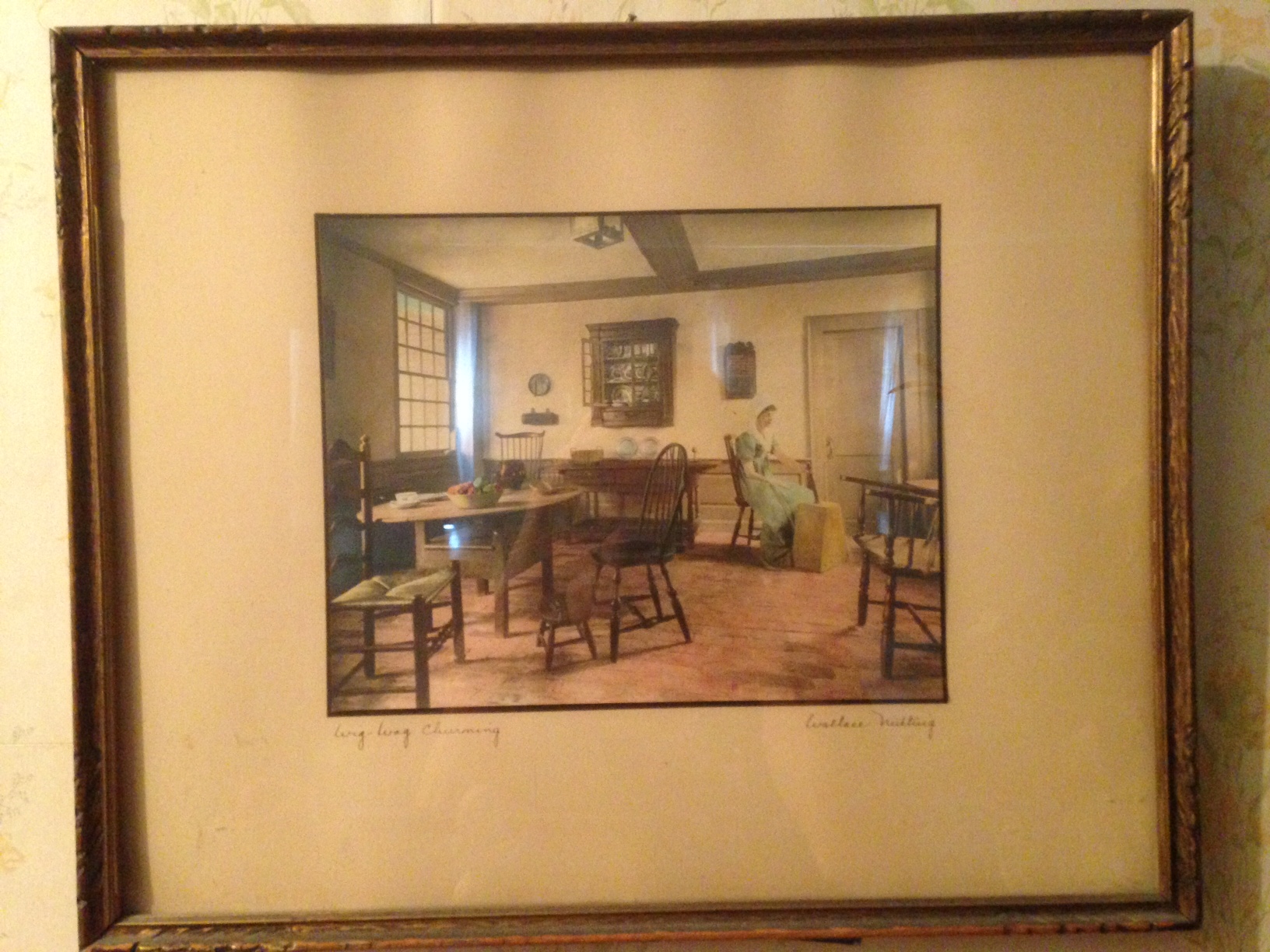
Postcript: What is still there? Hanging on the wall above a highboy, a framed pastel-tinted print by Wallace Nutting. The title on the left reads “Wig Wag Churning” (girl seated churning butter). A phrase on the right: “Wallace Nutting.” As a youngster, I kept looking for a boy named Wallace cracking nuts. Much later I figure out Mr. Nutting must be the artist.

WIgWagChurning

What images or scents do you associate with your mother?

Another loved one?

Flying the Coop: Leaving Mennonite Land (guest post)

In the movie based on Beverly Lewis’ best-selling romance novel The Shunning, pretty Katie Lapp senses something is missing in her simple Amish life. Then a fancy woman comes to Lancaster County looking for the baby girl she gave up for adoption nearly 20 years earlier. When Katie makes the connection between this woman and her own existence, she takes a bus to explore life beyond the boundaries of her Amish upbringing.

Cover image via Amazon

I’m not a character in a best-selling novel, but I did venture beyond the limits of my own Mennonite life to explore a different style of life. Unlike Katie, I wasn’t shunned. But, like her, I did take a bus, a Greyhound bus, to move on.

Today my story is featured on the blog of Mary Gottschalk, who got out of her own comfort zone by sailing the open seas with her husband in a 13,000 mile adventure she recounts in her memoir Sailing down the Moonbeam. Click here to meet this fascinating author and also read my post on stepping into a new world.

2 Easter Vignettes: Sacred and Sentimental

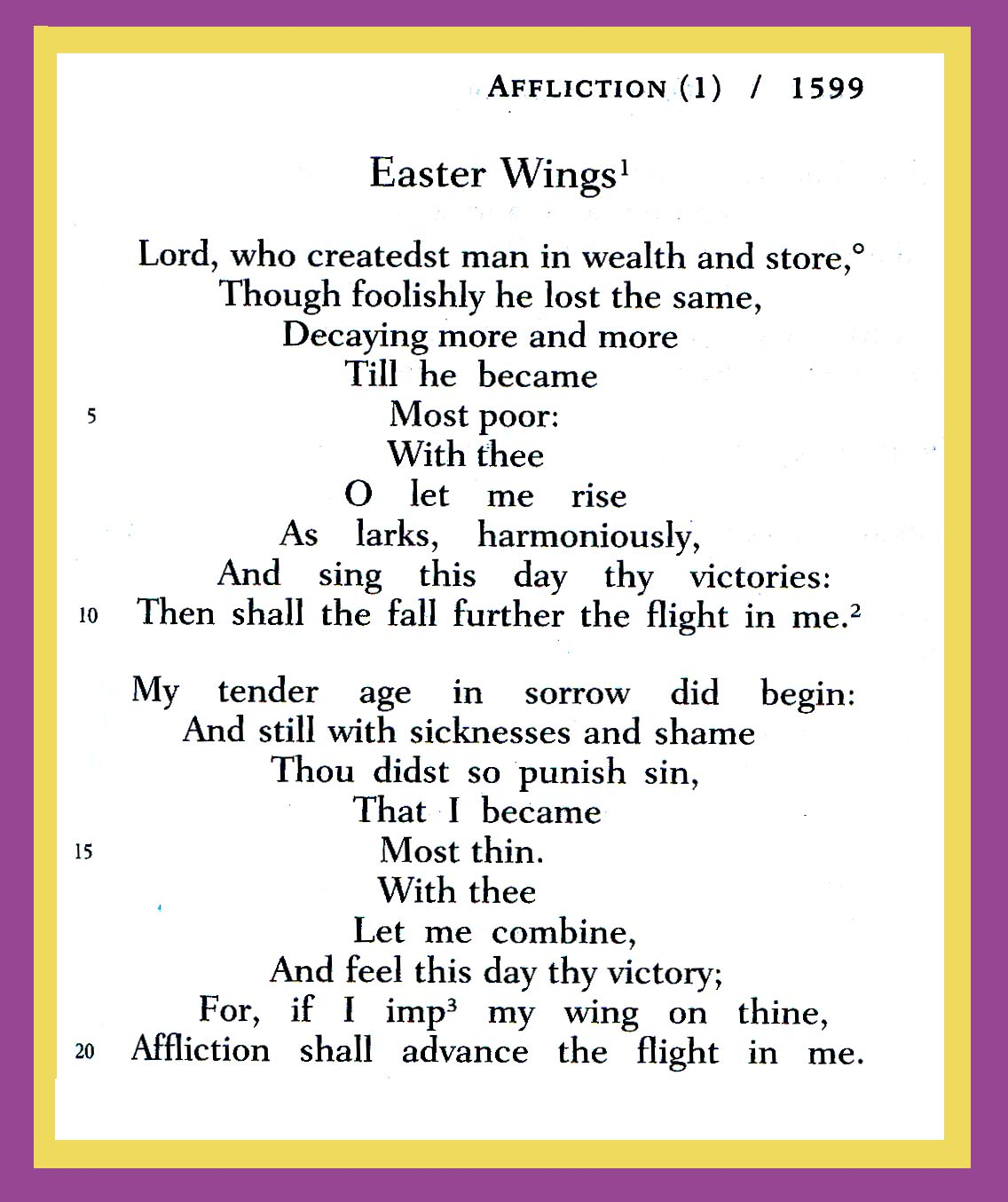
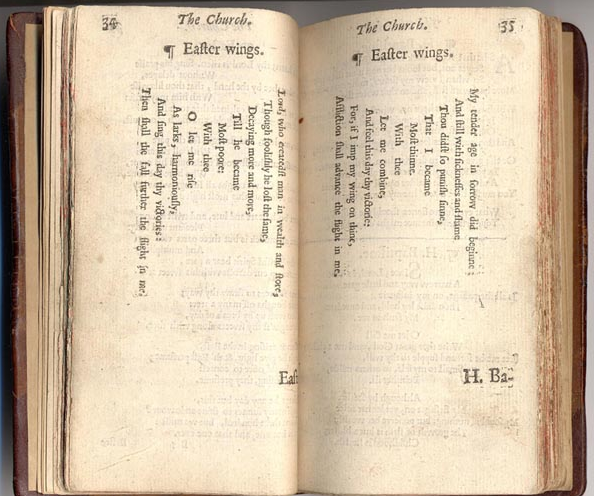
* Poem for Easter – British poet George Herbert loved to explore the soul’s inner architecture. He often wrote poems with shapes representing a theme, the resurrection in this case. The poetic lines, “increasing and decreasing to imitate flight,” also mimic the spiritual experience of rising and falling.

Easter WingsVertical_poem_4x5_300

Then viewed vertically the poem displays images of two butterflies, symbols of new life: Emblem poetry (technopaegnia) printed in a shape that reflects the subject of the poem.

Manuscript from the Bodleian Collection, Oxford University, 1633

Since by long centuries of custom the date of Easter is annually determined from the first Sunday after the full moon on or after March 21, the intertwining of physical and spiritual seasons is virtually inevitable.

Wisdom in Waiting: Spring’s Sacred Days by Phyllis Tickle

* Easter parade at Rheems Elementary School

My Mennonite school teacher, Miss Ruth Longenecker, was an artist. Though she dressed plainly with hair in a bun and a standard regulation prayer covering, her life brimmed with color, design, and pageantry. She painted in oils, preserving the old sycamore tree by the bridge at the old Martin home place on canvas:

Sycamore tree and bridge along lane leading up to the Martin farm Oil painting by Ruth Martin Longenecker
Sycamore tree and bridge along lane leading up to the Martin farm       Oil painting by Ruth Martin Longenecker

In her classroom at Christmas time was a tall tree laden with brilliant bulbs and glistening tinsel at school, though Mennonites were discouraged from having worldly Christmas trees at home. For St. Patrick’s Day, my classmates and I wore Derby hats and huge green shamrocks. But Easter was a real blow-out. Students brought hats and silky flowers from home to add to the creative collection (pasted, stapled, sewed). We paraded up and down the village streets near Rheems Elementary School, our teacher preserving the frivolity on her 16 mm movie film. Even the boys wore hats, some even more flower-encrusted than the girls.

Hand-made millinery on display at Rheems Elementary School

Thank you for commenting. You can count on me to reply.

The conversation continues . . . .

Coming Monday: Guest post on Mary Gottschalk’s blog: Flying the Coop: Leaving Mennonite Land

Easter at Grandpa Martin’s Farm: Freshest Eggs Ever

Easter eggs on the farm? Why sure – Fresh eggs from Aunt Sue’s chicken pen, popped into her kettle of water brought to a boil in the kitchen. And then in short order, eggs cooling on the counter soon ready for us to paint. With paint wands made of little wisps of cotton wrapped around tooth-picks, my sisters and I with all the other little cousins make squiggly lines, circles and scallop shapes on the curvy shells, filling them in with rainbow colors.  Sometimes we even add little bunny or flower stickers. But all that artistry happens after devouring the Easter ham.

Easter egg dyeGrandma Longenecker’s sister Aunt Sue Martin, who never married, lived on the farm and took care of Great-Grandpa Sam after his wife Mary died. I’m about six now, and Easter dinner is celebrated around the table at the old home place in Dauphin County close to Middletown, PA. Families of Uncle Joe, Uncle Frank, and Grandma surround the table laden with ham, turkey, home-preserved vegetables, and finally desserts. The clucking of chickens and a few dog barks offer background sound to the talk, usually about politics and family matters. Before or after the meal, Aunt Sue, actually my great aunt, feeds her other hungry brood, here with my sister Janice.

Women learn early that anything that is alive is a potential and probable responsibility.

Phyllis Tickle, The Graces We Remember: Sacred Days of Ordinary Time (61)

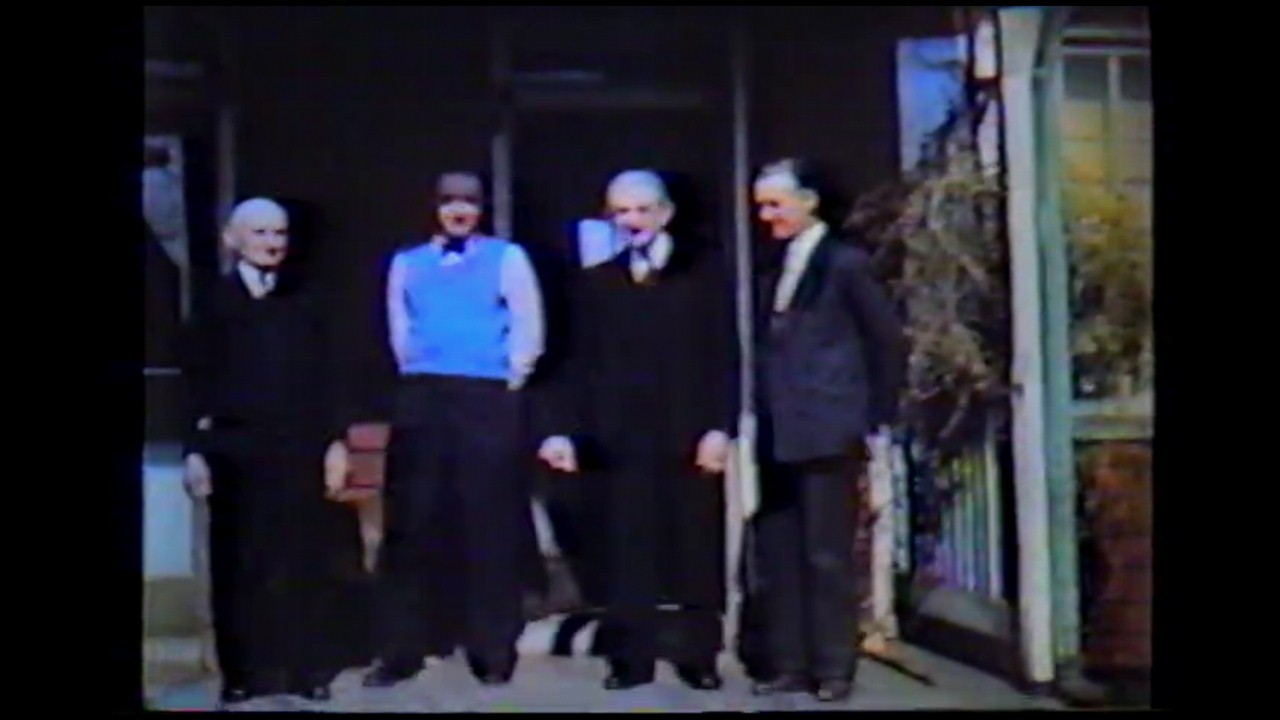
After the drowse-inducing pies and puddings, it is picture posing time. Aunt Ruthie with her new-fangled movie camera captures various relatives posing on the porch.

Grandpa Sam, my Dad, Cousin Leonard, Uncle Joe

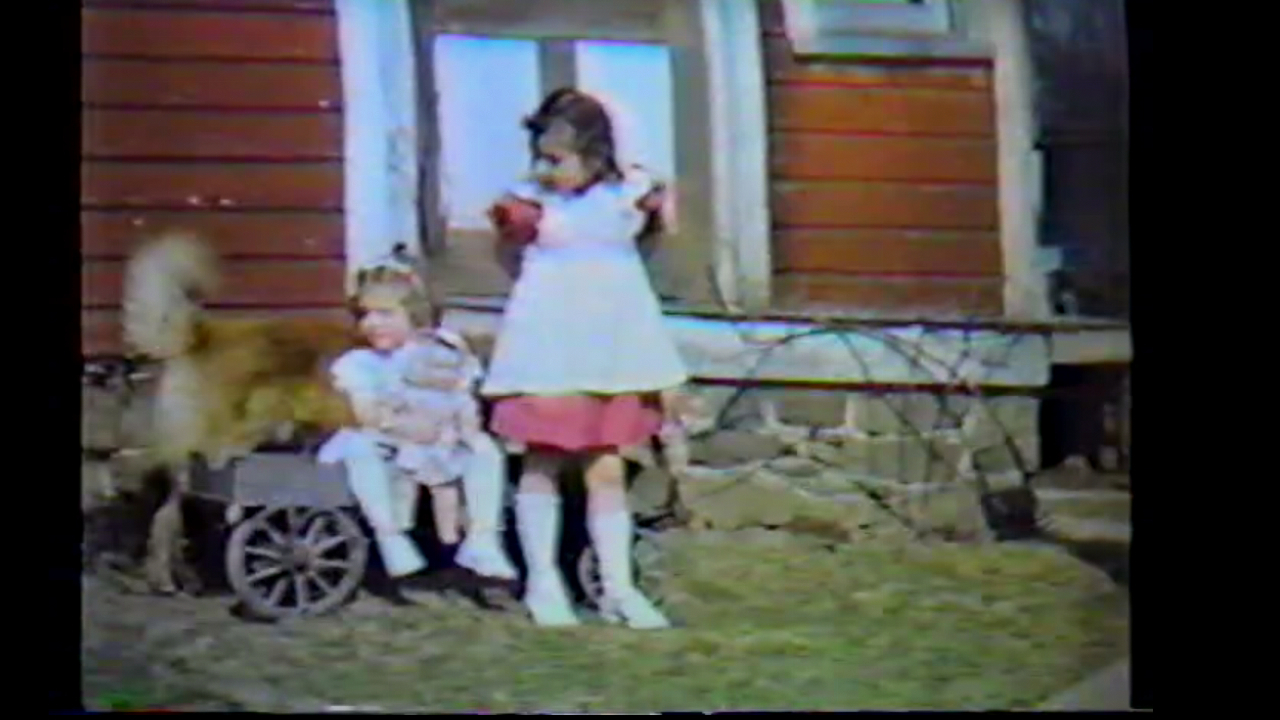
And then we play some more. Make up our own fun. Just the collie dog, a wagon, and the wide open meadows down by the creek are all it takes to keep us happy!

GrandpaSamWagonSnapshot000020
Marian and sister Janice with her dolly on Easter

Do your Easter memories include attending a church service? Eating a meal with relatives? Painting eggs? Hunting for Easter eggs?

What do you think of the quote by author Phyllis Tickle?

EggShells

Amish Buggies: They Come in Colors

When I bring 5-pound bags of Wenger’s famous ham-loaf frozen from Pennsylvania to Florida, the plastic-coated tubs of meat are wrapped in newspaper and then shrink-wrapped in plastic. The wrapping on one of the packages revealed answers to the intriguing question: Who make Amish buggies?

Amish Buggies1_5x5_300

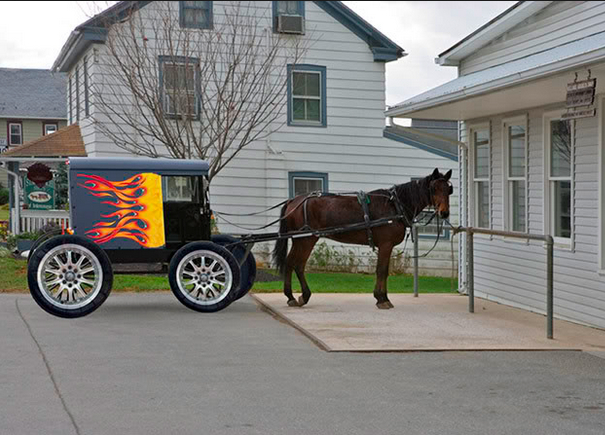
Writer Jack Brubaker born in Bird-in-Hand, PA keeps Lancaster Countians informed about local culture, history, and humor in his syndicated column The Scribbler. In the Tuesday, October 1, 2013 edition of the Intelligencer Journal/Lancaster New Era, Jack noted that a reader from Mount Joy, PA requested more details about Amish buggies. The reader had never seen a used buggy lot and wondered if the Amish recycle buggies. Also, he had been to Indiana recently and saw the Amish using buggies with slanted undercarriages that looked like an armored Humvee. Here are the main points of Jack The Scribbler’s response to his reader:

  • “Jake King, the Amish operator of Weavertown Coach, along the Old Philadelphia Pike between Bird-in-Hand and Intercourse, says there are about 17 manufacturers of new Amish buggies in Lancaster County, Pennsylvania,” including his company which has its own wheelwright shop.
  • Buggy-making is a cooperative effort:  Five or six shops make buggy bodies, known as “the box.” Other businesses make axles, springs and wheels. Still others assemble fiberglass floors and side panels.
  • King says his various employees become good at one thing: “You have to be a good electrician, painter and upholstery trimmer.”
  • What is the cost of a new buggy? “The average carriage for the ‘young guys’ sells for about $ 8000, with a more elaborate dashboard and better grade of upholstery than the ordinary type of buggy which ranges from $ 6000-6500.
  • Buggy vs. car: Buggy resale is high. Buggies require a horse: $3000 for the animal plus harness and feed. But, King notes, “they also don’t drink $ 4-per-gallon gasoline.”
Courtesy Google Images
Courtesy Google Images                                          (Real . . . or a Photoshop job?)

The different colors and design reflect the owner’s community: Gray (PA), Black (Ohio and Indiana), Yellow (Byler Old Order Amish in Big Valley, Mifflin County, PA), White (Ohio), Brown (New Wilmington, PA and New York). Honestly, this surprised me as I think I’ve only ever seen black or dark gray buggies.

Like most Mennonites, Amish are thrifty, so of course they recycle their buggies, either through private sales or at spring “mud sales.”


Question Mark w border1_1x1_300


Are there Amish buggies in your community?

What new fact, opinion, or question can you add to the discussion?

Behind the Scenes @ “Plain and Fancy Girl”

Writing a blog post is magical–right? Words appear in the right order and photos sift down from above and settle into a nifty niche between paragraphs. Well, sort of . . . When I created the post Mennonites, Ventrlloquists, and Memoir, 3 things happened in succession:

1. In Vladimir Nabokov’s memoir I read that the author can “ventriloquize” his voice by inventing incidents, characters, and relationships.

2. The word “ventriloquize” sparked an image of Howdy Doody and the forbidden TV show I sneaked off to watch.

EmersonTVHowdyDoody

3. That reminded me of a story about our next door neighbors, the “red-light” Rentzels whom I wrote about 10 years ago.

Writing that post wasn’t fast or easy but it was smooth, not usually the case.

So I invite you to the website of author Kathleen Pooler, who is hosting me today in a blog post which features me “undressing” some of my posts in public. Click here for secrets divulged! (You can leave a comment below or better yet on Kathy’s blog.)