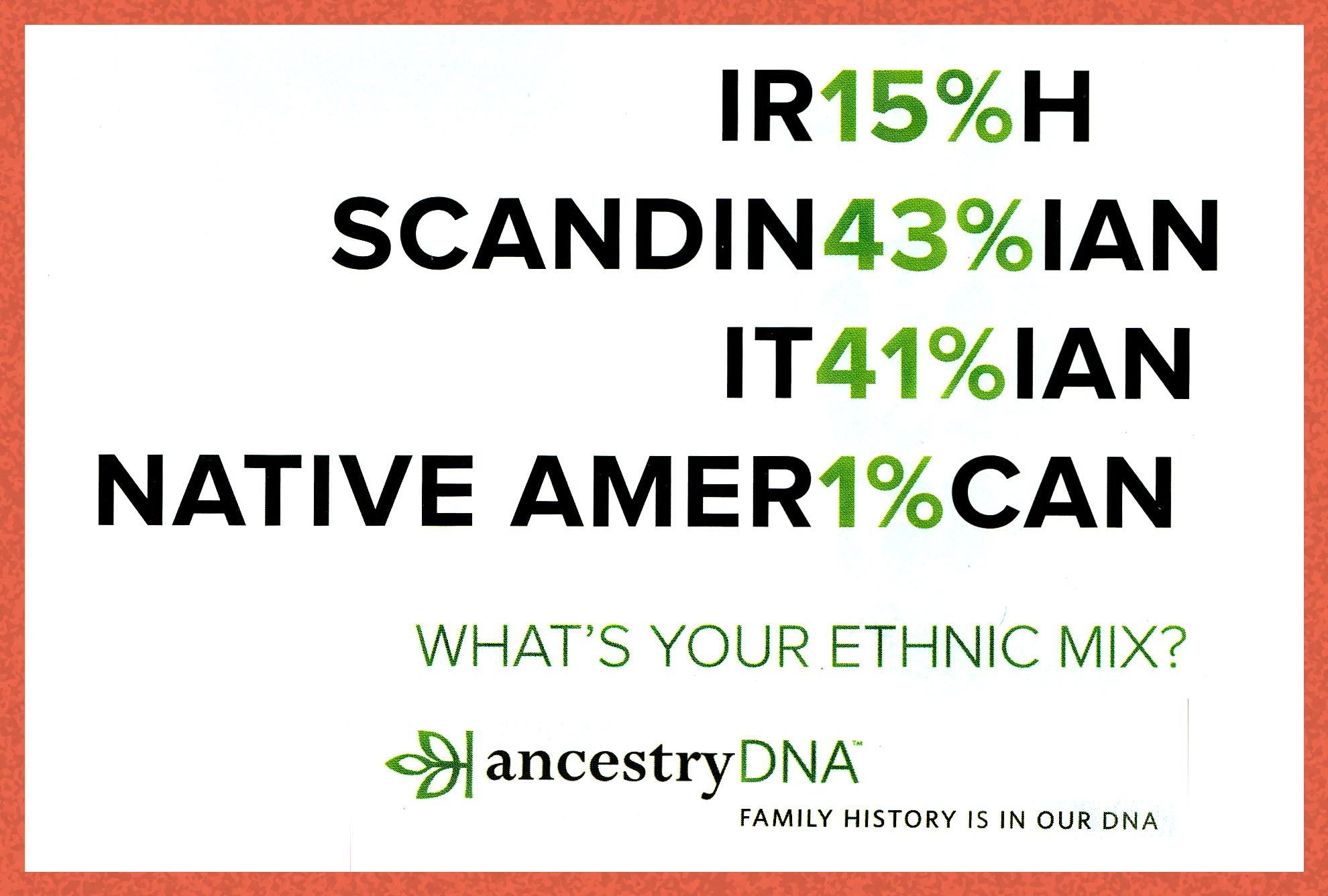
Do You Know Your Ethnic Mix?

“Your DNA has a story. It’s time to discover it,” invites an ad on the back cover of the February 10, 2014 issue of The New Yorker. “It’s easier than ever to discover your ethnic heritage – and possibly find new cousins along the way,” the advertisement continues. Simply send in a small saliva sample, the key to revealing your DNA strands, which will unlock the secrets of your ethnic roots and disclose where your ancestors lived up to a thousand years ago.
Blog_Ancestry+border_6x4_300

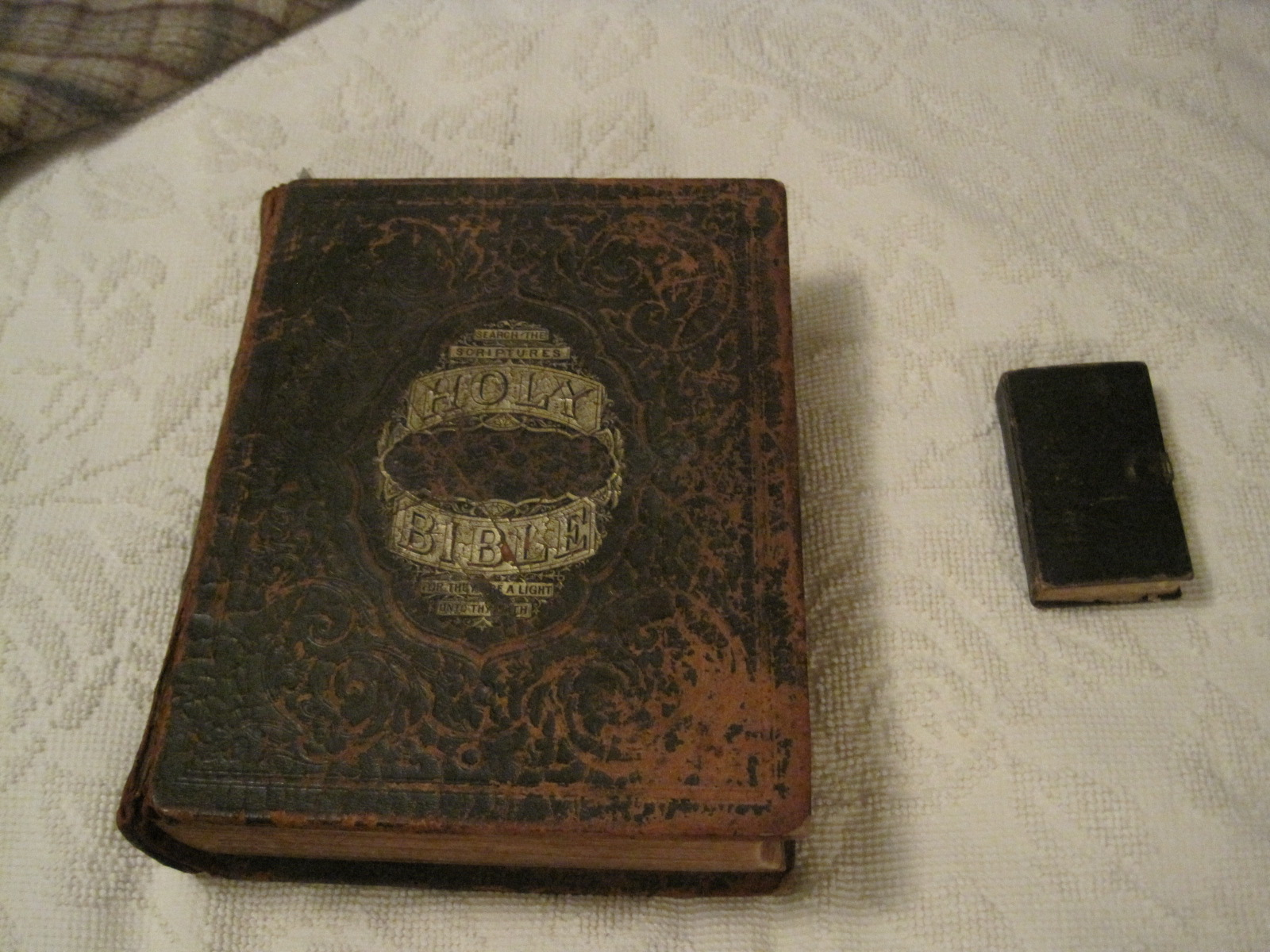
Genealogy, roots, ancestry . . . In my Pennsylvania Dutch family tree, names and dates were often written in the family Bible:
Longenecker Family Bible with German BIble at right
Longenecker Family Bible with German New Testament at right

Eight generations ago, Ulrich Langenegger (1664-1757), left his birthplace in Langnau, Switzerland, because of religious persecution, and moved to the Rhine Valley in Germany and subsequently immigrated to America from Rotterdam on the good ship Hope.

In America, his son, Christian Langenecker (1703-1759) settled in the rich farm land of Donegal Township in Lancaster County, Pennsylvania where followed two more generations of Christian Longeneckers, with the initial “a” in the last name changing finally to an “o.”
Henry Risser Longenecker, my Grandfather, son of Levi Longenecker, listed in the family Bible.
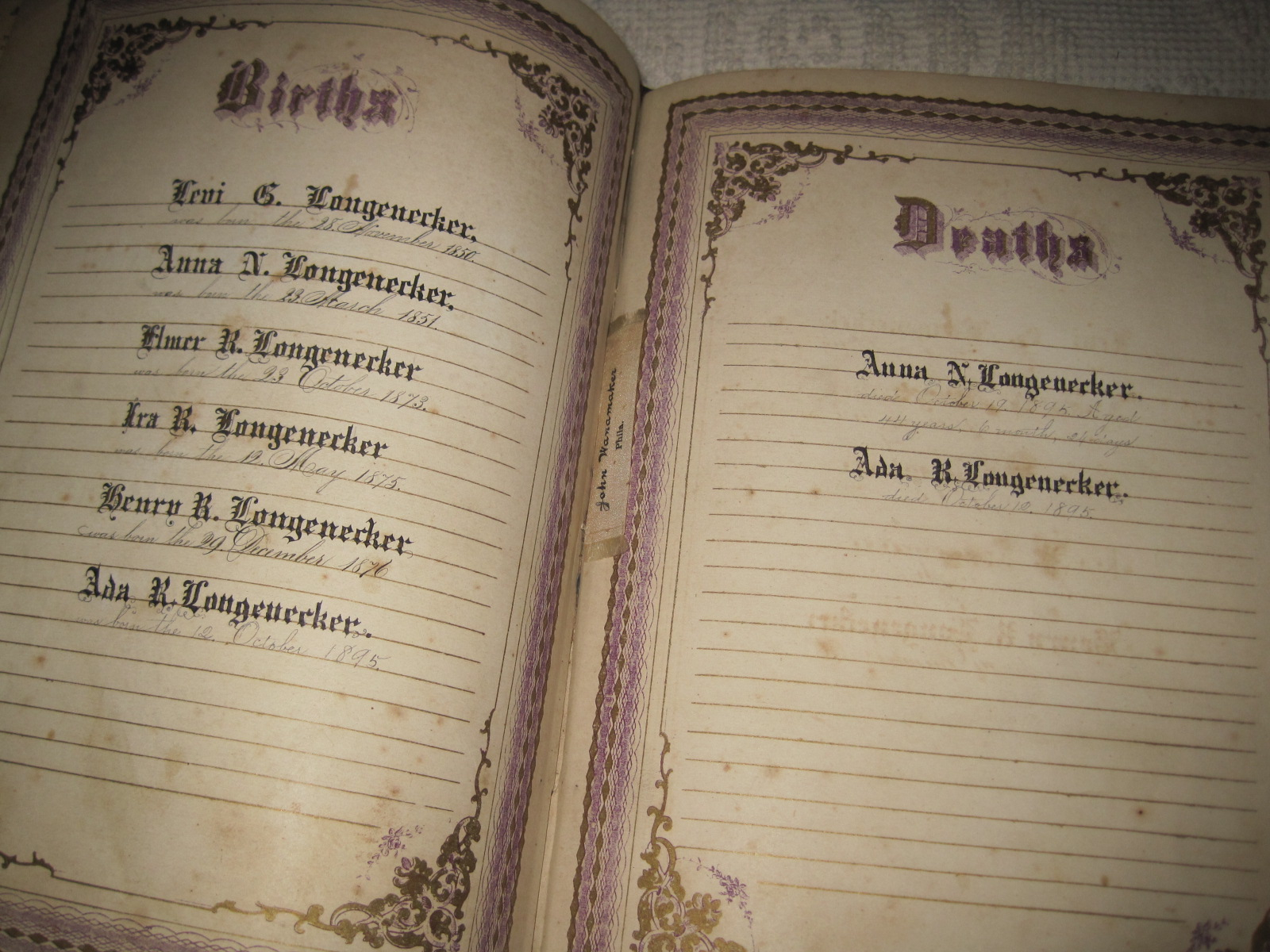
Henry Risser Longenecker, my Grandfather, son of Levi Longenecker, recorded in the family Bible.

And so the family tree on my father’s paternal side continues:

Christian Longenecker, Jr.  1785-1855 buried in Bossler Mennonite Church Cemetery

John Longenecker  1817-1898 married Nancy Garber, my great-great grandmother

Levi Longenecker  1850-1931 married Annie Risser, my great-grandmother

Henry Longenecker  1876-1946 married Fannie Martin, my grandmother

Ray Longenecker  1915-1985 married Ruth Metzler Longenecker, my mother

On my father’s maternal side some of our history is recorded on the bottom of a chair given to me in 1975. Even then it had a 150-year-old history of Martins, Brinsers, and Horsts in the lineage of my Grandmother Fannie Martin Longenecker.
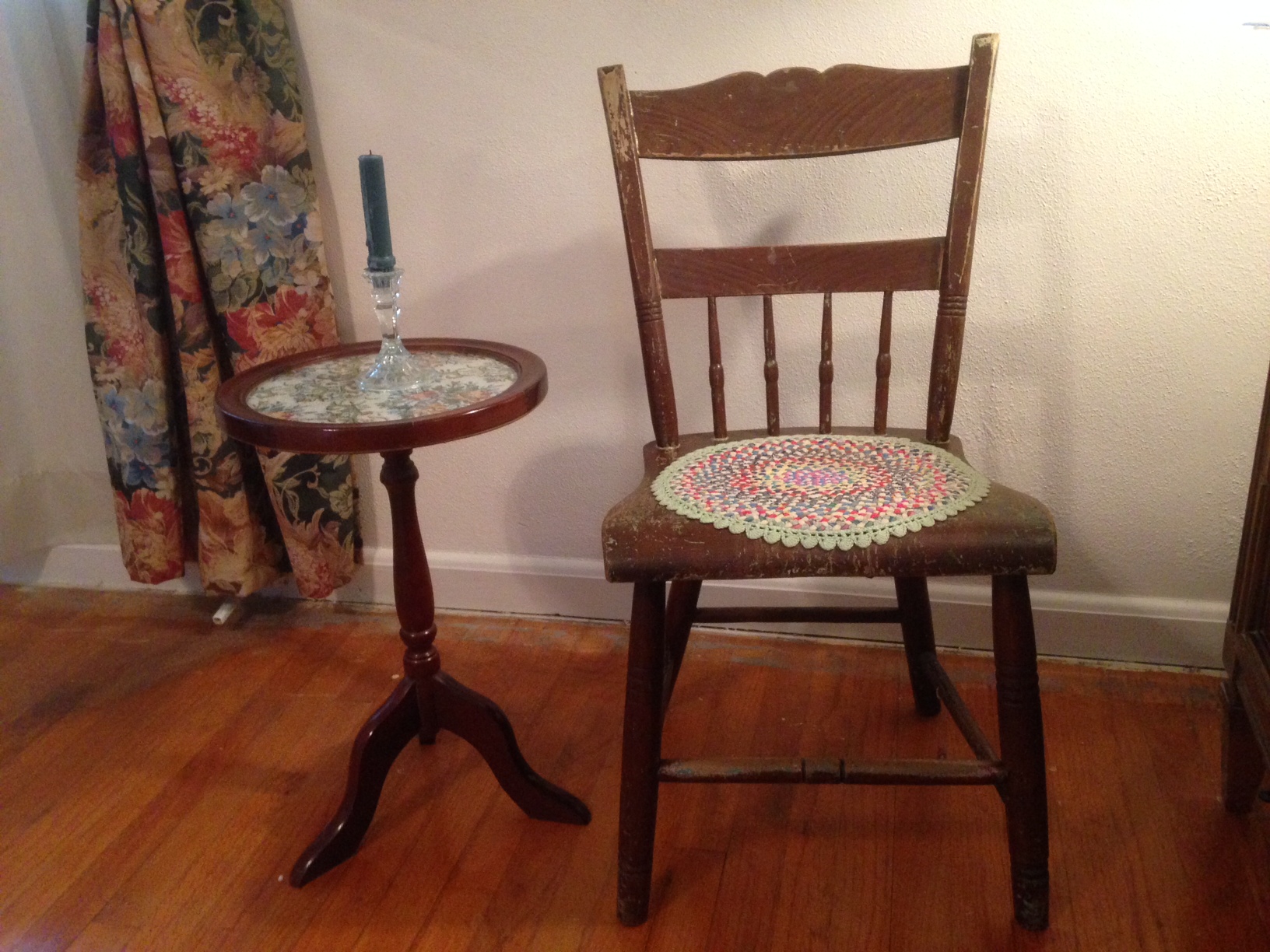
The Martin Chair, circa 1815

My mother’s story is a blend of other Pennsylvania Dutch Names: Landis, Harnish, Hernley, and Metzler. After attending the 275th Metzler reunion last June, I wrote a post entitled Another Valentine, A Different Romance, recounting the parallel history of Swiss-German Mennonites who also came to Pennsylvania at the invitation of William Penn to farm the rich soil of Lancaster County.

Because of their unique heritage as plain folks, focus on Mennonite ancestry is not unusual. But interest in tracing one’s ancestry has ballooned nation-wide in the last decade. “Finding Your Roots” the immensely popular PBS series by Professor Henry Louis Gates which aired in 2012 mirrors that trend. Using both traditional research and genetics, the series traces the family roots of such disparate celebrities as Condoleezza Rice, Sanjay Gupta, Margaret Cho, Robert Downey Jr., and Rev. Rick Warren. There are some surprising intermingling of genetic roots among the stories as I recall.

Thus, as our family trees expand and send out branches in many different directions, the fascination with our roots continues: Healthy roots, thriving branches, the tag of Homecoming Weekend at Eastern Mennonite University last fall, says it well.

*  *  *  *  *

Do you know your ethnic mix? Does it matter to you?

Is your story more complex because of adoption?

What fascinating discoveries have you made in learning of your ancestry?

Your thoughts matter to me! I look forward to hearing from you.
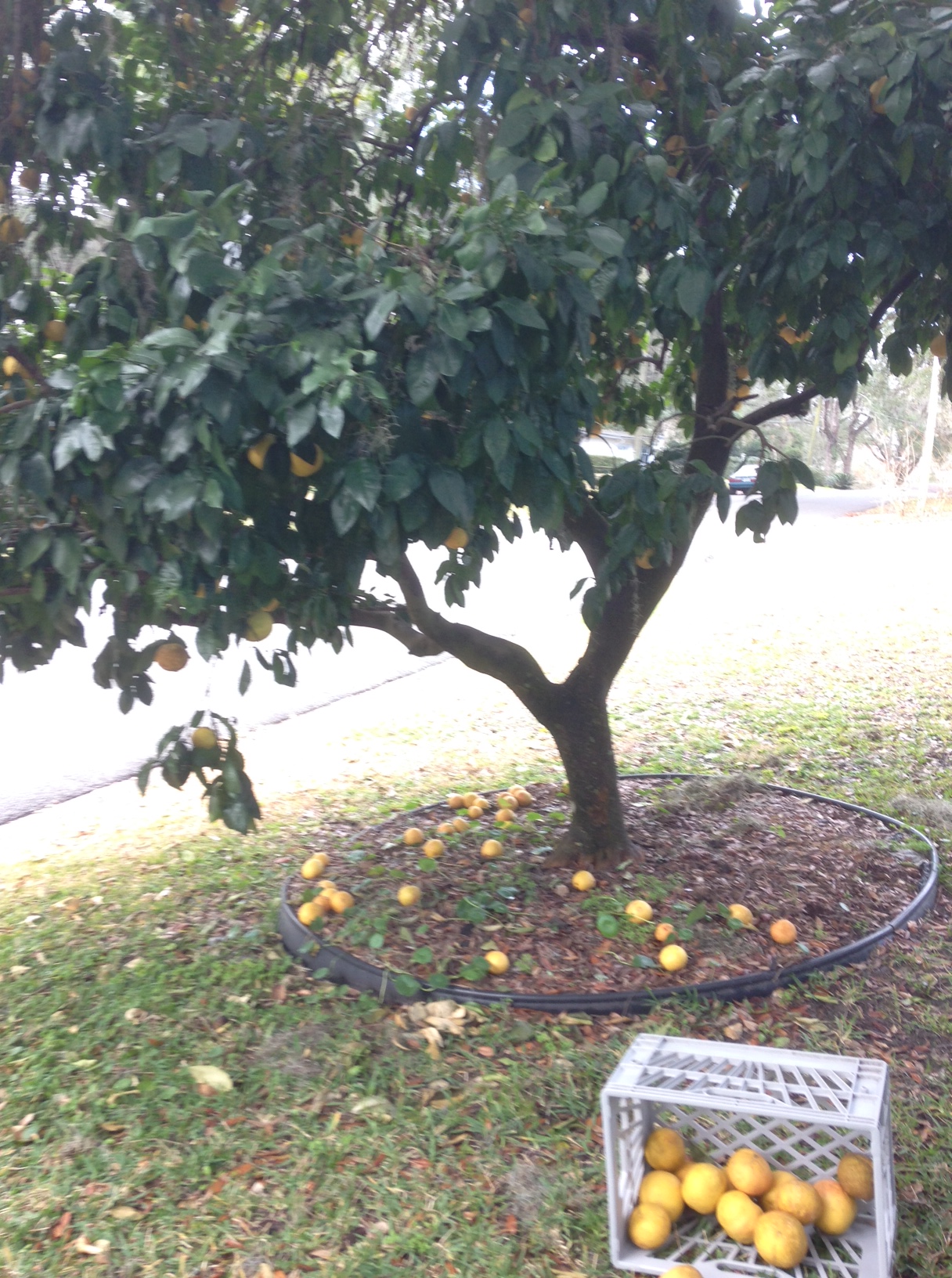
Purple Passages with Pictures: February 2014 edition

Grapefruit Harvest in February

Think of February as God’s special gift of time sandwiched between all the hubbub of past holidays and the upcoming arrival of a busy spring. To me, February is the ideal month to regroup . . . to review where I’ve been and to rethink where I’m going. I have found it is the best time of the entire year to pause for several concentrated weeks of deliberate reflection.

Chuck Swindoll, Insight for Living 1999

February is merely as long as is needed to pass the time until March. — Dr. J. R. Stockton

LOVERS

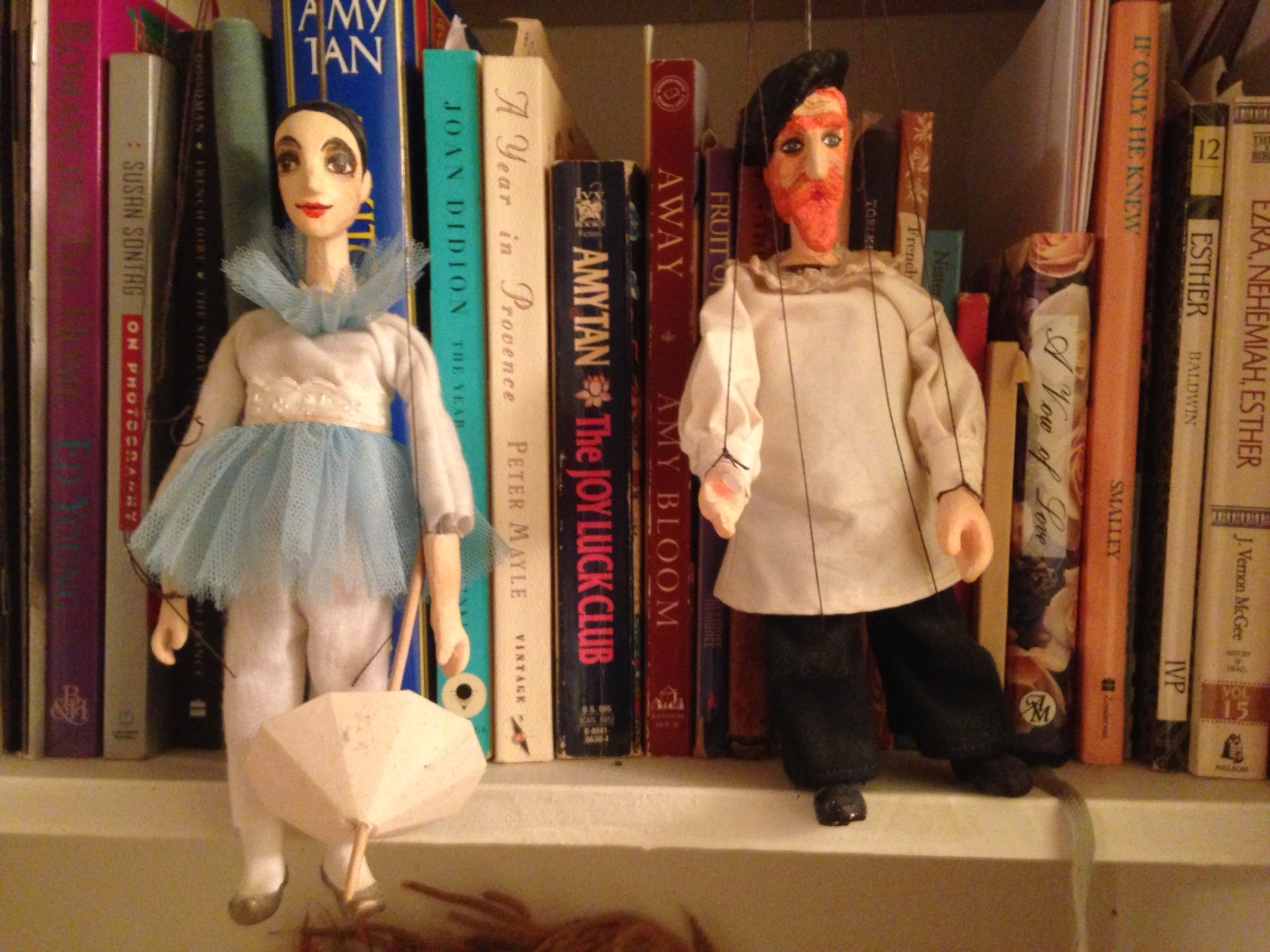
Marionettes from Prague - Books from all over
Marionettes from Prague – Books from all over

MUSIC: The Mozart Effect (Notes from Lecture)  March 2000

MusicFeelings

Classical music, like Mozart or Hayden stimulates Beta waves suited for high-quality, analytical thinking.

Jazz: like Miles Davis or John Coltraine, creates order from chaos, good for thinking that does not lend itself to simple linear solution. Generates theta waves: highly creative brain consciousness associated with out-of-the-box creativity, spiritual insight.

Rock: Makes a statement about TIME, especially suited to people who need to be vigilant like those in an inner city environment. Sharpens awareness!

New Age / Alternative: Music organized around SPACE; suited for people who live in a highly mental structure.

Music creates a current on which images flow. It can catch an image in its nets so it can be looked at, analyzed.    Glamour, January 1999

IN THE ZONE/ATTITUDE

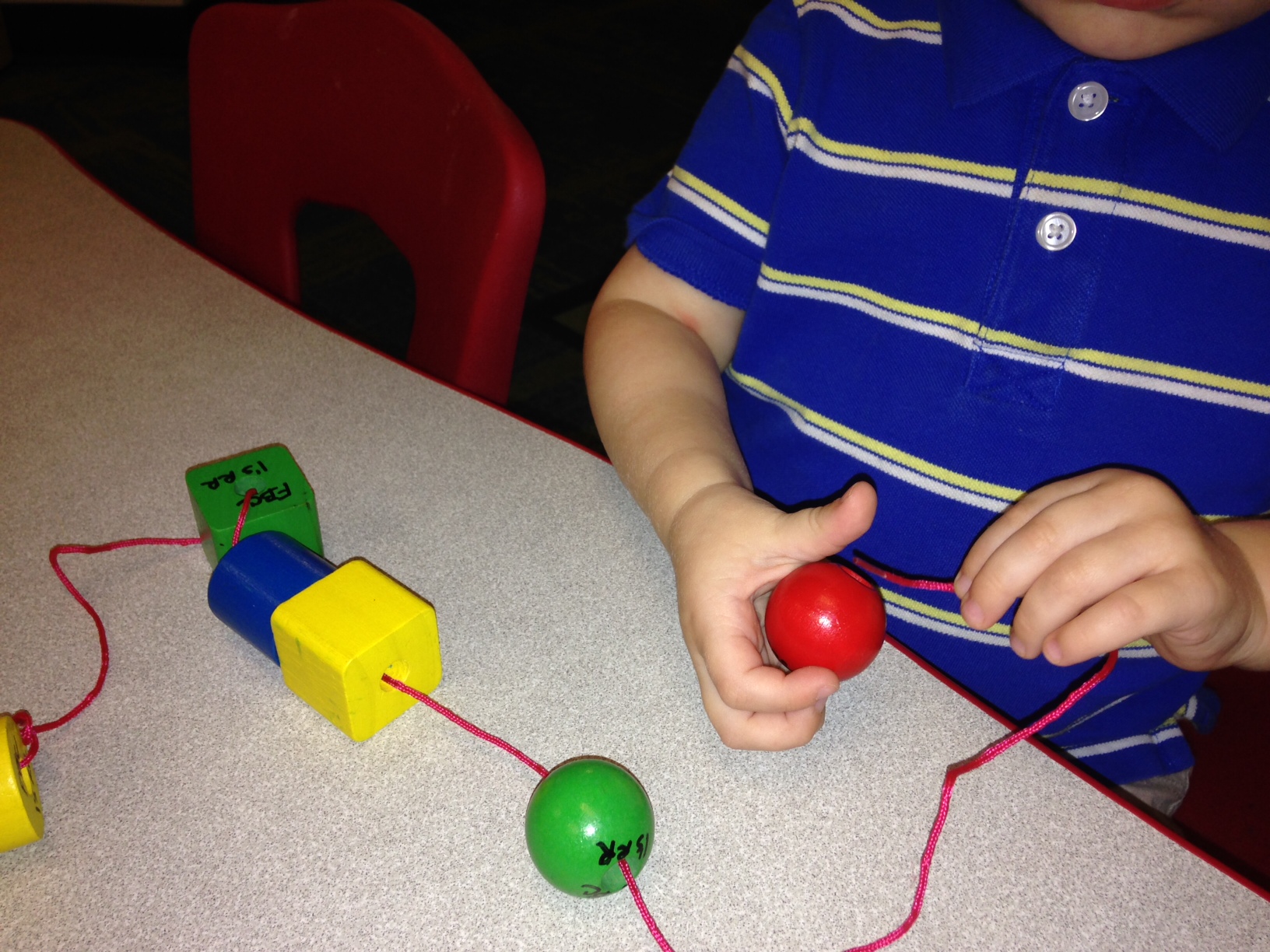
I learned that you should feel when writing, not like Lord Byron on a mountain top, but like a child stringing beads in kindergarten, happy, absorbed, and quietly putting one bead one after another.       Brenda Ueland

stringing beads

And frame your mind to mirth and merriment / Which bars a thousand harms and lengthens life.”  Wm. Shakespeare, The Taming of the Shrew 

We do not see things as they are; we see things as we are.  Anais Nin

Your turn:  

Add a quote? Comment on one or two you have just read?

Coming next: Do You Know Your Ethnic Mix?

February Garden: Forlorn or Fabulous?

Ordinarily, I am proud of my patio garden.

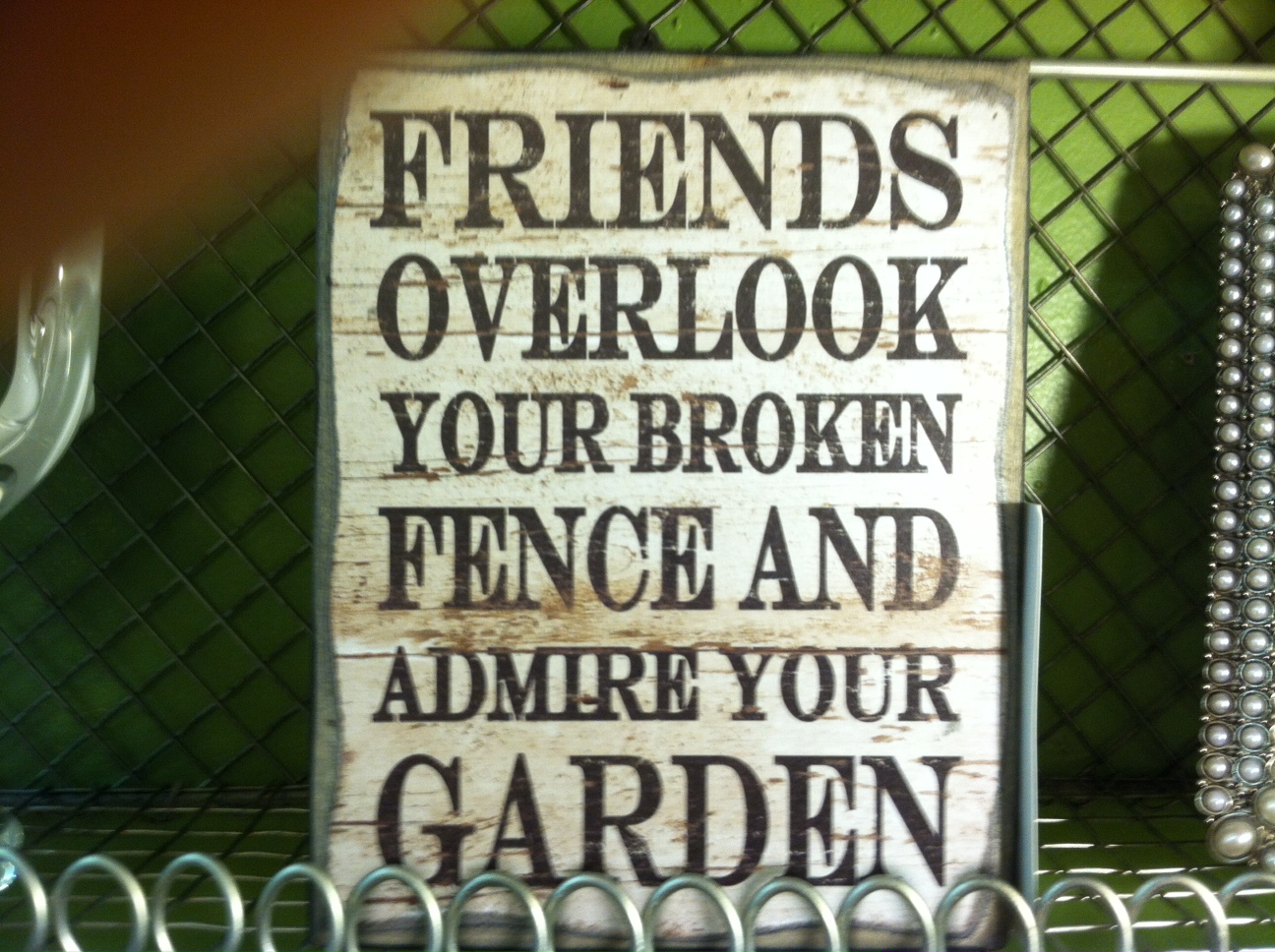
1gardenQuote

But January 2014 was tough in Florida: two nights in the 20s and several days around the freeze point. And so the plants in my garden took a beating.  The impatiens, in spite of being covered, froze to death. The pentas bushes were reduced to black, ashy stems and had to be trimmed back. Daughter Crista, the green thumb in our family, assures me they will come back strong.

Last night, there came a frost, which has done great damage to my garden. . . . It is sad that Nature will play such tricks on us poor mortals, inviting us with sunny smiles to confide in her, and then, when we are entirely within her power, striking us to the heart.

~Nathaniel Hawthorne, The American Notebooks

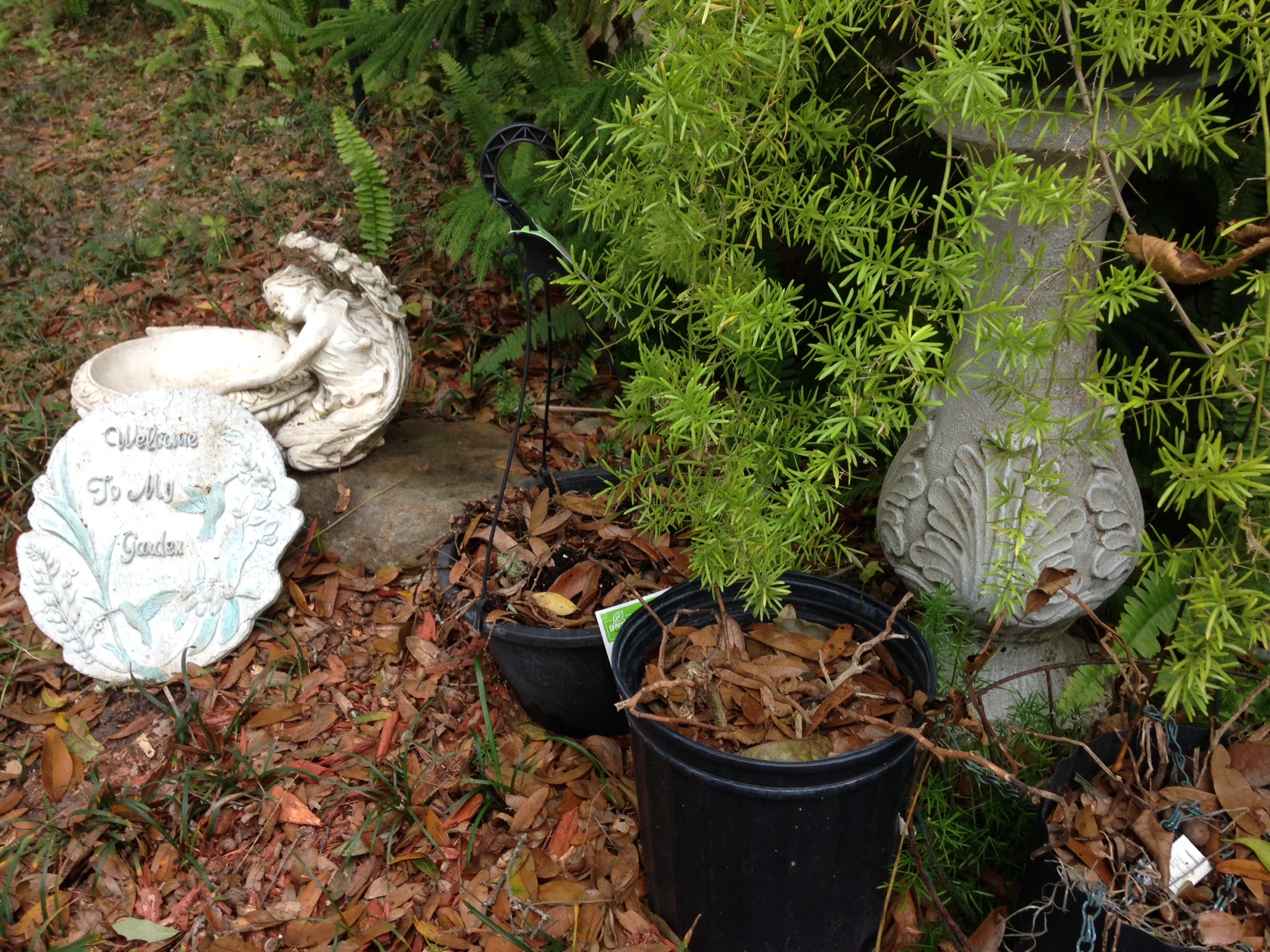
Welcome to My Garden: dead Impatiens, live asparagus fern
Welcome to My Garden: dead impatiens, live asparagus fern

If you live in Hawaii, my garden may seem forlorn. Alaska your residence? Well, then it may look just fabulous.

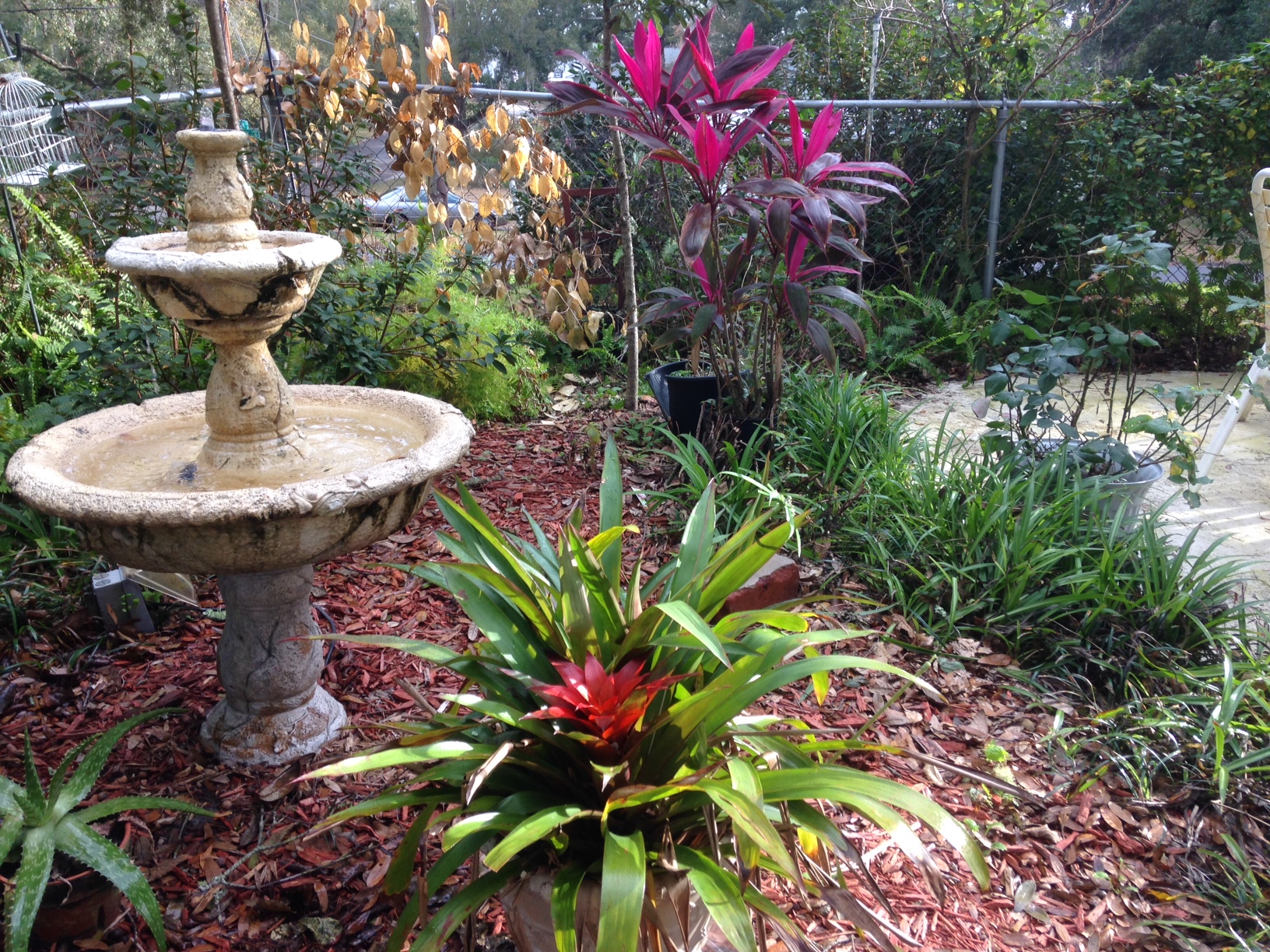
rev.GardenWhat'sLeft

Wisteria and passion flower vines are gone, leaving a naked metal fence, still bent where it took a hit from a falling oak tree branch. What remains? Red sister, rose bush in a planter, aloe shoots, asparagus fern, bromeliad with perky red flower.

2gardenQuote

Soon the passion flower and wisteria vines will intertwine to soften the metal fence. The pentas will flower up, and I’ll buy new impatiens. There’s hope!

If winter comes, can spring be far behind?  

 ― Percy Bysshe ShelleyOde to the West Wind

While the earth remaineth, seedtime and harvest, and cold and heat, and summer and winter, and day and night shall not cease.    

                   Genesis 8:22 KJV

Do you like to garden with either indoor and outdoor plants?

BurpeeLogo

I remember Grandma and Aunt Ruthie paging with intent through the Burpee seed catalogs in February or March each year picking out the varieties they like best. What about you?

Tell your gardening story here.


Canned

I have just finished reading The Dirty Life, On Farming, Food, and Love by Kristin Kimball. And today my blogger friend, Susan Nicholls, has posted a piece entitled “Canned” complete with appetizing photos of the canned goods, stored on shelves for savory eating on wintry days like these.

Kimball’s book describes how she trades a life in the publishing world of Manhattan for growing vegetables, raising pigs and cattle on the farm of a man she had interviewed just months earlier. The story is told with the backdrop of the old/new movement toward local food, community-supported agriculture, a network of consumers and farmers who share the benefits (and risks) of food production. Consumers pay at the beginning of the growing season for a share of the anticipated harvest and then receive honey, eggs, meat, and dairy products, fruits and vegetables, whatever is in season.

Susan’s blog post “Canned” is a reminiscence on the stored wealth of nourishment in the cellar of her childhood. In her post today she recalls her grand-parents’ farmland and the “garden” of one and one-half acres her own family cultivated when her children were little. She reminds us of so much we take for granted in our land of abundance. Read it above!

S.K. Nicholls's avatarS.K. Nicholls

images (2)

I was in the grocery store yesterday and browsing the local produce…much of it not so local, being shipped from Chile, Spain, Costa Rica, California, and Mexico, but fresh nonetheless. Fresh watermelon and cantaloupes year around!

It is January and there were fresh beans, peas, broccoli, cauliflower, lettuce, asparagus, squash, cucumbers, cabbages, snow peas, avocados, apples, pears, oranges, tomatoes. We take so very much for granted in this global economy. I am not talking smartphones, computers, and tablets, but simple luxuries, like fresh food.

My grandparents had a huge farm, and they had a garden that covered three acres. They taught me about gardening and harvesting.

When my own children were growing up, we had an acre and a half that was garden space.

I can’t say that we grew organic, because pesticides and herbicides were used. I can’t say it was better or worse for us, but it…

View original post 441 more words

War and Peace: Rhyme & Reason

On the eve of the Gulf War exactly 23 years ago today, I took a walk in the brisk evening air. As I rounded the curve of Emerald Isle Circle West in our neighborhood, I noticed the scarlet blush in the sky at sunset. With that striking image in mind and an imminent war on the national consciousness, I wrote these words:

CRIMSON SKY AT DUSK

The throat of the sky is inflamed,

livid with anger at the war it must swallow,

gagged by the bloodshed which rages in the jaws

of Babylon.

An olive branch on its tongue,

the dove of peace

touches the parched flesh with healing.

constrained by love

which sends streams

into the desert.

January 21, 1991, eve of Gulf War

Mennonites are pacifists, adhering to the tenets of nonresistance: opposed to war, not participating in military service, but sharing love and overcoming evil with good. I am no longer a Mennonite, but I choose peace over war, whenever possible.

Dove of Peace: Mennonite Central Committee logo

On her show last week, Diane Rehm interviewed the former Secretary of Defense, Robert Gates, on the publication of his book, Duty: Memoirs of a Secretary at War. Having served under eight Presidents, Mr. Gates reflected on the hard decisions national leaders must make concerning going to war and keeping the peace. One memorable line from the former Secretary, who often spoke in terms of pros and cons: “We [Americans] over-estimate our ability to shape events in other countries.” At the end of 51 minutes, Diane Rehm concluded the interview with another memorable remark: “I wasn’t supposed to say this on air, but thank you to all who serve.” And the piped in music carried her voice away.

I suppose that’s how I think about war, with ambivalence: I don’t applaud war. Peace is preferable, peace is the goal in all conflict, in my opinion. But when I see a man or woman dressed in a military uniform, often at an airport, I often approach them and say “Thank you” too.

Do you side with either viewpoint about war? Is it hypocritical to embrace both?

Were there war heroes or conscientious objectors in your family history? Inquiring minds want to know.

I love when you read and comment. And I will always reply.

Mennonites and Race: A Longenecker Lens

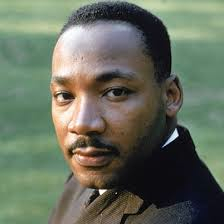
This week we celebrate Martin Luther King Day, a tribute to the man with a vision for racial equality in the twentieth century and beyond. Just so, this post pays tribute to his dream and his legacy through a Mennonite lens.

Dr. Martin Luther King

“Jesus Loves the Little Children, All the Children of the World, Red, Brown, Yellow, Black and White,They are Precious in His Sight, Jesus Loves the Little Children of the World.”

As a tiny tot I was taught this song in Sunday School at Bossler’s Mennonite Church in the 1950s though the entire congregation was white. I saw children with slanted eyes and yellowish skin in picture books and a few black people in Lancaster and Harrisburg or maybe on the PRR train on our way to Philadelphia. But there were no children of a different skin color at Rheems Elementary School.  Or even at Elizabethtown High School. Not a one!

It was ancestry, not skin color, that made a difference in my family. Grandma Longenecker, benign soul though she was, did make disparaging remarks about other ethnic groups. She called a woman she was slightly acquainted with in Bainbridge “The Hunky Lady.” From her tone, I think Grandma Fannie was referring to the woman’s origins in Hungary, and therefore different from us, the Pennsylvania Dutch. And she made no bones about her view of Irish housekeeping. If we made a mess playing in her big kitchen, she’d remark, “It looks Irish in here,” and we’d be tidying up behind her broom. Fast!

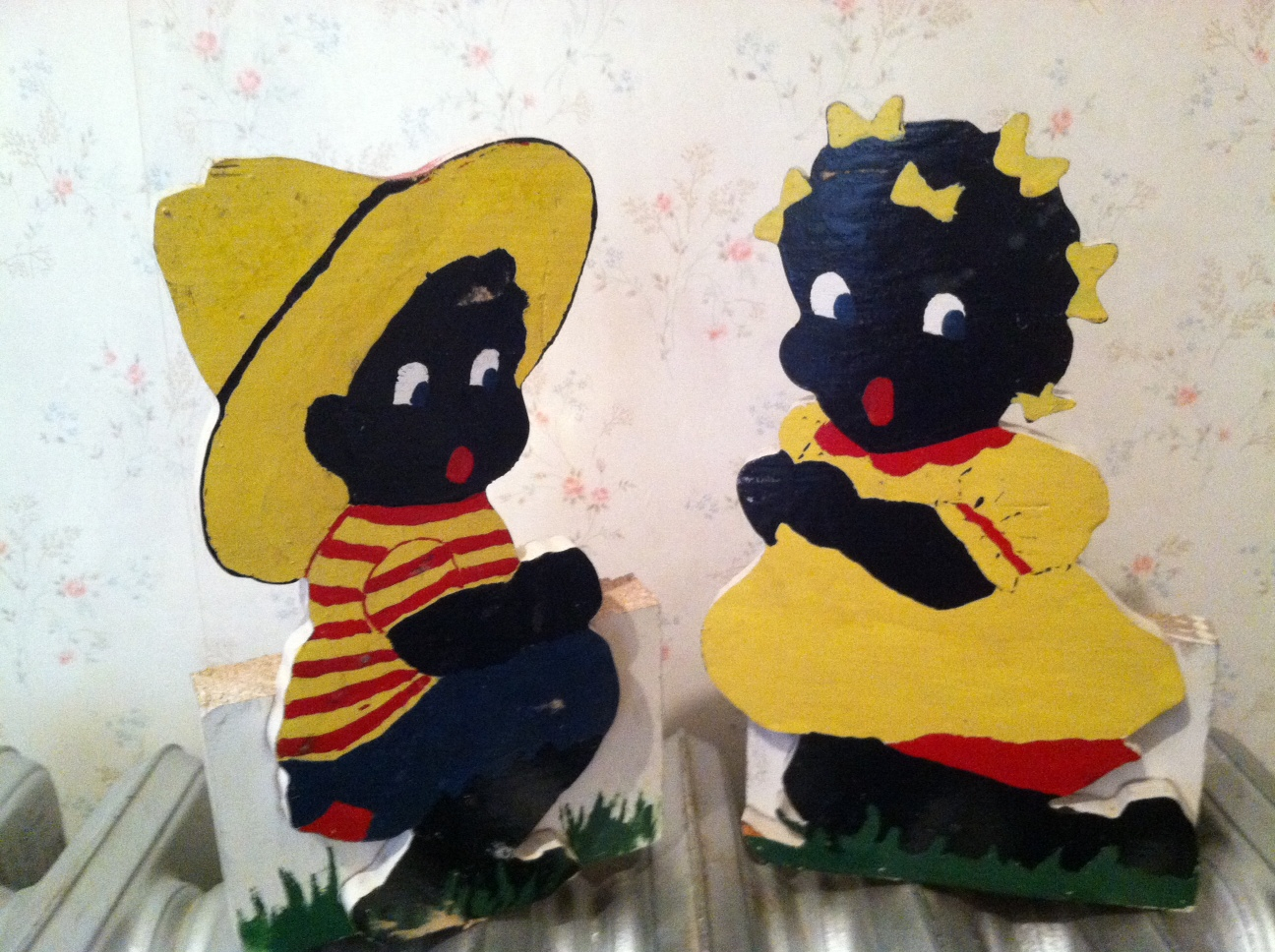
In a recent visit to the attic, I came upon a pair of bookends featuring two pop-eyed black faces, a boy and a girl, painted in grade school.  Were such children curiosities to us? Novelties? Why would my teacher approve of  such an art project? Along with stories like Little Black Sambo, they were obviously part of the folklore of another era, not at all politically correct by today’s standards.

blackBookends

My first encounter with a black person, up close and personal, was with little Chico Duncan, a black boy from New York City, who came to our home for a week in the “Fresh Air” program in which volunteer families would give city children summer vacations in the country. (Shirley Showalter’s book Blush devotes an entire chapter to her friendship with their family’s Fresh Air girl.) The most fascinating thing about Chico was his hair, kinky black and glistening. Was his hair naturally oily or did he put on something from a bottle? I longed to touch it and feel the texture, but fear or embarrassment or both restrained me from even asking. Besides, he was a BOY, and I had hoped for a girl to play with!

But that was years ago. Now at Bossler’s Church, children who sing “Jesus Loves the Little Children” may actually be sitting besides a child with a darker skin tone. The church treasurer, a former missionary, has an Ethiopian husband; one farm family has adopted African-American twin babies. There is a couple of Middle-Eastern descent. The Bishop, Director of African Programming with Eastern Mennonite Missions, has biological grand-children of Kenyan-American ancestry.

And my Grandma Longenecker? For at least two decades through Lutheran Social Services, she and Aunt Ruthie sponsored families from all over the world—particularly Viet Nam, Africa, and eastern Europe. They, along with many other Lancaster County families, welcomed the immigrants and refugees from countries at war for weeks or months at a time until they could get a job, an apartment of their own, even acquire an education.

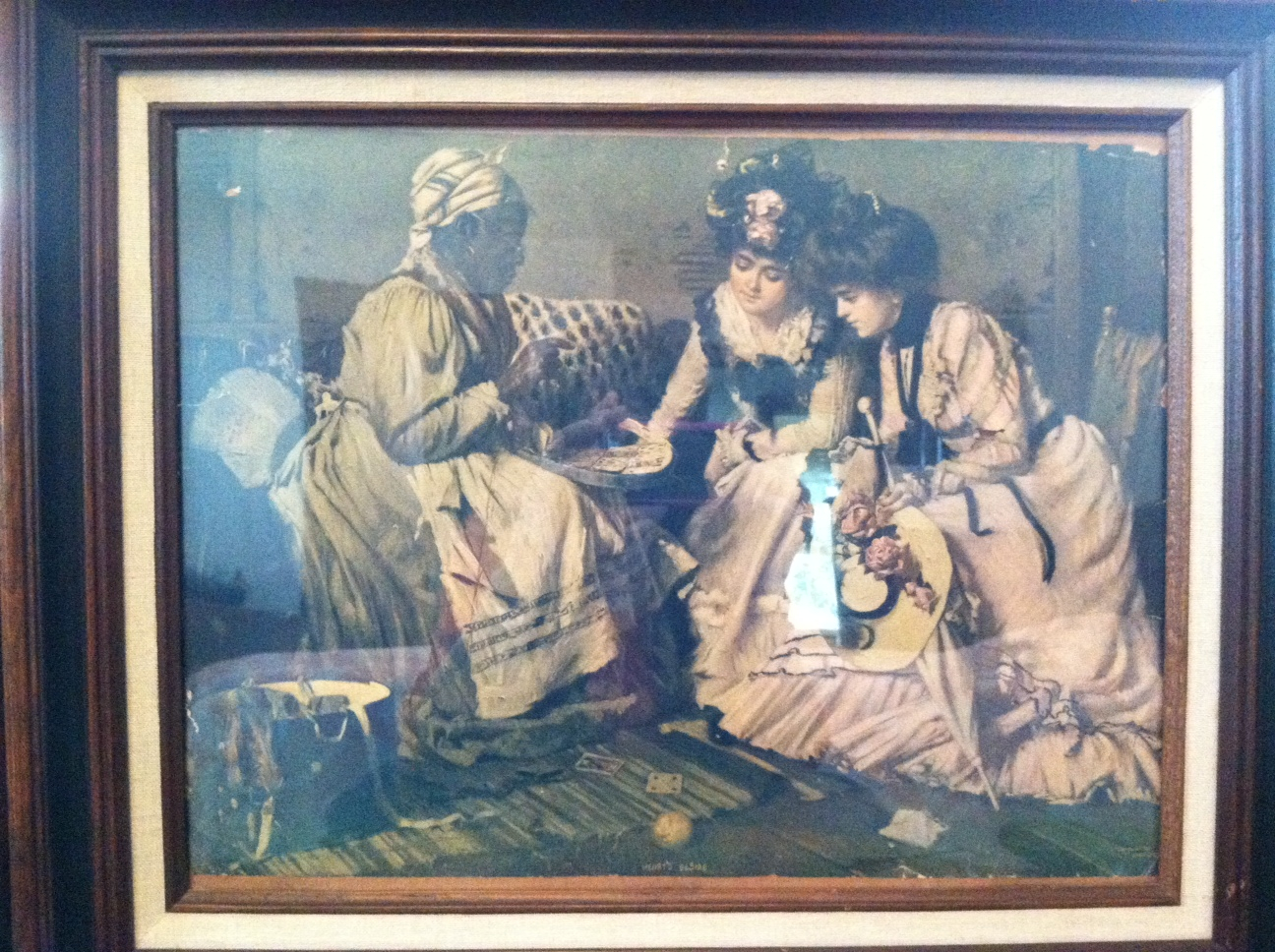
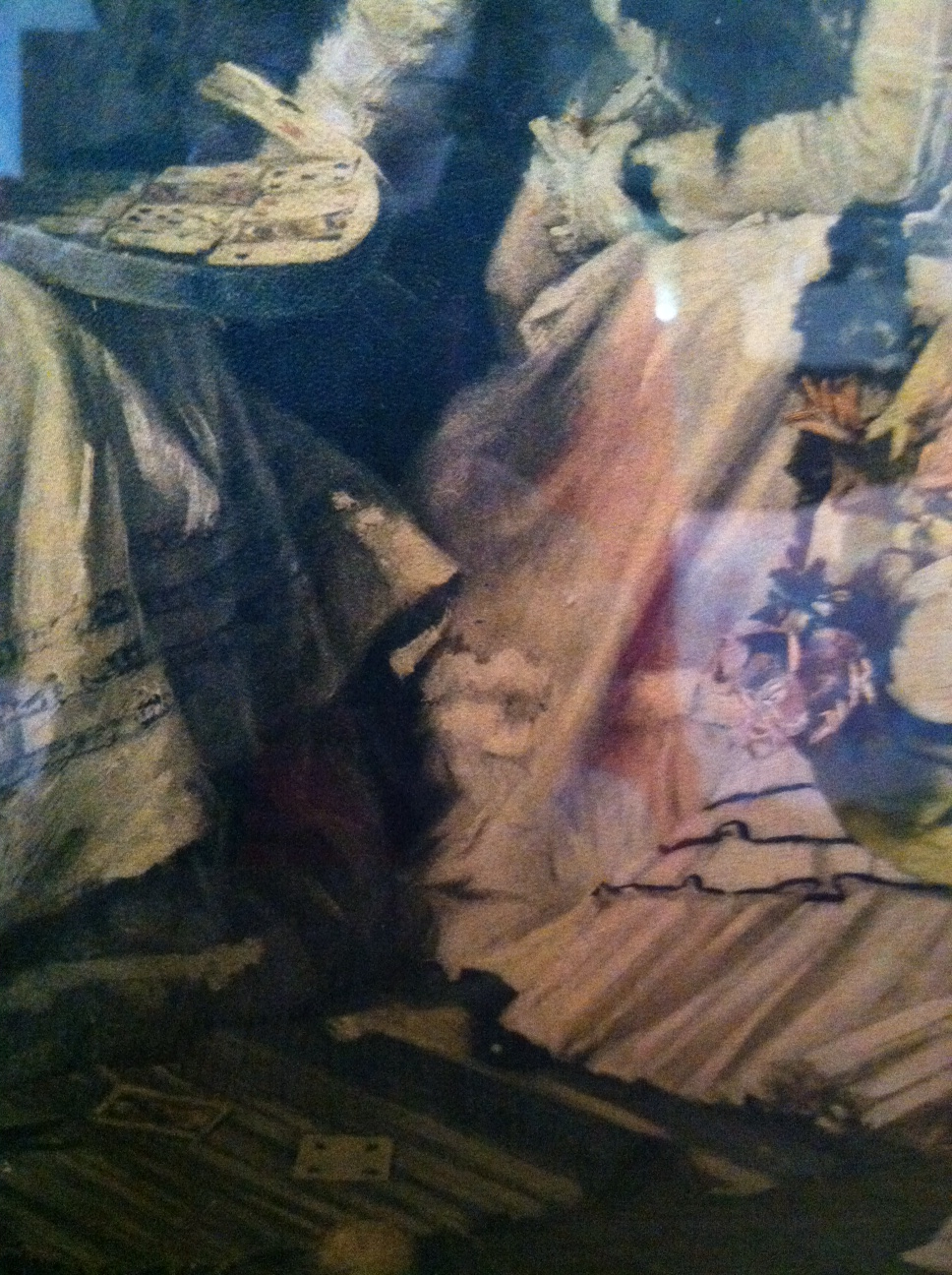
A few months ago, I re-visited Aunt Ruthie’s bedroom, (now unoccupied because she lives at Landis Homes) and saw on the wall as if for the first time, a framed picture of three women:

CardGame2

Two elegantly dressed Victorian women and a black woman, obviously a maid, playing cards. Is the maid holding the card tray for the other two? Is she teaching the ladies tricks of the trade? Are all three playing the game? Three would make a better game, don’t you think?

Detail: Women Playing Cards

What experience with race did you encounter as a child? What story or anecdote can you add? I love when the bell chimes with your comment!

Purple Passages with Pictures, January 2014 edition

VISIONS and DREAMS for 2014

courtesy Google Images

A man must have dreams–memory dreams of the past and eager dreams of the future. I never want to stop reaching for new goals. – Maurice Chevalier

Then the Lord answered me and said: “Write the vision And make it plain on tablets, That he may run who reads it.        Habakkuk 2:2   New King James Version (NKJV)

Between your dream‘s inspiration and its manifestation, there’s going to be a lot of perspiration.     Daily Devotional: The Word for you Today, January 2, 2014 entry

A [wo]man is not old until regrets take the place of dreams.  John Barrymore

MEMORY

Yesterday is today’s memory and tomorrow is today’s dream.  Kahlil Gibran

Memory is the script of the soul.  Aristototle

Each day of our lives we make deposits in the memory banks of our [grand]children. Charles R. Swindoll

rosesAzaleas

God gave us memory so we might have roses in December, (January, February  . . )

From my JOURNALS 1996-1998

Gratitude is the heart’s memory.  French proverb

Puttering is creating a fresh interior landscape.   Sarah Ban Breathnach in Simple Abundance

Women share with men the need for personal success, even the taste for power, and no longer are we willing to satisfy those needs through the achievements of surrogates, whether husbands, children or merely role models.       Elizabeth Dole

On Music:

“The auditory nerve is very closely connected to the limbic system so that sound (i.e. music) does not have to go through the cortex of the brain but goes directly to the heart, the senses.”     unknown source  (noted April 9, 1998)

MusicFeelings

Rhythm in music imprints language on the brain in a way pure auditory words will not. Slower tempo in classical music develops a framework for learning to occur. NPR report on “The Mozart Effect” (1998)

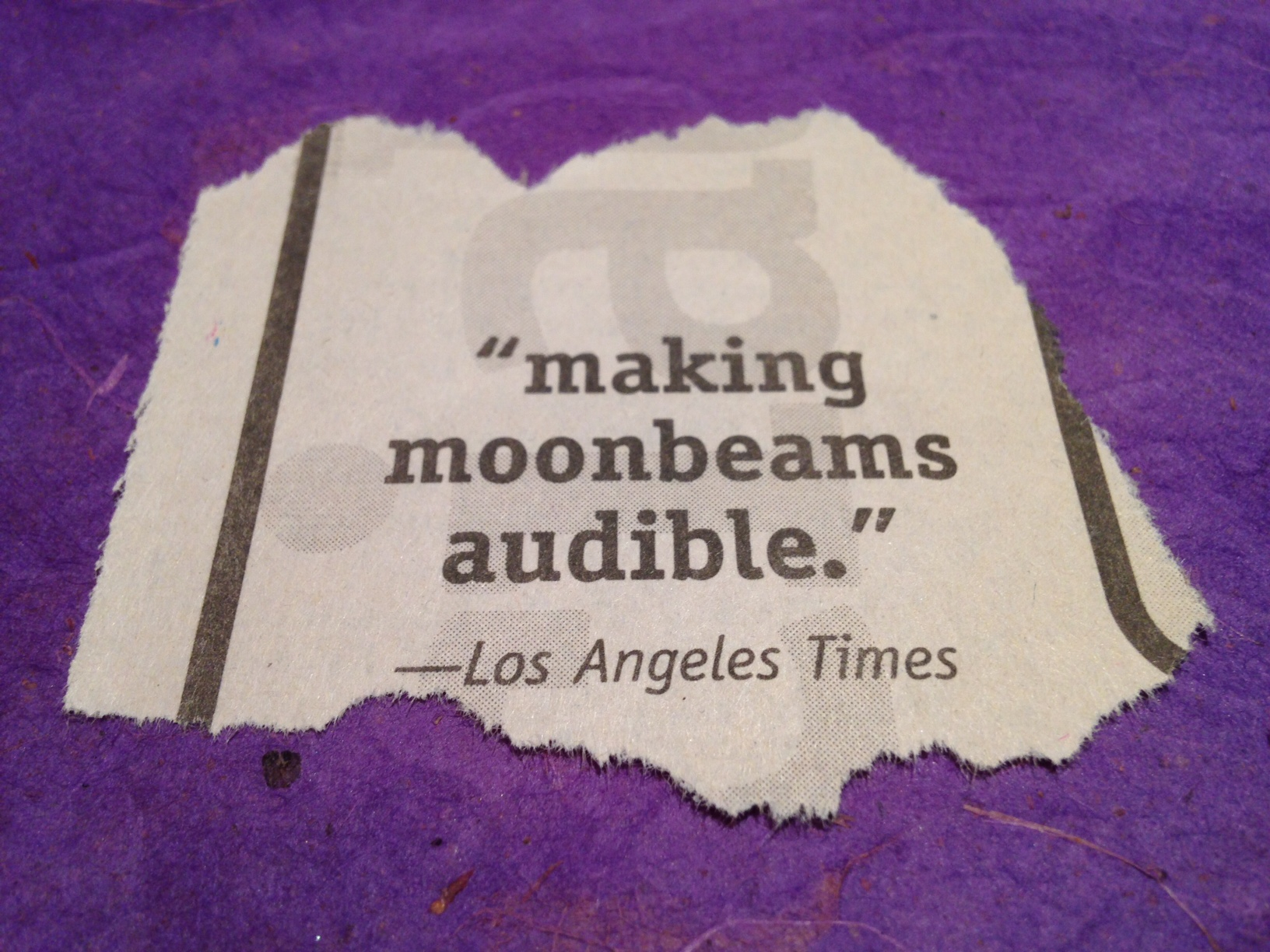
Moobeams

What Makes a Moonbeam Audible for you?

Feel free to comment also on any of the categories about: visions, dreams, memory, music, or something else. I will always reply!

Still time to vote for my story in Sonia Marsh’s My Gutsy Story Contest. Thank you, thank you to all who have already voted. You make a difference!

To Vote:  http://soniamarsh.com/2014/01/vote-for-your-favorite-december-2013-my-gutsy-story.html

To Read: http://soniamarsh.com/2013/12/rising-above-the-pettiness-to-focus-on-the-positive-by-marian-beaman.html

Sm.pleaseVote

Voting closes at 12:00 midnight PST, Wednesday, January 15, 2014.

Moments of Extreme Emotion Series: Curio Cabinet Explosion

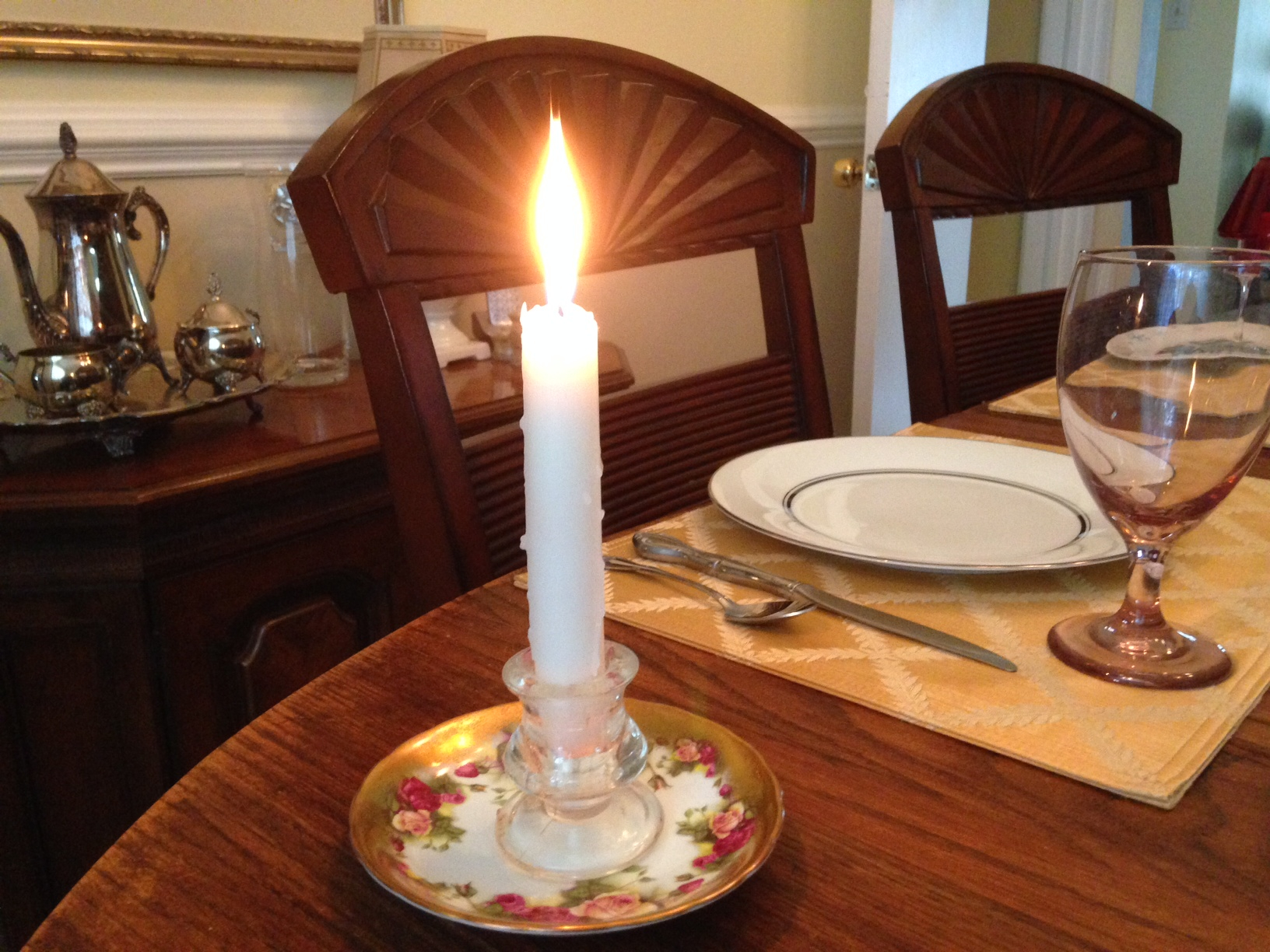
It was twilight.

And twilight was turning to dusk as Cliff and I sat down to eat supper.

He said, “Let’s light a candle.”

She said, “Well, that’s a good idea. It’ll look pretty.”

LightedCandle

One of us said, “Let’s put the candle into the curio cabinet. The mirrors behind will amplify the light.”

“Okay,” said the other. And so we admire the ambient light illuminating the cups and curios.

“It would look even prettier if we closed the glass door. More shimmer and glisten.”

Just so you know: We have surrounded a lighted candle with irreplaceable china (Dumb)! The deceptively romantic light disguises the fact that the candle flame is heating the upper glass shelf (Dumber than Dumb)! We leave the dining room momentarily to clear the table.

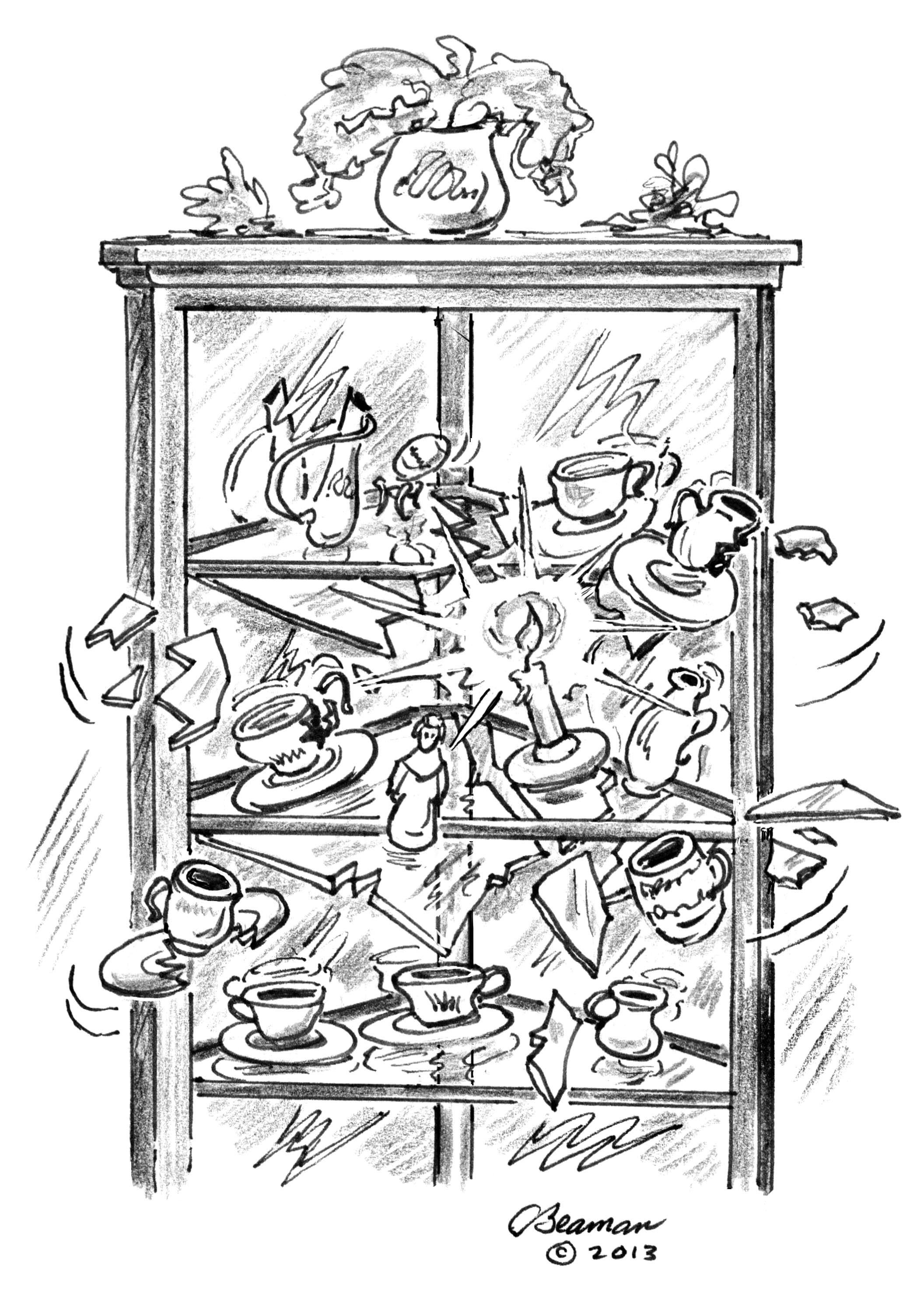
BOOM, BANG, POW—The glass shelf shatters, and shards of glass cascade into the once placid display of nineteen antique cups, some from Grandma Longenecker, some from Mother, and some from the travels of itinerant artist Cliff.

shockCurioCabinetDrawing

I scream with the first boom. Then I scream louder as I survey the damage. Cups with dismembered handles.. Saucers in slices. Family heirlooms gone with a poof!

Blog_Curio Cabinet disaster_7x10_300

Just because a scene looks artistic doesn’t mean it‘s not dangerous.

Just because a candle is seated in a pretty place doesn’t  mean the laws of combustion won’t operate.

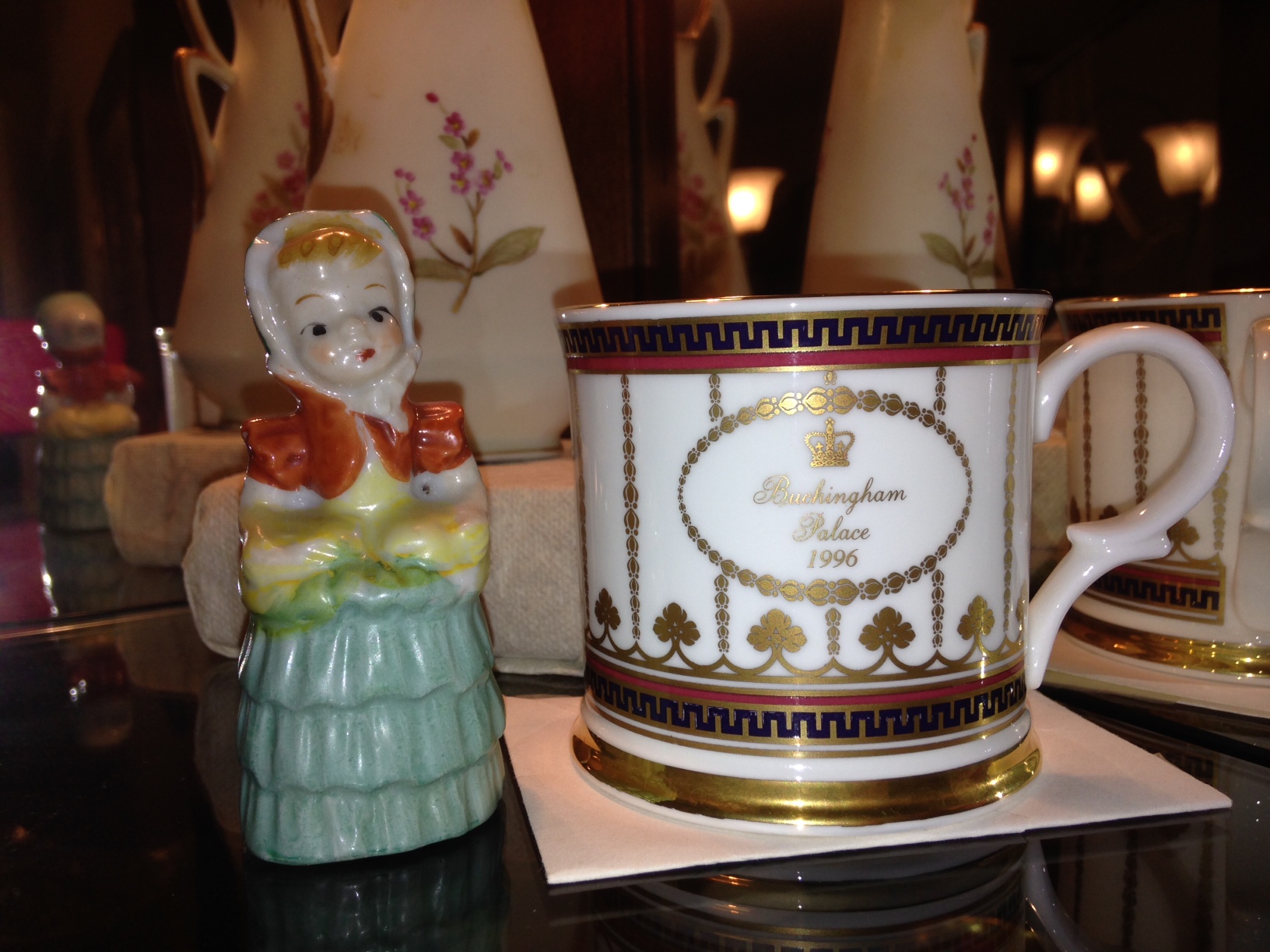
What remains:

Doll bell from Mother Mug from Buckingham Palace
Doll bell from Mother & Mug from Buckingham Palace
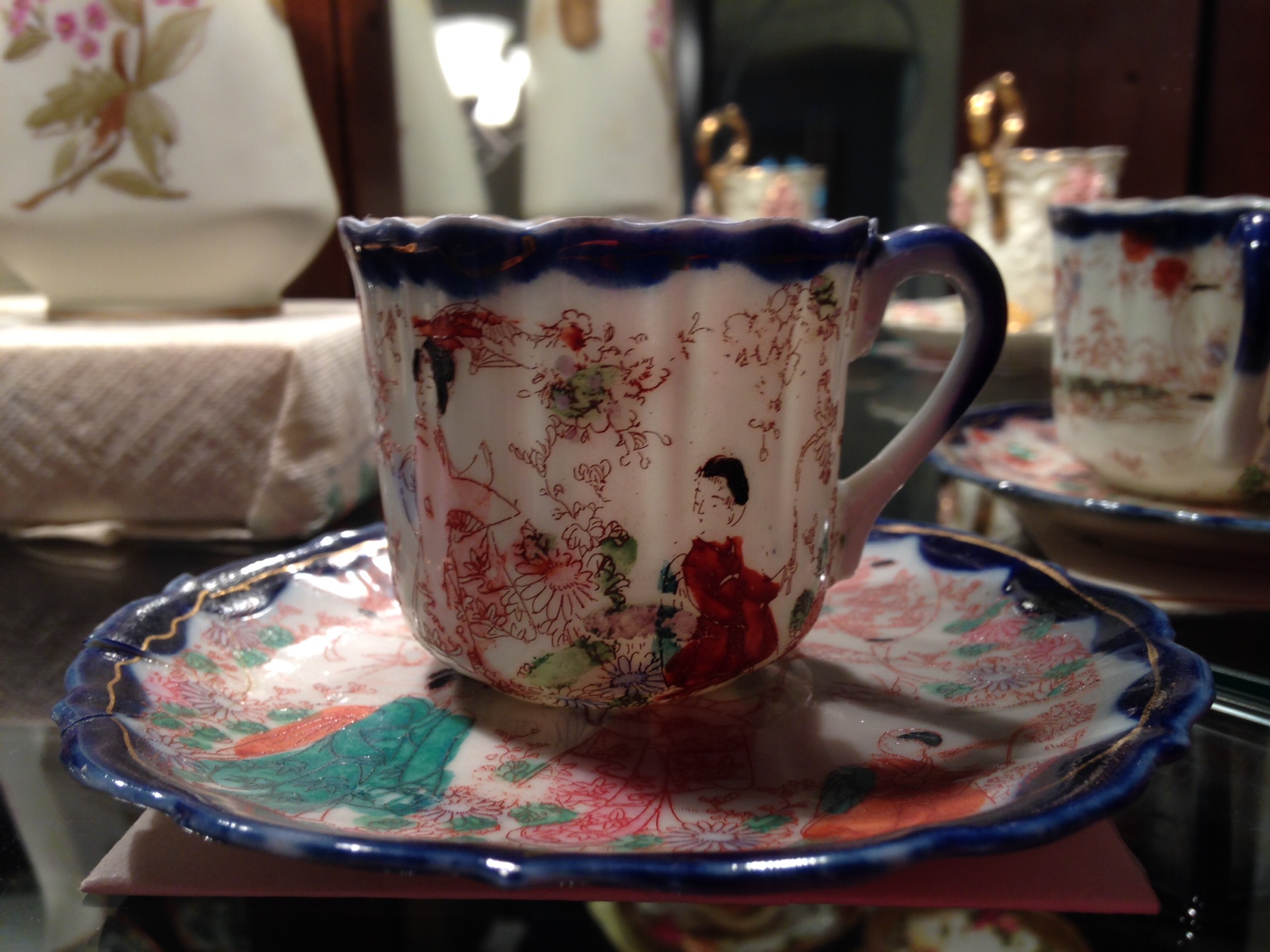
Japanese teacup from Grandma Annie Metzler

And a few more cups and saucers, not pictured.

Have you experienced the loss of family heirlooms? Other losses? What remains of value?

Your comments make me happy, and I will always respond.

Do read My Gutsy Story on author Sonia Marsh’s website:

http://soniamarsh.com/2013/12/rising-above-the-pettiness-to-focus-on-the-positive-by-marian-beaman.html

Voting for My Gutsy December 2013 Story begins Jan. 2 and ends Jan. 15, 2014.

Purple Passages: December 2013 edition

7Purple Passages_Banner_new margin_8x4_300

HOPE

Hope is a thing with feathers that perches in the soul.  Emily Dickinson

HopeFeathers

Hope is like a road in the country. There never was a road, but when many people traveled it, it came into existence.    Lyn Yutang

Do not go where the path may lead; go instead where there is no path and leave a trail.     Ralph Waldo Emerson

Hope is the power of being cheerful in circumstances that we know to be desperate.       G. K. Chesterton

There is always hope when people are forced to listen to both sides.   John
Stuart Mill

CHANGE

Change means something good is coming, — even if I don’t yet understand all it will mean.   Joe Sherer, Missionary Messenger, November 2011

Until God opens the next door, praise him in the hallway.   Orebela Gbenga

PROGRESS

You’ll be amazed how much distance you can cover taking [life] in increments. Little things add up; inches turn to miles, We string together our efforts like so many pearls, and before long . . . you have a whole string!”

PearlsModified

Staying the Course  by B. J Gallagher quoted in Wednesday, October 12, 2013 entry in Daily Devotional: The Word for You Today

DISTANCE

Distance lends enchantment to the view,” explaining why events of our youth are enveloped in such a rosy cloud.    Laura Ingalls Wilder,  Little House in the Ozarks

Travel helps one see “how [American] ways look from a distance.”  Molly Hughes, A London Family   (1870-1900)

 STRESS-BUSTER

“. . . concentrate on breathing to quell the mind’s restless forays into the past and future.”  Geoffrey Cowley, “Stress-Busters: What Works” Newsweek, June 14, 1999.

Quiet zone low light, deep breaths . . . ah!
Quiet zone, low light, deep breaths . . . ah!

Try to let go of being in a state of readiness.  Yoga instructor, October 2, 1999.

NIGHT-CAP

Have courage in the great sorrows of life, and patience for the small ones. And when you have laboriously accomplished your daily task, go to sleep in peace. God is awake.       Victor Hugo

‘Tis the Season:

from It’s a Wonderful Life. Clarence the Angel leaves a reminder for George Bailey: “Remember, no man is a failure who has friends.”

Add a quote or respond to one you’ve just read. I look forward to your comments! And I will always reply.

Below is the link to my entry in the Gutsy Story Contest now in progress on the website of awarding-winning memoirist Sonia Marsh:

My Gutsy Story: Rising Above the Pettiness to Focus on the Positive

GoldDomes_1818

Moments of Extreme Emotion Series: My Marriage in Vacuum Cleaners

My Marriage in Vacuum Cleaners

My mom still has the same vacuum cleaner she’s had for decades, a blue, bullet-shaped machine with a snorkel hose at one end. Think of a mechanical Dachshund, a hot dog with a waist-line problem. “It still does the job,” she says.

We are not quite as frugal or married to a brand as Mom though. As newly weds, Cliff and I bought a Filter Queen, a squatty brown thing that rolled along the floor on four little wheels, a vacuum cleaner that came with a great sales pitch: It could suck up marbles and had a Hepa filter: Picture the cone-shaped spaceship that returns from outer space, splashing down in the ocean: that’s the Hepa filter. The salesman also said it was clean enough to use on a submarine. Cliff experimented with the suck-up marble trick, but I don’t think he ever tried it on a submarine.

Vintage Filter Queen vacuum cleaner: image via eBay

A few years ago I was getting tired of my upright Kenmore vacuum, sick and tired of its spewing out more dust than sucking in. Usually we employ due diligence researching a good replacement, but Cliff was out of town on his spring tour, so I thought, “I can handle this myself . . . how hard can it be?” A woman with a mission, I went to Linens and Things, a chain store now defunct in Jacksonville, to check out my options. I totally discounted mainstays like Hoover and Electrolux sitting snugly side by side. Then I spotted a vacuum cleaner at 70 % off. (Going-out-of-business sale!) Overlooking its heft, I compared it to a cleaner parked close by in the showroom, a Dyson, my gold-standard at the time. “It would be perfect, sturdy and top of the line both,” I think.

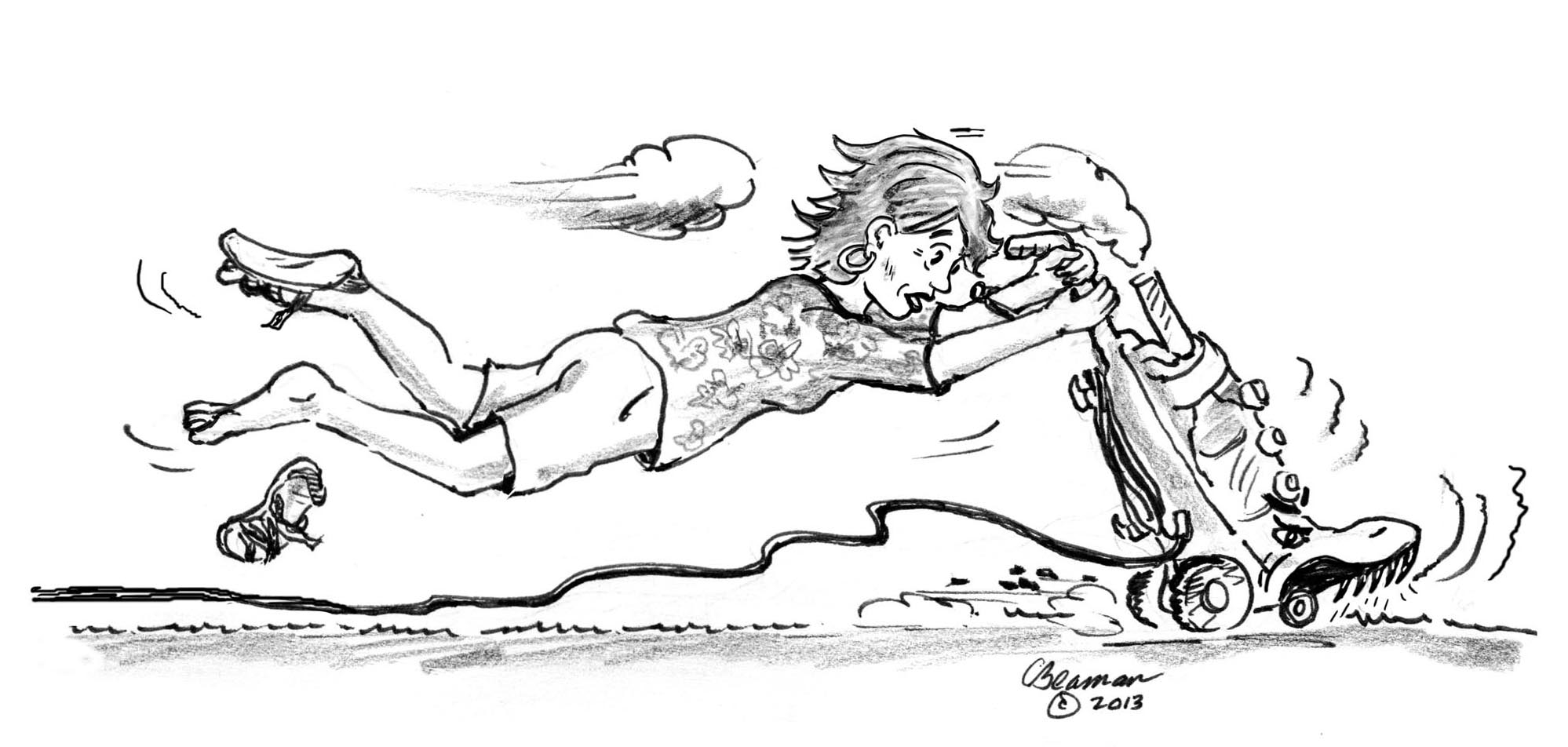
When Husband came home, he just stared at my purchase open-mouthed and started laughing, then a wild guffaw. His comments: This thing looks like it can suck up the rug in one fell swoop. Why, it could even pull a red wagon with a child sitting in it around the block–a vacuum cleaner on steroids, that’s what it is. A turbo-charged Bissell beast!Blog_Vacuum Cleaner_drawing_300

I have to wonder: Can a vacuum cleaner help a writer find her voice?

Join the conversation. I will always respond!

Here is the link to my entry in the Gutsy Story Contest now in progress on the website of author Sonia Marsh:

My Gutsy Story: Rising Above the Pettiness to Focus on the Positive