Upcoming Review and Book Giveaway of Blush:A Mennonite Girl Meets the Glittering World by Shirley Hershey Showalter
On Wednesday, September 25, I will be reviewing Shirley Hershey Showalter’s new memoir – Blush: A Mennonite Girl Meets the Glittering World.
WHO IS SHIRLEY HERSHEY SHOWALTER?
Though Shirley and I both grew up Mennonite in the same county and in the same decade, our paths did not cross until I saw her website http://www.shirleyshowalter.com/ flashing across the screen in a class entitled What the Heck is a Blog? at the University of North Florida in Jacksonville. I immediately recognized her name as Swiss Mennonite and probably of Lancaster County, PA origin. And sure enough, right on both counts. Since March 2013 we have become blogging pals, and I am thrilled to promote her book as the story of a life surprisingly parallel to mine, a story of derring-do!
DETAILS OF THE CONTEST:
WHAT: My review of Shirley Hershey Showalter’s memoir – Blush: A Mennonite Girl Meets the Glittering World.
PLUS: One lucky commenter will win a copy of BLUSH.
WHEN: Wednesday, September 25, 2013
WHERE: Right here on Plain and Fancy Girl
And all you have to do is show up, read my review and leave a comment.
The giveaway will close one week later on Wednesday, October 2, 2013 at 12:00 midnight. I will announce the lucky winner here and by email.
I invite you to come by and enter. Feel free to invite all your reading friends!
Shirley Hershey Showalter, author of BLUSH: A Mennonite Girl Meets a Glittering World
I promise: you will be transported, says Bill Moyers of this memoir. Part Mennonite in a Little Black Dress, part Growing Up Amish, and part Little House on the Prairie, this book evokes a lost time, in Lancaster County, Pennsylvania, when a sheltered little girl with big dreams entered a family and church caught up in the midst of the cultural changes of the 1950s and `60s.
With gentle humor and clear-eyed affection the author, who grew up to become a college president, tells the story of her first encounters with the glittering world and her desire for fancy forbidden things she could see but not touch. The reader enters a plain Mennonite Church building, walks through the meadow, makes sweet and sour feasts in the kitchen and watches the little girl grow up. Along the way, five other children enter the family, one baby sister dies, the family moves to the home place. The major decisions, whether to join the church, and whether to leave home and become the first person in her family to attend college, will have the reader rooting for the girl to break a new path. (Amazon Books)
Since our children were little babes in blankets, Colleen and I have been friends. Our friendship, knitted together by similar values, compatible tastes, and love of beauty, has flexed with her moves from Florida to Maryland to Texas to California and back again.
Like her quilts, experiences in our lives have at times matched the dark, nubby patches, the smooth, satiny ones, all stitched together by the happy binding of love.
Soon I’ll be taking her latest creation as a gift to my dear Aunt Ruthie’s 95th birthday celebration in her new residence at Landis Homes near Lititz, Pennsylvania. Ever the artist, Aunt Ruthie has painted in oils, designed her gardens as colorful collages, and sewn her own clothes in quaint combinations. She’ll love the quilt!
Last weekend I caught up with Colleen and asked her a few questions. Please listen in!
1. What are touch quilts?
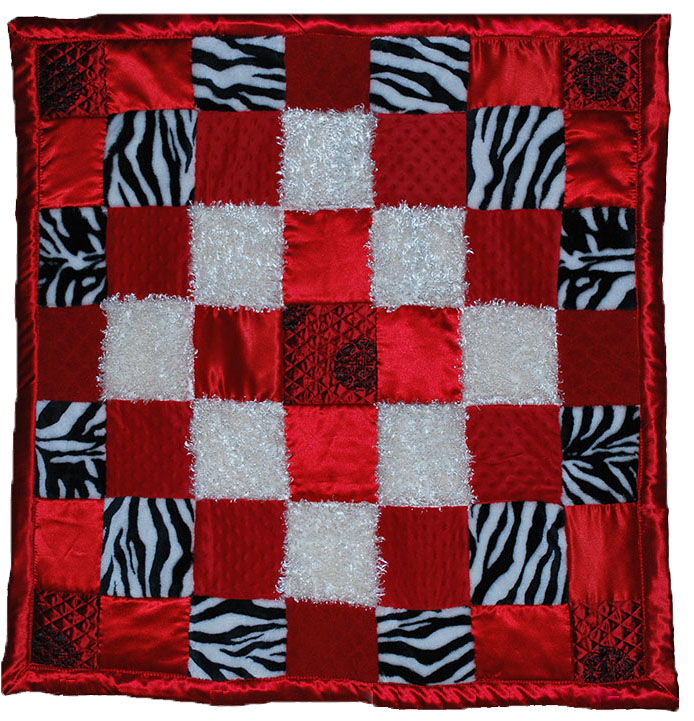
A touch quilt has various textures that are intended to provide a calming effect and soothe jangled nerves as they are stroked. A touch quilt may be used while sitting in a favorite rocker or recliner, wheelchair, at naptime, in a waiting room or hospital bed and are similar in theory to the security blanket used by many small children. They are loved by elders and children alike and have been found to be especially useful for those who are blind or have dementia.
2.How did you get started making them?
In 2005, my church started a Prayer Quilt ministry where I learned to make lap-size quilts; I loved the idea and process and have been making them ever since. In 2010, a women’s group I belonged to asked if anyone knew how to make touch quilts, which were to be donated to the local Elder Day Stay. I did a little research and found them to be very similar to the prayer quilts I already knew how to make, except for the fabrics used. I made about 16 Touch Quilts over the next two years and got wonderful feedback from the excited recipients.
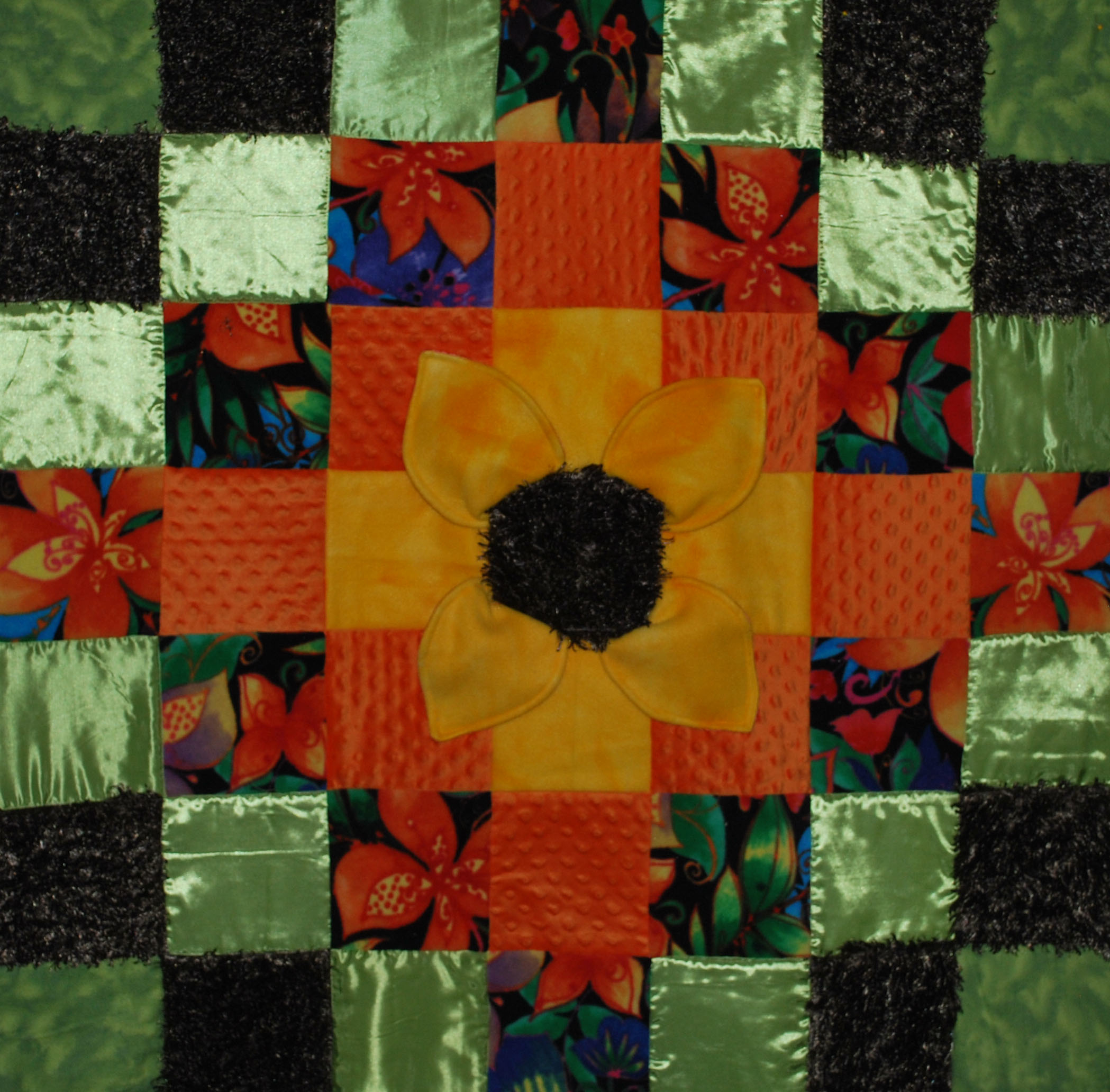
Gold, satin petals attached only at center
3.What types of fabrics do you use?
I look for pleasing colors in a variety of soft fabrics such as satin, corduroy, minky, flannel, fleece, fuzzy, furry, and more. I like to have some satin and fuzzy in every quilt and prefer satin bindings on all of them.
Sizes? (Dimensions of quilts)
I have made lap size (42 x 42), which is the most common size for all ages, nap size (42 x 54), and wheelchair size (36 x 36), which is intended to fit comfortably between the wheels without getting snagged.
4.Where do you get your inspiration for the designs and color combinations?
I try to include at least one fabric with a pattern and select complementary colors based on that. I start out designing on the computer and then put the cut fabric on my quilting “wall” to ensure the design fits the fabrics selected. When I’m using a new design or a fabric with a new pattern, I often spend quite a bit of time rearranging the fabric blocks on the wall before I find a combination that feels and looks right. It’s a creative process that can take hours and occasionally, days.
5. Who benefits from your quilts? To what organizations have you donated them?
I donate quilts to the Trinity United Methodist Church, Elder Day Stay, and various individuals.
Quilts by Colleen: Touchable Chic
Questions or comments about Colleen’s quilts? Reply below please!
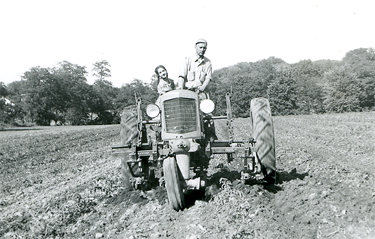
I never think of myself as a Daddy’s girl, because I get along with Mom better. But there I am in plain daylight grinning as I ride the tractor with Daddy. We’re cultivating the 9 acres of land in Bainbridge for the next tomato crop. I stand on the tractor’s floor board with the evenly spaced holes for draining mud and moisture. Hanging onto the back of the tractor seat, we climb a grade — putt-putt-putt-putt-putt — and then back on level ground, mom snaps our picture. It’s a warm day in May, and I see beads of sweat on Daddy’s neck even though there’s a slight breeze blowing.
Cultivating land for tomato crop in Bainbridge
Daddy wears many hats in his farm supply business. He mans the parts department, hires mechanics, markets his equipment, and when a new tractor, harvester, or cultivator arrives, he walks across the street in Rheems to the railroad tracks at the appointed time and pulls a new tractor from a PA Railroad freight car that stops for just minutes to make the delivery.
He is so proud of his new tractor. Either he has ordered it for a farmer from the Minneapolis Moline plant, or he has someone in mind to sell it to. I hear him on the phone now with a prospect: “Hello, this is Longenecker from Rheems . . . .“ Everyone in northern Lancaster County knows him, so he doesn’t have to say “Longenecker Farm Supply” or explain who he is.
Sister Jean and I admiring the new Minneapolis Moline tractor with Daddy
If there are Urban Mamas in Lancaster city, we don’t know about them. Everyone we know eats fresh and local from farms or country gardens. Cherries in May, peas in June, and sweet corn and tomatoes all summer long. In pea season, we gather around the kitchen table and eat a light supper of peas from the garden in a huge bowl. The china serving bowl I see now has embossed pink flowers and gilt edging. Of course, Mom pours lightly browned butter on top. “Butter always makes it better,” she says. After our fill of peas, peas, peas, there might be Breyer’s butter brickle ice cream and pretzels.
And sometimes, tomato sandwiches. Now, you ask, why would you eat tomato sandwiches when you were in the tomato patch all summer? Wouldn’t you be sick and tired of them? Well, not the way Mother fixes them:
How to make the Perfect Tomato Sandwich, according to Mother Longenecker:
2 slices of bread
Spread one side of each with mayonnaise, always Hellman’s
Layer medium-sliced, fresh tomatoes from the field (none of this harvest-green and then spray-with-preservatives business from the grocery store.)
Sprinkle some sugar on top of the tomatoes—and there you are!
If you are counting calories and watching your waistline, this is not your dish. But try it just this once. It’s kind of sloppy: bright red tomato juice oozes out and puddles your plate, nourishing your senses and soul.
. . . at the midpoint
of summer,
the tomato,
star of earth, recurrent
and fertile
star,
displays
its convolutions,
its canals,
its remarkable amplitude
and abundance,
no pit,
no husk,
no leaves or thorns,
the tomato offers
its gift
of fiery color
and cool completeness.
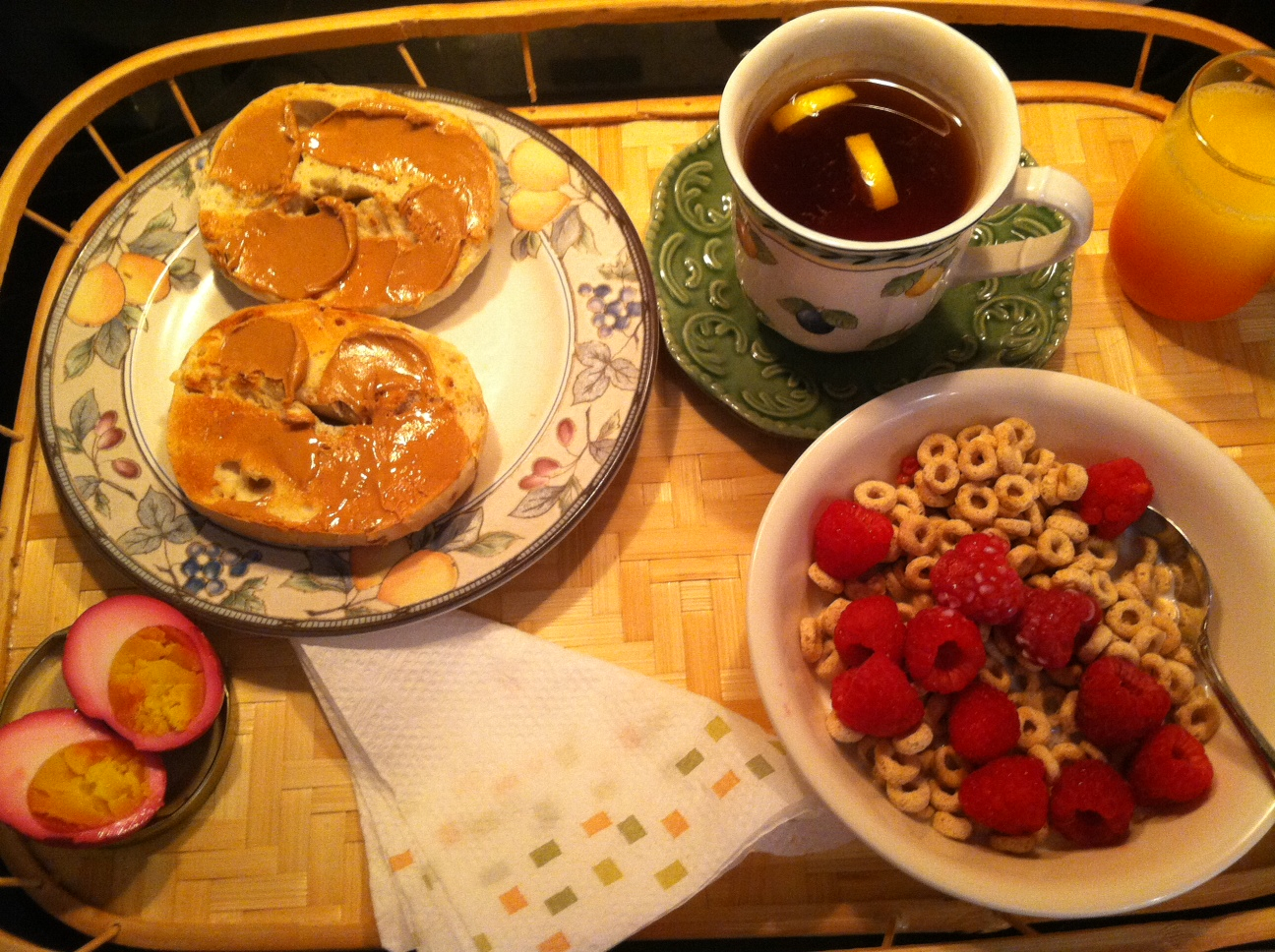
Before I dashed off to my college classes each morning, I had a 10-minute oasis of breakfast time around 6:30. With a modest-size repast of tea and lemon, bagel with peanut butter or cream cheese + a piece of fruit, I told God, “Thank you for this food and the leisure to enjoy it in.” Why would I even think to call it leisure? I had just 10 minutes before I bolted out the door, joined the traffic on Beach Boulevard, and rolled my car onto campus at 7:00 a.m. Busy day ahead!
Now in my writing phase of life, at 7:00 I may tune in to 20-minute yoga session, pre- or post-breakfast. It just depends.
But now my breakfasts are more abundant and leisurely. Well, . . . most of the time.
Yes, a nod to PA Dutch taste buds – pickled eggs
Breakfast time includes a spiritual dimension:
First, CLEANSING . . .
Then, moments of SILENCE
Silence, however brief (then) or longer (now). . . requires meaningful retreat from the hurly-burly busy-ness of life.
In his memoir, The Chosen, Chaim Potok’s main character, Reuven, speaks of the enlightenment his friend’s father, Reb Saunders, a Hasidic rabbi, imparts about the restorative value of long stretches of quiet: “. . . “I’ve begun to realize that you can listen to silence and learn from it.” And later Reuven’s brilliant friend Danny admits: “My father taught me with silence, . . . “ so I would not grow up with a mind having no soul.
Now take a deep breath . . . read s l o w l y :
When you are faithful in [silent meditation] . . .
you will slowly experience yourself in a deep way.
Because in this useless hour in which
you do nothing “important” or urgent
you have to come to terms with your basic powerlessness,
you have to feel your fundamental inability
to solve your or other people’s problems
or to change the world.
When you do not avoid that experience but live through it,
you will find out that your many projects, plans,
and obligations becomes less urgent, crucial, and important
and lose their power over you.
Abbot John Eudes Bamberger to Henry Nouwen (Quoted in Fil Anderson’s Running on Empty, a book about living restoratively in “a world stuck on fast forward.” 73)
Next, MEDITATION . . .
Take another deep breath, read, and reflect
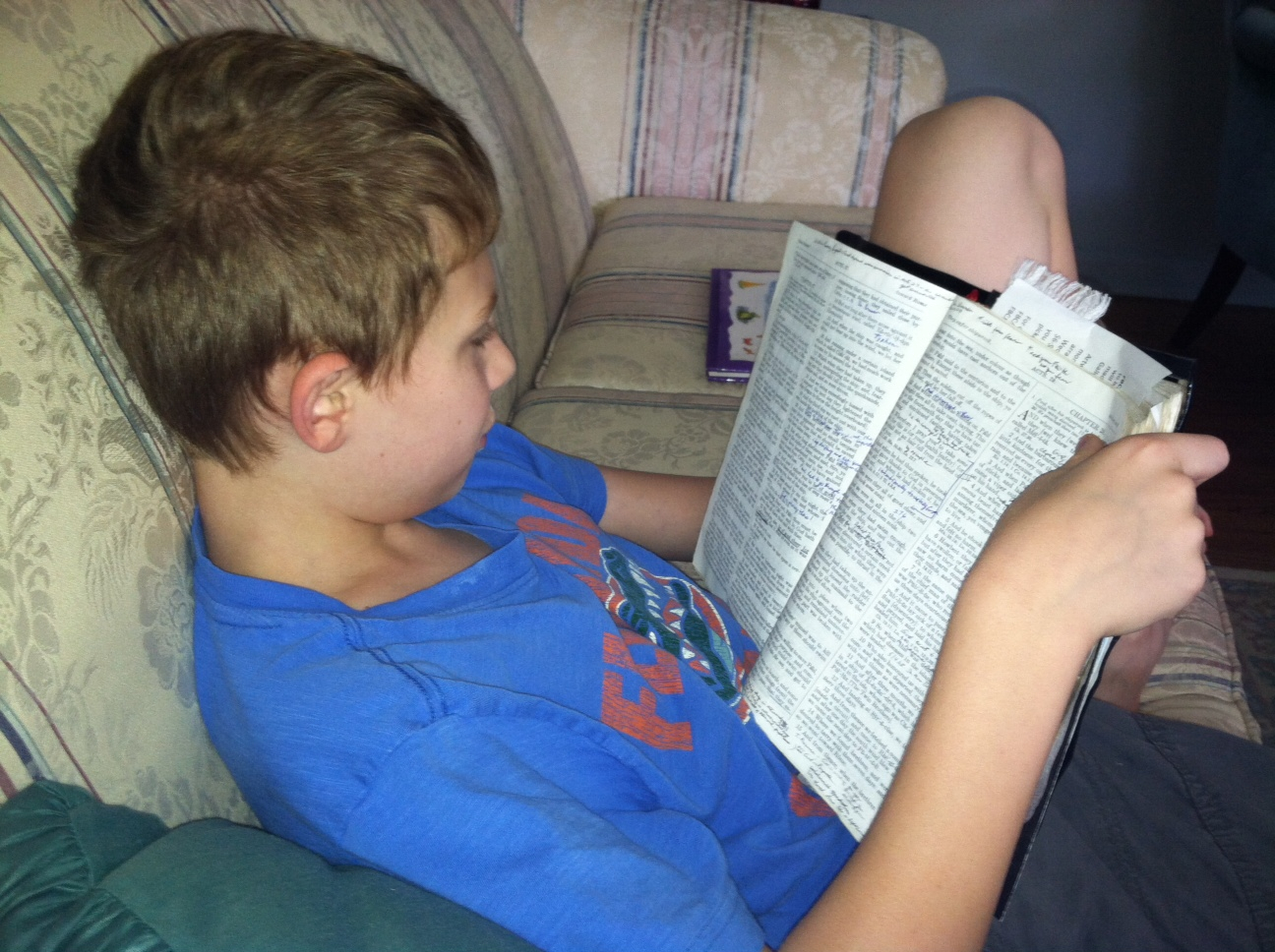
Patrick reading in Book of Luke
Grandson Patrick, my less pious stand-in for “Meditation.” He is reading from his Grandpa’s Bible the story of one of the shipwrecks of Apostle Paul he learned about in Vacation Bible School.
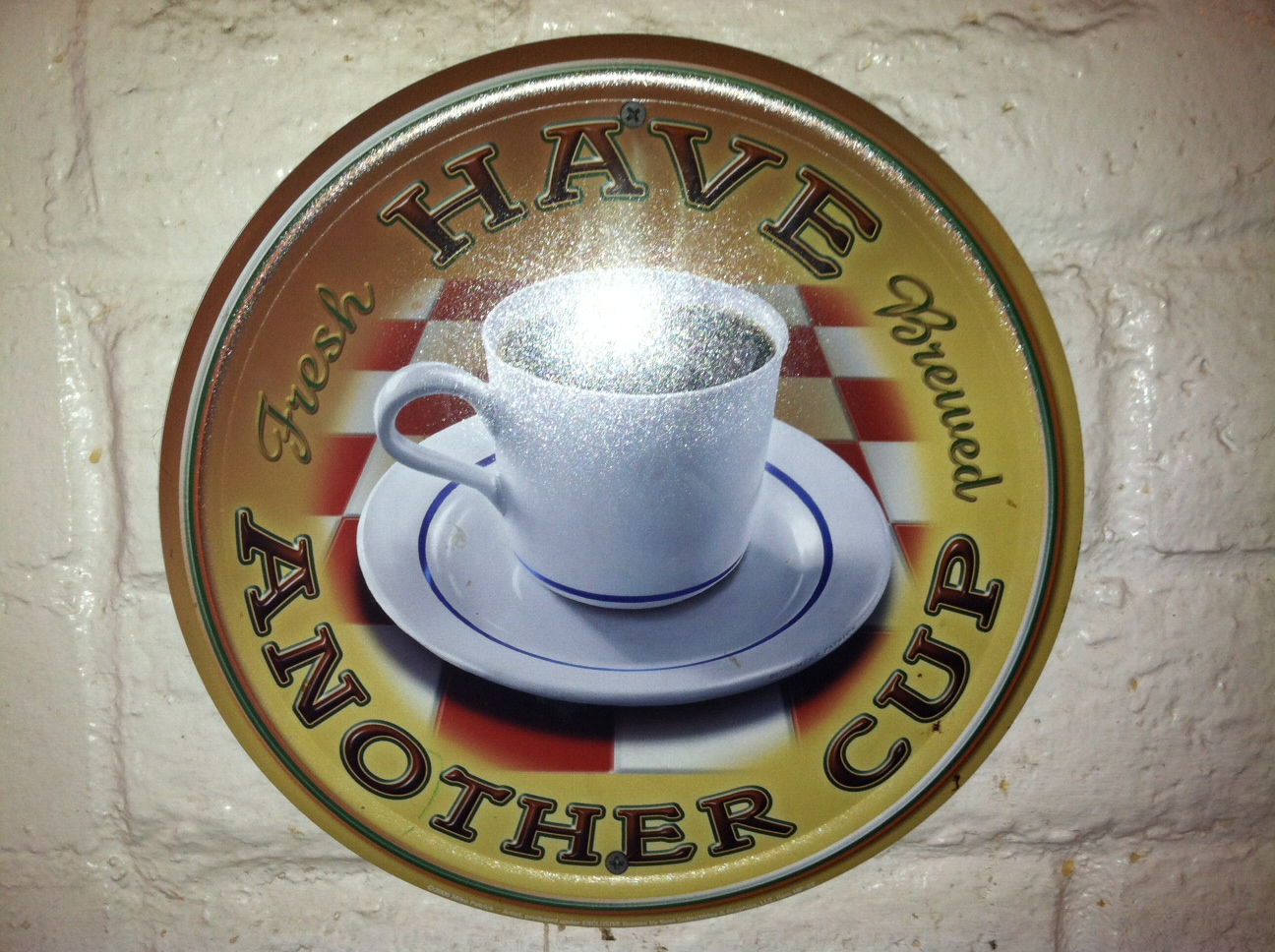
Happy to say, I haven’t heard the phone ring yet, so there’s even time for another cup!
Seen in Santa Cruz Diner, CA
OOPS!
You were waiting for an OOPS! and here it comes. Life doesn’t always go as planned. Interruptions happen. And frequently. There is often a need to revert to Plan B. (See again Southern Friends Meet PA Dutch Dish)
Fil (really, not a misspelling) Anderson, again, in Running on Empty quotes Author Robert Benson, Living Prayer (page 81) who has devised a theory of life he dubs the “Rule of 21.”
Twenty-one minutes is the amount of time that one can go without being interrupted by a telephone call, a knock at the door, or an attack from cyberspace . . . .
Twenty-one days seems to be the maximum number of days that one’s life can go smoothly. The average is four, but the limit is twenty-one I think. It’s hard to live for more than twenty-one days without a car breaking down, a trip being cancelled, a family member getting sick, a pet dying, a tire going flat, a deadline being missed, or some other thing that scatters all of one’s otherwise neatly arranged ducks.
While I’m writing this post, there have been several hiccups in the rhythm of my own life. Specters in the form of medical, institutional, and financial needs have reared their unwelcome heads either in my own or our extended family. And it’s been, I gasp, about 21 hours — give or take a few!
I am in a small room of our church standing in a circle of women and girls in the presence of our Bishop and Deacons who will ask each of us 2 questions:
* Are you in harmony with the rules and regulations of the Mennonite Church?
* Are you at peace with God and your fellow man?
We are all plain, wearing coverings on our heads and simple dresses with capes, and expected to answer “Yes” to each question and answer them truthfully with a pure heart. I wonder though about Della and Doris in the group. During the last Council Meeting, as this question is called, they each answered “As much as possible” when queried about their willingness to keep church rules. I have noticed that they always push the envelope on fashion, wearing dresses with collars with piping, expensive fabrics, and shoes just a hair below chic. Their answers were acceptable apparently last time, for here they are back again in our close-knit circle.
It is a week or two before Communion at Bossler Mennonite Church, and we assemble in small groups, men and women separately to be examined in preparation for one of our most important ordinances, Communion (Article II, Section 2 of the Lancaster Conference Rules 1968). A memorial to Christ’s suffering and death, church members who have professed faith in Christ, stand in a line to partake of the sacred emblems of Christ’s broken body and shed blood symbolized by a morsel of bread and a sip of grape juice (never wine!) from a communal goblet. We share a common faith and common heritage, many of us branches of the same family tree at Bossler’s Mennonite Church: Garbers, Hesses, Kraybills, Kreiders, Weavers, Wengers, Zimmermans, and of course, Longeneckers.
Our church fathers feel responsible that none of their flock observe Communion unworthily. And we members fear damnation if we have unconfessed sin in our lives. Our pastor intones from the pulpit these words: I Cor. 11:29 “For he that eateth and drinketh unworthily, eateth and drinketh damnation to himself, not discerning the Lord’s body.”
Next Sunday, we sing lovely hymns a capella as we circle row by row around the sanctuary to observe the ordinance of Communion: “Bread of Heaven,” “Alas! And Did My Saviour Bleed?” “Saw Ye My Saviour?” and “When I Survey the Wondrous Cross” are among the oft-sung music selections:
When I Survey the Wondrous Cross
Like the cycles of the seasons, spring and fall, we repeat the circles of Council Meeting and Communion year after year.
TUBS:
After the Communion service in the church, men and women gather separately in their vestibules to observe the Feet Washing Ordinance, Article II, Section 3 of our Conference rules, according to the gospel of John 13:1-9. Our fathers, uncles, and grandpas bring in oblong, galvanized basins of luke-warm water and then quickly disappear.
There is an awkward moment when I look around for a partner. My hope is to find someone else close in age. But a time or two I have been stuck with an older woman – bad breath and chin hairs, really off-putting for a girl of fourteen.
But I’m lucky to pair up this time with Gladys Garber, one of my teen-age friends. We take turns: each tying the terry cloth apron to our waistlines and washing each other’s feet. No scrubbing is involved here, just a gentle hand-pouring of water over one foot and then the other, drying each foot separately, tenderly.
But there’s more. After the foot-washing is finished, It is now time to observe the last ordinance, the Holy Kiss, an “expression of fervent love” (Romans 16:16). And, no, it’s not a peck on the cheek!
It was Socrates who said, “The unexamined life is not worth living.” It is not possible to accuse good Mennonite folk of that transgression. They are a people who share a common heritage, a common faith, and a common goal of a pure and holy life.
CareBear Cliff has given me a diamond ring for Easter, baked in a blueberry muffin with a plastic bunny-rabbit stick on top. It is my first piece of jewelry ever and I’m 25 years old. Imagining everyone is as thrilled as I am, I flash the sparkling stone in front of Grandma Longenecker.
“Look, Grandma!” I say ecstatically, offering my hand for her to inspect the glittering diamond solitaire in a silver setting.
She turns ashen-faced, at the sight. At the moment, she says nothing but her eyes communicate betrayal. I’ve betrayed my heritage and my family values, I quickly gather.
Though she knows I am straddling the fence between Mennonite life and something else, she still sees me as a plain girl, who once adhered to the strict teachings of the Lancaster Mennonite Conference rules of 1968, especially Article III, Section 6 on Attire: “ . . . brethren and sisters shall not use not wear jewelry or other ornaments.”
My joy bubble has popped and I slowly withdraw my hand, which has figuratively been slapped.
Imagine my surprise and bafflement when years later, she sits my sisters and I down around the kitchen table and produces 3 ring boxes. “Now where did they come from?” I wonder. Apparently hiding in her dresser drawer for decades.
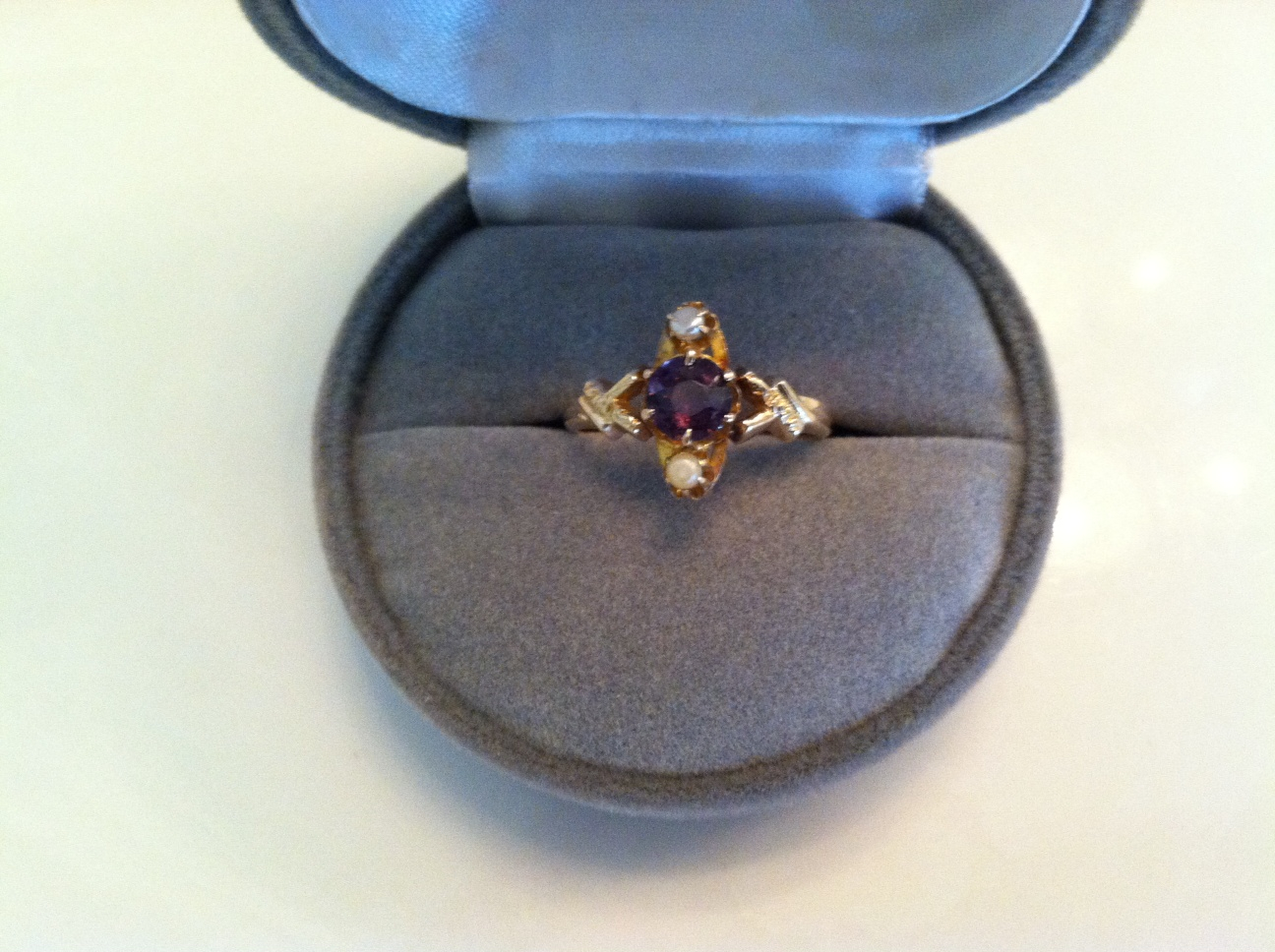
Grandma’s ring in her fancy years
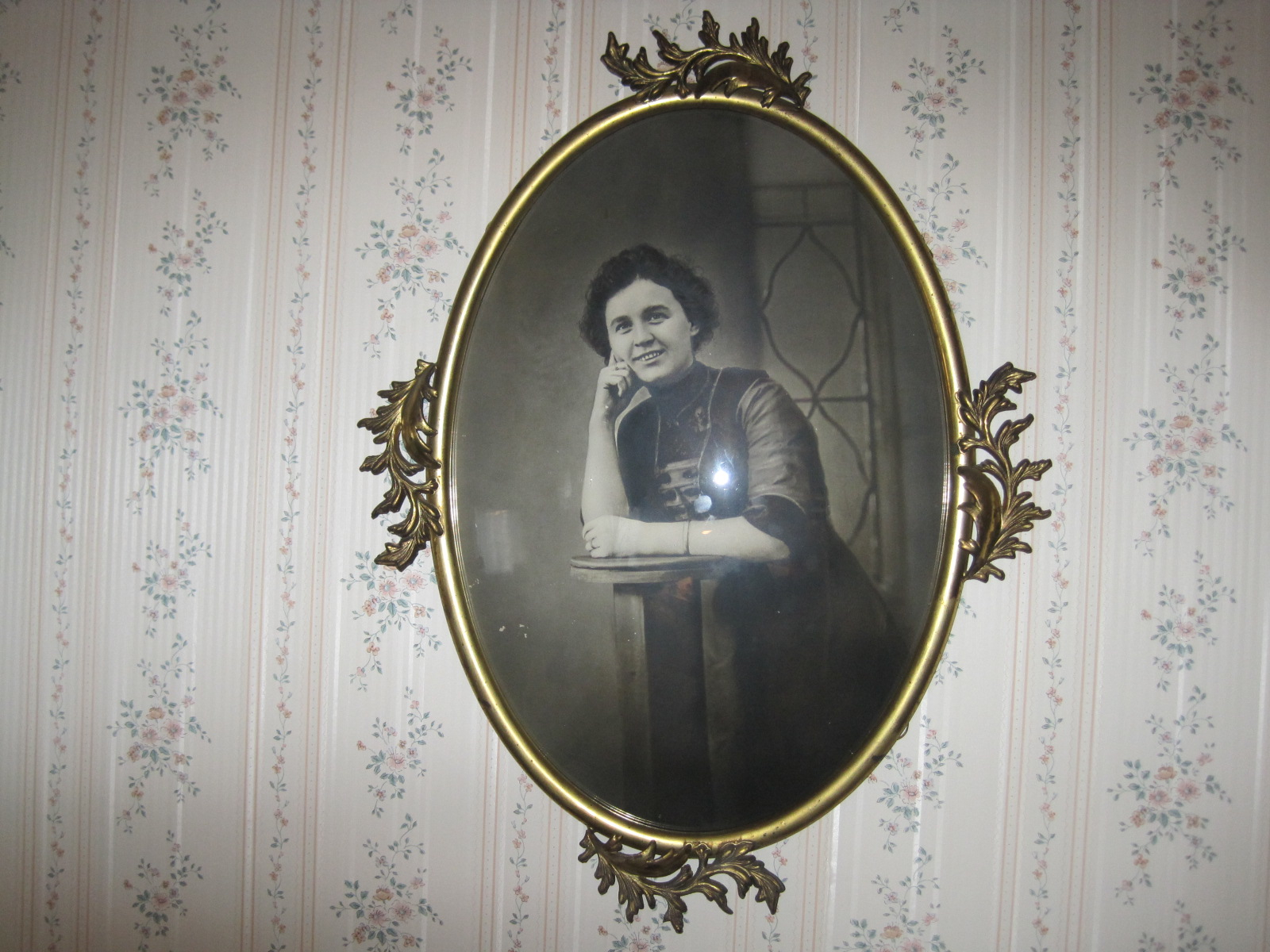
Before her marriage to Grandpa Henry, she was fancy, and wore all the regalia of a fashionable Victorian woman: hats with plumes, dresses with bustle and beadwork—and even a bracelet and RINGS! Now Janice gets Grandma’s opal engagement ring, Jean gets her larger amethyst ring, and I am bequeathed a lovely one with a smaller amethyst and four seed pearls. Well, I declare.
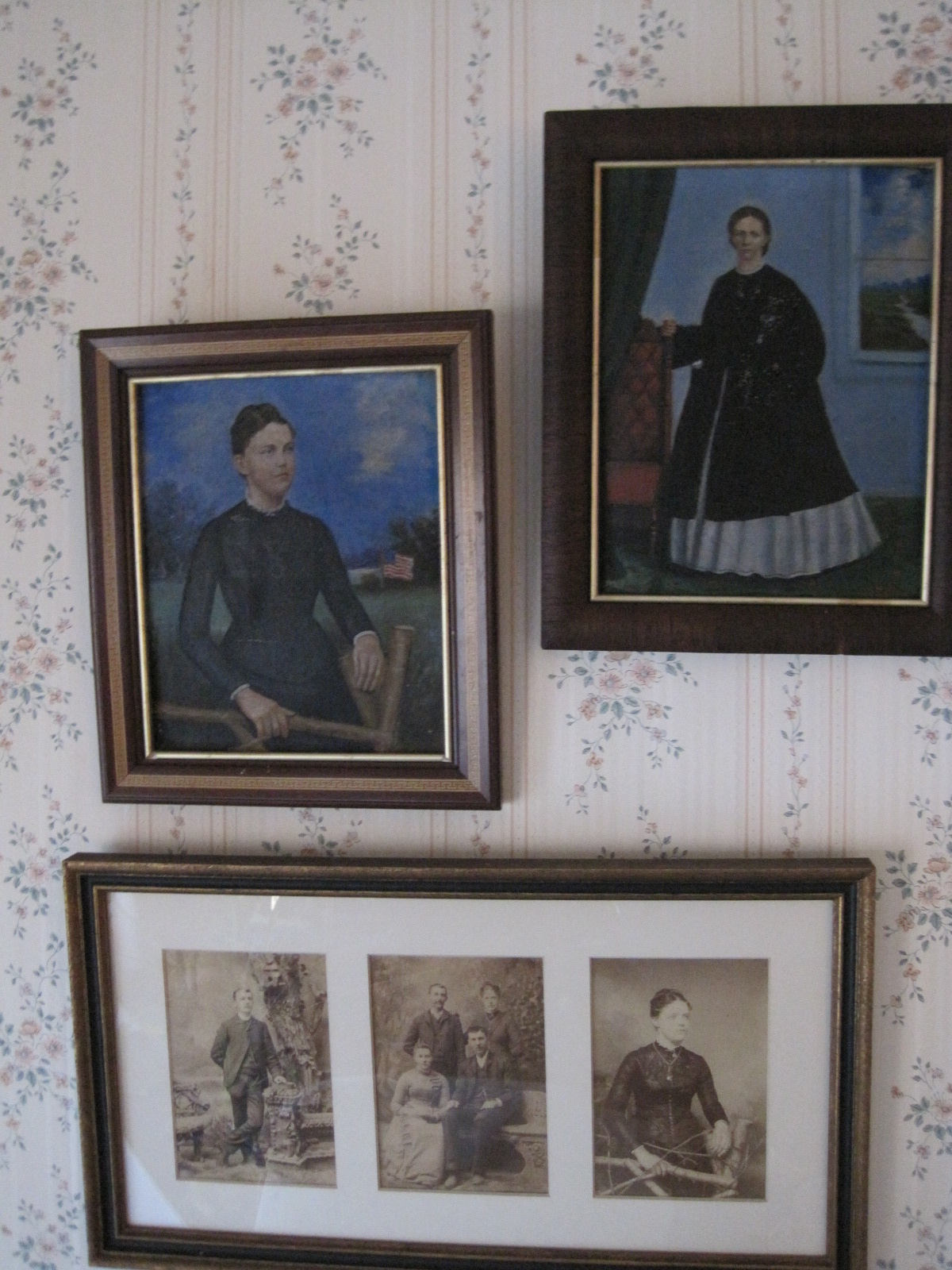
Grandma before her marriage to Mennonite Henry LongeneckerOil Paintings of Grandma Longenecker and Great Grandma Martin
And Gloves
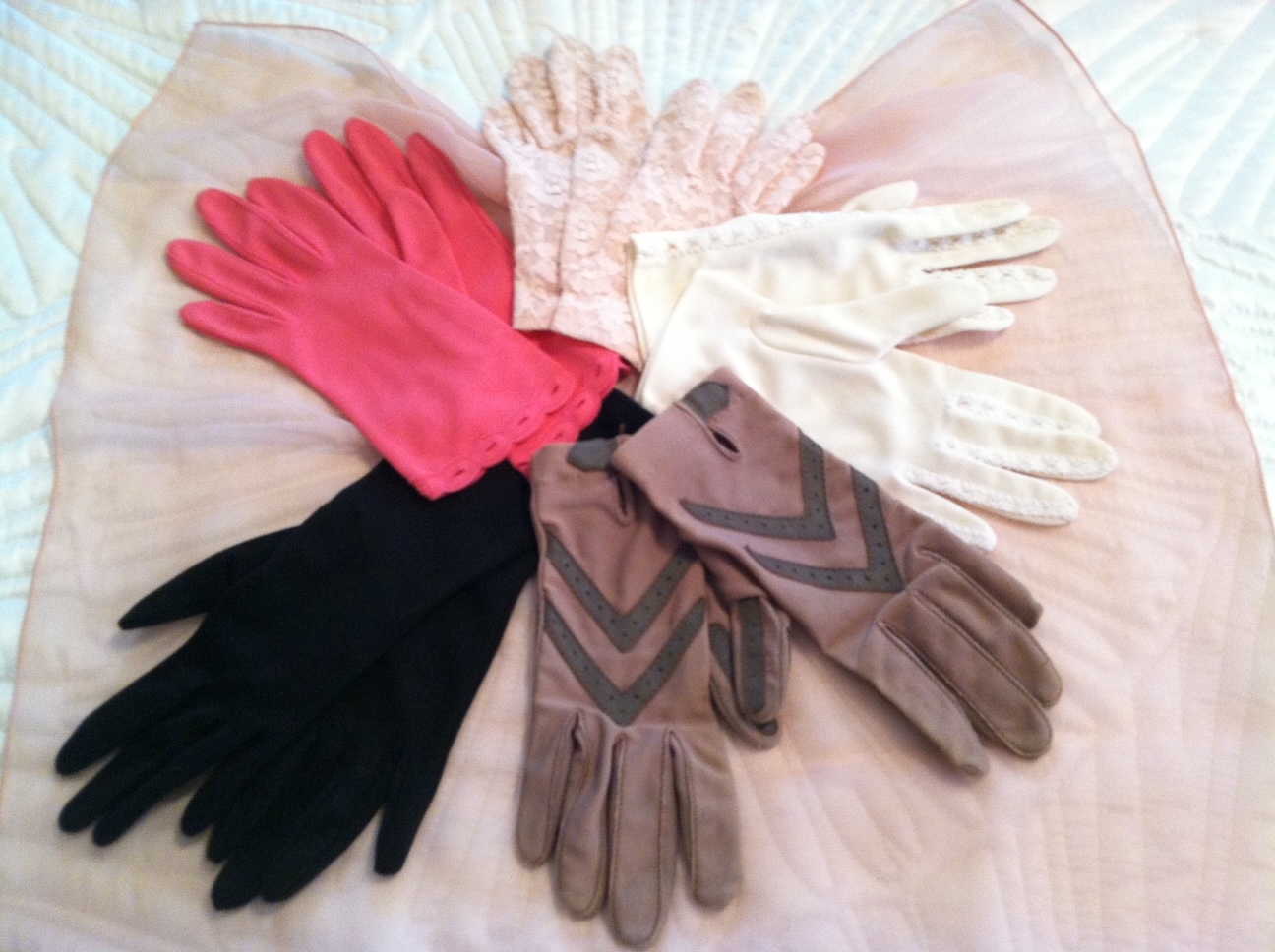
Nowadays casual Fridays last all week long, Presidential candidates have ditched the white shirt and tie to look cool, and ladies don’t wear gloves anymore except for warmth in the wintertime. No longer a fashion statement, women’s gloves appear as curiosities in the dressy section of antique shops or museums.
My collection of old gloves
In my collection of old gloves, the plain and fancy mingle. Guess which pair was worn by one of my attendants at our wedding. The choices are at 10:00 o’clock, 12:00 o’clock, and 3:00 o’clock.
Like this post? Follow my blog and get many more free of charge! Just type in your email address at the top of the page and click “subscribe!” WordPress keeps your email address private.
“Tie your head shut!” – An oft-heard admonition from my mother, my Aunt Ruthie, and Grandma Longenecker. Translation: If you tie your head shut, you won’t get sick with colds, sinus trouble, what not. And so our heads are tied shut with bonnets and bandannas and then adorned with the Mennonite prayer veiling. In other words, there is usually something besides my hair on top of my head or around my ears from babyhood on up.
My photo at 10 months old features a machine-sewn miniature version of a bonnet that I remember my Grandma wearing in the garden.
On billboards we see the little blond girl advertising a fake way to get sun-tanned. “Don’t be a paleface,” she says. But we don’t need to buy Coppertone lotion to make our skins dark. We get our tans the honest way. Our skin turns brown naturally in the summer playing outside or working in the garden or tomato patch. To tell the truth, we depend on the sun-bonnet or the grace of God to not scorch our tough Swiss skins.
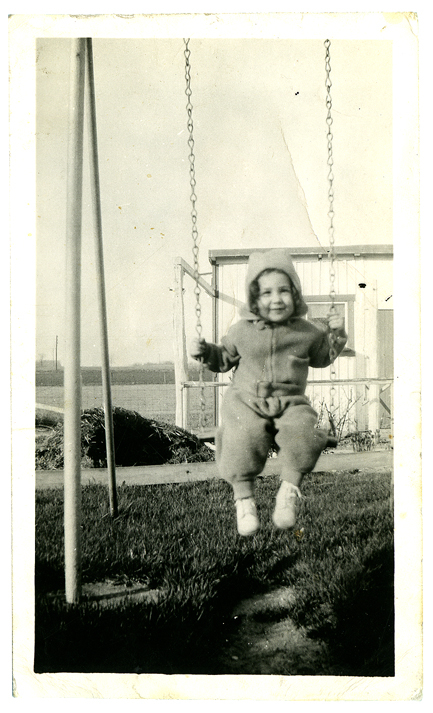
Bundled up in snowsuitAnother hat – on tricycle
More Bonnets & Bandannas @ Work
Like Mildred Armstrong Kalish in her must-read memoir Little Heathens depicting rural life in Iowa during the Depression, we in Pennsylvania Dutch land are not offended or shocked by four-letter words that are part of our daily life either: cook, bake, wash, iron, dust, pick tomatoes, sweet corn, beans, or sweet potatoes.
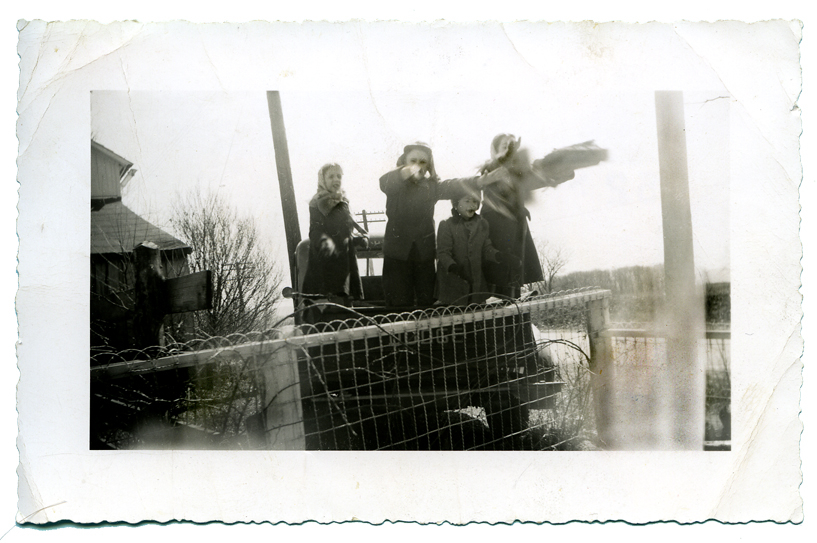
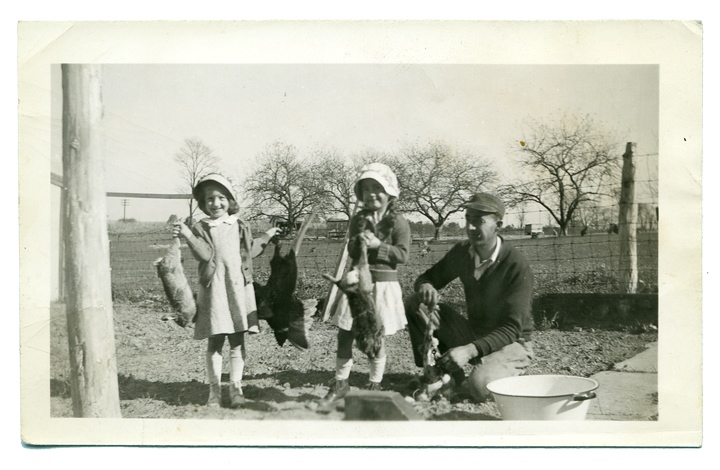
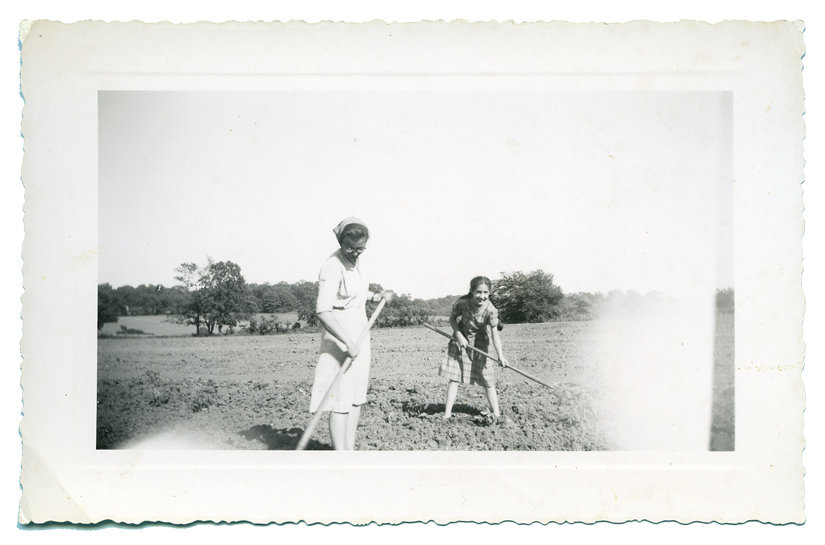
Sisters and I throwing wood for furnaceCousin Janet and I say, “Rabbit for dinner!”Aunt Ruthie with scarf and I hoeing in tomato field
WIth skirts and scarves we plant, hoe, and pick tomatoes in Bainbridge, PA. For details, see Tomato Girl, parts I and II.
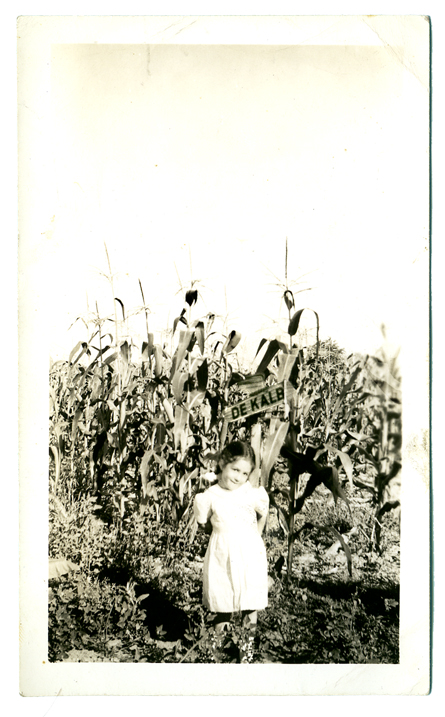
Proudly advertising DeKalb corn, no bonnet or bandanna
School and Sex Ed
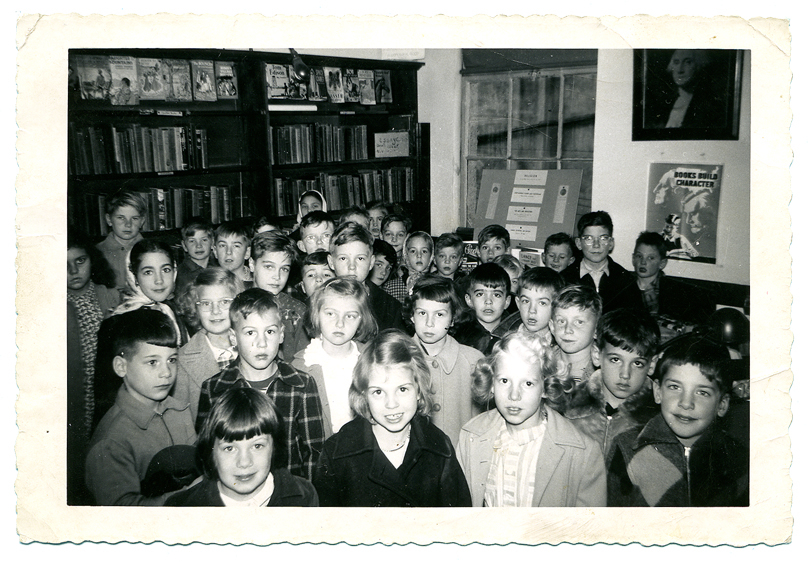
Surrounded by girls with curls visiting the Elizabethtown Library, I’m the one to the left with a floral bandanna, keeping my head tied shut, just like Mother expected.
My class at Elizabethtown Library
With all its books, this library is an impressive step up from the small bookcase at Rheems Elementary School. Yes, there is a library at Bossler Mennonite Church too, which is where I begin to get my sex education. In a blue and white book with a glossy, stiff cover, I discover that when a mommy and daddy “got very close” a baby was created. “Now what does “get very close” mean?” I wonder. Later I un-earth a book entitled Sane Sex Life with a red, black and white dust cover in my parents’ bedroom. Hidden in their wardrobe among sweaters, long-johns, and mothballs, this book adds a new dimension to my literary diet of Lippincott textbooks, church catechism, and storybooks. Whenever I think my mother won’t hear the sound of the wardrobe door open, I sneak a look at its realistic drawings (gasp!) and mind-boggling explanations, astonished that such a books exists.
Yes, I keep these strange revelations under my hat, bandanna, prayer veiling–whatever I am wearing on my head.
And Play
Picnicking with plain friends
Prayer coverings take no vacations. Because a woman is apt to pray any time or any place, the Church (Lancaster Mennonite Conference) ordains that we stay veiled morning, noon, and night.
What special outfits do you remember from your childhood or teen-age years?
The bees came the summer of 1964, the summer I turned fourteen and my life went spinning off into a whole new orbit, and I mean whole new orbit. Looking back on it now, I want to say the bees were sent to me. I want to say they showed up like the angel Gabriel appearing to the Virgin Mary, setting events in motion I could never have guessed. Sue Monk Kidd, The Secret Life of Bees pages 1, 2
If you’ve read Sue Monk Kidd’s novel, The Secret Life of Bees, you know that bees are a metaphor for the flight Lily Melissa Owens takes to escape a mother-less house (except for nanny Rosaleen) and the domination of an angry father to find a true family and home. In the process, she learns the truth of her mother’s past, finds a hive of new mothers, and discovers her own identity. In other words, she discovers her true self, the whole point of a good coming-of-age novel.
Substitute a different date and a different age, and you have my story with major variations. Unlike Lily, I had a caring family with a highly functioning Mother, but I lived the life of a Lancaster County Mennonite girl, separate from mainstream culture. I envisioned a more colorful life that would offer excitement and surprise. Thus, the bees in my bonnet (literally, a bonnet) propelled me to explore life beyond what I believed was the sheltered, nurturing, but confining, boundaries of my Mennonite upbringing. “What would happen if I sampled the honey from a different hive?” I wondered.
No, I didn’t have a jar of bees on my dresser like Lily, but I did recognize an inner voice saying to me, “Marian, your jar is open.” And off I buzzed to a different state, a changed outward appearance, and eventually a new name.
In the process, I landed in another city (Charlotte, NC) in a house with two young women, who, like Lily’s three Boatwright sisters in the Pink House, groomed me for a different life. A life with bright colors, loose hair, fancy dresses but not jarring me away from deeply held values.
Like Lily Melissa Owens, I have sampled the honey of good experience along with the vinegar of trials. Of course, I like the honey better. Here are some life secrets from the “. . . Life of Bees.”
1. IT’S BETTER TO BE SWEET THAN SOUR!
“We lived for honey. We swallowed a spoonful in the morning to wake us up and one at night to put us to sleep. We took it with every meal to calm the mind, give us stamina, and prevent fatal disease. We swabbed ourselves in it to disinfect cuts or heal chapped lips. It went in our baths, our skin cream, our raspberry tea and biscuits. Nothing was safe from honey. . . . [It] was the ambrosia of the gods and the shampoo of the goddesses.” (84)
August [Boatwright] said beeswax “could make your fishing line float, your button thread stronger, your furniture shinier, your stuck window glide, and your irritated skin glow like a baby’s bottom. Beeswax was a miracle cure for everything.” (84)
2. OBSERVE ETIQUETTE.
What works in the bee yard works in the world. “Don’t be afraid, as no life-loving bee wants to sting you. Still, don’t be an idiot: wear long sleeves and long pants. Don’t swat . . . . If you feel angry, whistle. Anger agitates, while whistling melts a bees’s temper. Act like you know what you’re doing, even if you don’t. Above all, send the bees love. Every little thing wants to be loved.” (92)
3. USE YOUR SMARTS.
“People don’t realize how smart bees are, even smarter than dolphins. Bees know enough geometry to make row after row of perfect hexagons, angles so accurate you’d think they used rulers. They take plain flower juice and turn it into something everyone in the world loves to pour on biscuits.” (137)
4. NOTICE THAT OTHERS ALSO HAVE IMPORTANT ROLES TO PLAY; YOU’RE NOT ALWAYS THE QUEEN BEE! In the bee kingdom there are nest-builders, field bees with good navigation skills to gather nectar and pollen, nurse bees, and mortician bees. At the extreme ends: drones and, oh, yes, the Queen Bee with her attendants. (148-149)
5. COMMUNICATE!
“The whole fabric of honey bee society depends on communication—on an innate ability to send and receive messages, to encode and decode information.” Gould, James L. and Carol Grant Gould. The Honey Bee, quoted in The Secret Life of Bees (165)
6. YOU ARE CAPABLE OF MORE THAN YOU THINK.
The worker bee is just over a centimeter long and weighs only about sixty milligrams; nevertheless, she can fly with a load heavier than herself. Gould, James L. and Carol Grant Gould.The Honey Bee, quoted in The Secret Life of Bees, (256)
7. ENJOY BREATH-TAKING BEAUTY!
According to August, if you’ve never seen a cluster of beehives first thing in the morning, you’ve missed the eighth wonder of the world. Picture these white bees tucked under pine tees. The sun will slant through the branches, shining in the sprinkles of dew drying on the lids. There will be a few hundred bees doing laps around the hive boxes, just warming up, but mostly taking their bathroom break, as bees are so clean they will not soil the inside of their hives. From the distance it will look like a big painting . . . in a museum, but museums can’t capture the sound. Fifty feet away you will hear it, a humming that sounds like it came from a different planet. At thirty feet your skin will start to vibrate. The hair will lift on your neck. Your head will say, Don’t go any farther, but your heart will send you straight into the hum, where you will be swallowed by it. You will stand there and think, I am in the center of the universe, where everything is sung to life. (286)
Purple Passages made its debut on July 10. Here is the August 10, 2013 installment.
My stack of journals minus the fatter one on my nightstand
Why people read
1.7.94 We read books to know we are not alone. William Nicholson
Love to children
4.2.89 The love you give your children is like black paper: it absorbs and you can’t see it, but you know it’s there. Mary Kalegis
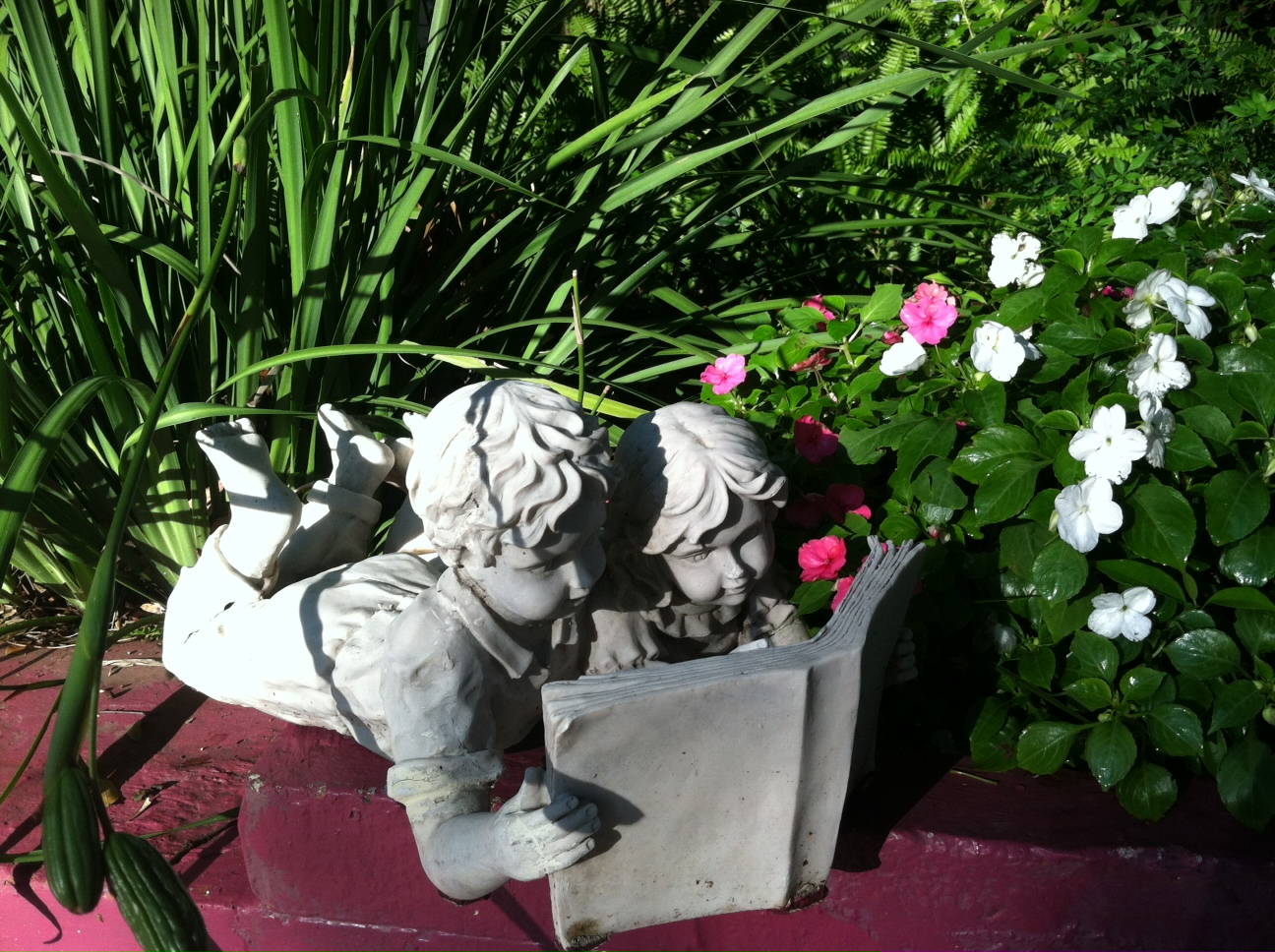
Patio pose, little readers frozen in time
My Hometown
Courtesy: City of Jacksonville
7.27.91 Jacksonville . . . an Oz of blue-green skyscrapers, a city of dreams at the end of the pine-green tunnel . . . shines from a number of angles like a jewel being turned in your hand. John Updike, Rabbit at Rest
On Relationships
10.21.91 Relationships with the opposite sex reflect our efforts to find answers for problems with our parents. Relationships with our friends represent our efforts to find solutions for problems with our siblings. (Quoted by Shirley McLaine, who undoubtedly quoted from someone else.)
On Sanity
7.19.92 It occurred to her that her sanity was becoming intermittent, like a sudden stretch of intact road in an abandoned region. Or radio music, blatant after months of static. K. Braverman, Tall Tales from the Mekong Delta
On Birthdays
2.10.96 The great thing about getting older is that you don’t lose the other ages you’ve been. Madeleine L’Engle
On Angels
5.8.97 Angels can fly because they take themselves lightly. G. K. Chesterton
On Hope
7.11.95 As long as matters are hopeful, hope is a mere . . . platitude; it is only when everything is hopeless that hope begins to be a strength. Like all Christian virtues, it is as unreasonable as it is indispensable. G. K. Chesterton, Heretics
Make one of your own!
Well, you can coin a new quote, but you could also begin or continue your own journal of purple passages:
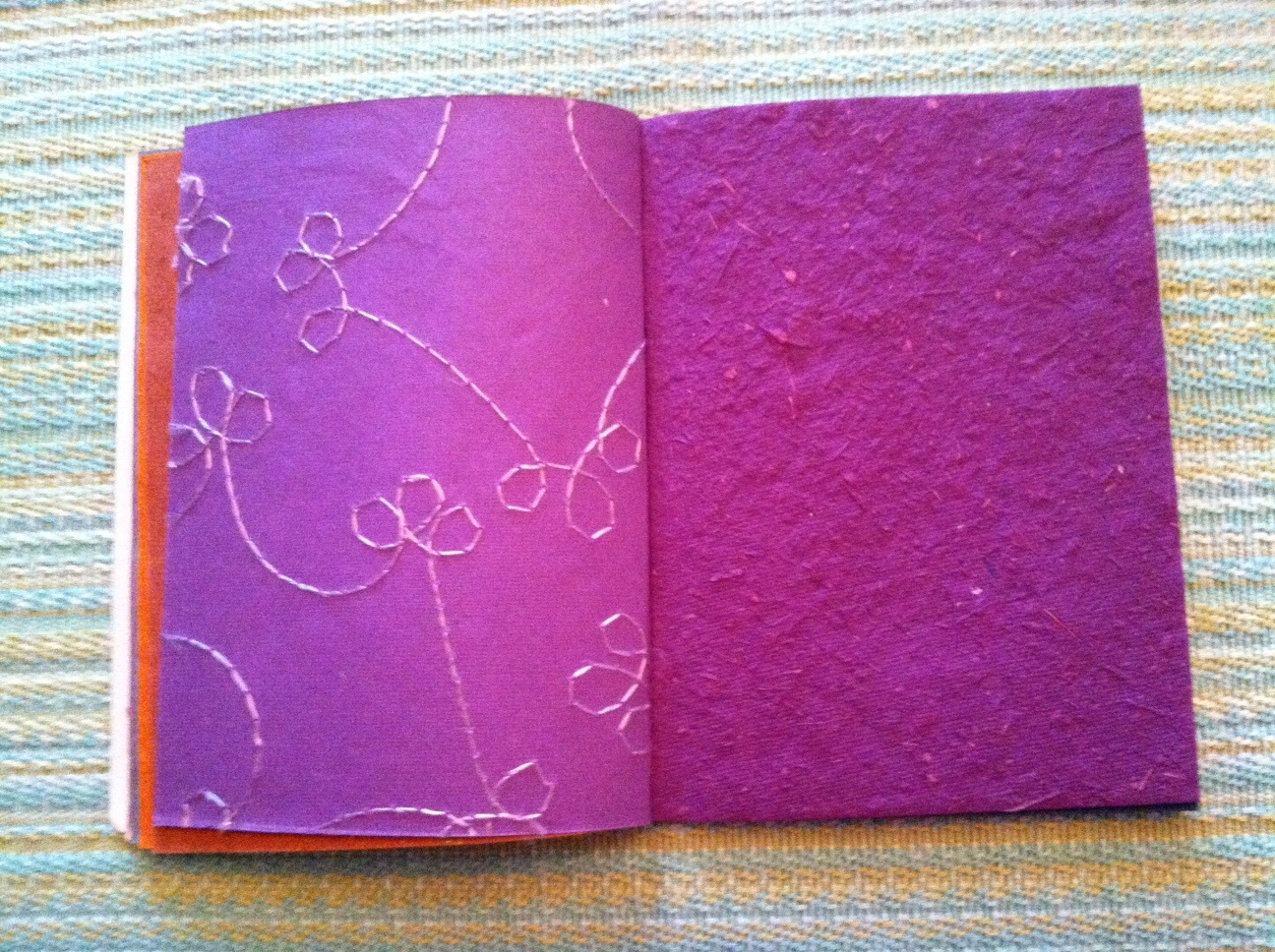
White pages would be easier, or computer pages with a pale purple background. How about it?
Shirley Hershey Showalter, author of BLUSH: A Mennonite Girl Meets a Glittering World

















 Plain and Fancy