The Longenecker Sisters’ Road Trip, Part 2

We pile into Heidi’s shiny black Toyota 4Runner in Jacksonville and off we go, zooming across state lines, first Florida, then Georgia, and finally South Carolina, our voices twanging to Doo Wop tunes of the 50s and 60s: All Good Vibrations as miles melt away.

Bouncing along with our luggage are my sisters, Janice and Jean and our daughters, my niece Heidi and daughter Crista, who have masterminded a Mother’s Day retreat for mothers and aunts.
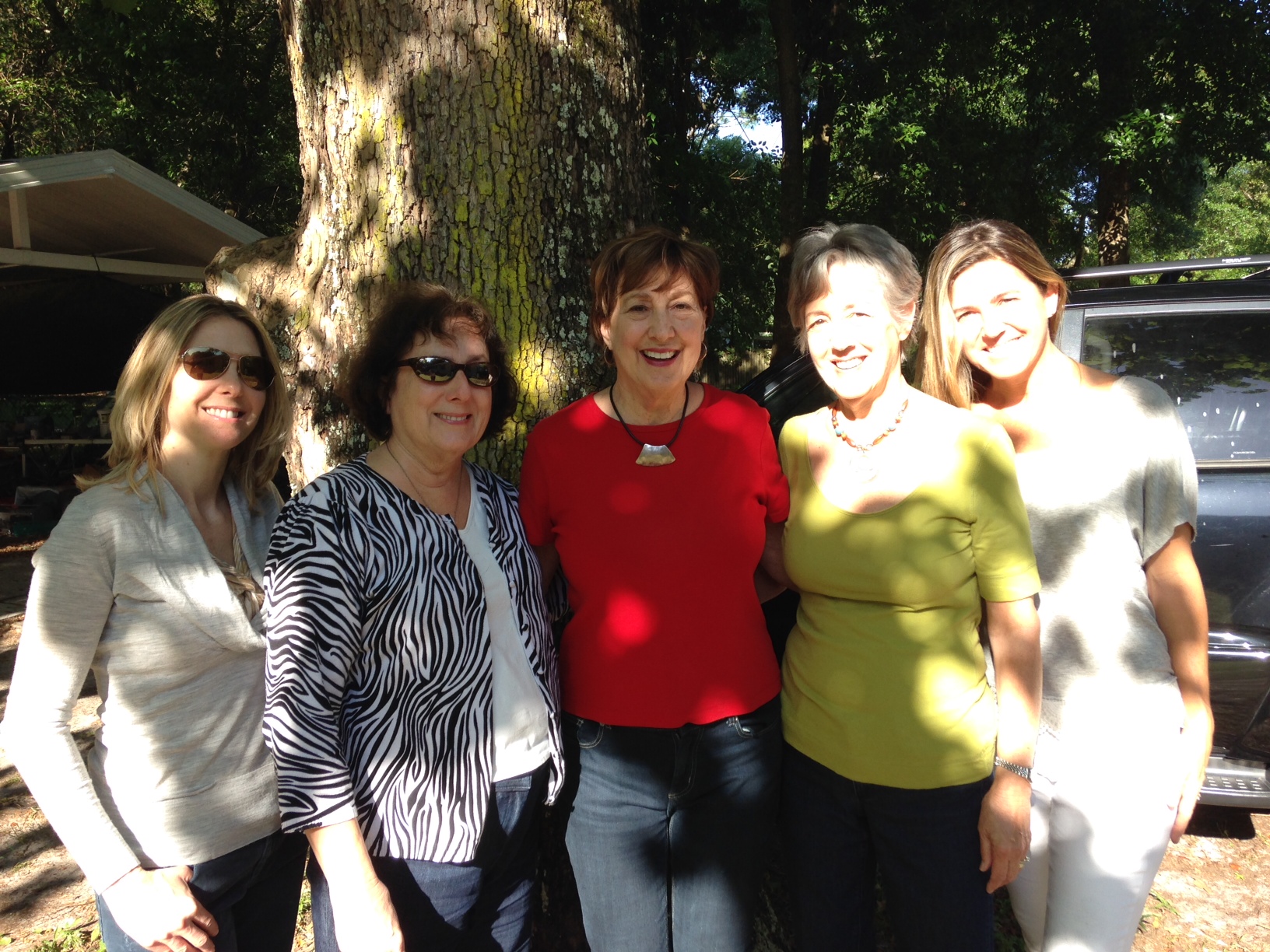
Our faces reflect the weather, begun sunny, a patch of rain, and then bright sunshine again.
Our faces reflect the weather, begun sunny, a patch of rain, and then bright sunshine again. Left to right: daughter Crista, sister Jean, me, sister Janice, niece Heidi


Waiting for us in Charleston are historical venues and shops, restaurants oozing Southern charm, and a rented house in Mt. Pleasant on an island close to Charleston where for four days we’ll relax, exchange stories from the past and enjoy the sites.
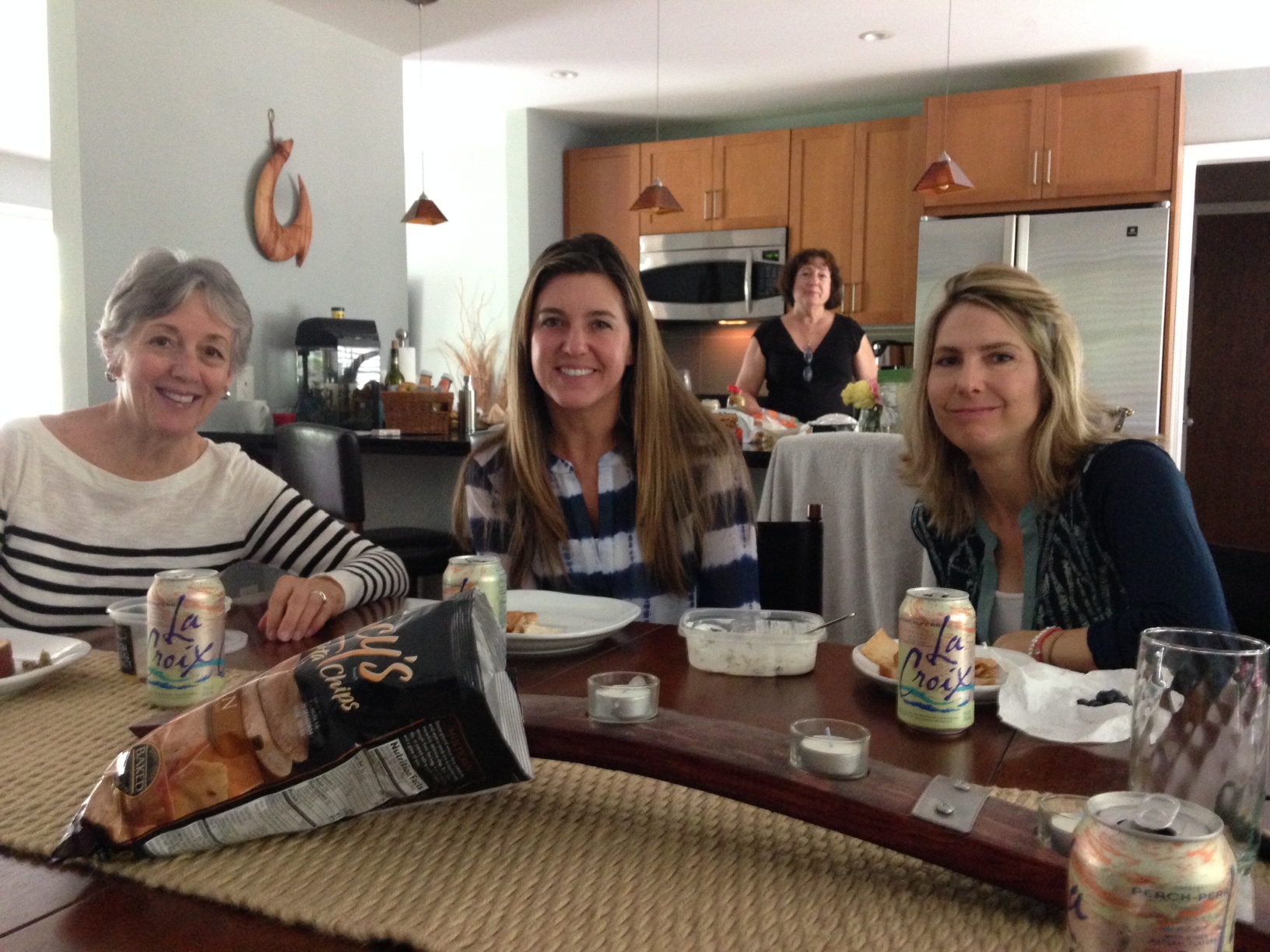
Kitchen


Backrub

There is a separate bedroom for each sister/aunt and a blue attic loft with two single beds and play table and chair, a little-girl hideaway for Crista and Heidi, wives and mothers themselves.

We enter the city in a downpour: flooded streets and a 4-day weather forecast fit for ducks. (I’m talking over a foot of water in the streets grazing the belly of our car!) Fortunately the weather system soon bubbles away into the Atlantic, and we roam the city without umbrellas. A miracle!

The Architecture
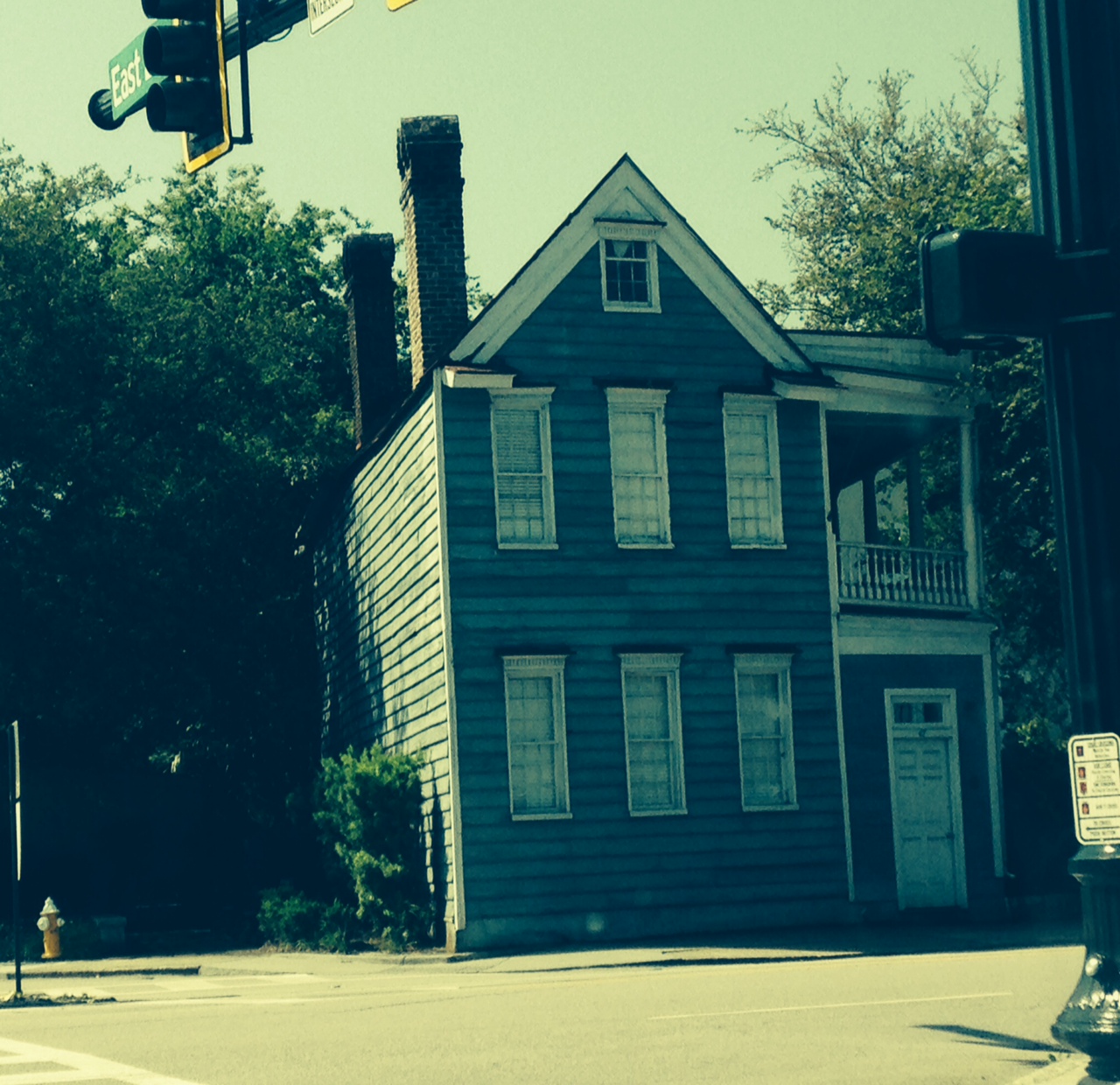
narrowHouse

Property taxes were calculated by the number of feet on frontage of the house. Thus, modest homes like the one above were narrow and tall. Fancy, opulent ones were also long, narrow and usually three stories high.

MansionCharleston

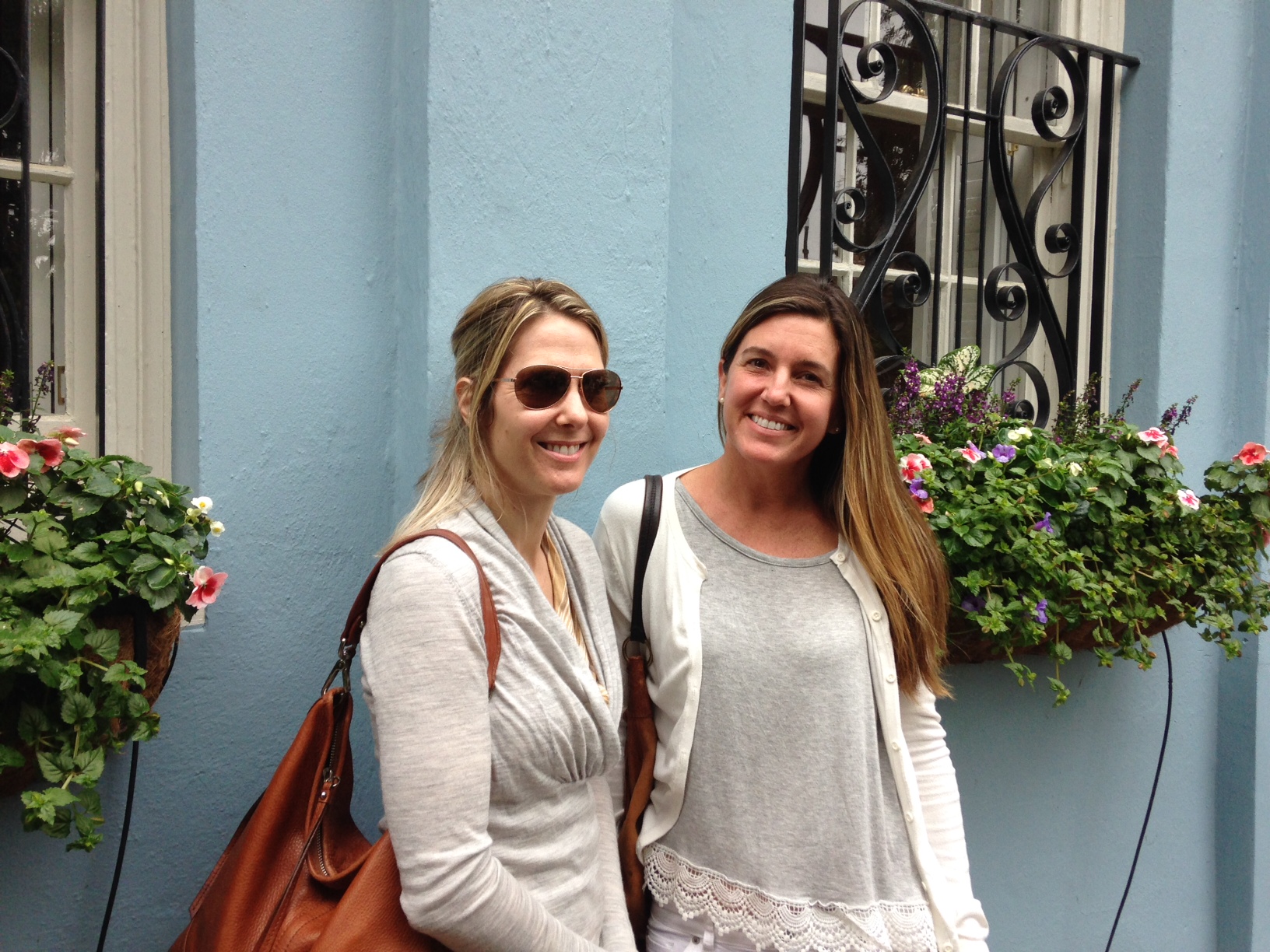
Window boxes offer extra garden space for historic homes that don’t have large front lawns. Simply glorious on our first cloudy day.


FlowersWindow1

Flowers2

Charleston with many Baptist, Methodist, Presbyterian and Catholic churches, along with Jewish synagogues, is called the Holy City because of its large number of houses of worship.
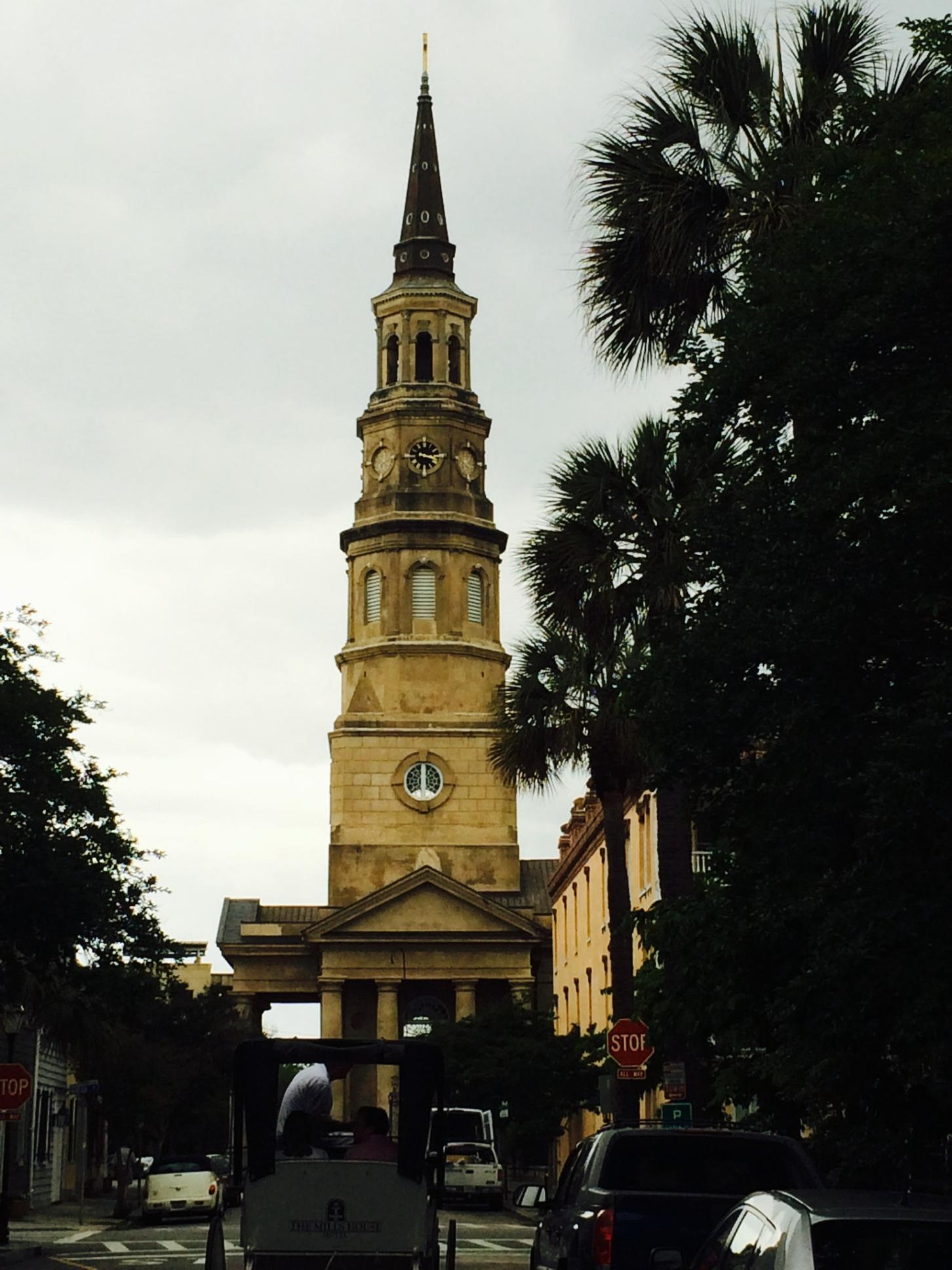
Cathedral of St. John the Baptist, Charleston, SC  Open filigree spire to withstand hurricanes, tornadoes.
Church of St. John the Baptist, Charleston, SC
Open filigree spire design built to withstand hurricanes, tornadoes.


How We Saw the City: Horse-drawn Carriage and Rickshaw Ride
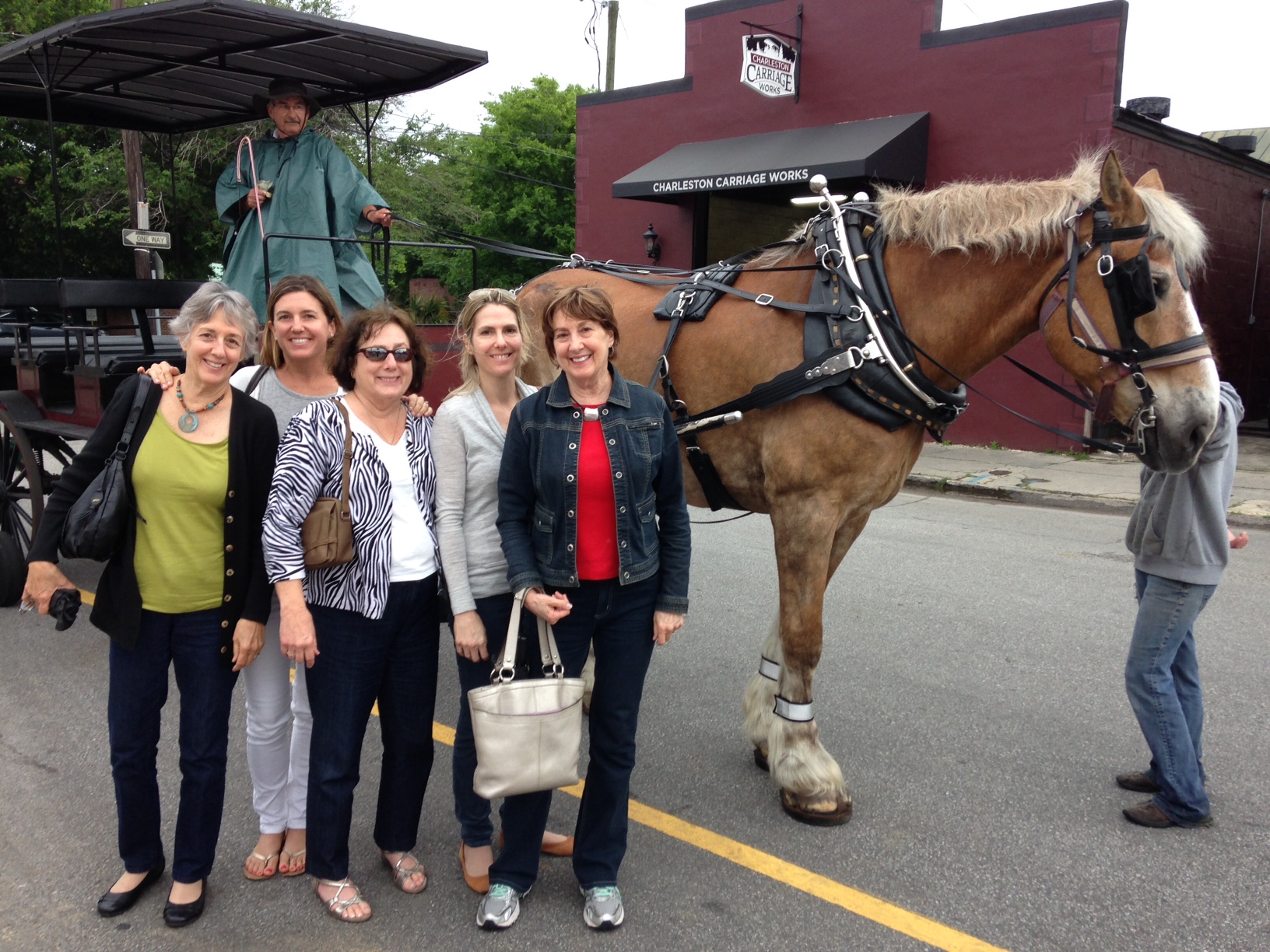
horse.

Our storyteller/guide with a salty Southern drawl says, “Our horse, Big John, has been imported from an Amish farm in Ohio.” We believe him though we don’t buy his line that he’s originally from The Bronx.

*  *  *

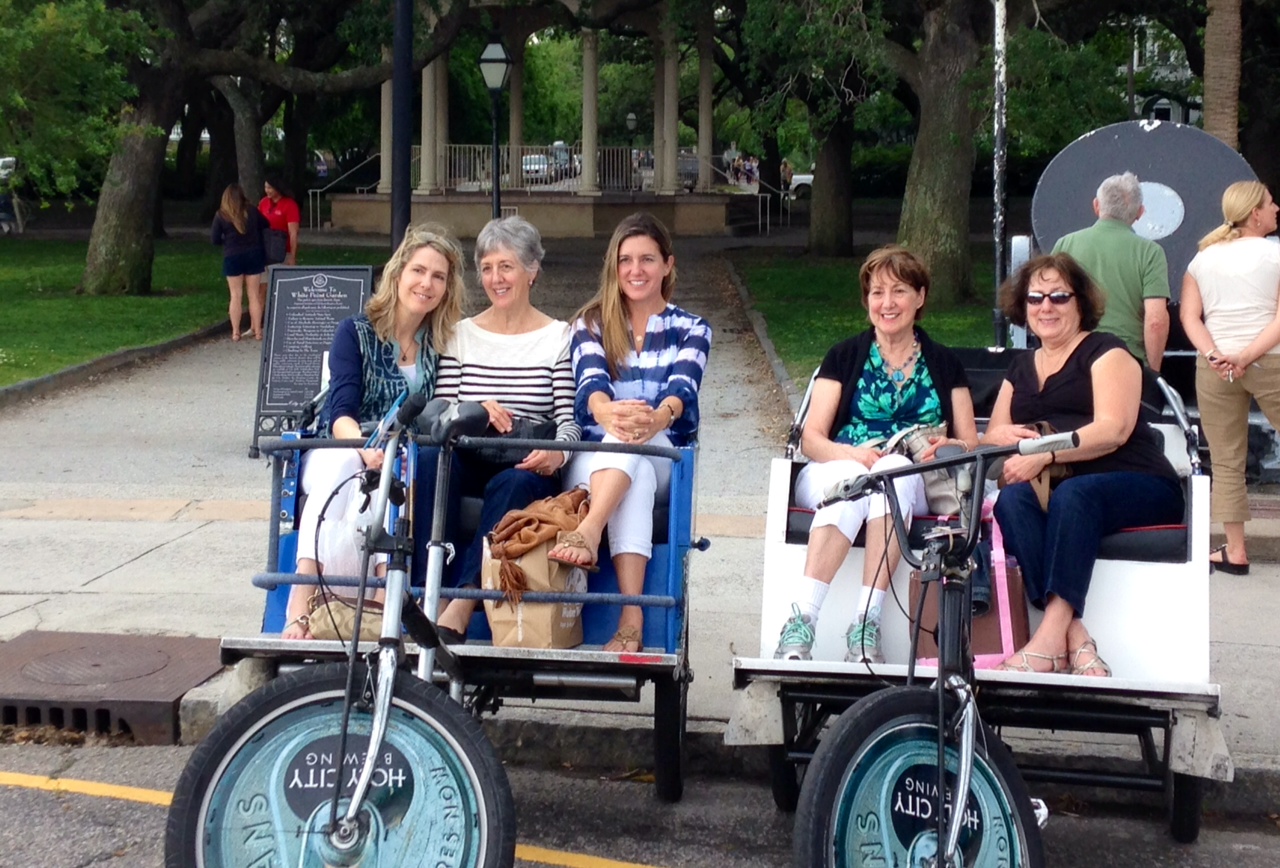
Our handsome bicycler hunk muses, “These ladies look loaded. What’s my tip gonna be?”  (Charleston Rickshaw Company)
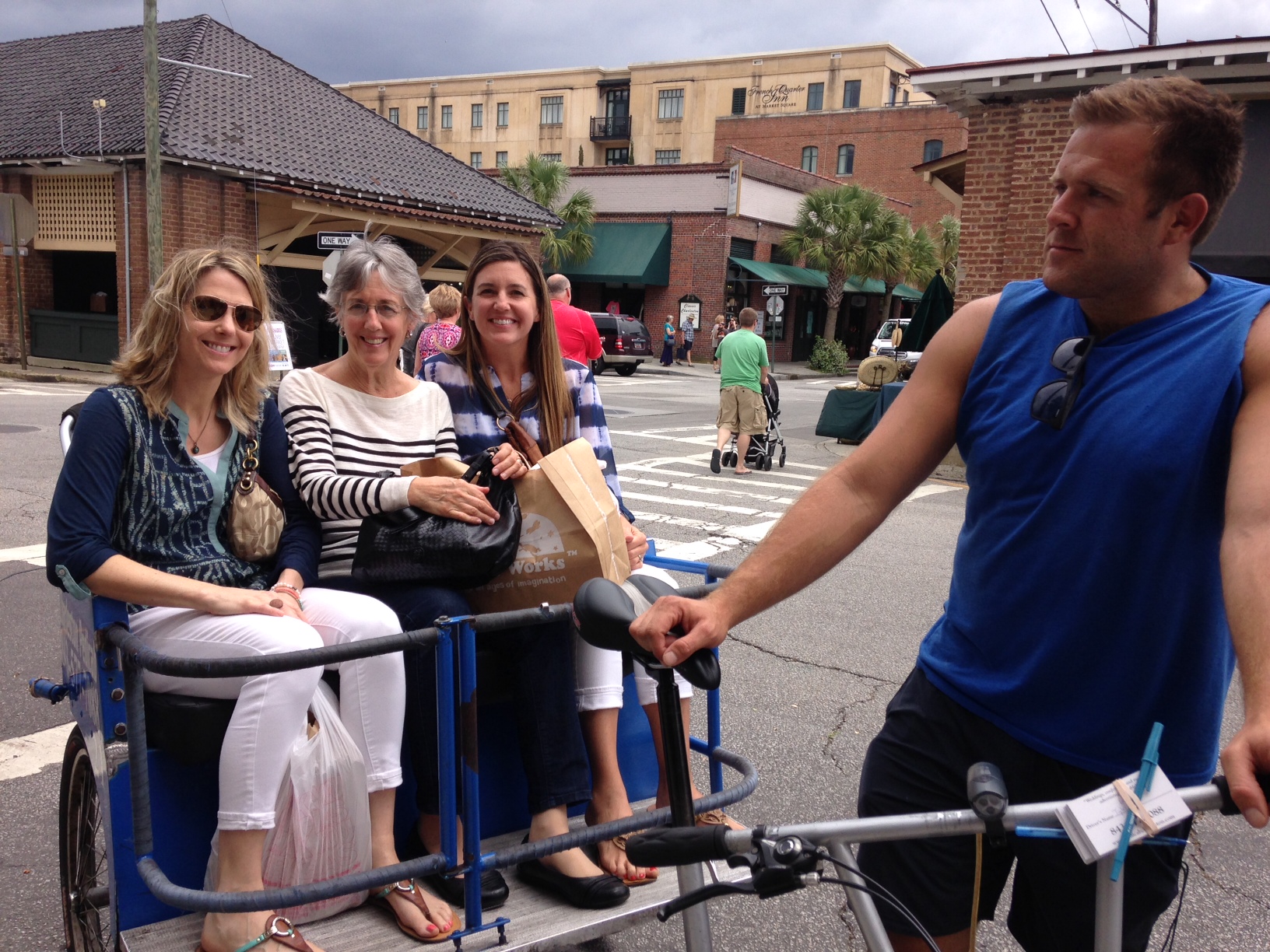
rickshawGuy

 2rickshaws

 Shopping

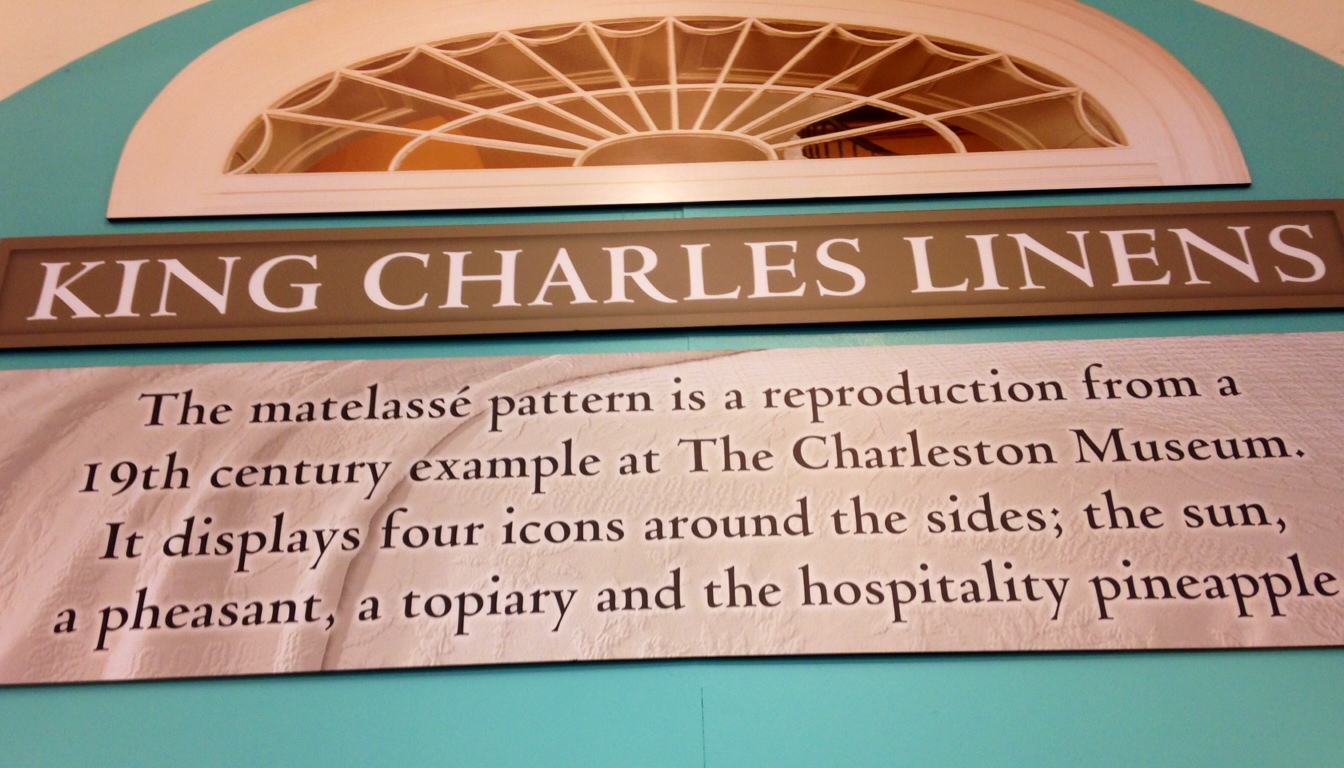
LinensKingCharlesJewelry

The former plain girls’ stash of jewelry and scarves from the Charleston Market on Market Street

Mt. Pleasant Mall on Mother’s Day
Shopping1

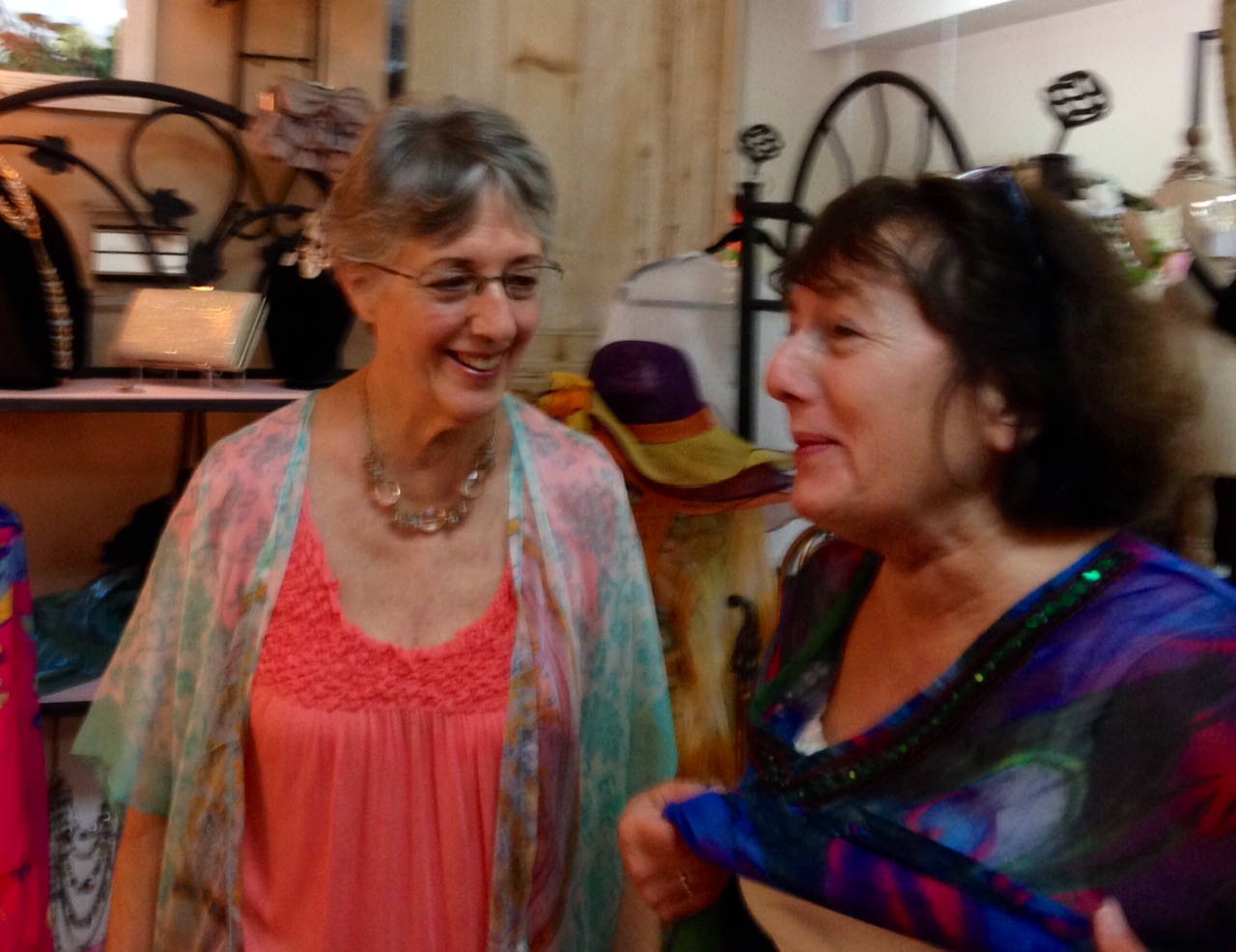
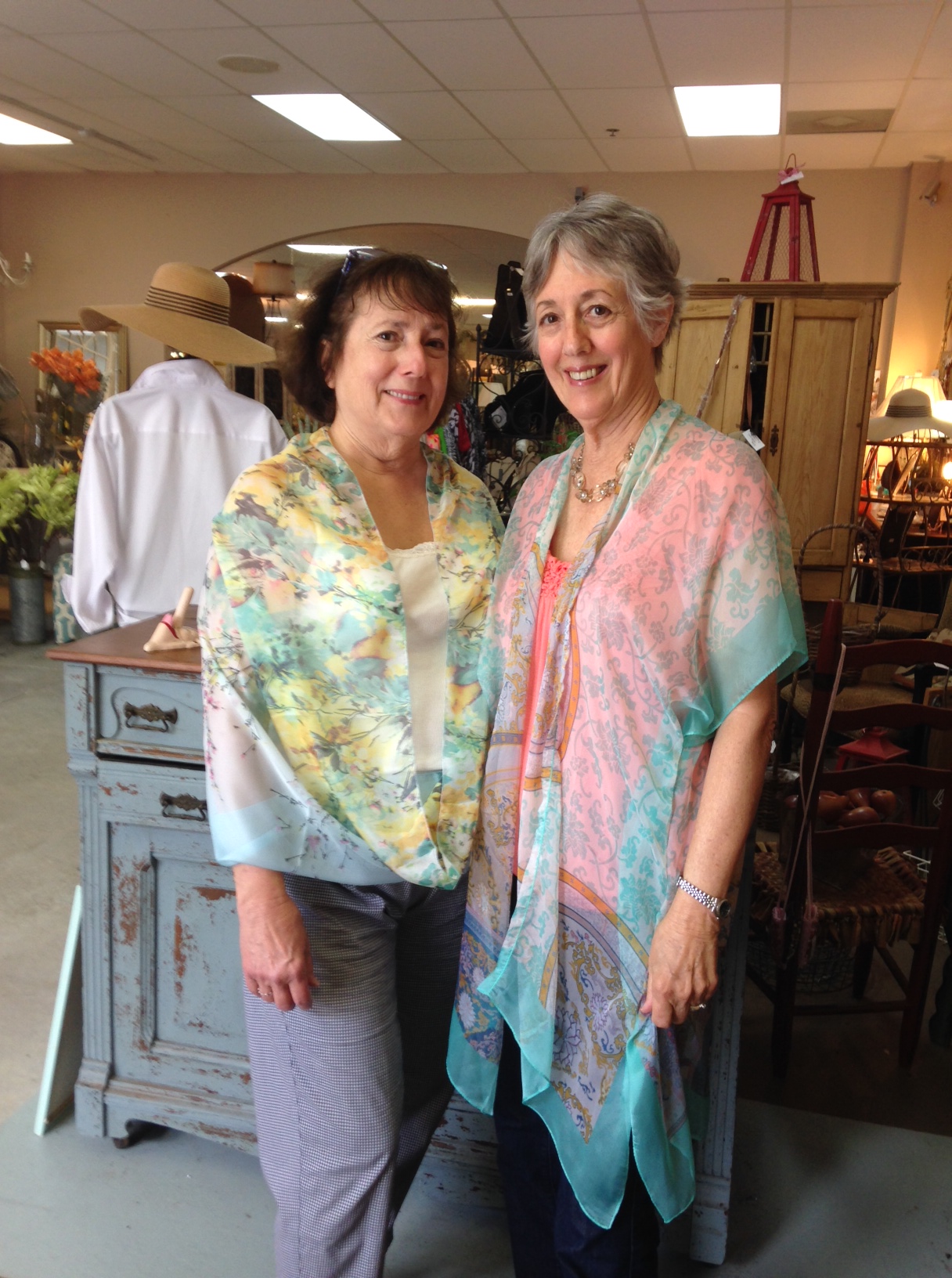
“Are these my colors? my sisters ask each other . . . Then I hear: “Remember when we played dress up with Mame Goss’s hats? Or Wedding under the Willows?” Ha ha!
Shopping2


Time to Eat

FiveLoaves

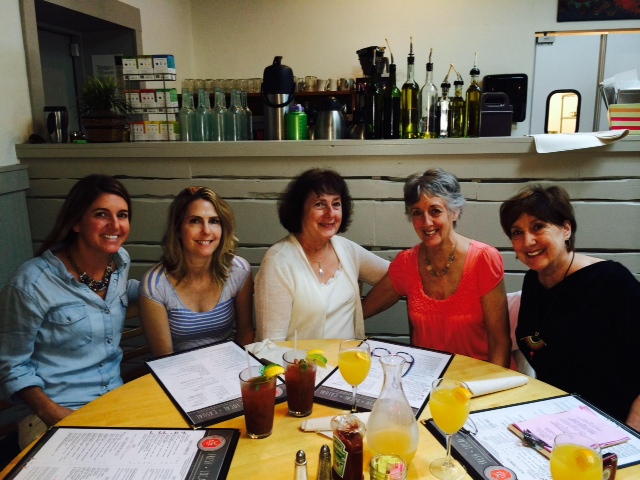
Mother’s Day brunch at Five Loaves in Mt. Pleasant with (below) a clearly scripted reminder to reflect and share our bounty:
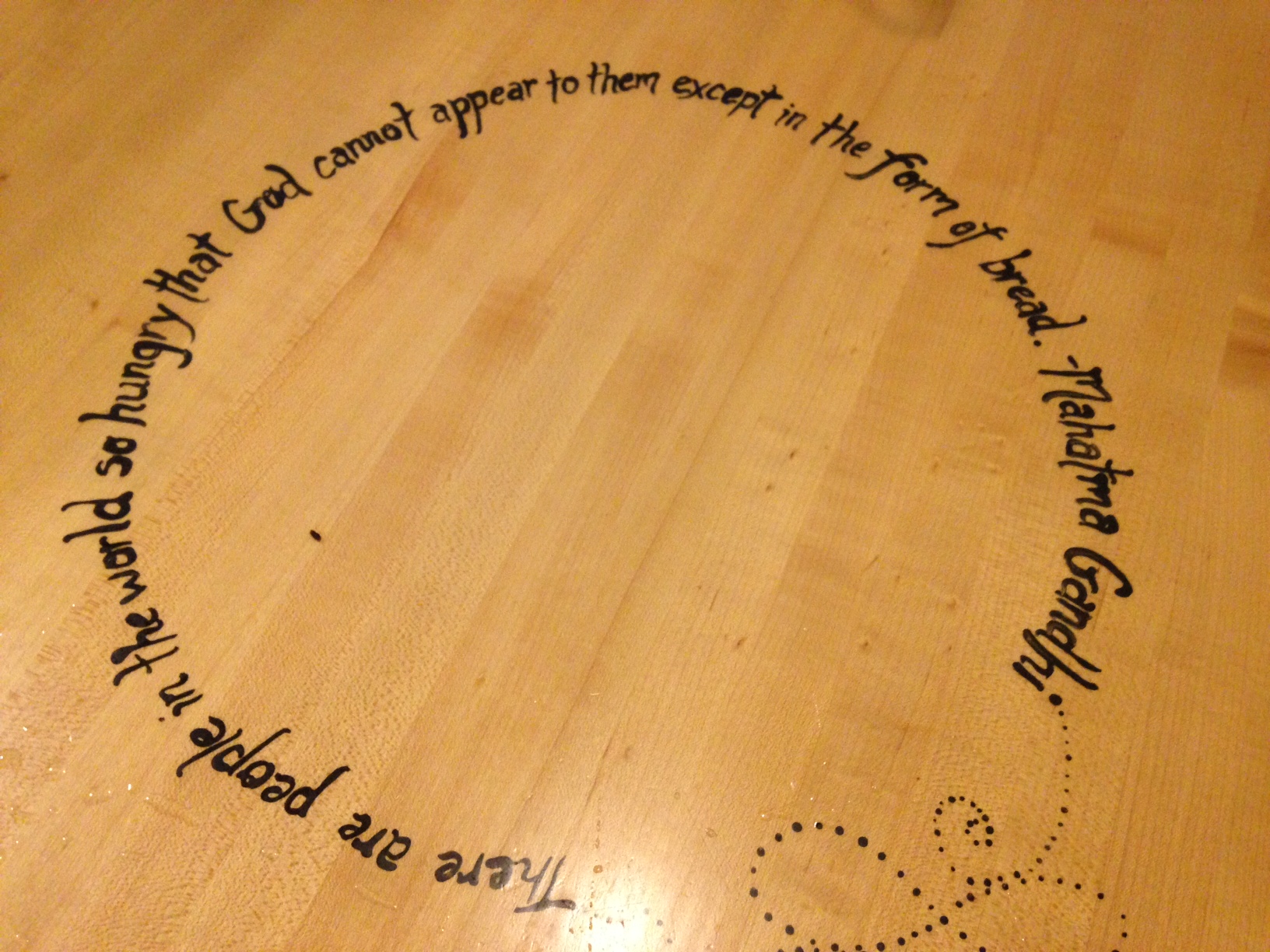
"There are people in the world so hungry that God cannot appear to them except in the form of bread."   Mahatma Ghandhi  (Also the mission of Samaritan's Purse and other charities.)
“There are people in the world so hungry that God cannot appear to them except in the form of bread.” Mahatma Ghandhi (Also carried out in the mission statement of Samaritan’s Purse and other benevolent groups.)


Magnolia Gardens

MagnoliaJan

FoxgloveHalfPpeacock

A magnolia bloom (with Janice), foxglove stem and a peacock about to unfurl fan feathers . . .  in the gorgeous Magnolia Gardens

A Smidgeon of History from Charleston SC, A Photographic Portrait

Founded by English colonists in 1670, Patriots fought–and won–the first decisive battle of the Revolutionary War here [Charleston] . . . .

Decades of growing strife between the North and South erupted at Fort Sumter in April 1861, launching the American Civil War:

Four cadets from the City’s military college, The Citadel, were among the soldiers who fired the first shots of the Civil War across the Charleston Harbor.

The city has also sustained more than one fire and an earthquake.

Good Vibrations
Sisters

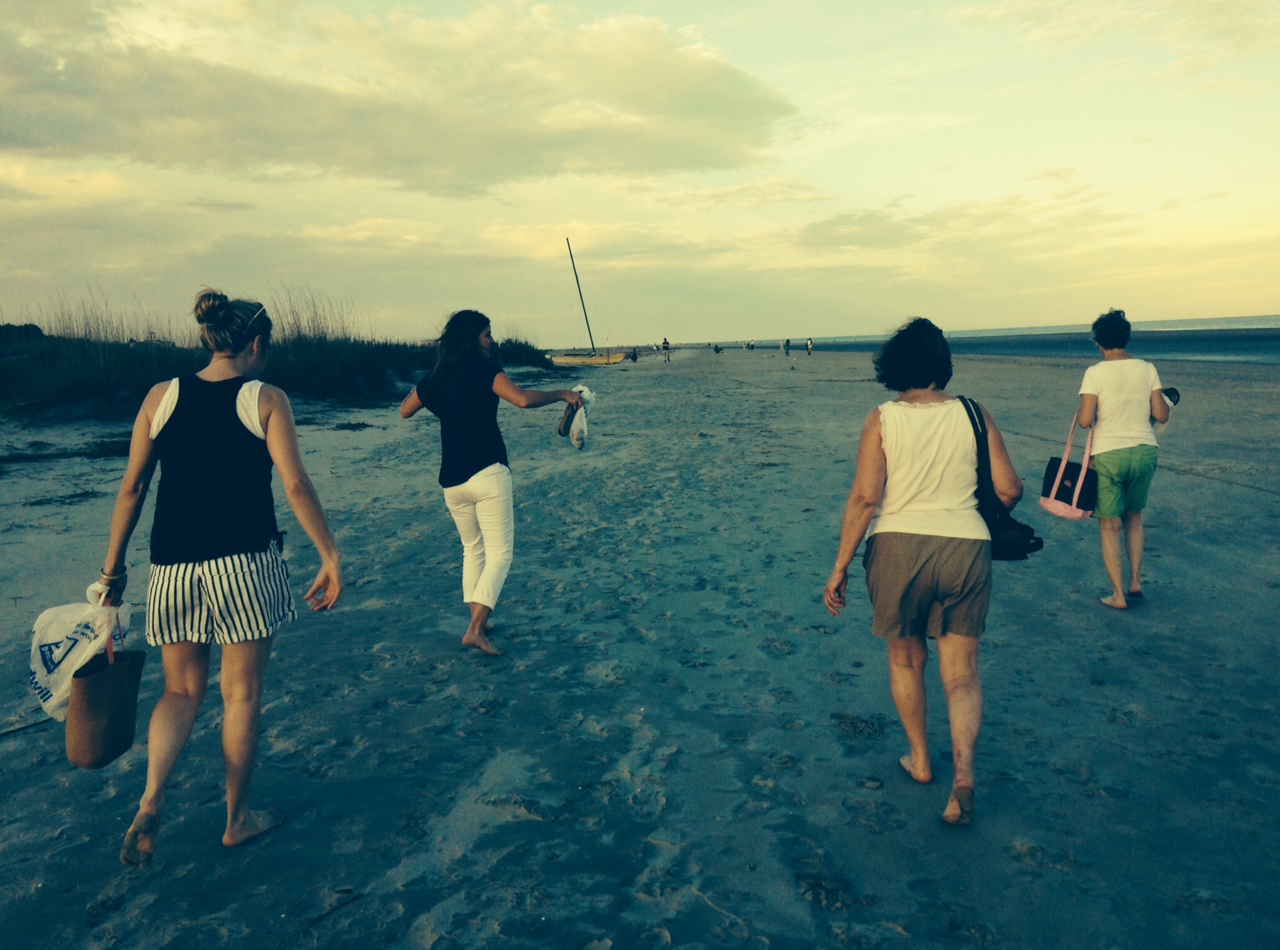
BeachRear


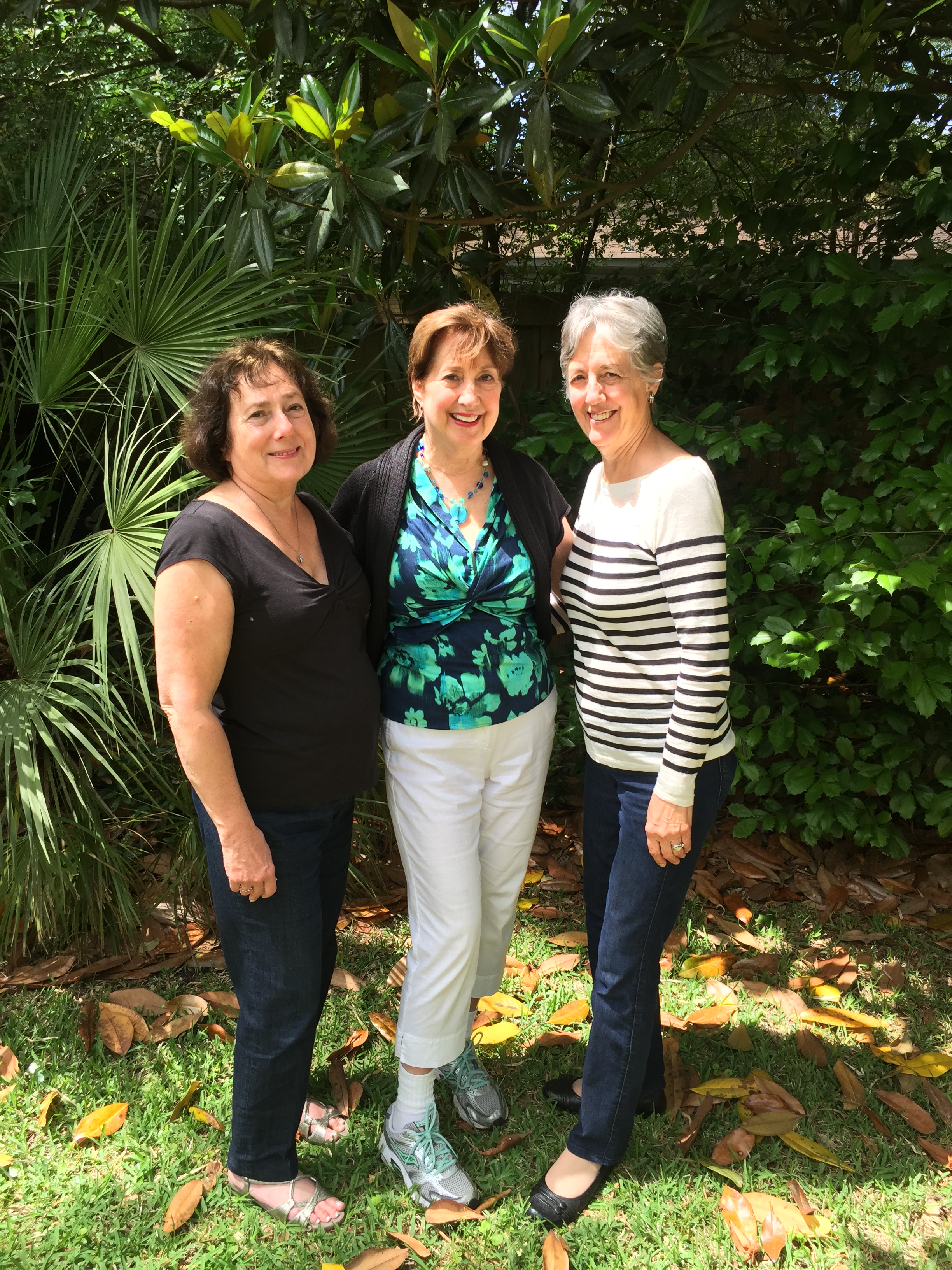
Many thanks, you two!CristaHeidi


Research shows that sibling relationships are the longest-lasting relationships any of us will have in our lifetime. In the natural order of things, our parents will die before we do. We can lose partners and spouses through death or divorce. Typically, our siblings remain.

Road trips, siblings – your comments welcome!


Coming next: My Dad’s Bachelor Trip to Florida

Enchanted April: Renewal and Possibilities

Are you wishing for different weather just now?

Maybe a change in scenery is all you need to perk up. After a rough winter, the drowsy dreaminess of a warm, languid clime may sound very appealing.

If so, you have something in common with the middle-aged Lottie Wilkins and Rose Arbuthnot, both members of the same London ladies’ club, who become acquainted after reading a newspaper advertisement for a small, furnished medieval castle to be rented for the month of April on the balmy shores of the Mediterranean. They are seeking enchantment – and in April.

*  *  *

In February, I met Timeless Lady, a blogger who blends quirkiness and a strong, spiritual core in her posts. In a recent piece about the book/movie Enchanted April, she published the words in the newspaper ad that enticed these ladies to exchange London fog for idyllic Italy at a castle in Portofino, Italy no less. Here is The TImes newspaper ad that drew them in:

To Those Who Appreciate Wisteria and Sunshine. Small mediaeval Italian Castle on the shores of the Mediterranean to be Let furnished for the month of April. Necessary servants remain. Z, Box 1000, The Times.


Lottie Wilkins and Rose Arbuthnot, both wishing to escape the drab days of winter, also share a desire to leave the day-to-day drudgery of housekeeping and the struggles of marriage, Lottie to the klutzy Mellersh and Rose to her gawky Frederick. But there is the matter of money, so to share expenses they take on the elderly, crotchety Mrs. Fisher played by Joan Plowright, and the stunning, but aloof Lady Caroline Dester. As the wisteria and sunshine slowly work their magic, the characters are rejuvenated and re-discover hope and love.

Film, 1992  Courtesy Wikipedia image
Film, 1992 Courtesy Wikipedia image featuring Lady Caroline Dester, who is sick of being grabbed by men!

In the early 1920s, just after World War I, author Elizabeth Von Arnim vacationed in the serenity of Portofino, Italy at Castello Brown, the same castle featured in the movie. Inspired by the magnificent medieval castle and the luscious gardens of San Salvatore, Von Arnim wrote “Enchanted April,” the book on which the movie is based.

I discovered a link to a free copy of the book via the Guttenberg Library, where you can search and find links to other books and stories you read as a child.

Want more Elizabeth Von Arnim? Click here for her Collected Works!

Cover image: courtesy Amazon Books

In case you haven’t seen the movie, or if you want to succumb once again to its captivating charms, here is the trailer from Miramax Films:

Quotes from Enchanted April

I want to just sit and not talk and not think . . . .  ~ Caroline

If you wish for something hard enough, it happens!  ~Lottie


Wisteria in patio garden
Patio garden wisteria


When you want to get away from it all, where do you escape?

What is on your bucket list – Where would you like to go right now, or sometime soon?


Coming next: Moments of Discovery # 6 ~ Food for Thought, Stirred with Imagination

Purple Passages with a Pop of Pink, March 2015 edition

SPRING

“Is the spring coming?” he said. “What is it like?

“It is the sun shining on the rain and the rain falling on the sunshine . . .  ~  Frances Hodgson Burnett, author of The Secret Garden

Tulip magnolia tree in our neighborhood just about to bloom in Florida, early February
Tulip magnolia tree in our neighborhood just about to hit full bloom in Florida, early February   ~  Sunshine, no rain in sight

[in Just-] a poem by e. e. cummings, (his name usually shown in lower case letters) who is known for odd spacing and made-up words like “mud-luscious” and “puddle-wonderful” so evocative of the squooshiness that follows the winter thaw. This British poet clumped together some of the names and other words he uses, just like mud on your shoes in springtime. Remember all that? Here are the first nine lines.

spring          when the world is mud-
luscious the little
lame balloonman

whistles          far          and wee

and eddieandbill come

running from marbles and

piracies and it’s
spring

when the world is puddle-wonderful


ENERGY

The only thing that keeps a man going is energy. And what is energy but liking life?   Louis Auchincloss, A World of Profit

MIRACLES

C.S. Lewis wrote, “Miracles are a retelling in small letters of the very same story which is written across the whole world in letters too large for some of us to see.”

MITTENS

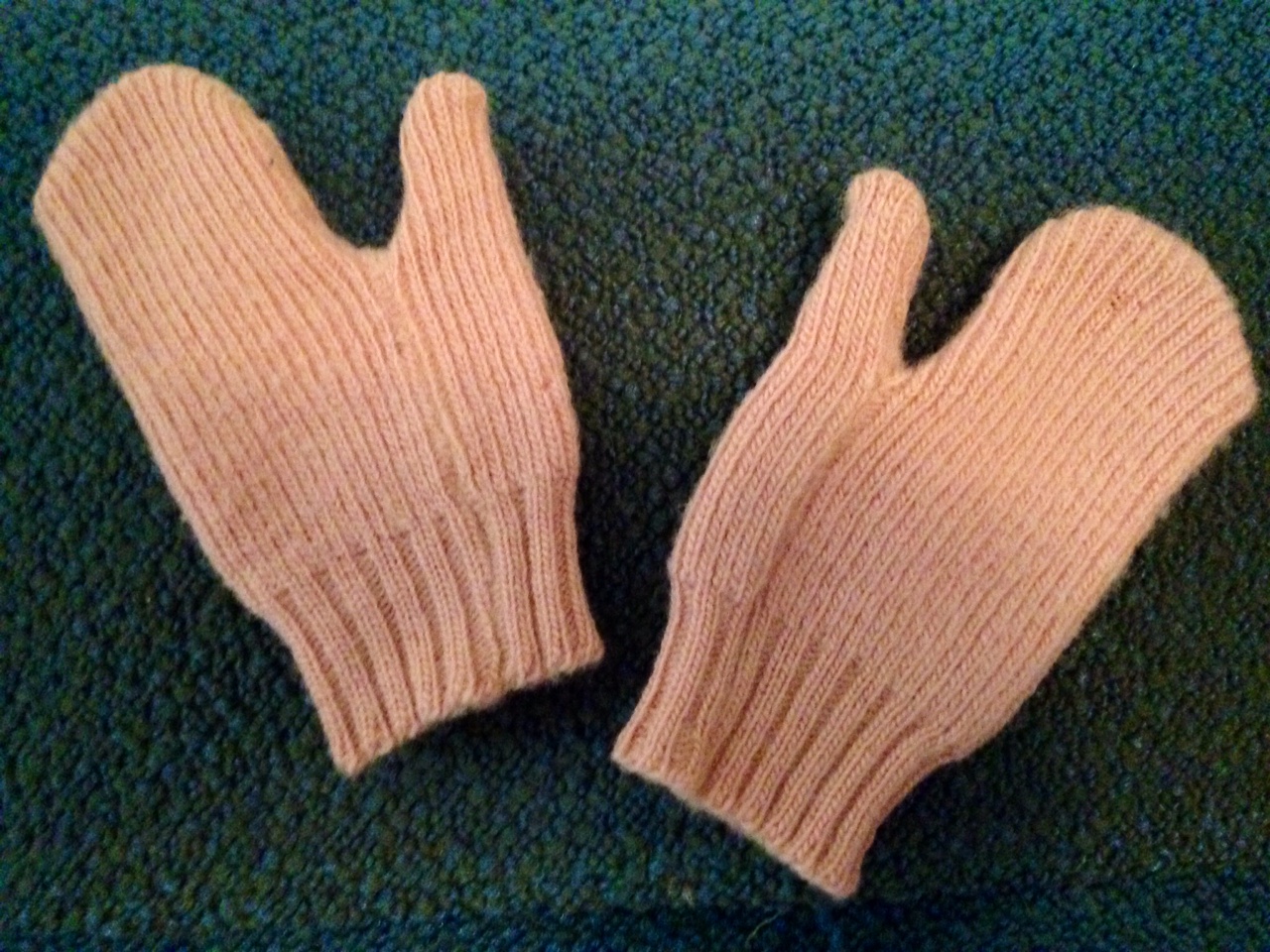
The wee Longenecker girls wore mittens because it was cold in Pennsylvania until near the end of March. These are the mittens I remember my sisters Janice wearing. Jean probably inherited them when her hands grew big enough. Somehow I recall a string of woven yarn attaching the mittens under the coat so the little girls wouldn’t lose their mittens. Mittens actually do keep little hands warmer than gloves would – body heat from all four fingers and thumb is trapped inside the glove just like this. . .

PinkMittens

. . . which reminds me of the Mother Goose nursery rhyme about the Three Little Kittens. You can probably hear the sing-song sound of the phrases as you read this tale.

KittenMittensScreenShot

In the verses which follow, the kittens put on their mittens, then get them dirty, are scolded by their mother, inducing them to wash their mittens, even hanging them out to dry. In the final verse, Mother Cat compliments her kitties while teaching them a lesson in scavenging for their dinner:

“What, washed your mittens, then you’re good kittens,
But I smell a rat close by.”
“Meow, meow, meow,
We smell a rat close by.”

Your turn! This is a free-for-all post. Add your thoughts or quotes on spring, energy, miracles, mittens – or something else.
Coming next: Grandmother Kayaks Solo from Maine to Guatemala. Why?

The Nook: A Different Definition

Where did you study? Was your desk a dining room or kitchen table? The couch? A separate room? Did you listen to music as you studied? Or did you tune out the noise of the household when you crammed for a test or wrote a report? Louise DeSalvo author of The Art of Slow Writing, a book about writing as a meditative, patient process, muses about her own study nook in this excerpt:


My parents valued education, so when I was young, the only time my parents didn’t bother me was when I was doing homework. My father made me a triangular desk that fit into a space at the top of the stairs. . .


Sitting at my desk while I was working, nobody told me what to do. My father was pleased with my industry rather than angry with me. My mother wanted me to study because, no matter how much she needed my help, she wanted me to do well in school.  Sitting at my desk working helped me feel a sense of control in my chaotic household (188, 189).

Louise’s writing desk was triangular probably positioned in a corner. It strikes me that she may have faced the wall, not a window, a rather confining, even claustrophobic view.

As for me as a student at Elizabethtown High, when the noise downstairs around my spread at the dining room table overpowered my ability to concentrate, I’d flee upstairs to a study desk that looks like this, a bedside table with a brown goose-necked lamp. Mother had the table refinished years later and replaced my gooseneck lamp with this one: a faux milk-glass base with a lacy, fluted lampshade.

Study Desk 2

Here’s how I write about this “desk” as a flash of memory:

My books and notebooks are piled on the dining room table. I’m in ninth grade and when the house gets too noisy, I go upstairs to the bedroom I share with my sister Janice and study there. My study table is just a wooden bedside table. It’s tiny, with two of the four legs spaced closer together. There’s space for a little lamp on top and maybe a book or two on the shelf below – a piece of furniture not designed for serious study. There is no place to put my legs really, but I scrunch myself under the teeny table with my knees touching, a brown goose-necked lamp cocked so I can read, take notes on scored 3 x 5 index cards, or write in meticulous cursive in my notebook, one for each subject.


Image: eBay
eBay Image: mid-century goose-neck lamp

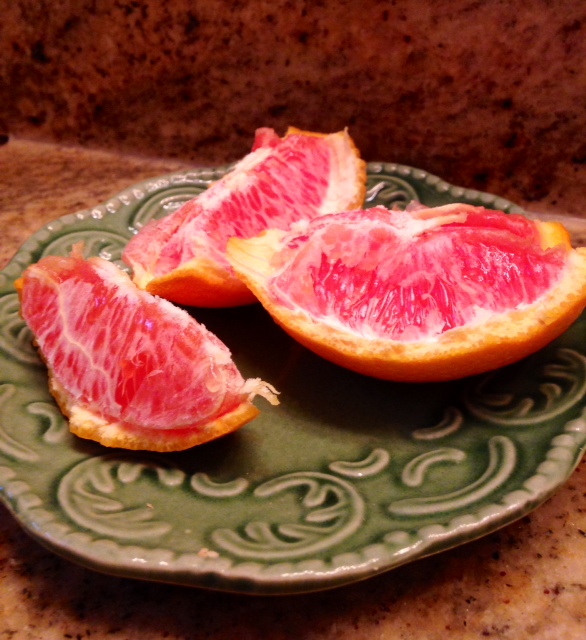
I consumed book chapters, algebraic formulas, and historical data. I also consumed apples, carrots, or oranges. Yes, as I studied, I nibbled. Like a dog worrying a bone, I ate apples to the core, sometimes discovering nothing but apple seeds in the palm of my hand along with the fibrous center hull, when I looked up from the page. Carrots were eaten down to the nubs. And oranges too. First, I sucked out some of the juice, then broke the orange into five or six sections, eating them one by one. Finally, I consumed the white inner rind too, one incisor-dig at a time, only the outer skin remaining.

Orange WholeOrange SectionsOrange Bitten RindOrange Peel


Study – an all-consuming proposition  . . .  

Some books are to be tasted, others to be swallowed, and some few to be chewed and digested.

        ~ Sir Francis Bacon  “Of Studies”


Did you study at home, at the library? Did you have chaos or quiet? Maybe you had a photographic memory and didn’t have to study much.

Were you a nibbler too? Inquiring minds want to know.


Coming next: Purple Passages with a Pop of Pink, March 2015 edition

Happy St. Patrick’s Day from Pollee Ann and Mr. Zip

Did you ever have a Pollyanna? A secret pal back in the days when mail traveled only in paper envelopes with postage?

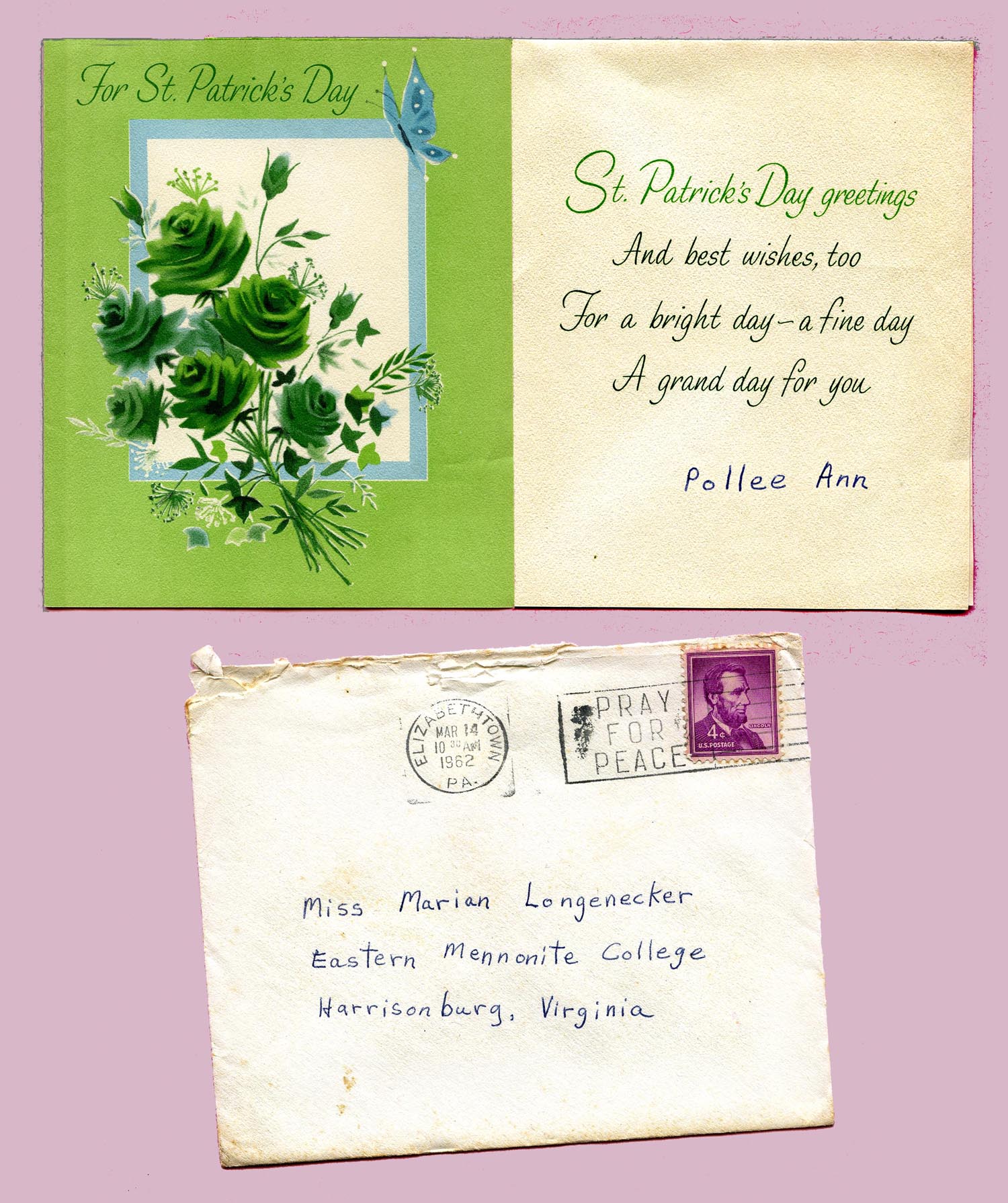
As I was going through one of my Boxes under the Bed, I found this quaint gem sent to me at college in celebration of St. Patrick’s Day, March 17. The charming card is signed Pollee Ann, obviously a reference to the main character in the children’s book series Pollyanna by Eleanor H. Porter, who finds the glad in everything. Though she was tragically orphaned and sent to live in the home of her gruff Aunt Polly, 11-year-old Pollyanna has come to represent eternal optimism as she spreads cheer, sometimes secretly, all around town.

1962_0314_St Patrick Card

My secret pal spells her name “Pollee Ann,” an interesting sobriquet for Pollyanna. And the card reached me in spite of the fact there is no street address or zip code, not introduced into the postal system until 1963. The term ZIP, an acronym for Zone Improvement Plan, was chosen to suggest that “mail travels more efficiently, and therefore more quickly (zipping along), when senders use the code in the postal address.”

Image: Wikipedia
Image: Wikipedia

Have a Zippy St. Patrick’s Day!

Killarney Shamrock_modified_02

Some celebrate St. Patrick’s Day by baking/eating cupcakes or cookies with green icing or wearing a shamrock pin. How do you celebrate St. Patrick’s Day?

Is there Irish in your heritage?

Coming next: The Nook, a Different Definition

Two Boys: One Moment in Time

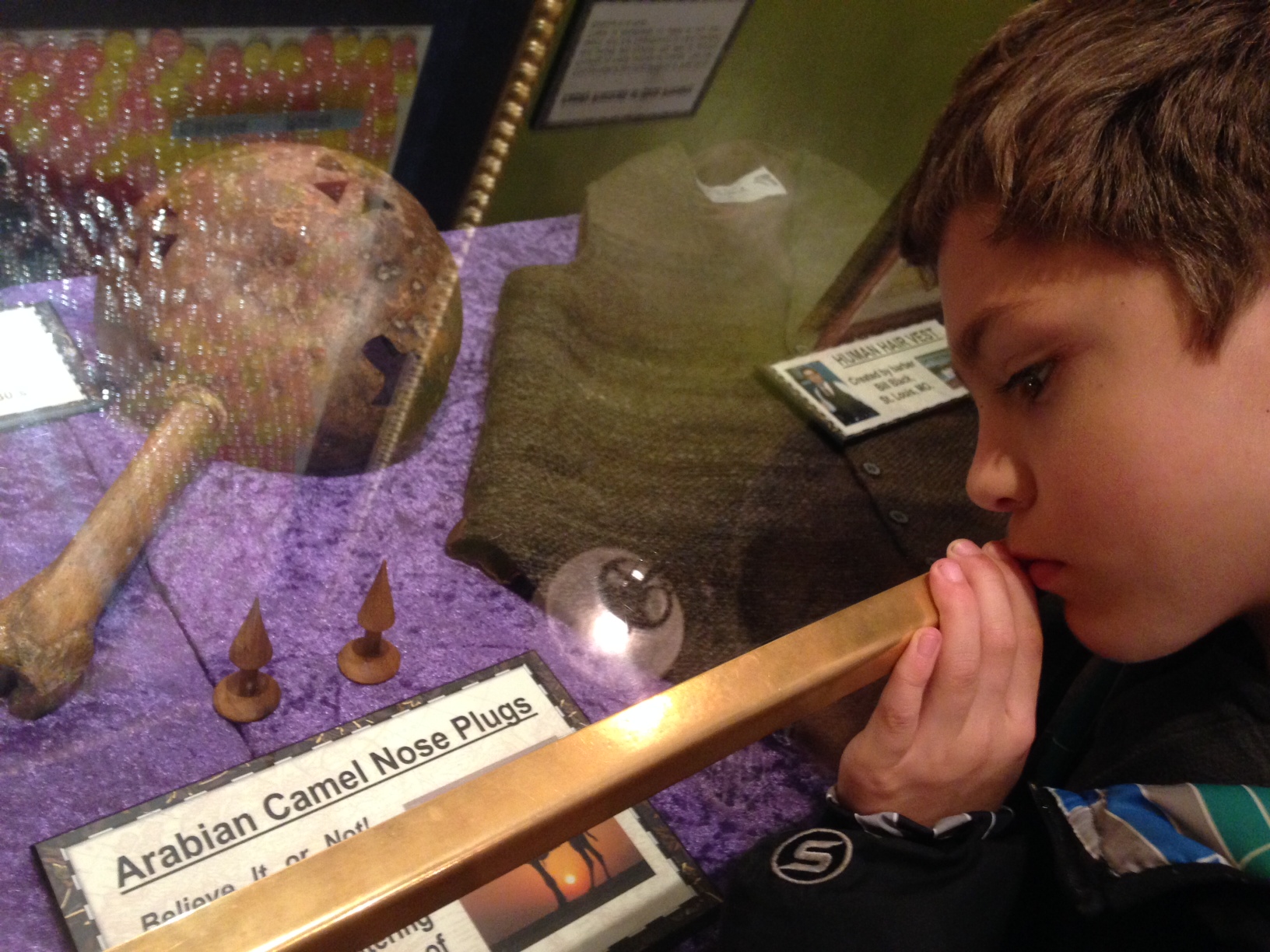
Recently Grandpa Cliff and NaNa Marian took the Beaman boys to the Odditorium (not a misspelling!) of Ripley’s Believe It or Not in St. Augustine Florida.

The Saturday excursion was billed as a Mystery Trip, so the boys didn’t know exactly where they were going, but they did know it would be fun. After a 40-minute drive south from Jacksonville, the Mystery Bus with windshield wipers chugging away pulled into the very last parking space at Ripley’s.

Ripley’s Believe It or Not is a franchise with various locations nation-wide, dealing in “bizarre events and items so strange and unusual, that readers might question the claims.” Some of the 20,000 photographs, 30,000 artifacts, and more than 100,000 cartoon panels in the collection are displayed here at The Oldest City location.

Some of the jaw-dropping oddities we saw:

  • Lord’s Prayer etched onto the head of a pin
  • This prayer also etched onto a grain of rice
  • Erector set parts made into the World’s Largest Ferris Wheel model
  • Arabian camel nose plugs
  • Replica of the Notre Dame Cathedral constructed with over 160,000 match sticks
  • Voodoo doll in an ancient basket
  • Mannequin of man weighing over a half ton

ErectorRipley

Camel Nose Plugs

 CLiffRipley
Model of Notre Dame Cathedral constructed of 160,000 match sticks
And this one took me back in time, Curtis and Ian looking at the Lord’s Prayer etched on a grain of rice through a microscope . . .
CurtIANripleys

Seeing the back of Curtis’ head (on left) reminded me of our son Joel’s image at a similar age. So I flashed back in time, and then I was struck piercingly into flash forward motion with the thought that grandson Curtis will be in middle school in the fall. With poet Percy Bysshe Shelley, I lament “O World! O Life! O TIme! (Where has all the time gone? Not long ago he was just entering first grade!)

A few weeks ago, Shirley Hershey Showalter, who publishes weekly Magical Memoir Moments, posed an engaging prompt for writers. In the March 3, 2015 edition she took her readers on a visit to the Wheel of Time. Looking at a photo of her grandson Owen staring out the window watching his mother leave for work, Showalter imagines what his thoughts might be. She remembered a similar moment years ago when her own son, perhaps wistfully, watched her leave the house for her job. Then she poses two questions for her readers:

When was the last time something pierced your heart?

Did it ignite the Wheel of Time in you?

Contemplating the second question as I gazed at Curtis and Ian, I realized a ping of joy along as three thoughts came to mind all at once: We are blessed to have them, their whole life is ahead of them, and as the photo seems to suggest, they are facing forward to meet the future . . .

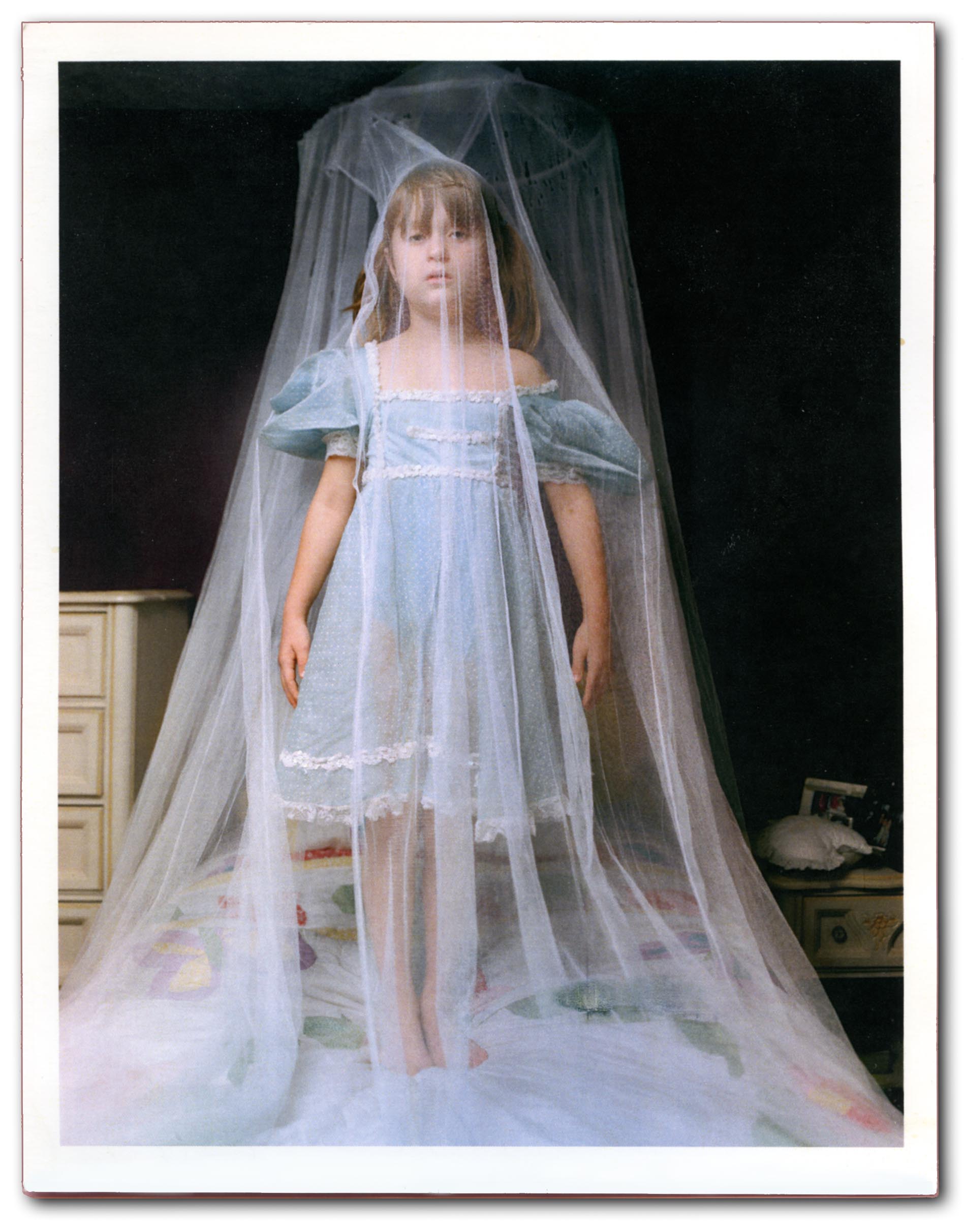
Photographer Angela Strassheim, in a recent exhibition at Jacksonville’s Museum of Contemporary Art, specializes in framing the lives of her nieces and nephews as they pass through early stages of their lives. Her collection illustrates the precious, fleeting nature of childhood and adolescence. One photograph that caught my eye was the “Girl in Blue Dress” which depicts a pixie princess frozen in a childhood phase that evaporates all too quickly. This large photo of Strassheim’s niece with dimensions of 75 x 60 inches, probably foreshadows the young girl becoming a married woman, draped as she is now in a canopy over her bed that seems to mimic a bridal veil.

MOCA_Angela Strassheim_Girl Bride photo

Robert Ripley is right. Life is full of mystery and awe. Sometimes it’s un-unbelievable too!

Your thoughts are always welcome here. Do join the conversation . . .

The Potting Shed and Other Marvels

I just talked to my brother Mark in Pennsylvania, and our 15-minute conversation was interspersed with his exclaiming . . .

“It’s sleeting.”

Then, a few minutes later, “It’s raining . . .”

And finally, “It’s sleeting again!”

It’s March and most people north of the Florida latitude are sick of winter. Suffering from S.A.D. (Seasonal Affective Disorder}, they are waiting to see the sun break through the winter blahs and unveil the crocuses and narcissus ready to pierce the soil.
Writer Linda Joan Smith had that feeling in mind when she said

Outside Snow’s dingy blanket may still muffle the stirrings of tulips and daffodils, and the pond may still be rimmed with ice. The reward of the garden must wait, but our gardening labors have begun. (“The Potting Shed,” The Traditional Home, March 2002)

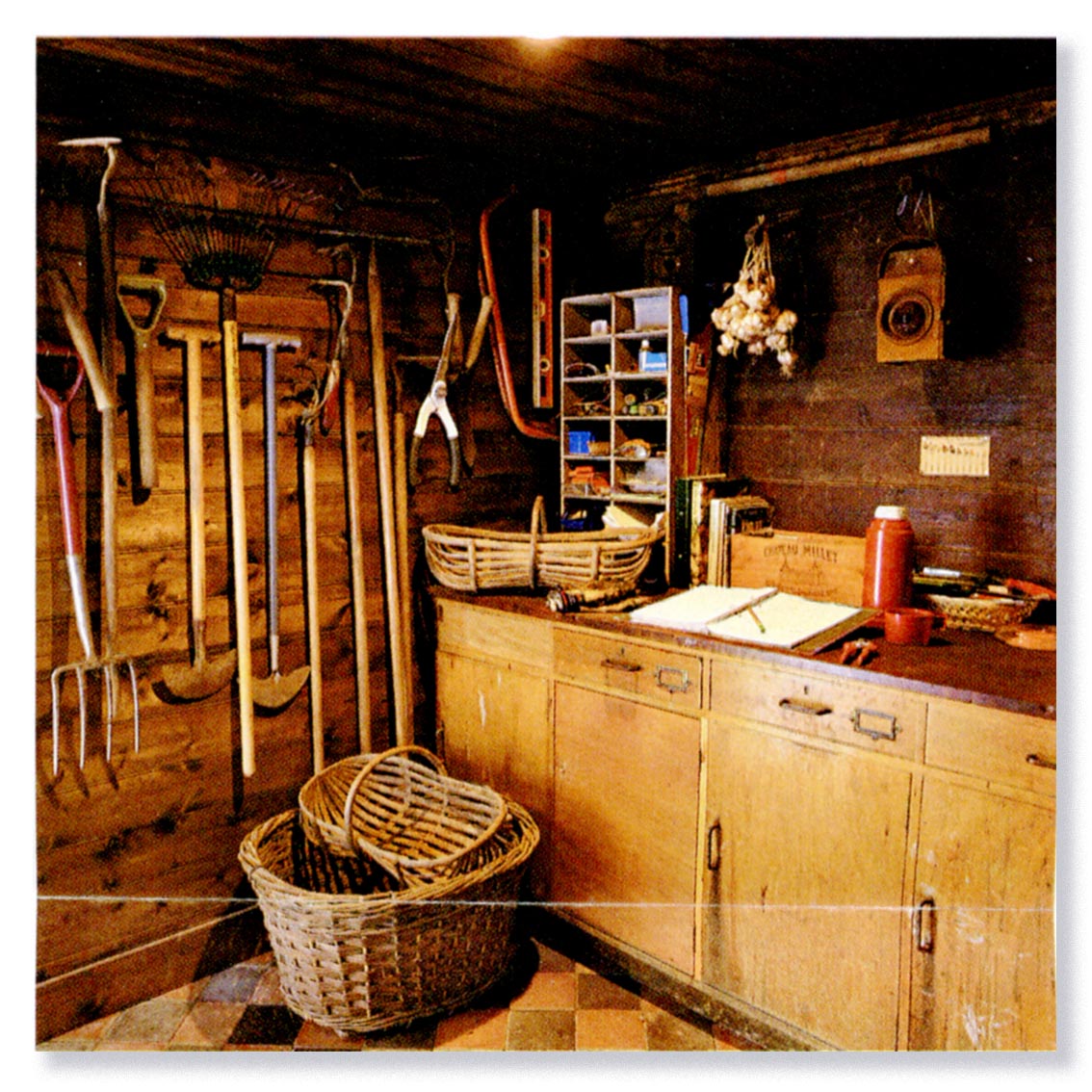
Smith celebrates the potting shed, “the room that is as much a workshop to the gardener as the kitchen is to a cook.” She makes reference to the advice of John Claudius Loudon, who in his 1830s An Encyclopaedia of Gardening, recommends that proper potting shed must have light, air and warmth, including “a fireplace never omitted.” Smith’s article pictures two versions of the shed – an impressionistic one where there may not be precise order . . .

Illustration: James Staag, Traditional Home, March 2002

And one meticulously appointed where there is “a place for everything, and everything in its place,” (229) so says Mr. Barnes of Bicton Gardens writing in the1840s.

Photograph: Curtice Taylor, Traditional Home, March 2002

My blog friend Linda Hoye, who moved recently from the Pacific Northwest to Canada, is a gardener extraordinaire. In her blog A Slice of Simple Life she uses plastic gallon jugs for winter sowing:

Winter sowing is placing seeds outside, in the winter, in mini-greenhouses made from things like empty milk jugs. The plastic jugs protect the seeds from harsh weather while allowing the cold to toughen them up during the cold weather. When it gets warm enough inside of the little greenhouses the seeds germinate and become viable outdoor plants sooner than those started indoors because there’s no need to harden off the plants.

When you check out her post, you can see her mini-greenhouse project complete with a photo of the jugs in a tub.

Did I mention that Linda is innovative? Yes, indeed. She gives a blow by blow pictorial account of preparing a worm hotel – indoors. Knowing that worms aerate the soil, she nurtures them as help-mates in the growing process. Even she says, “Eww!” as she mingles coir mix, pumice and finely chopped veggie scraps topped with a damp newspaper before she moves the operation to the garage. Soon she will prayerfully tuck seeds, tiny flecks of hope, into dampened soil. Obviously, Linda has faith that “to plant a garden is to believe in tomorrow” (Audrey Hepburn).

And gardener Hoye believes in whimsy too, as her creation of a fairy garden illustrates, anticipating spring in a post entitled “Spring is in the Air.

FairyGardenLHoye

Some Gardening Quotes:

“Outside there is water music as packs of snowflakes melt into water drops, merge into rivulets, trickle into puddles, then subside into pools and streams. The garden is mud, but no matter. Soon it will drain and dry in the strengthening sun.”  ~ “The Potting Shed,” The Traditional Home (March 2002)

“In the spring, at the end of the day, you should smell like dirt.“~ Margaret Atwood in Bluebeard’s Egg (1986)


In March 1985 my farmer parents, Mother and Daddy Longenecker, left wintry Pennsylvania and visited Florida where they couldn’t wait to get their hands into the soil. Soil that nourishes citrus trees, azaleas, and camellias is not necessarily good for hardy Lancaster County plantings. Daddy took one look at the sandy soil in my sister Jan’s huge back yard and ordered a load of chicken manure. After working it into the ground, he and Mother scored straight rows for planting.
Mother Ruth Longenecker sowing seeds in Florida
Do you have gardening tricks or stories about gardening to share? Here’s your chance!

Oh Happy Day!

I am sitting with my three friends, Gladys Graybill, Hazel Garber, and Millie Zimmerman near the pulpit in front of Bossler Mennonite Church to be baptized. At the prompting of our Bishop Clarence E. Lutz, we kneel, and as we kneel I hear the crinkle of the skirt of my caped dress. Mother and I have chosen a taffeta fabric for this special day – a dress made of tiny checks of navy, silver and white to set off my dark-haired braids now covered with a prayer veiling. The dress has a tiny collar with navy piping. I love that navy piping. Besides the silky fabric, this tiny decoration is the only fancy thing about this plain dress with a cape overlaying the bodice.

Since I made a spiritual decision in June, I have been wearing my hair in pigtails topped with a covering. For the first time since then, my braided hair has been pinned up around my head with hairpins in accordance with church rules. But today my prayer veiling has strings dangling from its two corners. Before the service, we have met in the church basement with the Bishop’s wife Elsie Lutz, who has requested that we girls wear strings of white satin ribbon attached the two corners of our coverings, I suppose for an extra measure of plainness. “Oh, you girls look so nice!” she gushes as she inspects our apparel, especially our heads, before we ascend the steps to the main sanctuary.

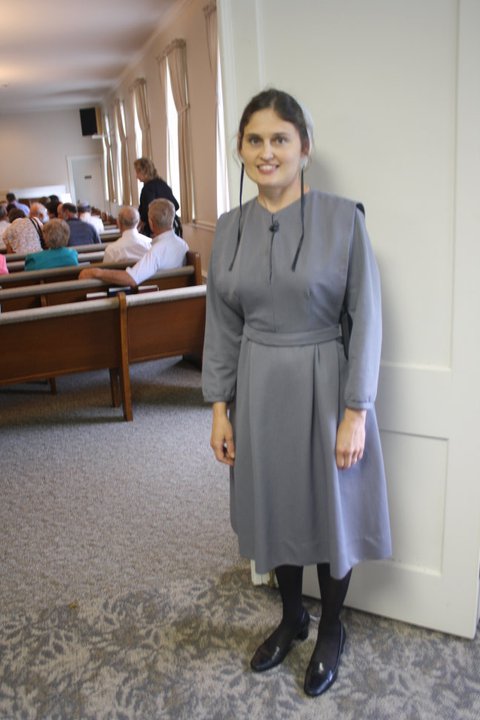
This girls' cover strings are black. Mine were white, but attached the same way.
This young woman’s covering strings are black. Mine were white, but attached the same way. (Bicentennial photo, Bossler Mennonite Church)


We three girls are ushered to the front where Bishop Lutz and Deacon John Kraybill wait with a basin of water and a white linen towel ironed smooth. We have been through a kind of catechism entitled “Instructions to Beginners in the Christian Life,” which includes a review of the tenets of faith, nonresistance to evil and nonconformity to the world, and the ordinances of Communion, Feet Washing, the Devotional Covering, the Holy Kiss, Anointing with Oil, and Marriage. The first ordinance is Baptism, which we are now ready to participate in with two “I do’s” and “I am (sorry for my sins), with a final “I do,” promising by the “grace of God, and the aid of the Holy Spirit, to submit [myself] to Christ and His Word, and faithfully to abide in the same until death.”

Instructions to Beginners in the Christian Life_2 pages together_300

After prayer, we remain kneeling. And the Bishop, assisted by the Deacon who is holding a basin of water, takes a handful of water from the basin and pours it methodically three times in succession on the head of the applicant intoning the words: “I baptize thee with water, in the name of the Father, and of the Son, and of the Holy Ghost.” This statement is followed by the Bishop taking us by the hand and saying as we rise:

In the name of Christ and His Church I give you my hand. Arise! And as Christ was raised up by the glory of the Father, even so thou also shalt walk in newness of life . . . 

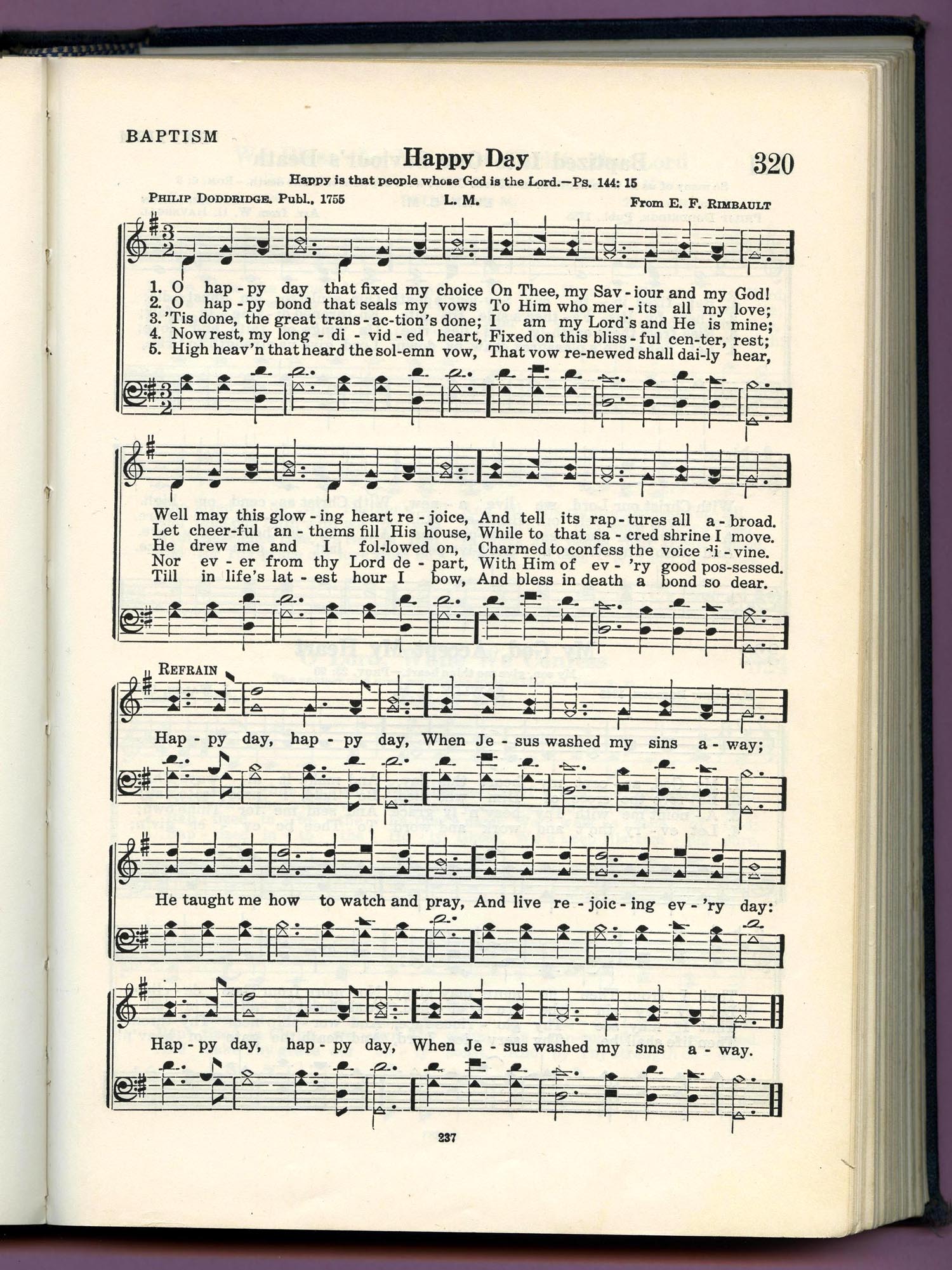
The wives of the Bishop and the Deacon then give us the kiss of peace, and thus we are received into the church fellowship. The congregation in four-part harmony happily joins in the tradition of singing “O Happy Day” from the Mennonite Church Hymnal with shaped notes.

Happy Day_Bossler Mennonite Church Hymnal_ 5x7_300

I remember this day so well. It was September 29, 1951, my sister Janice’s birthday.

*  *  *

Earlier this month, our oldest grandson and only grand-daughter, Patrick and Jenna Dalton, were baptized at Highlands Baptist Church. Their family attends a Lutheran Church, which like the Mennonites also baptizes by sprinkling, but since their parents wanted their Uncle Bill to baptize them, they complied (happily I might add) with baptism by immersion. Words similar to those spoken at my baptism accompanied their immersion in the water: “Buried with Christ in his death . . . raised to walk in newness of life.”

Rev. Bill Caverly baptizing Grand-nephew Patrick Dalton
Rev. Bill Caverly baptizing grand-nephew Patrick Dalton


What special sacred ceremonies have you observed or participated in yourself?


Coming next – The Potting Shed: A Magical Place

Moments of Discovery # 5: Mother’s Quilts


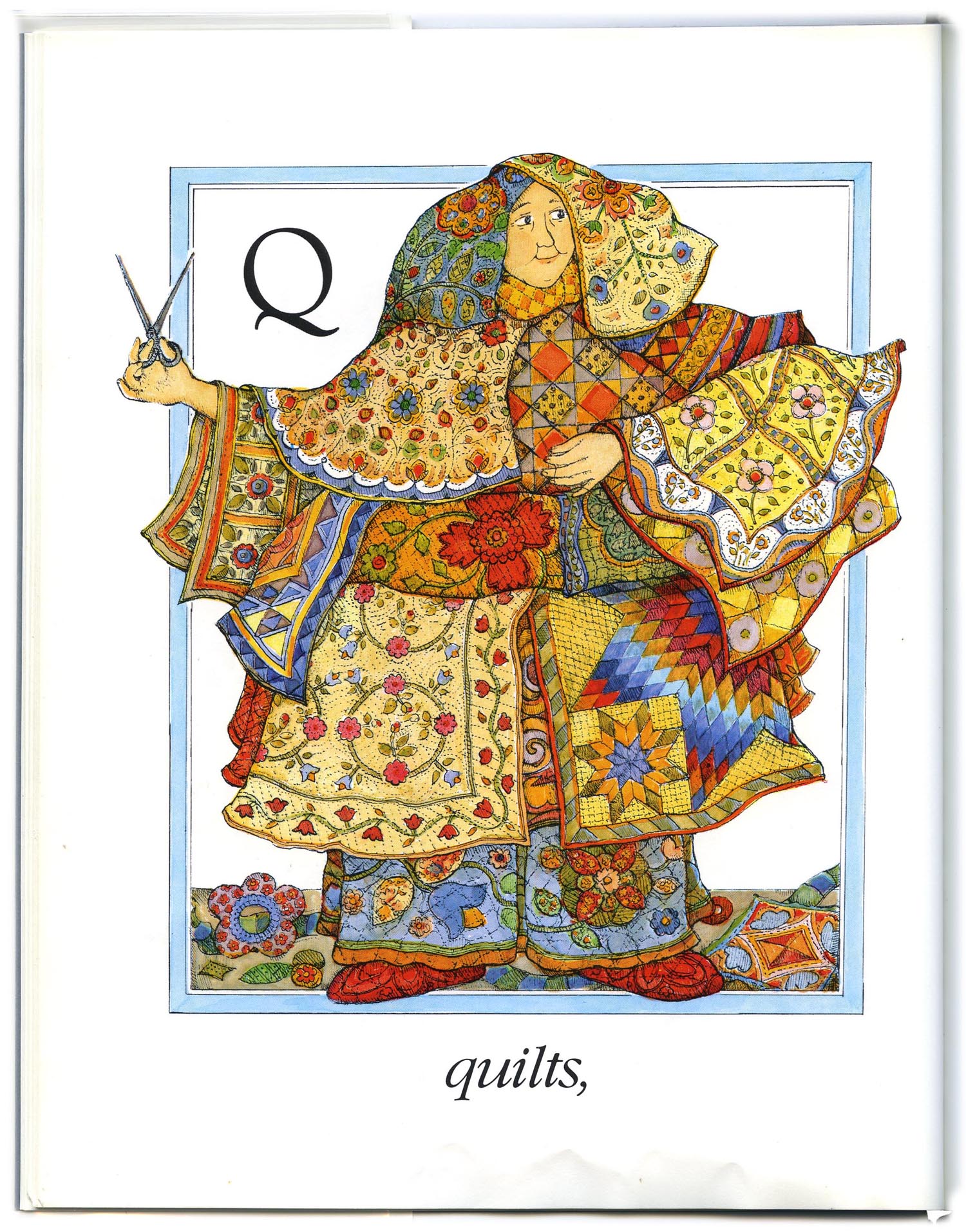
Page from On Market Street, Anita & Arnold Lobel
illustration from On Market Street by Anita & Arnold Lobel

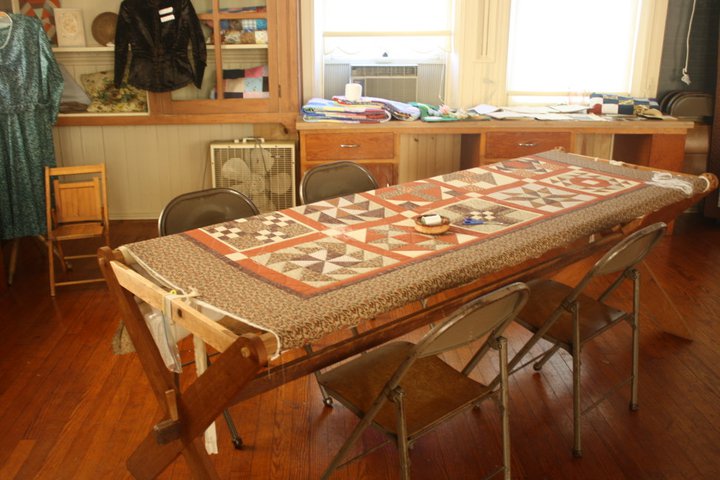
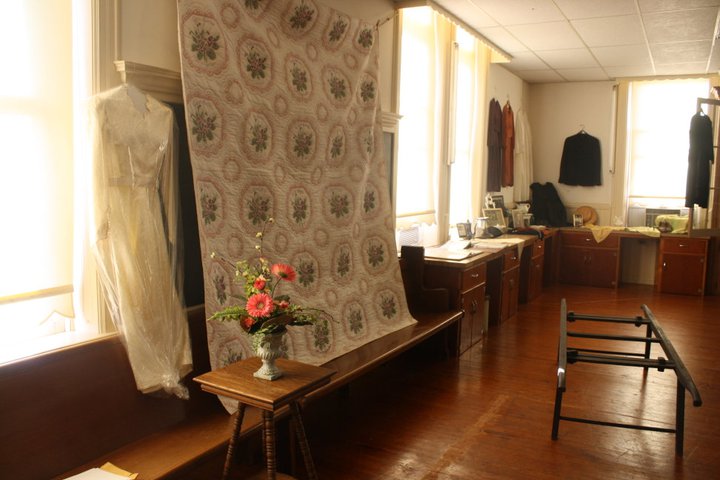
Bossler Mennonite Church was the hub of the Longenecker family’s spiritual life and the school beside it, Washington School, the place where the Women’s Sewing Circle fabricated comforters, baby clothing, blankets and quilts to help clothe the needy of the world. Some of these gorgeous quilts are displayed on a previous blog post. You can see and read about them here.

quiltSchoolhouse

Quilt exhibited at the bicentennial of Bossler Mennonite Church
Quilts exhibited at the bicentennial of Bossler Mennonite Church

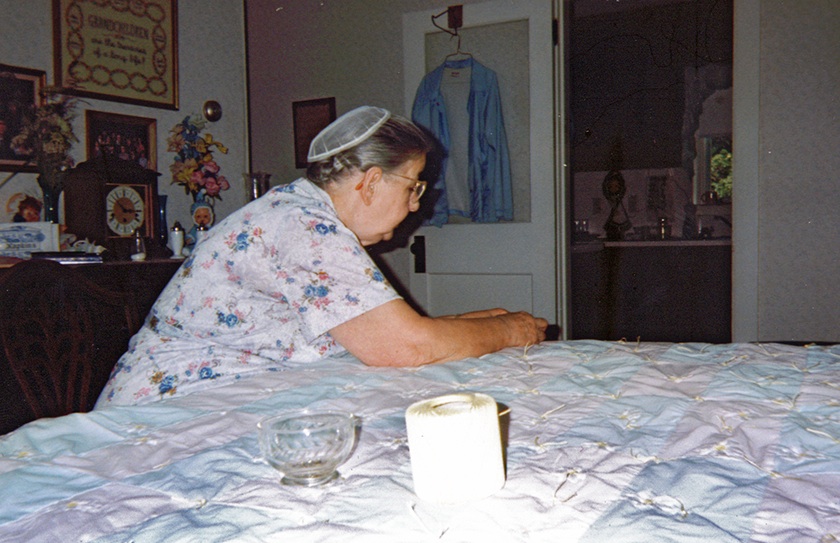
Even more than quilting I think Mother loved knotting comforters. For her, it was easier to see progress knotting a comforter. She liked the warm fluffy texture, and she could work on it by herself at home.

1995RuthKnottingComforter_small

Last fall, on one of our trips to the attic cleaning out the house after her sudden death, we opened the yellowish, grain-painted blanket chest with turned feet where we knew we would find some of Mother’s prized quilts.

1999_0900_Mother L_holding up white quilt w circles

 Can you identify the design above? I need help with the name of this pattern please!

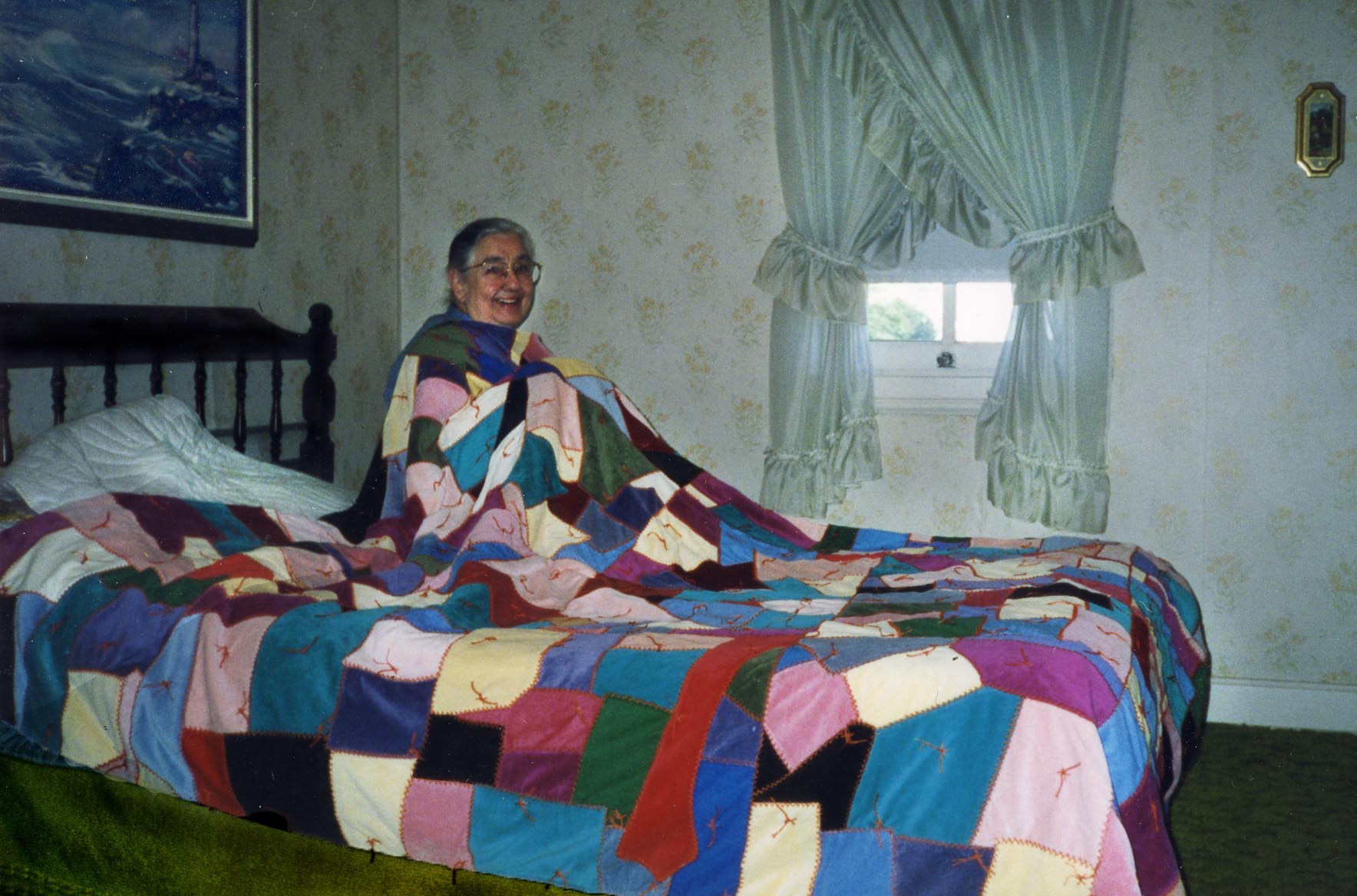
Crazy Quilt design, 1999
Crazy Quilt design, 1999.  Each of Mother’s grand-children received a quilt. This one now belongs to our son, Joel Beaman.


Joanne Hess Siegrist, one of my former students at Lancaster Mennonite School, has published a story in photographs from 1855-1935 entitled Mennonite Women of Lancaster County. In this pictorial overview of Mennonite life from this era, Joanne, who can trace her family back eleven generations, depicts the many facets of Mennonite women’s lives in chapters like these: The Tone of Their Lives, Motherhood and Children, Farm Life and Work, Faith and Family Outings.

Here is an excerpt from her chapter entitled “Quilting and the Arts”

At the beginning of the twentieth century, Mennonite women of Lancaster County spent many hours doing elaborate, colorful needlework. Young women worked especially on their dowries.


With a frugality that was part of their spirituality, these women often created handwork out of remnants and half-used materials. They crocheted exquisite lace tablecloths from the cord strings used to tie feed bags. They made hooked rugs using the unworn sections of old winter coats. They designed quilts with fabric from colorful feed bags found in the barn. . . .


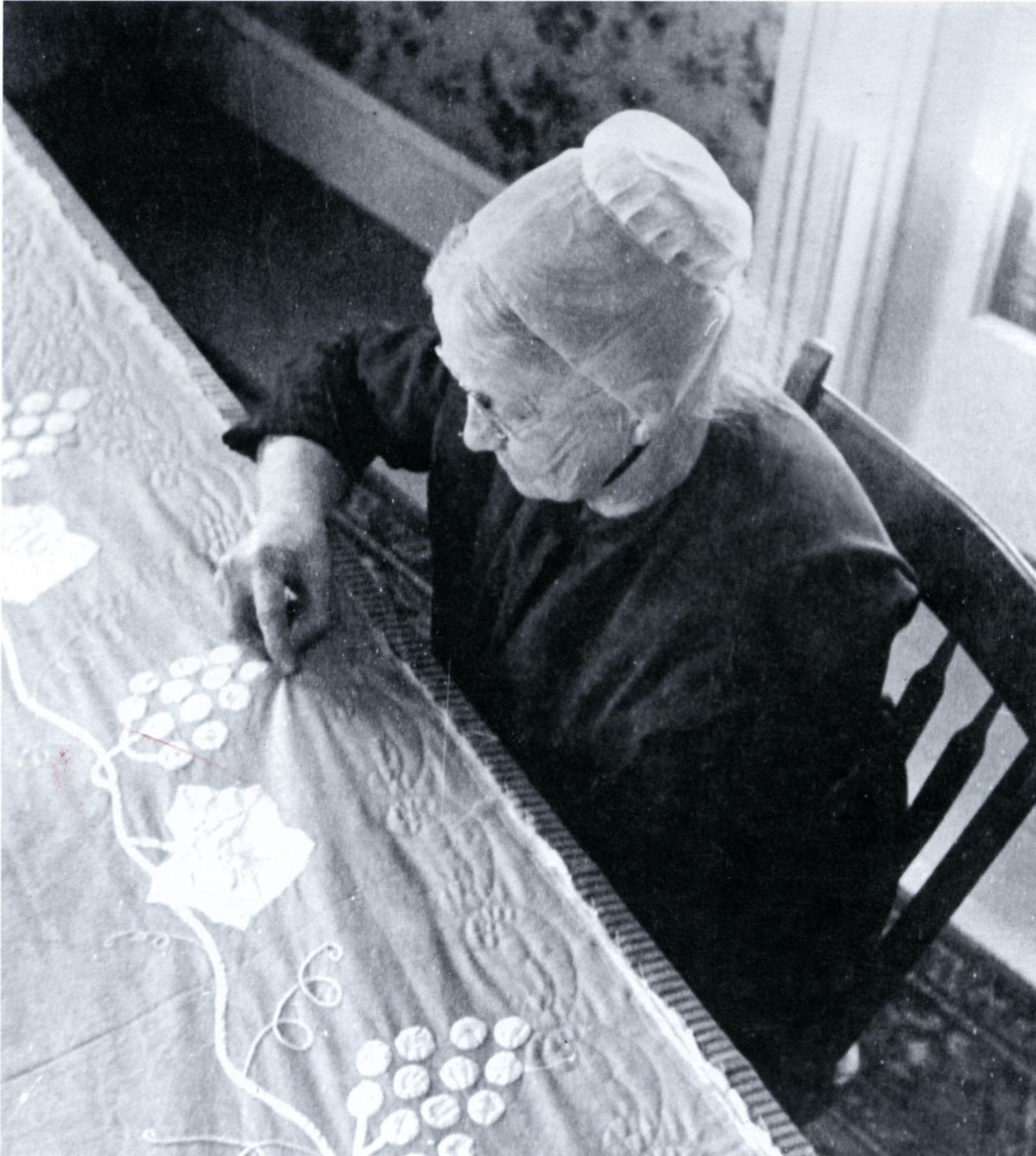
Mennonite Woman_Quilt_p193

In a photo dated 1948, Joanne showcases Anna Huber Good as she adds tiny stitches to a Grape Vine appliqué quilt. Author Siegrist adds, “Anna quilted all her life; in fact, after rearing eight children, she became even more intent on quilting. Anna got up at 4:00 a.m. and quilted until 6 a.m. Then she made a large breakfast for her husband Daniel and sent him off to his market work. After doing a few cleanup chores, Anna returned to quilting. She quilted all day long until about 9:00 p.m., stopping only for meals.”

Anna’s retirement years were even more productive, making “forty-two quilts for her children.” Amazingly, she charged only 15 cents per yard of quilting thread if she quilted for people outside her family.

Mennonite Women_Quilt_p194_crop_300

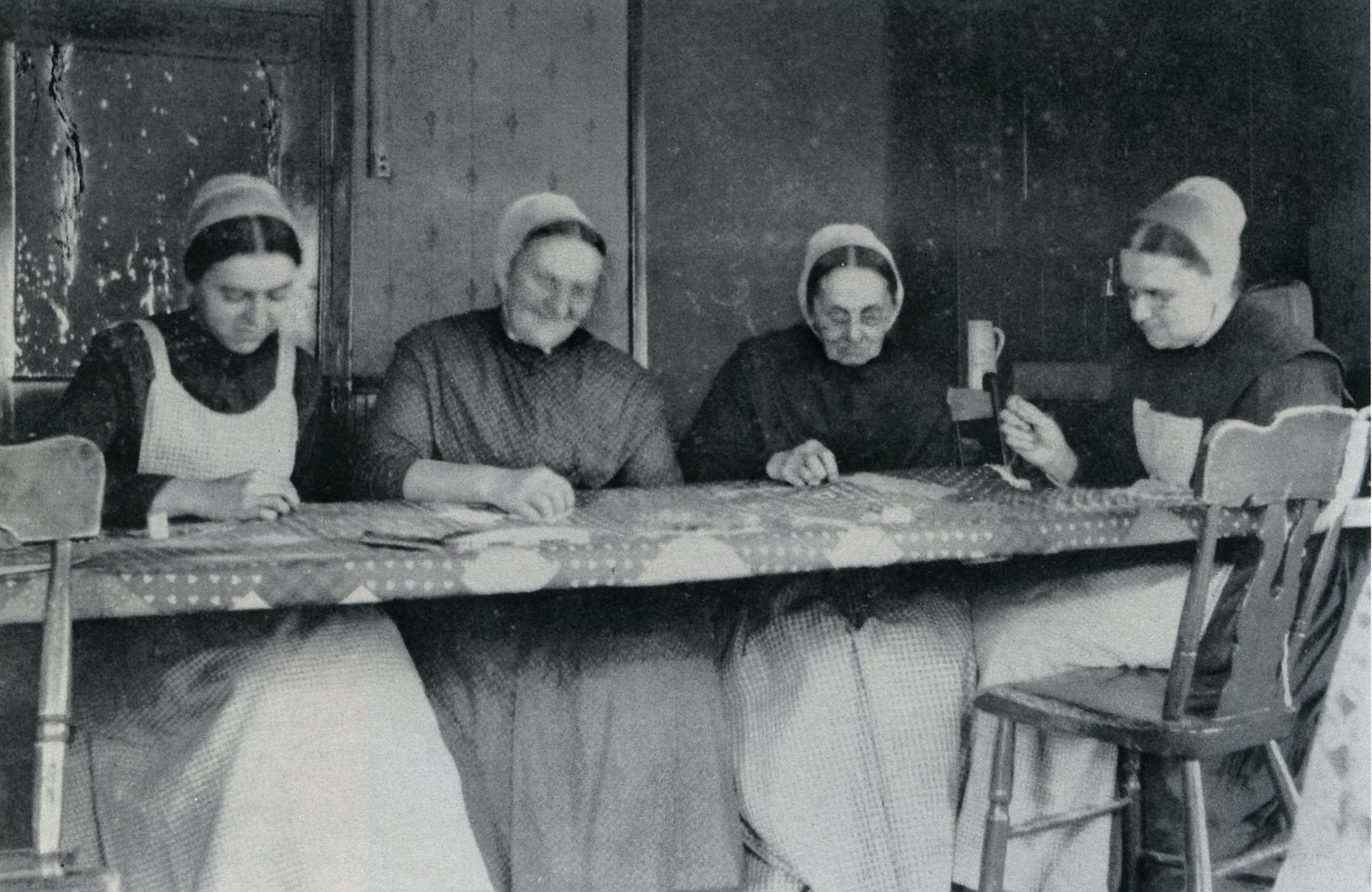
Here are four friends quilting in the dining room of Enos and Annie Lefever’s home (1915). Their intent expressions (uh-oh, I see one smiling!) and nimble fingers are caught on camera by Annie’s son Harry, whose photography did not interfere with his membership at Mellinger’s Mennonite Church (Mennonite Women of Lancaster County,194). Just a mere ten years earlier, Mennonite farmer, John Kreider Miller, lost his church membership for running a photography studio (The Lancaster Intelligencer Journal, Friday, May 10, 1996). Photographs, apparently, at the turn of the twentieth century, spoke of pride, a cardinal sin in the Mennonite system of values. (Mennonite Women of Lancaster County, Siegrist)


Amish and Mennonite hand-made quilts are now marketed as a luxury item and often used as decorative wall hangings. There are numerous websites advertising such handiwork for thousands of dollars.

Until recently, the Quilt Museum at the People’s Place in Intercourse, PA exhibited cleverly crafted quilts from all over the United States.

The Mennonite Central Committee, providing aid to the world’s forgotten and neglected, often sponsors quilt sales and auctions beyond Lancaster County borders. Here is a link to one in Ohio.

*  *  *

Buy Joanne’s book here!


Is there quilting in your family history? Has a quilt been bequeathed to you of quilt-essential quality? Are you a quilter?


Purple Passages with a Weather Forecast

To my friends both in the northern and southern hemisphere, some thoughts about the weather. All quotations from BrainyQuotes.

Sometimes I wish I was the weather, you’d bring me up in conversation forever. And when it rained, I’d be the talk of the day.  —  John Mayer


I like the cold weather. It means you get work done.   — Noam Chomsky


Wherever you go, no matter what the weather, always bring your own sunshine.    — Anthony J. D’Angelo


Scarves, mittens, and hats are a great way to express your personality in the cold weather.   — Brad Goreski


Where's my hat? Freezing temps on Chincoteague Island, VA
Where’s my hat? Freezing temps on Chincoteague Island, VA                              Chic Dumps? Best guess: Chicken and Dumplings


People don’t notice whether it’s winter or summer when they’re happy.

— Anton Chekhov


For there is no friend like a sister / In calm or stormy weather; / To cheer one on the tedious way, / To fetch one if one goes astray, / To lift one if one totters down,/ To strengthen whilst one stands.   –– Christina Rossetti

(from “Goblin Market”)


A friendship can weather most things and thrive in thin soil; but it needs a little mulch of letters and phone calls and small, silly presents every so often – just to save it from drying out completely.       — Pam Brown


The forecast: Spring will come!

Paperwhites

Paperwhites from the narcissus family, with their “delicate color and sweet, musky fragrance,” a forecast of spring to come.

While the earth remaineth, seedtime and harvest, and cold and heat, and summer and winter, and day and night shall not cease.    Genesis 8:22  KJV


I’m guessing you agree with some quotes more than others. One or two you may completely disagree with. 

Can you add another one? We’ll be listening . . .


Coming next: Wanda: Boring in Beige or Beautiful in Blue?