Aunt Ruthie and Fasnacht Doughnuts

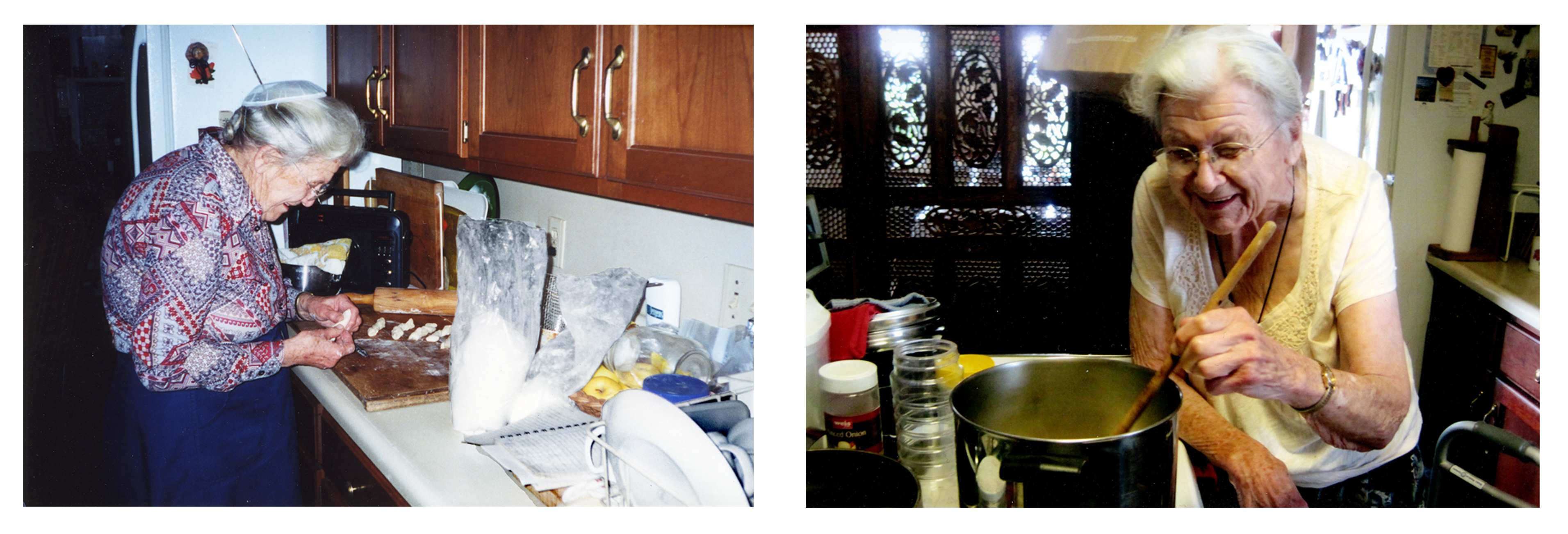
A throw-back to celebrations in the Old Country, Fasnacht Day had its origins in Switzerland, southern Germany, Alsace, and western Austria. In Pennsylvania Dutch Country, Fasnacht Day is celebrated on the eve before Lent. Think “Mardi Gras” but less bawdy! Aunt Ruthie, a main character in the play that was my childhood, made fasnachts religiously for the family each year and enough to share with her students at Rheems Elementary School.

Ruthie_Baking&Making Tapioca_12x4_300

Fasnacht comes from the German word “fas” (fast) + “nacht” (night). On the Tuesday before the beginning of Lent, many German/Swiss cooks would rid their pantries of lard, sugar, butter, and fat by making fasnachts, as we called them.

If my Aunt Ruthie followed a recipe, she had it in her head and never wrote it down, so here is my adaptation based on the ingredients she told me:

Old Fashioned Fasnachts

8 cups flour

3 cups warm water into which some milk is added

1 pkg. yeast

3/4 (more or less) cup sugar

1/2 cup melted lard (oil) + 10x sugar for dusting the doughnuts

Mix yeast, sugar, salt, lard (or oil), warm water. Add flour, a cup at a time. Knead; let rise; knead again. Cut into squares. Cover and let rise again. Then deep fry at 360 degrees for 1 1/2 minutes on each side. Drain on rack — let rest — then dust with 10x sugar and you’re ready to celebrate!

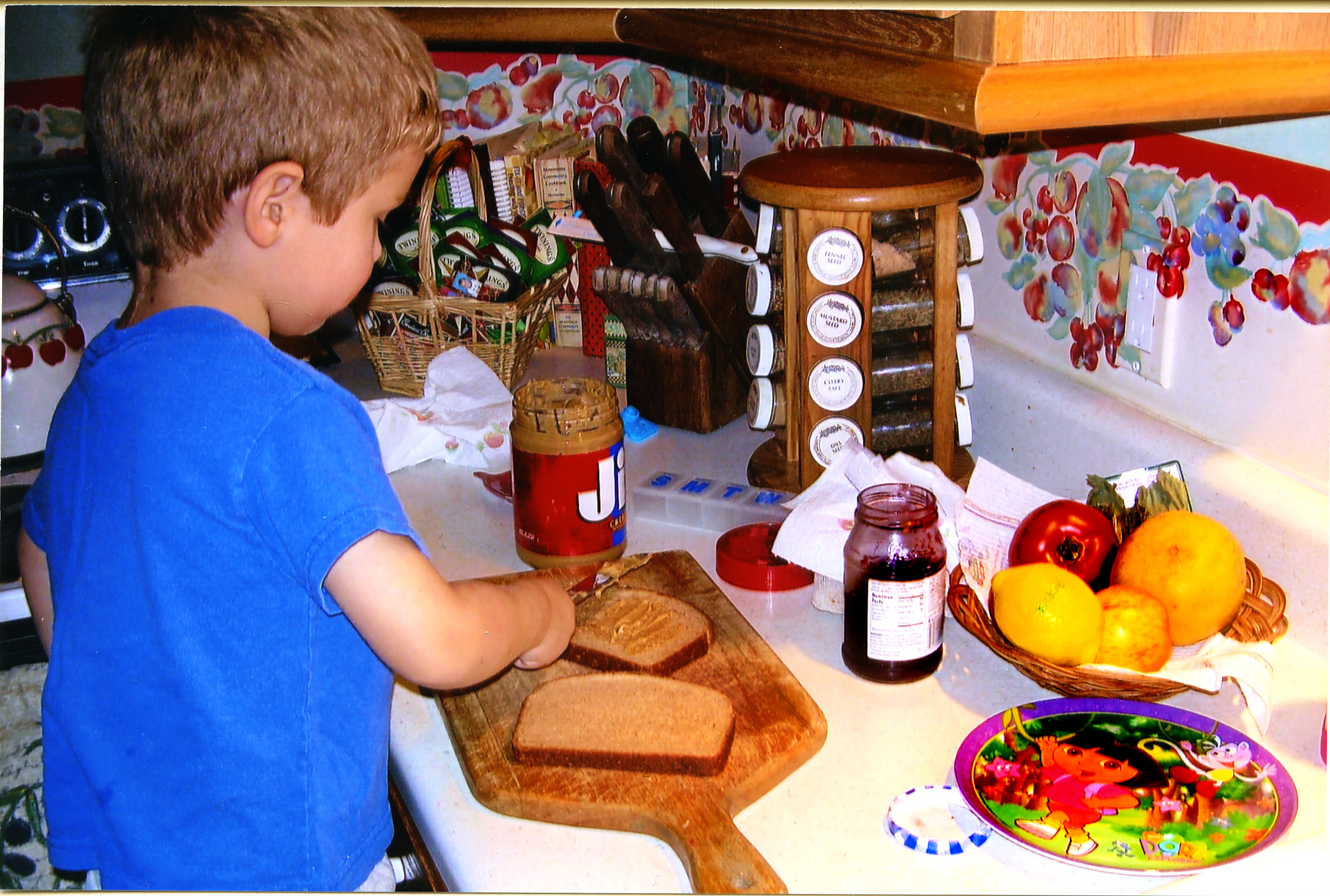
Peanut Butter and Jelly Sandwiches – You have to start somewhere!   Curtis in NaNa’s kitchen

Curtis_making pb and jelly_6x4_300

What recipes do you remember making as a child–with your mom, dad, grandmother, someone else?

Mom’s Kitchen: Pig Stomach and Easter Eggs

My Mother loved her kitchen with a spiritual passion and was happiest at the altar of her stove, cooking or baking. We’d hear her off-key voice singing “Heavenly Sunlight” or “Keep on the Sunny Side” as she fixed breakfast while we dressed and braided our hair for school.

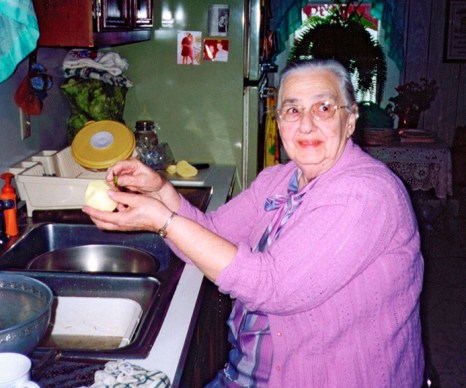
Her mother, Sadie Landis Metzler, died when she was nine, so Ruth, the oldest daughter of six, was the mini-mom milking cows and peeling potatoes before she went to school. Later, she was hired out to help another farm wife, who taught her to cook, instilling a love for fresh or home-canned ingredients with PA Dutch recipes.

Mom and Pig’s Stomach

These days when I fly home from Florida, we make a feast of her famous homemade soups (vegetable & chicken corn) and other dishes, including pig stomach. It sounds horrible, like goose liver or pickled pig’s feet, but it’s considered a delicacy at her house.
2002RuthPotatoes_small

There are other names for this dish: hog maw, Dutch goose—but pig stomach is the name we grew up with. Basically, a nicely rinsed stomach from a pig is stuffed with a pound of sausage, 8 large diced potatoes, some onion, and sprigs of parsley cut up in tiny pieces, then all ingredients oven-roasted.

MomPigStomach     MarkPigStomach

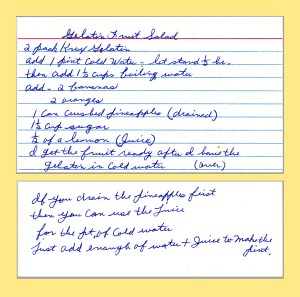
Mom’s stand-by side dish is peas & carrots for color, celery in season, and something fruity for dessert like her gelatin fruit salad, a recipe passed around among the relatives.
Mother L_Gelatin Fruit Salad_Fr&Bk_6x6_300

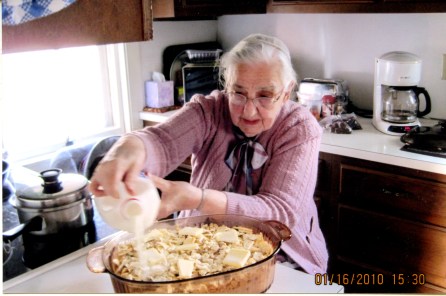
Her Salmon Casserole is also a favorite at her table. There are variations of this recipe in Mennonite Community Cookbook by Mary Emma Showalter. Scottdale, PA: The Mennonite Community Association, 1972 (16th printing). My Mom’s own recipe is quick and hearty.
 

2010_Mother Longenecker_Baking Salmon Loaf_6x4_300Salmon Casserole: Ingredients:

1 can red salmon

1 pack or more of saltine crackers, crumbled

butter, 3 – 4 pats

2 cups milk

Snipple up (break into small pieces) salmon from the can. Place a layer of crushed cracker crumbs on the bottom of a greased 2-3 quart casserole. Alternate layers of salmon with crumbled crackers, adding a little salt and pepper as you go. Add milk. “Top off with a few hunks of butter,” she says.

Bake about an hour at 350 degrees.


Chocolate-covered  Eggs: Peanut Butter and Coconut, a treat every Easter in the 50s

Peanut Butter Eggs

1 lb. butter + 2 lbs. peanut butter  + 3 lbs. 10x sugar  Mix ingredients together and form into egg shapes, about 1 1/2 inches diameter.

Coconut Cream Eggs

1/4 lb. butter + 8 oz. cream cheese + 2 lbs.10x sugar + coconut to taste (8 oz. bag) Follow instructions above.

Coating: l lb. of semi-sweet chocolate melted. Mother would melt a pound of semi-sweet chocolate by sinking a cup of chocolate into a pan of boiling water; you may want to use something more up-to-date like a double boiler for the melting process. As the chocolate melted, she shredded in some paraffin for a glossy finish to the coating.

Mom made the candies by resting each egg on a fork, dipping it into the chocolate, and then using a knife to scrape the drippy chocolate off the bottom of the egg. Pure heaven!

What family favorites do you associate with a particular holiday? How have you adapted the recipes to your own table?

© Marian Beaman
Grandma’s Kitchen: Recipes & More


Grandma’s Kitchen: Recipes and More

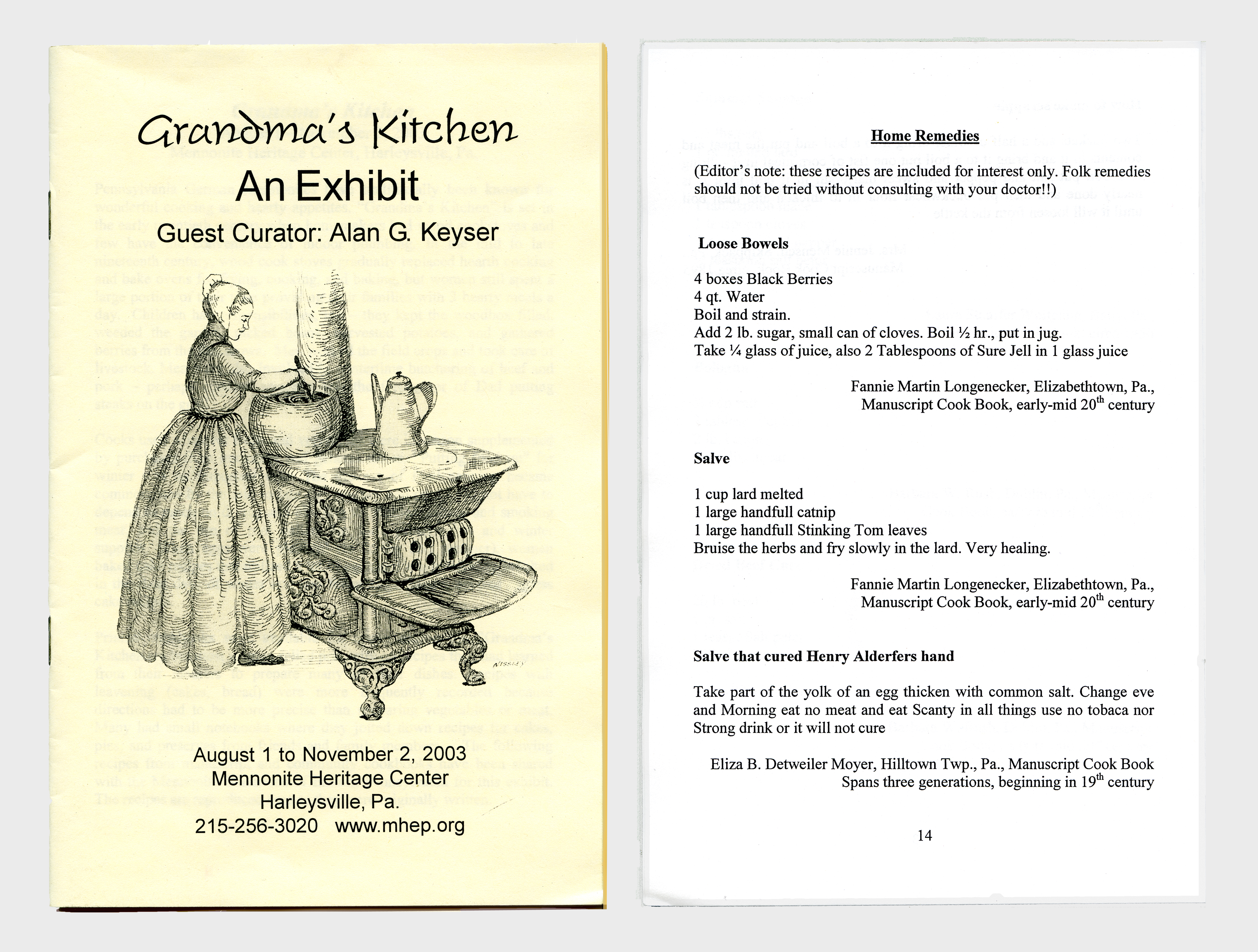
Grandma Longenecker’s kitchen was many yards long with the necessities for cooking at one end where an old cook-stove squatted and the comforts of dining on an old oak table at the other end, bounded by three bay windows.

Grandmas Kitchen Booklet+p14_12x9_300

One of my earliest memories is seeing flames leaping out of Grandma’s old cook-stove as she used her metal tool to lift the burner, just as you see in the drawing.

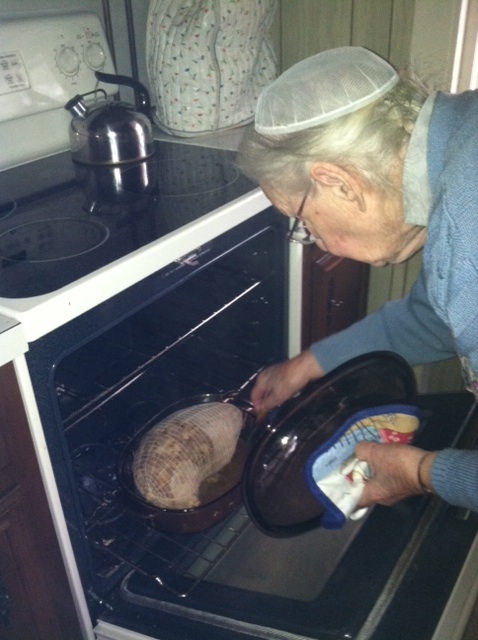
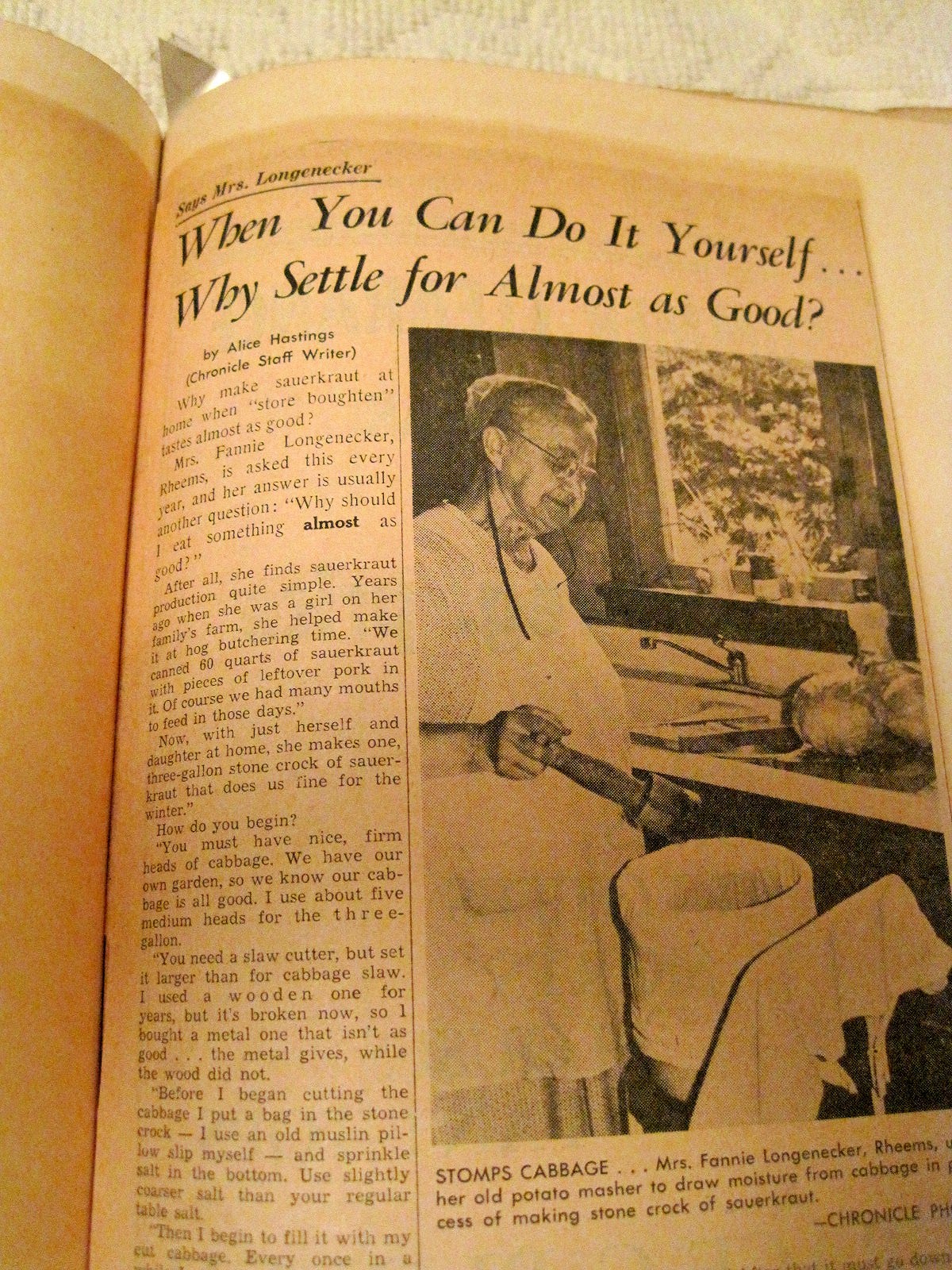
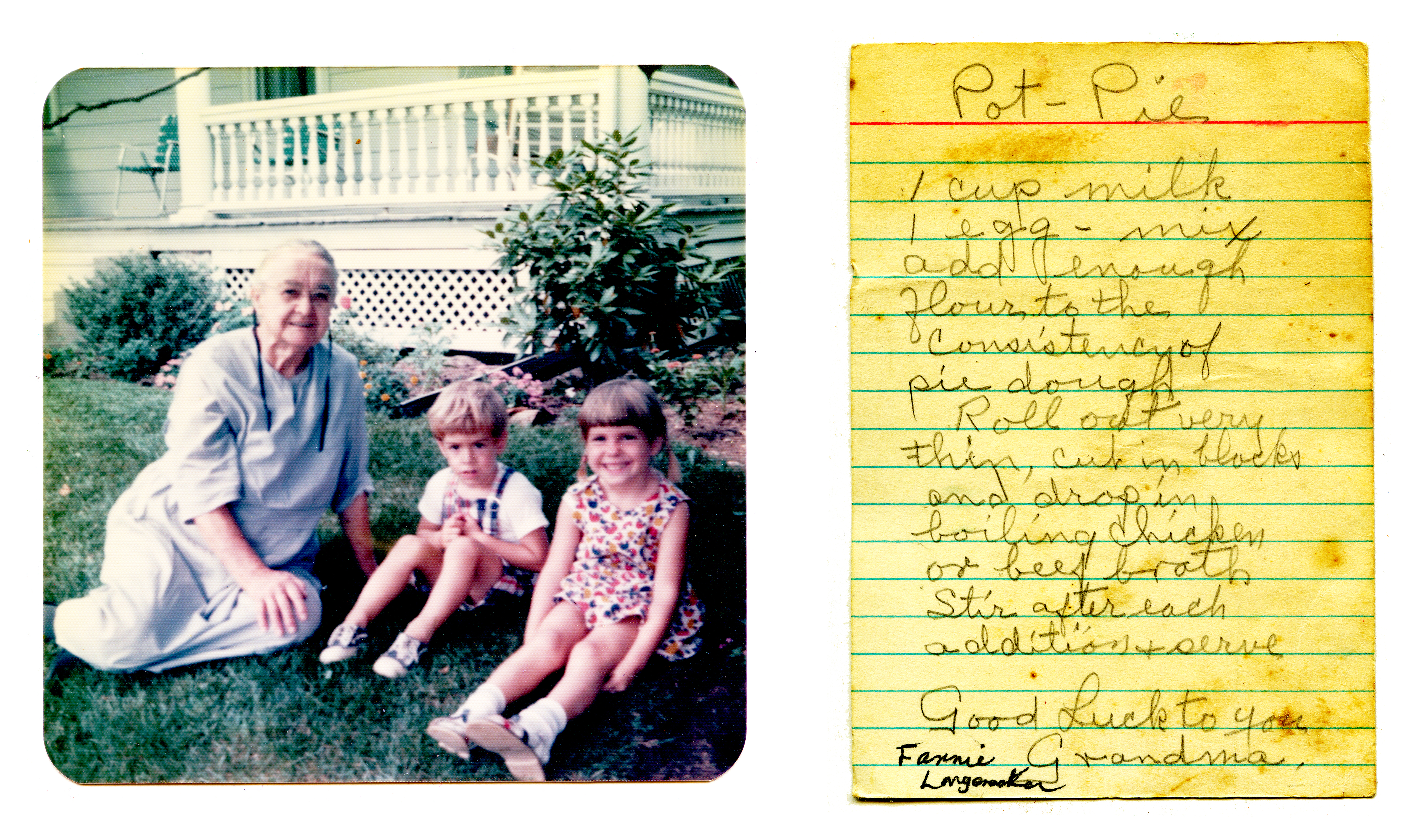
Everything Grandma made was from scratch. From sauerkraut to pot pie—even cakes of lye soap, “Homemade is best,” she’d say.

                             GmaSauerkrautArticle Grandma & Sauerkraut Crock

GGrandma_Joel_Crista+Pot Pie_16x9_300

I have vivid memories of helping Grandma make potpie. We rolled out the dough and cut it into squares. Then, standing on a chair beside her at the stove, I would spot a hole in the chicken broth seething in the kettle and try to drop in a square of dough without singeing my fingers. It was warm and steamy and more fun than mud-pies, plus the results were edible. Often served with her yummy coleslaw, tart with vinegar, and made with cabbage from her vegetable garden.

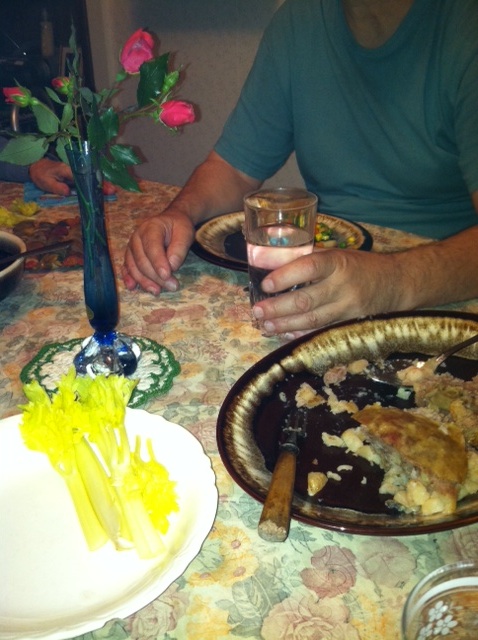
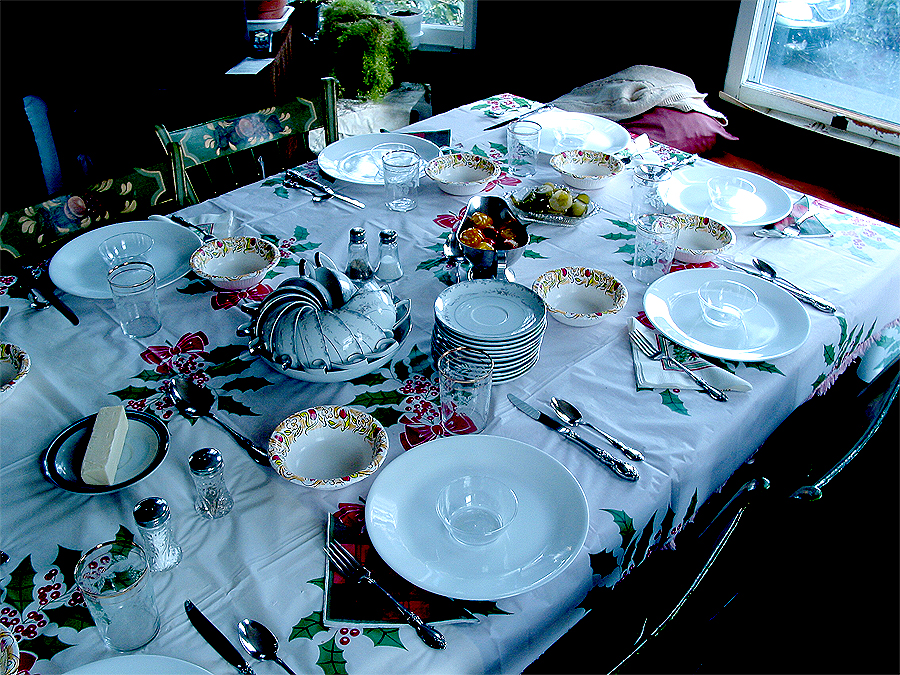
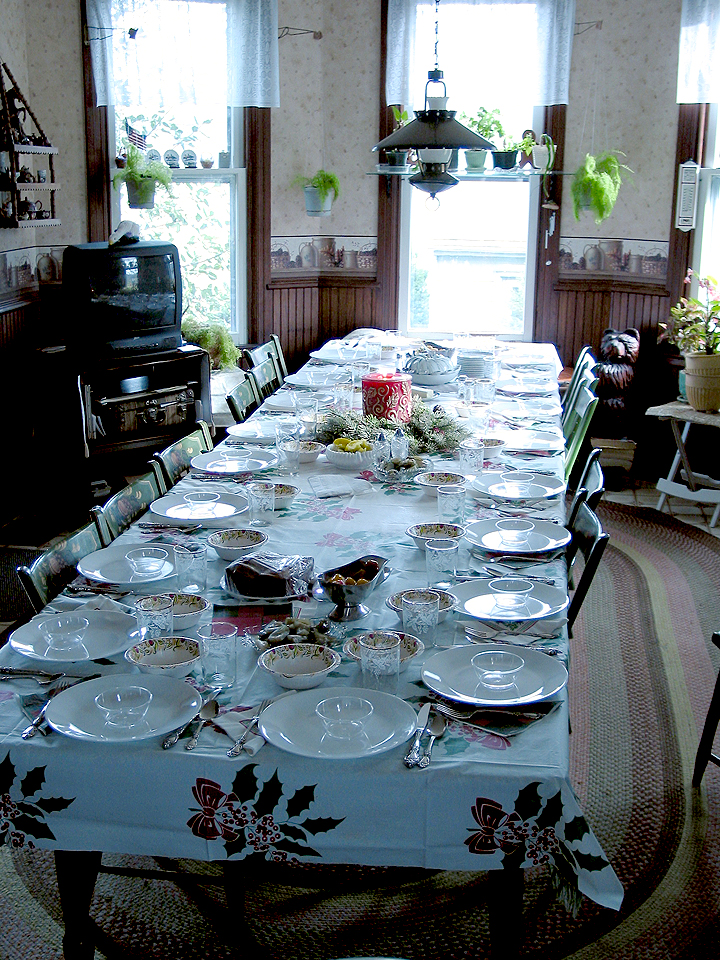
Table set for Christmas Dinner 2004:

2004_Christmas Table_closeup_5in 2004_Christmas Table_4in

What soul food do you connect with your Grandma, other relative?

Up next: Mom’s Kitchen, Aunt Ruthie’s Kitchen

© Marian Beaman

Prayer Cap and Caped Dress: A Capsule


Marian_middleschoolMiddle Schooler: Veiled and Caped

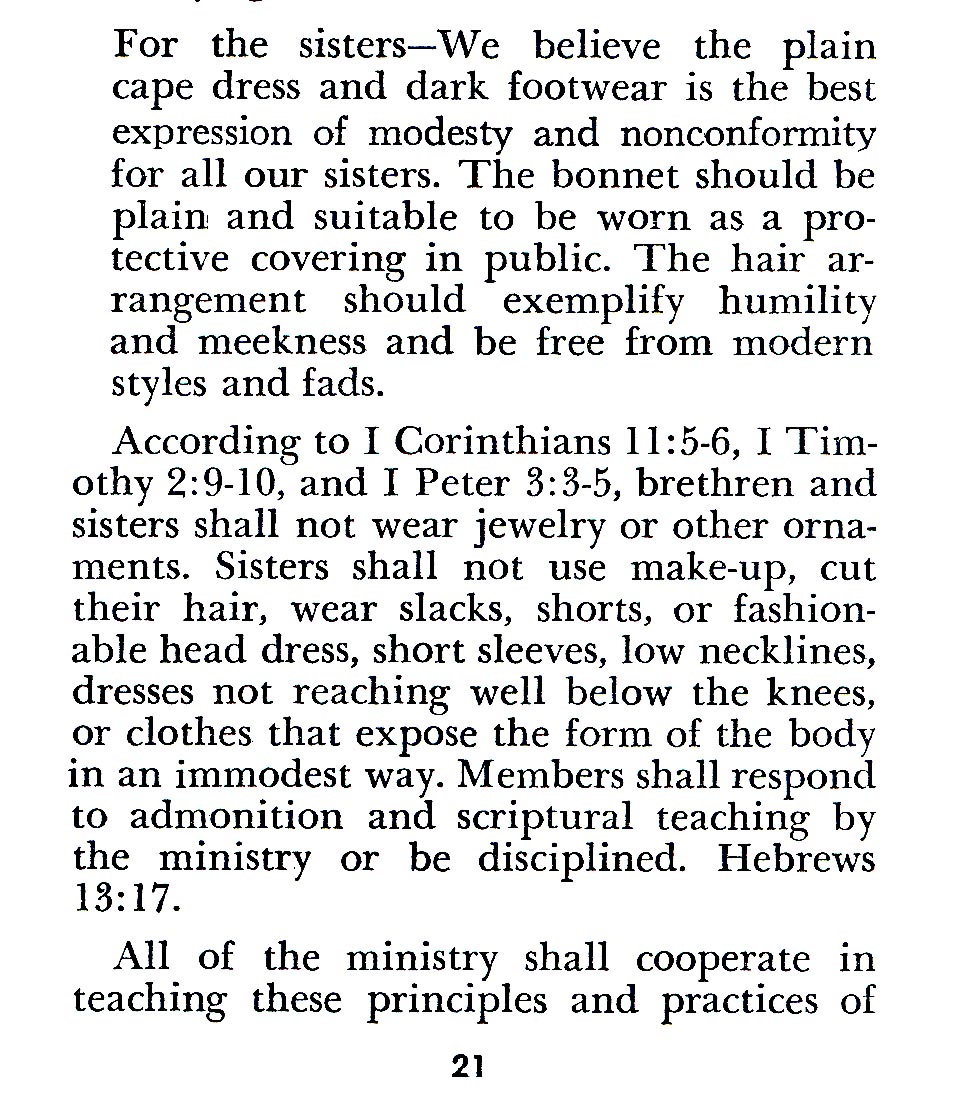
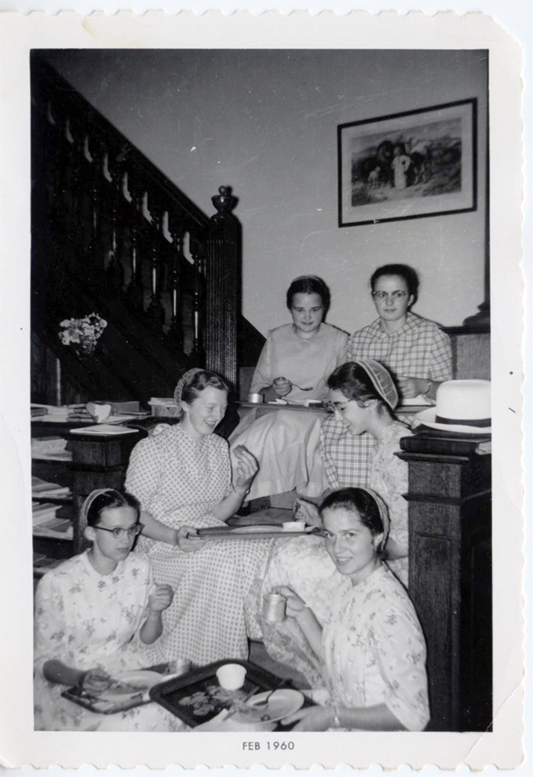
Good Mennonite girls of the 1950s and 60s like me wore a prayer cap and a dress with a cape. Yes, no fancy fad in the frock I’m wearing in the photo. As best I can tell, the belted cape was worn to add an extra layer of padding to de-emphasize female curves. The object was modesty and humility at all costs. Underneath my cap, also called covering or veiling, I planted a  circlet of braids attached with hairpins. Why is it worn? “According to I Corinthians 11:1-16, . . . the long hair and veiled head gives evidence of the woman’s “unceasing prayer and constant witness,” accepting “submission designated by God.” *

Christian Doctrine_cover_150_med   Christian Doctrine_p21 close up_150_med

* Statement of Christian Doctrine and Rules and Discipline of the Lancaster Conference of the Mennonite Church, Article II—Ordinances, Section 5, July 17, 1968.

More on the Prayer Cap:

The Prayer Veil_cover_150_med

Wenger, J. C., The Prayer Veil in Scripture and History, Herald Press, Scottdale, PA, 1964.

TheGirls

Three Common Misconceptions about Amish and Mennonites:

1. Amish came first.  No, Menno Simons, a former Swiss priest, broke off from the Catholic Church during the Reformation in 1536, originating the Mennonite Church. Later in 1693, Jacob Ammon formed the Amish, who have worn even more conservative dress.

2. Most Mennonites are farmers; their children go to one-room schoolhouses.  No, from the mid-1950s and earlier Mennonites have embraced the professions: many are doctors, lawyers, educators. Higher education is the norm for many.

3. Plain looks equate to lack of emotional expression.  Just ask my husband!

1. What misconceptions can you add?

2. Any similar experiences? Tell your anecdote.

3. Questions?

Harvey Yoder, Mennonite pastor and counselor, has compiled a more complete list of 10 myths about Mennonites and Amish on his own website. I invite you to check out this link:

http://harvyoder.blogspot.com/2011/10/mennonites-and-amishten-myths-and.html

Coming soon!  Grandma’s Kitchen: Recipes and More

Welcome!

Thank you for visiting my BLOG today.

Now that you’re here, let me explain the title: The plain part is my first 24 years as a Mennonite girl In Lancaster County, Pennsylvania and the fancy part follows as I move south: first to Charlotte, North Carolina, and then to Jacksonville, Florida.

Watch for stories from my past and present knitted together by memory. You have memories too—or responses to what’s happening now. So, you are invited to post for any reason: something that resonates with you, a story clip from your past, whatever. We’ll call them “Stories: Then & Now, Yours & Mine. Just hit Subscribe and we’ll be chatting together.

Coming soon: How We Met