How to Tell Your Children What’s What

Unlike Hansel and Gretel, whose mother tried to starve them and then lock them out of the house, Mother Longenecker provided well for her children and left behind, not white pebbles or bread crumbs, but hand-written notes tucked away to tag her heirlooms. Each note provides a designated recipient sometimes with a bit of family history.

1. Floral Serving Dish
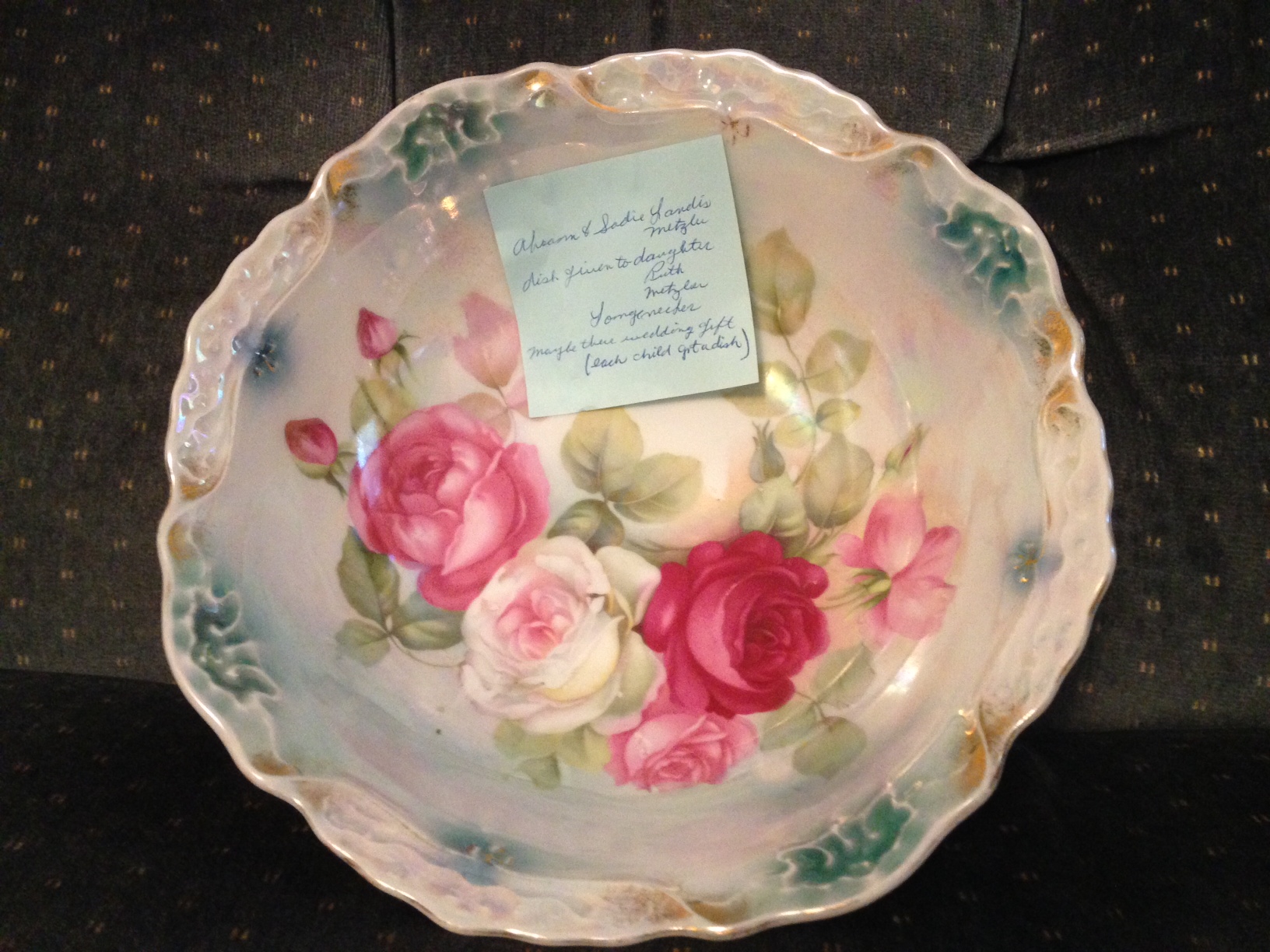
Dish given to my mother from her parents, Abram and Sadie Metzler on her wedding day

FloralDishMomNoteOne of Mother’s grand-daughters will get this dish no doubt and will know its provenance, which would probably be lost forever, without the note .


2. Keepsake from Mother’s Sunday School teacher at Erb Mennonite Church with teacher Mrs. Kathryn Bomberger. The note emphasizes the biblical account of creation found in the book of Genesis and on the reverse side a quick guide to prayers, parables, and verses commemorating sacred events. You can find more of the history of the Erb Mennonite Church here, including its roots in the Swiss-German Anabaptist culture.

Ruth Longenecker_SS card_front_back_note

Mother's Sunday School Class at Erb's Mennonite Church     Kathryn Bomberger, teacher
Mother’s Sunday School Class at Erb’s Mennonite Church       Mrs. Kathryn Bomberger, teacher

For many months now, this photograph has served as the banner on my Facebook page. When I posted it, I was totally unaware of Mother’s imminent death. Now I am loath to replace it with a different photo. All the ladies are plain here, except the smiling woman seated on my mother’s left. I imagine this shot was taken after Sunday dinner at the home of the teacher.


3. Japanese Cup & Saucer
Japanese Cup 2

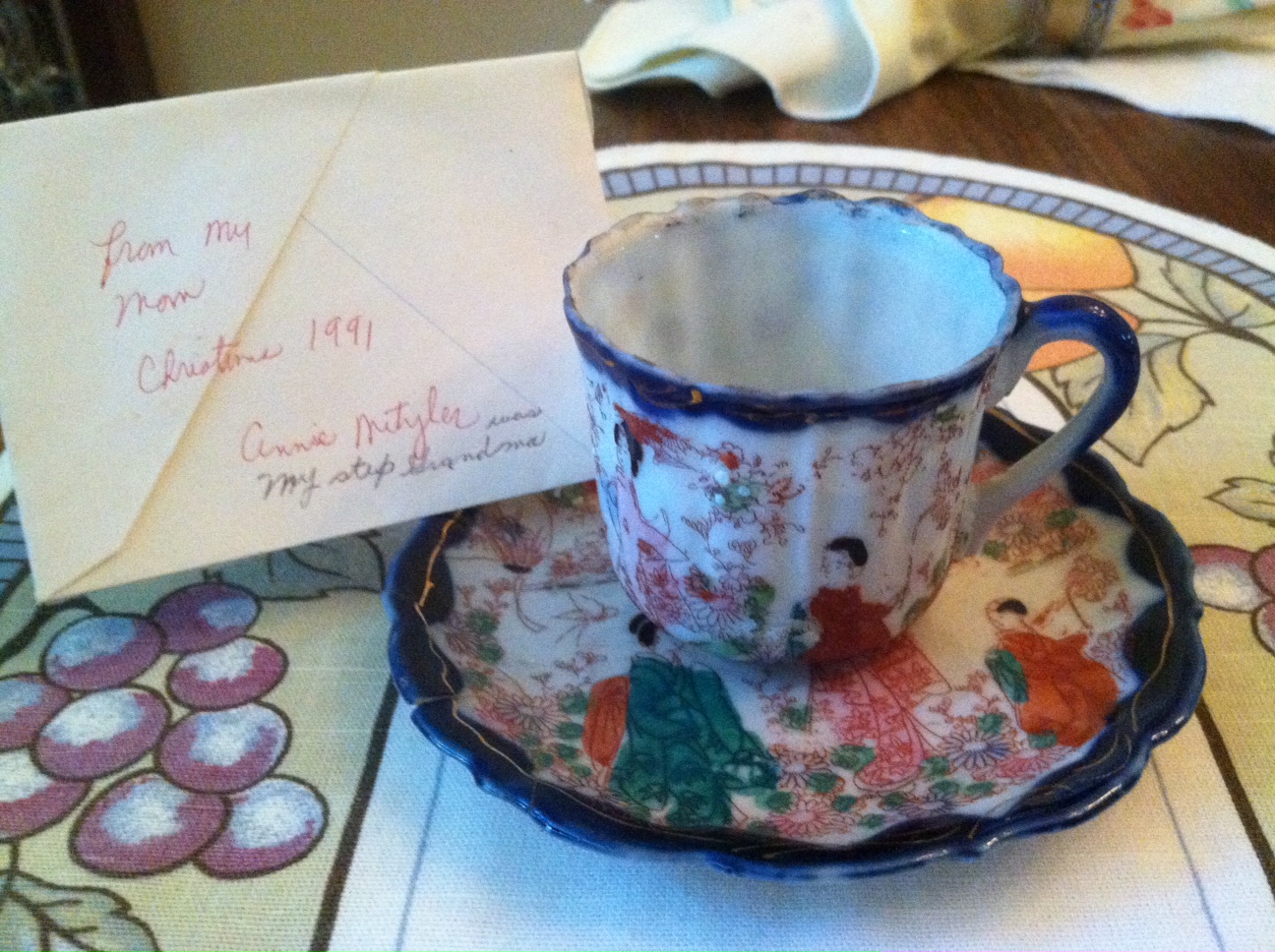
According to my notation in red in 1991, Annie Metzler gave this set to my mother, who notes in her own hand-writing that she was Mom’s step-mother. This vintage piece is hand-stamped Made in Japan, possibly created during the Golden Age of Japan’s trade with the United States in the 1921-1941 era.

Mother had “secret smarts” that we became more aware of recently, revealing her keen interest in the continuity of memory as she passes both artifacts and notes on to the next generation.


Do you have any family notes like these? Do you tag things you want to pass on? Here’s where to share your wise observations . . .


What’s for Dinner? Dried Beef Gravy and . . .

“Just two generations ago, preparing meals was as much a part of life as eating,” so says Mark Bittman in an article entitled How to Eat Now published in the October 20, 2014 issue of TIME magazine. Although a recent Harris poll reveals that 79% of Americans say they enjoy cooking, probably most get at least a third of their daily calories outside the home. Bittman goes on to show how easy it is to get a nutritious home-cooked meal on the table and includes 3 simple recipes: Vegetable soup which borrows from the freezer aisle, a whole roast chicken with garlic and lemons, and skillet pear crisp recipe which makes for easy cleanup.

TIMEfood

Mother of course cooked two main meals every day. I could count on the fingers of one hand the times we ate in a restaurant. Her recipes were hearty, reflective of the PA Dutch cooking she grew up with, never skimping on the butter.

When I came back from Pennsylvania a few weeks ago, I brought on the plane frozen ham loaf and chipped beef. After the ham loaf is thawed, it’s a cinch to pop it into the oven and serve in a few hours with virtually no prep time.

Preparing chipped beef gravy though, while not enormously time consuming, does require assembling ingredients: dried/chipped beef, butter, flour, milk or cream, and a touch of pepper and then stirring in a skillet on the stove.

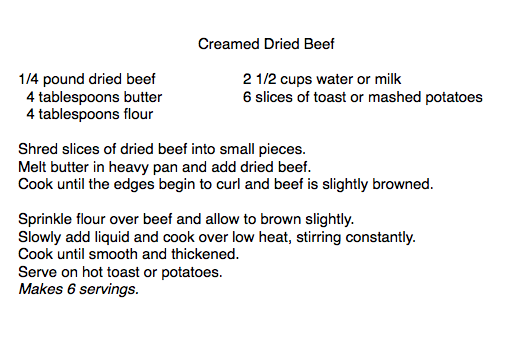
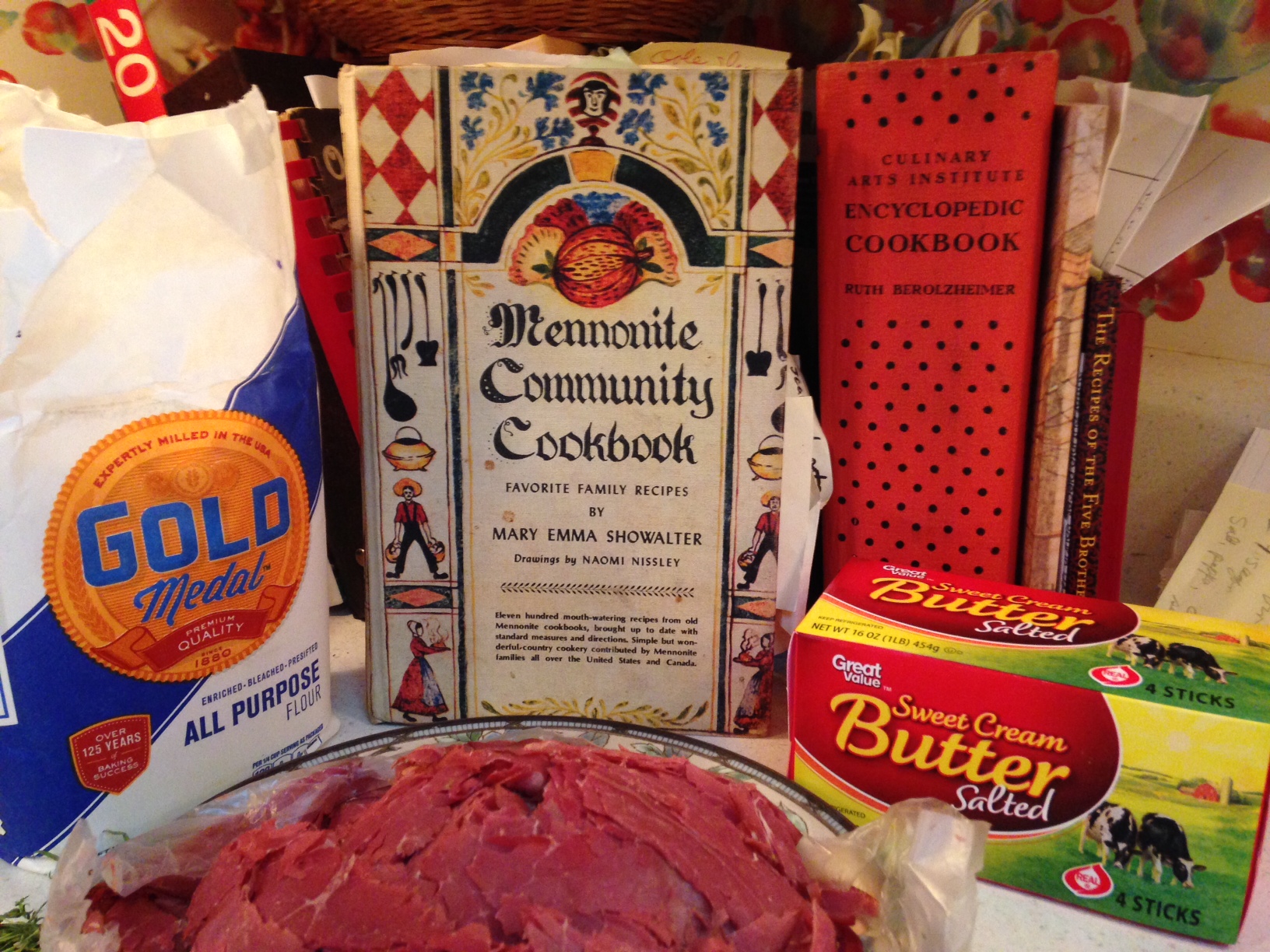
Last Wednesday, I pulled out my trusty Mennonite Community Cookbook by Mary Emma Showalter, a book of 1100 favorite recipes gleaned from Mennonite families all over the United States and Canada. Usually, I use Mother’s recipe in my head and knowing the ingredients to what she called dried beef gravy I add a hunk of this and two cups of that, “just what you think” as she used to say. This time though I will follow the cookbook’s recipe for creamed dried beef, which I see browns the beef with the butter.

DriedBeef RecipeNOname

RecipeDriedBeef

Next I assemble all of the ingredients and fire up the stove, beginning with melting butter in a hot skillet.

butterMelt

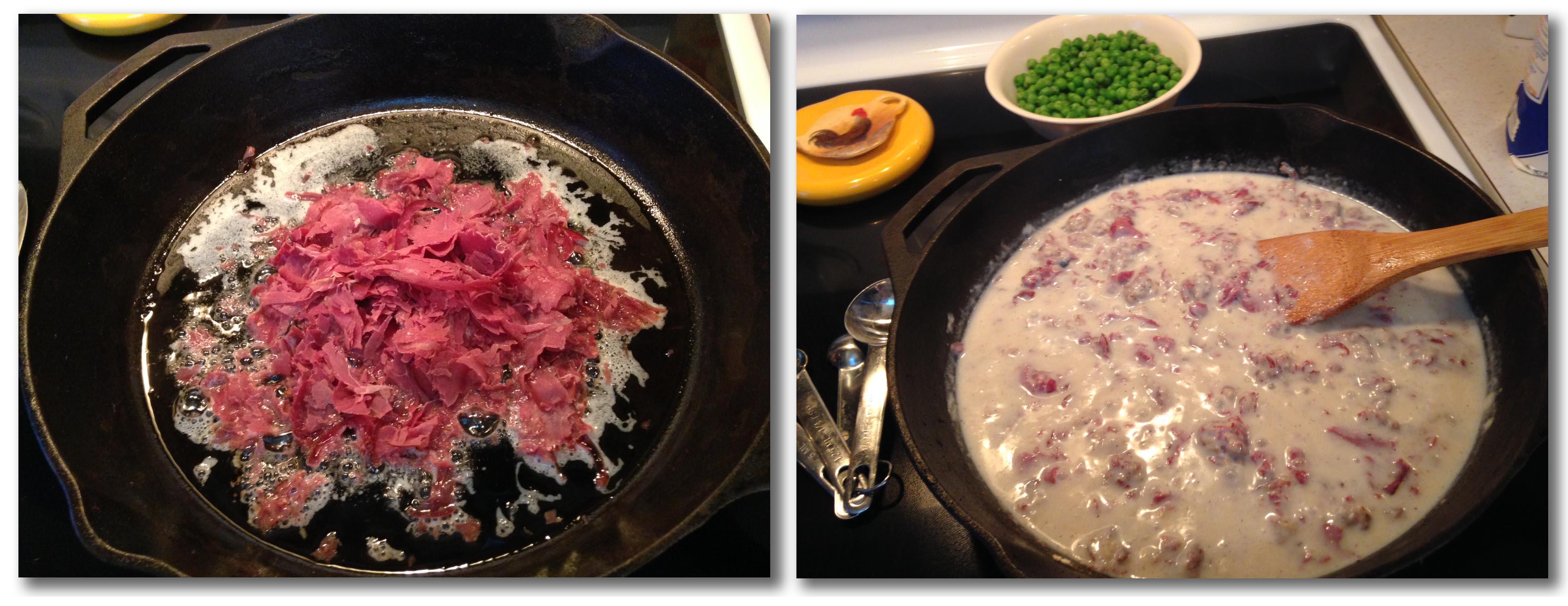
Adding the dried beef to the melted butter sends a hearty aroma throughout the kitchen. Then, sprinkling flour over the butter and beef, I create a roux to which I slowly add milk. Depending on your sensitivity to calories, you could use water, milk, or cream. I always use milk. Keep on stirring until the mixture becomes smooth and thick.

Dried Beef+ButterFlourStir

Finally, your creamed dried beef, which Mother always referred to as dried beef gravy, is ready to serve over toast, over mashed potatoes, as you wish.

foodDisplayed

Typical Menu

Dried Beef Gravy over Mashed Potatoes

Garden peas

Applesauce

Mark Bittman would probably raise his eyebrows over the amount of butter and flour in the creamed dried beef recipe. And of course this menu is heartier than his lower calorie menu of vegetable soup, roast chicken with pear crisp but, oh, is it delicious!

*  *  *

For years I thought of creamed dried beef as a Pennsylvania Dutch dish. After all, it appeared on page 58 of the Mennonite Cookbook, 1972 edition. Recently, my sister-in-law Terry told me her mother made the same recipe when she was growing up in California.

How about you? Did you enjoy creamed dried beef (or a variation) growing up? Is this recipe part of your cooking repertoire now?

 Inquiring cooks want to know. . . 

Come to the Storybook Chair, the Storybook Chair . . .

So now it matters almost not at all to any of them except as a storybook matters; loved in childhood but outgrown in adolescence, it still matters, still instructs, still is part of what the adult becomes.

Phyllis Tickle, The Graces We Remember: Songs in Ordinary Time (126)

When our children Crista and Joel were little, a prelude to nap-time was their mother chanting in a sing-song voice: “Come to the storybook chair, the story book chair, the story book chair, and we’ll read . . . .” Hearing that, they’d head for the rocking chair and climb on my lap for colorful Richard Scarry pages or the clever tricks of a George and Martha book. I’m carrying on a tradition that began with my mother who read to me from picture books, and also recited poetry from her school days.

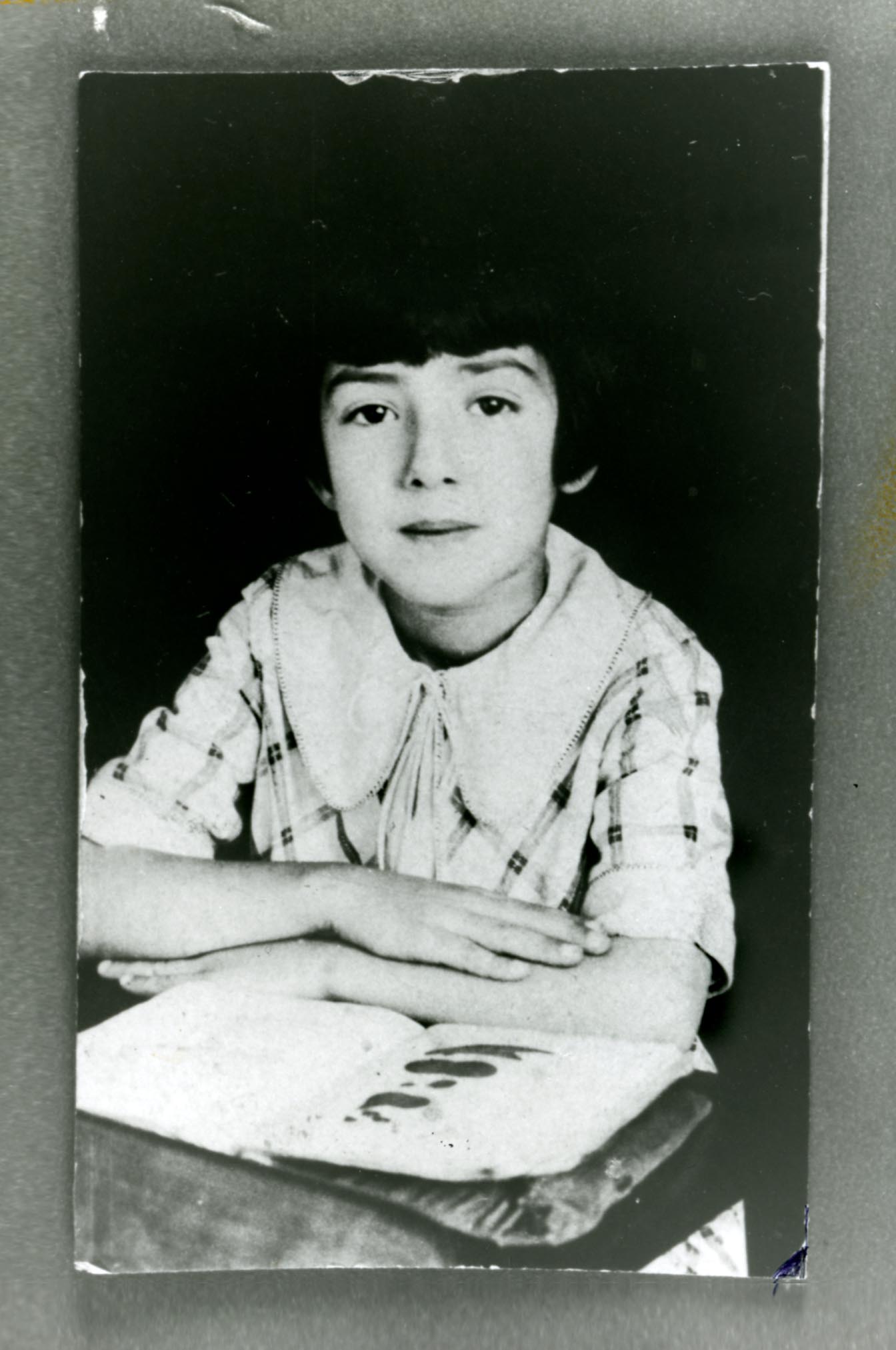
My journal tells me (and it does not lie) these are the poems by Robert Louis Stevenson that Mother recited to me in 1999 from her memories of Lime Rock School near Lititz, Pennsylvania in the mid 1920s.

Ruth Metzler  Lime Rock School  1920s
Ruth Metzler            Lime Rock School             1920s

The Swing PNG image


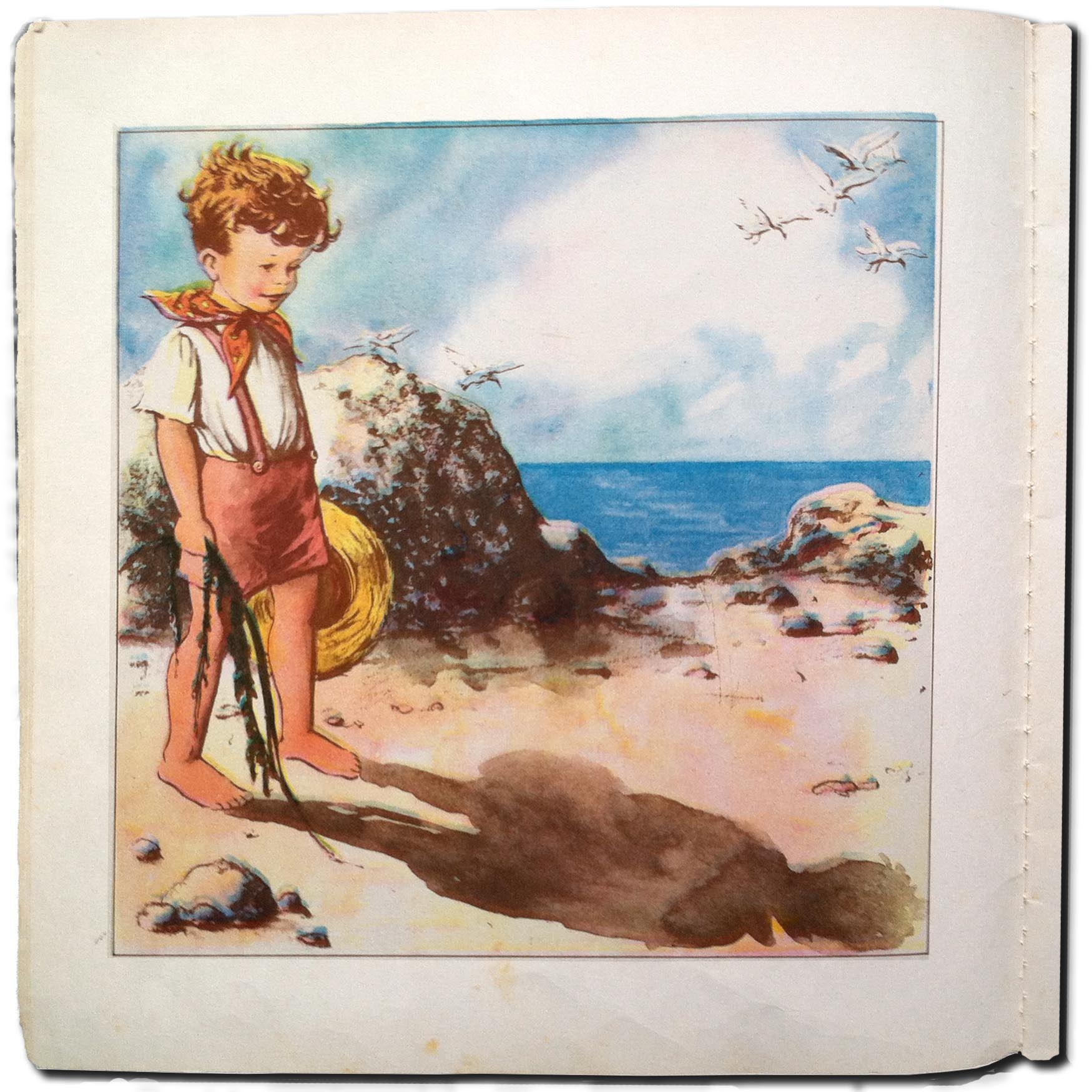
Illustrations from A Child's Garden of Verses, John Martin's House, Inc., circa 1945
Illustrations from A Child’s Garden of Verses, John Martin’s House, Inc., circa 1945

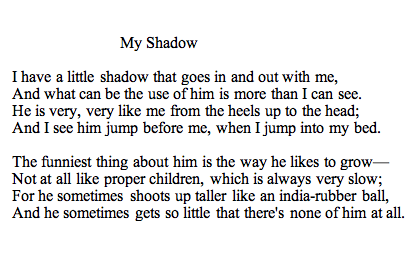
She also recited the verses of “My Shadow” from the “Golden Book of Poetry” 1947 with the familiar first two stanzas:

My Shadow png

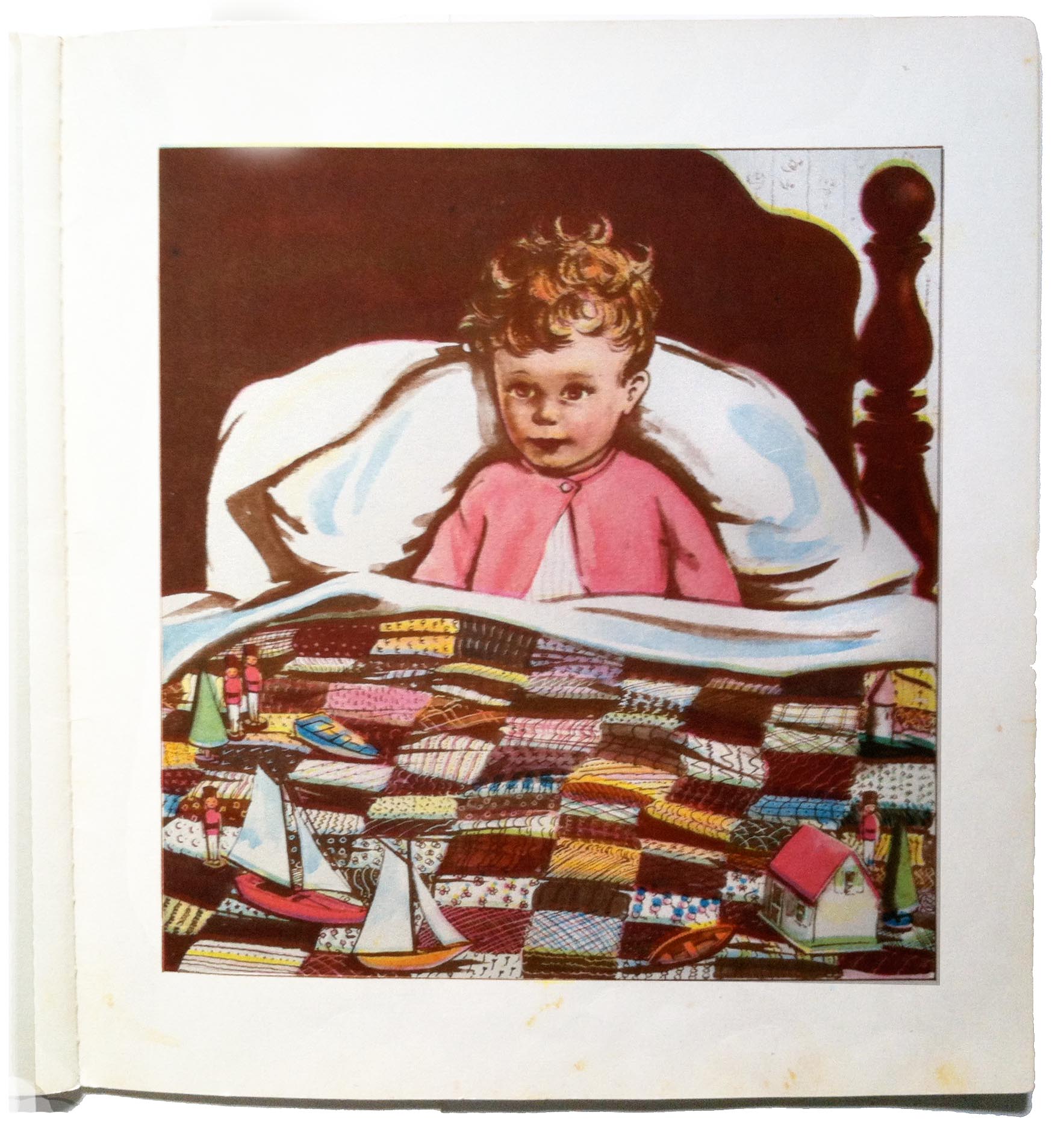
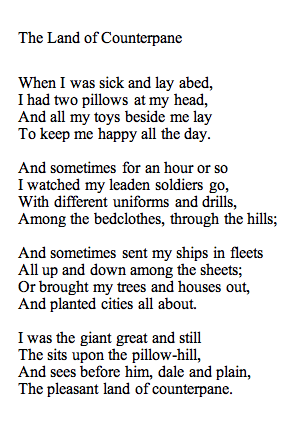
At the beginning of second grade, the summer I turned seven, I had my tonsils removed and among my memories (besides drinking chocolate milk through a straw and trying to swallow smashed bananas) is reading the poem “The Land of Counterpane” under a quilt that probably matched my own upon my sick-bed.

Land of Counterpane_6x6_300

LandOfCounterpane png

What are your early memories of reading? Did a friend or family member recite poetry or other words of wisdom to you?

Coming next: The Wonda Chair and the Heirloom

Happy Birthday to My One and Onlies

birthday cancle


My policy on cake is pro having it and pro eating it.     Boris Johnson

*  *  *

July is the birthday month for four our immediate family. If you count our extended family, there are three or four more birthdays this month.

This month I celebrate the birthdays of three of my one and õn-lies:

The Inimitable Mother Ruth Metzler Longenecker

Mother and her morning ritual, reading her Bible
Mother and her morning ritual, reading her Bible, age 96

My One and Only Son

Joel with wife Sarah at cousin's wedding
Joel with one-and-only daughter-in-law Sarah at cousin’s wedding

My One and Only Grand-Daughter Jenna Skye Dalton

Jenna3

July Birthdays

July birthdays in our family span four generations. Apparently, I tried very hard to become my mother’s first birthday present after her marriage the previous year, having missed being born on her own birthday by just one day. Our son and grand-daughter are birthday presents to me – Joel born two days after my birthday and Jenna preceding my birthday by a mere five days.

Who are your one and ôn-lies – birthdays or otherwise? 

*  *  *

Coming tomorrow: Birthday Butter Shake Sequel

Laundry at the Longeneckers

     We have to try it again. Here’s another shirt,” Jane said as she plucked one of Dad’s blue work shirts out of a plastic bag full of shirts—clean, sprinkled and rolled—all ready to iron. “Start with the yoke,” she directed.

I grabbed the damp shirt out of her hand and flopped it onto the ironing board. “I know where to start,” I huffed. I knew to start with the yoke, then iron the collar, then the left sleeve and cuff, front and back, then the right sleeve and cuff, front and back, then the right front, taking particular care around the buttons . . . and with the button hole placket where it was so easy to iron in wrinkles.

So begins Carol Bodensteiner’s chapter “Laundry Lessons” in her memoir Growing Up Country, a chapter that describes to a tee the washing, drying, folding, sprinkling, and ironing of laundry, chores that were also observed in the Longenecker family.

Mother’s work week was regulated by the pendulum of ritual. Certain tasks were done on certain days in her 1950s household. If it was Monday, she washed clothes, on Tuesday she ironed them, and so on through the week to Friday, the big cleaning day.

Her wringer washer and a rinse tub was pulled out to the middle of the “washhouse,” a room next to the kitchen every Monday. Sometimes I helped by feeding clothes from the rinse tub into the washer wringer, a tricky task for a child. At least once I got my arm caught in the wringer. Of course, my screams and yells summoned Mother to fly out of the kitchen, bang on the release apparatus to make the two rollers fly apart. After the fright and the pain subsided, I was amazed my arm wasn’t as flat as a paper doll’s.

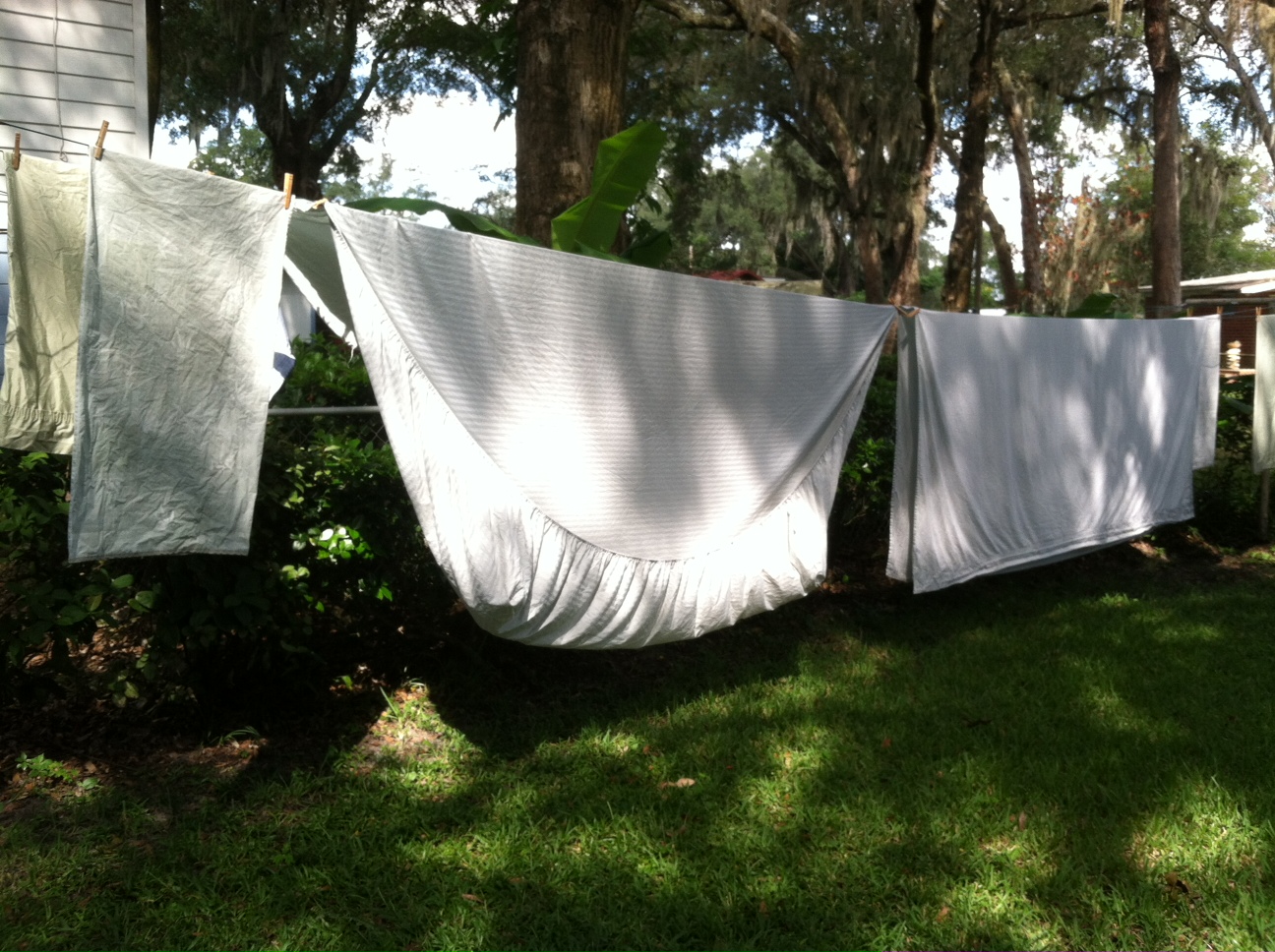
When I was tall enough to reach the clothes line, I hung up wash clothes, towels, shirts, and dresses, instructed to “hide” underwear in one of the inner lines so neighbors wouldn’t see. To this day, if there is a sunny day with a breeze in Florida, I hang sheets out to dry.

Sheets on Line

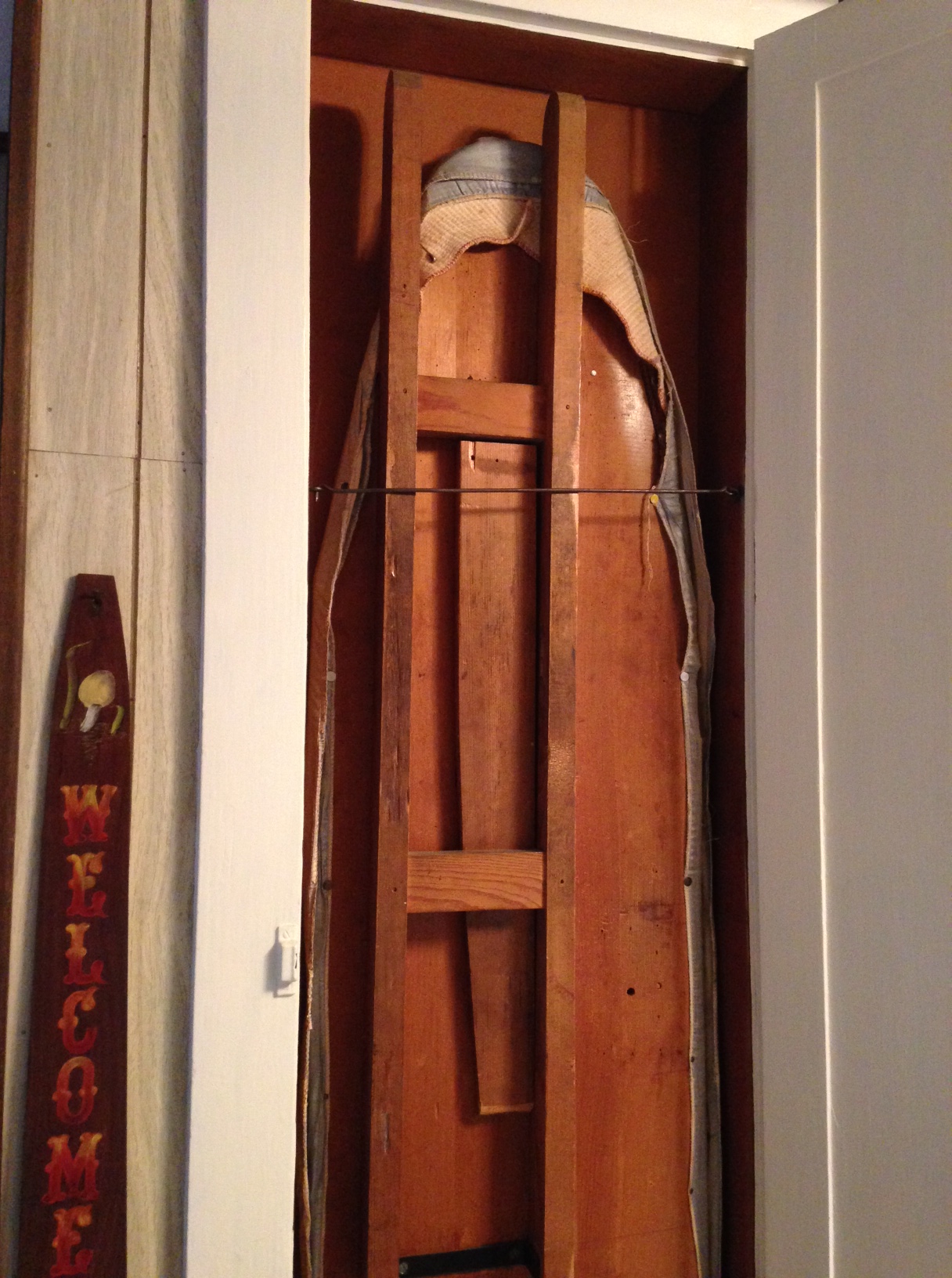
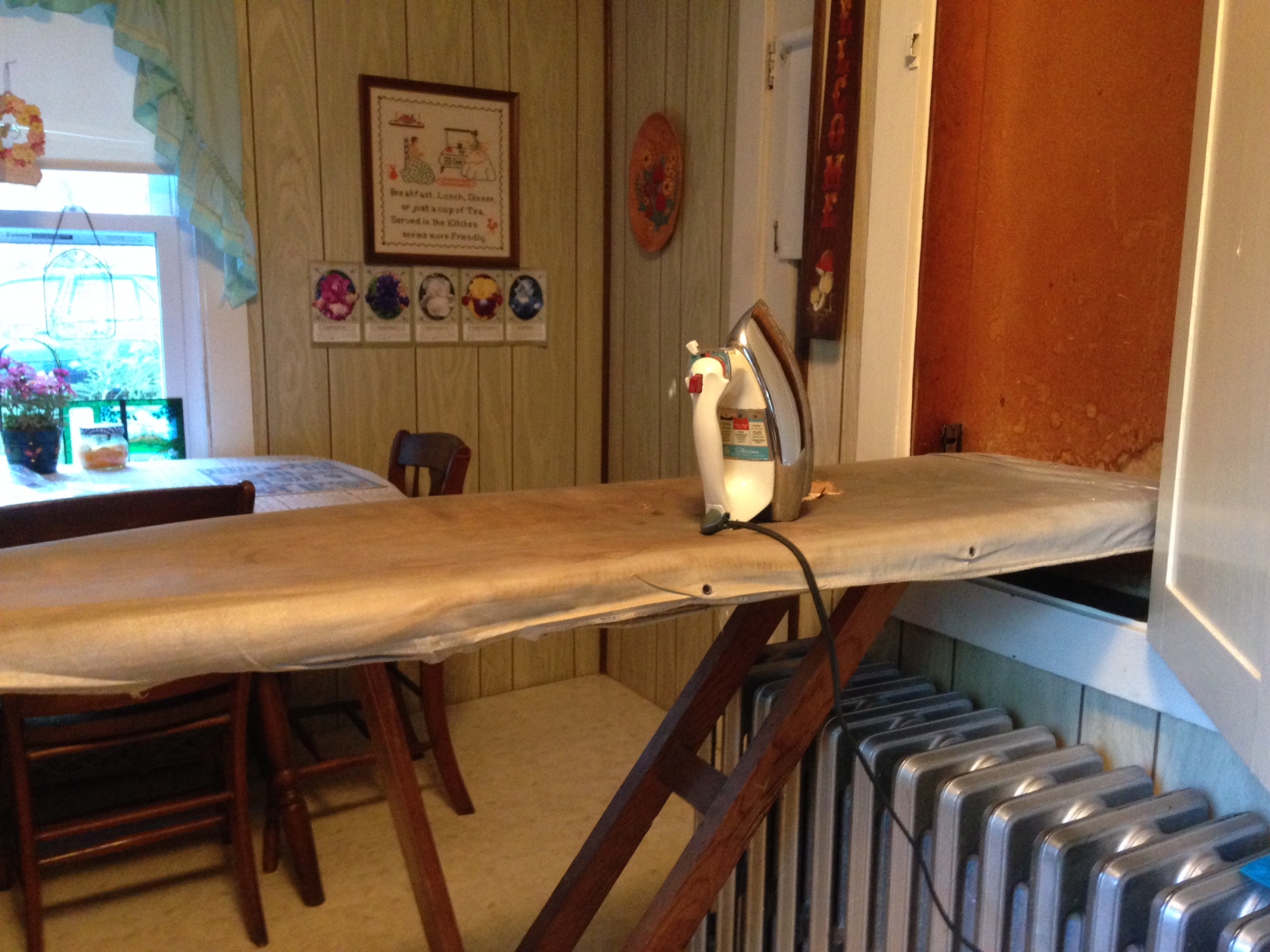
On Tuesdays, Mom pulled the ironing board out of the wall, set up the iron and away I went, attacking first the easy stuff like hankies. I nourished my sense of order and accomplishment letting the point of the heavy, hot iron smooth out all the wrinkles in the garments that followed: school blouses and skirts, finally graduating to Daddy’s white, starched Sunday shirts.

IroningBoardinWall

Same ironing board with vintage iron

We never ironed sheets though one Mennonite woman we knew, Pearl Longenecker, sat down (probably on Tuesdays too) in front of her ironer, a white appliance shaped like a miniature piano, with a hot roller that smoothed each crease in her sheets and pillow cases, pressing them into lovely squares and rectangles to fit her closet space.

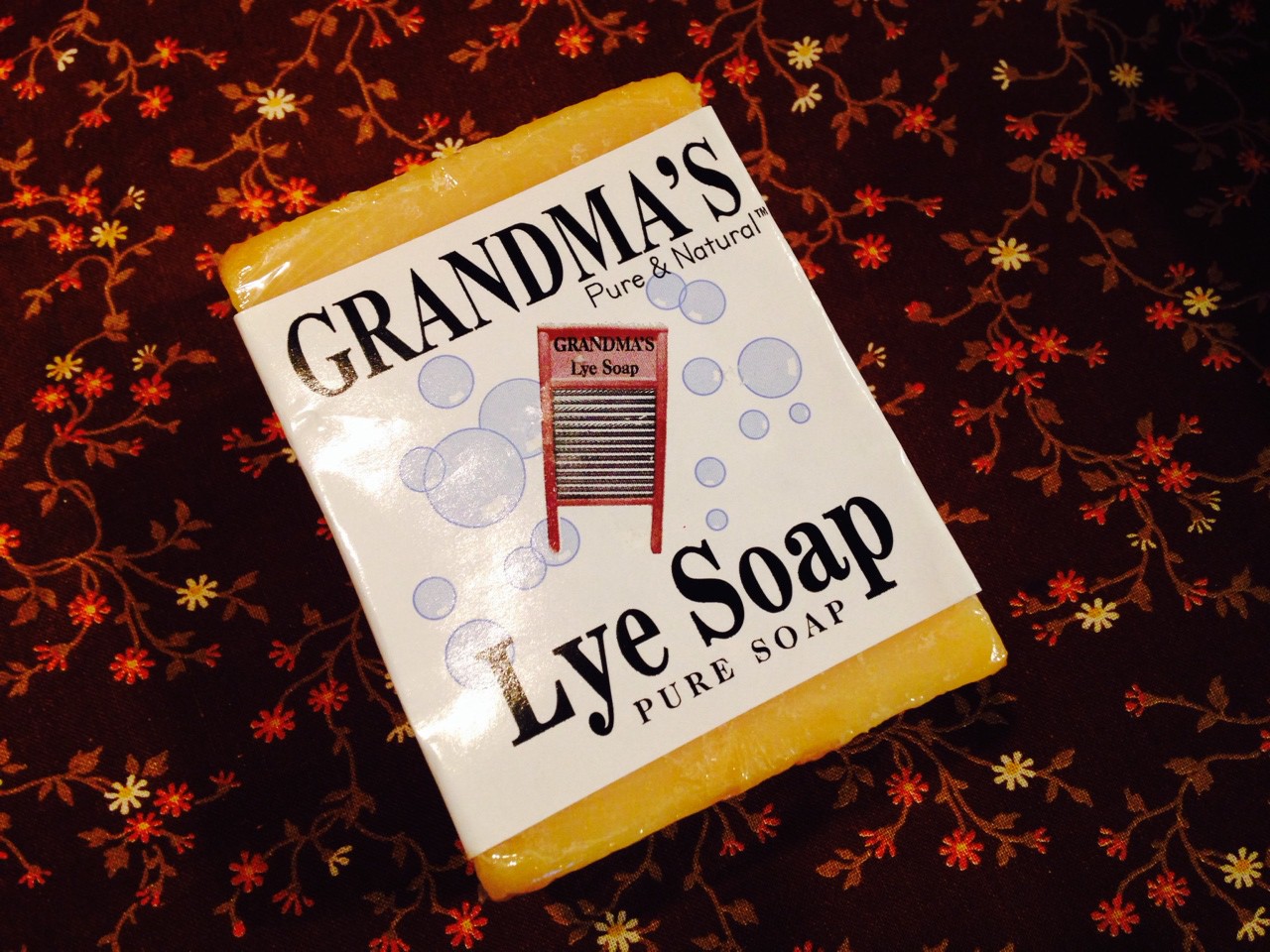
Grandma Longenecker’s ritual matched our own though it took place on her back porch. Like Colonial American women before her, she made her own soap cooking together grease and lye in a big metal tub, stirring the whole mess as it boiled. Though the smell was pungent and slightly disagreeable, Grandma smiled as she cut the congealed mixture into squares and rectangles, knowing the grease and grime would be erased from her laundry on wash day. If there were spots that wouldn’t come out with lye soap, she spread the stained garment, usually white, on the grass because she was sure “the sun will draw it out.” And it usually did!

LyeSoap

Share your laundry rituals, past or present. Something historical–or hysterical!