Thread 1
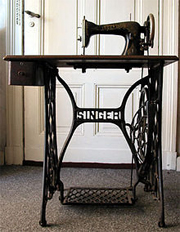
All Mennonite girls of the 1950s and 60s made their own clothes. Hager’s, Watt & Shand, or Garvin’s in Lancaster city was not the place to shop for dresses with capes or any other plain clothing. So, we made our own frocks on Mother’s foot-powered treadle machine.
Creating a ward-robe entailed buying a pattern by Simplicity, McCall, or Butterick that we could adapt, finding fabric by the yard at one of the department stores or a specialty shop like Mohr’s Fabrics. Usually, my sisters and I were allowed to buy any material we wanted within reason. We knew solid bright red was out and probably purple, now two of my favorites. One shopping spree as a young teen, I found a pretty, multi-colored repeat pattern on a black background and pulled the bolt out of the stack for Mom to admire:
“Look at this!” I chirped.
Mom looked at the material with squinty eyes, and gasped, “Don’t you see there are guns!”
Now it was my turn to look squinty-eyed. “Guns!” I had to look harder. Yes, you could imagine that those tiny figures on black fabric were shaped like guns. On principle, guns were forbidden in the Mennonite church. Our household had a little cap gun which we outfitted with rolls of red ribbon with black dots of ammunition for the 4th of July, but otherwise guns were used only for hunting deer, pheasants, and other game by men. Using guns to kill people, even during warfare, was strictly forbidden.

The fabric with the offensive repeat pattern? You guessed it—I did not buy it, which according to my mother, shrieked GUNS!
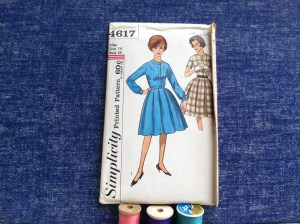
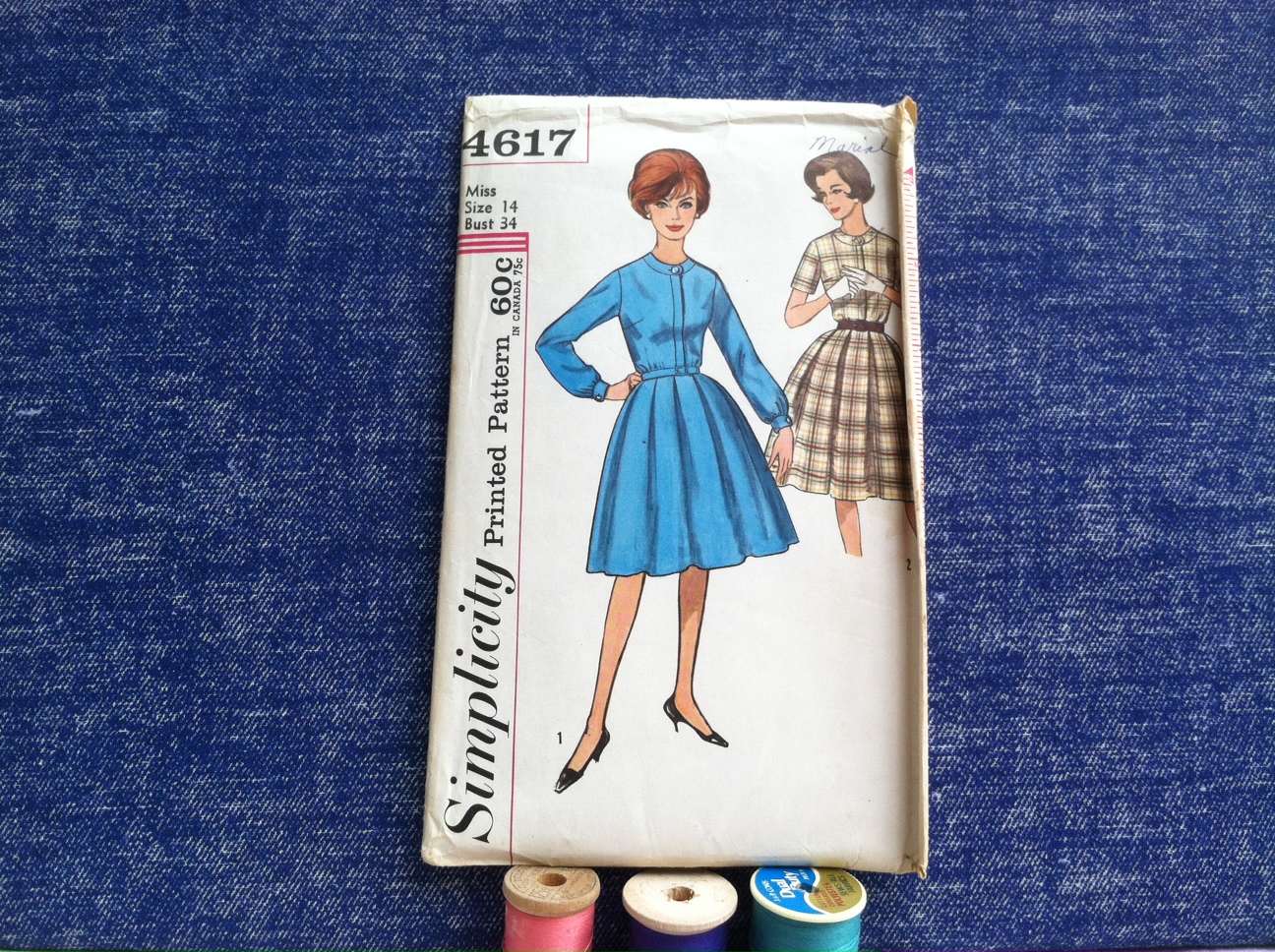
We always attended public school, and now that I think of it, our family observed a double standard: skirts and blouses for school but always caped dresses for church. When I joined the teaching staff at Lancaster Mennonite School, caped dresses of course were de rigeur. And when my life took a different path, I gave away such dresses to a Mennonite consignment shop with strict instructions about my identity to the lady in charge so that no student would embarrass herself by showing up to class in a dress worn by the former Sister Longenecker. Here is a pattern with a pleated skirt and cute neckline I adapted into a “plain” dress:
Thread 2
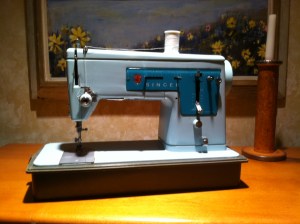
My light blue Singer sewing machine is portable, so I can use it at home on weekends or put it into the Studebaker to use at my campus home when I’m not making lesson plans or grading papers.
Months earlier I have met my neighbor’s best friend, Cliff, who is now my boy-friend. Now that he has completed his Bachelor’s degree and working on his Divinity degree, he is allowed to live off campus with 3 other students with whom he shares rent, utilities, and fuel bills. He works in the dining common to pay tuition. Since December we have been writing letters back and forth. Of course, there were no cell-phones in the 1960s and long distance calls were way too expensive, so we made do with letters–lots of them.
Cliff: “It’s reee..aa..ll..y cold here.” A rare snow has fallen in the Carolinas and the nasty cold air wheezes beneath the open crawl space in the rental house. “We ran out of oil until the 25th when we get paid, so the guys and I are sleeping in overcoats and tons of blankets until we can get more oil. The only way we can get drinking water is to thaw snow in a kettle on the stove. Every thing is frozen up.”
Marian, the nurturer, clicks into gear: “Really! That’s awful. Isn’t there something you could do—space heaters?
Cliff: “No, that would take too much electricity!”
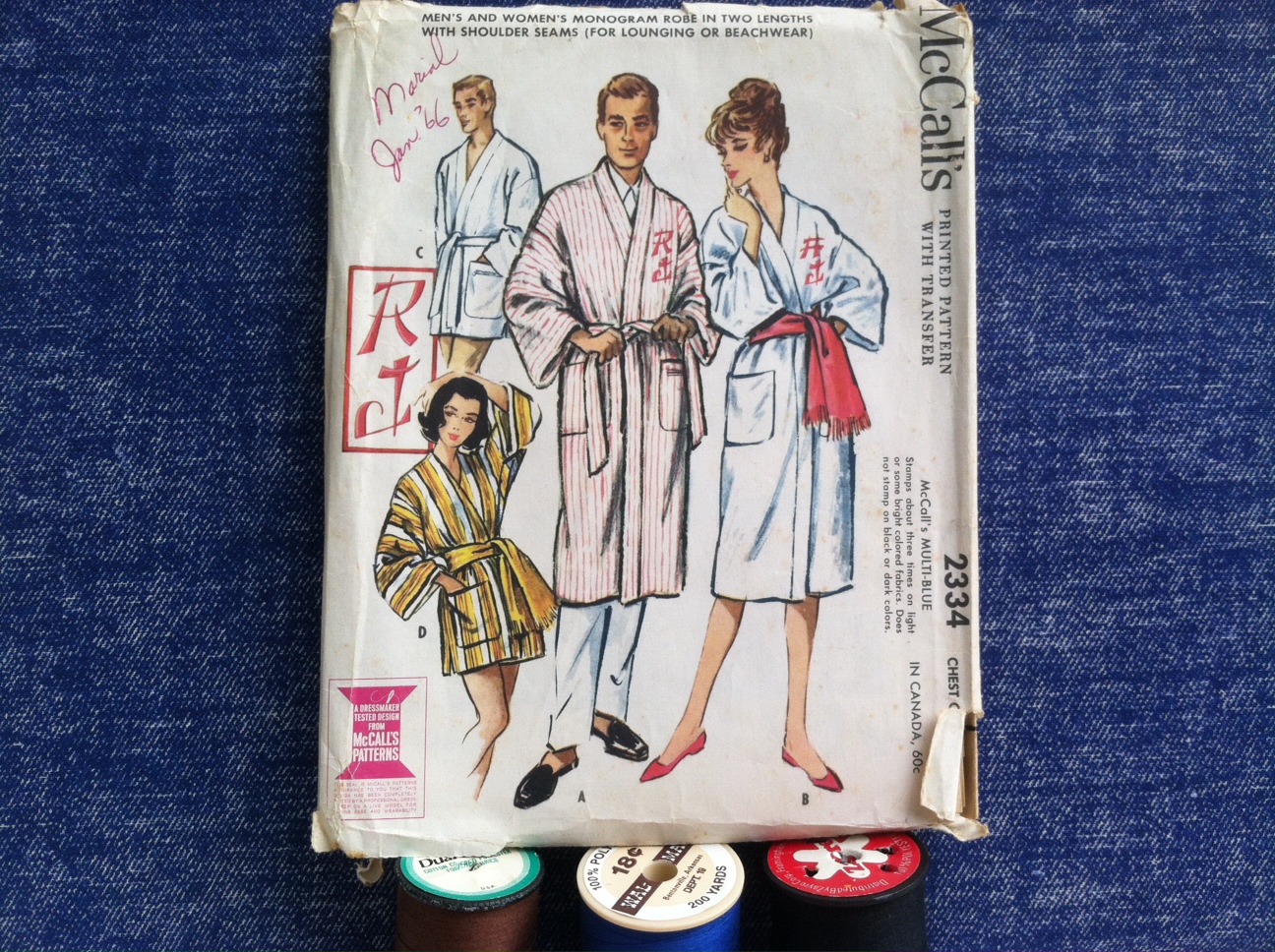
I formulate a plan to make him a robe for Valentine’s Day, so I buy heavy marine blue terry cloth and set to work, adding the appropriate initials in sturdy, white thread. Vintage robe below!
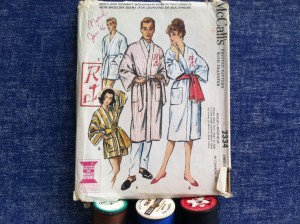
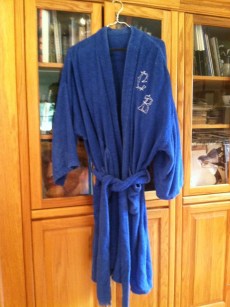
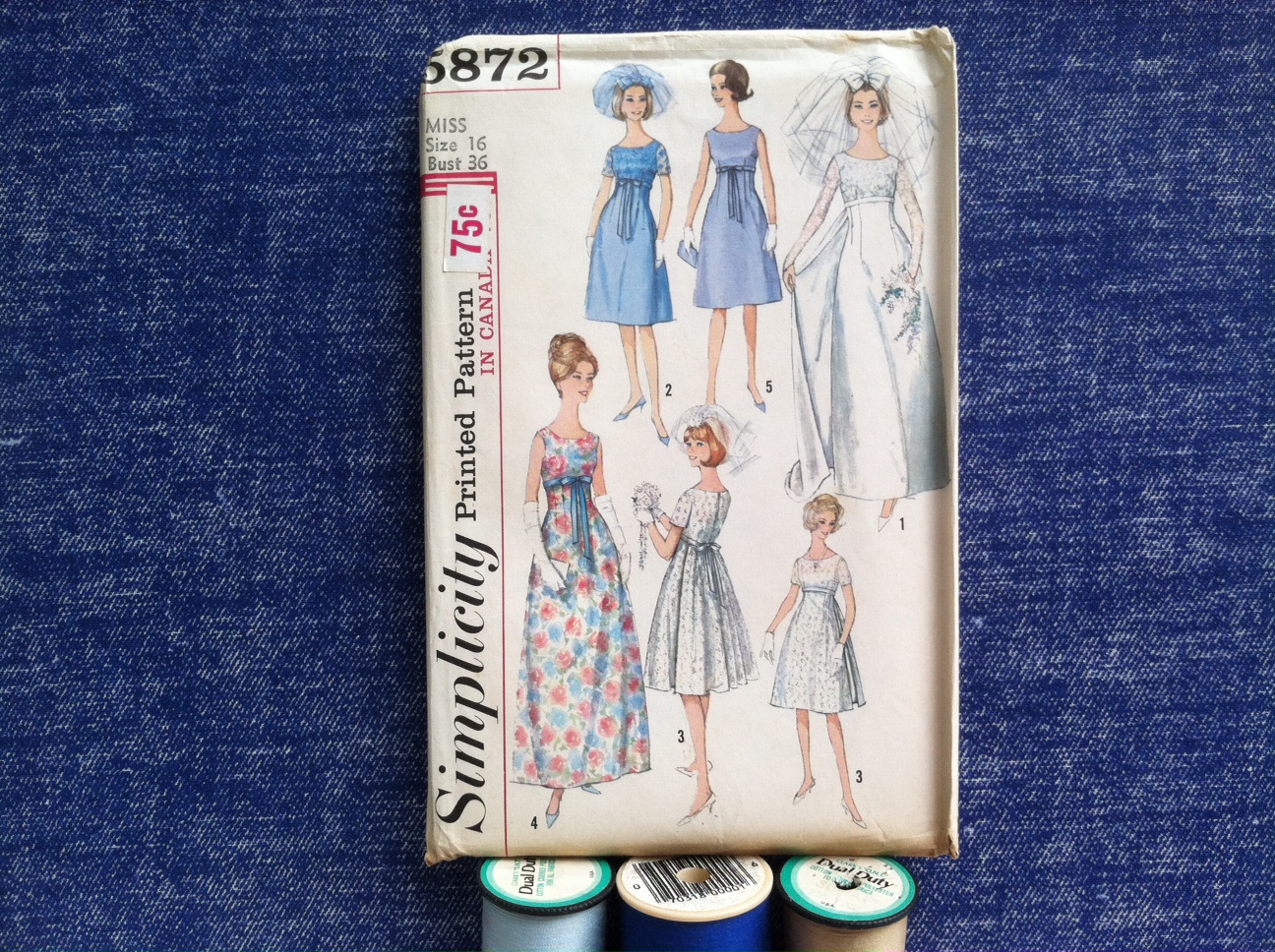
My blue Singer sewing machine moves with me the next school year from Lancaster, PA to Charlotte, NC where I make the transition from very plain to less plain. During the year I get engaged to the formerly frozen student who has quickly thawed out, and we make plans for an August wedding. My machine goes into high gear in full fancy mode stitching the thick white peau de soie (French for “skin of silk”) gown with an empire waist and a train attached to a belted bow. First Lady Jackie Kennedy has an enormous influence on style evident in this pattern.

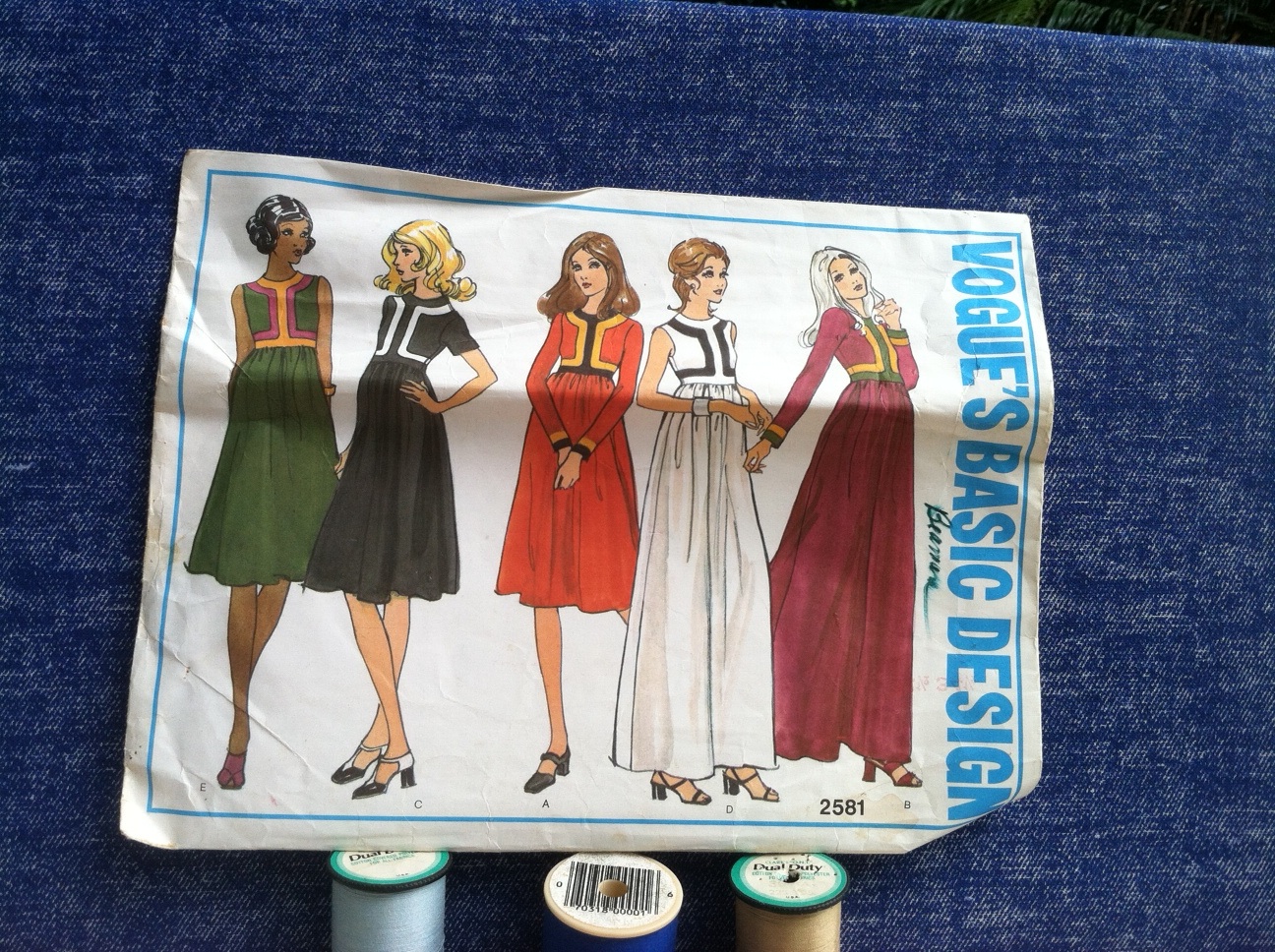
Settling into the hectic life of big city Jacksonville, I keep a connection with my roots with my trusty Singer. I am bold enough to use the fancier Vogue patterns, experimenting with multiple fabric colors in the same outfit.
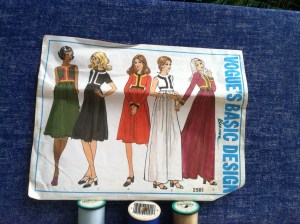
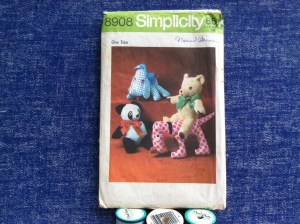
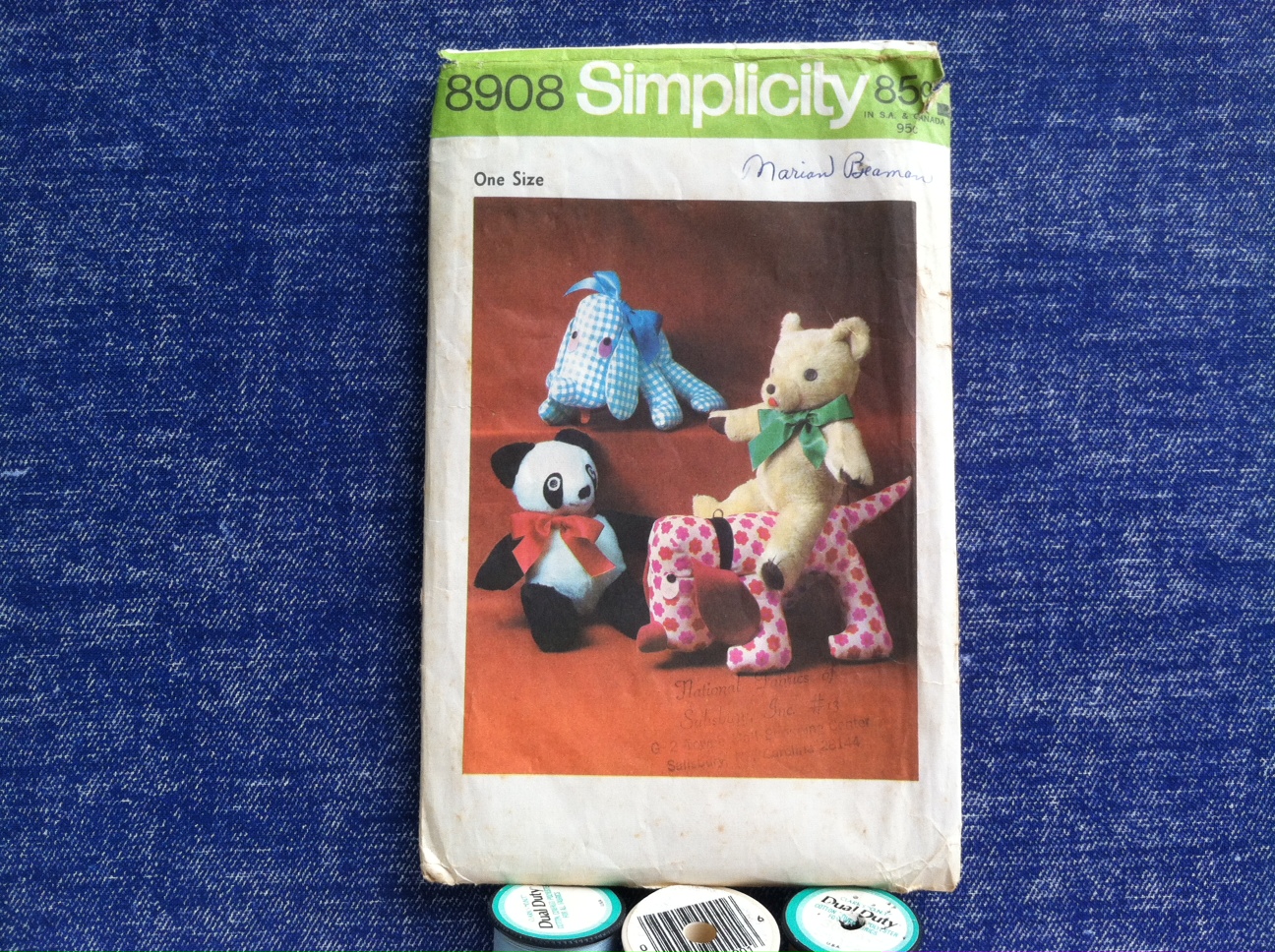
Next I buy a host of patterns for a little girl and boy to wear—and of course a teddy bear!
What vintage clothing in your wardrobe have you hung onto? For sentimental reasons? Some other reason? Let us know: Click on Reply/Comment.
Like this post? Follow my blog and gets many more free of charge? Just type in your email address at the top of the page and click “subscribe”! WordPress keeps your email address private.




 Plain and Fancy