Do You Know Your Ethnic Mix?

“Your DNA has a story. It’s time to discover it,” invites an ad on the back cover of the February 10, 2014 issue of The New Yorker. “It’s easier than ever to discover your ethnic heritage – and possibly find new cousins along the way,” the advertisement continues. Simply send in a small saliva sample, the key to revealing your DNA strands, which will unlock the secrets of your ethnic roots and disclose where your ancestors lived up to a thousand years ago.
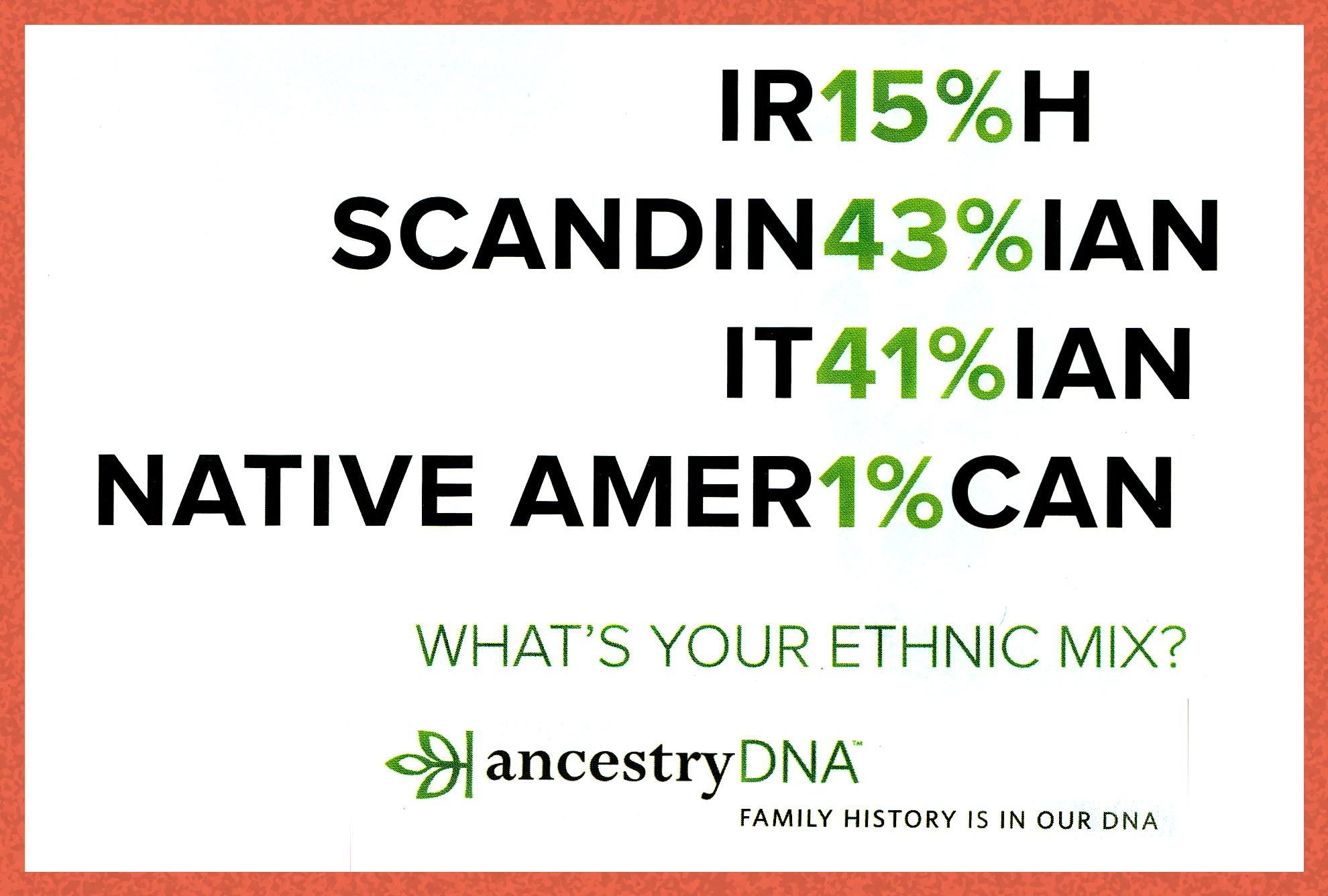
Blog_Ancestry+border_6x4_300

Genealogy, roots, ancestry . . . In my Pennsylvania Dutch family tree, names and dates were often written in the family Bible:
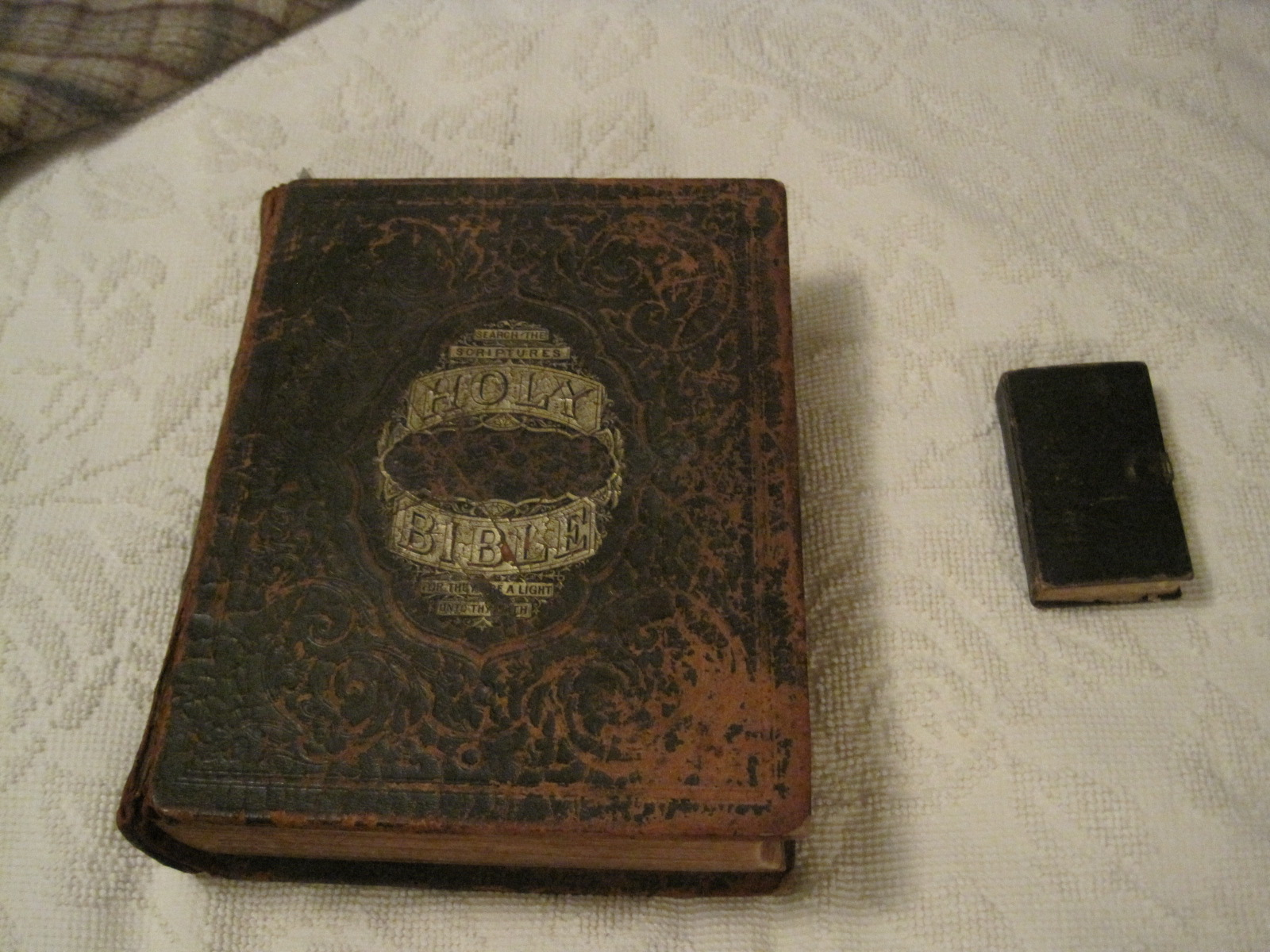
Longenecker Family Bible with German BIble at right
Longenecker Family Bible with German New Testament at right

Eight generations ago, Ulrich Langenegger (1664-1757), left his birthplace in Langnau, Switzerland, because of religious persecution, and moved to the Rhine Valley in Germany and subsequently immigrated to America from Rotterdam on the good ship Hope.

In America, his son, Christian Langenecker (1703-1759) settled in the rich farm land of Donegal Township in Lancaster County, Pennsylvania where followed two more generations of Christian Longeneckers, with the initial “a” in the last name changing finally to an “o.”
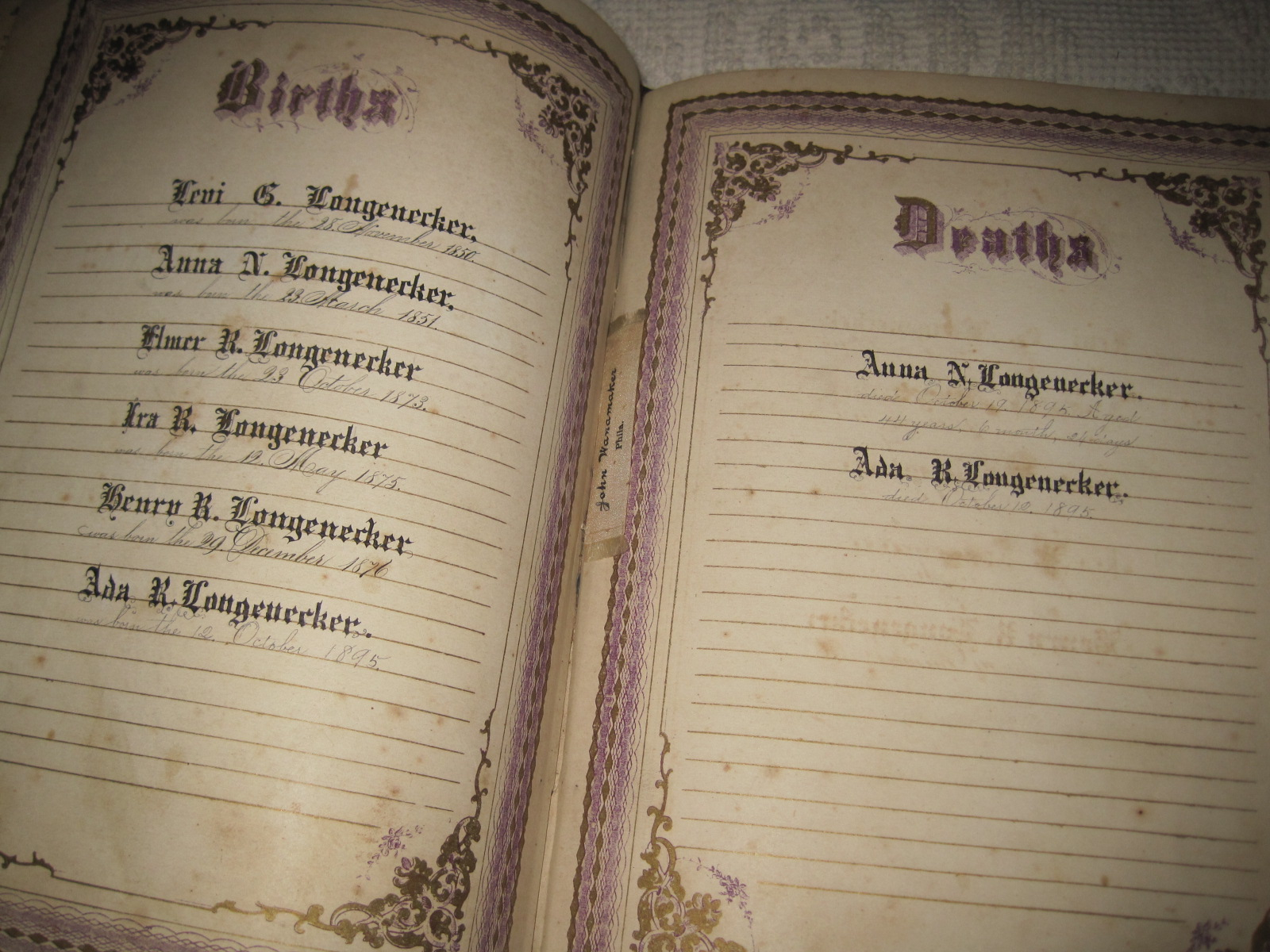
Henry Risser Longenecker, my Grandfather, son of Levi Longenecker, listed in the family Bible.
Henry Risser Longenecker, my Grandfather, son of Levi Longenecker, recorded in the family Bible.

And so the family tree on my father’s paternal side continues:

Christian Longenecker, Jr.  1785-1855 buried in Bossler Mennonite Church Cemetery

John Longenecker  1817-1898 married Nancy Garber, my great-great grandmother

Levi Longenecker  1850-1931 married Annie Risser, my great-grandmother

Henry Longenecker  1876-1946 married Fannie Martin, my grandmother

Ray Longenecker  1915-1985 married Ruth Metzler Longenecker, my mother

On my father’s maternal side some of our history is recorded on the bottom of a chair given to me in 1975. Even then it had a 150-year-old history of Martins, Brinsers, and Horsts in the lineage of my Grandmother Fannie Martin Longenecker.
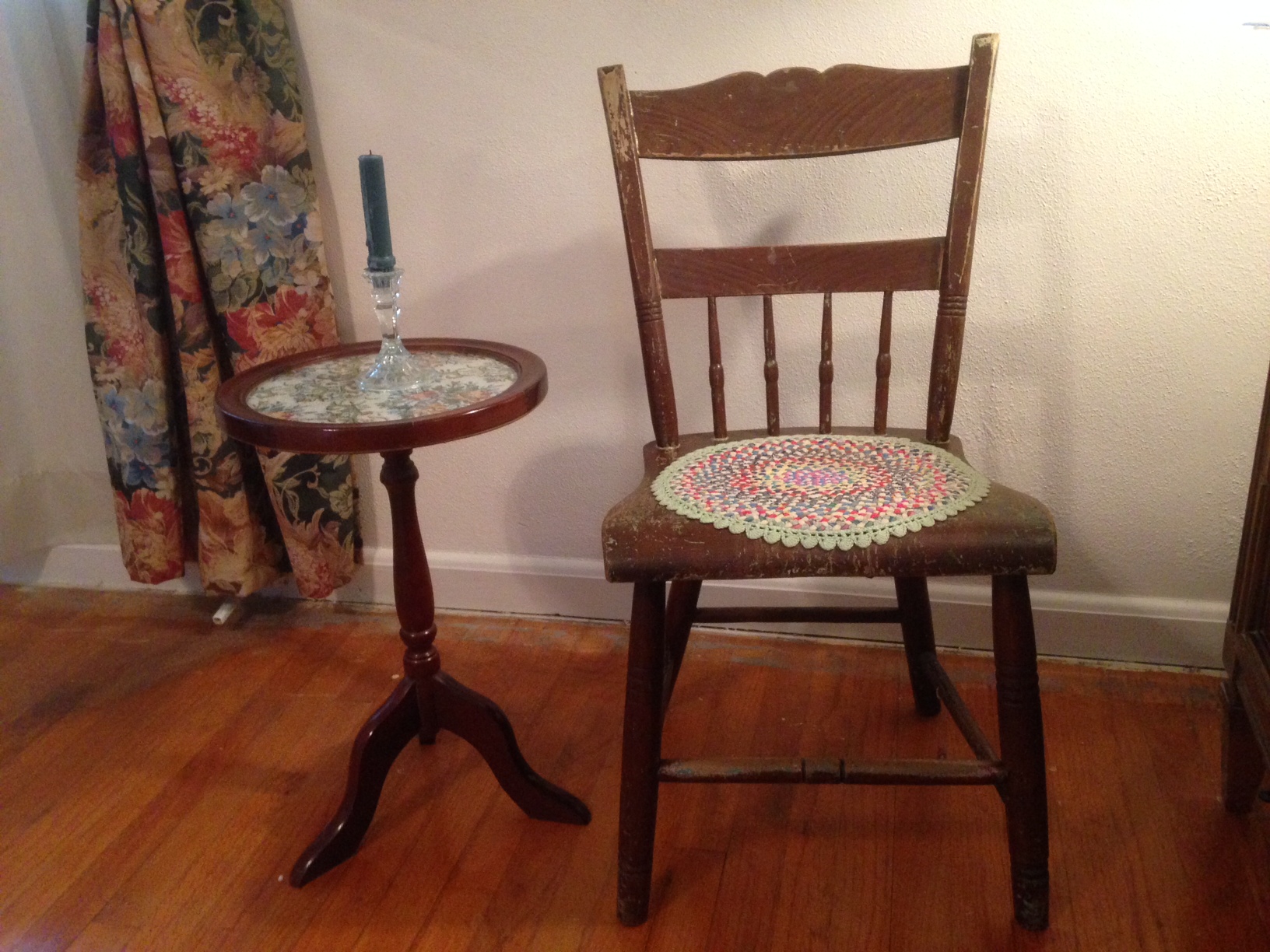
The Martin Chair, circa 1815

My mother’s story is a blend of other Pennsylvania Dutch Names: Landis, Harnish, Hernley, and Metzler. After attending the 275th Metzler reunion last June, I wrote a post entitled Another Valentine, A Different Romance, recounting the parallel history of Swiss-German Mennonites who also came to Pennsylvania at the invitation of William Penn to farm the rich soil of Lancaster County.

Because of their unique heritage as plain folks, focus on Mennonite ancestry is not unusual. But interest in tracing one’s ancestry has ballooned nation-wide in the last decade. “Finding Your Roots” the immensely popular PBS series by Professor Henry Louis Gates which aired in 2012 mirrors that trend. Using both traditional research and genetics, the series traces the family roots of such disparate celebrities as Condoleezza Rice, Sanjay Gupta, Margaret Cho, Robert Downey Jr., and Rev. Rick Warren. There are some surprising intermingling of genetic roots among the stories as I recall.

Thus, as our family trees expand and send out branches in many different directions, the fascination with our roots continues: Healthy roots, thriving branches, the tag of Homecoming Weekend at Eastern Mennonite University last fall, says it well.

*  *  *  *  *

Do you know your ethnic mix? Does it matter to you?

Is your story more complex because of adoption?

What fascinating discoveries have you made in learning of your ancestry?

Your thoughts matter to me! I look forward to hearing from you.

Neat vs. Messy

                              Delight in Disorder

A sweet disorder in the dress

Kindles in clothes a wantonness.

A lawn about the shoulders thrown

Into a fine distraction;

An erring lace, which here and there

Enthralls the crimson stomacher;

A cuff neglectful, and thereby

Ribbons to flow confusedly;

A winning wave, deserving note,

In the tempestuous petticoat;

A careless shoestring, in whose tie

I see a wild civility;

Do more bewitch me than when art

Is too precise in every part.

The British poet Robert Herrick writes a fine sonnet about the allure of the slightly askew, the saucy, the off-beat–the messy in dress! Well, he has a point, but I don’t agree in general. I like neatness and appreciate the beauty of orderliness.

Too precise hand-writing Hanger, EMC college days
Too precise hand-writing
clothes hanger, college days EMC

Mother was a neatnik too, every hair in place under her prayer covering, the whole house scrubbed clean every Friday, a place for everything and everything in its place. On the other hand, my dad, who was precise in the mechanics of fixing machinery in his farm supply business, was by nature messy, messy, messy–in his office, inside his truck, on the porch of his shop.

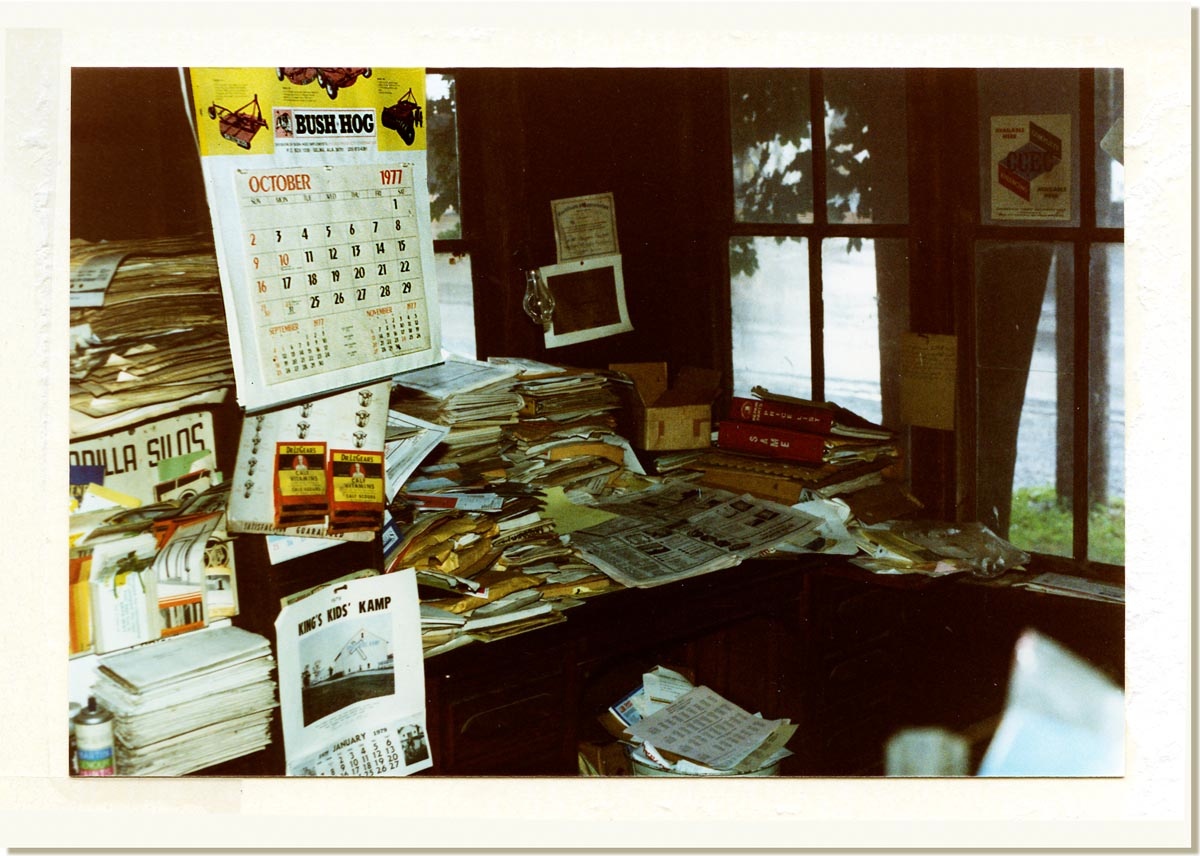
Dad's Office

Brother Mark before sale of business

Daddy’s messy manner drove me crazy. Besides, it was embarrassing! In the middle of the village of Rheems, the shop faced Harrisburg Avenue with two main sections, one behind the other. The front part housed dozens of storage bins for nuts, bolts, screws, odd implements and, curiously, a Victrola sitting squat right beside the door to the sales office. During planting season, bags of Royster fertilizer for sale would be deposited off to the side near a loading/unloading door. As you walked to the rear, a long wooden ramp led to the back section where the dirty work was done, Daddy and his helpers fixing disk harrows, plows, or welding broken parts. Behind the shop was an assortment of implements stored Sanford & Son-style from which the mechanics harvested parts.

Occasionally, when Daddy said, “It’s time to sweep the shop,” I shuddered because I would be working in the cold with piles of stuff everywhere. Spritzing soapy water from a bucket to settle the dust, I watched charcoal-grey pustules of dirt and grease bead up on the cement floor, then tried to push-broom the filth into a dust pan, often an exercise in futility.

Though Daddy was messy, he had a strong Pennsylvania Dutch work ethic. At the shop six days a week, he caught up with office work and telephone sales in the evenings. “I worked like a Trojan today, and still didn’t get the Fox Harvester ready for Phares Weaver in time,” he’d say to Mother as he walked in the door. And he did so well in sales, dealerships would send him and Mother as VIPs on all-expense paid trips to Ohio, Florida, or Arizona to learn about new farm equipment. Once his sales were so high, his whole family, including three married daughters and son enjoyed a week-long vacation in Jamaica.

Daddy in his later years, taking a breather

So there’s neat and there is messy. “God is a God of order!” shouts one. The other camp retorts: “But you can’t be creative and neat at the same time!”

This post began with an homage to the slightly slovenly, the off-kilter. It ends with a writer lamenting her neat freakiness.

Being A Neat Freak

Being a neat freak, is certainly not a
blessing! No one enjoys, being this
way. When I find everything thrown
all around, on impulse, I have to put
them all away. I have always lived by
the creed, there’s a place for everything
and everything, in its place! It’s
aggravating, dealing with this, but I
know it’s something, I’ve got to face.
I’ve often wondered, how does a
person, get to be this way? It didn’t
happen over night, or in just a day.
Perhaps, it’s what we learned, when
we were young. And frankly speaking,
I’m tired of hearing people say, try not
to be so high strung! I’d like nothing
better, if I could let up, just a little bit,
by not letting myself become so
perturbed. Upon giving this some
thought, I realize, isn’t all of this, quite
absurd!

Now it’s your turn: neat vs. messy — Can they co-exist?
Is it possible to find a middle ground?
Thank you for sounding out on this topic. Your thoughts please. They keep me going! And I will always reply.

The Longenecker Christmas Tree & Charlie Brown

The Longenecker Christmas Tree.

Well, there was none. Not one. Not ever. Despite the fact that the Christmas song, “O Tannenbaum” is of German origin, most Pennsylvania Dutch Mennonite homes of the 1950s and 60s did not light Christmas trees. Decorated trees were lumped together with other worldly pleasures like jewelry, makeup, and movies and therefore not permitted. At least the Ray Longenecker family did not have one. We were plain and I longed for some fancy.

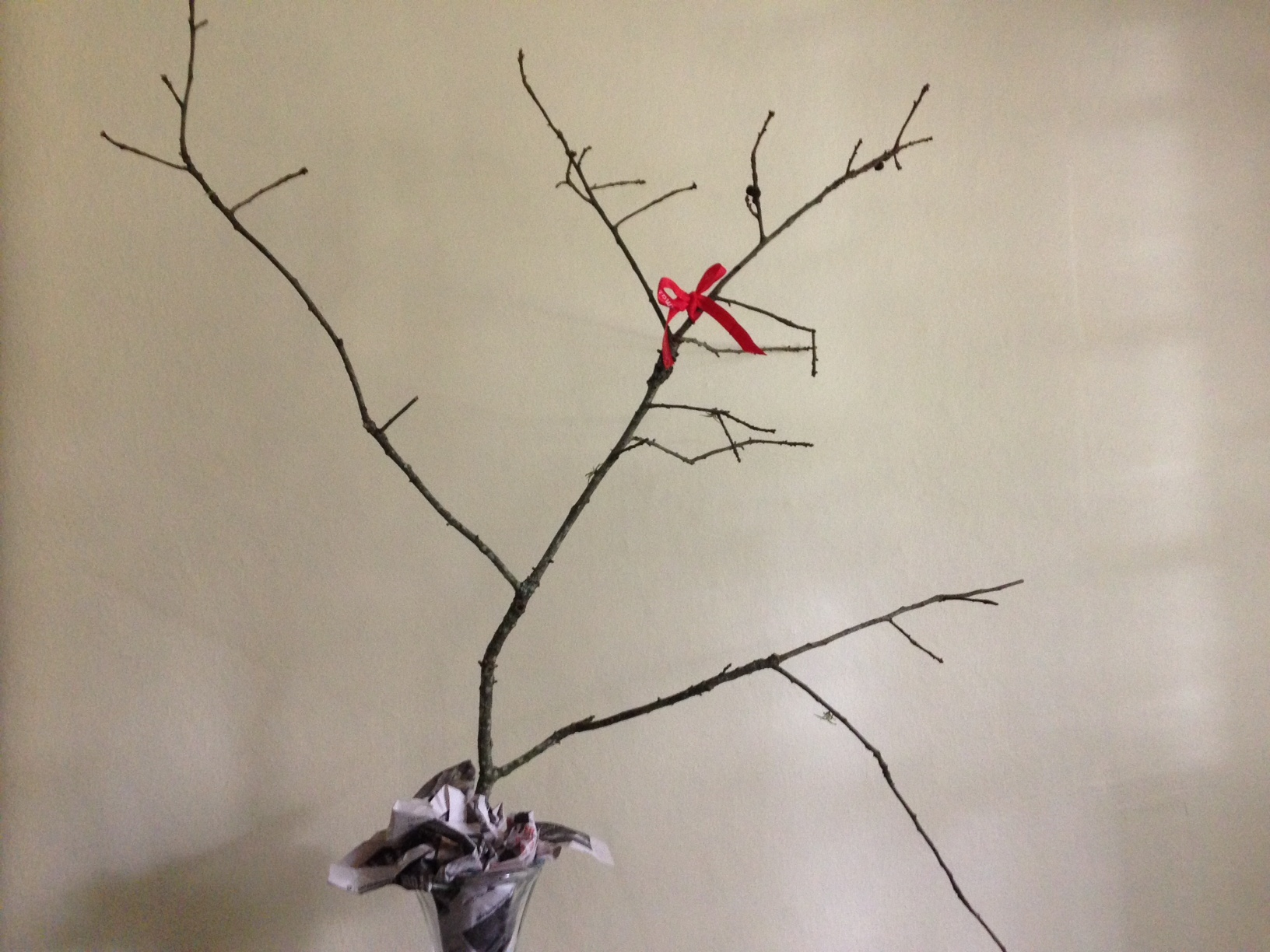
One year I found a limb from our maple tree out front with little branches that looked as forlorn as Charlie Brown’s tree. I brought it into the living room and tried to find trinkets and a red ribbon or two for decoration.

It was a sad little tree. It looked something like this, only wedged into our living room radiator and anchored by balled-up newspaper no doubt.

forlornTree

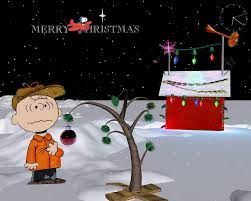
Good grief! I know how Charlie Brown must have felt. But at least his had “a wooden trunk and soft green needles” with a red ball on the end of a branch instead of a timid little ribbon.

CBrownSadTree

Charlie Brown’s luck seems to change when Lucy appoints him as director of the Christmas play in which Linus reads Luke 2 from scripture. After the play, the performers migrate outdoors toward Charlie’s sagging tree. Charlie Brown eventually gets his wish for a fine Christmas tree as the gang “donate” the festive string of lights from Snoopy’s doghouse to the dress up the little tree. Charity in action.

CBrownHappyTree

No, there was no Christmas tree in our home or in the sanctuary of my family’s home church, Bossler’s Mennonite Church. But like Linus and friends, we heard the Christmas story from Luke 2 faithfully recited and at the end of the service, we received hand-outs of navel oranges every year, the orange orbs passed hand to hand down the rows.

Nowadays in the Longenecker-Beaman home there is a happy fir tree, bedecked with ornaments from several generations. And we all rehearse the precious old story of the nativity in the Bible passage Luke 2 on Christmas morning.

A wondrous story, plain and simple, read beside a fanciful tree.

O Tannenbaum! Longenecker-Beaman Tree 2013
O Tannenbaum!  The Beaman Tree 2013

Hark, the Herald Angels Sing, Glory to the Newborn King!     Sung by Charlie Brown   and friends

Add a Christmas tree tale from your past . . . or present. Join the conversation and I will add my little bit as I always do. 

Merry Christmas~~Merry Christmas~~Merry Christmas!

Coming next: Purple Passages with Time and Tiny Tim

Mennonite Lexicon

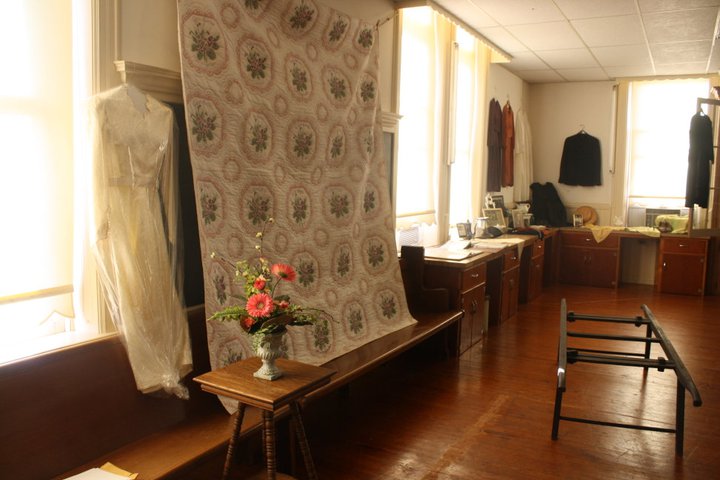
Quilt exhibited at the bicentennial of Bossler Mennonite Church
Quilt exhibited at the bicentennial celebration at Bossler Mennonite Church

You won’t find the definitions for rumspringa or bundling, (often referring to the Amish) in this mini-dictionary of Pennsylvania Dutch words, but here are some expressions the Longeneckers and other Mennonite families in Lancaster County often used growing up in the 1950s and 60s:

The word “Dutch” is actually a misnomer. Many Pennsylvania Dutch settlers originated in Switzerland before migrating to Germany, not the Netherlands. Thus, “Dutch” may be a corruption of Deutsch (German for the word German).

(Spellings below are dubious, an amalgam of what sounds I heard and some expressions “translated” in modern media from the German.)

ach: variously paired with yes/no/not sure, meaning “yes, of course” and so on.

brutzing: as in “stop your whining, crying!”

dopplich: clumsy with yourself

daymedich: not too smart, slow-witted

ferhoodled: not neat, messy–as in a messy house

fire-ich-butz: one who “flies off the handle,” flares with anger

hipschick: snazzy looking, stylish in fashion. Referring to machinery: working well, no glitches

“It wonders me. . . .”  meaning, I wonder (Grandma Longenecker said this often.)

Kunst du Deutch schwetza: Do you speak Pennsylvania Dutch?

kutz: to vomit

nix nootz: mischievous child

rutschy: restless (something you shouldn’t be in church), squirmy. Also: “giegling,” as in “quit your giegling around,” wiggling on a chair at the table, or at a desk at school.

schmutzich: smeary, messy, or runny–like ice cream from a cone melting onto your fingers

schnickelfritz: troublemaker, usually referring to a child

schtrubelich: messy, uncombed hair

schuslich: in a hurry and leaving a mess behind

spritzing: raining lightly

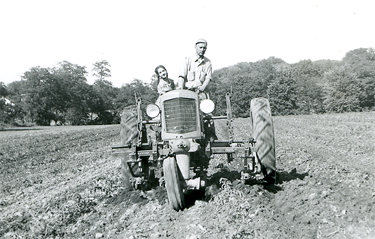
shit-mo-link: Coined by my dad, a good Mennonite brother, who would never curse or use 4-letter words. His definition: Someone who caused him trouble in business; a crook. It’s only a guess, but his invented word could have originated from the Minneapolis Moline tractors he sold in his dealership, Longenecker Farm Supply:

Cultivating land for tomato crop in Bainbridge
Cultivating nearly 10 acres of land for our tomato crop in Bainbridge, PA with a Minneapolis Moline tractor

“Gay” (church): non-Mennonite church where people dressed fancy without coverings and cape dresses. Some daughters from the Alvin Longenecker clan got married in the Evangelical United Brethren Church, a dressy church in Elizabethtown, PA and wore lovely bridal gowns and shimmering veils at their weddings. As a plain Mennonite girl, I dreamed of having such a wedding. (Now “gay churches” often refer to churches who welcome alternative lifestyles.)

Interestingly, many of the words and expressions we used growing up express strong feelings. Many of them seem onomatopoeic to me now, the sound giving a hint to the meaning.

This listing is just a start. What words can you add to this lexicon? From the Pennsylvania Dutch?

From a different ancestry?

Join the conversation! I’d love to hear from you, and I will always reply.

*** Here is the link to my story set in Ukraine submitted to the My Gutsy Story Contest:

Rising Above the Pettiness to Focus on the Positive by Marian Beaman