Train Lovers, Welcome Aboard

3 Snapshots from Memory

  • Aunt Ruthie Longenecker takes us to Philadelphia, my first recollection of a train trip. I feel the rocking motion of the Pennsylvania Rail Road train car we occupy, the clickety-clack of the wheels on the rails, and the prize of the big city zoo at the end of the trip: lions and tigers and elephants, oh my!
  • When I pick raspberries with Grandma Longenecker, I hear the train’s clatter-clack over segments of track speeding from Lancaster to Harrisburg. With our round aluminum kettles laden with berries and handles that cut into the palms of our hands, we stand just 50 yards from the track, feeling the vibration of the passing train through our shoes, gazing in awe.
  • Years later, the young Beaman family bridges the gap between Florida and Pennsylvania via Amtrak’s Silver Meteor. The miles disappear behind us effortlessly. Parents and children eat, read, stretch our legs as some passengers wonder “Who’s that little kid running in the aisle?”

Train Trips Engage the Senses:

  1. Rocking motion as the train speeds along
  2. Sound of the wheels on the rails
  3. Smells of warm exhaust, food in the dining car,
  4. Surprising views as train wends its way through towns, countryside
  5. Spontaneous, easy conversation sometimes with strangers

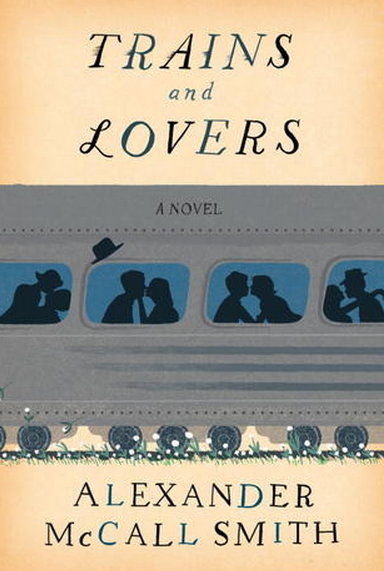
Alexander McCall Smith, known for his light mysteries that kindly expose the foibles of his characters, describes the mystique of train travel in his recent novel Trains and Lovers (2012):
Screen Shot 2014-10-02 at 6.30.12 PM

“I’m thinking that’s a fishing boat.”

It was. He saw it from the train, but not for more than a minute or two, as the line followed that bit of coastline only for a short time before it suddenly swerved off, as railway lines will do. The view of the North Sea was lost, and trees closed in; there was the blue of the sea one moment and then the blurred green of foliage rapidly passing the window; there was slanting morning sun, like an intermittent signal flashed through the tree.”

Train Poetry

Of course, nostalgic verse has been written about train travel, Sara Teasdale hearing and seeing from In the Train the “restless rumble,” the “drowsy people” and the “steel blue twilight in the world (1915).

Edna St. Vincent Millay reflects on viewing the distant steam locomotive in Travel (1921)

The railroad track is miles away,

And the day is loud with voices speaking,

Yet there isn’t a train goes by all day

But I hear its whistle shrieking.

All night there isn’t a train goes by,

Though the night is still for sleep and dreaming,

But I see its cinders red on the sky,

And hear its engine steaming.

My heart is warm with friends I make,

And better friends I’ll not be knowing;

Yet there isn’t a train I wouldn’t take,

    No matter where it’s going.

You can hear the rocking rhythm of the train in W. H. Auden’s lines from Night Mail – This is the night mail crossing the Border / Bringing the cheque and the postal order.

The Destination

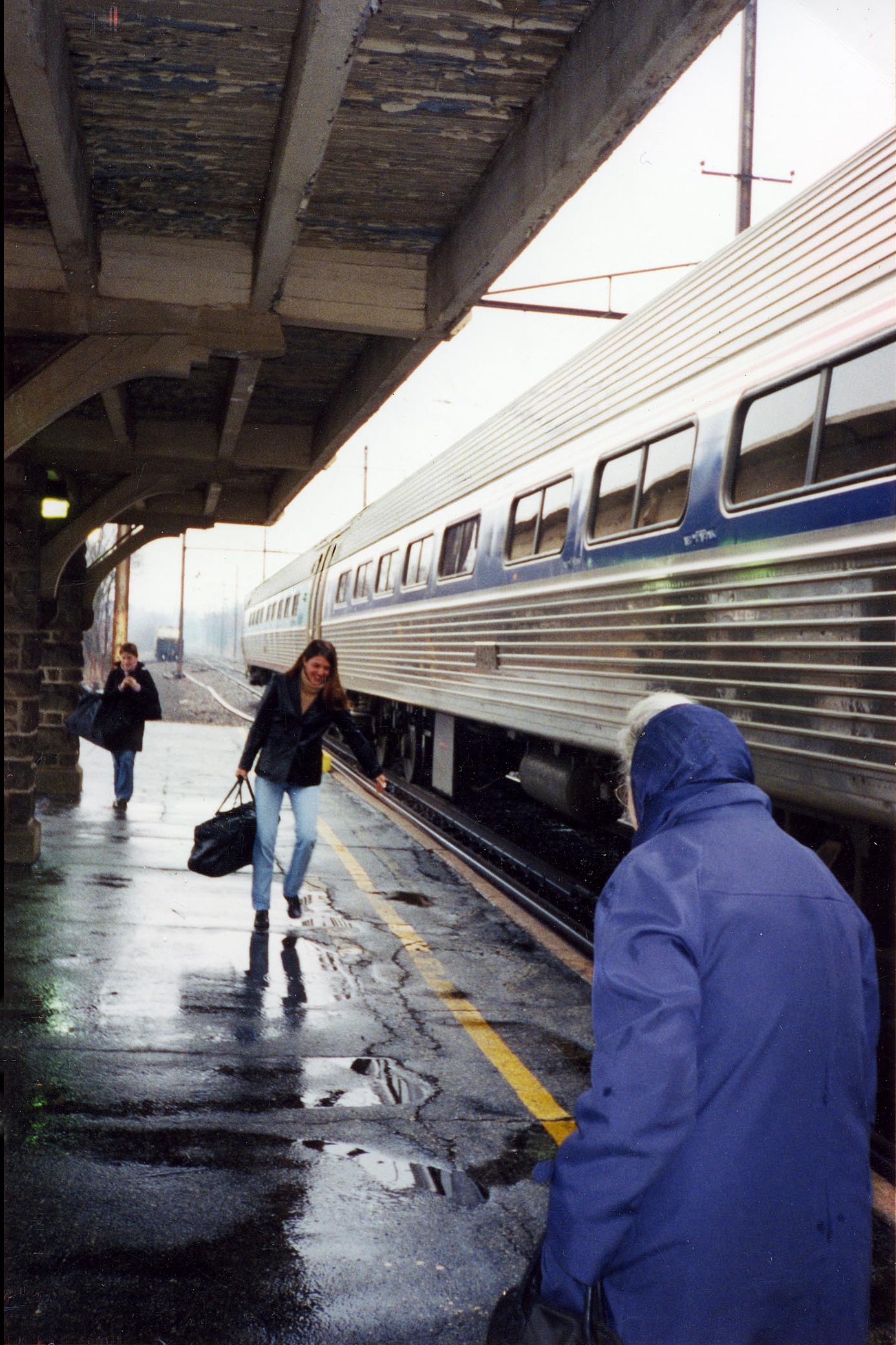
Arriving in Pennsylvania from Philadephia more than ten years ago, grand-niece Heidi runs to meet Aunt Ruthie at the tiny Amtrak terminal in Elizabethtown – exchanging cold, wet weather for a warm, welcoming hug.
Aunt Ruthie meeting Heidi_2002-_300

Your experience with train travel . . . tell us about it.

A response to the anecdotes or poetry here? All replies welcome.

Coming next:

Moments of Discovery #2 – Daddy’s 1912 Report Card & Mother’s 1989 Dodge Spirit
Thanksgiving Collection I

We have a winner! The winner of Valerie Weaver-Zercher’s Thrill of the Chaste: The Allure of Amish Romance Novels is . . .

Gwen Witmer

Congratulations, Gwen – happy reading!

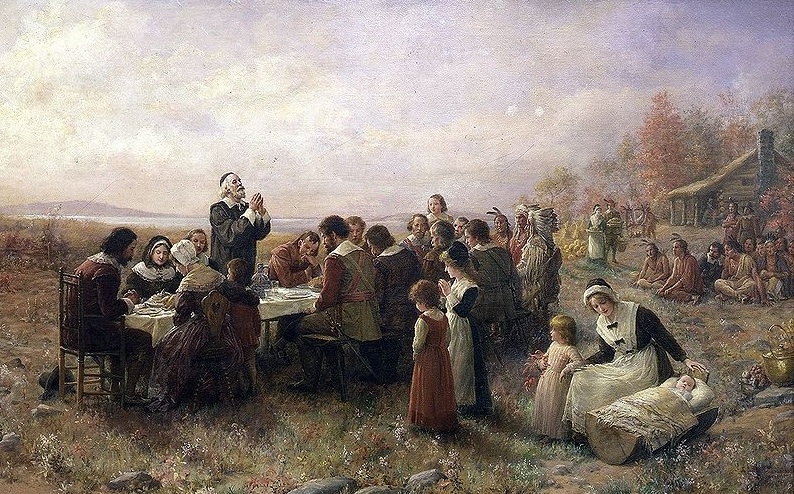
The First Thanksgiving at Plymouth by Jennie A. Brownscombe (1914) Courtesy Wikipedia
The First Thanksgiving at Plymouth by Jennie A. Brownscombe (1914)        Courtesy Wikipedia

PRAYER

A holiday celebrated primarily in the United States and Canada, Thanksgiving invites us to pause and give thanks as we pray, that mysterious communication between one’s heart and the mind of God. Writer C. S. Lewis declares his attitude before prayer: “The prayer preceding all prayers is “May it be the real I who speaks.” British author W. H. Auden expresses the mystery of prayer in a haiku: “He has never seen God, / but once or twice, he believes / he has heard Him,” quoted in The New Yorker, November 14, 2011.  And the British author John Baillie implores of God as he prays:

Let me use disappointment as material for patience.

Let me use success as material for thankfulness.

Let me use trouble as material for perseverance.

Let me use danger as material for courage.

Let me use reproach as material for long-suffering.

Let me use praise as material for humility.

Let me use pleasures as material for temperance.

Let me use pain as material for endurance.

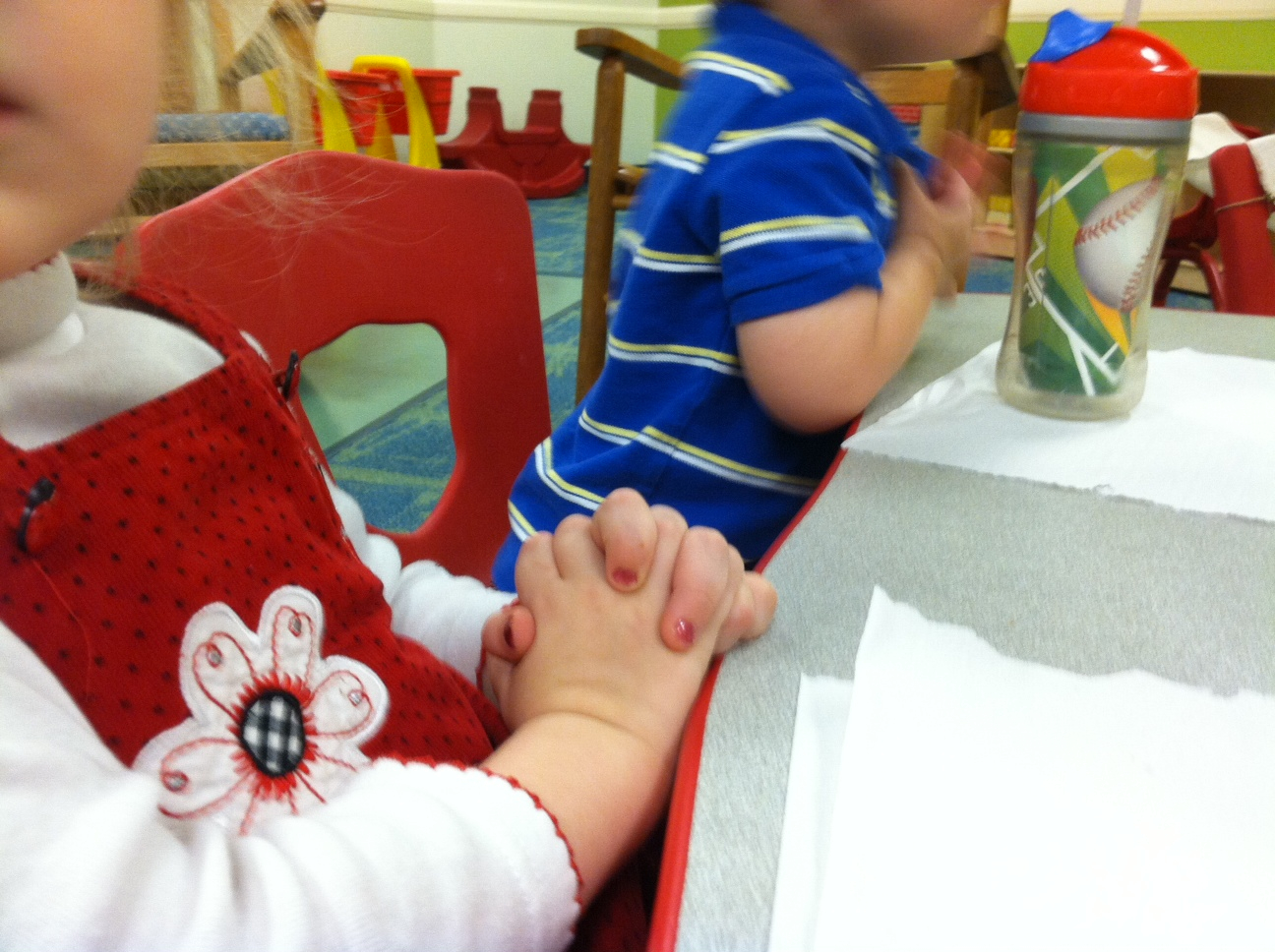
Children in our church’s 2-year-old class learn that prayer is talking to God, and then they do just that when they clasp their fat, little fingers as they sing “God is great, and God is good” before snack time:

SSpraying Hands

“Keeping company with God” is the title of Part One of Philip Yancey’s book with the arresting title Prayer: Does It Make Any Difference? He discusses also the language of prayer and the dilemmas of prayer including what one should pray for, the enigma of unanswered prayer, and “un-prayed answers.” (220)  Ah, the mystery of talking to God.

PRAISE

Lately I decided to cheer myself up by reviewing the bounty of God’s blessings. When the machinery of life goes awry–the doctor has a dire report, the car breaks down, a friend misunderstands–how can it be that I overlook divine intervention? My memory for blessing is so limited, and so I record evidences of God’s faithfulness:

3GratitudeBooks

PETITION

Over the years, in fact since 1984, I have accumulated prayer cards, some printed with typewriter ribbon and later ones two-sided and computer generated. Most of what is on the card are names of family and friends who need help, but sometimes there is a condition humanly unsolvable that I pray God will remedy. The cards are speckled with dates recording what I regard as answers to prayer.

PrayerCards1

How soon we forget. How necessary to remember!

Denise Levertov, from Sands of the Well, expresses with clarity the “quiet mystery” of communication between God and [wo]man in two stanzas of “Primary Wonder” (vimeo):

Days pass when I forget the mystery.

Problems insoluble and problems offering

their own ignored solutions

jostle for my attention, they crowd its antechamber along with a host of diversions, my courtiers, wearing

their colored clothes; cap and bells.

                                              And then

once more the quiet mystery is present to me, the throng’s clamor recedes; the mystery that there is anything, anything at all, let alone cosmos, joy, memory, everything, rather than void: and that, O Lord, Creator, Hallowed One, you still,

hour by hour sustain it.

How do you practice gratitude?

During this Thanksgiving season do you have a story, long treasured in the family or a newly minted one to share? We’re ready to listen!