A Snow Bunny and a German Lullaby

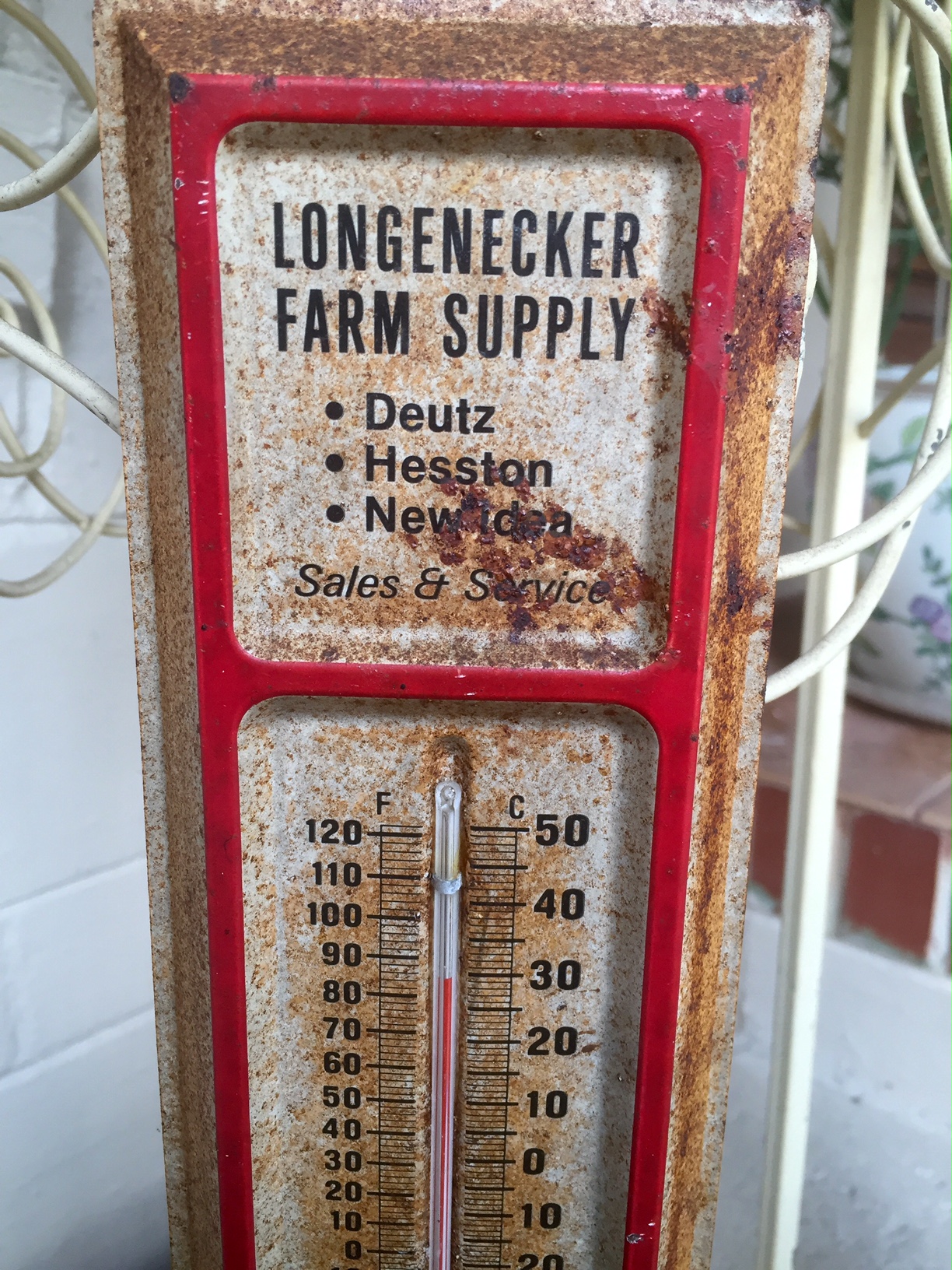
On Christmas Day 2015 in Jacksonville, Florida, the temperature stood at 85, at least twenty degrees above the normal daytime thermometer reading for this time of year.

Temperature on our porch Christmas Day 2015, Jacksonville, FL: 85 degrees

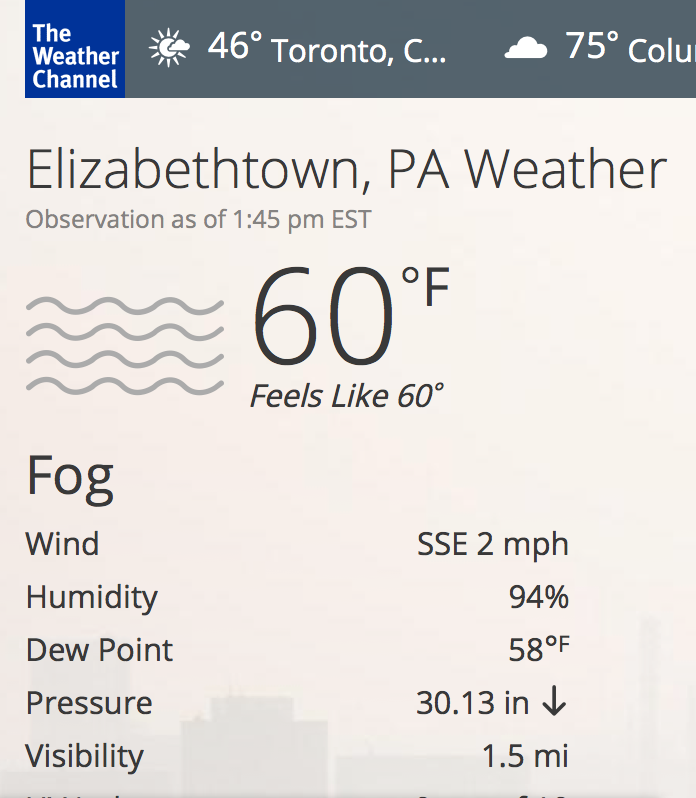
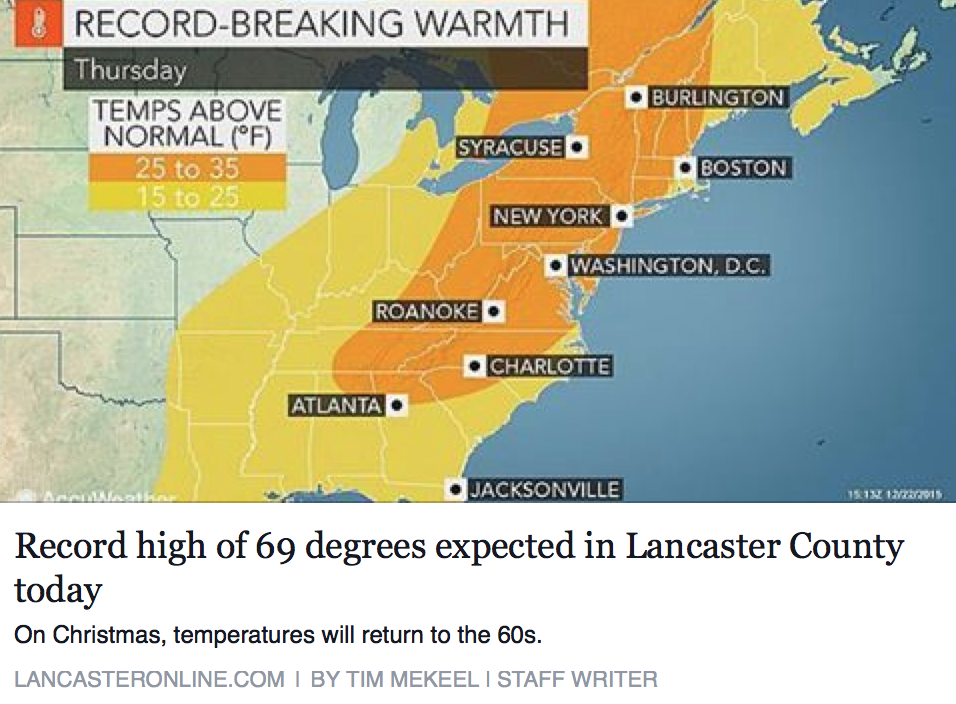
Over most of the USA, Christmas day was warmer than usual, the forecasters predicting a near record-breaking temperature of 62 degrees for Elizabethtown, Pennsylvania, once my hometown.

ElizabethtownPAweather60ChristmasWarmChristmasLancOnline2015

Years ago when our young family left Florida’s palm trees and beachy sand during the Christmas holiday, we hoped for Pennsylvania snow, praying for enough inches for sledding and making a snowman.

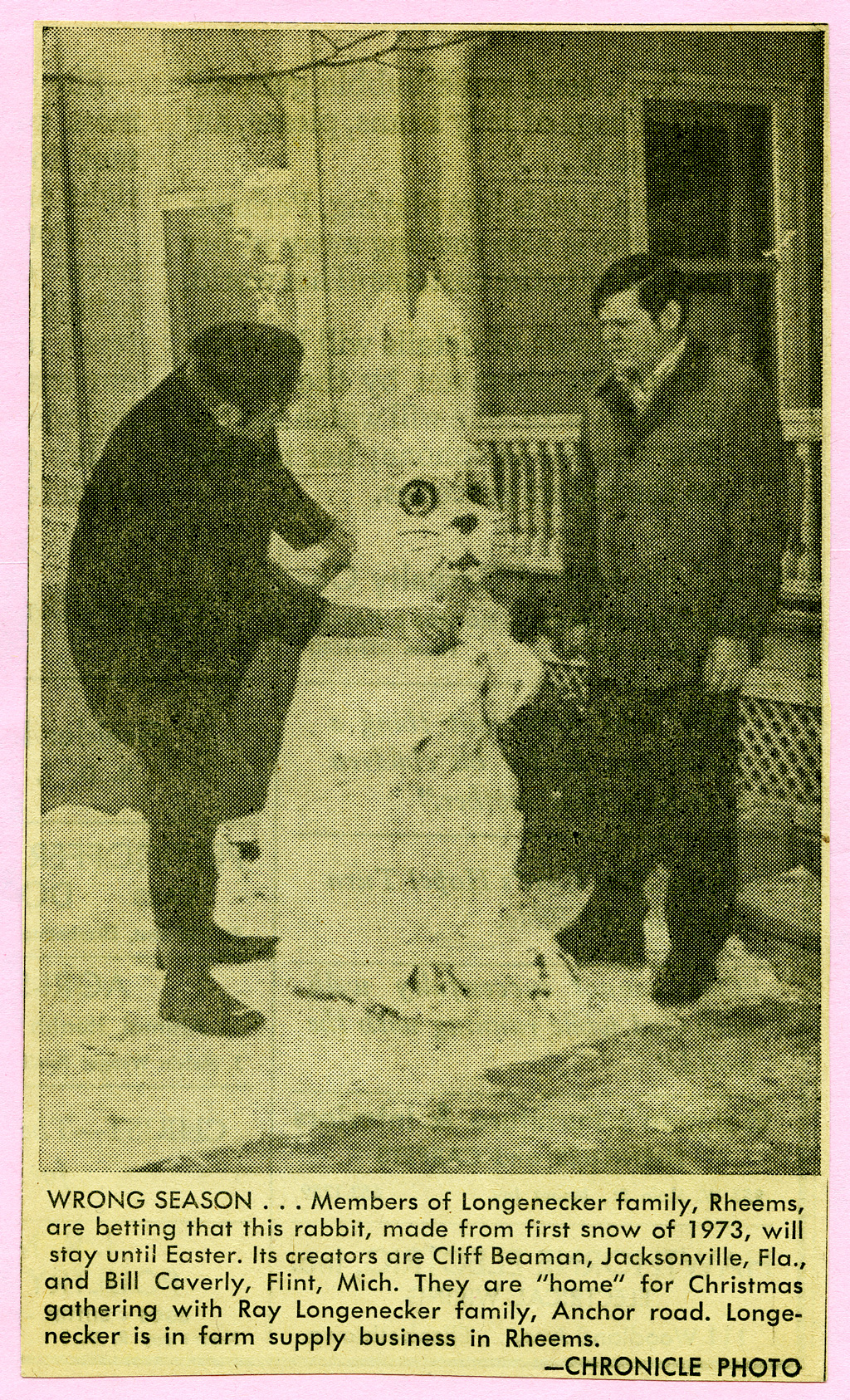
One Christmas (1973) my husband Cliff and brother-in-law Bill sculpted an Easter Bunny from snow, a photo that made it into the now defunct Elizabethtown Chronicle.

SnowBunny1973

Snow slows everything down.

Snow descends from the skies in soothing swirls, no two flakes alike. The morning after a snowfall is quiet – traffic slows, the earth sits snug in silence, wrapped in beauty.

German Carols about snow are soothing too. Grandma Longenecker sang the first verse of Stille Nacht in German to us as tots, a carol of three stanzas we learned well enough to sing for Christmas programs at Rheems Elementary School. Now in my memory a warm spot remains where I hear Grandma’s voice singing the words to “Stile, Stile, Stile,” a lullaby that evokes the image of gently falling snow in the still of the night.


Whether the weather is dull or delightful, songs from the olden days can help carry us through.

Credit: Weather.com
Credit: Weather.com    12.26.15

How was your weather during this holiday week? Weather stories during a childhood Christmas or Hanukkah celebration may have popped into your mind too. There’s always more to the story when you join in.

Coming next: My Word, It’s 2016!

Souper Meals with Sabah and Mom

“I have always relied on the kindness of strangers,” admits Blanche DuBois, an aging belle in Tennessee Williams’ classic play A Streetcar Named Desire. Blanche has had the props knocked from under her and has nowhere to turn except to her sister Stella, also living in reduced circumstances.

Sabah’s Story

In a far, far different context and definitely not because they have the slightest desire to do so, refugees from all over the world have been forced to rely on the kindness of strangers as they flee terrifying conditions in their homelands.

Such has been the case of Sabah Jabri, who with her husband and children left bomb-scarred Baghdad, Iraq in 2007 with just identification documents and the clothes on their backs and fled to Syria, ironically back then a peaceful respite from warfare.

Photo courtesy of Lancaster Online
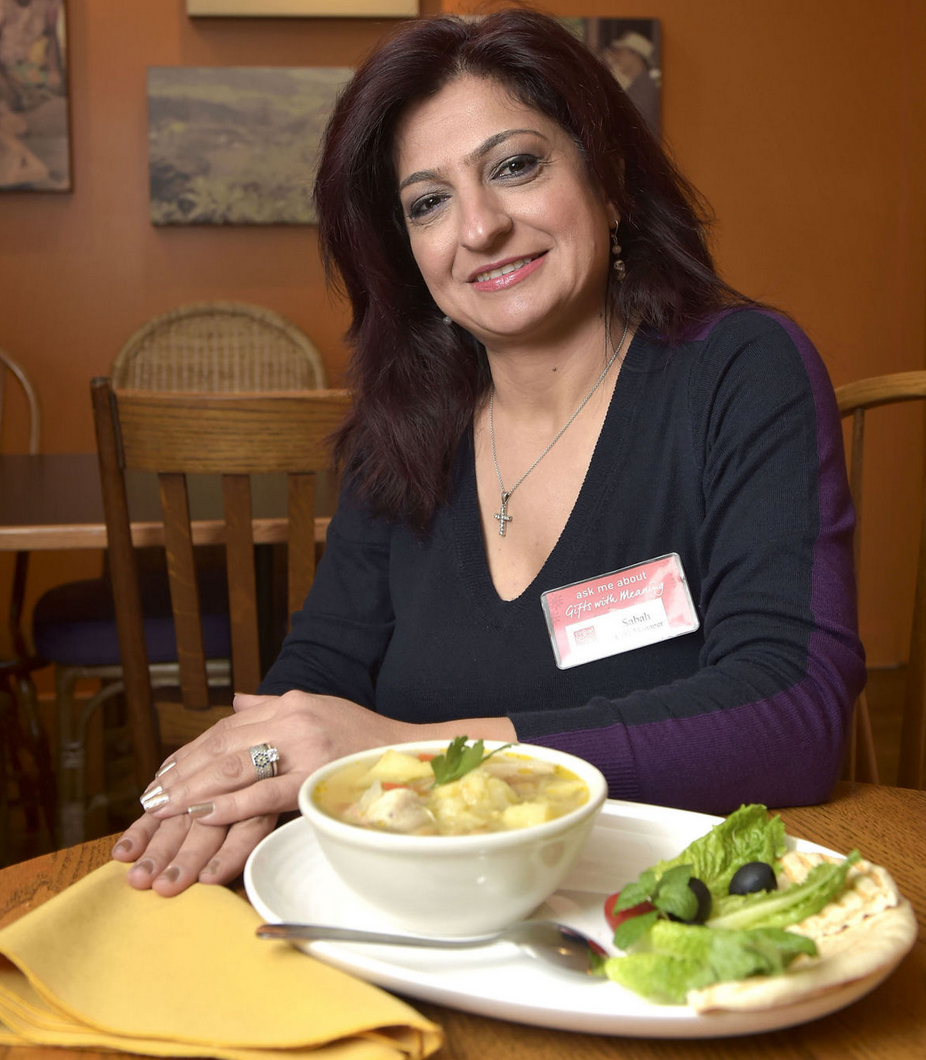
Photo of Sabah and her soup courtesy of Lancaster Online

Sabah, an accountant, and her husband Alaa, a civil engineer, fled Baghdad when fighting between Sunni and Shiite militias made daily life unbearable. They ended up in Syria for a year, cared for by a family whose home – and whose soup – they shared, a dish they called “yakhni.”

Syrian2ChickenSoup

After a year in Syria, the United Nations High Commission for Refugees assigned the family to emigrate again to Ephrata in the heart of Pennsylvania Dutch County.

Currently, Sabah is manager of the Café at Ten Thousand Villages in Ephrata, where you can be sure this soup is on the menu. The article in Lancaster Online did not include the recipe (Of course not!) but the ingredients were listed: chunks of chicken breast, potatoes, carrots, onions and chickpeas in a hearty broth. Incidentally, Ten Thousand Villages in Ephrata offers fair trade items worldwide for sale.

More than sixty years ago, a visionary named Edna Ruth Byler worked through the Mennonite Central Committee to begin an enterprise which has mushroomed into Ten Thousand Villages.

. . . [She] believed that she could provide sustainable economic opportunities for artisans in developing countries by creating a viable marketplace for their products in North America. She began a grassroots campaign among her family and friends in the United States by selling handcrafted products out of the trunk of her car. Byler made a concerted effort to educate her community about the lives of artisans around the world.

Ten thousand Villages is the result, an undertaking that has grown well beyond the tiny house of its inception and offers for sale baskets, jewelry scarves, bags, kitchen & dining articles, toys and other items from artisans, particularly women, around the world.

Mom’s Soup

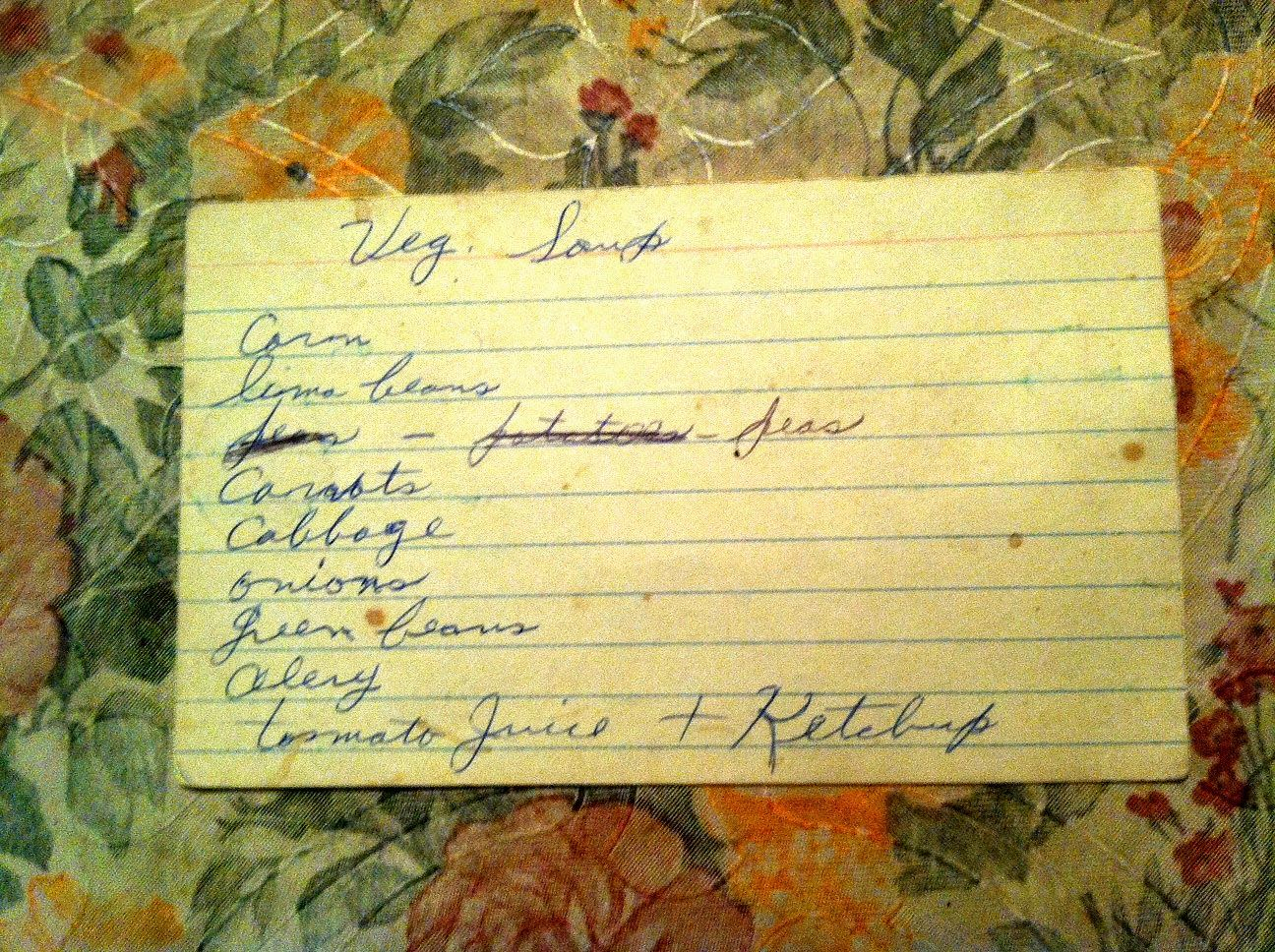
Mother also knew the nutritional heartiness of soup and often had vegetable soup waiting for us when we drove or flew up from Florida at Christmastime. Within five minutes of our arrival, one of us would fly into the kitchen and open the Frigidaire to see whether there was a ceramic pull-out drawer full of soup in the bottom left.

MomVegSoupRecipe2_layers_4x3_300


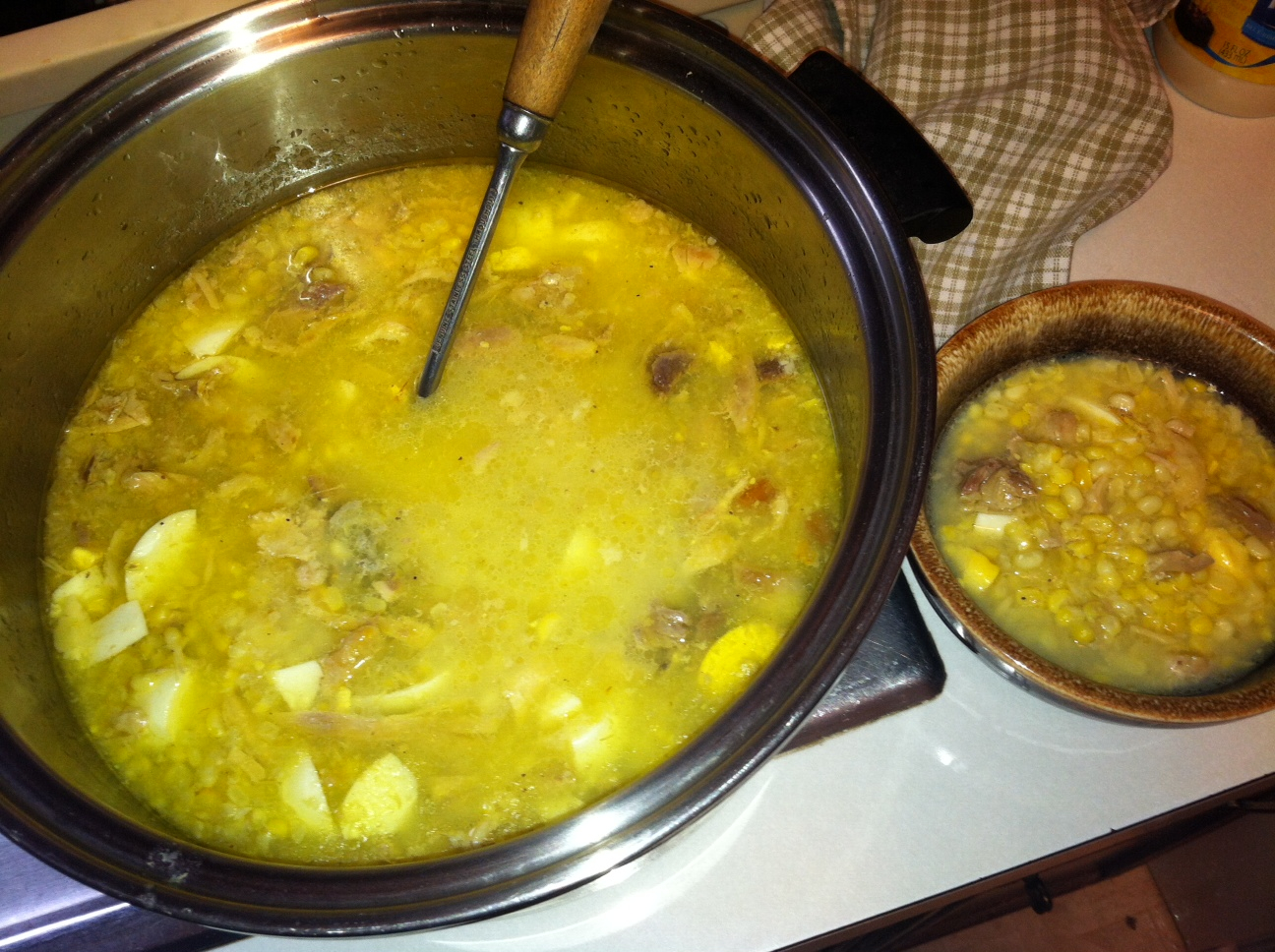
Chicken corn soup was also her specialty, with hard-boiled eggs and rivels, doughy droplets made from flour  . . .

Mom's Chicken Corn Soup without Rivels
Mom’s Chicken Corn Soup without Rivels


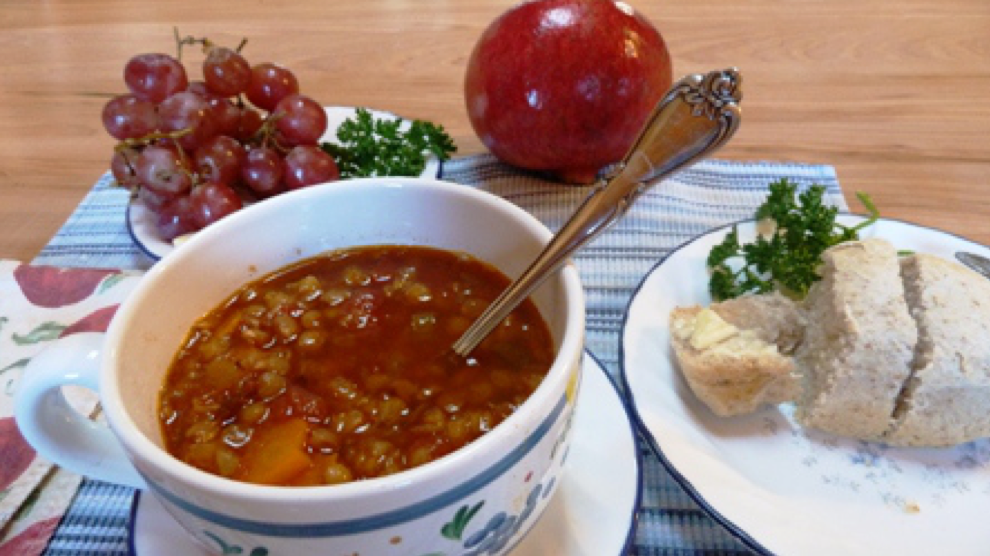
Author, editor, and cookbook writer Melodie Davis has recently featured savory Spanish lentil soup on her website where the recipe for the dish below appears.

SpanishLentilSoupMelodie


Quotes about Soup

Soup is a lot like a family. Each ingredient enhances the others; each batch has its own characteristics; and it needs time to simmer to reach full flavor.         ~ Marge Kennedy


Only the pure of heart can make good soup.                ~ Beethoven


And finally, Bennet Cerf defines good manners as “The noise you don’t make when you’re eating soup.”


How has soup enhanced your life? Do you think Beethoven is right in the quote attributed to him? Do you have a choice recipe to share?


Coming next: A Snow Bunny and a German Lullaby


Moments of Discovery # 8: What’s Inside Mom’s Buffet?

Mother’s house on Anchor Road has been sold. We sold it last fall, just a year ago. After more than seventy years, the Longeneckers do not own this house.

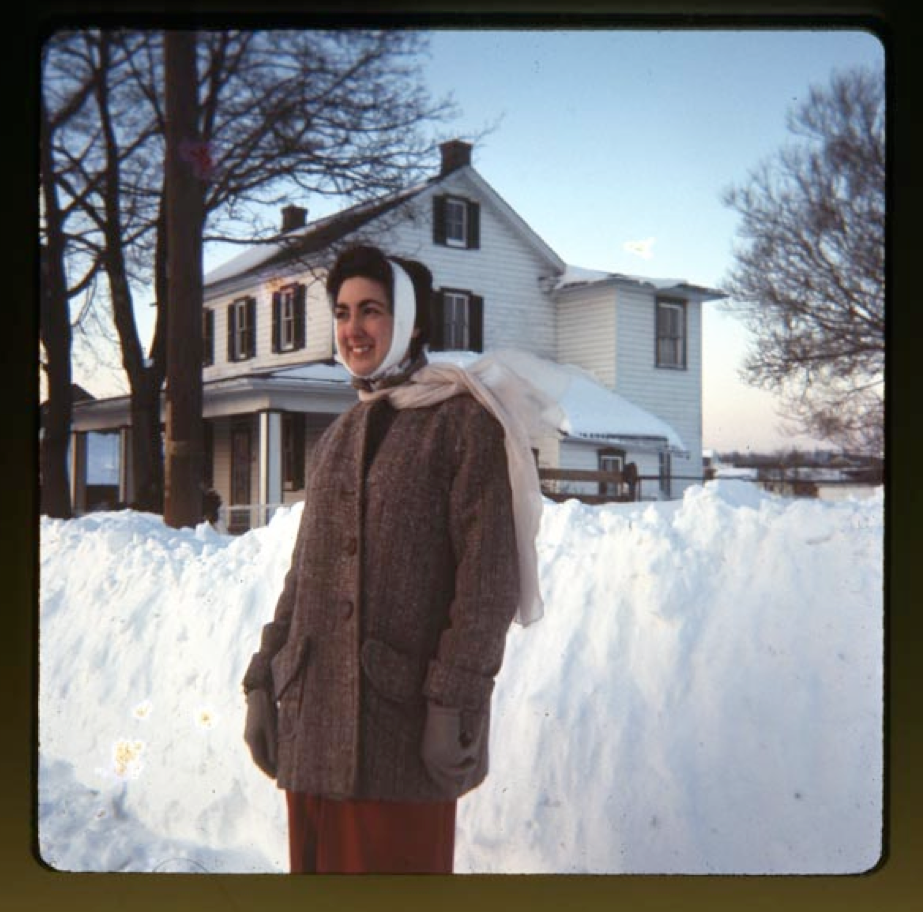
Blizzard of 1966 in front of the house on Anchor Road, Pennsylvania

But that doesn’t mean there are no memories or longings for home. The Welsh have a word for such a feeling, hiraeth

(n.) a homesickness for a home to which you cannot return, a home which maybe never was; the nostalgia, the yearning, the grief for the lost places of your past

* * *

So, memories and photographs remain.

Mother’s dining room buffet sat at the center of our house, yes at the heart of the first floor. On top of this piece of furniture you could even hear the heart beating where the clock ticked and chimed every fifteen minutes.

Mother’s hands must have removed the white crocheted doilies and dusted the buffet top with lemon Pledge and an oily rag many times. I don’t remember her doing it, but I do remember that I did every Friday.

BuffetMomInside the buffet were treasures: the good china and table linens, her silverware arranged in a blond, wooden box in the middle to bottom drawers. With the crystal in her china closet, Mother had all the accoutrements to entertain friends or relatives with an elegant Sunday dinner every month or two.

WeddingSilver

At the top right of the buffet was a drawer that we opened/shut several times every single day. The partitioned drawer made of mahogany wood and lined on the bottom with maroon velveteen was always arranged the same.

* The keys to the buffet & china closet sat inside a shot glass, scored at the lip, an odd object in a plain, Mennonite household.

* Scotch tape, matches and stamps

* Scissors

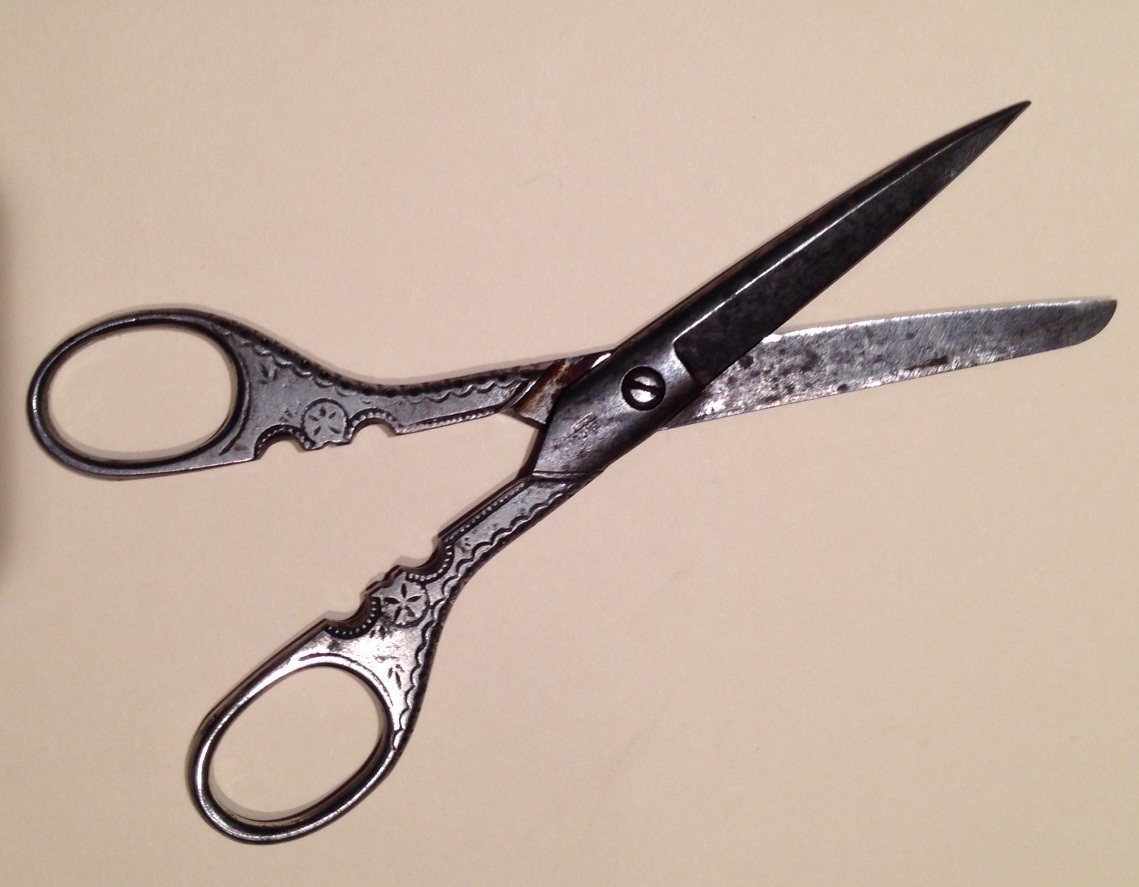
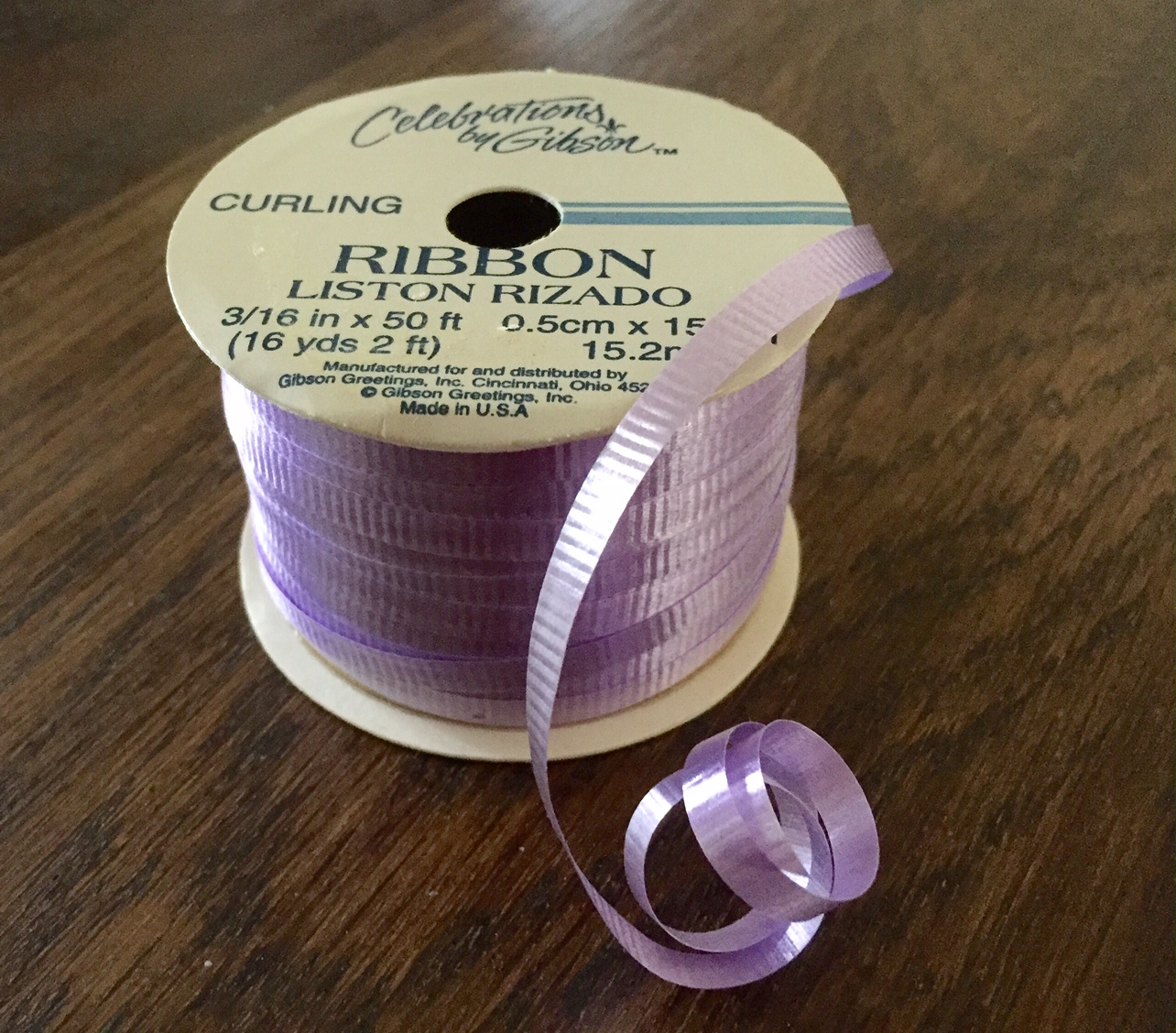
Mom had no scissors in a knife block. In fact, she had no knife block. The scissors in the dining room buffet was her all-purpose go-to, cutting fabric, gift wrap,or curling crinkly ribbon.

The scissors was rather fancy with engraved ornamentation with a provenance from England hinted at by the letters E-N-G and a faint letter L remaining. It is probably made of steel, but since it is so tarnished, perhaps silver.

Photo by Jean Longenecker Fairfield, curator of Mother's scissors
Photo by Jean Longenecker Fairfield, now curator of Mother’s scissors

Mother drew the scissors’ blade along the length of crinkly ribbon, gathering several strands to make bows of blue, yellow, pink, or lavender for birthdays or a baby gift.

RibbonCURLED

During this season of the year, the fluffy bows made of bunched up strands would all be brilliant red or forest green.

On the top left drawer of the buffet, Mom kept stationery, little notes to say thank you, send well wishes or remind the receiver of her strong faith.

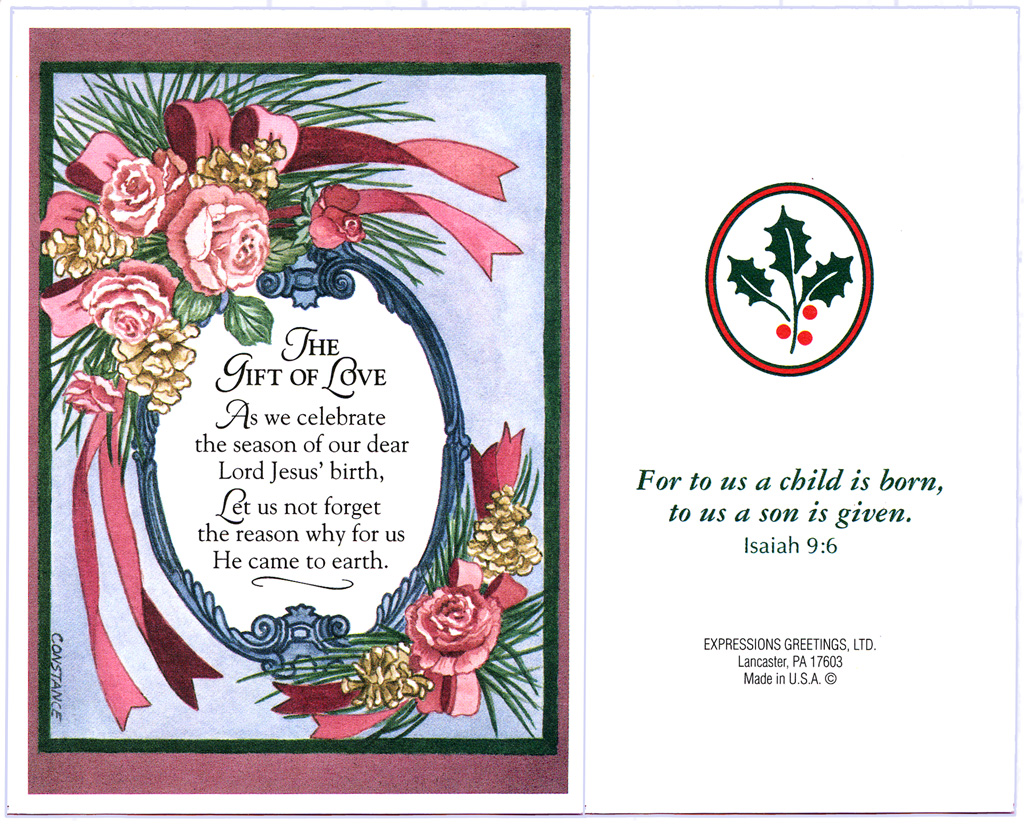
MomChristmasCardinside

From her store of plenty, I pass on this Christmas wish to you, pictured here front and back

Peace on earth and good will toward men, women, and children everywhere.


Is there a special object or piece of furniture in your family you want to hold onto? One you plan to pass on to the next generation?

Coming next: A Souper Winter Meal


Friends from Faraway and Long Ago: Kitsa and Lydia

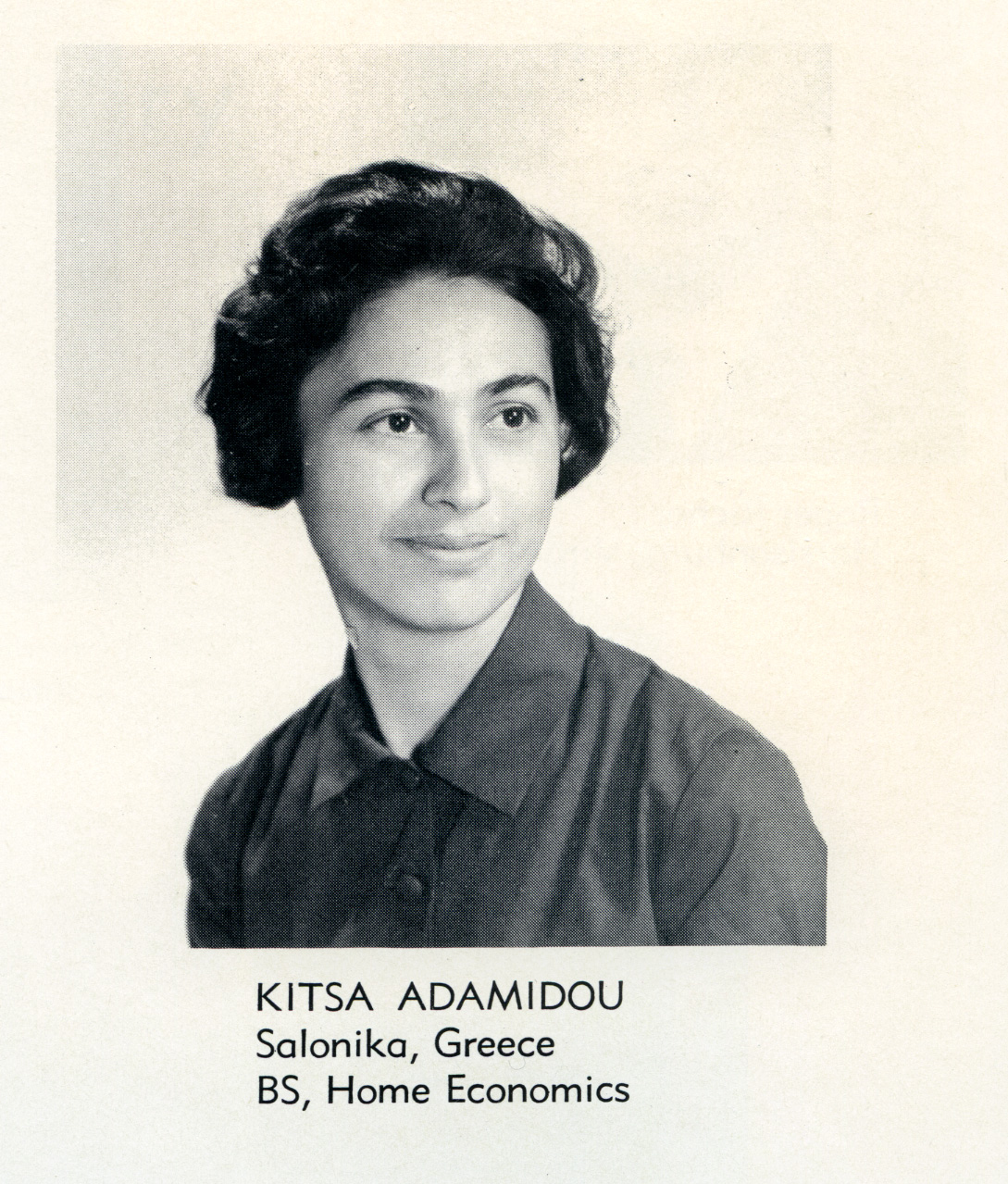
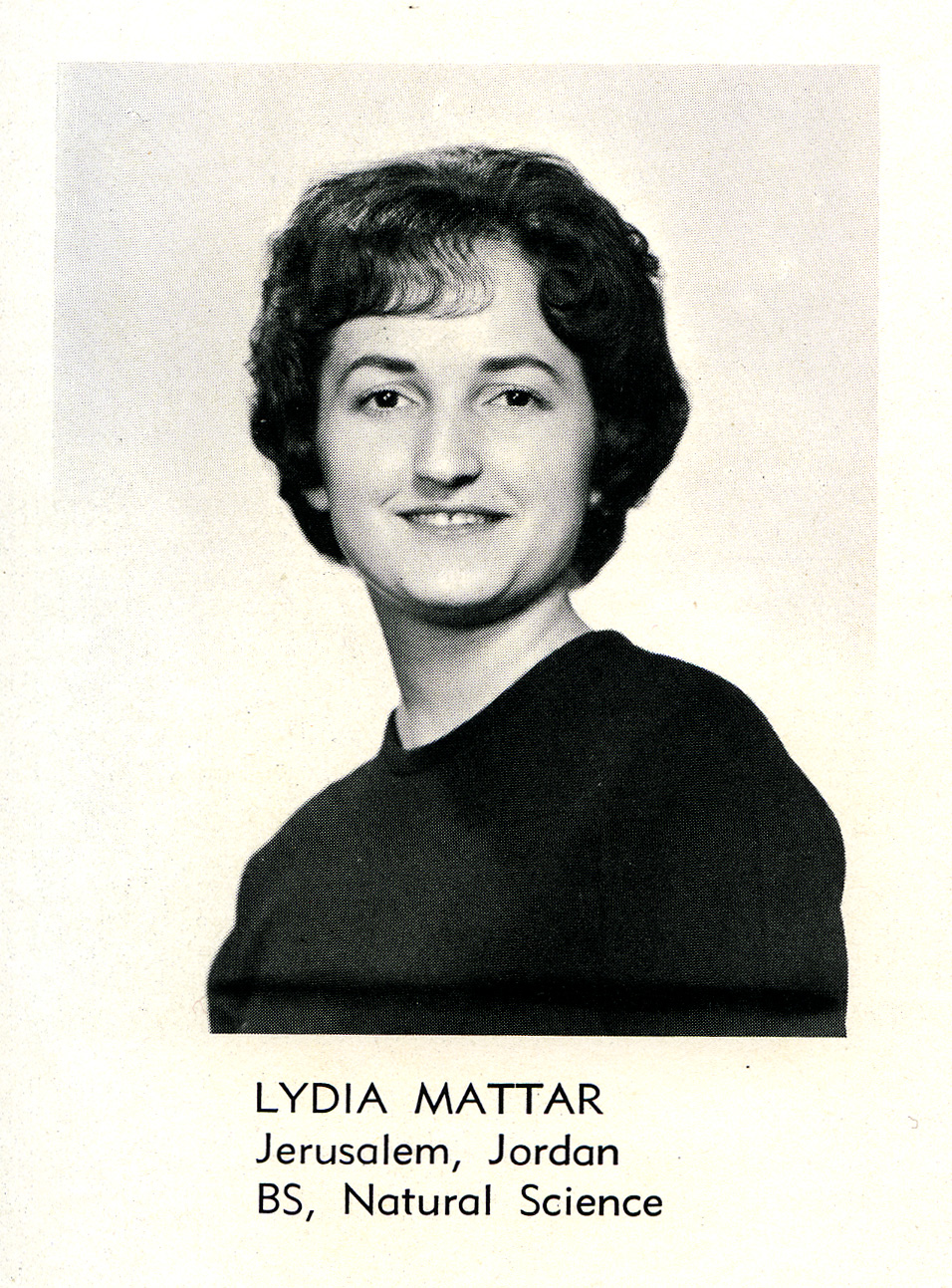
Kitsa and Lydia were among the very few women in my graduating class at Eastern Mennonite College who did not wear a prayer veiling atop their heads. Why? Because they were not Mennonite.

Lydia Mattar from Jerusalem, Jordan and Kitsa Adamidou from Salonika, Greece were international students and my good friends when I attended EMC. Their origins both have a biblical stamp: Kitsa’s hometown was originally known as Thessalonika, the name of two New Testaments books (Thessalonians I and II) and Kitsa’s father from Jerusalem was the Keeper of the Garden Tomb, the site of Jesus’ burial and resurrection. (Photos from 1963 Shenandoah yearbook)

KitsaYearbookPortrait

Always on the look-out for fun!
Kitsa, always on the look-out for fun!

And then Lydia . . .

LydiaYearbook Portrait

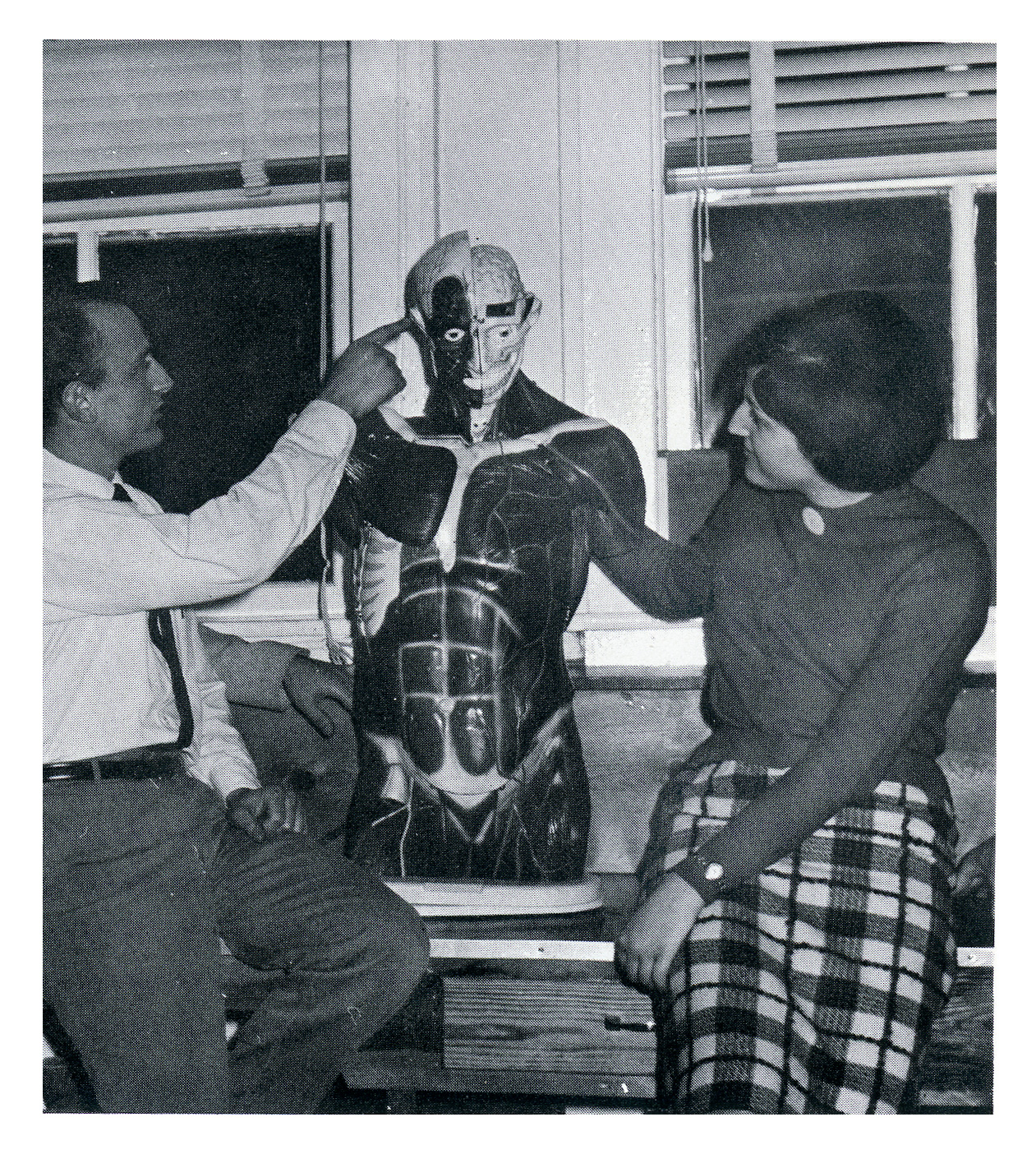
Lydia in Dr. Daniel Suter's Anatomy class
Lydia in Dr. Daniel Suter’s Anatomy class with lab assistant

I was drawn to Kitsa and Lydia during my freshman year because I have always been curious about other cultures. In fact, one year Lydia was my roommate. It appears this inclination has run deep in my DNA. Now as I hold in my hand one of my Grandma Fannie Longenecker’s letters from college I can sense her keen interest in my “foreign” friends and a deep longing to know them better.

In this letter dated December 1, 1960, she insists that she would like both girls to spend Christmas at her home. Born in 1892, Grandma Fannie Longenecker was 68 when she wrote these words to me:

Dear Marian – Guess you’ll be surprised to hear from me, I sure wanted to write before, just didn’t get at it – (Reason) older and slower . . . . Ruth was looking for a letter from you so be sure and bring Lydia & Kitsa along home over Christmas, and forget all about paint etc, two of you can stay here & we’ll have a good time that’s the thing that really matters, I think I’ll be Kitsa’s Grandma of America – Do you know what she needs or wants for Christmas? Forgot to say I’ll pay her way up & we really want them to come, so make it strong, times soon here!

Later in the letter, Grandma admonishes:

Be sure and get arrangements to come home early & if possible bring the girls along. I’ll pay Kitsa’s fare on arrival & find out what she would like for Christmas. This $ 5.00 spot is for you, maybe you need a little for odds and ends or transportation home. Tell us what you are hungry for, that you don’t get at school.

Mark tells me ‘Marian will soon come home’ and his face lights up, so we are all looking forward to that day. Hope your old toe is better.

Grandma’s interest in Kitsa persisted through most of my college years. In her letter of March 8, 1962, she referred to Kitsa and her roommate pictured on the front page of Christian Living magazine (February 1962).

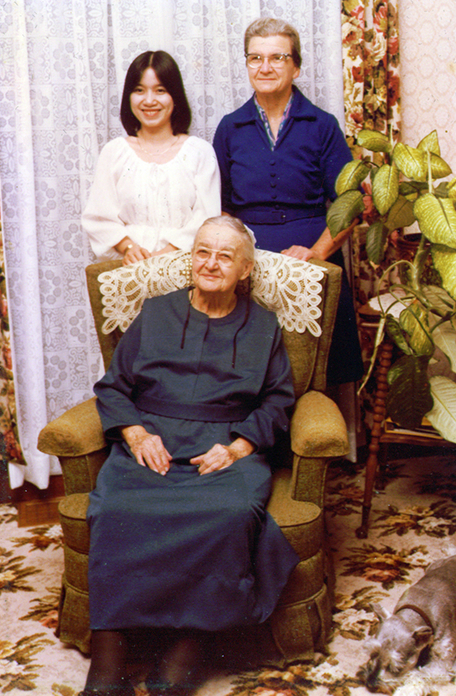
For over 25 years, my Grandma and Aunt Ruthie practiced peace and goodwill toward all, as they opened their home to refugee and immigrant families, beginning with Phuong (pictured below), a young woman who arrived by boat from Vietnam. Their home was a warm cushion absorbing the cultural shock of leaving home and family; it was a safe haven, welcoming refugees from a colláge of countries including Bosnia, Croatia, Serbia, Russia—anywhere there was political upheaval.

1979Grandma,Ruthie, Phuong_small

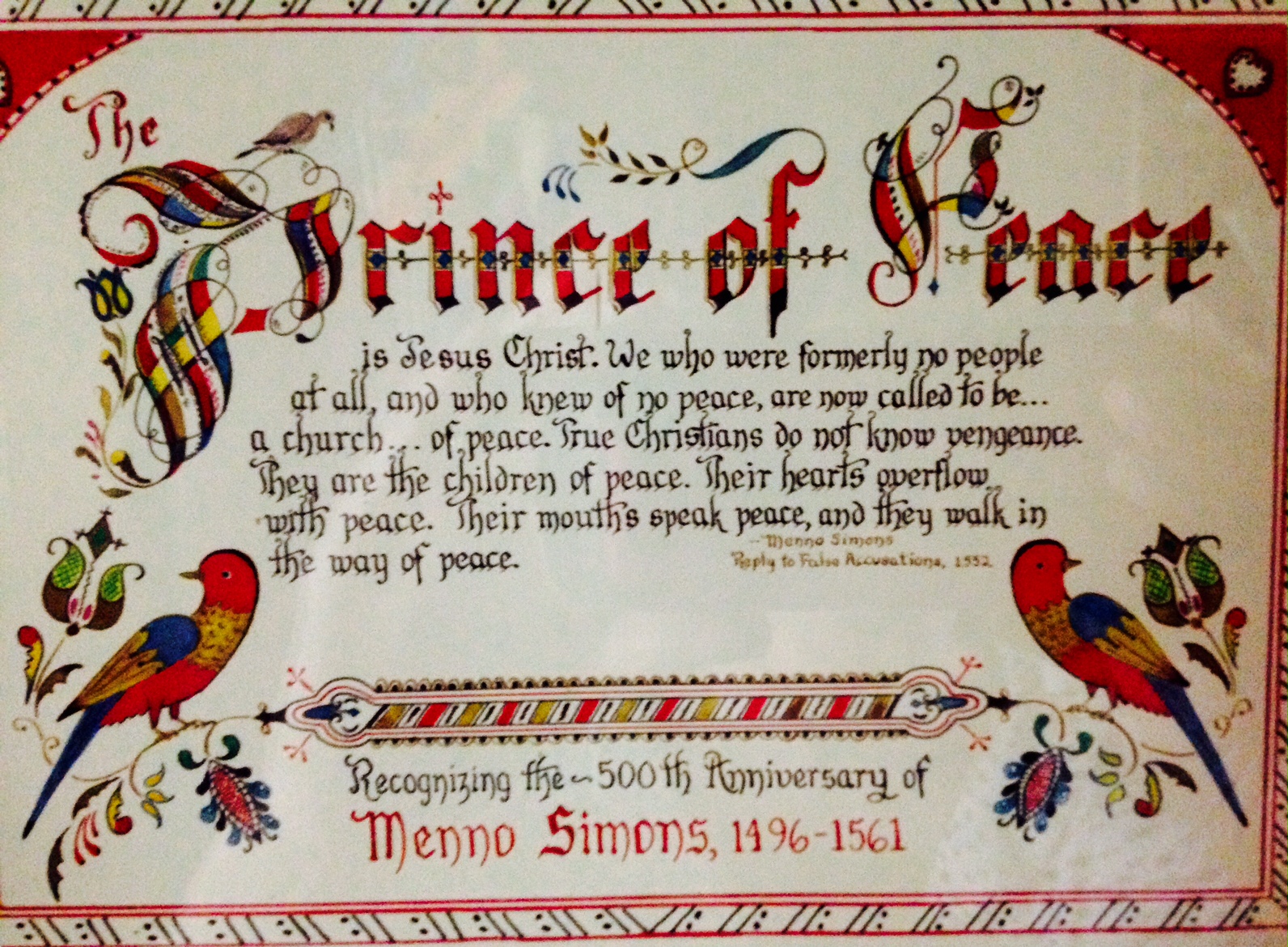
Although she graciously accepted the Salt of the Earth Award from Lutheran Social Services in the 1990s, Aunt Ruthie never bragged about her benevolence. From her perspective, she was merely sharing the love of Christ and fulfilling the statement of Menno Simons, founder of the Mennonite faith:

Framed print on the wall of Grandma and Aunt Ruthie's sitting room, 1996
Framed illustration on the wall of Grandma and Aunt Ruthie’s sitting room, 1996

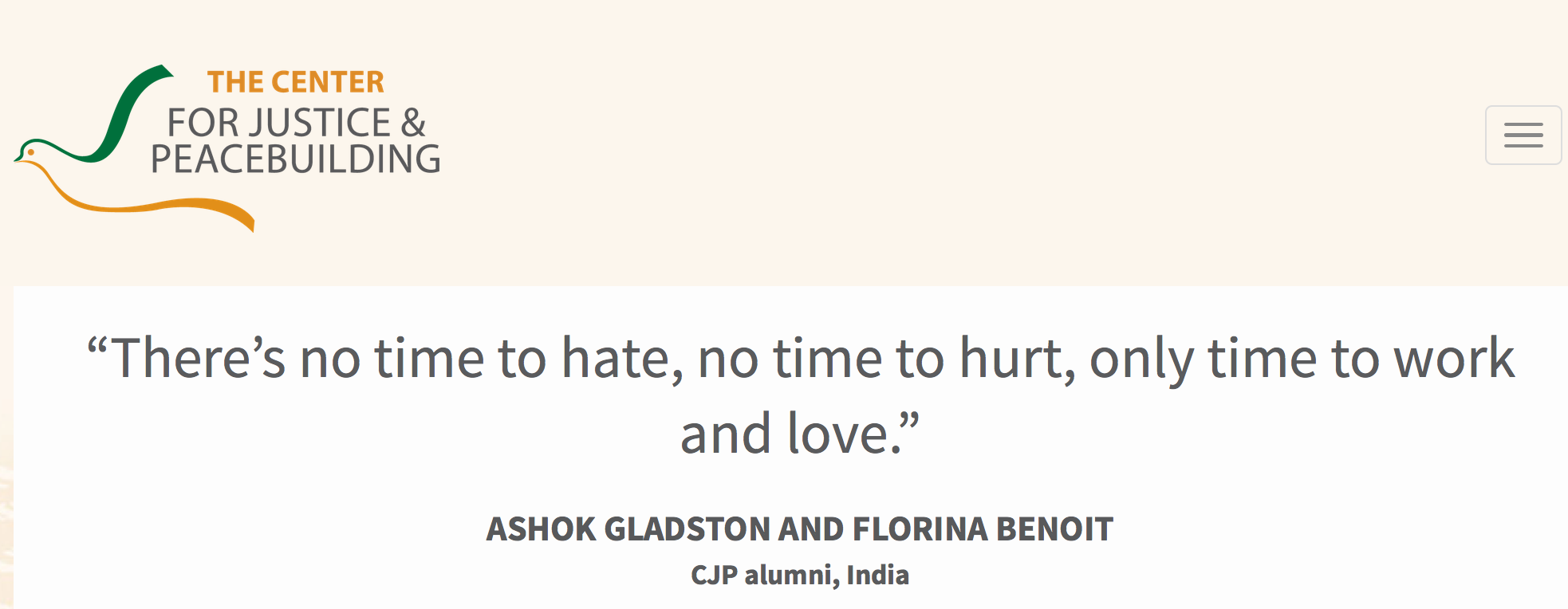
In a noisy world where some speak of building tall walls and wish to spread terror and violence, I am thankful for my heritage including an education at an institution, now Eastern Mennonite University, where the language of peace is preached and modeled. In fact, it is now possible to earn both under-graduate and graduate degrees in justice and peace-building at the University.

EMUJusticPeaceQuote


Regrettably, the contact information I have currently for both Kitsa and Lydia has not yielded any results, so I don’t know what paths their lives have taken. But I do know that their lives, like mine, have been imprinted with the power of peace, a message this world could stand a good dose of in these troubled times.

Postcript:

Just this morning, December 11, 2015, I had a long phone conversation with Kitsa, her smooth, alto voice music to my ears. She now lives with her husband in North Carolina and is very active at St. Nicholas Greek Orthodox Church where she is head of the Hellenic Culture initiative. She also gives private Greek language lessons.


How have international friendships affected your life? Have you connected with long-lost friends recently?

Learning 101 with Ananda and Ben: Role Reversal

My Pilates instructor is a spring chicken, and my writing coach is young too, just thirty-nine years old, younger than either of our children. Still, They are teaching me.

Since childhood, we have been conditioned to think of our teachers as older than we are. Such a perspective probably was formed in elementary school when our teachers were the age of our mothers or fathers. And then in high school, if we’re honest, some of those 45-year-old faculty looked absolutely ancient to us. I imagine I was viewed as an older sister when at Lancaster Mennonite School I was a mere four years older than my senior students. As I aged in my teaching profession, in my students’ eyes I may have passed for a mother or aunt, and later, in my sixties, students at the college must have viewed me as a grandmother or great-aunt.

Now after more than forty years in education, I am well into an encore career as a writer. To support such a sedentary life-style, I need to get off my duff and twist and turn, bob and weave, flexing muscles that get very little use otherwise as I finger the back-lighted black keys of my laptop, warming a pillowed chair. Ananda at Bailey’s Gym helps me do that. On her Pilates mat in front of a class of middle-aged women, she is as flexible as a rubber band, inviting us into poses of bold bends that I can at best only approximate. Gentle and petite in nature, this native of Colombia helps me correct my efforts.

Ananda2

“Ma-ri-ann, eez this way . . . extend your left leg a lee-tle further.” And so, I adjust my appendages to comply with her instructions, but not without cringing a little. Yes, though Ananda is ever so easy-going and gracious, I do chafe at being singled out for wrong moves. After all, she called out my name. Everyone else heard that I messed up! Still, I know I will bring out my exercise mat next week and sit for another session with her gentle but precise guidance.

Then, there’s Benjamin, my writing coach. A poet, gardener, and memoir-writer, Ben Vogt is my writing teacher in an online course entitled All in the Family: Research and Write Your Family’s  History. He too is gentle, introspective, always affirming. But he is also incisive, biting into the scripts I send him with loud barks in return, always in caps: HOW BIG IS MEDIUM? YOU’VE GOT TO BE FAR MORE DETAILED AND DESCRIPTIVE FOR US . . .

BenVogtGardener

And on the next page, I see more yelling in loud crescendo as I notice I have missed the mark trying to describe what my Mennonite pastor was wearing: LET’S SEE THE WARDROBE WITH MORE DETAILS – NAME THE CLOTHING PARTS MORE, SHOW SHOW SHOW! To be fair, every once in a while I see that I have succeeded: “GREAT PARAGRAPH!” he shouts in all caps. He is thrilled when I use sensory detail (All five senses now!) to properly develop a scene instead of resorting to flabby adjectives. Then I’m both surprised – and pleased.

What is the point here? I am submitting to tutelage because I want to. I believe there is way more for me to learn. I’m not a finished product, and probably will never be, so I need more priming and polishing from folks expert in their fields. Why? Because I don’t have the insight to see how or where my efforts have gone awry. And, yes, these tutors can be younger, way younger, than I am.

Have you learn’d lessons only of those who admired you, and were tender with you, and stood aside for you?

Have you not learn’d great lessons from those who reject you, and brace themselves against you? or who treat you with contempt, or dispute the passage with you?

Walt Whitman Leaves of Grass

Of course, neither Ananda nor Ben have ever rejected me or treated me with the slightest bit of contempt, but each has sought to “dispute the passage with [me],” and though it is uncomfortable, even painful at times, I have benefited from these lessons. Indeed, I am learning lessons from them and others. Learning. Still.

Still learning.

Are you are lifelong learner? How or when have you learned from “teachers” of any age? Inquiring minds want to know . . .


Coming next: Faraway Friends: Kitsa & Lydia