Climbing the Swiss Alps: 7 Steps Toward a Narrative Arc

Events in our lives happen in a sequence in

time, but in their significance to

ourselves they find their own order . . . the

continuous thread of revelation.

—Eudora Welty, One Writer’s Beginnings

Writers find real life images to compare what happens as they mold life events into stories:

  • To fabric (thread and weaving)
  • To clay (molding a lump into a recognizable form)
  • To construction (building a house from the foundation up)

Finding the right shape for telling our story is a critical step in the memoir writing process. Writers call it the narrative arc.

Paging through a photo album of my trip to Switzerland, I have found another metaphor for structuring my memoir: Contours of the Swiss Alps

All photos: Marian Beaman
All photos: Cliff and Marian Beaman

Climbing the Alps fits with the theme and title of Journey of Memoir by Linda Joy Myers and Brooke Warner. “One of the most challenging aspects of writing a memoir, which of course is based on true and real events in your life, is to create a plot out of what happened.” (104)

I know my life story. I don’t have to make up events and characters. Through trial and error, I have decided that my theme is the quest for my true self as a sheltered Mennonite girl growing up in Lancaster County, Pennsylvania.

Still, I have to mold my tale into a story of transformation, one that will grip readers’ imagination and keep them turning the pages.

* * *

Aristotle affirms that every story needs a beginning, a middle, and an end: Act One, Act Two, Act Three.

Stories that intrigue have conflict too. For example, when you saw a play like Our Town or Macbeth, you were transported into another world through exposition, rising action (the story builds), a crisis, a climax, and finally a resolution.
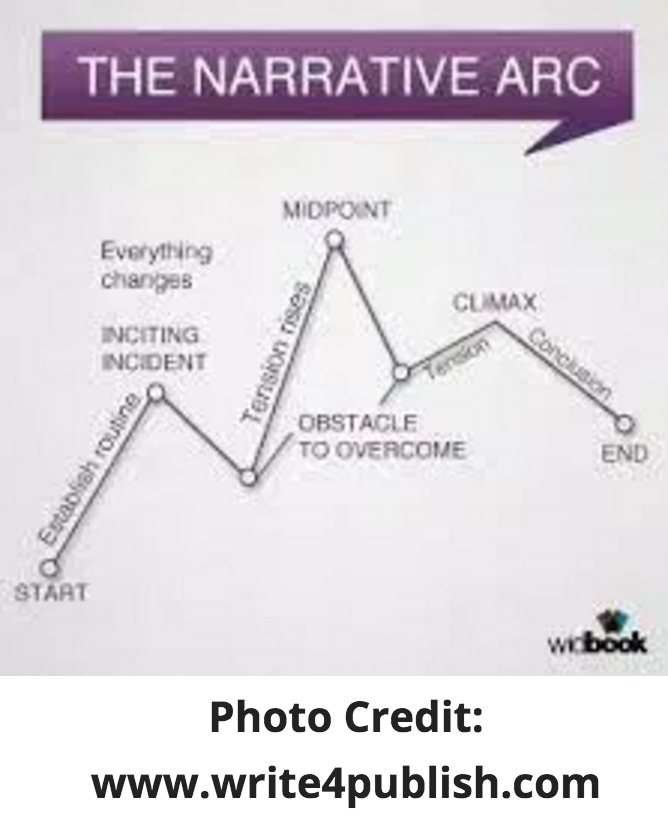
Crisis (all seems to be lost) Climax (major conflict narrator must resolve) Conclusion (epiphany - so that's it!)
Crisis at midpoint (all seems to be lost) Climax (major conflict narrator must resolve) Conclusion (epiphany – Ah,  so that’s it!)


My 7 Steps . . .

  1. I created a timeline of vivid memories in my life. This is how I hoped to arrive at my turning points, moments of significant change. As I drew, I thought in terms of chronology. What is my first memory? What stands out in elementary school? What family events pop up? Who looms large as a mentor? Answers to these questions could become turning points, I believed.

TimelineMemoir copy

  1. Then I thought about scenes. On colored stickies I randomly wrote phrases that came to mind. For example: The phrase “Daddy yodeling” could turn into a scene about my sisters and me taking turns singing with Daddy at the piano, relating to the impact of music upon my formative years.

TimelineStickies

ColoredStickies

3. Next I gathered random scenes into a sensible order.  Writers choose scenes based on how well they relate to their theme, the message of their memoir. For example, a theme can be traveling and what you learned on the journey, recovering from a challenging situation like an illness or abuse, or the struggles of becoming a chef. My own theme can be stated as a question: How can a girl from a sheltered and restrictive Mennonite culture find her place in an emerging new life?

A memoir is not an autobiography. I couldn’t include every detail of my entire life. I selected only those scenes that related to my theme. I write about this in a previous post.

W-FormRevise copy

  1. Sometimes I felt stuck. Fatigue sets in on a long climb. Air is more rare as one moves into the higher altitudes (Alp-titude in Swiss terms). Sometimes I felt faint-hearted.

PuzzledWgraphMarianMarch1 copy

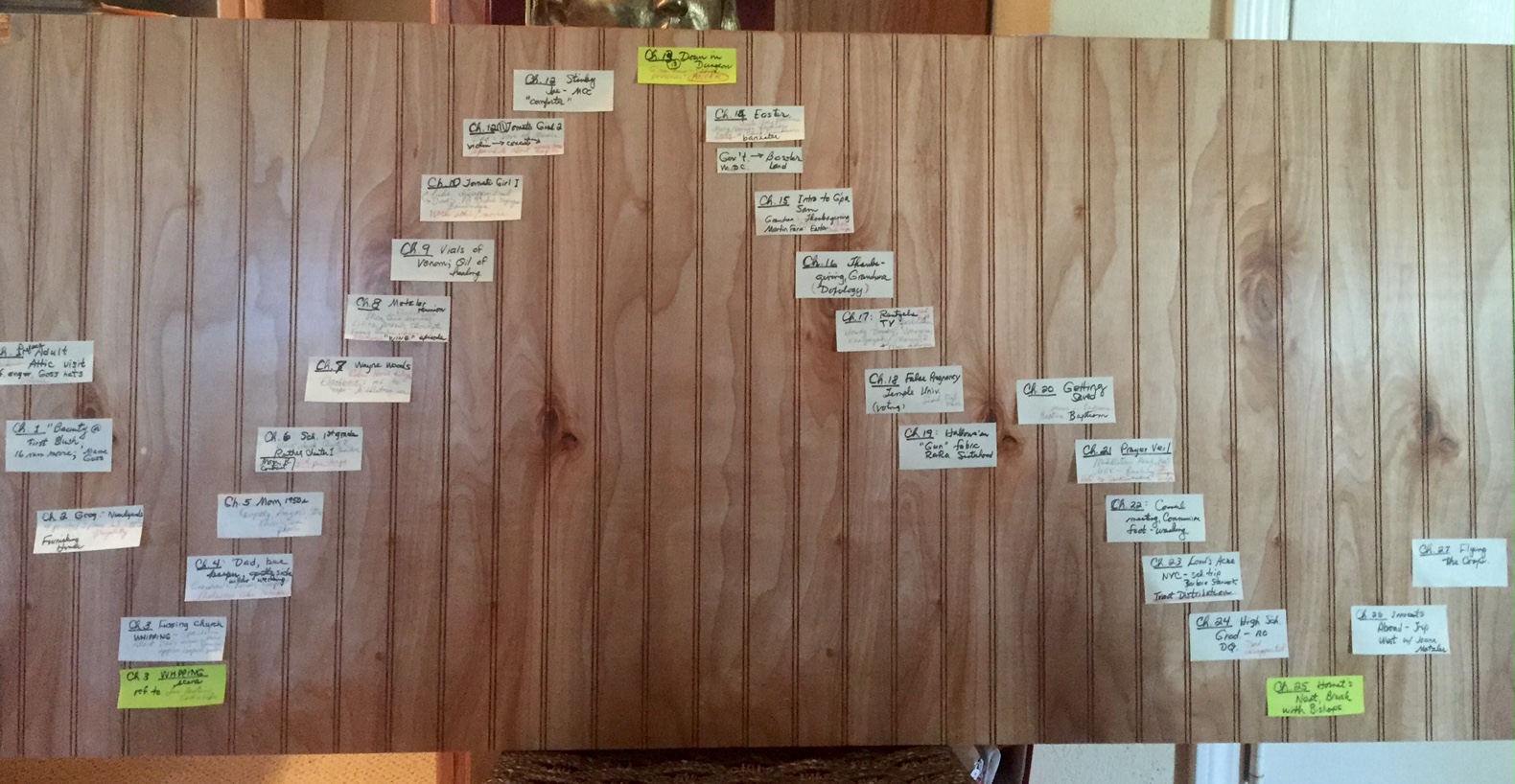
  1. I constructed a narrative arc composed of scenes relating to my theme. A narrative arc can take several forms: curvy like a hill or jagged like the Swiss Alps.

The core of mine turned into an upside-down V-shape, rather like a peak in the Swiss Alps

AlpsOutline1997

W-StructureBoard copy

The sticky notes make it possible for me to move ideas around easily. In fact, I’ve moved some notes into a different order since the photo was taken.

6. I’ve printed out copies of drafts. As I’ve progressed, I’ve stored manuscripts in labeled folders on my computer desktop. But I’ve also printed out copies of my drafts from my laptop because I find it helpful to touch the pages and make marginal notes in colored ink. Pages in the binders feel book-like, real.
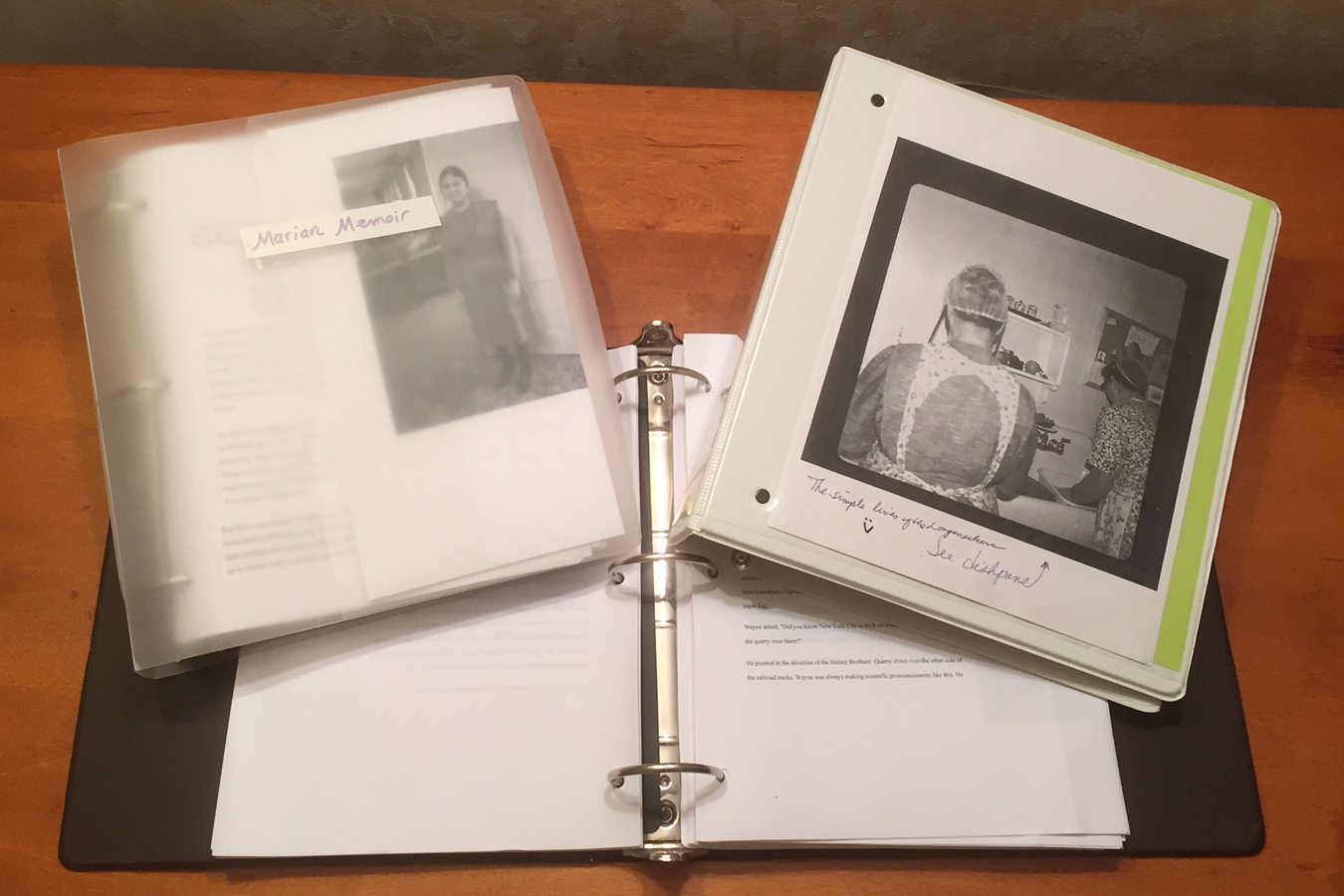
BinderManuscripts3 copy

7. I try to overlook messiness in my work space. Generally, I’m a neatnik, but worries about order, except in my writing, distract from my creative process.
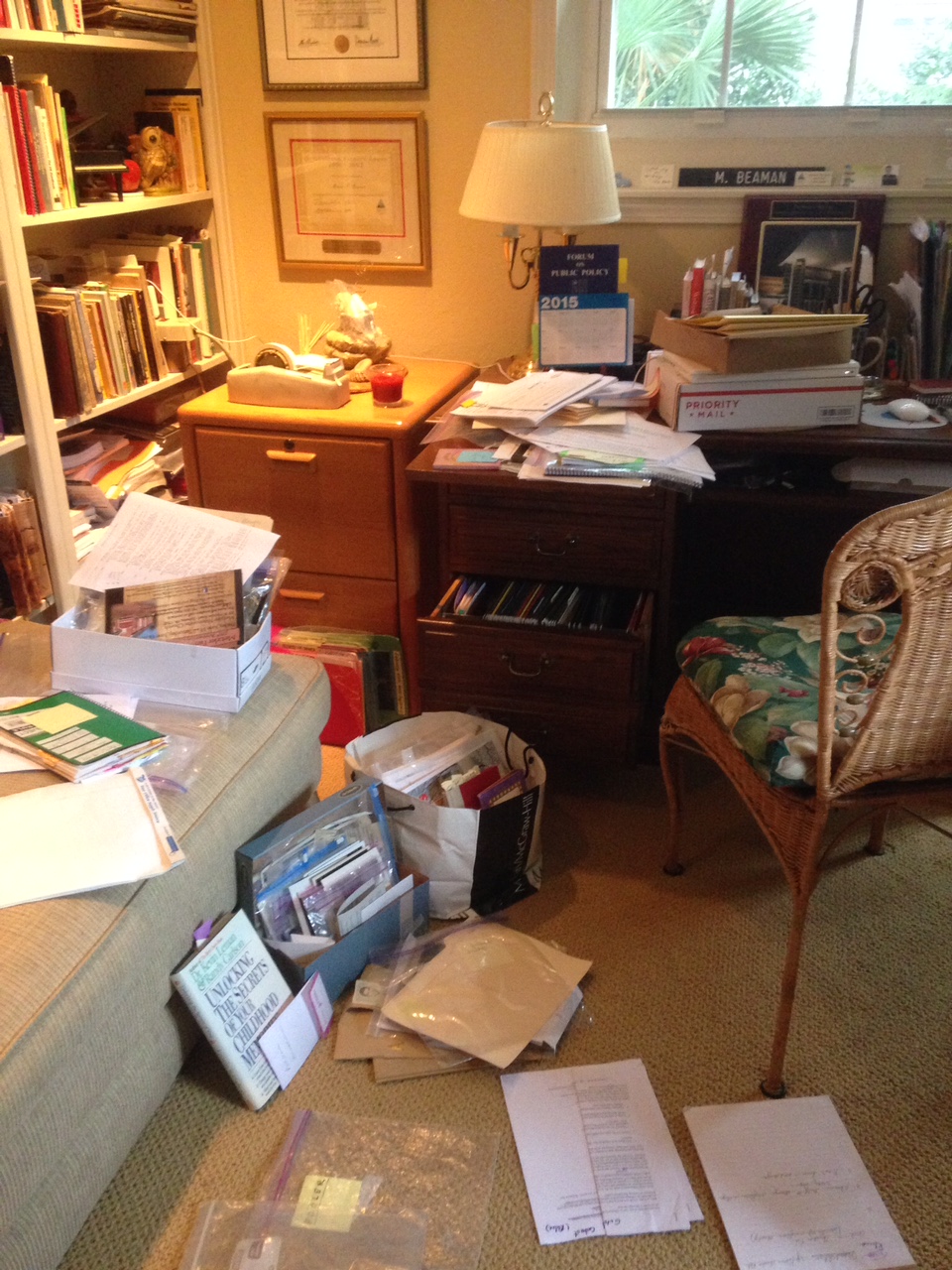
MessyDesk copy

So, that’s where I am now!

I began with an impulse to tell my story which progressed from

Journals –>  Blog posts –>  Memoir Drafts

At the moment, I’m in the muddy middle, aiming to complete the journey across the Alpine-scape of memoir.

More to come . . .


How about you?

Have you made a similar journey with memoir? How would you chart your narrative arc? 


Coming next: Moments of Discovery, a Bubble, a Dome, a Mirror
Easter Passion: Then and Now

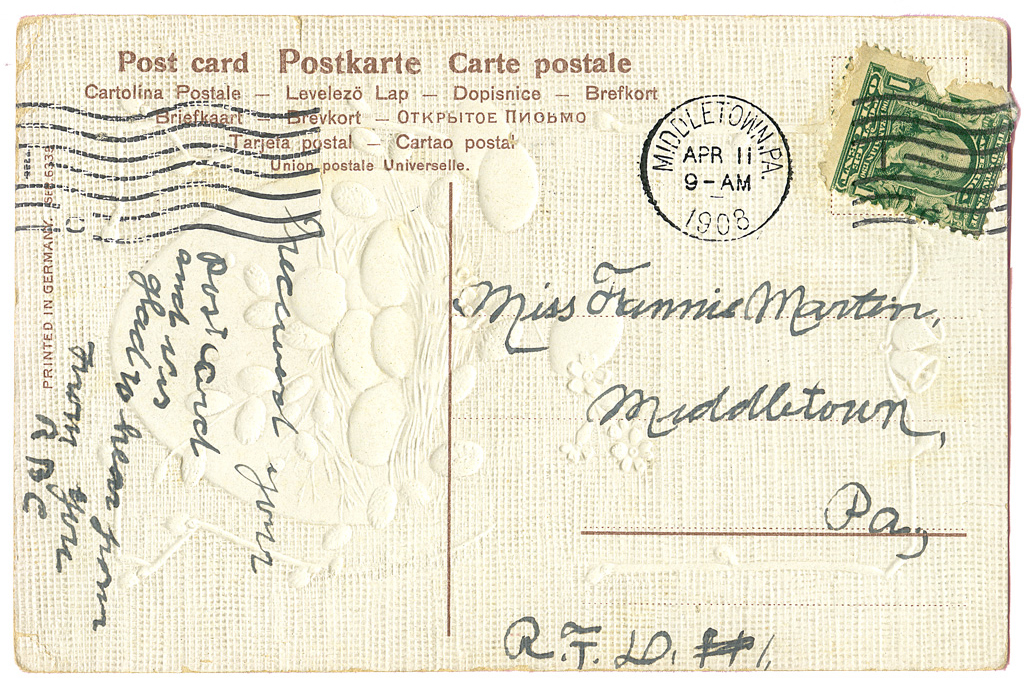
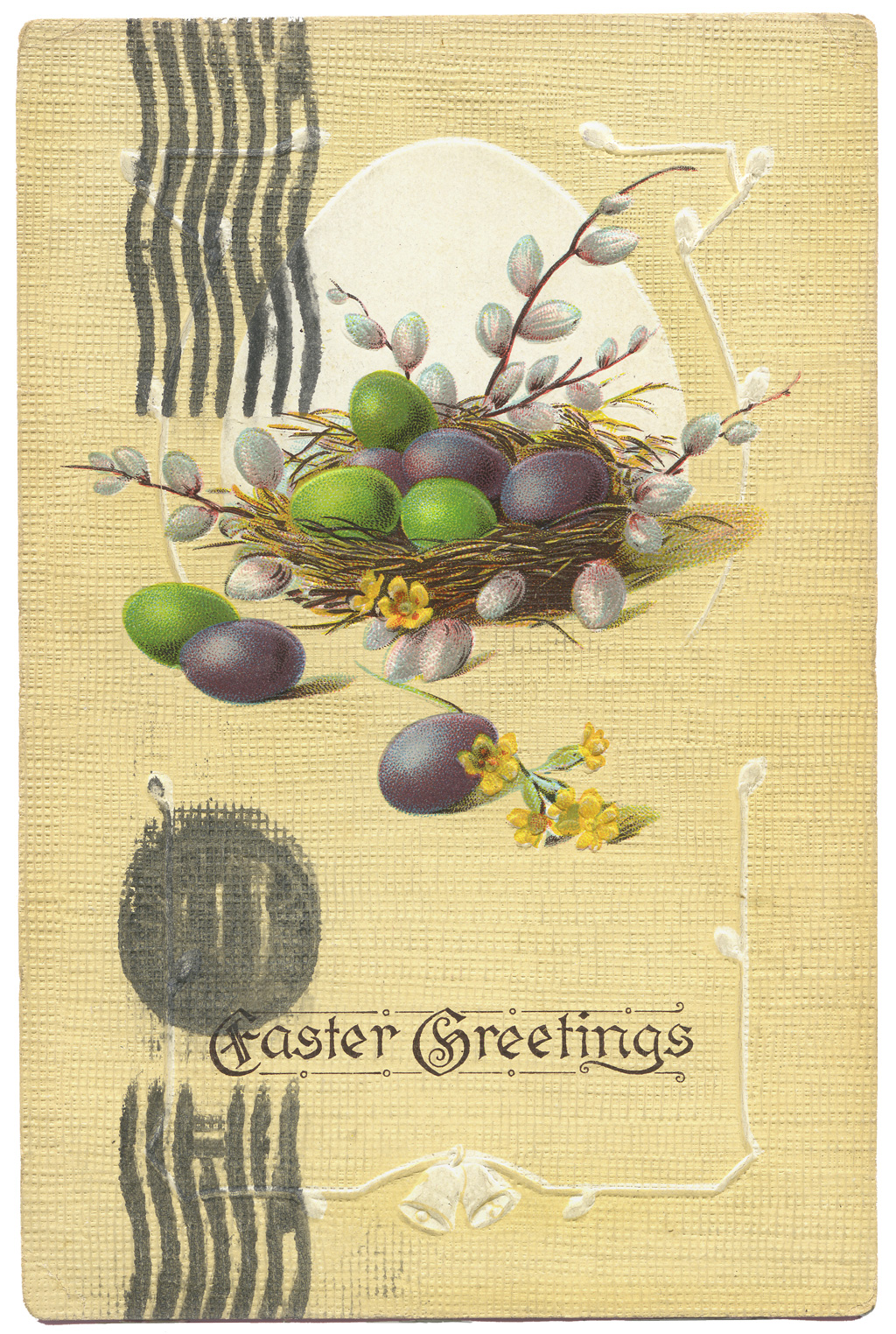
At Easter-tide I’m dipping once again into my Grandma Fannie Martin Longenecker’s stash of vintage post cards. Here is one dated April 1908 from “your RBC,” it says, with the postmark wrapped around the face of the card.

EasterPostcard1908?Front

EasterPostcard1908?Back


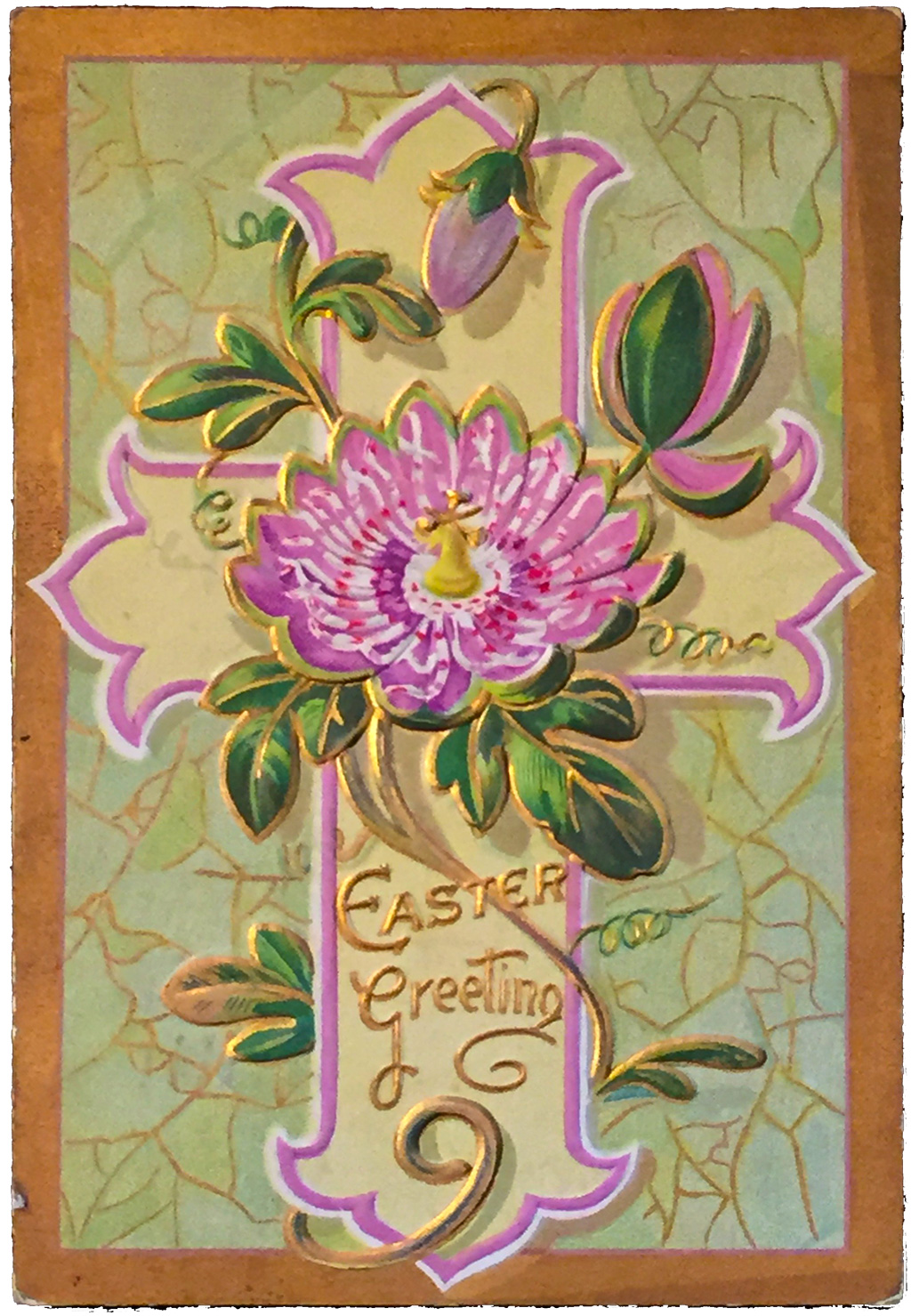
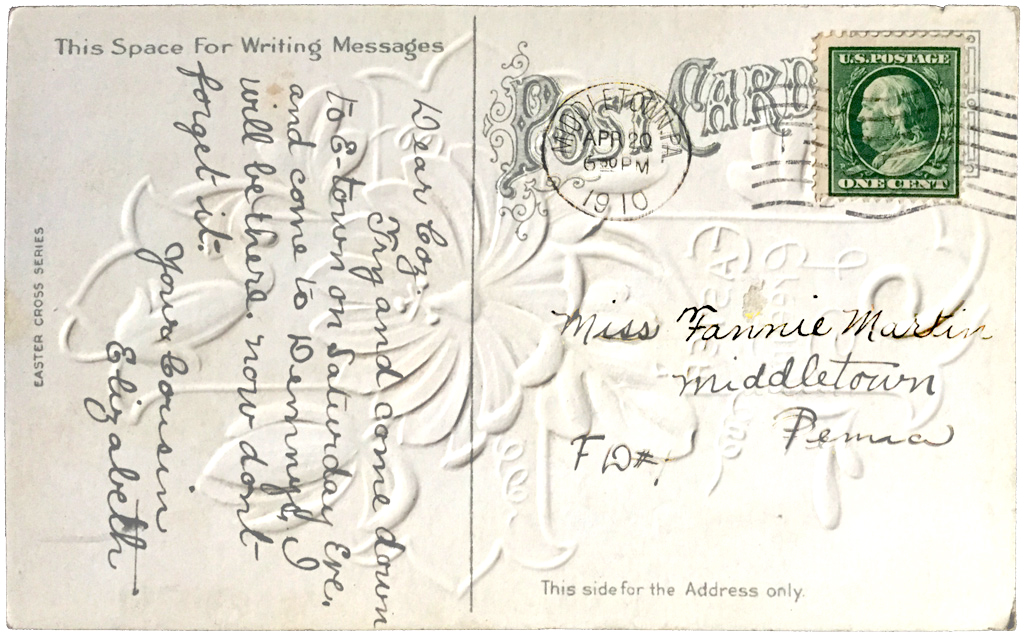
Another, from 1910, displays the marvelous passion flower adorning the cross.

EasterPostcard1910FRONT


EasterPostcard1910Front

The message from Grandma’s cousin Elizabeth begins with “Dear Coz” and in black flowing fountain-pen ink cursive begs her for a visit: “Try and come down to E-Town on Sat. Eve and come to Demmys. I will be there now don’t forget it.”


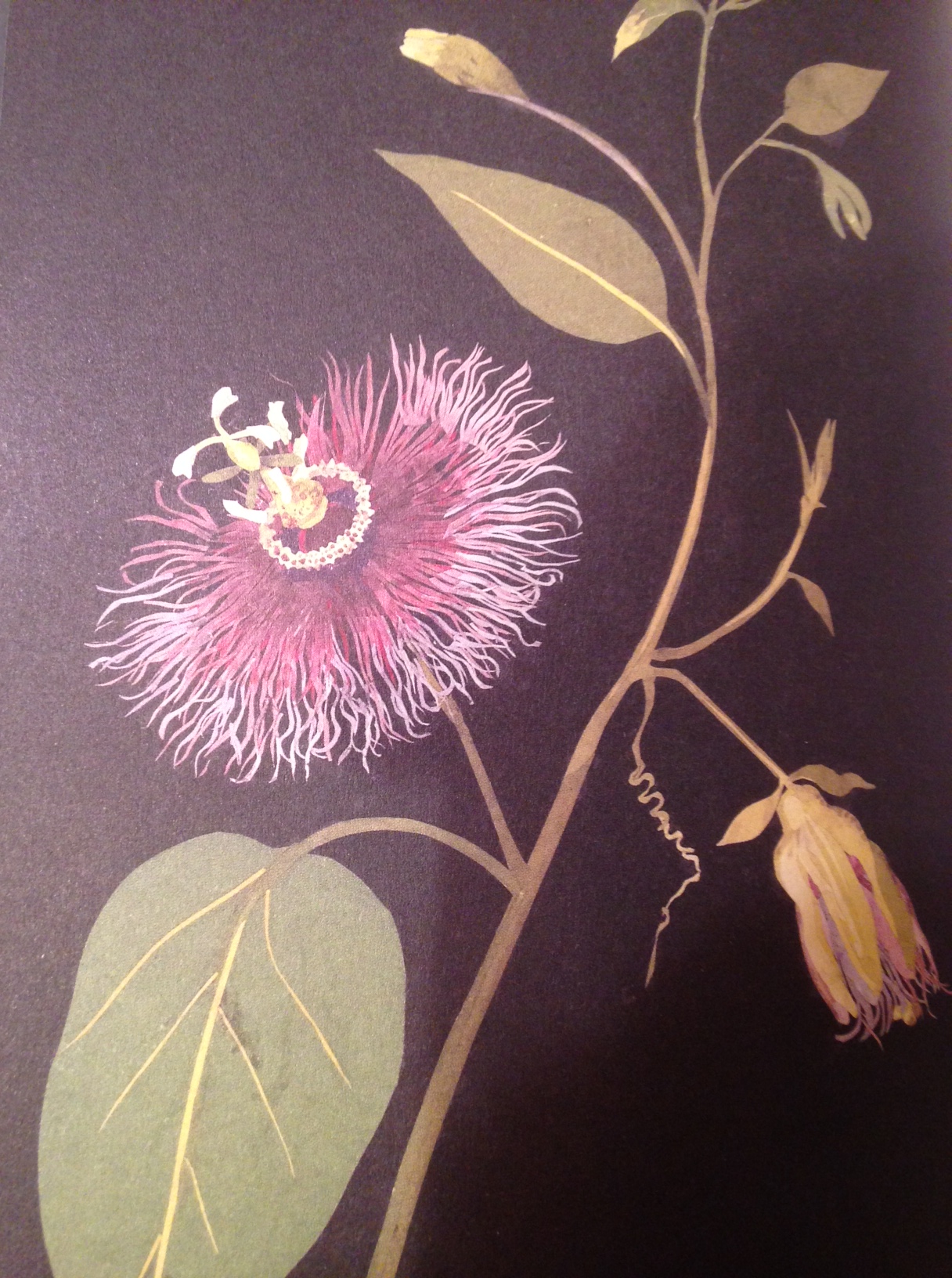
The passion flower which blooms in the spring has come to symbolize the suffering and death of Christ, hence the nickname “passion.” Mary Delany, herself a late-blooming artist, constructed a lovely flower with 230 petals with her scissors art.

passionFlower

The bloom (Passiflora) grown in my garden illustrates the religious symbolism explained below.

PassionFlower2012vase

One writer, a Franciscan sister, has expressed the meaning of the flower parts in this way.

In the 15th and 16th centuries, Spanish Christian missionaries adopted the unique physical structures of this plant, particularly the numbers of its various flower parts, as symbols of the last days of Jesus and especially his crucifixion:

* The pointed tips of the leaves were taken to represent the Holy Lance.
* The tendrils represent the whips used in the flagellation of Christ.
* The ten petals and sepals represent the ten faithful apostles (less St. Peter the denier and Judas Iscariot the betrayer).
* The flower’s radial filaments, which can number more than a hundred and vary from flower to flower, represent the crown of thorns.
* The chalice-shaped ovary with its receptacle represents a hammer or the Holy Grail
* The 3 stigmata represent the 3 nails and the 5 anthers below them the 5 wounds (four by the nails and one by the lance).
* The blue [purple] and white colours of many species’ flowers represent Heaven and Purity.


This is the season of spring, Easter, and Passover. Happy Holy-day to you!


Coming next: Climbing the Swiss Alps: 7 Steps Toward a Narrative Arc


Wanted: Forty More Winks

A Shock to Our Systems

Do you live where Daylight Saving Time has gone into effect recently? If so, today you may feel out of sync, sleep-deprived. The loss of even one hour of sleep pushes one’s biorhythms out of kilter.


Who’s to Blame: Daylight Saving Time

In the wee hours of Sunday clocks moved forward one hour, delaying sunrise and adding evening daylight. According to one source, a New Zealander proposed the modern idea of DST in 1895. Germany followed in 1916. Many other country since then have followed the spring ahead/fall behind routine, especially since the energy crisis of the 1970s.

The time change has been loved or hated ever since. My author friend Janet Givens provides a well-researched blog post on the topic. Her research explodes the myth that Daylight Saving Time is supported by farmers.


Sleep: A Cure

Medical journals including Psychology Today, often publish articles about sleep or the lack thereof. Such pieces also regularly appear in the table of contents of women’s magazine and AARP journals.

Literature is replete with references to sleep. In Shakespeare’s tragedy, Macbeth, who has recently murdered King Duncan, knows his sleep will be troubled or interrupted even as he ruefully ticks off its benefits:

“Sleep that knits up the raveled sleeve of care / The death of each day’s life, sore labour’s bath / Balm of hurt minds, great nature’s second course, Chief nourisher in life’s feast.” Act 2, Scene ii

  • Sleep repairs the unraveled parts of our lives, knits them up.
  • Sleep comes at the end of the day; it looks like a little death.
  • Sleep brings bodily relief from pain as do baths.
  • Sleep refreshes the mind.
  • Sleep is essential to life. We can’t do without it.

In Search of Forty Winks, Patricia Marx comments:

. . . party and then firing the cleanup committee. The New Yorker, February 8, 2016
 party and then firing the cleanup committee. (The New Yorker, February 8, 2016. pages 56. 57)


Ben Franklin and the Bible on Sleep

Early to bed and early to rise makes a man healthy, wealthy and wise.   ~ Benjamin Franklin

The sleep of a laboring man is sweet, whether he eat little or much: the abundance of the rich will not suffer him to sleep.     ~ Eccl. 5:1


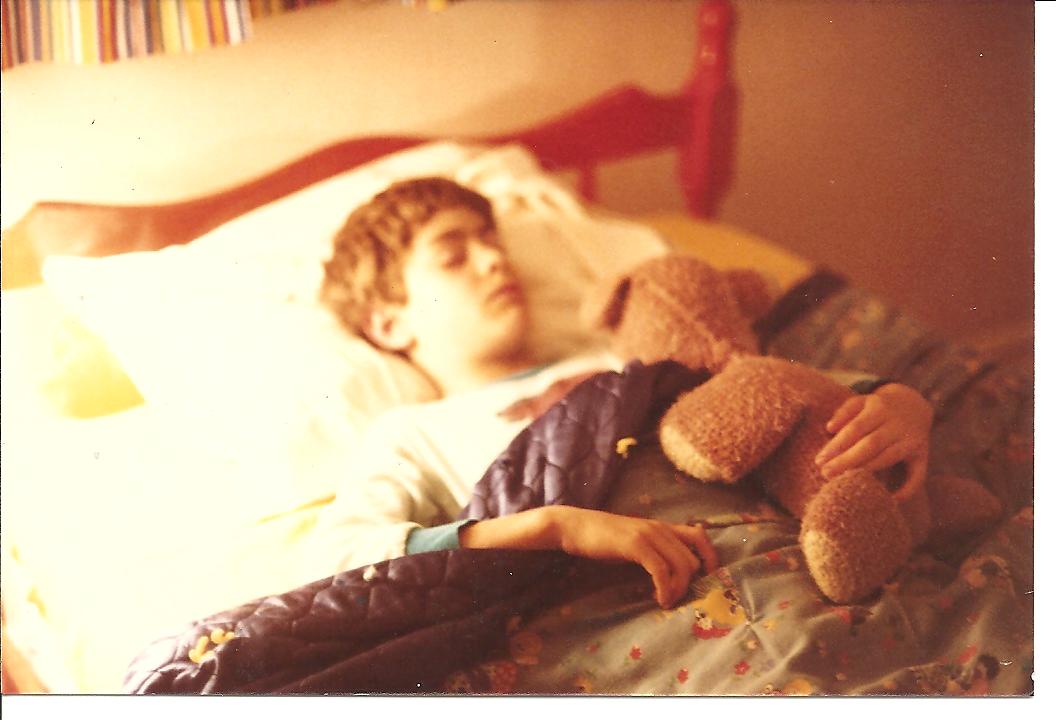
Sleeping Child

Joel sleeping with teddy bear, age 8
Joel sleeping with teddy bear, age 8 or 9

Our son Joel was fast asleep embracing his teddy bear knitted by his Great Aunt Ruthie. He may have been dreaming of riding his skate board or playing with match-box cars. As a nine-year-old, he was certainly not worrying about caring for children, the needs of a wife, mortgage payments, or at-work performance.

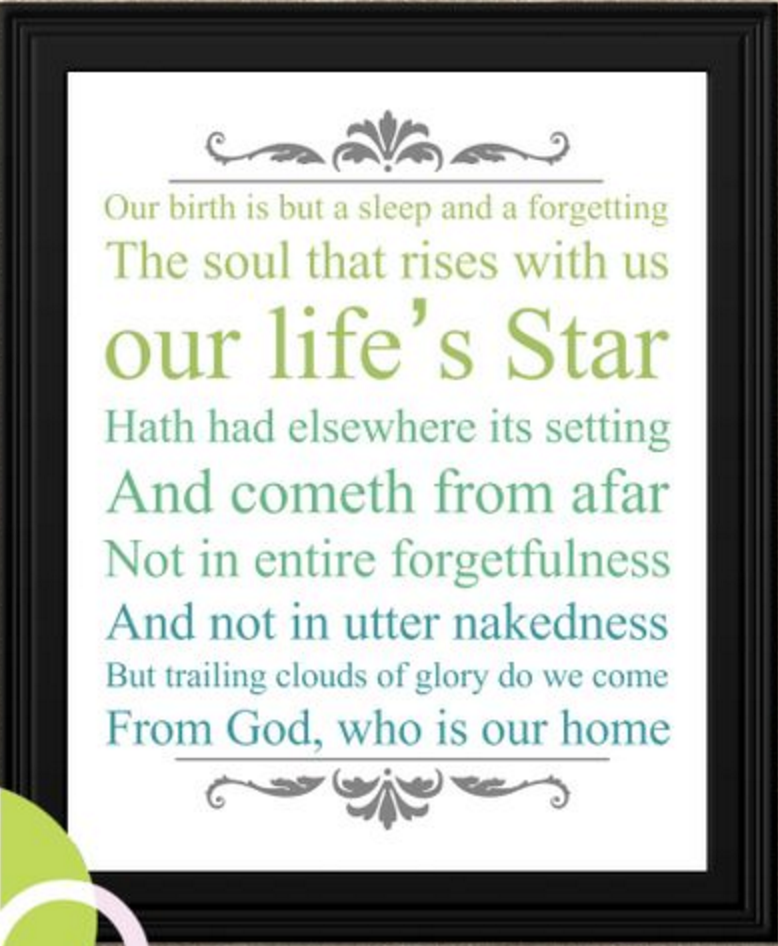
Wordsworth offers a philosophical perspective on sleep:

Ode: Intimations of Immortality, William Wordsworth Source: Pinterest


Here is the first stanza of a nursery rhyme Joel probably heard before he fell asleep:

Wee Willie Winkie runs through the town,

Up stairs and down stairs in his night-gown,

Tapping at the window, crying at the lock,

Are the children in their bed, for it’s past ten o’clock?


Comments about sleep, advice about getting more of it?  Your wisdom welcome here. All creatures need down time, even inanimate ones. Note that there is a sleep button on your computer, just above re-start.


Answer key to limericks published March 9, 2016 

1. lewd

2. dinner

3. divinity

4. weeds


Raise a Mug to the Irish!

Is there a drop of Irish blood in my veins? I doubt it. I grew up Mennonite in the Longenecker family in Pennsylvania Dutch country, a hot-bed of Swiss-German ancestry.

Still, the Irish-named Donegal Springs is a mere 3-mile, 5-minute drive from Rheems, Pennsylvania near my birthplace. In the adjoining Dauphin County are Londonderry Township. In Bucks County, a town named Dublin, sister city to the capital of the Republic of Ireland.

Photo courtesy of Artist Cliff Beaman Dublin, GA
Photo courtesy of Artist Cliff Beaman traveling through Dublin, GA

When we visited Ireland, we met a congenial gentleman named Buchanan, who remarked that he has immigrant relatives buried in the Donegal Presbyterian Church cemetery, a place he once visited.

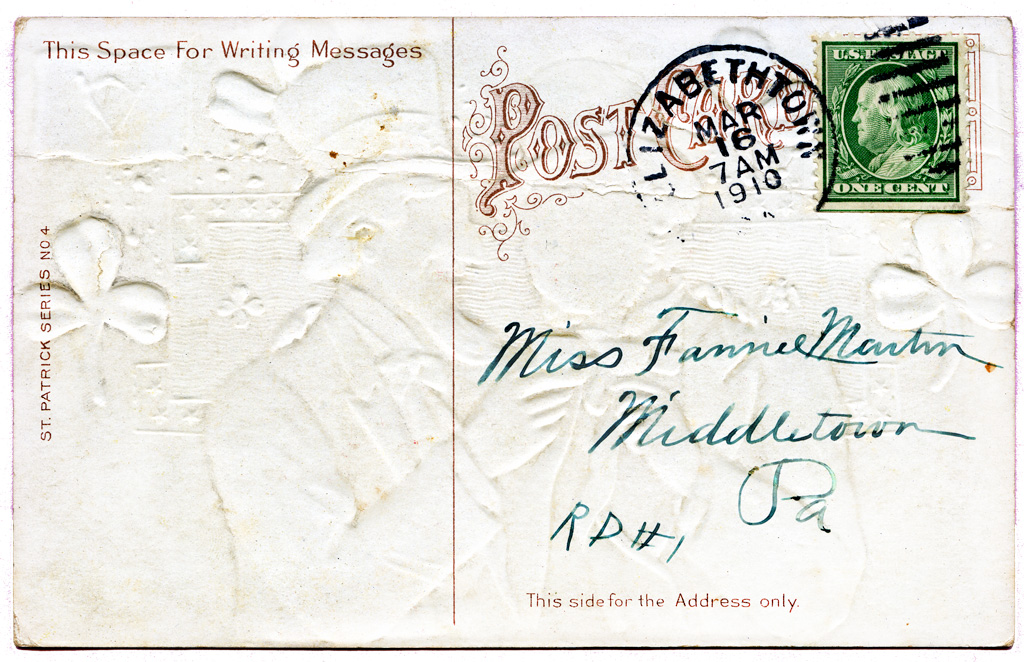
During my last trip to Pennsylvania, I discovered some vintage postcards stamped with penny postage, sent to Miss Fannie Martin, my Grandma Longenecker. Many of her postcards are embossed and saturated with color – no Photoshop filters needed.

In an era long before smartphones and text messages, postcards were valued. Instead of instant messages easily deleted and forgotten, these cards have become artifacts of my family history. The one below over one hundred years old is dated 1910.

StPat1912MUGfront

StPat1912MUGback

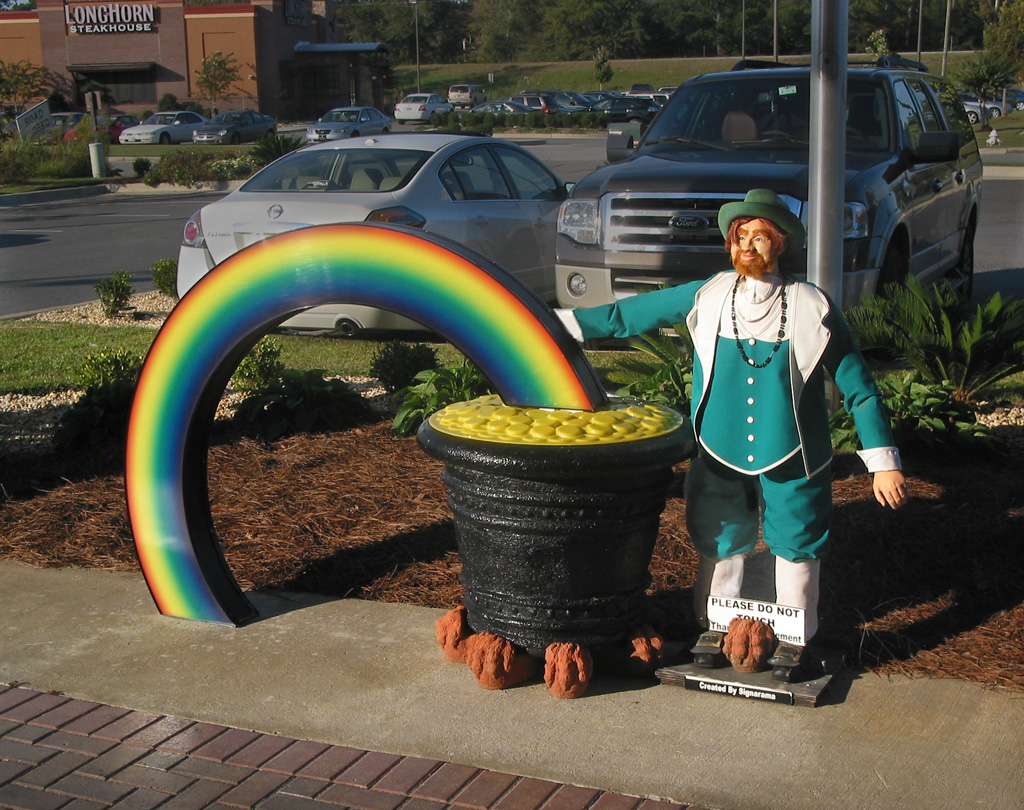
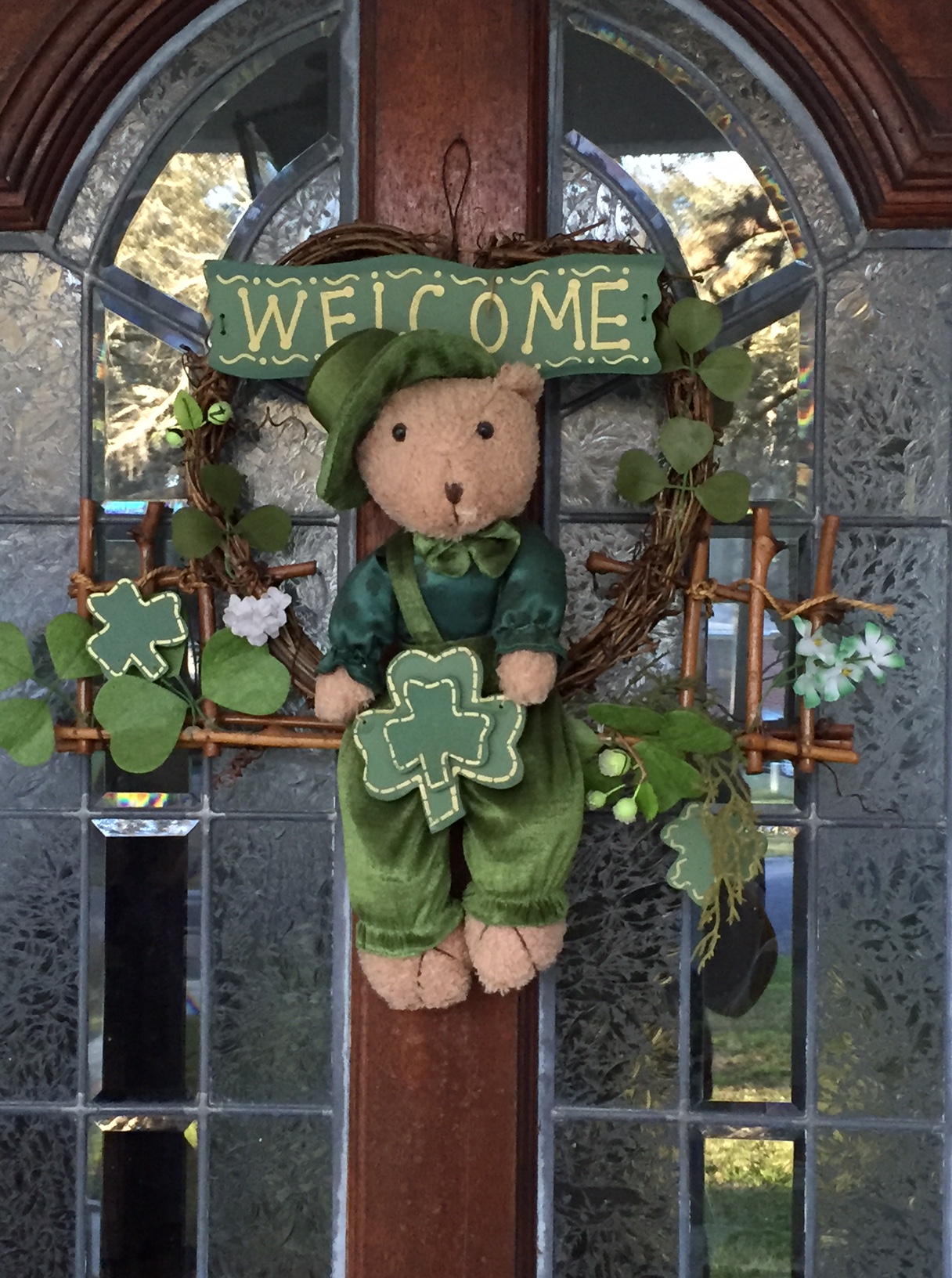
I live in a neighborhood where Irish names abound: Blarney Stone Court, Killarney Drive, Leprechaun Court, St. Patrick Lane. Names on residents’ mailboxes have included Dunleavy, O’Neill, and Kelly. We once had to fight a major retailer to retain charming shamrocks and moss-footed oaks in a wooded area adjoining our community. The hanging on our front door reflects the neighborhood and the season.

StPatBearDoor

St. Patrick’s Day this year falls on a Thursday, March 17. Until then, I wish you the luck of the Irish.

May the wind be always at your back and your pathways peaceful. If you are Jewish, Mazel Tov!

To enjoy these Irish limerick lines below add just the right word to complete the rhyme. Keep in mind the missing word must rhyme with the first and second lines. (Answer key in next week’s blog post.)

A bather whose clothing was strewed

By winds that left her quite nude

Saw a man come along

And unless we are wrong

You expected this line to be __________.

~ Anonymous


His sister named Lucy O’Finner,

Grew constantly thinner and thinner;

The reason was plain,

She slept in the rain,

And was never allowed any _________.

~ Lewis Carroll

There was an old fellow of Trinity

Who solved the square root of Infinity,

But it gave him such fidgets

To count up the digits,

He chucked Math and took up _________.

~ Anonymous

There was a young farmer of Leeds,

Who swallowed six packets of seeds.

It soon came to pass

He was covered with grass,

And he couldn’t sit down for the_______.

~ Anonymous


Edward Lear, Ogden Nash, and Lewis Carroll are among the best versifiers of this humorous form. If you want to cook up your own limerick, here is a link to the recipe with a pattern for the rhyme scheme.


Coming next: Wanted, Forty Winks


How to Teach a Piano Lesson

“Joel, I’m going to the Christian Light Press in E-Town for some birthday cards, do you want to go along?”

“Okay, Mommy, do you think they have lollipops?” queried my mischievous son.

“I don’t think bookstores have lollipops at the counter like doctor’s offices do, but maybe they have other fun things to look at,” I said, thinking he would enjoy an excursion into town while visiting his cousins in Pennsylvania.

Entering the store, I spied precious novelties tempting to touch, a fact that struck me with a fearsome shudder because I had an 8-year-old in tow.

“Now don’t touch anything. Just look. Do you see the sign on the display? It says ‘If you break it, you buy it!’”

“Uh huh,” he said racing to the music boxes and other curios.

I turned to the bank of colorful greeting cards not far away eyeing cards appropriate for Mother and sister Jean.

“Squeak-thunk,” was the next sound I heard across the aisle, close to where I saw the top of Joel’s thatch of brown wavy hair.

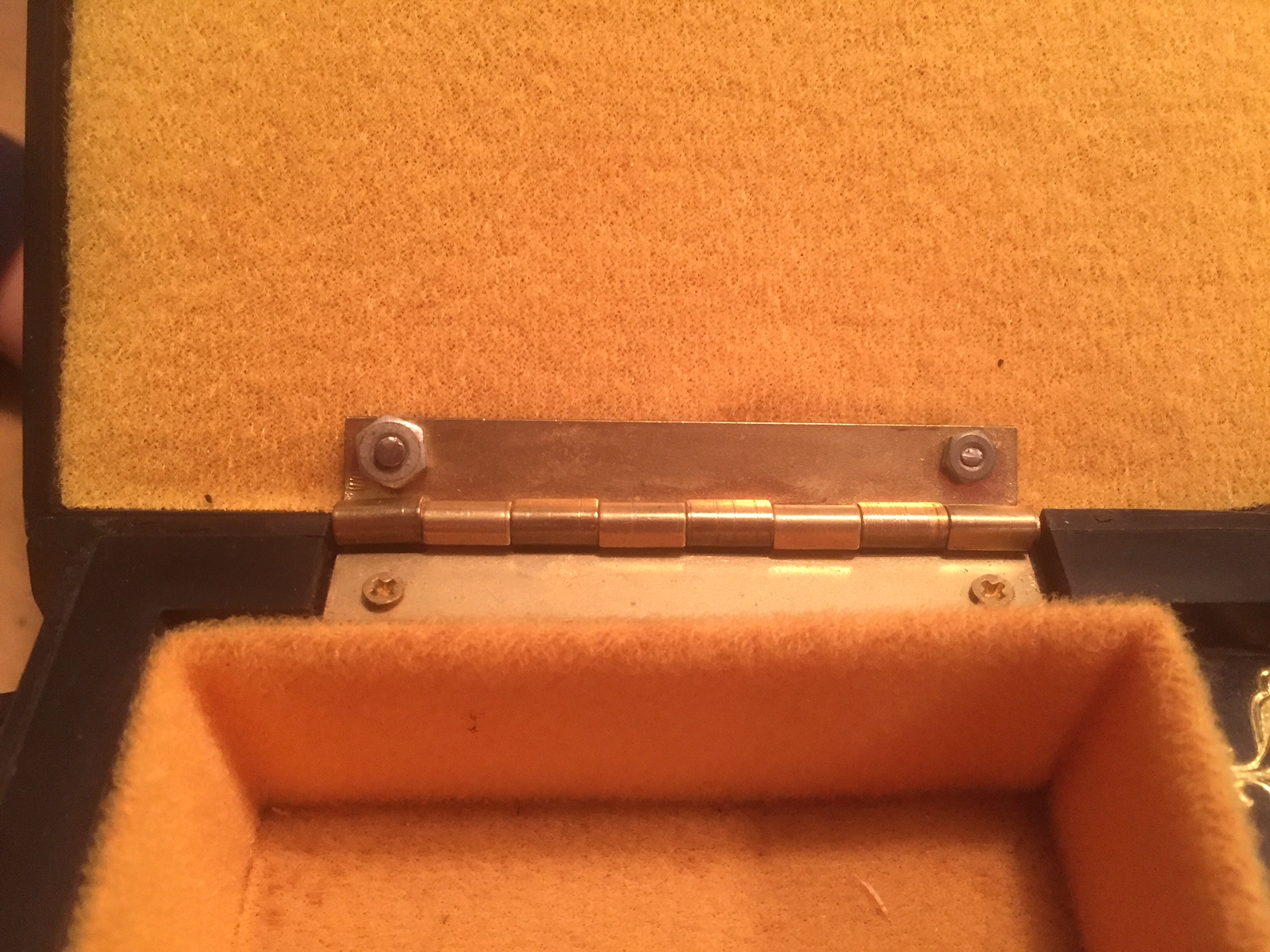
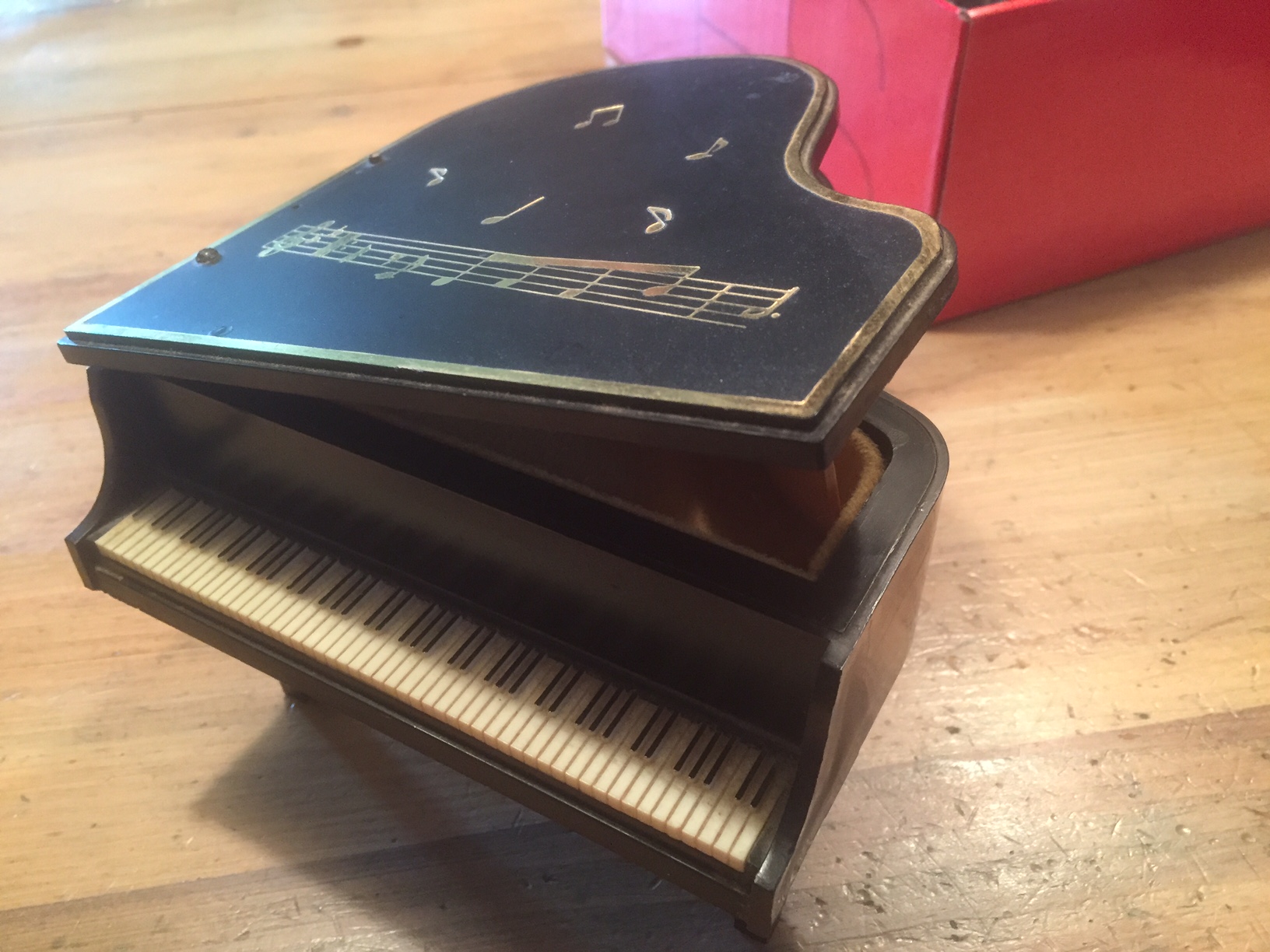
Cards in hand I strode over toward Joel and saw him holding a toy baby grand piano. As I looked closer, I noticed the hinge to the piano lid was halfway broken off. Turning the piano upside down to reveal a music box attached underneath, I noted a sticker. The price tag announced: $ 13.95. Please understand, we were a struggling young family in the 1970s, my husband and I both teachers, so the money registered on my mental calculator as a staggering figure.

Right there and then I had a double D attack: disappointment at my son’s disobedience and dread coursing from head to toe knowing we had to face the owner and admit to the breakage.

My feet felt like lead as I led Joel by the hand and I trudged down the aisle toward the clerk/owner who appeared to be glowering at us behind a tall metal cash register with raised keys and a bottom drawer that slammed shut.

I approached the counter speechless but managed to turn over the music box revealing the price tag. Swallowing slowly I formed words, “I guess we’ll need to pay for this. My son broke it accidentally.”

“Yes, you will. You see what the sign says.” I knew the warning only too well.

Opening my wallet hesitantly, I shelled out the dollars and cents, Joel standing by my side his head hanging, embarrassed and chastened.

* * *

Leap forward over thirty years, and son Joel now has his own son Ian, also age eight.

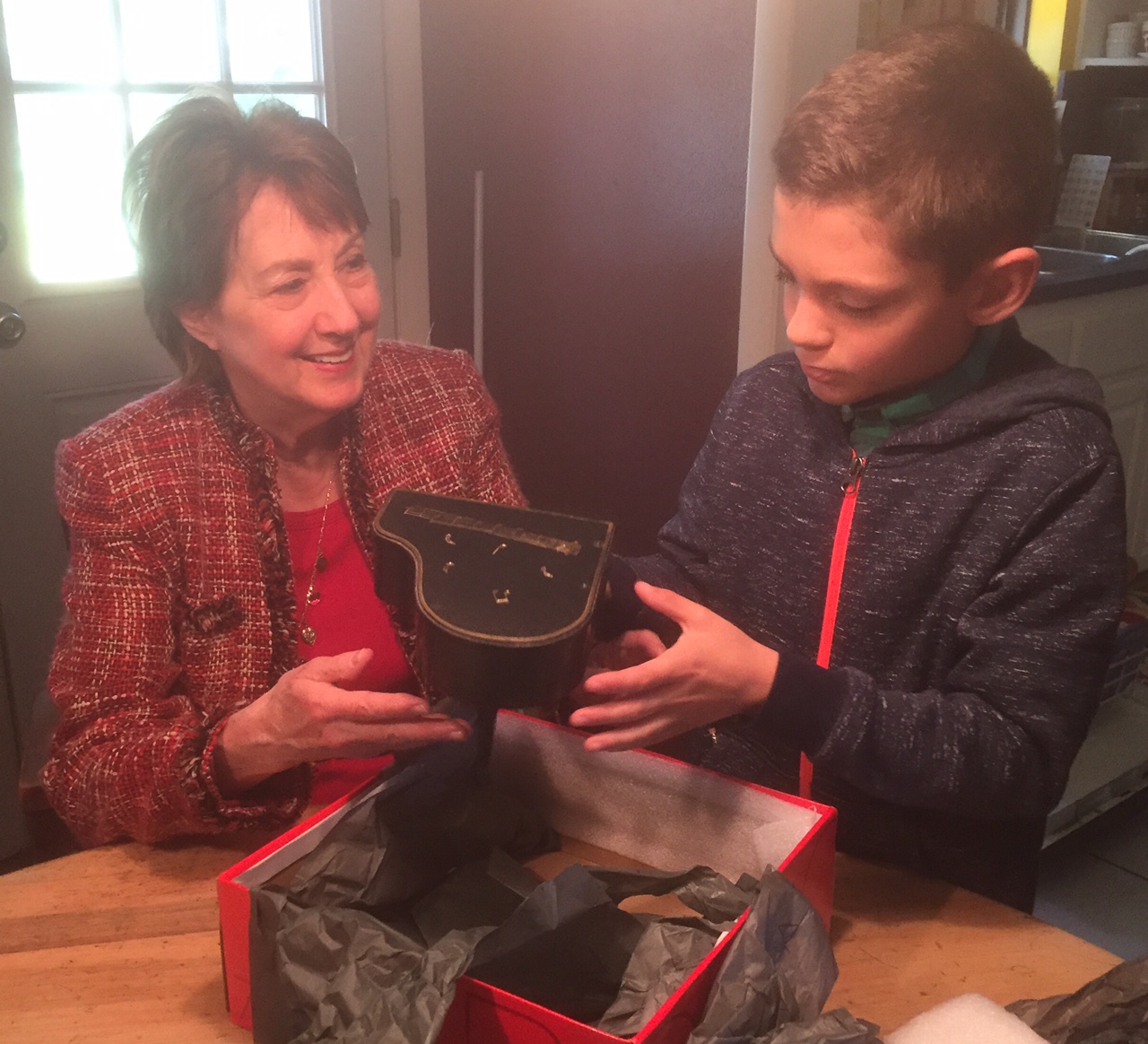
Several weeks ago I presented Ian with this same piano that has sat on my bookshelves for decades, occupying space between American poetry and art history books. Because we are downsizing, I have been passing along keepsakes to the next generation.

Joel was privy to my intention and approved my gifting the piano that plays the Lord’s Prayer as a tinkling, lullaby tune.

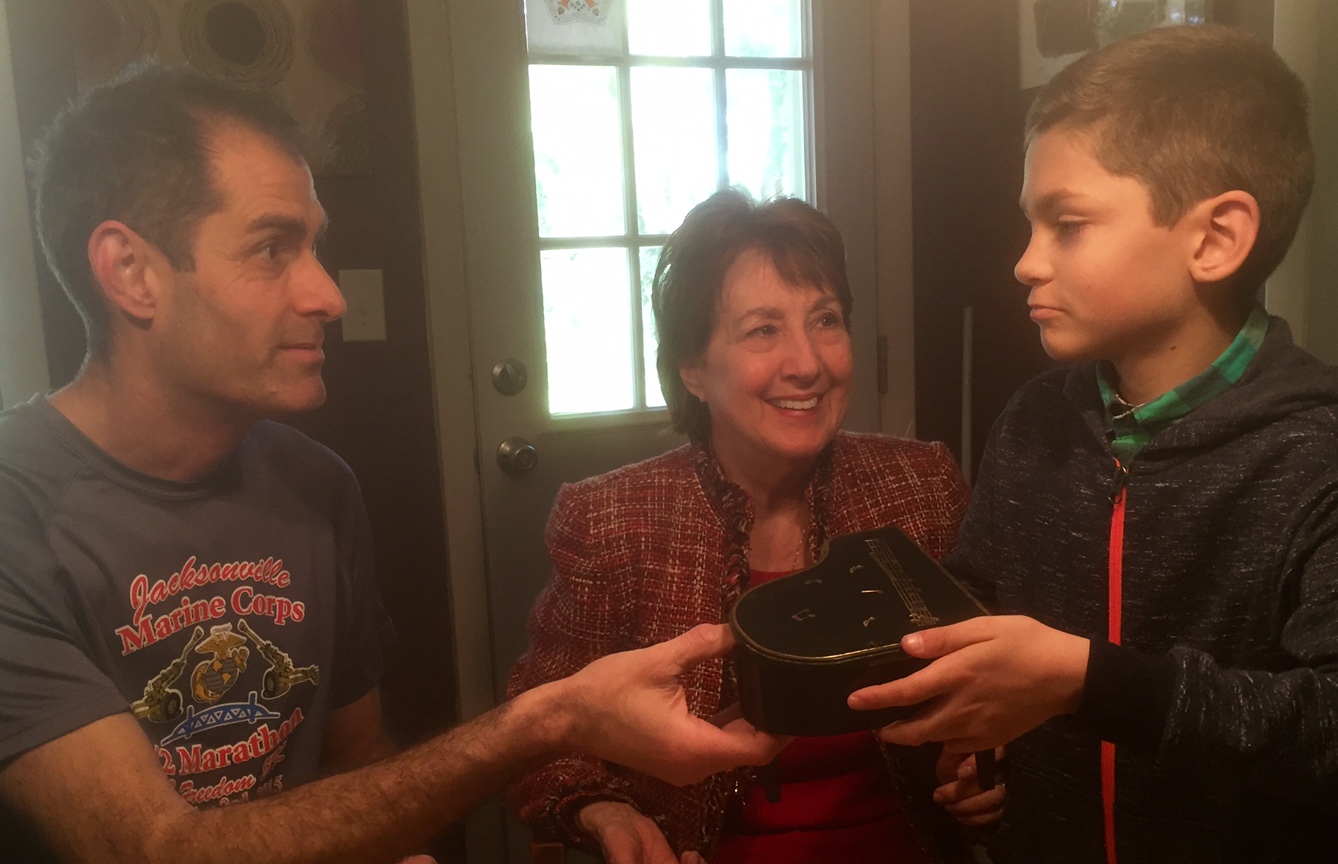
The presentation of the bequest began with a sturdy, red shoebox surrounded by tissue and foam padding. And then the unveiling . . .

IanOpeningPiano

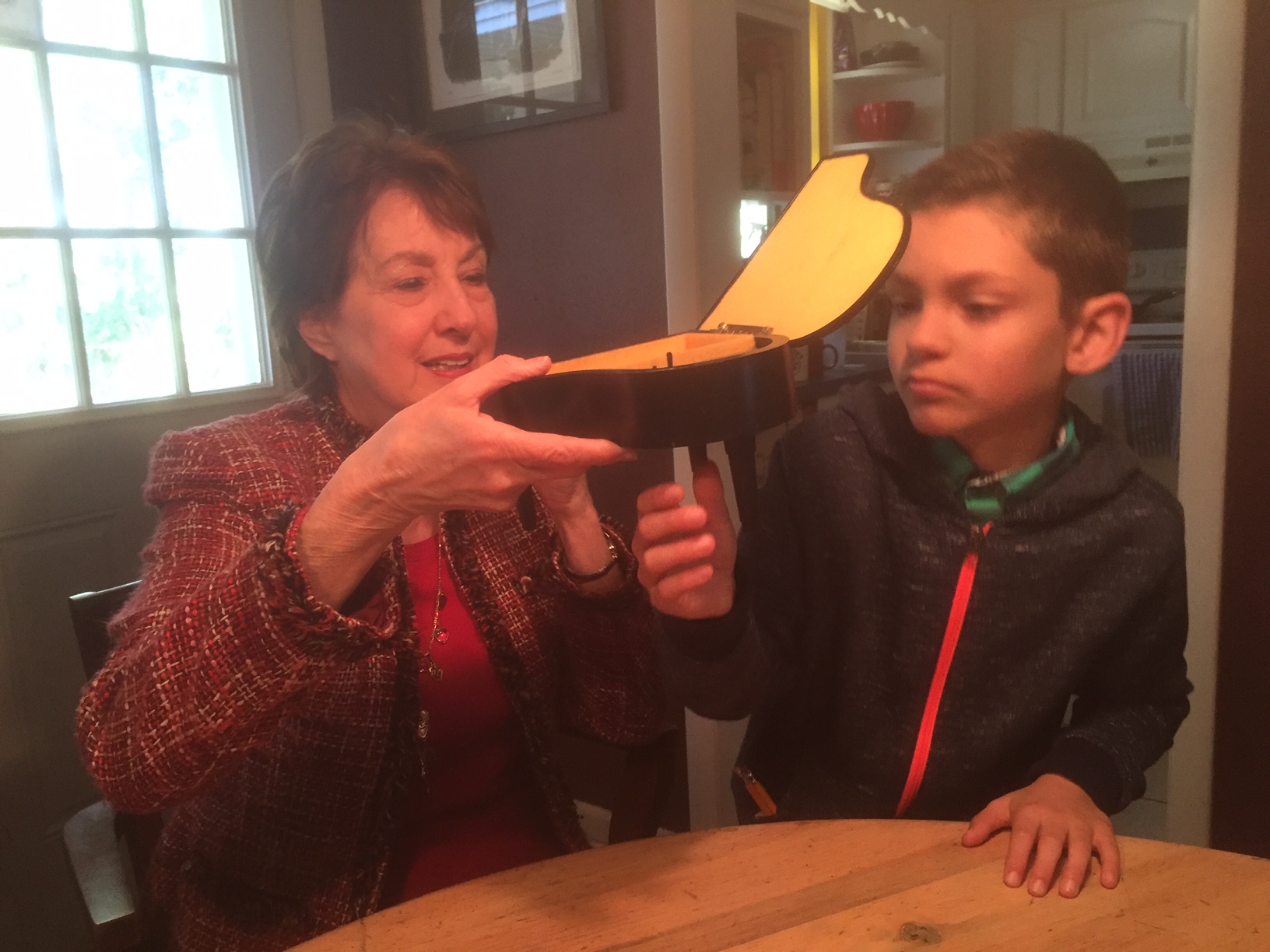
Turning the wind-up key, voilá – sweet music filled the air.

PianoTwist Key

I announced, “When, he was your age, your dad broke off one of the legs on this toy piano.”

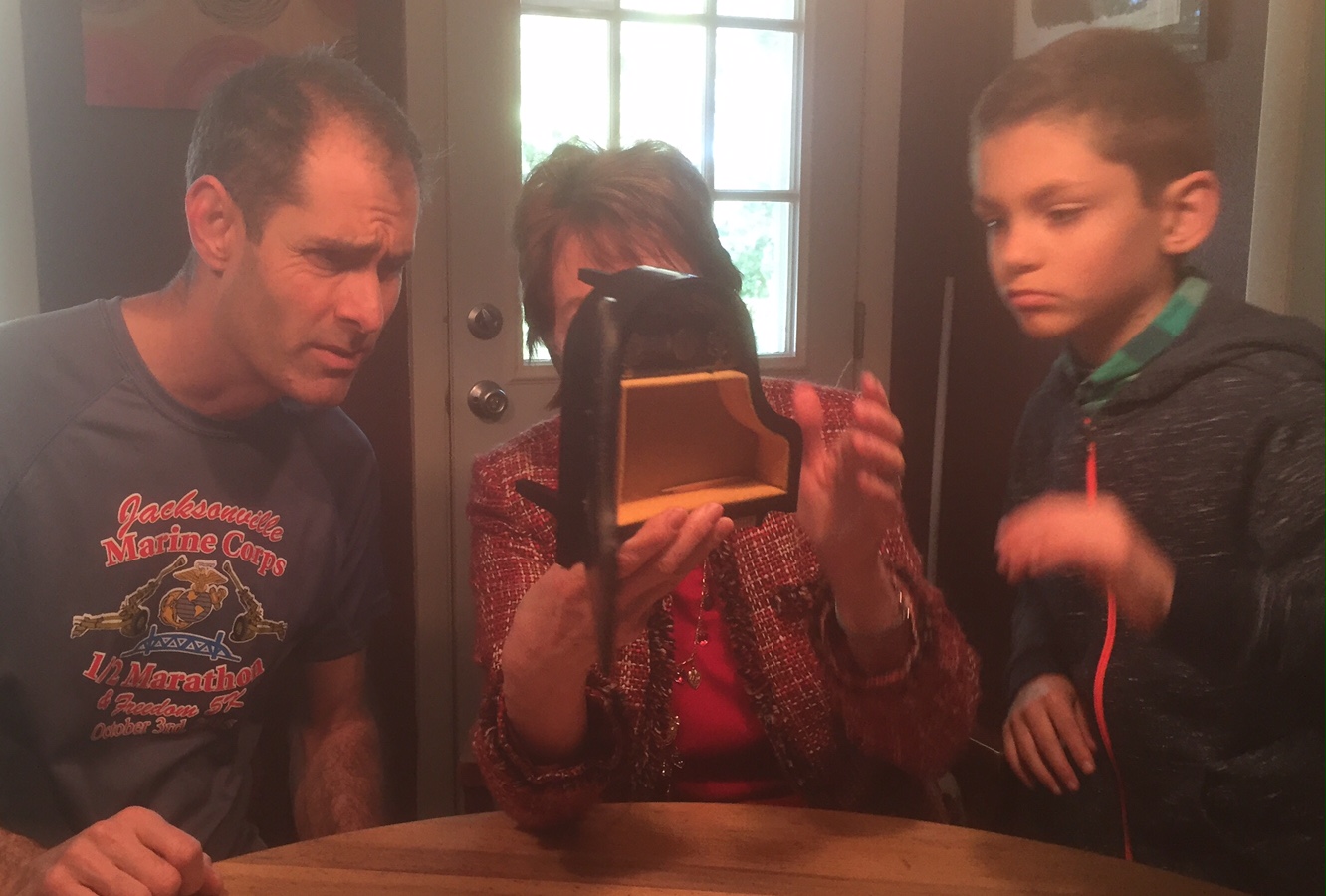
“Oh, no, not a leg, the hinge was broken off,” Joel corrected.

JoelPassingToIan

My memory had played tricks on me and the cause of the accident had morphed into something else.

Memory can be fuzzy sometimes. It’s not fixed as a photograph / locked in an album, / but it changes, it develops, mixed with time,” as Barbara Crooker wisely observes in her poem, Not a Spoon, a Key. Sometimes memory can even be wrong.

Squinting now at the underside, I see the replacement on the left, slightly larger screw and bolt than those on the other side. Lid held up with two toothpicks.

IngeFixed

ChristianLightPress13.95

And here it is, good as new!

PianoUpClose


Not a word was spoken about doing the right or wrong thing.

Words weren’t necessary.


Can you relate to my dilemma here?

Has your memory of family incidents every played tricks on you? Readers will enjoy your story and so will I.


Coming next: Raise a Mug to the Irish