A Glorious Fourth, 1909 Style and a Memoir Tip

Would you pass up an invitation to a lawn soirée on a holiday weekend? This week 107 years ago my grandma, Miss Fanny Martin, then a single woman, received a penny postcard invitation to such a gathering on July 3, 1909.

PostcardBackFourthJulyGrandma


Mary Elizabeth Kob writes in neat cursive: “You are heartily invited to attend a Lawn Soirée July 3, 1909 in honor of Jacob S. Kob at his home. Meet 7:30. Refreshments. Respectfully, Mary Elizabeth Kob.” I assume my grandmother attended the party.

PostcardFourthJulyGrandmaFRONT

From my vantage point in the 21st century, it’s hard to piece together the details. Was Mary Elizabeth Jacob’s wife, daughter, or sister? Based on the name alone, it’s hard to tell. Was the occasion a combination birthday and Fourth of July celebration? If so, the emphasis may have been on the national holiday judging from the red, white, and blue postcard colors.

Leo Kob was the only “Kob” name familiar to me when I was growing up in Elizabethtown, Pennsylvania. Leo, whom I heard my parents refer to as “Kobbie,” owned a G. E. Oil and Gas Heating business in Elizabethtown, a family business that boasted the phrase “Since 1904” in a page in my high school yearbook. Maybe Leo bought or inherited the business from his grandfather or father. Was Leo related to Jacob? A search of genealogical records could prove or disprove any relationship.

Yes, excavating one’s family history leads to questions, some without clear answers.

Piecing together fragments of family history requires a measure of conjecture and speculation. Therefore, when one reaches the limits of family history and historical record, what happens next? Memoir writers can use a technique known as “perhapsing,” a tool for supplying detail in a scene when memory is unreliable or when facts are simply missing. According the writer Lisa Knopp, “The word perhaps cues the reader that the information [the writer] is imparting is not factual but speculative.” Because deviating too far from fact could result in fiction, life story writers have a tight rope to balance here. Yet “perhapsing” used sparingly or a well-placed “it might have been” can occasionally provide motivation and action, adding richness and complexity to the narrative.

Knowing about Leo Kob and his family is not critical to my own memoir writing, but writing about the details of my visit to New York City to distribute gospel tracts as a young Mennonite girl is significant, as this excerpt illustrates:

Perhaps my memory has amped up the details, but I can now imagine this frightful creature grabbing me by the shoulder in a death grip as I am spun round and round like a whirling dervish. In my film clip of this horror show there was little I could do to resist the grasp of this drunken prophetess. I felt dizzy and afraid.


About this 1909 postcard? When my plain Grandma Longenecker received this post card, she looked like this:
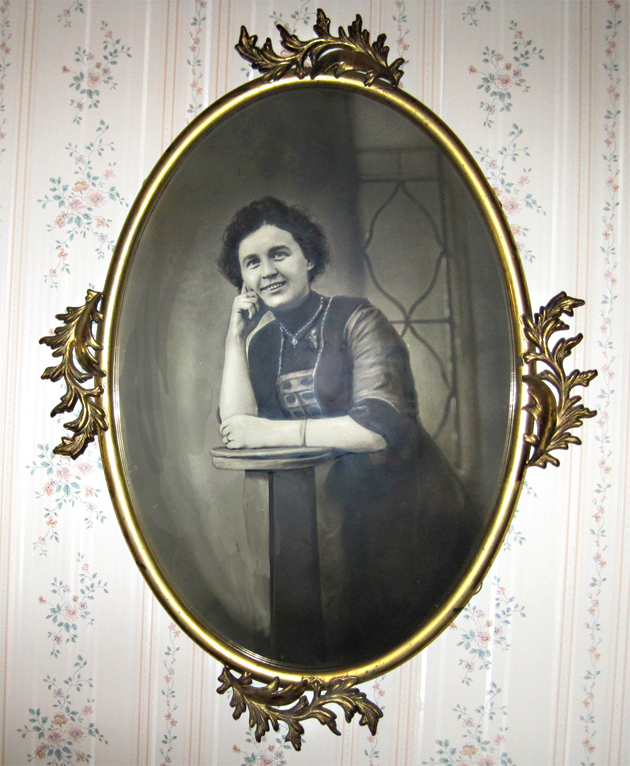
Fancy Victorian Fannie Longenecker before she became Mennonite

I found it in a stash of other cards inside the fold-out compartment of Aunt Ruthie’s secretary. What other treasures may be hiding there? I wonder.
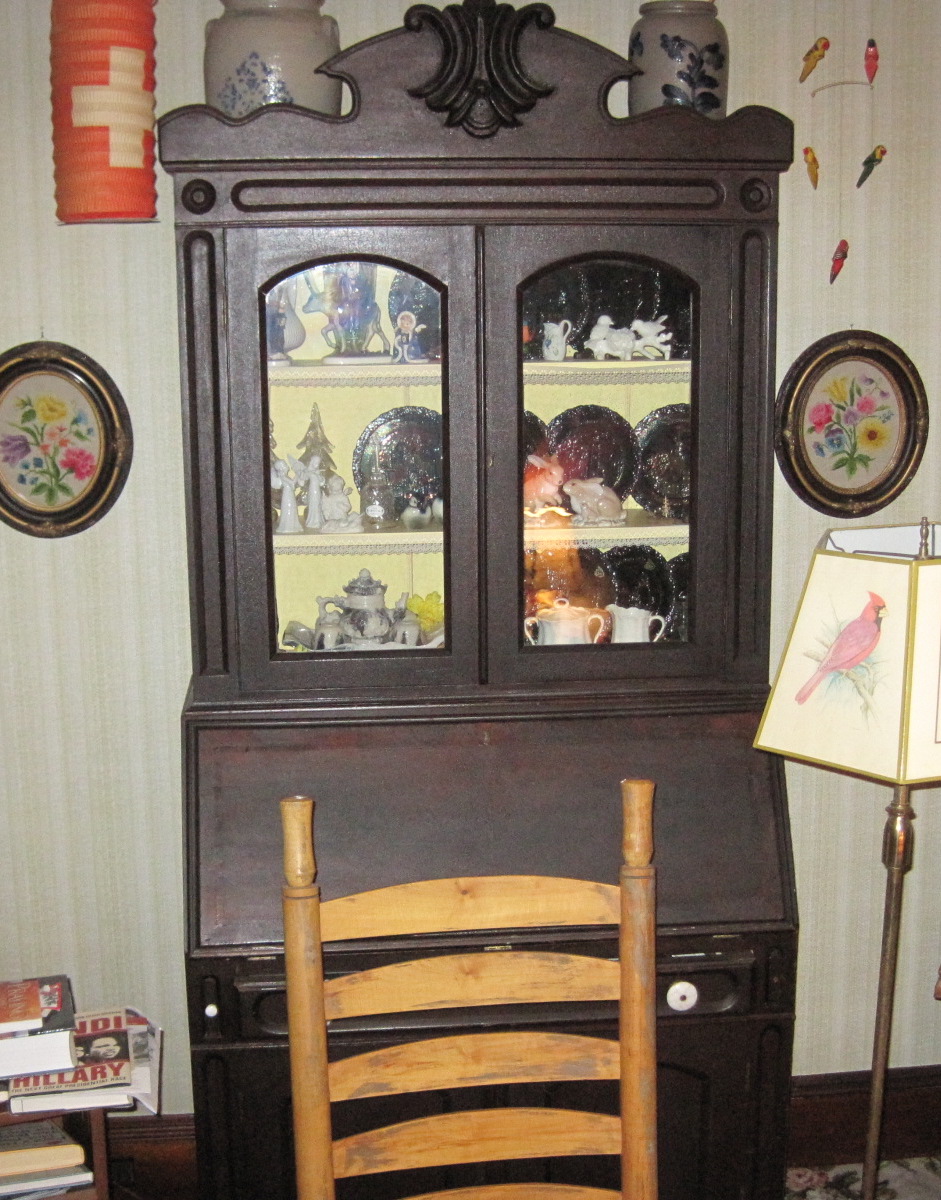
Secretary_Ruthies_0520


What treasures have you found either by design – or unexpectedly?

As a reader, what do you think of the literary device called “perhapsing”? Have you used it as a writer?
A Rollicking Review: Marie Kondo’s Tidy Book and a Messy View

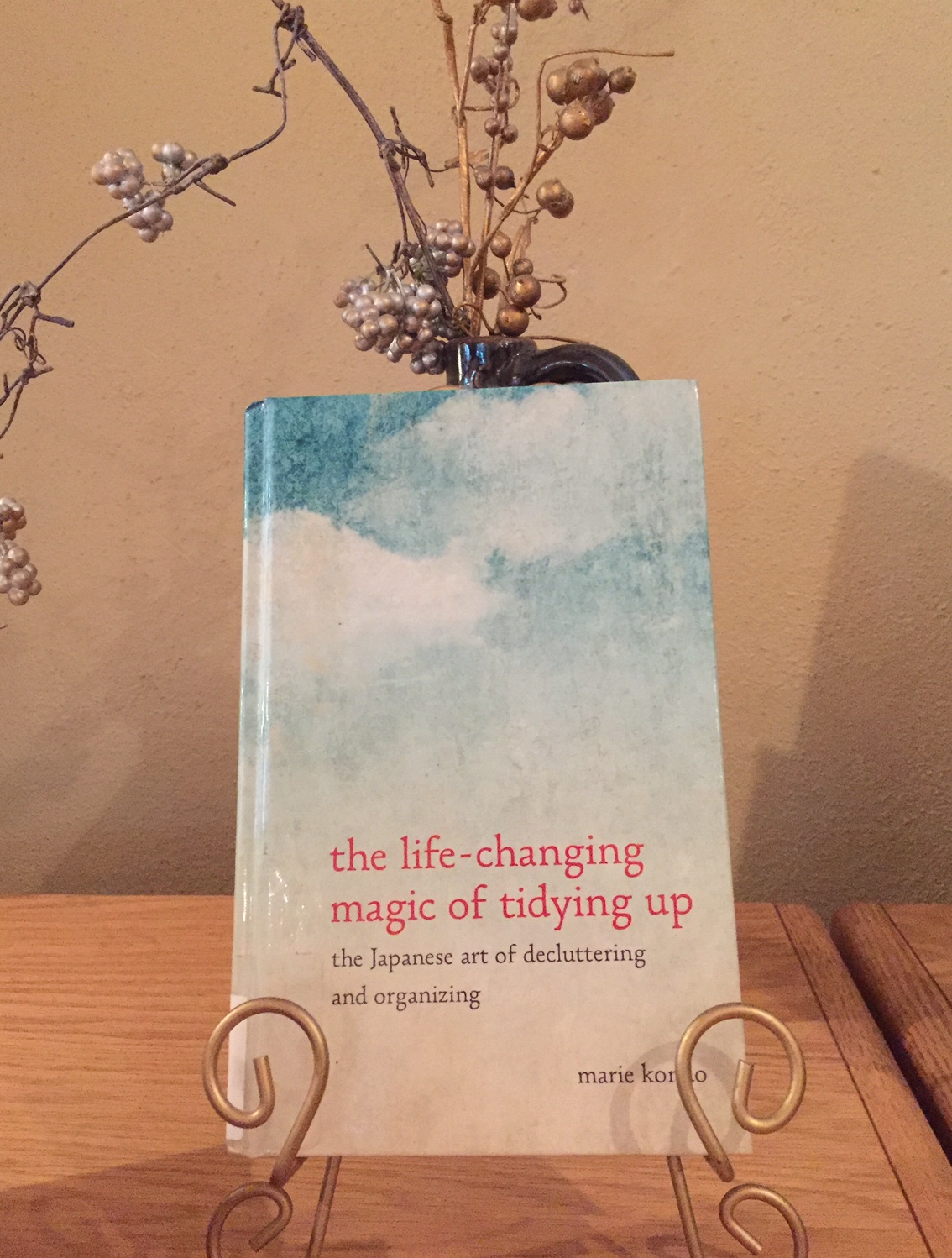
In last week’s post Paring Down and Tidying Up, I referred to Marie Kondo’s New York Times best-selling book, The Life-Changing Magic of Tidying up. Her book has sold over 5 million copies and is being translated into 40 languages.  I promised you a review and here it is.

KondoBookCover

The Review: The life-changing magic of tidying up, Marie Kondo

“Organize your home once, and you’ll never have to do it again.” Tidying consultant Marie Kondo, who has a three-month waiting list, insists you will never again have to sift through snowdrifts of papers or endure clothes that pile up like a tangled mess of noodles. Just follow her revolutionary category-by-category system.

Kondo’s solution is simple but not necessarily easy, especially for pack rats. Effective tidying, she admits, involves only two essential actions: Discarding things and deciding where to store what you keep. Kondo instructs her clients to pick up items one by one and ask, “ Does this spark joy?” If it does, keep it. If not, dispose of it.” (60)

Simply put, tackle major categories like clothing, books, and papers. Sort by category, not rooms: Sort all clothing at the same time, then move on to books, and so on.

Her chapter headings are iconoclastic: “Clothing: Place Every Item Of Clothing in the House on the Floor.” Do the same with books. Interestingly, her chapter titles yell in capital letters while her book title sits calmly on the cover, lower-case, in a cloud of blue.

Kondo’s wit and humor permeates her 254-page instruction book. She admits to coming home and falling asleep on the floor without even changing her clothes (195) writing this book. In the Afterword, she confesses that she once had to call an ambulance because the day before she had tidied too much and found her neck and shoulders frozen stiff from “looking into the cupboard above the closet and moving heavy furniture” (255).

Why do clients of the eponymous KonMari Method not relapse? The secret lies in a chapter entitled “Reduce Until You Reach the Point Where Something Clicks.” Apparently, satisfied clients have reached their clicking point! Some have even lost weight and experienced a clearer complexion as “detoxing” their houses has had a refreshing effect upon their bodies. (241)

One of her most valuable bits of advice was the functionality of sturdy shoeboxes to store lingerie and socks. Then, she suggests, use the tops like a tray to keep cooking oils, spices, and odd utensils in their rightful place. I may use such advice moving into our new space.

Marie Kondo’s tidying impulse began at age 5 while reading home and lifestyle magazines. She volunteered to be the classroom organizer in grade school. Now in her New York Times best seller, Kondo enthusiastically promotes the Japanese art of de-cluttering and organizing, a magical system that has become her life’s calling.


Not everyone buys into this magic. Sanford in the TV series, Sanford and Son didn’t, and neither did my father as I show in a blog post entitled Neat Versus Messy. It features a poem “Delight in Disorder.”

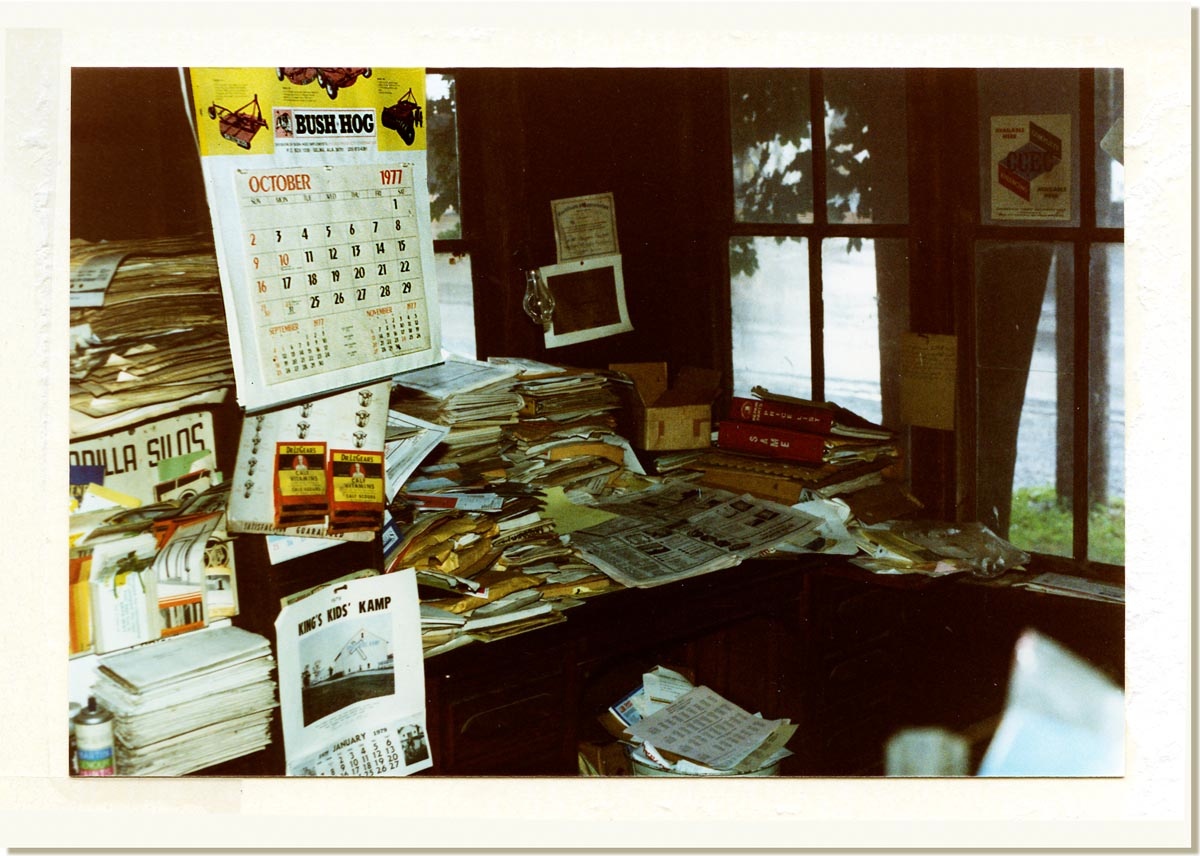
Dad's Office

My father died many years ago in 1985. During this Father’s Day week, I pause to give thanks. Though my dad did not give me a love for order (Mother did that), he gave me other sterling values: love of music, intellectual curiosity, and appreciation for the natural world. For those I give thanks.

Daddy in his later years, taking a breather
Daddy, often winning trips and other prizes for top sales, takes a breather. Sign courtesy of Cliff Beaman, 1976


* * *

One day soon, we will take what we have curated from our possessions and move it to our next home. It will be very messy for a while.

MovingBoxes2005

What is your take on the KonMari Method? What tried and true tips can you add?


As we make the transition – painting, packing, and re-assembling in another space, future blog posts may be sparse and my comments on your blogs may be spotty too.

I love our weekly connections here and will miss them temporarily. Soon I’ll be back. Enjoy each summer day!

Paring Down, Tidying Up – Some Tips

“Listen to this” I said to Cliff as I began reading the page on sorting papers: “Rule of Thumb – Discard Everything. ” As I continued reading the chapter on sorting papers in Marie Kondo’s New York Times best seller, The Life-Changing Magic of Tidying Up, I saw my husband’s eyes bug out, his jaw go rigid. I imagined his next move would be grabbing the book from my bare hands. (He didn’t.) Even though papers accumulate in our house like snowdrifts, he was having none of it.

It’s hard to dispute the dictum of a Japanese cleaning consultant like Kondo who claims that none of her clients have lapsed – and who has a three-month waiting list. She insists that if you organize your house properly, you’ll never have to do it again.

At the heart of her message is this: Keep something only if it sparks JOY in your life. And related to this: Give it away, if you think it will inspire joy in others.

So, I have divested myself of possessions I’ve held onto for decades.

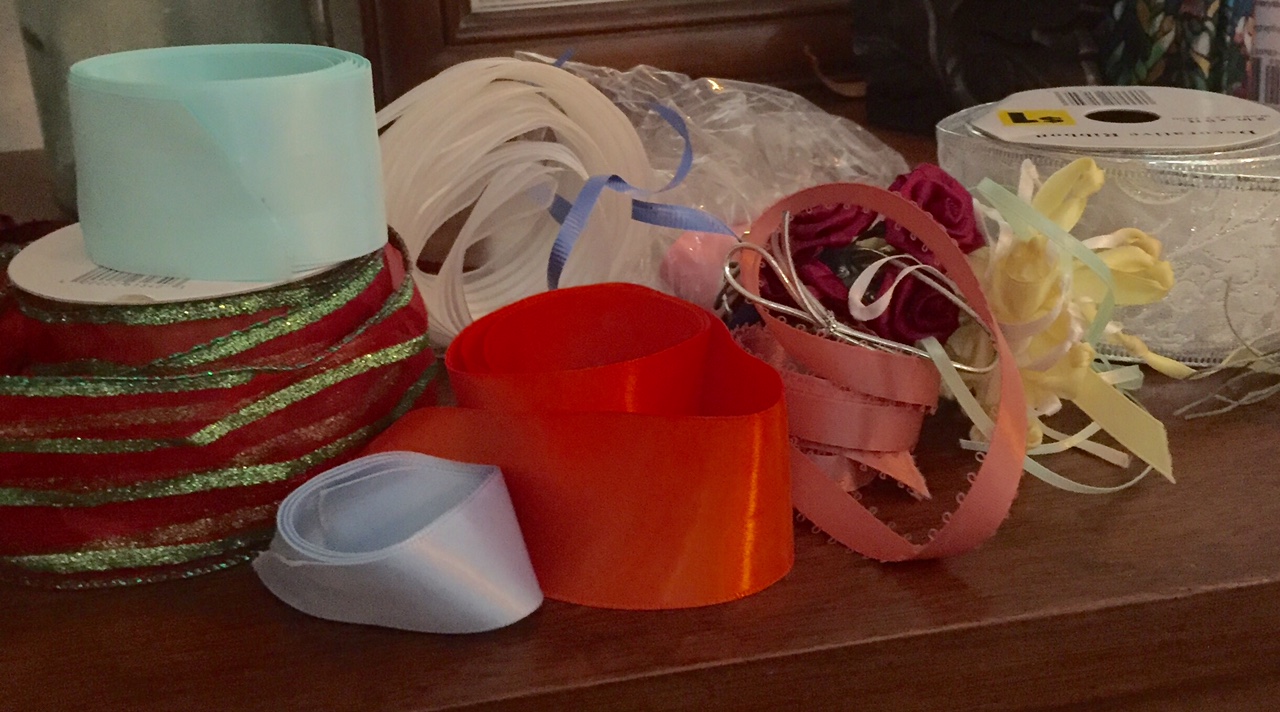
Ribbons and sewing notions have gone to a church friend, Donna, seamstress extraordinaire, who has connections to talented women needing supplies.

RibbonGiveaway

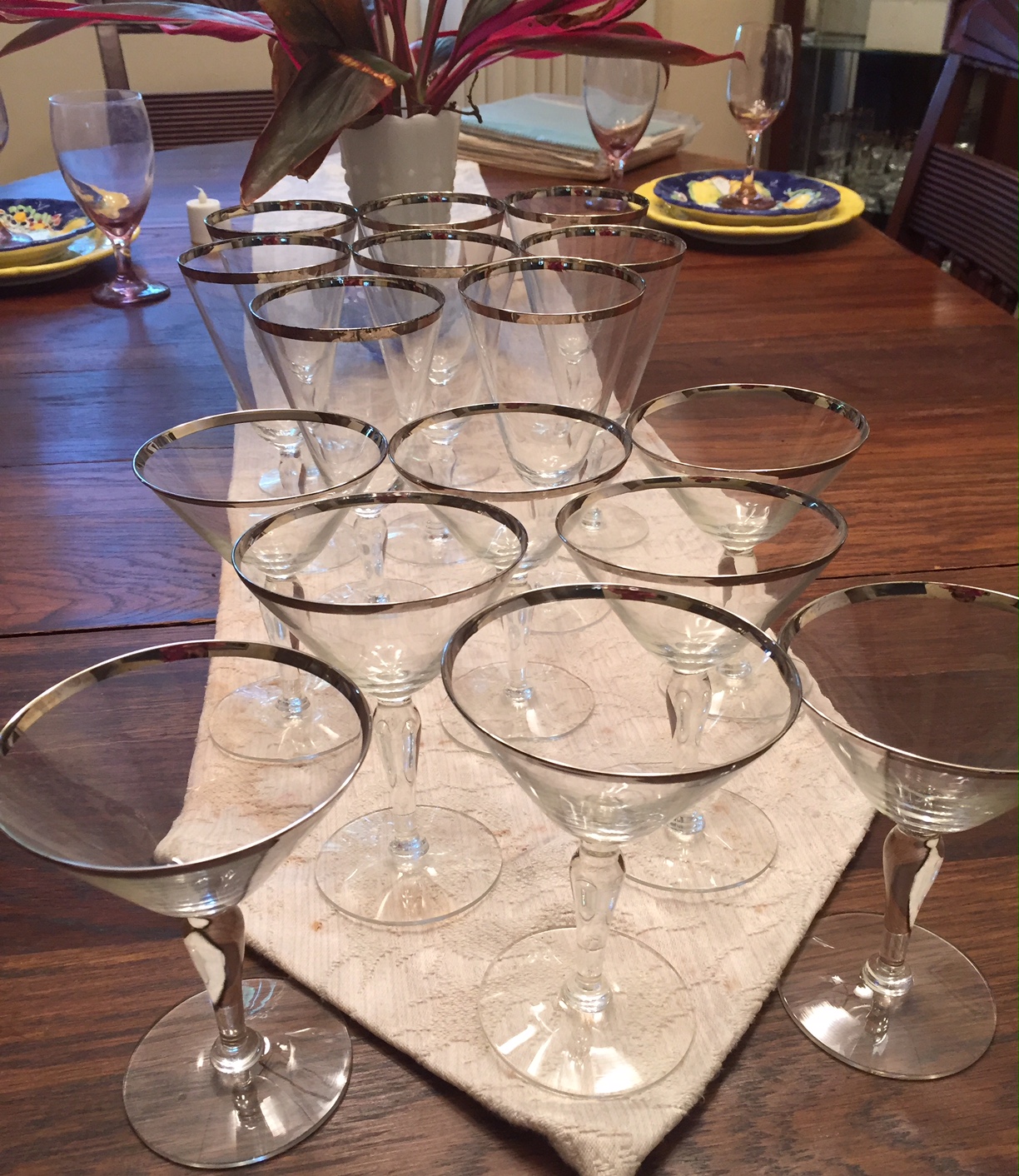
Like my friend Carolyn, I have passed on items of fine dining. My wedding crystal went to my hair stylist and super hostess Jackie. Originally, I intended to donate my crystal (from The Susquehanna Glass Factory in Columbia, Pennsylvania) to The Community Hospice Thrift Shop. But before I ever got to the donation center, Jackie took a look, fell in love, and the crystal sherbets and glasses became hers.

Crystal

By far the hardest thing to divest myself of is MY BOOOOOKS! They are part of my self-hood, my identity for the decades of my long teaching career. I am not the only book lover who wrestles with such impulses. Summer Brennan writes about the heartache of such a task here. Like her, I feel torn by the lure of Kondo’s promise of the magic of recycling and my impulse to embrace William Dean Howell‘s advice, “Oh, nothing furnishes a house like books.”

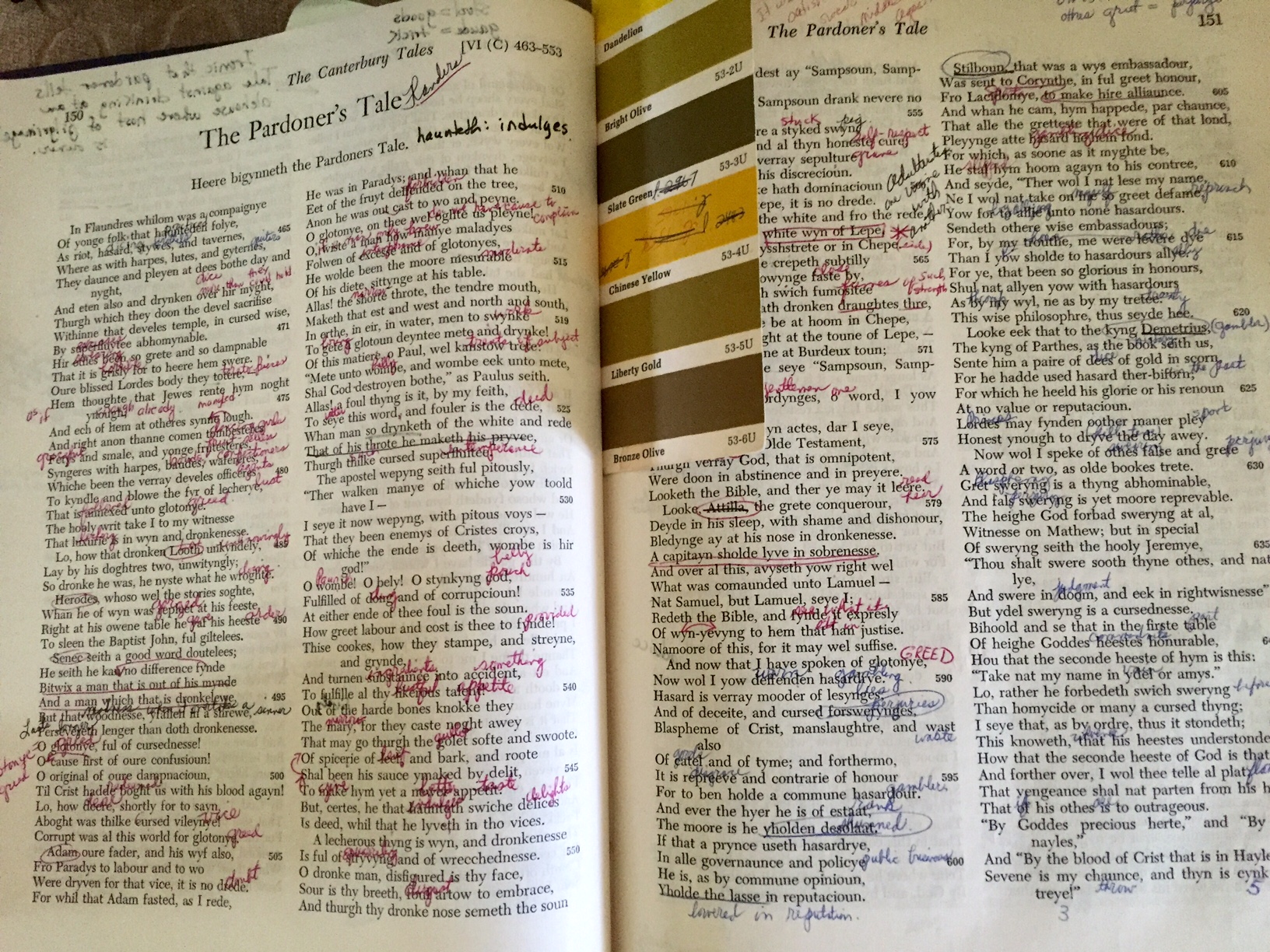
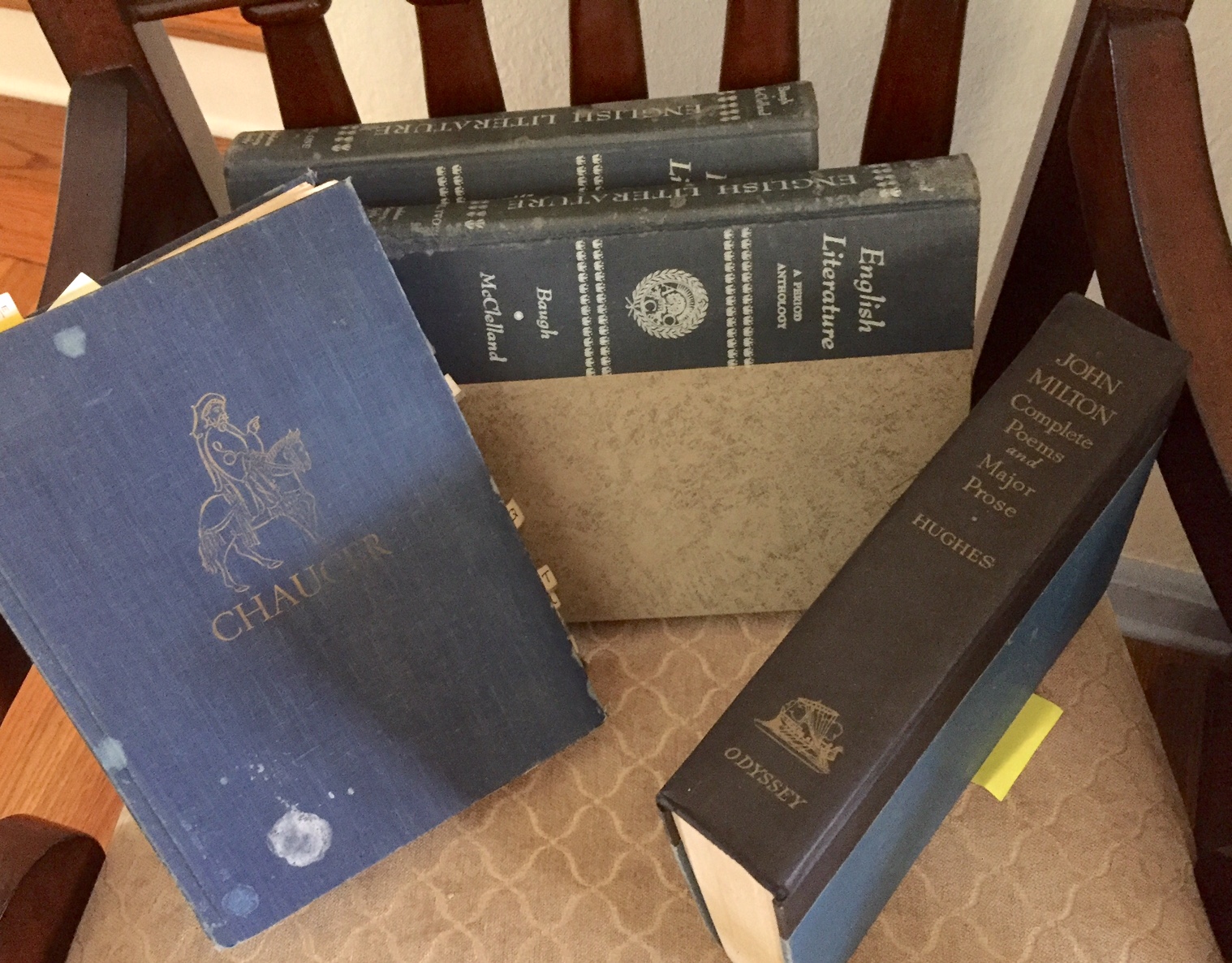
I’ve given dozens of books to Angel Aid, a charity for women and children. But I feel just as good when they land in the hands of young scholars, like Matthew, who can appreciate the nerdy translation of my Chaucer texts from Middle to Modern English, pre-digital translate days.

ChaucerTranslation

­­­­Matthew took my Milton text too, and two Survey of English Lit texts. He exclaimed, “I appreciate this. I can’t thank you enough,” followed by a smiley face and book emoticon.

ChaucerMilton

I feel a certain lightheartedness at getting rid of stuff, especially if I can pass them on to people who appreciate their worth.

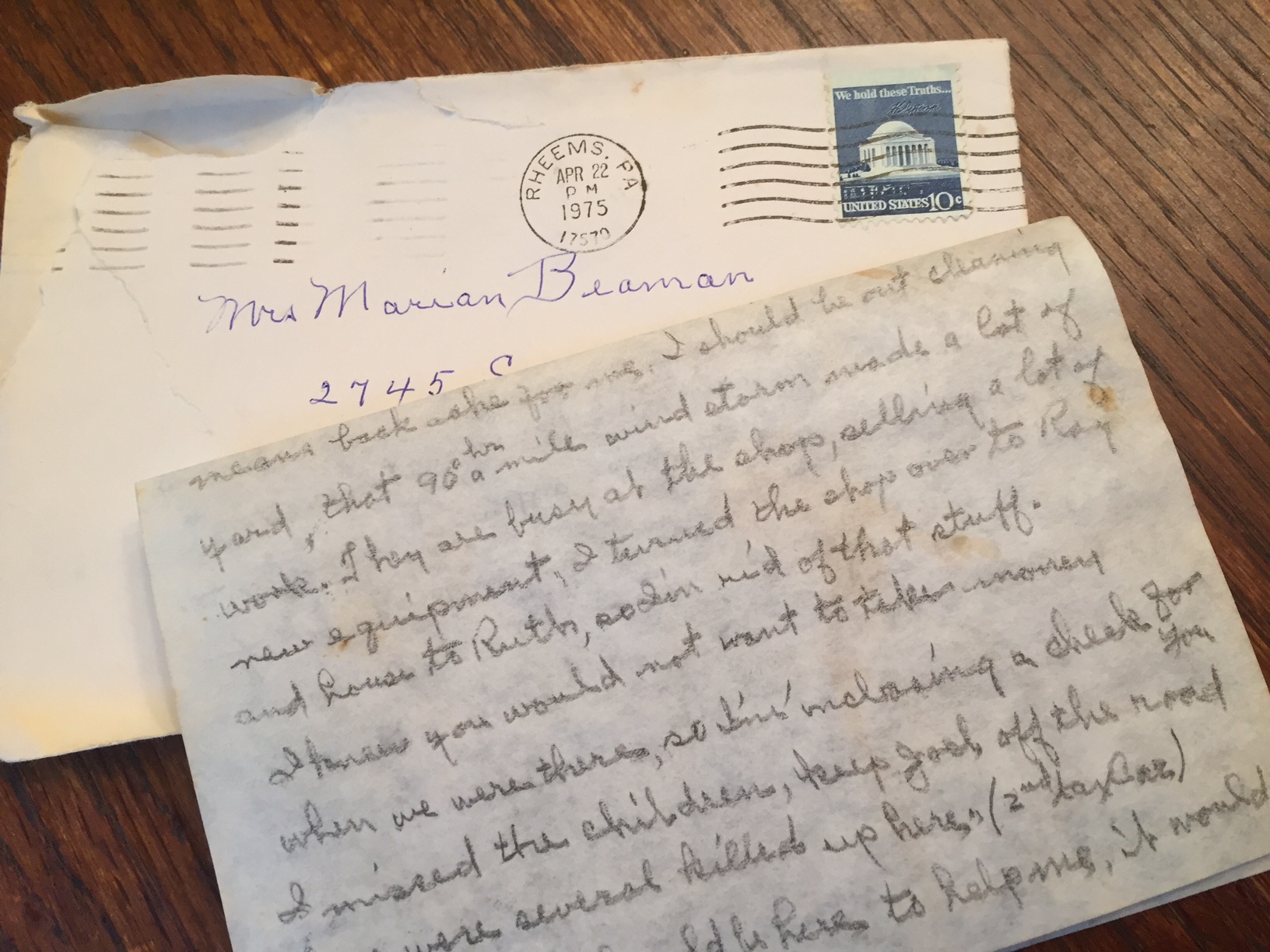
Grandma Longenecker can relate to such a feeling. She told me so in a letter from Rheems, Pennsylvnia in April 1975.

GrandmaRidStuffLetter

“They are busy at the shop, selling a lot of new equipment, I turned the shop over to Ray and house to Ruth, so I’m rid of that stuff.”

In other words, Grandma divested herself of two properties by deeding them over to my father and aunt. I’m guessing that she was immensely relieved of responsibilities for either property.

She continued to live in her lovely Victorian home until the day she died.

1989RuthieHouse

Coming next: A rollicking review of Marie Kondo’s book and a glimpse of the shop Grandma deeded to my dad. Neat versus messy? You decide.

Your tips for paring down and tidying up are welcome here.   🙂


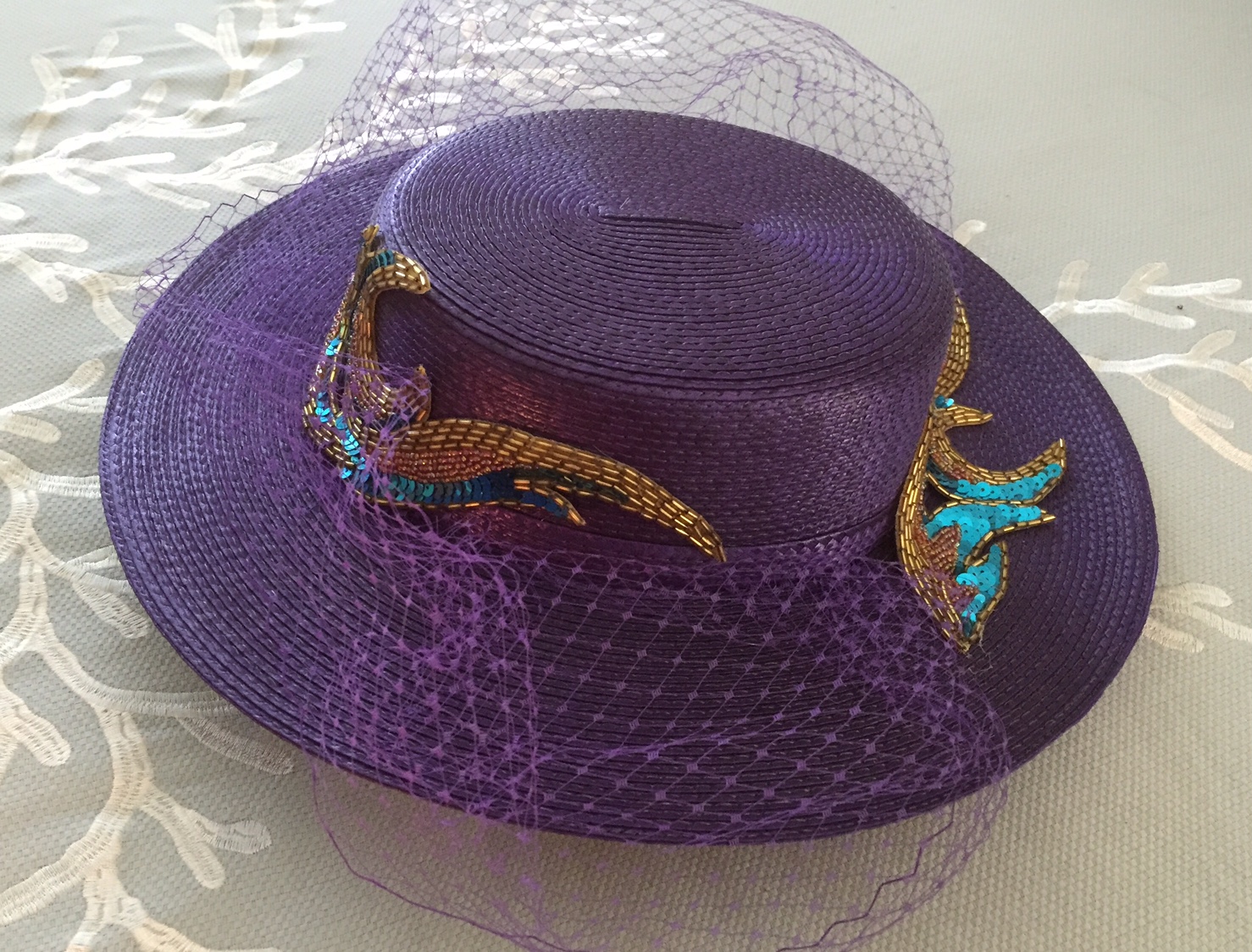
My purple hat - Out the door!
My purple “Downton Abbey” hat – Out the door!


Secrets of My Blue Madras Dress

Did you wear a madras dress? Did it bleed?

Popular in the USA in the 1960s this cool summer fabric originated in Madras, India. Loosely woven cotton threads created a plaid patchwork of soft fabric that didn’t cling to the body during sweltering summer days. Some madras was made with dyes that “ran” when the fabric was washed, creating a trendy washed-out look, known as bleeding madras, according to this article in the Chicago Tribune.

I bought into the fad then with a blue madras dress, smocked, sleeveless and zippered down the back. With no cinched belt, the dress felt light and airy – cool. After it was no longer in vogue and looked worn, I used it for home painting jobs.

BlueMadrasDress

Before we move into our next home, we want to do some interior painting. Whether I will wield the brush or ask/hire someone else to do the job remains to be seen.

Soon the paint-spattered madras dress will fade into history. I will recycle it.

* * *

The Secret: 

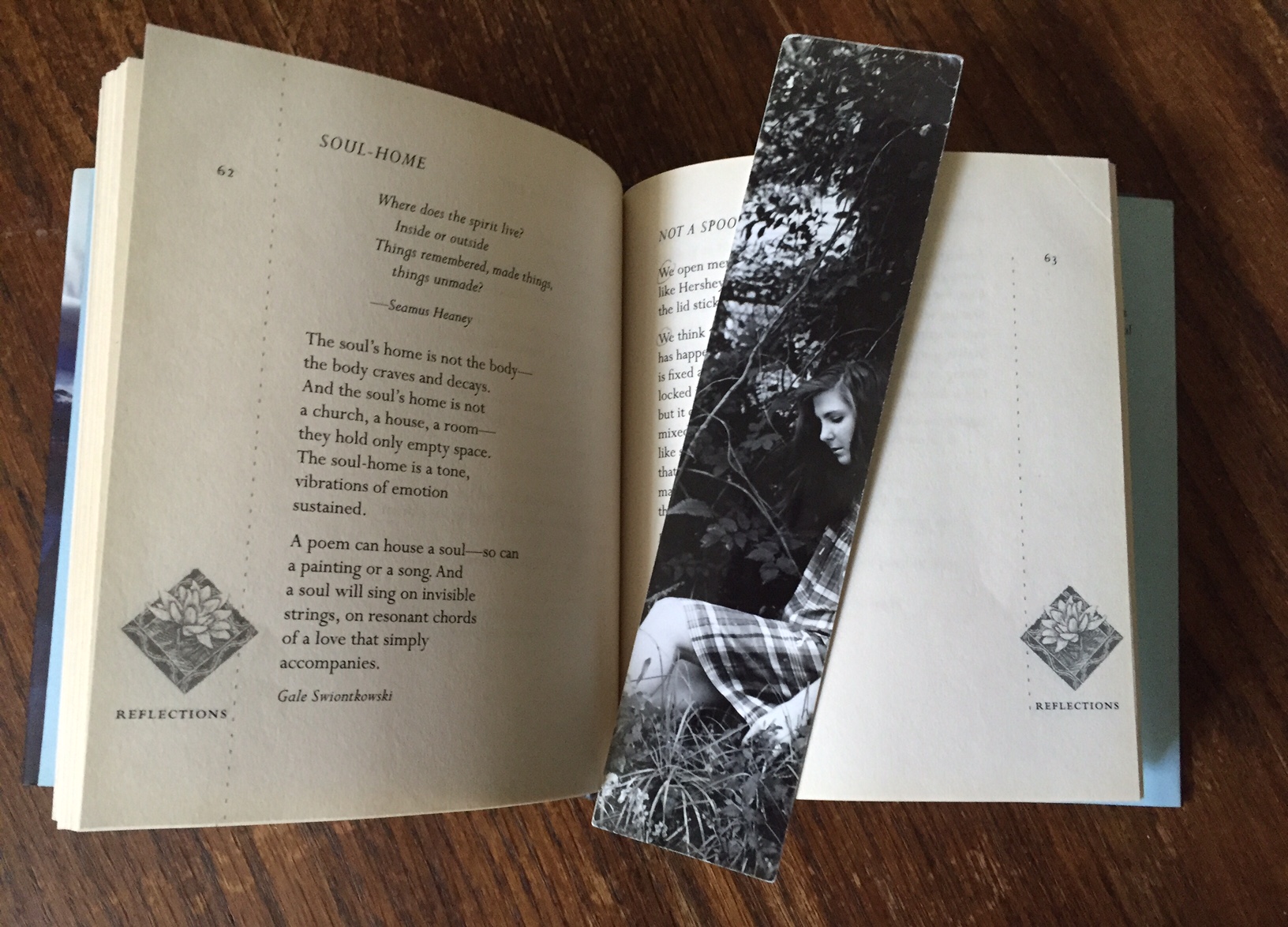
In July 1992 daughter Crista took a time-delay shot of herself wearing my blue madras dress to complete an assignment for her Photography 101 course. “Make sure you are in the picture,” the professor had said. So, with a 35 mm camera poised on a tripod, she snapped a black and white self-portrait in our back yard. Obviously, she didn’t need my assistance, and I didn’t know about the photo until she had it developed in the photo lab dark-room. A selfie before the era of smart phone selfies.

I made one of the prints into a book mark shown here. On the reverse side, I printed a verse from III John 1:4  “I have no greater joy than to hear that my children walk in truth.”

Photography takes an instant out of time, altering life by holding it still. ~ Dorothea Lange
Photography takes an instant out of time, altering life by holding it still.   ~ Dorothea Lange


It’s no secret that I have paraded a lot of (treasured) stuff on the pages of these posts, evidence that I keep things. With a move imminent, I’m in the mood now though to discard, digitize, or recycle.

When it comes to STUFF, are you a hoarder or a “throw-away-er”? Maybe you fit a different category? Do you have a dress with secrets?


Your opinions are always welcome here. So are your stories.

Thank you!


Coming next: Paring Down and Tidying Up