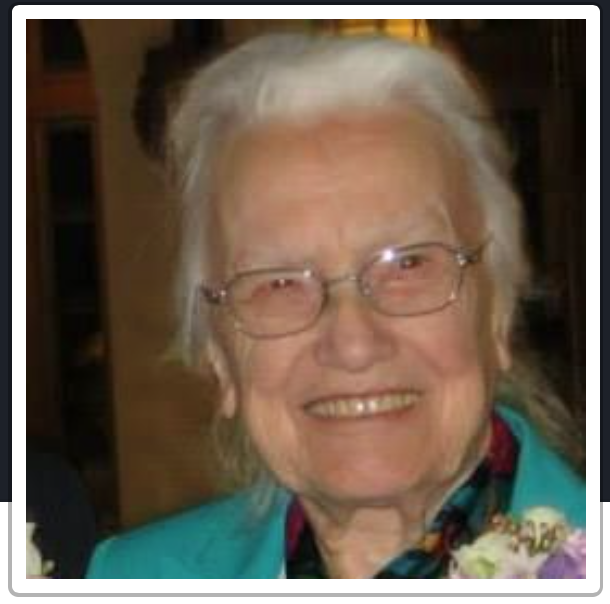
Precious in His Sight: Red, Brown, Yellow, Black, and White

Bright lights overhead illuminate a fun space. My eyes take in shelves with animal puzzles, bins with textured balls, sets of play tools, baskets of plastic fruit and veggies with pans for the play stove in our classroom. On my right – xylophones, bells and colored cushions. On the left side I see a box of string-a-beads, and on a shelf underneath – friendly-looking doggies and kitties that push or pull.

It’s Sunday morning, and I’ve entered the pre-school resource room at my church holding a white plastic basket for carrying items I’ll take to our classroom.

You see, two-year-old youngsters like to play. That’s how they learn. These children confirm the idea that “Play is the highest form of research.” (Unverified quote attributed to Einstein)

fbckidsxylophone

I continue circling the “toy” room and stop in front of the doll display now, dolls arranged in families: mommy-daddy-brother-sister. “Which sets of dolls should I pick out today?” I stop and wonder out loud.

asianblackfigures

hispanicwhitefigures

Children who walk through our classroom door have family origins in Viet Nam, Myanmar (Burma), Nigeria and Bosnia. Although our attendance records show Taylors, Elkins, and McCalls, the list also includes Biak, Torres, and DeVevo.

Friend and co-worker Gloria, who'd rather hold real babies!
Friend and co-worker Gloria, who’d rather hold real babies!


Why the Ethnic Dolls?

We obviously don’t point out differences with young children at play. I have never said to a two-year-old, “Look, this doll is hispanic (or black or white).

Of course not!

Then what’s the point?

When children see an image that looks like them, they can identify with it intuitively. We volunteer teachers aim to communicate to these impressionable little people that our world includes families with many different skin colors and facial features. The good Lord loves them all – and so, obviously, do they.
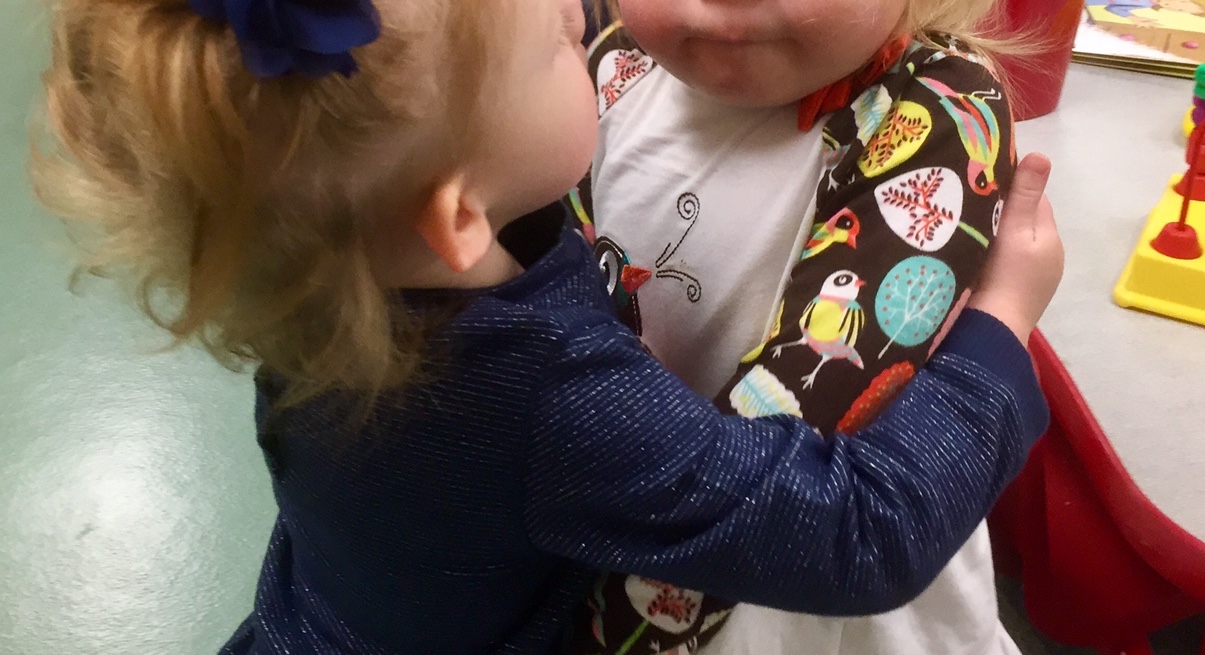


Spontaneous hug
Spontaneous hug

“Jesus Loves the little children” video + lyrics

* * *

Another Question

Recently author, journalist, and lecturer Gail Sheehy asked the question, “Is Trump out to make America white again?” Recent developments before and after our contentious election in America may warrant such a concern.

Our answer as pre-school teachers: Not if we can help it!

doctorcarpenterfbc

You may want to check out a Mennonite voice, Becca J. R. Lachman, whose blog expresses a wish to keep “a welcome sign [to everyone] lit in neon.”

* * *

Your turn: An anecdote, an illustration, a contrasting point of view. All are welcome in this space . . .

Coming next: 7 Ways to Stay Young: Nuns Reveal Their Secrets
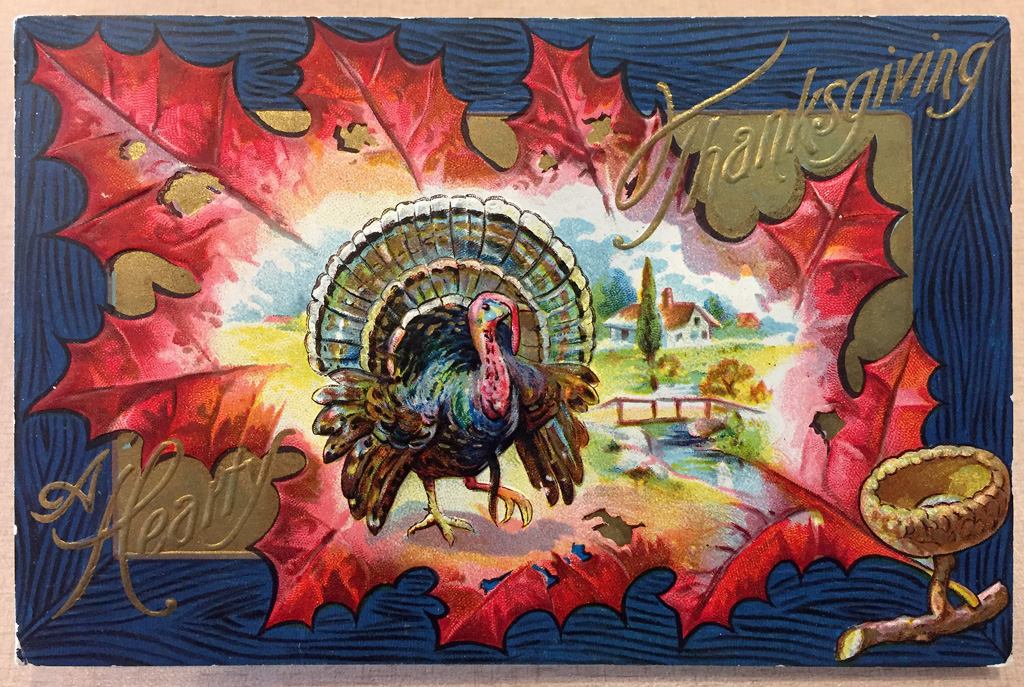
Grandma’s 3 Thanksgiving Postcards: Red Leaf, Cheery Harvest, Shakespeare Quote

Before families went over the river and through the woods to grandmother’s house, a postcard may have appeared in their mailbox to mark this grand American holiday of gratitude in the early 1900s.

Grandma Fanny Longenecker saved three of hers.

postcard1909thanksturkey

In this card dated 1909 a brilliant oak leaf, an acorn cup and a fan-tailed turkey displayed “Hearty Thanksgiving wishes” though the celebration could not have ended well for this turkey.

(Incidentally, no filters or other photographic enhancements were used on these antique cards. Their brilliance remains after 100+ years.)

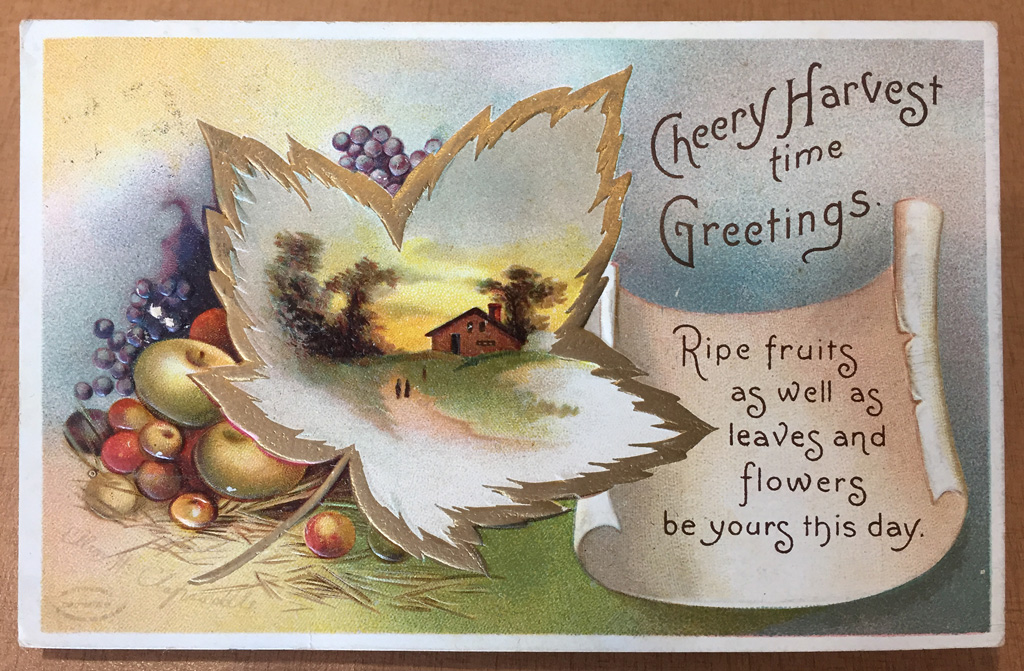
 postcard1910cheerythanks

Again, in the card above postmarked 1910, edible and bucolic images warm the scene which included another cozy house by the roadside.

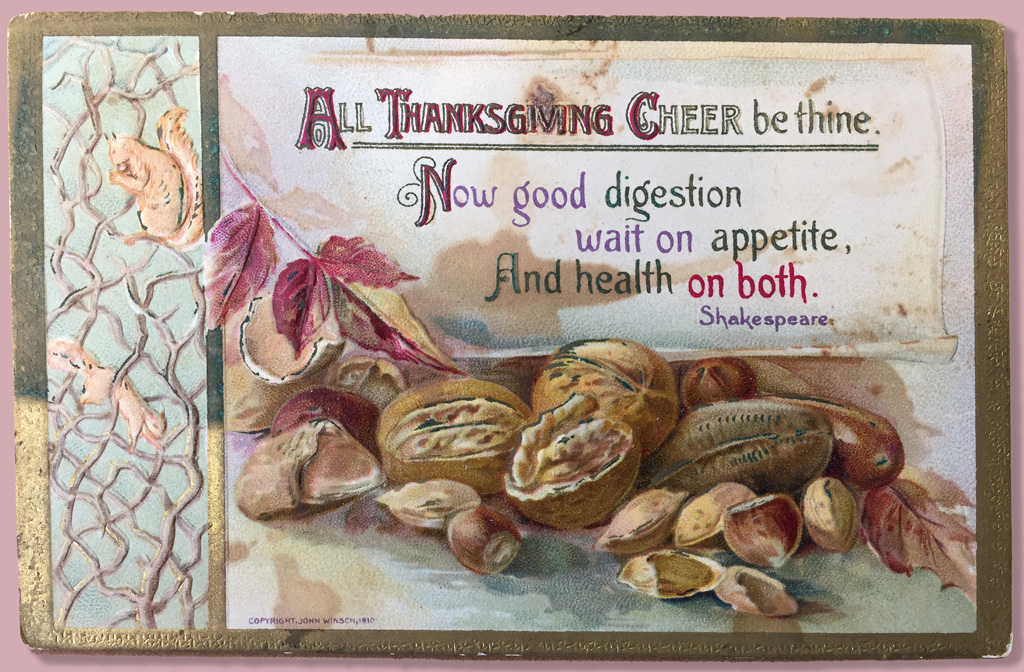
postcard1911thanksshakespeare

Someone had already begun using a nutcracker on the walnuts in this still life from 1911 with an expression of hope for a happy mealtime. The quote from Shakespeare’s Macbeth (Act iii, scene 4) is ironic: Macbeth and his wife, attempting to cover up their dastardly deed of killing King Duncan, host a dinner where the condemning ghost of Banquo is about to appear. Clearly, the postcard designer took this quote out of context.

Though no ghosts may appear during your Thanksgiving celebration, you may be saddened by the specter of empty seats around the table.

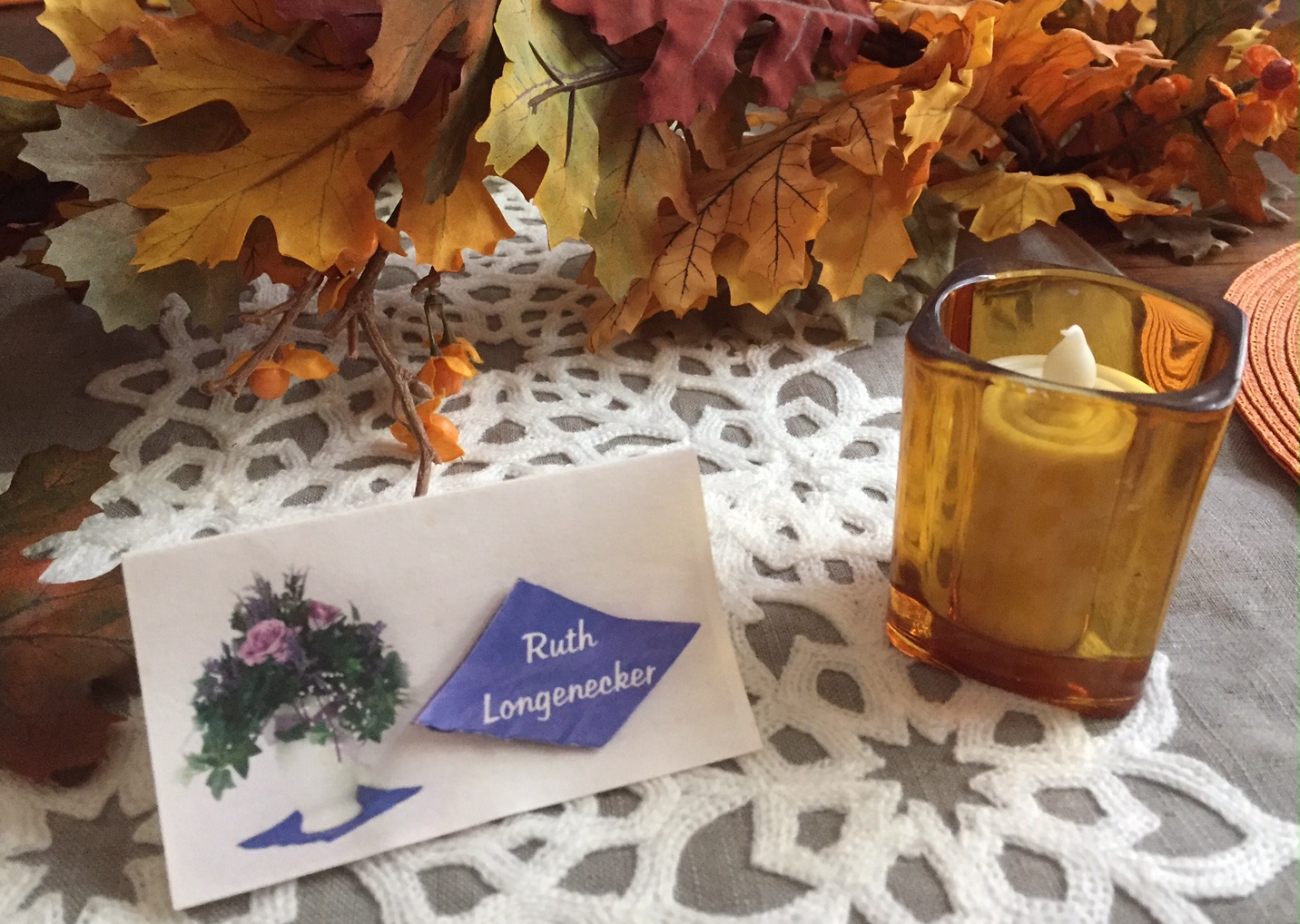
Again this year, there are empty chairs at our table too. Here’s one:

Now a fixture on our table: Place card from wedding of Mother's niece, Janet Metzler
Now a fixture on our table: Place card from the wedding of Mother’s niece, Janet Metzler Diem

Postcript

“Grah-ti-tood” is the title of my very first blog post published February 25, 2013. Although it was not Thanksgiving season then, I knew gratitude could be a theme that may thread itself through my postings. Only two former students and a church friend responded to this first attempt at blogging. You can read it here.

Curtis_GratitudeBk

Thank you for joining me in many posts since then. Our conversations here keep me going.

“I would maintain that thanks are the highest form of thought, and that gratitude is happiness doubled by wonder.” – G.K. Chesterton

Thanksgiving blessings with many happy memories!

What Does Rockwell’s Painting Ask?

Did you make construction paper turkeys and buckled hats in elementary school? I know I did. We elementary school-ers dug our scissors into orange, red, brown, yellow to create Thanksgiving art. And then we looked at pretty framed pictures that have become American icons of gratitude.

Freedom from Want, Four Freedoms Series - Norman Rockwell Courtesy Wikipedia
Freedom from Want, Four Freedoms Series – Norman Rockwell Courtesy Wikipedia
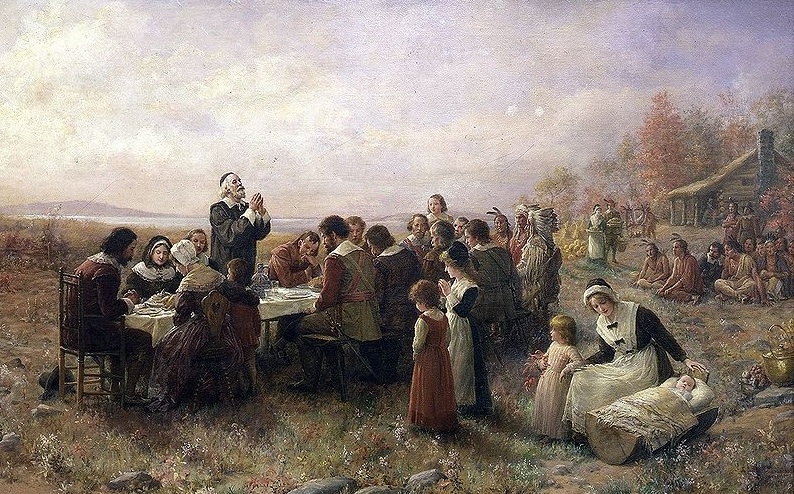
The First Thanksgiving at Plymouth by Jennie A. Brownscombe (1914) Courtesy Wikipedia
The First Thanksgiving at Plymouth by Jennie A. Brownscombe (1914)
Courtesy Wikipedia


These pleasant scenes may trick us into thinking the world was a more peaceful place than it is now. However, the celebration has often been shadowed by discord and world war.


Conflict Coexists with Celebration

* The pilgrims fled religious persecution to find freedom in the new world. Though the scene above looks peaceful and full of plenty in 1621, many immigrants did not survive the winter.

* President Abraham Lincoln set aside the last Thursday in November 1863 during the dark days of the Civil War as a day of “Thanksgiving and Praise to our beneficent Father who dwelleth in the Heavens.”

* President Franklin D. Roosevelt, just weeks after the attack on Pearl Harbor plunged the US into World War II, signed a congressional bill in December 26, 1941 moving the date for Thanksgiving to the fourth Thursday in November.


The True Story Behind Rockwell’s Painting

FDR was criticized for being too idealistic in his State of the Union address of January when he outlined his idea of the Four Freedoms: Freedom from Fear, Freedom of Worship, Freedom of Speech, and Freedom from Want.

Two years later, The Saturday Evening Post published essays on each of FDR’s 4 freedoms, each paired with a Norman Rockwell painting (February – March 1943)


Freedom from Want, Four Freedoms Series - Norman Rockwell Courtesy Wikipedia
Freedom from Want, Four Freedoms Series – Norman Rockwell Courtesy Wikipedia


Take another look at this painting. Three generations circle the table, the all-white nuclear family considered the ideal in 1943.

As Bob Duggan points out in his article for Thanksgiving 2013, if Rockwell were painting in this decade, surely the skin color would be more racially diverse. And, instead of a gathering of biologically-linked people, family may extend to include friends and neighbors of many creeds.


What is the Young Man Asking?

 thanksgivingdetailman


See the young man looking out of the setting to you, the viewer? His smiling eyes may be asking you to join and share the bounty spread out on the table – lots of protein, plenty of vegetables, and pumpkin pie, no doubt.

But is that all he is asking? Perhaps he is inviting you as onlooker (and possible guest) to participate in another kind of freedom: to free one another from all kinds of want beyond the physical — emotional, social, and even spiritual.


Your Turn

No doubt you are looking forward to a Thanksgiving gathering, either at your house or somewhere else. How can you help others to have something to be thankful for, finding a way to include sharing in your practice of thanksgiving?

That’s one way to smile back at the young man at the table.


Gratitude can transform common days into thanksgivings, turn routine jobs into joy, and change ordinary opportunities into blessings.

– William Arthur Ward

Quote contributed by my friend Jenn, a Canadian blogger, who reminded me that Canadians celebrate Thanksgiving in October. Happy (belated) Thanksgiving greetings to all.

Are You Sensible? The Power of Touch, the Magic of Music

Did you know that touching zaps your immune system with positive energy? Similarly, your brain goes into party mode when you hear and/or play music – so say the researchers.

In this cropped photo, my sister Jan’s hand touches her Aunt Ruthie’s, who in turn is feeling the fake fur of a toy, who she may imagine to be her dog Fritzie.

touchjanruthiepet


Touch is Powerful . . .

Dr. Dolores Krieger, professor of nursing at New York University, conducted numerous studies on the power of human touch. She discovered “that both the ‘toucher’ and the ‘touchee’ experience great physiological benefit from human contact. It works like this:

Red blood cells carry hemoglobin, a substance that transports oxygen to body tissue. And Dr. Krieger found that when one person lays hands on another, the hemoglobin levels in the blood stream of both people increase. And as they rise, body tissue receives increased oxygen, which invigorates you physically and can aid in the healing process. What you’re seeing is the literal power of love in action. Loving is good for you” There’s nothing as rewarding, satisfying, or encouraging as loving others through your words and actions.

Quoted in James Merritt, How to Impact and Influence Others


Touch is Powerful and so is Music!

 In a TED/Ed lesson, Anita Collins reports that listening to music engages multiple areas of one’s brain, but playing an instrument is “more like a full-body brain workout.”

She says if listening to music produces a party in the brain, picking up an instrument and playing it amounts to fireworks, a real jubilee!

What is it about producing music that totally lights up the brain? Collins mentions the physical activity of using fine motor skills (plucking a harp, blowing a trumpet) combined with the linguistic and mathematical skills in other brain areas, strengthens the connection between right and left hemispheres.

She even makes a connection between musicians and good search engines, an analogy she further explains in this 4+ minute YouTube presentation:


Music is Touching

Babies, newly minted from nature, love lullabies and nursery tunes. Likewise, music soothes the elderly and those of any age at the point of death. Haven’t you heard that hearing is the last sense to go?

My sister Jean, brother Mark, Mother’s pastor and wife sang my mother into glory with old gospel songs. I’m sorry I couldn’t make it in time to surround my mother’s bed with harmony.

Groups like Songs for the Journey, non-denominational and volunteer, provide a benevolent service to loved ones and patients alike as they make the transition from this life to whatever lies beyond. Quoting from their website, “Our live music ministries provide comfort and guidance to those who are near death, as well as to those who love them.”


Light up my brain with your comments please!

Thank you for checking in with thoughts on the power of touch or the value of music. What about your pets? How has touching furry friends benefitted you?


Something Silly

musicianwashedup1965


Are You a With-It?

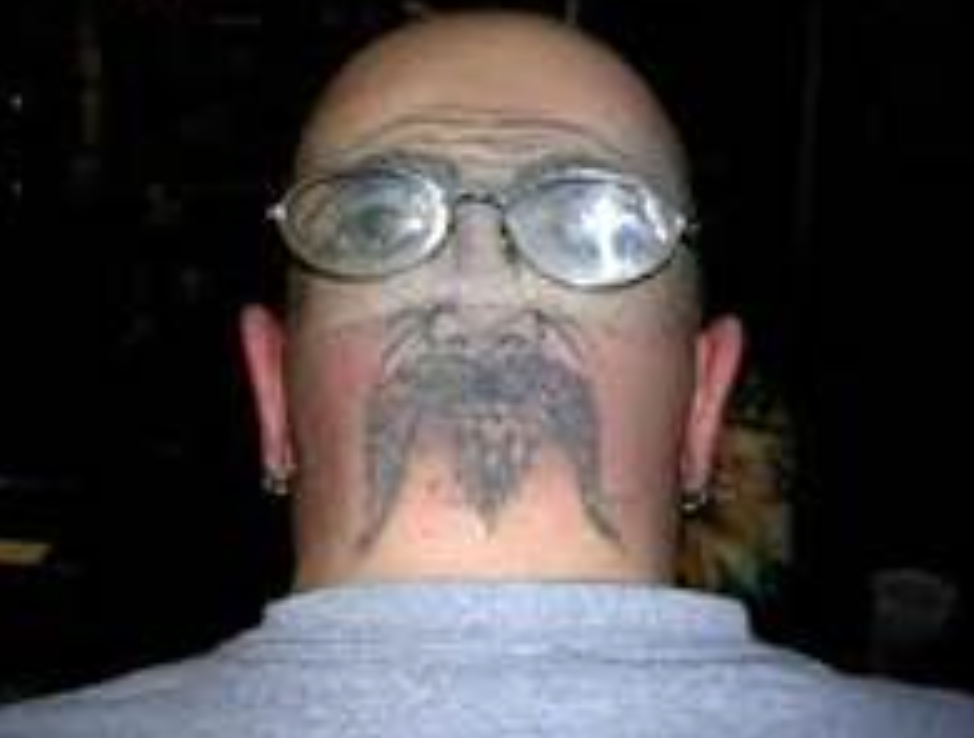
For years, my young son Joel thought I had an eye on the back of my head. Why? I told him so.

See!

Google Image
Google Image: “Four-eyed Monitor”

To keep this mischief-making, dangerous pranking boy surviving beyond childhood, I kept alive the delusion of a third eye until he grew old enough to catch on to my trick. “God gave you a smart Mommy,” I declared. “I have to be ‘with it.’ Otherwise, you’d be dead!” And I meant every word.


What does “With It” Mean?

Malcolm Gladwell in “Most Likely to Succeed” from The New Yorker (Dec. 15, 2008) discusses the value of “withitness” in several fields: sports, education, and business. About teaching in particular, he notes: Educational researcher Jacob Kounin, used the term “withitness” to define that hard-to-pin-down quality of intuition and smarts which helps one sense the behaviors, intentions, and motivations of those around her/him and act accordingly.

Malcolm Gladwell, New Yorker staff writer
Malcolm Gladwell, The New Yorker staff writer

“Test scores, graduate degrees, and certifications—as much as they appear related to teaching prowess—turn out to be about as useful in predicting success as having a quarterback throw footballs into a bunch of garbage cans.”

Perhaps no profession has taken the implications of the quarterback problem more seriously than the financial-advice field, and the experience of financial advisers is a useful guide to what could happen in teaching as well. There are no formal qualifications for entering the field except a college degree. Financial-services firms don’t look for only the best students, or require graduate degrees or specify a list of prerequisites. No one knows beforehand what makes a high-performing financial adviser different from a low-performing one, so the field throws the door wide open.


Our Experience

In the last six months we’ve had the opportunity to rub shoulders with a few bankers, realtors, and multiple tradespeople who did home repairs or renovation during our move.

Here in a nutshell:

The Good

Mr. Painter: His eyes surveyed the kitchen walls as he spoke, “I can do this in two hours and include your paint in the price. I’ll even leave some paint for touch-ups.”  He fulfilled his promises. We were pleased.

Ms. Realtor: “I’ll call you in two hours with an update.” She did and we felt confident.

 The Bad

Mrs. Banker: “I’ll be right on it.” She wasn’t though, and we spent days and weeks feeling frustrated. Later, however, we found she was covering for the ineptitude of support people in the business.

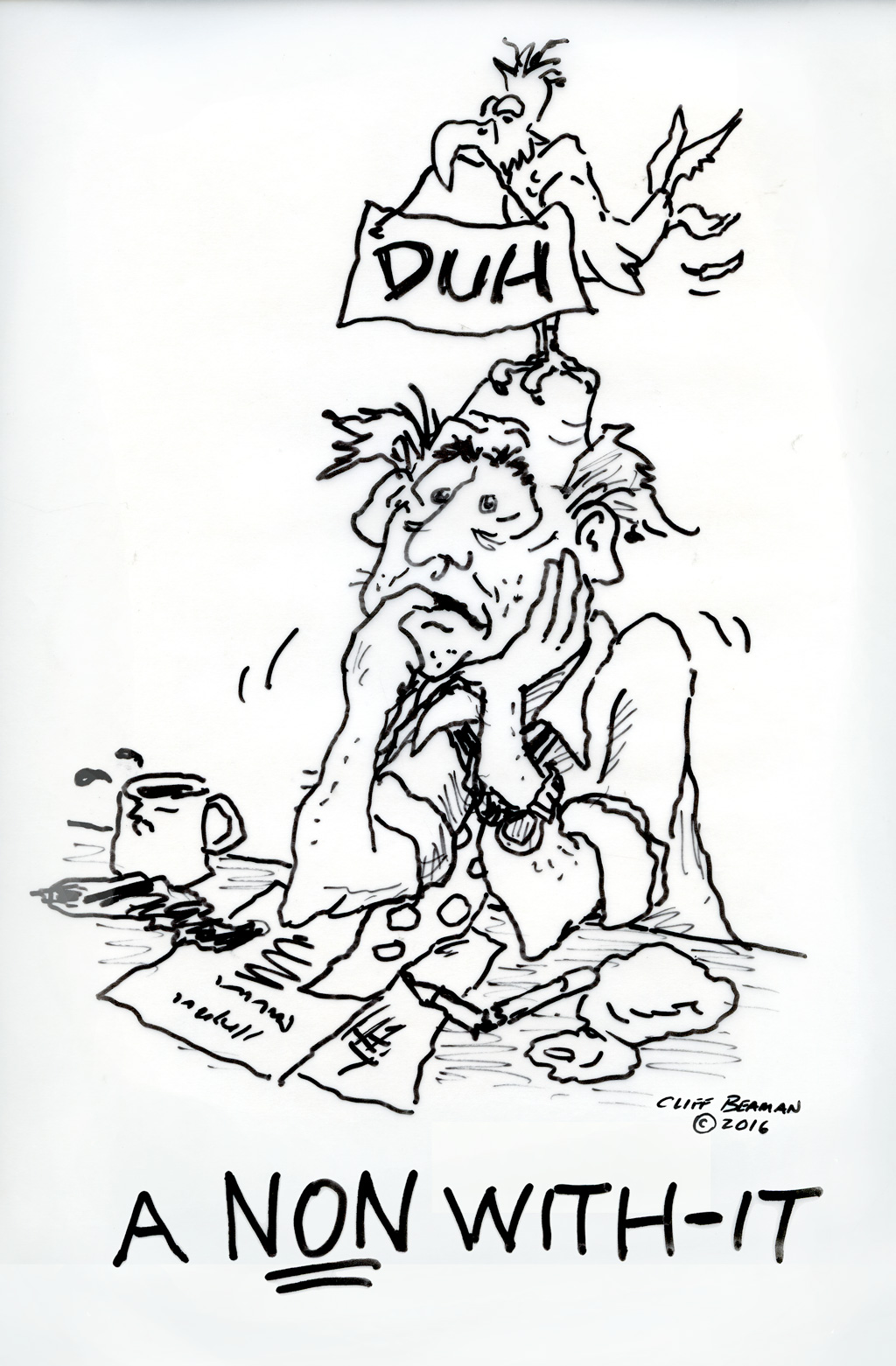
Mr. Realtor: “Look at my credentials! I have a 5-Star rating . . . yadayadayada . . . !

However, credentials don’t always translate into performance. We frequently had to prompt him to act in our favor. Why can’t he be “with-it”? we wondered.

withitnotcartoon


The Best

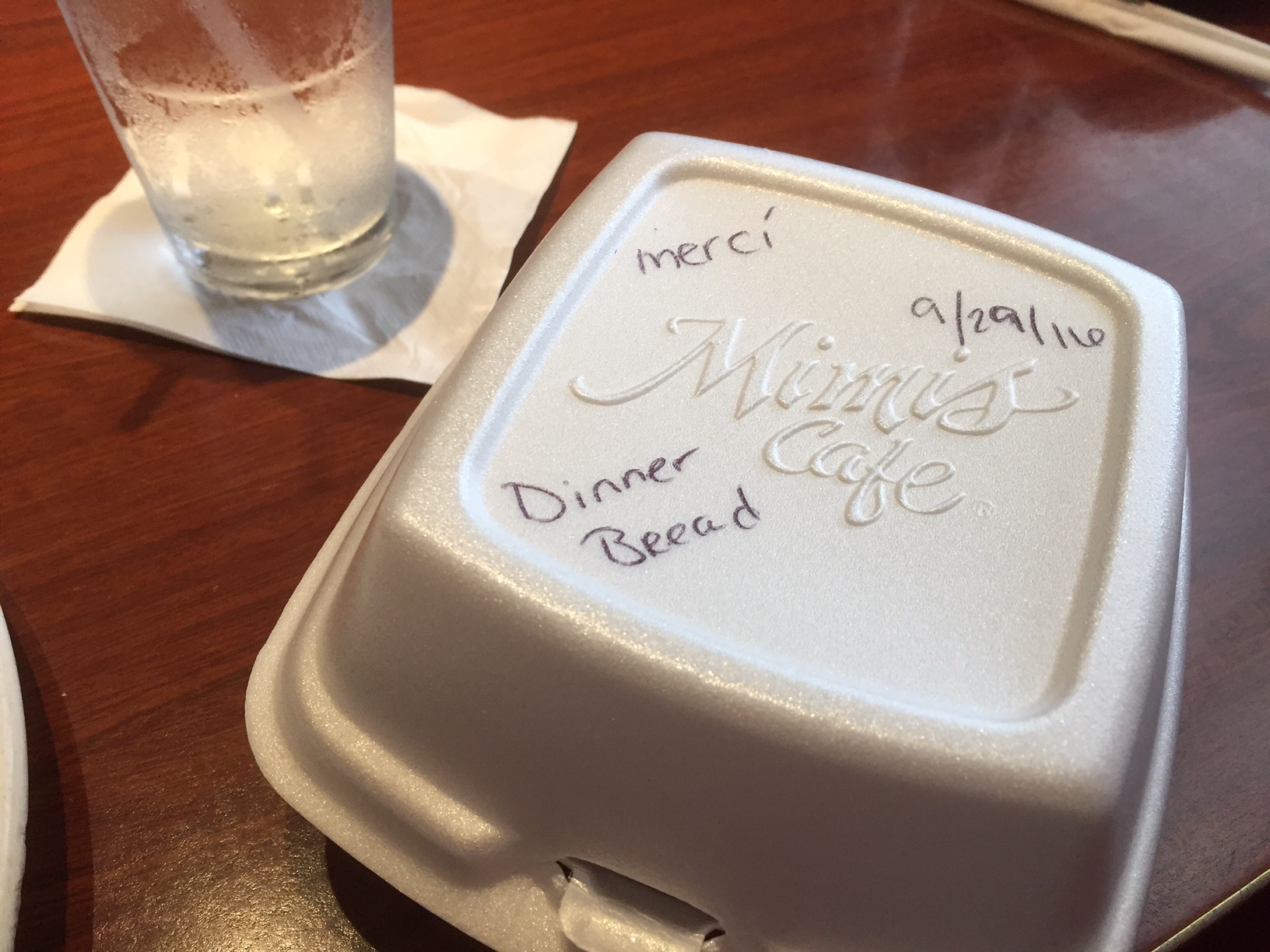
We had lunch recently at Mimi’s restaurant. Our server Kristie performed perfectly without hovering. Before we left, she boxed up an un-eaten blueberry muffin and left-over dinner rolls in separate containers. Without prompting, she labeled each box.

withitmimicafebox

Item + Date + merci on the lid . . . certainly appropriate in a French restaurant á la New Orleans style. This server was definitely a “with it” woman!


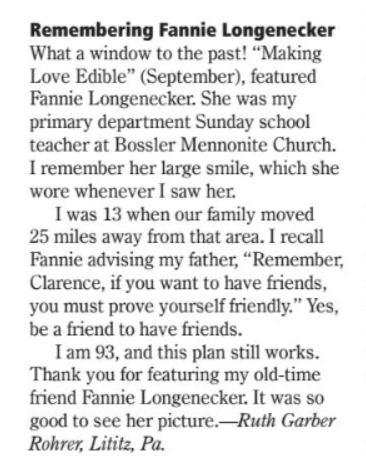
* Ruth Garber Rohrer, a 93-year-old subscriber to The Mennonite magazine, read my September 2016 article in tribute to my Grandma Fannie Longenecker printed in this post.

Then I found Ruth’s editorial comment in the October issue.

Letters to the Editor, The Mennonite Magazine, October 2016, page 5

Serendipitously,  I had discovered a link to my Grandma through one of her pupils in Sunday School at Bossler Mennonite Church, one I never knew existed. Ruth Garber Rohrer also has a presence on Facebook and socializes in the digital world.

ruthgrohrerfbscreenshot-copy

Ruth is “with it” indeed!


How I Define “With It”

* Keen perception through the senses: Seeing, hearing, “reading” a situation beyond mere facts.

* Ability to evaluate situations and/or scan people’s expressions and connect with them personally in a significant way.

* Ability to follow-through when action is needed.


What is your definition of “With It”? What qualities would you add to the list?

Did examples from your own life pop into your mind as you read this post. Here’s where to reveal the good, the bad, and the ugly or  – the best!