What Does Rockwell’s Painting Ask?

Did you make construction paper turkeys and buckled hats in elementary school? I know I did. We elementary school-ers dug our scissors into orange, red, brown, yellow to create Thanksgiving art. And then we looked at pretty framed pictures that have become American icons of gratitude.

Freedom from Want, Four Freedoms Series - Norman Rockwell Courtesy Wikipedia
Freedom from Want, Four Freedoms Series – Norman Rockwell Courtesy Wikipedia
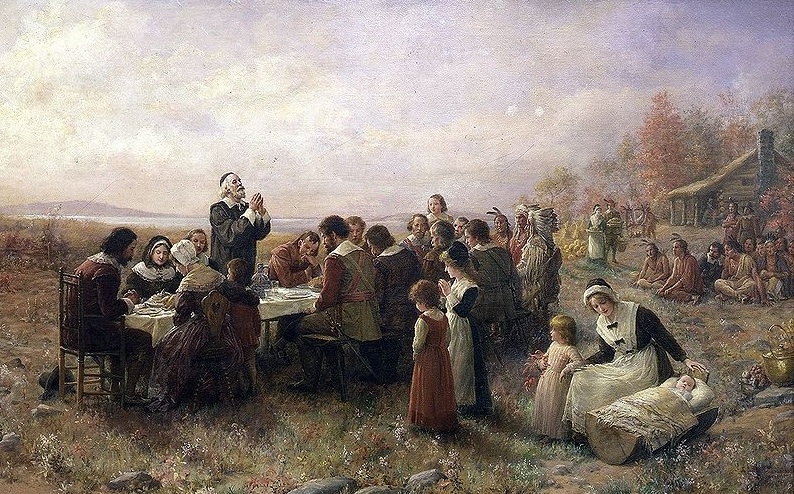
The First Thanksgiving at Plymouth by Jennie A. Brownscombe (1914) Courtesy Wikipedia
The First Thanksgiving at Plymouth by Jennie A. Brownscombe (1914)
Courtesy Wikipedia


These pleasant scenes may trick us into thinking the world was a more peaceful place than it is now. However, the celebration has often been shadowed by discord and world war.


Conflict Coexists with Celebration

* The pilgrims fled religious persecution to find freedom in the new world. Though the scene above looks peaceful and full of plenty in 1621, many immigrants did not survive the winter.

* President Abraham Lincoln set aside the last Thursday in November 1863 during the dark days of the Civil War as a day of “Thanksgiving and Praise to our beneficent Father who dwelleth in the Heavens.”

* President Franklin D. Roosevelt, just weeks after the attack on Pearl Harbor plunged the US into World War II, signed a congressional bill in December 26, 1941 moving the date for Thanksgiving to the fourth Thursday in November.


The True Story Behind Rockwell’s Painting

FDR was criticized for being too idealistic in his State of the Union address of January when he outlined his idea of the Four Freedoms: Freedom from Fear, Freedom of Worship, Freedom of Speech, and Freedom from Want.

Two years later, The Saturday Evening Post published essays on each of FDR’s 4 freedoms, each paired with a Norman Rockwell painting (February – March 1943)


Freedom from Want, Four Freedoms Series - Norman Rockwell Courtesy Wikipedia
Freedom from Want, Four Freedoms Series – Norman Rockwell Courtesy Wikipedia


Take another look at this painting. Three generations circle the table, the all-white nuclear family considered the ideal in 1943.

As Bob Duggan points out in his article for Thanksgiving 2013, if Rockwell were painting in this decade, surely the skin color would be more racially diverse. And, instead of a gathering of biologically-linked people, family may extend to include friends and neighbors of many creeds.


What is the Young Man Asking?

 thanksgivingdetailman


See the young man looking out of the setting to you, the viewer? His smiling eyes may be asking you to join and share the bounty spread out on the table – lots of protein, plenty of vegetables, and pumpkin pie, no doubt.

But is that all he is asking? Perhaps he is inviting you as onlooker (and possible guest) to participate in another kind of freedom: to free one another from all kinds of want beyond the physical — emotional, social, and even spiritual.


Your Turn

No doubt you are looking forward to a Thanksgiving gathering, either at your house or somewhere else. How can you help others to have something to be thankful for, finding a way to include sharing in your practice of thanksgiving?

That’s one way to smile back at the young man at the table.


Gratitude can transform common days into thanksgivings, turn routine jobs into joy, and change ordinary opportunities into blessings.

– William Arthur Ward

Quote contributed by my friend Jenn, a Canadian blogger, who reminded me that Canadians celebrate Thanksgiving in October. Happy (belated) Thanksgiving greetings to all.

Are You Sensible? The Power of Touch, the Magic of Music

Did you know that touching zaps your immune system with positive energy? Similarly, your brain goes into party mode when you hear and/or play music – so say the researchers.

In this cropped photo, my sister Jan’s hand touches her Aunt Ruthie’s, who in turn is feeling the fake fur of a toy, who she may imagine to be her dog Fritzie.

touchjanruthiepet


Touch is Powerful . . .

Dr. Dolores Krieger, professor of nursing at New York University, conducted numerous studies on the power of human touch. She discovered “that both the ‘toucher’ and the ‘touchee’ experience great physiological benefit from human contact. It works like this:

Red blood cells carry hemoglobin, a substance that transports oxygen to body tissue. And Dr. Krieger found that when one person lays hands on another, the hemoglobin levels in the blood stream of both people increase. And as they rise, body tissue receives increased oxygen, which invigorates you physically and can aid in the healing process. What you’re seeing is the literal power of love in action. Loving is good for you” There’s nothing as rewarding, satisfying, or encouraging as loving others through your words and actions.

Quoted in James Merritt, How to Impact and Influence Others


Touch is Powerful and so is Music!

 In a TED/Ed lesson, Anita Collins reports that listening to music engages multiple areas of one’s brain, but playing an instrument is “more like a full-body brain workout.”

She says if listening to music produces a party in the brain, picking up an instrument and playing it amounts to fireworks, a real jubilee!

What is it about producing music that totally lights up the brain? Collins mentions the physical activity of using fine motor skills (plucking a harp, blowing a trumpet) combined with the linguistic and mathematical skills in other brain areas, strengthens the connection between right and left hemispheres.

She even makes a connection between musicians and good search engines, an analogy she further explains in this 4+ minute YouTube presentation:


Music is Touching

Babies, newly minted from nature, love lullabies and nursery tunes. Likewise, music soothes the elderly and those of any age at the point of death. Haven’t you heard that hearing is the last sense to go?

My sister Jean, brother Mark, Mother’s pastor and wife sang my mother into glory with old gospel songs. I’m sorry I couldn’t make it in time to surround my mother’s bed with harmony.

Groups like Songs for the Journey, non-denominational and volunteer, provide a benevolent service to loved ones and patients alike as they make the transition from this life to whatever lies beyond. Quoting from their website, “Our live music ministries provide comfort and guidance to those who are near death, as well as to those who love them.”


Light up my brain with your comments please!

Thank you for checking in with thoughts on the power of touch or the value of music. What about your pets? How has touching furry friends benefitted you?


Something Silly

musicianwashedup1965


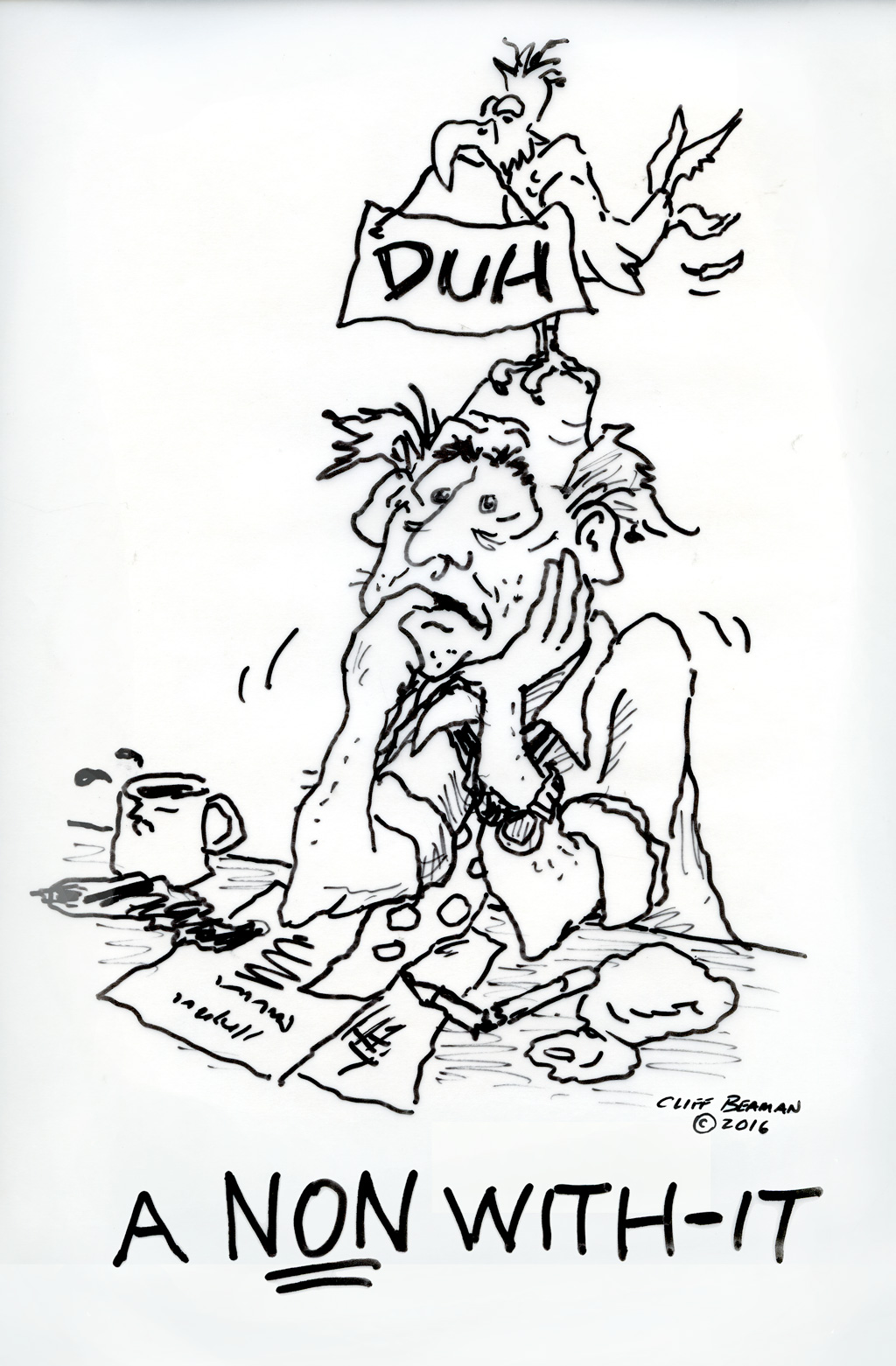
Are You a With-It?

For years, my young son Joel thought I had an eye on the back of my head. Why? I told him so.

See!

Google Image
Google Image: “Four-eyed Monitor”

To keep this mischief-making, dangerous pranking boy surviving beyond childhood, I kept alive the delusion of a third eye until he grew old enough to catch on to my trick. “God gave you a smart Mommy,” I declared. “I have to be ‘with it.’ Otherwise, you’d be dead!” And I meant every word.


What does “With It” Mean?

Malcolm Gladwell in “Most Likely to Succeed” from The New Yorker (Dec. 15, 2008) discusses the value of “withitness” in several fields: sports, education, and business. About teaching in particular, he notes: Educational researcher Jacob Kounin, used the term “withitness” to define that hard-to-pin-down quality of intuition and smarts which helps one sense the behaviors, intentions, and motivations of those around her/him and act accordingly.

Malcolm Gladwell, New Yorker staff writer
Malcolm Gladwell, The New Yorker staff writer

“Test scores, graduate degrees, and certifications—as much as they appear related to teaching prowess—turn out to be about as useful in predicting success as having a quarterback throw footballs into a bunch of garbage cans.”

Perhaps no profession has taken the implications of the quarterback problem more seriously than the financial-advice field, and the experience of financial advisers is a useful guide to what could happen in teaching as well. There are no formal qualifications for entering the field except a college degree. Financial-services firms don’t look for only the best students, or require graduate degrees or specify a list of prerequisites. No one knows beforehand what makes a high-performing financial adviser different from a low-performing one, so the field throws the door wide open.


Our Experience

In the last six months we’ve had the opportunity to rub shoulders with a few bankers, realtors, and multiple tradespeople who did home repairs or renovation during our move.

Here in a nutshell:

The Good

Mr. Painter: His eyes surveyed the kitchen walls as he spoke, “I can do this in two hours and include your paint in the price. I’ll even leave some paint for touch-ups.”  He fulfilled his promises. We were pleased.

Ms. Realtor: “I’ll call you in two hours with an update.” She did and we felt confident.

 The Bad

Mrs. Banker: “I’ll be right on it.” She wasn’t though, and we spent days and weeks feeling frustrated. Later, however, we found she was covering for the ineptitude of support people in the business.

Mr. Realtor: “Look at my credentials! I have a 5-Star rating . . . yadayadayada . . . !

However, credentials don’t always translate into performance. We frequently had to prompt him to act in our favor. Why can’t he be “with-it”? we wondered.

withitnotcartoon


The Best

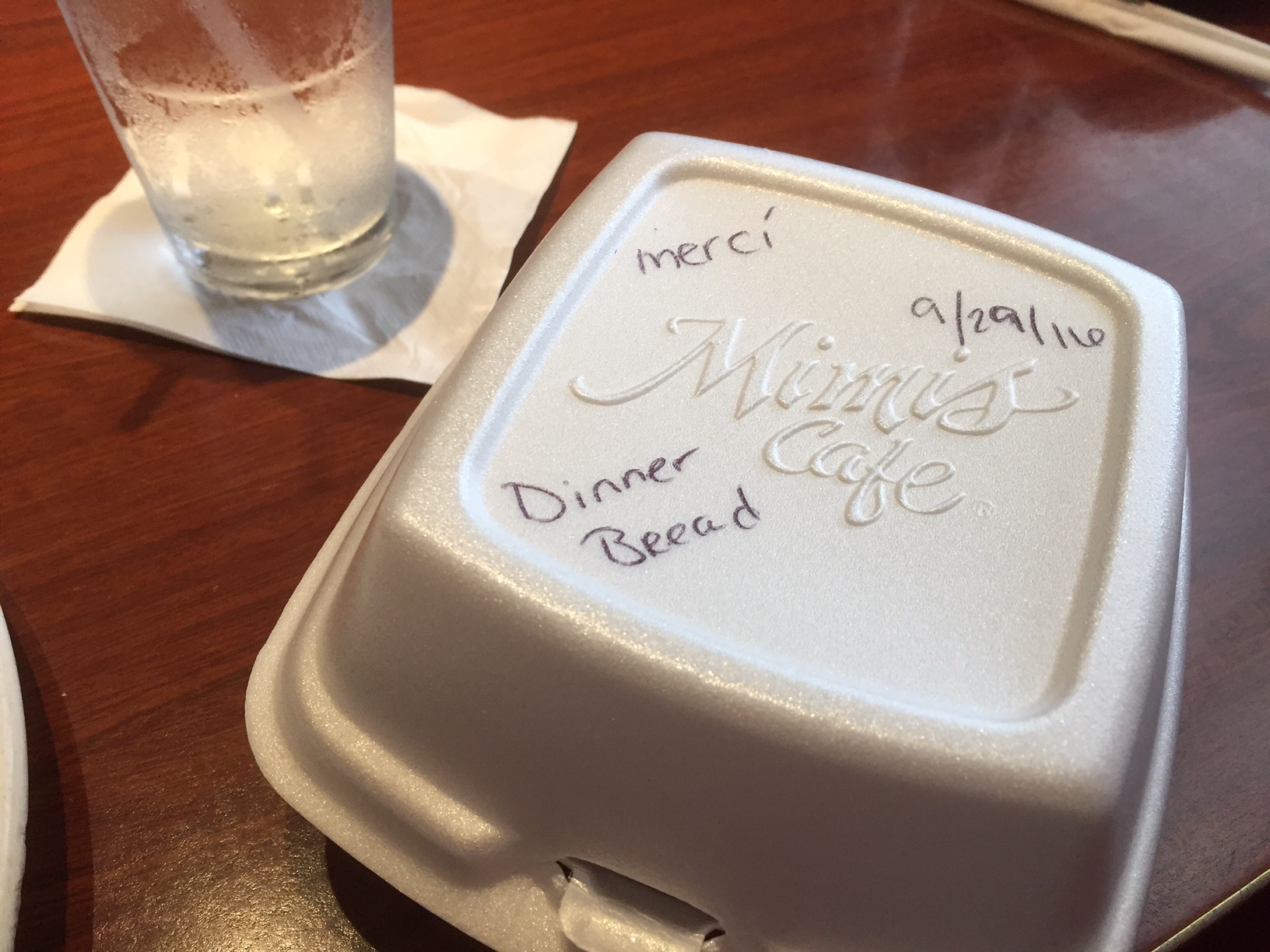
We had lunch recently at Mimi’s restaurant. Our server Kristie performed perfectly without hovering. Before we left, she boxed up an un-eaten blueberry muffin and left-over dinner rolls in separate containers. Without prompting, she labeled each box.

withitmimicafebox

Item + Date + merci on the lid . . . certainly appropriate in a French restaurant á la New Orleans style. This server was definitely a “with it” woman!


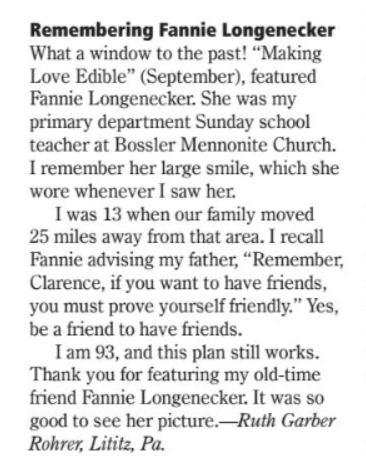
* Ruth Garber Rohrer, a 93-year-old subscriber to The Mennonite magazine, read my September 2016 article in tribute to my Grandma Fannie Longenecker printed in this post.

Then I found Ruth’s editorial comment in the October issue.

Letters to the Editor, The Mennonite Magazine, October 2016, page 5

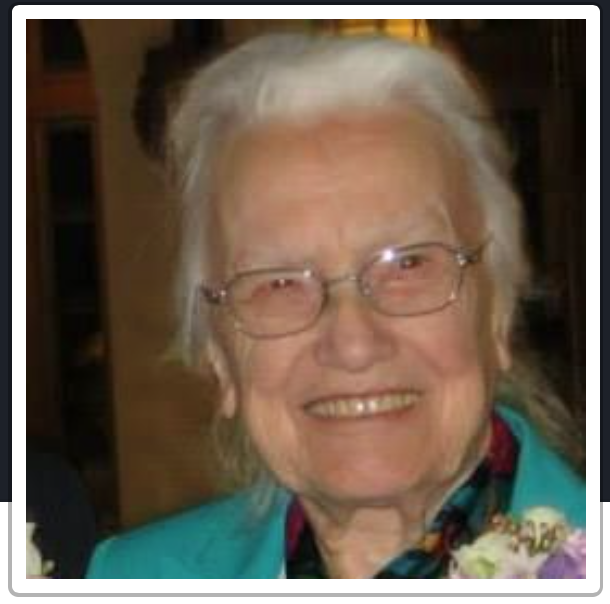
Serendipitously,  I had discovered a link to my Grandma through one of her pupils in Sunday School at Bossler Mennonite Church, one I never knew existed. Ruth Garber Rohrer also has a presence on Facebook and socializes in the digital world.

ruthgrohrerfbscreenshot-copy

Ruth is “with it” indeed!


How I Define “With It”

* Keen perception through the senses: Seeing, hearing, “reading” a situation beyond mere facts.

* Ability to evaluate situations and/or scan people’s expressions and connect with them personally in a significant way.

* Ability to follow-through when action is needed.


What is your definition of “With It”? What qualities would you add to the list?

Did examples from your own life pop into your mind as you read this post. Here’s where to reveal the good, the bad, and the ugly or  – the best!

Pumpkin Power: Embossed Antique Postcards

Do you send Hallowe’en cards? Judging from the racks of greeting cards in stores these days, many people do.

Stores selling Hallowe’en costumes and party gear are now occupying vacated commercial space. October issues of magazines offer decorating ideas including “Boo-tiful” tablescapes. The current Better Homes and Gardens special edition (2016) displays patterns for creative pumpkin carving.

halloweenmagazine

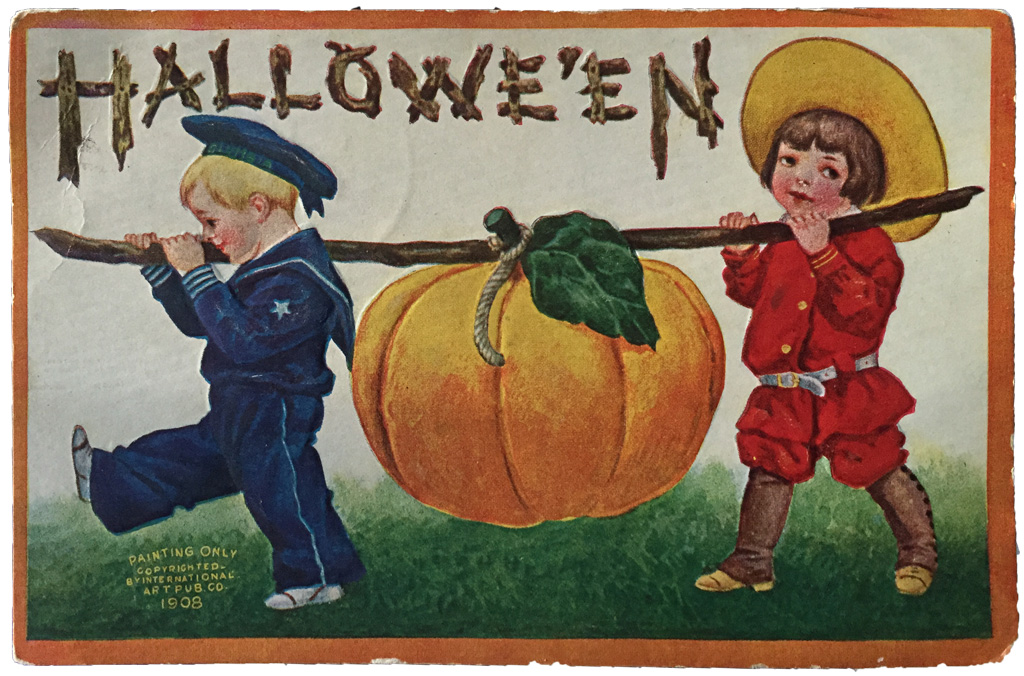
This magazine, founded in 1922, was not even in circulation when my Grandma Longenecker received these postcards, this one an invitation from cousin Lulu, mailed from the Mount Joy, PA post office in October 1908.

pumpkinpostcard1908

1908halloweenlulu

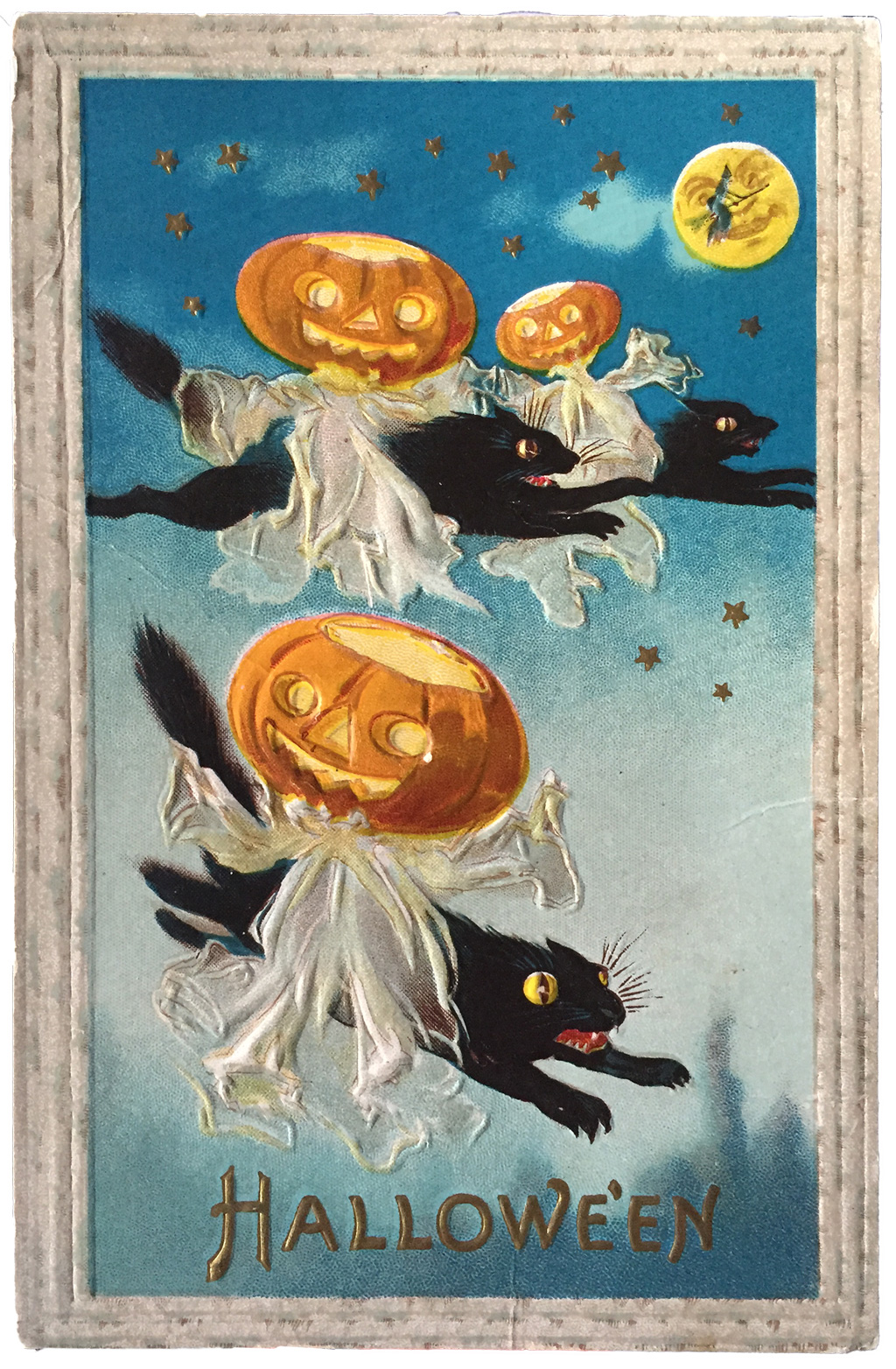
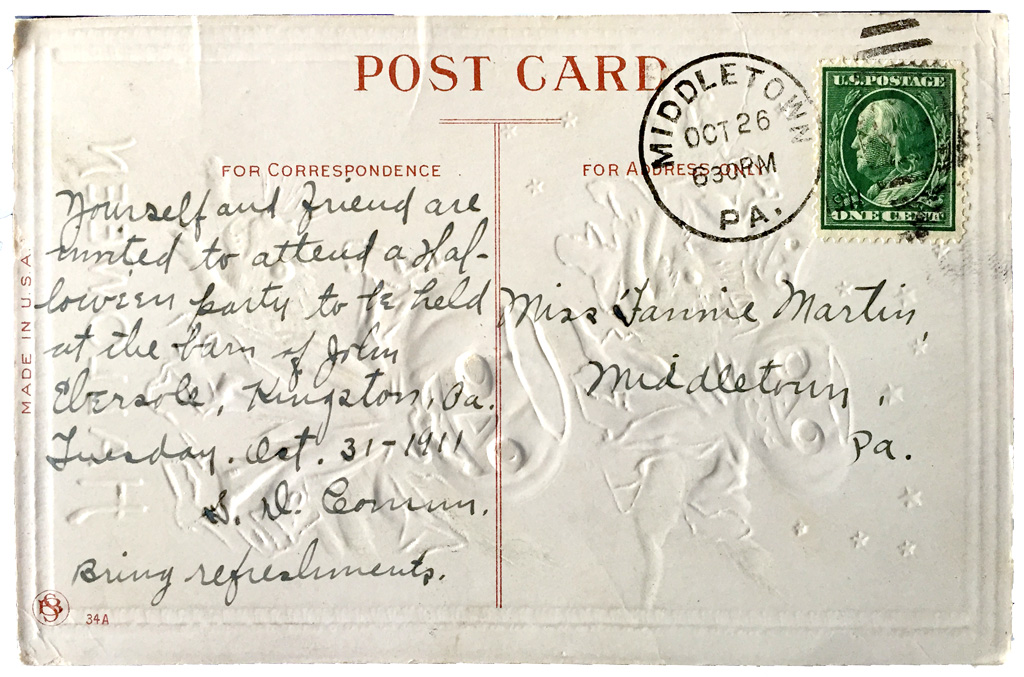
Another one with a more spooky vibe (freakish cats setting ghostly pumpkins airborne) requests that Fannie “Bring refreshments.”

flyingpumpkins1911

halloweenpostcardrefreshments

The venue is John Ebersole’s barn in Kingston, PA. The date: Tuesday, October 31, 1911. According to Google Maps, Kingston is 112 miles from Middletown, Fannie Martin’s hometown.

By car, in this century it would take about 2 hours. Did Grandma Fannie attend? Was her transportation horse and buggy or a Model T Ford that was in production as early as 1908? It could have been Model A Ford manufactured in 1903 – 1904. And I wonder how refreshments would fare during the long trip?

I am pleased to have access to such family artifacts, but I have to speculate about so many details surrounding the events.

Grandma would have known, but she’s not here any more, so I can’t ask her. I can live out my days not knowing details about a minor, but interesting, event. If I devised a story from this event, I’d have to indulge in “perhapsing,” a creative non-fiction technique I discussed in this post.

Still, I’m curious!


What artifacts have stoked your curiosity about family events of long ago?

How do you fill in the gaps when details are vague or absent?


Coming next: Are you are with-it?

Aunt Ruthie: Birthdays to Remember

The Longeneckers think birthdays ending in 5 or 0 are special. At a Longenecker family gathering in Florida in 2003, we celebrated the birthday of my brother Mark, who turned the big 5-0.

Brother Mark's 50th Birthday 2003
Brother Mark’s 50th Birthday 2003   (Tim Kulp, spouse of grand niece in background)

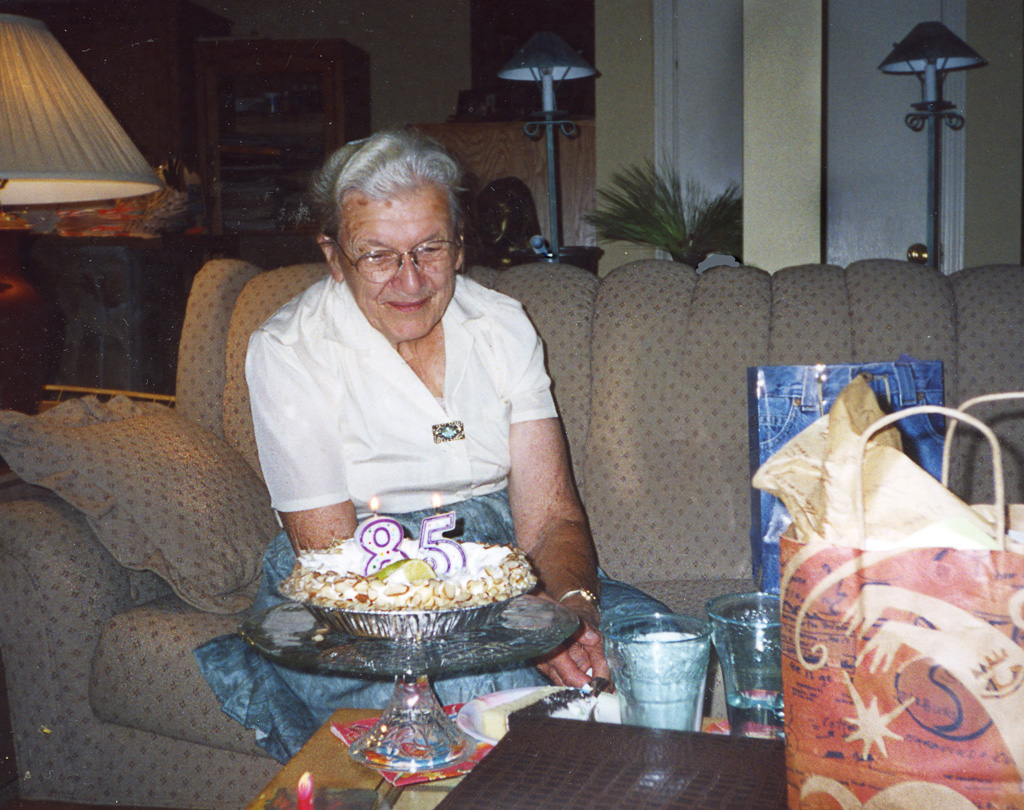
And also of my Aunt Ruthie who celebrated her 85th birthday at our house at the same time.

Aunt Ruthie Longenecker's 85th Birthday, 2003
Aunt Ruthie Longenecker’s 85th Birthday, 2003

This month on October 4th, Ruthie reached her 98th birthday. That called for two celebrations: one among residents of the home where she receives nursing care and the other with her family at the same facility.


What she said at the first celebration:

It came suddenly and it left the same way . . .


What happened at the second:

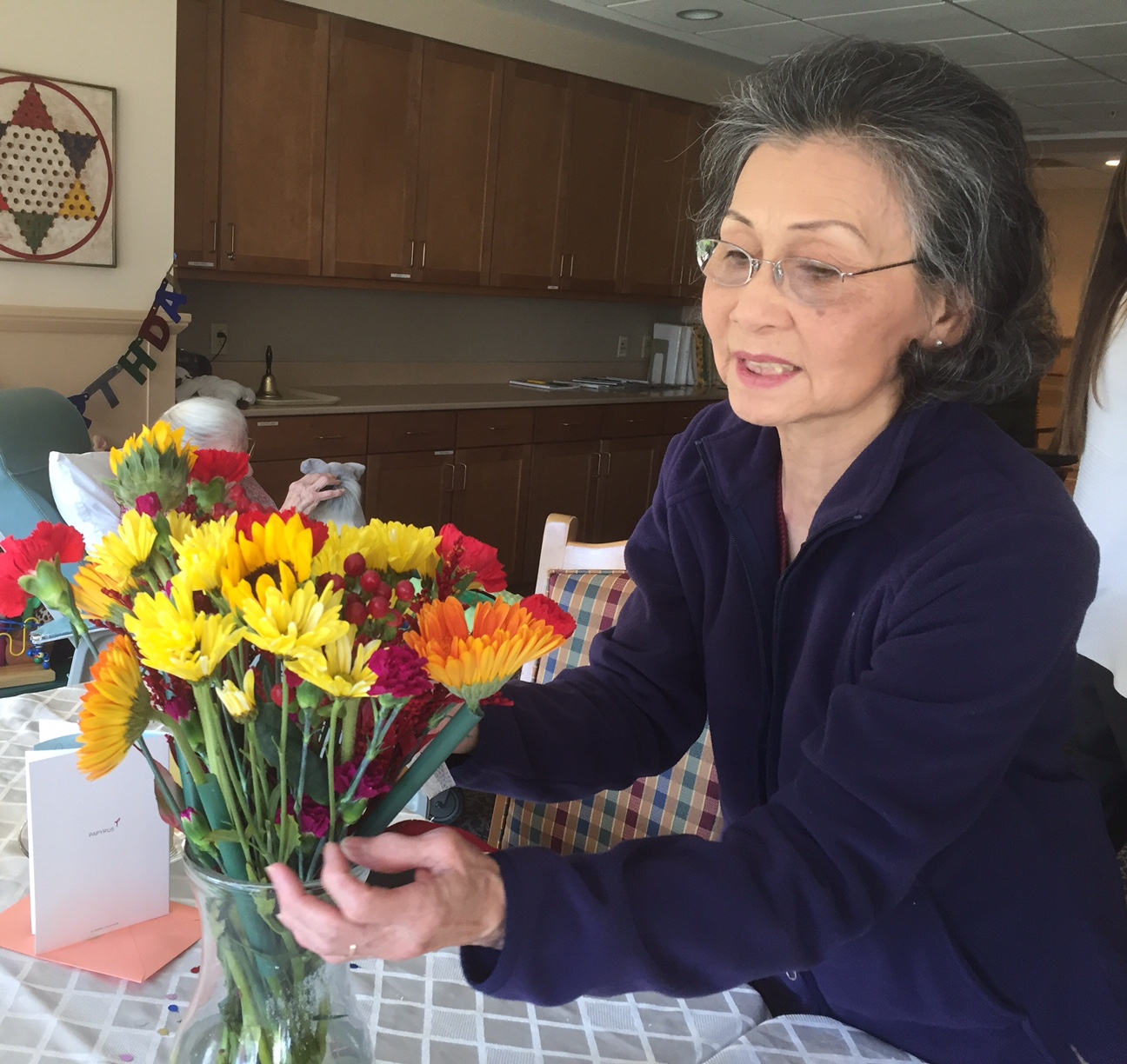
The preliminaries: Tao from Viet Nam, one whom Aunt Ruthie sheltered as a young woman, beautifies the table with an autumn bouquet. Her children think of Ruthie as their grandmother.

taoflowerbouquet

Then –  family meal with dessert . . .

No 5’s or 0’s appeared on the birthday cake in front of her, but there was a huge number 9 in the calculation – not 98 candles, but close!

marianruthie98

She had her drowsy moments during the party, but slowly awakening once, she looked around the table and observed, “It can’t be denied that women outnumber the men here.”

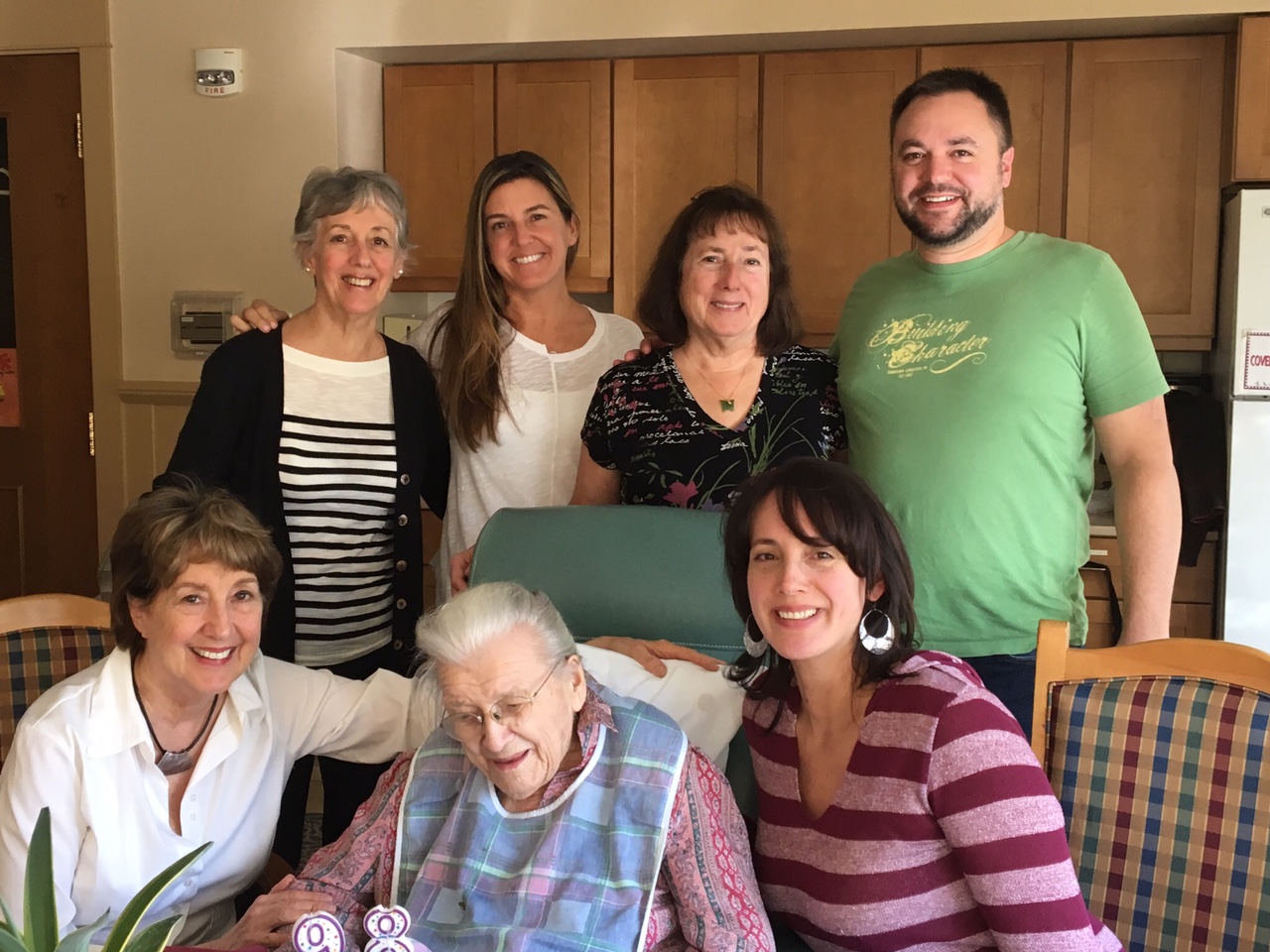
birthdaygroup

My sisters Janice and Jean, two grandnieces, and a nephew

She didn’t have enough wind to blow out the two candles at first. Neither did I. We all sent her good wishes after 4-5 puffs, extinguishing the two flames.

blowoutcandles


Special Report: Ruthie Reaction

I promised to give you a postscript to my post Aunt Ruthie Longenecker: Her Life in Pictures.

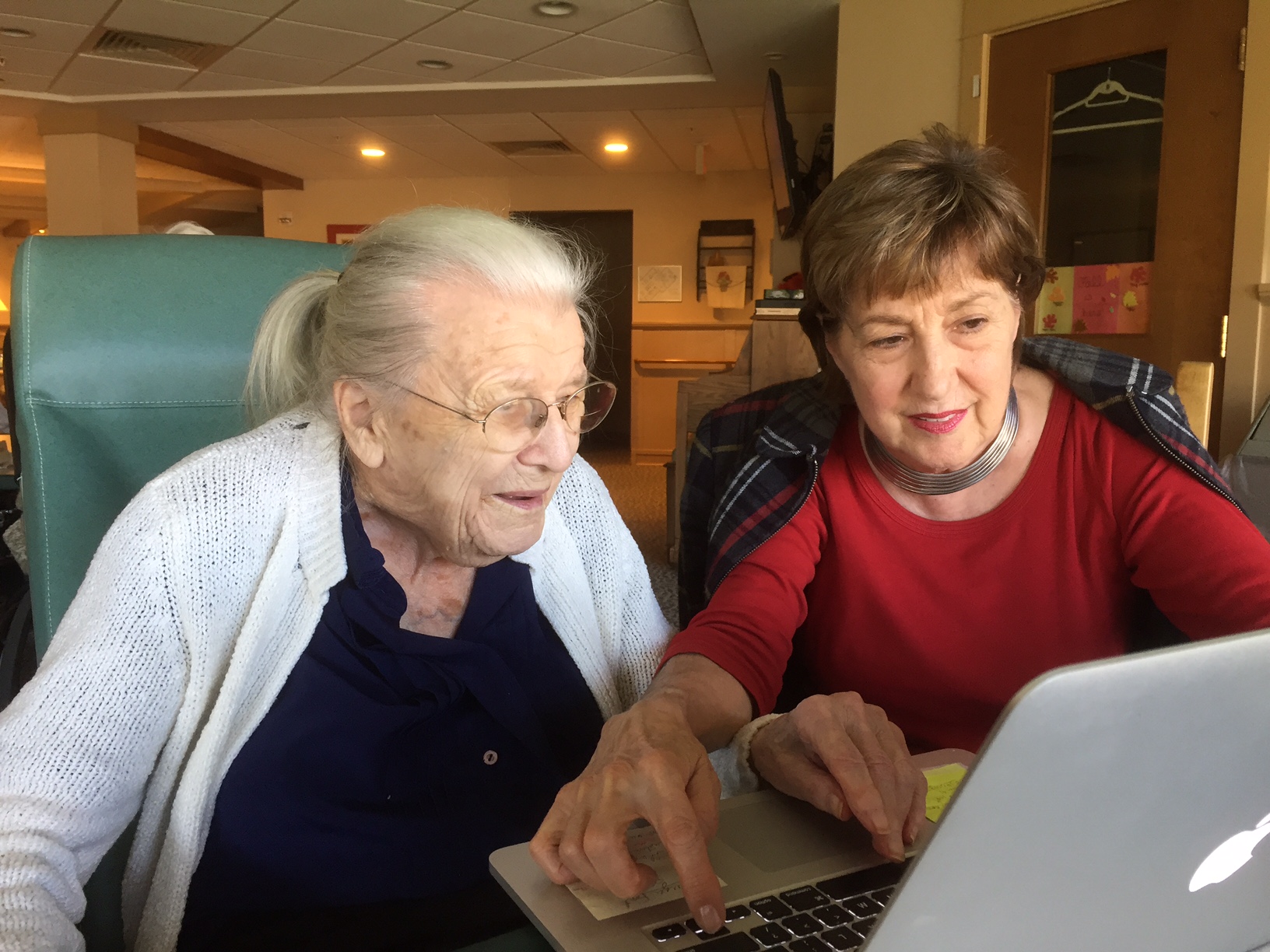
Earlier in the week, Ruthie with her perky pony tail leaned in, looked intently at my computer screen with eyes wide open.

ruthieperkyponytail

When we came to the vintage photo of the 1930s family reunion, she began identifying a few relatives she remembered – her aunts, uncles, her father, her mother (“My, she was thinner then, if you know what I mean,” she said with a wry smile, viewing her mother.) Her left hand moved steadily if quavery across the family photo – speaking names of relatives long dead: “Grandma Martin, Grandpa Sam, Uncle Frank, Uncle Joe, Mattie, Bertha, oh, and my brother Ray.” Long pauses often punctuated the name call.

I was thrilled to observe the foggy memory mists lifting and blowing away for a few precious minutes . . .

Remember my promise on the October 5 post? I did show her the post of her life in pictures, including your comments.

They made her smile, smile real big!

ruthiereaction

“Thank you,” she said.

Madeleine L’Engle’s birthday sentiment:

The great thing about getting older is that you don’t lose all the other ages you’ve been.


Given a choice, what age would you choose among the ages you’ve been?

Heart on Fire: Guess Who’s Voted for President!

Outrageous.

Unbelievable.

True.

These are the words author/researcher Ann Malaspina uses to describe the legal practice of denying women the right to vote in 1872. Even though women could own property, pay taxes, hold a job, and raise children they could not participate in elections.

When Susan B. Anthony challenged this practice, she also used three profound words to state her intent: “Failure is impossible.”

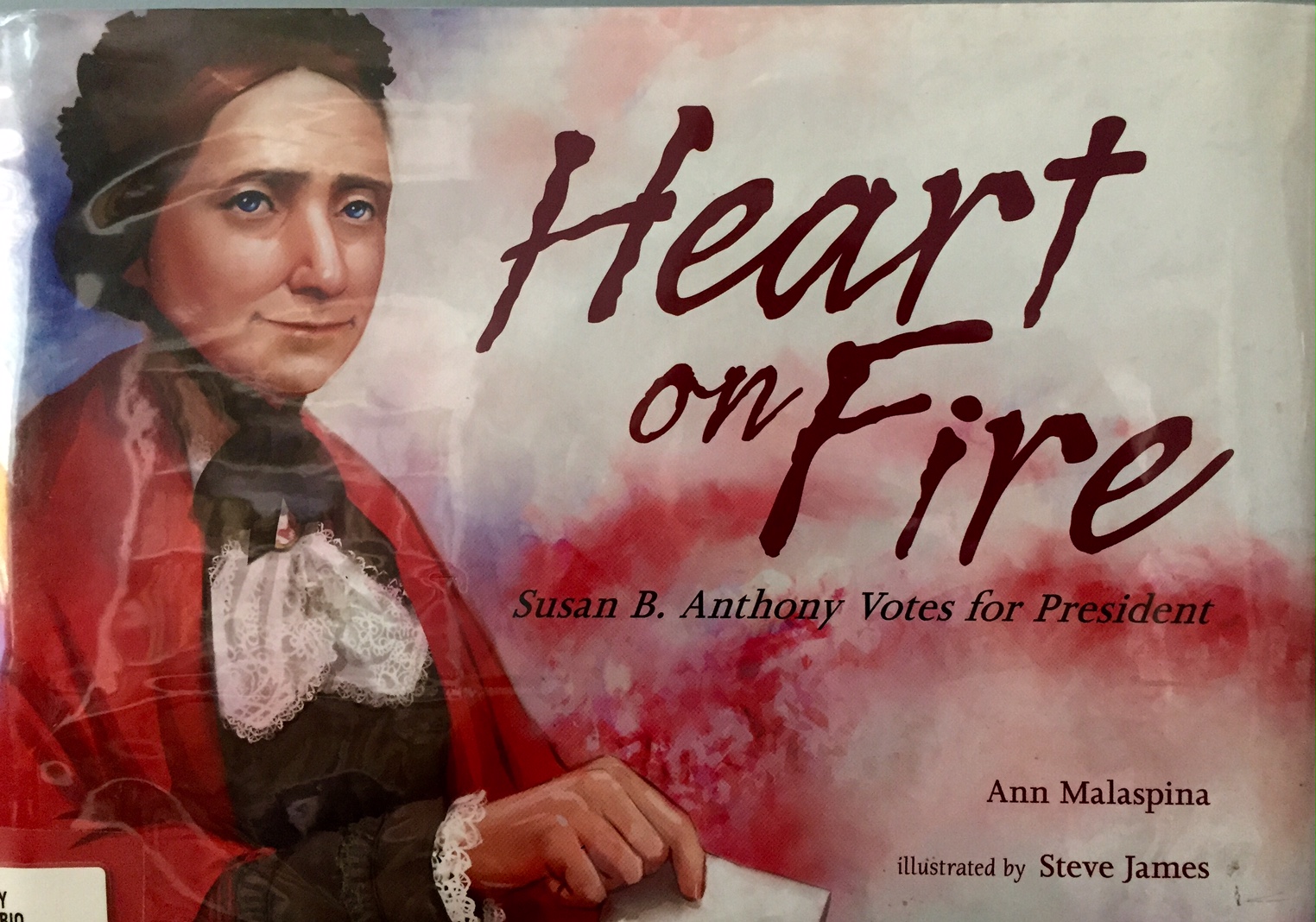
In a juvenile book with gorgeous illustrations by Steve James, Malaspina details the amazing life of the founder of the women’s voting rights, Susan B. Anthony:

anthonycover

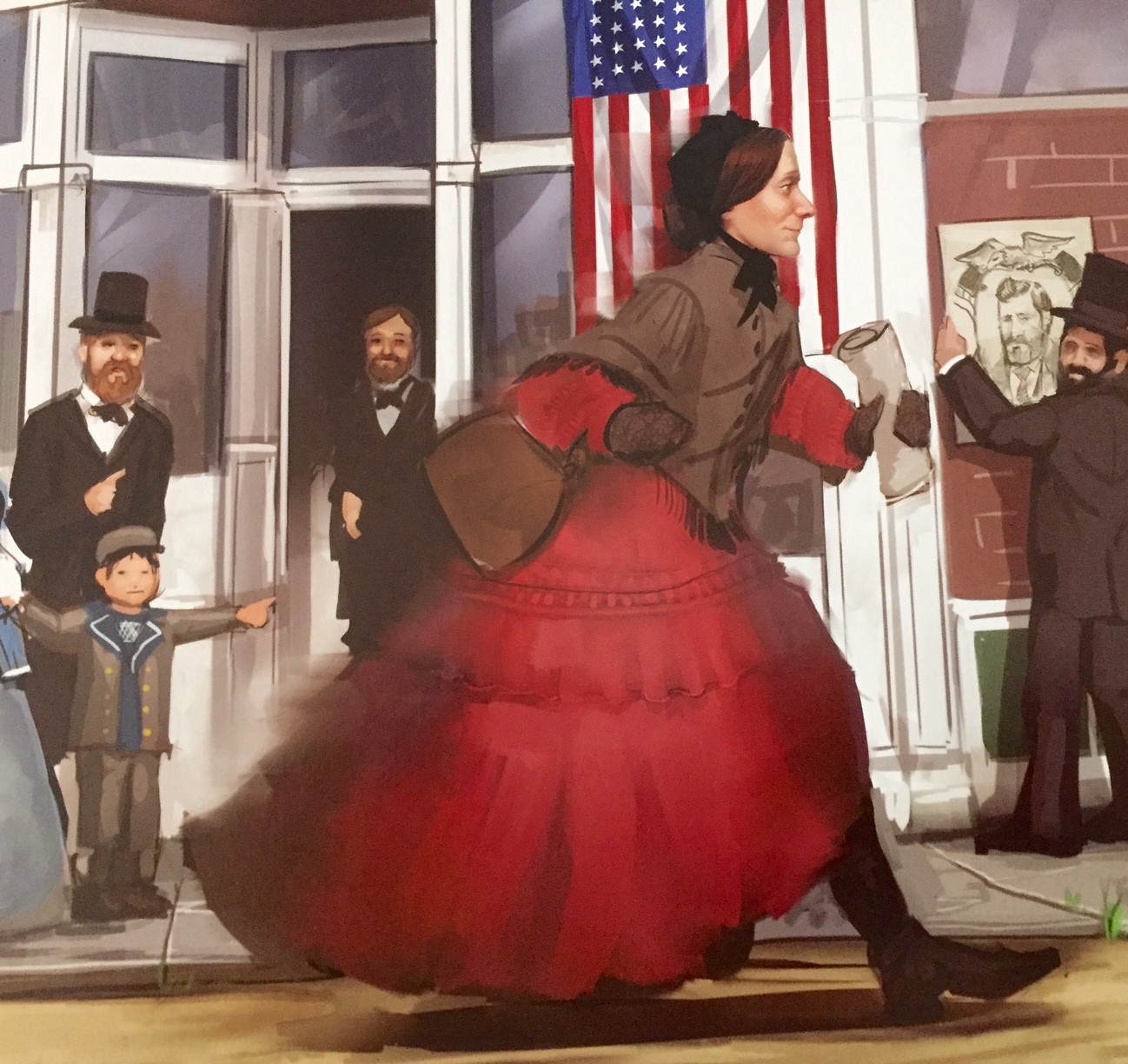
* Because of a new law, the 14th Amendment to the constitution, all persons born in the United States have the same right as citizens. She told the men at the registration table she is a person and citizen. Therefore, she should have the right to vote.

* After arguments with inspectors, she finally registered to vote.

* On Election Day, November 5, 1872, Anthony raced to the polls and cast her vote at seven a.m. She had voted for a president!

Illustration: Steve James

But trouble was brewing . . .

* On November 18, 1872, a deputy federal marshal stepped into her parlor intending to arrest her. She demanded that she be arrested properly, but he wouldn’t handcuff a lady.

* In January 1873, Miss Anthony was ordered to pay one thousand dollars or go to jail until her trial.

* She refused to pay. She didn’t want to give the court a dime.

* As the trial grew closer, she argued her case all over the country: Washington, D. C., Philadelphia, Chicago. She visited Kansas, Oregon, and California.

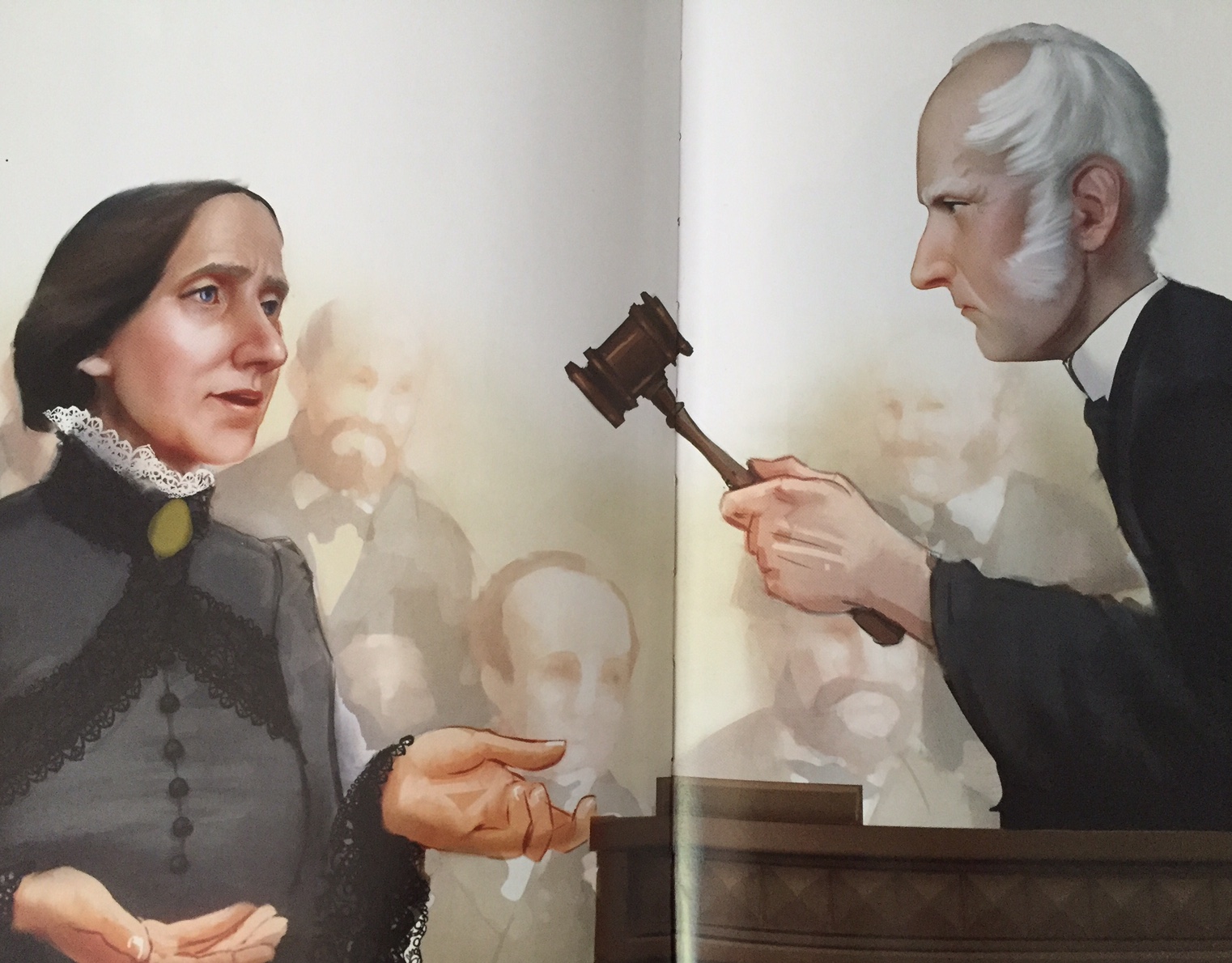
* At the trial, the judge pulled a paper from his pocket: “The fourteenth Amendment gives no right to a woman to vote,” he argued.

*But she persisted.  The next day, the judge allowed her a final word. She rose to her feet and delivered these words with a punch:

“You have trampled under foot every vital principle of our government. My natural rights, my civil rights, my political rights, my judicial rights, are all alike ignored.”

* The judge banged his gavel and ordered Miss Anthony to pay one hundred dollars plus court costs.

Illustration: Steve James

* Finally, as a person and as a citizen, she told the judge, “May it please Your Honor, ”I will never pay a dollar of your unjust penalty.”

And Susan B. Anthony never did.


At her 86th birthday celebration in 1906 in Washington, D. C. Anthony remained determined to secure women’s right to vote. “Failure is impossible,” she declared.

A new generation pushed the movement forward and finally Congress passed The Nineteenth Amendment on June 4, 1919. “That November, twenty-six million women cast their vote for president.”

The right of citizens of the United States to vote shall not be denied or abridged by the United States or by any State on account of sex.


Brief Biography:

Born February 1820 to a Quaker family where women were considered relatively “equal to men,” Susan B. Anthony left her stamp on history.

Courtesy of National Women's History Museum stamp exhibit
Courtesy of National Women’s History Museum stamp exhibit


Also, her image is imprinted on a dollar minted from 1979 – 1981.

An energetic, self-disciplined teacher, she was refused permission to speak at a teachers’ convention and at a temperance convention, prompting her to focus on women’s rights. Early on, social injustice galvanized her to action.

In 1890, she led the National Women’s Suffrage Movement.

Determined and focused, she traveled far and wide to champion voting rights for women: Kansas, Louisiana, Georgia and as far west as Oregon and California.

Called “The Napoleon of the woman’s rights movement,” she moved to Washington every winter to lobby Congress. Later, Ms. Anthony rallied for international efforts for women. Even Queen Victoria asked to meet her.

She died in 1906, regrettably fourteen years before women were officially given the right to vote, 1920.


I hope you will exercise your right to vote this November election. It’s a privilege we dare not take for granted.

If you live in another country that extends voting rights, you can exercise this right as well.
* * *

Bonus: Remember Geena Davis from “Thelma and Louise”? She is letting her voice be heard in another arena. Check here to find out more.geenadavisinstitute


Your thoughts and opinions are worth more than the 3-cent postage stamp pictured here. Or the dollar on which her image appeared.

Thanks for sharing in this column.


Coming next: Aunt Ruthie Longenecker, Birthdays to Remember

Aunt Ruthie Longenecker: Her Life in Pictures

Yesterday, Tuesday, October 4, my Aunt Ruthie celebrated her 98th birthday. Born in 1918, she is a towering figure in my life and, and along with Mother and Grandma Longenecker, my strongest mentor. And she has been mother/teacher to many.

* * *

ruthage3

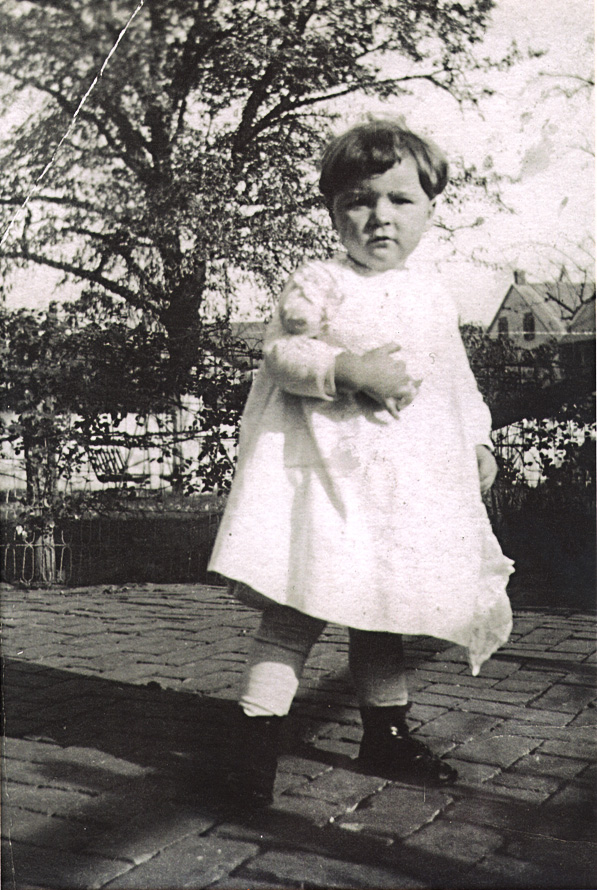
See the determination in that little girl’s face!

Her mother, my grandma Fannie Longenecker, replying to my sister Janice’s questions for a sociology-class interview assignment, mentioned that “Ruthie was industrious, a busy-body, a tomboy who would take risks.”


Education

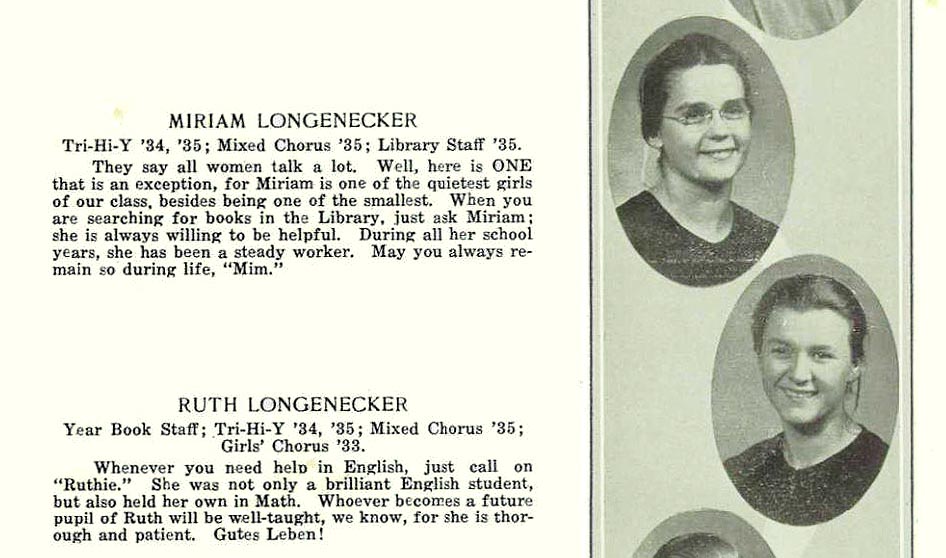
The blurb in her Elizabethtown High School yearbook photo acknowledged her brilliant mind. (She skipped two elementary grades.) The description below also foretold her teaching career and hinted at the math skills she used in her long career as tax collector for West Donegal (PA) Township. She was so young when she began college at age 16, she required a chaperone.

ruthie-l_hs-yearbook_layer_3x2-copy

Ruthie attended business school near Elizabethtown and earned a bachelor’s degree from Eastern Mennonite College in Harrisonburg, Virginia. She earned a master’s degree in education from Temple University in Philadelphia.

Teaching Career

Country children in rural Lancaster County usually did not attend kindergarten. Aunt Ruthie created kindergarten for me as a 5-year-old at Cherry Hill School, close to Milton Grove, PA. I remember bouncing up and down over hills and dales riding in the back seat of her brown Hudson on the way to Cherry Hill. Two or three days a week I learned the alphabet and numbers sitting along side first graders. In the one-room classroom with eight grades, I loved singing: “Good morning merry sunshine, how did you wake so soon? You scared away the little stars and shined away the moon.”

ruthieschoolphoto1940s-copy

Hundreds of students remember Miss Longenecker at the age pictured below at Rheems Elementary School where she taught sixth grade and served as principal. Earlier in her career there, the school board (probably all male) refused to acknowledge her true function as principal and condescendingly referred to her as “head teacher.”

1975-ruthie-schoolphoto-3a_small-copy

It galls me even now to disclose this awful truth, and so I ask:

What title goes to the person (man or woman) who approves the curriculum, supervises textbook orders and presides over faculty meetings, responding to parental complains. It’s the PRINCIPAL I tell you!


Host to Refugees and Immigrants

This 1979 photo below shows Grandma Longenecker, Aunt Ruthie and Phuong Le, a refugee from Vietnam, a young girl they welcomed into their home as a daughter. Phuong was the first among dozens who sought shelter from war-torn countries. She made the most of Aunt Ruthie’s mentoring from 1976-1982, later succeeding in a career as a computer programmer and raising a fine family.

1979grandmaruthie-phuong_small-copy

Lutheran Social Services acknowledged Ruthie’s magnanimous contribution to refugees and immigrants with The Salt of the Earth Award, a plaque which recognized “her exceptional commitment and warmhearted compassion in welcoming the stranger. ‘Ye are the salt of the earth’ Matthew 5:13” (script from plaque)

1990s-saltofeaward-copy


Love of Family

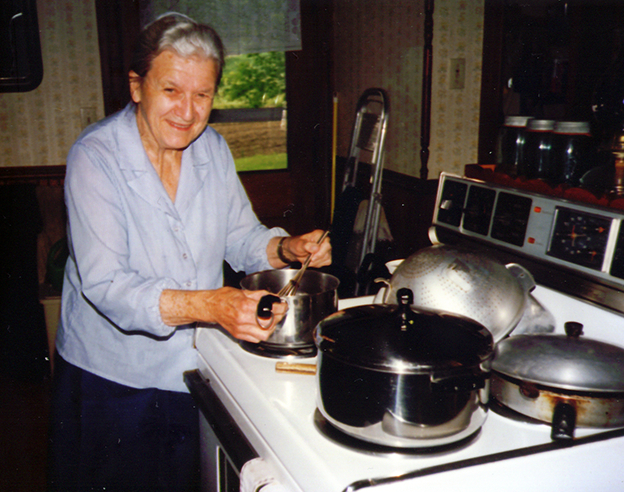
“You are always welcome here,” were Aunt Ruthie’s words after my sisters and I married and moved away from home. She labored in the kitchen when her nieces from Florida and Michigan nested in her home during vacations.

1990s-ruth-in-kitchen-2_small

In a small way, we returned the favor and relished her enjoying the citrus we bought from our orange and grapefruit trees in Florida.

ruthiecitrus-copy


Appreciation for Music

A music lover, Ruthie played the piano vigorously. If the apron is any indication, she is relaxing here after over-seeing meal making, her grand-niece Crista in the background.

1989ruthiepiano_small-copy

Into her early 90s, she played dinner music for the elderly ( ! ) at Rheems Nursing Home. “They don’t have anybody doing much for them,” she said.

ruthiepianorheems-copy

Playing the dulcimer – wholeheartedly!

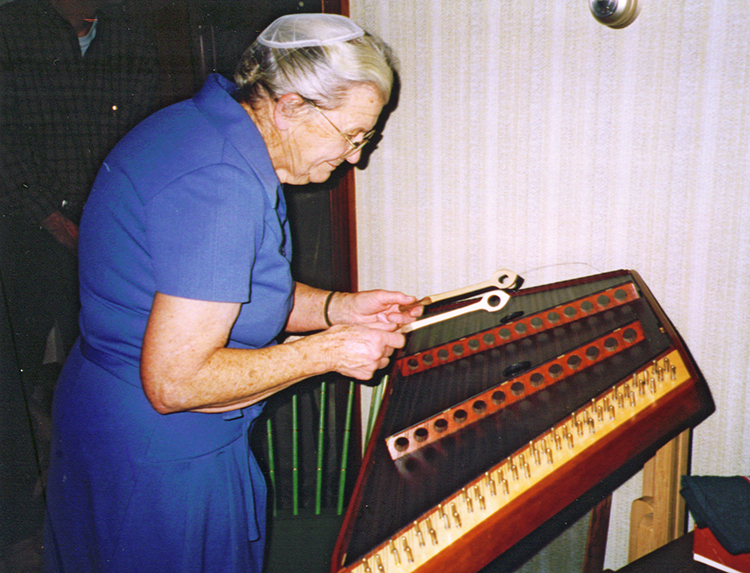
1996ruthiedulcimer_small-copy-2


Animal Friends

Through the years, her Schnauzers, Fritzie I, II, III, and IV have been her ever-present companions, protecting her by day and warming her feet at night in bed.

1998ruthiefritzieporch_small-copy

ruthiedogpiano-copy

The last Fritzie, # IV, has found a dog’s paradise, adopted by teen-age Jason and his family.

Love for Learning

Books, magazines, and the Lancaster Intelligencer Journal/New Era have kept her curious mind informed.

ruthienewspaper-copy

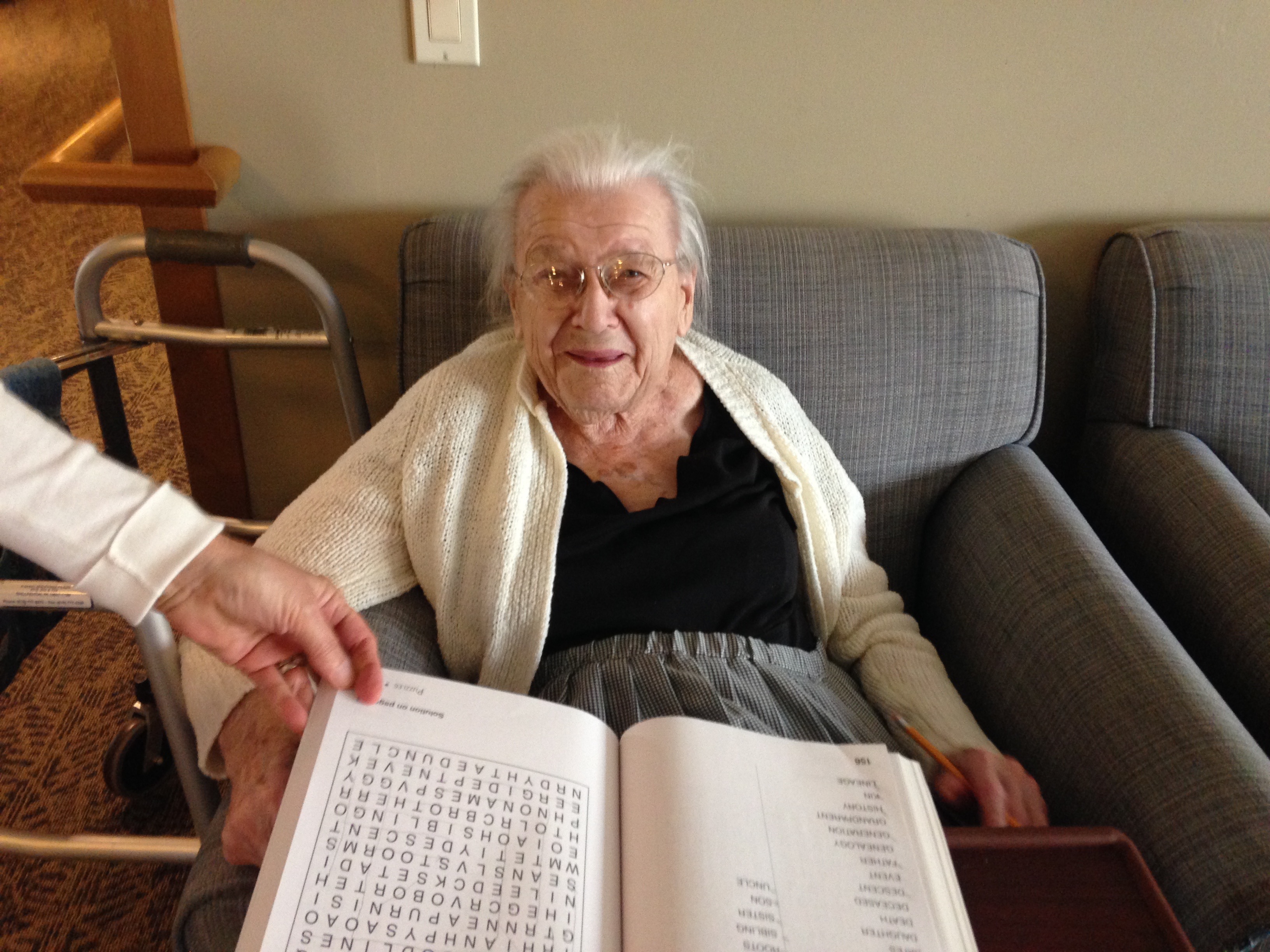
During most of her stay at Landis Homes, she has whizzed through Word Finds puzzle books.

ruthiewordfinds2015


Hands in the Soil

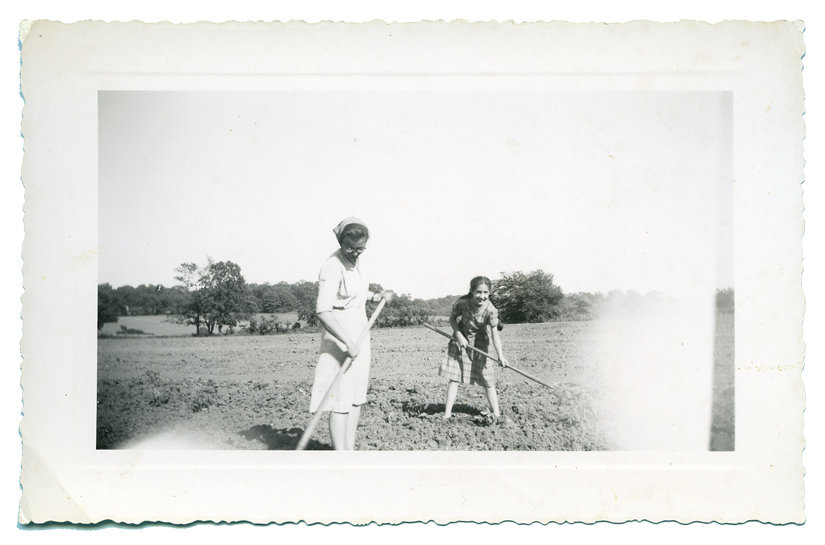
A life-long gardener, Aunt Ruthie has always had her hands in rich Pennsylvania soil. She was my hoeing companion in the 4 1/2 -acre tomato “patch” in Bainbridge, PA in the 1950s.

Aunt Ruthie with scarf and I hoeing in tomato field

At home, she kept a large garden, the envy of passersby on old route # 230 that borders her property.

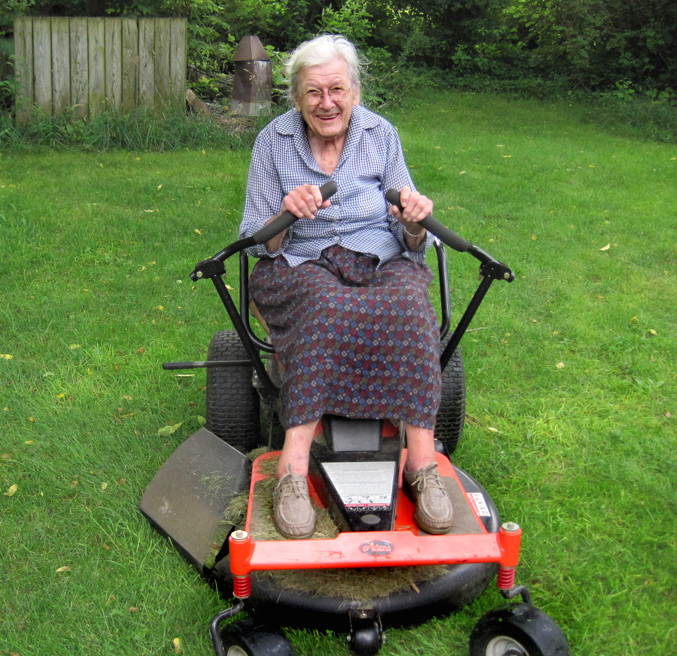
All summer long until Aunt Ruthie was almost 90, she mowed nearly an acre of grass on her land near Rheems, preferring outdoor work to household duties.

ruthie_lawnmover_5x4_180-copy

For decades, she kept a strawberry patch and a vegetable garden, bordered by flowers. Now the flowers come to her.

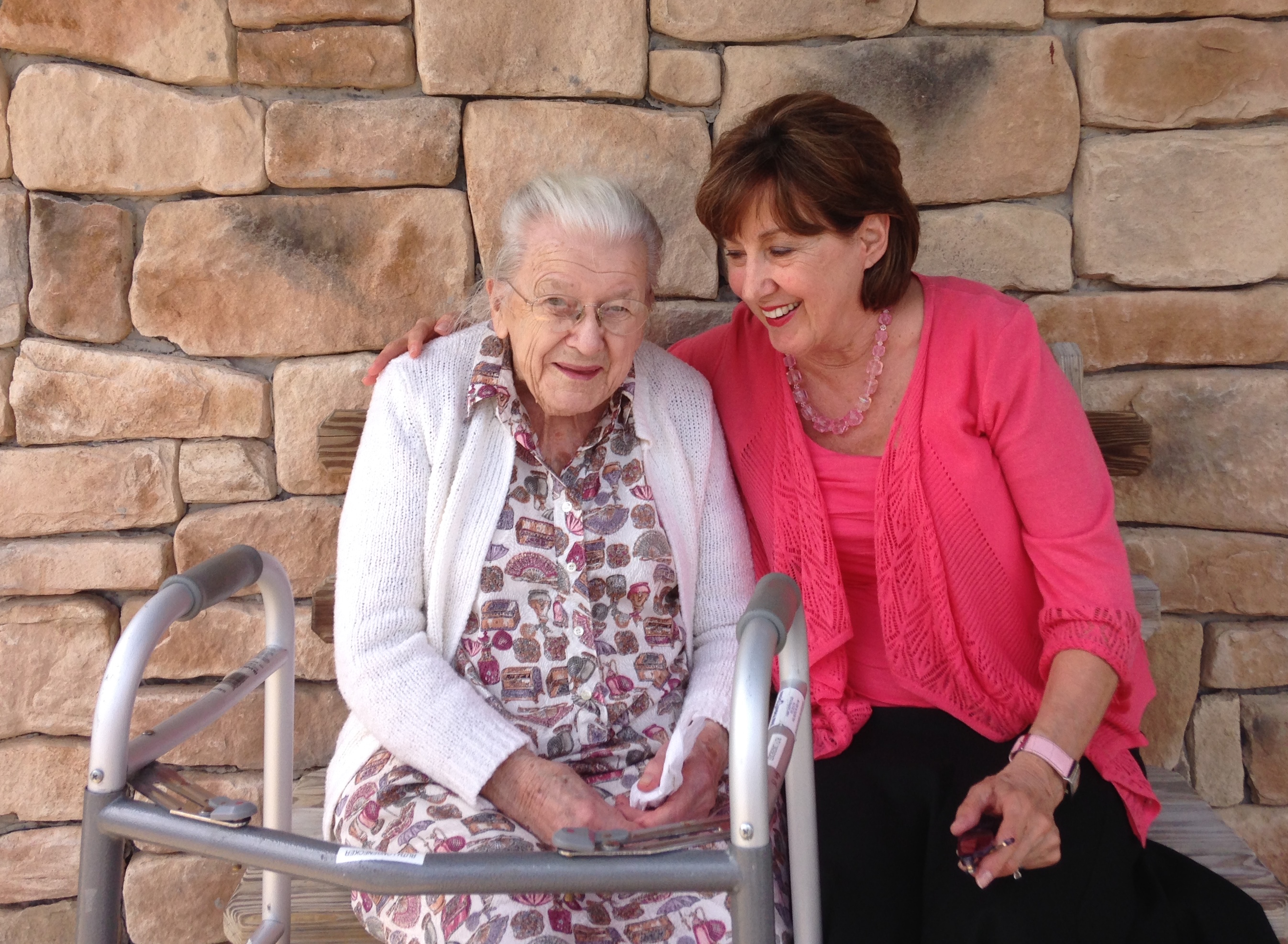
Niece Jean brings knockout roses for Aunt Ruthie now living at Landis Homes.


She has had a goodly heritage

The Martin-Horst-Longenecker Freindschaft, circa 1938 Both in back row: My dad Ray Longenecker with zippered sweater and Aunt Ruthie on right with cape dress and white covering strings
The Martin-Horst-Longenecker Freindschaft, circa 1938
Both in back row: My dad Ray Longenecker with zippered sweater and Aunt Ruthie on right with V-necked cape dress and white covering strings


Gutes Leben, her high school yearbook blurb concluded.

Yes, Aunt Ruthie, has enjoyed a good life.


Happy Birthday, Aunt Ruthie!

Ruthie after enjoying a birthday lunch at Oregon Dairy near Lititz, PA a few years ago


Coming next: Heart on Fire, Guess Who’s Voted for President!

His Turn II: An Artist Discovers More

Do you have photo albums un-touched in years? Is there a box of pictures stashed away that hasn’t seen the light of day in ages? What treasures may be hidden in your attic or basement?

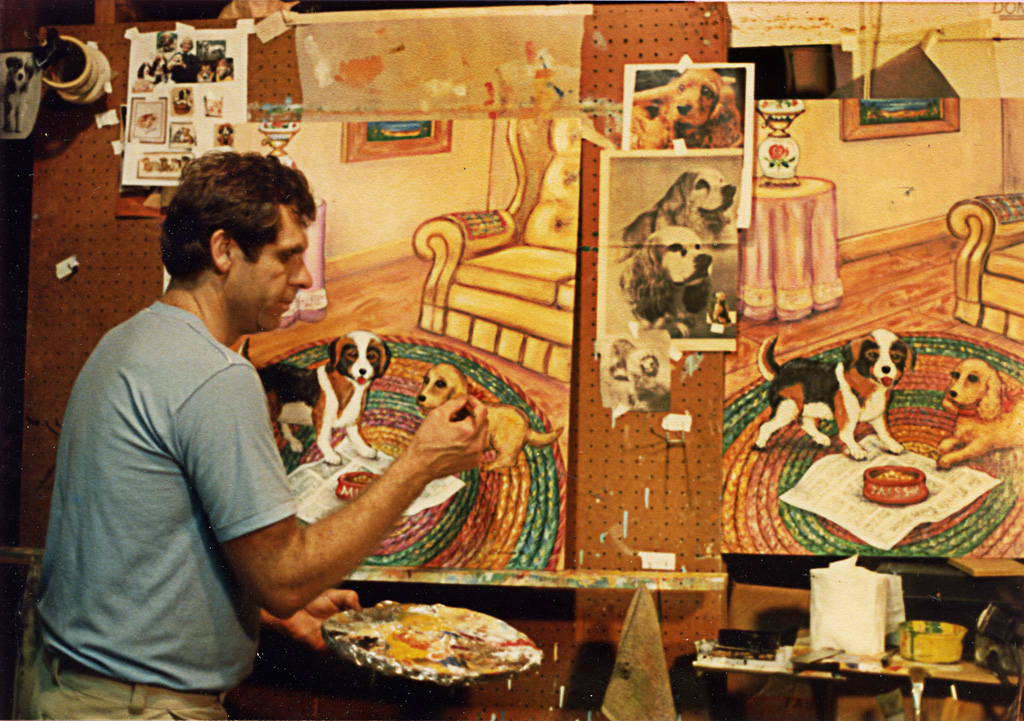
After our Big Move August 9, more of Cliff’s artwork has come to light, pieces squirreled away, forgotten for decades.

On the July 6, 2016 blog post, I hinted that Cliff the Artist would be discovering more goodies. What I said then:

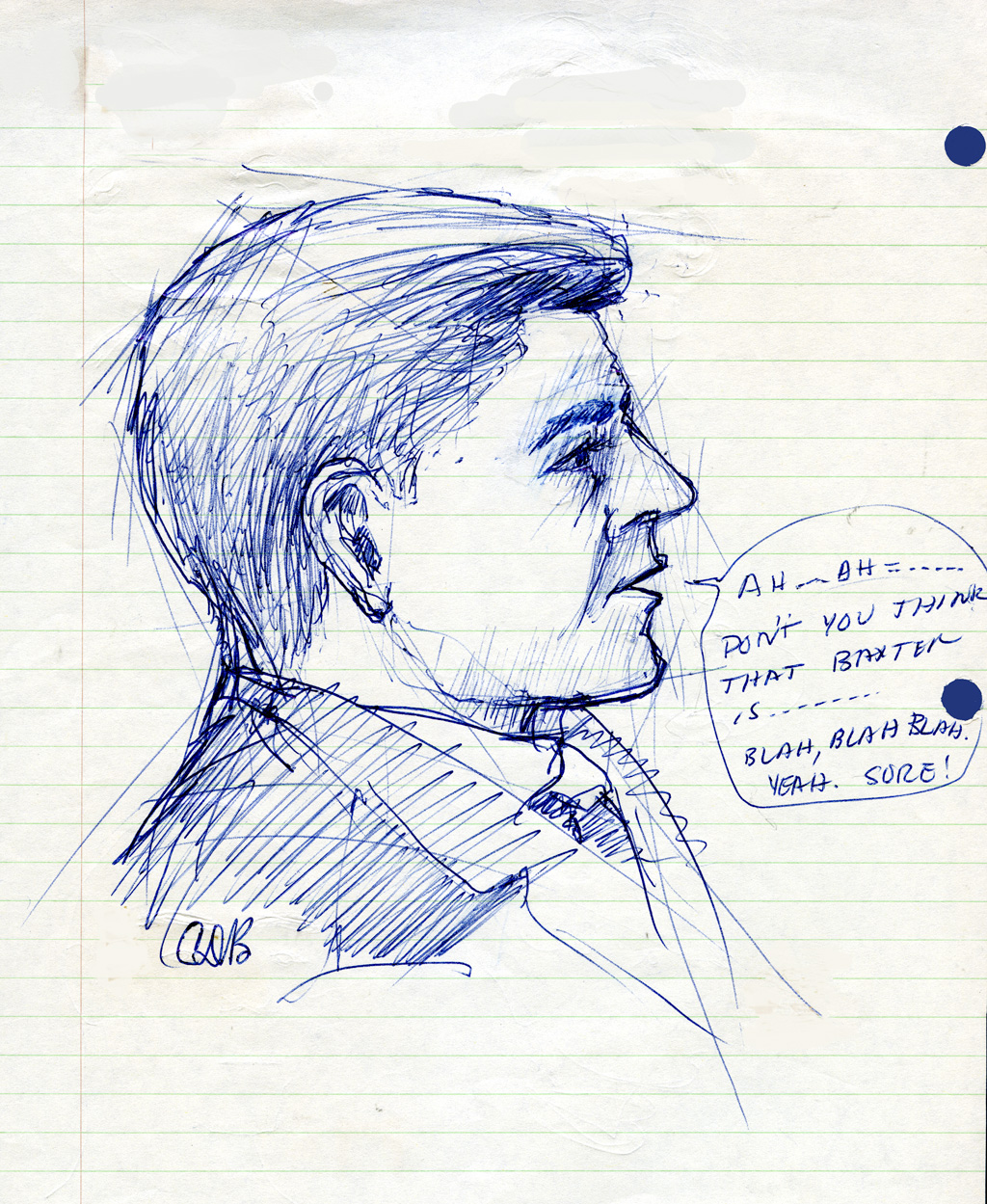
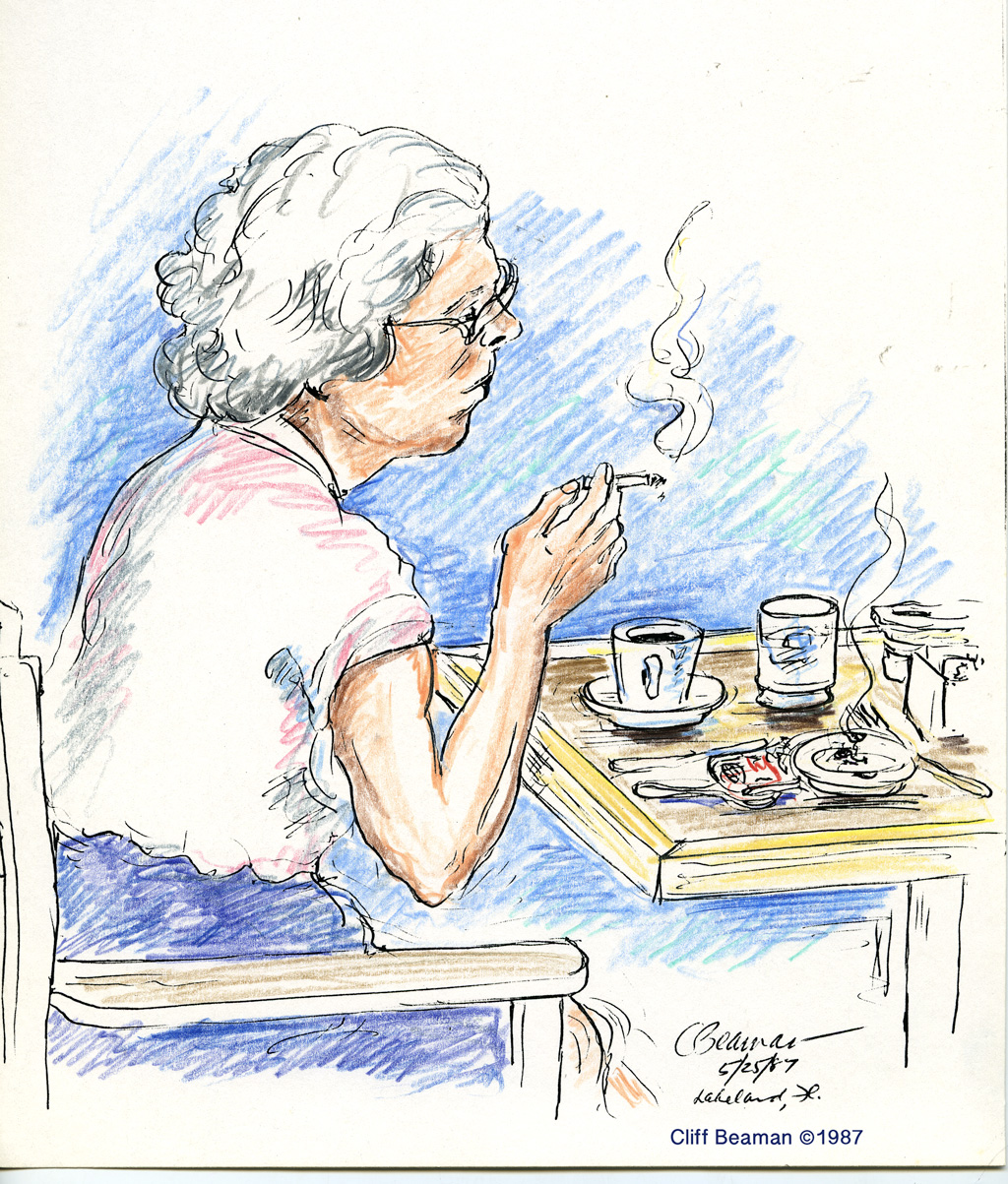
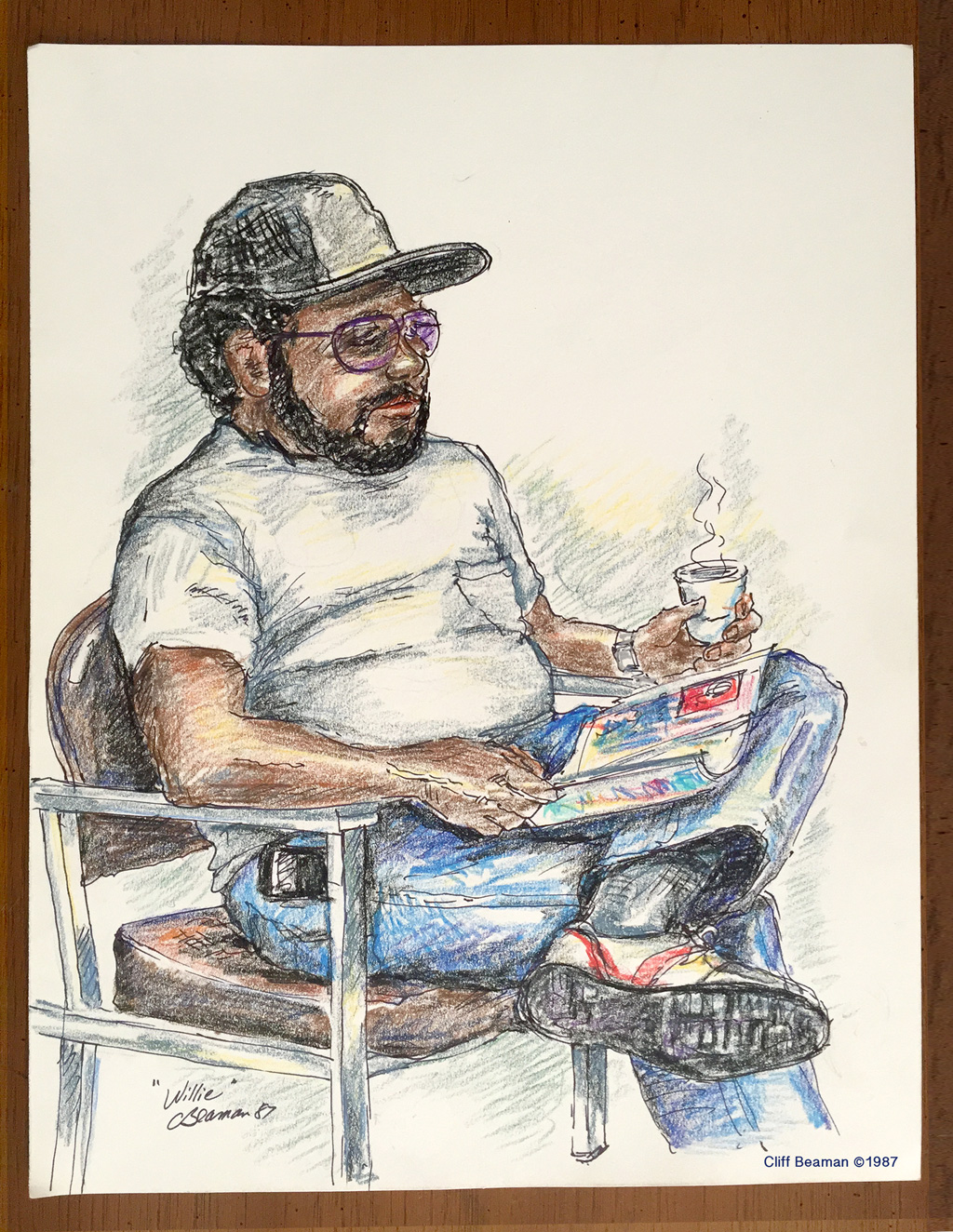
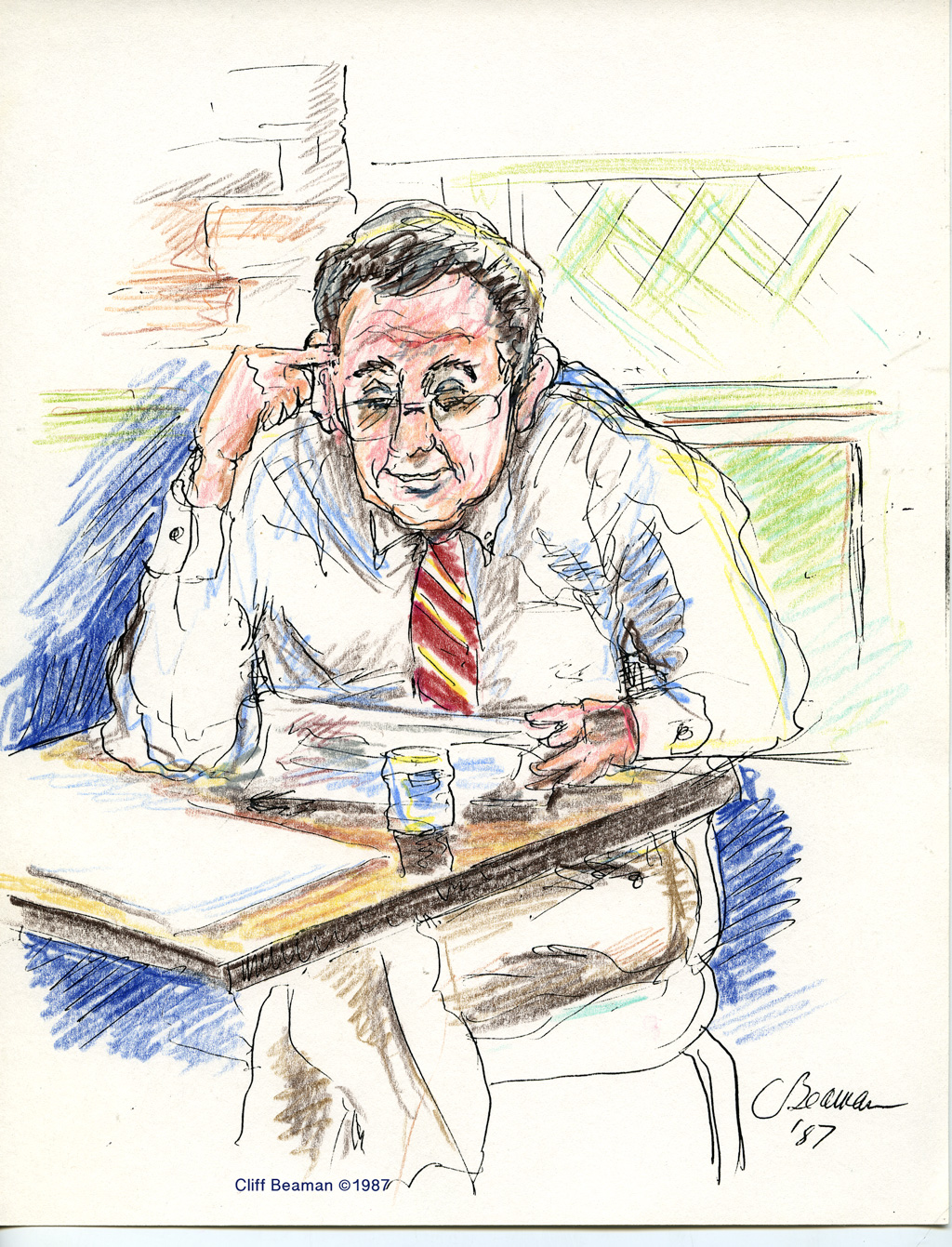
He has also found lurking in drawers, pencil drawings of college classmates and professors in the classroom, sketches of unsuspecting diners in restaurants. (To be revealed)

The Revelation

Cliff found a treasure trove of surprises in an armoire’s shallow shelf with other large art pieces, in niches below that, in a handmade folding portfolio, and in a cabinet with glass shelves.

An antique mahogany cabinet brought forth more surprises.

Photographs and artwork like these:

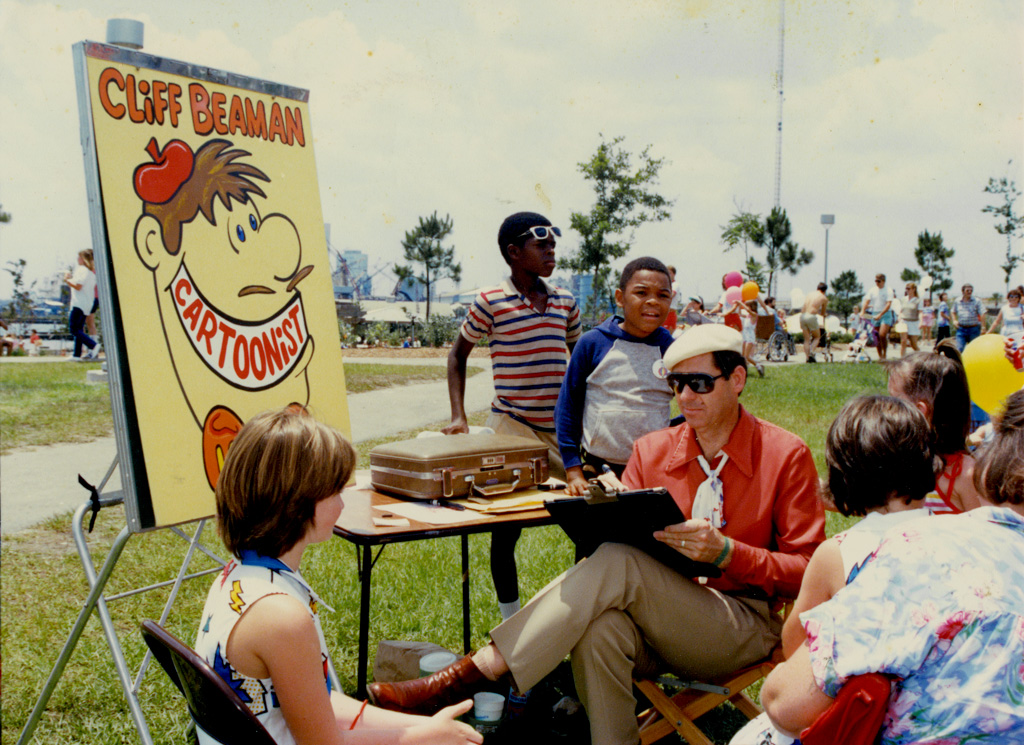
cartoonistphoto

cliffdrawingpuppies1983

dogcatwolfson1983

Sketches in college classroom

Cliff and Barry Beitzel, both divinity students in college, studied Greek together. Cliff became an artist/educator and Barry, a Hebrew scholar and author of important biblical literature including The New Moody Atlas of the Bible.

barrybeitzel1966

Sketches in restaurants

In the style of Honoré Daumier who honored ordinary folks like in his oil painting Third Class Carriage, Cliff caught images of unsuspecting diners in Waffle Houses and restaurants of similar ilk:

smokingwomanlakeland1987

blackcoffee1987

restaurantnewspapermen1987


A Family Heirloom, the House on Anchor Road: Cliff presented the painting of our homestead to my dad, Ray Longenecker, 1983

housedaddycliff


His Admission

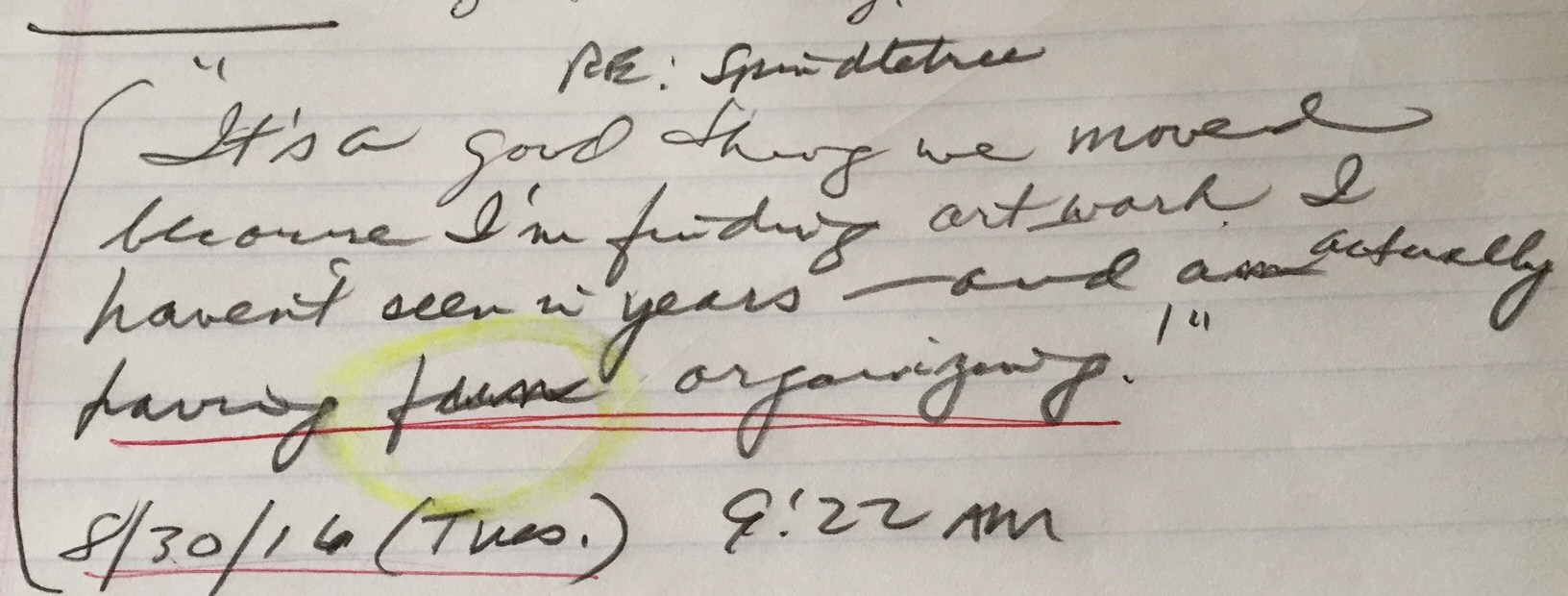
Without prompting from me, Cliff wrote this memo to himself recently, feeling exhilarated about finding his long-lost “friends”

memoclifforganizing


Time Moves On

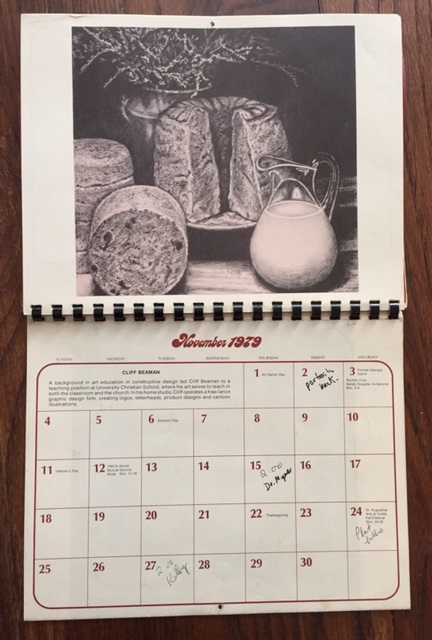
Yes, time moves on. More than thirty-seven years have passed since this calendar with Cliff’s pastiche drawing circulated for the new year.

pastichecalendar


Your Turn

Maybe it’s time to check through memories marinating on your shelves, incubating in boxes. No telling what treasures you’ll find.


kidsswingingwolfson1983

Bonus: Two good websites to help you mine stories from photographs:

Shirley Showalter’s Magical Memoir Moments: photos and writing prompts to bring out the storyteller in you

Dawn Roode’s blog on using digital photos to trigger writing life stories

Any I missed? Please add others in the comments column. Thank you!


Coming next: Aunt Ruthie Longenecker ~ Her Life in Pictures


An Artist Writes Memoir: Joan Z. Rough’s “Scattering Ashes”

Introducing Joan

I met Joan Z. Rough on Chincoteague Island in February 2015, having become blog buddies months earlier. When we met on this writers’ retreat, Joan was using the Scrivener tool to revise and edit the manuscript for a memoir of the 7-year slice of her life taking care of a terminally ill mother she had both loved and hated: a narcissistic, alcoholic woman.

joandog

Let me introduce you to Joan properly from her website “About” page:

Besides writing poetry and nonfiction, I am an artist, passionate about painting with oils and wax, collage, mixed media, photography, and sculpting French beaded flowers.  My work in photography has been exhibited throughout the nation and has found homes in numerous collections. Though retired from actively showing my work, I still take great joy in creating large, colorful works on canvas and paper and smaller encaustic paintings on wood.

When near-collapse from care-taking was imminent, Joan retreated to making colláges, furiously painting in oils, writing poetry and frantically beading, beading, beading, lovely jewelry pieces.

joanabstractpainting

joanpaintingspring

Click here for a poem with an autumn palette.

Her memoir Scattering Ashes launched just yesterday on September 20, 2016. This memoir resonates with healing and hope for adult children caring for burdensome parents.

scatteringashes

My Review

Joan Zabski Rough, author of Scattering Ashes, is a painter, a poet, and photographer. She is also a memoirist who summons her artistic talent in order to lay bare her life story, particularly her complex relationship with a narcissistic, alcoholic mother suffering from Post Traumatic Stress Disorder. In this memoir of letting go, the author paints a picture of the violence of her childhood and the search for solace through art, taming the dragon lady within, using bold strokes of black, yellow, and red, evident in a colláge she recalls constructing in her journey toward peace.

In Scattering Ashes, the reader observes writer Rough fighting to let go of guilt, shame, and self-doubt as she says a long goodbye to her elderly mother during seven years of caring for her in her own home, becoming a mother to her own mother. Face to face with the woman who birthed her, she is forced to confront scars of childhood that have left her feeling victimized with low self-esteem, a demon she has grappled with her entire life. As a reader in thrall to the unfolding tale of the dutiful care-taker daughter shackled to an ungrateful mother, I wanted to shout, “Stop, you’ve done enough. You are good enough. You are enough!”

Through metaphor, the artistic author vividly describes her muse: her ideal, stable family carved of marble. Then she deciphers the dilemma of her journey with travel imagery:

The crossroads I’m at is not your usual four-corners kind of deal. It’s a hub of sorts, with innumerable roads shooting off in all directions. I’m afraid I’ll choose the wrong road. I know I can’t stay where I am for long, and I certainly don’t want to go back the way I came. But where do I go? And what does it mean to be free of the burdens I’ve spent these last years carrying?

Joan Rough’s memoir begins like Picasso’s Guernica with images of violence and animosity, her home a war zone. It ends as its author promises in the book’s dedication “ . . . to all mothers and daughters who are seeking to love and forgive each other.”

I highly recommend this memoir to all who struggle to make sense of a complicated mother-daughter relationship. This true story lights the way to self-acceptance, forgiveness – and eventually, to healing.


Meet Joan on her Facebook author page

Buy her book here!   scatteringashes


Do you know Joan or someone like her? Can you relate to her struggles? her triumph?


Coming next: Aunt Ruthie Longenecker – Her Life in Pictures

Fannie Martin Longenecker: A Grandma Who Knew How to Make Love Edible

September is the month of late harvest. Those who preserve garden fruits and vegetables have proudly counted Ball jars and bags of frozen goodies before storing them to enjoy this winter.

My Canadian blogger friend, Linda Hoye, finds joy in the process and has made an art form of photographing her rich store of nutrition. On her website August 22 she tallied all the edibles she’s canned. Click on the link to see what’s inside those 288 jars along with a list of freezer delights and a dehydrator that hummed with banana chips, cherries, and raspberries.

Linda is carrying on a tradition very much like my mother, grandmother, and generations before her. Here my jubilant Grandma Longenecker exclaims, “All the lids on our Ball jars have sealed with a ‘Pop'” as my mother looks on.

grandmakitchenmomcanning-copy-2

The September 2016 issue of The Mennonite magazine has featured an article with several of my Grandma Longenecker’s recipes, including the savory chicken pot pie recipe I helped her make as a girl. Here is the link to this story. (On the link, click on the left arrow where the story begins.)


Do share your memories of the canning process – pride, joy, the arduous work – even mishaps are welcome here around the kitchen table.

Mother saying goodbye to her canning jars before sending some of them to the Re-Use-it Shop
Mother saying goodbye to her canning jars before sending some of them to the Mt. Joy Gift & Thrift (PA)

Do you still preserve garden food for the winter? We’re all ears!

“I think of my canning as fast food, paid for in time up front.”

~ Barbara Kingsolver, Animal, Vegetable, Miracle


Produce from author Elaine Mansfield's crop (Facebook, 9.11.16)
Produce from author Elaine Mansfield’s tomato crop (Facebook, September 11, 2016)


Coming next: An Artist Writes Memoir: Joan Z. Rough’s Scattering Ashes