There are several childhood books in my library that are in the I’ll-never-part-with category, except maybe to pass on to grand-children. One of them is Come to Storyland with pages missing and others as brittle as autumn leaves.
Here is blogger friend and author Susan Nicholls’ story about her favorite. (Click to view more illustrations and the rest of her story.) Do you have a beloved book or books?
I have an old copy of Uncle Wiggily in the Countryby Howard R. Garis. The copyrights are 1916 and 1940. The title is worn, the book is held together with tape. Various children have colored its yellowed, torn pages. The book was first purchased by my grandma to read to my aunt and my mother. They were born in 1940 and 1942 respectively.
Grandmother Nicholls and Uncle Wiggily
Then, my mother read it to me and my two sisters, one older, one younger. We used to cuddle in the center of my sister’s twin bed and listen as she read each chapter. We would embrace under the covers protecting each other and hiding from the tiddlewink, an evil but sympathetic creature with claws and sharp teeth who lived in any body of water from swamps and ponds to bathtubs and washtubs. My mother died when I was eight, and…
The wild, permissive Rentzels with a red porch light live next door to our family, the Mennonite Longeneckers, one of several plain families that live on Anchor Road.
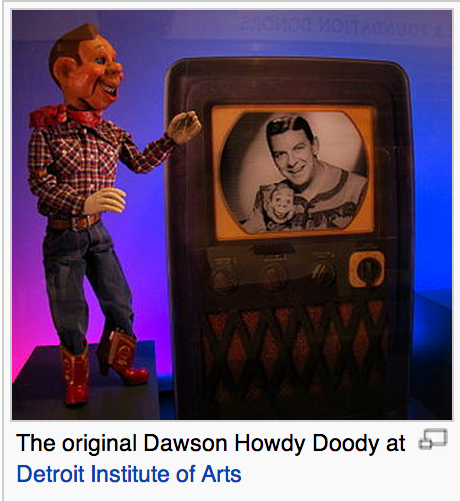
Image: Wikipedia
In their parlor, the Rentzel’s old Emerson black & white TV has introduced me to the wonders of The Howdy Doody Show with Buffalo Bob. As often as I can, I escape at 4 o’clock every day, running next door to ask Mammy Rentzel whether I may watch the show. Of course, she says Yes. I become part of the Peanut Gallery, mesmerized by Howdry Doody himself, a freckle-faced boy marionette with 48 freckles, one for each state of the Union in the 1950s.
My favorite parts are seeing Quaker Oats shot from guns, cannon-style and laughing along with the speechless Clarabell the Clown, who talks with a honking horn or squirts seltzer water. The shades are always pulled in the Rentzel’s tiny living room that smells like pipe smoke and mothballs, adding to the secretiveness of my television viewing. We’re not allowed to have a TV at home. Our church forbids it, but there is no rule to keep me from watching shows on somebody else’s TV! (Statement of Christian Doctrine and Rules and Discipline of the Lancaster Conference of the Mennonite Church,1968, Article V, Section 7):
Television programs are often destructive to the spiritual life and undermine the principles of separation from the world, the precepts of Christian morality, the proper respect for human life, and the sanctity of marriage and the Christian home.
Yet, Phineas T. Bluster, Clarabell the Clown, and Howdy Doody himself, continue to cast their spell upon me. Before I knew the word, I observed that Buffalo Bob Smith was a ventriloquist, himself voicing words that appear to come from the mouth of Howdy Doody.
The word ventriloquist derives from two Latin words: “venter” referring to the belly and “loqui,” to speak. Isn’t that what writers do? Speak on paper or computer screen from a place deep inside themselves where language mixes with thought and feeling.
Critic Brian Boyd says of writer Vladimir Nabokov, “In his novels Nabokov can not only ventriloquize his voice into the jitter and twitch of [his characters], but he can also” invent incidents . . . names, relationships.” Like a ventriloquist, Nabokov in his autobiography entitled Speak, Memory translates his life experiences into words.
Yes, memoir writers do just that: Give life to their memories by putting them into words. If your life is recorded as jottings in a journal or collected as photos in albums, you are “writing” memoir, perhaps starting out as amusement for yourself, but just so bequeathing a legacy to the next generation.
I’ll bet you may already have recorded your history, ventriloquizing your voice into something tangible: letters to family members in college, love letters, scrapbooks, family photo albums (physical or online) even recipes.
How are you ventriloquizing your experience: art, journals, recipes, a memoir?
Inquiring minds want to know. The conversation starts (or continues) with you. As you know, I will always reply.
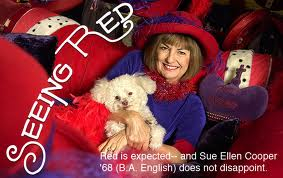
Red hats, purple dresses, feather boas — all signatures of the Red Hat Society. There is even a Queen Mother, Sue Ellen Cooper of Orange County, California, who founded the Society in 1998 after she hosted a fancy tea party for ladies decked out in purple and red. Since then, Cooper has written two best-sellers about her Society, which has spawned thousands of chapters of women with “hattitude” nationwide.
“When I am an old woman, I shall wear purple / With a red hat . . . !”
My sisters and I had our own Red Hat Lady, my plain Grandma Longenecker’s fancy cousin, Mame Goss, who brought picked-over hats of all colors to us from a millinery shop where she worked in Middletown, Pennsylvania. Getting hats from Mame was heady stuff! She was a main character in the script of our youthful play-acting.
Mame is one step closer to revealing the treasures in her bag now. Soon we lay eyes on the partly smashed trousseau of hats, left over from the spring season. We fight over who gets what, of course.
* * *
“Here’s a straw hat with a polka dot bow, “ I say but cast it aside. Janice and Jean don’t pick it up either. They are eying the red satin bows and lavender netting attached to other headgear.
* * *
“Hey, I want this one,” Janice and Jean tussle over a swoopy hat with pink flowers. Jean finally picks up a white thing that looks like an upside-down, flat-bottomed boat with a wad of blue tulle tied in a fluffy bow in the back. Janice’s is flat and round and dark, not my taste, with black-eyed Susan circling the straw hat. I get the best hat, I believe. It is flat and round too, but navy, and studded with azalea pink silk flowers around the edges. Best of all, I can pull a dark blue net over my face. Instantly, I become a woman of mystery and allure.
* * *
We take our newly-found treasures up to Grandma’s bedroom and indulge in more fantasy. The space between her marble-topped vanity and tall headboard becomes our runway. We take turns prancing in front of her vanity mirror with wavy glass, cocking our heads just so and smiling at our reflections.
One day Auntie Mame brings another batch of hats. When I spy the red felt with broad brim, I know it is mine. Our catwalk this time is not the narrow confines of Grandma’s bedroom, but the front lawn along Harrisburg Avenue: Marian, Janice, and Jean preen for the camera this time. Soon enough we will stuff our hair under a prayer veiling, but until then, we’re fancy girls!
Home movie from the 1950s
Do you remember playing dress up as a kid? What were your costumes? Inquiring minds want to hear your story.
Is it the bullet-nosed, grey Studebaker I am learning to drive on, or is it just me? Anyway, the patrolman’s decision is final. I cannot drive alone. At least not yet. I have practiced driving with eight people stuffed into this Studebaker to Bossler’s Mennonite Church and back without crashing. Oh, there are some yells and screams along the way, but I haven’t careened off the road yet. (We’re frugal Mennonites and don’t waste gas on driving two cars if we are all going to the same place. Think: lap-holding, no seat-belts.)
Driving test Studebaker, 1951
The first time I don’t pass my driver’s test is because I can’t parallel park right. (Yes, the ability to parallel park was part of the test back then.) And the second time, the cop says, “You were riding the clutch the whole time. If you keep on doing that you’ll wear out the transmission!” So I have flunked the driving test twice.
Boo Hoo!
Me: I never flunk anything. In fact, I get all A’s in school. Now why can’t I pass this dumb test. I KNOW how to drive!
Mom: “Some people just don’t like girls with coverings on their heads.
Me: Well, that’s ridiculous!
Mom: When you take the test again, just wear a bandanna on your head. That will cover up your covering and you’ll probably pass.
Me: Why would that make a difference?
I do pass the third time. Hallelujah!
Now please tell me why. This is a multiple choice quiz:
a. I finally got over my nervousness.
b. Three’s a charm.
c. The policeman noticed I wasn’t a plain girl.
d. The policeman suspected I was a plain girl and thought I probably could even drive a tractor. So, “What the heck—She passes!”
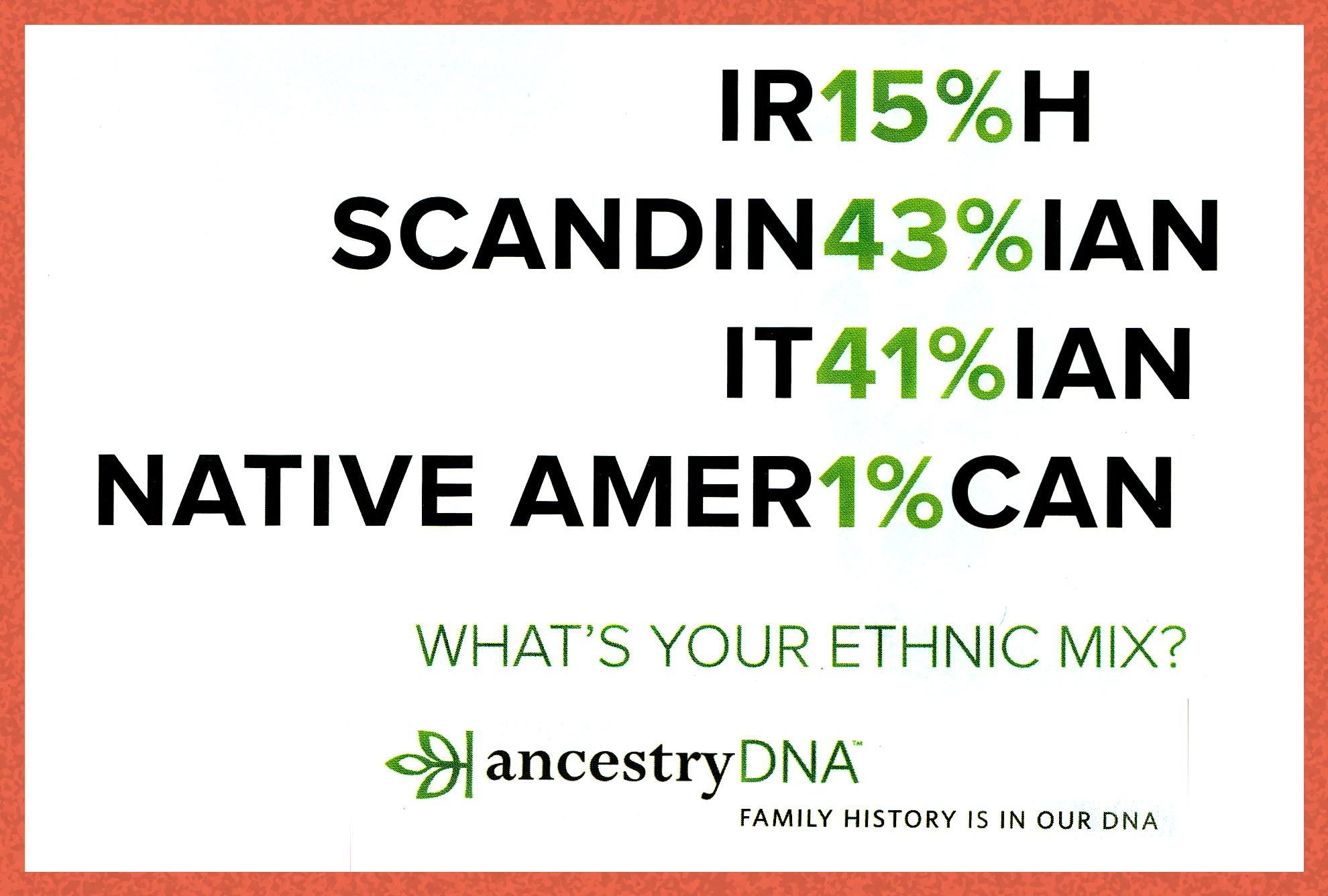
“Your DNA has a story. It’s time to discover it,” invites an ad on the back cover of the February 10, 2014 issue of The New Yorker. “It’s easier than ever to discover your ethnic heritage – and possibly find new cousins along the way,” the advertisement continues. Simply send in a small saliva sample, the key to revealing your DNA strands, which will unlock the secrets of your ethnic roots and disclose where your ancestors lived up to a thousand years ago.
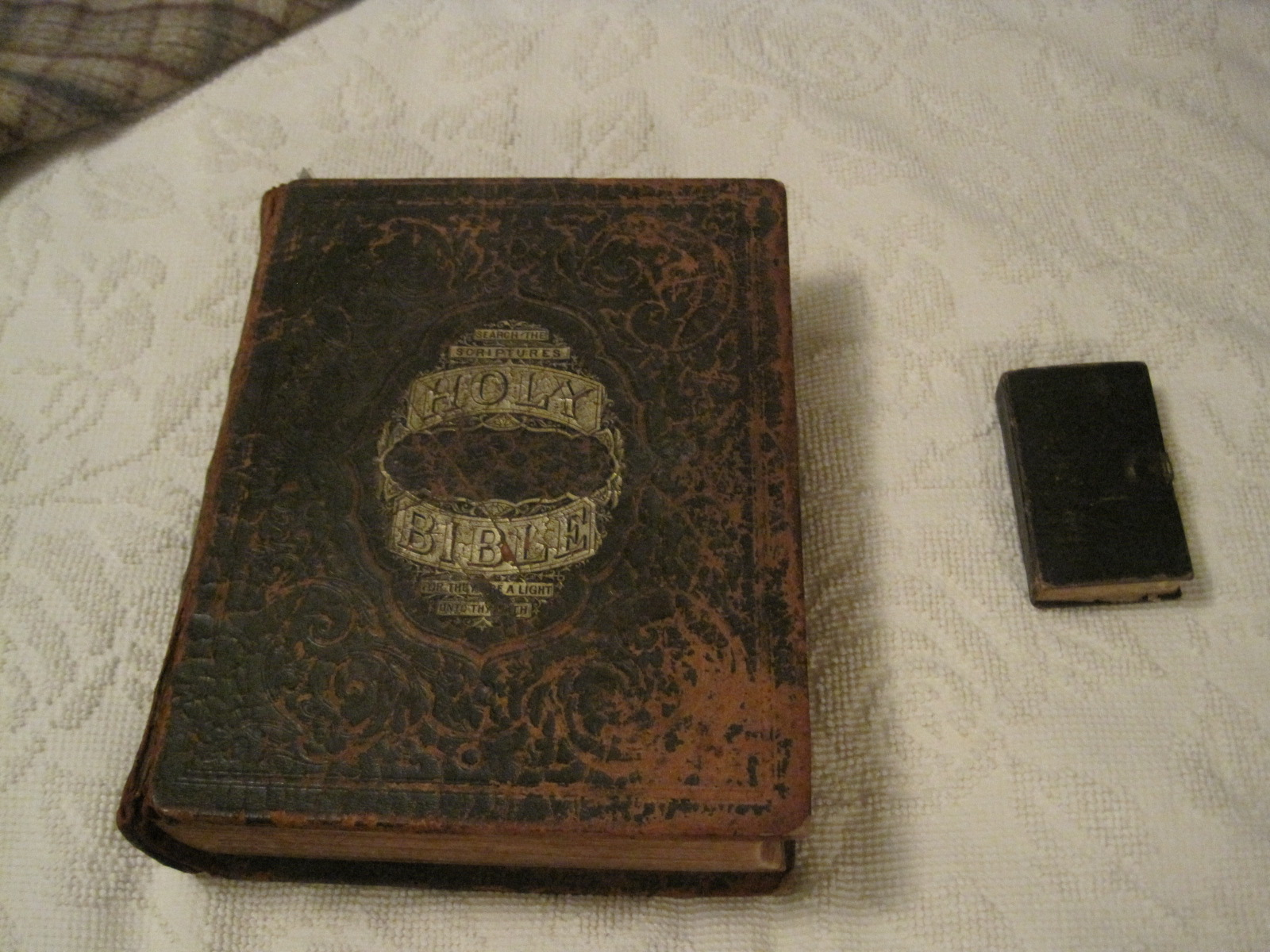
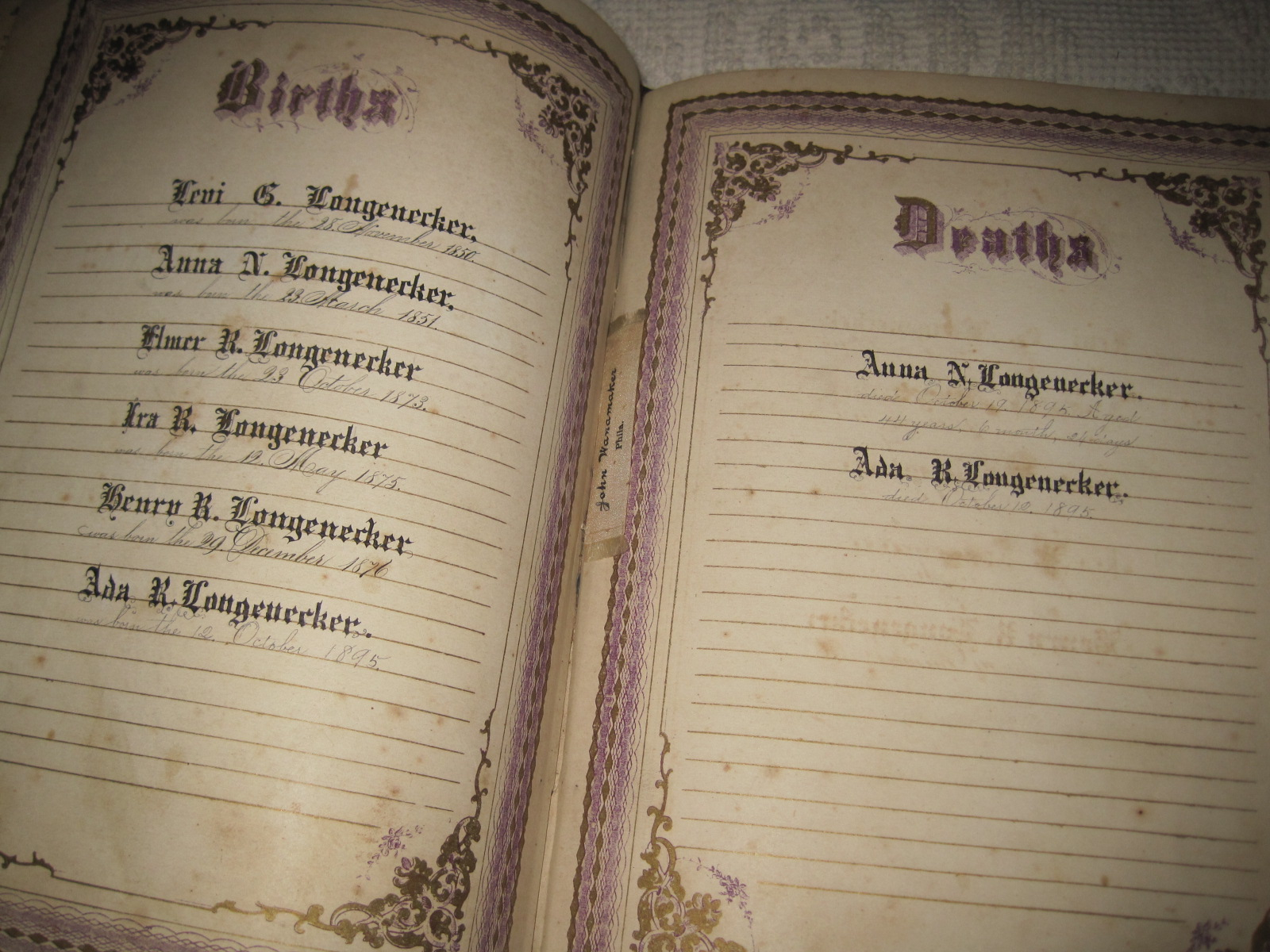
Genealogy, roots, ancestry . . . In my Pennsylvania Dutch family tree, names and dates were often written in the family Bible:
Longenecker Family Bible with German New Testament at right
Eight generations ago, Ulrich Langenegger (1664-1757), left his birthplace in Langnau, Switzerland, because of religious persecution, and moved to the Rhine Valley in Germany and subsequently immigrated to America from Rotterdam on the good ship Hope.
In America, his son, Christian Langenecker (1703-1759) settled in the rich farm land of Donegal Township in Lancaster County, Pennsylvania where followed two more generations of Christian Longeneckers, with the initial “a” in the last name changing finally to an “o.”
Henry Risser Longenecker, my Grandfather, son of Levi Longenecker, recorded in the family Bible.
And so the family tree on my father’s paternal side continues:
Christian Longenecker, Jr. 1785-1855 buried in Bossler Mennonite Church Cemetery
John Longenecker 1817-1898 married Nancy Garber, my great-great grandmother
Levi Longenecker 1850-1931 married Annie Risser, my great-grandmother
Henry Longenecker 1876-1946 married Fannie Martin, my grandmother
Ray Longenecker 1915-1985 married Ruth Metzler Longenecker, my mother
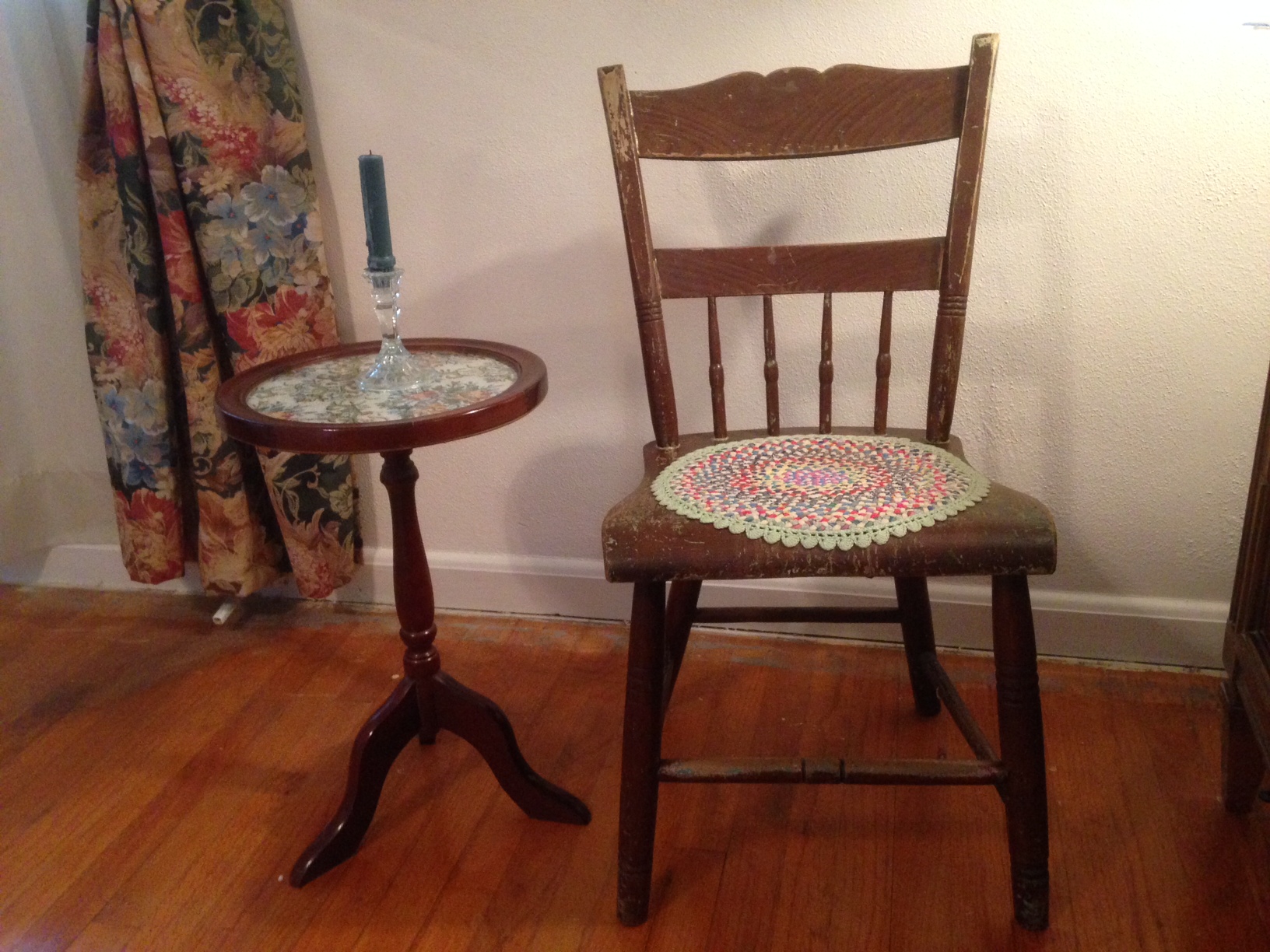
On my father’s maternal side some of our history is recorded on the bottom of a chair given to me in 1975. Even then it had a 150-year-old history of Martins, Brinsers, and Horsts in the lineage of my Grandmother Fannie Martin Longenecker.
The Martin Chair, circa 1815
My mother’s story is a blend of other Pennsylvania Dutch Names: Landis, Harnish, Hernley, and Metzler. After attending the 275th Metzler reunion last June, I wrote a post entitled Another Valentine, A Different Romance, recounting the parallel history of Swiss-German Mennonites who also came to Pennsylvania at the invitation of William Penn to farm the rich soil of Lancaster County.
Because of their unique heritage as plain folks, focus on Mennonite ancestry is not unusual. But interest in tracing one’s ancestry has ballooned nation-wide in the last decade. “Finding Your Roots” the immensely popular PBS series by Professor Henry Louis Gates which aired in 2012 mirrors that trend. Using both traditional research and genetics, the series traces the family roots of such disparate celebrities as Condoleezza Rice, Sanjay Gupta, Margaret Cho, Robert Downey Jr., and Rev. Rick Warren. There are some surprising intermingling of genetic roots among the stories as I recall.
Thus, as our family trees expand and send out branches in many different directions, the fascination with our roots continues: Healthy roots, thriving branches, the tag of Homecoming Weekend at Eastern Mennonite University last fall, says it well.
* * * * *
Do you know your ethnic mix? Does it matter to you?
Is your story more complex because of adoption?
What fascinating discoveries have you made in learning of your ancestry?
Your thoughts matter to me! I look forward to hearing from you.
“All you need is love. But a little chocolate now and then doesn’t hurt.”
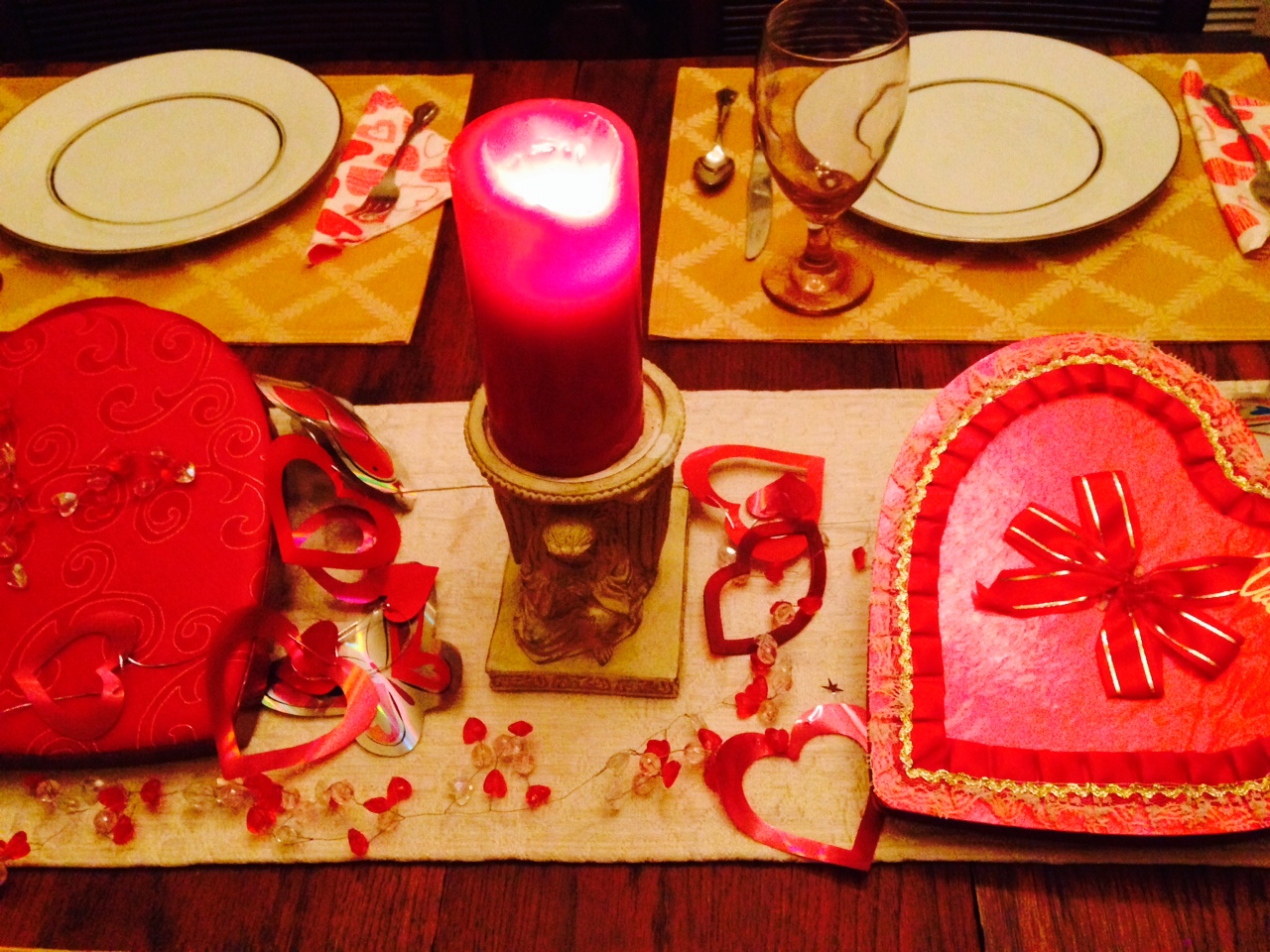
So says Charles M. Schulz. Valentine’s Day is interpreted by many to include cards, chocolates, candlelight and roses. Some even break the bank buying expensive jewelry. Valentine’s day was named for a Christian martyr dating back to the 5th century, but according to Arnie Seipel in an essay for NPR, its origins are dark and bloody even, beginning with the wild and crazy Romans and their feast of Lupercalia.
During the Middle Ages tokens of love were first expressed by handmade paper cards. In the 14th century Chaucer helped romanticize the holiday with his love quotes like “love is blind” from The Canterbury Tales and his Parlement of Foules, featuring an assembly of birds gathered together to choose their mates. From the Renaissance to the Victorian Age and beyond, poets wrote sonnets extolling romantic love: Shakespeare, known especially during this season for Sonnet # 116, and Elizabeth Barrett Browning’s famous lines “How do I Love Thee? Let me count the ways” in Sonnet # 43.
Today, Valentine’s Day is big business. In 2011, sales reached $ 18.6 billion. This year the figure will probably exceed 20 billion. Seipel quotes Helen Fisher, a sociologist at Rutgers University, who says that if commercialization has spoiled the day, we can blame only ourselves for buying into it. But the celebration of Valentine’s Day goes on nonetheless. Even with some sayings on candy hearts we never imagined:
A few candy heart sayings updated by social media: Courtesy Google Images
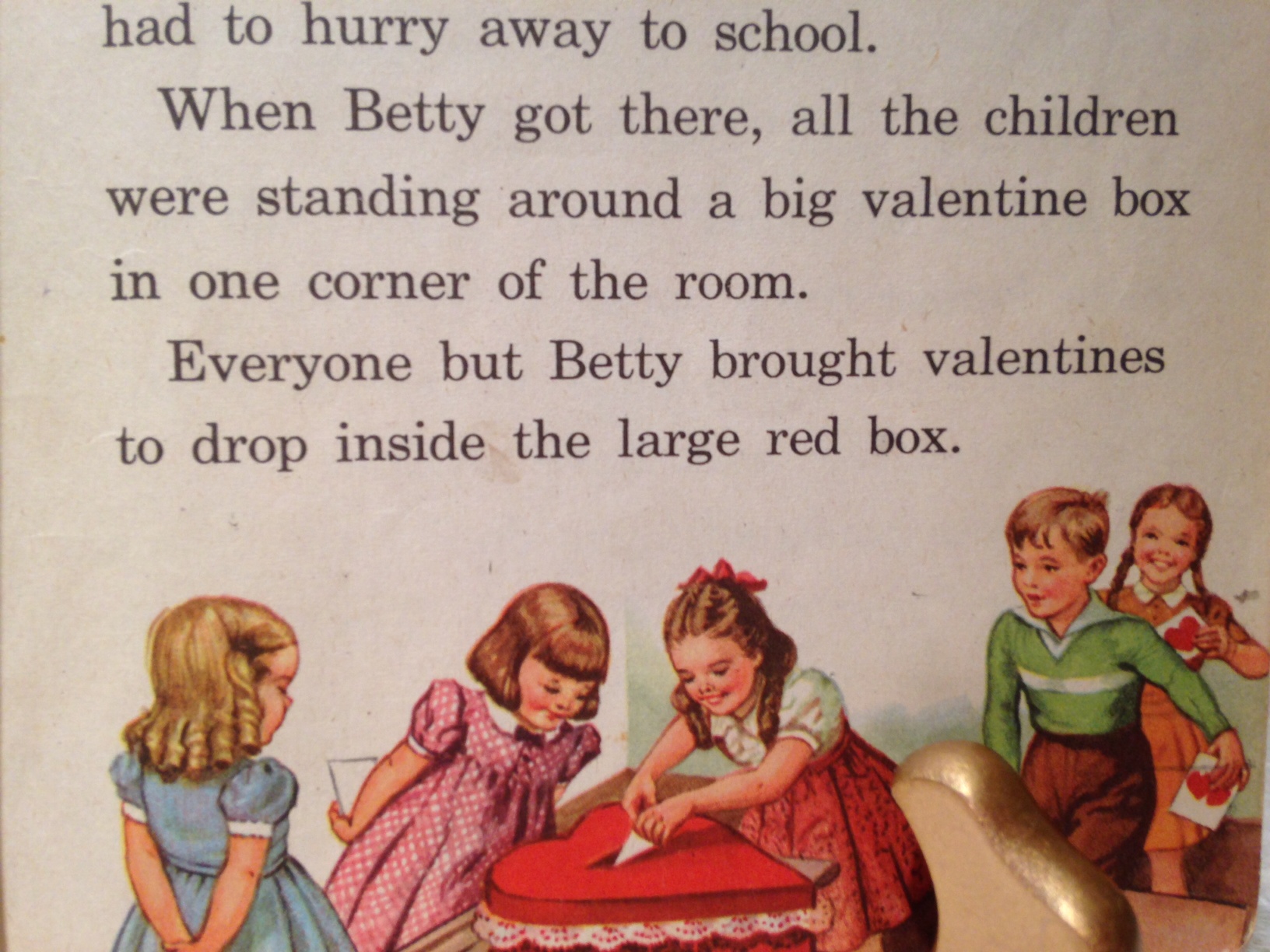
Years ago, candies like these were hand-picked for that special one, but many valentine cards were home-made. I remember making valentines for friends at school or punching cut-outs for classmates and dropping them in to the big, square box decorated red and white for Valentine’s Day at Rheems Elementary School. Stories in our readers illustrated children making, not buying, Valentine cards for friends:
“The Surprise Valentines,” Gray and Arbuthnot, Scott Foresman & Company, 1941.
Do you remember making or receiving hand-made valentines? Are you holding on to an old Valentine card for sentimental reasons?
Vintage cut-out card, Cliff Collection 1966
Your thoughts start the conversation—or keep it going. Thank you!
If I swallow a water-melon seed, my stomach might swell up.
If I touch freckle-faced Ricky with the dirty fingernails, I might grow a baby. Oh no!
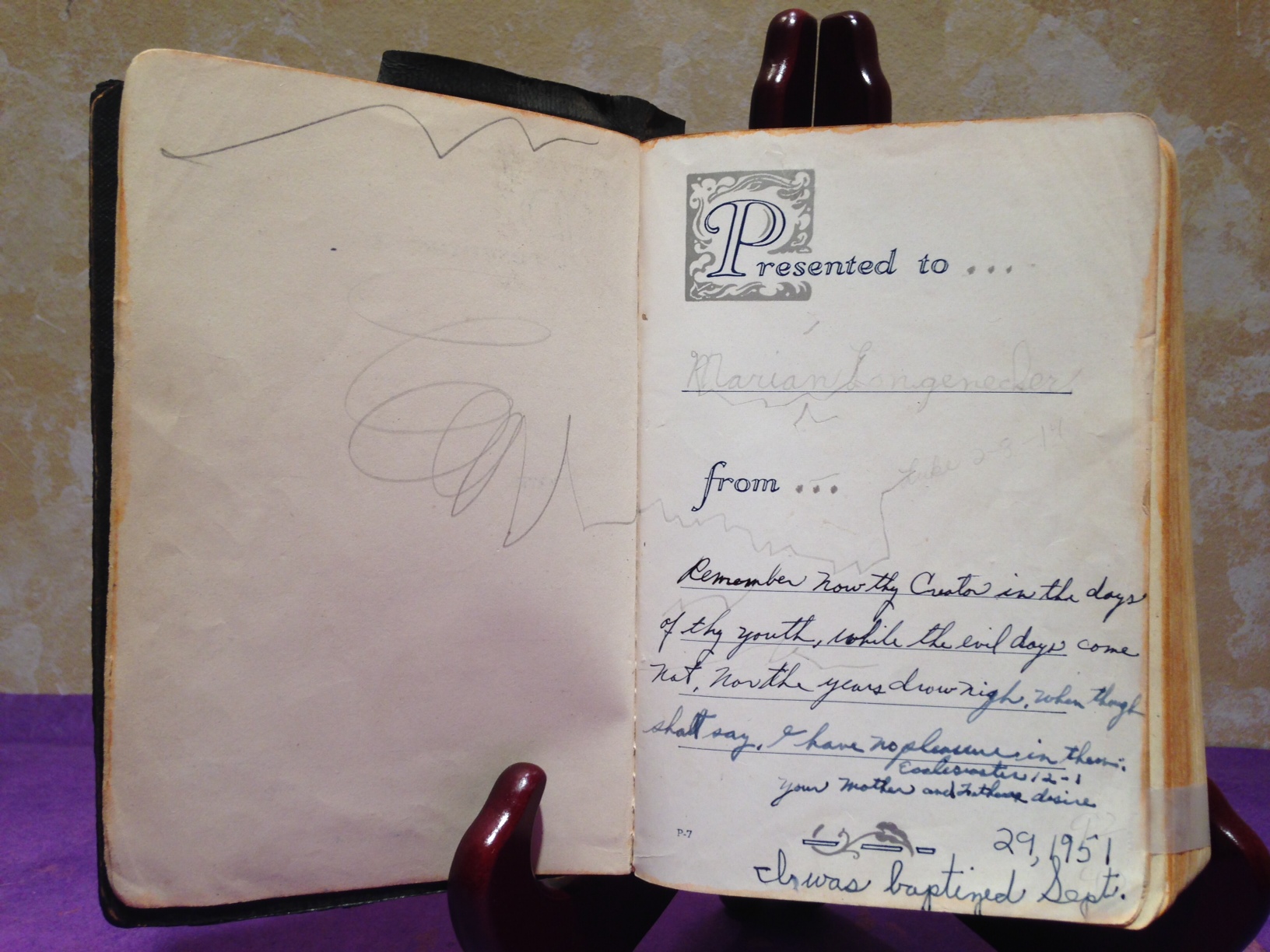
Those were my childhood fears. With a limited sex education, I tried never to swallow watermelon seeds or touch grimy Ricky. But my parents also had fears, largely unfounded. What my Daddy dreaded most as the father of three adolescent girls is that one of us might turn up pregnant some day and bring shame and disgrace upon the family. “We don’t ever want to hear of that happening in our family,” he exhorted. In my Bible he wrote this not-so-veiled admonition from Ecclesiastes:
Daddy’s inscription of Ecclesiastes 12:1 in the flyleaf of my Bible
Why he worried about my falling into mortal sin was beyond my comprehension: I always had my nose in a book and rarely dated Mennonite farm boys, or any other boys for that matter.
My experience with the lusts of men were of the non-Mennonite variety in my early teens. Summers I worked behind the meat counter for the Kleinfelters at Middletown Merchandise Mart. No worries with Mr. Kleinfelter, though he was often a bit tipsy, but some of his suppliers were another matter. Oily-haired Mr. Zapcic would creep up to the counter and invite me to “help” him in his produce business in Lancaster. “I need somebody to work behind the counter. You would be perfect!”
“That’s pretty far from Elizabethtown,” I mentioned innocently. Lancaster was almost 20 miles away.
Without my asking, Mr. Z. offered: “Oh, I’d see that you got there. You could ride with me.” It finally dawned on me what he was after and afterwards tried to ignore him. Yet he continued to harass me. Like Pamela in Samuel RIchardson’s novel, I rebuffed the man’s advances. Finally, I had to solicit some Kleinfelter help to get him to let me alone.
* * * * *
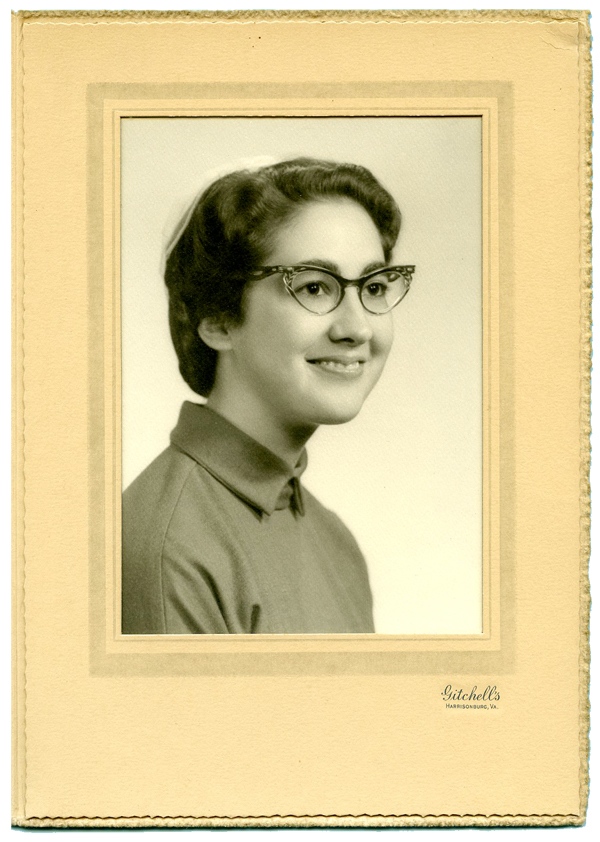
Senior Photo: Eastern Mennonite College
During the summer of 1964 my Aunt Ruthie and I attended Temple University, she to complete her Master in Education degree and me to begin it. From the hamlet of Rheems at 4:30 in the morning, we drove to Lancaster, took a train from Lancaster to Philadelphia, then rode the subway into north Philadelphia and walked eleven blocks to the campus of Temple University with classrooms filled with students who chain-smoked. I still wore a prayer veiling with a crown of dark brown braids fastened with hairpins underneath, ever the epitome of moral innocence. Ruthie’s classes lasted longer than mine, so I waited for her on a circular, wooden bench on the grassy campus outside the classroom.
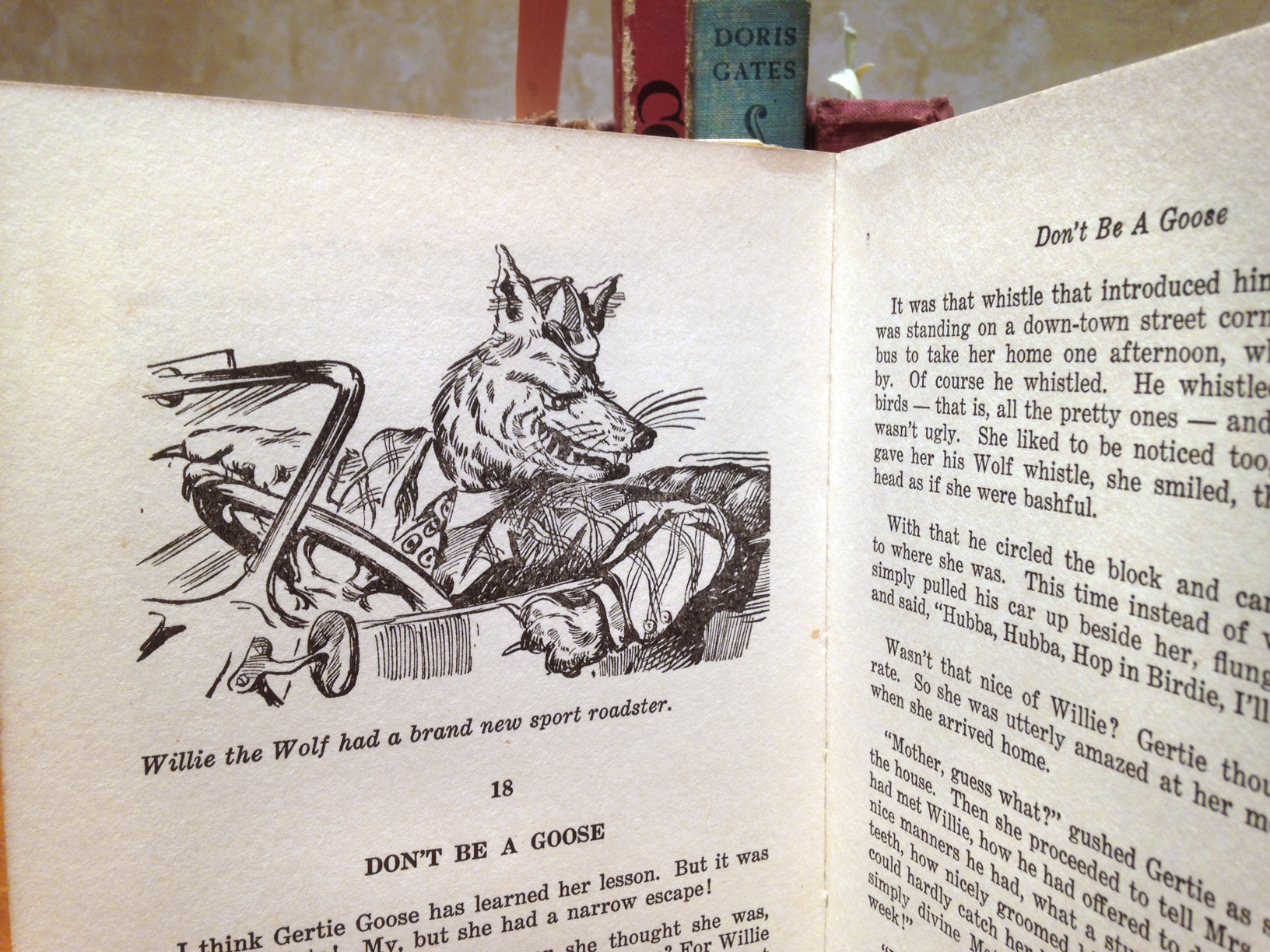
A suave older man approaches me and raves about my hair. It could be a scene right out of Bird Life in Wington, Gertie the Goose meets Willie the Wolf.
I notice at once his pearly white, even teeth and brushed back hair. Is he a college student? He for sure doesn’t look like one. Other students are milling around, I notice, so what could be the harm in talking to this stranger?
Willie: “Sprechen ze deutsche?” Not waiting for an answer, he spouts, “You have gorgeous hair. It’s so thick and glossy.”
Willie: I own a hair salon in the suburbs of Philly. I’d take you there and give you a different hair-do. It would frame your face really nice.
Gertie: Really?
Willie: Of course, I wouldn’t charge you anything.
Gertie: Well, thank you.
The dialogue continues for another minute or two, and then two things happen: I feel an electrical zap down my spine and a visitation from the Holy Spirit, who urgently whispers — “NO!” in my ear: “Run for your life. This guy is up to no good.”
Scales fall from my eyes as I swiftly dismiss his cunning ideas–and find an excuse to leave the bench and search desperately for Aunt Ruthie. Her class must be over. Soon, I hope. God, I hope soon!
Willie the Wolf in roadster tries to seduce Gertie the Goose in Calvin Reid’s cautionary tales
It’s your turn. Any narrow escapes from unsavory characters in your early years? Other threats to your moral virtue?
Your story is welcome here, and I will always reply.
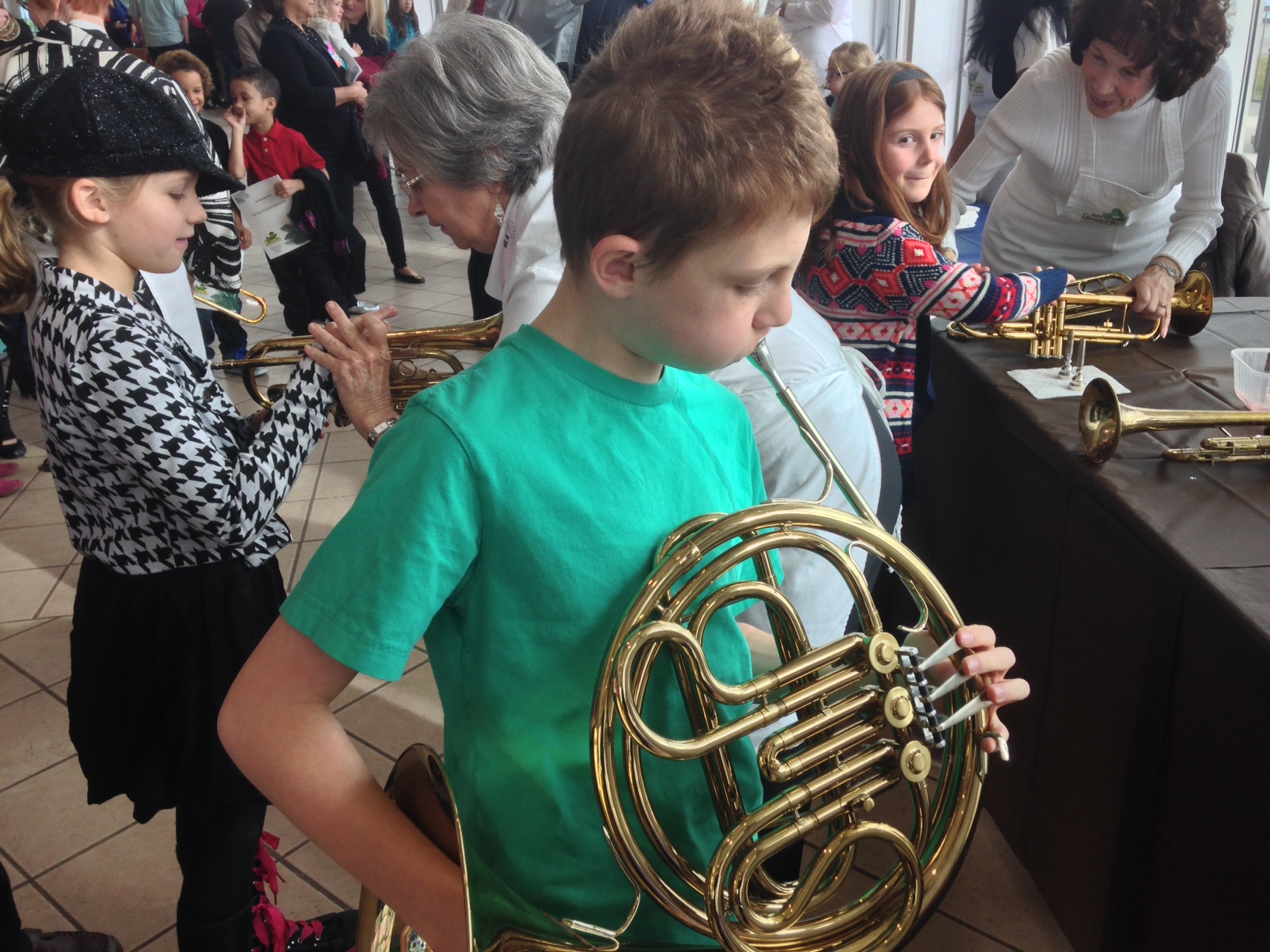
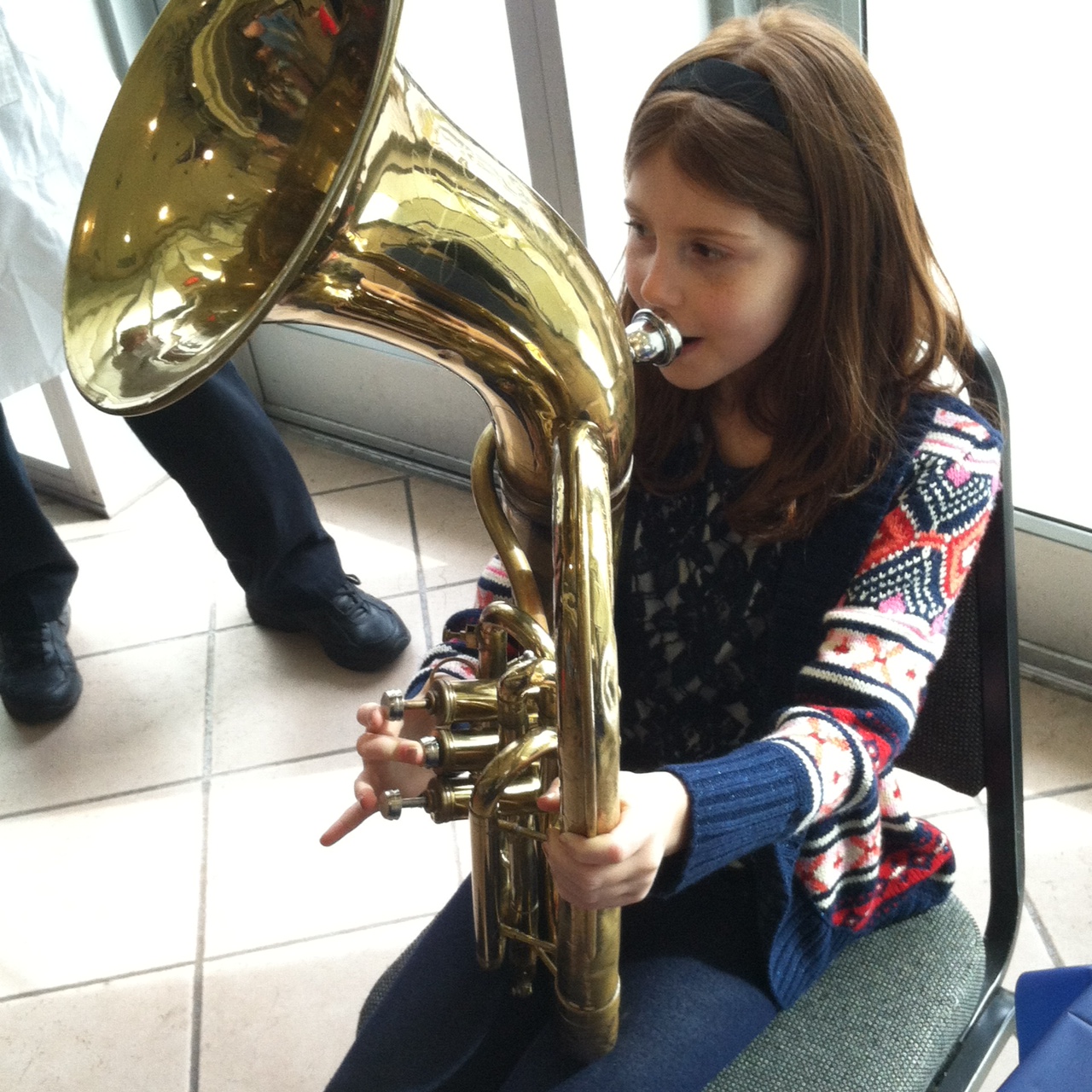
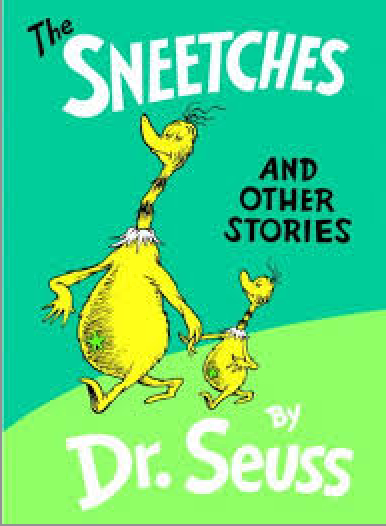
Last Sunday afternoon, we took our red-haired grand-kids, the Daltons, to the Jacksonville Symphony Family Series, featuring The Sneetches. There was a pre-concert Orchestra Zoo with dozens of kids standing in lines to bang on, blow into, or saw the strings of grown-up instruments.
Patrick & French Horn at the Orchestra Zoo
Jenna & Tuba at the Instrument Zoo
During the concert, the conductor asked each section of the orchestra to play a segment of a piece separately to let the kids hear the true sounds of the various instruments.Then came the pictorial story of the Sneetches animated on screen and read by a narrator, all accompanied by the whimsical strings, the complaining woodwinds, and the booming drums in Jacoby Symphony Hall.
If you need a brush-up on the Dr. Seuss plot line, two camps of yellow, fantastical creatures called Sneetches are separated by whether or not they have stars tattooed on their bellies. The Star-Belly Sneetches think they are best and make their Plain-Belly counterparts feel sad and inferior. Magically, Sylvester McMonkey McBean comes along with his Star-on and Star-off machines. Now the Plain-Bellies are thrilled because they match the elite. But the original Star Bellies are angry because they no longer stand out as special. Now no one is happy.
Between the Star Bellies and the Plain-Bellies there is plenty of bad feeling to go around. Then the conniving Star Bellies hatch an idea: Let’s get Sylvester McMonkey McBean to remove all the stars from bellies. Determined to find a solution, money from both belly camps gets stuffed into McBeans’ pockets, and he leaves town a rich monkey. Poorer in pocket, but richer in understanding, none of the Sneetches can remember who was what originally now that they all look the same. Finally, there is a level playing field.
The Sneetches’ conclusion: It doesn’t really matter what they look like—they can all be friends, stars or no stars. As the story ends, conviviality reigns.
In the car on the way home:
Jenna: “I really liked it! Those Sneetches were really cool, and they all liked each other at the end.”
Patrick: “It doesn’t matter what you look like. Everyone is the same. Oh, and there’s another thing: Don’t give away all your money away for a dumb reason.”
Grandpa: “You are special whether you have a star on your belly or not.”
First of all, I wouldn’t want a star on my belly, would you? I wouldn’t want to draw attention to my worst feature whether it looked cool or not.
If you are human, you probably are a Sneetch, prone to some of the dark emotions these yellow bellies felt: feelings of inferiority, pride, dis-content, fear, frustration, and envy.
You may or may not agree with Alex Daydream (that has to be a pseudonym!) who claims that no emotion is strictly good or bad.
Anger clouds our judgement
Love can make us blind
If emotions are so ruinous
What good one can I find?
Empathy makes us better people
Pain brings us back always stronger
Sadness gives way to happiness
Meaning a better life lived longer.
Alex Daydream
Some of the writer’s conclusions may be questionable (I have to wonder does “Pain bring us back always stronger”?) Growing up a Mennonite in the Longenecker family of Lancaster County, we children were not encouraged to show our real emotions, especially not in public. In my memory, there was a huge gulf between feeling emotions and being able to truly express them.
But what matters is what you think.
Were you encouraged to express your true feelings as a child?
As the poet claims, does allowing oneself to feel emotions make for a more meaningful life? What about expressing them?
The British poet Robert Herrick writes a fine sonnet about the allure of the slightly askew, the saucy, the off-beat–the messy in dress! Well, he has a point, but I don’t agree in general. I like neatness and appreciate the beauty of orderliness.
Too precise hand-writing clothes hanger, college days EMC
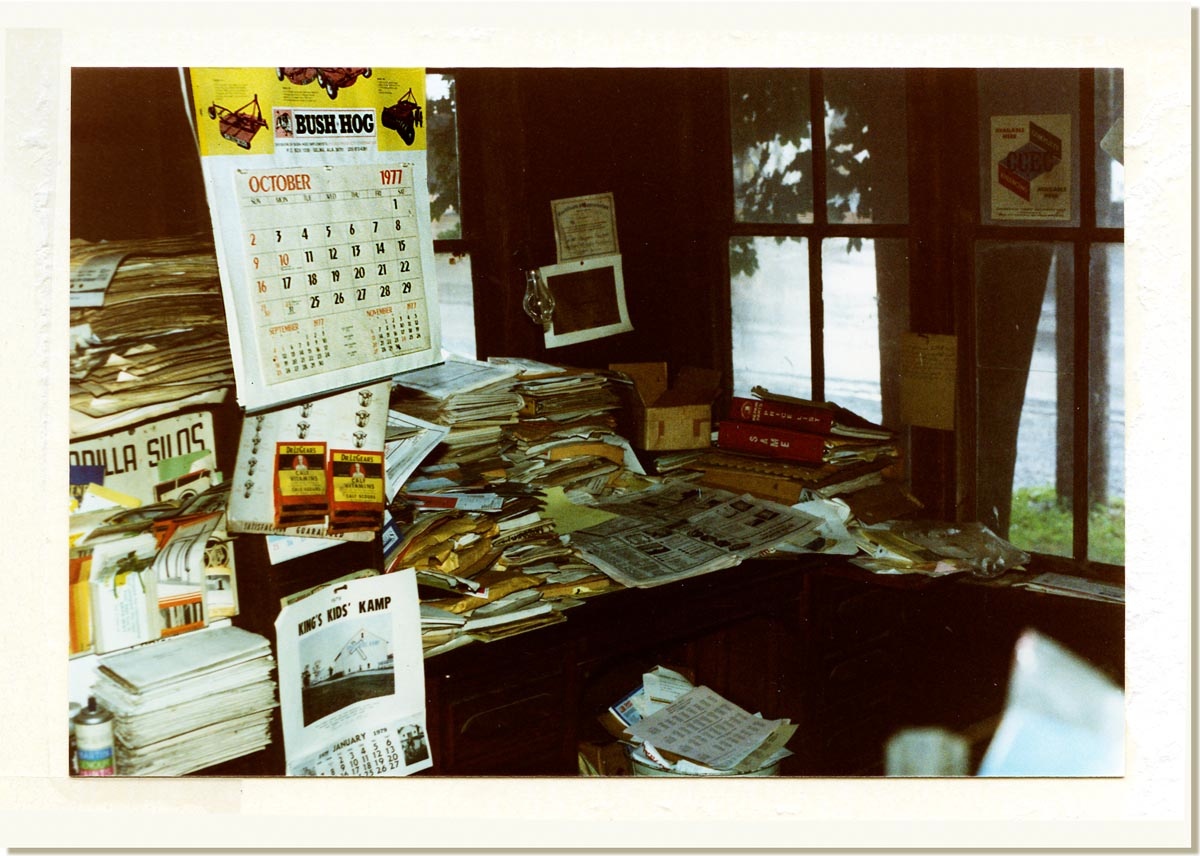
Mother was a neatnik too, every hair in place under her prayer covering, the whole house scrubbed clean every Friday, a place for everything and everything in its place. On the other hand, my dad, who was precise in the mechanics of fixing machinery in his farm supply business, was by nature messy, messy, messy–in his office, inside his truck, on the porch of his shop.
Brother Mark before sale of business
Daddy’s messy manner drove me crazy. Besides, it was embarrassing! In the middle of the village of Rheems, the shop faced Harrisburg Avenue with two main sections, one behind the other. The front part housed dozens of storage bins for nuts, bolts, screws, odd implements and, curiously, a Victrola sitting squat right beside the door to the sales office. During planting season, bags of Royster fertilizer for sale would be deposited off to the side near a loading/unloading door. As you walked to the rear, a long wooden ramp led to the back section where the dirty work was done, Daddy and his helpers fixing disk harrows, plows, or welding broken parts. Behind the shop was an assortment of implements stored Sanford & Son-style from which the mechanics harvested parts.
Occasionally, when Daddy said, “It’s time to sweep the shop,” I shuddered because I would be working in the cold with piles of stuff everywhere. Spritzing soapy water from a bucket to settle the dust, I watched charcoal-grey pustules of dirt and grease bead up on the cement floor, then tried to push-broom the filth into a dust pan, often an exercise in futility.
Though Daddy was messy, he had a strong Pennsylvania Dutch work ethic. At the shop six days a week, he caught up with office work and telephone sales in the evenings. “I worked like a Trojan today, and still didn’t get the Fox Harvester ready for Phares Weaver in time,” he’d say to Mother as he walked in the door. And he did so well in sales, dealerships would send him and Mother as VIPs on all-expense paid trips to Ohio, Florida, or Arizona to learn about new farm equipment. Once his sales were so high, his whole family, including three married daughters and son enjoyed a week-long vacation in Jamaica.
Daddy in his later years, taking a breather
So there’s neat and there is messy. “God is a God of order!” shouts one. The other camp retorts: “But you can’t be creative and neat at the same time!”
This post began with an homage to the slightly slovenly, the off-kilter. It ends with a writer lamenting her neat freakiness.
Being A Neat Freak
Being a neat freak, is certainly not a
blessing! No one enjoys, being this
way. When I find everything thrown
all around, on impulse, I have to put
them all away. I have always lived by
the creed, there’s a place for everything
and everything, in its place! It’s
aggravating, dealing with this, but I
know it’s something, I’ve got to face.
I’ve often wondered, how does a
person, get to be this way? It didn’t
happen over night, or in just a day.
Perhaps, it’s what we learned, when
we were young. And frankly speaking,
I’m tired of hearing people say, try not
to be so high strung! I’d like nothing
better, if I could let up, just a little bit,
by not letting myself become so
perturbed. Upon giving this some
thought, I realize, isn’t all of this, quite
absurd!
I have just finished reading The Dirty Life, On Farming, Food, and Love by Kristin Kimball. And today my blogger friend, Susan Nicholls, has posted a piece entitled “Canned” complete with appetizing photos of the canned goods, stored on shelves for savory eating on wintry days like these.
Kimball’s book describes how she trades a life in the publishing world of Manhattan for growing vegetables, raising pigs and cattle on the farm of a man she had interviewed just months earlier. The story is told with the backdrop of the old/new movement toward local food, community-supported agriculture, a network of consumers and farmers who share the benefits (and risks) of food production. Consumers pay at the beginning of the growing season for a share of the anticipated harvest and then receive honey, eggs, meat, and dairy products, fruits and vegetables, whatever is in season.
Susan’s blog post “Canned” is a reminiscence on the stored wealth of nourishment in the cellar of her childhood. In her post today she recalls her grand-parents’ farmland and the “garden” of one and one-half acres her own family cultivated when her children were little. She reminds us of so much we take for granted in our land of abundance. Read it above!
I was in the grocery store yesterday and browsing the local produce…much of it not so local, being shipped from Chile, Spain, Costa Rica, California, and Mexico, but fresh nonetheless. Fresh watermelon and cantaloupes year around!
It is January and there were fresh beans, peas, broccoli, cauliflower, lettuce, asparagus, squash, cucumbers, cabbages, snow peas, avocados, apples, pears, oranges, tomatoes. We take so very much for granted in this global economy. I am not talking smartphones, computers, and tablets, but simple luxuries, like fresh food.
My grandparents had a huge farm, and they had a garden that covered three acres. They taught me about gardening and harvesting.
When my own children were growing up, we had an acre and a half that was garden space.
I can’t say that we grew organic, because pesticides and herbicides were used. I can’t say it was better or worse for us, but it…


 Grandmother Nicholls and Uncle Wiggily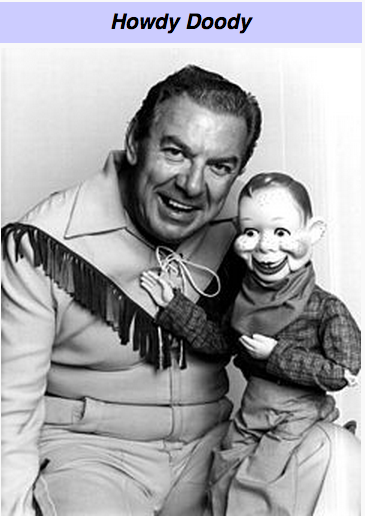









 Plain and Fancy