Family Dinners: Keeping the Spark Alive

Are family dinners important? What about empty nesters? Families of one? Do family dinners protect against the effects of teen drug use and cyberbullying? Writer Melodie Miller Davis in her recent blog post “How do you keep family dinner?” got me thinking about recent research on the topic.

In her post, she refers to Columbia Casa Family Day, a national initiative to remind parents that they have the “power to help keep their kids substance free.” Cornell University researchers also have discovered that shared meals may help prevent eating disorders. An article in Time asserts that teens benefit from interaction with their families and find security in the shared, predictable ritual of family mealtime possibly preventing early drug use and the effects of cyber-bullying. However, there is also research that claims such effects are overstated or not verifiable.

Whatever the case may be, the faster the pace of our lives and the more insane world events become, the more I long for the sweet spaces of serenity that sharing family meals can provide.

The Longeneckers and the Metzlers, two strands of my family line were oblivious of any such research but carried on the ritual of family meal time together. Here is a post from the Metzler gatherings, often picnic style.

Family dinners can be very large as seen here in Grandma and Aunt Ruthie’s house with twenty, mostly Bossler Mennonite Church friends, gathered around their huge dining table.
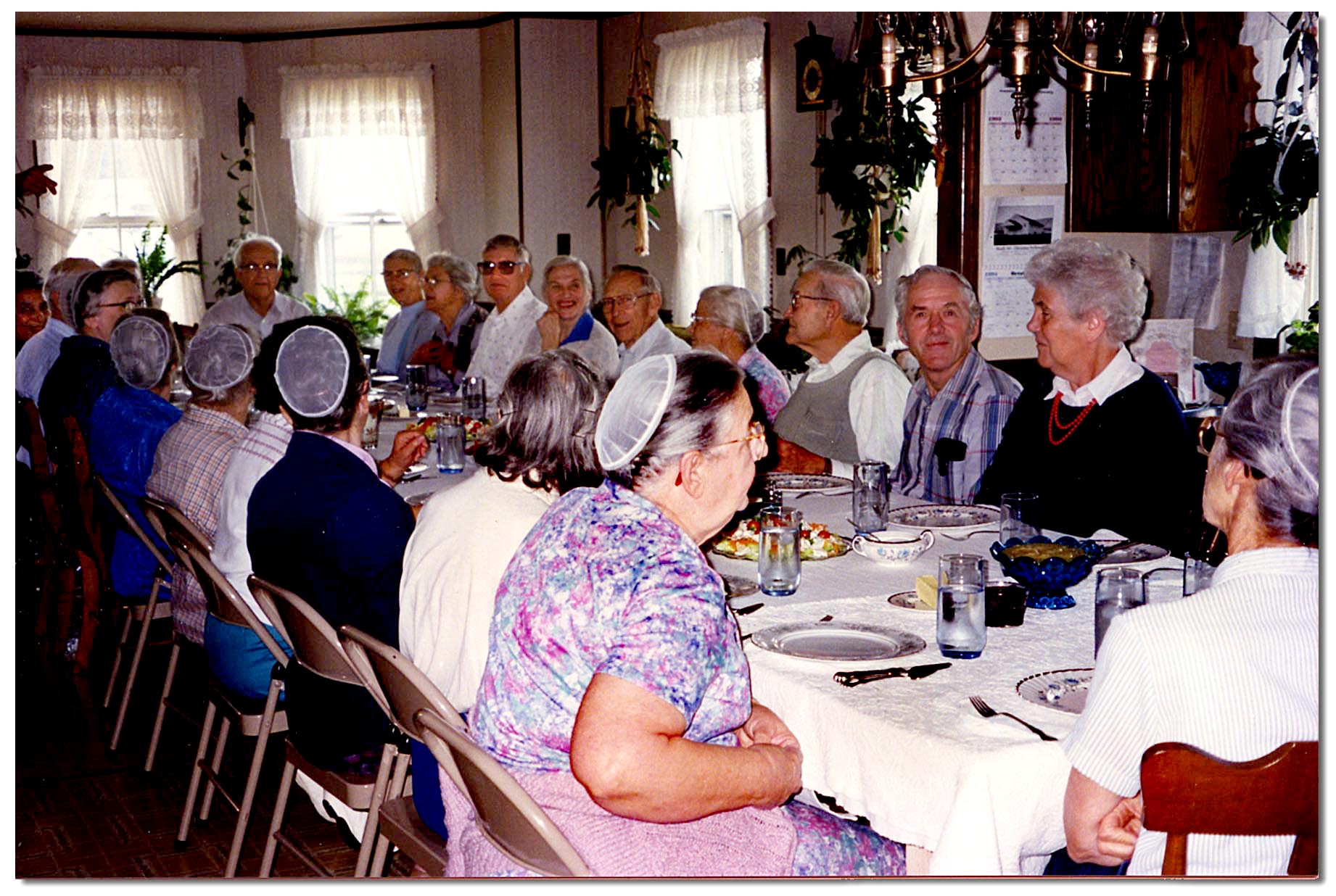
Mother L_Bossler eating_at Ruthies

Whether large or small, indoors or out, dinners require preparation. My sister Jean and her family provide some of the “raw material” from a shared meal at Mother’s house.
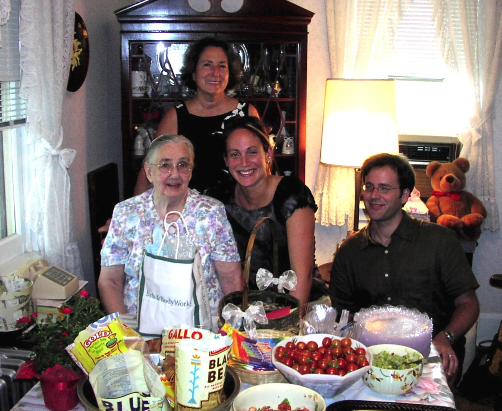
Mom&FairfieldsREV

Years ago if we didn’t visit Pennsylvania, I shared holiday meal making with my sister Janice, who lives just 2 ½ miles from us.
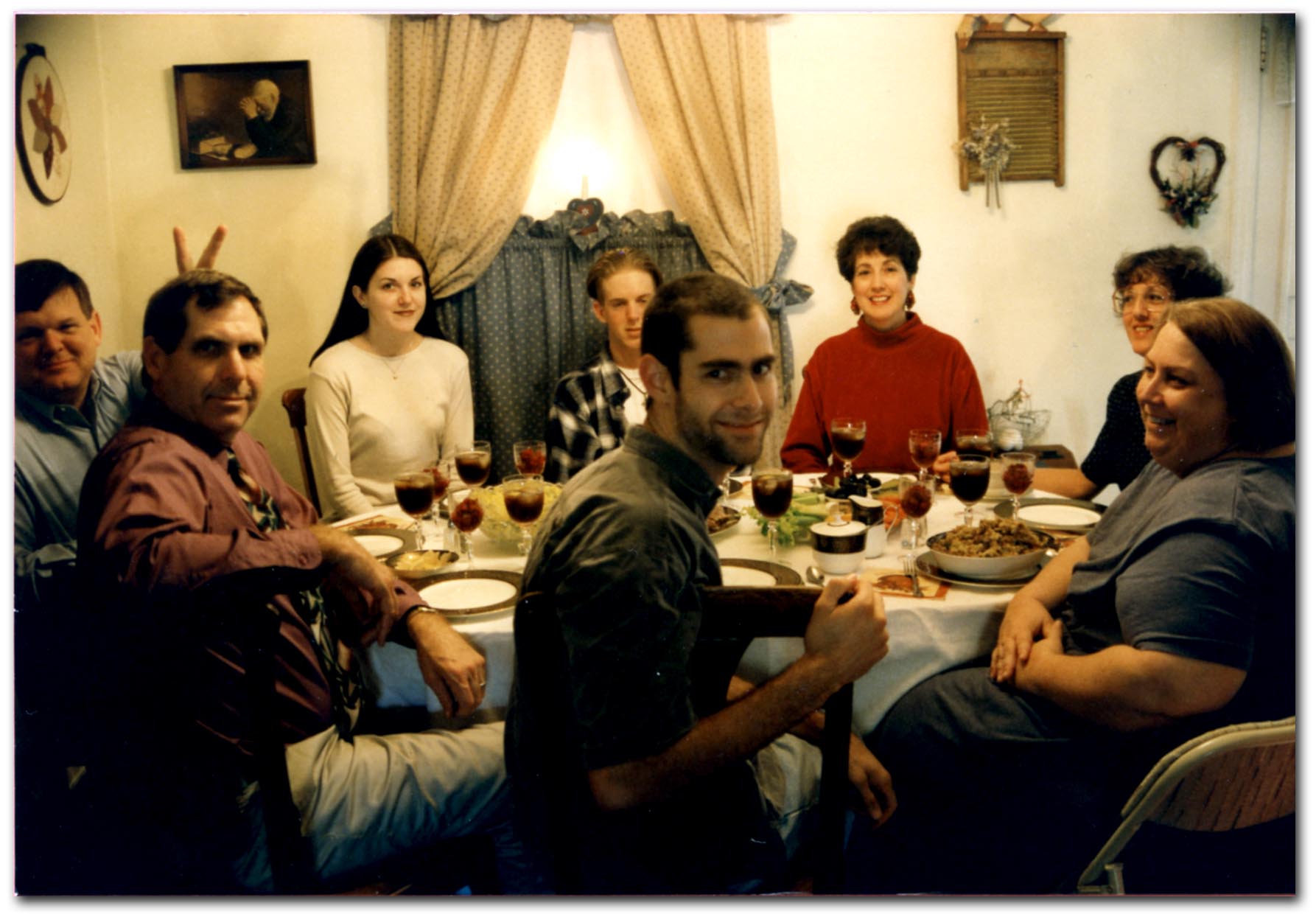
There's one in every crowd - even in family!
There’s a joker in every crowd – even in family!

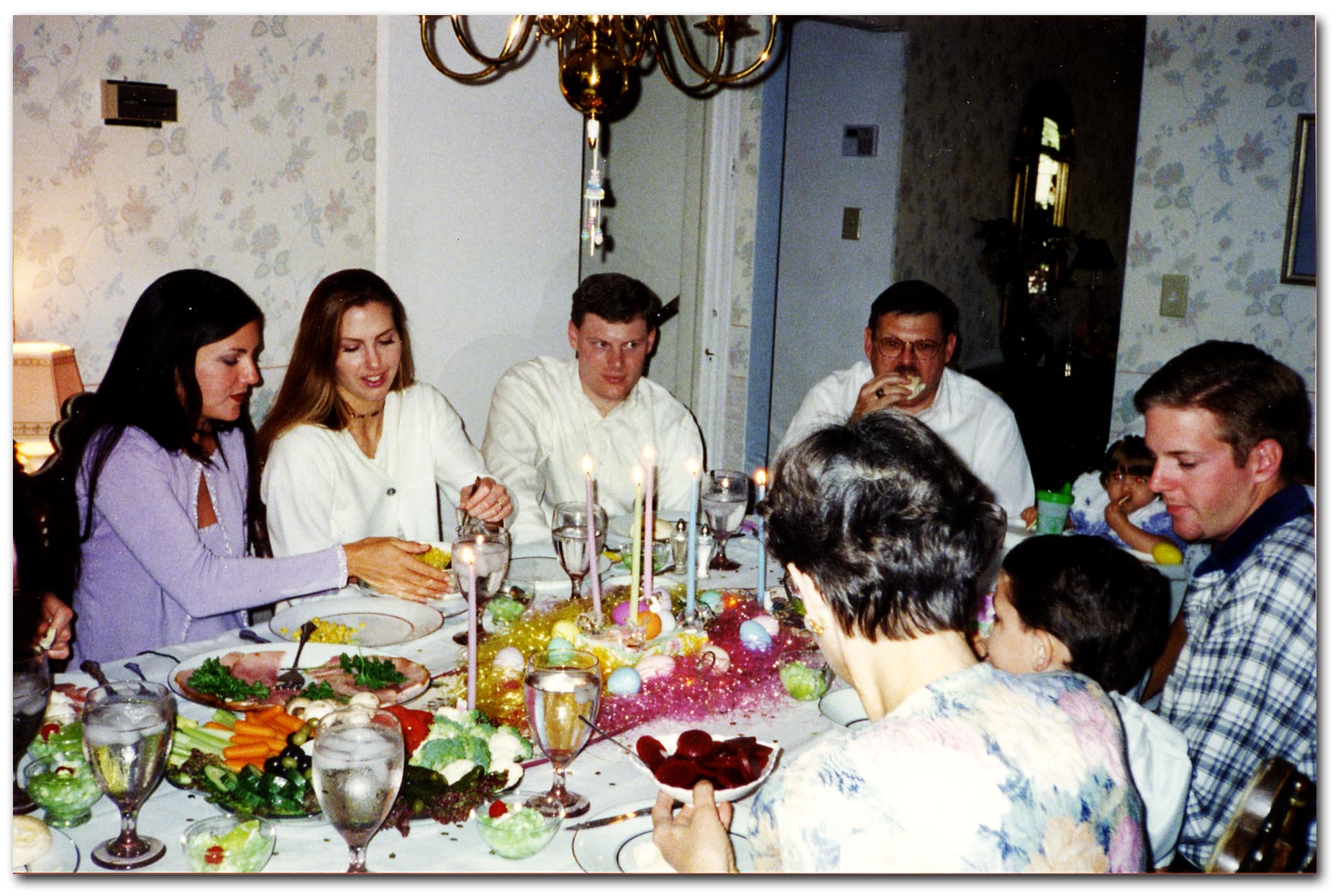
03_meal_Easter_1999

And then the over-flow table with the kids . . .
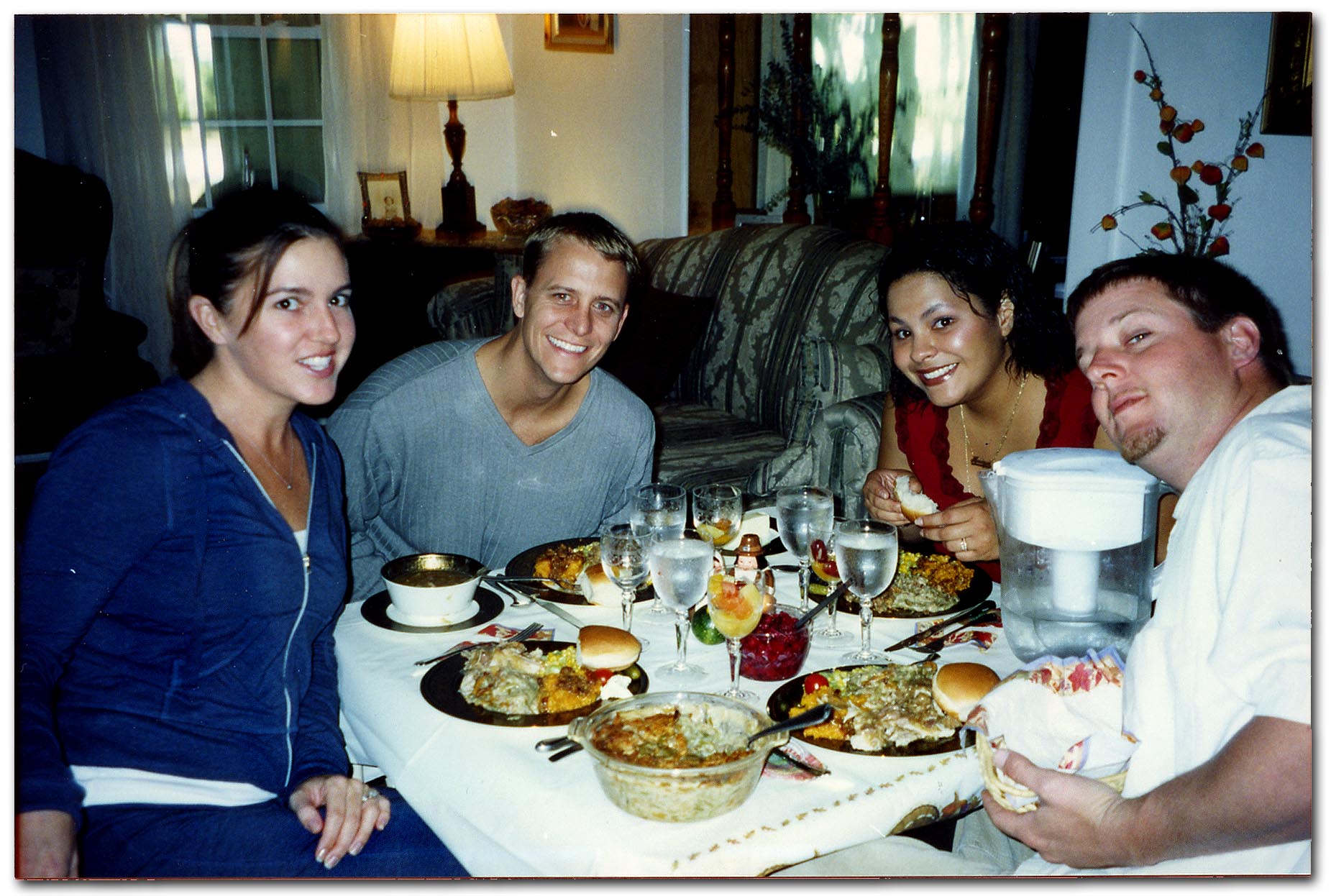
04_meal_Thanksgiving_2005

After awhile, our children began entertaining us, first in Chicago where all four worked, earned graduate degrees and started a family.
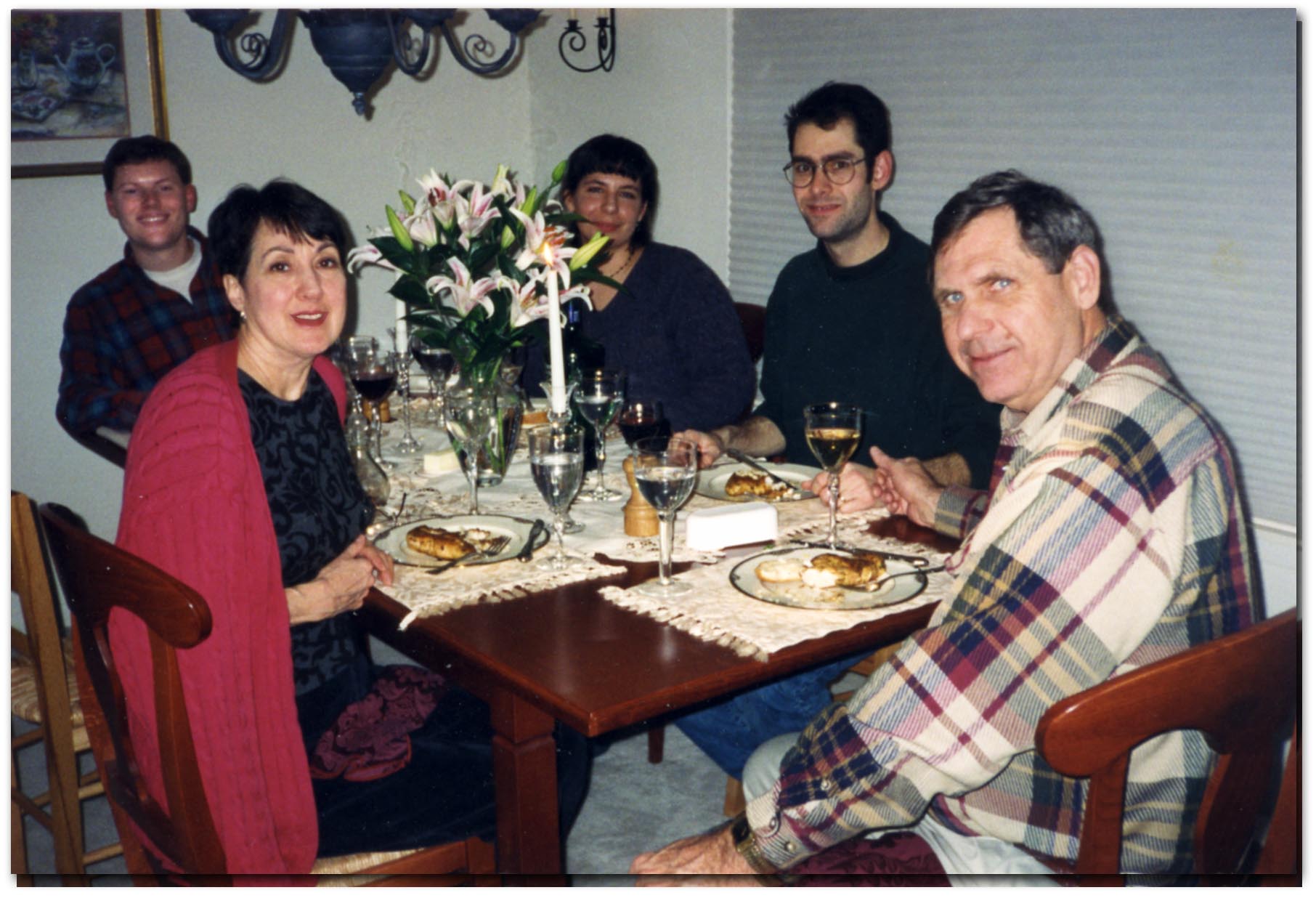
05_meal_Grayslake_1999

Then when they moved to Florida, two years apart, their meal making continued with Fourth of July at Joel’s house . . .
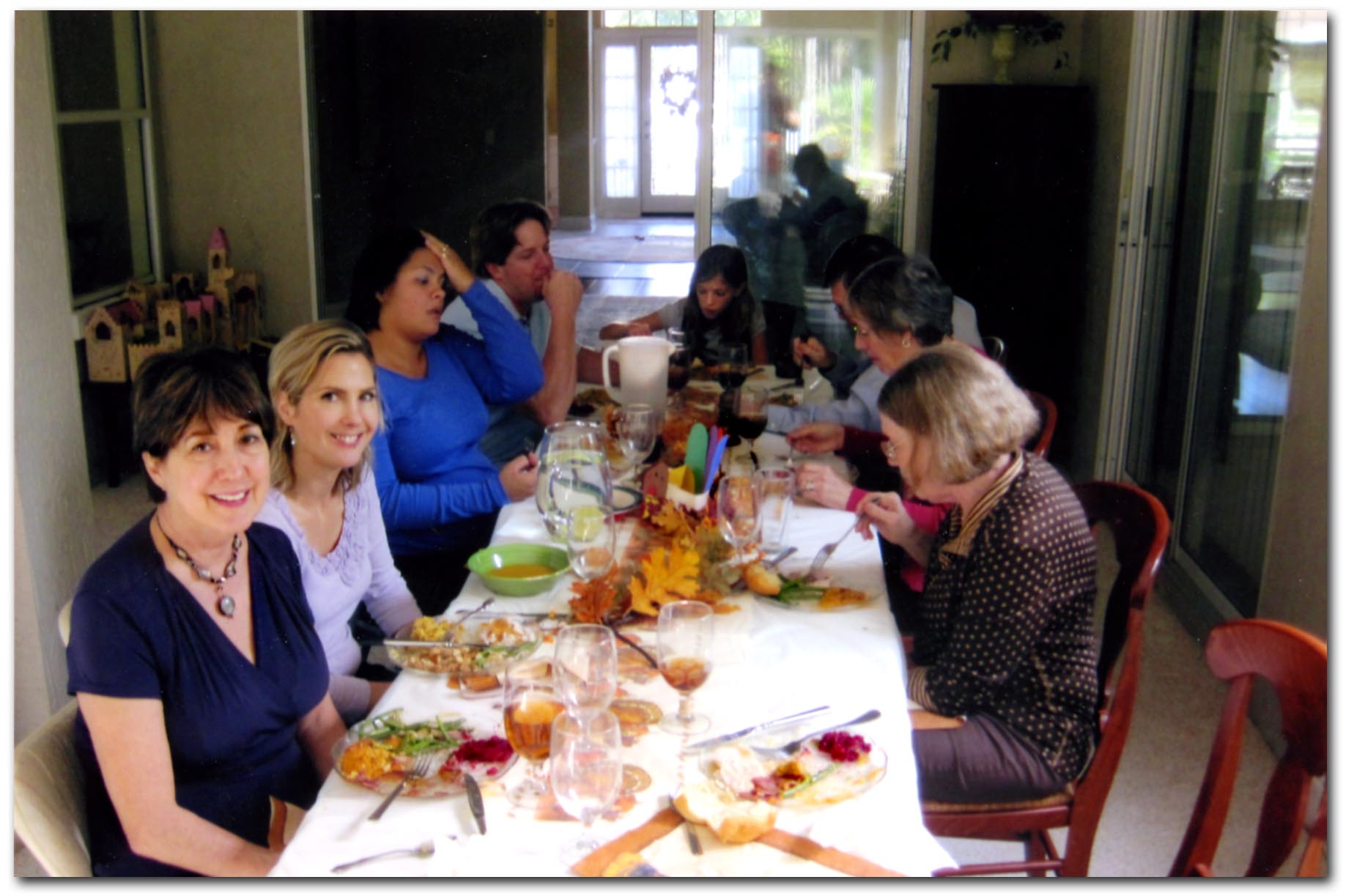
06_meal_Thanksgiving_Cristas_2009

. . . and Thanksgiving at Crista’s house in her bright sun room.

Any excuse for a party! Besides birthdays, Fourth of July can be a cause for celebration too.
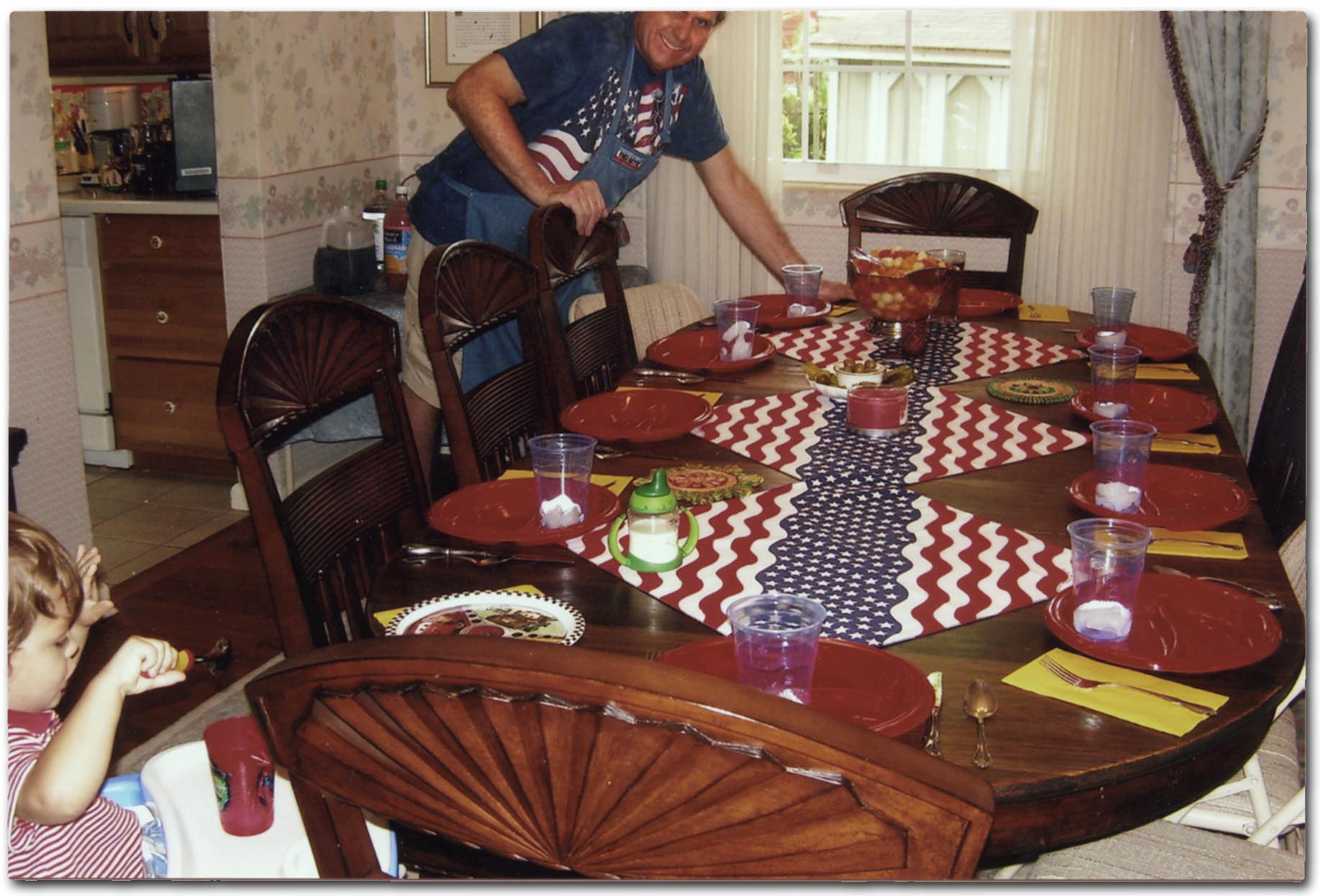
07_meal_Memorial Day_2009

One of us, who loved everything about entertaining from meal preparation to talking and eating around the table, will be missing this holiday season and every meal in between, our Mother Ruth Longenecker, hostess extraordinaire.
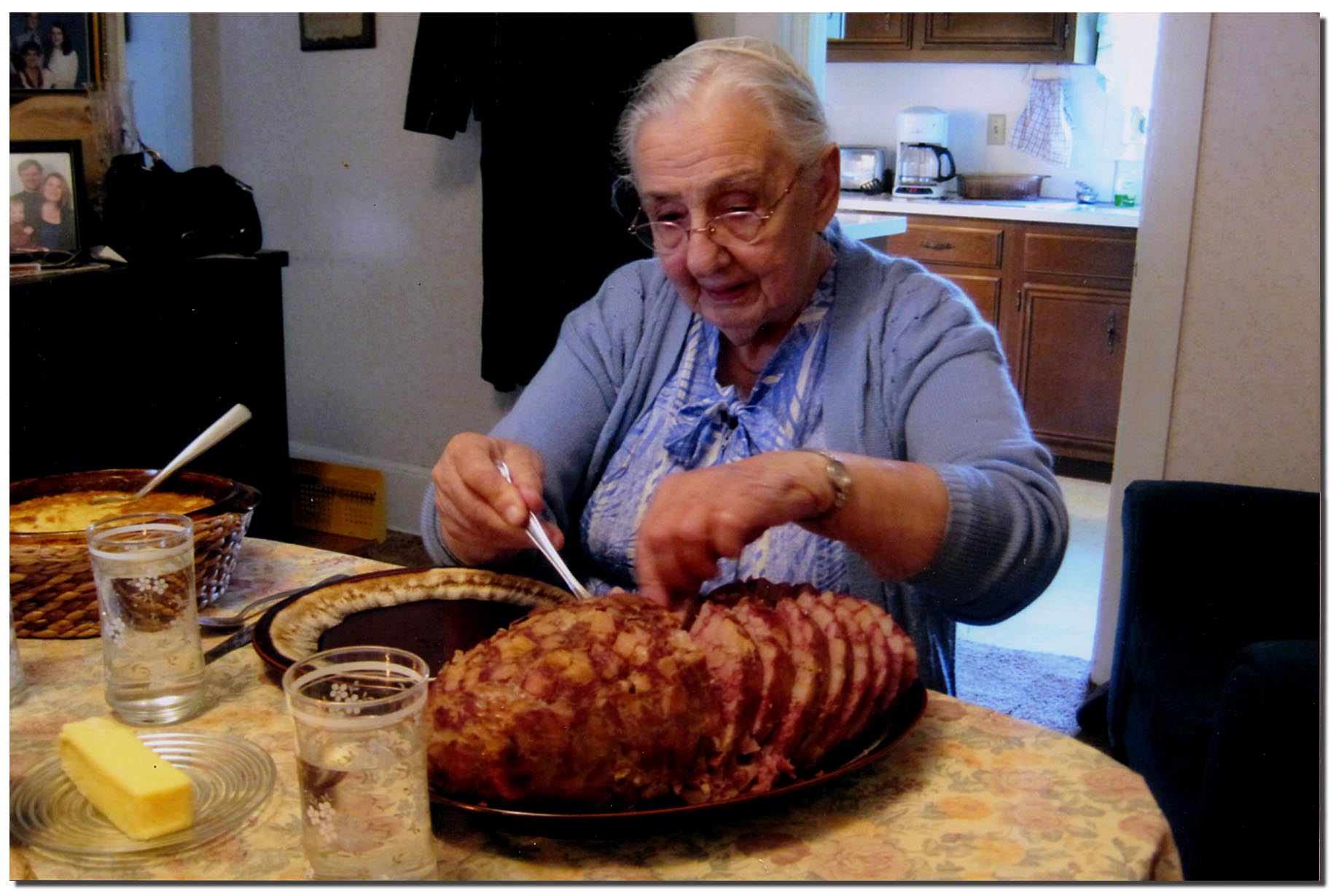
Mother slicing pig stomach with baked corn and a stick of butter close by
Mother slicing pig stomach with baked corn casserole and a stick of butter close by

 How have family dinners marked your family history?

Coming next: # 1 in a series “Moments of Discovery”

10 Things My Family Did or Didn’t Do on Sunday

You must not work on Sunday, Sunday, Sunday

You must not work on Sunday because it is a sin.

But you can work on Monday, Tuesday, Wednesday,

Thursday, Friday, Saturday till Sunday comes again.

Sung to a melody with a 4-note range similar to “Here We Go Round the Mulberry Bush.”

10 Things My Family Did or Did Not Do on Sundays

What we did . . .

  1. Went to church, always unless deathly ill
  2. Invited folks to a nice Sunday dinner after church – or were invited to home of relatives or friends. “Don’t look on turns” was a saying spoken readily from one hostess to the other but not strictly adhered to. Dinner served with fine china, crystal, best silver unless it was a picnic
  3. Drove in the Studebaker to Uncle Landis, Uncle Abe or Aunt Verna’s house – Didn’t call ahead, just appeared at the door – and they would do the same!
  4. Took a walk in the woods or across fields
  5. Nap, my mom in the bed, my dad in his chair
Daddy drying dishes - Only on Sundays after church!
Daddy drying dishes – Only on Sundays after church!

What we never did . . .

  1. Ate in a restaurant
  2. Went shopping
  3. Did the laundry
  4. Cleaned the house
  5. Mowed the lawn

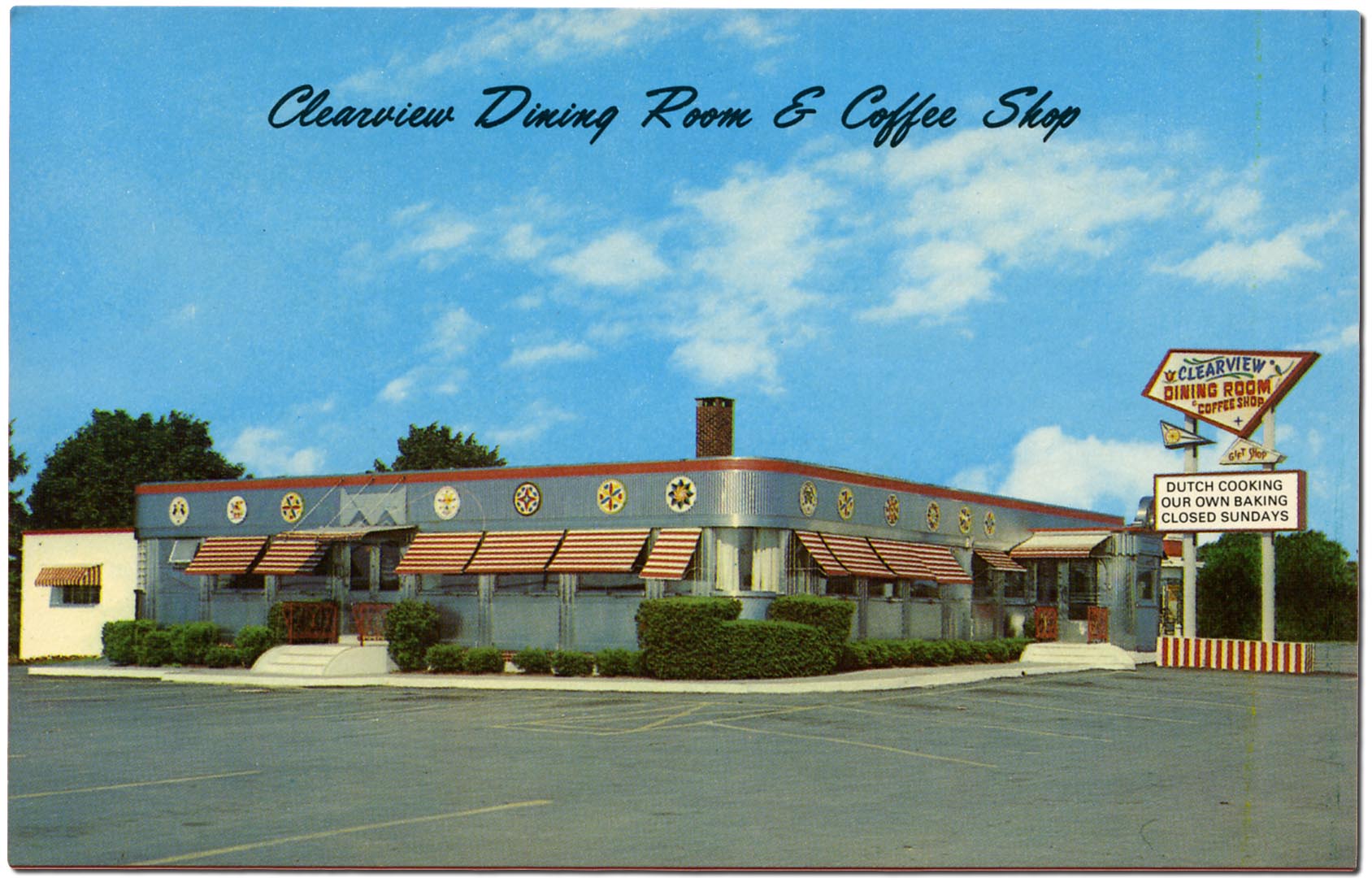
Our neighbors, Paul and Edna Mumma, owned and operated the Clearview Diner along Route 230 between Elizabethtown and Mt. Joy, Pennsylvania. As members of the Church of the Brethren (an Anabaptist group similar to the Mennonites) the Mummas adhered to the closed-on-Sunday rule as well.

Clearview Postcard_front

Clearview Postcard_back_back

Nowadays most retail stores are open seven days a week. Banks and almost all businesses are accessible online even on Sundays. Yet there remain a few stores like Hobby Lobby and Chick-fil-A whose doors are locked on the Lord’s Day, the latter with soaring profits.

Chick-Fil_A_sign

Your thoughts please – a reminiscence or an opinion!

Coming next –  Ian’s Miracle Birth: The Million Dollar Baby

Milk Toast: Good for What Ails You

Diners at the Bâtard, an upscale restaurant in Tribeca, NYC can enjoy a dessert dish called milk bread, “A Christmastime treat from Germany,” says the September 1, 2014 issue of the New Yorker. The article goes on to describe this milk bread as having crème-brûlée crackles with innards like French toast or the texture of iced donuts.

New Yorker_Food & Drink

My German-Swiss Grandma Longenecker’s milk bread was much simpler. In fact there were only two ingredients: Milk and toast, probably with a little butter. Picture a bowl of warm milk and pieces of toast snippled up making a kind of stew. And she called it milk toast, not milk bread, serving it as a balm for belly aches or whatever else ailed us.

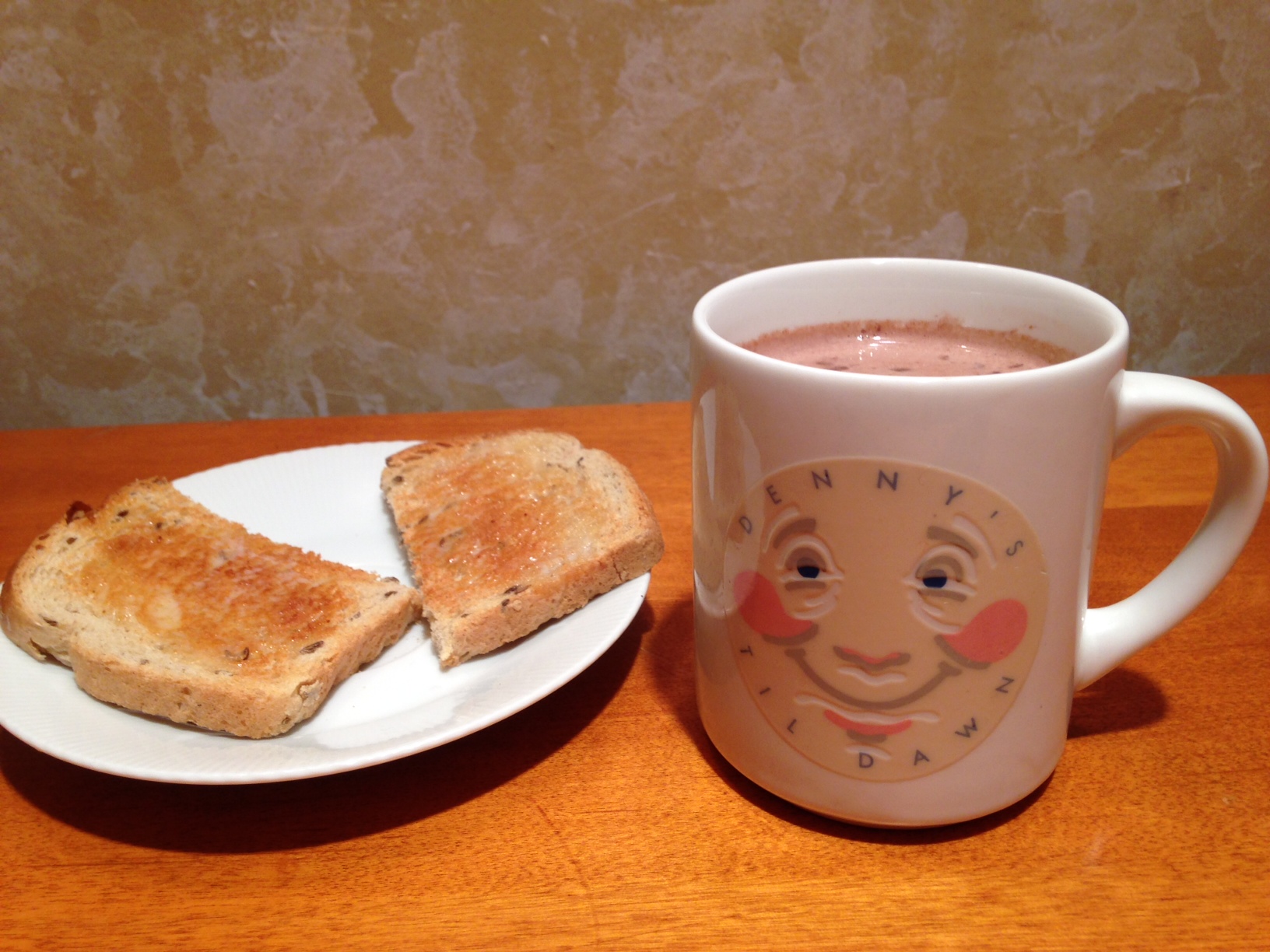
Another milky treat Mother served in the winter-time before school: Hershey’s hot cocoa with buttered toast for dipping. Yes, we dipped the toast in cocoa, inhaled the chocolate fragrance as the warming lump slipped slowly down our throats. Reinforcement for the cold walk to the bus-top. Uh-um, good!

CocoaToast

Do you have any milk with bread images in your memory bank? Any other cool weather warm-up recipes to share?

Coming next: 10 Things Our Family Did/Didn’t Do on Sunday

The Beach at Sunset: Crossing the Bar

Sunsets, especially sunsets on the beach are # 1 on the list of clichés to avoid in photography. Yet beach sunsets persist on Instagram and Facebook because they are breath-taking, evocative.

Photo credit: Jackie Gassett


. . . the gauzy hinge between sea and sky, the limitless horizon dividing the elements, the disappearing point where we were headed.”

                   Patricia Hampl  The Florist’s Daughter

My mother had a placid and accepting attitude toward life and death. At her funeral the hymns sung by the congregation were full of hope, “I Stand Amazed” and “The Love of God” among them. Another song in the Mennonite Church Hymnal entitled “Sunset and Evening Star” (which was not sung) pulls out the first four words of Tennyson’s poem “Crossing the Bar” written in 1889 just three years before he died.

Crossing the Bar

Tennyson, also appearing to accept death as part of life, uses the metaphor of the sandbar on the beach to paint a picture of the tide of life pushing out to the “boundless deep” to which we return. The poet hopes that though he may be carried beyond the limits of time and space as we know them “he will look upon the face of his ‘Pilot’ when he has crossed the sand bar.”

This past July Mother crossed the bar into eternal glory and there she has beheld the face of her Pilot. Oh, how we miss her.

But now I must cross the bar of challenge and opportunity ever looking for new horizons. How about you?

What bar of challenge and opportunity confronts you now?


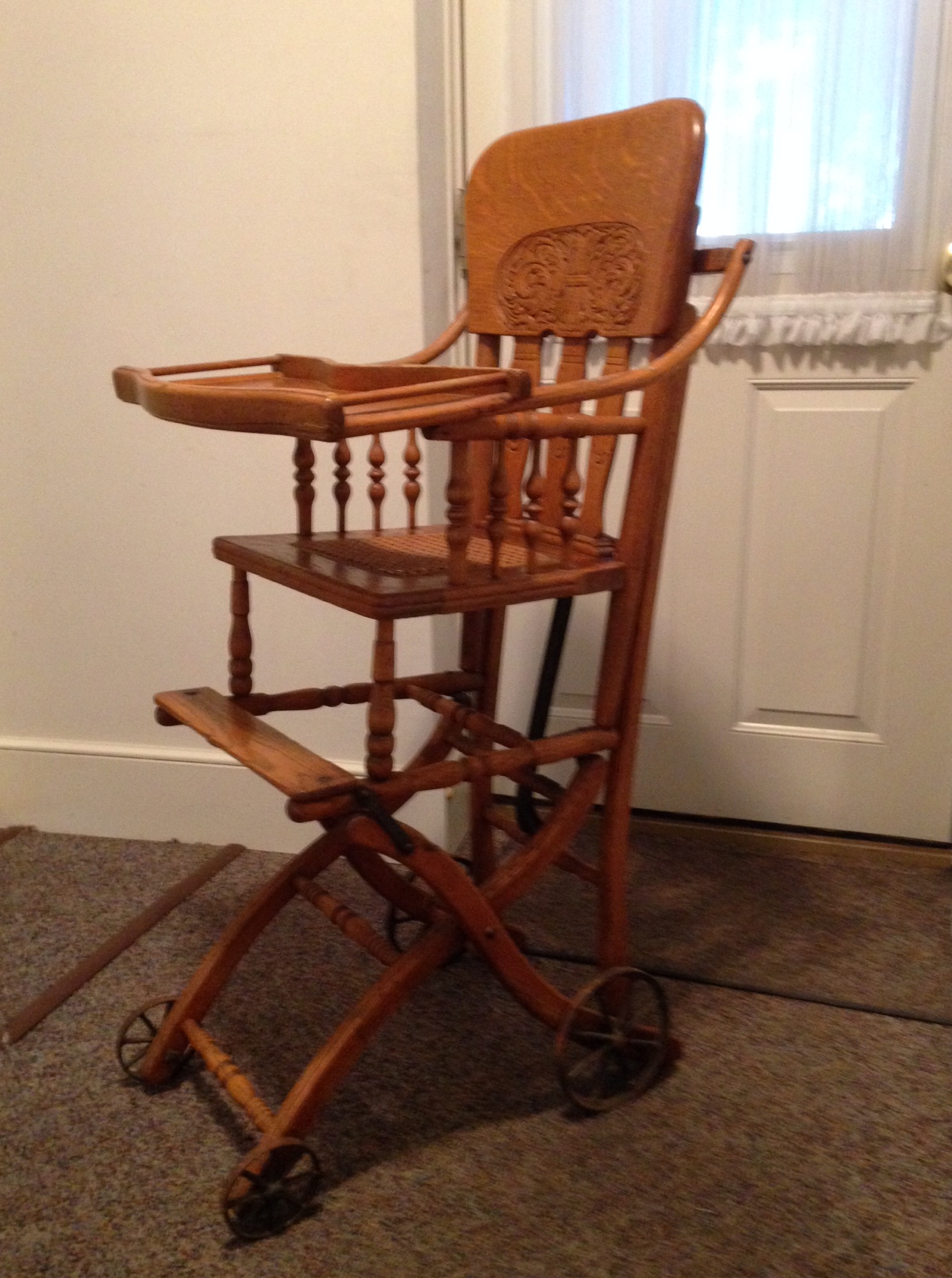
The Wonda-Chair and the Heirloom

Did you as a baby sit in one of these?

Did you buy one for your child?

Image: eBay
Image: eBay

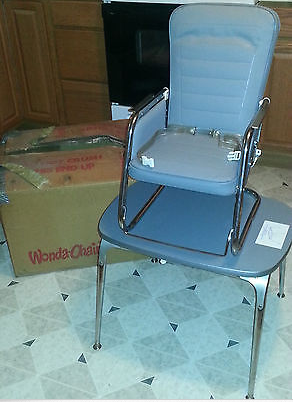
Produced by Babyhood Industries of Shrewsbury, MA, the Wonda Chair was “a do-it-all, all-in-one, convertible wonder. As the seller mentions, the multi-piece furniture/stroller kit mixes and matches to create the following: Hi-chair, youth chair, chair and table, dressing table, desk set, rocking chair, stroller, baby carriage, basinette, and cradle.”

As expectant parents, we fell prey to this marvel and sunk hundreds of dollars into this magnificent wonder, the Wonda Chair. We used it mostly as a high chair and stroller for our children. Later, Crista and Joel pushed each other around on the sidewalk with the stroller base. Here they are improvising their own version of a horse and buggy with a dog and Wonda Chair carriage wheels.

WondaChairCristaJoel

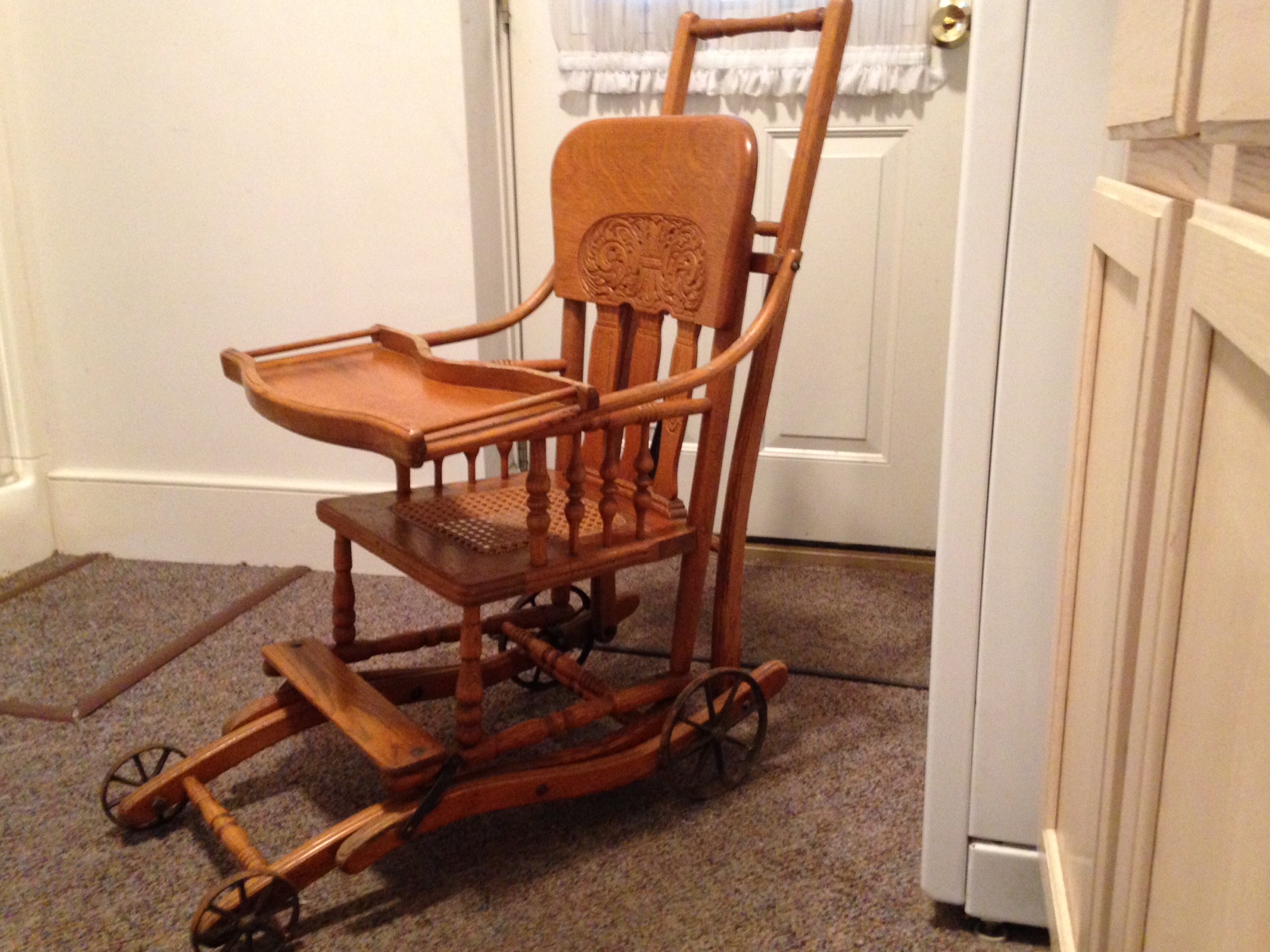
Recently, we have been going through Mother’s things in her attic and came upon this 19th century marvel—a high chair that converts into a baby carriage—hand-made and still serviceable.

MomChairLow

MmChairUp2

Mother was the first daughter in the family after four brothers, so she is the fifth in her family to use the chair. It is vintage, however, and probably handed down to the family from the previous generation, frugal Mennonites who valued quality and heritage.

Mother in high chair, 1918
Mother in the Metzler high chair, 1918

Two wonderful chairs – the Wonda Chair and the heirloom . . .

*  *  *

Your turn: Take your pick – The Wonda Chair or the Vintage chair?

Or tell your tale of special pieces handed down in your family.


Come to the Storybook Chair, the Storybook Chair . . .

So now it matters almost not at all to any of them except as a storybook matters; loved in childhood but outgrown in adolescence, it still matters, still instructs, still is part of what the adult becomes.

Phyllis Tickle, The Graces We Remember: Songs in Ordinary Time (126)

When our children Crista and Joel were little, a prelude to nap-time was their mother chanting in a sing-song voice: “Come to the storybook chair, the story book chair, the story book chair, and we’ll read . . . .” Hearing that, they’d head for the rocking chair and climb on my lap for colorful Richard Scarry pages or the clever tricks of a George and Martha book. I’m carrying on a tradition that began with my mother who read to me from picture books, and also recited poetry from her school days.

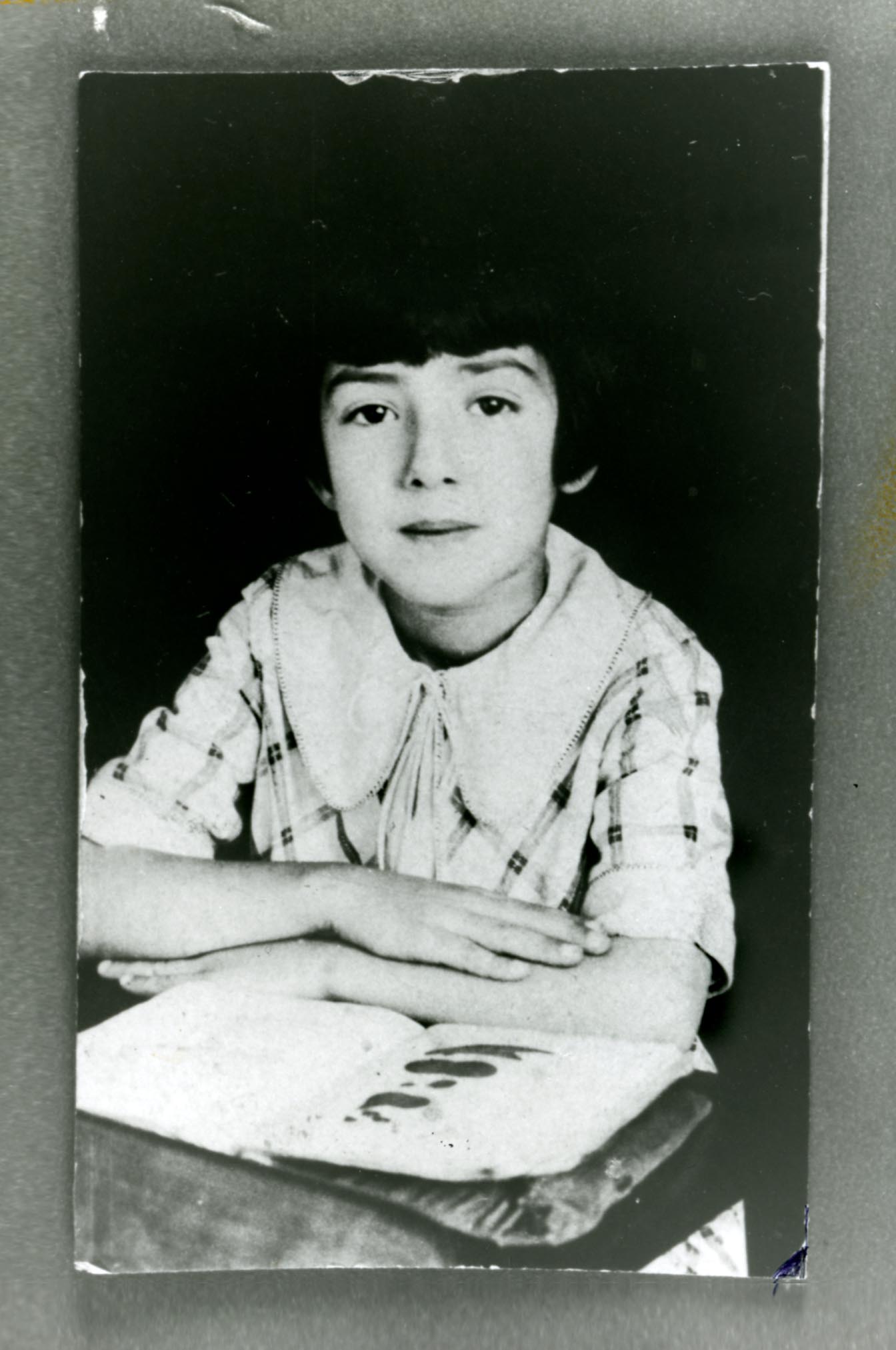
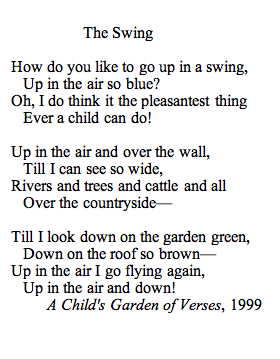
My journal tells me (and it does not lie) these are the poems by Robert Louis Stevenson that Mother recited to me in 1999 from her memories of Lime Rock School near Lititz, Pennsylvania in the mid 1920s.

Ruth Metzler  Lime Rock School  1920s
Ruth Metzler            Lime Rock School             1920s

The Swing PNG image


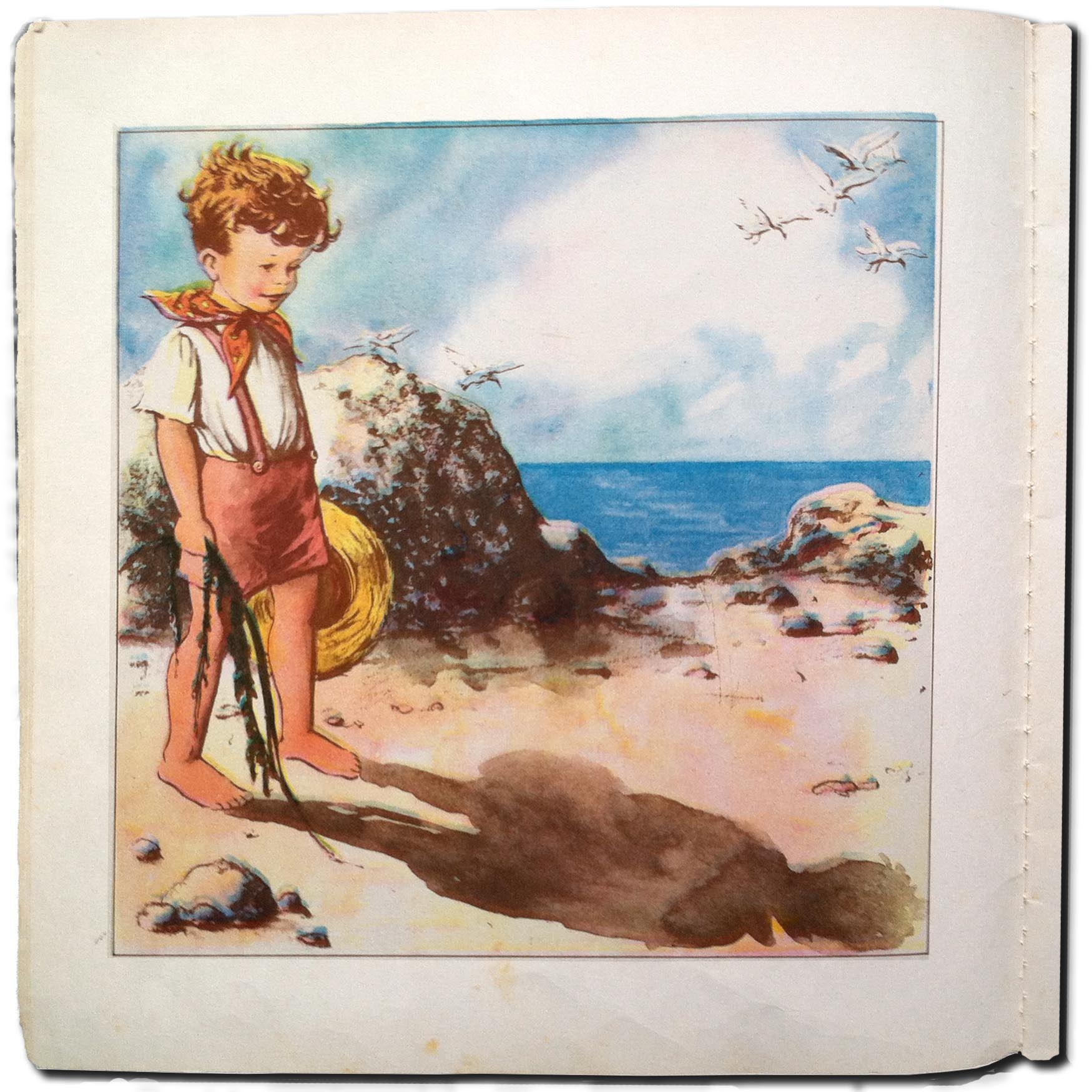
Illustrations from A Child's Garden of Verses, John Martin's House, Inc., circa 1945
Illustrations from A Child’s Garden of Verses, John Martin’s House, Inc., circa 1945

She also recited the verses of “My Shadow” from the “Golden Book of Poetry” 1947 with the familiar first two stanzas:

My Shadow png

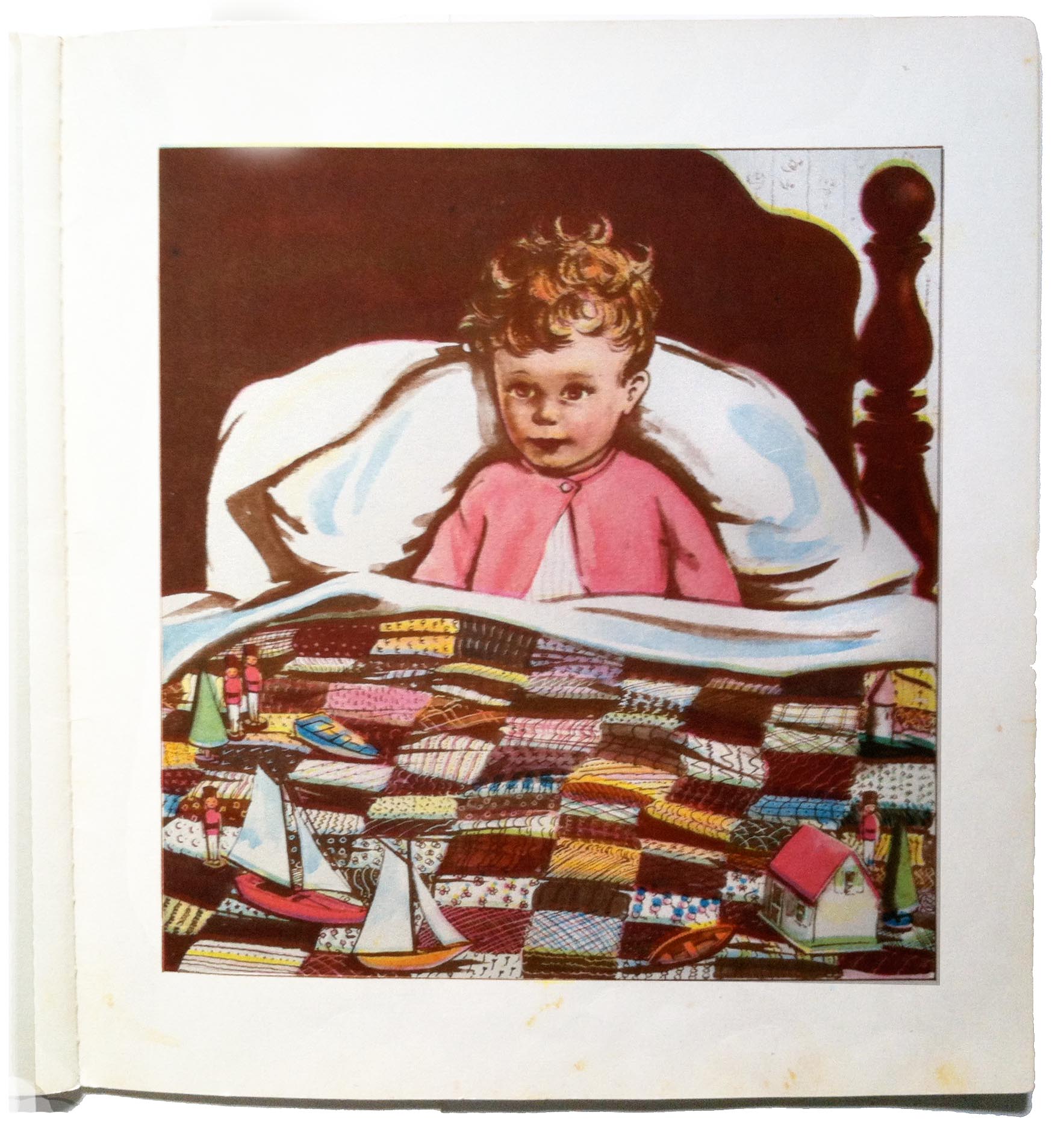
At the beginning of second grade, the summer I turned seven, I had my tonsils removed and among my memories (besides drinking chocolate milk through a straw and trying to swallow smashed bananas) is reading the poem “The Land of Counterpane” under a quilt that probably matched my own upon my sick-bed.

Land of Counterpane_6x6_300

LandOfCounterpane png

What are your early memories of reading? Did a friend or family member recite poetry or other words of wisdom to you?

Coming next: The Wonda Chair and the Heirloom

I’m All Ears!

A Fable

Credit: immstories.wordpress.com

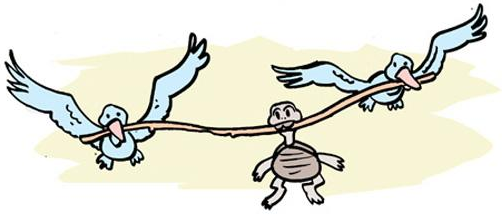
A tortoise had become friendly with two geese who promised to take it to their home in the mountains. The plan: The geese would hold a stick in their beaks while the tortoise would grasp it in the middle with his mouth, but he must be careful not to talk. During the journey, villagers below made fun of the tortoise. When it answered back, it fell to its destruction.

You guessed the moral: Talking at the wrong time can lead to fatal consequences!

Quick Quiz

1. Are you the first to air your knowledge when your favorite topic comes up?

2. Do you interject your opinion before anyone else has a chance to speak?

3. Do you tune out what others are saying because you are busy thinking of a comment?

I’m just guessing here, but you were probably the 3rd grader whose hand was the first to shoot up when your teacher asked a question. And I must say I am guilty as charged. Just see the Cliff and Marian misunderstanding below.

*  *  *

Hearing and listening are not the same thing. The difference between the sense of hearing and the skill of listening is attention, says Seth Horowitz in a New York Times piece.

The Harvard Business Review blog reveals that one in four corporate leaders have a listening deficit. No surprise there! In the business world, failure to listen can muddle the lines of communication, “sink careers, and if it’s the CEO with the deficit, derail the company.” In our personal lives, muddle and mayhem can result.

Good advice for better listening? First of all, slow down. While listening seems like such a passive thing to do, it is essential for understanding. Secondly, consider the source. “Try to understand each person’s frame of reference—where they are coming from.” Disagreements can often be averted with skilled listening.

Studies show that thoughts move about four times as fast as speech. No wonder it’s so hard to slow down and actually listen.


Here is the beginning of a list of tips for good listening:

1. Give full attention to whoever is speaking.

2. Don’t interrupt. Let the other person finish before you begin speaking.

3. Listen with your face as well as your ears. It’s appropriate to smile, frown, laugh, be silent at times when you are in conversation.


A Cliff and Marian Misunderstanding

Sometimes listeners with a lot of practice get muddled up. Here is a “He said / She said” from our own experience:

Marian: Let’s eat out today.

Cliff: Wonderful idea.  (Time passes – Cliff leaves and comes home about dinner time noticing I’m in the middle of meal preparation.)

Cliff: I thought we were eating out this evening. Why, I had some ideas about where we would go.

Marian: For goodness sake, I was thinking that it would be nice to eat outside on the patio because it’s so cool.

Cliff: But I thought you meant we were eating out, like in a restaurant!

God help me!
God help me!

Listening in the Longenecker Family 1950s

Living in the Longenecker family in the 1950s, we children were taught to listen, pay attention. In a parent-centered household, we listened to directions about chores, instructions about what to do and what not to do. To balance things out though, we also listened to Daddy singing as he played the guitar or the piano, or to Mother singing off-key in the kitchen. “I’ll be somewhere, listening, I’ll be somewhere listening, I’ll be somewhere listening for my na-aa-mm-e . . .

Please add your own tip, an observation, or an anecdote about listening or the lack thereof.

Coming next: Another Moment of Extreme Emotion

Root’s Country Market & Auction: Your Personal Tour

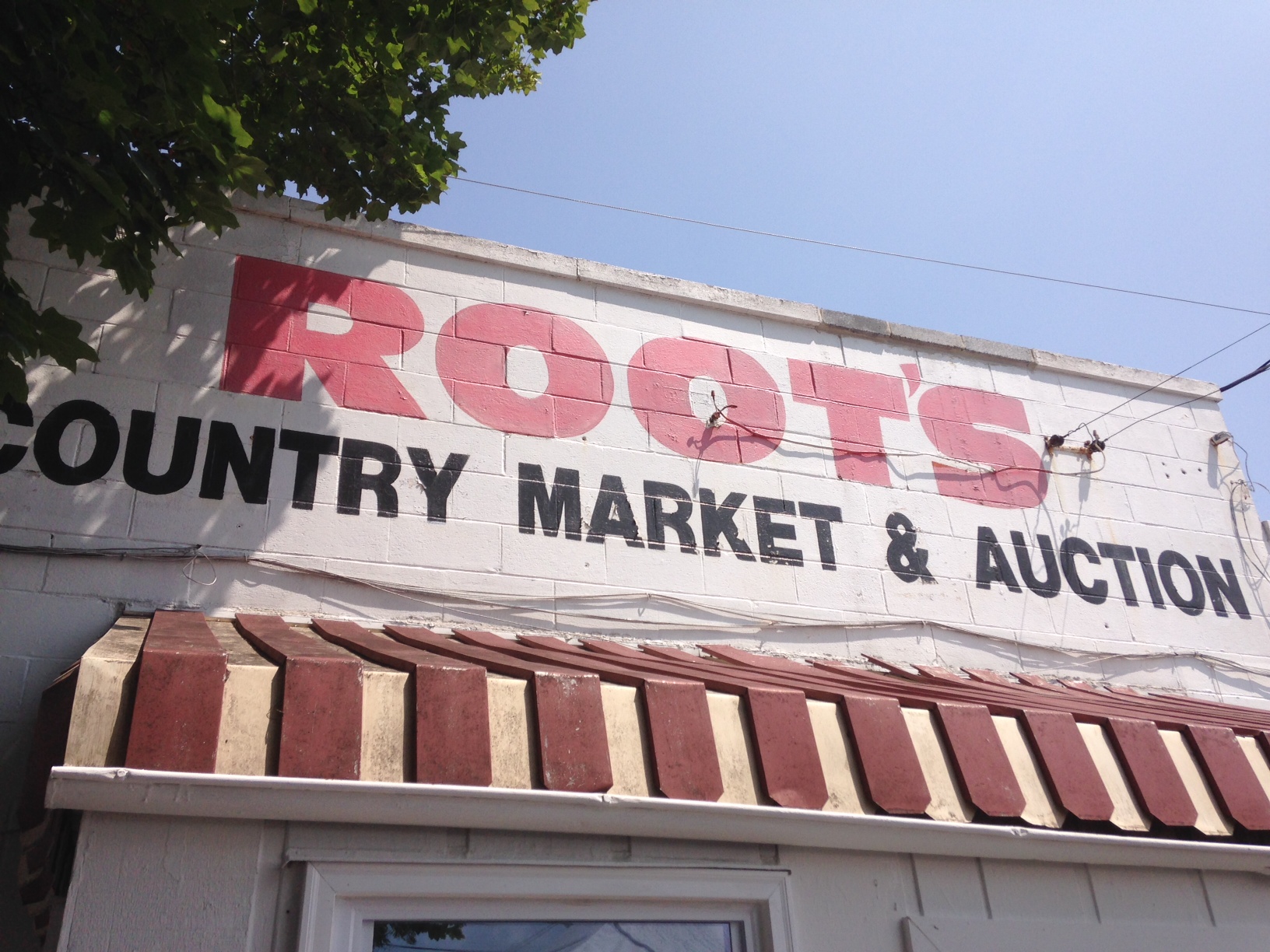
Are you hankering for chocolate-covered bacon, do you want to buy a rooster for your flock? A hat for the next Downton Abbey gala? Welcome to Root’s Country Market and Auction, a fixture from my childhood my sisters, husband, and I re-visit near Manheim, Pennsylvania.

RootsSign

Root’s, with over 200 stand-holders, is the oldest single family-run country market in Lancaster County. Beginning as a poultry auction in 1925, Root’s “has evolved over the years to become a piece of Lancaster County heritage.” Come walk with me along the aisles of stands, some housed in long sheds, others outdoors under awnings.

Did I say you can get all gussied up for next Downton Abbey series? At our first stop, we try on funny Brit hats rivaling those of Princesses Beatrix and Eugenie we remember gasping over at the William and Kate’s royal wedding.

purple hat

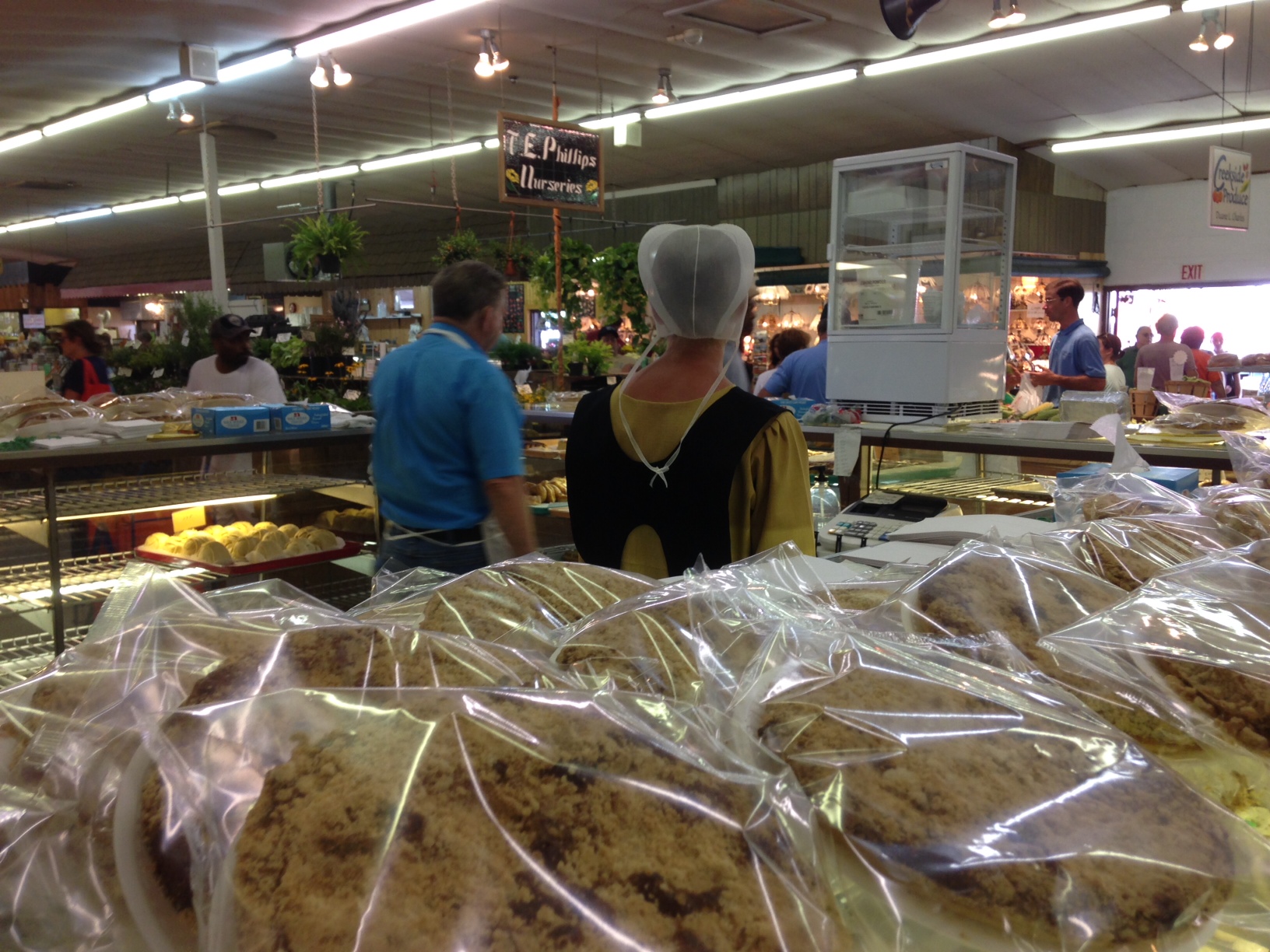
From fancy we meet plain at many of the produce stands either selling or buying vine-ripe tomatoes.

TomatosPrayerCap

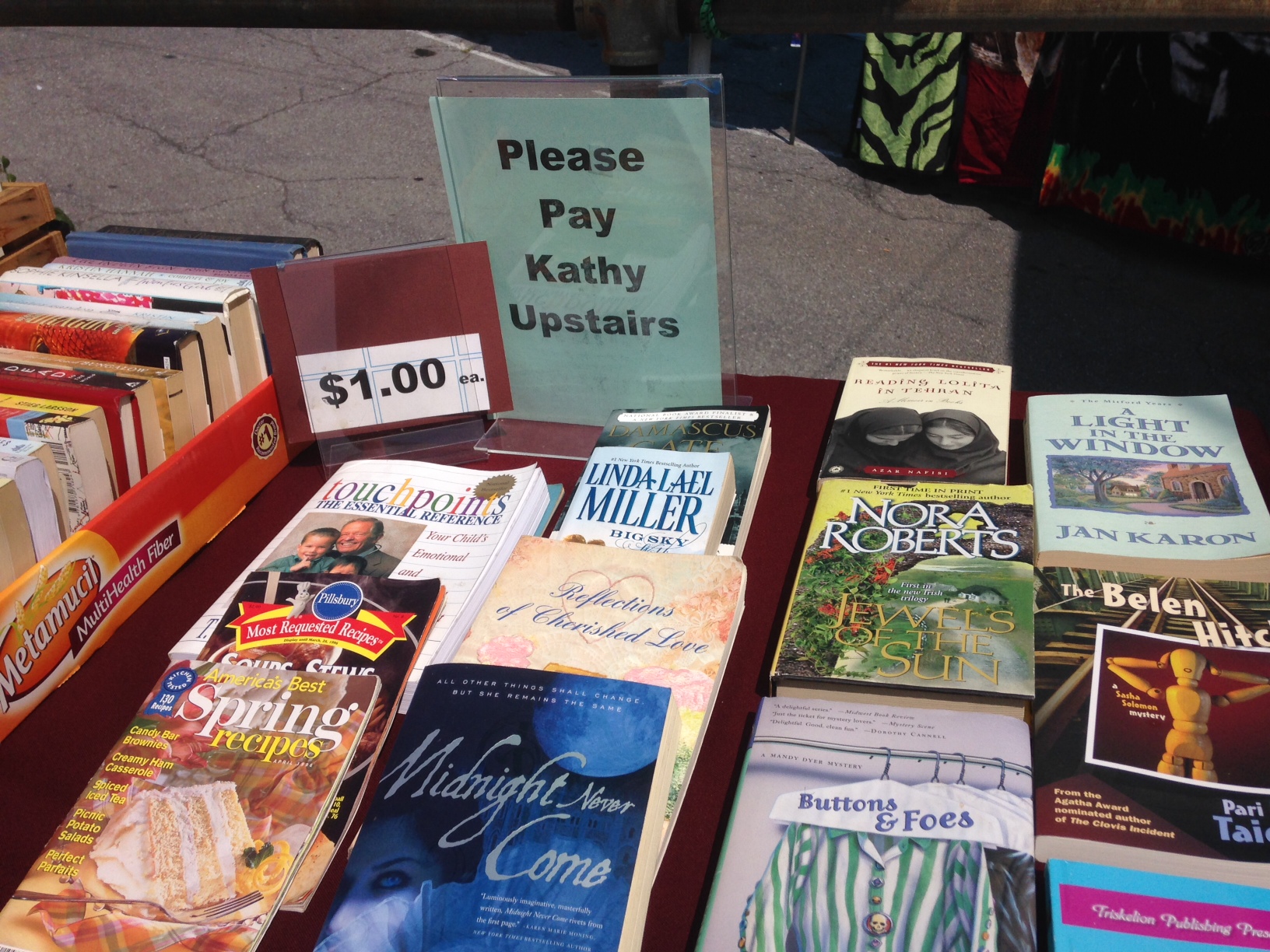
KathyBooks

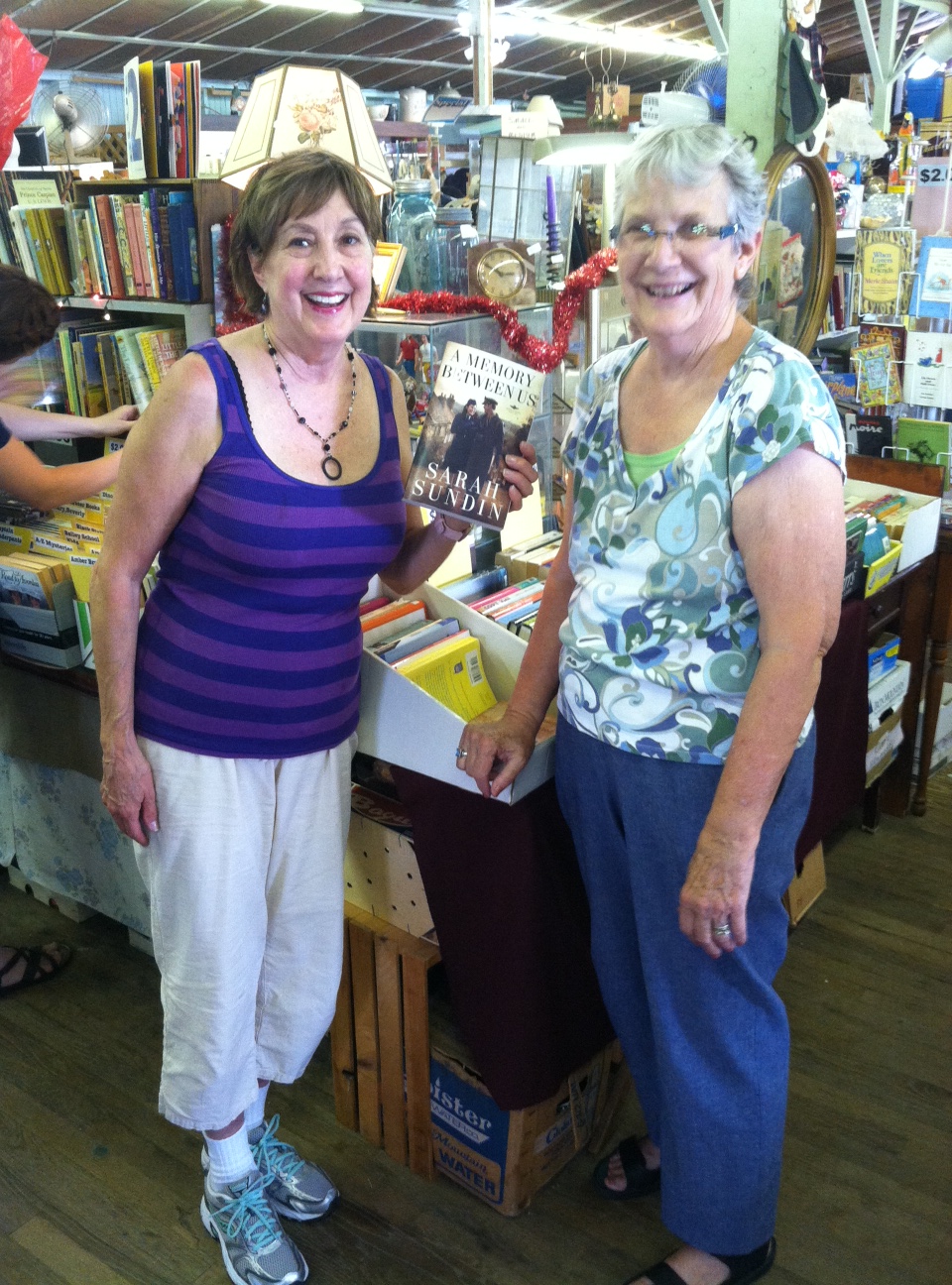
Here is a trusting book-selling, my new online friend, Kathy Heistand Brainerd, a distant cousin, whose mother Esther Longenecker is the author of Pitchforks and Pitchpipes, a pictorial and narrative portrait of one branch of the Lancaster County Longeneckers.

KathyMarian

Yes, there are household items and books galore, but many stands cater to shoppers wanting fresh meats, produce, deli and bakery items–and flowers. This farmer boasts fresh blooms from his Manheim farm.

FlowersRoots

I promised you chocolate-covered bacon. Here is a look at a taste-tester. Yes, I had a bite too!

ChocBacon

Then on to pickles, funnel cakes, and shoofly pies with wet bottoms satisfying the sweet and sour tastes:

7DayPicklesfunnelCakeAmishShooflyPie

Root’s is a market, and yes, we buy from not just photograph the vendors, but the market is also an auction house. Walking from one of the parking lots, we spy a warning sign urging bidders to uphold the integrity of the auction:

AuctionWarning

Wanna bid on a coop of roosters?

Our tour ends with Rosa, who graciously invites me to sample and buy one of her multi-colored angel-food cakes, pies, or whoopie pies at Miriams’s Pies. All home-made, of course. That’s the only way in Pennsylvania Dutch land. When I asked her permission to photograph and promote her wares, she admits with shy pride, “One of our customers put us on Facebook!”

RosaMiriamPies

I wonder . . . is there a piece of your past you want to re-visit? We are dying to know the “what – where – who” of your story. As always, you are invited to be part of our conversation.

Fishing on the Delaware 1950s

Daddy was an avid hunter (pheasants and deer mostly) and an eager fisherman. The outdoors took him away from the stresses of his business, Longenecker Farm Supply, and helped him literally recharge his batteries. I never went hunting with him, but he invited me once or twice on deep-sea fishing trips in my early teens.

Many summers ago, friends from Bosslers’ along with a few relatives chartered a boat and went deep sea fishing in the Atlantic south of the Delaware Bay. Unlike the New Testament disciples who fished with empty nets all night long until they followed the wisdom of Jesus, we PA Dutch fishermen hauled “em in right and left”– starboard and port. And unlike the disciples who had to cast their “nets” on the other side, we had a great catch without switching to a different strategy. Unbelievably, we novice fishermen were rewarded with a net-breaking haul of bass or trout. Somehow the figure of the number 68 (or maybe it was just 65) sticks in my mind as the amount of fish I caught single-handedly that day. Others easily topped my number. No fish tale here!

FishingDelaware

(I’m the one with the bandanna and sweater on the left side of the boat; Daddy is grinning behind Uncle Paul whose hand is raised.)

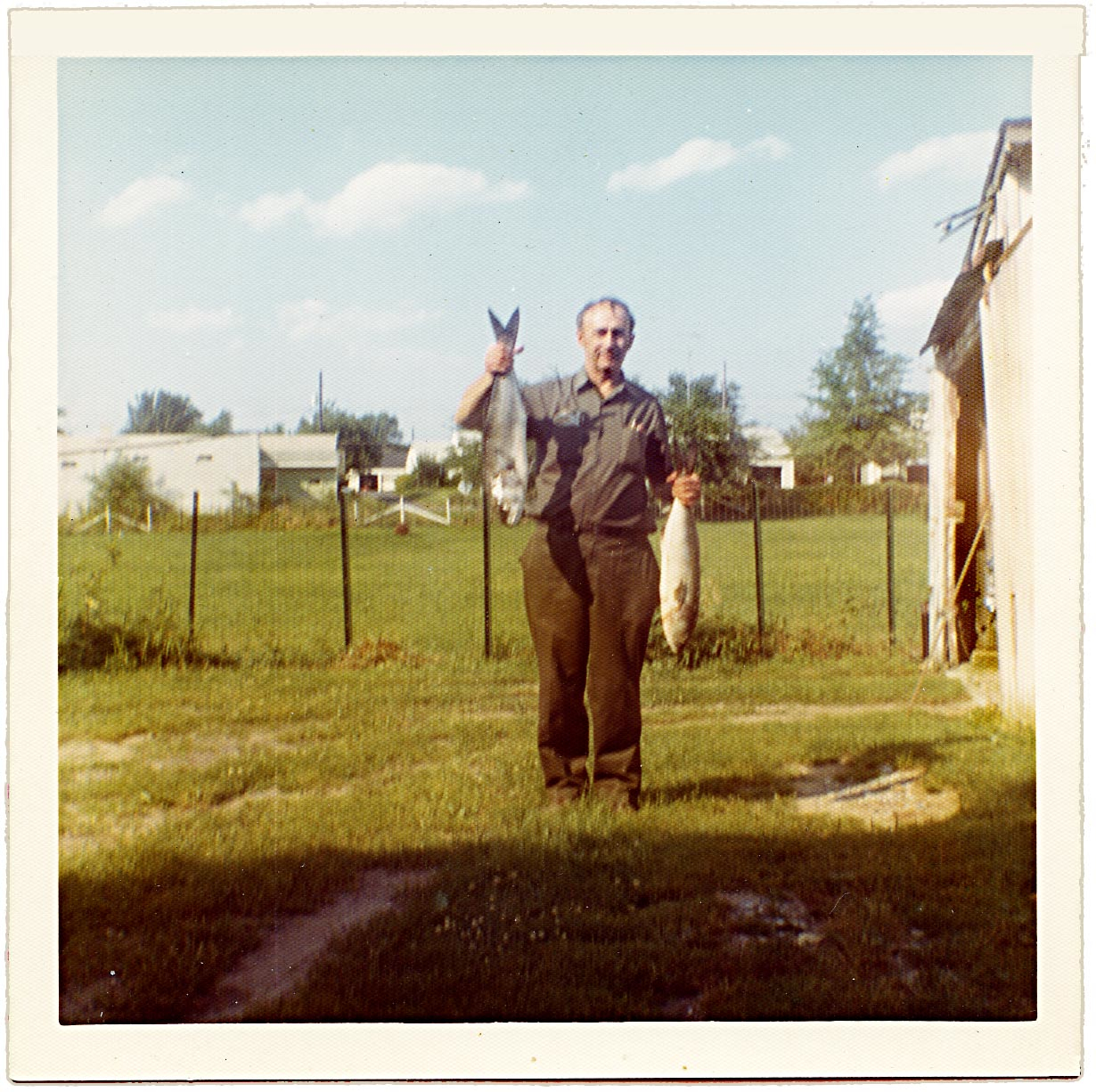
Ray holding fish_final_4x4_300 (1)

Generally, I had a strained relationship with Daddy. The stories of the ill-begotten bike and his unannounced violin purchase on earlier posts underscored his lack of knowledge of relating to me as his oldest daughter and subsequently my resistance to his overtures toward making a satisfactory connection.

But outside the walls of our house, taking walks or catching fish together, such barriers disappeared. These photographs evoke these pleasant memories, times when we were in tune with nature and with each other as father and daughter.

Childhood that place where purity of feeling reigns, was merging into adolescence, where ambiguity begins.

Mary Peacock in The Paper Garden  

And that is where I was, the age of ambiguity and change.

  *  *  *
Comments? A question? An anecdote from your own experience growing up. 

A Grief Observed – Missing Mother

We’re having lunch at Mother’s house today: home-grown tomato sandwiches, Silver Queen corn on the cob, and fresh tossed salad with a wrapped-up cucumber found left in her refrigerator. There is also a boiled egg she cooked recently, but Mom is not here. She is gone, left this life on July 28 just five days after her 96th birthday.

We (my sisters, brother and I) were together in June and had a high old time with Mother, eating out, making butter, playing Uno. In her boxy, blue l989 Dodge Spirit she drove herself to the July Christian Women meeting at The Gathering Place in Mt. Joy, went to the drive-through at her bank and wrote out checks to pay her bills. She attended the Metzler Reunion at Lititz Springs Park shortly before her birthday. A church bulletin in her Bible is dated July 20, 2014. Mom was even up to having lunch on July 23 with Nan Garber from church, who shares the same birthday week. But after that, she began feeling un-well, attributing her sickness to possible food poisoning. However, a pernicious bacteria was taking over her body, which no medical treatment could touch. Her death has stunned us all. We are in shock.

BedroomEmpty

Yet we are grateful that after a long life of good health and sound mind, her suffering was brief though her influence eternal.

Indeed, the quality of her life was A+ up until the very end. Some snippets from her 3-day hospital stay:

Optimism: “We are having a sunny day today.”

Acceptance: “Whatever the good Lord wants for me . . . .  I am ready to go.”

Wit: As she is moved from her hospital room to ICU she quips: “I want my glasses on, so I can see whether I’m going in the right direction.”

Gratitude: “It’s nice to have a loving family.” And finally . . .

Love: “I love you too!”

Among the songs sung at her funeral a cappella in 4-part harmony at Bossler Mennonite Church was “The Love of God,” a song she requested as she planned her memorial service years ago.

For I am persuaded that neither death, nor life, nor angels, nor principalities, nor powers, nor things present, nor things to come, nor height, nor depth, nor any other creature shall be able to separate us from the love of God, which is in Christ Jesus our Lord.

                                    Romans 8: 38, 39

MarianMotherCrista's

* * *

Psychologists tell us grief involves several stages. According to the Kübler-Ross model, they include denial, anger, bargaining, depression, and acceptance–eventually. These stages are not always experienced in linear fashion, and they are usually recursive, cycling through body, mind and spirit in relentless waves, unpredictable and strong.

But the death of a father or mother hits its own particular nerve in one’s psyche and heart as I observed traveling to see Mother for the very last time in this life:

Sad poem

“Her absence is like the sky, spread over everything,” notes C. S. Lewis in A Grief Observed.

Jane Howard, in A Different Woman probes the pain inherent in one’s separation from a beloved friend, partner, father or mother:

The death of my mother made me feel like a deck of cards being shuffled by giant, unseen hands.  Parents, however old they and we may grow to be, serve among other things to shield us from a sense of our doom.  As long as they are around, we can avoid the facts of our mortality; we can still be innocent children.  Something, some day will replace that innocence, maybe something more useful, but we cannot know what, or how soon, and while we wait, it hurts.


How about you?

Have you experienced loss, gradual or sudden? How have you adjusted to it?