Great Hearts

Linda Garber and Dr. Ty Graden will probably never be featured on the Making a Difference segment of the NBC evening news with Brian Williams, but they do just that every single day.

Yesterday morning before Mother’s eye doctor appointment, her pastor’s wife Linda calls. I hear one side of the phone conversation:

“Yes, we’ll be home around noon.”

“Well, you don’t have to do that, but it would be a bright spot in the day. Thank you!’

“How many? It will just be Marian and I.”

“See you around 12:00.”

In pouring down rain, Linda arrives with a hamper full of home-made goodies, and we share a scrumptious lunch, all fresh from her home: potato-zucchini soup, deviled eggs, bread with strawberry jam, cabbage salad, and apple sauce with a jar of M & M’s on the side.

LindaGarberLunch

After the meal and pleasant conversation, Linda promptly gets up, helps me carry the dishes to the kitchen and fills the sink with Dawn and hot water to wash the dishes. It’s part of the “gift,” I assume. The Mennonite way.

Earlier I helped Mother wheel her way into Dr. Graden’s office in Elizabethtown, PA for her annual eye exam. She’ll have 20/20 vision with the new prescription, the doctor reasssures her. I remark that I need to get my eyes checked when I get back to Jacksonville. He says, “Well, I’ll can just check your eyes now before you leave.”

MomEyeDr

I have never met this man before and obviously don’t have an appointment, but I sit on the chair, and Dr. Graden clicks to a different set of letters “in case you memorized the ones I used for your mother,” he chuckles.

The doc is reassuring: “Well, you did pretty well—no cataracts to be concerned with, and you still have 20/20 vision with your glasses.” We leave the office, Mother’s visit filed with insurance and no charge for me.

Good Lancaster County people. Great hearts!
Birthday # 95: A Tribute & Party

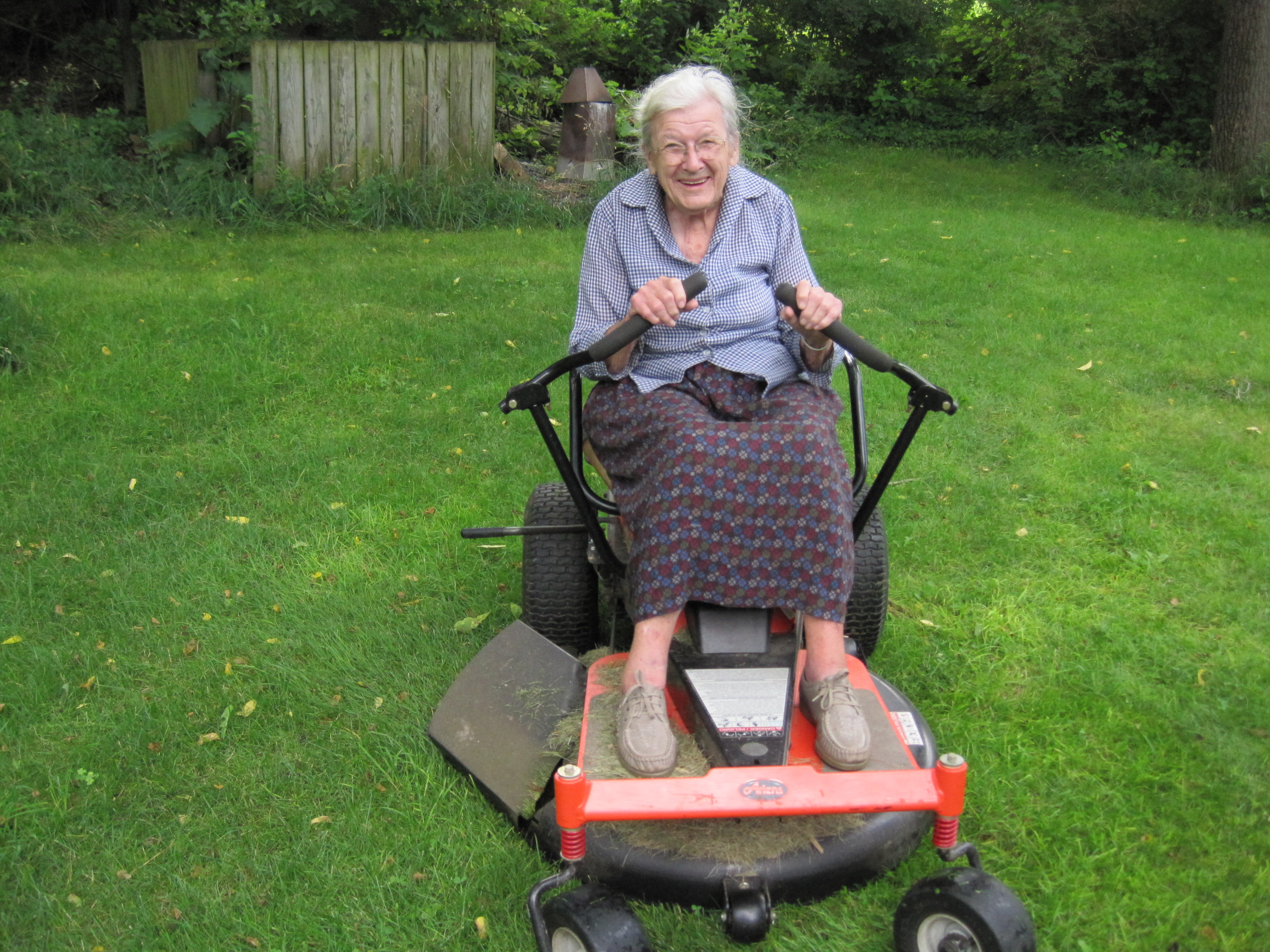
Aunt Ruthie age 89 mowing an acre of lawn

July 2013 phone conversation between Aunt Ruthie and me:

M:  Well, Ruthie, how are you doing?

AR:  Well, I’m puzzled!

M:  Puzzled? What about?

AR: I’m doing puzzles, doing “word find”!  Ha ha ha!  (Still witty at 95)

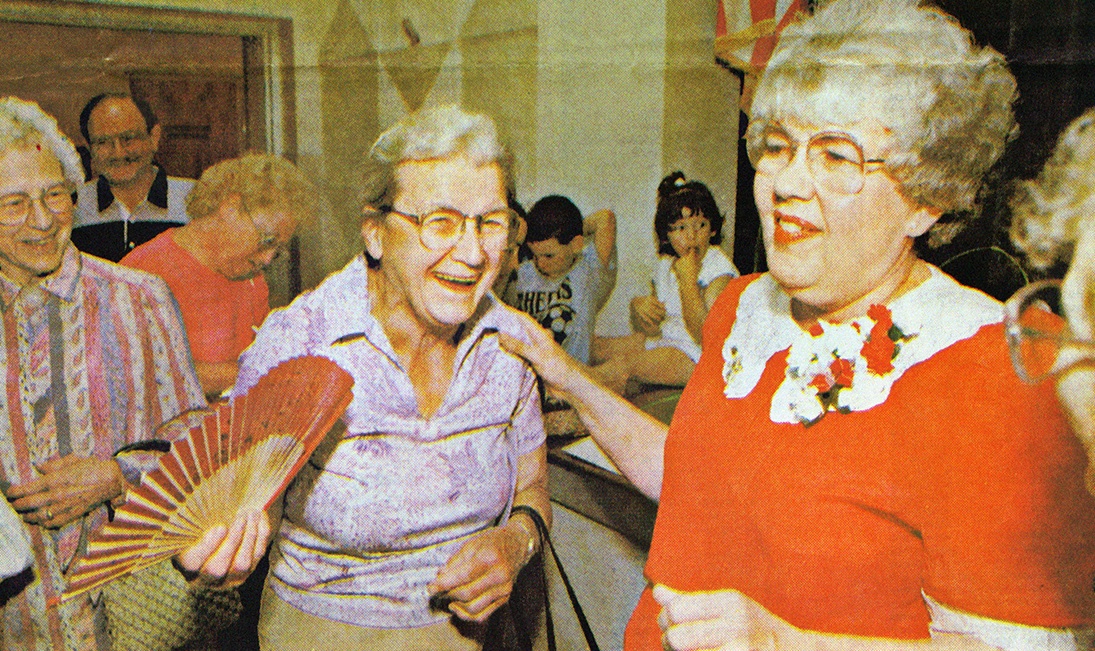
Teaching: Adoring teachers surround their retiring principal at Rheems Elementary School

1993BarbaraSchRuthie_small

Living for Others:

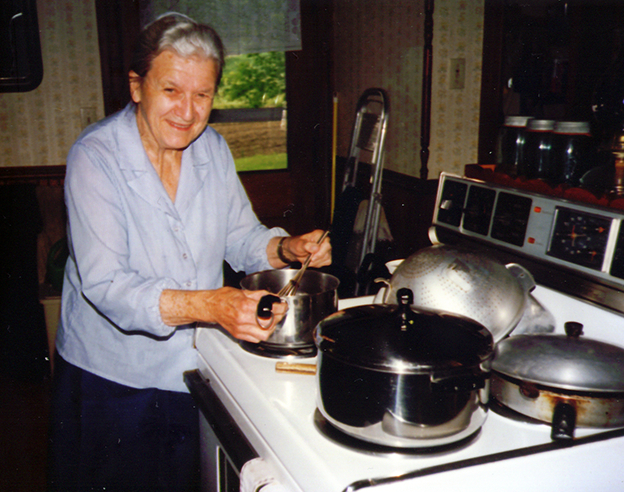
1990s Ruth in kitchen 2_small

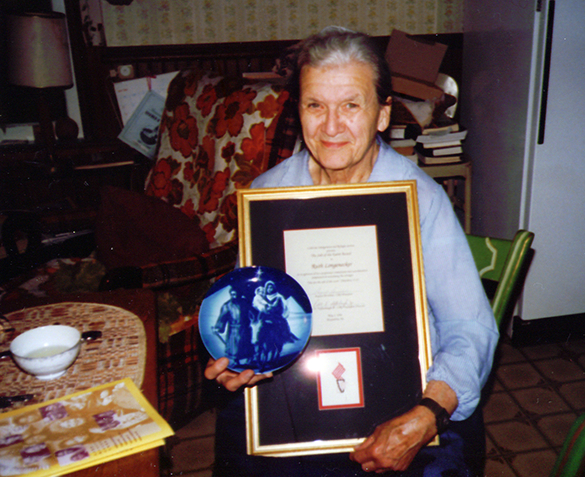
Receiving Salt of the Earth Award from Lutheran Social Services for ministry to refugees and immigrants

Music: 

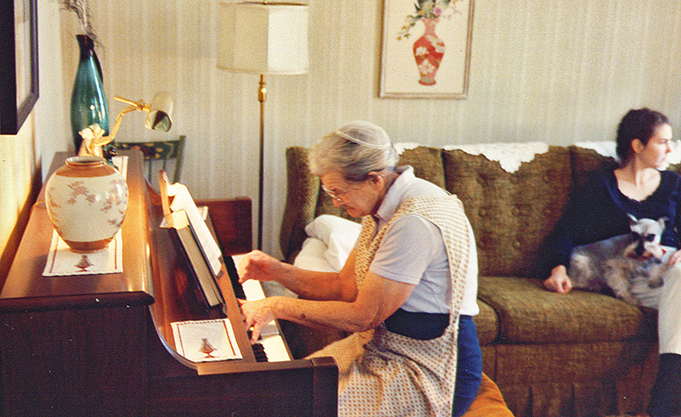
1989RuthiePiano_small

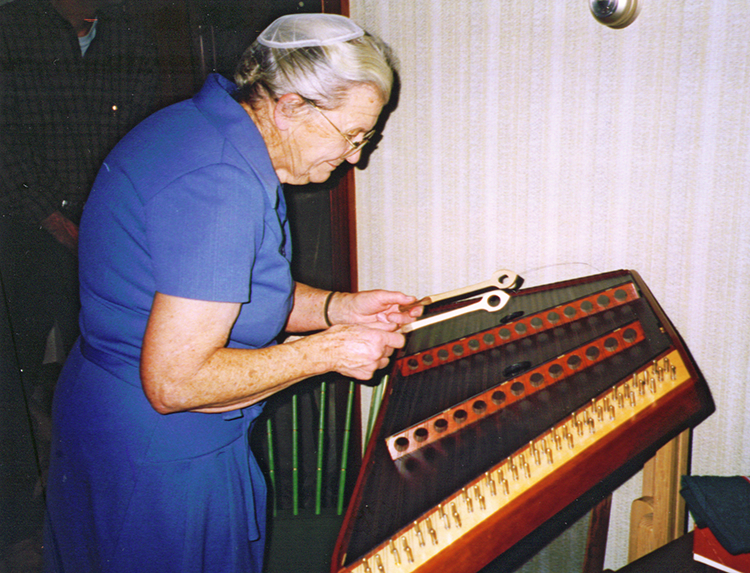
Playing the dulcimer 1996

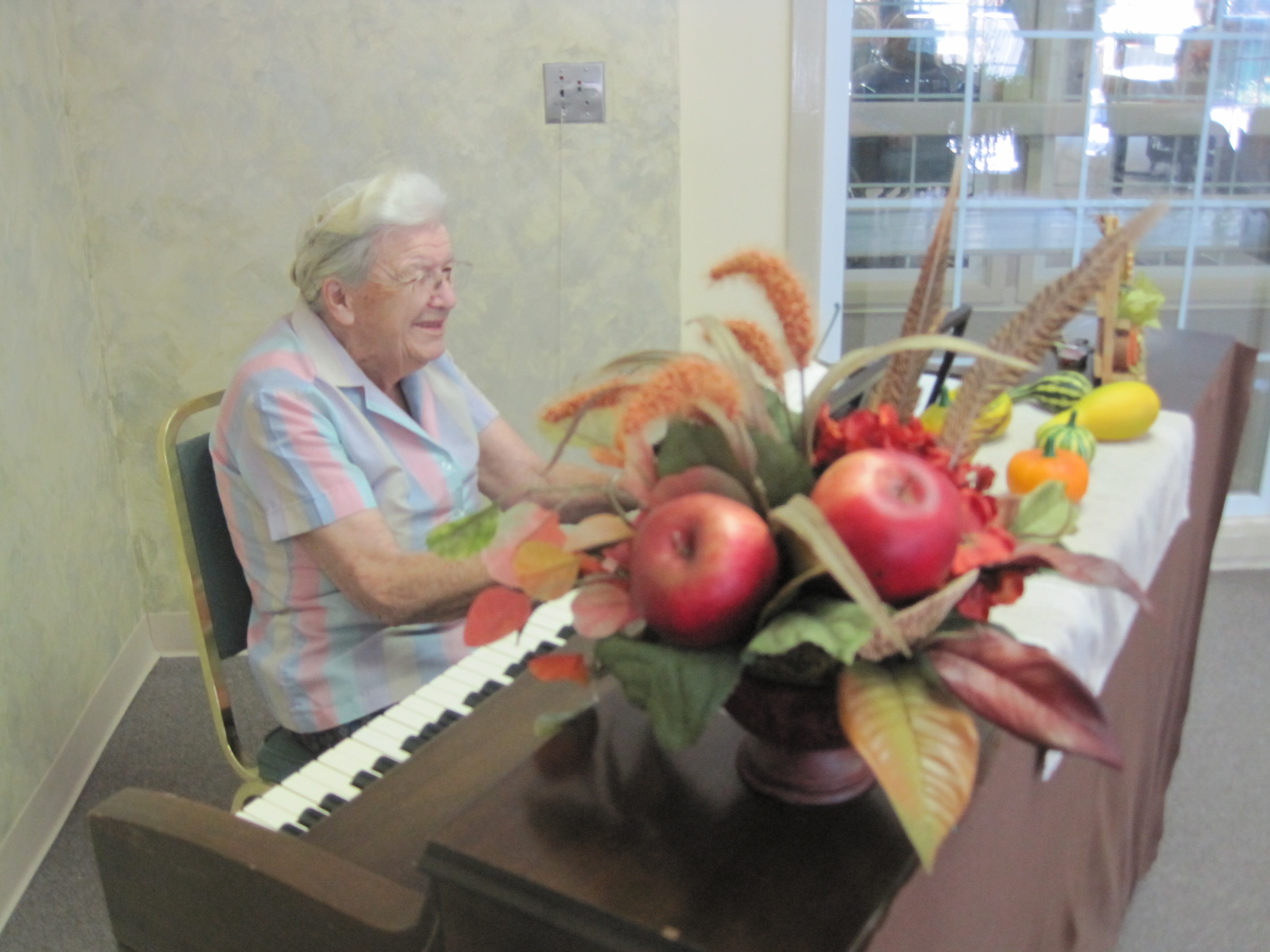
RuthiePianoRheems

Back to the piano at Rheems Nursing Home: Of the residents, many of them younger than she, her response: “They are poor souls. They probably wouldn’t recognize it if I repeated songs.”

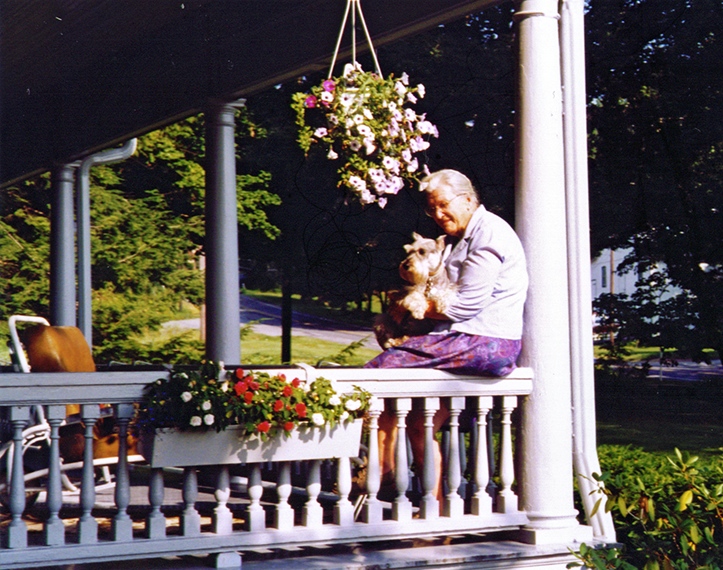
Her schnauzer, Fritzie IV:

RuthieDogPiano1998RuthieFritziePorch_small

January 4, 2012 When her care-giver, nephew Mark has surgery, she remarks: “You and I, Fritzie, are orphans now.”

     *   *   *   *   *   *   *

The school-teacher, principal, tax collector,  family and church accountant, “mother” to dozens of refugees and immigrants has now landed on the spot of the calendar that says 95.

In July 2013, after falling at home, she recuperated at a rehab center and is now living at Landis Homes, a residence for seniors, many of whom are Mennonite, near Lititz, Pennsylvania. She has survived a pacemaker procedure and pneumonia in 2008, a hip break in 2010, and another fall this year. Yet she can still get out of bed, dress herself, and go places with her walker.

Hobbled by her falls and the natural progression of age, she’s no spring chicken, but she is still mobile. However, she finds her memory loss harder to deal with. The pilot light in her brilliant mind (she skipped 2 grades and had to have a chaperone at college because of her age) is now flickering during these last few years:

May 15, 2010 “Am I out of it?” she asks, dealing with the confusion that has set in.

May 17, 2010 “Sometimes I feel as though I must guard against a mental relapse.”

May 22, 2010 “I feel like a monkey on a stick.” Or a doll – Sue (then her housekeeper)  comes “in the door, takes me off the shelf, dusts me off, and puts me back up again.”

Feb, 27, 2011  “I took care of my grandfather, my mother, and now, I have to be taken care of. I was hoping this wouldn’t happen to me!”

January 11, 2012  “I don’t trust myself to say the right answer.”

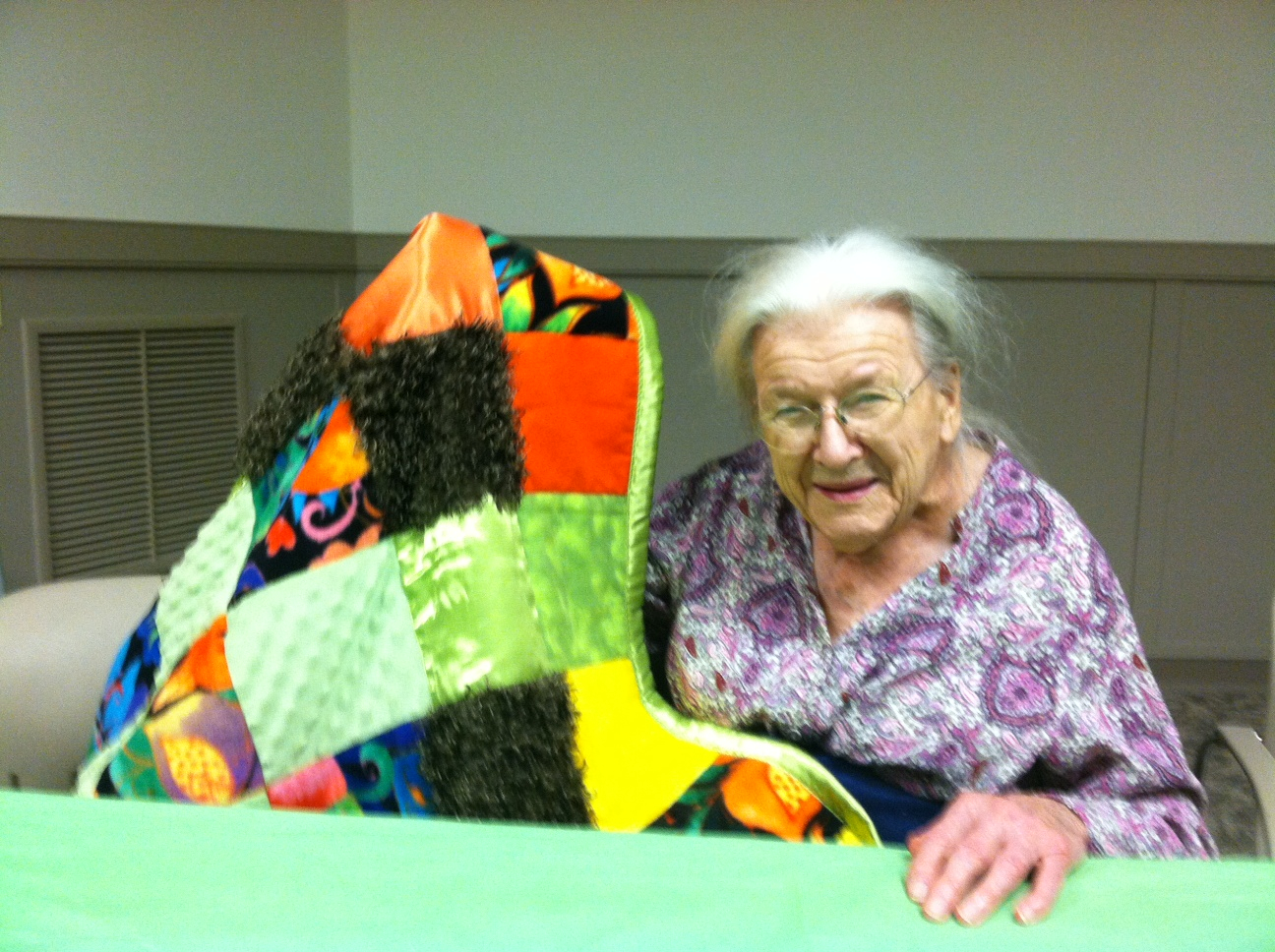
April 13, 2013  Though there is confusion about where she is and the day of the week, she still notices that the hands on her Bulova Caravel watch have stopped. She gets a new piece of jewelry on her wrist today–and a touch quilt!

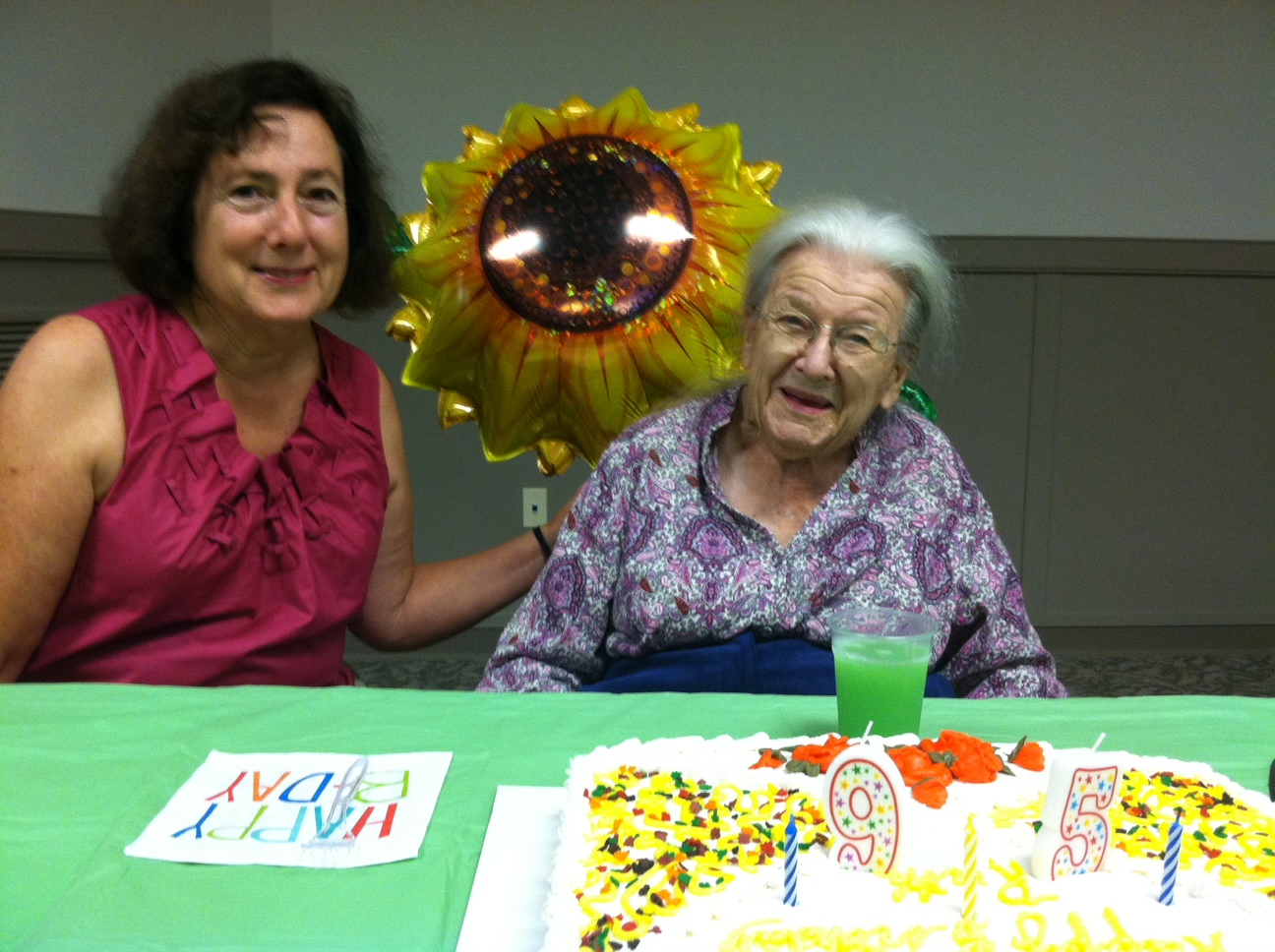
TODAY  IS  HER  95th PARTY: Time to Celebrate

Sister Jean and Aunt Ruthie at the 95th Party
Aunt Ruthie and Colleen's touch quilt
Aunt Ruthie and Colleen’s touch quilt

Her Wit: She gets the Last Laugh!

At Landis Homes, conversing with her sister-in-law, my mother, who is the same age, has the same name, down to the middle initial:

 Aunt: I want to go home to my house, my dog, my things . . . .

Mother: You have it good here, Ruthie.

 Aunt: All I do is sit here. I could just as well do my sitting at home.

Mother: Here you have nice people to help you, good food, pretty flowers all around. Virginia Hoover, Simon and Mary Jean Kraybill from church, even Cecilia Metzler, my sister-in-law live here. And they all love it!

Aunt: Why don’t we just exchange places then? We have the same name. You could sit here just as well as I. No one would ever notice.

Ha! Ha!

Your comments welcome! I always respond.

Once Upon a Time: The Tale of a Snow Globe

Announcing the WINNER of Blush: A Mennonite Girl Meets a Glittering World

And the Winner is (drum roll, please!) Carolyn Stoner! Thank you one and all for participating so heartily by commenting on my review of Shirley Showalter’s memoir BLUSH. Carolyn, you will receive your copy of Shirley’s memoir shortly.

*  *  *  *  *

Once upon a time there was a little boy named Curtis, who lived on Greenfern Lane in a very big city called Jacksonville. His Mommy Sarah and Daddy Joel invited his grandparents to feast on a wonderful meal with them one day.

While they were eating home-made spaghetti and telling stories around the table, his NaNa Marian told a new story, “The Tale of the Snow Globe.” Now when Curtis was new born, his Great Grandmother Longenecker came to visit him in the big city of Chicago. She wanted to see her new grandchild for the very first time. Of course, she had visited towns and villages and the cities of Lancaster and Harrisburg many times. She had even gone as far as Niagara Falls on her honeymoon. But she had never seen a big, big city with dozens of skyscrapers.

And then Great Grandma told how she went up, up, up many, many of stories onto the top of the Hancock building, where she could look out and see the Sears tower, the Amoco building and beyond. For a very long time, she stared and stared at the giant buildings and the miniature cars and buses below. Then she went to the gift shop and bought colorful souvenirs: tile coasters, postcards, and a beautiful snow globe with white flakes drifting down on the skyscrapers of Chicago she had seen. Her special souvenir was the snow globe, of course, which sat on a table by her telephone where she could see it day or night.

One day her special prize disappeared. She looked and looked, and had other people look with her, but the snow globe was nowhere to be found. Who could have taken it? Her cleaning lady? Visitors? Was there a break in she wasn’t aware of? The loss and the scary thoughts made Great Grandma very, very sad, NaNa Marian said.

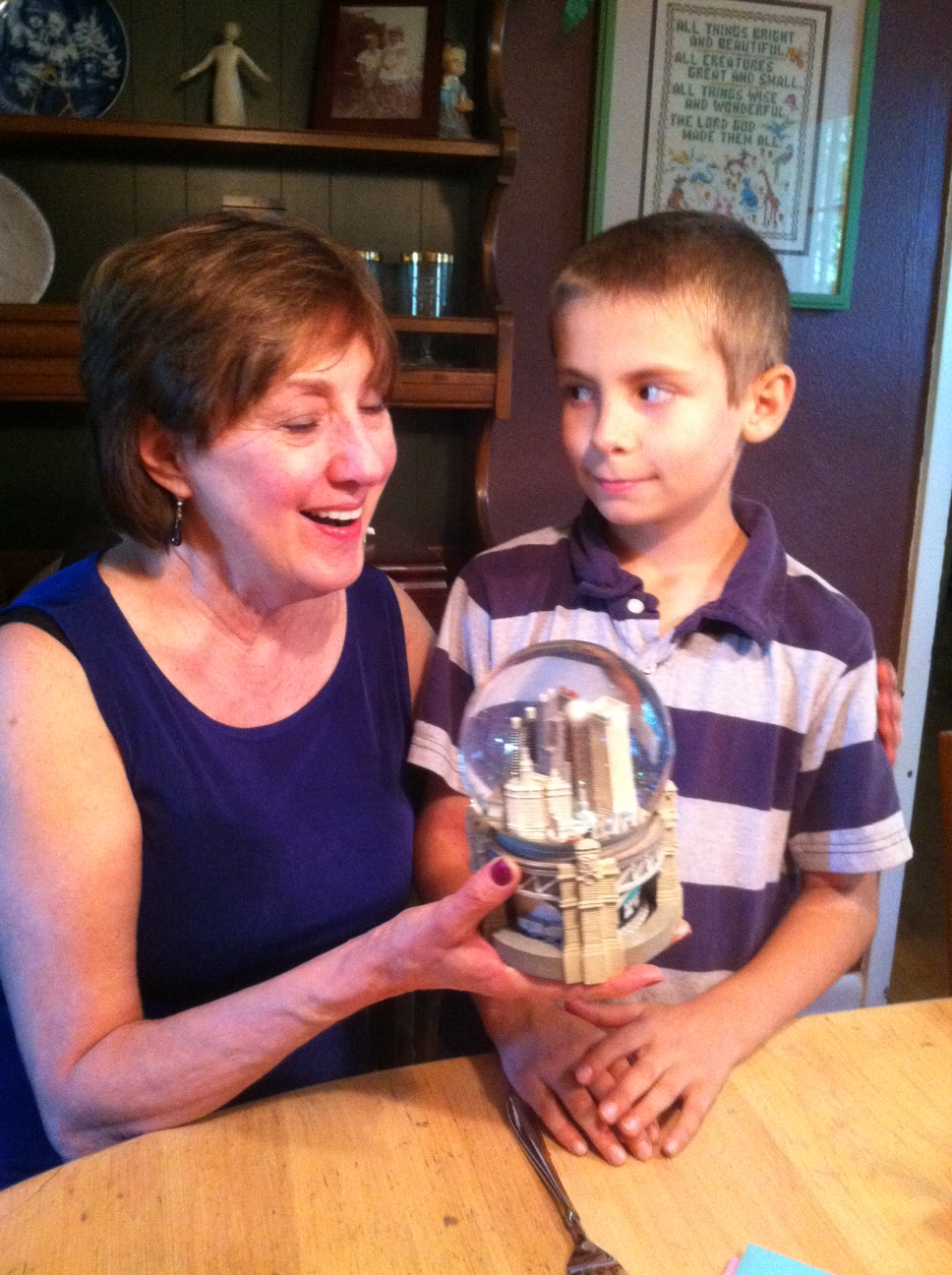
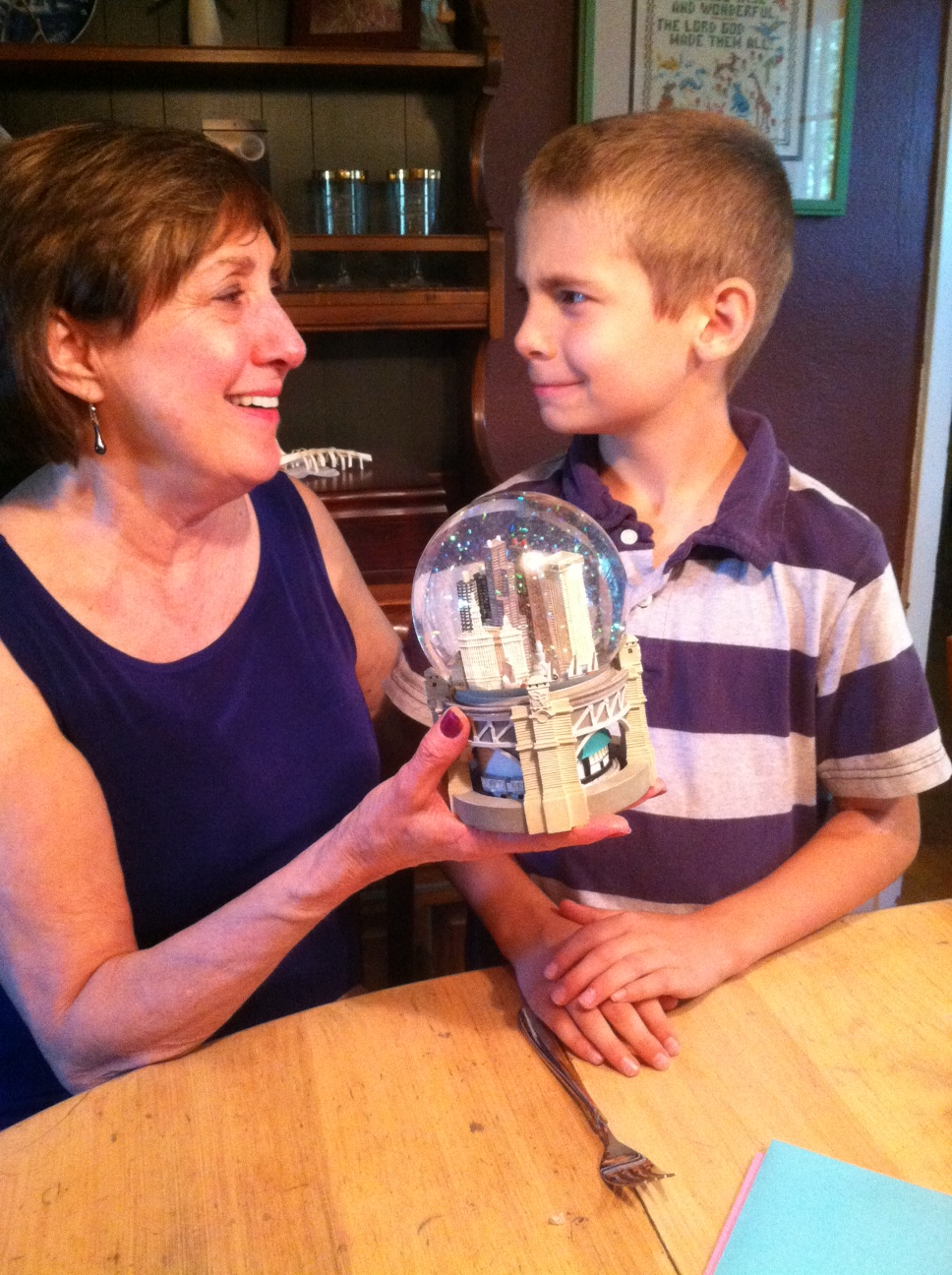
At that very moment, Curtis said to his Daddy, “May I be excused?” After his Daddy said “Yes,” Curtis hurried into his bedroom and came back with his own Chicago snow globe, a larger version of his Great Grandma’s. “Here,” he said. “She can have this!”

“But, Curtis, you brought this down from Chicago to Jacksonville when you were only two. This is a special thing. Are you sure you don’t want to keep it?”

“Oh, I know, but I want Great Grandma to have it. It will make her feel better. You can take it to Pennsylvania in your suitcase the next time you visit her.” And that is exactly what happened.

Shock and Awe
Shock and Awe

And then tears  . . .

snowglobe3

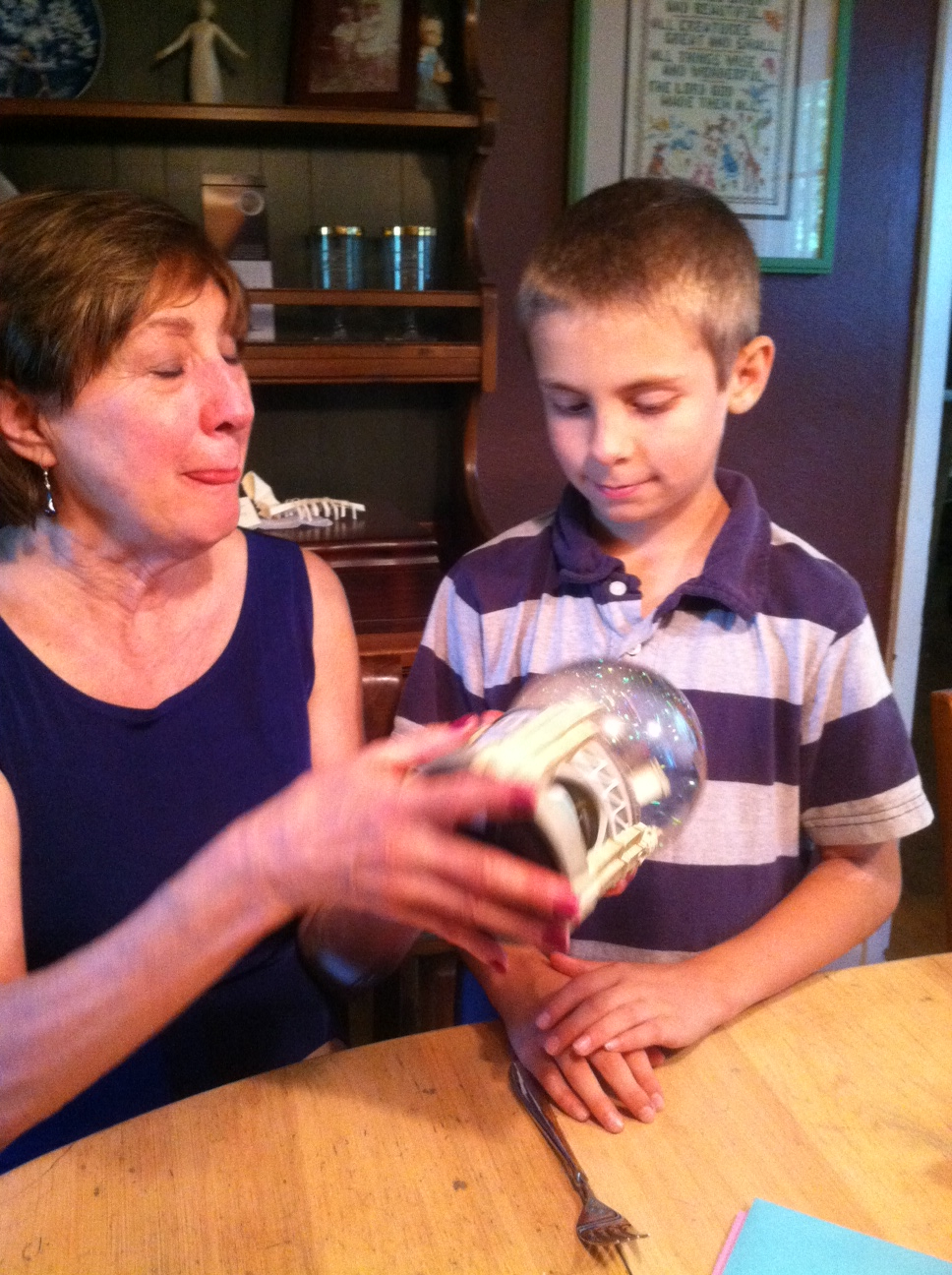
Appreciation too

snowglobe1

Curtis: Look of Pride

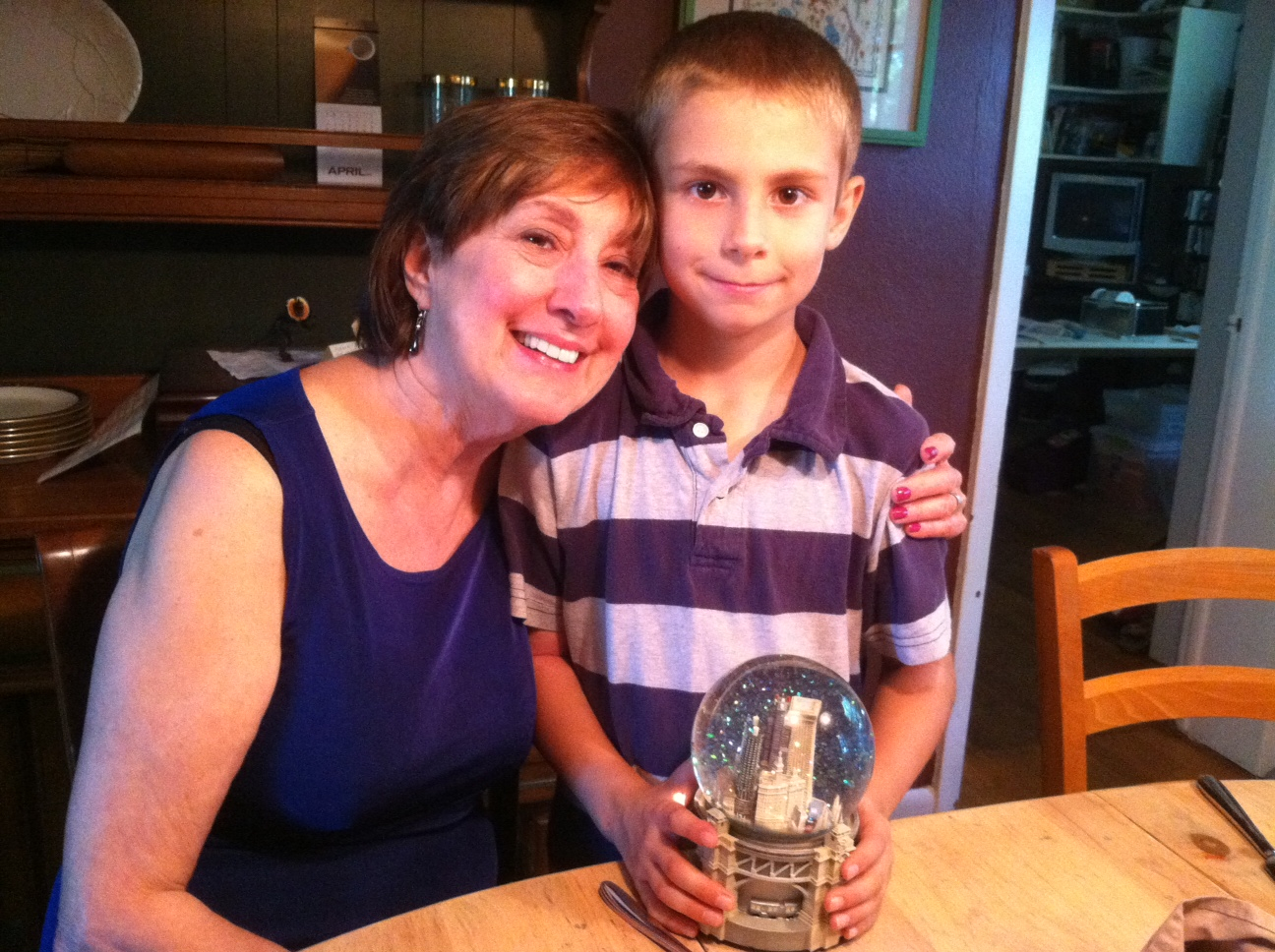
And finally, a grateful Great-Grandmother!

MomSnowGlobe

Your comments welcome!  I always respond.

Clean Sheets: It’s a Breeze

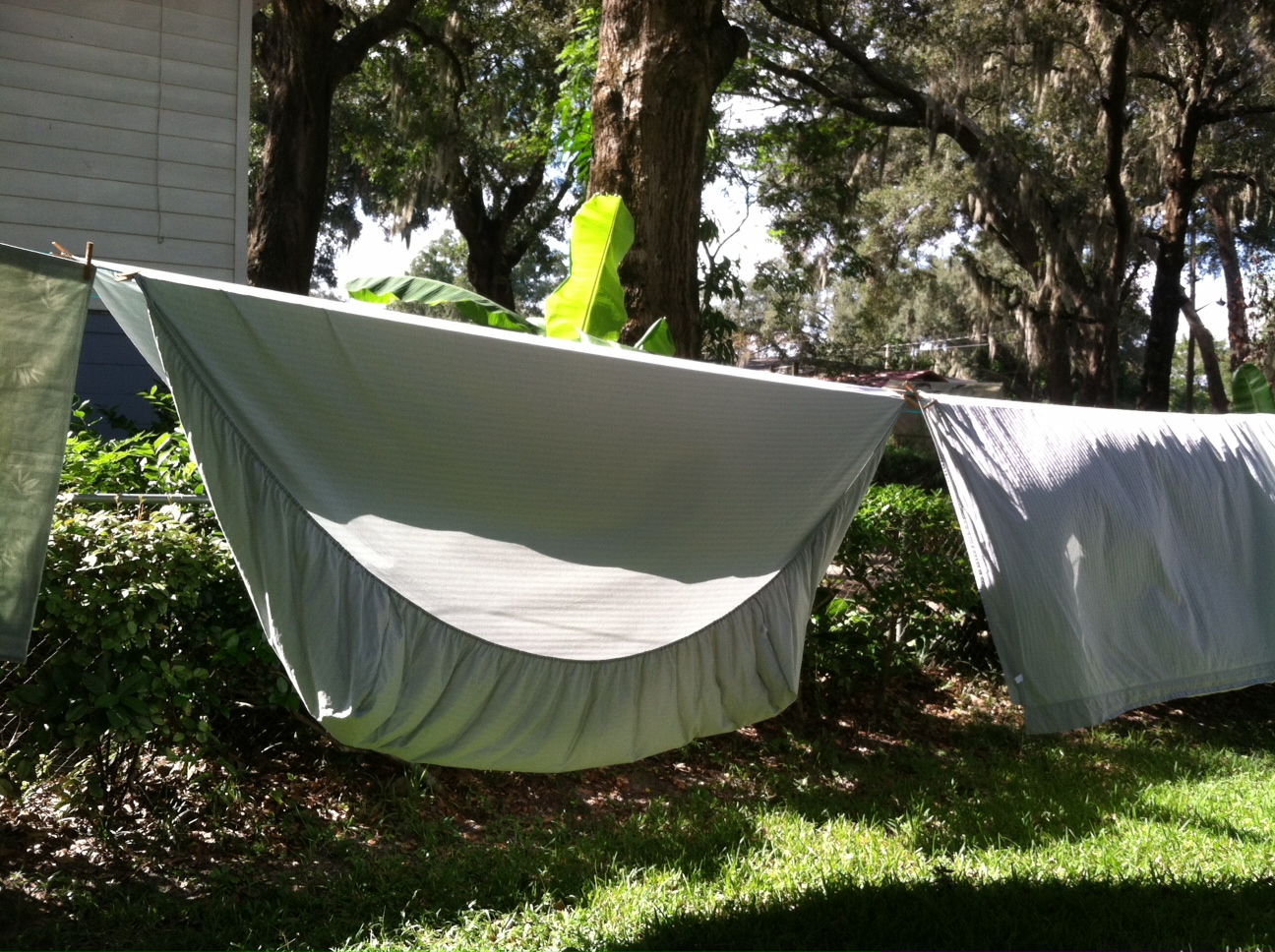
My sheets are pinned to the backyard clothes line now, flipping in the breeze. Today I’m celebrating the end of our torrid Florida summer by hanging our sheets outside in the fresh fall air. Very old-fashioned and very retro. I guess I’m an Urban Mama!

Sheets blowing in sync with frond on banana tree in background

We live in the city, and I have a clothes drier, but today I am savoring the slow, sweet, luxury of sheets line dried fastened with wooden clothes pins, the kind with metal springs. No extra electricity, no pain for the sheets twirling endlessly in a hot, round drum.

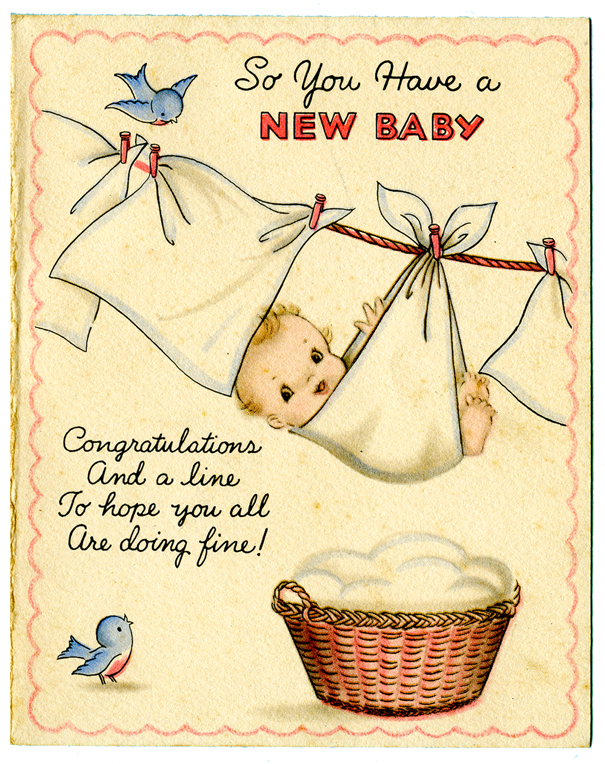
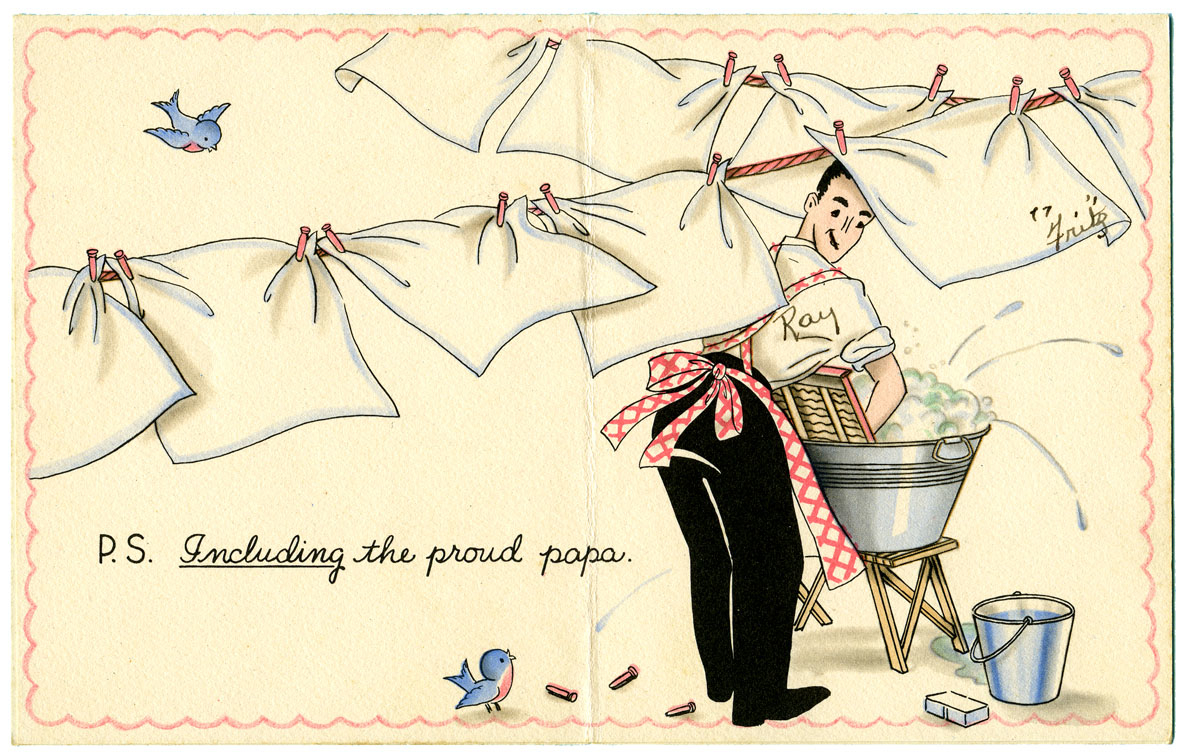
When I was born, there were no automatic washers and driers. Most housewives back then used electric washers with wringers, not washboards. But clothes were dried by solar and wind power. A “new baby” card sent to Daddy from my Great Uncle Fritz attests to the line drying of diapers, the gauzy cloth variety fastened with medium-sized safety pins. But, trust me, my dad never hung a diaper or any other article of clothing on the line.

BabyCardFint
 
Card to my Dad Ray from his Uncle Fritz
What are your childhood memories of doing the laundry? 
What unusual ways of drying clothes do you know about or practice now?
Your comments are welcome. I always respond! 

Babes in an Urban Woods: Part II

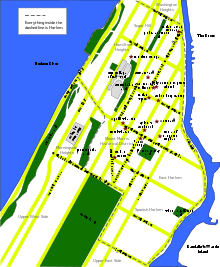
Map of Harlem, neighborhood in northern Manhattan, NYC

On the ground floor again, we breathe a sigh of relief as we spot the bus two blocks away ready to pick us up to go back to the mission. On the way to our mobile haven, we pass pawn shops armed like fortresses, lurid adult bookstores with XXX ratings, filthy-looking lounges, a stark store-front church.

Then we spot a gargantuan black woman with a red satin turban and purple robe–a bathrobe? a graduation gown? She’s “preaching” about Jehovah God in the middle of the sidewalk. I think she’s preaching until I see she is holding an upside-down Sears and Roebuck catalog as her bible and then inhale alcoholic fumes emanating from her body. We try to go around her, but this frightful creature grabs me by the shoulder in a death grip, and I am spun round and round in dizzying circles. There is little I can do to resist the grasp of this drunken prophetess. “Hazel, Hazel, help me,” I call out with a voice that feels somehow disconnected from my body. Hazel is astounded too and stands there immobile. I fall onto the scorching pavement as the woman lets go of me mid-air. By now Brother Paul and Sister Lois have raced up the street to our aid.

Someone deposits me across two empty seats on our bus. I am aware of heads hovering over me as a blurry hand wipes my face with a cool, wet handkerchief. We are going back to Brother Ernie’s mission on Eighth Avenue for lunch. It’s quiet for a few minutes. Then Brother Frank leads everyone in singing “When the Roll is Called Up Yonder, I’ll Be There” as we bounce across the avenues.

But I don’t join in. My head is buzzing with the pain of too many unanswered questions. Did the church elders know about the risks and think that telling us would discourage us from going? Did they come here innocent and ignorant like us and also get a rude awakening? Why didn’t Brother Ernie, now almost a New Yorker himself, give us more pointers?

Back at the mission, I have recuperated enough to eat our meal of home-made egg salad sandwiches and chicken corn soup brought up from home in ice chests, relieved that I have survived the jungle of Harlem.

BLUSH Contest closes tonight, October 2, 2013, at midnight! Here’s the link to the Contest Rules for a chance to win a copy of Shirley’s memoir:  

Review of Shirley Showalter’s BLUSH and Book Giveaway

Your comments welcome! I always respond.

Babes in an Urban Woods: Part I

Age 14 1/2
Age 14 1/2

During our teens, my church friends–Miriam, Gladys, Hazel, and I congregate at each other’s houses after church on Sunday night for ice cream, chips, and stereo music: Songs from the West, anything by Mantovani, and The Singing Nun. We would rather have dates like Janie and Thelma, but since we don’t, we pretend that this weekly ritual is fun.

One of our other faux definitions for fun includes cultivating an acre of tomatoes. The youth group from church farm tomatoes on a fertile plot of land near Bossler’s Mennonite Church called The Lord’s Acre. We plant, water, weed, and harvest the tomatoes, giving the profit to missions. Another mission outreach is in New York City, where Ernest Kraybill, one of our deacon’s sons, drives taxi during the day and pastors a small mission church in Harlem. Some of us, along with young marrieds, are getting ready to board a bus and distribute gospel tracts in the Big City. A year ago, the freshmen from E-town High took a field trip to New York. Radio City Music Hall with its sunburst fan of a stage is my favorite memory: seeing the Rockettes was a dream come true for a sheltered girl from Rheems. After the show, we saw a movie–yes, an actual MOOOOOVEEE in dynamic sound and Technicolor, featuring Barbara Stanwyck, the very first movie star I had ever seen performing on the silver screen. Her flawless skin and hair, impeccable makeup, and a cream, cool voice mesmerized me.

On what turns out to be the hottest Saturday in August most of the teens and young adults from Bossler’s plan to spend all day Saturday bringing the gospel to poor, needy heathens in the inner city. It’s summer-time, and I wear my sheer voile lavender frock, so I won’t feel overheated with a modest cape over the dress. We are leaving in the early morning about 4:30 am, so we can spend the day giving out tracts in apartment buildings all over Harlem, With Hazel, my seat-partner, I board the bus for the 3 1/2 hour trip to New York City. Garbed in the plainest of clothing and christened with our white Mennonite caps, we are out to convert the world.

On the bus, we talk and doze, and doze and talk our way to the exotic lights, thrumming noises, and foreign smells of Harlem in north Manhattan, a neighborhood of about 1/4 million people. After we arrive, we proceed by twos among the tenement building in the concrete jungle of the 18th block of Harlem, armed with nothing but gospel tracts and innocence. Like the others, Hazel and I are assigned one tenement building with floors upon floors of apartments. Our strategy is to walk all the way to the top and do our distributing on the way down.

tenement building - courtesy: Google Images
tenement building – courtesy: Google Images

“Whew, it sure does stink in here!” The odors of stale air, dried blood, urine, and burnt cooking assault our country noses on the way up. There are beer bottles, Schlitz and Black Label–some broken, I notice, strewn on the landings between floors.

“Did you hear that?” I ask Hazel as we both witness a full-scale brawl going on inside one of the apartments. The sweaty-looking door-opener snatches a tract from our hands.

“I can’t believe these words,” Hazel comments as we gape at the graffiti on the pock-marked concrete walls: Call_____ for a good time . . . Go to #x!*X you dirty niggers . . . .  Undaunted, we manage to bless all the other apartment dwellers with our fliers as we descend. More screaming and yelling. Things are really getting violent on the other side of the wall.

“Are we going to make it out alive?” I wonder. But things are about to get even worse.

What happens next? Part II

                                                              *   *   *   *   *

GOOD NEWS! There is still time to enter the contest on my review of Shirley Showalter’s new memoir BLUSH, hot off the press. Just POST a COMMENT on the review! Read and Comment @ Shirley Showalter’s BLUSH – A Review and Book Giveaway

THE CONTEST

You can enter to win a copy of this book now!

Here are the details:

WHAT:  Read my review of Shirley Hershey Showalter’s memoir: Blush: A Mennonite Girl Meets a Glittering World.

PRIZE:   One lucky commenter will win a copy of BLUSH, after only one week now in its second printing!

WHEN:  Review posted Wednesday, September 25, 2013

WHERE:  Right here on Plain and Fancy Girl

And all you have to do is show up, read my review and leave a comment. Only comments posted on my blog will be counted as an entry.

The giveaway will close one week later on Wednesday, October 2, 2013 at 12:00 midnight. I will announce the winner here and by email.

I invite you to come by and enter the contest by commenting on the review. Feel free to invite your reading friends!

Again, here’s the link to the review: Shirley Showalter’s BLUSH: A Review and Book Giveaway and a chance to win a copy of Shirley’s book!


Shirley Showalter’s Memoir “Blush” – a Review & Book Giveaway

 
My Review

Shirley Hershey Showalter’s Blush: A Mennonite Girl Meets a Glittering World sings the song of her early life as a Mennonite girl in 250 pitch-perfect pages. Born into a family of Lancaster County Swiss Mennonite parents, the author recounts the story of the first 18 years of her girlhood on an 100-acre dairy farm in the 1950s and early ‘60s. The book delivers in its promise to play out her memories of  school, church, and home, “the three legs of my childhood stool,” as she puts it. “Each carried both sweet and sour memories” of ways this plain girl fit in and ways she stood out as different.
Her melody line bravely hits the sharps and flats of her experiences. She grabs her reader by the hand to walk into their farm meadow as she and her brother Henry play amid the Holstein cows and fragrant bluebells by the creek on a cloudless, spring day. We learn secrets of good Pennsylvania Dutch cookery in her mother’s kitchen and are privy to recipes of delicious dishes in an appendix to the book. She lets us hear the congregation joyously singing hymns of the faith a cappella in 4-part harmony though in a sex-segregated sanctuary. But her song turns to a minor key as she vividly describes the sudden death of her infant sister, her by turns affectionate and adversarial relationship with her conflicted father, and later in a brush with a rigid Mennonite bishop.

This memoir abounds in artful motifs. In the preface the author is sitting on the sandstone steps on the way down to the arch cellar of The Home Place, now known as Forgotten Seasons Bed & Breakfast. She describes the arch in this cellar as the entrance to a storehouse of provision for her parents and grandparents against the want of the Great Depression and a bunker of bounty during the Cold War. Indeed, the book succeeds as documentation of major political currents and cultural icons of the era: Eisenhower and later Kennedy, the Studebaker Lark, the Phillies, Elvis. Other visuals include a map of the Lititz environs, her family tree, along with beloved family portraits and snapshots.

For me as a reader, the most endearing arch in her story is the rainbow in her mother’s invented story of “The Magic Elevator,” which she, a diarist and aspiring writer herself, wrote at age fifteen and has adapted for her children and grand-children through the years. Her mother, Shirley’s first mentor, challenged the norm in a story she recounts early in the book: Although the Rules and Discipline of the Lancaster County Mennonite Conference condemned worldly weddings, including carrying a bridal bouquet, Shirley’s mother Barbara Ann craftily transformed the family’s plain living room into a fancy bower of flowers and palms for the ceremony. After all, at church we sing fervently of beauty in “This is My Father’s World,” she must have reasoned. Evidently, Shirley was not the first Mennonite in her family with moxie.

Shirley’s story sings because it rings true. And, yes, Shirley, you did go home again. The Oh! at the center of her story leads readers to a fresh discovery of home, where one’s heart is nourished and where, as T. S. Eliot puts it, we can all “arrive where we started / And know the place for the very first time.”

“There are many ways to arrive at a place, many of them unimaginable at the beginning of the journey.”    BLUSH

Meet the Author:

Her Memoir – Blush: A Mennonite Girl Meets a Glittering World
About Shirley

Shirley Hershey Showalter grew up on a family dairy farm in Lancaster County, Pennsylvania. She went on to become a Goshen College (IN) professor, then president, and then a foundation executive at the Fetzer Institute (MI).

Her childhood memoir, Blush: A Mennonite Girl Meets a Glittering World, has been published by Herald Press on September 19, 2013. Follow the journey of the book on her Facebook page and on her blog.

THE CONTEST

You can enter to win a copy of this book right now!

Here are the details:

WHAT:  Read my review of Shirley Hershey Showalter’s memoir: Blush: A Mennonite Girl Meets a Glittering World and comment.

PRIZE:   One lucky commenter will win a copy of BLUSH

WHEN:  Review posted Wednesday, September 25, 2013

WHERE:  Right here on Plain and Fancy Girl

And all you have to do is show up, read my review and leave a comment.

The giveaway will close one week later on Wednesday, October 2, 2013 at 12:00 midnight. I will announce the winner here and by email. Only comments posted on this blog will count as an entry.

I invite you to come by and enter the contest by commenting on the review. Feel free to invite your reading friends!

Book Giveaway Contest & Taste of Shirley’s Memoir “Blush”

News Flash!

Upcoming Review and Book Giveaway of Blush: A Mennonite Girl Meets the Glittering World by Shirley Hershey Showalter

On Wednesday, September 25, I will be reviewing Shirley Hershey Showalter’s new memoir – Blush: A Mennonite Girl Meets the Glittering World.

WHO IS SHIRLEY HERSHEY SHOWALTER?

Though Shirley and I both grew up Mennonite in the same county and in the same decade, our paths did not cross until I saw her website http://www.shirleyshowalter.com/ flashing across the screen in a class entitled What the Heck is a Blog? at the University of North Florida in Jacksonville. I immediately recognized her name as Swiss Mennonite and probably of Lancaster County, PA origin. And sure enough, right on both counts. Since March 2013 we have become blogging pals, and I am thrilled to promote her book as the story of a life surprisingly parallel to mine, a story of derring-do!

DETAILS OF THE CONTEST:

 WHAT:  My review of Shirley Hershey Showalter’s memoir –  Blush: A Mennonite Girl Meets the Glittering World.

 PLUS:   One lucky commenter will win a copy of BLUSH.

 WHEN:  Wednesday, September 25, 2013

 WHERE:  Right here on Plain and Fancy Girl

 And all you have to do is show up, read my review and leave a comment.

 The giveaway will close one week later on Wednesday, October 2, 2013 at 12:00 midnight. I will announce the lucky winner here and by email.

I invite you to come by and enter. Feel free to invite all your reading friends!

Shirley Hershey Showalter  Shirley Hershey Showalter, author of BLUSH: A Mennonite Girl Meets a Glittering World

I promise: you will be transported, says Bill Moyers of this memoir. Part Mennonite in a Little Black Dress, part Growing Up Amish, and part Little House on the Prairie, this book evokes a lost time, in Lancaster County, Pennsylvania, when a sheltered little girl with big dreams entered a family and church caught up in the midst of the cultural changes of the 1950s and `60s.
With gentle humor and clear-eyed affection the author, who grew up to become a college president, tells the story of her first encounters with the glittering world and her desire for fancy forbidden things she could see but not touch. The reader enters a plain Mennonite Church building, walks through the meadow, makes sweet and sour feasts in the kitchen and watches the little girl grow up. Along the way, five other children enter the family, one baby sister dies, the family moves to the home place. The major decisions, whether to join the church, and whether to leave home and become the first person in her family to attend college, will have the reader rooting for the girl to break a new path.  (Amazon Books)

Colleen’s Comfort Quilts: Knot Plain, Just Fancy

Since our children were little babes in blankets, Colleen and I have been friends. Our friendship, knitted together by similar values, compatible tastes, and love of beauty, has flexed with her moves from Florida to Maryland to Texas to California and back again.

Collie with Quilt

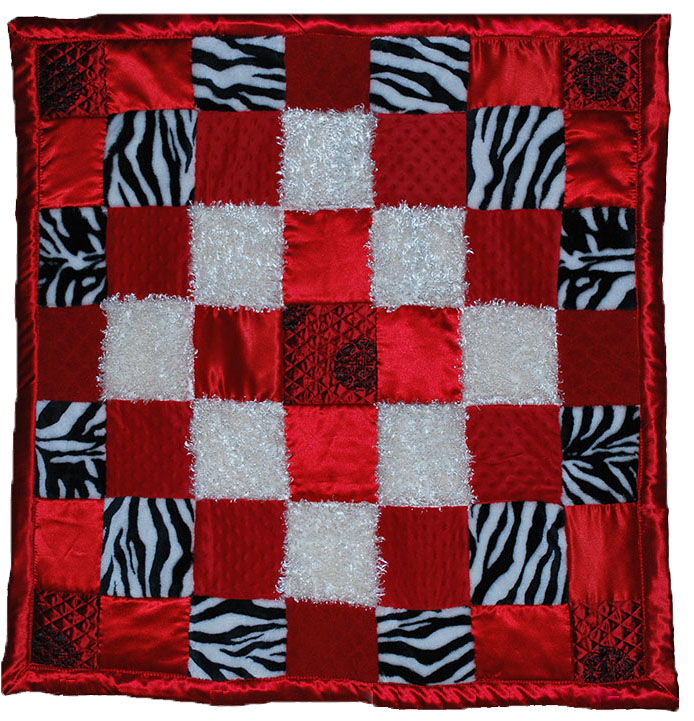
Like her quilts, experiences in our lives have at times matched the dark, nubby patches, the smooth, satiny ones, all stitched together by the happy binding of love.

Soon I’ll be taking her latest creation as a gift to my dear Aunt Ruthie’s 95th birthday celebration in her new residence at Landis Homes near Lititz, Pennsylvania.  Ever the artist, Aunt Ruthie has  painted in oils, designed her gardens as colorful collages, and sewn her own clothes in quaint combinations. She’ll love the quilt!

Dark, nubby patches mimic doggy fur of Ruthie's beloved Schnauzer Fritzie
Dark, nubby patches mimic doggy fur of Ruthie’s beloved Schnauzer Fritzie

Last weekend I caught up with Colleen and asked her a few questions. Please listen in!

1. What are touch quilts?

A touch quilt has various textures that are intended to provide a calming effect and soothe jangled nerves as they are stroked.  A touch quilt may be used while sitting in a favorite rocker or recliner, wheelchair, at naptime, in a waiting room or hospital bed and are similar in theory to the security blanket used by many small children.  They are loved by elders and children alike and have been found to be especially useful for those who are blind or have dementia.

2. How did you get started making them?

In 2005, my church started a Prayer Quilt ministry where I learned to make lap-size quilts;  I loved the idea and process and have been making them ever since.  In 2010, a women’s group I belonged to asked if anyone knew how to make touch quilts, which were  to be donated to the local Elder Day Stay.  I did a little research and found them to be very similar to the prayer quilts I already knew how to make, except for the fabrics used.  I made about 16 Touch Quilts over the next two years and got wonderful feedback from the excited recipients.

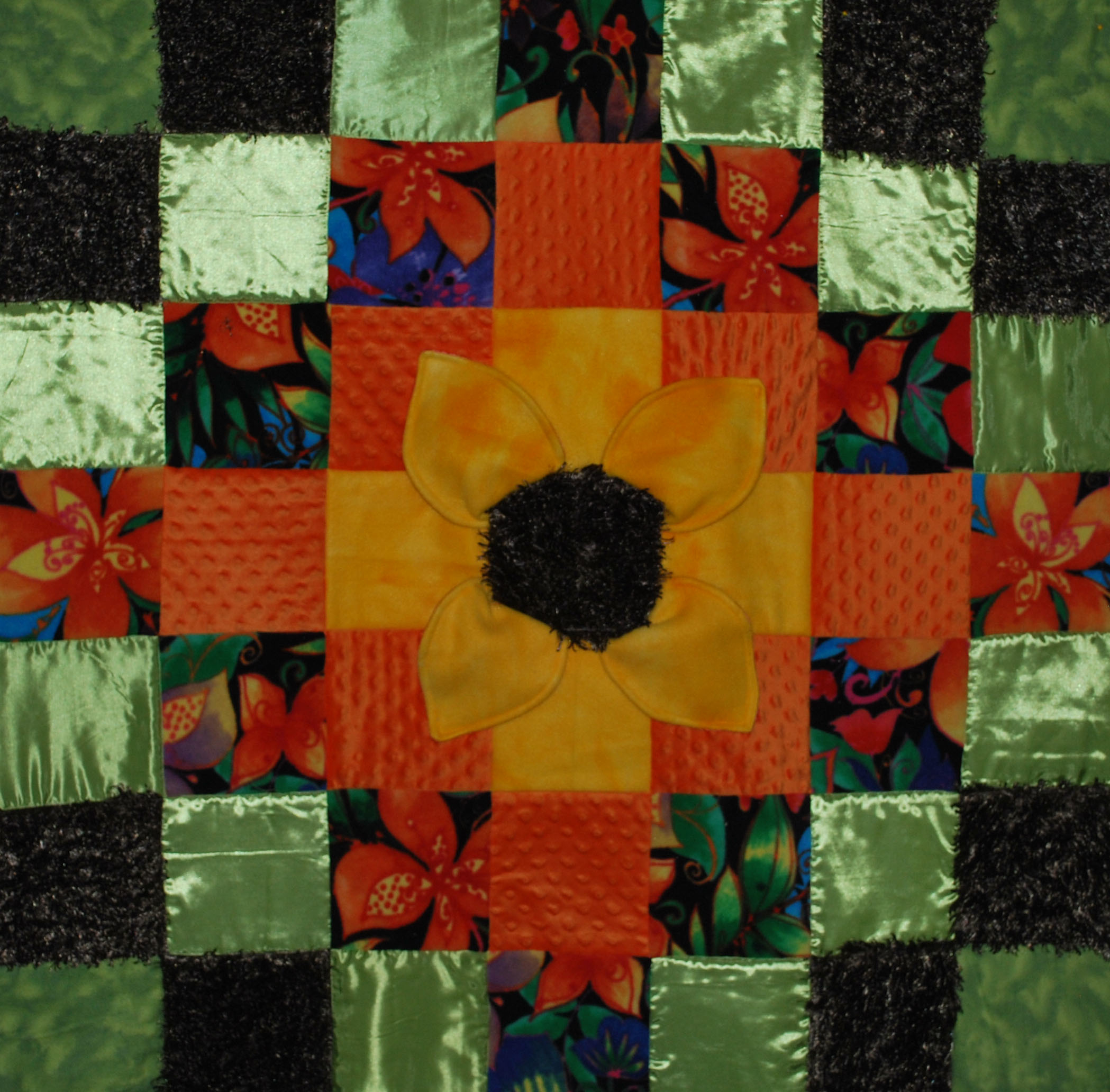
Gold, satin petals attached only at center

3. What types of fabrics do you use?

I look for pleasing colors in a variety of soft fabrics such as satin, corduroy, minky, flannel, fleece, fuzzy, furry, and more. I like to have some satin and fuzzy in every quilt and prefer satin bindings on all of them.

Sizes? (Dimensions of quilts)

I have made lap size (42 x 42), which is the most common size for all ages, nap size (42 x 54), and wheelchair size (36 x 36), which is intended to fit comfortably between the wheels without getting snagged.

4. Where do you get your inspiration for the designs and color combinations?

I try to include at least one fabric with a pattern and select complementary colors based on that. I start out designing on the computer and then put the cut fabric on my quilting “wall” to ensure the design fits the fabrics selected.  When I’m using a new design or a fabric with a new pattern, I often spend quite a bit of time rearranging the fabric blocks on the wall before I find a combination that feels and looks right.  It’s a creative process that can take hours and occasionally, days.

5. Who benefits from your quilts? To what organizations have you donated them?

I donate quilts to the Trinity United Methodist Church, Elder Day Stay, and various individuals.

redzebratquilt

Quilts by Colleen: Touchable Chic

Questions or comments about Colleen’s quilts? Reply below please!

Children’s book: The Boy and the Quilt by Mennonite author, Shirley Kurtz: http://www.goodreads.com/book/show/2729926-the-boy-and-the-quilt-with-four-color-artwork?from_search=true

School Daze: Songs We Sang

Second Grade: Rheems Elementary School

Valentine parties, Easter parades, Hallowe’en fun houses in the basement, Christmas programs, we had them all, but those were special occasions. At Rheems Elementary, a two-room school, we had our daily ritual: Bell ringing from the school-house steeple (always by a boy), Bible reading, the Lord’s Prayer, the Pledge of Allegiance, and then singing before lessons began:

This is My Father’s World, My Country ‘Tis of Thee, and Home on the Range were staples in our little golden songbook. But many of the lyrics we sang would be considered insulting to various ethnic and racial groups today. For example, Old Solomon Levi, playing to the stereotype of the wily Jewish merchant:

My name is Solomon Levi

At my store in Salem Street,

There’s where you find your coats and vests,

And ev’rything else that’s neat:

I’ve second-handed Ulsterettes,

And ev’rything else that’s fine;

For all the boys — they trade with me,

At one hundred and forty-nine.

Chorus.

Oh, Mister Levi, Levi, tra, la, la, la.

Poor Solomon Levi, tra, la, la, la, la, la, la, la

Next, we might sing My Old Kentucky Home with what was then dubbed the negro dialect: “The sun shines bright in on my old Kentucky Home, / Tis summer, the darkies are gay.”

What! “Darkies are gay . . . “?  Innocent of the dissonance in the words we would discover later, we sang the chorus at the top of our lungs:” Weep no more, my lady. Oh, weep no more to-day; / We will sing one song for the old Kentucky home. / For the old Kentucky home, far away.” For sure, Paula Deen would be safe in such a culture.

The dialect continued when we belted out Dixie: “I wish I was in de land ob cotton, / Old times dar am not forgotten, Look a-way! Look a-way! Look a-way! Dixie Land.” There was even a winking nod to obesity in one of the stanzas: “Dar’s buckwheat cakes, an’ Injun batter, / Makes you fat or a little fatter . . . .

And then there was the wistful: When You and I Were Young, Maggie, and My Grandfather’s Clock, sung by youngsters that had no conception of aging or mortality.

Grandfather'sClock lyrics

GrandfatherClock_crop_180

Graduating to Junior High in 7th grade, the singing before lessons stopped, but my classmates and I were introduced to both highbrow and lowbrow music. The official music teacher, Miss Enterline, fresh out of college, enthralled us with Paul Dukas’ The Sorcerer’s Apprentice  and cajoled us to join her gender-separate choruses: Melo-men and Melo-dears. Then there was my homeroom and typing teacher, Mrs. Elsie Care. Her door name-plate said “Mrs.” but when she came to school in a dress with a zipper down the back, she asked a student to help out with the zippering up. Where was Mr. Care, I wondered: Traveling? Too busy to bother? Was she separated, or even divorced? I noticed someone always helped her out of her sartorial dilemma soon enough. Though she taught business courses, she insisted that we learned the words to “16 Ton,” even writing them on the blackboard with her large, loopy handwriting. At the time I thought it strange, but, endearingly, she had introduced us to pop culture:

 Tennessee Ernie Ford

Mrs. Care signed my yearbook with shorthand, which I neither cared about nor understood, but her quirkiness is etched in memory. . . Mrs. Elsie G. Care, the “G” for Gioconda, woman of mystery and intrigue.

← Back

Thank you for your response. ✨