Moments of Discovery # 3: Two Butter Stories and an Autograph Book

In June Mother Longenecker and her daughters Marian and Janice created butter-shaking memories in a two-quart jar, making butter using three easy steps:

  1. Pour cream into 2-quart jar.
  2. Shake until you rattle and roll.
  3. Remove the congealed mass from the jar. Add a pinch of salt.

In July, my Southern friend Carolyn honored my birthday in a “Shake-Rattle-and-Roll Butter-Shake” party. Today you can open up an old-time textbook with me and behold first-graders learning about butter making in a reader published by Lyons and Carnahan with the copyright dates spanning the years 1927-1936.

Reader1920s

Interestingly, the Child’s Story Reader also lists three simple steps for butter making expressed in first-grader language:

We got the cream from a cow.

We put the cream in a jar.

We shook the jar.

Jack and Jane even added a pinch of salt to the mixture, and afterwards they had a party of butter on bread!

ButterMakingSchool

Another page shows a recipe for butter milk made with a churn with Aunt Ellen assisting.

ButterChurnBook

More Moments of Discovery

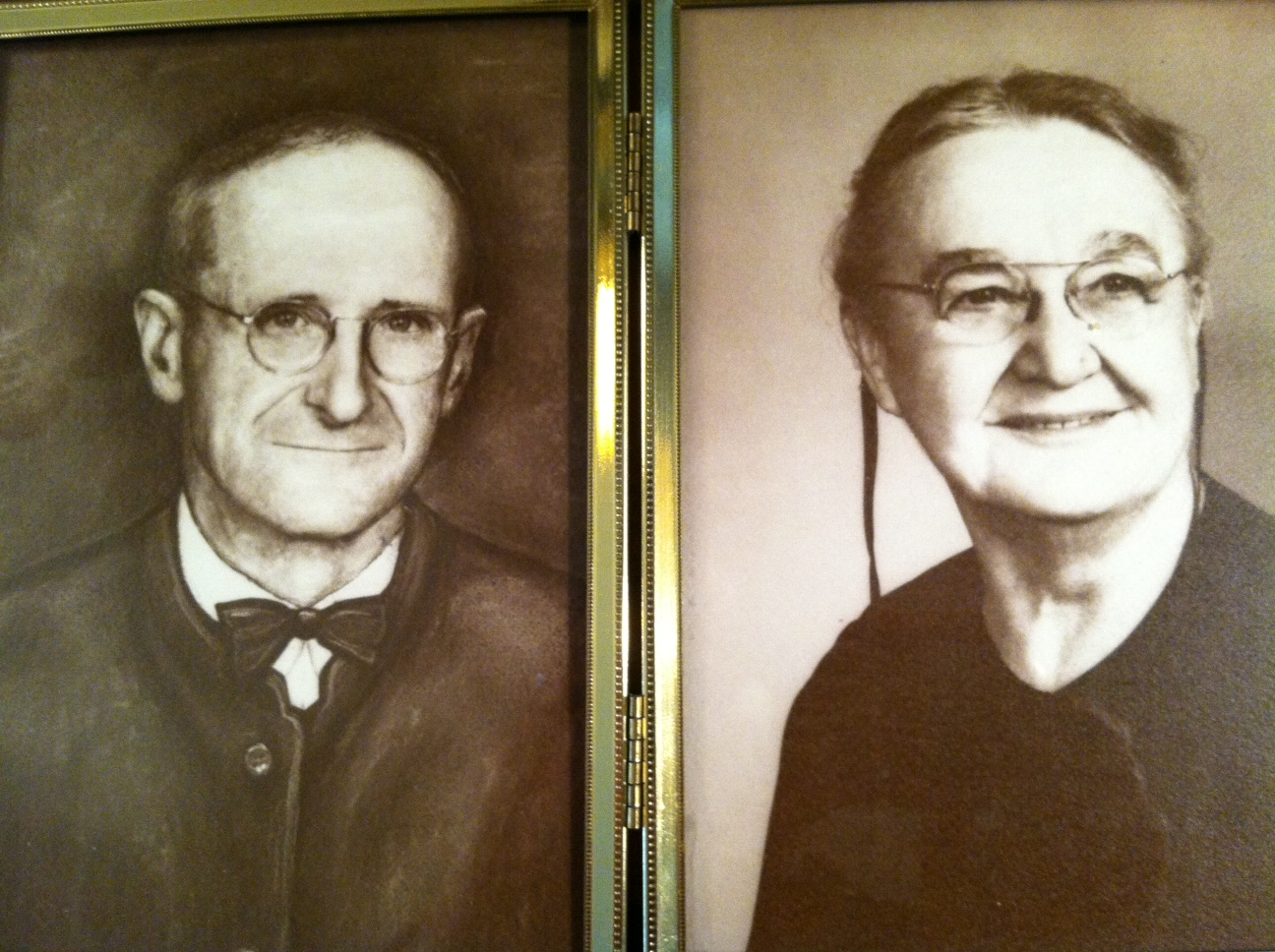
Henry and Fannie Longenecker, Grandparents
Henry and Fannie Longenecker, Mennonite Grandparents

Henry Risser Longenecker, referred to by friends and family as H. R. or “Hen,” was my grandfather on Dad’s side of the family. He died when I was five, but I have a distinct memory of him killing a snake in the grass with a long stick. Like my father, he was a doctor of motors interested in steam engines, Model A Fords, and farm equipment. Until I unearthed his autograph book, I had no idea he had artistic leanings as revealed in his autograph book. Autograph books, common in classrooms in the 1800s, contained signatures, artwork, and bits of poetry. According to Folklore: An Encylopedia of Beliefs, Customs, Tales, Music, and Art, Vol. 1 (edited by Thomas A. Green) autograph books, existed as early as the fifteenth century and were seen as “a mark of gentility until the beginning of the twentieth century.”

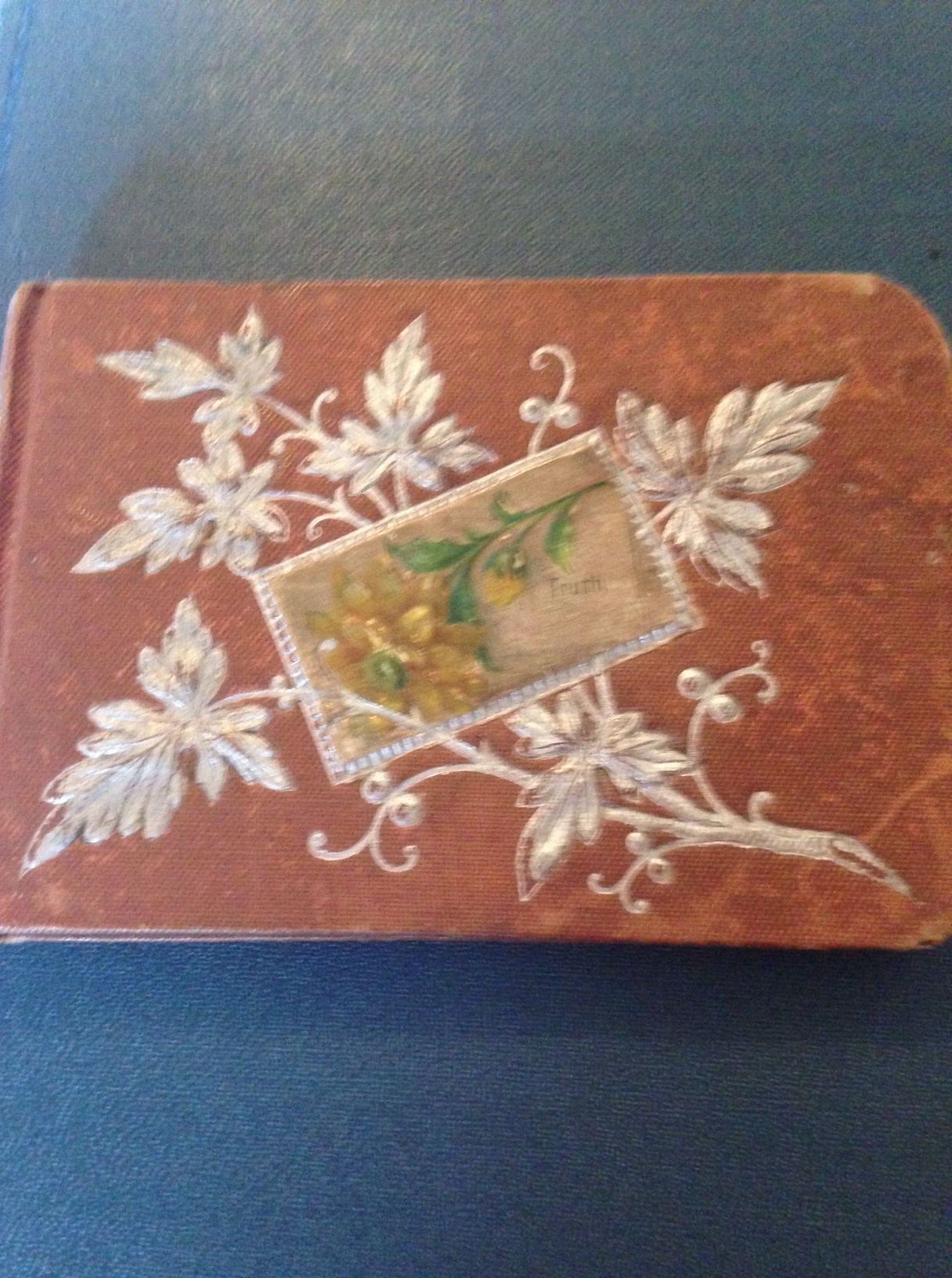
The cover of Henry Longenecker’s autograph book reveals artistic flair with a faint inscription of a great virtue taught to every school child, the word Truth visible if you squint carefully at five faint letters appearing close to the embossed yellow flower.
HRLAutographBook

The dedication appears in flowing cursive penmanship with a dove’s beak clasping Cupid’s arrows

HRLsignatureAutograph_final

Painted artwork, still-brilliant, graced most pages like this one, complete with signature and date.
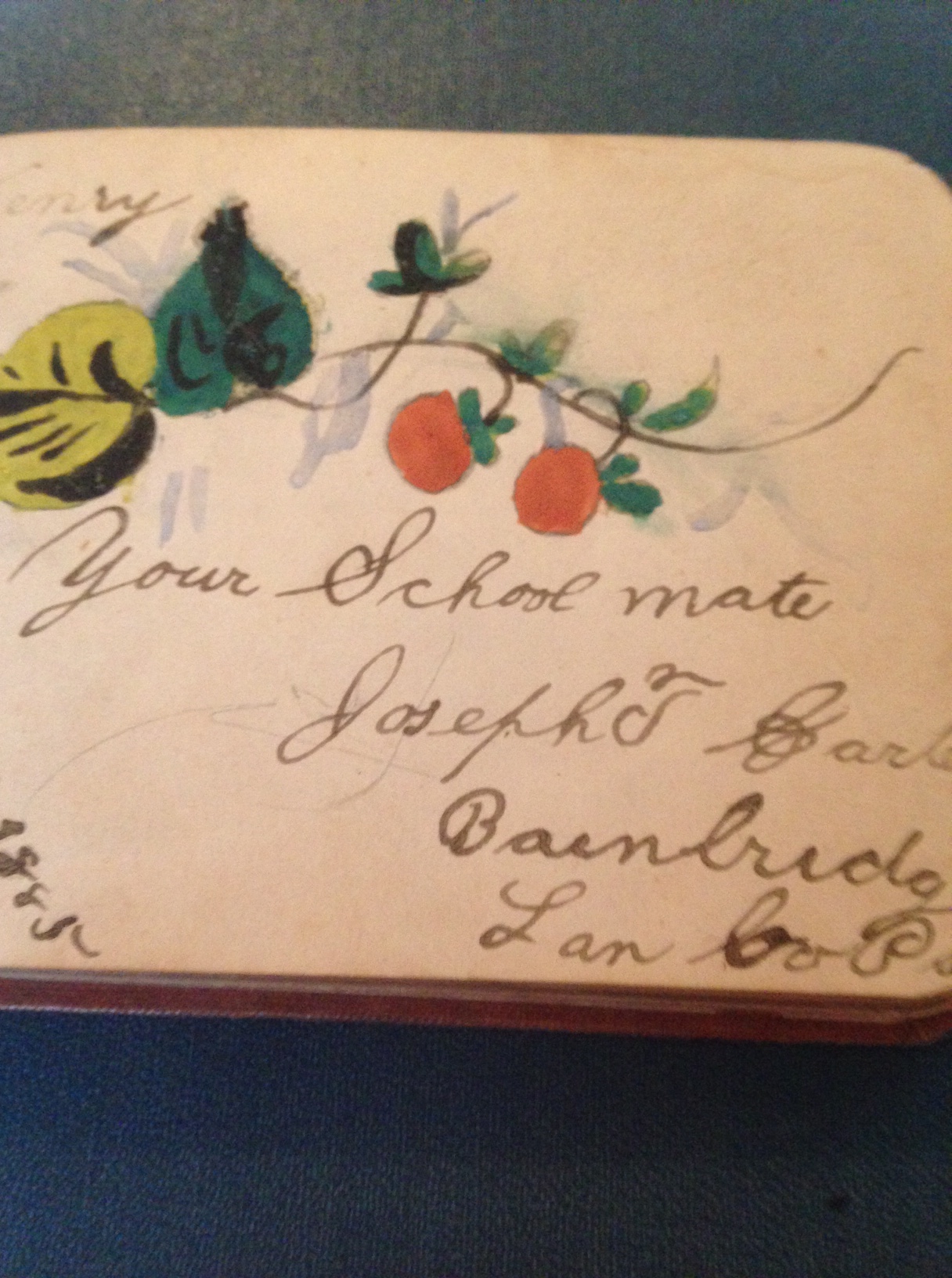
Signature: Joseph T.  Garber     Complete date: February 3,1885
Signature: Joseph T. Garber           Complete date: February 3,1885

 Autograph books tell us several things about students in the late 1800s:

1. Penmanship was taught and valued as an artistic skill.

2. Friendship and learning were intertwined. Both were expressed as an art form.

3. Students took great pride in their work.

*  *  *

What else can these books teach us?

Coming next: What color makes you sing?

Purple Passages and Fine China

READING

La Lectura es el viaje de los que no pueden tomar el tren.        – F. Croisset

(Reading is the journey of those who cannot take the train.)

Marian Reading_14mos._2x4_300

Some books are to be tasted, others to be swallowed, and some few to be chewed and digested . . . .           Sir Francis Bacon  “Of Studies”

I find television very educating. Every time somebody turns on the set, I go into the other room and read a book.     Groucho Marx

It is what you read when you don’t have to that determines what you will be when you can’t help it.    Oscar Wilde

LAUGHTER

When we laugh, a sort of temporary anesthesia is released within us that blocks the pain as our attention is diverted.      Chuck Swindoll in Five Meaningful Minutes a Day

I love people who make me laugh. I honestly think it’s the thing I like most, to laugh. It cures a multitude of ills. It’s probably the most important thing in a person.    Audrey Hepburn

CHINA   

Friendship is delicate as [china], once broken it can be fixed but there will always be cracks.    Waqar Ahmed

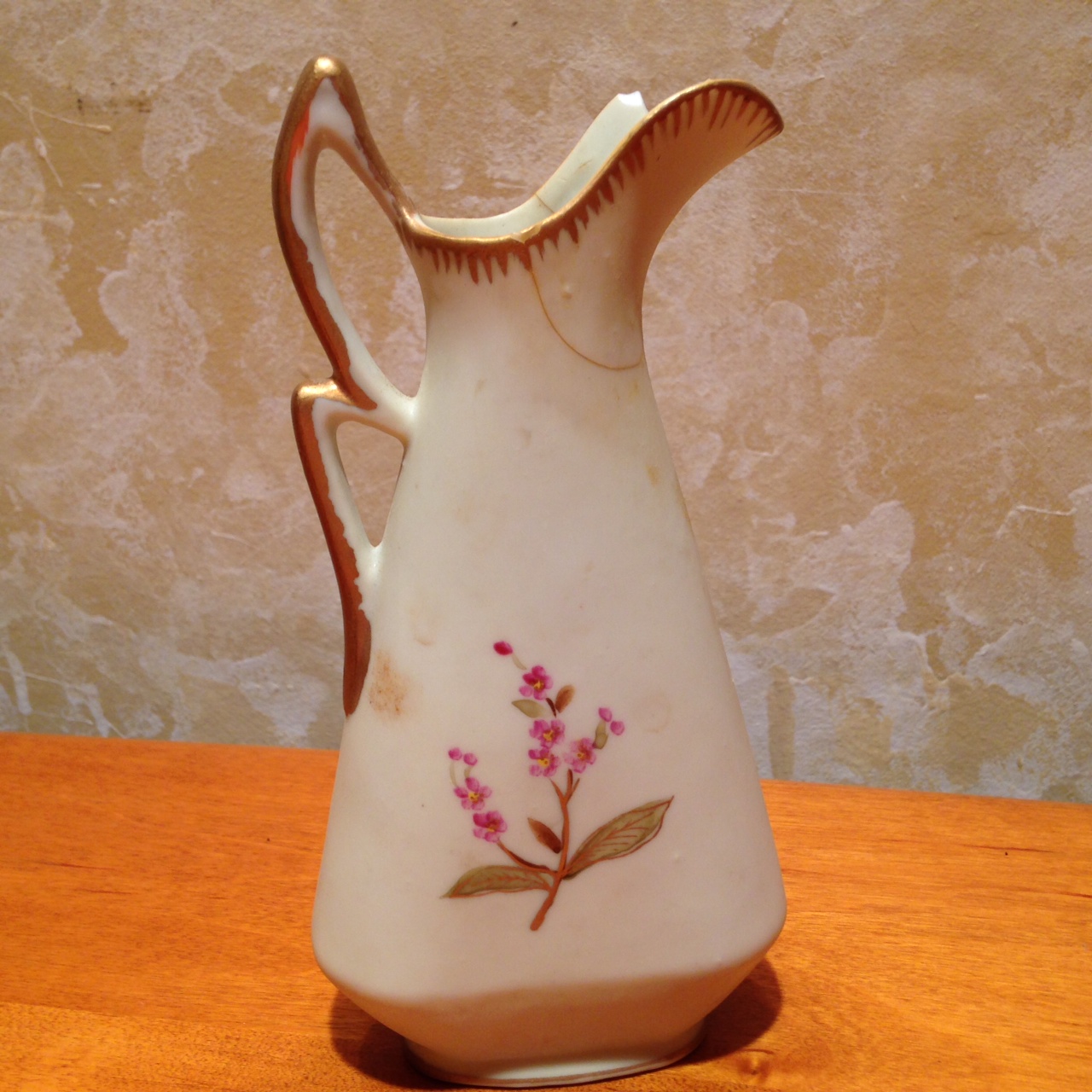
Pitcher Broken

It’s a wise husband who will buy his wife such fine china that she won’t trust him to wash the dishes.    – Honoré de Balzac

ChinaFine

I’ll love you, dear, I’ll love you till China and Africa meet and the river jumps over the mountain and salmon sing in the street.      – W. H. Auden

We have a week and a half left of work and we are like delicate china speeding toward a brick wall. Sounds fun, huh?     – Jennifer Anniston

Start living now. Stop saving the good china for that special occasion. Stop withholding your love until that special person materializes. Every day you are alive is a special occasion. Every minute, every breath, is a gift from God.     

                   Mary Manin Morrissey

A comment? Another quotation? Both are welcome here!

How to Tell Your Children What’s What

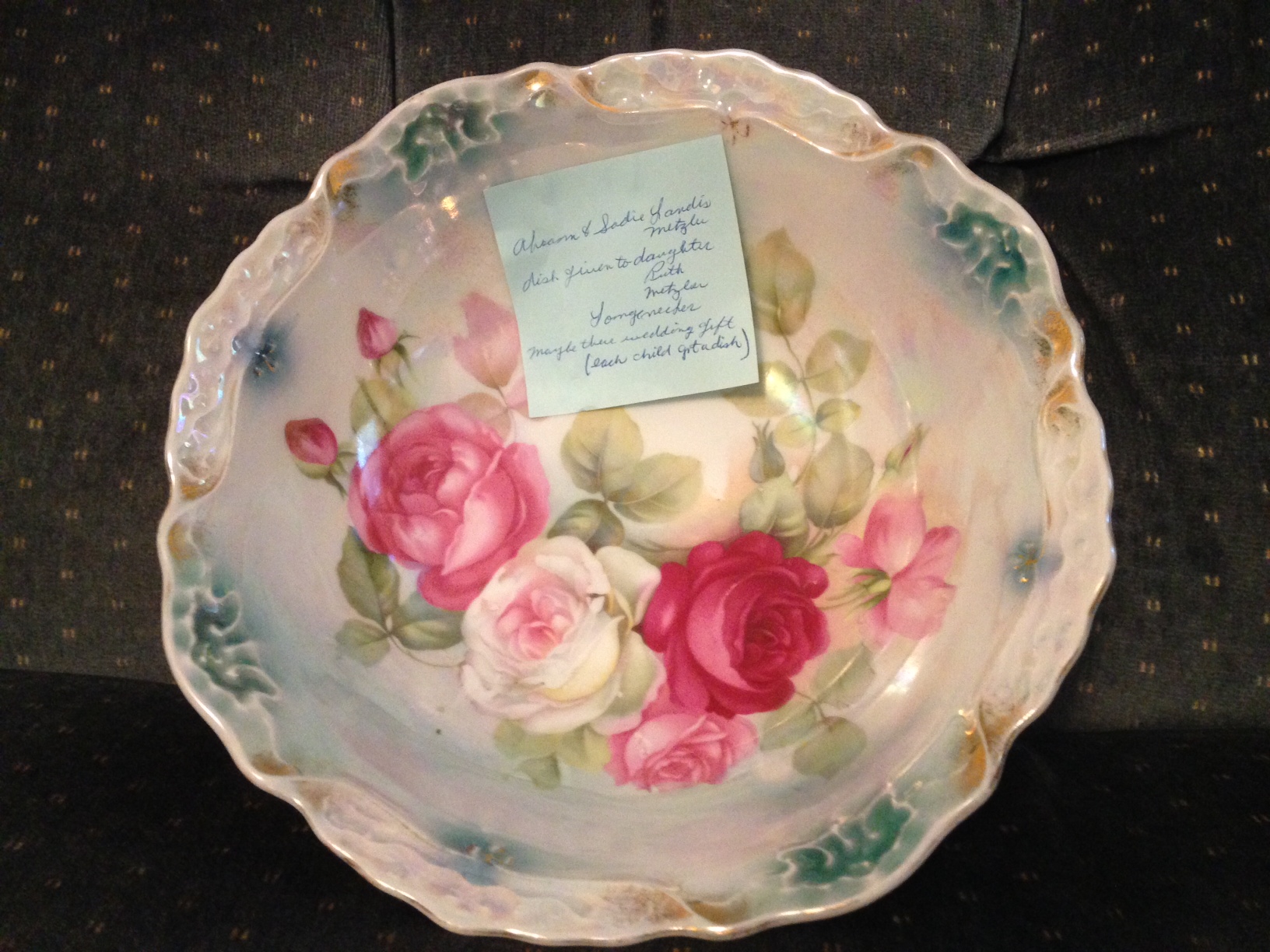
Unlike Hansel and Gretel, whose mother tried to starve them and then lock them out of the house, Mother Longenecker provided well for her children and left behind, not white pebbles or bread crumbs, but hand-written notes tucked away to tag her heirlooms. Each note provides a designated recipient sometimes with a bit of family history.

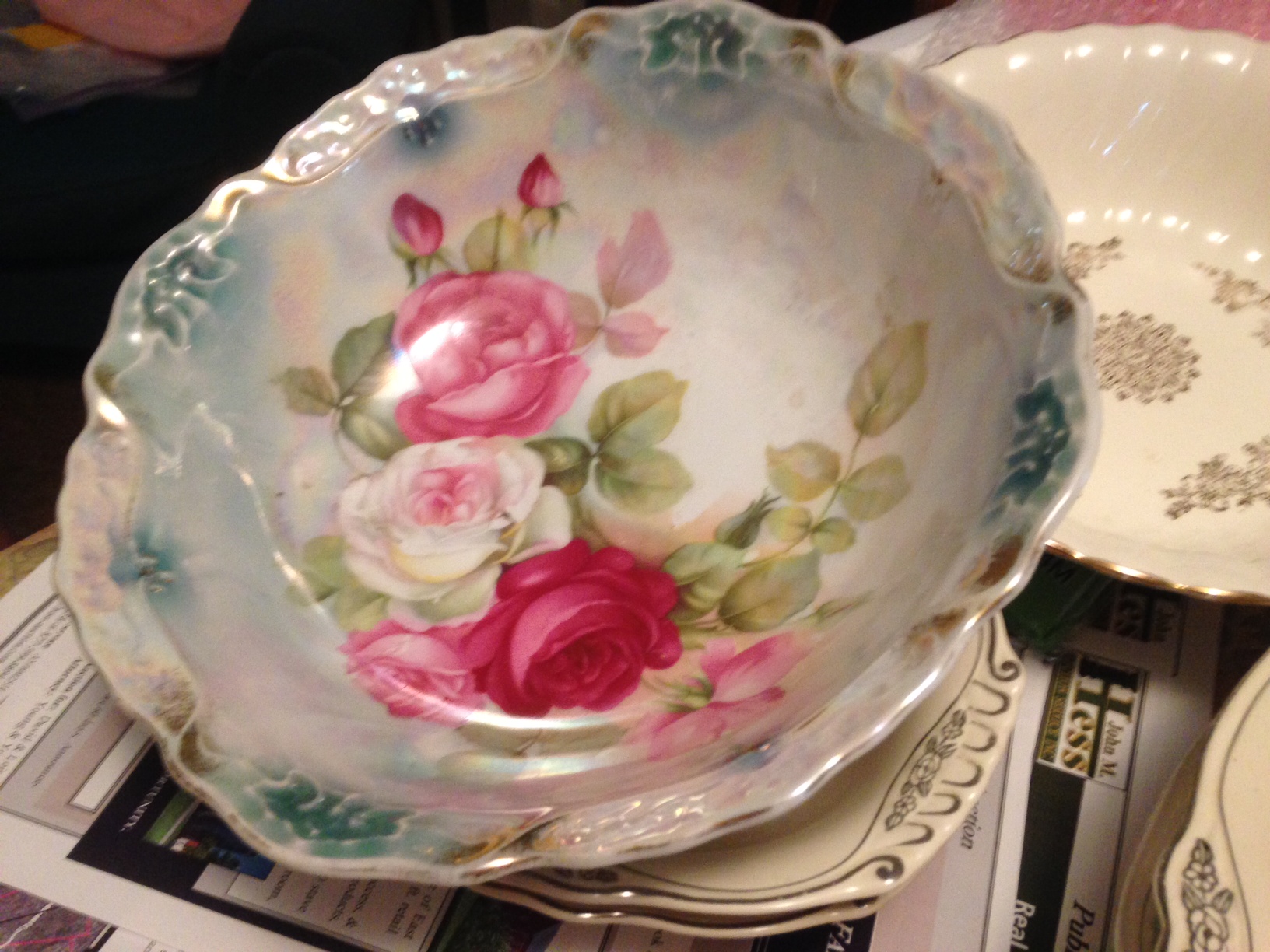
1. Floral Serving Dish

Dish given to my mother from her parents, Abram and Sadie Metzler on her wedding day

FloralDishMomNoteOne of Mother’s grand-daughters will get this dish no doubt and will know its provenance, which would probably be lost forever, without the note .


2. Keepsake from Mother’s Sunday School teacher at Erb Mennonite Church with teacher Mrs. Kathryn Bomberger. The note emphasizes the biblical account of creation found in the book of Genesis and on the reverse side a quick guide to prayers, parables, and verses commemorating sacred events. You can find more of the history of the Erb Mennonite Church here, including its roots in the Swiss-German Anabaptist culture.

Ruth Longenecker_SS card_front_back_note

Mother's Sunday School Class at Erb's Mennonite Church     Kathryn Bomberger, teacher
Mother’s Sunday School Class at Erb’s Mennonite Church       Mrs. Kathryn Bomberger, teacher

For many months now, this photograph has served as the banner on my Facebook page. When I posted it, I was totally unaware of Mother’s imminent death. Now I am loath to replace it with a different photo. All the ladies are plain here, except the smiling woman seated on my mother’s left. I imagine this shot was taken after Sunday dinner at the home of the teacher.


3. Japanese Cup & Saucer

Japanese Cup 2

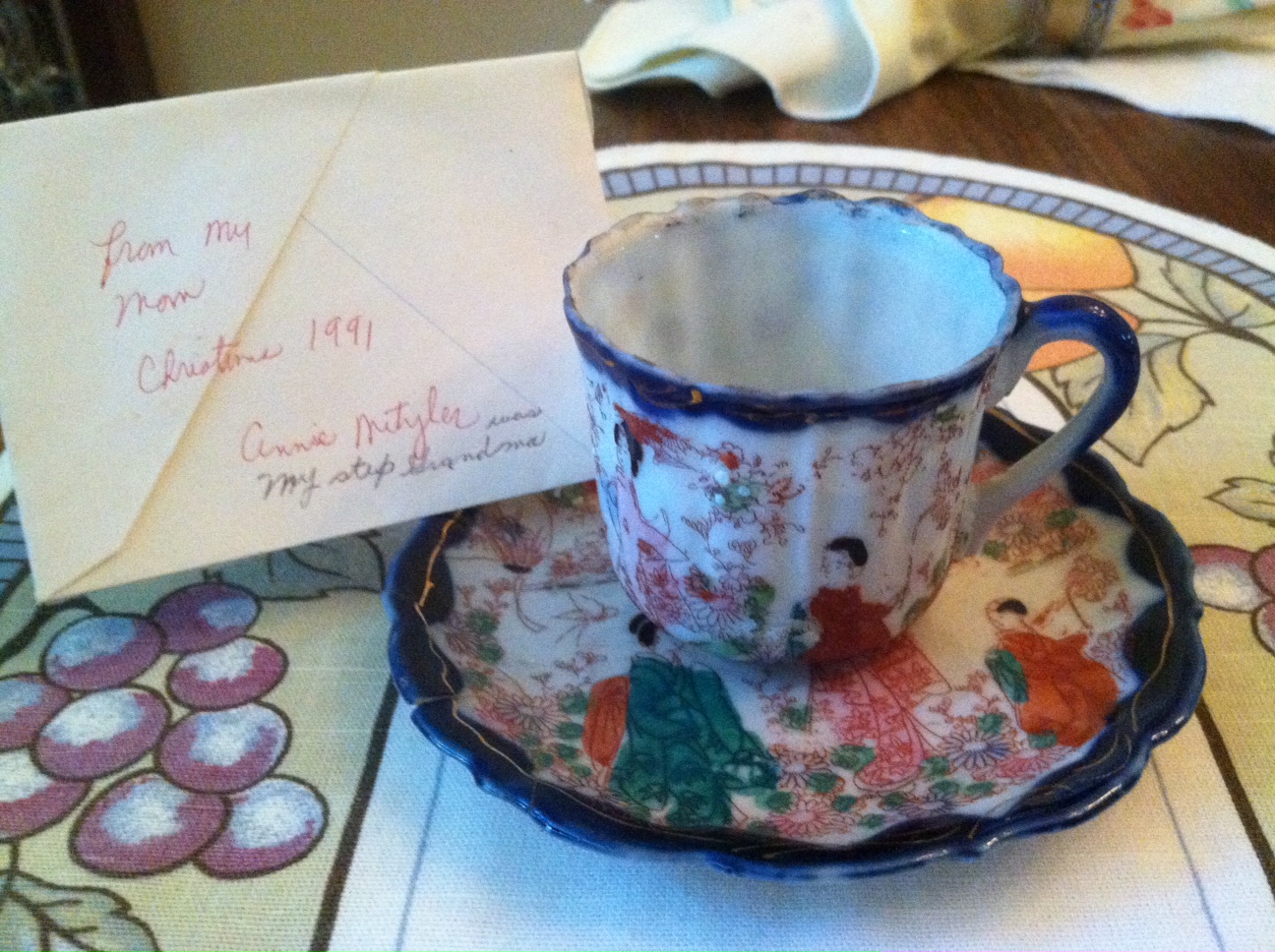
According to my notation in red in 1991, Annie Metzler gave this set to my mother, who notes in her own hand-writing that she was Mom’s step-mother. This vintage piece is hand-stamped Made in Japan, possibly created during the Golden Age of Japan’s trade with the United States in the 1921-1941 era.

Mother had “secret smarts” that we became more aware of recently, revealing her keen interest in the continuity of memory as she passes both artifacts and notes on to the next generation.


Do you have any family notes like these? Do you tag things you want to pass on? Here’s where to share your wise observations . . .


What’s for Dinner? Dried Beef Gravy and . . .

“Just two generations ago, preparing meals was as much a part of life as eating,” so says Mark Bittman in an article entitled How to Eat Now published in the October 20, 2014 issue of TIME magazine. Although a recent Harris poll reveals that 79% of Americans say they enjoy cooking, probably most get at least a third of their daily calories outside the home. Bittman goes on to show how easy it is to get a nutritious home-cooked meal on the table and includes 3 simple recipes: Vegetable soup which borrows from the freezer aisle, a whole roast chicken with garlic and lemons, and skillet pear crisp recipe which makes for easy cleanup.

TIMEfood

Mother of course cooked two main meals every day. I could count on the fingers of one hand the times we ate in a restaurant. Her recipes were hearty, reflective of the PA Dutch cooking she grew up with, never skimping on the butter.

When I came back from Pennsylvania a few weeks ago, I brought on the plane frozen ham loaf and chipped beef. After the ham loaf is thawed, it’s a cinch to pop it into the oven and serve in a few hours with virtually no prep time.

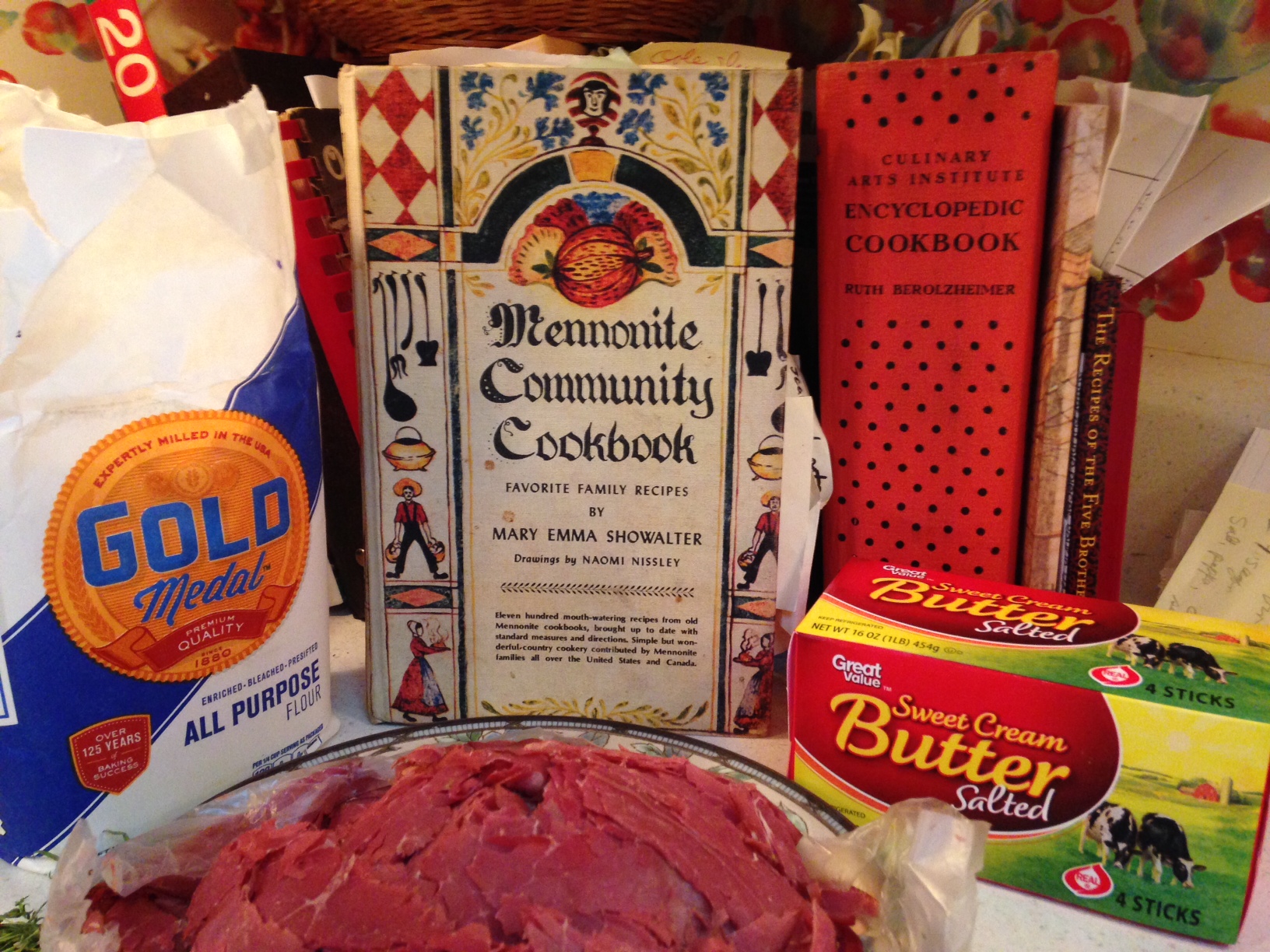
Preparing chipped beef gravy though, while not enormously time consuming, does require assembling ingredients: dried/chipped beef, butter, flour, milk or cream, and a touch of pepper and then stirring in a skillet on the stove.

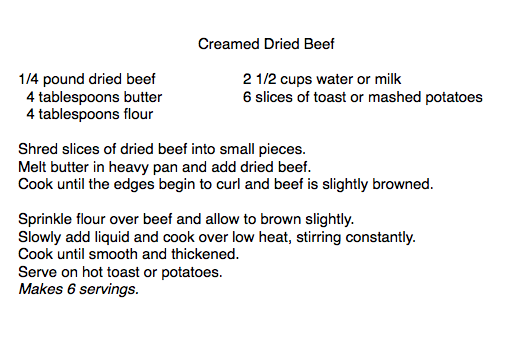
Last Wednesday, I pulled out my trusty Mennonite Community Cookbook by Mary Emma Showalter, a book of 1100 favorite recipes gleaned from Mennonite families all over the United States and Canada. Usually, I use Mother’s recipe in my head and knowing the ingredients to what she called dried beef gravy I add a hunk of this and two cups of that, “just what you think” as she used to say. This time though I will follow the cookbook’s recipe for creamed dried beef, which I see browns the beef with the butter.

DriedBeef RecipeNOname

RecipeDriedBeef

Next I assemble all of the ingredients and fire up the stove, beginning with melting butter in a hot skillet.

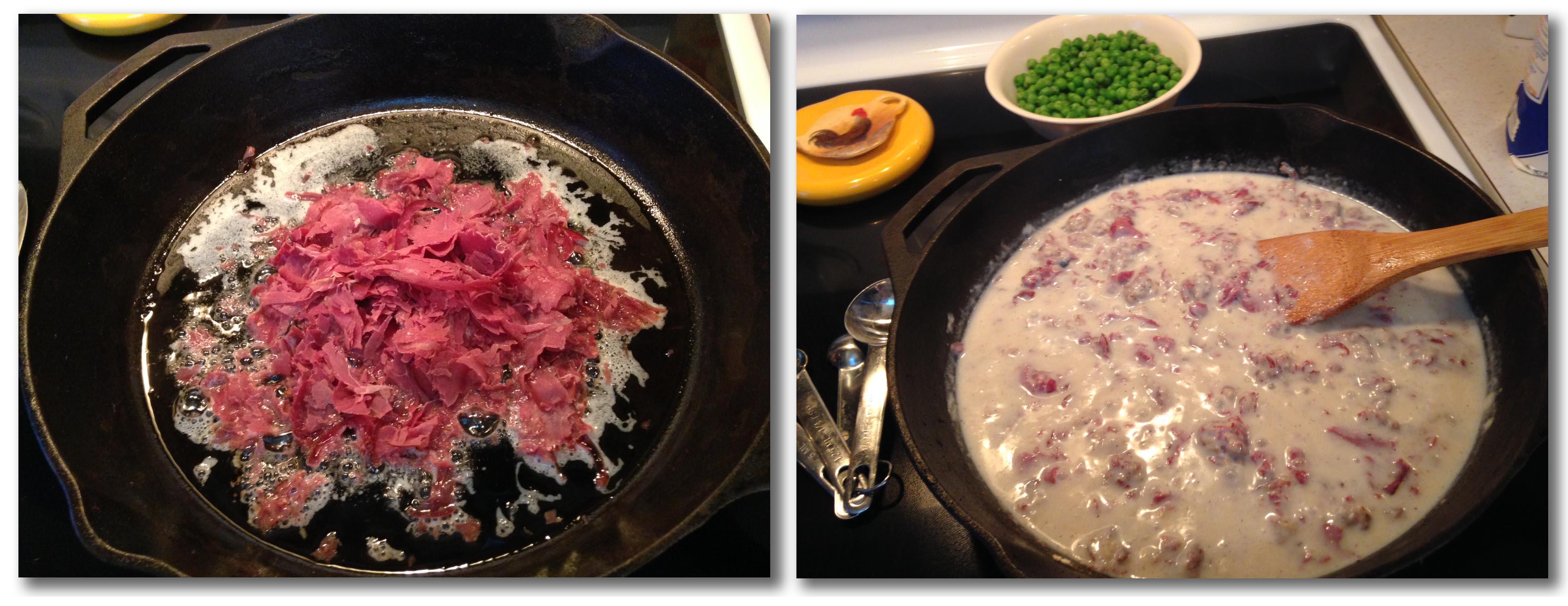
butterMelt

Adding the dried beef to the melted butter sends a hearty aroma throughout the kitchen. Then, sprinkling flour over the butter and beef, I create a roux to which I slowly add milk. Depending on your sensitivity to calories, you could use water, milk, or cream. I always use milk. Keep on stirring until the mixture becomes smooth and thick.

Dried Beef+ButterFlourStir

Finally, your creamed dried beef, which Mother always referred to as dried beef gravy, is ready to serve over toast, over mashed potatoes, as you wish.

foodDisplayed

Typical Menu

Dried Beef Gravy over Mashed Potatoes

Garden peas

Applesauce

Mark Bittman would probably raise his eyebrows over the amount of butter and flour in the creamed dried beef recipe. And of course this menu is heartier than his lower calorie menu of vegetable soup, roast chicken with pear crisp but, oh, is it delicious!

*  *  *

For years I thought of creamed dried beef as a Pennsylvania Dutch dish. After all, it appeared on page 58 of the Mennonite Cookbook, 1972 edition. Recently, my sister-in-law Terry told me her mother made the same recipe when she was growing up in California.

How about you? Did you enjoy creamed dried beef (or a variation) growing up? Is this recipe part of your cooking repertoire now?

 Inquiring cooks want to know. . . 

Hallowe’en: the Village, Valdemort, and a Video

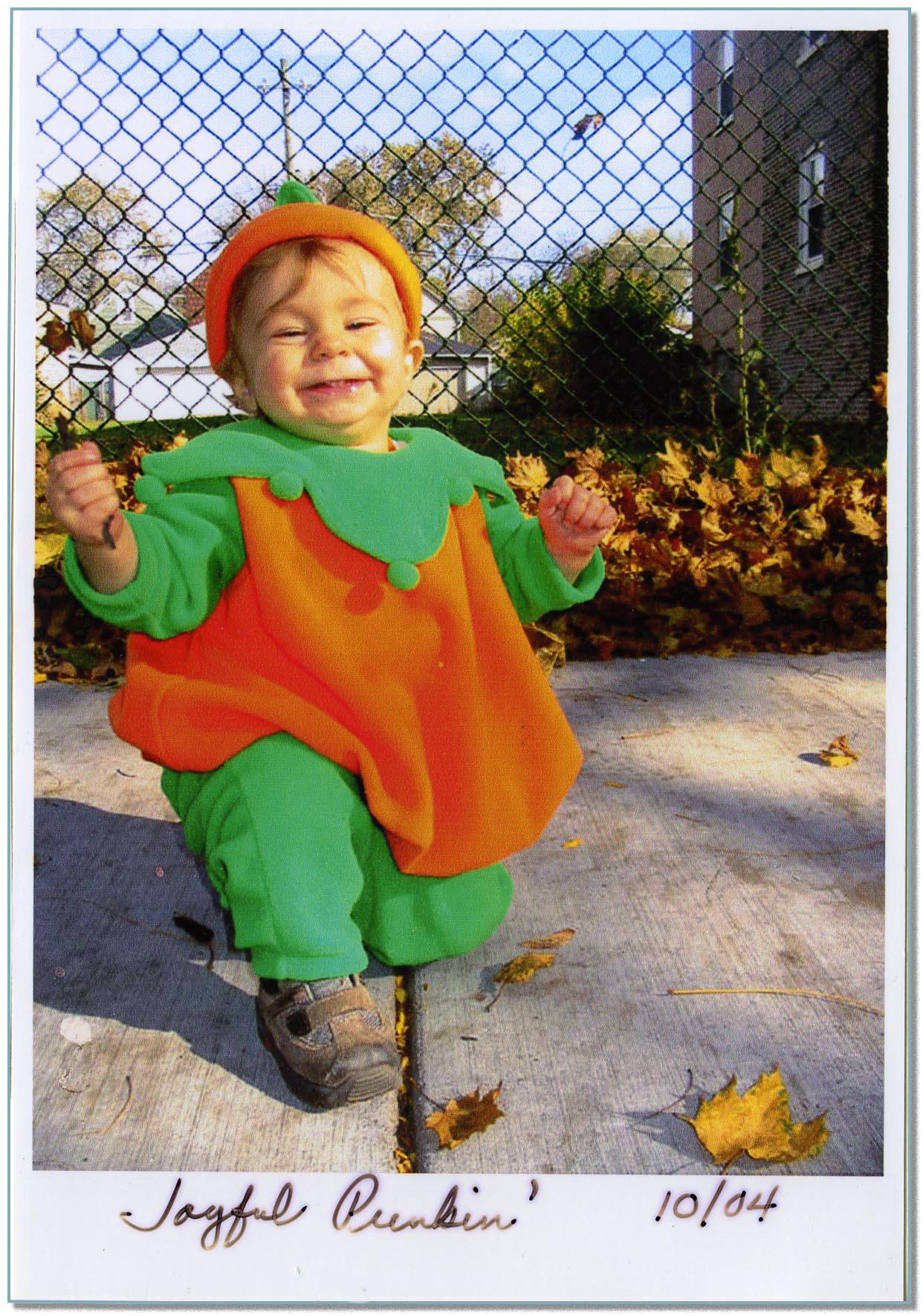
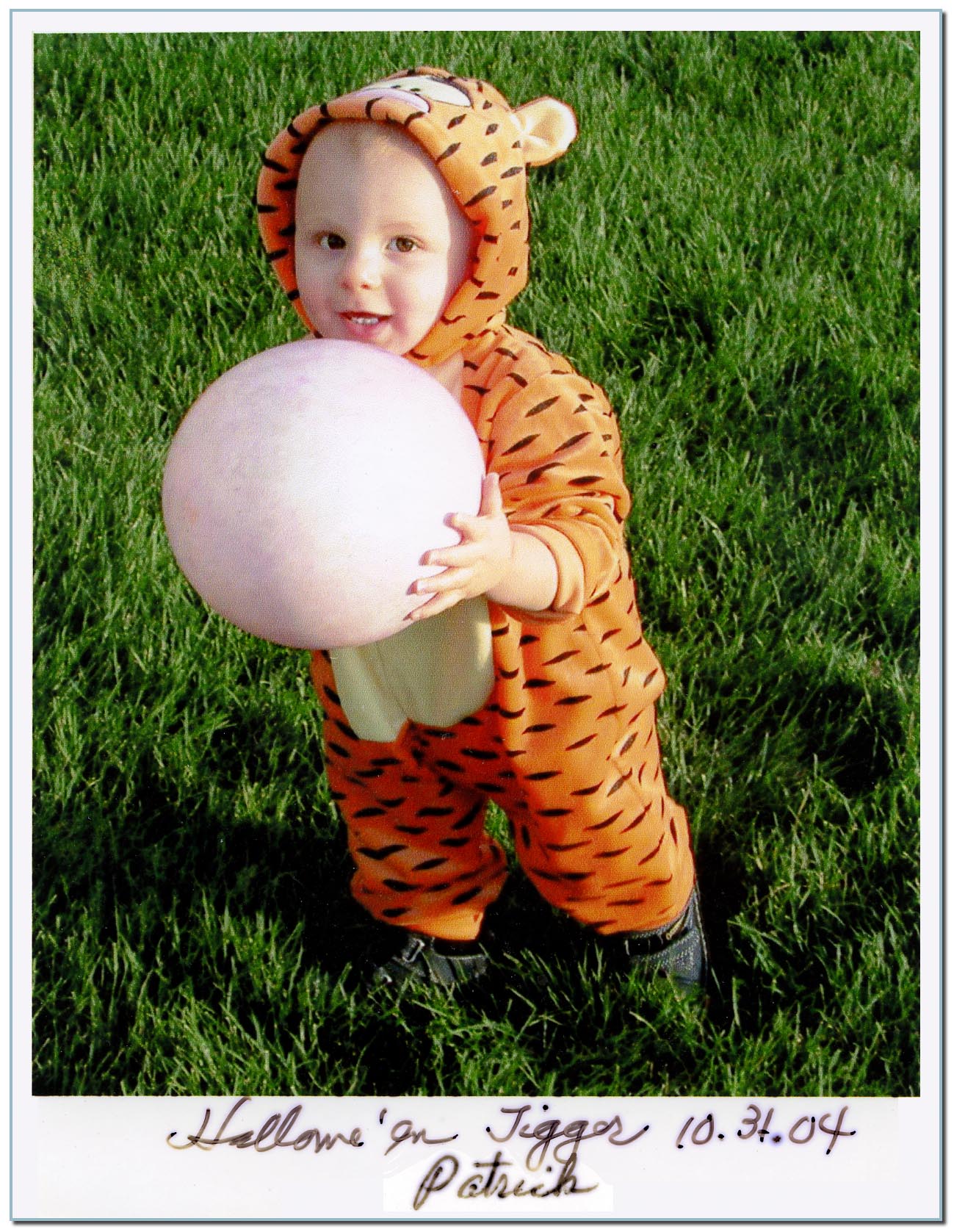
Ten years ago grandsons Patrick and Curtis were one-year-olds at Hallowe’en. In October 2004 they lived far away from us in Chicago. Fortunately, their parents captured snapshots of them in costume, Curtis a pumpkin and Patrick, Tigger, both in store-bought outfits, unlike my own get-ups, which were always homemade as shown in my Hallowe’en post last year.

Curtis as pumpkin_2004_1000

Patrick_Halloween Tigger_2004_1031

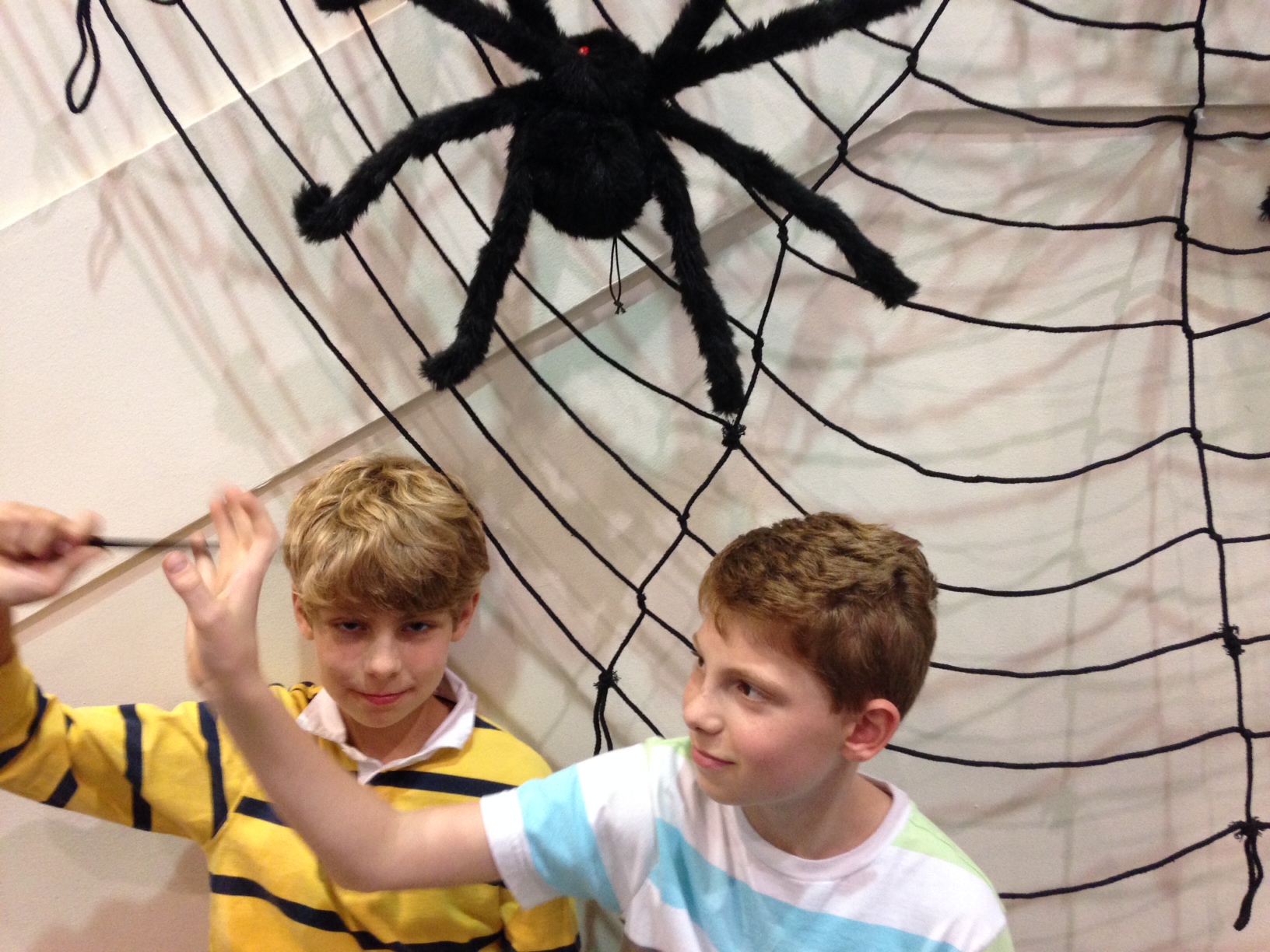
Last weekend, among the children dressed as Muggles, Dumbledores, or Valdemort, Patrick and Curtis  chose to attend the “Harry Potter” Sunday Symphony sans costume. Only Curtis wielded a wand, which caused a wee bit of trouble amidst the spider webs.

 PatCurtPotterSymphony

*  *  *

Students at Rheems Elementary School grades 1 – 8, though familiar with Washington Irving’s “The Legend of Ichabod Crane” and perhaps Poe’s “The Tell-Tale Heart” could not have anticipated J. R. R. Rowlings’ Harry Potter series.

Though Rheems was no School for Hogwarts, our village school had its own version of The Sorcerer’s Stone and the Goblet of Fire in the Deathly Hallows of the school’s basement, made ghoulish by the upper grades who created scary events with “eye” grapes in bowls, ghostly recorded voices among the hay-bales, and an illuminated skeleton.

Students raided closets and attics to conjure up costumes for the Hallowe’en parade, the culmination of visits to the House of Horrors in the basement of the school. My Mennonite aunt, also my teacher Miss Longenecker, initiated much of the fanfare that marked all the holidays, both the sacred and the secular. Here she has recorded our annual Hallowe’en parade, including the stumbles and falls!

Quote of the week by Erma Bombeck:

A grandmother pretends she doesn’t know who you are on Halloween.

Your Hallowe’en memories — a scary tale? a memorable outfit? The conversation starts here.

Coming next: What’s for Dinner: Dried Beef Gravy and . . .

Mom’s Accessories: Bonnets, Hankies, Pins and More

My Mother Ruth Landis Metzler was a simple girl who grew up on a farm near Lititz, Pennsylvania and attended Erb’s Mennonite Church. As a young woman, she wore plain clothing and never cut her hair. Her adornment was of the biblical kind as the Apostle Paul admonishes:

I also want the women to dress modestly, with decency and propriety, adorning themselves, not with elaborate hairstyles or gold or pearls or expensive clothes . . .

I Timothy 2:9 NIV

As we sorted through her personal effects recently, we found two prayer coverings and three bonnets, all miniature versions of those large sizes (jumbo, actually) she wore during her girlhood and all through the years we children lived at home.

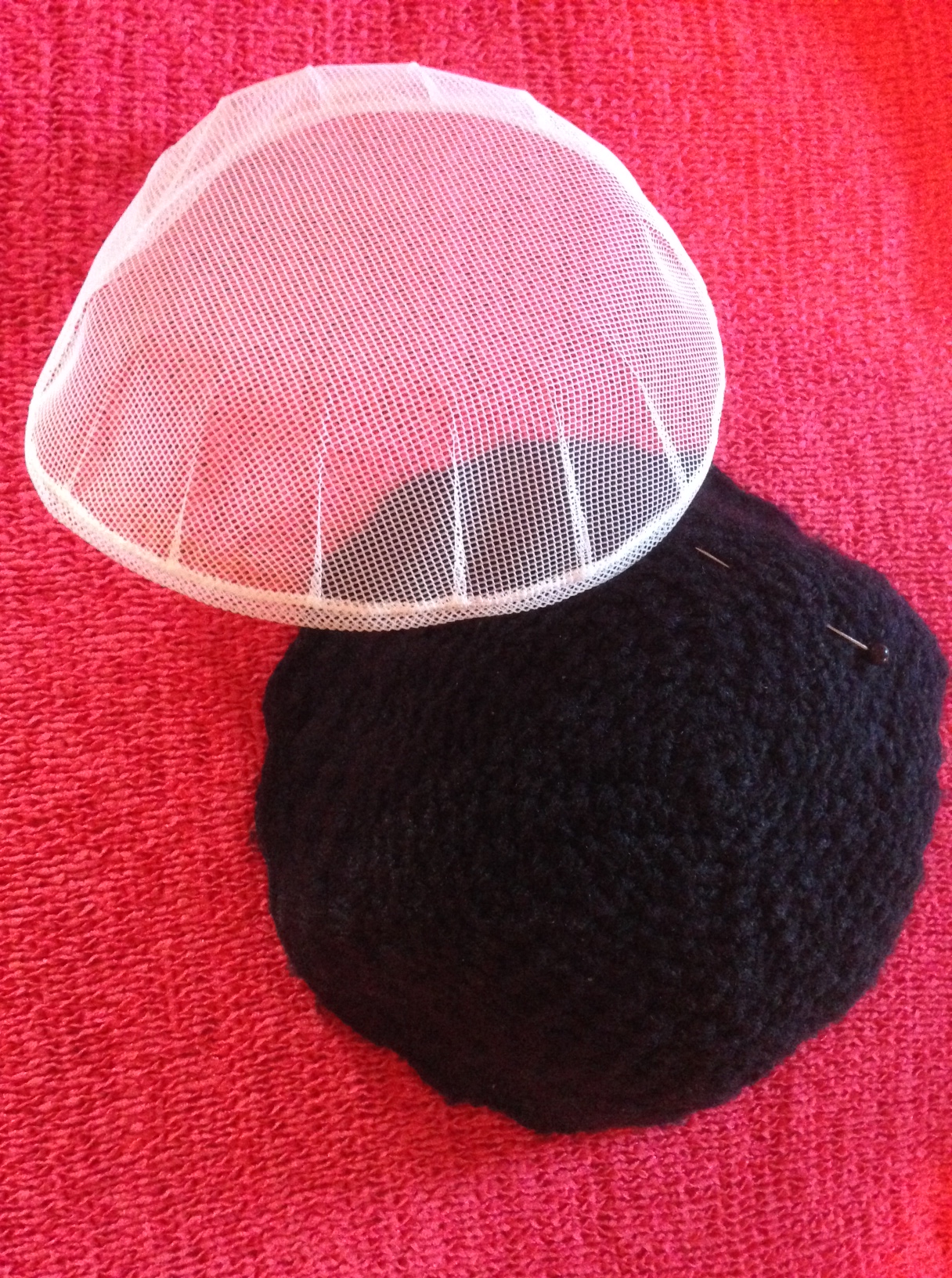
BonnetCoveringOn the clipboard in her kitchen, we found the business card to the Sue’s Covering Shop in Lititz where she bought her most recent headgear, the black bonnet now rivaling the size of a Jewish yarmulke and fastened with a shiny black-tipped hat pin.

 CoveringShopSue2

Size mattered among the various congregations in the Lancaster Mennonite Conference in all the years my mother wore prayer coverings. Handwritten on Sue’s Covering Shop business card was Mother’s latest size: D – 19 1/2. When I called Sue’s, the clerk said that D indicates the pattern number, the higher the number (okay, it’s a letter) the larger the size. And 19 1/2 describes the inches around the circumference of her covering.

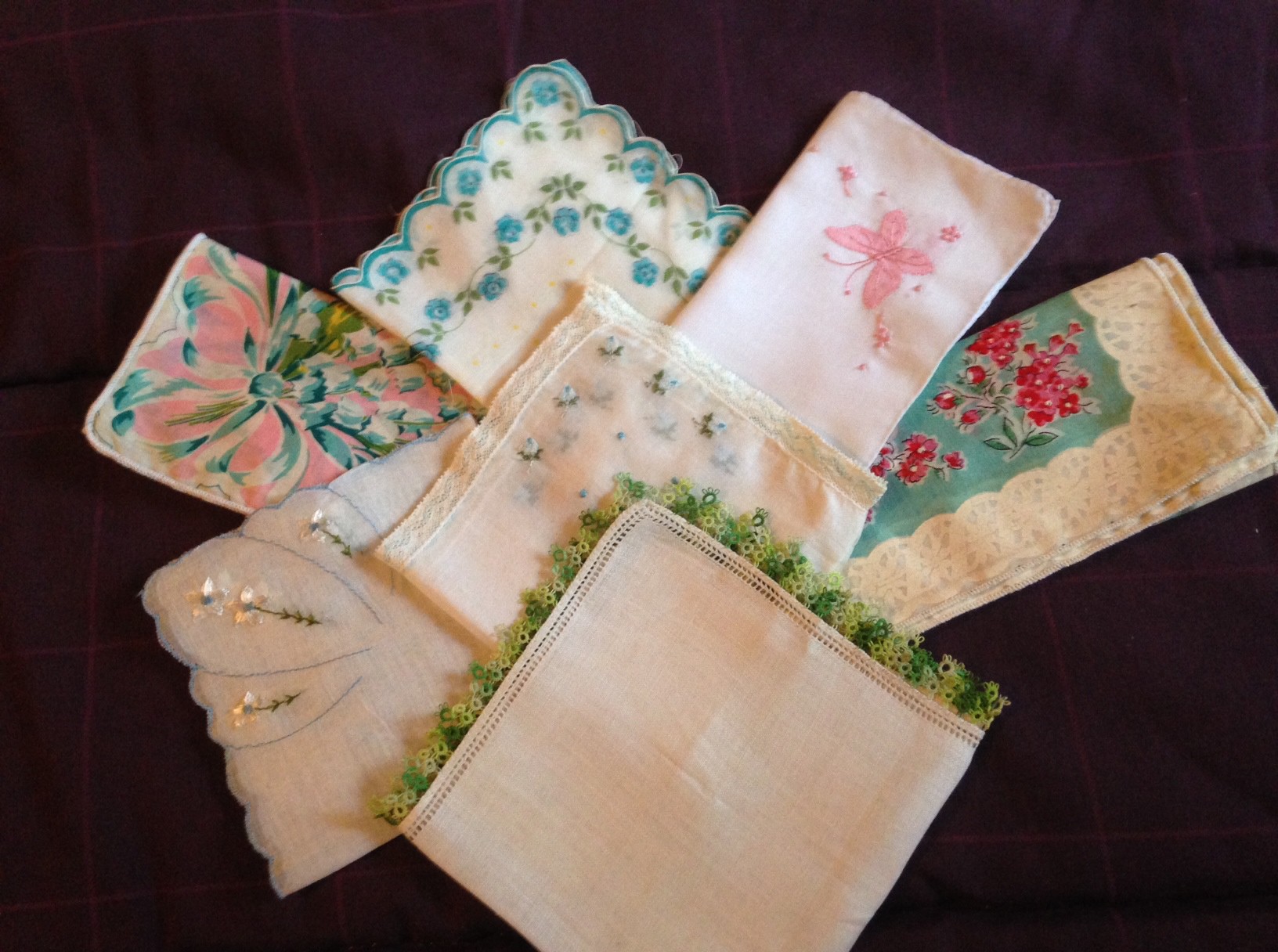
Hankies, now replaced by Kleenex, were once a part of every woman’s wardrobe. As a young child, my offering (a penny as a toddler, and later a nickel as I grew older) was tied into one corner of my white handkerchief, so I could untie the knot and put the coin into the tin box my teacher passed around during the Sunday School class. Surprisingly, Mother’s hankies were fancy, some even gaudily so, and one even boasts green tatting.

HankiesMom

Mom’s purses have usually been black and serviceable though we found set aside a hand-tooled leather purse and remember a lacquered basket-weave popular in the 1950s and 60s. In the October 2014 issue of Guideposts, Malinda Bertels takes stock of her Grandma’s purse and finds in it tissues for applying rouge, a vial of holy water and a faded inscription on a small wooden cross which provides insight and courage to move forward. Mom’s purse contained none of those things, only the bare essentials.

PurseMom

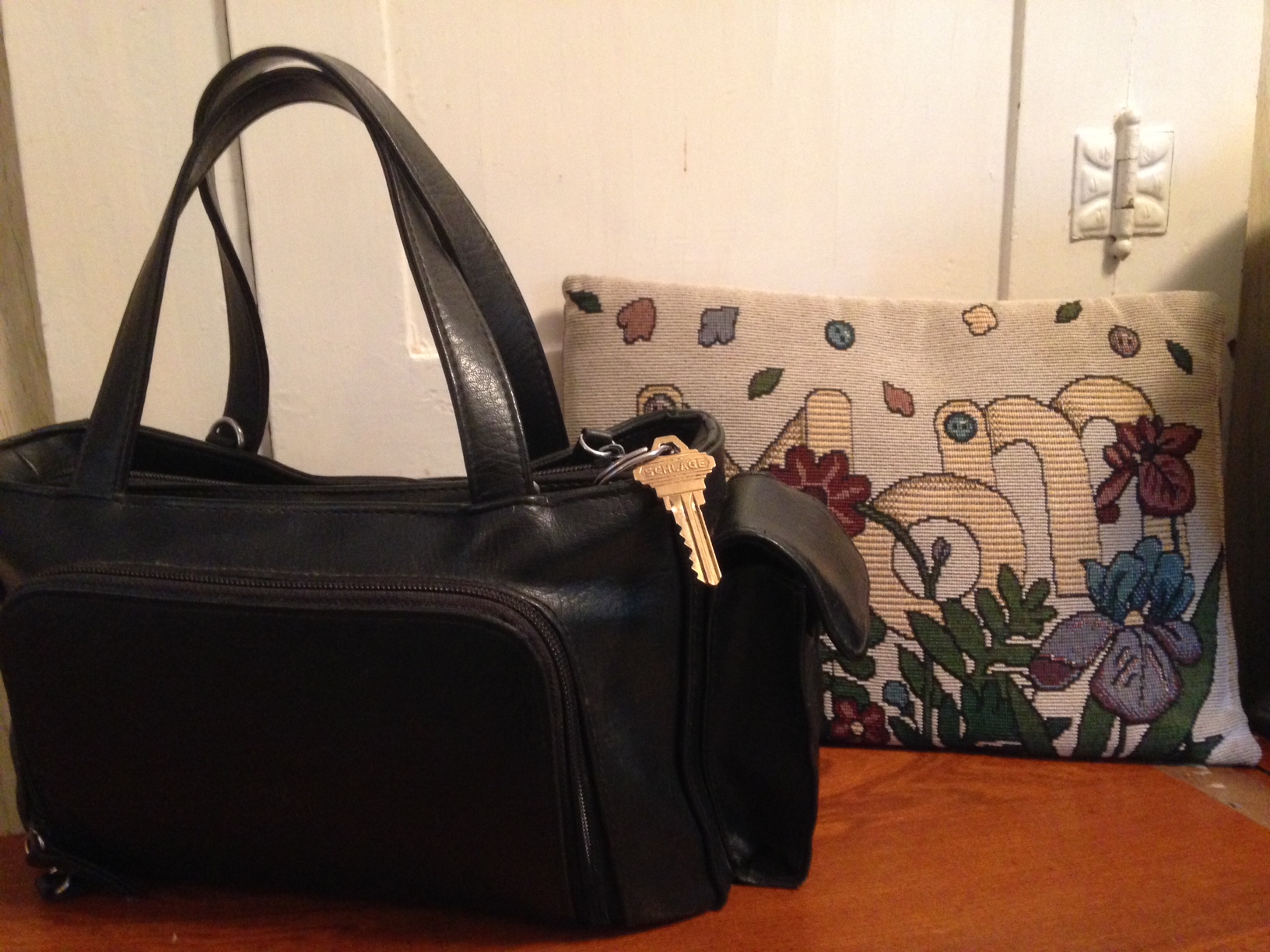
The very last purse she ever carried had a zippered compartment on the outside and all the pockets she liked on the inside for her cards and such. Most important was the pouch on one side, probably designed for a cellphone, but which held her house and car keys. The house key remains, but the car keys have been passed on to a friend from church.

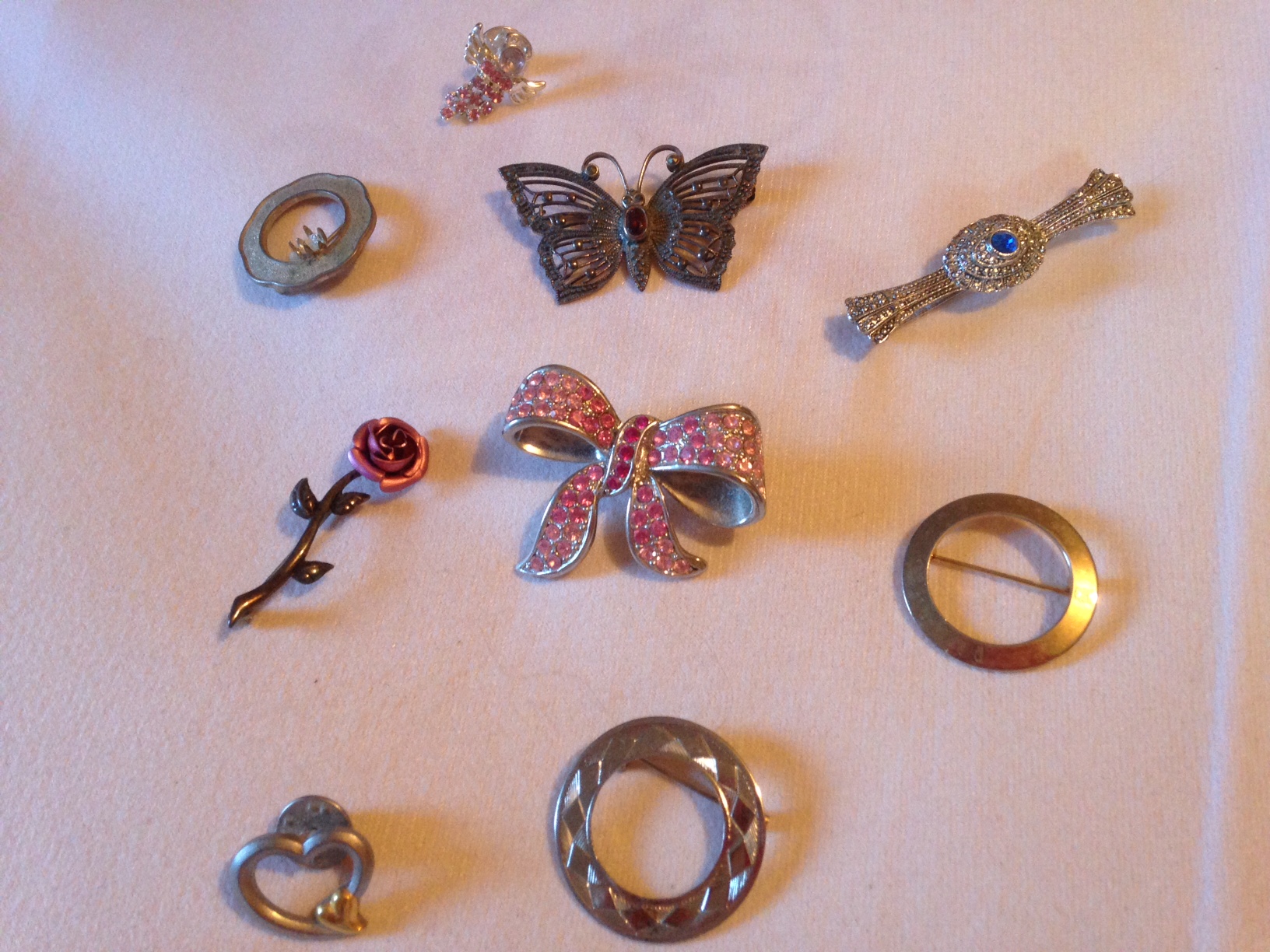
Mother never wore any jewelry except a wrist-watch, but friends bought cute little pins for her anyway. They were never all in one spot, but when we gathered them together, they numbered nine. The only one I ever remember her wearing was the round silver-faceted one, probably to her grandson Austin’s wedding.

PinsMom

Plain and fancy, her wardrobe included the gamut. A plain woman with fancy edges, that was Mom!

*  *  *

HoneymoomPillow

A souvenir of their honeymoon, this pillow was found among Mother’s treasures, obviously a gift from Dad, revealing his softer side.

Was/Is your mom plain or fancy?  Are you similar or different in fashion sense? 

Moments of Discovery # 2: Dad’s 1921 Report Card & Mom’s 1989 Car

The bustle in a house

The morning after death

Is solemnest of industries

Enacted upon earth, —

The sweeping up the heart,

And putting love away

We shall not want to use again

Until eternity.

Emily Dickinson was referring to the morning after the death of a loved one, but such hustle could also refer to what happens weeks or months after a loved one dies, and the bereaved are required to sift through that loved one’s possessions.

There is no shortage of articles on how to tackle this bittersweet task. Sara Davidson in a piece in The New York Times asks, “What to do with Mother’s stuff?” which in her case too involved dispatching with a car, furnishings, and memorabilia. Following Joan Didion’s rule, she tried to follow the principle of touching an object only once, making a decision and moving on.

The most emotional aspect of cleaning out a house is sorting the belongings, says Elizabeth Weintraub in an article “Cleaning Out the House After a Death.” She suggests sorting items into three piles or tagging them with color-coded stickers: Items to keep, items to donate or sell, items to throw away. Wendy Schuman outlines “9 Tips for Cleaning Out Your Late Parent’s Home.” She remarks, “Consider the cleaning-out job a labor of love. As hard as it was, clearing out my mother’s home was the last important service I could render her . . . .”  

Recently, my sisters and I said our goodbyes again and again as we sorted, reminisced, cried, but forged ahead, emptying drawers, closets, and eventually rooms.

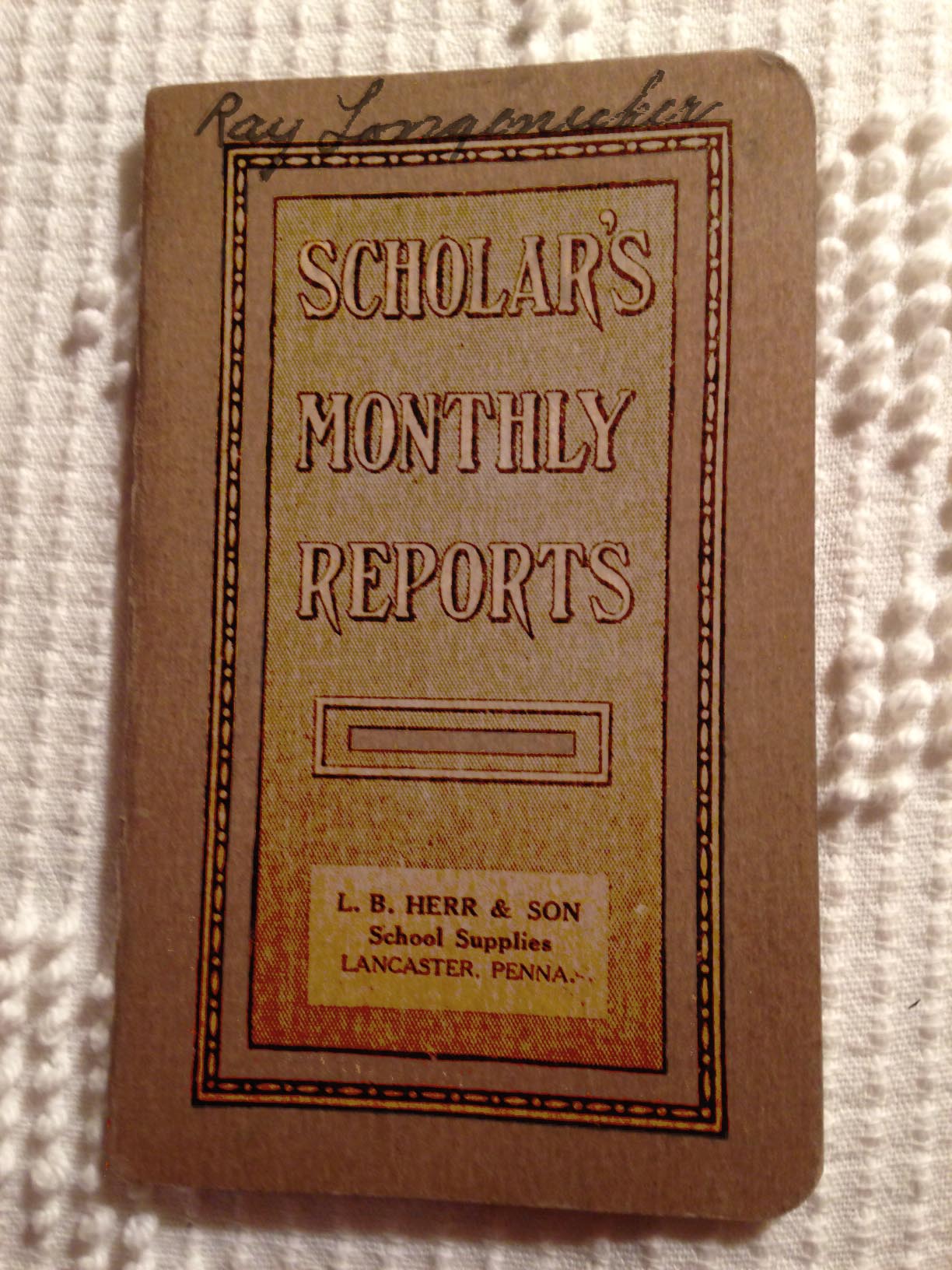
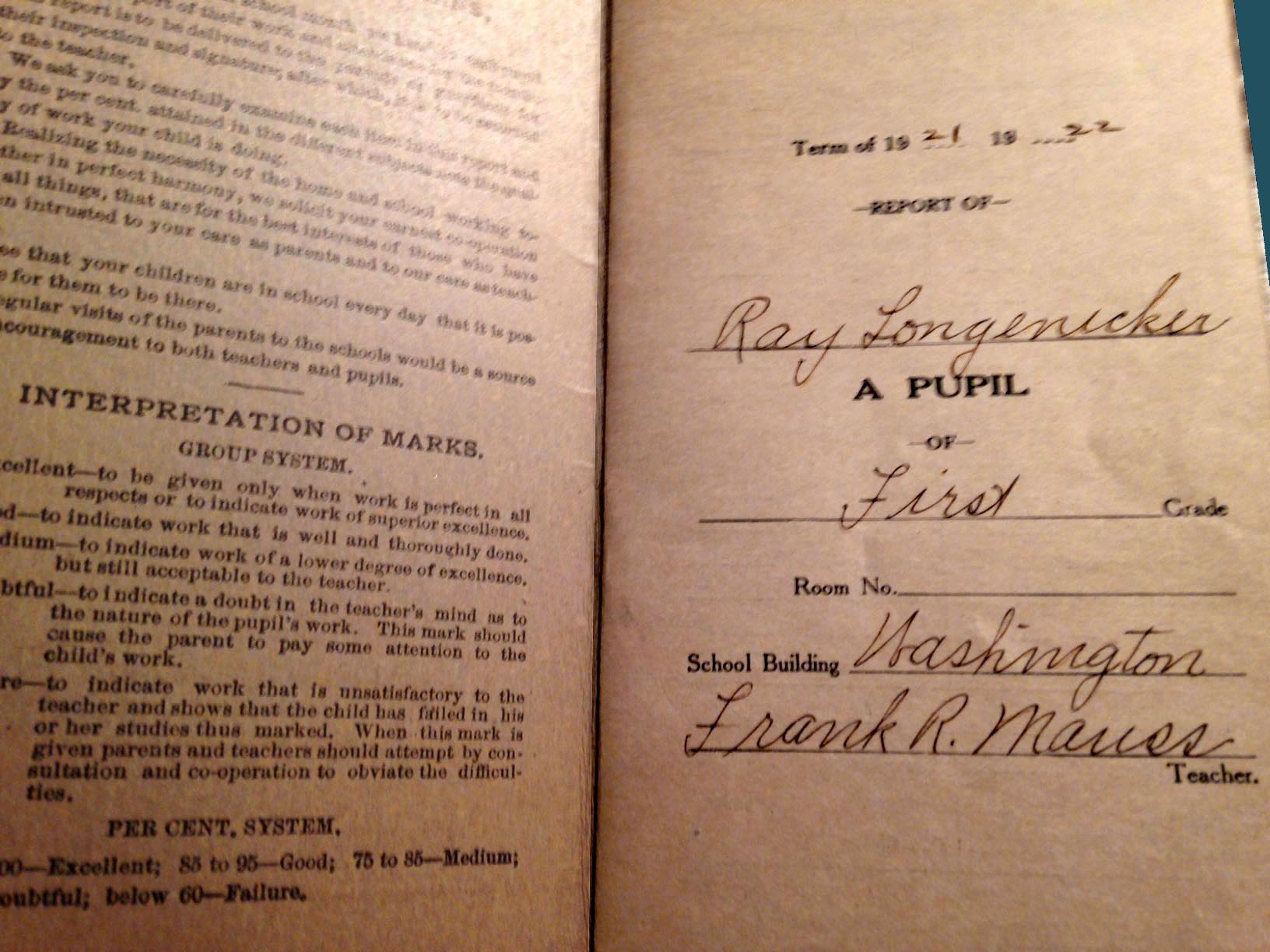
Some discoveries are hidden. Out of sight. Others are hidden in plain view. Last week we uncovered my dad’s first grade report card from 1921-22 in a box on the upper shelf of the closet. It’s a document, really, a fancy booklet with flowing cursive penmanship. The opening page announces the teacher’s name and school, Frank R. Mauss at Washington School, like many schools of the era on the same grounds as the church, in this case Bossler’s Mennonite Church.

Ray Longeneckter_1st gr report card_4x5_300Ray Longenecker_report card1_inside_5x3_300

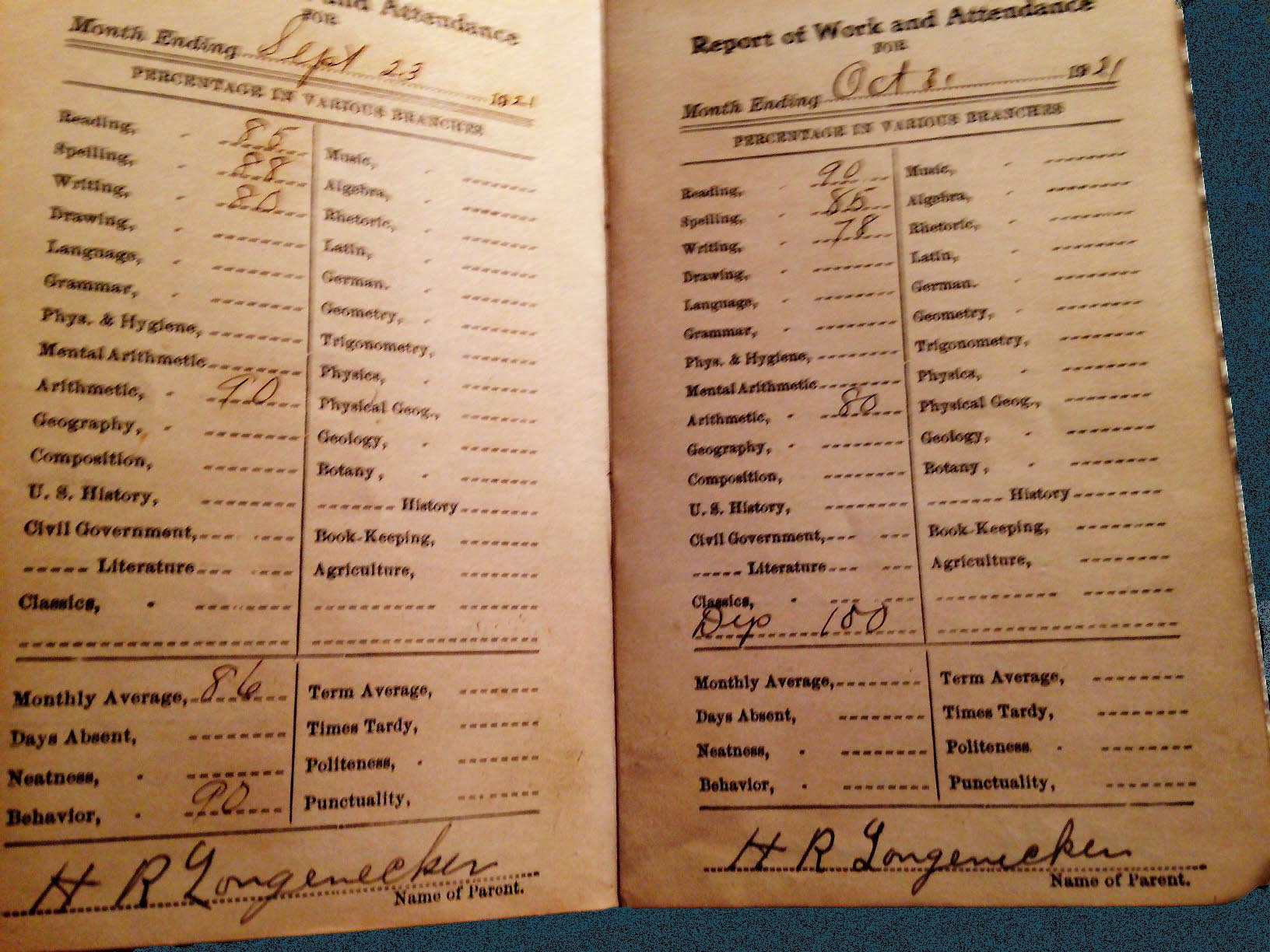
There are no vague S’s or U’s for satisfactory or unsatisfactory. Not even an A, B, or C. No, the grades are recorded precisely as percentages: 86% average for the first reporting period. And a 90% for behavior, not quite the teacher’s pet!

Ray Longenecker_report card2_inside_5x3_300

*  *  *

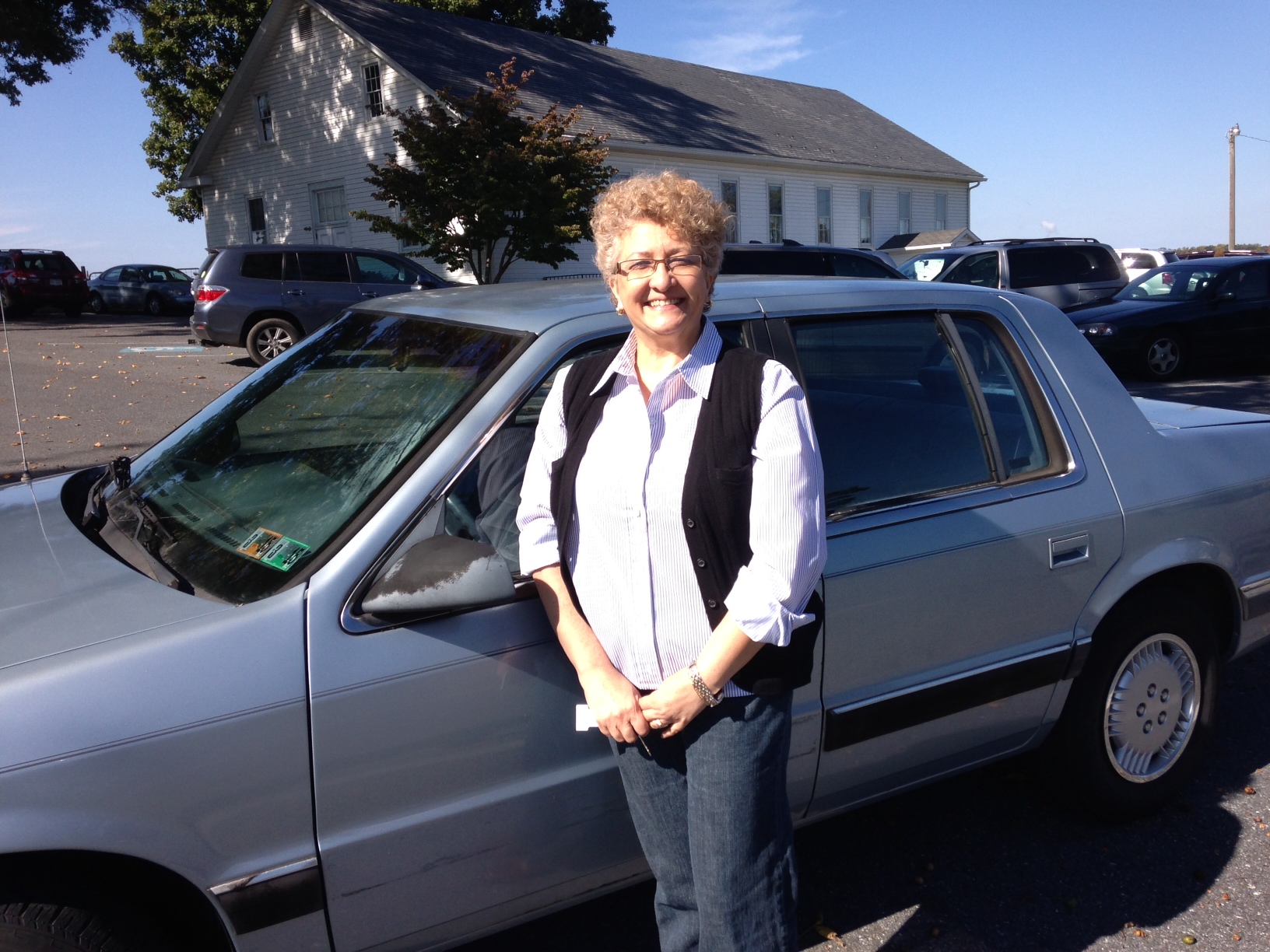
And, yes, other discoveries are hidden in plain view, like Mother’s Dodge Spirit. With 98,000 miles it’s been around the block more than once, but certainly not worthy of an antique license tag. What to do with it? After some deliberation, our sister Jean suggested we offer it to our friend Edda, a member of Bosslers’ Mennonite Church. A first-generation immigrant from Colombia, Edda is getting a foot-hold on a new life in the USA while enabling her son to get a college education. She is tickled pink with our recycled gift. A bonus for us: We get to see Mom’s car parked at church when we visit on Sundays.

EddaCar

Cards and cars – both have a second life, one an artifact to hold – the other, providing a pathway to the next step in adventure for a brave woman.

Valuing the past and the present, both solemn acts, both borne of love. As Wendy Schuman concludes, As I sorted through her things, I felt surrounded by her presence. In a way, it helped me say my final goodbye.”

Have you had to say goodbye to someone or something you have cherished?

How have you learned to say “Goodbye”?

Coming next: Mom’s Accessories: Bonnets, Hankies, Pins, and More

Train Lovers, Welcome Aboard

3 Snapshots from Memory

  • Aunt Ruthie Longenecker takes us to Philadelphia, my first recollection of a train trip. I feel the rocking motion of the Pennsylvania Rail Road train car we occupy, the clickety-clack of the wheels on the rails, and the prize of the big city zoo at the end of the trip: lions and tigers and elephants, oh my!
  • When I pick raspberries with Grandma Longenecker, I hear the train’s clatter-clack over segments of track speeding from Lancaster to Harrisburg. With our round aluminum kettles laden with berries and handles that cut into the palms of our hands, we stand just 50 yards from the track, feeling the vibration of the passing train through our shoes, gazing in awe.
  • Years later, the young Beaman family bridges the gap between Florida and Pennsylvania via Amtrak’s Silver Meteor. The miles disappear behind us effortlessly. Parents and children eat, read, stretch our legs as some passengers wonder “Who’s that little kid running in the aisle?”

Train Trips Engage the Senses:

  1. Rocking motion as the train speeds along
  2. Sound of the wheels on the rails
  3. Smells of warm exhaust, food in the dining car,
  4. Surprising views as train wends its way through towns, countryside
  5. Spontaneous, easy conversation sometimes with strangers

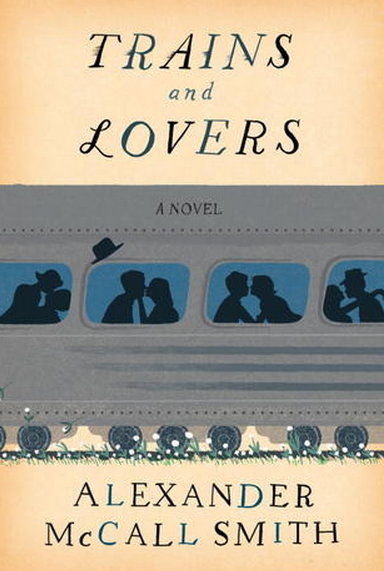
Alexander McCall Smith, known for his light mysteries that kindly expose the foibles of his characters, describes the mystique of train travel in his recent novel Trains and Lovers (2012):

Screen Shot 2014-10-02 at 6.30.12 PM

“I’m thinking that’s a fishing boat.”

It was. He saw it from the train, but not for more than a minute or two, as the line followed that bit of coastline only for a short time before it suddenly swerved off, as railway lines will do. The view of the North Sea was lost, and trees closed in; there was the blue of the sea one moment and then the blurred green of foliage rapidly passing the window; there was slanting morning sun, like an intermittent signal flashed through the tree.”

Train Poetry

Of course, nostalgic verse has been written about train travel, Sara Teasdale hearing and seeing from In the Train the “restless rumble,” the “drowsy people” and the “steel blue twilight in the world (1915).

Edna St. Vincent Millay reflects on viewing the distant steam locomotive in Travel (1921)

The railroad track is miles away,

And the day is loud with voices speaking,

Yet there isn’t a train goes by all day

But I hear its whistle shrieking.

All night there isn’t a train goes by,

Though the night is still for sleep and dreaming,

But I see its cinders red on the sky,

And hear its engine steaming.

My heart is warm with friends I make,

And better friends I’ll not be knowing;

Yet there isn’t a train I wouldn’t take,

    No matter where it’s going.

You can hear the rocking rhythm of the train in W. H. Auden’s lines from Night Mail – This is the night mail crossing the Border / Bringing the cheque and the postal order.

The Destination

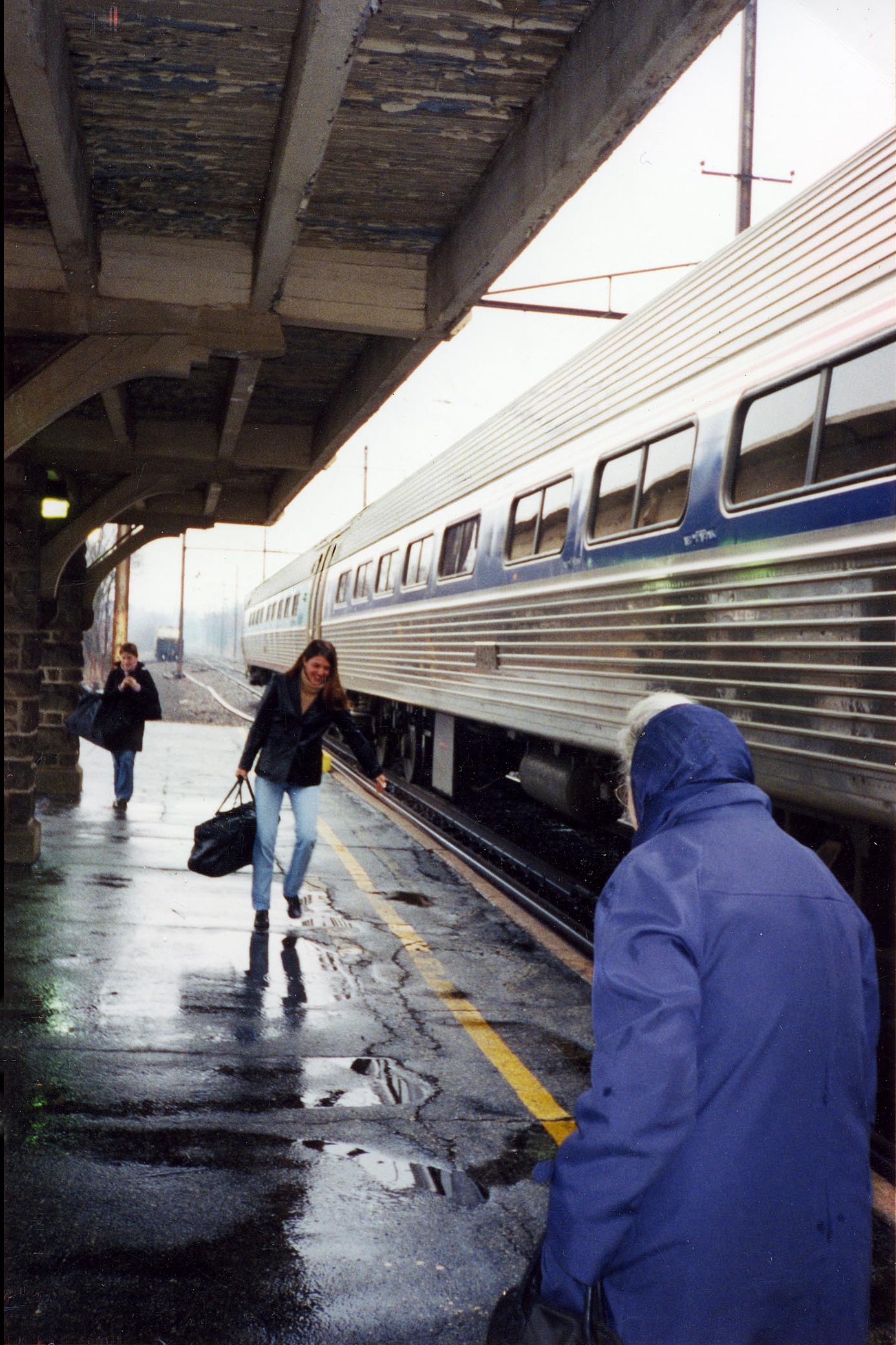
Arriving in Pennsylvania from Philadephia more than ten years ago, grand-niece Heidi runs to meet Aunt Ruthie at the tiny Amtrak terminal in Elizabethtown – exchanging cold, wet weather for a warm, welcoming hug.

Aunt Ruthie meeting Heidi_2002-_300

Your experience with train travel . . . tell us about it.

A response to the anecdotes or poetry here? All replies welcome.

Coming next:

Moments of Discovery #2 – Daddy’s 1912 Report Card & Mother’s 1989 Dodge Spirit

Secrets in My Hatbox

Just behind my desk, a wicker table holds three hat-boxes: One is floral, another has a repeating Tuscan scene and the third is transparent, the contents held taut by pale blue gossamer fabric. All are chock full of memorabilia from days gone by. All three, a type of journal-in-the-making.

Hatboxes

Depending on your style, your journal may be traditional with words and lists. Maybe you even paint or use colored pencils to amuse yourself or record an image. If you are tech savvy, you may have a photo journal, an audio or video journal. Maybe you are even into scrap-booking.

A hat-box is a type of scrapbook, really, a place to keep ticket stubs, magazine and newspaper clippings, programs, and fliers. You don’t actually have to write anything, unless you are into marginal notes, underlining and highlighting like me.

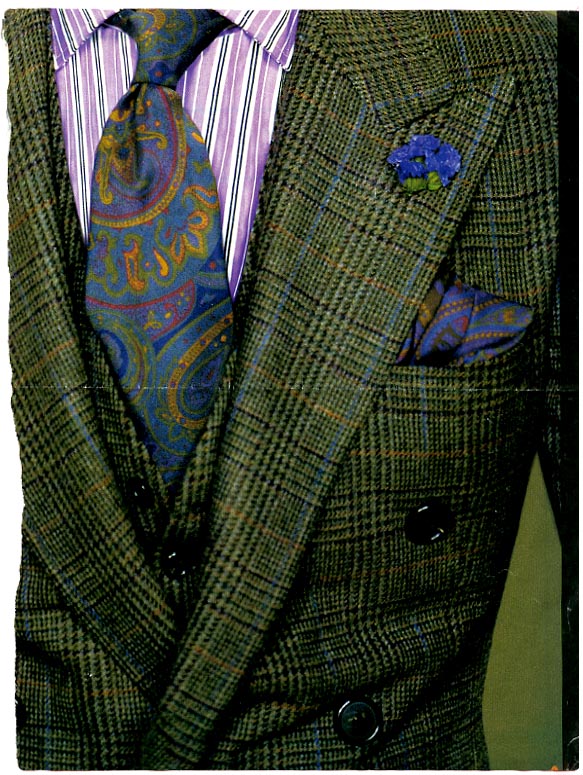
A few weeks ago, I opened one of my hat-boxes and found an article on the sexuality of corn that I may use on a blog post next spring. A page of a man’s outfit I thought natty also surfaced along with an article about videotaping I must have liked back in the May 7, 2007 issue of Newsweek.

Camcorder article

Suit magazine page

I like the irony of a Mennonite girl keeping clippings in a hat-box, hats forbidden in my teen years when fancy hats were then popular. But just like my youth, hat-boxes don’t contain the end of my story but seed kernels of what is yet to be.


Do you have a container, odd or simply utilitarian, for memorable “stuff”?

What does it look like? What do you keep inside?  Inquiring minds want to know . . . .

Moments of Discovery # 1: How Do You Furnish a House?

According to The Huffington Post, the median home price in the United States (2014) is $ 188,900.00. Even adjusted for inflation over the years, housing prices have increased enormously since the 1940s.

My parents were married in 1940. Until they bought their first home in 1941, they lived for a few months with my father’s parents, Henry and Fanny Longenecker, and then with a relative, “Uncle” Elmer Longenecker in the village of Rheems, Pennsylvania. The newlyweds’ first home of about 1240 square feet cost $ 5000.00.

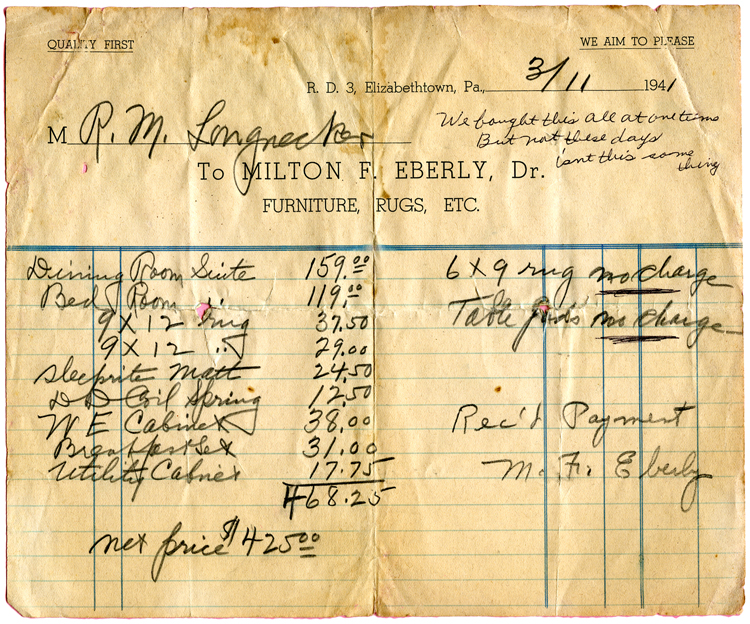
Just as astonishing as the price of the house was the bill for their home furnishings from Eberly Furniture Store just above Elizabethtown. They outfitted this home for $ 425.00 including a dining room and bedroom suites with a mattress and box springs, a kitchen table, rugs and two utility cabinets.

Eberly Furniture receipt_150

Please note that table pads for the dining room and a third, smaller rug were apparently thrown in as a bonus. Milton was a happy man the day Ray and Ruth Longenecker walked through the door of his store. And the feeling was mutual. My Mother’s comment on the receipt says it all: “We bought this all at one time, but not these days. Isn’t this something.”

The Art Deco bedroom suite has been replaced with something more contemporary but not nearly as beautiful to my taste. What is left of the original purchase: the kitchen table and chairs and the Duncan Phyfe dining room suite.

BuffetMomChinaCabinet

Isn’t that something?

The “Moments of Discovery” series is Part One of a continuing series that will unfold as we sort through the contents of the house on Anchor Road. It joins other series on this blog: Purple Passages, Moments of Extreme Emotion, and 10 Tips/Secrets.

How do you furnish a house – traditional, contemporary, eclectic? 

Coming next: Secrets in My Hatbox