Moments of Discovery # 2: Dad’s 1921 Report Card & Mom’s 1989 Car

The bustle in a house

The morning after death

Is solemnest of industries

Enacted upon earth, —

The sweeping up the heart,

And putting love away

We shall not want to use again

Until eternity.

Emily Dickinson was referring to the morning after the death of a loved one, but such hustle could also refer to what happens weeks or months after a loved one dies, and the bereaved are required to sift through that loved one’s possessions.

There is no shortage of articles on how to tackle this bittersweet task. Sara Davidson in a piece in The New York Times asks, “What to do with Mother’s stuff?” which in her case too involved dispatching with a car, furnishings, and memorabilia. Following Joan Didion’s rule, she tried to follow the principle of touching an object only once, making a decision and moving on.

The most emotional aspect of cleaning out a house is sorting the belongings, says Elizabeth Weintraub in an article “Cleaning Out the House After a Death.” She suggests sorting items into three piles or tagging them with color-coded stickers: Items to keep, items to donate or sell, items to throw away. Wendy Schuman outlines “9 Tips for Cleaning Out Your Late Parent’s Home.” She remarks, “Consider the cleaning-out job a labor of love. As hard as it was, clearing out my mother’s home was the last important service I could render her . . . .”  

Recently, my sisters and I said our goodbyes again and again as we sorted, reminisced, cried, but forged ahead, emptying drawers, closets, and eventually rooms.

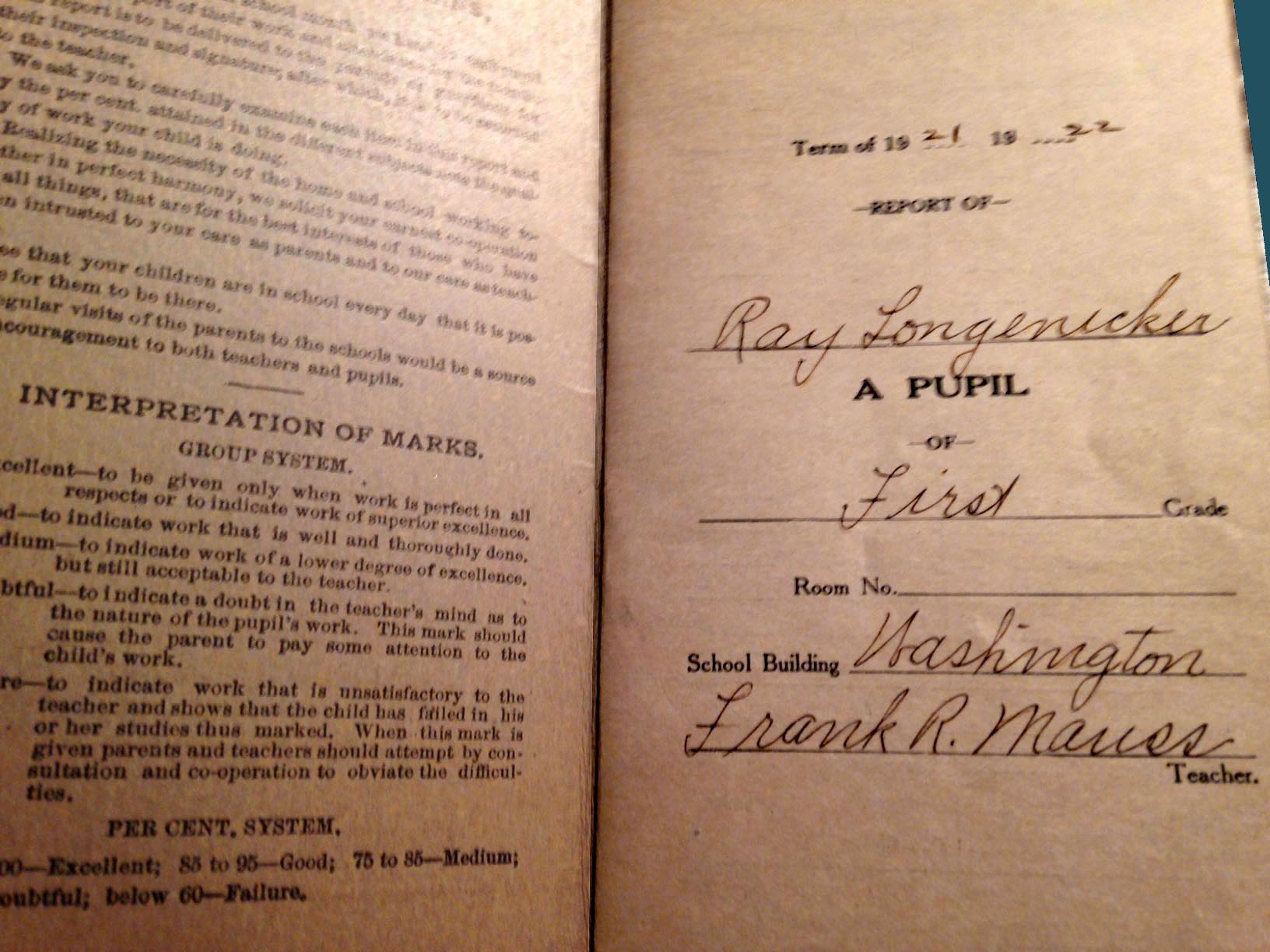
Some discoveries are hidden. Out of sight. Others are hidden in plain view. Last week we uncovered my dad’s first grade report card from 1921-22 in a box on the upper shelf of the closet. It’s a document, really, a fancy booklet with flowing cursive penmanship. The opening page announces the teacher’s name and school, Frank R. Mauss at Washington School, like many schools of the era on the same grounds as the church, in this case Bossler’s Mennonite Church.
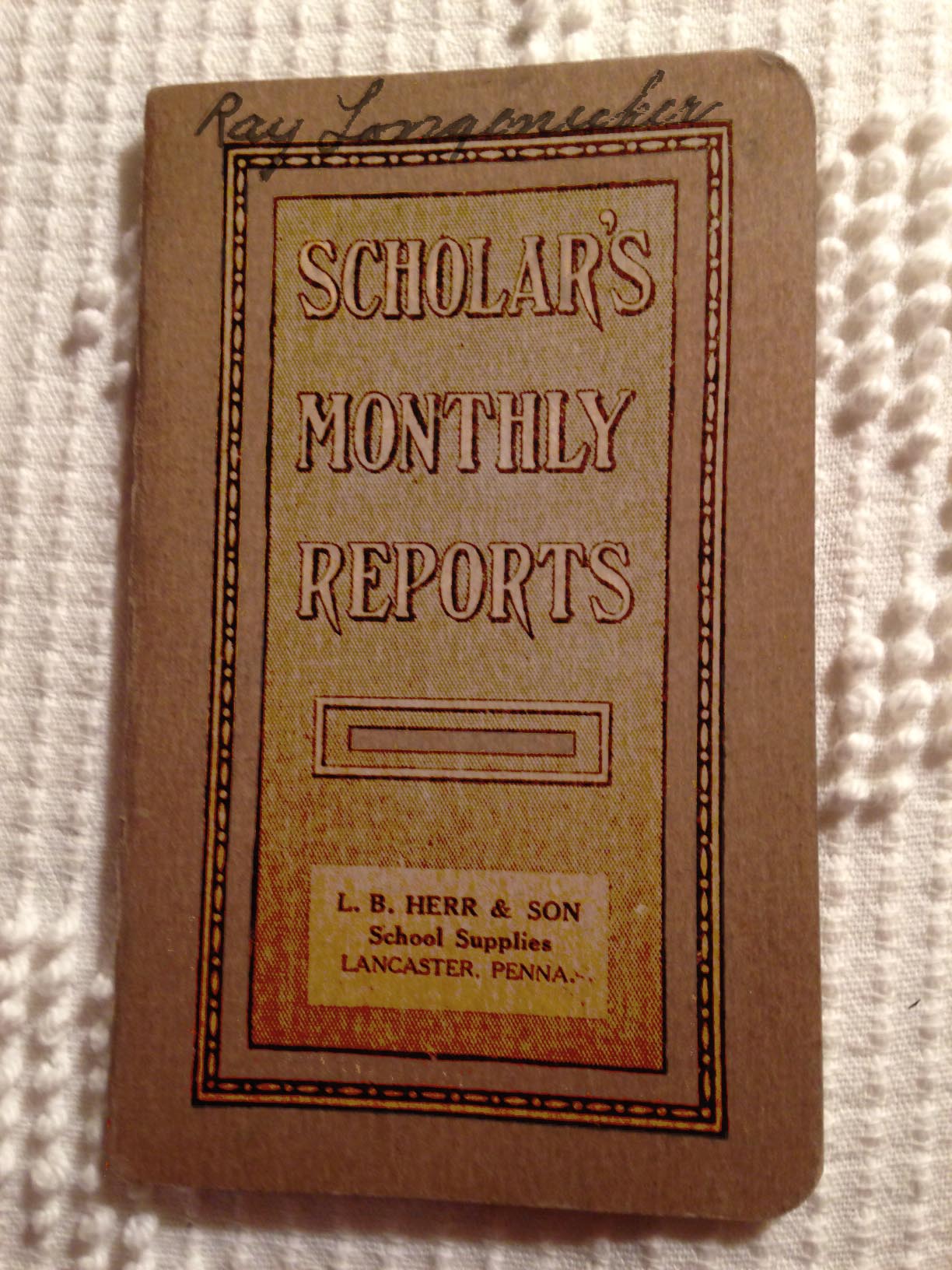
Ray Longeneckter_1st gr report card_4x5_300Ray Longenecker_report card1_inside_5x3_300

There are no vague S’s or U’s for satisfactory or unsatisfactory. Not even an A, B, or C. No, the grades are recorded precisely as percentages: 86% average for the first reporting period. And a 90% for behavior, not quite the teacher’s pet!
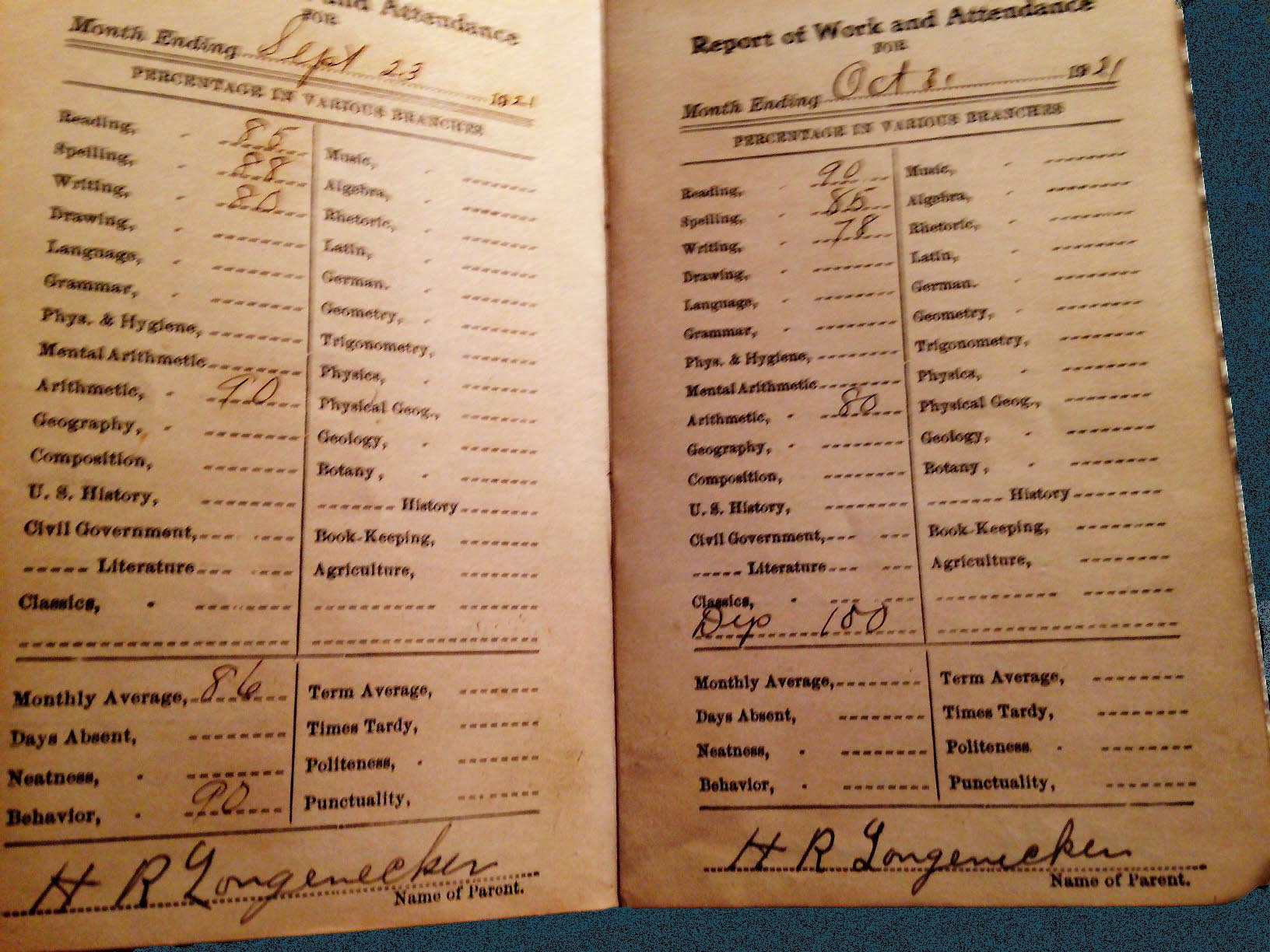
Ray Longenecker_report card2_inside_5x3_300

*  *  *

And, yes, other discoveries are hidden in plain view, like Mother’s Dodge Spirit. With 98,000 miles it’s been around the block more than once, but certainly not worthy of an antique license tag. What to do with it? After some deliberation, our sister Jean suggested we offer it to our friend Edda, a member of Bosslers’ Mennonite Church. A first-generation immigrant from Colombia, Edda is getting a foot-hold on a new life in the USA while enabling her son to get a college education. She is tickled pink with our recycled gift. A bonus for us: We get to see Mom’s car parked at church when we visit on Sundays.
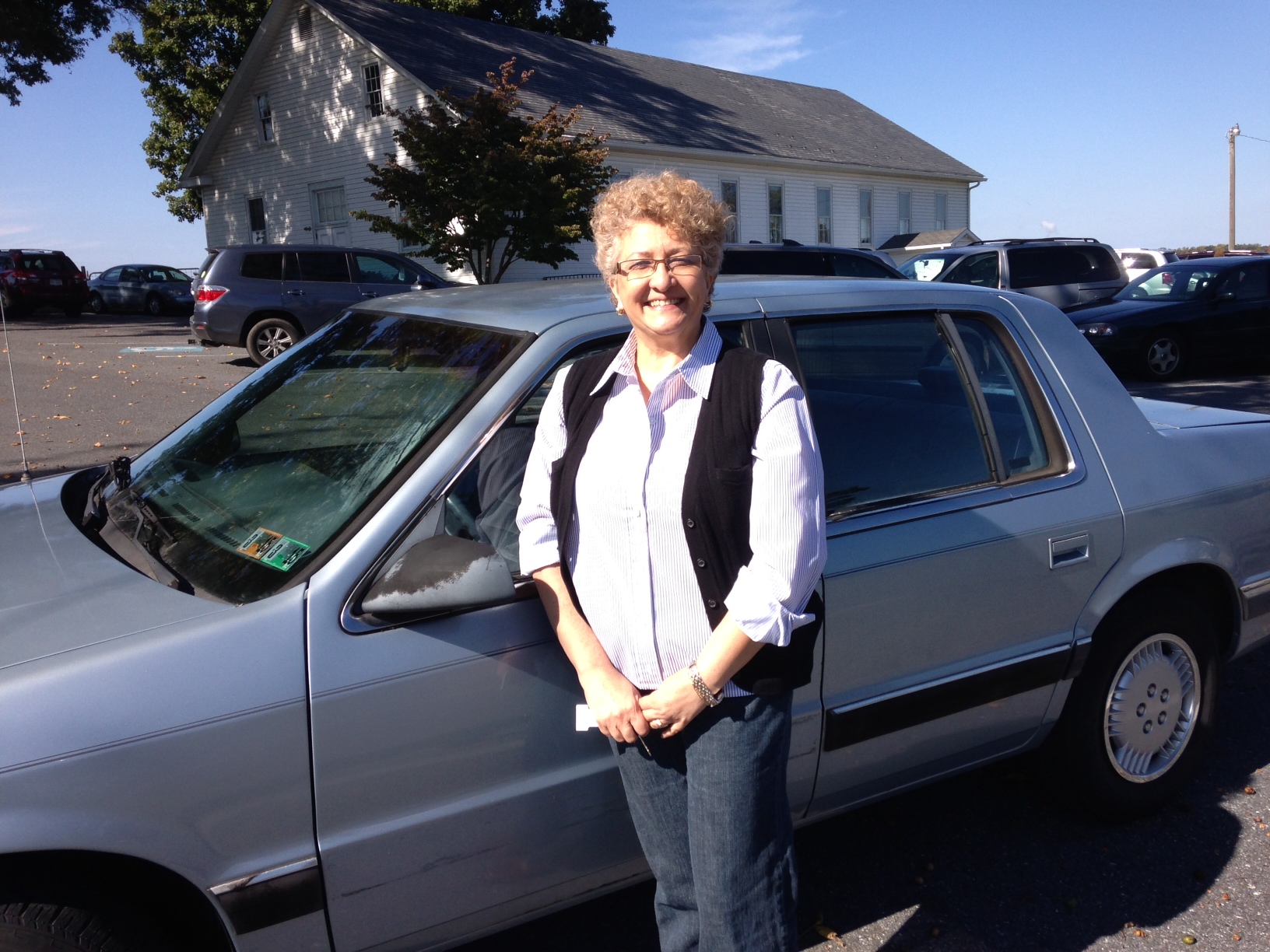
EddaCar

Cards and cars – both have a second life, one an artifact to hold – the other, providing a pathway to the next step in adventure for a brave woman.

Valuing the past and the present, both solemn acts, both borne of love. As Wendy Schuman concludes, As I sorted through her things, I felt surrounded by her presence. In a way, it helped me say my final goodbye.”

Have you had to say goodbye to someone or something you have cherished?

How have you learned to say “Goodbye”?

Coming next: Mom’s Accessories: Bonnets, Hankies, Pins, and More

Secrets in My Hatbox

Just behind my desk, a wicker table holds three hat-boxes: One is floral, another has a repeating Tuscan scene and the third is transparent, the contents held taut by pale blue gossamer fabric. All are chock full of memorabilia from days gone by. All three, a type of journal-in-the-making.

Hatboxes

Depending on your style, your journal may be traditional with words and lists. Maybe you even paint or use colored pencils to amuse yourself or record an image. If you are tech savvy, you may have a photo journal, an audio or video journal. Maybe you are even into scrap-booking.

A hat-box is a type of scrapbook, really, a place to keep ticket stubs, magazine and newspaper clippings, programs, and fliers. You don’t actually have to write anything, unless you are into marginal notes, underlining and highlighting like me.

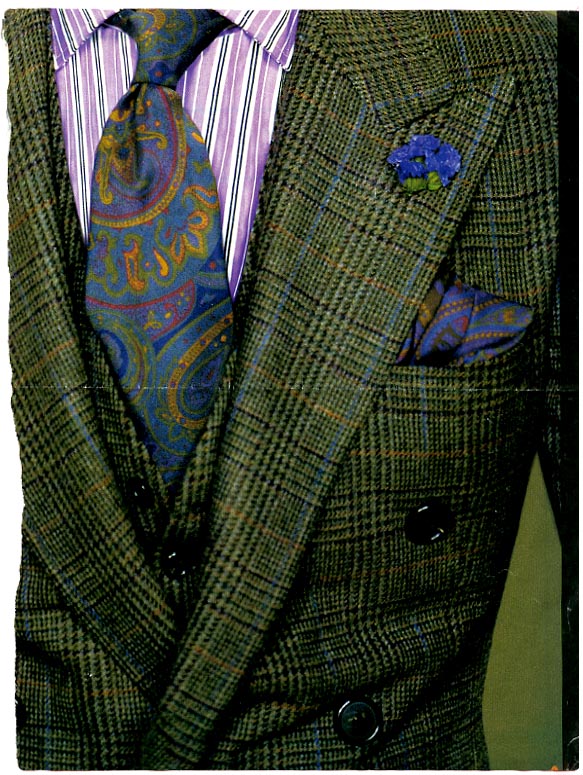
A few weeks ago, I opened one of my hat-boxes and found an article on the sexuality of corn that I may use on a blog post next spring. A page of a man’s outfit I thought natty also surfaced along with an article about videotaping I must have liked back in the May 7, 2007 issue of Newsweek.

Camcorder article

Suit magazine page

I like the irony of a Mennonite girl keeping clippings in a hat-box, hats forbidden in my teen years when fancy hats were then popular. But just like my youth, hat-boxes don’t contain the end of my story but seed kernels of what is yet to be.


Do you have a container, odd or simply utilitarian, for memorable “stuff”?

What does it look like? What do you keep inside?  Inquiring minds want to know . . . .

I’m All Ears!

A Fable

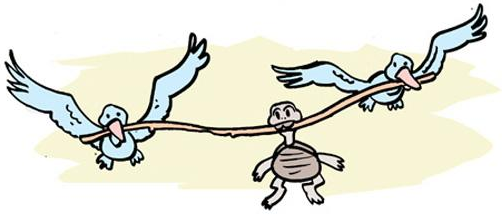
Credit: immstories.wordpress.com

A tortoise had become friendly with two geese who promised to take it to their home in the mountains. The plan: The geese would hold a stick in their beaks while the tortoise would grasp it in the middle with his mouth, but he must be careful not to talk. During the journey, villagers below made fun of the tortoise. When it answered back, it fell to its destruction.

You guessed the moral: Talking at the wrong time can lead to fatal consequences!

Quick Quiz

1. Are you the first to air your knowledge when your favorite topic comes up?

2. Do you interject your opinion before anyone else has a chance to speak?

3. Do you tune out what others are saying because you are busy thinking of a comment?

I’m just guessing here, but you were probably the 3rd grader whose hand was the first to shoot up when your teacher asked a question. And I must say I am guilty as charged. Just see the Cliff and Marian misunderstanding below.

*  *  *

Hearing and listening are not the same thing. The difference between the sense of hearing and the skill of listening is attention, says Seth Horowitz in a New York Times piece.

The Harvard Business Review blog reveals that one in four corporate leaders have a listening deficit. No surprise there! In the business world, failure to listen can muddle the lines of communication, “sink careers, and if it’s the CEO with the deficit, derail the company.” In our personal lives, muddle and mayhem can result.

Good advice for better listening? First of all, slow down. While listening seems like such a passive thing to do, it is essential for understanding. Secondly, consider the source. “Try to understand each person’s frame of reference—where they are coming from.” Disagreements can often be averted with skilled listening.

Studies show that thoughts move about four times as fast as speech. No wonder it’s so hard to slow down and actually listen.


Here is the beginning of a list of tips for good listening:

1. Give full attention to whoever is speaking.

2. Don’t interrupt. Let the other person finish before you begin speaking.

3. Listen with your face as well as your ears. It’s appropriate to smile, frown, laugh, be silent at times when you are in conversation.


A Cliff and Marian Misunderstanding

Sometimes listeners with a lot of practice get muddled up. Here is a “He said / She said” from our own experience:

Marian: Let’s eat out today.

Cliff: Wonderful idea.  (Time passes – Cliff leaves and comes home about dinner time noticing I’m in the middle of meal preparation.)

Cliff: I thought we were eating out this evening. Why, I had some ideas about where we would go.

Marian: For goodness sake, I was thinking that it would be nice to eat outside on the patio because it’s so cool.

Cliff: But I thought you meant we were eating out, like in a restaurant!

God help me!
God help me!

Listening in the Longenecker Family 1950s

Living in the Longenecker family in the 1950s, we children were taught to listen, pay attention. In a parent-centered household, we listened to directions about chores, instructions about what to do and what not to do. To balance things out though, we also listened to Daddy singing as he played the guitar or the piano, or to Mother singing off-key in the kitchen. “I’ll be somewhere, listening, I’ll be somewhere listening, I’ll be somewhere listening for my na-aa-mm-e . . .

Please add your own tip, an observation, or an anecdote about listening or the lack thereof.

Coming next: Another Moment of Extreme Emotion

Home-made Butter: 3 Easy Steps

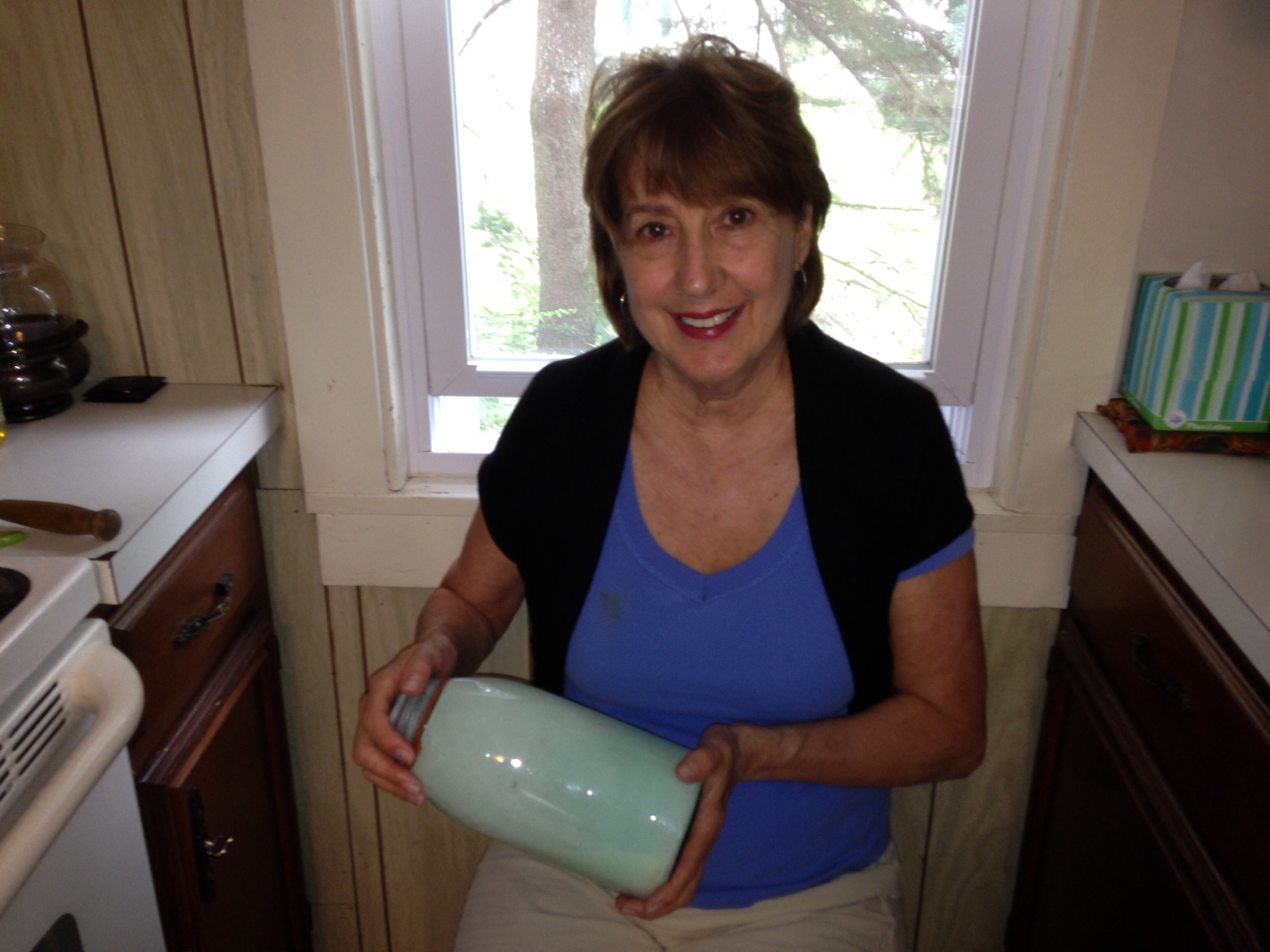
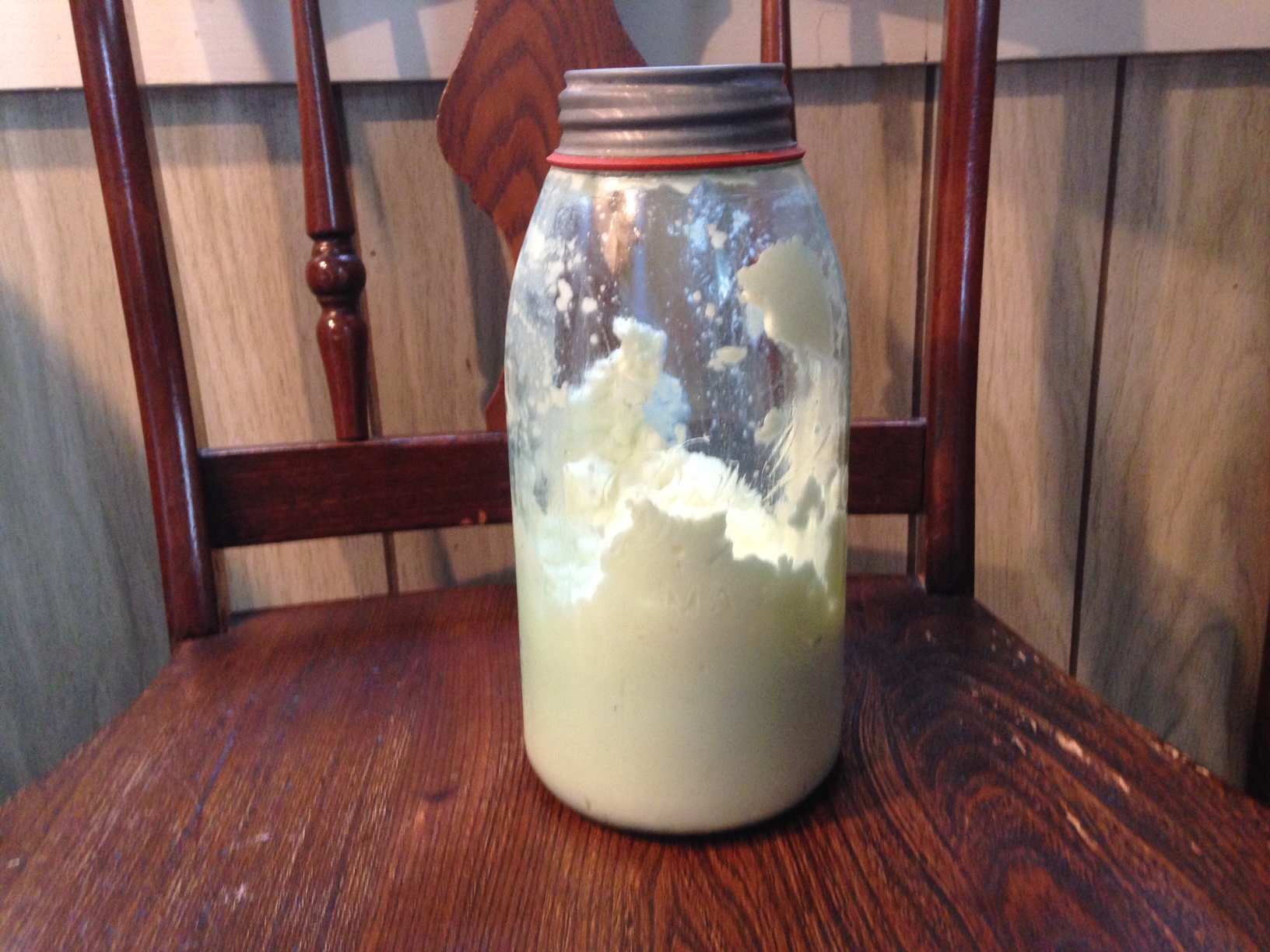
This week at Mom’s house, I attempted to re-create a scene from my childhood – in the same house, on the same chair, with one of the same Ball-Mason jars from the mother’s stash in the cellar. The kind with tiny bubbles crystallized within the glass of the jar. Mother says these jars are valuable.

The cream of bygone days for butter-making came from one of the Holstein cows that Sam and Mabel Hoffer kept on their tiny farm down the road from us on Anchor Road. For this re-enactment, I buy whipping cream from Giant Foods up the road toward town.

Butter 1

Did I mention that my sister Jan and Mother are both skeptical that store-bought cream will yield real butter.

Janice says, “You’re probably wasting your time shaking that jar back and forth with cream from the store. Think about all of the additives and preservatives they put in.”

Mother doesn’t say much but looks skeptical. I’m out to prove them wrong.

Butter 2

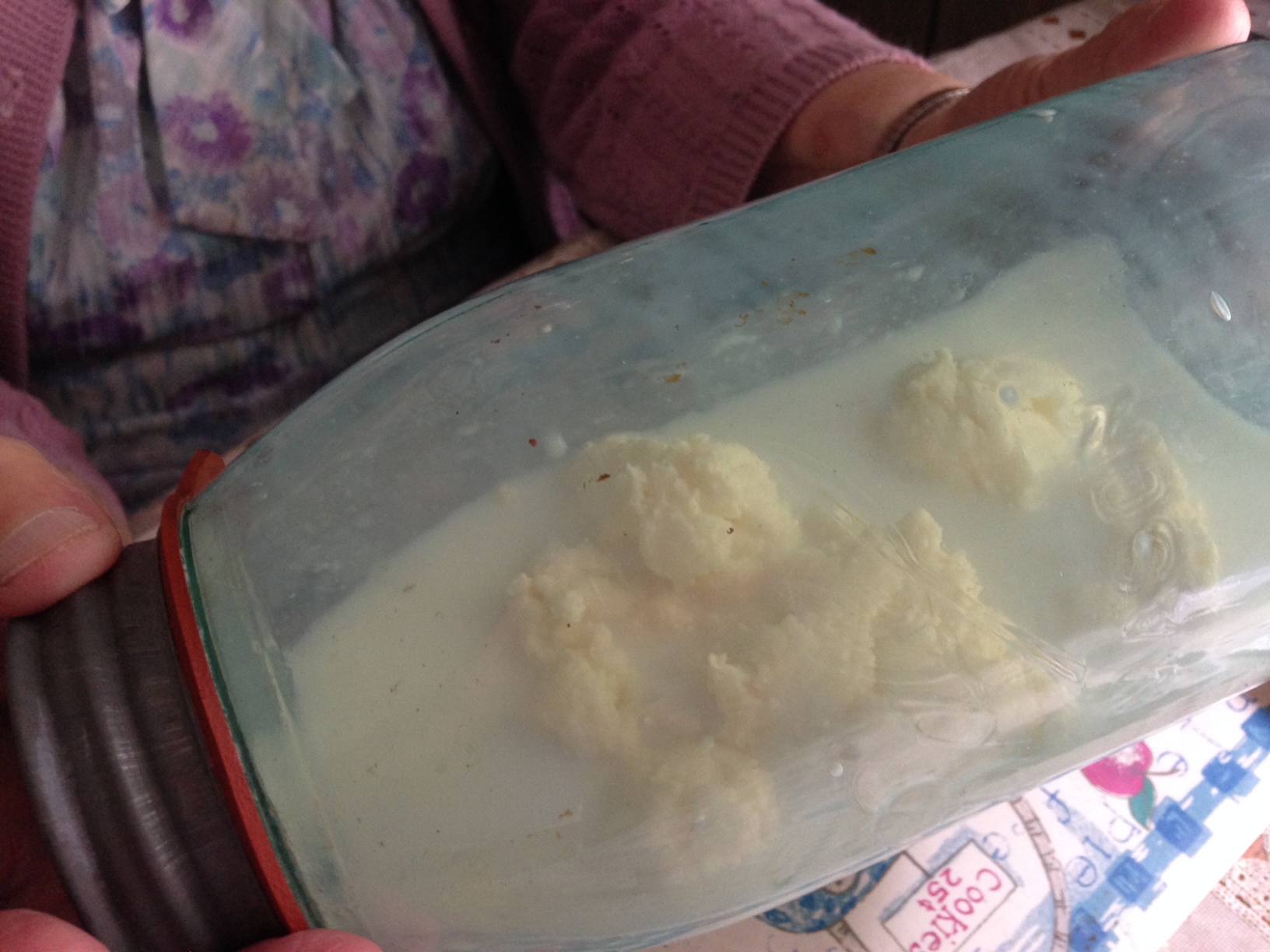
I stop the shaking long enough to notice that curdles of cream are clinging to the jar’s insides. That’s all it takes.

First, sister Jan and then Mother get in on the action, now past the 12-minute mark.

Without a shadow of doubt, real honest-to-goodness butter lumps are forming.

Butter 4

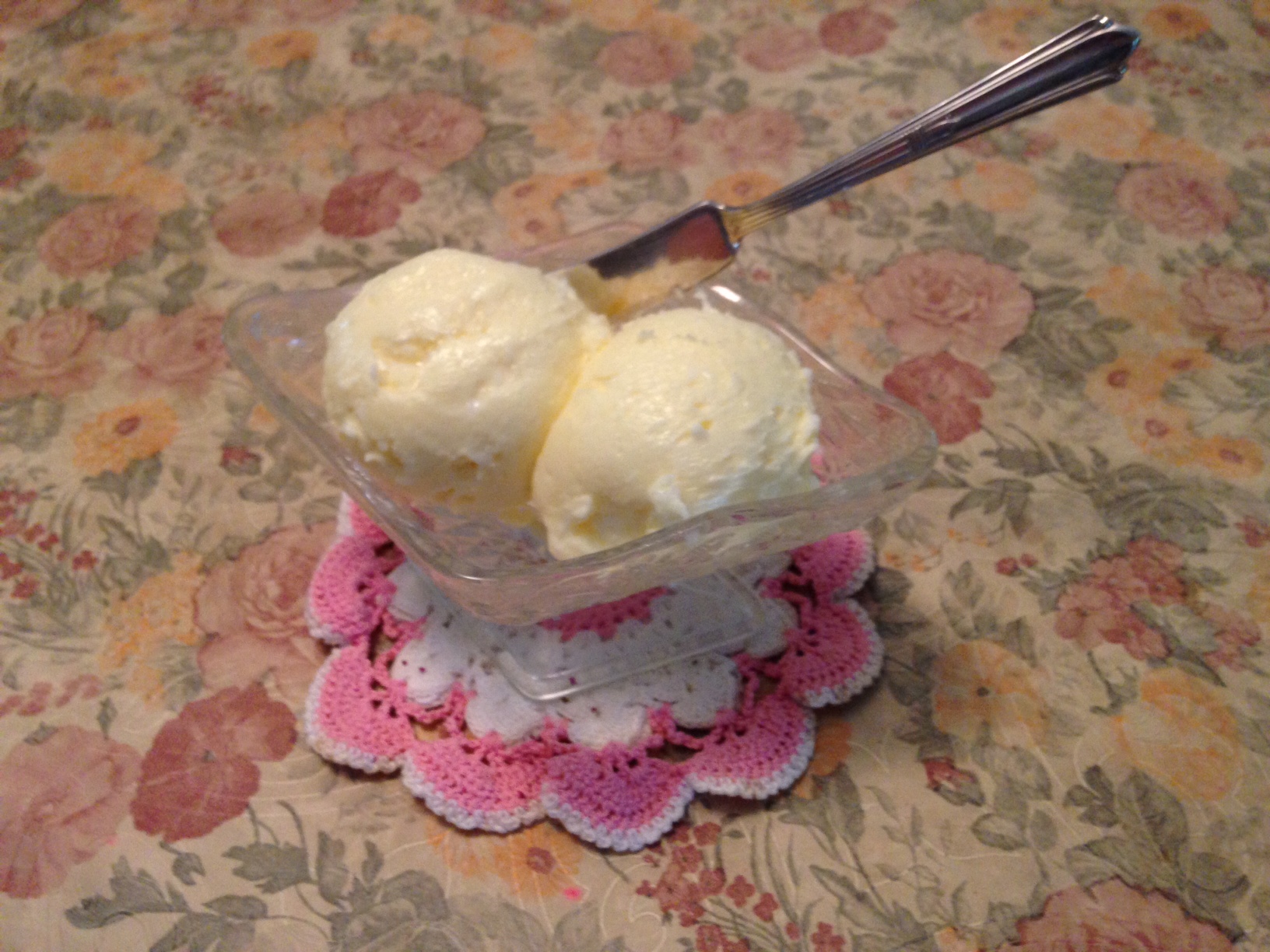
And voilá . . .

Butter 5

Fifteen minutes later, more or less, we have two fat butter-balls!

Did you catch the steps?

  1. Pour cream into 2-quart jar.
  2. Shake until you rattle and roll.
  3. Remove the congealed mass from the jar. Add a pinch of salt.

*  *  *

What scenes from your past have you tried to re-create?

Blog Tour

MarianStudyLong2

Here is my study. When the magic happens, it happens here. Actually, it might happen in the flower garden just outside my window in the form of a thought or image which gets transferred from my head to my fingers at my desk. . . .

Every once in a while, fellow bloggers alert me to a writing challenge, many of which I pass over for lack of time or interest. This time, Traci Carver invited me to participate in a Blog Tour. I couldn’t turn her down. Why, just last week we had lunch together. Besides the “tour” is an intriguing way to play tag and learn about other writers’ habits and sources of inspiration while sharing my own. So, a big shout out goes to Traci, story-teller extraordinaire, who turns the cotton of her everyday experience as an English teacher into pure gold. A true Southern belle, Traci is a master of the anecdote. Her stories derive from the small Georgia town she grew up in, the fishing villages of Southeast Asia where she lived for 7-8 years, or from European travel. Now to the questions:

1. What am I working on now?

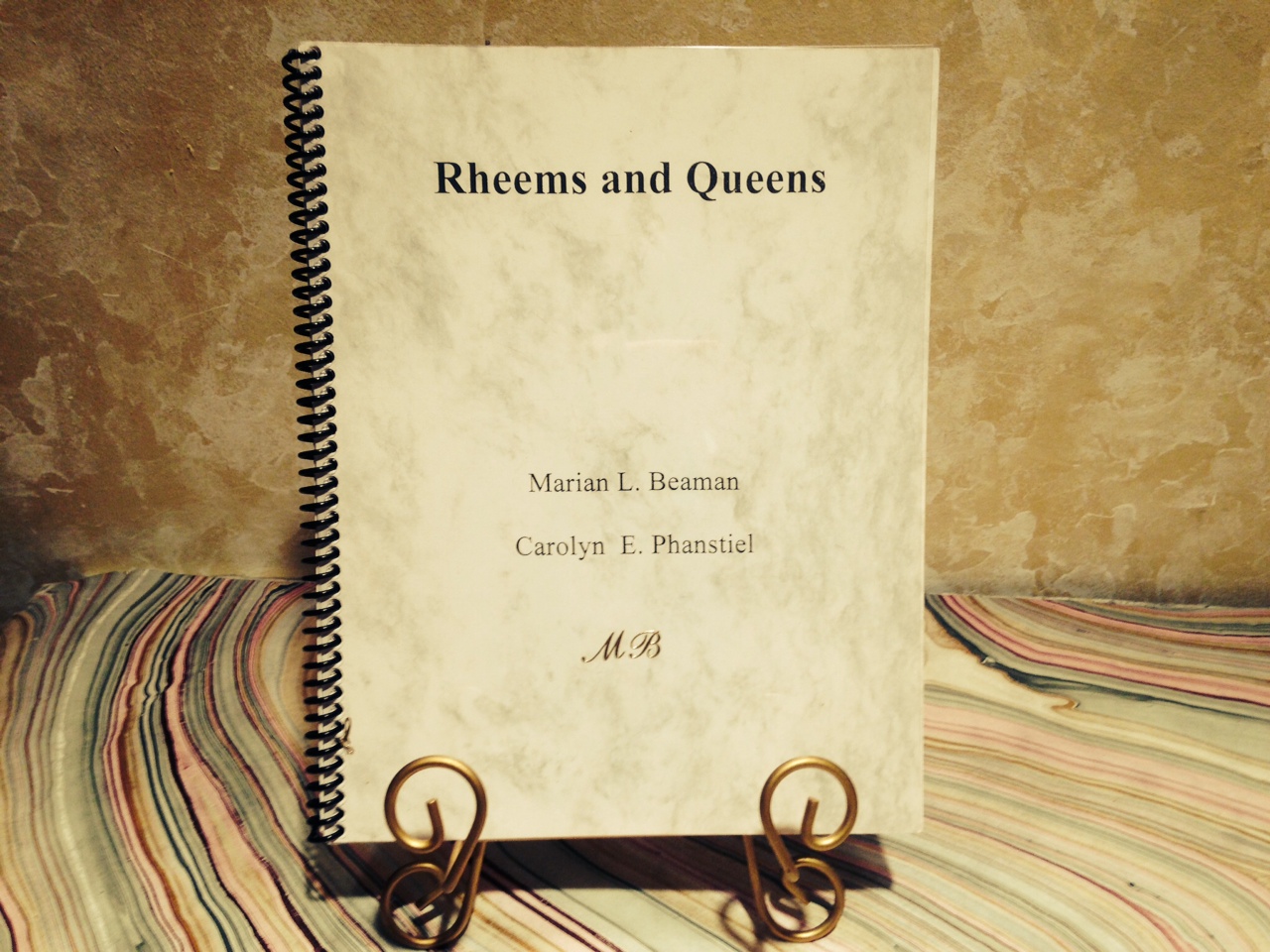
Three unrelated things at the moment: Preparing for a trip to Pennsylvania soon where I will mine more stories for this blog, purging clothes from the spare bedroom closet to make space for a long-term guest, and writing every single day. My blog has taken shape from 8-9 journal scribblings along with a set of paired stories written with my friend Professor Carolyn Phanstiel before we both retired from teaching.

MarCarBOOK

There is a .doc on my computer desktop where my memoir is taking shape. Right now, it doesn’t have enough structure to “roll it through a printing press,” as Traci wisely observes.

2. How does my work differ from others in the genre?

According to Jerry Waxler, a Memoir Revolution is in full swing. Each year thousands of new memoirs pour onto the shelves. Millions are writing memoir right now. Even in the Mennonite sub-culture, hundreds of memoirs have been published since Canadian Mennonite Katie Funk Wiebe’s publication of Good Times with Old Times, touted as “an egg with a double yolk” because it is part memoir, part how-to-write-your-own-story book.

So how is my writing different? Well, my world view has been tempered by time and place. No longer a Mennonite, I still identify with many aspects of an Anabaptist vision. Also, I was transplanted to Florida as a newly wed which would affect my perspective. Then too, I have a large set of artifacts and some living relatives that connect me firmly to my past. Like other memoirists, especially of the academic variety, I tend to weave the literary with the familiar. Sometimes readers say they can detect humor in my writing voice, which I hope makes my writing appealing, if not unique.

3. Why do I write what I do? 

What motivates me to write is my compulsion to leave a legacy for those who follow, particularly my family. Beyond that, I write what I know and to find out what I don’t know. Many stories are nostalgic, some reflect strong feelings of embarrassment, surprise, endearment (Search the “Moments of Extreme Emotion”); others are historical or hysterical.

4. How does my writing process work?

I was asked that question a few months ago, and the answer turned into a post on the blog of Kathy Pooler, whose memoir launches in this July. A legal-size pad, colored sticky notes, WORD docs, and photos are often part of the process.

Like Traci, I will tag two innocent bystanders, Merril Smith of Yesterday and Today: Merril’s Historical Musings, and Judy Berman of earthriderdotcom.

A published author of encyclopedic proportions (and I mean that literally) Merril’s blog posts frequently become meditations on the mundane, for example “Airing Out Some Thoughts on Laundry.”  Her About page describes her as writer, editor, independent scholar, focusing on the history of women, sexuality, and culture. She has published consistently since 1997 with a forthcoming book with the titillating title: Cultural Encyclopedia of the Breast.

Judy invites you to travel down the corridors of her mind as she narrates stories she heard growing up, from her travels, her family, and experiences in various jobs as radio and newspaper reporter and English teacher. Judy has received numerous blog awards, including The Versatile Blogger Award and The Sunshine Blog Award. In a Father’s Day tribute, Judy included a photo of Dad and her stranded alongside the road trying to fix an over-heated motor.

Merril and Judy: You’re “it”!


Purple Passages with a June Bride

Creativity

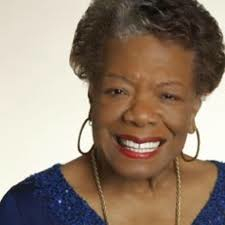
You can’t use up creativity. The more you use the more you have.       ―  Maya Angelou

MayaAngelou2

[Hear her read her valiant poem “Still I Rise” here.]

Creativity is intelligence having fun.     ― Albert Einstein

Make a careful exploration of who you are and the work you have been given, and then sink yourself into that. Don’t be impressed with yourself. Don’t compare yourself with others. Each of you must take responsibility for doing the creative best you can with your own life.

           Galatians 6: 4-5  The Message


Giving and Health

Dr. Stephen Post conducted a survey at forty-four major universities that revealed that giving protects your overall health twice as much as an aspirin protects your heart against disease. Why Good Things Happen to Good People (7)

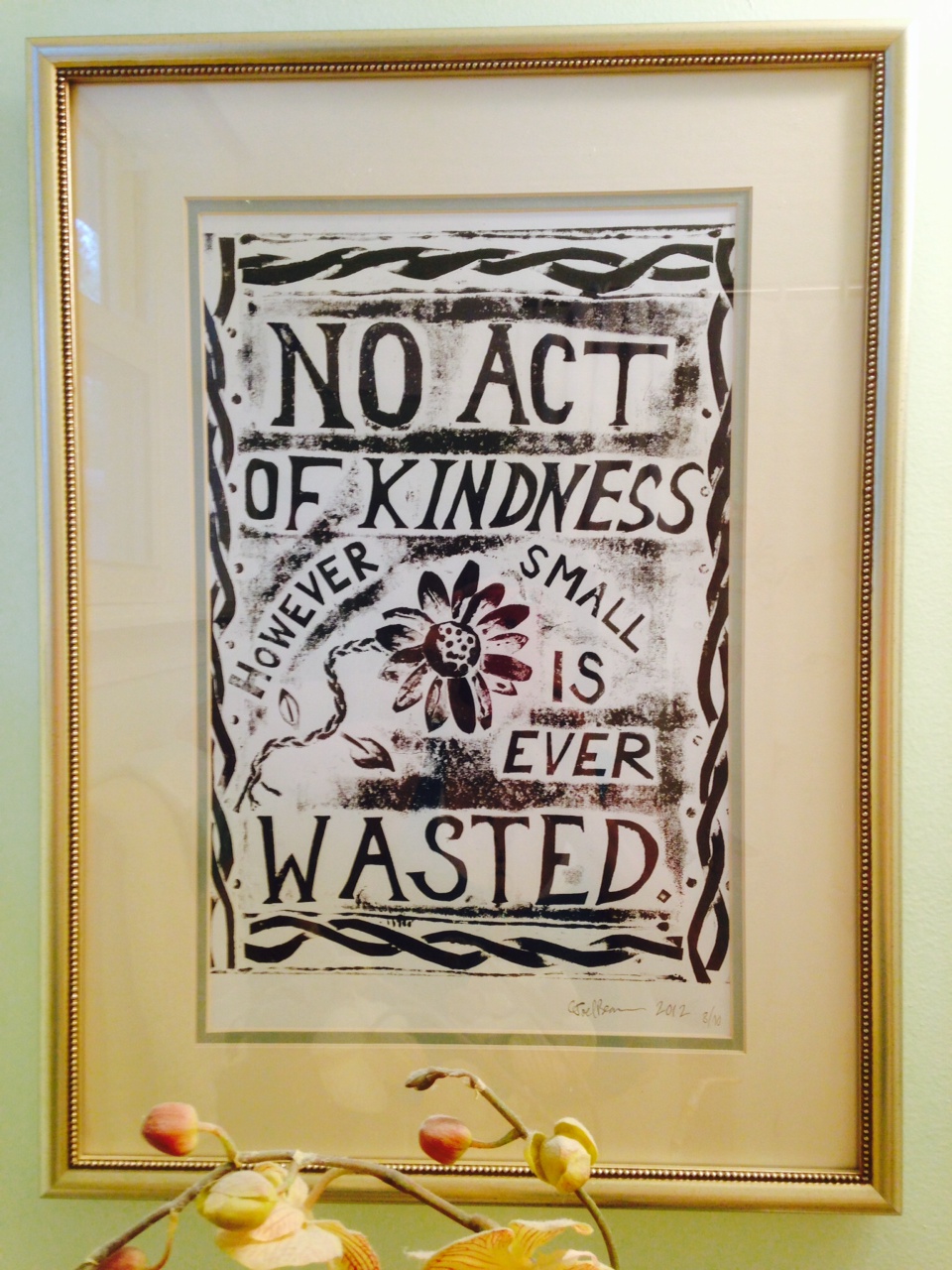
Original art: C. Joel Beaman
Relief print: C. Joel Beaman


Being Young in Heart

Another belief of mine is that everyone else my age is an adult whereas I am merely in disguise.”  ― Margaret Atwood, Cat’s Eye


June Brides & Marriage

Wedding of Ruth Longenecker and John Weaver, 1950s
Wedding of Ruth Arlene Longenecker and John Weaver, Bossler’s Mennonite Church, 1950s Bride carries white Bible with lacy handkerchief Groom wears plain (frock) coat


Marriage is more like an airplane than a rock.

You have to commit the thing to flight, and then it creaks and groans, and keeping it airborne depends entirely on altitude attitude. Working at it, though, we can fly forever.             ― Michael Grant in the San Diego Union


The Educated Mind & an Opposing Viewpoint

It is the mark of an educated mind to be able to entertain a thought without accepting it.

― Aristotle, Metaphysics


Life’s Irritations

Everything that irritates us about others can lead us to an understanding of ourselves.      ―  Psychiatrist Carl Jung


Memory and Time

Remembering is so basic and vital a part of staying alive that it takes on the strength of an instinct of survival, and acquires the power of art. Remembering is done through the blood, it is a bequeathment, it takes account of what happened before a man is born . . . . It is a physical absorption through the living body, it is a spiritual heritage. It is also a life’s work.      ― Eudora Welty in                her book On Writing in which she quotes Faulkner (103).

In fiction, time can throb like a pulse, tick like a bomb, beat like the waves of a rising tide again the shore; it can be made as the whisper of attrition, or come to an end with the explosion of a gun  (98).

Memory is deceptive because it is colored by today’s events. ― Albert Einstein

Memory. . . is the diary that we all carry about with us.  ― Oscar Wilde
 *  *  *
Add more color to June’s Purple Passages!
Reply with your own quote. Or respond to one above. 

grapes

I promised an answer to the puzzling question from the last post.

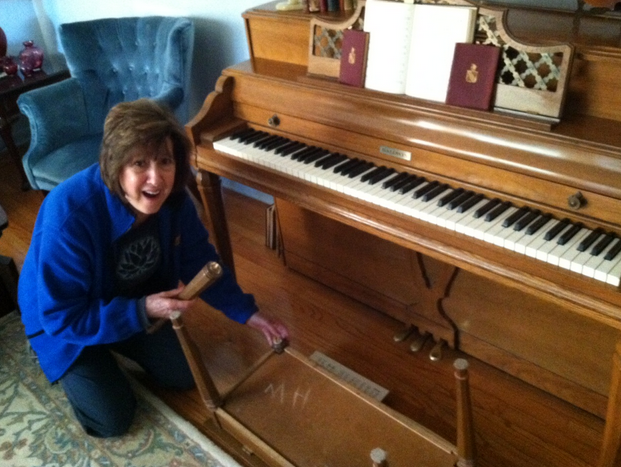
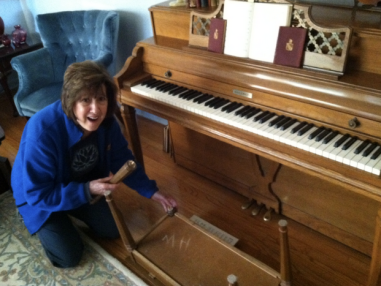
BrokenPianoBenLeg

How did this happen? Here is our best guess:

Our children, now in their forties, were in their late teens when Cliff and I decided to leave them at home alone while we took a short weekend trip. One of the children was very mature and responsible (or so we thought), so we felt safe to leave. When we returned home, pictures on the walls were askew, there was evidence of under-age drinking, and one leg on the piano bench had obviously been broken off but bandaged up with rough, brown U-Haul tape. Our kids’ explanation then was that they had a small party but more came, uninvited, when word spread that there were no parents at home. Yes, the cliché fits here exactly: “When the cat’s away . . . !”

At the time of the first break, Cliff repaired the leg with a wooden dowel, which has lasted until a few weeks ago. Then Mr. Repairman had to reinforce the leg with a sturdier steel dowel. The END. (We hope!)

Coming next:  Hats Off to Dad

HatsOffGift


Moments of Extreme Emotion: A Broken Leg & Ecstasy Expressed

Moment of Exasperation

One of the mysteries of life is how things happen at our house. Specifically, how did the leg on this piano bench break? We still haven’t figured out the answer for sure though we have speculated on some possible explanations.

BrokenPianoBenLeg

How did this happen? Vote in this short quiz:

a. Piano bench overloaded with music books

b. Over-weight pianist

c. Kids had wild party while parents were gone

d. All of the above

e. None of the above

(Answer on next blog post.)

Mystery Moment

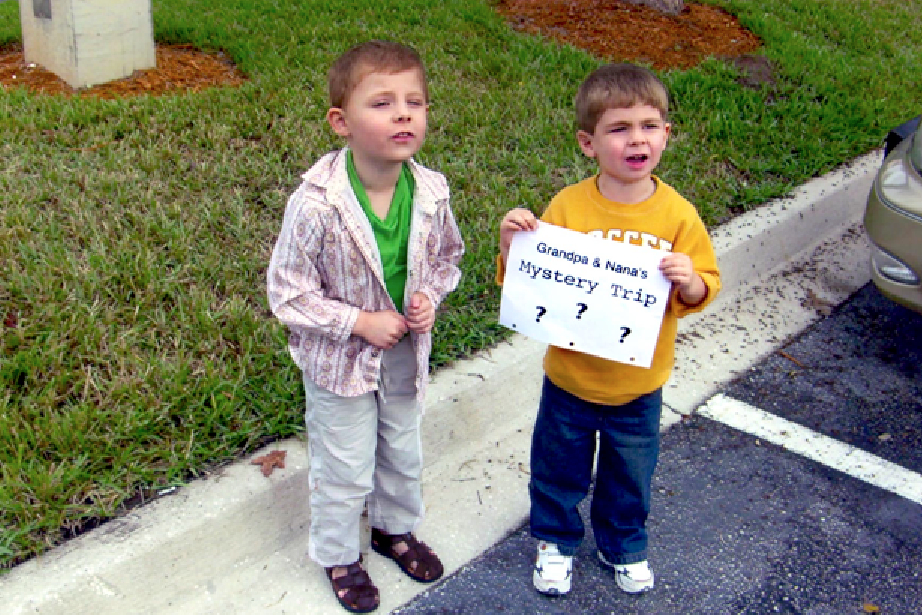
3PatCurtis

Completely befuddled, Patrick and Curtis react to the Mystery Trip announcement sponsored by Grandpa and NaNa:

Patrick: What’s a mystery trip?

Curtis: Is it safe to drive with Grandpa?

Moment of Extreme Ecstasy

Patrick and Curtis about 6 years ago at O'Charley's Restaurant
Patrick and Curtis about 6 years ago at O’Charley’s

Grandpa’s paying!

Have you had a moment or two of extreme emotion lately? Or long ago?

Thank you for adding your story to mine!

Home-grown Miracles: See, Taste, Touch

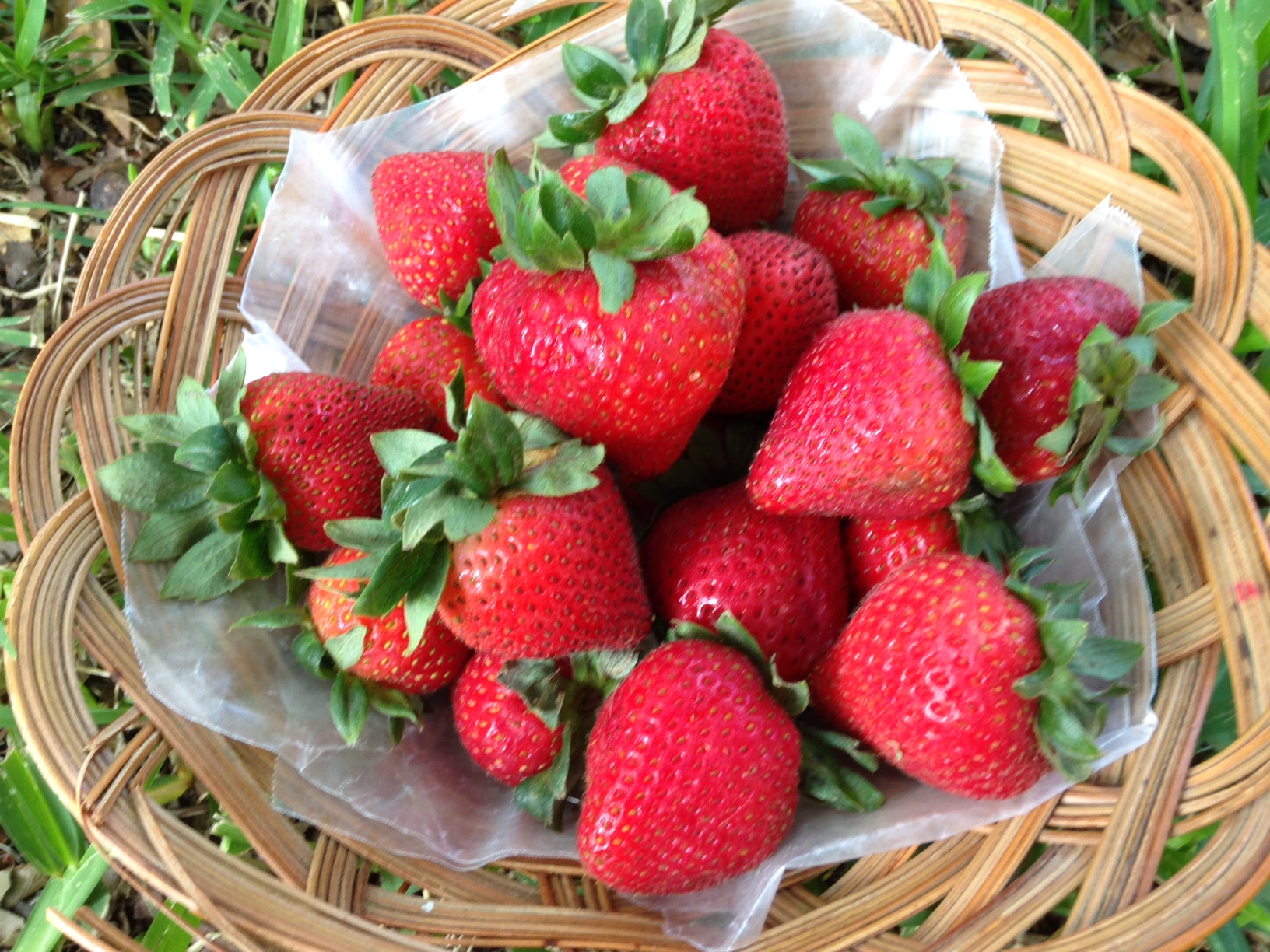
estrawberries

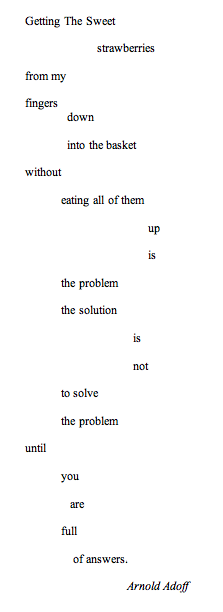
 StrawPoem2

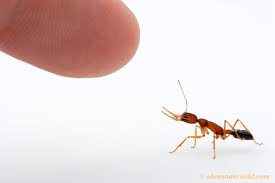
AntFinger

BugPoem1

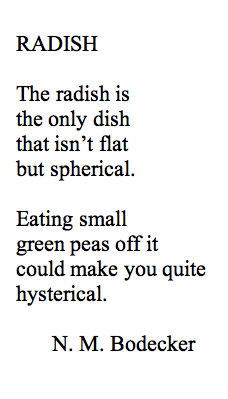
radishes

Radish3

Egg

EGG

Reader, in your hand you hold

A silver case, a box of gold.

I have no door, however small,

Unless you pierce my tender wall,

And there’s no skill in healing then

Shall ever make me whole again.

Show pity, Reader, for my plight:

Let be, or else consume me quite.

– Jay MacPherson

All poems from Animal, Vegetable, Mineral: Poems About Small Things, selected by Myra Cohn Livingston, HarperCollins, 1994.

*  *  *

Barbara Kingsolver, author of several New York Times best-sellers including The Poisonwood Bible, published her first work of non-fiction, Animal, Vegetable, Miracle: A Year of Food in 2007, which makes the case for eating local. Here is an excerpt from the book:

“This is the story of a year in which we made every attempt to feed ourselves animals and vegetables whose provenance we really knew . . . and of how our family was changed by our first year of deliberately eating food produced from the same place where we worked, went to school, loved our neighbors, drank the water, and breathed the air.”

The blurb from GoodReads website entices to read more:

Hang on for the ride: With characteristic poetry and pluck, Barbara Kingsolver and her family sweep readers along on their journey away from the industrial-food pipeline to a rural life in which they vow to buy only food raised in their own neighborhood, grow it themselves, or learn to live without it. Their good-humored search yields surprising discoveries about turkey sex life and overly zealous zucchini plants, en route to a food culture that’s better for the neighborhood and also better on the table.

Part memoir, part journalistic investigation, Animal, Vegetable, Miracle makes a passionate case for putting the kitchen back at the center of family life and diversified farms at the center of the American diet.

Depending on where you live, you are enjoying some fresh fruits, vegetables, or flowers this time of year. 

What appeals to your senses right now?

Two Mennonite Nonagenarians: Mother Ruth & Aunt Cecilia

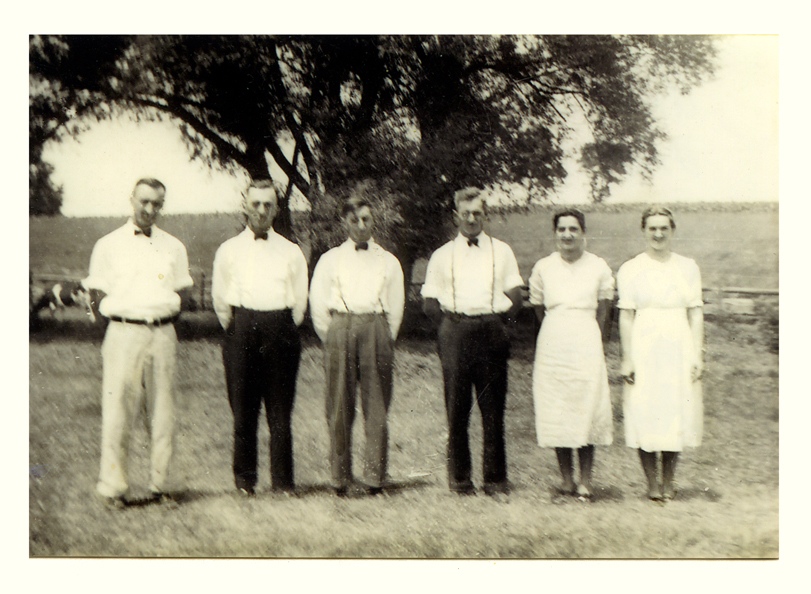
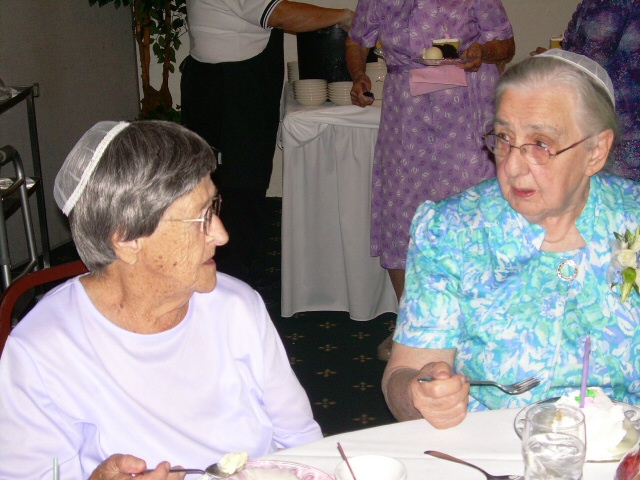
Here is my mother’s family of four brothers and one sister in a farm meadow in the 1940s. They are children of Abram Hernley Metzler and Sadie Landis Metzler, a Mennonite family of Lancaster County, Pennsylvania.

Metzler_Uncles_Aunts_young_5x4_150

Standing in birth order are her brothers Landis, Leroy, Clyde, Abram, Jr., with my mother and her sister Verna. Two of her siblings died in their sixties, the others in their seventies. Only my mother is still alive at age 95.

When Mother turned 90 in 2008, her 94-year-old sister-in-law Cecilia Metzler, married to my Uncle Clyde, said to her: “Ninety’s nothing . . . . You have to live past that to make your mark these days.” (Then I saw a quick smile and heard an I-got-you-there chuckle.) Aunt Cecilia, who calls herself Cece now, has always been energetic and feisty, a farm wife and a pastor’s wife. Up until 2011, she has sent me Christmas cards – always the first week of December. And via her daughter Erma’s account, I would occasionally even get email messages from her.

Aunt CeCes card_9x7_300

Mother too has always been strong and hardy all these years. She still lives alone but has watchful neighbors along with my brother Mark who checks in with her regularly. Her mind is still sharp though her hearing, which has always been in a category I’d call bionic, is failing now. When I asked her a few weeks ago, “Do you remember wearing Evening in Paris cologne?” She questioned me back, “Carrots, what do you mean carrots?” This from a woman who most of her life had to hold the telephone receiver away from her ear because the sound was too loud. Oh, my.

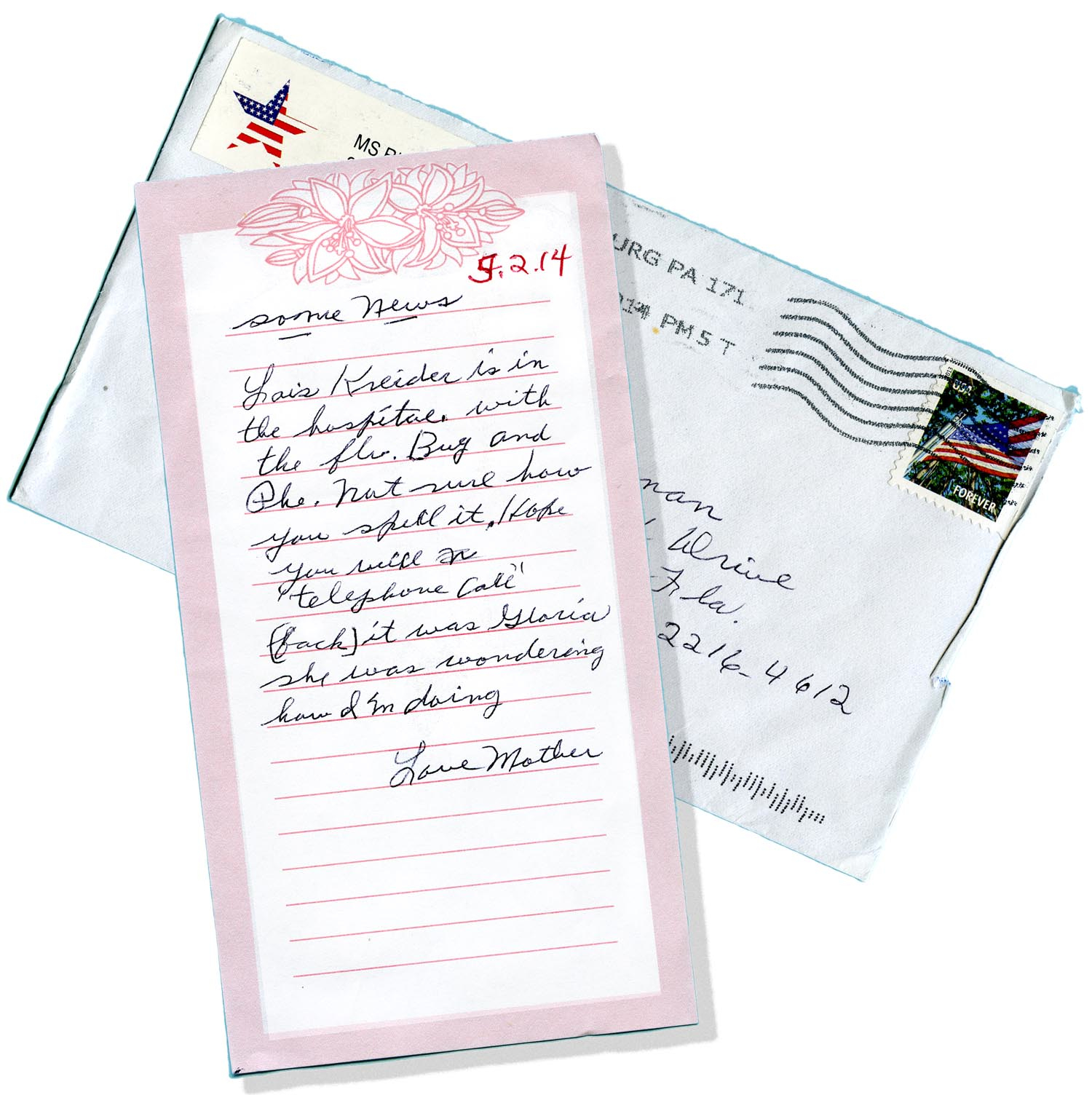
I call her often, but she says she likes to get something in the mail, a letter with a stamp on it, she hints. As if to demonstrate how it’s done, last week she sent me a short note with concern about a friend’s health along with a check for special vitamins I send to her. Yes, she still pays her own bills.

Thankfully, her friend is fine now.
"Cecilia Do you really think we are going to live to be 100?" my mother might be asking.
“Cecilia, do you really think we are going to live to be 100?” my mother may be asking.  (Photo: Mother’s 90th party at The Gathering Place, Mount Joy, PA.)

*  *  *

Recently, “60 Minutes” aired a show entitled Living to 90 and Beyond hosted by correspondent Lesley Stahl. The show featured interviews of some of the more than 1600 men and women who participated in a study named “90+” funded by the National Institute of Health. All of the data was collected in the 1980s from residents of a community south of Los Angeles called Leisure World, now re-named Laguna Woods. The study was launched to determine the secrets of longevity and perhaps find clues to preventing diseases like Alzheimer’s often associated with advancing age.

On air, the interviewees, all over 90, were shown undergoing physical testing: reflexes, pace of walking, how quickly they could sit down and stand up again. Their mental acuity was checked as well: Tell me today’s date, spell w-o-r-l-d backwards, remember these words (brown, shirt, charity) – I’ll ask you to repeat them to me in a minute. And so on.

Claudia Kawas, spokesperson for the NIH study, concluded with some statements that weren’t at all surprising. And some that were:

  • People who exercise definitely live longer than those who don’t.
  • Board games, socializing with friends, working in the garden enhance mental health.
  • Taking vitamins doesn’t seem to make much difference.
  • It’s not good to be skinny when you are old.
  • Drinking 1-3 cups of coffee seems to be beneficial.
  • One or two glasses of wine daily is recommended.

My Mother, almost 96, and Aunt Cecilia, now age 99, were part of the “Game Girls” crowd in their prime. They loved playing Uno, Skip-Bo, and Hand & Foot with friends. And they probably both still drink one or two cups of coffee with breakfast.

But rest assured, neither of these good, elderly Mennonite ladies ever imbibes a glass of wine with dinner.

 WineForbidden

*  *  *

Most of us know one or more friends or family members over 90. Does longevity run in your family?

Do you have a story about a nonagenarian you know?

Coming next: A visit with author Kathleen Pooler and introducing her new book!

Just for Fun: Signs Around Town

Signs . . . they’re everywhere . . . billboards in the city, stickers on cars, comments on Facebook. I found some wise ones in a novelty shop, on a car, on a piece of paper, on a writer’s sweat shirt. Some you’ve seen before. Others, I hope, are new. Silly video at the end!

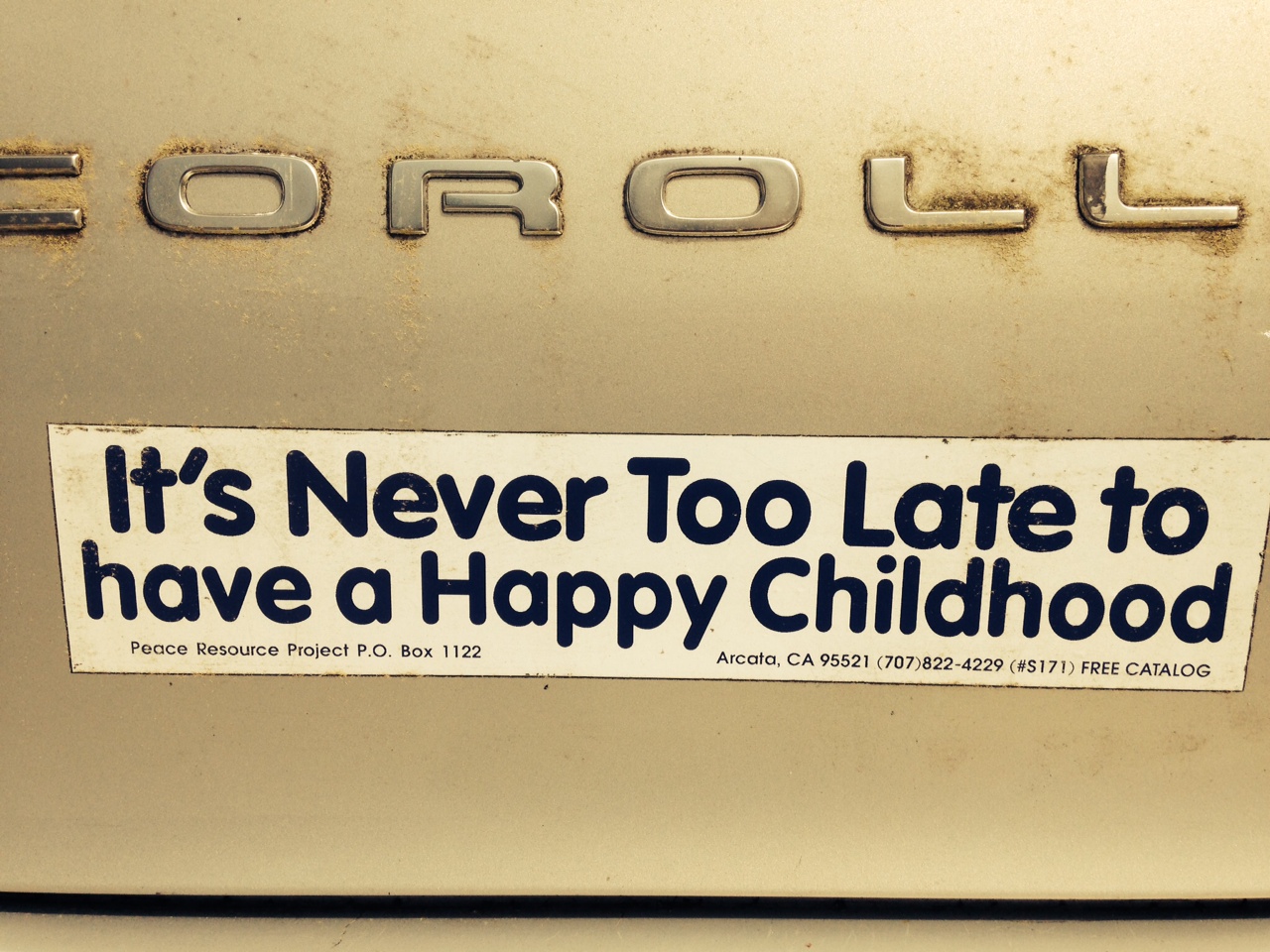
SignHappy Childhood

Quotation now thoroughly engrained in pop culture from the Tom Robbins’ novel Still Life with Woodpecker, an un-fairy tale with princess Leigh-Cheri and outlaw Bernard.

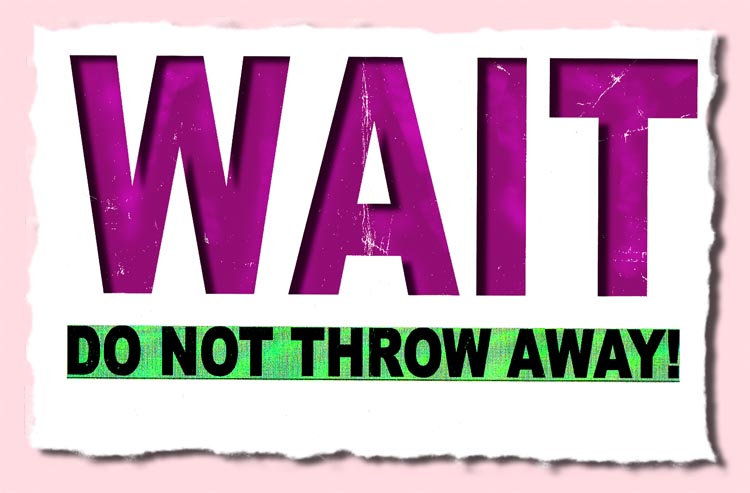
WAIT_Do Not Throw Away_sign_5x3_150

“Wait, Wait, Don’t Tell Me,” a popular NPR broadcast on Saturday mornings . . . what we do at traffic signals, the post office, a doctor’s office. . . counsel from the Lord we resist hearing:

Wait on the Lord: be of good courage, and He shall strengthen thine heart: wait, I say, on the Lord.

Psalm 27:14

DriveTextSign

“I won’t fix my car until YOU learn your lesson,” this driver insists.

SignLifeKnocksFlat

Easy to say — until it actually happens to you!

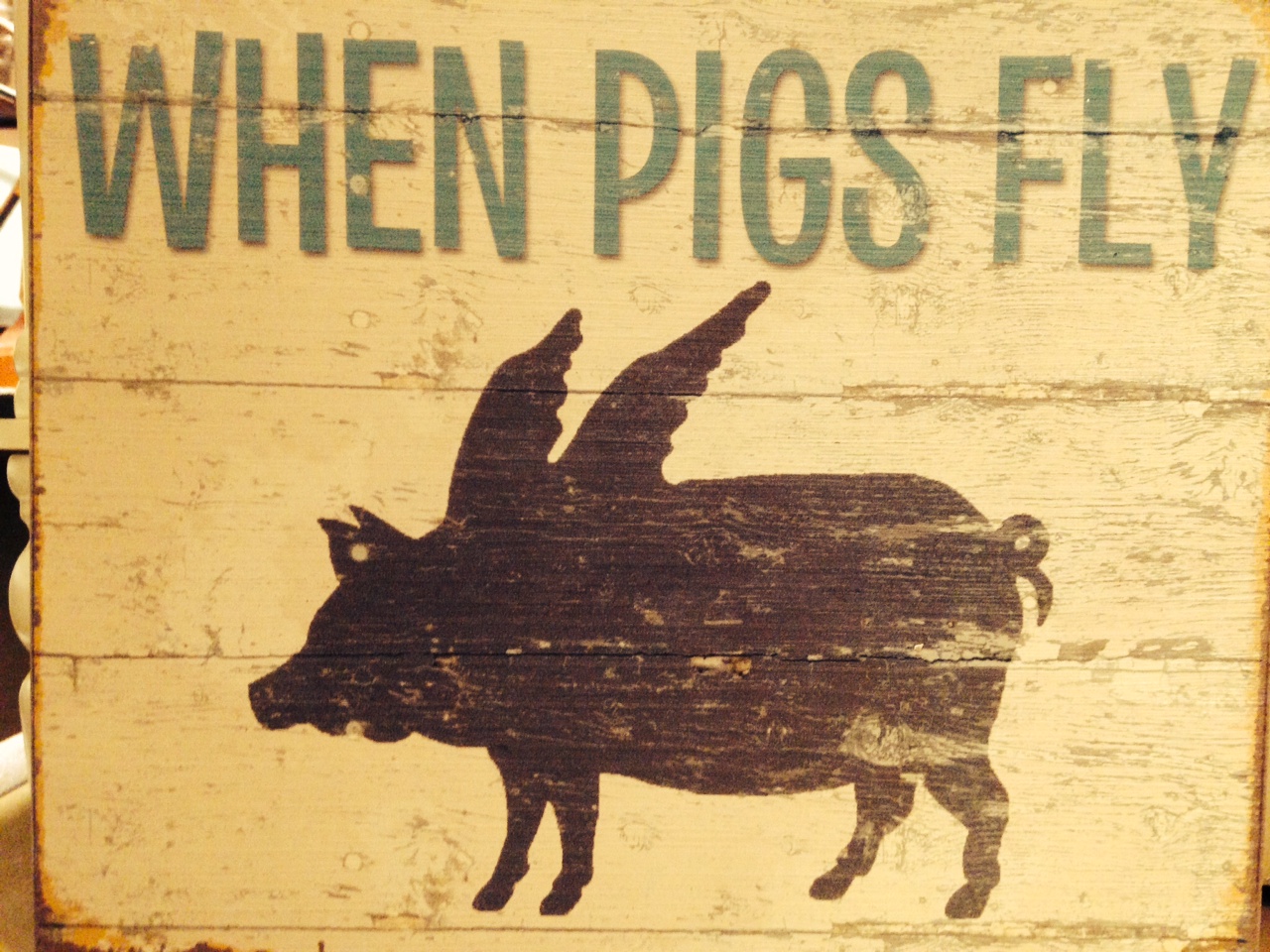
pigsFly

Favorite come-back of my colleague, Dr. Laura, when students plead for a better grade.

Yes, pigs actually DO fly at the Ole Country Buffet in Valdosta, Georgia (Cliff on the road)

SignCarefulNovel

Her sweat shirt warning vengeance, I watch my step around Jennifer, a writer friend.


Question Mark w border1_1x1_300

What quotes on plaques or signage have you seen around your town? Somewhere else?

Inquiring minds have to know!


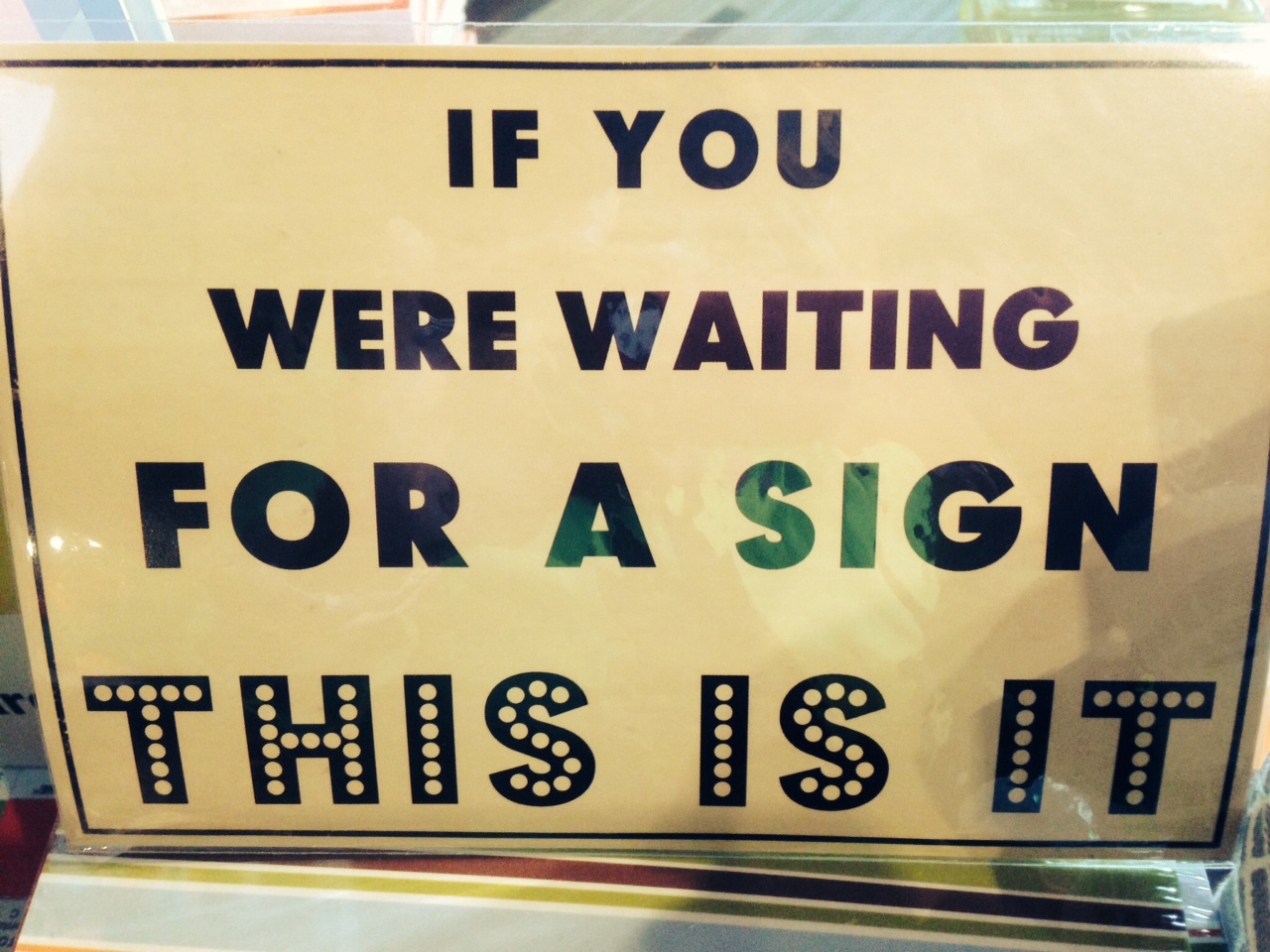
WaitingForSign