When our children were little and our family visited Mother and Daddy in Lancaster County, PA , we could always count on an enamel-coated refrigerator drawer full of soup–either chicken corn or vegetable–to get us revived after a long car trip from Florida. Even now after an exhausting flight, we open the fridge and find home-made soup in one of the drawers, ready to heat up.
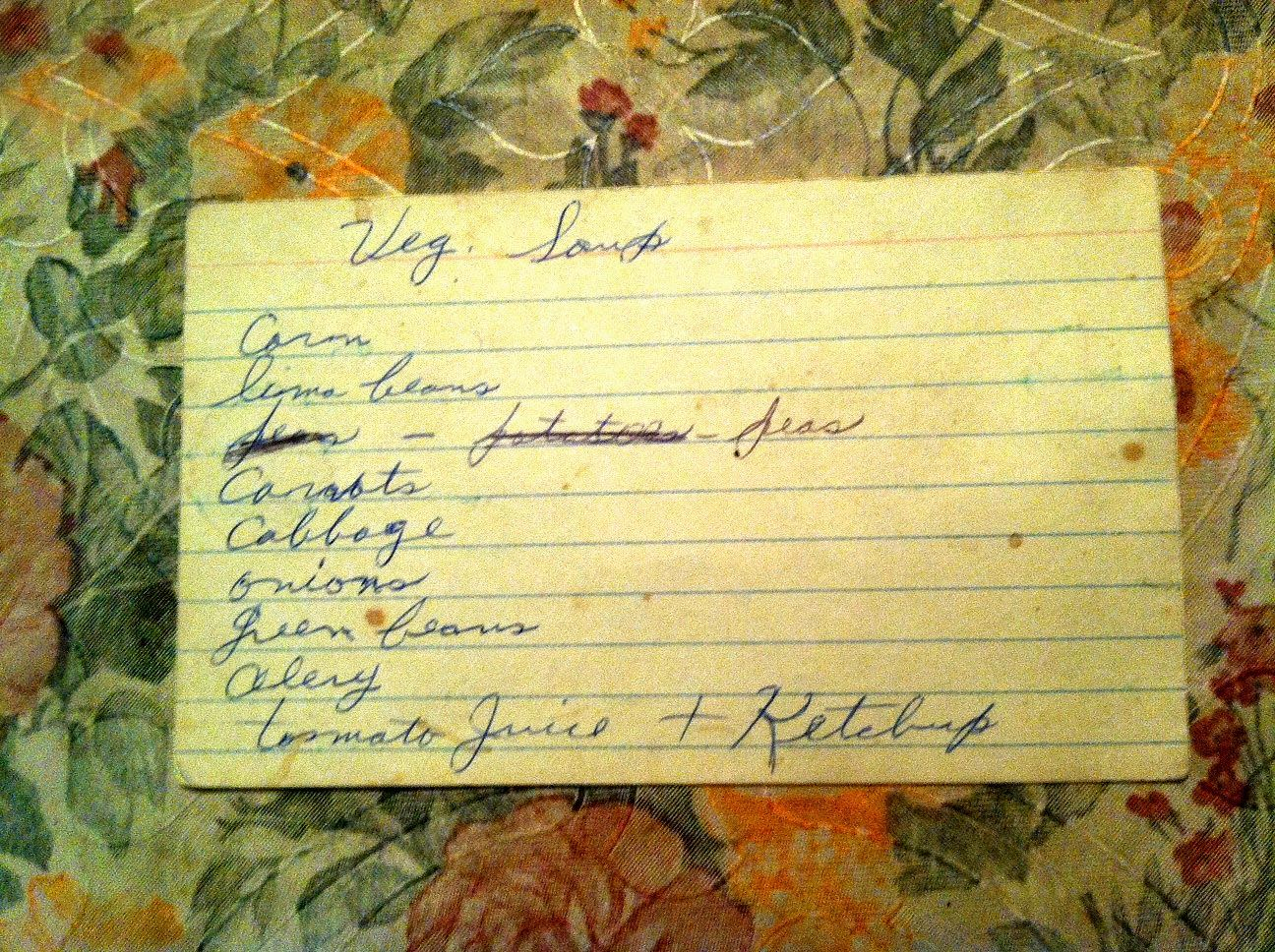
Mother has seldom used a recipe and when she does the proportions are often not included.
The recipe shows “potatoes” crossed out, but sometimes she adds them.
After a couple of stabs at it, I coaxed Mom into being a little more precise about measurements for her savory vegetable soup:
Start with 2 1/2 pounds of chuck roast. Sear the meat and then bake it at 350 degrees until tender. It should be nice and brown and fall apart when you jab a fork into it! Save drippings.
Cook separately: Carrots, celery and cabbage. Then add green beans, peas and corn. Be sure to keep the vegetable broth.
Now add a quart of tomato juice (preferably canned from fresh tomatoes or tin canned crushed tomatoes.)
1/2 cup Heinz ketchup. Then combine beef, cut up, into vegetable + broth mixture and simmer.
* * *
What comfort food to you associate with your mother? Another relative?
Your comments welcome. I will always reply.
Coming next week! First in a Series: Moments of Extreme Emotion with Original Art by Cliff
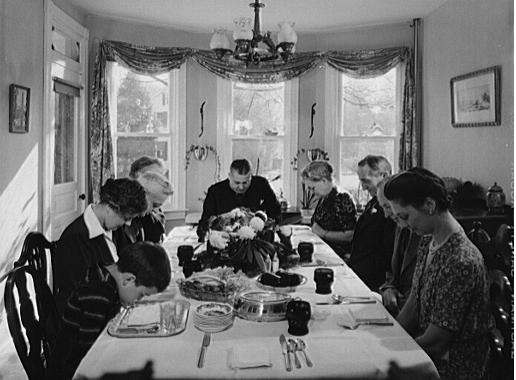
The First Thanksgiving at Plymouth by Jennie A. Brownscombe (1914) Courtesy Wikipedia ImageSaying grace before carving the turkey at Thanksgiving dinner in the home of Earle Landis in Neffsville, Pennsylvania 1942
But I will sacrifice unto thee with the voice of thanksgiving; I will pay that that I have vowed. Salvation is of the Lord.
Jonah 2:9 KJV
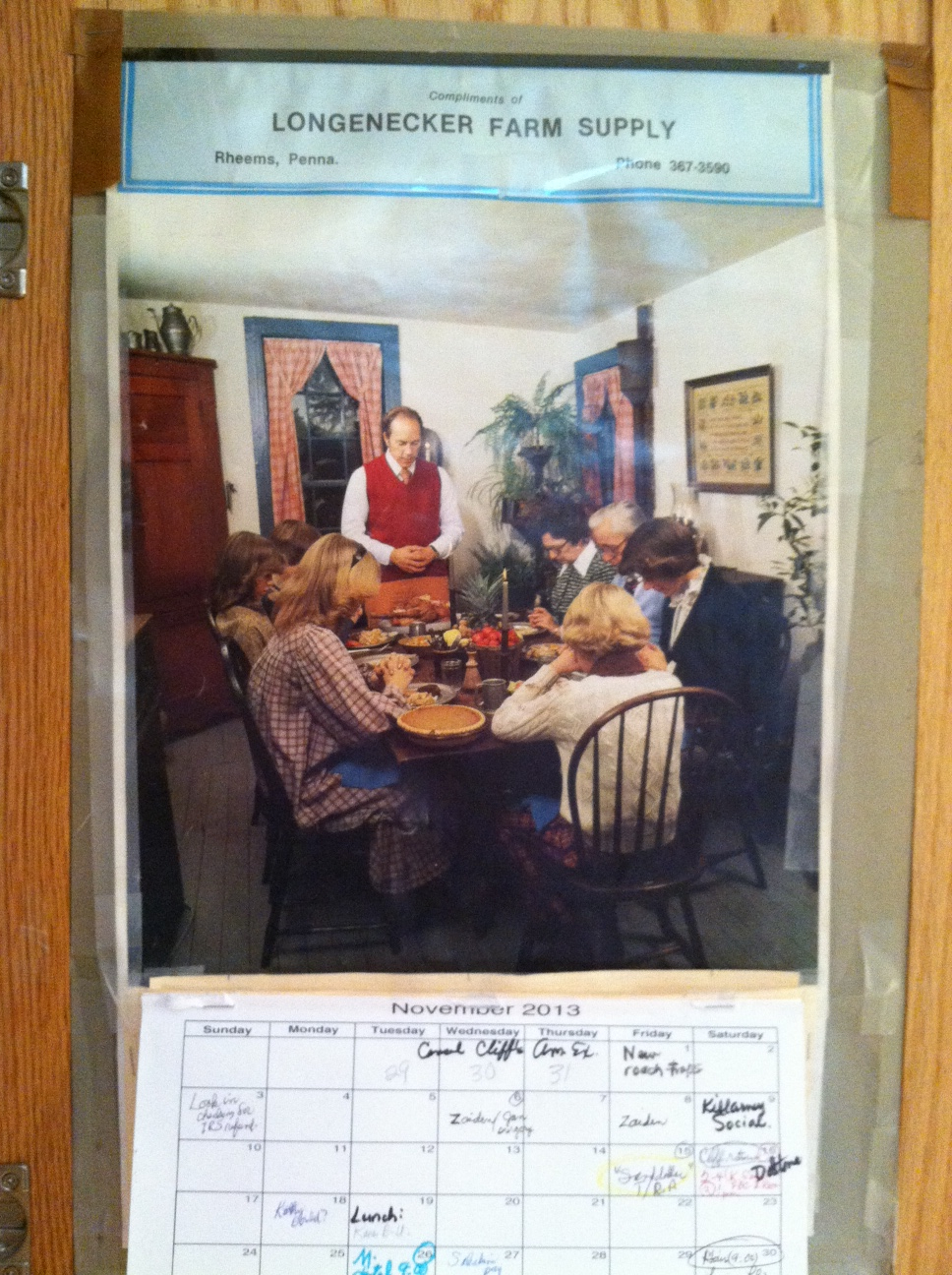
Every year about this time my Dad would start handing out calendars for the new year, advertising his business, Longenecker Farm Supply. Calendars always featured something inspirational: a glossy, colored photo of a farm scene, happy children at play, or in this case, a family observing Thanksgiving. Daddy died in 1985 and after that time the business was sold, so calendars stopped. But I still keep the “Thanksgiving” calendar in its plastic cradle attached to the inside of one of my kitchen cabinets, with calendar year postings now computer-generated.
Enter into his gates with thanksgiving, and into his courts with praise; be thankful unto him, and bless his name. Psalm 100:4
Happy Thanksgiving! Your comments welcome. I will always respond.
Coming soon! A new series: Moments of Extreme Emotion with Original Art by Cliff
Tennis, touch football, swimming, sailing, horse-back riding . . . if it involved action, the Kennedy clan, including our 35th President, were at it! Though President Kennedy suffered from severe back pain, he was often photographed participating in sports.
Through Kennedy’s Council on Physical Fitness, Americans in the 1960s were challenged to become more active and physically fit. In these days of remembrance of President Kennedy’s assassination in November 1963, this post pays tribute to that part of his legacy, a call to shape up!
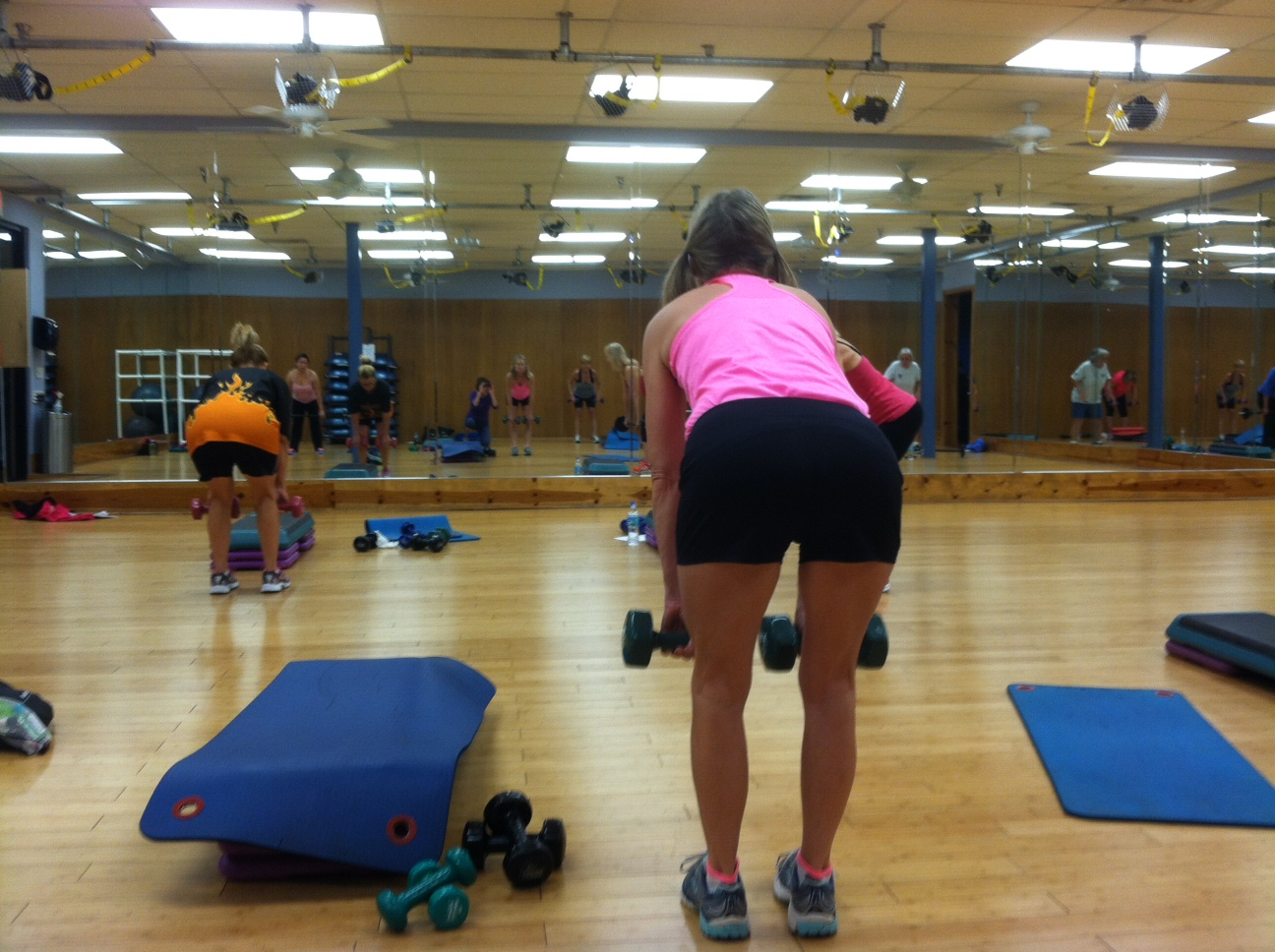
Decades later, I’m still at it, trying to avoid canes, walkers, and wheelchairs in the near future. And so, fitness classes at the gym have become a metaphor for my life in general: Pilates / PowerPump = hard / harder.
Lift it up!
Step it up!
Roll it up!
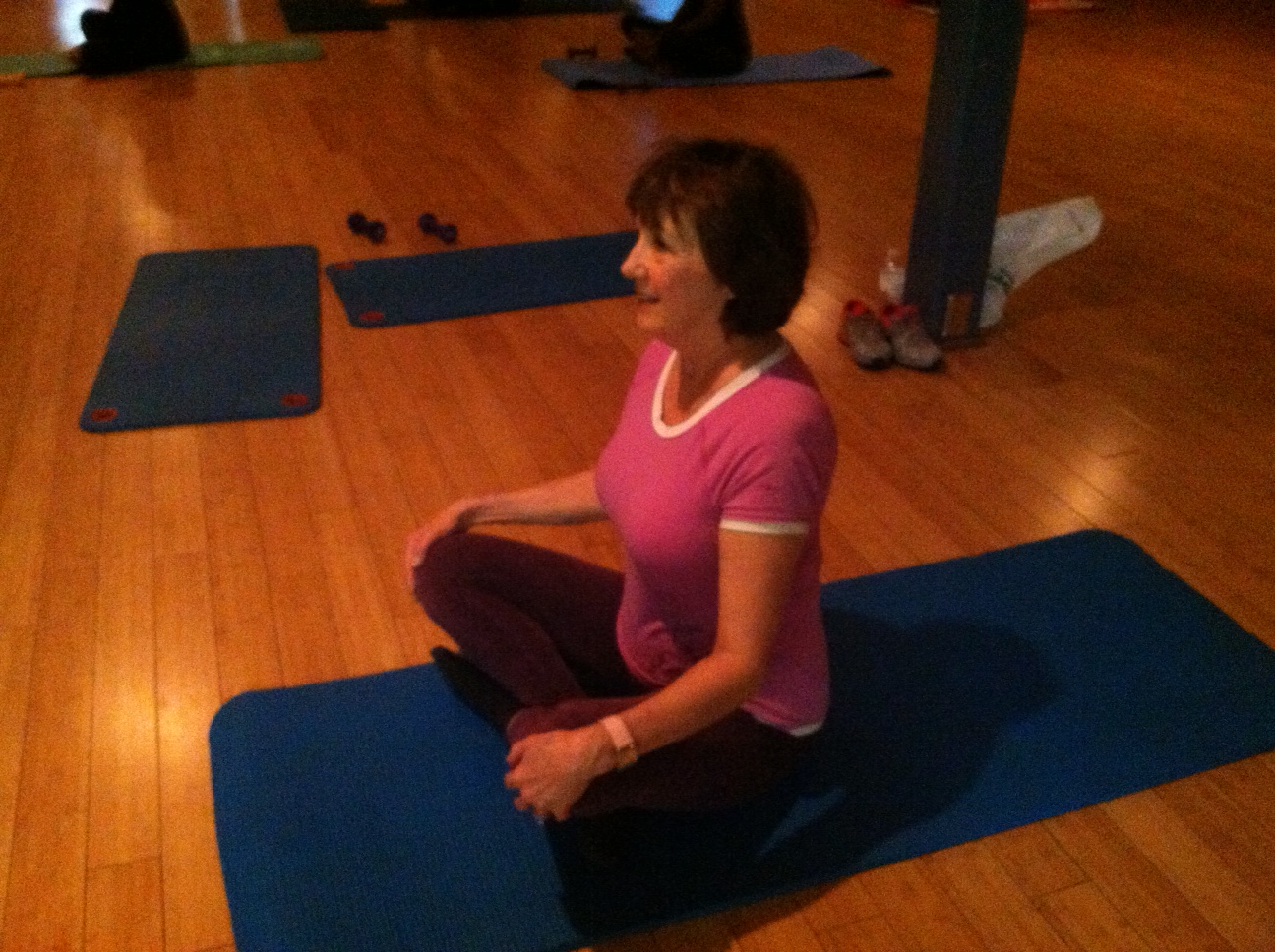
Quiet zone, low light, deep breaths, ready for Pilates . . . ah!
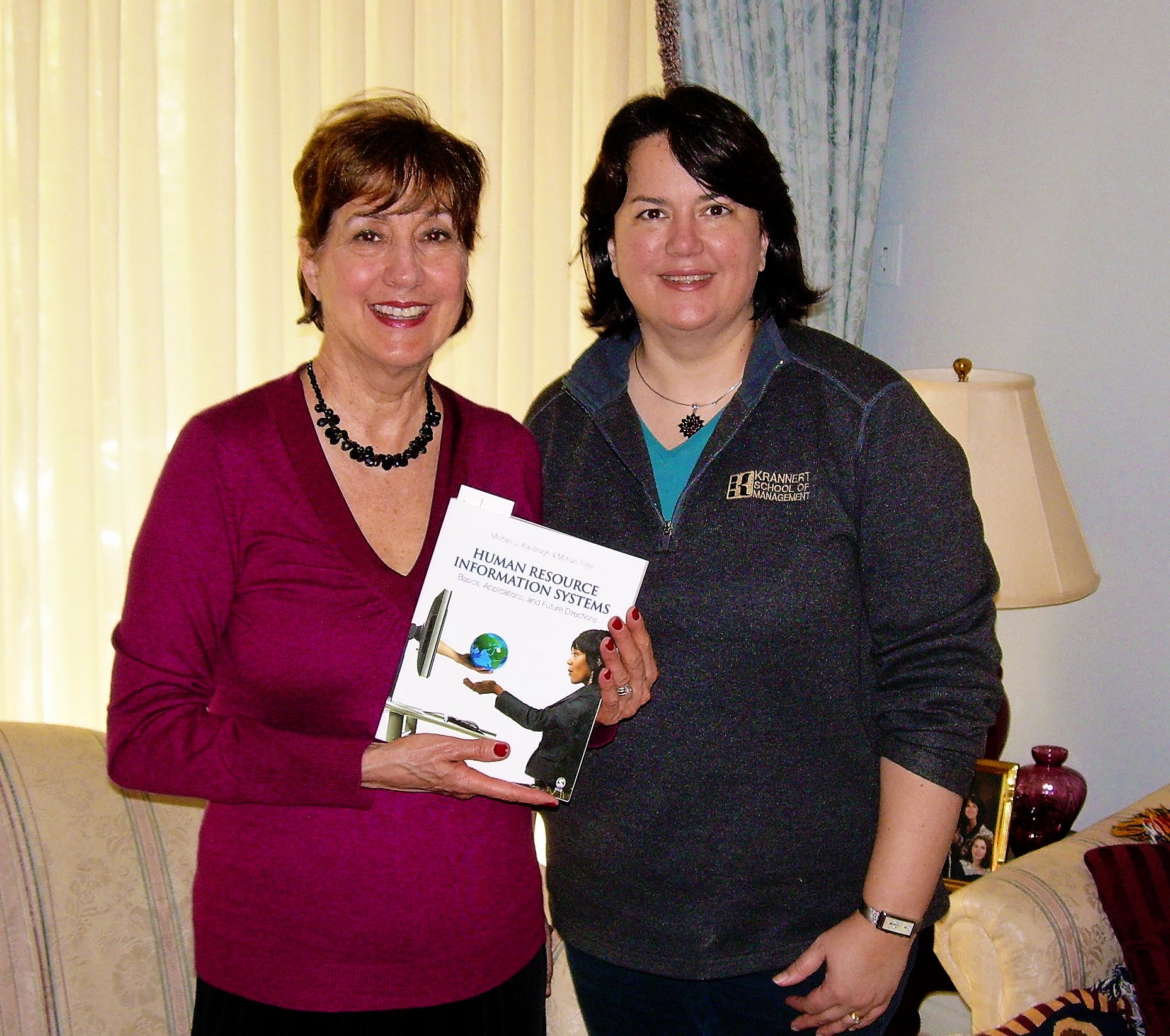
Last Wednesday, into my inbox popped a message which included an invitation to lunch from Karen Bruner Upright, my former student at Florida State College. The last time I saw her, she was a “surprise” visitor at Christmas, marching up the walkway to our house, book proudly in hand, with a chapter she co-wrote with a colleague.
When we first met in my college classroom, Karen was my first-year composition student on her third try at getting through the course. Though she attributes her previous failures to not going to class and not feeling motivated, from the beginning, she was a stellar student, whose essays became examples I repeatedly used as models for other students. Revealing her occupation back then as a restaurant chef, one essay in particular stands out, an illustration-type paper with the line “The heat of a commercial kitchen comes from both the ovens and the chefs” as she proceeds to describe two other chefs and herself as “the most obnoxious chef I have ever known.”
When I pointed out her writing gift, she at first stared at me blankly, almost in disbelief. She has since gone on to complete her M.B.A. degree at Purdue University and is currently employed as Systems Manager for Proctor and Gamble–and become co-author of a chapter in a book about technology for human resources. There is no end to what this woman can accomplish. Oh, and did I mention, she still loves to cook, featuring her savory concoctions on her website plannedovers.com
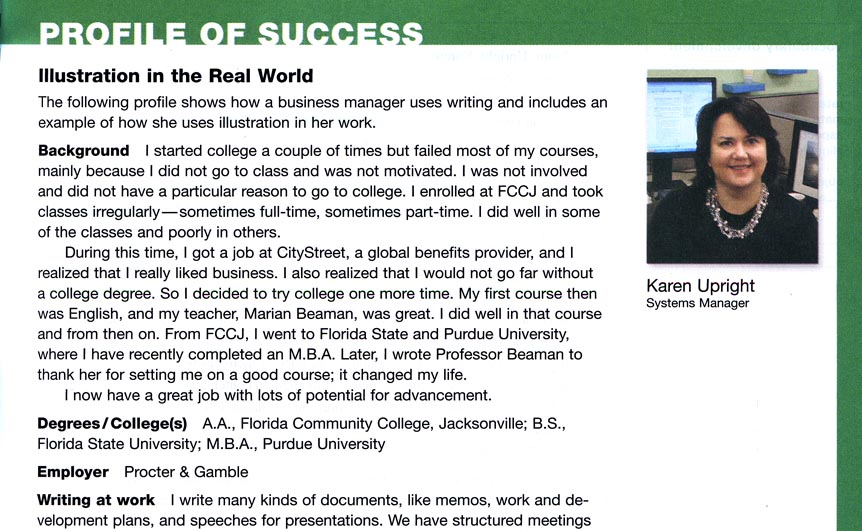
Along the way, Karen has also become conversant in French, every Friday calling her friend in the south of France, so she can maintain her fluency. Also, she has been featured as a Profile in Success in a college textbook by Susan Anker entitled Real Writing with Readings.
Thumbnail of page 145 in Real Writing with Readings college text, 5th ed.
Of all the students who have paraded through my classroom, Karen Upright stands at the top my list of Students Who Inspire.
Downright fabulous!
Is there some you know, like Karen, who persisted and made it through high school, college–some other challenge? Do tell us about it.
My mother and I are waiting in Doctor Garber’s examining room, which always has a sharp smell of rubbing alcohol. She’s the patient, and I’m with her sitting on a chair eyeing the metal tray holding at least a dozen tiny vials, so cute they look like they could fit in the kitchen of my doll-house. But they are vials of venom, possible culprits. Nurse Becky Longenecker carefully fills little syringes with each fluid, which puncture the skin of Mommy’s extended arm trying to determine whether it is house dust, hay, mildew, turpentine, or cat dander that is causing her frightful asthma attacks. I watch as some injections leave a puffy patch or a bright red spot. She leaves the office with a paper packet of pills to try. Maybe these will help.
But I guess they aren’t working either. Once again, Mother is propped up on feather pillows gasping for breath, her face blanched white with the effort. It’s scary for Daddy and my sisters too. We feel helpless. But Daddy knows about Ordinance # 7 in the Statement of Christian Doctrine of the Lancaster Conference of the Mennonite Church: “Anointing. According to James 5:10-18 we encourage our members to call for anointing with oil accompanied by the prayer of faith for healing.”
Olive Oil in a Vial of Healing
So my dad has called for Pastor Martin R. Kraybill and Deacon John R. Kraybill, brothers, to come to Mom and Dad’s bedroom upstairs for the anointing of oil as prescribed in the New Testament passage of James 5:14 & 15.
Is any sick among you? Let him call for the elders of the church: and let them pray over him, anointing him with oil in the name of the Lord. And the prayer of faith shall save the sick, and the Lord shall raise him up; and if he have committed sins, they shall be forgiven him.
As Pastor Martin prays and reads the scripture to Mother and to the family assembled around her bed, Deacon John anoints her forehead with olive oil, an outward symbol of the healing that is transpiring within. Mom later describes a tingling sensation like a warm, electrical current radiating from the top of her spine to the bottom. “It felt wonderful!” she says. She has been healed immediately—and by the power of the Holy Spirit.
No more doctor visits for asthma ever again, the vials of venom to test for triggers, a thing of the past. Praise God!
Have you or someone you know had an experience similar to this? We’d love to hear your story.
You have my word, and my word is stronger than OAK! Quoted in the movie Jerry Maguire
On Attitude
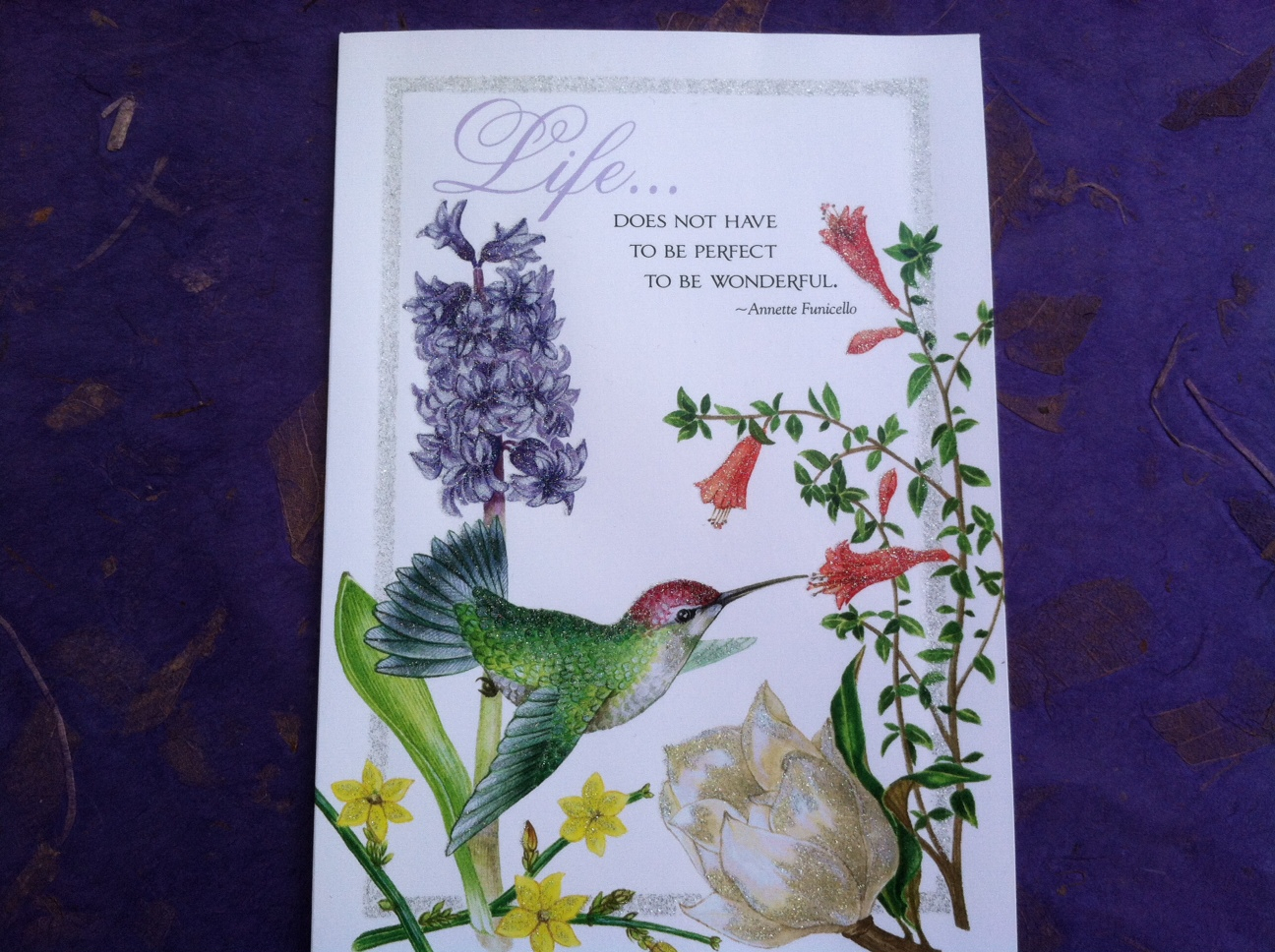
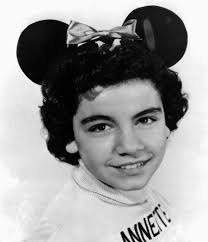
Life doesn’t have to be perfect to be wonderful! Annette Funicello
Courtesy Google Images
On perspective:
Have you heard of the 18/40/60 rule?
“When you’re eighteen, you worry about what everybody’s thinking about you. When you’re forty, you realize that it doesn’t really matter what they think about you. When you’re sixty, it dawns on you that most of them weren’t thinking about you at all!”
Daily Devotional: The Word for You Today, October 31, 2013 entry
On the Mystery of Life:
The heart of another is a dark forest, always, no matter how close it has been to one’s own.
Willa Cather, The Professor’s House
Who am I? We are not human beings having a spiritual experience; we are spiritual beings having a human experience.
Pierre Teilhard de Chardin (1881 – 1955)
* Which quote resonates with you most in either a positive or negative way?
* What quote for the month can you add?
You comments are most welcome. I will always reply!
Browse the inspirational-fiction section of most bookstores, and you will find cover after cover of comely young women wearing dresses with capes, and often pensive expressions . . . . Occasionally a male figure lingers in the background, his face obscured by a hat, but more often the Amish maiden is alone in her pastoral reverie, gaze averted and thoughts inscrutable.
Photo at Barnes & Noble Bookstore featuring authors Beverly Lewis, Cindy Woodsmall, and Linda Byler, the only Amish novel writer who is herself a member of the Old Order Amish
So begins Valerie Weaver-Zercher’s Thrill of the Chaste: The Allure of Amish Romance Novels, published by Johns Hopkins University Press, an in-depth analysis of the appeal of Amish fiction. She looks closely at writers, readers, and the cultural changes at the heart of this phenomenon. And a phenomenon it truly is: 95 new Amish romance novels were published in 2012, at “the rate of about one every four days.” (4)
I met Valerie at a lecture she presented at Eastern Mennonite University in October 2013. She noted that some view Amish romance novels as fluff, nostalgic but formulaic concoctions. But novelists like Beverly Lewis, Linda Byler, Wanda Brunstetter, and Cindy Woodsmall must have tapped into the deep yearnings of many readers. Why else would their books fly off the shelves of bookstores?
“Are you curious too?”
“Okay, I thought so.”
Since her lecture, I have communicated with Valerie to bring you the essence of her lecture in a crisp Q & A format.
MLB: Why is Amish romance fiction so popular?
VWZ: As I talked to readers of Amish fiction, I heard lots of things about why they like Amish novels. But they mentioned two reasons over and over again. First, for loyal readers of the genre, the books offer a vacation, of sorts, to a “slow and simple life.” Many people articulate their love of Amish fiction as inversely related to the spiraling nature of modern life: that is, as contemporary life feels more and more sped up, chaotic, and complex, they are more drawn to narratives of a people who have apparently escaped the craziness. While the readers with whom I spoke didn’t use this term, they were expressing a thought similar to an idea French theorist Gilles Lipovetsky introduced in 2005: hypermodernity.He defined hypermodernity as “the frenzied escalation of ‘more, always more’ [that] has now infiltrated every sphere of collective life.” This hypermodern context is characterized by the high speed of technological change, information transfer, consumption, social change, individualism, global capitalism. Many of us experience it simply as the feeling that life is moving at a pace that we simply can’t keep up with. So Amish fiction, in an age of hypermodernity, offers readers the means through which to take a temporary vacation.
Second, readers said they like Amish novels because they are “clean reads”: that is, books devoid of the sexualized content that permeates much of popular culture products. Sociologist Kenneth Kammeyer employs the term hypersexual to describe a situation in which “sexual discourse, erotica, and pornography are present in almost all aspects of society.” Other observers have used terms like pornified, raunch, and striptease to characterize twenty-first-century culture, evidenced by thongs and push-up bras marketed to elementary-school-aged girls. So readers, many of whom are evangelical Christian women, find in Amish novels a respite from the feeling of being bombarded by hypersexualized culture.
But there are other reasons too. Some of the reasons have to do with the fact that publishers can get more books into the hands of more readers more quickly than ever. So the fact that there are more Amish novels being published likely means that more readers are finding them. That is, there’s a greater demand for Amish novels than ever; there’s also a greater supply.
MLB: What are these novel readers seeking?
VWZ: As I said above, I think there’s a great appeal for many readers in the feeling of a temporary, imaginative vacation from hypermodern, hypersexualized life. The novels allow readers to vicariously participate in an Amish life without actually having to give up their Kindles and their life insurance and their cars. The more technologically saturated our lives become, the more intrigued we are, I think, by people who have escaped at least some of it.
MLB: Do these stories reflect real Amish life?
VWZ: That’s a complex question, actually, and one that is difficult to answer. I have a whole chapter in my book about that question. Some of it depends whether you’re talking about the genre as a whole or about the work of a particular novelist and whether you’re talking about the tangible details of Amish life, or the more intangible cultural and religious sensibilities of the Amish. Also, there are so many different ways of being Amish these days that if readers think that reading a novel set in one community—even a quite accurate novel—makes them knowledgeable about the Amish: well, they’re probably wrong.
Overall, I would say that most readers likely learn more that is correct about the Amish than information that is incorrect. Having said that, there are lots of misperceptions about Amish life that circulate in the novels and get passed on to readers, especially related to shunning and rumspringa. And then there’s the larger question of whether we as outsiders can understand Amish life from the inside-out well enough to craft a narrative that accurate reflects the internal life, spirituality, understanding of the church and family, etc., of an Amish person. That is, a novel might get all the “facts” of Amish life right, but still miss the more abstract, intangible feel of looking at the world from an Amish perspective. So that’s not a very good answer; but those are some of the reasons that the question is a hard one!
MLB: Obviously you read some of these novels during the course of writing your book. Did you enjoy reading them?
VWZ: I enjoyed some of the novels and disliked others. I actually don’t read a ton of fiction in general; I tend to read more nonfiction. I’m now working as a book editor for the Mennonite publisher, Herald Press, and I have really enjoyed editing a historical Amish novel entitled Jacob’s Choice by Ervin R. Stutzman. It comes out in February 2014. It’s based on actual events in the mid-1700s: an attack on the Amish Hochstetler family during the French and Indian War. I’m a descendant of the Hochstetler family, as are many Swiss-German Mennonites and Amish in Pennsylvania and other states, so I and many other readers have a special interest in reading this novel. It’s the first of three in the Return to Northkill series.
MLB: In general, readers of inspirational fiction are evangelical Christian women. Who else is included in the demographic of Amish romance novel readers?
VWZ: I talked to men who love Amish fiction, Catholic women who love it, and African Americans who read it. And as I did my research, I kept hearing about more and more people who don’t fit the evangelical female demographic. Old Colony Mennonites (both men and women) in Bolivia, for example. Old Order Mennonite readers. Amish readers. A missionary doctor. A librarian. An at-home mom. The readership is diverse, even as evangelical Christian women still constitute the bulk of the audience.
MLB: How do Amish readers themselves respond to these novels?
VWZ: I have a whole chapter on that question too! I also reflect on that question in this piece in the Los Angeles Review of Books. The Amish people I interviewed had opinions all over the map. Most were at least semi-critical of the novels, especially the fact that most are being produced by outsiders.
MLB: Your book, which you dub “narrative scholarship,” is a marvel of research with a 9-page bibliography, which includes books, magazine articles and interviews. Though well-documented, the book is witty and often reads like a story. How much time did this project require?
VWZ: Yes, I spent a lot of time on the research and writing of this book. I researched and wrote over the course of about a year, and then spent about six months working on revisions of various kinds. But I loved the entire process, despite moments of being unconvinced that I’d be able to pull it off. The variety of things I got to do—talk to readers, visit a book group, chat with Amish folks, read novels, read theory, and of course write—was just lovely. It was indeed very hard work, but very fulfilling. I loved the challenge of blending a narrative nonfiction voice with an analytical/scholarly lens.
MLB: You are busy mother of three young boys and an author husband. How did you manage to write this book along with your family obligations?
VWZ: It wasn’t easy. But I was freelancing at the time, so I was able to decline editing projects or just take on the ones I had time for and then devote the rest of my time to research and writing. Our kids are all in school now, so I wrote during the day while they were at school and sometimes early in the morning or occasionally (very occasionally!) late at night. I do much better getting up early to work rather than trying to stay up late. Also, I got a fellowship from the Young Center for Anabaptist and Pietist Studies at Elizabethtown College during the fall of the year I was working on this book, and that helped me to prioritize the project and begin to wrap up the writing.
About Valerie Weaver-Zercher
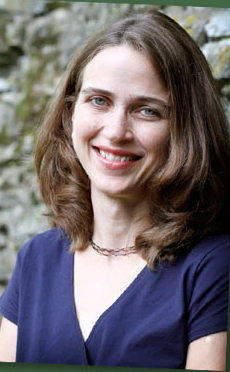
Valerie Weaver-Zercher is author of Thrill of the Chaste: The Allure of Amish Romance Novels. Her writing has appeared in the Wall Street Journal, Chicago Tribune, Los Angeles Times, The Christian Century, Sojourners, and The Mennonite, among other publications. She is also managing editor of trade books at Herald Press. She and her husband Dave have three sons and live in Mechanicsburg, Pennsylvania. They attend Slate Hill Mennonite Church.
Enter to win a copy of her book by entering the book giveaway contest!
If you would like to enter for a chance to win a copy of Thrill of the Chaste: The Allure of Amish Romance Novels by Valerie Weaver-Zercher, simply leave a comment at the bottom of this post. Valerie has graciously offered to donate a copy of her book to the winner!
If you are reading this anywhere other than my blog, such as on Facebook or in an email please hop on over to my blog, Plain and Fancy Girl. Only comments left on my blog will be entered into the giveaway.
The deadline for this contest is Saturday, November 9, 2013, at noon. The winner will be chosen using Random.org and will be contacted privately via email as well as cited in an announcement in a blog post here next week.
Now it’s your turn!
Make a comment or ask Valerie a question about Amish romance novels or about her other writing.
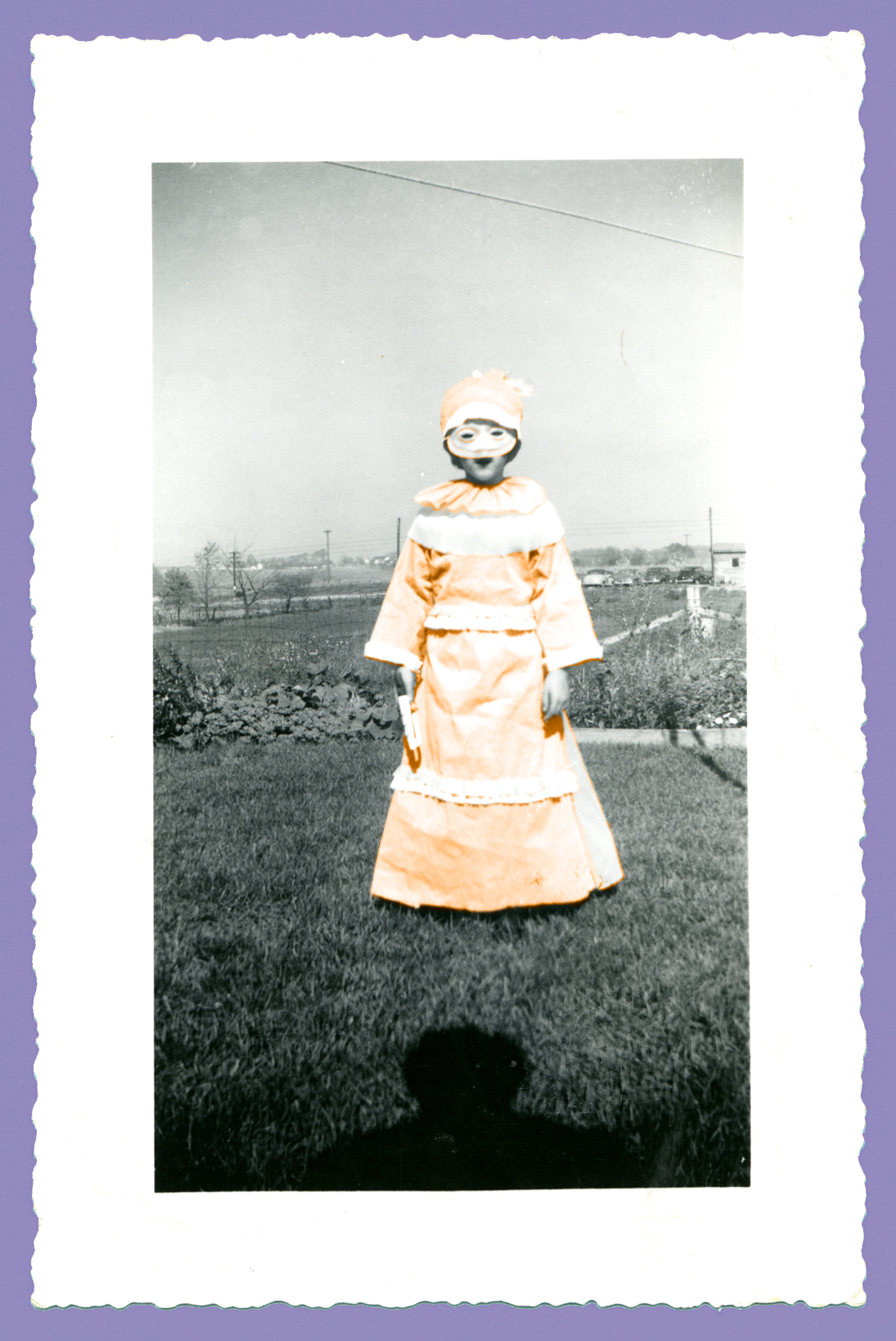
“Tick-uh-tick-uh-tick-uh-tick . . . ” The needle on my mom’s Singer sewing machine jabs the orange crepe paper as her feet mumble on the treadle. Usually the material comes from Mohr’s Fabrics in Lancaster or the Marian & Ruth Covering Shop in Mount Joy. She even uses printed feed bag for aprons or skirts. But today Mother is making an outrageously detailed Hallowe’en costume for me with orange and white crepe paper.
Color by the Magic Wand
Hallowe’en was a big deal growing up. Every October the students in grades 1-4 in Miss Longenecker’s class and grades 5-8 in Mrs. Kilhelfner’s class skipped class for Hallowe’en fun. Blind-folded, we descended the cellar steps and guided by an older student stepped gingerly through a tunnel of hay bales to begin the scary trip through the fun house in the basement of Rheems Elementary School. Peeled grapes became the naked eye balls of the “remains” we touched. Instructed to blow a penny out of a dish, we proceeded through the maze with a flour-covered face. Then there were sounds of violence and a scream as we imagined mayhem. Finally, we took off our blind-folds to behold the fright of a luminous skeleton with moaning noises before mounting the back stair steps into the light.
And Hallowe’en night was even more fun. Often our outfits were home-made: a hobo or a ghost. But sometimes Aunt Ruthie went over-board with her other nieces, my younger sisters. One October 31st Ruthie created a yellow and black bee hive costume for cute little Jeanie complete with a stick she held with a wee bee bobbing up and down on the end. Janice was so jealous at having a plain old something or other to wear instead.
One year, the sisters put their heads together and decided to dress up our younger brother Mark, 12 years young than I. So we grabbed Janice’s navy blue gym suit with a built-in belt and legs that ended mid-thigh, a garter belt and nylon hosiery (Mom’s?) with my shiny, high-heeled shoes. So attired, we helped Mark navigate the 1/3-mile distance between our house and Grandma’s, where he was greeted with dumb-founded faces. “Where did this girl/woman come from?” they must have thought. In the end, the mask came off to gales of laughter. He was a SCREAM. And a good sport!
Generally, Mennonites in the 50s and 60s did not dress up or throw parties on Hallowe’en. I am certain our pastor, deacon, and bishop’s children did not ring door-bells bedecked in worldly costumes, collecting candy from neighbors. For sure, in a Church that “believes that wearing a necktie is a worldly practice,” fancy get-ups like these would be definitely frowned upon.* For us, though, Hallowe’en was such fun!
* Statement of Christian Doctrine and Rules and Discipline of the Lancaster Conference of the Mennonite Church, July 1968, (21)
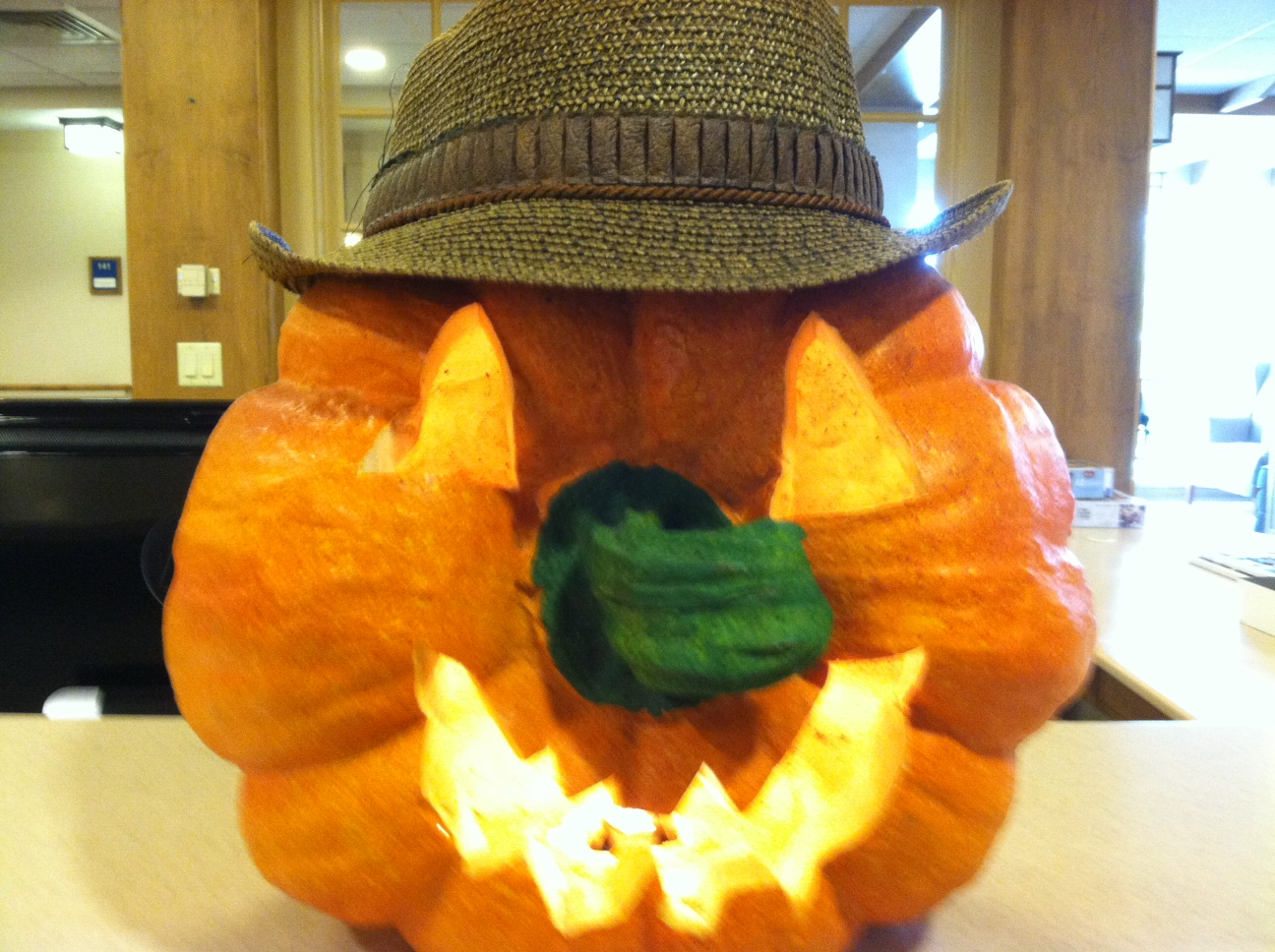
Pumpkin displayed at Landis Homes, Lititz, PA
News Flash!
Upcoming Feature and Book Giveaway of Thrill of the Chaste: The Allure of Amish Romance Novels by Valerie Weaver-Zercher.
On Saturday, November 2, I will be featuring Valerie Weaver-Zercher’s Book: The Thrill of the Chaste: The Allure of Amish Romance Novels.
Here are the details:
WHAT: An introduction to Valerie Weaver-Zercher’s Thrill of the Chaste: The Allure of Amish Romance Novels: The author and her book.
PLUS: One lucky commenter will win a copy of Valerie’s book
WHEN: Saturday, November 2, 2013
WHERE: Right here on Plain and Fancy Girl
And all you have to do is show up, read the blog post and leave a comment or pose a question..
The giveaway will close one week later on Saturday, November 9, 2013 at noon. The winner will be chosen in a random drawing. I will announce the winner here and by email.
I invite you to come by and enter. Feel free to invite your reading friends!
Today’s invitation: What are your childhood memories of Hallowe’en? What new memories are you creating?
Are you thriving–or just barely hanging on? This is a close-up of the logo from a woman’s retreat I attended a few months ago featuring Leslie Nease, Mrs. North Carolina 2001 and contestant on Survivor China 2007.
A fitness trainer, she has written a book on physical, emotional and spiritual fitness called Body Builders. Leslie has had to overcome many obstacles in her life journey, but she shares these with touches of humor. Her new book Wholehearted: Living the Life You Were Created to Live (2013) describes how God transformed her from the inside out with an experience she refers to as a heart transplant. Her goal: to live every day with purpose and passion. To thrive, not just survive.
For which cause we faint not; but though our outward man perish, yet the inward man is renewed day by day.
II Corinthians 4:16
The desire to thrive, not just survive, is described in psychological terms as well. The book Love, Medicine & Miracles by Bernie S. Siegel, M. D. contains a description of the survivor personality traits. According to psychologist Al Siebert, there are observable indicators of self-motivated growth:
1. A sense of aimless playfulness for its own sake, like that of a happy child.
2. A child’s innocent curiosity.
3. The ability to become so deeply absorbed in an activity that you lose track of time, external events, and all your worries . . . .
4. An observant, non-judgment style.
5. Willingness to look foolish, make mistakes, and laugh at yourself.
6. An active imagination, daydreams, mental play . . . .
7. Empathy for other people, including opponents.
8. Recognition of . . . intuition as a valid source of information.
9. Good timing when speaking or taking original action.
10. The ability to see early clues about future developments and take appropriate action.
11. Keeping a positive outlook in adversity.
12. The ability to adapt to unexpected experiences. (Plan B!)
13. The talent for converting what others consider misfortune into something useful.
14. Feeling yourself getting smarter and enjoying life more as you get older.
What can you add to the list above?
Are you a thriver? A survivor? Share a story please.

 The recipe shows “potatoes” crossed out, but sometimes she adds them.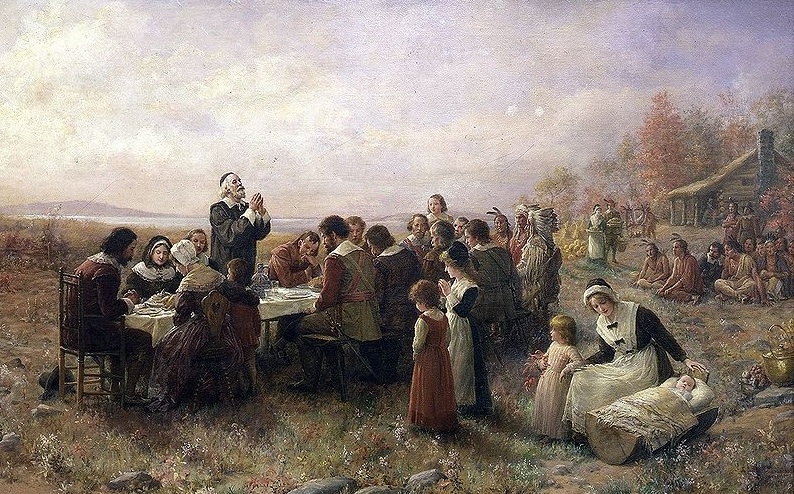










 Plain and Fancy
