A Robbery, Sad Friday, and a Clump of Daffodils

“I’ve been robbed!’ These are the only words artist/performer Cliff can utter as he walks toward his Dodge van, noticing that the air-vent window on the driver’s side has been pushed in at an odd angle. It’s about 4:30 a.m. Good Friday, April 1, 1994.

Rushing around the vehicle to open the side doors, he begins to take inventory of what’s missing: sound equipment including a stereo mixer, a professional-grade tape player, a recorder and at least 150 treasured CDs missing from cases. An envelope with cash – gone. All gone! He walks frantically around the parking lot of the Quality Inn he is leaving and spots a black suitcase, which the thieves have thrown into a ravine. Empty!

It was the end of a very productive month presenting 35 multi-media school assembly programs in Florida and Georgia. Cliff had driven to Nashville, Tennessee because his next shows would be in the Memphis area. He had been looking forward to boarding a 6:00 a.m. Delta flight to come home on Good Friday and spend Easter weekend with his family. This weekend, however, turned out to be a mixed blessing – The splendor of the resurrection service at church conflicted with the discordant thoughts about his recent loss: Lost equipment, lost musical discs, remembering malfunctioning hotel parking lights that had probably contributed to the thieves finding his van easy prey. And after all, it was Nashville, music city.

After returning to the Nashville airport after Easter to continue his itinerary, he takes stock. Though the robbery has felt like a violation, a form of rape actually, he could count his blessings: 1. His CD player vital to the music that accompanies his drawing was in a separate case, undisturbed and  2. He had copies of program music at his home base, Jacksonville.

Still reeling from the impact of the loss of inanimate “friends” that provided the musical score to his chalk drawing on a large easel, he must soldier on toward St. Louis, Missouri for next week’s shows. Behind the wheel again, he popped in a cassette tape, a musical companion on the long hauls between cities: soaring classical music and uplifting hymns, a distraction from the recent robbery. His itinerary takes him through Cape Girardeau, Missouri, where his journal notations begin:

The undulating ribbon of asphalt in Interstate 55, the hum of the van engine, rumbling of tires, and rushing air together with the music combined their forces to calm my mind . . . .  Now a spot of yellow caught my attention. Was it litter – or something else? The blurry image that I imagine are daffodils soon vanished from my side view mirror.


I keep driving but feel an urgency to turn around. The nest of daffodils keep calling me. “Come back. Don’t go another mile. You may miss a special moment in your life, a moment that can put a special gladness in your heart.

 Finally, he turns around at the next exit, heading south, as he wonders, “How far had I traveled since I had seen the flowers? I honestly had no idea, but I retraced my path even farther than I thought necessary to spot those daffodils again.” He gives up and heads north again. But feeling a tug even more insistent, he turns the van around one more time.

Passing over the exit I continued searching, almost holding my breath. My jaw set, my eyes straining for anything yellow.


I nervously looked at my watch. I could not believe that two hours had passed since first sighting those images of hope. Miles and time seem to merge together. My odometer indicated I had gone 120 miles since first turning back. What was I to do? It was getting late; I had to get to St. Louis soon.


And then ahead I saw it—a flash of golden yellow. My heart leaped with joy—It was there after all, several clumps of daffodils, but I saw two huddled together, spring-like beauties, raising their slender pastel green fingers, lifting golden heads to the heavens!

daffodilREAL2

The next challenge: Finding a container and extracting the two daffodils from the hard soil without a trowel or shovel.

With traffic whizzing by and like a mad man on a single mission, I quickly swung open the back and side doors of the van, and found a plastic one-gallon container of spring water. Out gurgled the water. Then, I rummaged through my tool bag until I found a razor blade to cut out the topside portion of the jug.

How to dig up the daffodils though?

Once again, I dashed back to the van and from deep within my jungle of sound and art equipment, boxes and bags, I pulled out an aluminum yardstick. With both hands on my innovative shovel, I vigorously dug down deep into the damp soil and rock encasing the two flowers. After leveraging the living plants into a plastic bag, I carefully placed them into the jug, watering the daffodils and even hiding them in bushes outside overnight for safe-keeping at hotel rest stops before the next trip home.

On this Saturday, April 9, 1994 my husband spent 2 ¼ hours driving an extra 125 miles to capture in real time this evidence of hope and then later spent more hours penning this story in a travelogue entitled “I Stopped Beside the Road Today.”

The robbers did their dirty deed in an unlighted parking lot and left no evidence of their identity behind. Yet, Cliff searched for beauty among the rubble and found it, proof of the hope it represents.
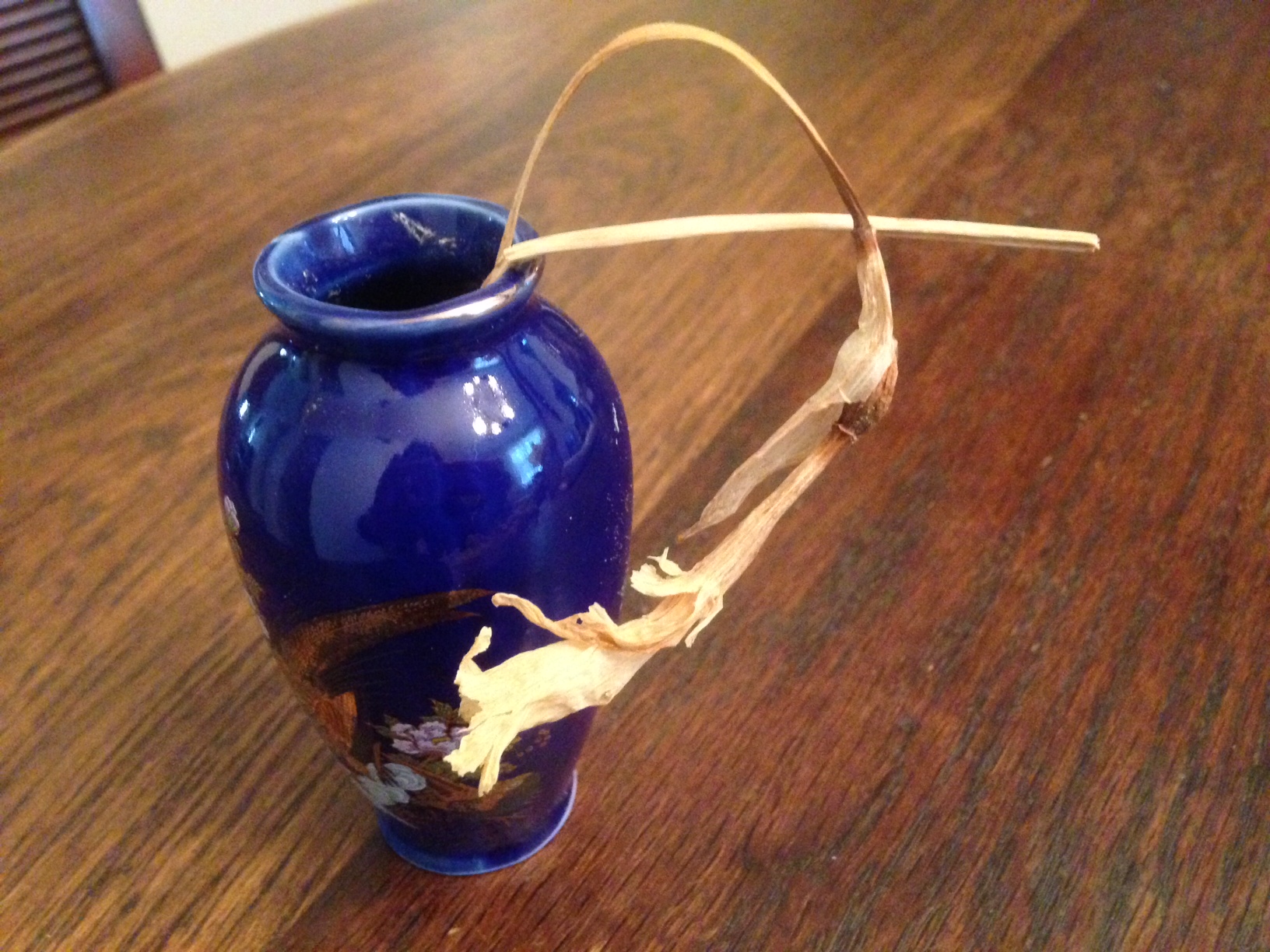
DaffodilDried

I have saved the dried-up daffodils, one headless, in a blue vase for 21 years.

And I can’t find it in me – at least not yet – to destroy these bedraggled tendrils – evidence of a Bad Friday turned Good!


Have you ever been robbed? Have you lost something so valuable you searched and searched? Here’s where to tell your story!

*  *  *

Links to Cliff Beaman, artist – http://americanartassemblies.com

YouTube video

*  *  *

Bonus: Tradition has it that the daffodil, the Lent Lily, will open on Ash Wednesday and die on Easter Day. In a poem entitled The Lent Lily, A. E. Housman writes of the daffodil as a yellow trumpet heralding the glories of spring.

Coming next: Our Easter in Ukraine
Aunt Cecilia is 100 Years Old Today!

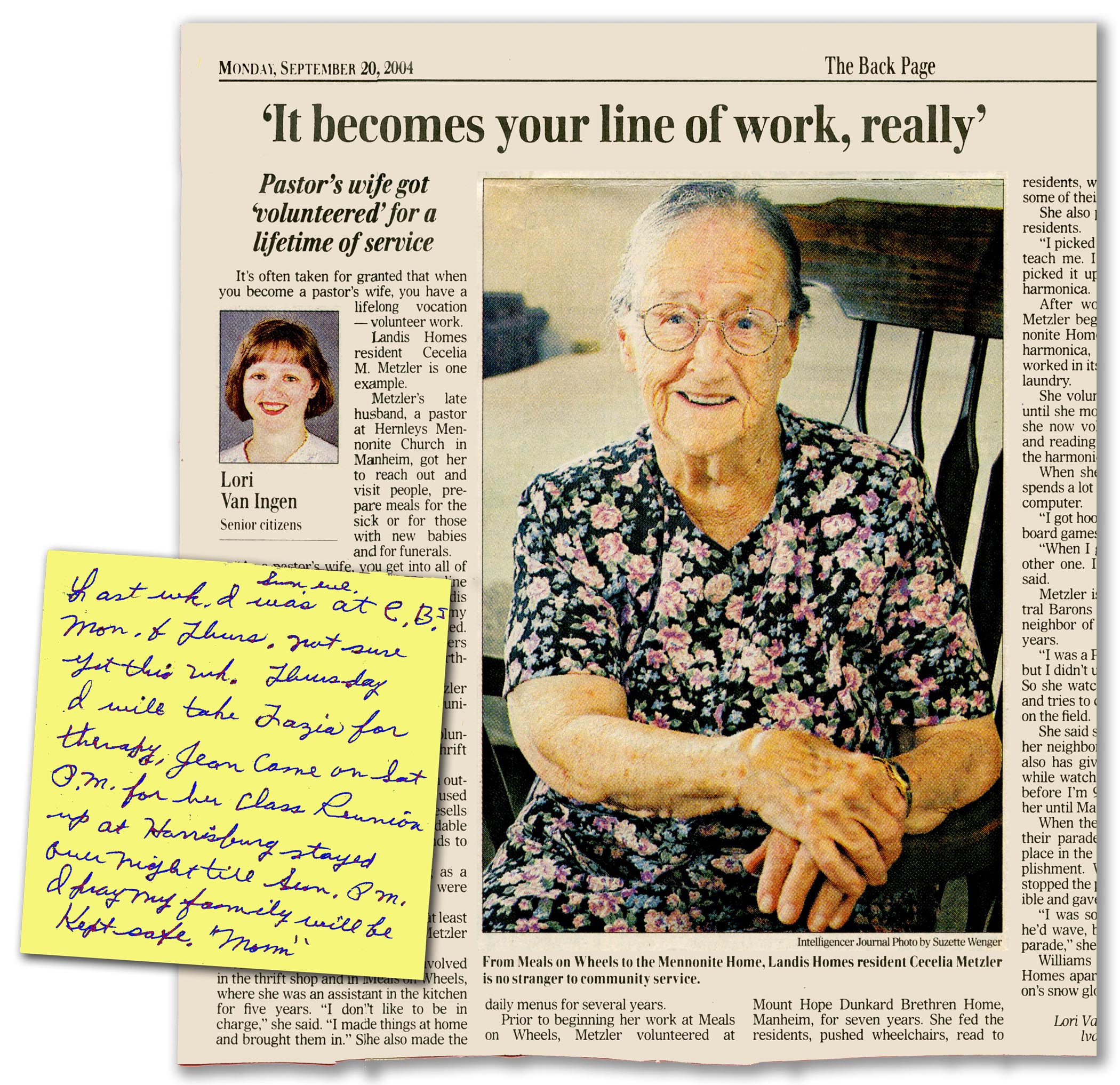
A centenarian! That’s what my Aunt Cecelia is today. Born March 28, 1915, Aunt Ceci is one-hundred years old. According to one source, only 7347 U. S. citizens are now 100 years old, and today my aunt has joined their ranks. Special things will happen to her today. Aunt Cecilia Risser Metzler will receive a letter from President Obama. Friends and relatives will send her cards. Her family is planning a reception in her honor. Who knows what else is in store for her.

Last May, when Mother was still alive I wrote a post about her and her sister-in-law Cecilia, then both nonagenarians. You can read it here. Aunt Cecilia is my last remaining aunt on my mother’s side of the family. She’s IT. And what a life she has lived!

In an article that ran in the Lancaster Intelligencer Journal (Sept. 20, 2004) journalist Lori Van Ingen listed all the volunteer service that has spanned Aunt Cecilia’s life time. Mother sent this article to me with a sticky note referring to her own volunteering at C. B, Choice Books.

2004_0920_The Intelligence+note

Her Service

  • Pastor’s wife with my Uncle, Rev. Clyde Metzler at Hernley’s Mennonite Church near Manheim for 31 years (1943-1974) where visiting members and volunteering got into her blood, where it became “her line of work, really,” she says. She sent out 15-18 birthday cards monthly for many years.
  • Partner with her husband at Mount Joy Furniture Hospital, Mount Joy, PA
  • Volunteer at Nearly Nu Thrift Shop in Manheim, PA.
  • Kitchen Assistant for 5 years for Meals on Wheels where she created menus and was involved in daily food preparation.
  • Served at Mt. Hope Dunkard Brethren Home in Manheim for 7 years, feeding residents, pushing wheelchairs, writing letters for them, and doing some mending. She also played the harmonica for residents, a skill she learned from her dad.
  • Volunteer at The Mennonite Home for 8 years where she fed and read to the residents, worked in the thrift shop at the home and helped in the laundry.

Some Losses

The life of Cecilia Risser Metzler, volunteer extraordinaire, has not been a bed of roses unless one considers that roses have thorns. Her youngest daughter Eunice, engaged to be married to Robert Keener, died suddenly of complications from a congenital heart condition. A few years after Eunice’s death, Clyde and Cecilia drove from their home in Pennsylvania to Goshen, Indiana to attend Robert’s subsequent wedding to Rhoda, but not without misgivings. The Metzlers both had considered Bob a member of the family, so it felt awkward to attend his marriage to someone else, another reminder of the loss of their precious Eunice. In the course of time, however, Bob’s wife Rhoda learned about the death of Cecilia’s husband Clyde only 4 years after their daughter’s death and wanted to know more about Cecilia as a real person, and not just the mother of Eunice, her husband’s former fiancée.

Uncle Clyde and Aunt Cecilia Metzler attending the wedding reception of Robert and Rhoda Keener in Goshen, Indiana - March 18, 1972
Uncle Clyde and Aunt Cecilia Metzler attending the wedding reception of Robert and Rhoda Keener in Goshen, Indiana – March 18, 1972. Illustration in the article “a friendship that might not have been” by Rhoda Keener in Christian Living magazine

Rhoda writes of Cecilia’s strong faith and of how she coped with two losses by organizing a group of seven other widows to do volunteer work, eat out together — even play Pitch and Putt Golf. This jolly group went to the mountains and seashore at Cape May regularly. One year Cecilia attended a Super Bowl game.

Game Girl / Cheerleader

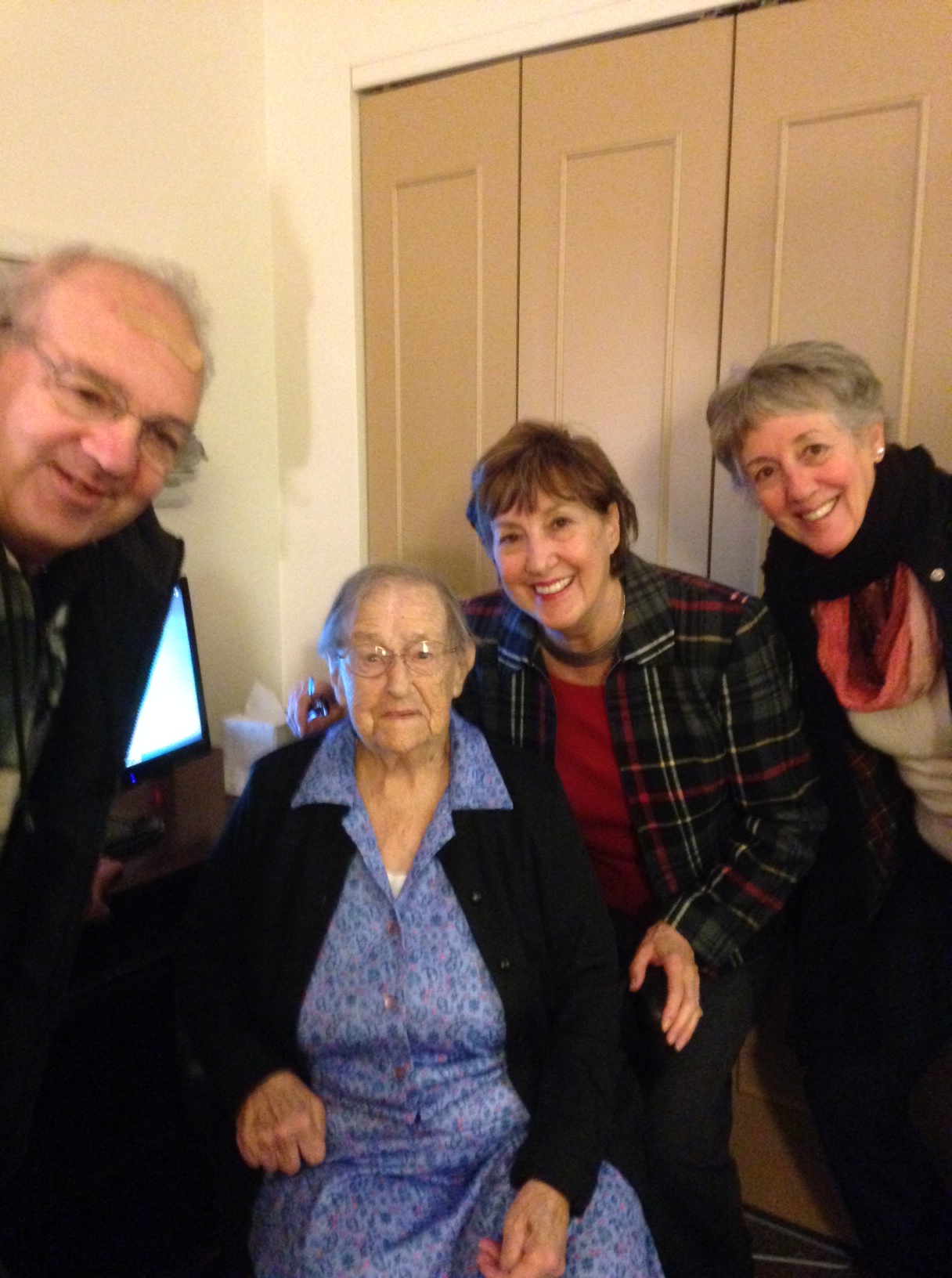
Did I mention Cecilia is a game girl too? Competitive and exuberant by nature, Cecilia loves playing board games, card games, dominoes – even computer card games. She paused long enough in her game of Tumbling Numbers on the computer to have her photo taken with my sister Jan, brother Mark and me last November at Landis Homes.

AuntCecilia

Besides a game girl, some would call Cecilia a cheer-leader too. However, she doesn’t need a short, twirly skirt or megaphone to root for the Phillies’ baseball team or the Philadelphia Eagles. She admits to not quite understanding football though her son Clair has given her some pointers. In her home town, she was also an avid Manheim Central Barons fan because she was a close neighbor of coach Mike Williams for 25 years. When the state champion Barons had their parade in the fall of 2003, Cecilia “took her place in the square to cheer their accomplishment. When Williams saw her, he stopped the parade, got out of his convertible and gave her a big hug.” She said:

I was so amazed, stunned. I thought he’d wave, but didn’t think he’d stop the parade!

Coach Williams also dropped by her Landis Homes apartment to autograph her Baron’s snow globe (quoted from Intelligencer Journal, cited above.)

Words of Wisdom

“What is your secret of a long and productive life, Aunt Cecilia?” we wonder. She has shared two bits of wisdom to overcoming the rough spots in life. Remember this, she says:

  1. Life is a struggle, and
  2. Life is a struggle

“Once we truly know that life is difficult and we truly understand and accept it, then we are no longer overwhelmed by it.”  (Reference: “A friendship that might not have been,” by Rhoda Keener in the Christian Living magazine)

Aunt Cecilia, I think there might be a parade of family and friends coming by your residence at Landis Homes today. Through God’s help, you have triumphed through the dark valleys and inspired us from the mountaintops of your rich experience. And we thank you!

Happy Birthday!

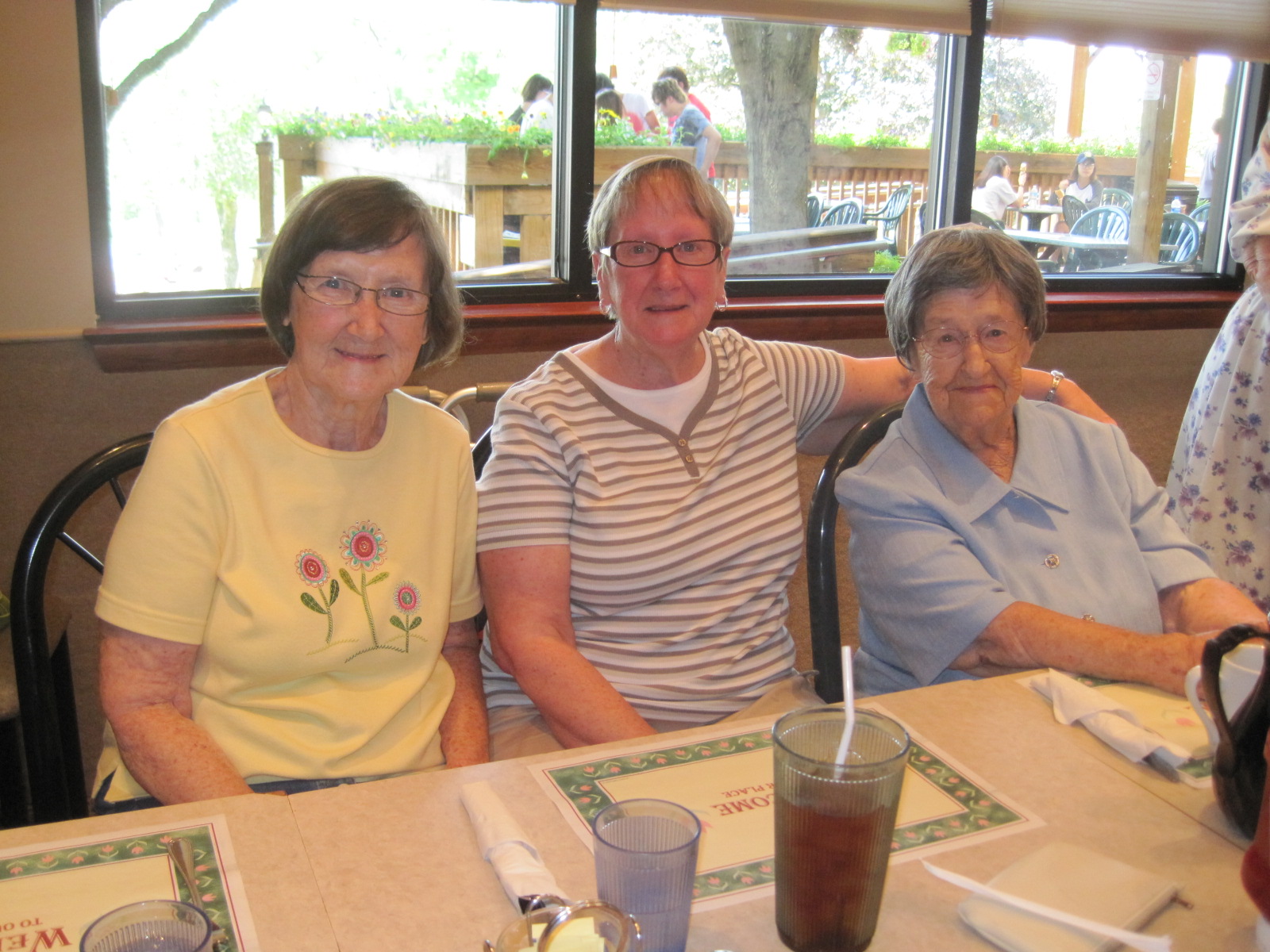
Daughters Erma and Orpha with Aunt Cecilia in 2012
Daughters Erma and Orpha with Aunt Cecilia at Oregon Dairy in 2012
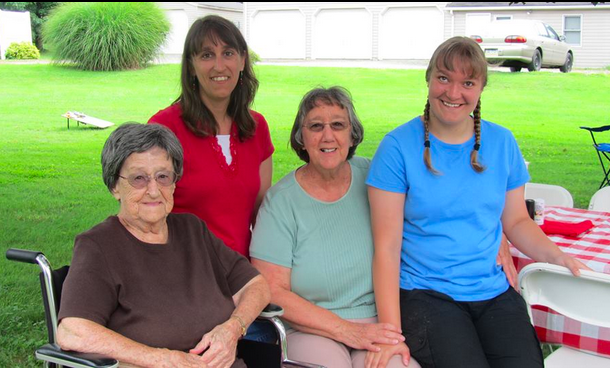
Aunt Cecilia, grand-daughter Tana, daughter Dorcas, and great=grand-daughter __________
Four generations: Aunt Cecilia, grand-daughter Tana Hey, daughter Dorcas Martzall, and great grand-daughter Rosa Hey

Do you have elderly relatives that have hit the age ninety mark? Have any reached 100? What words of wisdom have they given to you?

Coming next: A Robbery, Sad Friday, and a Clump of Daffodils

Grandmother Kayaks from Maine to Guatemala for the Children at the Dump
Grandmother Kayaks from Maine to Guatemala for the Children at the Dump

These were the words in my invitation to a reception promoting Project Safe Passage honoring Dr. Deb Walters’ efforts to raise funds via her Kayak trips.

KayakDebWaltersPIC

A stellar professional career behind her, this woman is paddling with passion in her mission to rescue children and families who live in the garbage dump of Guatemala City in Guatemala, providing them with literacy programs and medical help.

DebWaltersBio

Who is Deb Walters?

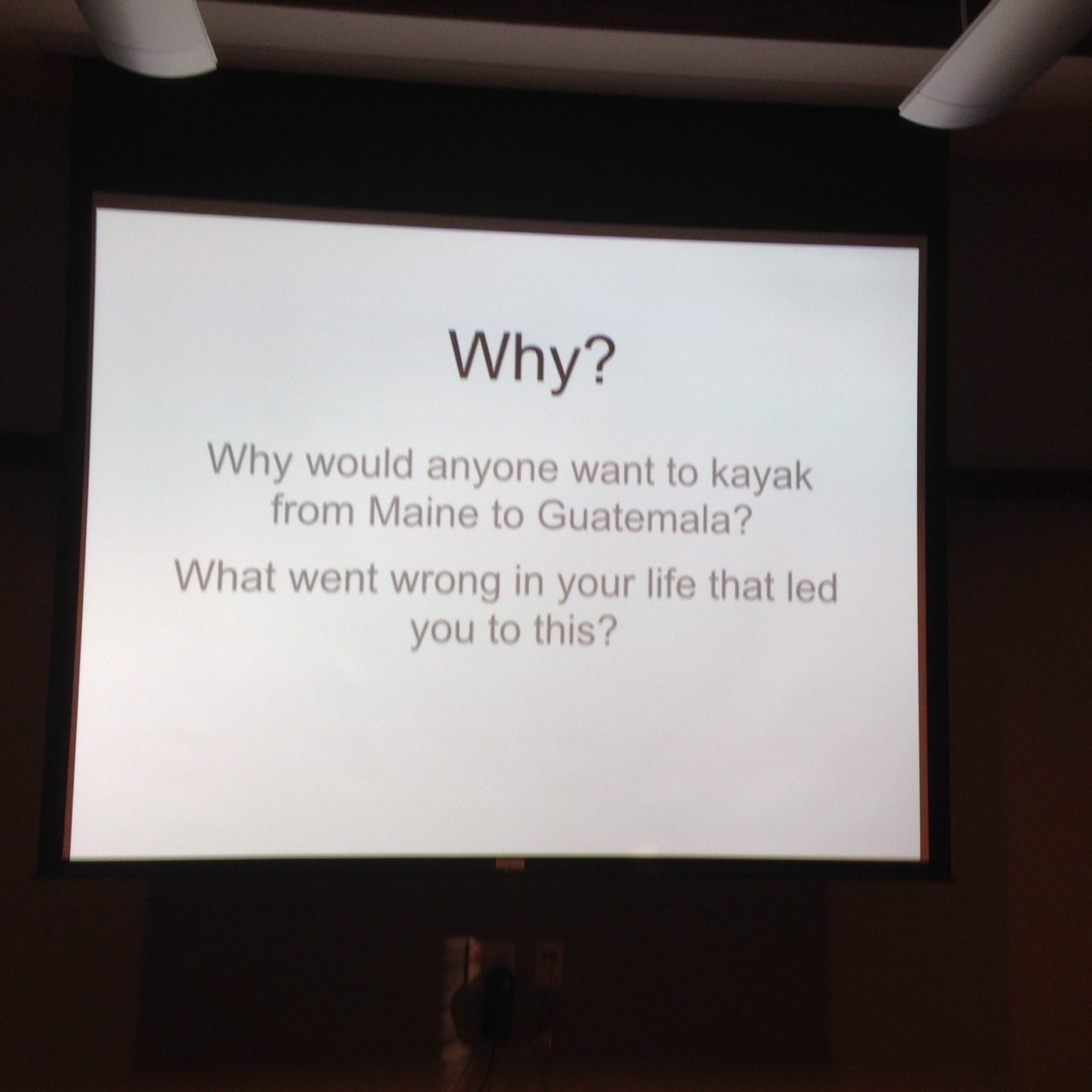
Dr. Deb has always been adventuresome, having made solo trips to the Arctic, kayaking around the Northwest Passage, and leading kayaking expeditions, which she began in 1981. Several years ago, she was among a group of Rotarians who went to Guatemala City, saw the need and decided to do something positive about it. She reports, laughingly of course, that when she embarked on her first journey one person came up to her and asked this question:
WhySafePassage

The Need & How The Safe Passage School Helps

Over 9 million people live in Guatemala City, Guatemala, and 10,000 of those people scavenge for food in the city garbage heap and for any items they can find to sell to survive. Safe Passage was organized in 1999 to rescue these people from their dire situation through literacy and medical help. Kayaking is Deb’s way of fund-raising for this organization. She has reached 92% of her goal to raise $ 150,000.00 to fund expanding the school to include grades 3 and 4.

  • Safe Passage Educational Center houses classrooms, a cafeteria, library and a medical clinic, serving nearly 2000 family in 2014.
  • Provides literacy: English speakers are 3 times more likely to get a job. Incomes of Safe Passage graduates are 5 times higher than that of the average resident of Guatemala City.
  • Provides teacher training for local public schools.

Deb’s Day in her Kayak, a Chesapeake 18 model

She says every day “feels like I’m jumping off a cliff!” Typically she paddles 2-8 hours daily, monitored by her husband Chris back home via a tracking device that reports her whereabouts every 10 minutes. He helped her assemble tents, suits, cooking ware, and other travel equipment.

The children of Safe Passage have donated yellow, rubber ducks “El Patito Amistoso” for her kayak, so she has companionship while she travels.

KIDSsagePassage

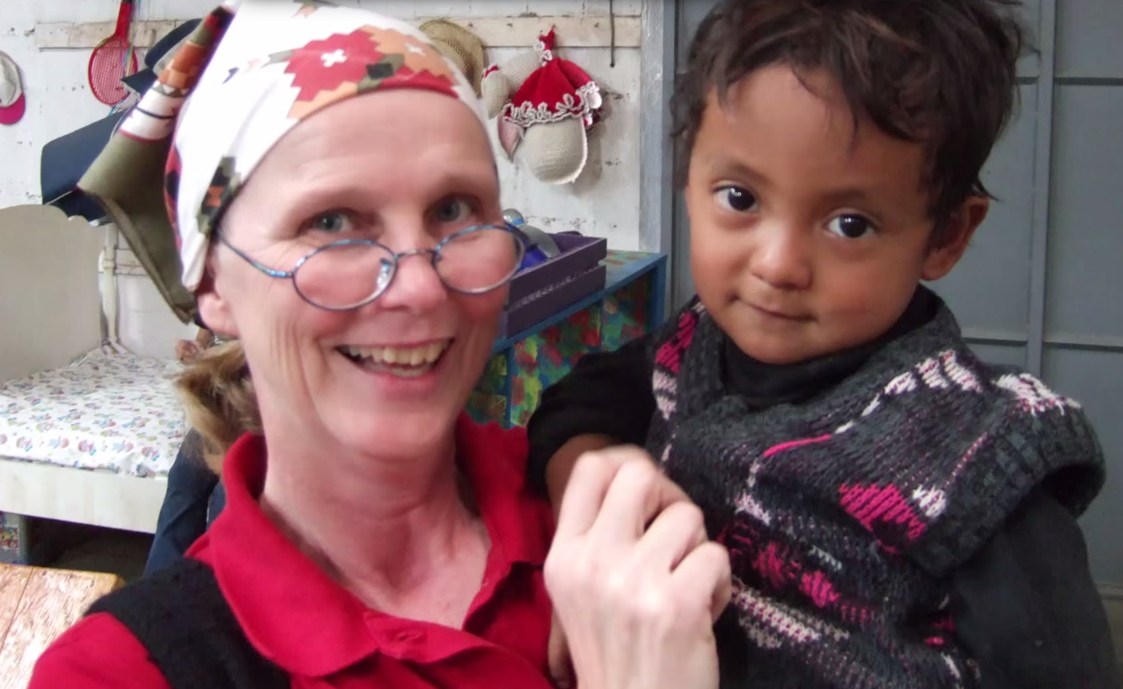
Dr. Deb and Guatemalan boy: Safepassage.org/kayak video

Hazards:

  • Drug cartels control some sections of the waterway. “If they see you, they shoot you.”
  • Deb has encountered sharks, alligators, and whales. When she encounters a marine animal, she “looks them in the eyes while she sings.” Once however, at night she and her kayak were flipped over by a manatee on the Inter-coastal Waterway in Florida.
  • Once she kayaked out of the U. S. security zone, and the Coast Guard came after her with guns a-blazing. She could have been fined $ 500.00 and served 3 years in prison. The officers relented, however, when they discovered her cause and escorted her to safety.

Interruption!

After completing 1057 miles from Maine to South Carolina, her most recent trip was temporarily stalled by intense shoulder pain alternating with numbness, and Deb had to stop four times in the early part of the trip for medical attention. Doctors discovered a herniated disk in her neck which was surgically repaired with a titanium piece which in an X-ray looks to her like the image of a “thumbs up”! She says, jokingly, “I’ve been screwed!”

She is hoping to resume this latest trip in October and complete the remaining miles to Guatemala City.

Success Stories

  • One 73-year-old woman in the garbage dump enrolled in Safe Passage so she could help her grandchildren do homework. She herself learned to read and now she is writing her Memoir!
  • Another woman named Miranda rescued from the dump exclaimed after her success: “If you believe you can do it, you can do it!”

Final Words from Deb:

“Like many people who embrace an adventure, I learned more from the people I met than they learned from me.”

After her presentation, Deb admitted: “Even though I’ve seen this video many times, I never see it without tears in my eyes.”

DebWaltersMe

Her blog: KayakForSafePassageKids.blogspot.com

The organization: SafePassage.org


Maybe your story is not as dramatic as Deb’s, but it has involved getting out of your comfort zone. We’d like to hear about it – or your response to Deb’s adventure.

Purple Passages with a Pop of Pink, March 2015 edition

SPRING

“Is the spring coming?” he said. “What is it like?

“It is the sun shining on the rain and the rain falling on the sunshine . . .  ~  Frances Hodgson Burnett, author of The Secret Garden

Tulip magnolia tree in our neighborhood just about to bloom in Florida, early February
Tulip magnolia tree in our neighborhood just about to hit full bloom in Florida, early February   ~  Sunshine, no rain in sight

[in Just-] a poem by e. e. cummings, (his name usually shown in lower case letters) who is known for odd spacing and made-up words like “mud-luscious” and “puddle-wonderful” so evocative of the squooshiness that follows the winter thaw. This British poet clumped together some of the names and other words he uses, just like mud on your shoes in springtime. Remember all that? Here are the first nine lines.

spring          when the world is mud-
luscious the little
lame balloonman

whistles          far          and wee

and eddieandbill come

running from marbles and

piracies and it’s
spring

when the world is puddle-wonderful


ENERGY

The only thing that keeps a man going is energy. And what is energy but liking life?   Louis Auchincloss, A World of Profit

MIRACLES

C.S. Lewis wrote, “Miracles are a retelling in small letters of the very same story which is written across the whole world in letters too large for some of us to see.”

MITTENS

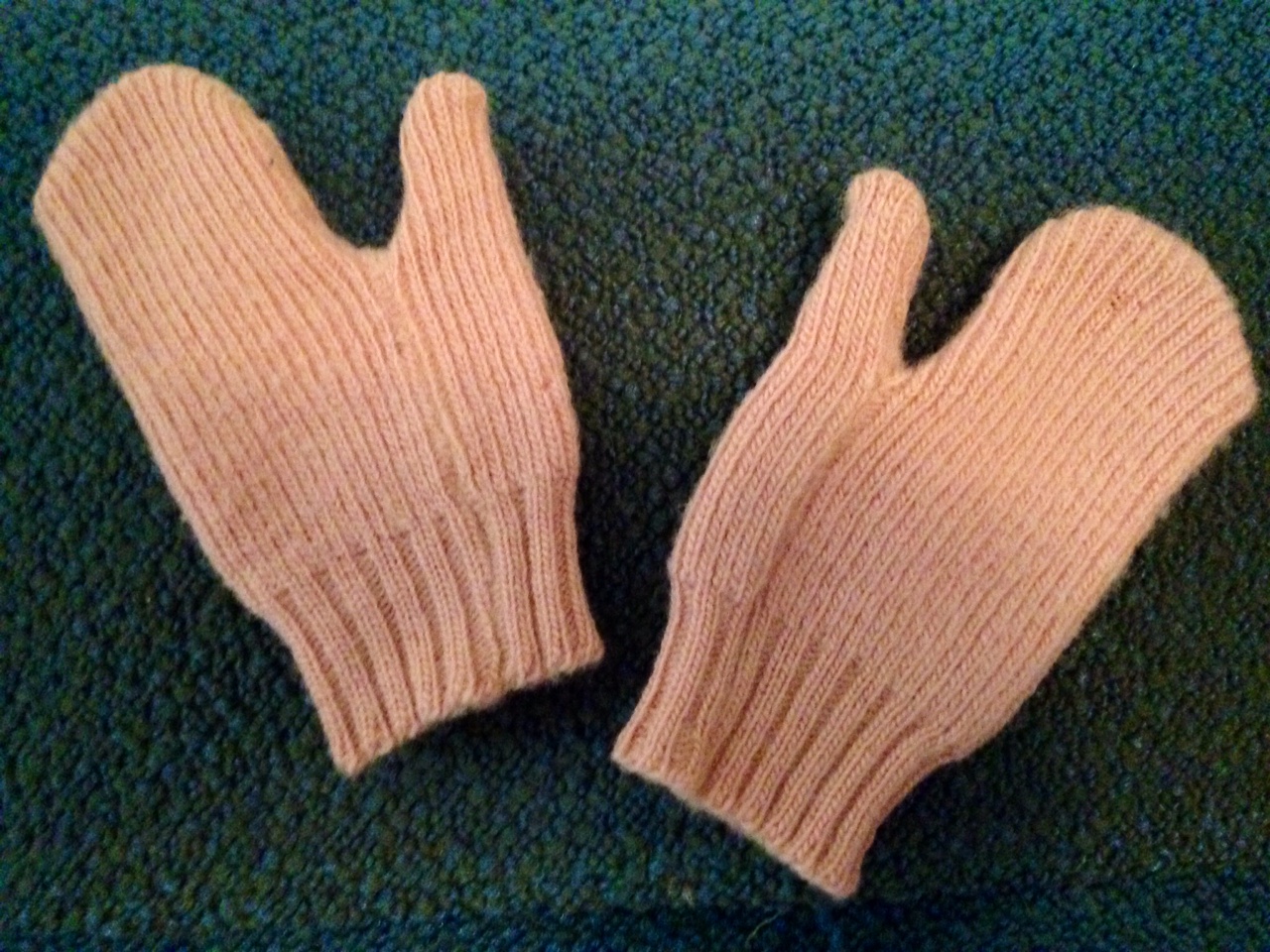
The wee Longenecker girls wore mittens because it was cold in Pennsylvania until near the end of March. These are the mittens I remember my sisters Janice wearing. Jean probably inherited them when her hands grew big enough. Somehow I recall a string of woven yarn attaching the mittens under the coat so the little girls wouldn’t lose their mittens. Mittens actually do keep little hands warmer than gloves would – body heat from all four fingers and thumb is trapped inside the glove just like this. . .

PinkMittens

. . . which reminds me of the Mother Goose nursery rhyme about the Three Little Kittens. You can probably hear the sing-song sound of the phrases as you read this tale.

KittenMittensScreenShot

In the verses which follow, the kittens put on their mittens, then get them dirty, are scolded by their mother, inducing them to wash their mittens, even hanging them out to dry. In the final verse, Mother Cat compliments her kitties while teaching them a lesson in scavenging for their dinner:

“What, washed your mittens, then you’re good kittens,
But I smell a rat close by.”
“Meow, meow, meow,
We smell a rat close by.”

Your turn! This is a free-for-all post. Add your thoughts or quotes on spring, energy, miracles, mittens – or something else.
Coming next: Grandmother Kayaks Solo from Maine to Guatemala. Why?

The Nook: A Different Definition

Where did you study? Was your desk a dining room or kitchen table? The couch? A separate room? Did you listen to music as you studied? Or did you tune out the noise of the household when you crammed for a test or wrote a report? Louise DeSalvo author of The Art of Slow Writing, a book about writing as a meditative, patient process, muses about her own study nook in this excerpt:


My parents valued education, so when I was young, the only time my parents didn’t bother me was when I was doing homework. My father made me a triangular desk that fit into a space at the top of the stairs. . .


Sitting at my desk while I was working, nobody told me what to do. My father was pleased with my industry rather than angry with me. My mother wanted me to study because, no matter how much she needed my help, she wanted me to do well in school.  Sitting at my desk working helped me feel a sense of control in my chaotic household (188, 189).

Louise’s writing desk was triangular probably positioned in a corner. It strikes me that she may have faced the wall, not a window, a rather confining, even claustrophobic view.

As for me as a student at Elizabethtown High, when the noise downstairs around my spread at the dining room table overpowered my ability to concentrate, I’d flee upstairs to a study desk that looks like this, a bedside table with a brown goose-necked lamp. Mother had the table refinished years later and replaced my gooseneck lamp with this one: a faux milk-glass base with a lacy, fluted lampshade.

Study Desk 2

Here’s how I write about this “desk” as a flash of memory:

My books and notebooks are piled on the dining room table. I’m in ninth grade and when the house gets too noisy, I go upstairs to the bedroom I share with my sister Janice and study there. My study table is just a wooden bedside table. It’s tiny, with two of the four legs spaced closer together. There’s space for a little lamp on top and maybe a book or two on the shelf below – a piece of furniture not designed for serious study. There is no place to put my legs really, but I scrunch myself under the teeny table with my knees touching, a brown goose-necked lamp cocked so I can read, take notes on scored 3 x 5 index cards, or write in meticulous cursive in my notebook, one for each subject.


Image: eBay
eBay Image: mid-century goose-neck lamp

I consumed book chapters, algebraic formulas, and historical data. I also consumed apples, carrots, or oranges. Yes, as I studied, I nibbled. Like a dog worrying a bone, I ate apples to the core, sometimes discovering nothing but apple seeds in the palm of my hand along with the fibrous center hull, when I looked up from the page. Carrots were eaten down to the nubs. And oranges too. First, I sucked out some of the juice, then broke the orange into five or six sections, eating them one by one. Finally, I consumed the white inner rind too, one incisor-dig at a time, only the outer skin remaining.

Orange WholeOrange SectionsOrange Bitten RindOrange Peel


Study – an all-consuming proposition  . . .  

Some books are to be tasted, others to be swallowed, and some few to be chewed and digested.

        ~ Sir Francis Bacon  “Of Studies”


Did you study at home, at the library? Did you have chaos or quiet? Maybe you had a photographic memory and didn’t have to study much.

Were you a nibbler too? Inquiring minds want to know.


Coming next: Purple Passages with a Pop of Pink, March 2015 edition

Happy St. Patrick’s Day from Pollee Ann and Mr. Zip

Did you ever have a Pollyanna? A secret pal back in the days when mail traveled only in paper envelopes with postage?

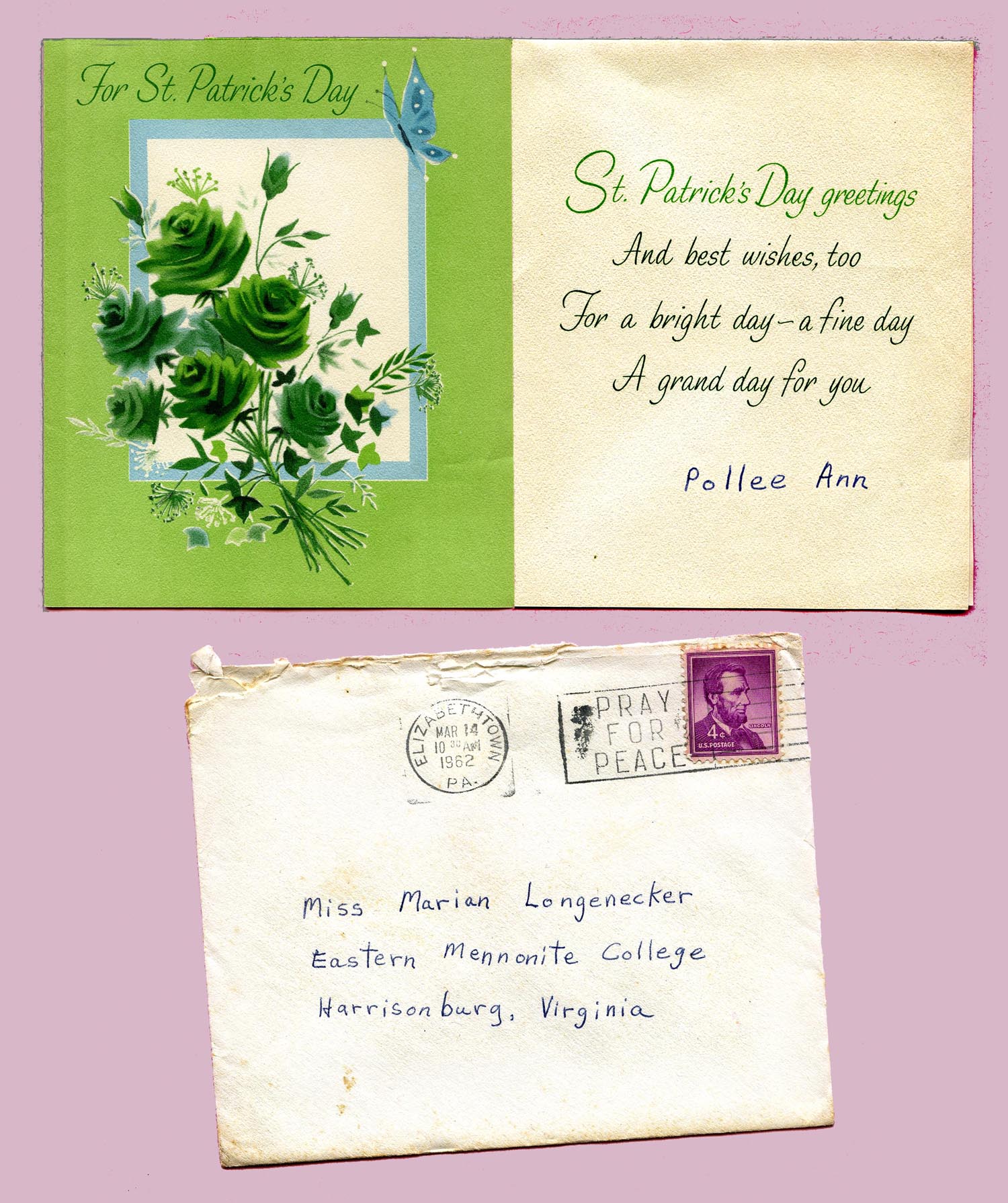
As I was going through one of my Boxes under the Bed, I found this quaint gem sent to me at college in celebration of St. Patrick’s Day, March 17. The charming card is signed Pollee Ann, obviously a reference to the main character in the children’s book series Pollyanna by Eleanor H. Porter, who finds the glad in everything. Though she was tragically orphaned and sent to live in the home of her gruff Aunt Polly, 11-year-old Pollyanna has come to represent eternal optimism as she spreads cheer, sometimes secretly, all around town.

1962_0314_St Patrick Card

My secret pal spells her name “Pollee Ann,” an interesting sobriquet for Pollyanna. And the card reached me in spite of the fact there is no street address or zip code, not introduced into the postal system until 1963. The term ZIP, an acronym for Zone Improvement Plan, was chosen to suggest that “mail travels more efficiently, and therefore more quickly (zipping along), when senders use the code in the postal address.”

Image: Wikipedia
Image: Wikipedia

Have a Zippy St. Patrick’s Day!

Killarney Shamrock_modified_02

Some celebrate St. Patrick’s Day by baking/eating cupcakes or cookies with green icing or wearing a shamrock pin. How do you celebrate St. Patrick’s Day?

Is there Irish in your heritage?

Coming next: The Nook, a Different Definition

Two Boys: One Moment in Time

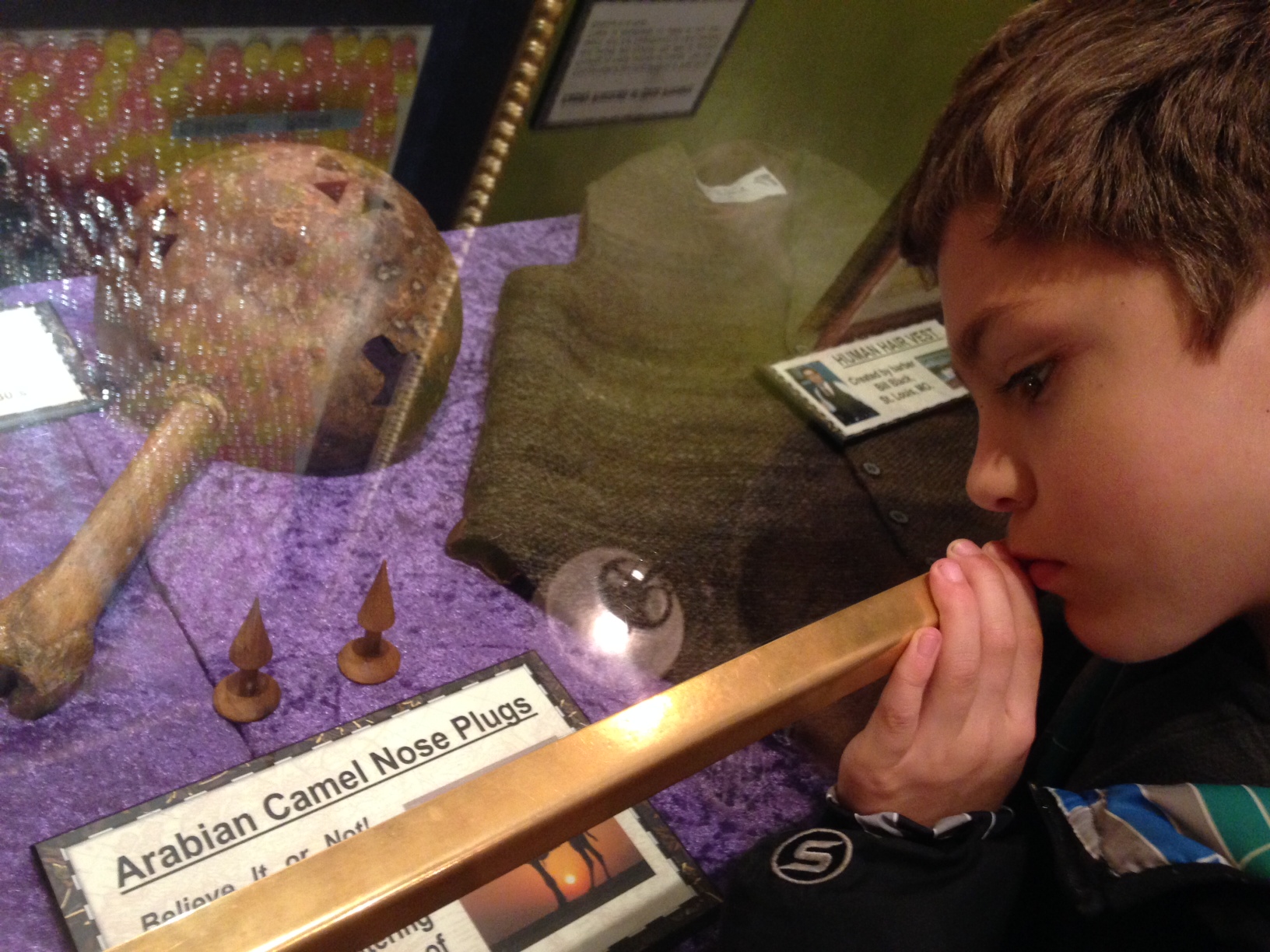
Recently Grandpa Cliff and NaNa Marian took the Beaman boys to the Odditorium (not a misspelling!) of Ripley’s Believe It or Not in St. Augustine Florida.

The Saturday excursion was billed as a Mystery Trip, so the boys didn’t know exactly where they were going, but they did know it would be fun. After a 40-minute drive south from Jacksonville, the Mystery Bus with windshield wipers chugging away pulled into the very last parking space at Ripley’s.

Ripley’s Believe It or Not is a franchise with various locations nation-wide, dealing in “bizarre events and items so strange and unusual, that readers might question the claims.” Some of the 20,000 photographs, 30,000 artifacts, and more than 100,000 cartoon panels in the collection are displayed here at The Oldest City location.

Some of the jaw-dropping oddities we saw:

  • Lord’s Prayer etched onto the head of a pin
  • This prayer also etched onto a grain of rice
  • Erector set parts made into the World’s Largest Ferris Wheel model
  • Arabian camel nose plugs
  • Replica of the Notre Dame Cathedral constructed with over 160,000 match sticks
  • Voodoo doll in an ancient basket
  • Mannequin of man weighing over a half ton

ErectorRipley

Camel Nose Plugs

 CLiffRipley
Model of Notre Dame Cathedral constructed of 160,000 match sticks
And this one took me back in time, Curtis and Ian looking at the Lord’s Prayer etched on a grain of rice through a microscope . . .
CurtIANripleys

Seeing the back of Curtis’ head (on left) reminded me of our son Joel’s image at a similar age. So I flashed back in time, and then I was struck piercingly into flash forward motion with the thought that grandson Curtis will be in middle school in the fall. With poet Percy Bysshe Shelley, I lament “O World! O Life! O TIme! (Where has all the time gone? Not long ago he was just entering first grade!)

A few weeks ago, Shirley Hershey Showalter, who publishes weekly Magical Memoir Moments, posed an engaging prompt for writers. In the March 3, 2015 edition she took her readers on a visit to the Wheel of Time. Looking at a photo of her grandson Owen staring out the window watching his mother leave for work, Showalter imagines what his thoughts might be. She remembered a similar moment years ago when her own son, perhaps wistfully, watched her leave the house for her job. Then she poses two questions for her readers:

When was the last time something pierced your heart?

Did it ignite the Wheel of Time in you?

Contemplating the second question as I gazed at Curtis and Ian, I realized a ping of joy along as three thoughts came to mind all at once: We are blessed to have them, their whole life is ahead of them, and as the photo seems to suggest, they are facing forward to meet the future . . .

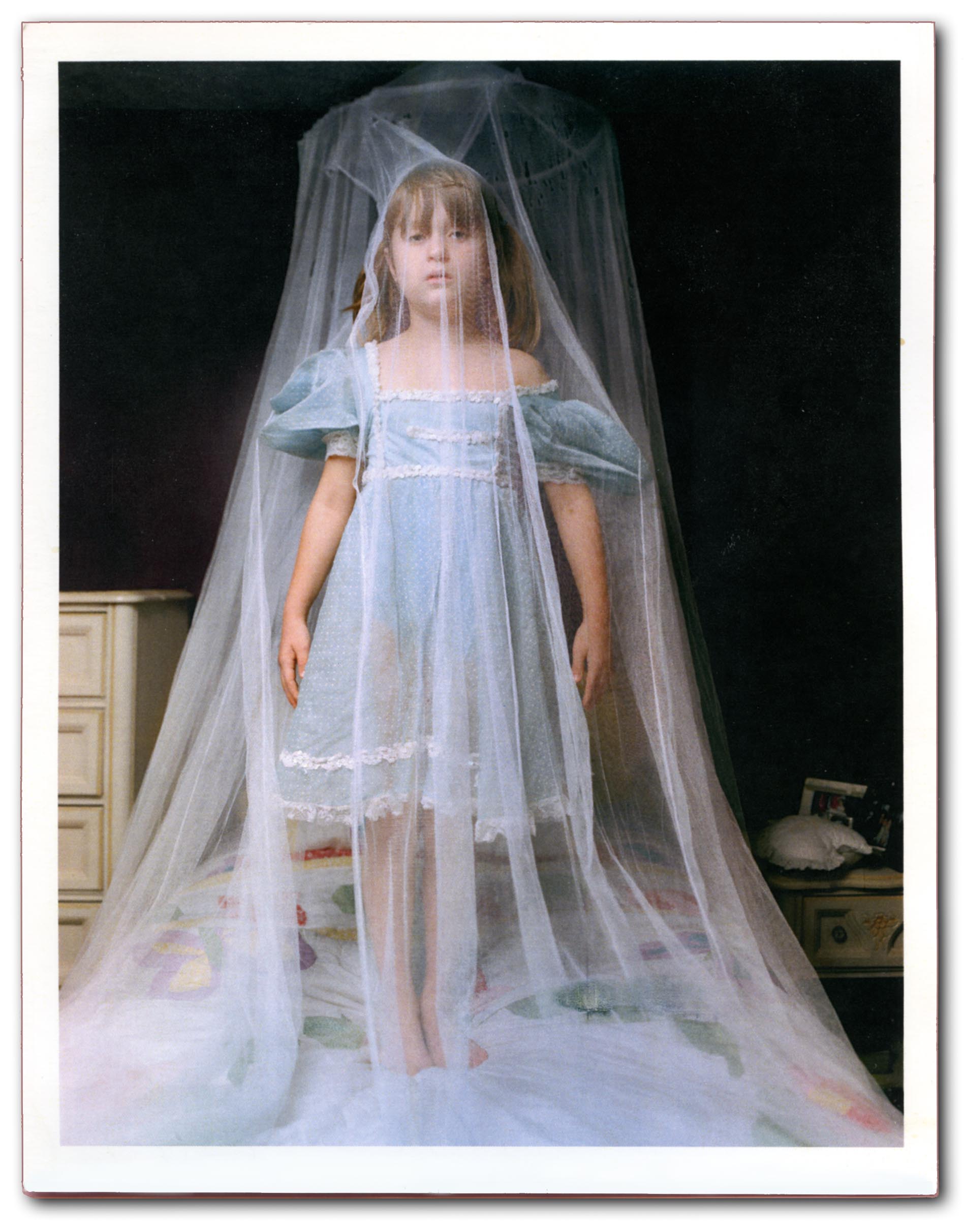
Photographer Angela Strassheim, in a recent exhibition at Jacksonville’s Museum of Contemporary Art, specializes in framing the lives of her nieces and nephews as they pass through early stages of their lives. Her collection illustrates the precious, fleeting nature of childhood and adolescence. One photograph that caught my eye was the “Girl in Blue Dress” which depicts a pixie princess frozen in a childhood phase that evaporates all too quickly. This large photo of Strassheim’s niece with dimensions of 75 x 60 inches, probably foreshadows the young girl becoming a married woman, draped as she is now in a canopy over her bed that seems to mimic a bridal veil.

MOCA_Angela Strassheim_Girl Bride photo

Robert Ripley is right. Life is full of mystery and awe. Sometimes it’s un-unbelievable too!

Your thoughts are always welcome here. Do join the conversation . . .

The Potting Shed and Other Marvels

I just talked to my brother Mark in Pennsylvania, and our 15-minute conversation was interspersed with his exclaiming . . .

“It’s sleeting.”

Then, a few minutes later, “It’s raining . . .”

And finally, “It’s sleeting again!”

It’s March and most people north of the Florida latitude are sick of winter. Suffering from S.A.D. (Seasonal Affective Disorder}, they are waiting to see the sun break through the winter blahs and unveil the crocuses and narcissus ready to pierce the soil.

Writer Linda Joan Smith had that feeling in mind when she said

Outside Snow’s dingy blanket may still muffle the stirrings of tulips and daffodils, and the pond may still be rimmed with ice. The reward of the garden must wait, but our gardening labors have begun. (“The Potting Shed,” The Traditional Home, March 2002)

Smith celebrates the potting shed, “the room that is as much a workshop to the gardener as the kitchen is to a cook.” She makes reference to the advice of John Claudius Loudon, who in his 1830s An Encyclopaedia of Gardening, recommends that proper potting shed must have light, air and warmth, including “a fireplace never omitted.” Smith’s article pictures two versions of the shed – an impressionistic one where there may not be precise order . . .

Illustration: James Staag, Traditional Home, March 2002

And one meticulously appointed where there is “a place for everything, and everything in its place,” (229) so says Mr. Barnes of Bicton Gardens writing in the1840s.

Photograph: Curtice Taylor, Traditional Home, March 2002

My blog friend Linda Hoye, who moved recently from the Pacific Northwest to Canada, is a gardener extraordinaire. In her blog A Slice of Simple Life she uses plastic gallon jugs for winter sowing:

Winter sowing is placing seeds outside, in the winter, in mini-greenhouses made from things like empty milk jugs. The plastic jugs protect the seeds from harsh weather while allowing the cold to toughen them up during the cold weather. When it gets warm enough inside of the little greenhouses the seeds germinate and become viable outdoor plants sooner than those started indoors because there’s no need to harden off the plants.

When you check out her post, you can see her mini-greenhouse project complete with a photo of the jugs in a tub.

Did I mention that Linda is innovative? Yes, indeed. She gives a blow by blow pictorial account of preparing a worm hotel – indoors. Knowing that worms aerate the soil, she nurtures them as help-mates in the growing process. Even she says, “Eww!” as she mingles coir mix, pumice and finely chopped veggie scraps topped with a damp newspaper before she moves the operation to the garage. Soon she will prayerfully tuck seeds, tiny flecks of hope, into dampened soil. Obviously, Linda has faith that “to plant a garden is to believe in tomorrow” (Audrey Hepburn).

And gardener Hoye believes in whimsy too, as her creation of a fairy garden illustrates, anticipating spring in a post entitled “Spring is in the Air.

FairyGardenLHoye

Some Gardening Quotes:

“Outside there is water music as packs of snowflakes melt into water drops, merge into rivulets, trickle into puddles, then subside into pools and streams. The garden is mud, but no matter. Soon it will drain and dry in the strengthening sun.”  ~ “The Potting Shed,” The Traditional Home (March 2002)

“In the spring, at the end of the day, you should smell like dirt.“~ Margaret Atwood in Bluebeard’s Egg (1986)


In March 1985 my farmer parents, Mother and Daddy Longenecker, left wintry Pennsylvania and visited Florida where they couldn’t wait to get their hands into the soil. Soil that nourishes citrus trees, azaleas, and camellias is not necessarily good for hardy Lancaster County plantings. Daddy took one look at the sandy soil in my sister Jan’s huge back yard and ordered a load of chicken manure. After working it into the ground, he and Mother scored straight rows for planting.

Mother Ruth Longenecker sowing seeds in Florida

Do you have gardening tricks or stories about gardening to share? Here’s your chance!

Oh Happy Day!

I am sitting with my three friends, Gladys Graybill, Hazel Garber, and Millie Zimmerman near the pulpit in front of Bossler Mennonite Church to be baptized. At the prompting of our Bishop Clarence E. Lutz, we kneel, and as we kneel I hear the crinkle of the skirt of my caped dress. Mother and I have chosen a taffeta fabric for this special day – a dress made of tiny checks of navy, silver and white to set off my dark-haired braids now covered with a prayer veiling. The dress has a tiny collar with navy piping. I love that navy piping. Besides the silky fabric, this tiny decoration is the only fancy thing about this plain dress with a cape overlaying the bodice.

Since I made a spiritual decision in June, I have been wearing my hair in pigtails topped with a covering. For the first time since then, my braided hair has been pinned up around my head with hairpins in accordance with church rules. But today my prayer veiling has strings dangling from its two corners. Before the service, we have met in the church basement with the Bishop’s wife Elsie Lutz, who has requested that we girls wear strings of white satin ribbon attached the two corners of our coverings, I suppose for an extra measure of plainness. “Oh, you girls look so nice!” she gushes as she inspects our apparel, especially our heads, before we ascend the steps to the main sanctuary.

This girls' cover strings are black. Mine were white, but attached the same way.
This young woman’s covering strings are black. Mine were white, but attached the same way. (Bicentennial photo, Bossler Mennonite Church)


We three girls are ushered to the front where Bishop Lutz and Deacon John Kraybill wait with a basin of water and a white linen towel ironed smooth. We have been through a kind of catechism entitled “Instructions to Beginners in the Christian Life,” which includes a review of the tenets of faith, nonresistance to evil and nonconformity to the world, and the ordinances of Communion, Feet Washing, the Devotional Covering, the Holy Kiss, Anointing with Oil, and Marriage. The first ordinance is Baptism, which we are now ready to participate in with two “I do’s” and “I am (sorry for my sins), with a final “I do,” promising by the “grace of God, and the aid of the Holy Spirit, to submit [myself] to Christ and His Word, and faithfully to abide in the same until death.”

Instructions to Beginners in the Christian Life_2 pages together_300

After prayer, we remain kneeling. And the Bishop, assisted by the Deacon who is holding a basin of water, takes a handful of water from the basin and pours it methodically three times in succession on the head of the applicant intoning the words: “I baptize thee with water, in the name of the Father, and of the Son, and of the Holy Ghost.” This statement is followed by the Bishop taking us by the hand and saying as we rise:

In the name of Christ and His Church I give you my hand. Arise! And as Christ was raised up by the glory of the Father, even so thou also shalt walk in newness of life . . . 

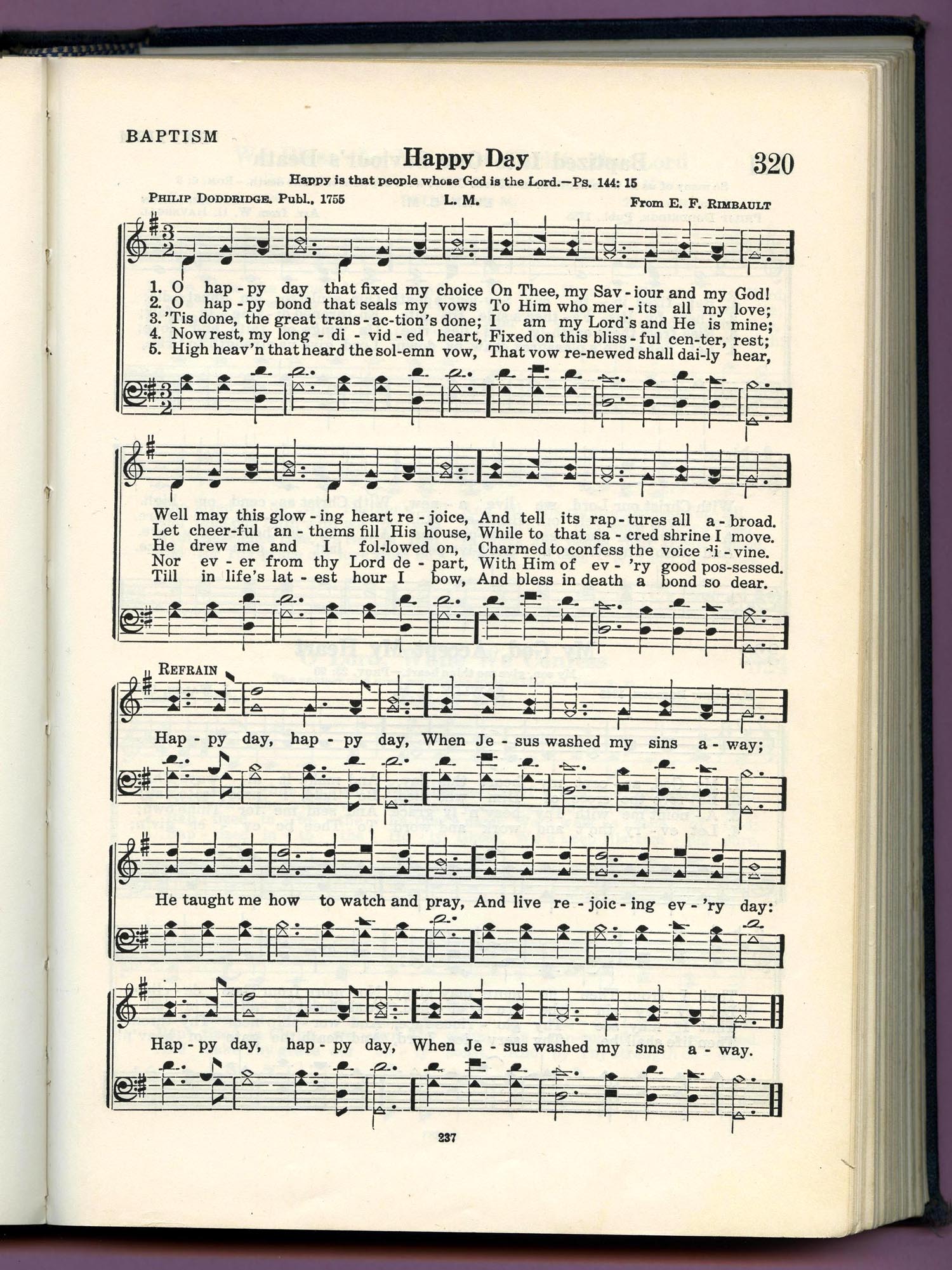
The wives of the Bishop and the Deacon then give us the kiss of peace, and thus we are received into the church fellowship. The congregation in four-part harmony happily joins in the tradition of singing “O Happy Day” from the Mennonite Church Hymnal with shaped notes.

Happy Day_Bossler Mennonite Church Hymnal_ 5x7_300

I remember this day so well. It was September 29, 1951, my sister Janice’s birthday.

*  *  *

Earlier this month, our oldest grandson and only grand-daughter, Patrick and Jenna Dalton, were baptized at Highlands Baptist Church. Their family attends a Lutheran Church, which like the Mennonites also baptizes by sprinkling, but since their parents wanted their Uncle Bill to baptize them, they complied (happily I might add) with baptism by immersion. Words similar to those spoken at my baptism accompanied their immersion in the water: “Buried with Christ in his death . . . raised to walk in newness of life.”

Rev. Bill Caverly baptizing Grand-nephew Patrick Dalton
Rev. Bill Caverly baptizing grand-nephew Patrick Dalton


What special sacred ceremonies have you observed or participated in yourself?


Coming next – The Potting Shed: A Magical Place

Moments of Discovery # 5: Mother’s Quilts


Page from On Market Street, Anita & Arnold Lobel
illustration from On Market Street by Anita & Arnold Lobel

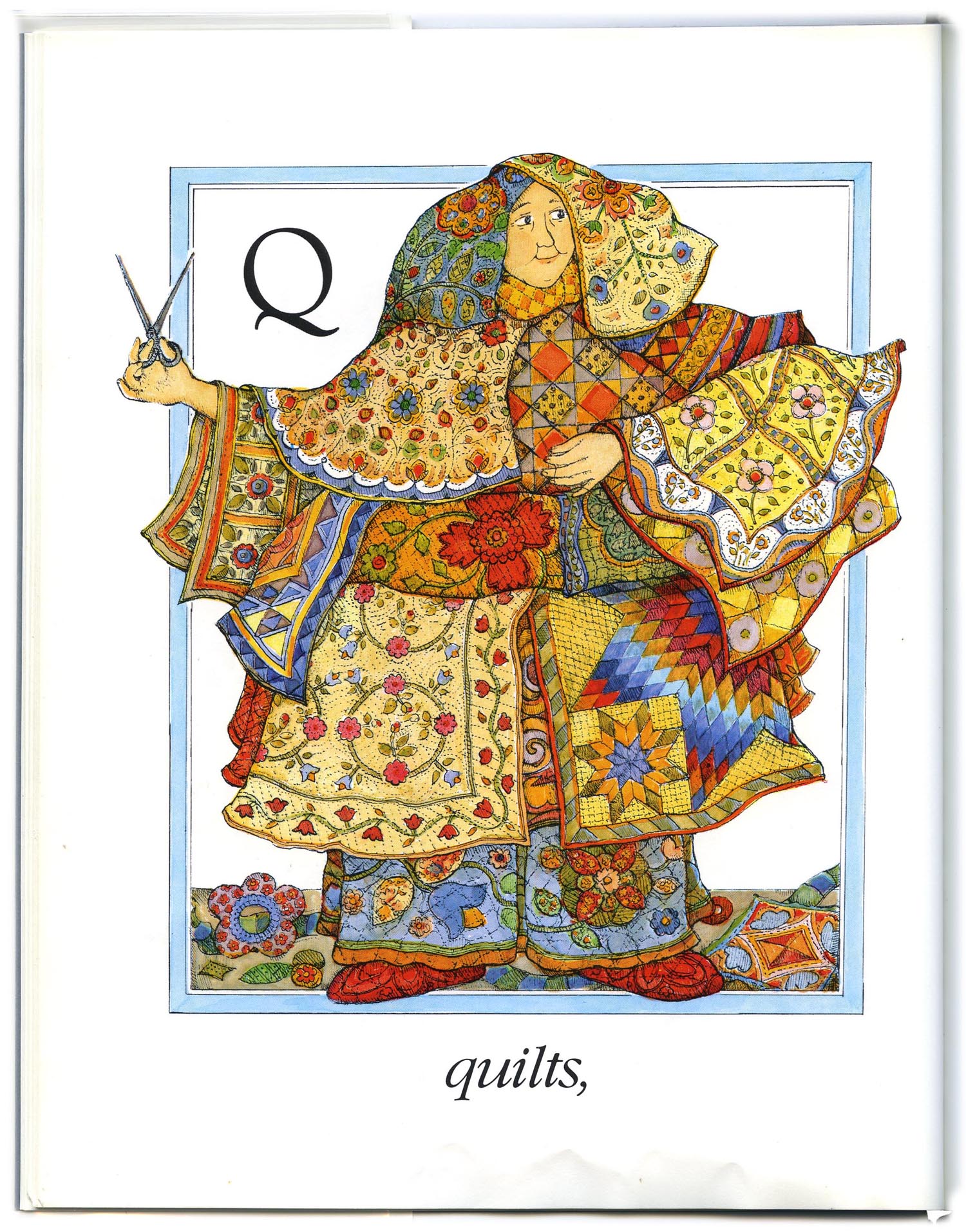
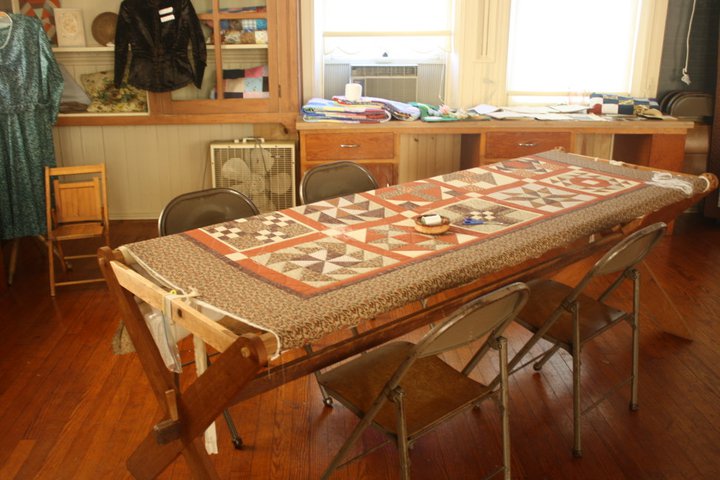
Bossler Mennonite Church was the hub of the Longenecker family’s spiritual life and the school beside it, Washington School, the place where the Women’s Sewing Circle fabricated comforters, baby clothing, blankets and quilts to help clothe the needy of the world. Some of these gorgeous quilts are displayed on a previous blog post. You can see and read about them here.

quiltSchoolhouse

Quilt exhibited at the bicentennial of Bossler Mennonite Church
Quilts exhibited at the bicentennial of Bossler Mennonite Church

Even more than quilting I think Mother loved knotting comforters. For her, it was easier to see progress knotting a comforter. She liked the warm fluffy texture, and she could work on it by herself at home.

1995RuthKnottingComforter_small

Last fall, on one of our trips to the attic cleaning out the house after her sudden death, we opened the yellowish, grain-painted blanket chest with turned feet where we knew we would find some of Mother’s prized quilts.

1999_0900_Mother L_holding up white quilt w circles

 Can you identify the design above? I need help with the name of this pattern please!

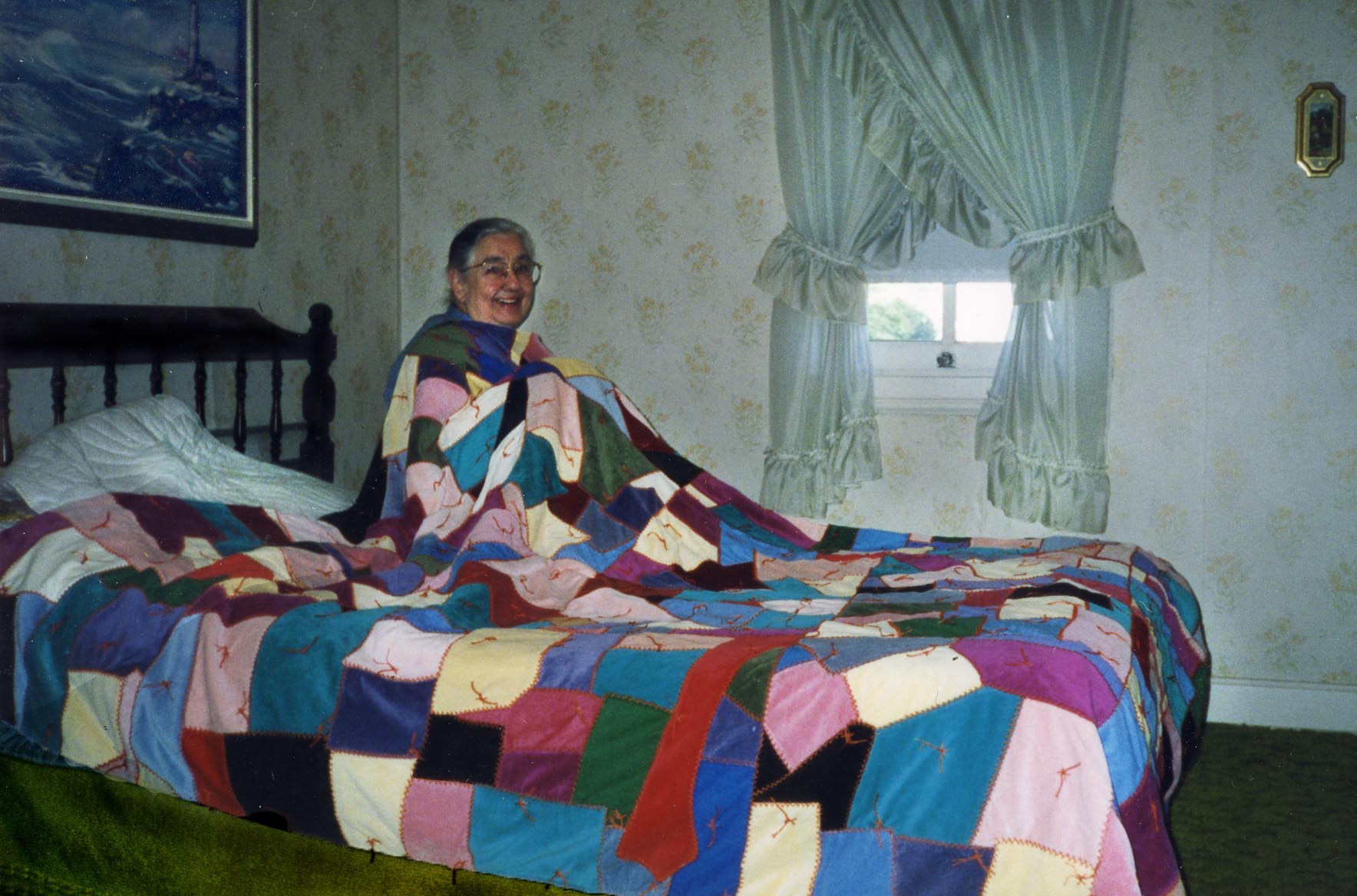
Crazy Quilt design, 1999
Crazy Quilt design, 1999.  Each of Mother’s grand-children received a quilt. This one now belongs to our son, Joel Beaman.


Joanne Hess Siegrist, one of my former students at Lancaster Mennonite School, has published a story in photographs from 1855-1935 entitled Mennonite Women of Lancaster County. In this pictorial overview of Mennonite life from this era, Joanne, who can trace her family back eleven generations, depicts the many facets of Mennonite women’s lives in chapters like these: The Tone of Their Lives, Motherhood and Children, Farm Life and Work, Faith and Family Outings.

Here is an excerpt from her chapter entitled “Quilting and the Arts”

At the beginning of the twentieth century, Mennonite women of Lancaster County spent many hours doing elaborate, colorful needlework. Young women worked especially on their dowries.


With a frugality that was part of their spirituality, these women often created handwork out of remnants and half-used materials. They crocheted exquisite lace tablecloths from the cord strings used to tie feed bags. They made hooked rugs using the unworn sections of old winter coats. They designed quilts with fabric from colorful feed bags found in the barn. . . .


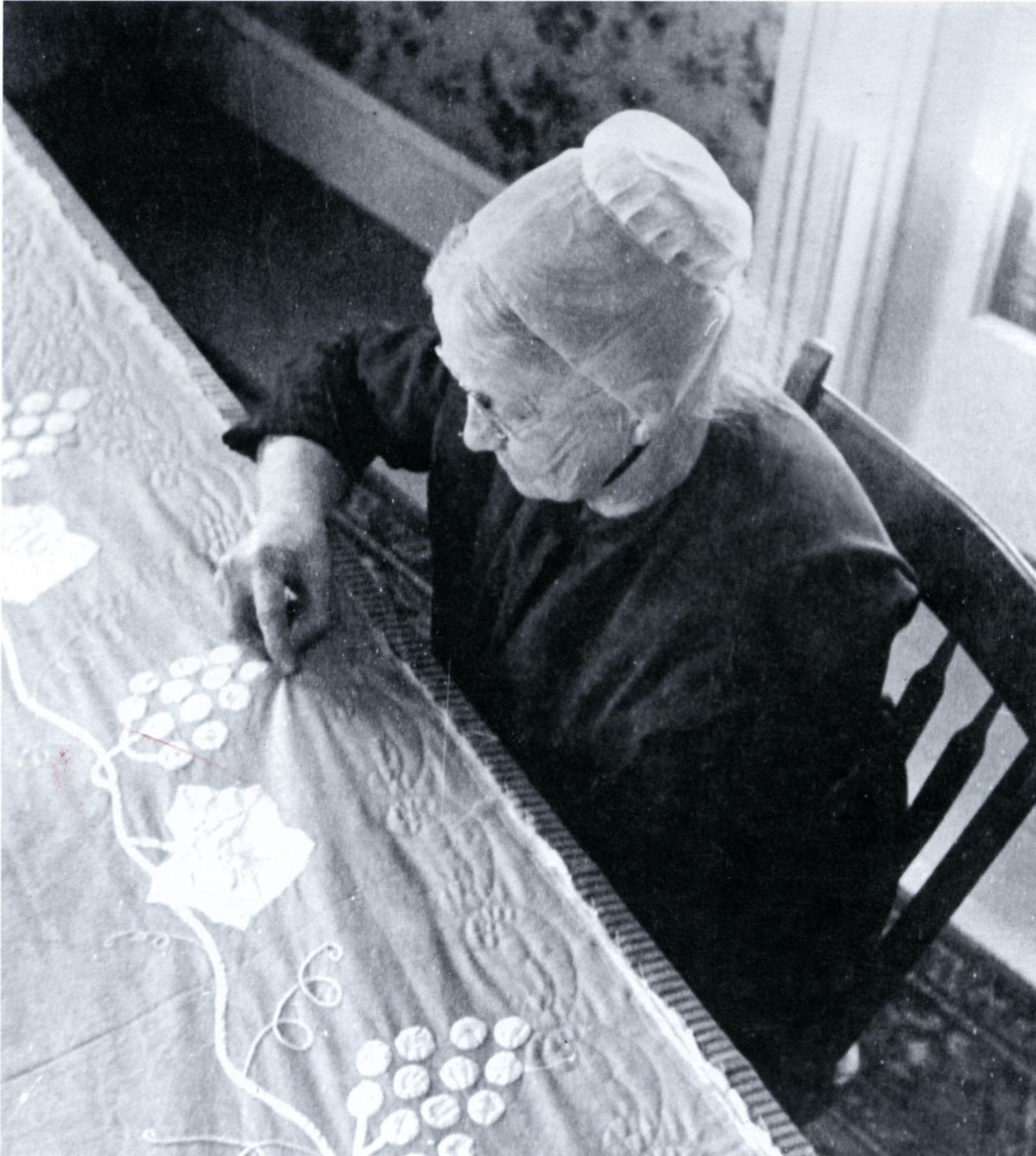
Mennonite Woman_Quilt_p193

In a photo dated 1948, Joanne showcases Anna Huber Good as she adds tiny stitches to a Grape Vine appliqué quilt. Author Siegrist adds, “Anna quilted all her life; in fact, after rearing eight children, she became even more intent on quilting. Anna got up at 4:00 a.m. and quilted until 6 a.m. Then she made a large breakfast for her husband Daniel and sent him off to his market work. After doing a few cleanup chores, Anna returned to quilting. She quilted all day long until about 9:00 p.m., stopping only for meals.”

Anna’s retirement years were even more productive, making “forty-two quilts for her children.” Amazingly, she charged only 15 cents per yard of quilting thread if she quilted for people outside her family.

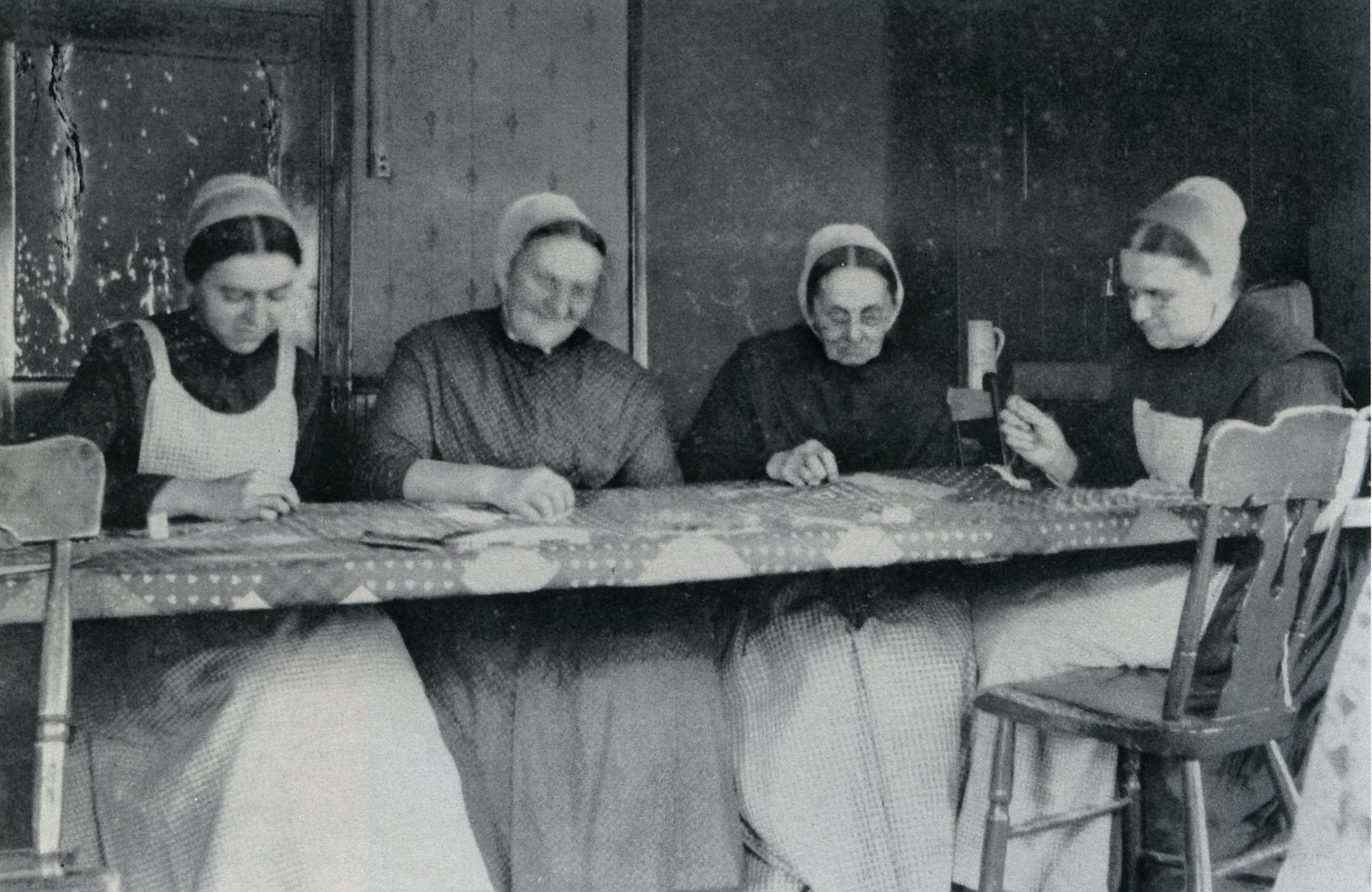
Mennonite Women_Quilt_p194_crop_300

Here are four friends quilting in the dining room of Enos and Annie Lefever’s home (1915). Their intent expressions (uh-oh, I see one smiling!) and nimble fingers are caught on camera by Annie’s son Harry, whose photography did not interfere with his membership at Mellinger’s Mennonite Church (Mennonite Women of Lancaster County,194). Just a mere ten years earlier, Mennonite farmer, John Kreider Miller, lost his church membership for running a photography studio (The Lancaster Intelligencer Journal, Friday, May 10, 1996). Photographs, apparently, at the turn of the twentieth century, spoke of pride, a cardinal sin in the Mennonite system of values. (Mennonite Women of Lancaster County, Siegrist)


Amish and Mennonite hand-made quilts are now marketed as a luxury item and often used as decorative wall hangings. There are numerous websites advertising such handiwork for thousands of dollars.

Until recently, the Quilt Museum at the People’s Place in Intercourse, PA exhibited cleverly crafted quilts from all over the United States.

The Mennonite Central Committee, providing aid to the world’s forgotten and neglected, often sponsors quilt sales and auctions beyond Lancaster County borders. Here is a link to one in Ohio.

*  *  *

Buy Joanne’s book here!


Is there quilting in your family history? Has a quilt been bequeathed to you of quilt-essential quality? Are you a quilter?