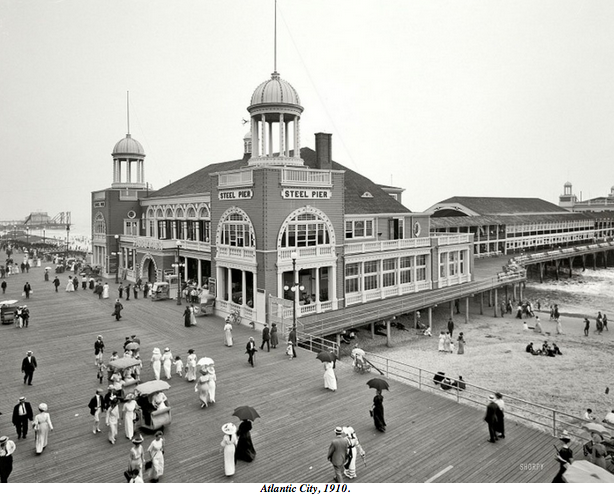
Atlantic City, New Jersey was the beach mecca for vacationers on the East Coast in the early 1900s. Still dressed in fancy Victorian formality, vacationers caught the salt air as they strolled along the famous board-walk at the Steer Pier, a combination theatre and amusement park: “Rain or Shine … There’s Always a Good Show on Steel Pier” the saying goes. But for most Mennonites, the Steel Pier was an elegant building to ogle only. The theatre was worldly and therefore strictly forbidden by church rules.
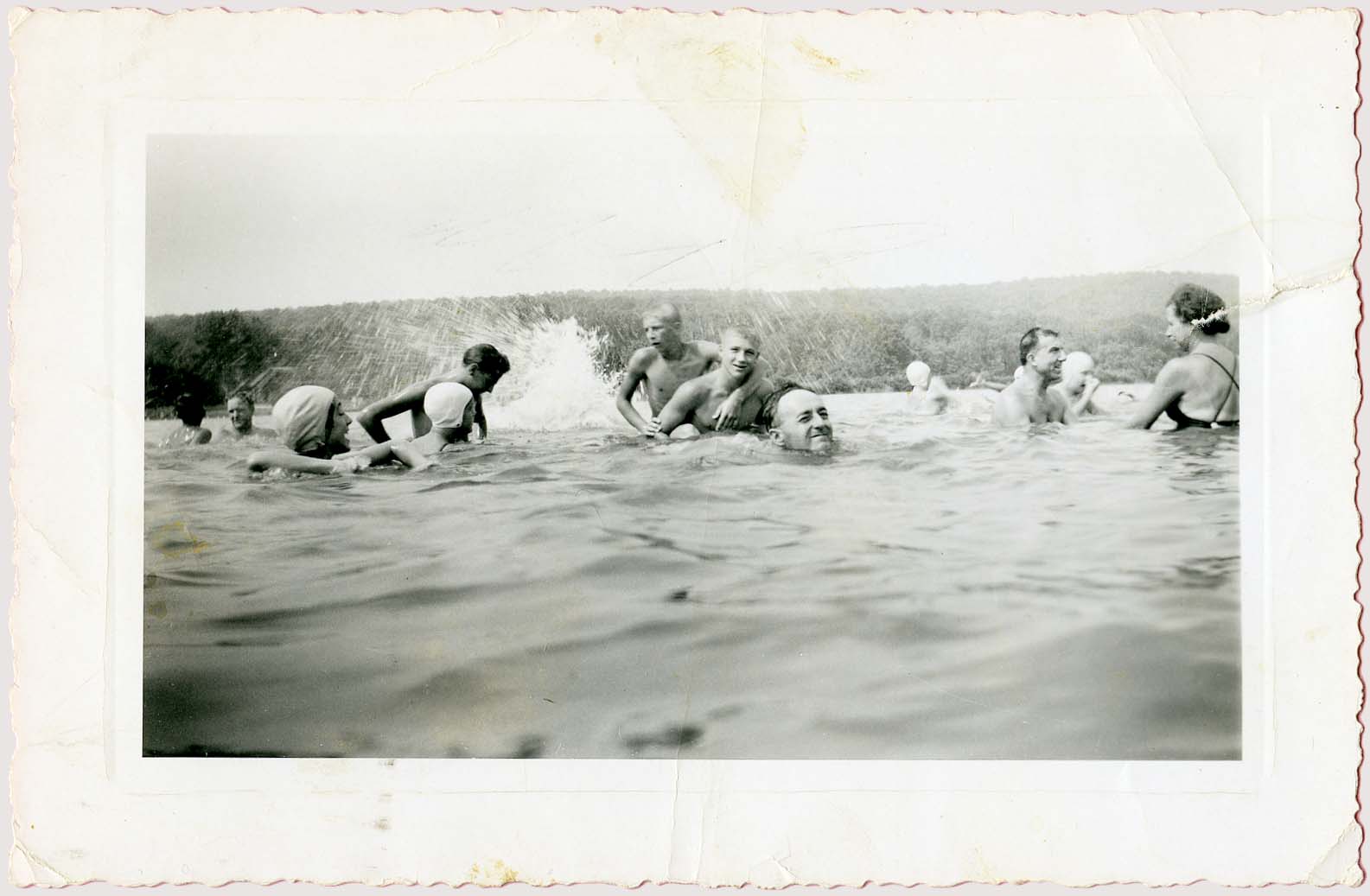
But Mennonite families liked the ocean, including my own. Many summers Daddy took Mother and the family to Atlantic City or Ocean City, New Jersey for a day. Mother just loved the water. From the time she pulled on her white latex bathing cap over her bun and donned her black, satin bathing suit with a fluffy skirt, she was bobbing up and down in tune with the waves.
Daddy in his maroon, scratchy-wool, full-body suit was usually at the shore line yelling to her, “Waaatch ooouut for the un-der-tow!” By the end of the day, he was sun-burned and out of sorts, insisting on taking his thirsty, sandy-toed family straight home, a 3-hour drive. In spite of our protests, there was no stopping for a meal let alone an over-night stay in a motel. Daddy was much too frugal for that. Yet he’d dutifully come back for more next year.
Daddy tames the undertow and finally gets into the water!
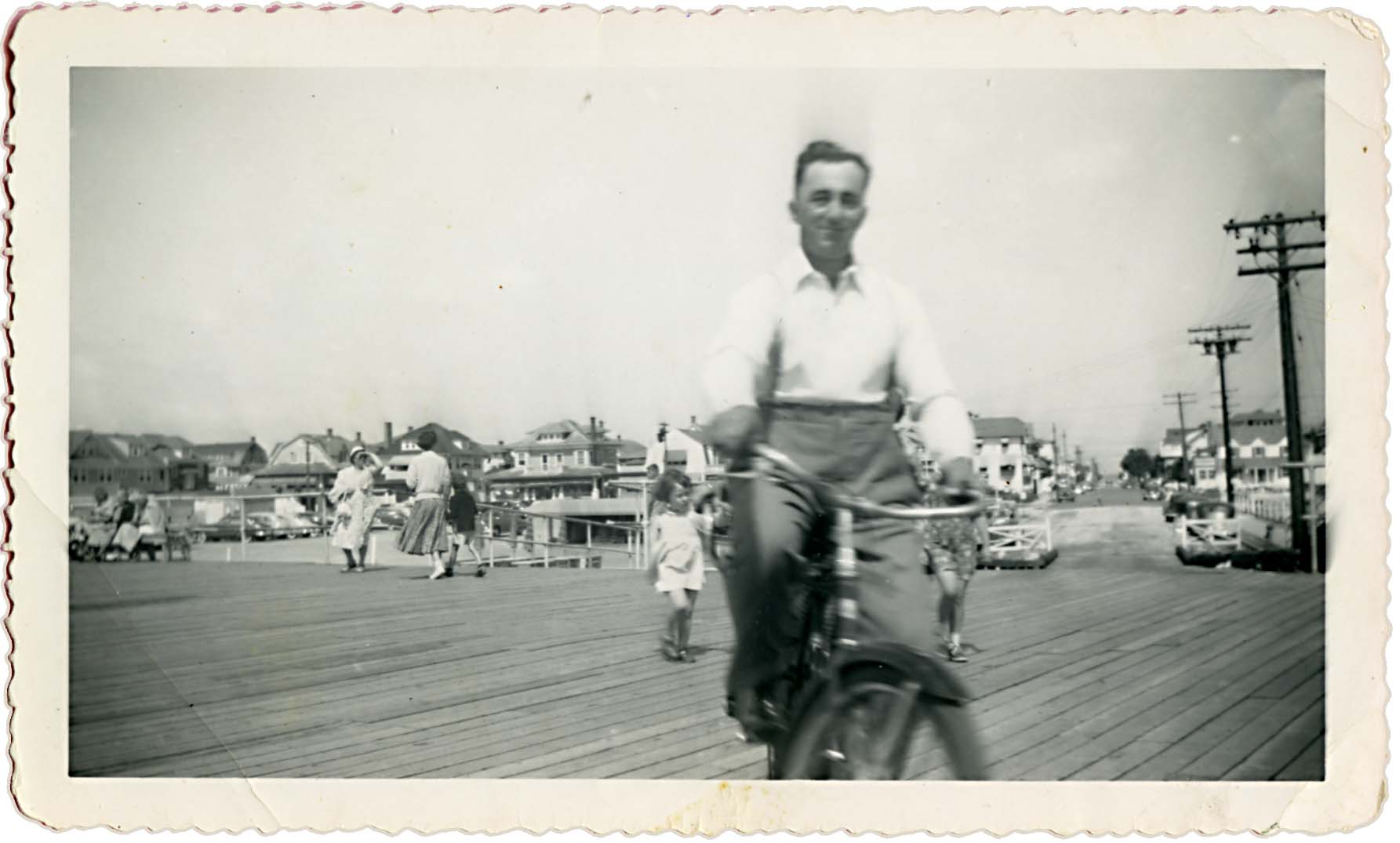
Uncle Leroy and Aunt Clara liked visits to Atlantic City too. I don’t remember them in bathing suits, but they liked riding the bicycle built for two on the boardwalk.
And so did my parents!
On a Bicycle Built for Two . . .
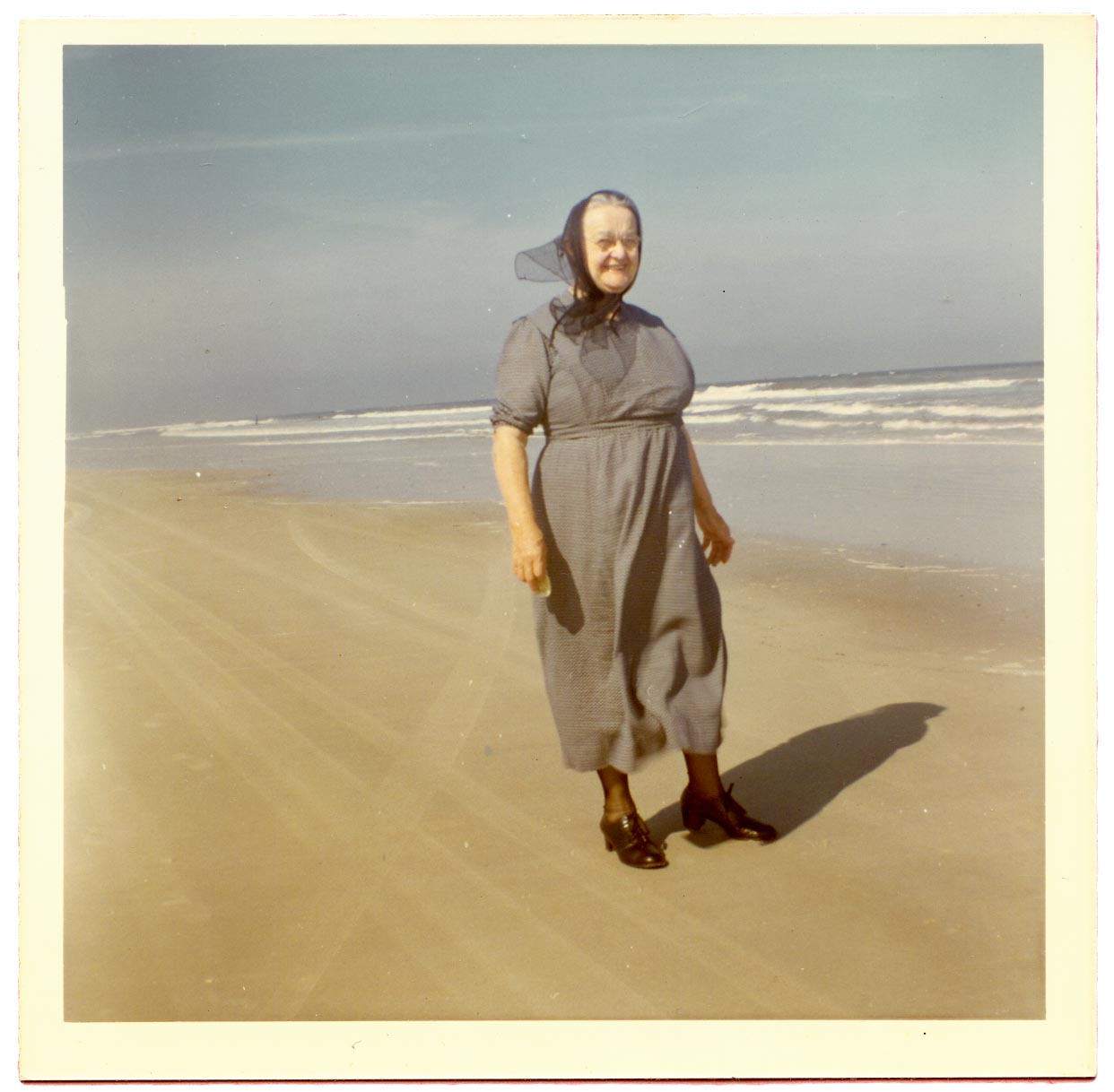
When Grandma Longenecker came to Florida the year our daughter Crista was born, she strolled Jacksonville Beach with plenty of sun-protection: black bandanna on top of her covering, caped dress, black stockings and black-heeled shoes, apparently enjoying herself.
What family vacations stand out as memorable, past or recent? The beach, the mountains, or some place else?
* * *
Coming next: Marriage to a Difficult Man: Parts I and II
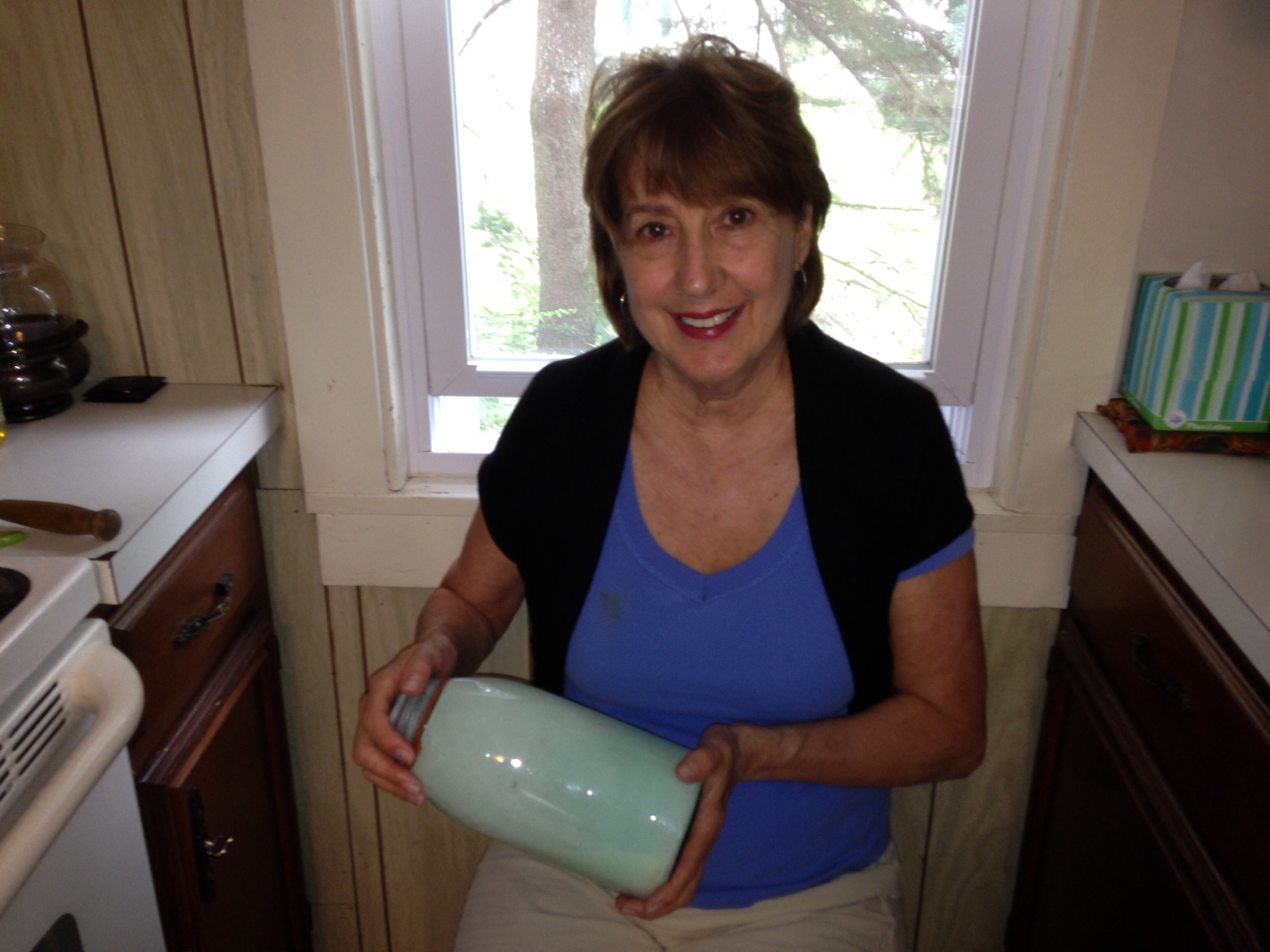
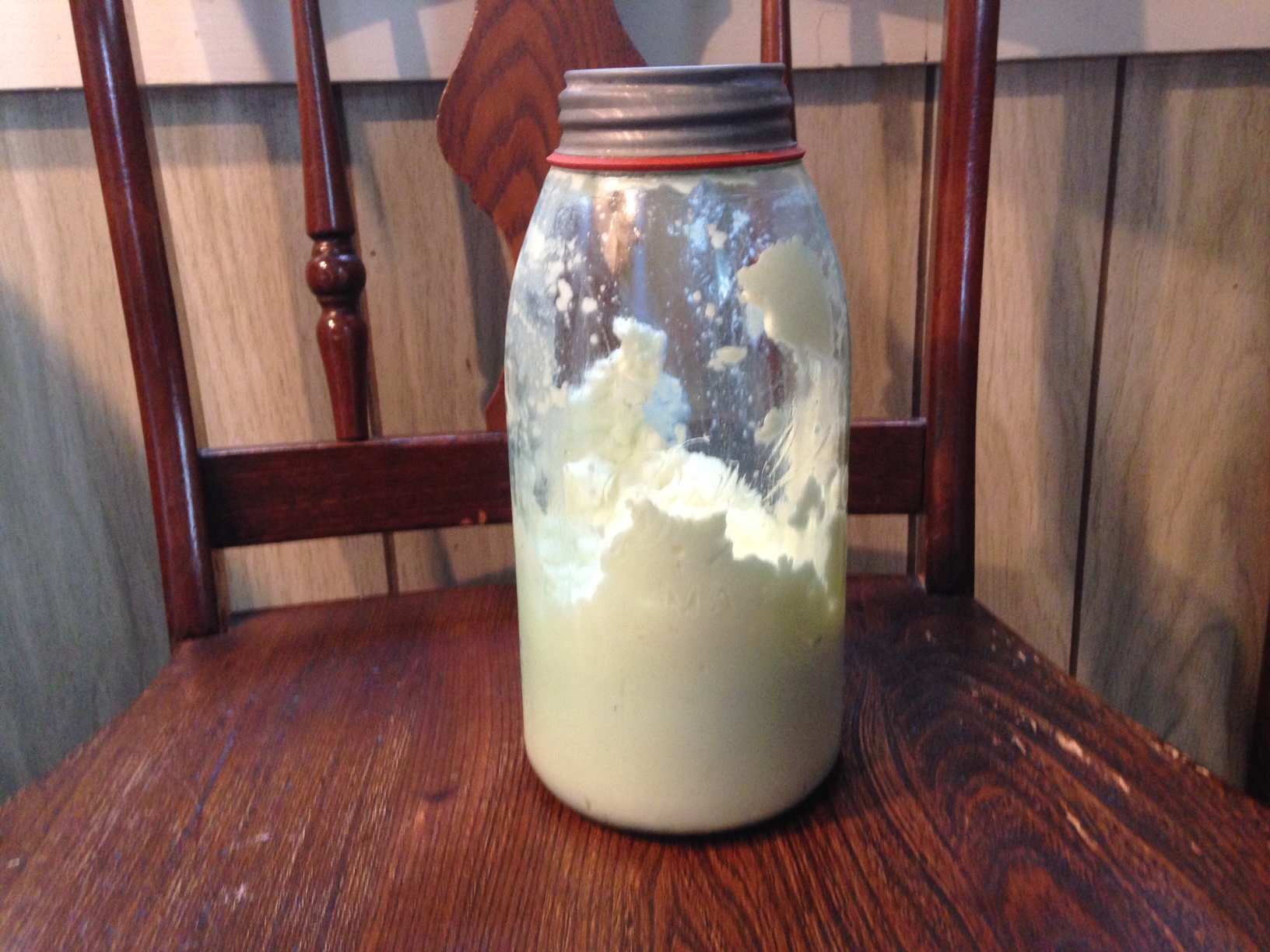
This week at Mom’s house, I attempted to re-create a scene from my childhood – in the same house, on the same chair, with one of the same Ball-Mason jars from the mother’s stash in the cellar. The kind with tiny bubbles crystallized within the glass of the jar. Mother says these jars are valuable.
The cream of bygone days for butter-making came from one of the Holstein cows that Sam and Mabel Hoffer kept on their tiny farm down the road from us on Anchor Road. For this re-enactment, I buy whipping cream from Giant Foods up the road toward town.
Did I mention that my sister Jan and Mother are both skeptical that store-bought cream will yield real butter.
Janice says, “You’re probably wasting your time shaking that jar back and forth with cream from the store. Think about all of the additives and preservatives they put in.”
Mother doesn’t say much but looks skeptical. I’m out to prove them wrong.
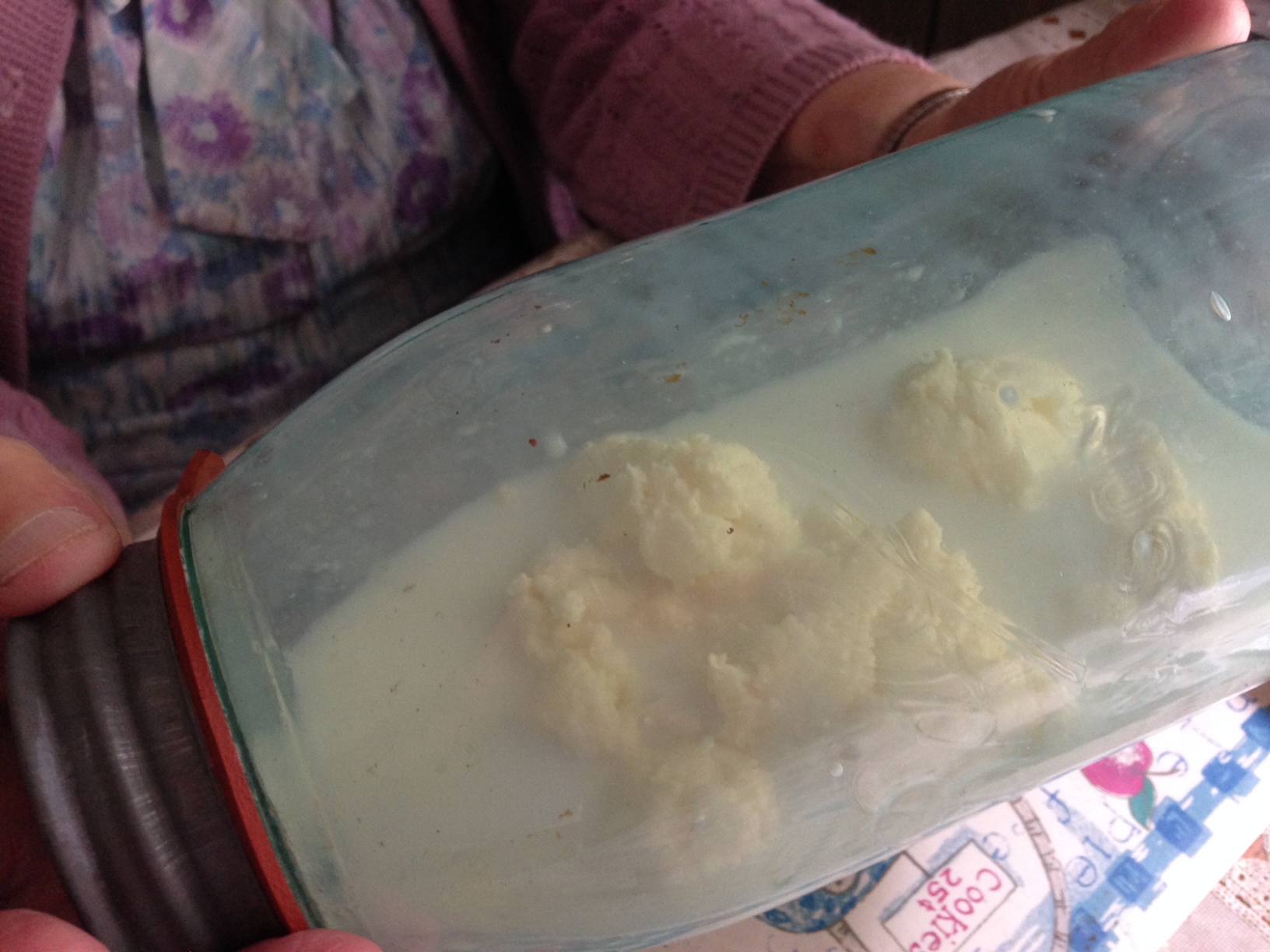
I stop the shaking long enough to notice that curdles of cream are clinging to the jar’s insides. That’s all it takes.
First, sister Jan and then Mother get in on the action, now past the 12-minute mark.
Without a shadow of doubt, real honest-to-goodness butter lumps are forming.
And voilá . . .
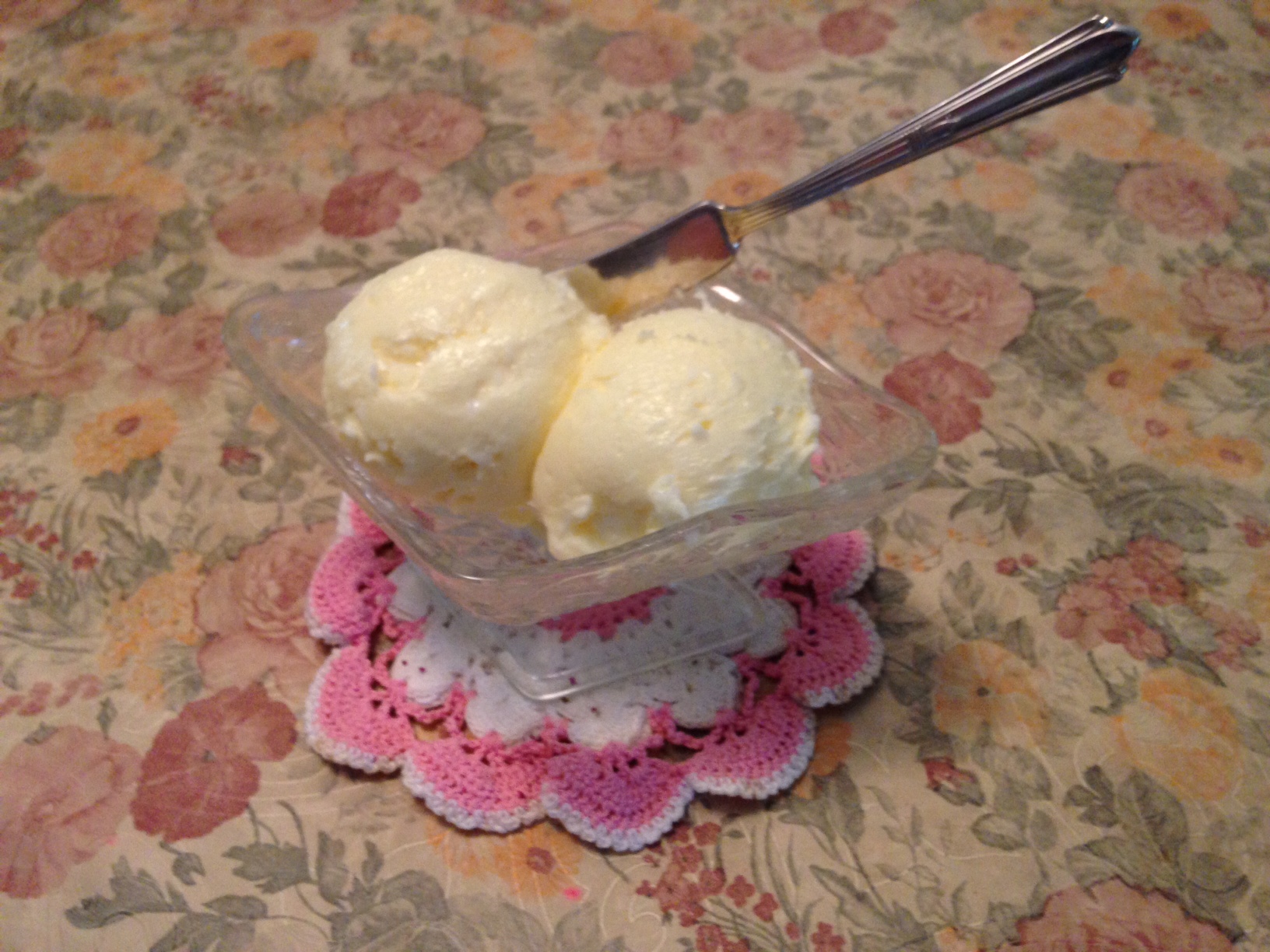
Fifteen minutes later, more or less, we have two fat butter-balls!
Did you catch the steps?
Pour cream into 2-quart jar.
Shake until you rattle and roll.
Remove the congealed mass from the jar. Add a pinch of salt.
* * *
What scenes from your past have you tried to re-create?
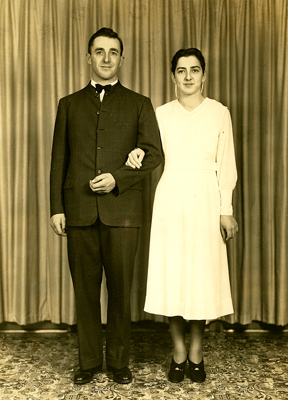
This is the wedding portrait of my mother and father
Ruth Landis Metzler and Ray Martin Longenecker
October 26, 1940
June is the month for many American weddings. And so is August. Because many Mennonites were farmers, Mennonite weddings often took place in October, a month that signaled a break in heavy farm work after most of the crops had been harvested. My dad was a farm implement dealer, so his work cycle mimicked that of the farmers he served, which would probably explain the October date for the wedding.
The bride and groom, my parents, are dressed in Mennonite attire and comply with the rules for weddings prescribed by the church in this era: no bridal party prancing down an aisle to “Here Comes the Bride,” no flowers, and definitely no exchange of rings.
Excerpts from Article II, Separation and Nonconformity, Section 2. Public Worship. (19) from the Statement of Christian Doctrine and Rules and Discipline of the Mennonite Church, 1968:
“We deem it improper to employ instrumental music in worship and church activities.”
“Weddings shall be conducted in a Christian manner avoiding all vain display and in accordance with the prescribed regulations for weddings.”
* * *
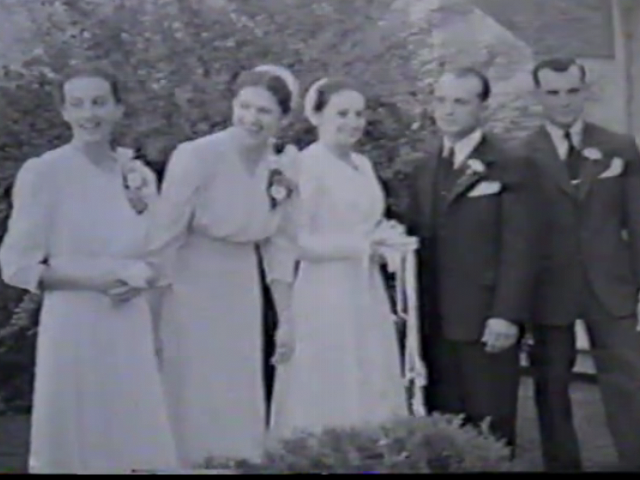
Anna Mae Longenecker’s father John is my dad’s first cousin on his father’s side of the family. Anna Mae with her brothers and sisters lived on the farm at Bosslers Corner, a farm bought from William and John Penn by Robert Allison in 1762, and subsequently bought from Jacob Bossler by John and Nancy Longenecker and kept in the Longenecker family for five generations. On the lawn of this homestead, one of John’s daughter’s, Anna Mae, poses for wedding photographs with her new husband, Hiram Aungst.
Anna Mae Longenecker with her new husband and sisters posing for wedding photos on the lawn of the John Longenecker homestead.
Either the rules for wedding have relaxed a little in the ten or more years since my parents’ wedding, or brides have become more bold. This wedding accessories include corsages for attendants, a white Bible with streamers for the bride and the groom and groomsmen in non-Mennonite suits and neckties.
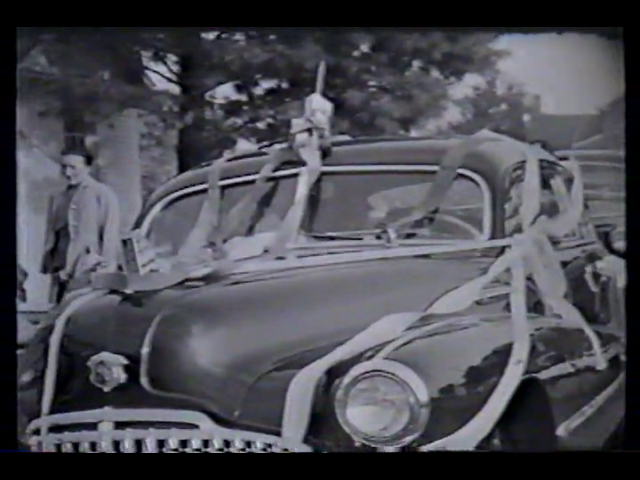
As the video shows, there was muted frivolity after the wedding which included rice throwing. Yes, it was real rice, not bird-seed!
Note the cars decorated in full post-ceremony regalia, worthy of any “fancy” wedding.
Then and now: Your thoughts on wedding ceremonies welcome.
My father wore many hats. Work hats mostly, but also a goofy blue derby hat I faintly remember stashed high up on a closet shelf, and a fedora reserved for Sundays or other special occasions. Through his long history at the shop, Daddy sold a wide array of tractor brands which supplied him with hats embroidered with their company logo: Massey-Harris, Minneapolis Moline, New Idea, Fox, and Deutz.
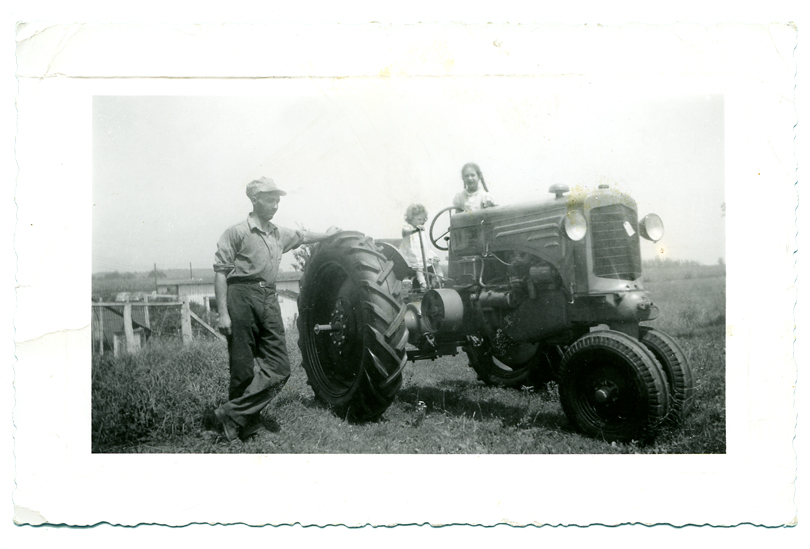
His hats changed with his loyalty to the brand of farm equipment he was promoting. None made him happier, however, than the hat he wore with one of his first purchases after his father, Henry R. Longenecker, passed the business on to him. With the tag still attached to the grill, Daddy proudly drove the new Massey-Harris tractor back and forth in the alley next to the shop in Rheems, his sister Aunt Ruthie recording the spectacle with her new 16 mm movie camera.
Shop Hats
The Welding Helmet Invented by the German Hans Goldschmidt in 1903, welding was one of my Dad’s specialties, a boon to farmers with harvester units or even plow shares needing repair. A free-standing acetylene cylinder and oxygen tank for welding stood near one of the double wooden doors. This allowed easy access for welding repairs as a tractor or harvesting equipment was pulled through the giant, wheeled doors that ran back and forth on a metal channel.
I watched Daddy slap a Darth Vader-like helmet on his head, don long, flared-sleeve gloves, and use long, skinny welding rods to fuse broken parts together. Sparks flew everywhere in this Fourth of July fireworks show extending into August, the height of the harvesting season.
Along the back of the dark recesses of the shop was a large grinding machine that could sharpen a 6 to 8-foot section of blade used for scissoring hay, wheat or barley.
Daddy did most of his work in his shop but occasionally he was called to the field. A doctor of motors, he made “house” calls to the fields of anxious farmers, work stalled with broken-down equipment.
Farm Hats
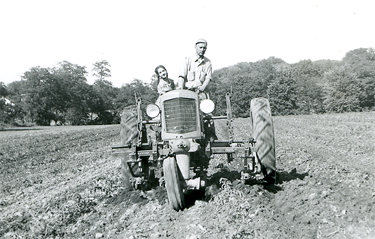
My father was first of all a farm implement dealer and mechanic, but he also farmed ten acres of land in Bainbridge, Pennsylvania combining corn and tobacco crops and then later corn with tomatoes. Farming is serious business in the searing sun requiring a cap with a long bill. The result: a white “farmer” forehead and red-brown cheeks and arms. My mother and Aunt Ruthie often wore sun bonnets, in the field but as you can see, we were bare-headed and probably bare-footed too.
Cultivating land for tomato crop in Bainbridge
A beekeeper too, my dad wore a bulky hat complete with a mesh veil to smoke out the bees.
Fancy Hats
Church, weddings, funerals – all were occasions for a fancy fedora. But one occasion in particular required dressing up: posing on the steps of the U. S. Capitol building ready to meet with congressmen regarding the threat of a proposed air base to some of the rich farmland of northern Lancaster County. A sizable delegation of plain people (many of them Mennonites) including my dad in his fedora and Grandma drove to Washington D.C. to make their case with government officials. When a follow-up investigation was conducted, sink-holes had reportedly been found in the farm-land around Bossler’s Mennonite Church. The case was subsequently closed.
Sadie Greider, Grandma Fannie Longenecker and Ray Longenecker on steps of the Capitol in Washington, D. C.
Tell us about your dad’s hats – what he wore, or any other “Dad” memory you want to share now.
“In the Good Old Summer Time” shares nostalgic space with another old, familiar tune of the season: “Summer time and the livin’ is easy.” Summertime for the Longenecker family may not have been easy in the 1950s what with tomato field hoeing, canning, freezing vegetables from the garden, but it was simple.
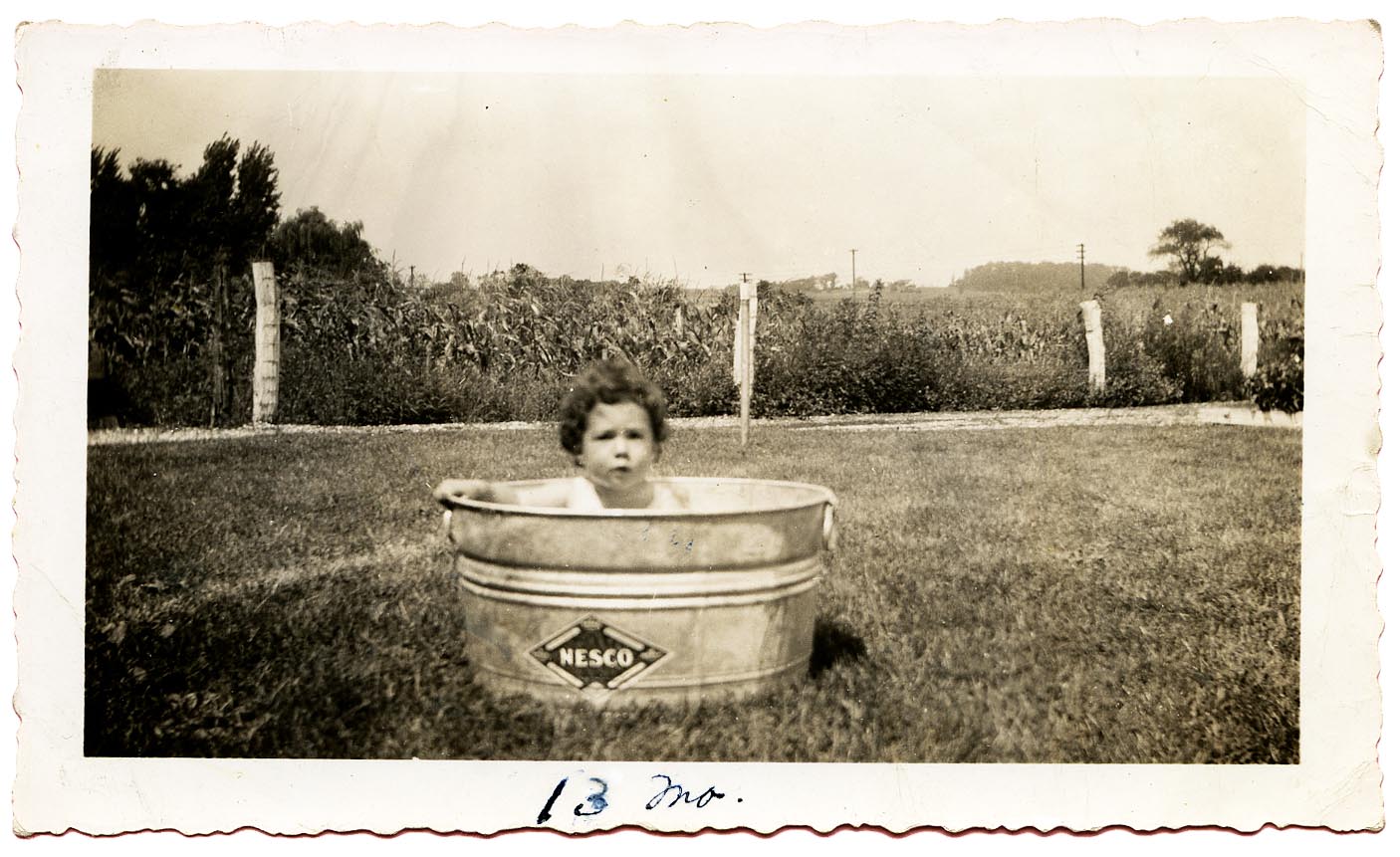
This is a pict-o-logue of summertime for me from 13 months to about age 13.
“Naked in a tub” would be a sensational caption for this photo were it not for the fact that I’m only 13 months old. Later I recognize that this glistening galvanized tub is also used for blanching sweet corn ears from the garden lot.
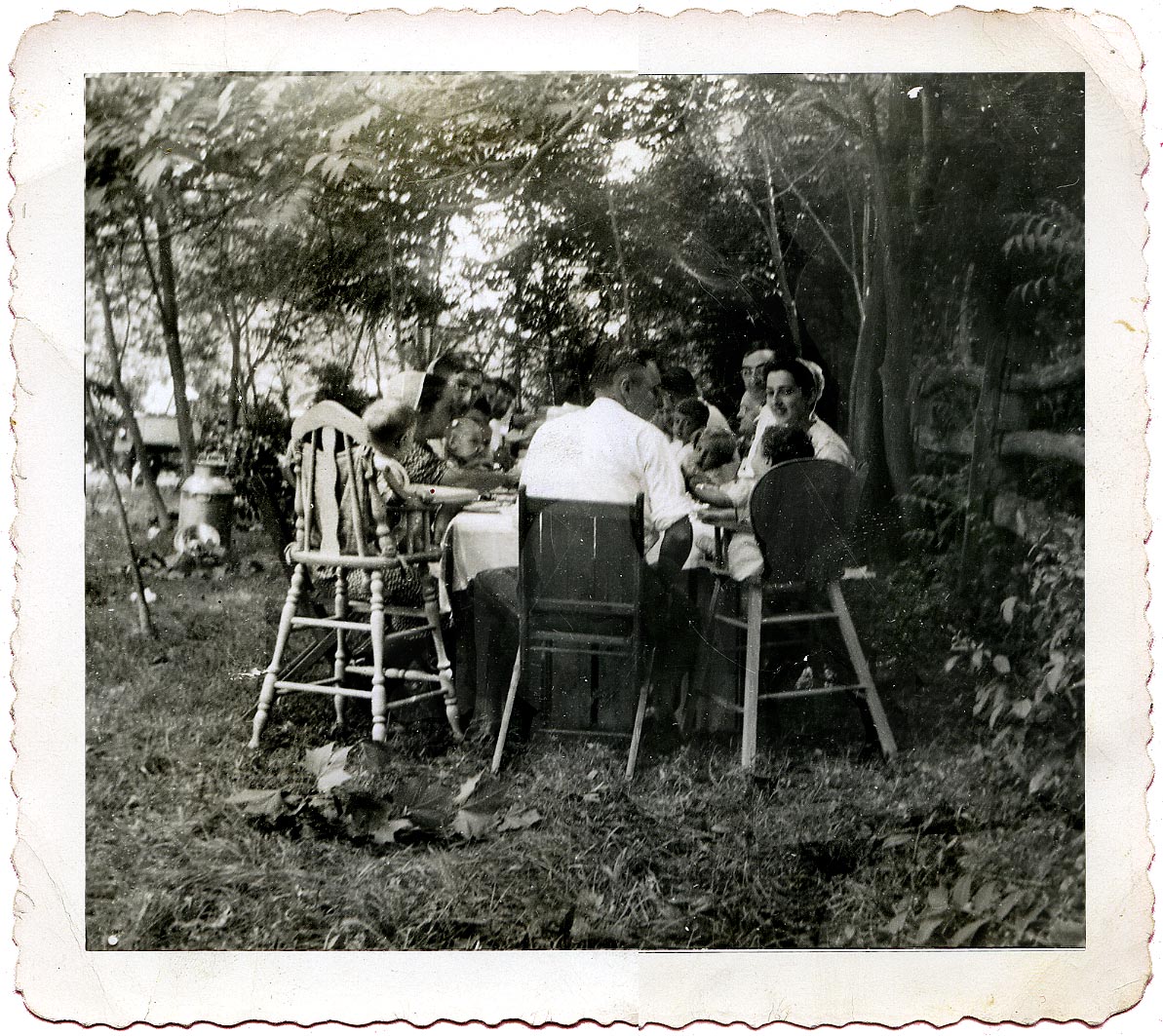
I’m sitting in high chair to the right at Metzler reunion picnic
Reminiscent of Manet’s Le Dejeuner sur l’herbe (yes, it’s a stretch) but in a far simpler, Mennonite style, the Metzlers on Mother’s side of the family gather for a Sunday summer picnic In Uncle Clyde’s meadow, large crates holding up the table. After dinner the children scatter, the women clean up, and the men take down the table. I won’t be surprised when one or two of my uncles might light up a cigar rolled from home-grown tobacco.
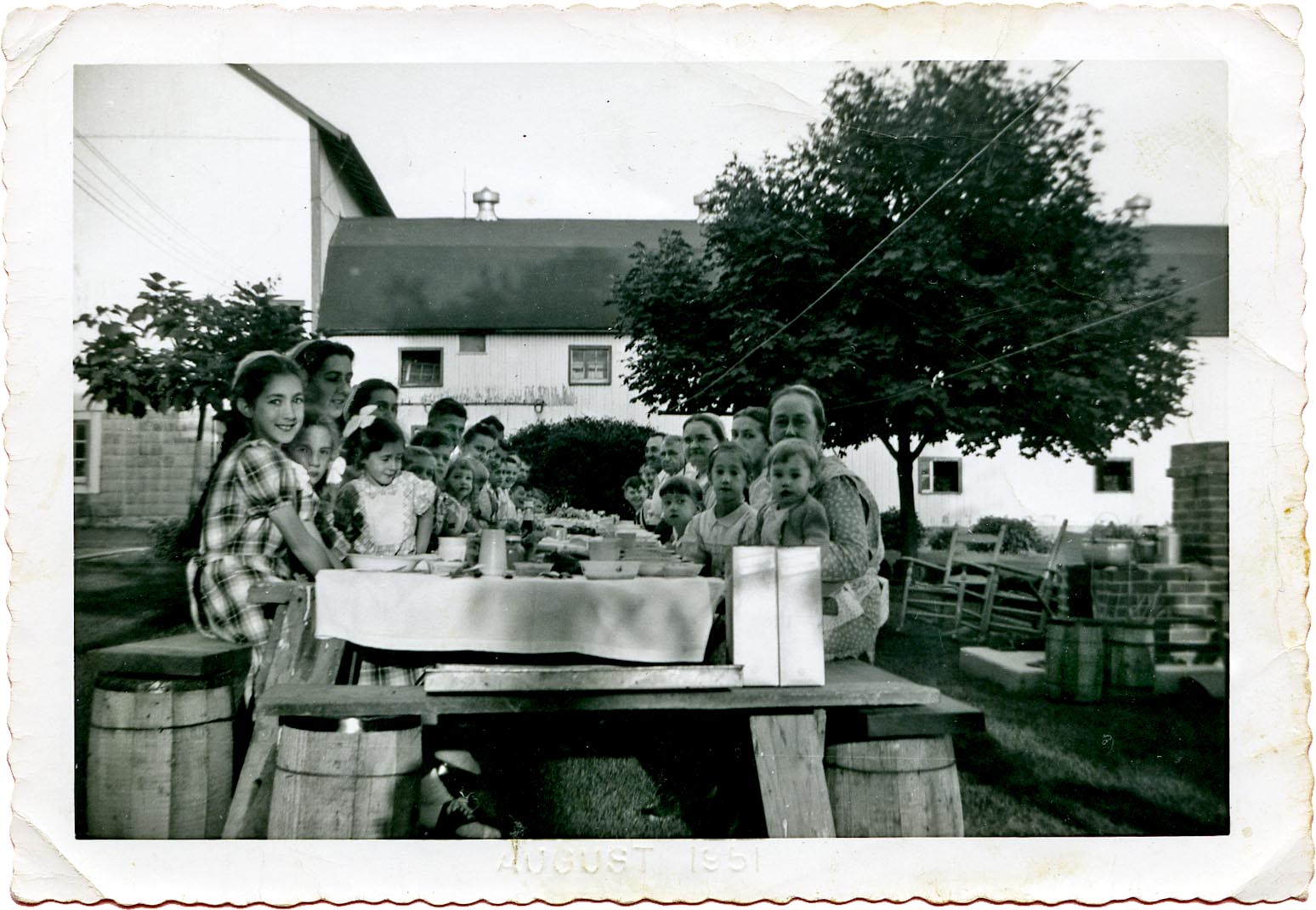
Uncle Leroy and Aunt Clara’s farm is the perfect place for a summer Sunday dinner on the lawn. Hefty barrels hold up this groaning board as we pass around the seven sweets and seven sours, every family bringing a dish to another Metzler reunion.
In Middletown with Daddy’s cousin Janet Martin
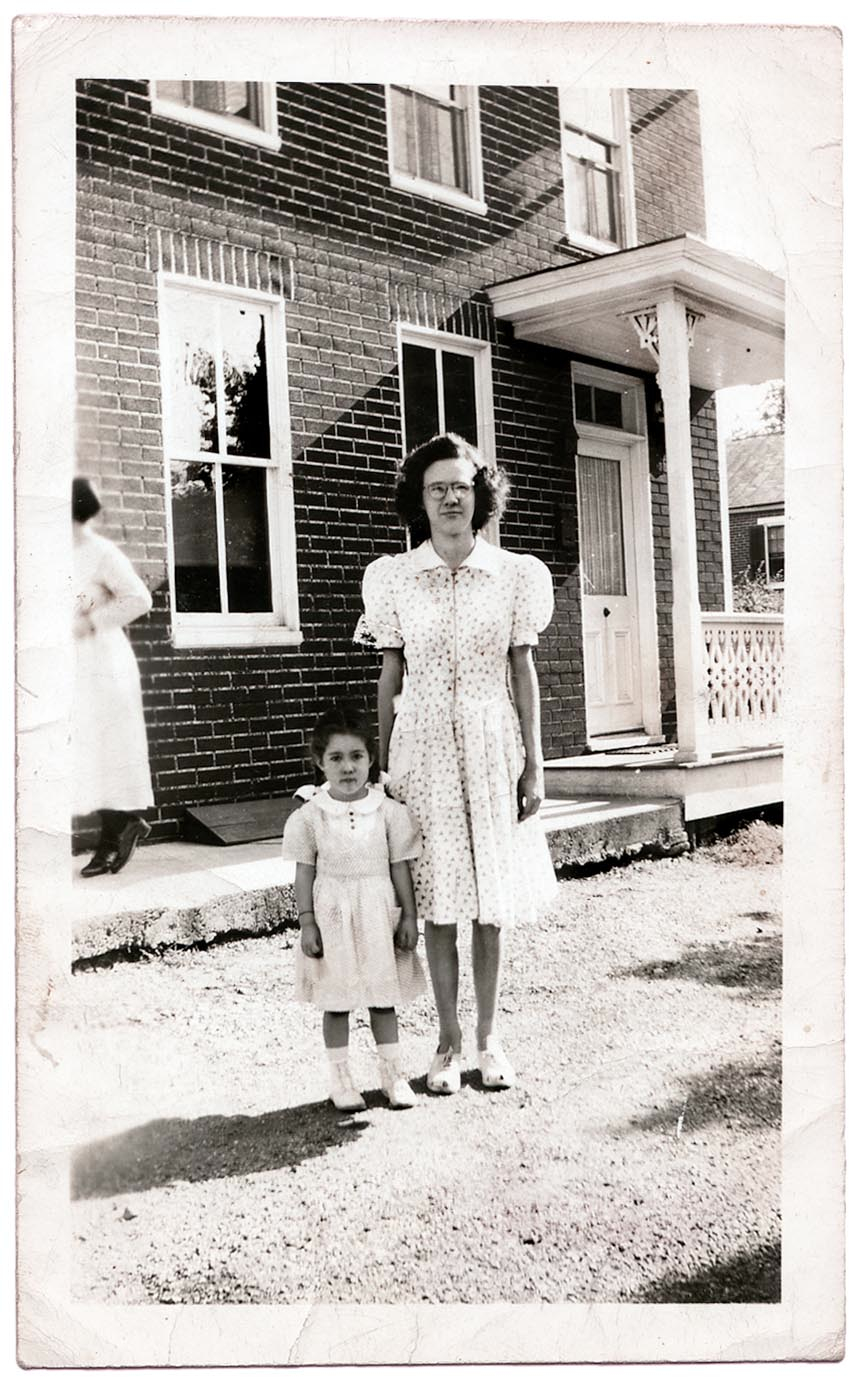
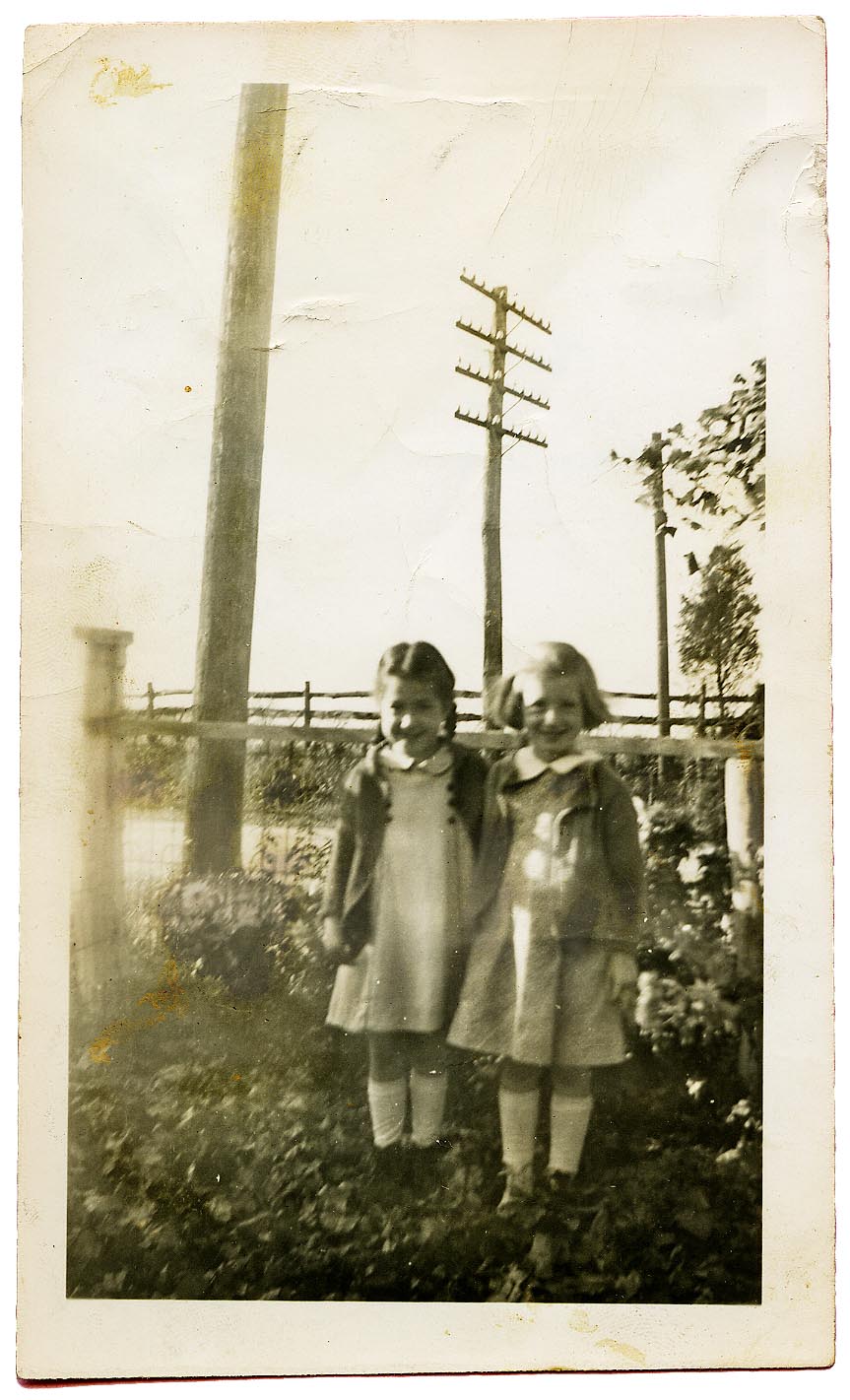
I also have a turn visiting Uncle Frank Martin’s household, one of Grandma Longenecker’s younger brothers. Aunt Mattie braids my pig-tails every morning as I sit in her kitchen looking up at the tall ceilings. She plaits very slowly because she doesn’t have much experience with little-girl hair. Her girls, Joyce and Janet, are not plain and have naturally curly hair that hangs free. They both wear shoes with open toes, a detail not lost on me. Cousin Sammy likes to tease me, but his sister Janet takes me on walks around the block because their house is in town, Middletown, Pennsylvania, my first taste of life outside of the country.
After I reach school-age, summer is a time for the cousin exchange. My favorite summer visits are with Cousin Janet, of all the Metzler cousins the one closest in age to me. I am fascinated with her strawberry blond hair and lighter skin. All of my family have an olive complexion, dark hair. We play with fat, sticky strands of Cinderella hair on our dolls and make up stories upstairs in the small bedroom. Soon Mom will call us down to the kitchen for root-beer floats sipped with plastic straws probably saved from last summer.
The next time I go to Janet’s house for a week in summer, I fall off my bicycle onto the gravel, grinding sharp bits into the skin around my kneecap. Though the bruise starts to recover, I don’t bounce back from the tumble. In the day or two following, I have crying spells, so Aunt Jenny calls my parents. When they pick me up, I feel both embarrassed and relieved.
* * *
Tell us your summer vacation memories. We’re all ears.
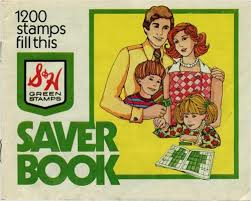
“Mare – yun,” my mother calls (yells, actually), “It’s time to lick the green stamps again. The books are on top of the kitchen table.” Mom likes to interrupt my reading. To me time with my books is serious business but to her it’s play. Not working. Wasting time with books unless it’s homework, she thinks.
As I moisten the stamps with my tongue, the glue tastes gooey and sweet. Mom usually receives one Green Stamp in exchange for every dime spent at check-out. I fill the two or three green books until they are fat, each stuffed with 24 pages of unevenly gummed and incompletely perforated paper rectangles. Books of these items can be redeemed for gifts. Mother gets a catalog from the stamp company’s showroom, then matches the item she wants against its price in stamps, paying for it with stamps rather than with cash. She probably has something picked out already. I notice the cover on the ironing board has lots of scorch marks and is wearing thin, so I guess she’ll get an ironing-board cover with one of the books.
Illustrations: Google Images
The gifts are usually household items like a set of mixing bowls, an ironing-board cover or something big, as writer Phyllis Tickle describes when she traded her green stamps for her daughter Nora’s baby stroller:
Surprisingly cheap is usually just cheap in premium exchanges, I have found. It certainly was in this case. The thing was made of aluminum so light and thin that the frame itself could not have weighed in at a full pound. The whole stroller did not weigh in at two. The wheels were scarcely a half-inch wide and definitely not a quarter-inch thick.
The sides and back of the contraption were of a plasticized, loosely woven plaid fabric neither Sam [husband] nor I could identify. The result was a kind of sling-on-wheels that had grown less and less appealing to my maternal instincts as I had become more and more of a mother and less and less of a mother-to-be. However, we did have a stroller. Hmmmm . . . .
Later, she concedes though “those were the good old days when strollers were strollers and not miniature, padded tanks.” (294).
A shoppers’ rewards program for loyal customers, the Sperry and Hutchinson Company dates as far back as 1896. During the 1960s, the company issued three times as many green stamps as the U.S. Postal Service. After a series of recessions and the decreasing value of the stamps most house-wives didn’t think saving stamps was worth the trouble. However, green stamps still persist in popular culture. In A Hard Day’s Night (1964), starring the Beatles, John Lennon mentions Green Stamps when joking to Paul McCartney that he’ll get the best lawyer they can buy. In the hit “Speedy Gonzales” (1962) by Pat Boone, Mel Blanc sings the final words of the song in Speedy Gonzales’ voice, “Hey Rosita, come quick, down at the cantina they’re giving green stamps with tequila!”
* * *
Mother doesn’t drive to the Green Stamp showroom on her own to redeem her stamps because she doesn’t have a license. But there’s a Lancaster – Elizabethtown bus that goes right by our house along Old Route 230. She knows when to tell me to pull on the cord over-head that buzzes to tell the driver where to stop in town. We’ll go to the W. T. Grant store because it has most of what she needs. Our next stop is the Gladdell Shop with pretty dresses. In the window I see a sleek, lavender dress made of chiffon fabric on the mannikin. It’s pleated at the waist and has a belt with a rhinestone-studded buckle. I imagine jut how slithery and cool it would feel gliding over my skin. I would be instantly chic and stylish, not plain. But Mother is completely blind to the fancy frocks and heads for the lingerie department. A night-gown? Some hosiery? (She always orders a boring shade called “gun-metal.”) No, she has picked out a smocked, tricot bed jacket in blue with a bow to wear in the hospital over her gown when Mark is born and visitors appear.
The shopping trip gets even sweeter near the end. Mom will check her watch, so that we will have just enough time to go to the Rex-All Drug Store before the bus picks us up heading back east. Dr. Garber usually dispenses pills in little white envelopes from his office, so we are not interested in the pharmacy at the drug store.
Instead we head straight to the soda fountain which is as close to theatre as I’m going to get. Stepping inside the chrome rails that mark the fountain area off from the rest of the store, we sit on the red leatherette cushioned stools that spin. Fluorescent tubes of light above the fountain equipment advertise bubbly ice cream sodas with a straw. Above it like rays from the aurora borealis but stretched around the perimeter of the fountain area is a glow of bluish-purple lights illuminating the walls. Then I look up and see stars sparkling from the ceiling. I’m in heaven. Until the bus comes all too soon.
What story can you tell about green stamps or soda fountains?
Something you can add about a different memory from the 1950s or 60s?
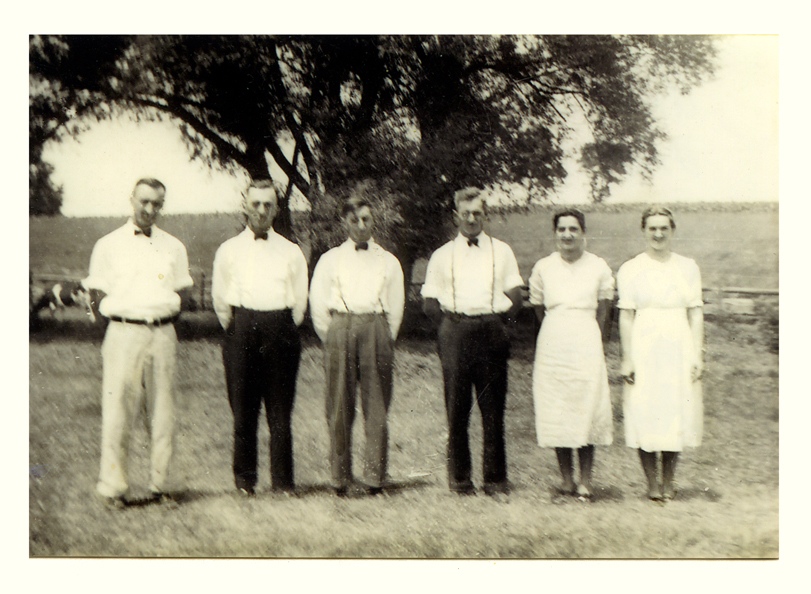
Here is my mother’s family of four brothers and one sister in a farm meadow in the 1940s. They are children of Abram Hernley Metzler and Sadie Landis Metzler, a Mennonite family of Lancaster County, Pennsylvania.
Standing in birth order are her brothers Landis, Leroy, Clyde, Abram, Jr., with my mother and her sister Verna. Two of her siblings died in their sixties, the others in their seventies. Only my mother is still alive at age 95.
When Mother turned 90 in 2008, her 94-year-old sister-in-law Cecilia Metzler, married to my Uncle Clyde, said to her: “Ninety’s nothing . . . . You have to live past that to make your mark these days.” (Then I saw a quick smile and heard an I-got-you-there chuckle.) Aunt Cecilia, who calls herself Cece now, has always been energetic and feisty, a farm wife and a pastor’s wife. Up until 2011, she has sent me Christmas cards – always the first week of December. And via her daughter Erma’s account, I would occasionally even get email messages from her.
Mother too has always been strong and hardy all these years. She still lives alone but has watchful neighbors along with my brother Mark who checks in with her regularly. Her mind is still sharp though her hearing, which has always been in a category I’d call bionic, is failing now. When I asked her a few weeks ago, “Do you remember wearing Evening in Paris cologne?” She questioned me back, “Carrots, what do you mean carrots?” This from a woman who most of her life had to hold the telephone receiver away from her ear because the sound was too loud. Oh, my.
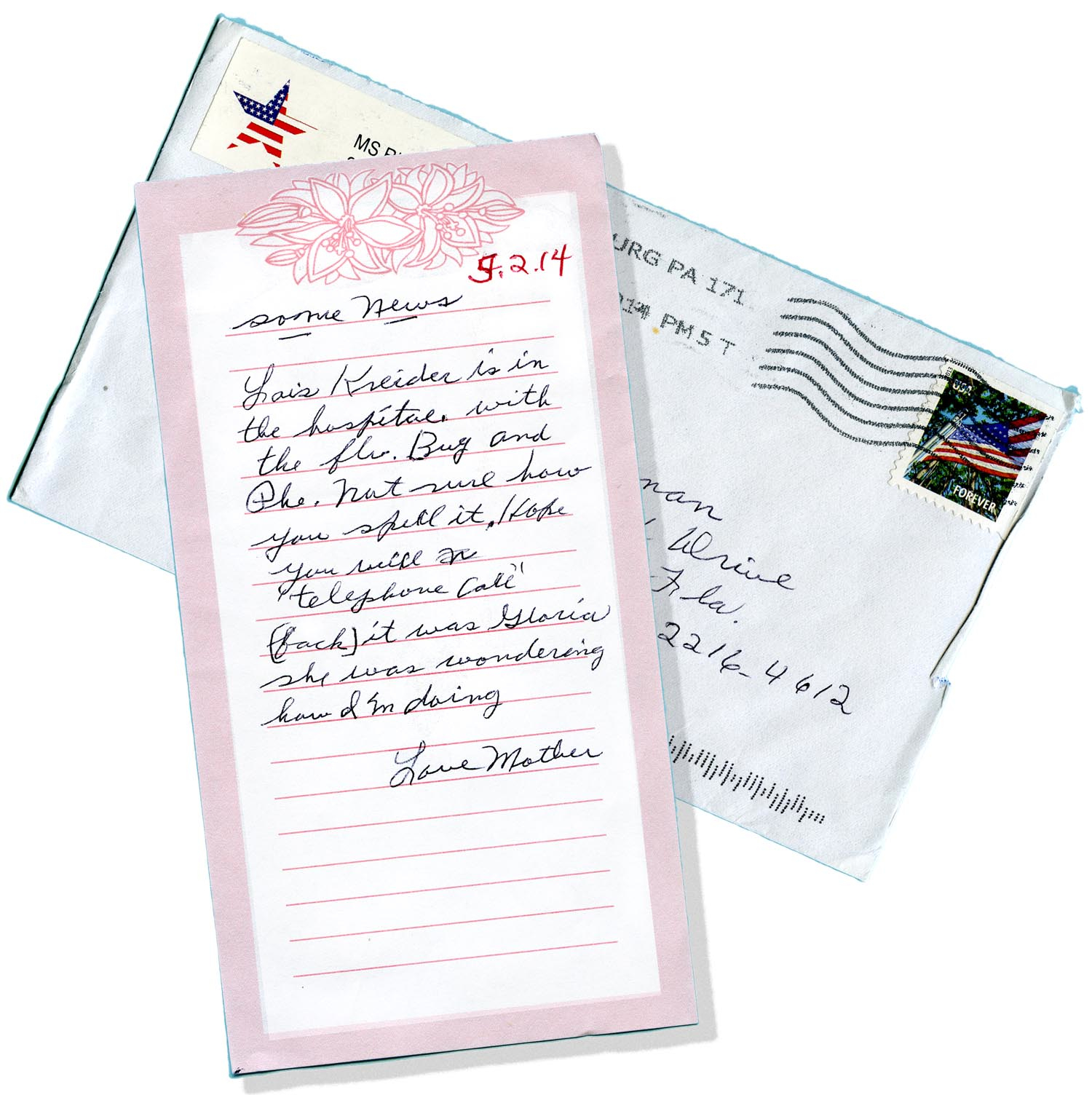
I call her often, but she says she likes to get something in the mail, a letter with a stamp on it, she hints. As if to demonstrate how it’s done, last week she sent me a short note with concern about a friend’s health along with a check for special vitamins I send to her. Yes, she still pays her own bills.
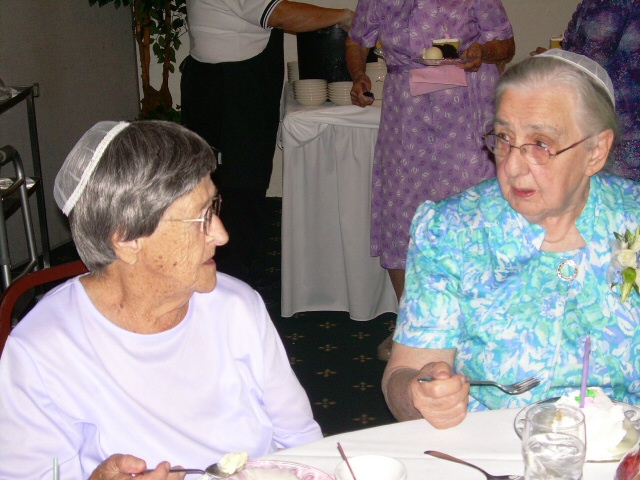
Thankfully, her friend is fine now.“Cecilia, do you really think we are going to live to be 100?” my mother may be asking. (Photo: Mother’s 90th party at The Gathering Place, Mount Joy, PA.)
* * *
Recently, “60 Minutes” aired a show entitled Living to 90 and Beyond hosted by correspondent Lesley Stahl. The show featured interviews of some of the more than 1600 men and women who participated in a study named “90+” funded by the National Institute of Health. All of the data was collected in the 1980s from residents of a community south of Los Angeles called Leisure World, now re-named Laguna Woods. The study was launched to determine the secrets of longevity and perhaps find clues to preventing diseases like Alzheimer’s often associated with advancing age.
On air, the interviewees, all over 90, were shown undergoing physical testing: reflexes, pace of walking, how quickly they could sit down and stand up again. Their mental acuity was checked as well: Tell me today’s date, spell w-o-r-l-d backwards, remember these words (brown, shirt, charity) – I’ll ask you to repeat them to me in a minute. And so on.
Claudia Kawas, spokesperson for the NIH study, concluded with some statements that weren’t at all surprising. And some that were:
People who exercise definitely live longer than those who don’t.
Board games, socializing with friends, working in the garden enhance mental health.
Taking vitamins doesn’t seem to make much difference.
It’s not good to be skinny when you are old.
Drinking 1-3 cups of coffee seems to be beneficial.
One or two glasses of wine daily is recommended.
My Mother, almost 96, and Aunt Cecilia, now age 99, were part of the “Game Girls” crowd in their prime. They loved playing Uno, Skip-Bo, and Hand & Foot with friends. And they probably both still drink one or two cups of coffee with breakfast.
But rest assured, neither of these good, elderly Mennonite ladies ever imbibes a glass of wine with dinner.
* * *
Most of us know one or more friends or family members over 90. Does longevity run in your family?
Do you have a story about a nonagenarian you know?
Coming next: A visit with author Kathleen Pooler and introducing her new book!
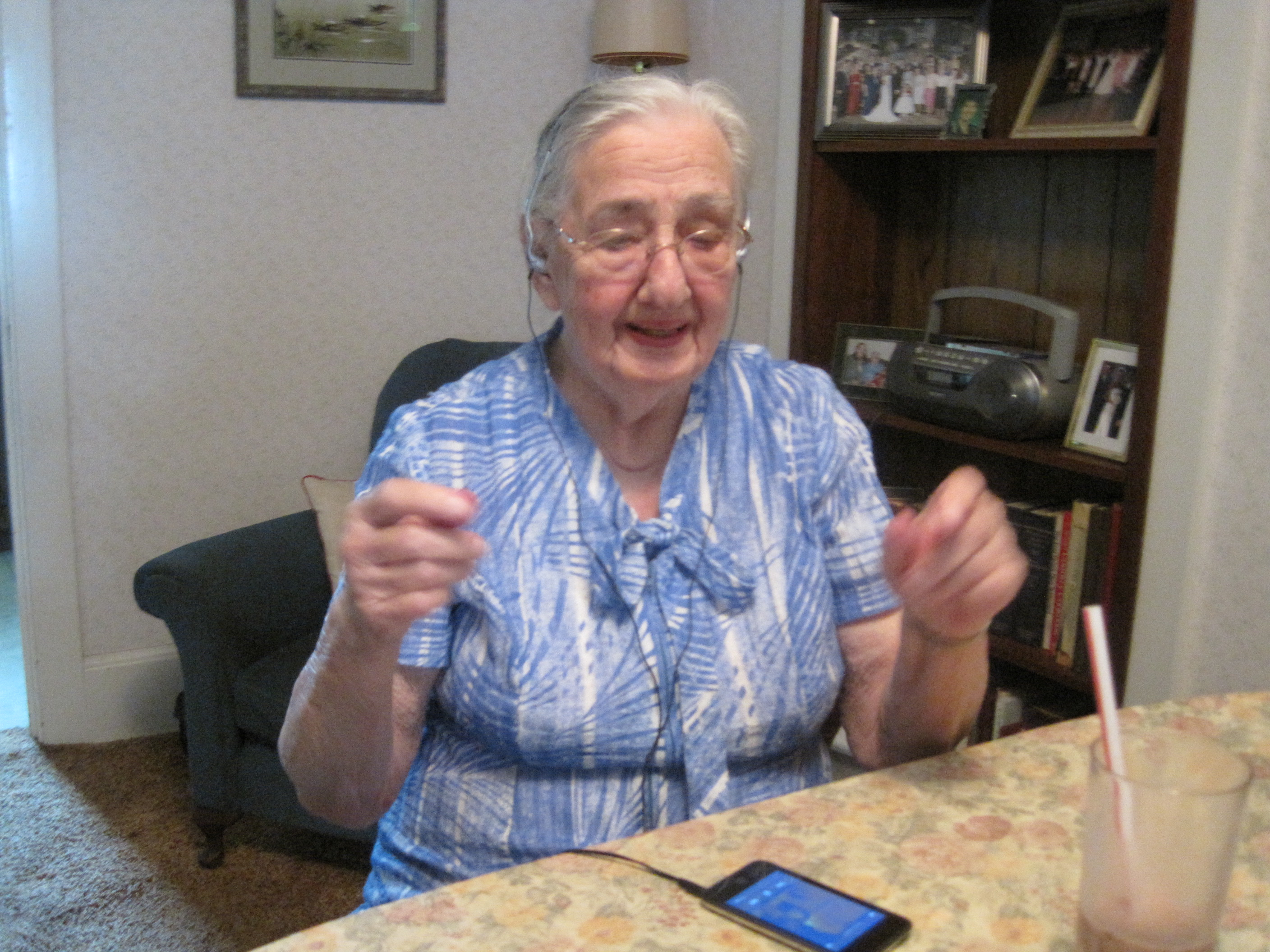
Mother jiving to “Turn Your Radio on and Listen to the Music in the Air” on my iPod
A mother’s happiness is like a beacon, lighting up the future but reflected also on the past in the guise of fond memories.
Honore de Balzac
I am sure that if the mothers of various nations could meet, there would be no more wars.
E. M. Forster
Roses and Love Life
I once had a rose named after me and I was very flattered. But I was not pleased to read the description in the catalogue: no good in a bed, but fine up against a wall. Eleanor Roosevelt
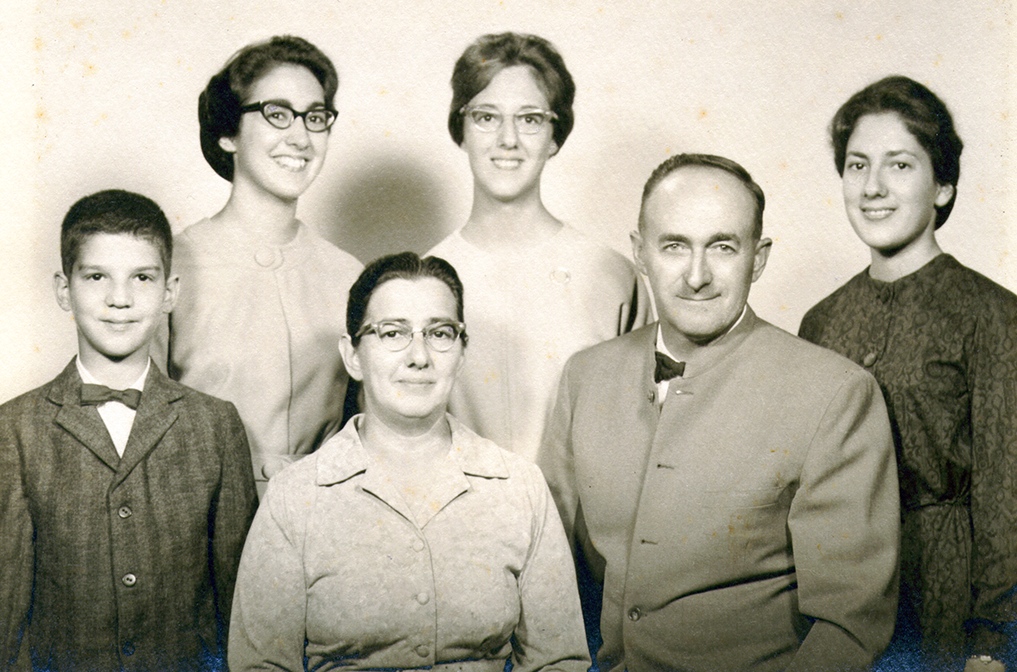
Longenecker family portrait circa 1961: Mark, Marian, Janice, Jean with parents
This is the family I grew up in: my parents Ray and Ruth with my two sisters and one brother. But after I left home and eventually married, my parents had more children. No, my mother was not a modern-day Sarah. She didn’t have babies in old age. But in their early sixties, Mother and Daddy “adopted” another set of children, about a dozen daughters in all, through an agency called New Life for Girls.
Because they entered my parents’ lives after I left home, I never felt jealous of them. They were simply unknown to me, mysterious. Oh, I did meet two of them, Gloria and Julie. They came to see my mother when she visited her first two grandsons born in Chicago in 2003. By then these girls both had grown children of their own.
Gloria’s Story
Gloria grew up in inner city Chicago with an alcoholic father who beat her mother and more than once tried to choke her with a dog chain. Her mother, single now with 8 children to feed, had to go to work. Alone in the world, Gloria turned to drugs and men, looking for love. She set her sights on rich men, men she hoped would take care of her. But the rich men were users, drug dealers or worse. Not surprisingly, Gloria became pregnant at age 14.
One day an evangelist named Brother Raymond, came into Gloria’s neighborhood. She responded to this kind man’s message of salvation and made a profession of faith in Jesus Christ. Though her heart had changed, Gloria’s life didn’t get any easier. Several times she slid back into her old ways and had more babies out of wed-lock. The hard times made her harder. She became tough as nails, always looking for a fight.
Finally, Brother Raymond suggested a way out. “There is an agency called New Life for Girls in Pennsylvania that might help you get your life on track. To enter their program though you would have to agree to their rules and stick by them. Also, your children would be staying in a separate facility.”
Gloria: “Oh no, I can’t be separated from my children!”
Brother Raymond: “Well, then we’ll try to find a host family for you, so that on weekends you can visit with them in a nice Christian home in the country.”
And that’s how my parents’ lives intersected with Gloria’s.
Weekends with the Longeneckers
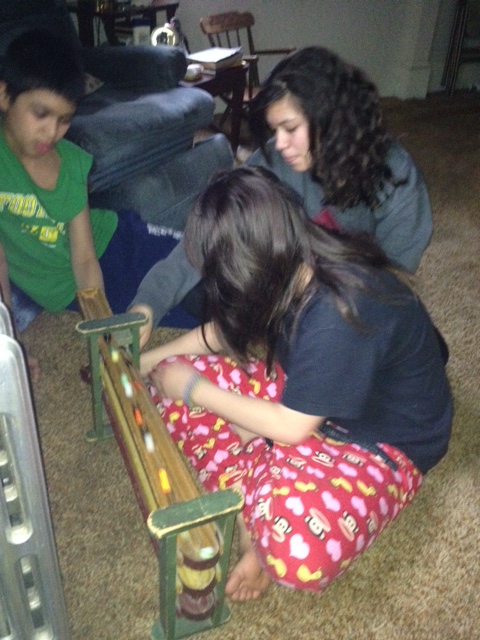
Gloria was looking for an anchor and she found one in her weekend visits to the Longenecker family on Anchor Road near Elizabethtown. Pennsylvania. Most importantly, she could be with her children. Mother and Daddy would pick Gloria up at the train station with her four children who played with toys including the same marble-roller I played with as a child.
Gloria’s grand-children playing with the same marble-roller we had as children: Demetri 12, Inani 13, and Samantha 10.
And she could enjoy Lancaster County abundance. “This is how life should be,” Gloria exclaims as she recalls some of her favorite things:
Going to Root’s Sale where fresh farm produce abounds.
Helping Mom make applesauce with her metal sieve and wooden mallet.
Turning the crank on the ice cream churn, always vanilla with Hershey’s chocolate syrup and peanut sprinkles.
Helping with quilting at Bossler’s Mennonite Church Sewing Circle.
Eating fresh corn on the cob – and fresh tomatoes out of the garden, both dripping juice.
Making tangy home-made root beer from Hires Root Beer Extract, the two-quart jars cooling on their sides in the cellar.
Having devotions with my parents on Sunday morning after which my dad would march over to the piano and bang out the melody to “Fill My Cup, Lord,” singing at the top of his lungs.
Following the Longenecker rules. And to the letter.
My brother Mark still lived at home when Gloria and her children visited, so she got some first-hand tips on getting children to obey. When Mark questioned Mother about why he had to get up and go to church Sunday morning, Mom would reply, “Because you’re in my house and that is the rule.”
But Gloria recalls Mother’s softer side when she tearfully called her at one point to break the news about yet another unplanned pregnancy: “She never criticized me; she stood by me, and said “’You just have to trust that God is still in control.’”
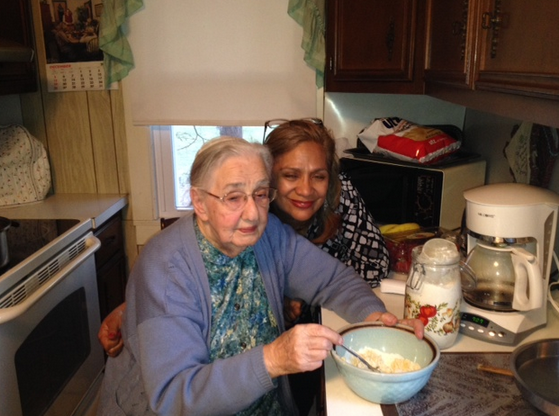
Gloria Araujo in kitchen with Mother (age 95) April 2014
Gloria Today
Over the years, Gloria has told her own children and grand-children this same bold statement when they question her authority: “Because you’re in my house and that is the rule.” And she teaches her clients how to use firm discipline with their children in her role as a social worker at The First Baptist Church of Wheaton, Illinois, where she has recently been appointed deaconess.
“Now I work with many Cuban refugees, help them get into an apartment, find jobs and medical aid—set them on the right track. It feels so good to see lives changed,” she says.
In Retrospect
In a little green autograph book sitting on one of Mother’s living room end tables are listed all the names of the girls from New Life my parents have hosted. This April in her recent visit, Gloria noticed that her name was the first one to be signed in 1978, along with her sister Julie’s. After the signatures of 11-12 other girls, she signed the book again. “It’s only suitable that I sign the last page,” she says.
Therefore if any man is in Christ, he is a new creature:
the old things are passed away; behold, all things become new.
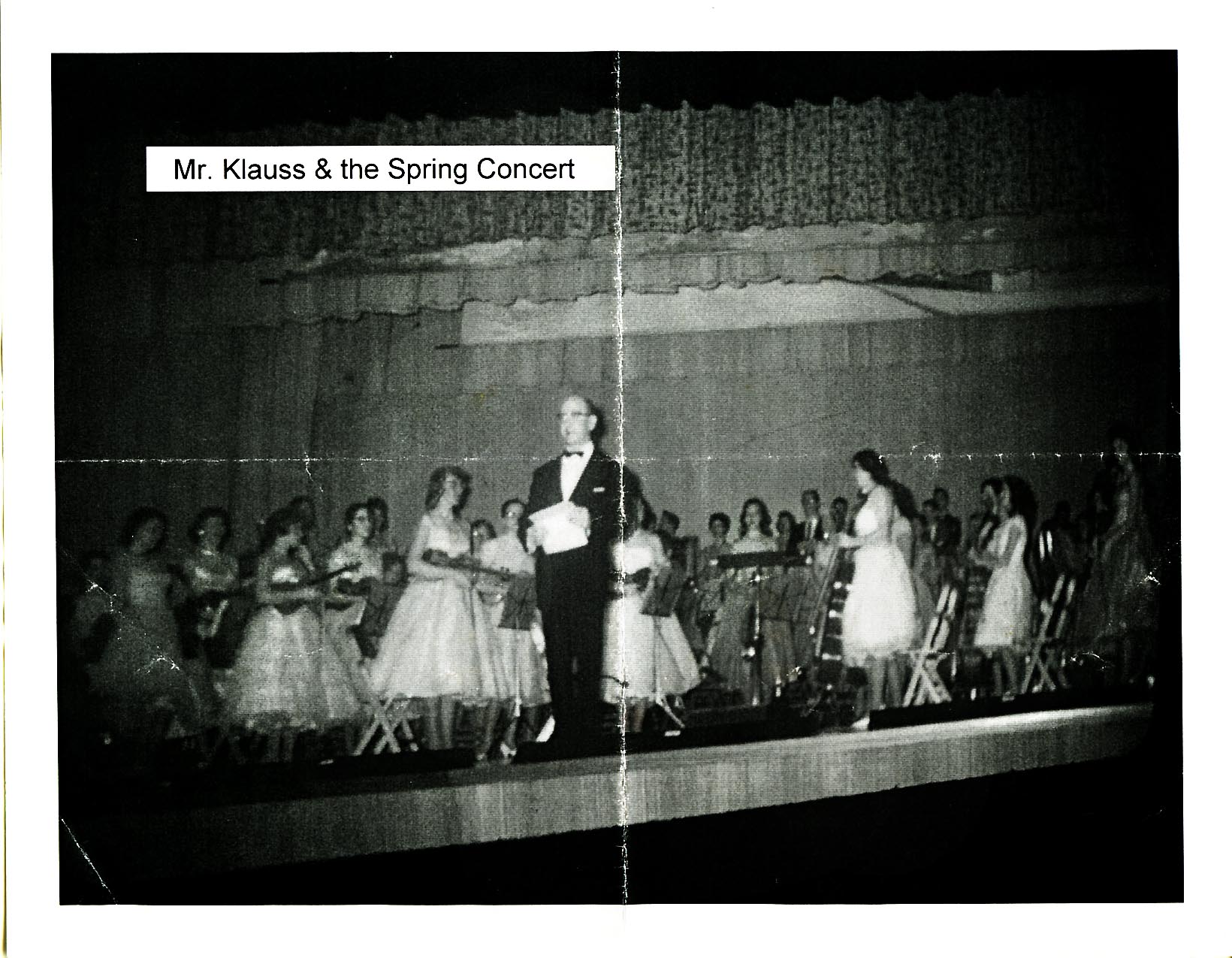
It’s spring concert time and I’m making my fingers fly fast over the strings of my violin pizzicato style, trying to keep up with the syncopated rhythms of The Typewriter Song.
Noah Klauss, the director of our Elizabethtown High School Orchestra, is a fan of Leroy Anderson pieces. Last year we played The Syncopated Clock, the sound of a swinging pendulum tick-tocking in our heads as we played the melody.
I am learning the music all right, but in the back of my mind I worry, “What am I going to wear to the concert?” The outfits I have are mostly home-made. A collar or buttons is the most exciting accessory on my blouses or dresses – no lace or plunging necklines for this Mennonite girl, the only plain girl in the orchestra. Obviously, unlike my friends, I don’t have a fancy gown hanging in my closet.
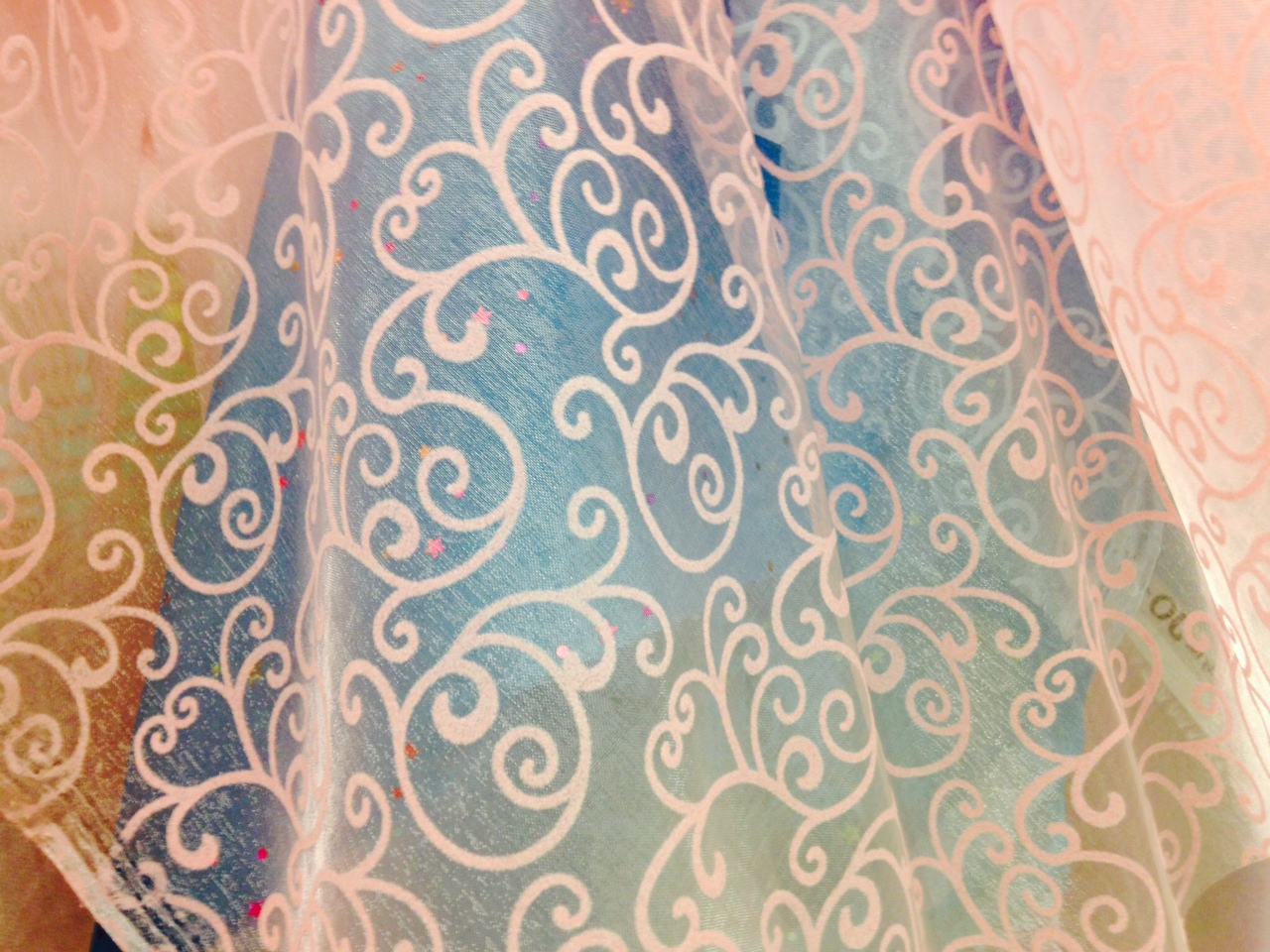
To the rescue: Aunt Ruthie, who out of the blue, gives me a call. Down over the hill I go to our second home, where she and Grandma Longenecker live. As I walk toward the dining room table, Ruthie pulls out part of a bolt of shimmery fabric flocked with swirling designs. I blink at the elegance. Woah!
Flocked fabric similar to actual material
She’s already cut out the pattern and I’m to help her stitch the pieces together. Call me Cinderella! I’m going to the ball with a tea-length gown, a fluffy confection beyond my wildest dreams. Even the pin-pricks at my fitting can’t puncture the feelings of fantasy enveloping me now. Thank God, I won’t stick out like a plain Jane after all.
Snip off the buttons and lengthen the skirt – Voila! my Spring Concert dress.
Do my class-mates in the orchestra comment about my transformation? I don’t remember what anyone else said, if anything. But I do remember the crinkly sound of my gathered skirt as I sit down, violin in lap. And the brand new, starchy-sweet scent of my luscious frock as I pull the bow over the strings.
I’m the girl with glasses between two fluffy skirts on the left.
Is there an outfit that recalls special memories for you?










 Plain and Fancy