Mennonite Girls Can Cook

Yummy Recipe

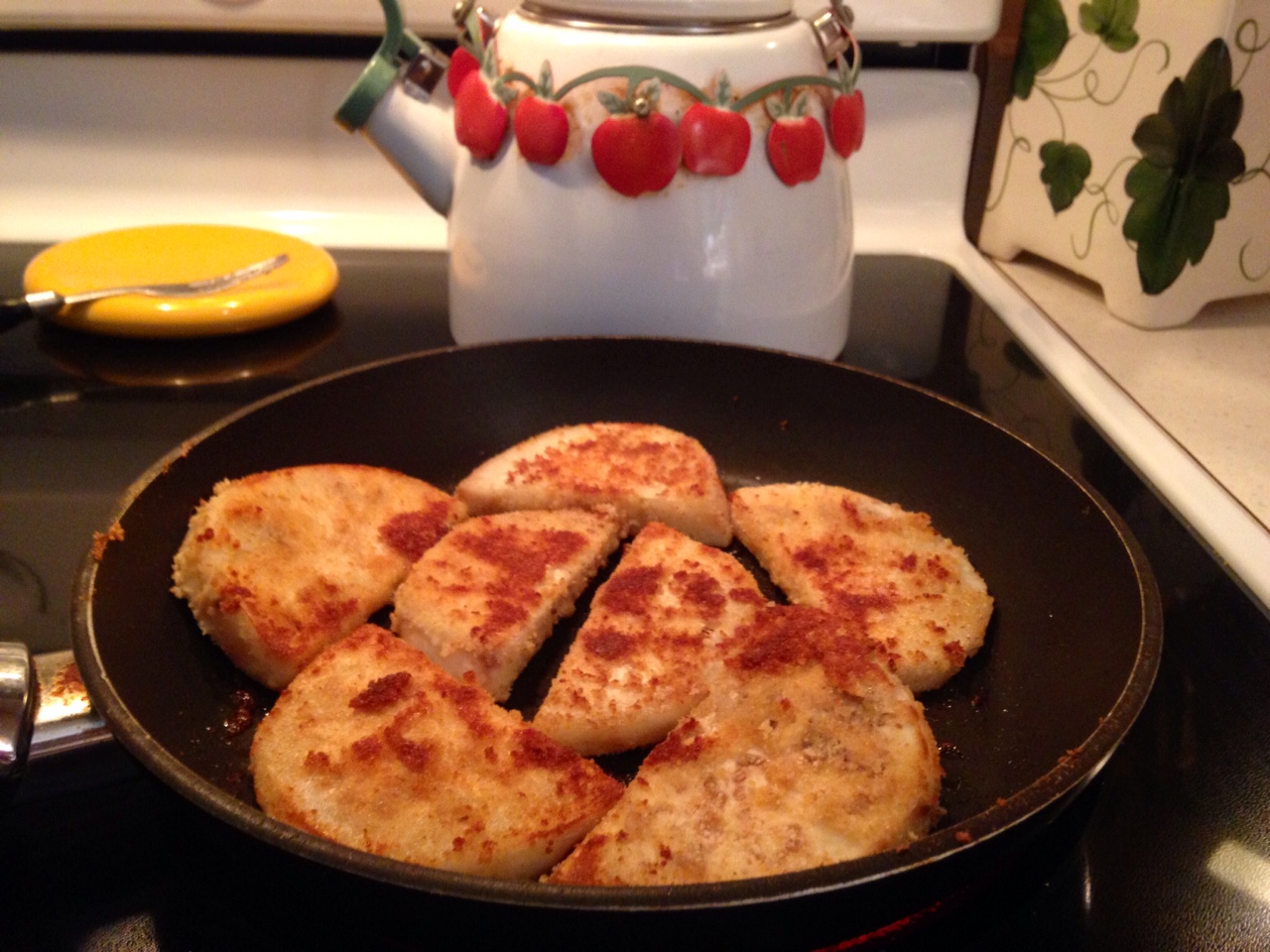
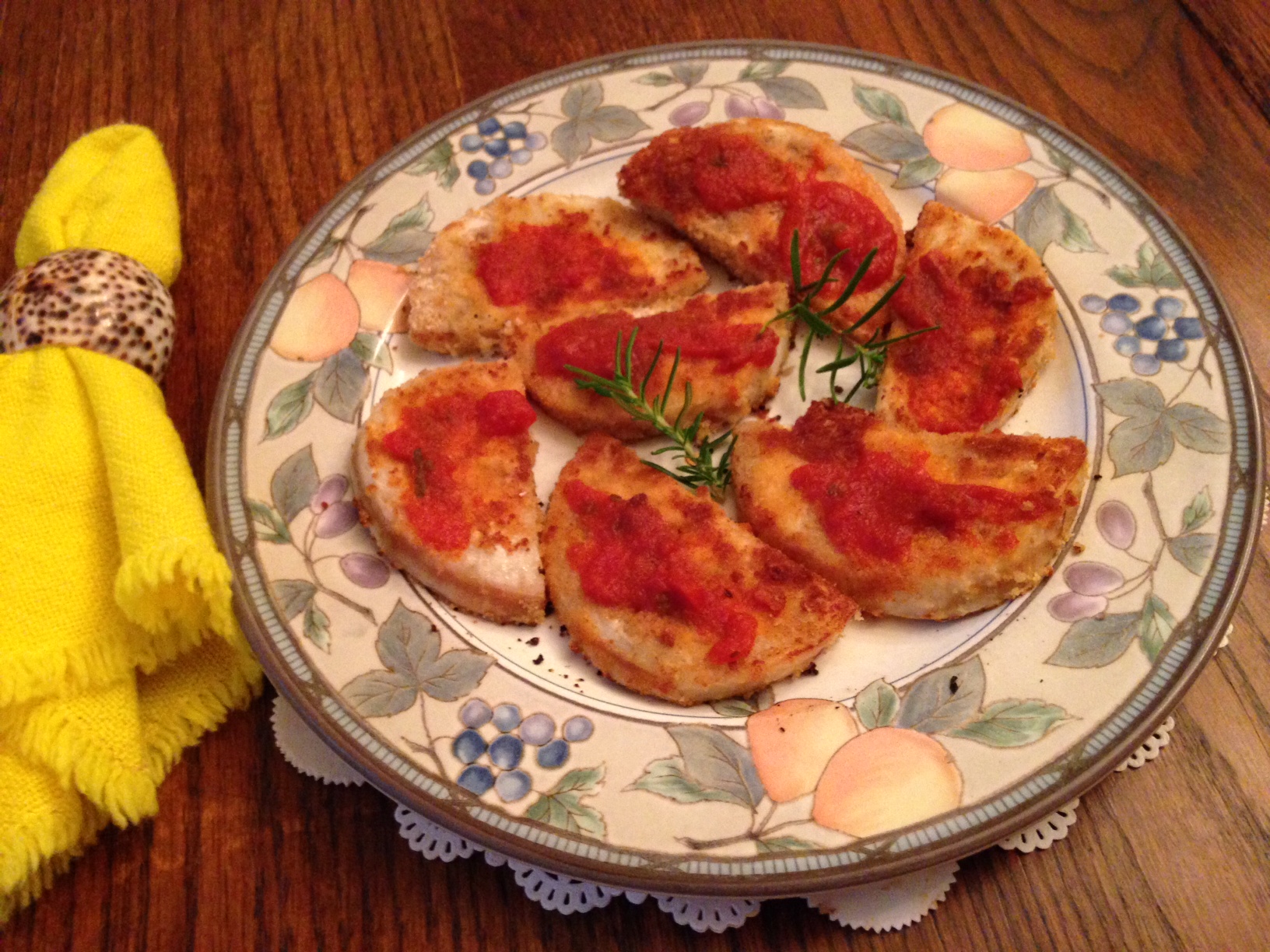
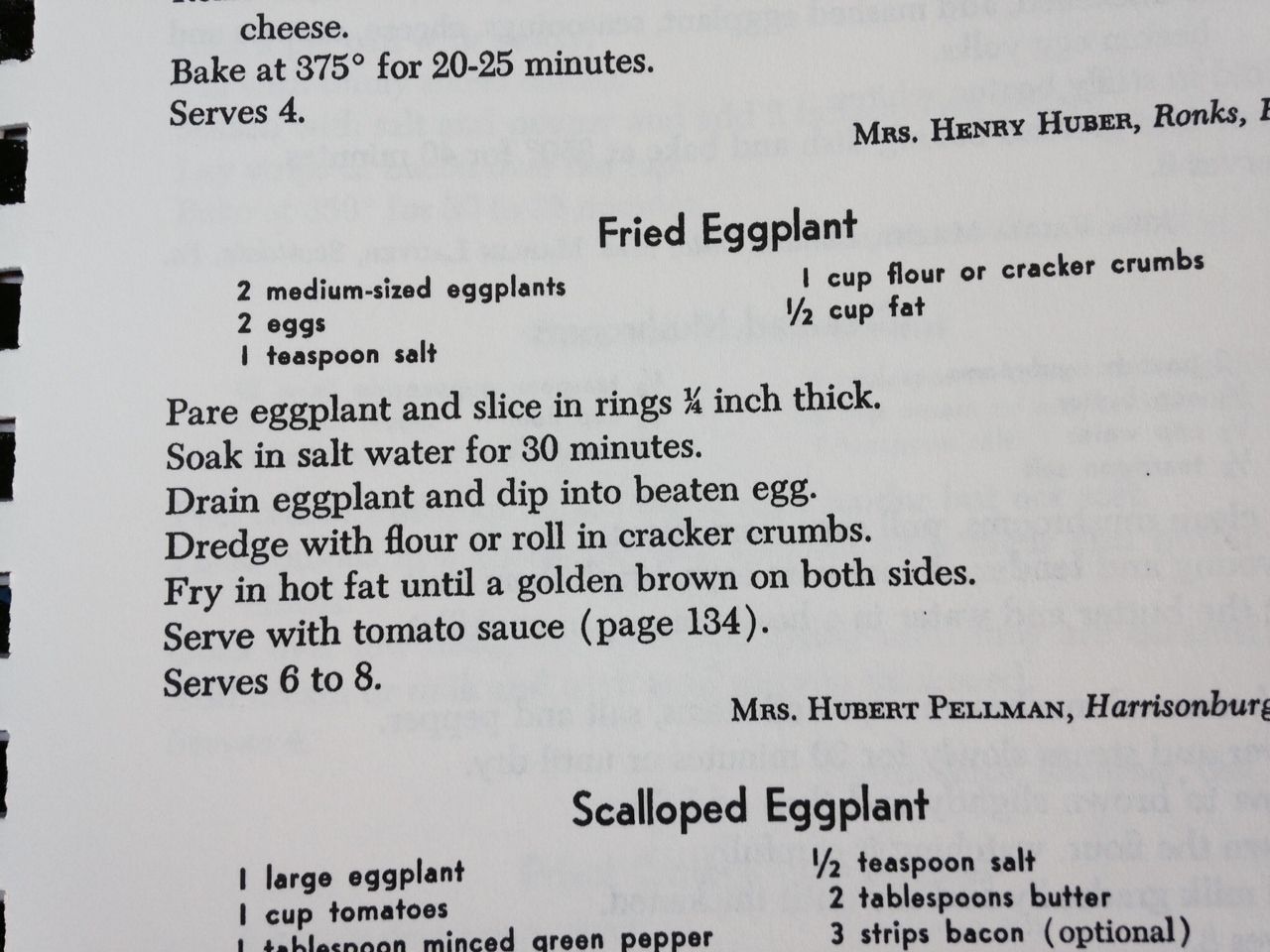
Last week I was in the kitchen with my nearly vintage Mennonite Community Cookbook (1978) creased open to page 155 where I checked out the recipe for sautéed (Okay, I’ll admit, it’s fried!) egg-plant. Hours later when my new and improved Mennonite Community Cookbook arrived in the mail, I quickly turned to page 155, and behold there was the same egg-plant recipe contributed by Mrs. Hubert Pellman, wife of one of my favorite English professors at EMC. No, I didn’t use the new cookbook because I didn’t want to splotch it up. But when I switch over I’ll enjoy the spiral notebook style of binding and other updates on the new edition.
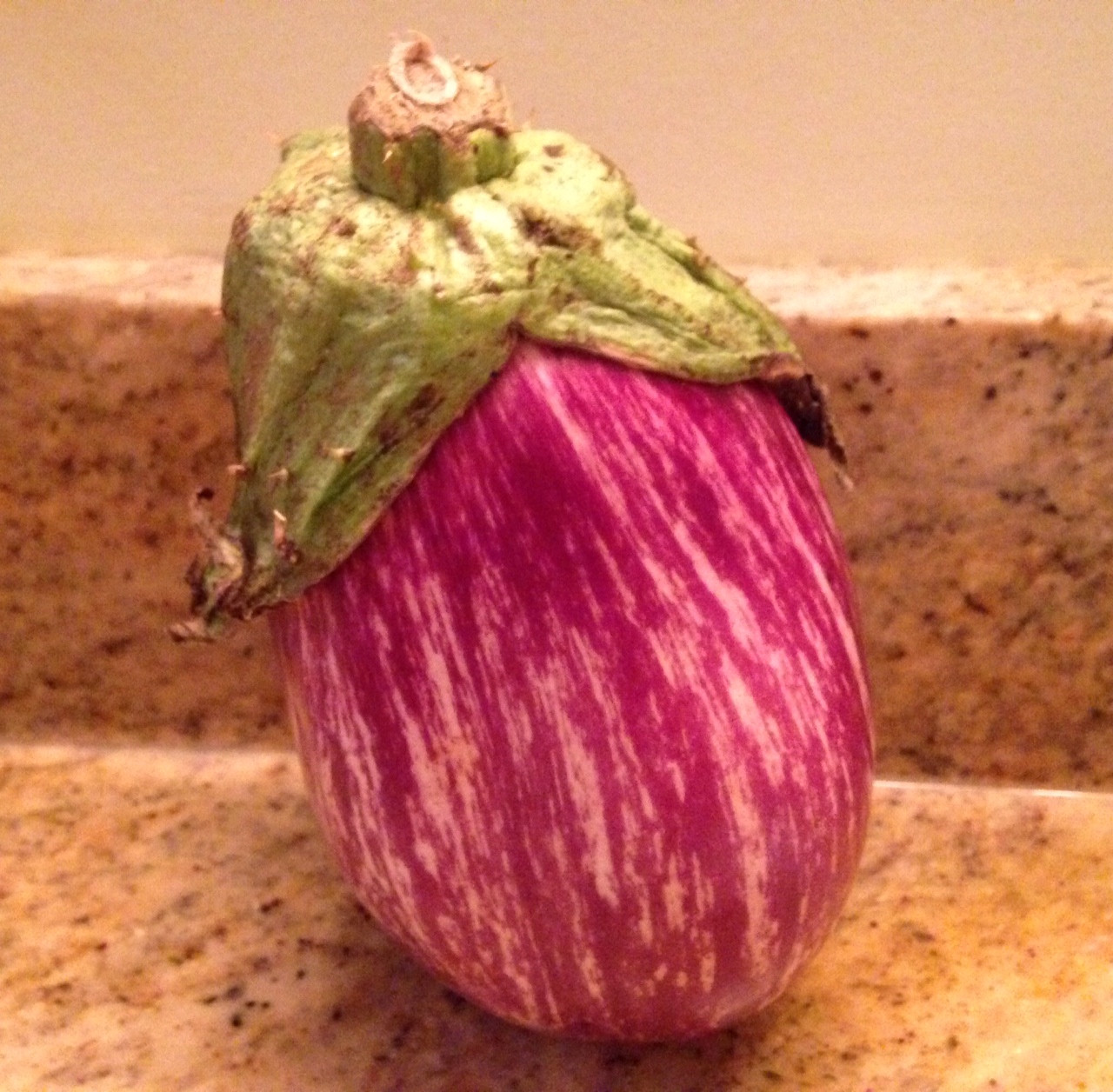
EggplantStriated

EggplantFrying

EggplantServed

Here I substituted olive oil for lard.

Blurb from the Old Mennonite Community Cookbook: First published in 1950, Mennonite Community Cookbook has become a treasured part of many family kitchens. Parents who received the cookbook when they were first married make sure to purchase it for their own sons and daughters when they wed.

The Mennonite Community Cookbook, 1950 – 2015

Dubbed the “grandmother of all Mennonite cookbooks” author Mary Emma Showalter compiled favorite recipes from hundred of Mennonite women who brought their recipes directly from Dutch, German, Swiss, and Russian kitchens. A “dab of cinnamon” or “ten blubs of molasses” have been translated into standard measurements. Fine pen & ink drawings of the pie shelf in the springhouse, outdoor bake ovens, the summer kitchen recall cookery in Grandma’s day.
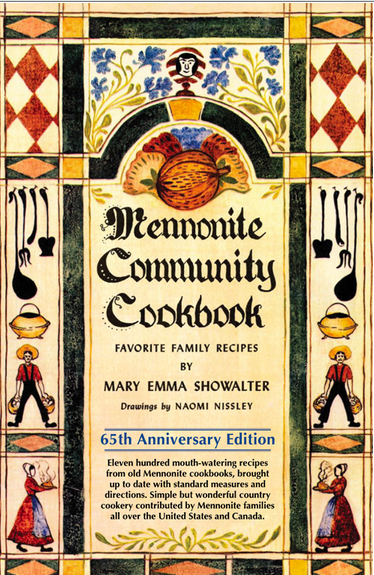
MennoniteCommunityCookbook

You can buy the book here, or go to their MCC Facebook page and enter to win the cookbook. As of this date, there are drawings for free books every week.

Mennonite GIrls Can Cook

Also produced by MennoMedia (Herald Press): Mennonite Girls Can Cook, volume 1 and their second volume, Celebrations.
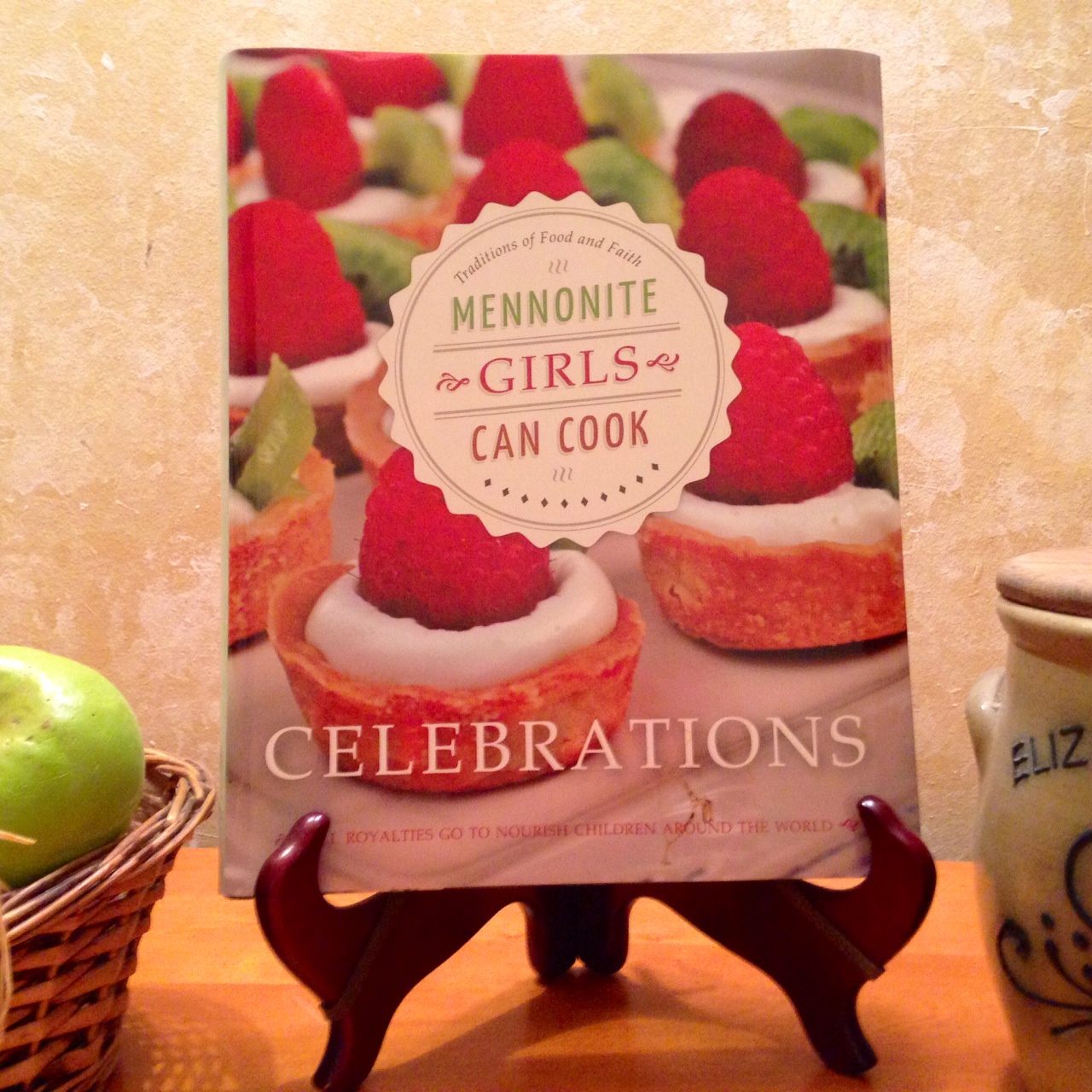
MennoniteGirlsCanCook

This book required collaboration from 10 authors (cooks and writers) all but one from Canada. Names like Friesen, Wiebe, Klassen, and Penner suggest their southern Russian (Ukrainian) roots.
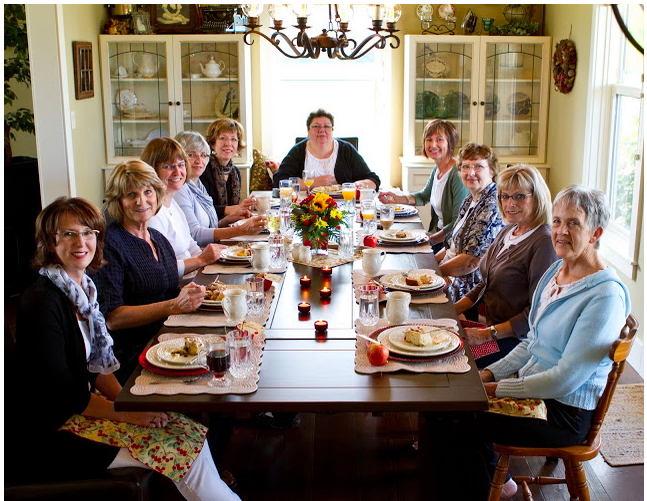
MennoniteGirlsDiningTable

Their Celebrations cookbook, on special for Mother’s Day (half-price until May 9), is a collage of recipes, of course, and meditations of faith celebrating milestones such as birth, marriage, and holidays illustrated with first-class photographs. Some surprises: a mini-pizza recipe faces one for homemade potato chips. Pages later, a lattice-topped grilled apple recipe followed by Borscht and Zwieback (first cookbook).

The authors emphasize “hospitality over entertaining” and “blessing rather than impressing.” Appropriately, the Celebrations book’s end-leaf posts a copy of Old Hundred, Praise God from Whom All Blessings Flow. Best of all, royalties go to nourish children around the world. You can follow them on their blog, Mennonite Girls Can Cook, which attracts 7000 views daily.

Short History

Many Mennonites (Anabaptists) who live in the USA have Swiss roots, but fled to Germany to escape to religious persecution. When William Penn offered them rich farmland in Pennsylvania, these folks, my ancestors, immigrated in the 1700s with hopes of adapting their love of the land and family tradition to the New World. Similarly, Canadian Mennonite forebears fled western Europe and religious persecution to live in Russia from where they immigrated to Canada escaping political upheaval.

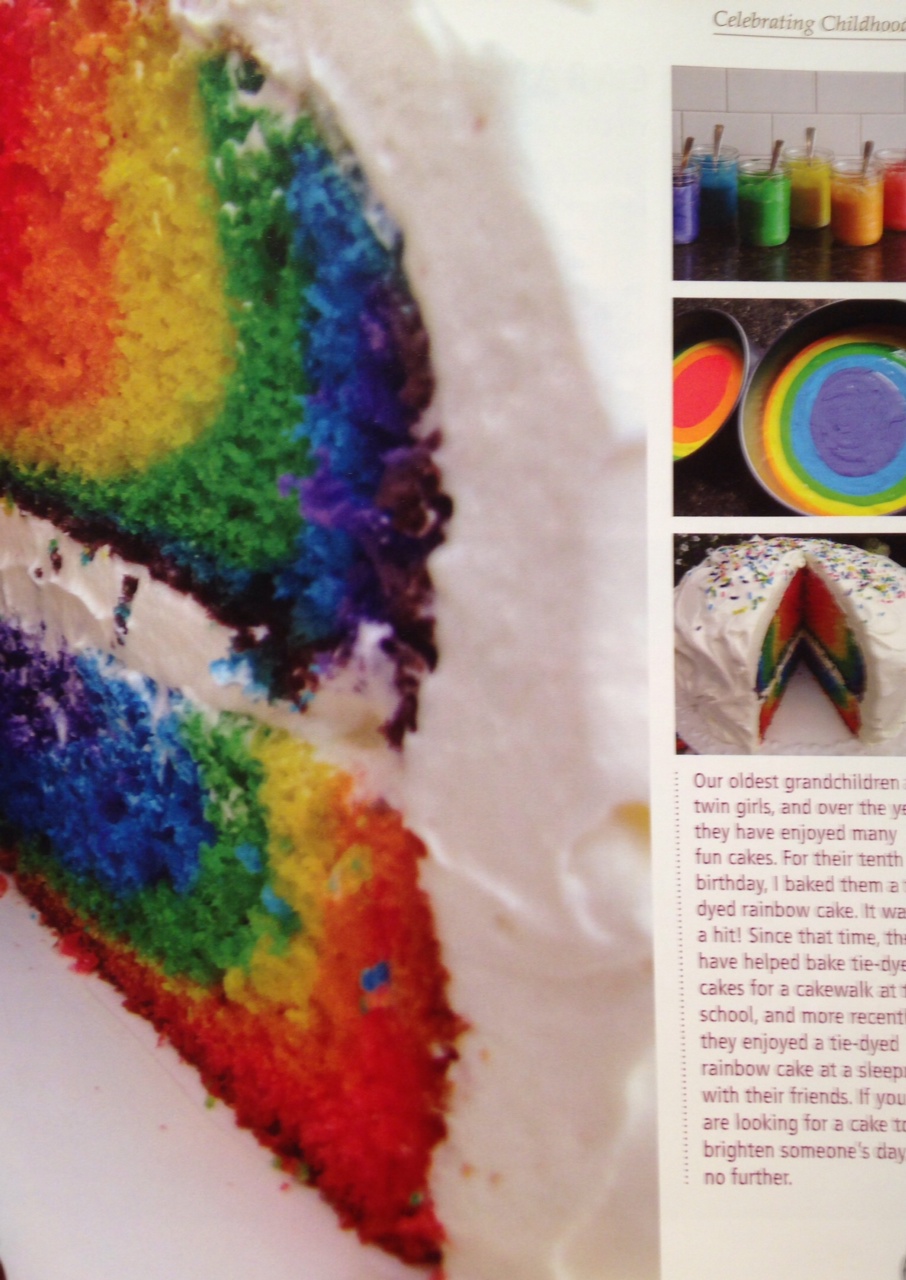
Tie-Dye Rainbow Cake!

I can’t wait to make the tie-dye rainbow cake with Jenna or one of the grand-boys, and soon! (Pages 60 and 61 in Celebrations)
RainbowCake

Your turn: Are you familiar with either cookbook? Do you have a favorite recipe or cookbook – or do you just “wing it”? Thank you for sharing your thoughts here!

Coming next: An Orphan Speaks on Mother’s Day
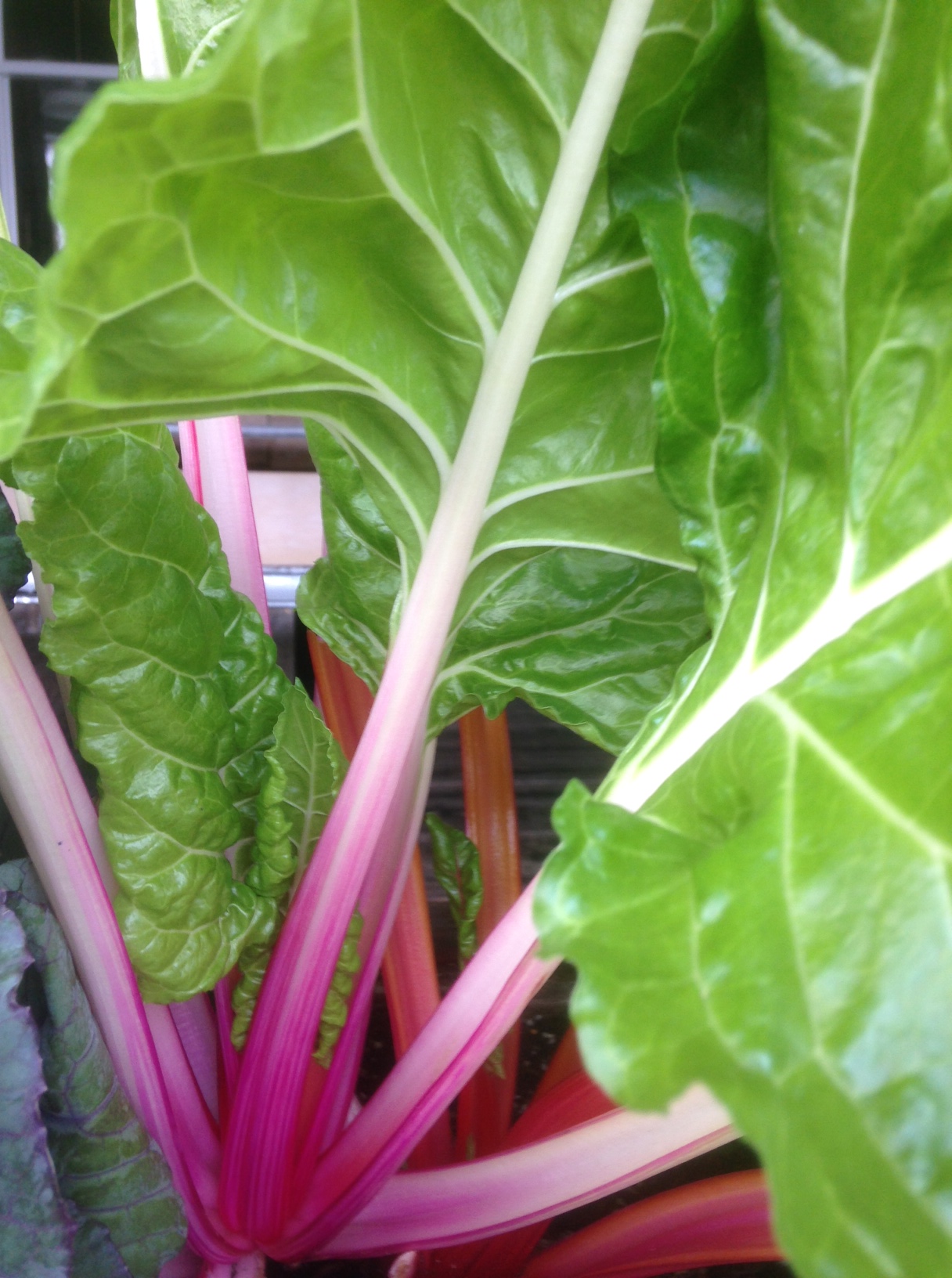
Rhubarb in Grandma’s Garden

Hot-house rhubarb spotted in shop window, Brunswick, GA  January 2015
Rhubarb plant spotted in front of shop window, Brunswick, GA
January 2015

Grandma and I in the Rhubarb Patch

It’s me, pigtails flapping in the May breezes, skipping beside Grandma toward the rhubarb patch. Behind Grandma’s house toward the woods a thick nest of rhubarb stalks stands sentinel over a ridge facing the twelve sweet cornfield rows. In her garden, the pinkish-red rhubarb spears get back-row status but I think they are pretty enough for her flower garden out front.

“You said you are stopped up – didn’t have any luck when you went to the bathroom.” Grandma with her sunbonnet and apron pulls off the biggest pinkish-red stalks, the green heart-shaped, crinkly leaves falling to the ground with one swath of her knife. “A dose of this will fix that.” She’s looking intently at the rhubarb but I know she’s talking to me.

I have eaten Grandma’s rhubarb sauce before, but I never thought of it as a laxative. “It has roughage in it. It’ll really clean you out.” She runs her rough hands along the spine of the stalk to show me the fibers.

“I see,” I say but right now I wonder if it tastes as good as it looks, so I bite into a stalk and find out too late that it has plenty of pucker power. “Eeee-ow. It tastes sour,” spitting the mouthful out on the ground.

“Goodness gracious, you have to boil it first in sugar water to make it taste good, don’t ya know!” She giggles at my ignorance and finishes pulling off more rhubarb stems with a twist of her wrist like separating a stalk of celery from the bunch. Then we head back toward her kitchen.

Making Rhubarb Sauce

The round, dented aluminum pot is simmering on the stove. With every passing minute the mixture of sugar water and rhubarb cut into 1/2-inch chunks is becoming more ruby red. At the last minute Grandma says, “ Just two shakes,” and I flick my wrist to shake the little can of cinnamon twice as swirls of steam half-scald my hand and wrist.

When it cools, it will taste both tart and sweet. That I know!

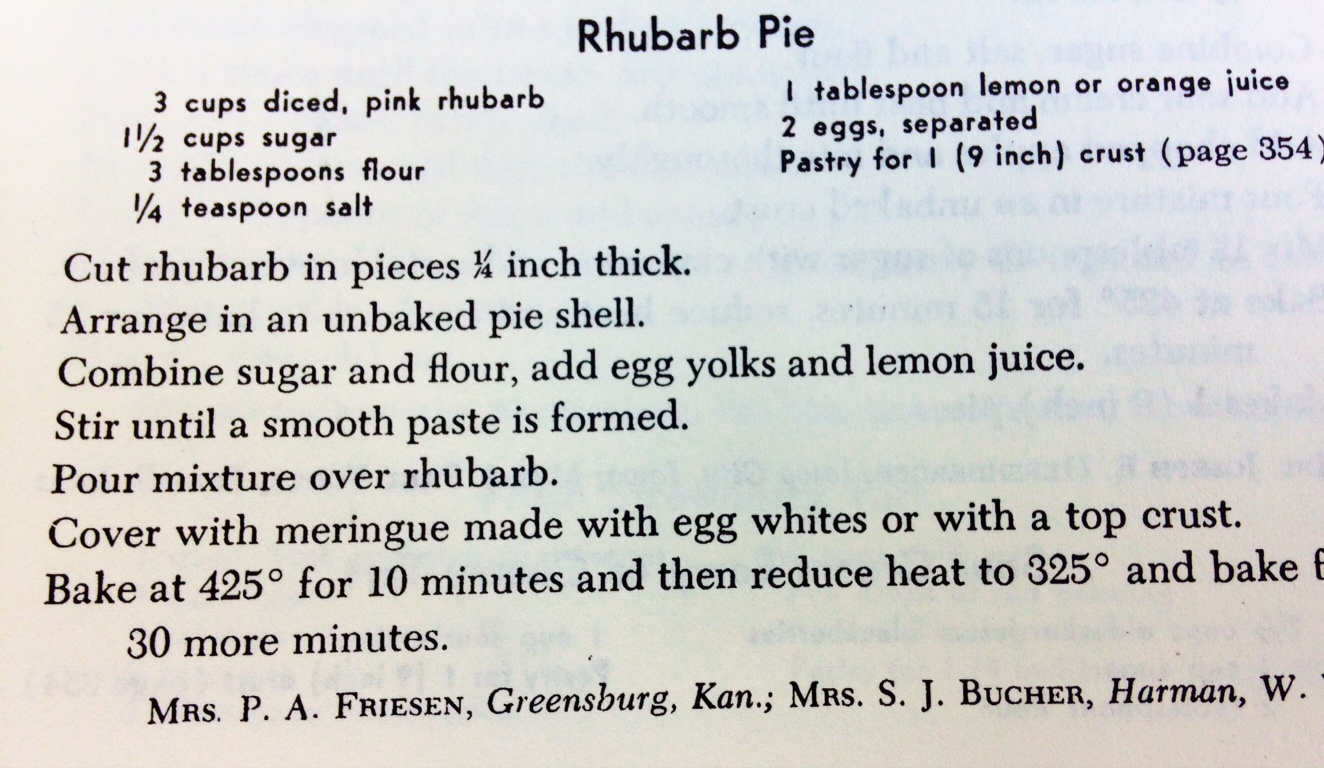
Rhubarb Pie from The Mennonite Community Cookbook, 2015

RhubarbPieRecipe

(Adding Strawberries to the rhubarb adds another layer of flavor.)

My Mother's Garden, an embroidered poem
My Mother’s Garden, an embroidered poem in Grandma’s bedroom

What You Might Not Know About Rhubarb

Yes, rhubarb has good cathartic (laxative!) powers, but according to Marion Owen, co-author of Chicken Soup for the Gardener’s Soul, rhubarb is out to save the planet too:

Rhubarb not only saves our plants from aphids, it may also save the planet. In the mid-1980’s, when a hole was discovered in the ozone layer, researchers found that CFC’s were one of the primary reasons for the ozone’s decline.

One of the most common forms of CFC’s is freon, which is used as a refrigerator coolant. Conventional methods for breaking down CFC’s were costly and dangerous. But in 1995, two Yale scientists discovered that oxalic acid, found in rhubarb, helped neutralize CFC’s. Rhubarb to the rescue!

Marion Owen from Kodiak, Alaska, also publishes a newsletter titled The UpBeet Gardener.

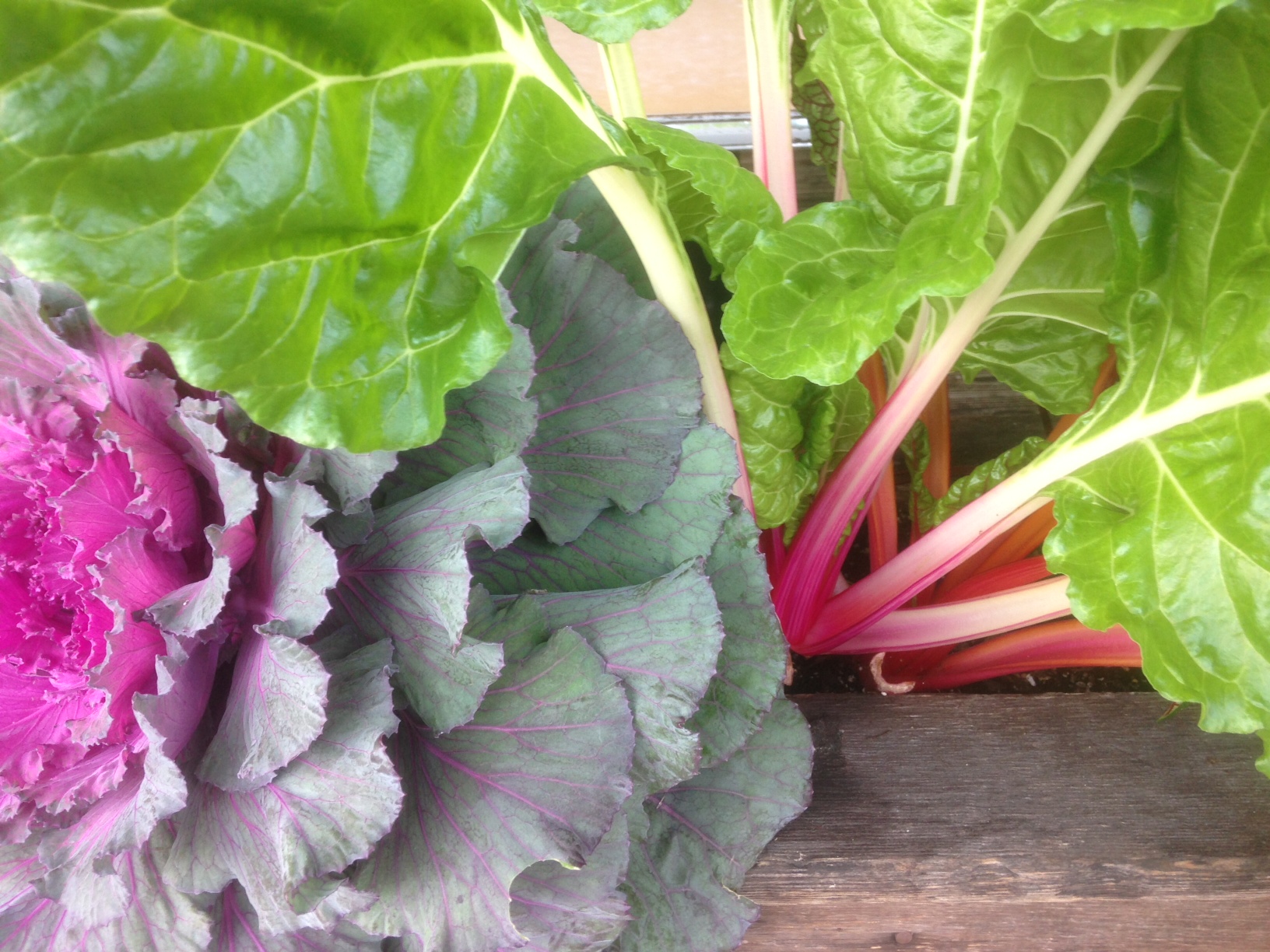
RhubarbCabbagePurple

Beets, rhubarb, memories of springtime in the garden – all are on the table for today’s conversation!

Coming next: Mennonite Girls Can Cook

Lincoln, Lilacs, and Grandma’s Outhouse

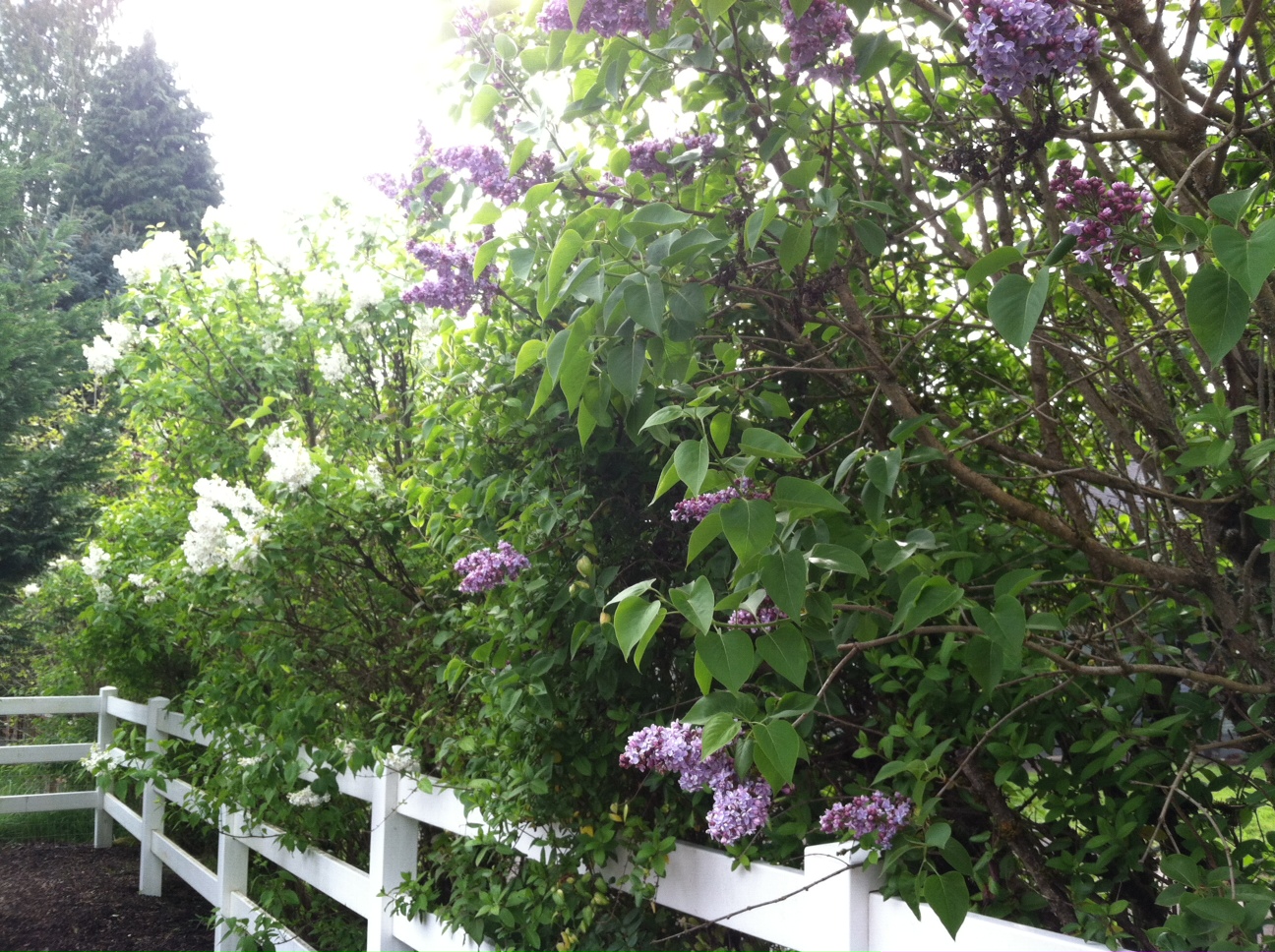
Lilacs in Washington State

Earlier this month, my husband Cliff and family laid to rest his father Lee Beaman in a tiny urn above the coffin of his mother in the cemetery adjoining the church. Across the street from the simple, white-plank Methodist Church near Ridgefield, WA, are lilac bushes in full bloom this April. If you live in the Pacific Northwest, here is a website you may want to check out: //lilacgardens.com/

Lilacs along McCardy Road, Bethel Methodist Church, Ridgefield, WA
Lilacs along Carty Road, near Bethel Methodist Church, Ridgefield, WA

Like floral fireworks, these blooms explode in vivid lavender, each blossom bursting in “bullet-shaped buds.” Poet Richard Wilbur seems to scrutinize the lilacs he describes by looking into not just at the hundreds of teeny buds arranged in each bursting bloom tighter than stick pins in a pincushion.

LilacsRWilburPIC

As poet Wilbur points out, each tiny lavender bud appears “quick and bursting,” not holding back its beauty – is open and free. Similarly, when friends and family eulogize the beloved, their remarks tend to be candid, “quick and bursting,” revealing true feelings, knowing this is probably the last time to express their sentiments publicly.

Lincoln and Lilacs

Another poet, Walt Whitman, connected grief to the springtime and lilacs as he expresses his deep attachment to Abraham Lincoln, whose death April 15, 1865, is commemorated in his famous poem When Lilacs Last By the Dooryard Bloom’d. Written in private, the poem is a public elegy to the President the people adored. The poet revered the President too and when the cortége passed by, Whitman placed a sprig of lilacs on the coffin:

“With delicate-color’d blossoms and heart-shaped leave of rich green, /A sprig with its flower I break.” (stanza 3)  Then admitting that “the lilac with mastering odor holds me,” Whitman will forever associate the fragrance of lilacs with his fallen hero (stanza 13).

Finally, referring to Lincoln as a “Powerful western fallen star” the poem closes with the lines

For the sweetest, wisest soul of all my days and lands—and this for his dear sake,

Lilac and star and bird twined with the chant of my soul,

There in the fragrant pines and the cedars dusk and dim.

Kathy Beaman holding lilac after Dad's memorial service
Kathy Beaman holding lilacs after Dad’s memorial service

Lilacs Bushes and Grandma’s Outhouse

Please permit me this odd segué!

I love lavender and purple – and I love lilacs and wisteria. Wisteria climbing joyfully on a trellis on Grandma’s verandah and lilacs some distance away. . .

Close to an oak tree that Grandma Longenecker’s grand-children planted in her honor after her death in 1980, was an outhouse (now long gone) surrounded by a clutch of lilac bushes. The lilacs around Grandma’s house served as a fragrant air freshener. Of course, there is nothing elegiac about an outhouse, a tallish, square white structure with a roof, equipped with a Sears & Roebuck catalog or better yet for the job – a phone book. The outhouse, dedicated to defecation, bears evidence that bodily functions continue, that you are still alive. Lilacs thrive there.

Long live the lilacs. Long live symbols of life, death, and rebirth!

* * *

. . .  and a bush nobody had noticed burst into glory and fragrance, and it was a purple lilac bush. Such a jumble of spring and summer was not to be believed in, except by those who dwelt in those gardens.

The Enchanted April, Elizabeth von Arnim

Now, your turn. What is your relationship to lilacs or other spring flowers? To commemorating the death of loved ones?


Carole Parkes and the Written Acts of Kindness Award

Thank you notes are usually written privately, but this one is a public thank you to Carole Parkes, a writer friend who just recently nominated me for the Written Acts of Kindness Award, an award given from one blogger to another to let them know their words bring inspiration.

WrittenActsofKindness Award

I take this as an opportunity to showcase Carole’s own accomplishments. Her work as a painter and photographer first caught my eye nearly a year ago, but I quickly noticed that she is a 21st century Renaissance Woman:

  • Author of a psychological thriller, Tissue of Lies
  • Short story writer
  • Painter in oils
  • Seamstress, who crafts men’s suits and ladies’ fashion jeans for Marks & Spencer
  • Photographer
  • “Occasional” poet, she says

Her husband calls her butterfly because she flits from one hobby to another. I don’t see that she has ever changed the oil on an 18-wheeler, but even that wouldn’t surprise me!

CaroleParkes

Here is a blurb from her “About” page

I was born in Liverpool, (England) in 1945, and have lived in my current house near Ormskirk, Lancashire for the past 39 years. I’ve been married for 49 years and have three sons, all now married with their own families.

I started writing in 1985 when I produced several short stories, a series of children’s books and my newly published book on Kindle “Tissue of Lies.” Between 1985 and 1989 I also encouraged my elderly mother to write her life story, whilst I started on my biography. Owing to my commitment to my elderly parents, I didn’t take my writing too seriously until after my parents aged 97 and 94, both passed away in 2012.

You are such an inspiration, Carole. Your words echo across the pond. Again, THANK YOU!

Purple Passages with the Bard of Avon

Spring cleaning!

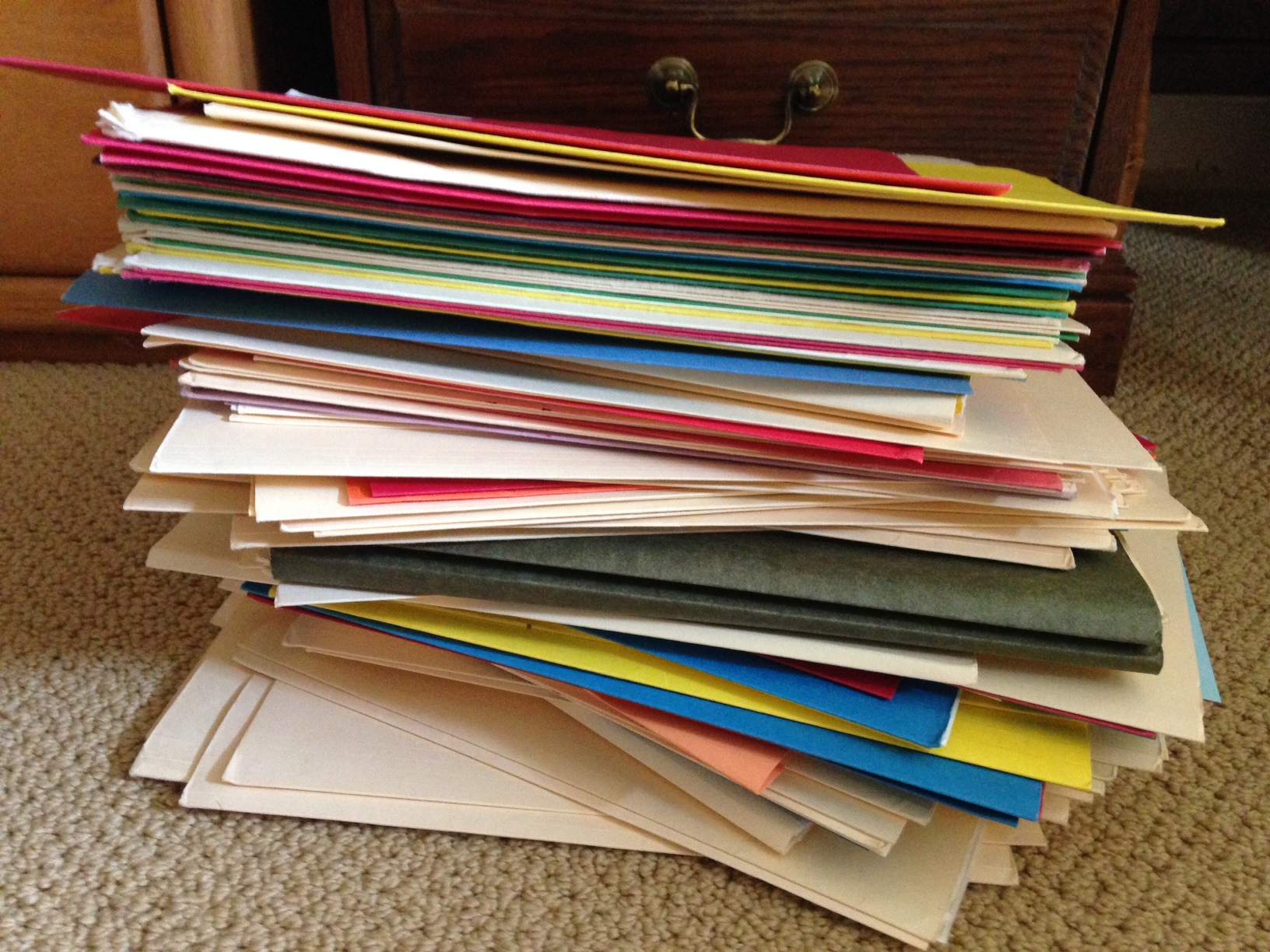
I have thrown out (read that, recycled) piles of files during the past two weeks. One I kept, though, was a Shakespeare file.

FolderTeaching

I take my discovery of this file as an invitation to play teacher once more. Actually, another good reason is that tomorrow, April 23, is reputedly Shakespeare’ s birthday as well as his day of death (1564-1616), and he gets all the “Purple Passage” space for notable quotes today. But first a verse, and then a quiz. (Fret not, answers provided on next post, April 25)

ShakesBirthdayCrown

PUzzleVerse_mod

Reputedly, Shakespeare invented words by changing verbs to adjectives, adding syllables or even coining new words. Here is a short list. Add vowels only!

1. b__mp

2. __m__z__m__nt

3. __nch__vy

4. __ss__ss__n__t__ __n

5. c__ __rtsh__p

6. dw__ndl__

7. f__pp__sh

8. h__ __dw__nk__d

9. l__ __pfr__g

10. z__ny                (Okay, so this was easy!)


Shakespeare’s plays contain so many memorable lines that many familiar with them may not know their origin. I am sure you have heard some of these, which need to be completed with one word:

Good night, good night! parting is such sweet sorrow, That I shall say good night till it be _____________.        Romeo and Juliet

The course of true love never did run_________.     A Midsummer Night’s Dream

The devil can cite Scripture for his _________.   A Midsummer Night’s Dream

The better part of valour is __________.          King Henry IV, Part I

Sweet are the uses of adversity:

Which, like the toad, ugly and venomous,

Wears yet a precious jewel in his head;

And this our life, exempt from public haunt,

Finds tongues in trees, books in the running brooks, Sermons in ________, and good in every thing.         As You Like It

Something is rotten in the state of _________.          Hamlet

There is nothing either good or bad, but __________ makes it so.       Hamlet

The play’s the thing / Wherein I’ll catch the _________ of the king.        Hamlet

When sorrows come, they come not single _________,  But in battalions.      Hamlet

O brave new _________, / That has such people in ‘t!      The Tempest

Want more Shakespeare? Last April I write about Shakespeare’s birthday in my classroom. Find the other link here.

Add some coined words I’ve missed, another Shakespearean quote, or even a thought about April and spring-cleaning. I love words. Share some of yours here!

Coming next: My Little Black Bookends Tell All

Moments of Discovery # 6: Whip up Recipes, Stir in Imagination

Clearing out a house after death is a sacred act, yet no amount of holiness assigned to this task can dismiss the back-breaking, shoulder-aching, neck-craning job of sorting, recycling, and passing on to others the possessions of a loved one. Aside from clothing and furniture, Mother left behind the tools of her trade in the kitchen along with beloved books of our childhood, some of which are displayed here.

Prepare Food & Serve It

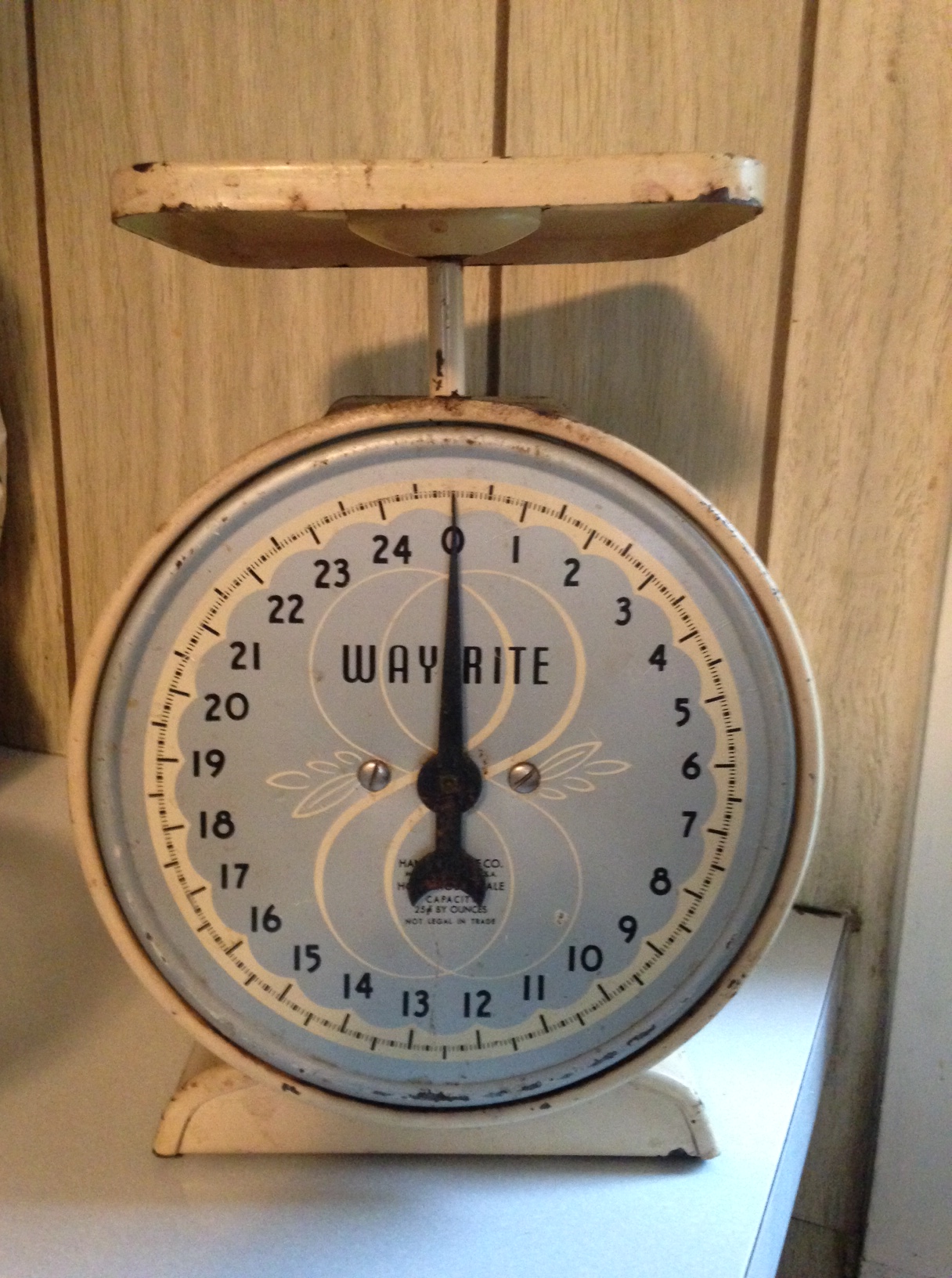
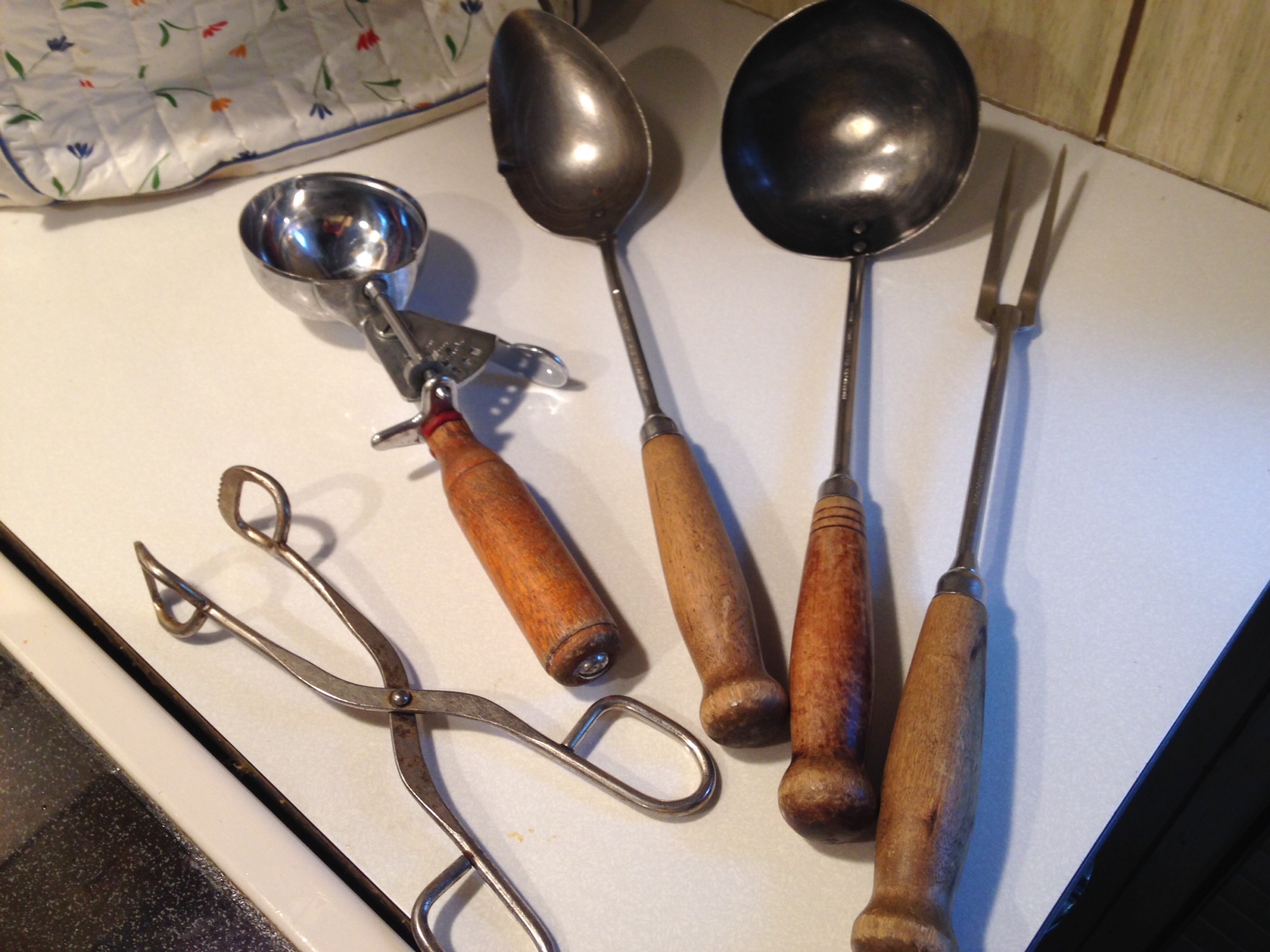
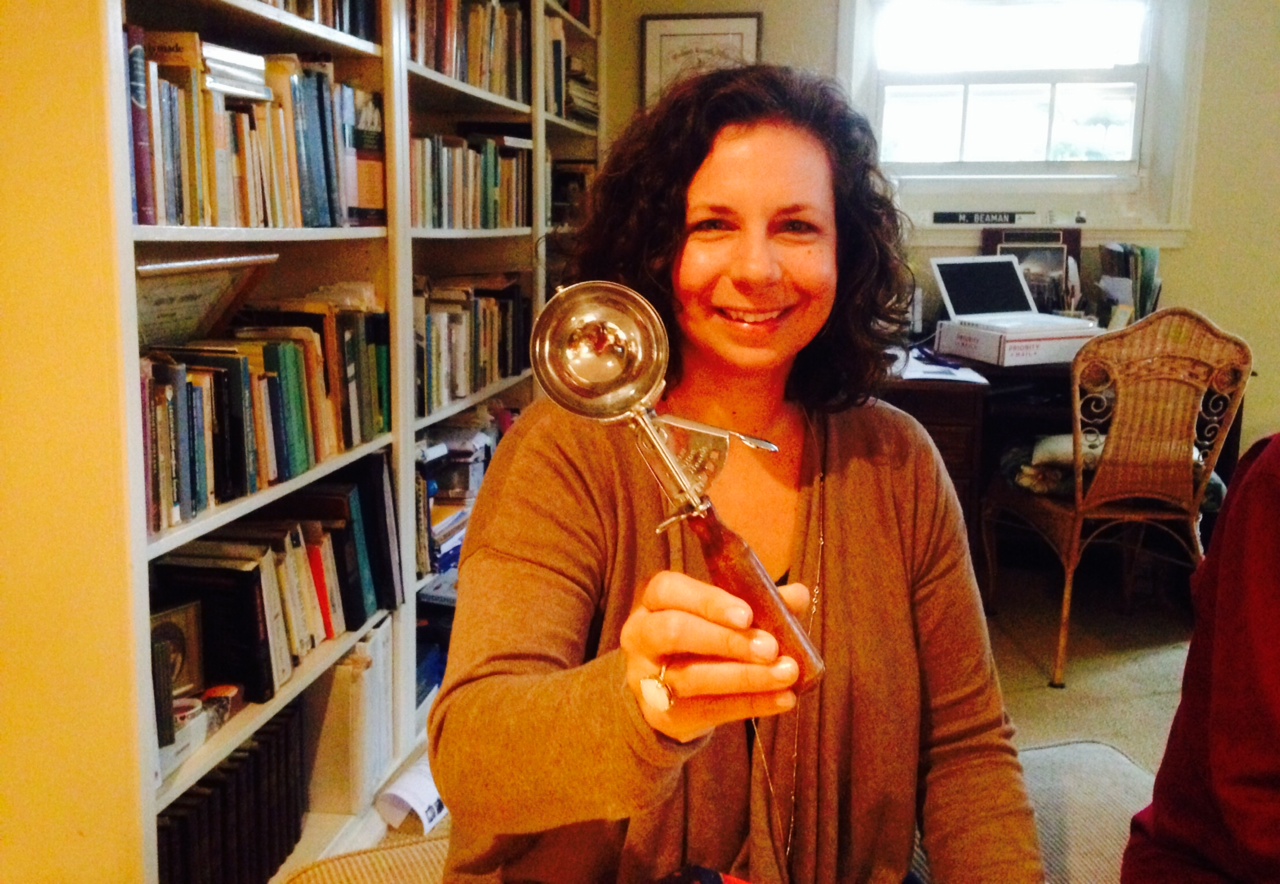
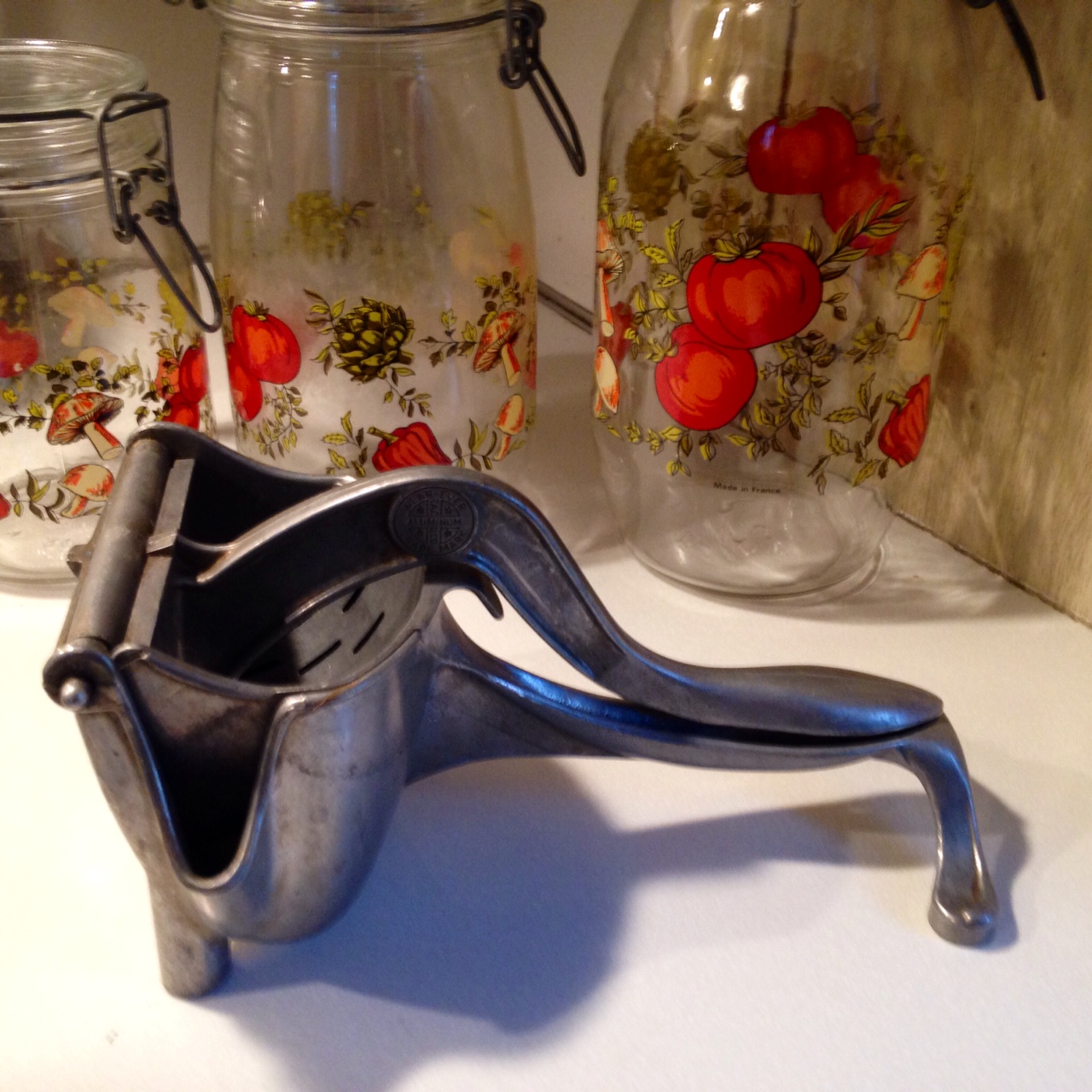
What remains: A scale on which all of our baby weights were noted and recorded (or ingredients for recipes measured), cooking utensils, ice cream dipper, and juicer, most of which have been passed on to grand-children.

Scale Mom

My best guess is that these were wedding gifts or first (and only) time purchases. I don’t remember another scale, a different set of utensils, a second ice cream dipper or juicer ever passing over the threshold of our home. The throw-away mentality of our current consumer society never made sense to Mother. “You buy good, and keep it – for a lifetime” was her philosophy! Yes, prepare food and serve it, and with love! Her fancy china set, sterling silver flatware, and crystal glasses and goblets all have found homes with her grand-children.

Kitchen Utensils Mom

Daughter-in-law Sarah pleased with Grandma's ice cream scooper
Daughter-in-law Sarah pleased with Grandma’s ice cream scooper

Juicer Mom

Don’t Forget to Stir in Imagination

Page from Arnold and Ann Lobel's book
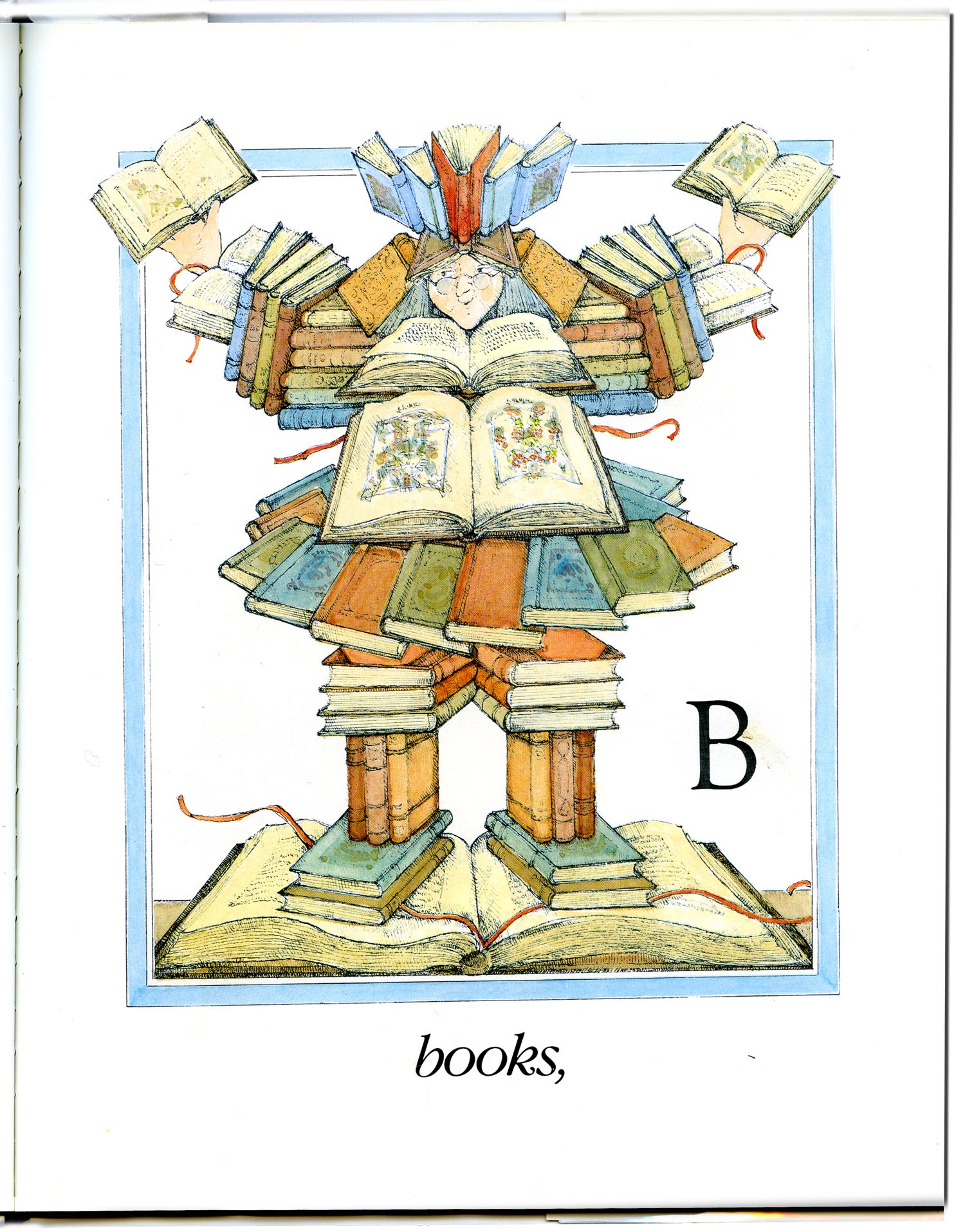
Illustration from On Market Street by Anita and Arnold Lobel

In previous Moments of Discovery, you may have seen other books from Mother’s bookcase or from the attic.

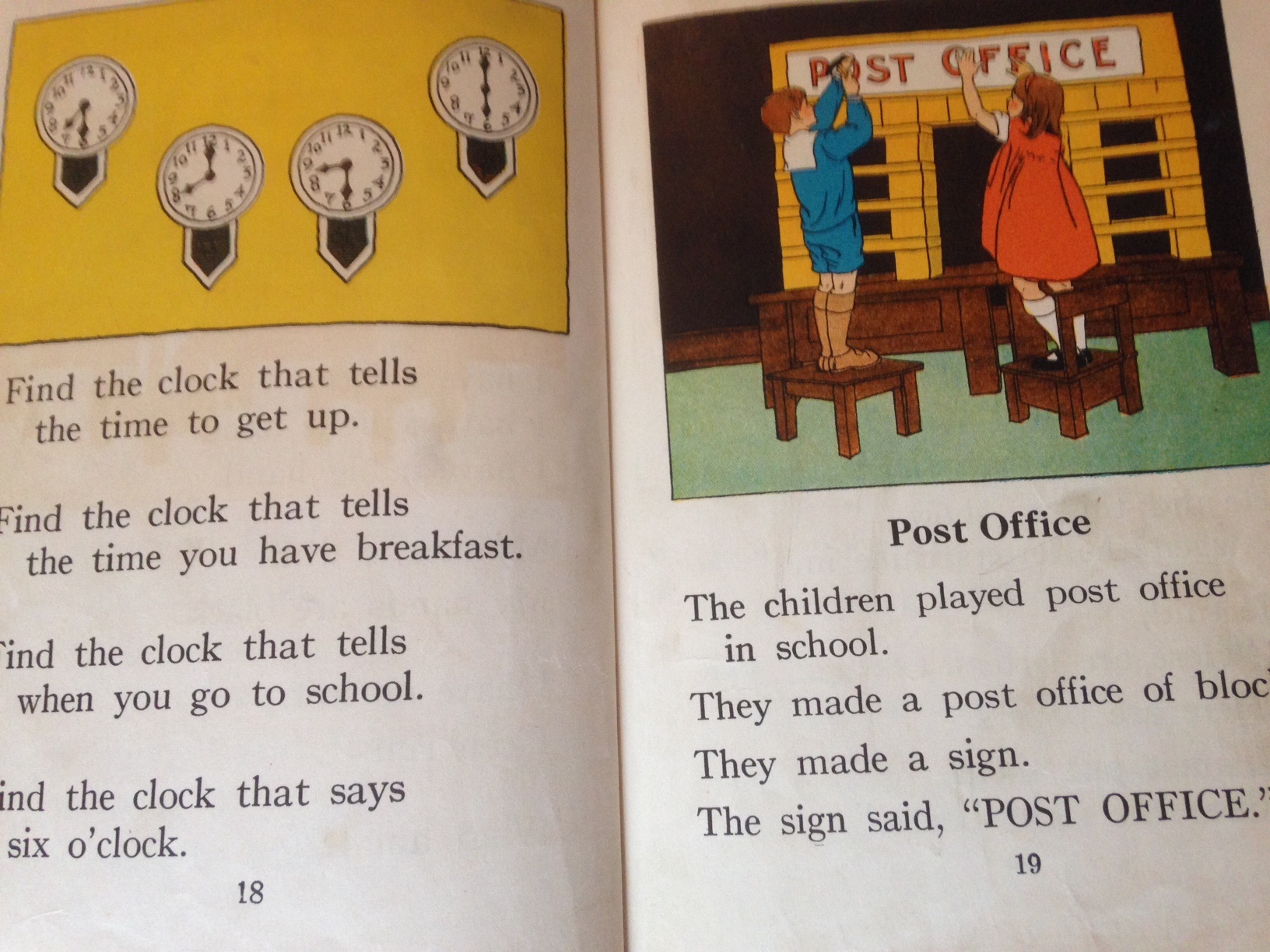
The book below, a reader, is certainly a keeper, recording media and methods that are becoming obsolete.

Pages from my text book
The Child-Story Reader, copyrights ranging from 1927-1936

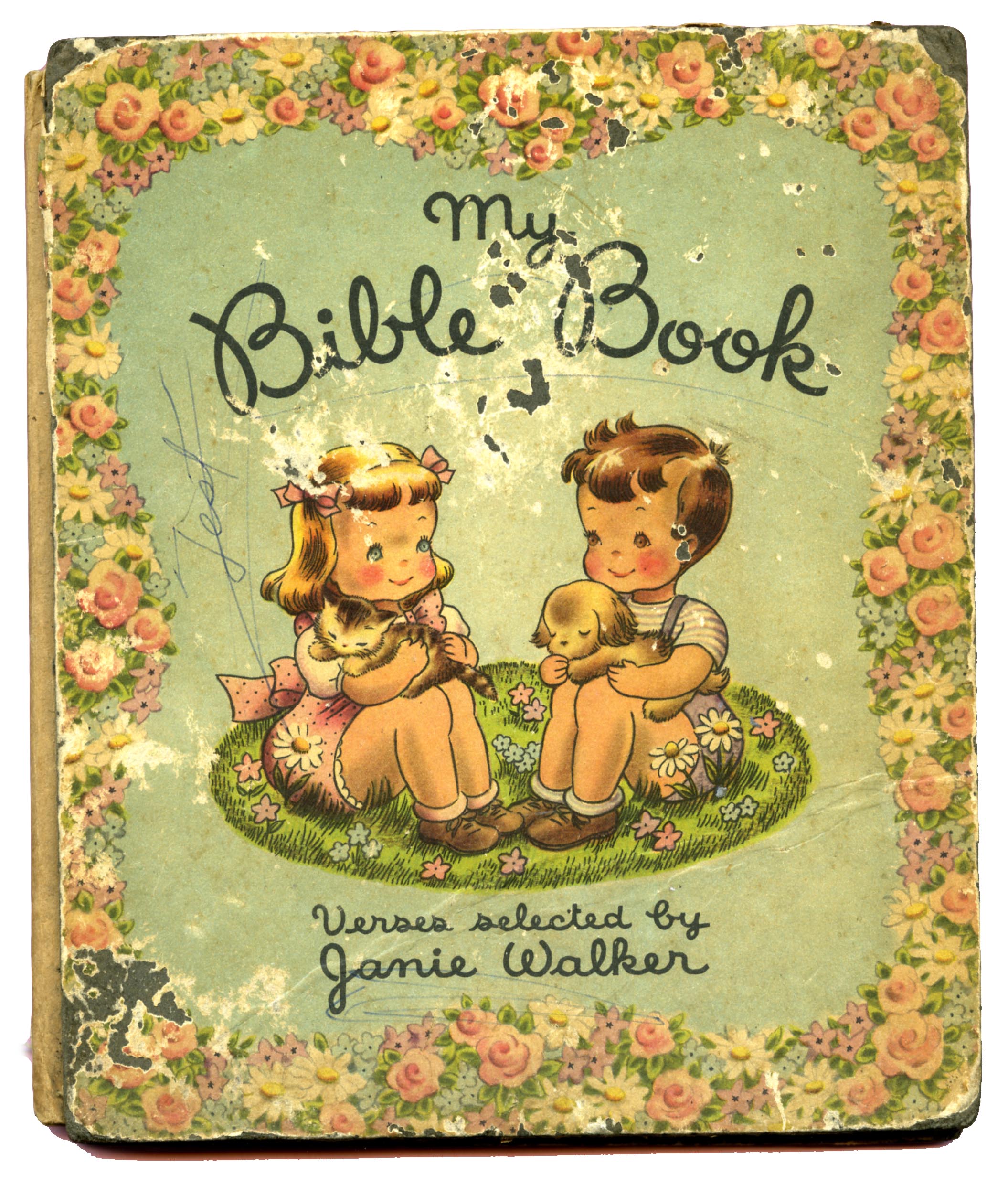
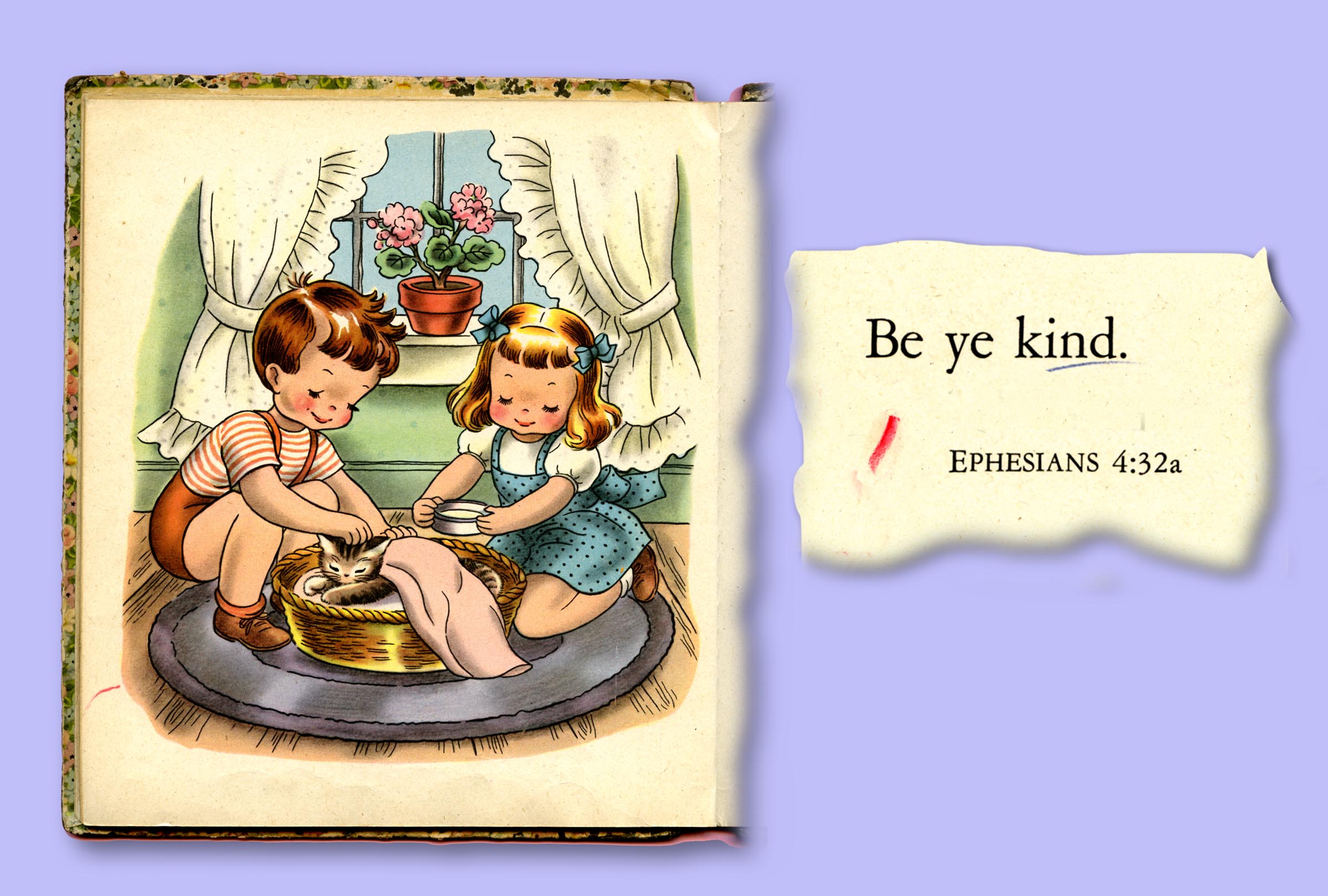
And one of my favorites is My Bible Book with verses selected by Janie Walker and pictures by Dean Bryant (Rand McNally and Company, 1946). These words and pictures have been imprinted on my childhood memory as I joined the red-haired boy and blonde-headed girl roaming around gardens and romping through meadows with their pets. It was a perfect world!

My Bible Book_front cover

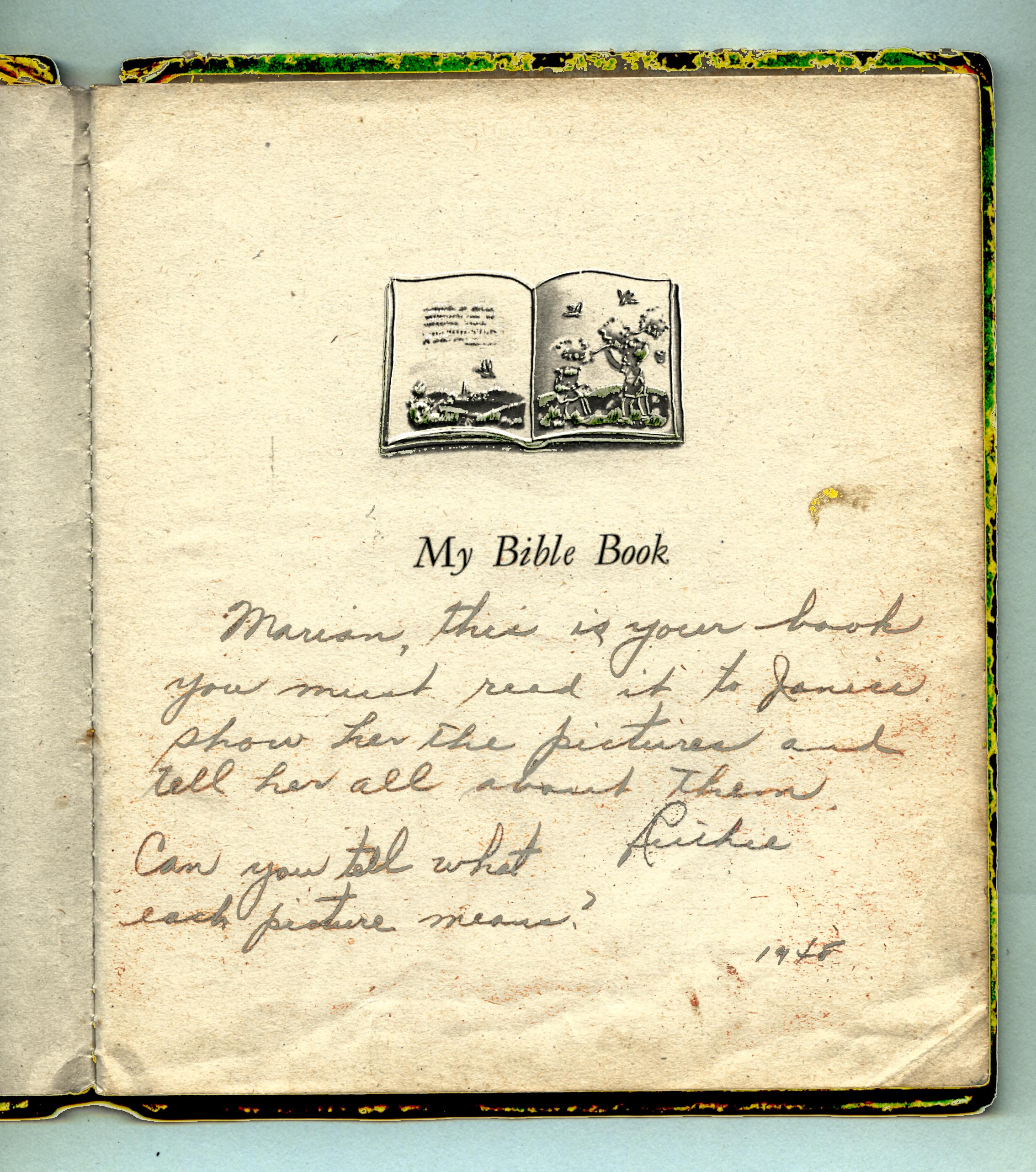
Aunt Ruthie gave me this book with penciled instructions to read it to my sister Janice, show her the pictures and tell her all about them.

My Bible Book_pre Title page w note_light text_7x8_300

 Ever the teacher, she closes with her sweet lead-in question: “Can you tell what each picture means?” This is probably a Christmas gift or birthday present given to me in 1948.

Puppy dogs, a frog, a snowman, a kite, some birds, squirrels, a herd of cows, and a even a special kitty cat amuse the children as the pages turn with words of wisdom all quoted from scripture.

My Bible Book_Be ye kind_p25-26_8x5_300

Do you have old books in your treasury of keepsakes? Some special utensils for cooking or serving passed down to you from a generation or two ago? We’re all ears!

Coming next: Button, Button, Who’s Got the Button?