My Year in a Convent

Nuns live in convents. At least that was true in America in the1960s. Strictly speaking I was not an actual nun, a Catholic sister with a habit like Karen Leahy, who left her convent at Mount Maria to pursue a literary life and experience more freedom. (My review of her book The Summer of Yes here.)

As a student at Eastern Mennonite College, where my un-cut hair was piled neatly under a prayer cap, serving the church was held in high esteem. In fact, the idea of service was drummed in to me as a teaching intern. And so, when the dean of education at the college suggested I apply to Lancaster Mennonite School for my first teaching job, I jumped at the chance. I could serve God and pursue a career I already knew I loved.

I didn’t wear a wimple, scapular, or tunic either. But, as a Mennonite girl in the 1960s, I did wear a prayer veiling and caped dress. My prayer veiling served to acknowledge my obedience to church rules while a cape over my bodice muffled whatever feminine contours I may have had then. Like Karen Leahy, known as Sister Marie Cordé, my clothing announced my separation from the world before I uttered a word. It also assumed a higher set of expectations from me.

Even before I joined the faculty at Lancaster Mennonite School, I wore a prayer veiling and a caped dress, but not all the time. Just for church. But now as Sister Longenecker, a teacher at LMS, plain clothing was de rigeur, not optional.

And I could do so with one of my EMC classmates, Verna Mohler. She and I had shared dorm space at EMC. Now we would transplant ourselves into a similar arrangement as beginning teachers at LMS.

Laurel Wreath yearbook, 1965

Verna and I were side by side and plain. She taught American Literature, and I English Literature along with Penmanship and Spelling.

Yes, side by side in the yearbook, The Laurel Wreath, whose table of contents featured 5 divisions: Faculty, Students, Organizations, Activities, and Worship. There was no orchestra or band – no football or basketball teams then either. Certainly no theatre.
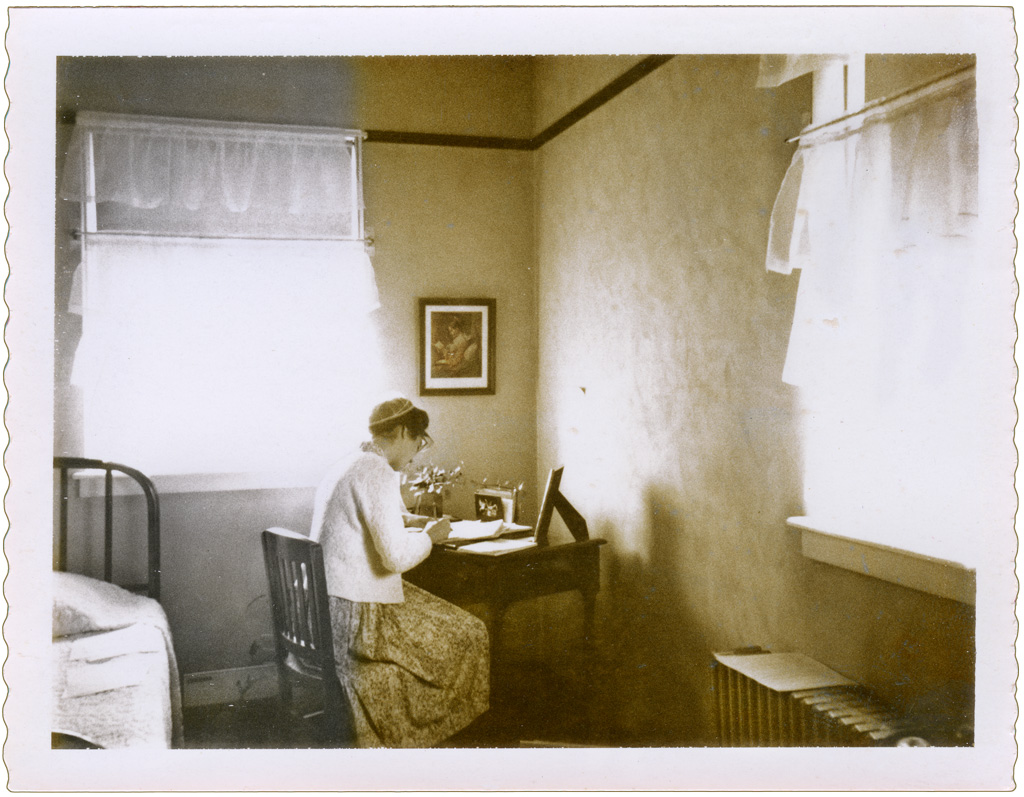
Filmy, white curtains filter pure, virginal light into this teacher's dorm room study
Filmy, white curtains filter pure, virginal light into this teacher’s dorm room study

During our first year of teaching we lived in adjoining rooms in the girls’ dormitory, an awkward situation because of the proximity of students. One evening before supper, I took off my cape and went to the dining hall with just a sweater over my dress. A perceptive student reported me to the Dean of Girls, who gently suggested I mend my ways and remain caped around students at all times.

Of course, our students were plain too . . .

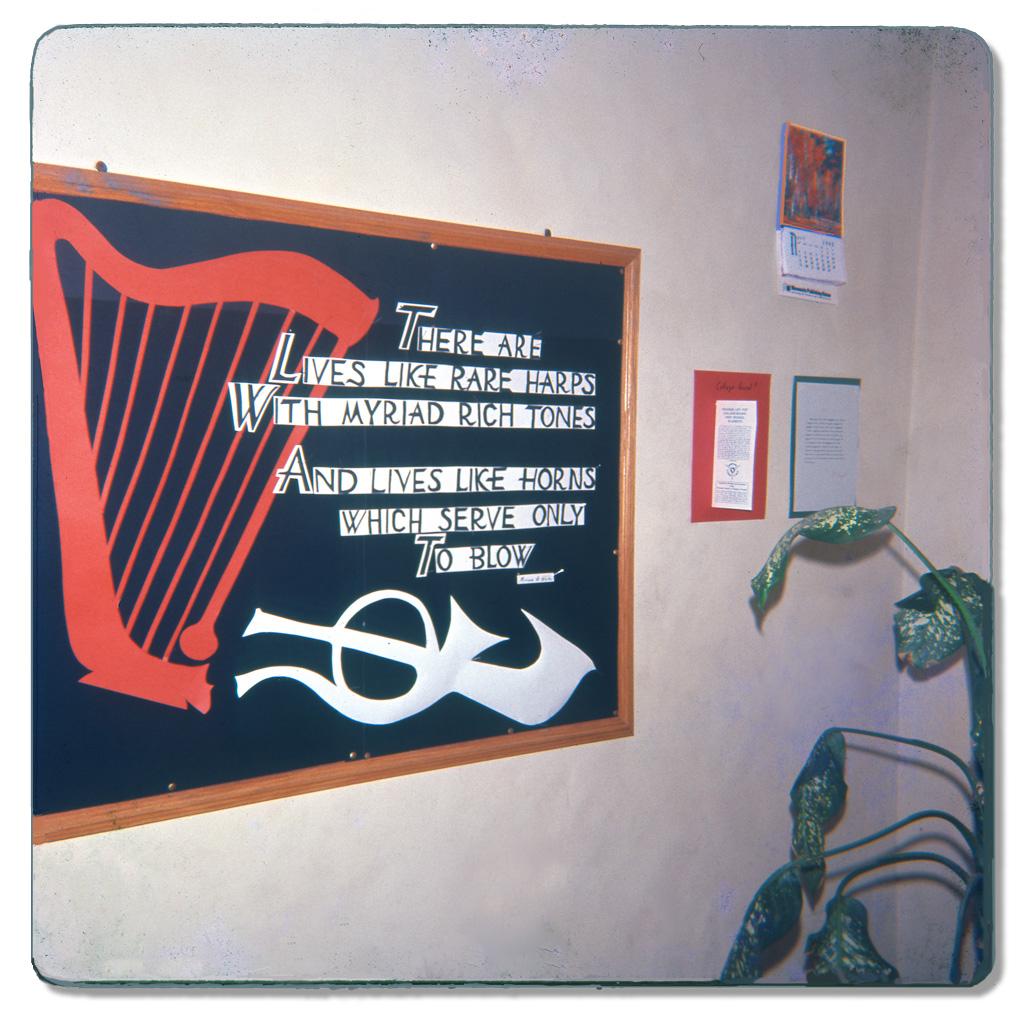
LMSclassStudentsBut my bulletin boards were fancy

Even then I liked quotations

The second year Verna and I moved out of the girls’ dormitory and lived on the edge of campus in a mobile home, which we shared with June Sauder, the Home Economics teacher.
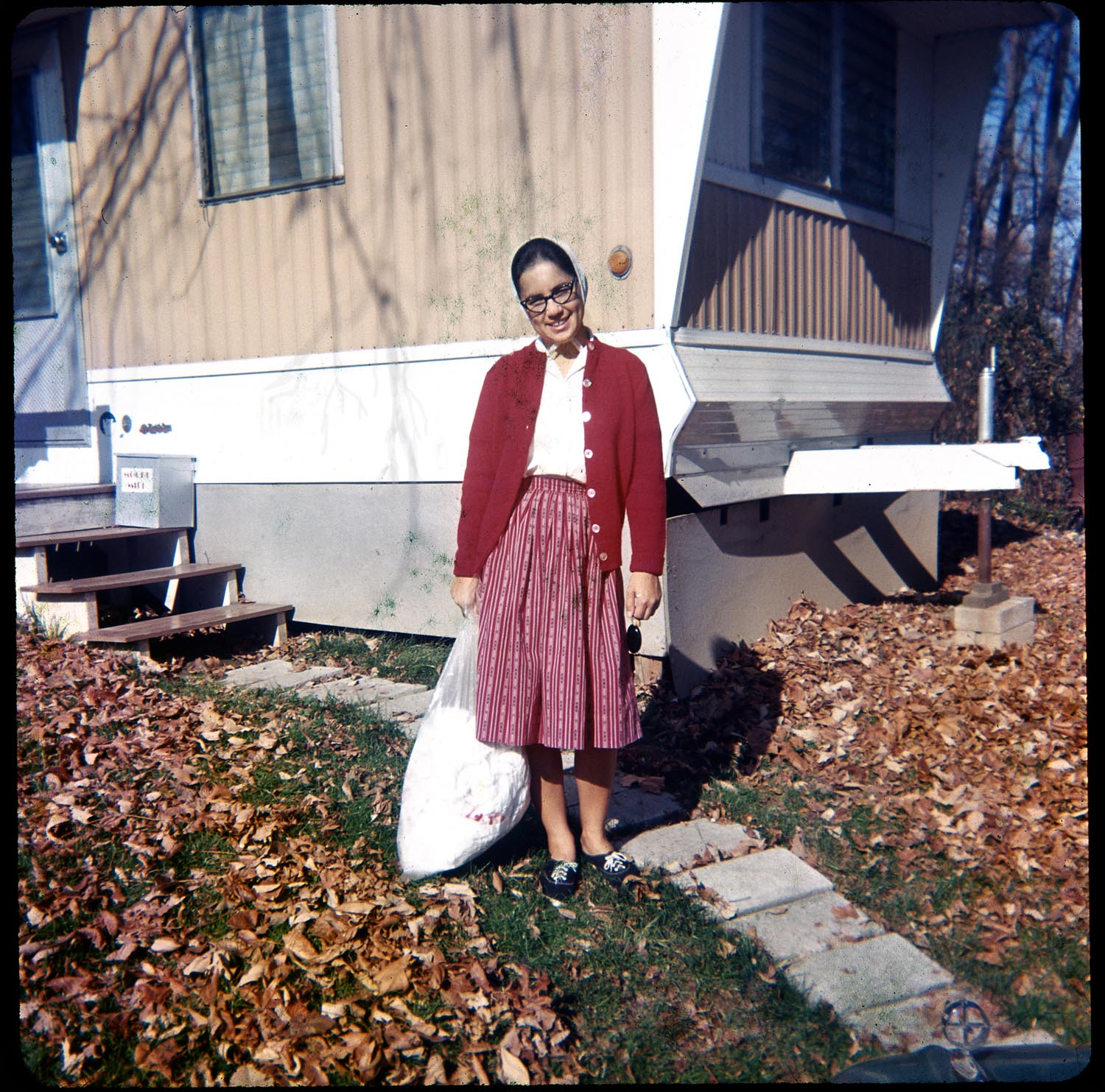
VernaTrailer

Our trailer was situated in a park-like setting on the other side of the Mill Stream, a bridge between us and campus buildings.
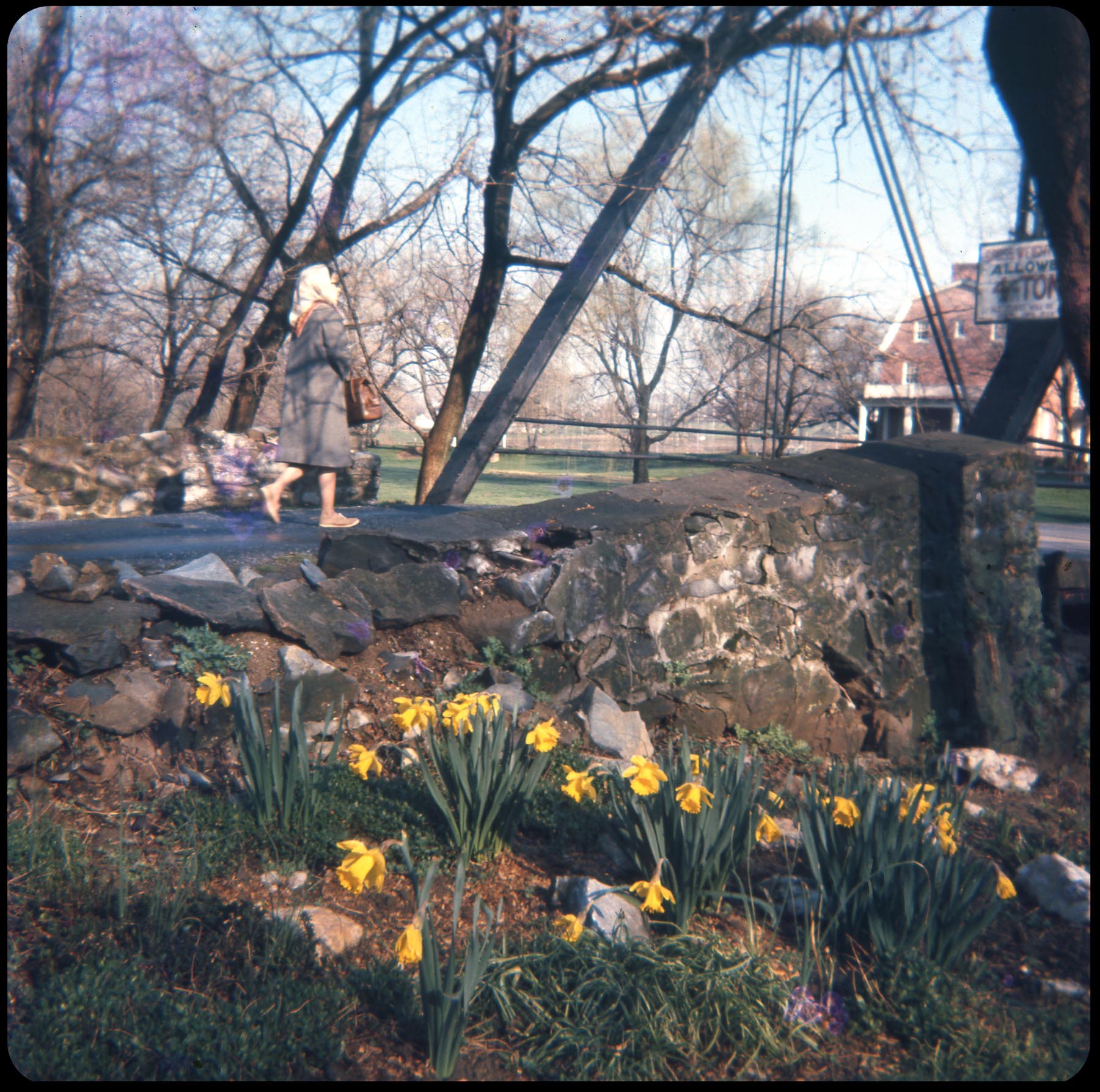
VernaDaffodilsHere again I flirted with danger. One of us rented a TV to see the shocking story of the Kennedy assassination unfold and subsequent funeral proceedings. A student noted the blue glow from our trailer window and reported us to the administration, an action for which we were reprimanded. However, words that we heard on the broadcasts became additions to our students’ vocabulary knowledge: cortege, caisson, requiem.

Sometimes after hours, we skipped wearing the prayer coverings, but always had our heads covered, even if it was with a filmy white bandanna.
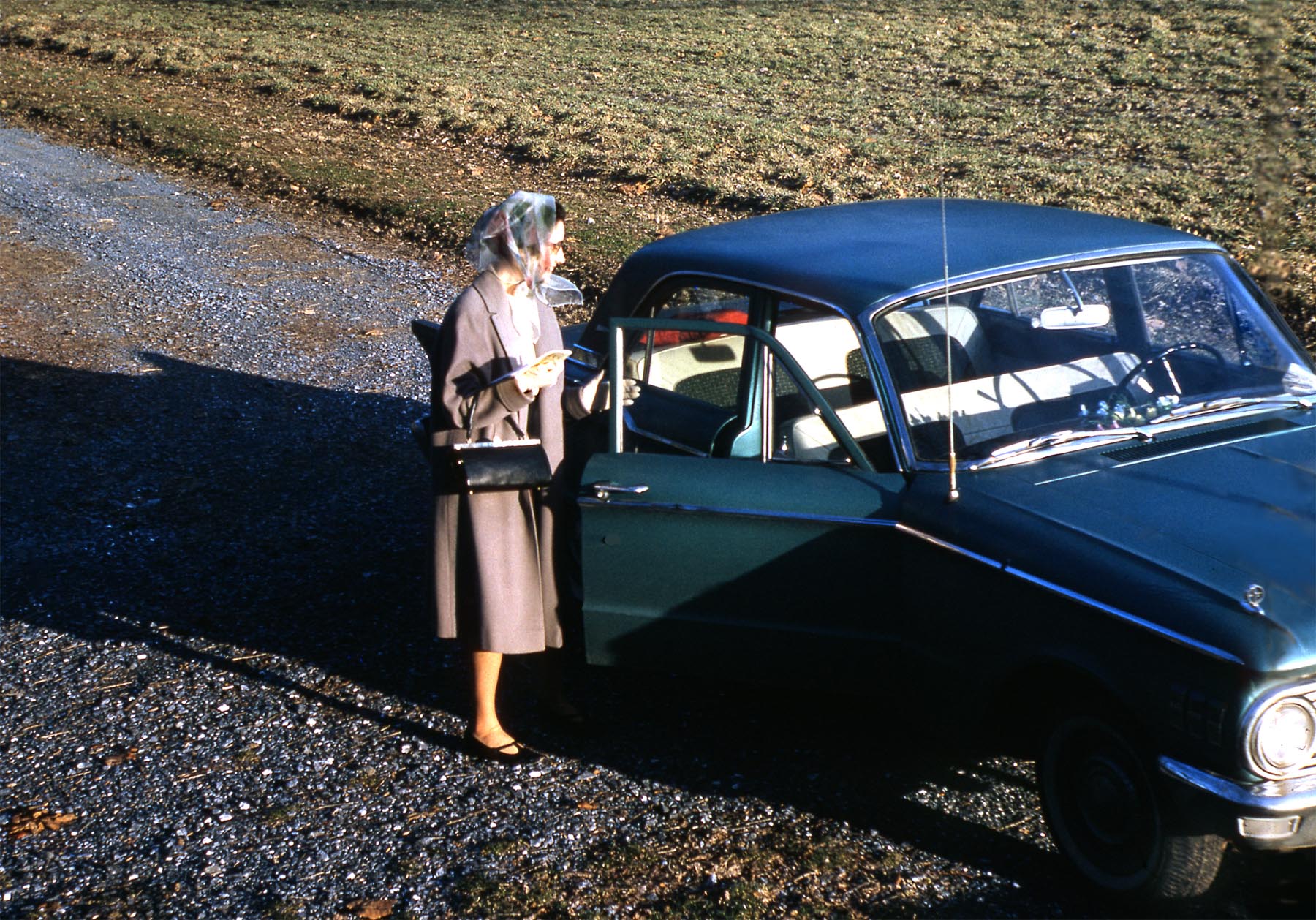
CometVernaMarian

Verna’s Comet became our get-away car when June, Verna and I drove into Lancaster city with serviceable black purses to admire fancy red ones in a shop window, our expressions hopeful.

Our coverings are smaller when we go shopping in Lancaster
We wore smaller coverings and no capes when we went shopping in Lancaster

The Lancaster Mennonite School publication, Bridges, to which I still subscribe, has changed dramatically since Verna’s and my short tenure there. Student rosters now include names like Rodriguez, Rosenfeld, and Fukuhara along with the typical Lancaster County Mennonite names Weaver, Harnish, and Nissley.

The LMS sports teams are going to the playoffs this year. Lancaster Mennonite and Lancaster Catholic are competing in an international ping-pong tournament. Most interesting of all, the name of Lancaster Mennonite High School appears on the Fulton Theatre marquee in downtown Lancaster displaying the 2015 Beth Bash Award for Excellence in the performance of Shakespeare’s The Tempest. Imagine!
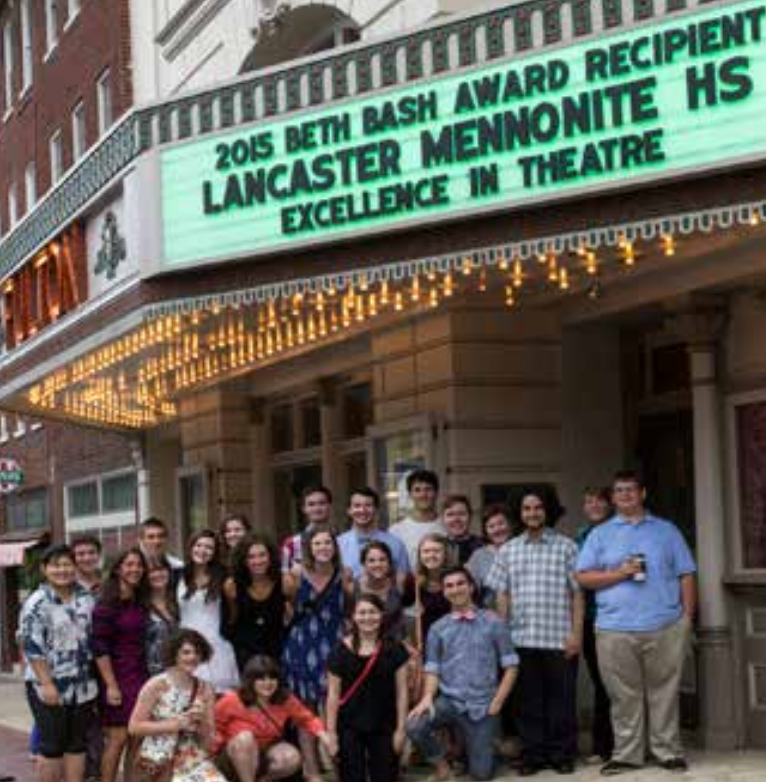
TheatreLMS

A statement from their current principal J. Richard Thomas reveals the continuing strong spiritual mission of LMS:

As a school, we are building stronger wings and growing deeper roots one student at a time. Here students encounter a risen Christ who calls them to transformation, empowering them to be world changers. Our Graduate Profile states that our graduates will “practice global awareness, cultural sensitivity and humility, respect, an anti-racist lifestyle and compassionate living.”

With stronger wings and deeper roots, the graduates of the class of 2015 were commissioned to walk humbly with Jesus . . . and, in doing so, partnering with God in building a kingdom where individuals “from every tribe, language, people and nation” are gathered together around the Lamb.           Revelation 5:9

Is your life, like mine, dramatically different now from your childhood experience? Share your story here.

Coming next: Peachey House, a Prequel
Finding Friends & Hatching Plans

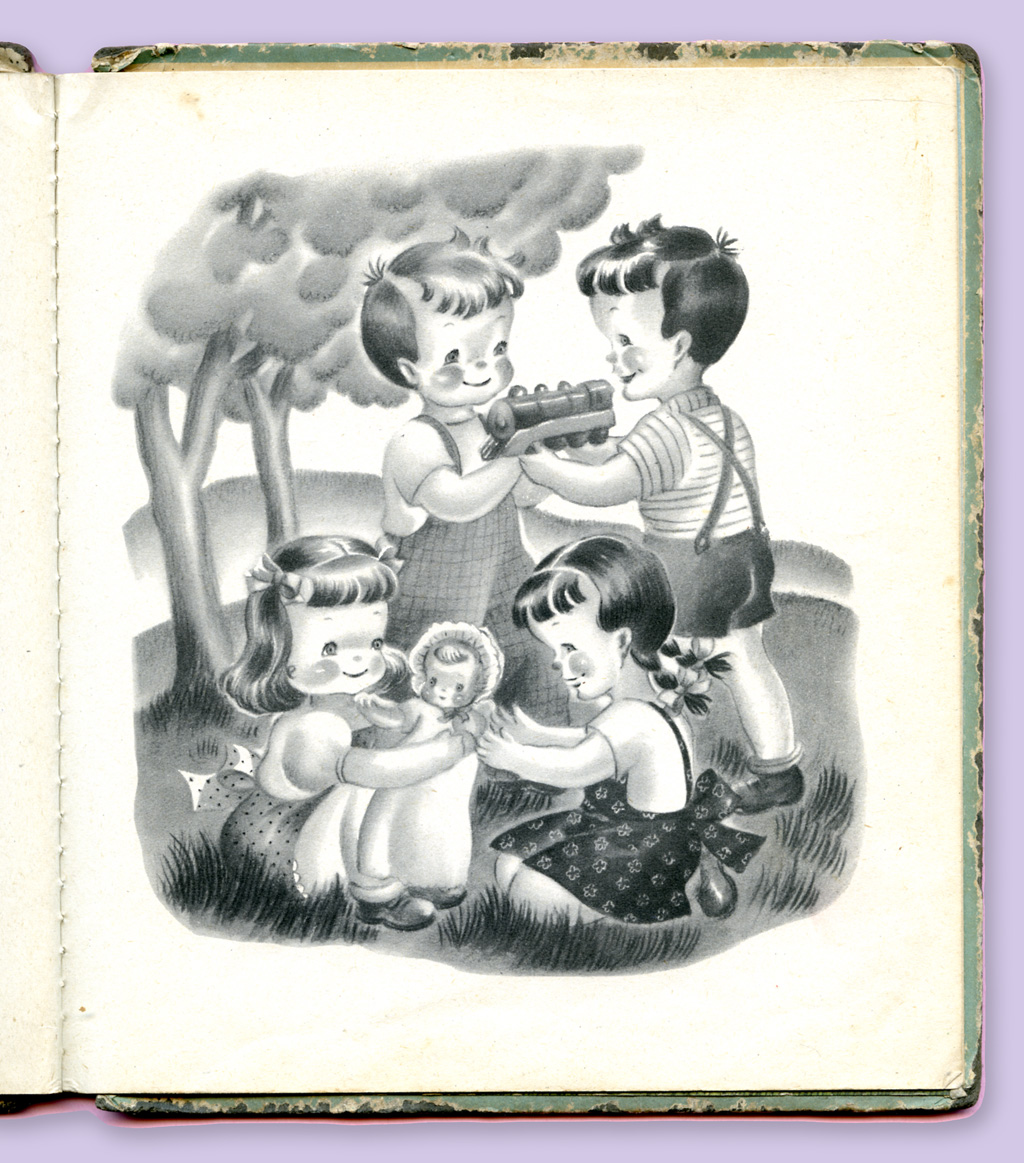
A toy train and a baby doll. That’s what these brother and sister pairs are exchanging with each other.

My Bible Book 1948, page 32
My Bible Book, 1948   ( 32)

Trading is fun among friends, no matter what their size. Big or little, old or young – most people like to exchange gifts, conversation, sometimes even big ideas.

It is a giant leap from tots trading toys to literary giants exchanging thoughts, but the principle is the same and so are the benefits.

C. S. Lewis and J. R. R. Tolkien, both scholars at Oxford University fired one another’s imaginations in a small group called The Inklings. Both yearned to write science fiction with faith and morality as a central theme. Legend has it that “they literally tossed a coin to decide who would write a book on space travel versus time travel.” Though their early attempts were not completely successful, C. S. Lewis went on to pen The Chronicles of Narnia, and J. R. R. Tolkien wrote the Lord of the Rings series. Generations since then have enjoyed the fantasy of Tolkien’s hobbits and elves of Middle-earth and Lewis’ charming children and Narnian nymphs.

TolkienLewisCover

Their haunt? Frequently The Rabbit Room, a snug space tucked away in the Eagle and Child pub, Oxford, where a roaring fire, animated conversation and pipe smoke fueled their imaginations. At least twice weekly these brilliant minds hatched plans for plots and both nurtured and challenged one another’s brain children.

The Eagle and Child - Tuesday morning meeting place of the Inklings including Lewis and Tolkien
The Eagle and Child – Tuesday morning meeting place of the Inklings with Lewis and Tolkien

* * *

Christiane Northrup, M. D. a frequent PBS-TV presenter, promotes friendship as one of the paths to glorious agelessness. A sub-topic on her website exhorts women of all ages to cultivate varied friendships that she dubs “tribes” of friends. Though I never thought of my friend groups as tribes, I do recognize various kinds of friends I’ve been privileged to know at various times and places in my life.
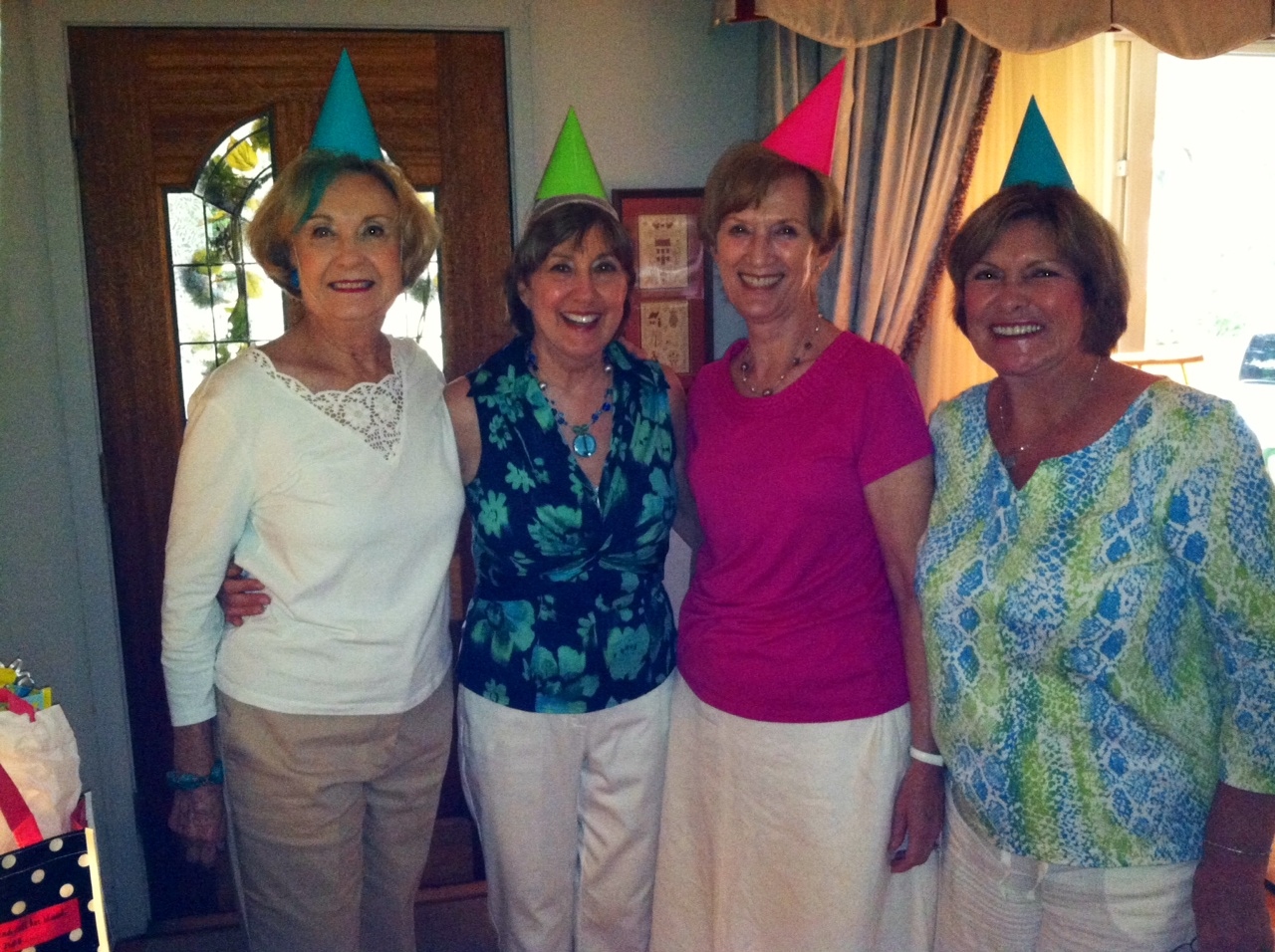
Church Friends

4 friends party hars

Writer Friends

Standing: Janet Givens, Kathy Pooler, Marian Beaman Seated: Shirley Showalter, Joan Rough
Standing: Writers Janet Givens, Kathy Pooler, Marian Beaman
Seated: Shirley Showalter, Joan Rough at Chincoteague Island, February 2015

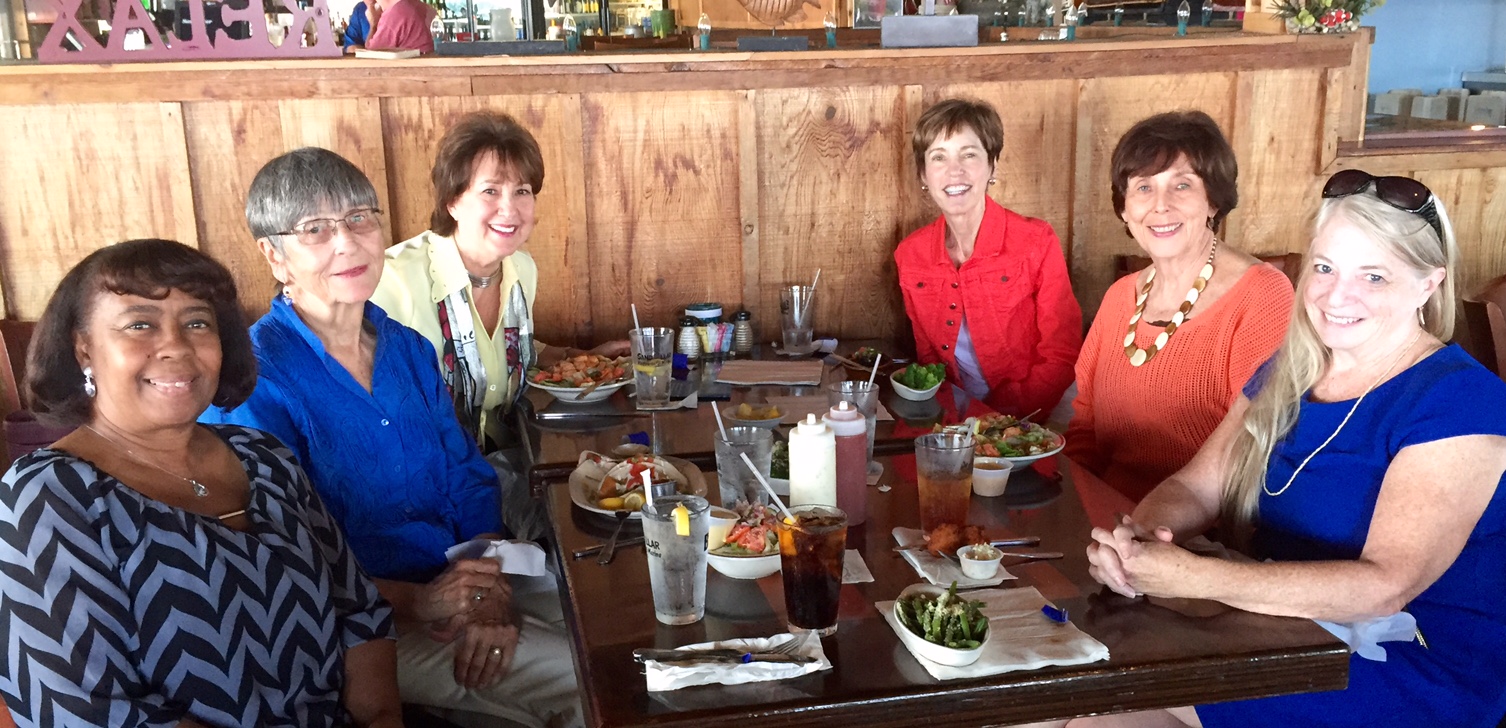
Colleagues at Florida State College in Jacksonville

FSCJ English faculty women, friends and former colleagues
Retired FSCJ English faculty women, friends who lunch

Friends at the Gym (They’re bashful!)

gymWeights

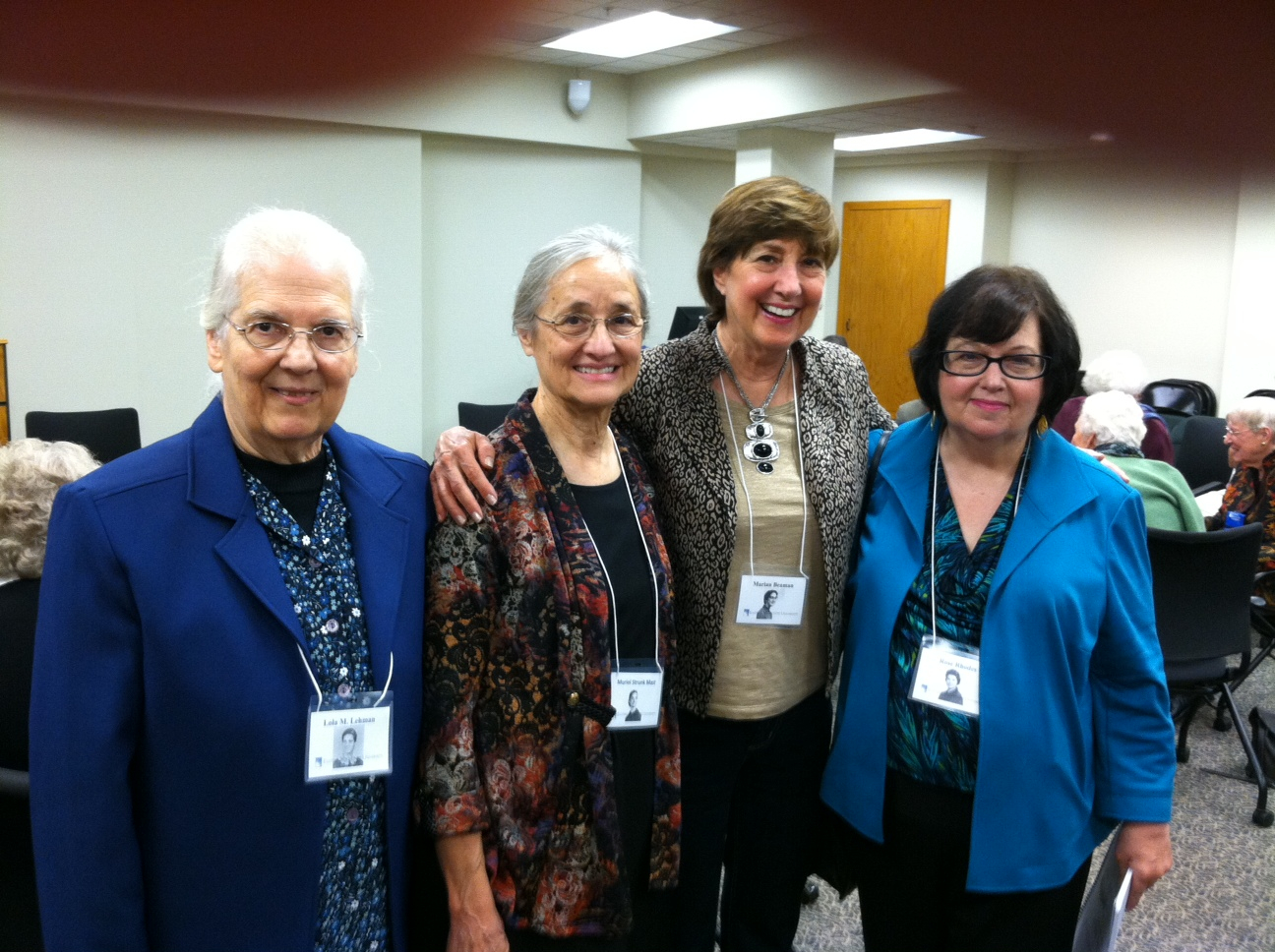
Friends from Eastern Mennonite College

Other room-mates and friends: Our name tags imprinted with college yearbook photos.

Even sisters can be friends!

Sisters2011


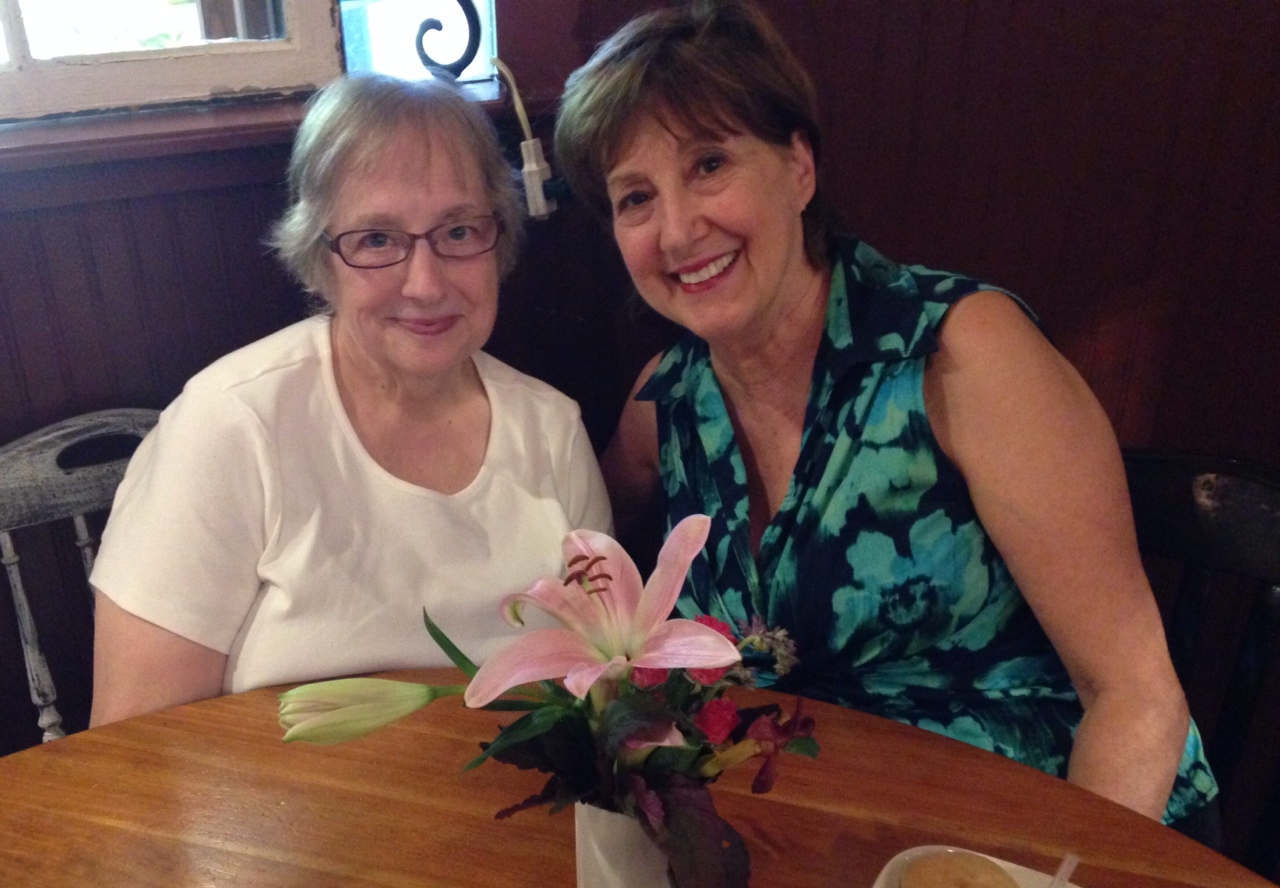
My friendship with Verna Mohler Colliver is one I’ve maintained since college days as room-mates at Eastern Mennonite College (now University). I caught up with Verna at our last college reunion.

My college room-mate Verna Mohler Colliver and me
My college room-mate Verna Mohler Colliver and me at EMU Homecoming, 2013


Since the reunion, Verna and I have exchanged photos and slides of ourselves as beginning teachers at Lancaster Mennonite School in the 1960s. Indeed, she helped me hatch a plan to reflect on those early years in our careers by providing some photo “fuel” for two upcoming blog posts. That’s what friends do. And I appreciate it too!

As iron sharpens iron, so a man sharpeneth the countenance of his friend.

Proverbs 27:17    King James Version


Do you have “tribes” of friends? Do you see them often? How do you keep your friendship(s) alive?


A Lunchables and An Invisible Thread

I bought this portable meal, a Lunchables, to give to a homeless person. So why is it still sitting in my refrigerator?

Lunchable

Last week I planned to give this lunch to the next person I saw holding a “Hungry & Homeless – Will you Help?” sign as I waited in my car for the traffic light to change on a busy boulevard in Jacksonville, Florida, a city that attracts the destitute for several reasons including its mild climate.

Sure enough, I was first in line at the red light leaving the grocery store, and I spotted a downtrodden young woman looked eager for my help. I popped the trunk and jumped out of the car, intending to offer her the lunch, but she declined, “No, ma’m. That won’t help at all. I need $ 99.00 to blah – blah – blah.” No, I didn’t give her $ 99.00 because I never give cash to the homeless. Instead, I give to the needy through our church or through homeless shelters in town.

Yet, this brief encounter left me conflicted, with two opposing strong sentiments: a Yes and a No

Yes, I did feel cynical as the light turned green, knowing the woman was probably scamming people. No, I will never stop feeling sorry for the “homeless” regardless of their intentions whether it’s a real physical need to survive, untreated mental illness or something else.

Giving money to the homeless is an economic crisis of the heart, a tug-of-war between the instinct to alleviate suffering and the knowledge that a donation might encourage, rather than relieve, the anguish of the poor.        The Atlantic

On my nightstand sat a copy of The Invisible Thread: The true story of an 11-year-old panhandler, a busy sales executive, and an unlikely meeting with destiny. It was time to read it!

AnInvisibleTHreadCover

An Invisible Thread, a Review

“Excuse me, lady, do you have any spare change? I’m hungry.” Those were the first words out of the mouth of Maurice, as Laura Schroff, a publishing executive at Time Inc, rounded the corner from Broadway to 45th Street in New York City. She passed him by, but something special in his eyes halted her and she turned on her heel and, nearly killing herself in traffic, went back. Thus their paths converged and the story of a thirty-year relationship began.

No, Miss Laura did not give Maurice spare change but on the spot she took him to McDonald’s for a Big Mac, large fries, and milkshake. Then over the years they met every Monday night often at her luxury apartment where Maurice learned about ritual and rules for living: sitting down to eat a meal, showing up on time for school. Laura’s cozy nest provided a safe haven, an escape from his one-room hotel room, a den of violence where 10-12 assorted needy “friends” and family flopped to sleep off a drug binge or cook crack to deal on the streets.

Not until Chapter 8 does the reader learn about the tug on the other end of the invisible thread – the unspeakable violence in Laura’s middle-class childhood home where a father in drunken rages would fling full liquor bottles against the wall and destroy his son’s sports trophies.

She admits, “I couldn’t help but think that the terror and uncertainty we faced as children because of my father was similar to the chaos that Maurice now had to endure.” (107)

Laura’s memoir, reminiscent of The Blind Side, interweaves three dynamic narratives: The first, the story of Laura and Maurice’s growing relationship. Secondly, Laura’s back story as both victim and then survivor of her dysfunctional home. And finally, Maurice’s maturation into an adult with a family of his own, reflecting what Joseph Campbell calls “the hero’s journey” often fraught with obstacles and setbacks.

Maurice & Laura, Google Image

I began reading the book because I was intrigued by the disparity between an accomplished woman in Manhattan and a needy young boy from Brooklyn. I was compelled to read on because I wanted answers: Why would a young woman who helped make USA Today and InStyle successful publications risk all to build trust with a young man who had nothing to offer in return? How did an ill-kempt beggar boy, who has since developed a career in construction and is raising his own family, enrich that woman’s own life?

In the end, Author Schroff realizes that both she and Maurice had traveled together on a voyage of self-discovery. Her message: “This is a book about how, if we learn to let go of fears and burdens and expectations, we can find ourselves plunged into the sweet, unplanned blessings of life” (book blurb).

After thoughts

Should you give money to homeless people? According to the article in The Atlantic: “The short answer is no. The long answer is yes, but only if [you do it through] an organization that can ensure the money is spent wisely.”

But maybe . . . if you are someone with the incredible courage of Laura Schroff, there is still another answer.

Click here for a short video, a Lunch Date with Destiny

Your thoughts, always welcome!

Do You Like to Color?

Have you heard? Coloring books for adults are all the rage right now.

According to Parade magazine (July 12, 2015), apparently hundreds of coloring books are available now to help you “cheer up, chill out, and get your creative juices flowing.”

50 Shades of Happy: The New Joy of Coloring is the catchy title of one of the books in the coloring book gallery.

Recently, I’ve spotted this trend in some posts on Facebook. And then last week my good writer friend and blog buddy Marylin Warner devoted a whole piece to the enchantment of coloring pages for adults, citing the magazine above. Because she included some links to free downloadable pages, I decided to take the challenge and print a page. After all, who doesn’t want to

  • Be in the moment
  • Engage both sides of the brain, the creative and tactile
  • Go back and enjoy a simpler time

Here’s how I played with color:

coloringPagePosh

Technically, it’s unfinished, but that was not really the point. Choosing the colors and applying them to paper put me in a different world. As I filled in the curly spaces, I felt both relaxed and focused. It put in touch with the girl and the box of 48 pointy Crayolas.

* * *

In June I met a new friend, Julie Sisco, who introduced me to Praying in Color, another way for both youth and adults to use color creatively. And, yes, the author, Sybil MacBeth, suggested using supplies you may already have at home: colored pens, pencils, markers, even crayons.

Sybil MacBeth has created an active, visual, and meditative way to pray: Active because you draw your prayers, visual because you see your prayers, and meditative because you revisit your prayers throughout the day.

Author Sybil MacBeth is a dancer, a doodler, and a former community college mathematics professor. As the author of Praying in Color: Drawing a New Path to God (2007), she combines her experience in the mathematics classroom with her lifelong love of prayer to offer workshops and retreats that engage differing learning styles. Praying in Color has been translated into Korean, Spanish, and Italian. (blurb from back cover)

PrayColorCover

She invites a variety of personality types to think of prayer in a new way:

  • Visual or kinesthetic learner
  • Distractible or impatient soul
  • Word-weary pray-er
  • Short-attention span
  • Restless body type
  • Tendency to live in one’s head

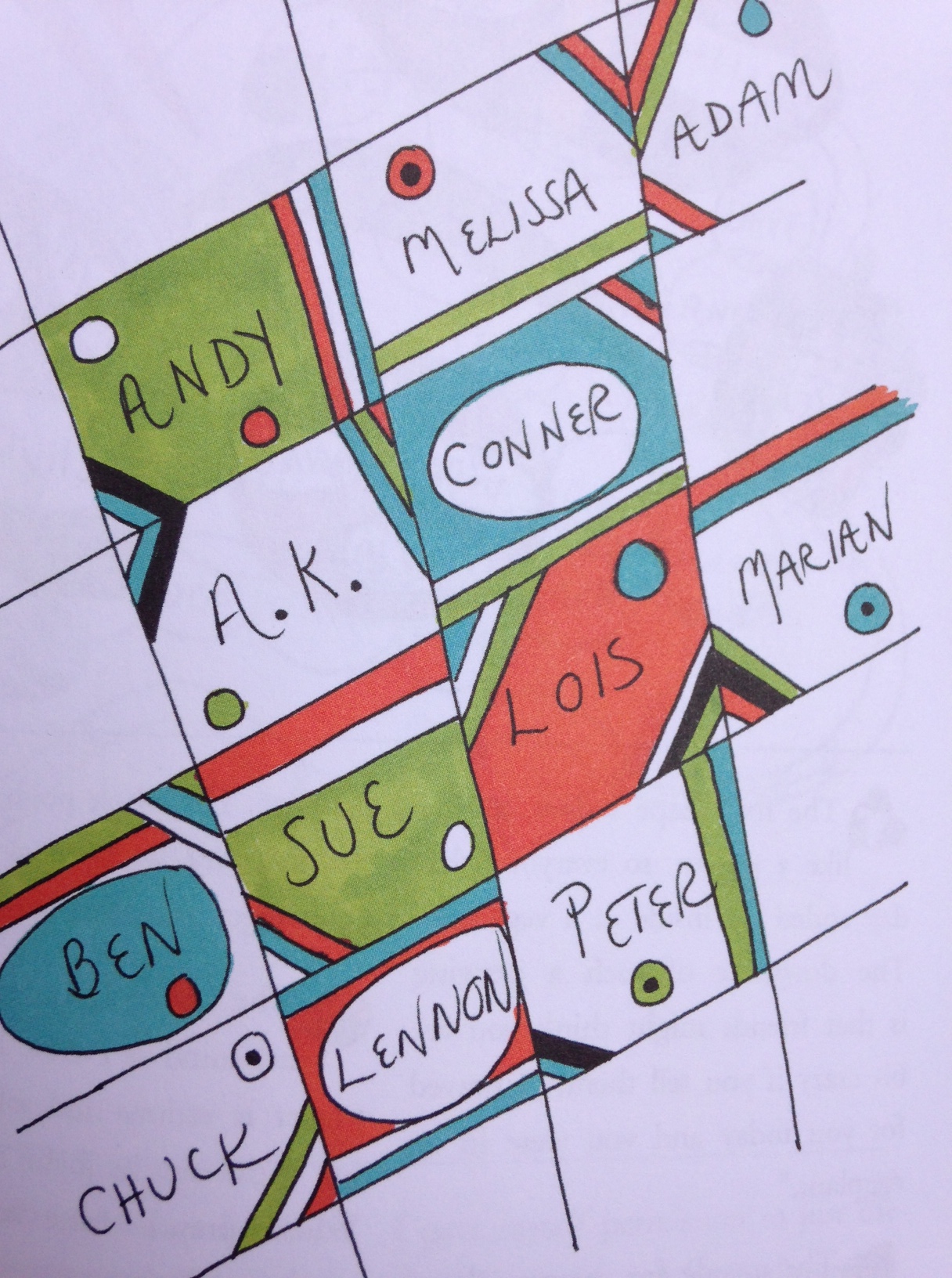
MacBeth includes some examples of what a prayer map may look like and the instructions are simple.

Write the name of someone you want to encircle in love and concern. In a curvilinear model, draw colored designs around the name. Add more names and loops easily as you go along.

3-NamePict

Or use a square style and a different color palette

squareTemplate

Your sketches could also be adapted to illustrate verses of scripture

PrayingScriptures

(All examples from Sybil’s book.)

Author MacBeth is quick to mention that “Praying in color does not presume a particular religious belief” though she is a Christian.

“It is a way of preparing the soil of my heart for possibly receiving the touch of a power greater than myself.” (87)

What do you think of adult coloring books? The idea of praying in color?

How do you use color creatively? Join the discussion here.

joyColorCover

Up next: Moments of Extreme Emotion – A Lunatic in London

A Plate, a Parade, and a Song

First of all, there was no parade and no song.

But there was a plate. A plate of cupcakes. I can show you the plate, but the cupcakes are missing. Why? Because our grandchildren ate them all up. In fact the two older boys ate theirs up seconds after they landed on the plate. I missed the photo op completely.

PlateRemembrance

Last weekend the family gathered to celebrate the Fourth of July. Some months ago, I had read Laura Brennan’s suggestion about celebrating success of family members with a plate of accomplishment. I caught her enthusiasm and thought “What a great idea!” All four grand-kids had received recognition at school this past year, so it seemed sensible to combine a national holiday with a family celebration.

Laura says,

We have a fun and easy way to celebrate in our house: it’s called The Plate of Accomplishment. In going through my mom’s stuff, I found one lone, gorgeous dinner plate – shimmery,  just lovely. So when one of us has an accomplishment to celebrate, they get to eat dinner on that plate. It comes out with much fanfare (a mini-parade, actually) and a song: “It is the Plate of Accomplishment, it is the Great Great Plate of Accomplishment …

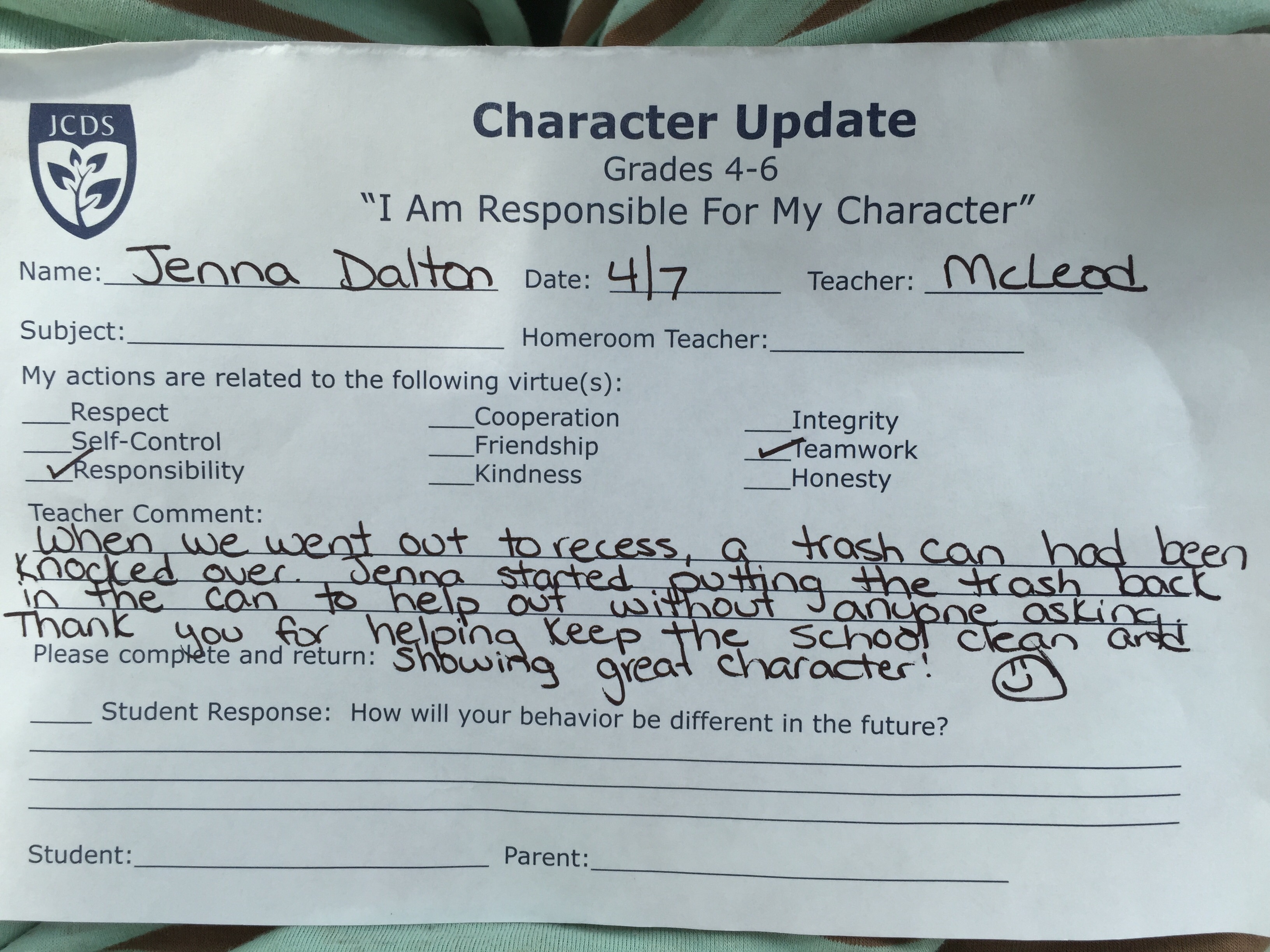
Our grand-kids’ accomplishments were not measured by degrees as adults might do. There was as much hoopla about a memo from a teacher dashed off in minutes as for a bound book in a school library.

And so it went in birth order. . .

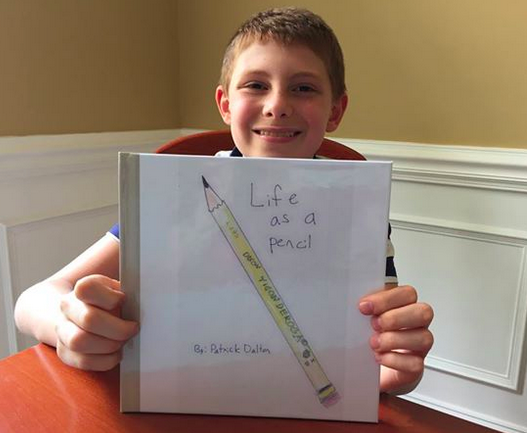
We celebrated Patrick’s printed book “My Life as a Pencil”

PatrickBookContestHome

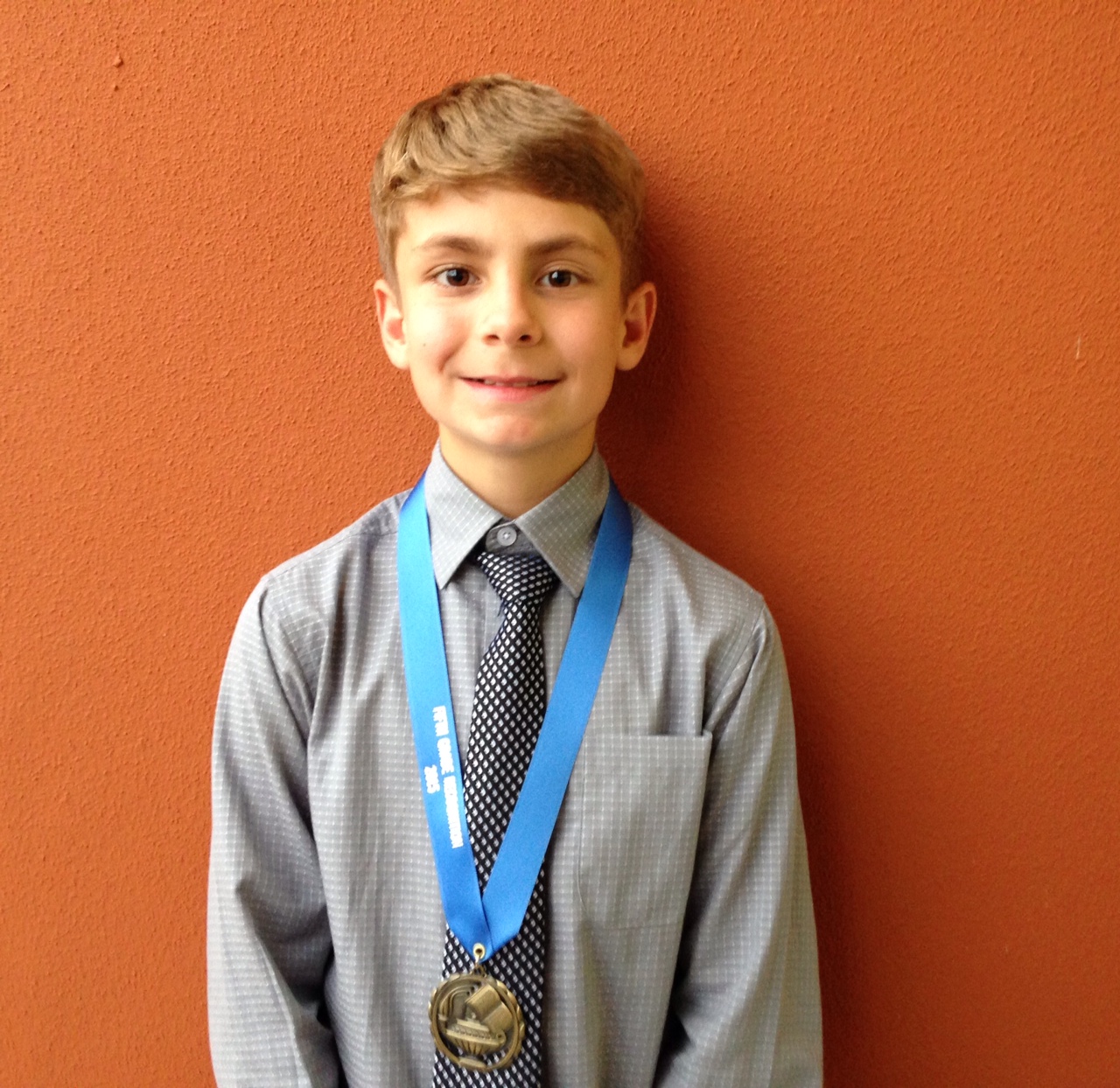
And Curtis’ recognition for academic achievement among 5th graders in the District

CuritisMedallion

Jenna’s gift for noticing trash on the playground and stopping to pick it up at recess

JennaGrade4JCD

JennaCharReportAnd Ian’s quality of charity and compassion

IanPhotoJuly15

Ian: Character trait of Charity & Compassion
Ian: Character trait of Charity & Compassion. He also received a senior yellow belt,  Tae Kwon Do

As long as the pixels and electrons hold together on this website, today’s post will be a family record for the Daltons and the Beamans for years to come. Just as importantly, I pass this celebration along as a template to commemorate all sorts of happy occasions among your own friends and family members, including nieces and nephews.

Back to the celebration: I don’t really think my grand-kids paid much attention when I read them the inscription on the back of the plate. They knew cupcakes were coming! Yet the Old Testament writer Zephaniah prophesied the power of praise . . .

Plate ReverseZechIn my Mennonite upbringing in the 1950s and 60s, honor given to a family member would probably be shyly appreciated but not expressed openly. Why? Because recognition of this sort smacked of pride, the worst sin of all. After my high school graduation with honors, my parents barely acknowledged all the recognition I received. During my Eastern Mennonite College graduation ceremony, not a word was spoken about my ranking in the class. Such practices were soon to change though. I was near the end of the Old Guard.

It is definitely not psychologically sound to overlook the accomplishments of the deserving and according to Zephaniah, it is certainly not biblical either.

*  *  *

As you read this post, did a name or two pop into mind, someone deserving of a plate of accomplishment?  It’s your turn to tell!

Coming next: Oh, Beautiful – Amber Grain & Grainy Amber

2 Tales from Roxann and Cheeno, Our Fresh Air Children

His yellow tag says: Cheeno Duncan –  Host Family: Ray & Ruth Longenecker

How would you feel if you were an 8 or 10-year-old from New York City and after a 3-hour train ride landed you in the farm pastures of Lancaster County, Pennsylvania, lush but unfamiliar? Cheeno and Roxanne Duncan were part of the Fresh Air program designed to give urban children summer vacations away from their hot tenement building apartments.

My parents, always alert for ways to serve God through their church, Bossler Mennonite, offered a home to two of these children in 2-3 consecutive years in the early 1960s. A side benefit would be playmates for my 10-year-old brother Mark, who was 7 years younger than his closest sibling, my sister Jean. And for the first time, the whole family would be brought in close contact with children of a skin color and culture different from our own.

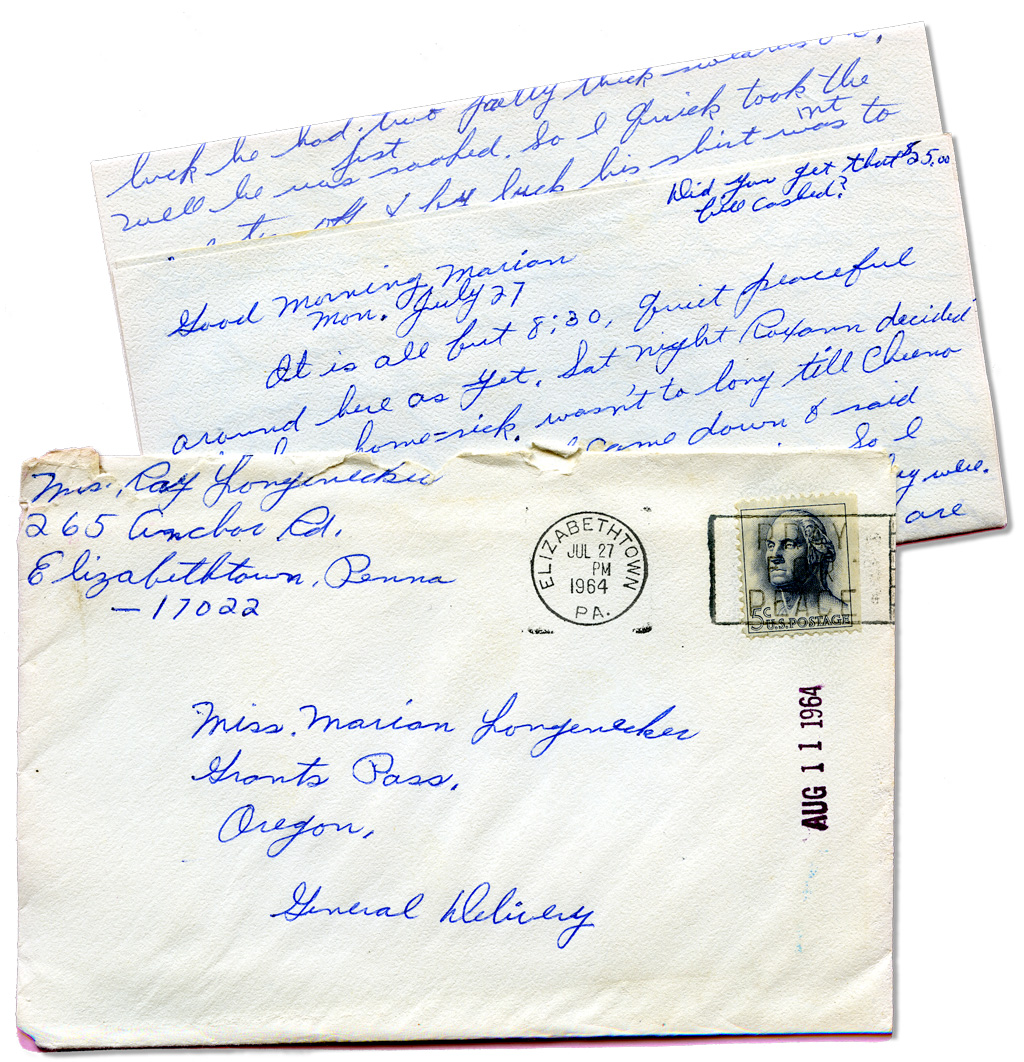
These two tales about Roxann and Cheeno come verbatim from letters my mother sent to me while I was enjoying a 5-week cross country road trip. One was addressed to Grants Pass, Oregon, delivered, and another addressed simply to Los Angeles, California, no street address, from where it was “returned to sender, unclaimed.”

LetterMomToMarianOR

TALE # 1   Crying

July 27, 1964   Written in my mother’s handwriting, unedited:

Good morning Marian   It is all but 8:30, quiet peaceful around here as yet. Sat. night Roxann decided she has homesick. Wasn’t to long till Cheeno saw her crying. Mark came down and said Mommie now they are both crying. So I went up into the bed room. There they were, two sets of tears. I asked Cheeno why are you crying. He said because she is crying. Then I said well now I will cry because you are crying. So I tried to start pretending [to cry]. Roxann had to laugh. It didn’t last to long. But they decided they would feel better if they slept in one bed. So I left them.


TALE # 2   Leaving

August 4, 1964

Dear Miss. Marian   Well we took the Duncans to the train station today. We were about 2 blocks away from the station Roxann said we don’t have our yellow tags on. I rushed in quickly and explained the situation. He said they must have tags on. But we can make some others. Well that was finally straightened out.

But oh horrors what could be next. Cheeno picks up his lunch bags and lets it fall to hard on the cement. There goes a broken jar with root beer all over the bag and the floor. I quickly got some Kleenex but not quiet enough. Ruthie [my Aunt] goes to the car and comes back with an old pair of her silk “panties” Oh she said we don’t even have paper to put them in. she had taken the broken jar and paper bag to the car already. There we were left holding some-thing we didn’t care to be seen with. Luckly we did see a trash can. Ruthie laughed and said if any body finds or see’s this they will think she just took off her ____??____

 * * *

The program, originating in 1877, is flourishing to this day. See more about the Fresh Air Fund here.

FreshAir Kids

There are many ways to experience independence and freedom. Here’s one example. You can think of some others as you reflect on this past holiday weekend. Hope you had a Happy Fourth!

Coming next: A Plate, a Parade, and a Song

I Spy an Elk!

Gladys asks me, “Would you like to drive up to Cataloochee National Park to see the elk sometime this week? We have to go at dusk because that’s when they come out to feed.”

I’m quick to respond: “Sounds good to me.” I’ve never seen elk up close. Besides I thought they lived in Colorado or Wyoming. “I’m game!”

After many decades, I have reconnected in North Carolina with Gladys Graybill Schofield, whom I have known in Lancaster County, Pennsylvania since our early teens. Gladys lives in the Smoky Mountains and has agreed to be our personal guide for the evening. Who can resist!

Gladys and Marian having early supper at Blue Rooster in Waynesville, NC before elk-spotting

She and I have gone to Laurelville Mennonite Camp together during Girls’ Week. We were even baptized together at Bossler Mennonite Church. She still has that sweet smile I remember. This will be another adventure together over dozens of switch-backs and rough terrain to see the elk.

The peaceful Cataloochee Valley, surrounded by 6000-foot peaks, has preserved historic homes, barns, and churches. We were surprised to find much more than elk here in this Park.

CaldwellPlaceWarningCaldwellHouse1903

Built in 1903, the Caldwell house has no front door, grainy hardwood floors, and several hearths for an earlier family to heat the bedrooms and cook in the kitchen. It seems haunted, like an artifact in a museum – no sign of life within. We don’t linger.

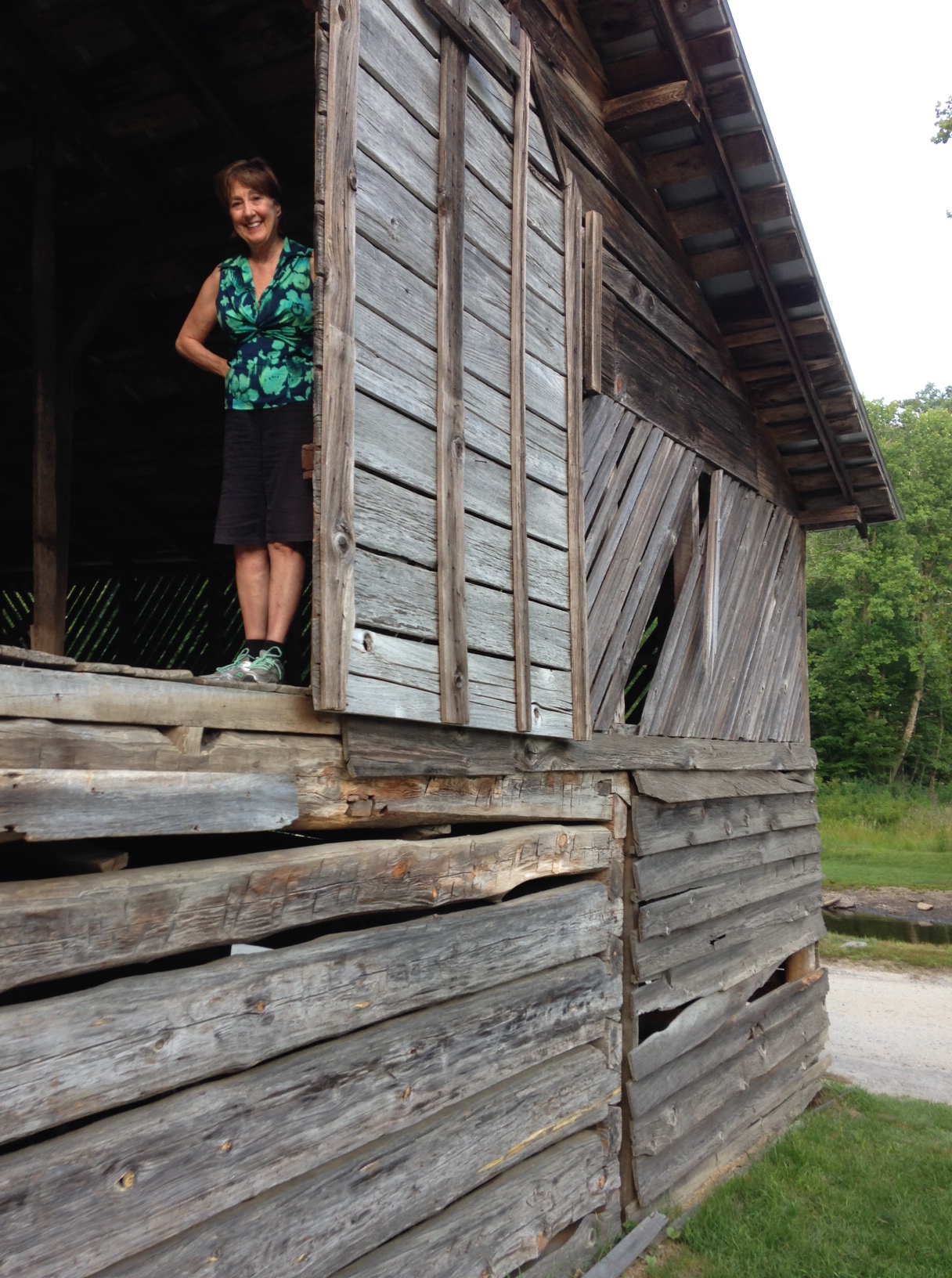
Close by, I snoop around what appears to be a two-story tobacco barn:

MarianBarn

No elk close-up yet, so the forest ranger gives us a tutorial illustrated with authentic stage props displayed here by an old buck.

AntlersCliff

Antlers fall off male elk in March and regenerate before winter.

Because of over-hunting and loss of habitat, elk disappeared from the southern Appalachians in the 1700s. Our national park service chose to re-introduce elk in 2001 by importing 25 elk from the Kentucky-Tennessee border and 27 more from Alberta, Canada.The park currently preserves 52 elk. One might call it “the return of the native.”

Ah, we see elk in the distance . . .

ElkDistanceBetter

And then we spot a female grazing along a bubbling stream . . .

Before we leave at dusk, a male with velvety antlers grazes along the roadside. Elk at 500-700 pounds are formidable creatures if they feel threatened, so we keep our distance.

This buck elk will grow a new set of antlers every year This one is in the velvety stage and will be fully
This bull elk will grow a new set of antlers every year. His rack is in the velvety stage in June and will be fully “mature” by the fall, attracting females in the herd.

We gape, and click our iPhones. Quick!

Leaving the park at twilight, Gladys and I see up in front of her vehicle a black wooly creature bounding across the gravel road and up a ravine.

It’s a BEAR!

Marian, Janice, and Jean Go to Laurelville

  • Lacing a belt of green and yellow gimp in crafts class
  • Trips to the snack shop for an orange Nehi
  • Bible study on the rocks, girls like us with braids, some with prayer caps

These are my sharpest memories of Girls’ Week at Laurelville Mennonite Camp just off the Pennsylvania Turnpike not far from Pittsburgh, PA. along with . . .

  • Cottages with cute names like Dew Drop Inn
  • Toasting marshmallows around a fire pit
  • Singing rounds, our voices echoing each phrase: “My paddle’s keen and bright, flashing with silver, follow the wild goose flight, dip, dip, and swing”
  • “Do, Lord, oh, do Lord, oh do remember me wa-ay (big voice dip here) be-yond the blue.”

What we didn’t do at Laurelville:

  • Set fire to the boys’ swim trunks hanging on the line (There were no boys)
  • Paint each other’s toenails hot pink. (No one had makeup – verboten)
  • Sneak a smoke in the woods after dark. (We didn’t have matches – or cigarettes!)

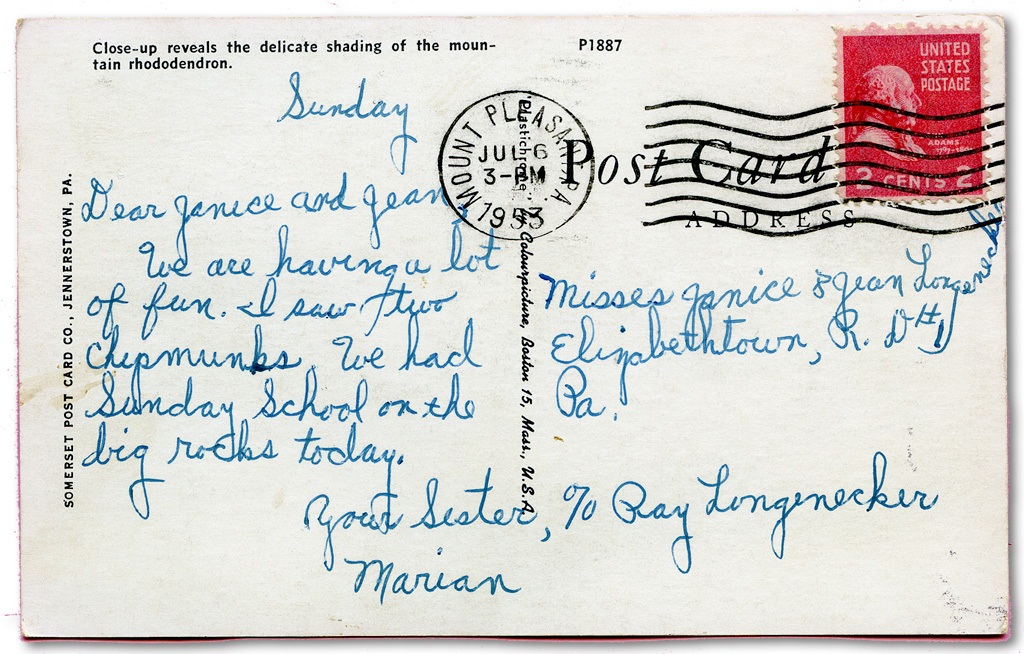
The postcard I sent to my sisters from Laurelville reveals the price of postage stamps, an address that winds around the edge in cursive script, and simple declarative sentences. It also tells how I felt, what I saw, where we worshiped.

PostcardCampFront

Postcard with rhododendron sent from Laurelville Mennonite Camp
Postcard with rhododendron sent from Laurelville Mennonite Camp in 1953

Memories of family week with my sisters and parents at Laurelville left a different imprint.

  • Family swim time
  • Doggie roast (Hot dogs, corn on the cob and roasted marshmallows)
  • Big plaque on dining room wall: “Come ye apart and rest awhile” Jesus’ invitation to his disciples in Mark 6:31
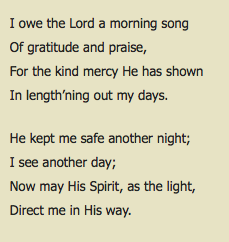
  • Morning blessing in song: “I owe the Lord a Morning Song” written by Amos Herr, Lancaster County pastor and farmer who couldn’t get through the snow drifts to church one Sunday morning in the 1850s and was inspired to pen both words and music to this song of gratitude. First two stanzas here:

I Owe Lord Morning Song

We also sang something new to us: How Great Thou Art, a Swedish hymn written in 1885, which became an instant sensation in Christian circles in 1955 because of the Billy Graham Crusades.

When through the woods and forest glades I wander, I hear the birds sing sweetly in the trees; when I look down from lofty mountain grandeur and hear the brook and feel the gentle breeze.


ClimbMountain


What are your memories of camp? Here’s the place to share them – songs, games, mischief – other memorable moments.


Coming next: Creation Clips


Purple Passages: Secrets of Grimke House, Charleston

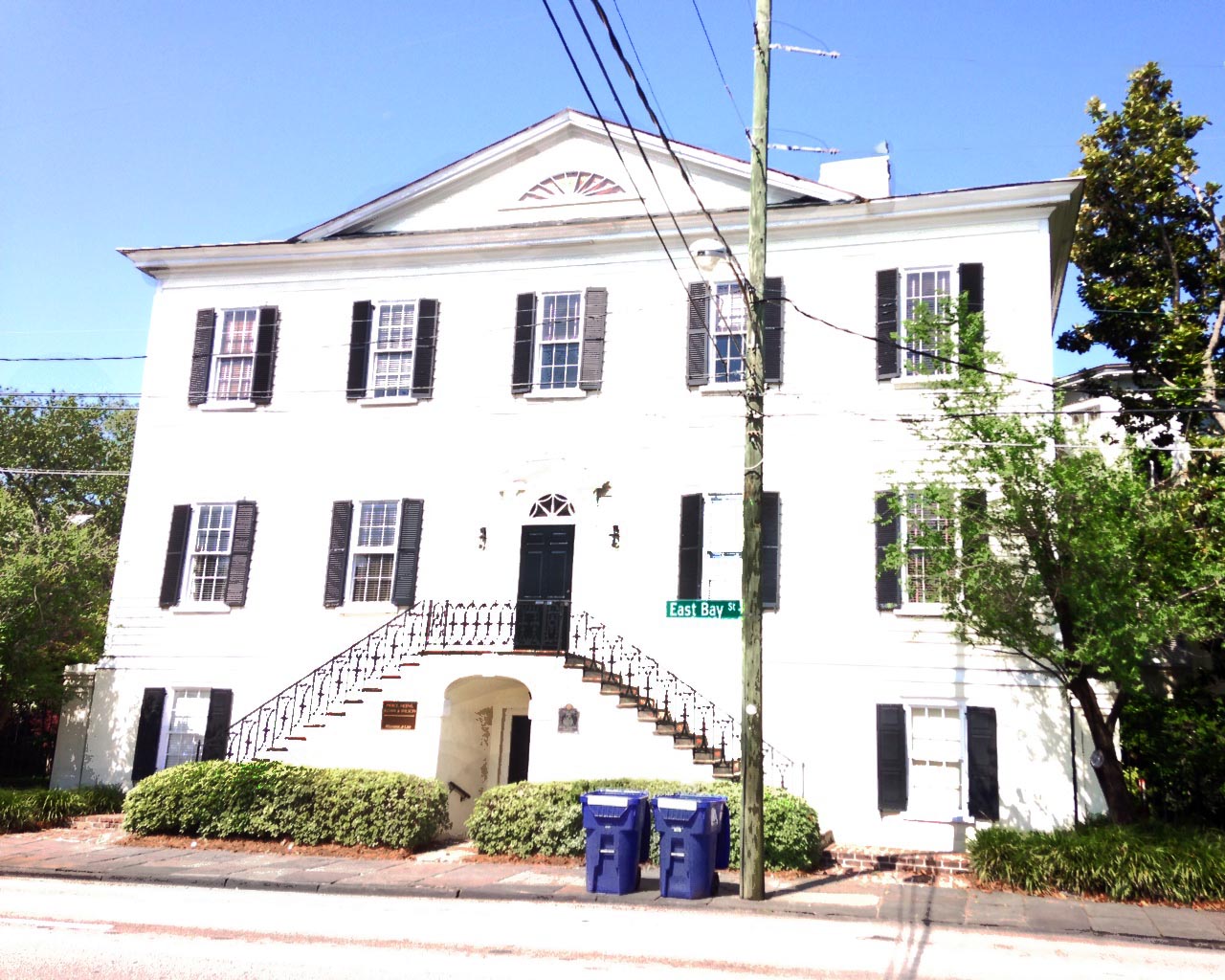
“Heidi, would you mind stopping by 329 East Bay Street before we leave town?”

We were on our way out of Charleston during our recent road trip, and my niece Heidi graciously agreed to stop her SUV long enough for me to catch a snapshot of the Grimké House basking in the bright morning sun. Its open arms-double staircase once welcomed visitors with a hospitable hug. (Until recently it housed attorneys’ offices, so you can draw your own conclusion about its more recent history!)

Grimke House_Charleston_mod

This house was made famous by Sue Monk Kidd’s book of historical fiction The Invention of Wings. Here is an excerpt from my review:

“ . . . the novelist creates parallel stories representing two strata of early nineteenth-century America, alternating chapters with the voices of two engaging characters: the aristocratic Sarah Grimké and the hand-maid (creative name for slave) assigned to her, Hetty Handful Grimké. Kidd’s sweeping novel is set in motion on Sarah’s eleventh birthday, when she is given ownership of ten-year-old Handful. Over the next thirty-five years, both strive for a life of their own ‘bucking the constraints of cultural attitudes toward women and slavery, which Sarah and her sister openly challenged.'”

All the purple passages quotes today are pulled from the pages of The Invention of Wings, Sue Monk Kidd’s historical fiction about the Grimké family:


The Weather

“I slipped through the back door into the soft gloom, into the terror and thrill of defiance. The sky had gone cobalt. Wind was coursing in hard from the harbor.” (50)

(We experienced a Charleston, SC storm downtown as we entered this city May 7, 2015)


Mosquitoes

Mother Mary had ordered “the mosquito netting out of storage and affixed above the beds in anticipation of the blood-sucking season, but having no such protection, the slaves were already scratching and clawing their skin. They rubbed themselves with lard and molasses to draw out the itch and trailed its eau de cologne through the house.” (56)

(Disparity between the races no longer noticeable in Charleston today, at least to tourists. )

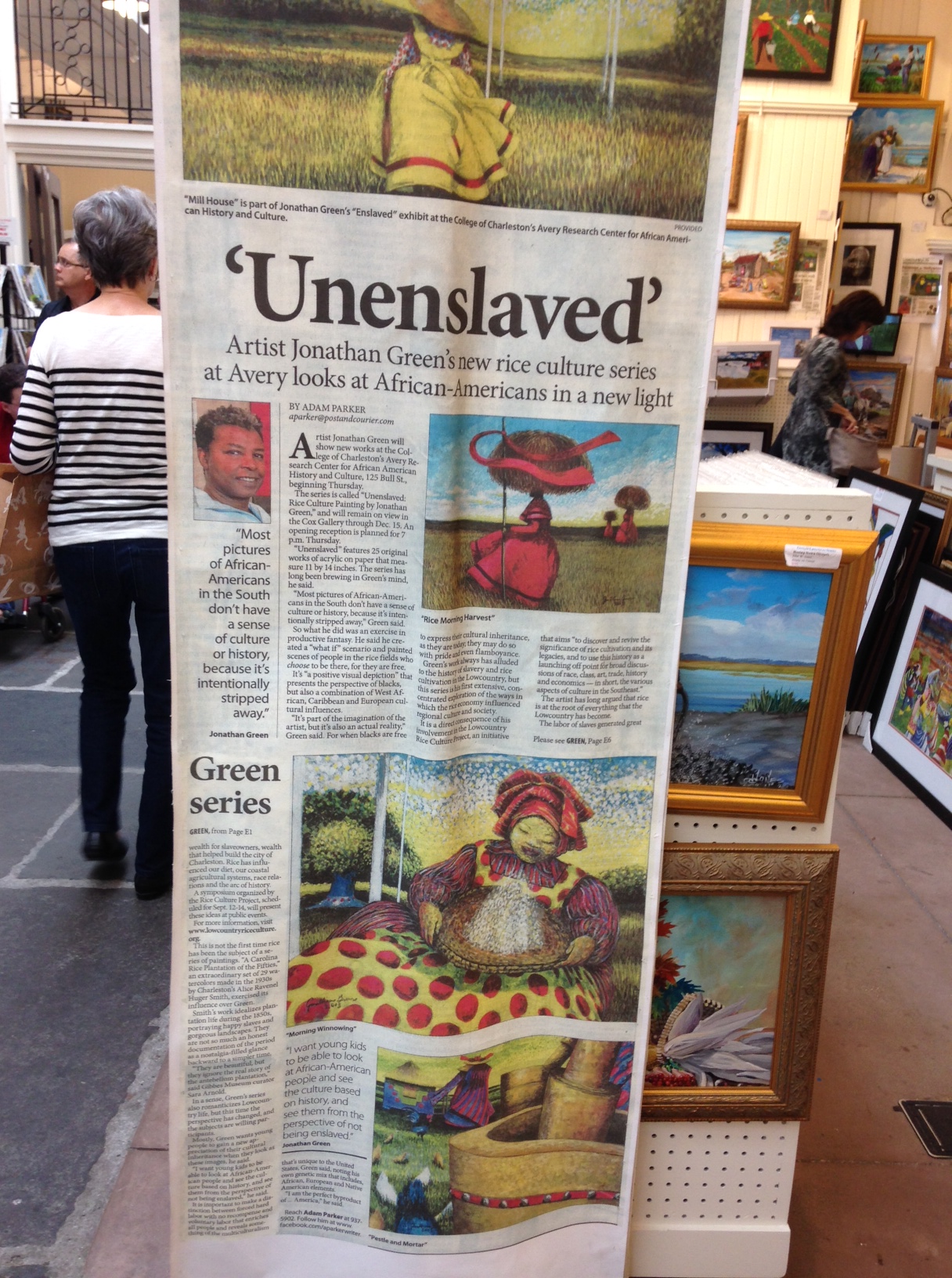
Wall-hanging on sale in Charleston on Market Street


Despair

“My breath clutched at my ribs like grabbing hands. I closed my eyes, tired of the sorry world.” (280)


Missing Someone

Sarah’s unrequited love: “Nina was speaking now, her face turned up to Theodore’s, and I thought suddenly, involuntarily of Israel and a tiny grief came over me. Every time it happened, it was like coming upon an empty room I didn’t know was there, and stepping in, I would be pierced by it, by the ghost of the one who once filled it up. I didn’t stumble into this place much anymore, but when I did, it hollowed out little pieces of my chest.” (281)


Yearning for a better world

[Lucretia] “leaned toward me. ‘Life is arranged against us, Sarah. And it’s brutally worse for Handful and her mother and sister. We’re all yearning for a wedge of sky, aren’t we? I suspect God plants these yearnings in us so we’ll at least try and change the course of things. We must try, that’s all.’” (275)


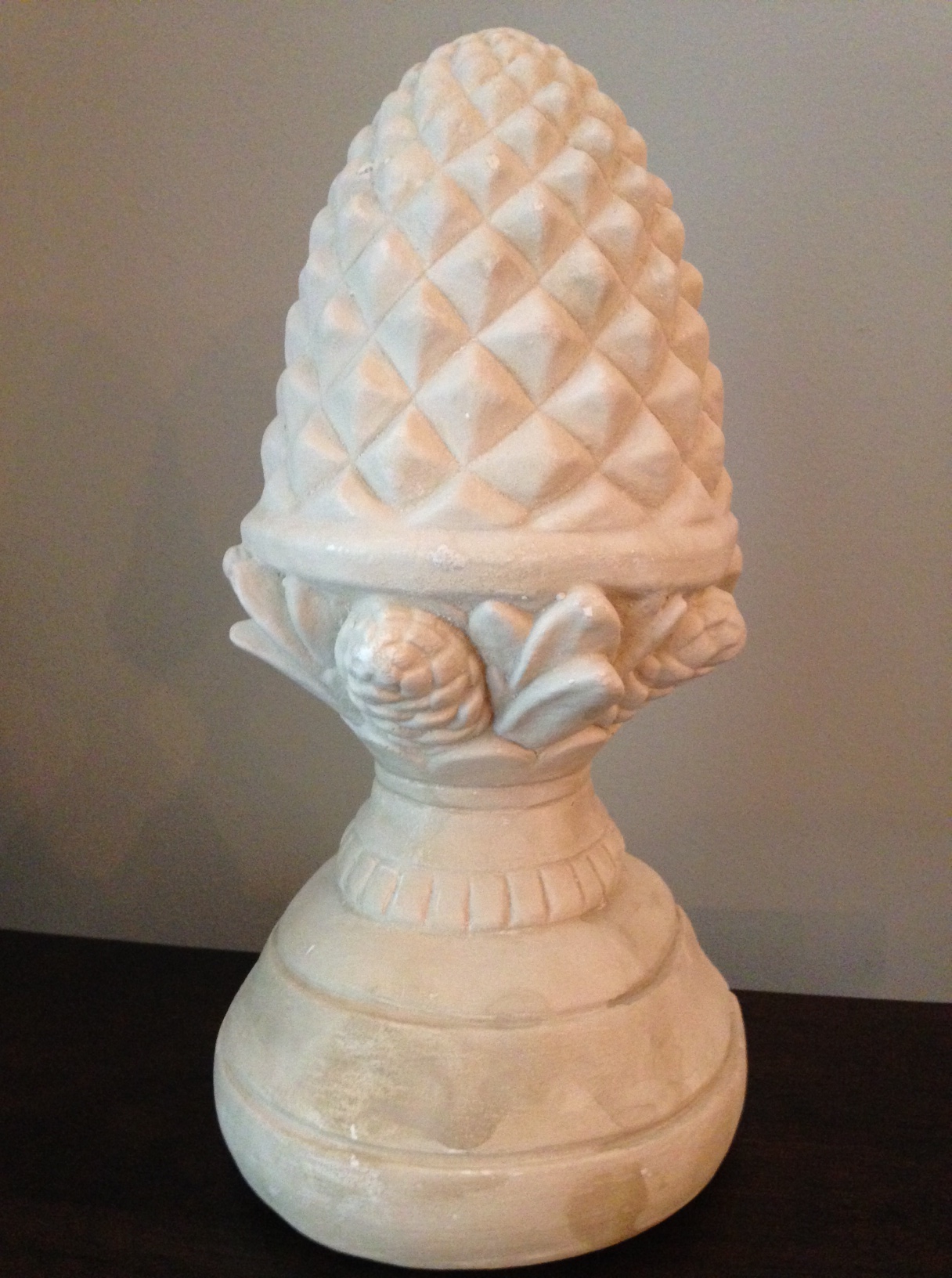
The Pineapple: the universal symbol of hospitality seen everywhere in Charleston's interiors and exteriors
The Pineapple: the international symbol of hospitality seen frequently in Charleston’s interiors and exteriors. Daughter Crista purchased a pair of these.

 We must try, that’s all!

Share your words: your thought, a quote or story adds to the conversation. It’s always nice to meet you here!

Coming next: Jenna’s Rainbow Cake: A Pot of Gold?

Purple Passages with the Bard of Avon

Spring cleaning!

I have thrown out (read that, recycled) piles of files during the past two weeks. One I kept, though, was a Shakespeare file.

FolderTeaching

I take my discovery of this file as an invitation to play teacher once more. Actually, another good reason is that tomorrow, April 23, is reputedly Shakespeare’ s birthday as well as his day of death (1564-1616), and he gets all the “Purple Passage” space for notable quotes today. But first a verse, and then a quiz. (Fret not, answers provided on next post, April 25)

ShakesBirthdayCrown

PUzzleVerse_mod

Reputedly, Shakespeare invented words by changing verbs to adjectives, adding syllables or even coining new words. Here is a short list. Add vowels only!

1. b__mp

2. __m__z__m__nt

3. __nch__vy

4. __ss__ss__n__t__ __n

5. c__ __rtsh__p

6. dw__ndl__

7. f__pp__sh

8. h__ __dw__nk__d

9. l__ __pfr__g

10. z__ny                (Okay, so this was easy!)


Shakespeare’s plays contain so many memorable lines that many familiar with them may not know their origin. I am sure you have heard some of these, which need to be completed with one word:

Good night, good night! parting is such sweet sorrow, That I shall say good night till it be _____________.        Romeo and Juliet

The course of true love never did run_________.     A Midsummer Night’s Dream

The devil can cite Scripture for his _________.   A Midsummer Night’s Dream

The better part of valour is __________.          King Henry IV, Part I

Sweet are the uses of adversity:

Which, like the toad, ugly and venomous,

Wears yet a precious jewel in his head;

And this our life, exempt from public haunt,

Finds tongues in trees, books in the running brooks, Sermons in ________, and good in every thing.         As You Like It

Something is rotten in the state of _________.          Hamlet

There is nothing either good or bad, but __________ makes it so.       Hamlet

The play’s the thing / Wherein I’ll catch the _________ of the king.        Hamlet

When sorrows come, they come not single _________,  But in battalions.      Hamlet

O brave new _________, / That has such people in ‘t!      The Tempest

Want more Shakespeare? Last April I write about Shakespeare’s birthday in my classroom. Find the other link here.

Add some coined words I’ve missed, another Shakespearean quote, or even a thought about April and spring-cleaning. I love words. Share some of yours here!

Coming next: My Little Black Bookends Tell All