Do you have winter fun – sledding, tobogganing, ice skating, even skiing? Maybe now it’s a vicarious experience with kids or grandkids. I wrote about it last year in another post. Since then, I’ve paged through albums to find photos of our Floridian family having fun in the ice and snow.
In winter, skating was even better, the whole body thrown into orbit. Ice-skating was my sport, the only athletic passion of my piano-playing, book-reading, indoor girlhood: A northern pleasure, a cold-weather art form (129).
SKATING
Grandson Ian wobbly at first on cold ice on a warm day in St. Augustine, Florida. Outside temperature was almost 70 degrees, the ice got slushy, maybe a good thing for beginners.
SKIING Gliding, sliding down a hill, that’s what skiing is under the best possible circumstances.
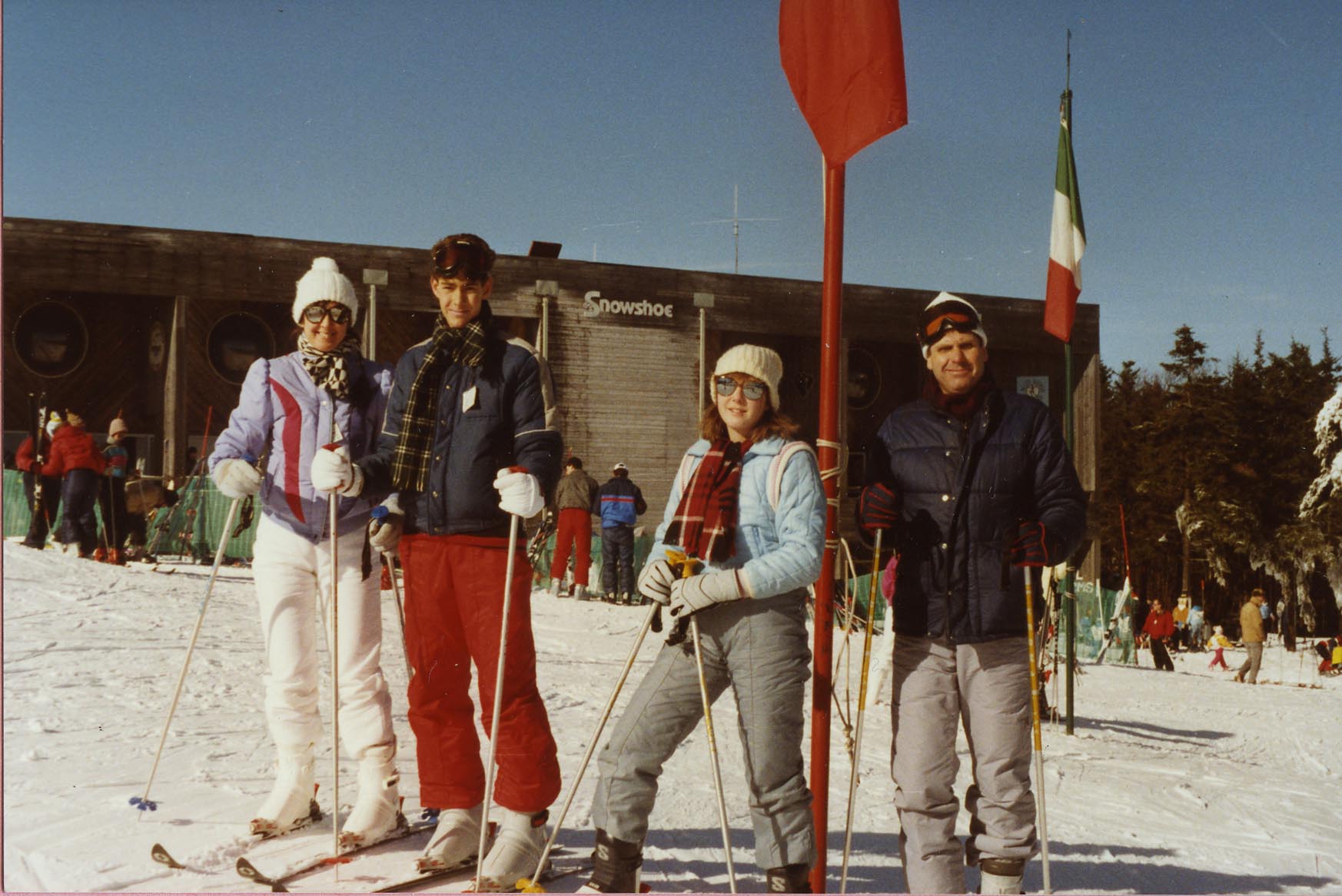
Before they left the nest, Joel and Crista with parents in Snowshoe, WV
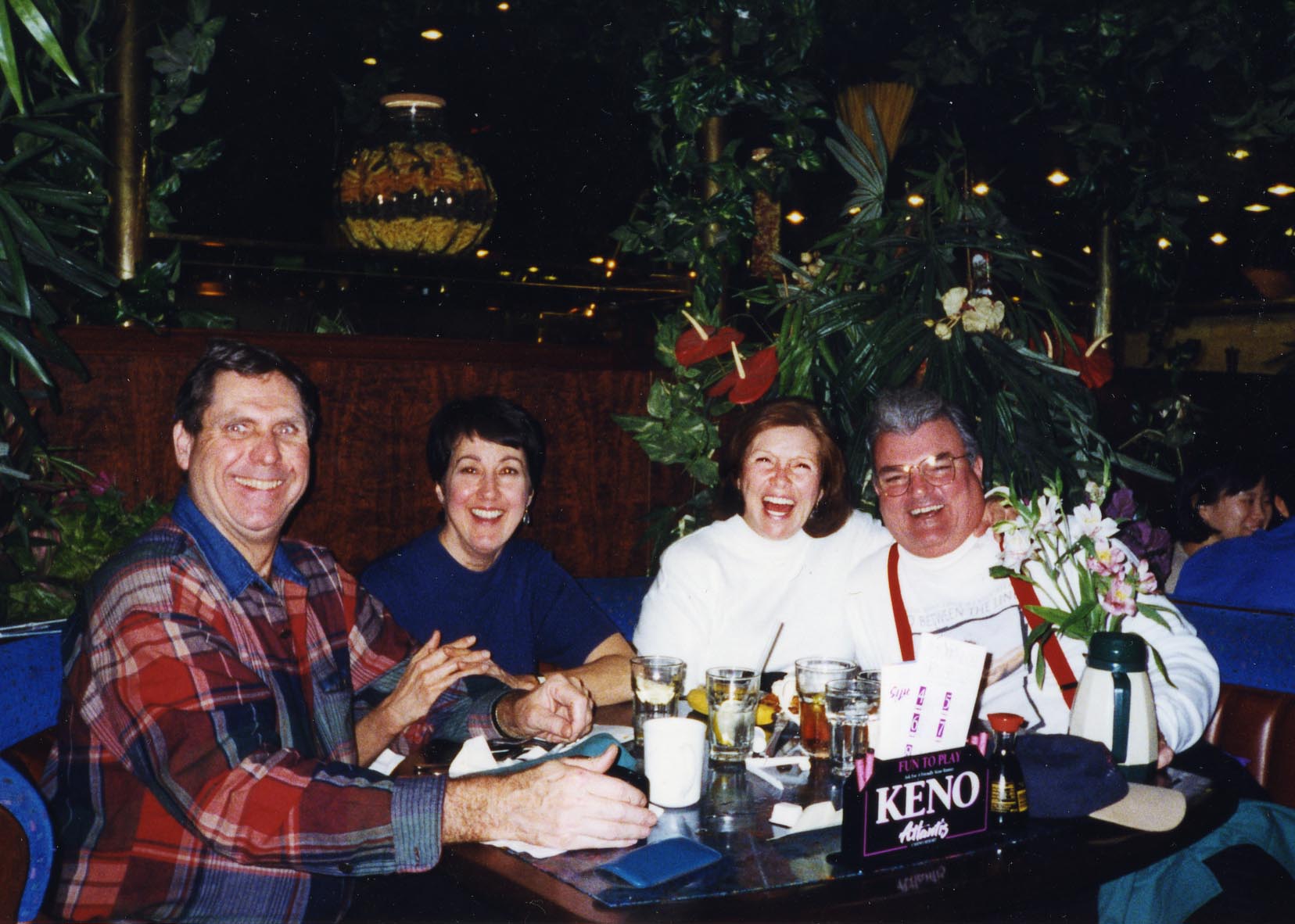
What’s so hiliarous?: Helen and Charles Blankenship warming up with us after a cold day on the slopes at Lake Tahoe, California
SNOWFLAKES
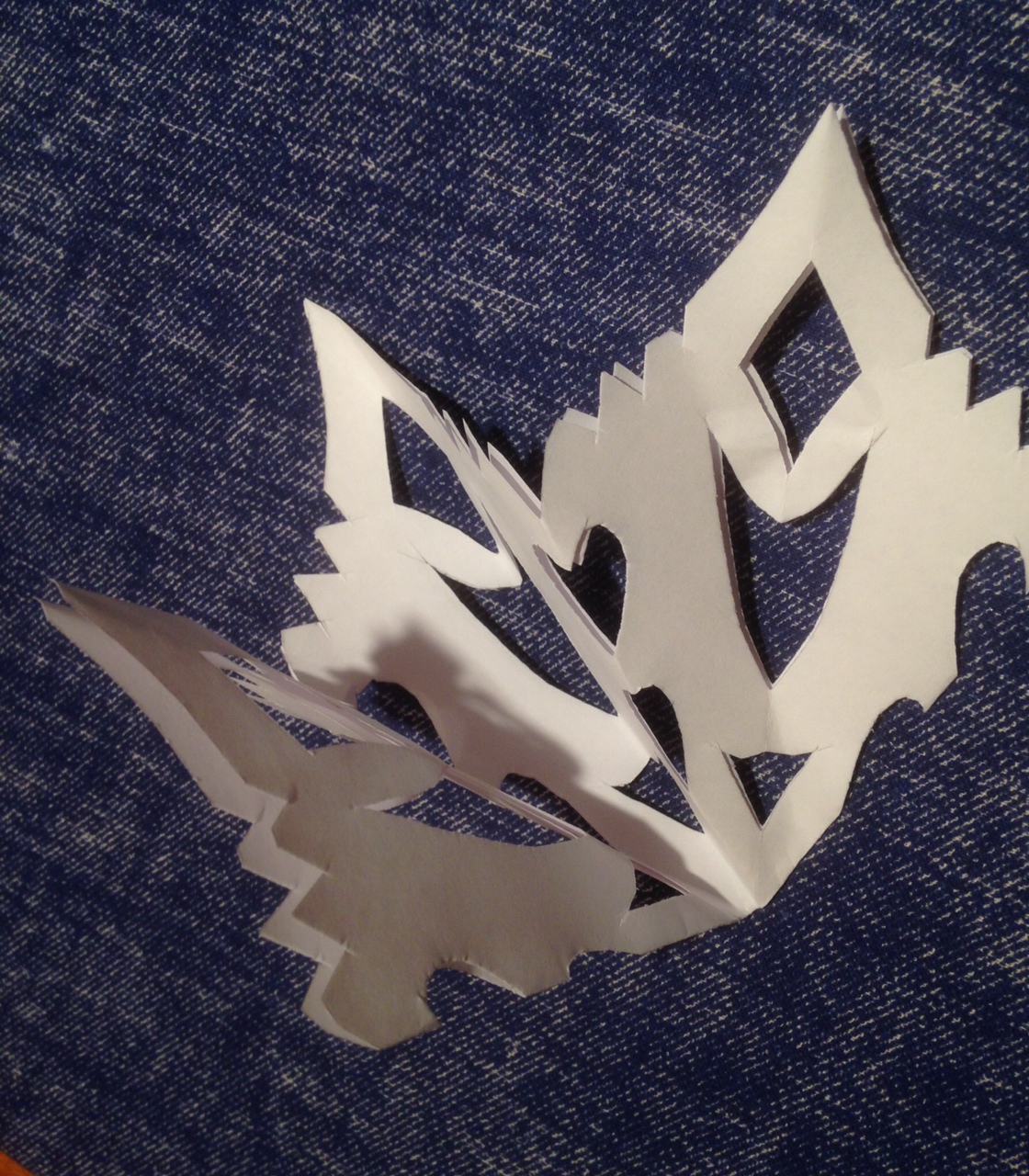
Do you remember cutting out paper snowflakes like this?
For detailed instructions with a video, click here.
Snowflakes make Emily Dickinson want to dance a jig, so she says!
I counted till they danced so
Their slippers leaped the town,
And then I took a pencil
To note the rebels down.
And then they grew so jolly
I did resign the prig,
And ten of my once stately toes
Are marshalled for a jig!
Your turn: What is your winter fun? Sledding, tobogganing, ice skating, even skiing? Maybe now it’s a vicarious experience with kids or grandkids. We’re dying to find out.
January 28, 2014 – It is six months to the day since Mother passed away. I feel melancholy now. Maybe the cold weather has something to do with it, but more and more I miss the warmth of our Saturday morning long-distance phone calls and sitting around her dining room table, the tingly warmth of homemade vegetable soup in my belly.
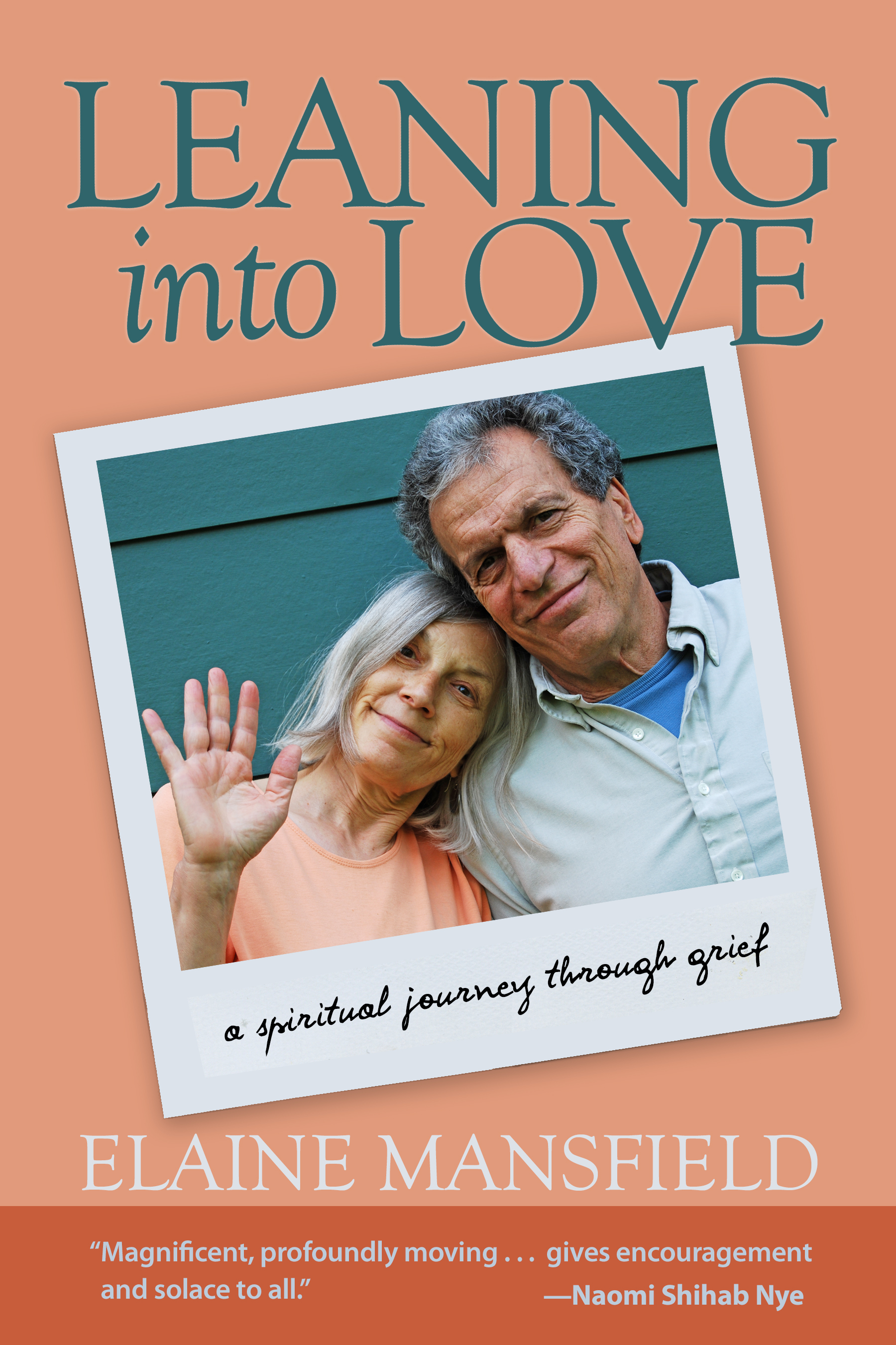
Elaine Mansfield too has experienced loss – of her mother and of her husband both in a 13-month time span. She eloquently records the loss of her husband in a memoir entitled Leaning into Love: A Spiritual Journey through Grief (October 2014)
Elaine and I definitely differ in our world view and philosophy of life, hers based on Jungian psychology and meditation, and mine with a distinctively Christian perspective. Yet pain is pain, and we share the intimate, human experience of grief.
Here is our conversation about Elaine’s unique journey:
MB:How did your mother’s passing in 2007 affect you and Vic?
EM: My mom had Alzheimer’s Disease for twelve years. Her body was curled in a fetal position and her eyes were closed. She had been unresponsive for years. She died quietly during a lull in Vic’s cancer treatment, so grieving for my mother merged with anticipatory grief for Vic.
MB:Why did you write Leaning into Love: A Spiritual Journey Through Grief?
EM: At first, I wrote to digest and understand what had happened. When times are rough, I pay attention to life’s lessons. Writing was my way of doing that. During Vic’s illness, I kept journals so I could remember every detail during an emotional time. Five years after his death, my experiences became a book to help others deal with love and loss. I also hoped to create an engaging memoir that would interest any reader.
MB:What is the main theme of your book?
EM: The book is about a strong marriage and the initiation of losing a trusted partner: dissolution of the old order, then a period of confusion and despair, then a slow return to new life and possibility.
MB:In the book you promise your dying husband of 42 years, “I’ll find a way to be all right.” What lies behind this statement?
EM: Vic and I shared every joy, sorrow, and dream. We’d had an intimate relationship since I met him when I was 21. He was concerned about leaving me and concerned about my grief. Even while I did all I could to help him live, I felt determined to find a way to make life work after his death. He was relieved when I said so. Of course, I had no idea how challenging that would be.
MB: Just like in your blog posts, you use poetic language in your book to describe bereavement and your slow recovery. For example, you describe a group of dolphins as “luminous revelations leaping from the great unconscious sea.” What other descriptive lines from the book are you especially proud of?
EM: “Our first kisses taste of tears and the knowledge that our time together is finite.”
“Mostly he sleeps, but when he’s awake, he whispers words of sweet gratitude.”
“Despite my better judgment, hope floats in, ethereal and transient as a feather.”
MB: What will readers learn from the book? What is the take-away?
EM:Everyone loses things they love—people, jobs, homes, health, dreams. It’s natural to grieve and long for what we cherish. I’ve learned that facing our losses and sorrows makes us more realistic and open-hearted human beings. We understand what matters in life and see that everyone suffers. In this way, sorrow leads us to kindness.
MB: Your book attracts readers who have dealt with or are now dealing with loss. What is your best advice to them?
EM: Experiment and find what comforts you: solitude, friends, nature, music, therapy. The smallest rituals helped me. I left flowers at the gravesite and said prayers there. Writing brought me daily comfort.
Watch for small signs of joy and hope. A bird chirping. The first spring flower. A child’s laughter. Grief is part of life. Give yourself time to feel what you feel. Open to grief and let it open your heart to love.
After a career as a health counselor and writer, Elaine’s work has focused on bereavement and loss since her husband’s death in 2008. Elaine facilitates bereavement support groups at Hospicare and Palliative Care Services in Ithaca, NY and writes for the Hospicare newsletter and website. She also writes a weekly blog about the adventures and lessons of life and loss, leads workshops, and lectures on bereavement topics. Her articles have been published in The Healing Muse, Open to Hope, Shambhala Sunspace, KirstyTV, Caring.com, Alzheimers.net, GriefHealing, and elephantjournal.
About Leaning into Love:
“Reading this beautiful memoir of love and loss and triumph felt to me like a sacred journey into the very heart and soul of the courageous woman who writes it.” Marty Tousley of Grief Healing.
“Not only a touching and courageous memoir about love, illness, death and grief, Elaine Mansfield’s Leaning into Love is a manual for healing that offers us the emotional and spiritual tools needed to grow and even flourish through Life’s deepest crises.” Dale Borglum, Living/Dying Project
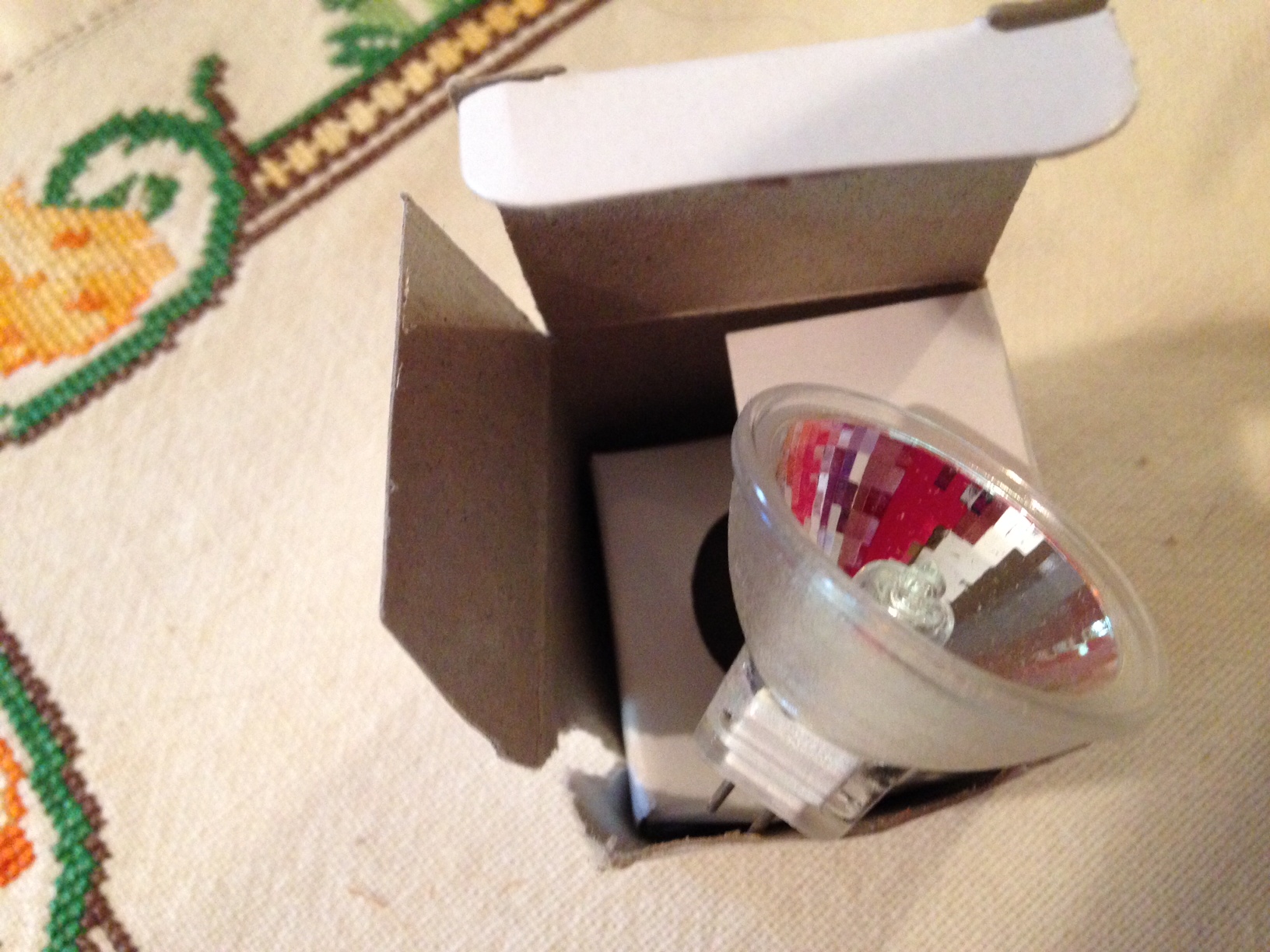
A snapshot of a baby boy dressed as a girl and an old flash bulb. Those are some of the items we find clearing out Mother’s house. Last October my sisters and I began the arduous task of sorting, saving, or recycling the accumulated store of her possessions having lived in the same house for over 73 years. You can read about it here.
Today’s post features snapshots, both photos and artifacts, from both Mother and Daddy with a surprising find at the end.
MOTHER: Some of what I found from Mother could be filed into 3 categories of nurturing:
Feed
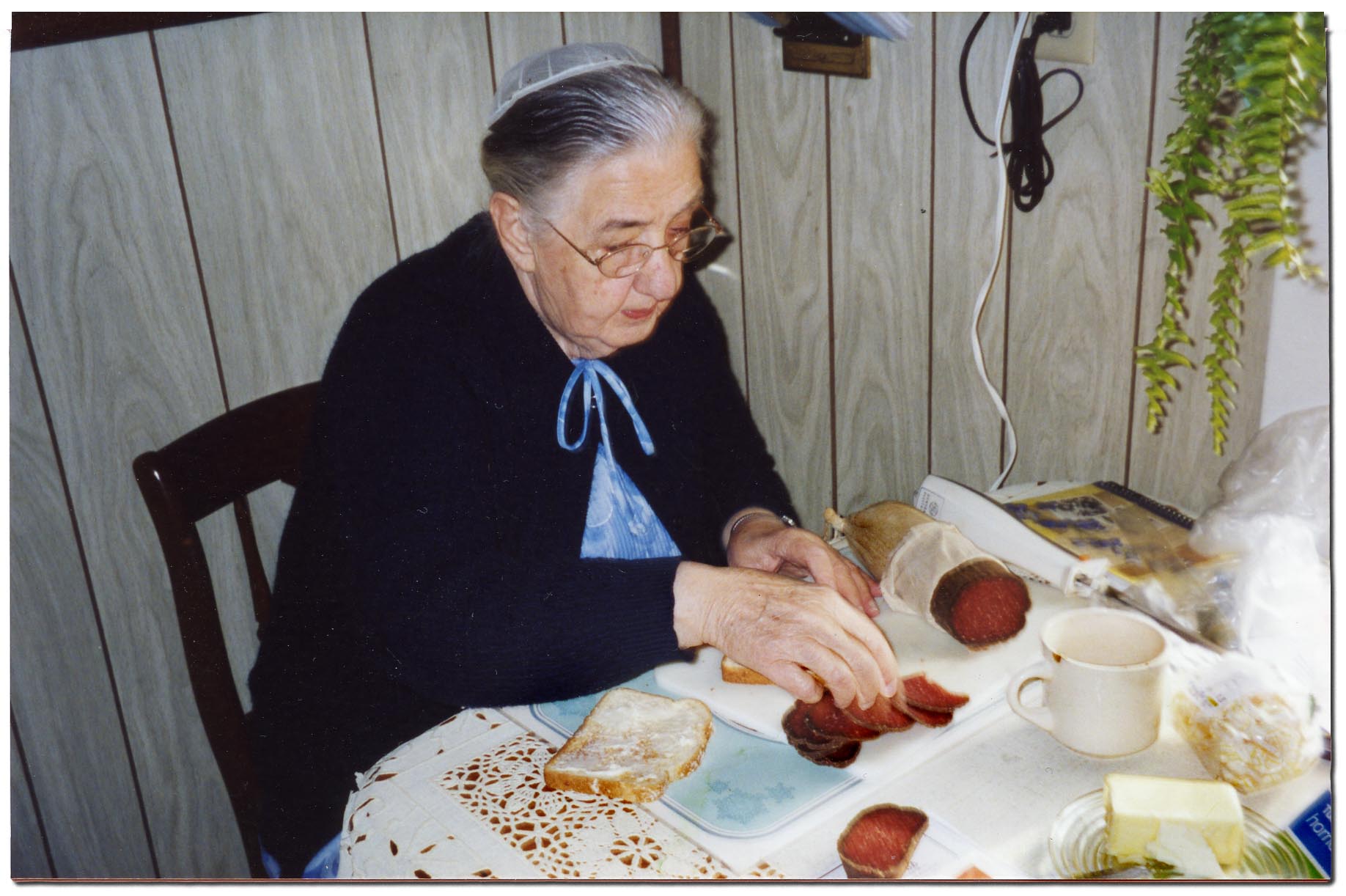
Our metal lunch pails carried many a bologna sandwich, usually Baum’s Bologna from their shop north of E-town. After Mother pulled back the burlap, she sliced thick rounds for sandwiches on buttered bread – always butter . . .
Read
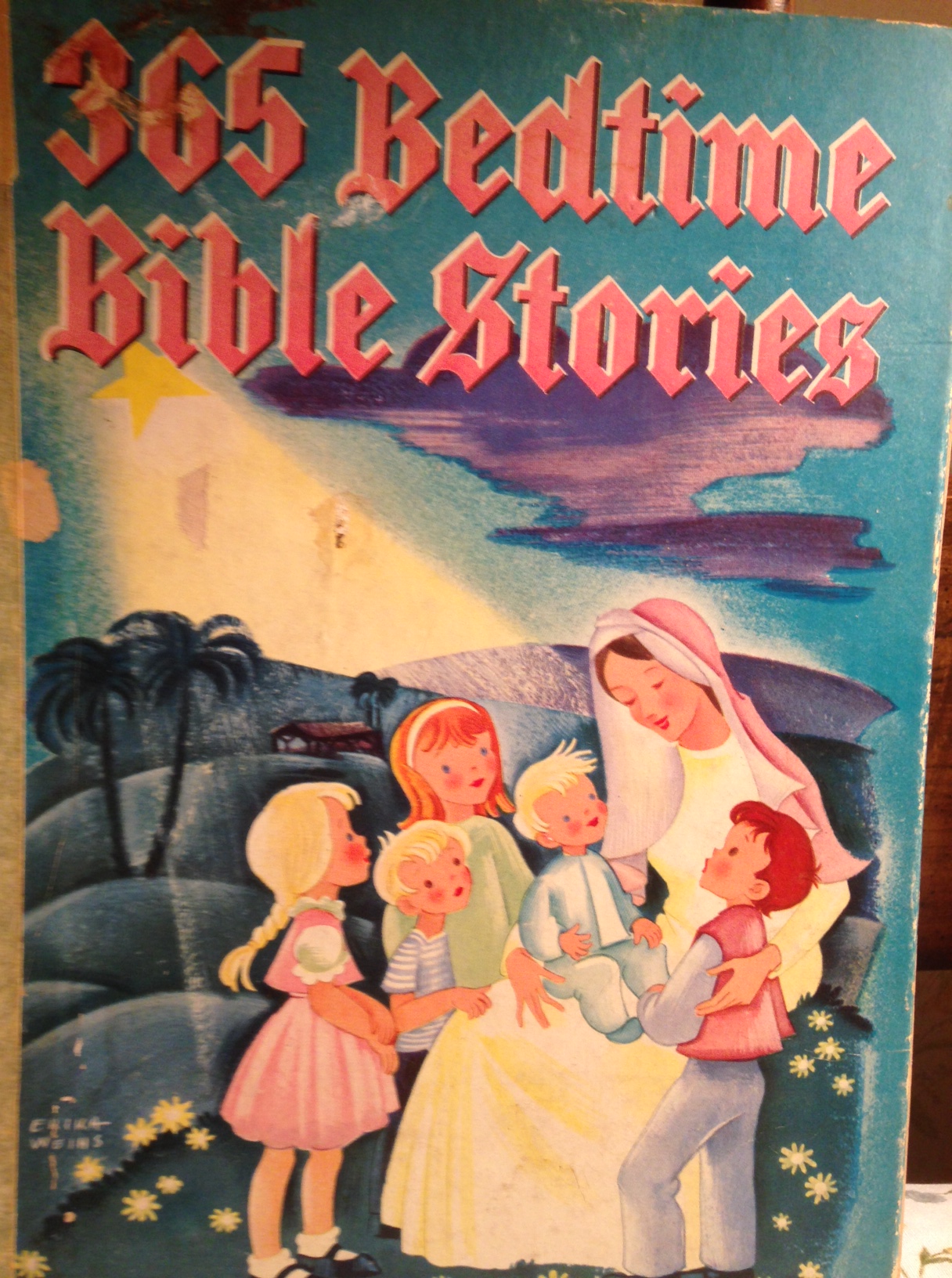
Every picture, every story seems familiar in this Bible Story Book with pages, crackly brown with age. Sniffing into the spine, I roll back in time to the little girl on her lap. I loved the art work then. Now I love its charm even more. Did Daddy read these stories to me too? Maybe so, but I can’t remember.
Remember
Cameras freeze time, preserving memories. Mother didn’t write in a journal, but she consistently recorded our family’s story over time. The old box camera is long gone, but here is a “flash” of memory possibly from her last camera . . .
DADDY Some of what I found representing my father was surprising:
Although I have several photos of Daddy holding me as a baby, my father was a man’s man: a tractor-driving, motor-fixing, field-plowing, deer-hunting guy. He even hammered on the piano keys. His work clothes were of black moleskin cloth, matching the grease he was in close contact with at the shop. I am certain he never wore pink. Yet here he is posed for the camera in a dress, flanked by his parents, Henry and Fannie Longenecker, my Victorian grandma not yet attired in Mennonite garb that would characterize the rest of her life. Daddy’s dress is not a christening outfit. There was no christening among Mennonites. I suspect that babies of both genders wore dresses to make diaper changing easier.
Henry and Fannie Longenecker with son Ray
Needlework
Our scavenging took us to the attic chest filled with treasured quilts. My sister Jean and Mother tagged each one a few years ago, so there would be no doubt as to their provenance. Apparently, Daddy drew his needle through a white quilt, stitching animals in red. I see a camel, sheep, chicken, pig, duck, an elephant. Even an ostrich.
Here is just a teaser. (Look for Daddy’s full quilt on a later post!)
Quilt with animal stitching by my father, Ray M. Longenecker
Nickname
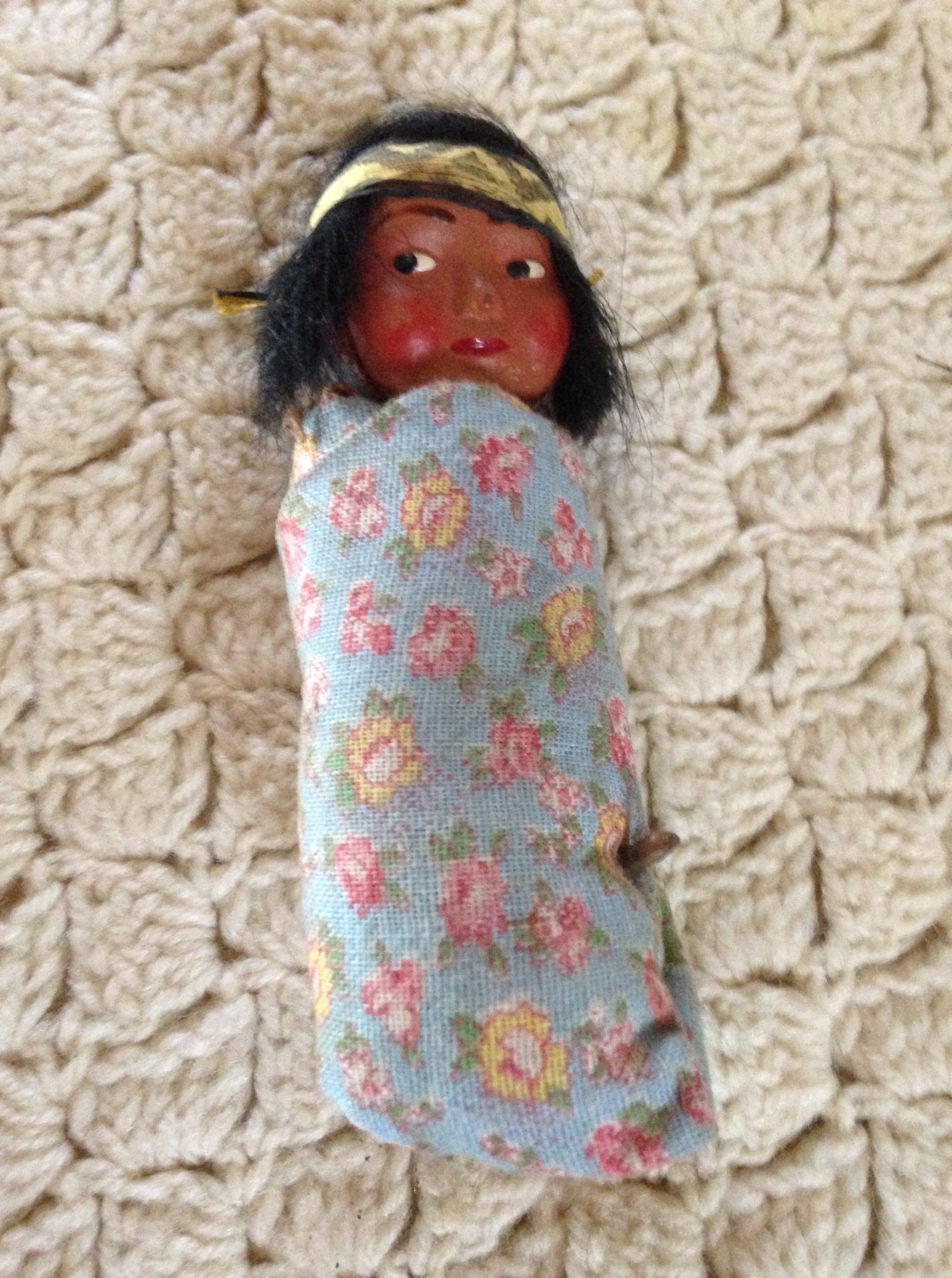
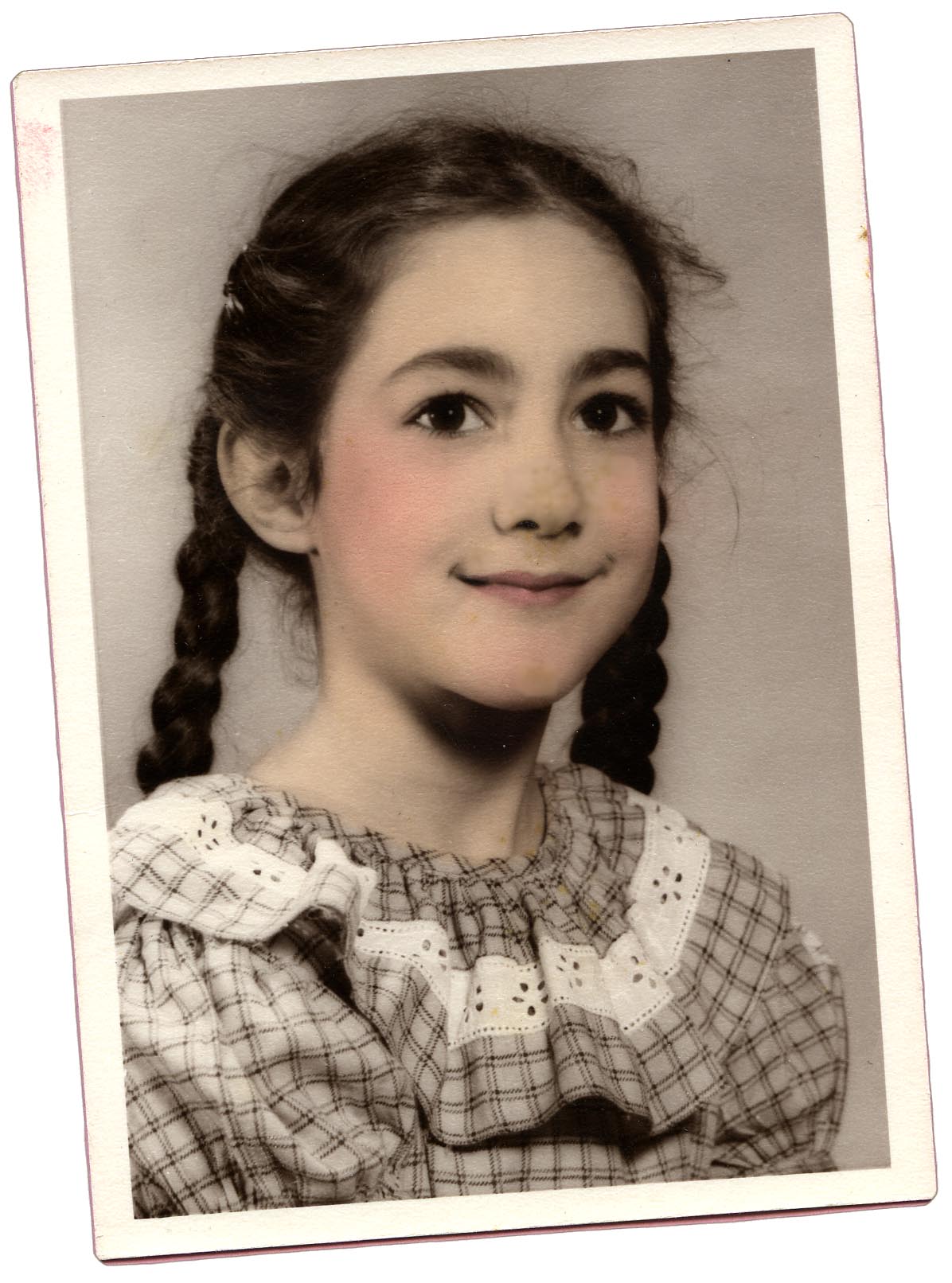
Daddy’s nickname for me was Pocahontas, not so much because I looked native American, but probably because of my thick, dark braids and big eyes. When I found this doll, I decided it shouldn’t be given away, sold, or recycled. It now sits on the dresser in our bedroom with “strubbly” hair, not braided!
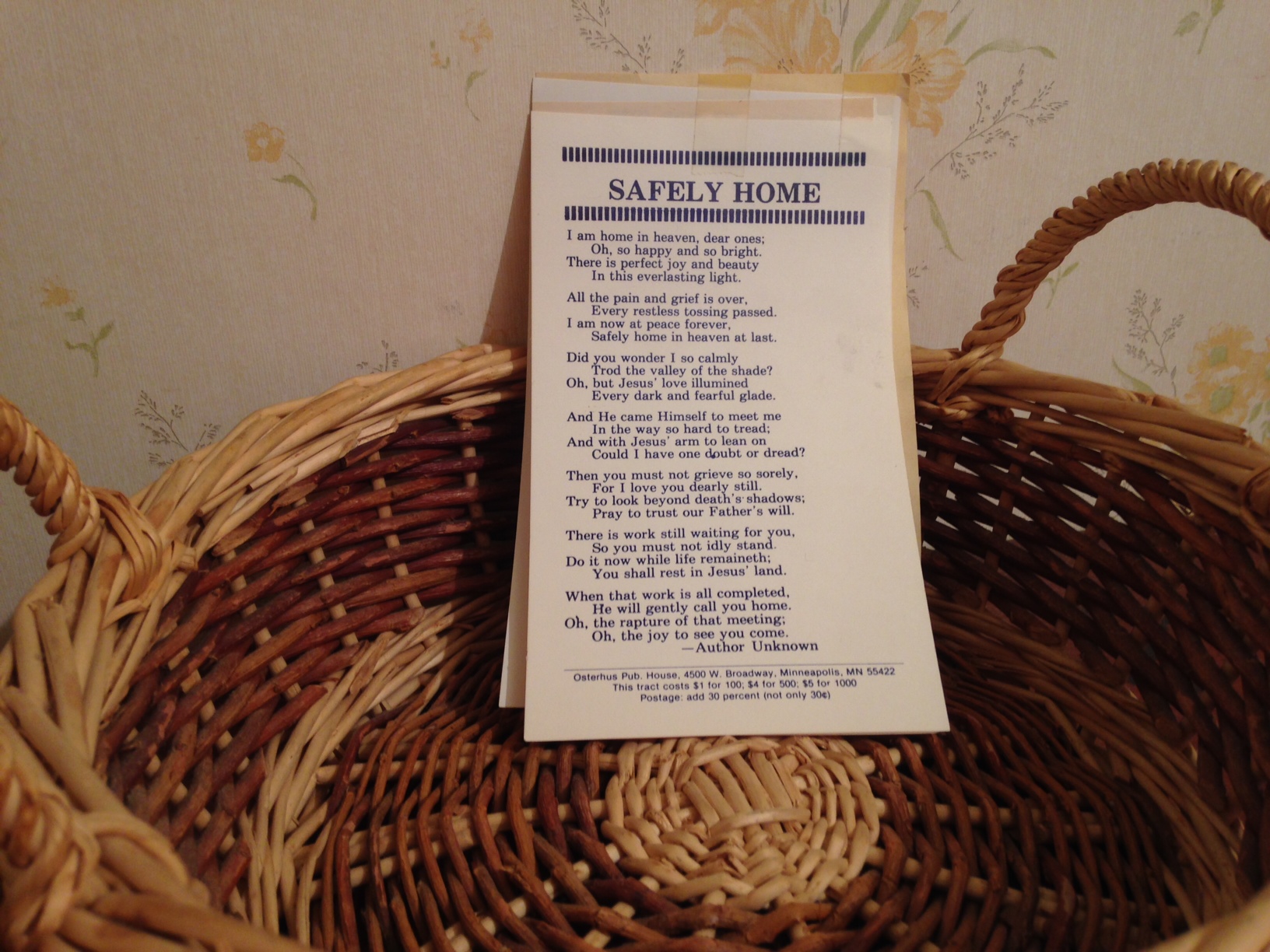
Final Note: A Curious Find On our first visit to Mother’s house in October after the funeral, we saw a wicker basket on top of a hallway chest with a poem entitled “Safely Home,” something we had never noticed before. Were we blind to it earlier? Having a premonition of what was to come, did Mother put it there for us?
I am home in heaven, dear ones; / Oh, so happy and so bright. / There is perfect joy and beauty / In this everlasting light . . . .
(Anonymous, Osterhus Publishing House) . . . a mute but eloquent affirmation
Your turn: Are you holding on to something you treasure from a loved one? A photograph? A small gift?
Every single memory of snow in my childhood is pleasant. Sparkling flakes in luminous free-fall as I look out the kitchen window. Snow festooning evergreen boughs. Then bundling up in snowsuits, knitted caps, mittens. Getting out the sleds.
After more than one snowstorm, Aunt Ruthie grabbed her movie camera and trained her sharp eye on some big, tall sledders who went coasting down the hill from our house to Grandma Longenecker’s.
Then she captured our anticipation of trumping through nearly hip-high snow and finally (my favorite) Mother pulling my sister Janice and I on the Flexible Flyer sled along Anchor Road.
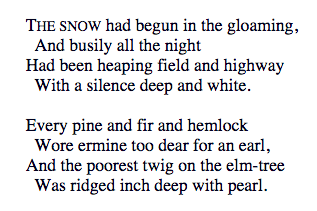
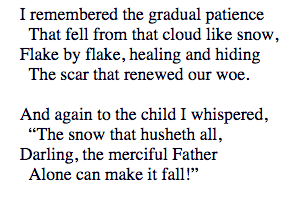
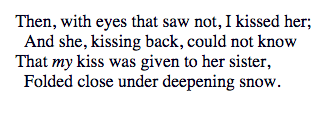
Another parent and daughter are observing the snow in The First Snowfall by American poet James Russell Lowell, a poem I remember Mother reciting.
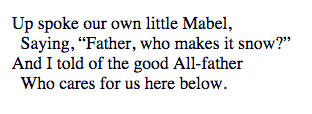
Mabel marvels at the beauty of the snow and inquires of its origin . . .
. . . but as the father’s replies to Mabel, he remembers the snow which hides the scar of another child’s burial plot.
Then Mabel feels her father’s gentle kiss, a kiss she will never know was intended for the daughter beyond his touch. The last stanza leaves Mabel in child-like wonder, her father in pensive grief.
This post began with snapshots of fun in the snow and ended with a reflection on loss. But snow can be the setting for other memorable events: a frolic with friends, a car accident, a marriage proposal (I’ll save that for another post!)
You probably have memories of snow, recent or long ago. Here’s your chance to share them.
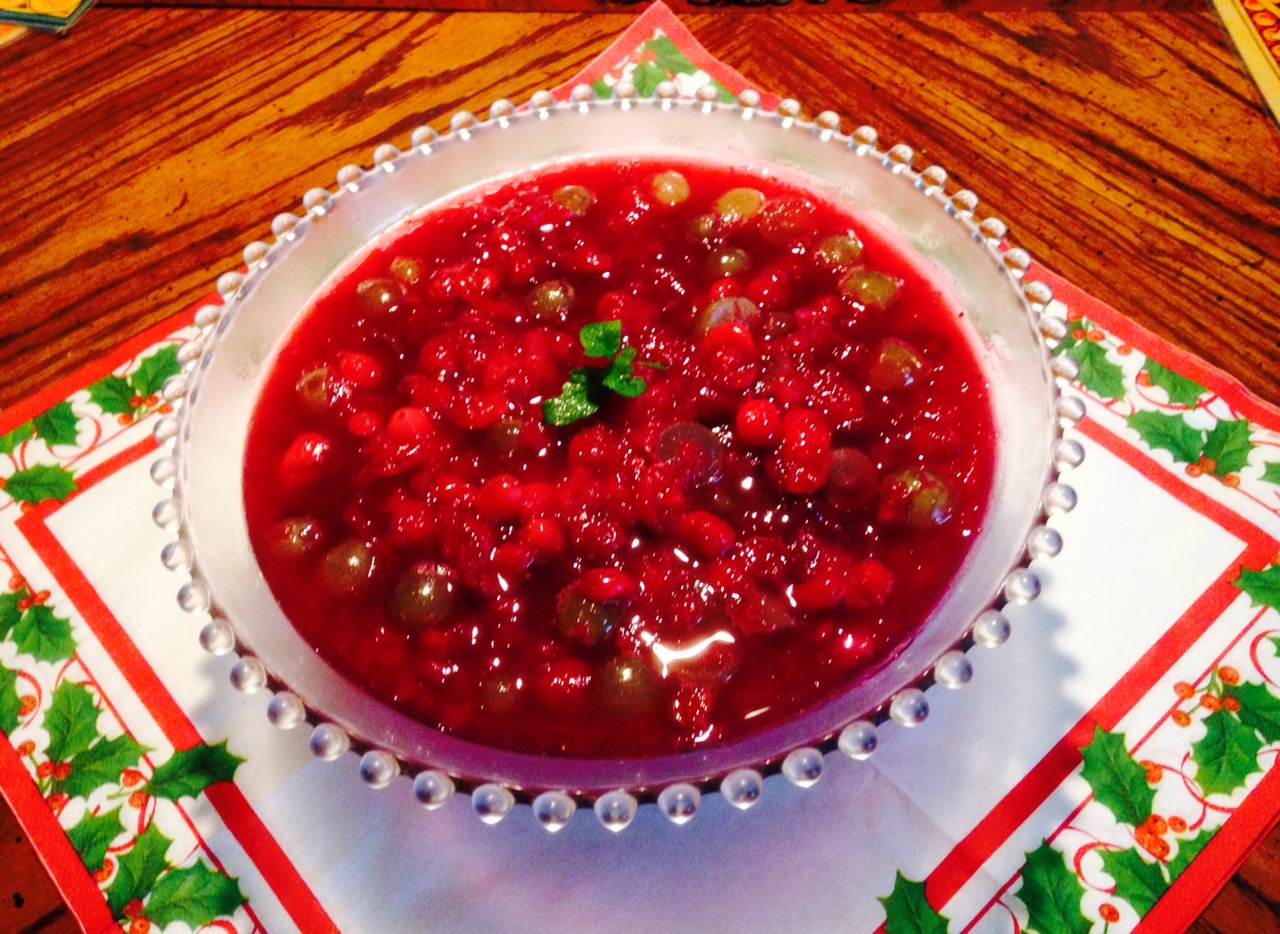
Color psychologists say red represents energy, passion, and motivation to act. Red is everywhere this season: Santa’s costume, cranberry dishes, poinsettias.
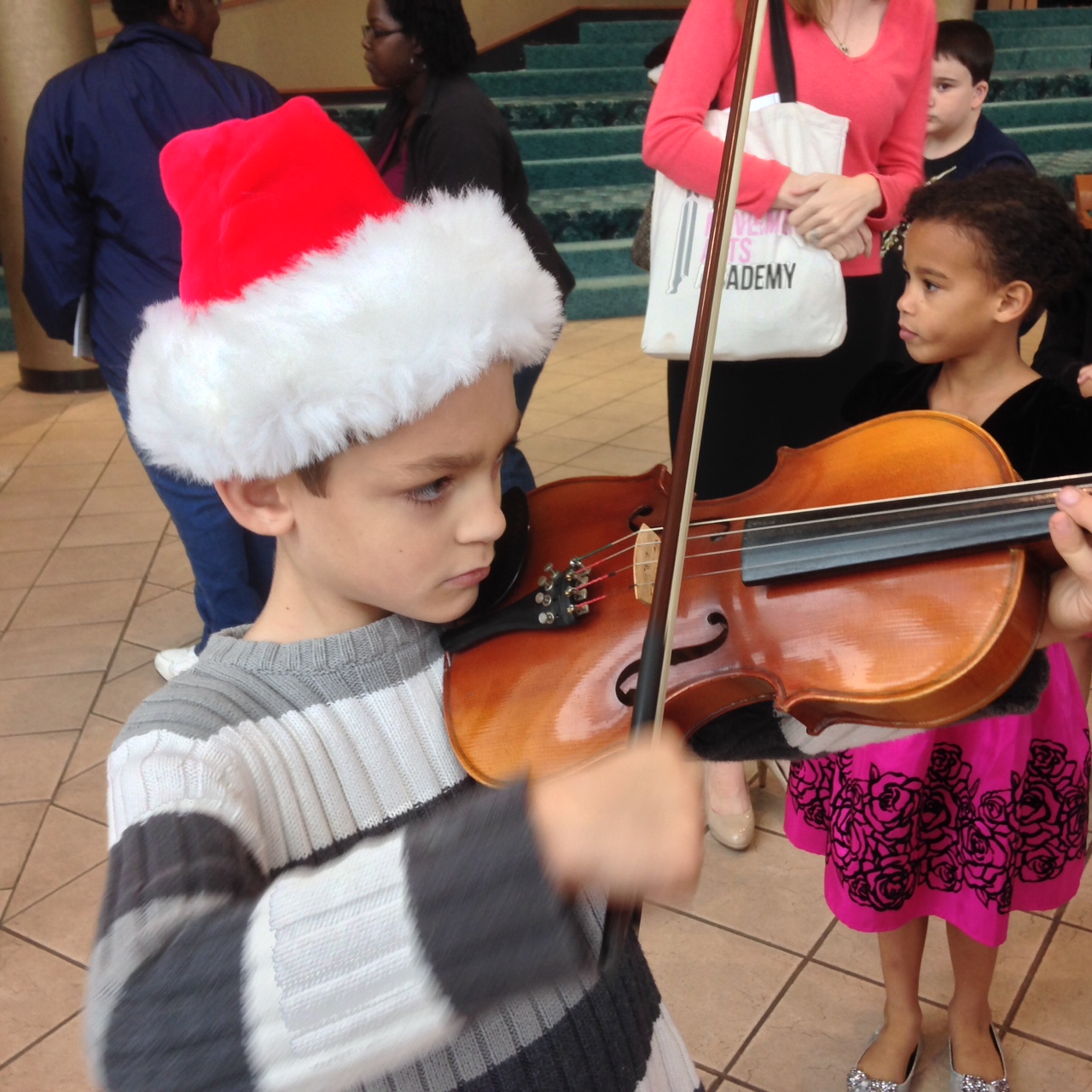
I’m seeing red too. In Ian’s Santa cap at the Orchestra Zoo . . .
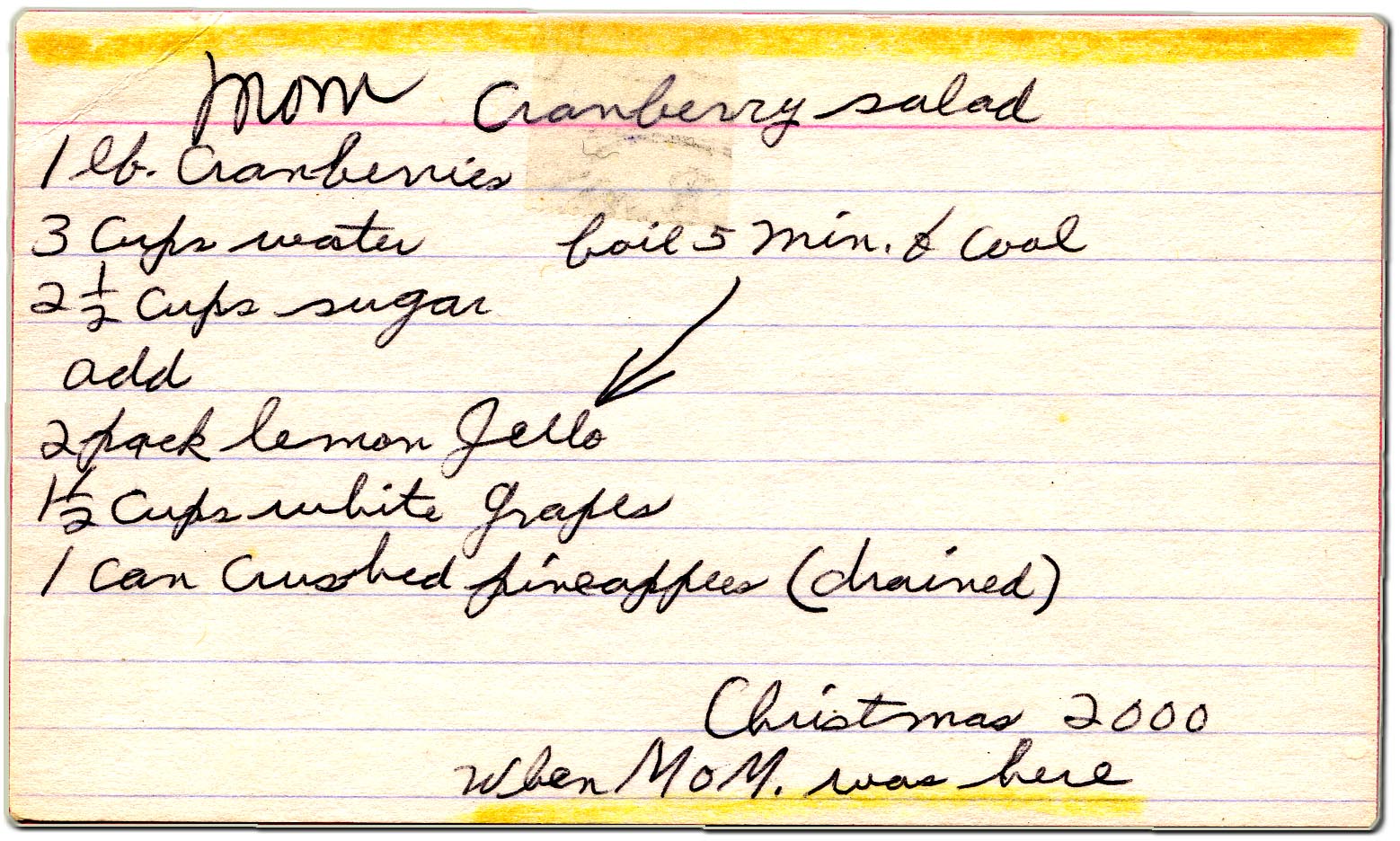
In Mother’s cranberry fruit salad recipe which I took to a Christmas party at a friend’s house last week . . .
(Everything with the word Mom in it is my scribbling. The rest is in her own handwriting, a keepsake in my recipe box.)
Beautiful pots of poinsettias!
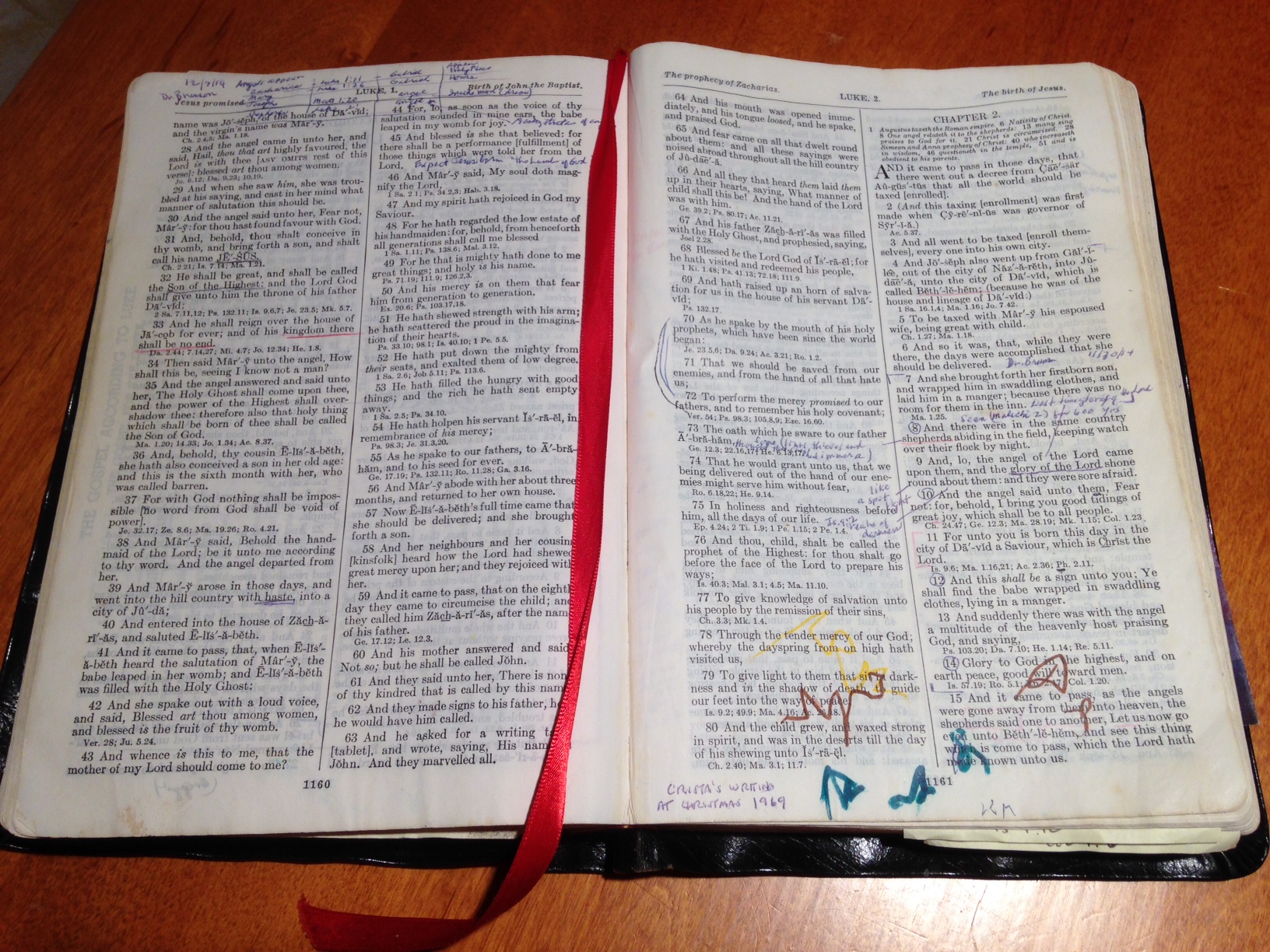
One more thing read at Christmas, the beautiful Christmas story from Luke 2:1-20
What can you add to the red – or to the read in your tradition? The conversation starts here.
Coming next: Short and Sweet: A Belgian Christmas Card
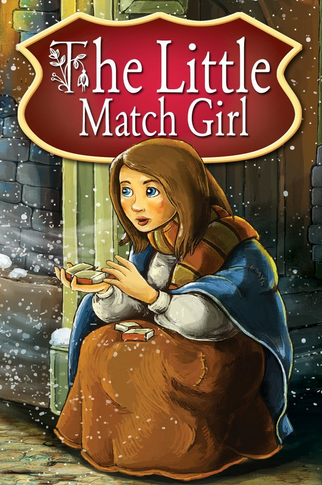
On a cold winter’s eve, a poor girl shivering on the street tries to sell matches afraid to return home to her father who would beat her for not selling all her matches.
Cover: Courtesy Amazon Books
Finding shelter in a nook, she lights matches to warm herself. The matches ignite her imagination and she envisions a Christmas tree and a holiday feast. As she looks skyward, she spies a shooting star and recalls her dead grandmother remarking that such a star means someone is dying and going to heaven. As she lights the next match, she catches a vision of her grandmother, the only person ever to treat her with love and kindness. Finally running out of matches, she dies and her soul is carried to heaven. The next morning, passersby find the little girl dead in the street. They feel pity for her but cannot bring her back to life.
Lives Cut Short
Trayvon Williams and Michael Brown must have had visions of a better life, a bright future. Their visions will be unrealized, their lives cut short by a bullet. While there is still controversy over the details surrounding each case of police intervention, there is no doubt that the outcome raises questions about police reaction in a perceived threatening situation. It should be noted here that black officers, greatly outnumbered by whites in the police force, account for little more than 10% of all fatal police shootings according to one report. But of those they kill, 78 % are black. Main stream media, however, gives little attention to such stories or to those involving black officers and white offenders.
Author Mary Gottschalk speculates on what prompts these high profile shootings of black teens. In a recent blog post, she comments on the lack of respect for cultural differences and asks, “. . . is it a system that trains a white police officer in a black community, when confronted by what appears to be an angry or aggressive black man, to shoot first and ask questions later?”
One commenter to this essay, Janet Givens, offered one explanation: “I’d say fear plays a factor . . . the fact that we often fear what we don’t know: we demonize our enemy to feel morally superior so we can justify defending ourselves.”
And so the conversation continues . . . .
Another Time – A Different Story
We tend to believe that we live in the worst of times. Maybe this is true. Yet poet Henry Wordsworth Longfellow (1807-1882) documents a terrible time in our nation’s history, the Civil War, fought to secure freedom from slavery. He wrote one of his most famous poems, I Heard the Bells on Christmas Day, having survived the outbreak of the Civil War, the untimely death of his beloved wife Fanny during a house fire, and a severely wounded son Charles. Theses lyrics written in 1864 show the depth of his sorrow but suggest hope and peace as the stanzas progress:
At Christmastime 2014, celebrating peace and joy seems like a mockery given the tumultuous year we have experienced. But wars and unrest have always existed. “Hate is strong and mocks the song of peace on earth goodwill toward men.”
Yet, hearts open to hope can bring a renewed call to action toward peace.
Call to Action
Author Gottschalk in her post last week revealed the little-known personal details about Michael Brown’s mother, Lesley McSpadden, who “was not allowed to approach him as he lay in blazing sunshine in a public street for four hours. Once his body was removed from the street, she was not allowed to see it for two weeks.”
Shirley Showalter, another commenter on Mary’s post, demonstrates what a peaceful call to action looks like as she remarks:
Because of this essay and the story you told about Lesley McSpadden (the mother of Michael Brown), I am going to write her a letter. It’s a little thing, but I want her to feel how this story touched me. Thank you for writing.
Like the little match girl, none of the lives lost on our streets or in our schools can be brought back, but they leave a legacy that can motivate us to hopeful action.
For a shorter version (2′ 20″) of “I Heard the Bells on Christmas Day” by Burl Ives, click below.
Your Turn
What is your take on any of these stories? An opposing viewpoint?
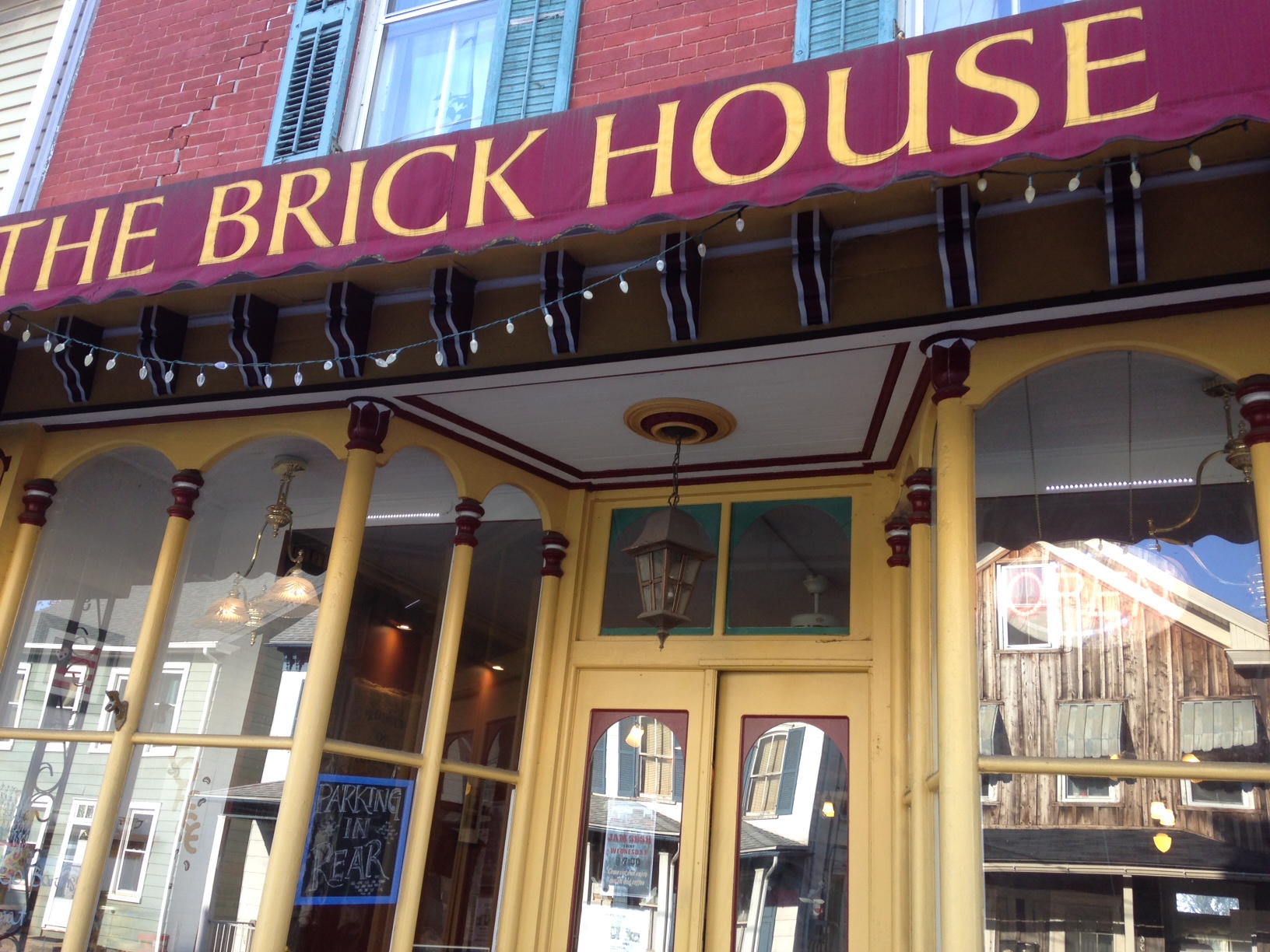
The Brick House Cafe along Main Street in Manheim, Pennsylvania, is getting free advertising from me today.
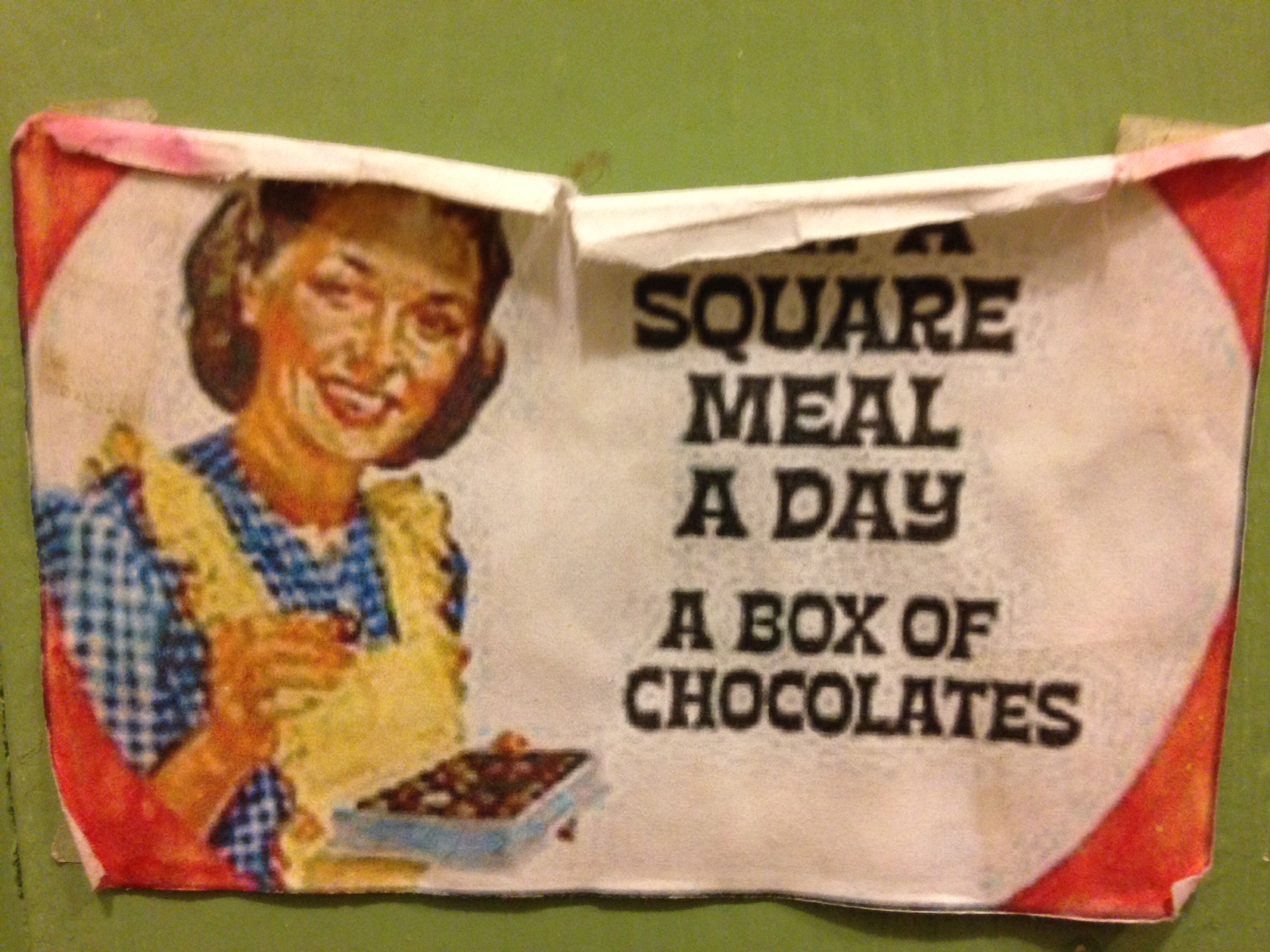
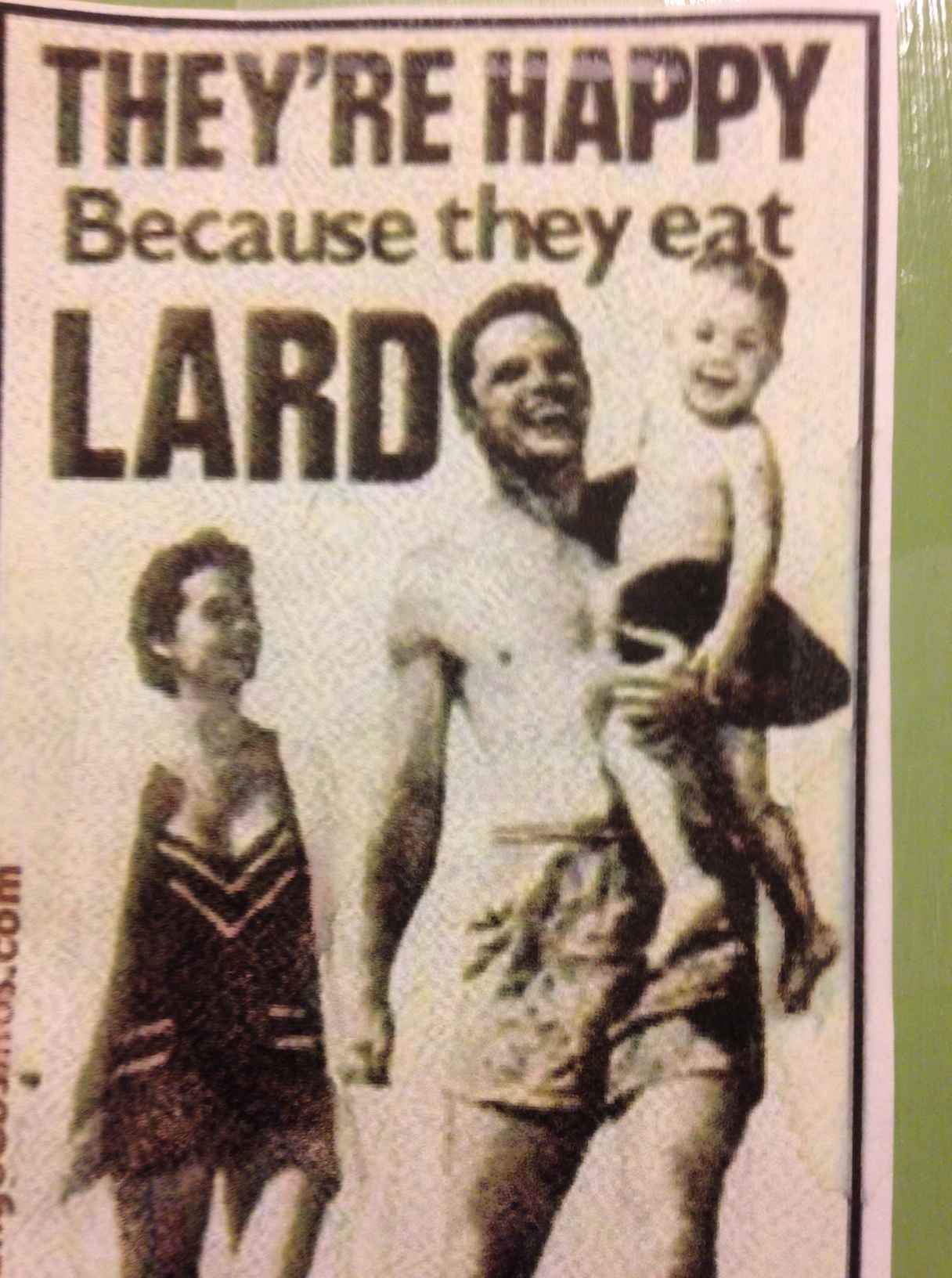
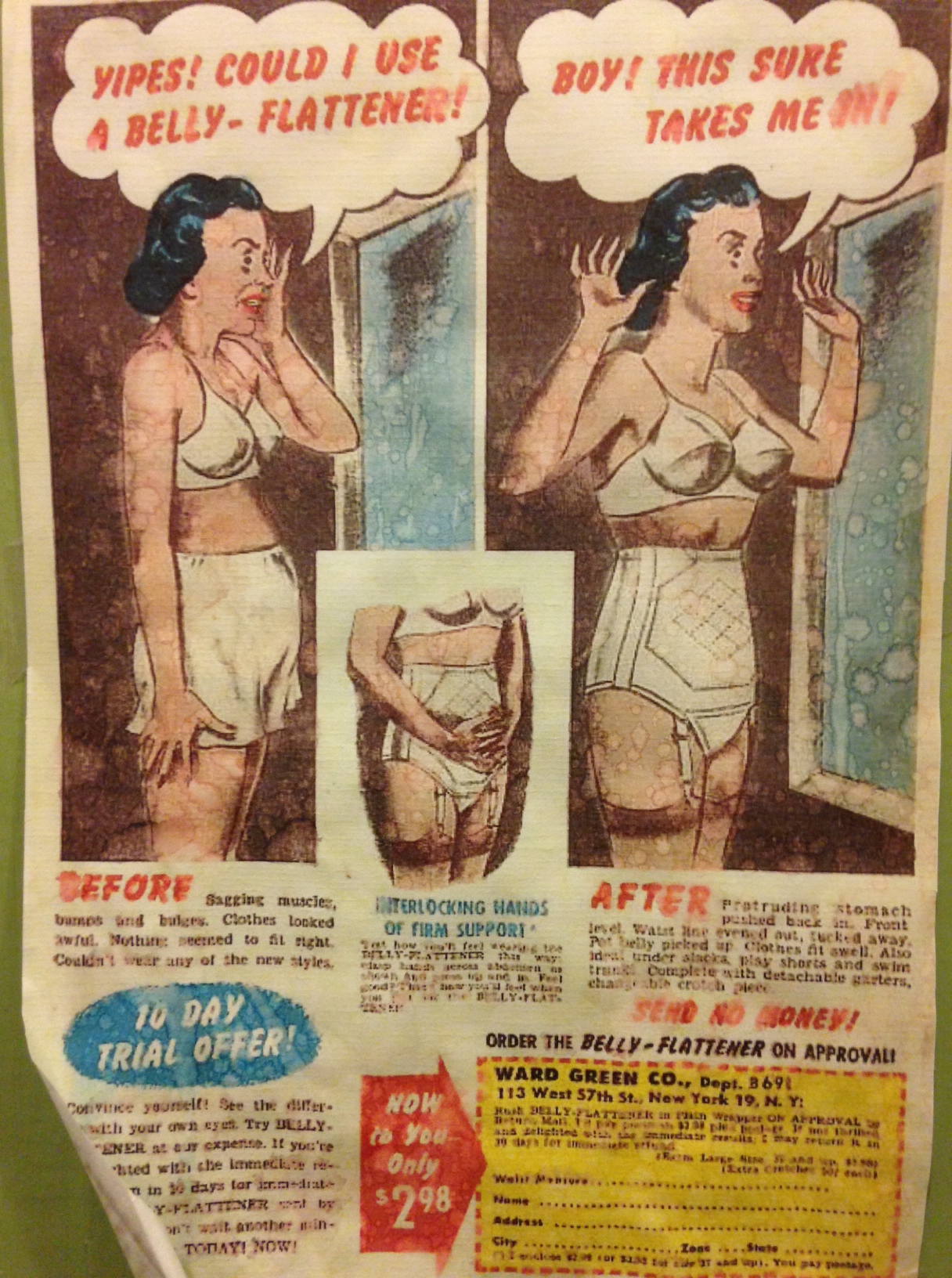
In a sister city named for its counterpart in Mannheim, Germany, The Brick House serves freshly prepared soups, salads, and sandwiches. It also serves up another “S” – Signs from the 1950s. Take a look!
And finally, this:
All posted on the back of the Ladies’ Restroom door! Now I have to wonder what was posted in the Men’s Restroom. . . .
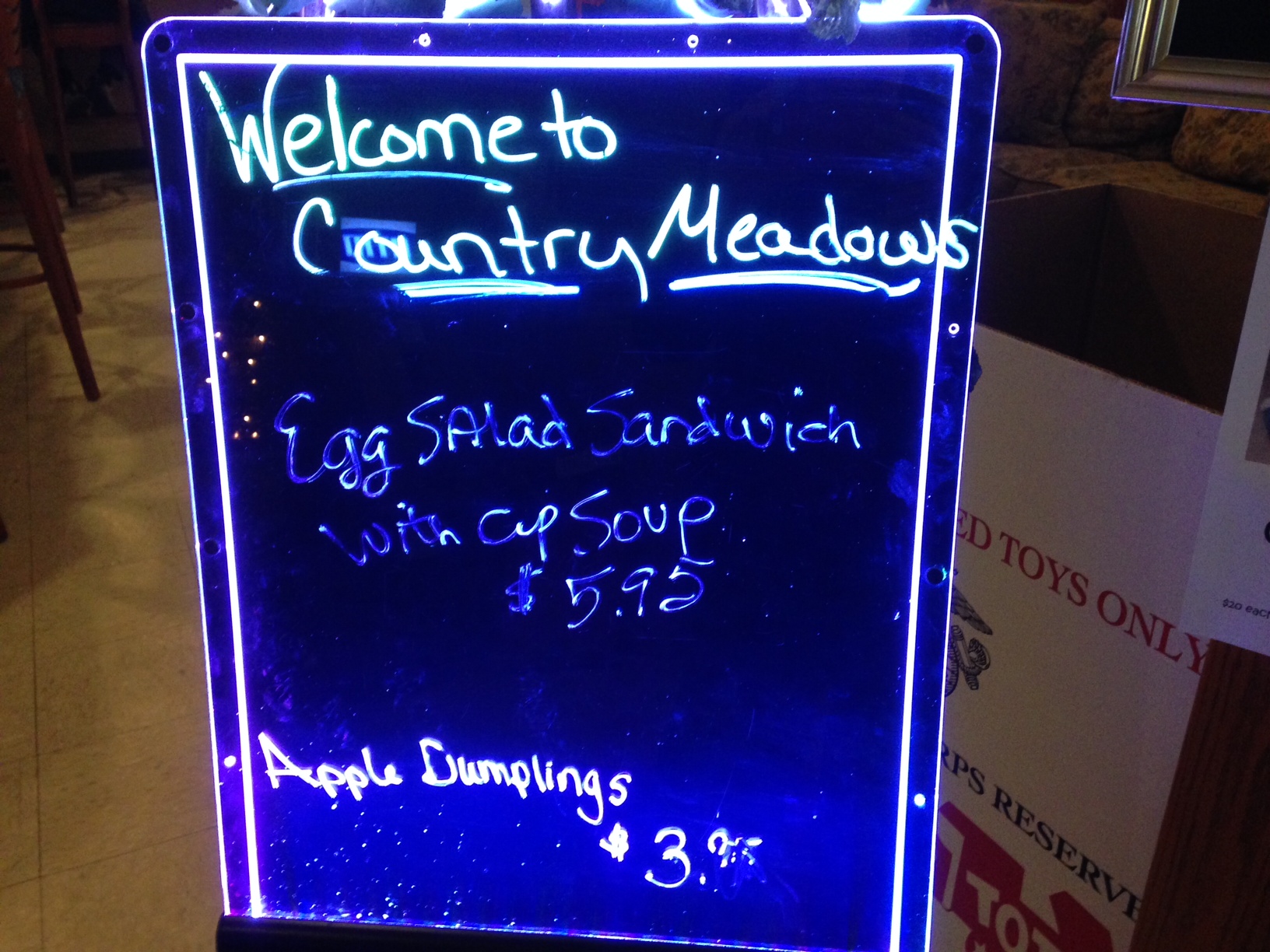
Country Meadows restaurant, nestled in a grassy knoll northwest of Elizabethtown, boasts a menu of stick-to-your-ribs PA Dutch food along with some high-calorie choices.
Signs are few here, but there is lots of neon in the decor . . .
. . . and advertising their specials:
If you are waiting for a table, you can see all the specials in every rainbow hue.
John Lanchester, a confessed foodie, talks about our eating habits in the November 3, 2014 issue of The New Yorker. In an essay entitled “Shut Up and Eat” Lanchester explains that
Once upon a time, food was about where you came from. Now, for many of us, it is about where we want to go–about who we want to be, how we choose to live. Food has always been expressive of identity, but today those identities are more flexible and fluid: they change over time, and respond to different pressures.
Then he elaborates on the craze of pickles, kale, and his mother’s favorite dish, spag- bol, a British recipe “that blends a meat ragù of a northern-Italian type with the dry pasta beloved in the south. . . .”
Today’s post is a hodge-podge: Restaurants in Lancaster County and their menus, goofy signs in restrooms, and a New Yorker article on how we identify with food.
Care to comment? Any or all of the above topics are fair game. You may even add a strange sign you’ve seen!
My secret joys (and struggles) show up in my gratitude books. You can see some of them here. But my list this week has sprung from my 9-day trip to Pennsylvania to visit family and take care of Mother’s house in mid-November 2014.
In her devotional book One Thousand Gifts, Ann Voskamp begins with a chapter entitled Surprising Grace in which she discusses how she and her Farmer Husband “give thanks even when things look like a failure.” Or when one experiences loss.
This year Mother died, we’ve had to sell her beloved house and its contents, I’ve struggled with a motley crew of personal challenges, and still I give thanks:
Health – I have an odd muscular neck pain (yes, pain in my neck!) yet I went up and down 3 flights of stairs from attic to cellar dozens of times, no problem.
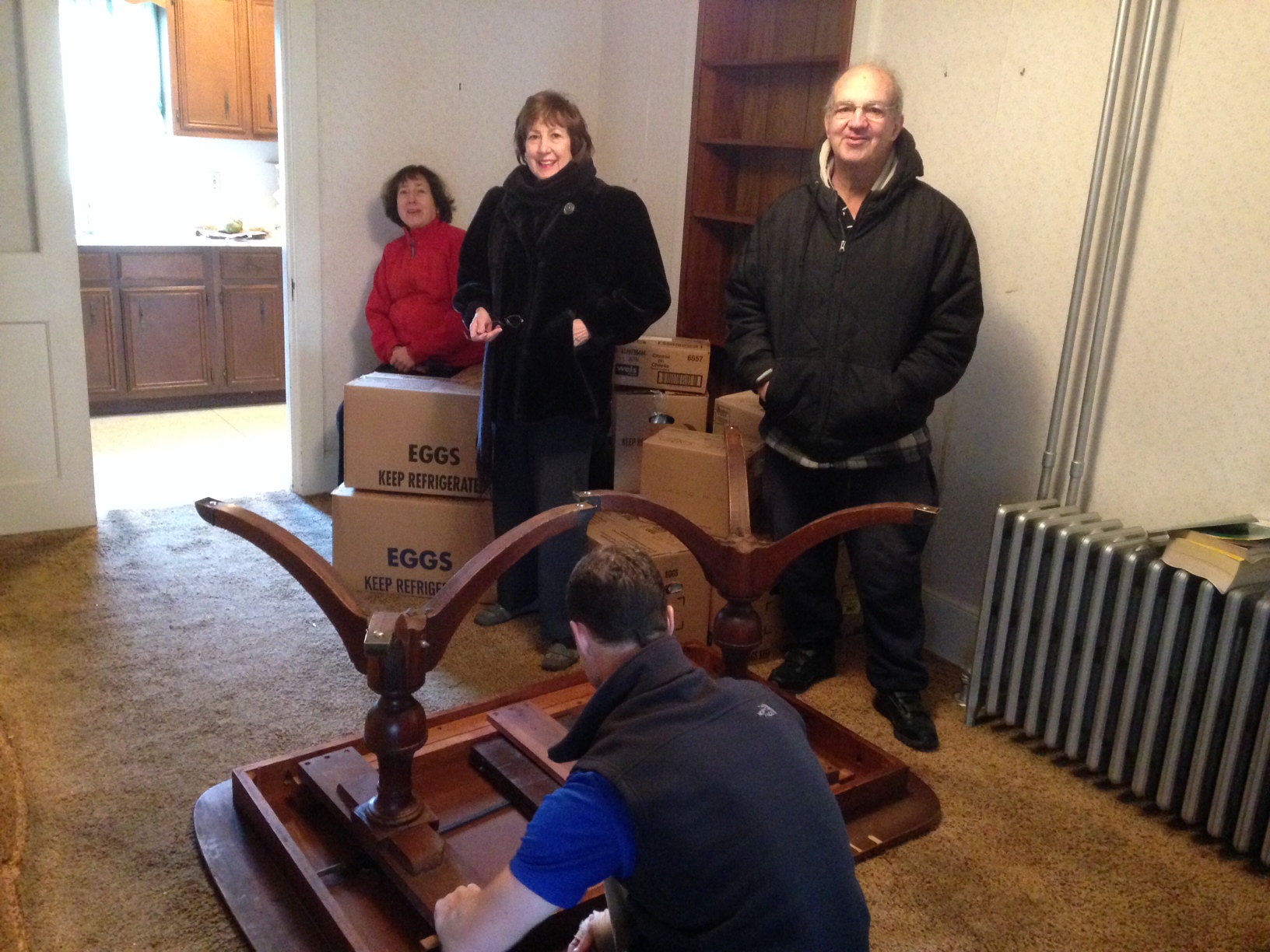
My sisters and brother – We sorted, boxed, laughed, cried, disagreed, but ultimately met the challenge on time.
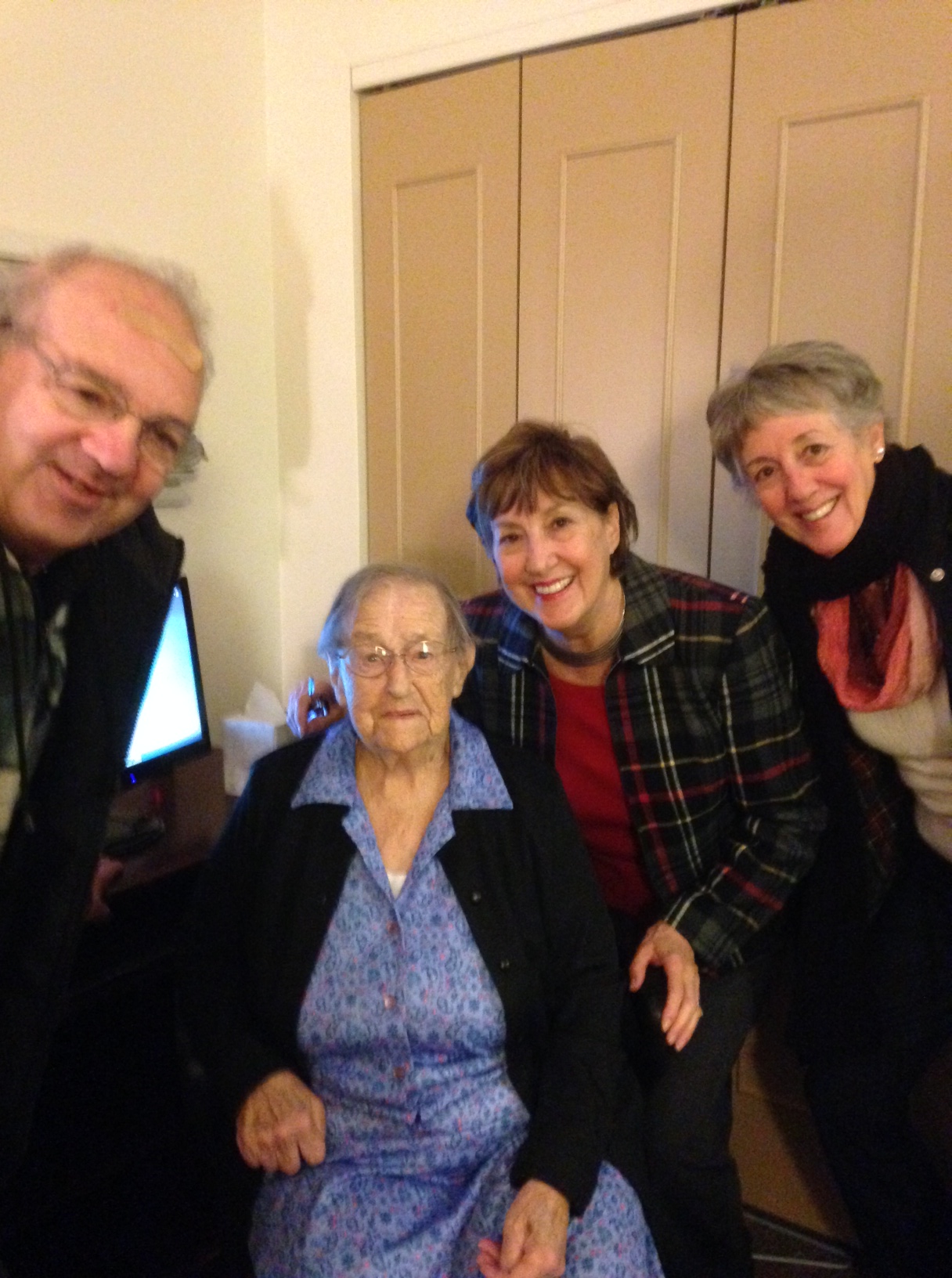
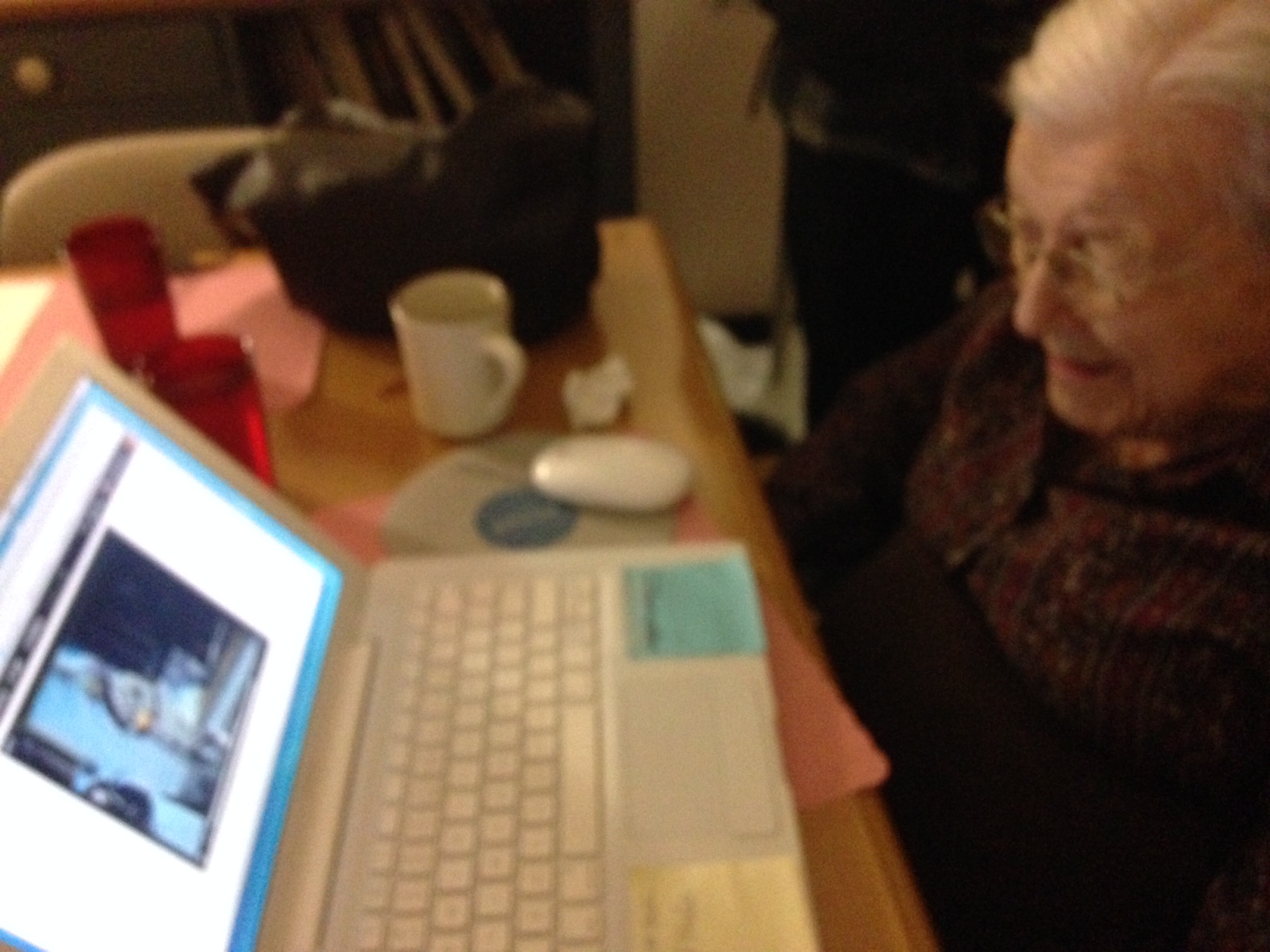
My Aunt Cecilia – She’ll be 100 years old in March, still going strong. We found Aunt Ceci cheerfully playing the Tumbling Blocks game on the computer beside her. “It keeps my mind sharp!” she laughs. A Mennonite preacher’s wife, Aunt Cecilia Metzler raised a family of five children on a Lancaster County farm.
My Aunt Ruthie – The photo is fuzzy here, just like her memory. But after she viewed some of the movies she filmed in her 20s and 30s that appear on other blog posts (here and here) she smiles, “ These pictures really make my mind come alive.”
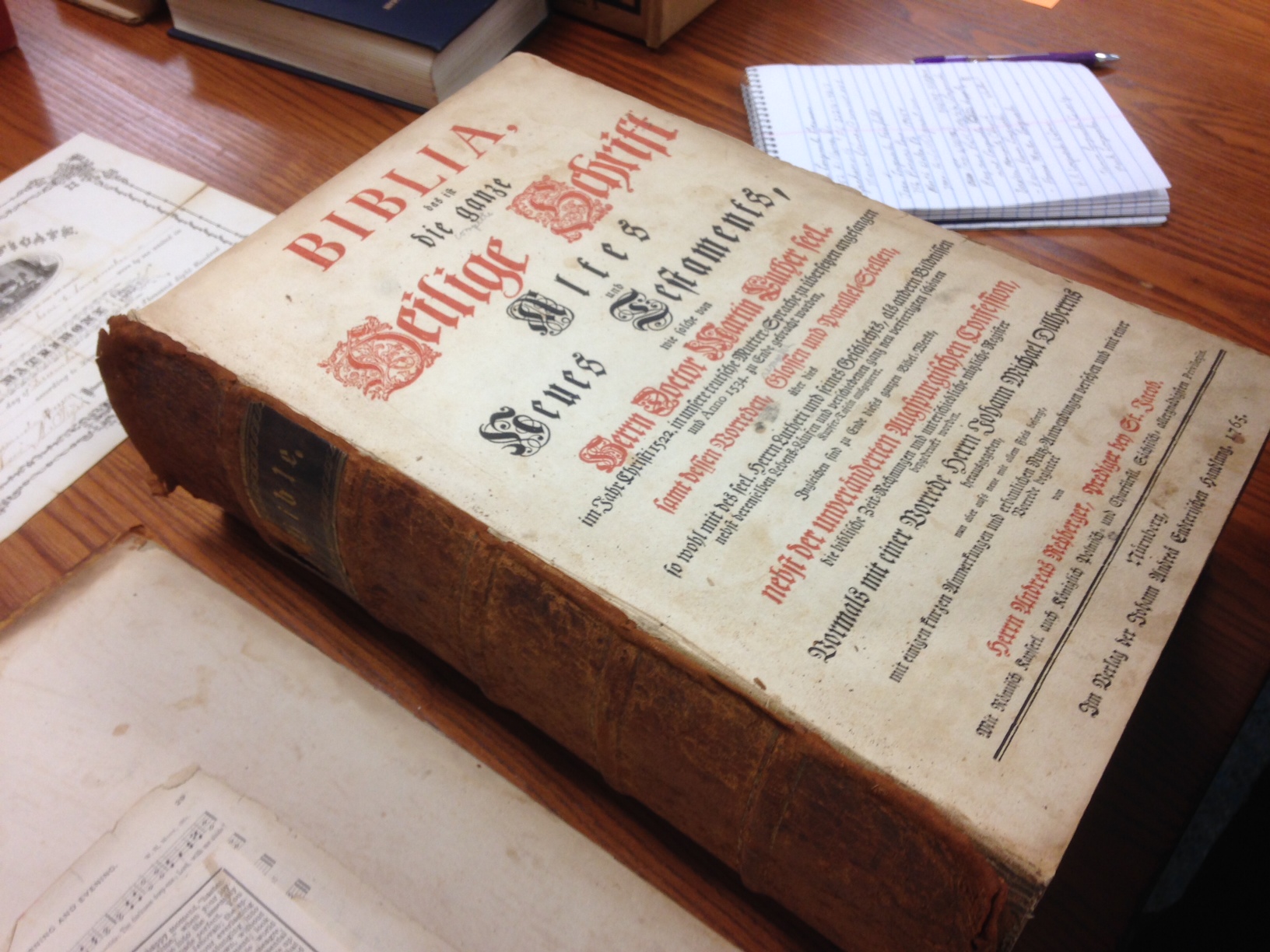
An heritage with spiritual depth – When my ancestors arrived in The New World, they brought with them the Holy Scriptures. This one, the Nuremberg Bible, is dated 1765.
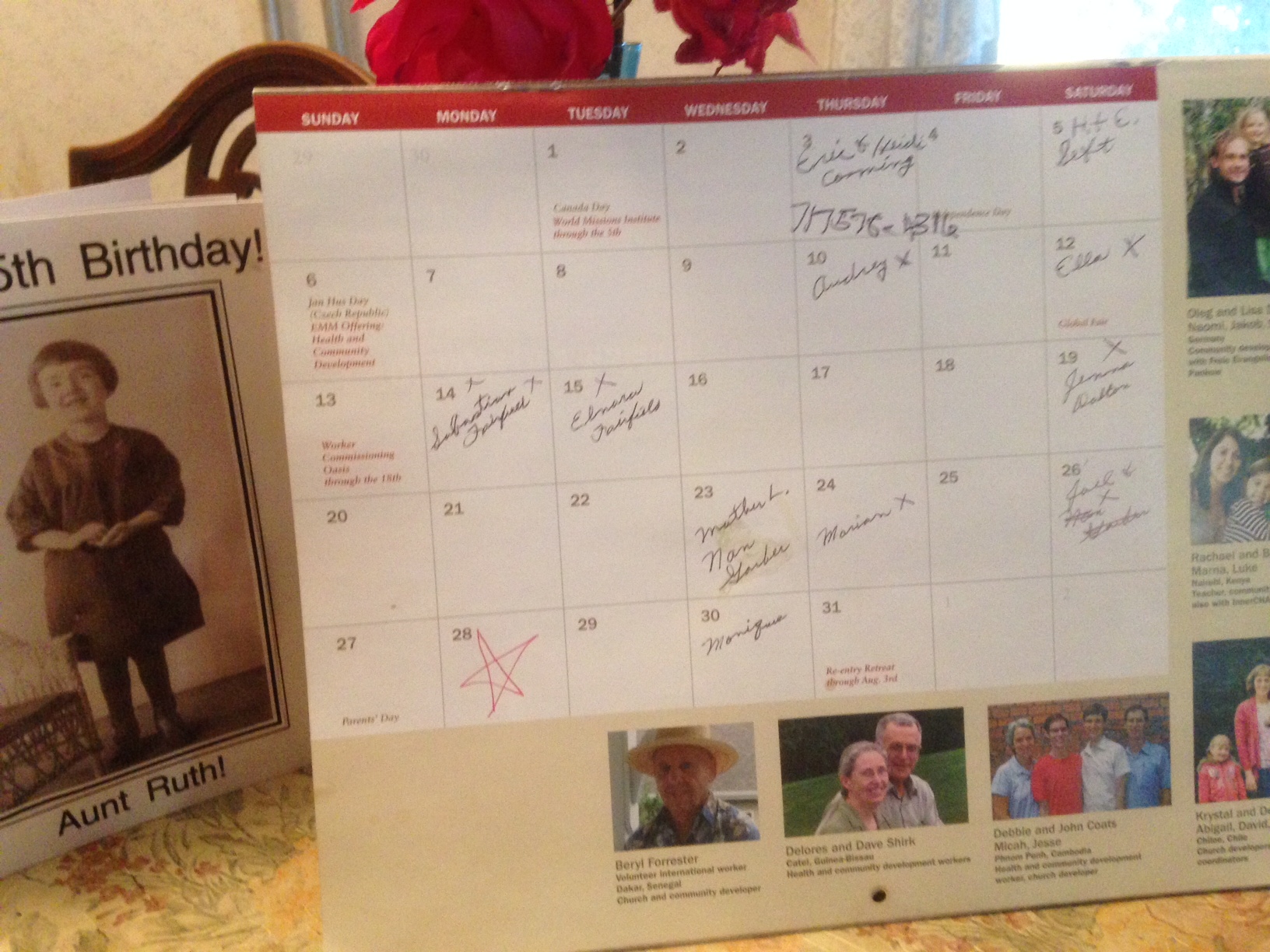
The memory of my Mother – When Mother died, she still had a current driver’s license, paid all of her bills by check, and kept appointments on her calendar. She sent birthday cards to all her children, grand-children, and great grand-children, represented by names penned into the blocks. She died on the 28th of July, a date we marked with a red asterisk.
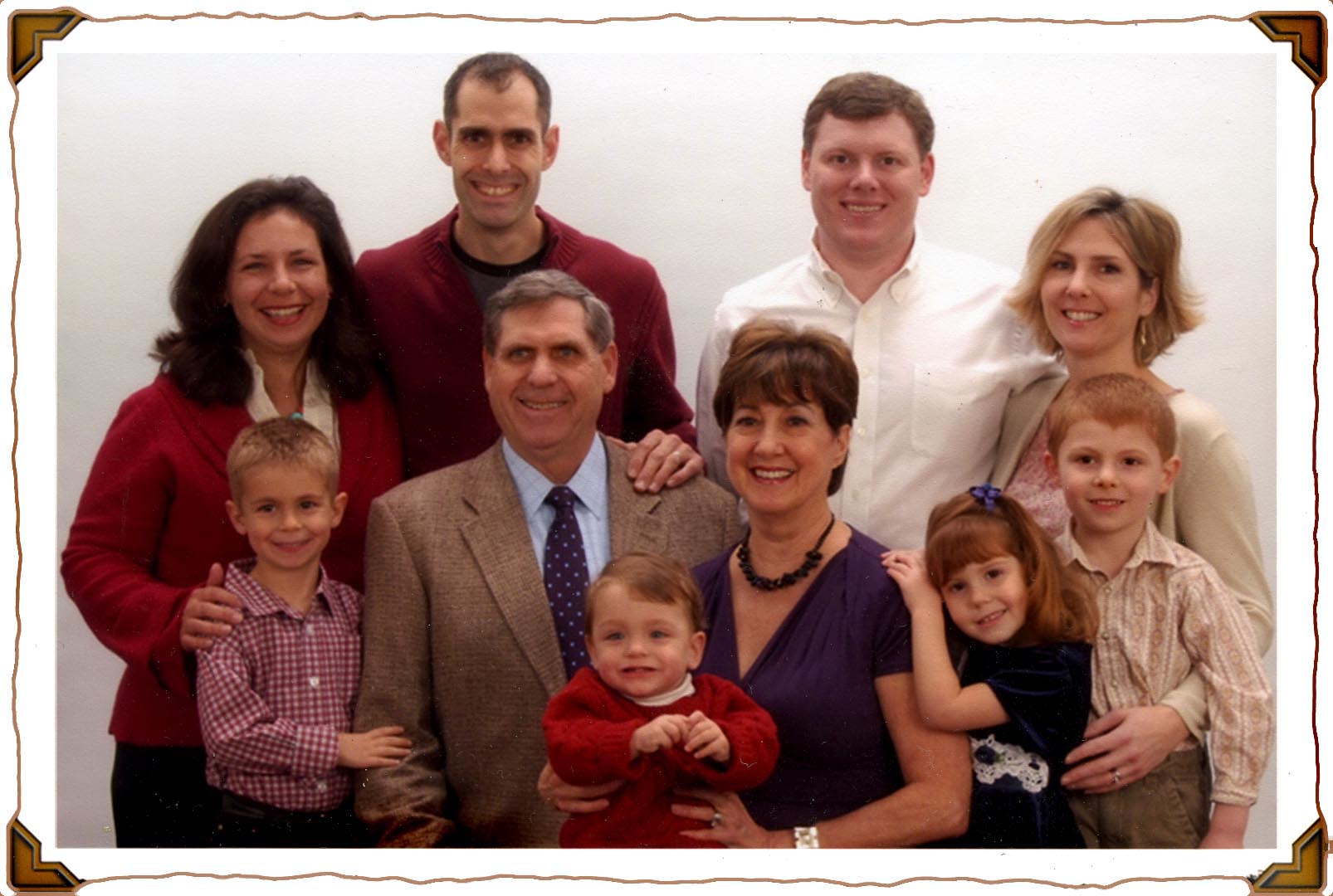
My family – This photo is six years old, taken when baby Ian no longer needed a breathing apparatus. Just so you know: our daughter Crista is blonde, Joel, dark-haired. With the older boys now 11 years old, we are due for an update!
Ann Voskamp continues by quoting the first reference in Scripture containing the word thanksgiving, mingling peace and gratitude:
And this is the law of the sacrifice of peace offerings that one may offer to the LORD. If he offers it for a thanksgiving, then he shall offer with the thanksgiving sacrifice unleavened loaves mixed with oil, unleavened wafers smeared with oil, and loaves of fine flour well mixed with oil. With the sacrifice of his peace offerings for thanksgiving he shall bring his offering with loaves of leavened bread.
Leviticus 7:11 – 13 ESV
My conclusion: Gratitude brings peace and ultimately joy.
Writer Voskamp concludes: ” . . . standing straight into wind is how to fly on His wings of grace.”
Finally, a song I remember from childhood from that seems appropriate for the season:
What are you grateful for? Join me in naming your blessings.
In June Mother Longenecker and her daughters Marian and Janice created butter-shaking memories in a two-quart jar, making butter using three easy steps:
Pour cream into 2-quart jar.
Shake until you rattle and roll.
Remove the congealed mass from the jar. Add a pinch of salt.
In July, my Southern friend Carolyn honored my birthday in a “Shake-Rattle-and-Roll Butter-Shake” party. Today you can open up an old-time textbook with me and behold first-graders learning about butter making in a reader published by Lyons and Carnahan with the copyright dates spanning the years 1927-1936.
Interestingly, the Child’s Story Reader also lists three simple steps for butter making expressed in first-grader language:
We got the cream from a cow.
We put the cream in a jar.
We shook the jar.
Jack and Jane even added a pinch of salt to the mixture, and afterwards they had a party of butter on bread!
Another page shows a recipe for butter milk made with a churn with Aunt Ellen assisting.
More Moments of Discovery
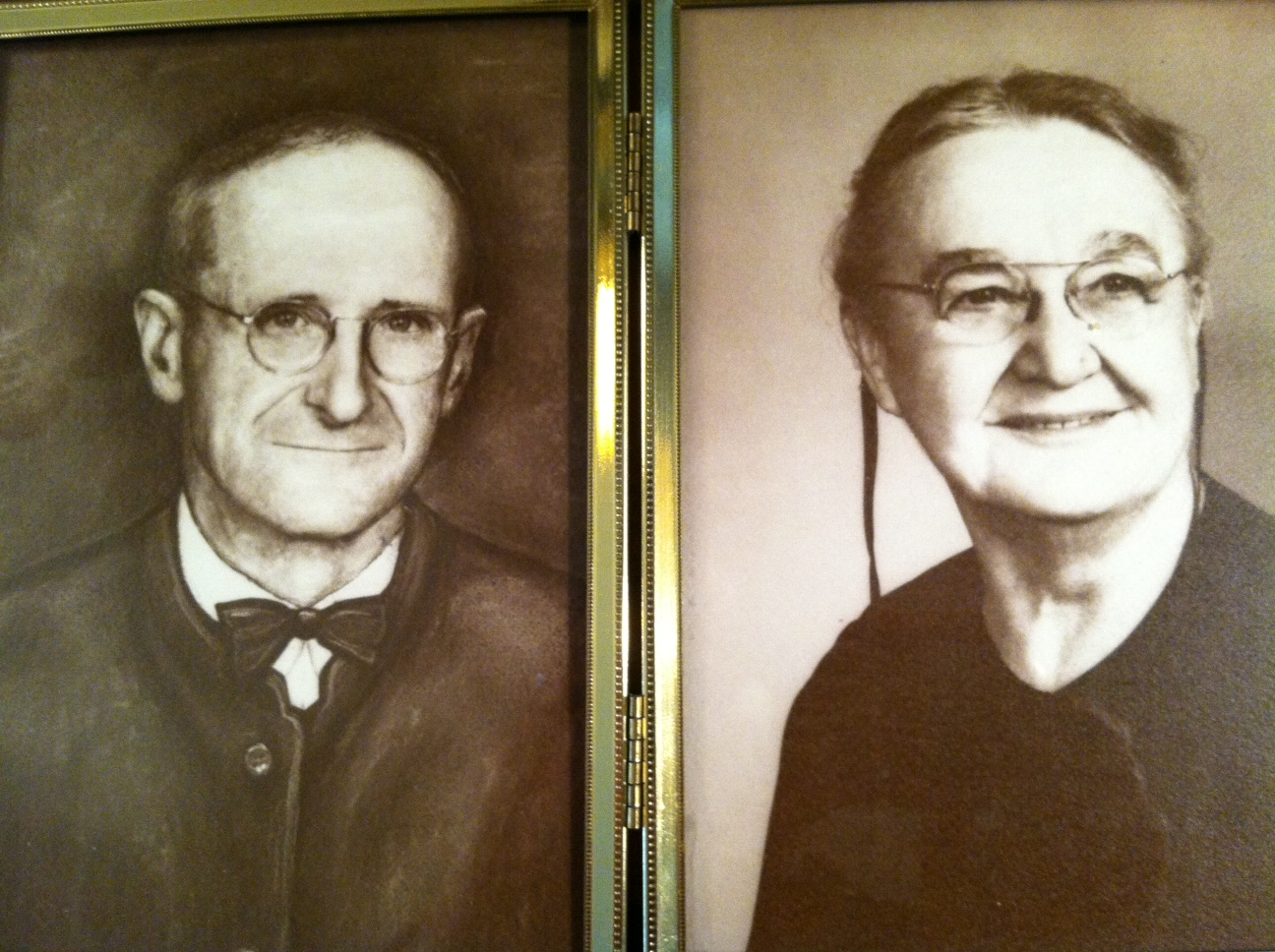
Henry and Fannie Longenecker, Mennonite Grandparents
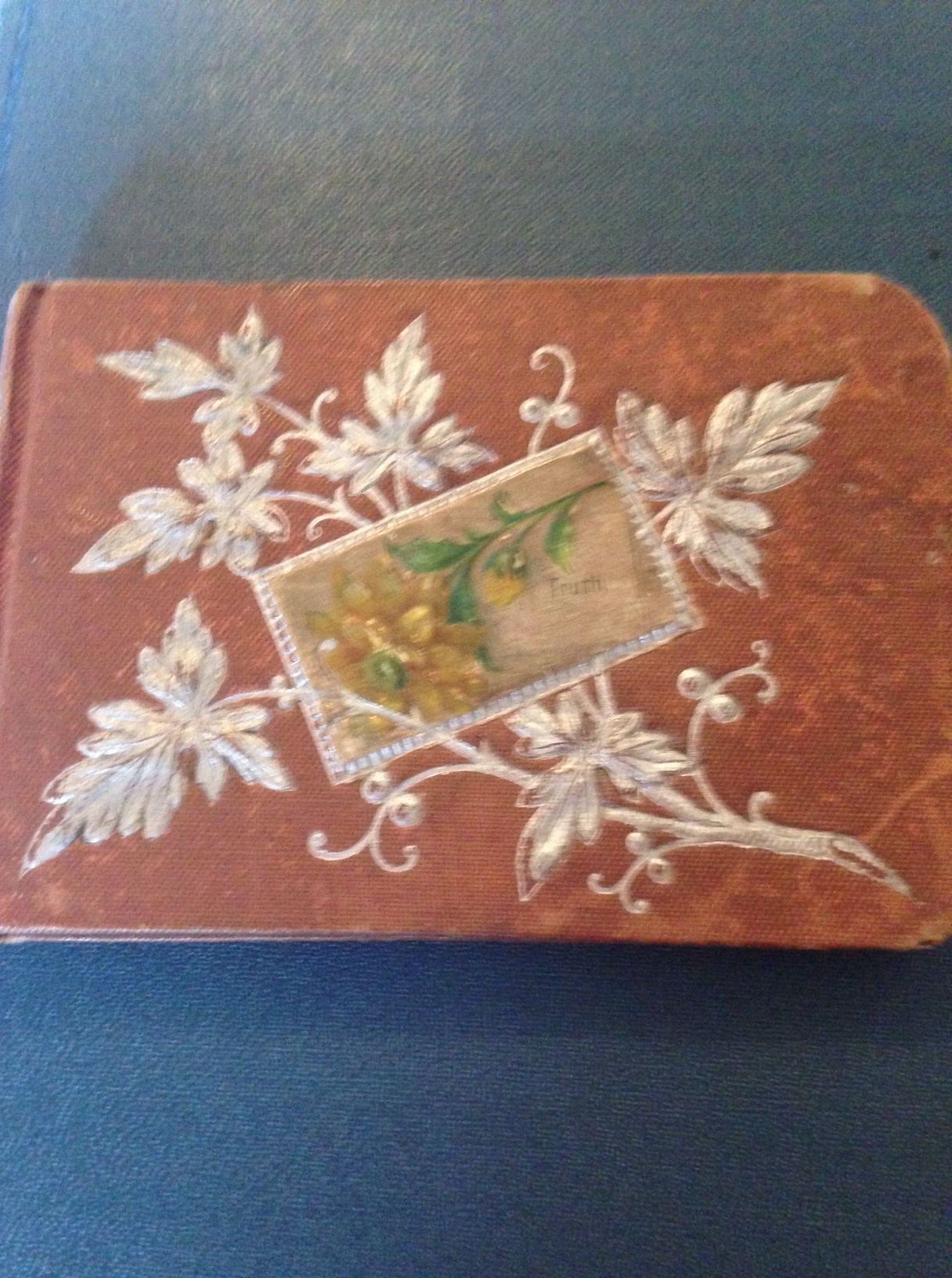
Henry Risser Longenecker, referred to by friends and family as H. R. or “Hen,” was my grandfather on Dad’s side of the family. He died when I was five, but I have a distinct memory of him killing a snake in the grass with a long stick. Like my father, he was a doctor of motors interested in steam engines, Model A Fords, and farm equipment. Until I unearthed his autograph book, I had no idea he had artistic leanings as revealed in his autograph book. Autograph books, common in classrooms in the 1800s, contained signatures, artwork, and bits of poetry. According to Folklore: An Encylopedia of Beliefs, Customs, Tales, Music, and Art, Vol. 1 (edited by Thomas A. Green) autograph books, existed as early as the fifteenth century and were seen as “a mark of gentility until the beginning of the twentieth century.”
The cover of Henry Longenecker’s autograph book reveals artistic flair with a faint inscription of a great virtue taught to every school child, the word Truth visible if you squint carefully at five faint letters appearing close to the embossed yellow flower.
The dedication appears in flowing cursive penmanship with a dove’s beak clasping Cupid’s arrows
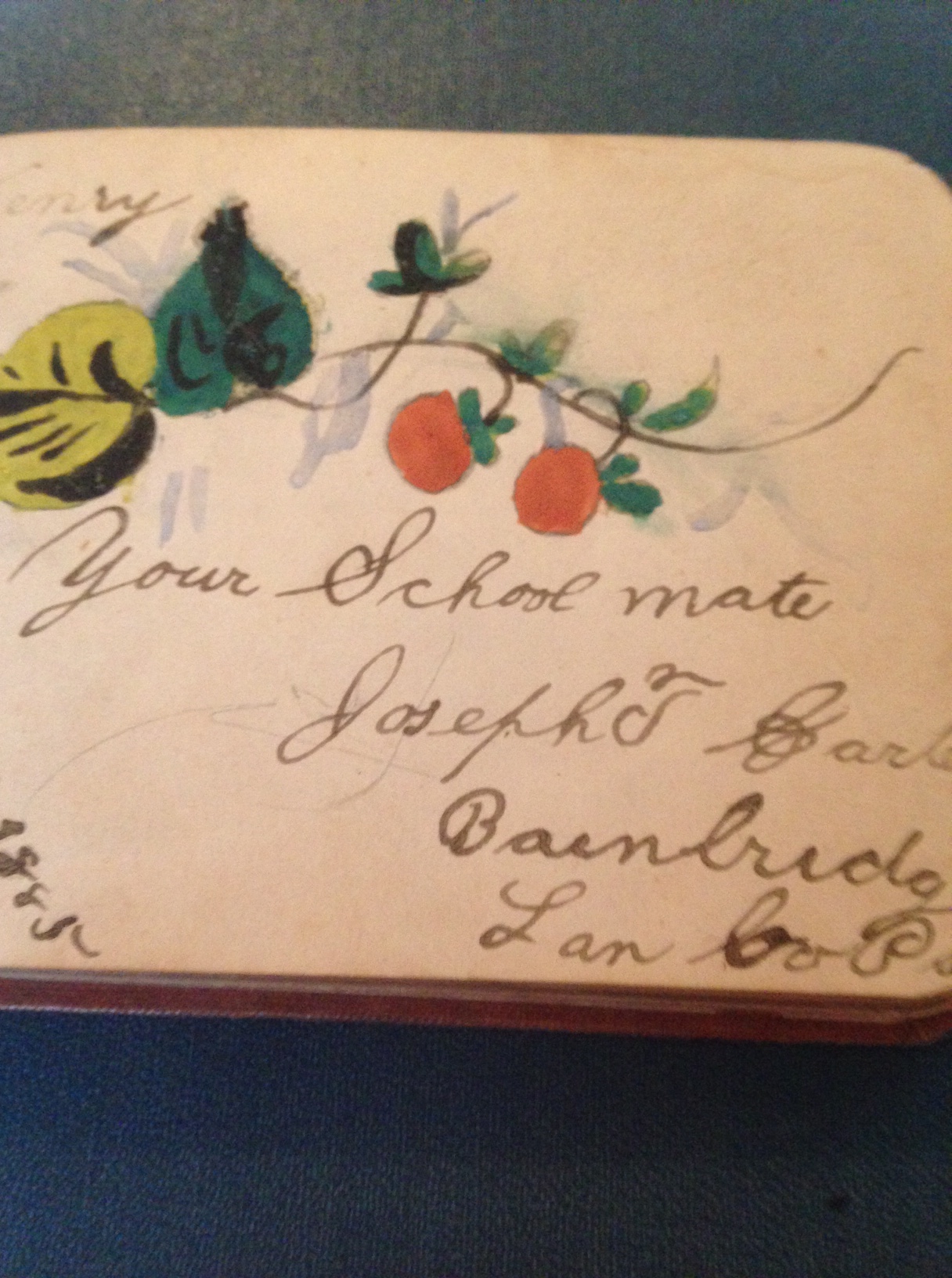
Painted artwork, still-brilliant, graced most pages like this one, complete with signature and date.
Signature: Joseph T. Garber Complete date: February 3,1885
Autograph books tell us several things about students in the late 1800s:
1. Penmanship was taught and valued as an artistic skill.
2. Friendship and learning were intertwined. Both were expressed as an art form.



















 Plain and Fancy