Just for Fun: Signs around E-town

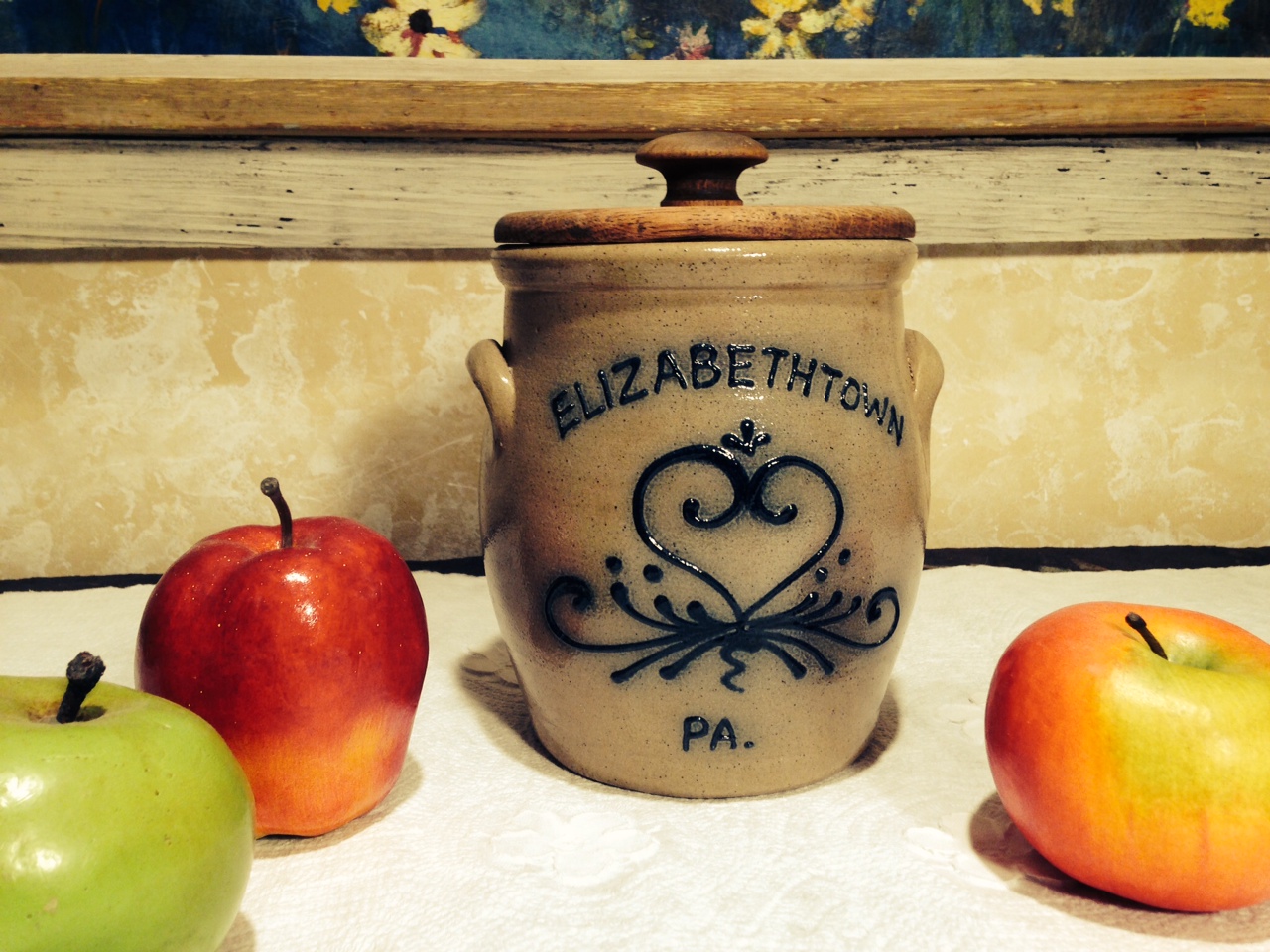
EtownJar


In June, my sister Jan and I visited our Longenecker kin in Elizabethtown and the village of Rheems close by. One morning we took a stroll around the square in E-Town and found that though the town clock was still planted in place, the merchants we knew had disappeared. Dorsheimer’s News, Bishop’s Photography, Moose’s Five & Ten, The David Martin Store, and Zarfoss Hardware had changed into something else entirely: a bakery, a coffee shop, a train specialty store, and further down Market Street, an antique shop about to open.

These signs caught our eyes at the opening-soon antique shop:

Not-so-discreet advice: Notation reads July 14, 1941 Reno - Las Vegas
Tactful notice: Notation reads July 14, 1941 Reno Hotel Association, Las Vegas


Pay up! Notation reads: Virginia Beach, VA  1943
Pay up! Notation reads: Virginia Beach, VA 1943

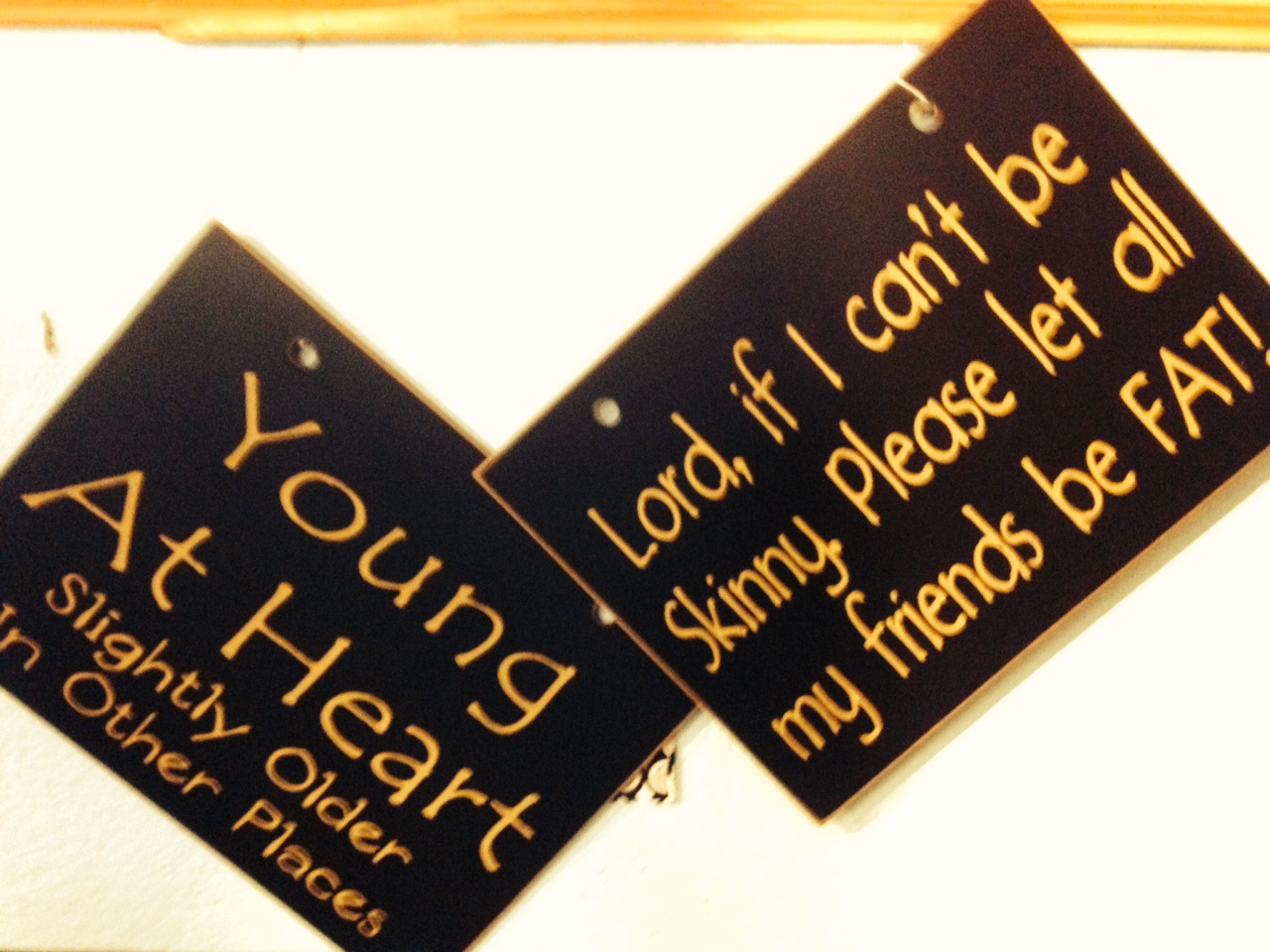
Next we visited The Shoppes on Market, brim full of signs and mottoes for sale:

SignDeerVestSigns2ShoppesOnMarketSleepKitchen

Then we admired the always festive store front of Flowers in the Kitchen Cafe all gussied up for the Fourth of July celebration:

Flowers in the Kitchen Cafe with patio dining. Used to be

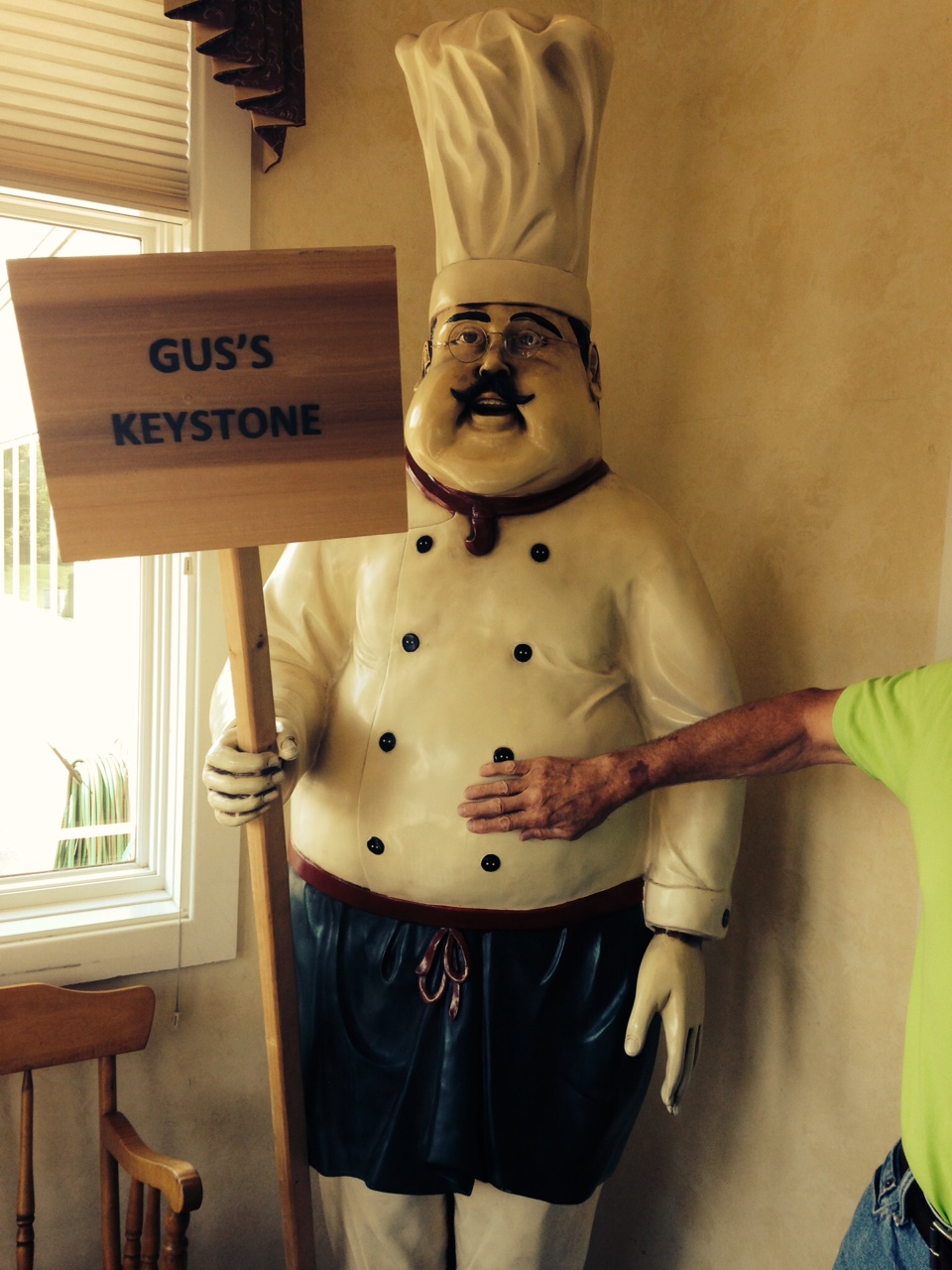
Greek Gus @ Gus’ Keystone Restaurant tweaks his menu to suit Pennsylvania Dutch palates. Dried beef gravy on mashed potatoes, Wenger’s ham loaf, pork and sauerkraut any day, and pig stomach just on Wednesdays. As I snap this photo, one obliging soul obligingly rubs the belly of the greeter.

Gus'sSign

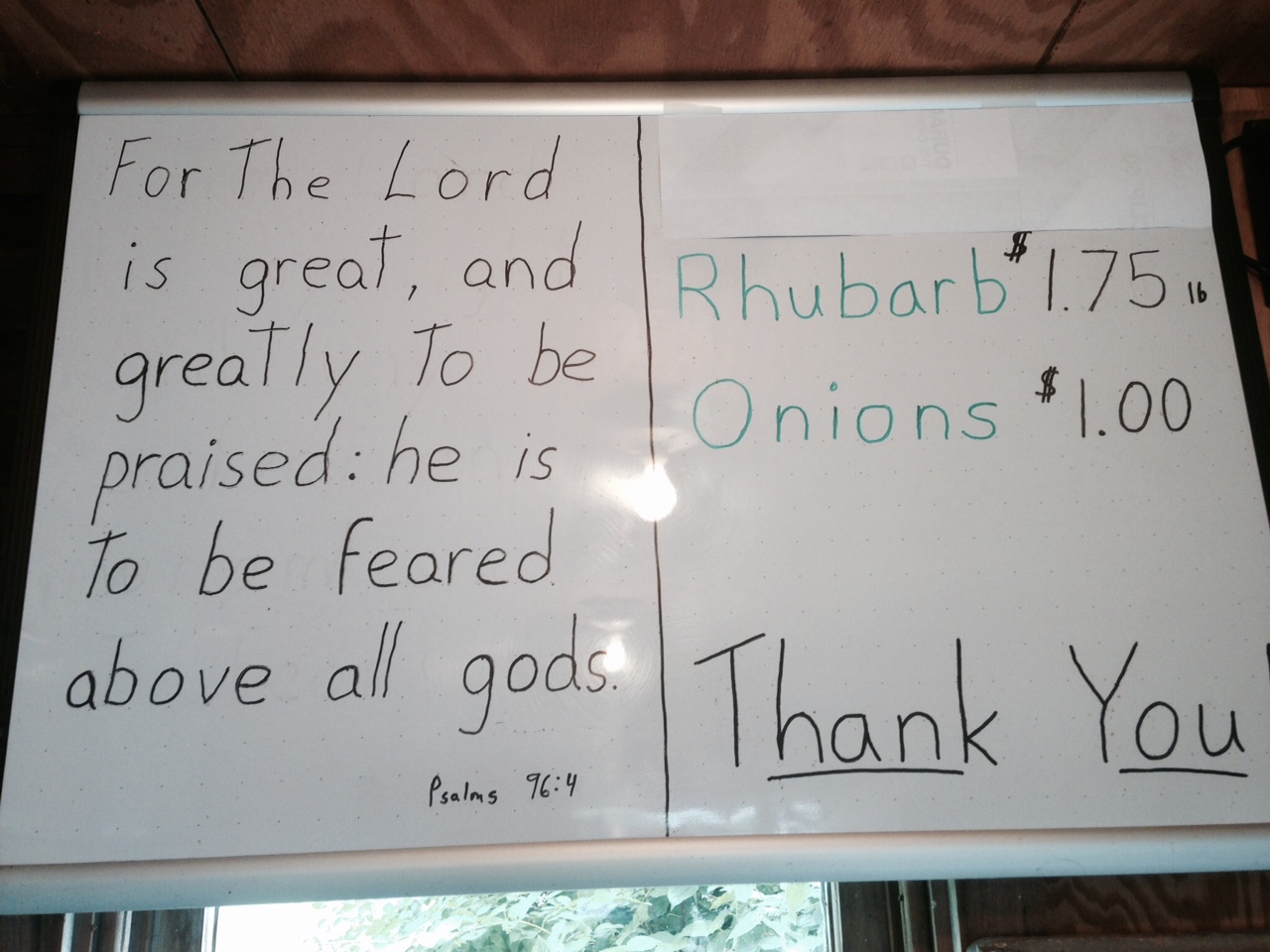
Less than a mile from Bossler’s Mennonite Church, the truck on the Kevin Charles farm delivers fresh bounty from the field. We buy 2 boxes of strawberries, a pint box of sugar peas, and 5-6 stalks of rhubarb. (See recipe for rhubarb sauce below.)

KevinCharlesTruckProduceSignKevin

Miniature tractors for sale at Darrenkamp’s Grocery Market near Mt. Joy, PA

GroceryStoreTractors

* Mom’s Rhubarb Sauce Recipe

Soak 5-6 stalks of fresh rhubarb

in water to “cut the bitterness,” Mom says.

Drain off the water.

Add fresh water.

Cut up stalks into 1/2 inch chunks and bring to a boil.

Add sugar to taste   “. . . until it’s sweet enough”

and 2 tablespoons of tapioca  “. . . just what you think,” Mom says.

Mixture will thicken as it cools.

  *  *  *

Have you returned to your home town recently and found it changed?

How have these changes affected your memory, your emotions?


♥ Coming next: Happy Birthday to my One and Onlies

Laundry at the Longeneckers

     We have to try it again. Here’s another shirt,” Jane said as she plucked one of Dad’s blue work shirts out of a plastic bag full of shirts—clean, sprinkled and rolled—all ready to iron. “Start with the yoke,” she directed.

I grabbed the damp shirt out of her hand and flopped it onto the ironing board. “I know where to start,” I huffed. I knew to start with the yoke, then iron the collar, then the left sleeve and cuff, front and back, then the right sleeve and cuff, front and back, then the right front, taking particular care around the buttons . . . and with the button hole placket where it was so easy to iron in wrinkles.

So begins Carol Bodensteiner’s chapter “Laundry Lessons” in her memoir Growing Up Country, a chapter that describes to a tee the washing, drying, folding, sprinkling, and ironing of laundry, chores that were also observed in the Longenecker family.

Mother’s work week was regulated by the pendulum of ritual. Certain tasks were done on certain days in her 1950s household. If it was Monday, she washed clothes, on Tuesday she ironed them, and so on through the week to Friday, the big cleaning day.

Her wringer washer and a rinse tub was pulled out to the middle of the “washhouse,” a room next to the kitchen every Monday. Sometimes I helped by feeding clothes from the rinse tub into the washer wringer, a tricky task for a child. At least once I got my arm caught in the wringer. Of course, my screams and yells summoned Mother to fly out of the kitchen, bang on the release apparatus to make the two rollers fly apart. After the fright and the pain subsided, I was amazed my arm wasn’t as flat as a paper doll’s.

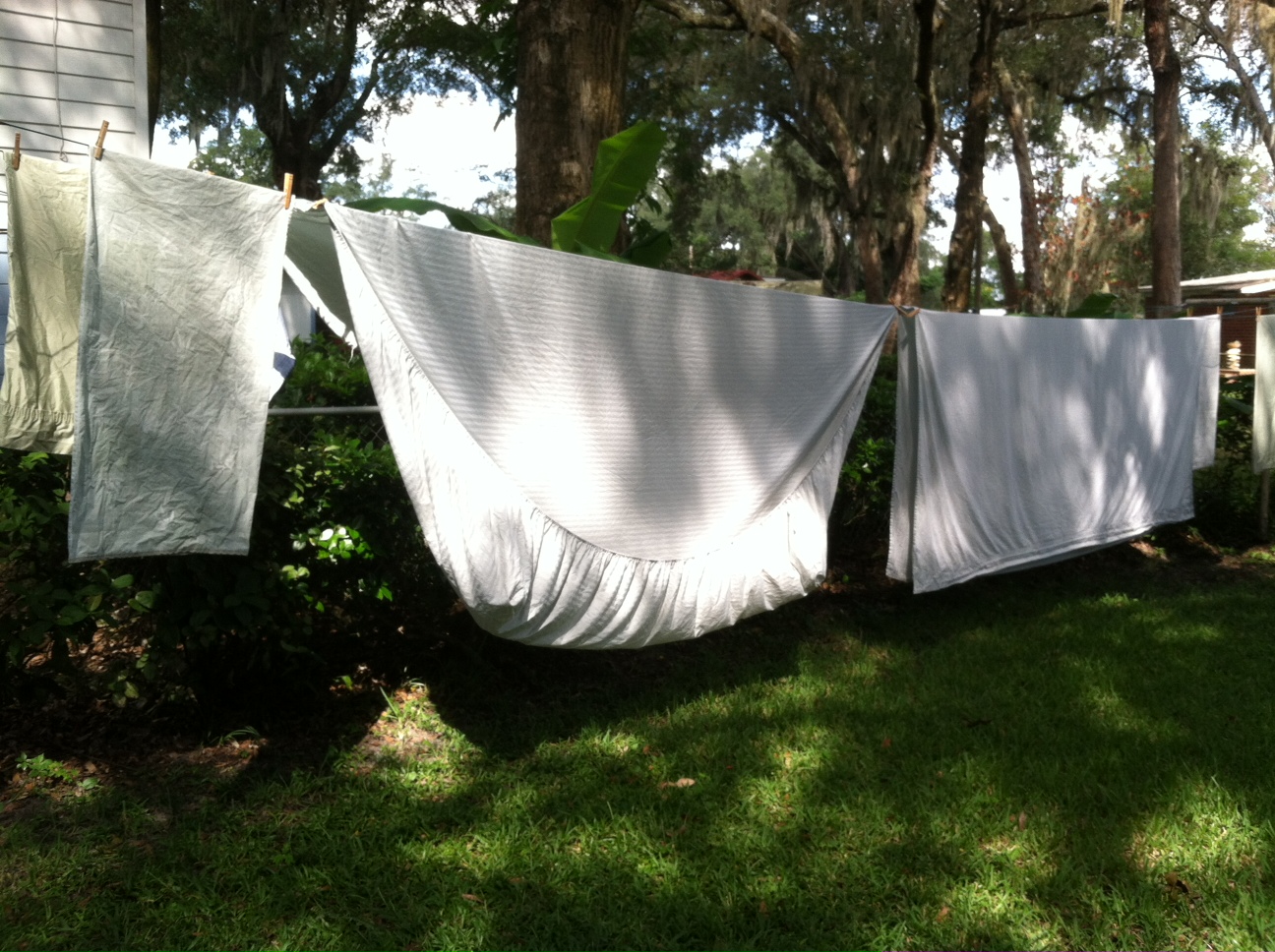
When I was tall enough to reach the clothes line, I hung up wash clothes, towels, shirts, and dresses, instructed to “hide” underwear in one of the inner lines so neighbors wouldn’t see. To this day, if there is a sunny day with a breeze in Florida, I hang sheets out to dry.

Sheets on Line

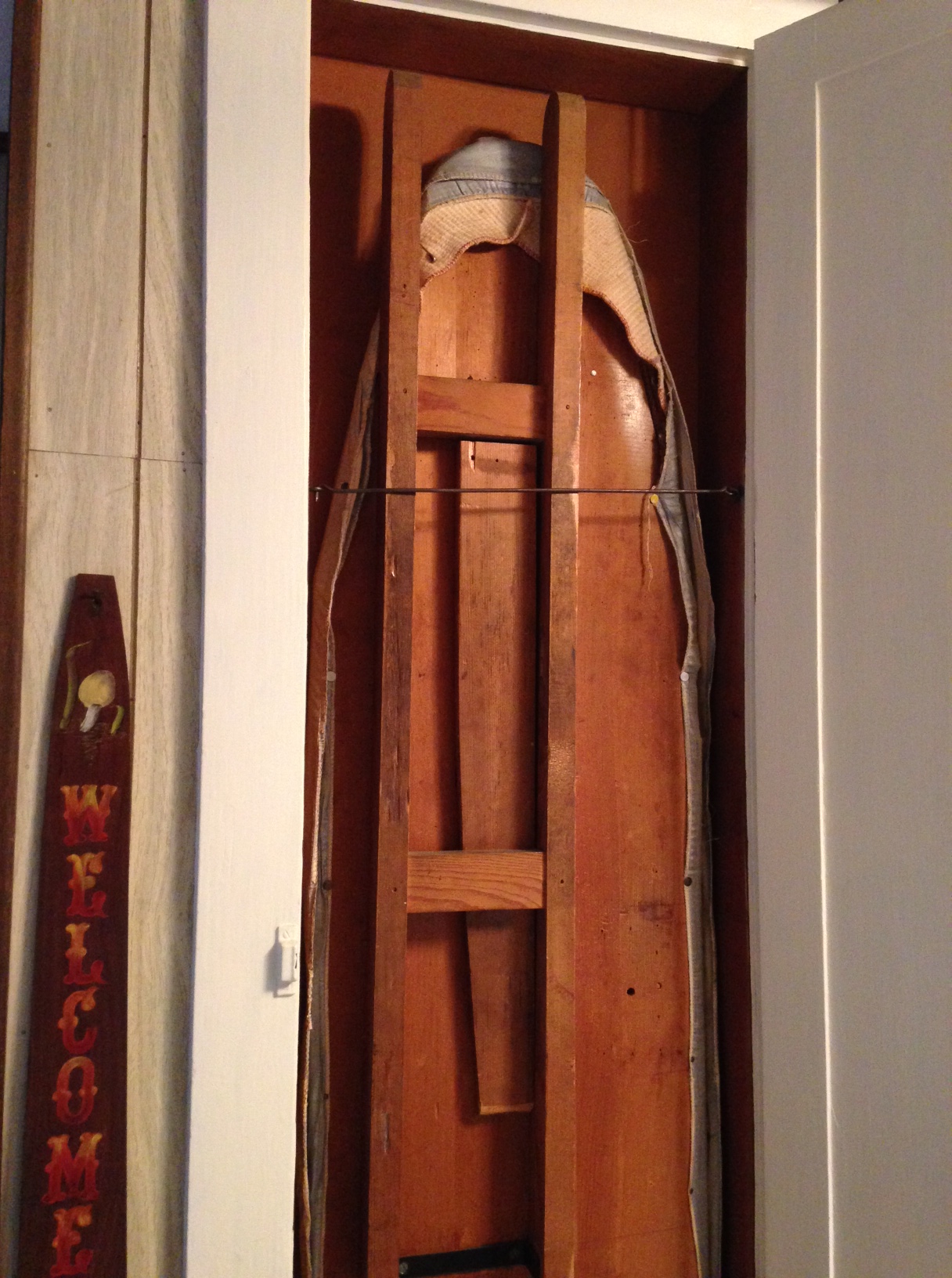
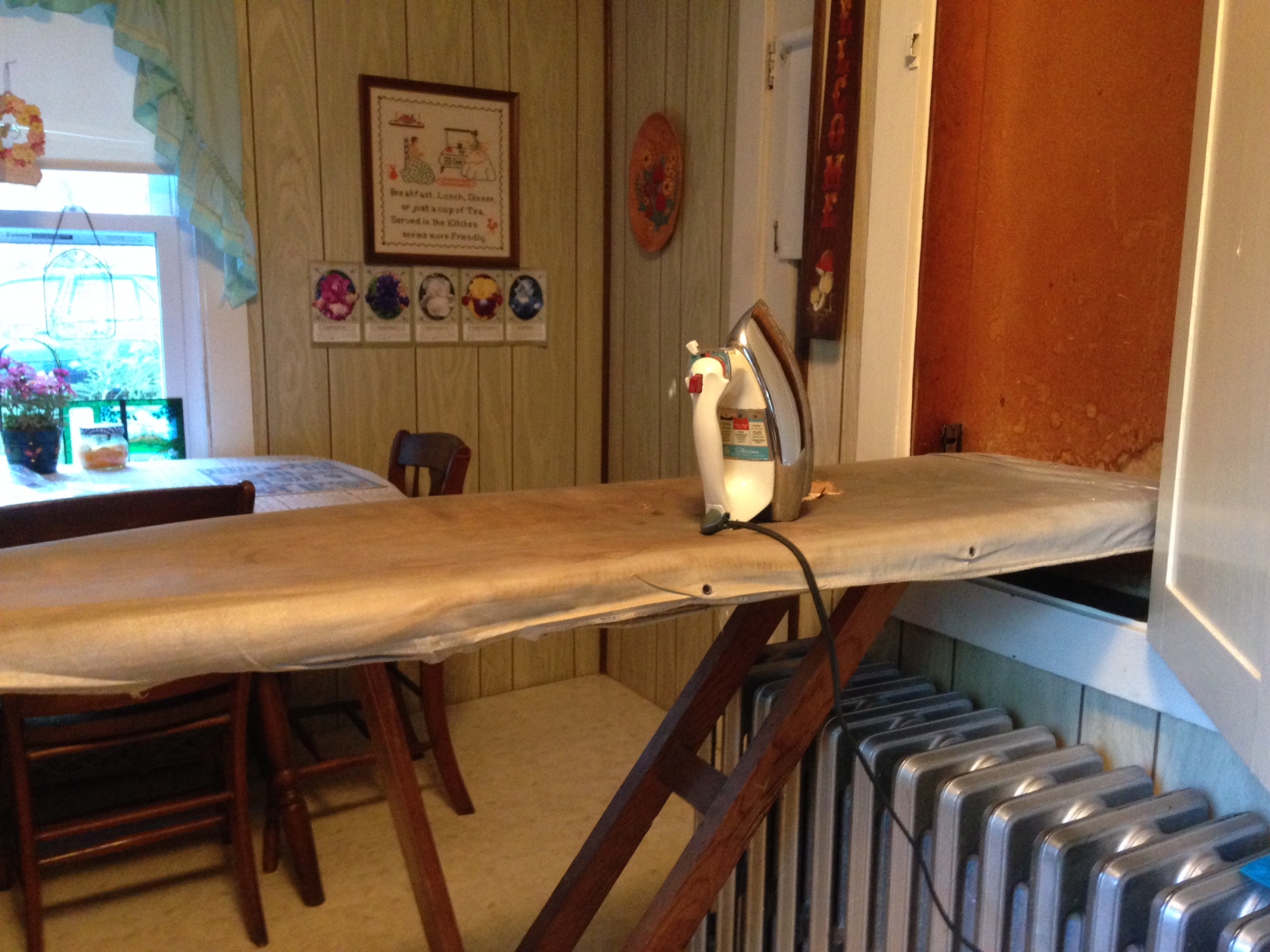
On Tuesdays, Mom pulled the ironing board out of the wall, set up the iron and away I went, attacking first the easy stuff like hankies. I nourished my sense of order and accomplishment letting the point of the heavy, hot iron smooth out all the wrinkles in the garments that followed: school blouses and skirts, finally graduating to Daddy’s white, starched Sunday shirts.

IroningBoardinWall

Same ironing board with vintage iron

We never ironed sheets though one Mennonite woman we knew, Pearl Longenecker, sat down (probably on Tuesdays too) in front of her ironer, a white appliance shaped like a miniature piano, with a hot roller that smoothed each crease in her sheets and pillow cases, pressing them into lovely squares and rectangles to fit her closet space.

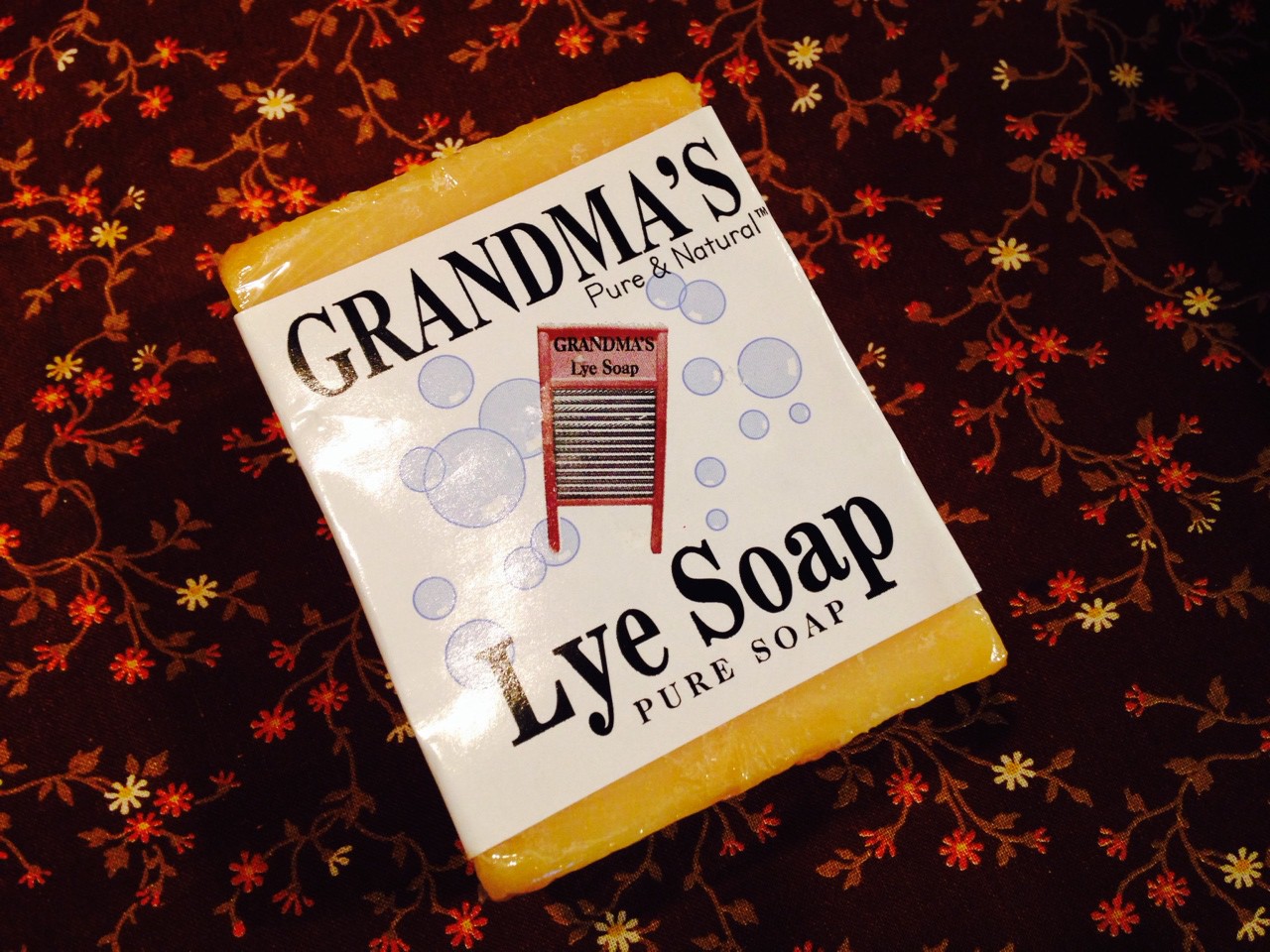
Grandma Longenecker’s ritual matched our own though it took place on her back porch. Like Colonial American women before her, she made her own soap cooking together grease and lye in a big metal tub, stirring the whole mess as it boiled. Though the smell was pungent and slightly disagreeable, Grandma smiled as she cut the congealed mixture into squares and rectangles, knowing the grease and grime would be erased from her laundry on wash day. If there were spots that wouldn’t come out with lye soap, she spread the stained garment, usually white, on the grass because she was sure “the sun will draw it out.” And it usually did!

LyeSoap

Share your laundry rituals, past or present. Something historical–or hysterical!

Mennonites at the Beach 1950s style

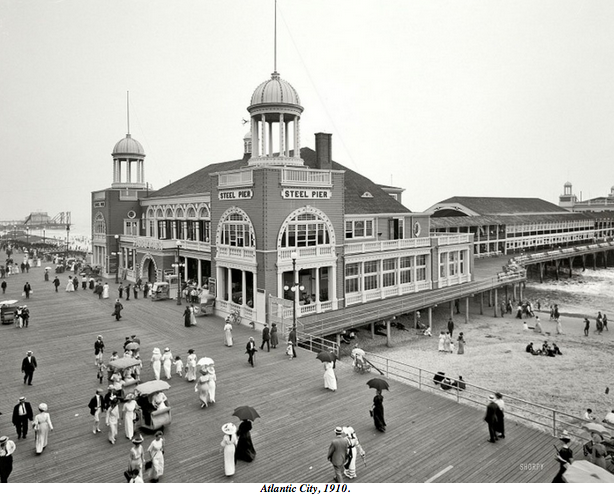
Atlantic City, New Jersey was the beach mecca for vacationers on the East Coast in the early 1900s. Still dressed in fancy Victorian formality, vacationers caught the salt air as they strolled along the famous board-walk at the Steer Pier, a combination theatre and amusement park: “Rain or Shine … There’s Always a Good Show on Steel Pier” the saying goes. But for most Mennonites, the Steel Pier was an elegant building to ogle only. The theatre was worldly and therefore strictly forbidden by church rules.

AtlanticCitySteelPier1910

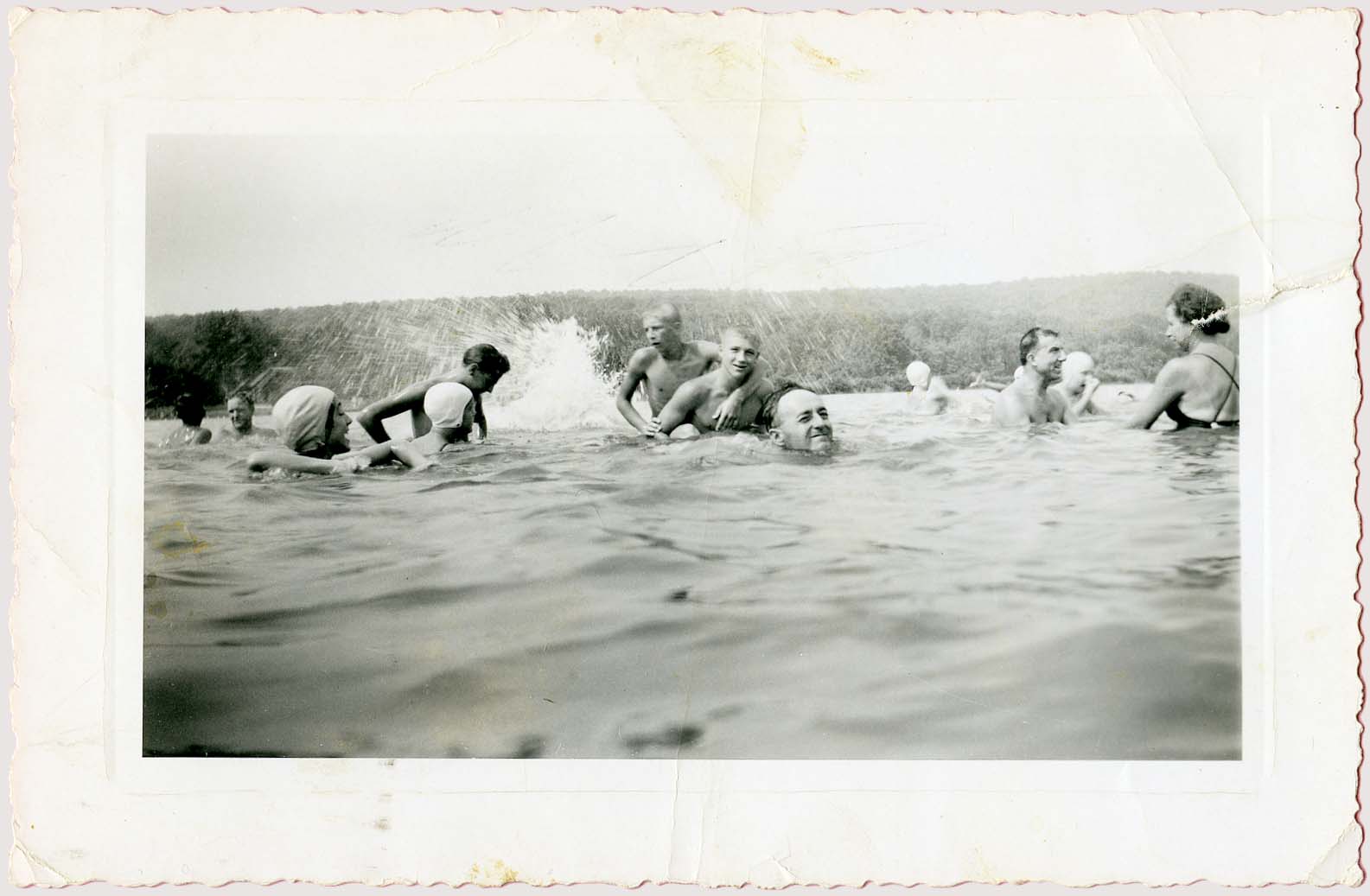
But Mennonite families liked the ocean, including my own. Many summers Daddy took Mother and the family to Atlantic City or Ocean City, New Jersey for a day. Mother just loved the water. From the time she pulled on her white latex bathing cap over her bun and donned her black, satin bathing suit with a fluffy skirt, she was bobbing up and down in tune with the waves.

Daddy in his maroon, scratchy-wool, full-body suit was usually at the shore line yelling to her, “Waaatch ooouut for the un-der-tow!” By the end of the day, he was sun-burned and out of sorts, insisting on taking his thirsty, sandy-toed family straight home, a 3-hour drive. In spite of our protests, there was no stopping for a meal let alone an over-night stay in a motel. Daddy was much too frugal for that. Yet he’d dutifully come back for more next year.

Daddy tames the undertow and gets into the water--finally!
Daddy tames the undertow and finally gets into the water!

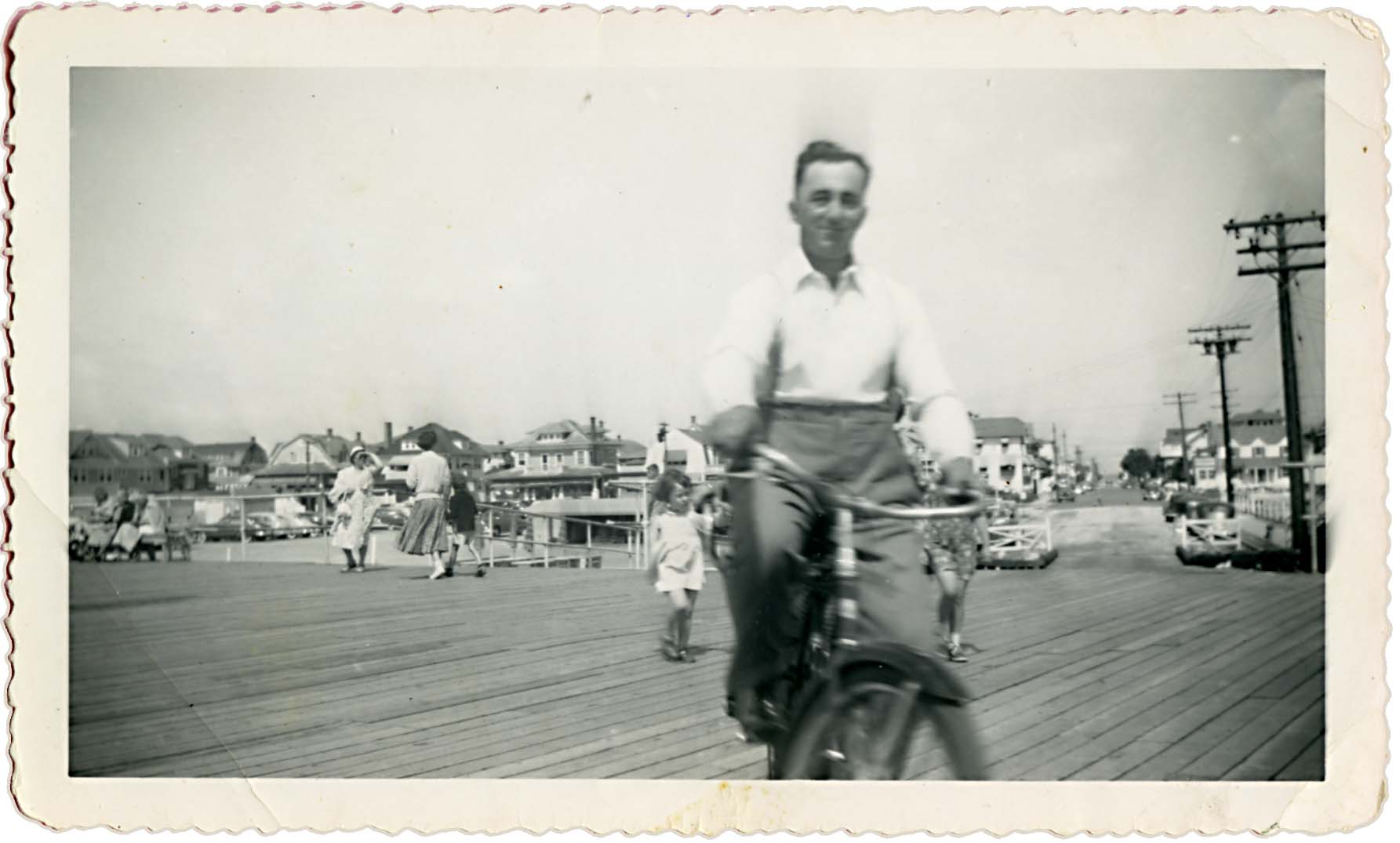
Uncle Leroy and Aunt Clara liked visits to Atlantic City too. I don’t remember them in bathing suits, but they liked riding the bicycle built for two on the boardwalk.


LeRoy Metzler_on Boardwalk

And so did my parents!

Ray and Ruth L_Bicycle built for two

On a Bicycle Built for Two . . .

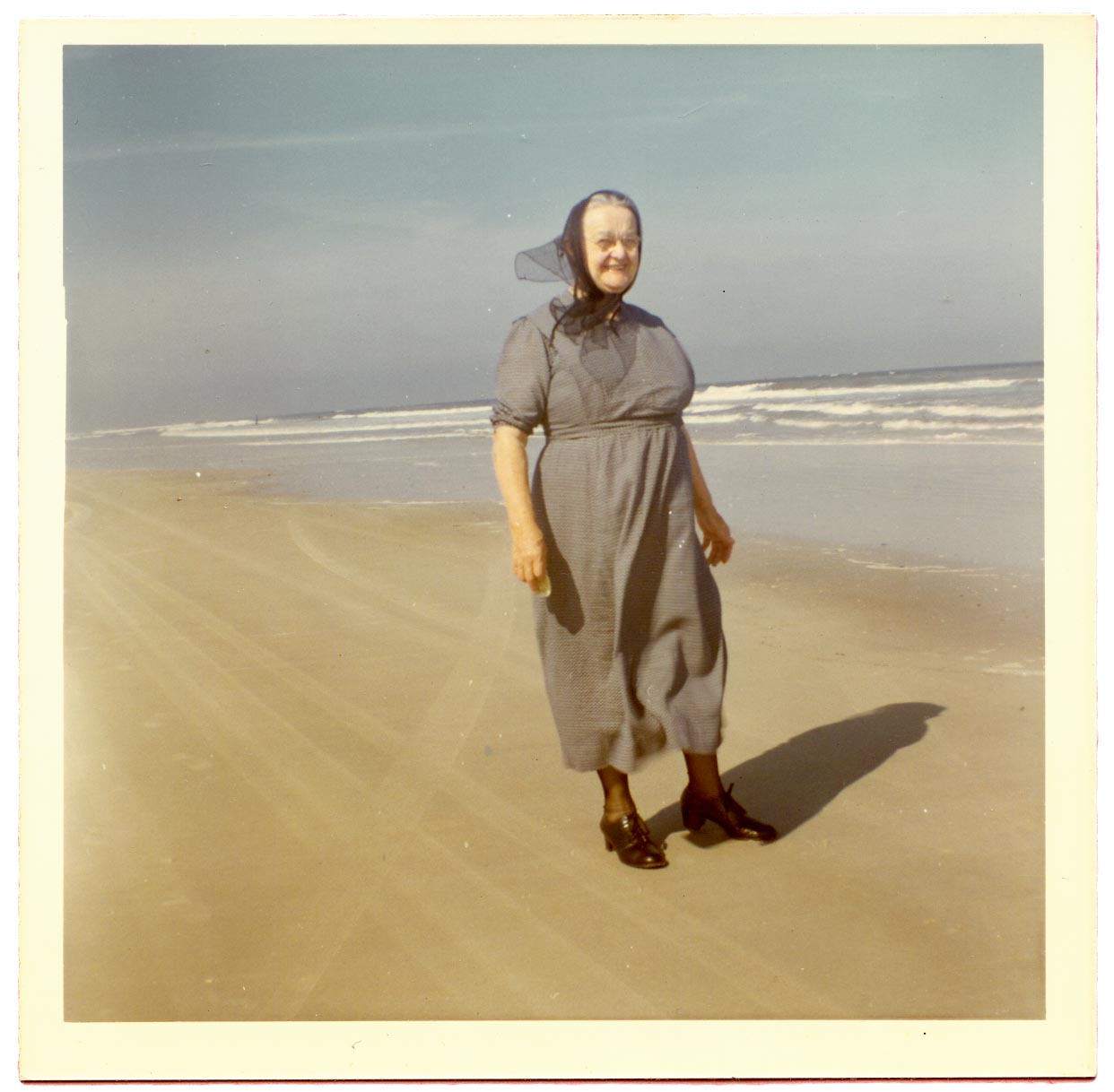
When Grandma Longenecker came to Florida the year our daughter Crista was born, she strolled Jacksonville Beach with plenty of sun-protection: black bandanna on top of her covering, caped dress, black stockings and black-heeled shoes, apparently enjoying herself.

Fannie Longenecker at beach

What family vacations stand out as memorable, past or recent? The beach, the mountains, or some place else?

*  *  *

Coming next: Marriage to a Difficult Man: Parts I and II

Home-made Butter: 3 Easy Steps

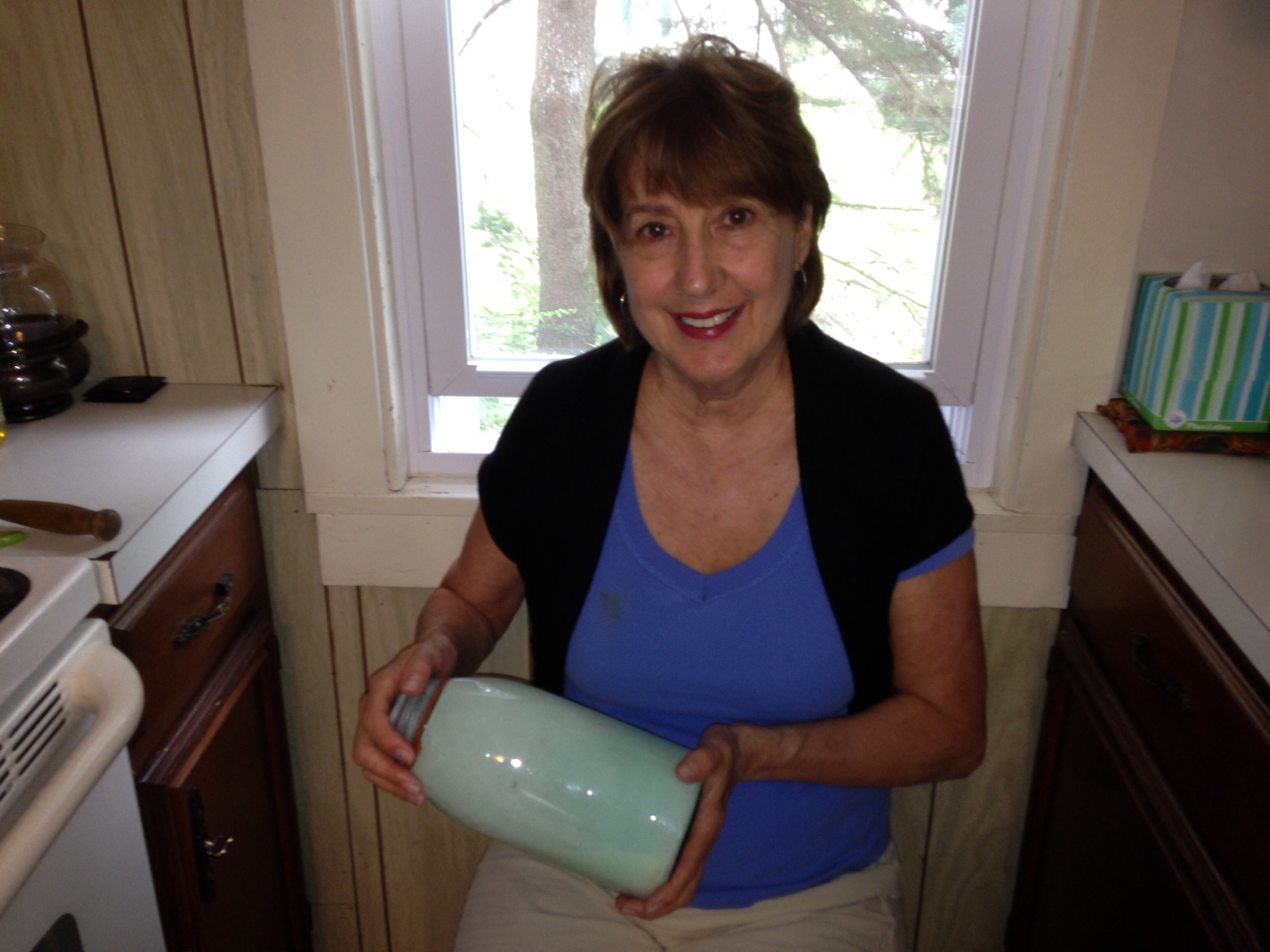
This week at Mom’s house, I attempted to re-create a scene from my childhood – in the same house, on the same chair, with one of the same Ball-Mason jars from the mother’s stash in the cellar. The kind with tiny bubbles crystallized within the glass of the jar. Mother says these jars are valuable.

The cream of bygone days for butter-making came from one of the Holstein cows that Sam and Mabel Hoffer kept on their tiny farm down the road from us on Anchor Road. For this re-enactment, I buy whipping cream from Giant Foods up the road toward town.

Butter 1

Did I mention that my sister Jan and Mother are both skeptical that store-bought cream will yield real butter.

Janice says, “You’re probably wasting your time shaking that jar back and forth with cream from the store. Think about all of the additives and preservatives they put in.”

Mother doesn’t say much but looks skeptical. I’m out to prove them wrong.

Butter 2

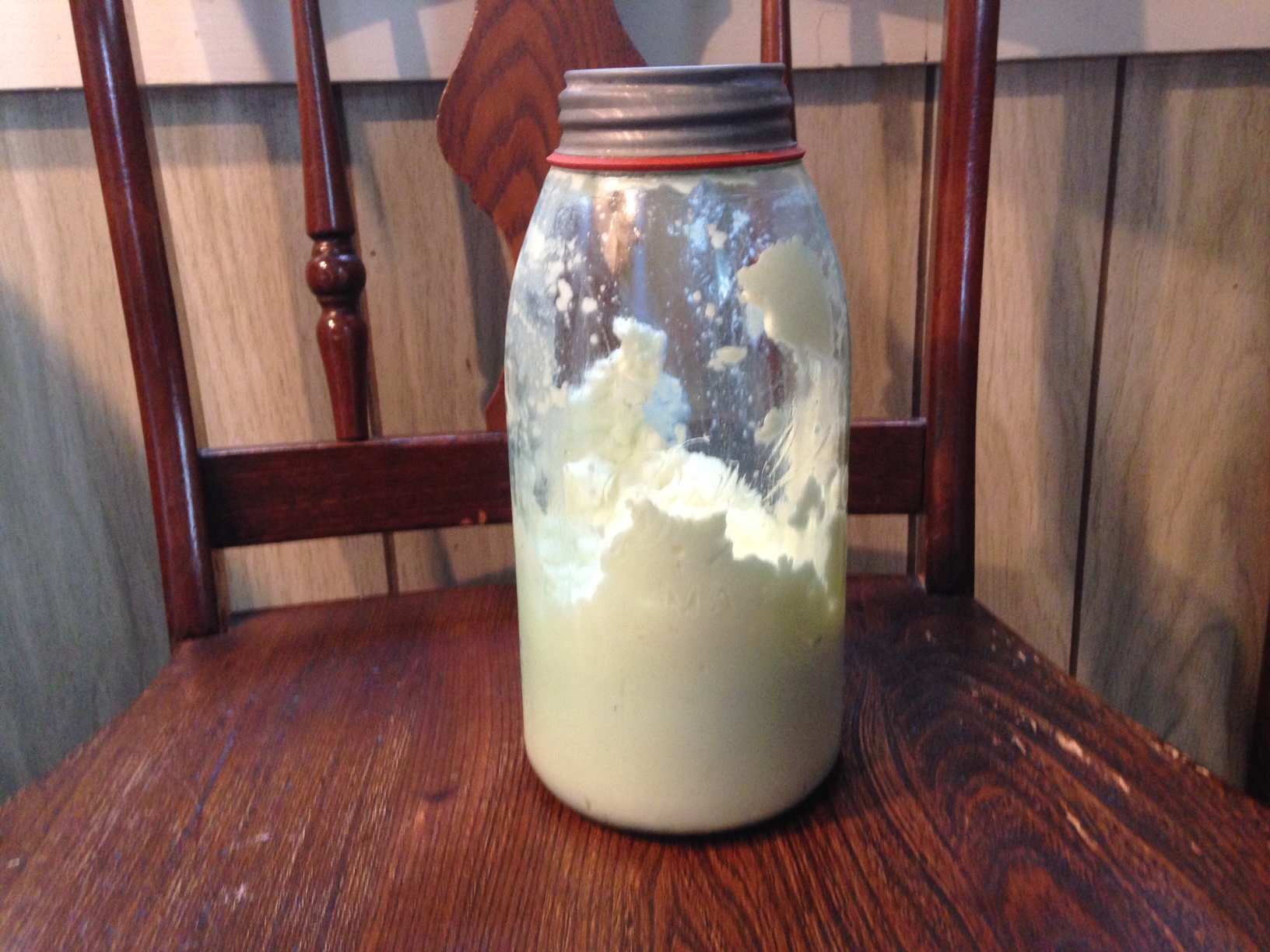
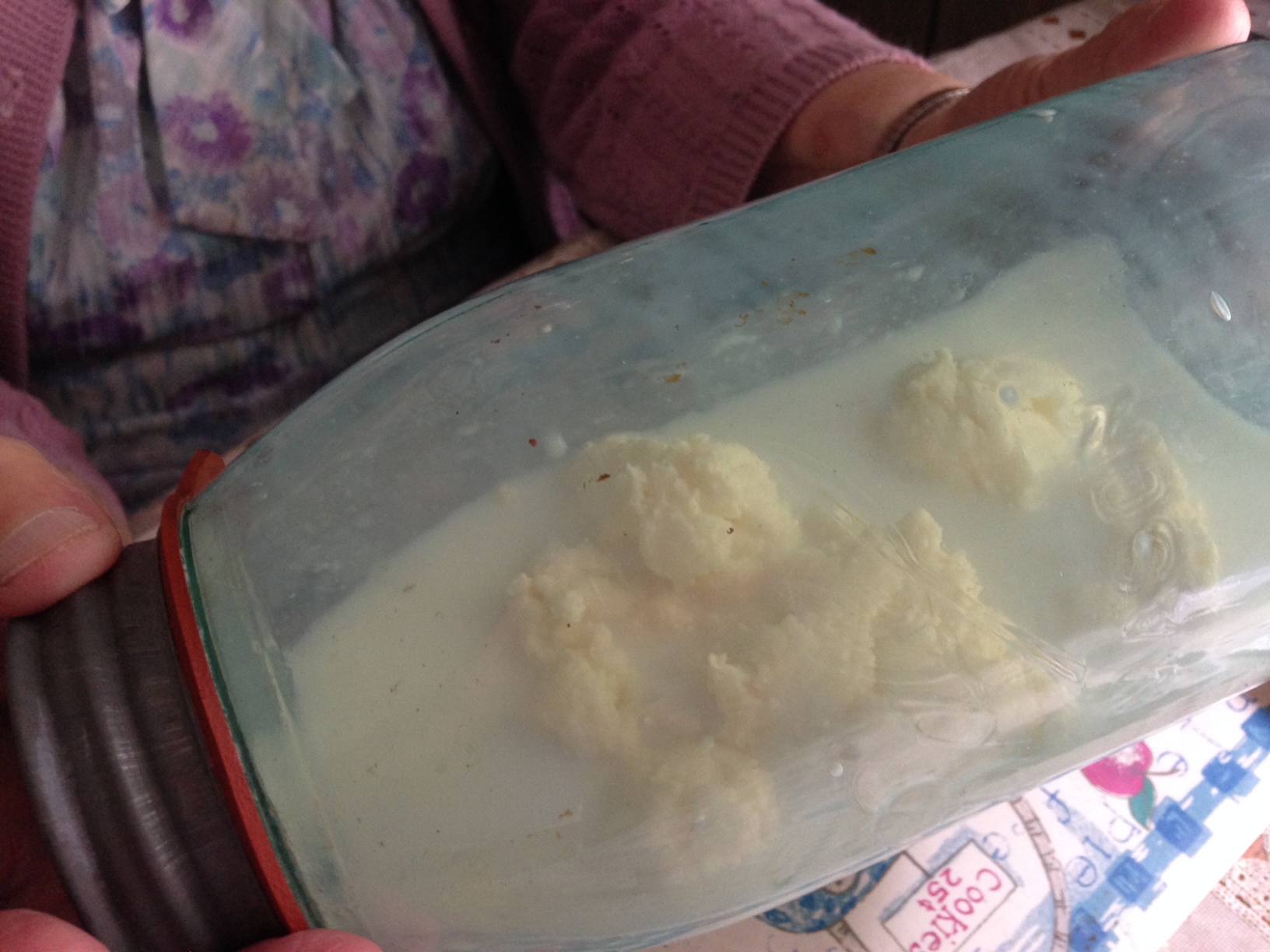
I stop the shaking long enough to notice that curdles of cream are clinging to the jar’s insides. That’s all it takes.

First, sister Jan and then Mother get in on the action, now past the 12-minute mark.

Without a shadow of doubt, real honest-to-goodness butter lumps are forming.

Butter 4

And voilá . . .

Butter 5

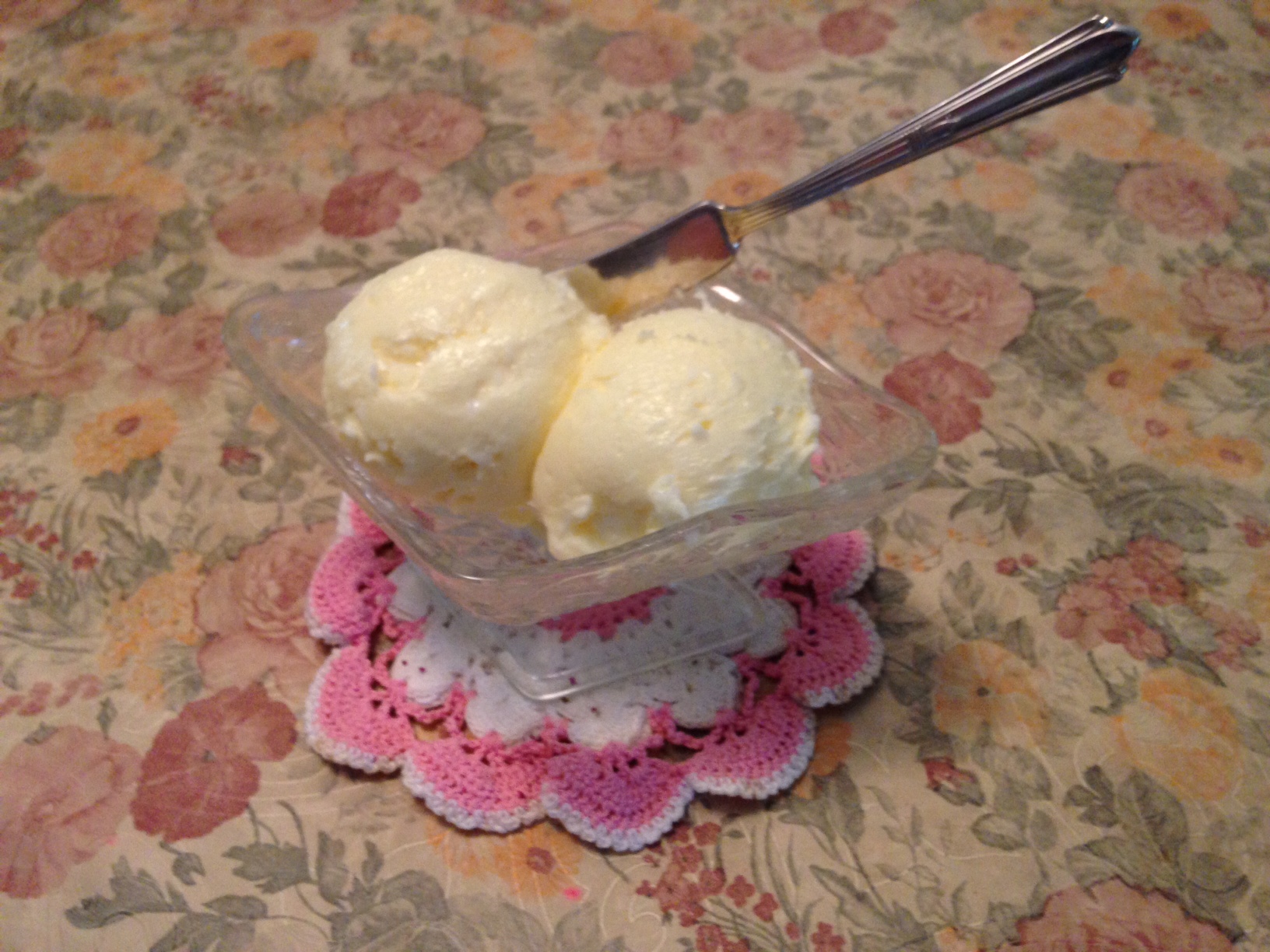
Fifteen minutes later, more or less, we have two fat butter-balls!

Did you catch the steps?

  1. Pour cream into 2-quart jar.
  2. Shake until you rattle and roll.
  3. Remove the congealed mass from the jar. Add a pinch of salt.

*  *  *

What scenes from your past have you tried to re-create?

Anna Mae and Hiram: A Mennonite Wedding

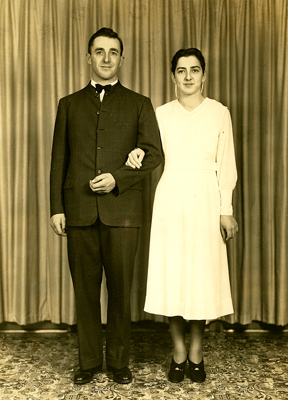
This is the wedding portrait of my mother and father

Ruth Landis Metzler and Ray Martin Longenecker 

October 26, 1940

Ray and Ruth Longenecker_4x5_72

June is the month for many American weddings. And so is August. Because many Mennonites were farmers, Mennonite weddings often took place in October, a month that signaled a break in heavy farm work after most of the crops had been harvested. My dad was a farm implement dealer, so his work cycle mimicked that of the farmers he served, which would probably explain the October date for the wedding.

The bride and groom, my parents, are dressed in Mennonite attire and comply with the rules for weddings prescribed by the church in this era: no bridal party prancing down an aisle to “Here Comes the Bride,” no flowers, and definitely no exchange of rings.

Excerpts from Article II, Separation and Nonconformity, Section 2. Public Worship. (19) from the Statement of Christian Doctrine and Rules and Discipline of the Mennonite Church, 1968:

  • “We deem it improper to employ instrumental music in worship and church activities.”
  • “Weddings shall be conducted in a Christian manner avoiding all vain display and in accordance with the prescribed regulations for weddings.” 

*  *  *

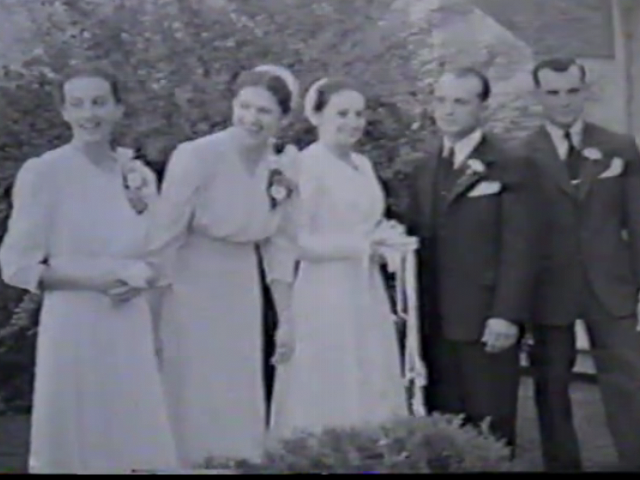
Anna Mae Longenecker’s father John is my dad’s first cousin on his father’s side of the family. Anna Mae with her brothers and sisters lived on the farm at Bosslers Corner, a farm bought from William and John Penn by Robert Allison in 1762,  and subsequently bought from Jacob Bossler by John and Nancy Longenecker and kept in the Longenecker family for five generations.  On the lawn of this homestead, one of John’s daughter’s, Anna Mae, poses  for wedding photographs with her new husband, Hiram Aungst.

Anna Mae Longenecker with her sisters on her wedding to Hiram Aungst.
Anna Mae Longenecker with her new husband and sisters posing for wedding photos on the lawn of the John Longenecker homestead.

Either the rules for wedding have relaxed a little in the ten or more years since my parents’ wedding, or brides have become more bold. This wedding accessories include corsages for attendants, a white Bible with streamers for the bride and the groom and groomsmen in non-Mennonite suits and neckties.

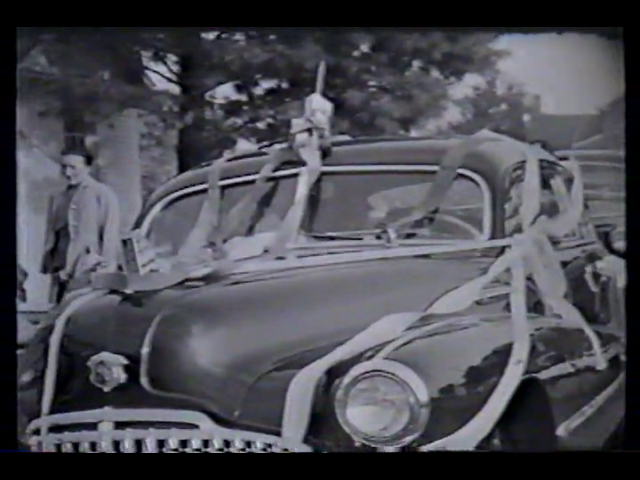
As the video shows, there was muted frivolity after the wedding which included rice throwing. Yes, it was real rice, not bird-seed!

Note the cars decorated in full post-ceremony regalia, worthy of any “fancy” wedding.

OldCar


Then and now: Your thoughts on wedding ceremonies welcome.


Hats Off to Dad!

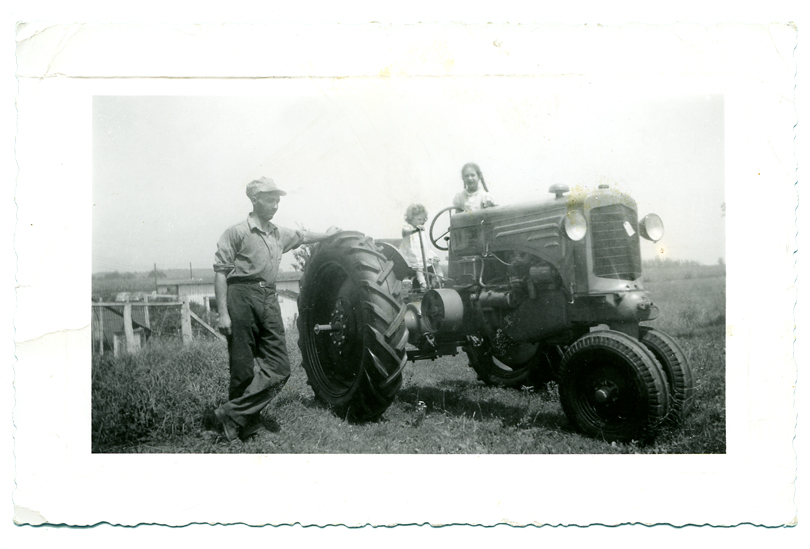
My father wore many hats. Work hats mostly, but also a goofy blue derby hat I faintly remember stashed high up on a closet shelf, and a fedora reserved for Sundays or other special occasions. Through his long history at the shop, Daddy sold a wide array of tractor brands which supplied him with hats embroidered with their company logo: Massey-Harris, Minneapolis Moline, New Idea, Fox, and Deutz.

His hats changed with his loyalty to the brand of farm equipment he was promoting. None made him happier, however, than the hat he wore with one of his first purchases after his father, Henry R. Longenecker, passed the business on to him. With the tag still attached to the grill, Daddy proudly drove the new Massey-Harris tractor back and forth in the alley next to the shop in Rheems, his sister Aunt Ruthie recording the spectacle with her new 16 mm movie camera.

Shop Hats

The Welding Helmet Invented by the German Hans Goldschmidt in 1903, welding was one of my Dad’s specialties, a boon to farmers with harvester units or even plow shares needing repair. A free-standing acetylene cylinder and oxygen tank for welding stood near one of the double wooden doors. This allowed easy access for welding repairs as a tractor or harvesting equipment was pulled through the giant, wheeled doors that ran back and forth on a metal channel.

I watched Daddy slap a Darth Vader-like helmet on his head, don long, flared-sleeve gloves, and use long, skinny welding rods to fuse broken parts together. Sparks flew everywhere in this Fourth of July fireworks show extending into August, the height of the harvesting season.

Along the back of the dark recesses of the shop was a large grinding machine that could sharpen a 6 to 8-foot section of blade used for scissoring hay, wheat or barley.

Daddy did most of his work in his shop but occasionally he was called to the field. A doctor of motors, he made “house” calls to the fields of anxious farmers, work stalled with broken-down equipment.

Farm Hats

My father was first of all a farm implement dealer and mechanic, but he also farmed ten acres of land in Bainbridge, Pennsylvania combining corn and tobacco crops and then later corn with tomatoes. Farming is serious business in the searing sun requiring a cap with a long bill. The result:  a white “farmer” forehead and red-brown cheeks and arms. My mother and Aunt Ruthie often wore sun bonnets, in the field but as you can see, we were bare-headed and probably bare-footed too.

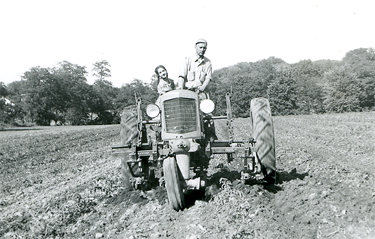
Brand new tractor with tiny sister Jean and me behind the wheel
Cultivating land for tomato crop in Bainbridge

A beekeeper too, my dad wore a bulky hat complete with a mesh veil to smoke out the bees.


Fancy Hats

Church, weddings, funerals – all were occasions for a fancy fedora. But one occasion in particular required dressing up: posing on the steps of the U. S. Capitol building ready to meet with congressmen regarding the threat of a proposed air base to some of the rich farmland of northern Lancaster County. A sizable delegation of plain people (many of them Mennonites) including my dad in his fedora and Grandma drove to Washington D.C. to make their case with government officials. When a follow-up investigation was conducted, sink-holes had reportedly been found in the farm-land around Bossler’s Mennonite Church. The case was subsequently closed.

Sadie Greider, Grandma Fannie Longenecker and Ray Longenecker  on steps of the Capitol in Washington, D. C.
Sadie Greider, Grandma Fannie Longenecker and Ray Longenecker on steps of the Capitol in Washington, D. C.

Tell us about your dad’s hats – what he wore, or any other “Dad” memory you want to share now.

Moments of Extreme Emotion: A Broken Leg & Ecstasy Expressed

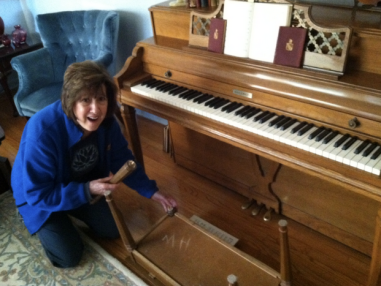
Moment of Exasperation

One of the mysteries of life is how things happen at our house. Specifically, how did the leg on this piano bench break? We still haven’t figured out the answer for sure though we have speculated on some possible explanations.

BrokenPianoBenLeg

How did this happen? Vote in this short quiz:

a. Piano bench overloaded with music books

b. Over-weight pianist

c. Kids had wild party while parents were gone

d. All of the above

e. None of the above

(Answer on next blog post.)

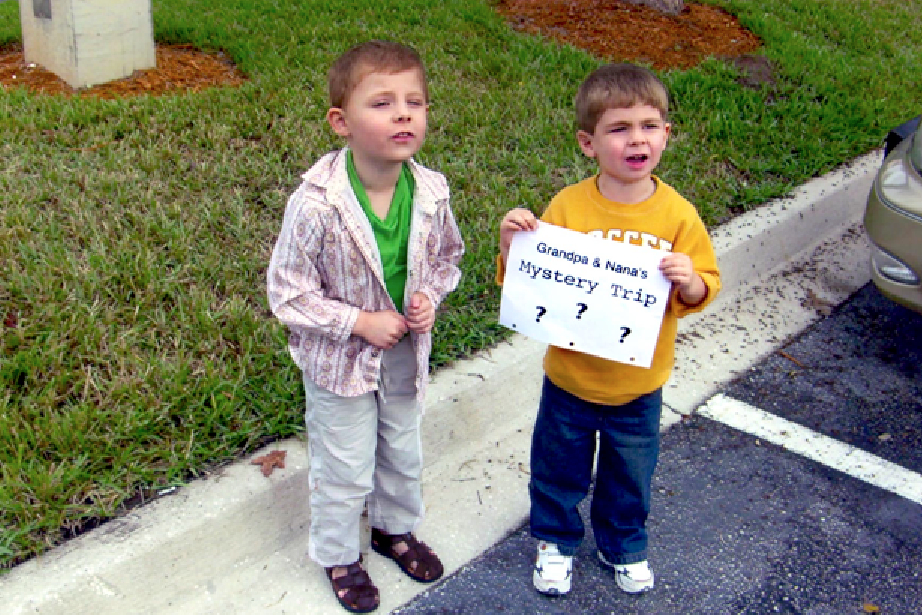
Mystery Moment

3PatCurtis

Completely befuddled, Patrick and Curtis react to the Mystery Trip announcement sponsored by Grandpa and NaNa:

Patrick: What’s a mystery trip?

Curtis: Is it safe to drive with Grandpa?

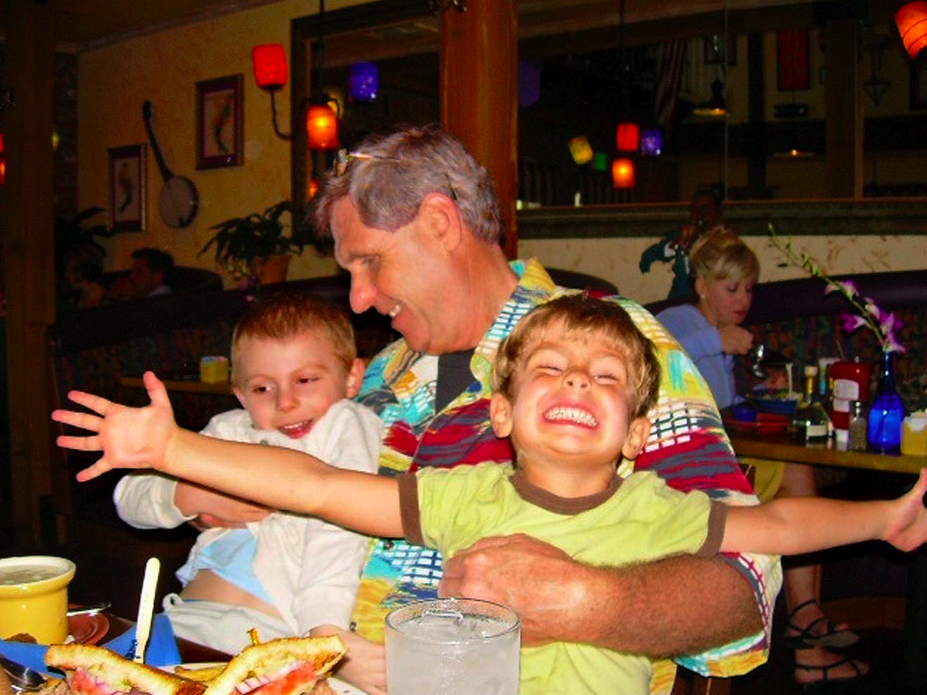
Moment of Extreme Ecstasy

Patrick and Curtis about 6 years ago at O'Charley's Restaurant
Patrick and Curtis about 6 years ago at O’Charley’s

Grandpa’s paying!

Have you had a moment or two of extreme emotion lately? Or long ago?

Thank you for adding your story to mine!

The Good Ole Summertime & the Simple Life

“In the Good Old Summer Time” shares nostalgic space with another old, familiar tune of the season: “Summer time and the livin’ is easy.” Summertime for the Longenecker family may not have been easy in the 1950s what with tomato field hoeing, canning, freezing vegetables from the garden, but it was simple.

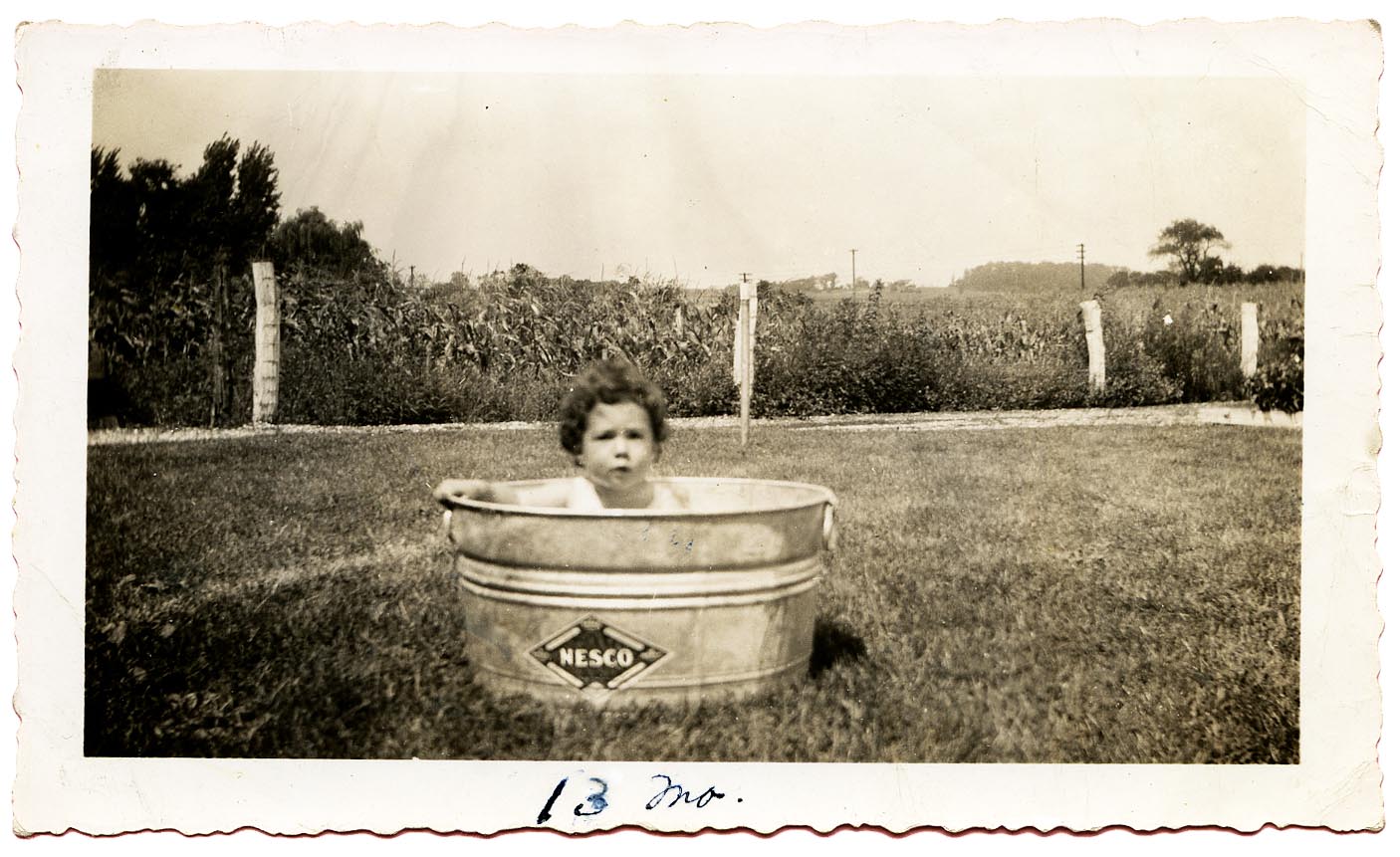
This is a pict-o-logue of summertime for me from 13 months to about age 13.

Marian in tub_13 months_4x3_300

“Naked in a tub” would be a sensational caption for this photo were it not for the fact that I’m only 13 months old. Later I recognize that this glistening galvanized tub is also used for blanching sweet corn ears from the garden lot.

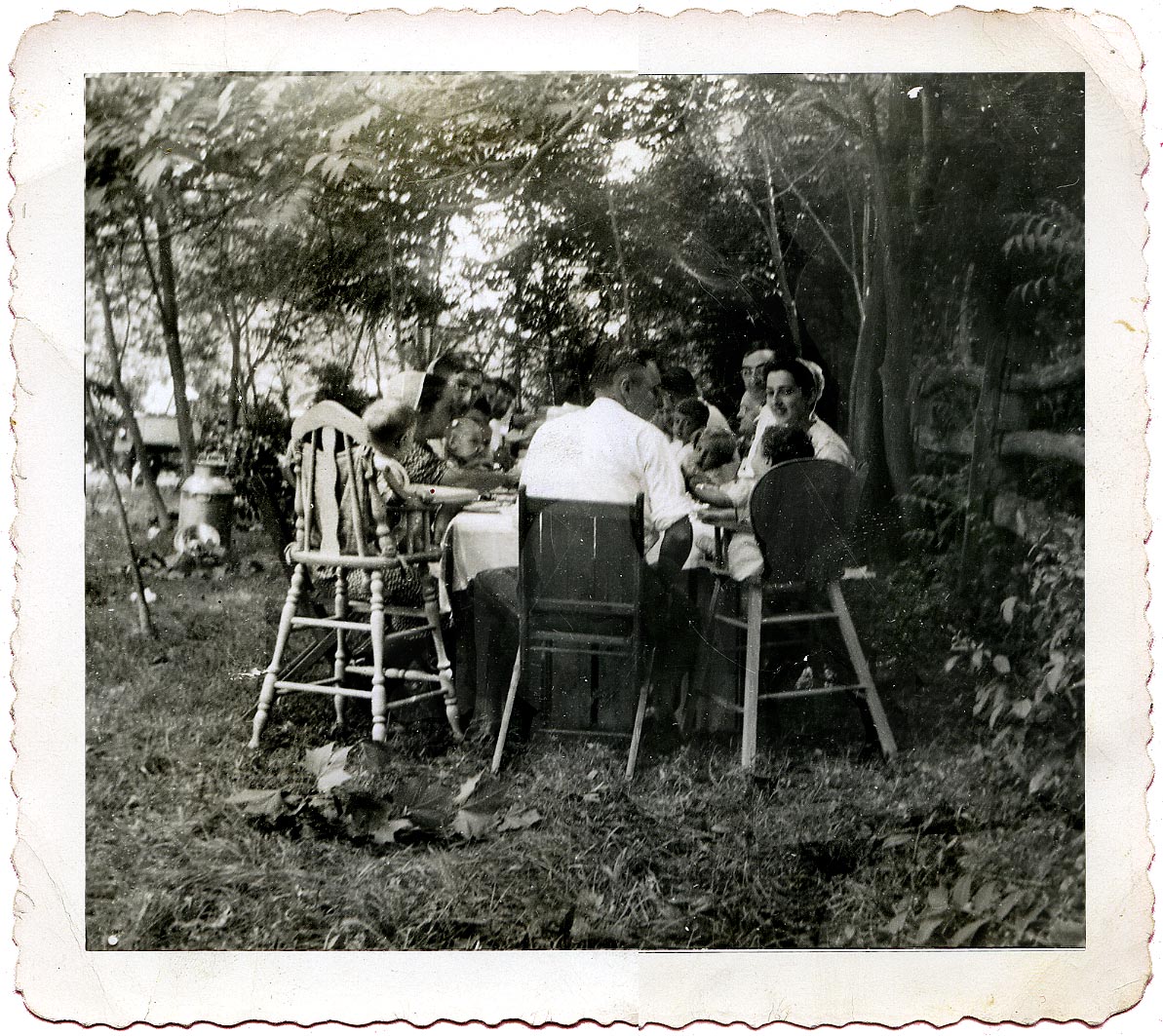
I'm sitting in high chair to the right at Metzler reunion picnic
I’m sitting in high chair to the right at Metzler reunion picnic

Reminiscent of Manet’s Le Dejeuner sur l’herbe (yes, it’s a stretch) but in a far simpler, Mennonite style, the Metzlers on Mother’s side of the family gather for a Sunday summer picnic In Uncle Clyde’s meadow, large crates holding up the table. After dinner the children scatter, the women clean up, and the men take down the table. I won’t be surprised when one or two of my uncles might light up a cigar rolled from home-grown tobacco.

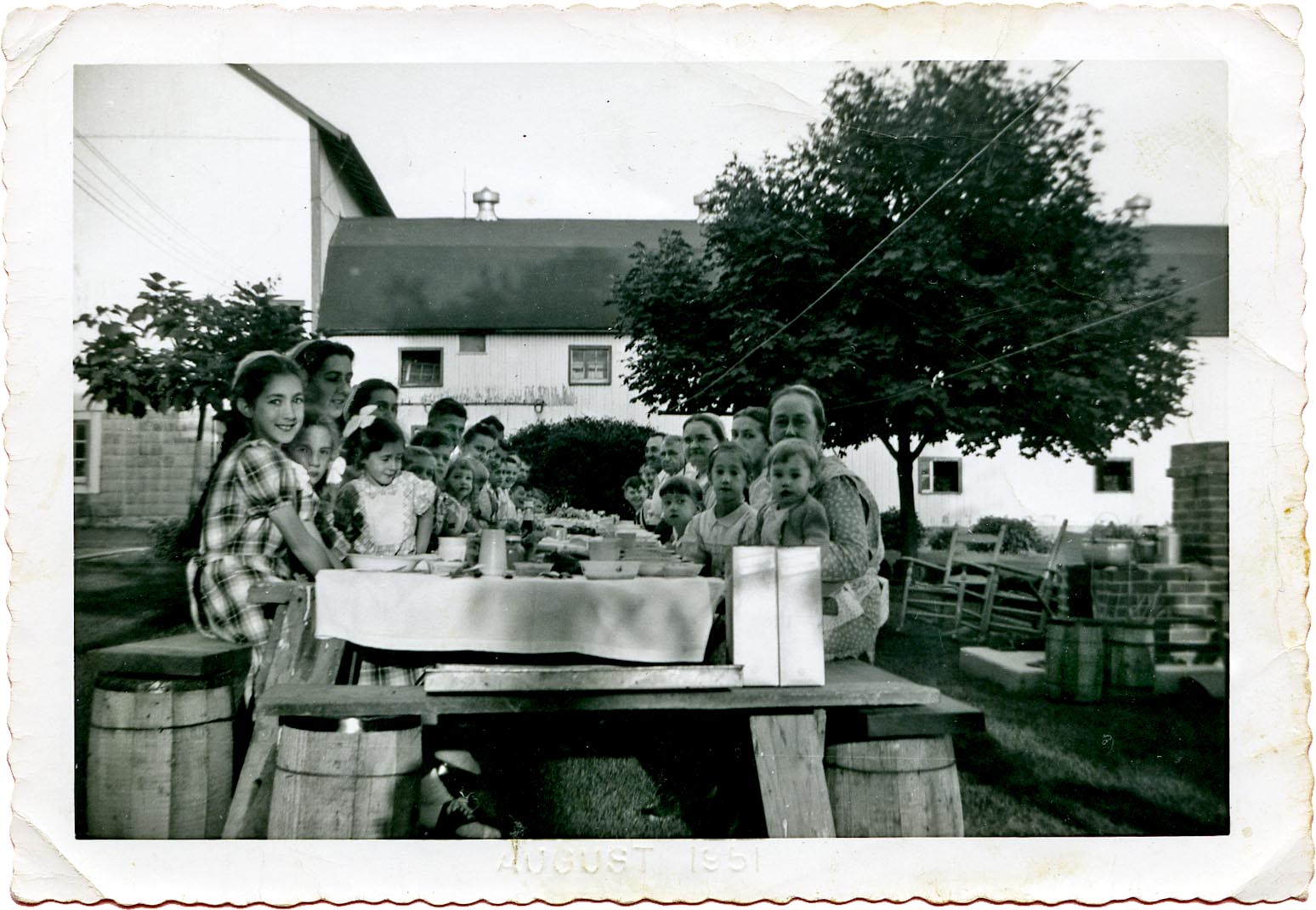
Picnic on Leroy Metzlers Farm_Marian age 10_final

Uncle Leroy and Aunt Clara’s farm is the perfect place for a summer Sunday dinner on the lawn. Hefty barrels hold up this groaning board as we pass around the seven sweets and seven sours, every family bringing a dish to another Metzler reunion.

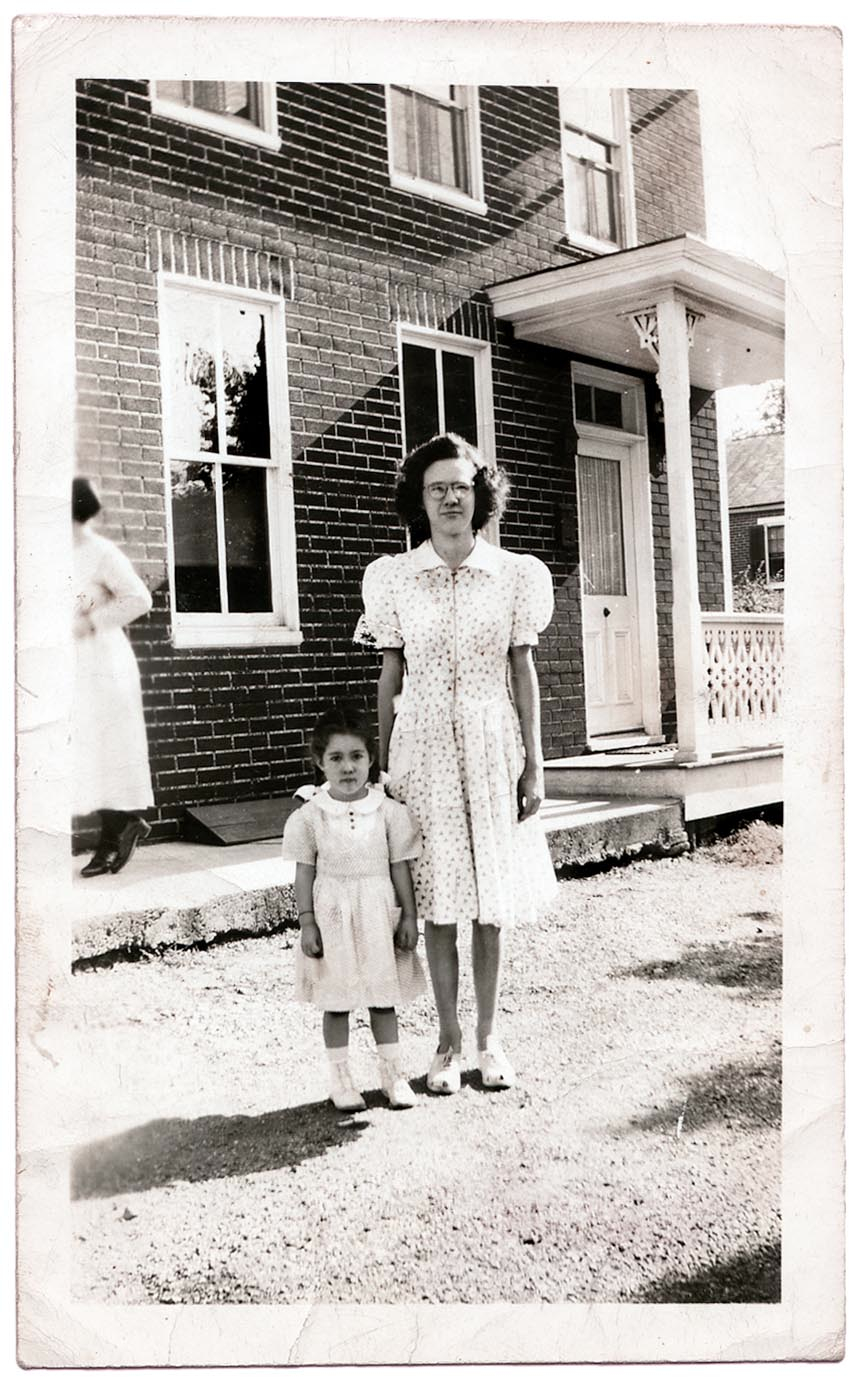
In Middletown with Daddy's cousin Janet Martin
In Middletown with Daddy’s cousin Janet Martin

I also have a turn visiting Uncle Frank Martin’s household, one of Grandma Longenecker’s younger brothers. Aunt Mattie braids my pig-tails every morning as I sit in her kitchen looking up at the tall ceilings. She plaits very slowly because she doesn’t have much experience with little-girl hair. Her girls, Joyce and Janet, are not plain and have naturally curly hair that hangs free. They both wear shoes with open toes, a detail not lost on me. Cousin Sammy likes to tease me, but his sister Janet takes me on walks around the block because their house is in town, Middletown, Pennsylvania, my first taste of life outside of the country.

Marian and Janet Metzler_age 6-7_3x5_300

After I reach school-age, summer is a time for the cousin exchange. My favorite summer visits are with Cousin Janet, of all the Metzler cousins the one closest in age to me. I am fascinated with her strawberry blond hair and lighter skin. All of my family have an olive complexion, dark hair. We play with fat, sticky strands of Cinderella hair on our dolls and make up stories upstairs in the small bedroom. Soon Mom will call us down to the kitchen for root-beer floats sipped with plastic straws probably saved from last summer.

The next time I go to Janet’s house for a week in summer, I fall off my bicycle onto the gravel, grinding sharp bits into the skin around my kneecap. Though the bruise starts to recover, I don’t bounce back from the tumble. In the day or two following, I have crying spells, so Aunt Jenny calls my parents.  When they pick me up, I feel both embarrassed and relieved.

*  *  *

Tell us your summer vacation memories. We’re all ears.

Two Vignettes: Mom’s Green Stamps & E-town’s Rexall Drug Store

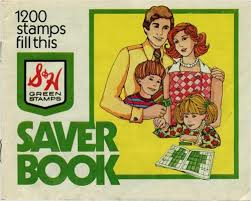
All images: Google Images

“Mare – yun,” my mother calls (yells, actually), “It’s time to lick the green stamps again. The books are on top of the kitchen table.” Mom likes to interrupt my reading. To me time with my books is serious business but to her it’s play. Not working. Wasting time with books unless it’s homework, she thinks.

As I moisten the stamps with my tongue, the glue tastes gooey and sweet. Mom usually receives one Green Stamp in exchange for every dime spent at check-out. I fill the two or three green books until they are fat, each stuffed with 24 pages of unevenly gummed and incompletely perforated paper rectangles. Books of these items can be redeemed for gifts. Mother gets a catalog from the stamp company’s showroom, then matches the item she wants against its price in stamps, paying for it with stamps rather than with cash. She probably has something picked out already. I notice the cover on the ironing board has lots of scorch marks and is wearing thin, so I guess she’ll get an ironing-board cover with one of the books.

Illustrations: Google Images

The gifts are usually household items like a set of mixing bowls, an ironing-board cover or something big, as writer Phyllis Tickle describes when she traded her green stamps for her daughter Nora’s baby stroller:

Surprisingly cheap is usually just cheap in premium exchanges, I have found. It certainly was in this case. The thing was made of aluminum so light and thin that the frame itself could not have weighed in at a full pound. The whole stroller did not weigh in at two. The wheels were scarcely a half-inch wide and definitely not a quarter-inch thick.


The sides and back of the contraption were of a plasticized, loosely woven plaid fabric neither Sam [husband] nor I could identify. The result was a kind of sling-on-wheels that had grown less and less appealing to my maternal instincts as I had become more and more of a mother and less and less of a mother-to-be. However, we did have a stroller. Hmmmm . . . .


Later, she concedes though “those were the good old days when strollers were strollers and not miniature, padded tanks.” (294).

A shoppers’ rewards program for loyal customers, the Sperry and Hutchinson Company dates as far back as 1896. During the 1960s, the  company issued three times as many green stamps as the U.S. Postal Service. After a series of recessions and the decreasing value of the stamps most house-wives didn’t think saving stamps was worth the trouble. However, green stamps still persist in popular culture. In A Hard Day’s Night (1964), starring the Beatles, John Lennon mentions Green Stamps when joking to Paul McCartney that he’ll get the best lawyer they can buy. In the hit “Speedy Gonzales” (1962) by Pat Boone, Mel Blanc sings the final words of the song in Speedy Gonzales’ voice, “Hey Rosita, come quick, down at the cantina they’re giving green stamps with tequila!”

*  *  *

Mother doesn’t drive to the Green Stamp showroom on her own to redeem her stamps because she doesn’t have a license.  But there’s a Lancaster – Elizabethtown bus that goes right by our house along Old Route 230. She knows when to tell me to pull on the cord over-head that buzzes to tell the driver where to stop in town. We’ll go to the W. T. Grant store because it has most of what she needs. Our next stop is  the Gladdell Shop with pretty dresses. In the window I see a sleek, lavender dress made of chiffon fabric on the mannikin. It’s pleated at the waist and has a belt with a rhinestone-studded buckle. I imagine jut how slithery and cool it would feel gliding over my skin. I would be instantly chic and stylish, not plain. But Mother is completely blind to the fancy frocks and heads for the lingerie department. A night-gown? Some hosiery? (She always orders a boring shade called “gun-metal.”) No, she has picked out a smocked, tricot bed jacket in blue with a bow to wear in the hospital over her gown when Mark is born and visitors appear.

The shopping trip gets even sweeter near the end. Mom will check her watch, so that we will have just enough time to go to the Rex-All Drug Store before the bus picks us up heading back east. Dr. Garber usually dispenses pills in little white envelopes from his office, so we are not interested in the pharmacy at the drug store.

ice cream soda

Instead we head straight to the soda fountain which is as close to theatre as I’m going to get. Stepping inside the chrome rails that mark the fountain area off from the rest of the store, we sit on the red leatherette cushioned stools that spin. Fluorescent tubes of light above the fountain equipment advertise bubbly ice cream sodas with a straw. Above it like rays from the aurora borealis but stretched around the perimeter of the fountain area is a glow of bluish-purple lights illuminating the walls. Then I look up and see stars sparkling from the ceiling. I’m in heaven. Until the bus comes all too soon.

What story can you tell about green stamps or soda fountains?

Something you can add about a different memory from the 1950s or 60s? 

Kathy Pooler and Independence Day: Her Story of Freedom

??????????????????????????????????????????????????????????????????????????????????????????????????????????????????????????????????????????????????????

This July, my friend and author Kathy Pooler will be celebrating Independence Day in a big way launching her memoir in early July. The book’s title Ever Faithful to His Lead: My Journey Away from Emotional Abuse hints at the road Kathy has traveled from victim to victor with faith as her guiding light. Her story speaks of the liberation she experienced as her renewed faith enabled her to cope with multiple family upheavals including a spouse’s alcoholism, domestic abuse, two divorces, and her own struggle with cancer and heart disease.

Faith is walking to the edge of all the light and taking one more step.     Author Unknown


Kathy’s Story:

As a “cradle Catholic,” I was born into and brought up with all the traditions and ceremonies of the Roman Catholic faith. I have, by conscious choice and deepening desire, remained true to these beliefs and teachings, except for a period in my twenties when I questioned and even rejected them.

As is often the case, my faith did not deepen until I had to face several life-altering challenges. It was then that my religion became my faith and my spirituality, the source of comfort and meaning in my life. Therein lies the heart of my upcoming memoir, Ever Faithful to His Lead: My Journey Away From Emotional Abuse.

One of the threads in my story is the role my faith played in getting into and out of two emotionally abusive marriages.

I asked myself as I wrote my memoir “How does a young woman from a stable, loving Catholic family make so many wise choices about her career but so many poor choices about love that she ends up escaping with her two children in broad daylight from her second husband for fear of physical abuse?”

The truth was this: A loving family, a solid career and a strong faith could not rescue me until I decided to rescue myself. 

So what does faith have to do with all of this?

  • Faith has been a way to nurture my own soul. I know spirituality is a very personal issue, but I do want to say that finding meaning in our lives is very important. It does not have to but this search for meaning can involve religious traditions. As mentioned, I am a Roman Catholic and find great meaning in praying and observing many rituals of my church including Holy Communion. Some other ways I nurture my soul is through Al-Anon, family friends, and following my passions of writing, exercise, reading, playing the piano. The main point is that we each need to find what works for us just as we respect each others’ right to do the same.
  • Honor yourself:  When I learned to sit still long enough, I found what I wanted and needed and then learned to honor myself and my needs. I was able to  carve out my own time and space to “follow my bliss.”
  • Hope matters: And perhaps the most important for me: Never, ever give up hope.

Excerpt from her book:

Tuesday was Ed’s bowling night. As my belly began to swell in my third trimester, my weekly vigil became more difficult. I sat by the bay window wondering when he’d return home and what condition he’d be in after his night of drinking.

My slow rhythmic breaths echoed through the quiet darkness and steadied the anxiety bubbling up from the pit of my stomach, colliding with my view of what I wanted and needed. My thoughts drifted to my great-grandmother. The visions of that tiny woman with her unwavering faith came to me in whispers and glimpses throughout my entire life.

Great-Grandma Ranze, Mom’s grandmother, had been pregnant with her ninth child when her husband died at the age of thirty-three. Surely I could get through this. The memory of watching Grandma Ranze praying the rosary when I was eight years old warmed me as I sat by the bay window on that cold night. I grabbed my rosary beads and started praying. It made me feel close to her.

* * *

This was one of many times in my life when my faith in God bolstered my hope and gave me strength for the battle. Faith is a gift given to me and nurtured in my childhood by Great-Grandma Ranze. She planted the seeds of faith in me as I faced my own challenges. She is still with me when I say my daily prayers.

Kathy’s Faith and Her Career:

My faith in God also guided me throughout my entire career as a nurse and nurse practitioner.

Every morning on my way to work, I prayed that I would remain open to being God’s servant in caring for the ill or in carrying out whatever role I happened to be in at the time—clinician, educator, administrator. I often prayed with or over patients with their permission. I said many silent prayers for those who were not comfortable.

I also prayed for the strength to deal with whatever I had to face—a dying patient, a difficult family/coworker/physician. Jesus is the Divine healer and if Jesus is in me then I am the vehicle for carrying out His will.

This is the faith that enabled me to walk away from two emotionally abusive marriages with two children. It has been through these challenges that my faith has deepened, and I have found freedom from emotional abuse.

Kathy asks: How about you? How has faith worked in your own life?

KathyPoolerBrighter

Kathleen Pooler is a writer and a retired Family Nurse Practitioner who is publishing on a memoir, Ever Faithful to His Lead: My Journey Away From Emotional Abuse and working on a sequel, Hope Matters: A Memoir about how the power of hope through her faith in God has helped her to transform, heal and transcend life’s obstacles and disappointments:  domestic abuse, divorce, single parenting, loving and letting go of an alcoholic son, cancer and heart failure to live a life of joy and contentment. She believes that hope matters and that we are all strengthened and enlightened when we share our stories.

She blogs weekly at her Memoir Writer’s Journey blog: http://krpooler.com

Kathy’s Links:

Twitter

LinkedIn

Google+ 

Goodreads   

Facebook  

Pinterest

One of her stories “The Stone on the Shore” is published in the anthology: “The Woman I’ve Become: 37 Women Share Their Journeys From Toxic Relationships to Self-Empowerment” by Pat LaPointe, 2012.

Another story: “Choices and Chances” is published in the  “My Gutsy Story Anthology” by Sonia Marsh, September 2013.

*  *  *

Can you relate to any part of Kathy’s story?

What questions do you have for Kathy?

Both she and I will join in the conversation today. You can bet on it!

pubslush-sig-logo200-2

The  30-day Pubslush Crowdfunding Campaign for my memoir, Ever Faithful to His Lead: My Journey Away From Emotional Abuse was launched on May 12 and ends at midnight on June 11.

By making a contribution you will help spread the messages of hope, resilience and courage to those seeking freedom from abuse. Here’s the link to the campaign:

http://pubslush.com/books/id/2076.

If you are unable to make a contribution, I’d be most appreciative if you would share this link with others. Thank you!


: