Mennonites and the Marlboro Man

The Marlboro man, pictured as a cool-guy cowboy in a fresh country setting, ruled cigarette advertising from 1954 -1999.

Credit: Google Images

Smoking then was considered glamorous and cool, a way to fit in with the crowd. One of our most popular presidents, Ronald Reagan, was formerly a cigarette model for Chesterfields, even advertising that he would give cases of the product to his friends for Christmas.

Credit: Google Images

As the Marlboro Man’s ads evolved, the Surgeon General’s warning of health hazards appeared on cigarette packs. Now of course, smoking is taboo in stores and restaurants, and smokers are often viewed as outcasts.

* * *

Mennonite farmers in Lancaster County during the 1950s and 1960s grew tobacco as a prime cash crop. But as Shirley Showalter points out in her memoir, growing tobacco was both a tradition and controversy among Lancaster Conference Mennonites. “After George Brunk’s tent revivals, many farmers plowed up or stopped planting tobacco,” she comments. My own Dad stopped planting tobacco then, substituting tomatoes and corn in our acreage in Bainbridge, Pennsylvania. Shirley divulges her dad’s decision about farming tobacco in her book BLUSH (173).

Here are some photos of young tobacco plants, Mother Ruth in the tobacco fields and then a snapshot of the drying process before the crop was sold to a tobacco company.

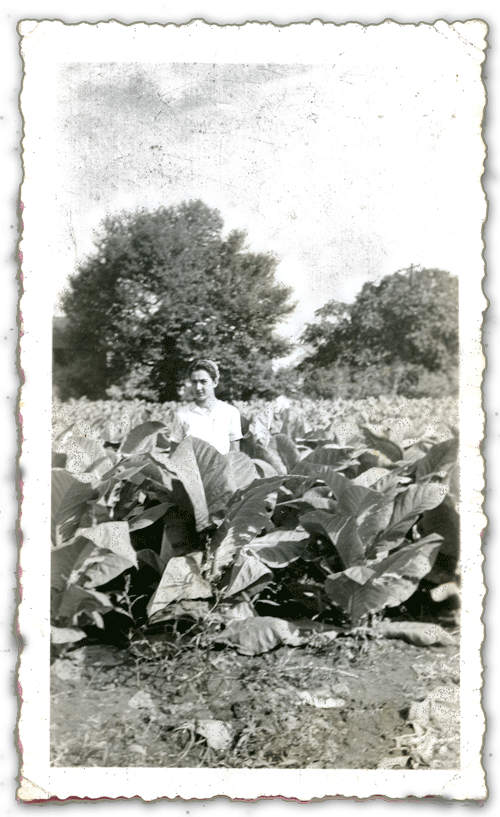
Web_tobacco-in-rows

Web_Ruth-in-tobacco

Web_tobacco-in-doorway

The issue of tobacco production and use appears in the Statement of Christian Doctrine and Rules and Discipline of the Lancaster Conference Mennonite Church (July 1968) but as an advisory to only ministers and their wives:

“Inasmuch as ordained brethren and their wives by their teaching and example exert strong influence within the brotherhood, it is required for the spiritual welfare of the church that they give evidence of willingness to subscribe to . . . the following standards of faith and life.

Listed as “f” in a range of a – h points is this directive but only to the ordained: “the non-use and non-production of tobacco.” (29)  Apparently the issue of smoking and its health hazards posed a serious dilemma to the church with lay members who relied on tobacco growing as a way to pay the mortgage.

Many of my uncles smoked cigars when they were together. Even my dad would occasionally join in as a way to socialize.

*  *  *

I recently found a map of Yellowstone with a Conoco ad in the 1960s using the pleasures of smoking to promote their brand of gasoline:

Web_1964_Yellowstone-map+man-smoking

* * *

A young boy named Jeremy learns about the dangers of smoking in an imaginative book entitled The Boy Who Grew Too Small.

Web_The-Boy_Cover_w-shade_300pix

Leave a comment below if you want to contact Author/Illustrator Cliff for more information about his book.

Other comments about this post – welcome here too!


Coming next: A Corny Post

Memorial Day Snaps: A Truck and a Quilt

Catchy caption needed. Your suggestions please!

Just as every issue of The New Yorker features a cartoon in need of a caption, today’s post offers a photo calling for your input. There’s one below to get your wheels turning, but I think there are other possibilities.

Even eighteen wheelers have patriotic ties.


The back story: This photo was taken in 2005 when Cliff was in the Chicago area doing his art/music shows. Most likely our son Joel, who was in graduate school in the city at the time, was driving as Cliff snapped the picture of this truck on the Interstate.

*  *  *

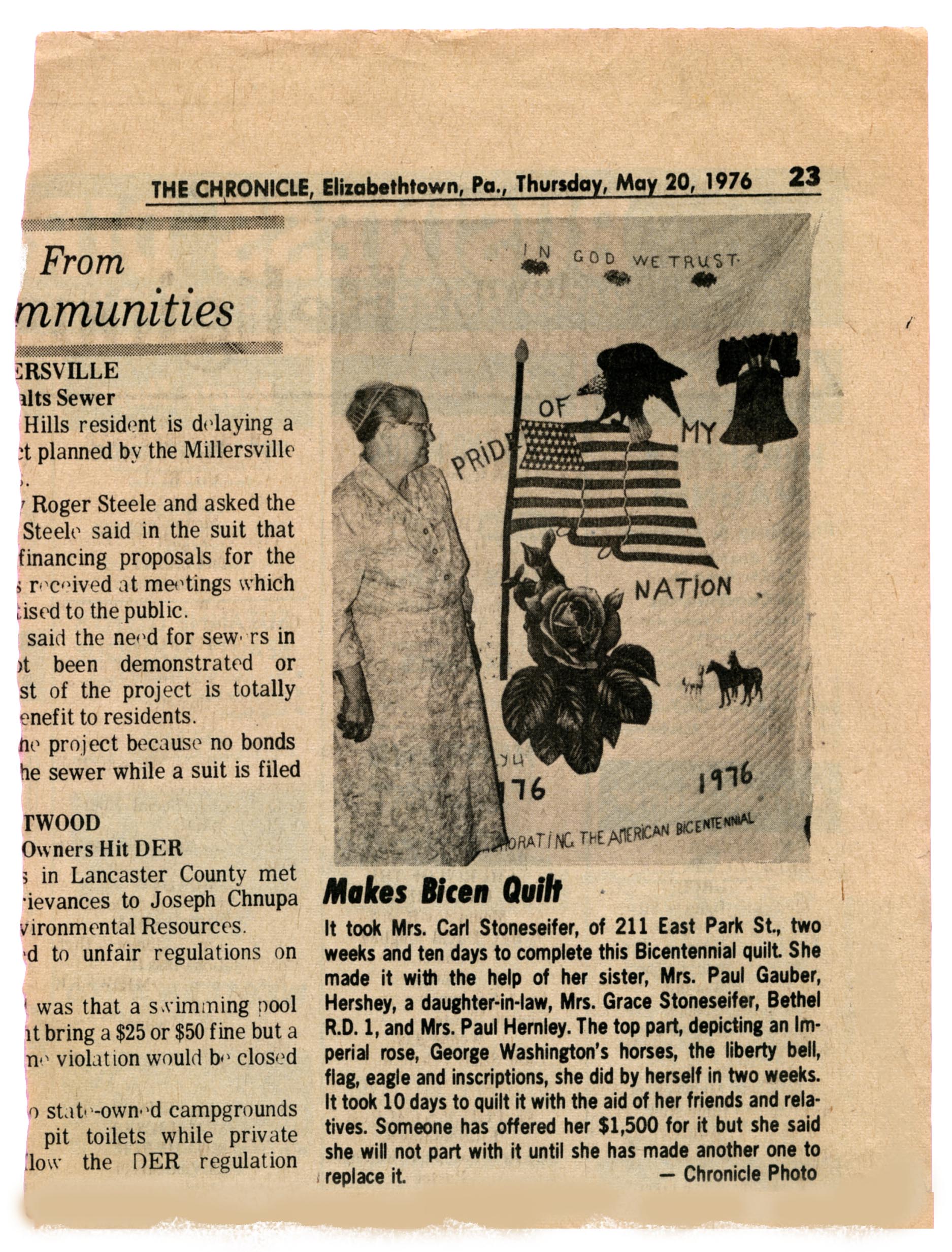
Carl Stoneseifer was one of my dad’s best employees at Longenecker Farm Supply in Rheems, PA. He was both personable and competent, as my dad would say, a “crack” mechanic. I remember how sad Daddy felt when Carl moved on.

His wife Helen was a talented quilter. On May 20, 1976 Helen’s picture and write-up appeared in our hometown newspaper, The Elizabethtown Chronicle. The quilt, in honor of the American bicentennial, was a cooperative effort by her sister, her daughter-in-law, and another friend. However, the designs featuring various patriotic symbols were her own.

1976_0520_The Chronicle_Elizabethtown_Bicentennial Quilt

Memorial Day is a time to remember all those who sacrificed for our country. This weekend also heralds the first official holiday weekend of summer.

How do you observe it?

Can you provide a caption for the photo? I’m excited to see your suggestions!

Coming next: Purple Passages: Secrets of the Grimké House, Charleston

The Longenecker Sisters’ Road Trip, Part 2

We pile into Heidi’s shiny black Toyota 4Runner in Jacksonville and off we go, zooming across state lines, first Florida, then Georgia, and finally South Carolina, our voices twanging to Doo Wop tunes of the 50s and 60s: All Good Vibrations as miles melt away.

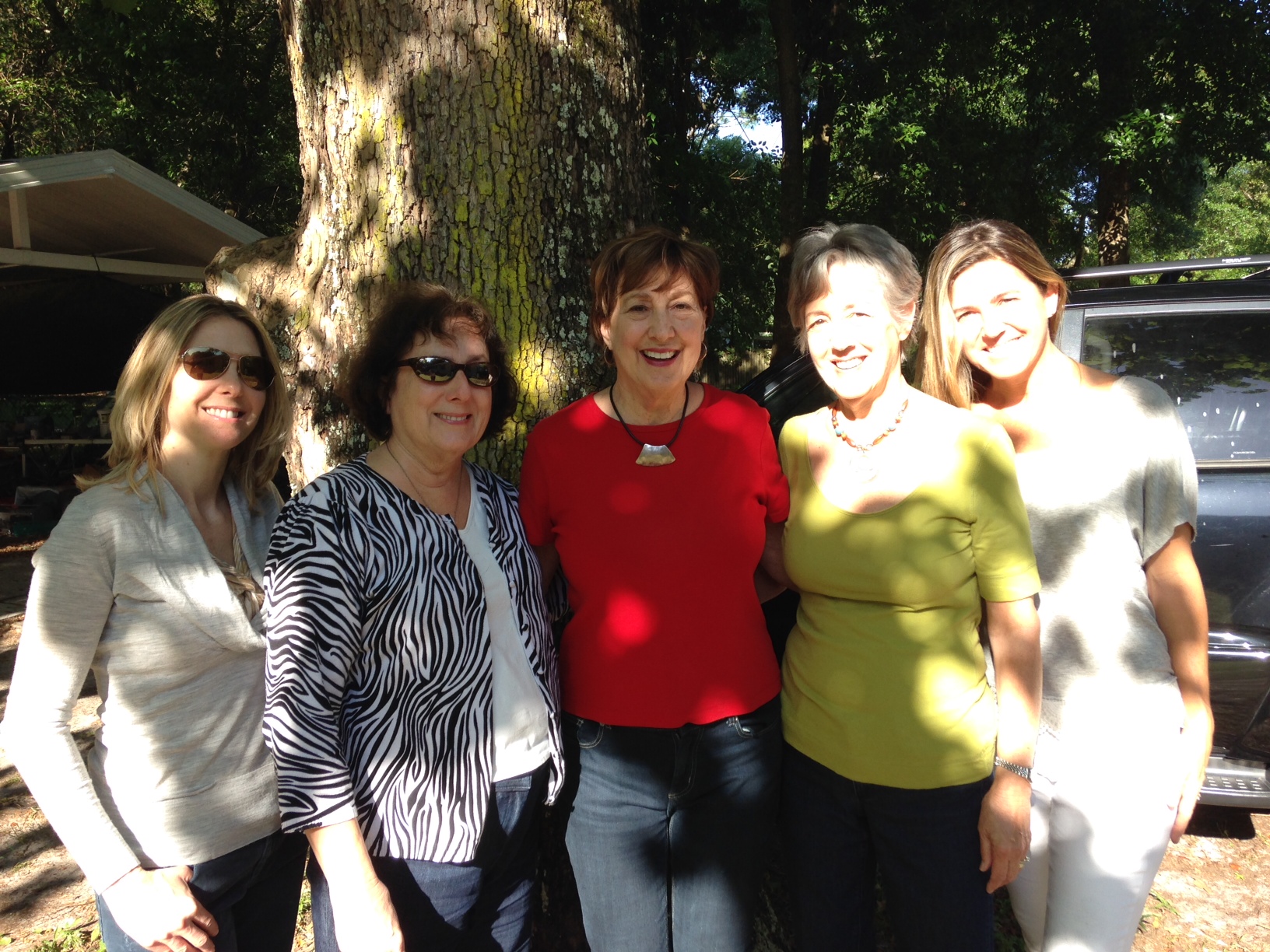
Bouncing along with our luggage are my sisters, Janice and Jean and our daughters, my niece Heidi and daughter Crista, who have masterminded a Mother’s Day retreat for mothers and aunts.

Our faces reflect the weather, begun sunny, a patch of rain, and then bright sunshine again.
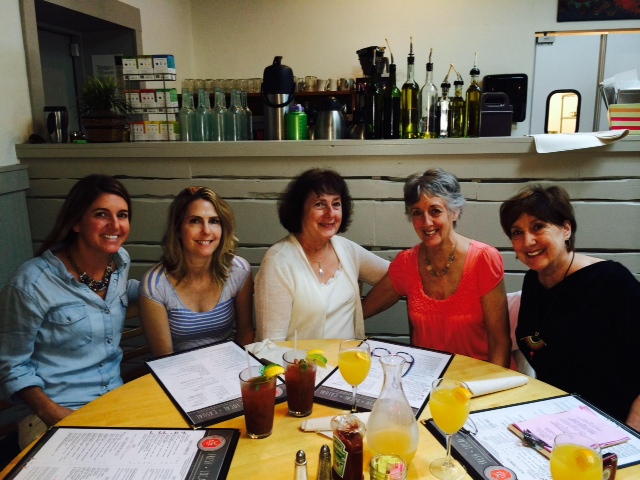
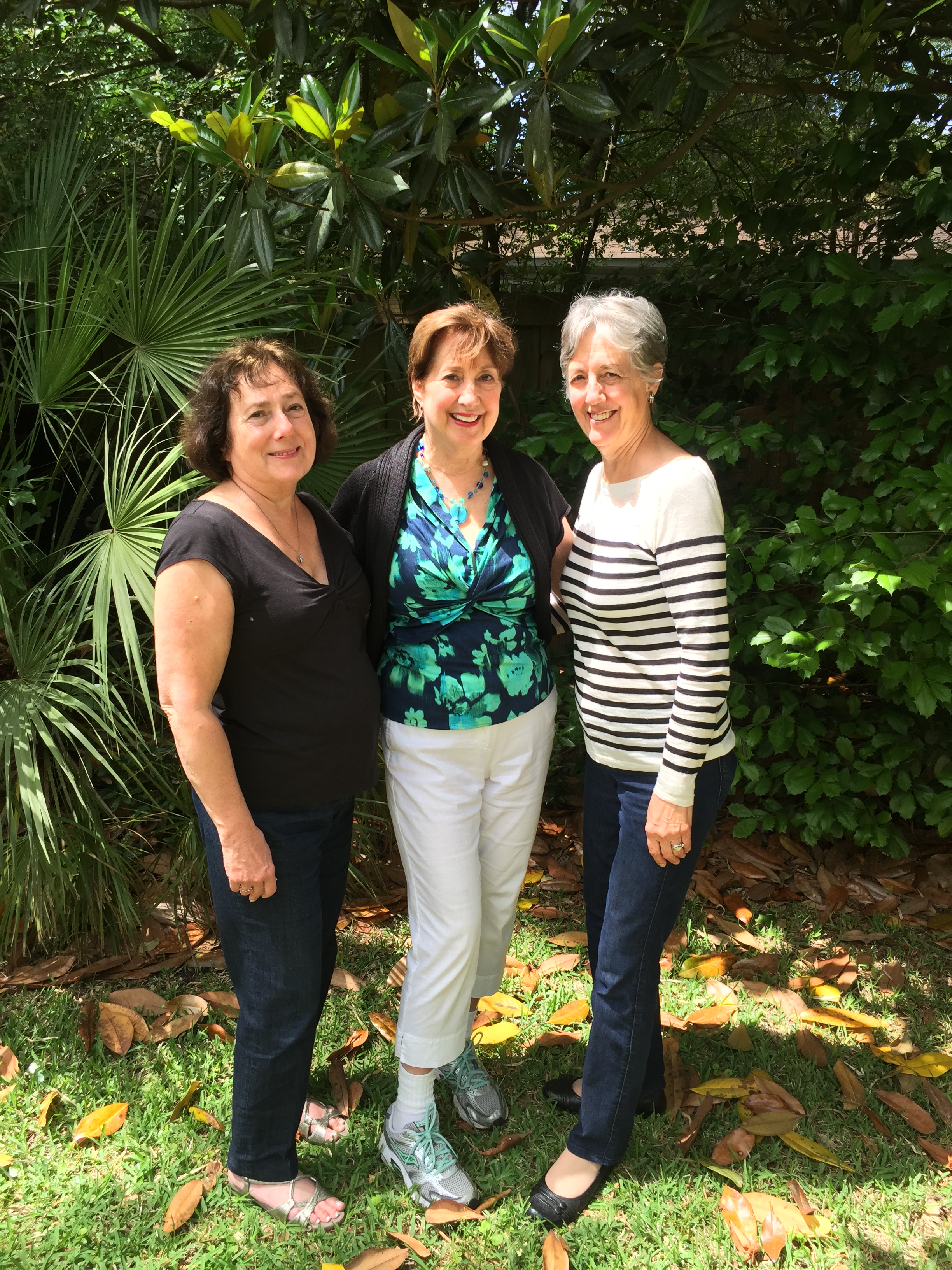
Our faces reflect the weather, begun sunny, a patch of rain, and then bright sunshine again. Left to right: daughter Crista, sister Jean, me, sister Janice, niece Heidi


Waiting for us in Charleston are historical venues and shops, restaurants oozing Southern charm, and a rented house in Mt. Pleasant on an island close to Charleston where for four days we’ll relax, exchange stories from the past and enjoy the sites.

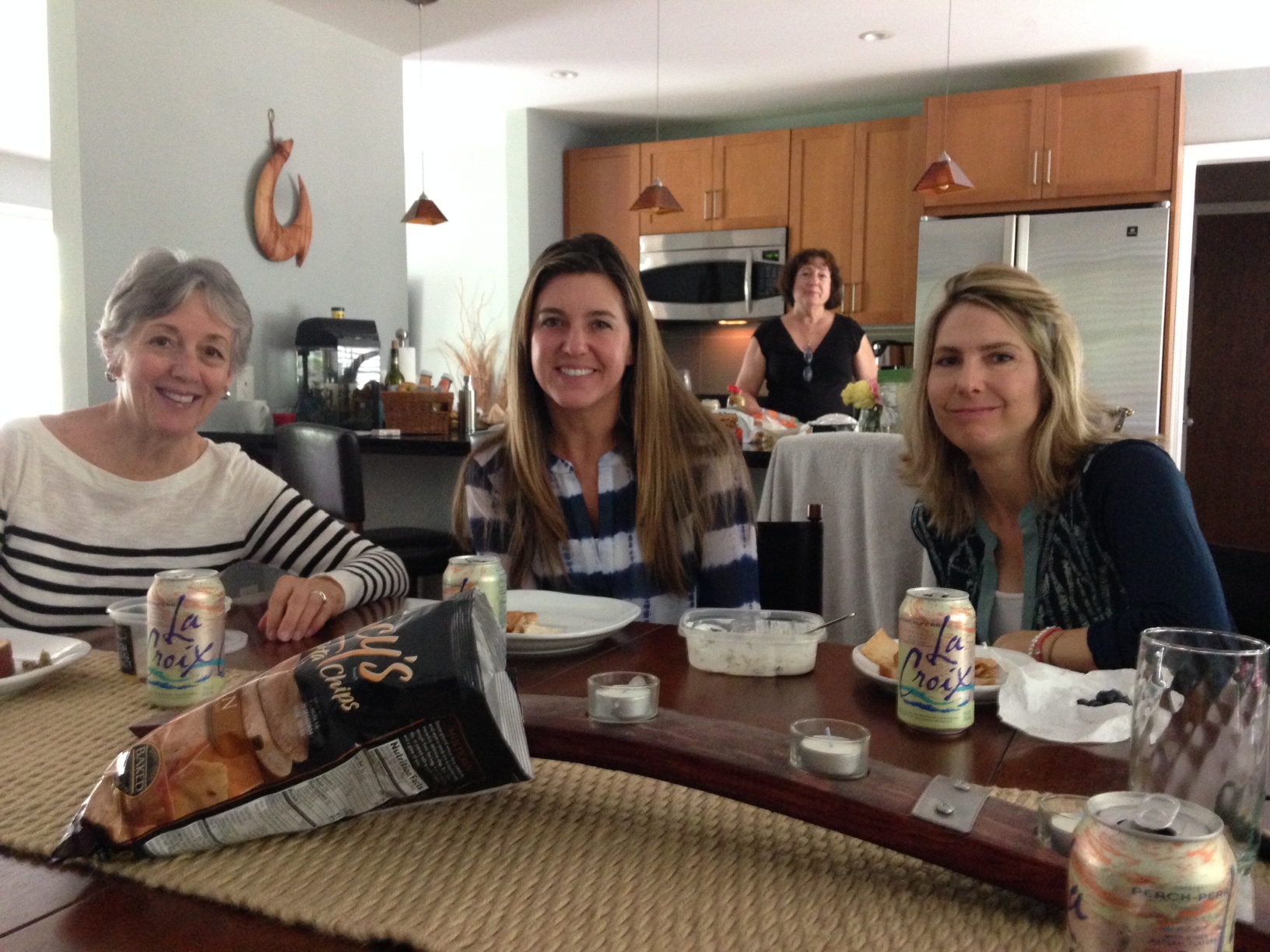
Kitchen


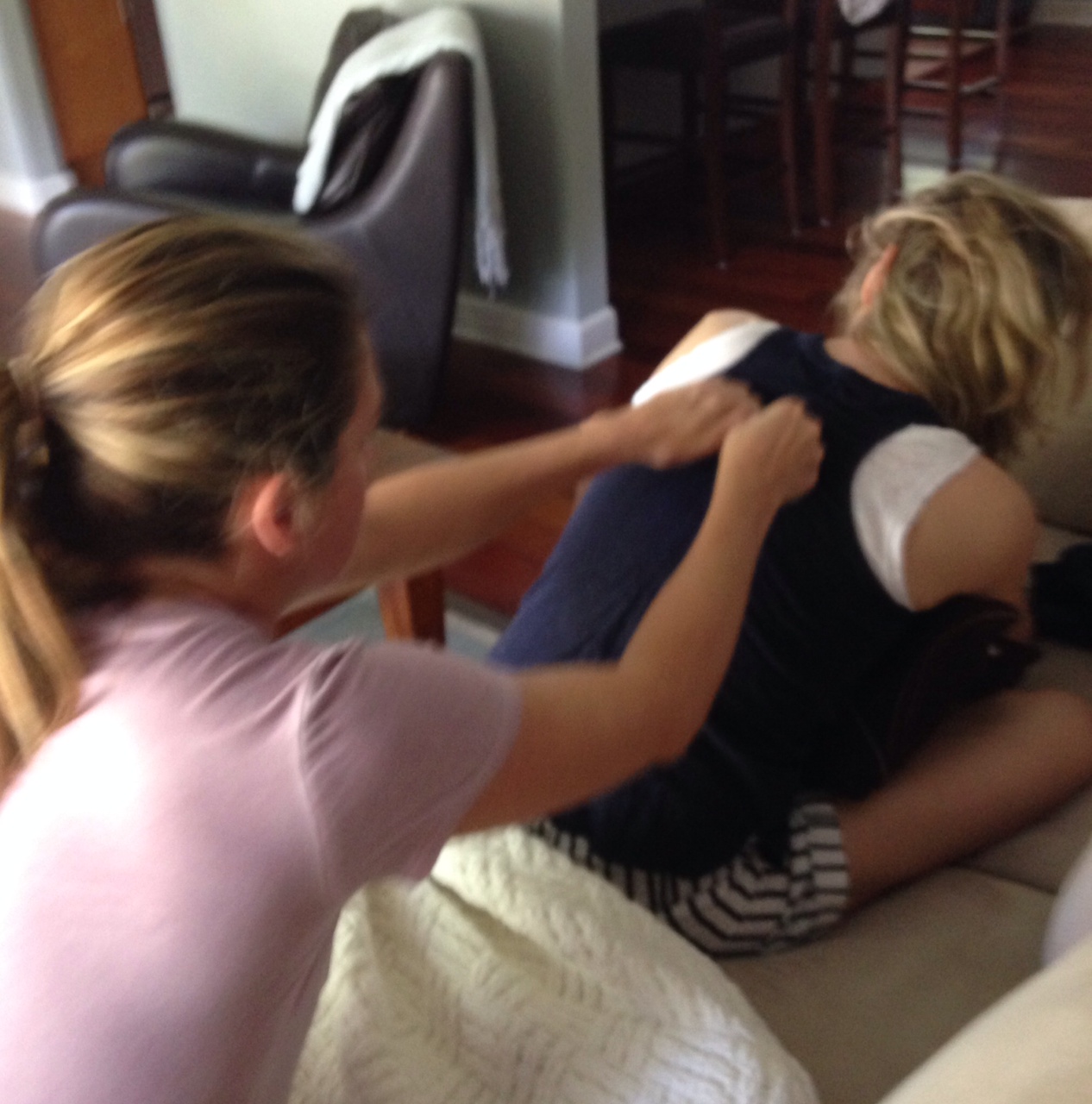
Backrub

There is a separate bedroom for each sister/aunt and a blue attic loft with two single beds and play table and chair, a little-girl hideaway for Crista and Heidi, wives and mothers themselves.

We enter the city in a downpour: flooded streets and a 4-day weather forecast fit for ducks. (I’m talking over a foot of water in the streets grazing the belly of our car!) Fortunately the weather system soon bubbles away into the Atlantic, and we roam the city without umbrellas. A miracle!

The Architecture

narrowHouse

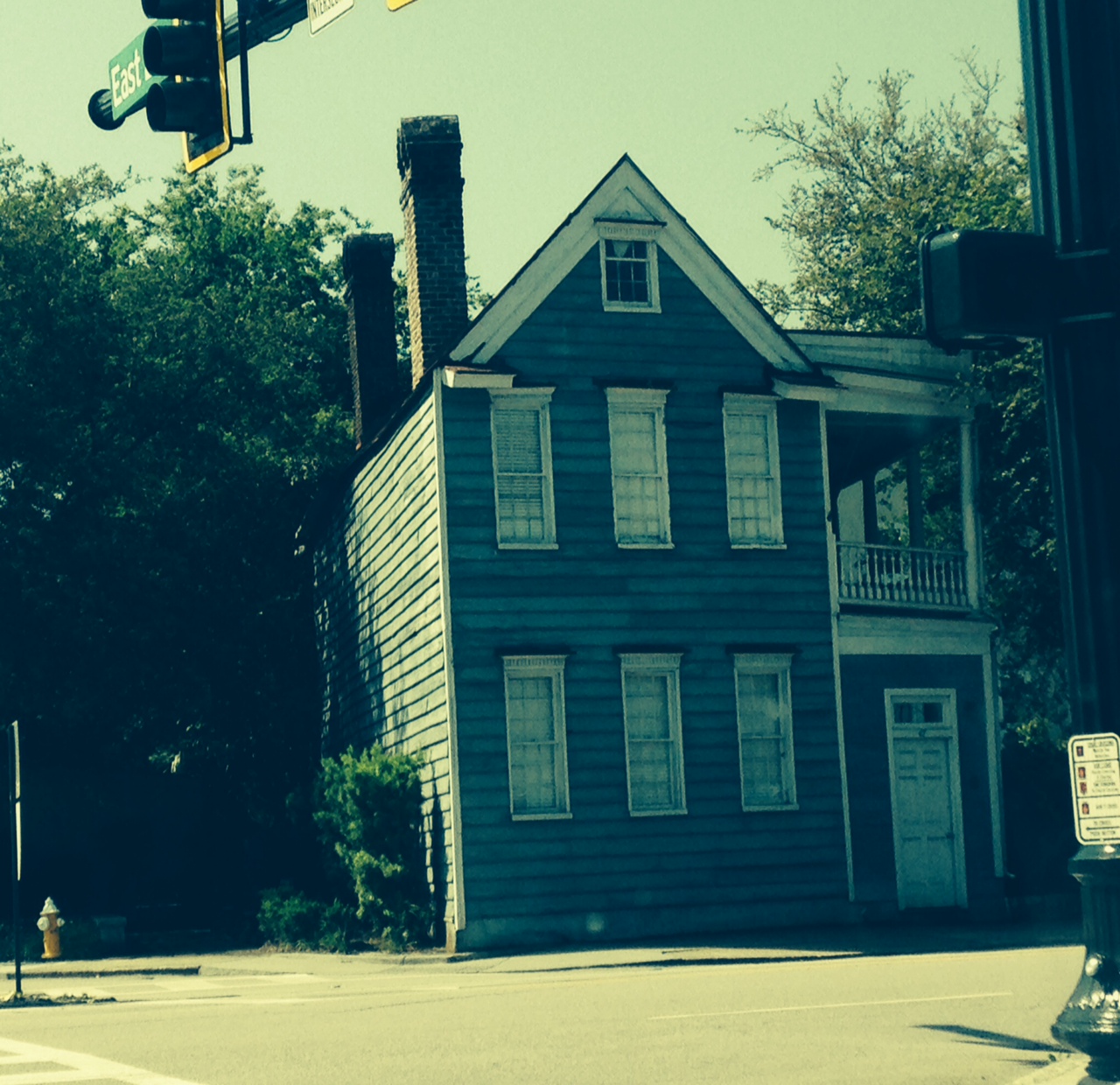
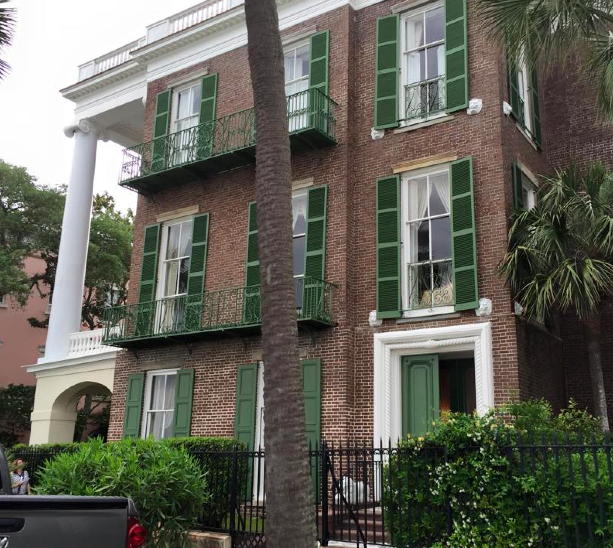
Property taxes were calculated by the number of feet on frontage of the house. Thus, modest homes like the one above were narrow and tall. Fancy, opulent ones were also long, narrow and usually three stories high.

MansionCharleston

Window boxes offer extra garden space for historic homes that don’t have large front lawns. Simply glorious on our first cloudy day.

FlowersWindow1

Flowers2

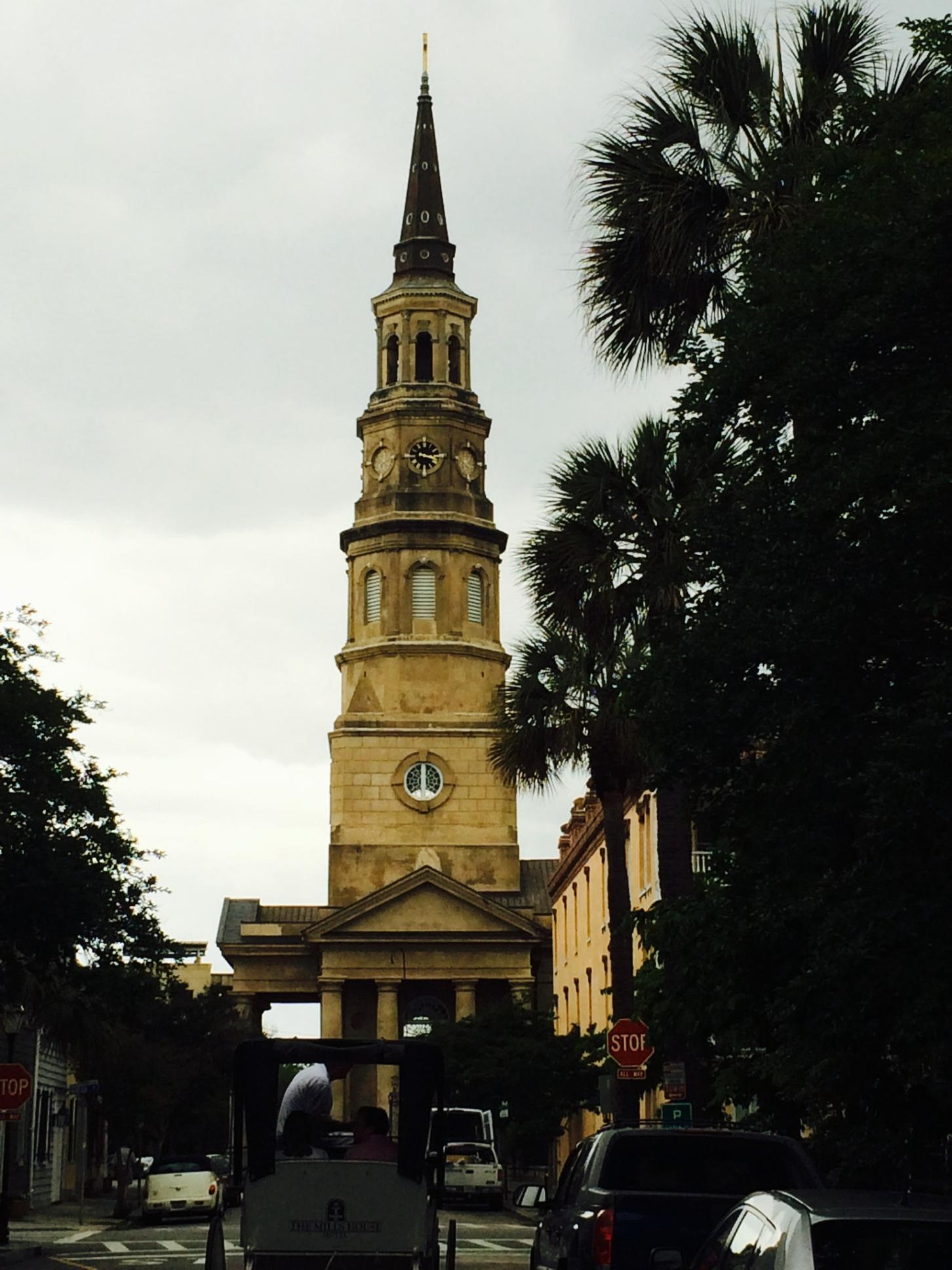
Charleston with many Baptist, Methodist, Presbyterian and Catholic churches, along with Jewish synagogues, is called the Holy City because of its large number of houses of worship.

Cathedral of St. John the Baptist, Charleston, SC  Open filigree spire to withstand hurricanes, tornadoes.
Church of St. John the Baptist, Charleston, SC
Open filigree spire design built to withstand hurricanes, tornadoes.


How We Saw the City: Horse-drawn Carriage and Rickshaw Ride

horse.

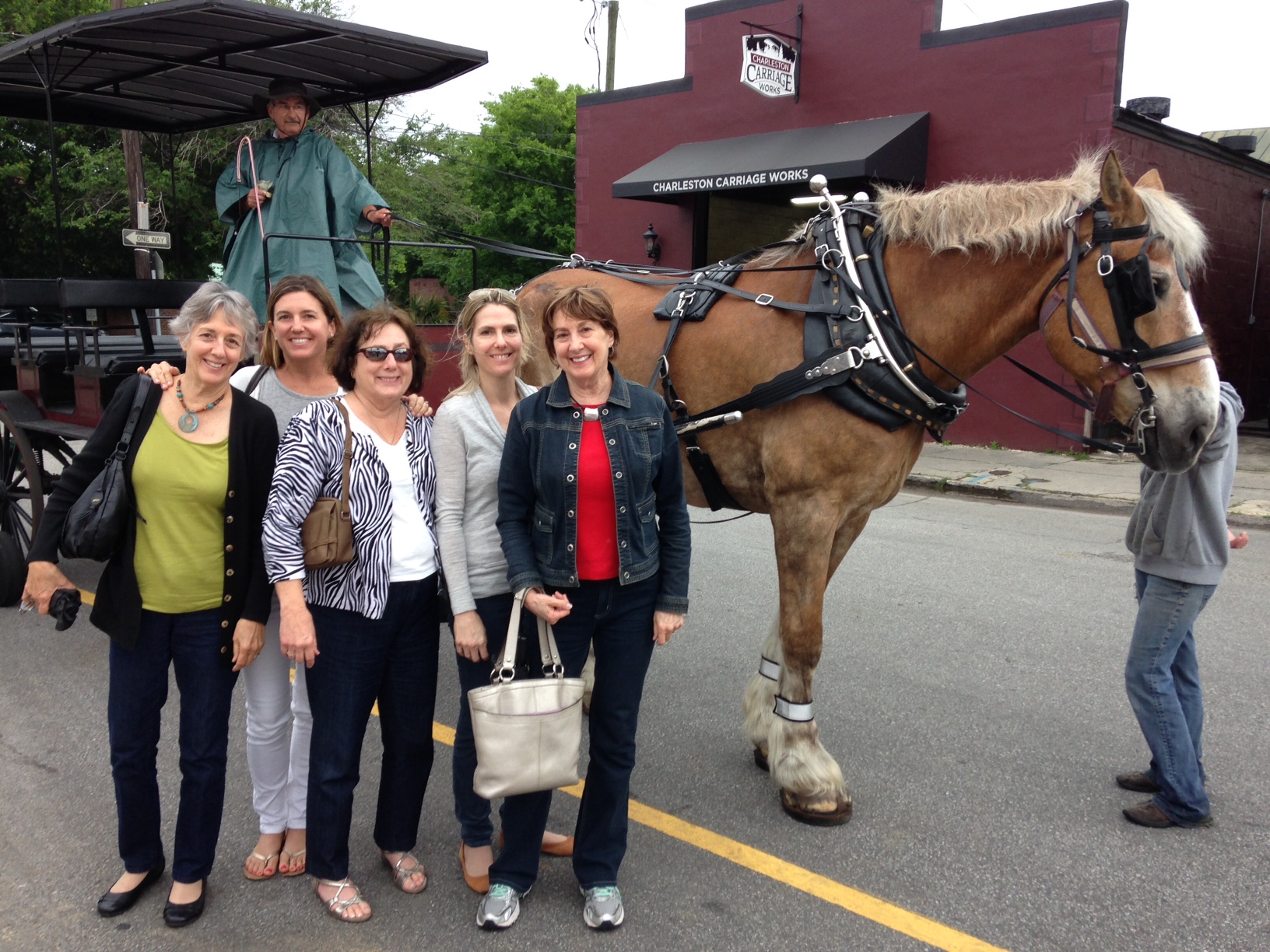
Our storyteller/guide with a salty Southern drawl says, “Our horse, Big John, has been imported from an Amish farm in Ohio.” We believe him though we don’t buy his line that he’s originally from The Bronx.

*  *  *

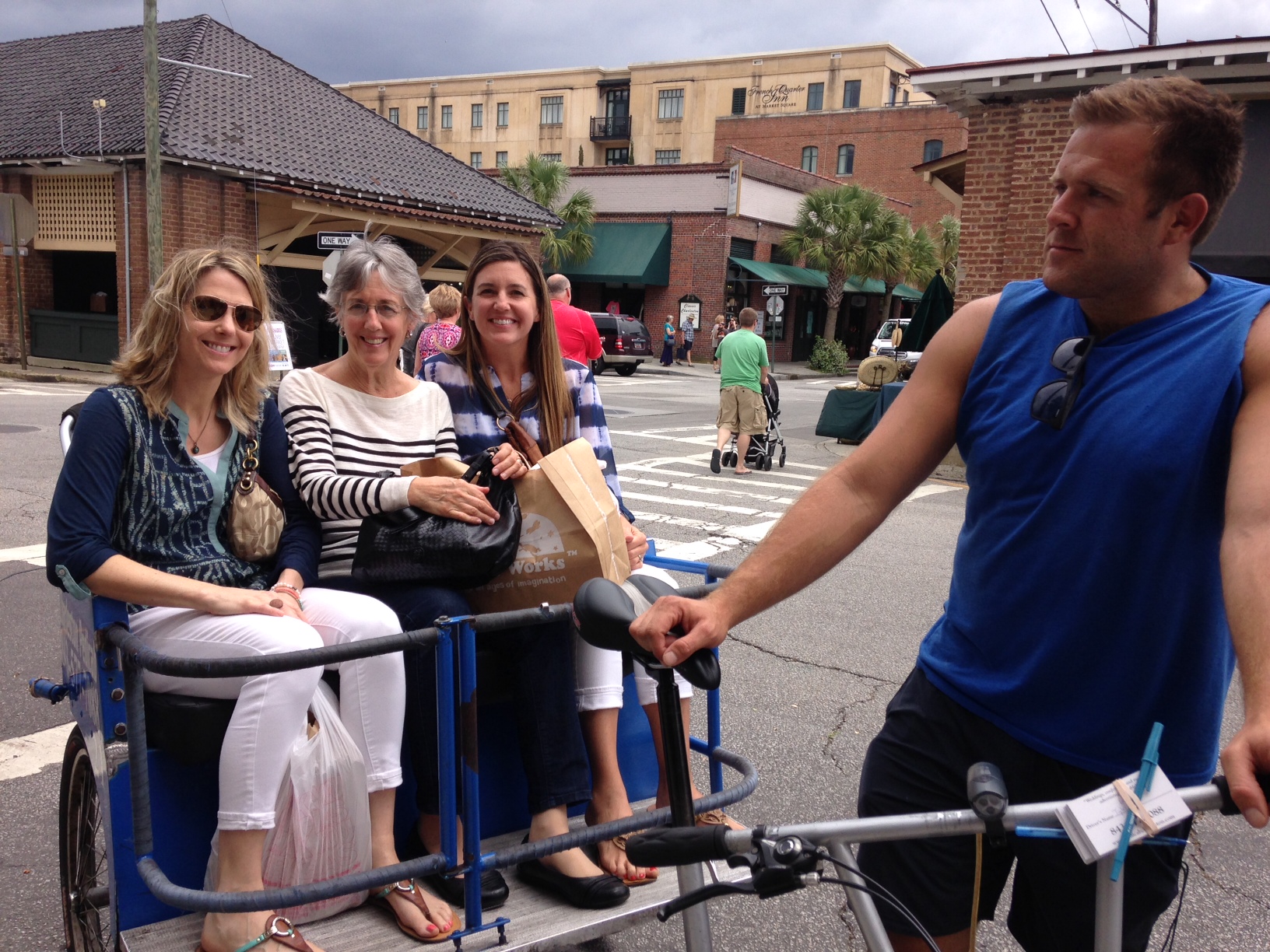
Our handsome bicycler hunk muses, “These ladies look loaded. What’s my tip gonna be?”  (Charleston Rickshaw Company)

rickshawGuy

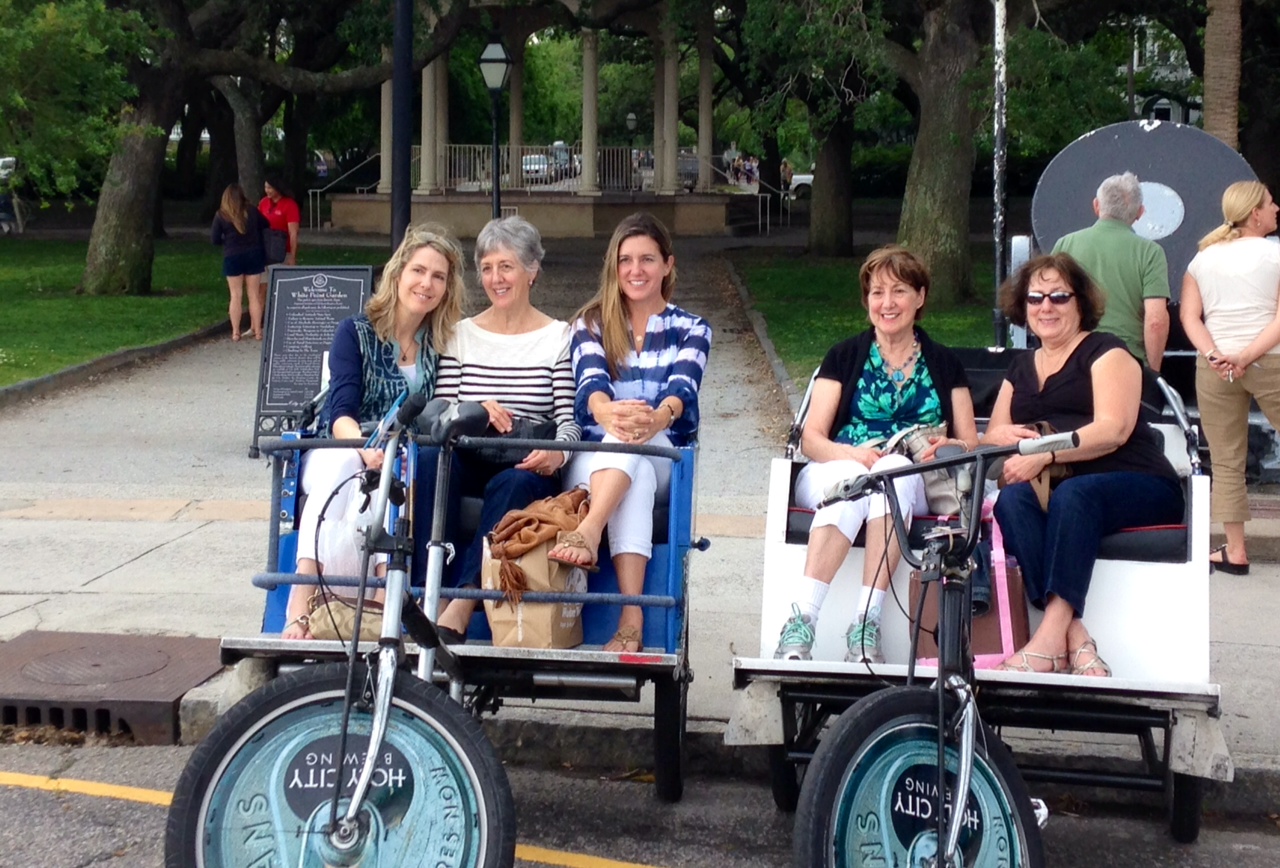
 2rickshaws

 Shopping

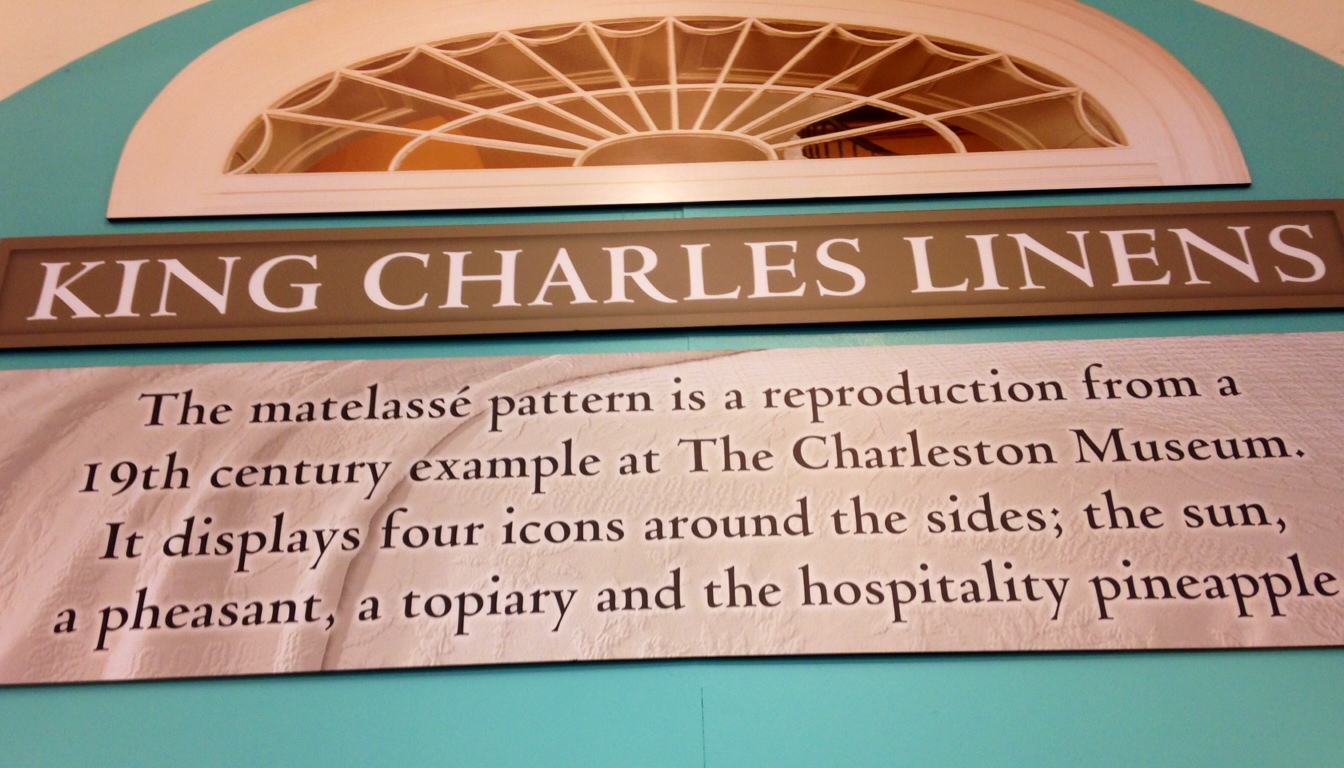
LinensKingCharlesJewelry

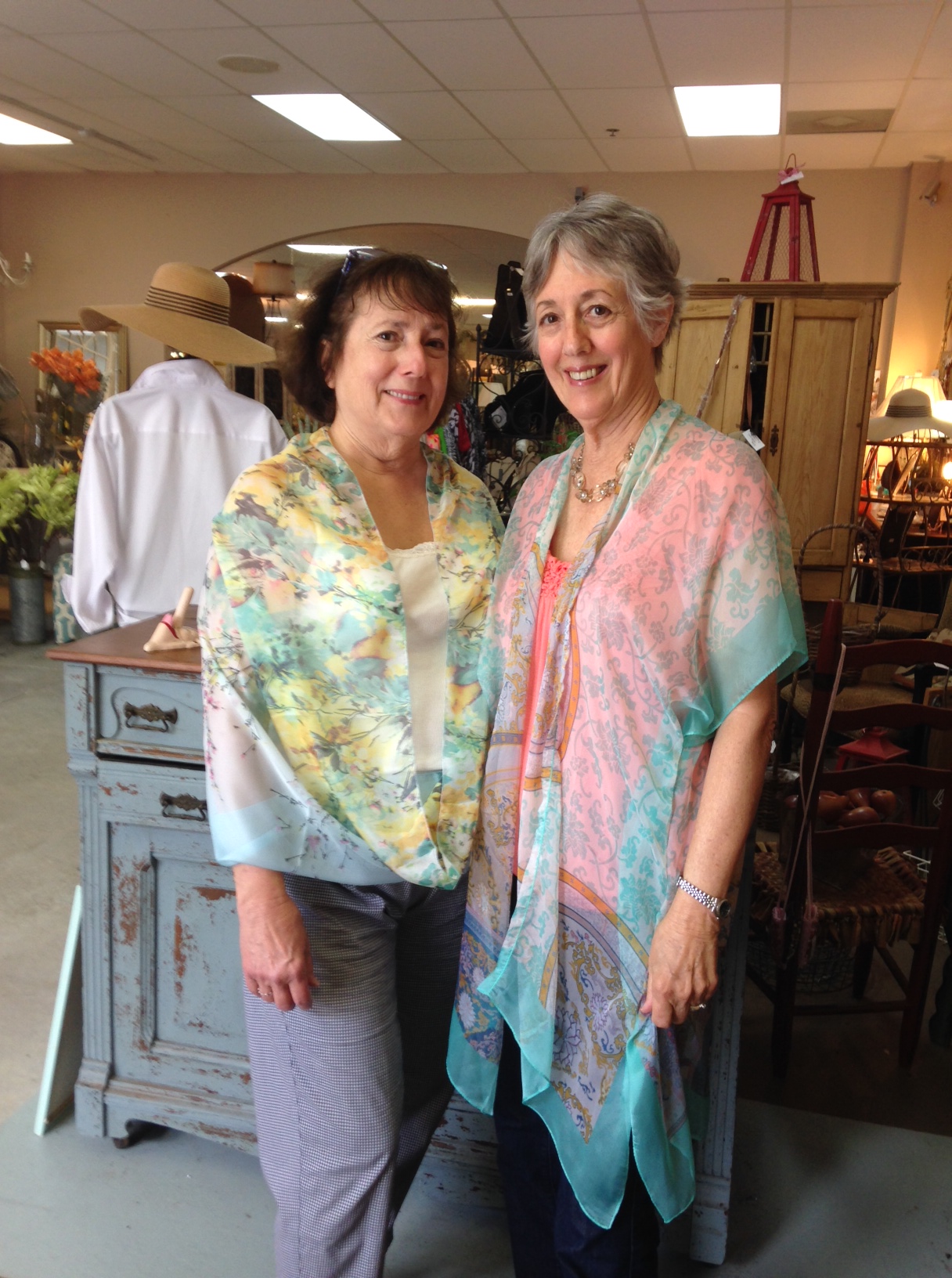
The former plain girls’ stash of jewelry and scarves from the Charleston Market on Market Street

Mt. Pleasant Mall on Mother’s Day

Shopping1

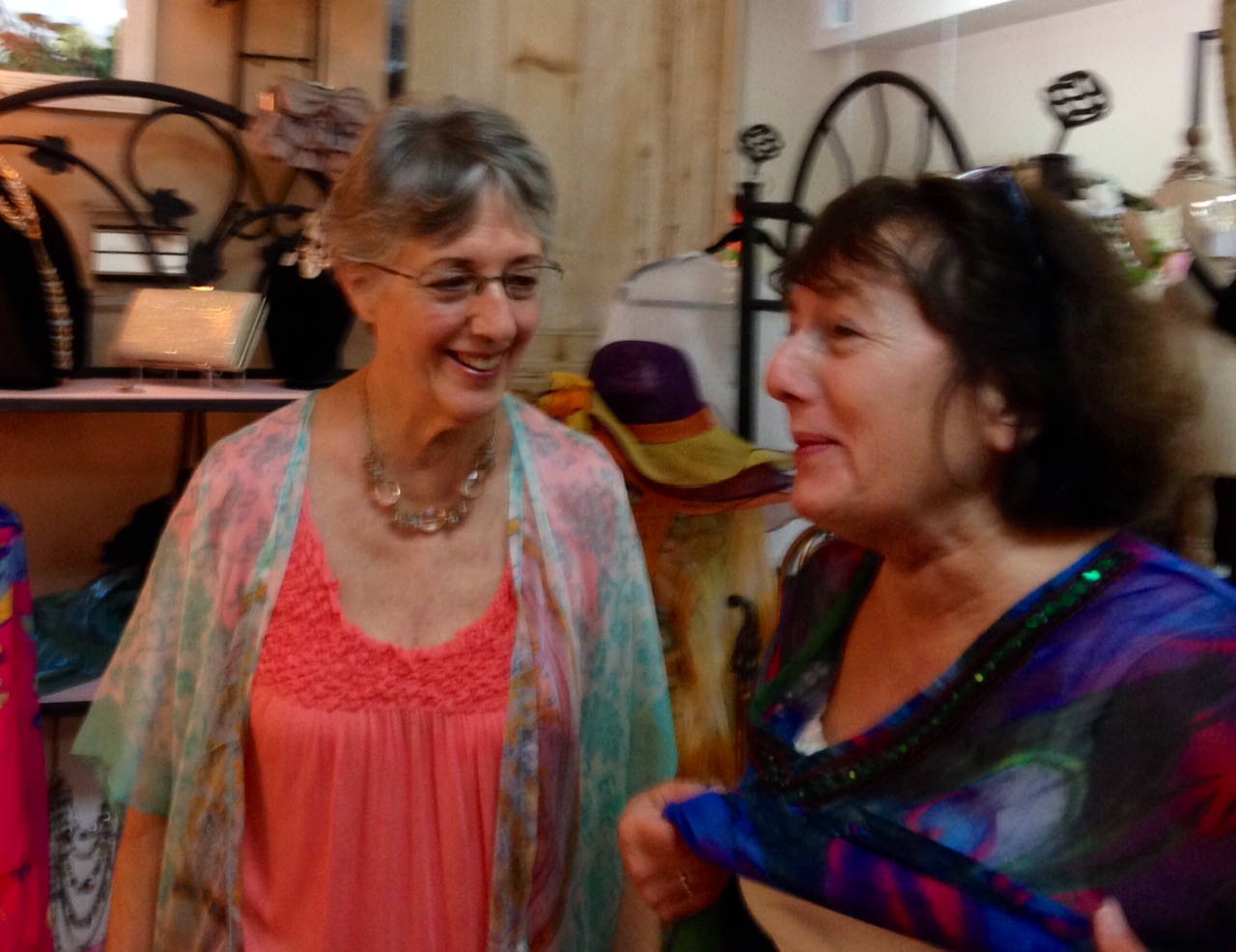
“Are these my colors? my sisters ask each other . . . Then I hear: “Remember when we played dress up with Mame Goss’s hats? Or Wedding under the Willows?” Ha ha!

Shopping2


Time to Eat

FiveLoaves

Mother’s Day brunch at Five Loaves in Mt. Pleasant with (below) a clearly scripted reminder to reflect and share our bounty:

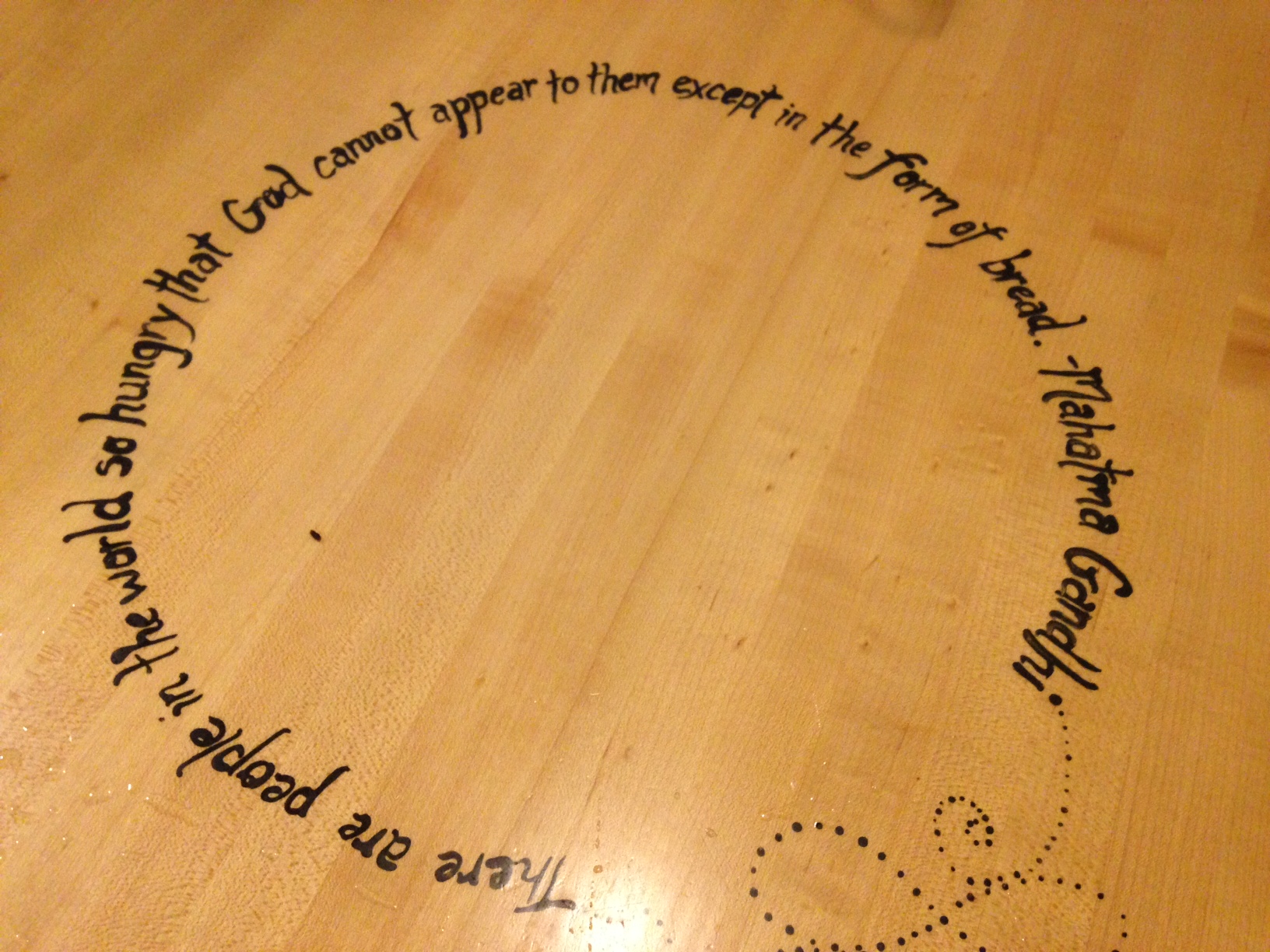
"There are people in the world so hungry that God cannot appear to them except in the form of bread."   Mahatma Ghandhi  (Also the mission of Samaritan's Purse and other charities.)
“There are people in the world so hungry that God cannot appear to them except in the form of bread.” Mahatma Ghandhi (Also carried out in the mission statement of Samaritan’s Purse and other benevolent groups.)


Magnolia Gardens

MagnoliaJan

FoxgloveHalfPpeacock

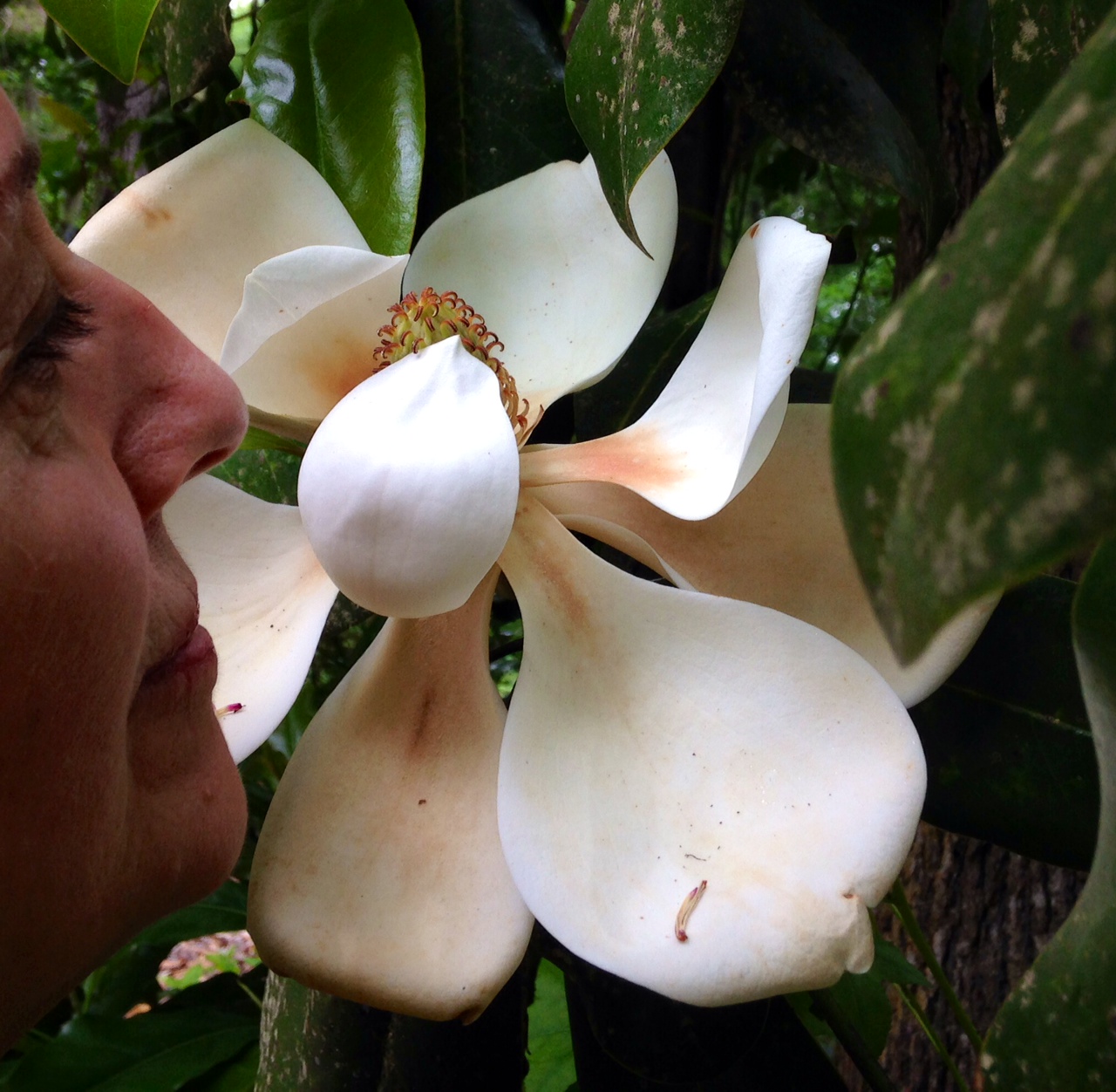
A magnolia bloom (with Janice), foxglove stem and a peacock about to unfurl fan feathers . . .  in the gorgeous Magnolia Gardens

A Smidgeon of History from Charleston SC, A Photographic Portrait

Founded by English colonists in 1670, Patriots fought–and won–the first decisive battle of the Revolutionary War here [Charleston] . . . .

Decades of growing strife between the North and South erupted at Fort Sumter in April 1861, launching the American Civil War:

Four cadets from the City’s military college, The Citadel, were among the soldiers who fired the first shots of the Civil War across the Charleston Harbor.

The city has also sustained more than one fire and an earthquake.

Good Vibrations

Sisters

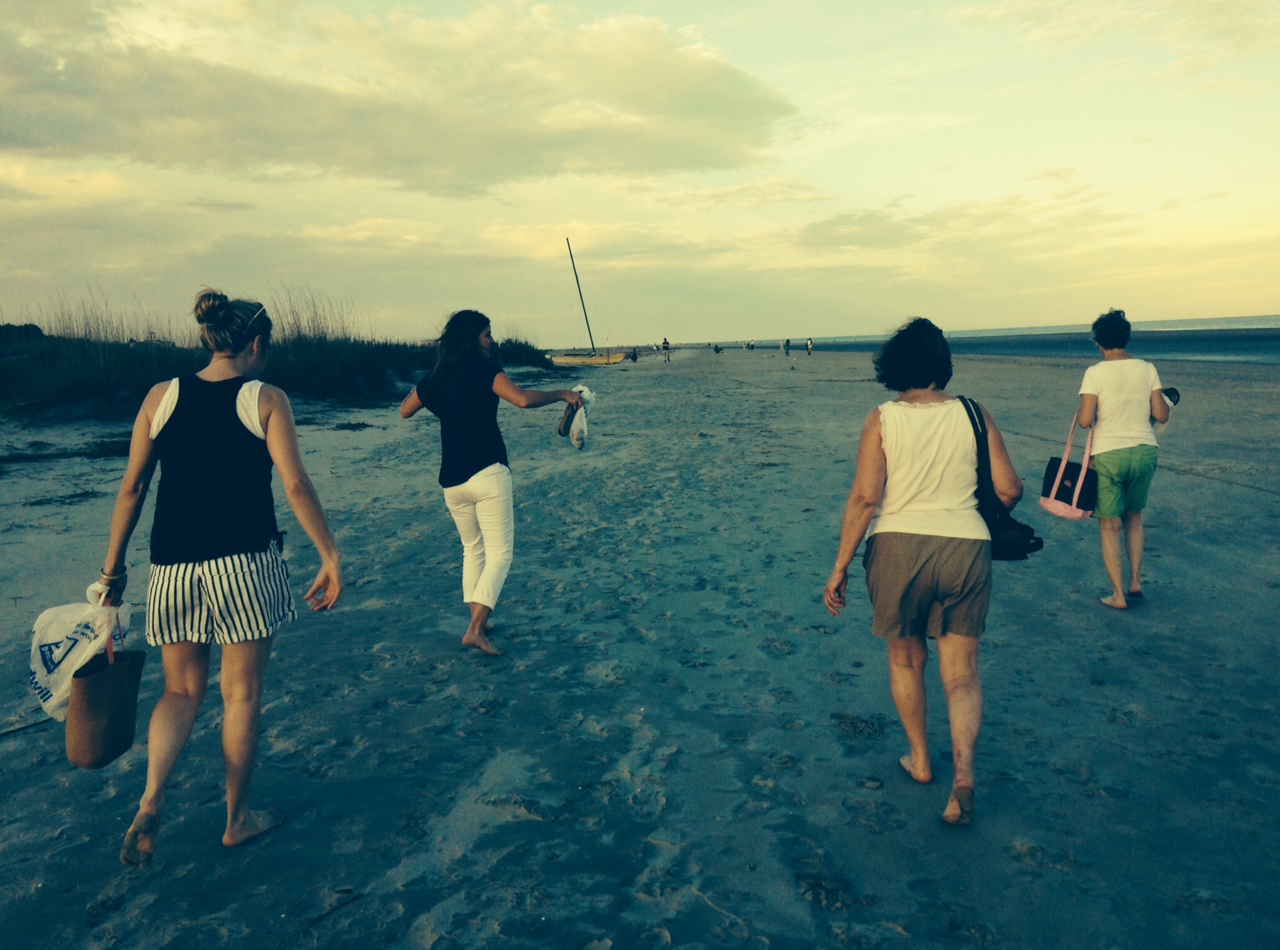
BeachRear


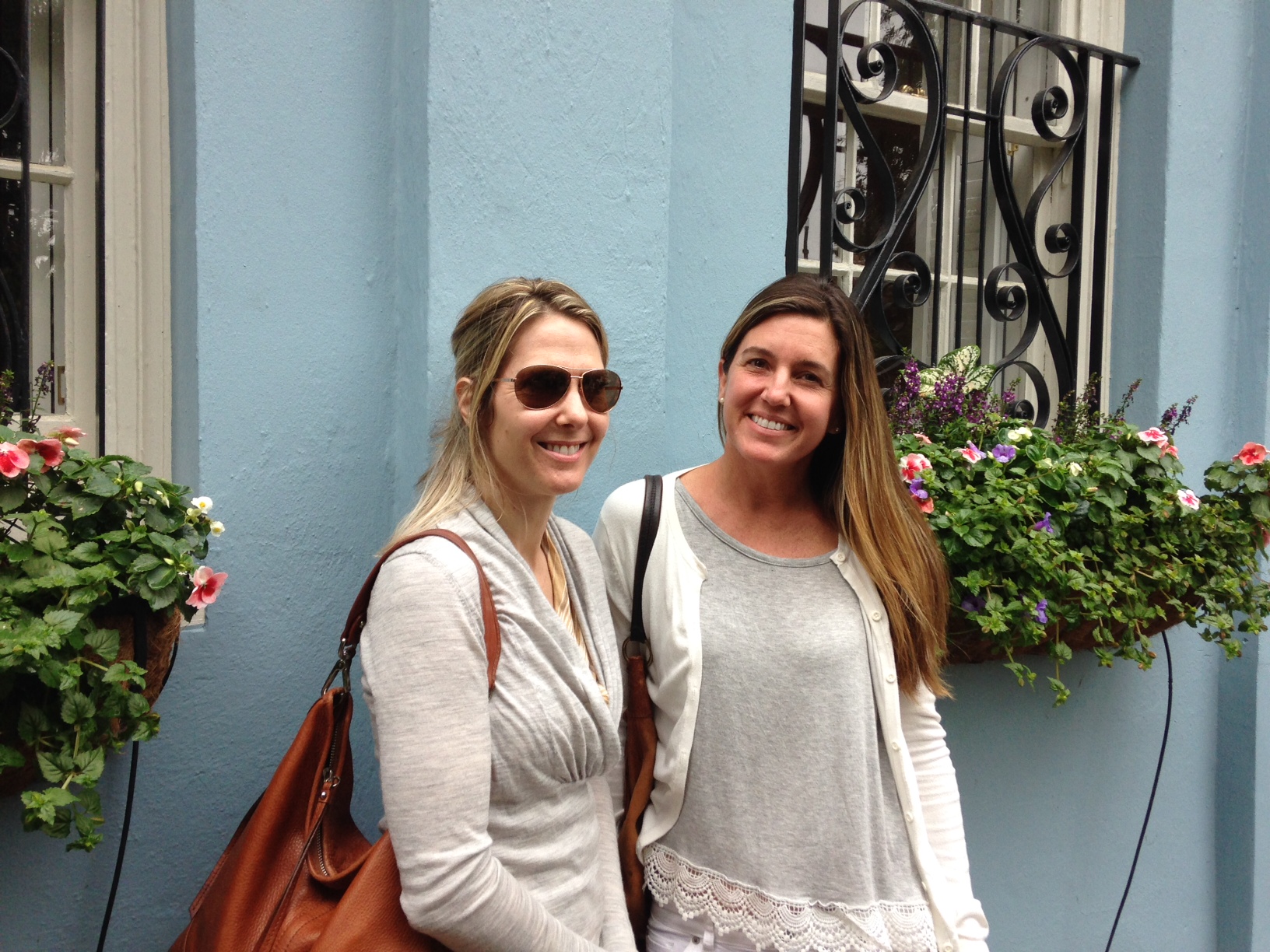
Many thanks, you two!CristaHeidi


Research shows that sibling relationships are the longest-lasting relationships any of us will have in our lifetime. In the natural order of things, our parents will die before we do. We can lose partners and spouses through death or divorce. Typically, our siblings remain.

Road trips, siblings – your comments welcome!


Coming next: My Dad’s Bachelor Trip to Florida

An Orphan Speaks on Mother’s Day

Mom+Marian_2 mos_5x9_300

This is my first Mother’s Day without my mother, Ruth Metzler Longenecker. To say I miss her is an understatement of the highest order. Technically, I could be considered an orphan with both my mother and father gone. However, with my own extended family and considering my age, I doubt that such a designation applies.

Is there a word for my status without a living mother or father at my age? I wonder.

Mother lived a full life with many happy moments and good health until a few days before her death on July 28, 2014. Over her lifetime, she had seen phenomenal changes in American culture, including technological ones as shown here:

Mennonite Women_new phone_p89

Anna Catherine (Herr) Houser was speaking/listening on this candlestick phone in 1919 at the time Mother was a year old.  Credit: Mennonite Women of Lancaster County, Joanne Hess Siegrist, 1996, page 89.

The last photo I snapped of Mother with her finger hovering over my iPhone captures the moment she looked up momentarily from “paging” through photos of her grand-children and great grand-children.

MomLastPhotoTogether

David Whyte, Crossing the Unknown Sea

The death of someone closest to us is always a form of salutation, a simultaneous Goodbye to their physical presence and a deep Hello to a more intimate imaginal relationship now beginning to form in their absence.  (46)

A “deep Hello to a more intimate imaginal relationship”? We’ll see . . .

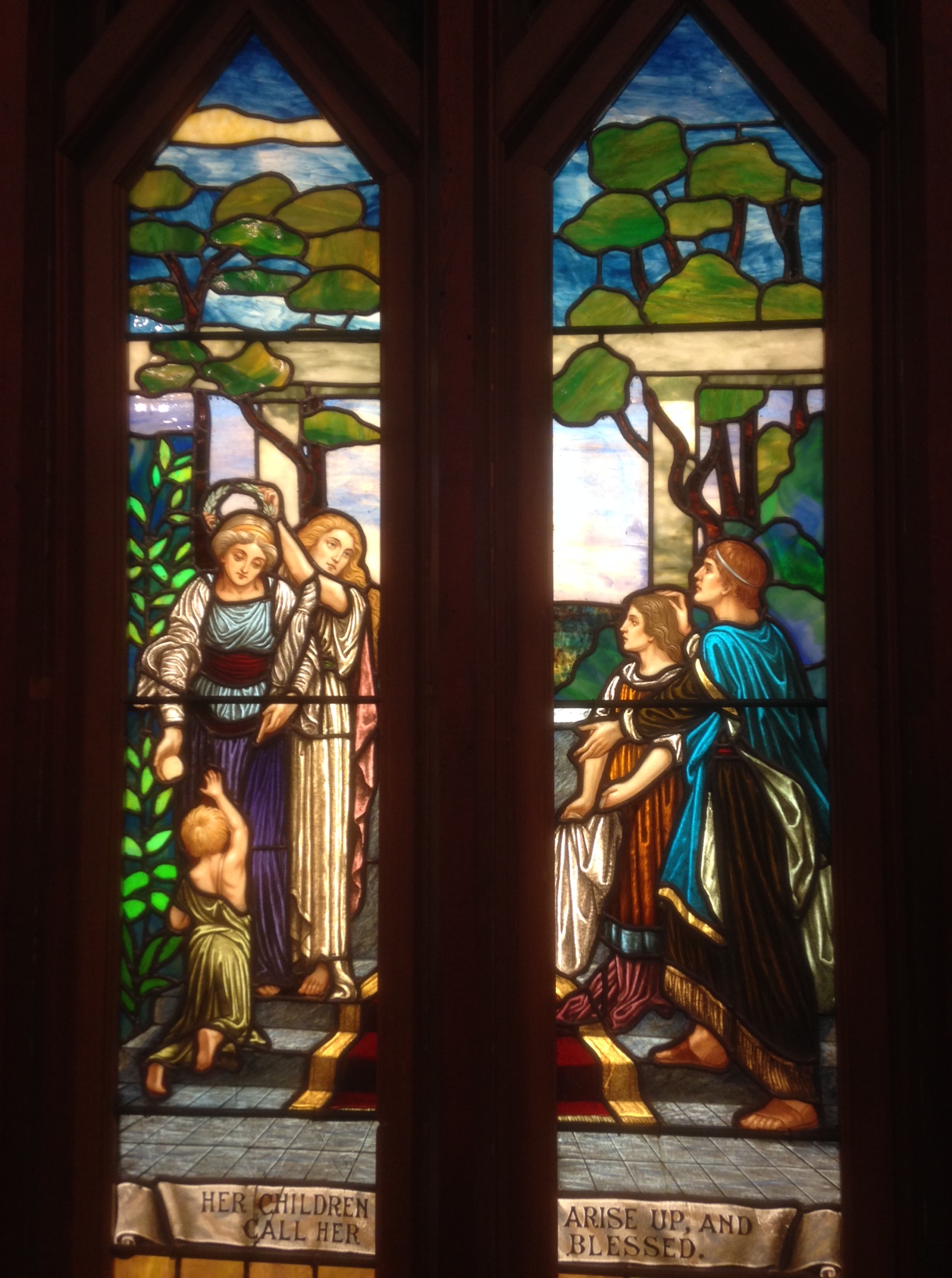
“Her children rise up and call her blessed.” Prov. 31:28
 Christ Church Frederica, St. Simon’s Island – Tiffany glass

Have you experienced the death of your mother or grandmother? If a mother, is there a word for one’s status now, bereft of a mother and father? Your suggestions always appreciated here.

Coming next: The Longenecker Sisters’ Road Trip, Part 1

Mennonite Girls Can Cook

Yummy Recipe

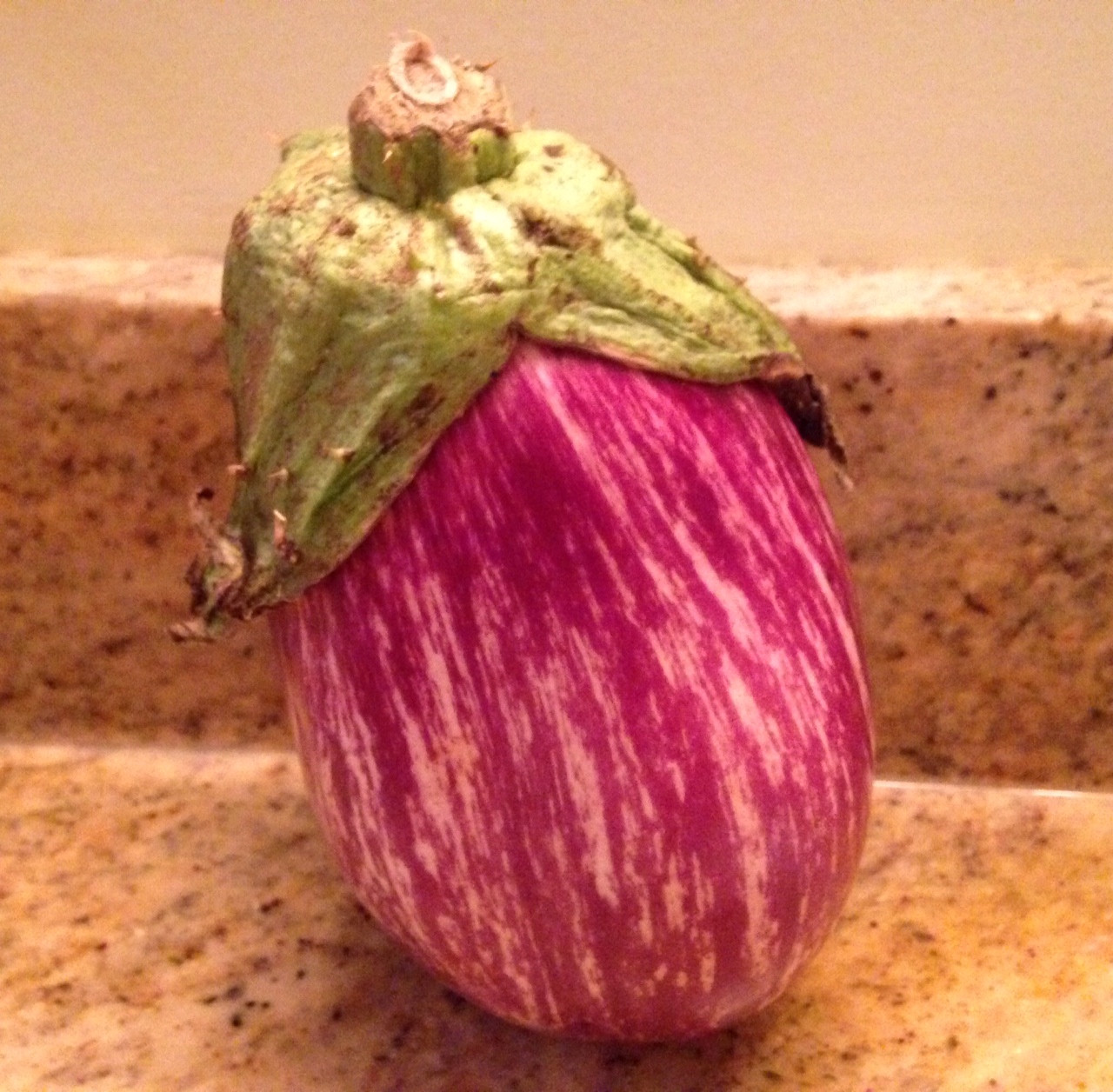
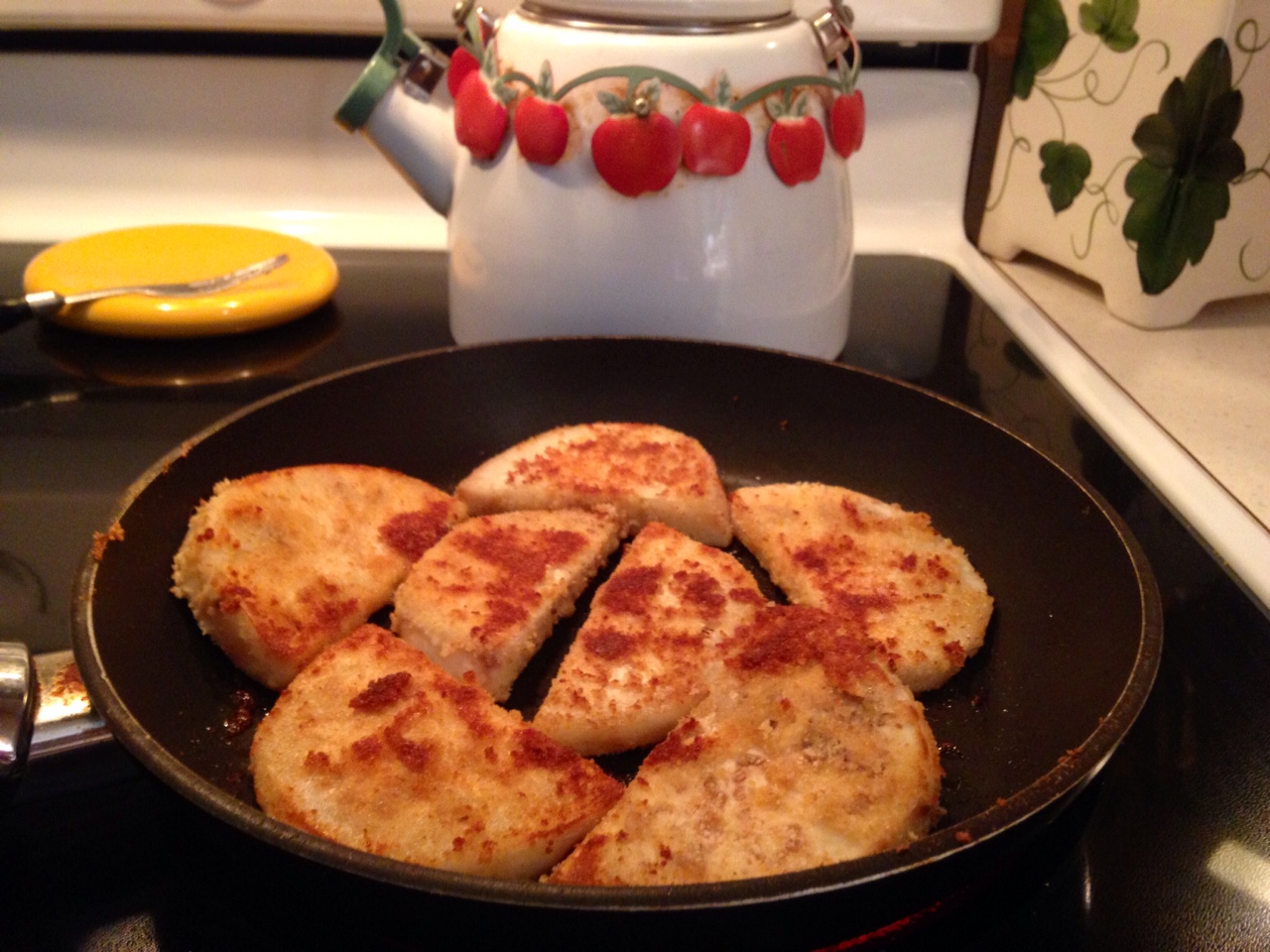
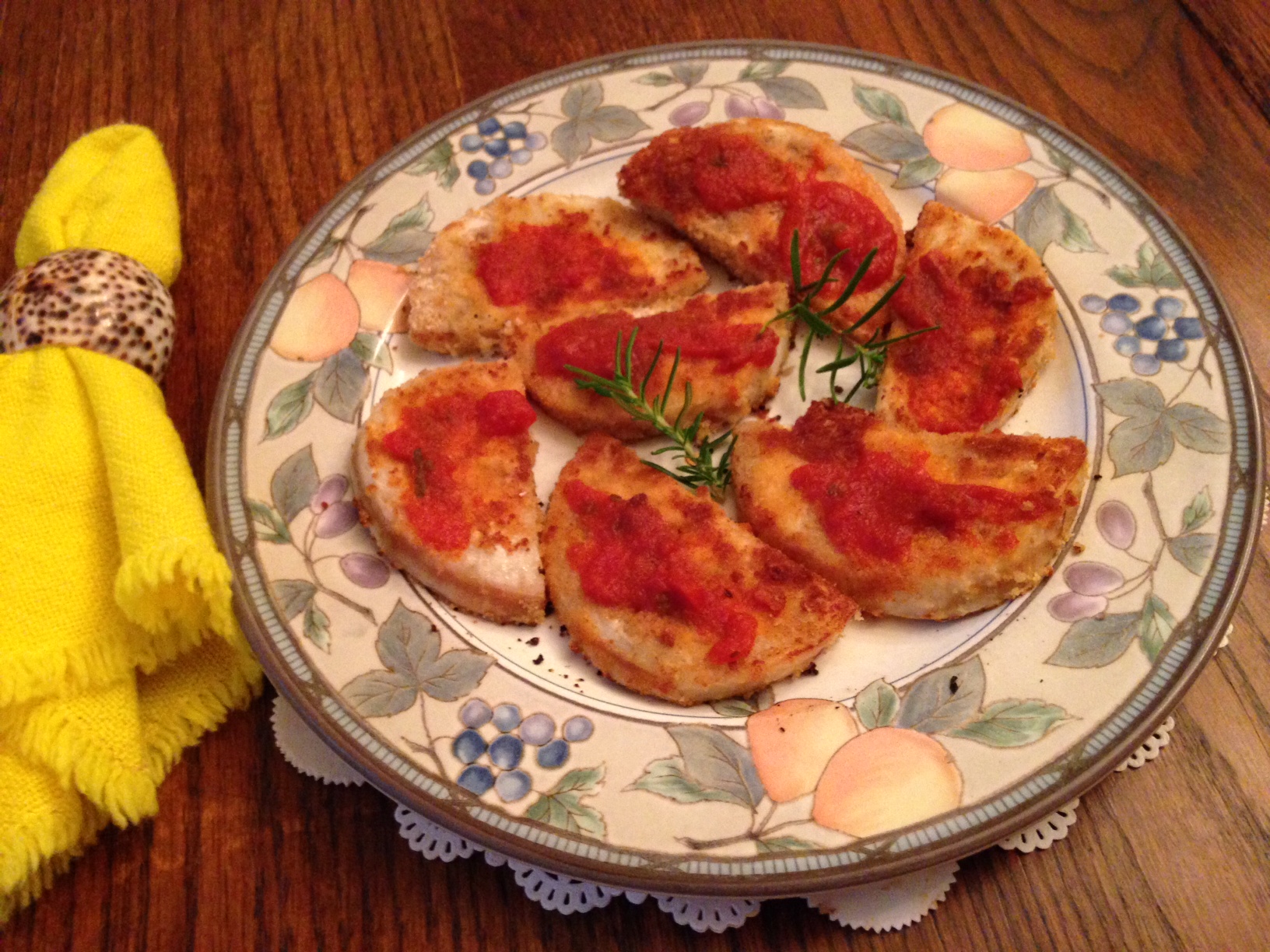
Last week I was in the kitchen with my nearly vintage Mennonite Community Cookbook (1978) creased open to page 155 where I checked out the recipe for sautéed (Okay, I’ll admit, it’s fried!) egg-plant. Hours later when my new and improved Mennonite Community Cookbook arrived in the mail, I quickly turned to page 155, and behold there was the same egg-plant recipe contributed by Mrs. Hubert Pellman, wife of one of my favorite English professors at EMC. No, I didn’t use the new cookbook because I didn’t want to splotch it up. But when I switch over I’ll enjoy the spiral notebook style of binding and other updates on the new edition.

EggplantStriated

EggplantFrying

EggplantServed

Here I substituted olive oil for lard.

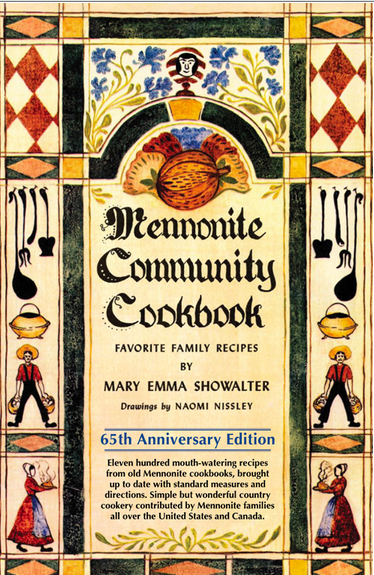
Blurb from the Old Mennonite Community Cookbook: First published in 1950, Mennonite Community Cookbook has become a treasured part of many family kitchens. Parents who received the cookbook when they were first married make sure to purchase it for their own sons and daughters when they wed.

The Mennonite Community Cookbook, 1950 – 2015

Dubbed the “grandmother of all Mennonite cookbooks” author Mary Emma Showalter compiled favorite recipes from hundred of Mennonite women who brought their recipes directly from Dutch, German, Swiss, and Russian kitchens. A “dab of cinnamon” or “ten blubs of molasses” have been translated into standard measurements. Fine pen & ink drawings of the pie shelf in the springhouse, outdoor bake ovens, the summer kitchen recall cookery in Grandma’s day.

MennoniteCommunityCookbook

You can buy the book here, or go to their MCC Facebook page and enter to win the cookbook. As of this date, there are drawings for free books every week.

Mennonite GIrls Can Cook

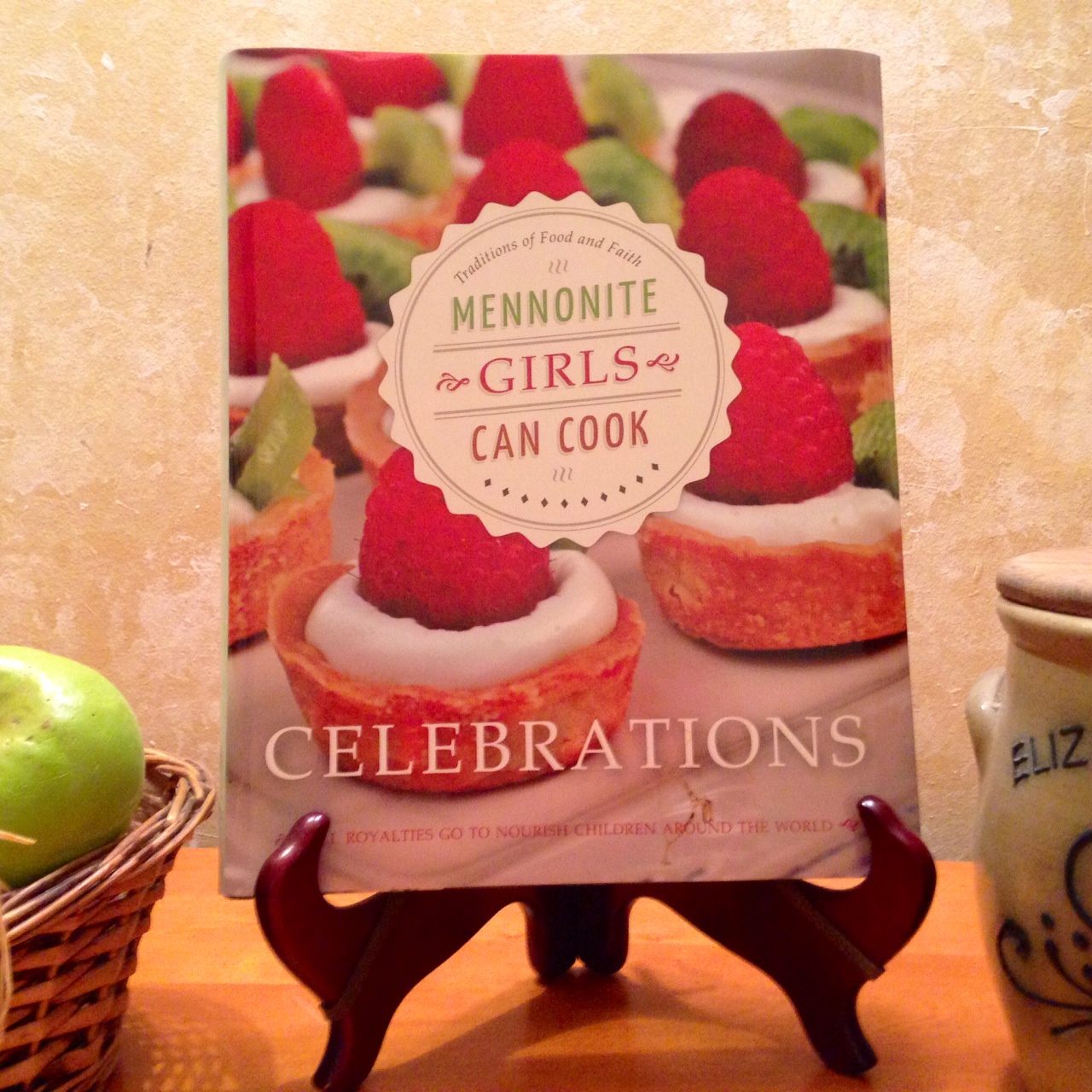
Also produced by MennoMedia (Herald Press): Mennonite Girls Can Cook, volume 1 and their second volume, Celebrations.

MennoniteGirlsCanCook

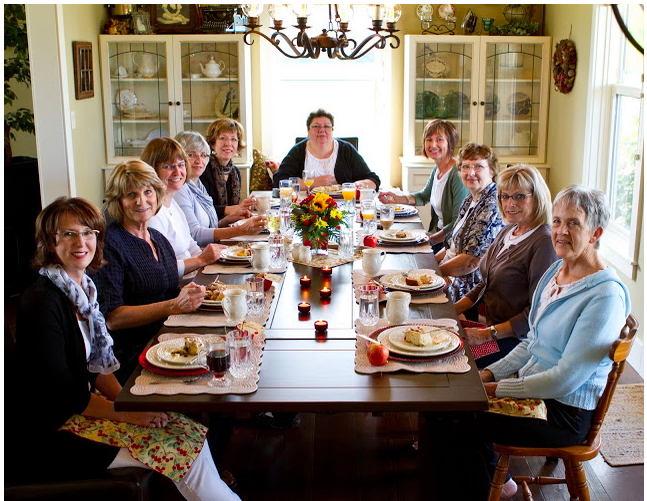
This book required collaboration from 10 authors (cooks and writers) all but one from Canada. Names like Friesen, Wiebe, Klassen, and Penner suggest their southern Russian (Ukrainian) roots.

MennoniteGirlsDiningTable

Their Celebrations cookbook, on special for Mother’s Day (half-price until May 9), is a collage of recipes, of course, and meditations of faith celebrating milestones such as birth, marriage, and holidays illustrated with first-class photographs. Some surprises: a mini-pizza recipe faces one for homemade potato chips. Pages later, a lattice-topped grilled apple recipe followed by Borscht and Zwieback (first cookbook).

The authors emphasize “hospitality over entertaining” and “blessing rather than impressing.” Appropriately, the Celebrations book’s end-leaf posts a copy of Old Hundred, Praise God from Whom All Blessings Flow. Best of all, royalties go to nourish children around the world. You can follow them on their blog, Mennonite Girls Can Cook, which attracts 7000 views daily.

Short History

Many Mennonites (Anabaptists) who live in the USA have Swiss roots, but fled to Germany to escape to religious persecution. When William Penn offered them rich farmland in Pennsylvania, these folks, my ancestors, immigrated in the 1700s with hopes of adapting their love of the land and family tradition to the New World. Similarly, Canadian Mennonite forebears fled western Europe and religious persecution to live in Russia from where they immigrated to Canada escaping political upheaval.

Tie-Dye Rainbow Cake!

I can’t wait to make the tie-dye rainbow cake with Jenna or one of the grand-boys, and soon! (Pages 60 and 61 in Celebrations)

RainbowCake

Your turn: Are you familiar with either cookbook? Do you have a favorite recipe or cookbook – or do you just “wing it”? Thank you for sharing your thoughts here!

Coming next: An Orphan Speaks on Mother’s Day

Rhubarb in Grandma’s Garden

Hot-house rhubarb spotted in shop window, Brunswick, GA  January 2015
Rhubarb plant spotted in front of shop window, Brunswick, GA
January 2015

Grandma and I in the Rhubarb Patch

It’s me, pigtails flapping in the May breezes, skipping beside Grandma toward the rhubarb patch. Behind Grandma’s house toward the woods a thick nest of rhubarb stalks stands sentinel over a ridge facing the twelve sweet cornfield rows. In her garden, the pinkish-red rhubarb spears get back-row status but I think they are pretty enough for her flower garden out front.

“You said you are stopped up – didn’t have any luck when you went to the bathroom.” Grandma with her sunbonnet and apron pulls off the biggest pinkish-red stalks, the green heart-shaped, crinkly leaves falling to the ground with one swath of her knife. “A dose of this will fix that.” She’s looking intently at the rhubarb but I know she’s talking to me.

I have eaten Grandma’s rhubarb sauce before, but I never thought of it as a laxative. “It has roughage in it. It’ll really clean you out.” She runs her rough hands along the spine of the stalk to show me the fibers.

“I see,” I say but right now I wonder if it tastes as good as it looks, so I bite into a stalk and find out too late that it has plenty of pucker power. “Eeee-ow. It tastes sour,” spitting the mouthful out on the ground.

“Goodness gracious, you have to boil it first in sugar water to make it taste good, don’t ya know!” She giggles at my ignorance and finishes pulling off more rhubarb stems with a twist of her wrist like separating a stalk of celery from the bunch. Then we head back toward her kitchen.

Making Rhubarb Sauce

The round, dented aluminum pot is simmering on the stove. With every passing minute the mixture of sugar water and rhubarb cut into 1/2-inch chunks is becoming more ruby red. At the last minute Grandma says, “ Just two shakes,” and I flick my wrist to shake the little can of cinnamon twice as swirls of steam half-scald my hand and wrist.

When it cools, it will taste both tart and sweet. That I know!

Rhubarb Pie from The Mennonite Community Cookbook, 2015

RhubarbPieRecipe

(Adding Strawberries to the rhubarb adds another layer of flavor.)

My Mother's Garden, an embroidered poem
My Mother’s Garden, an embroidered poem in Grandma’s bedroom

What You Might Not Know About Rhubarb

Yes, rhubarb has good cathartic (laxative!) powers, but according to Marion Owen, co-author of Chicken Soup for the Gardener’s Soul, rhubarb is out to save the planet too:

Rhubarb not only saves our plants from aphids, it may also save the planet. In the mid-1980’s, when a hole was discovered in the ozone layer, researchers found that CFC’s were one of the primary reasons for the ozone’s decline.

One of the most common forms of CFC’s is freon, which is used as a refrigerator coolant. Conventional methods for breaking down CFC’s were costly and dangerous. But in 1995, two Yale scientists discovered that oxalic acid, found in rhubarb, helped neutralize CFC’s. Rhubarb to the rescue!

Marion Owen from Kodiak, Alaska, also publishes a newsletter titled The UpBeet Gardener.

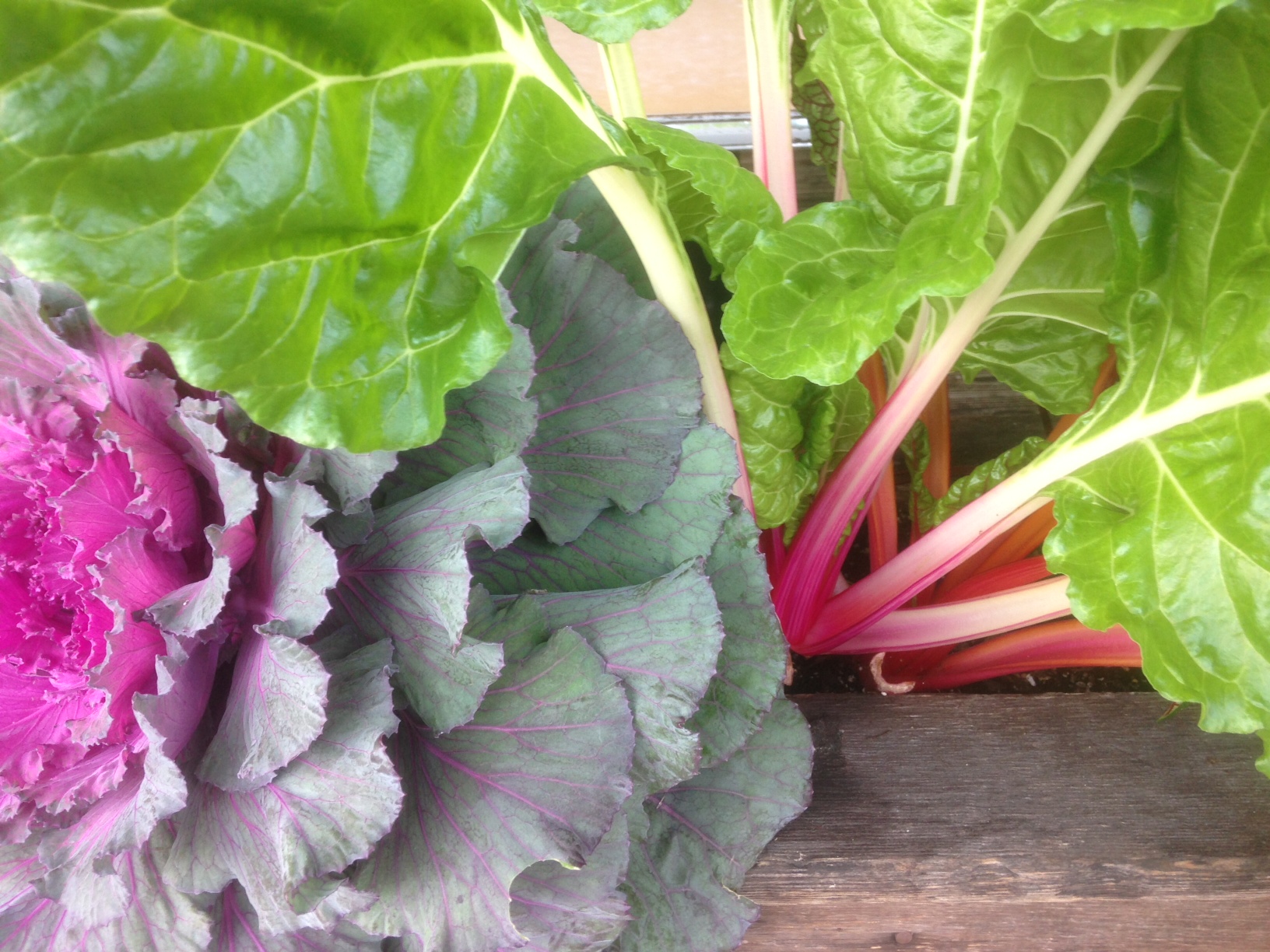
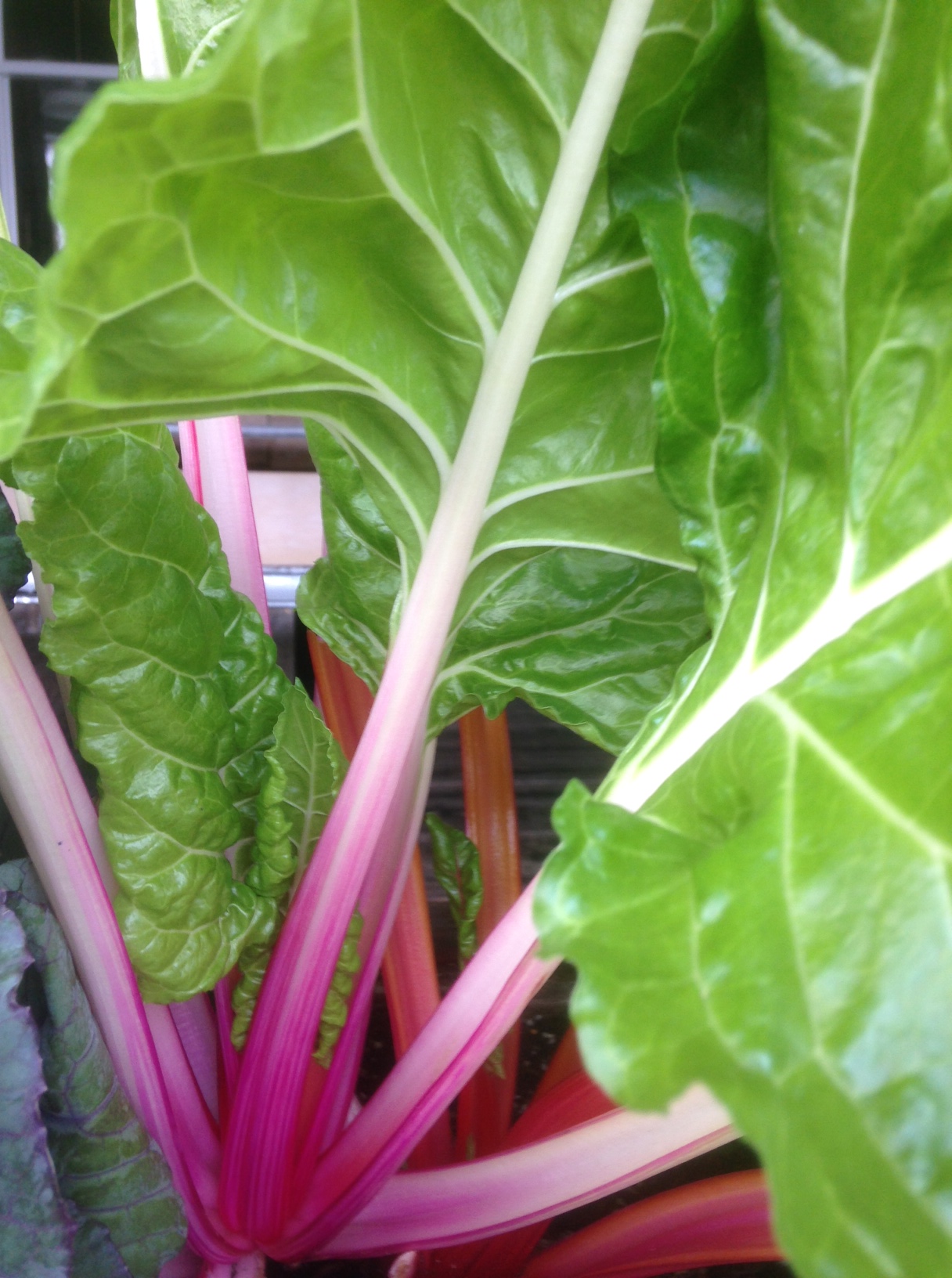
RhubarbCabbagePurple

Beets, rhubarb, memories of springtime in the garden – all are on the table for today’s conversation!

Coming next: Mennonite Girls Can Cook

Moments of Discovery # 6: Whip up Recipes, Stir in Imagination

Clearing out a house after death is a sacred act, yet no amount of holiness assigned to this task can dismiss the back-breaking, shoulder-aching, neck-craning job of sorting, recycling, and passing on to others the possessions of a loved one. Aside from clothing and furniture, Mother left behind the tools of her trade in the kitchen along with beloved books of our childhood, some of which are displayed here.

Prepare Food & Serve It

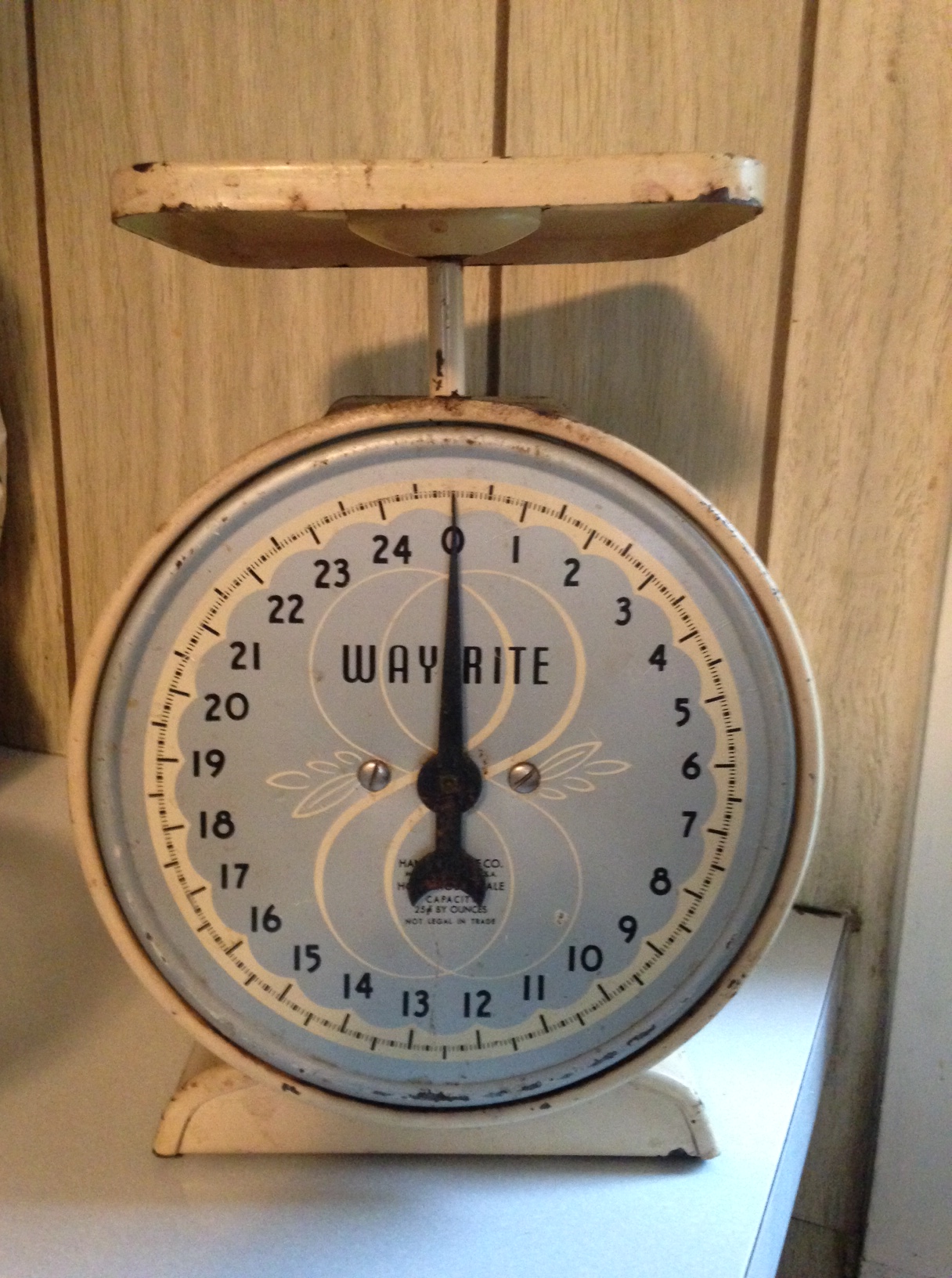
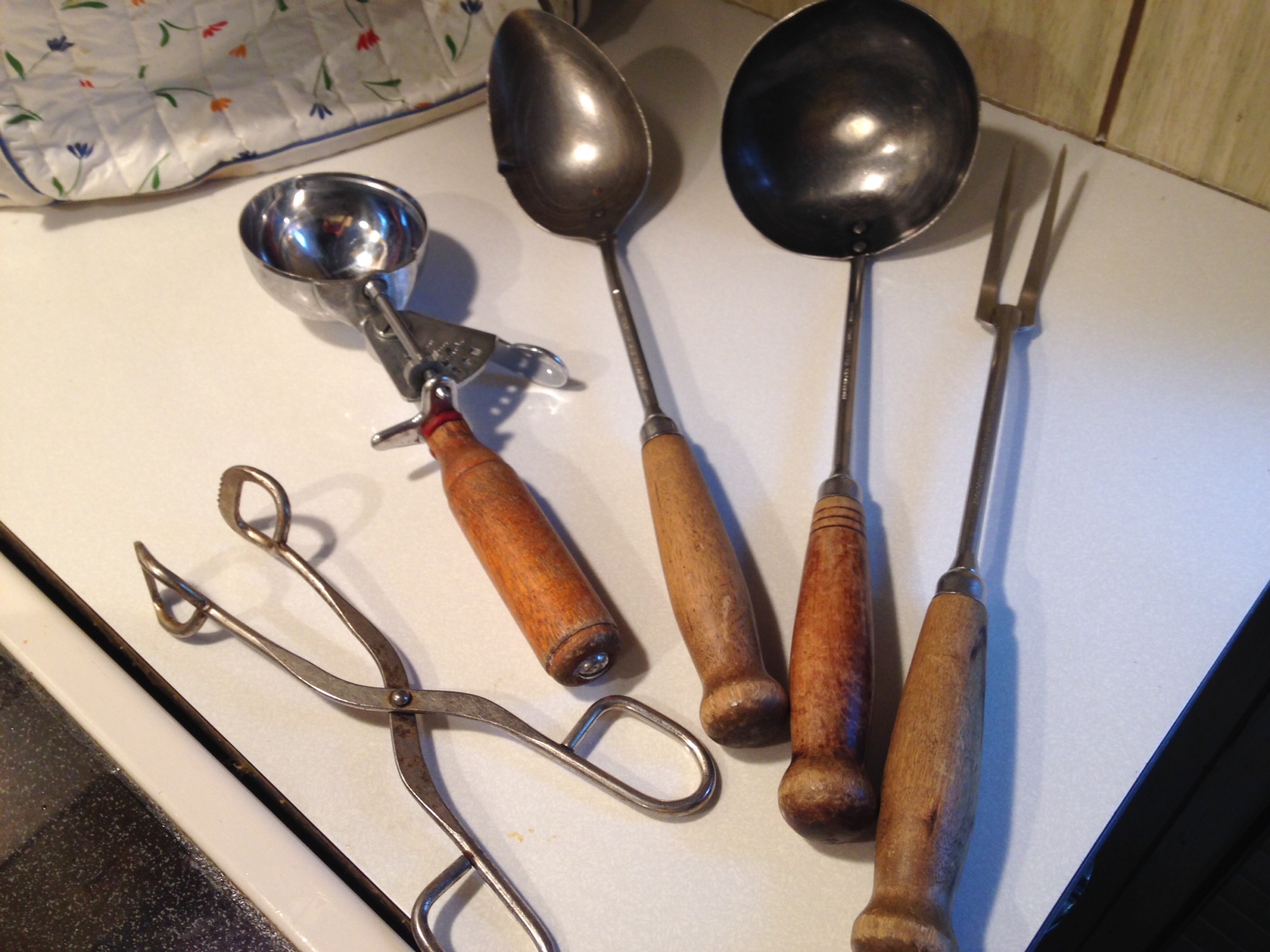
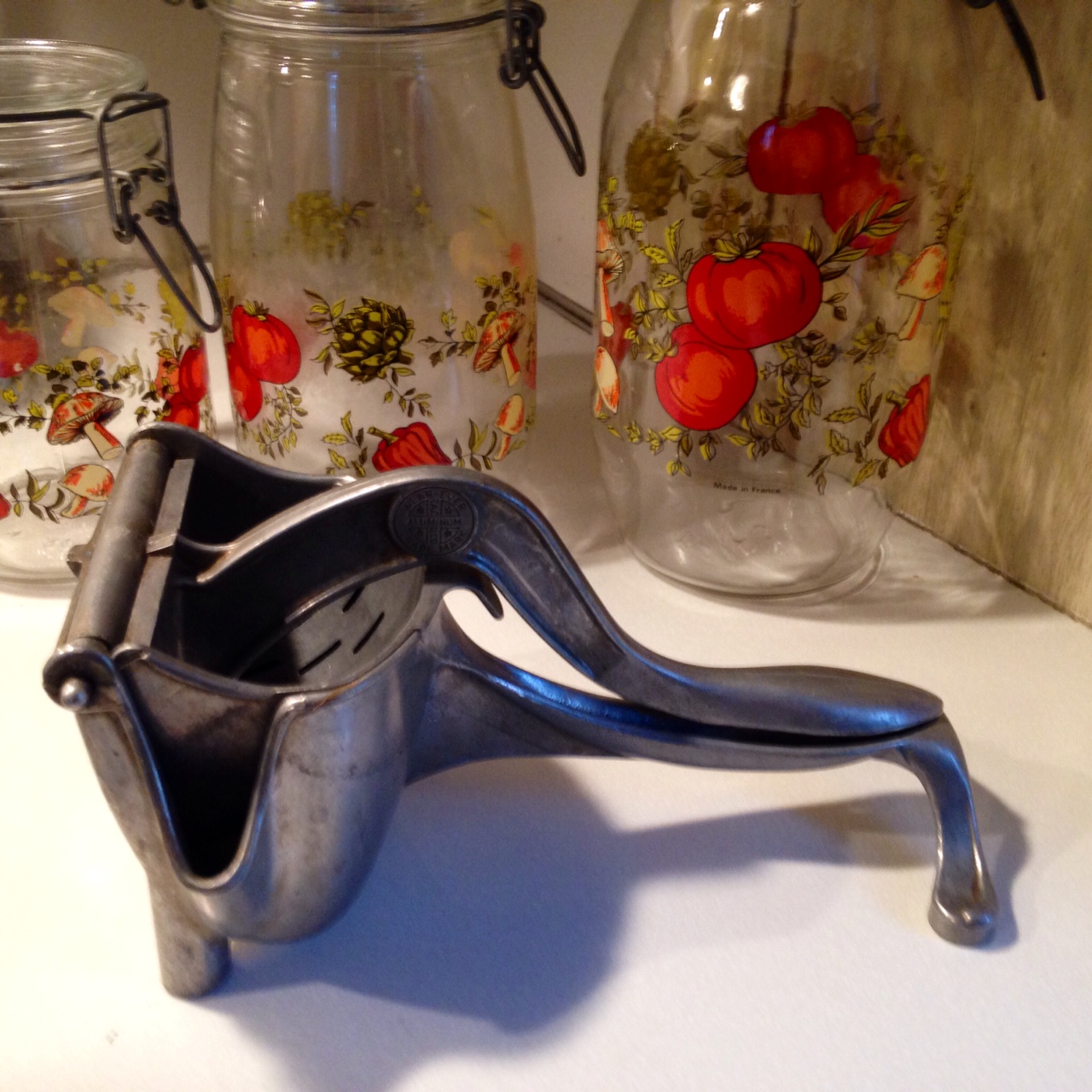
What remains: A scale on which all of our baby weights were noted and recorded (or ingredients for recipes measured), cooking utensils, ice cream dipper, and juicer, most of which have been passed on to grand-children.

Scale Mom

My best guess is that these were wedding gifts or first (and only) time purchases. I don’t remember another scale, a different set of utensils, a second ice cream dipper or juicer ever passing over the threshold of our home. The throw-away mentality of our current consumer society never made sense to Mother. “You buy good, and keep it – for a lifetime” was her philosophy! Yes, prepare food and serve it, and with love! Her fancy china set, sterling silver flatware, and crystal glasses and goblets all have found homes with her grand-children.

Kitchen Utensils Mom

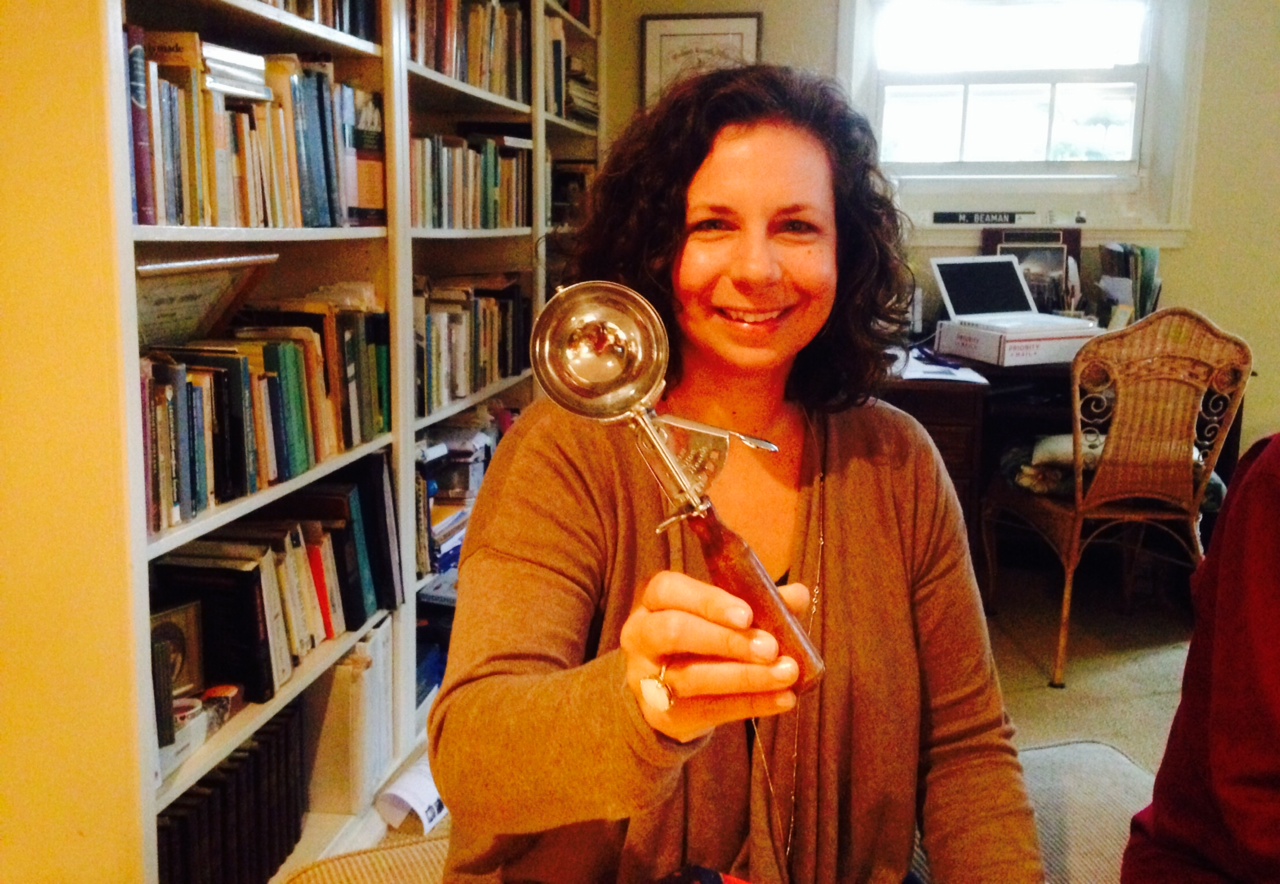
Daughter-in-law Sarah pleased with Grandma's ice cream scooper
Daughter-in-law Sarah pleased with Grandma’s ice cream scooper

Juicer Mom

Don’t Forget to Stir in Imagination

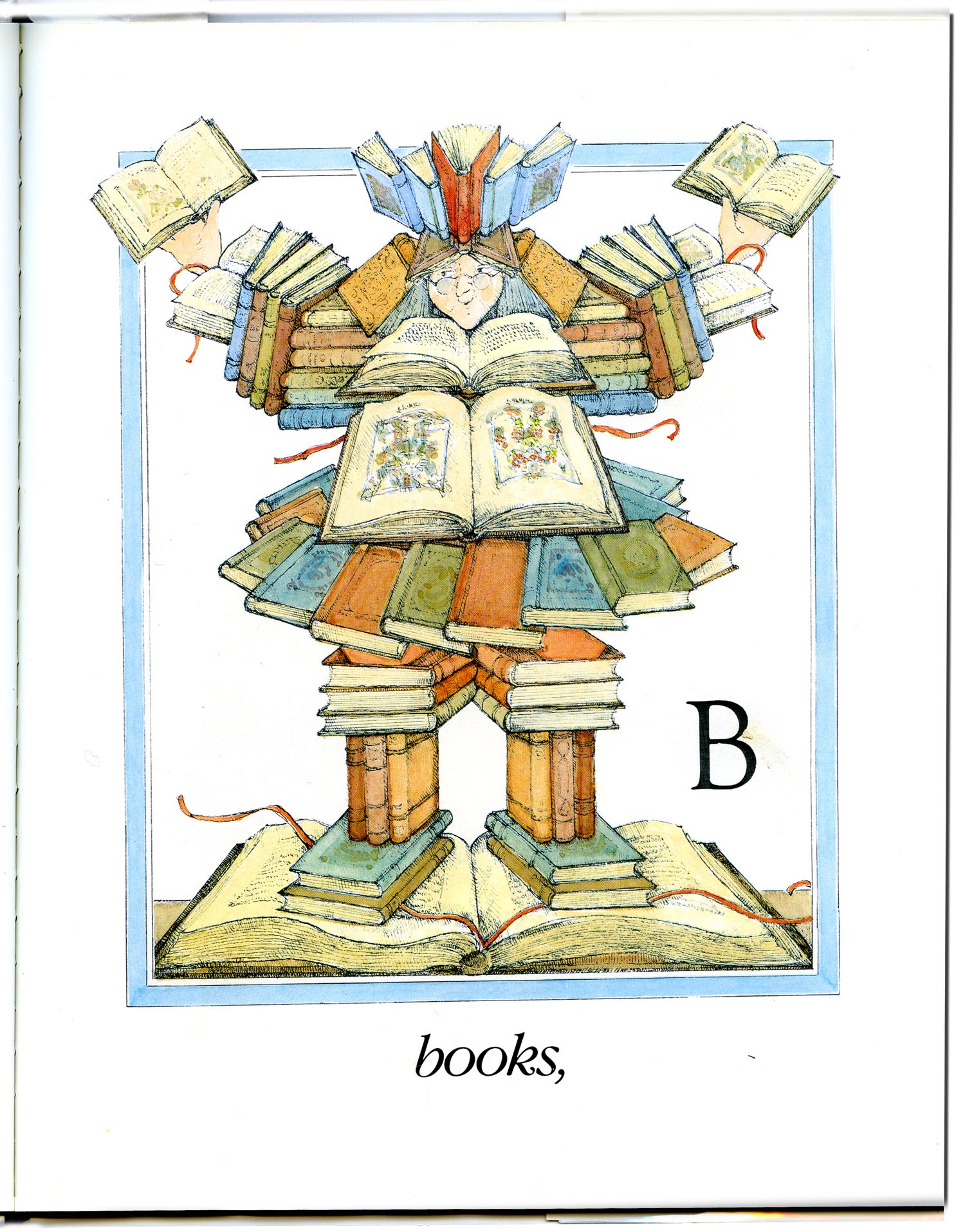
Page from Arnold and Ann Lobel's book
Illustration from On Market Street by Anita and Arnold Lobel

In previous Moments of Discovery, you may have seen other books from Mother’s bookcase or from the attic.

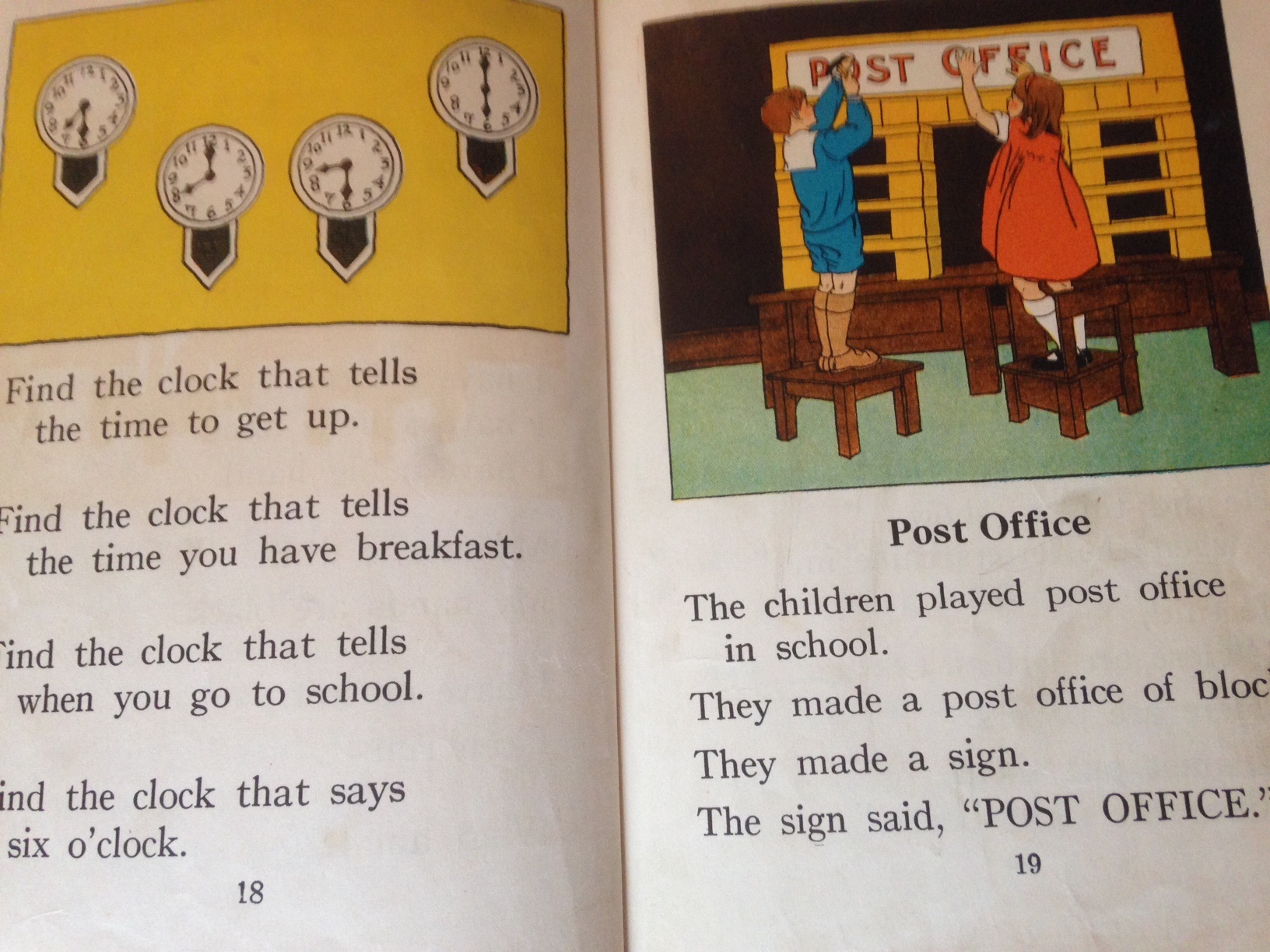
The book below, a reader, is certainly a keeper, recording media and methods that are becoming obsolete.

Pages from my text book
The Child-Story Reader, copyrights ranging from 1927-1936

And one of my favorites is My Bible Book with verses selected by Janie Walker and pictures by Dean Bryant (Rand McNally and Company, 1946). These words and pictures have been imprinted on my childhood memory as I joined the red-haired boy and blonde-headed girl roaming around gardens and romping through meadows with their pets. It was a perfect world!

My Bible Book_front cover

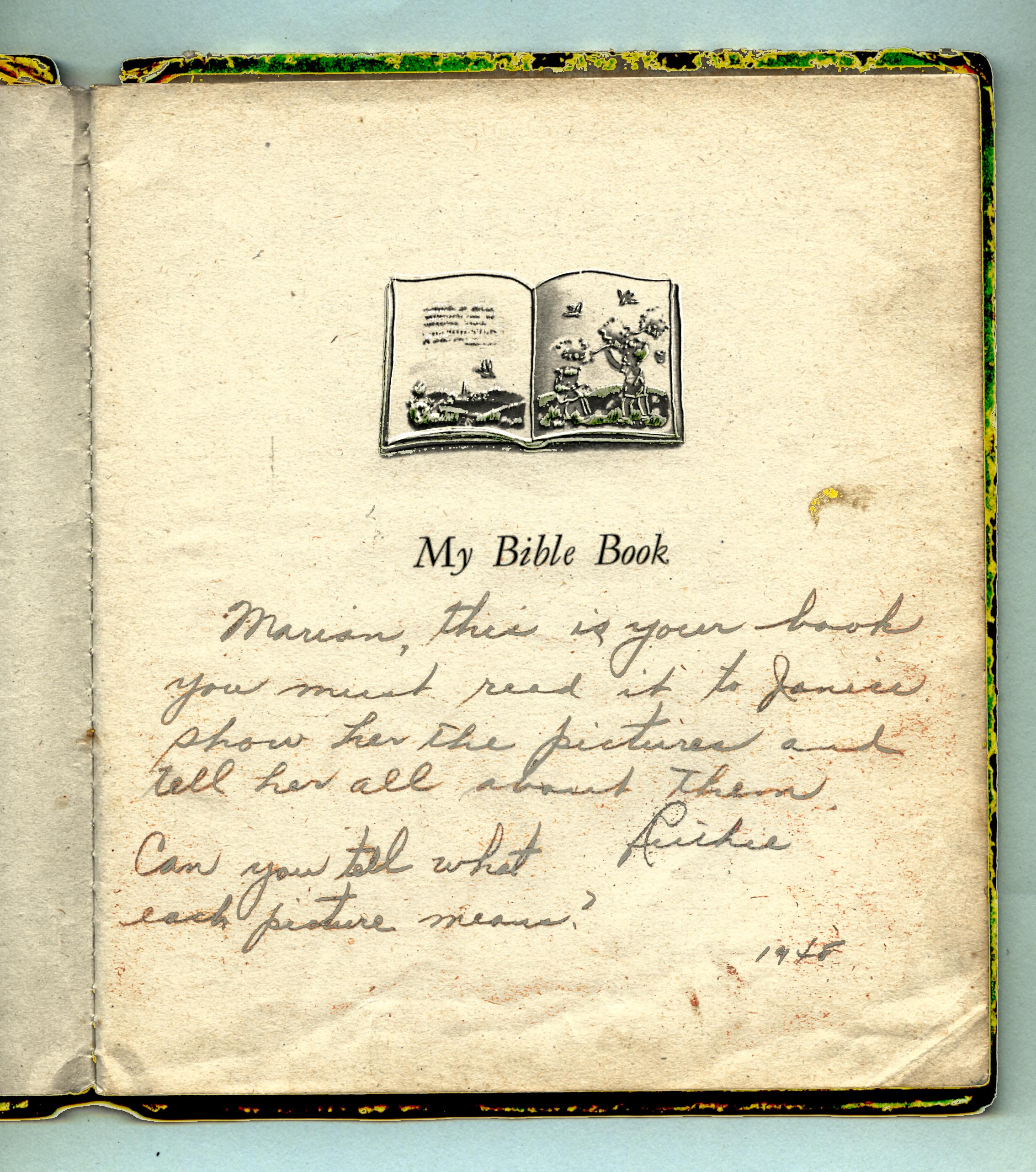
Aunt Ruthie gave me this book with penciled instructions to read it to my sister Janice, show her the pictures and tell her all about them.

My Bible Book_pre Title page w note_light text_7x8_300

 Ever the teacher, she closes with her sweet lead-in question: “Can you tell what each picture means?” This is probably a Christmas gift or birthday present given to me in 1948.

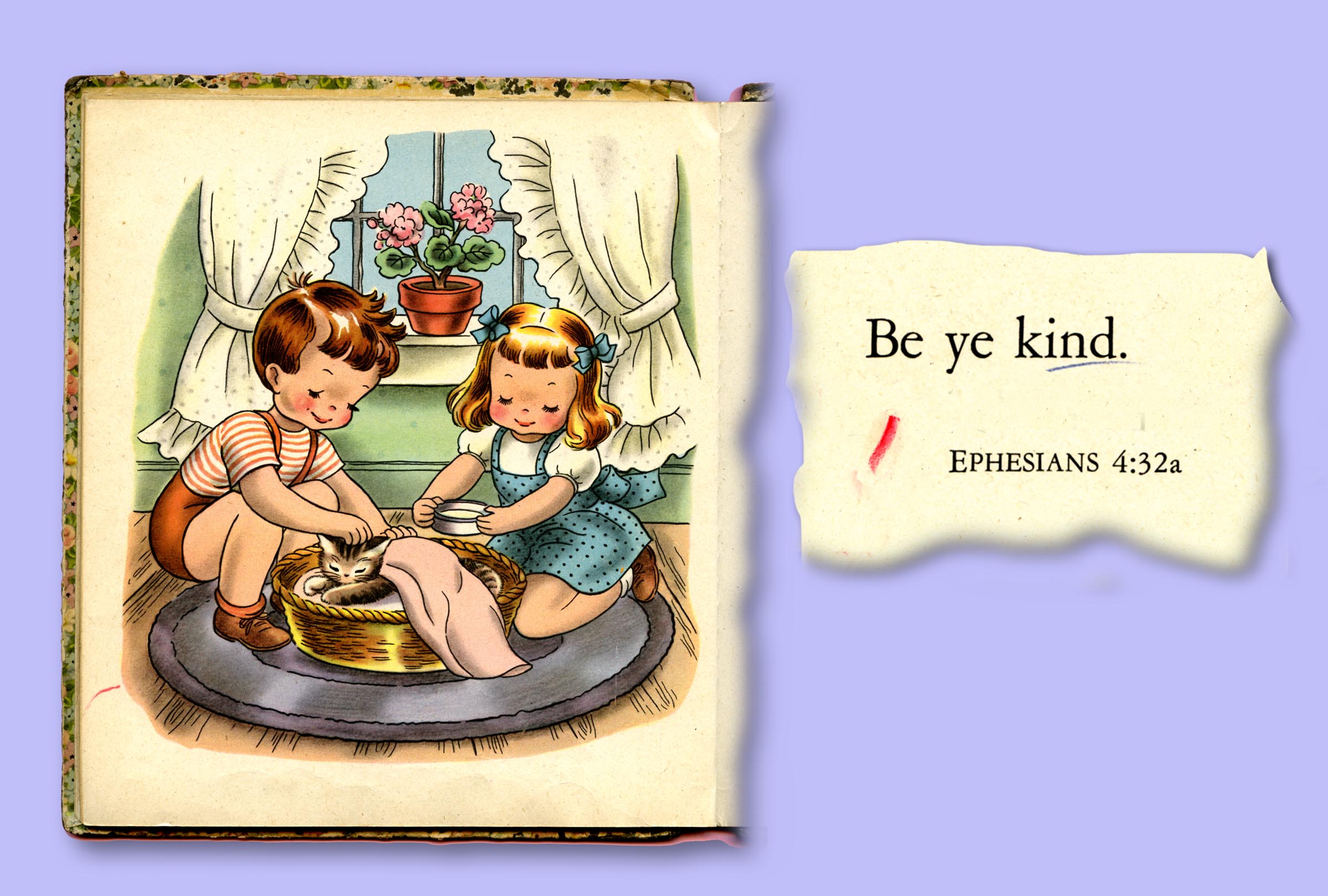
Puppy dogs, a frog, a snowman, a kite, some birds, squirrels, a herd of cows, and a even a special kitty cat amuse the children as the pages turn with words of wisdom all quoted from scripture.

My Bible Book_Be ye kind_p25-26_8x5_300

Do you have old books in your treasury of keepsakes? Some special utensils for cooking or serving passed down to you from a generation or two ago? We’re all ears!

Coming next: Button, Button, Who’s Got the Button?

Aunt Cecilia is 100 Years Old Today!

A centenarian! That’s what my Aunt Cecelia is today. Born March 28, 1915, Aunt Ceci is one-hundred years old. According to one source, only 7347 U. S. citizens are now 100 years old, and today my aunt has joined their ranks. Special things will happen to her today. Aunt Cecilia Risser Metzler will receive a letter from President Obama. Friends and relatives will send her cards. Her family is planning a reception in her honor. Who knows what else is in store for her.

Last May, when Mother was still alive I wrote a post about her and her sister-in-law Cecilia, then both nonagenarians. You can read it here. Aunt Cecilia is my last remaining aunt on my mother’s side of the family. She’s IT. And what a life she has lived!

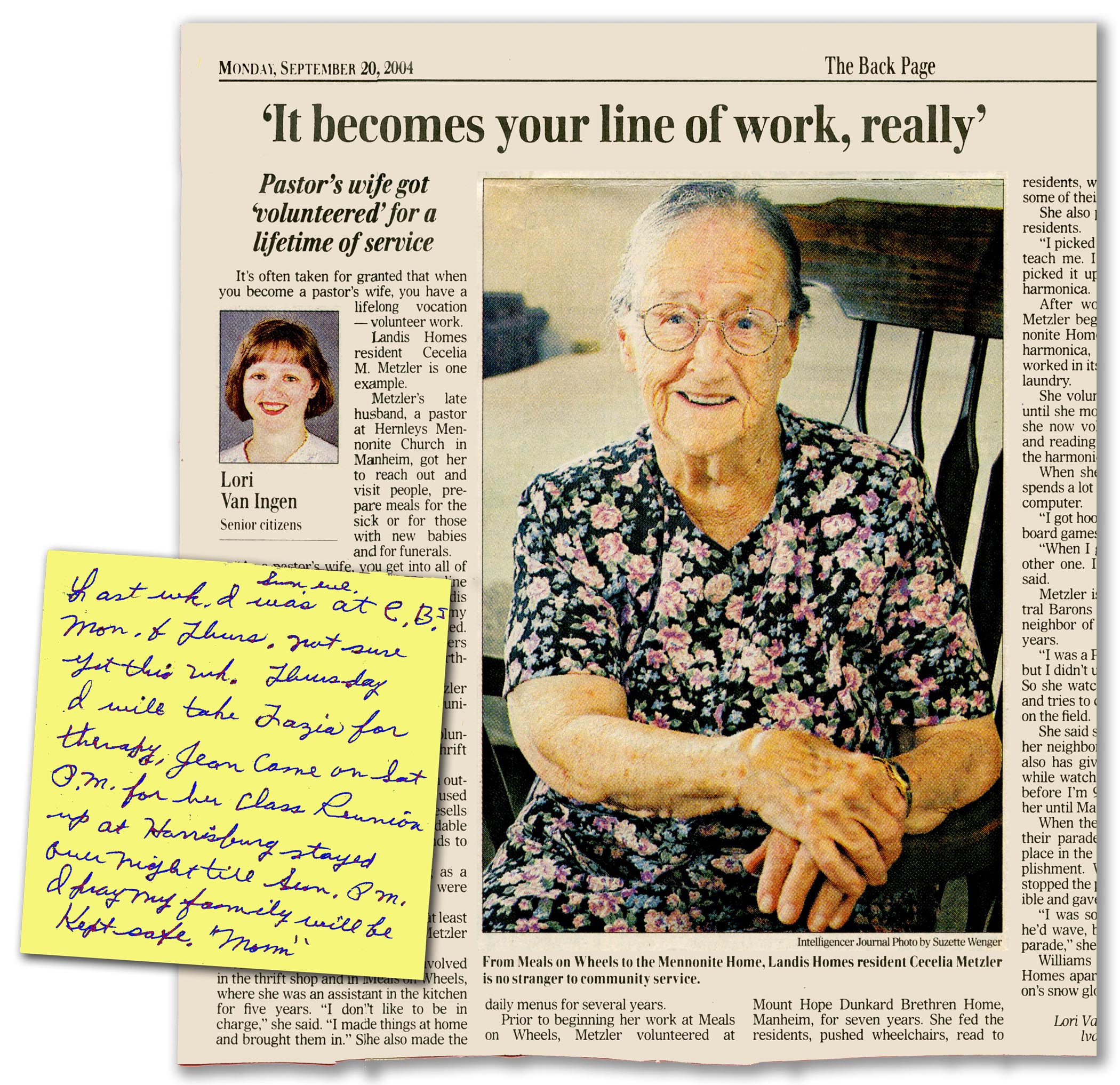
In an article that ran in the Lancaster Intelligencer Journal (Sept. 20, 2004) journalist Lori Van Ingen listed all the volunteer service that has spanned Aunt Cecilia’s life time. Mother sent this article to me with a sticky note referring to her own volunteering at C. B, Choice Books.

2004_0920_The Intelligence+note

Her Service

  • Pastor’s wife with my Uncle, Rev. Clyde Metzler at Hernley’s Mennonite Church near Manheim for 31 years (1943-1974) where visiting members and volunteering got into her blood, where it became “her line of work, really,” she says. She sent out 15-18 birthday cards monthly for many years.
  • Partner with her husband at Mount Joy Furniture Hospital, Mount Joy, PA
  • Volunteer at Nearly Nu Thrift Shop in Manheim, PA.
  • Kitchen Assistant for 5 years for Meals on Wheels where she created menus and was involved in daily food preparation.
  • Served at Mt. Hope Dunkard Brethren Home in Manheim for 7 years, feeding residents, pushing wheelchairs, writing letters for them, and doing some mending. She also played the harmonica for residents, a skill she learned from her dad.
  • Volunteer at The Mennonite Home for 8 years where she fed and read to the residents, worked in the thrift shop at the home and helped in the laundry.

Some Losses

The life of Cecilia Risser Metzler, volunteer extraordinaire, has not been a bed of roses unless one considers that roses have thorns. Her youngest daughter Eunice, engaged to be married to Robert Keener, died suddenly of complications from a congenital heart condition. A few years after Eunice’s death, Clyde and Cecilia drove from their home in Pennsylvania to Goshen, Indiana to attend Robert’s subsequent wedding to Rhoda, but not without misgivings. The Metzlers both had considered Bob a member of the family, so it felt awkward to attend his marriage to someone else, another reminder of the loss of their precious Eunice. In the course of time, however, Bob’s wife Rhoda learned about the death of Cecilia’s husband Clyde only 4 years after their daughter’s death and wanted to know more about Cecilia as a real person, and not just the mother of Eunice, her husband’s former fiancée.

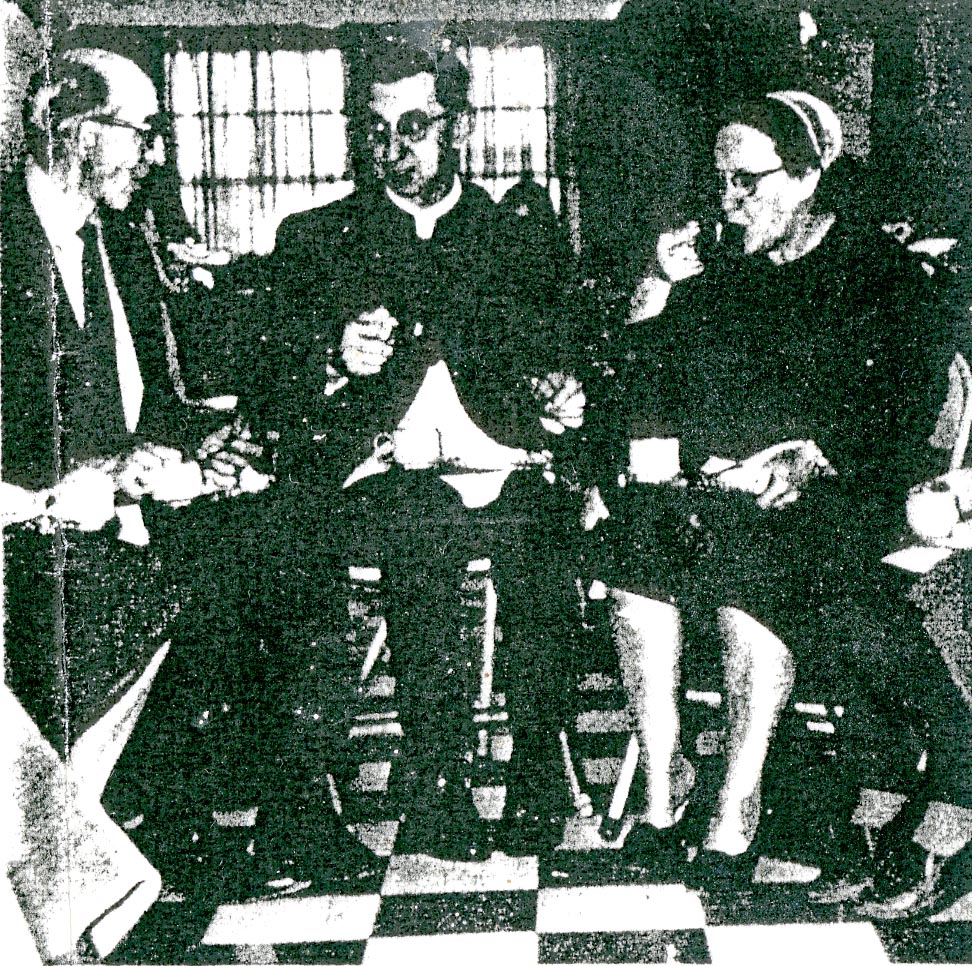
Uncle Clyde and Aunt Cecilia Metzler attending the wedding reception of Robert and Rhoda Keener in Goshen, Indiana - March 18, 1972
Uncle Clyde and Aunt Cecilia Metzler attending the wedding reception of Robert and Rhoda Keener in Goshen, Indiana – March 18, 1972. Illustration in the article “a friendship that might not have been” by Rhoda Keener in Christian Living magazine

Rhoda writes of Cecilia’s strong faith and of how she coped with two losses by organizing a group of seven other widows to do volunteer work, eat out together — even play Pitch and Putt Golf. This jolly group went to the mountains and seashore at Cape May regularly. One year Cecilia attended a Super Bowl game.

Game Girl / Cheerleader

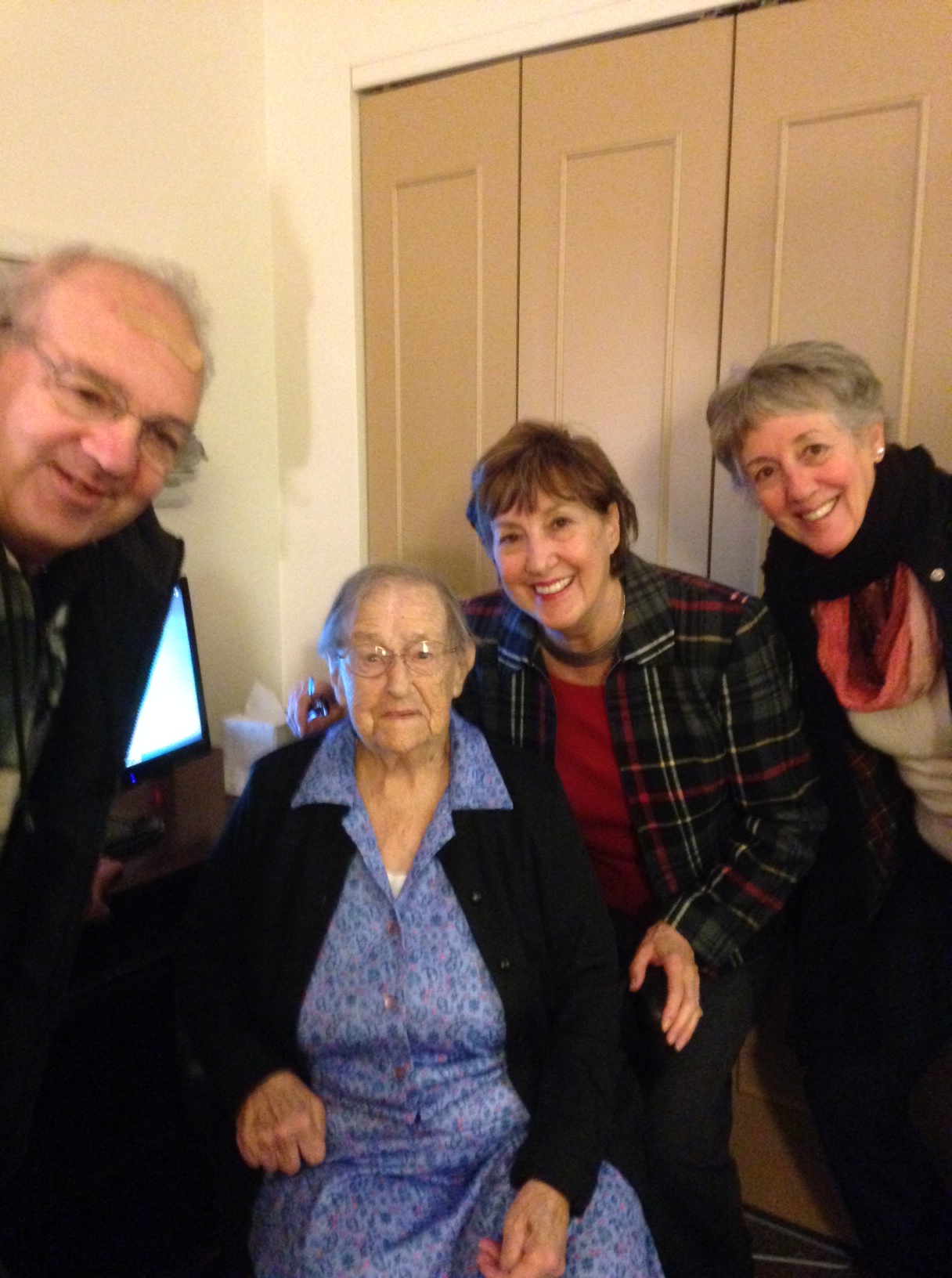
Did I mention Cecilia is a game girl too? Competitive and exuberant by nature, Cecilia loves playing board games, card games, dominoes – even computer card games. She paused long enough in her game of Tumbling Numbers on the computer to have her photo taken with my sister Jan, brother Mark and me last November at Landis Homes.

AuntCecilia

Besides a game girl, some would call Cecilia a cheer-leader too. However, she doesn’t need a short, twirly skirt or megaphone to root for the Phillies’ baseball team or the Philadelphia Eagles. She admits to not quite understanding football though her son Clair has given her some pointers. In her home town, she was also an avid Manheim Central Barons fan because she was a close neighbor of coach Mike Williams for 25 years. When the state champion Barons had their parade in the fall of 2003, Cecilia “took her place in the square to cheer their accomplishment. When Williams saw her, he stopped the parade, got out of his convertible and gave her a big hug.” She said:

I was so amazed, stunned. I thought he’d wave, but didn’t think he’d stop the parade!

Coach Williams also dropped by her Landis Homes apartment to autograph her Baron’s snow globe (quoted from Intelligencer Journal, cited above.)

Words of Wisdom

“What is your secret of a long and productive life, Aunt Cecilia?” we wonder. She has shared two bits of wisdom to overcoming the rough spots in life. Remember this, she says:

  1. Life is a struggle, and
  2. Life is a struggle

“Once we truly know that life is difficult and we truly understand and accept it, then we are no longer overwhelmed by it.”  (Reference: “A friendship that might not have been,” by Rhoda Keener in the Christian Living magazine)

Aunt Cecilia, I think there might be a parade of family and friends coming by your residence at Landis Homes today. Through God’s help, you have triumphed through the dark valleys and inspired us from the mountaintops of your rich experience. And we thank you!

Happy Birthday!

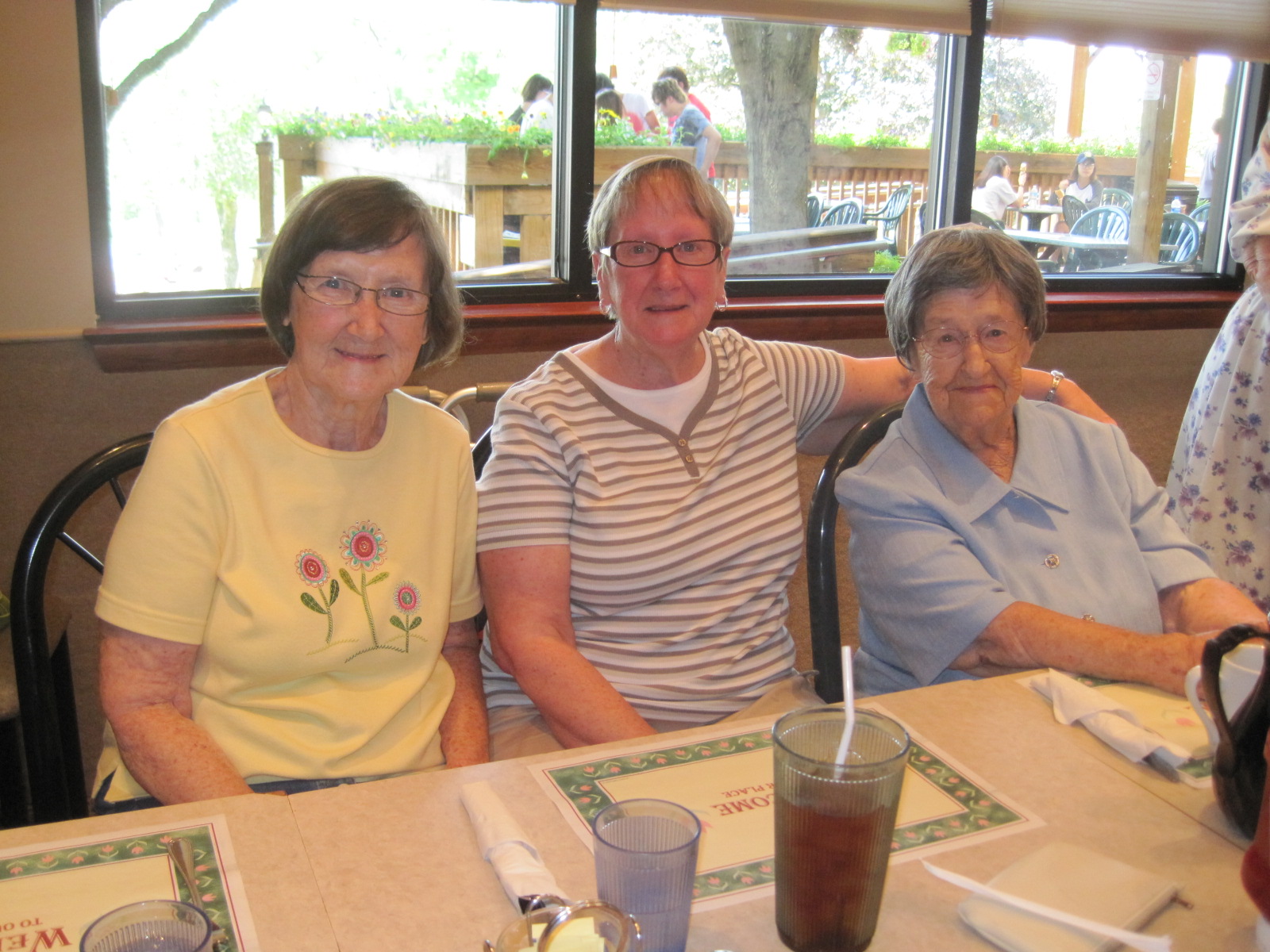
Daughters Erma and Orpha with Aunt Cecilia in 2012
Daughters Erma and Orpha with Aunt Cecilia at Oregon Dairy in 2012
Aunt Cecilia, grand-daughter Tana, daughter Dorcas, and great=grand-daughter __________
Four generations: Aunt Cecilia, grand-daughter Tana Hey, daughter Dorcas Martzall, and great grand-daughter Rosa Hey

Do you have elderly relatives that have hit the age ninety mark? Have any reached 100? What words of wisdom have they given to you?

Coming next: A Robbery, Sad Friday, and a Clump of Daffodils

The Nook: A Different Definition

Where did you study? Was your desk a dining room or kitchen table? The couch? A separate room? Did you listen to music as you studied? Or did you tune out the noise of the household when you crammed for a test or wrote a report? Louise DeSalvo author of The Art of Slow Writing, a book about writing as a meditative, patient process, muses about her own study nook in this excerpt:


My parents valued education, so when I was young, the only time my parents didn’t bother me was when I was doing homework. My father made me a triangular desk that fit into a space at the top of the stairs. . .


Sitting at my desk while I was working, nobody told me what to do. My father was pleased with my industry rather than angry with me. My mother wanted me to study because, no matter how much she needed my help, she wanted me to do well in school.  Sitting at my desk working helped me feel a sense of control in my chaotic household (188, 189).

Louise’s writing desk was triangular probably positioned in a corner. It strikes me that she may have faced the wall, not a window, a rather confining, even claustrophobic view.

As for me as a student at Elizabethtown High, when the noise downstairs around my spread at the dining room table overpowered my ability to concentrate, I’d flee upstairs to a study desk that looks like this, a bedside table with a brown goose-necked lamp. Mother had the table refinished years later and replaced my gooseneck lamp with this one: a faux milk-glass base with a lacy, fluted lampshade.

Study Desk 2

Here’s how I write about this “desk” as a flash of memory:

My books and notebooks are piled on the dining room table. I’m in ninth grade and when the house gets too noisy, I go upstairs to the bedroom I share with my sister Janice and study there. My study table is just a wooden bedside table. It’s tiny, with two of the four legs spaced closer together. There’s space for a little lamp on top and maybe a book or two on the shelf below – a piece of furniture not designed for serious study. There is no place to put my legs really, but I scrunch myself under the teeny table with my knees touching, a brown goose-necked lamp cocked so I can read, take notes on scored 3 x 5 index cards, or write in meticulous cursive in my notebook, one for each subject.


Image: eBay
eBay Image: mid-century goose-neck lamp

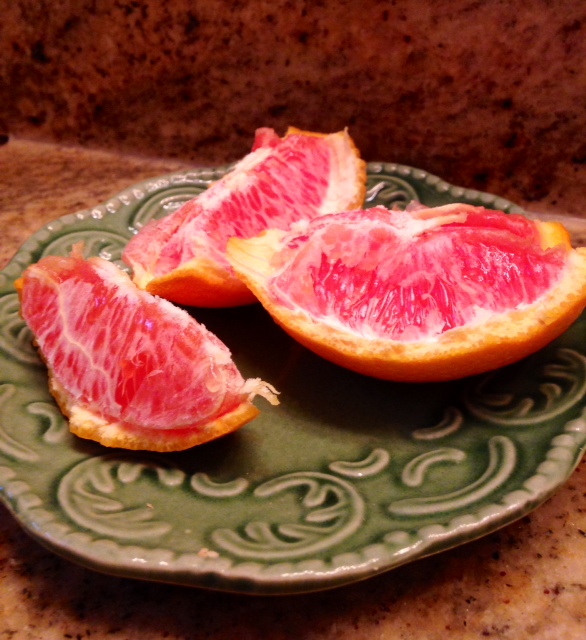
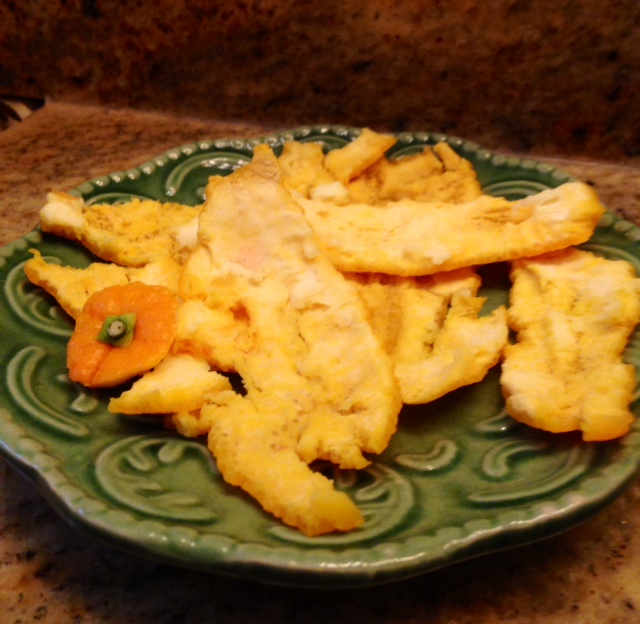
I consumed book chapters, algebraic formulas, and historical data. I also consumed apples, carrots, or oranges. Yes, as I studied, I nibbled. Like a dog worrying a bone, I ate apples to the core, sometimes discovering nothing but apple seeds in the palm of my hand along with the fibrous center hull, when I looked up from the page. Carrots were eaten down to the nubs. And oranges too. First, I sucked out some of the juice, then broke the orange into five or six sections, eating them one by one. Finally, I consumed the white inner rind too, one incisor-dig at a time, only the outer skin remaining.

Orange WholeOrange SectionsOrange Bitten RindOrange Peel


Study – an all-consuming proposition  . . .  

Some books are to be tasted, others to be swallowed, and some few to be chewed and digested.

        ~ Sir Francis Bacon  “Of Studies”


Did you study at home, at the library? Did you have chaos or quiet? Maybe you had a photographic memory and didn’t have to study much.

Were you a nibbler too? Inquiring minds want to know.


Coming next: Purple Passages with a Pop of Pink, March 2015 edition

Oh Happy Day!

I am sitting with my three friends, Gladys Graybill, Hazel Garber, and Millie Zimmerman near the pulpit in front of Bossler Mennonite Church to be baptized. At the prompting of our Bishop Clarence E. Lutz, we kneel, and as we kneel I hear the crinkle of the skirt of my caped dress. Mother and I have chosen a taffeta fabric for this special day – a dress made of tiny checks of navy, silver and white to set off my dark-haired braids now covered with a prayer veiling. The dress has a tiny collar with navy piping. I love that navy piping. Besides the silky fabric, this tiny decoration is the only fancy thing about this plain dress with a cape overlaying the bodice.

Since I made a spiritual decision in June, I have been wearing my hair in pigtails topped with a covering. For the first time since then, my braided hair has been pinned up around my head with hairpins in accordance with church rules. But today my prayer veiling has strings dangling from its two corners. Before the service, we have met in the church basement with the Bishop’s wife Elsie Lutz, who has requested that we girls wear strings of white satin ribbon attached the two corners of our coverings, I suppose for an extra measure of plainness. “Oh, you girls look so nice!” she gushes as she inspects our apparel, especially our heads, before we ascend the steps to the main sanctuary.

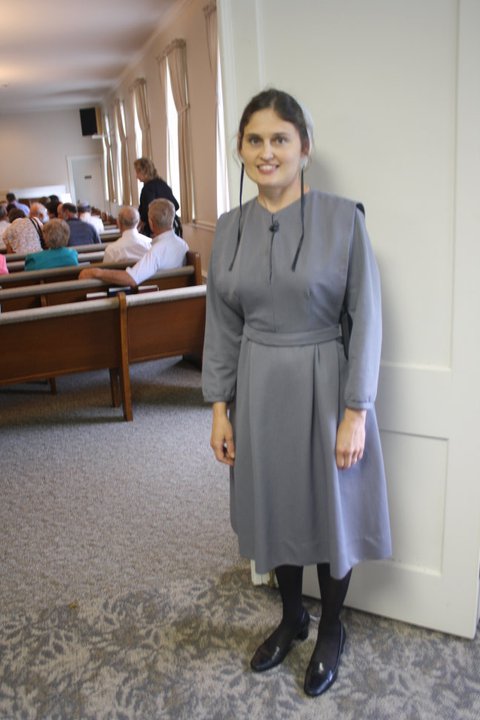
This girls' cover strings are black. Mine were white, but attached the same way.
This young woman’s covering strings are black. Mine were white, but attached the same way. (Bicentennial photo, Bossler Mennonite Church)


We three girls are ushered to the front where Bishop Lutz and Deacon John Kraybill wait with a basin of water and a white linen towel ironed smooth. We have been through a kind of catechism entitled “Instructions to Beginners in the Christian Life,” which includes a review of the tenets of faith, nonresistance to evil and nonconformity to the world, and the ordinances of Communion, Feet Washing, the Devotional Covering, the Holy Kiss, Anointing with Oil, and Marriage. The first ordinance is Baptism, which we are now ready to participate in with two “I do’s” and “I am (sorry for my sins), with a final “I do,” promising by the “grace of God, and the aid of the Holy Spirit, to submit [myself] to Christ and His Word, and faithfully to abide in the same until death.”

Instructions to Beginners in the Christian Life_2 pages together_300

After prayer, we remain kneeling. And the Bishop, assisted by the Deacon who is holding a basin of water, takes a handful of water from the basin and pours it methodically three times in succession on the head of the applicant intoning the words: “I baptize thee with water, in the name of the Father, and of the Son, and of the Holy Ghost.” This statement is followed by the Bishop taking us by the hand and saying as we rise:

In the name of Christ and His Church I give you my hand. Arise! And as Christ was raised up by the glory of the Father, even so thou also shalt walk in newness of life . . . 

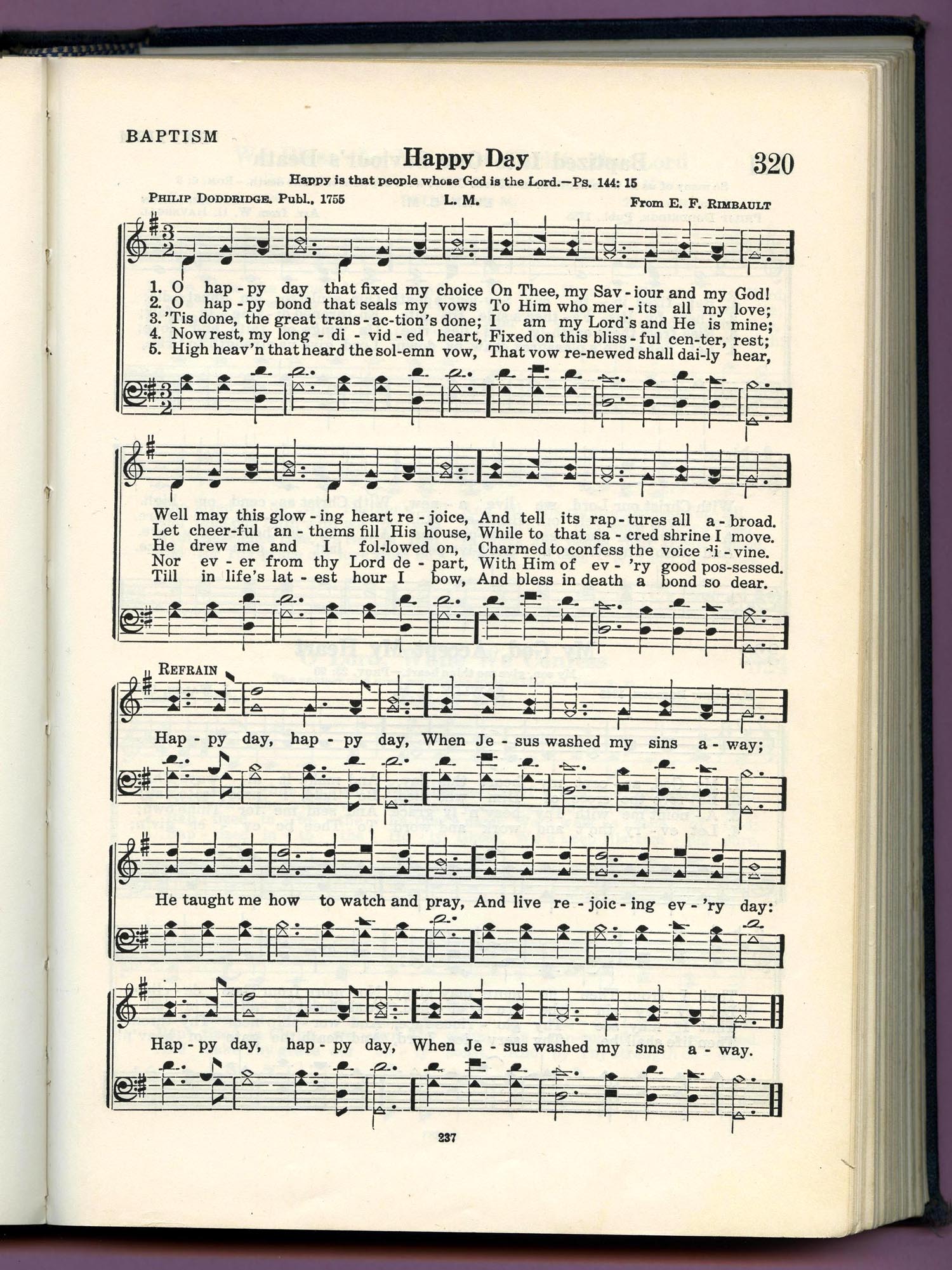
The wives of the Bishop and the Deacon then give us the kiss of peace, and thus we are received into the church fellowship. The congregation in four-part harmony happily joins in the tradition of singing “O Happy Day” from the Mennonite Church Hymnal with shaped notes.

Happy Day_Bossler Mennonite Church Hymnal_ 5x7_300

I remember this day so well. It was September 29, 1951, my sister Janice’s birthday.

*  *  *

Earlier this month, our oldest grandson and only grand-daughter, Patrick and Jenna Dalton, were baptized at Highlands Baptist Church. Their family attends a Lutheran Church, which like the Mennonites also baptizes by sprinkling, but since their parents wanted their Uncle Bill to baptize them, they complied (happily I might add) with baptism by immersion. Words similar to those spoken at my baptism accompanied their immersion in the water: “Buried with Christ in his death . . . raised to walk in newness of life.”

Rev. Bill Caverly baptizing Grand-nephew Patrick Dalton
Rev. Bill Caverly baptizing grand-nephew Patrick Dalton


What special sacred ceremonies have you observed or participated in yourself?


Coming next – The Potting Shed: A Magical Place