Drawing on Love: Stored Secrets Come to Light

When we met, Cliff’s very first words to me were “Nice to see you again.”

My quick quip, “Nice to see you again too.”

But I’m getting ahead of my story. Way ahead . . .

* * *

During the months of June and July, I published a series of posts about moving from our large family home to a smaller abode. An earlier post discussed this move from my husband’s point of view: His Turn, an Artist Discards, Donates, and Discovers. I mentioned then that I may reveal later some of Cliff’s discoveries, unearthed drawings from an armoire that have not seen the light of day for literally decades.

I’m showing the first one on this post.

But first, some background . . .

Through the ingenuity of my Pennsylvania neighbor next door, Paul Mumma, I met Cliff, his college roommate, as a blind date on December 18, 1965, a fact I recorded in an entry with many embellishments in my journal. My iPhone says the day of the week that year was a Saturday.

On what turned out to be a double date, Paul, his girlfriend Betty, Cliff and I drove down Anchor Road on the way to the education building of a small church which the four of us intended to decorate for Christmas. On a blackboard in one of the Sunday School rooms Cliff first revealed his artistic talent by drawing a Santa Claus, mostly for my benefit, I surmise. (Sorry, the Santa Claus has been erased.)

A few days later, he had me pose in the living room of my parents’ home for many minutes. He explained that he was drawing my portrait. I sat very still for a long, long time.

Cliff finally flipped the paper to expose the drawing. I was aghast when I saw what the clever artist had been playing with on paper for forty-five minutes: He had morphed my then-slender figure into a porky jungle animal with a cute blue bow.
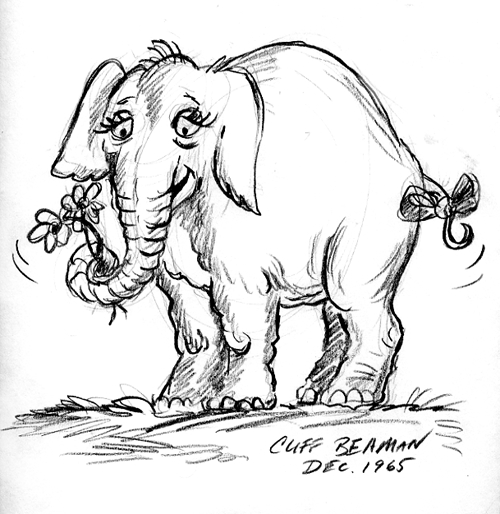
Elephant drawing_7x7_72(1)

He laughed heartily when he saw my shocked reaction.

After the gasp, all ll I could manage was an incredulous giggle. “You got me,” I thought.


The next week was Christmas. Then I heard him tell me, “I think I am falling in like.”

Really? What’s that like, I wondered.

About a week later,  Cliff drew a proper picture of me.


The Drawing
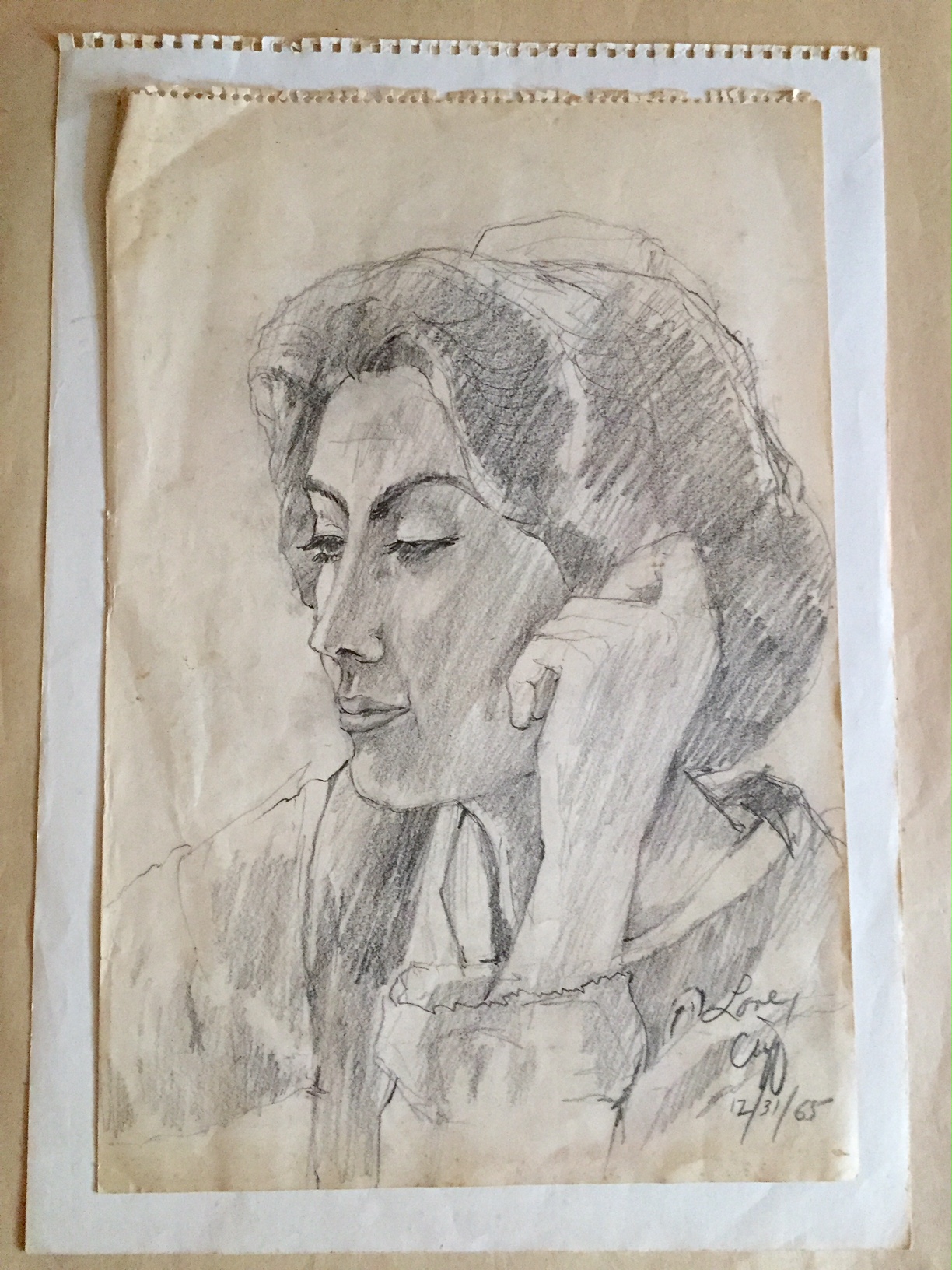
cliffFirstDrawing

He drew a good likeness of the serious me and prophesied my future, I think, by exaggerating my pile of dark hair and miniaturizing my prayer cap.

He signed it, Love, Cliff.

Yes, Reader, I married him.


Reader, I married him.  A quiet wedding we had: he and I, the parson and clerk, were alone present.    ~  Jane Eyre, Ch. 38, C. Brontë


Our wedding was not quiet. And more than four people were present.


A Card

A few weeks ago when Cliff pulled out piles of papers and other drawings including the one above, a small bag fell out from one of the crevices in the same art armoire. The envelope was dusty but well-preserved after years in hiding. Inside he found an anniversary card he apparently had bought in his travels and had been intending to give me about 10-15 years ago, so he imagines. Time had preserved the lacy layers. But he added a fresh, new message.
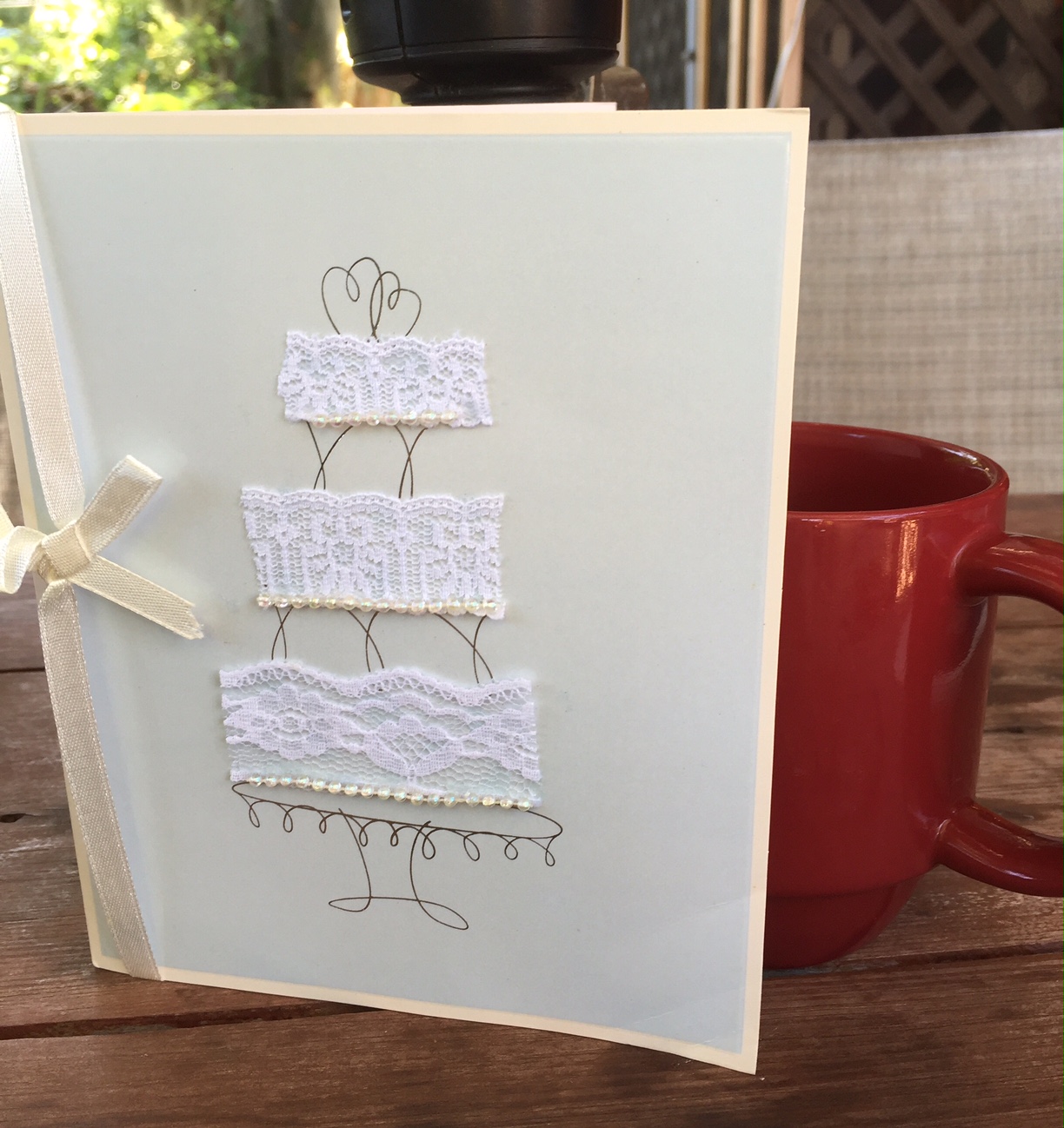
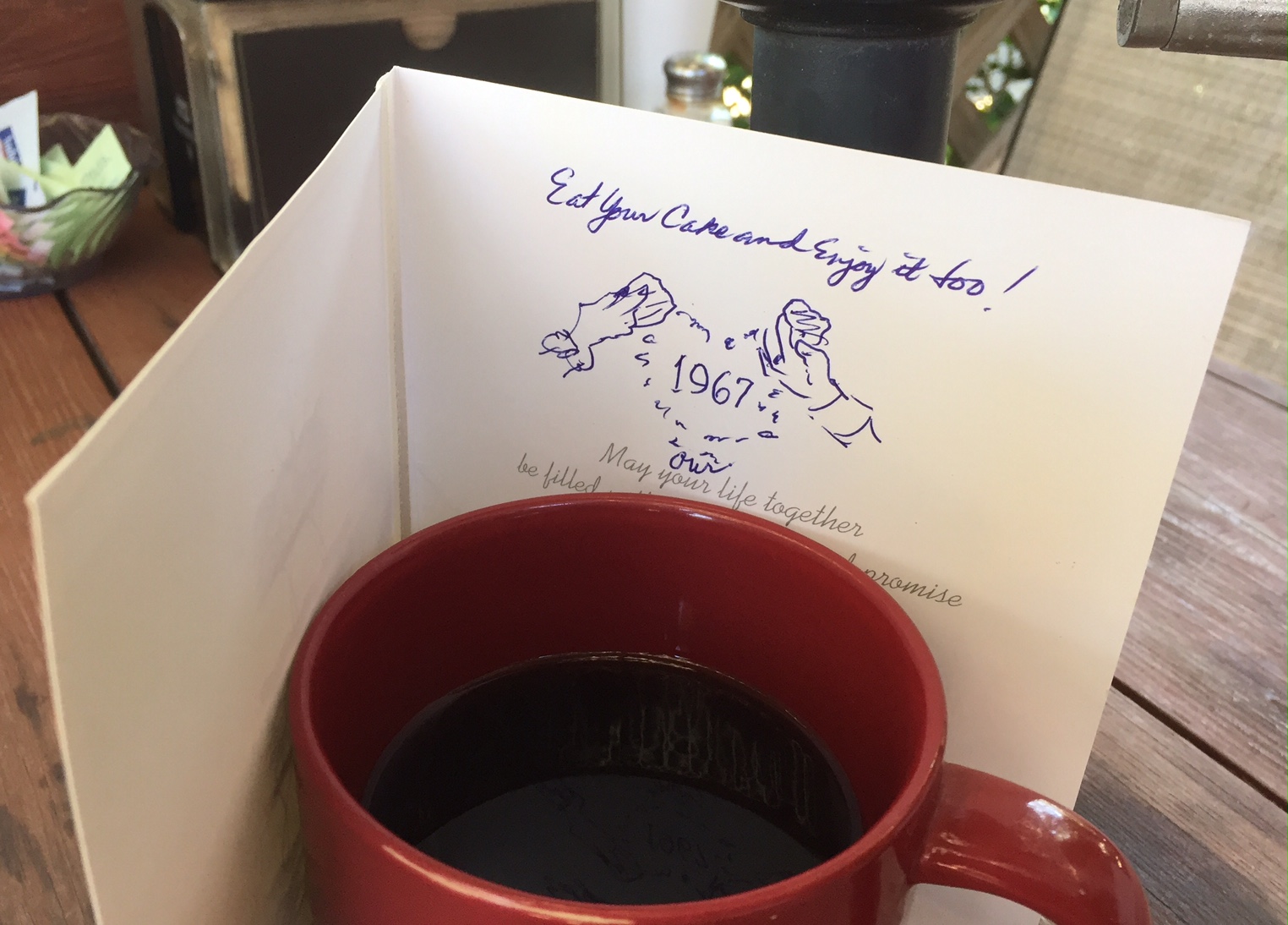
AnniversaryCardCover

AnnivCardInside67

Dear Reader, have you ever found lost or long-buried mementoes of sentimental value?

Thank you for adding your discoveries here. 

By the way, our move became a reality yesterday, August 9, in case you are wondering when all this hoopla has culminated. Next week, prepared in advance: Summer on Anchor Road: Sights, Smells, & Sounds
Mother’s Sky View: The Beautiful City

This week two years ago Mother was snatched from our world just five days after her 96th birthday. Late on a Monday evening, July 28, 2014, she was transported into a new and better land.

Mother lived on a dairy farm in the Manheim – Lititz area of Pennsylvania. When she married my father Ray, she moved about 12 miles west, still in Lancaster County. Like many Mennonite couples in the 1940s, they honeymooned in Niagara Falls, New York, where I most likely was conceived.

Over the years, she visited the Philadelphia Flower Show and strolled through Longwood Gardens exclaiming, “Oh, my, such beautiful flowers we saw!”

When my sisters and I studied at Eastern Mennonite College, she and daddy drove to Harrisonburg, Virginia several times, back then a four-hour drive to the Shenandoah Valley. “My, look at the mountains in the distance – so pretty,” she said.

Mother seemed happy to be a homebody. She never seemed curious about seeing world capitals as her daughters were. Traveling around the United States in five weeks with a friend as I did once would seem incomprehensible to her. “Why would I want to do that?” I can hear her say.

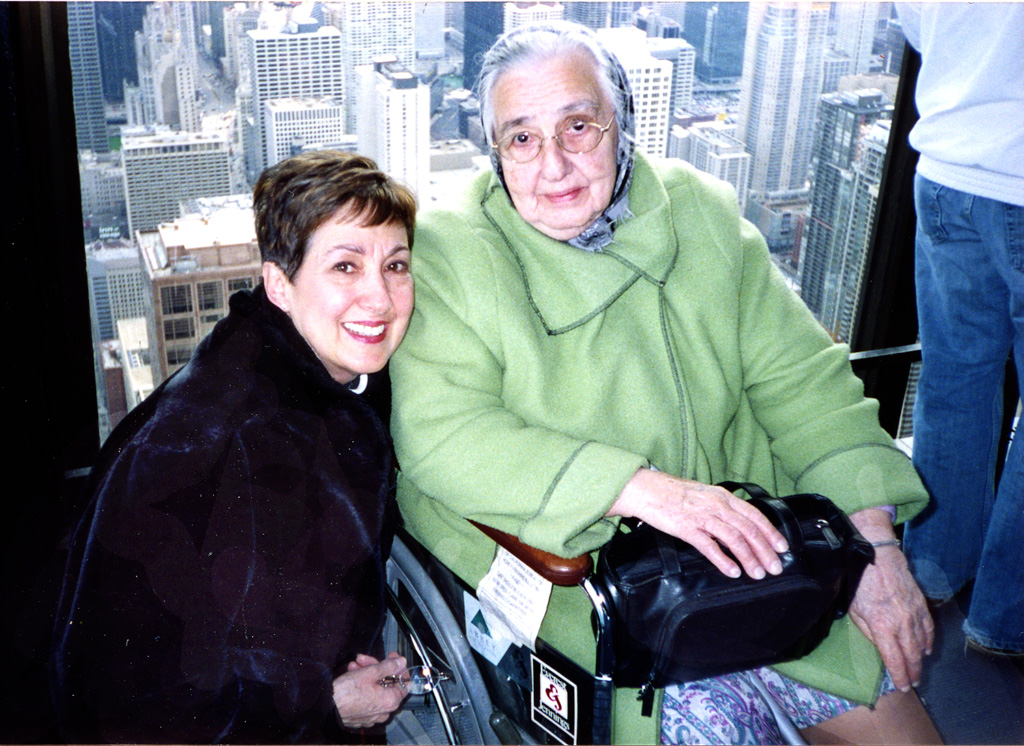
But when her first great grandsons were born seven weeks apart in 2003, I was able to goad her to fly to Chicago where our son and daughter lived.

MomMarianHancock

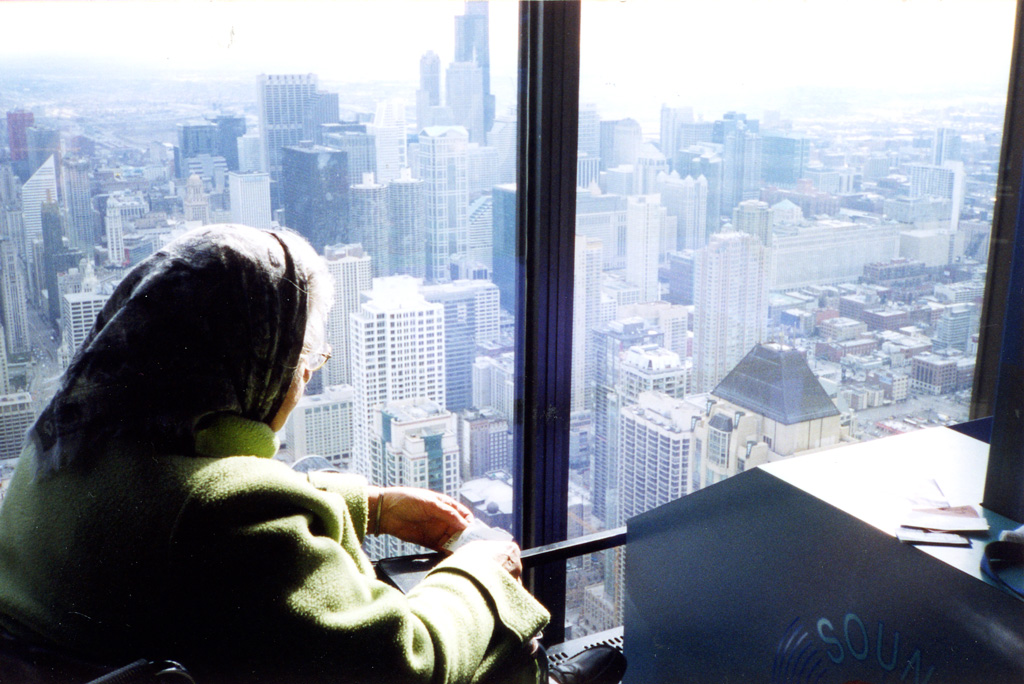
Viewing the city from the Hancock Building, she sat in awe at the vast expanse of skyscrapers.

MomViewingChicago

These photos recall pleasant memories and now re-confirm in my heart and mind her citizenship in a heavenly world.

In her life on earth, she was confident she would one day live in a Beautiful City full of brilliant light and everlasting joy.

Hebrews 11:10

For s/he looked for a city, which hath foundations, whose builder and maker is God.

Mother often sang about heaven at the top of her lungs in front of the kitchen stove, making breakfast for her children before school. Her voice, always off key, sang about a beautiful city I imagine she could visualize as she scrambled eggs with shakes of pepper and filled cups with cocoa, each with a dollop of butter.

We miss you, Mom!


magnoliasCRISTA

July 23, 1918 – July 28, 2014


Mother kissing her great grandson Patrick, held by Grandpa Cliff
Mother embraces her great grandson Patrick, held by Grandpa Cliff, 2004


Coming next: Give and Take with Cake

A Glorious Fourth, 1909 Style and a Memoir Tip

Would you pass up an invitation to a lawn soirée on a holiday weekend? This week 107 years ago my grandma, Miss Fanny Martin, then a single woman, received a penny postcard invitation to such a gathering on July 3, 1909.

PostcardBackFourthJulyGrandma


Mary Elizabeth Kob writes in neat cursive: “You are heartily invited to attend a Lawn Soirée July 3, 1909 in honor of Jacob S. Kob at his home. Meet 7:30. Refreshments. Respectfully, Mary Elizabeth Kob.” I assume my grandmother attended the party.

PostcardFourthJulyGrandmaFRONT

From my vantage point in the 21st century, it’s hard to piece together the details. Was Mary Elizabeth Jacob’s wife, daughter, or sister? Based on the name alone, it’s hard to tell. Was the occasion a combination birthday and Fourth of July celebration? If so, the emphasis may have been on the national holiday judging from the red, white, and blue postcard colors.

Leo Kob was the only “Kob” name familiar to me when I was growing up in Elizabethtown, Pennsylvania. Leo, whom I heard my parents refer to as “Kobbie,” owned a G. E. Oil and Gas Heating business in Elizabethtown, a family business that boasted the phrase “Since 1904” in a page in my high school yearbook. Maybe Leo bought or inherited the business from his grandfather or father. Was Leo related to Jacob? A search of genealogical records could prove or disprove any relationship.

Yes, excavating one’s family history leads to questions, some without clear answers.

Piecing together fragments of family history requires a measure of conjecture and speculation. Therefore, when one reaches the limits of family history and historical record, what happens next? Memoir writers can use a technique known as “perhapsing,” a tool for supplying detail in a scene when memory is unreliable or when facts are simply missing. According the writer Lisa Knopp, “The word perhaps cues the reader that the information [the writer] is imparting is not factual but speculative.” Because deviating too far from fact could result in fiction, life story writers have a tight rope to balance here. Yet “perhapsing” used sparingly or a well-placed “it might have been” can occasionally provide motivation and action, adding richness and complexity to the narrative.

Knowing about Leo Kob and his family is not critical to my own memoir writing, but writing about the details of my visit to New York City to distribute gospel tracts as a young Mennonite girl is significant, as this excerpt illustrates:

Perhaps my memory has amped up the details, but I can now imagine this frightful creature grabbing me by the shoulder in a death grip as I am spun round and round like a whirling dervish. In my film clip of this horror show there was little I could do to resist the grasp of this drunken prophetess. I felt dizzy and afraid.


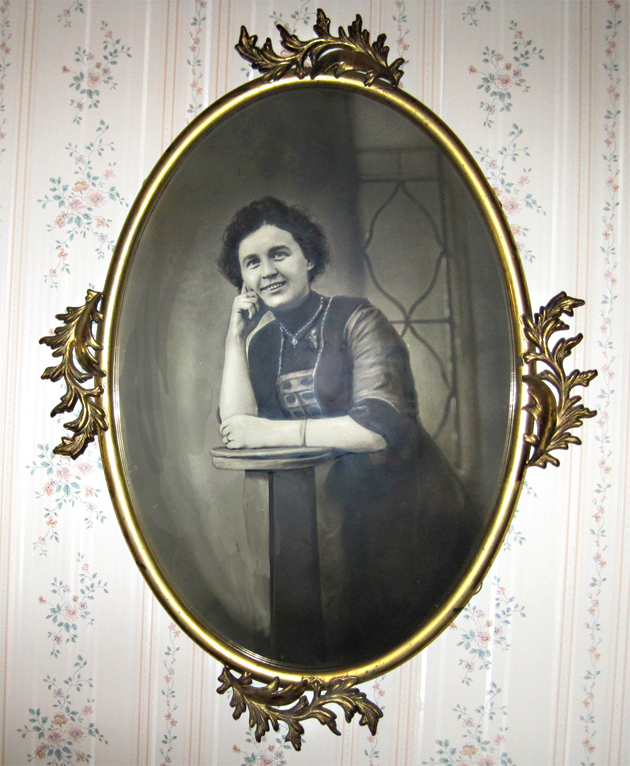
About this 1909 postcard? When my plain Grandma Longenecker received this post card, she looked like this:

Fancy Victorian Fannie Longenecker before she became Mennonite

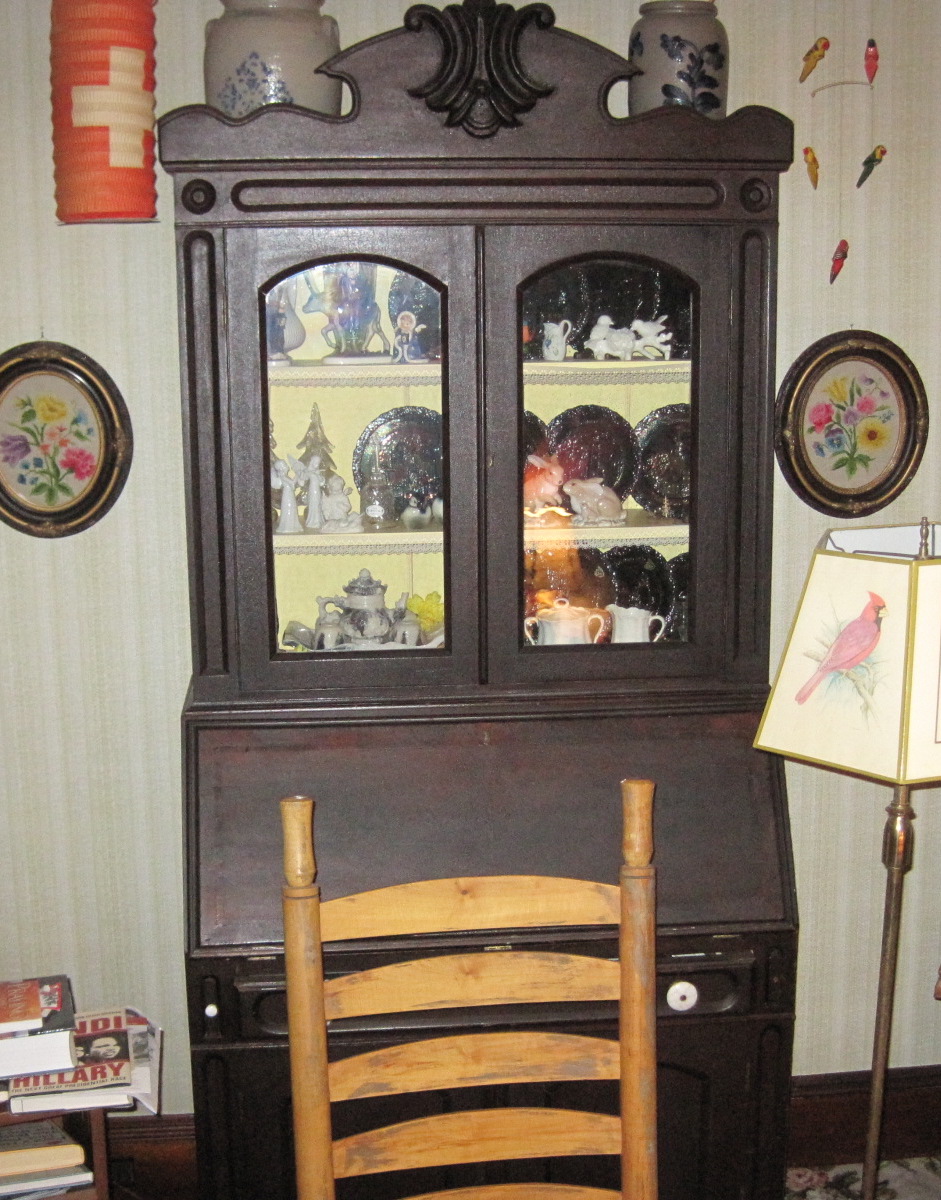
I found it in a stash of other cards inside the fold-out compartment of Aunt Ruthie’s secretary. What other treasures may be hiding there? I wonder.

Secretary_Ruthies_0520


What treasures have you found either by design – or unexpectedly?

As a reader, what do you think of the literary device called “perhapsing”? Have you used it as a writer?

Paring Down, Tidying Up – Some Tips

“Listen to this” I said to Cliff as I began reading the page on sorting papers: “Rule of Thumb – Discard Everything. ” As I continued reading the chapter on sorting papers in Marie Kondo’s New York Times best seller, The Life-Changing Magic of Tidying Up, I saw my husband’s eyes bug out, his jaw go rigid. I imagined his next move would be grabbing the book from my bare hands. (He didn’t.) Even though papers accumulate in our house like snowdrifts, he was having none of it.

It’s hard to dispute the dictum of a Japanese cleaning consultant like Kondo who claims that none of her clients have lapsed – and who has a three-month waiting list. She insists that if you organize your house properly, you’ll never have to do it again.

At the heart of her message is this: Keep something only if it sparks JOY in your life. And related to this: Give it away, if you think it will inspire joy in others.

So, I have divested myself of possessions I’ve held onto for decades.

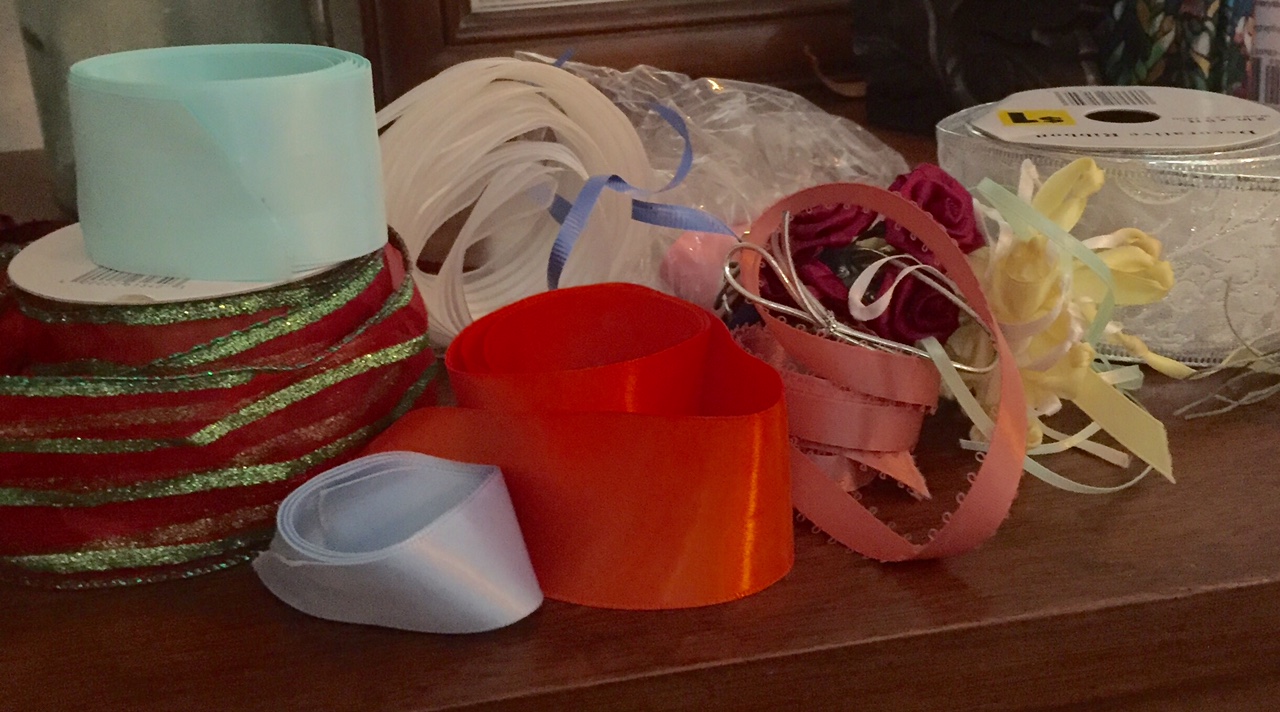
Ribbons and sewing notions have gone to a church friend, Donna, seamstress extraordinaire, who has connections to talented women needing supplies.

RibbonGiveaway

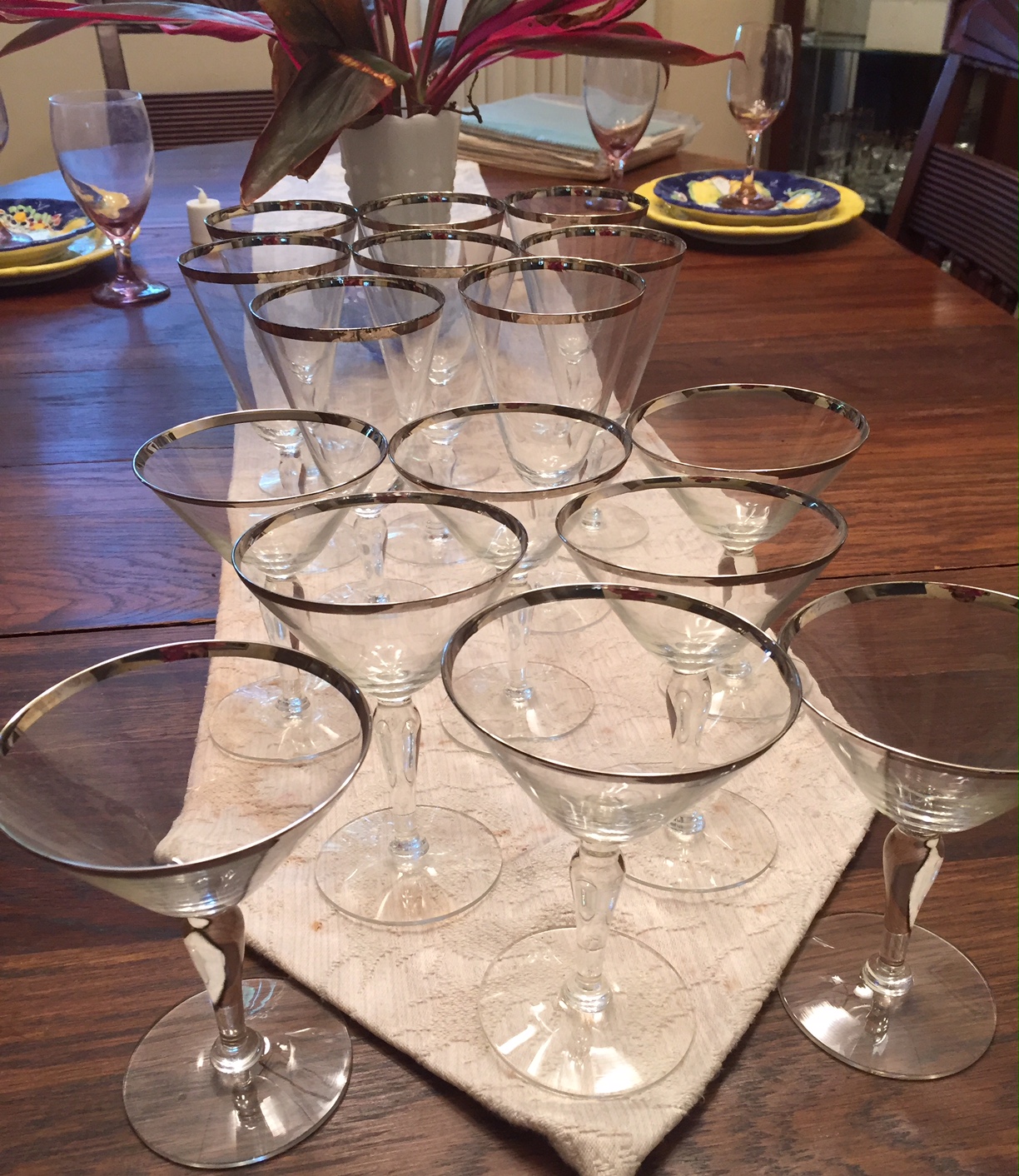
Like my friend Carolyn, I have passed on items of fine dining. My wedding crystal went to my hair stylist and super hostess Jackie. Originally, I intended to donate my crystal (from The Susquehanna Glass Factory in Columbia, Pennsylvania) to The Community Hospice Thrift Shop. But before I ever got to the donation center, Jackie took a look, fell in love, and the crystal sherbets and glasses became hers.

Crystal

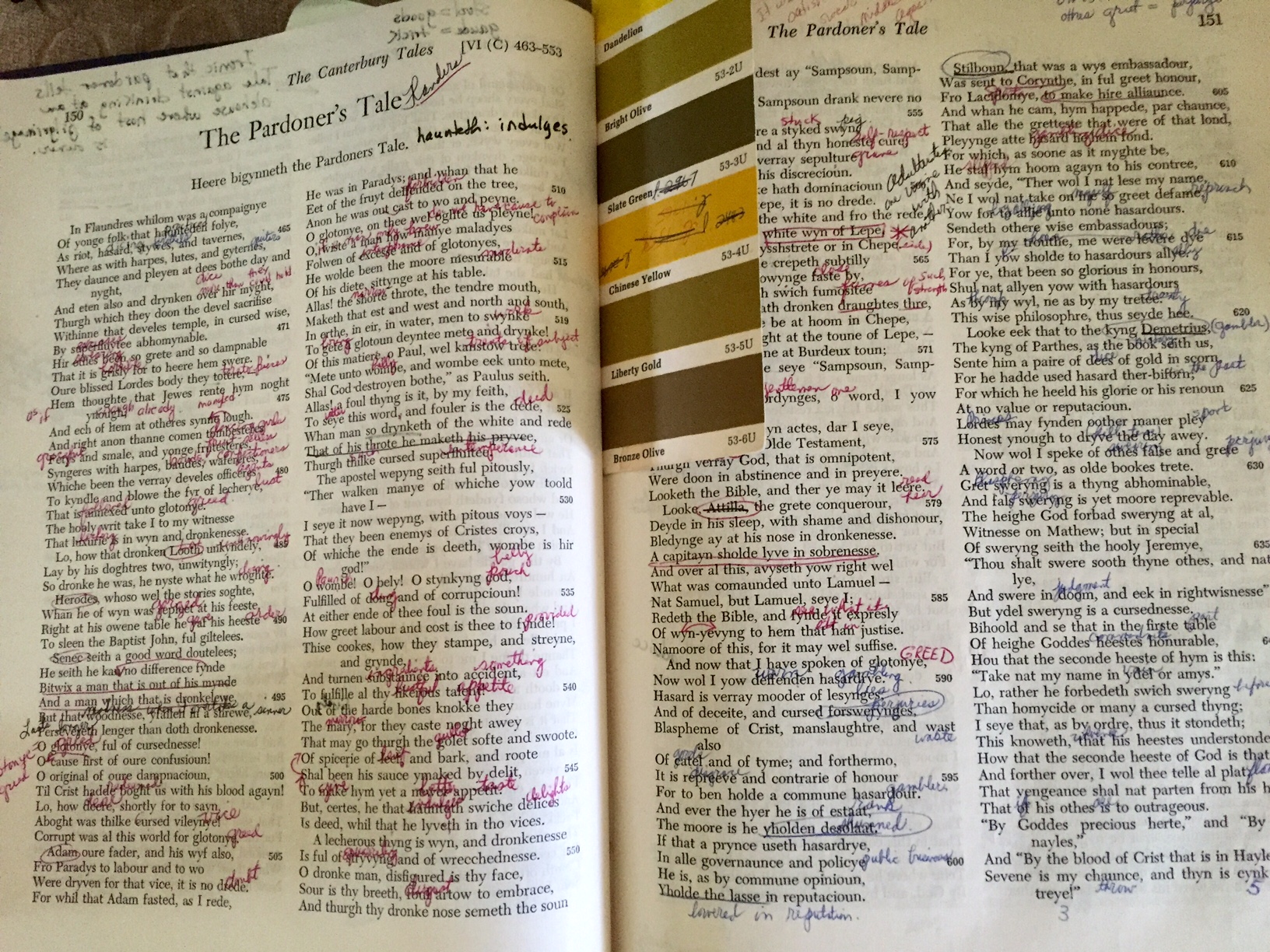
By far the hardest thing to divest myself of is MY BOOOOOKS! They are part of my self-hood, my identity for the decades of my long teaching career. I am not the only book lover who wrestles with such impulses. Summer Brennan writes about the heartache of such a task here. Like her, I feel torn by the lure of Kondo’s promise of the magic of recycling and my impulse to embrace William Dean Howell‘s advice, “Oh, nothing furnishes a house like books.”

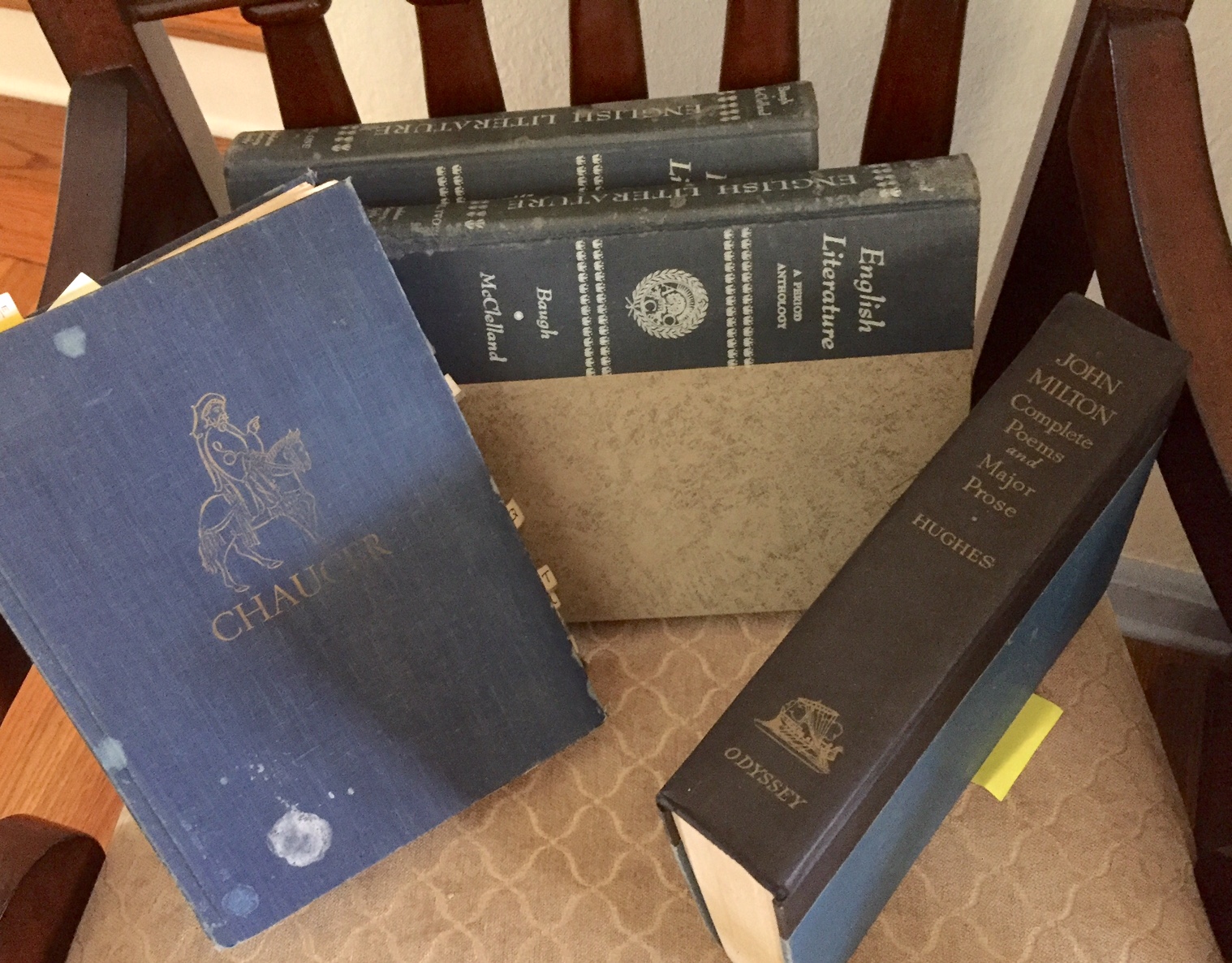
I’ve given dozens of books to Angel Aid, a charity for women and children. But I feel just as good when they land in the hands of young scholars, like Matthew, who can appreciate the nerdy translation of my Chaucer texts from Middle to Modern English, pre-digital translate days.

ChaucerTranslation

­­­­Matthew took my Milton text too, and two Survey of English Lit texts. He exclaimed, “I appreciate this. I can’t thank you enough,” followed by a smiley face and book emoticon.

ChaucerMilton

I feel a certain lightheartedness at getting rid of stuff, especially if I can pass them on to people who appreciate their worth.

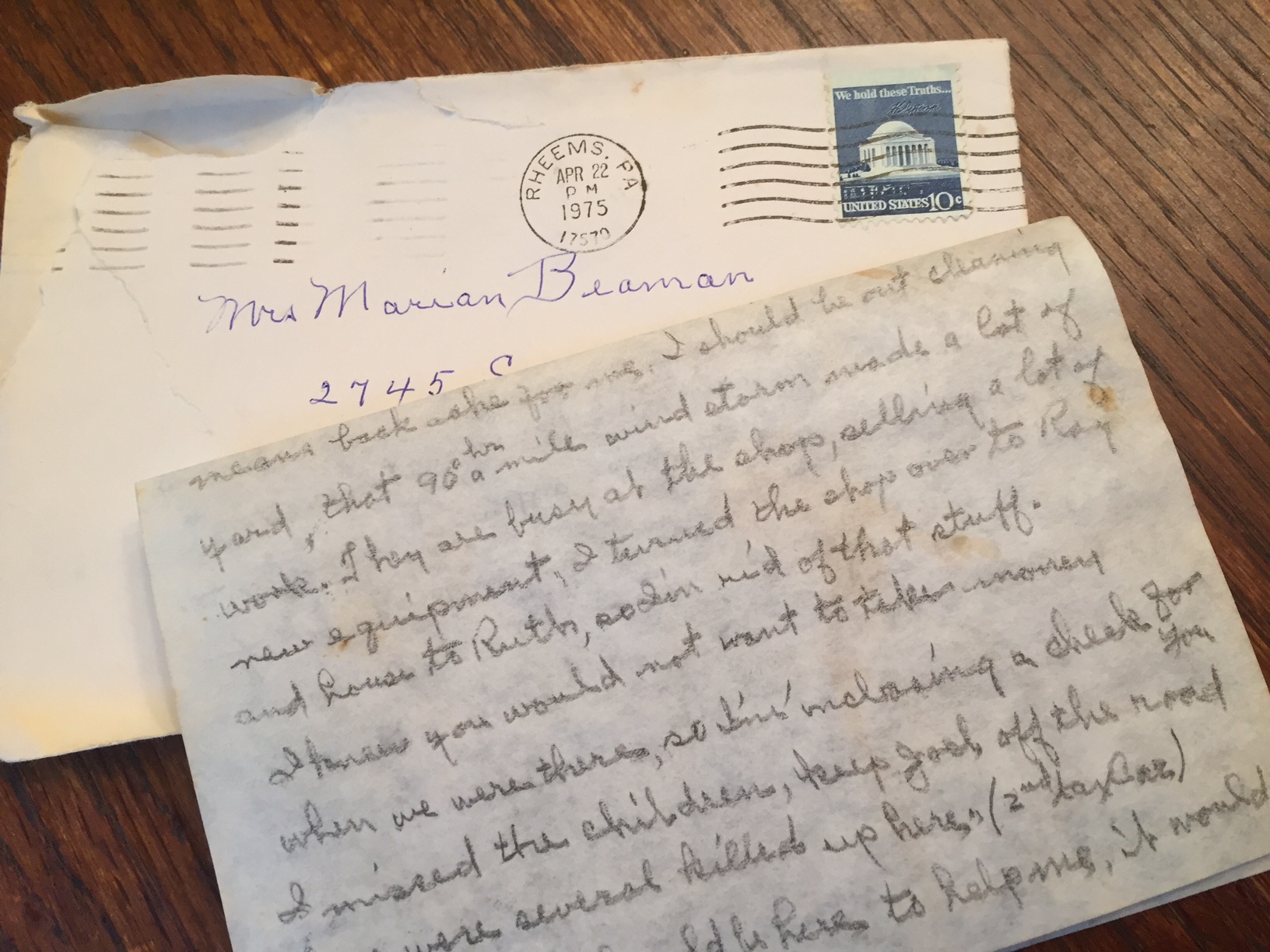
Grandma Longenecker can relate to such a feeling. She told me so in a letter from Rheems, Pennsylvnia in April 1975.

GrandmaRidStuffLetter

“They are busy at the shop, selling a lot of new equipment, I turned the shop over to Ray and house to Ruth, so I’m rid of that stuff.”

In other words, Grandma divested herself of two properties by deeding them over to my father and aunt. I’m guessing that she was immensely relieved of responsibilities for either property.

She continued to live in her lovely Victorian home until the day she died.

1989RuthieHouse

Coming next: A rollicking review of Marie Kondo’s book and a glimpse of the shop Grandma deeded to my dad. Neat versus messy? You decide.

Your tips for paring down and tidying up are welcome here.   🙂


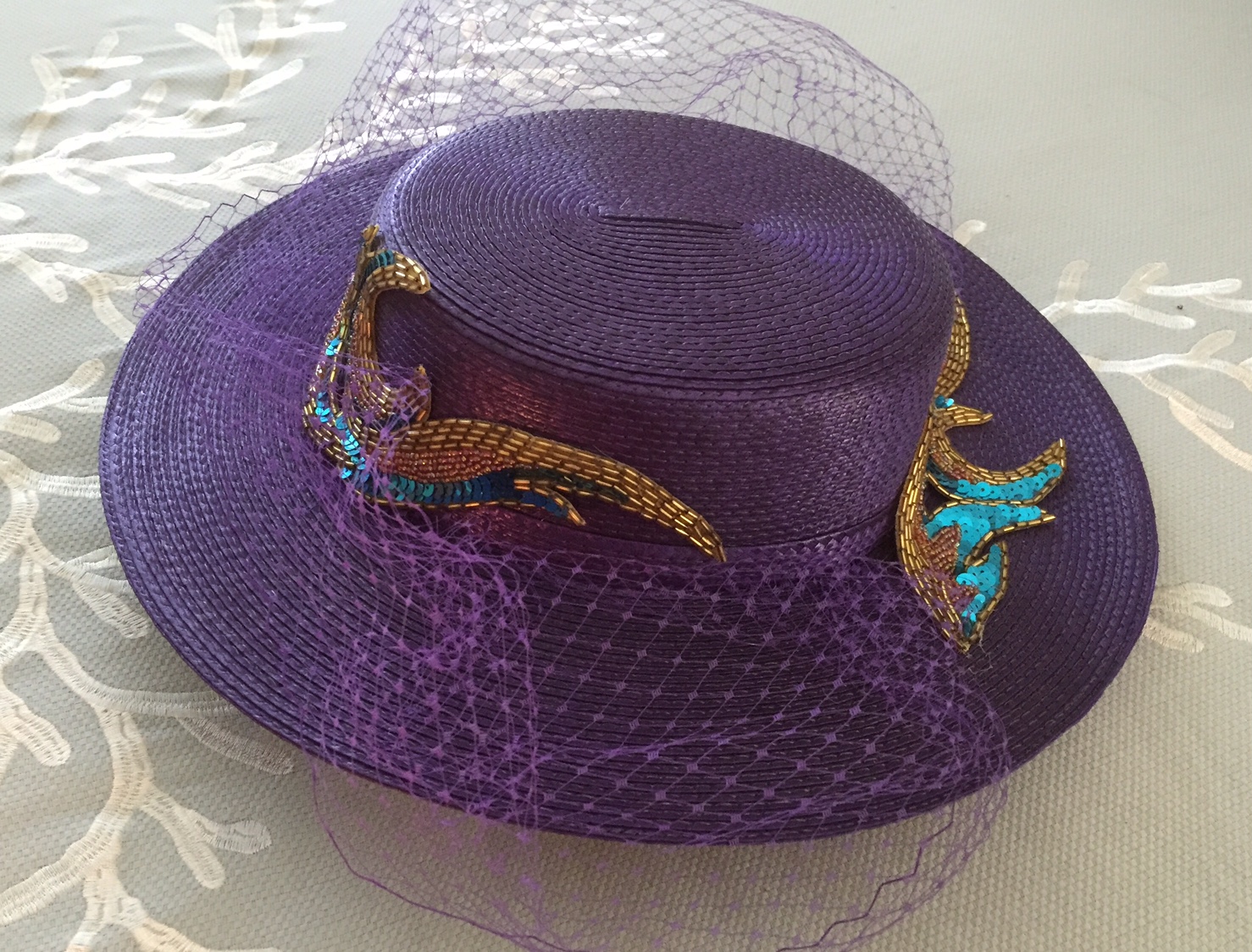
My purple hat - Out the door!
My purple “Downton Abbey” hat – Out the door!


Help! Vintage Photo Needs Caption, II
Every week, The New Yorker magazine features a Cartoon Caption Contest, inviting readers to submit a caption for consideration. After three finalists are chosen, readers vote for the winning caption. You can view my first attempt at a similiar contest here on this blog with family members on a Sunday outing.
When we sorted through our mother’s things after her passing, I found a large photo likely from the 1970s taken by Ken Smith Photographs from Camp Hill, Pennsylvania. The photographer snapped my Grandma Fannie Longenecker with bonnet and neck scarf and my dad, facing her away from the camera. Apparently they are in line at a breakfast buffet likely at a farm equipment convention. Others in the line are unknown. All seem intent on filling their plates, some more than others.

DaddyGrandmaBusBreakfast1970

“What was going on here?” I ask. Everyone in the photograph registers a similar band-width on the emotional scale, except for the couple on the left.

This photo begs a caption.

* * *

What’s going on here?

  • Invent a caption.
  • Guess at the scarario.
  • Supply a two-line dialogue between the couple on the left.
  • Imagine the photographer’s motive.
  • Reminisce about an awkward moment you recall.

O, wad some Pow’r the giftie gie us / To see oursels as others’ see us!      “To a Louse”  

Robert Burns 1786

    (On Seeing One on a Lady’s Bonnet at Church)


Coming next: Moments of Extreme Emotion: Where’s My Spyglass?

Baby Beads and Wooden Blocks: Happy Mother’s Day

I played with pastel-colored beads and wooden blocks with ridges, babyhood toys. Mother kept these oblong & round beads and animal-themed alphabet blocks for her grandchildren and great-grands. These sturdy toys entertained children of mothers they nurtured in their ministry for New Life for Girls too.

All of Mother's children and many of her grandchildren sat on this highchair and played with these wooden beads and blocks. We never played with plastic toys.
All of Mother’s children and many of her grandchildren sat on this high chair and played with these wooden beads and blocks. We never played with plastic toys.
These blocks are entertaining my sister Jean's grandchildren
These blocks have entertained my sister Jean’s grandchildren

To me, such simple toys bespeak innocence and the charm of a simpler life..

On this Mother’s Day 2016, these artifacts seem an apt metaphor for my mother’s contribution to our heritage.

Beads of Wisdom: Mom’s Mottos

  1. “Outen the light,” meaning turn off the light switch to conserve energy.
  2. “Ach, don’t talk so dumb,” spoken as a way to discourage silly talk.
  3. “You get what you pay for.”
  4. “Be sure your sin will find you out.”
  5. (Someone) “turned up Jack,” meaning disappointed or didn’t pan out
  6. “Be sure to add enough butter: Butter makes it better!”
  7. “Tie your head shut,” admonishing us to wear a bandanna during cold or windy weather, illustrated here with a flash of memory:

I paid attention, of course, and rushed out wearing my blue wool coat and pink and white polka-dotted bandanna on my head, eager to help Grandma set the table. In cool weather, I always had my “head tied shut,” an expression Mother used to keep us from getting a cold, she thought. But looking back, I think having my head tied shut is a metaphor for keeping out the world and all the corruption that can come in through an unlocked door, even a passageway like my ears.


Blocks of Faith

  1. Tied a nickel into the corner of a square, white hanky to teach me to give to God.
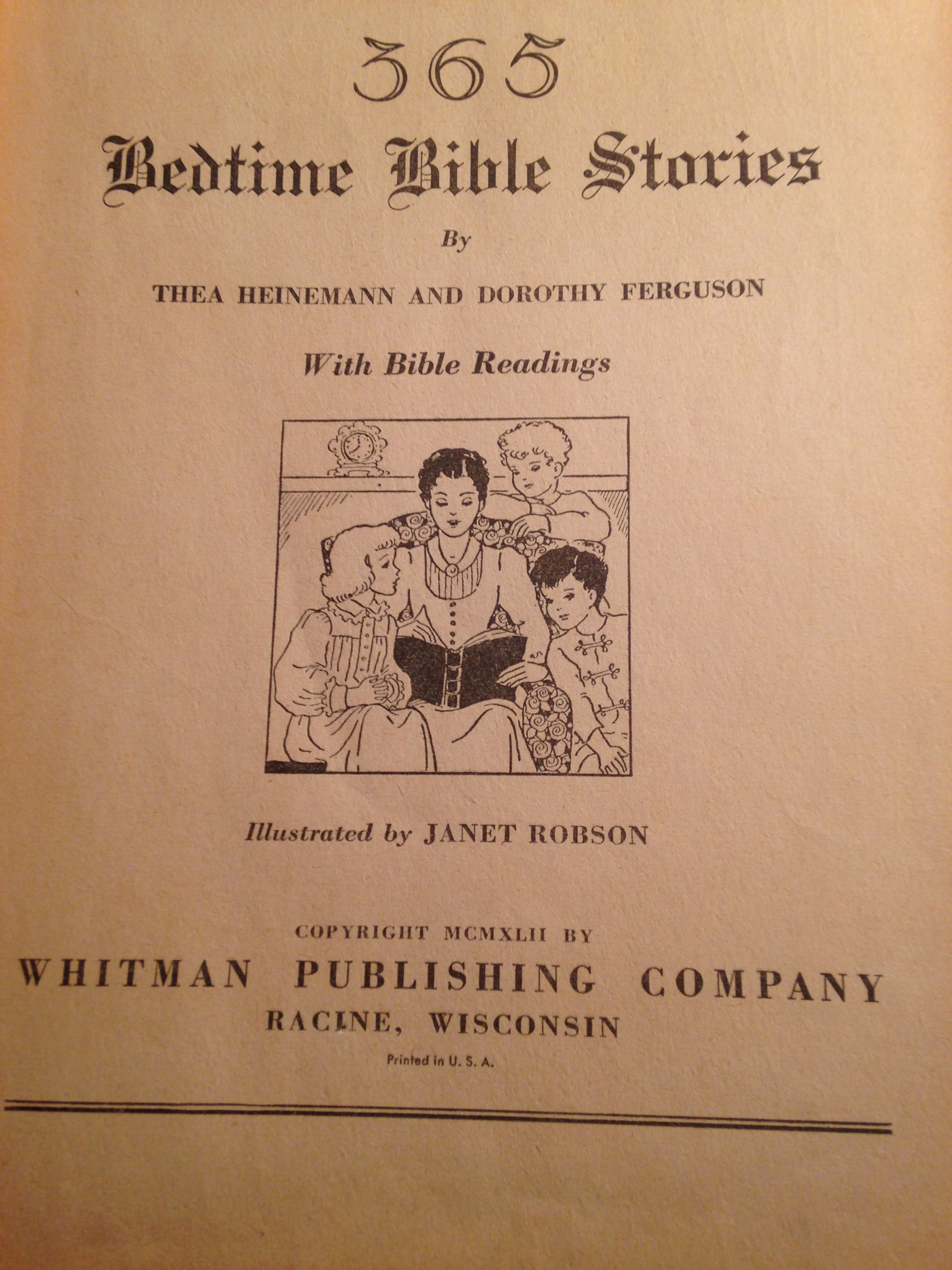
  2. Read to me from a Bible Story Book, one story for every day of the year.

BibleStoryInside copy  BedtimeBibleStories copy

The date on the flyleaf, MCMXLII, can be translated as 1942. In the years following, my sisters Janice and Jean and my brother Mark must have heard these stories too.

3. Prayed with us at bedtime: “Now I lay me down to sleep, I pray the Lord my soul to keep . . . .”

4. Led us in prayers of gratitude before all our meals. Usually, the prayers were silent.

5. Uplifted arms, palms turned upward, her gesture of acceptance, “Whatever the Good Lord wants.”


My mother wasn’t perfect. Whose is? She had moments of impatience, she sometimes complained, yet she did the best she could. I choose to celebrate those attributes of a woman who all her life sought to please God.

An invitation to you: Add words of wisdom or silliness from any source, including your mother.


Coming next: Vintage Photo in Need of a Caption, Part II

Mom’s Dandelion Recipe & the Passover Seder

“It’s a spring cleaning ritual – but for your body,” touts reporter Jennifer Sheehan, extolling the merits of eating dandelion. “It cleans your blood and you get a lot of good vitamins from it,” another endorsement I read in Sheehan’s article from Lehigh Valley’s The Morning Call.

My mother would agree. Each spring about this time, she took her wooden-handled trowel and dug out dandelion plants fertilized by cow and horse manure in the meadow next door. “Dandelion has a lot of iron,” she said of the long, spiny leaves. “And it’s so good with hard-boiled eggs and bacon.”

Last week my sister Janice shared Mother’s recipe. I was pleasantly surprised because I didn’t know it was written down anywhere.

Add a little water till soft.

Add white sugar – a little vinegar

Fry bacon and hard boil two eggs

The recipe wouldn’t pass muster for cookbook publication, lacking as it does measurements and a logical order. But reading between the lines, I constructed her dish in a slightly different way.

First of all, I bought dandelion at a local farmer’s market. The label reads organic. The dandelion stalks pictured here look too perfect The dandelion strands of my childhood were more wiry, a deeper green. “Organic” was not a selling point back then.

DandelionIngredients

I began by frying bacon and hard boiling eggs.

EggsBacon

Instead of white sugar, I used brown.

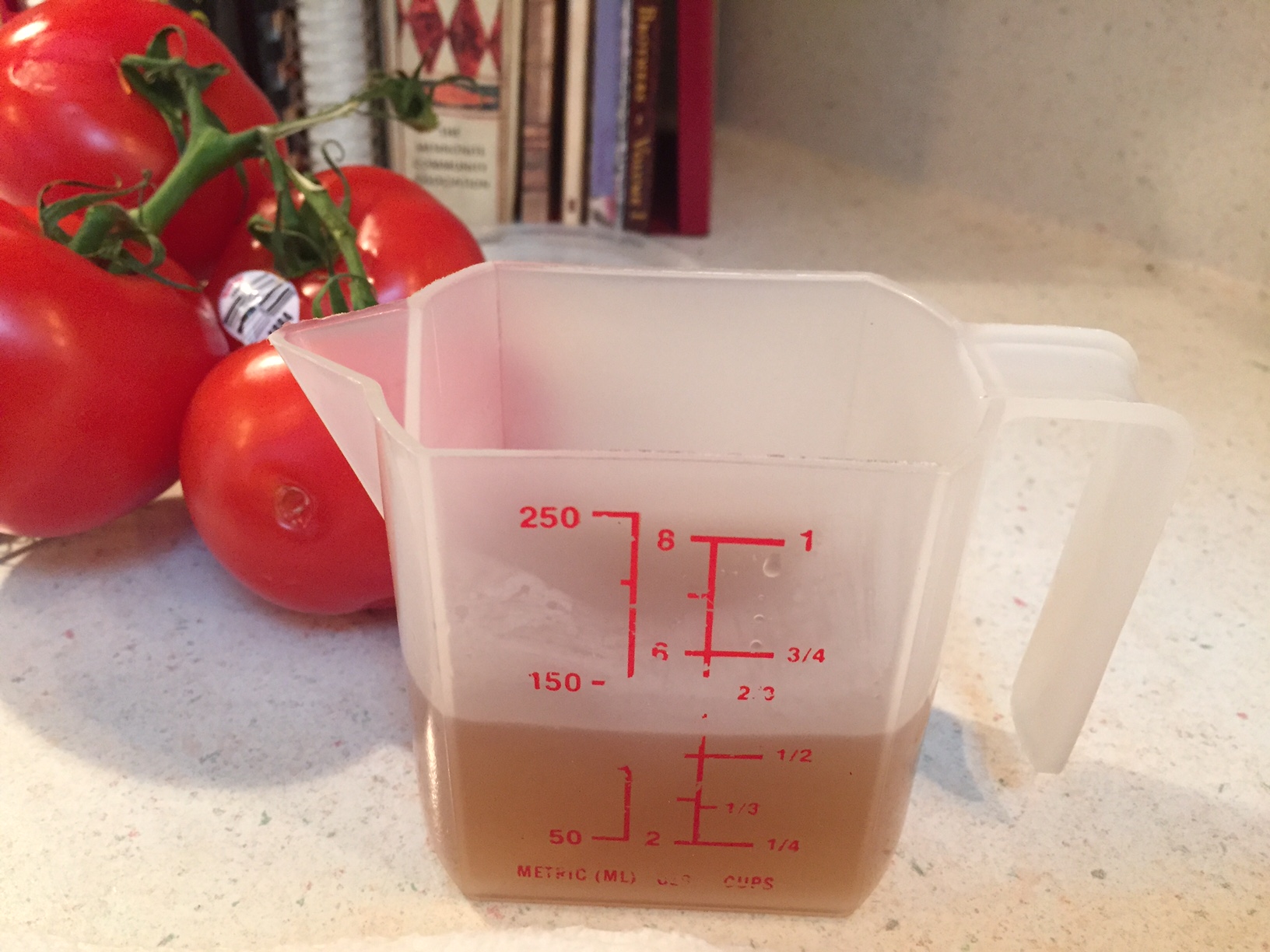
And I saved the broth from cooking the dandelion. “It’s good for what ails you,” I imagine Mother would say.

DandelionJuice

Finally, good enough to eat!

DandelionDishDone


Continuing the discussion of dandelion in The Morning Call, Sheehan quotes Patrick Donmoyer, an expert on Pennsylvania Dutch folklore, who believes eating dandelion greens is symbolic. “Donmoyer, who lectures at the Pennsylvania German Heritage Center in Kutztown, reports that some people believed that the dandelion were special, holy even, gathered as they were during the week leading up to Easter.”

Christians observed Easter nearly a month ago, but beginning Friday evening, Jewish families observe Passover, enjoying the ritual of the Seder meal. Surely no bacon will be served, but the menu will feature eggs, symbolizing renewal, and bitter herbs, signifying the agony of Hebrew enslavement in Egypt.

Traditional Seder Menu, Source: myjewishlearning.com

You can see a fully furnished Seder table here in a previous post. I wonder whether dandelion, like horseradish, would qualify as a bitter herb.


Question Mark w border1_1x1_300

What rituals do you observe in the spring – eating certain foods? cleaning house? planting a garden?

Do you have a dandelion (or endive) recipe to share, or an experience of eating the dish? Have you observed the Passover Seder?


Coming next: All Creatures Great and Small: The Power of Pets

What Lights Your Fire?

My mother wore many hats both literally and figuratively. Most of her head coverings were prayer veilings worn every day. As a young woman, her coverings were large, decreasing in size as she got older and church rules had progressively relaxed.

Mom+Marian_2 mos_5x9_300


Mother wore a sunbonnet in the tomato patch in Bainbridge, PA. As far as I could tell, Mennonite women in the 1940s and 1950s, paid no attention to Coppertone ads. (Remember billboards with that sneaky cocker spaniel pulling on a little girl’s swimsuit bottom, exposing her pale cheeks?) No one that I knew then wore sun tan lotion regularly, except maybe to the shore at Atlantic City or Ocean City. Country women, including my mother, wore bonnets in the garden and fields to protect their skin.

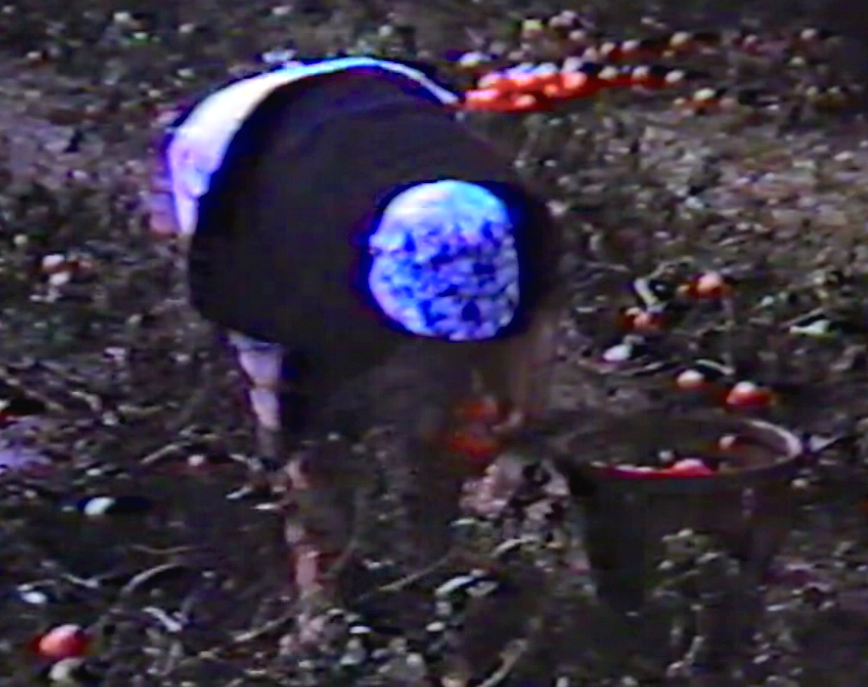
MomBonnetTOMATOES

The details are fuzzy here because this photo is another movie “still” captured from Aunt Ruthie’s 16 mm camera (circa 1955).

I look at this image of Mother’s sunbonnet worn in the tomato patch with two lenses, viewing the blurry film now and remembering the scene vividly then as an eyewitness:

I’m looking at a film clip of Mother in rows of the tomato patch just now, humped-over body bending toward a flush tomato bush facing the camera, her blue and white speckled sunbonnet sewn with three tiers of matching ruffles, a row along the bill, a row at the crease, another row near the crown of the hat—come to think of it now, headgear much fancier than her everyday prayer cap.


Figuratively too, she wore many hats:

Sister

Wife

Mother

Friend

Gardener

Tomato Picker

Cook/preserver

PTA/Treasurer

Dresser of chickens

Sewing circle seamstress

Volunteer – MCC Gift and Thrift

Volunteer – Choice Books in Salunga, PA

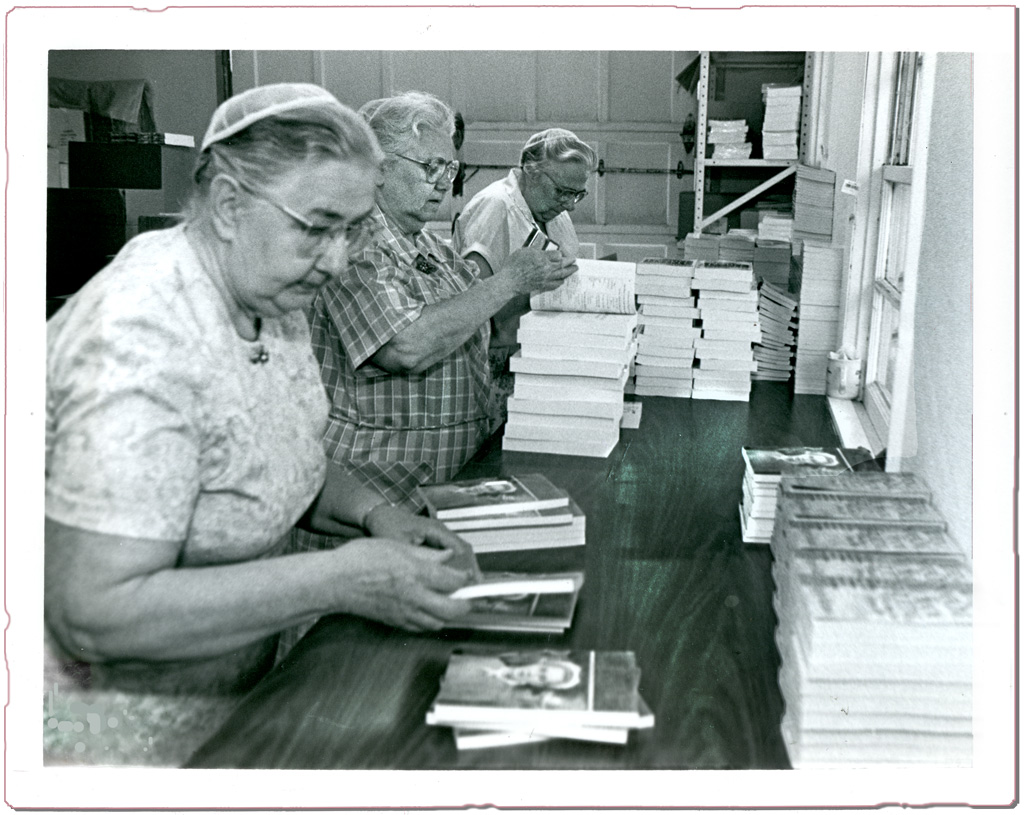
Mother particularly enjoyed her last volunteer job, stamping the Choice Books logo onto inspirational books for display on kiosks in stores around the country. During her “morning away,” she got to see her niece Dotty Metzler Martin often, met her friend Bertha, and ate lunch with other friends. She always sounded thrilled to describe this excursion when we talked on the phone Saturday mornings.

MomChoiceBooks

Even in her early nineties, she got excited about this bright spot in her life. I thought about her experience and examined my own passions when I read this verse from Psalm 39:3

My heart grew hot within me . . . and as I meditated, the fire burned. (NIV)

If someone asked Mother, “What lights your fire?” She would probably answer, “Serving others,” a motto she lived by.

The 16 x 22 inch poster created for her 90th birthday party and later, displayed on an easel at her memorial service, shows flash points of service, including her stint at Choice Books.

PosterMom2008


How would you answer these burning questions?

  • What lights your fire?
  • What burns “hot” within you?

“When God gives you an 11-by-17 mindset, you’ll never be happy living in a 3-by-5 mental framework.” Daily Devotional: The Word for You Today, April 10, 2016


Hearing from you lights my fire. Thank you for commenting here!


Coming next: All Creatures Great & Small: The Power of Pets


Any Hats in Your History?

Little Mennonite girls could be fancy before they became plain. They could wear hats. Their mothers may have worn flat, black bonnets on top of their prayer veilings (coverings) at Easter, but they couldn’t wear hats with ribbons and flowers. At least not in Lancaster County, Pennsylvania in the 1950s.

My sisters and I are standing here in front of peony bushes wearing some cast-off hats Grandma Longenecker’s friend, Mame Goss, brought from a millinery shop in Middletown, Pennsylvania.

Marian, Jean, and Janice in front of the peony bushes

I recall this scene through the lens of memory:

I’m looking now at a snapshot my mother took of my sisters and me in these hats, the three of us holding hands in front of a peony bed. The magenta peonies are in bloom, so it must have been May. The double whites mingled among them have ruby flecks in their ruffled centers. My sister Janice, three years younger, is standing at one end, with blonde hair fluffed into curls, hands obediently at her side. Jeanie, a tiny tot of two or three, appears to be looking down at the grass, her burst of tulle brushing light brown hair. I’m staring straight at the camera, two thick braids trailing down my back. Our dresses are all bedecked with ruffles and bows, embroidery or smocking, dresses surely made by our plain Mennonite mother.

I wore my first adult hat ever, a pale blue clôche with a blue chiffon dress one spring when Cliff and I were dating.

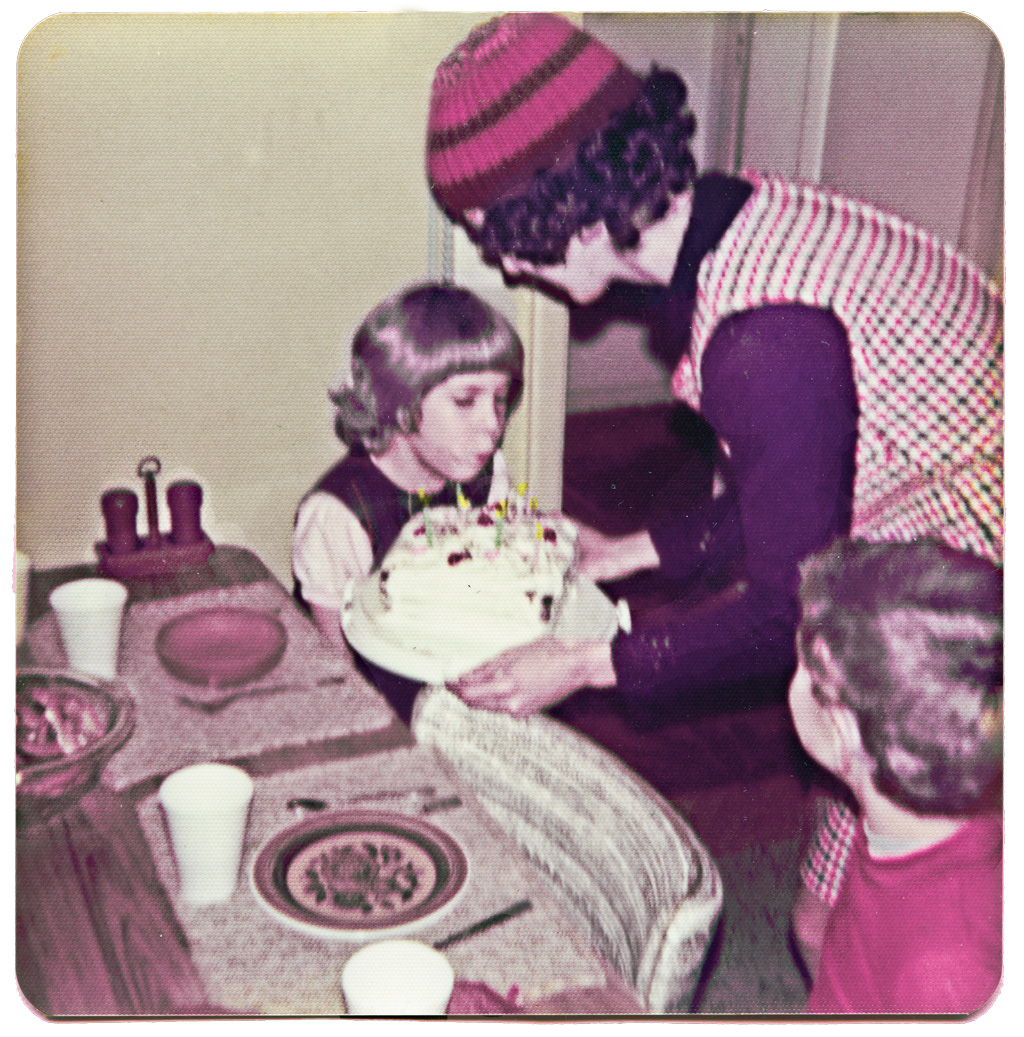
At Crista’s 5th birthday party I was wearing a knitted skull-tight cap, typical of the 1970s.

Hat1977redStocking

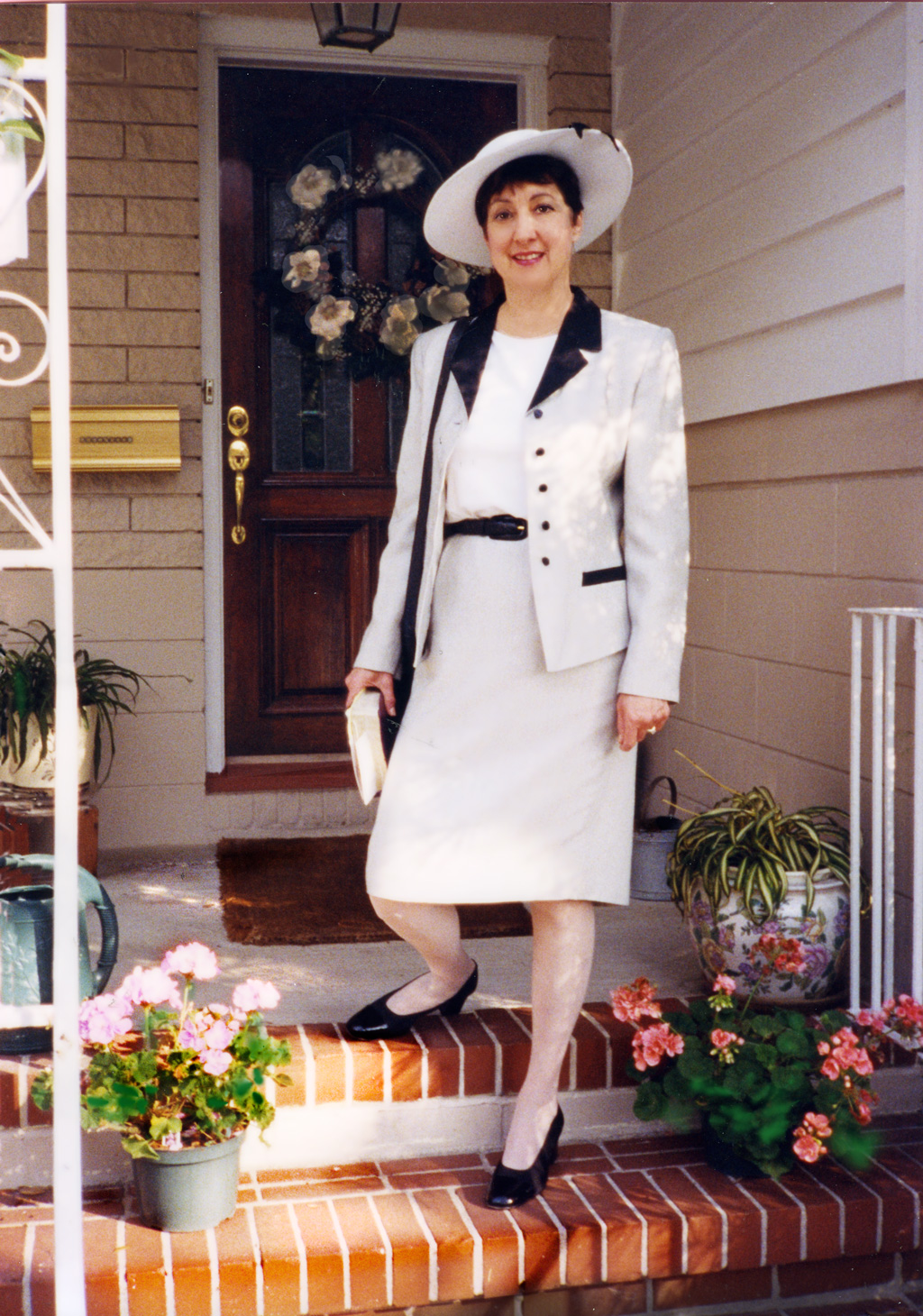
In the 1990s I bought a white hat trimmed in black ribbon and feathers, probably for Easter. I don’t wear hats anymore. I have already taken this one to Angel Aid, a charity for mothers and children.

Hat1999KillarneySteps

My sister Jan and I wore British-style hats to Downton Abbey events sponsored by our PBS station in Jacksonville, Florida. Each of our hats adorned with feathers, a flower and seed pearls cost $ 5.00 at Roots’ Country Market near Manheim, PA. We didn’t tell anyone at the gala how much our gorgeous hats cost.

JanMarianDownton

Sisters with friend Carolyn Stoner
Sisters with friend Carolyn Stoner with her fascinator hat in black and green

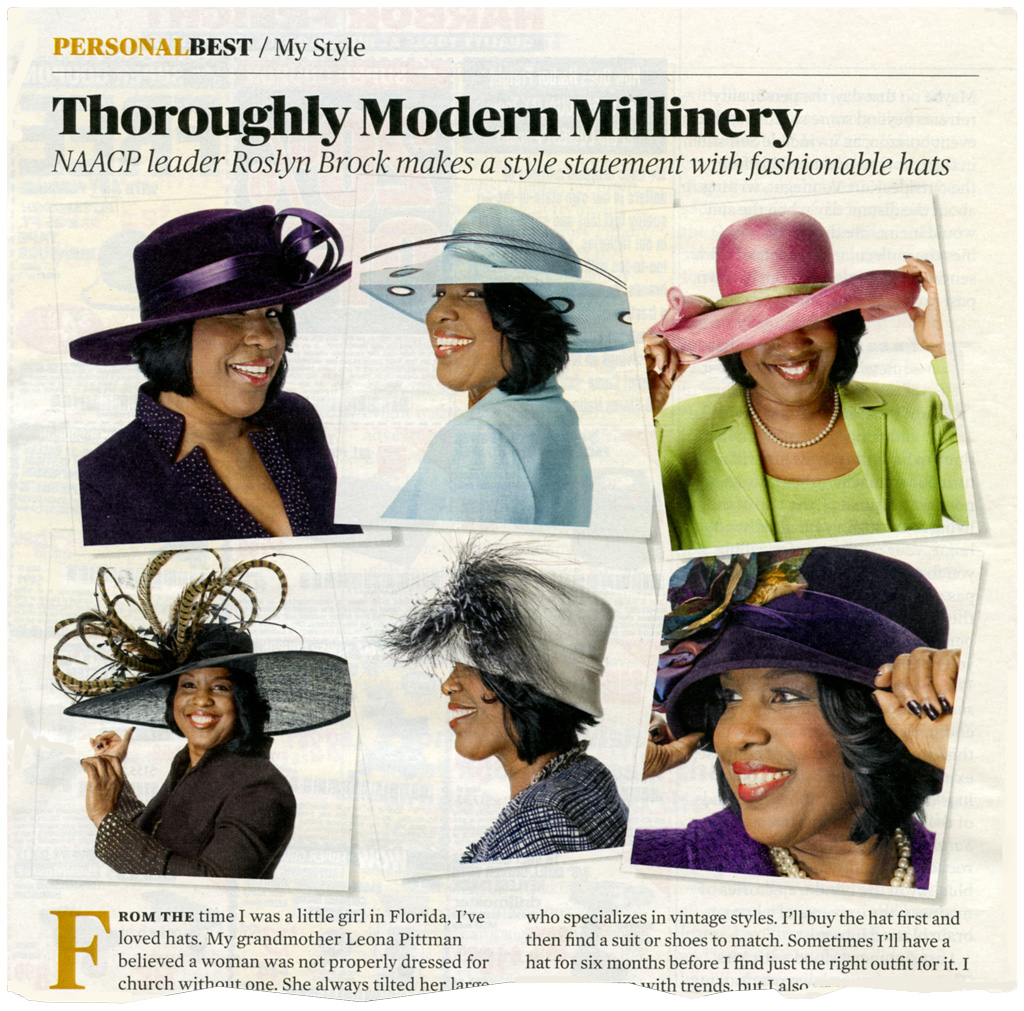
Hats have mostly gone out of fashion in recent decades, except among the trendy young. NAACP leader Roslyn Brock makes a style statement with her wardrobe of about 200 fashionable hats, expressing her love for her Grandmother Leona Pittman who “believed a woman was not properly dressed for church without one.” Brock emphasizes that

I’m following in the legacy of female civil rights leaders who completed their Sunday go-to-meeting clothes with fashionable hats.


Hats are the centerpiece of Roslyn’s wardrobe. She admits that she’ll buy the hat first and then find a matching suit or shoes. For Roslyn, who enjoys couture creations from Philip Treacy, Queen Elizabeth’s designer, wearing hats “keeps our history and culture alive.”

How a hat makes you feel is what a hat is all about.  ~ Philip Treacy

HatAARPrarticle


In June it will be two years since my mother died unexpectedly. I still miss her terribly. Grief occasionally comes over me in waves. Now less often, with less severe impact. Still . . .

On my dresser I have kept three mementoes of Mother, one on top of the other: the two-quart Ball jar with bubbles in the glass, emblematic of her love of cooking and canning. And her last Mennonite black bonnet and white prayer covering veiling made of bobbinet fabric, a see-through, hexagonal mesh. Symbols of her constant faith and hope in God, each piece of headgear is less than half the size of those she wore in her youth.

CoverBonnetMOM

Any hats in your history?

What did it look like? Where did you wear it? Do you still wear a hat? Comments are warmly welcomed. Don’t be shy.

Coming next: What Lights Your Fire?

Moments of Discovery # 10: a Bubble, a Dome, a Mirror

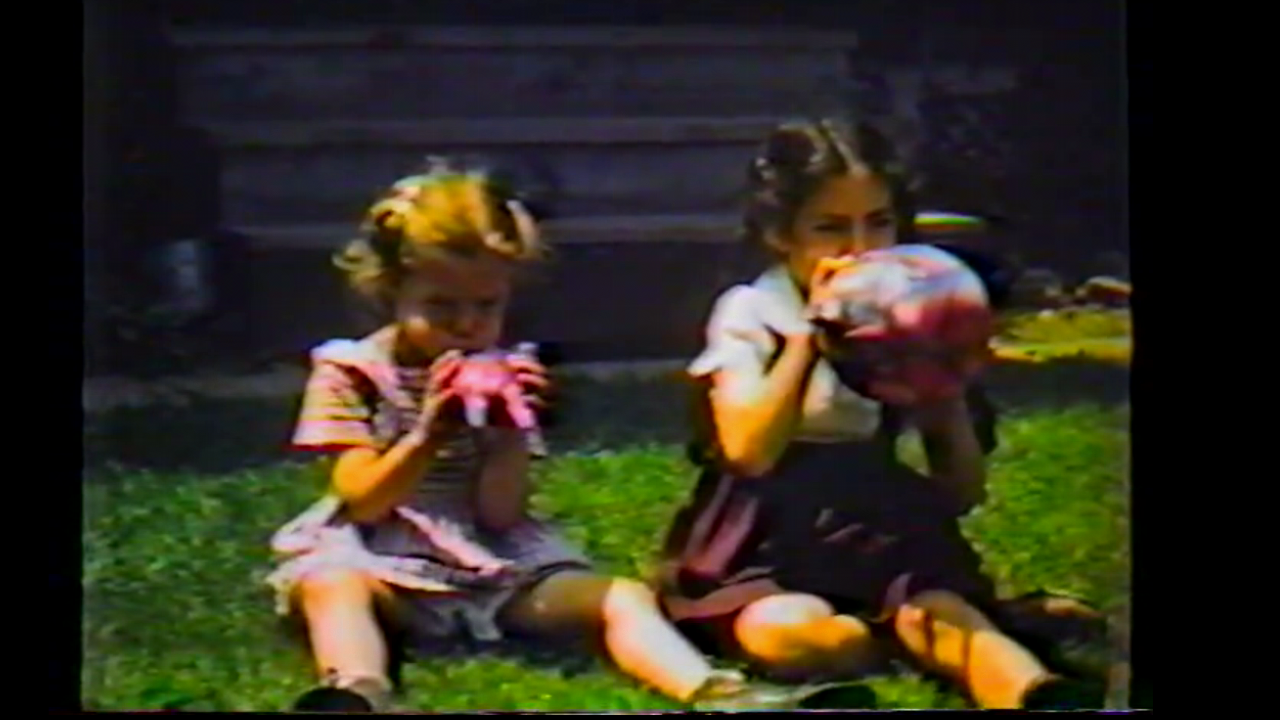
My sister Janice and I blew up balloons when we were little. Here is a stop-action snap from Aunt Ruthie Longenecker’s 16 millimeter movie film. The balloons were thick, rubbery and multicolored.

MarianJanBalloonBlow copy

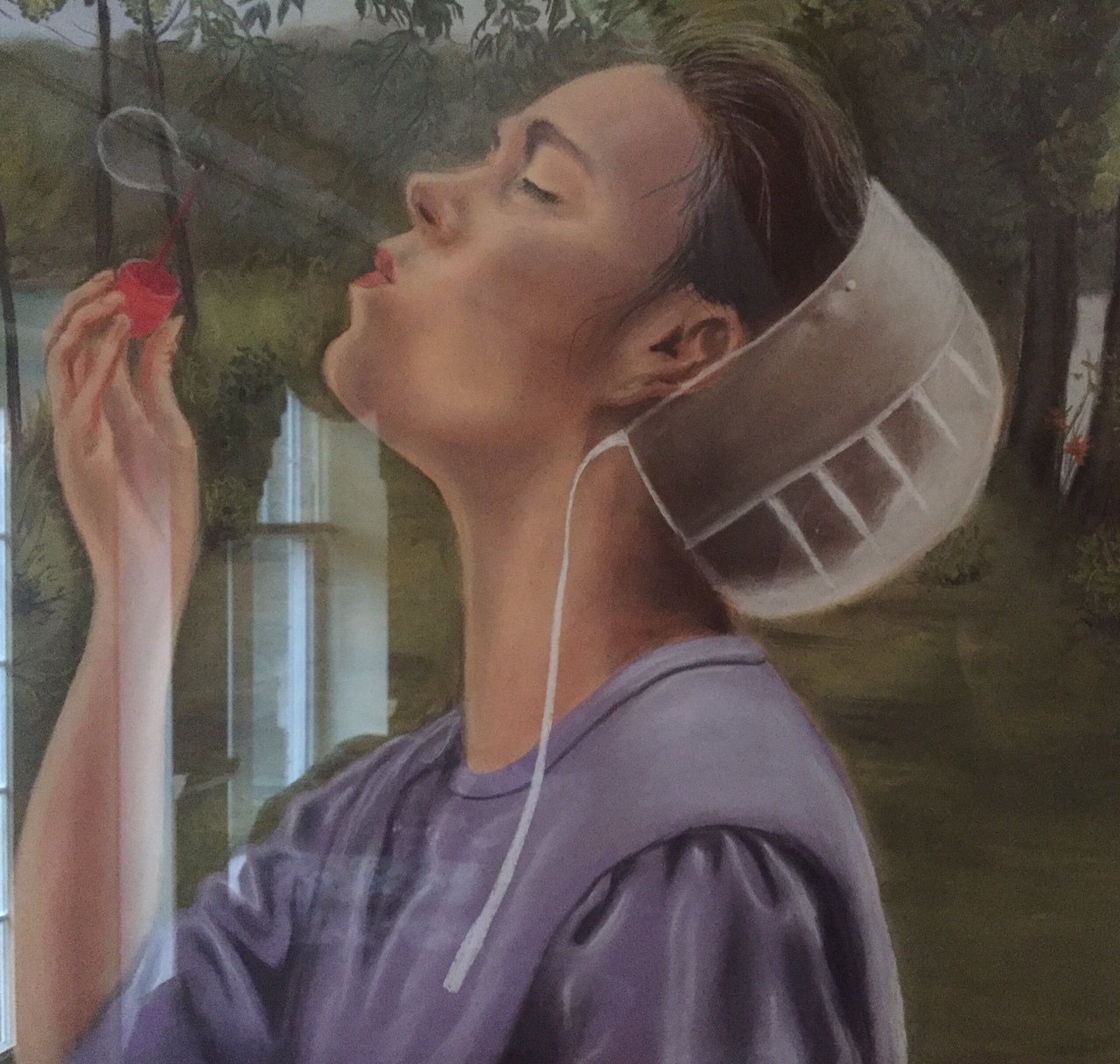
We also blew bubbles sitting on the porch swing or standing in the back yard. I don’t have pictures of those, but on one of the walls at Landis Homes, where Aunt Ruthie now lives, an Amish girl is forever blowing bubbles, possibly expressing her wishes and dreams.

Picture displayed in Manheim House, Landis Homes, Lititz, Pennsylvania
Picture displayed in Manheim House, Landis Homes – Lititz, Pennsylvania

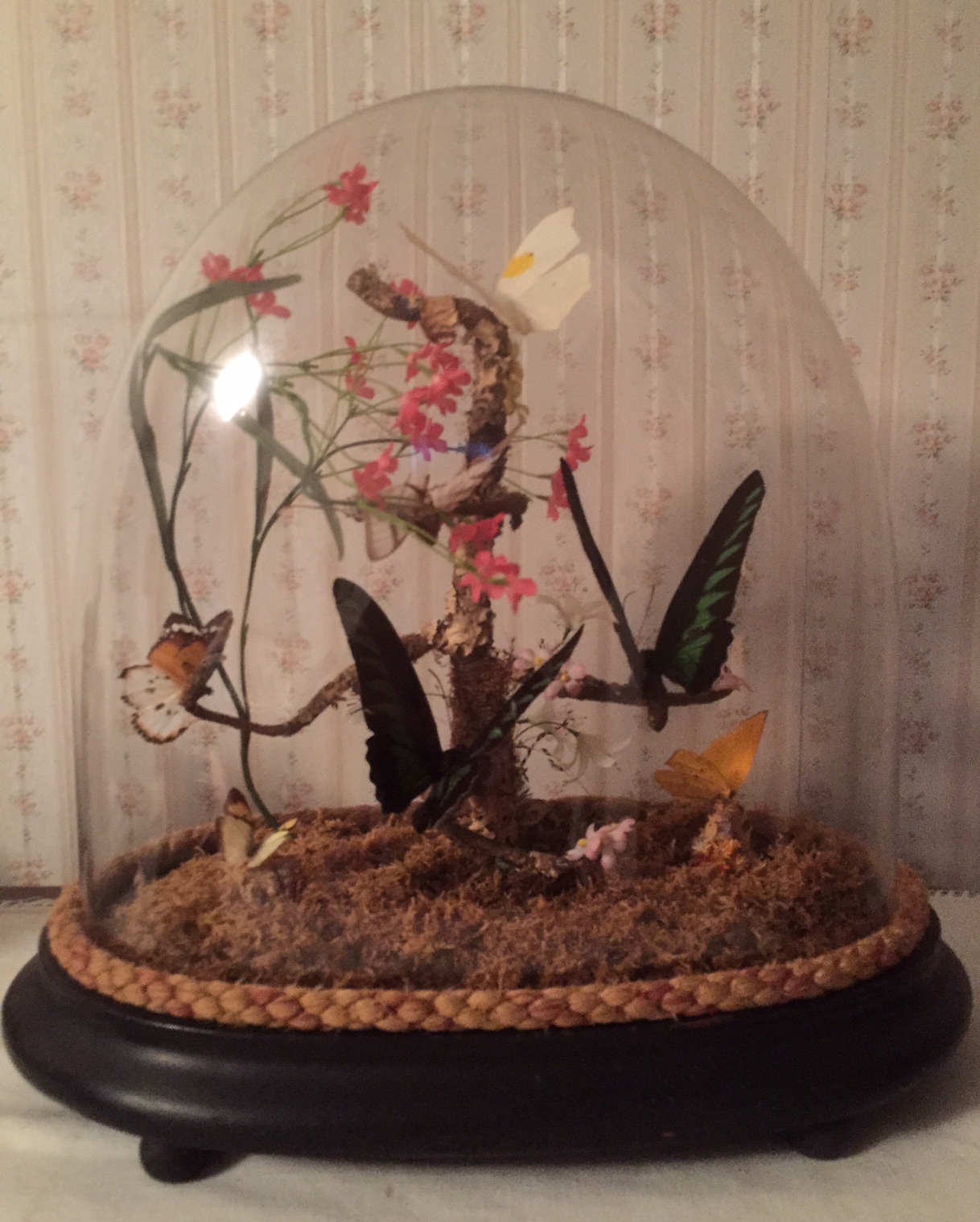
On top of a chest of drawers in Aunt Ruthie’s former bedroom sits a terrarium, a bubbly dome, covering butterflies in suspended animation on branches that rise above a blanket of lichen.

TerrariumVictorian

Terrariums, popular during Victorian times, usually contain live plants. Moss, ferns, and other flora thrive in the warm humid environment. During short winter days, weak slants of sunlight draw moisture to the top of the dome during the day, which circulates back down to the soil in the evening, creating a hermetic climate. You can read about the history of the terrarium here. The author features dish terrariums, pickle jar and wine glass terrariums, terrariums with waterfalls.

Grandma Fannie Longenecker had terrariums too, a miniature world of green we peered into when the ground was snow white in winter. Some of her glass containers were cookie-jar shaped, crowned with a knobby top. Others were rectangular and covered with a thin pane of glass.

A few ferns, though not in terrariums, still grace the bay windows at Grandma’s house. She never had a TV.

GrandmaBayWindow

Something else shiny and green I played with upstairs, a little-girl dresser. But now a grown-up girl gazes back at me when I angle the mirror just right.

DressGirlVictorian

For now we see only a reflection as in a mirror; then we shall see face to face. Now I know in part; then I shall know fully, even as I am fully known.

~ I Corinthians 13:12 NIV

Crista's maidenhair fern under a cloche
Daughter Crista’s maidenhair fern under a cloche, bell-shaped


Your discovery this week may not have been a balloon, a dome, or a mirror. It may have been something else. Inquiring minds want to know!


Coming next: Any Hats in Your History?