I Spy an Elk!

Gladys asks me, “Would you like to drive up to Cataloochee National Park to see the elk sometime this week? We have to go at dusk because that’s when they come out to feed.”

I’m quick to respond: “Sounds good to me.” I’ve never seen elk up close. Besides I thought they lived in Colorado or Wyoming. “I’m game!”

After many decades, I have reconnected in North Carolina with Gladys Graybill Schofield, whom I have known in Lancaster County, Pennsylvania since our early teens. Gladys lives in the Smoky Mountains and has agreed to be our personal guide for the evening. Who can resist!
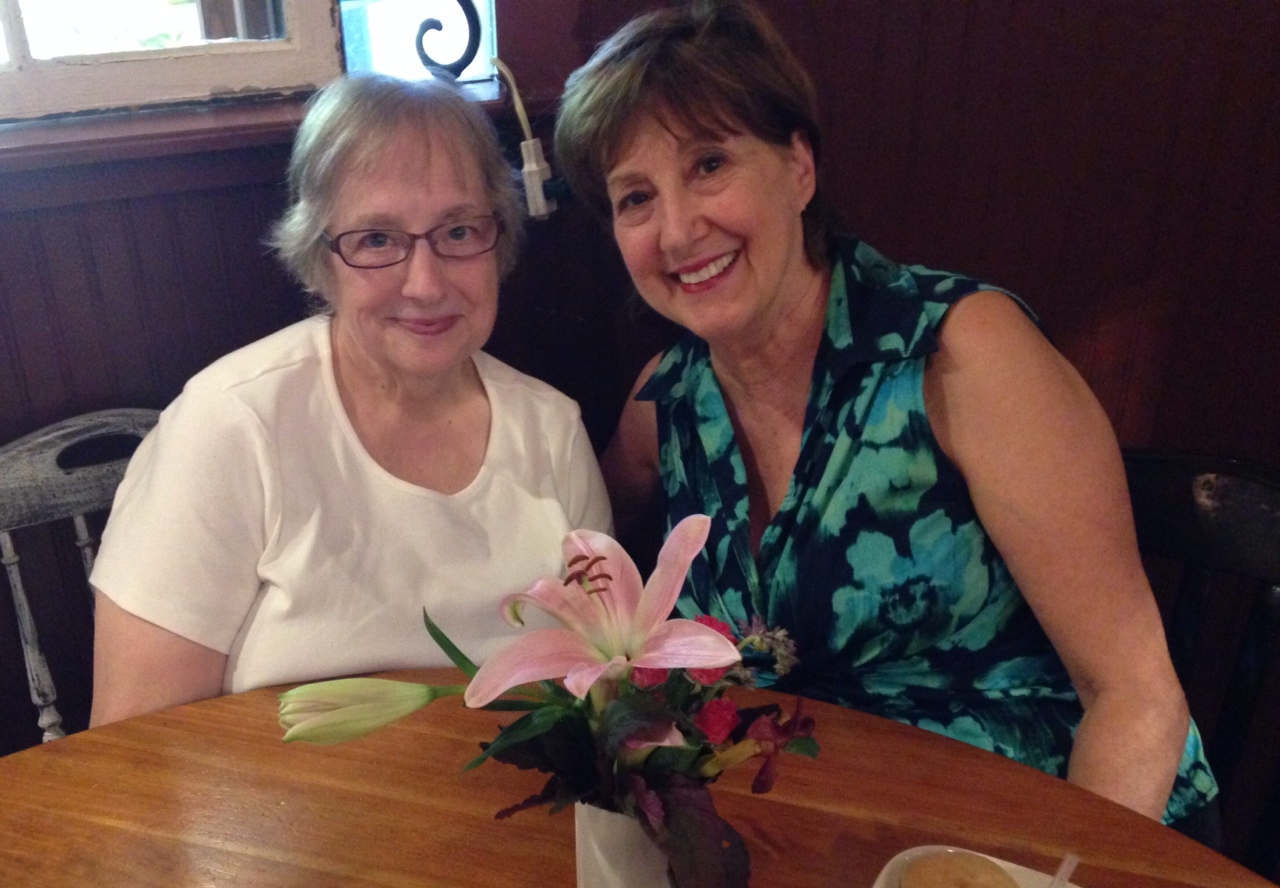
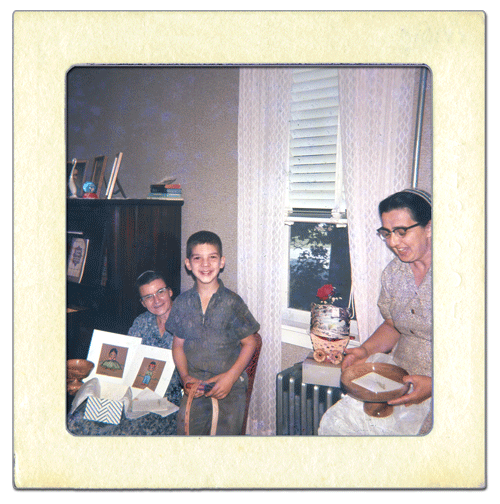
Gladys and Marian having early supper at Blue Rooster in Waynesville, NC before elk-spotting

She and I have gone to Laurelville Mennonite Camp together during Girls’ Week. We were even baptized together at Bossler Mennonite Church. She still has that sweet smile I remember. This will be another adventure together over dozens of switch-backs and rough terrain to see the elk.

The peaceful Cataloochee Valley, surrounded by 6000-foot peaks, has preserved historic homes, barns, and churches. We were surprised to find much more than elk here in this Park.

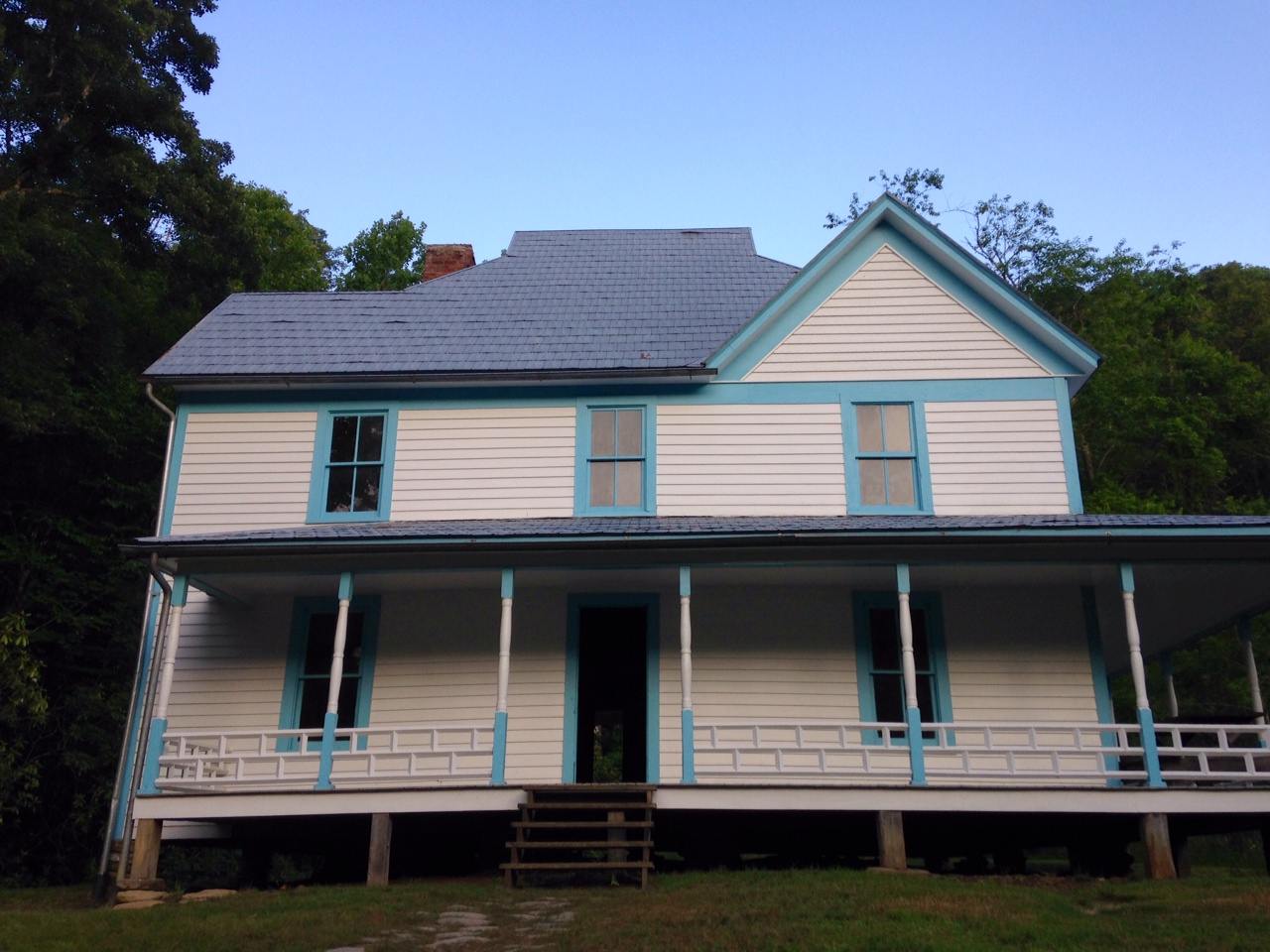
CaldwellPlaceWarningCaldwellHouse1903

Built in 1903, the Caldwell house has no front door, grainy hardwood floors, and several hearths for an earlier family to heat the bedrooms and cook in the kitchen. It seems haunted, like an artifact in a museum – no sign of life within. We don’t linger.

Close by, I snoop around what appears to be a two-story tobacco barn:
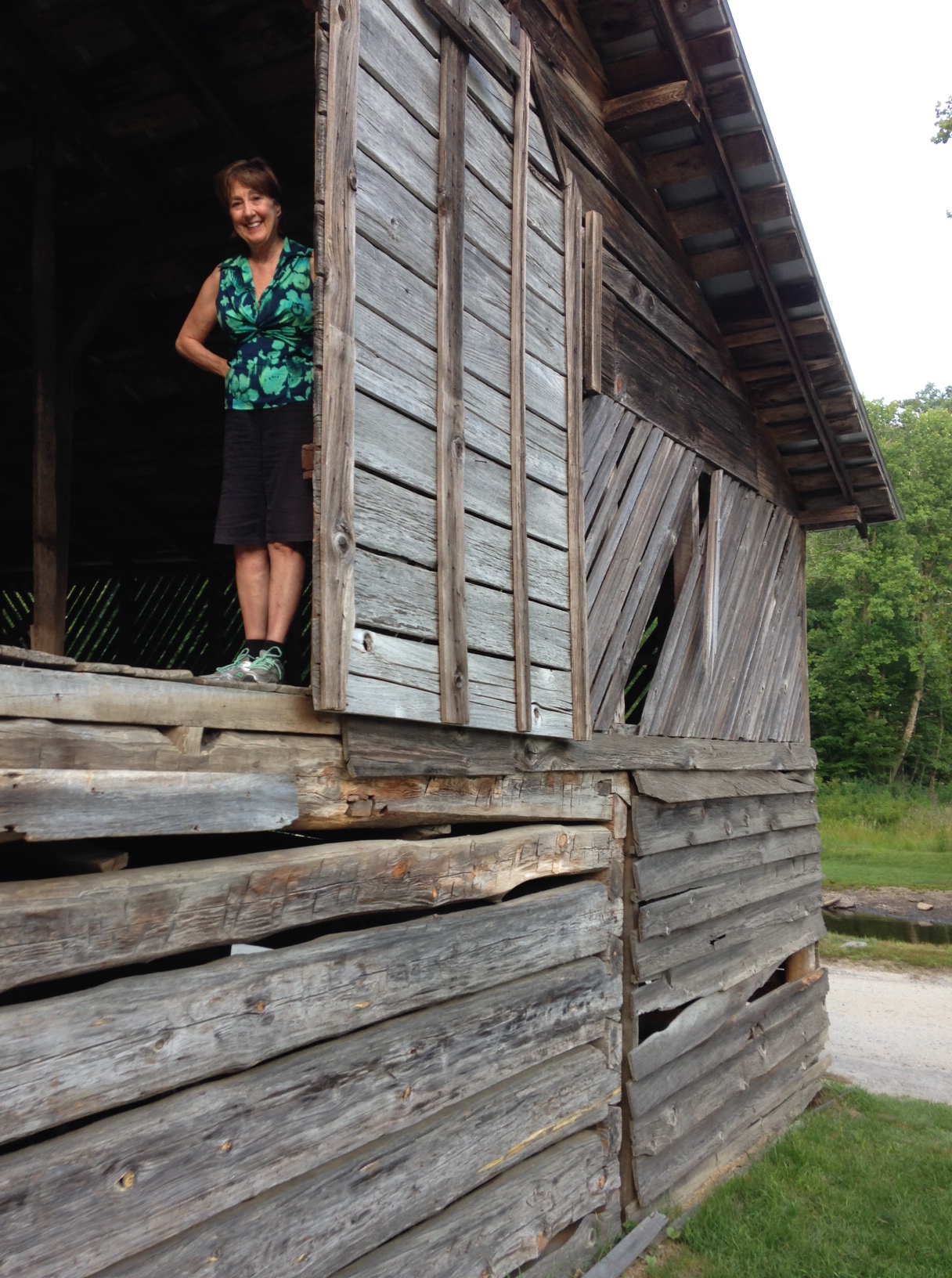
MarianBarn

No elk close-up yet, so the forest ranger gives us a tutorial illustrated with authentic stage props displayed here by an old buck.
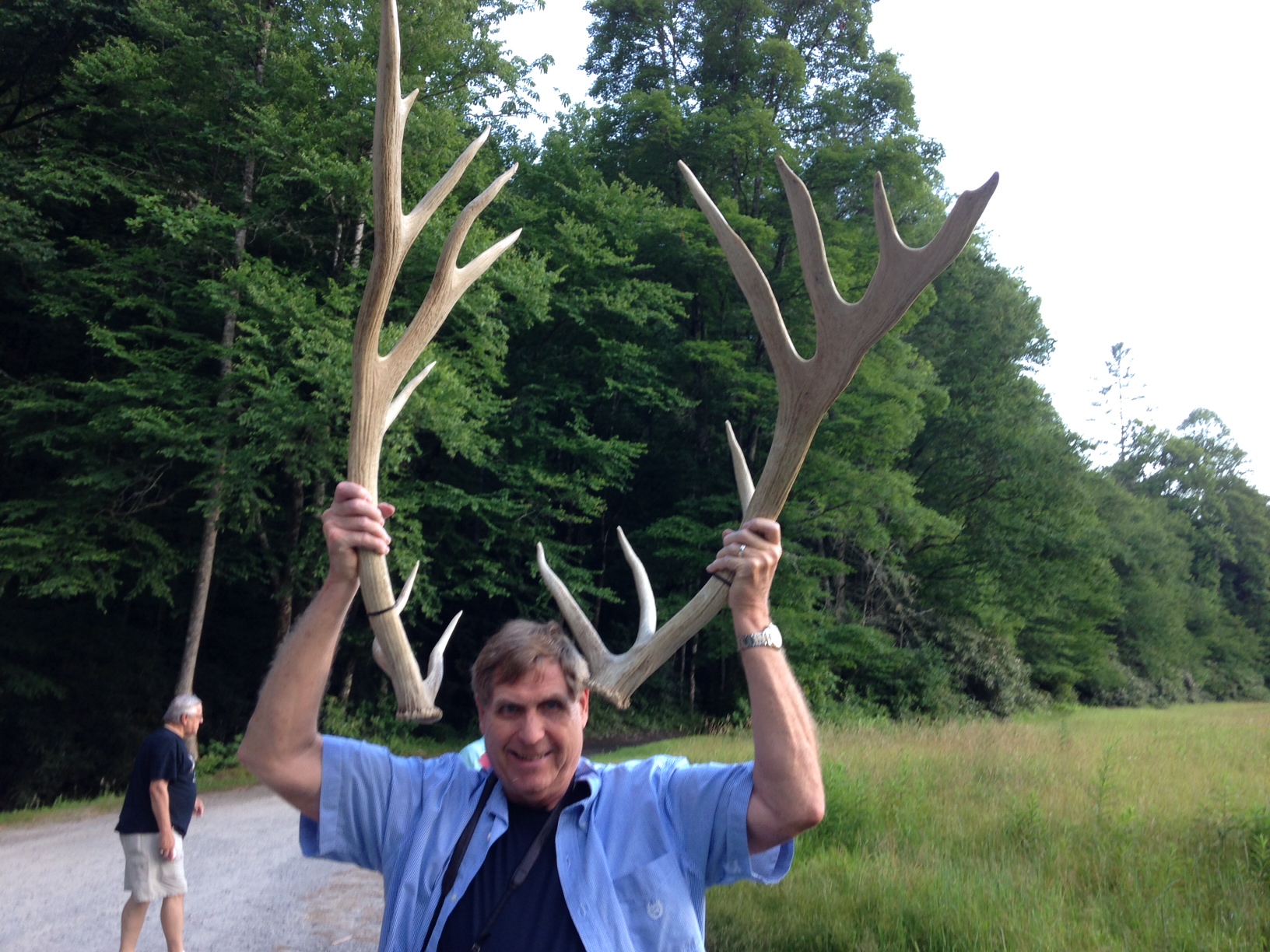
AntlersCliff

Antlers fall off male elk in March and regenerate before winter.

Because of over-hunting and loss of habitat, elk disappeared from the southern Appalachians in the 1700s. Our national park service chose to re-introduce elk in 2001 by importing 25 elk from the Kentucky-Tennessee border and 27 more from Alberta, Canada.The park currently preserves 52 elk. One might call it “the return of the native.”

Ah, we see elk in the distance . . .

ElkDistanceBetter

And then we spot a female grazing along a bubbling stream . . .

Before we leave at dusk, a male with velvety antlers grazes along the roadside. Elk at 500-700 pounds are formidable creatures if they feel threatened, so we keep our distance.
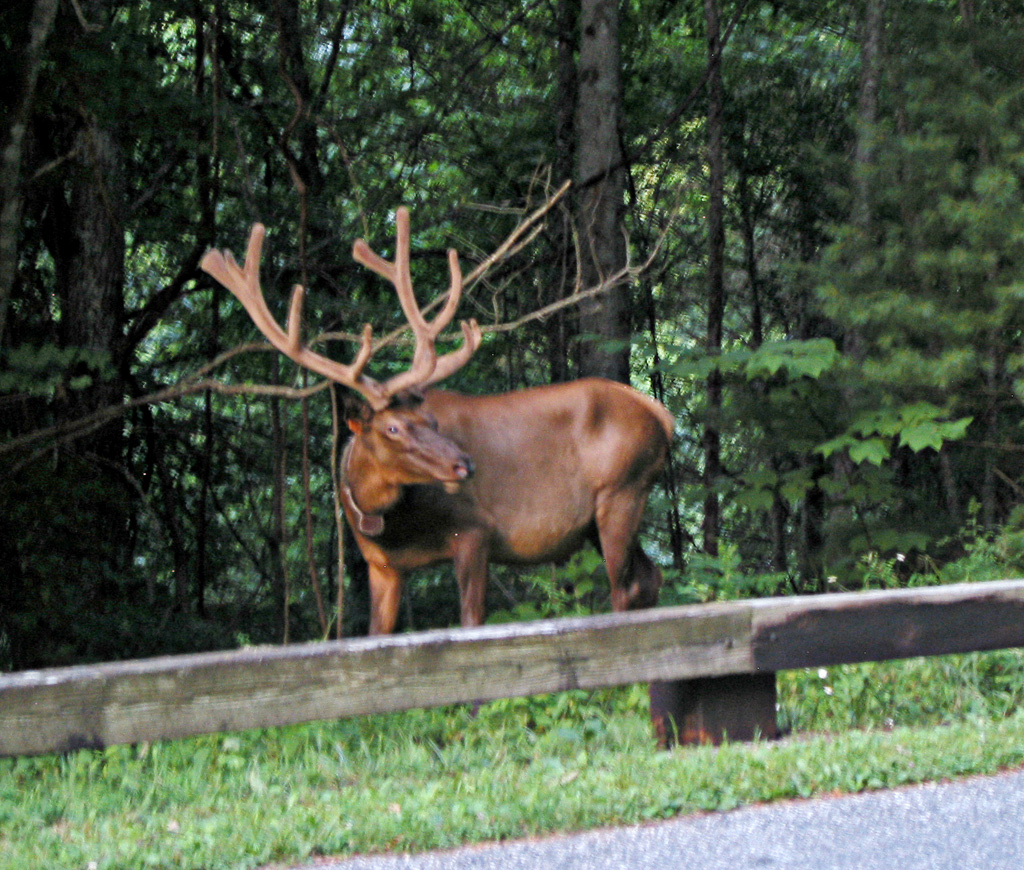
This buck elk will grow a new set of antlers every year This one is in the velvety stage and will be fully
This bull elk will grow a new set of antlers every year. His rack is in the velvety stage in June and will be fully “mature” by the fall, attracting females in the herd.

We gape, and click our iPhones. Quick!

Leaving the park at twilight, Gladys and I see up in front of her vehicle a black wooly creature bounding across the gravel road and up a ravine.

It’s a BEAR!
Marian, Janice, and Jean Go to Laurelville

  • Lacing a belt of green and yellow gimp in crafts class
  • Trips to the snack shop for an orange Nehi
  • Bible study on the rocks, girls like us with braids, some with prayer caps

These are my sharpest memories of Girls’ Week at Laurelville Mennonite Camp just off the Pennsylvania Turnpike not far from Pittsburgh, PA. along with . . .

  • Cottages with cute names like Dew Drop Inn
  • Toasting marshmallows around a fire pit
  • Singing rounds, our voices echoing each phrase: “My paddle’s keen and bright, flashing with silver, follow the wild goose flight, dip, dip, and swing”
  • “Do, Lord, oh, do Lord, oh do remember me wa-ay (big voice dip here) be-yond the blue.”

What we didn’t do at Laurelville:

  • Set fire to the boys’ swim trunks hanging on the line (There were no boys)
  • Paint each other’s toenails hot pink. (No one had makeup – verboten)
  • Sneak a smoke in the woods after dark. (We didn’t have matches – or cigarettes!)

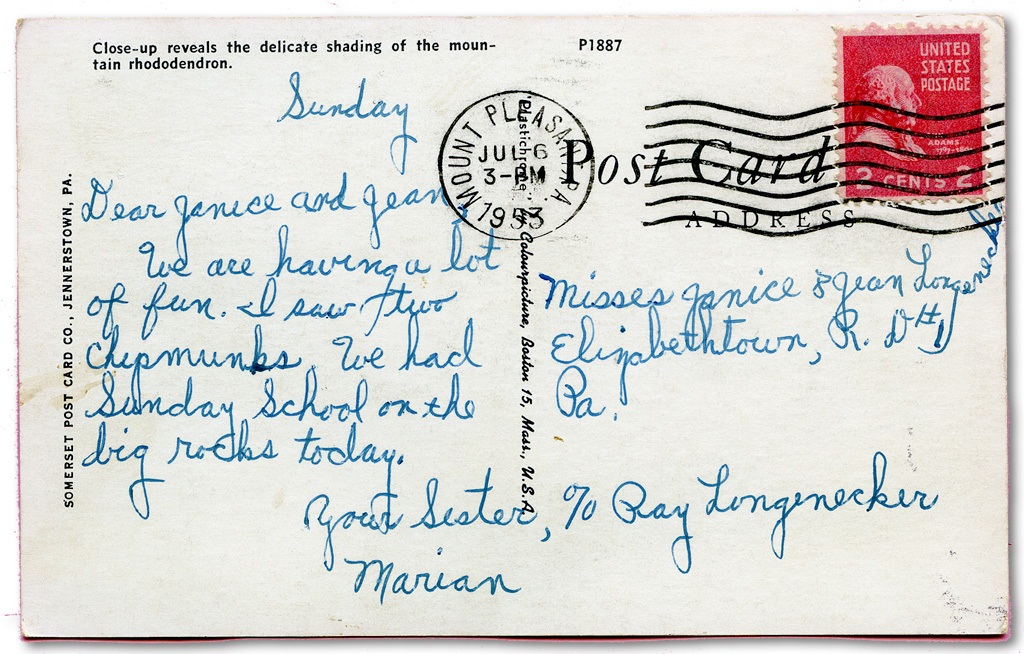
The postcard I sent to my sisters from Laurelville reveals the price of postage stamps, an address that winds around the edge in cursive script, and simple declarative sentences. It also tells how I felt, what I saw, where we worshiped.

PostcardCampFront

Postcard with rhododendron sent from Laurelville Mennonite Camp
Postcard with rhododendron sent from Laurelville Mennonite Camp in 1953

Memories of family week with my sisters and parents at Laurelville left a different imprint.

  • Family swim time
  • Doggie roast (Hot dogs, corn on the cob and roasted marshmallows)
  • Big plaque on dining room wall: “Come ye apart and rest awhile” Jesus’ invitation to his disciples in Mark 6:31
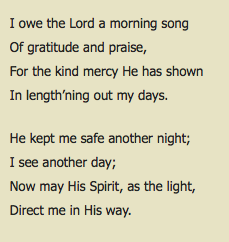
  • Morning blessing in song: “I owe the Lord a Morning Song” written by Amos Herr, Lancaster County pastor and farmer who couldn’t get through the snow drifts to church one Sunday morning in the 1850s and was inspired to pen both words and music to this song of gratitude. First two stanzas here:

I Owe Lord Morning Song

We also sang something new to us: How Great Thou Art, a Swedish hymn written in 1885, which became an instant sensation in Christian circles in 1955 because of the Billy Graham Crusades.

When through the woods and forest glades I wander, I hear the birds sing sweetly in the trees; when I look down from lofty mountain grandeur and hear the brook and feel the gentle breeze.


ClimbMountain


What are your memories of camp? Here’s the place to share them – songs, games, mischief – other memorable moments.


Coming next: Creation Clips


4 Months, 4 Gifts: A Tribute to My Dad

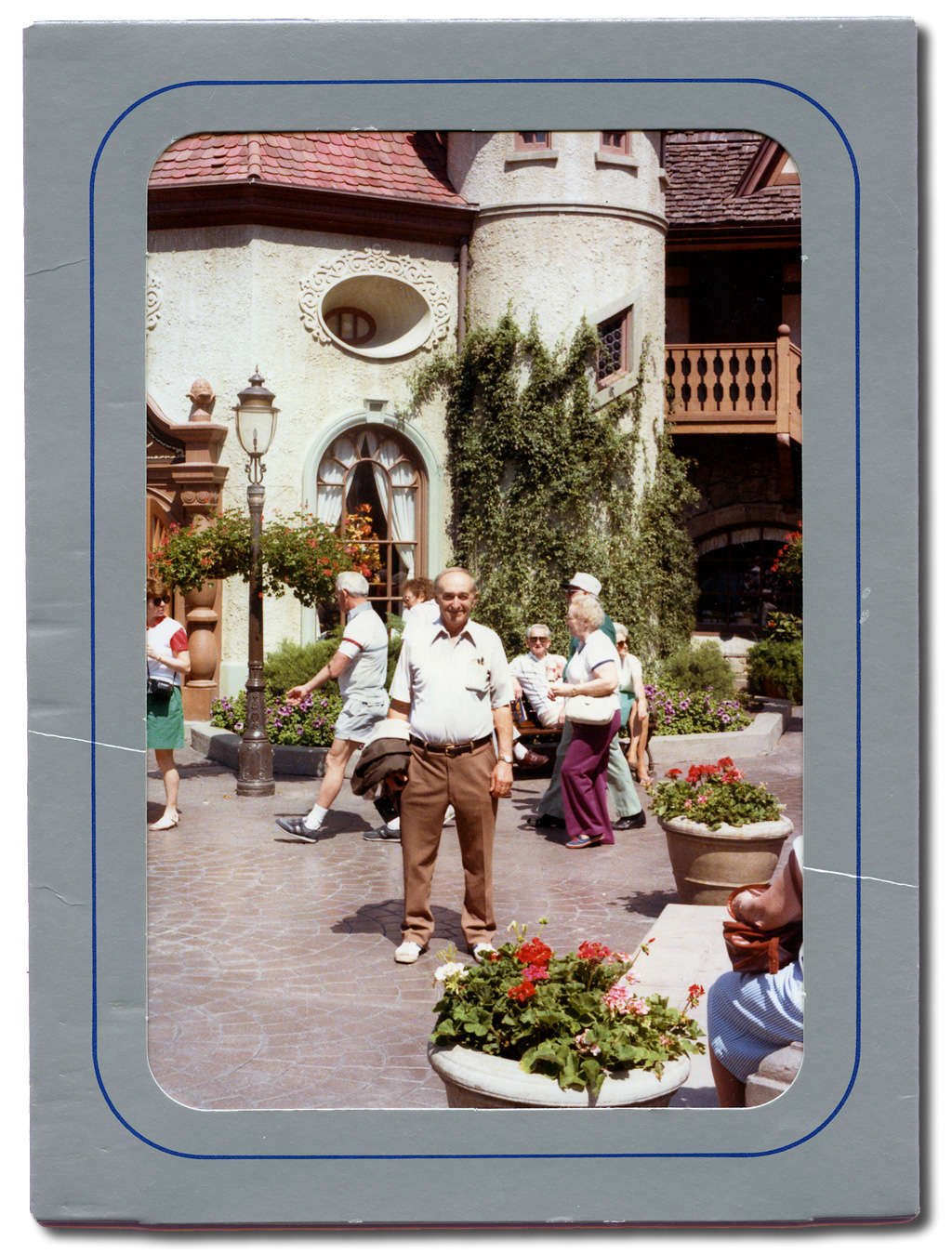
March 1986:  Mom and Dad Longenecker visit the families of my sister Janice and me in Jacksonville, Florida. We all enjoy Epcot in Disney World, Dad’s chance to see a faux version of the Switzerland he never actually visited but planned to some day. My super-charged Dad seems more mellow now, slower, even takes naps. “Hey, Dad, I see you’re getting a pooch here,” says son-in-law Cliff, commenting on my dad’s weight gain as he playfully pinches his waistline.

DadEpcot

April 1986:  We get a call from Pennsylvania, “Dad has been diagnosed with lymphoma. Blood cell tumors have developed in the lymphatic system. Stage 4 . . . it’s too advanced to operate . . . they can try chemotherapy, maybe radiation after that  . . . .” Like an earthquake, the news sends shock-waves through our family. Why, we just saw him a month ago.

May 1986:  My father is now dying of lymphoma. I leave my husband and children and fly up to Pennsylvania, alone, to see him alive for the very last time. He looks nothing like my image of him in March. His skin, scorched red-brown from chemotherapy, reminds me of a starving Indian. He is wasting away. “I don’t want to live like this,” he says, calling a halt to the treatment. Too weak to climb to the upstairs bedroom, he reclines now almost motionless on the pull-out bed in the living room, a solitary pillow under his head. On May 17 his 71st birthday comes and goes.

My flight south leaves a few days later. This is probably the last time I will see my father in this life. I approach him to say goodbye, and I add: “I love you, Daddy.”

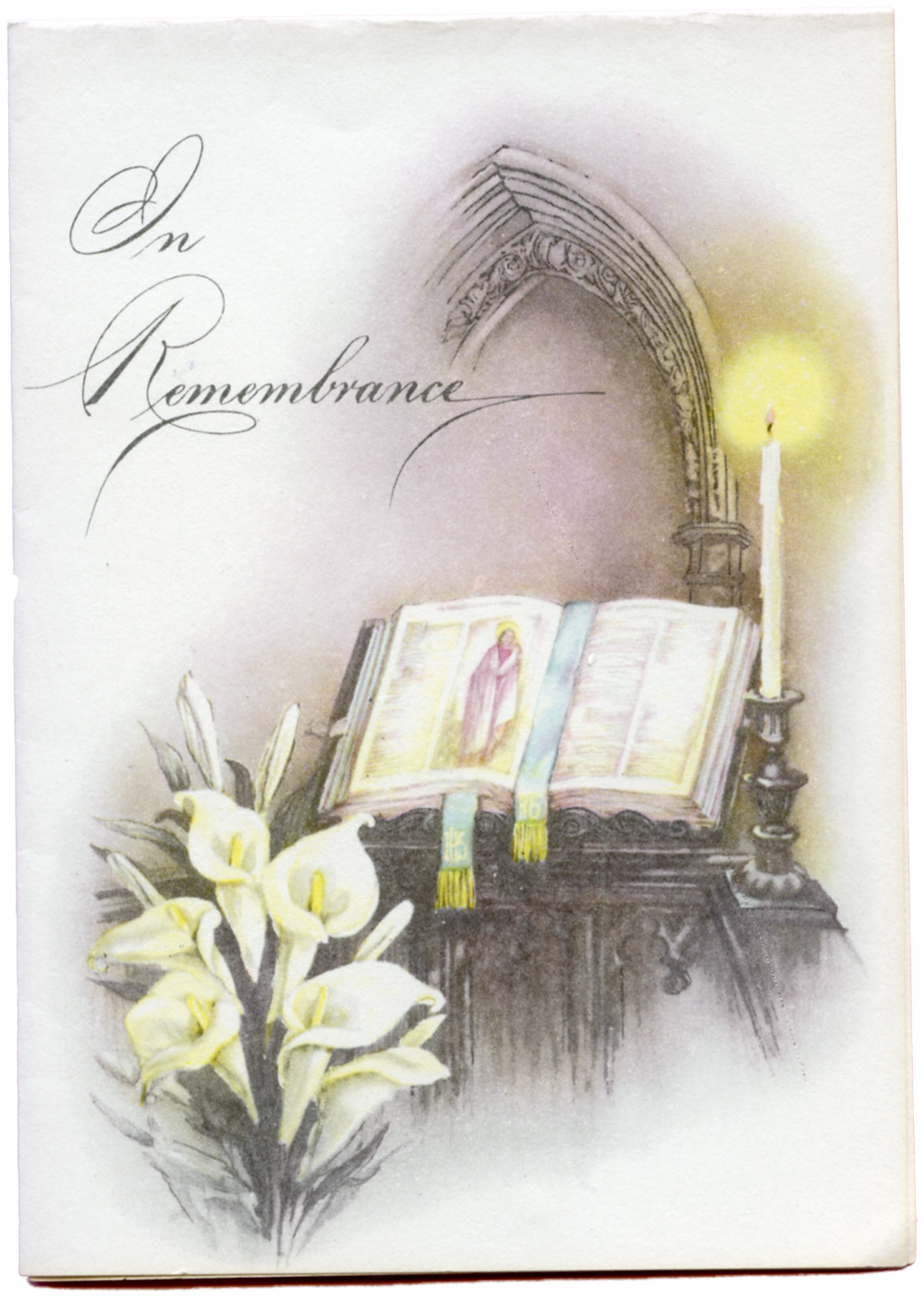
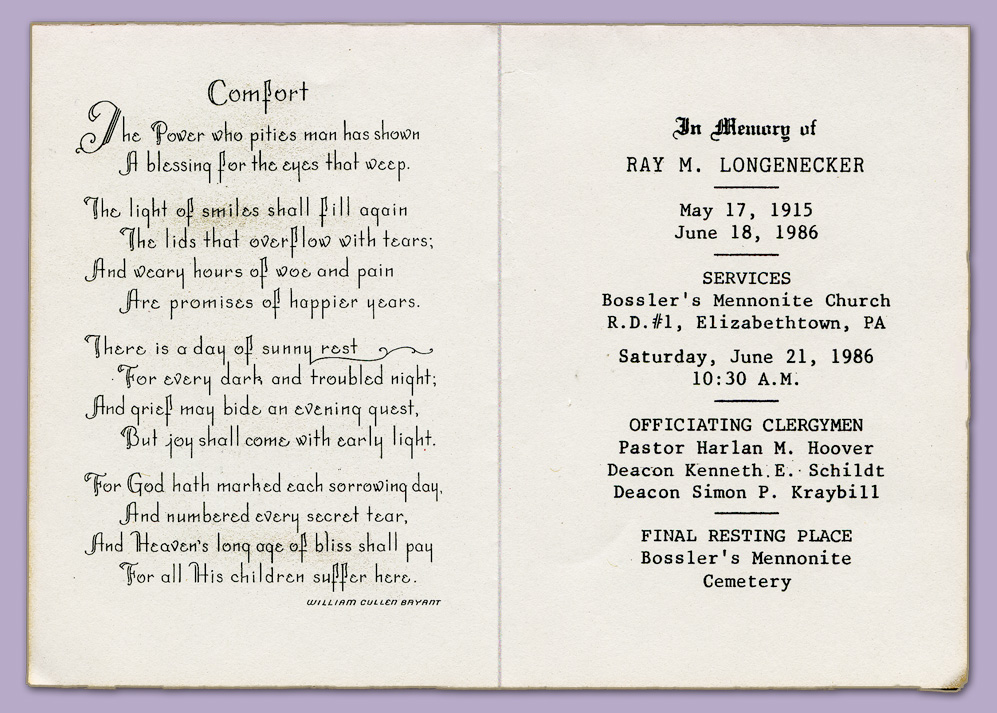
June 18, 1986  Daddy breathes his last, less than three months after his cancer diagnosis. We get the dreaded call and make plans to drive north for the funeral. My mind flits around in reminiscence.  And then leaps forward with prediction: Now Dad won’t be attending the ceremony where I receive my Master’s degree in December. He won’t stand up to be photographed at any of his grand-children’s weddings or get to play with his great-grandchildren any more. At age 71, he has reached his heavenly home.

Had he lived, he would have turned 100 years old this year, like Aunt Cecilia.

DadFuneralFront

DadFuneralInside

On this Father’s Day nearly 30 years later, I pause to give thanks for the gifts my father has given me:

1. Love of nature  He went on walks in the wide meadows and sun-dappled woods close to Rheems, PA on Sunday afternoons. Sometimes I went with him.

2. Love for music   He played a banjo, guitar, and piano with gusto and bought me a violin. Music has formed the sound-scape of my mind since then.

3. Intellectual curiosity  He perused US News and World Report and The Wall Street Journal, listened to Edward R. Murrow, Paul Harvey, and Lowell Thomas, engaged in conversation about world events.

4. Value of hard work  There was the tomato field, the sweet potato plot, the shop . . . .

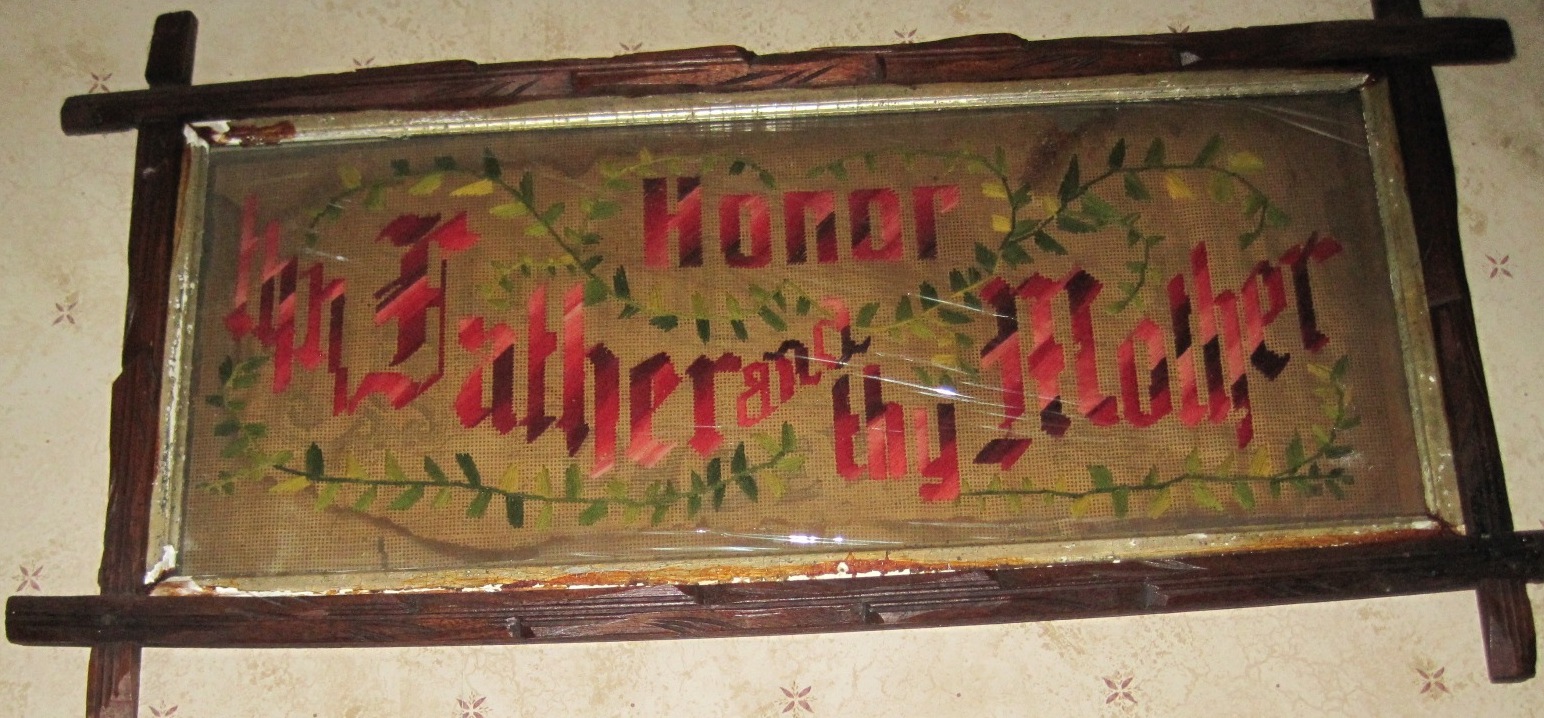
Framed needlework above one of the kitchen doors in Grandma Longenecker's house
Framed needlework above a kitchen door in Grandma Longenecker’s house

Exodus 20:12  Honour thy father and thy mother: that thy days may be long upon the land which the LORD thy God giveth thee.  (King James Version)

My father’s deep faith in God included honoring his own parents.

* * *

Thank you for your thoughts on Father’s Day 2015. You always make the conversation richer!
A Corny Post

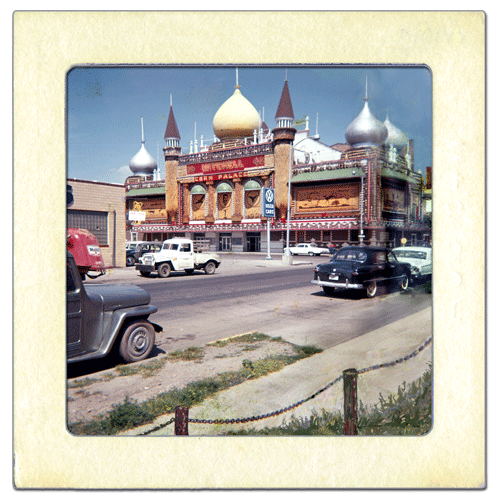
The Corn Palace

Bird beaks peck away at grains of corn on the walls of The Corn Palace. Still, the murals created with several colors of dried corn and grain arrest the eye. On our trip West we visited this grand monument to farmers and the grain industry they represent in Mitchell, South Dakota.

Web_1964_Corn Palace

A Quote about Corn:

“A light wind swept over the corn, and all nature laughed in the sunshine,” said Anne Bronte, poet and novelist of West Yorkshire, England, 1800s

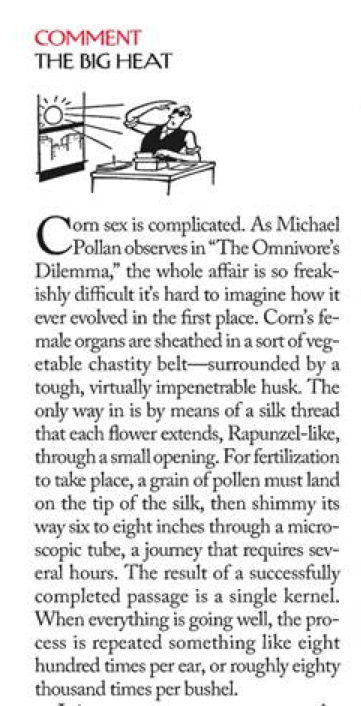
Corn Sex, according to Elizabeth Kolbert in “The Big Heat,” The New Yorker, July 23, 2012 issue

CornCartoonArtNewYorker

CornTalkOfTownNYorker

Mennonites and Corn

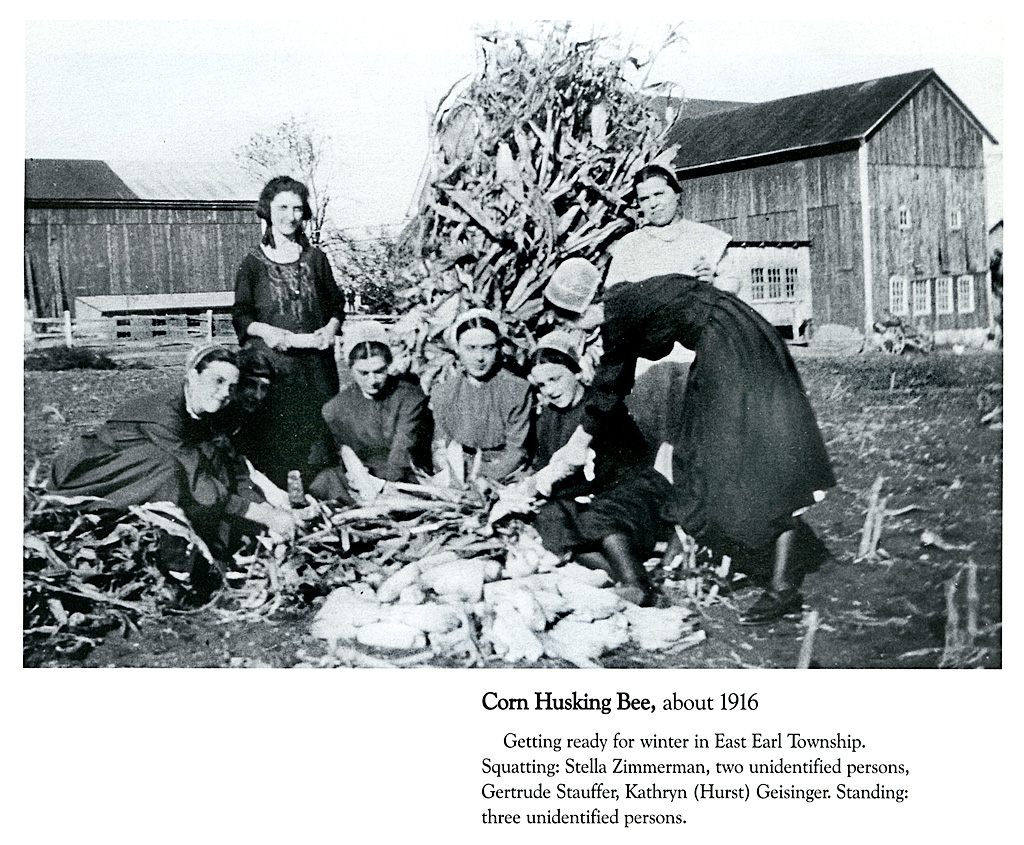
Mennonites in Lancaster County, including the Longenecker family, participated in the whole process of corn production: planting, hoeing, harvesting, husking, canning, freezing – and best of all – eating the succulent grains of corn on the cob, the buttery juice running down our chins and forearms.

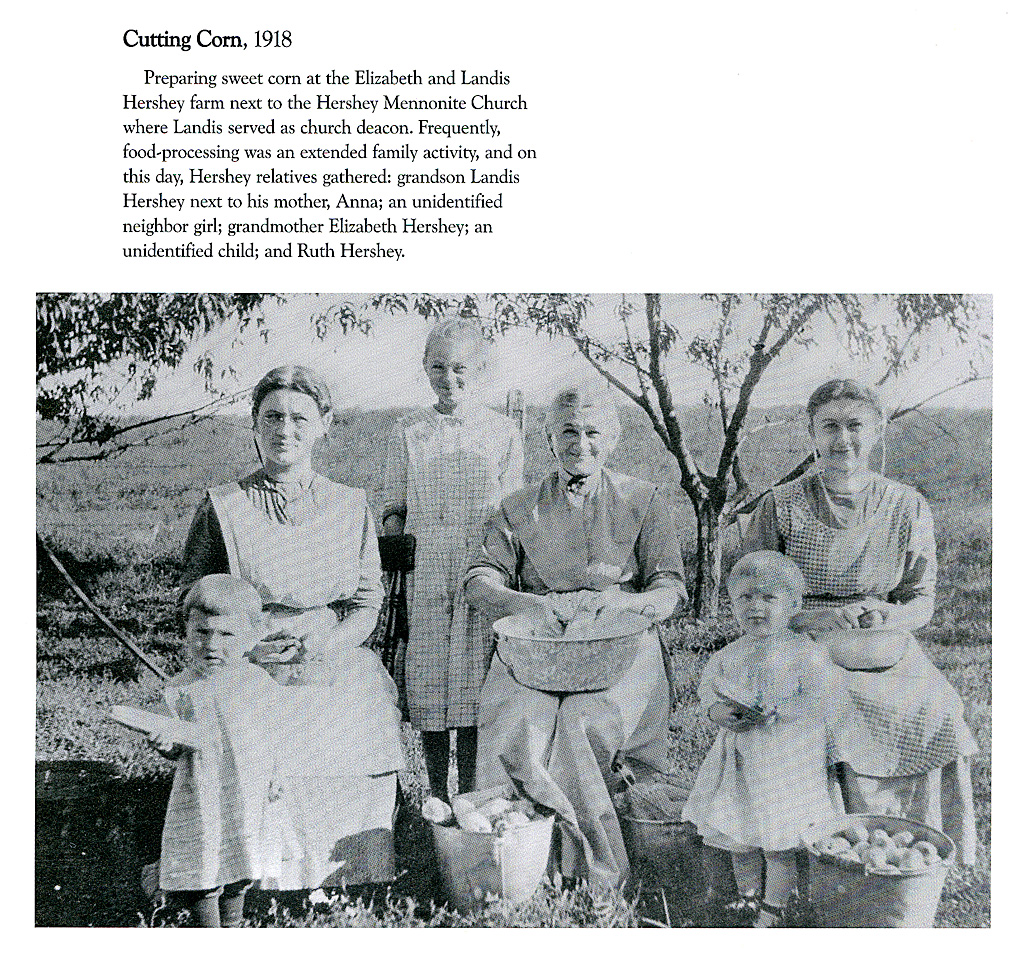
In her book Mennonite Women of Lancaster County, Joanne Hess Siegrist features photos of Mennonite women hard at work husking and cutting corn off the cob (pages 124, 124)

Web_Mennonite-Women_Husking-Corn_p123

Web_Mennonite-Women_Cutting-Corn_p124

My Mother Ruth loved making her baked corn recipe from the Mennonite Community Cookbook. She served it in a chocolate-brown Pyrex casserole dish nested in a basket of tight weave. We loved every bite, especially tasty during corn season.

Baked Corn Recipe

CornRecipeMCC

Want More Corn?

Pablo Neruda, Chilean poet, diplomat and politician, apparently loved vegetables too. He wrote about tomatoes, corn and more. Here is the link to his poem “Ode to Maize.”

Share something corny here. We are all ears!

Coming up next: Going Male, Amish Romance Novels

Mennonites and the Marlboro Man

The Marlboro man, pictured as a cool-guy cowboy in a fresh country setting, ruled cigarette advertising from 1954 -1999.

Credit: Google Images

Smoking then was considered glamorous and cool, a way to fit in with the crowd. One of our most popular presidents, Ronald Reagan, was formerly a cigarette model for Chesterfields, even advertising that he would give cases of the product to his friends for Christmas.

Credit: Google Images

As the Marlboro Man’s ads evolved, the Surgeon General’s warning of health hazards appeared on cigarette packs. Now of course, smoking is taboo in stores and restaurants, and smokers are often viewed as outcasts.

* * *

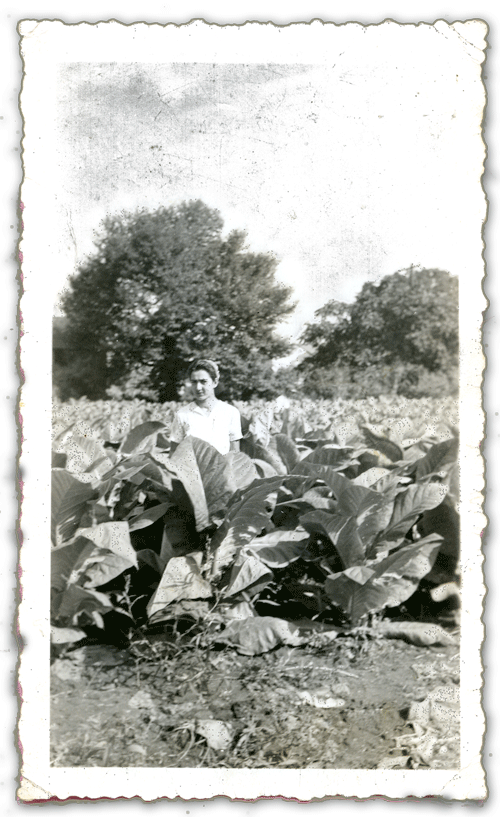
Mennonite farmers in Lancaster County during the 1950s and 1960s grew tobacco as a prime cash crop. But as Shirley Showalter points out in her memoir, growing tobacco was both a tradition and controversy among Lancaster Conference Mennonites. “After George Brunk’s tent revivals, many farmers plowed up or stopped planting tobacco,” she comments. My own Dad stopped planting tobacco then, substituting tomatoes and corn in our acreage in Bainbridge, Pennsylvania. Shirley divulges her dad’s decision about farming tobacco in her book BLUSH (173).

Here are some photos of young tobacco plants, Mother Ruth in the tobacco fields and then a snapshot of the drying process before the crop was sold to a tobacco company.

Web_tobacco-in-rows

Web_Ruth-in-tobacco

Web_tobacco-in-doorway

The issue of tobacco production and use appears in the Statement of Christian Doctrine and Rules and Discipline of the Lancaster Conference Mennonite Church (July 1968) but as an advisory to only ministers and their wives:

“Inasmuch as ordained brethren and their wives by their teaching and example exert strong influence within the brotherhood, it is required for the spiritual welfare of the church that they give evidence of willingness to subscribe to . . . the following standards of faith and life.

Listed as “f” in a range of a – h points is this directive but only to the ordained: “the non-use and non-production of tobacco.” (29)  Apparently the issue of smoking and its health hazards posed a serious dilemma to the church with lay members who relied on tobacco growing as a way to pay the mortgage.

Many of my uncles smoked cigars when they were together. Even my dad would occasionally join in as a way to socialize.

*  *  *

I recently found a map of Yellowstone with a Conoco ad in the 1960s using the pleasures of smoking to promote their brand of gasoline:

Web_1964_Yellowstone-map+man-smoking

* * *

A young boy named Jeremy learns about the dangers of smoking in an imaginative book entitled The Boy Who Grew Too Small.

Web_The-Boy_Cover_w-shade_300pix

Leave a comment below if you want to contact Author/Illustrator Cliff for more information about his book.

Other comments about this post – welcome here too!


Coming next: A Corny Post

Two Mennonite Girls: a Cross Country Road Trip, continued


1964_Monkey postcard_Orderville UT

The postcard says Metzie and Molly if you look closely, but Joann and I were unofficially known as Mighty Metz and Sister Styx, the dashing duo that rode in the back seat of a Chevy Impala on a road trip with Joann’s parents, John and Mary Metzler.

Feeding a hooded squirrel at a stop off in Glacier National Park

Web_1964_Marian feeding squirrel_Close up

Our Southern route included the cotton fields of Alabama . . .

Web B_Joann-and-cotton

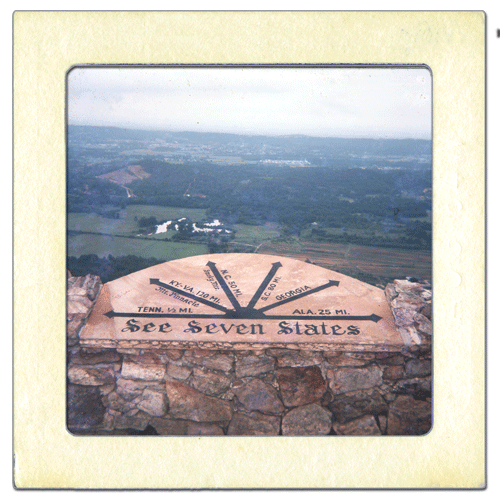
. . . and Rock City, Georgia with a view of seven states

Web_Seven-States

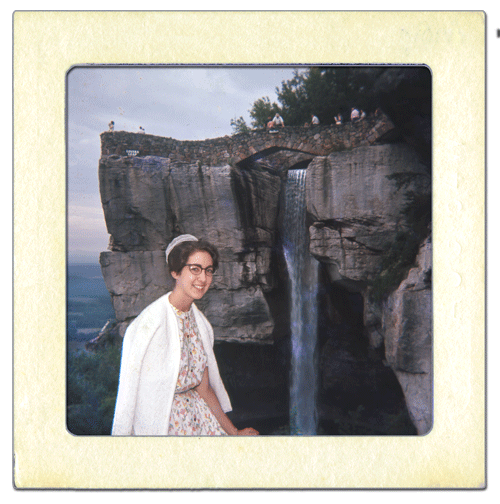
 . . . and a tapering Falls

Web B_Marian-at-Falls


How I Paid for This Trip: I wrote an adult study series for Herald Press during May and June of 1964 for which I was paid $500.00. I brought cash and Traveler’s Cheques. Credit cards like the Diner’s Club Card were in circulation back then, but we didn’t have any. Actually, like many Mennonites, we thought credit cards were a little shady because of the possibility of misuse.


Frugality, Joann’s and Mine: 

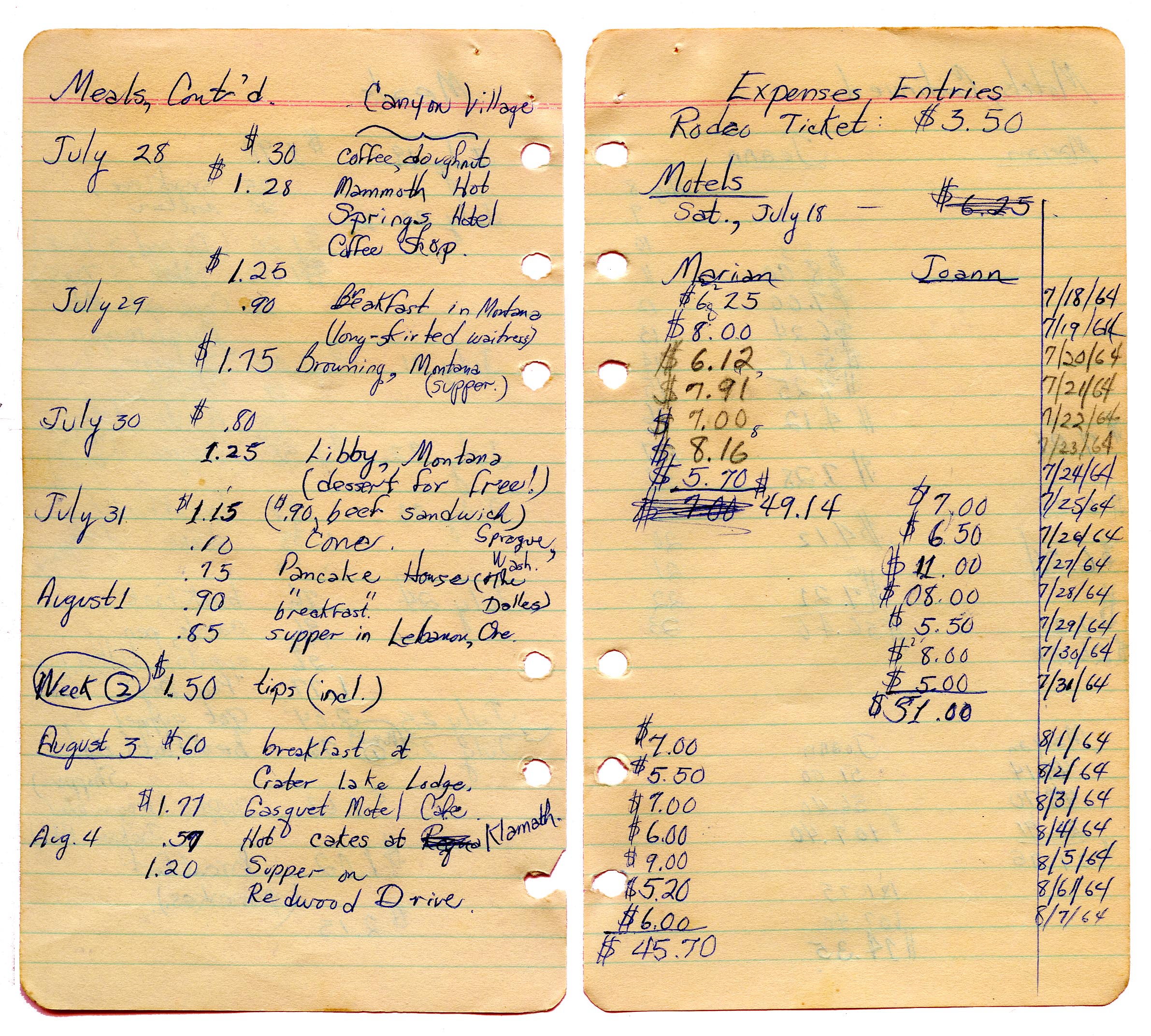
  • Joann says to her mother in Canyonville, Oregon: “Mom, give me the map, let’s stop at some little hick place for dinner. Then I’ll have money to buy some more myrtle wood!”


  • In Oregon, I remark to Joan: “Boy, oh, boy, my future husband will have a wife who can keep on a budget, thank goodness!” Little did I know my future husband Cliff was living not so far away in California at the time.        

 1964_Marians Out West_Meals+Motels

Joan and I alternated weeks in paying room costs. I paid tolls and park entrance fees  instead of gas, which was probably less than 30 cents per gallon then.

I remember paying 50 cents to drive through a redwood tree!


We both kept diaries and photo logs. Mine looks battered and torn. Still, there’s a record.

1964_Marians Out West_Photo notebook

Church: We attended a service at the Mormon Tabernacle but the choir was missing, gone to the World’s Fair. Ugh . . . so disappointing!

Web_Mormon-Tabernacle

  • I was accosted by a Mormon guy in the tabernacle gift shop: He thought I was Israeli and mistook my black bonnet for a feminine yarmulke and tried to convert me to Mormonism.
  • We also visited Sweet Home Mennonite Church in Oregon with Rev. Orie Roth, pastor.


Sin: We drove by garish casinos and hotels down Main Street, Las Vegas. Among the glitter and glitz of sky-high, flashy neon lights, we noticed advertisements for $ 10.00 weddings. Do you think people got married drunk? we wondered.


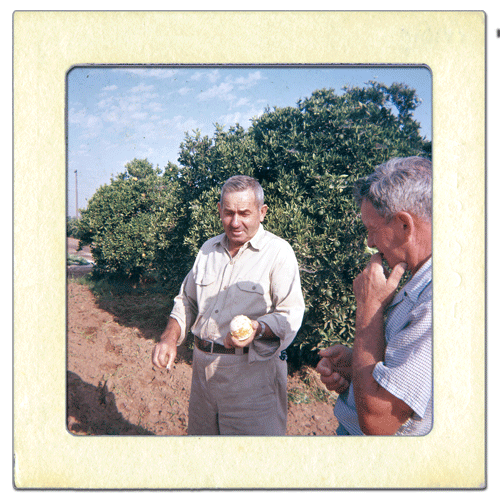
Western Hospitality: On our way to Sequoia National Park we pulled off the road and discovered a friendly guy mowing his lawn. Thus we met the Shaefers. Mr. Schaefer showed Uncle John his orange grove, and Mrs. Schaefer loaded us up with a 12’ x 15’ box of peaches, oranges, two bags of grapes, 2 bags of oranges, and a quart of raisins she had picked/dried herself.

Web_John-and-orange

Thanks to the miracle of “General Delivery,” I got mail from home at planned intervals. Here’s a note from Aunt Ruthie with a cascading series of cartoons

PNG1966_0722_Birthday card and letter to Marian_from Ruthie_Cooke City_MT_3x3

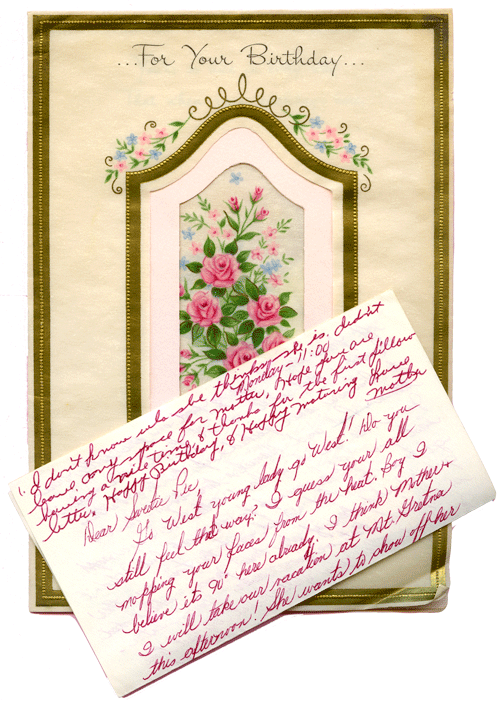
And a birthday card from my sister Jean with a letter . . .

Web_1964_0720_Birthday-card-and-letter-to-Marian_from-Jean_Cooke-City_MT

. . .  and a note from Mother chiding Jean for not leaving any space to write: “I don’t know who she thinks she is . . . didn’t leave any space for Mother!”

Two letters sent to me addressed simply as Los Angeles – General Delivery came back with a note “Unclaimed – Return to Sender.”  Imagine that!


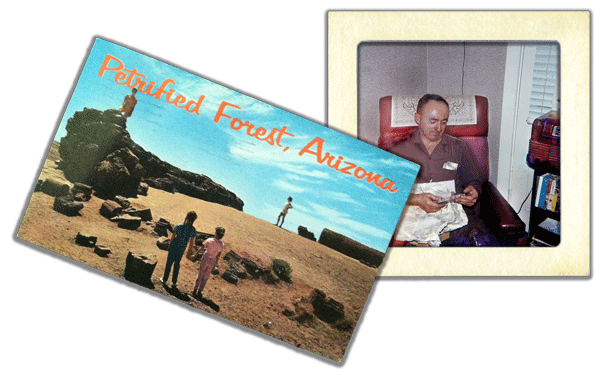
I brought back gifts for all the family. Janice received a myrtle-wood vase from Oregon, brother Mark a table lamp with a cactus base, and Daddy, a polished piece of petrified wood. My ledger shows I bought Jean a pretty blouse for $ 4.10, but alas no picture here!

Web_1964_Janice receiving gift


Web_1964_Postcard_Petrified-Forest+Ray-receives gift_AZ


Aunt Ruthie, brother Mark, and Mother Ruth
Aunt Ruthie with Christofferson paintings from Albuquerque, brother Mark with lamp, and Mother Ruth with a myrtle-wood pedestal dish

And something for myself too

I'll still using the bookends I bought in Tijuana, Mexico
I’m still using the alabaster bookends I bought in Tijuana, Mexico


The strangest thing I brought back: Water in a Gerber’s baby food jar (Aunt Ruthie’s suggestion) from The Great Salt Lake, where we floated with no danger of sinking.


Photos   I took almost two hundred photos on Kodak Ektachrome color slide film and sent home film rolls in heat-resistant pouches to be developed. Joann took photos and movies.

We don’t make a photograph just with a camera, we bring to the act of photography all the books we have read, the movies we have seen, the music we have heard, the people we have loved.

– Ansel Adams

The Longenecker Sisters’ Road Trip, Part 1

Girls’ road trips are part of the landscape of American pop culture. Who can forget Thelma and Louise? Wanting to take a short vacation from their dreary lives, Thelma (Geena Davis) and Louise (Susan Sarandon) head out from Arkansas to the Grand Canyon in a 1966 Ford Thunderbird. They stop at a roadhouse and it’s all downhill from there. Crime and mayhem ensue until finally the gun-toting girls and their car zoom over the edge of the Grand Canyon. Both Davis and Sarandon received Best Actress Academy award nominations (1991).

Image courtesy Wikipedia

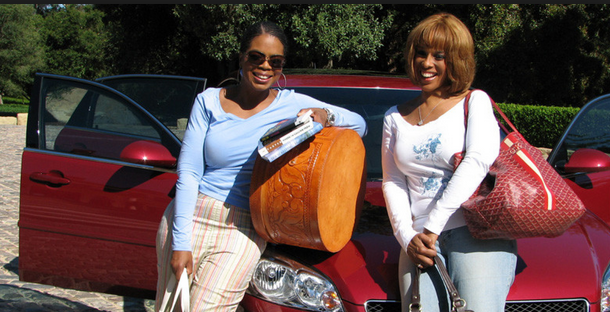
And what about Oprah and friend Gayle who took off in a much ballyhooed road trip documented on TV and watched by millions . . .

Image Huffington Post

Here’s how the Huffington Post encapsulates their excursion:

In 2006, Oprah Winfrey and her friend Gayle King embarked on what became a much talked-about (and hilarious) 3000-mile road trip across the country. When they weren’t cruising the highway in their red Chevy Impala, the two joined a local game of Bingo in Wichita, met some real-life cowboys on the range and crashed a wedding in Tulsa, surprising and amusing nearly everyone they came in contact with.

In spite of an anxiety-ridden moment on the George Washington Bridge, Oprah and Gayle completed their trip unscathed. When they returned to Chicago, Oprah handed over the keys to that Chevy to a deserving woman named Reola Holdaway.

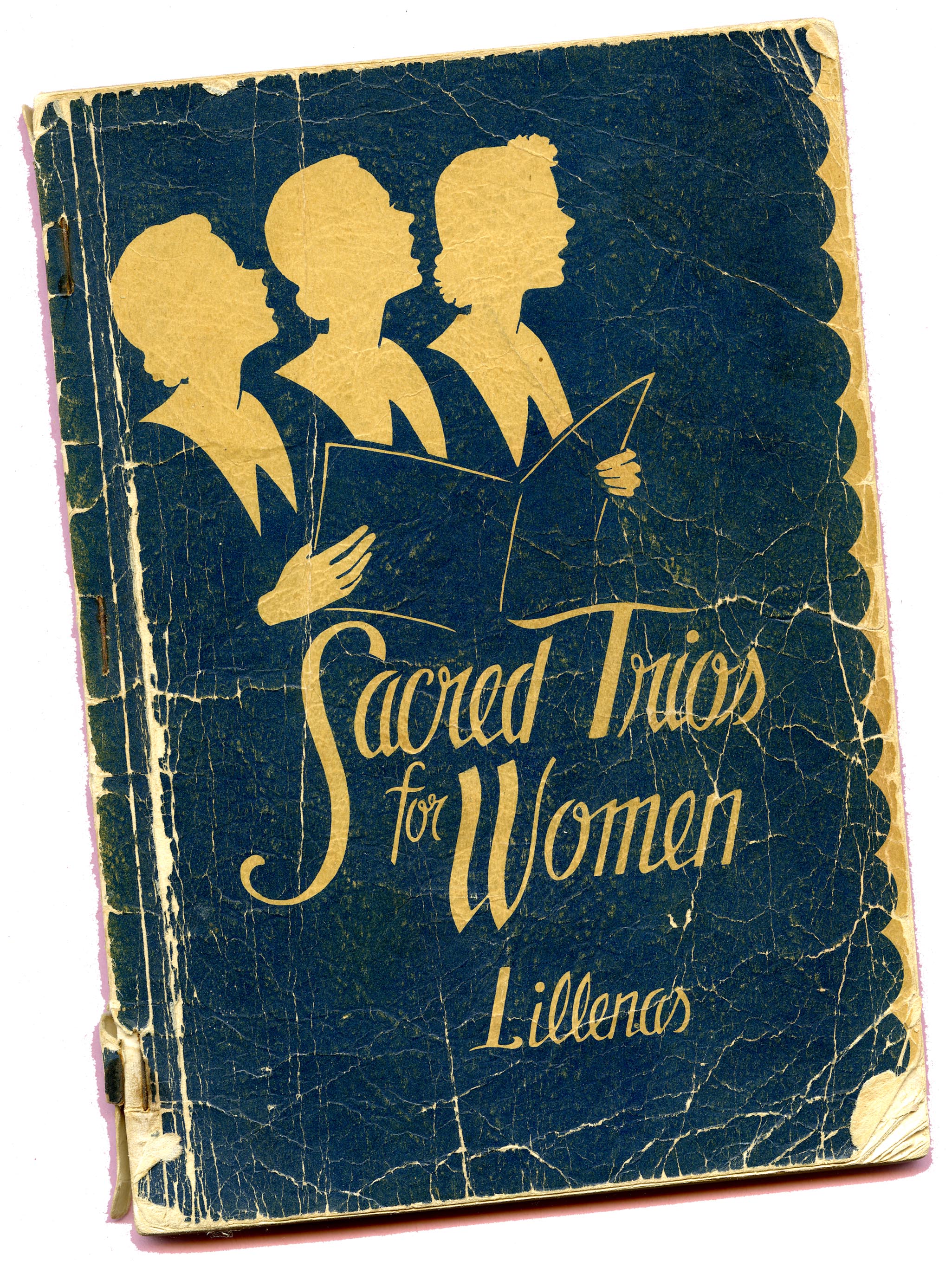
The Longenecker sisters, Marian, Janice, and Jean are not movie stars or TV personalities. None of us has owned a gun much less aimed one at a policeman as Thelma did. But as siblings, we have done many other things together — playing and fighting as children, working in the tomato patch in Bainbridge, PA, even singing in a trio at church, sometimes with less than perfect results.

Scred Trios_final_7x9_300

The last time any of us can remember vacationing together was back in 1977, the year Daddy broke all sales records at Longenecker Farm Supply, won a free trip to Jamaica and took the whole family including his married daughters and son Mark. We left our husbands and young children behind and frolicked in Ocho Rios for a week — just Mom, Daddy, my sisters and brother Mark.

As married women with children, we have met at least once a year at the Longenecker homestead in Pennsylvania. Recently, we have been clearing out the house after Mother’s death making decisions about her possessions together. And now, as a pause in our separate journeys, we celebrate with a road trip. So, you see, it’s high time to make more memories.

Whee!

The plan: My sisters and I, with two of our daughters, are gathering from Florida and Pennsylvania for a Merry-May celebration in Charleston, SC. We’ll get there by car and I’ll record our adventures here in two installments. It won’t be the Italian Riviera but we can refresh and renew our sisterhood close to the Charleston harbor inlet leading out to the Atlantic Ocean. And it won’t be Thelma and Louise, or Oprah and Gayle, but it will be Marian, Janice, and Jean.

Stay tuned for Part 2!

In the meantime, have you and close family members taken a road trip together recently or long ago? Tell us about the adventure here.

An Orphan Speaks on Mother’s Day

Mom+Marian_2 mos_5x9_300

This is my first Mother’s Day without my mother, Ruth Metzler Longenecker. To say I miss her is an understatement of the highest order. Technically, I could be considered an orphan with both my mother and father gone. However, with my own extended family and considering my age, I doubt that such a designation applies.

Is there a word for my status without a living mother or father at my age? I wonder.

Mother lived a full life with many happy moments and good health until a few days before her death on July 28, 2014. Over her lifetime, she had seen phenomenal changes in American culture, including technological ones as shown here:

Mennonite Women_new phone_p89

Anna Catherine (Herr) Houser was speaking/listening on this candlestick phone in 1919 at the time Mother was a year old.  Credit: Mennonite Women of Lancaster County, Joanne Hess Siegrist, 1996, page 89.

The last photo I snapped of Mother with her finger hovering over my iPhone captures the moment she looked up momentarily from “paging” through photos of her grand-children and great grand-children.

MomLastPhotoTogether

David Whyte, Crossing the Unknown Sea

The death of someone closest to us is always a form of salutation, a simultaneous Goodbye to their physical presence and a deep Hello to a more intimate imaginal relationship now beginning to form in their absence.  (46)

A “deep Hello to a more intimate imaginal relationship”? We’ll see . . .

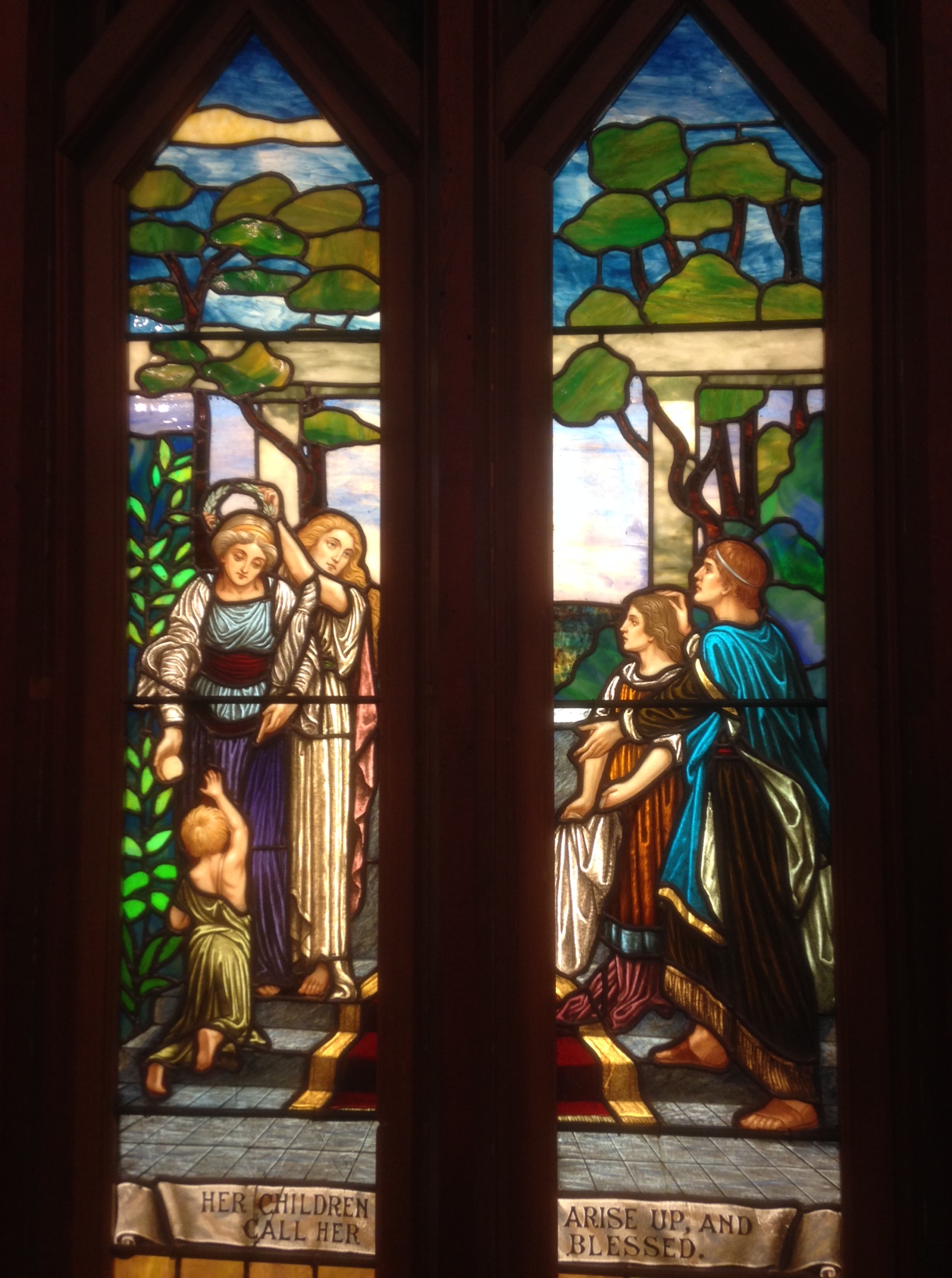
“Her children rise up and call her blessed.” Prov. 31:28
 Christ Church Frederica, St. Simon’s Island – Tiffany glass

Have you experienced the death of your mother or grandmother? If a mother, is there a word for one’s status now, bereft of a mother and father? Your suggestions always appreciated here.

Coming next: The Longenecker Sisters’ Road Trip, Part 1

Rhubarb in Grandma’s Garden

Hot-house rhubarb spotted in shop window, Brunswick, GA  January 2015
Rhubarb plant spotted in front of shop window, Brunswick, GA
January 2015

Grandma and I in the Rhubarb Patch

It’s me, pigtails flapping in the May breezes, skipping beside Grandma toward the rhubarb patch. Behind Grandma’s house toward the woods a thick nest of rhubarb stalks stands sentinel over a ridge facing the twelve sweet cornfield rows. In her garden, the pinkish-red rhubarb spears get back-row status but I think they are pretty enough for her flower garden out front.

“You said you are stopped up – didn’t have any luck when you went to the bathroom.” Grandma with her sunbonnet and apron pulls off the biggest pinkish-red stalks, the green heart-shaped, crinkly leaves falling to the ground with one swath of her knife. “A dose of this will fix that.” She’s looking intently at the rhubarb but I know she’s talking to me.

I have eaten Grandma’s rhubarb sauce before, but I never thought of it as a laxative. “It has roughage in it. It’ll really clean you out.” She runs her rough hands along the spine of the stalk to show me the fibers.

“I see,” I say but right now I wonder if it tastes as good as it looks, so I bite into a stalk and find out too late that it has plenty of pucker power. “Eeee-ow. It tastes sour,” spitting the mouthful out on the ground.

“Goodness gracious, you have to boil it first in sugar water to make it taste good, don’t ya know!” She giggles at my ignorance and finishes pulling off more rhubarb stems with a twist of her wrist like separating a stalk of celery from the bunch. Then we head back toward her kitchen.

Making Rhubarb Sauce

The round, dented aluminum pot is simmering on the stove. With every passing minute the mixture of sugar water and rhubarb cut into 1/2-inch chunks is becoming more ruby red. At the last minute Grandma says, “ Just two shakes,” and I flick my wrist to shake the little can of cinnamon twice as swirls of steam half-scald my hand and wrist.

When it cools, it will taste both tart and sweet. That I know!

Rhubarb Pie from The Mennonite Community Cookbook, 2015

RhubarbPieRecipe

(Adding Strawberries to the rhubarb adds another layer of flavor.)

My Mother's Garden, an embroidered poem
My Mother’s Garden, an embroidered poem in Grandma’s bedroom

What You Might Not Know About Rhubarb

Yes, rhubarb has good cathartic (laxative!) powers, but according to Marion Owen, co-author of Chicken Soup for the Gardener’s Soul, rhubarb is out to save the planet too:

Rhubarb not only saves our plants from aphids, it may also save the planet. In the mid-1980’s, when a hole was discovered in the ozone layer, researchers found that CFC’s were one of the primary reasons for the ozone’s decline.

One of the most common forms of CFC’s is freon, which is used as a refrigerator coolant. Conventional methods for breaking down CFC’s were costly and dangerous. But in 1995, two Yale scientists discovered that oxalic acid, found in rhubarb, helped neutralize CFC’s. Rhubarb to the rescue!

Marion Owen from Kodiak, Alaska, also publishes a newsletter titled The UpBeet Gardener.

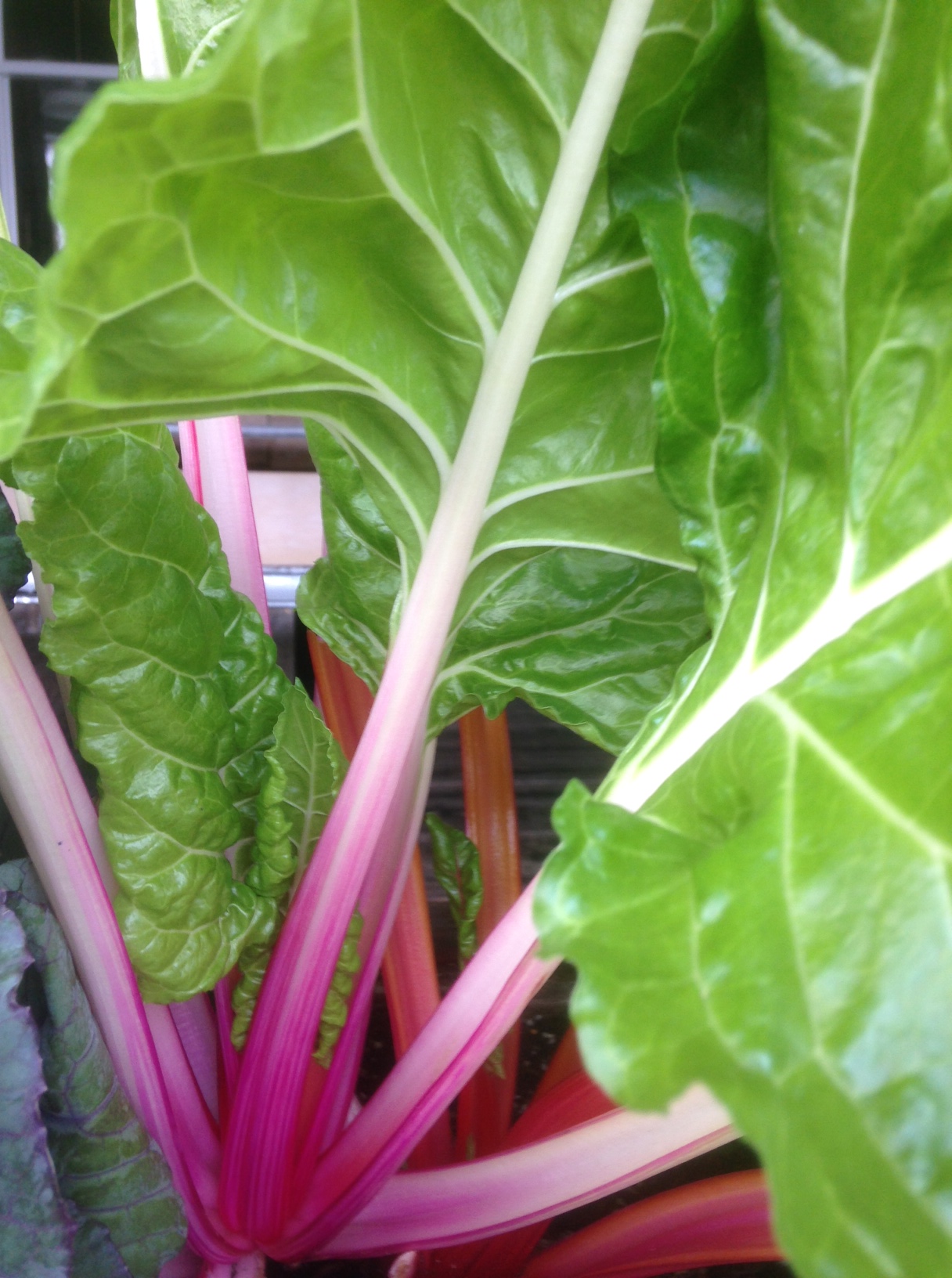
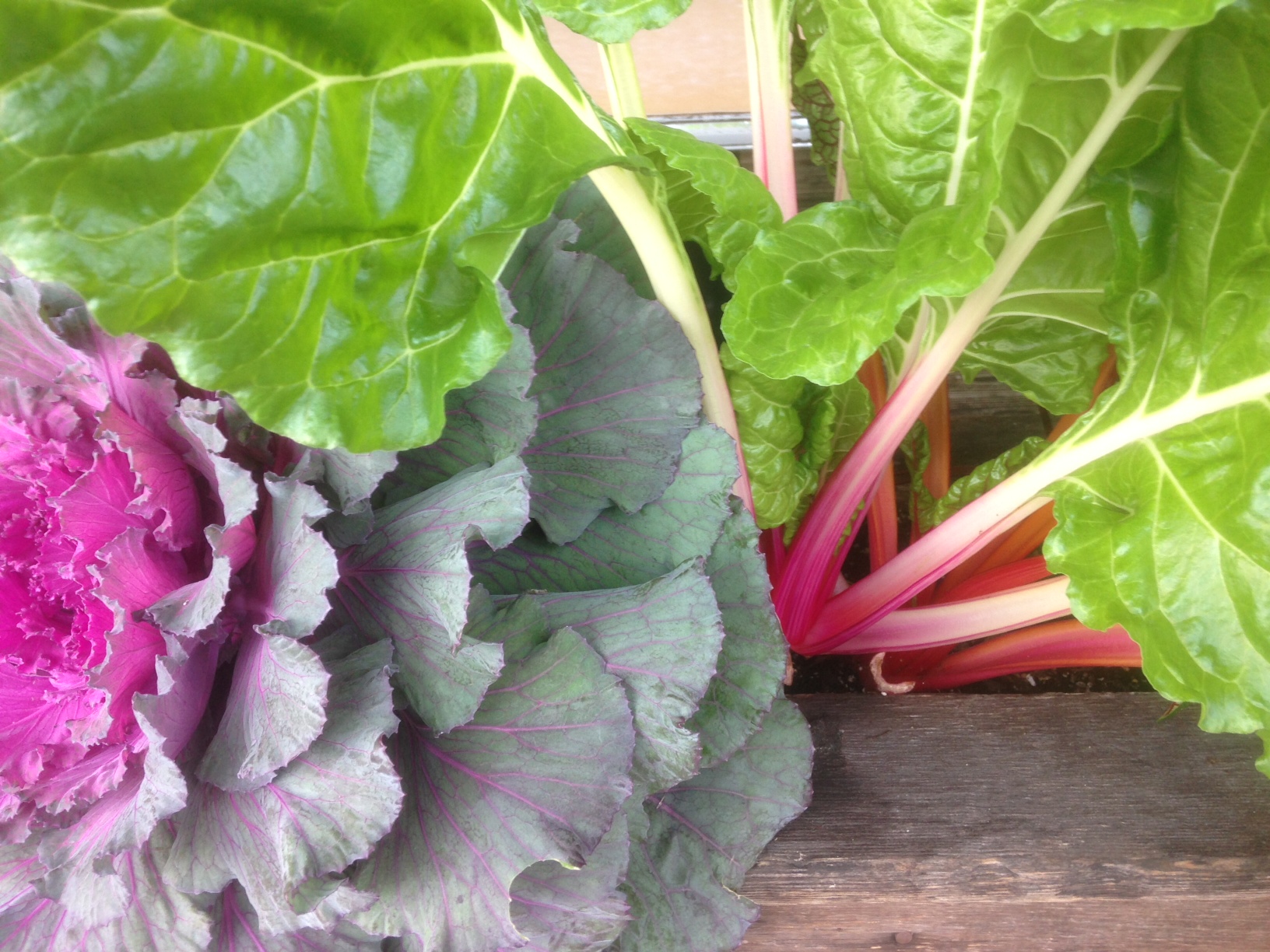
RhubarbCabbagePurple

Beets, rhubarb, memories of springtime in the garden – all are on the table for today’s conversation!

Coming next: Mennonite Girls Can Cook

Lincoln, Lilacs, and Grandma’s Outhouse

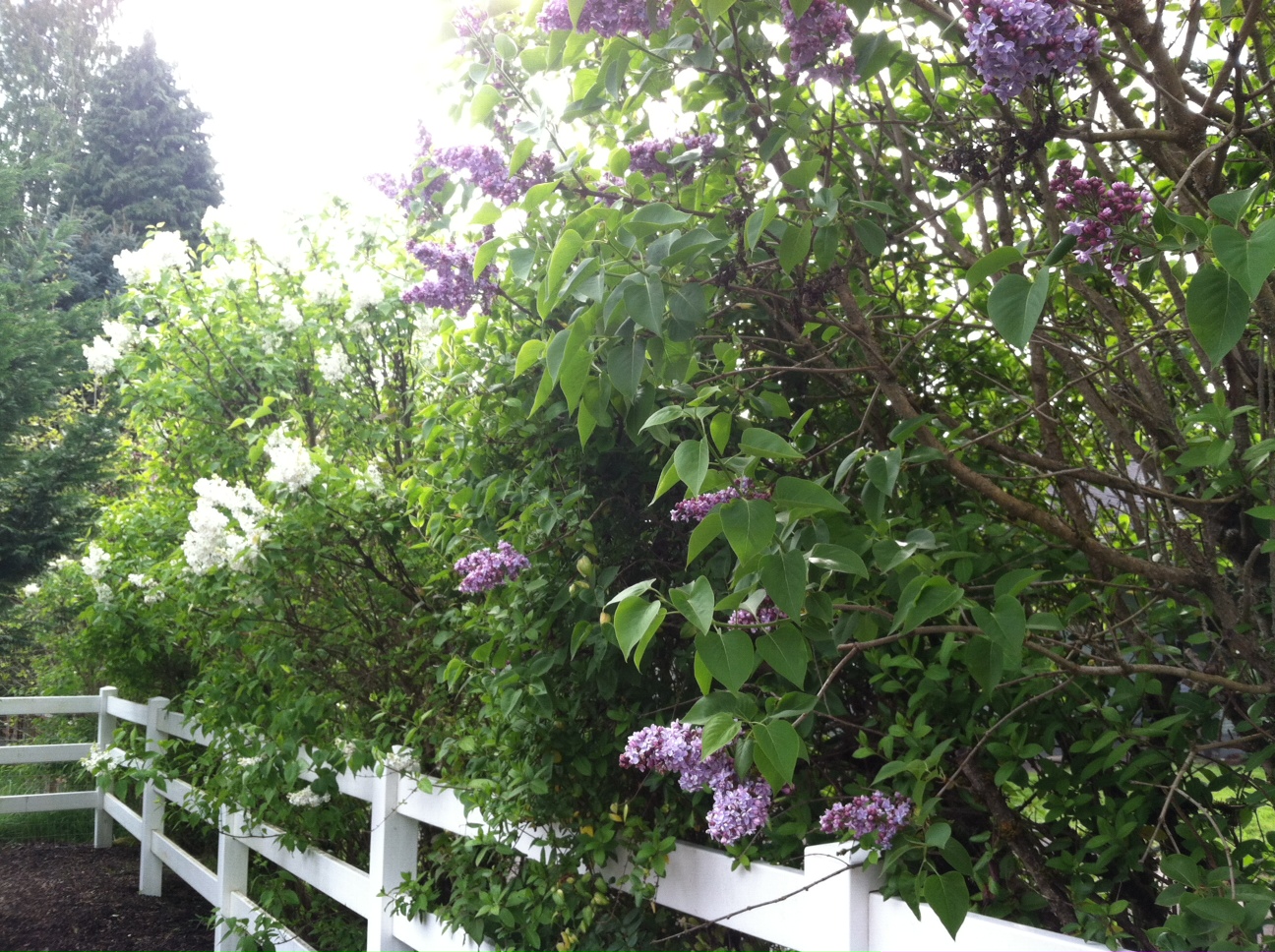
Lilacs in Washington State

Earlier this month, my husband Cliff and family laid to rest his father Lee Beaman in a tiny urn above the coffin of his mother in the cemetery adjoining the church. Across the street from the simple, white-plank Methodist Church near Ridgefield, WA, are lilac bushes in full bloom this April. If you live in the Pacific Northwest, here is a website you may want to check out: //lilacgardens.com/

Lilacs along McCardy Road, Bethel Methodist Church, Ridgefield, WA
Lilacs along Carty Road, near Bethel Methodist Church, Ridgefield, WA

Like floral fireworks, these blooms explode in vivid lavender, each blossom bursting in “bullet-shaped buds.” Poet Richard Wilbur seems to scrutinize the lilacs he describes by looking into not just at the hundreds of teeny buds arranged in each bursting bloom tighter than stick pins in a pincushion.

LilacsRWilburPIC

As poet Wilbur points out, each tiny lavender bud appears “quick and bursting,” not holding back its beauty – is open and free. Similarly, when friends and family eulogize the beloved, their remarks tend to be candid, “quick and bursting,” revealing true feelings, knowing this is probably the last time to express their sentiments publicly.

Lincoln and Lilacs

Another poet, Walt Whitman, connected grief to the springtime and lilacs as he expresses his deep attachment to Abraham Lincoln, whose death April 15, 1865, is commemorated in his famous poem When Lilacs Last By the Dooryard Bloom’d. Written in private, the poem is a public elegy to the President the people adored. The poet revered the President too and when the cortége passed by, Whitman placed a sprig of lilacs on the coffin:

“With delicate-color’d blossoms and heart-shaped leave of rich green, /A sprig with its flower I break.” (stanza 3)  Then admitting that “the lilac with mastering odor holds me,” Whitman will forever associate the fragrance of lilacs with his fallen hero (stanza 13).

Finally, referring to Lincoln as a “Powerful western fallen star” the poem closes with the lines

For the sweetest, wisest soul of all my days and lands—and this for his dear sake,

Lilac and star and bird twined with the chant of my soul,

There in the fragrant pines and the cedars dusk and dim.

Kathy Beaman holding lilac after Dad's memorial service
Kathy Beaman holding lilacs after Dad’s memorial service

Lilacs Bushes and Grandma’s Outhouse

Please permit me this odd segué!

I love lavender and purple – and I love lilacs and wisteria. Wisteria climbing joyfully on a trellis on Grandma’s verandah and lilacs some distance away. . .

Close to an oak tree that Grandma Longenecker’s grand-children planted in her honor after her death in 1980, was an outhouse (now long gone) surrounded by a clutch of lilac bushes. The lilacs around Grandma’s house served as a fragrant air freshener. Of course, there is nothing elegiac about an outhouse, a tallish, square white structure with a roof, equipped with a Sears & Roebuck catalog or better yet for the job – a phone book. The outhouse, dedicated to defecation, bears evidence that bodily functions continue, that you are still alive. Lilacs thrive there.

Long live the lilacs. Long live symbols of life, death, and rebirth!

* * *

. . .  and a bush nobody had noticed burst into glory and fragrance, and it was a purple lilac bush. Such a jumble of spring and summer was not to be believed in, except by those who dwelt in those gardens.

The Enchanted April, Elizabeth von Arnim

Now, your turn. What is your relationship to lilacs or other spring flowers? To commemorating the death of loved ones?