Aunt Ruthie: Art through the Ages

My Mennonite Aunt Ruthie Longenecker is elderly now. She has always loved art and is still producing beautiful things nearing age 97. Like Mary Delany, known for her exquisite scissors art, age is no hindrance to creativity.

Note the red and teal crayons in Ruthie’s hand here.

 RuthieCrayons

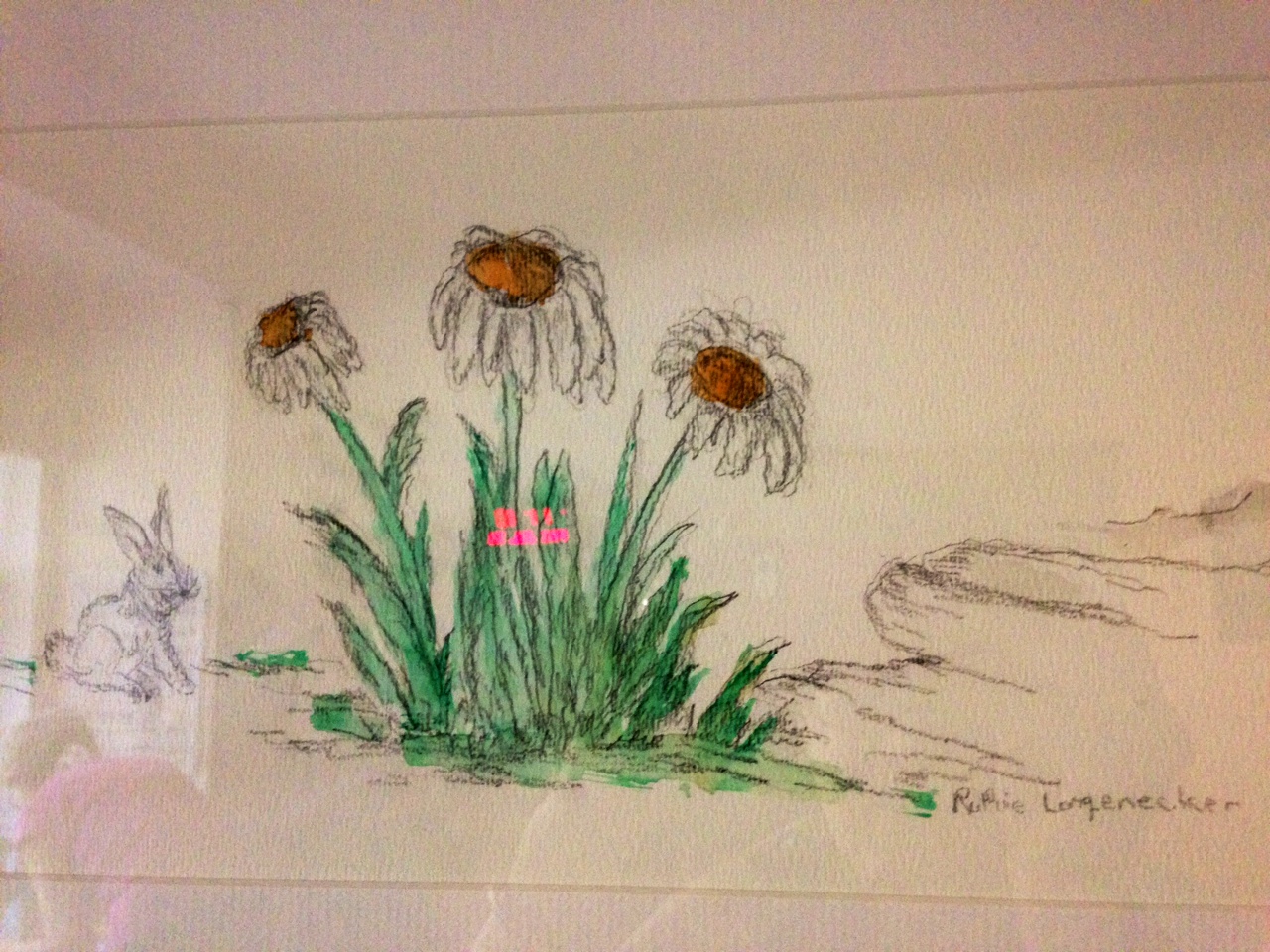
My Artist/Aunt/Teacher Ruthie now lives in a retirement community, where she took an art course several months ago. I have no way of knowing whether the instructor suggested the topic or not, but one thing is certain, her images reflect her deep love of plant and animal life.

ForsythiaRuthie

Bunnies with trees - neon image a reflection of wall date/time reminder
Bunnies with trees – neon image a reflection of Ruthie’s wall date/time reminder
Droopy daisy petals contrast to erect bunny ears
Droopy daisy petals contrast with erect bunny ears

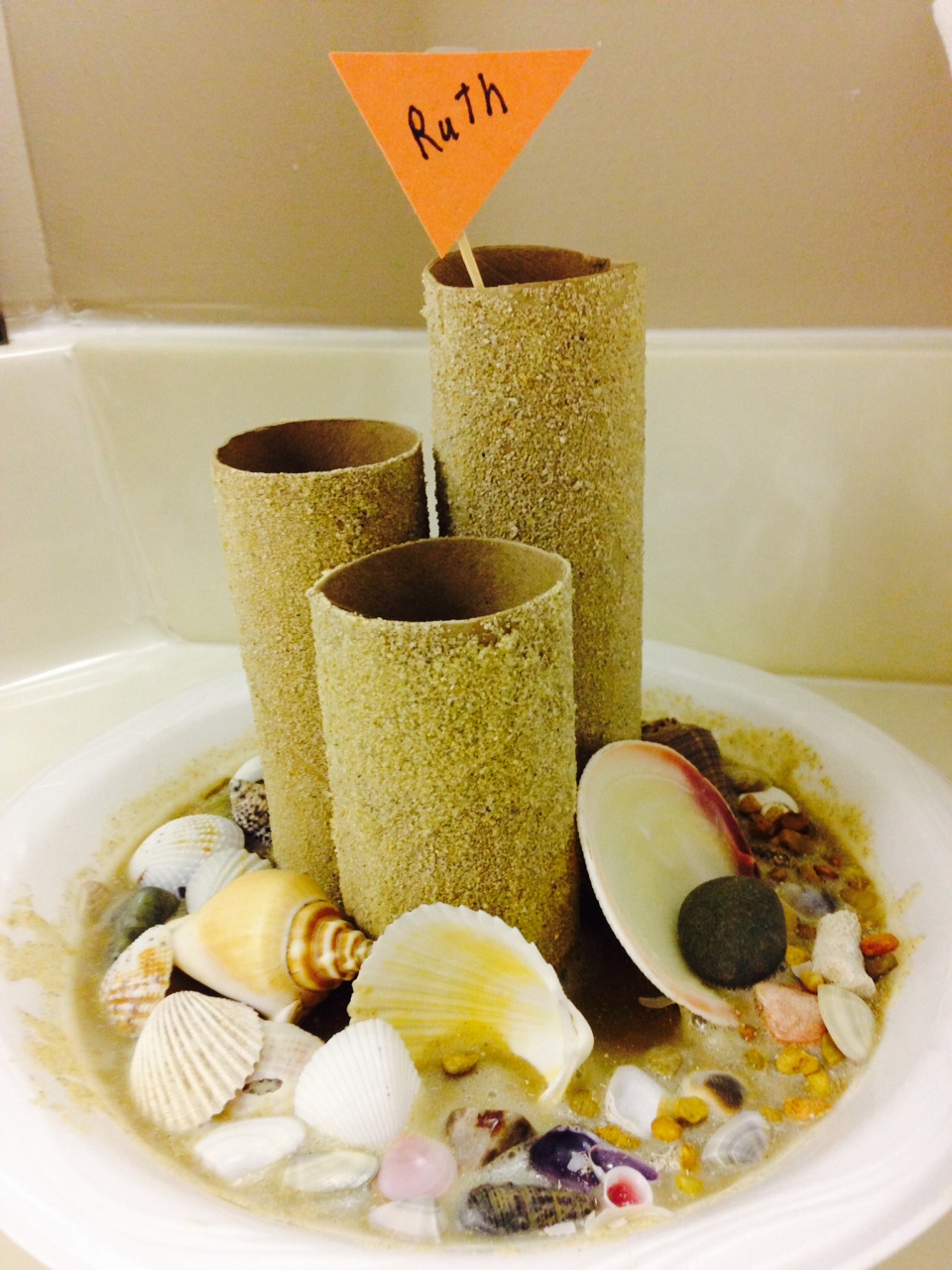
SandCastleRuthie

Aunt Ruthie, also my teacher in Grades 1-4 at Rheems Elementary School, splashed art all over our curriculum in addition to construction paper creations most every school child makes:

  • Clay moldings fired in a tiny kiln
  • Finger paints – My favorite, blending red and blue to make purple!
  • Jig-saw cut-outs made into wall hangings
  • Plaster of Paris figures

True, she taught the 3 R’s – reading, writing, and ‘rithmetic. I excelled in reading and was often chosen to read aloud “with expression” when the school superintendent appeared in the classroom. However, arithmetic was a different matter. I can still conjure up an image of her brown, beveled ruler dancing ominously above my hand, white-knuckled while struggling to line up 4-digit numbers vertically so the sums would add up correctly.

One happy pause in the school day came after lunch though: Picking colors from the stadium of crayons standing at attention in my green & gold box of 48 Crayolas. My classmates and I filled in the *purple curves and lines of figures from fairy tales and fables while she read from Uncle Remus or the tale of Rumpelstiltskin.
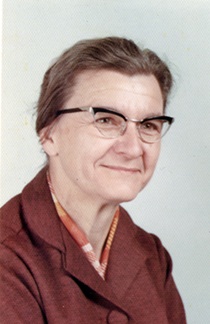
1975 Ruthie-Schoolphoto 3a_small

She took a course in oil painting, probably in her 40s or 50s, her love of nature evident in the works shown here.

SeascapeRuthie

(White birch?) Sycamore tree and bridge along lane leading up to the Martin farm Oil painting by Ruth Martin Longenecker
White birch tree and bridge along lane leading up to the Martin farm
Oil painting by Ruth Martin Longenecker

IrisDaffodils

Aunt Ruthie/Miss Longenecker would likely smile in a self-deprecating way at the notion of linking her artistic flair with the idea of “art as sacred expression” which Melissa Pritchard asserts in an article suggesting that “Art [is] a form of active prayer.” Yet, in retrospect, I recognize that art for Aunt Ruthie was a full expression of her humanity, her creativity, and her spirituality.

On July 16, 2015, the U. S. Senate passed ­­­­by a vote of 81/17 a bi-partisan Elementary and Secondary Education Act to ensure that “all students—regardless of their socioeconomic status—experience the demonstrable positive impact that [art] and music education has on learning and life.” In other words, the Senate is trying to catch up with what the research has been saying for years, the arts improve and reinforce learning in the full range of academic subjects.

Ruthie would be pleased with that move. In her mind, now addled by memory loss, art never ever left the curriculum. For her, art is ageless.

A thing of beauty is a joy forever.  Its loveliness increases/ It will never / Pass into nothingness.                  – John Keats    “Endymion”

* * *

Do you have a family member who excels in art? How do you express your own artistic flair? (Don’t discount the home arts like sewing, baking, making creative tablescapes.)
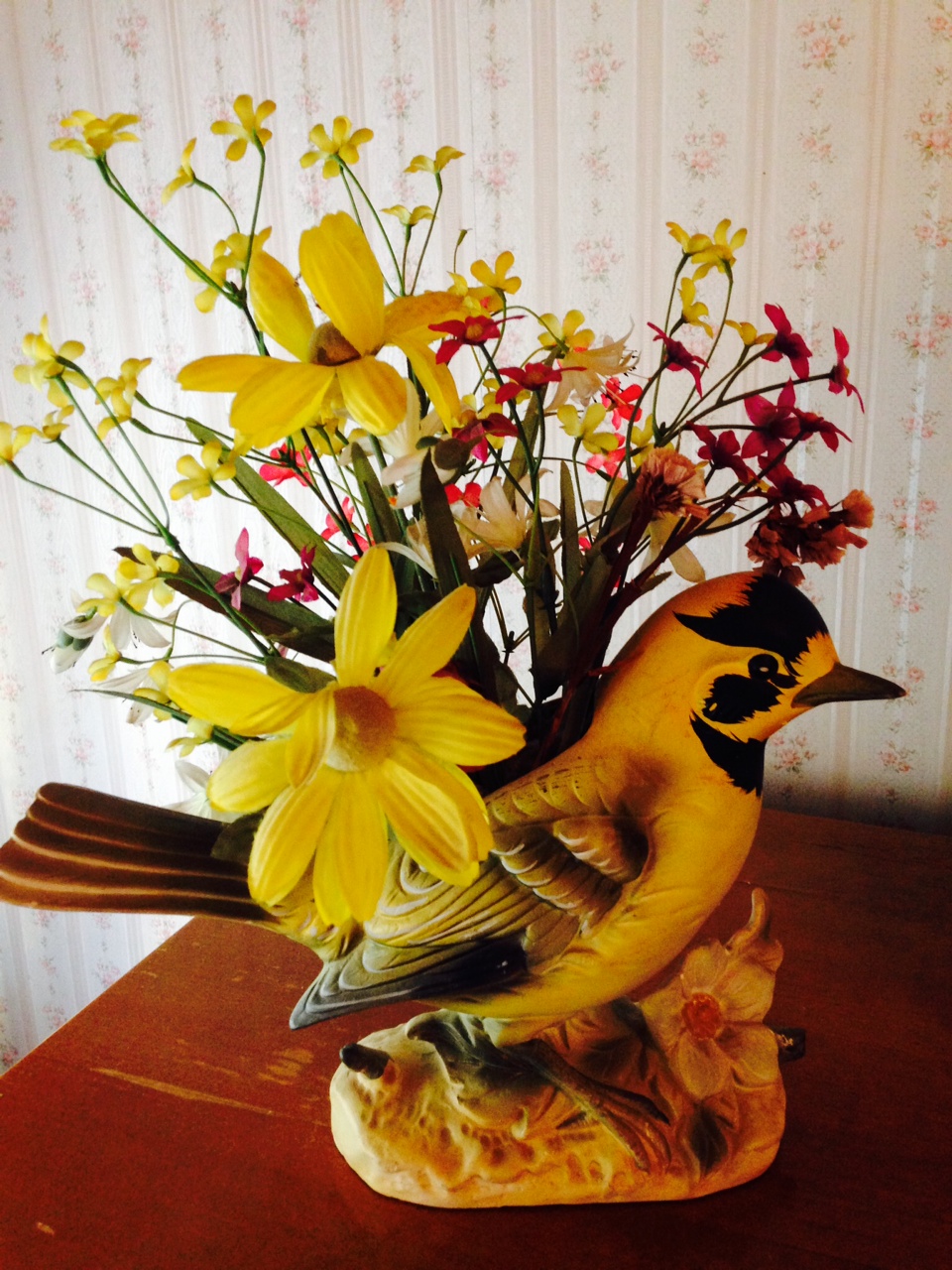
BIrdVaseFlowersRuthie’s flower arrangement in bird vase
Through a Glass Darkly: Anniversary # 48

This week Cliff and I celebrate our 48th wedding anniversary. We are not experts on marriage by any means, but we have learned a thing or two about

  • navigating its mysteries and
  • negotiating the best for both


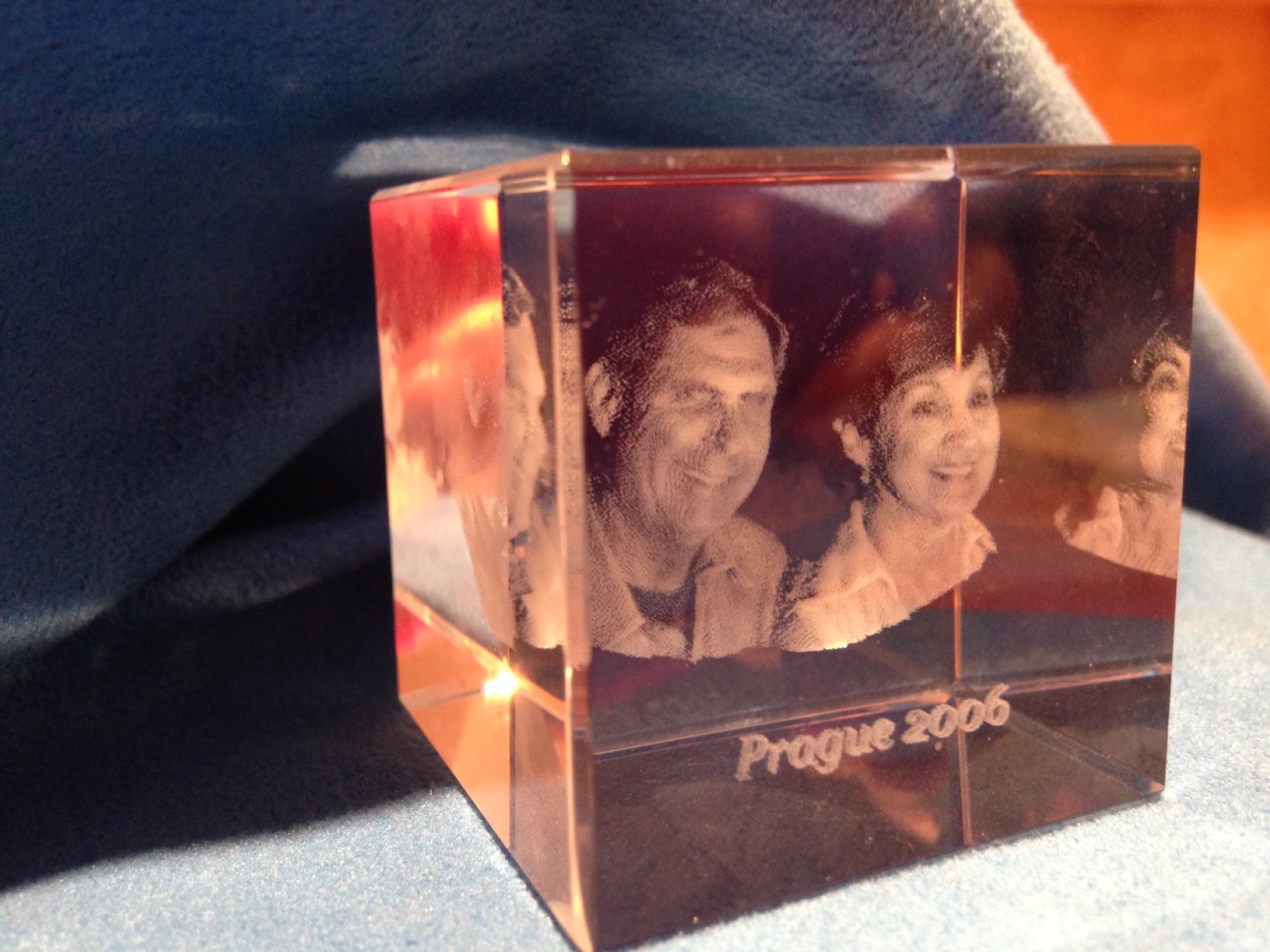
  • PragueCubeSidePragueCube

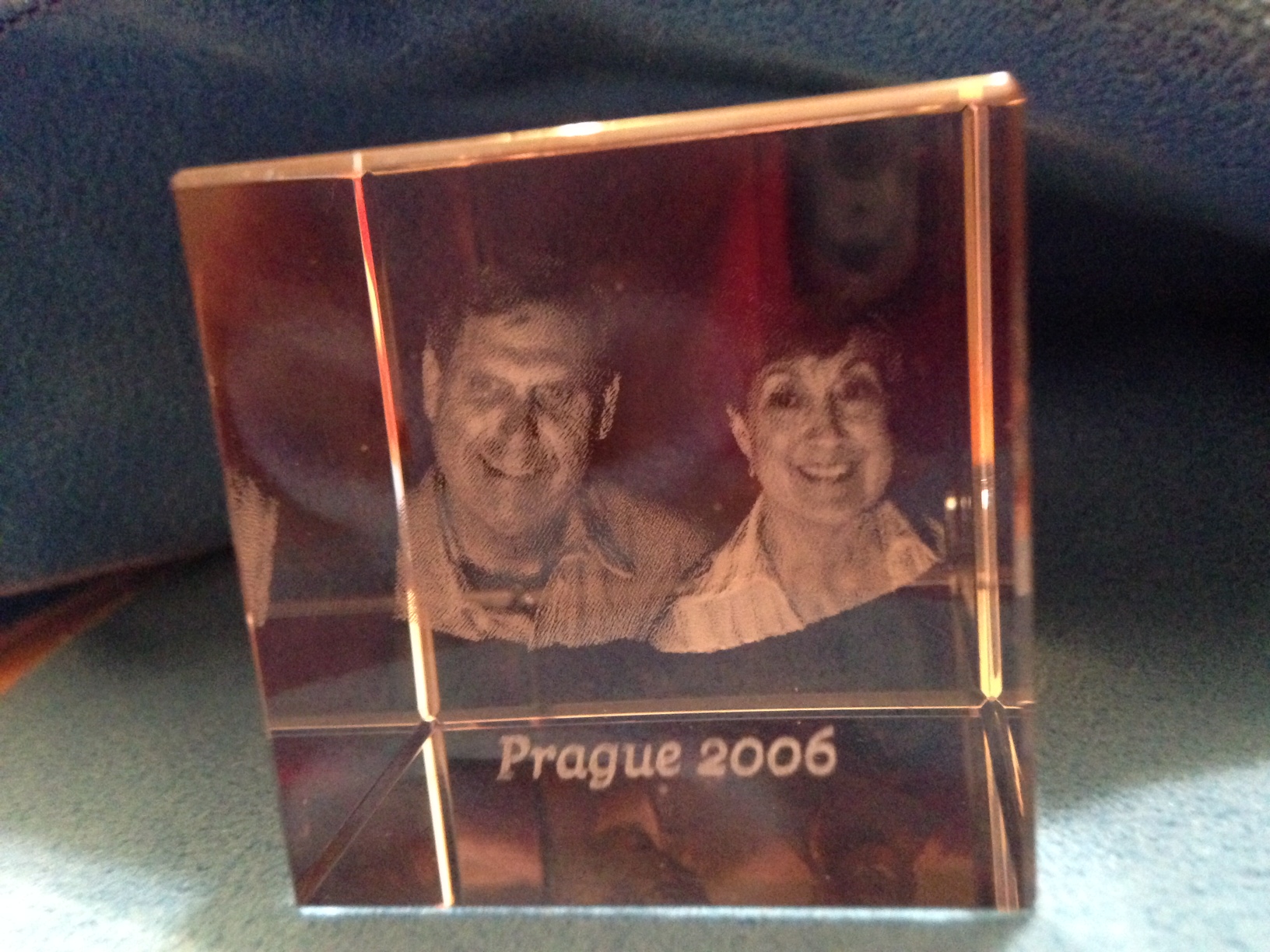
We sometimes see through a glass darkly

Image captured in a 3-D hologram cube created via laser – visit to Prague, Czech Republic 2006

(Nothing dramatic happened in Prague except black light shows with marionettes. If you want wild and crazy drama, you’ll have to click here!)

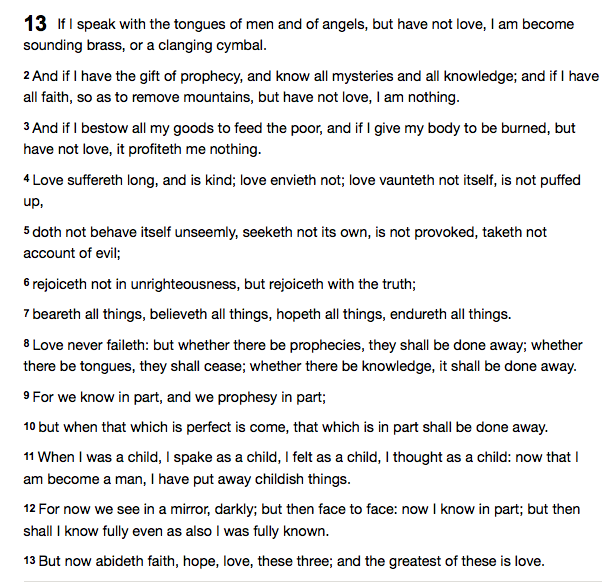
I Corinthians 13, American Standard Version

For now we see in a mirror, darkly . . . But now abideth faith, hope, love, these three: and the greatest of these is LOVE.

* * *

Poet James Dillet Freeman expressed his view of the mystery of marriage In “Blessing for a Marriage” in at least 8 ways:

  1. May you need one another, but not out of weakness.
  2. May you want one another, but not out of lack.
  3. May you entice one another, but not compel one another.
  4. May you embrace one another, but not encircle one another.
  5. May you succeed in all important ways with one another / And not fail in the little graces.
  6. May you look for things to praise, often say, “I love you!”
  7. And take no notice of small faults.
  8. If you have quarrels that push you apart / May both of you hope to have / Good sense enough to take the first step back.

In the last last stanza he concludes:

May you enter into the mystery which is

The awareness of one another’s

Presence — no more physical than spiritual,

Warm and near when you are

Side by side, and warm and near when

You are in separate rooms

Or even distant cities.

May you have happiness,

And may you find it making one another happy.

May you have love, and may you find it loving one another.

Cliff & Marian_Wedding Day_96dpi

Here’s where you can share your own tips or observations.

Remembrances of Mother, A Year Later

This week our family remembers the fourth week of July 2014.

Last year Mother observed her 96th birthday on July 23. She died unexpectedly on July 28, five days later. This post will commemorate this milestone in two ways: cards sent to me along with images of Mom’s intimate space upstairs.

Two Cards

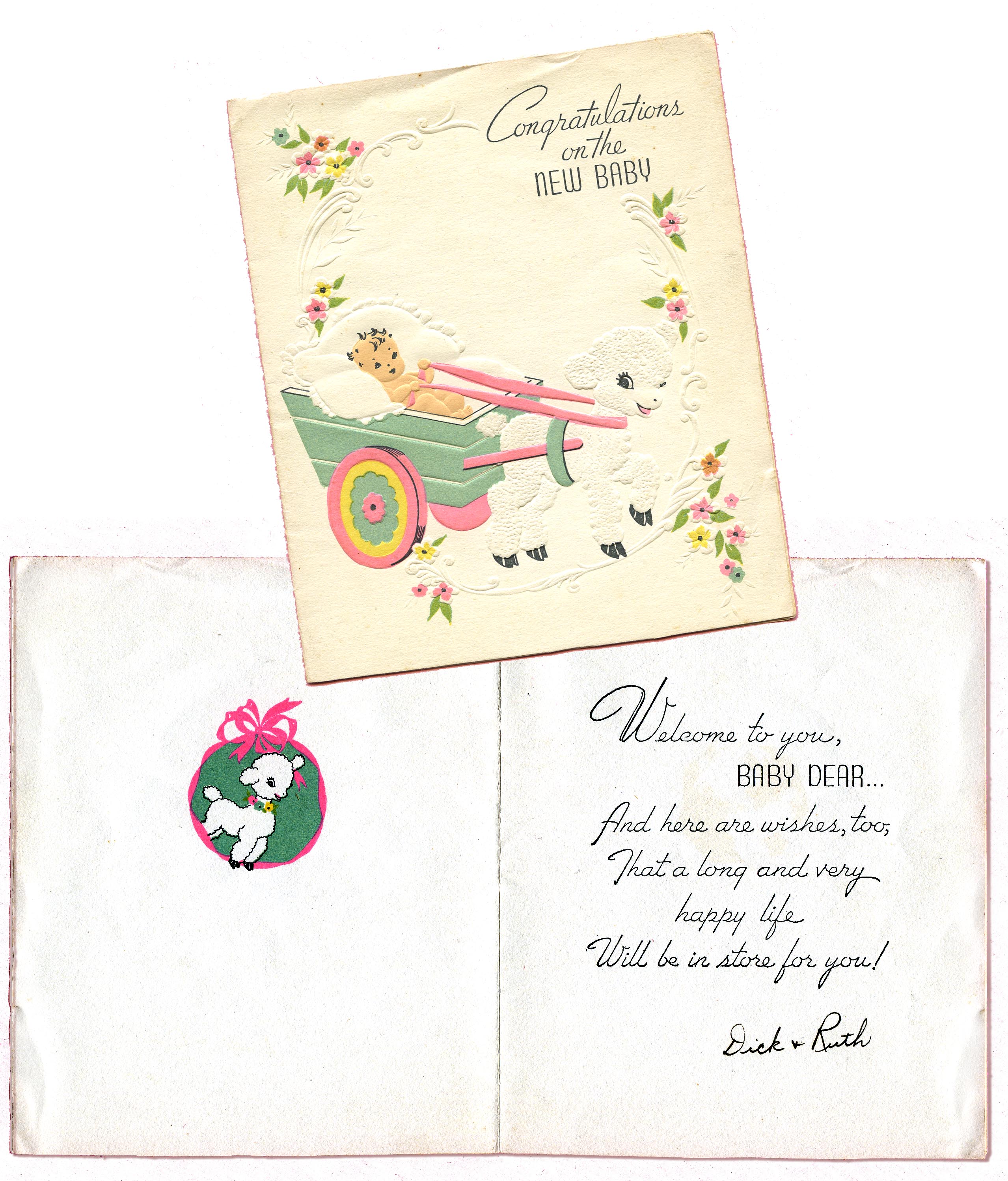
A vintage baby card, sent to my parents when I was born

1941_Marian_Baby Card_outside+inside

Card from Dick and Ruth Sauder. Richard was one of the Florida bunch that stayed in close contact even after his bachelor trip with Daddy. They wished me a long and happy life, bless their hearts!


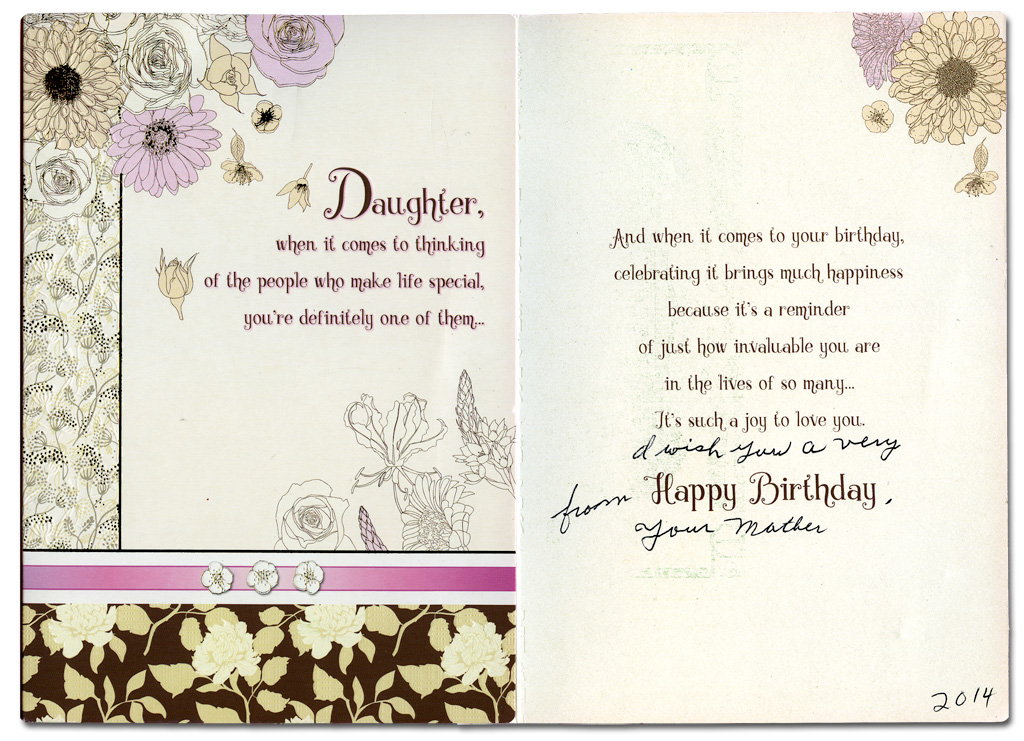
MomBirthdayCard2014

I was born the day after Mother’s birthday. Her last birthday card to me, 2014.


Some Images

At the top of the stairs to the left, there was a little room Mom called the hallway, which seems a misnomer because it was square rather than long and narrow as hallways usually are. It connected the upstairs landing to the family clothes’ closet whose door had a crystal knob. I always thought it was one of the prettiest things about the room because it showered rainbows on the walls when the sun shone in at a perfect slant.

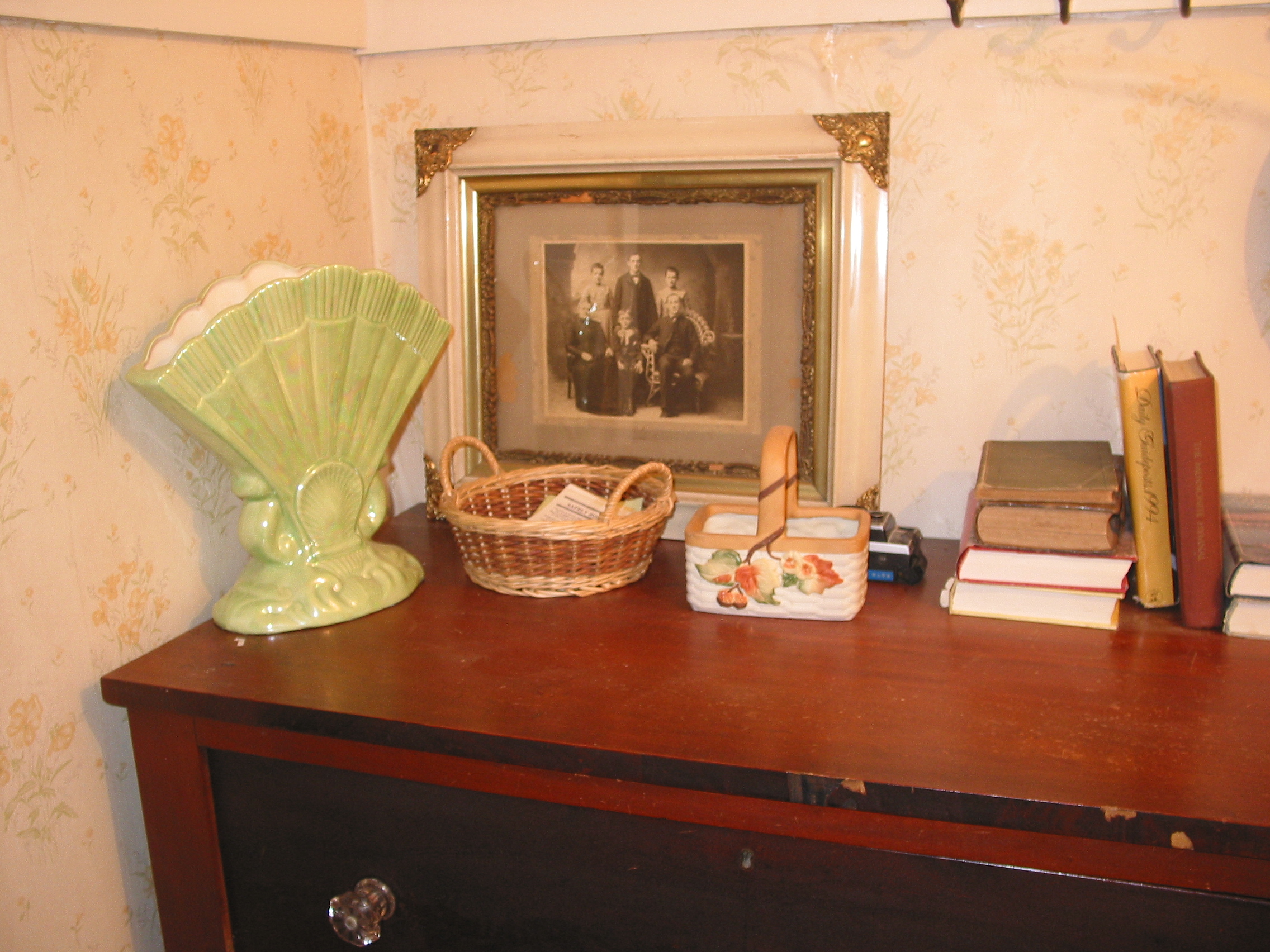
A dressing room of sorts, this small area was a repository for Mother’s own nostalgia: a framed family photograph, old books, the odd china piece on top of the Sheridan chest of drawers.

At right angles to the closet door stood this chest of drawers with a photo of my great-grandmother Sadie Landis’ family before she became a Metzler and a mother. And there’s that ceramic green vase. It’s perfect for displaying iris or gladiolus, but I didn’t grab it when we cleared out Mom’s house. How to take it on the plane? Where would I put it?

GreenFanVase


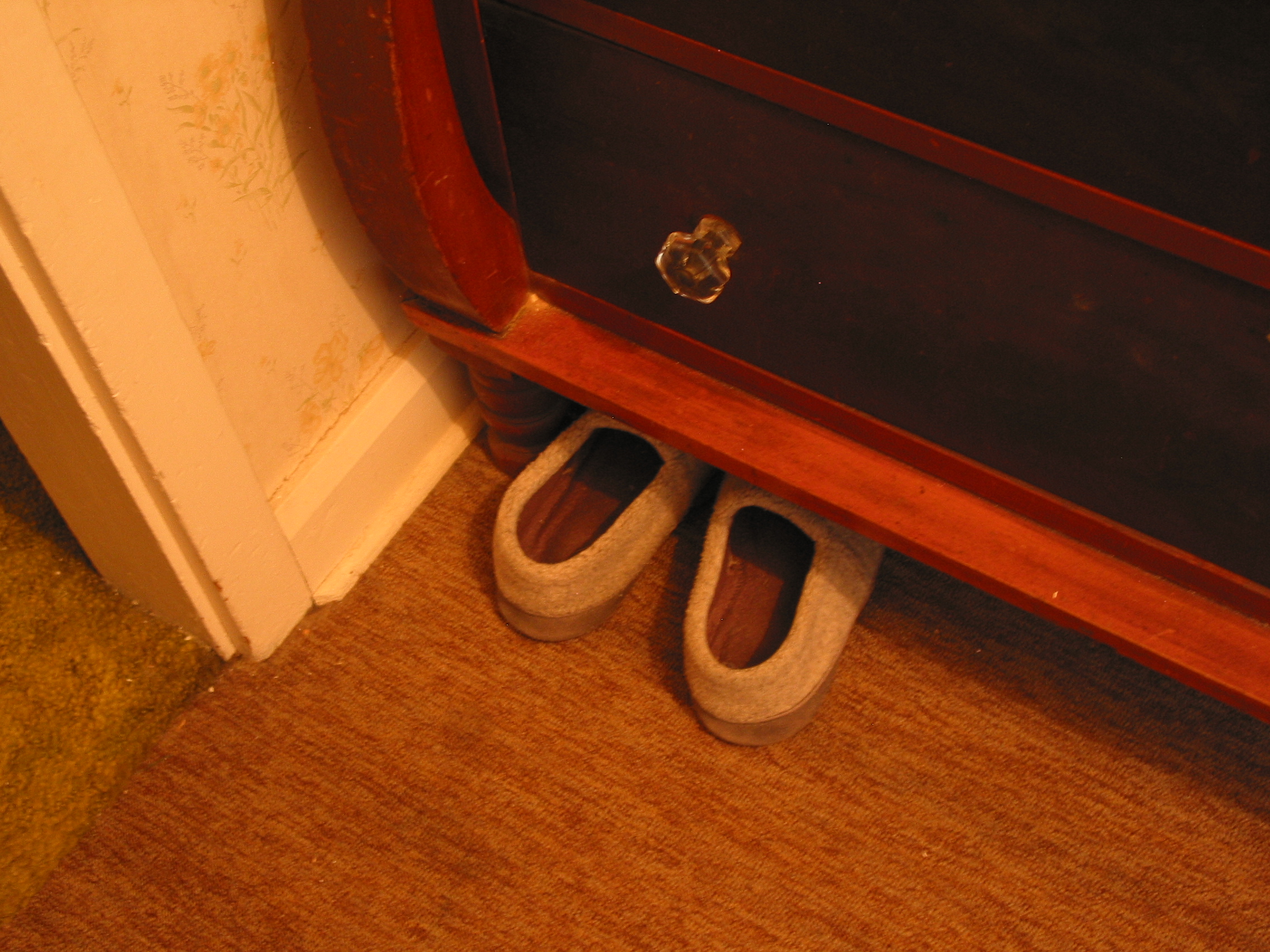
And under the chest, Mother’s slippers

SlippersMom

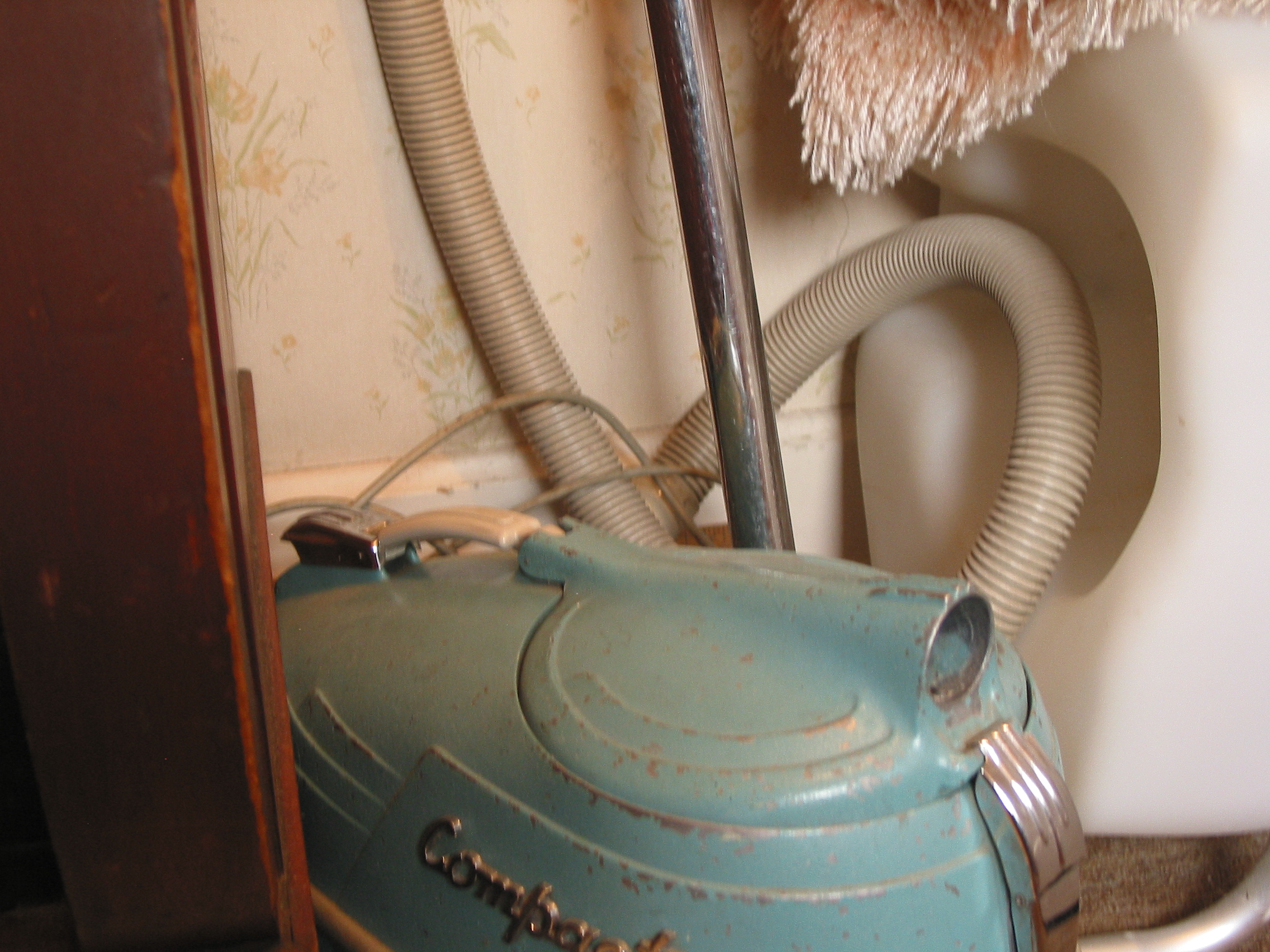
Beside the chest, her Compact vintage vacuum cleaner, a blue bullet of an animal easy to pull around the house even at her age. Her old Singer treadle sewing used to sit in the opposite corner under a window.
VacuumCleaner

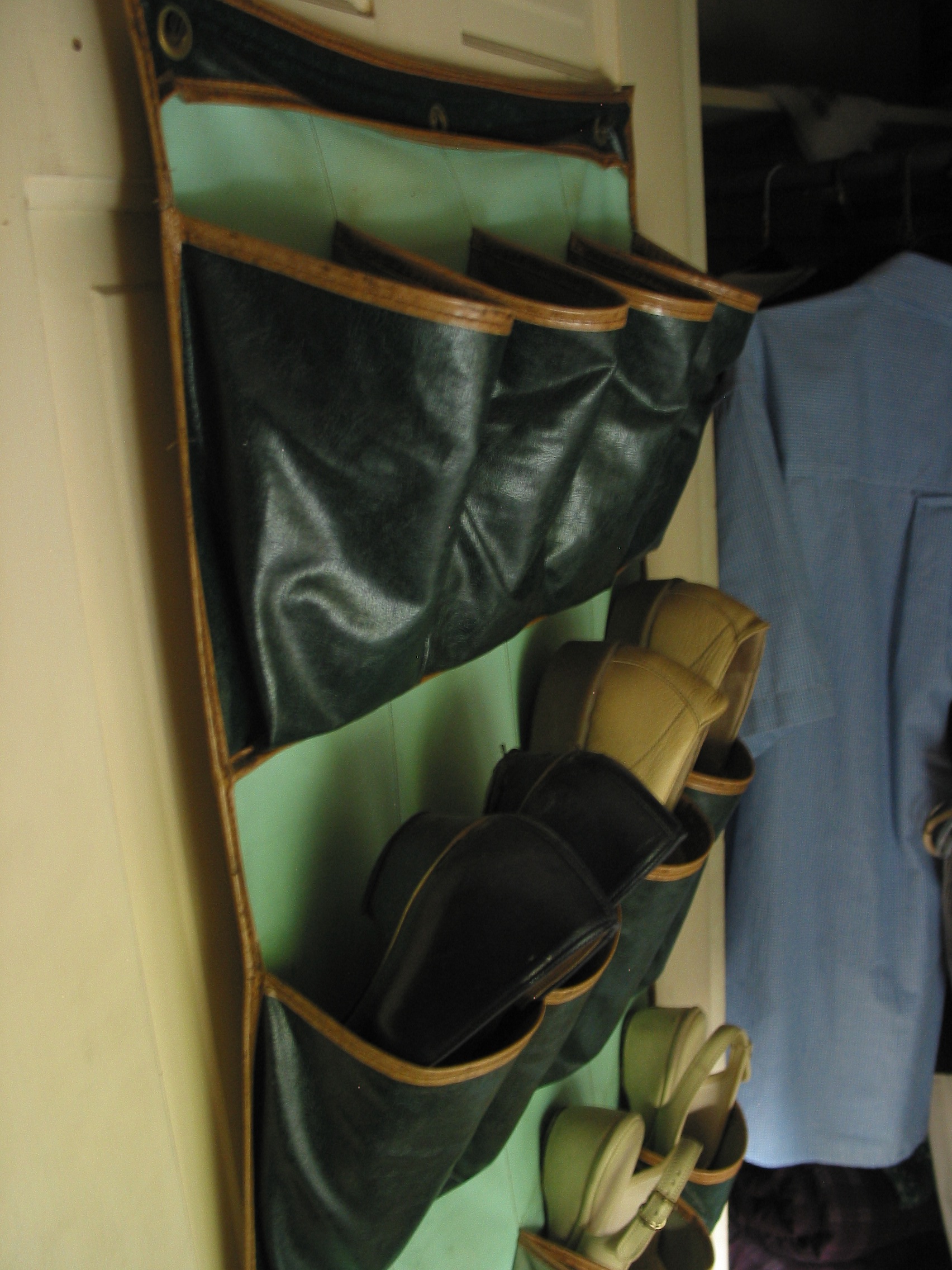
On the closet door what remained of her shoes

MomShoes

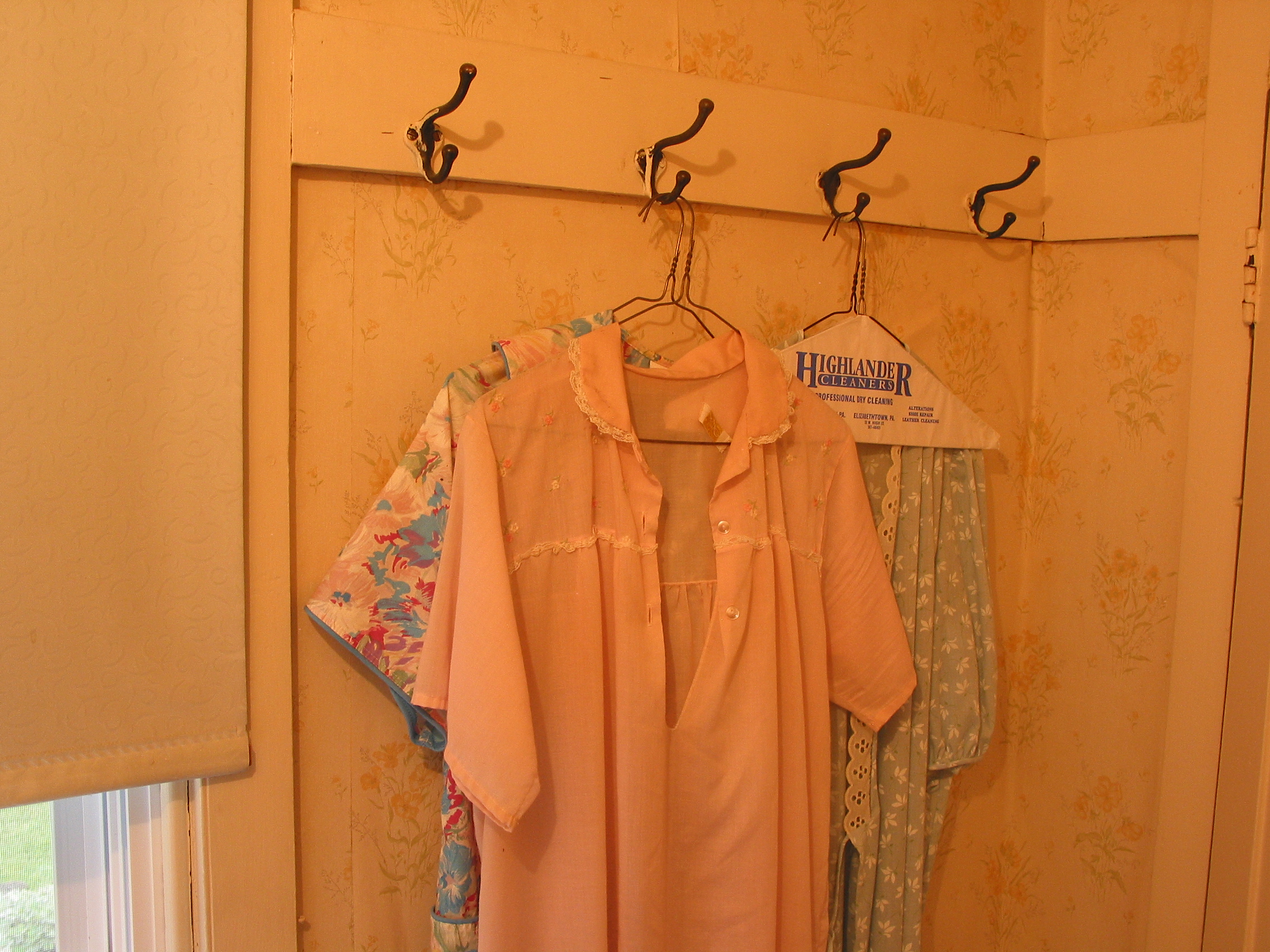
Then below hooks with nightgowns and robes. A girdle with stays used to stand stiffly in the corner below the lingerie to air out. Sometimes a few cleaning products were stored there too. . .

Mom'sNightgown

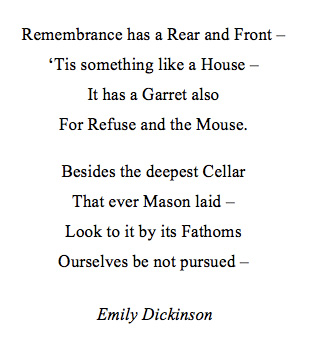
The house has been sold. These images exist only in memory now and in our e-files on my desktop. Powerful images – how they linger . . .

Web_EmilyDickinsonHouse

Remembrance also has a side, where other memories sneak in . . . .

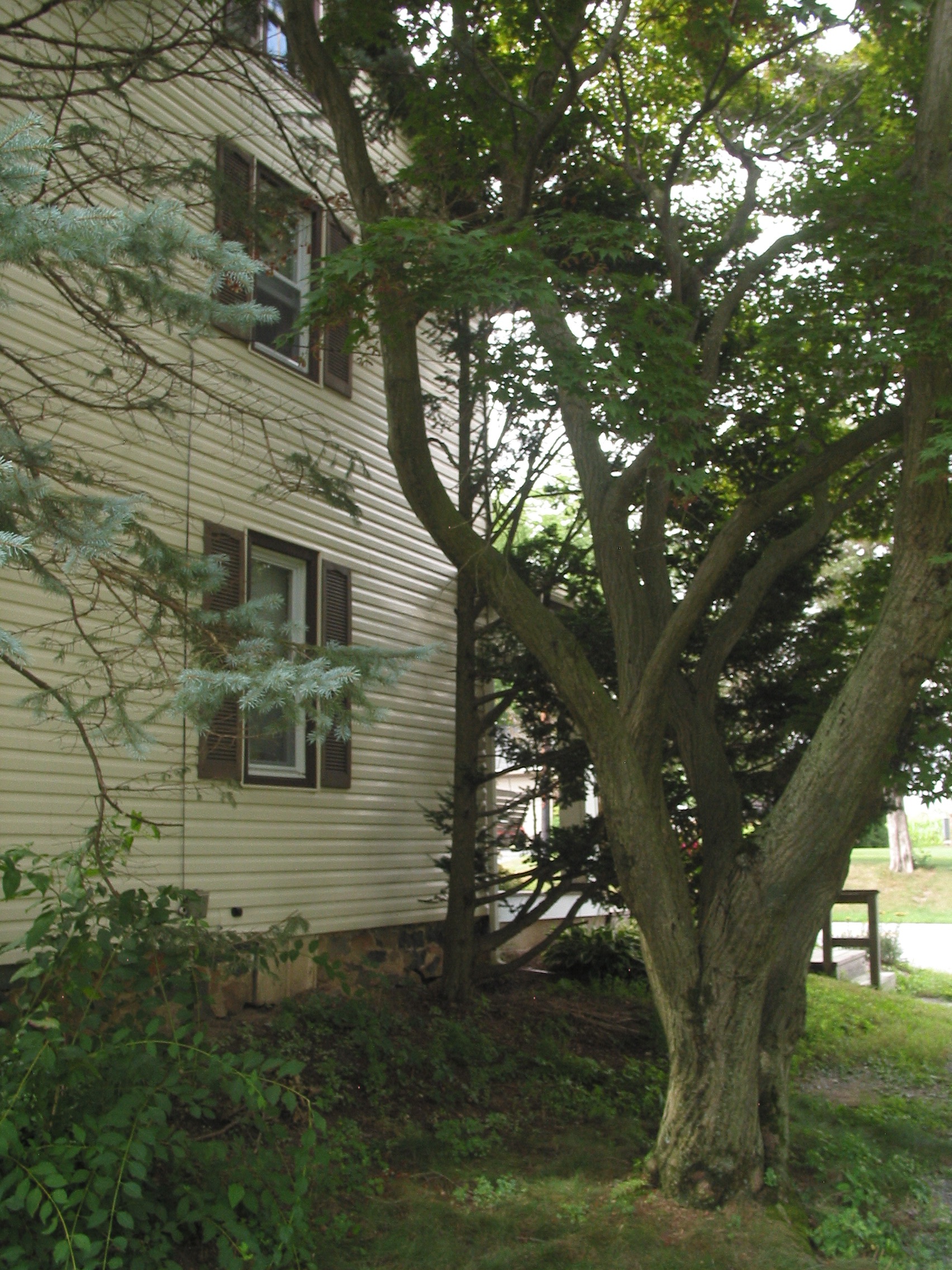
HouseWindowTree

Is there a room in your childhood home that holds special memories? A secret niche you called your own?

Coming next: Do you Like to Color?

Purple Passages in Rainbow Colors

Calm Thoughts, Relax Here

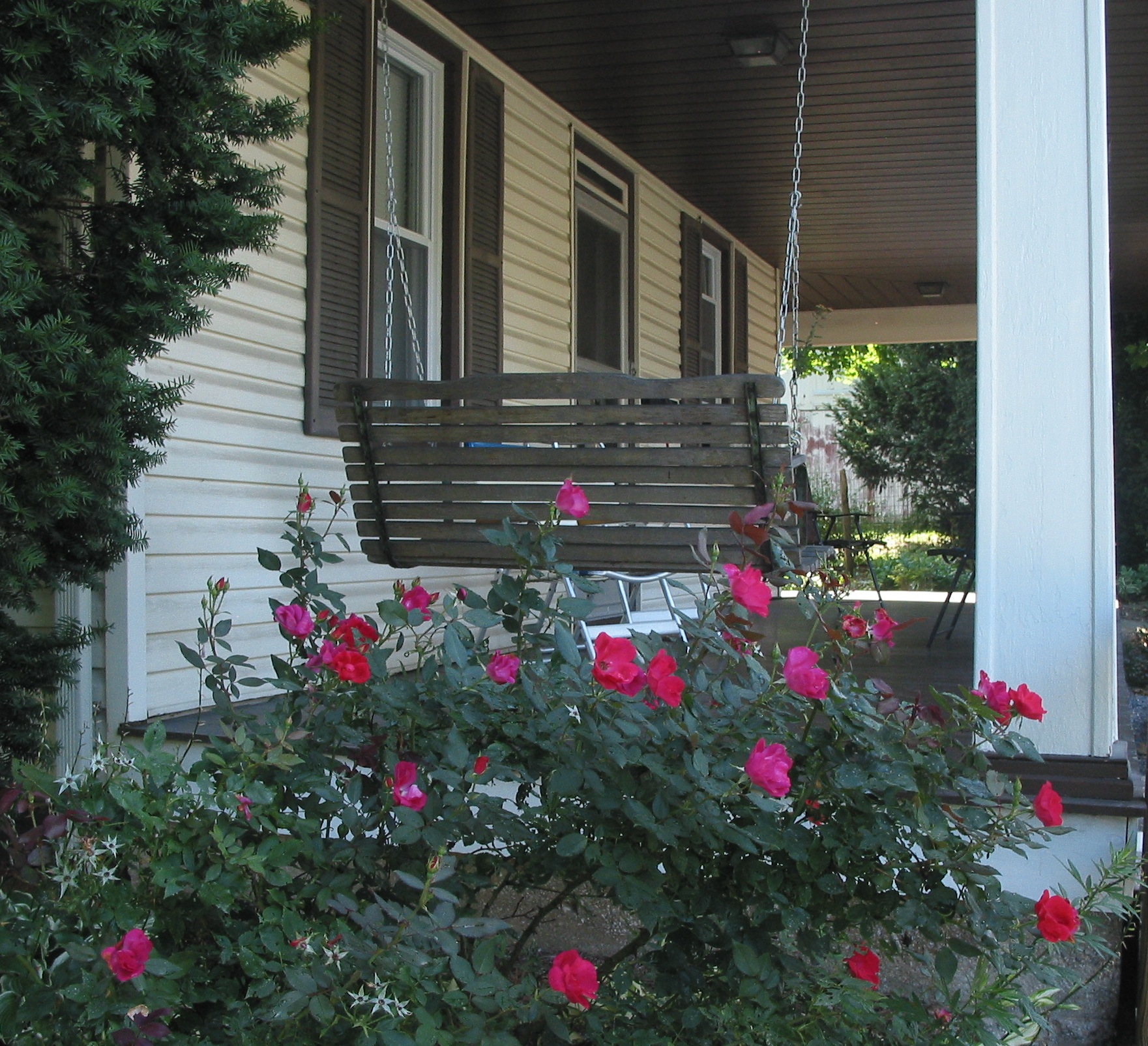
Where we relaxed at the home place, counting cars on a Saturday night, swinging on the porch and eating watermelon!

PorchSwing

*  *  *

Sunset, Chincoteague Island, VA

Be grateful for calm skies . . .

Forever is composed of nows.
(# 690)

 Emily Dickinson

 * * *

I’m going to enjoy every second, and I’m going to know I’m enjoying it while I’m enjoying it. Most people don’t live; they just race. They are trying to reach some goal far away on the horizon, and in the heat of the going they get so breathless and panting that they lost sight of the beautiful, tranquil country they are passing through; and then the first thing they know, they are old and worn out, and it doesn’t make any difference whether they’ve reach the goal or not.

Jean Webster, quoted in GoodReads

*  *  *

It’s bed time, don’t over do the studying business – take time to live.

Excerpt: Letter from Grandma Fannie Longenecker to me at college, dated May 10, 1962


Art and Love

The truly great artist has the eyes of a child and the vision of a sage.  Pablo Casals, cellist


In our life there is a single color, as on an artist’s palette, which provides the meaning for life and art. It is the color of Love.

Marc Chagall

Chagall’s stained glass windows are displayed in Fraümunster Church in Zurich, Switzerland. His images often seem to tumble, but always stay airborne. Floaty and flexible.

Floaty and flexible. Try that feeling on for size right now . . .

Tnachari – Google Images

* * *

Butterflies are self-propelled flowers.

Robert Heinlein in Goodreads

Cliff Beaman photo
Cliff Beaman photo


We love words. Here’s where to share a relaxing thought, a quote, a suggestion.

Up next: Remembrances of Mother: A Year Later

Oh, Beautiful – Amber Grain & Grainy Amber

LyricsAmericaBeautiful

Did you grow up country? Can you picture a Dad, brother, or uncle toiling under the torrid July sun in the wheat field?

If so, you know that farmers always wore hats with brims. The ruddy-faced farmers I knew in the fifties probably didn’t use Coppertone or any other sunscreen, but they always wore hats with bills, revealing a totally white forehead when the caps came off.

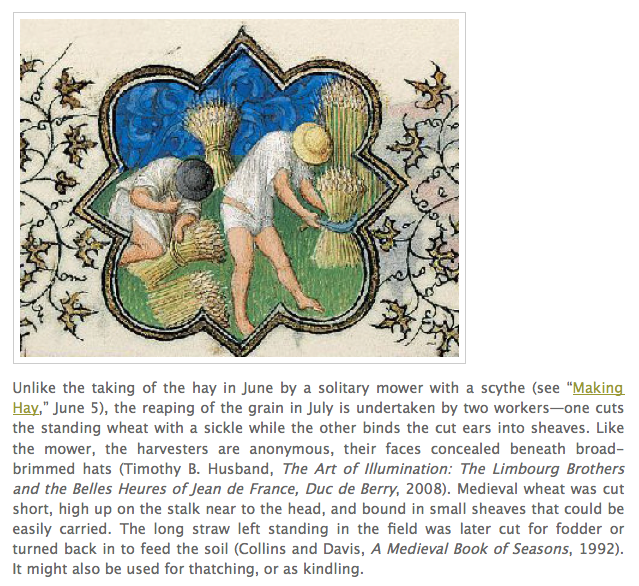
The medieval French farmers in the drawing below in what looks like undies and sandals shield their anonymous faces from the sun with straw hats.

Grain field in Medieval Times: Metropolitan Museum of Art
Grain field in Medieval Times: The Metropolitan Museum of Art

(You may be stifling a giggle at their odd attire right now!)

My dad farmed land in Lancaster County, Pennsylvania, so he was a farmer too, but he was known first as a farm implement dealer. As the owner of Longenecker Farm Supply, he sold farmers tractors, bailers, or combines for grain harvesting, and they called him often in a panic when their equipment broke down: In the middle of the field. At the worst possible time. When storm clouds loomed.

Howard Longenencker, one of Dad’s cousins, and Best Man at Mom and Dad’s wedding, is pictured here in a movie clip taking his new Minneapolis Moline harvesting machinery for a whirl around the field, enjoying every minute. Watch for his jubilant wave! I’ll call the clip “Grainy Amber” because it was filmed in the 1950s with much less sophisticated technology than available now.

Another relative, Esther Mae Longenecker Hiestand, has captured images of her family’s grain harvest in her 489-page book, all about the Longeneckers descended from the line of Ulrich Longenecker, who emigrated from Switzerland to America. She and her family collected over a dozen images of hay and wheat harvesting in her portrait of a Lancaster County family entitled Pitchforks and Pitchpipes (454 – 457).

* * *

So great a blessing was an abundant harvest that the warmth and productivity of the season was interpreted as an allegory of spiritual plenty. The ninth-century theologian Hrabanus Maurus writes that summer sun expresses the heat of God’s love, and that the season signifies the blessedness to come in Heaven (Medieval Book of Seasons, 1992.)

School children of all races and creeds sing lustily about the bounty of harvest in a patriotic song we hear often during the month of July:

Did you grow up country? Share your experience with summer harvesting of all kinds. Or add an impression, a quote. Whatever!

Up next: Purple Passages with Rainbow Colors

Going Male: Amish Romance Novels

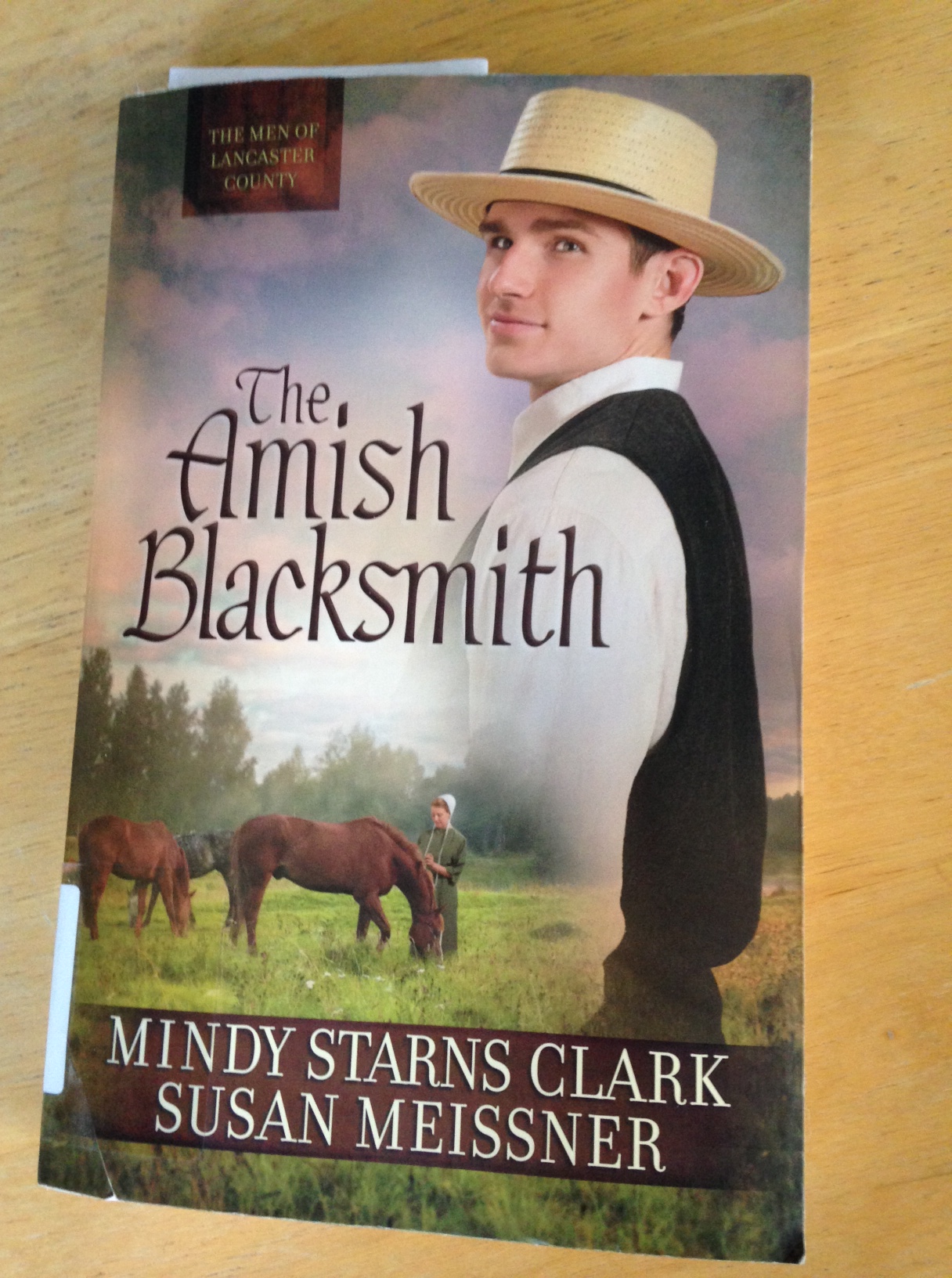
AmishBlacksmith

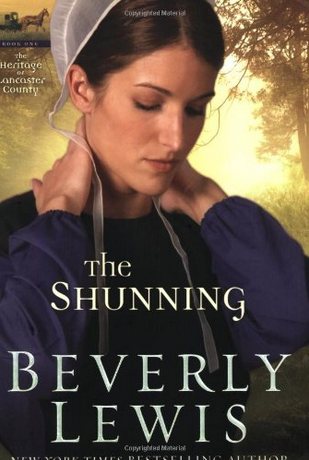
Cool Amish guys have replaced the dreamy looking girl with a huge covering and plain dress popular on the cover of some Amish romance novels. The images have done a flip. Now the young Amish-man with suspenders and broadfall pants and straw hat takes center stage.

Last week I finished reading my second Amish romance novel ever. These novels, usually with a female main character on the cover, are still wildly popular and stock shelves at Barnes & Noble and Amazon warehouses to the hilt.

Cover image via Amazon

Truthfully, I have resisted reading these novels for two reasons:

  • The plots seem formulaic to me: there’s a lover’s triangle, often with an “Englischer” from the tempting world beyond the farm.
  • Also, I have lived an authentic Mennonite life, and some plot-lines and details about the characters seem barely plausible.

Still, I took the time to read The Amish Blacksmith, starring a handsome dude named Jake on the cover with a plain Amish girl, grooming a horse in the misty background. I was curious about two things: the new trend in Amish romance fiction with a male protagonist plus the high profile of the authors within this sub-genre: Mindy Starns Clark, who has published more than 20 books including the Christy Award-winning The Amish Midwife and co-author Susan Meissner, whose novel The Shape of Mercy was named as one of the 100 best novels of 2008 by Publisher’s Weekly.

With five novels in the Women of Lancaster County Series (Mindy Clark and Leslie Gould). Clark and Meissner have begun the Men of Lancaster County Series: The Amish Groom, The Amish Blacksmith and mostly recently, The Amish Clockmaker.

Here’s a thumb-nail of The Amish Blacksmith from Goodreads:

Apprenticed blacksmith Jake Miller is skeptical of Priscilla Kinsinger’s innate ability to soothe troubled horses, especially when he has own ideas on how to calm them. Six years earlier, Priscilla’s mother died in an awful accident at home, and Priscilla’s grief over losing her mother was so intense that she was sent to live with relatives in Ohio. She has just returned to Lancaster County.

Not that her homecoming matters to Jake, who is interested in courting lighthearted Amanda Shetler. But Jake’s boss is Priscilla’s uncle, and when the man asks Jake to help his niece reconnect with community life, he has no choice but to do just that. Surprisingly, he finds himself slowly drawn to the beautiful but emotionally wounded Priscilla.

Jake then determines to prove to her that it’s not her fault her mother died, but what he discovers will challenge everything they both believe about the depth of love and the breadth of forgiveness.

Though the pace of the book slowed toward the end, I found the book a satisfying read. It is certainly more pleasurable to gain equestrian knowledge via a novel than from an equine textbook. In fact, the authors give credit to the Riehl and Fisher families of Lancaster County for helpful on-the-farm visits and to Elam and Elias Stoltzfus, for sharing their knowledge in their own Amish blacksmith shop. I applaud the authors too for their extensive research on horsemanship, particularly horse-whispering. I felt myself being both educated and entertained as I read.

Interestingly, male readers admit to enjoying Amish romance novels too. Valerie Weaver-Zercher reports in her book Thrill of the Chaste that an elderly farmer, Glenn Swartzendruber read almost ninety Amish-themed novels during the last three years of his life. And “a physician with degrees from Harvard and the University of Pennsylvania shared that he enjoyed listening to the audio version of Beverly Lewis’s [Amish} novels.” (249)

Do you enjoy Amish romance novels? Tell us why or why not. Do you know any men who read them?

Coming next – 4 Months, 4 Gifts: A Tribute to My Dad

A Corny Post

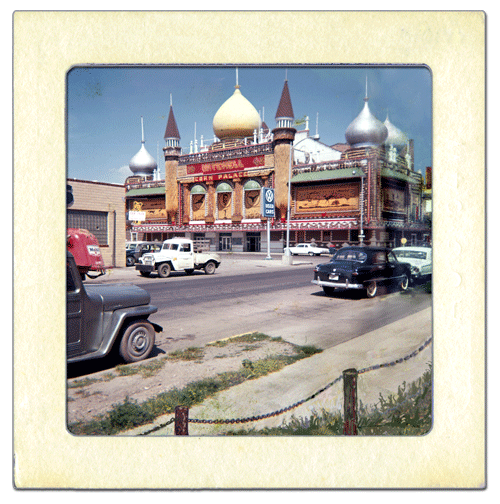
The Corn Palace

Bird beaks peck away at grains of corn on the walls of The Corn Palace. Still, the murals created with several colors of dried corn and grain arrest the eye. On our trip West we visited this grand monument to farmers and the grain industry they represent in Mitchell, South Dakota.

Web_1964_Corn Palace

A Quote about Corn:

“A light wind swept over the corn, and all nature laughed in the sunshine,” said Anne Bronte, poet and novelist of West Yorkshire, England, 1800s

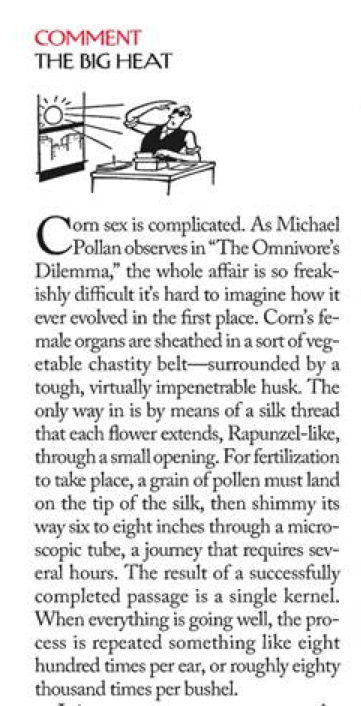
Corn Sex, according to Elizabeth Kolbert in “The Big Heat,” The New Yorker, July 23, 2012 issue

CornCartoonArtNewYorker

CornTalkOfTownNYorker

Mennonites and Corn

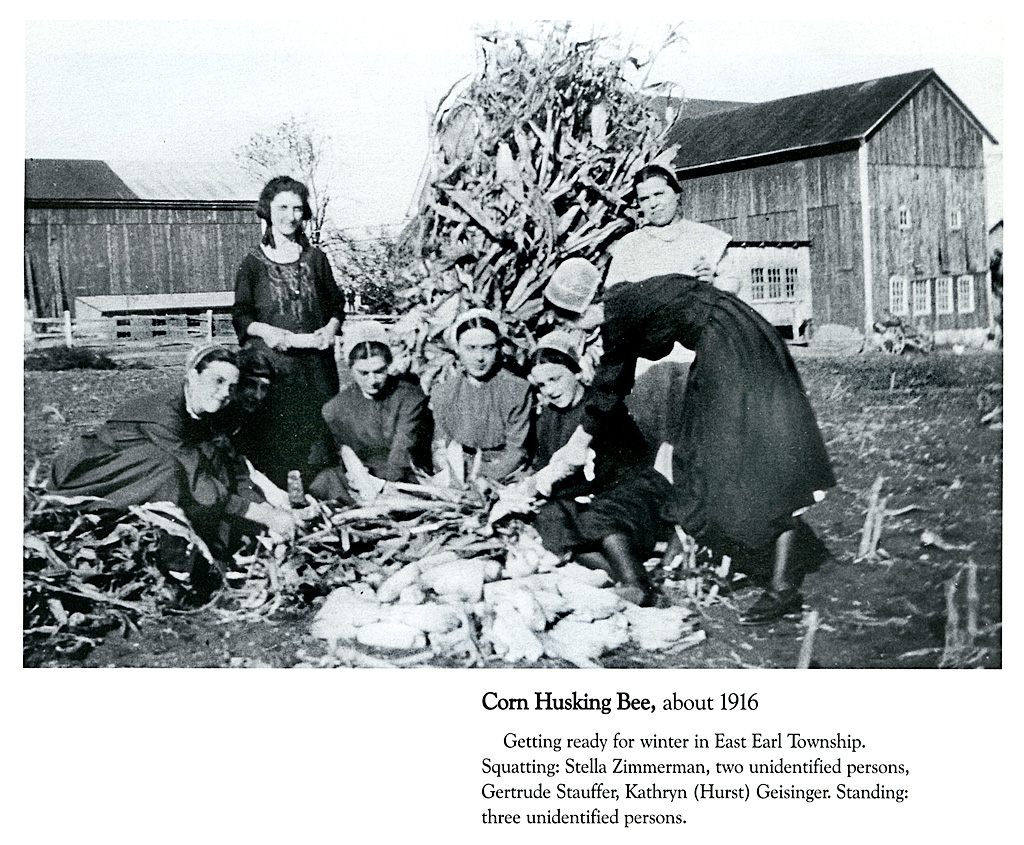
Mennonites in Lancaster County, including the Longenecker family, participated in the whole process of corn production: planting, hoeing, harvesting, husking, canning, freezing – and best of all – eating the succulent grains of corn on the cob, the buttery juice running down our chins and forearms.

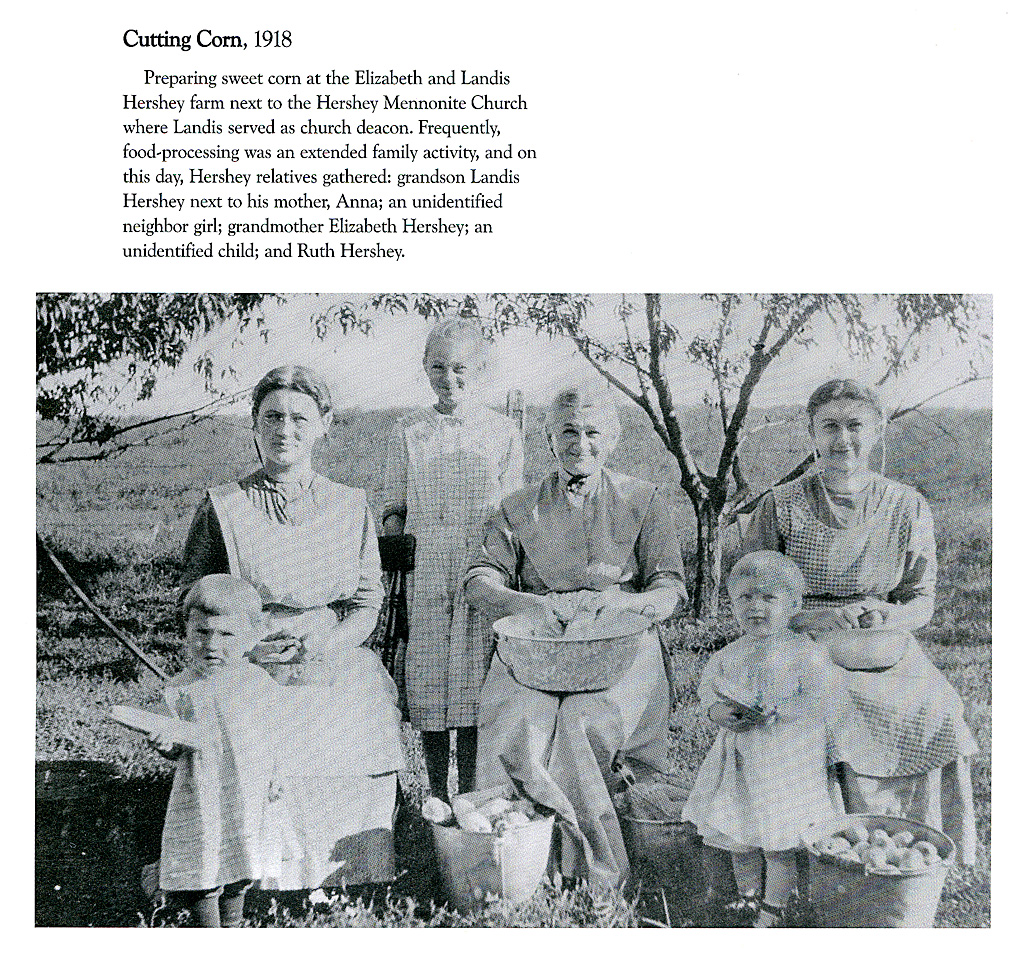
In her book Mennonite Women of Lancaster County, Joanne Hess Siegrist features photos of Mennonite women hard at work husking and cutting corn off the cob (pages 124, 124)

Web_Mennonite-Women_Husking-Corn_p123

Web_Mennonite-Women_Cutting-Corn_p124

My Mother Ruth loved making her baked corn recipe from the Mennonite Community Cookbook. She served it in a chocolate-brown Pyrex casserole dish nested in a basket of tight weave. We loved every bite, especially tasty during corn season.

Baked Corn Recipe

CornRecipeMCC

Want More Corn?

Pablo Neruda, Chilean poet, diplomat and politician, apparently loved vegetables too. He wrote about tomatoes, corn and more. Here is the link to his poem “Ode to Maize.”

Share something corny here. We are all ears!

Coming up next: Going Male, Amish Romance Novels

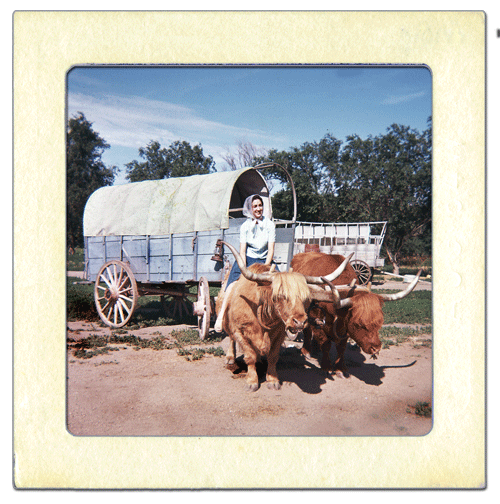
Two Mennonite Girls Survive a Cross Country Road Trip

Yes, imagine two Mennonite girls tripping across the country . . .

  • In a blue-gray 1958 Chevy Impala sedan
  • With a chauffeur and navigator
  • Through 47 states + Mexico
  • Five weeks in 1964: July 18 – August 24

Web_58-Chevy_Made-in-USA

My Travel Partners: The Metzlers, whom I call Aunt and Uncle, and their daughter Joann

Unlike John Steinbeck who wrote Travels with Charley about his one-man, one-dog travelogue in the 1960s, we were a four-some, Joann Herr, my new best friend, her parents, John and Mary Metzler, and me. But like Mark Twain, we were “innocents abroad,” leaving our cozy Mennonite countryside and venturing through the wild and wooly West to the Pacific coast, eyes agape with wonder.

Best Bud: Joann Metzler (Herr) whom I met while she was student teaching at Rheems Elementary School, where my Aunt Ruth Longenecker was principal. “She’s such a nice girl. You ought to meet her,” Ruthie said about Joann. She was right! I even thought so at the end of the trip.

Chauffeur Extraordinaire, Uncle John: One day he drove 748 miles! John Metzler, who raised crops and cattle, is related on my mother’s side of the family through a common ancestor, Valentine Metzler, whose immigration to Pennsylvania was celebrated in the reunion in 2013. During this thousands-of-miles-odyssey behind the wheel, he sometimes came up with quotable expressions:

“Oh, schmatza (PA Dutch for pain),” he frets when there are too many switchbacks on mountain roads.

“Now we’re caught with our pants down!” when he makes a wrong turn.

“I thought I’d be hen-pecked with three women around and by golly I am already!” he exclaims 11 days into the trip.

Navigator with a Built-in Compass, Aunt Mary: With only a road map and keen sense of direction, Joann’s mother “Aunt Mary” was quite a trooper. She made sure we were ready to roll between 6:30 and 7:00 am every day. When I felt road sick, she doled out Chiclets. She was eager to see her spry, 81-year-old Aunt Susan in Los Angeles.

In Cheyenne Uncle John was taken for a German because of his PA Dutch accent, and Mary tells him “ta be more English!” Here are the two smiling at Crater Lake, Oregon.

Web_John-and-Mary_Crater-Lake_Ektachrome

The Big Loop – Like Steinbeck, we did follow a northern route across the Mid-west, angling down through California and sweeping across the Southwest into Texas and further east to Florida and then north back home to Pennsylvania. Along the way, we sometimes fancied ourselves in foreign lands: Parts of Utah looked like Greece to us, the Rockies like the Swiss Alps, and some of Oregon, the Holy land because of myrtle trees.

 Web_MN-sign

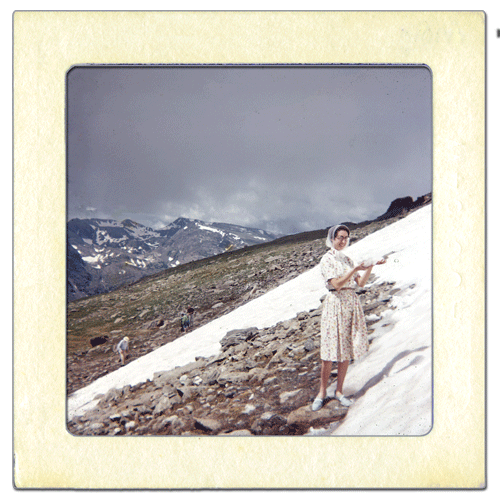
In the Rockies, I make a snowball on my birthday!

Web_Marian-making-snowball

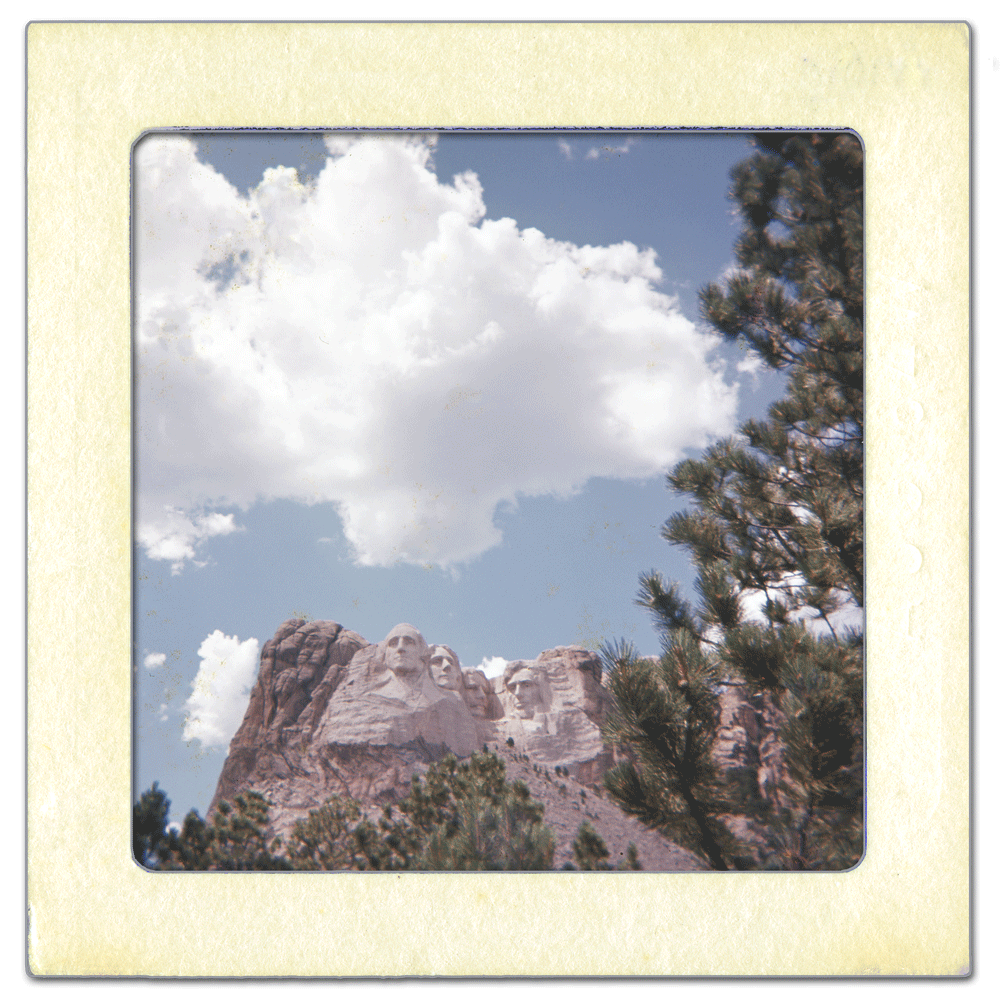
We were entranced by presidents, puffy clouds, national parks  . . .

__1964_Mt-Rushmore_02_+NATural-mount_1000pix_72dpi

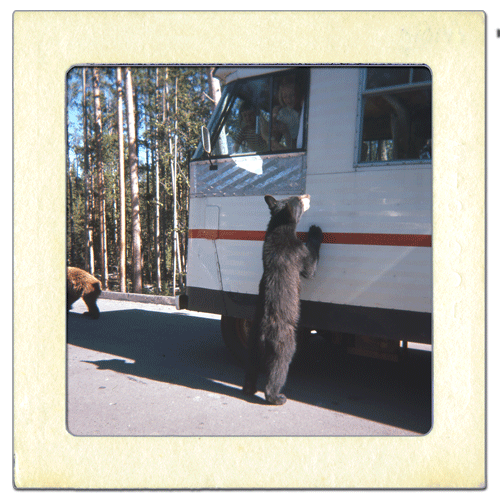
Yellowstone, 12 million acres of gorgeous scenery - even bears want a part of the action
Yellowstone, 12 million acres of gorgeous scenery – even bears want a part of the action

And the Magnificent Grand Canyon

Web_Joann-and-Marian_angled_Grand-Canyon

Web_Marian-and-steer

Oregon and California: Myrtle trees, Joshua trees, Dates and Olives!

Web_Joann-and-Joshua-tree

Joann and almond tree
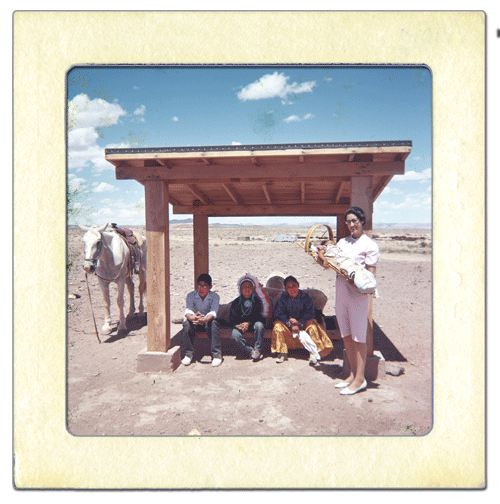
Navajo Indian Reservation: Family was pleased to pose in exchange for some pesos

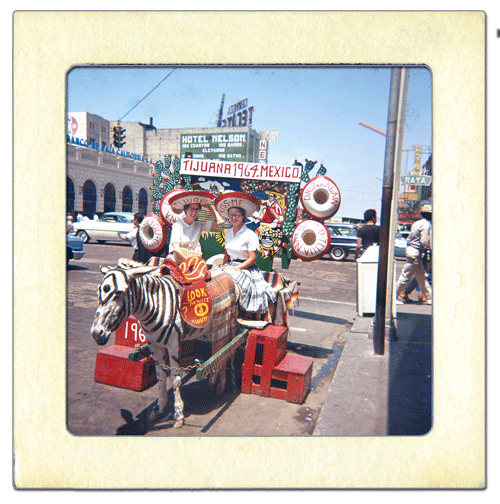
Tijuana, Mexico: sombreros, a heady substitute for our prayer caps. Joann had no idea she was inviting kisses!

Web_Marian-and-Joann_Tijuana

What We Wore

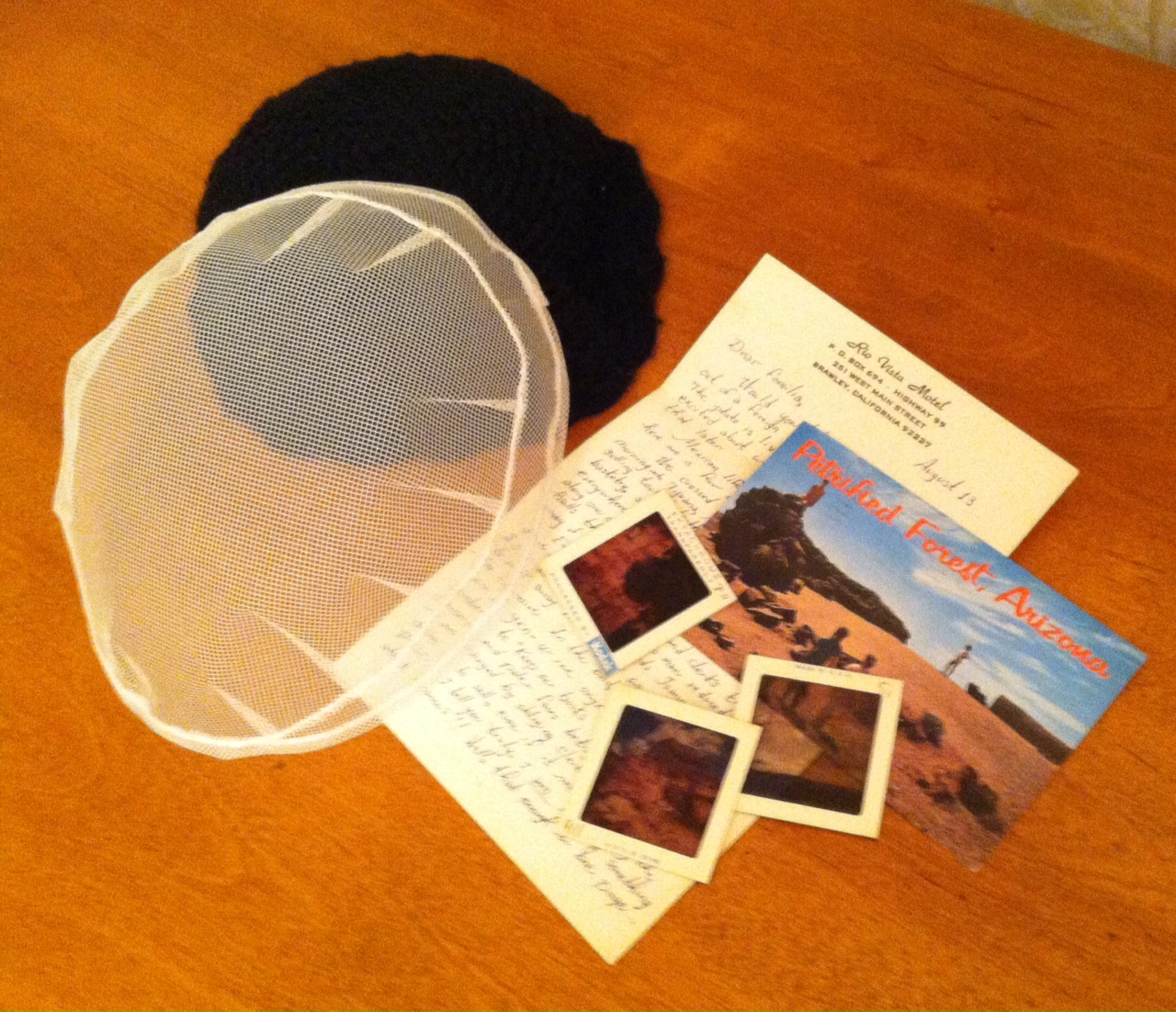
The photos prove our plainness. We always had something on our heads: prayer coverings, black bonnets on top of our caps for Sunday in Salt Lake City, Utah. Accordion pleated plastic wind-breakers for stiff breezes or rain. Dresses or skirts – absolutely no slacks or shorts.

Grandma Longenecker gave me a travel iron – no permanent press fabrics yet in our wardrobes in the Sixties.

Closeup of prayer covering and bonnet like Joann and I wore on the trip with Kodak Ektachrome slides, letter home and post card from the Petrified Forest, Arizona

Days were HOT!

One day it was 110 degrees in a car with no AC. Our Boontonware cups melted in the rear view window. Our backs made puddles on the seats, so we tried the feet-in-air position, backseat monkeys! Here below are the Boontonware cups before they melted! And, yes, photos at state lines were staged – part of our ritual.

Web_Wyoming-sign

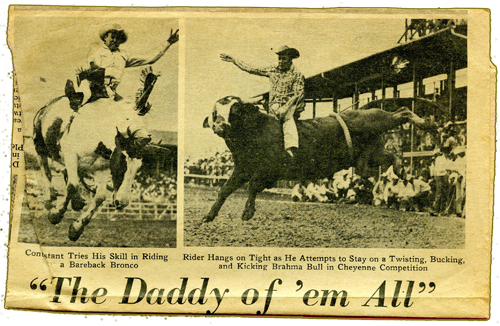
Uncle John couldn’t wait to get to Cheyenne, Wyoming to see the Rodeo, The Daddy of ’em All during Frontier-land week.

*1964_Wyoming Rodeo_newspaper_300pix

What We Did at Night

Sometimes Joan and I disturbed the peace of the Metzler pair next door in the motel. Once I kicked down a picture on a motel wall in Wisconsin and nearly fell on my head to try to retrieve it. Daily we wrote in our diaries and totted up our expenses down to the last penny.

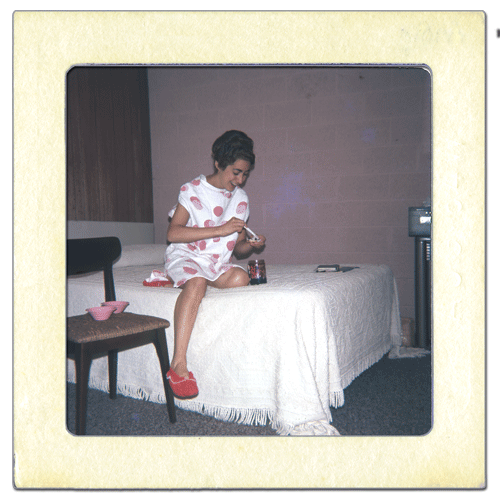
Usually we snacked and read books. One night I lowered the hem on a skirt with my sewing kit to comply with standards of Lancaster Mennonite School, where I would return to teaching in the fall. Here I’m making a feast of boysenberry bread near Kanab, Utah.

Web_Marian-and-boysenberry

Many thanks to photo-enhancer Cliff for bringing faded memories back to life!

How did I pay for this trip on my slim school teacher’s salary? What secrets did my diary and expense book reveal? Did anyone from home remember my birthday? Find out in my next post!

Purple Passages: Secrets of Grimke House, Charleston

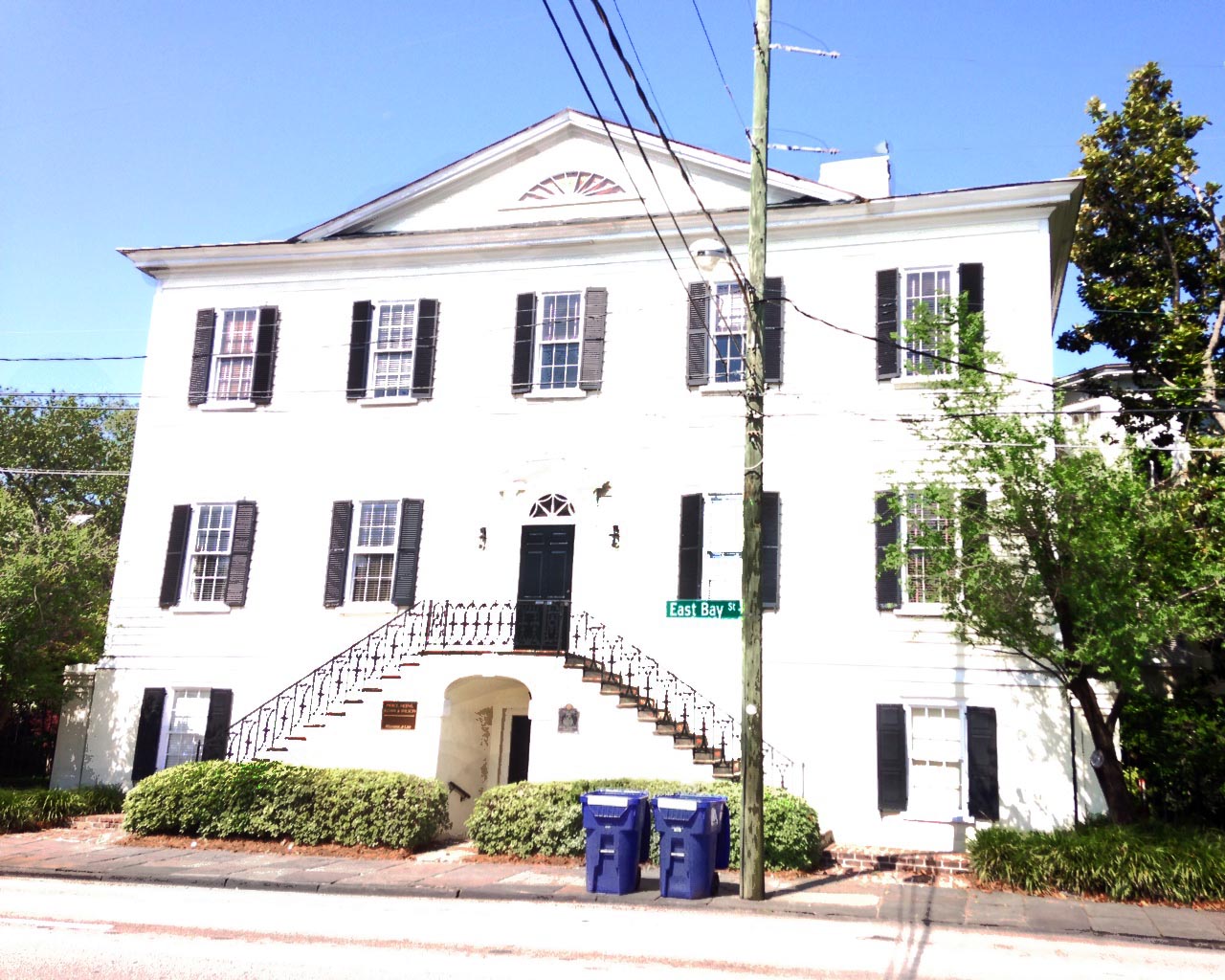
“Heidi, would you mind stopping by 329 East Bay Street before we leave town?”

We were on our way out of Charleston during our recent road trip, and my niece Heidi graciously agreed to stop her SUV long enough for me to catch a snapshot of the Grimké House basking in the bright morning sun. Its open arms-double staircase once welcomed visitors with a hospitable hug. (Until recently it housed attorneys’ offices, so you can draw your own conclusion about its more recent history!)

Grimke House_Charleston_mod

This house was made famous by Sue Monk Kidd’s book of historical fiction The Invention of Wings. Here is an excerpt from my review:

“ . . . the novelist creates parallel stories representing two strata of early nineteenth-century America, alternating chapters with the voices of two engaging characters: the aristocratic Sarah Grimké and the hand-maid (creative name for slave) assigned to her, Hetty Handful Grimké. Kidd’s sweeping novel is set in motion on Sarah’s eleventh birthday, when she is given ownership of ten-year-old Handful. Over the next thirty-five years, both strive for a life of their own ‘bucking the constraints of cultural attitudes toward women and slavery, which Sarah and her sister openly challenged.'”

All the purple passages quotes today are pulled from the pages of The Invention of Wings, Sue Monk Kidd’s historical fiction about the Grimké family:


The Weather

“I slipped through the back door into the soft gloom, into the terror and thrill of defiance. The sky had gone cobalt. Wind was coursing in hard from the harbor.” (50)

(We experienced a Charleston, SC storm downtown as we entered this city May 7, 2015)


Mosquitoes

Mother Mary had ordered “the mosquito netting out of storage and affixed above the beds in anticipation of the blood-sucking season, but having no such protection, the slaves were already scratching and clawing their skin. They rubbed themselves with lard and molasses to draw out the itch and trailed its eau de cologne through the house.” (56)

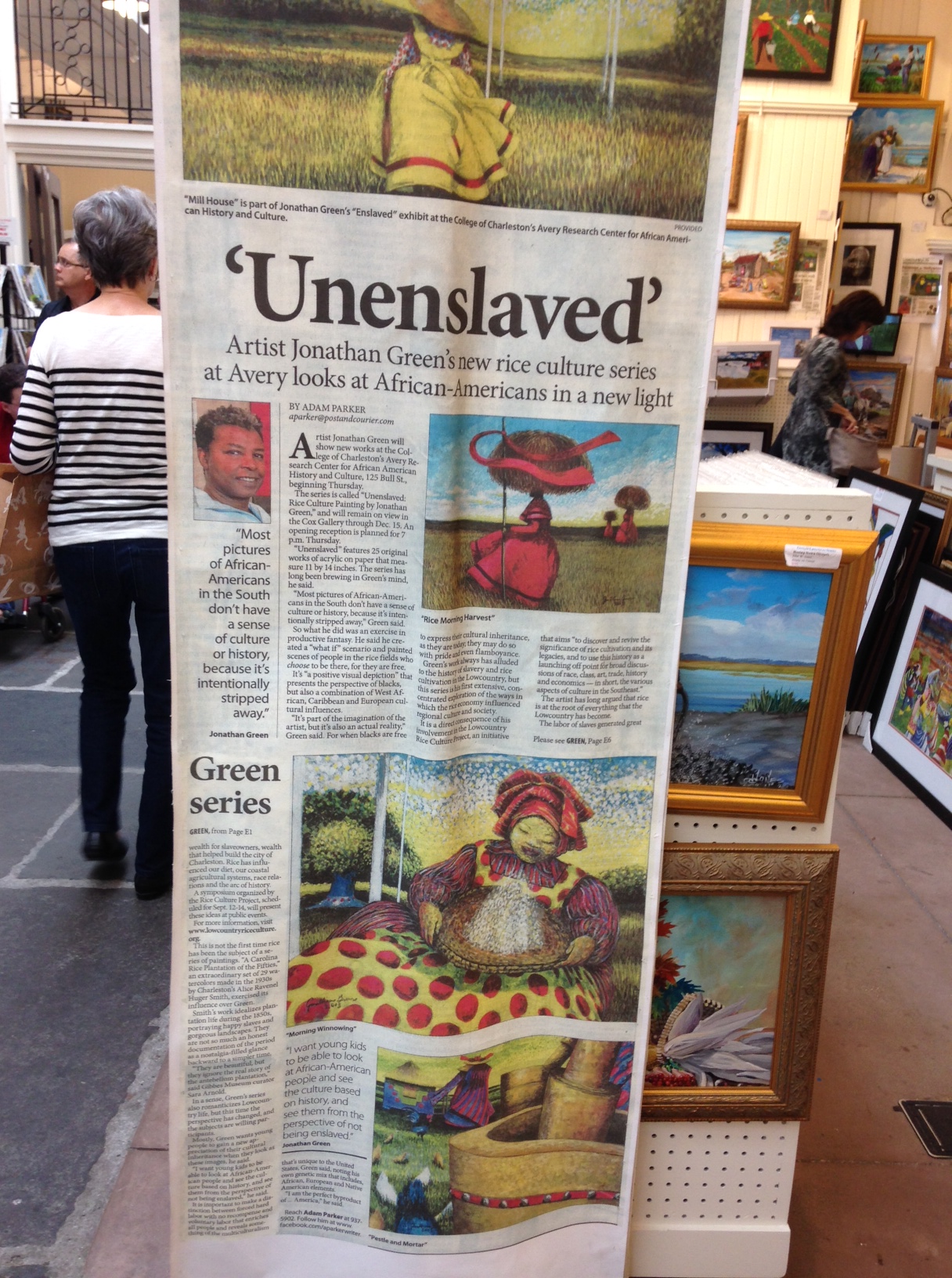
(Disparity between the races no longer noticeable in Charleston today, at least to tourists. )

Wall-hanging on sale in Charleston on Market Street


Despair

“My breath clutched at my ribs like grabbing hands. I closed my eyes, tired of the sorry world.” (280)


Missing Someone

Sarah’s unrequited love: “Nina was speaking now, her face turned up to Theodore’s, and I thought suddenly, involuntarily of Israel and a tiny grief came over me. Every time it happened, it was like coming upon an empty room I didn’t know was there, and stepping in, I would be pierced by it, by the ghost of the one who once filled it up. I didn’t stumble into this place much anymore, but when I did, it hollowed out little pieces of my chest.” (281)


Yearning for a better world

[Lucretia] “leaned toward me. ‘Life is arranged against us, Sarah. And it’s brutally worse for Handful and her mother and sister. We’re all yearning for a wedge of sky, aren’t we? I suspect God plants these yearnings in us so we’ll at least try and change the course of things. We must try, that’s all.’” (275)


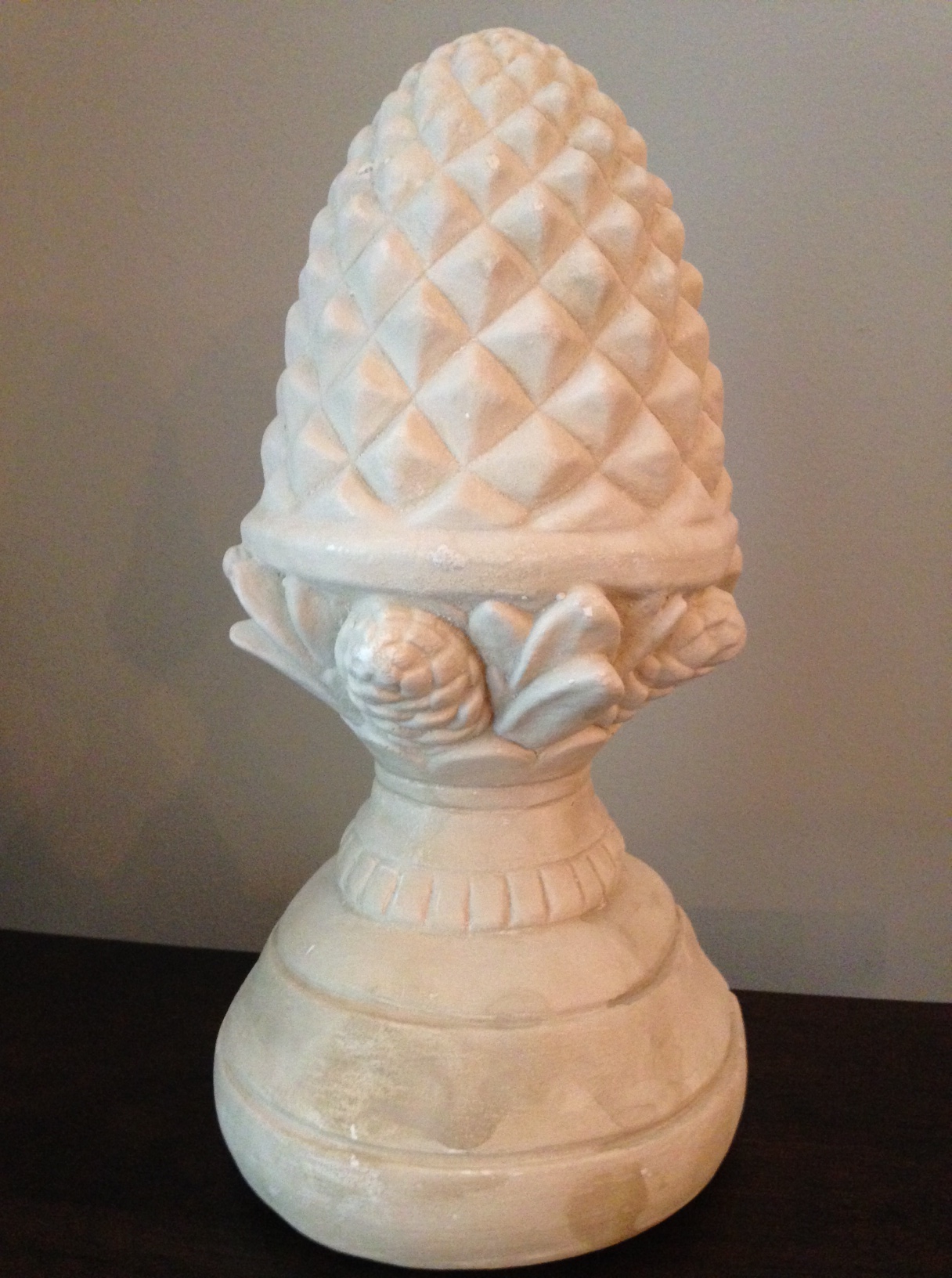
The Pineapple: the universal symbol of hospitality seen everywhere in Charleston's interiors and exteriors
The Pineapple: the international symbol of hospitality seen frequently in Charleston’s interiors and exteriors. Daughter Crista purchased a pair of these.

 We must try, that’s all!

Share your words: your thought, a quote or story adds to the conversation. It’s always nice to meet you here!

Coming next: Jenna’s Rainbow Cake: A Pot of Gold?

An Orphan Speaks on Mother’s Day

Mom+Marian_2 mos_5x9_300

This is my first Mother’s Day without my mother, Ruth Metzler Longenecker. To say I miss her is an understatement of the highest order. Technically, I could be considered an orphan with both my mother and father gone. However, with my own extended family and considering my age, I doubt that such a designation applies.

Is there a word for my status without a living mother or father at my age? I wonder.

Mother lived a full life with many happy moments and good health until a few days before her death on July 28, 2014. Over her lifetime, she had seen phenomenal changes in American culture, including technological ones as shown here:

Mennonite Women_new phone_p89

Anna Catherine (Herr) Houser was speaking/listening on this candlestick phone in 1919 at the time Mother was a year old.  Credit: Mennonite Women of Lancaster County, Joanne Hess Siegrist, 1996, page 89.

The last photo I snapped of Mother with her finger hovering over my iPhone captures the moment she looked up momentarily from “paging” through photos of her grand-children and great grand-children.

MomLastPhotoTogether

David Whyte, Crossing the Unknown Sea

The death of someone closest to us is always a form of salutation, a simultaneous Goodbye to their physical presence and a deep Hello to a more intimate imaginal relationship now beginning to form in their absence.  (46)

A “deep Hello to a more intimate imaginal relationship”? We’ll see . . .

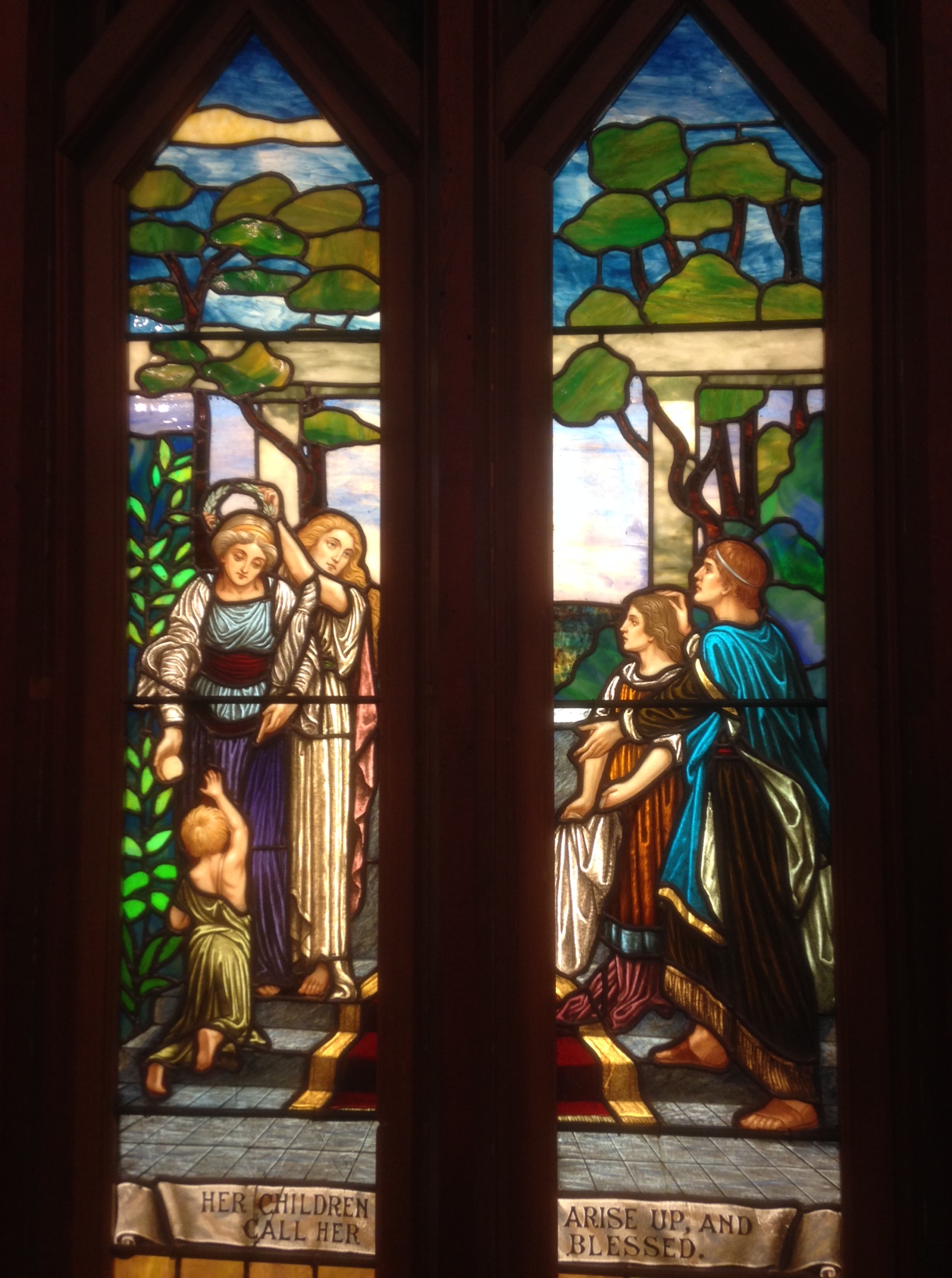
“Her children rise up and call her blessed.” Prov. 31:28
 Christ Church Frederica, St. Simon’s Island – Tiffany glass

Have you experienced the death of your mother or grandmother? If a mother, is there a word for one’s status now, bereft of a mother and father? Your suggestions always appreciated here.

Coming next: The Longenecker Sisters’ Road Trip, Part 1