The Million Dollar Baby: Ian’s Miracle Birth

Since my mother’s death in July, I have written several posts of her home-going including A Grief Observed: Missing Mother and Crossing the Bar.

This time I’m focusing on a birth, our grandson Ian’s miraculous birth seven years ago this week. According to the doctor’s calculations, he was scheduled to arrive on January 9, his Grandpa Beaman’s birthday. Instead he made his appearance on his mother Sarah’s birthday, October 5.

All births are miraculous, really, the tiny embryo maturing into a marvelous baby with millions of synapses making connections within the brain, a sense of rhythm and an ability to breathe and suckle at the same time. One study mentioned that babies can pick out the gender of other babies even when they are cross-dressed, something adults cannot do.

But Ian’s birth at 26 weeks gestation weighing a mere 2 pounds, 5 ounces meant many un-connected synapses and a severely undeveloped breathing apparatus. For weeks it was touch-and-go, and we weren’t certain that we would be bringing him home from the NIC Unit at Wolfson Children’s Hospital. Aside from the frightening awareness that Ian had a hole in his heart, we were introduced to a whole new vocabulary of problems: bradycardia, retinopathy, hip dysplasia. Translation: Slow, interrupted heartbeat requiring a nose cannula, undeveloped blood vessels in retina, and an immature hip ball and sock requiring a harness to hold legs in a frog-like fashion. Here is his photo-story:

Ian_02_NIC Unit_112707

Hello, world!
Hello, world!

My journal records that on November 29, 2007 Ian weighs 4 pounds, 3 ounces and is taking three bottles a day. He is also employing the services of a speech therapist and an occupational therapist along with physical therapy.

How would a speech therapist help a premature baby who can’t speak or an occupational therapist assist a child whose main job was trying to survive? Speech therapy facilitated the transition from tube feeding to bottle feeding and the occupational therapy improved the range of motion inhibited by hip dysplasia.
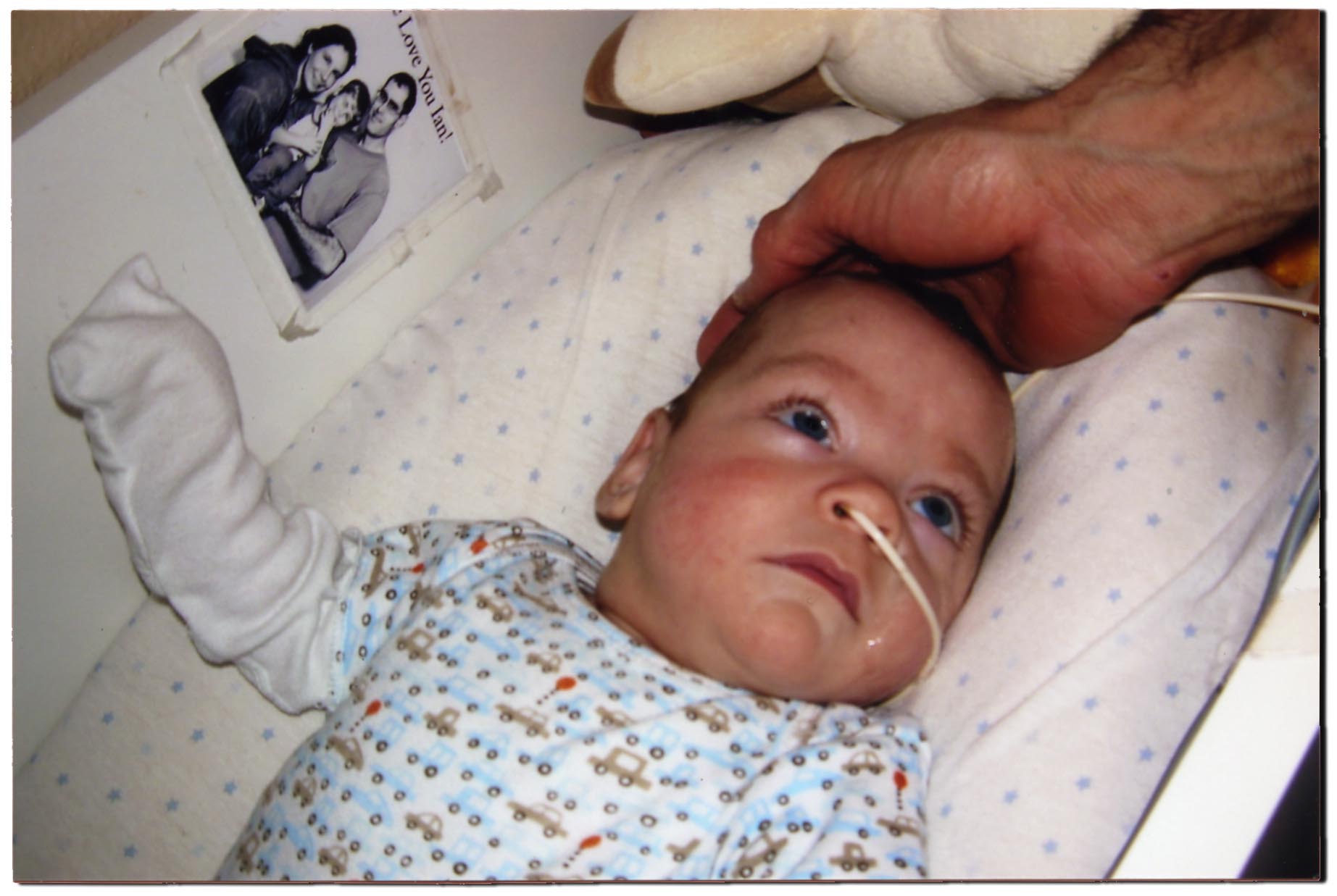
"Did you finally bring me home?" asks Ian.
“Did you finally bring me home?” asks Ian.

After a 14-week stay in the hospital, Ian is brought home. Glory, hallelujah! Though still on a breathing apparatus, he resumes a more normal life with his family, under the watchful eye of his brother.

"Ian, here's my advice," says Dr. Curtis.
“Ian, here’s my advice,” says Dr. Curtis.

Praise God – At age seven, Ian is now at the 98 percentile in height and weight for his age and is taking an advanced course of study in first grade at his school. There are delays in behavioral development though, possibly attributable to his prematurity. But who can be sure whether it’s prematurity or personality.

IanGrade1BrainsBrawn

*  *  *

I wrote a letter to each of my grand-children before their first birthday and sent it to their home address so it would have a post-mark. In Ian’s case, I waited until the one-year mark to write and send his letter. Call it a welcome-to-the-world, a blessing from Grandma/NaNa in writing. Here is a copy of the letter he received:

IanLetter1

IanLetter2

Ian has not opened this letter yet though he is able to read. In fact, none of the grand-children have opened and read their letters and I’m wondering at what age they should be read. It seems the opening and reading calls for some special occasion. What do you think? I welcome your suggestions!

For you created my inmost being;

you knit me together in my mother’s womb.

  I praise you because I am fearfully and wonderfully made;

your works are wonderful . . . .

Psalm 139: 13, 14   NIRV

Your advice on letter reading welcome. Other comments or suggestions from your own experience. You will always get a reply from me and maybe from other readers. Thank you!

“Every child is a story yet to be told.”   Sesame Street

10 Things My Family Did or Didn’t Do on Sunday

You must not work on Sunday, Sunday, Sunday

You must not work on Sunday because it is a sin.

But you can work on Monday, Tuesday, Wednesday,

Thursday, Friday, Saturday till Sunday comes again.

Sung to a melody with a 4-note range similar to “Here We Go Round the Mulberry Bush.”

10 Things My Family Did or Did Not Do on Sundays

What we did . . .

  1. Went to church, always unless deathly ill
  2. Invited folks to a nice Sunday dinner after church – or were invited to home of relatives or friends. “Don’t look on turns” was a saying spoken readily from one hostess to the other but not strictly adhered to. Dinner served with fine china, crystal, best silver unless it was a picnic
  3. Drove in the Studebaker to Uncle Landis, Uncle Abe or Aunt Verna’s house – Didn’t call ahead, just appeared at the door – and they would do the same!
  4. Took a walk in the woods or across fields
  5. Nap, my mom in the bed, my dad in his chair
Daddy drying dishes - Only on Sundays after church!
Daddy drying dishes – Only on Sundays after church!

What we never did . . .

  1. Ate in a restaurant
  2. Went shopping
  3. Did the laundry
  4. Cleaned the house
  5. Mowed the lawn

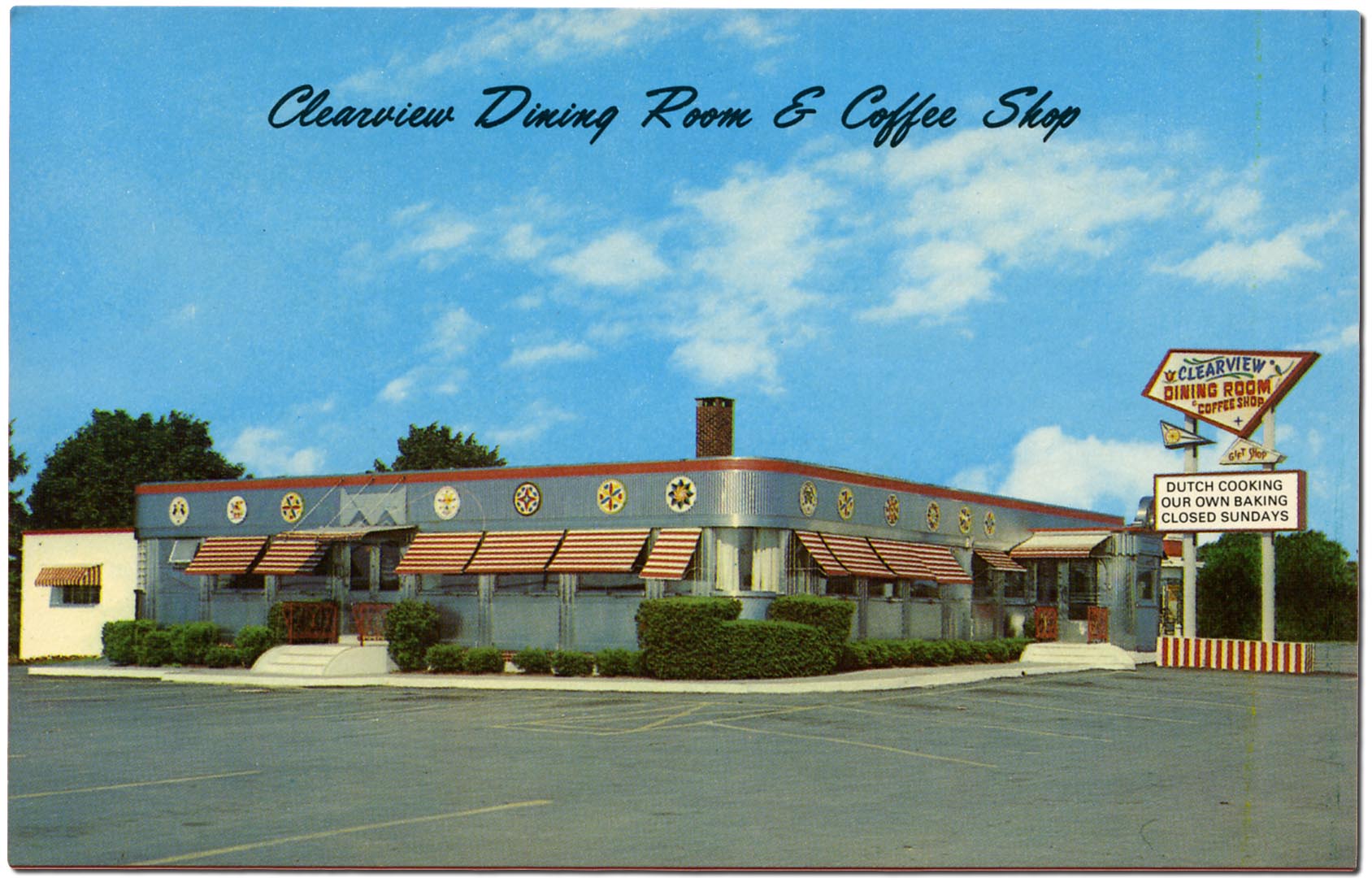
Our neighbors, Paul and Edna Mumma, owned and operated the Clearview Diner along Route 230 between Elizabethtown and Mt. Joy, Pennsylvania. As members of the Church of the Brethren (an Anabaptist group similar to the Mennonites) the Mummas adhered to the closed-on-Sunday rule as well.

Clearview Postcard_front

Clearview Postcard_back_back

Nowadays most retail stores are open seven days a week. Banks and almost all businesses are accessible online even on Sundays. Yet there remain a few stores like Hobby Lobby and Chick-fil-A whose doors are locked on the Lord’s Day, the latter with soaring profits.

Chick-Fil_A_sign

Your thoughts please – a reminiscence or an opinion!

Coming next –  Ian’s Miracle Birth: The Million Dollar Baby

Milk Toast: Good for What Ails You

Diners at the Bâtard, an upscale restaurant in Tribeca, NYC can enjoy a dessert dish called milk bread, “A Christmastime treat from Germany,” says the September 1, 2014 issue of the New Yorker. The article goes on to describe this milk bread as having crème-brûlée crackles with innards like French toast or the texture of iced donuts.

New Yorker_Food & Drink

My German-Swiss Grandma Longenecker’s milk bread was much simpler. In fact there were only two ingredients: Milk and toast, probably with a little butter. Picture a bowl of warm milk and pieces of toast snippled up making a kind of stew. And she called it milk toast, not milk bread, serving it as a balm for belly aches or whatever else ailed us.

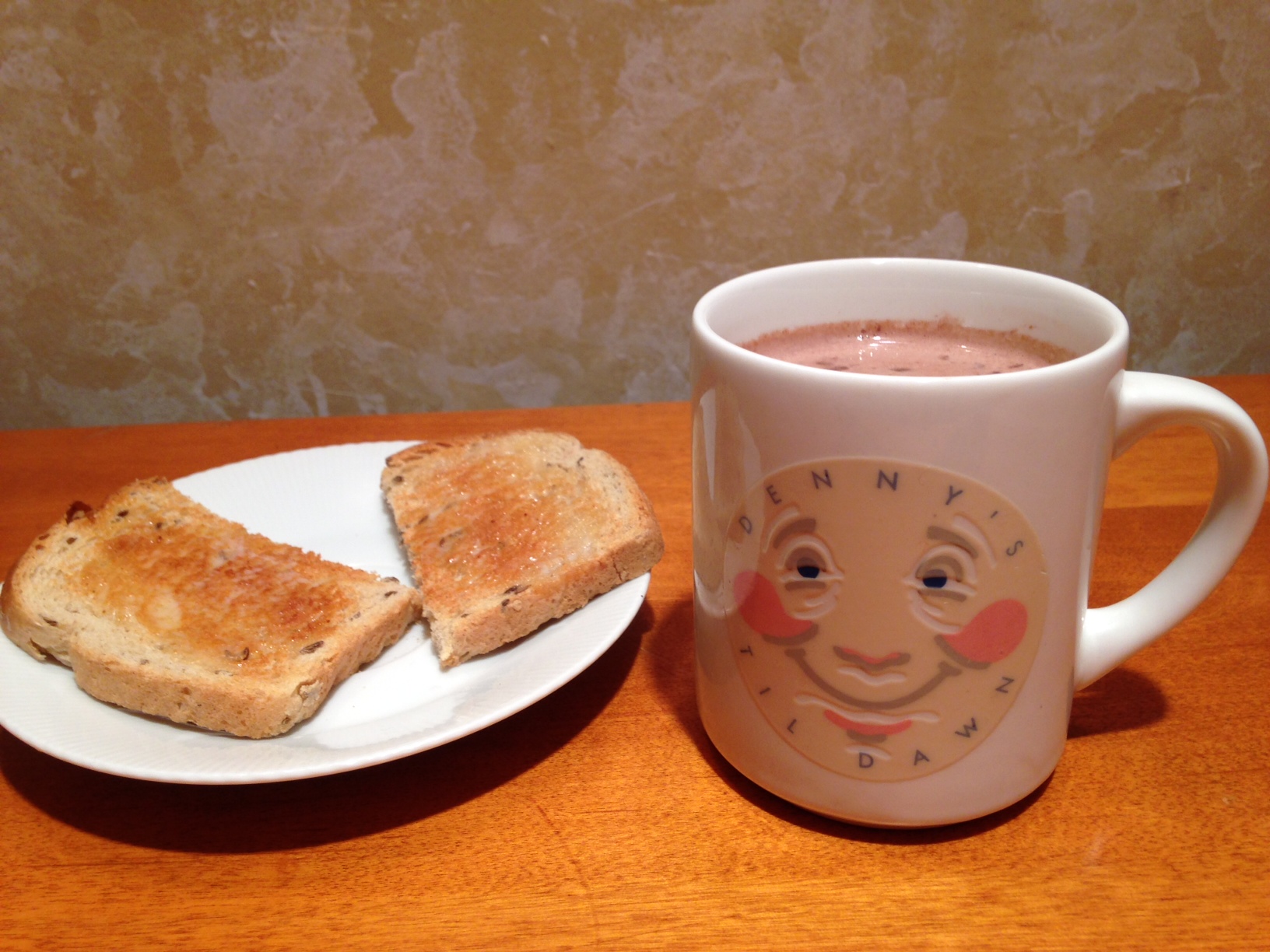
Another milky treat Mother served in the winter-time before school: Hershey’s hot cocoa with buttered toast for dipping. Yes, we dipped the toast in cocoa, inhaled the chocolate fragrance as the warming lump slipped slowly down our throats. Reinforcement for the cold walk to the bus-top. Uh-um, good!

CocoaToast

Do you have any milk with bread images in your memory bank? Any other cool weather warm-up recipes to share?

Coming next: 10 Things Our Family Did/Didn’t Do on Sunday

Purple Passages and a Mirror


FlowersHappy

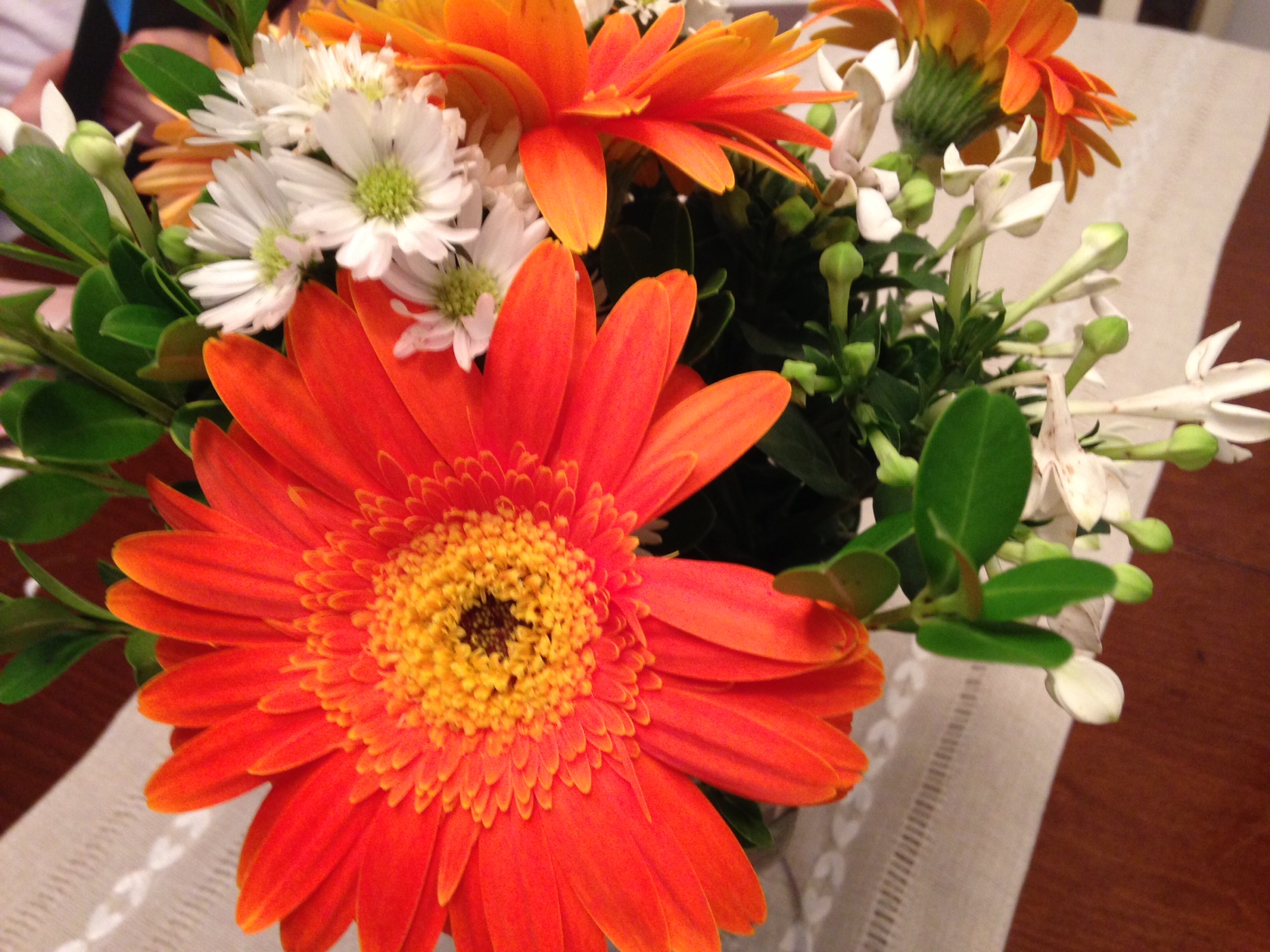
The earth laughs in flowers.”     –  Ralph Waldo Emerson


MIRRORS

Life is a mirror and will reflect back to the thinker what he thinks into it.   – Ernest Holmes

 MirrorSandraC

Mirrors can both reflect and distort as Tennyson suggests:

And moving through a mirror clear

That hangs before her all the year . . .

But in her web she still delights

To weave the mirror’s magic sights . . .

– The Lady of Shalott

An old friend is the best mirror.   – George Herbert

 *  *  *

PHOTOGRAPHY

Definition of photograph before the digital era: a picture painted by the sun without instruction in art.    – Ambrose Bierce

Photography takes an instant out of time, altering life by holding it still.  – Dorothea Lange

Later we’ll look at photographs, the way every family does, making much of the frozen moments, the icons of ancestry, the dead laughing right in your face, or just staring that non-committal historical gaze.”     – Patricia Hampl   The Florist’s Daughter SadieLandisPortrait


What Tallulah Bankhead thinks about photographs: They used to photograph Shirley Temple through gauze. They should photograph me through linoleum. Ha!

*  *  *

Photographs and mirrors. Your thoughts or quotes about either.

Do you think they have anything in common?


Coming next: Milk Bread: Good for What Ails You

The Beach at Sunset: Crossing the Bar

Sunsets, especially sunsets on the beach are # 1 on the list of clichés to avoid in photography. Yet beach sunsets persist on Instagram and Facebook because they are breath-taking, evocative.

Photo credit: Jackie Gassett


. . . the gauzy hinge between sea and sky, the limitless horizon dividing the elements, the disappearing point where we were headed.”

                   Patricia Hampl  The Florist’s Daughter

My mother had a placid and accepting attitude toward life and death. At her funeral the hymns sung by the congregation were full of hope, “I Stand Amazed” and “The Love of God” among them. Another song in the Mennonite Church Hymnal entitled “Sunset and Evening Star” (which was not sung) pulls out the first four words of Tennyson’s poem “Crossing the Bar” written in 1889 just three years before he died.

Crossing the Bar

Tennyson, also appearing to accept death as part of life, uses the metaphor of the sandbar on the beach to paint a picture of the tide of life pushing out to the “boundless deep” to which we return. The poet hopes that though he may be carried beyond the limits of time and space as we know them “he will look upon the face of his ‘Pilot’ when he has crossed the sand bar.”

This past July Mother crossed the bar into eternal glory and there she has beheld the face of her Pilot. Oh, how we miss her.

But now I must cross the bar of challenge and opportunity ever looking for new horizons. How about you?

What bar of challenge and opportunity confronts you now?


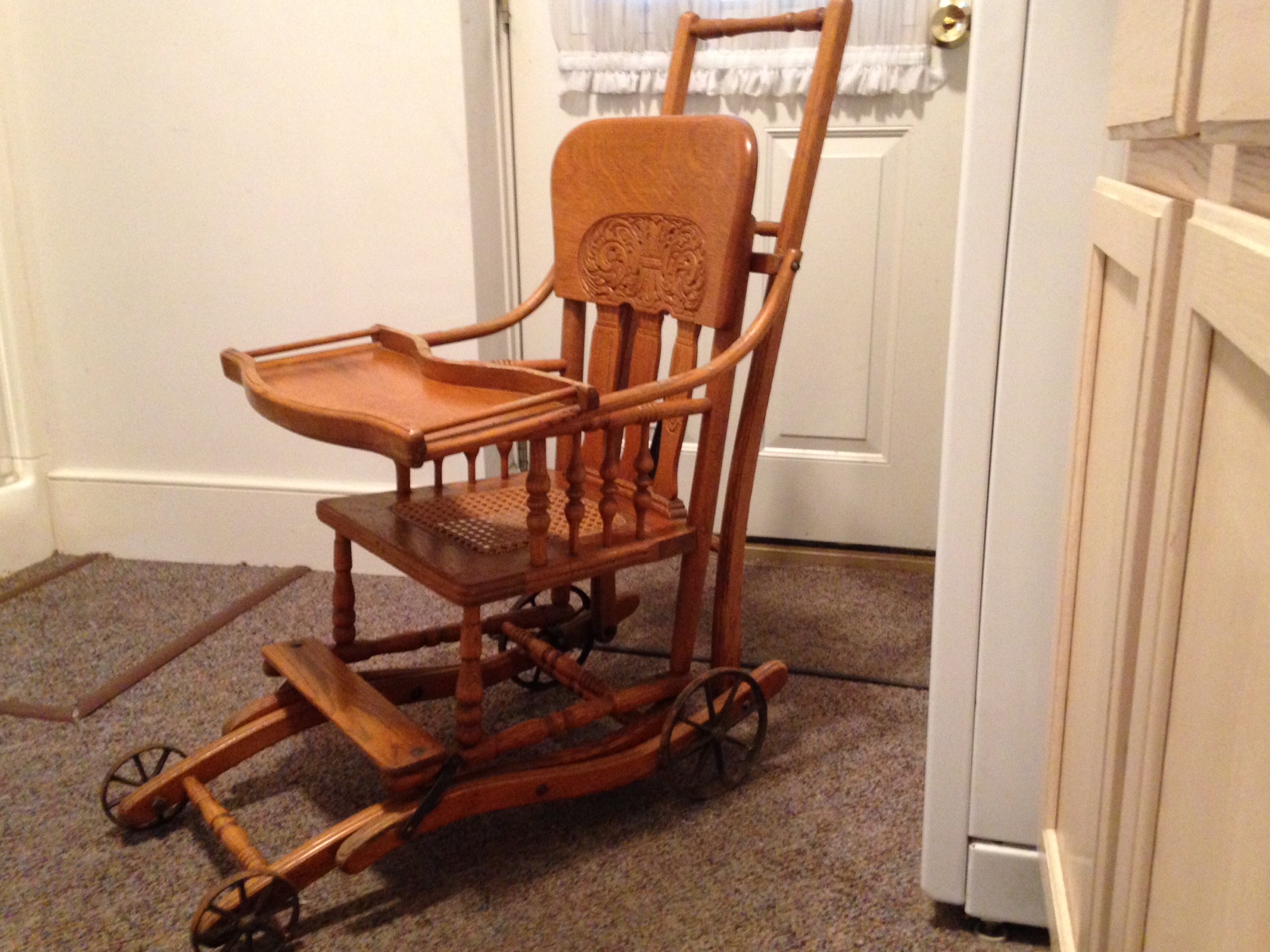
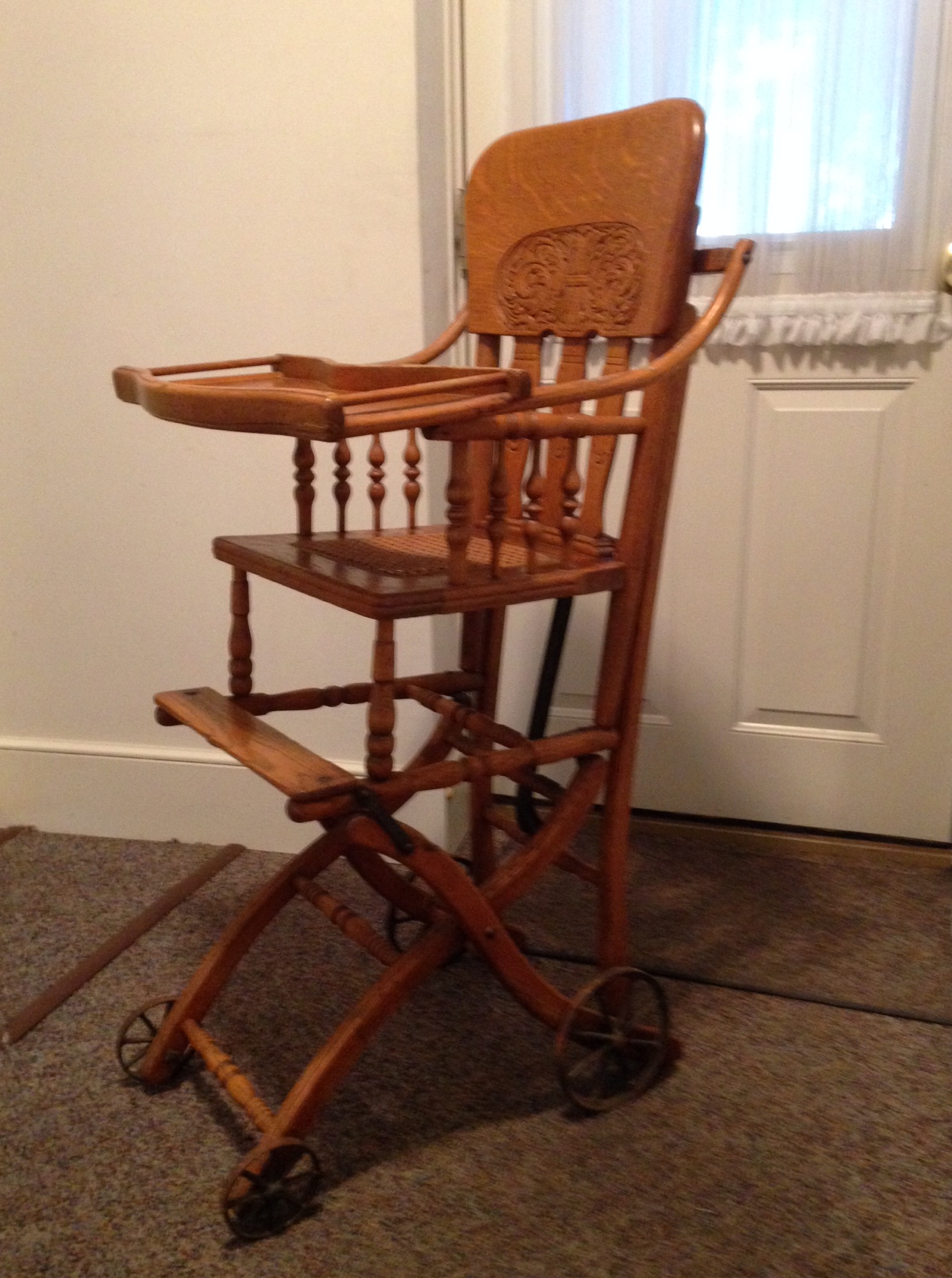
The Wonda-Chair and the Heirloom

Did you as a baby sit in one of these?

Did you buy one for your child?

Image: eBay
Image: eBay

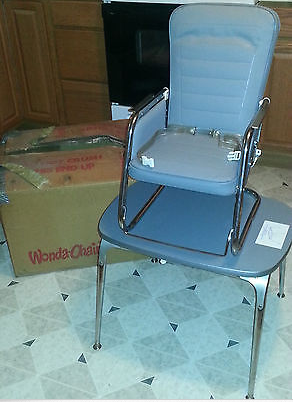
Produced by Babyhood Industries of Shrewsbury, MA, the Wonda Chair was “a do-it-all, all-in-one, convertible wonder. As the seller mentions, the multi-piece furniture/stroller kit mixes and matches to create the following: Hi-chair, youth chair, chair and table, dressing table, desk set, rocking chair, stroller, baby carriage, basinette, and cradle.”

As expectant parents, we fell prey to this marvel and sunk hundreds of dollars into this magnificent wonder, the Wonda Chair. We used it mostly as a high chair and stroller for our children. Later, Crista and Joel pushed each other around on the sidewalk with the stroller base. Here they are improvising their own version of a horse and buggy with a dog and Wonda Chair carriage wheels.

WondaChairCristaJoel

Recently, we have been going through Mother’s things in her attic and came upon this 19th century marvel—a high chair that converts into a baby carriage—hand-made and still serviceable.

MomChairLow

MmChairUp2

Mother was the first daughter in the family after four brothers, so she is the fifth in her family to use the chair. It is vintage, however, and probably handed down to the family from the previous generation, frugal Mennonites who valued quality and heritage.

Mother in high chair, 1918
Mother in the Metzler high chair, 1918

Two wonderful chairs – the Wonda Chair and the heirloom . . .

*  *  *

Your turn: Take your pick – The Wonda Chair or the Vintage chair?

Or tell your tale of special pieces handed down in your family.


Come to the Storybook Chair, the Storybook Chair . . .

So now it matters almost not at all to any of them except as a storybook matters; loved in childhood but outgrown in adolescence, it still matters, still instructs, still is part of what the adult becomes.

Phyllis Tickle, The Graces We Remember: Songs in Ordinary Time (126)

When our children Crista and Joel were little, a prelude to nap-time was their mother chanting in a sing-song voice: “Come to the storybook chair, the story book chair, the story book chair, and we’ll read . . . .” Hearing that, they’d head for the rocking chair and climb on my lap for colorful Richard Scarry pages or the clever tricks of a George and Martha book. I’m carrying on a tradition that began with my mother who read to me from picture books, and also recited poetry from her school days.

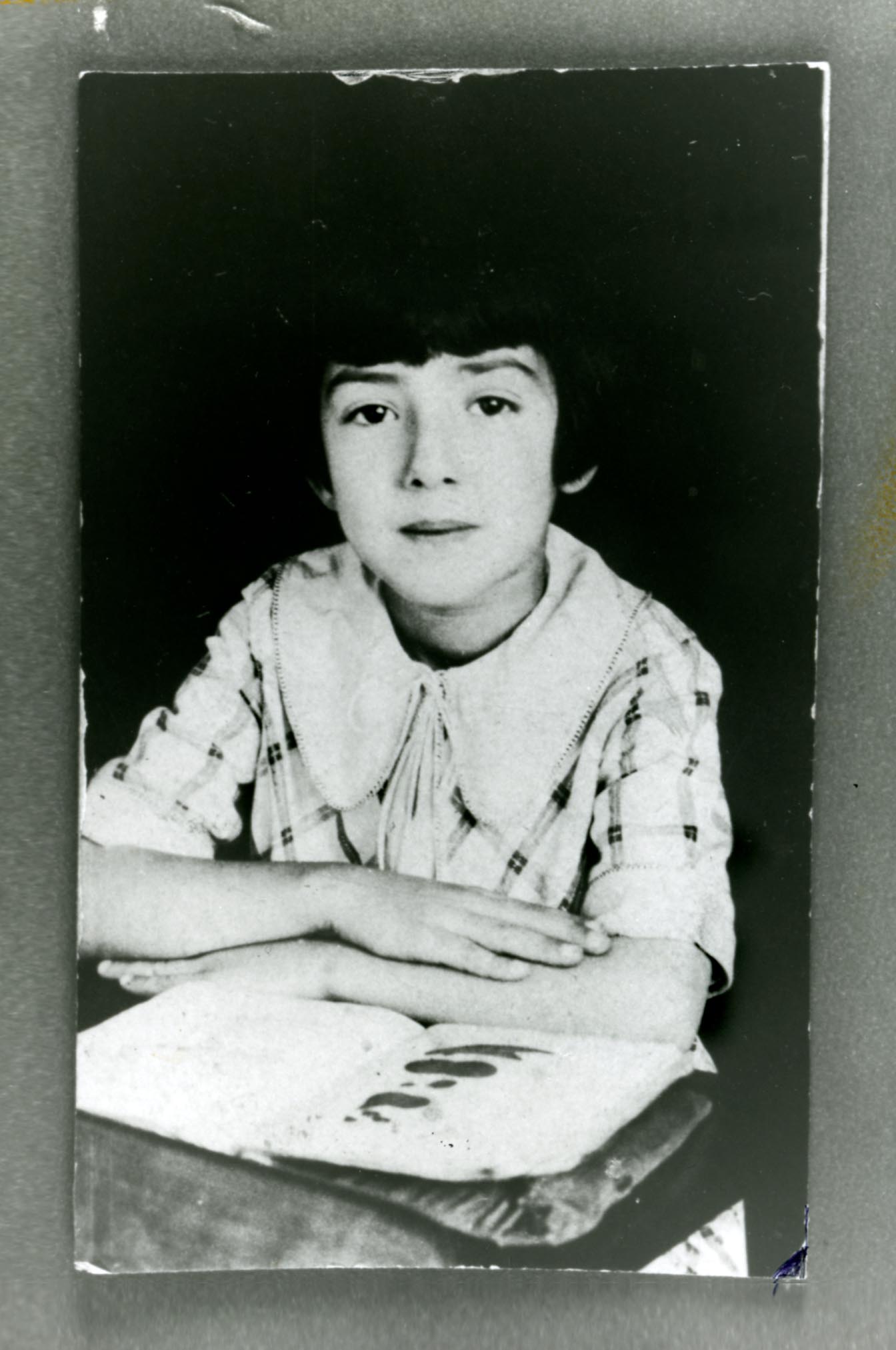
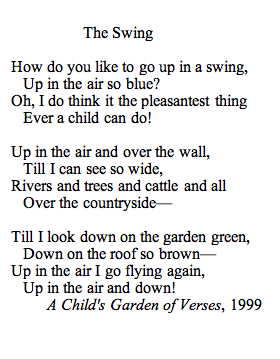
My journal tells me (and it does not lie) these are the poems by Robert Louis Stevenson that Mother recited to me in 1999 from her memories of Lime Rock School near Lititz, Pennsylvania in the mid 1920s.

Ruth Metzler  Lime Rock School  1920s
Ruth Metzler            Lime Rock School             1920s

The Swing PNG image


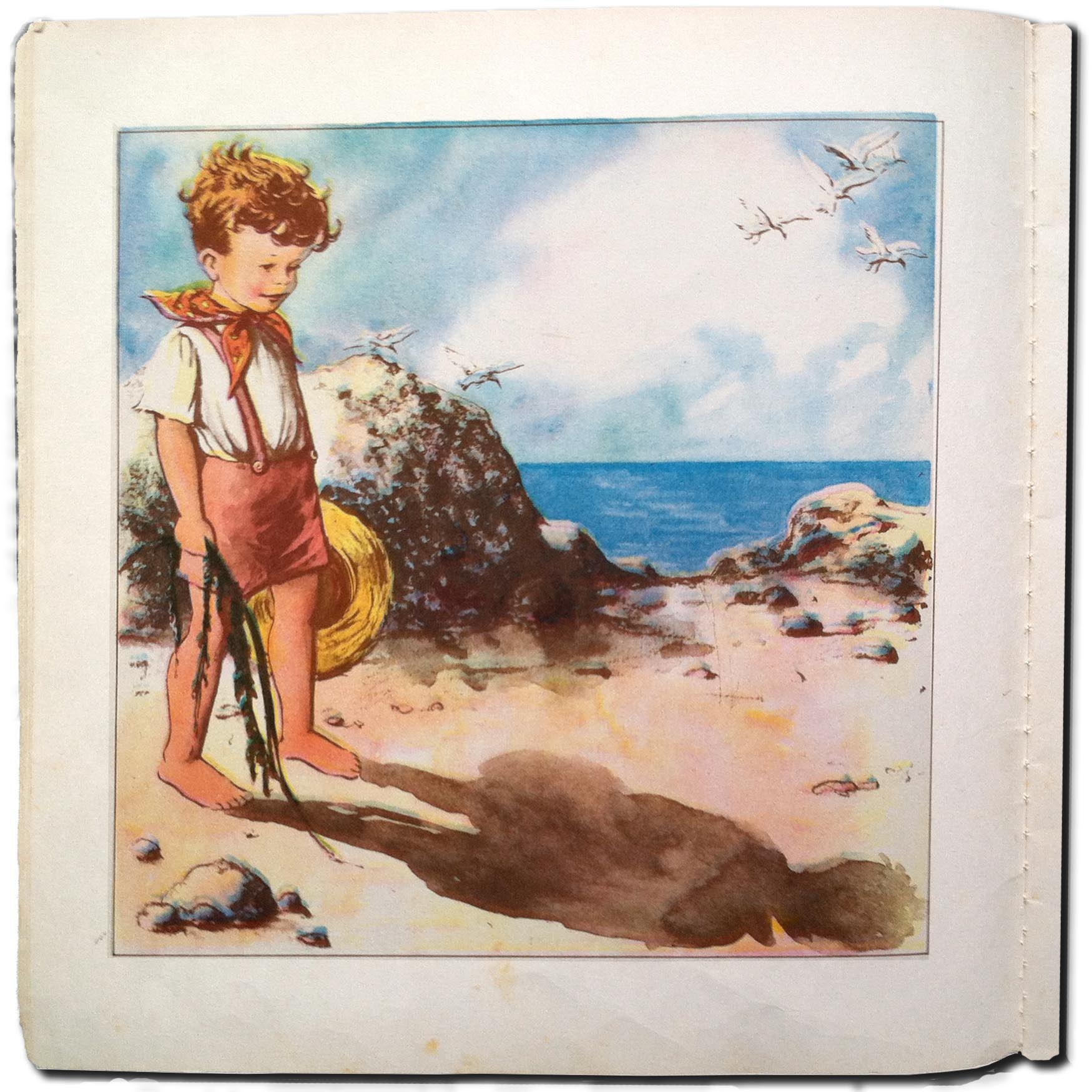
Illustrations from A Child's Garden of Verses, John Martin's House, Inc., circa 1945
Illustrations from A Child’s Garden of Verses, John Martin’s House, Inc., circa 1945

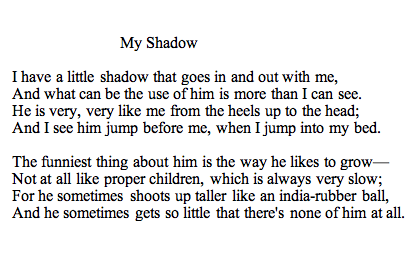
She also recited the verses of “My Shadow” from the “Golden Book of Poetry” 1947 with the familiar first two stanzas:

My Shadow png

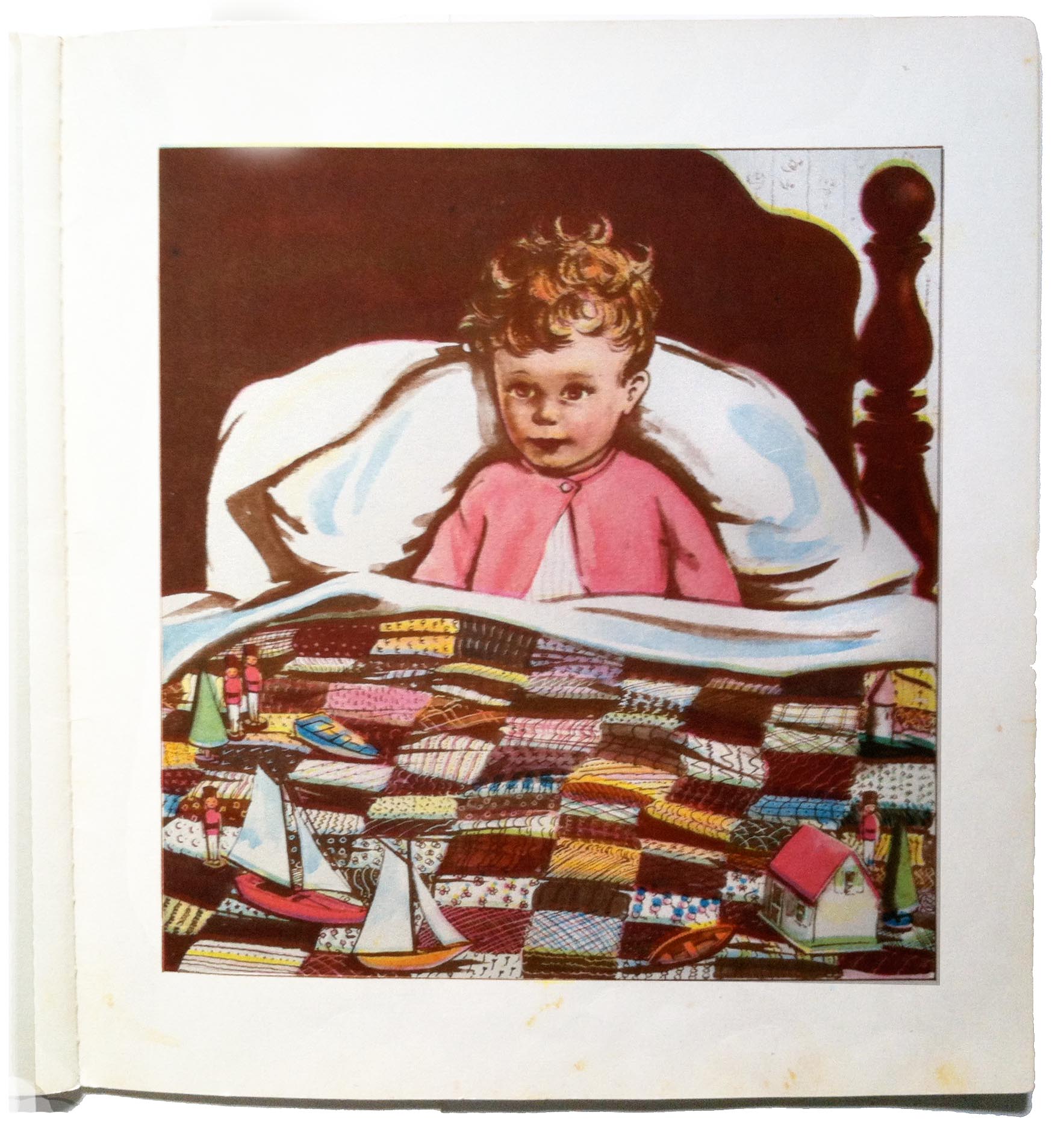
At the beginning of second grade, the summer I turned seven, I had my tonsils removed and among my memories (besides drinking chocolate milk through a straw and trying to swallow smashed bananas) is reading the poem “The Land of Counterpane” under a quilt that probably matched my own upon my sick-bed.

Land of Counterpane_6x6_300

LandOfCounterpane png

What are your early memories of reading? Did a friend or family member recite poetry or other words of wisdom to you?

Coming next: The Wonda Chair and the Heirloom

Dancing to a Different Tune: Kathy Pooler’s Memoir

Kathy and I are not old friends. In fact, our friendship is rather recent as we have explored each other’s blog posts early this year, discovering that we both were developing our writing skills after long, satisfying careers, hers in medicine and mine in education.

KathyPoolerBrighter

In March, she featured me on a blog post describing my writing process and in May I published a preview of her memoir now published in July 2014. Beyond this, we have discovered that our values are rooted in a strong Christian faith.

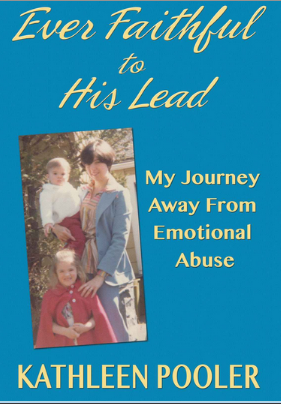
Kathy Pooler’s memoir Ever Faithful to His Lead is a smooth read but with a tale that is often tumultuous. Her memoir unfolds like a novel with pleasing dialogue and silky descriptions of her prom dress and her hand-made wedding gown in stark contrast to the rocky road she travels to become a strong, assertive woman.

In the course of her journey, Kathy earns several academic degrees among them the distinguished Certified Family Nurse Practitioner qualification. Yet she stumbles with poor choices in love, choosing one wrong partner after another in her search for a stable marriage like that she imagined her parents’ to be. In fact, she admits early on that she can trace her “inability to discern dangerous situations to a lack of exposure to anything out of the ordinary.”

Readers can applaud the resilient woman emerging from the frightened person who hid from her first husband in her hallway closet to a woman who is finally able to trust her own instincts. Her candor and vulnerability appear on every page. Kathy often pulls the reader aside to contemplate her motivation, as for example: “I was always second-guessing myself, quickly shoving doubts aside to paint the picture of what I needed the world to be.”

When you as reader want to snatch the blinders off the writer’s eyes and yell “Stop!” into her ears, you know the author has succeeded in pulling you into her world. This memoir is a cautionary tale for anyone on an elusive search for Mr. Right. For anyone already in an abusive relationship, Kathy’s story offers courage and hope. Admitting it is time to make big-girl choices, her last chapter promises, “Raw, hopeful, ready to dance to my own song—my new faith waiting patiently in the background.”

The book concludes with nine discussion questions for book clubs and a “Share the Hope” section with the notation that each purchase contributes toward the National Coalition of Domestic Violence Awareness Association. Author Pooler is already at work on a sequel: Hope Matters.

EverFaithfulCover

You can buy Kathy Pooler’s book at Goodreads and Amazon.

Kathy’s blog

Facebook page

Twitter page


Coming next: My Mother’s Recitations

Moments of Extreme Emotion: Meet Me Under the Bougainvillea

I have had many moments of extreme emotion. Some you may know about like flunking my driver’s test, an explosion in the curio cabinet, and a broken piano leg — and some you may not.

According to my journal, this particular moment lasted almost an hour and happened in Positano, Italy, a terraced town poised on a peninsula along the Amalfi coast by a vertiginous slope to the sea.

Positano_6x4_300

Quaint Positano rises up, up, up to houses crouched in cozy rows and leans down, down, down to the snug little village below. We leave the charming hotel, Villa Rosa, to spy out the sights and shopping. Positano itself is dripping with bellissimo scenes: lemons the size of grapefruit, grapes a million, shiny red peppers, elegant shoppes, delikatessens. Cliff wants to check out the sights first and I prefer the shopping, so we decide to meet at a certain time and place “under the bougainvillea” before we go our separate ways for awhile.

Now a host of pergolas of bougainvillea adorn the village, each pergola with blooms that cascade like crimson waterfalls. Of course, I think he must mean the one on the way down the steep street leading into the village.

Upper bougainvillea - where I thought we'd meet
Upper bougainvillea – where I thought we’d meet

In one of the shops, plates of lemon yellow and Mediterranean blue catch my eye with painting on the back “dipinto a mano per alimenti Positano” – hand-painted dish. They come bubble-wrapped so I can snuggle them against breakage between layers of clothing in my suitcase, I think. I can’t decide between the blue and the yellow, so I get two of each, complementary.

Soon it’s noon, the time we agree to meet before lunch. So I meander back up to the brilliant bougainvillea to people-watch and wait for my prince. I wait and wait and wait. No Cliff in sight! That’s just like him – losing track of time when he’s snapping photos. The minutes pass and I’m starting to get mad. The temperature on my “mad” gauge rises even higher as the sun beats down furiously on my head. Why didn’t I wear a straw hat and then I think “Where is that man?”

Mad turns slowly to sad as I realize he must have fallen over from heat exhaustion and now is lying at the foot of the Duomo, his camera case splayed out beside his prostrate body. Oh, my goodness, do they have ambulances in such a small town? I haven’t heard sirens here unlike Rome where horns hee-haw all hours like electronic donkeys. Finally, I convince myself Cliff’s not dead and probably still wandering around. My emotions cycle between mad and sad a few more times until I see a tall, blond man approaching me looking very mad himself, certainly not glad to see me again.

C.   “Where have you been? I’ve been waiting for you by the bougainvillea for almost an hour now!

M.   “Well, I could ask the same thing. I have been waiting ages under this pergola for you. I thought you might have keeled over from the heat. Where in the world were you?”

C.   “Don’t you remember?  The last thing we talked about was the bougainvillea by the Duomo, so I thought that was the place we were supposed to meet!”

Where Cliff thought we'd meet - by the Duomo
Where Cliff thought we’d meet – by the Duomo

We rehearse the scenario far too long and try to resolve the mix-up by arguing our own points of view, an exercise in futility. What we do agree on finally is a cool place for lunch which for us is a tomato-drenched pasta (larvae-shaped noodles) entré and an omelet. I exchange a pile of eggplant “aubergine” for an “ensalada mista,” garden salad.

Bellissimo!


I’ll bet you have a story similar to this one but with a different setting or a comment about this one.

Don’t be shy. Leave a reply!

PlatesPositano

I’m All Ears!

A Fable

Credit: immstories.wordpress.com

A tortoise had become friendly with two geese who promised to take it to their home in the mountains. The plan: The geese would hold a stick in their beaks while the tortoise would grasp it in the middle with his mouth, but he must be careful not to talk. During the journey, villagers below made fun of the tortoise. When it answered back, it fell to its destruction.

You guessed the moral: Talking at the wrong time can lead to fatal consequences!

Quick Quiz

1. Are you the first to air your knowledge when your favorite topic comes up?

2. Do you interject your opinion before anyone else has a chance to speak?

3. Do you tune out what others are saying because you are busy thinking of a comment?

I’m just guessing here, but you were probably the 3rd grader whose hand was the first to shoot up when your teacher asked a question. And I must say I am guilty as charged. Just see the Cliff and Marian misunderstanding below.

*  *  *

Hearing and listening are not the same thing. The difference between the sense of hearing and the skill of listening is attention, says Seth Horowitz in a New York Times piece.

The Harvard Business Review blog reveals that one in four corporate leaders have a listening deficit. No surprise there! In the business world, failure to listen can muddle the lines of communication, “sink careers, and if it’s the CEO with the deficit, derail the company.” In our personal lives, muddle and mayhem can result.

Good advice for better listening? First of all, slow down. While listening seems like such a passive thing to do, it is essential for understanding. Secondly, consider the source. “Try to understand each person’s frame of reference—where they are coming from.” Disagreements can often be averted with skilled listening.

Studies show that thoughts move about four times as fast as speech. No wonder it’s so hard to slow down and actually listen.


Here is the beginning of a list of tips for good listening:

1. Give full attention to whoever is speaking.

2. Don’t interrupt. Let the other person finish before you begin speaking.

3. Listen with your face as well as your ears. It’s appropriate to smile, frown, laugh, be silent at times when you are in conversation.


A Cliff and Marian Misunderstanding

Sometimes listeners with a lot of practice get muddled up. Here is a “He said / She said” from our own experience:

Marian: Let’s eat out today.

Cliff: Wonderful idea.  (Time passes – Cliff leaves and comes home about dinner time noticing I’m in the middle of meal preparation.)

Cliff: I thought we were eating out this evening. Why, I had some ideas about where we would go.

Marian: For goodness sake, I was thinking that it would be nice to eat outside on the patio because it’s so cool.

Cliff: But I thought you meant we were eating out, like in a restaurant!

God help me!
God help me!

Listening in the Longenecker Family 1950s

Living in the Longenecker family in the 1950s, we children were taught to listen, pay attention. In a parent-centered household, we listened to directions about chores, instructions about what to do and what not to do. To balance things out though, we also listened to Daddy singing as he played the guitar or the piano, or to Mother singing off-key in the kitchen. “I’ll be somewhere, listening, I’ll be somewhere listening, I’ll be somewhere listening for my na-aa-mm-e . . .

Please add your own tip, an observation, or an anecdote about listening or the lack thereof.

Coming next: Another Moment of Extreme Emotion