Wanda: Boring in Beige to Beautiful in Blue

Two “Beautiful” Stories today . . .

Jenna’s Story

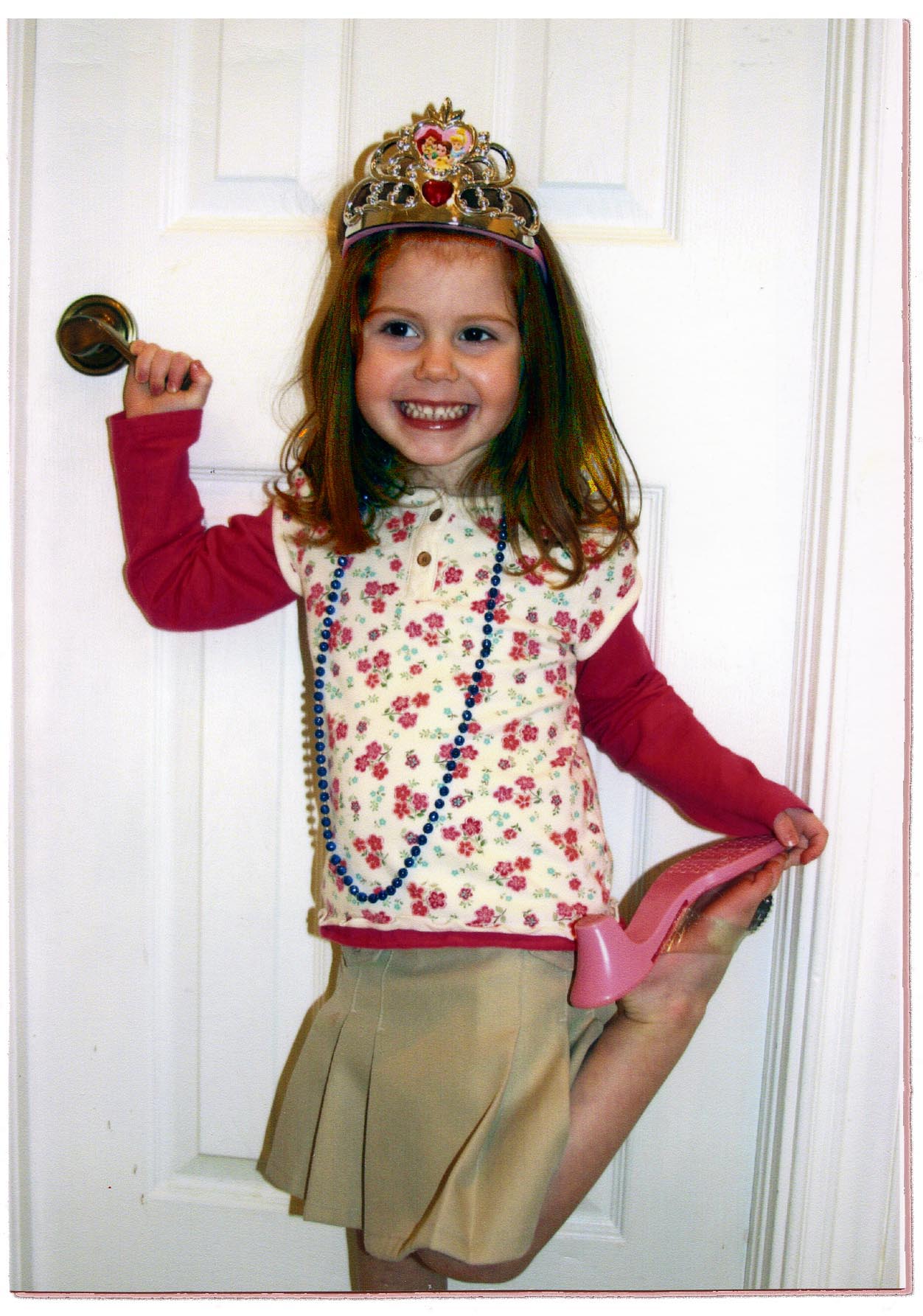
My auburn-haired granddaughter Jenna is very cute, and people frequently tell her how pretty she is. From an early age (here at 3 1/2), she has loved to primp and preen.
2009_Jenna dressed up as princess

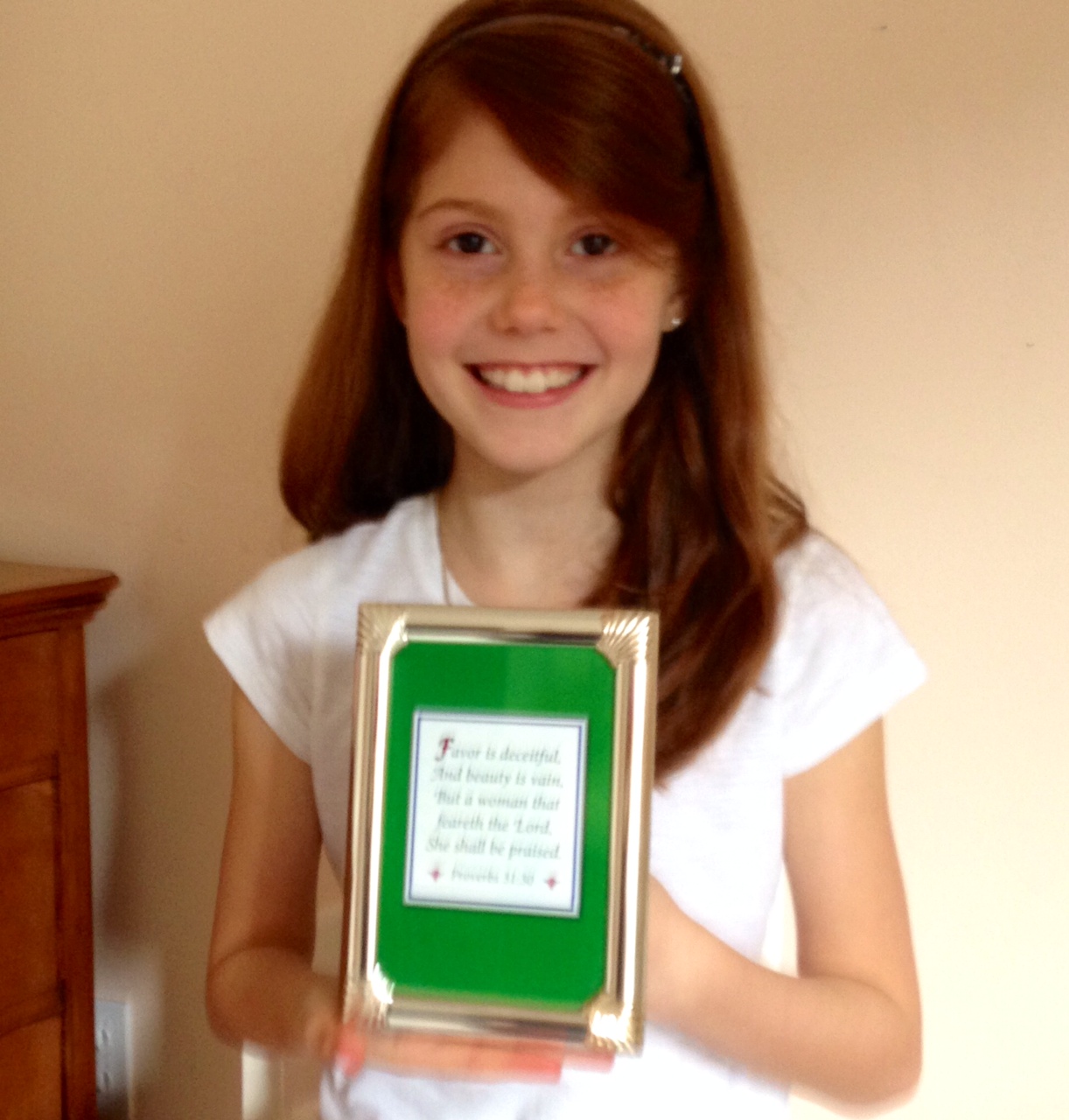
Even before she turned two, she would wake up, put on a gaudy plastic tiara and blue Lucite high-heels and toddle around her bedroom, every inch a princess. And there’s certainly nothing wrong with play-acting. But since then, in our Nana/Grand-daughter talks, I have reminded her that there are two kinds of beauty, the inside and outside kind. One lasts. The other one fades. Last year for her 9th birthday, her Grandpa and I collaborated on a gift to help her remember the meaning of inner beauty as she blossoms into a young woman.

It looked like this:
JennaFrame

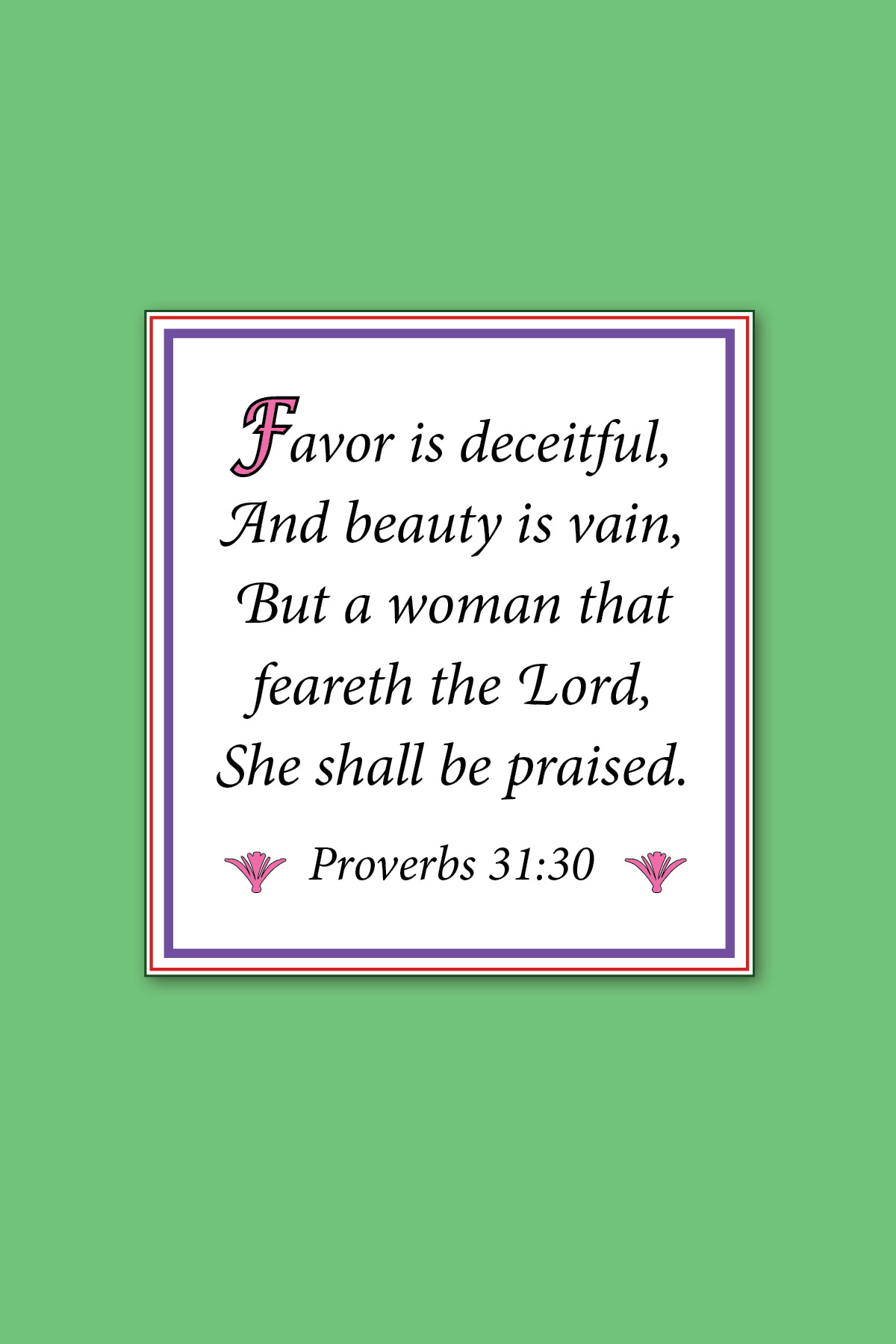
 Here is the verse close-up:

03Proverbs_for Jenna_01gr_4x6

We have talked about the meaning of those solemn and ancient words from the King James Version: favor, deceitful, vain — and have discussed what the verse written centuries ago might be saying to a young girl like her today. She knows for sure that there is nothing wrong with being attractive, but looks are not the most important thing in her life.

to be continued . . .

Wanda’s Story

I don’t know Wanda’s last name, but I know what she looked like before/after her appearance on the TV show “What Not to Wear.” Hosts of the show, Clint Kelly and Stacy London, help Wanda, a family therapist from San Diego, transform from boring beige to beautiful blue. In the course of the metamorphosis, the 47-year-old career woman, reveals that she grew up in a Mennonite culture and thought of beauty as something “to be frowned upon,” something even “dangerous” to use her description.

Here is Wanda’s frumpy before and stylish “after” look:

WandaNotToWear

You can see her “before” pict and hear a snippet of her story on this short YouTube

For Wanda, no more “monochromatic modesty or khaki catastrophe.” She exclaims at the end of the show: “Now I can walk into the future with my inside and outside more coherent.” In the grand finale, a band of friends and relatives gather around the stage to applaud the transformed Wanda who glitters in stylish heels and a purple “date” dress.

As the banner on my welcome page shows (Mennonite prayer veiling paired with a pair of sassy red heels), I can certainly relate to Wanda’s viewpoint. You can read about it in a former post. My own metamorphosis from plain to fancy did not happen nearly as quickly as hers, but over the years I have tried to focus on the qualities that reflect inner beauty just as I try to model them for my grand-daughter Jenna.

What about you? Maybe you are not 40-something anymore. You might be 50, 60 or beyond. Still there’s beauty at any age. That’s certainly what I think.


Do you (as Wanda now thinks) believe your inside and outside appearance should match?

How do you define Beauty?

Coming next: Moments of Discovery: Mother’s Quilts


JennaDressedUp

Moments of Discovery # 4: A Flash Bulb and a Doll
A snapshot of a baby boy dressed as a girl and an old flash bulb. Those are some of the items we find clearing out Mother’s house. Last October my sisters and I began the arduous task of sorting, saving, or recycling the accumulated store of her possessions having lived in the same house for over 73 years. You can read about it here.
BoxesPacked

Today’s post features snapshots, both photos and artifacts, from both Mother and Daddy with a surprising find at the end.

MOTHER: Some of what I found from Mother could be filed into 3 categories of nurturing:

Feed

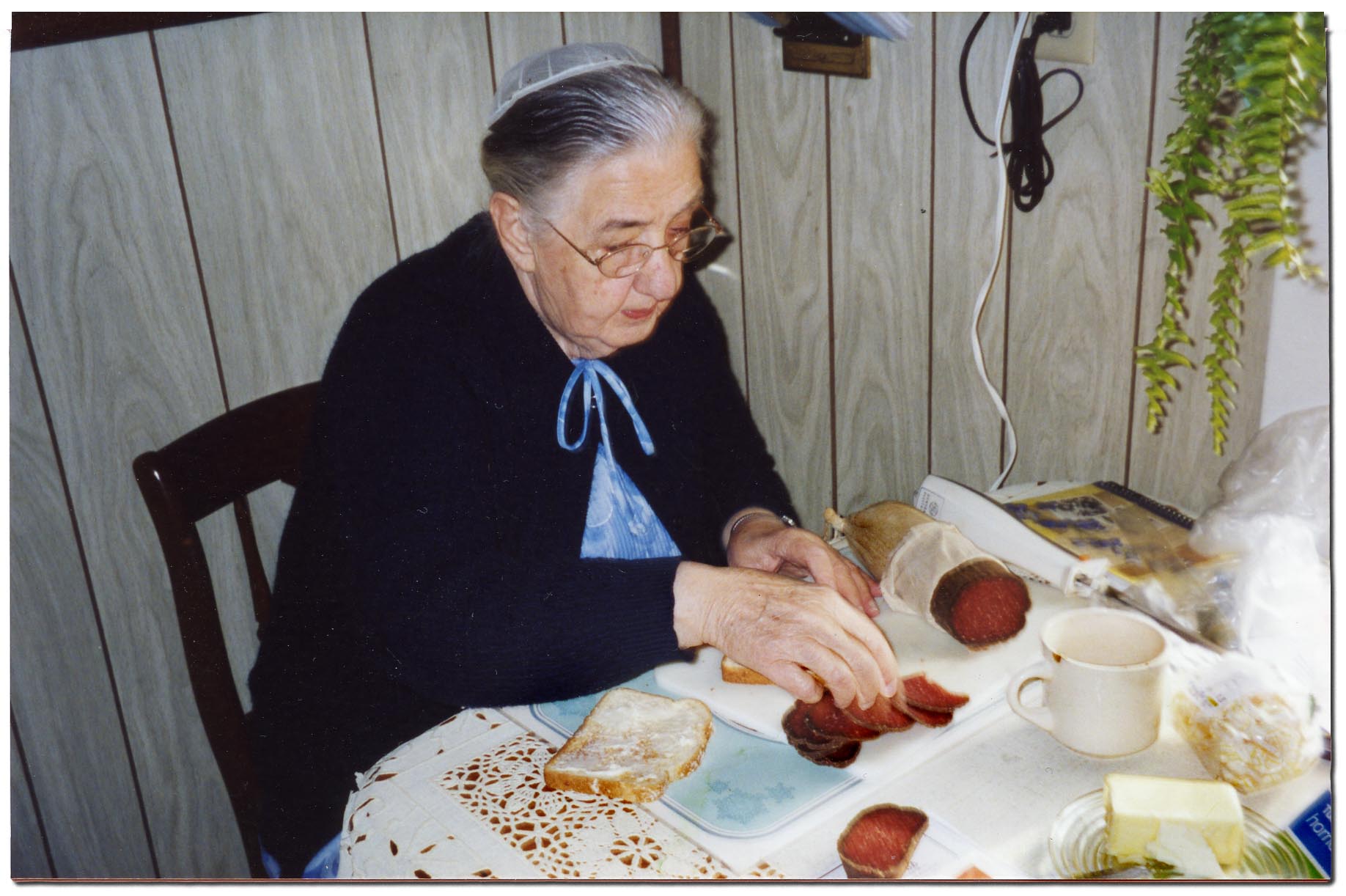
Our metal lunch pails carried many a bologna sandwich, usually Baum’s Bologna from their shop north of E-town. After Mother pulled back the burlap, she sliced thick rounds for sandwiches on buttered bread – always butter . . .

Mother L_balogna sandwiches

Read

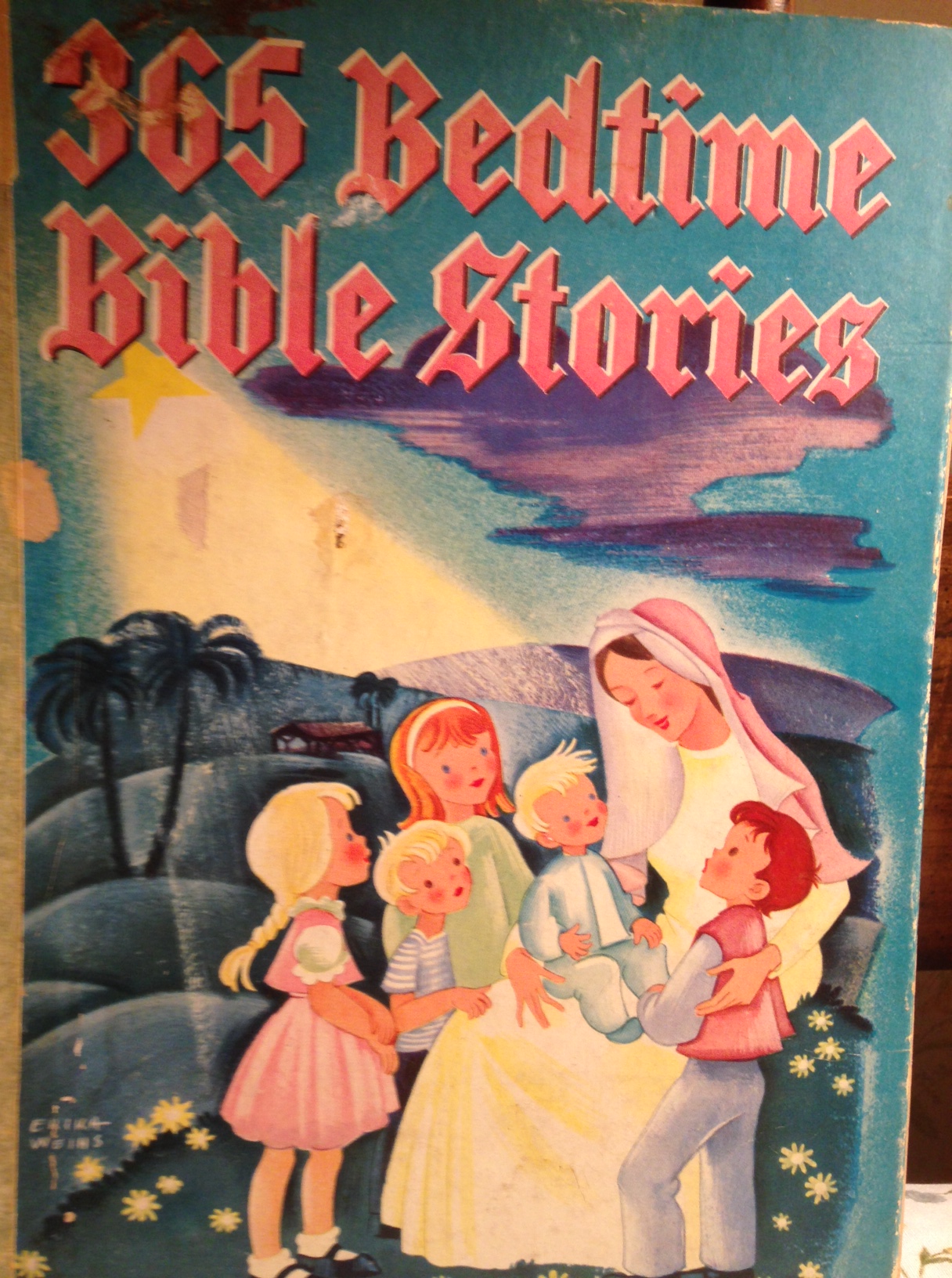
Every picture, every story seems familiar in this Bible Story Book with pages, crackly brown with age. Sniffing into the spine, I roll back in time to the little girl on her lap. I loved the art work then. Now I love its charm even more. Did Daddy read these stories to me too? Maybe so, but I can’t remember.

BedtimeCoverBedtime Preface

Remember

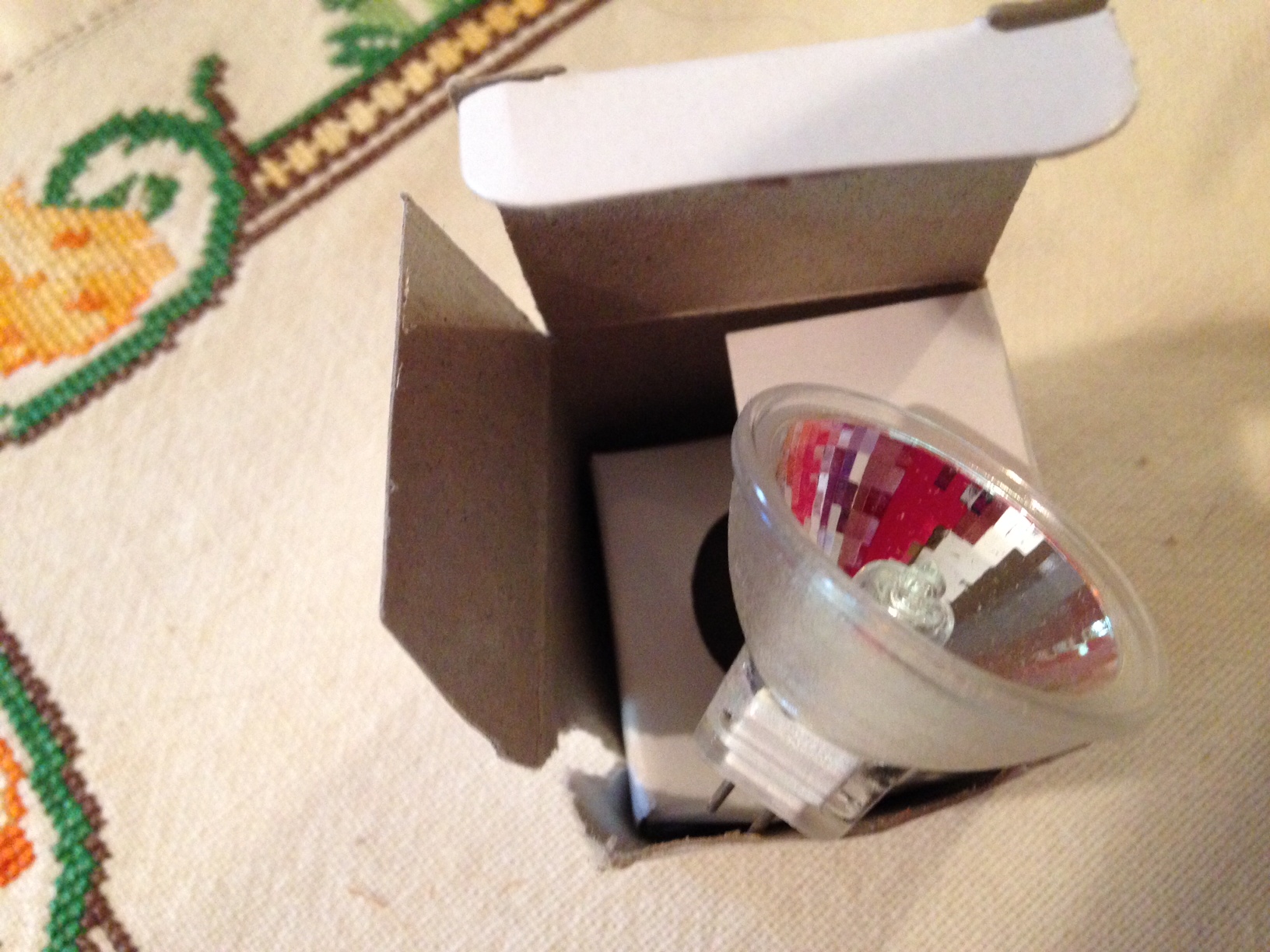
Cameras freeze time, preserving memories. Mother didn’t write in a journal, but she consistently recorded our family’s story over time. The old box camera is long gone, but here is a “flash” of memory possibly from her last camera . . .

FlashBulb

DADDY  Some of what I found representing my father was surprising:

Although I have several photos of Daddy holding me as a baby, my father was a man’s man: a tractor-driving, motor-fixing, field-plowing, deer-hunting guy. He even hammered on the piano keys. His work clothes were of black moleskin cloth, matching the grease he was in close contact with at the shop. I am certain he never wore pink. Yet here he is posed for the camera in a dress, flanked by his parents, Henry and Fannie Longenecker, my Victorian grandma not yet attired in Mennonite garb that would characterize the rest of her life. Daddy’s dress is not a christening outfit. There was no christening among Mennonites. I suspect that babies of both genders wore dresses to make diaper changing easier.

Henry and Fannie Longenecker with son Ray

Needlework

Our scavenging took us to the attic chest filled with treasured quilts. My sister Jean and Mother tagged each one a few years ago, so there would be no doubt as to their provenance. Apparently, Daddy drew his needle through a white quilt, stitching animals in red. I see a camel, sheep, chicken, pig, duck, an elephant. Even an ostrich.

Here is just a teaser. (Look for Daddy’s full quilt on a later post!)

Quilt with animal stitching by my father, Ray M. Longenecker

Nickname

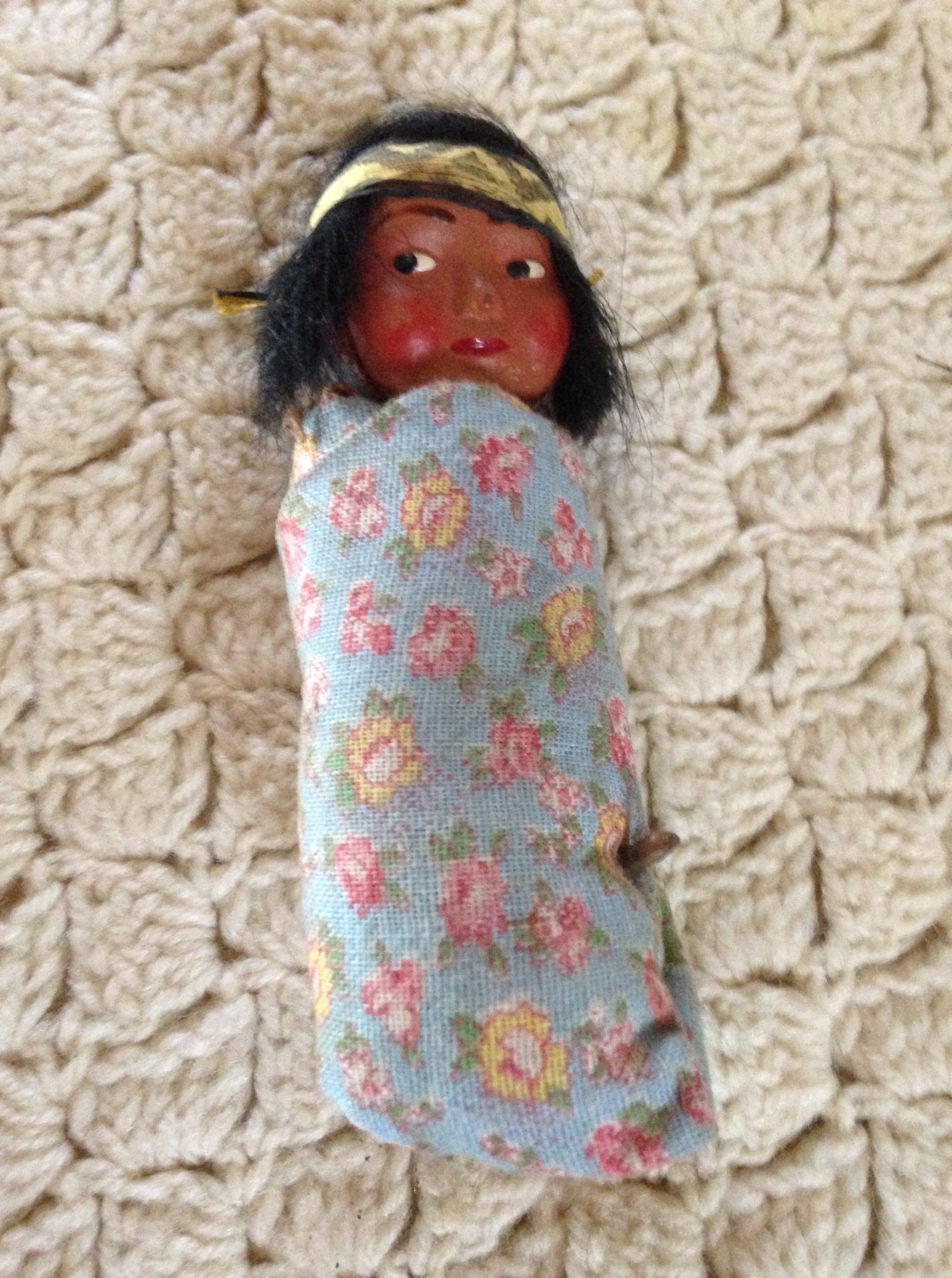
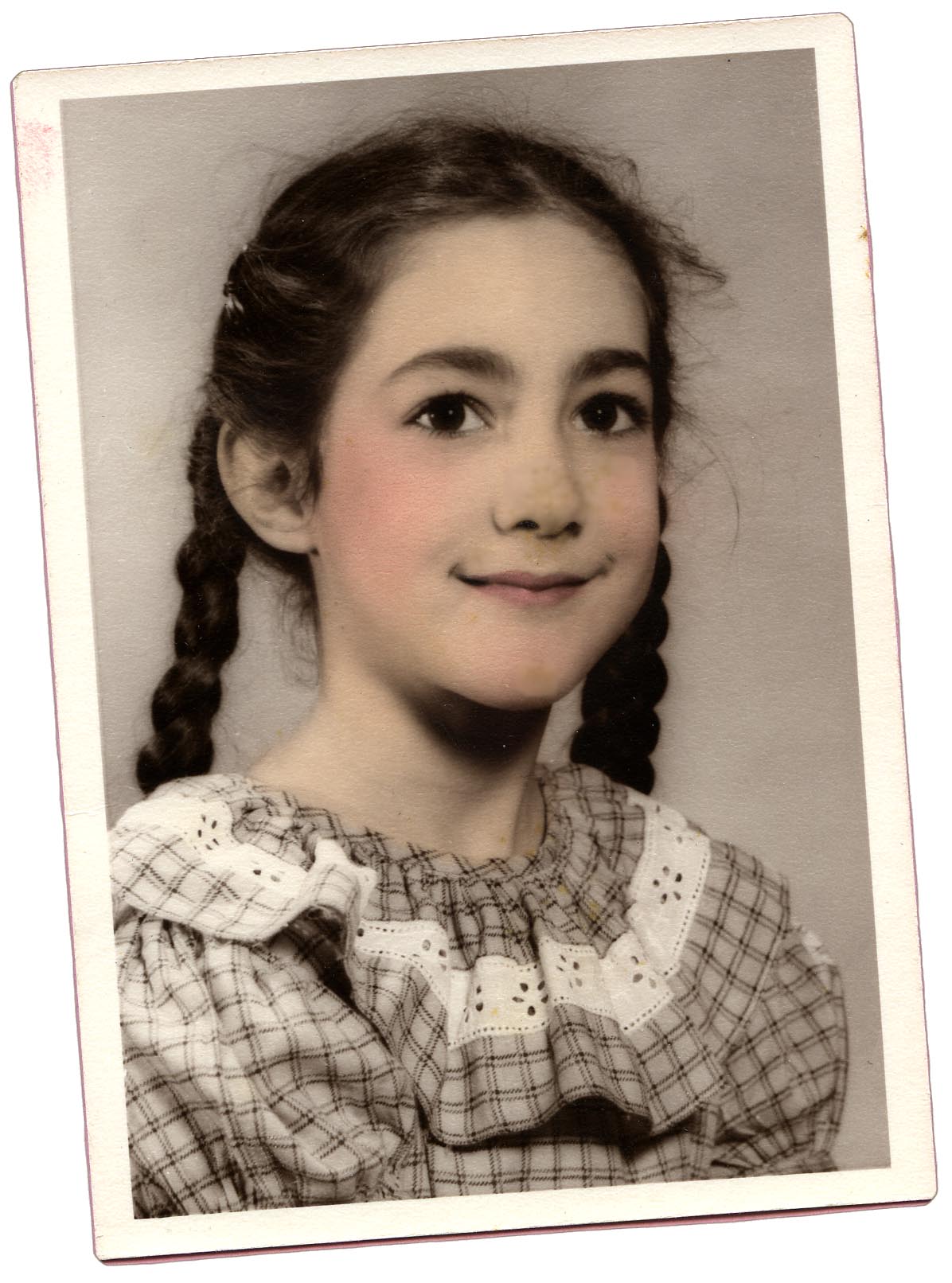
Daddy’s nickname for me was Pocahontas, not so much because I looked native American, but probably because of my thick, dark braids and big eyes. When I found this doll, I decided it shouldn’t be given away, sold, or recycled. It now sits on the dresser in our bedroom with “strubbly” hair, not braided!

Pocahontas

Marian w braids_K-

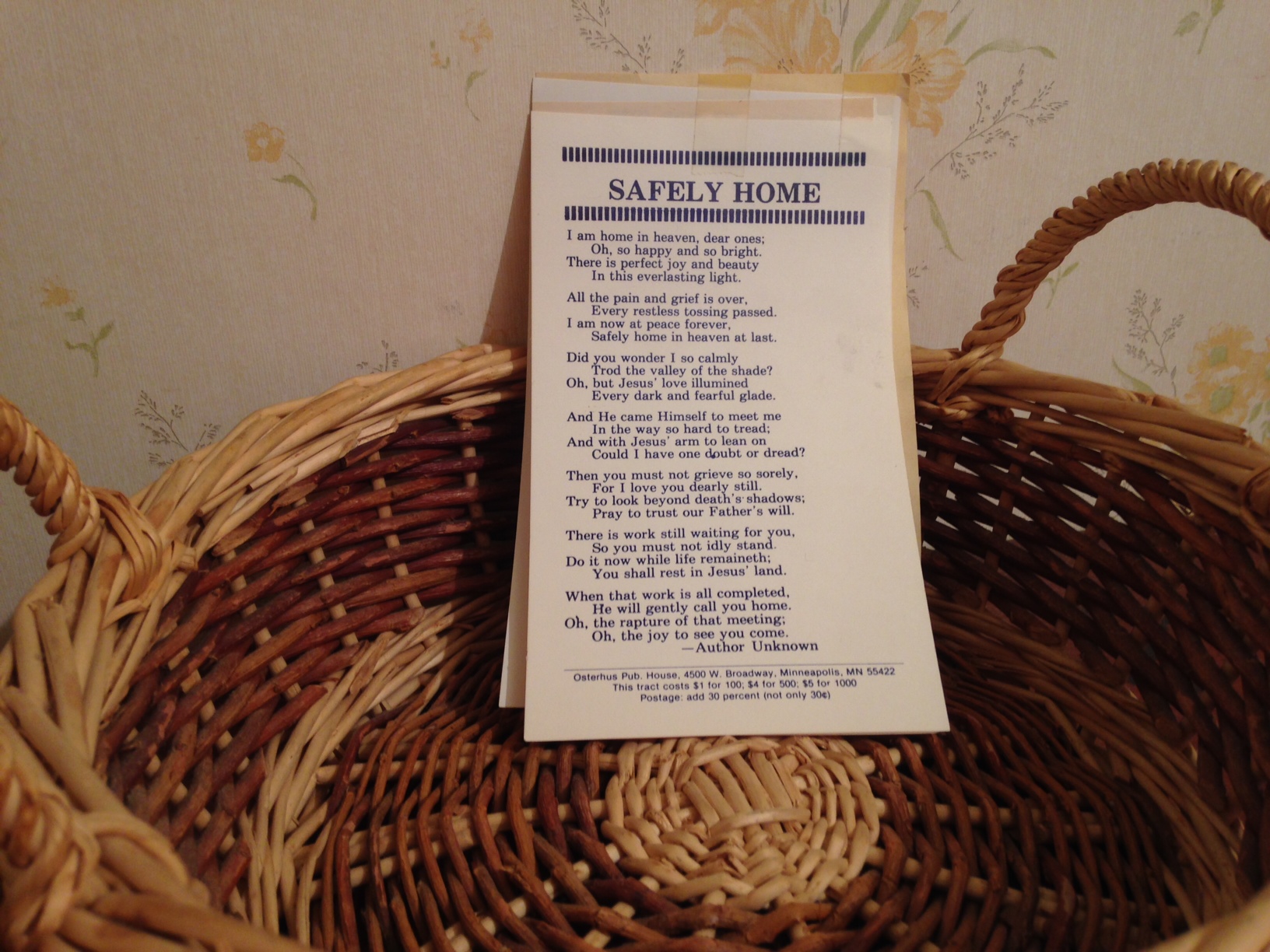
Final Note: A Curious Find   On our first visit to Mother’s house in October after the funeral, we saw a wicker basket on top of a hallway chest with a poem entitled “Safely Home,” something we had never noticed before. Were we blind to it earlier? Having a premonition of what was to come, did Mother put it there for us?

SafelyHomeBasket

I am home in heaven, dear ones; / Oh, so happy and so bright. / There is perfect joy and beauty / In this everlasting light . . . .

 (Anonymous, Osterhus Publishing House)  . . . a mute but eloquent affirmation


Your turn: Are you holding on to something you treasure from a loved one? A photograph? A small gift? 

Snow Falling on Anchor Road

Every single memory of snow in my childhood is pleasant. Sparkling flakes in luminous free-fall as I look out the kitchen window. Snow festooning evergreen boughs. Then bundling up in snowsuits, knitted caps, mittens. Getting out the sleds.

After more than one snowstorm, Aunt Ruthie grabbed her movie camera and trained her sharp eye on some big, tall sledders who went coasting down the hill from our house to Grandma Longenecker’s.

Then she captured our anticipation of trumping through nearly hip-high snow and finally (my favorite) Mother pulling my sister Janice and I on the Flexible Flyer sled along Anchor Road.


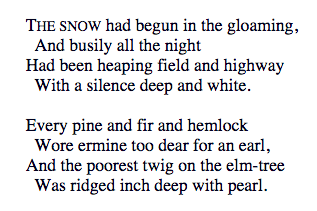
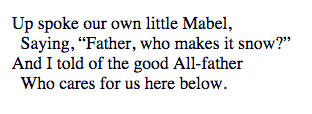
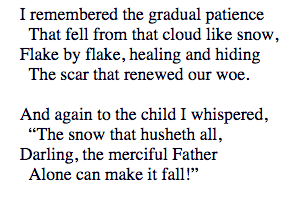
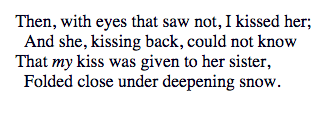
Another parent and daughter are observing the snow in The First Snowfall by American poet James Russell Lowell, a poem I remember Mother reciting.

FirstSnowfall1

Mabel marvels at the beauty of the snow and inquires of its origin . . .

First Snowfall2

. . . but as the father’s replies to Mabel, he remembers the snow which hides the scar of another child’s burial plot.

FirstSnowfall3

Then Mabel feels her father’s gentle kiss, a kiss she will never know was intended for the daughter beyond his touch. The last stanza leaves Mabel in child-like wonder, her father in pensive grief.

Screen Shot 2014-12-29 at 12.03.34 PM


This post began with snapshots of fun in the snow and ended with a reflection on loss. But snow can be the setting for other memorable events: a frolic with friends, a car accident, a marriage proposal (I’ll save that for another post!)

You probably have memories of snow, recent or long ago. Here’s your chance to share them.

Happy New Year: a card and some flowers

Happy New Year!


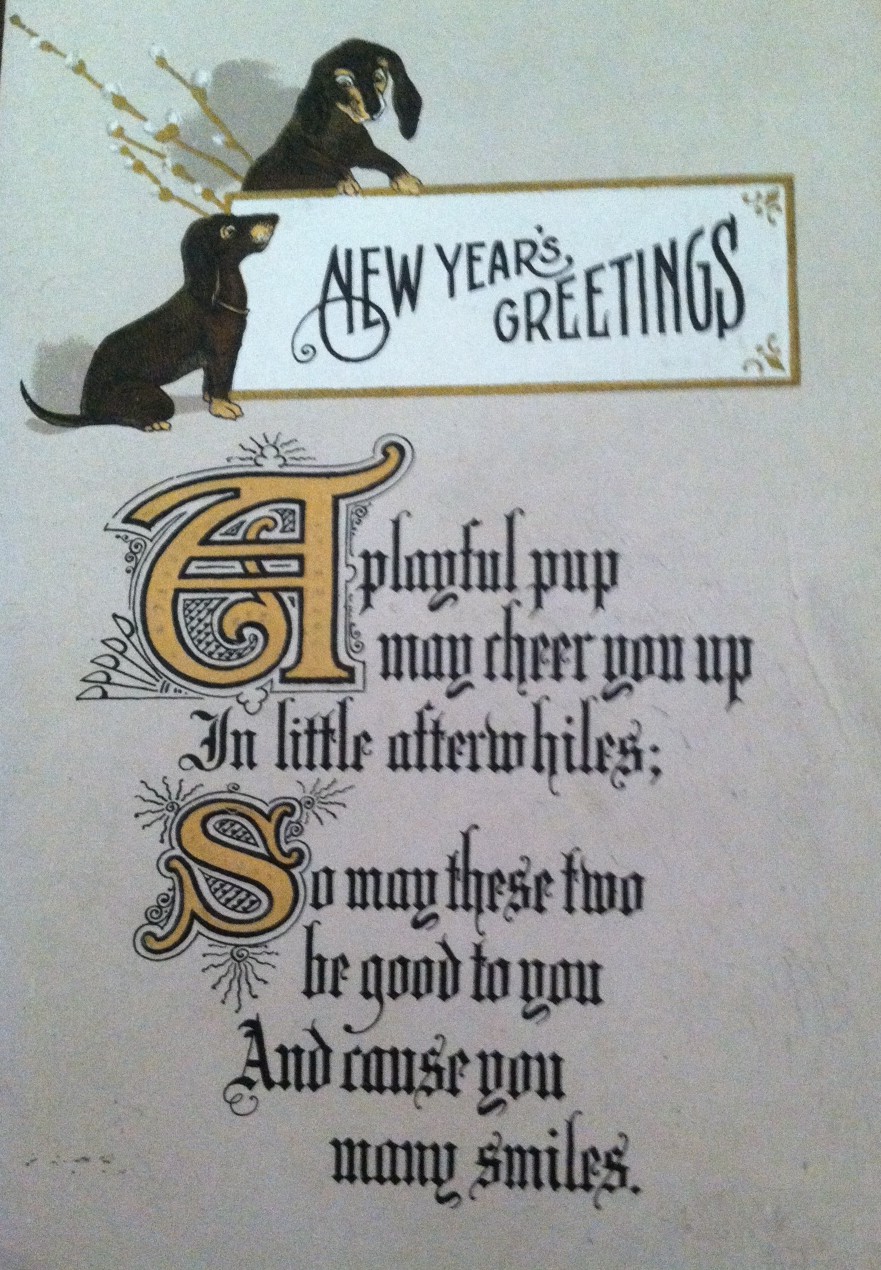
My wish for you in 2015 is expressed in a card sent to Grandma Fannie Longenecker in 1913.


NewYearPostcard


And some fresh camellias too!

camelliasSpeckled

Happy New Year ~~ Happy New Year ~~ Happy New Year

Next post in January 2015: Who’s Coming for Dinner? Food with Art

What’s Red at Christmastime?

Color psychologists say red represents energy, passion, and motivation to act. Red is everywhere this season: Santa’s costume, cranberry dishes, poinsettias.

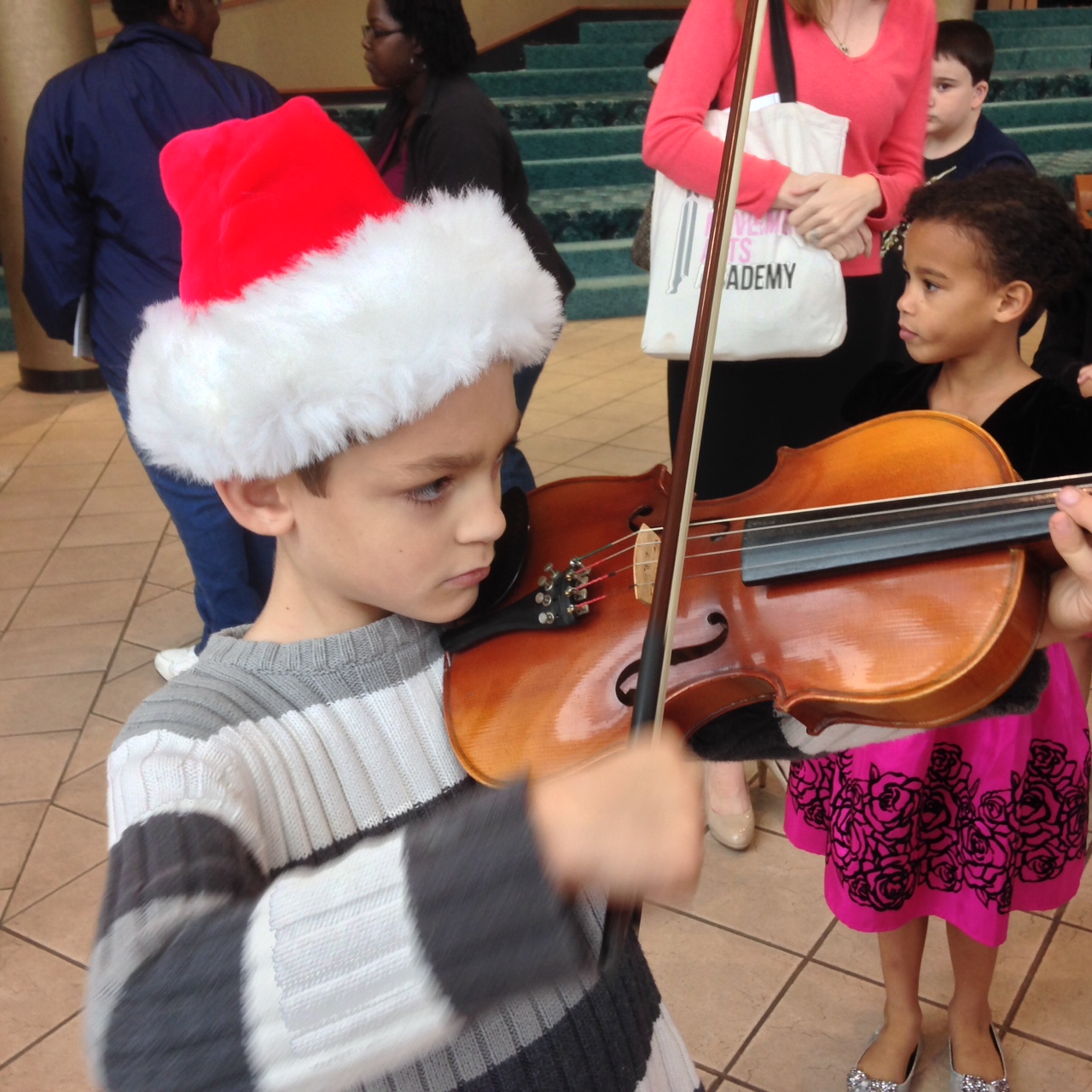
I’m seeing red too. In Ian’s Santa cap at the Orchestra Zoo . . .

IanViolinSanta

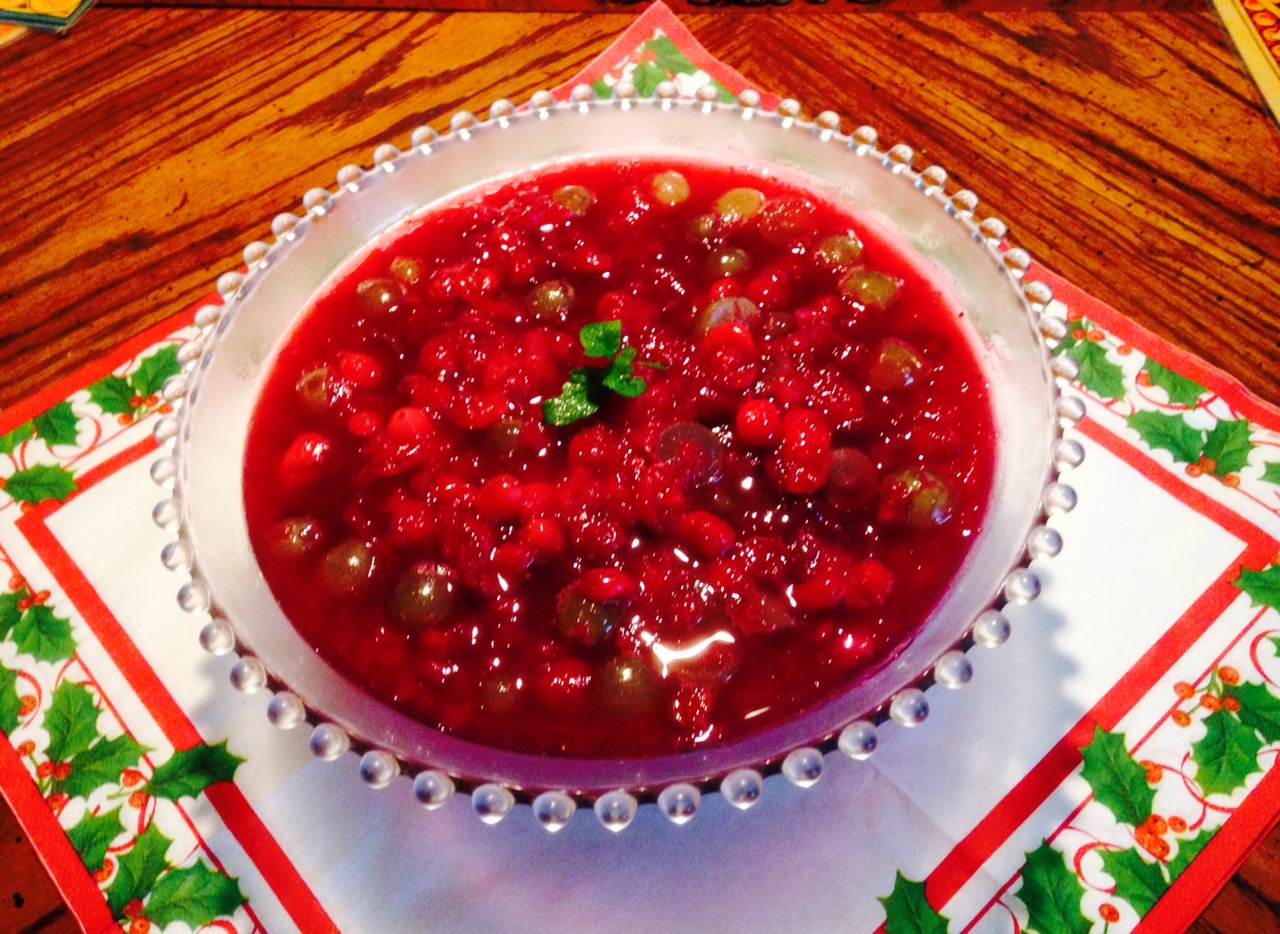
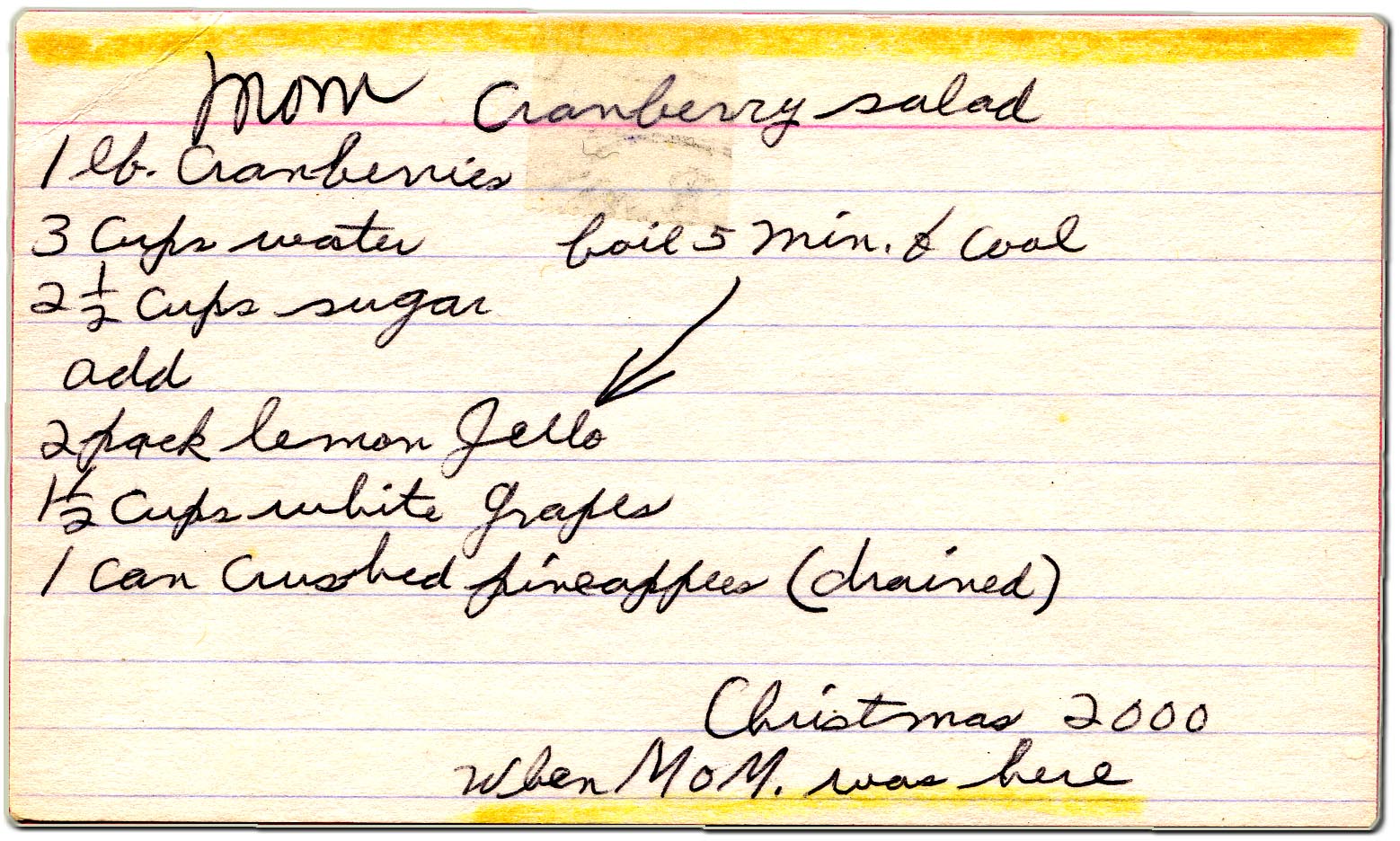
In Mother’s cranberry fruit salad recipe which I took to a Christmas party at a friend’s house last week . . .

CranberryDish

Ruth L_Moms Cranberry reci copy

(Everything with the word Mom in it is my scribbling. The rest is in her own handwriting, a keepsake in my recipe box.)

Beautiful pots of poinsettias!

poinsettias

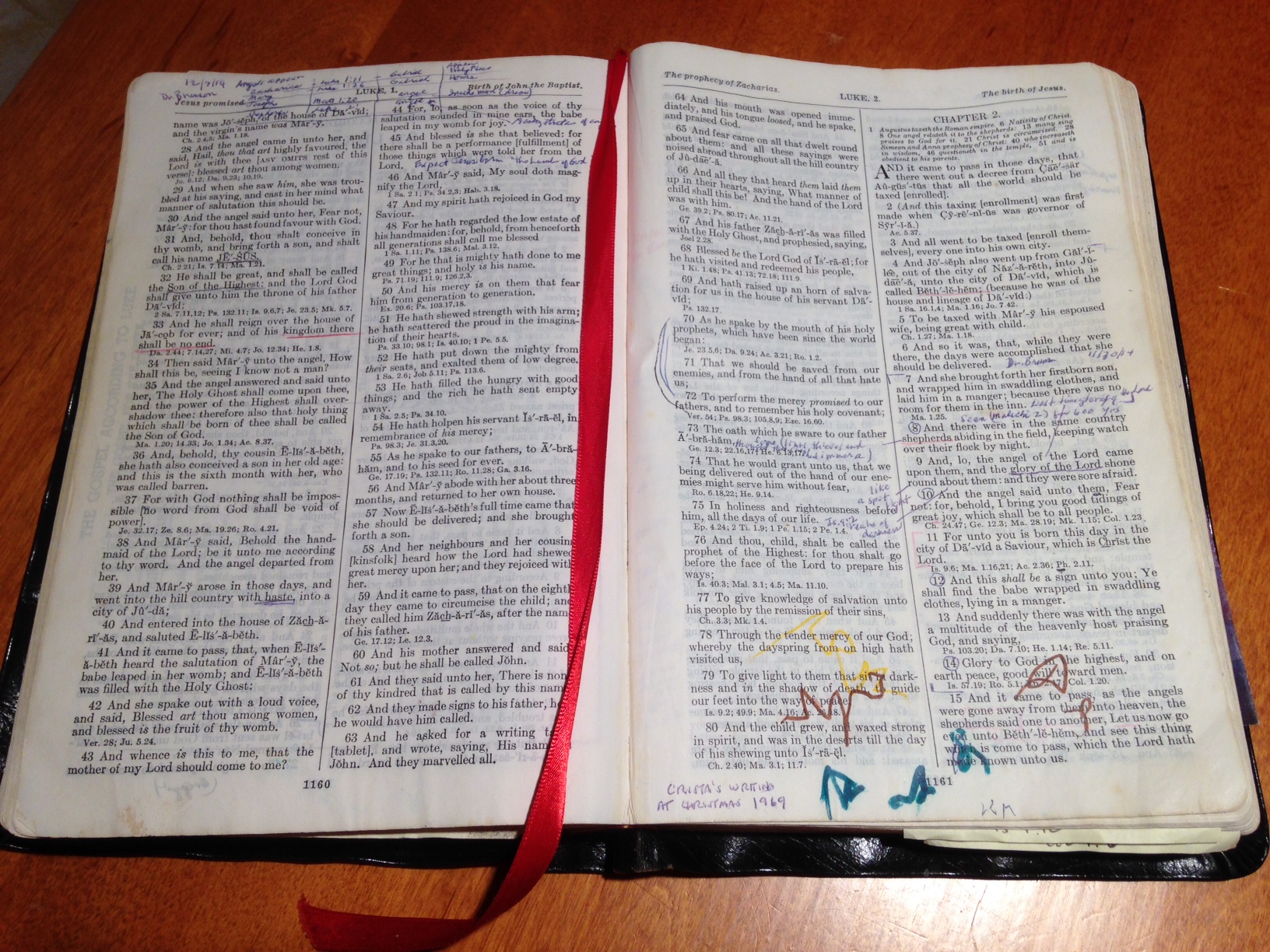
One more thing read at Christmas, the beautiful Christmas story from Luke 2:1-20Luke2

What can you add to the red – or to the read in your tradition? The conversation starts here. 

Coming next: Short and Sweet: A Belgian Christmas Card

7 Things I’m Thankful For

My secret joys (and struggles) show up in my gratitude books. You can see some of them here. But my list this week has sprung from my 9-day trip to Pennsylvania to visit family and take care of Mother’s house in mid-November 2014.

In her devotional book One Thousand Gifts, Ann Voskamp begins with a chapter entitled Surprising Grace in which she discusses how she and her Farmer Husband “give thanks even when things look like a failure.” Or when one experiences loss.

This year Mother died, we’ve had to sell her beloved house and its contents, I’ve struggled with a motley crew of personal challenges, and still I give thanks:

  • Health – I have an odd muscular neck pain (yes, pain in my neck!) yet I went up and down 3 flights of stairs from attic to cellar dozens of times, no problem.
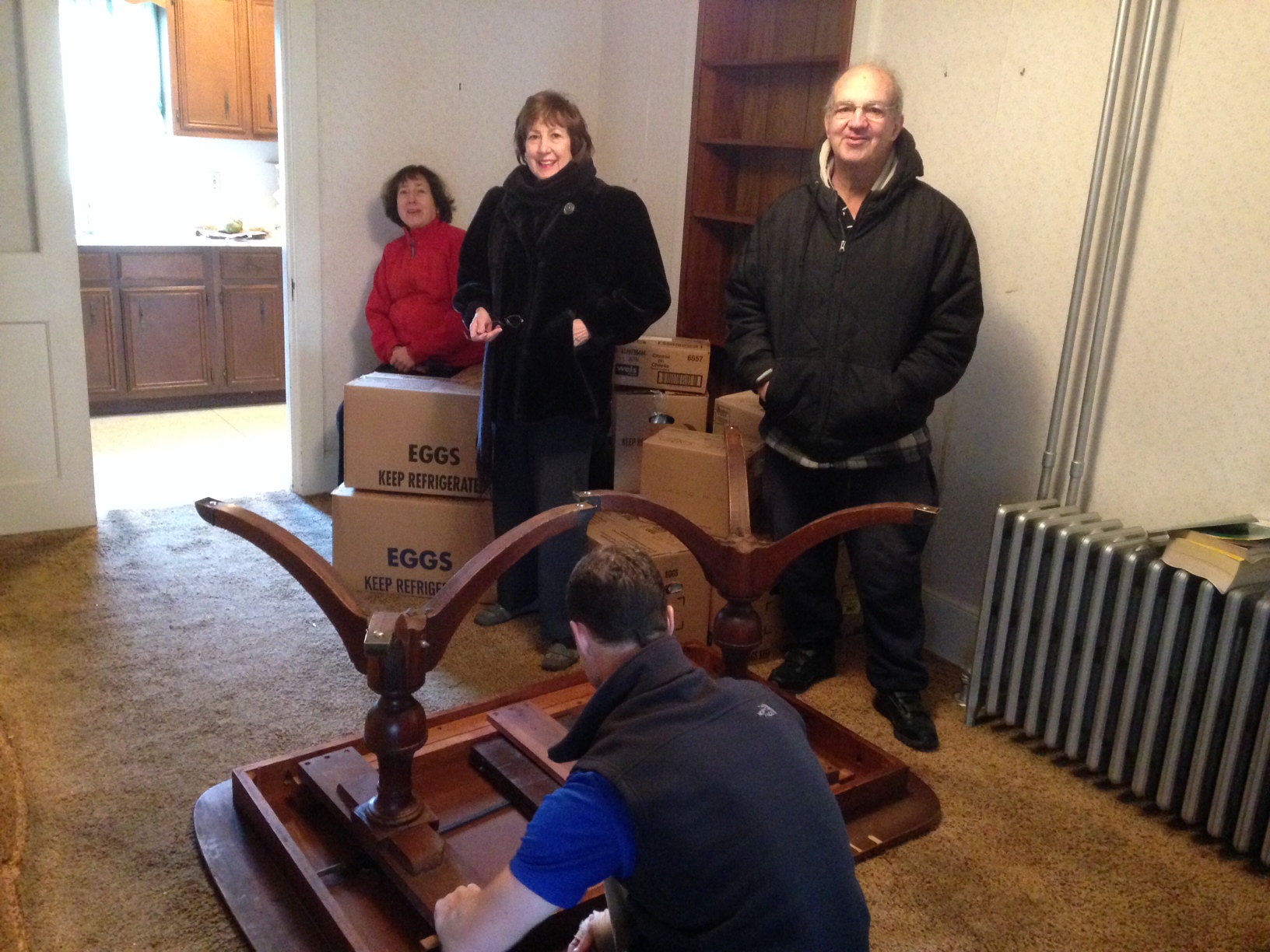
  • My sisters and brother – We sorted, boxed, laughed, cried, disagreed, but ultimately met the challenge on time.   MarianJeanMark
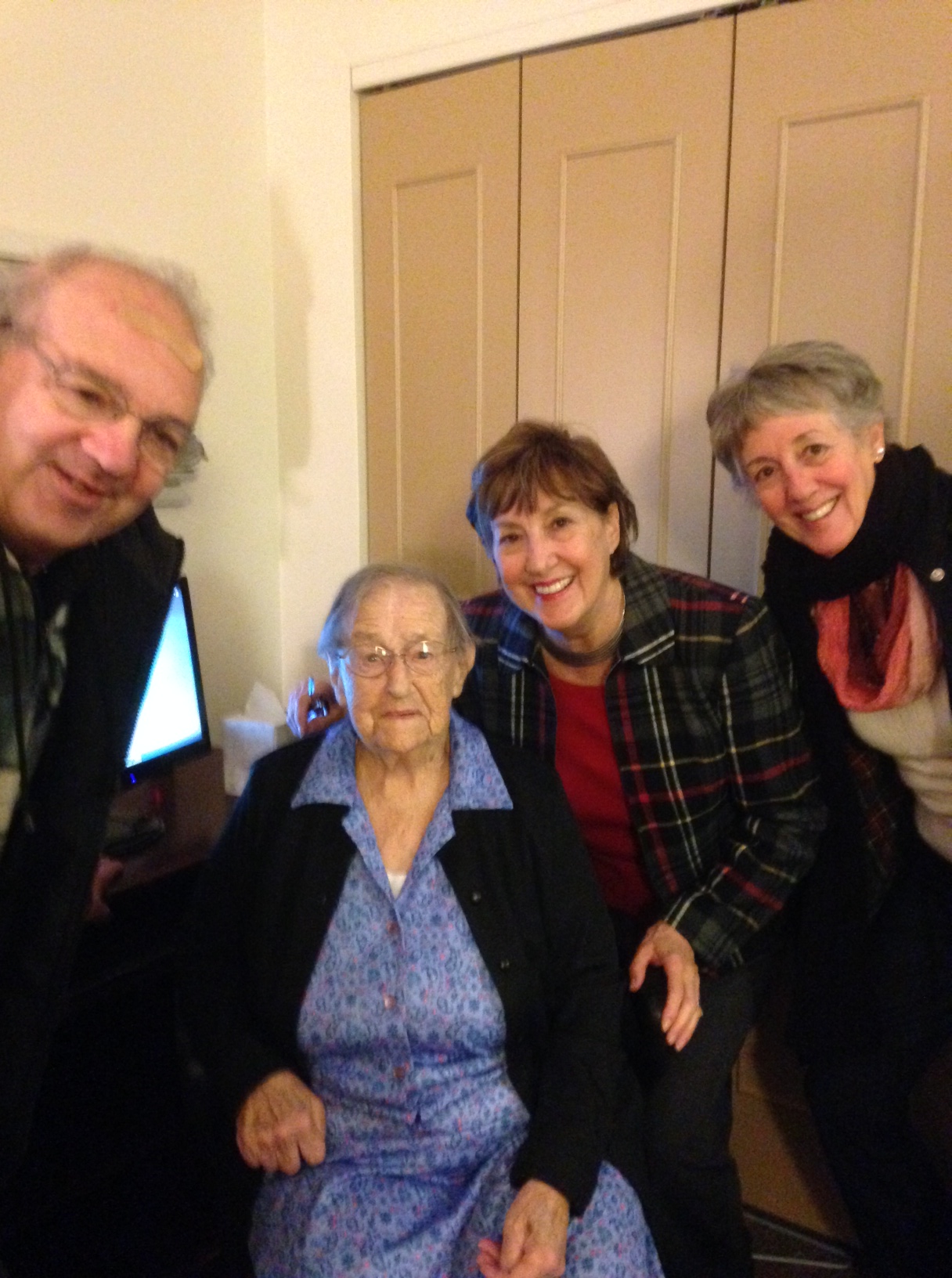
  • My Aunt Cecilia – She’ll be 100 years old in March, still going strong. We found Aunt Ceci cheerfully playing the Tumbling Blocks game on the computer beside her. “It keeps my mind sharp!” she laughs. A Mennonite preacher’s wife, Aunt Cecilia Metzler raised a family of five children on a Lancaster County farm.AuntCecilia
  • My Aunt Ruthie – The photo is fuzzy here, just like her memory. But after she viewed some of the movies she filmed in her 20s and 30s that appear on other blog posts (here and here) she smiles, “ These pictures really make my mind come alive.” RuthieLookingVideo
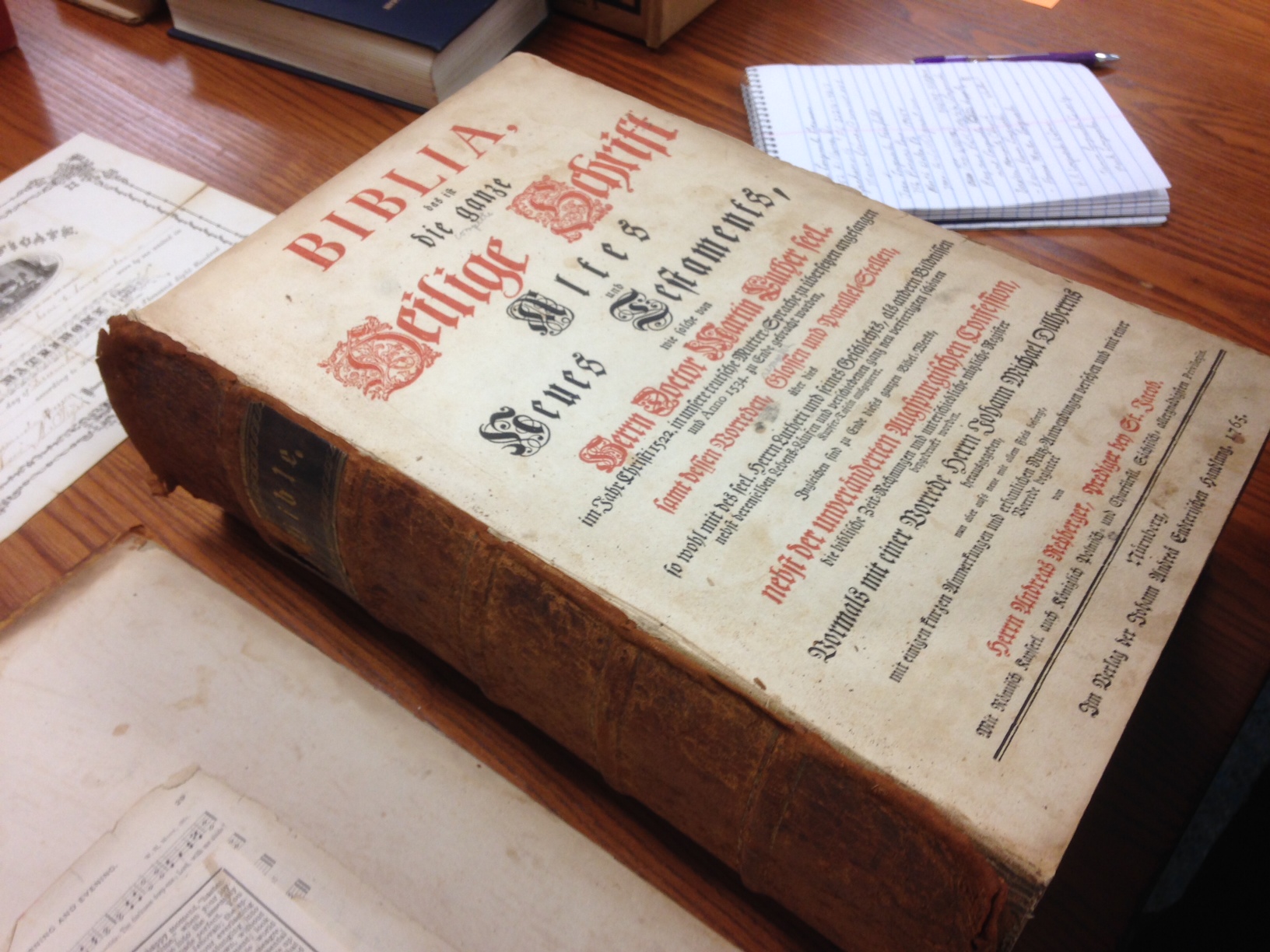
  • An heritage with spiritual depth – When my ancestors arrived in The New World, they brought with them the Holy Scriptures. This one, the Nuremberg Bible, is dated 1765.

BibleNuremberg

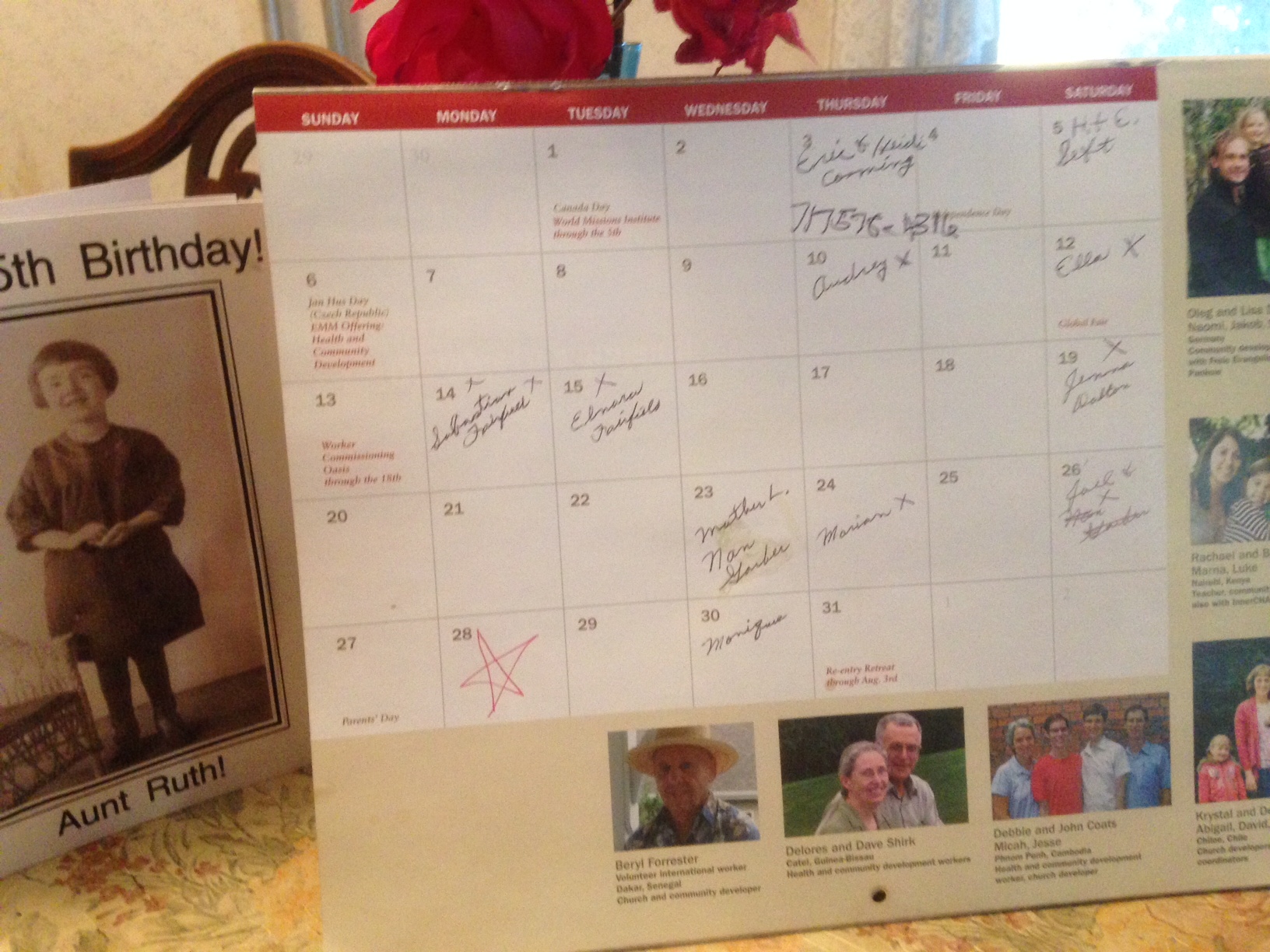
  • The memory of my Mother – When Mother died, she still had a current driver’s license, paid all of her bills by check, and kept appointments on her calendar. She sent birthday cards to all her children, grand-children, and great grand-children, represented by names penned into the blocks. She died on the 28th of July, a date we marked with a red asterisk.

MomCalendar

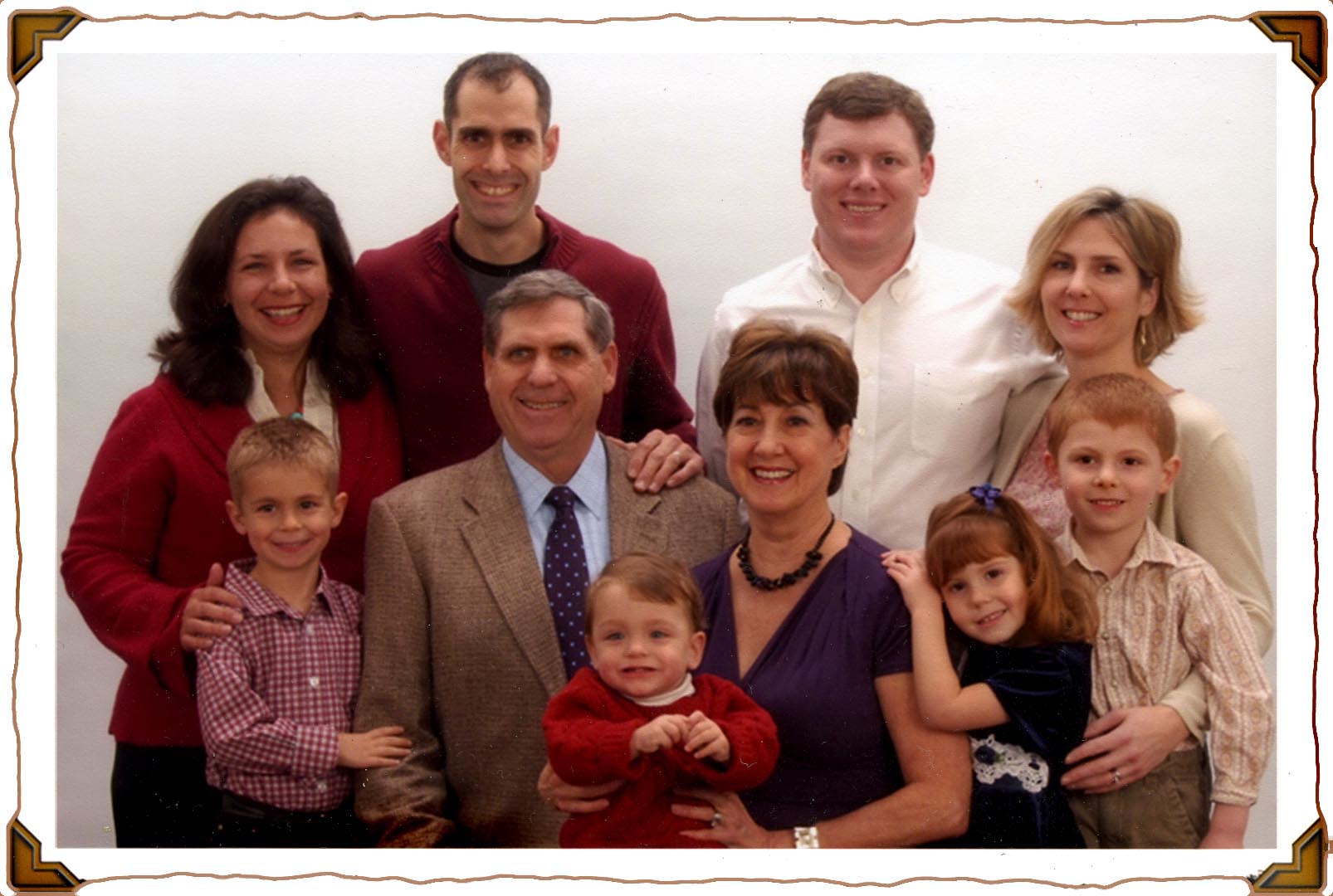
  • My family – This photo is six years old, taken when baby Ian no longer needed a breathing apparatus. Just so you know: our daughter Crista is blonde, Joel, dark-haired. With the older boys now 11 years old, we are due for an update!

Beaman_Dalton_Christmas Card_2008

Ann Voskamp continues by quoting the first reference in Scripture containing the word thanksgiving, mingling peace and gratitude:

And this is the law of the sacrifice of peace offerings that one may offer to the LORD. If he offers it for a thanksgiving, then he shall offer with the thanksgiving sacrifice unleavened loaves mixed with oil, unleavened wafers smeared with oil, and loaves of fine flour well mixed with oil. With the sacrifice of his peace offerings for thanksgiving he shall bring his offering with loaves of leavened bread. 

Leviticus 7:11 – 13   ESV

My conclusion: Gratitude brings peace and ultimately joy.

Writer Voskamp concludes: ” . . . standing straight into wind is how to fly on His wings of grace.”


Finally, a song I remember from childhood from that seems appropriate for the season:

What are you grateful for? Join me in naming your blessings.

Moments of Discovery # 3: Two Butter Stories and an Autograph Book

In June Mother Longenecker and her daughters Marian and Janice created butter-shaking memories in a two-quart jar, making butter using three easy steps:

  1. Pour cream into 2-quart jar.
  2. Shake until you rattle and roll.
  3. Remove the congealed mass from the jar. Add a pinch of salt.

In July, my Southern friend Carolyn honored my birthday in a “Shake-Rattle-and-Roll Butter-Shake” party. Today you can open up an old-time textbook with me and behold first-graders learning about butter making in a reader published by Lyons and Carnahan with the copyright dates spanning the years 1927-1936.

Reader1920s

Interestingly, the Child’s Story Reader also lists three simple steps for butter making expressed in first-grader language:

We got the cream from a cow.

We put the cream in a jar.

We shook the jar.

Jack and Jane even added a pinch of salt to the mixture, and afterwards they had a party of butter on bread!

ButterMakingSchool

Another page shows a recipe for butter milk made with a churn with Aunt Ellen assisting.

ButterChurnBook

More Moments of Discovery

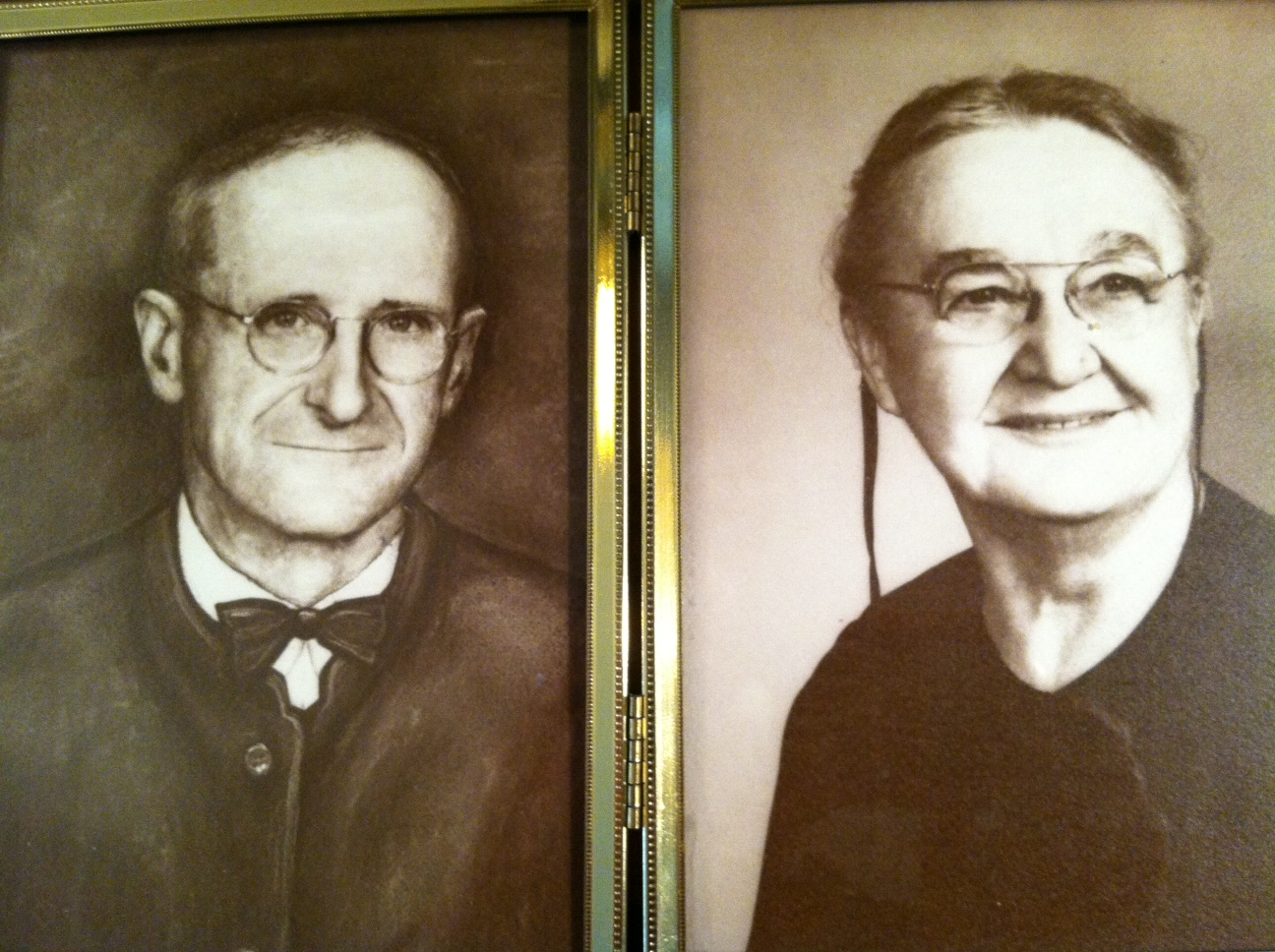
Henry and Fannie Longenecker, Grandparents
Henry and Fannie Longenecker, Mennonite Grandparents

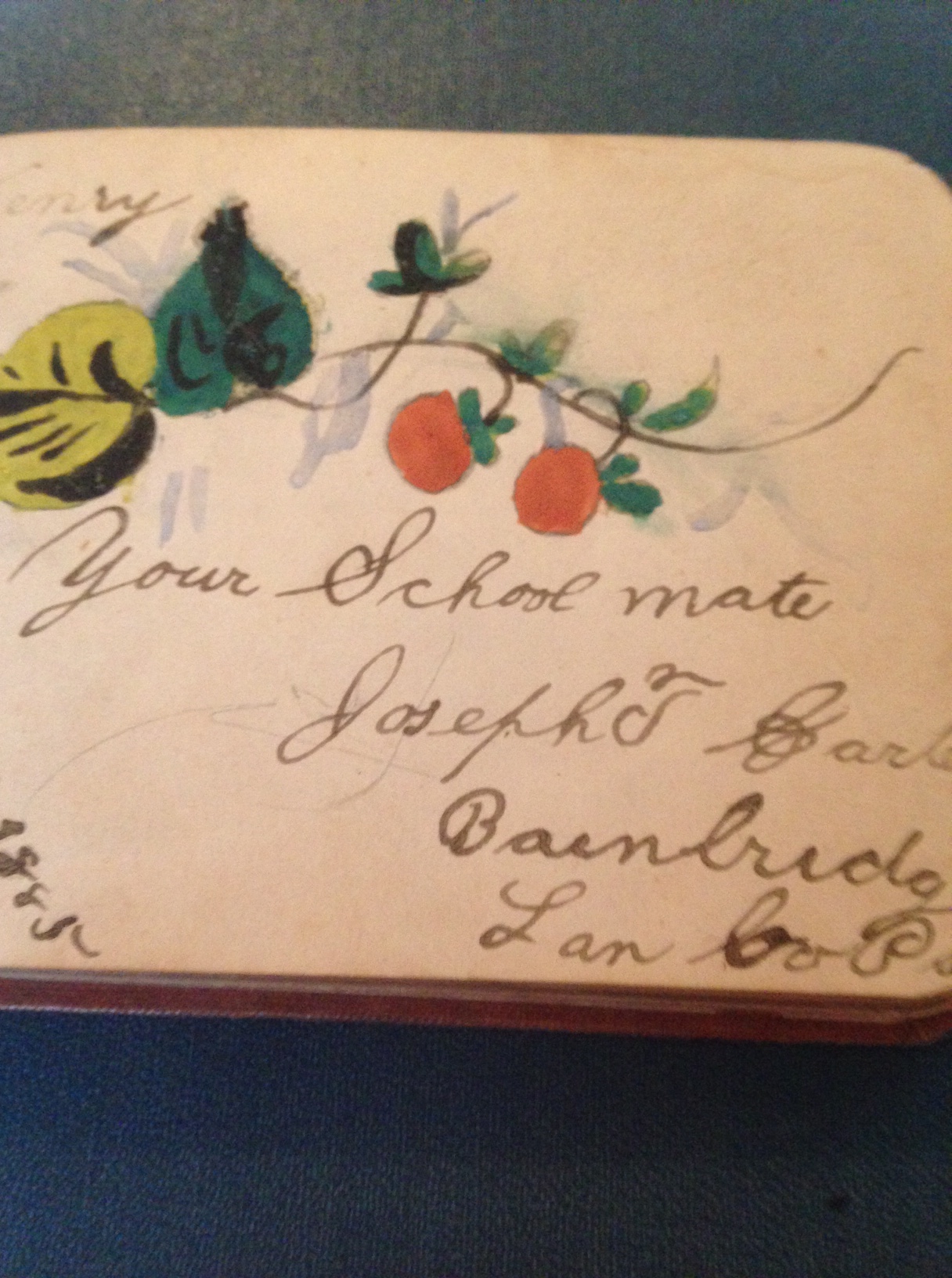
Henry Risser Longenecker, referred to by friends and family as H. R. or “Hen,” was my grandfather on Dad’s side of the family. He died when I was five, but I have a distinct memory of him killing a snake in the grass with a long stick. Like my father, he was a doctor of motors interested in steam engines, Model A Fords, and farm equipment. Until I unearthed his autograph book, I had no idea he had artistic leanings as revealed in his autograph book. Autograph books, common in classrooms in the 1800s, contained signatures, artwork, and bits of poetry. According to Folklore: An Encylopedia of Beliefs, Customs, Tales, Music, and Art, Vol. 1 (edited by Thomas A. Green) autograph books, existed as early as the fifteenth century and were seen as “a mark of gentility until the beginning of the twentieth century.”

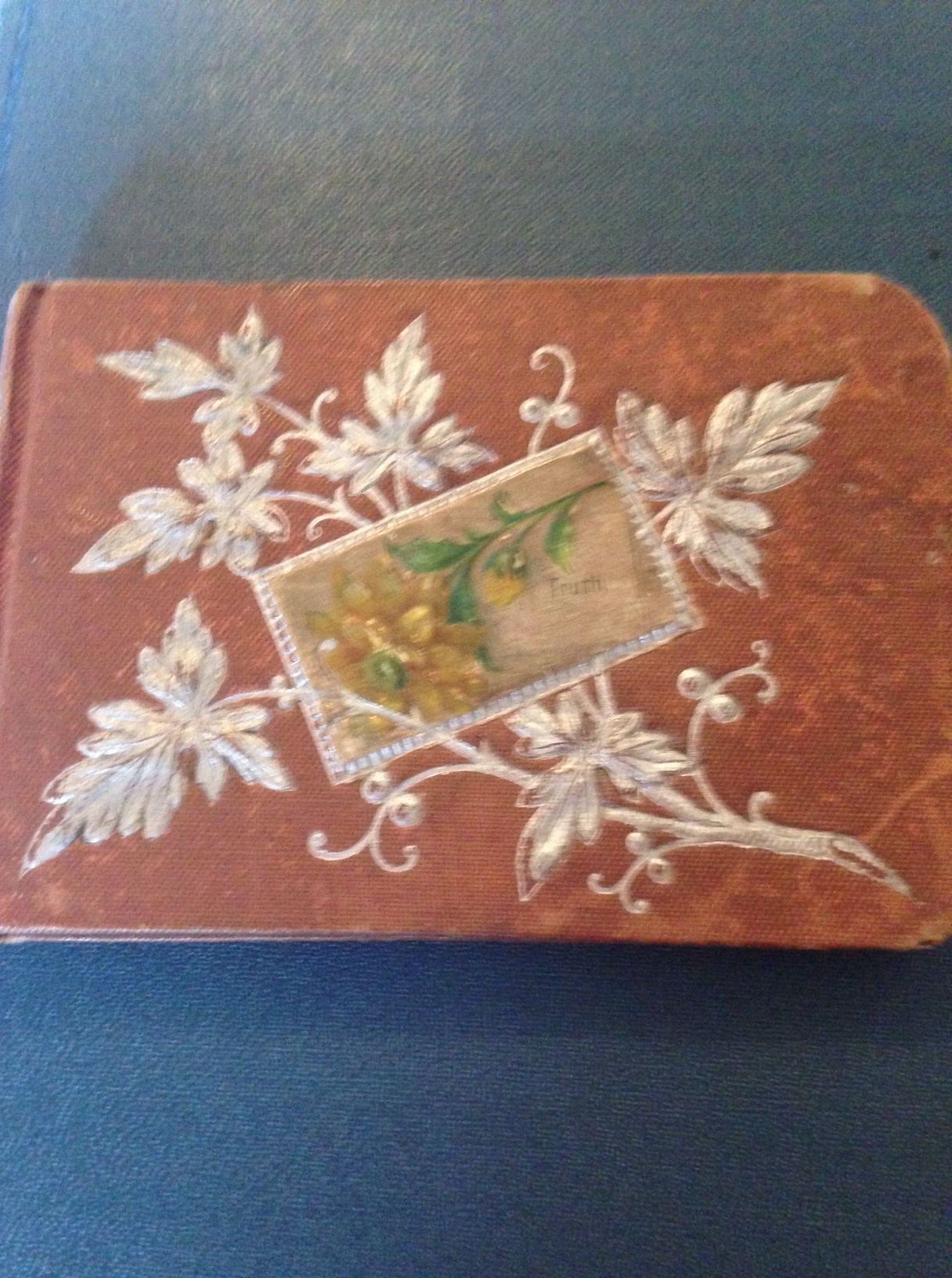
The cover of Henry Longenecker’s autograph book reveals artistic flair with a faint inscription of a great virtue taught to every school child, the word Truth visible if you squint carefully at five faint letters appearing close to the embossed yellow flower.

HRLAutographBook

The dedication appears in flowing cursive penmanship with a dove’s beak clasping Cupid’s arrows

HRLsignatureAutograph_final

Painted artwork, still-brilliant, graced most pages like this one, complete with signature and date.

Signature: Joseph T.  Garber     Complete date: February 3,1885
Signature: Joseph T. Garber           Complete date: February 3,1885

 Autograph books tell us several things about students in the late 1800s:

1. Penmanship was taught and valued as an artistic skill.

2. Friendship and learning were intertwined. Both were expressed as an art form.

3. Students took great pride in their work.

*  *  *

What else can these books teach us?

Coming next: What color makes you sing?

Purple Passages and Fine China

READING

La Lectura es el viaje de los que no pueden tomar el tren.        – F. Croisset

(Reading is the journey of those who cannot take the train.)

Marian Reading_14mos._2x4_300

Some books are to be tasted, others to be swallowed, and some few to be chewed and digested . . . .           Sir Francis Bacon  “Of Studies”

I find television very educating. Every time somebody turns on the set, I go into the other room and read a book.     Groucho Marx

It is what you read when you don’t have to that determines what you will be when you can’t help it.    Oscar Wilde

LAUGHTER

When we laugh, a sort of temporary anesthesia is released within us that blocks the pain as our attention is diverted.      Chuck Swindoll in Five Meaningful Minutes a Day

I love people who make me laugh. I honestly think it’s the thing I like most, to laugh. It cures a multitude of ills. It’s probably the most important thing in a person.    Audrey Hepburn

CHINA   

Friendship is delicate as [china], once broken it can be fixed but there will always be cracks.    Waqar Ahmed

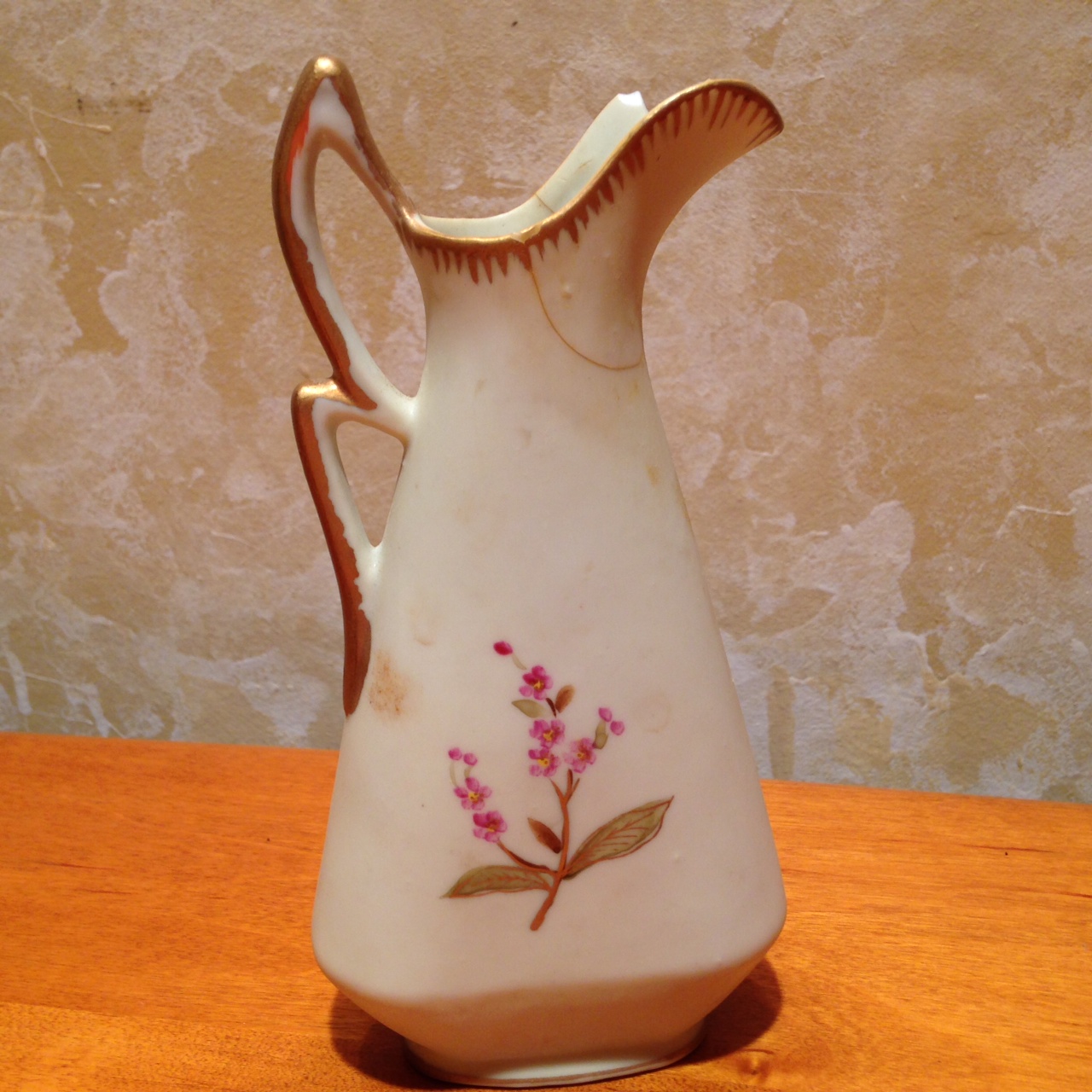
Pitcher Broken

It’s a wise husband who will buy his wife such fine china that she won’t trust him to wash the dishes.    – Honoré de Balzac

ChinaFine

I’ll love you, dear, I’ll love you till China and Africa meet and the river jumps over the mountain and salmon sing in the street.      – W. H. Auden

We have a week and a half left of work and we are like delicate china speeding toward a brick wall. Sounds fun, huh?     – Jennifer Anniston

Start living now. Stop saving the good china for that special occasion. Stop withholding your love until that special person materializes. Every day you are alive is a special occasion. Every minute, every breath, is a gift from God.     

                   Mary Manin Morrissey

A comment? Another quotation? Both are welcome here!

How to Tell Your Children What’s What

Unlike Hansel and Gretel, whose mother tried to starve them and then lock them out of the house, Mother Longenecker provided well for her children and left behind, not white pebbles or bread crumbs, but hand-written notes tucked away to tag her heirlooms. Each note provides a designated recipient sometimes with a bit of family history.

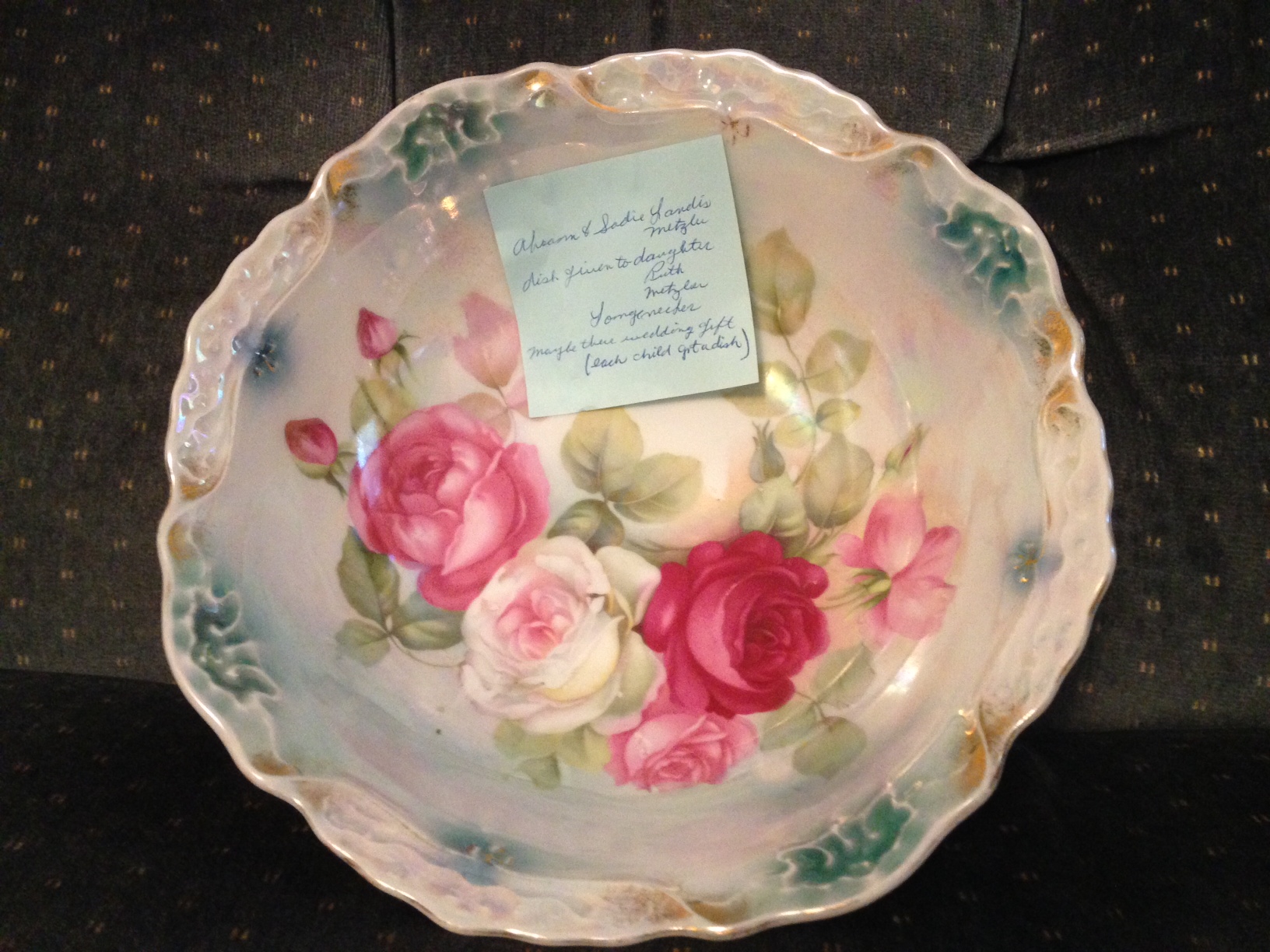
1. Floral Serving Dish

Dish given to my mother from her parents, Abram and Sadie Metzler on her wedding day

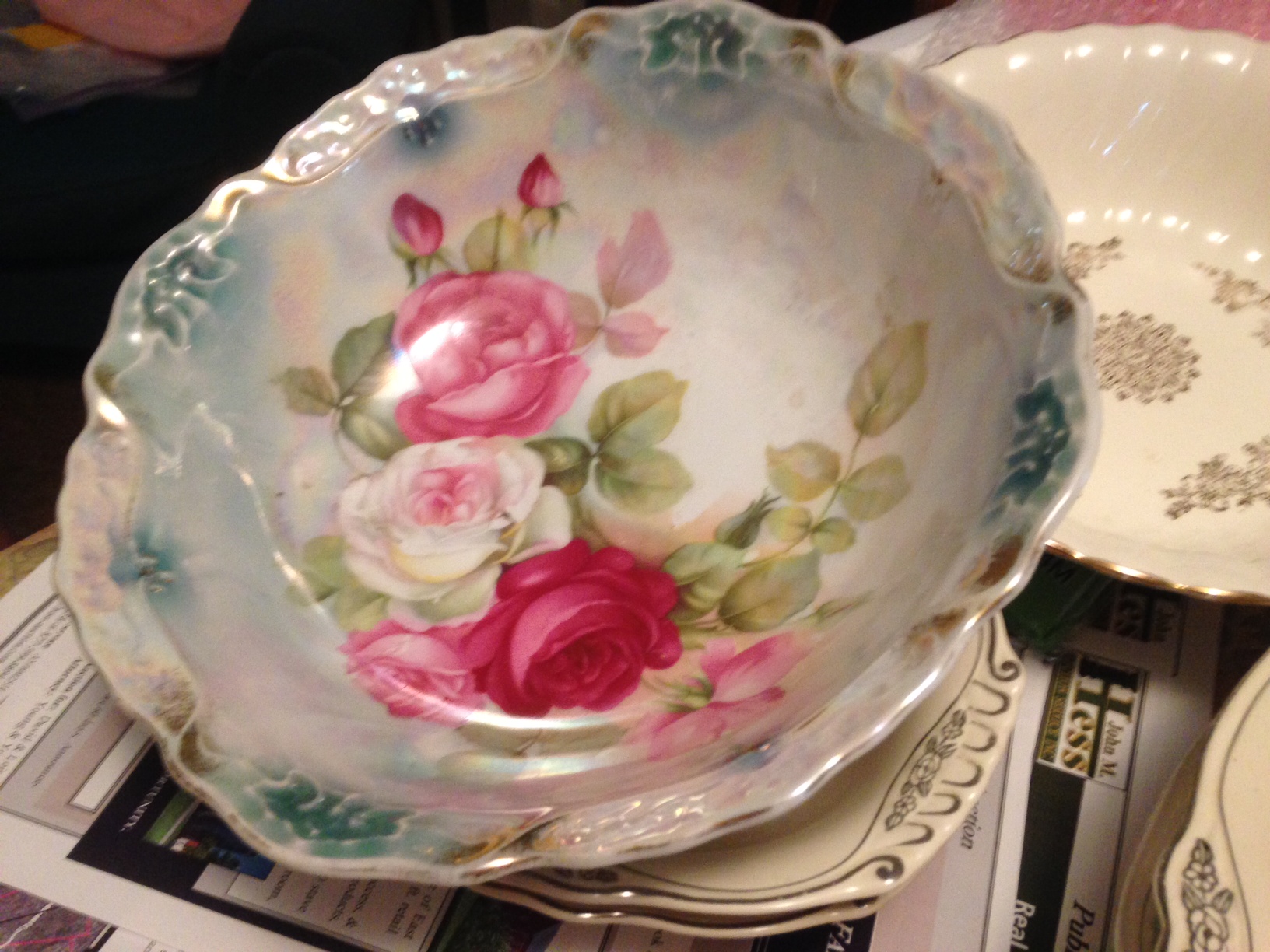
FloralDishMomNoteOne of Mother’s grand-daughters will get this dish no doubt and will know its provenance, which would probably be lost forever, without the note .


2. Keepsake from Mother’s Sunday School teacher at Erb Mennonite Church with teacher Mrs. Kathryn Bomberger. The note emphasizes the biblical account of creation found in the book of Genesis and on the reverse side a quick guide to prayers, parables, and verses commemorating sacred events. You can find more of the history of the Erb Mennonite Church here, including its roots in the Swiss-German Anabaptist culture.

Ruth Longenecker_SS card_front_back_note

Mother's Sunday School Class at Erb's Mennonite Church     Kathryn Bomberger, teacher
Mother’s Sunday School Class at Erb’s Mennonite Church       Mrs. Kathryn Bomberger, teacher

For many months now, this photograph has served as the banner on my Facebook page. When I posted it, I was totally unaware of Mother’s imminent death. Now I am loath to replace it with a different photo. All the ladies are plain here, except the smiling woman seated on my mother’s left. I imagine this shot was taken after Sunday dinner at the home of the teacher.


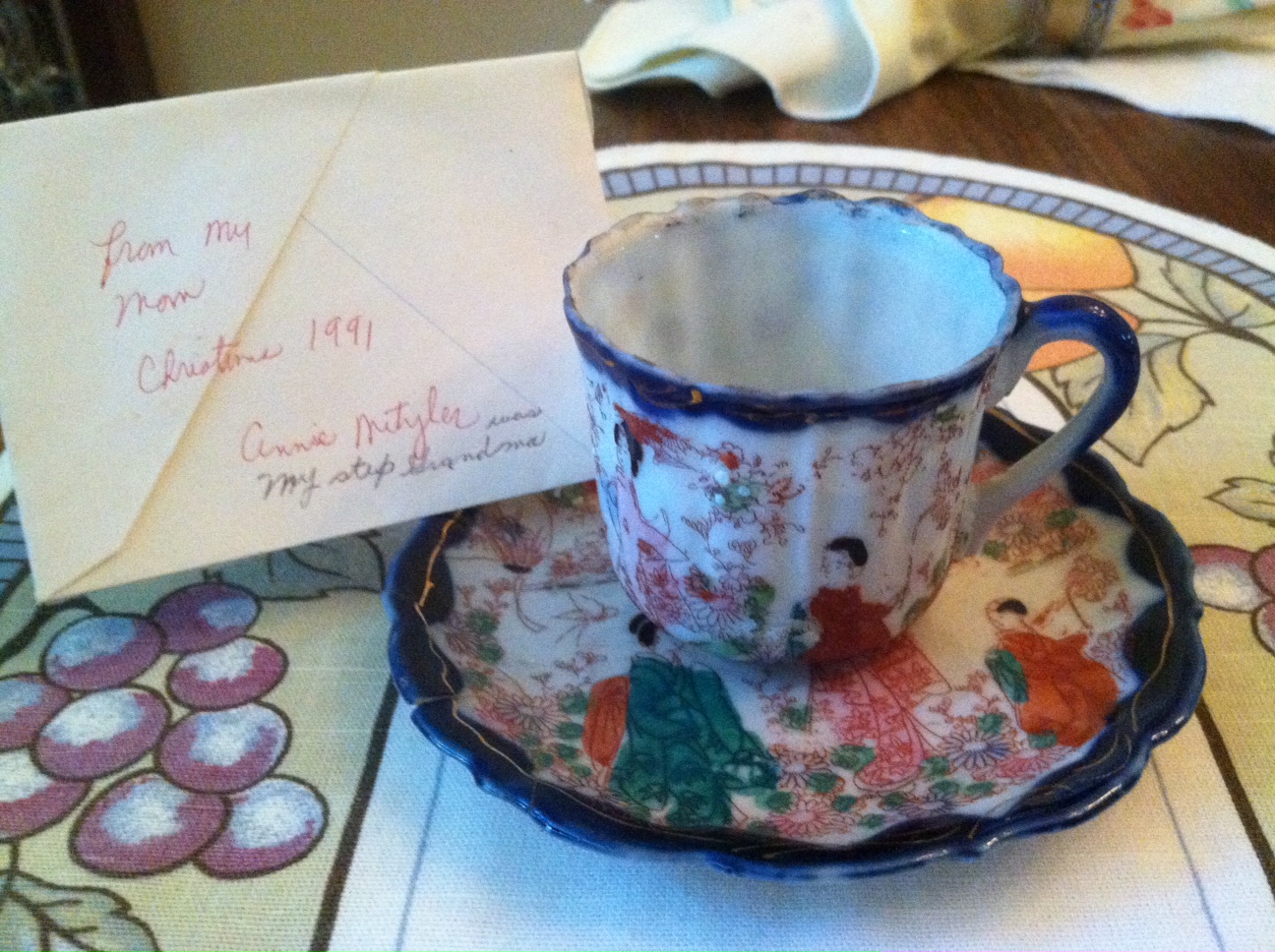
3. Japanese Cup & Saucer

Japanese Cup 2

According to my notation in red in 1991, Annie Metzler gave this set to my mother, who notes in her own hand-writing that she was Mom’s step-mother. This vintage piece is hand-stamped Made in Japan, possibly created during the Golden Age of Japan’s trade with the United States in the 1921-1941 era.

Mother had “secret smarts” that we became more aware of recently, revealing her keen interest in the continuity of memory as she passes both artifacts and notes on to the next generation.


Do you have any family notes like these? Do you tag things you want to pass on? Here’s where to share your wise observations . . .


What’s for Dinner? Dried Beef Gravy and . . .

“Just two generations ago, preparing meals was as much a part of life as eating,” so says Mark Bittman in an article entitled How to Eat Now published in the October 20, 2014 issue of TIME magazine. Although a recent Harris poll reveals that 79% of Americans say they enjoy cooking, probably most get at least a third of their daily calories outside the home. Bittman goes on to show how easy it is to get a nutritious home-cooked meal on the table and includes 3 simple recipes: Vegetable soup which borrows from the freezer aisle, a whole roast chicken with garlic and lemons, and skillet pear crisp recipe which makes for easy cleanup.

TIMEfood

Mother of course cooked two main meals every day. I could count on the fingers of one hand the times we ate in a restaurant. Her recipes were hearty, reflective of the PA Dutch cooking she grew up with, never skimping on the butter.

When I came back from Pennsylvania a few weeks ago, I brought on the plane frozen ham loaf and chipped beef. After the ham loaf is thawed, it’s a cinch to pop it into the oven and serve in a few hours with virtually no prep time.

Preparing chipped beef gravy though, while not enormously time consuming, does require assembling ingredients: dried/chipped beef, butter, flour, milk or cream, and a touch of pepper and then stirring in a skillet on the stove.

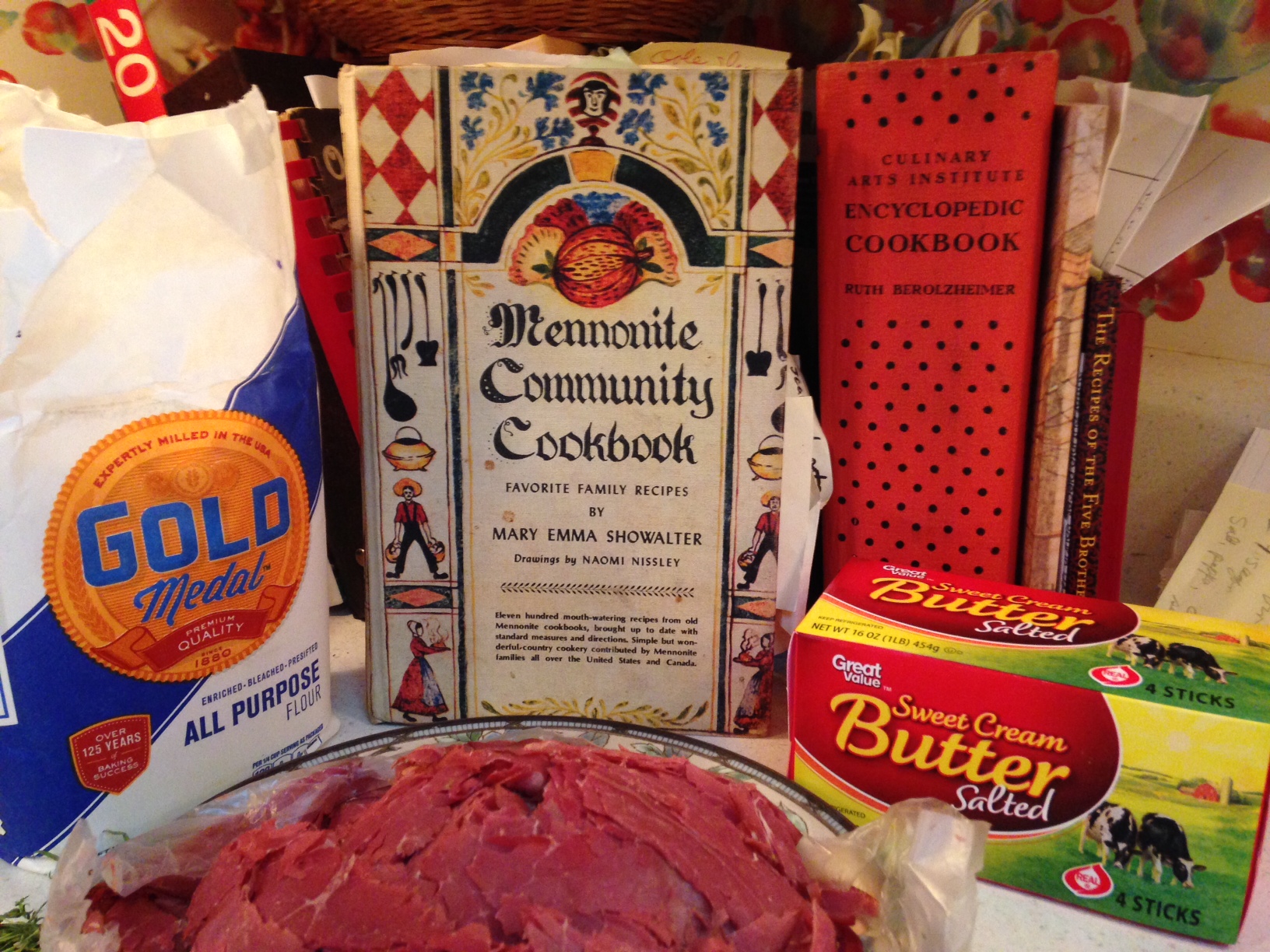
Last Wednesday, I pulled out my trusty Mennonite Community Cookbook by Mary Emma Showalter, a book of 1100 favorite recipes gleaned from Mennonite families all over the United States and Canada. Usually, I use Mother’s recipe in my head and knowing the ingredients to what she called dried beef gravy I add a hunk of this and two cups of that, “just what you think” as she used to say. This time though I will follow the cookbook’s recipe for creamed dried beef, which I see browns the beef with the butter.

DriedBeef RecipeNOname

RecipeDriedBeef

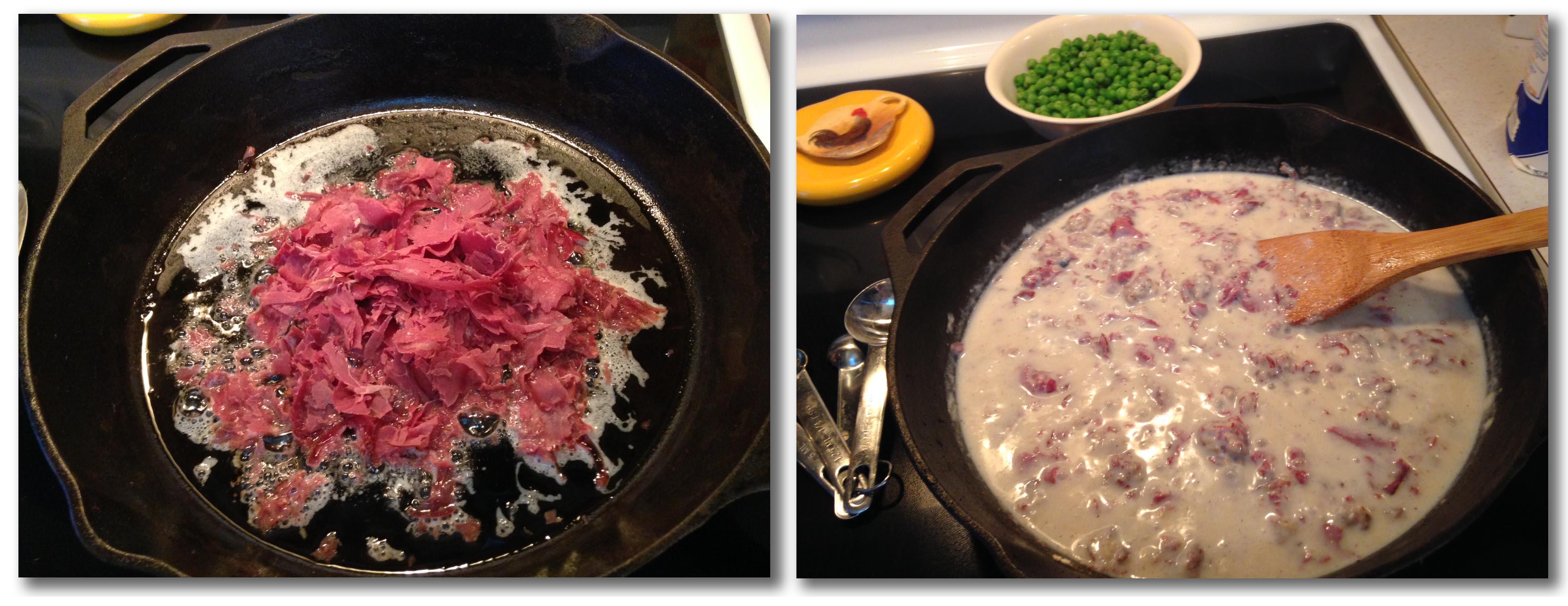
Next I assemble all of the ingredients and fire up the stove, beginning with melting butter in a hot skillet.

butterMelt

Adding the dried beef to the melted butter sends a hearty aroma throughout the kitchen. Then, sprinkling flour over the butter and beef, I create a roux to which I slowly add milk. Depending on your sensitivity to calories, you could use water, milk, or cream. I always use milk. Keep on stirring until the mixture becomes smooth and thick.

Dried Beef+ButterFlourStir

Finally, your creamed dried beef, which Mother always referred to as dried beef gravy, is ready to serve over toast, over mashed potatoes, as you wish.

foodDisplayed

Typical Menu

Dried Beef Gravy over Mashed Potatoes

Garden peas

Applesauce

Mark Bittman would probably raise his eyebrows over the amount of butter and flour in the creamed dried beef recipe. And of course this menu is heartier than his lower calorie menu of vegetable soup, roast chicken with pear crisp but, oh, is it delicious!

*  *  *

For years I thought of creamed dried beef as a Pennsylvania Dutch dish. After all, it appeared on page 58 of the Mennonite Cookbook, 1972 edition. Recently, my sister-in-law Terry told me her mother made the same recipe when she was growing up in California.

How about you? Did you enjoy creamed dried beef (or a variation) growing up? Is this recipe part of your cooking repertoire now?

 Inquiring cooks want to know. . .