Just as every issue of The New Yorker features a cartoon in need of a caption, today’s post offers a photo calling for your input. There’s one below to get your wheels turning, but I think there are other possibilities.
Even eighteen wheelers have patriotic ties.
The back story: This photo was taken in 2005 when Cliff was in the Chicago area doing his art/music shows. Most likely our son Joel, who was in graduate school in the city at the time, was driving as Cliff snapped the picture of this truck on the Interstate.
* * *
Carl Stoneseifer was one of my dad’s best employees at Longenecker Farm Supply in Rheems, PA. He was both personable and competent, as my dad would say, a “crack” mechanic. I remember how sad Daddy felt when Carl moved on.
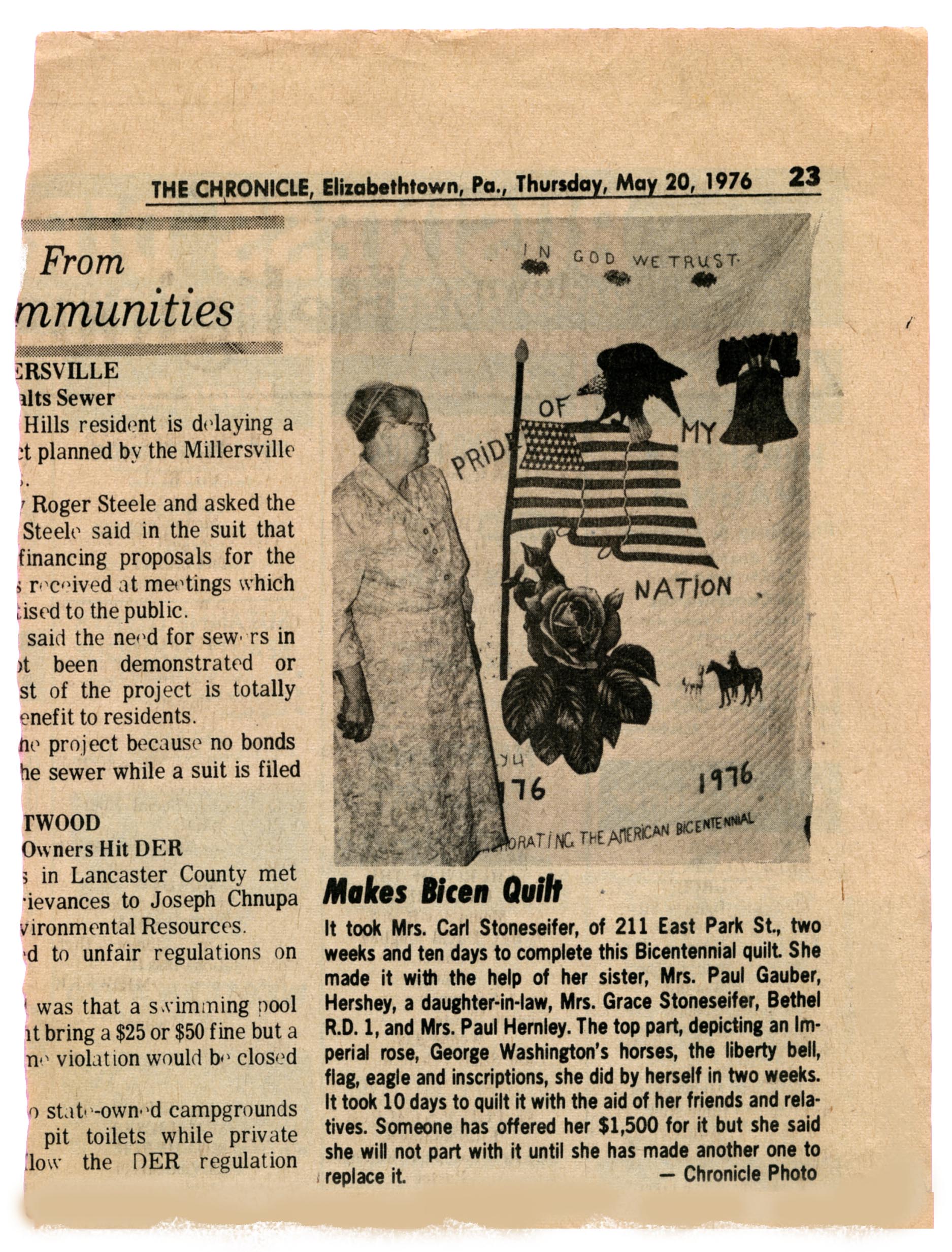
His wife Helen was a talented quilter. On May 20, 1976 Helen’s picture and write-up appeared in our hometown newspaper, The Elizabethtown Chronicle. The quilt, in honor of the American bicentennial, was a cooperative effort by her sister, her daughter-in-law, and another friend. However, the designs featuring various patriotic symbols were her own.
Memorial Day is a time to remember all those who sacrificed for our country. This weekend also heralds the first official holiday weekend of summer.
How do you observe it?
Can you provide a caption for the photo? I’m excited to see your suggestions!
Coming next: Purple Passages: Secrets of the Grimké House, Charleston
Nose-to-the-Grindstone, that’s my dad. But I have proof in pictures that he once took a fling to Florida with his Lancaster County Mennonite buddies. Judging from the photos that remain and Mother’s comments, I can pretty much guarantee that there were no stops at a roadhouse, nights spent bar-hopping, or brothel visits.
According to their Swiss-German work ethnic and the spirit of the times, these five men, Parke Garber, Dick Sauder, Bud (Wilbur) Martin, Howard Longenecker and Daddy were destined to be dutiful farmers or businessmen, faithful husbands and fathers. But until they hit the groove for the rest of their lives, they would see the world, traveling over 800 miles from Pennsylvania to Florida.
My Dad
They traveled in a car of this vintage with a road-map, certainly no GPS!
To Cypress Gardens, Florida 1939
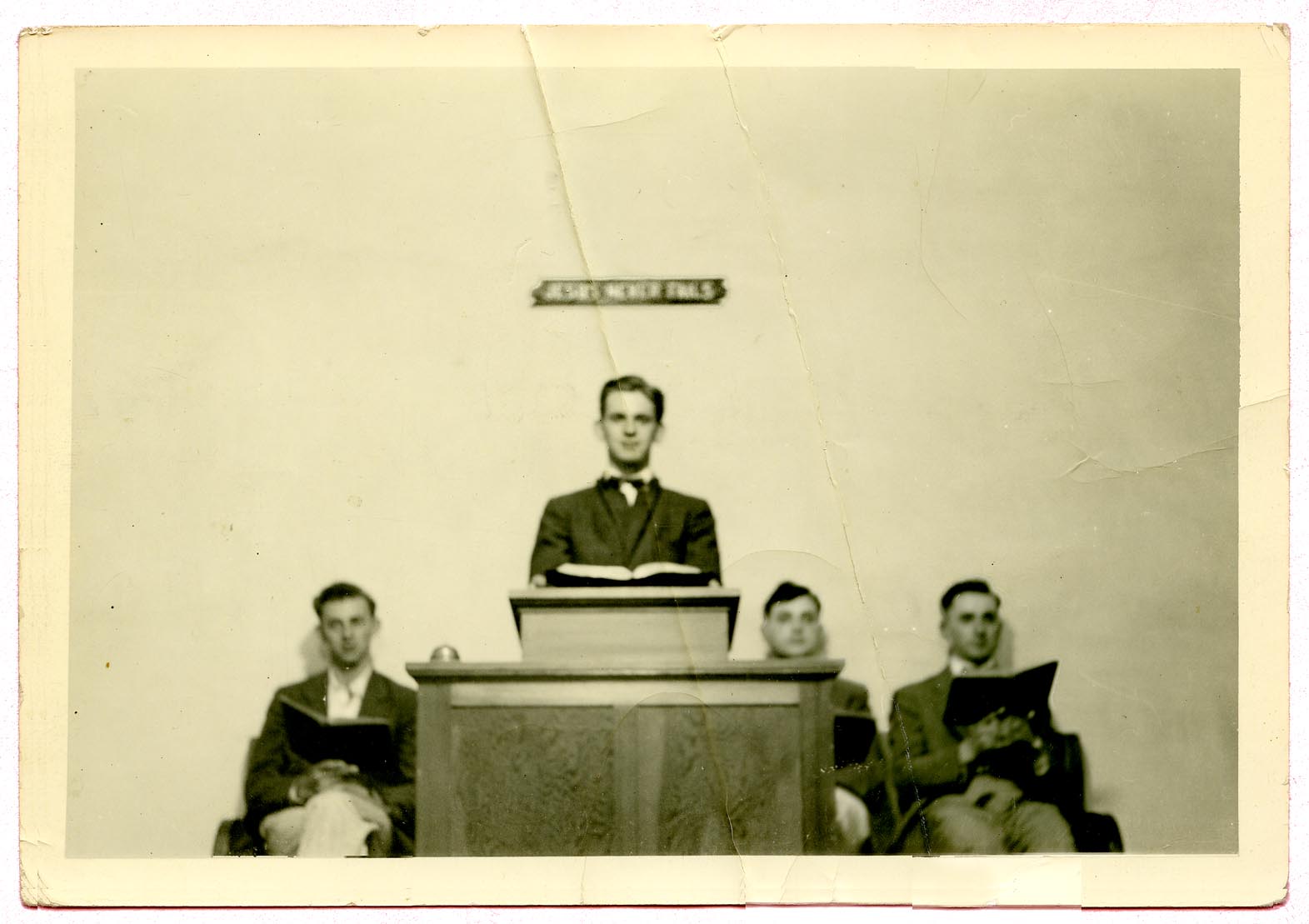
The craziest thing recorded is a snapshot of the men playing church under the skinny wooden banner Jesus Never Fails. I say they were playing church because that was what Mother told me and I never heard anything to the contrary. The “preacher” was a farmer turned car salesman and my sanctimonious-looking dad (at right), a farm implement dealer, holds a hymnbook or Bible.
Richard Sauder in pulpit, to the right Parke Garber, far right Ray Longenecker, my father (Unidentified man on left)
All these pictures were stored in a heap inside our family’s piano bench for decades. Only recently have they seen the light of day.
Based on the date here, my dad was 24. He was married in 1940 when he was 25, a year younger than my age at marriage. Men of this era did not usually marry until they could support a wife. The first question Daddy queried Cliff when he asked for my hand in marriage was “Do you think you can support her?” Looking back, the question seems a little strange as I was already a teacher of four years with a salary.
What I’d like to know:
Who’s idea was this trip?
Where did they eat? (These men were used to home-cooked meals.)
What did they talk about?
Did they ever wear casual clothing? (All I see here is white shirts, suspenders, ties and long trousers.)
Did they send postcards to their girlfriends?
Did they laugh and carry on?
Wouldn’t Dad have been astonished back then if he had known two of his daughters would be raising their families in Florida, so far away from their Lancaster County, PA childhood roots?
Do you have photos in your family albums that pose questions without answers?
Girls’ road trips are part of the landscape of American pop culture. Who can forget Thelma and Louise? Wanting to take a short vacation from their dreary lives, Thelma (Geena Davis) and Louise (Susan Sarandon) head out from Arkansas to the Grand Canyon in a 1966 Ford Thunderbird. They stop at a roadhouse and it’s all downhill from there. Crime and mayhem ensue until finally the gun-toting girls and their car zoom over the edge of the Grand Canyon. Both Davis and Sarandon received Best Actress Academy award nominations (1991).
Image courtesy Wikipedia
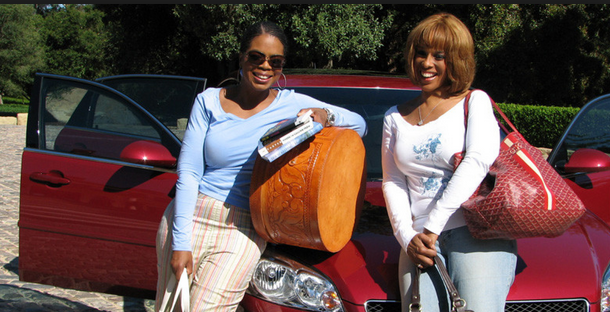
And what about Oprah and friend Gayle who took off in a much ballyhooed road trip documented on TV and watched by millions . . .
Image Huffington Post
Here’s how the Huffington Post encapsulates their excursion:
In 2006, Oprah Winfrey and her friend Gayle King embarked on what became a much talked-about (and hilarious) 3000-mile road trip across the country. When they weren’t cruising the highway in their red Chevy Impala, the two joined a local game of Bingo in Wichita, met some real-life cowboys on the range and crashed a wedding in Tulsa, surprising and amusing nearly everyone they came in contact with.
In spite of an anxiety-ridden moment on the George Washington Bridge, Oprah and Gayle completed their trip unscathed. When they returned to Chicago, Oprah handed over the keys to that Chevy to a deserving woman named Reola Holdaway.
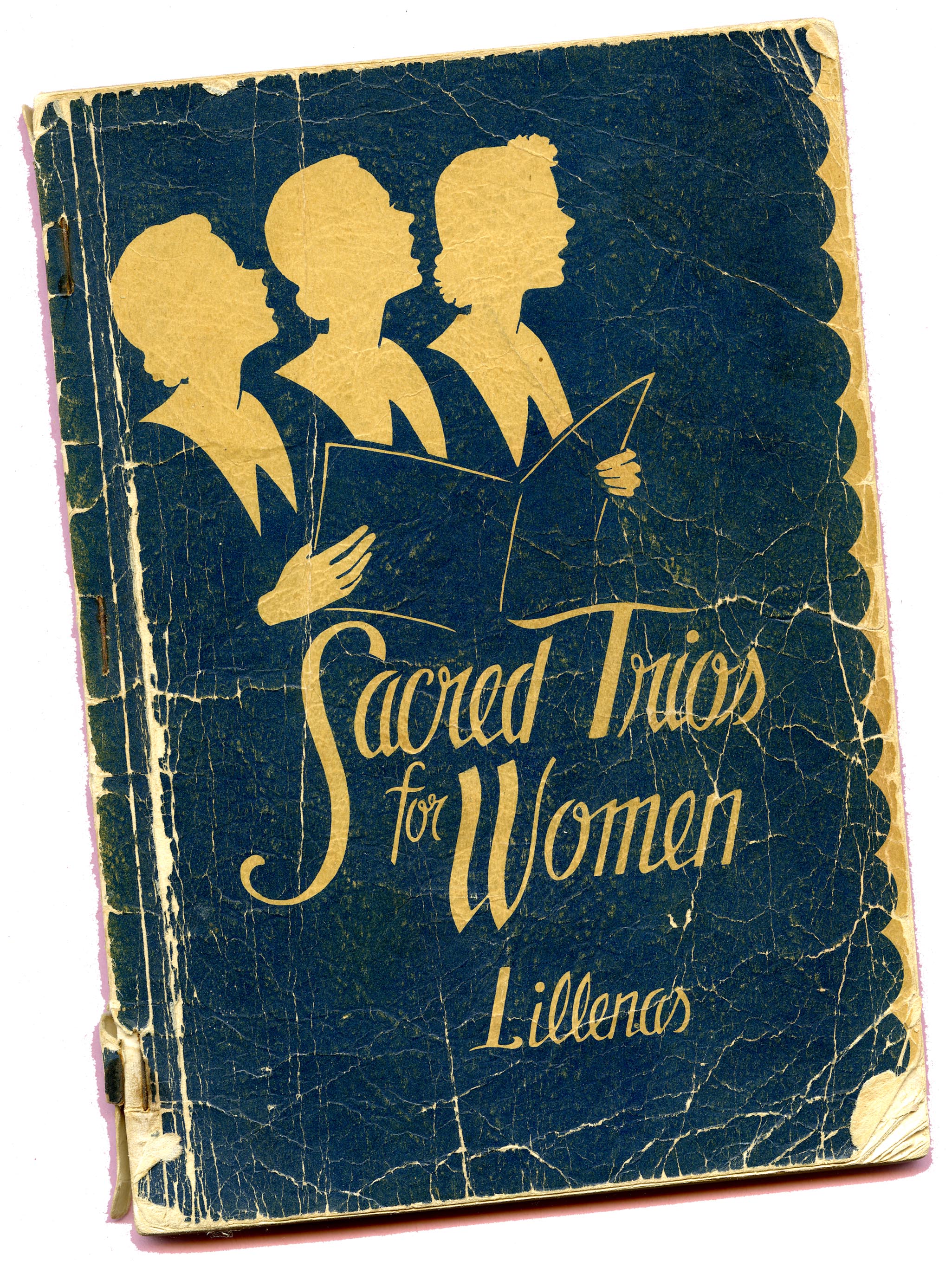
The Longenecker sisters, Marian, Janice, and Jean are not movie stars or TV personalities. None of us has owned a gun much less aimed one at a policeman as Thelma did. But as siblings, we have done many other things together — playing and fighting as children, working in the tomato patch in Bainbridge, PA, even singing in a trio at church, sometimes with less than perfect results.
The last time any of us can remember vacationing together was back in 1977, the year Daddy broke all sales records at Longenecker Farm Supply, won a free trip to Jamaica and took the whole family including his married daughters and son Mark. We left our husbands and young children behind and frolicked in Ocho Rios for a week — just Mom, Daddy, my sisters and brother Mark.
As married women with children, we have met at least once a year at the Longenecker homestead in Pennsylvania. Recently, we have been clearing out the house after Mother’s death making decisions about her possessions together. And now, as a pause in our separate journeys, we celebrate with a road trip. So, you see, it’s high time to make more memories.
Whee!
The plan: My sisters and I, with two of our daughters, are gathering from Florida and Pennsylvania for a Merry-May celebration in Charleston, SC. We’ll get there by car and I’ll record our adventures here in two installments. It won’t be the Italian Riviera but we can refresh and renew our sisterhood close to the Charleston harbor inlet leading out to the Atlantic Ocean. And it won’t be Thelma and Louise, or Oprah and Gayle, but it will be Marian, Janice, and Jean.
Stay tuned for Part 2!
In the meantime, have you and close family members taken a road trip together recently or long ago? Tell us about the adventure here.
A snapshot of a baby boy dressed as a girl and an old flash bulb. Those are some of the items we find clearing out Mother’s house. Last October my sisters and I began the arduous task of sorting, saving, or recycling the accumulated store of her possessions having lived in the same house for over 73 years. You can read about it here.
Today’s post features snapshots, both photos and artifacts, from both Mother and Daddy with a surprising find at the end.
MOTHER: Some of what I found from Mother could be filed into 3 categories of nurturing:
Feed
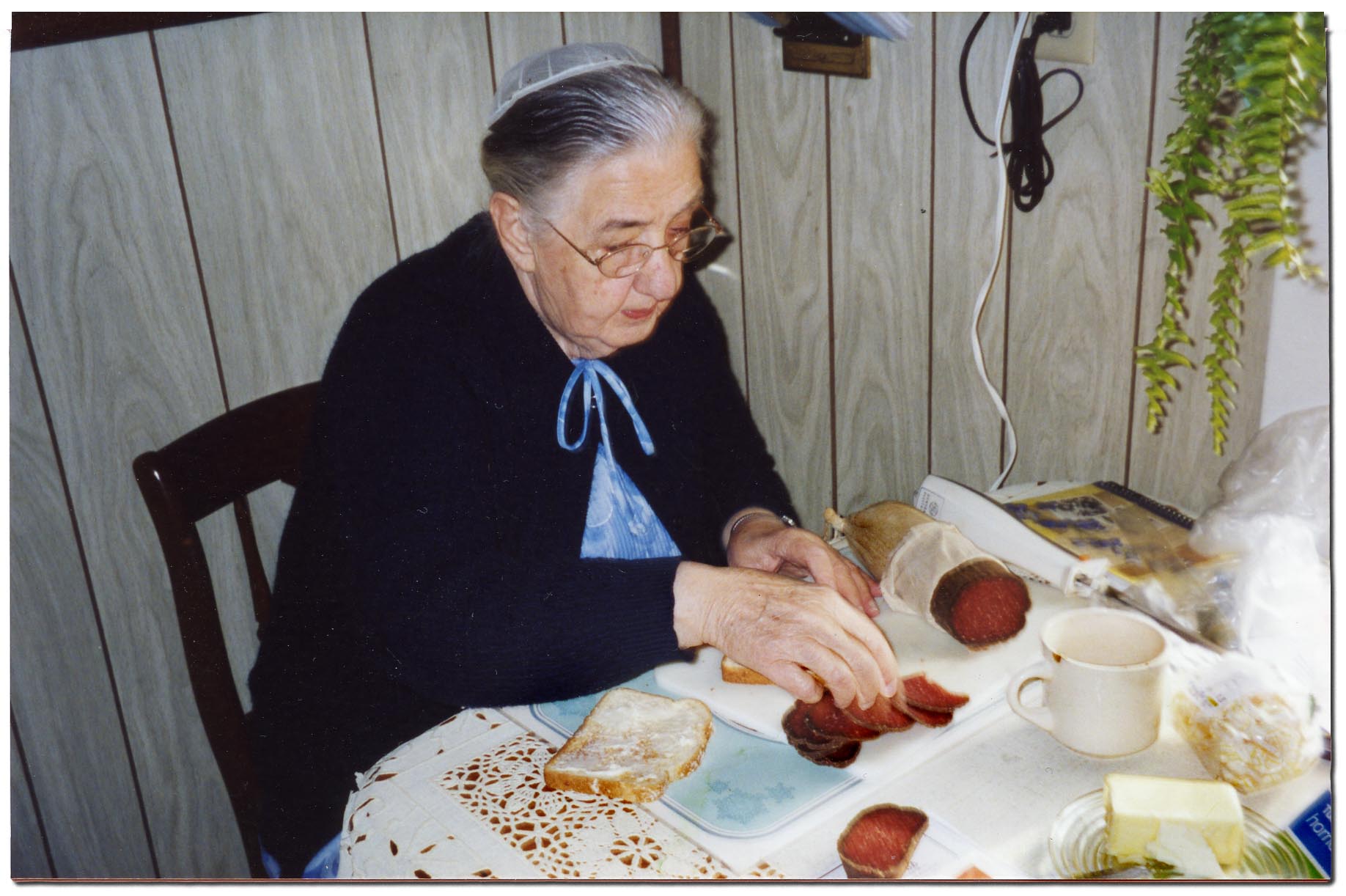
Our metal lunch pails carried many a bologna sandwich, usually Baum’s Bologna from their shop north of E-town. After Mother pulled back the burlap, she sliced thick rounds for sandwiches on buttered bread – always butter . . .
Read
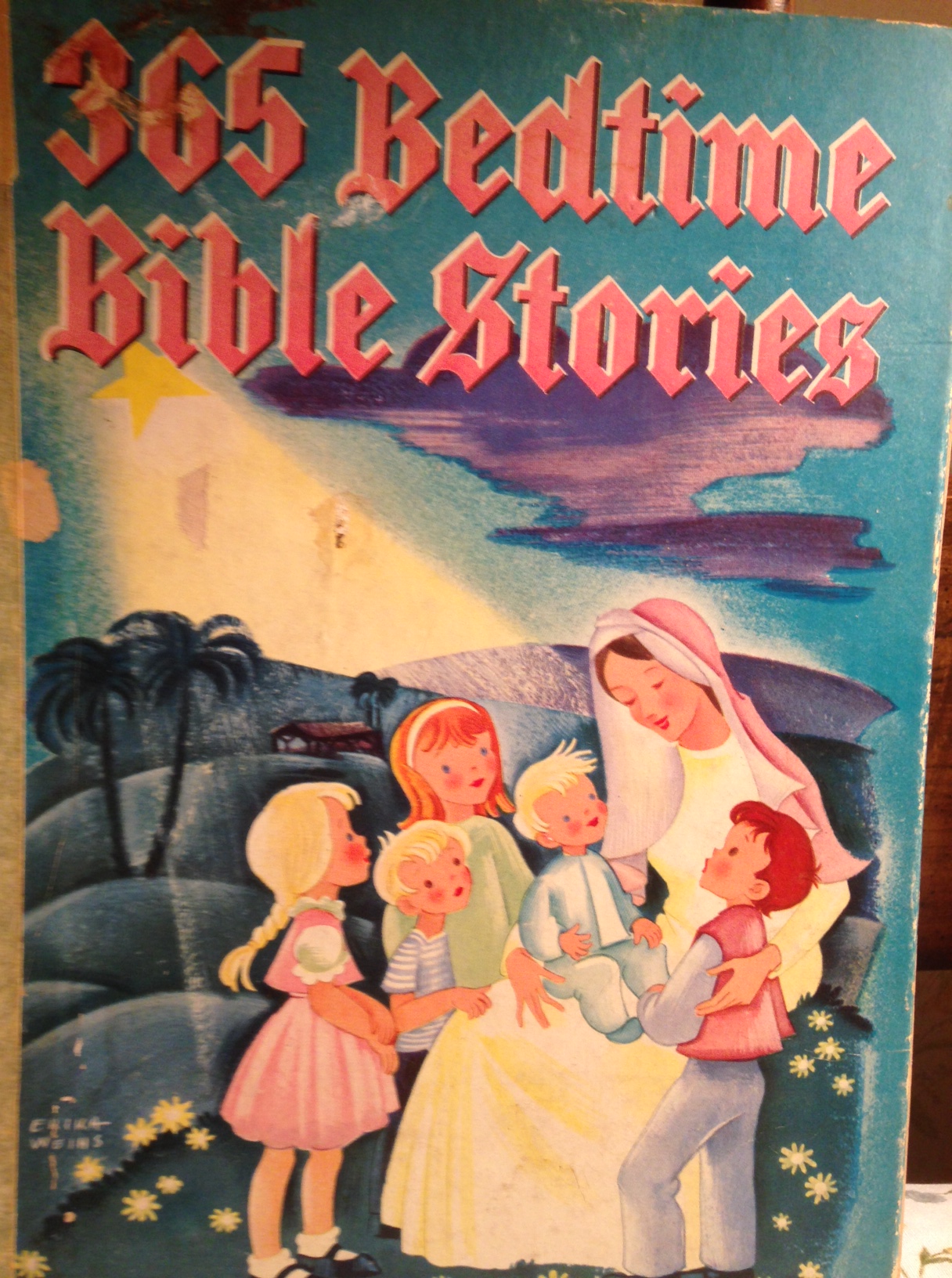
Every picture, every story seems familiar in this Bible Story Book with pages, crackly brown with age. Sniffing into the spine, I roll back in time to the little girl on her lap. I loved the art work then. Now I love its charm even more. Did Daddy read these stories to me too? Maybe so, but I can’t remember.
Remember
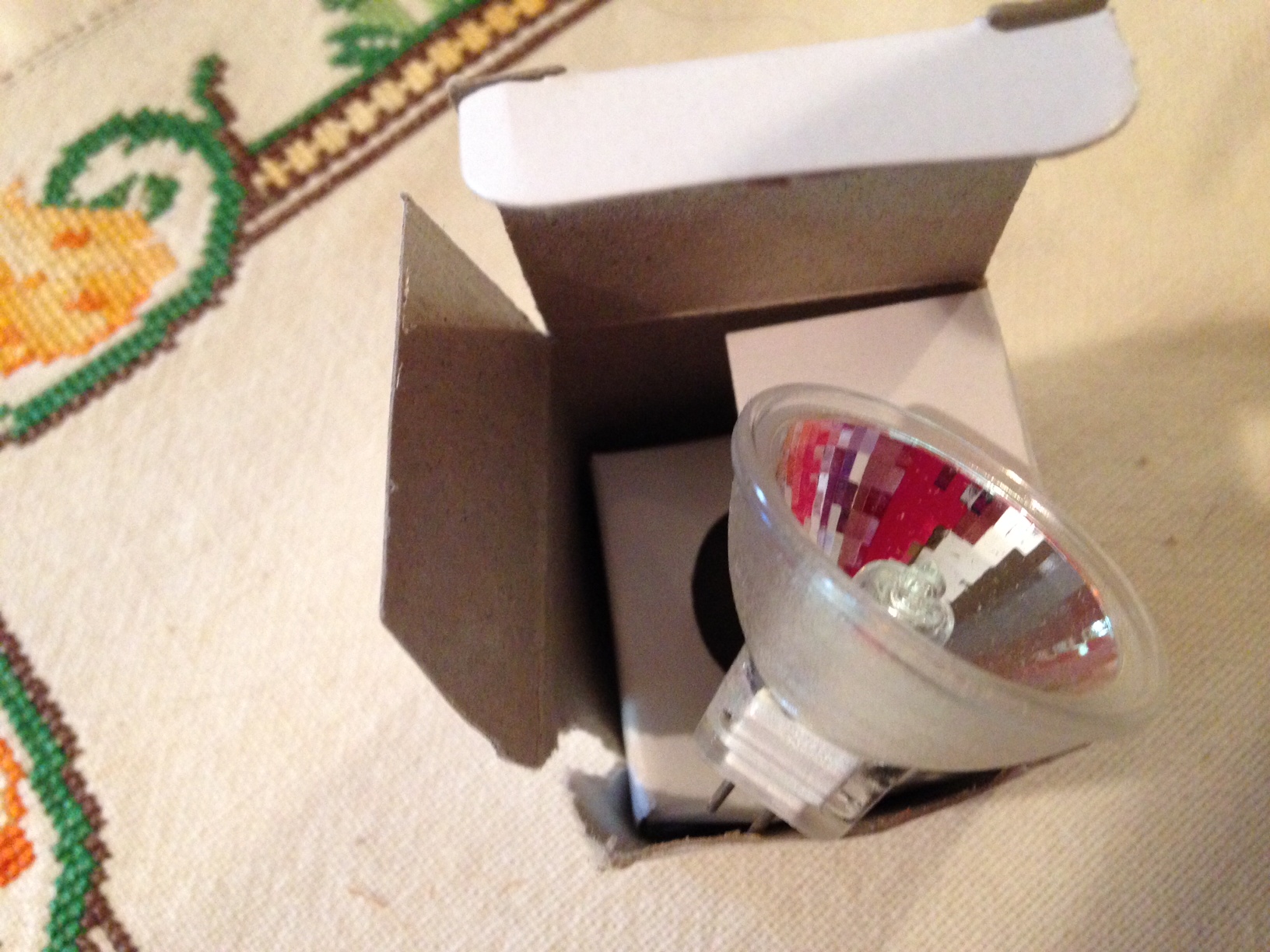
Cameras freeze time, preserving memories. Mother didn’t write in a journal, but she consistently recorded our family’s story over time. The old box camera is long gone, but here is a “flash” of memory possibly from her last camera . . .
DADDY Some of what I found representing my father was surprising:
Although I have several photos of Daddy holding me as a baby, my father was a man’s man: a tractor-driving, motor-fixing, field-plowing, deer-hunting guy. He even hammered on the piano keys. His work clothes were of black moleskin cloth, matching the grease he was in close contact with at the shop. I am certain he never wore pink. Yet here he is posed for the camera in a dress, flanked by his parents, Henry and Fannie Longenecker, my Victorian grandma not yet attired in Mennonite garb that would characterize the rest of her life. Daddy’s dress is not a christening outfit. There was no christening among Mennonites. I suspect that babies of both genders wore dresses to make diaper changing easier.
Henry and Fannie Longenecker with son Ray
Needlework
Our scavenging took us to the attic chest filled with treasured quilts. My sister Jean and Mother tagged each one a few years ago, so there would be no doubt as to their provenance. Apparently, Daddy drew his needle through a white quilt, stitching animals in red. I see a camel, sheep, chicken, pig, duck, an elephant. Even an ostrich.
Here is just a teaser. (Look for Daddy’s full quilt on a later post!)
Quilt with animal stitching by my father, Ray M. Longenecker
Nickname
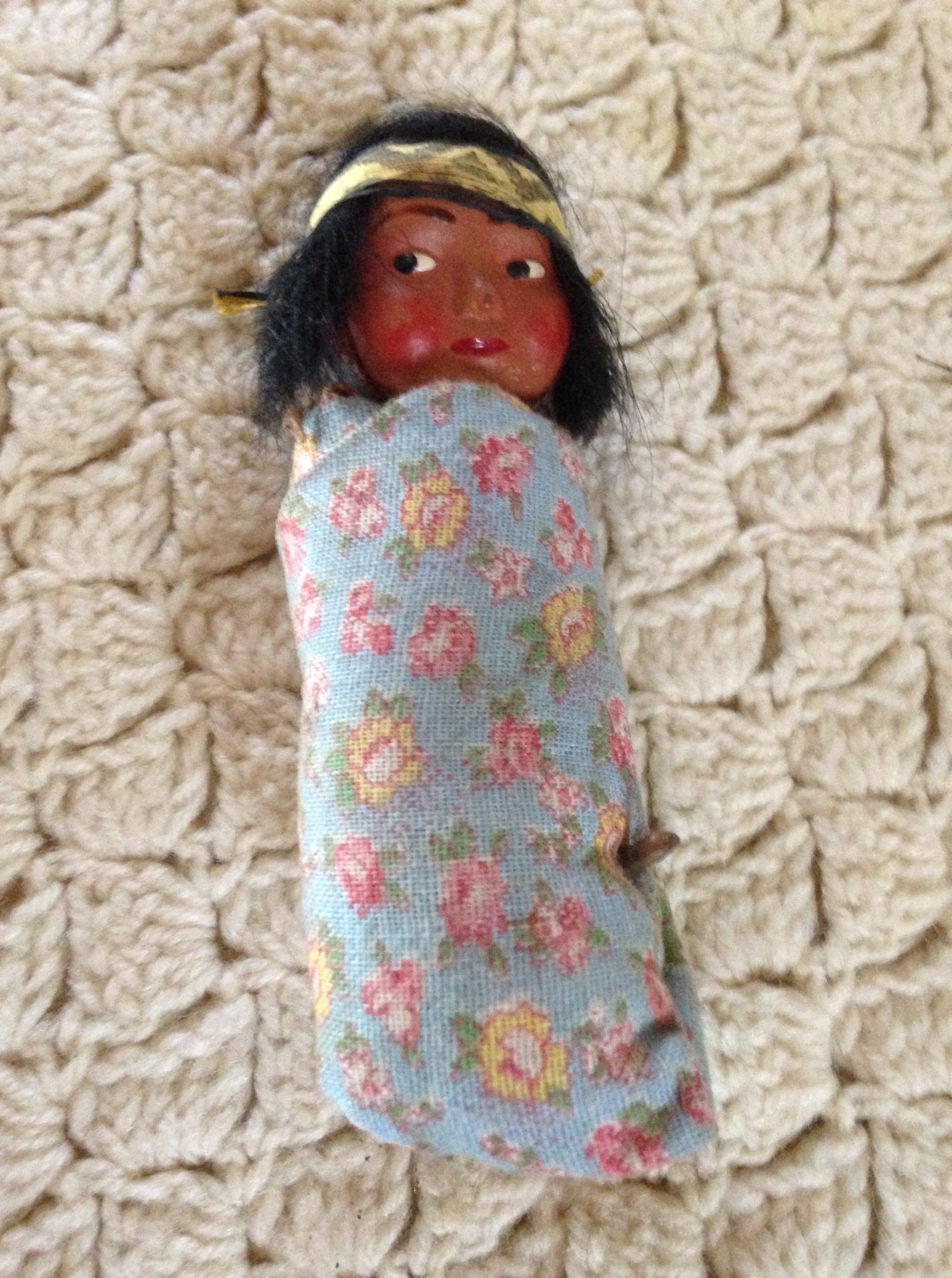
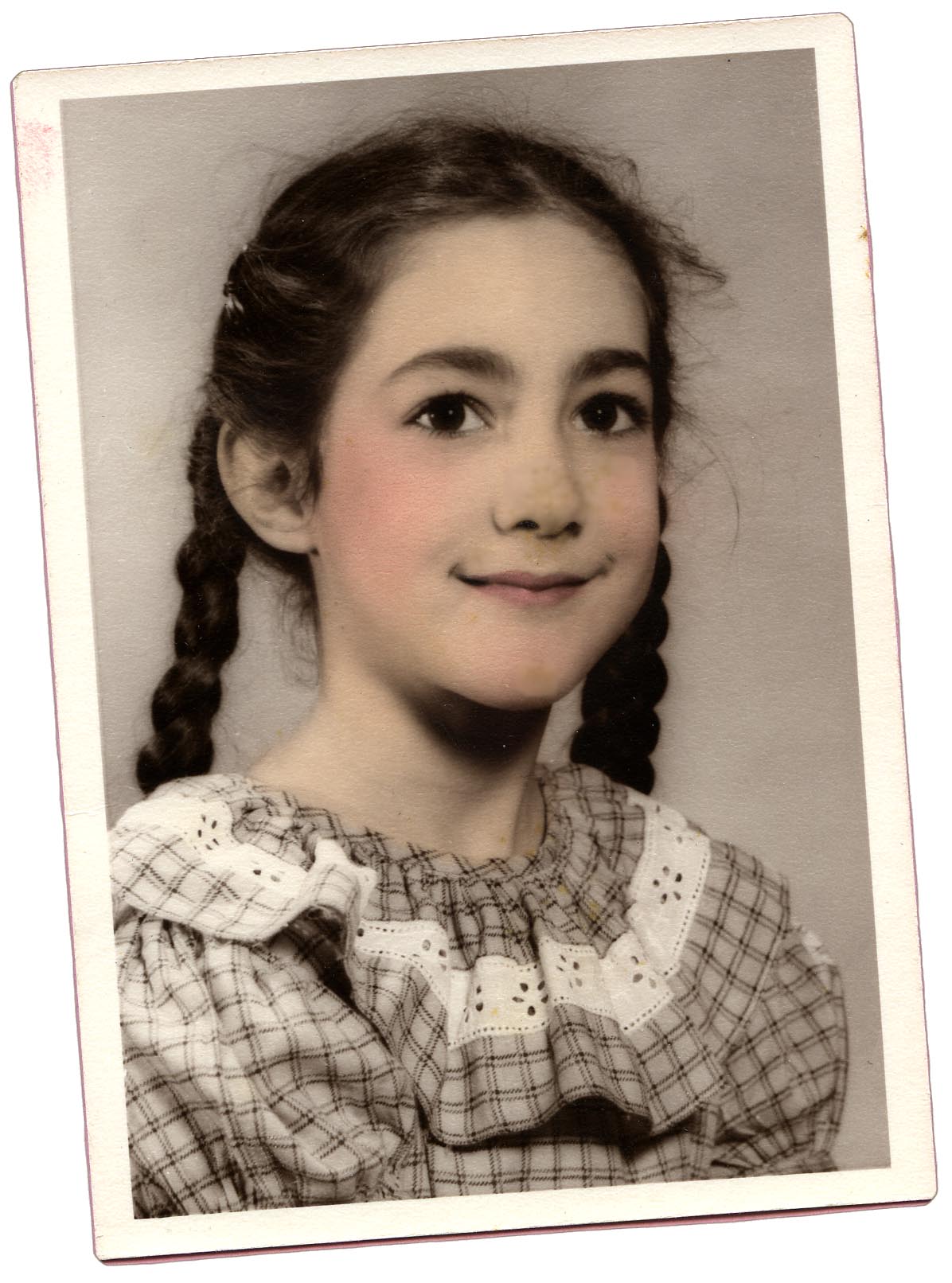
Daddy’s nickname for me was Pocahontas, not so much because I looked native American, but probably because of my thick, dark braids and big eyes. When I found this doll, I decided it shouldn’t be given away, sold, or recycled. It now sits on the dresser in our bedroom with “strubbly” hair, not braided!
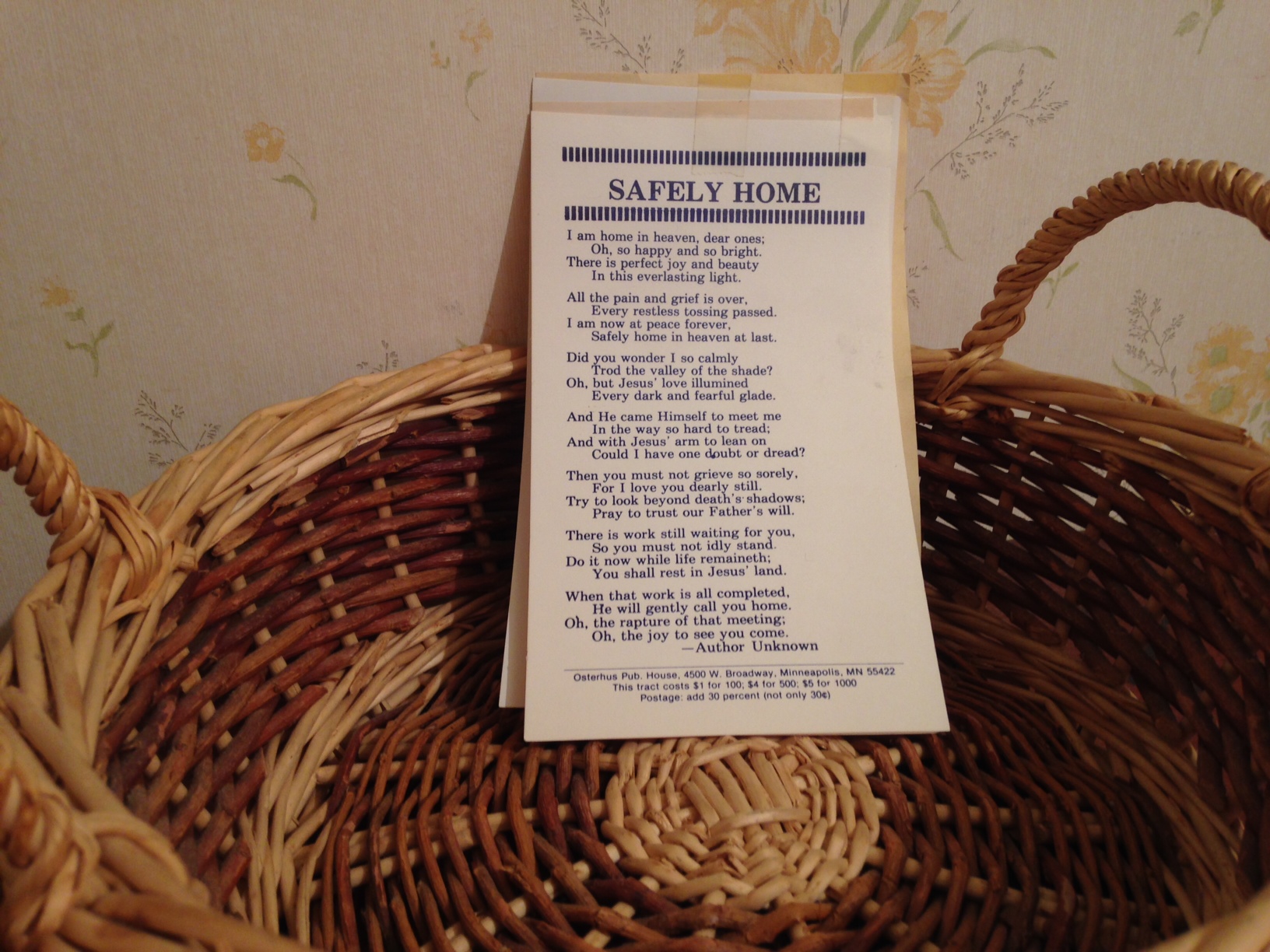
Final Note: A Curious Find On our first visit to Mother’s house in October after the funeral, we saw a wicker basket on top of a hallway chest with a poem entitled “Safely Home,” something we had never noticed before. Were we blind to it earlier? Having a premonition of what was to come, did Mother put it there for us?
I am home in heaven, dear ones; / Oh, so happy and so bright. / There is perfect joy and beauty / In this everlasting light . . . .
(Anonymous, Osterhus Publishing House) . . . a mute but eloquent affirmation
Your turn: Are you holding on to something you treasure from a loved one? A photograph? A small gift?
Every single memory of snow in my childhood is pleasant. Sparkling flakes in luminous free-fall as I look out the kitchen window. Snow festooning evergreen boughs. Then bundling up in snowsuits, knitted caps, mittens. Getting out the sleds.
After more than one snowstorm, Aunt Ruthie grabbed her movie camera and trained her sharp eye on some big, tall sledders who went coasting down the hill from our house to Grandma Longenecker’s.
Then she captured our anticipation of trumping through nearly hip-high snow and finally (my favorite) Mother pulling my sister Janice and I on the Flexible Flyer sled along Anchor Road.
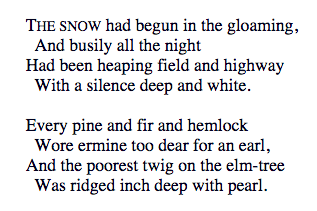
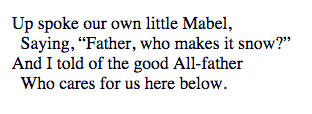
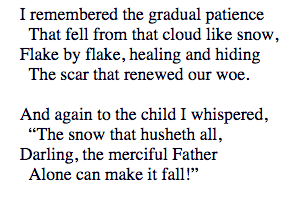
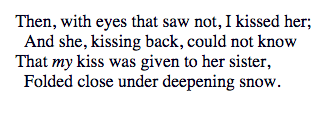
Another parent and daughter are observing the snow in The First Snowfall by American poet James Russell Lowell, a poem I remember Mother reciting.
Mabel marvels at the beauty of the snow and inquires of its origin . . .
. . . but as the father’s replies to Mabel, he remembers the snow which hides the scar of another child’s burial plot.
Then Mabel feels her father’s gentle kiss, a kiss she will never know was intended for the daughter beyond his touch. The last stanza leaves Mabel in child-like wonder, her father in pensive grief.
This post began with snapshots of fun in the snow and ended with a reflection on loss. But snow can be the setting for other memorable events: a frolic with friends, a car accident, a marriage proposal (I’ll save that for another post!)
You probably have memories of snow, recent or long ago. Here’s your chance to share them.
According to The Huffington Post, the median home price in the United States (2014) is $ 188,900.00. Even adjusted for inflation over the years, housing prices have increased enormously since the 1940s.
My parents were married in 1940. Until they bought their first home in 1941, they lived for a few months with my father’s parents, Henry and Fanny Longenecker, and then with a relative, “Uncle” Elmer Longenecker in the village of Rheems, Pennsylvania. The newlyweds’ first home of about 1240 square feet cost $ 5000.00.
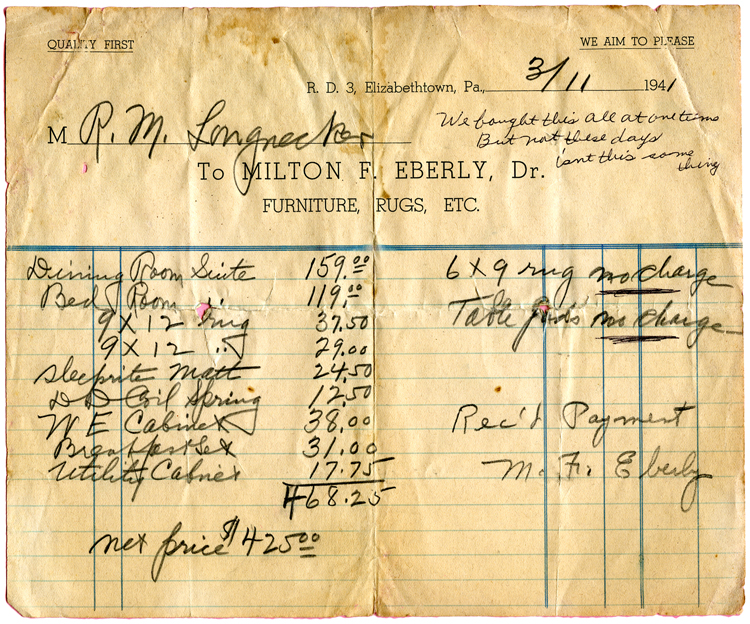
Just as astonishing as the price of the house was the bill for their home furnishings from Eberly Furniture Store just above Elizabethtown. They outfitted this home for $ 425.00 including a dining room and bedroom suites with a mattress and box springs, a kitchen table, rugs and two utility cabinets.
Please note that table pads for the dining room and a third, smaller rug were apparently thrown in as a bonus. Milton was a happy man the day Ray and Ruth Longenecker walked through the door of his store. And the feeling was mutual. My Mother’s comment on the receipt says it all: “We bought this all at one time, but not these days. Isn’t this something.”
The Art Deco bedroom suite has been replaced with something more contemporary but not nearly as beautiful to my taste. What is left of the original purchase: the kitchen table and chairs and the Duncan Phyfe dining room suite.
Isn’t that something?
The “Moments of Discovery” series is Part One of a continuing series that will unfold as we sort through the contents of the house on Anchor Road. It joins other series on this blog: Purple Passages, Moments of Extreme Emotion, and 10 Tips/Secrets.
How do you furnish a house – traditional, contemporary, eclectic?
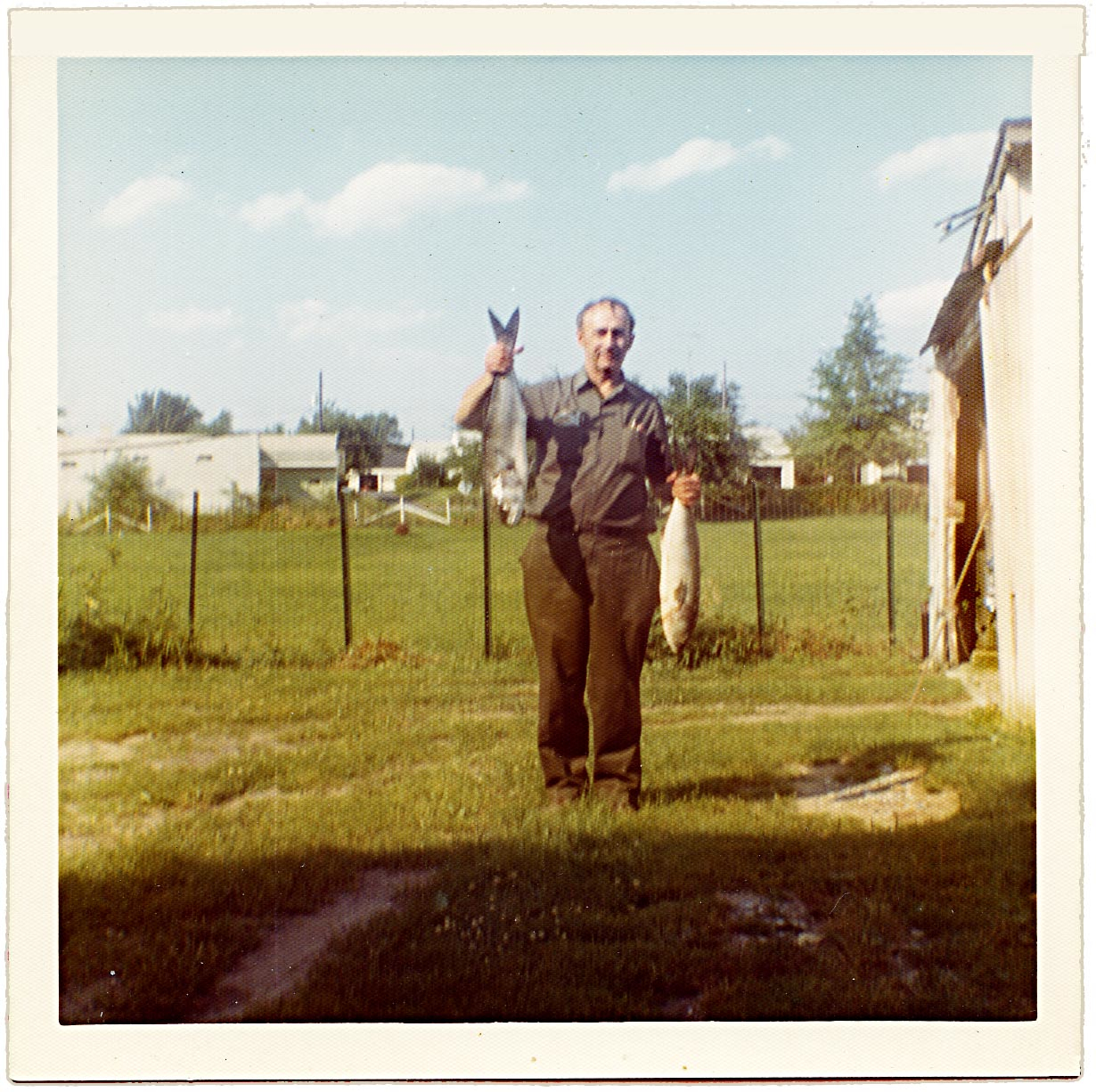
Daddy was an avid hunter (pheasants and deer mostly) and an eager fisherman. The outdoors took him away from the stresses of his business, Longenecker Farm Supply, and helped him literally recharge his batteries. I never went hunting with him, but he invited me once or twice on deep-sea fishing trips in my early teens.
Many summers ago, friends from Bosslers’ along with a few relatives chartered a boat and went deep sea fishing in the Atlantic south of the Delaware Bay. Unlike the New Testament disciples who fished with empty nets all night long until they followed the wisdom of Jesus, we PA Dutch fishermen hauled “em in right and left”– starboard and port. And unlike the disciples who had to cast their “nets” on the other side, we had a great catch without switching to a different strategy. Unbelievably, we novice fishermen were rewarded with a net-breaking haul of bass or trout. Somehow the figure of the number 68 (or maybe it was just 65) sticks in my mind as the amount of fish I caught single-handedly that day. Others easily topped my number. No fish tale here!
(I’m the one with the bandanna and sweater on the left side of the boat; Daddy is grinning behind Uncle Paul whose hand is raised.)
Generally, I had a strained relationship with Daddy. The stories of the ill-begotten bike and his unannounced violin purchase on earlier posts underscored his lack of knowledge of relating to me as his oldest daughter and subsequently my resistance to his overtures toward making a satisfactory connection.
But outside the walls of our house, taking walks or catching fish together, such barriers disappeared. These photographs evoke these pleasant memories, times when we were in tune with nature and with each other as father and daughter.
Childhood that place where purity of feeling reigns, was merging into adolescence, where ambiguity begins.
Mary Peacock in The Paper Garden
And that is where I was, the age of ambiguity and change.
* * *
Comments? A question? An anecdote from your own experience growing up.
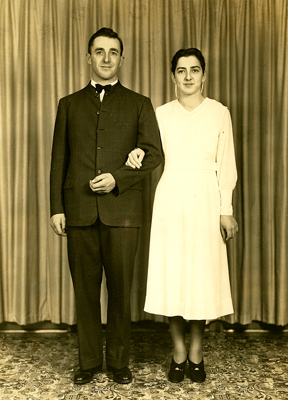
This is the wedding portrait of my mother and father
Ruth Landis Metzler and Ray Martin Longenecker
October 26, 1940
June is the month for many American weddings. And so is August. Because many Mennonites were farmers, Mennonite weddings often took place in October, a month that signaled a break in heavy farm work after most of the crops had been harvested. My dad was a farm implement dealer, so his work cycle mimicked that of the farmers he served, which would probably explain the October date for the wedding.
The bride and groom, my parents, are dressed in Mennonite attire and comply with the rules for weddings prescribed by the church in this era: no bridal party prancing down an aisle to “Here Comes the Bride,” no flowers, and definitely no exchange of rings.
Excerpts from Article II, Separation and Nonconformity, Section 2. Public Worship. (19) from the Statement of Christian Doctrine and Rules and Discipline of the Mennonite Church, 1968:
“We deem it improper to employ instrumental music in worship and church activities.”
“Weddings shall be conducted in a Christian manner avoiding all vain display and in accordance with the prescribed regulations for weddings.”
* * *
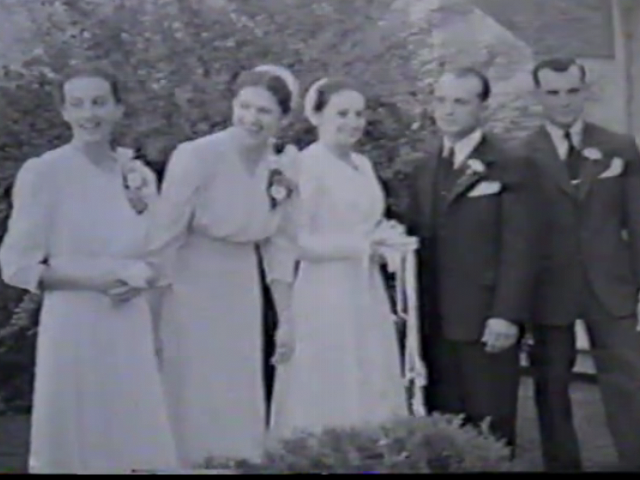
Anna Mae Longenecker’s father John is my dad’s first cousin on his father’s side of the family. Anna Mae with her brothers and sisters lived on the farm at Bosslers Corner, a farm bought from William and John Penn by Robert Allison in 1762, and subsequently bought from Jacob Bossler by John and Nancy Longenecker and kept in the Longenecker family for five generations. On the lawn of this homestead, one of John’s daughter’s, Anna Mae, poses for wedding photographs with her new husband, Hiram Aungst.
Anna Mae Longenecker with her new husband and sisters posing for wedding photos on the lawn of the John Longenecker homestead.
Either the rules for wedding have relaxed a little in the ten or more years since my parents’ wedding, or brides have become more bold. This wedding accessories include corsages for attendants, a white Bible with streamers for the bride and the groom and groomsmen in non-Mennonite suits and neckties.
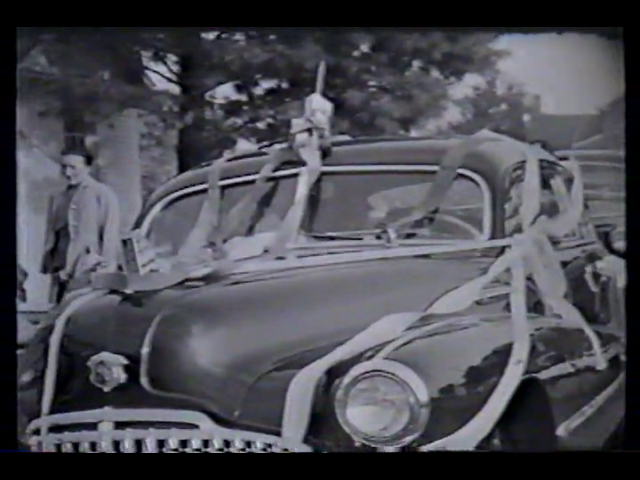
As the video shows, there was muted frivolity after the wedding which included rice throwing. Yes, it was real rice, not bird-seed!
Note the cars decorated in full post-ceremony regalia, worthy of any “fancy” wedding.
Then and now: Your thoughts on wedding ceremonies welcome.
My father wore many hats. Work hats mostly, but also a goofy blue derby hat I faintly remember stashed high up on a closet shelf, and a fedora reserved for Sundays or other special occasions. Through his long history at the shop, Daddy sold a wide array of tractor brands which supplied him with hats embroidered with their company logo: Massey-Harris, Minneapolis Moline, New Idea, Fox, and Deutz.
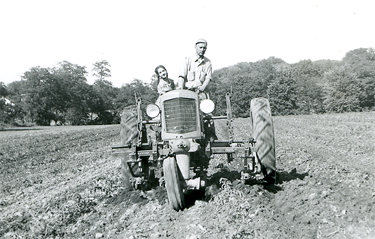
His hats changed with his loyalty to the brand of farm equipment he was promoting. None made him happier, however, than the hat he wore with one of his first purchases after his father, Henry R. Longenecker, passed the business on to him. With the tag still attached to the grill, Daddy proudly drove the new Massey-Harris tractor back and forth in the alley next to the shop in Rheems, his sister Aunt Ruthie recording the spectacle with her new 16 mm movie camera.
Shop Hats
The Welding Helmet Invented by the German Hans Goldschmidt in 1903, welding was one of my Dad’s specialties, a boon to farmers with harvester units or even plow shares needing repair. A free-standing acetylene cylinder and oxygen tank for welding stood near one of the double wooden doors. This allowed easy access for welding repairs as a tractor or harvesting equipment was pulled through the giant, wheeled doors that ran back and forth on a metal channel.
I watched Daddy slap a Darth Vader-like helmet on his head, don long, flared-sleeve gloves, and use long, skinny welding rods to fuse broken parts together. Sparks flew everywhere in this Fourth of July fireworks show extending into August, the height of the harvesting season.
Along the back of the dark recesses of the shop was a large grinding machine that could sharpen a 6 to 8-foot section of blade used for scissoring hay, wheat or barley.
Daddy did most of his work in his shop but occasionally he was called to the field. A doctor of motors, he made “house” calls to the fields of anxious farmers, work stalled with broken-down equipment.
Farm Hats
My father was first of all a farm implement dealer and mechanic, but he also farmed ten acres of land in Bainbridge, Pennsylvania combining corn and tobacco crops and then later corn with tomatoes. Farming is serious business in the searing sun requiring a cap with a long bill. The result: a white “farmer” forehead and red-brown cheeks and arms. My mother and Aunt Ruthie often wore sun bonnets, in the field but as you can see, we were bare-headed and probably bare-footed too.
Cultivating land for tomato crop in Bainbridge
A beekeeper too, my dad wore a bulky hat complete with a mesh veil to smoke out the bees.
Fancy Hats
Church, weddings, funerals – all were occasions for a fancy fedora. But one occasion in particular required dressing up: posing on the steps of the U. S. Capitol building ready to meet with congressmen regarding the threat of a proposed air base to some of the rich farmland of northern Lancaster County. A sizable delegation of plain people (many of them Mennonites) including my dad in his fedora and Grandma drove to Washington D.C. to make their case with government officials. When a follow-up investigation was conducted, sink-holes had reportedly been found in the farm-land around Bossler’s Mennonite Church. The case was subsequently closed.
Sadie Greider, Grandma Fannie Longenecker and Ray Longenecker on steps of the Capitol in Washington, D. C.
Tell us about your dad’s hats – what he wore, or any other “Dad” memory you want to share now.
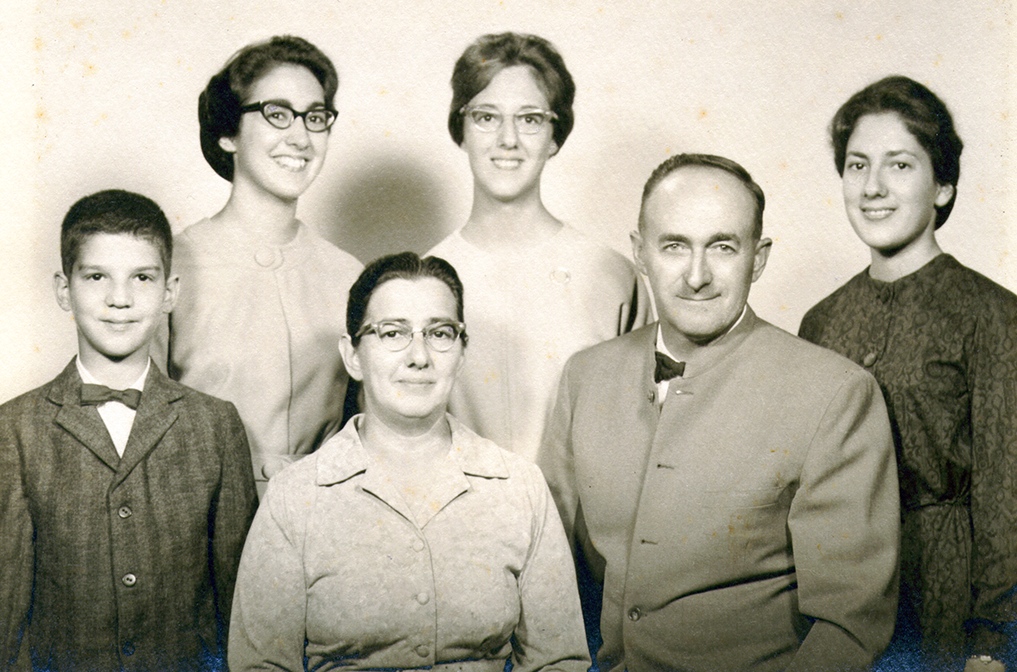
Longenecker family portrait circa 1961: Mark, Marian, Janice, Jean with parents
This is the family I grew up in: my parents Ray and Ruth with my two sisters and one brother. But after I left home and eventually married, my parents had more children. No, my mother was not a modern-day Sarah. She didn’t have babies in old age. But in their early sixties, Mother and Daddy “adopted” another set of children, about a dozen daughters in all, through an agency called New Life for Girls.
Because they entered my parents’ lives after I left home, I never felt jealous of them. They were simply unknown to me, mysterious. Oh, I did meet two of them, Gloria and Julie. They came to see my mother when she visited her first two grandsons born in Chicago in 2003. By then these girls both had grown children of their own.
Gloria’s Story
Gloria grew up in inner city Chicago with an alcoholic father who beat her mother and more than once tried to choke her with a dog chain. Her mother, single now with 8 children to feed, had to go to work. Alone in the world, Gloria turned to drugs and men, looking for love. She set her sights on rich men, men she hoped would take care of her. But the rich men were users, drug dealers or worse. Not surprisingly, Gloria became pregnant at age 14.
One day an evangelist named Brother Raymond, came into Gloria’s neighborhood. She responded to this kind man’s message of salvation and made a profession of faith in Jesus Christ. Though her heart had changed, Gloria’s life didn’t get any easier. Several times she slid back into her old ways and had more babies out of wed-lock. The hard times made her harder. She became tough as nails, always looking for a fight.
Finally, Brother Raymond suggested a way out. “There is an agency called New Life for Girls in Pennsylvania that might help you get your life on track. To enter their program though you would have to agree to their rules and stick by them. Also, your children would be staying in a separate facility.”
Gloria: “Oh no, I can’t be separated from my children!”
Brother Raymond: “Well, then we’ll try to find a host family for you, so that on weekends you can visit with them in a nice Christian home in the country.”
And that’s how my parents’ lives intersected with Gloria’s.
Weekends with the Longeneckers
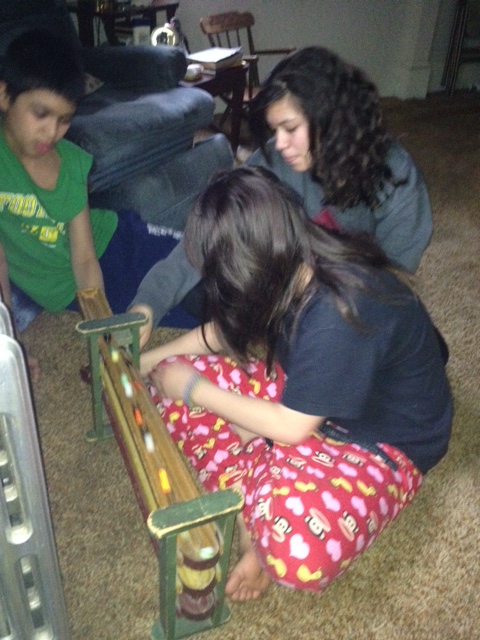
Gloria was looking for an anchor and she found one in her weekend visits to the Longenecker family on Anchor Road near Elizabethtown. Pennsylvania. Most importantly, she could be with her children. Mother and Daddy would pick Gloria up at the train station with her four children who played with toys including the same marble-roller I played with as a child.
Gloria’s grand-children playing with the same marble-roller we had as children: Demetri 12, Inani 13, and Samantha 10.
And she could enjoy Lancaster County abundance. “This is how life should be,” Gloria exclaims as she recalls some of her favorite things:
Going to Root’s Sale where fresh farm produce abounds.
Helping Mom make applesauce with her metal sieve and wooden mallet.
Turning the crank on the ice cream churn, always vanilla with Hershey’s chocolate syrup and peanut sprinkles.
Helping with quilting at Bossler’s Mennonite Church Sewing Circle.
Eating fresh corn on the cob – and fresh tomatoes out of the garden, both dripping juice.
Making tangy home-made root beer from Hires Root Beer Extract, the two-quart jars cooling on their sides in the cellar.
Having devotions with my parents on Sunday morning after which my dad would march over to the piano and bang out the melody to “Fill My Cup, Lord,” singing at the top of his lungs.
Following the Longenecker rules. And to the letter.
My brother Mark still lived at home when Gloria and her children visited, so she got some first-hand tips on getting children to obey. When Mark questioned Mother about why he had to get up and go to church Sunday morning, Mom would reply, “Because you’re in my house and that is the rule.”
But Gloria recalls Mother’s softer side when she tearfully called her at one point to break the news about yet another unplanned pregnancy: “She never criticized me; she stood by me, and said “’You just have to trust that God is still in control.’”
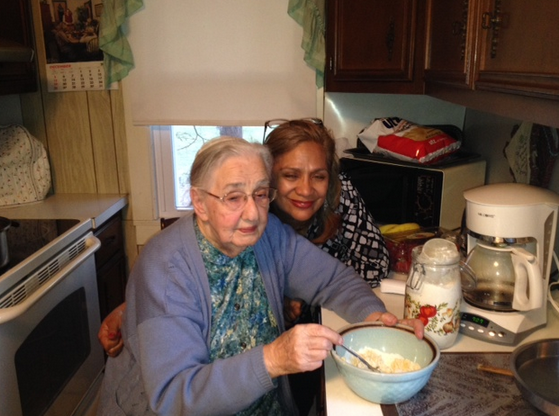
Gloria Araujo in kitchen with Mother (age 95) April 2014
Gloria Today
Over the years, Gloria has told her own children and grand-children this same bold statement when they question her authority: “Because you’re in my house and that is the rule.” And she teaches her clients how to use firm discipline with their children in her role as a social worker at The First Baptist Church of Wheaton, Illinois, where she has recently been appointed deaconess.
“Now I work with many Cuban refugees, help them get into an apartment, find jobs and medical aid—set them on the right track. It feels so good to see lives changed,” she says.
In Retrospect
In a little green autograph book sitting on one of Mother’s living room end tables are listed all the names of the girls from New Life my parents have hosted. This April in her recent visit, Gloria noticed that her name was the first one to be signed in 1978, along with her sister Julie’s. After the signatures of 11-12 other girls, she signed the book again. “It’s only suitable that I sign the last page,” she says.
Therefore if any man is in Christ, he is a new creature:
the old things are passed away; behold, all things become new.











 Plain and Fancy