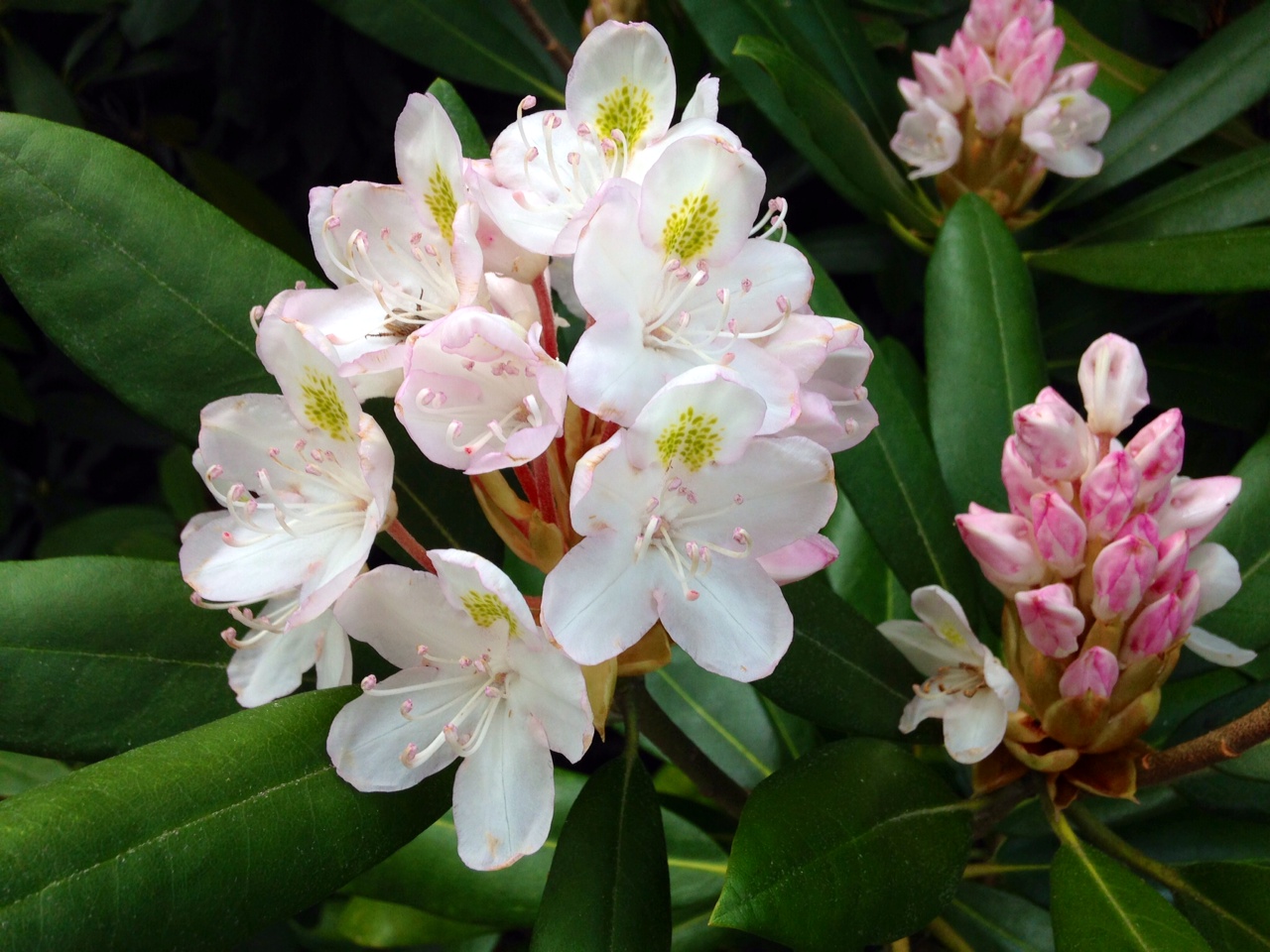
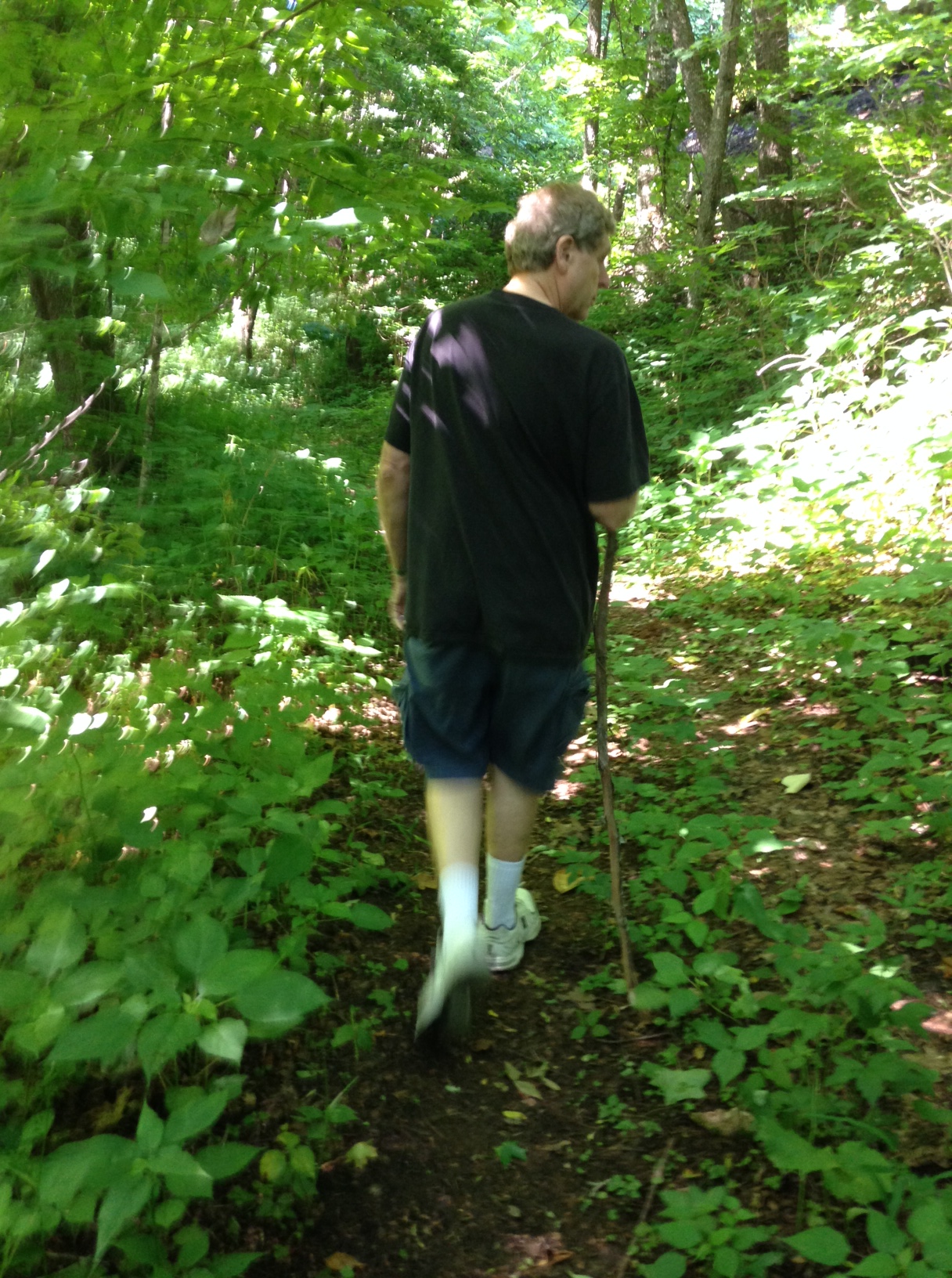
We are spending the week in the cool Smoky Mountains, savoring the beauties of nature in Waynesville, North Carolina. Nothing breaks the silence except birdsong. Rhododendron buds unfold into blossom, a walking stick is a great companion, just like Laurelville Camp in the Fifties.
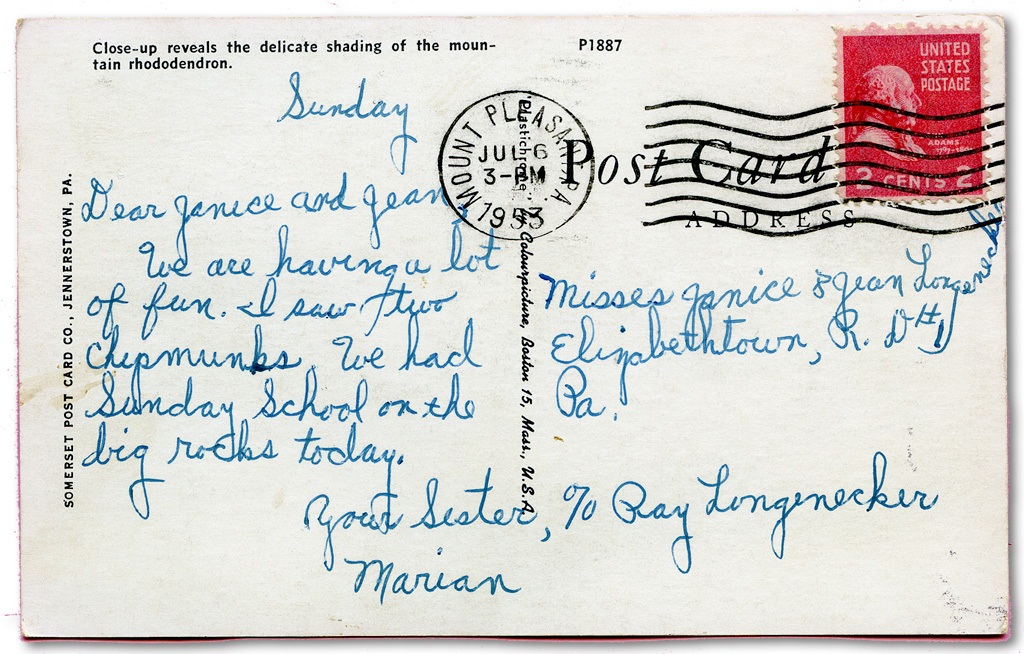
Postcard with rhododendron sent from Laurelville Mennonite Camp
You’re invited on a nature walk today . . .
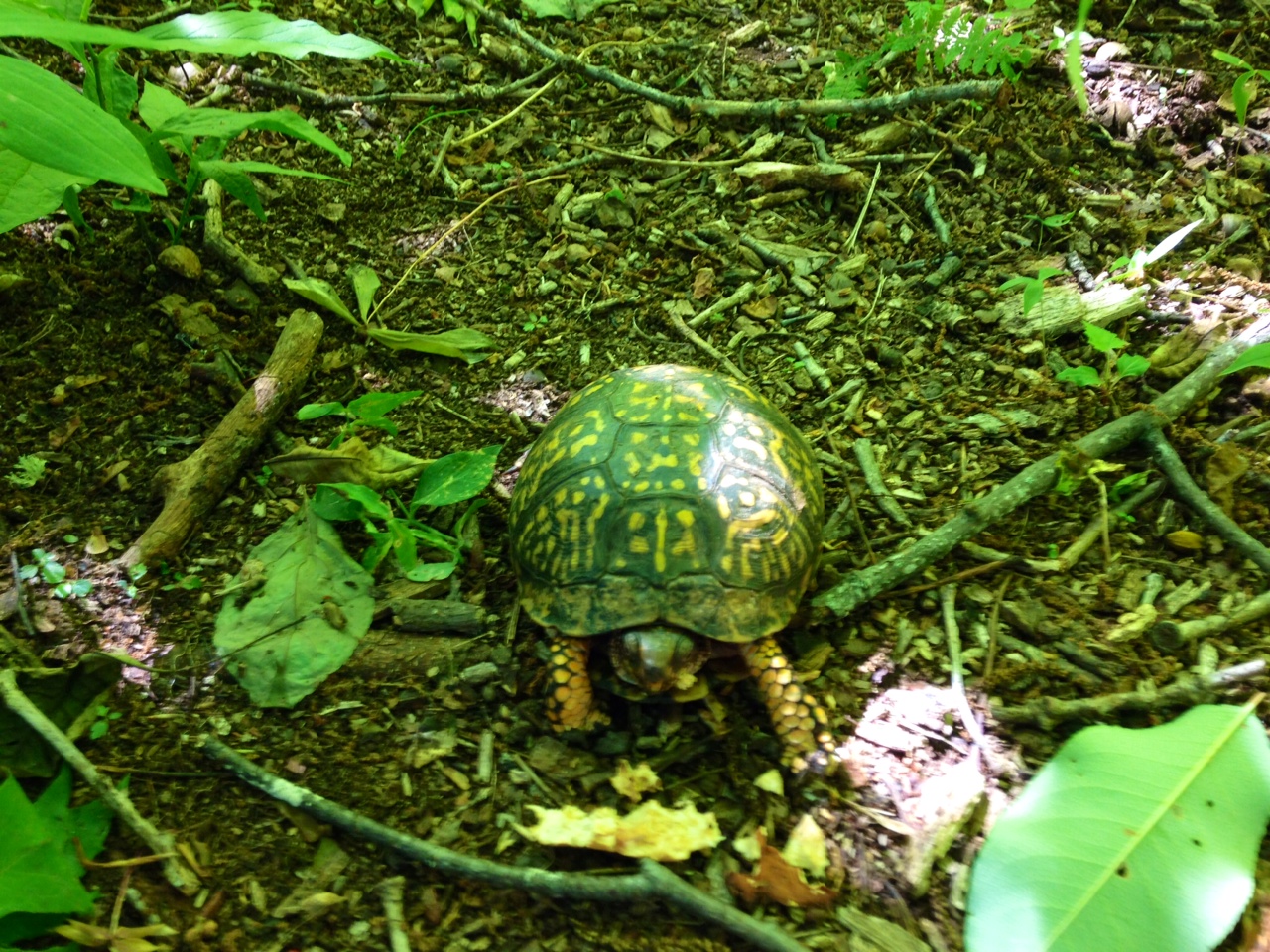
Rhododendron blooms slowly releasing their full beauty. Pink buds become white flowers.In full bloom, 3 days laterWalking through the woods, making all the differenceTurtle trying to camouflage. It’s not working!Flaming AzaleaHummingbird says, “Fly letter fly – come back with quick reply,” an antiquated postscript in this era of email, texting, Facebook messaging.
Echinacea, used by native Americans for centuries, has medicinal powers, say lovers of natural remedies. Its leaves, flowers, and roots can be used to boost the immune system. Some devotees take echinacea at the first sign of a cold. Others use it fight viral infections, chronic fatigue, or skin wounds.
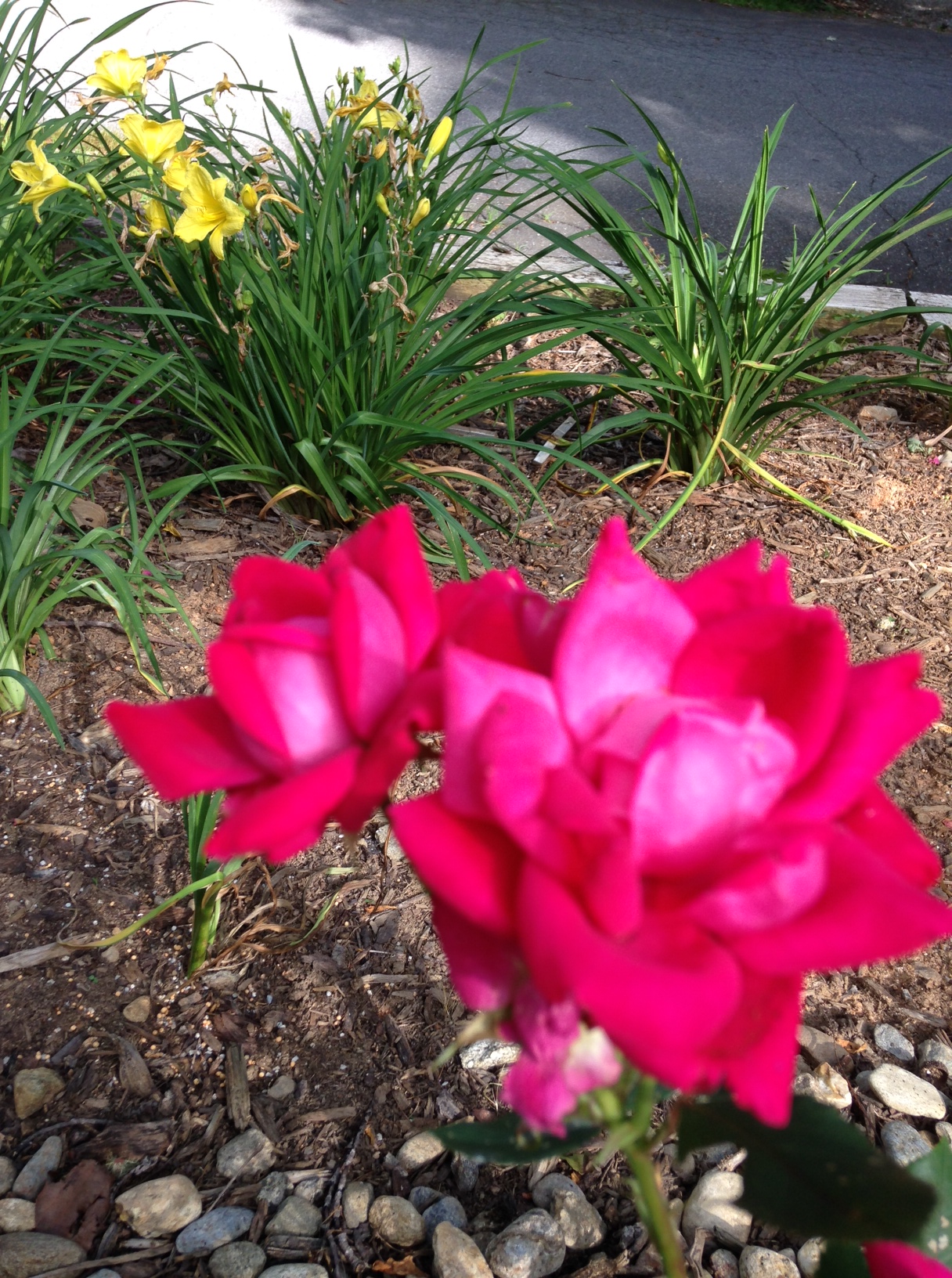
Take time to smell the roses . . .
Bring on the graham crackers, chocolate, and marshmallows. Toast some S’mores!
Something’s missing here: Add your own quote, verse of scripture or story that came to mind as you read this post. Gather around the camp-fire!
Lacing a belt of green and yellow gimp in crafts class
Trips to the snack shop for an orange Nehi
Bible study on the rocks, girls like us with braids, some with prayer caps
These are my sharpest memories of Girls’ Week at Laurelville Mennonite Camp just off the Pennsylvania Turnpike not far from Pittsburgh, PA. along with . . .
Cottages with cute names like Dew Drop Inn
Toasting marshmallows around a fire pit
Singing rounds, our voices echoing each phrase: “My paddle’s keen and bright, flashing with silver, follow the wild goose flight, dip, dip, and swing”
“Do, Lord, oh, do Lord, oh do remember me wa-ay (big voice dip here) be-yond the blue.”
What we didn’t do at Laurelville:
Set fire to the boys’ swim trunks hanging on the line (There were no boys)
Paint each other’s toenails hot pink. (No one had makeup – verboten)
Sneak a smoke in the woods after dark. (We didn’t have matches – or cigarettes!)
The postcard I sent to my sisters from Laurelville reveals the price of postage stamps, an address that winds around the edge in cursive script, and simple declarative sentences. It also tells how I felt, what I saw, where we worshiped.
Postcard with rhododendron sent from Laurelville Mennonite Camp in 1953
Memories of family week with my sisters and parents at Laurelville left a different imprint.
Family swim time
Doggie roast (Hot dogs, corn on the cob and roasted marshmallows)
Big plaque on dining room wall: “Come ye apart and rest awhile” Jesus’ invitation to his disciples in Mark 6:31
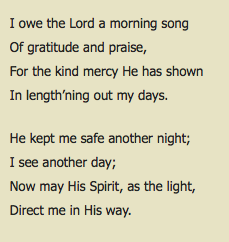
Morning blessing in song: “I owe the Lord a Morning Song” written by Amos Herr, Lancaster County pastor and farmer who couldn’t get through the snow drifts to church one Sunday morning in the 1850s and was inspired to pen both words and music to this song of gratitude. First two stanzas here:
We also sang something new to us: How Great Thou Art, a Swedish hymn written in 1885, which became an instant sensation in Christian circles in 1955 because of the Billy Graham Crusades.
When through the woods and forest glades I wander, I hear the birds sing sweetly in the trees; when I look down from lofty mountain grandeur and hear the brook and feel the gentle breeze.
What are your memories of camp? Here’s the place to share them – songs, games, mischief – other memorable moments.
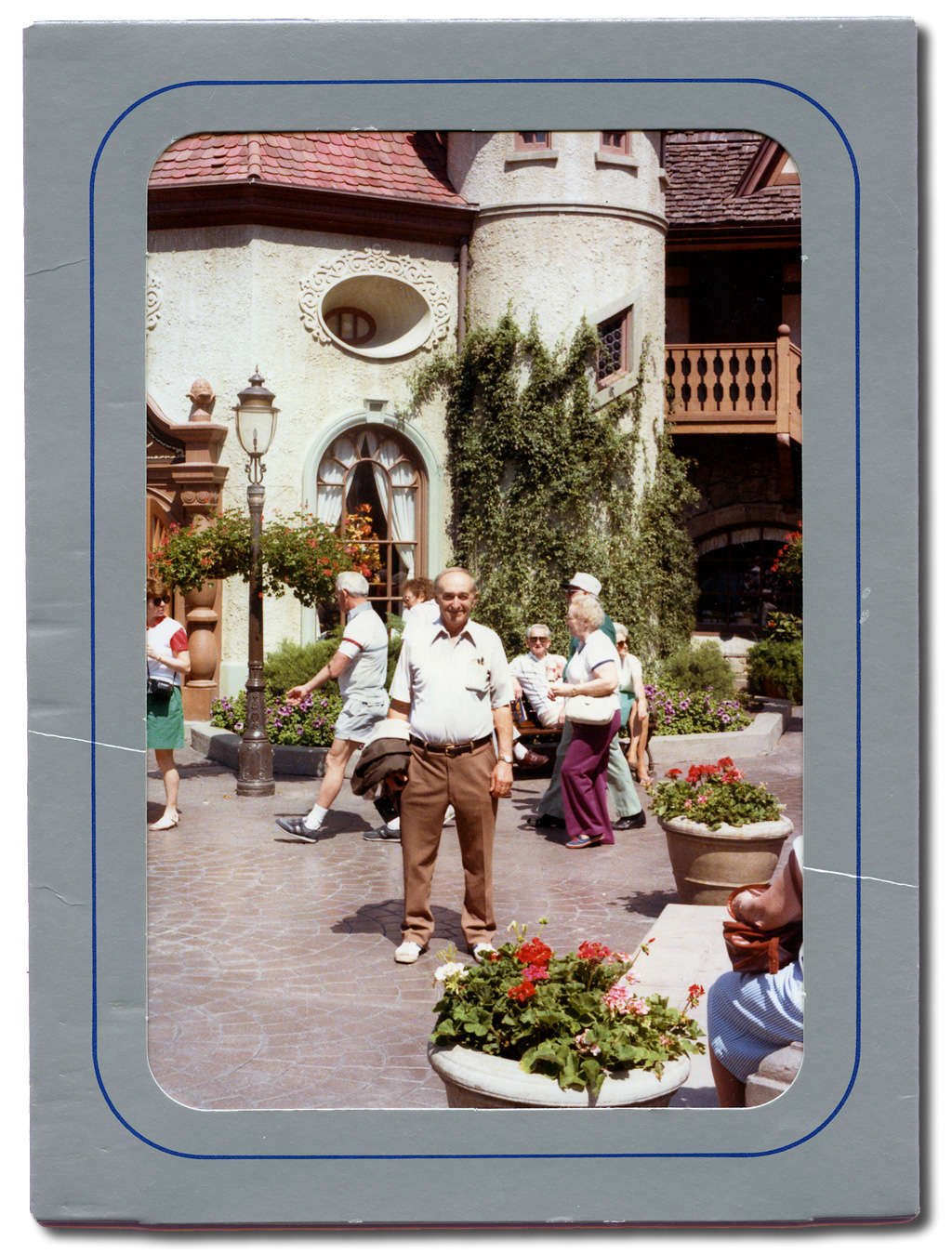
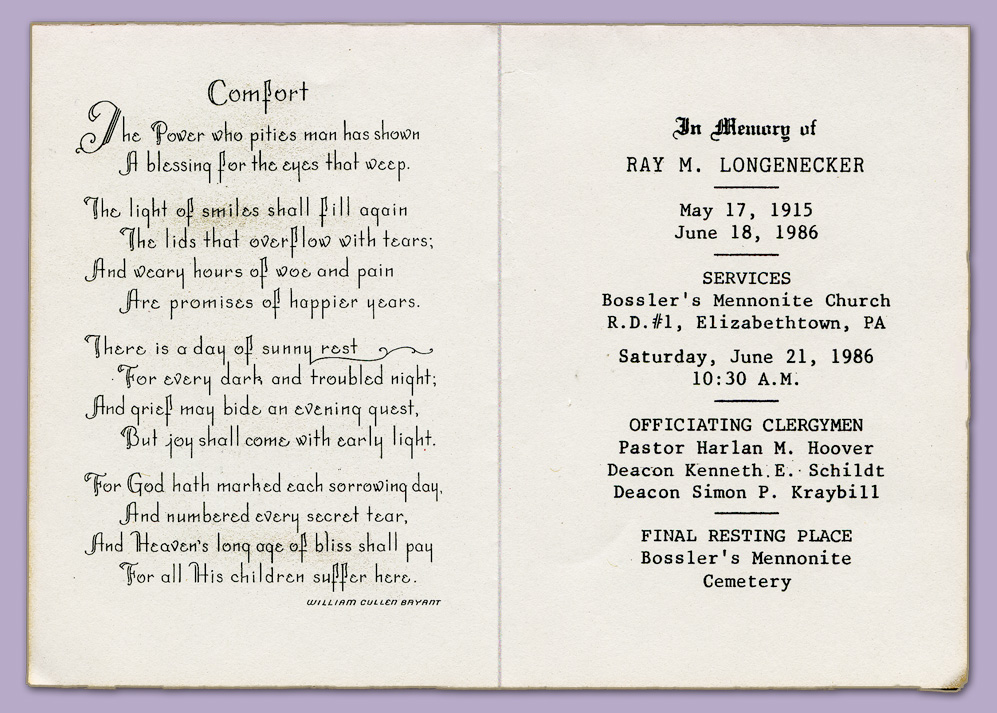
March 1986: Mom and Dad Longenecker visit the families of my sister Janice and me in Jacksonville, Florida. We all enjoy Epcot in Disney World, Dad’s chance to see a faux version of the Switzerland he never actually visited but planned to some day. My super-charged Dad seems more mellow now, slower, even takes naps. “Hey, Dad, I see you’re getting a pooch here,” says son-in-law Cliff, commenting on my dad’s weight gain as he playfully pinches his waistline.
April 1986: We get a call from Pennsylvania, “Dad has been diagnosed with lymphoma. Blood cell tumors have developed in the lymphatic system. Stage 4 . . . it’s too advanced to operate . . . they can try chemotherapy, maybe radiation after that . . . .” Like an earthquake, the news sends shock-waves through our family. Why, we just saw him a month ago.
May 1986: My father is now dying of lymphoma. I leave my husband and children and fly up to Pennsylvania, alone, to see him alive for the very last time. He looks nothing like my image of him in March. His skin, scorched red-brown from chemotherapy, reminds me of a starving Indian. He is wasting away. “I don’t want to live like this,” he says, calling a halt to the treatment. Too weak to climb to the upstairs bedroom, he reclines now almost motionless on the pull-out bed in the living room, a solitary pillow under his head. On May 17 his 71st birthday comes and goes.
My flight south leaves a few days later. This is probably the last time I will see my father in this life. I approach him to say goodbye, and I add: “I love you, Daddy.”
June 18, 1986 Daddy breathes his last, less than three months after his cancer diagnosis. We get the dreaded call and make plans to drive north for the funeral. My mind flits around in reminiscence. And then leaps forward with prediction: Now Dad won’t be attending the ceremony where I receive my Master’s degree in December. He won’t stand up to be photographed at any of his grand-children’s weddings or get to play with his great-grandchildren any more. At age 71, he has reached his heavenly home.
Had he lived, he would have turned 100 years old this year, like Aunt Cecilia.
On this Father’s Day nearly 30 years later, I pause to give thanks for the gifts my father has given me:
1. Love of nature He went on walks in the wide meadows and sun-dappled woods close to Rheems, PA on Sunday afternoons. Sometimes I went with him.
2. Love for music He played a banjo, guitar, and piano with gusto and bought me a violin. Music has formed the sound-scape of my mind since then.
3. Intellectual curiosity He perused US News and World Report and The Wall Street Journal, listened to Edward R. Murrow, Paul Harvey, and Lowell Thomas, engaged in conversation about world events.
4. Value of hard work There was the tomato field, the sweet potato plot, the shop . . . .
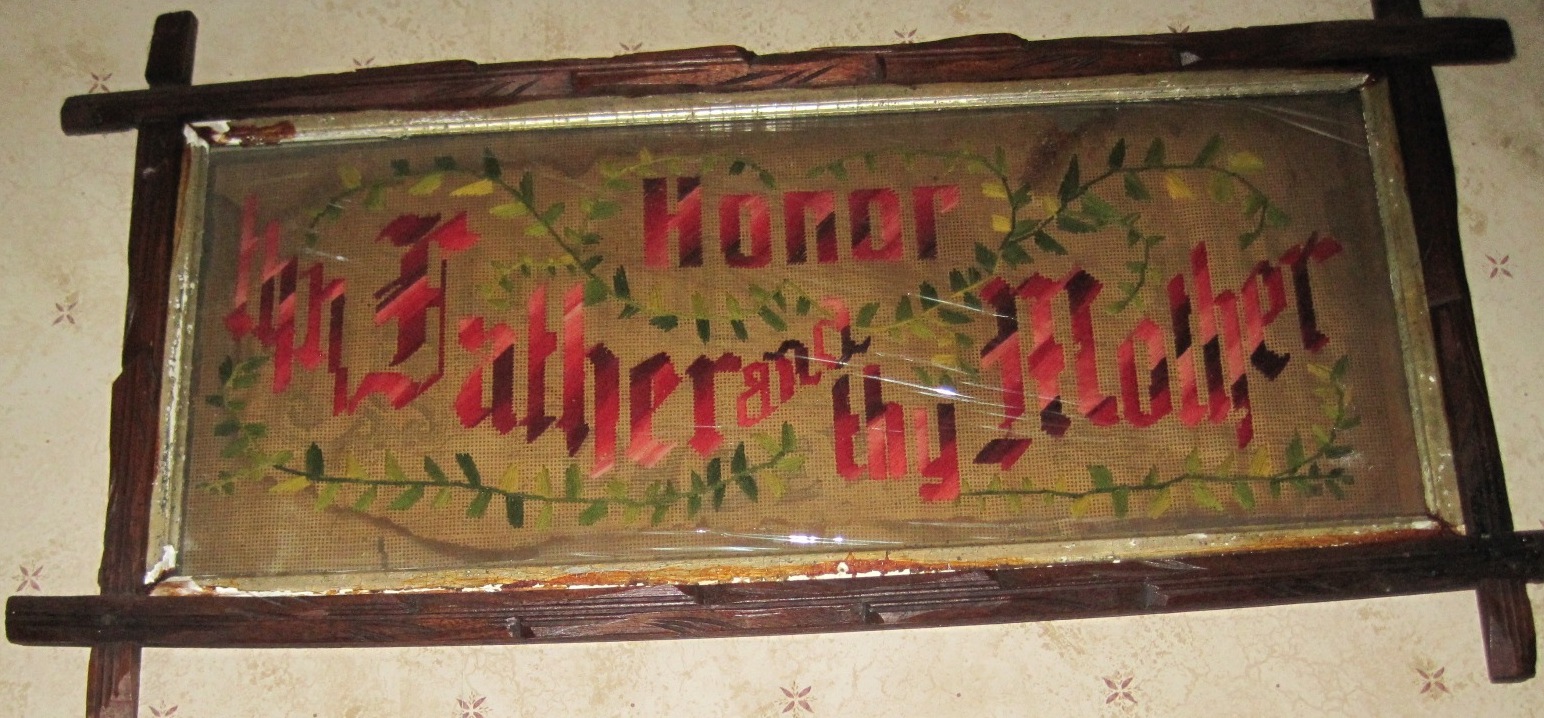
Framed needlework above a kitchen door in Grandma Longenecker’s house
Exodus 20:12 Honour thy father and thy mother: that thy days may be long upon the land which the LORD thy God giveth thee. (King James Version)
My father’s deep faith in God included honoring his own parents.
* * *
Thank you for your thoughts on Father’s Day 2015. You always make the conversation richer!
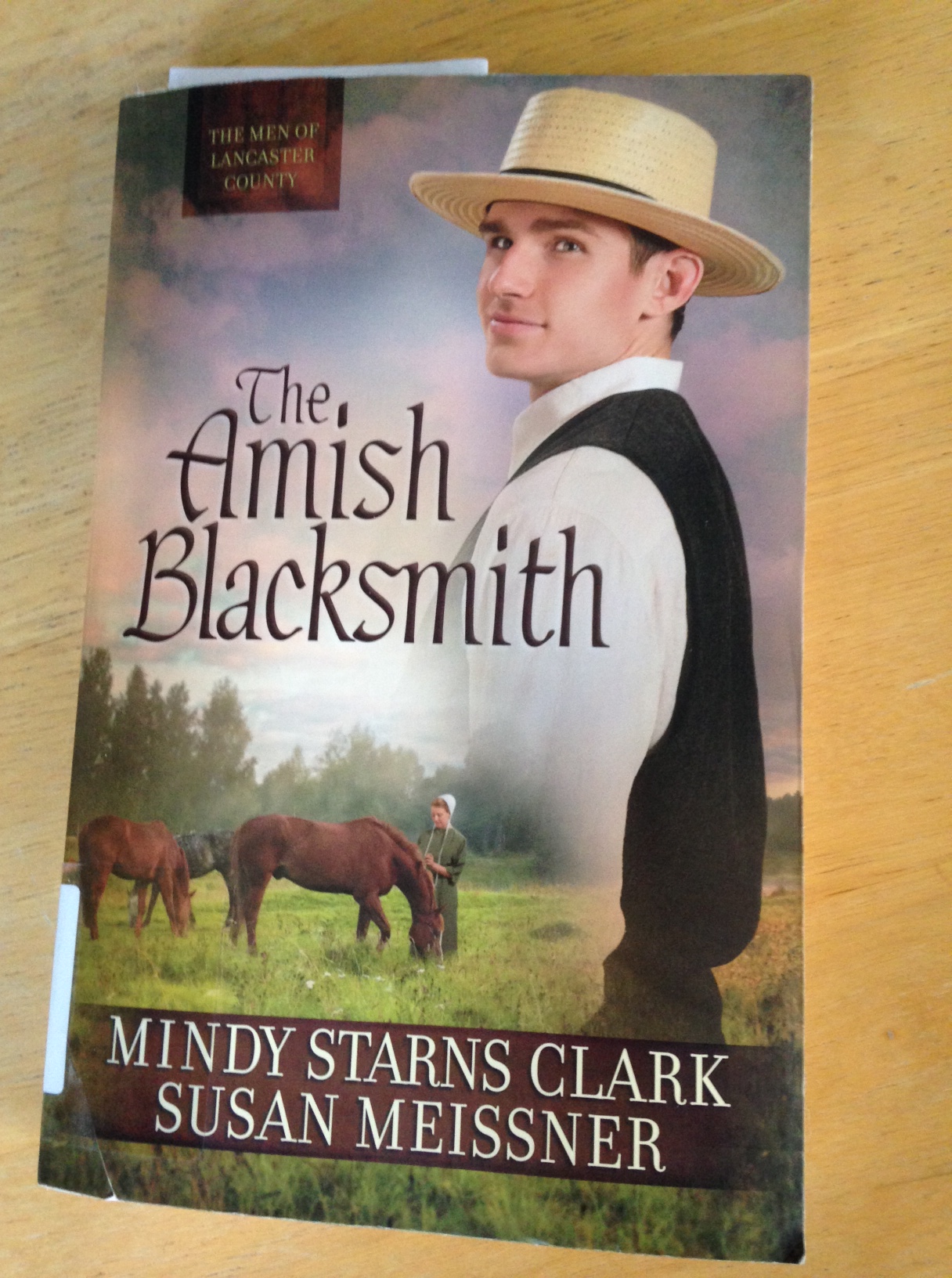
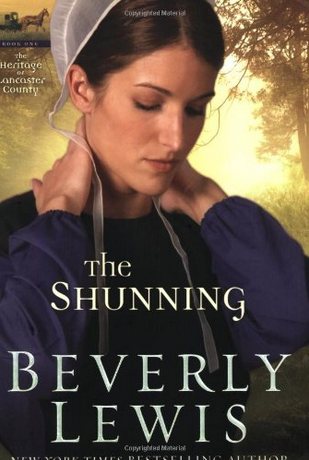
Cool Amish guys have replaced the dreamy looking girl with a huge covering and plain dress popular on the cover of some Amish romance novels. The images have done a flip. Now the young Amish-man with suspenders and broadfall pants and straw hat takes center stage.
Last week I finished reading my second Amish romance novel ever. These novels, usually with a female main character on the cover, are still wildly popular and stock shelves at Barnes & Noble and Amazon warehouses to the hilt.
Cover image via Amazon
Truthfully, I have resisted reading these novels for two reasons:
The plots seem formulaic to me: there’s a lover’s triangle, often with an “Englischer” from the tempting world beyond the farm.
Also, I have lived an authentic Mennonite life, and some plot-lines and details about the characters seem barely plausible.
Still, I took the time to read The Amish Blacksmith, starring a handsome dude named Jake on the cover with a plain Amish girl, grooming a horse in the misty background. I was curious about two things: the new trend in Amish romance fiction with a male protagonist plus the high profile of the authors within this sub-genre: Mindy Starns Clark, who has published more than 20 books including the Christy Award-winning The Amish Midwife and co-author Susan Meissner, whose novel The Shape of Mercy was named as one of the 100 best novels of 2008 by Publisher’s Weekly.
With five novels in the Women of Lancaster County Series (Mindy Clark and Leslie Gould). Clark and Meissner have begun the Men of Lancaster County Series: The Amish Groom, The Amish Blacksmith and mostly recently, The Amish Clockmaker.
Here’s a thumb-nail of The Amish Blacksmith from Goodreads:
Apprenticed blacksmith Jake Miller is skeptical of Priscilla Kinsinger’s innate ability to soothe troubled horses, especially when he has own ideas on how to calm them. Six years earlier, Priscilla’s mother died in an awful accident at home, and Priscilla’s grief over losing her mother was so intense that she was sent to live with relatives in Ohio. She has just returned to Lancaster County.
Not that her homecoming matters to Jake, who is interested in courting lighthearted Amanda Shetler. But Jake’s boss is Priscilla’s uncle, and when the man asks Jake to help his niece reconnect with community life, he has no choice but to do just that. Surprisingly, he finds himself slowly drawn to the beautiful but emotionally wounded Priscilla.
Jake then determines to prove to her that it’s not her fault her mother died, but what he discovers will challenge everything they both believe about the depth of love and the breadth of forgiveness.
Though the pace of the book slowed toward the end, I found the book a satisfying read. It is certainly more pleasurable to gain equestrian knowledge via a novel than from an equine textbook. In fact, the authors give credit to the Riehl and Fisher families of Lancaster County for helpful on-the-farm visits and to Elam and Elias Stoltzfus, for sharing their knowledge in their own Amish blacksmith shop. I applaud the authors too for their extensive research on horsemanship, particularly horse-whispering. I felt myself being both educated and entertained as I read.
Interestingly, male readers admit to enjoying Amish romance novels too. Valerie Weaver-Zercher reports in her book Thrill of the Chaste that an elderly farmer, Glenn Swartzendruber read almost ninety Amish-themed novels during the last three years of his life. And “a physician with degrees from Harvard and the University of Pennsylvania shared that he enjoyed listening to the audio version of Beverly Lewis’s [Amish} novels.” (249)
Do you enjoy Amish romance novels? Tell us why or why not. Do you know any men who read them?
Coming next – 4 Months, 4 Gifts: A Tribute to My Dad
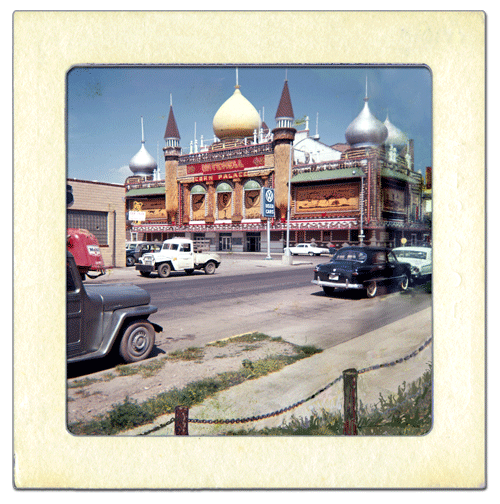
Bird beaks peck away at grains of corn on the walls of The Corn Palace. Still, the murals created with several colors of dried corn and grain arrest the eye. On our trip West we visited this grand monument to farmers and the grain industry they represent in Mitchell, South Dakota.
A Quote about Corn:
“A light wind swept over the corn, and all nature laughed in the sunshine,” said Anne Bronte, poet and novelist of West Yorkshire, England, 1800s
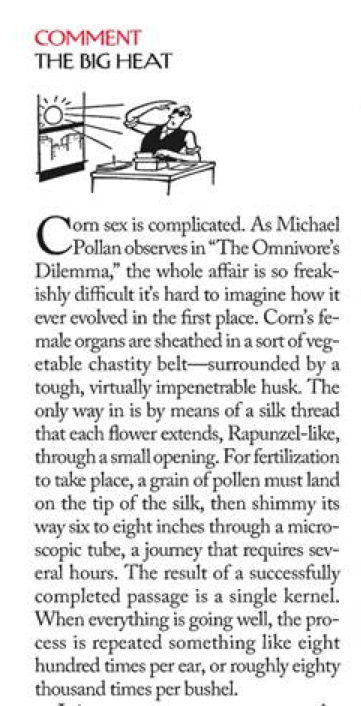
Corn Sex, according to Elizabeth Kolbert in “The Big Heat,” The New Yorker, July 23, 2012 issue
Mennonites and Corn
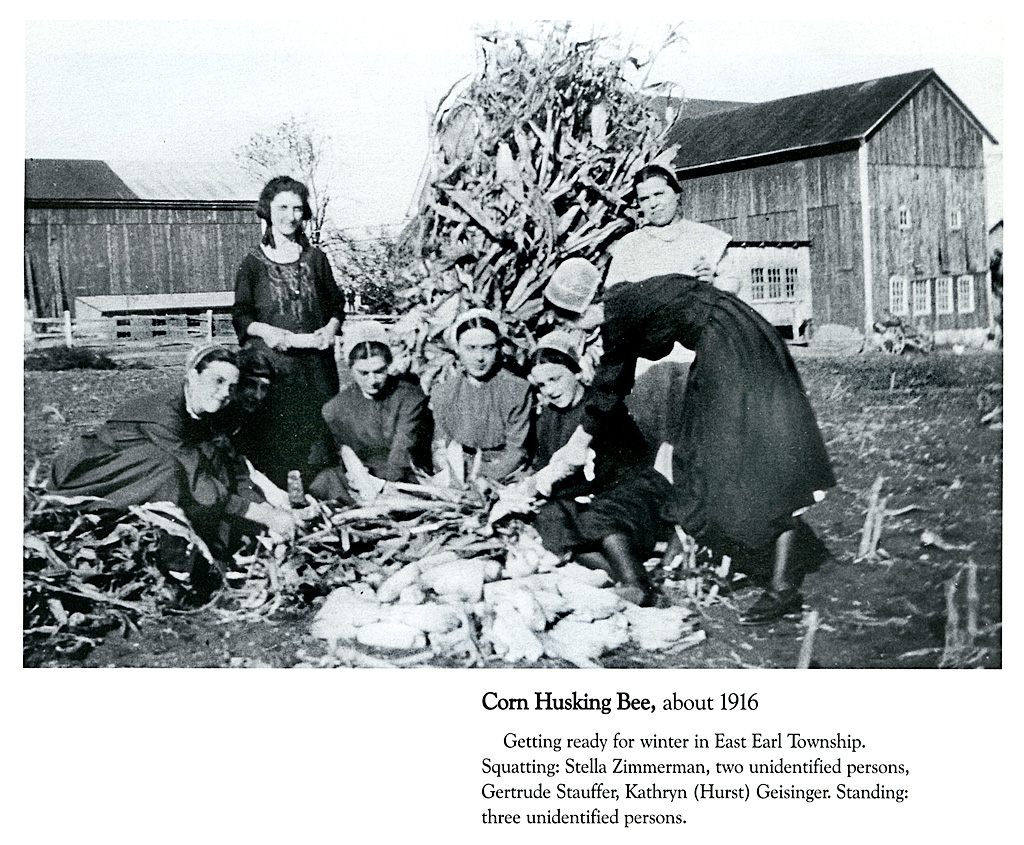
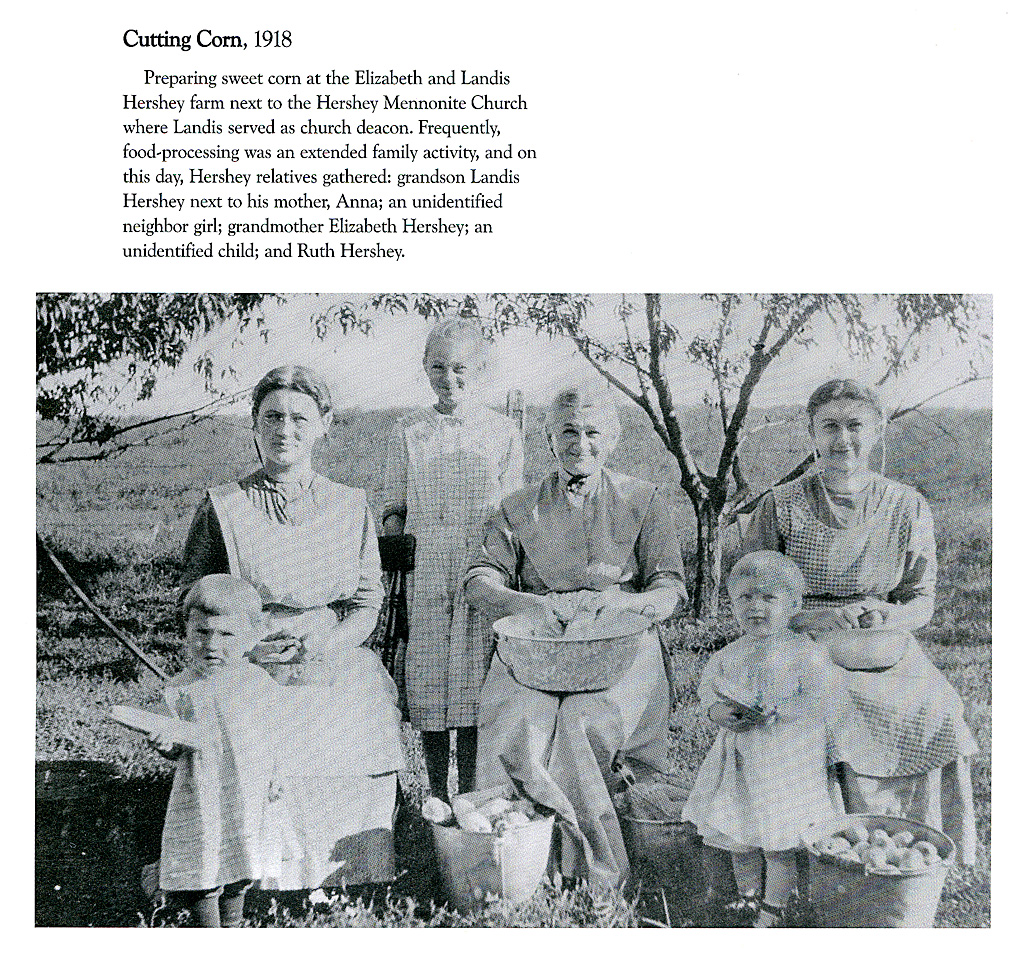
Mennonites in Lancaster County, including the Longenecker family, participated in the whole process of corn production: planting, hoeing, harvesting, husking, canning, freezing – and best of all – eating the succulent grains of corn on the cob, the buttery juice running down our chins and forearms.
In her book Mennonite Women of Lancaster County, Joanne Hess Siegrist features photos of Mennonite women hard at work husking and cutting corn off the cob (pages 124, 124)
My Mother Ruth loved making her baked corn recipe from the Mennonite Community Cookbook. She served it in a chocolate-brown Pyrex casserole dish nested in a basket of tight weave. We loved every bite, especially tasty during corn season.
Baked Corn Recipe
Want More Corn?
Pablo Neruda, Chilean poet, diplomat and politician, apparently loved vegetables too. He wrote about tomatoes, corn and more. Here is the link to his poem “Ode to Maize.”
The Marlboro man, pictured as a cool-guy cowboy in a fresh country setting, ruled cigarette advertising from 1954 -1999.
Credit: Google Images
Smoking then was considered glamorous and cool, a way to fit in with the crowd. One of our most popular presidents, Ronald Reagan, was formerly a cigarette model for Chesterfields, even advertising that he would give cases of the product to his friends for Christmas.
Credit: Google Images
As the Marlboro Man’s ads evolved, the Surgeon General’s warning of health hazards appeared on cigarette packs. Now of course, smoking is taboo in stores and restaurants, and smokers are often viewed as outcasts.
* * *
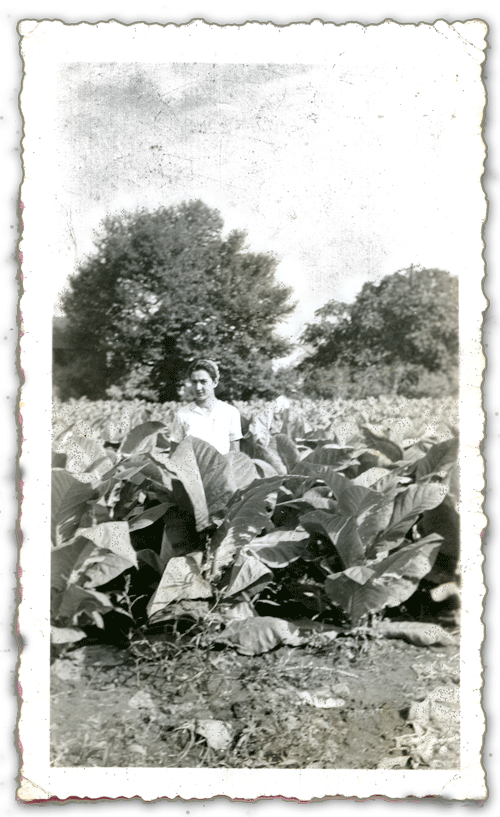
Mennonite farmers in Lancaster County during the 1950s and 1960s grew tobacco as a prime cash crop. But as Shirley Showalter points out in her memoir, growing tobacco was both a tradition and controversy among Lancaster Conference Mennonites. “After George Brunk’s tent revivals, many farmers plowed up or stopped planting tobacco,” she comments. My own Dad stopped planting tobacco then, substituting tomatoes and corn in our acreage in Bainbridge, Pennsylvania. Shirley divulges her dad’s decision about farming tobacco in her book BLUSH (173).
Here are some photos of young tobacco plants, Mother Ruth in the tobacco fields and then a snapshot of the drying process before the crop was sold to a tobacco company.
The issue of tobacco production and use appears in the Statement of Christian Doctrine and Rules and Discipline of the Lancaster Conference Mennonite Church (July 1968) but as an advisory to only ministers and their wives:
“Inasmuch as ordained brethren and their wives by their teaching and example exert strong influence within the brotherhood, it is required for the spiritual welfare of the church that they give evidence of willingness to subscribe to . . . the following standards of faith and life.
Listed as “f” in a range of a – h points is this directive but only to the ordained:“the non-use and non-production of tobacco.” (29) Apparently the issue of smoking and its health hazards posed a serious dilemma to the church with lay members who relied on tobacco growing as a way to pay the mortgage.
Many of my uncles smoked cigars when they were together. Even my dad would occasionally join in as a way to socialize.
* * *
I recently found a map of Yellowstone with a Conoco ad in the 1960s using the pleasures of smoking to promote their brand of gasoline:
* * *
A young boy named Jeremy learns about the dangers of smoking in an imaginative book entitled The Boy Who Grew Too Small.
Leave a comment below if you want to contact Author/Illustrator Cliff for more information about his book.
Other comments about this post – welcome here too!
The postcard says Metzie and Molly if you look closely, but Joann and I were unofficially known as Mighty Metz and Sister Styx, the dashing duo that rode in the back seat of a Chevy Impala on a road trip with Joann’s parents, John and Mary Metzler.
Feeding a hooded squirrel at a stop off in Glacier National Park
Our Southern route included the cotton fields of Alabama . . .
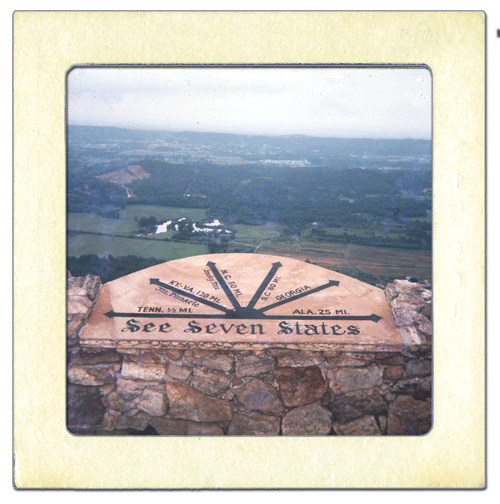
. . . and Rock City, Georgia with a view of seven states
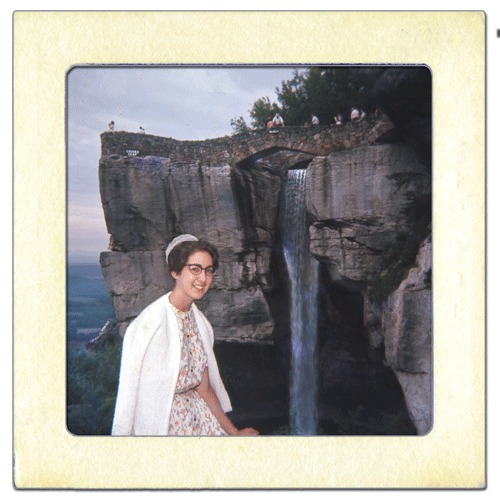
. . . and a tapering Falls
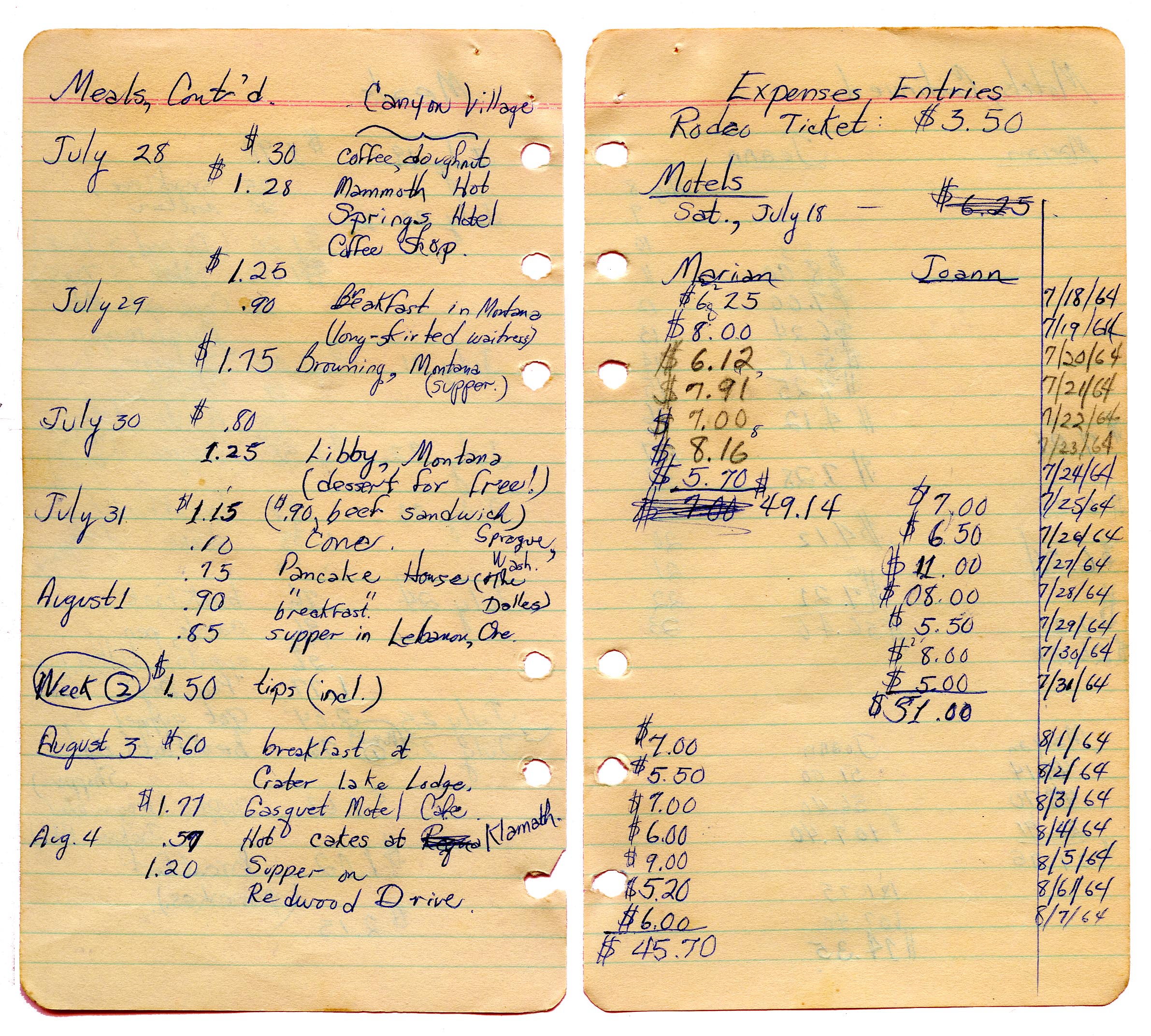
How I Paid for This Trip: I wrote an adult study series for Herald Press during May and June of 1964 for which I was paid $500.00. I brought cash and Traveler’s Cheques. Credit cards like the Diner’s Club Card were in circulation back then, but we didn’t have any. Actually, like many Mennonites, we thought credit cards were a little shady because of the possibility of misuse.
Frugality, Joann’s and Mine:
Joann says to her mother in Canyonville, Oregon: “Mom, give me the map, let’s stop at some little hick place for dinner. Then I’ll have money to buy some more myrtle wood!”
In Oregon, I remark to Joan: “Boy, oh, boy, my future husband will have a wife who can keep on a budget, thank goodness!” Little did I know my future husband Cliff was living not so far away in California at the time.
Joan and I alternated weeks in paying room costs. I paid tolls and park entrance fees instead of gas, which was probably less than 30 cents per gallon then.
I remember paying 50 cents to drive through a redwood tree!
We both kept diaries and photo logs. Mine looks battered and torn. Still, there’s a record.
Church: We attended a service at the Mormon Tabernacle but the choir was missing, gone to the World’s Fair. Ugh . . . so disappointing!
I was accosted by a Mormon guy in the tabernacle gift shop: He thought I was Israeli and mistook my black bonnet for a feminine yarmulke and tried to convert me to Mormonism.
We also visited Sweet Home Mennonite Church in Oregon with Rev. Orie Roth, pastor.
Sin: We drove by garish casinos and hotels down Main Street, Las Vegas. Among the glitter and glitz of sky-high, flashy neon lights, we noticed advertisements for $ 10.00 weddings. Do you think people got married drunk? we wondered.
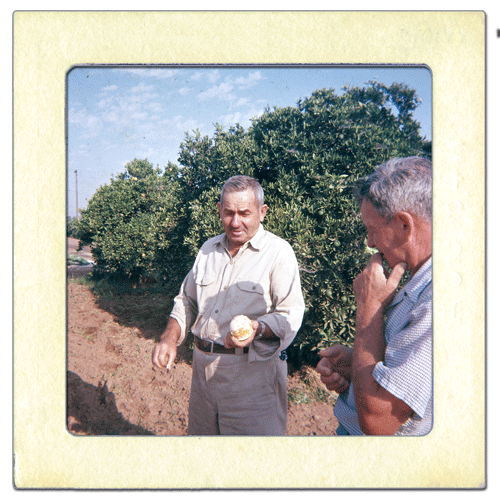
Western Hospitality: On our way to Sequoia National Park we pulled off the road and discovered a friendly guy mowing his lawn. Thus we met the Shaefers. Mr. Schaefer showed Uncle John his orange grove, and Mrs. Schaefer loaded us up with a 12’ x 15’ box of peaches, oranges, two bags of grapes, 2 bags of oranges, and a quart of raisins she had picked/dried herself.
Thanks to the miracle of “General Delivery,” I got mail from home at planned intervals. Here’s a note from Aunt Ruthie with a cascading series of cartoons
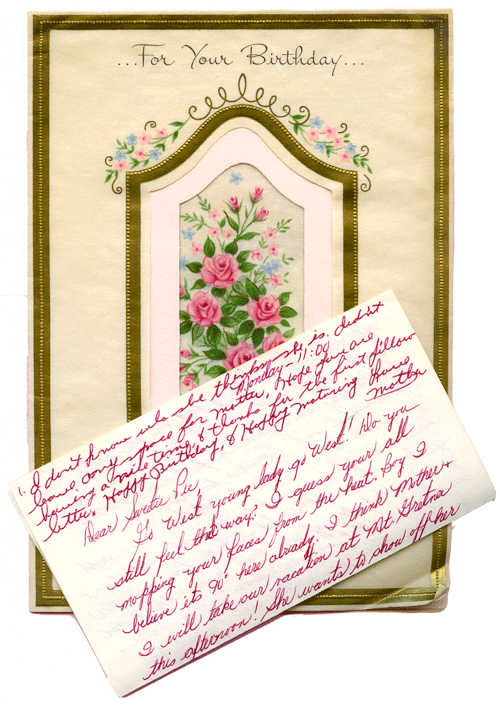
And a birthday card from my sister Jean with a letter . . .
. . . and a note from Mother chiding Jean for not leaving any space to write: “I don’t know who she thinks she is . . . didn’t leave any space for Mother!”
Two letters sent to me addressed simply as Los Angeles – General Delivery came back with a note “Unclaimed – Return to Sender.” Imagine that!
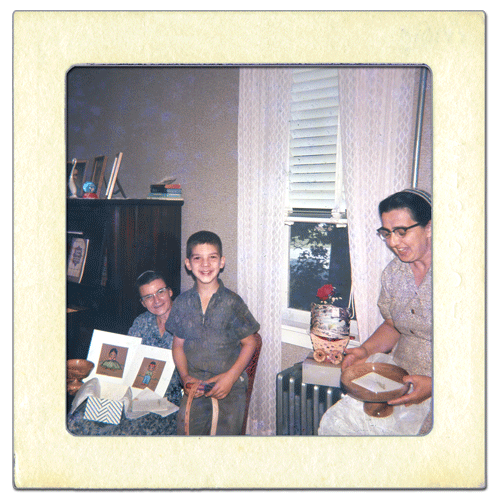
I brought back gifts for all the family. Janice received a myrtle-wood vase from Oregon, brother Mark a table lamp with a cactus base, and Daddy, a polished piece of petrified wood. My ledger shows I bought Jean a pretty blouse for $ 4.10, but alas no picture here!
Aunt Ruthie with Christofferson paintings from Albuquerque, brother Mark with lamp, and Mother Ruth with a myrtle-wood pedestal dish
And something for myself too
I’m still using the alabaster bookends I bought in Tijuana, Mexico
The strangest thing I brought back: Water in a Gerber’s baby food jar (Aunt Ruthie’s suggestion) from The Great Salt Lake, where we floated with no danger of sinking.
Photos I took almost two hundred photos on Kodak Ektachrome color slide film and sent home film rolls in heat-resistant pouches to be developed. Joann took photos and movies.
We don’t make a photograph just with a camera, we bring to the act of photography all the books we have read, the movies we have seen, the music we have heard, the people we have loved.
Yes, imagine two Mennonite girls tripping across the country . . .
In a blue-gray 1958 Chevy Impala sedan
With a chauffeur and navigator
Through 47 states + Mexico
Five weeks in 1964: July 18 – August 24
My Travel Partners: The Metzlers, whom I call Aunt and Uncle, and their daughter Joann
Unlike John Steinbeck who wrote Travels with Charley about his one-man, one-dog travelogue in the 1960s, we were a four-some, Joann Herr, my new best friend, her parents, John and Mary Metzler, and me. But like Mark Twain, we were “innocents abroad,” leaving our cozy Mennonite countryside and venturing through the wild and wooly West to the Pacific coast, eyes agape with wonder.
Best Bud: Joann Metzler (Herr) whom I met while she was student teaching at Rheems Elementary School, where my Aunt Ruth Longenecker was principal. “She’s such a nice girl. You ought to meet her,” Ruthie said about Joann. She was right! I even thought so at the end of the trip.
Chauffeur Extraordinaire, Uncle John: One day he drove 748 miles! John Metzler, who raised crops and cattle, is related on my mother’s side of the family through a common ancestor, Valentine Metzler, whose immigration to Pennsylvania was celebrated in the reunion in 2013. During this thousands-of-miles-odyssey behind the wheel, he sometimes came up with quotable expressions:
“Oh, schmatza (PA Dutch for pain),” he frets when there are too many switchbacks on mountain roads.
“Now we’re caught with our pants down!” when he makes a wrong turn.
“I thought I’d be hen-pecked with three women around and by golly I am already!” he exclaims 11 days into the trip.
Navigator with a Built-in Compass, Aunt Mary: With only a road map and keen sense of direction, Joann’s mother “Aunt Mary” was quite a trooper. She made sure we were ready to roll between 6:30 and 7:00 am every day. When I felt road sick, she doled out Chiclets. She was eager to see her spry, 81-year-old Aunt Susan in Los Angeles.
In Cheyenne Uncle John was taken for a German because of his PA Dutch accent, and Mary tells him “ta be more English!” Here are the two smiling at Crater Lake, Oregon.
The Big Loop – Like Steinbeck, we did follow a northern route across the Mid-west, angling down through California and sweeping across the Southwest into Texas and further east to Florida and then north back home to Pennsylvania. Along the way, we sometimes fancied ourselves in foreign lands: Parts of Utah looked like Greece to us, the Rockies like the Swiss Alps, and some of Oregon, the Holy land because of myrtle trees.
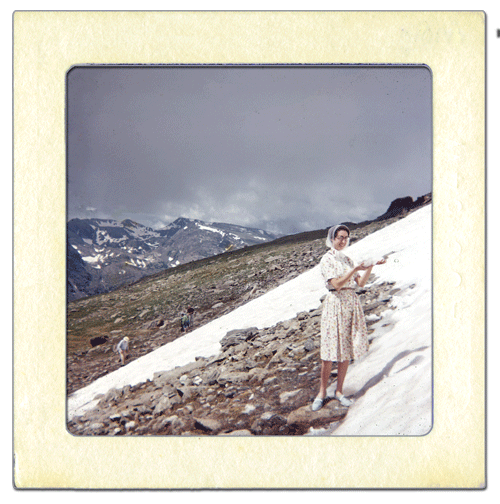
In the Rockies, I make a snowball on my birthday!
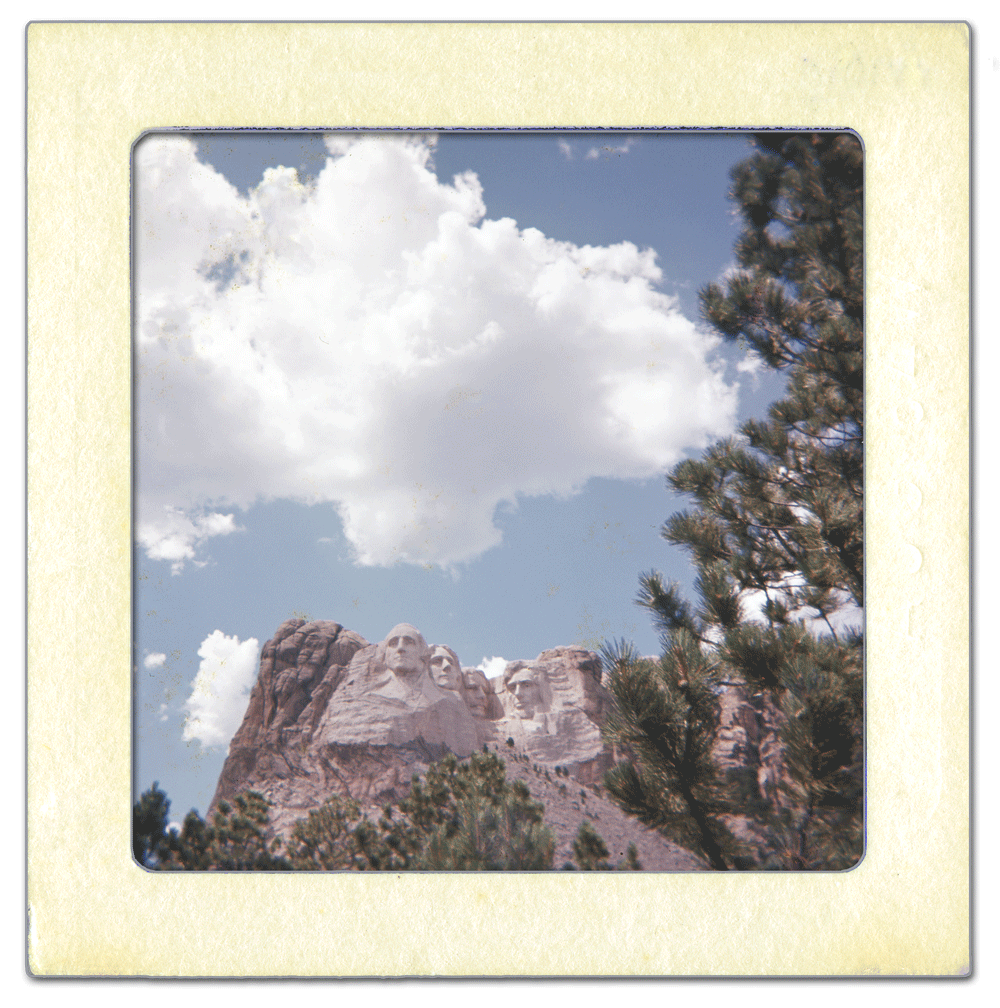
We were entranced by presidents, puffy clouds, national parks . . .
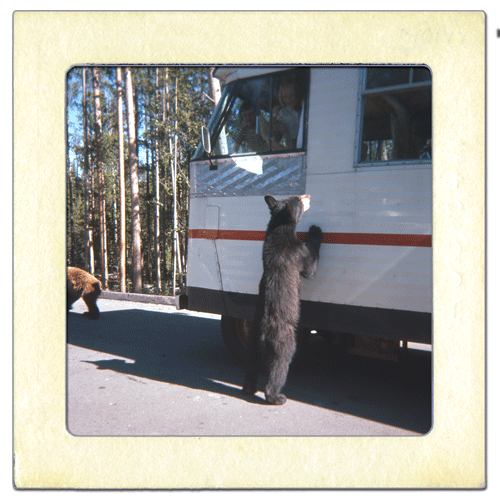
Yellowstone, 12 million acres of gorgeous scenery – even bears want a part of the action
And the Magnificent Grand Canyon
Oregon and California: Myrtle trees, Joshua trees, Dates and Olives!
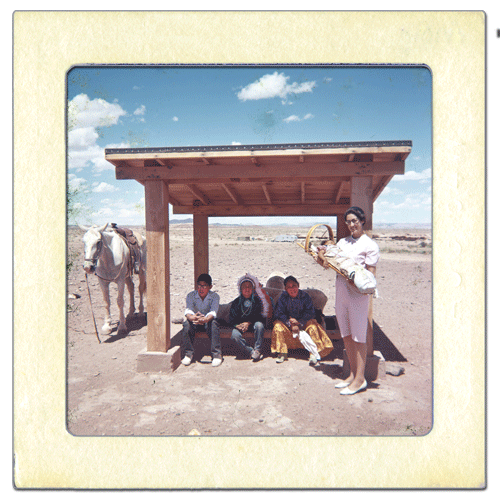
Joann and almond treeNavajo Indian Reservation: Family was pleased to pose in exchange for some pesos
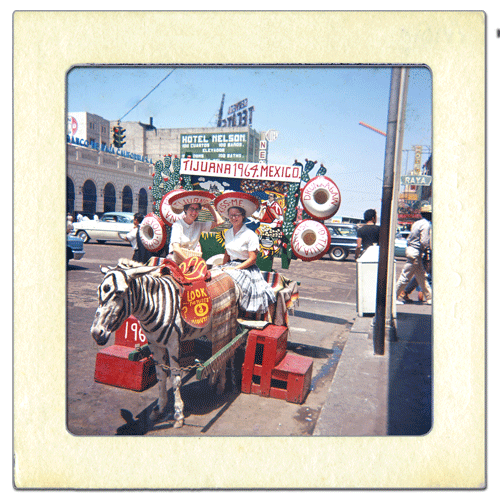
Tijuana, Mexico: sombreros, a heady substitute for our prayer caps. Joann had no idea she was inviting kisses!
What We Wore
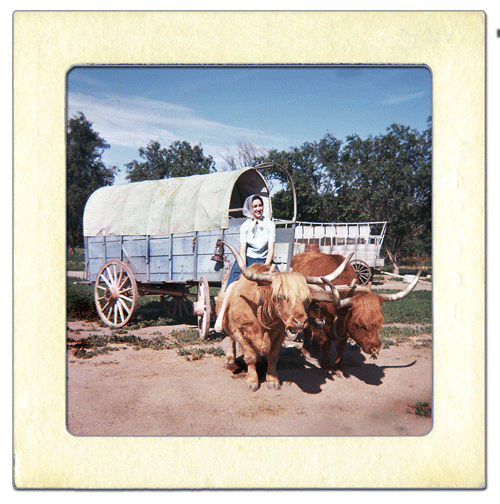
The photos prove our plainness. We always had something on our heads: prayer coverings, black bonnets on top of our caps for Sunday in Salt Lake City, Utah. Accordion pleated plastic wind-breakers for stiff breezes or rain. Dresses or skirts – absolutely no slacks or shorts.
Grandma Longenecker gave me a travel iron – no permanent press fabrics yet in our wardrobes in the Sixties.
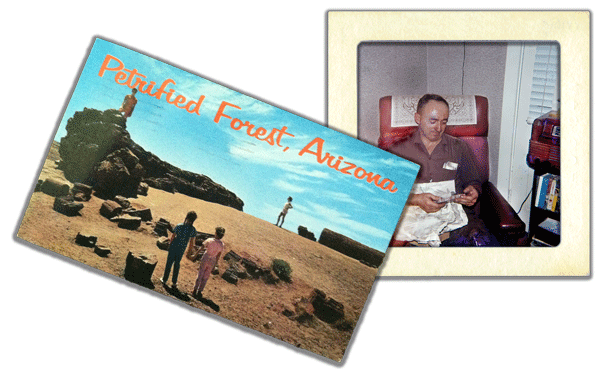
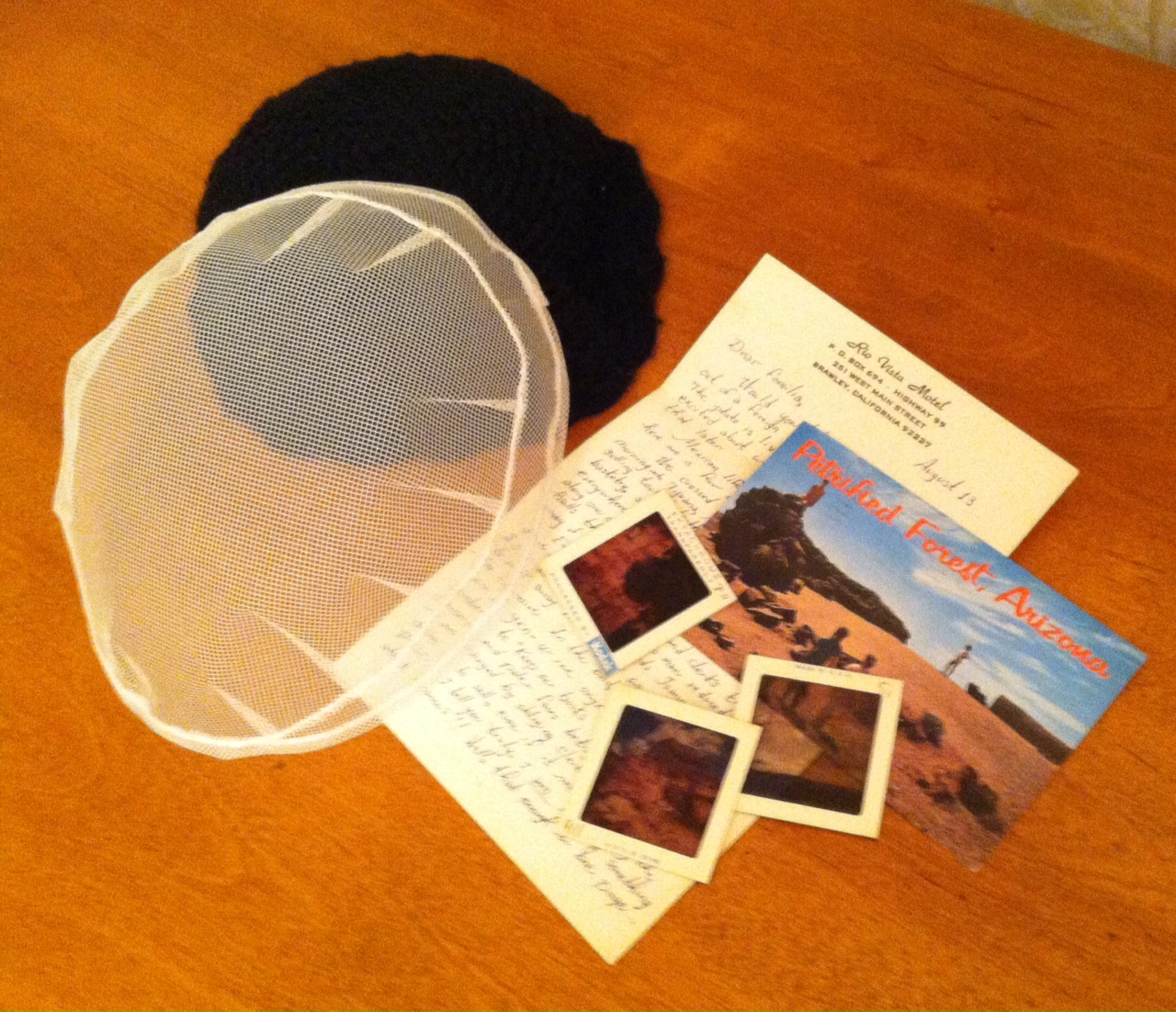
Closeup of prayer covering and bonnet like Joann and I wore on the trip with Kodak Ektachrome slides, letter home and post card from the Petrified Forest, Arizona
Days were HOT!
One day it was 110 degrees in a car with no AC. Our Boontonware cups melted in the rear view window. Our backs made puddles on the seats, so we tried the feet-in-air position, backseat monkeys! Here below are the Boontonware cups before they melted! And, yes, photos at state lines were staged – part of our ritual.
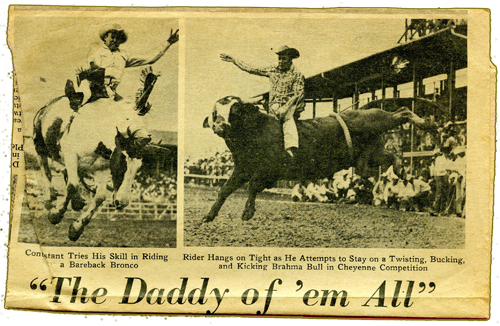
Uncle John couldn’t wait to get to Cheyenne, Wyoming to see the Rodeo, The Daddy of ’em All during Frontier-land week.
What We Did at Night
Sometimes Joan and I disturbed the peace of the Metzler pair next door in the motel. Once I kicked down a picture on a motel wall in Wisconsin and nearly fell on my head to try to retrieve it. Daily we wrote in our diaries and totted up our expenses down to the last penny.
Usually we snacked and read books. One night I lowered the hem on a skirt with my sewing kit to comply with standards of Lancaster Mennonite School, where I would return to teaching in the fall. Here I’m making a feast of boysenberry bread near Kanab, Utah.
Many thanks to photo-enhancer Cliff for bringing faded memories back to life!
How did I pay for this trip on my slim school teacher’s salary? What secrets did my diary and expense book reveal? Did anyone from home remember my birthday? Find out in my next post!
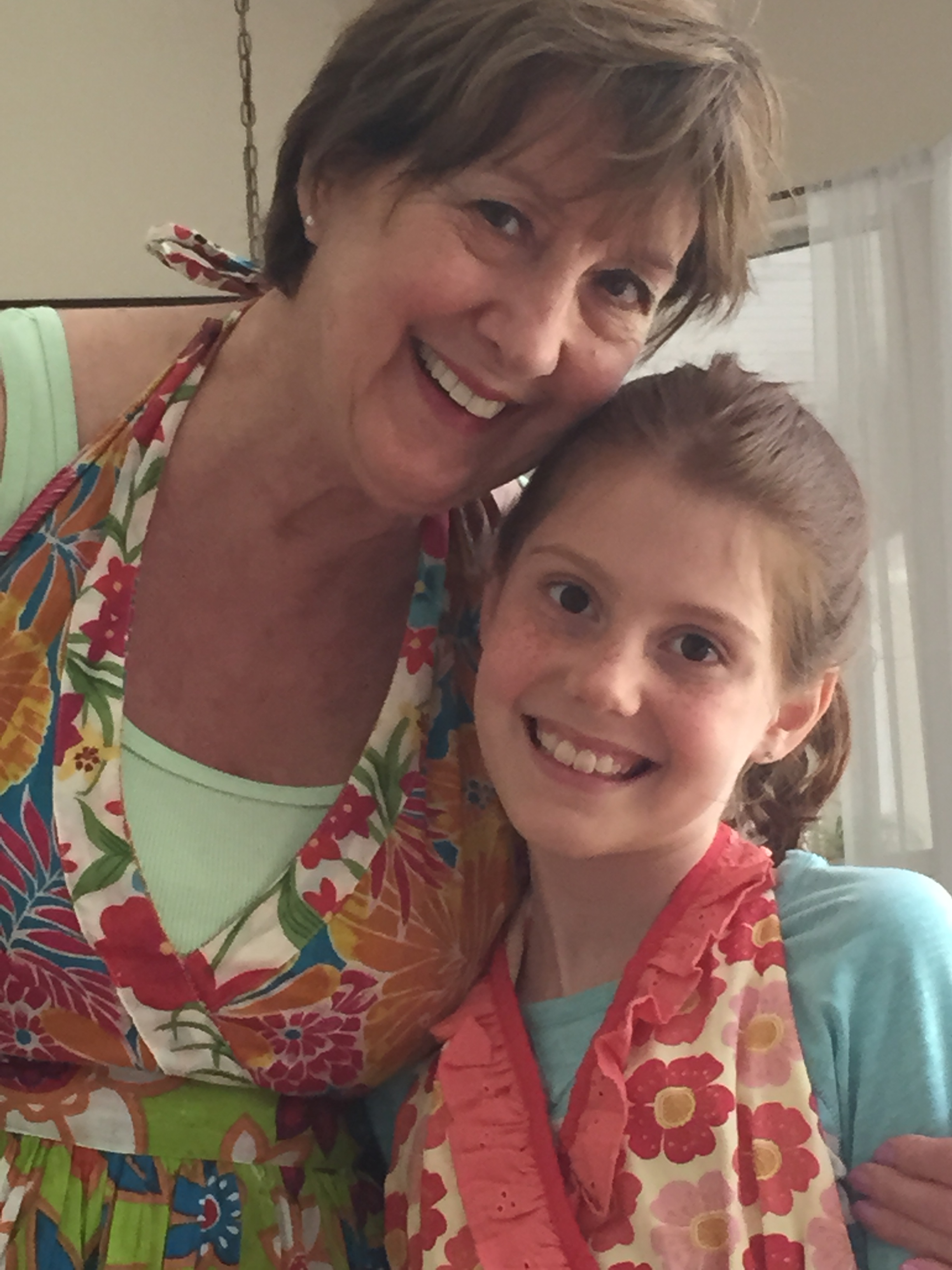
Grand-daughter Jenna and I decided to make a rainbow cake on Memorial Day weekend. We were hoping for a pot of gold at the end of the rainbow, but the cake-making process wasn’t that easy!
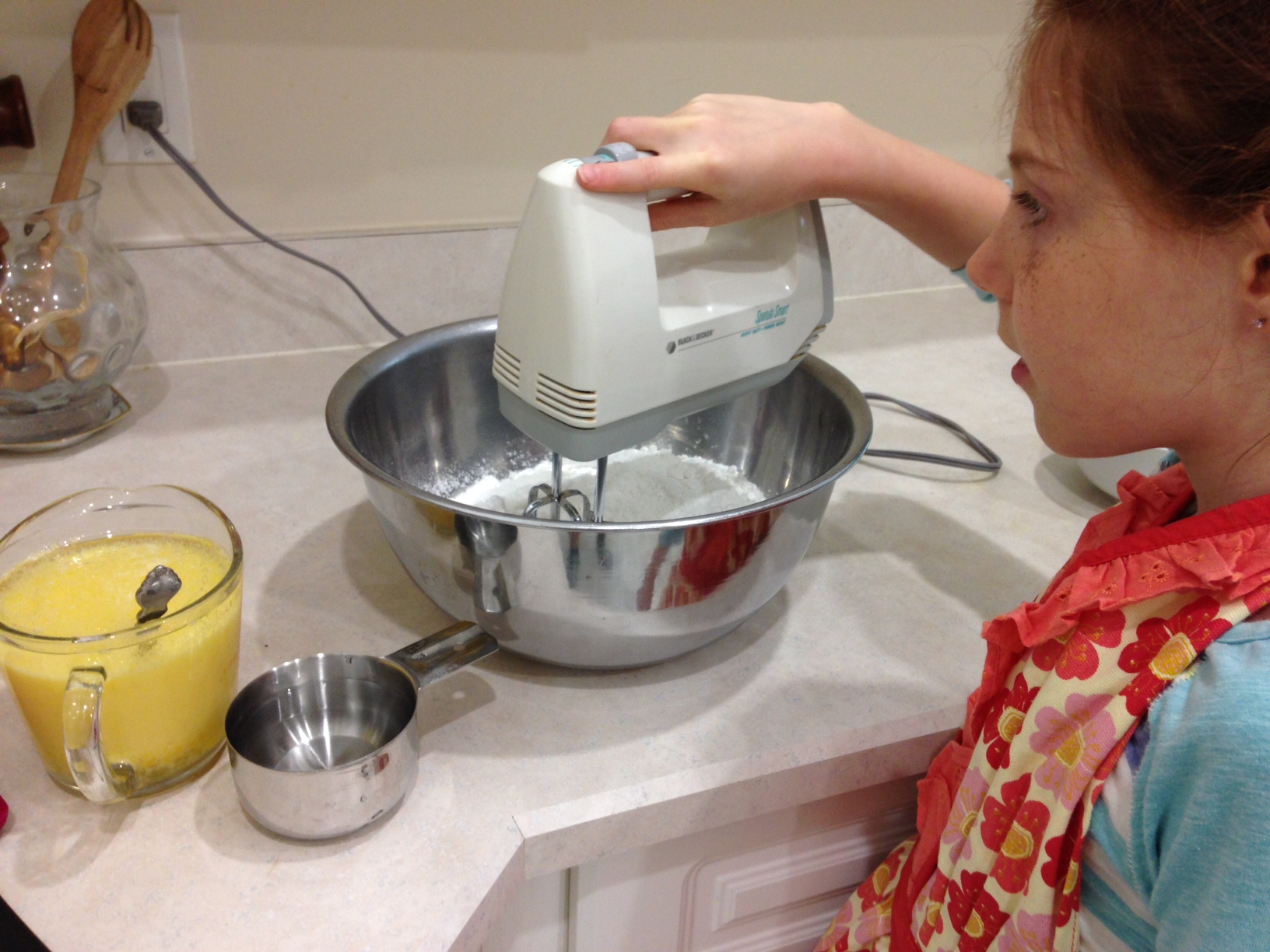
Here’s our step-by-step process with a few glitches noted:
First, we put on our aprons Then we mix together the ingredients (oil, eggs, and water), Jenna trying hard not to get egg-shell pieces in with the batter from a mix.
Tricky Part: Dividing up the Batter
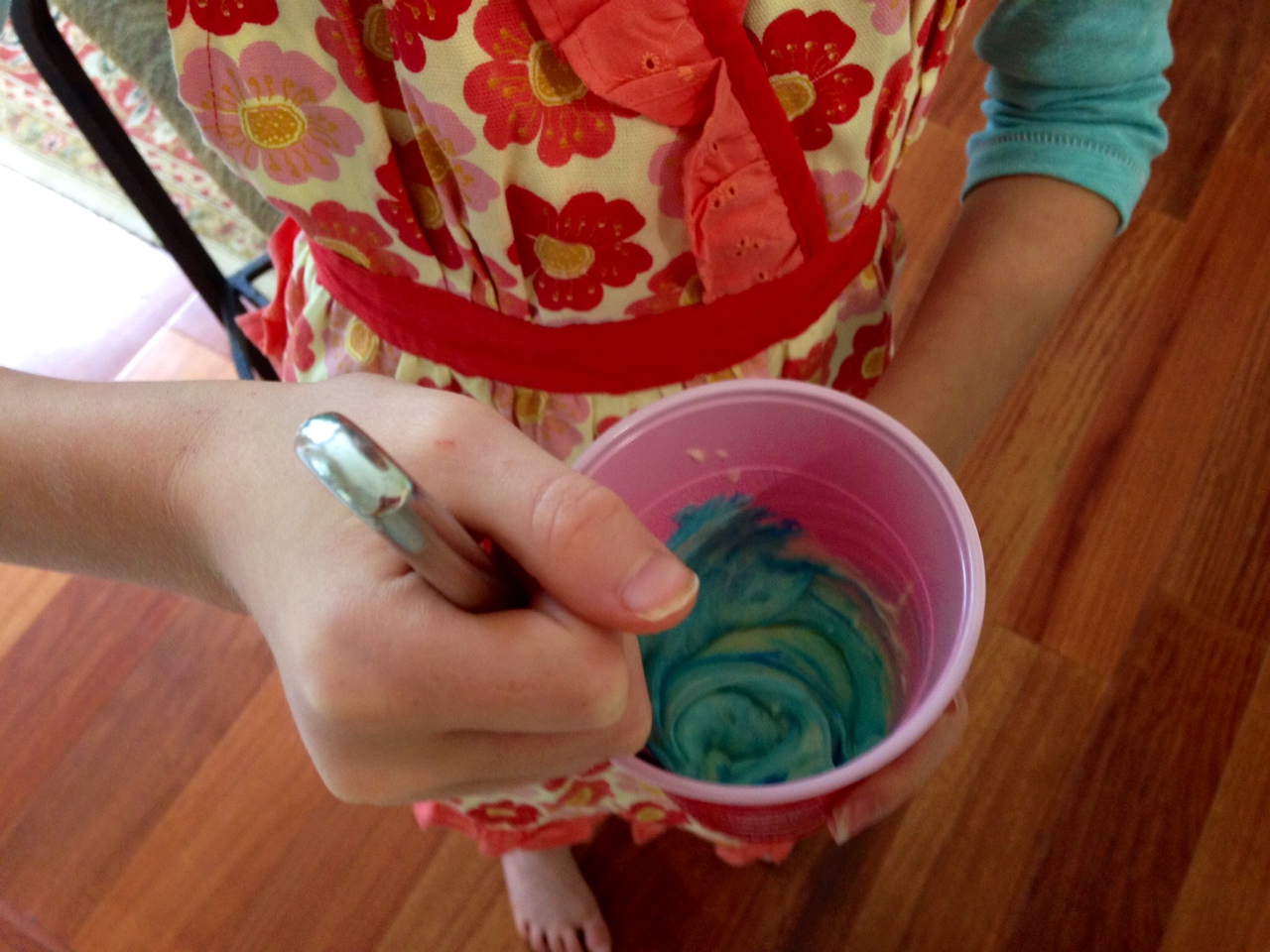
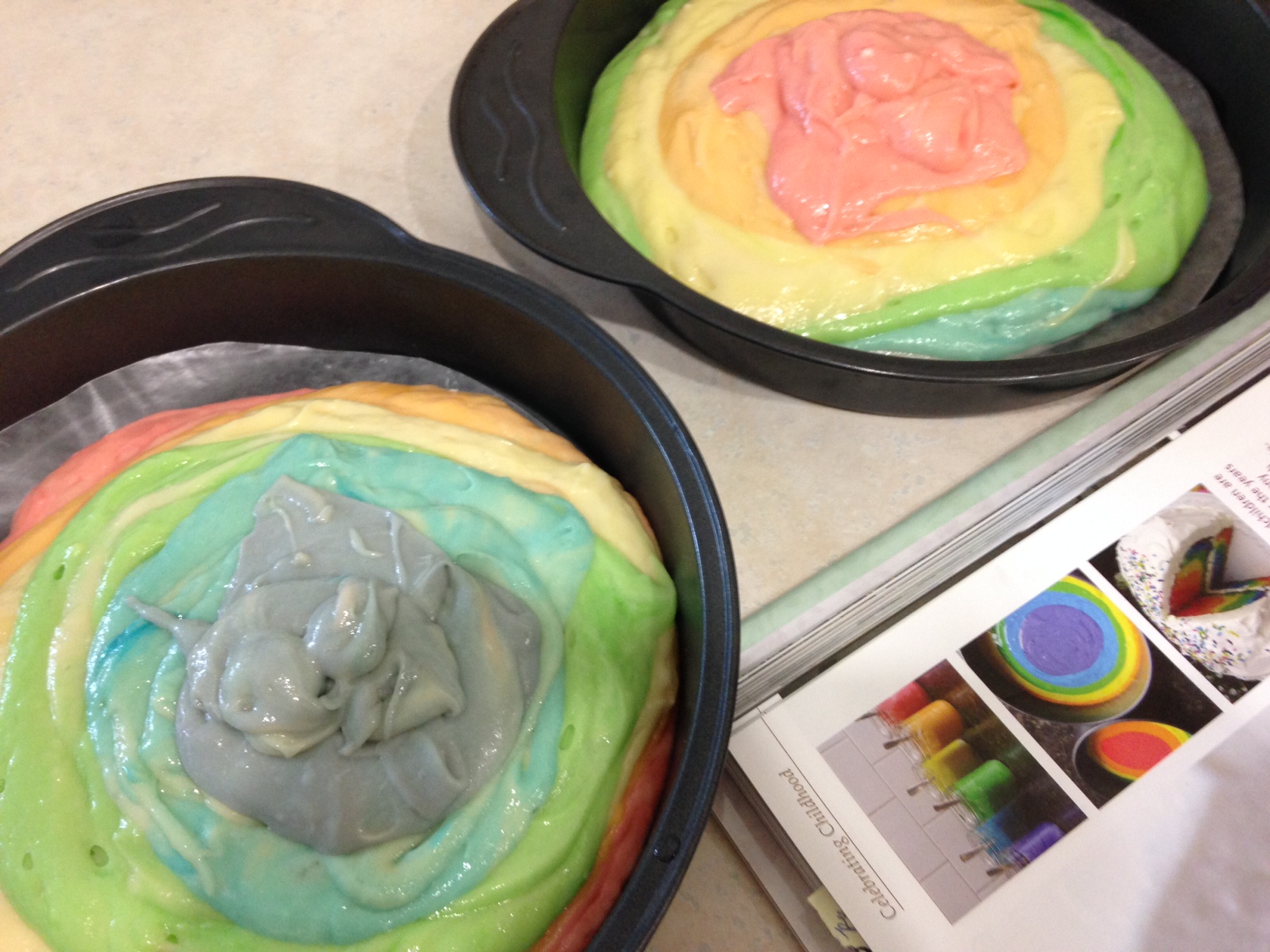
We divide the batter into 6 paper cups and begin to add color. Remember ROY G BIV from grade school? Then we use 6 more cups, adding the color in reverse order: violet-blue-green-yellow-orange-red. (No indigo among the colors.) Here Jenna is stirring the green, her favorite color:
Next, we pour batter, one color on top of the other into the first pan. In the second, we repeat the process, pouring the colors in reverse order. Mind you, this takes a long, long time, with several spatulas. Think “art” and finger painting when you are in this step.
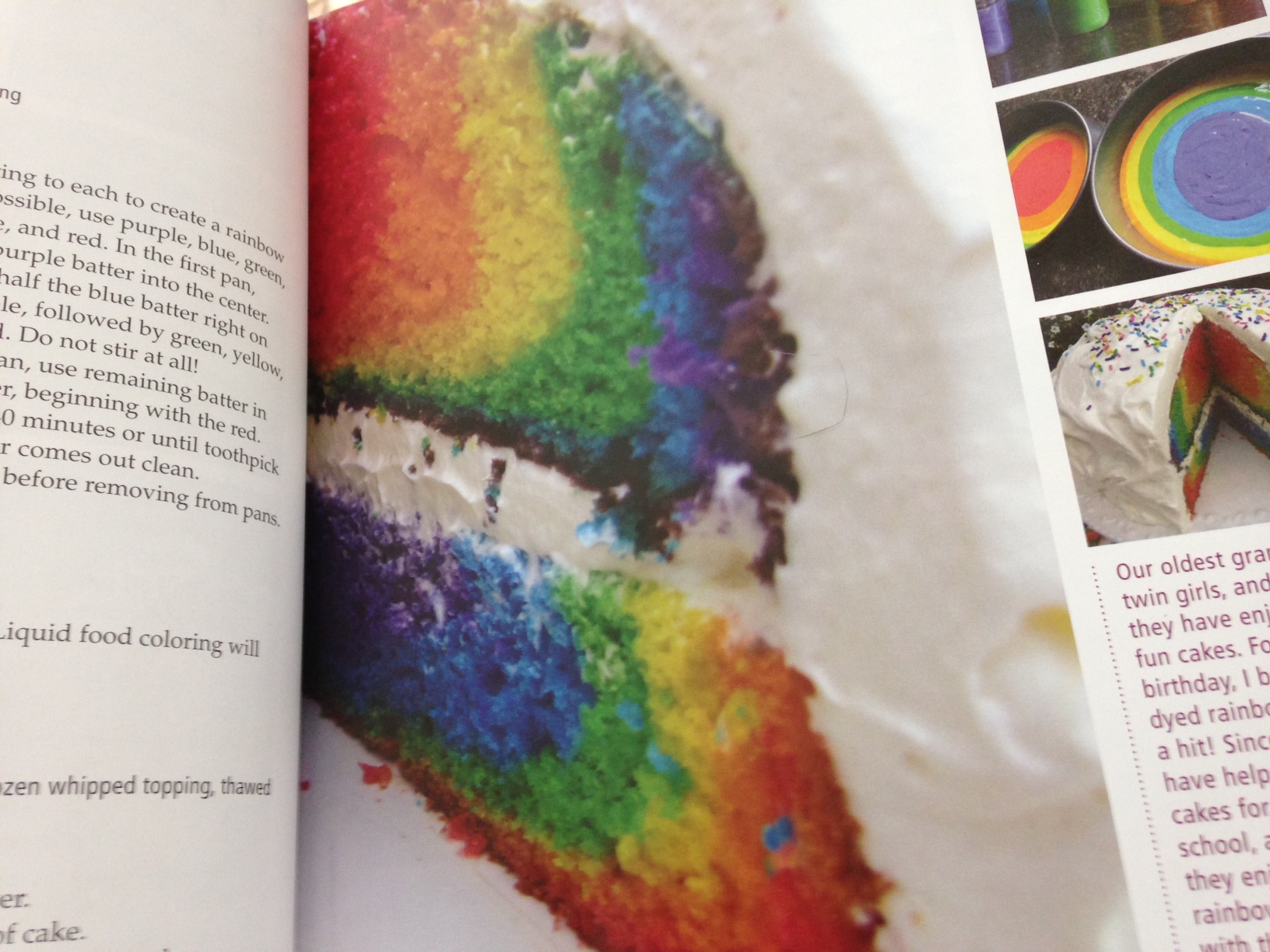
The recipe book looks so perfect. Hmm . . .
Pop into Oven: We set the oven to preheat (350 degrees) way too early, so temperature was super hot. The recipe’s suggested bake time of 40 minutes actually turned into 30, so the cake layers became a little brown.
Like her Great Grandma Longenecker, Jenna used a toothpick to check to see if cake was done.
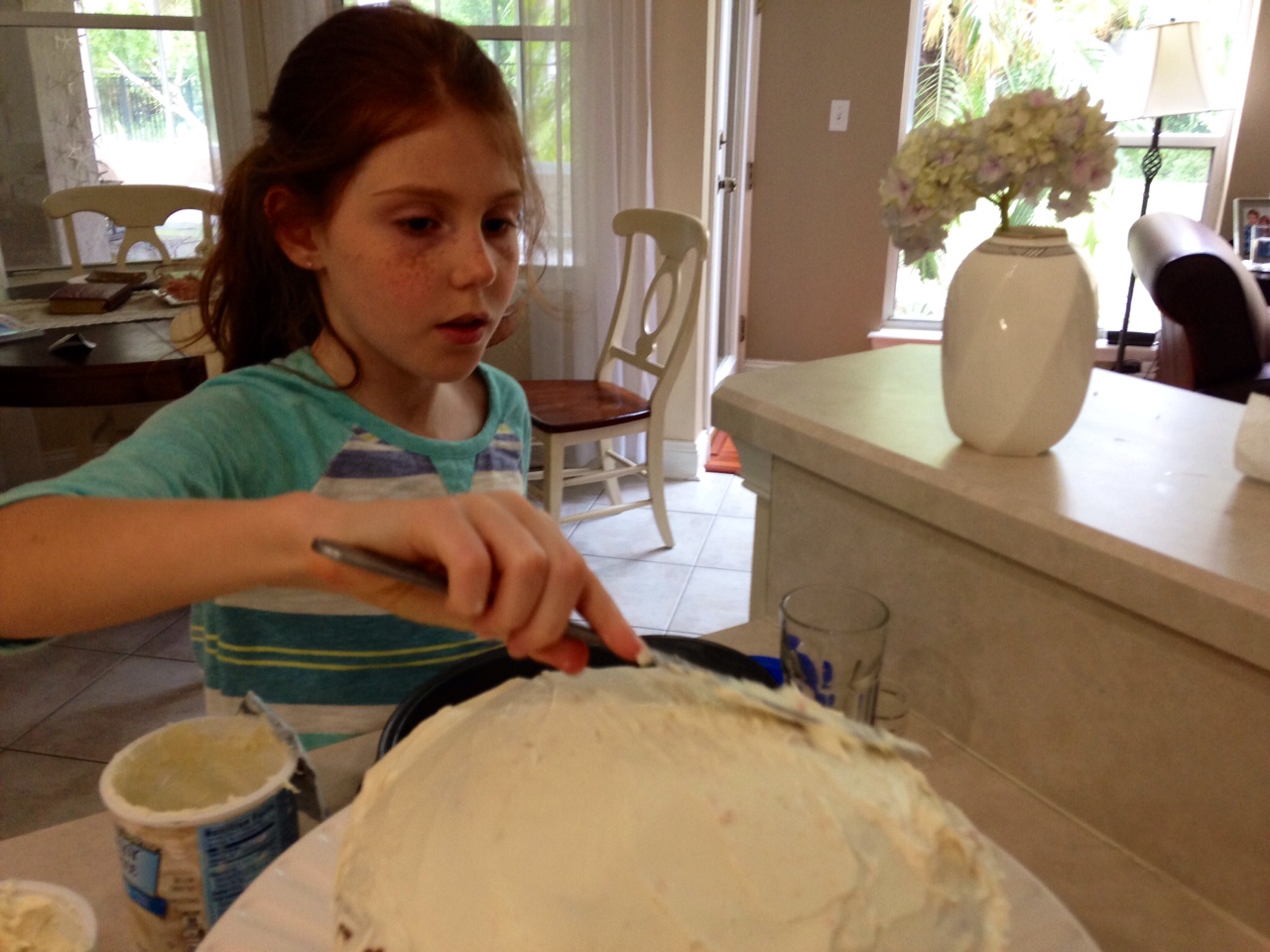
Take cake pans out of oven, cool, and frost. Then . . .
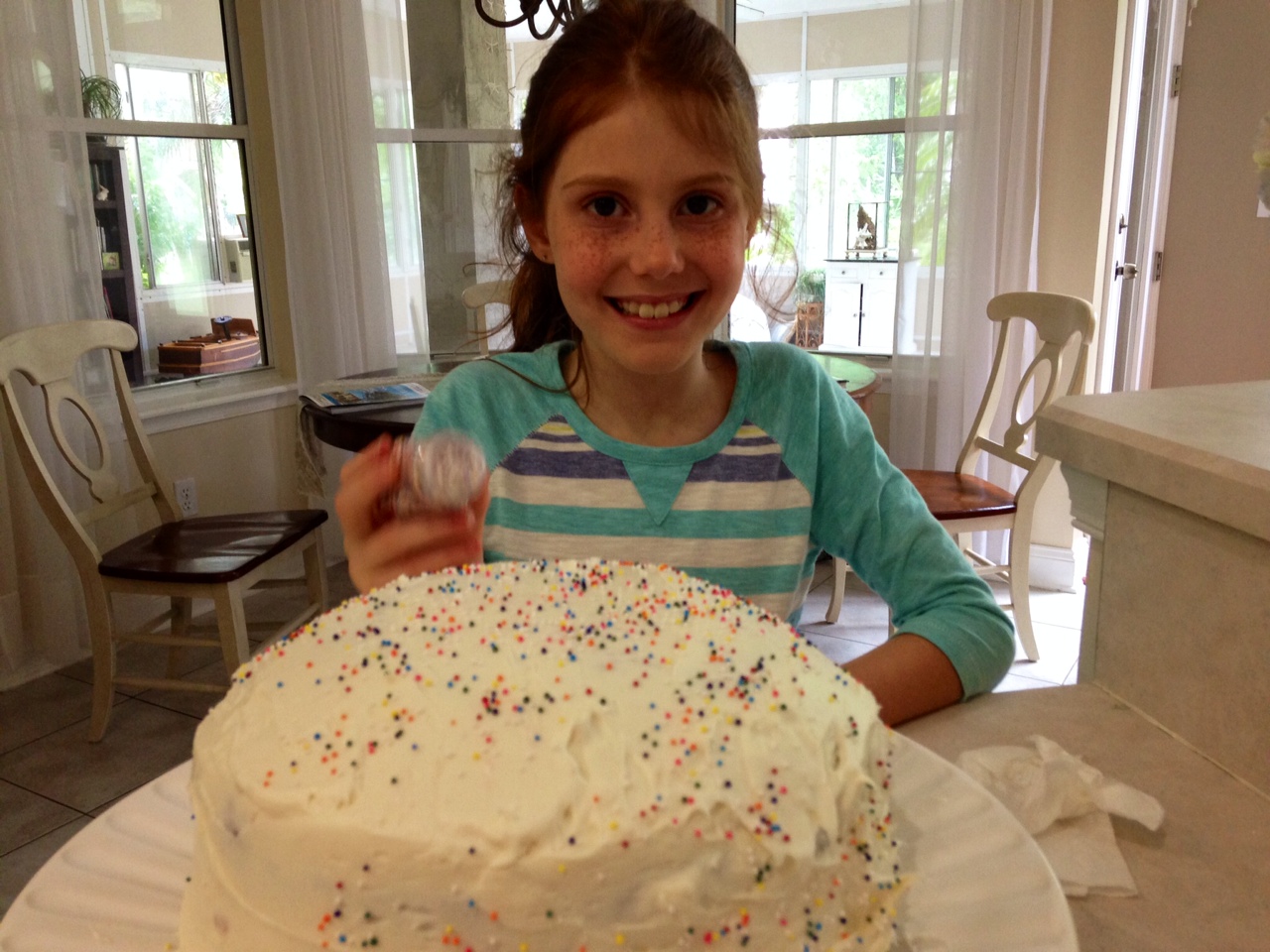
Adding sprinkles was probably Jenna’s favorite part. Her expression shows her delight!
SCARY PARTS: Behind the scenes!
* The first gel color we used (violet) made the batter a tepid shade of gray. We both felt disappointment because we thought the other colors might be duds too!
NaNa (when we began): “Think of making this cake as a combination of art and baking.”
Jenna (at this point): “This is a combination of art and baking with a hint of disaster!”
* The cake layers came out of the oven looking like volcanoes (Jenna’s word)! I forgot to take a photo here. Our fix: we sawed off the tops with a bread knife and got our first yummy cake taste.
* The two cake layers did not fit together perfectly. Our fix: Slathering frosting into the gaping parts.
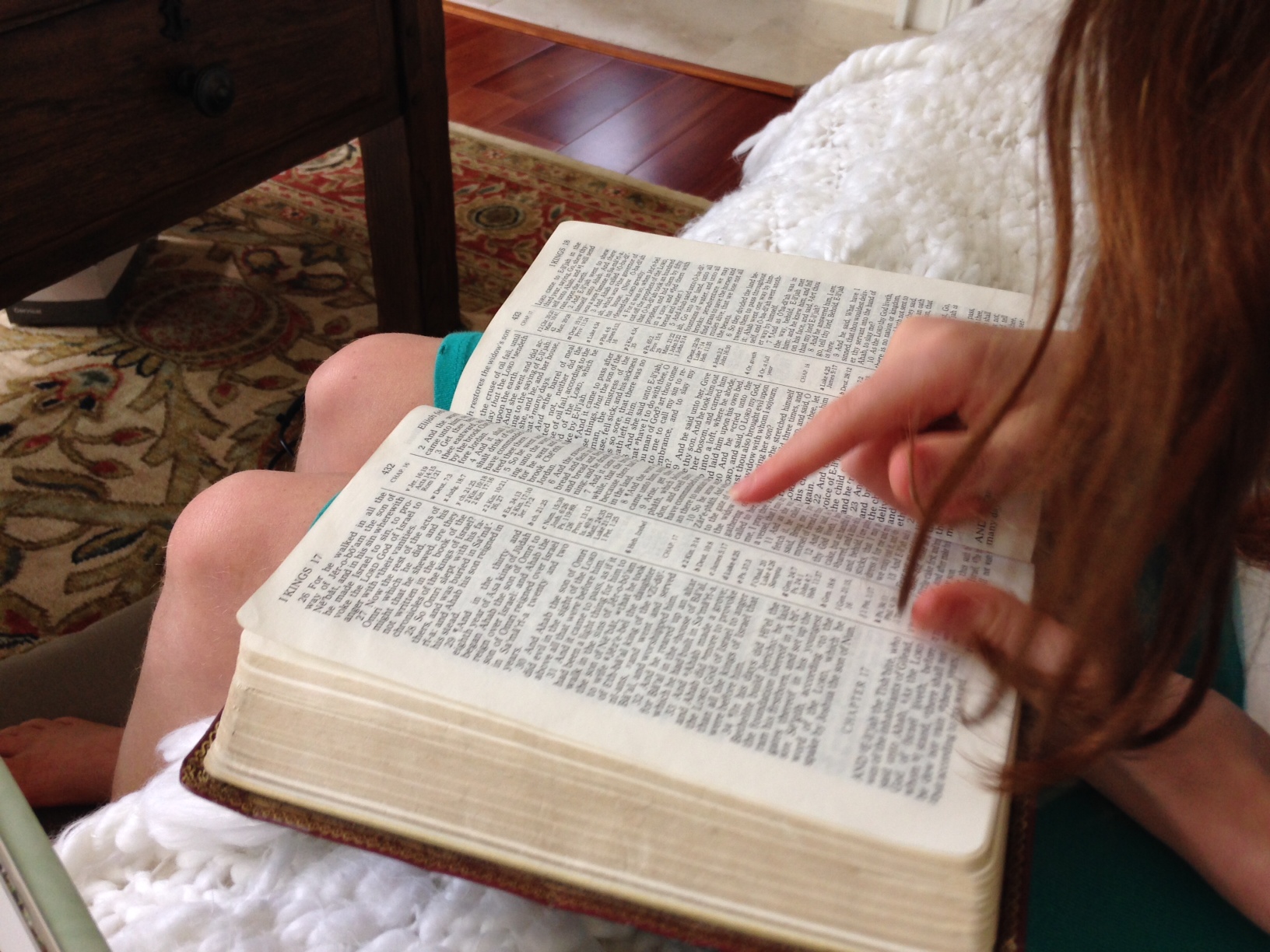
We traced the word “cake” in the Bible, Jenna reading the passage from I Kings 17:8-16 about the prophet Elijah and the widow of Zarephath. Actually, this woman’s cake was the bread of sustenance, one of survival, nothing like the confectionery concoction we baked just for fun.
* * *
Tell us about your cake-making successes, disasters, or near misses. If necessary, how did you improvise?
Coming next: Two Mennonite Girls on a Cross-Country Road Trip
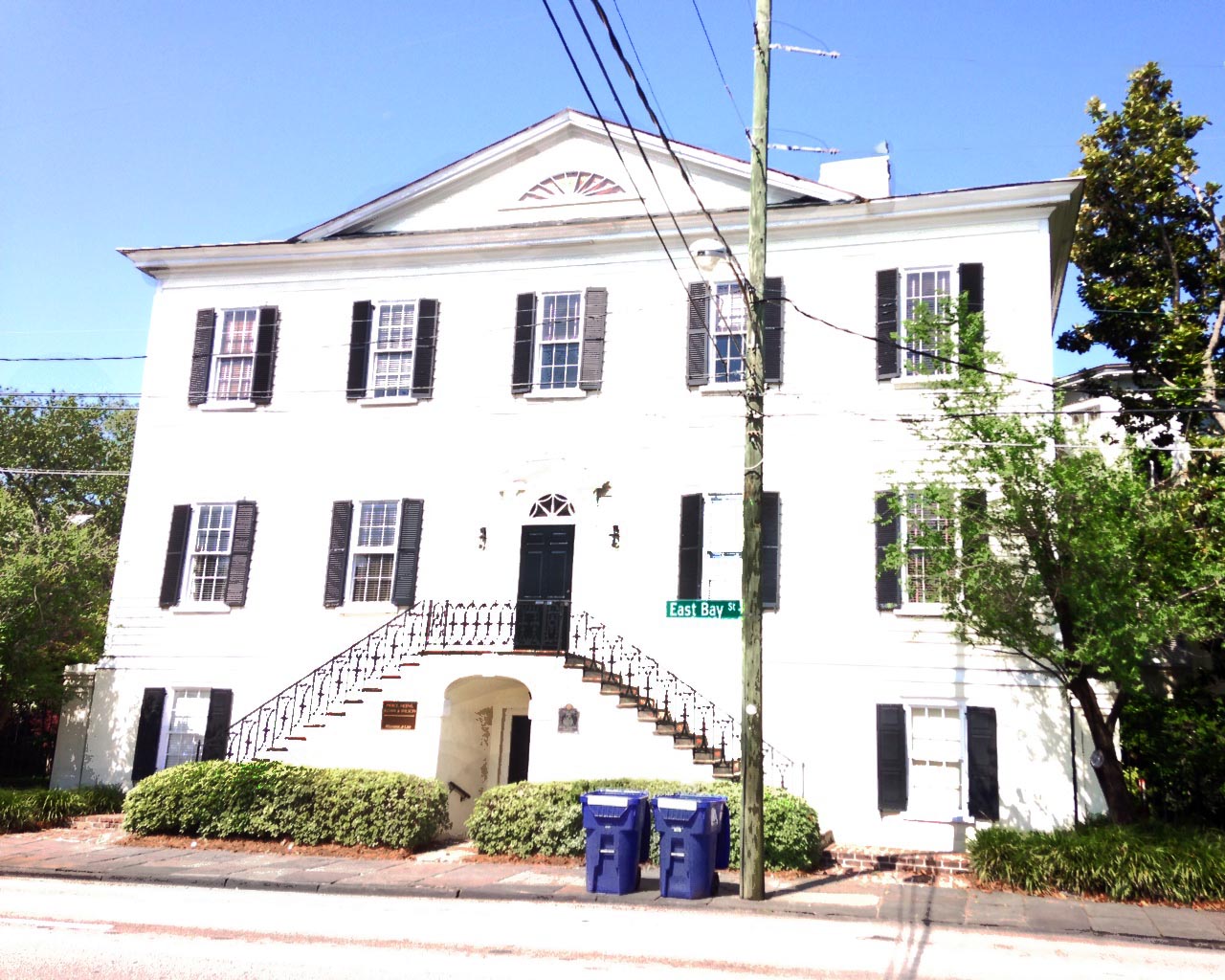
“Heidi, would you mind stopping by 329 East Bay Street before we leave town?”
We were on our way out of Charleston during our recent road trip, and my niece Heidi graciously agreed to stop her SUV long enough for me to catch a snapshot of the Grimké House basking in the bright morning sun. Its open arms-double staircase once welcomed visitors with a hospitable hug. (Until recently it housed attorneys’ offices, so you can draw your own conclusion about its more recent history!)
This house was made famous by Sue Monk Kidd’s book of historical fiction The Invention of Wings. Here is an excerpt from my review:
“ . . . the novelist creates parallel stories representing two strata of early nineteenth-century America, alternating chapters with the voices of two engaging characters: the aristocratic Sarah Grimké and the hand-maid (creative name for slave) assigned to her, Hetty Handful Grimké. Kidd’s sweeping novel is set in motion on Sarah’s eleventh birthday, when she is given ownership of ten-year-old Handful. Over the next thirty-five years, both strive for a life of their own ‘bucking the constraints of cultural attitudes toward women and slavery, which Sarah and her sister openly challenged.'”
All the purple passages quotes today are pulled from the pages of The Invention of Wings, Sue Monk Kidd’s historical fiction about the Grimké family:
The Weather
“I slipped through the back door into the soft gloom, into the terror and thrill of defiance. The sky had gone cobalt. Wind was coursing in hard from the harbor.” (50)
(We experienced a Charleston, SC storm downtown as we entered this city May 7, 2015)
Mosquitoes
Mother Mary had ordered “the mosquito netting out of storage and affixed above the beds in anticipation of the blood-sucking season, but having no such protection, the slaves were already scratching and clawing their skin. They rubbed themselves with lard and molasses to draw out the itch and trailed its eau de cologne through the house.” (56)
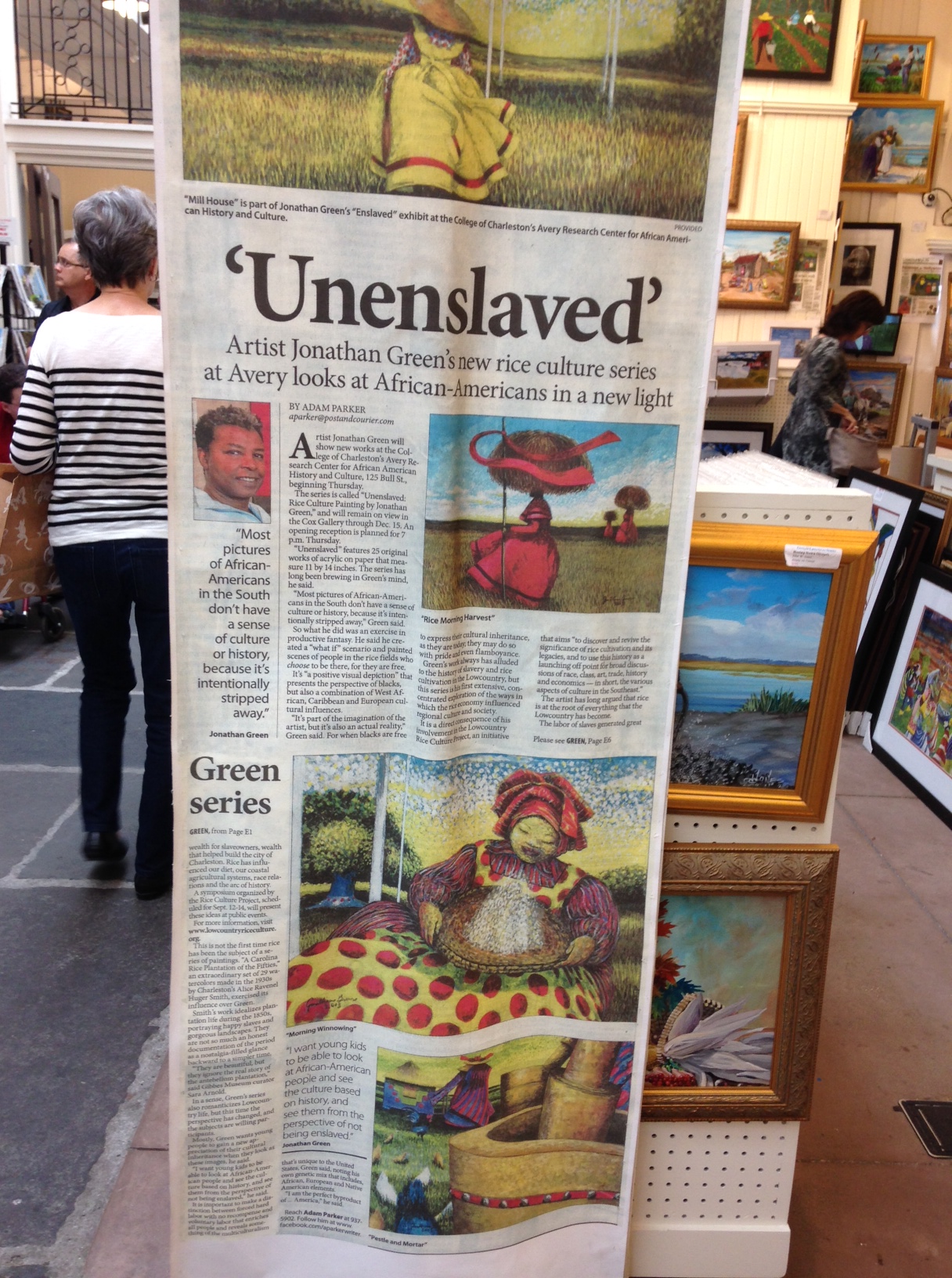
(Disparity between the races no longer noticeable in Charleston today, at least to tourists. )
Wall-hanging on sale in Charleston on Market Street
Despair
“My breath clutched at my ribs like grabbing hands. I closed my eyes, tired of the sorry world.” (280)
Missing Someone
Sarah’s unrequited love: “Nina was speaking now, her face turned up to Theodore’s, and I thought suddenly, involuntarily of Israel and a tiny grief came over me. Every time it happened, it was like coming upon an empty room I didn’t know was there, and stepping in, I would be pierced by it, by the ghost of the one who once filled it up. I didn’t stumble into this place much anymore, but when I did, it hollowed out little pieces of my chest.” (281)
Yearning for a better world
[Lucretia] “leaned toward me. ‘Life is arranged against us, Sarah. And it’s brutally worse for Handful and her mother and sister. We’re all yearning for a wedge of sky, aren’t we? I suspect God plants these yearnings in us so we’ll at least try and change the course of things. We must try, that’s all.’” (275)
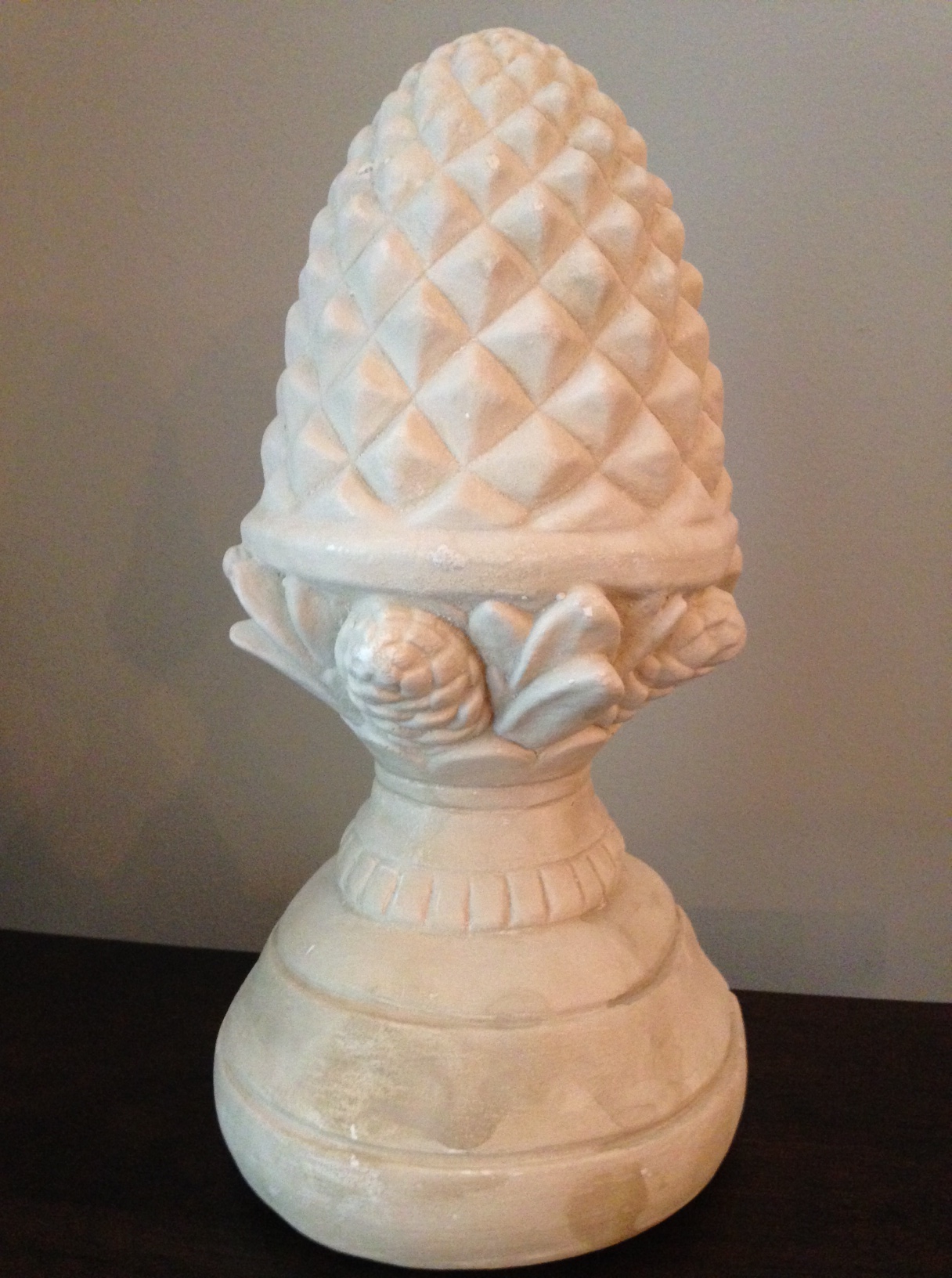
The Pineapple: the international symbol of hospitality seen frequently in Charleston’s interiors and exteriors. Daughter Crista purchased a pair of these.
We must try, that’s all!
Share your words: your thought, a quote or story adds to the conversation. It’s always nice to meet you here!
























 Plain and Fancy