Friends from Faraway and Long Ago: Kitsa and Lydia

Kitsa and Lydia were among the very few women in my graduating class at Eastern Mennonite College who did not wear a prayer veiling atop their heads. Why? Because they were not Mennonite.

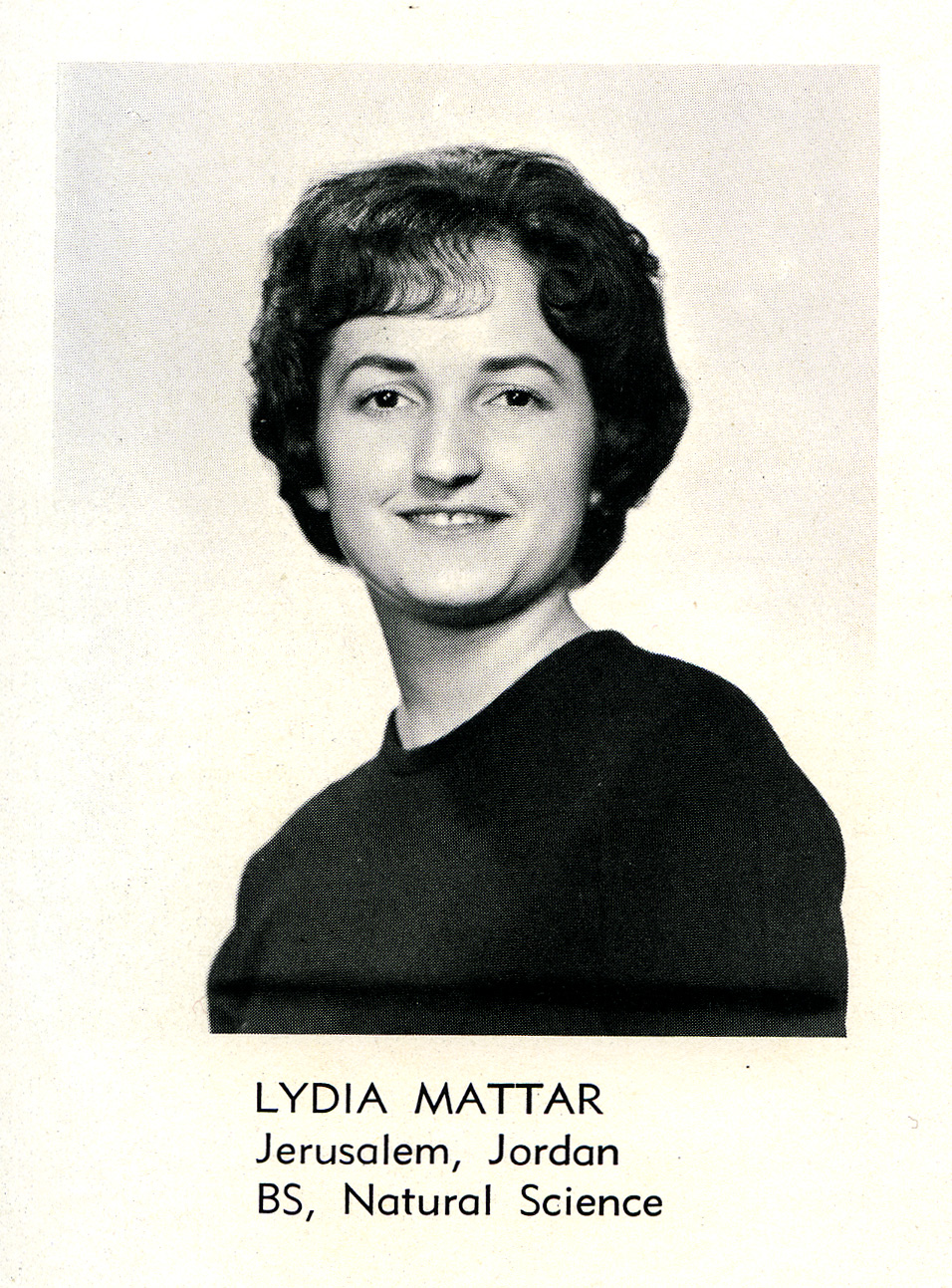
Lydia Mattar from Jerusalem, Jordan and Kitsa Adamidou from Salonika, Greece were international students and my good friends when I attended EMC. Their origins both have a biblical stamp: Kitsa’s hometown was originally known as Thessalonika, the name of two New Testaments books (Thessalonians I and II) and Kitsa’s father from Jerusalem was the Keeper of the Garden Tomb, the site of Jesus’ burial and resurrection. (Photos from 1963 Shenandoah yearbook)
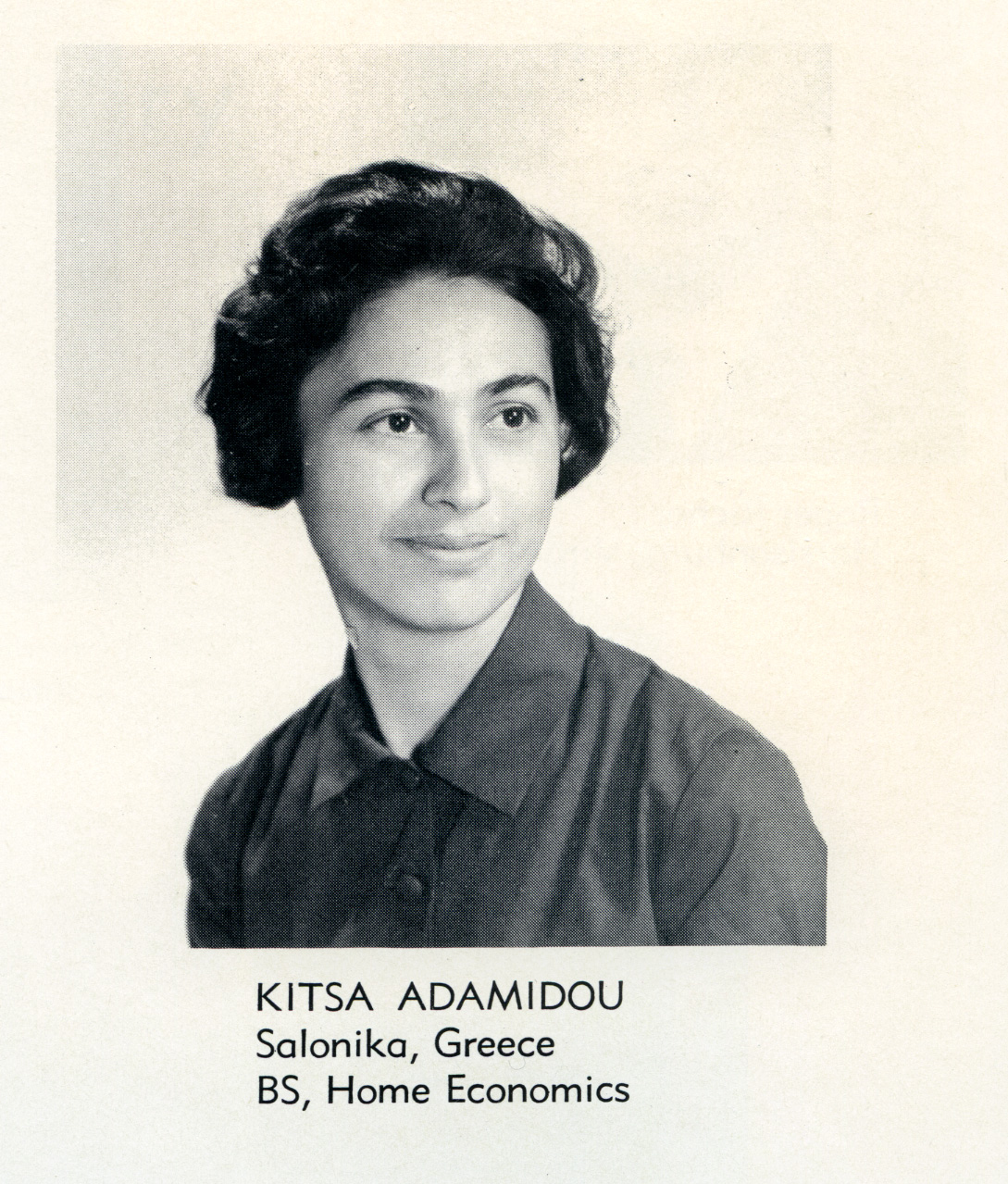
KitsaYearbookPortrait

Always on the look-out for fun!
Kitsa, always on the look-out for fun!

And then Lydia . . .

LydiaYearbook Portrait

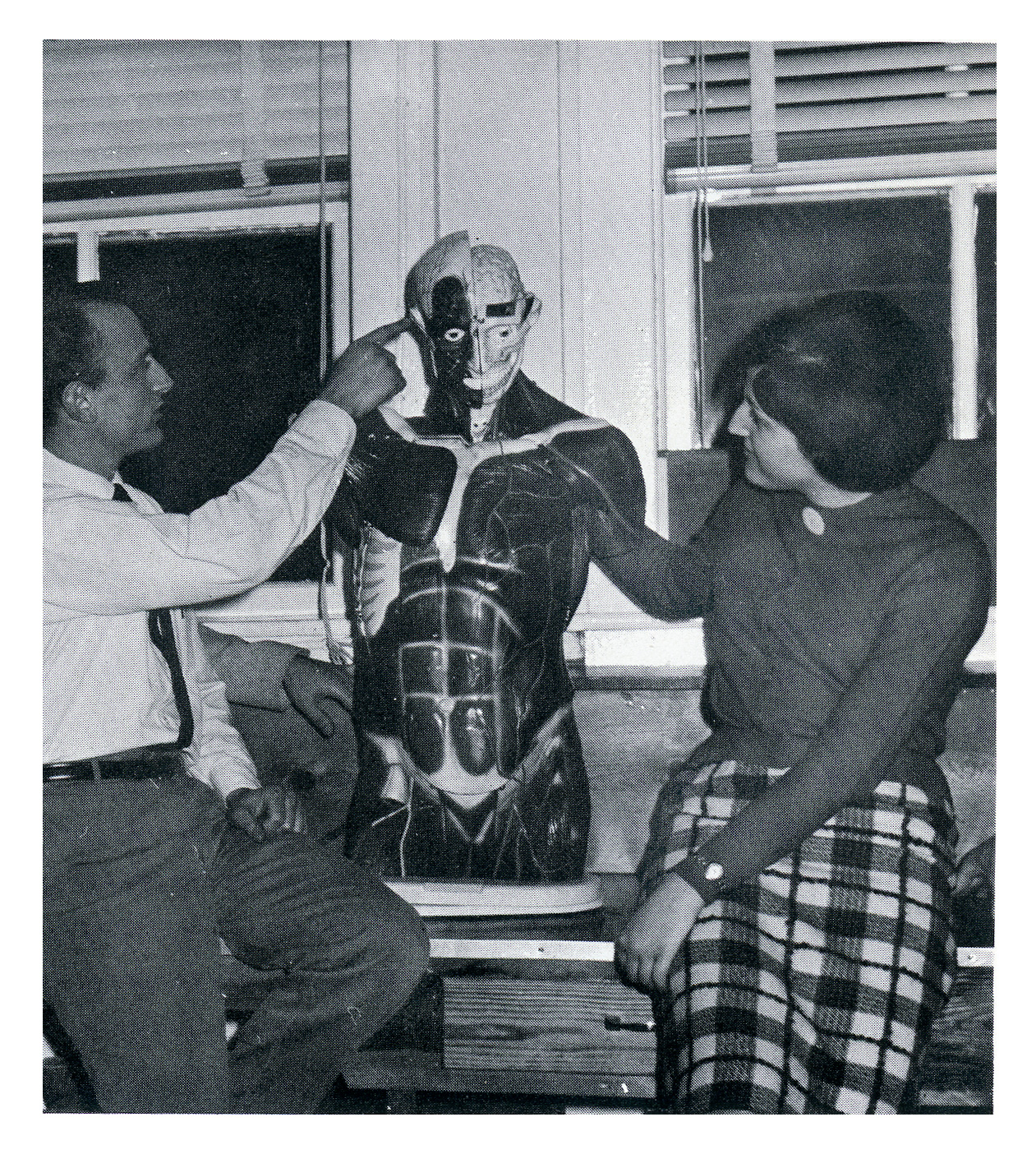
Lydia in Dr. Daniel Suter's Anatomy class
Lydia in Dr. Daniel Suter’s Anatomy class with lab assistant

I was drawn to Kitsa and Lydia during my freshman year because I have always been curious about other cultures. In fact, one year Lydia was my roommate. It appears this inclination has run deep in my DNA. Now as I hold in my hand one of my Grandma Fannie Longenecker’s letters from college I can sense her keen interest in my “foreign” friends and a deep longing to know them better.

In this letter dated December 1, 1960, she insists that she would like both girls to spend Christmas at her home. Born in 1892, Grandma Fannie Longenecker was 68 when she wrote these words to me:

Dear Marian – Guess you’ll be surprised to hear from me, I sure wanted to write before, just didn’t get at it – (Reason) older and slower . . . . Ruth was looking for a letter from you so be sure and bring Lydia & Kitsa along home over Christmas, and forget all about paint etc, two of you can stay here & we’ll have a good time that’s the thing that really matters, I think I’ll be Kitsa’s Grandma of America – Do you know what she needs or wants for Christmas? Forgot to say I’ll pay her way up & we really want them to come, so make it strong, times soon here!

Later in the letter, Grandma admonishes:

Be sure and get arrangements to come home early & if possible bring the girls along. I’ll pay Kitsa’s fare on arrival & find out what she would like for Christmas. This $ 5.00 spot is for you, maybe you need a little for odds and ends or transportation home. Tell us what you are hungry for, that you don’t get at school.

Mark tells me ‘Marian will soon come home’ and his face lights up, so we are all looking forward to that day. Hope your old toe is better.

Grandma’s interest in Kitsa persisted through most of my college years. In her letter of March 8, 1962, she referred to Kitsa and her roommate pictured on the front page of Christian Living magazine (February 1962).

For over 25 years, my Grandma and Aunt Ruthie practiced peace and goodwill toward all, as they opened their home to refugee and immigrant families, beginning with Phuong (pictured below), a young woman who arrived by boat from Vietnam. Their home was a warm cushion absorbing the cultural shock of leaving home and family; it was a safe haven, welcoming refugees from a colláge of countries including Bosnia, Croatia, Serbia, Russia—anywhere there was political upheaval.
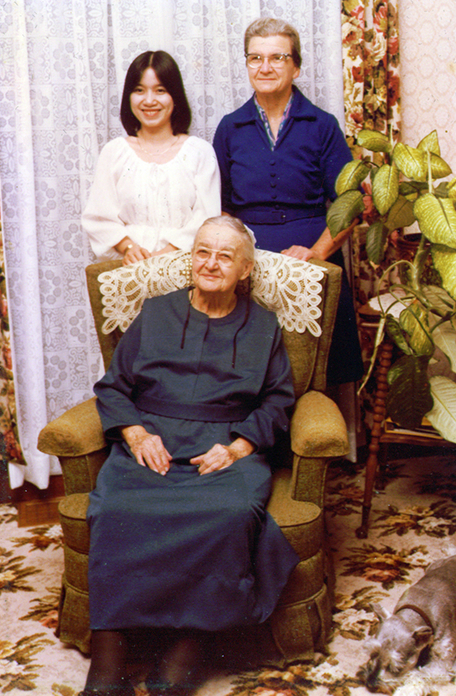
1979Grandma,Ruthie, Phuong_small

Although she graciously accepted the Salt of the Earth Award from Lutheran Social Services in the 1990s, Aunt Ruthie never bragged about her benevolence. From her perspective, she was merely sharing the love of Christ and fulfilling the statement of Menno Simons, founder of the Mennonite faith:
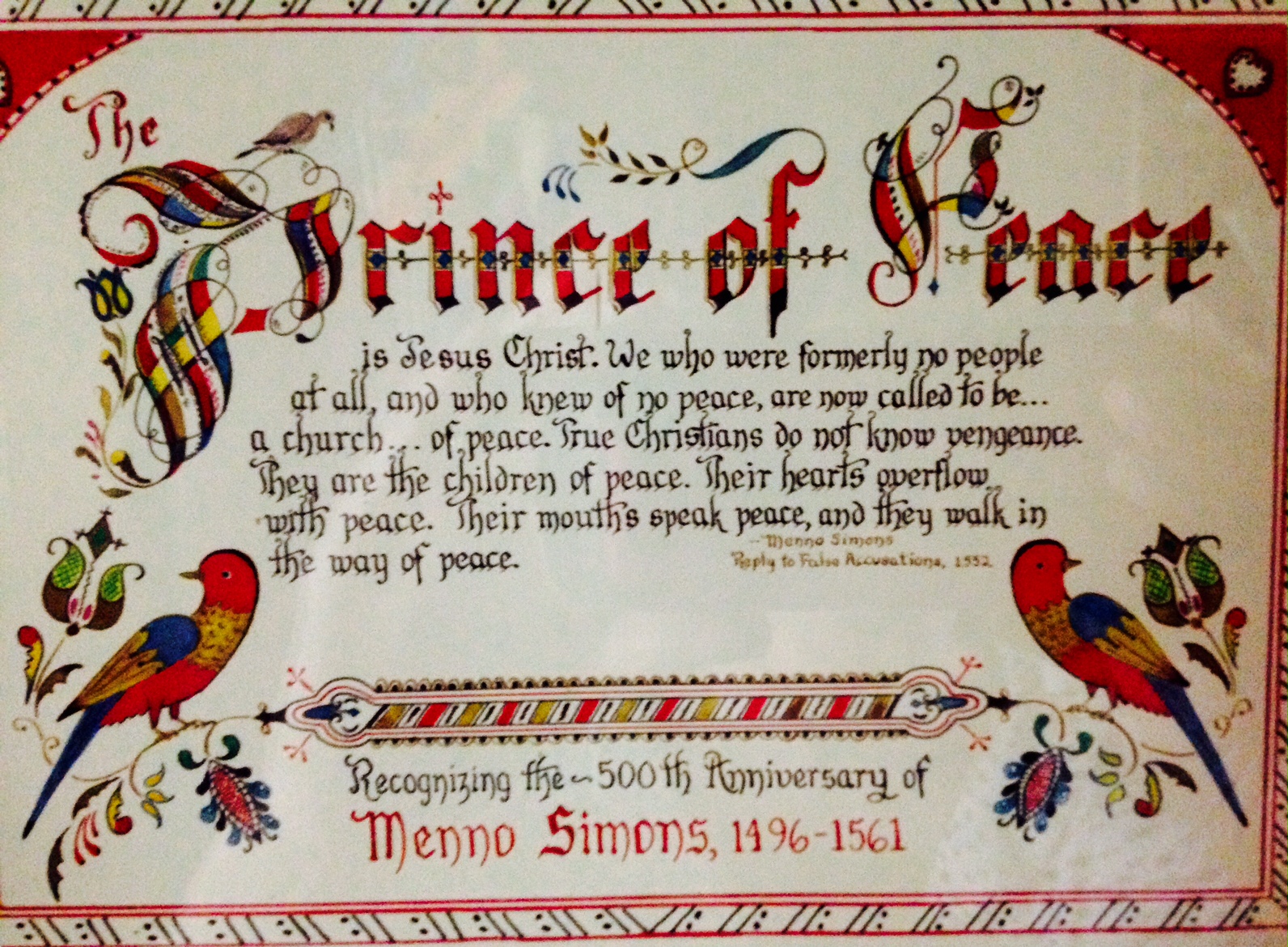
Framed print on the wall of Grandma and Aunt Ruthie's sitting room, 1996
Framed illustration on the wall of Grandma and Aunt Ruthie’s sitting room, 1996

In a noisy world where some speak of building tall walls and wish to spread terror and violence, I am thankful for my heritage including an education at an institution, now Eastern Mennonite University, where the language of peace is preached and modeled. In fact, it is now possible to earn both under-graduate and graduate degrees in justice and peace-building at the University.

EMUJusticPeaceQuote


Regrettably, the contact information I have currently for both Kitsa and Lydia has not yielded any results, so I don’t know what paths their lives have taken. But I do know that their lives, like mine, have been imprinted with the power of peace, a message this world could stand a good dose of in these troubled times.

Postcript:

Just this morning, December 11, 2015, I had a long phone conversation with Kitsa, her smooth, alto voice music to my ears. She now lives with her husband in North Carolina and is very active at St. Nicholas Greek Orthodox Church where she is head of the Hellenic Culture initiative. She also gives private Greek language lessons.


How have international friendships affected your life? Have you connected with long-lost friends recently?

Learning 101 with Ananda and Ben: Role Reversal

My Pilates instructor is a spring chicken, and my writing coach is young too, just thirty-nine years old, younger than either of our children. Still, They are teaching me.

Since childhood, we have been conditioned to think of our teachers as older than we are. Such a perspective probably was formed in elementary school when our teachers were the age of our mothers or fathers. And then in high school, if we’re honest, some of those 45-year-old faculty looked absolutely ancient to us. I imagine I was viewed as an older sister when at Lancaster Mennonite School I was a mere four years older than my senior students. As I aged in my teaching profession, in my students’ eyes I may have passed for a mother or aunt, and later, in my sixties, students at the college must have viewed me as a grandmother or great-aunt.

Now after more than forty years in education, I am well into an encore career as a writer. To support such a sedentary life-style, I need to get off my duff and twist and turn, bob and weave, flexing muscles that get very little use otherwise as I finger the back-lighted black keys of my laptop, warming a pillowed chair. Ananda at Bailey’s Gym helps me do that. On her Pilates mat in front of a class of middle-aged women, she is as flexible as a rubber band, inviting us into poses of bold bends that I can at best only approximate. Gentle and petite in nature, this native of Colombia helps me correct my efforts.

Ananda2

“Ma-ri-ann, eez this way . . . extend your left leg a lee-tle further.” And so, I adjust my appendages to comply with her instructions, but not without cringing a little. Yes, though Ananda is ever so easy-going and gracious, I do chafe at being singled out for wrong moves. After all, she called out my name. Everyone else heard that I messed up! Still, I know I will bring out my exercise mat next week and sit for another session with her gentle but precise guidance.

Then, there’s Benjamin, my writing coach. A poet, gardener, and memoir-writer, Ben Vogt is my writing teacher in an online course entitled All in the Family: Research and Write Your Family’s  History. He too is gentle, introspective, always affirming. But he is also incisive, biting into the scripts I send him with loud barks in return, always in caps: HOW BIG IS MEDIUM? YOU’VE GOT TO BE FAR MORE DETAILED AND DESCRIPTIVE FOR US . . .

BenVogtGardener

And on the next page, I see more yelling in loud crescendo as I notice I have missed the mark trying to describe what my Mennonite pastor was wearing: LET’S SEE THE WARDROBE WITH MORE DETAILS – NAME THE CLOTHING PARTS MORE, SHOW SHOW SHOW! To be fair, every once in a while I see that I have succeeded: “GREAT PARAGRAPH!” he shouts in all caps. He is thrilled when I use sensory detail (All five senses now!) to properly develop a scene instead of resorting to flabby adjectives. Then I’m both surprised – and pleased.

What is the point here? I am submitting to tutelage because I want to. I believe there is way more for me to learn. I’m not a finished product, and probably will never be, so I need more priming and polishing from folks expert in their fields. Why? Because I don’t have the insight to see how or where my efforts have gone awry. And, yes, these tutors can be younger, way younger, than I am.
Have you learn’d lessons only of those who admired you, and were tender with you, and stood aside for you?
Have you not learn’d great lessons from those who reject you, and brace themselves against you? or who treat you with contempt, or dispute the passage with you?

Walt Whitman Leaves of Grass

Of course, neither Ananda nor Ben have ever rejected me or treated me with the slightest bit of contempt, but each has sought to “dispute the passage with [me],” and though it is uncomfortable, even painful at times, I have benefited from these lessons. Indeed, I am learning lessons from them and others. Learning. Still.

Still learning.

Are you are lifelong learner? How or when have you learned from “teachers” of any age? Inquiring minds want to know . . .


Coming next: Faraway Friends: Kitsa & Lydia

Thanksgiving 2015: A Sweet Story, Pudgy Hands, and an Invitation

Are you a thankful person? Do you ever think about what your life would be like without certain blessings? Robert Emmons, touted as one of the world’s leading experts on the science of gratitude, says that “one effective way of stimulating gratitude” is to reflect on what you would be missing without the people, places, or possessions you value.

A Sweet Story

Some people are simply grateful for daily bread, like the two brothers cited in a Random Act of Kindness story published in AARP November 2015 issue. But then they got the surprise of their lives!

AARPRandomActsKindnesSMparson

David Parsons, then age 5, remembers a time when his Dad on the way to share a Thanksgiving dinner with him at school stumbled upon two brothers whose parents couldn’t afford the quarter for each of them to enjoy turkey and pumpkin pie. David’s dad noticed the boys on the steps of the lunchroom, trying to hide their humble sandwiches wrapped in wax paper, looking down at their feet in embarrassment.

Dad stopped with his hand on my shoulder. The expression on his face softened. He dug into his trouser pockets and found two shiny quarters. He called the boys by name and said, “We will all eat turkey and dressing today.” He gently pressed a quarter into each of their hands and opened the lunchroom door.

David remarks, “On that day compassion was given and received. I saw it in the eyes of those two boys. It was a lesson I’ve never forgotten.”

Powerful Posture

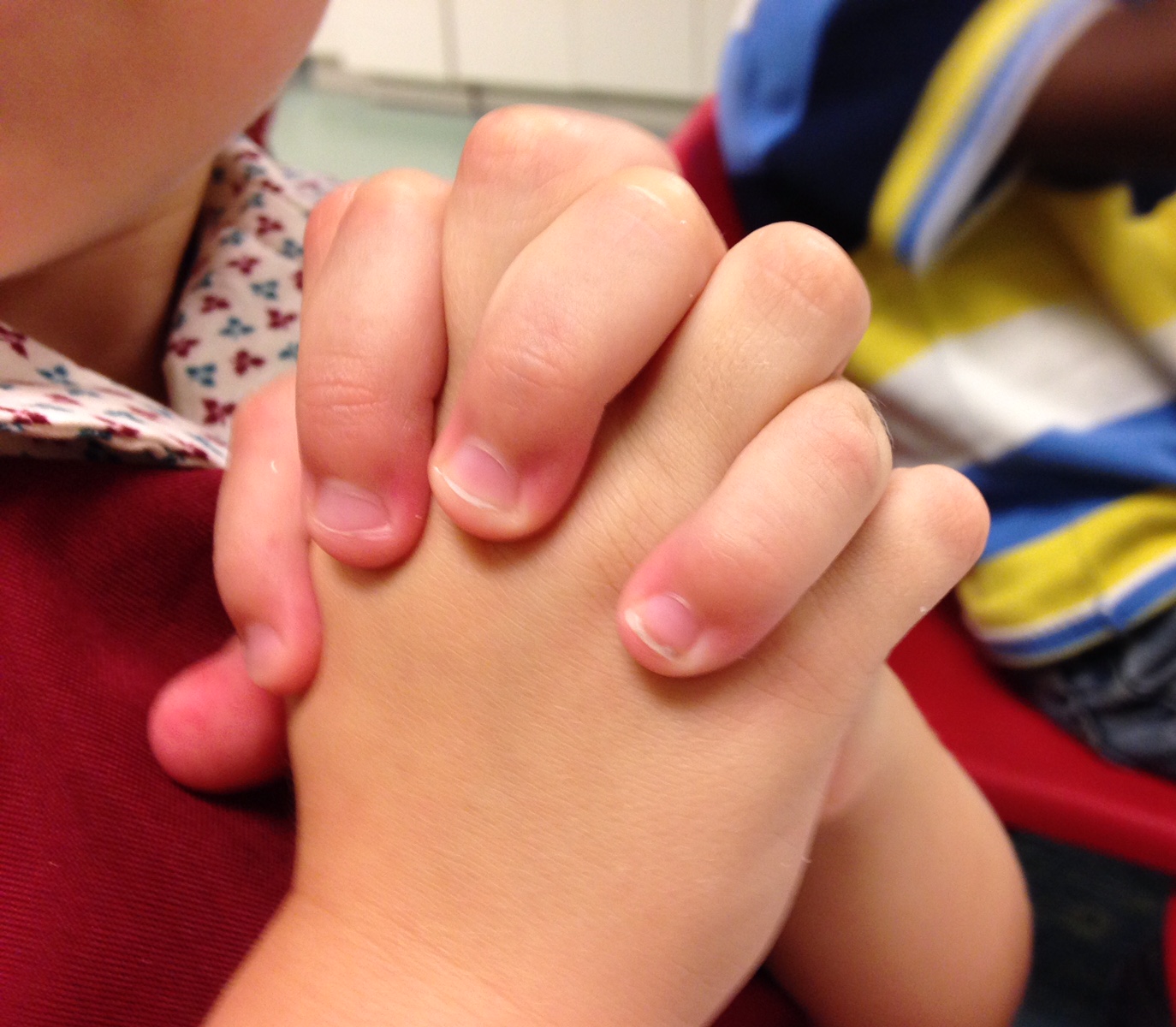
Gratitude can be expressed with our eyes open, our hands relaxed, looking straight ahead. But during this season of thanksgiving, it is lovely to contemplate eyes closed in gratitude, hands clasped in praise.

PudgyHandsFBC

Pudgy hands and some slightly older hands held in gratitude . . .

Grace before the ham loaf dinner, circa 2010 Patrick, Curtis, and Sarah
Grace before the ham loaf dinner, circa 2010
Patrick, Curtis, and Sarah

For the Lord is good; his mercy is everlasting; and his truth endureth to all generations.  Psalm 100:4  KJV

Two Invitations: Write a short story (250 words) or simply tell one

GreatTHanksgivingListenAARP

  • Why not connect with someone from a younger (or older) generation. Here is a link that will get you to the audio interview: http://www.thegreatlisten.org
  •  If David Parsons’ story in the introduction sparked an incident you can recount from your own experience, tell your good-deed experience in 250 words or less and submit it to kindness@aarp.org (Please cut and paste this link into your own browser.) You may be chosen to feature in a future publication!


I am thankful for you, dear reader, who appear here often, sometimes once a week to read and comment. Whether you read and respond or just stop by to read the postings, I thank you from the bottom of my heart.   ♥


Coming next: Learning 101: Role Reversal


Signs & a Wonder in St. Marys, Georgia

It’s true! St. Marys, Georgia is idyllic. Only a 40-minute drive north of Jacksonville, Florida . . .

HistoricStMarysGA


. . . historic St. Marys has a storybook setting on the St. Marys River – white picket fences, charming Victorian inns, and majestic magnolia trees and live oaks welcome you to an atmosphere perfumed by fragrant salt air. Here you’ll discover legends of forgotten battles and daring pirates as you kayak by moonlight with sea turtles for company.


The History

Treasures in the historic district include the Georgia Radio Museum and Hall of Fame, and the Cumberland Island Seashore Museum the gateway to ferry departure point for the Cumberland Island adventure, the southern-most barrier island in Georgia. St. Marys Submarine Museum, showcases the Kings Bay Naval Submarine Base located about three miles north of St. Marys, a town of just over 17,000 people.

Near where we had lunch at Cedar Oak Cafe was an old Victorian house nestled among trees draped with Spanish moss, typical of the historic residences.

HouseStMarys

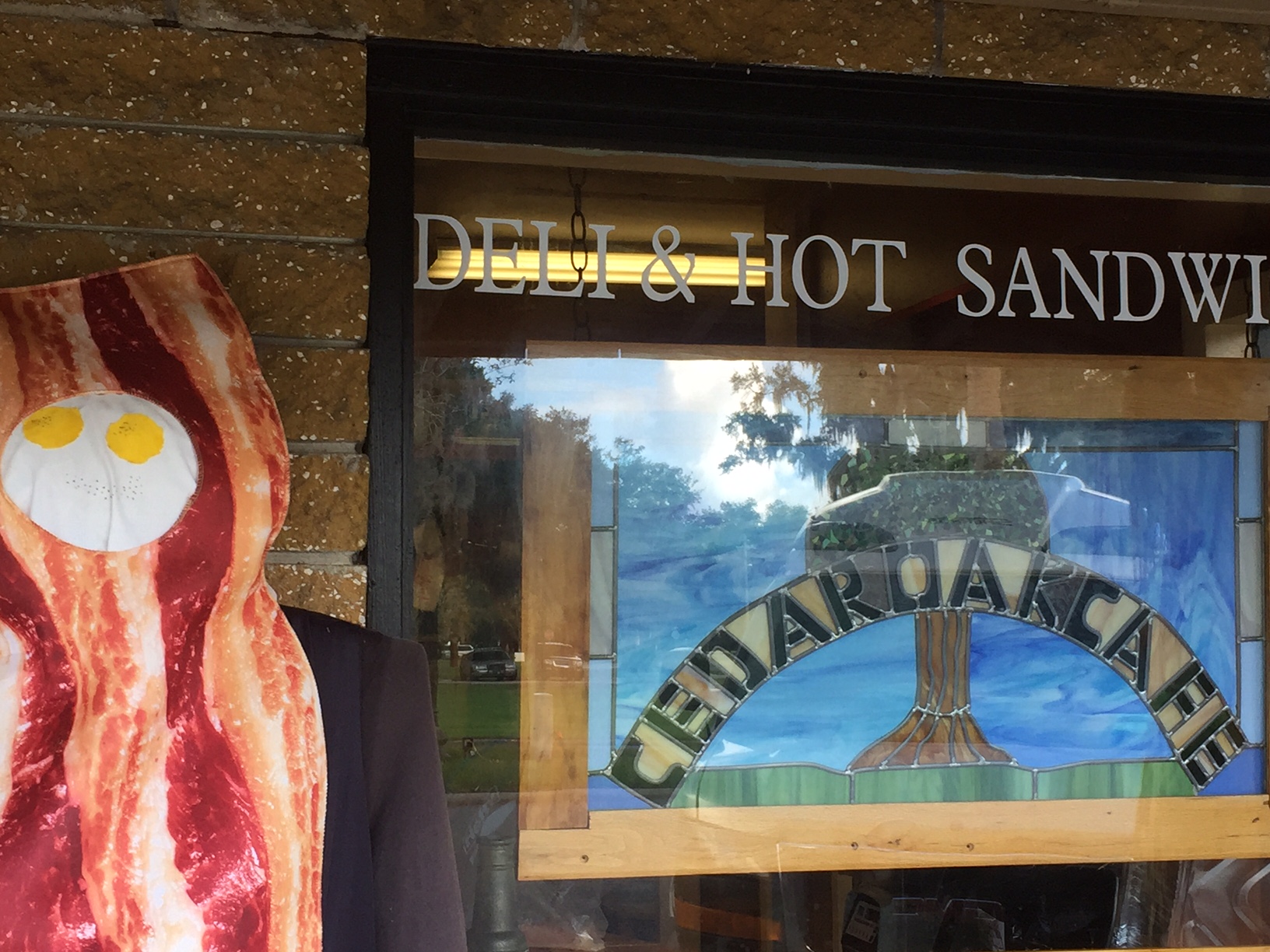
Lunch at Cedar Oak Cafe on Osbourne Street where even the bacon attempts to hold a  shape . . .

CedarOakCafeBacon

The Cumberland Island Seashore Museum leads down to the St. Marys River harbor where travelers can board the Cumberland Queen for a unique day-trip adventure to the Island.

CumberlandIslandMuseumSignCumberlandQueenBOAT

We are bound for Jekyll Island farther up the coast near Brunswick . . . JekyllIslandClubHotel

. . .  but first, time out for cherry licorice, a dab of chocolate candy and a look at some show-stopping sayings at Market on the Square Shop at the end of Osbourne Street.

Some Signs We Found

Some wisdom
Words of wisdom

An admission

FRIENDSsign

An anatomical figure of speech, to be sure . . .

FriendsBoobs

And finally some refinement . . .

CivilitySign

CumberlandIslandRELAXATION

This sign and others spotted at Market on the Square on Osbourne Street, St. Mary's, Georgia
This sign and others spotted at Market on the Square on Osbourne Street, St. Marys, Georgia

Elsie de Wolfe’s signature is displayed on other quotable lines too: “Be pretty if you can, be witty if you must, but be gracious if it kills you.”  Elsie De Wolfe

Ms. de Wolfe is said to have invented the art of interior design with the publication of The House in Good Taste (1913) along with standards for manners, yet Ruth Franklin in a New Yorker magazine article suggests that she had a wild side. At “the age of fifty-six, she was plucky enough to perform headstands in public.” She furnished homes from Manhattan to Paris, Saint-Tropez to Beverly Hills and liked “to wear short white gloves and to carry at least one little dog.” In her old age, she tinted “her hair blue or lavender to match her outfit–one of many trends that she initiated.”

As an activist, she fought “for woman’s suffrage, and during the First World War . . . offered the Villa Trianon to the Red Cross for use as a hospital and volunteered as a nurse in a burn unit (for which she received the Légion de’Honneur).”

Along the street  . . .

StupidityParking

Aha, he (or she) took the hint . . .

BlackJeepSIGN

These photos including the one below were snapped on November 7, with Christmas about seven weeks away and temperatures in the mid-80s!

A Wonder

StMary'sChristmasWreath

Is it just my imagination or do holiday decorations surface earlier and earlier every year?

Another saying or quote to add to the signs above?


Coming next: A Random Act of Kindness, Pudgy Hands and an Invitation

Help! Vintage Photo Needs Caption

Every week, The New Yorker magazine features a Cartoon Caption Contest, inviting readers to submit a caption for consideration. After three finalists are chosen, readers vote for the winning caption.

Recently, in my cache of Kodak carousels I found a slide from the 1960s in dire need of a caption. Clearly, the season is autumn, and the family including Grandma Longenecker, my mother, brother Mark, and my dad are on a Sunday afternoon outing, judging by their dress. No one’s expression conveys a feeling of alarm over the possibility of Grandma’s imminent slide down the steep hill.

“What was going on here?” I ask. Everyone in the photograph registers a different band-width on the emotional scale, but most seem clueless about Grandma’s precarious position.

Help me solve the puzzle with a winning caption here.

LongeneckersMarkGmaDitch

Think free for all, not free fall!

* * *

If you would rather not submit a caption, you might speculate about what is going on here, who the photographer may have been, or offer a story about a memorable family outing you recall.

Pictures don’t lie, or do they?


Coming next: Signs & a Wonder in St. Mary’s, Georgia

Quiet Lives Matter: My Brother Mark

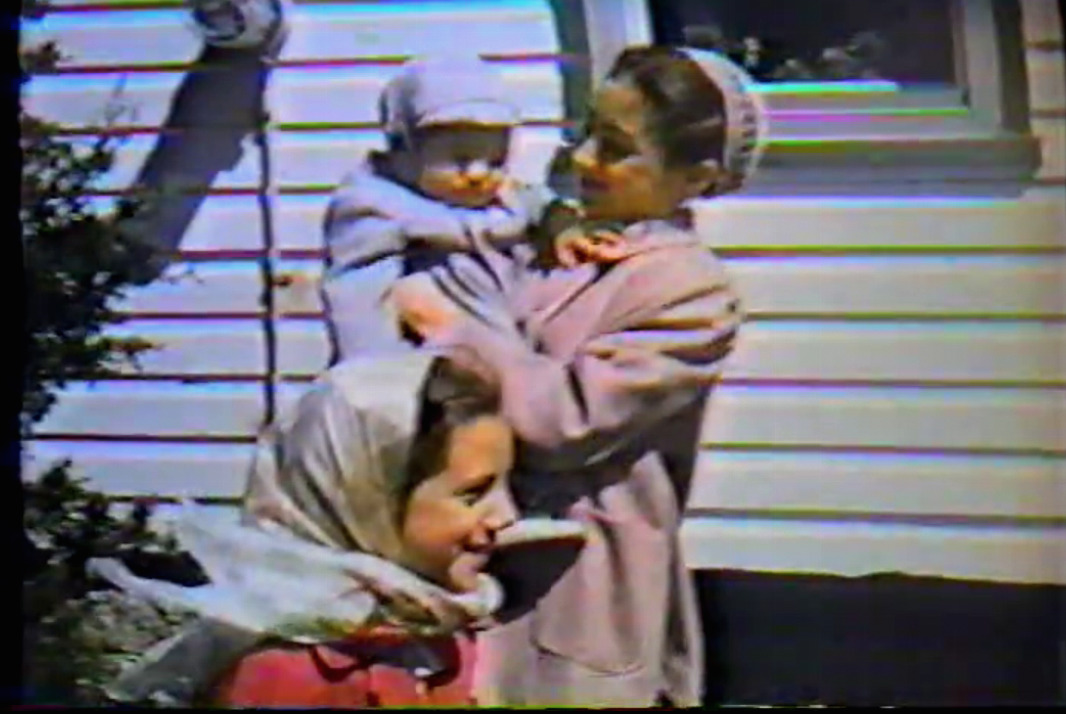
My brother Mark was my first baby. He was born when I was 12, and I soon became a mother to him. I even have a picture to prove it, a blurry movie still from one of Aunt Ruthie’s 16 millimeter camera shoots.

Holding brother Mark as my sister (age 7) Jean zooms on by
Holding brother Mark as my youngest sister Jean (age 7) happily zooms on by

I most certainly bottle fed him and changed his diapers. When he was a few months old, my sisters and I made up a little ditty often chanted repeatedly when we played with him:

De honey and de sweetie and de hon-ey boy

De hon, de hon, de hon-ey boy . . .

Practicing our Latin, we would refer to him as “Marcus -a -um” when he got a little older. Looking back, I wonder now how much the age difference and his being our longed-for brother played a role in such playfulness.

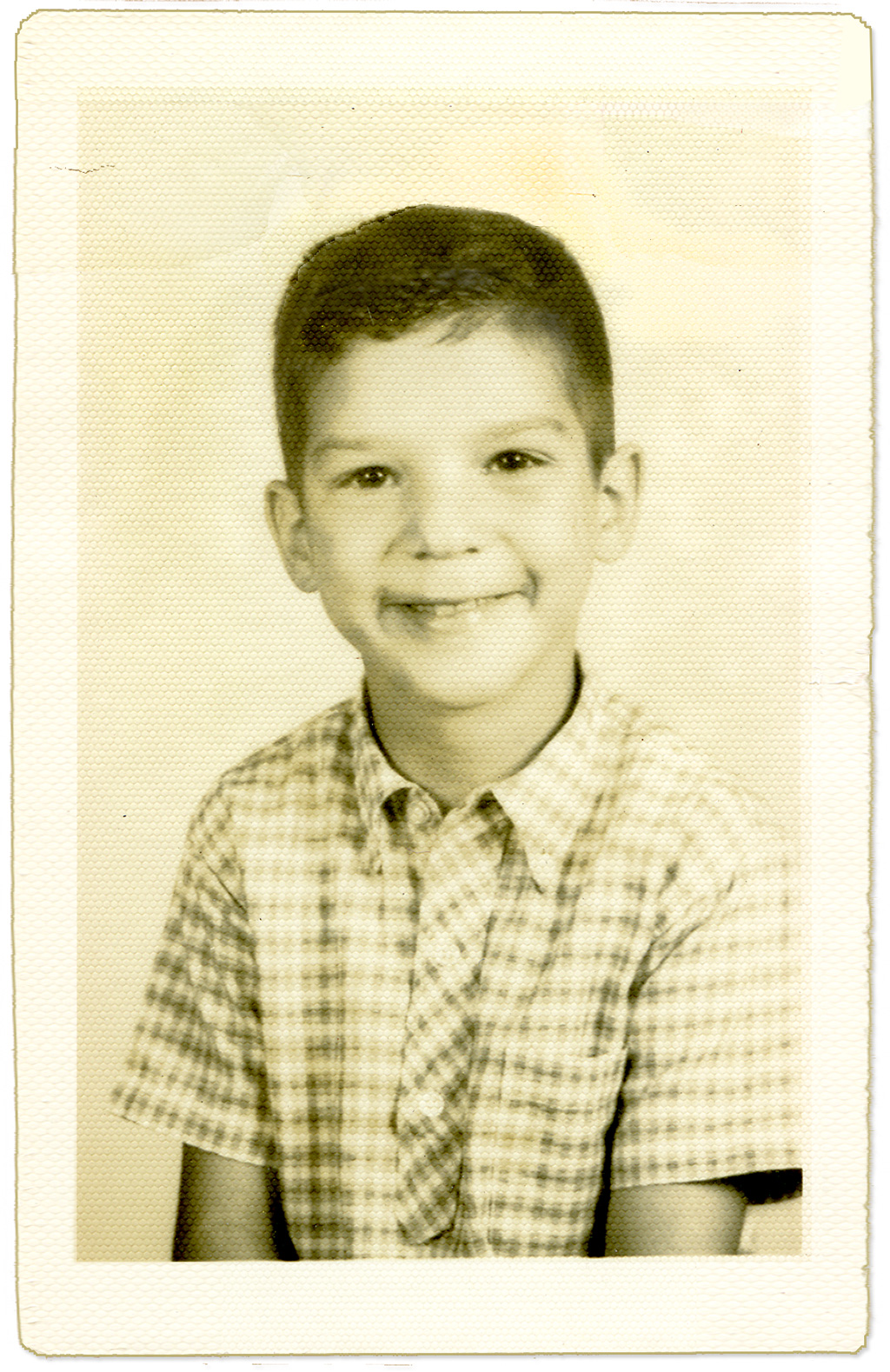
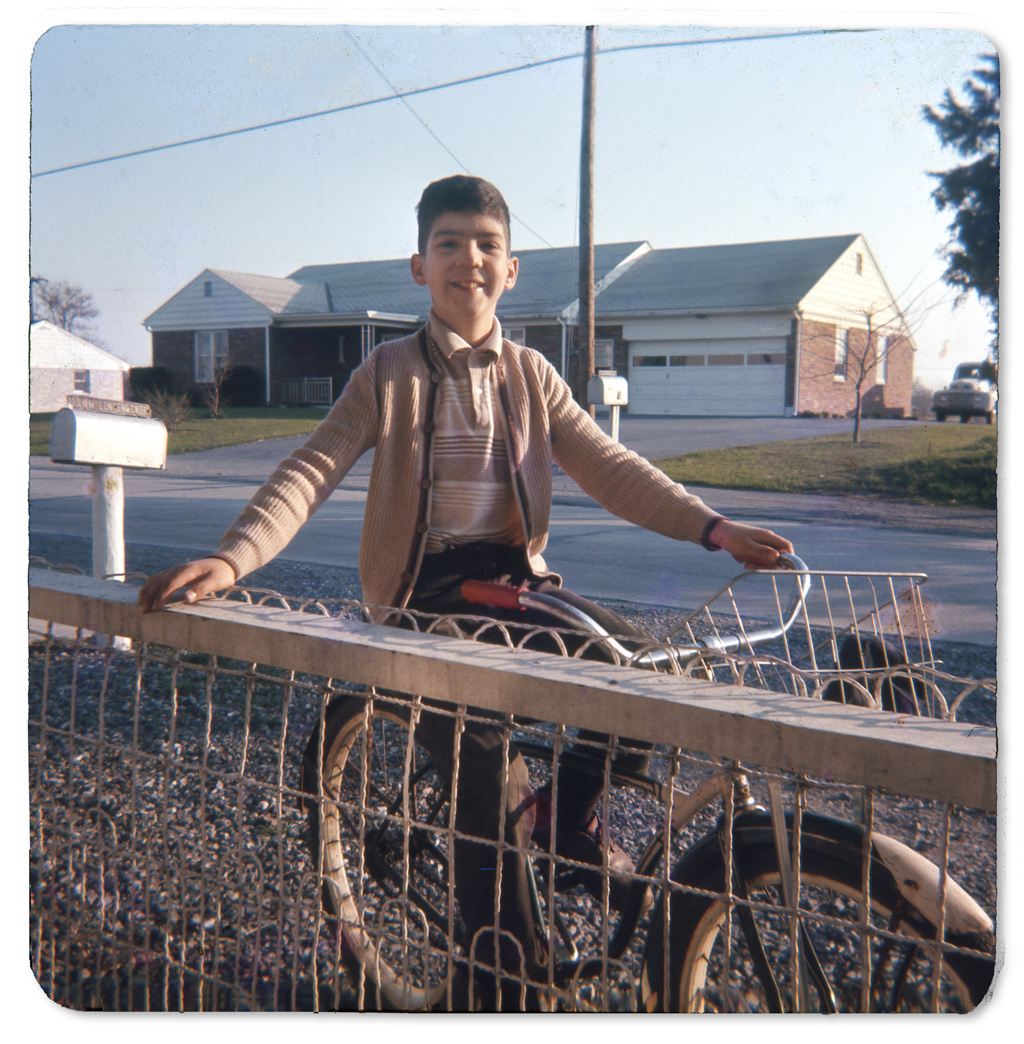
Mark passed through the usual boyhood stages, going to school at Rheems Elementary (here pictured at age 8) and learning to ride a bike.

Mark8yearsOld

MarkBikeFence

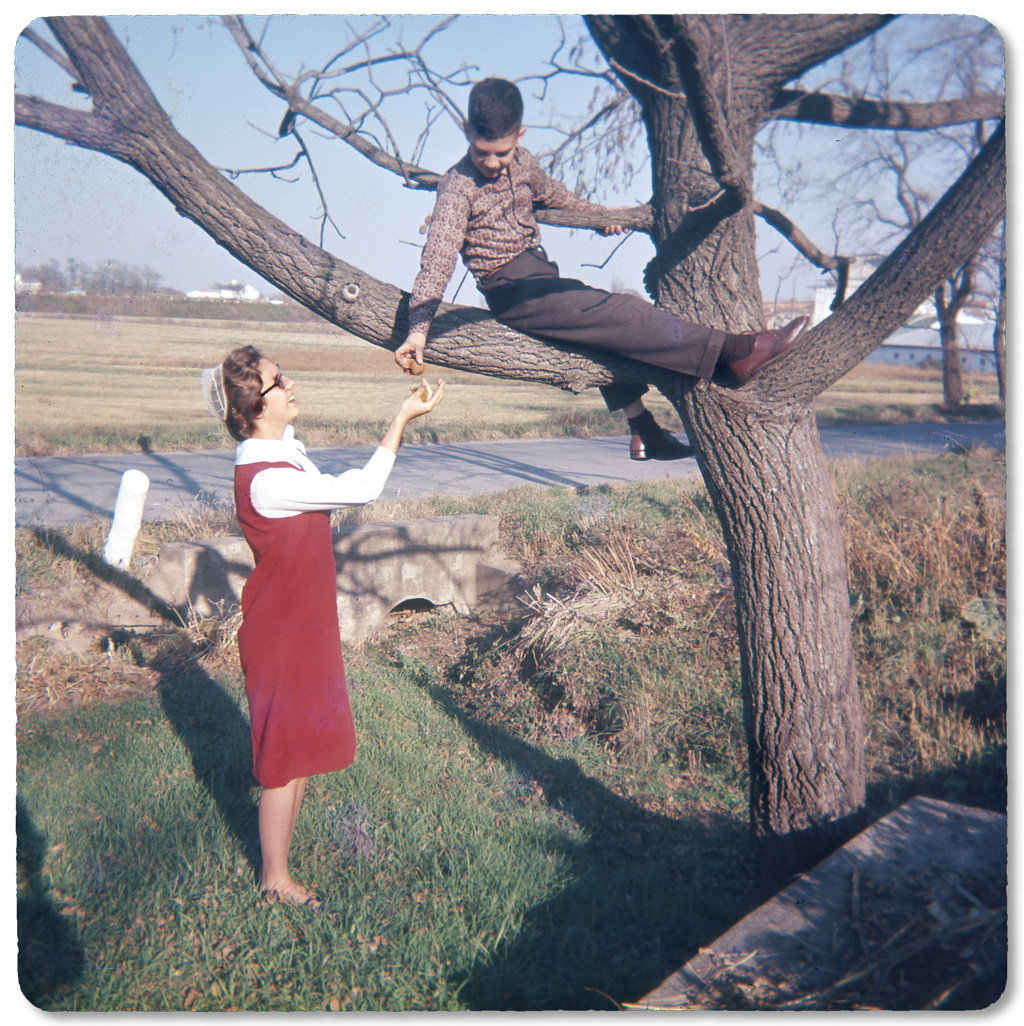
Like most boys this age, he climbed trees and played with his beloved dog, Skippy, butterscotch colored and 3-legged.

Mark handing walnuts to his sister Janice, 1964

MarkDogMailbox

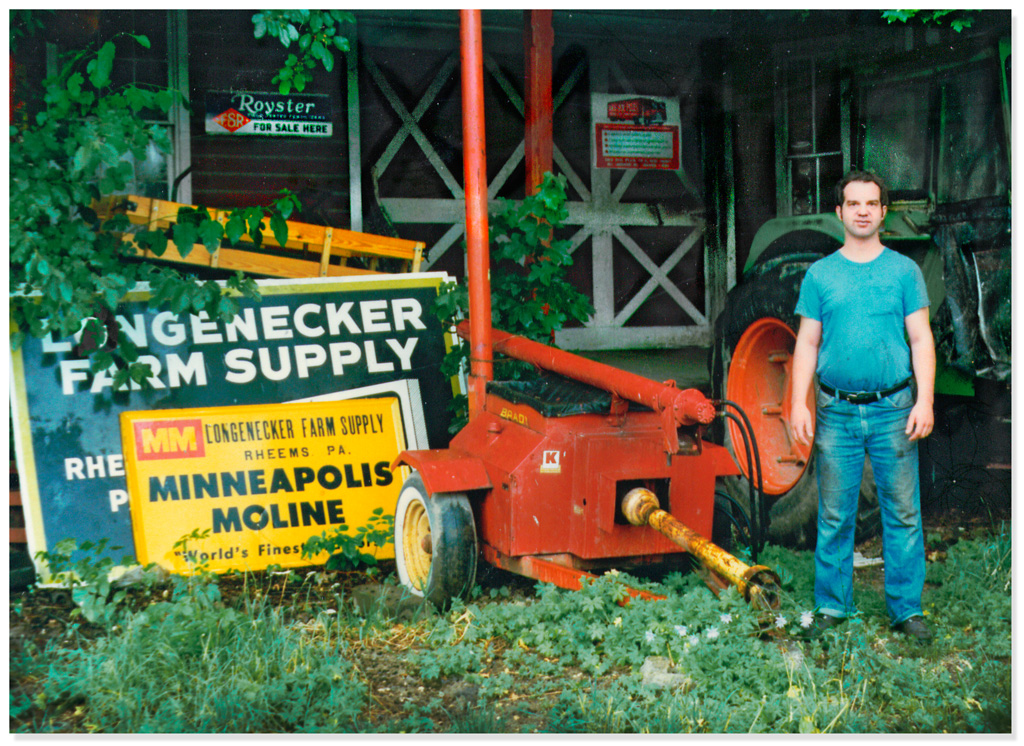
In the doggy photo, Mark is already wearing shop overalls and shop shoes ready for work at Longenecker Farm Supply, our family business in Rheems, Pennsylvania.

Eventually, his work at the shop translated into industrial arts credit at Elizabethtown High School, where he earned a certificate of attendance.

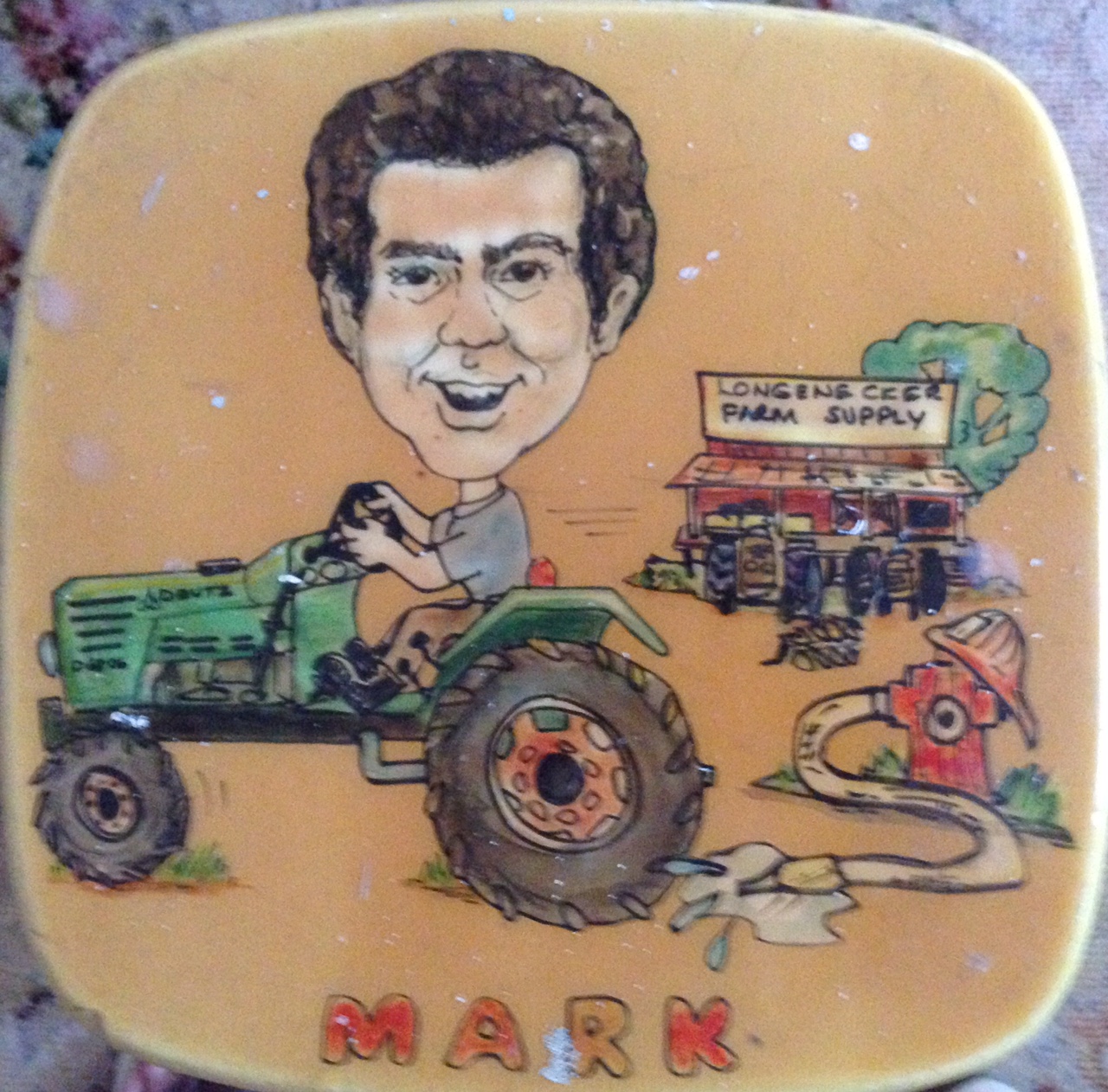
Here painted and sealed in polyurethane is a cartoon of Mark on a Deutz tractor which certified his skill at the wheel and gave a nod to his service with the Rheems Fire Department.

Stool art courtesy of Cliff-Toon Stools by Cliff Beaman, 1985
Stool art courtesy of Cliff-Toon Stools by Artist Cliff Beaman, 1985

Later, he worked at our dad’s shop full time, from where he was often sent out to fix machinery when farmers were stuck needing repairs in the field.

Mark in front of shop beside soybean extruder, 1984

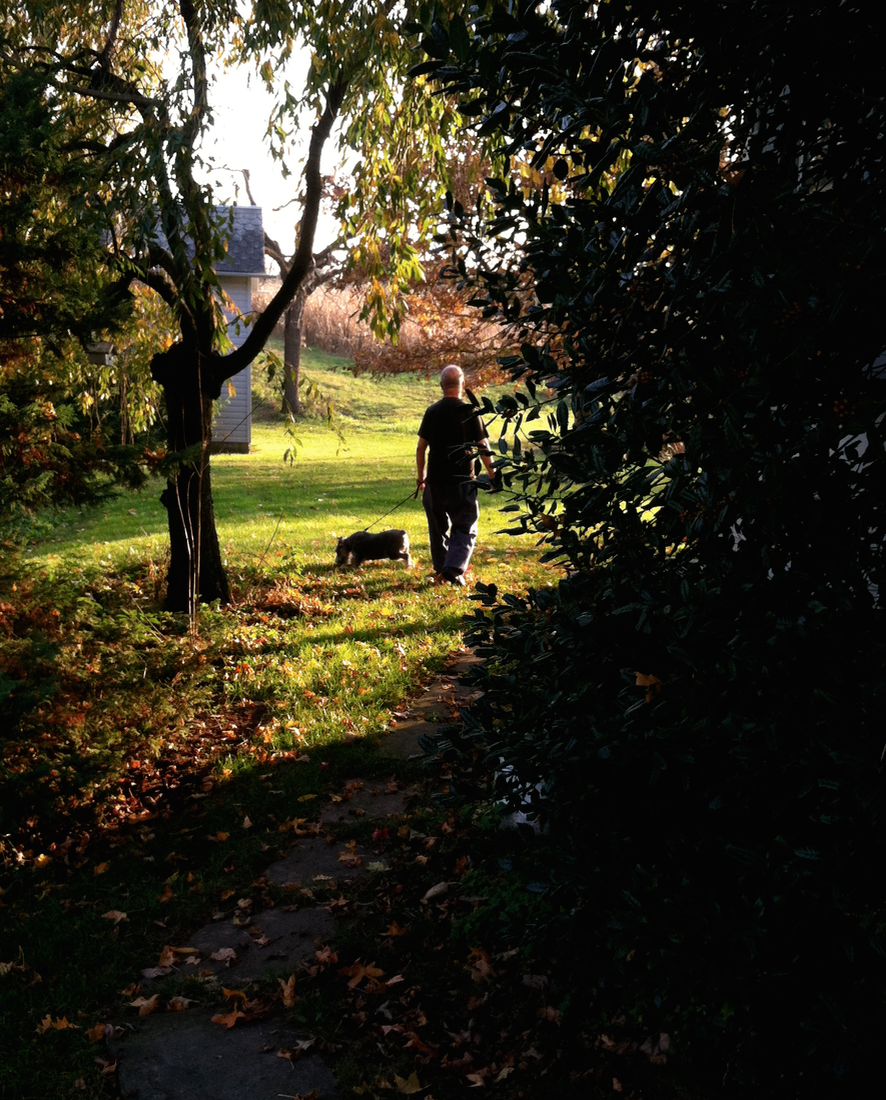
As family members aged, he kept the home-fires burning at the two houses on Anchor Road, first ministering to our Aunt Ruthie’s increasing needs as her memory loss progressed. Because of Mark’s care, Ruthie was able to stay in her own home at the bottom of the hill for four years longer than would have been feasible otherwise. He occasionally took her dog Fritzie IV for walks, a dog variously dubbed vicious, feisty or protective depending on whom you asked. Out of respect for Ruthie and her devotion to her Schnauzer, he took care of a dog he didn’t particularly like and certainly didn’t love.

MarkFritzieWoods

Simultaneously, he helped take our Mother Ruth to doctor and dentist appointments and often shopped for groceries, enabling our mother to stay in her own home at the top of the hill until she died last year at age 96.

When we realized we would be selling Mother’s house, Mark’s contacts from the shop along with his extended group of friends in the area enabled us to sell the property without a realtor’s assistance and accompanying fees.

Every Sunday now he takes Pearl Longenecker in her nineties to church at Bossler Mennonite Church.

Mark continues to live in Aunt Ruthie’s house with his daughter Shakeeta (Kiki) who moved in recently, caretakers of the Longenecker homestead we hold dear.

MarkKiKi

* * *

From my point of view, Mark does not suffer from the effects of striving, the bane of modern existence. It’s safe to say he has never slavishly checked off items on a to-do list or reached for the benchmarks of fame and fortune as many do. In other words, he hasn’t made a big splash in this world. But my brother Mark is a helper, living a quiet life that matters.

Stephen Post, Hidden Gifts of Helping

We eat because it keeps us alive, and we help others because it keeps us human.  (29)

And whosoever shall give to drink unto one of these little ones a cup of cold water . . . , verily I say unto you, he shall in no wise lose his reward.     Matthew 10:42   King James Version


Are there unsung heroes in your family or among your group of friends and acquaintances? Thank you for spicing up our conversation here with your story!

Coming next: Help! A Vintage Photo in Need of a Caption

Ian and Jenna’s A-Mazing Mystery Trip with Nana’s Twisty Turns

Dr. Seuss explores the maze of life in his famous book Oh, the Places You’ll Go! On the first page he assures readers:

You have brains in your head. You have feet in your shoes. You can steer yourself any direction you choose.

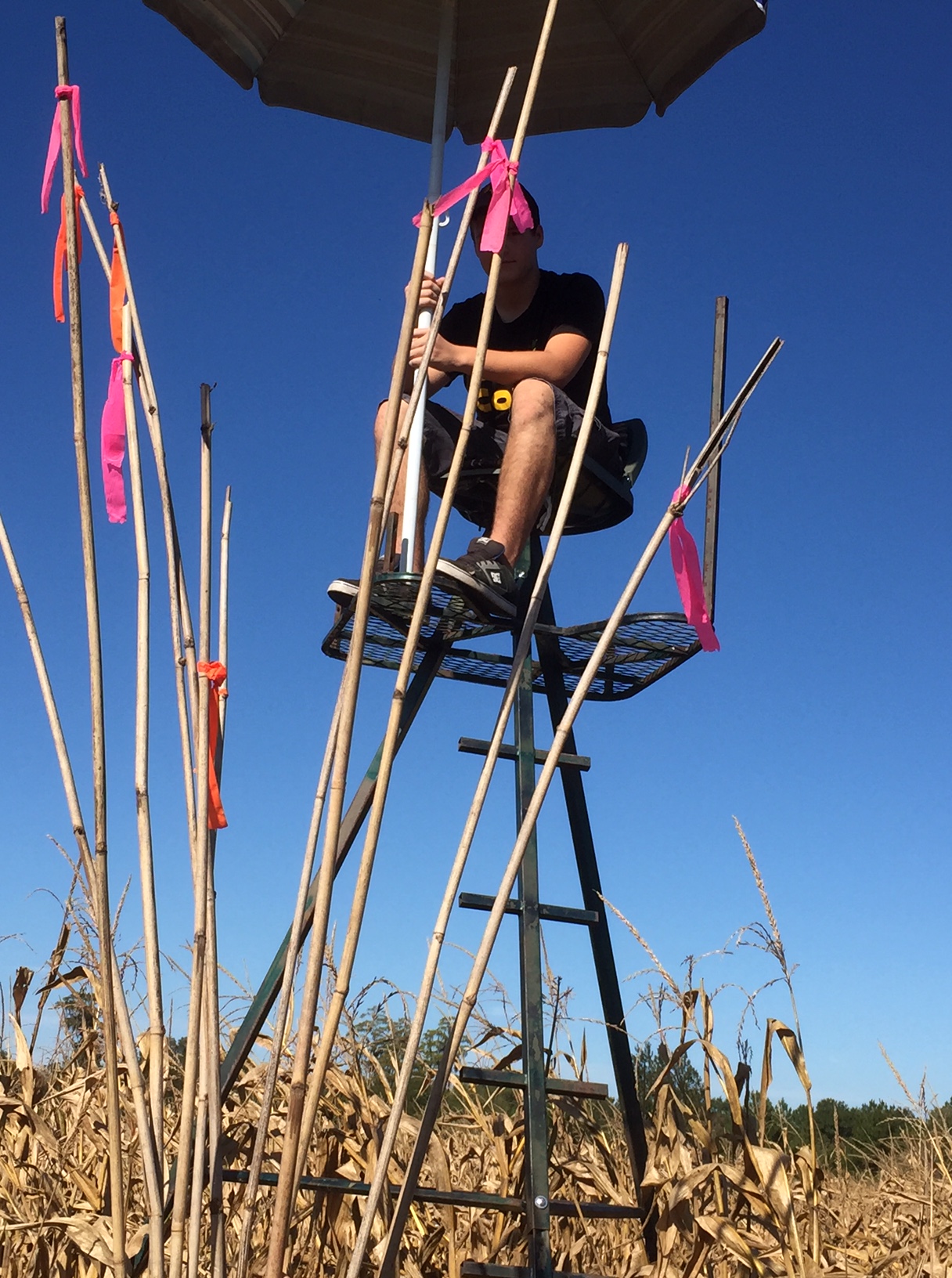
And that’s just what Jenna and Ian did when they visited Conner’s A-Maizing Acres this past October near Hilliard, Florida guiding their grand-parents from one station to the next. (Yes, they did learn “maize” is a type of corn.)

During the one-hour trip in the car, Ian read poems from The Random House Book of Poetry for Children to his cousin Jenna. He didn’t read from Dr. Seuss’ book, though whose wise words weave a web throughout this travelogue.

IanJennaBackseat

Then, a snapshot at the entrance . . .

JennaCutout

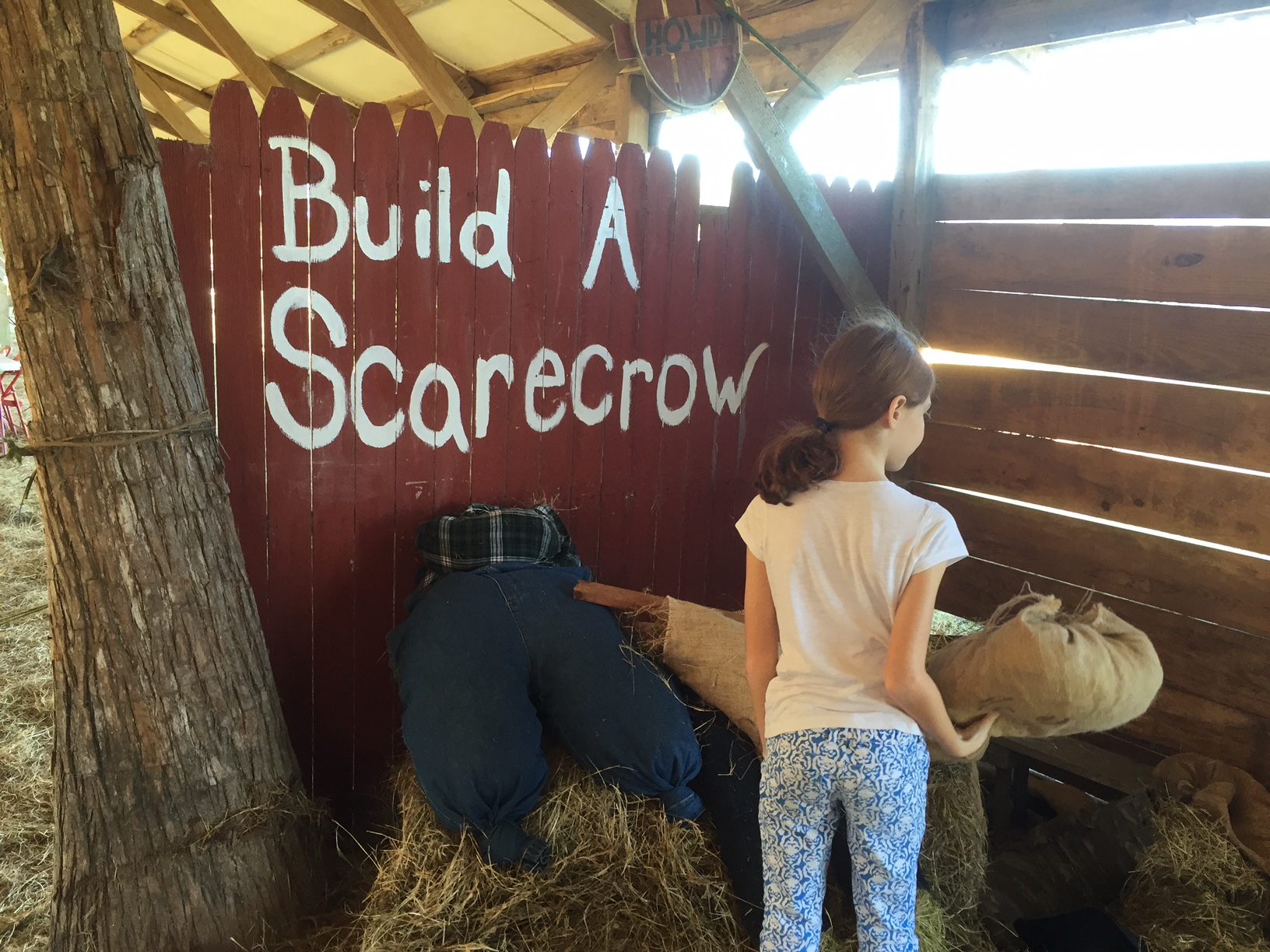
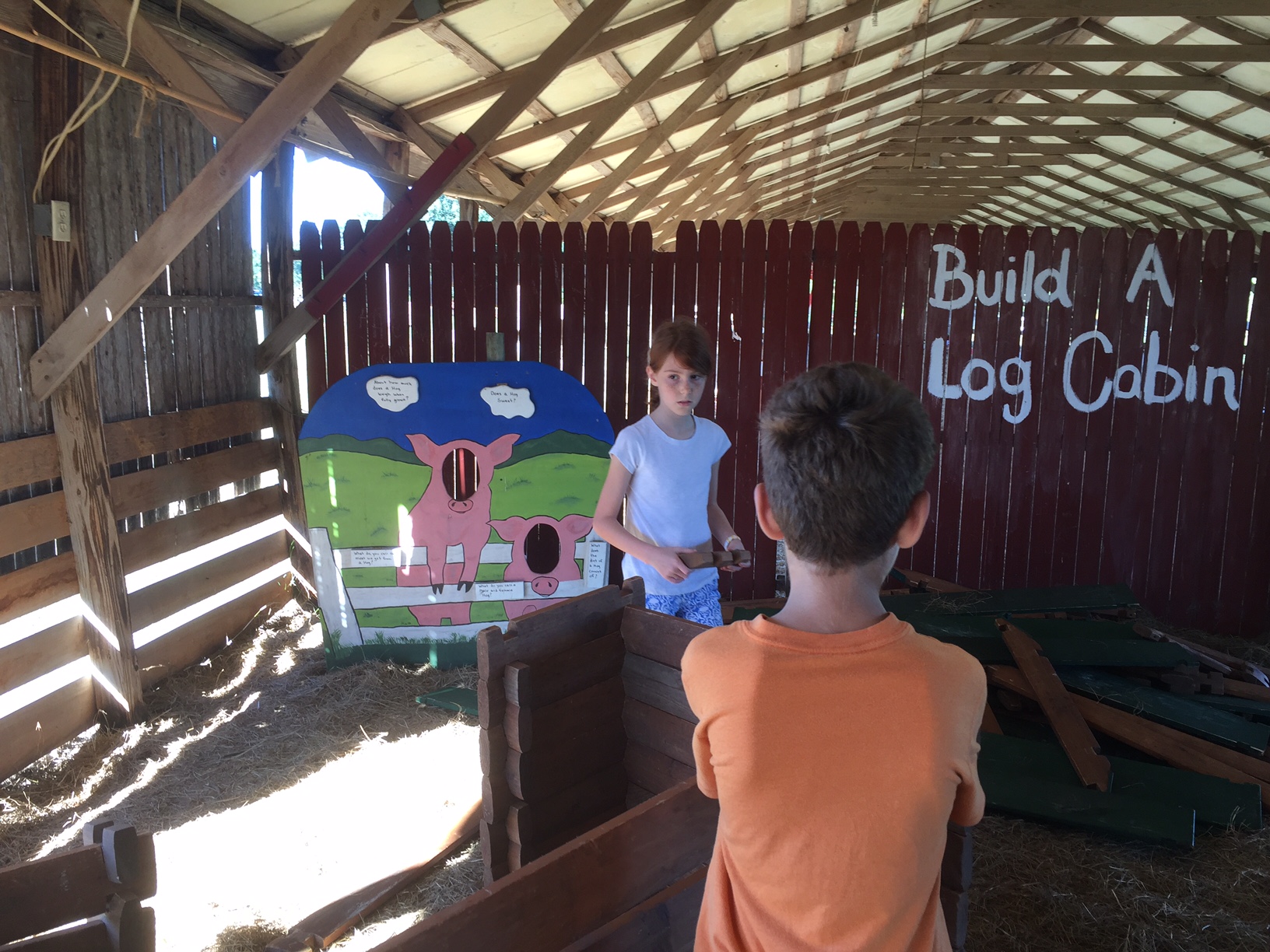
The Conner Barn offers much to keep little hands busy . . .

BuildScarecrowBuildLOGcabin

After a hayride to the field, we tackle the maze . . .

Hayride

There were Rules and a Life-Guard at the entrance to make sure we didn’t get hopelessly lost or ejected!

The staff were exceptionally friendly. We imagine the rules were a response to previous infractions.

LifeGuardMaze

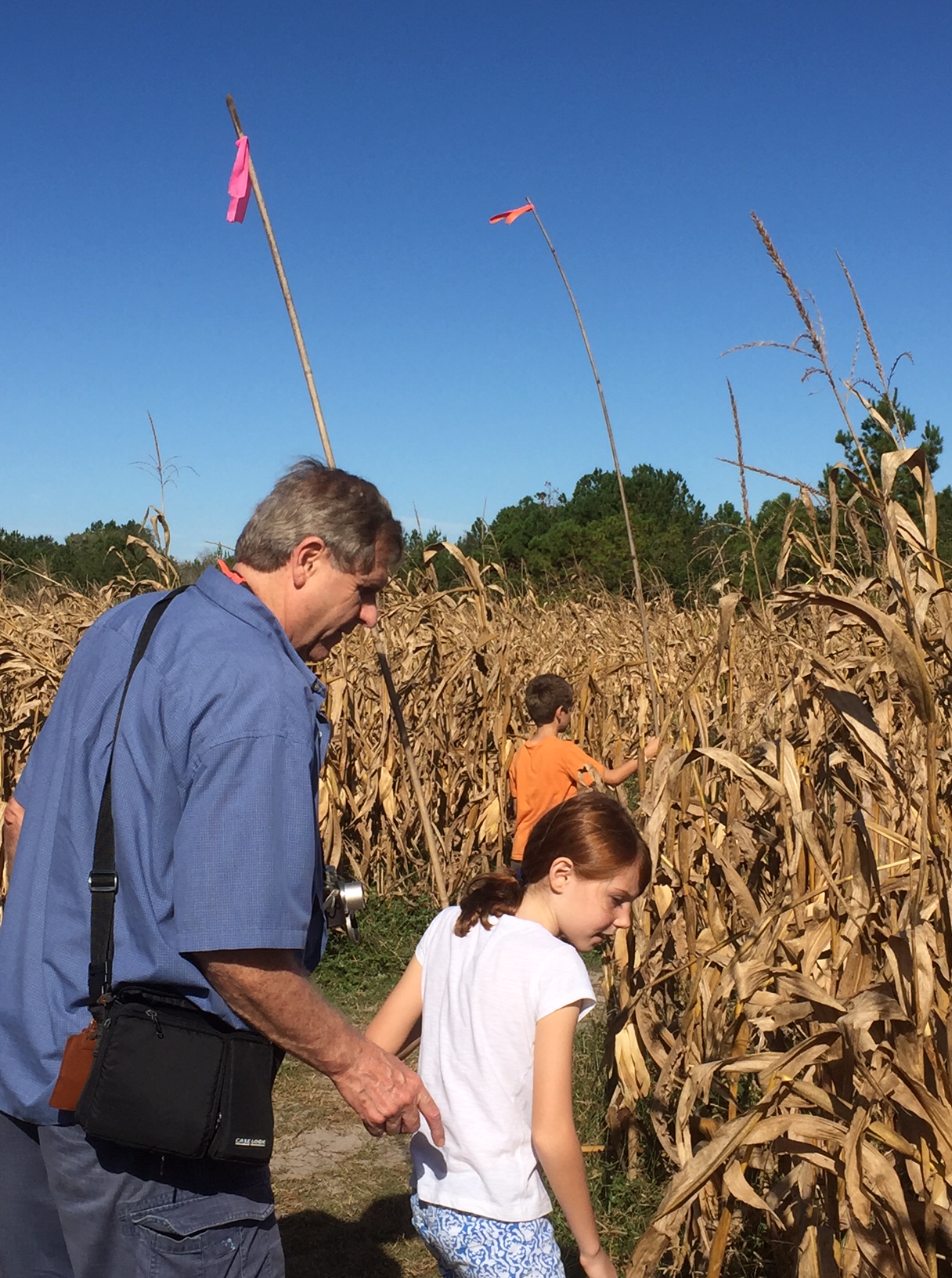
Jenna and Ian steered us away from blind alleys, saving us false steps and loss of sanity. No danger of losing our way with these two at the lead!

WalkingMaze

Like Dr. Seuss explains, it’s easy to take missteps and get lost.

You’ll get mixed up, of course, as you already know. You’ll get mixed up with many strange birds as you go. So be sure when you step. Step with care and great tact and remember that Life’s a Great Balancing Act. Just never forget to be dexterous and deft. And never mix up your right foot with your left.

But we had such good guides, not a chance this would happen to us fortunately!

Next, while Jenna and I shopped for pumpkins, Ian bounced around on the spider web . . .

IanWalkWeb

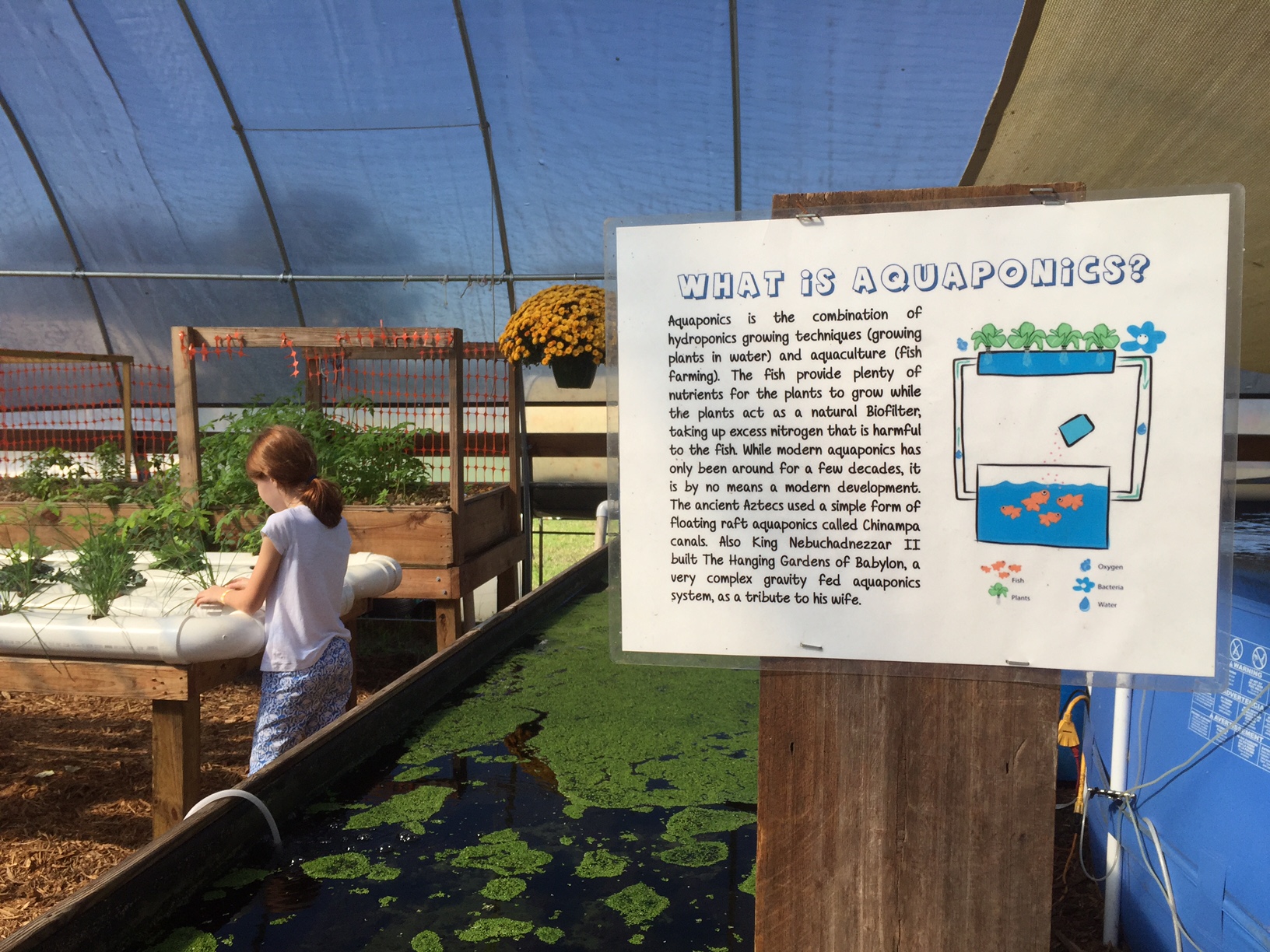
We also visited the Micro Farm with an aquaponic system:

WelcomeAquaFarm

AquaponicsJenna

Aquaponics: Growing plants in water and gravel, clay pebbles or lava rock.

We learned King Nebuchadnezzar built the Hanging Gardens of Babylon with an aquaponic system as a tribute to his wife.

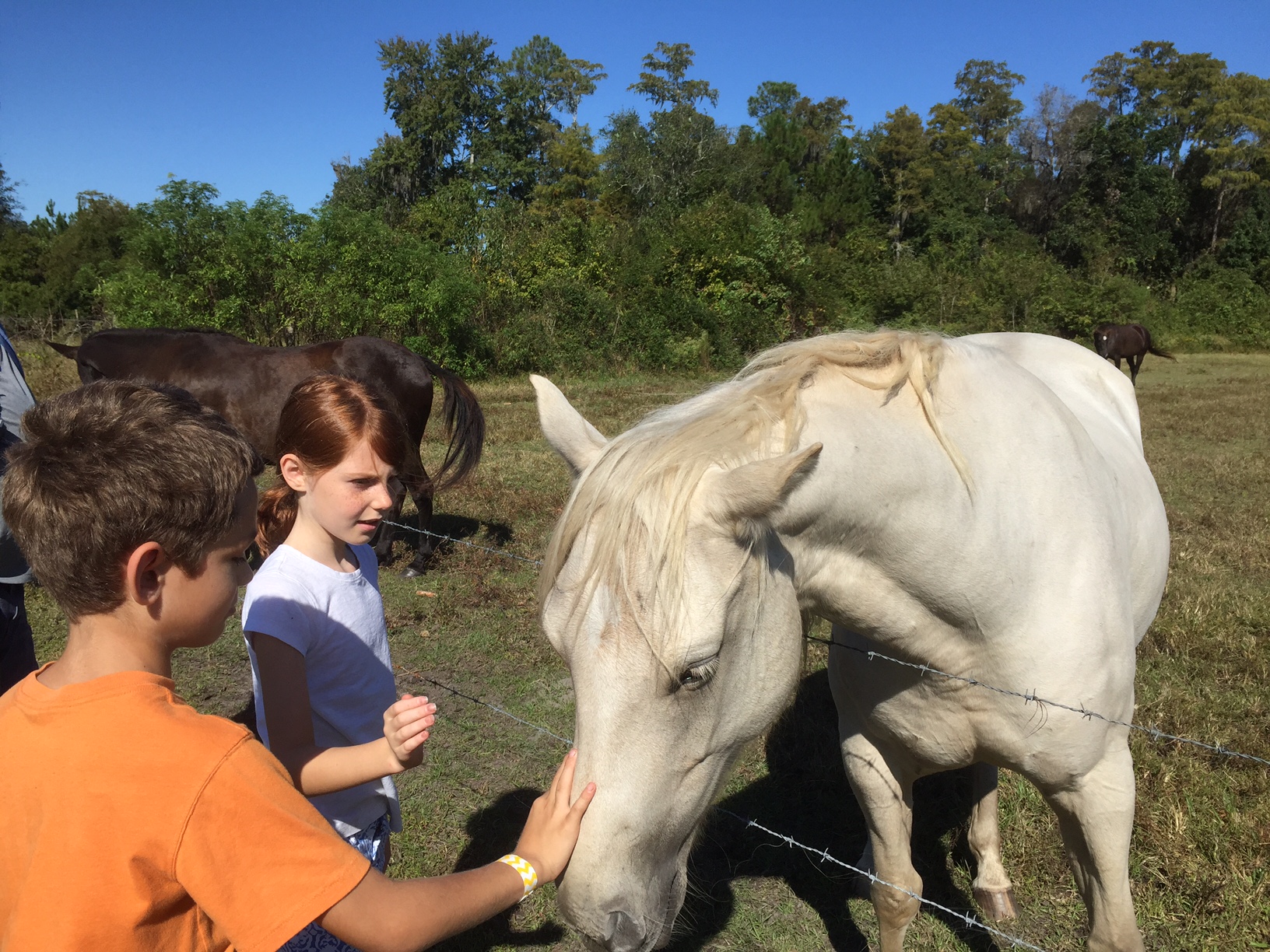
One of their favorite pauses: The horse farm . . .

WhiteHorse2Kids

Dr. Seuss continues . . . I’m sorry to say so / but, sadly, it’s true / that Bang-ups and Hang-ups / happen to you.

No, the Hang-up didn’t happen to either Jenna or Ian. It happened to their NaNa. The Cylinder-on-Rollers looked exciting and easy . . . until I got into one and right from the start, felt disoriented and dizzy and not very smart. Still, Jenna and I persisted through to the end – with less than wonderful results.

I’m physically fit and strong for my age (so I’m told),

but when I exited the roller I felt much less bold!

I had to wonder the truth of the Seuss line “You can steer yourself any direction you choose.” Yet, I suppose these closing lines below from Dr. Seuss still would apply to us. We made it to the end of the course, more or less . . .

And will you succeed?

Yes! You will, indeed!

(98 and ¾ percent guaranteed.)

Seuss’ shouts optimism and assurance on his last page:

Today is your day!

So . . . get on your way!


Have you done something lately to get out of your comfort zone, maybe even made a fool of yourself? Any memories of antics in times past?

Coming next: Quiet Lives Matter, My Brother Mark

Halloween Advice from my Good Witch of the North

MY STORY

Dorothy had the Good Witch of the North to give her “magical protection from fatal harm” on her journey to the land of Oz and back. Yet she followed an uneven path, using her brain, sometimes thinking with her heart, and slowly but surely developing courage.

I had my own Good Witch, Aunt Ruthie Longenecker from Pennsylvania, not Kansas. As a plain Mennonite, she never gave me glittering red shoes. I had to buy them on my own after I turned from plain to fancy. But she gave me plenty of golden advice, none more emotionally charged than the time she perceived I was veering off course at college and falling for a young man she imagined would be my downfall.

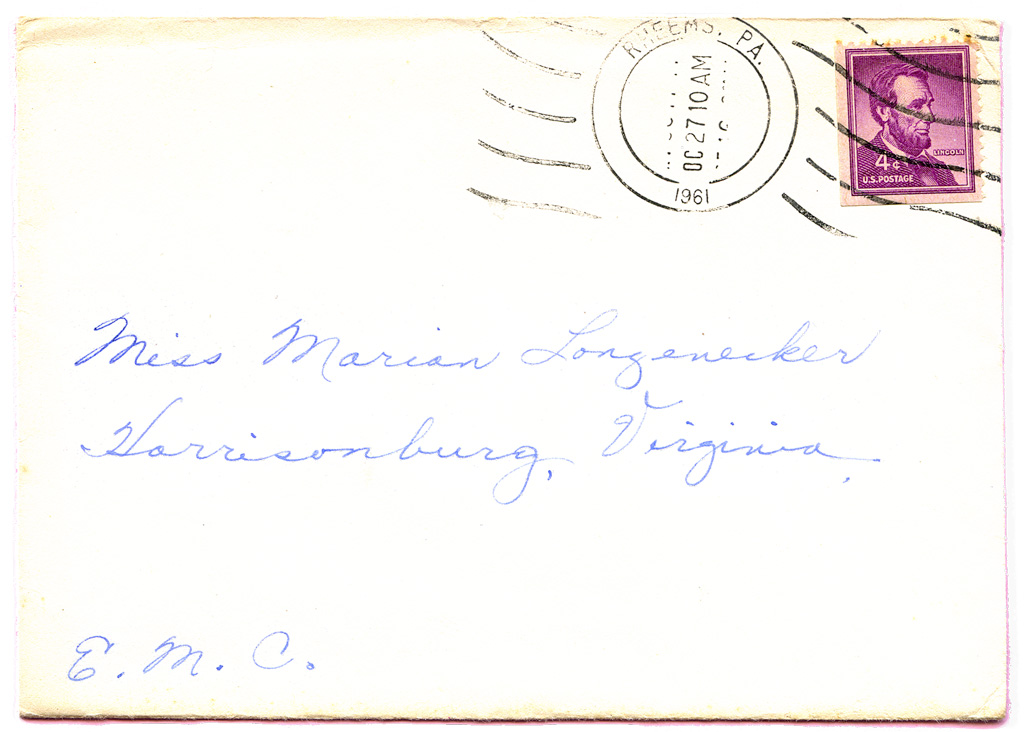
The advice arrived in a 4-cent envelope written in her flowing, left-handed cursive:

Envelope_note-to-Marian_layers

The Gibson greeting card is a cute pop-up.

HalloweenCardRuthie

Enclosed with the card was a terse note written on the back of a deposit slip from the First National Bank of Marietta, a curious choice of stationery. (You can read this note or the text below it in print.)

RuthieNoteMarianHalloween

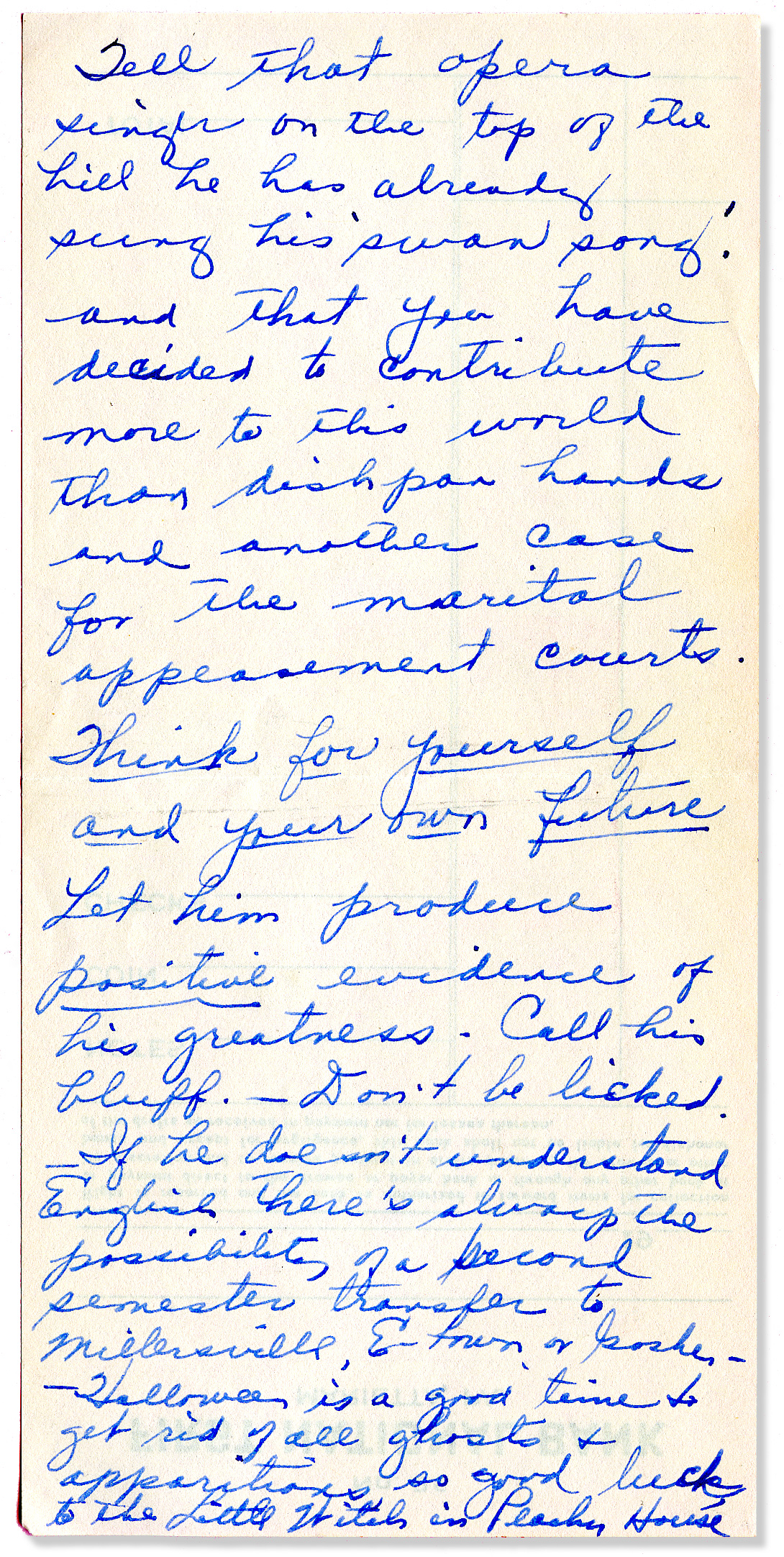
Here is her message in print form, directing me to forsake that boyfriend (aka “opera singer”) at the top of the hill:

Tell that opera singer on the top of the hill he has already sung his “swan song” and that you have decided to contribute more to this world than dishpan hands and another case for the marital appeasement courts. Think for yourself and your own future and let him produce positive evidence of his greatness. Call his bluff. – Don’t be licked. If he doesn’t understand English there’s always the possibility of a second semester transfer to Millersville, E-town or Goshen – Halloween is a good time to get rid of all ghosts and apparitions, so good luck to the Little Witch in Peachey House.


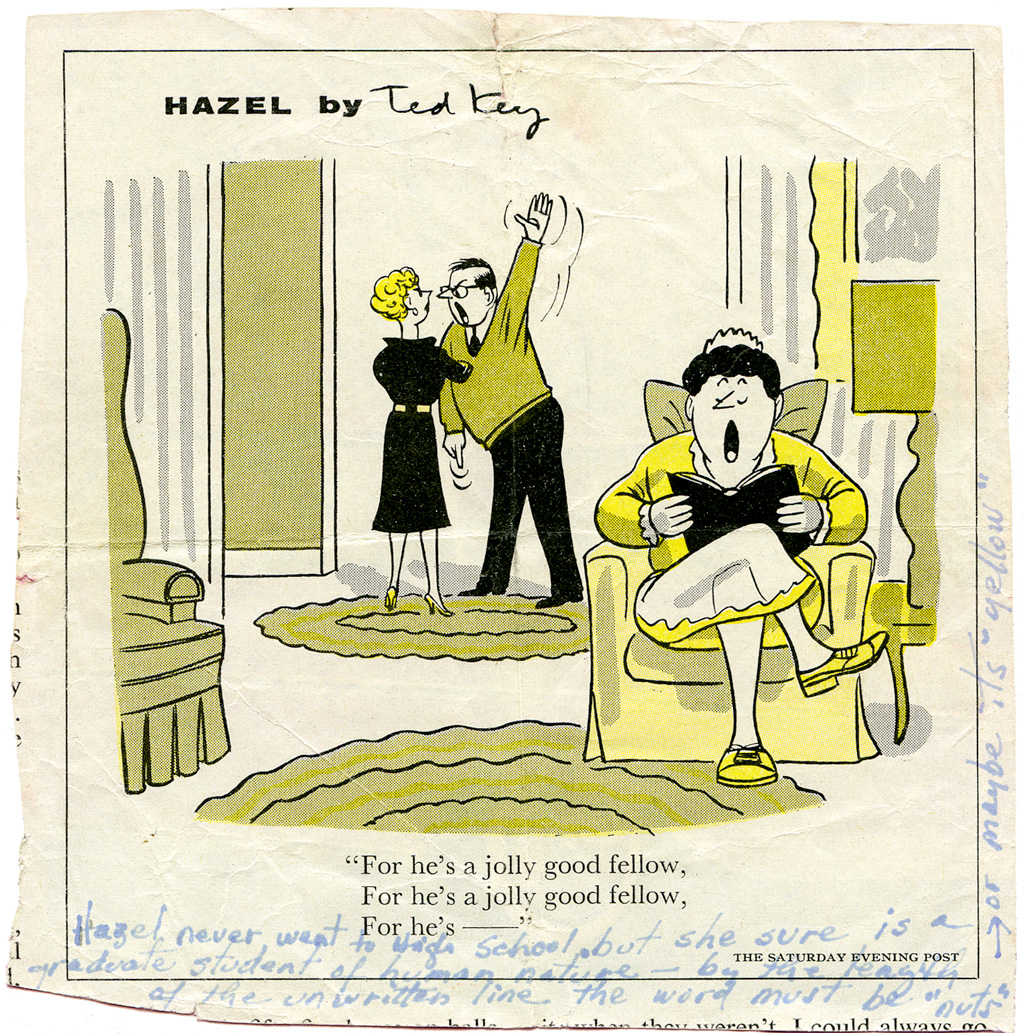
Added to this note was a “Hazel” cartoon clipping to reinforce her words:

Hazel-cartoon_Ruthies-note-to-Marian_layers

The ink jotting has become almost indecipherable over the years, but she notes:

Hazel never went to High School, but she sure is a graduate student of human nature – by the length of the unwritten line the word must be “nuts” – or maybe it’s “yellow.”

At the time (my sophomore year at Eastern Mennonite College), I was trying to keep my life on track academically despite romantic upsets and did not then realize the full force of Aunt Ruthie’s words or the depth of feeling behind then. Squinting back through the telescope of years as a much older adult, I do now.

MY REFLECTION:

In Aunt Ruthie’s day, women usually chose either the single life and a career or motherhood and maintaining a household. Hardly ever both.

I was beginning to see from the models emerging in the 1960s that one could answer the call of both vocations, professional and domestic. Choices did not have to be an either-or proposition, and they didn’t have to happen simultaneously either.


How about you?

Did you ever benefit from unsolicited advice?

What models of vocational choice made an impression on you growing up? How did these influence you?

Ray & Ruth: A Sparkling 40th Wedding Anniversary

True Love

This month would be the 75th wedding anniversary of my parents, Ray and Ruth Longenecker had they lived. True, they bickered from time to time, but I knew their love was deep and abiding. I rested in the assurance that they would never divorce. There were signs: Before Daddy left for work down at his shop after the noon meal, he often played a little game with Mom, chasing her around the house to get his hug and kiss, as she pretended wanting to escape him. Daddy dried dishes once a week, on a Sunday somewhat unusual for a culture with strict divisions of labor between husband and wife.

They celebrated their 25th anniversary with the attendants at their wedding, Howard and Pearl Longenecker, also married twenty-five years.

When their 40th came along, we had a big shindig in early November, a week after their actual anniversary date of October 26, 1940. My sister Jean sent out fancy invitations:

40thAnnivCardFront

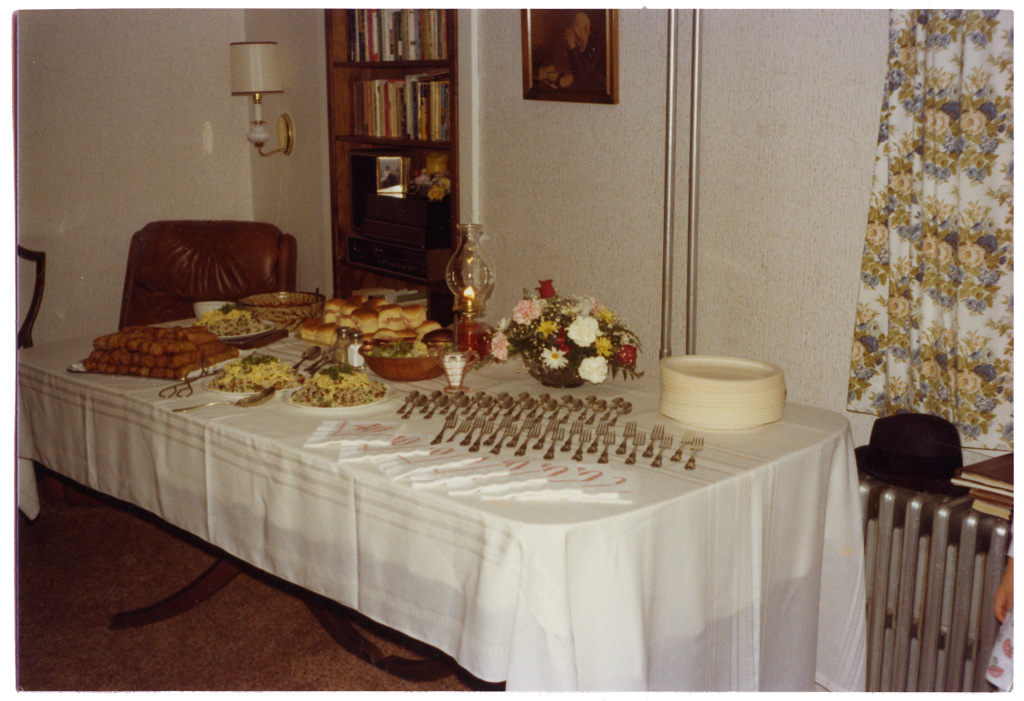
The table was set just so with the “tulip” design wedding silverware, a florist’s bouquet, and finger food with cake the grand finale.

40thAnnivTable

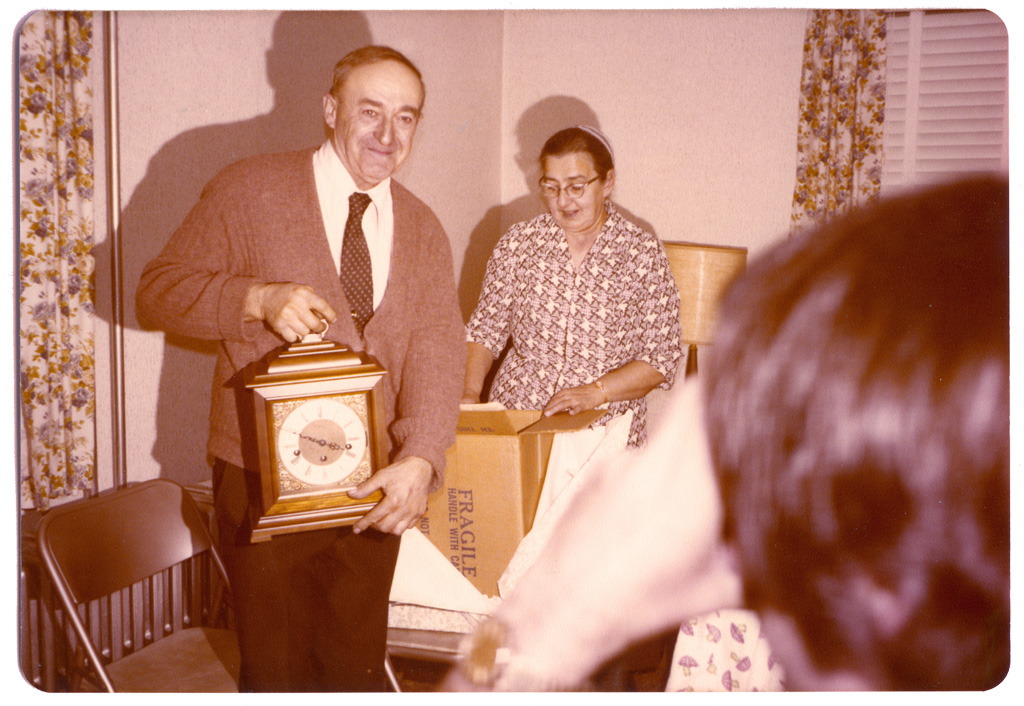
All four of us, my sisters and brother chipped in money to buy a chiming clock that sat for years on top of Mother’s buffet in the dining room, the ticking heart of the home. Our son Joel has inherited this clock.

40thAnnivClock

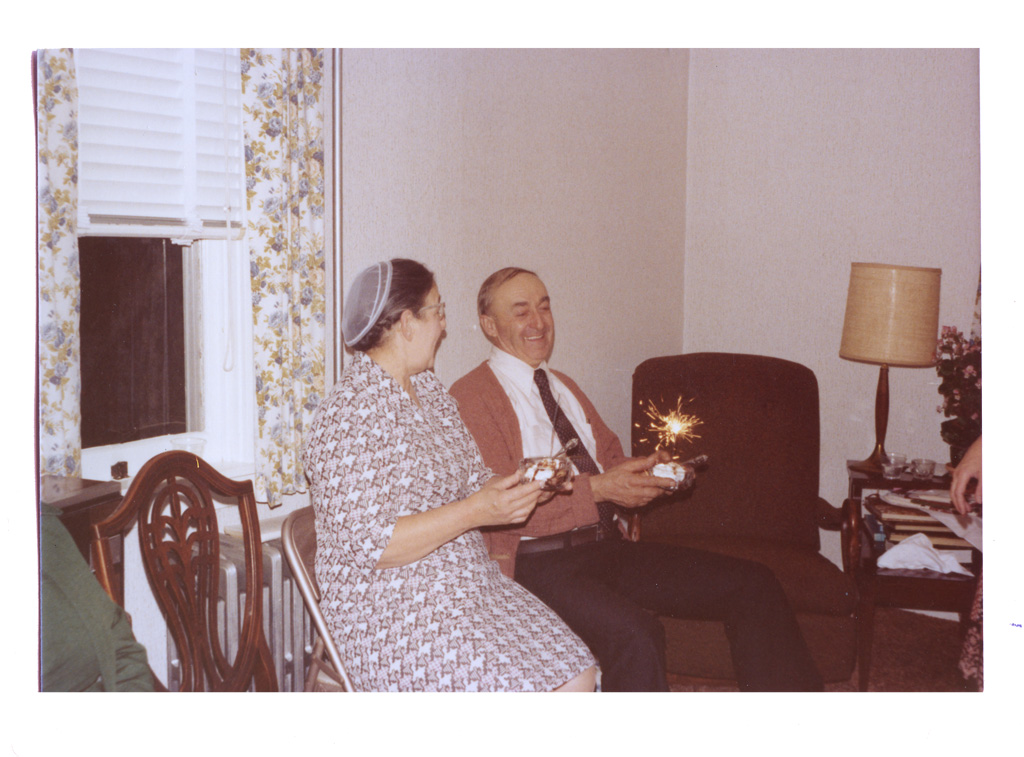
And there were sparklers – and smiling faces on this happy day when I heard Daddy say, “I could never have found a better wife!

40thAnnivCandle

How It All Began

October was a favored month for weddings, at least among Mennonite couples in the 1940s-1960s. Farmers had harvested their corn, wheat, and sweet potatoes. The sowing-hoeing-harvesting cycle was slowing down. The land was preparing to lie fallow for the winter. Thus, plain weddings were often celebrated amid the riotous colors of fall.

I was born in July — 9 months, almost to the day, from my parents’ honeymoon night the previous October. When I got older and could figure out such things, my mother simply said, “Nothing happened before we were married.” Because she said it, it must be true, I reasoned. In those days, abstinence was the professed norm for engaged couples, and a white dress almost certainly meant the bride was a virgin. A couple whose first child arrived too soon after the wedding date had to appear in front of the congregation and confess their sin of fornication before they could be restored to church fellowship. I saw it happen once.

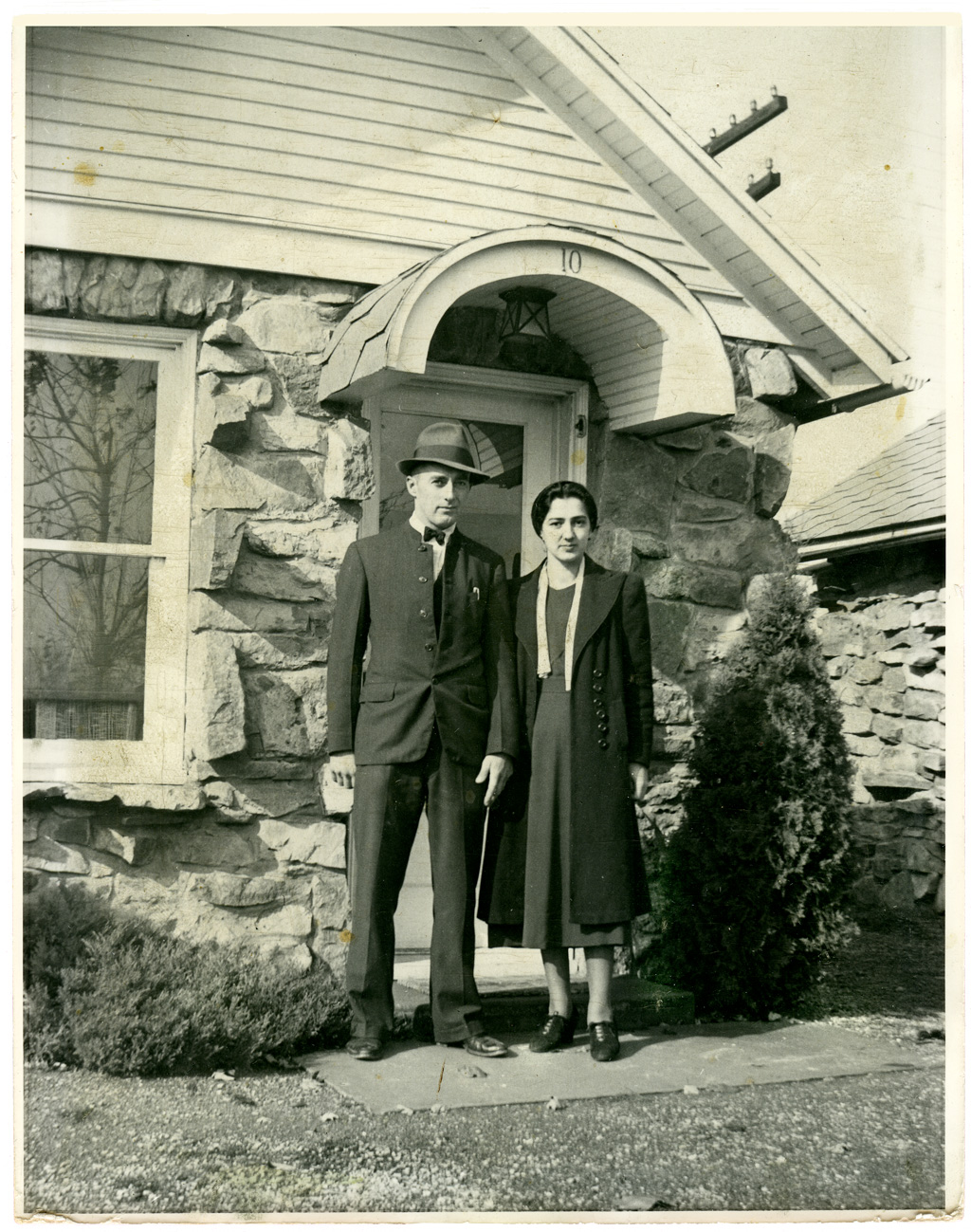
That was not the case for my parents, of course. I was born right on time, a honeymoon baby, possibly conceived right here within this idyllic, stone cottage.

HoneymoonNiagaraCottage

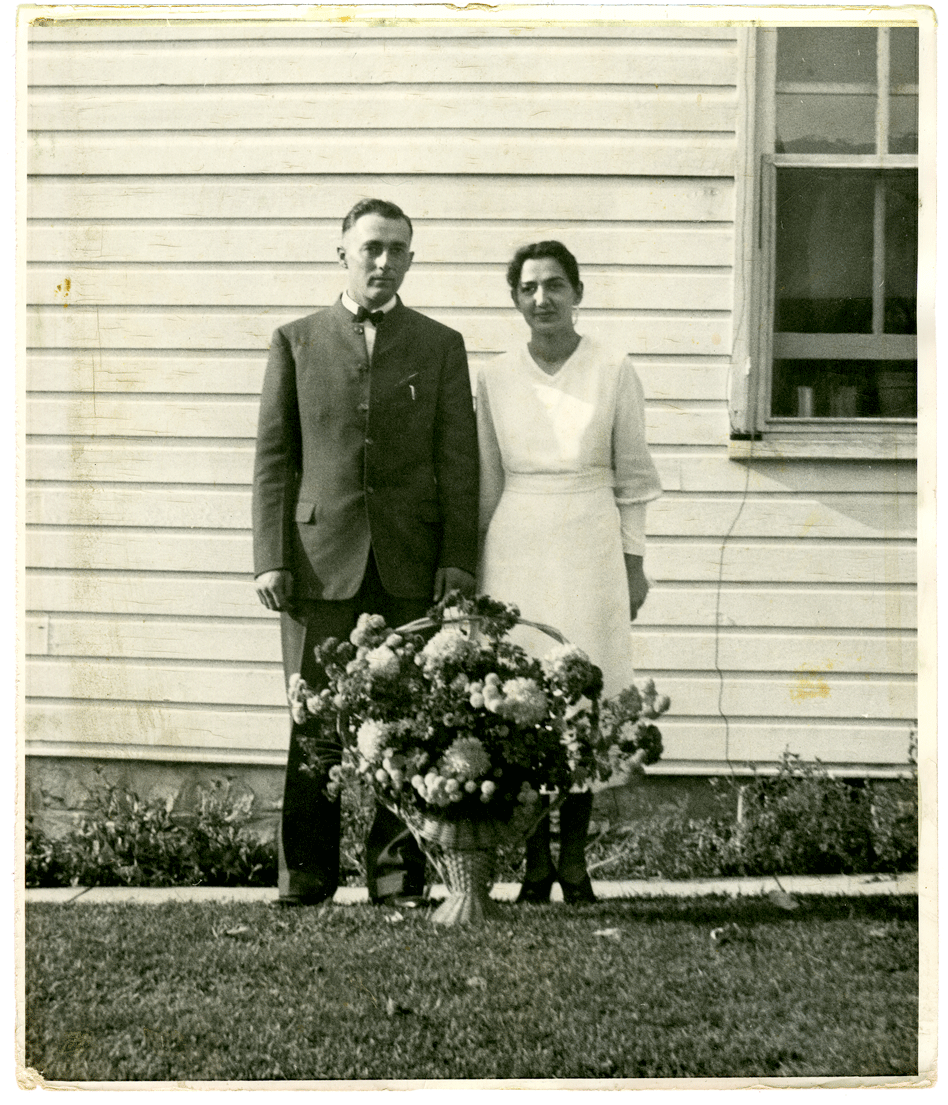
My parents were married by the bishop of Hernley’s Mennonite Church and then returned to the bride’s home on Charlotte Street in Manheim, Pennsylvania where these pictures were taken. My father was wearing a plain, Mennonite “frock” coat with bow-tie paired with a natty fedora hat on his honeymoon. My mother too sneaked in some fancy touches on her dress. Another, of course, a large, fancy bouquet on the lawn.

WeddingMomDadFlowers

And though Mother wore covering strings attached to her prayer veiling and her dress was plain with no collar or lace, tiny buttons covered in white crépe traced a vertical line on the snug cuff of her sleeves. They don’t show on the photograph, but as a child I remember seeing them all in a row, sewn on her dress then draped on a hanger and pushed to the back of her clothes closet. Were there five? Seven? I don’t know or remember, but in my mind’s eye I can see them attached there. And I thought they looked pretty!

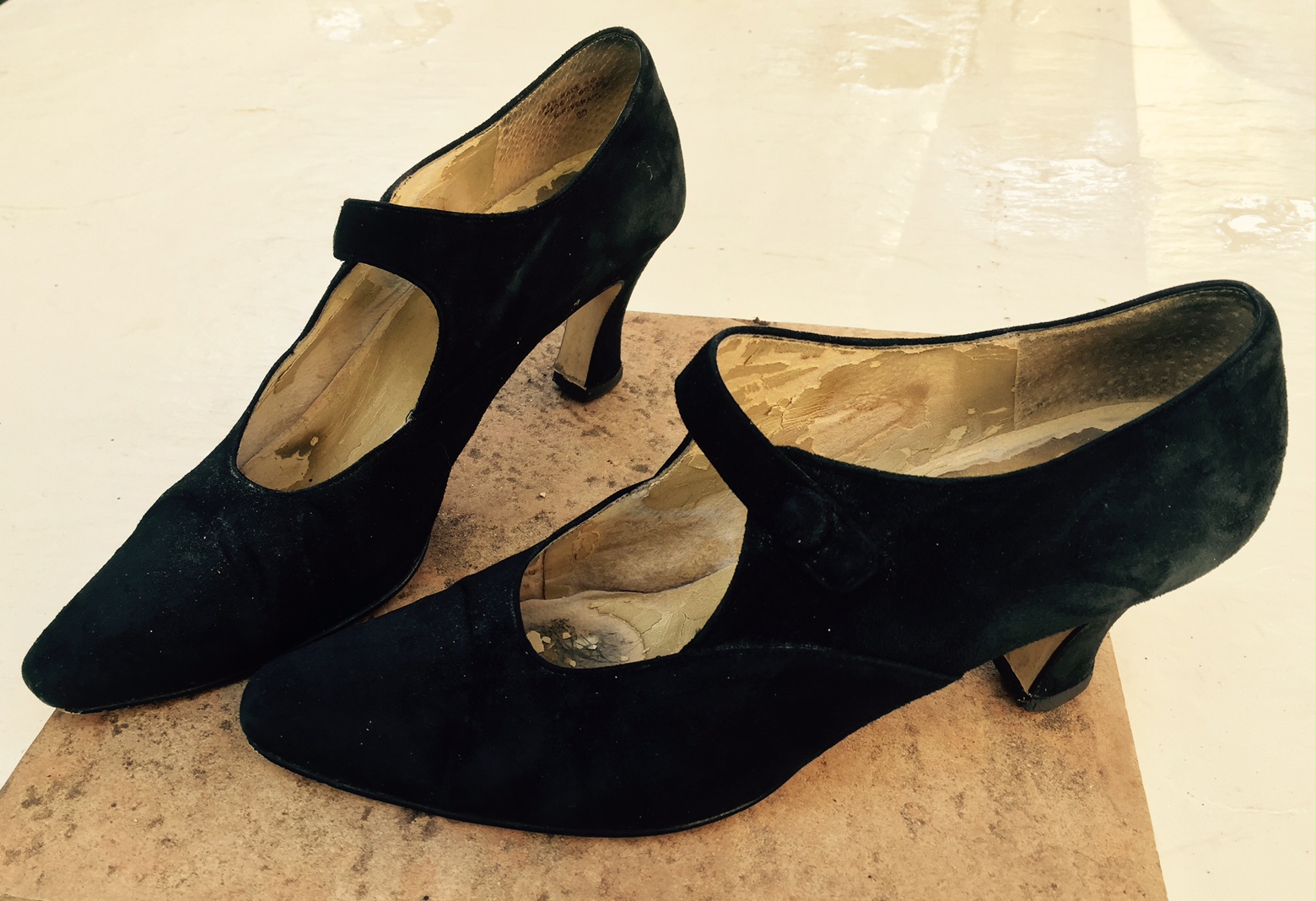
I liked her wedding shoes too, black suede with a vamp that reached almost to her ankle, very modish, I thought. When I saw Nine West with a similar vintage shoe and a button on the strap, I knew they had to be mine.

ShoesVintage9West

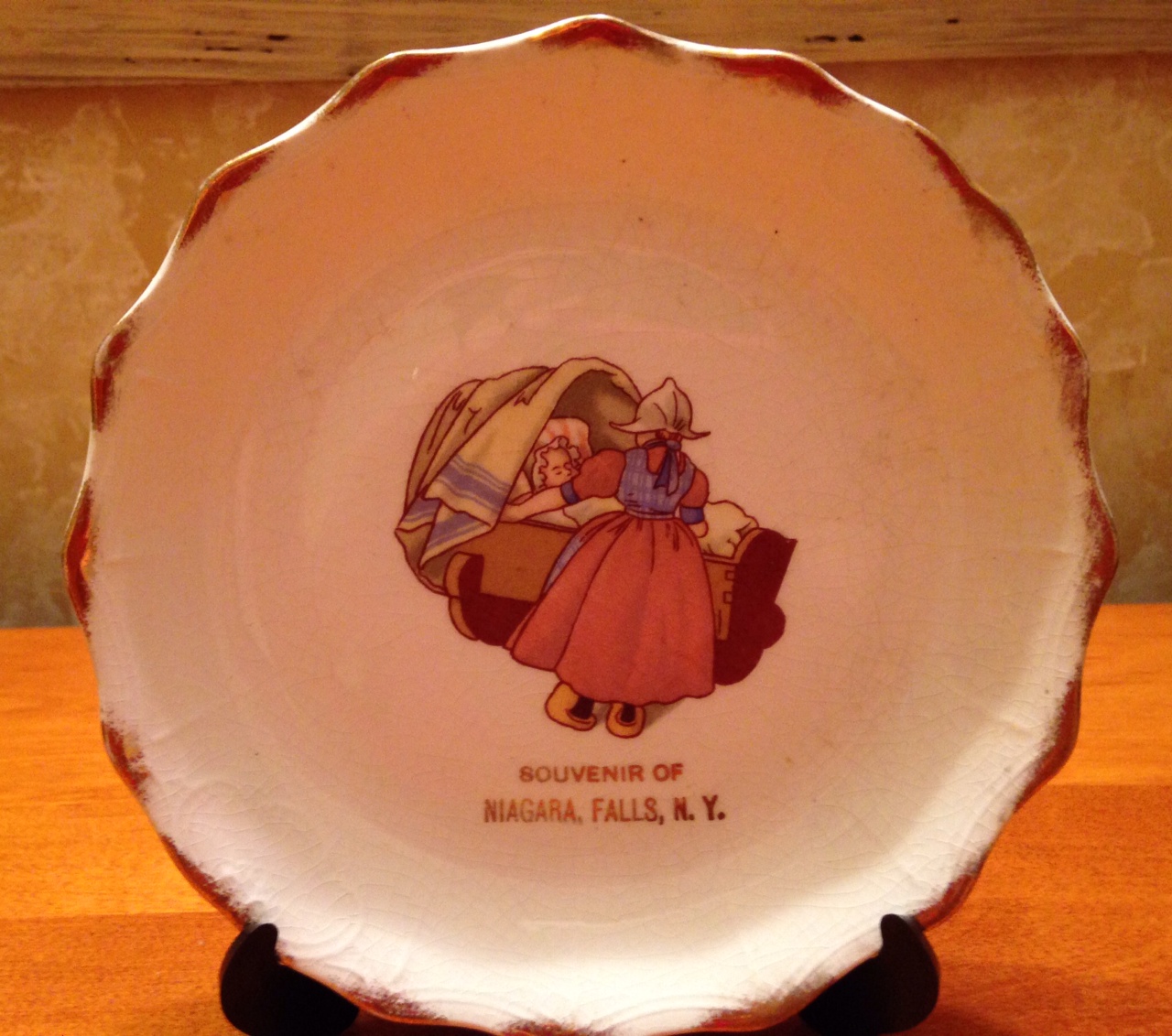
When we cleared out Mother’s house after her death, we discovered a saucer I had never seen before with a charming pink & blue imprint, a prophecy of things to come. They would have a baby, a girl, in fact three daughters and then a son.

NIagaraFallsSaucerNiagaraFallsSaucerDetail

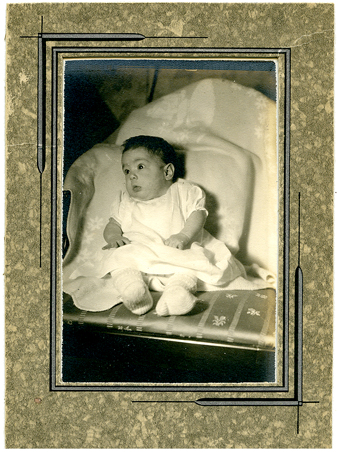
Marian_as baby_5x5_72 19-05-17

Sparkling or not, what anniversaries (or other milestones) can you recall?

Coming next: Halloween Advice from My Good Witch of the North, Aunt Ruthie

Grace Notes: Mary Grace Martin & her Pump Organ

Great Aunt Mary Grace would turn 117 this week on October 14 if she were still alive. When I was young, the Longenecker family visited Mary Grace Martin at her cottage at Mt. Gretna, PA. What I remember most about her appearance was her pleasant aura and a gap-toothed smile. To my childish eyes, her teeth looked like widely spaced ivory pegs.

MaryGraceFace

Mary Grace Martin, the only child of a Church of the Brethren pastor, A. L. B. Martin, and my Great-Grandpa Sam Martin’s niece, traveled with her parents all around the country from Long Beach, California to Philadelphia, Pennsylvania and Baltimore, Maryland moving from one pastorate to another.

MaryGraceArticle

At a time when few women led a professional life and fewer still held advanced degrees, Mary Grace was in the vanguard:

  • A graduate of Goucher College (1921), she taught high school boys, who “thought they knew more than their teacher.” The stint lasted just one year.
  • Mary Grace returned to Goucher College and taught physics to college students – pay $ 75.00/month.
  • Then she earned a master of arts in education degree from Boston University in 1928. A master’s of religious education followed in 1935 from Hartford Seminary Foundation with postgraduate work at Johns Hopkins University.
  • Later she became national children’s editor for the Church of the Brethren in Elgin, Illinois.
  • And finally she wrote two books: “Teaching Primary Children” In 1937 and an inter-denominational guide “We Worship Together” in 1948.

Mary Grace vividly remembers the sinking of the Titanic in 1912 and the end of World War I in 1918. In the Lancaster Intelligencer Journal article, she mentioned that her dad taught her to drive, but chuckled as she remarked she’d rather have a chauffeur. She also preferred cruise ships to air travel.

Years ago, when our family visited Mary Grace in Mt. Gretna, PA, I loved tramping around the fairyland–like ferns and mosses leading up to the steps of her cottage in the dell. Inside, amid plain plank floors and piney furnishings was a gorgeous pump organ that enjoyed pride of place in her tiny living room. That old instrument was the first thing I looked for when I stepped through the screen door. It was an ornate wooden instrument that looked much like this:

Image courtesy of Pump Organ Restorations

From top to bottom, her wheezy pump organ required energy to operate. As I slid onto the swirly seat, I would put my feet on the two pedals each carpeted with a faded, fraying floral design, my knees touching wooden paddles that would make the volume swell or fade, and finally my fingers pulling out or pushing in stops to adjust the tone. It was thrilling to experiment with more than a dozen timbres engraved in Old English Script on the ceramic tags identifying each wooden stop: “Vox Humana,” “Bass Koppler” and “Celeste” which to me sounded like a pretty girl’s name. My favorite pull stop was the fancy word “Diapason” which emitted a majestic, thunderous roll as my knees fanned out to amplify a few bars of “Here Comes the Bride.”

Here two young men enjoy the charms of a vintage pump organ:


“I didn’t expect to live into my 90s, “ Miss Martin said. “Mom lived to be 93 1/2 , but I didn’t think I would repeat that. But God planned otherwise. I’ve had a rich life with travels and many friends. I don’t know what I’d do without them.”


Mary Grace Martin lived a full life enriched with books, music, and friends. I remember her gentle spirit. Of course, through the years her example has been reflected in my own life, though I certainly didn’t recognize this until now.


Your story fits here: memories of a special relative, maybe an old pump organ, something else this post has sparked in your memory.


Coming next: A Sparkling 40th Wedding Anniversary