Louisa Adams’ Moving Adventure

Remember the Beverly Hillbillies? The Clampetts strike oil in the Ozarks and move to Beverly Hills in a rags-to-riches sitcom of the 1960s.

Beverly Hillbillies Moving Van, courtesy Google Images


Of an entirely different era and social class, diarist Louisa Catherine Adams, wife of the 6th American President, John Quincy Adams, writes about multiple moves – both in European nations where John Quincy was diplomat and in the United States serving variously as senator, secretary of state, president, and finally congressman again.
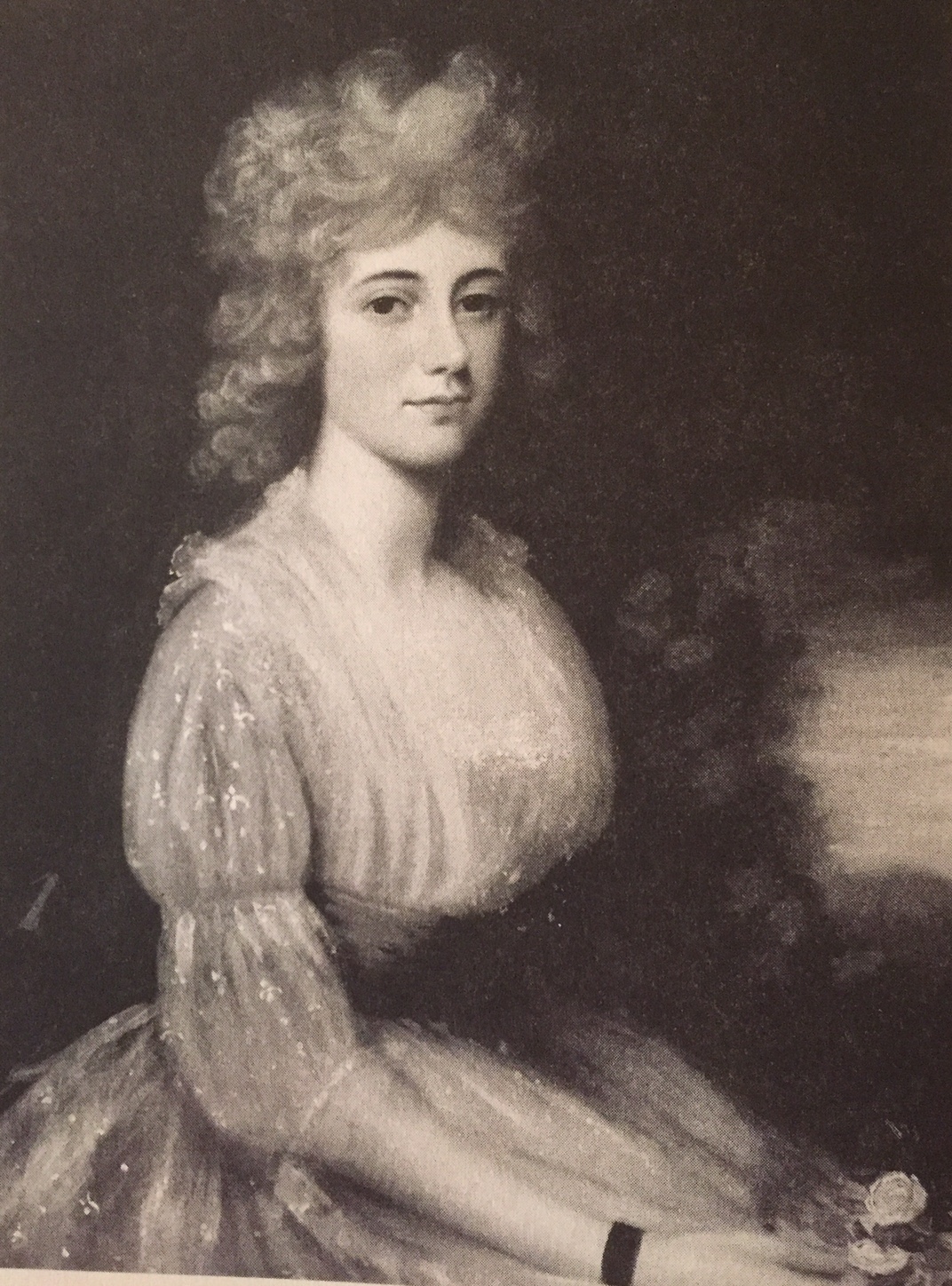
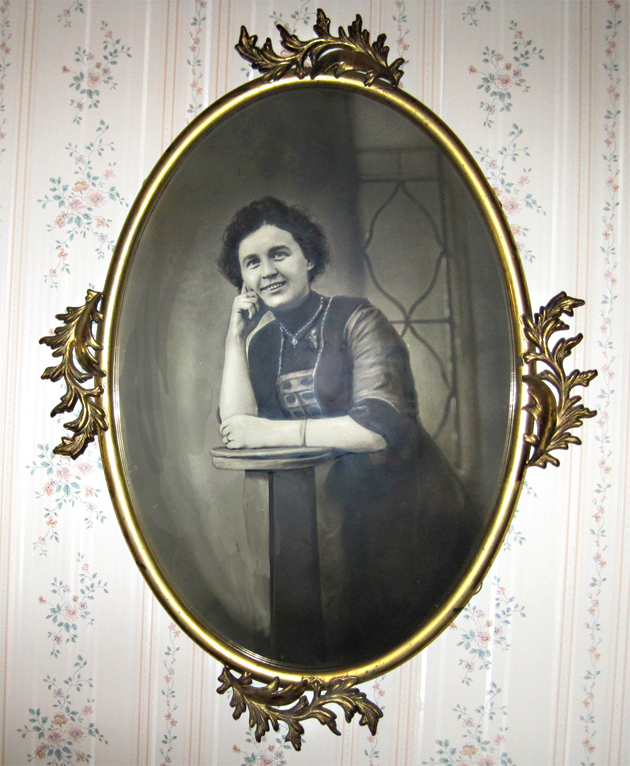
LouisaPortrait

Woman on the Move

After the birth of her third child, “as soon as she could rise from her bed, she lifted the lids of her empty trunks and opened her packing cases to prepare to leave for Washington. She was ‘a wanderer’ again.” (140)

In her boldest move, Louisa traversed the passage from St. Petersburg to Paris while Napoleon rampaged through Europe. She traveled 2000 miles in 40 days, a journey almost unheard of for a woman alone.

Louisa and Son Charles’ Wild Ride

In 1815, while John Quincy was gone to Paris, Louisa in St. Petersburg had to “sell the furniture, dispose of the house, and buy a carriage that could carry her across the continent” to Paris. She needed supplies: food, drink, clothing, maps, tools and enough medicines for a small apothecary. She had read the map herself, not having heard from her husband, and unflinchingly set her course.

Her largest expense was the carriage, “a berline, a large vehicle with four seats and glass windows, all balanced on an elaborate suspension of springs intended to smooth the rough ride.” Leaving St. Petersburg, the carriage was outfitted with sleigh runners. Wheels were packed when she met melting roads traveling west and south. (206)

She sewed gold and silver into her skirts to hide her wealth from robbers and from her male servants. (206)

Touch of Humor:

During the sojourn, though her two male servants were armed, she put on her son’s military cap and held his toy sword so that what she hoped was a menacing silhouette would show through the carriage window. (221)

True to her declaration when she married Adams, “When my husband married me, he made a great mistake if he thought I only intended to play an echo.” (8)

Her Most Moving Adventure

Louisa, often sickly and afflicted with self-doubt, recorded her grief in “Diaries of a Nobody.” After all, she was often geographically separated from her husband during his ascendance to power, she suffered multiple miscarriages, all of her children except Charles preceded her in death, and she struggled with erysipelas, a skin inflammation.

But her vividly told “Narrative of a Journey from Russia to France” enabled her to tunnel “her way out of depression with the sharp spade of her sardonic humor . . . .“ (396)

She wrote about Baptiste, innkeepers, haggard soldiers she has passed on the road, frightened faces of the women she met, cries of Vive Napoleón! She remembers the practical difficulties she had overcome: the moment the carriage wheel had come loose, the problem of procuring servants, the dangerous decision to ford a half-frozen river. She wrote about her growing confidence, which rippled out of her descriptions and into her voice. (411)

“Her story was her own. No other woman in America had experienced anything like it. But she made its lessons universal. It was a story about women and what women could achieve . . . . She wrote: ‘Under all circumstances, we must never desert ourselves.’” (411)

Move for Equality

At 62, in an era when a woman’s life span was about 40, she was blossoming. Like the Grimké sisters of Charleston, with whom she corresponded, she championed women’s rights and the freeing of slaves.

The Lesson of a Cracked Washbasin 

Cracked Washbasin, Google Images

John Quincy and Louisa Adams observed their 50th wedding anniversary, a milestone almost unheard of in the mid-1800s. Before she died, Louisa presented her daughter-in-law Abby Adams with a cracked washbasin, symbolic of the naked faces bent toward it sometimes joyful and other times full of inconsolable pain, mirroring life itself. (444)

Want More Louisa?

Writer and editor Louisa Thomas has written a stunning account of a memorable woman entitled Louisa: The Extraordinary Life of Mrs. Adams, 2016.
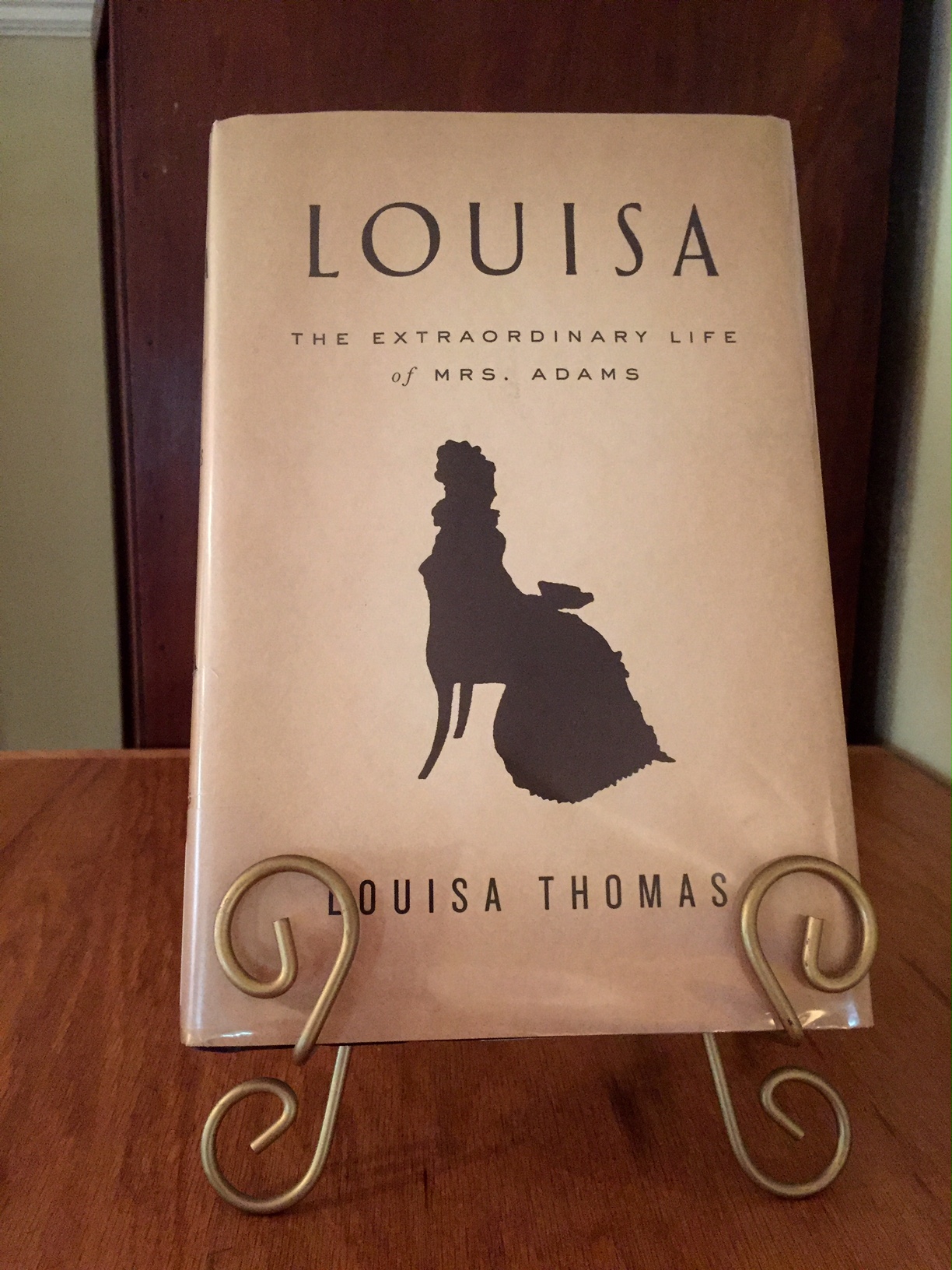
LouisaBookCover

Thomas’ biography sings with color as she describes an incandescent sun on their approach to St. Petersburg, which edged “the statues with fire and [made] creamy walls blush.” (90)

You can read my full review here.


Your turn: Can you recall any other historical characters with moving stories?

One of your own to tell here? Go right ahead.

Coming next: Mother’s Sky View: The Beautiful City

A Glorious Fourth, 1909 Style and a Memoir Tip

Would you pass up an invitation to a lawn soirée on a holiday weekend? This week 107 years ago my grandma, Miss Fanny Martin, then a single woman, received a penny postcard invitation to such a gathering on July 3, 1909.

PostcardBackFourthJulyGrandma


Mary Elizabeth Kob writes in neat cursive: “You are heartily invited to attend a Lawn Soirée July 3, 1909 in honor of Jacob S. Kob at his home. Meet 7:30. Refreshments. Respectfully, Mary Elizabeth Kob.” I assume my grandmother attended the party.

PostcardFourthJulyGrandmaFRONT

From my vantage point in the 21st century, it’s hard to piece together the details. Was Mary Elizabeth Jacob’s wife, daughter, or sister? Based on the name alone, it’s hard to tell. Was the occasion a combination birthday and Fourth of July celebration? If so, the emphasis may have been on the national holiday judging from the red, white, and blue postcard colors.

Leo Kob was the only “Kob” name familiar to me when I was growing up in Elizabethtown, Pennsylvania. Leo, whom I heard my parents refer to as “Kobbie,” owned a G. E. Oil and Gas Heating business in Elizabethtown, a family business that boasted the phrase “Since 1904” in a page in my high school yearbook. Maybe Leo bought or inherited the business from his grandfather or father. Was Leo related to Jacob? A search of genealogical records could prove or disprove any relationship.

Yes, excavating one’s family history leads to questions, some without clear answers.

Piecing together fragments of family history requires a measure of conjecture and speculation. Therefore, when one reaches the limits of family history and historical record, what happens next? Memoir writers can use a technique known as “perhapsing,” a tool for supplying detail in a scene when memory is unreliable or when facts are simply missing. According the writer Lisa Knopp, “The word perhaps cues the reader that the information [the writer] is imparting is not factual but speculative.” Because deviating too far from fact could result in fiction, life story writers have a tight rope to balance here. Yet “perhapsing” used sparingly or a well-placed “it might have been” can occasionally provide motivation and action, adding richness and complexity to the narrative.

Knowing about Leo Kob and his family is not critical to my own memoir writing, but writing about the details of my visit to New York City to distribute gospel tracts as a young Mennonite girl is significant, as this excerpt illustrates:

Perhaps my memory has amped up the details, but I can now imagine this frightful creature grabbing me by the shoulder in a death grip as I am spun round and round like a whirling dervish. In my film clip of this horror show there was little I could do to resist the grasp of this drunken prophetess. I felt dizzy and afraid.


About this 1909 postcard? When my plain Grandma Longenecker received this post card, she looked like this:

Fancy Victorian Fannie Longenecker before she became Mennonite

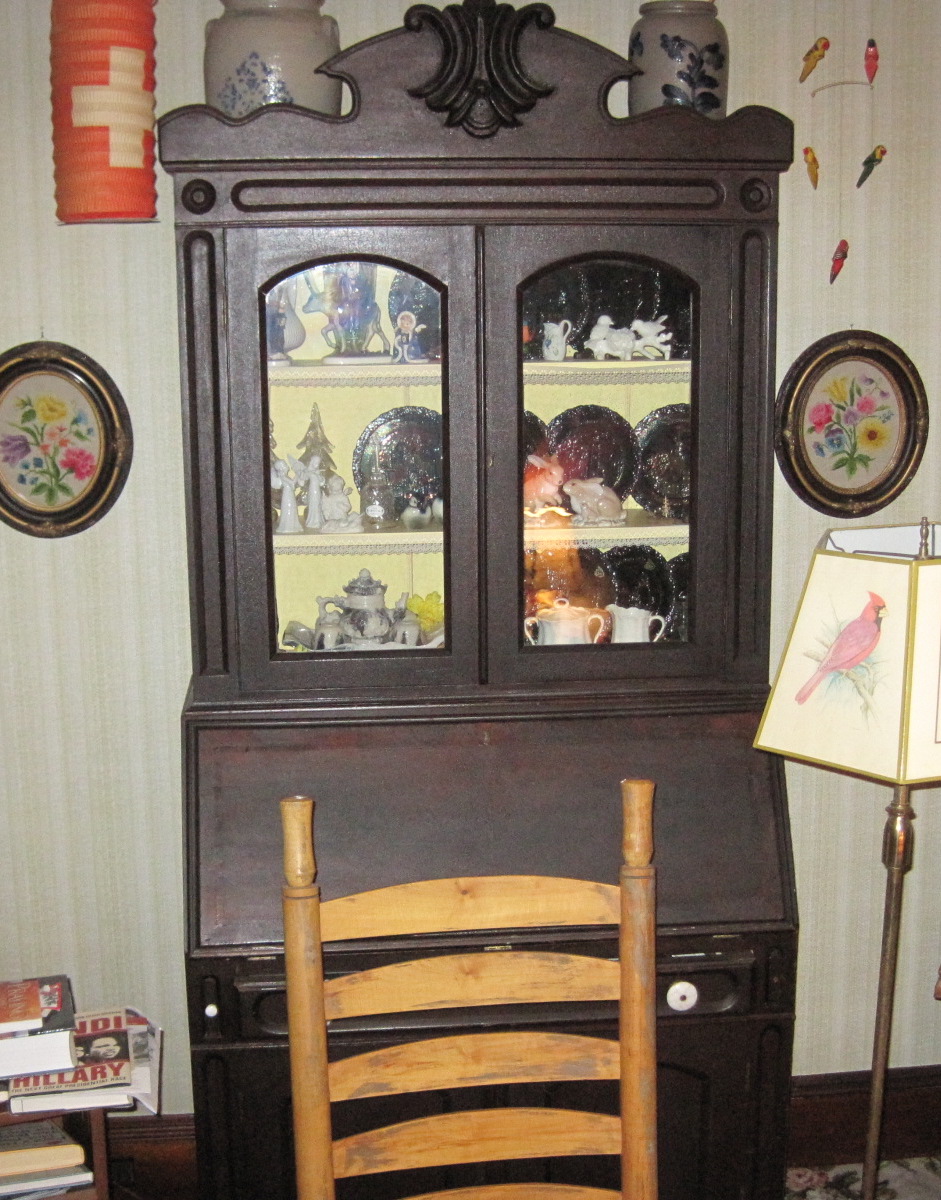
I found it in a stash of other cards inside the fold-out compartment of Aunt Ruthie’s secretary. What other treasures may be hiding there? I wonder.

Secretary_Ruthies_0520


What treasures have you found either by design – or unexpectedly?

As a reader, what do you think of the literary device called “perhapsing”? Have you used it as a writer?

A Rollicking Review: Marie Kondo’s Tidy Book and a Messy View

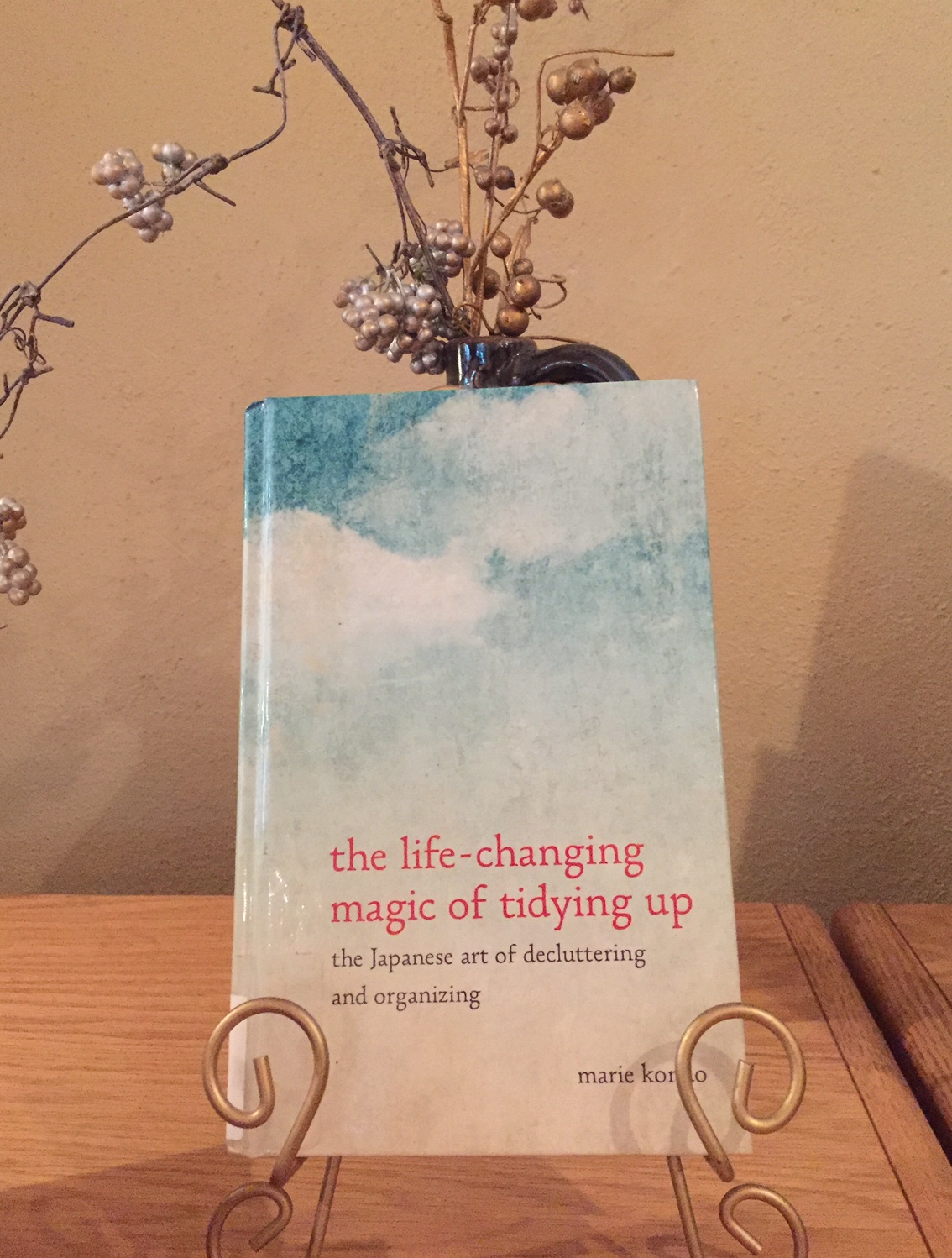
In last week’s post Paring Down and Tidying Up, I referred to Marie Kondo’s New York Times best-selling book, The Life-Changing Magic of Tidying up. Her book has sold over 5 million copies and is being translated into 40 languages.  I promised you a review and here it is.

KondoBookCover

The Review: The life-changing magic of tidying up, Marie Kondo

“Organize your home once, and you’ll never have to do it again.” Tidying consultant Marie Kondo, who has a three-month waiting list, insists you will never again have to sift through snowdrifts of papers or endure clothes that pile up like a tangled mess of noodles. Just follow her revolutionary category-by-category system.

Kondo’s solution is simple but not necessarily easy, especially for pack rats. Effective tidying, she admits, involves only two essential actions: Discarding things and deciding where to store what you keep. Kondo instructs her clients to pick up items one by one and ask, “ Does this spark joy?” If it does, keep it. If not, dispose of it.” (60)

Simply put, tackle major categories like clothing, books, and papers. Sort by category, not rooms: Sort all clothing at the same time, then move on to books, and so on.

Her chapter headings are iconoclastic: “Clothing: Place Every Item Of Clothing in the House on the Floor.” Do the same with books. Interestingly, her chapter titles yell in capital letters while her book title sits calmly on the cover, lower-case, in a cloud of blue.

Kondo’s wit and humor permeates her 254-page instruction book. She admits to coming home and falling asleep on the floor without even changing her clothes (195) writing this book. In the Afterword, she confesses that she once had to call an ambulance because the day before she had tidied too much and found her neck and shoulders frozen stiff from “looking into the cupboard above the closet and moving heavy furniture” (255).

Why do clients of the eponymous KonMari Method not relapse? The secret lies in a chapter entitled “Reduce Until You Reach the Point Where Something Clicks.” Apparently, satisfied clients have reached their clicking point! Some have even lost weight and experienced a clearer complexion as “detoxing” their houses has had a refreshing effect upon their bodies. (241)

One of her most valuable bits of advice was the functionality of sturdy shoeboxes to store lingerie and socks. Then, she suggests, use the tops like a tray to keep cooking oils, spices, and odd utensils in their rightful place. I may use such advice moving into our new space.

Marie Kondo’s tidying impulse began at age 5 while reading home and lifestyle magazines. She volunteered to be the classroom organizer in grade school. Now in her New York Times best seller, Kondo enthusiastically promotes the Japanese art of de-cluttering and organizing, a magical system that has become her life’s calling.


Not everyone buys into this magic. Sanford in the TV series, Sanford and Son didn’t, and neither did my father as I show in a blog post entitled Neat Versus Messy. It features a poem “Delight in Disorder.”

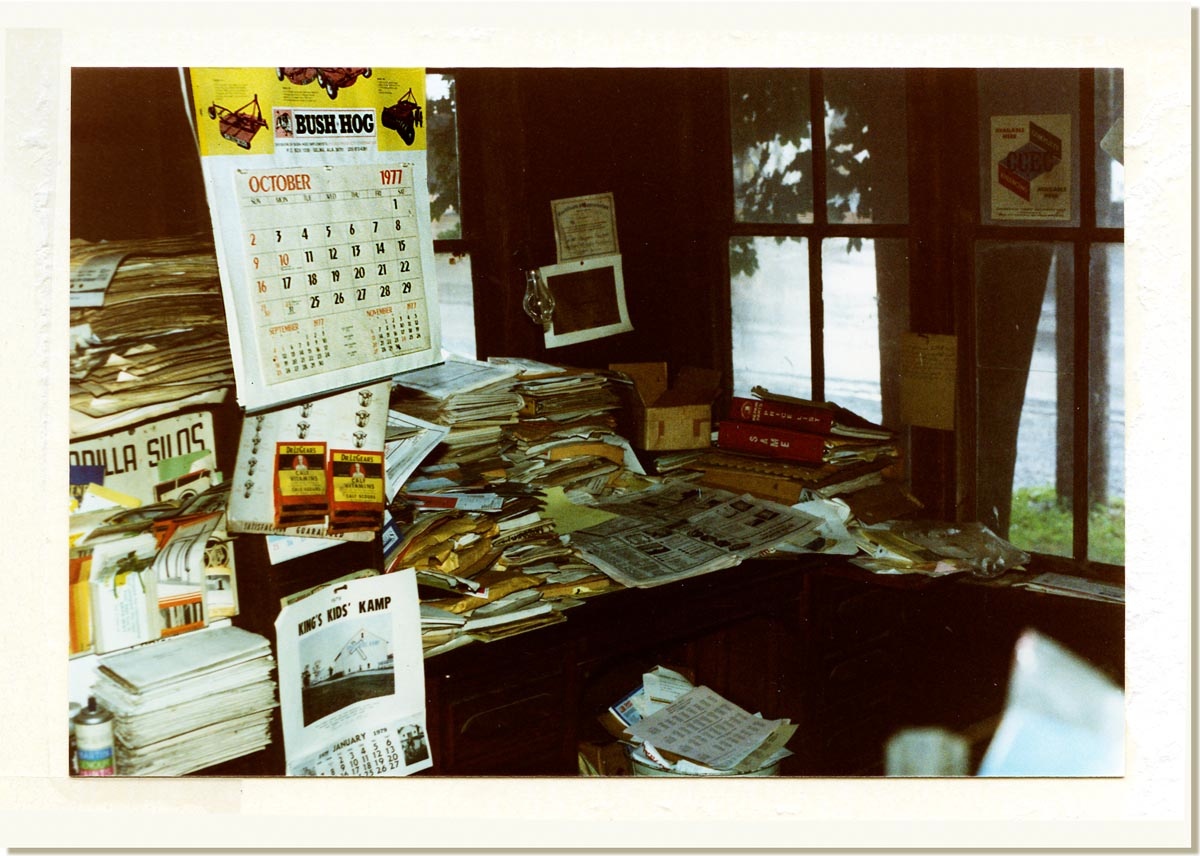
Dad's Office

My father died many years ago in 1985. During this Father’s Day week, I pause to give thanks. Though my dad did not give me a love for order (Mother did that), he gave me other sterling values: love of music, intellectual curiosity, and appreciation for the natural world. For those I give thanks.

Daddy in his later years, taking a breather
Daddy, often winning trips and other prizes for top sales, takes a breather. Sign courtesy of Cliff Beaman, 1976


* * *

One day soon, we will take what we have curated from our possessions and move it to our next home. It will be very messy for a while.

MovingBoxes2005

What is your take on the KonMari Method? What tried and true tips can you add?


As we make the transition – painting, packing, and re-assembling in another space, future blog posts may be sparse and my comments on your blogs may be spotty too.

I love our weekly connections here and will miss them temporarily. Soon I’ll be back. Enjoy each summer day!
Paring Down, Tidying Up – Some Tips

“Listen to this” I said to Cliff as I began reading the page on sorting papers: “Rule of Thumb – Discard Everything. ” As I continued reading the chapter on sorting papers in Marie Kondo’s New York Times best seller, The Life-Changing Magic of Tidying Up, I saw my husband’s eyes bug out, his jaw go rigid. I imagined his next move would be grabbing the book from my bare hands. (He didn’t.) Even though papers accumulate in our house like snowdrifts, he was having none of it.

It’s hard to dispute the dictum of a Japanese cleaning consultant like Kondo who claims that none of her clients have lapsed – and who has a three-month waiting list. She insists that if you organize your house properly, you’ll never have to do it again.

At the heart of her message is this: Keep something only if it sparks JOY in your life. And related to this: Give it away, if you think it will inspire joy in others.

So, I have divested myself of possessions I’ve held onto for decades.

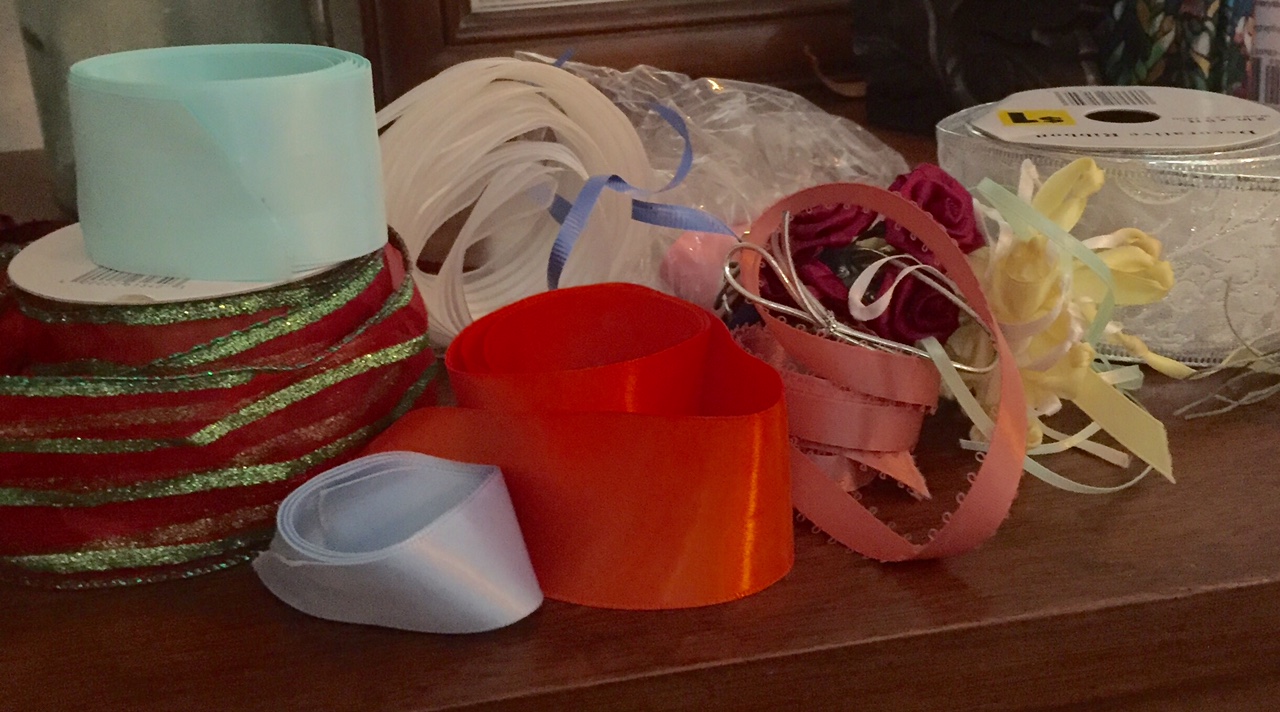
Ribbons and sewing notions have gone to a church friend, Donna, seamstress extraordinaire, who has connections to talented women needing supplies.

RibbonGiveaway

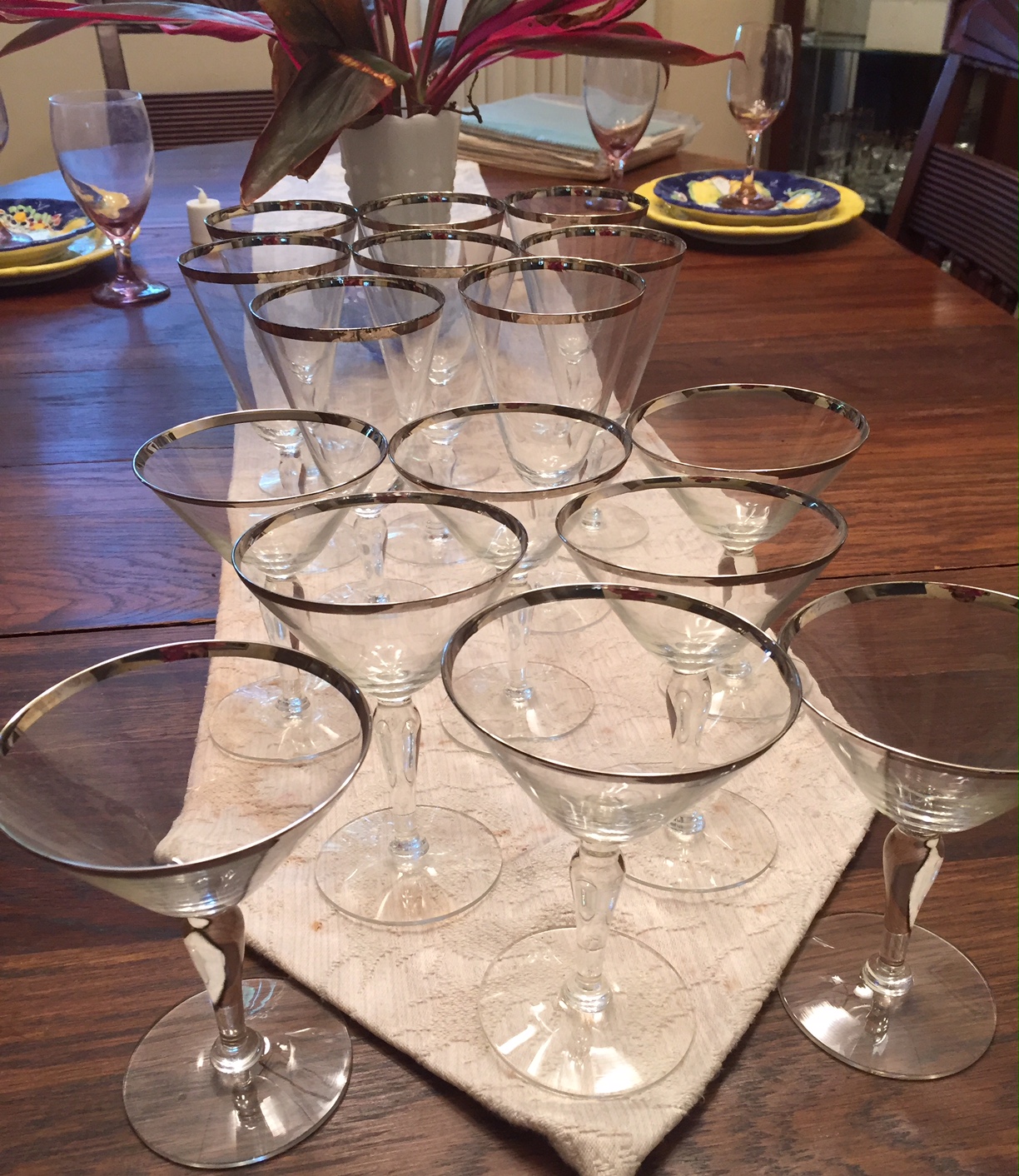
Like my friend Carolyn, I have passed on items of fine dining. My wedding crystal went to my hair stylist and super hostess Jackie. Originally, I intended to donate my crystal (from The Susquehanna Glass Factory in Columbia, Pennsylvania) to The Community Hospice Thrift Shop. But before I ever got to the donation center, Jackie took a look, fell in love, and the crystal sherbets and glasses became hers.

Crystal

By far the hardest thing to divest myself of is MY BOOOOOKS! They are part of my self-hood, my identity for the decades of my long teaching career. I am not the only book lover who wrestles with such impulses. Summer Brennan writes about the heartache of such a task here. Like her, I feel torn by the lure of Kondo’s promise of the magic of recycling and my impulse to embrace William Dean Howell‘s advice, “Oh, nothing furnishes a house like books.”

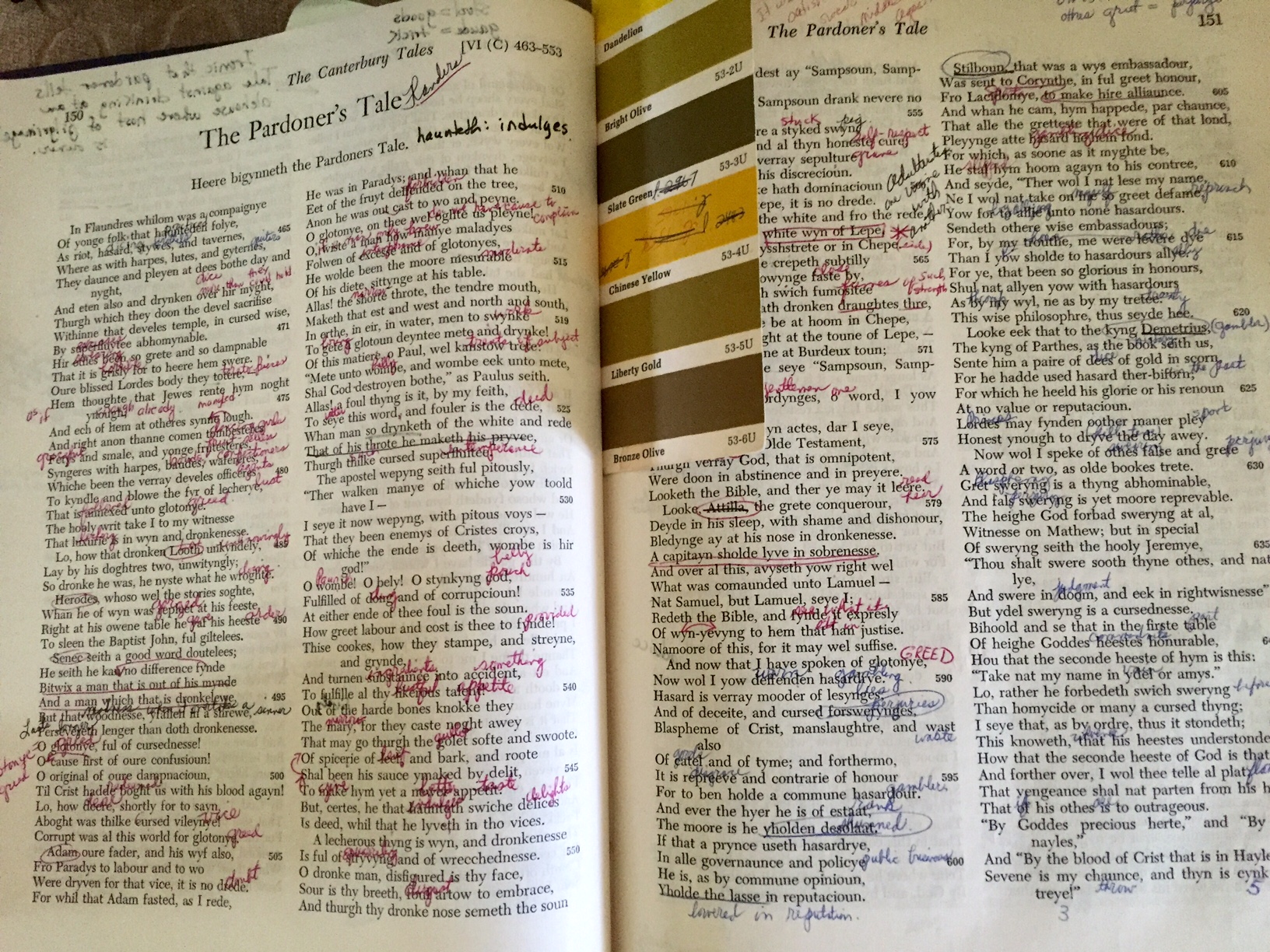
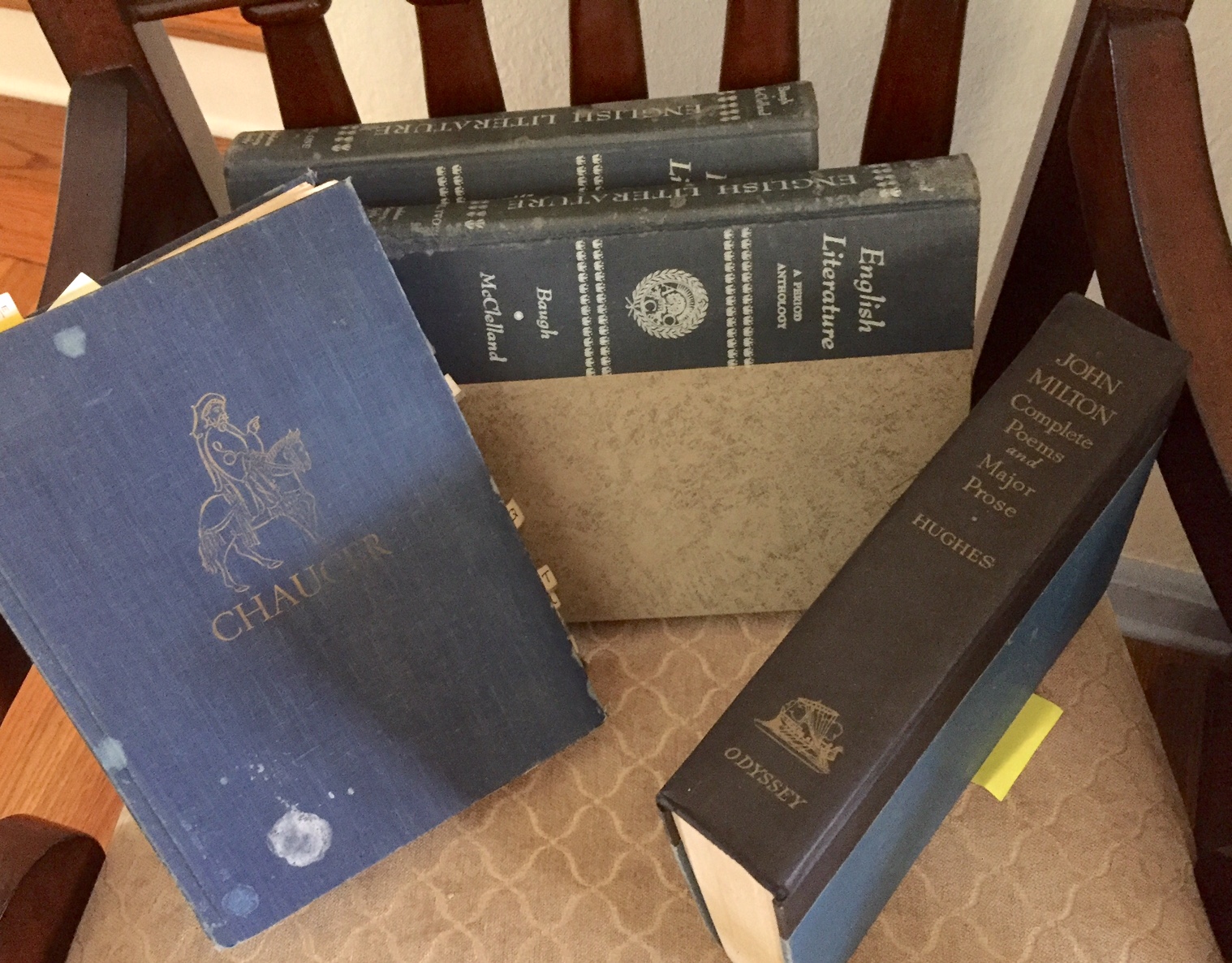
I’ve given dozens of books to Angel Aid, a charity for women and children. But I feel just as good when they land in the hands of young scholars, like Matthew, who can appreciate the nerdy translation of my Chaucer texts from Middle to Modern English, pre-digital translate days.

ChaucerTranslation

­­­­Matthew took my Milton text too, and two Survey of English Lit texts. He exclaimed, “I appreciate this. I can’t thank you enough,” followed by a smiley face and book emoticon.

ChaucerMilton

I feel a certain lightheartedness at getting rid of stuff, especially if I can pass them on to people who appreciate their worth.

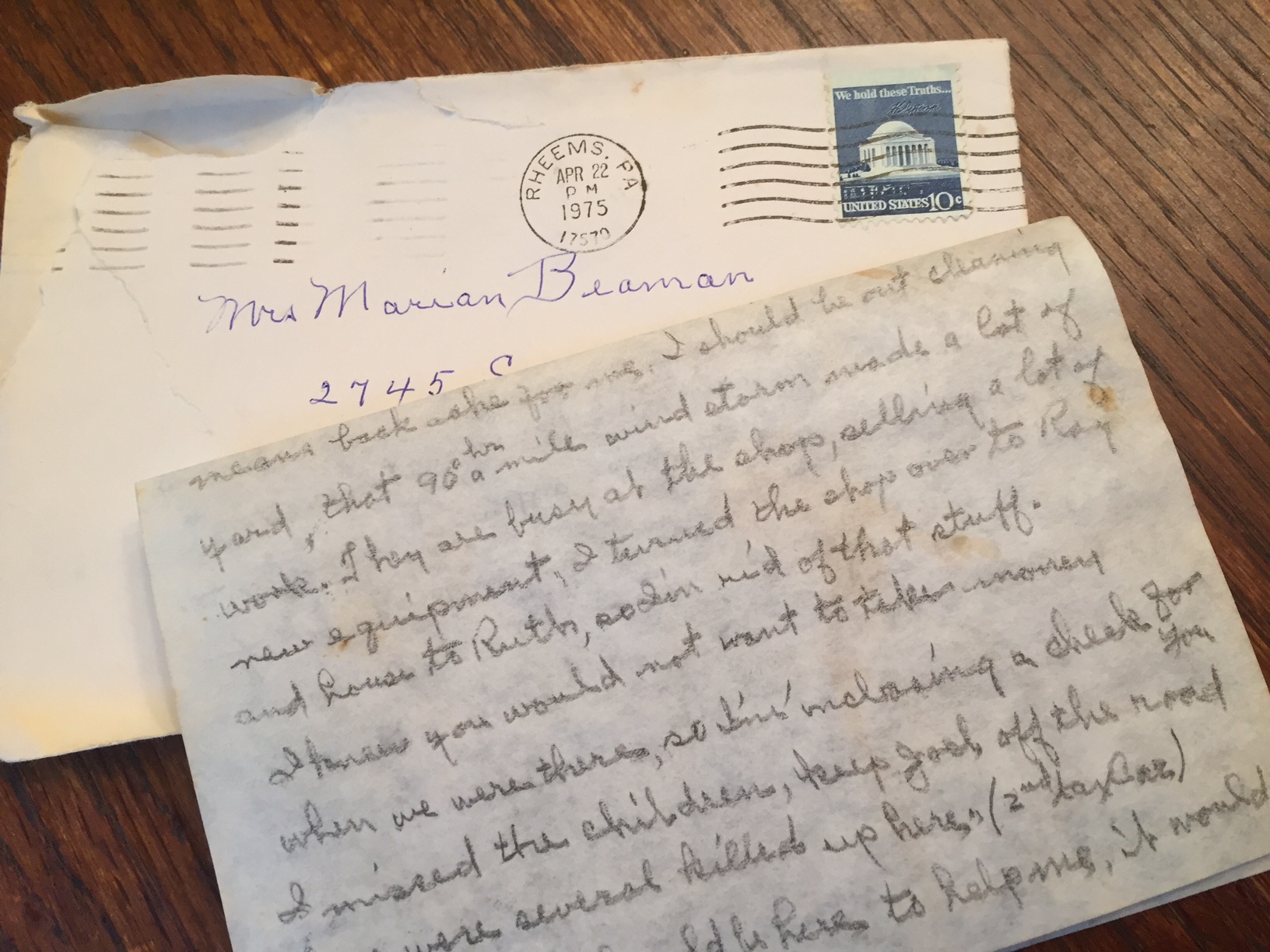
Grandma Longenecker can relate to such a feeling. She told me so in a letter from Rheems, Pennsylvnia in April 1975.

GrandmaRidStuffLetter

“They are busy at the shop, selling a lot of new equipment, I turned the shop over to Ray and house to Ruth, so I’m rid of that stuff.”

In other words, Grandma divested herself of two properties by deeding them over to my father and aunt. I’m guessing that she was immensely relieved of responsibilities for either property.

She continued to live in her lovely Victorian home until the day she died.

1989RuthieHouse

Coming next: A rollicking review of Marie Kondo’s book and a glimpse of the shop Grandma deeded to my dad. Neat versus messy? You decide.

Your tips for paring down and tidying up are welcome here.   🙂


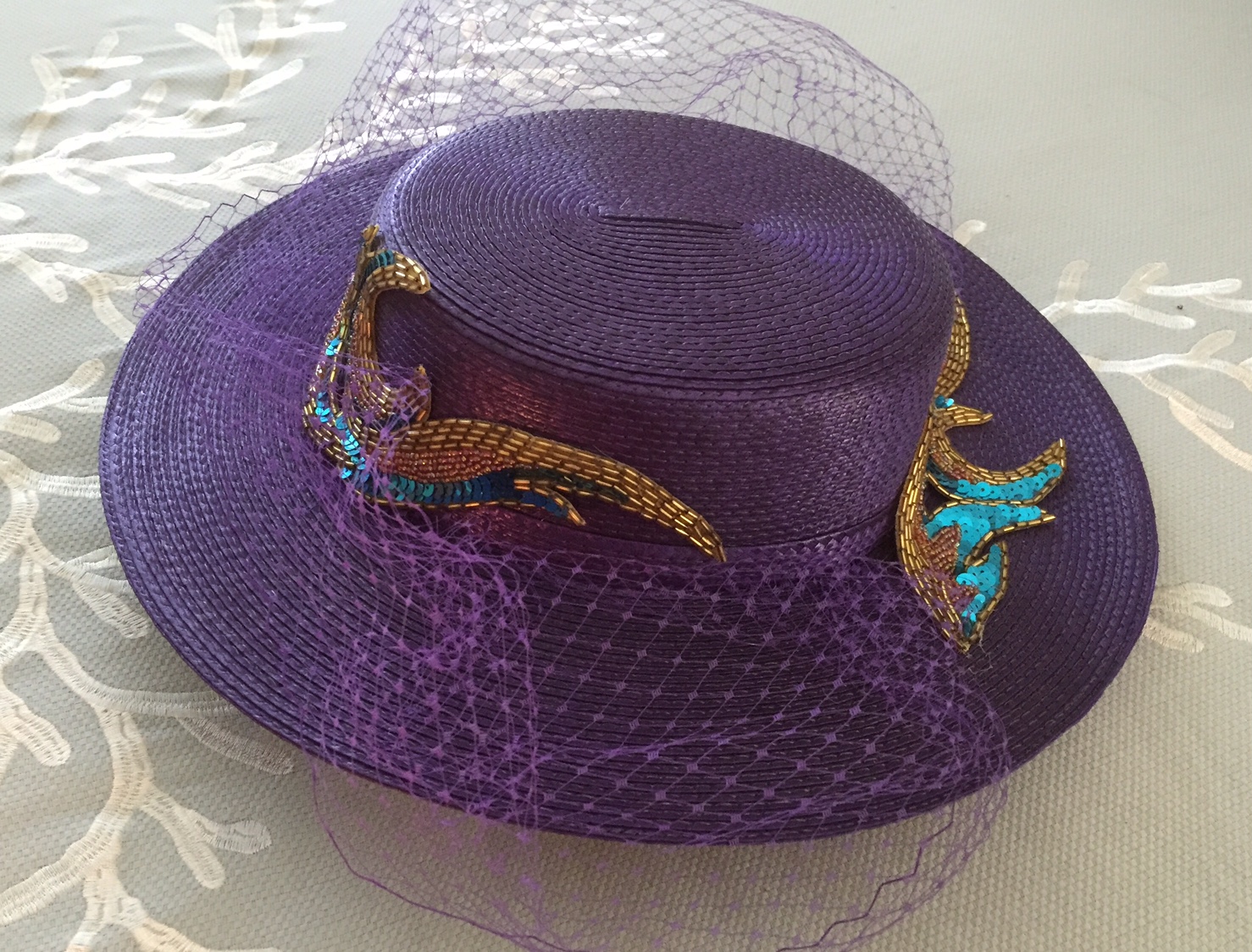
My purple hat - Out the door!
My purple “Downton Abbey” hat – Out the door!


Secrets of My Blue Madras Dress

Did you wear a madras dress? Did it bleed?

Popular in the USA in the 1960s this cool summer fabric originated in Madras, India. Loosely woven cotton threads created a plaid patchwork of soft fabric that didn’t cling to the body during sweltering summer days. Some madras was made with dyes that “ran” when the fabric was washed, creating a trendy washed-out look, known as bleeding madras, according to this article in the Chicago Tribune.

I bought into the fad then with a blue madras dress, smocked, sleeveless and zippered down the back. With no cinched belt, the dress felt light and airy – cool. After it was no longer in vogue and looked worn, I used it for home painting jobs.

BlueMadrasDress

Before we move into our next home, we want to do some interior painting. Whether I will wield the brush or ask/hire someone else to do the job remains to be seen.

Soon the paint-spattered madras dress will fade into history. I will recycle it.

* * *

The Secret: 

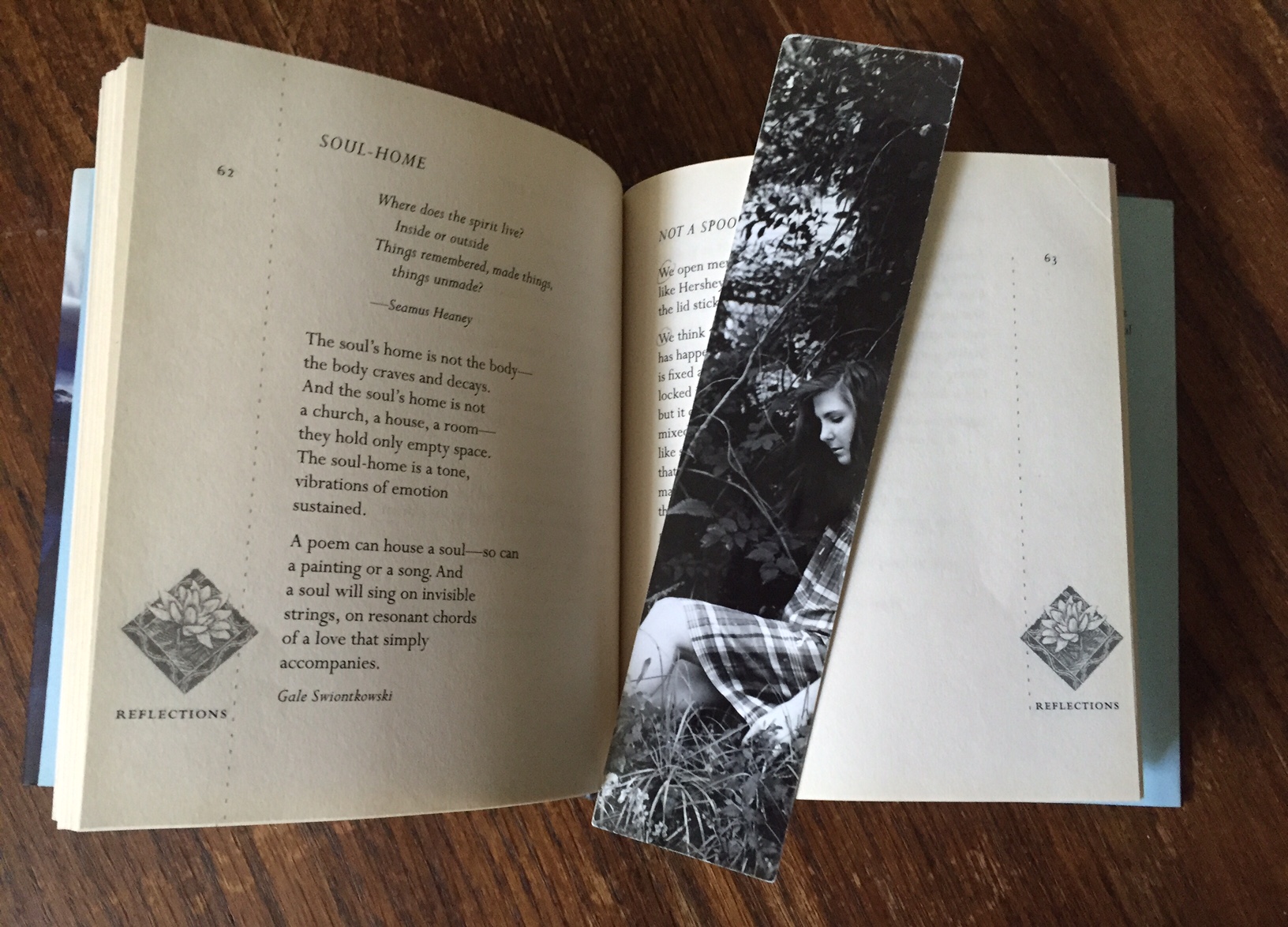
In July 1992 daughter Crista took a time-delay shot of herself wearing my blue madras dress to complete an assignment for her Photography 101 course. “Make sure you are in the picture,” the professor had said. So, with a 35 mm camera poised on a tripod, she snapped a black and white self-portrait in our back yard. Obviously, she didn’t need my assistance, and I didn’t know about the photo until she had it developed in the photo lab dark-room. A selfie before the era of smart phone selfies.

I made one of the prints into a book mark shown here. On the reverse side, I printed a verse from III John 1:4  “I have no greater joy than to hear that my children walk in truth.”

Photography takes an instant out of time, altering life by holding it still. ~ Dorothea Lange
Photography takes an instant out of time, altering life by holding it still.   ~ Dorothea Lange


It’s no secret that I have paraded a lot of (treasured) stuff on the pages of these posts, evidence that I keep things. With a move imminent, I’m in the mood now though to discard, digitize, or recycle.

When it comes to STUFF, are you a hoarder or a “throw-away-er”? Maybe you fit a different category? Do you have a dress with secrets?


Your opinions are always welcome here. So are your stories.

Thank you!


Coming next: Paring Down and Tidying Up


Mouse Moves House and So Do We

We are planning to move. It’s not a long-distance move to another country or across our own land. Not even to another state. And we are not retiring to Florida. Why, we’re already there. And we’re not moving to another city. Our re-location involves a move just 9 miles south in the same quadrant of Jacksonville.

But it is a gigantic step for us. We have lived in our current homestead for 37 years. Our children grew up here, and when I open the kitchen door to the garage I see pencil marks revealing Crista and Joel’s increasing heights since their ages of 8 and 9.

People in our age demographic make similar moves, often called downsizing. A Texas couple, Joe and Judy Powell, had a ranch to sell, 20-acre cattle ranch, mind you, in order to move to a nearby college town. Their move involved a huge acreage to a small property, from rural to town.

Photo credit; AARP magazine online
Photo credit: AARP magazine online


Of course, Cliff and I have accumulated lots of stuff, which about a year ago we’ve started sorting through, recycling, keeping the most necessary and precious. An art-creating husband and book-reading/writing wife produce/save lots of stuff.

About the Stuff 

Yes, we must cull, re-cycle, throw out, even. We have called the city for bulk recycling pickups.

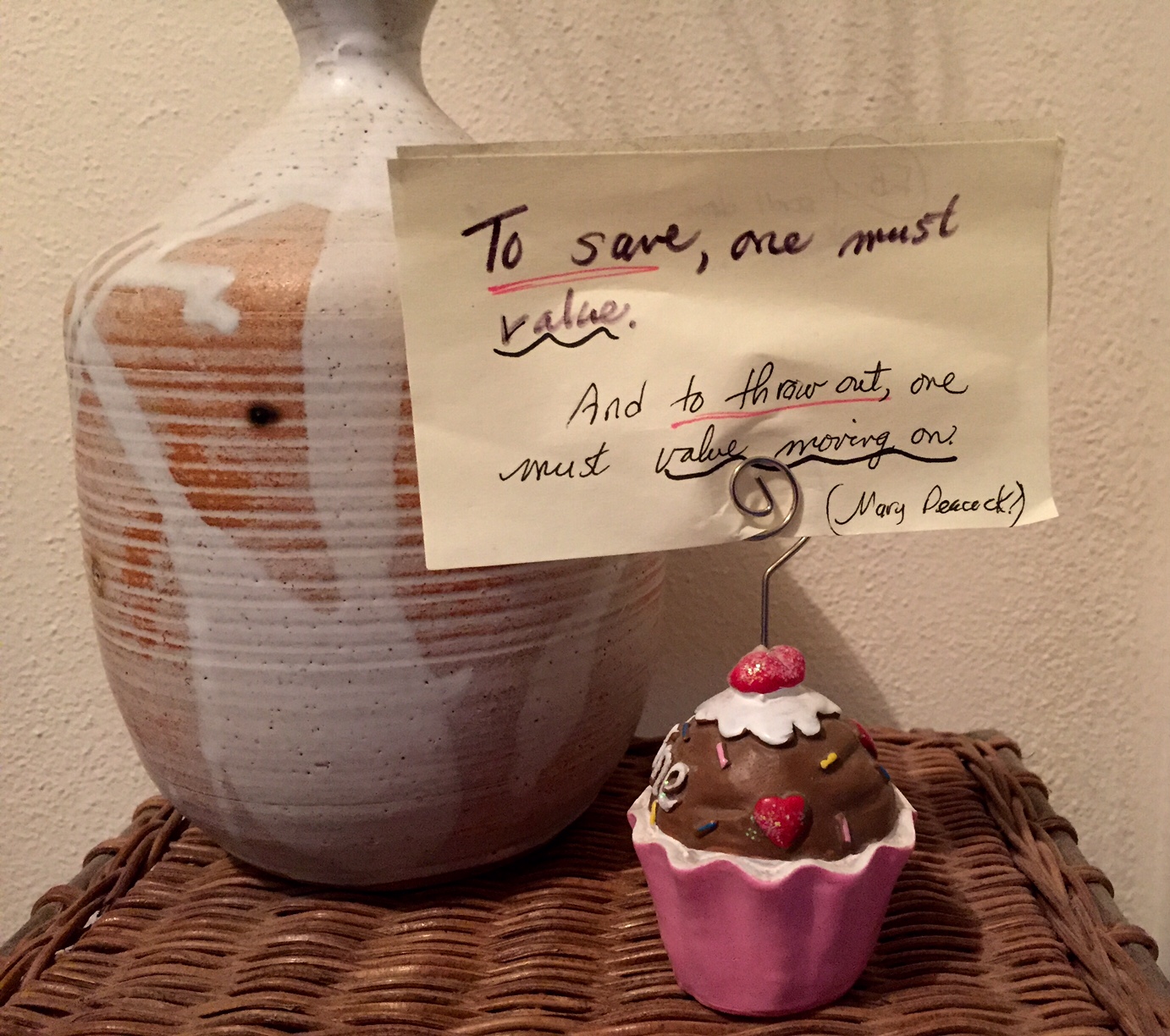
To save one must value. And to throw out, one must value moving on.    ~ Mary Peacock, The Paper Garden


CupcakeQuotation


What I’ll Miss

  • My clothesline. Our new homeowners association won’t permit such. I’ll look at old videos of sheets flapping.
  • The dowager live oak tree on the edge of our property spreading its sheltering arms . . .

OakFrontDowager

  • Wall space to display my husband’s art work. Our new home has an open floor plan and limited space for drawings and paintings.

The Emotional/Philosophical Shift

Before, during and after the move, we have felt and will continue to feel out of sync. Our daily rhythms will be interrupted for a time. We’ll have to get used to operating in a new space. We’ll feel out of balance for a while, a sensation I am already experiencing.

In the Holmes-Rahe Stress Inventory, the transition to a new home ranks # 28 on a list of 43 life events, coming far after major events like the death of a spouse, serious personal injury or illness, change in job or even retirement. Truthfully, I think I would elevate moving to a higher level. Anyone who has changed addresses recently may agree.

Writer and blogger Sharon Clymer Landis discussed an imminent change in her household last year, observing parallels between the physical and spiritual aspects of moving to a new location:

She says, “As we work our way from the comfort of the known, from the cozy nest, inching toward our edges before slipping into the wild unknown, we are usually filled with doubts, fears and dread.  How little we trust the process, or God’s great holding of us, or the drawing towards growth that results in greater love, spaciousness, and freedom.”

When we finally take flight, we realize the air under our wings is the same air that lined our cozy nest. The nest, the struggle to launch, the flying, and the very air around us is all part of the Great Holding. 


The Move and Story-telling

As she continues, author Landis draws an analogy between physical moves and good storytelling:

Good storytelling often moves us forward, opens a reader’s heart toward greater understanding or toward something in life’s horizon. Add the element of God, of the Divine Mystery (how do those stories and images end up right where we’ll find them when we need them?) and you’ve got a hint of how things work:  equilibrium to disequilibrium, and back to equilibrium…on and on in the cycle of life and growth – kissed by Eternal Wisdom, a God holding us in Love always. Whether we’re in the midst of being drawn to concepts or changes beyond our understandings, whether we’re dug in and resisting, or flying wild and free, we are equally loved!


A Story Told

“Flying wild and free” evokes the image of a bird in flight, not usually mouse movements. But a storybook mouse can go wild and move. Maybe you remember reading Mouse Moves House, a charming children’s book by Phil Roxbee Cox.

Ian's family is moving this spring, mimicking Mouse Mack.
Ian’s family is moving too this spring, mimicking Mouse Mack.

Mouse Mack, backpack in tow, appreciates his friend Jack, who helps him pack and load his stuff onto a moving van named Fat Cat.


How have you experienced moving?

You must have some advice for me and other readers. Here’s where to share it.

Baby Beads and Wooden Blocks: Happy Mother’s Day

I played with pastel-colored beads and wooden blocks with ridges, babyhood toys. Mother kept these oblong & round beads and animal-themed alphabet blocks for her grandchildren and great-grands. These sturdy toys entertained children of mothers they nurtured in their ministry for New Life for Girls too.

All of Mother's children and many of her grandchildren sat on this highchair and played with these wooden beads and blocks. We never played with plastic toys.
All of Mother’s children and many of her grandchildren sat on this high chair and played with these wooden beads and blocks. We never played with plastic toys.
These blocks are entertaining my sister Jean's grandchildren
These blocks have entertained my sister Jean’s grandchildren

To me, such simple toys bespeak innocence and the charm of a simpler life..

On this Mother’s Day 2016, these artifacts seem an apt metaphor for my mother’s contribution to our heritage.

Beads of Wisdom: Mom’s Mottos

  1. “Outen the light,” meaning turn off the light switch to conserve energy.
  2. “Ach, don’t talk so dumb,” spoken as a way to discourage silly talk.
  3. “You get what you pay for.”
  4. “Be sure your sin will find you out.”
  5. (Someone) “turned up Jack,” meaning disappointed or didn’t pan out
  6. “Be sure to add enough butter: Butter makes it better!”
  7. “Tie your head shut,” admonishing us to wear a bandanna during cold or windy weather, illustrated here with a flash of memory:

I paid attention, of course, and rushed out wearing my blue wool coat and pink and white polka-dotted bandanna on my head, eager to help Grandma set the table. In cool weather, I always had my “head tied shut,” an expression Mother used to keep us from getting a cold, she thought. But looking back, I think having my head tied shut is a metaphor for keeping out the world and all the corruption that can come in through an unlocked door, even a passageway like my ears.


Blocks of Faith

  1. Tied a nickel into the corner of a square, white hanky to teach me to give to God.
  2. Read to me from a Bible Story Book, one story for every day of the year.

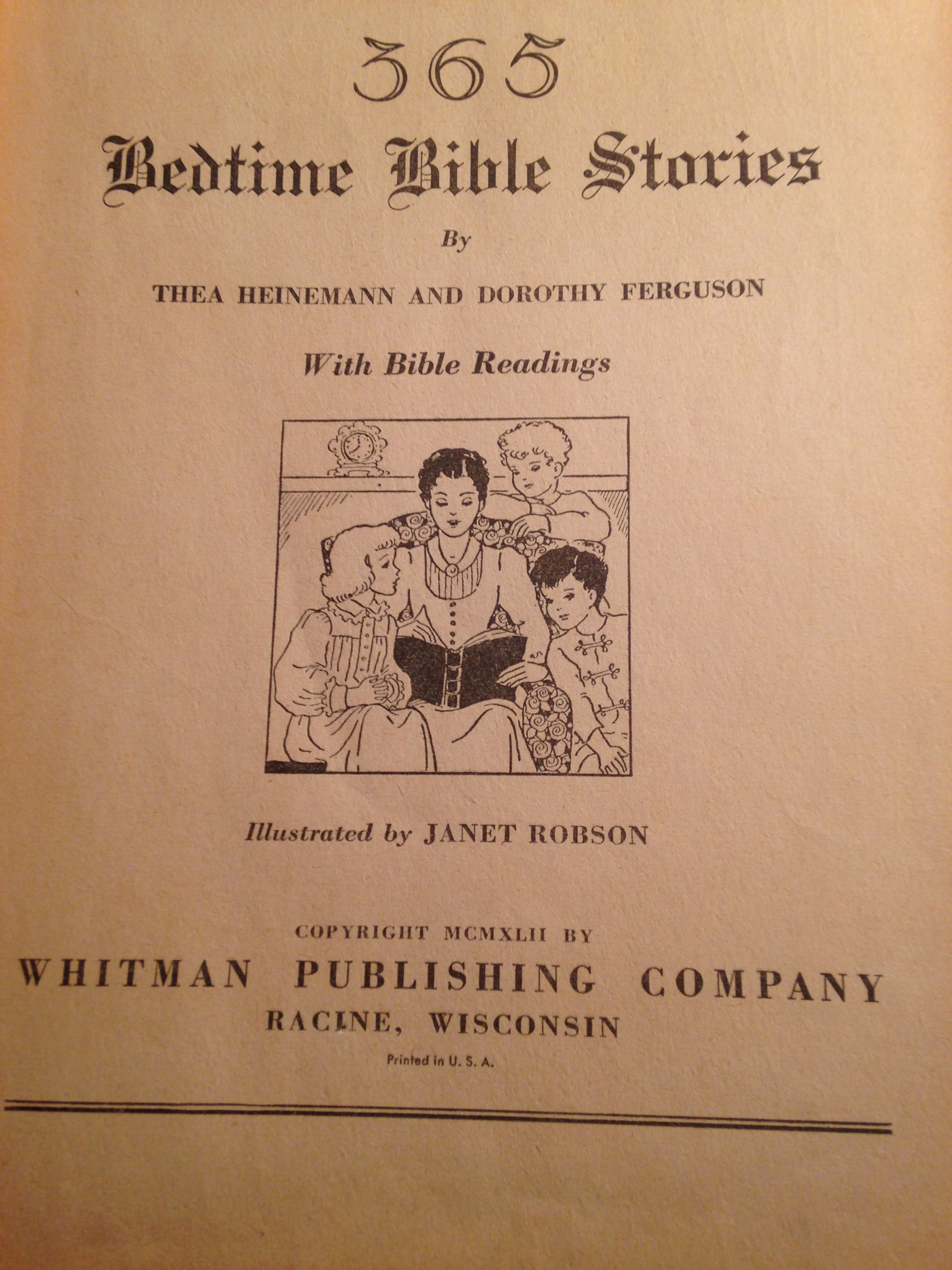
BibleStoryInside copy  BedtimeBibleStories copy

The date on the flyleaf, MCMXLII, can be translated as 1942. In the years following, my sisters Janice and Jean and my brother Mark must have heard these stories too.

3. Prayed with us at bedtime: “Now I lay me down to sleep, I pray the Lord my soul to keep . . . .”

4. Led us in prayers of gratitude before all our meals. Usually, the prayers were silent.

5. Uplifted arms, palms turned upward, her gesture of acceptance, “Whatever the Good Lord wants.”


My mother wasn’t perfect. Whose is? She had moments of impatience, she sometimes complained, yet she did the best she could. I choose to celebrate those attributes of a woman who all her life sought to please God.

An invitation to you: Add words of wisdom or silliness from any source, including your mother.


Coming next: Vintage Photo in Need of a Caption, Part II

All Creatures Great and Small: The Power of Pets

I missed National Pet Day on April 11 by a few weeks. But if you own a dog like Scotty or a kitty cat named Sophie, every day of the year is pet day.

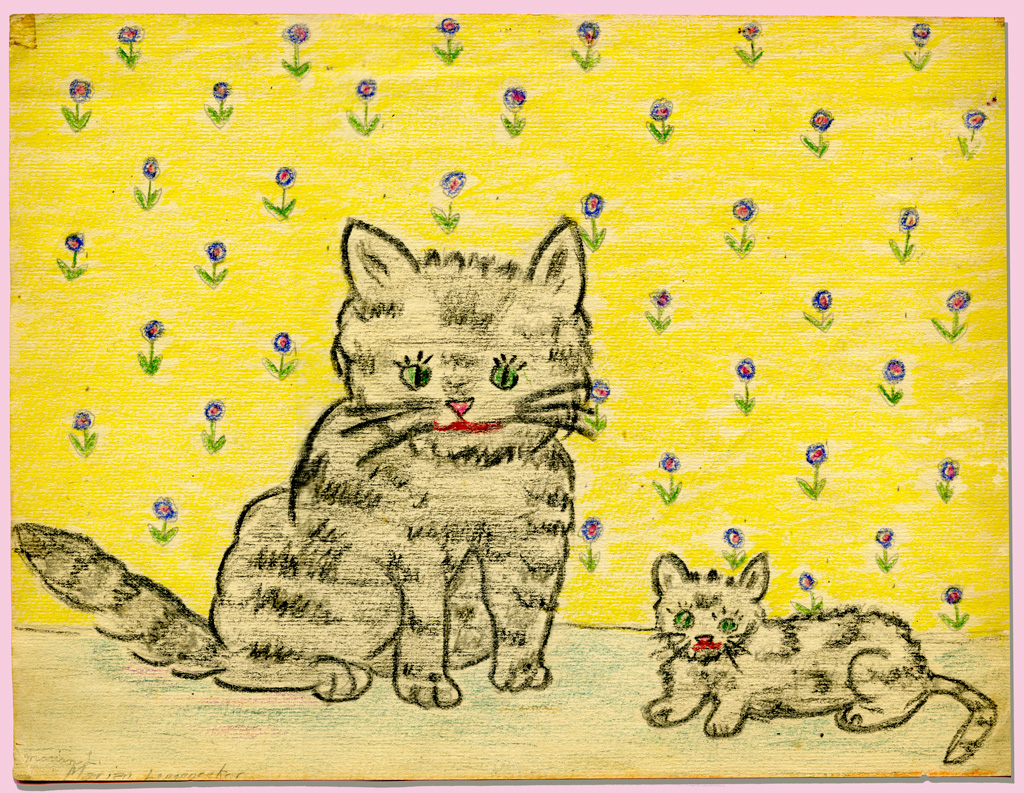
In 4th grade, I drew a cat and colored it charcoal gray. It appears I was as interested in making the wallpaper pretty as I was in drawing a green-eyed cat with its wee kitten.

KittenArtMarian1947?

In first grade, my teacher Miss Longenecker introduced our class to reading via the phonics method with the drawing of a cat illustrating the hard “c” sound. She probably used the Hay & Wingo textbook entitled Reading with Phonics (Philadelphia: J. B. Lippincott, 1948).

 Hay & Wingo, Reading with Phonics, J. B. Lippincott, 1948
Julie Hay & Charles Wingo, Reading with Phonics, J. B. Lippincott, 1948

We never had a pet cat, probably because my mother was allergic to cat dander, but several memorable dogs cavorted through our childhood. Sporty, an Airedale Terrier mix leaped and frisked around Grandma’s ankles when I was very young.  Boots, a black and white Smooth Fox Terrier, flushed ground hogs from their holes.

My sister Jean remembers other animals too: Our dad raised Angora rabbits housed in wooden crates in the barn attic and another Smooth Fox Terrier named Minnie, as small as she sounds. Sister Jan says we used to dress her up with doll clothes and send her down over the hill to Grandma’s house.

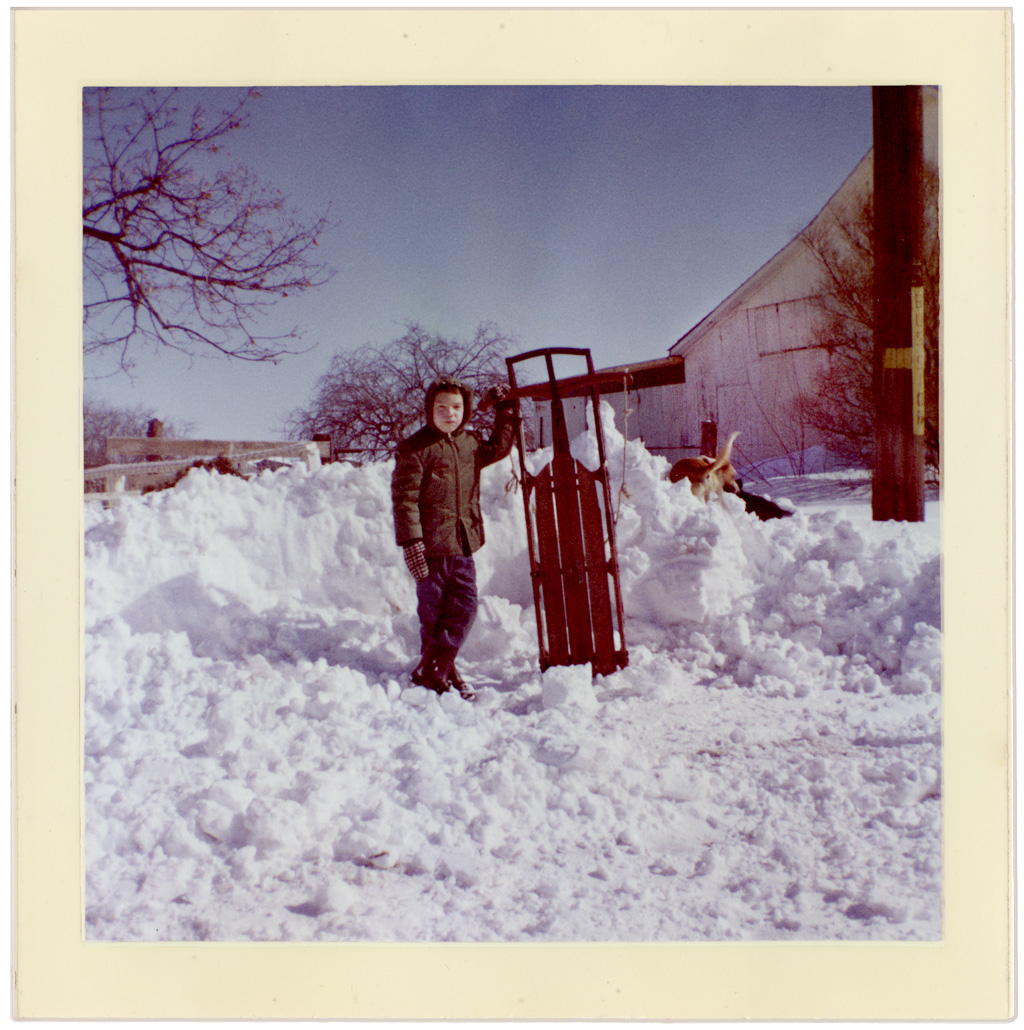
Our brother Mark’s dog, 3-legged Skippy, butterscotch and cream colored, lost one leg when a truck ran over him. Still, he skipped, ran far, and jumped high with just three legs. You’ll see part of his rear end and his tail in the second picture.

MarkDogMailbox


Brother Mark with sled and Skippy in the snow 1961
Brother Mark with sled and Skippy in the snow  1961


We all remember Ruthie’s little lamb that felt like mine when I wiggled my fingers digging deep into its wooly coat.

My Aunt Ruthie loved animals all her life, especially dogs. Her last four dogs were Schnauzers, known for their fierce loyalty and protective power. The pure-bred Schnauzuers were all named Fritzie – Fritizie I, II, III, and IV.

In this photo she was probably holding Fritzie III in her lap. The devotion you observe in this photo flowed both ways.

RuthieDogPiano

* * *

Like most children, our kids Crista and Joel wanted a dog. We shopped ads in the Dollar Saver for our dog back then and were taken in by the phrase “loves children.” That’s how we found Me-Too, a kid-loving-mailman-hating dog of questionable pedigree. Still, the children doted on her and adopted her into their play. Here the frame of their baby buggy became a carriage with Me-Too as the pony express.

WondaChairCristaJoel


Research

Not surprisingly, research shows that pets promote health, both physical and emotional.

Pets in the household can reduce everyday stress – lift one’s mood and provide physical contact. They provide an outlet for nurturing too: Pet owners have a living thing to care for. And finally, pets keep one active: walking the dog, feeding the cat.

Several of my writing friends admit that a pet dog or cat serves as muse: Kathy Pooler, Merril Smith, and Susan Weidener. Other authors have pets that appear on their blog posts from time to time: Laurie Buchanan, Janet Givens, and Elaine Mansfield. Lord David Prosser observes that his alarm cat Oscar wakens him from slumber every morning. And photographer Lady Fiona’s dogs enliven most of her fabulous photographs. Marylin Warner is training a puppy, but I don’t think she would call Scout her muse yet.

* See note below.


Books with animal characters

Books of my childhood:

  • Anne of Green Gables – Dog Monday
  • Little House on the Prairie, Laura Ingalls’ dogs – Jack, the brindle bulldog, and Bandit, the stray, appear in her books
  • Old Yeller by Fred Gipson

Literary works:

In The Odyssey, I recall Homer’s beloved Argos, who patiently waited for him at journey’s end. Maybe you remember this faithful dog too.

In Jane Austen’s Pride and Prejudice, cats romped in the Bennett household, at least according to author Pamela Jane.

Anton Chekhov wrote a short story entitled The Lady with the Dog, preserved here in statuary forever viewing the Black Sea in Yalta. When we visited in 2011, Crimea was still part of Ukraine.

CrimeaMarian2011


In the 1970s James Herriot books were all the rage both here in the States and internationally. Herriot, an English veterinarian, immortalized farm animals, pets, and their owners in his popular series set in the Yorkshire dales and moors. I read many of the titles: All Creatures Great and Small, All Things Bright and Beautiful, and The Lord God Made Them All.


What pets populated your home or the pages of books you loved? What items can you add to the list of benefits of owning a pet?

Leave a line or two here. You can also include endearing (or not) pet anecdotes.

Incidentally, if I inadvertently missed listing you as an author with a pet muse, please bark at me, so I can rectify the oversight ~ pronto.


Daisy with Jenna in pigtails
Daisy with grand-daughter Jenna in pigtails


Coming next: Baby Beads and Wooden Blocks: Happy Mother’s Day!


Mom’s Dandelion Recipe & the Passover Seder

“It’s a spring cleaning ritual – but for your body,” touts reporter Jennifer Sheehan, extolling the merits of eating dandelion. “It cleans your blood and you get a lot of good vitamins from it,” another endorsement I read in Sheehan’s article from Lehigh Valley’s The Morning Call.

My mother would agree. Each spring about this time, she took her wooden-handled trowel and dug out dandelion plants fertilized by cow and horse manure in the meadow next door. “Dandelion has a lot of iron,” she said of the long, spiny leaves. “And it’s so good with hard-boiled eggs and bacon.”

Last week my sister Janice shared Mother’s recipe. I was pleasantly surprised because I didn’t know it was written down anywhere.

Add a little water till soft.

Add white sugar – a little vinegar

Fry bacon and hard boil two eggs

The recipe wouldn’t pass muster for cookbook publication, lacking as it does measurements and a logical order. But reading between the lines, I constructed her dish in a slightly different way.

First of all, I bought dandelion at a local farmer’s market. The label reads organic. The dandelion stalks pictured here look too perfect The dandelion strands of my childhood were more wiry, a deeper green. “Organic” was not a selling point back then.

DandelionIngredients

I began by frying bacon and hard boiling eggs.

EggsBacon

Instead of white sugar, I used brown.

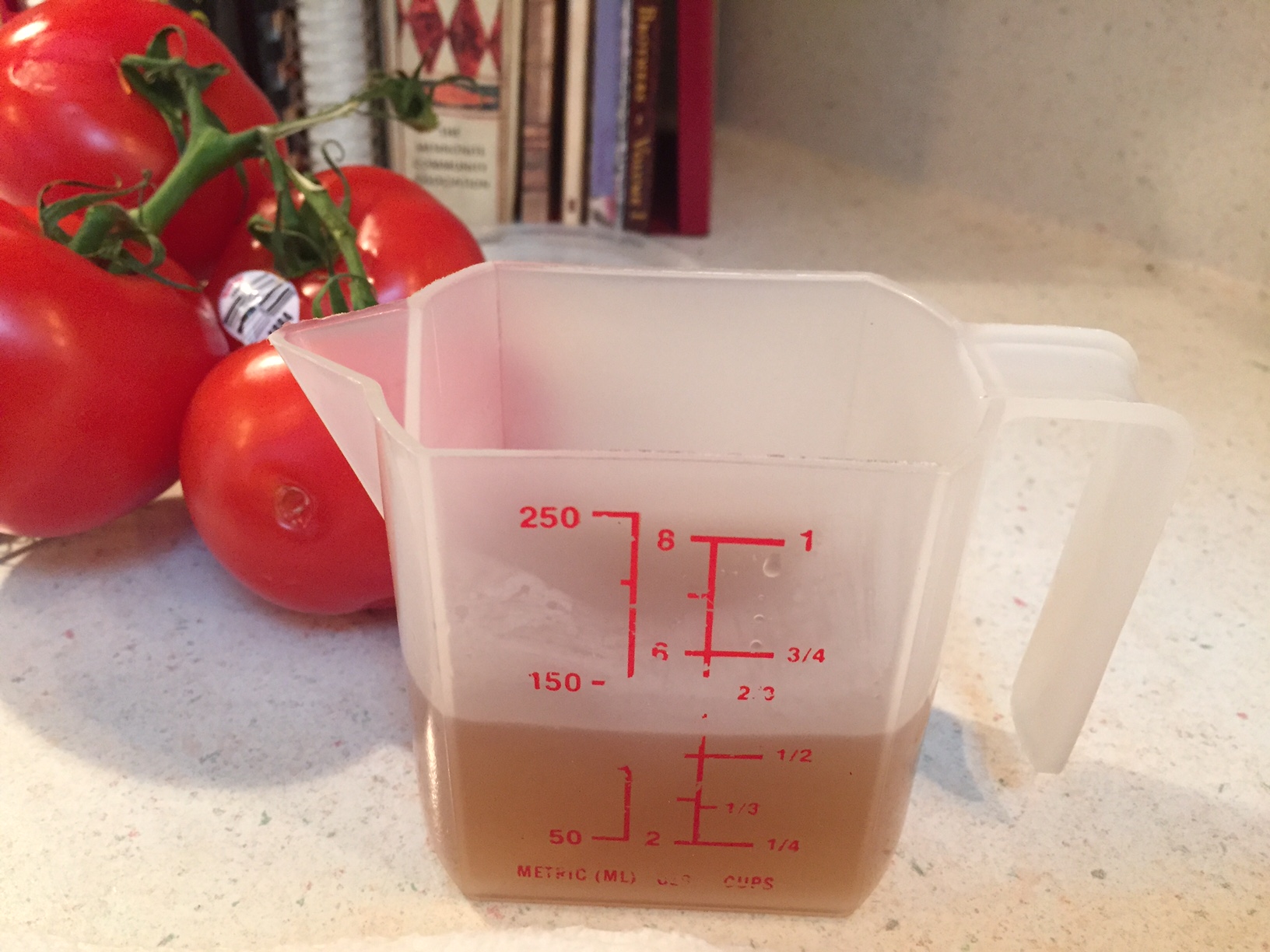
And I saved the broth from cooking the dandelion. “It’s good for what ails you,” I imagine Mother would say.

DandelionJuice

Finally, good enough to eat!

DandelionDishDone


Continuing the discussion of dandelion in The Morning Call, Sheehan quotes Patrick Donmoyer, an expert on Pennsylvania Dutch folklore, who believes eating dandelion greens is symbolic. “Donmoyer, who lectures at the Pennsylvania German Heritage Center in Kutztown, reports that some people believed that the dandelion were special, holy even, gathered as they were during the week leading up to Easter.”

Christians observed Easter nearly a month ago, but beginning Friday evening, Jewish families observe Passover, enjoying the ritual of the Seder meal. Surely no bacon will be served, but the menu will feature eggs, symbolizing renewal, and bitter herbs, signifying the agony of Hebrew enslavement in Egypt.

Traditional Seder Menu, Source: myjewishlearning.com

You can see a fully furnished Seder table here in a previous post. I wonder whether dandelion, like horseradish, would qualify as a bitter herb.


Question Mark w border1_1x1_300

What rituals do you observe in the spring – eating certain foods? cleaning house? planting a garden?

Do you have a dandelion (or endive) recipe to share, or an experience of eating the dish? Have you observed the Passover Seder?


Coming next: All Creatures Great and Small: The Power of Pets