The Longenecker Sisters’ Road Trip, Part 2

We pile into Heidi’s shiny black Toyota 4Runner in Jacksonville and off we go, zooming across state lines, first Florida, then Georgia, and finally South Carolina, our voices twanging to Doo Wop tunes of the 50s and 60s: All Good Vibrations as miles melt away.

Bouncing along with our luggage are my sisters, Janice and Jean and our daughters, my niece Heidi and daughter Crista, who have masterminded a Mother’s Day retreat for mothers and aunts.
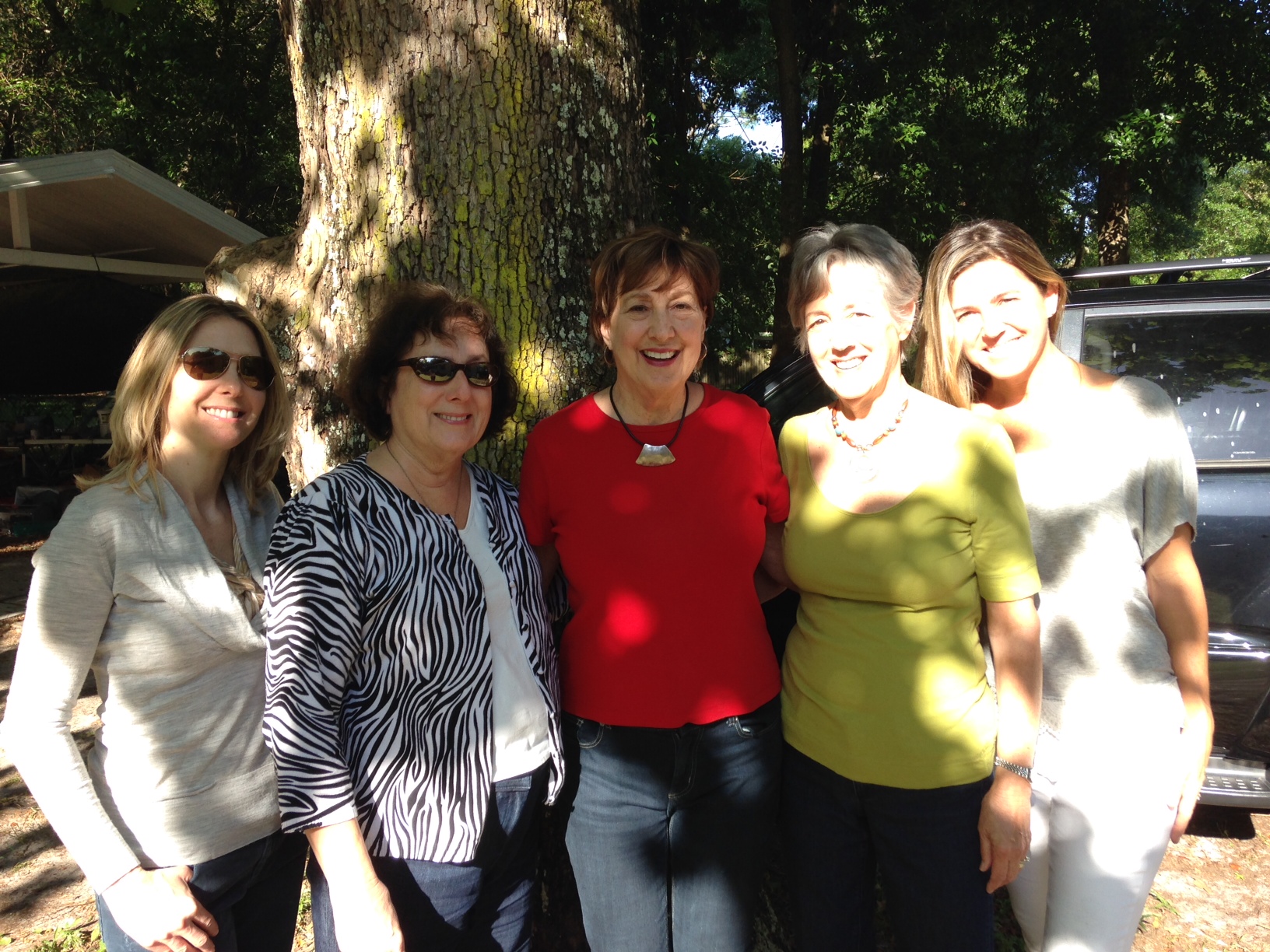
Our faces reflect the weather, begun sunny, a patch of rain, and then bright sunshine again.
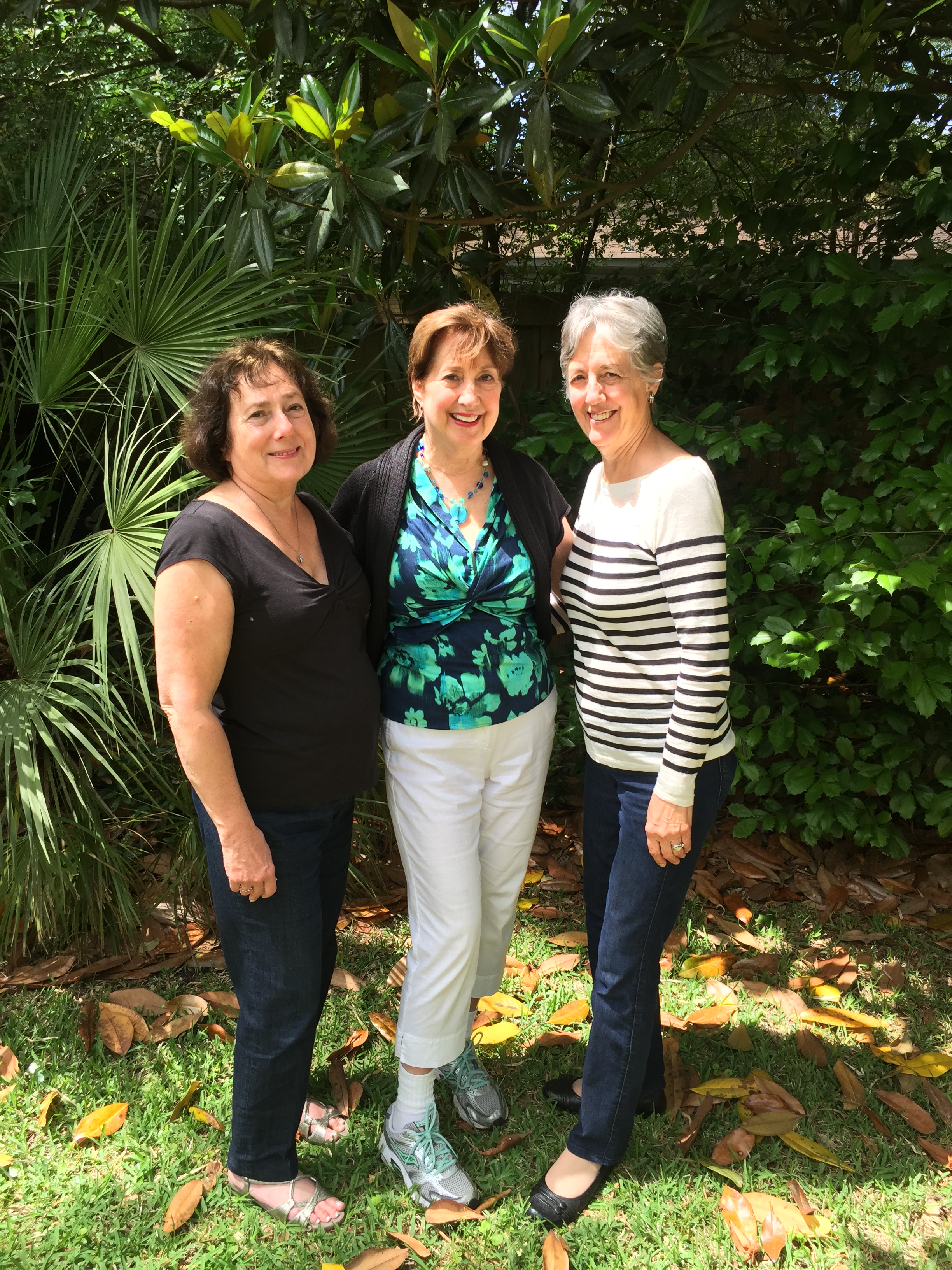
Our faces reflect the weather, begun sunny, a patch of rain, and then bright sunshine again. Left to right: daughter Crista, sister Jean, me, sister Janice, niece Heidi


Waiting for us in Charleston are historical venues and shops, restaurants oozing Southern charm, and a rented house in Mt. Pleasant on an island close to Charleston where for four days we’ll relax, exchange stories from the past and enjoy the sites.
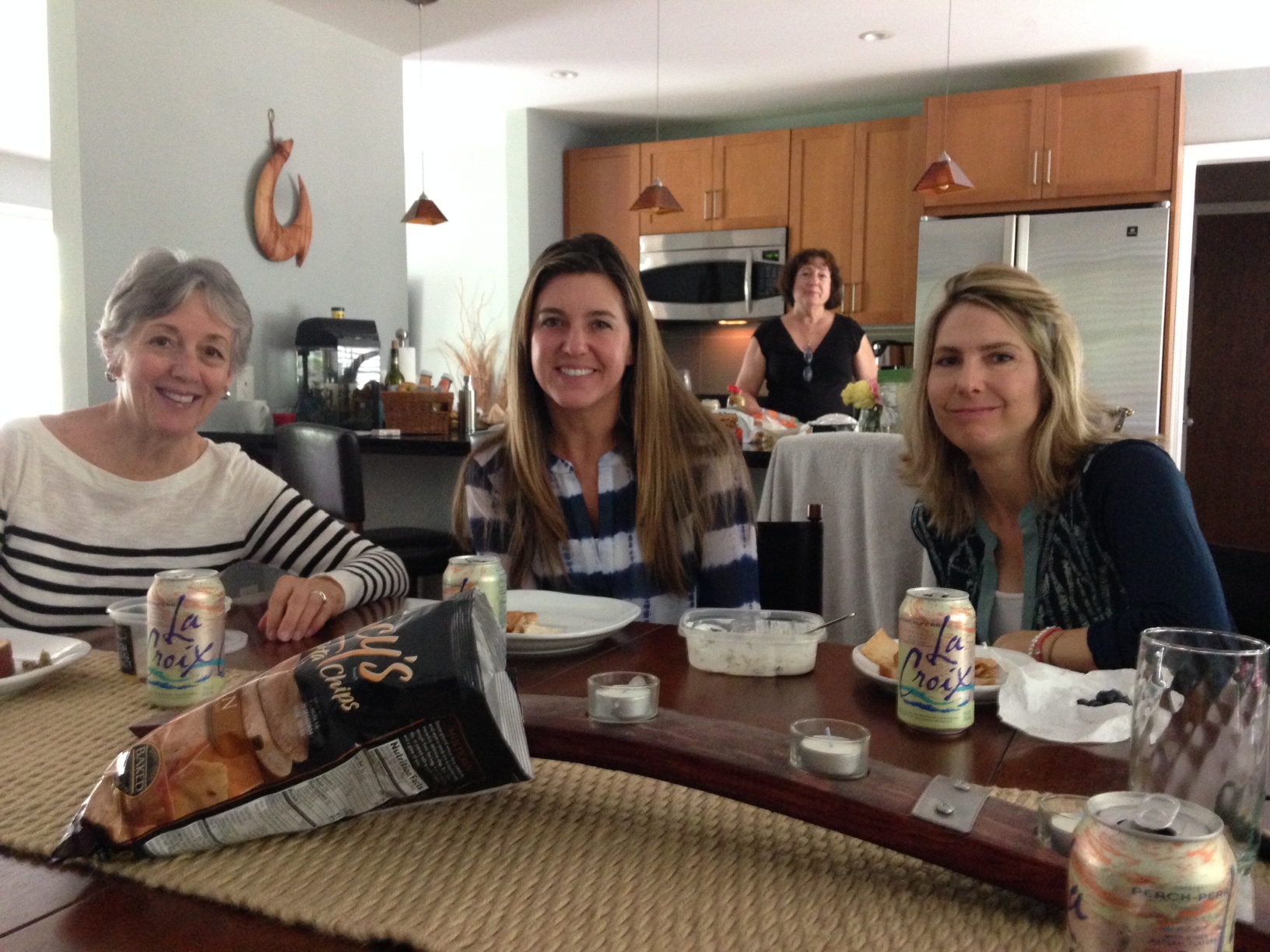
Kitchen


Backrub

There is a separate bedroom for each sister/aunt and a blue attic loft with two single beds and play table and chair, a little-girl hideaway for Crista and Heidi, wives and mothers themselves.

We enter the city in a downpour: flooded streets and a 4-day weather forecast fit for ducks. (I’m talking over a foot of water in the streets grazing the belly of our car!) Fortunately the weather system soon bubbles away into the Atlantic, and we roam the city without umbrellas. A miracle!

The Architecture
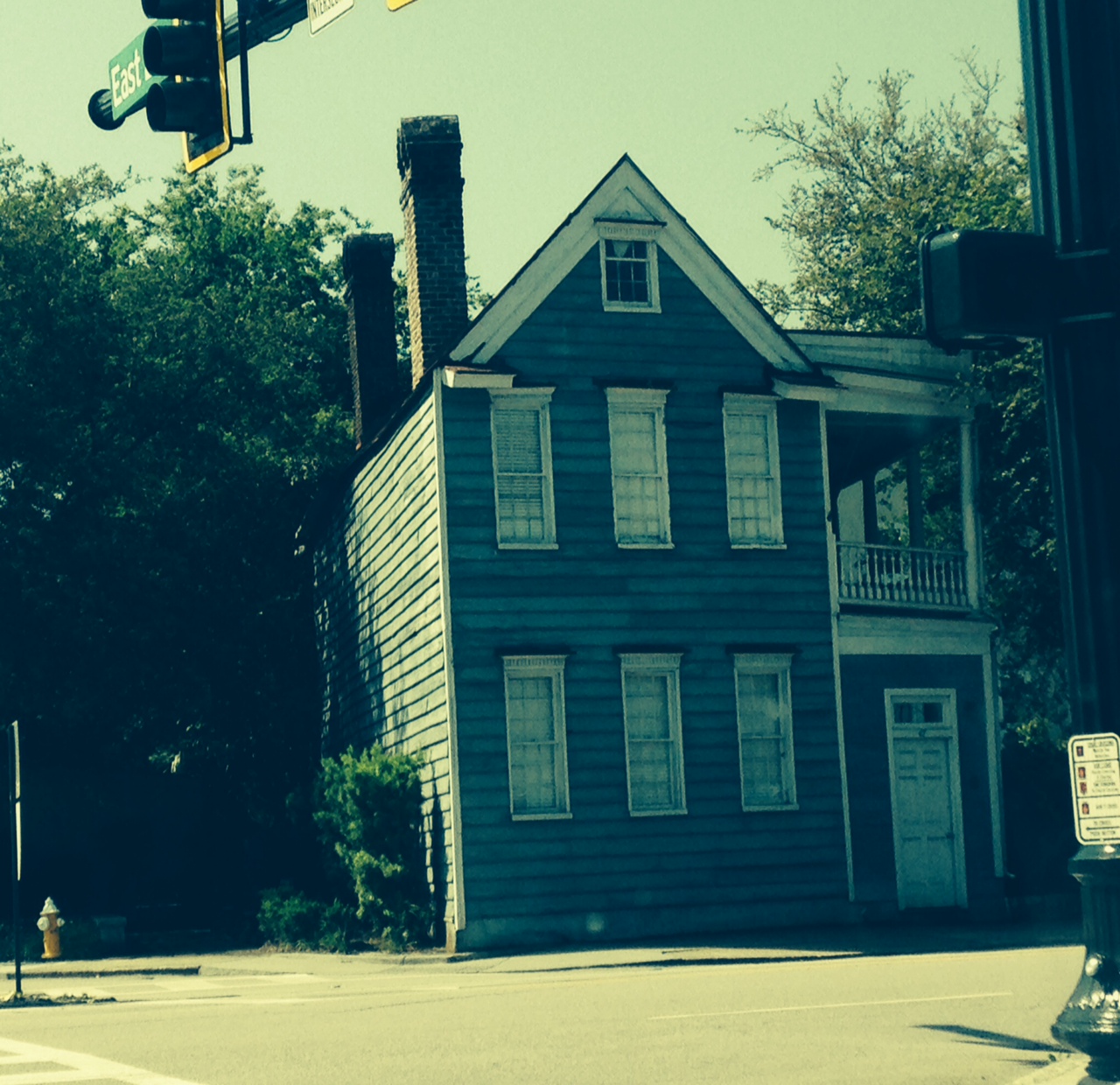
narrowHouse

Property taxes were calculated by the number of feet on frontage of the house. Thus, modest homes like the one above were narrow and tall. Fancy, opulent ones were also long, narrow and usually three stories high.
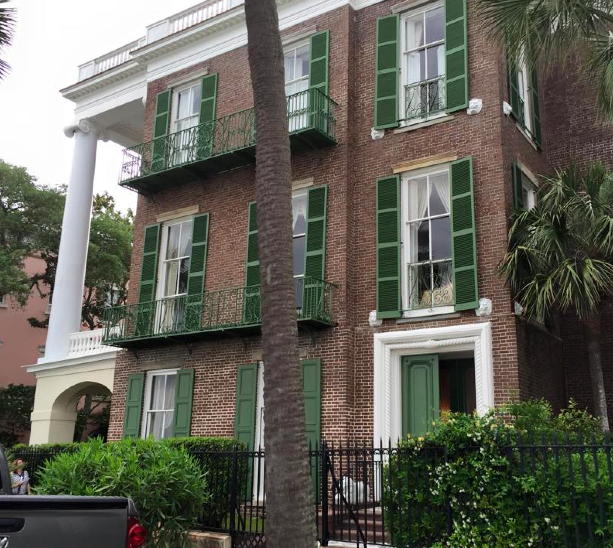
MansionCharleston

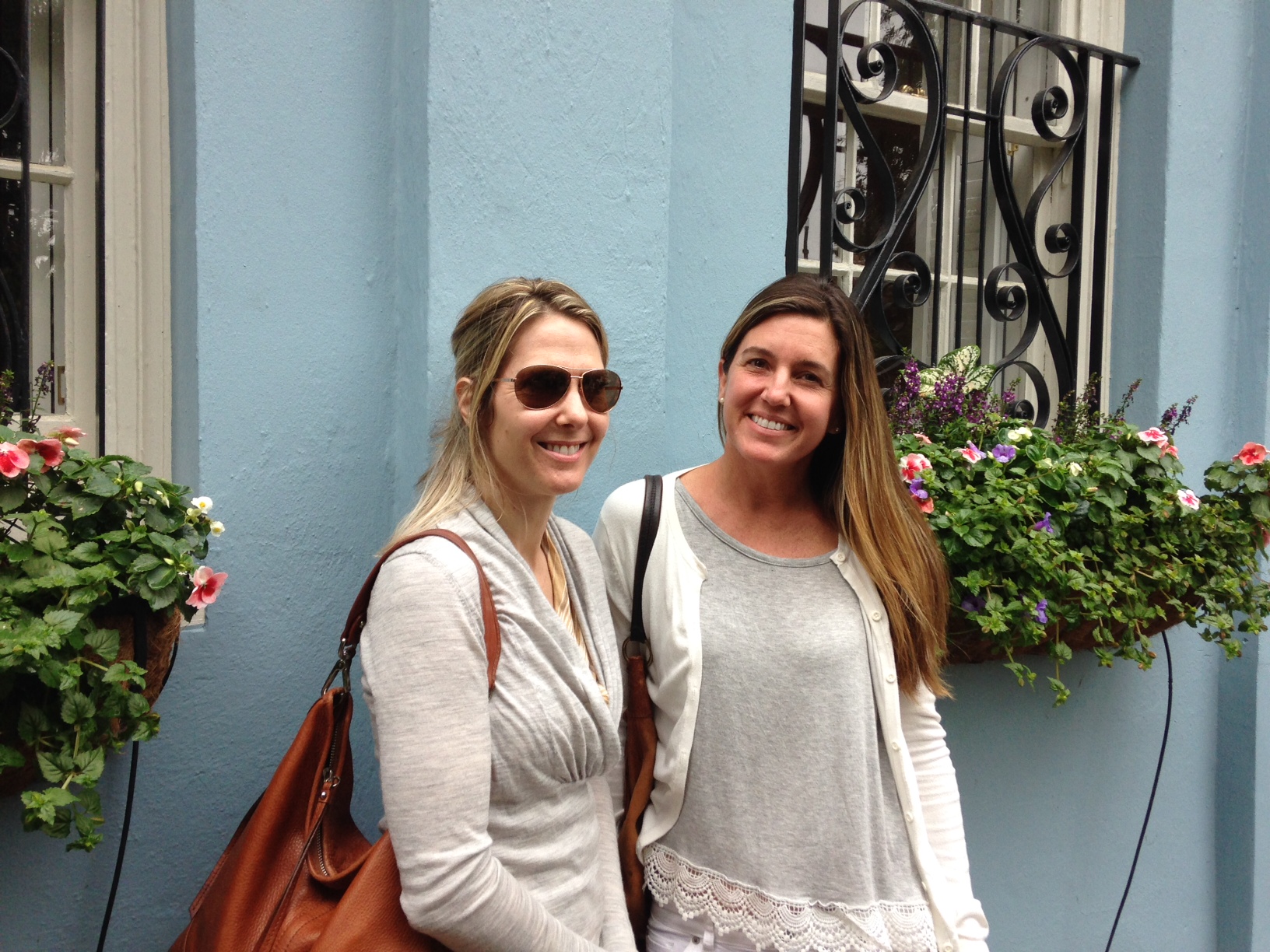
Window boxes offer extra garden space for historic homes that don’t have large front lawns. Simply glorious on our first cloudy day.
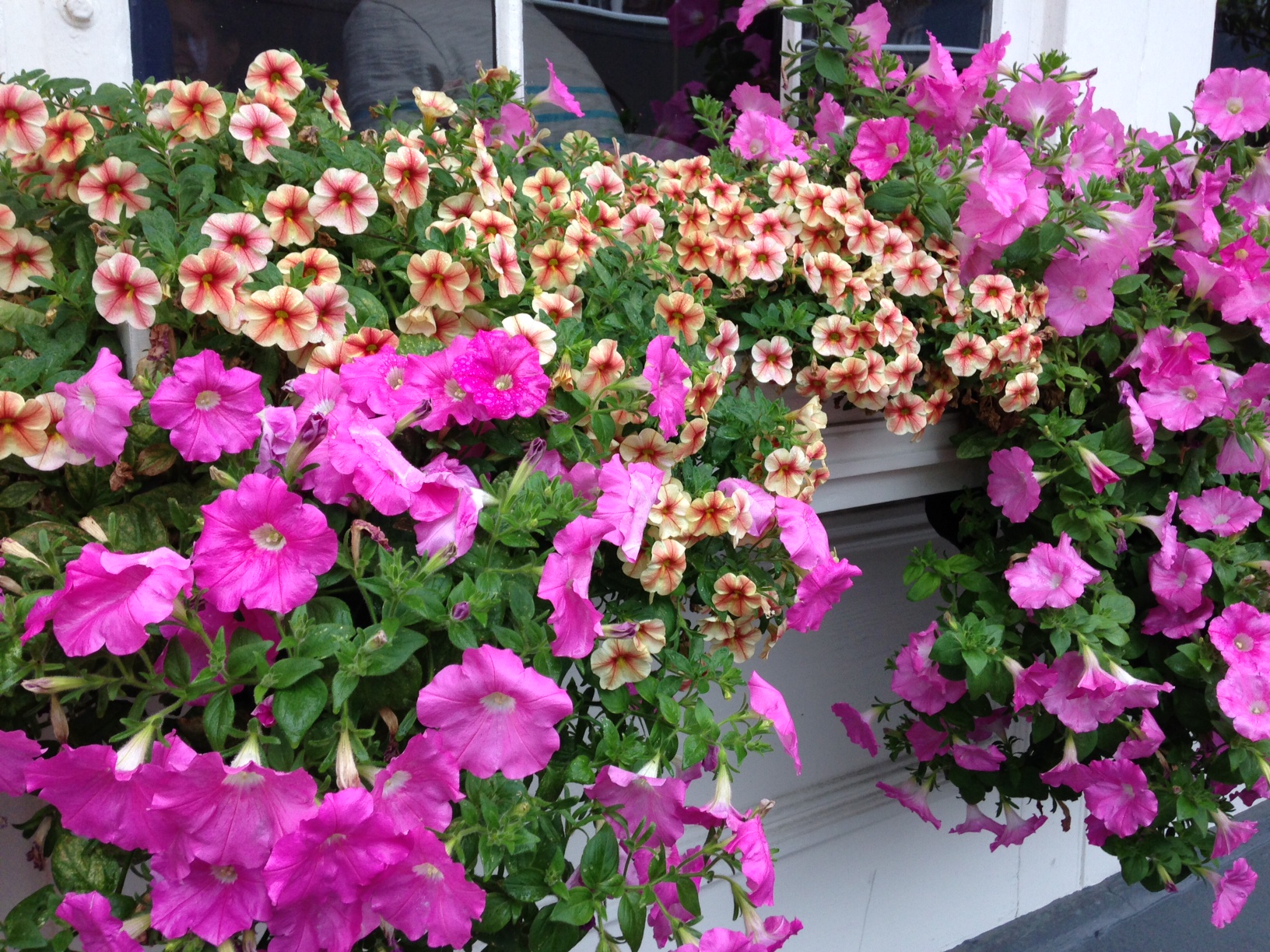

FlowersWindow1

Flowers2

Charleston with many Baptist, Methodist, Presbyterian and Catholic churches, along with Jewish synagogues, is called the Holy City because of its large number of houses of worship.
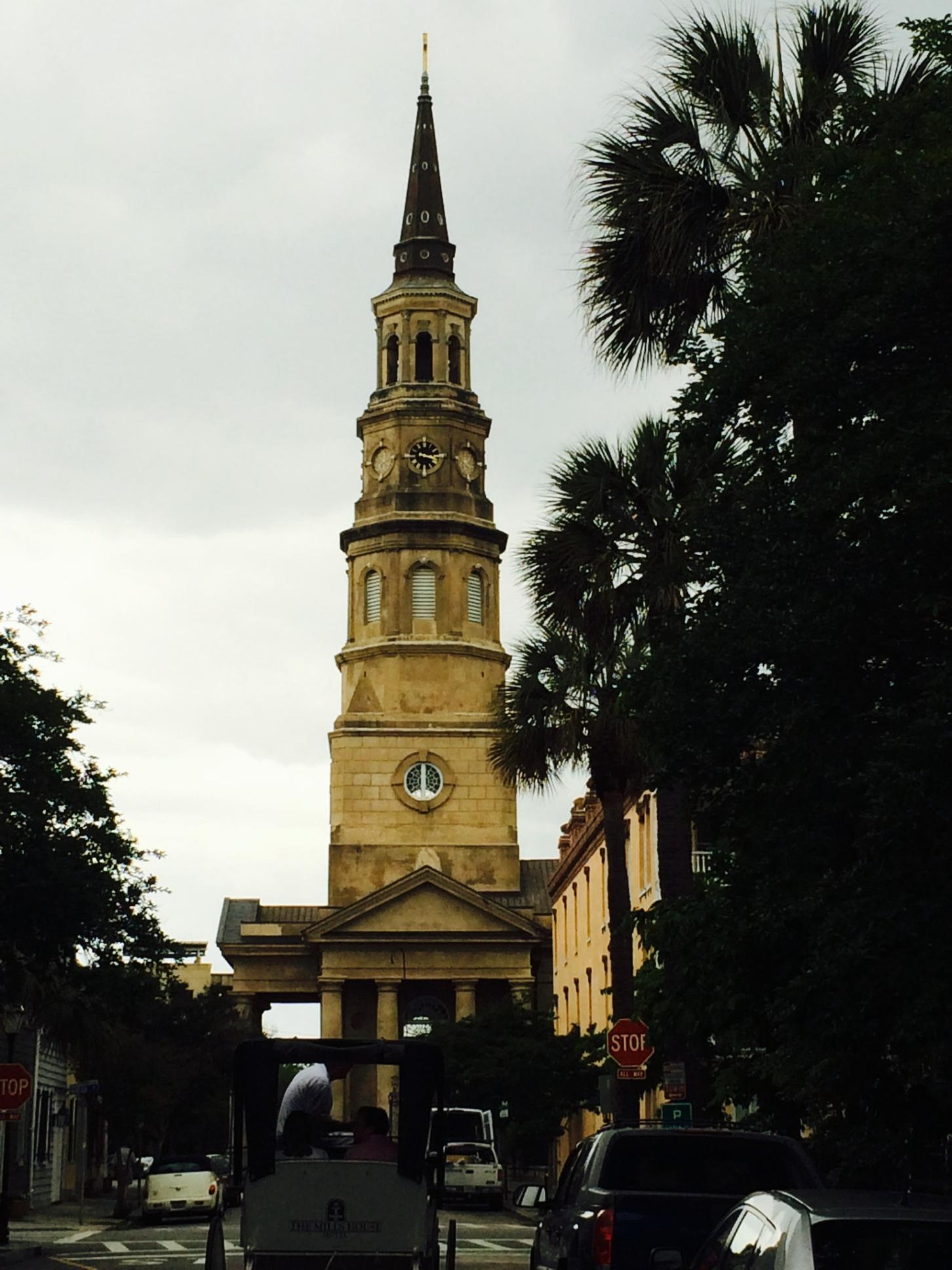
Cathedral of St. John the Baptist, Charleston, SC  Open filigree spire to withstand hurricanes, tornadoes.
Church of St. John the Baptist, Charleston, SC
Open filigree spire design built to withstand hurricanes, tornadoes.


How We Saw the City: Horse-drawn Carriage and Rickshaw Ride
horse.

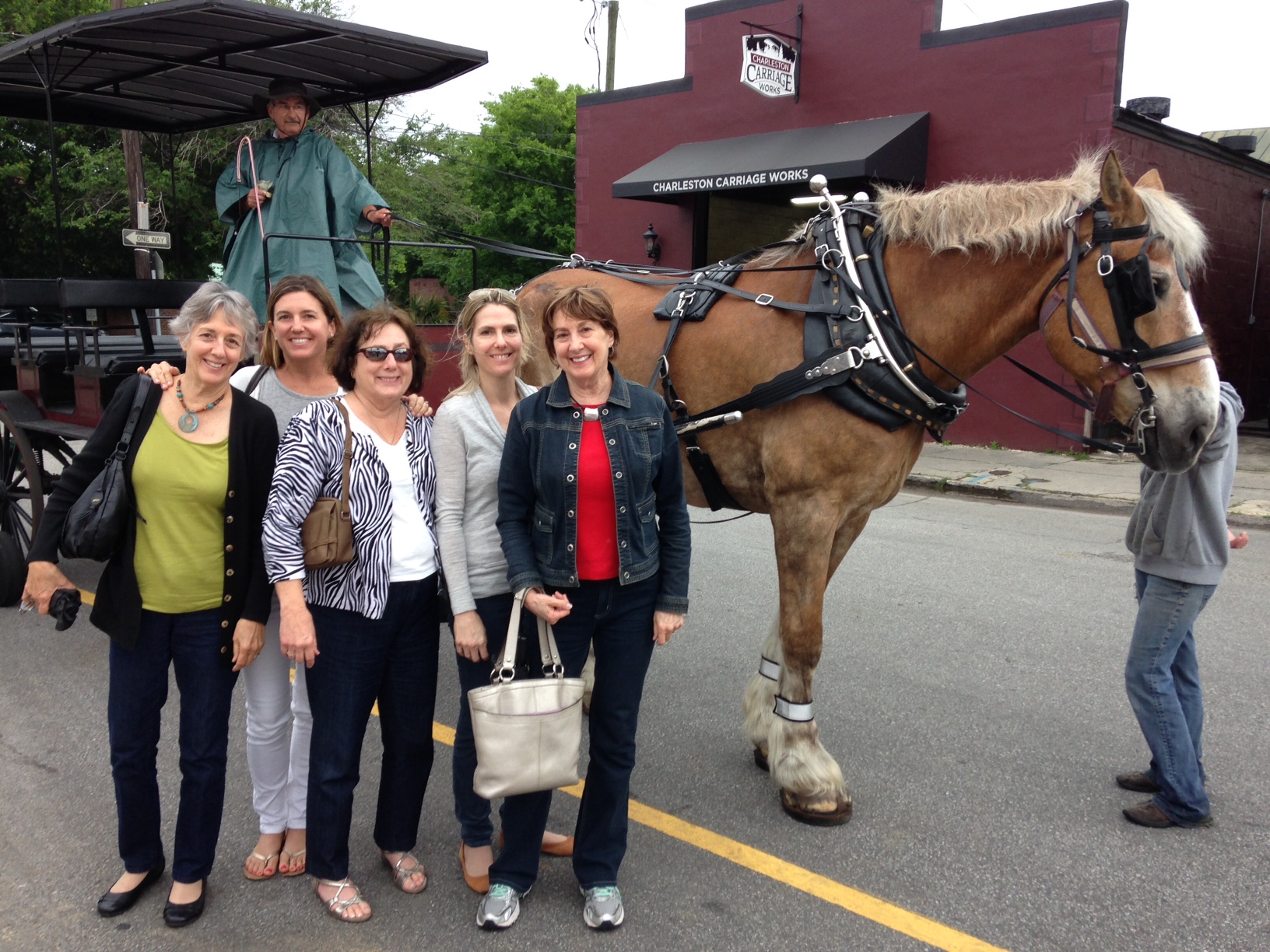
Our storyteller/guide with a salty Southern drawl says, “Our horse, Big John, has been imported from an Amish farm in Ohio.” We believe him though we don’t buy his line that he’s originally from The Bronx.

*  *  *

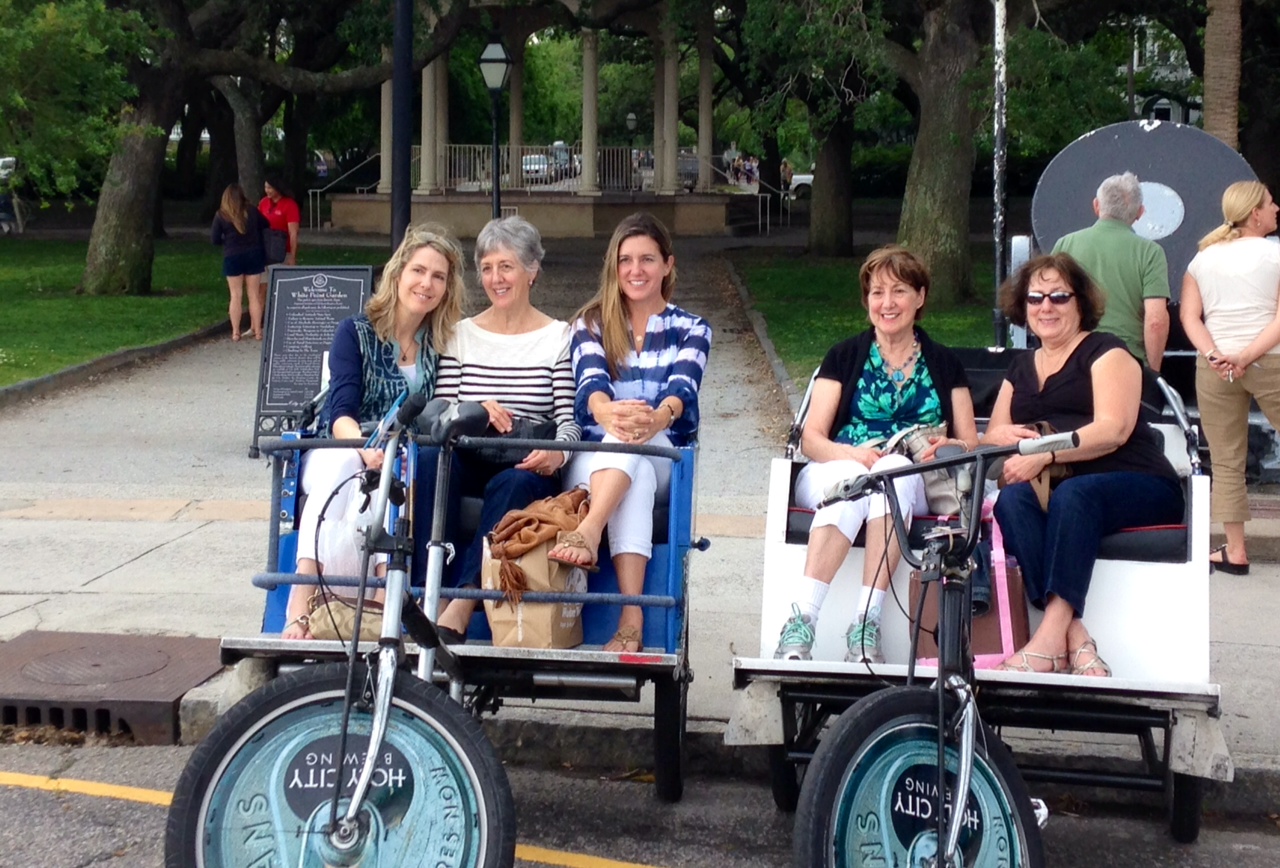
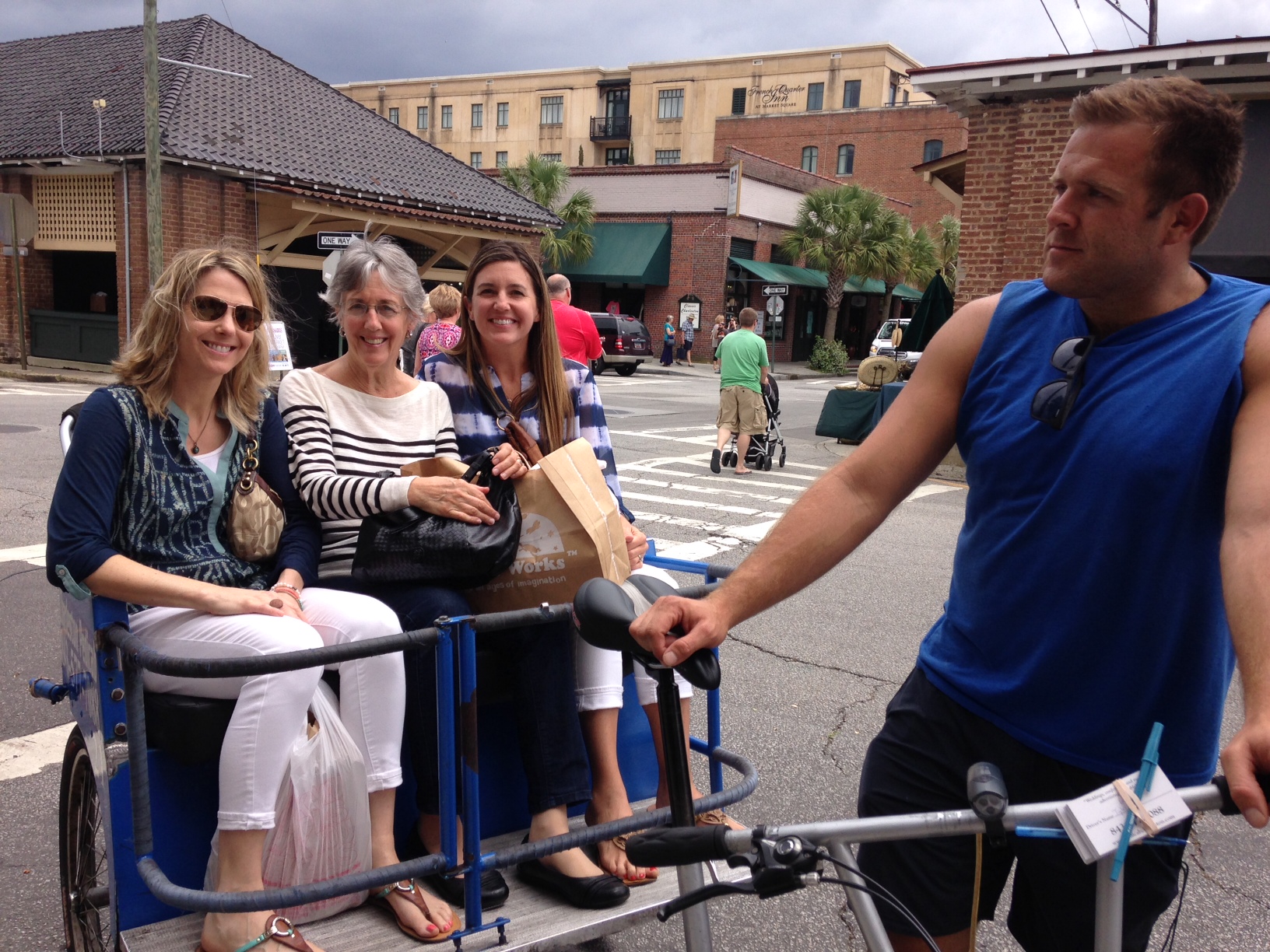
Our handsome bicycler hunk muses, “These ladies look loaded. What’s my tip gonna be?”  (Charleston Rickshaw Company)
rickshawGuy

 2rickshaws

 Shopping

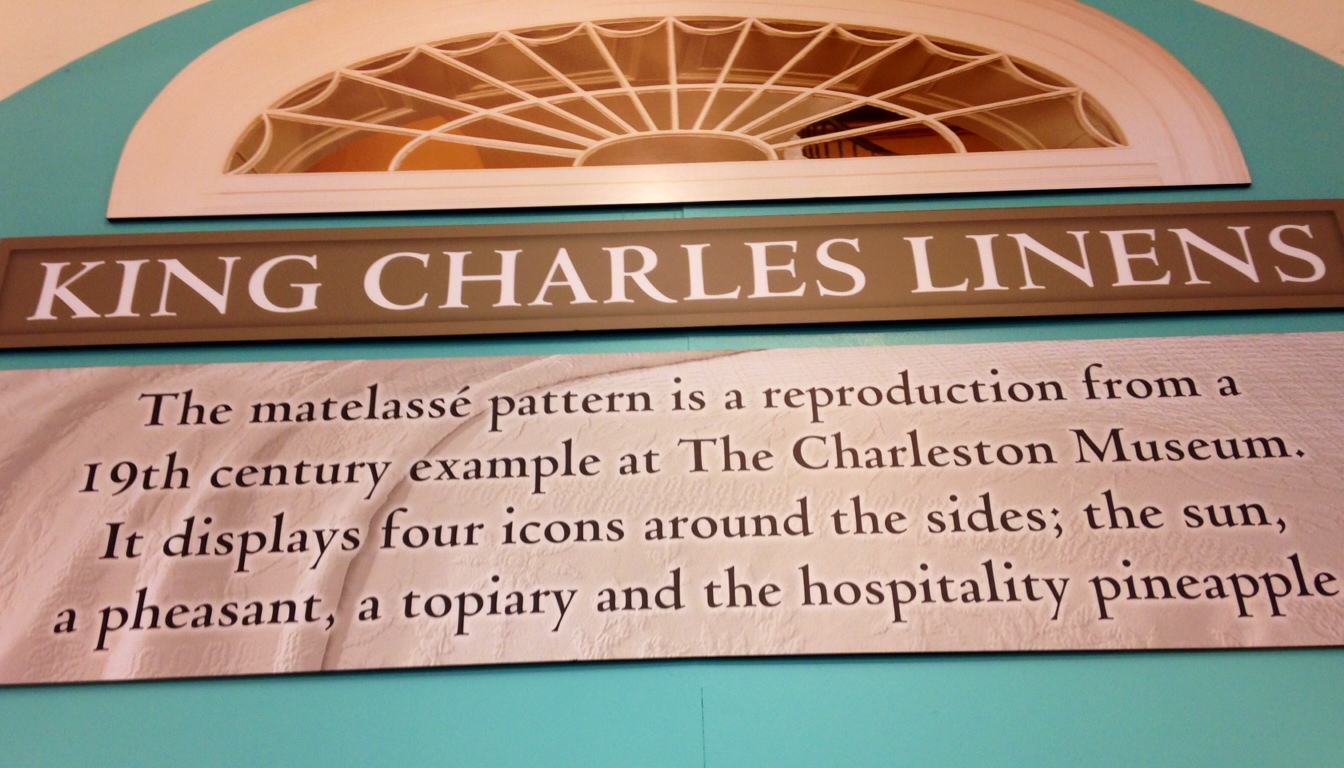
LinensKingCharlesJewelry

The former plain girls’ stash of jewelry and scarves from the Charleston Market on Market Street

Mt. Pleasant Mall on Mother’s Day
Shopping1

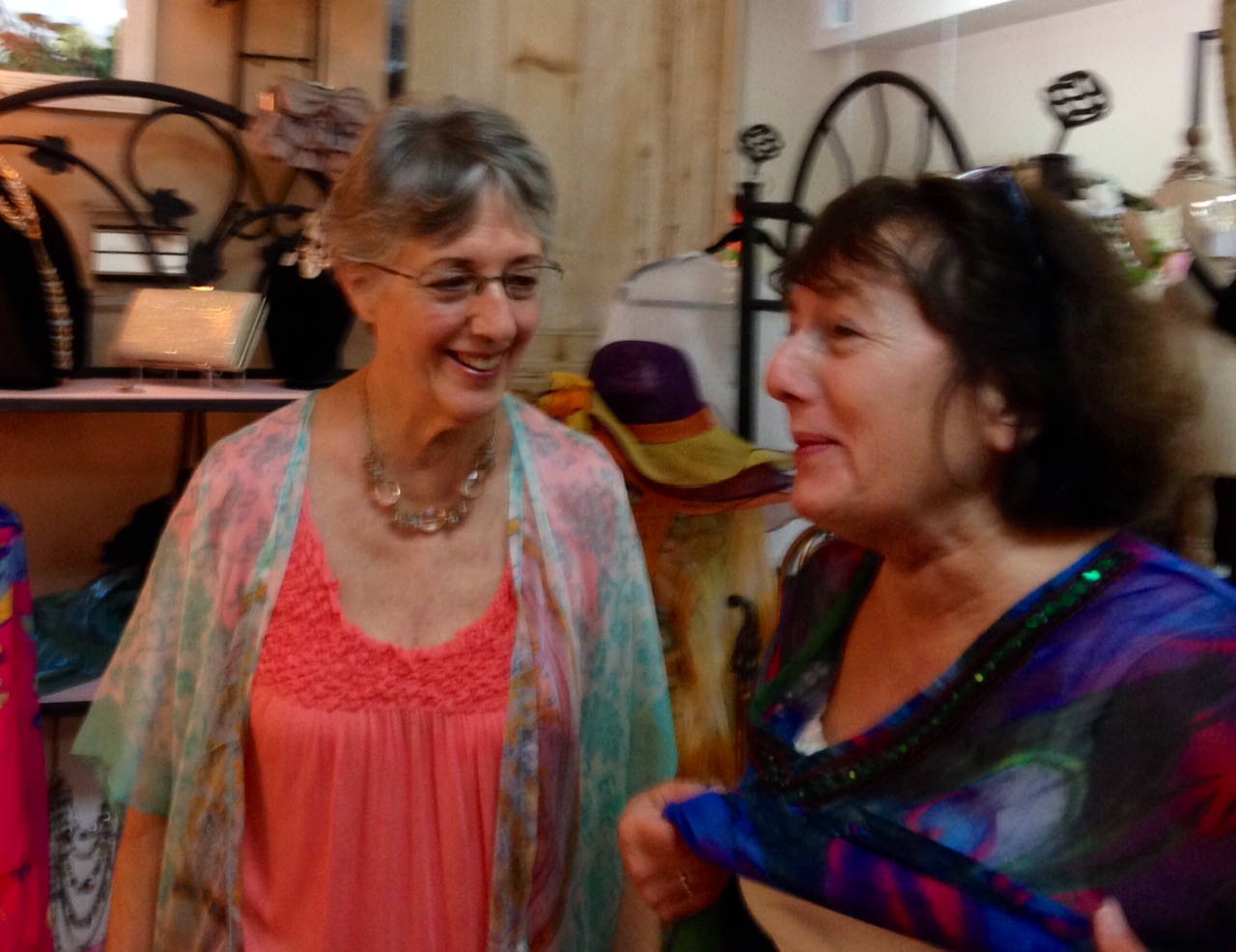
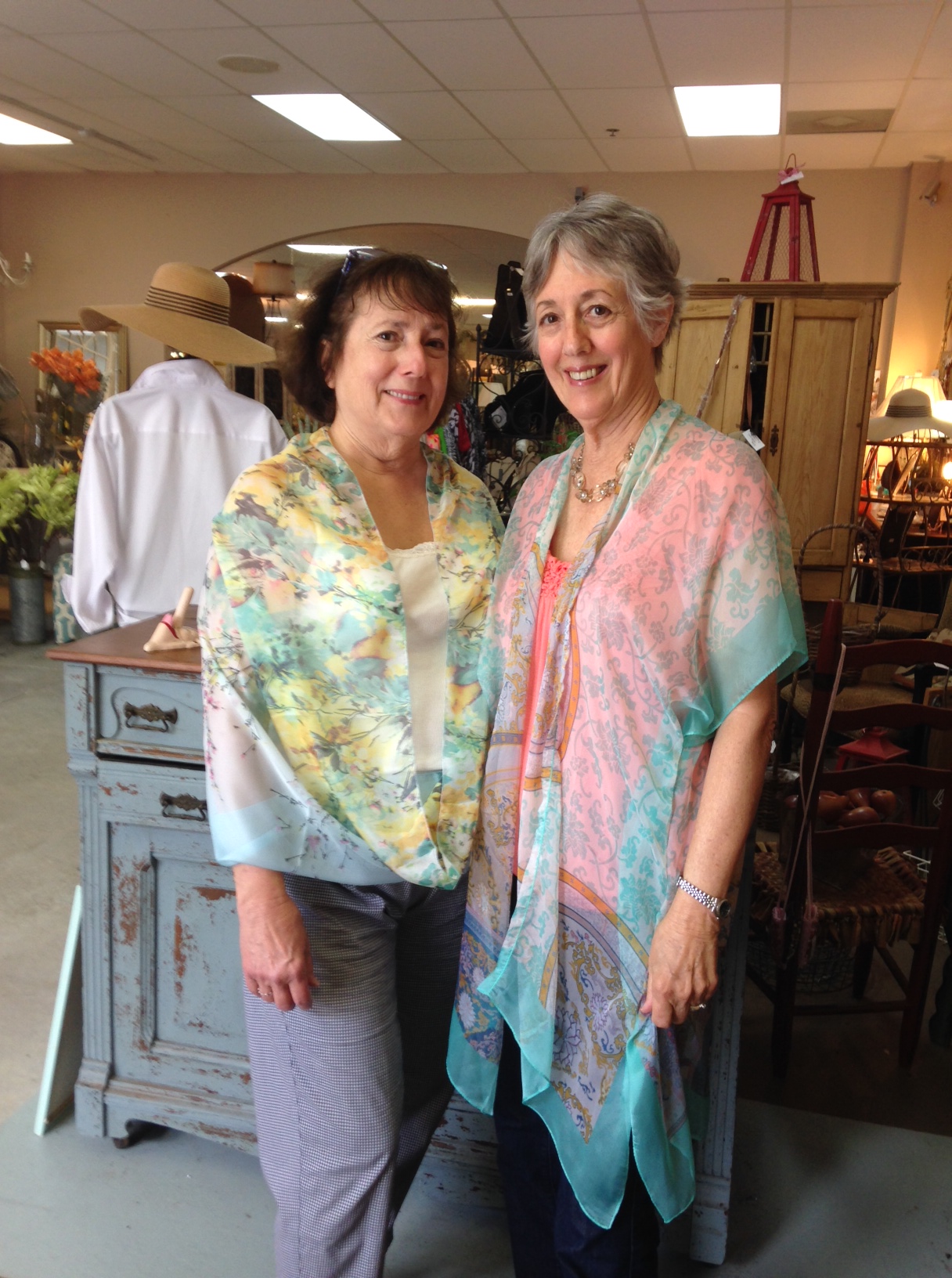
“Are these my colors? my sisters ask each other . . . Then I hear: “Remember when we played dress up with Mame Goss’s hats? Or Wedding under the Willows?” Ha ha!
Shopping2


Time to Eat

FiveLoaves

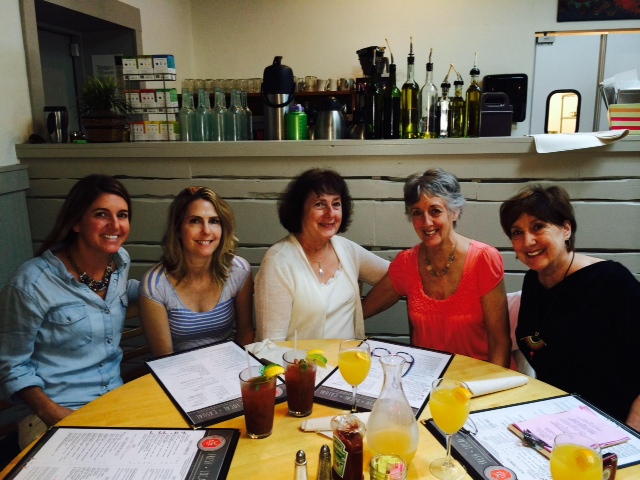
Mother’s Day brunch at Five Loaves in Mt. Pleasant with (below) a clearly scripted reminder to reflect and share our bounty:
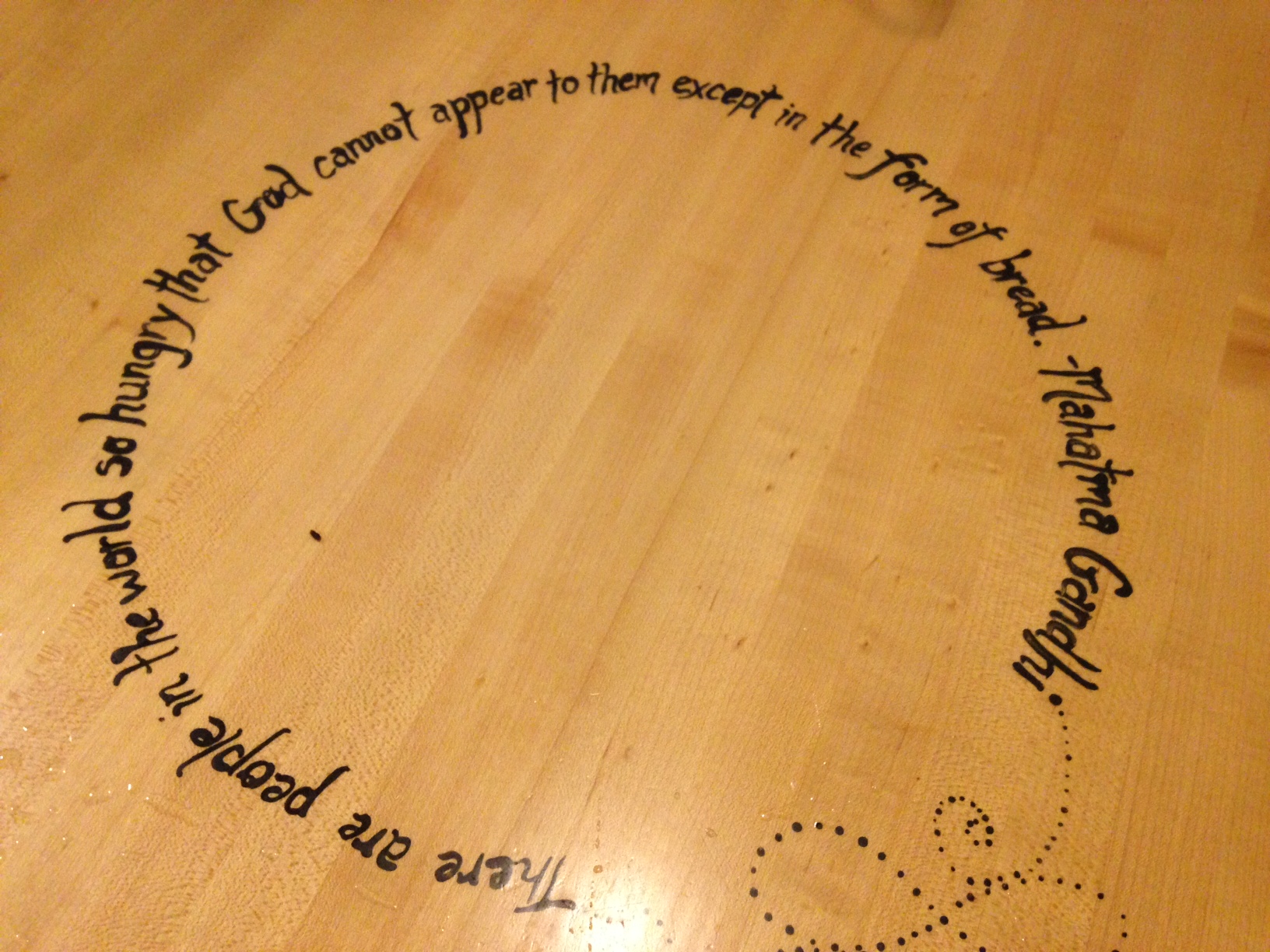
"There are people in the world so hungry that God cannot appear to them except in the form of bread."   Mahatma Ghandhi  (Also the mission of Samaritan's Purse and other charities.)
“There are people in the world so hungry that God cannot appear to them except in the form of bread.” Mahatma Ghandhi (Also carried out in the mission statement of Samaritan’s Purse and other benevolent groups.)


Magnolia Gardens

MagnoliaJan

FoxgloveHalfPpeacock

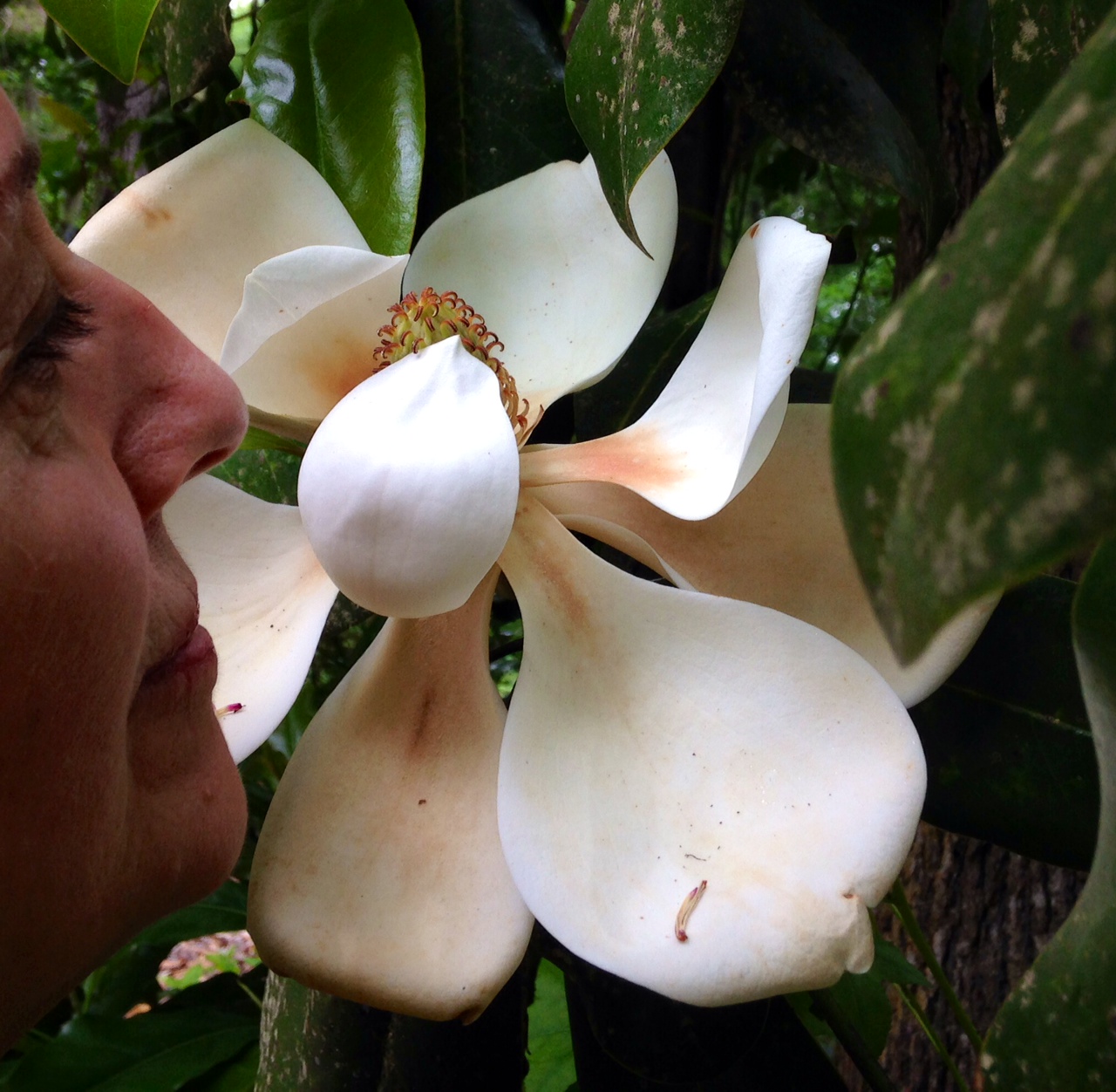
A magnolia bloom (with Janice), foxglove stem and a peacock about to unfurl fan feathers . . .  in the gorgeous Magnolia Gardens

A Smidgeon of History from Charleston SC, A Photographic Portrait

Founded by English colonists in 1670, Patriots fought–and won–the first decisive battle of the Revolutionary War here [Charleston] . . . .

Decades of growing strife between the North and South erupted at Fort Sumter in April 1861, launching the American Civil War:

Four cadets from the City’s military college, The Citadel, were among the soldiers who fired the first shots of the Civil War across the Charleston Harbor.

The city has also sustained more than one fire and an earthquake.

Good Vibrations
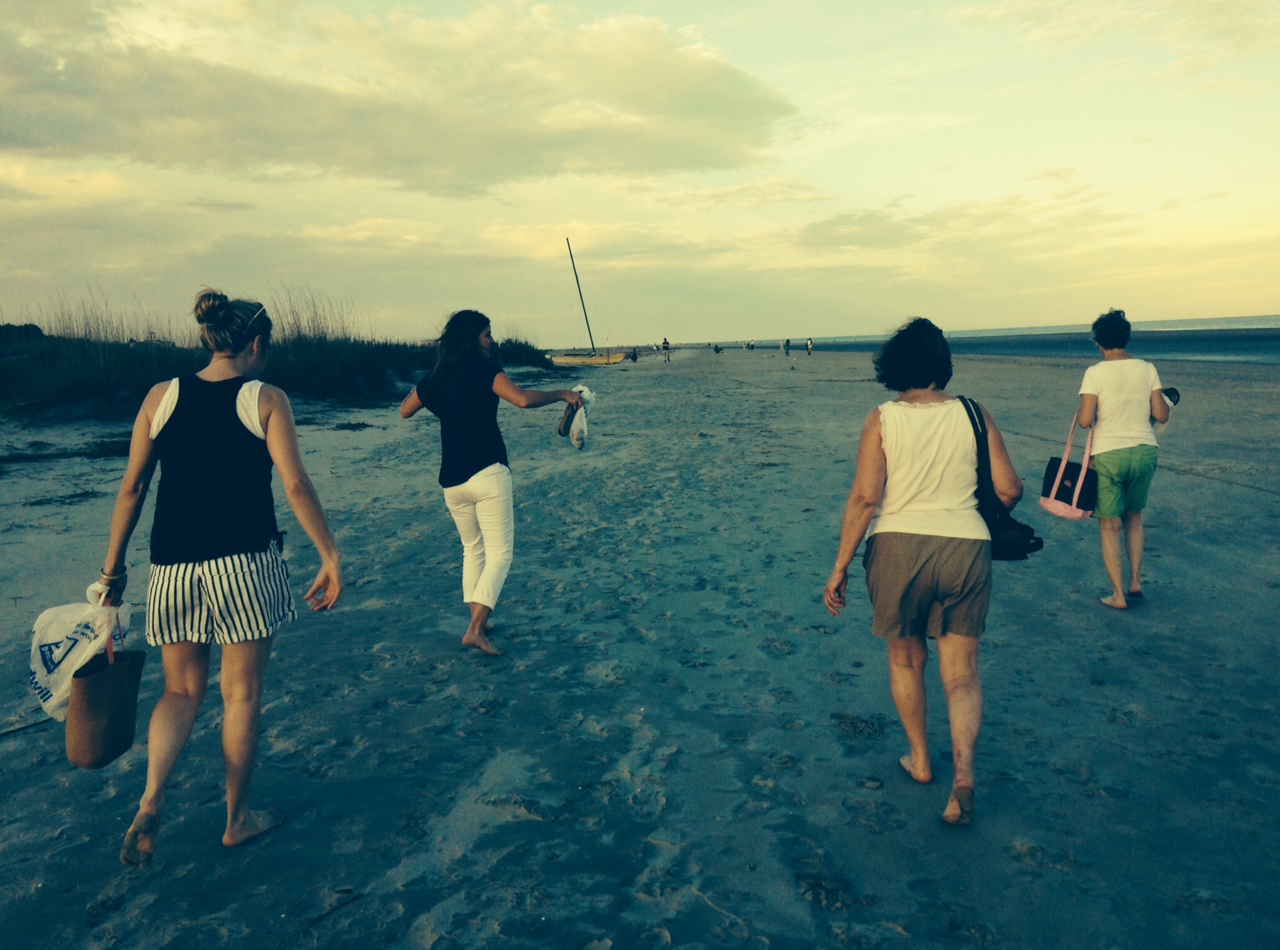
Sisters

BeachRear


Many thanks, you two!CristaHeidi


Research shows that sibling relationships are the longest-lasting relationships any of us will have in our lifetime. In the natural order of things, our parents will die before we do. We can lose partners and spouses through death or divorce. Typically, our siblings remain.

Road trips, siblings – your comments welcome!


Coming next: My Dad’s Bachelor Trip to Florida

The Longenecker Sisters’ Road Trip, Part 1

Girls’ road trips are part of the landscape of American pop culture. Who can forget Thelma and Louise? Wanting to take a short vacation from their dreary lives, Thelma (Geena Davis) and Louise (Susan Sarandon) head out from Arkansas to the Grand Canyon in a 1966 Ford Thunderbird. They stop at a roadhouse and it’s all downhill from there. Crime and mayhem ensue until finally the gun-toting girls and their car zoom over the edge of the Grand Canyon. Both Davis and Sarandon received Best Actress Academy award nominations (1991).

Image courtesy Wikipedia

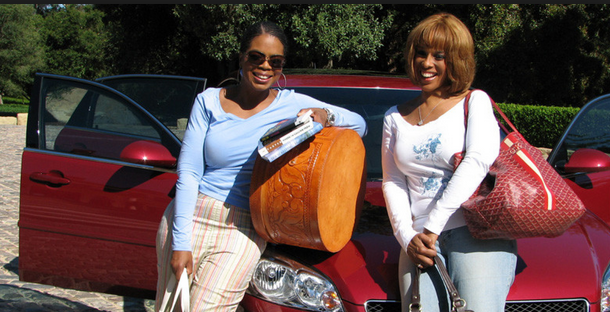
And what about Oprah and friend Gayle who took off in a much ballyhooed road trip documented on TV and watched by millions . . .

Image Huffington Post

Here’s how the Huffington Post encapsulates their excursion:

In 2006, Oprah Winfrey and her friend Gayle King embarked on what became a much talked-about (and hilarious) 3000-mile road trip across the country. When they weren’t cruising the highway in their red Chevy Impala, the two joined a local game of Bingo in Wichita, met some real-life cowboys on the range and crashed a wedding in Tulsa, surprising and amusing nearly everyone they came in contact with.

In spite of an anxiety-ridden moment on the George Washington Bridge, Oprah and Gayle completed their trip unscathed. When they returned to Chicago, Oprah handed over the keys to that Chevy to a deserving woman named Reola Holdaway.

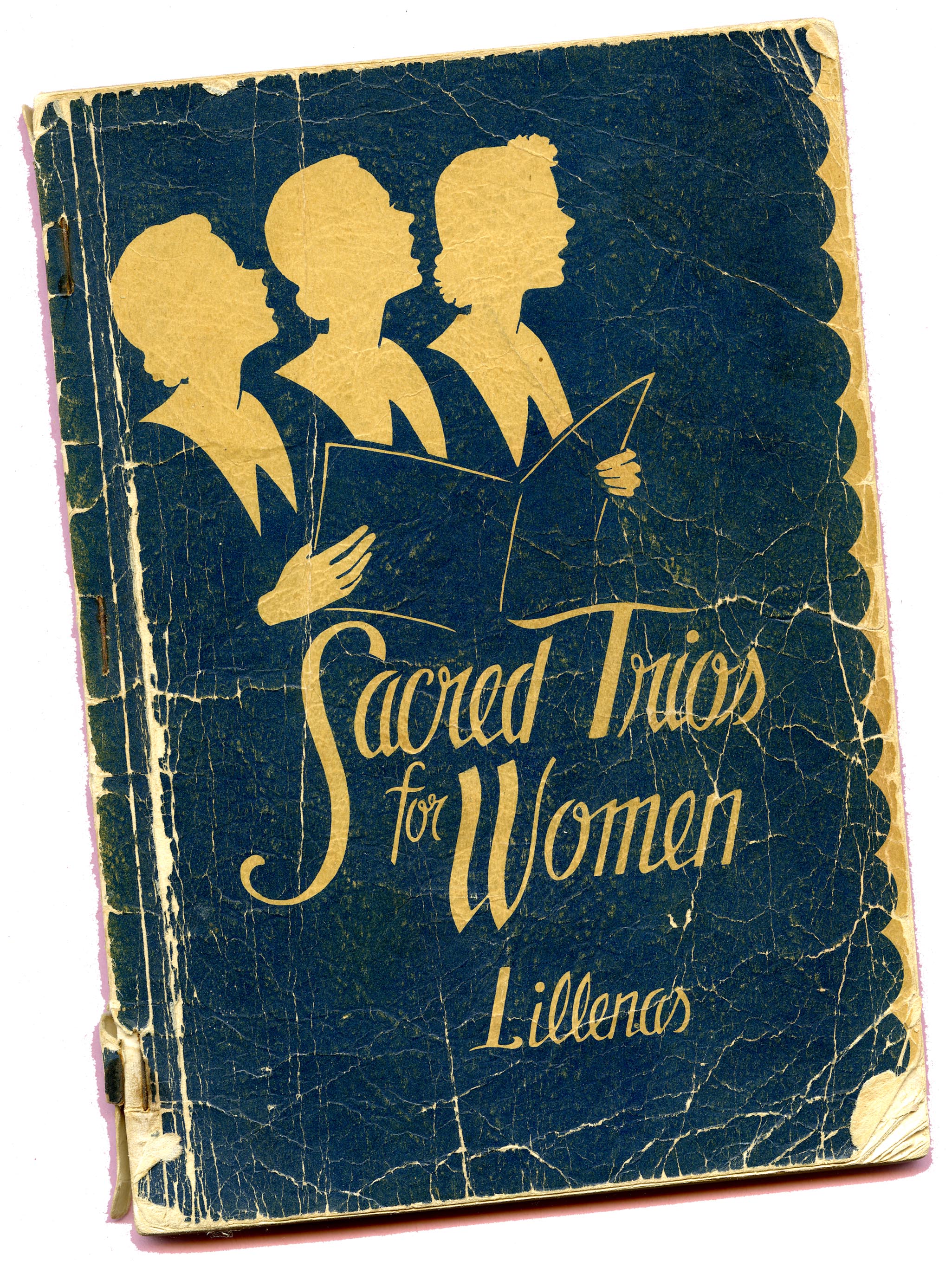
The Longenecker sisters, Marian, Janice, and Jean are not movie stars or TV personalities. None of us has owned a gun much less aimed one at a policeman as Thelma did. But as siblings, we have done many other things together — playing and fighting as children, working in the tomato patch in Bainbridge, PA, even singing in a trio at church, sometimes with less than perfect results.

Scred Trios_final_7x9_300

The last time any of us can remember vacationing together was back in 1977, the year Daddy broke all sales records at Longenecker Farm Supply, won a free trip to Jamaica and took the whole family including his married daughters and son Mark. We left our husbands and young children behind and frolicked in Ocho Rios for a week — just Mom, Daddy, my sisters and brother Mark.

As married women with children, we have met at least once a year at the Longenecker homestead in Pennsylvania. Recently, we have been clearing out the house after Mother’s death making decisions about her possessions together. And now, as a pause in our separate journeys, we celebrate with a road trip. So, you see, it’s high time to make more memories.

Whee!

The plan: My sisters and I, with two of our daughters, are gathering from Florida and Pennsylvania for a Merry-May celebration in Charleston, SC. We’ll get there by car and I’ll record our adventures here in two installments. It won’t be the Italian Riviera but we can refresh and renew our sisterhood close to the Charleston harbor inlet leading out to the Atlantic Ocean. And it won’t be Thelma and Louise, or Oprah and Gayle, but it will be Marian, Janice, and Jean.

Stay tuned for Part 2!

In the meantime, have you and close family members taken a road trip together recently or long ago? Tell us about the adventure here.

An Orphan Speaks on Mother’s Day

Mom+Marian_2 mos_5x9_300

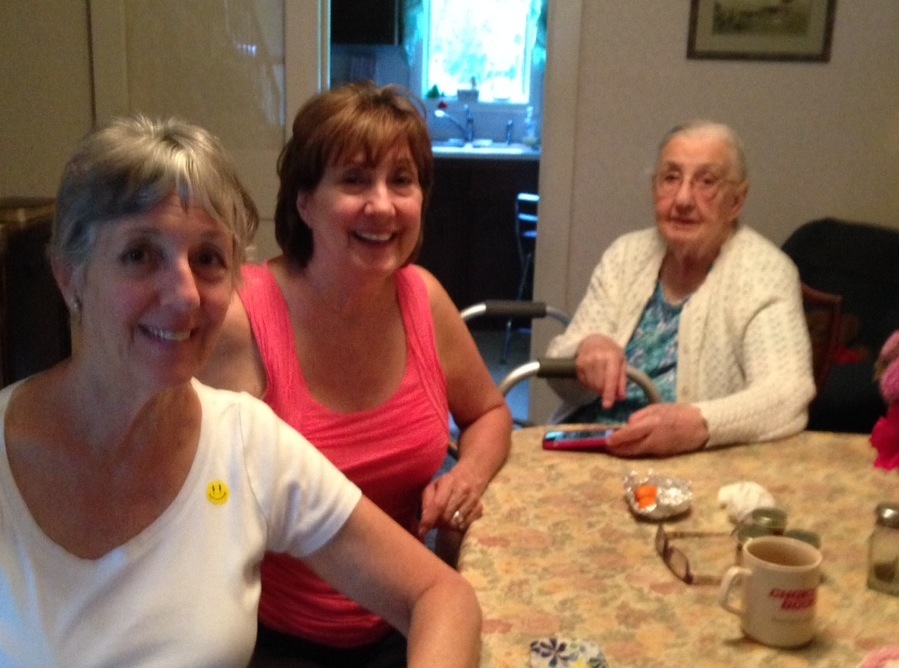
This is my first Mother’s Day without my mother, Ruth Metzler Longenecker. To say I miss her is an understatement of the highest order. Technically, I could be considered an orphan with both my mother and father gone. However, with my own extended family and considering my age, I doubt that such a designation applies.

Is there a word for my status without a living mother or father at my age? I wonder.

Mother lived a full life with many happy moments and good health until a few days before her death on July 28, 2014. Over her lifetime, she had seen phenomenal changes in American culture, including technological ones as shown here:

Mennonite Women_new phone_p89

Anna Catherine (Herr) Houser was speaking/listening on this candlestick phone in 1919 at the time Mother was a year old.  Credit: Mennonite Women of Lancaster County, Joanne Hess Siegrist, 1996, page 89.

The last photo I snapped of Mother with her finger hovering over my iPhone captures the moment she looked up momentarily from “paging” through photos of her grand-children and great grand-children.

MomLastPhotoTogether

David Whyte, Crossing the Unknown Sea

The death of someone closest to us is always a form of salutation, a simultaneous Goodbye to their physical presence and a deep Hello to a more intimate imaginal relationship now beginning to form in their absence.  (46)

A “deep Hello to a more intimate imaginal relationship”? We’ll see . . .

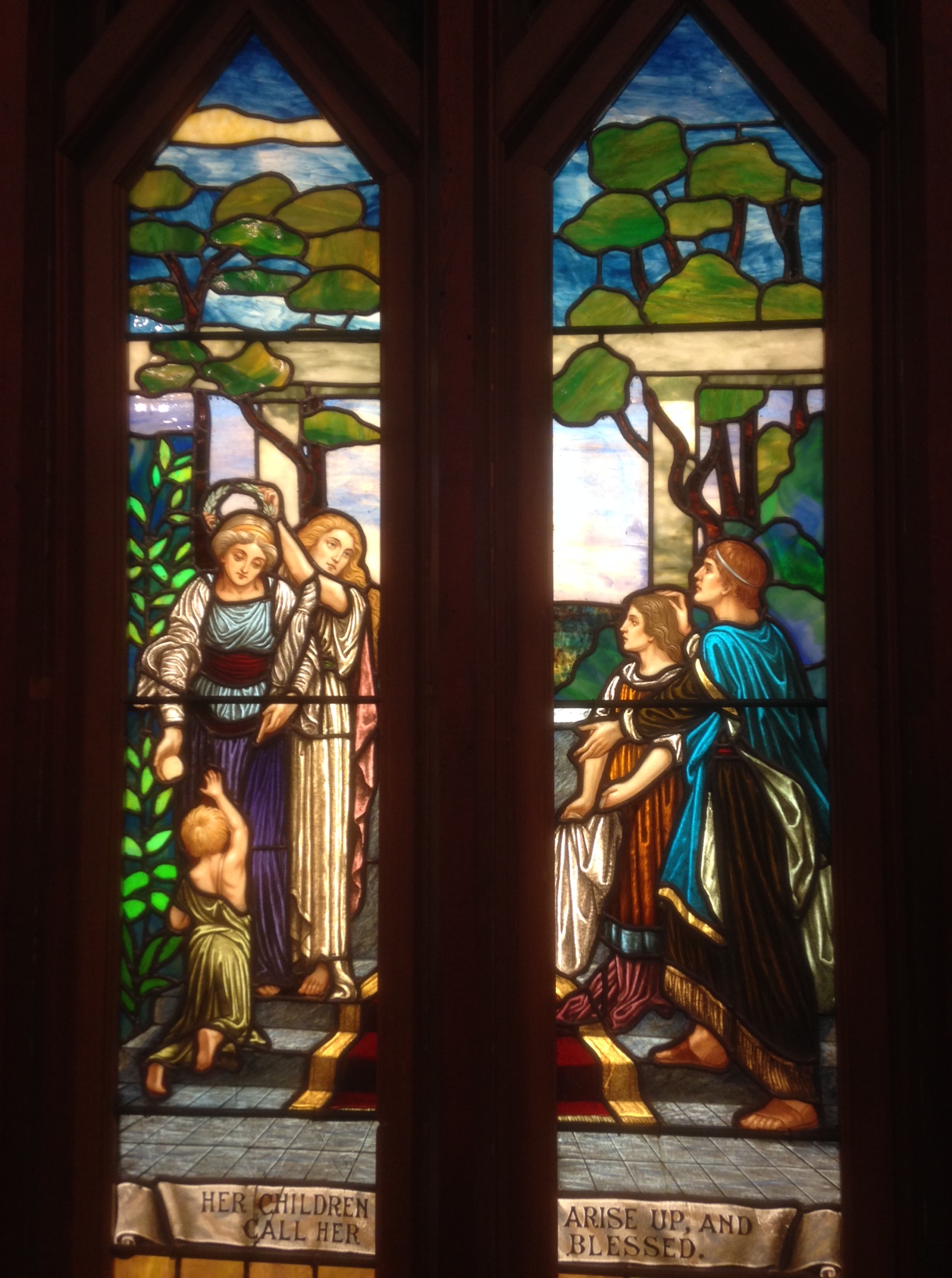
“Her children rise up and call her blessed.” Prov. 31:28
 Christ Church Frederica, St. Simon’s Island – Tiffany glass

Have you experienced the death of your mother or grandmother? If a mother, is there a word for one’s status now, bereft of a mother and father? Your suggestions always appreciated here.

Coming next: The Longenecker Sisters’ Road Trip, Part 1

Mennonite Girls Can Cook

Yummy Recipe

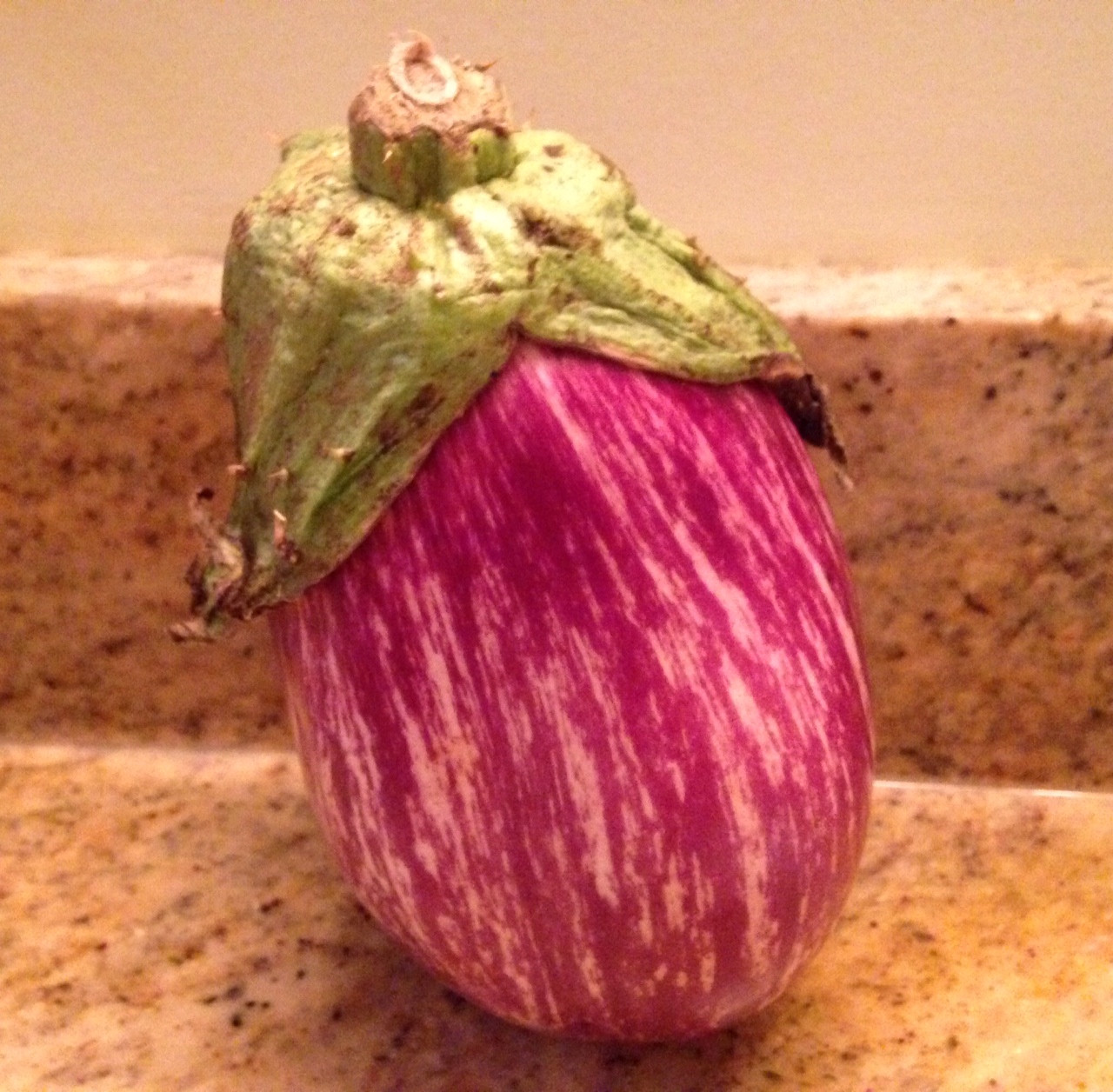
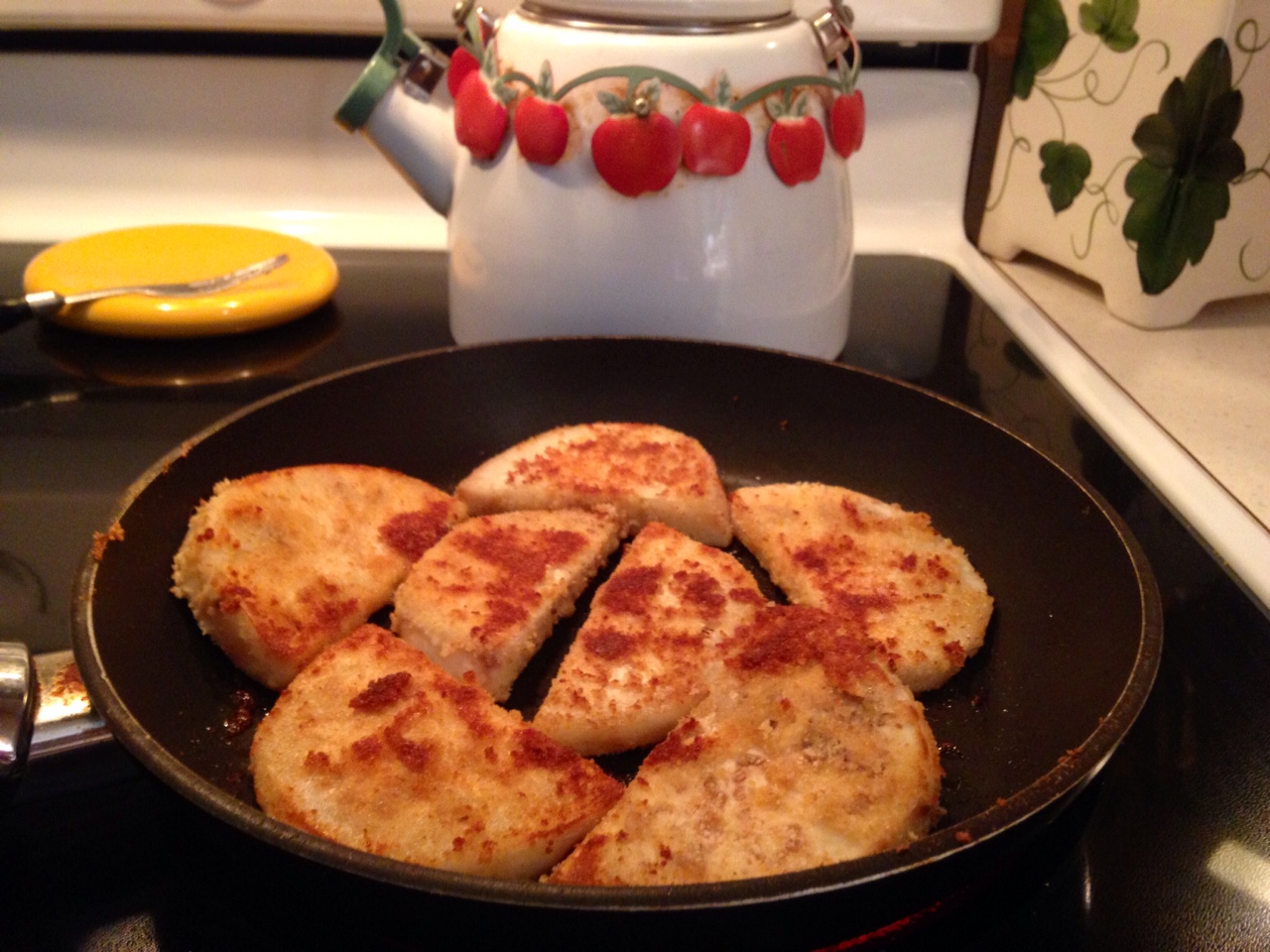
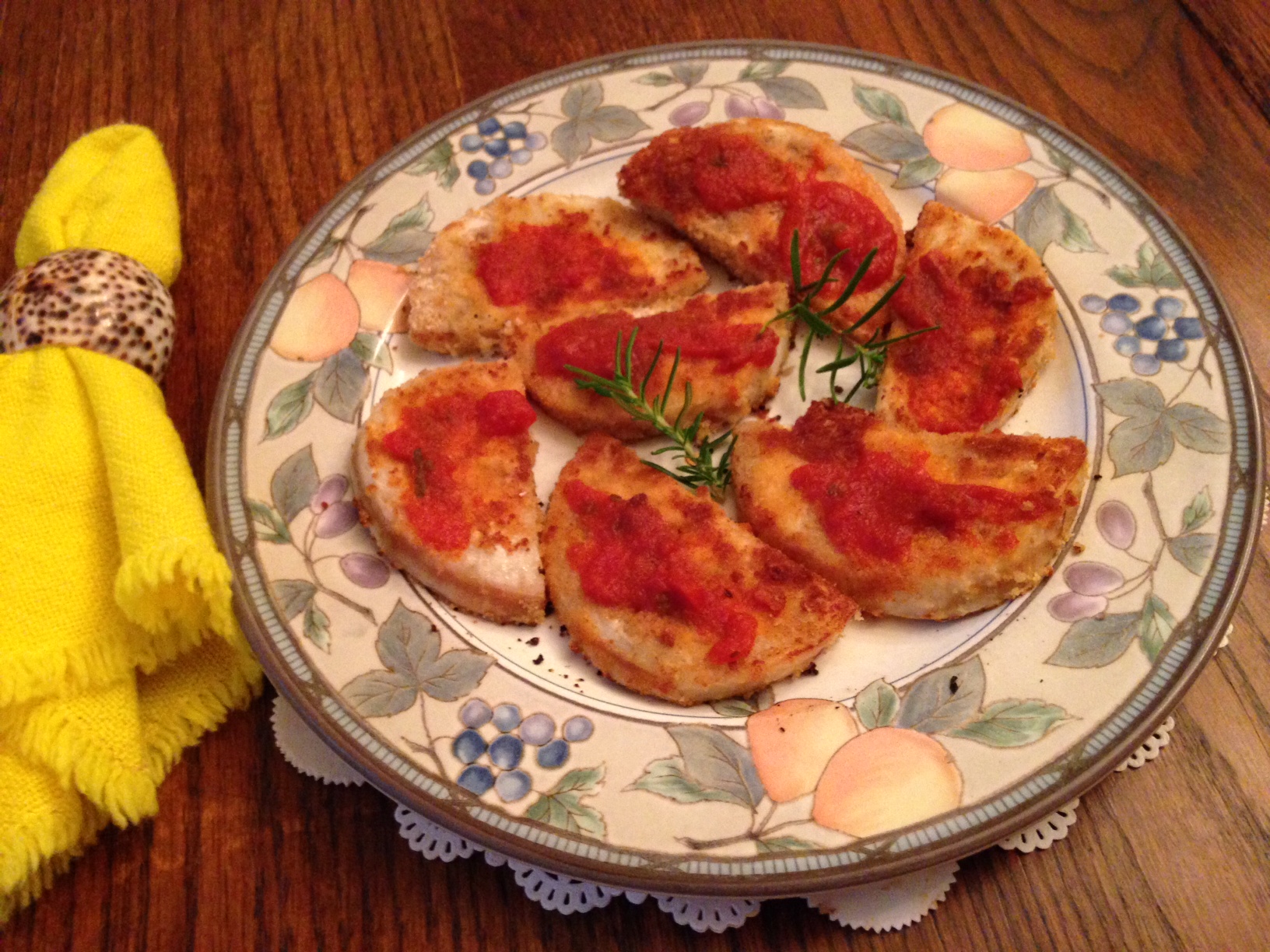
Last week I was in the kitchen with my nearly vintage Mennonite Community Cookbook (1978) creased open to page 155 where I checked out the recipe for sautéed (Okay, I’ll admit, it’s fried!) egg-plant. Hours later when my new and improved Mennonite Community Cookbook arrived in the mail, I quickly turned to page 155, and behold there was the same egg-plant recipe contributed by Mrs. Hubert Pellman, wife of one of my favorite English professors at EMC. No, I didn’t use the new cookbook because I didn’t want to splotch it up. But when I switch over I’ll enjoy the spiral notebook style of binding and other updates on the new edition.

EggplantStriated

EggplantFrying

EggplantServed

Here I substituted olive oil for lard.

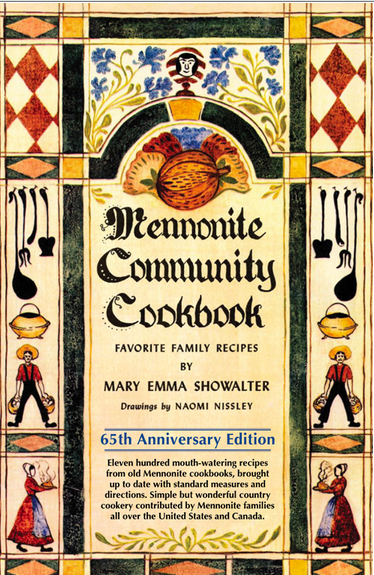
Blurb from the Old Mennonite Community Cookbook: First published in 1950, Mennonite Community Cookbook has become a treasured part of many family kitchens. Parents who received the cookbook when they were first married make sure to purchase it for their own sons and daughters when they wed.

The Mennonite Community Cookbook, 1950 – 2015

Dubbed the “grandmother of all Mennonite cookbooks” author Mary Emma Showalter compiled favorite recipes from hundred of Mennonite women who brought their recipes directly from Dutch, German, Swiss, and Russian kitchens. A “dab of cinnamon” or “ten blubs of molasses” have been translated into standard measurements. Fine pen & ink drawings of the pie shelf in the springhouse, outdoor bake ovens, the summer kitchen recall cookery in Grandma’s day.

MennoniteCommunityCookbook

You can buy the book here, or go to their MCC Facebook page and enter to win the cookbook. As of this date, there are drawings for free books every week.

Mennonite GIrls Can Cook

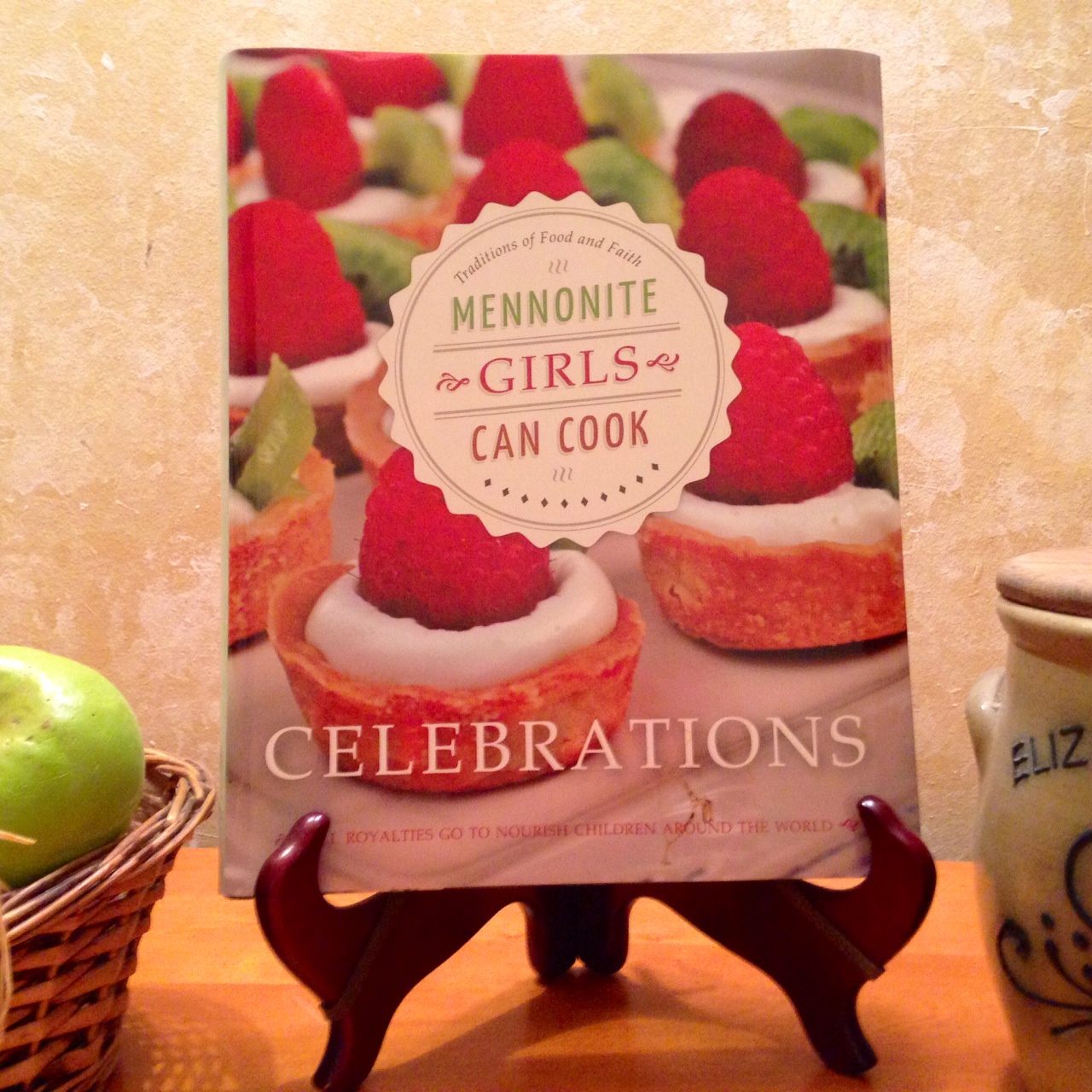
Also produced by MennoMedia (Herald Press): Mennonite Girls Can Cook, volume 1 and their second volume, Celebrations.

MennoniteGirlsCanCook

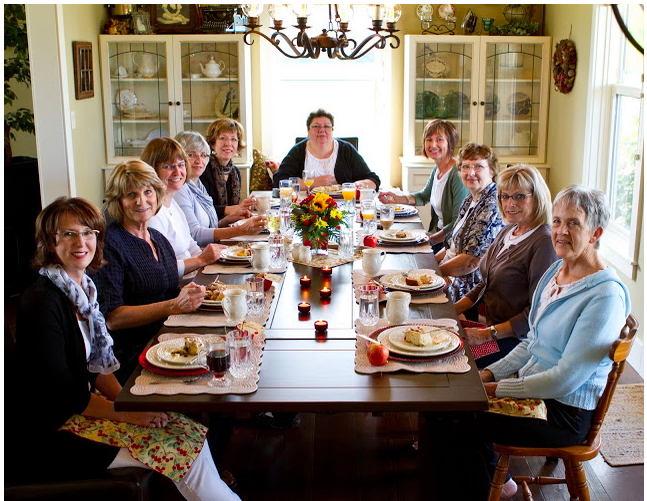
This book required collaboration from 10 authors (cooks and writers) all but one from Canada. Names like Friesen, Wiebe, Klassen, and Penner suggest their southern Russian (Ukrainian) roots.

MennoniteGirlsDiningTable

Their Celebrations cookbook, on special for Mother’s Day (half-price until May 9), is a collage of recipes, of course, and meditations of faith celebrating milestones such as birth, marriage, and holidays illustrated with first-class photographs. Some surprises: a mini-pizza recipe faces one for homemade potato chips. Pages later, a lattice-topped grilled apple recipe followed by Borscht and Zwieback (first cookbook).

The authors emphasize “hospitality over entertaining” and “blessing rather than impressing.” Appropriately, the Celebrations book’s end-leaf posts a copy of Old Hundred, Praise God from Whom All Blessings Flow. Best of all, royalties go to nourish children around the world. You can follow them on their blog, Mennonite Girls Can Cook, which attracts 7000 views daily.

Short History

Many Mennonites (Anabaptists) who live in the USA have Swiss roots, but fled to Germany to escape to religious persecution. When William Penn offered them rich farmland in Pennsylvania, these folks, my ancestors, immigrated in the 1700s with hopes of adapting their love of the land and family tradition to the New World. Similarly, Canadian Mennonite forebears fled western Europe and religious persecution to live in Russia from where they immigrated to Canada escaping political upheaval.

Tie-Dye Rainbow Cake!

I can’t wait to make the tie-dye rainbow cake with Jenna or one of the grand-boys, and soon! (Pages 60 and 61 in Celebrations)

RainbowCake

Your turn: Are you familiar with either cookbook? Do you have a favorite recipe or cookbook – or do you just “wing it”? Thank you for sharing your thoughts here!

Coming next: An Orphan Speaks on Mother’s Day

Lincoln, Lilacs, and Grandma’s Outhouse

Lilacs in Washington State

Earlier this month, my husband Cliff and family laid to rest his father Lee Beaman in a tiny urn above the coffin of his mother in the cemetery adjoining the church. Across the street from the simple, white-plank Methodist Church near Ridgefield, WA, are lilac bushes in full bloom this April. If you live in the Pacific Northwest, here is a website you may want to check out: //lilacgardens.com/

Lilacs along McCardy Road, Bethel Methodist Church, Ridgefield, WA
Lilacs along Carty Road, near Bethel Methodist Church, Ridgefield, WA

Like floral fireworks, these blooms explode in vivid lavender, each blossom bursting in “bullet-shaped buds.” Poet Richard Wilbur seems to scrutinize the lilacs he describes by looking into not just at the hundreds of teeny buds arranged in each bursting bloom tighter than stick pins in a pincushion.

LilacsRWilburPIC

As poet Wilbur points out, each tiny lavender bud appears “quick and bursting,” not holding back its beauty – is open and free. Similarly, when friends and family eulogize the beloved, their remarks tend to be candid, “quick and bursting,” revealing true feelings, knowing this is probably the last time to express their sentiments publicly.

Lincoln and Lilacs

Another poet, Walt Whitman, connected grief to the springtime and lilacs as he expresses his deep attachment to Abraham Lincoln, whose death April 15, 1865, is commemorated in his famous poem When Lilacs Last By the Dooryard Bloom’d. Written in private, the poem is a public elegy to the President the people adored. The poet revered the President too and when the cortége passed by, Whitman placed a sprig of lilacs on the coffin:

“With delicate-color’d blossoms and heart-shaped leave of rich green, /A sprig with its flower I break.” (stanza 3)  Then admitting that “the lilac with mastering odor holds me,” Whitman will forever associate the fragrance of lilacs with his fallen hero (stanza 13).

Finally, referring to Lincoln as a “Powerful western fallen star” the poem closes with the lines

For the sweetest, wisest soul of all my days and lands—and this for his dear sake,

Lilac and star and bird twined with the chant of my soul,

There in the fragrant pines and the cedars dusk and dim.

Kathy Beaman holding lilac after Dad's memorial service
Kathy Beaman holding lilacs after Dad’s memorial service

Lilacs Bushes and Grandma’s Outhouse

Please permit me this odd segué!

I love lavender and purple – and I love lilacs and wisteria. Wisteria climbing joyfully on a trellis on Grandma’s verandah and lilacs some distance away. . .

Close to an oak tree that Grandma Longenecker’s grand-children planted in her honor after her death in 1980, was an outhouse (now long gone) surrounded by a clutch of lilac bushes. The lilacs around Grandma’s house served as a fragrant air freshener. Of course, there is nothing elegiac about an outhouse, a tallish, square white structure with a roof, equipped with a Sears & Roebuck catalog or better yet for the job – a phone book. The outhouse, dedicated to defecation, bears evidence that bodily functions continue, that you are still alive. Lilacs thrive there.

Long live the lilacs. Long live symbols of life, death, and rebirth!

* * *

. . .  and a bush nobody had noticed burst into glory and fragrance, and it was a purple lilac bush. Such a jumble of spring and summer was not to be believed in, except by those who dwelt in those gardens.

The Enchanted April, Elizabeth von Arnim

Now, your turn. What is your relationship to lilacs or other spring flowers? To commemorating the death of loved ones?


My Little Black Bookends Tell All

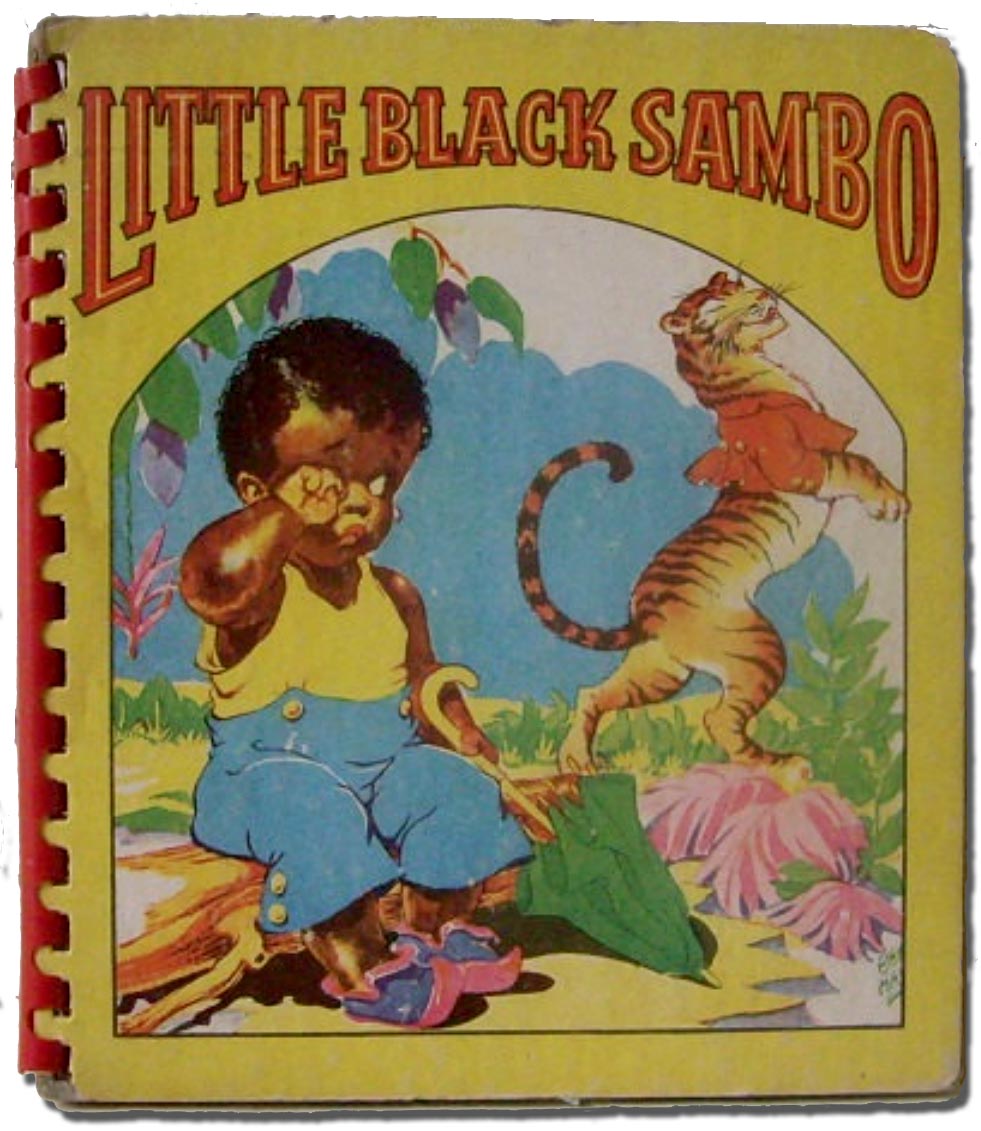
Growing up in rural Lancaster County in the 1950s, I had very little opportunity to meet people of other ethnic groups, but I did have a Little Black Sambo book that introduced me to a culture different from mine. So, I have not always been embarrassed by this book. Fascinated, yes, but embarrassed, no. The picture of the tiger running around an African palm tree as the tiger morphed into a golden round pool of butter mesmerized me as a child, butter that would become one of the ingredients of the pancake recipe. The next page shows Black Sambo’s mother Black Mumbo with her glossy brown arm stirring a mound of melted butter making pancakes. The picture made me hungry. And on the last page:

Little Black Sambo_pancake_web shot

And then they all sat down to supper. Black Mumbo ate twenty-seven pancakes, Black Jumbo ate fifty-five. But little Black Sambo ate a hundred and sixty-nine because he was so hungry!!! (Yes, there are three exclamation marks in the book I am holding.) 

Characters in folktales are typically overblown, with exaggerated details like Little Black Sambo’s super big eyes, through which he gazes at three heaping plates of pancakes with a pot of syrup dribbling all over the table. Obviously, he is ready to stuff his mouth with piles of pancakes.

But there are other tales in the book with the Little Black Sambo cover: The Little Red Hen, The Tale of Peter Rabbit, and The Country Mouse and The Town Mouse. Mr. McGregor and the kitchen maid in the “Mouse” story have white faces, but there is no reference to their whiteness. Their race is assumed as white and therefore not particularly notable.

Little Black Sambo_Cover_web shot

I paged through this book recently as we cleared out books in Mother’s house and marveled at the stereotypes about black people back then and was embarrassed by it: A black woman with a big butt and goofy name wearing a “maid” cap on her head, black people eating nothing but fried foods, everyone eating too much.

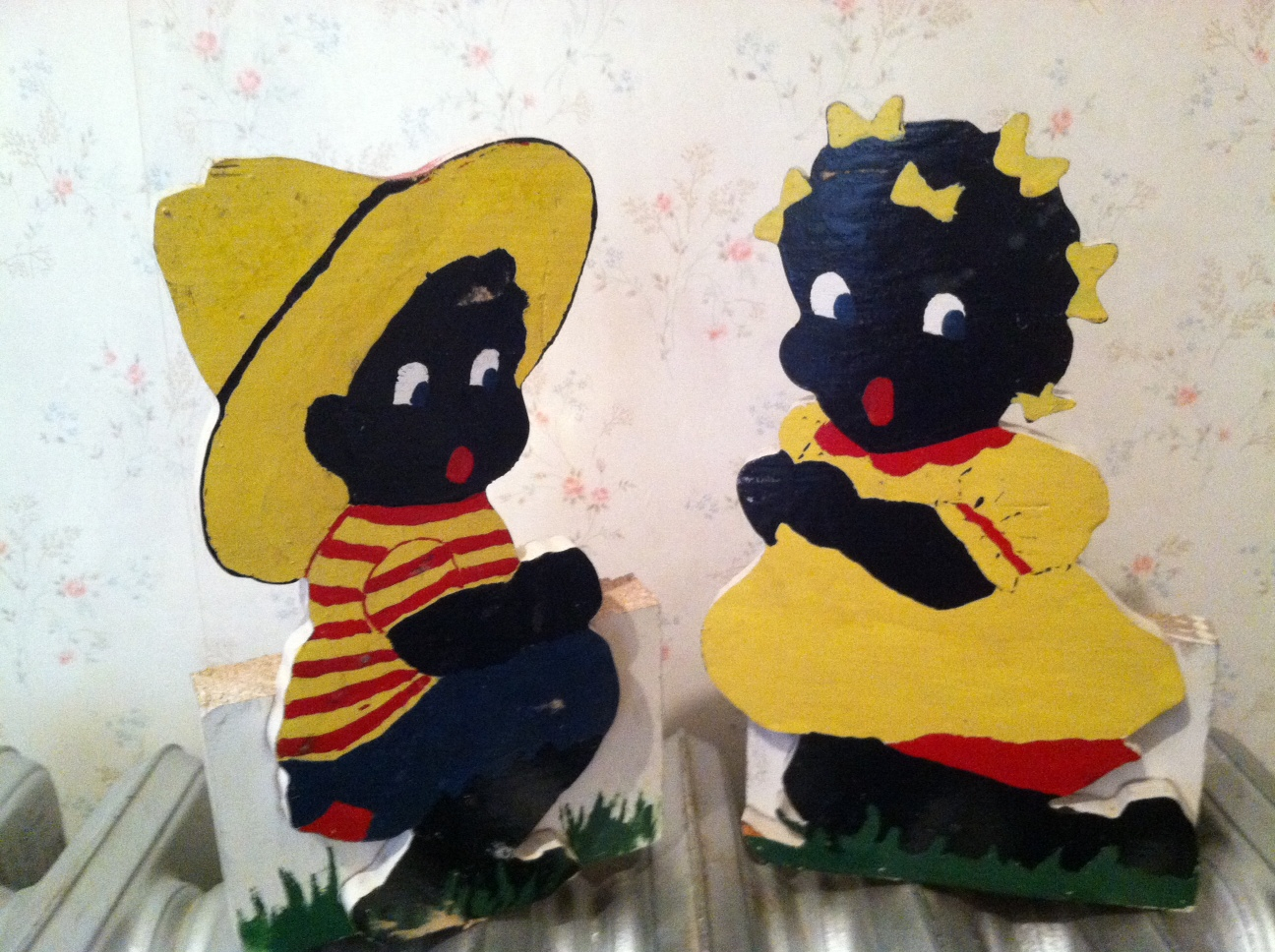
Another find un-earthed in our sifting through “Stuff” – a pair of book-ends I made in school that portrays black children as a novelty.

blackBookends

Interestingly, my niece Shakeeta, my brother Mark’s daughter, choose these as one of the few things she wanted as a remembrance from her Grandma Longenecker’s house. She hoists them up with a smile here:

KiKiBlackBookends

I guess it’s time I catch up with the times and adjust my ideas about black memorabilia. Singer Anita Pointer certainly has. In an article entitled “A Lesson in History,” (AARP Feb/March 2015) Anita, one of the Pointer Sisters, says she collects black memorabilia so she’ll never forget how her people were once depicted.

BlackMemorabiliaAARP

We grew up in Oakland, California, but when I was 10 we visited my  grandma in Arkansas. I couldn’t believe how people were living there. They had a white and a black part of town, and you stayed off the white side. At the department store, they had colored and white water fountains. I don’t want to ever forget that’s what it was like for us — and collecting black memorabilia is how I do that.   (66)

Like Whoopi Goldberg and Spike Lee, Anita collects black memorabilia as museum pieces including a “Mammy” cookie jar, and a 1970s John Henry whiskey decanter made by Jim Beam. When the prestigious house of Sotheby’s came to appraise her collection, it took a year to sort and categorize it. She comments, “The appraiser said that I could pretty much charge what I want because most of the pieces are one of a kind.”  In the end, Anita Pointer sees her collection of thousands of pieces as part of her personal history. She doesn’t apologize for any of it.

Of course, I’m hanging onto my Little Black Sambo book. It’s a part of my personal history.

Your comments welcome here!

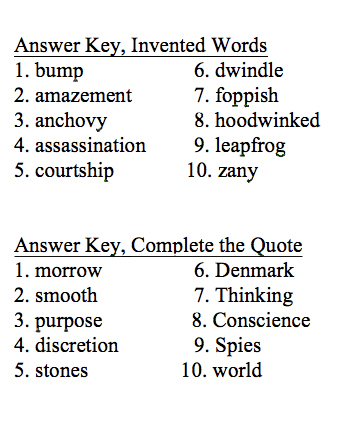
(Answers to Shakespeare puzzlers from April 22, 2015 post below.)

Answer Key2_mod

What’s Your Name Again?

My name is Marian. What’s yours?

A familiar greeting . . .

Names have always fascinated me. I’ve even written about names and naming in previous posts:  What’s in a Name? and The Name Game.

But what about name changing? Celebrities, like actors, musicians and other entertainers have changed their names as a way disguise their ancestry, make a statement or achieve a unique identity.

In mid-century, British-sounding names in the entertainment industry were thought to be more appealing to the public than Slavic, German or Jewish-sounding names. Thus . . .

Robert Allen Zimmerman →  Bob Dylan

Issur Danielovtich Demsky → Kirk Douglas

Helen Lydia Mironoff →  Helen Mirren

Entertainer Whoopi Goldberg apparently began life as Caryn Elaine Johnson.

Dancer Fred Astaire was once Frederick Austerlitz.

Actor Ben Kingsley’s birth certificate reads “Krishna Pandit Bhanji.”

Lady Gaga’s Italian heritage is revealed in her birth name, Stefani Joanne Angelina Germanotta and Jennifer Anniston’s Greek ancestry in Jennifer Anastassakis.

Vanilla Ice probably signed his grade school papers as Robert Van Winkle.

The suave designer Ralph Lauren was once Ralph Lifshitz!

My maiden name was Longenecker, which was changed to Beaman when I married. As a teacher, I would tell students how to spell my name using the 3-little-words approach: Be-a-man. Very rarely was my last name misspelled.

However, my first name (Marian) apparently is tricky to spell. It is often misspelled and in a number of puzzling variations. People with PhDs (not you of course!) and book authors (again, not you!) are the most frequent offenders. Yes, I’ve kept track of them – ha!

Names_variation of Marian_Envelop_8x5_300

Marion

Marianne

Mariam

Miriam

Marrian (on a name card at a dinner by a computer that stuttered)

Mariana

Marina

Miram

No wonder John Wayne is no longer MariOn Morrison!

TruckMariam


Can you add any other interesting name changes to the ones above? Maybe you have some examples of strange naming or spelling from your own family . . .

P.S. Even if you mangle the spelling of my name, we’ll still be friends. That’s a promise!  😉

What is a Name_Marian

Coming next: Purple Passages with the Bard of Avon

Button, Button, Who’s Got the Button?

Do you lose things? Misplace your glasses, keys, cellphone, or worse?

A few weeks ago I saw advertised a bit of wizardry called TrackR bravo, a coin-sized, wireless device that attaches to anything you want to track. The two wholesome-looking, geeky guys who invented it claim it can find lost items in seconds. However, it is still in production and won’t be available just yet.

Here is a bit of verse contributed by husband Cliff on the occasion of his un-earthing treasures long forgotten in drawers, filing cabinets, and notebooks. These lines dated January 2004 were inspired by his discovering a plastic container of leftover artichoke dip, with mold growing on top, tucked inside an enclosed green sandwich cooler bag, hanging quietly for a day or two on the back of a kitchen chair.

Button3

Button, Button. Who’s got the button?

Glasses, Glasses. Oh, where did I put those glasses?

Keys, keys. Why did some Martian leave them in my van door overnight?

Windows, windows. Why would windows be partway open, when I know I closed them tightly the night before?

Names, names. Why do people always change their names, when their faces remain the same?

Pens, pens. Why do they secretly skip to someplace else, when no one is watching?

Book, book. Why did that book hide itself beneath the bed again?

Folder, folder. Would someone please tell me how my folder mysteriously appeared somewhere else?

Cell phone, cell phone. Why isn’t that cell phone with me now when I know I just saw it a moment ago?

Date, date. Who changed my appointment for Wednesday on the calendar that I knew for certain was on Friday?

Remote, remote. Who snuck in while I was in the kitchen and hid my remote?

List, list. How can I get along without my “To Do” list? I’d swear I left it on the dresser, a window ledge, my hat box or . . .

Wander, wander. Why do I always have to go back to where I came from, to find out what I had forgotten?

Zipper, zipper. Who is it who, ghost-like, unzips the very pants I parade to work in?

Artichoke dip, artichoke dip. Now where did I leave that nice little dip? Why would it be inside the green cooler bag hanging on a kitchen chair, sporting a fuzzy growth of mold on top?

Brain, brain. Am I losing my mind? “Ding, Dong.” Is Alzheimer’s at my front door?

Remember, remember. Oh dear, what else have I forgotten to remember?

Oh well, I’ll now put on my shirt . . .  “Pop!” Button, button. Who’s got the button?

KeysGlasses

A side note:

The day after reading the poem to Marian at dinnertime she asked, “Have you seen the poem?”

I told her the last time I had seen it was on the kitchen table after reading it. “Did you put it in your hat box under the wicker coffee table?” I quizzed.

“Oh dear me, Button, Button Poem, Button, Button Poem. Who’s got the Button, Button Poem?”

You have stories of loss, recovery, and perhaps loss – again. Your anecdote fits right here!

Coming next: “What’s Your Name Again?”

Enchanted April: Renewal and Possibilities

Are you wishing for different weather just now?

Maybe a change in scenery is all you need to perk up. After a rough winter, the drowsy dreaminess of a warm, languid clime may sound very appealing.

If so, you have something in common with the middle-aged Lottie Wilkins and Rose Arbuthnot, both members of the same London ladies’ club, who become acquainted after reading a newspaper advertisement for a small, furnished medieval castle to be rented for the month of April on the balmy shores of the Mediterranean. They are seeking enchantment – and in April.

*  *  *

In February, I met Timeless Lady, a blogger who blends quirkiness and a strong, spiritual core in her posts. In a recent piece about the book/movie Enchanted April, she published the words in the newspaper ad that enticed these ladies to exchange London fog for idyllic Italy at a castle in Portofino, Italy no less. Here is The TImes newspaper ad that drew them in:

To Those Who Appreciate Wisteria and Sunshine. Small mediaeval Italian Castle on the shores of the Mediterranean to be Let furnished for the month of April. Necessary servants remain. Z, Box 1000, The Times.


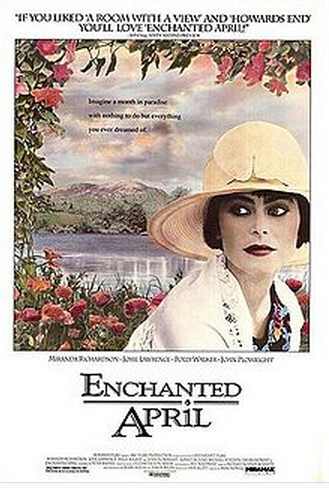
Lottie Wilkins and Rose Arbuthnot, both wishing to escape the drab days of winter, also share a desire to leave the day-to-day drudgery of housekeeping and the struggles of marriage, Lottie to the klutzy Mellersh and Rose to her gawky Frederick. But there is the matter of money, so to share expenses they take on the elderly, crotchety Mrs. Fisher played by Joan Plowright, and the stunning, but aloof Lady Caroline Dester. As the wisteria and sunshine slowly work their magic, the characters are rejuvenated and re-discover hope and love.

Film, 1992  Courtesy Wikipedia image
Film, 1992 Courtesy Wikipedia image featuring Lady Caroline Dester, who is sick of being grabbed by men!

In the early 1920s, just after World War I, author Elizabeth Von Arnim vacationed in the serenity of Portofino, Italy at Castello Brown, the same castle featured in the movie. Inspired by the magnificent medieval castle and the luscious gardens of San Salvatore, Von Arnim wrote “Enchanted April,” the book on which the movie is based.

I discovered a link to a free copy of the book via the Guttenberg Library, where you can search and find links to other books and stories you read as a child.

Want more Elizabeth Von Arnim? Click here for her Collected Works!

Cover image: courtesy Amazon Books

In case you haven’t seen the movie, or if you want to succumb once again to its captivating charms, here is the trailer from Miramax Films:

Quotes from Enchanted April

I want to just sit and not talk and not think . . . .  ~ Caroline

If you wish for something hard enough, it happens!  ~Lottie


Wisteria in patio garden
Patio garden wisteria


When you want to get away from it all, where do you escape?

What is on your bucket list – Where would you like to go right now, or sometime soon?


Coming next: Moments of Discovery # 6 ~ Food for Thought, Stirred with Imagination

A Robbery, Sad Friday, and a Clump of Daffodils

“I’ve been robbed!’ These are the only words artist/performer Cliff can utter as he walks toward his Dodge van, noticing that the air-vent window on the driver’s side has been pushed in at an odd angle. It’s about 4:30 a.m. Good Friday, April 1, 1994.

Rushing around the vehicle to open the side doors, he begins to take inventory of what’s missing: sound equipment including a stereo mixer, a professional-grade tape player, a recorder and at least 150 treasured CDs missing from cases. An envelope with cash – gone. All gone! He walks frantically around the parking lot of the Quality Inn he is leaving and spots a black suitcase, which the thieves have thrown into a ravine. Empty!

It was the end of a very productive month presenting 35 multi-media school assembly programs in Florida and Georgia. Cliff had driven to Nashville, Tennessee because his next shows would be in the Memphis area. He had been looking forward to boarding a 6:00 a.m. Delta flight to come home on Good Friday and spend Easter weekend with his family. This weekend, however, turned out to be a mixed blessing – The splendor of the resurrection service at church conflicted with the discordant thoughts about his recent loss: Lost equipment, lost musical discs, remembering malfunctioning hotel parking lights that had probably contributed to the thieves finding his van easy prey. And after all, it was Nashville, music city.

After returning to the Nashville airport after Easter to continue his itinerary, he takes stock. Though the robbery has felt like a violation, a form of rape actually, he could count his blessings: 1. His CD player vital to the music that accompanies his drawing was in a separate case, undisturbed and  2. He had copies of program music at his home base, Jacksonville.

Still reeling from the impact of the loss of inanimate “friends” that provided the musical score to his chalk drawing on a large easel, he must soldier on toward St. Louis, Missouri for next week’s shows. Behind the wheel again, he popped in a cassette tape, a musical companion on the long hauls between cities: soaring classical music and uplifting hymns, a distraction from the recent robbery. His itinerary takes him through Cape Girardeau, Missouri, where his journal notations begin:

The undulating ribbon of asphalt in Interstate 55, the hum of the van engine, rumbling of tires, and rushing air together with the music combined their forces to calm my mind . . . .  Now a spot of yellow caught my attention. Was it litter – or something else? The blurry image that I imagine are daffodils soon vanished from my side view mirror.


I keep driving but feel an urgency to turn around. The nest of daffodils keep calling me. “Come back. Don’t go another mile. You may miss a special moment in your life, a moment that can put a special gladness in your heart.

 Finally, he turns around at the next exit, heading south, as he wonders, “How far had I traveled since I had seen the flowers? I honestly had no idea, but I retraced my path even farther than I thought necessary to spot those daffodils again.” He gives up and heads north again. But feeling a tug even more insistent, he turns the van around one more time.

Passing over the exit I continued searching, almost holding my breath. My jaw set, my eyes straining for anything yellow.


I nervously looked at my watch. I could not believe that two hours had passed since first sighting those images of hope. Miles and time seem to merge together. My odometer indicated I had gone 120 miles since first turning back. What was I to do? It was getting late; I had to get to St. Louis soon.


And then ahead I saw it—a flash of golden yellow. My heart leaped with joy—It was there after all, several clumps of daffodils, but I saw two huddled together, spring-like beauties, raising their slender pastel green fingers, lifting golden heads to the heavens!

daffodilREAL2

The next challenge: Finding a container and extracting the two daffodils from the hard soil without a trowel or shovel.

With traffic whizzing by and like a mad man on a single mission, I quickly swung open the back and side doors of the van, and found a plastic one-gallon container of spring water. Out gurgled the water. Then, I rummaged through my tool bag until I found a razor blade to cut out the topside portion of the jug.

How to dig up the daffodils though?

Once again, I dashed back to the van and from deep within my jungle of sound and art equipment, boxes and bags, I pulled out an aluminum yardstick. With both hands on my innovative shovel, I vigorously dug down deep into the damp soil and rock encasing the two flowers. After leveraging the living plants into a plastic bag, I carefully placed them into the jug, watering the daffodils and even hiding them in bushes outside overnight for safe-keeping at hotel rest stops before the next trip home.

On this Saturday, April 9, 1994 my husband spent 2 ¼ hours driving an extra 125 miles to capture in real time this evidence of hope and then later spent more hours penning this story in a travelogue entitled “I Stopped Beside the Road Today.”

The robbers did their dirty deed in an unlighted parking lot and left no evidence of their identity behind. Yet, Cliff searched for beauty among the rubble and found it, proof of the hope it represents.

DaffodilDried

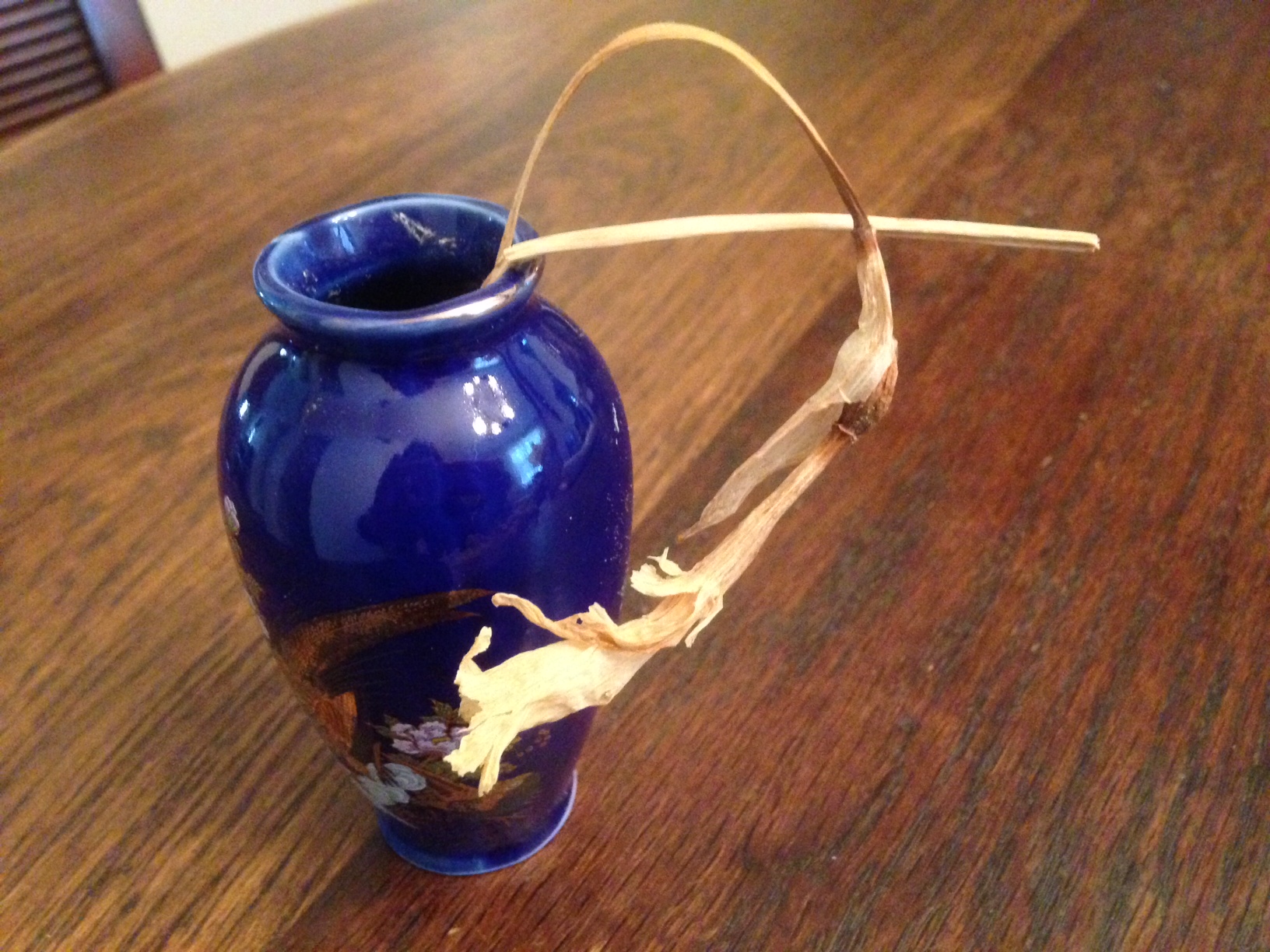
I have saved the dried-up daffodils, one headless, in a blue vase for 21 years.

And I can’t find it in me – at least not yet – to destroy these bedraggled tendrils – evidence of a Bad Friday turned Good!


Have you ever been robbed? Have you lost something so valuable you searched and searched? Here’s where to tell your story!

*  *  *

Links to Cliff Beaman, artist – http://americanartassemblies.com

YouTube video

*  *  *

Bonus: Tradition has it that the daffodil, the Lent Lily, will open on Ash Wednesday and die on Easter Day. In a poem entitled The Lent Lily, A. E. Housman writes of the daffodil as a yellow trumpet heralding the glories of spring.

Coming next: Our Easter in Ukraine