Mouse Moves House and So Do We

We are planning to move. It’s not a long-distance move to another country or across our own land. Not even to another state. And we are not retiring to Florida. Why, we’re already there. And we’re not moving to another city. Our re-location involves a move just 9 miles south in the same quadrant of Jacksonville.

But it is a gigantic step for us. We have lived in our current homestead for 37 years. Our children grew up here, and when I open the kitchen door to the garage I see pencil marks revealing Crista and Joel’s increasing heights since their ages of 8 and 9.

People in our age demographic make similar moves, often called downsizing. A Texas couple, Joe and Judy Powell, had a ranch to sell, 20-acre cattle ranch, mind you, in order to move to a nearby college town. Their move involved a huge acreage to a small property, from rural to town.

Photo credit; AARP magazine online
Photo credit: AARP magazine online


Of course, Cliff and I have accumulated lots of stuff, which about a year ago we’ve started sorting through, recycling, keeping the most necessary and precious. An art-creating husband and book-reading/writing wife produce/save lots of stuff.

About the Stuff 

Yes, we must cull, re-cycle, throw out, even. We have called the city for bulk recycling pickups.

To save one must value. And to throw out, one must value moving on.    ~ Mary Peacock, The Paper Garden
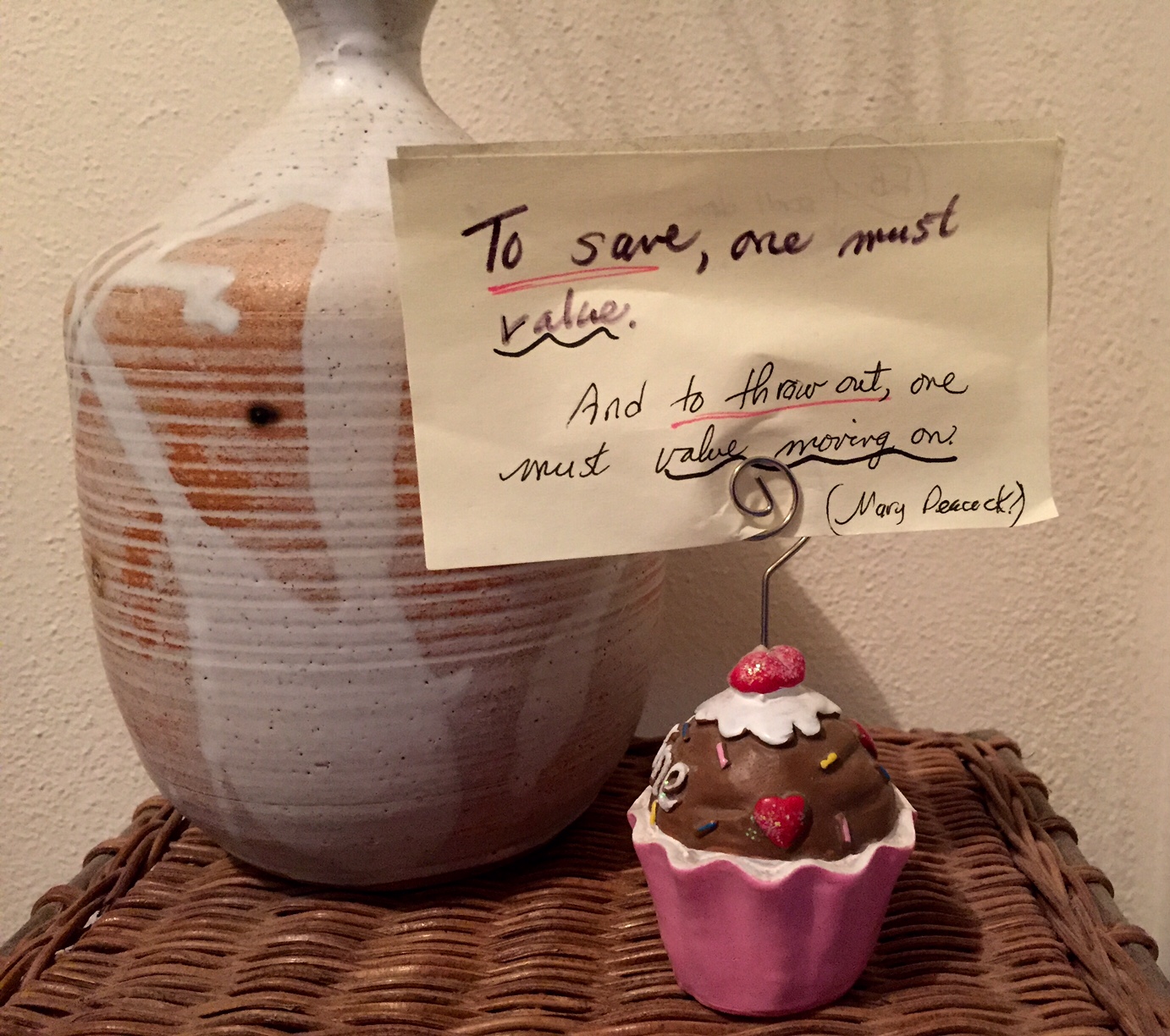
 

CupcakeQuotation


What I’ll Miss

  • My clothesline. Our new homeowners association won’t permit such. I’ll look at old videos of sheets flapping.
  • The dowager live oak tree on the edge of our property spreading its sheltering arms . . .

OakFrontDowager

  • Wall space to display my husband’s art work. Our new home has an open floor plan and limited space for drawings and paintings.

The Emotional/Philosophical Shift

Before, during and after the move, we have felt and will continue to feel out of sync. Our daily rhythms will be interrupted for a time. We’ll have to get used to operating in a new space. We’ll feel out of balance for a while, a sensation I am already experiencing.

In the Holmes-Rahe Stress Inventory, the transition to a new home ranks # 28 on a list of 43 life events, coming far after major events like the death of a spouse, serious personal injury or illness, change in job or even retirement. Truthfully, I think I would elevate moving to a higher level. Anyone who has changed addresses recently may agree.

Writer and blogger Sharon Clymer Landis discussed an imminent change in her household last year, observing parallels between the physical and spiritual aspects of moving to a new location:

She says, “As we work our way from the comfort of the known, from the cozy nest, inching toward our edges before slipping into the wild unknown, we are usually filled with doubts, fears and dread.  How little we trust the process, or God’s great holding of us, or the drawing towards growth that results in greater love, spaciousness, and freedom.”

When we finally take flight, we realize the air under our wings is the same air that lined our cozy nest. The nest, the struggle to launch, the flying, and the very air around us is all part of the Great Holding. 


The Move and Story-telling

As she continues, author Landis draws an analogy between physical moves and good storytelling:

Good storytelling often moves us forward, opens a reader’s heart toward greater understanding or toward something in life’s horizon. Add the element of God, of the Divine Mystery (how do those stories and images end up right where we’ll find them when we need them?) and you’ve got a hint of how things work:  equilibrium to disequilibrium, and back to equilibrium…on and on in the cycle of life and growth – kissed by Eternal Wisdom, a God holding us in Love always. Whether we’re in the midst of being drawn to concepts or changes beyond our understandings, whether we’re dug in and resisting, or flying wild and free, we are equally loved!


A Story Told

“Flying wild and free” evokes the image of a bird in flight, not usually mouse movements. But a storybook mouse can go wild and move. Maybe you remember reading Mouse Moves House, a charming children’s book by Phil Roxbee Cox.

Ian's family is moving this spring, mimicking Mouse Mack.
Ian’s family is moving too this spring, mimicking Mouse Mack.

Mouse Mack, backpack in tow, appreciates his friend Jack, who helps him pack and load his stuff onto a moving van named Fat Cat.


How have you experienced moving?

You must have some advice for me and other readers. Here’s where to share it.

Moments of Extreme Emotion: Where’s My Spyglass?

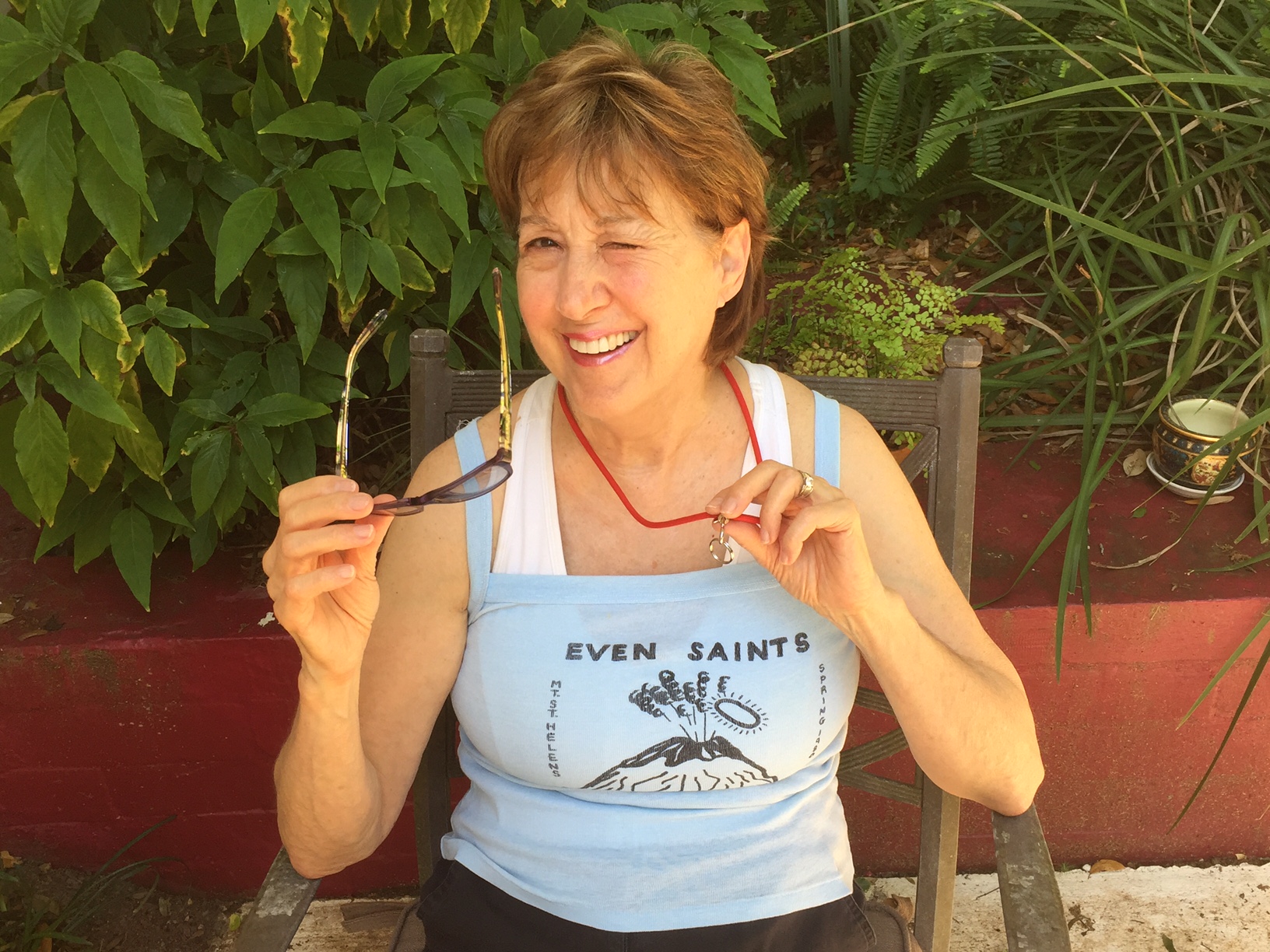
The photo of a pair of transitions eye glasses attached to a scarlet lanyard is still posted on my Facebook page dated April 14, 2016. “Hubby makes a lanyard for my glasses today. He is not being kind. He just doesn’t want to look for my glasses anymore! . . . well, yes, he is being kind.” Those were my words.

“The accompanying script in red and black reads “Forsake not the assembling of your glasses with your body.” St. Cliff 1:1 with date 4.14.16

CliffLanyardGlasses

Comments came from sympathizers and a naysayer: “Funny that I got a store bought one in my Christmas stocking.” “Doesn’t look very practical. I predict you don’t use it much.” ” I can absolutely relate!”

Reading over my Facebook heading again now I sense myself thinking at the time, “I won’t lose my glasses again.” A trace of boastfulness? Perhaps. Presumption? Probably.

Here’s how the glasses story subsequently unfolded: On Friday, April 29, I went to my power-pump class at the gym. Obviously I wore glasses to drive there and back. I’m nearsighted without them. Why, without glasses I might have a wreck.

That evening, we saw a scary Netflix movie, a British gothic flick “The Making of a Lady.” I must have worn my glasses then. I don’t remember squinting or sitting up close cross-legged to see the screen. I also don’t remember whether my lanyard was around my neck or somewhere else at the time.

The next morning I planned to drive to Curtis’ soccer game at 8:30 a.m. At 8:10 I grabbed my keys and and my glasses. My g – g – g l a s s s e e s s s; where are they? Too embarrassed to ask Cliff for help right away, I scoured the usual places: My computer desk, my dresser, the coffee-table, the kitchen counter. I couldn’t even find my back-up pair usually sitting snugly in the console by the driver’s seat.

Then, I go into full-out search mode. With and without Mr. Red Lanyard Maker, I . . .

  1. Look on every surface without a flashlight.
  2. Check every surface with a flashlight, lifting seat cushions.
  3. Walk outside and check the patio furniture, flower-bed containers.
  4. Re-visit the front porch table.
  5. Repeat steps 1 and 2 at night.  I hoped I’d catch a gleam with my flashlight, after five hours of searching all told.
  6. I awoke with a jolt at 2:00 a.m, with the strong image that my glasses had fallen off my lanyard and into a garbage bag. So I cull through two plastic bags of trash to no avail.
  7. I prayed ardently. After alI, I do remember the story of the Woman with the Lost Coin in Luke 15, a woman who lost one of her pieces of silver, lit a candle, swept the house, found it, and called her friends together to celebrate. I was ready for celebration!

Catholics would appeal to Saint Anthony, the patron saint of lost items. One online source printed a prayer: “Saint Anthony, Saint Anthony, please come around: Something is lost and needs to be found!”  A woman named Madeleine suggested that one call off the hunt as a sign of faith, claiming that “once you say the prayer stop looking for whatever it is you lost.”

Well, I did call off the hunt on Sunday, yet kept an eye out. There is always a chance for a miracle. Maybe those two shiny lenses would spontaneously appear.

Apparently, I am not alone. Hunting for lost or misplaced items is common. According to one source, the average person spends one year of life looking for keys, wallet — glasses. Among the more distressing losses are diamond rings (Oh, I lost one of those too!) and honeymoon tickets (We didn’t need tickets for air travel – just a pickup with a topper.)

Websites about lost items are usually accompanied by blatant suggestions to get more organized and be more mindful going about one’s daily tasks.

Sunday afternoon, the highly-motivated Red Lanyard Maker drove me to LensCrafter’s to fix the problem. After all, Mr. RLM can’t be my chauffeur for the foreseeable future.

At the office, I got an eye examination, another prescription, and new glasses with identical frames promised in a fortnight.

GlassesWink

As I write now, my lanyard is securely hugging my neck with glasses attached. More mindful? Yes, I believe so.

To this day, I haven’t found my glasses. Nor have the back-up pair appeared either. How had some genie or sprite spirited away both sets of glasses? Odd and distressing! If the originals make their appearance, I’ll be thrilled to use them as my spare.

* * *

From my experience, our possessions seem to disappear in direct proportion to their degree of importance in our lives.

How about you? Tales of woe – or discovery are welcome here!


All Creatures Great and Small: The Power of Pets

I missed National Pet Day on April 11 by a few weeks. But if you own a dog like Scotty or a kitty cat named Sophie, every day of the year is pet day.

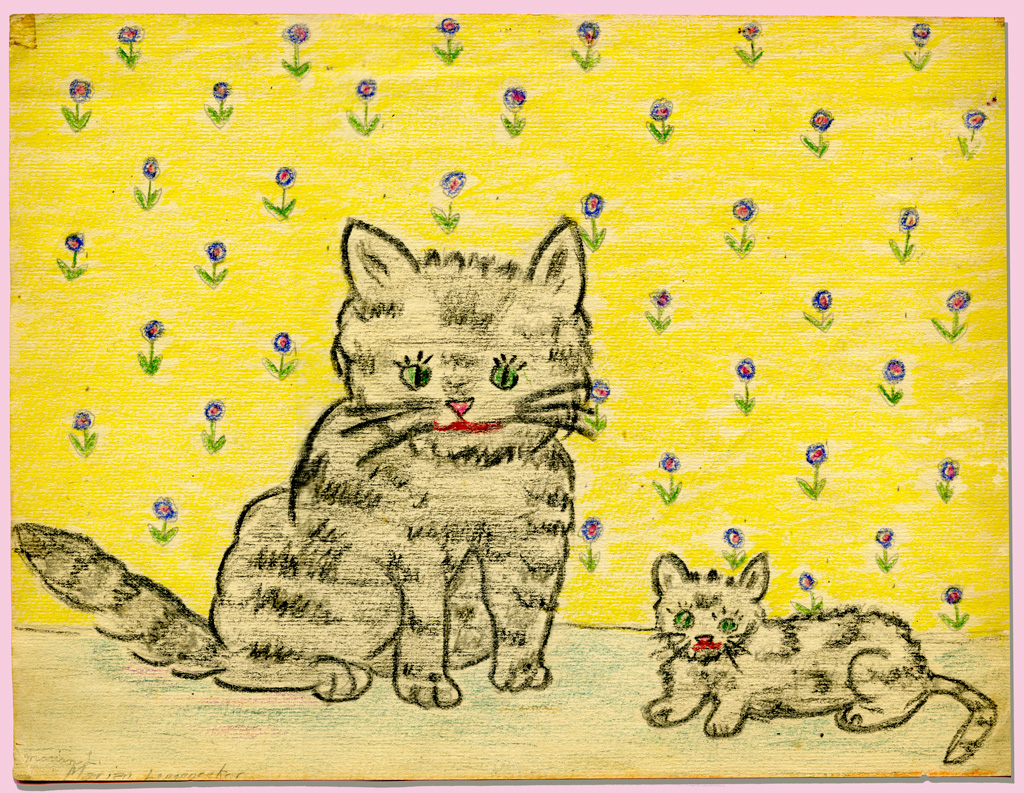
In 4th grade, I drew a cat and colored it charcoal gray. It appears I was as interested in making the wallpaper pretty as I was in drawing a green-eyed cat with its wee kitten.

KittenArtMarian1947?

In first grade, my teacher Miss Longenecker introduced our class to reading via the phonics method with the drawing of a cat illustrating the hard “c” sound. She probably used the Hay & Wingo textbook entitled Reading with Phonics (Philadelphia: J. B. Lippincott, 1948).

 Hay & Wingo, Reading with Phonics, J. B. Lippincott, 1948
Julie Hay & Charles Wingo, Reading with Phonics, J. B. Lippincott, 1948

We never had a pet cat, probably because my mother was allergic to cat dander, but several memorable dogs cavorted through our childhood. Sporty, an Airedale Terrier mix leaped and frisked around Grandma’s ankles when I was very young.  Boots, a black and white Smooth Fox Terrier, flushed ground hogs from their holes.

My sister Jean remembers other animals too: Our dad raised Angora rabbits housed in wooden crates in the barn attic and another Smooth Fox Terrier named Minnie, as small as she sounds. Sister Jan says we used to dress her up with doll clothes and send her down over the hill to Grandma’s house.

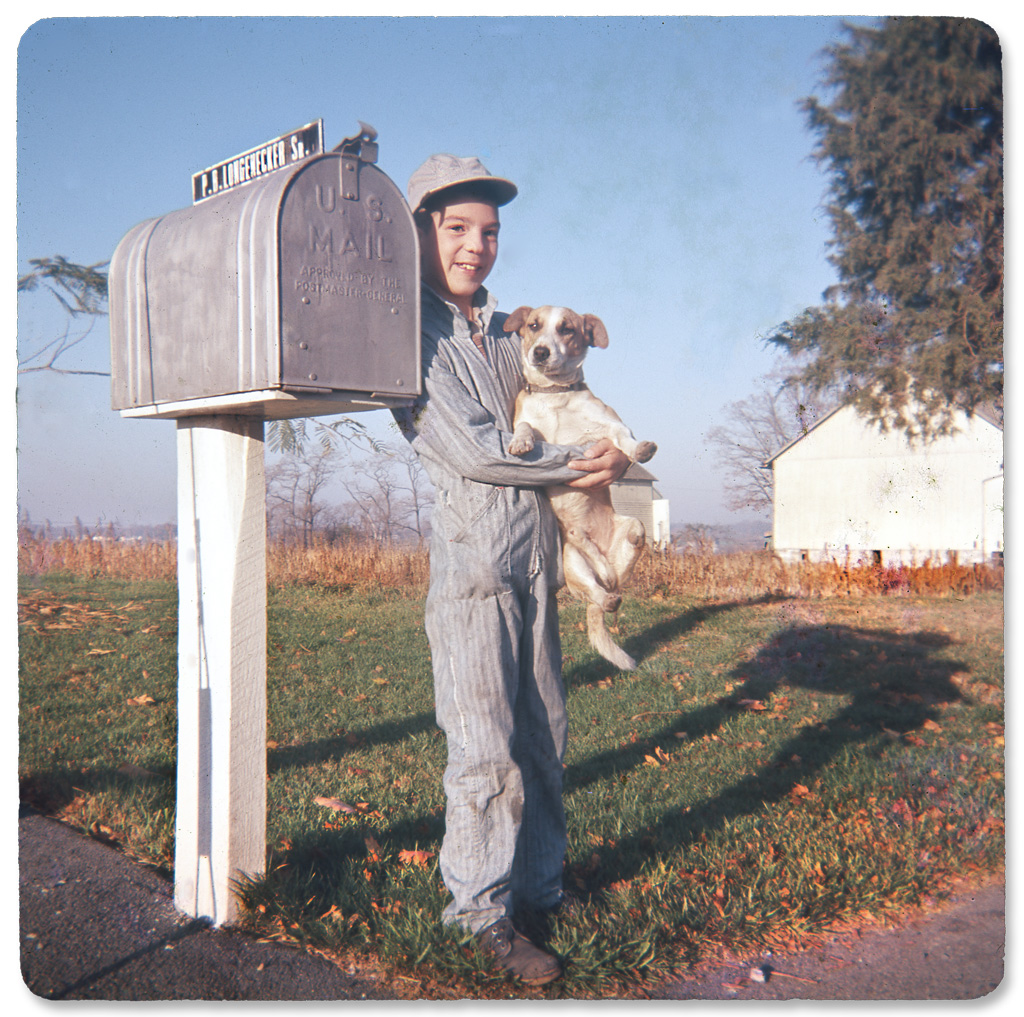
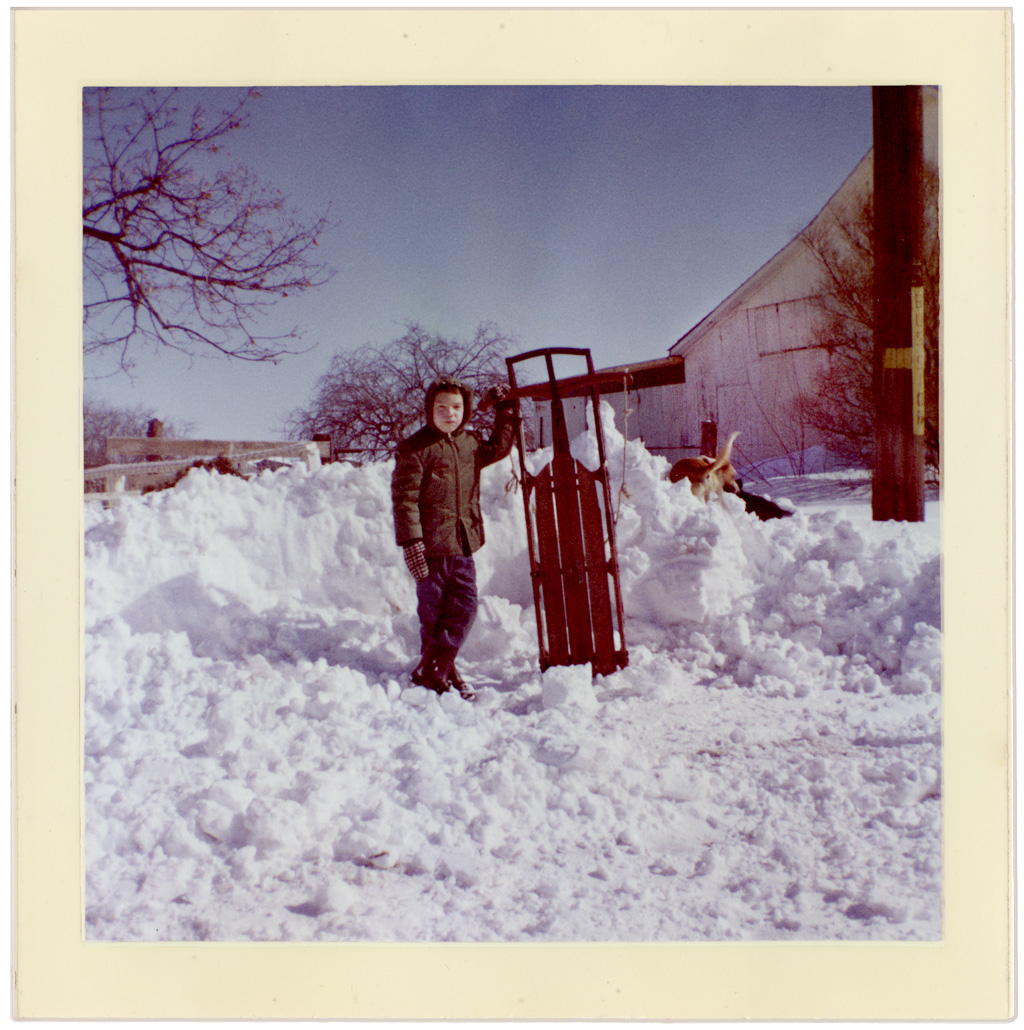
Our brother Mark’s dog, 3-legged Skippy, butterscotch and cream colored, lost one leg when a truck ran over him. Still, he skipped, ran far, and jumped high with just three legs. You’ll see part of his rear end and his tail in the second picture.

MarkDogMailbox


Brother Mark with sled and Skippy in the snow 1961
Brother Mark with sled and Skippy in the snow  1961


We all remember Ruthie’s little lamb that felt like mine when I wiggled my fingers digging deep into its wooly coat.

My Aunt Ruthie loved animals all her life, especially dogs. Her last four dogs were Schnauzers, known for their fierce loyalty and protective power. The pure-bred Schnauzuers were all named Fritzie – Fritizie I, II, III, and IV.

In this photo she was probably holding Fritzie III in her lap. The devotion you observe in this photo flowed both ways.

RuthieDogPiano

* * *

Like most children, our kids Crista and Joel wanted a dog. We shopped ads in the Dollar Saver for our dog back then and were taken in by the phrase “loves children.” That’s how we found Me-Too, a kid-loving-mailman-hating dog of questionable pedigree. Still, the children doted on her and adopted her into their play. Here the frame of their baby buggy became a carriage with Me-Too as the pony express.

WondaChairCristaJoel


Research

Not surprisingly, research shows that pets promote health, both physical and emotional.

Pets in the household can reduce everyday stress – lift one’s mood and provide physical contact. They provide an outlet for nurturing too: Pet owners have a living thing to care for. And finally, pets keep one active: walking the dog, feeding the cat.

Several of my writing friends admit that a pet dog or cat serves as muse: Kathy Pooler, Merril Smith, and Susan Weidener. Other authors have pets that appear on their blog posts from time to time: Laurie Buchanan, Janet Givens, and Elaine Mansfield. Lord David Prosser observes that his alarm cat Oscar wakens him from slumber every morning. And photographer Lady Fiona’s dogs enliven most of her fabulous photographs. Marylin Warner is training a puppy, but I don’t think she would call Scout her muse yet.

* See note below.


Books with animal characters

Books of my childhood:

  • Anne of Green Gables – Dog Monday
  • Little House on the Prairie, Laura Ingalls’ dogs – Jack, the brindle bulldog, and Bandit, the stray, appear in her books
  • Old Yeller by Fred Gipson

Literary works:

In The Odyssey, I recall Homer’s beloved Argos, who patiently waited for him at journey’s end. Maybe you remember this faithful dog too.

In Jane Austen’s Pride and Prejudice, cats romped in the Bennett household, at least according to author Pamela Jane.

Anton Chekhov wrote a short story entitled The Lady with the Dog, preserved here in statuary forever viewing the Black Sea in Yalta. When we visited in 2011, Crimea was still part of Ukraine.

CrimeaMarian2011


In the 1970s James Herriot books were all the rage both here in the States and internationally. Herriot, an English veterinarian, immortalized farm animals, pets, and their owners in his popular series set in the Yorkshire dales and moors. I read many of the titles: All Creatures Great and Small, All Things Bright and Beautiful, and The Lord God Made Them All.


What pets populated your home or the pages of books you loved? What items can you add to the list of benefits of owning a pet?

Leave a line or two here. You can also include endearing (or not) pet anecdotes.

Incidentally, if I inadvertently missed listing you as an author with a pet muse, please bark at me, so I can rectify the oversight ~ pronto.


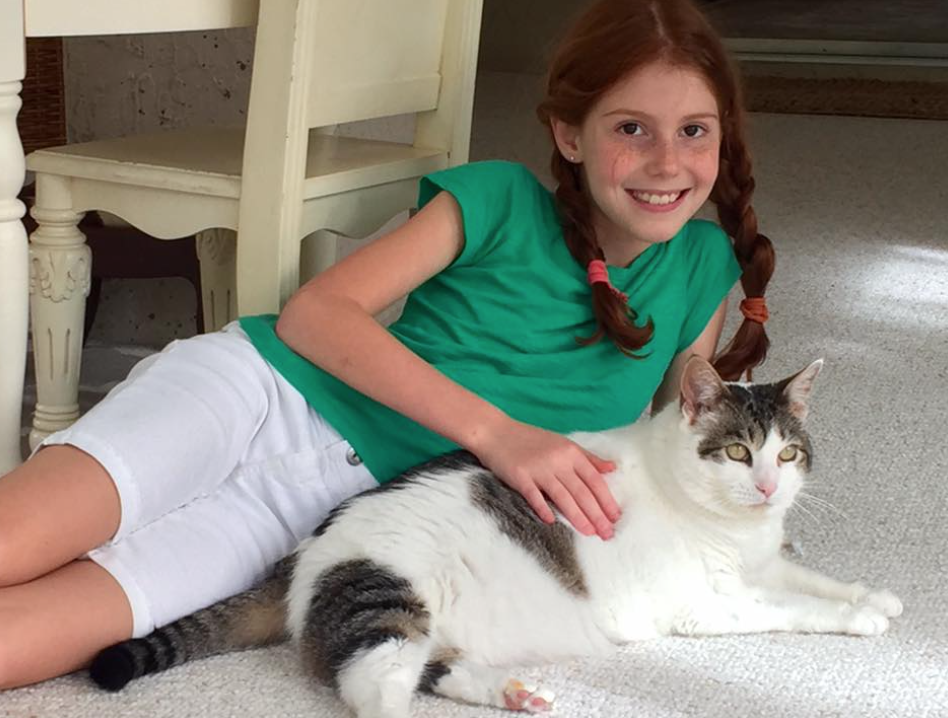
Daisy with Jenna in pigtails
Daisy with grand-daughter Jenna in pigtails


Coming next: Baby Beads and Wooden Blocks: Happy Mother’s Day!


Moments of Discovery # 10: a Bubble, a Dome, a Mirror

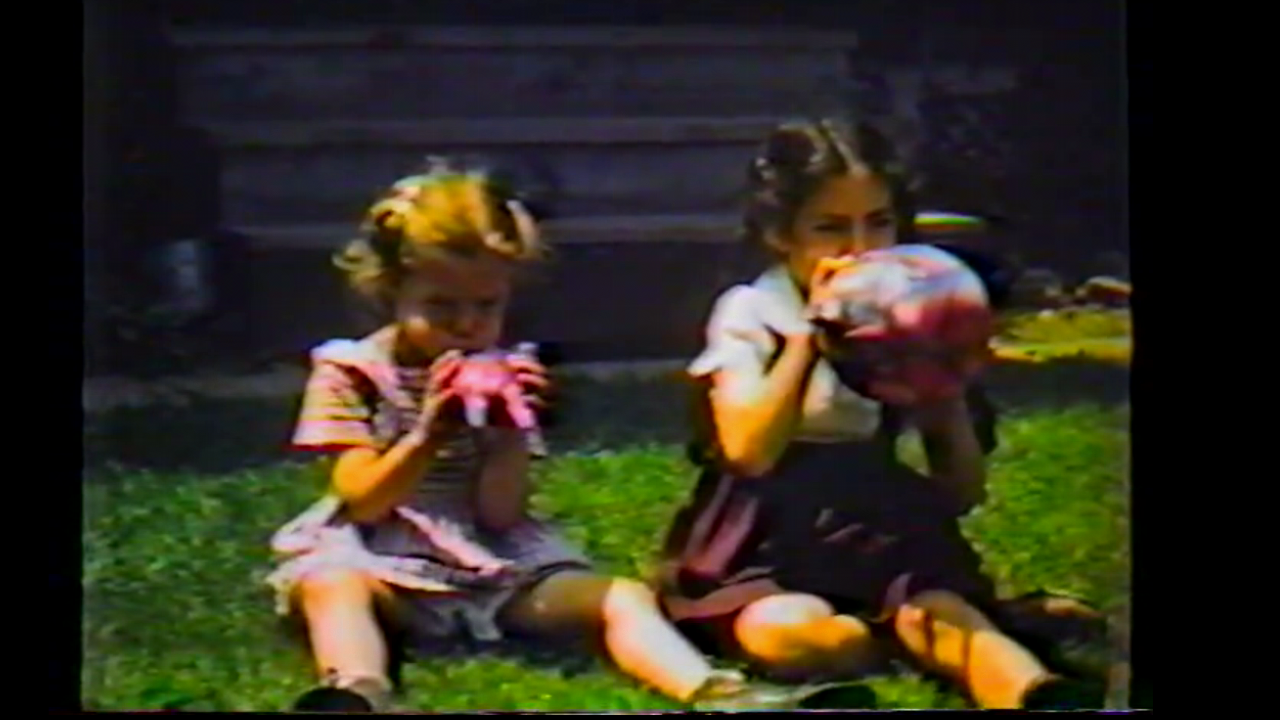
My sister Janice and I blew up balloons when we were little. Here is a stop-action snap from Aunt Ruthie Longenecker’s 16 millimeter movie film. The balloons were thick, rubbery and multicolored.

MarianJanBalloonBlow copy

We also blew bubbles sitting on the porch swing or standing in the back yard. I don’t have pictures of those, but on one of the walls at Landis Homes, where Aunt Ruthie now lives, an Amish girl is forever blowing bubbles, possibly expressing her wishes and dreams.

Picture displayed in Manheim House, Landis Homes, Lititz, Pennsylvania
Picture displayed in Manheim House, Landis Homes – Lititz, Pennsylvania

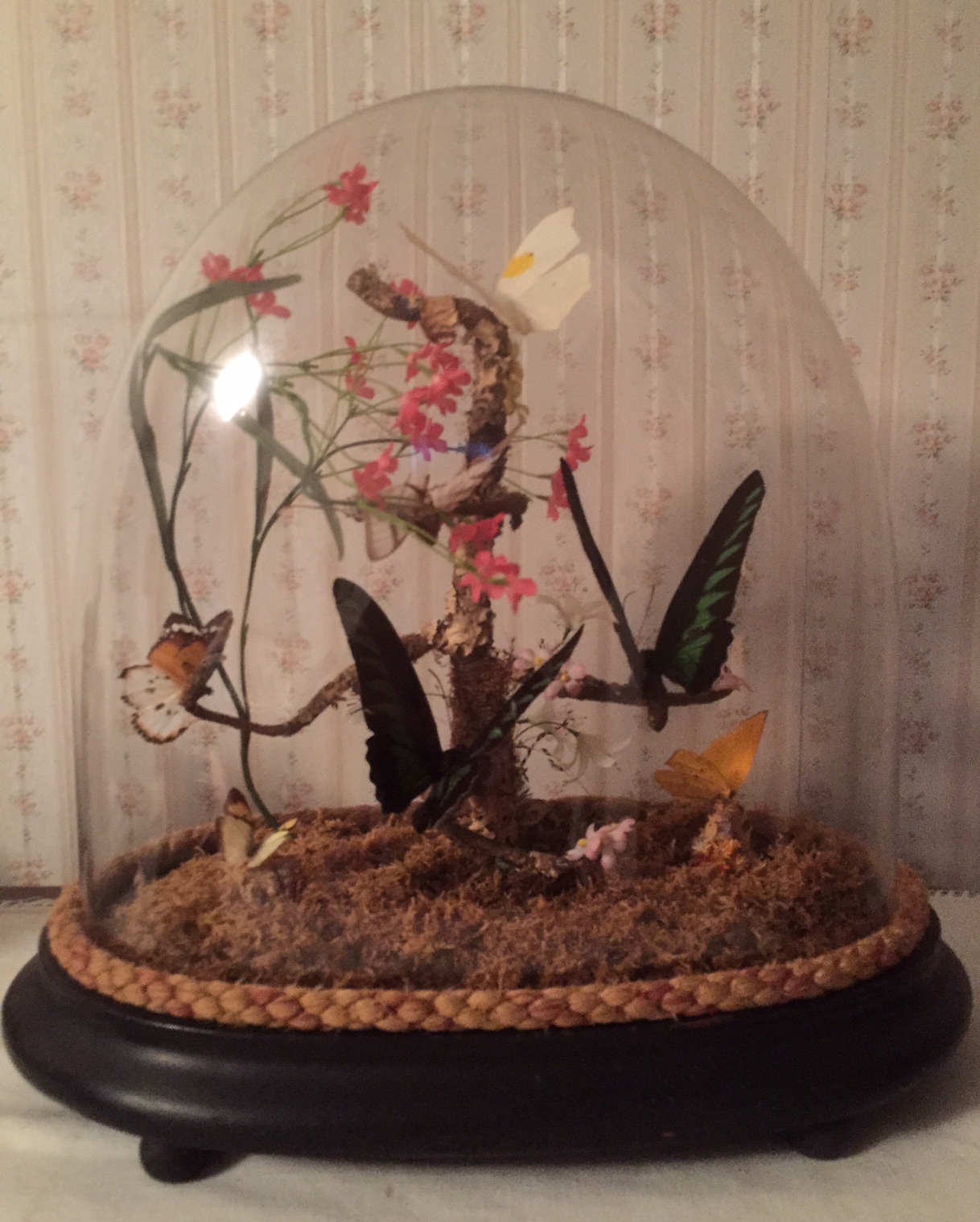
On top of a chest of drawers in Aunt Ruthie’s former bedroom sits a terrarium, a bubbly dome, covering butterflies in suspended animation on branches that rise above a blanket of lichen.

TerrariumVictorian

Terrariums, popular during Victorian times, usually contain live plants. Moss, ferns, and other flora thrive in the warm humid environment. During short winter days, weak slants of sunlight draw moisture to the top of the dome during the day, which circulates back down to the soil in the evening, creating a hermetic climate. You can read about the history of the terrarium here. The author features dish terrariums, pickle jar and wine glass terrariums, terrariums with waterfalls.

Grandma Fannie Longenecker had terrariums too, a miniature world of green we peered into when the ground was snow white in winter. Some of her glass containers were cookie-jar shaped, crowned with a knobby top. Others were rectangular and covered with a thin pane of glass.

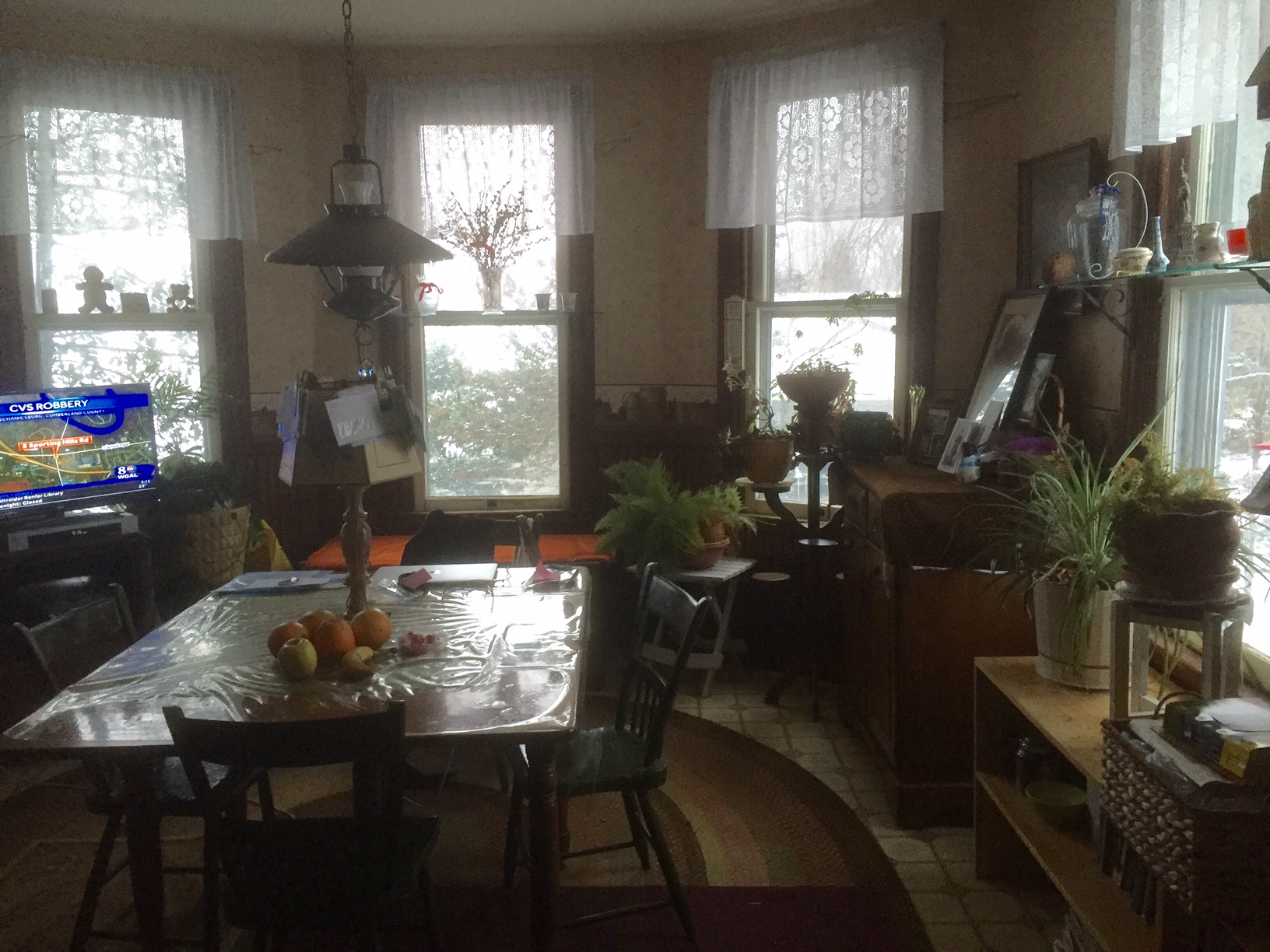
A few ferns, though not in terrariums, still grace the bay windows at Grandma’s house. She never had a TV.

GrandmaBayWindow

Something else shiny and green I played with upstairs, a little-girl dresser. But now a grown-up girl gazes back at me when I angle the mirror just right.

DressGirlVictorian

For now we see only a reflection as in a mirror; then we shall see face to face. Now I know in part; then I shall know fully, even as I am fully known.

~ I Corinthians 13:12 NIV

Crista's maidenhair fern under a cloche
Daughter Crista’s maidenhair fern under a cloche, bell-shaped


Your discovery this week may not have been a balloon, a dome, or a mirror. It may have been something else. Inquiring minds want to know!


Coming next: Any Hats in Your History?

Wanted: Forty More Winks

A Shock to Our Systems

Do you live where Daylight Saving Time has gone into effect recently? If so, today you may feel out of sync, sleep-deprived. The loss of even one hour of sleep pushes one’s biorhythms out of kilter.


Who’s to Blame: Daylight Saving Time

In the wee hours of Sunday clocks moved forward one hour, delaying sunrise and adding evening daylight. According to one source, a New Zealander proposed the modern idea of DST in 1895. Germany followed in 1916. Many other country since then have followed the spring ahead/fall behind routine, especially since the energy crisis of the 1970s.

The time change has been loved or hated ever since. My author friend Janet Givens provides a well-researched blog post on the topic. Her research explodes the myth that Daylight Saving Time is supported by farmers.


Sleep: A Cure

Medical journals including Psychology Today, often publish articles about sleep or the lack thereof. Such pieces also regularly appear in the table of contents of women’s magazine and AARP journals.

Literature is replete with references to sleep. In Shakespeare’s tragedy, Macbeth, who has recently murdered King Duncan, knows his sleep will be troubled or interrupted even as he ruefully ticks off its benefits:

“Sleep that knits up the raveled sleeve of care / The death of each day’s life, sore labour’s bath / Balm of hurt minds, great nature’s second course, Chief nourisher in life’s feast.” Act 2, Scene ii

  • Sleep repairs the unraveled parts of our lives, knits them up.
  • Sleep comes at the end of the day; it looks like a little death.
  • Sleep brings bodily relief from pain as do baths.
  • Sleep refreshes the mind.
  • Sleep is essential to life. We can’t do without it.
In Search of Forty Winks, Patricia Marx comments:

. . . party and then firing the cleanup committee. The New Yorker, February 8, 2016
 party and then firing the cleanup committee. (The New Yorker, February 8, 2016. pages 56. 57)


Ben Franklin and the Bible on Sleep

Early to bed and early to rise makes a man healthy, wealthy and wise.   ~ Benjamin Franklin

The sleep of a laboring man is sweet, whether he eat little or much: the abundance of the rich will not suffer him to sleep.     ~ Eccl. 5:1


Sleeping Child

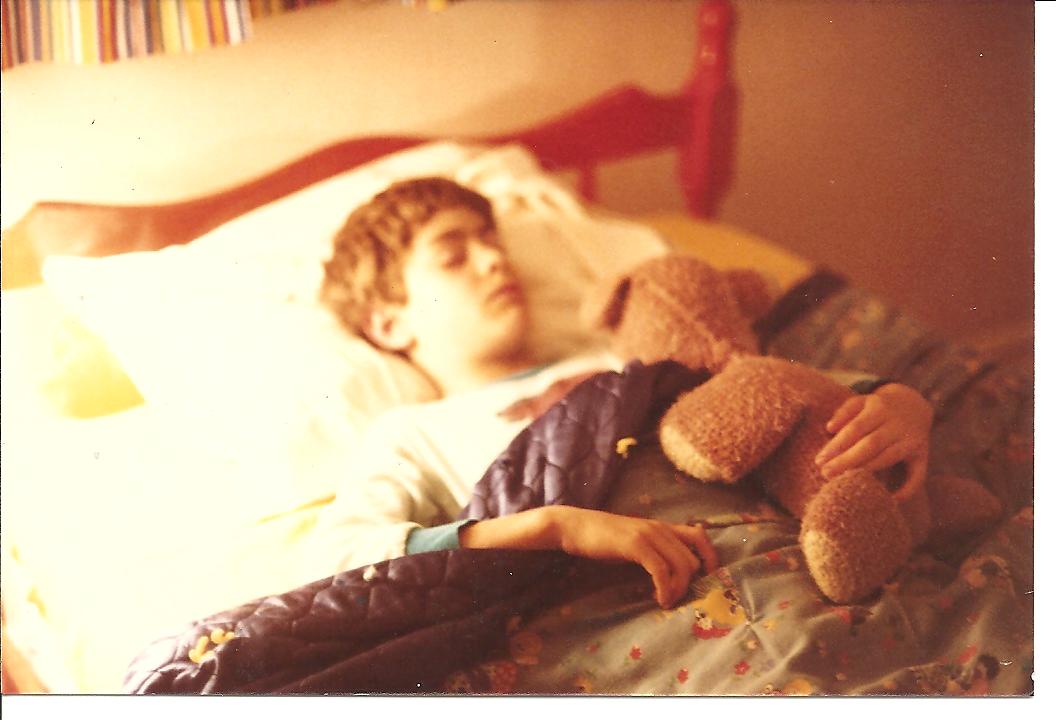
Joel sleeping with teddy bear, age 8
Joel sleeping with teddy bear, age 8 or 9

Our son Joel was fast asleep embracing his teddy bear knitted by his Great Aunt Ruthie. He may have been dreaming of riding his skate board or playing with match-box cars. As a nine-year-old, he was certainly not worrying about caring for children, the needs of a wife, mortgage payments, or at-work performance.

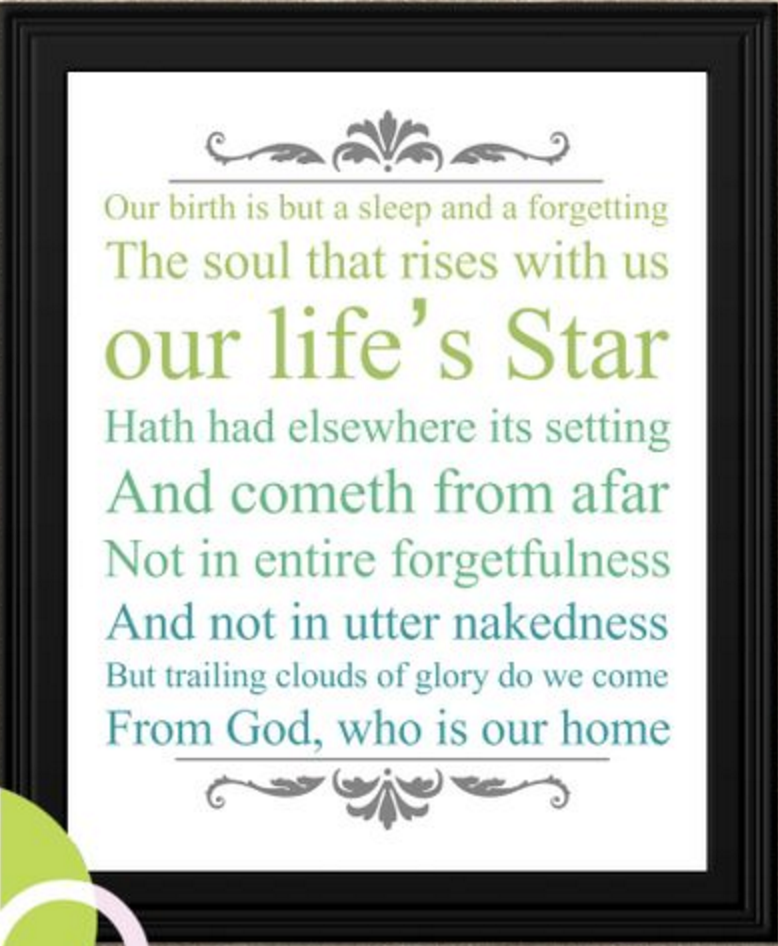
Wordsworth offers a philosophical perspective on sleep:

Ode: Intimations of Immortality, William Wordsworth Source: Pinterest


Here is the first stanza of a nursery rhyme Joel probably heard before he fell asleep:

Wee Willie Winkie runs through the town,

Up stairs and down stairs in his night-gown,

Tapping at the window, crying at the lock,

Are the children in their bed, for it’s past ten o’clock?


Comments about sleep, advice about getting more of it?  Your wisdom welcome here. All creatures need down time, even inanimate ones. Note that there is a sleep button on your computer, just above re-start.
 

Answer key to limericks published March 9, 2016 

1. lewd

2. dinner

3. divinity

4. weeds


How to Teach a Piano Lesson

“Joel, I’m going to the Christian Light Press in E-Town for some birthday cards, do you want to go along?”

“Okay, Mommy, do you think they have lollipops?” queried my mischievous son.

“I don’t think bookstores have lollipops at the counter like doctor’s offices do, but maybe they have other fun things to look at,” I said, thinking he would enjoy an excursion into town while visiting his cousins in Pennsylvania.

Entering the store, I spied precious novelties tempting to touch, a fact that struck me with a fearsome shudder because I had an 8-year-old in tow.

“Now don’t touch anything. Just look. Do you see the sign on the display? It says ‘If you break it, you buy it!’”

“Uh huh,” he said racing to the music boxes and other curios.

I turned to the bank of colorful greeting cards not far away eyeing cards appropriate for Mother and sister Jean.

“Squeak-thunk,” was the next sound I heard across the aisle, close to where I saw the top of Joel’s thatch of brown wavy hair.

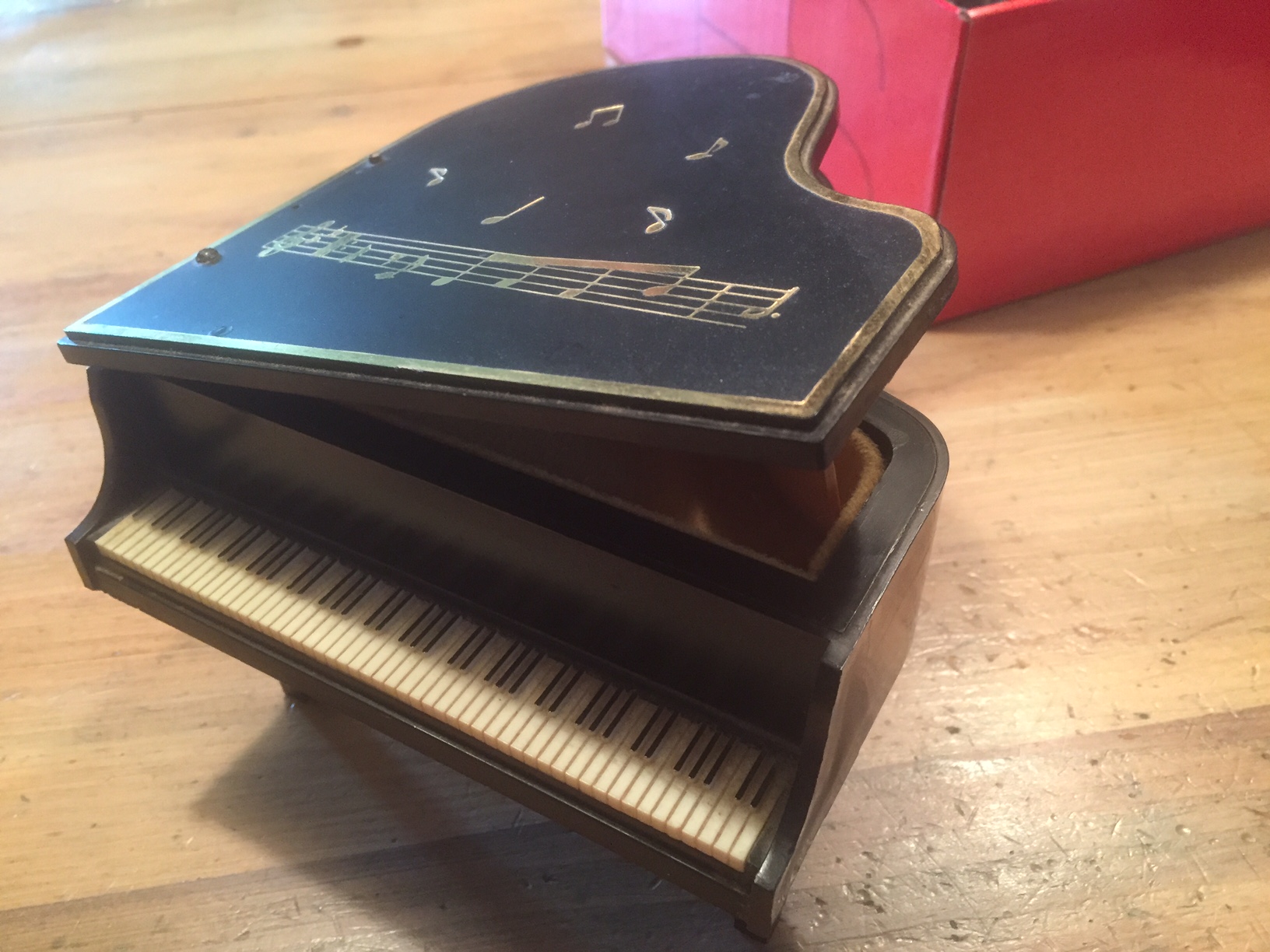
Cards in hand I strode over toward Joel and saw him holding a toy baby grand piano. As I looked closer, I noticed the hinge to the piano lid was halfway broken off. Turning the piano upside down to reveal a music box attached underneath, I noted a sticker. The price tag announced: $ 13.95. Please understand, we were a struggling young family in the 1970s, my husband and I both teachers, so the money registered on my mental calculator as a staggering figure.

Right there and then I had a double D attack: disappointment at my son’s disobedience and dread coursing from head to toe knowing we had to face the owner and admit to the breakage.

My feet felt like lead as I led Joel by the hand and I trudged down the aisle toward the clerk/owner who appeared to be glowering at us behind a tall metal cash register with raised keys and a bottom drawer that slammed shut.

I approached the counter speechless but managed to turn over the music box revealing the price tag. Swallowing slowly I formed words, “I guess we’ll need to pay for this. My son broke it accidentally.”

“Yes, you will. You see what the sign says.” I knew the warning only too well.

Opening my wallet hesitantly, I shelled out the dollars and cents, Joel standing by my side his head hanging, embarrassed and chastened.

* * *

Leap forward over thirty years, and son Joel now has his own son Ian, also age eight.

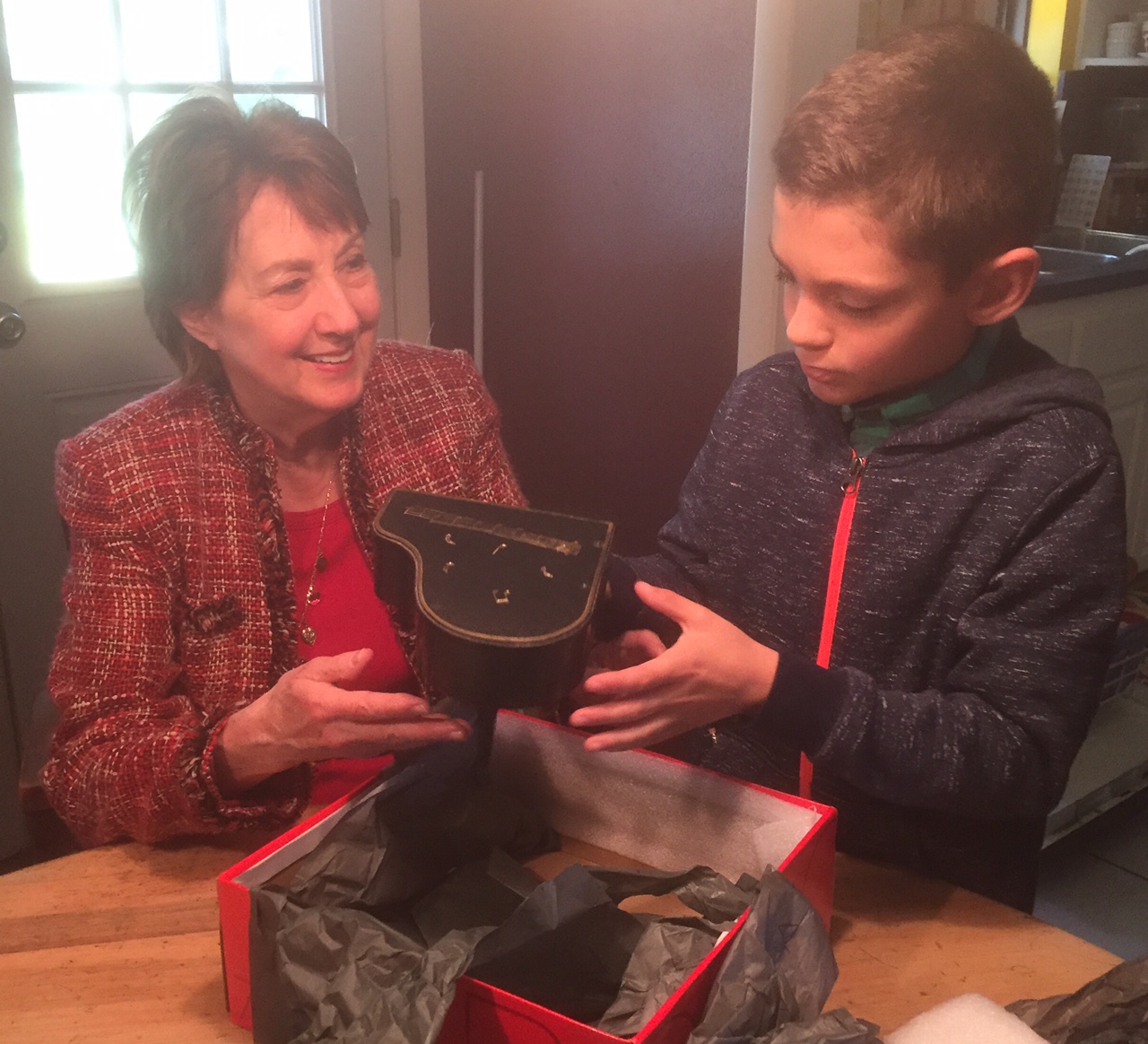
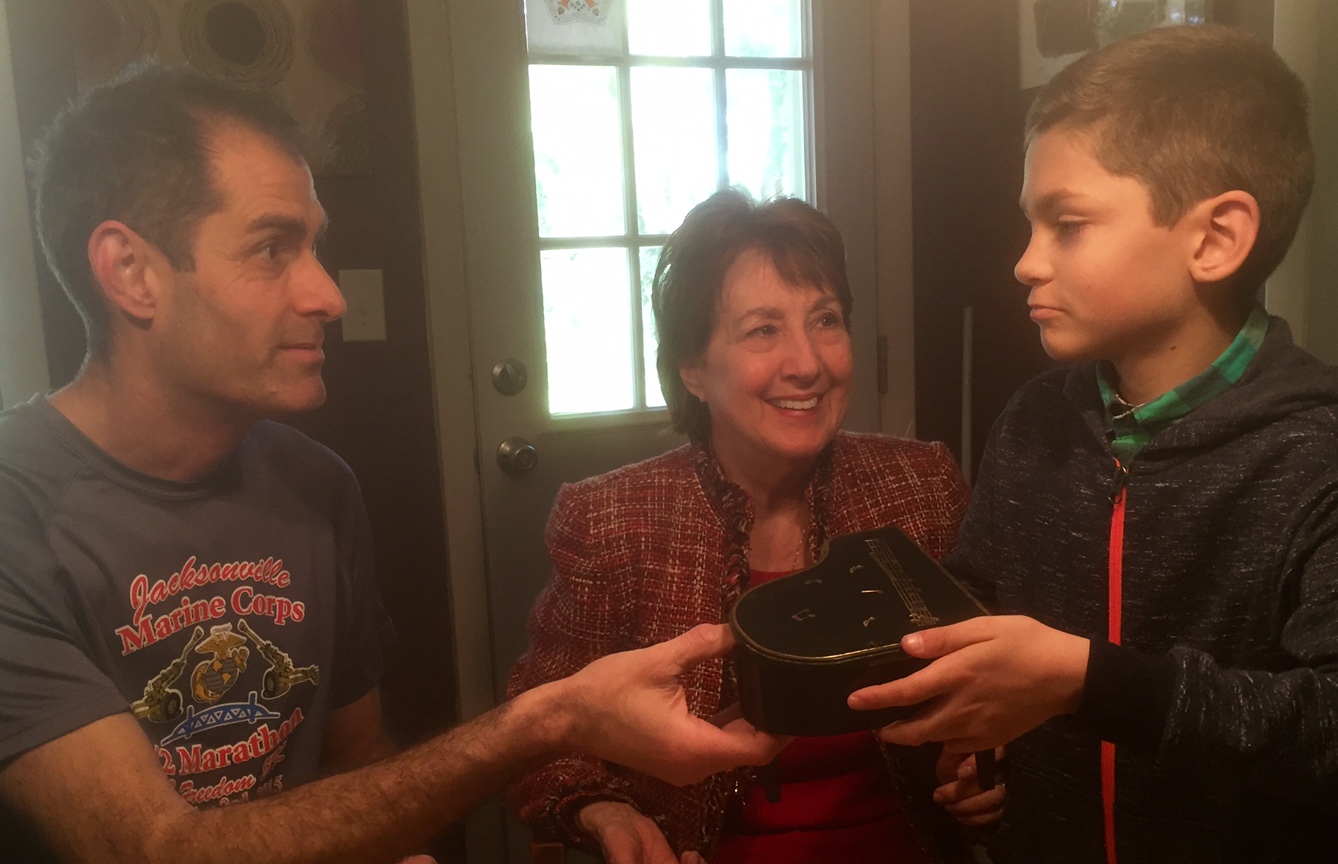
Several weeks ago I presented Ian with this same piano that has sat on my bookshelves for decades, occupying space between American poetry and art history books. Because we are downsizing, I have been passing along keepsakes to the next generation.

Joel was privy to my intention and approved my gifting the piano that plays the Lord’s Prayer as a tinkling, lullaby tune.

The presentation of the bequest began with a sturdy, red shoebox surrounded by tissue and foam padding. And then the unveiling . . .

IanOpeningPiano

Turning the wind-up key, voilá – sweet music filled the air.

PianoTwist Key

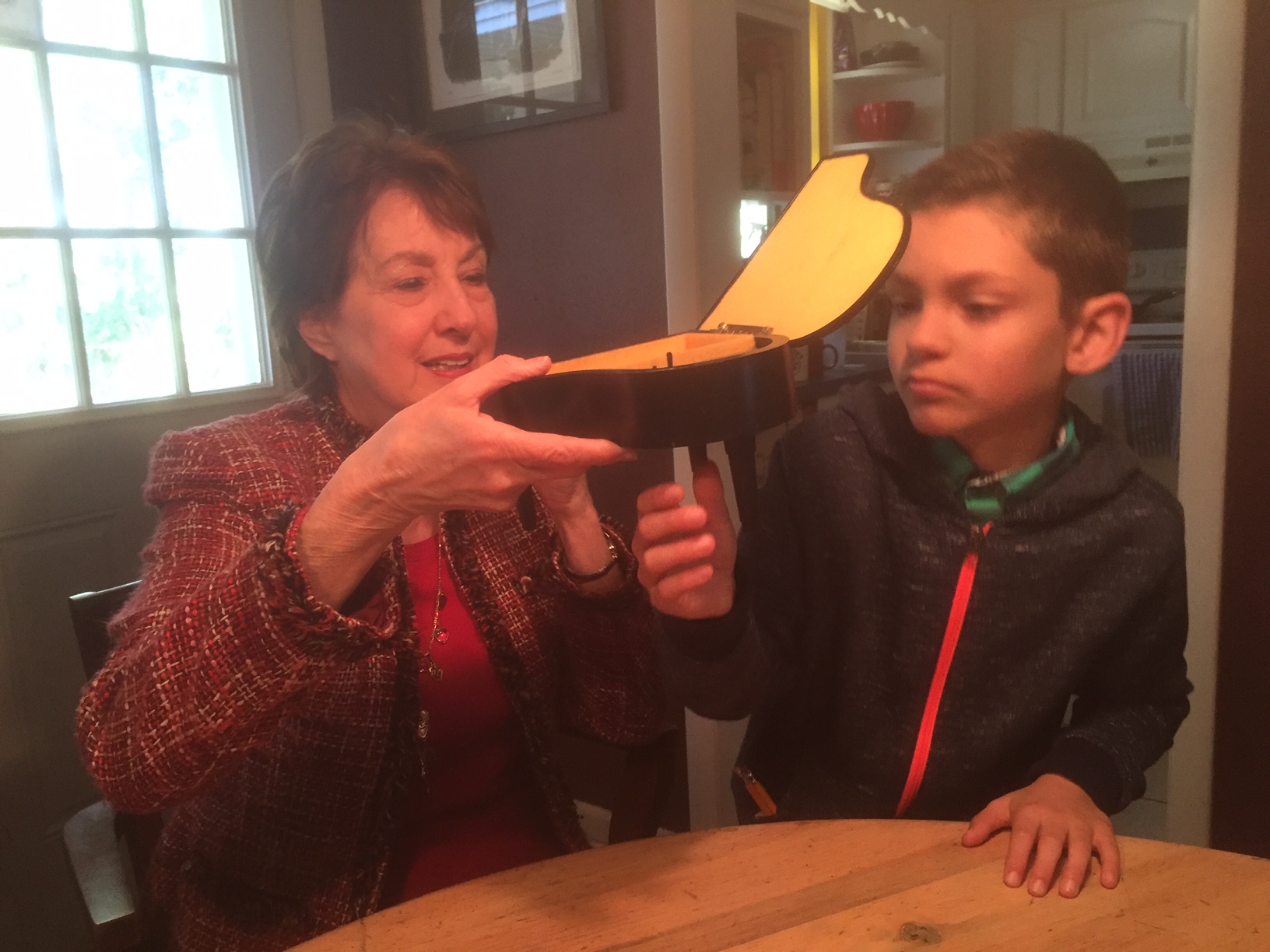
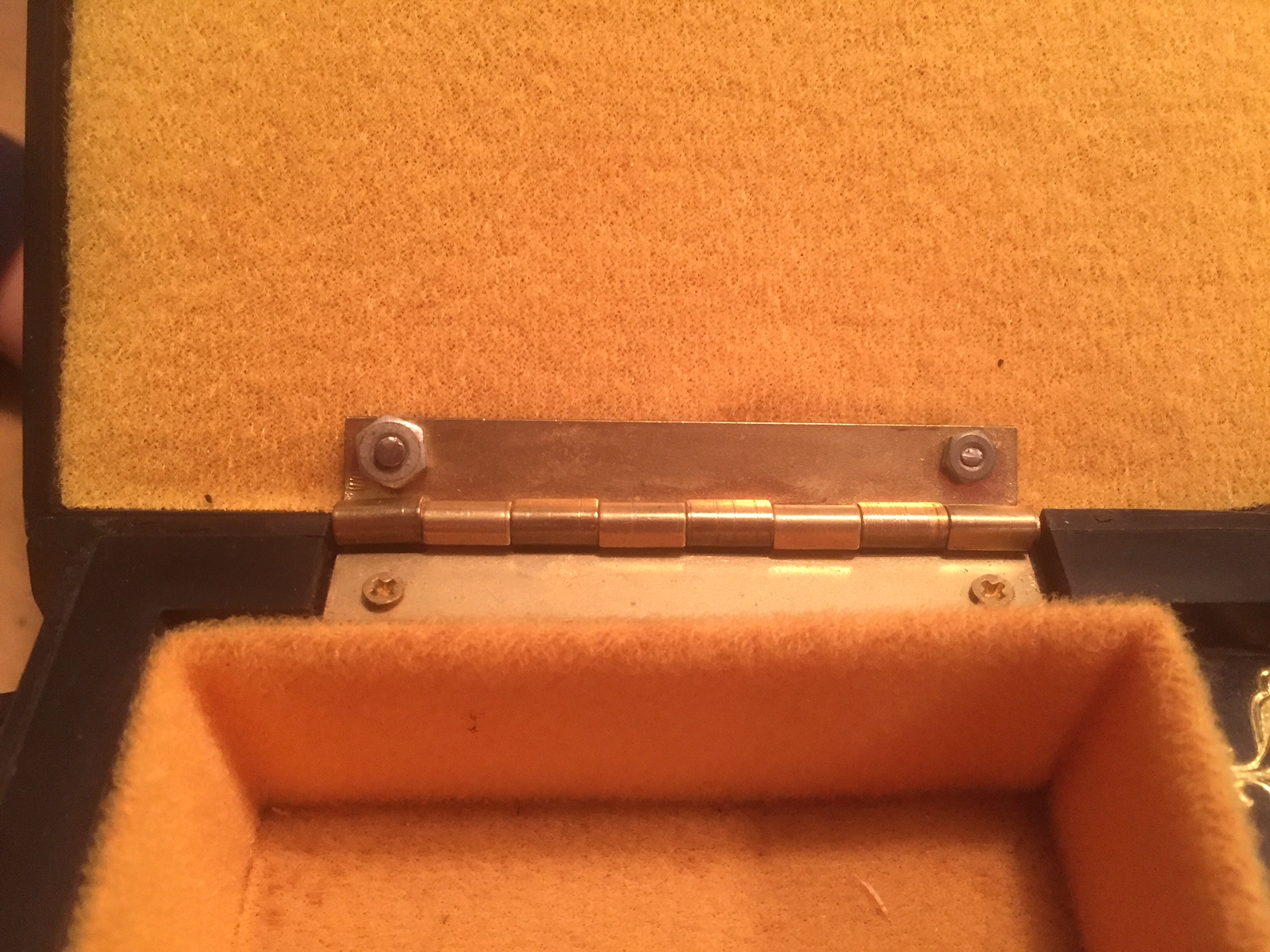
I announced, “When, he was your age, your dad broke off one of the legs on this toy piano.”

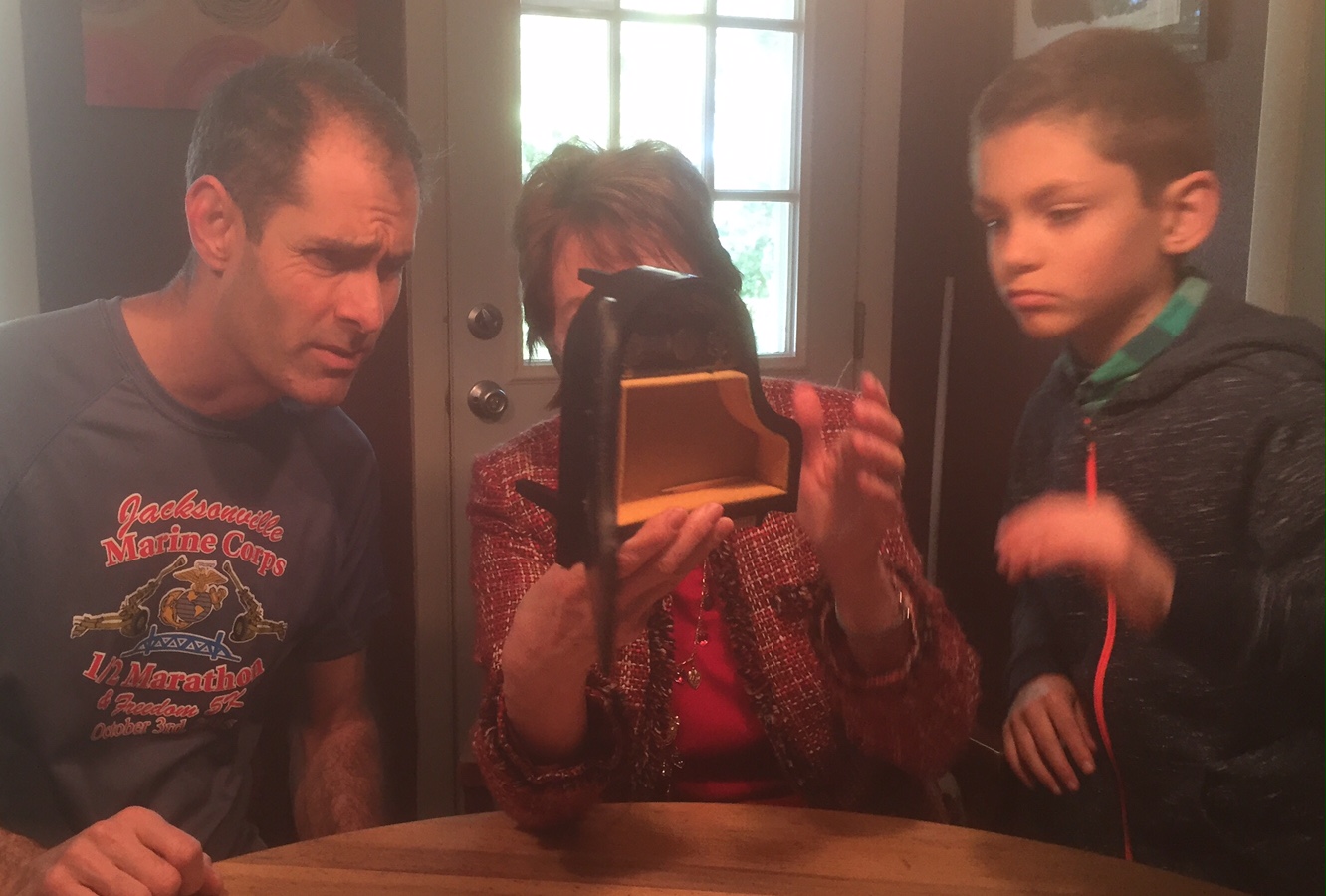
“Oh, no, not a leg, the hinge was broken off,” Joel corrected.

JoelPassingToIan

My memory had played tricks on me and the cause of the accident had morphed into something else.

Memory can be fuzzy sometimes. It’s not fixed as a photograph / locked in an album, / but it changes, it develops, mixed with time,” as Barbara Crooker wisely observes in her poem, Not a Spoon, a Key. Sometimes memory can even be wrong.

Squinting now at the underside, I see the replacement on the left, slightly larger screw and bolt than those on the other side. Lid held up with two toothpicks.

IngeFixed

ChristianLightPress13.95

And here it is, good as new!

PianoUpClose


Not a word was spoken about doing the right or wrong thing.

Words weren’t necessary.


Can you relate to my dilemma here?

Has your memory of family incidents every played tricks on you? Readers will enjoy your story and so will I.


Coming next: Raise a Mug to the Irish

Hoorah, 300th Blog Post with an Oops and an Aah!

Oops!

An apple cake with half the recipe batter left out . . . the baked remainders landing on the floor. Double dumb mistakes.

That’s not the way I envisioned marking my 300th blog post.

The Plan

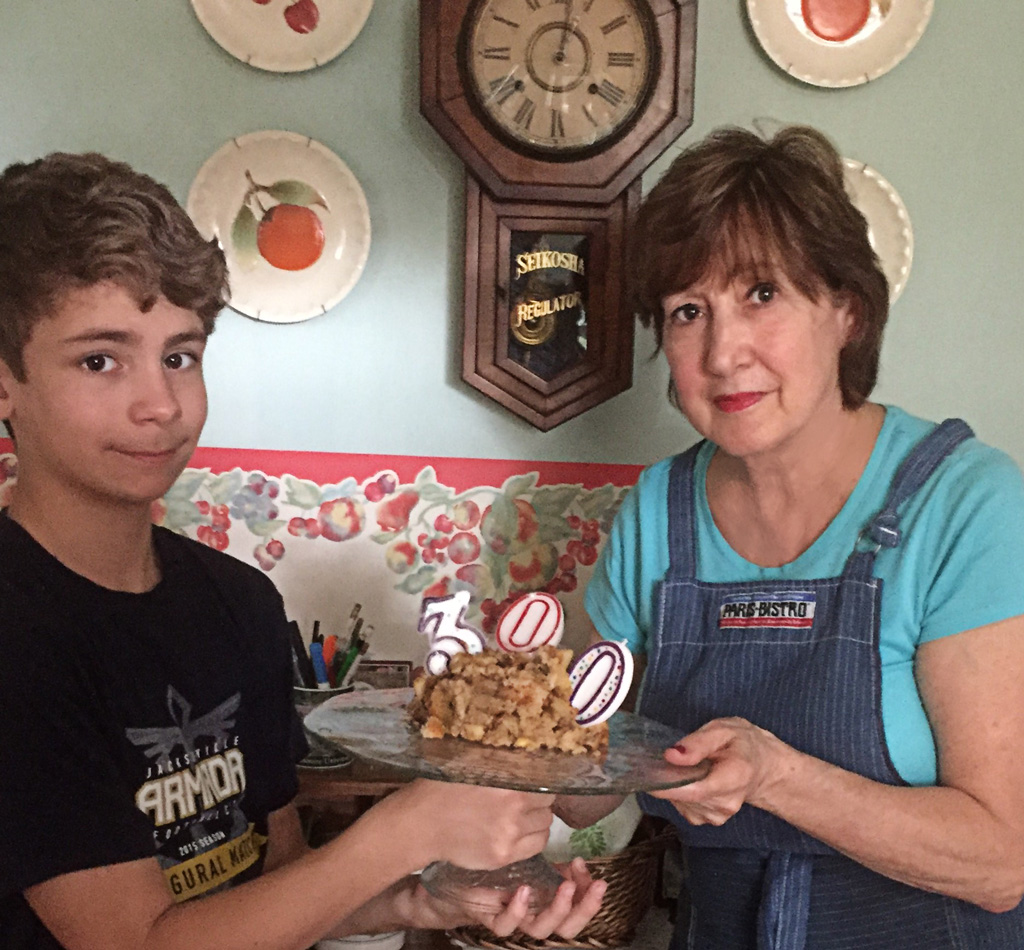
To mark this milestone, grandson Curtis and I planned to make an apple cake together, perfect for feasting two days before Christmas 2015. He likes to be in the kitchen and remembered our success with a spiced pork recipe a few weeks earlier.

The ingredients were laid out, I placed cups and spoons on the counter, the tube pan at the ready.

Curtis and I both donned aprons (his flowery, mine denim) and got to work. He helped core and dice the apples, careful to curl his fingers away from the knife blade. We both chatted happily over the hum of the mixer, adding apples, nuts, cinnamon, and vanilla to the mix.

CurtisCakeBeaters


What Happened Next

When the batter was ready, I poured the mixture into the tube pan and set the timer on my iPhone to a “check-me” time. Then Curtis and I sang Christmas carols around the piano, a first for just the two of us.

I heard the ping, ran to the kitchen, switched on the oven light and gasped. The cake had risen to only half of the height I had expected. Then my eye caught a glimpse of a bag on the counter with half of the mix inside. Sadly, I’d failed to fold it into the batter. That could account for the low rise. Still, the cake looked edible as I pulled it out of the oven, rounded and fragrant, and placed it on a rack to cool.

Just when I tilted the tube pan, the whole thing went SPLAT. Half of the cake flopped into the sink and the other half plopped onto the floor.

CakeMess300

There were moments of silence. 10 . . . 20 . . . 30 seconds?

Then Curtis quietly asks, “Nana, where do you keep your broom and dustpan?”

Here is the space for the cleanup photo:

(Imagine broom and dustpan)

Disappointment

AppleCakeSadFaces


After the Dust Settled

We ate a few morsels that fell into the sink. They were actually quite tasty. Then I asked Curtis what he had learned from the experience. Of course, I expected a snarky remark about his addle-brained grandma.

Instead, he began recalling bits of advice I gave him over the mixing bowl:

  1. Drizzle a little lemon juice over the apples to keep them from turning brown.
  2. Use a toothpick to test for cake “done-ness” even if you use a timer.
  3. Insert a toothpick between pan and its lid on the stove to keep a simmering mixture from boiling over (his Great Grandma Longenecker’s trick).
  4. When you remove a pot from a hot burner, put a teakettle with a small amount of cool water over the burner to absorb the heat, especially during hot weather.

Was he just being kind?


What I Learned

  1. “It’s not that bad,” one of Curtis’ own sayings when things go awry.
  2. Even baking disasters can taste good. (The result was a passable apple “cobbler” even if it didn’t have the consistency of cake.)
  3. “Life doesn’t have to be perfect to be wonderful,” another wise saying making the rounds these days.

Epilogue

Curt and I played Scrabble afterwards. He won, but not by much!


The Apple Cake Recipe, donated by my friend Bonnie Evans

1 yellow cake mix  (All of it!)

2 cups chopped/diced apples

1 cup chopped walnuts

I teaspoon vanilla

1 teaspoon cinnamon

brown sugar for sprinkling on top of cake

Blend oil and eggs into cake mix as directed. Add vanilla & cinnamon. Then add apples & nuts. Pour into tube pan and sprinkle brown sugar on the top. Bake at 350 degrees until done. Pour icing over top of the cake.

Icing

Melt 1cup brown sugar, 1 stick of butter and ½ tsp. vanilla. Stir until dissolved. Pour over top of cake.


A Miracle – Ahh!

Out of the blue, the very next day at breakfast my long time friend Wanda Rogers Long presented me with a perfectly baked apple cake – glittering in cellophane and topped with a red bow!

WandaMarianCake

All’s well that ends well . . .

CakeTriumph


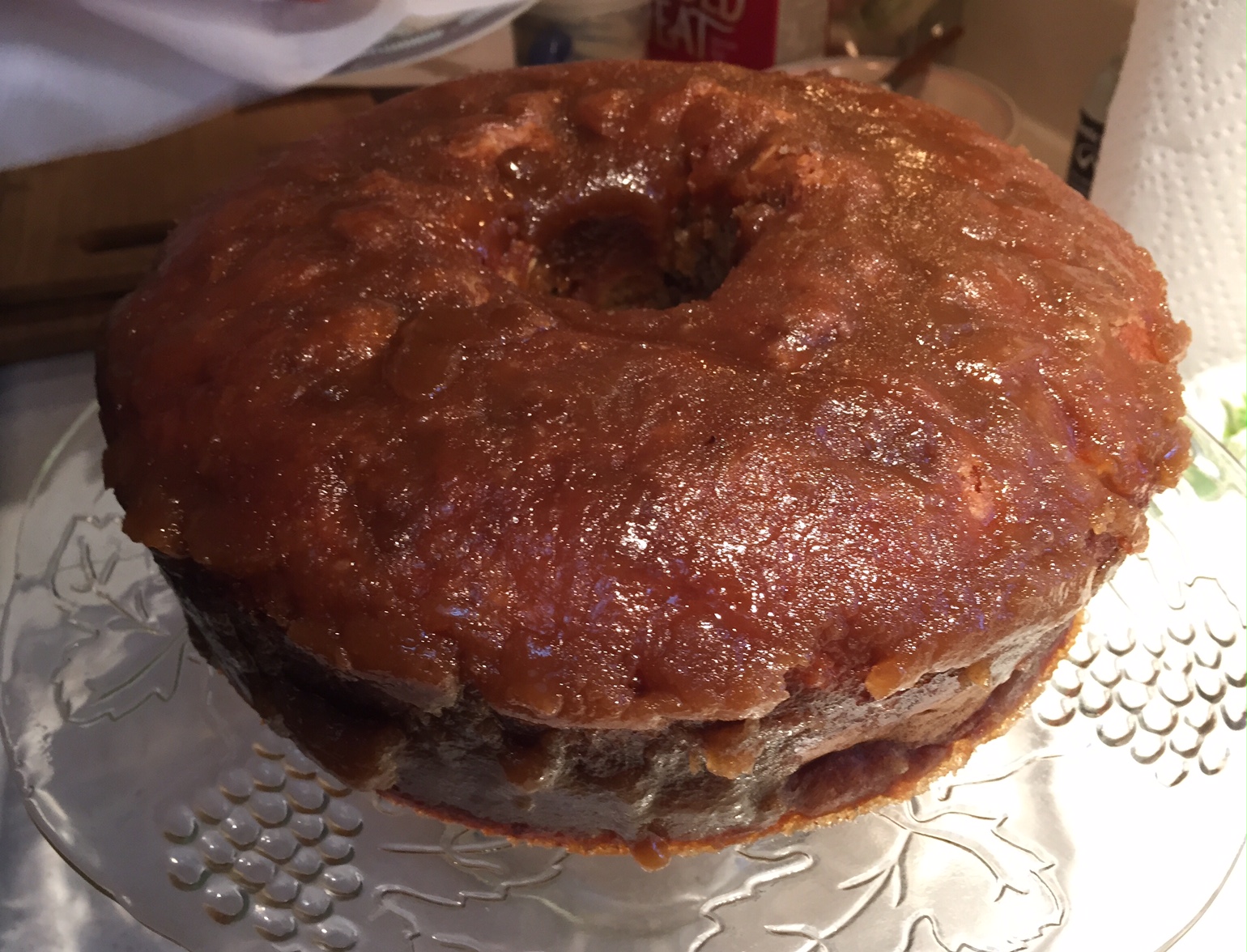
Several weeks later I baked the same cake with better results for my husband Cliff’s January birthday . . .

AppleCakeSuccess

Most everyone has a similar story whether it’s a mishap in the kitchen or someplace else. Here’s where you can tell yours.

Was there a happy ending to your story – Yes? No?


Coming next: Comparison Shopper Finds His Valentine

5 Memoir Lessons Learned from a Special Birthday Cake

Earlier in January I baked an apple cake for my husband Cliff’s birthday celebration. All agreed it was scrumptious. However, it was my second attempt at the same recipe for reasons to be divulged in my next blog post. As they say, practice makes perfect! Matilda Butler, who earlier followed a similar plan on her website, would agree.

AppleCakeSuccess

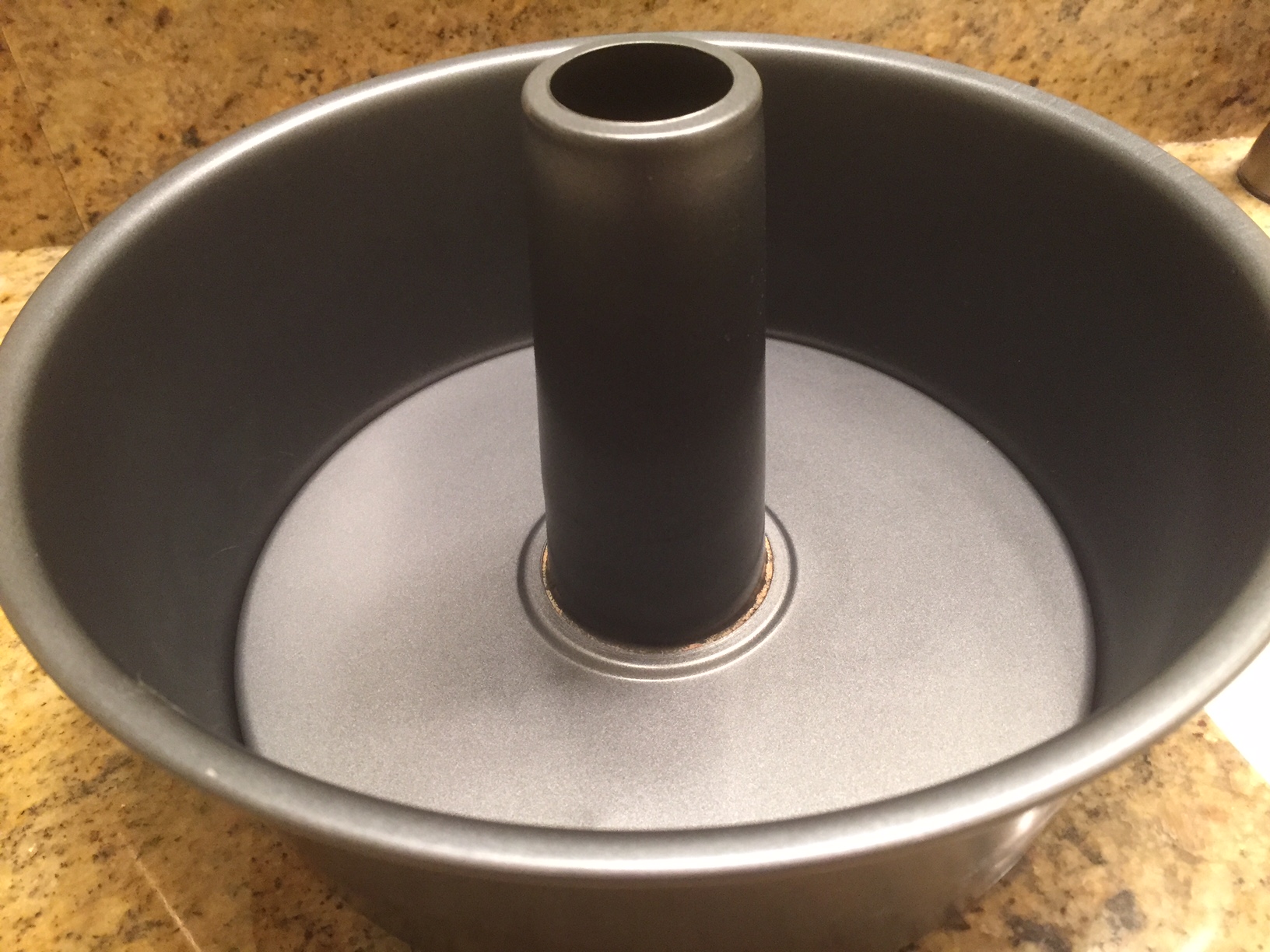
Step 1: Make a plan. Even if you are an accomplished chef or fabulous cook (I’m neither), read the recipe carefully and anticipate how you will proceed. I didn’t have a tube-shaped bundt pan, so even before I began, I had to make a trip to the grocery store for the proper pan.

BundtPan

Memoir Lesson 1 – Don’t fool yourself into imagining writing will be easy. Writing is certainly rewarding, but learning a new skill can be hard. I had done plenty of writing as an academic, but switching to a new genre like memoir required a totally different mindset.

Even if you end up changing your plan, you have something (like starter dough!) to begin with.


Step 2: Assemble what you need. Anticipate the ingredients and tools necessary. Pull out the mixer, bowls, wooden spatula, measuring cups and spoons. Take the eggs out of the refrigerator to bring to room temperature if necessary.

Memoir Lesson 2 – A memoir is a slice of your life, not a biography. Ask yourself some serious questions: What part of your life will you depict – your childhood, a traumatic experience, a thrilling adventure like sailing around the world? Can you sketch out this “slice of life” in a series of memorable moments? Scribble random thoughts on colored sticky notes? Draw it as a timeline? Write an outline?

What is your theme? If it’s success after a failed first marriage, that controlling idea will be the filter through which you tell your story. Flashbacks can add dimension to writing, but only if these stories connect to your theme.


Step 3: Be aware that you may need to make adjustments. Even though I knew where I was headed before I began (a perfectly baked cake, I hoped!) I had to make a few changes. I ran out of clean measuring cups, so I had to wash one. A phone call interrupted the process, so I had to quickly drizzle some lemon juice onto the apples so they wouldn’t turn brown.

Memoir Lesson 3   I didn’t open up the spice cabinet or pull everything down from my dry ingredients’ shelves and dump them into the batter. I had to be selective. Just so, you can’t tell every story that happened in your life. Stories have to fit your theme.


Step 4: Keep at it until it’s done. I was not done with the cake until it had been iced. Preceding this was planning –> mixing –> baking –> cooling –> de-panning–> icing.


Memoir Lesson 4   Memoir writing requires a series of steps to name a few: writing multiple drafts, revising, revising (Did I say revising?), writing a book proposal, finding various types of editors and an agent, planning for publication. You can find a more complete list of steps on Laurie Buchanan’s website here. 


Step 5: Celebrate! Light the candles and let the birthday boy blow them out. Serve everyone else a slice.

Cliff and birthday cake ablaze with candles

Memoir Lesson 5  Cake bakers hope the eaters will find their slice delicious. What delicious morsels of truth do you want your reader to get out of your book? That’s the memoir’s takeaway. Brooke Warner says it’s “ a gift to the reader, something heartfelt, universal, and true.” Figure out what that something special is in your memoir.


As a reader and/or writer, what writing tips would you add to this list?

Any cake-baking advice? Have you ever tried a baking project that turned out to be too elaborate?


(Watch next post for full apple cake recipe.) Coming next: Hoorah, My 300th Blog Post with an Oops and an Aah!

Sastruga, Snowy Winter Blankets

A long, wavelike ridge of snow . . . formed by the wind: Sastruga, a word of Russian origin.

A snowdrift is a beautiful thing if it doesn’t lie across the path you’ll have to shovel or block the road that leads to your destination.

Prehistoric Humps

Snow Drift, Google Images
Snowdrift, Google Images

James Thomson’s “Winter” from The Season portrays drifts as “one wild dazzling waste, that buries wide / The works of man.”


Snow So Pure

ShelleyQuoteSnow

~ Percy Bysshe Shelley, # 497 Invocation


Snow So Fun

[to] mimic in slow structures, stone by stone / The frolic architecture of the snow. – from Emerson, The Snow-Storm

Snow-faced Mark in "igloo" 1961
Snow-faced brother Mark Longenecker in “igloo” 1961


Snow Plow: Carving Out the Road Again

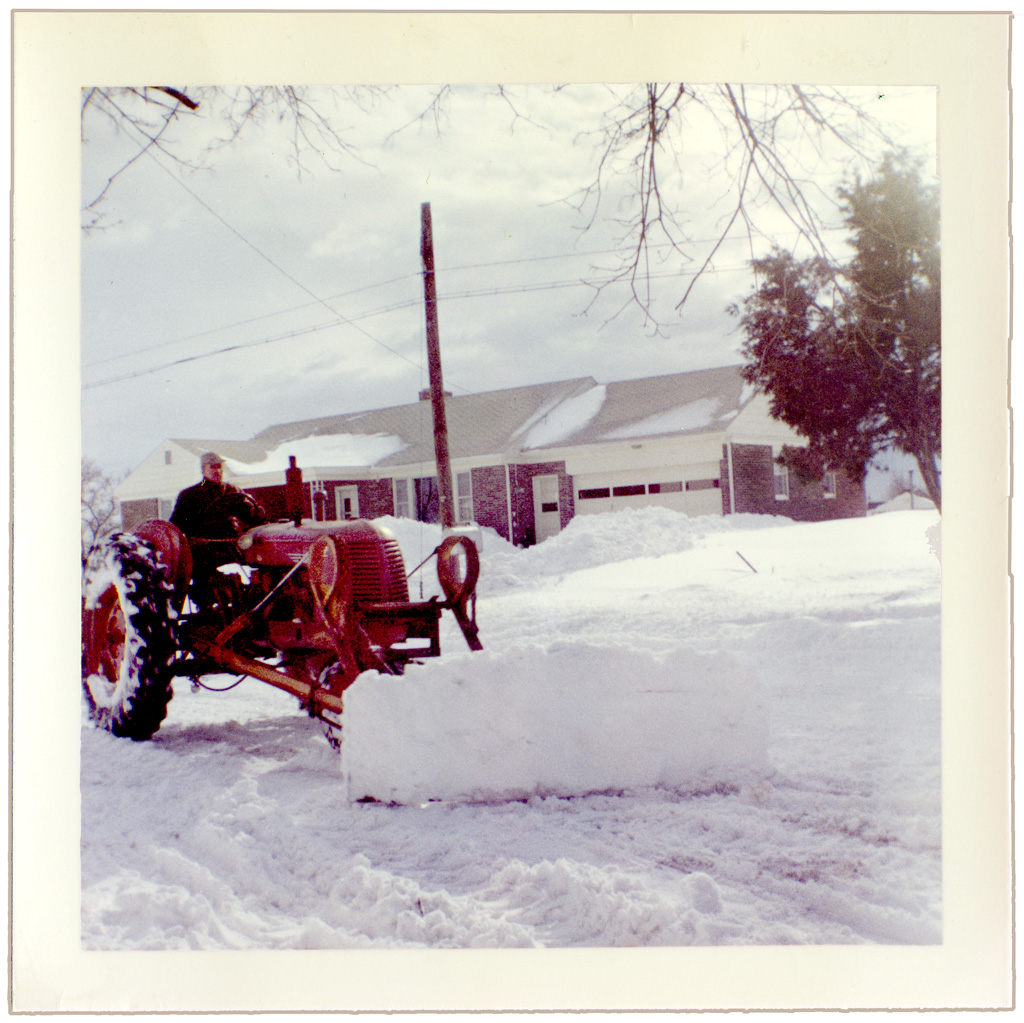
Ray Longenecker, my dad, plowing Anchor Road, 1961

A smooth white mound the brush pile showed, / A fenceless drift that once was road  ~ from Whittier’s Snow Bound: A Winter Idyll


Snow in Childhood . . . Never Ends

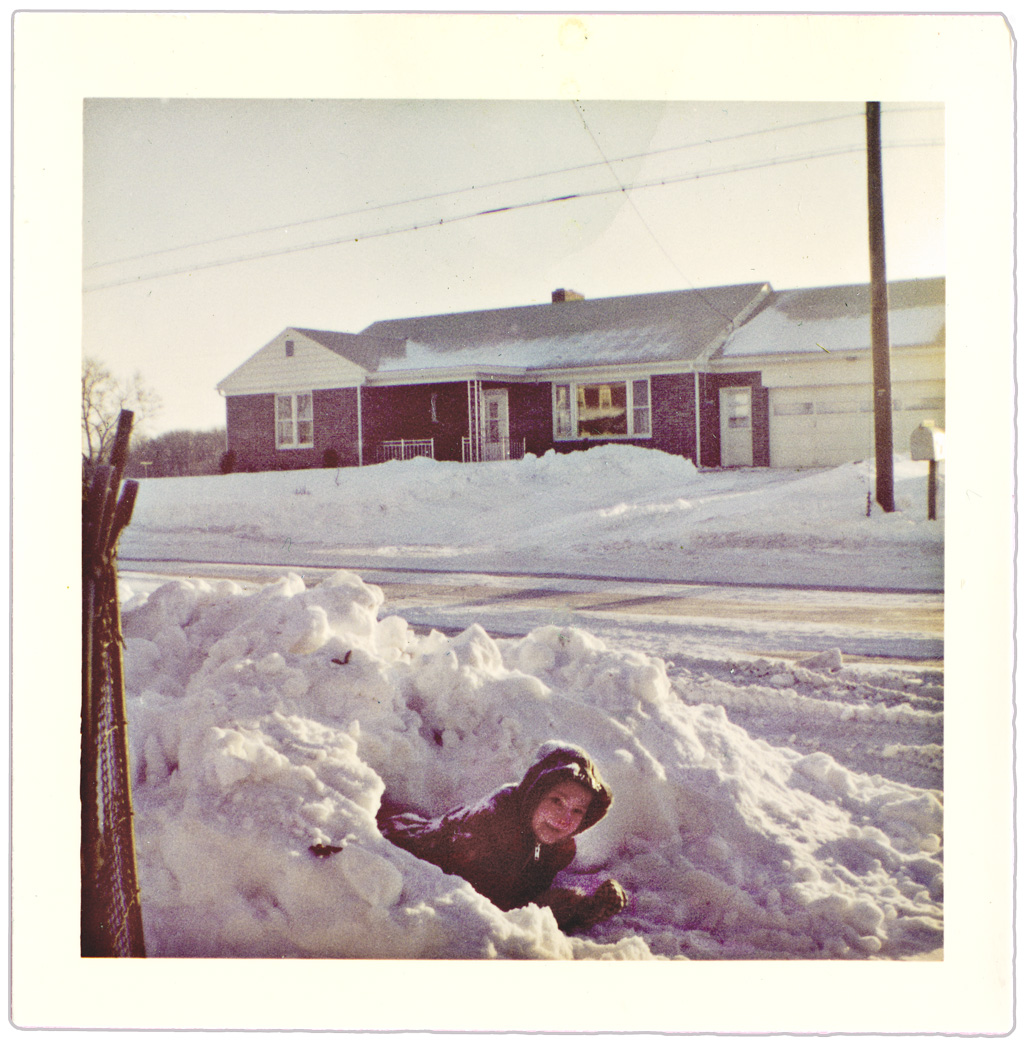
Brother Mark with sled and Skippy in the snow 1961

William Matthews in “Spring Snow” depicts a place where “childhood doesn’t end / but accumulates” and memories . . . disperse “in flecks, like dust, like flour, like snow.”

Snow provokes responses that reach right back to childhood. – Andy Goldsworthy


Snow Quotes

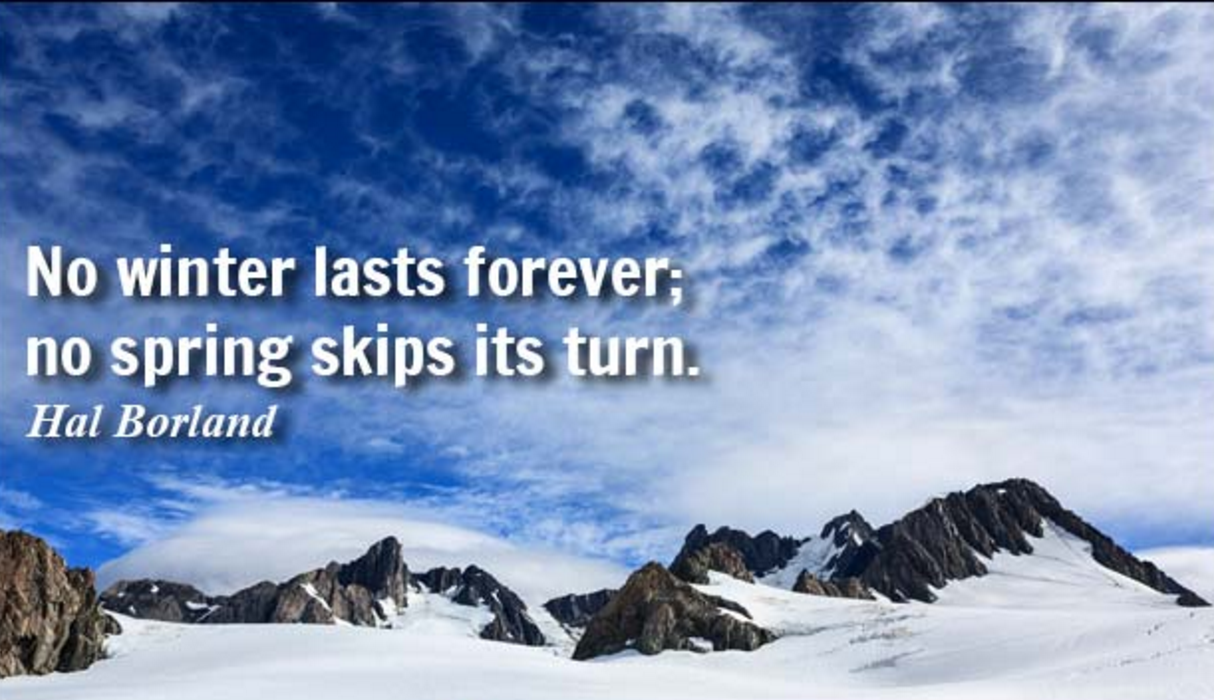
Borland in BrainyQuotes


Hast thou entered into the treasures of the snow?”   Job 38: 22a

* * *

New fallen snow is exquisite. But practical difficulties persist as snow lingers: messy cleanup, re-frozen slush, slick sidewalks.

Did you throw snowballs during recess at school? Help make an igloo? Snow memories welcome here.


Coming next: 5 Lessons Learned from a Birthday Cake

Signs & a Wonder in St. Marys, Georgia

It’s true! St. Marys, Georgia is idyllic. Only a 40-minute drive north of Jacksonville, Florida . . .

HistoricStMarysGA


. . . historic St. Marys has a storybook setting on the St. Marys River – white picket fences, charming Victorian inns, and majestic magnolia trees and live oaks welcome you to an atmosphere perfumed by fragrant salt air. Here you’ll discover legends of forgotten battles and daring pirates as you kayak by moonlight with sea turtles for company.


The History

Treasures in the historic district include the Georgia Radio Museum and Hall of Fame, and the Cumberland Island Seashore Museum the gateway to ferry departure point for the Cumberland Island adventure, the southern-most barrier island in Georgia. St. Marys Submarine Museum, showcases the Kings Bay Naval Submarine Base located about three miles north of St. Marys, a town of just over 17,000 people.

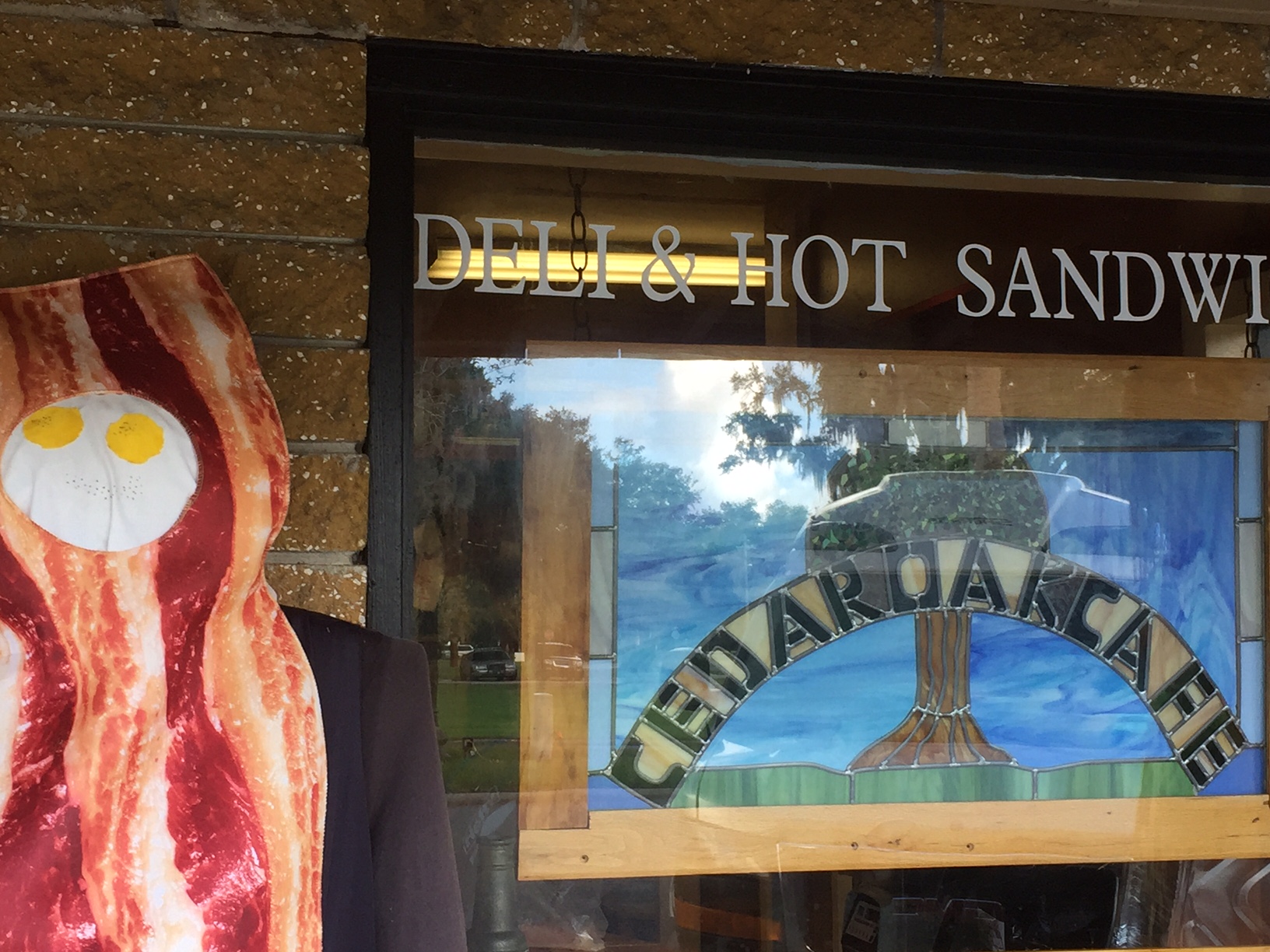
Near where we had lunch at Cedar Oak Cafe was an old Victorian house nestled among trees draped with Spanish moss, typical of the historic residences.

HouseStMarys

Lunch at Cedar Oak Cafe on Osbourne Street where even the bacon attempts to hold a  shape . . .

CedarOakCafeBacon

The Cumberland Island Seashore Museum leads down to the St. Marys River harbor where travelers can board the Cumberland Queen for a unique day-trip adventure to the Island.

CumberlandIslandMuseumSignCumberlandQueenBOAT

We are bound for Jekyll Island farther up the coast near Brunswick . . . JekyllIslandClubHotel

. . .  but first, time out for cherry licorice, a dab of chocolate candy and a look at some show-stopping sayings at Market on the Square Shop at the end of Osbourne Street.

Some Signs We Found

Some wisdom
Words of wisdom

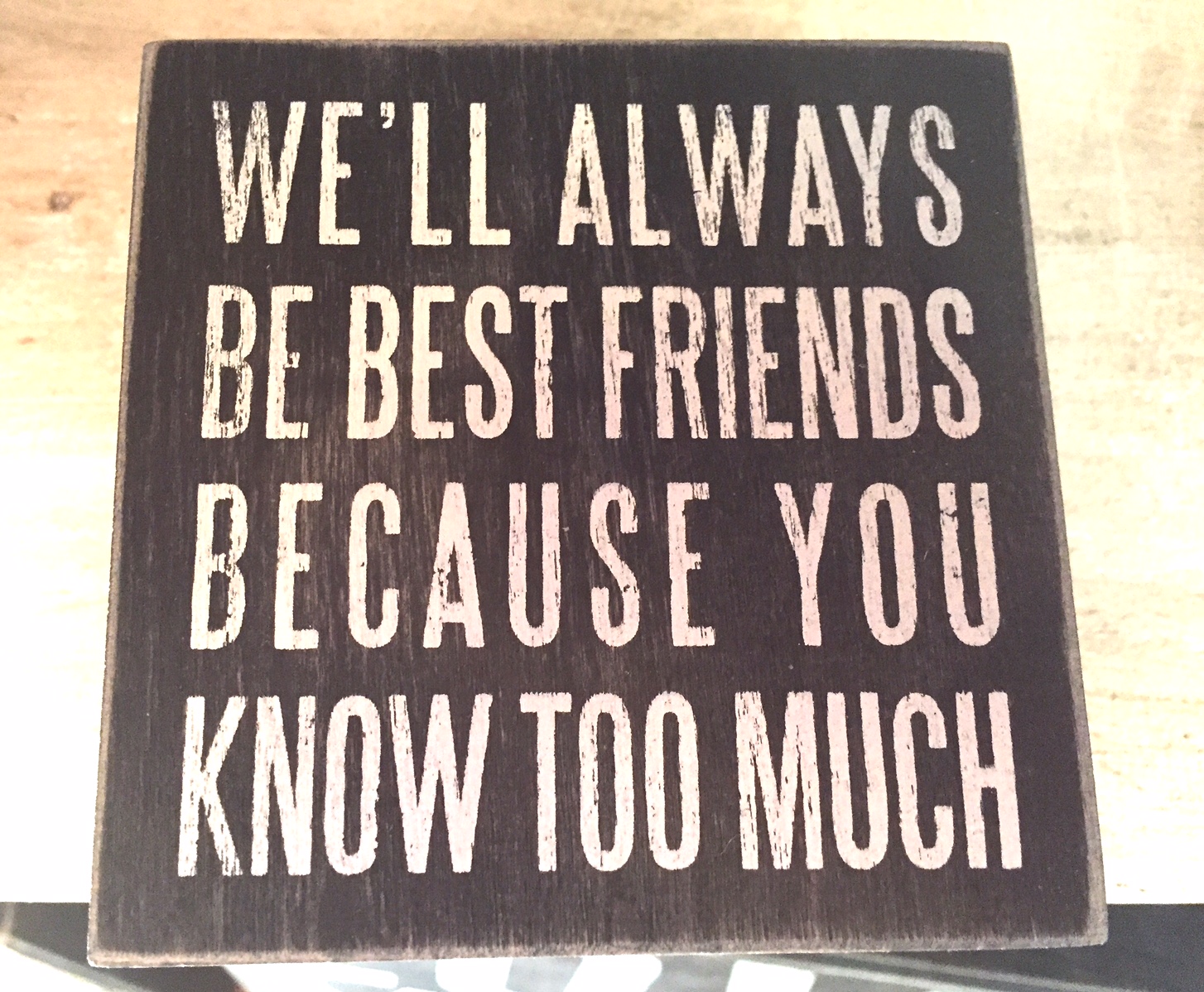
An admission

FRIENDSsign

An anatomical figure of speech, to be sure . . .

FriendsBoobs

And finally some refinement . . .

CivilitySign

CumberlandIslandRELAXATION

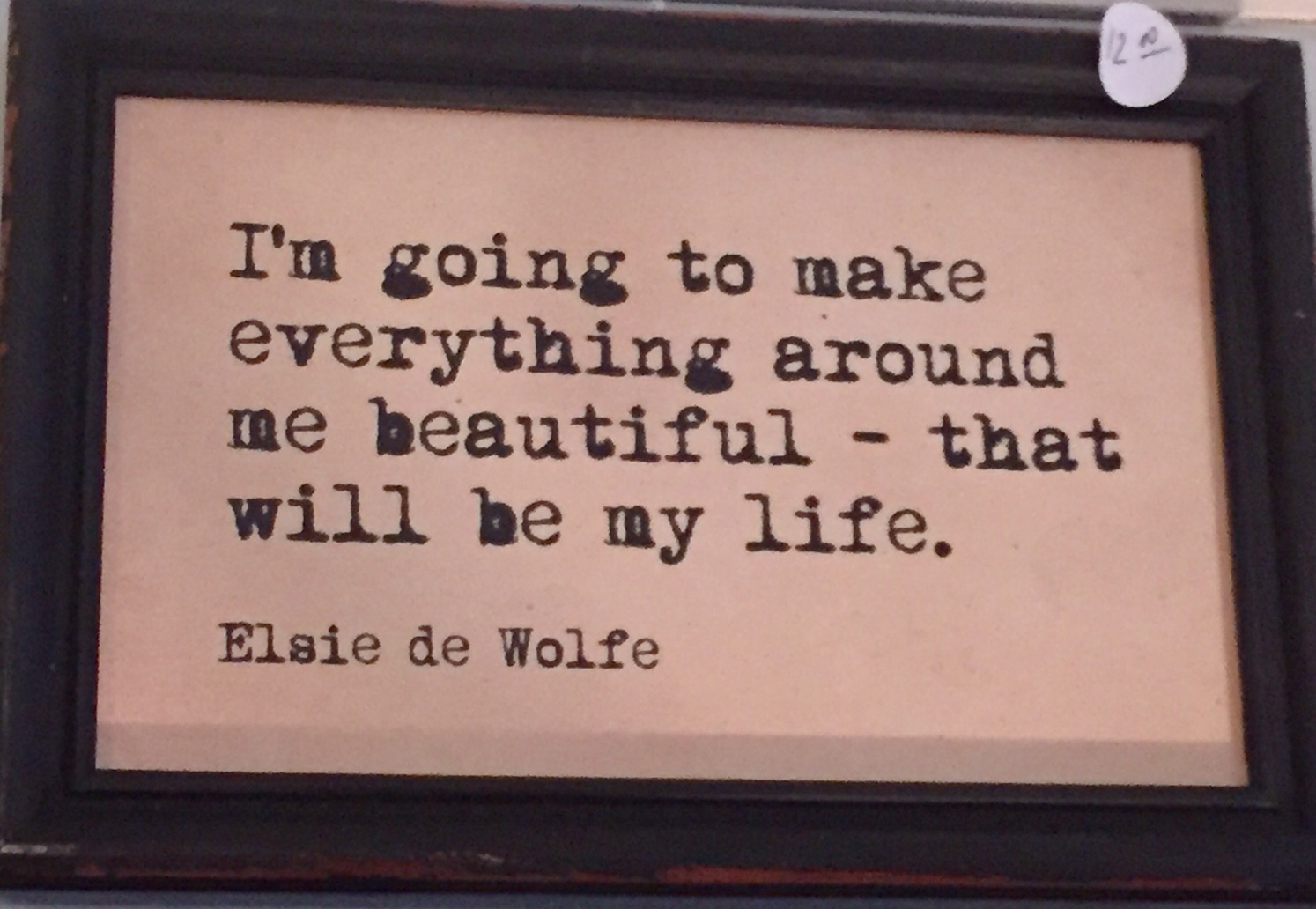
This sign and others spotted at Market on the Square on Osbourne Street, St. Mary's, Georgia
This sign and others spotted at Market on the Square on Osbourne Street, St. Marys, Georgia

Elsie de Wolfe’s signature is displayed on other quotable lines too: “Be pretty if you can, be witty if you must, but be gracious if it kills you.”  Elsie De Wolfe

Ms. de Wolfe is said to have invented the art of interior design with the publication of The House in Good Taste (1913) along with standards for manners, yet Ruth Franklin in a New Yorker magazine article suggests that she had a wild side. At “the age of fifty-six, she was plucky enough to perform headstands in public.” She furnished homes from Manhattan to Paris, Saint-Tropez to Beverly Hills and liked “to wear short white gloves and to carry at least one little dog.” In her old age, she tinted “her hair blue or lavender to match her outfit–one of many trends that she initiated.”

As an activist, she fought “for woman’s suffrage, and during the First World War . . . offered the Villa Trianon to the Red Cross for use as a hospital and volunteered as a nurse in a burn unit (for which she received the Légion de’Honneur).”

Along the street  . . .

StupidityParking

Aha, he (or she) took the hint . . .

BlackJeepSIGN

These photos including the one below were snapped on November 7, with Christmas about seven weeks away and temperatures in the mid-80s!

A Wonder

StMary'sChristmasWreath

Is it just my imagination or do holiday decorations surface earlier and earlier every year?

Another saying or quote to add to the signs above?


Coming next: A Random Act of Kindness, Pudgy Hands and an Invitation