My Little Black Bookends Tell All

Growing up in rural Lancaster County in the 1950s, I had very little opportunity to meet people of other ethnic groups, but I did have a Little Black Sambo book that introduced me to a culture different from mine. So, I have not always been embarrassed by this book. Fascinated, yes, but embarrassed, no. The picture of the tiger running around an African palm tree as the tiger morphed into a golden round pool of butter mesmerized me as a child, butter that would become one of the ingredients of the pancake recipe. The next page shows Black Sambo’s mother Black Mumbo with her glossy brown arm stirring a mound of melted butter making pancakes. The picture made me hungry. And on the last page:

Little Black Sambo_pancake_web shot

And then they all sat down to supper. Black Mumbo ate twenty-seven pancakes, Black Jumbo ate fifty-five. But little Black Sambo ate a hundred and sixty-nine because he was so hungry!!! (Yes, there are three exclamation marks in the book I am holding.) 

Characters in folktales are typically overblown, with exaggerated details like Little Black Sambo’s super big eyes, through which he gazes at three heaping plates of pancakes with a pot of syrup dribbling all over the table. Obviously, he is ready to stuff his mouth with piles of pancakes.

But there are other tales in the book with the Little Black Sambo cover: The Little Red Hen, The Tale of Peter Rabbit, and The Country Mouse and The Town Mouse. Mr. McGregor and the kitchen maid in the “Mouse” story have white faces, but there is no reference to their whiteness. Their race is assumed as white and therefore not particularly notable.

Little Black Sambo_Cover_web shot

I paged through this book recently as we cleared out books in Mother’s house and marveled at the stereotypes about black people back then and was embarrassed by it: A black woman with a big butt and goofy name wearing a “maid” cap on her head, black people eating nothing but fried foods, everyone eating too much.

Another find un-earthed in our sifting through “Stuff” – a pair of book-ends I made in school that portrays black children as a novelty.
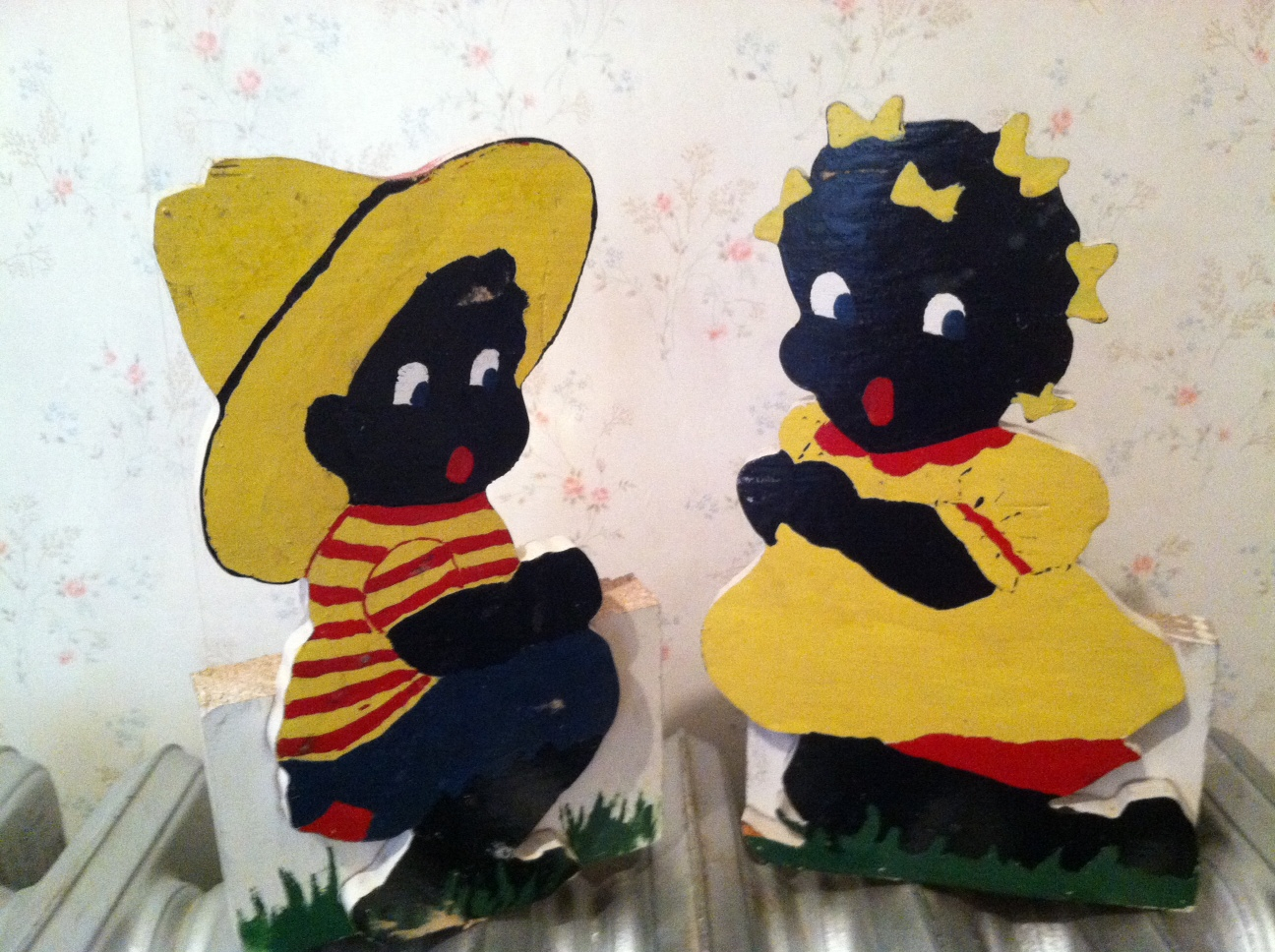
blackBookends

Interestingly, my niece Shakeeta, my brother Mark’s daughter, choose these as one of the few things she wanted as a remembrance from her Grandma Longenecker’s house. She hoists them up with a smile here:

KiKiBlackBookends

I guess it’s time I catch up with the times and adjust my ideas about black memorabilia. Singer Anita Pointer certainly has. In an article entitled “A Lesson in History,” (AARP Feb/March 2015) Anita, one of the Pointer Sisters, says she collects black memorabilia so she’ll never forget how her people were once depicted.

BlackMemorabiliaAARP

We grew up in Oakland, California, but when I was 10 we visited my  grandma in Arkansas. I couldn’t believe how people were living there. They had a white and a black part of town, and you stayed off the white side. At the department store, they had colored and white water fountains. I don’t want to ever forget that’s what it was like for us — and collecting black memorabilia is how I do that.   (66)

Like Whoopi Goldberg and Spike Lee, Anita collects black memorabilia as museum pieces including a “Mammy” cookie jar, and a 1970s John Henry whiskey decanter made by Jim Beam. When the prestigious house of Sotheby’s came to appraise her collection, it took a year to sort and categorize it. She comments, “The appraiser said that I could pretty much charge what I want because most of the pieces are one of a kind.”  In the end, Anita Pointer sees her collection of thousands of pieces as part of her personal history. She doesn’t apologize for any of it.

Of course, I’m hanging onto my Little Black Sambo book. It’s a part of my personal history.

Your comments welcome here!

(Answers to Shakespeare puzzlers from April 22, 2015 post below.)
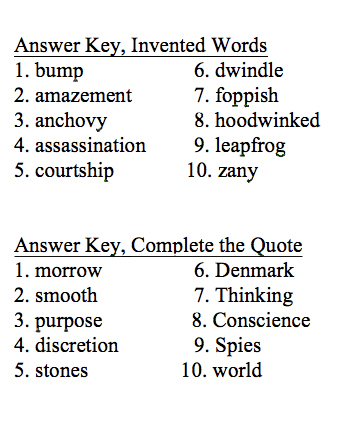
Answer Key2_mod

Button, Button, Who’s Got the Button?

Do you lose things? Misplace your glasses, keys, cellphone, or worse?

A few weeks ago I saw advertised a bit of wizardry called TrackR bravo, a coin-sized, wireless device that attaches to anything you want to track. The two wholesome-looking, geeky guys who invented it claim it can find lost items in seconds. However, it is still in production and won’t be available just yet.

Here is a bit of verse contributed by husband Cliff on the occasion of his un-earthing treasures long forgotten in drawers, filing cabinets, and notebooks. These lines dated January 2004 were inspired by his discovering a plastic container of leftover artichoke dip, with mold growing on top, tucked inside an enclosed green sandwich cooler bag, hanging quietly for a day or two on the back of a kitchen chair.

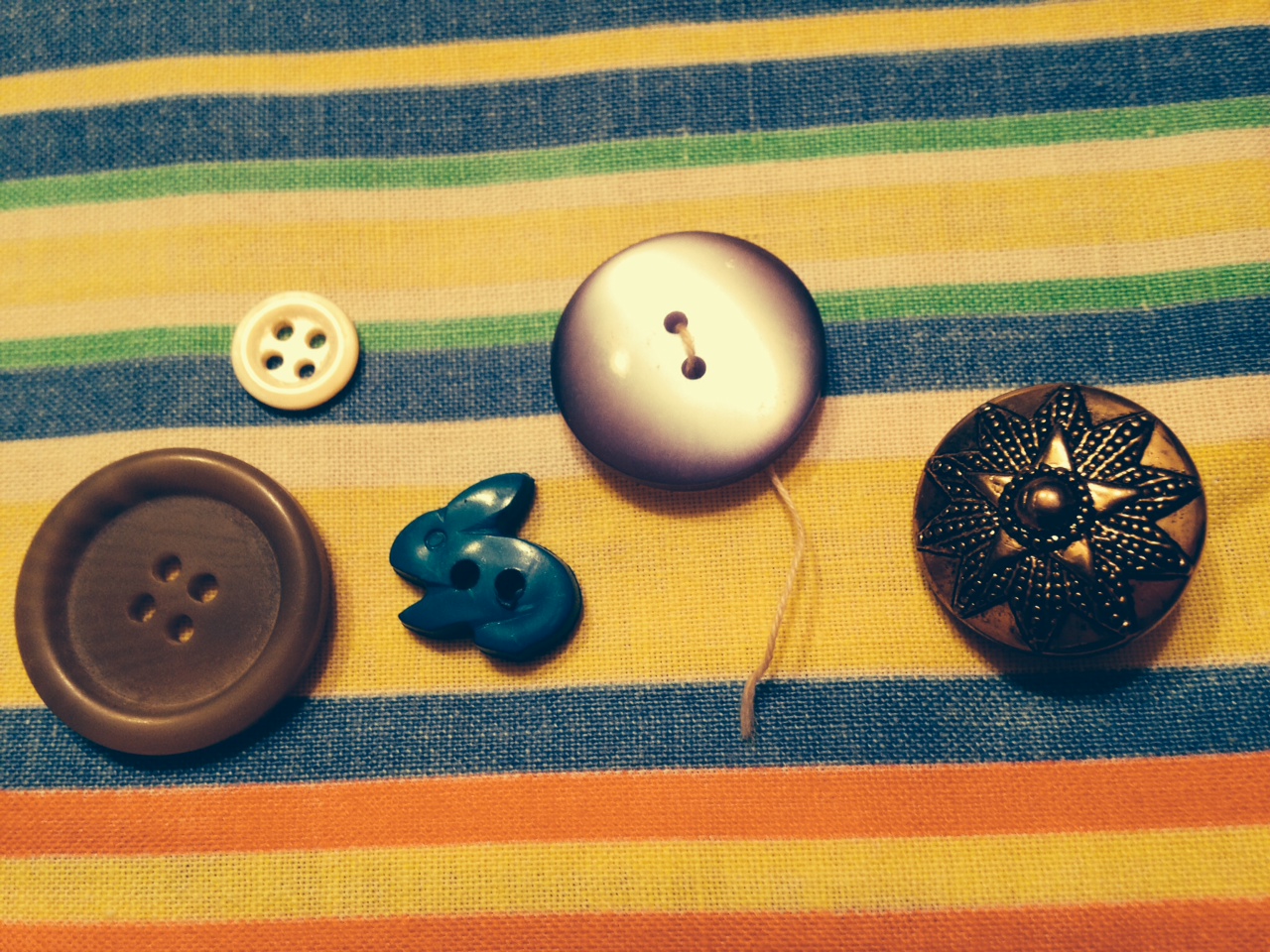
Button3

Button, Button. Who’s got the button?

Glasses, Glasses. Oh, where did I put those glasses?

Keys, keys. Why did some Martian leave them in my van door overnight?

Windows, windows. Why would windows be partway open, when I know I closed them tightly the night before?

Names, names. Why do people always change their names, when their faces remain the same?

Pens, pens. Why do they secretly skip to someplace else, when no one is watching?

Book, book. Why did that book hide itself beneath the bed again?

Folder, folder. Would someone please tell me how my folder mysteriously appeared somewhere else?

Cell phone, cell phone. Why isn’t that cell phone with me now when I know I just saw it a moment ago?

Date, date. Who changed my appointment for Wednesday on the calendar that I knew for certain was on Friday?

Remote, remote. Who snuck in while I was in the kitchen and hid my remote?

List, list. How can I get along without my “To Do” list? I’d swear I left it on the dresser, a window ledge, my hat box or . . .

Wander, wander. Why do I always have to go back to where I came from, to find out what I had forgotten?

Zipper, zipper. Who is it who, ghost-like, unzips the very pants I parade to work in?

Artichoke dip, artichoke dip. Now where did I leave that nice little dip? Why would it be inside the green cooler bag hanging on a kitchen chair, sporting a fuzzy growth of mold on top?

Brain, brain. Am I losing my mind? “Ding, Dong.” Is Alzheimer’s at my front door?

Remember, remember. Oh dear, what else have I forgotten to remember?

Oh well, I’ll now put on my shirt . . .  “Pop!” Button, button. Who’s got the button?

KeysGlasses

A side note:

The day after reading the poem to Marian at dinnertime she asked, “Have you seen the poem?”

I told her the last time I had seen it was on the kitchen table after reading it. “Did you put it in your hat box under the wicker coffee table?” I quizzed.

“Oh dear me, Button, Button Poem, Button, Button Poem. Who’s got the Button, Button Poem?”

You have stories of loss, recovery, and perhaps loss – again. Your anecdote fits right here!

Coming next: “What’s Your Name Again?”

Moments of Discovery # 6: Whip up Recipes, Stir in Imagination

Clearing out a house after death is a sacred act, yet no amount of holiness assigned to this task can dismiss the back-breaking, shoulder-aching, neck-craning job of sorting, recycling, and passing on to others the possessions of a loved one. Aside from clothing and furniture, Mother left behind the tools of her trade in the kitchen along with beloved books of our childhood, some of which are displayed here.

Prepare Food & Serve It

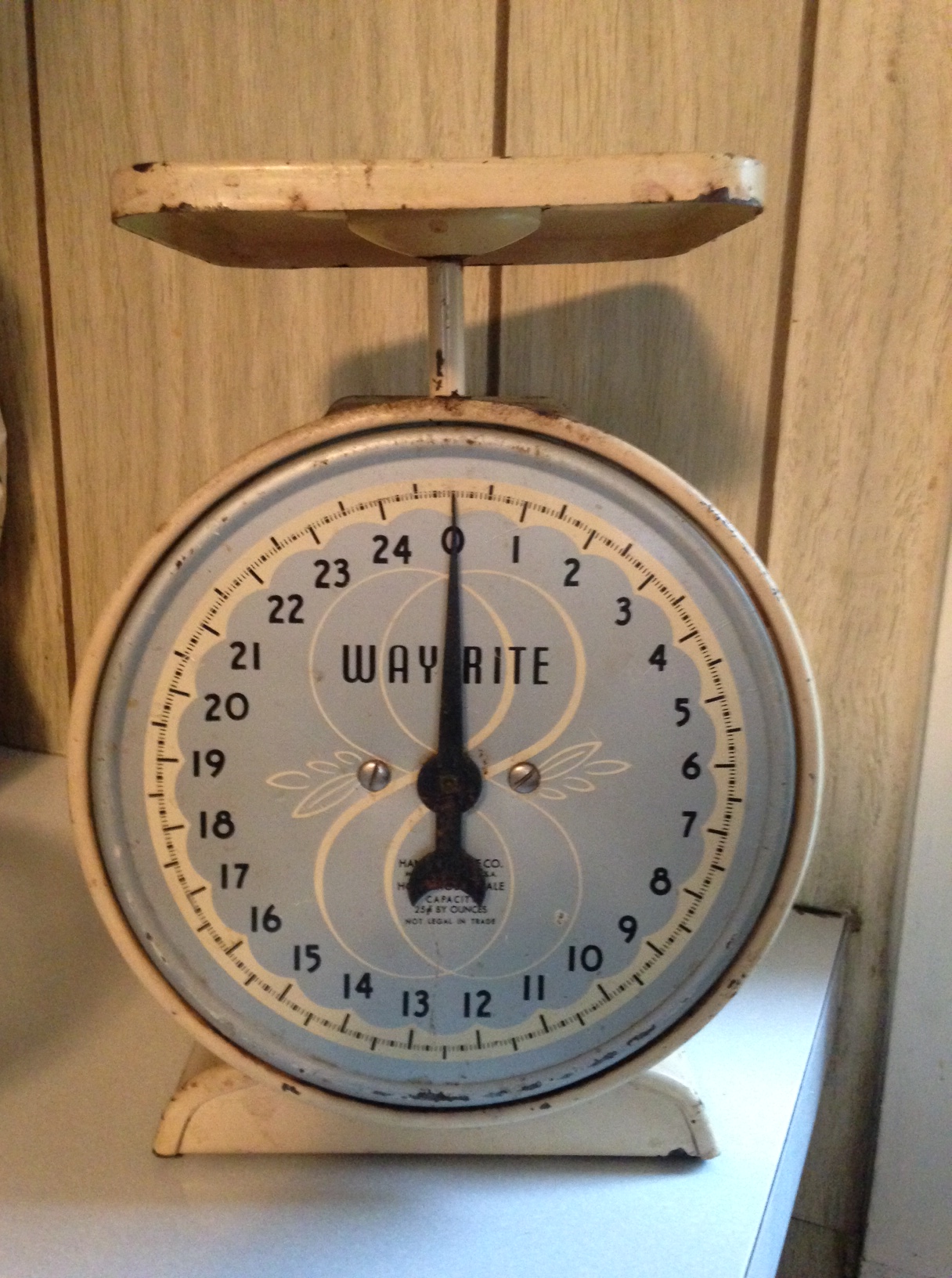
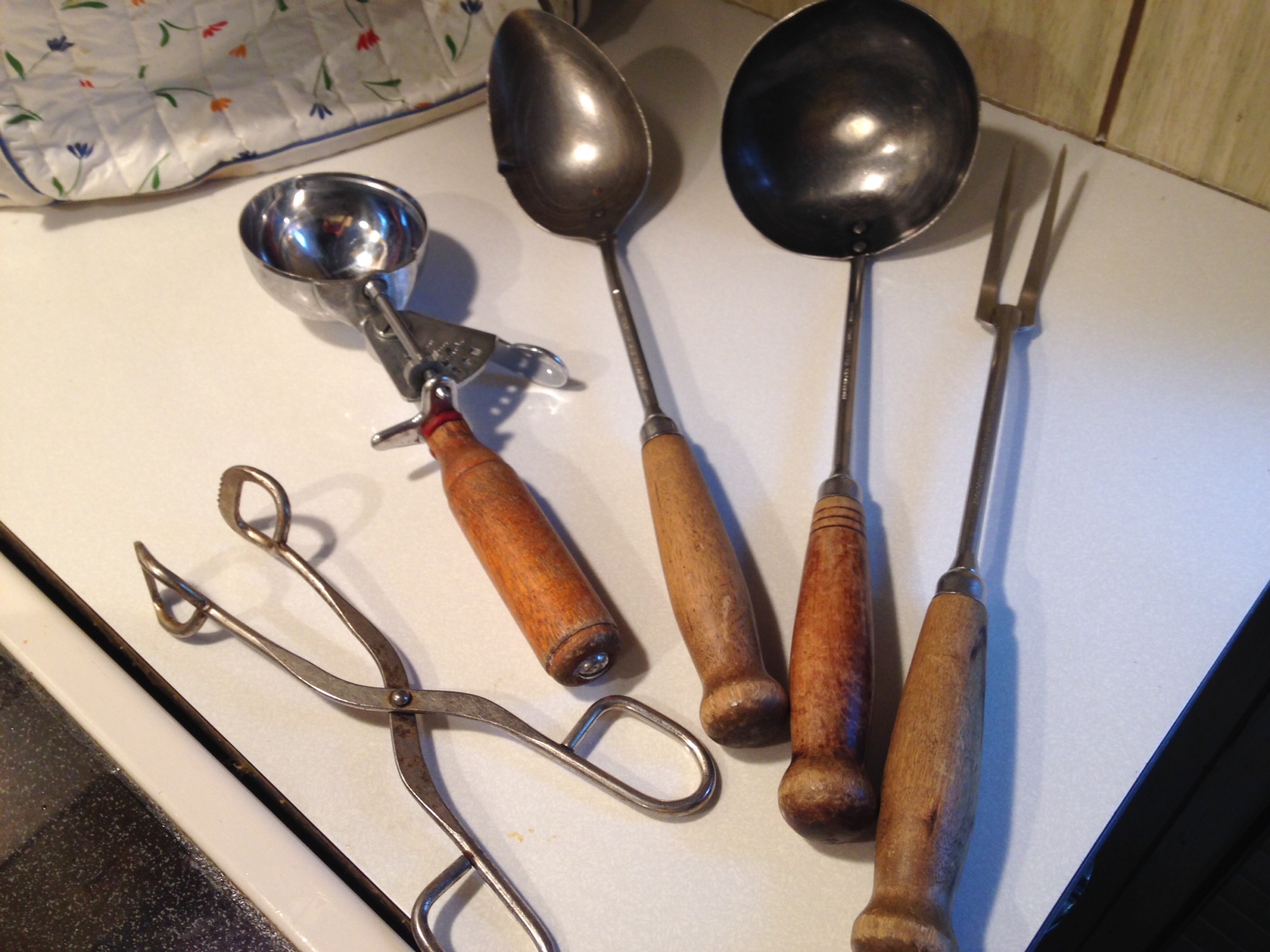
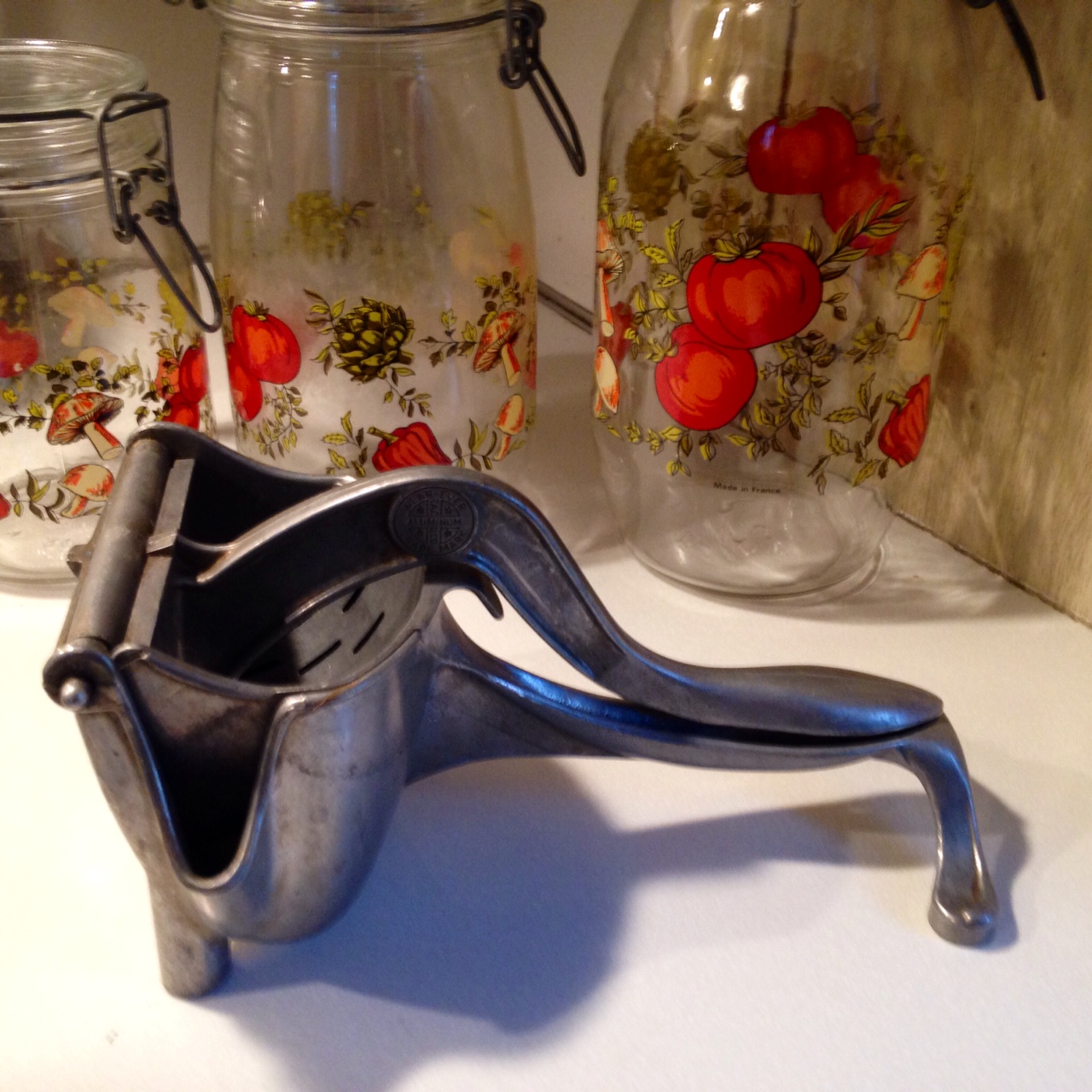
What remains: A scale on which all of our baby weights were noted and recorded (or ingredients for recipes measured), cooking utensils, ice cream dipper, and juicer, most of which have been passed on to grand-children.

Scale Mom

My best guess is that these were wedding gifts or first (and only) time purchases. I don’t remember another scale, a different set of utensils, a second ice cream dipper or juicer ever passing over the threshold of our home. The throw-away mentality of our current consumer society never made sense to Mother. “You buy good, and keep it – for a lifetime” was her philosophy! Yes, prepare food and serve it, and with love! Her fancy china set, sterling silver flatware, and crystal glasses and goblets all have found homes with her grand-children.

Kitchen Utensils Mom

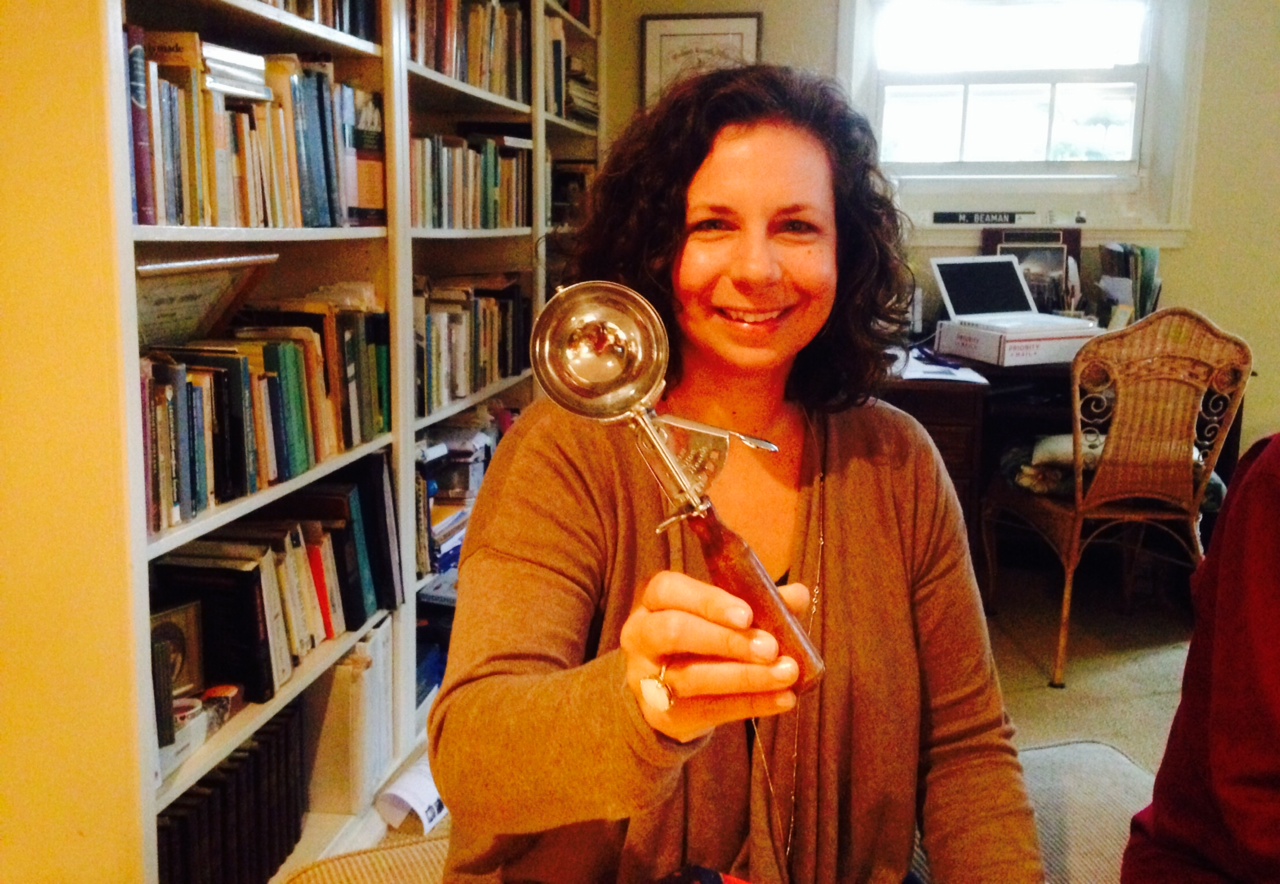
Daughter-in-law Sarah pleased with Grandma's ice cream scooper
Daughter-in-law Sarah pleased with Grandma’s ice cream scooper

Juicer Mom

Don’t Forget to Stir in Imagination

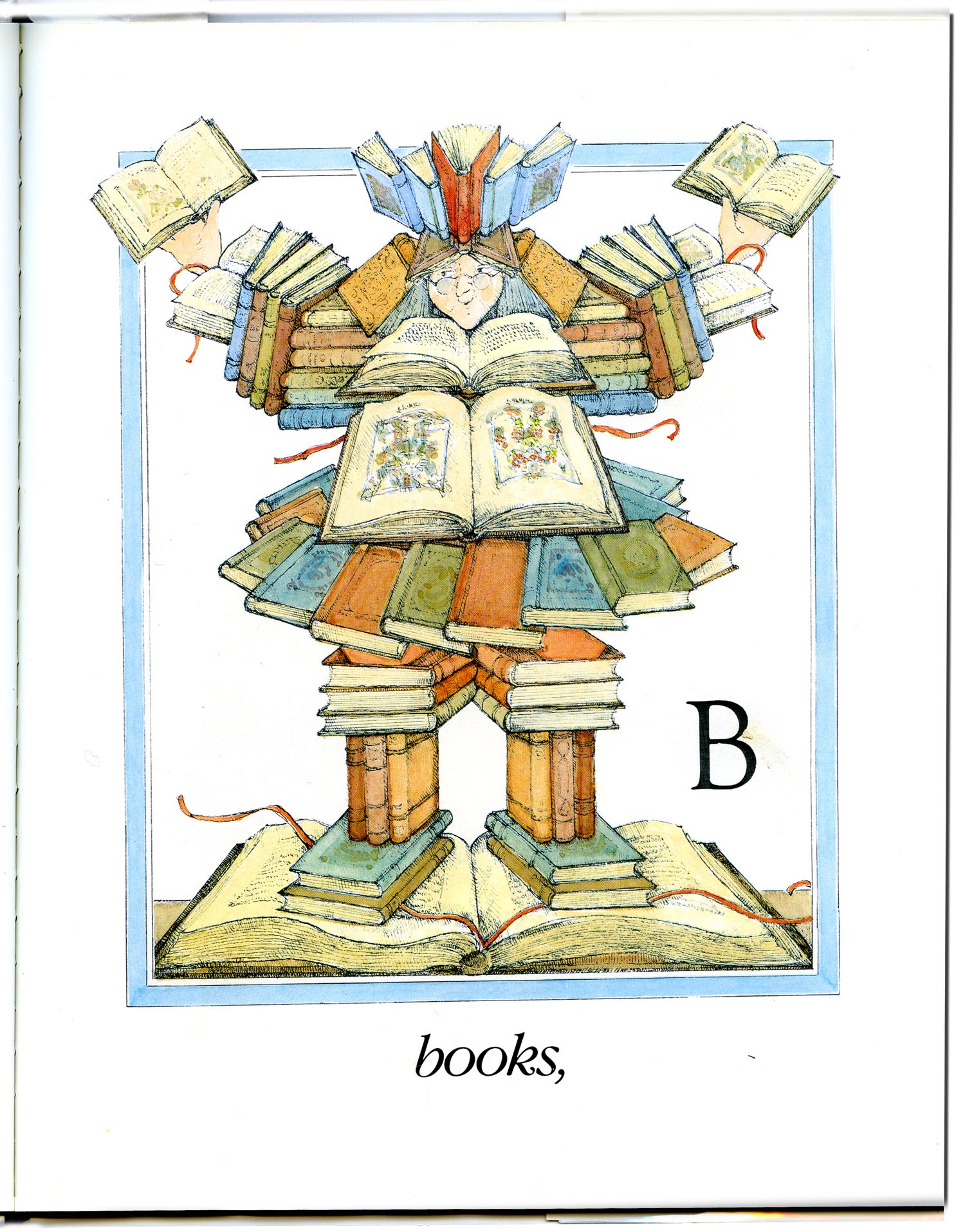
Page from Arnold and Ann Lobel's book
Illustration from On Market Street by Anita and Arnold Lobel

In previous Moments of Discovery, you may have seen other books from Mother’s bookcase or from the attic.

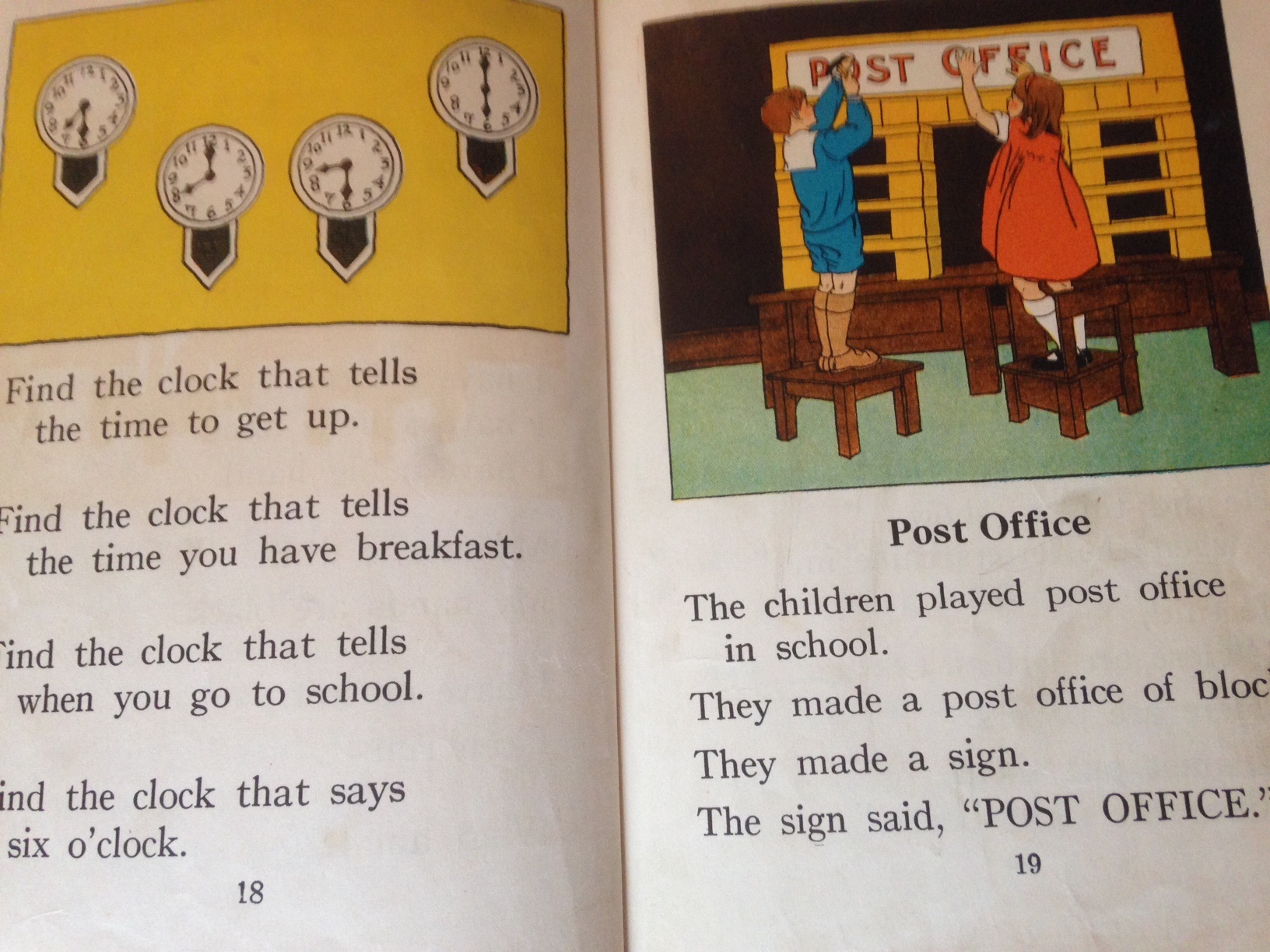
The book below, a reader, is certainly a keeper, recording media and methods that are becoming obsolete.

Pages from my text book
The Child-Story Reader, copyrights ranging from 1927-1936

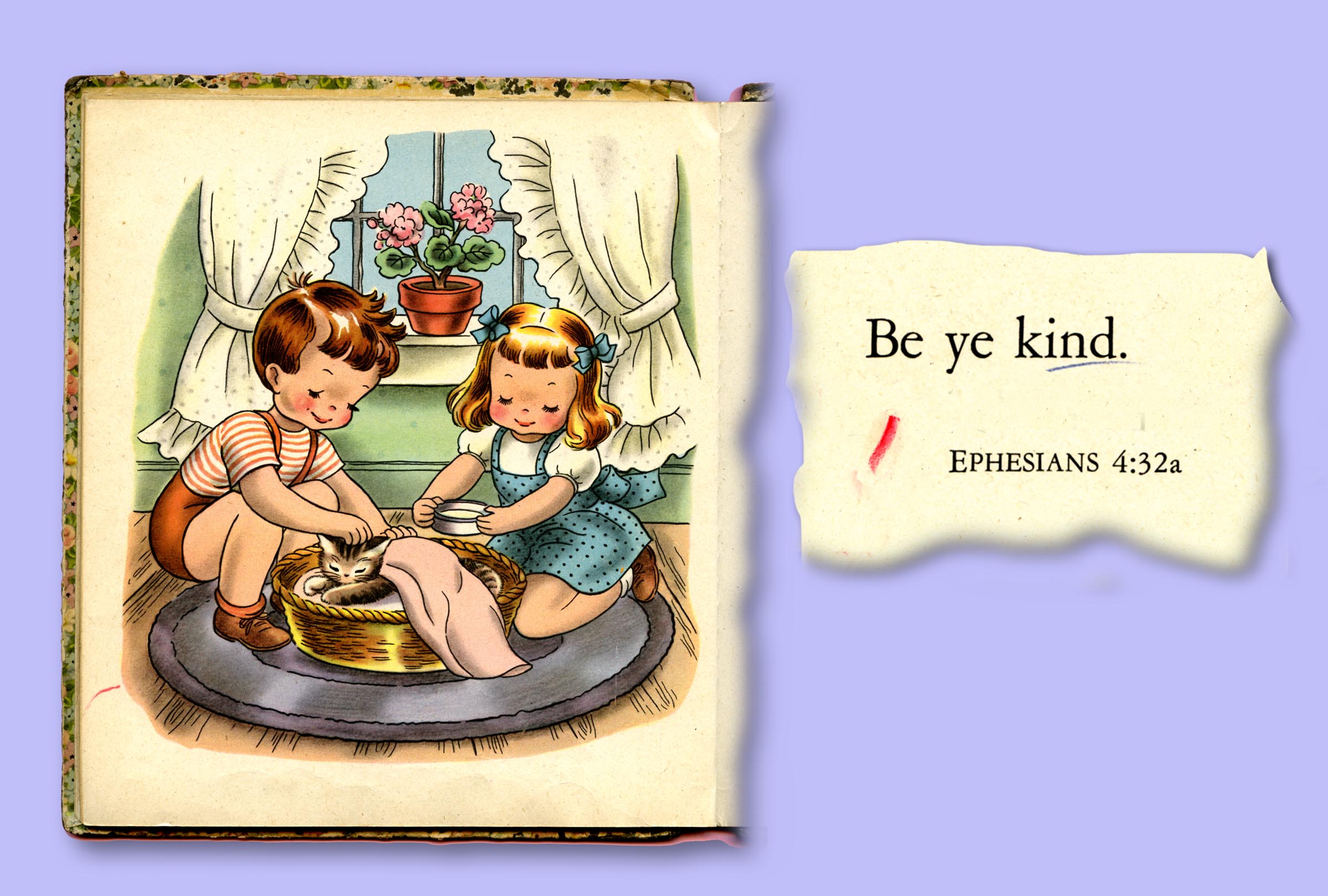
And one of my favorites is My Bible Book with verses selected by Janie Walker and pictures by Dean Bryant (Rand McNally and Company, 1946). These words and pictures have been imprinted on my childhood memory as I joined the red-haired boy and blonde-headed girl roaming around gardens and romping through meadows with their pets. It was a perfect world!

My Bible Book_front cover

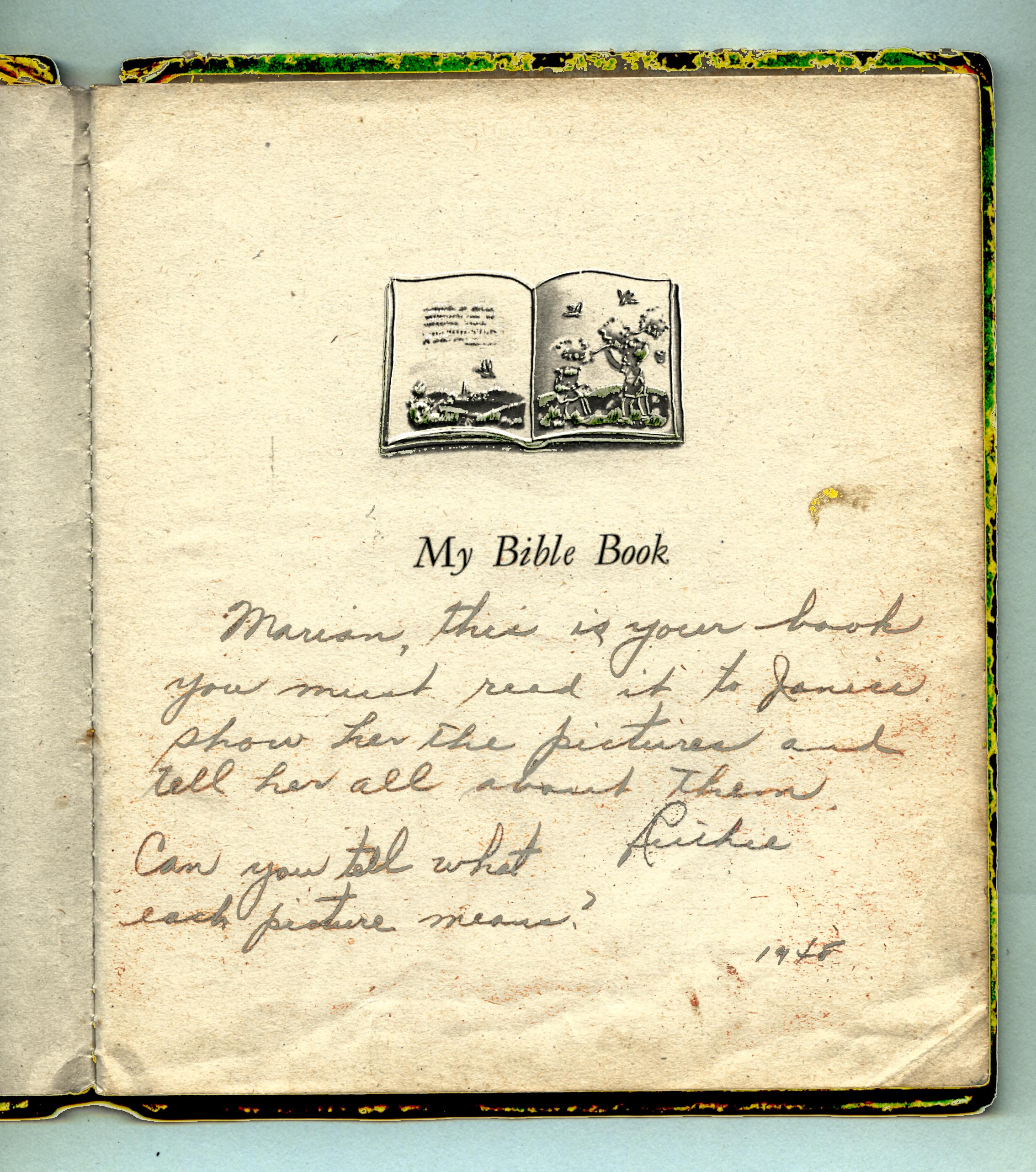
Aunt Ruthie gave me this book with penciled instructions to read it to my sister Janice, show her the pictures and tell her all about them.

My Bible Book_pre Title page w note_light text_7x8_300

 Ever the teacher, she closes with her sweet lead-in question: “Can you tell what each picture means?” This is probably a Christmas gift or birthday present given to me in 1948.

Puppy dogs, a frog, a snowman, a kite, some birds, squirrels, a herd of cows, and a even a special kitty cat amuse the children as the pages turn with words of wisdom all quoted from scripture.

My Bible Book_Be ye kind_p25-26_8x5_300

Do you have old books in your treasury of keepsakes? Some special utensils for cooking or serving passed down to you from a generation or two ago? We’re all ears!

Coming next: Button, Button, Who’s Got the Button?

Enchanted April: Renewal and Possibilities

Are you wishing for different weather just now?

Maybe a change in scenery is all you need to perk up. After a rough winter, the drowsy dreaminess of a warm, languid clime may sound very appealing.

If so, you have something in common with the middle-aged Lottie Wilkins and Rose Arbuthnot, both members of the same London ladies’ club, who become acquainted after reading a newspaper advertisement for a small, furnished medieval castle to be rented for the month of April on the balmy shores of the Mediterranean. They are seeking enchantment – and in April.

*  *  *

In February, I met Timeless Lady, a blogger who blends quirkiness and a strong, spiritual core in her posts. In a recent piece about the book/movie Enchanted April, she published the words in the newspaper ad that enticed these ladies to exchange London fog for idyllic Italy at a castle in Portofino, Italy no less. Here is The TImes newspaper ad that drew them in:

To Those Who Appreciate Wisteria and Sunshine. Small mediaeval Italian Castle on the shores of the Mediterranean to be Let furnished for the month of April. Necessary servants remain. Z, Box 1000, The Times.


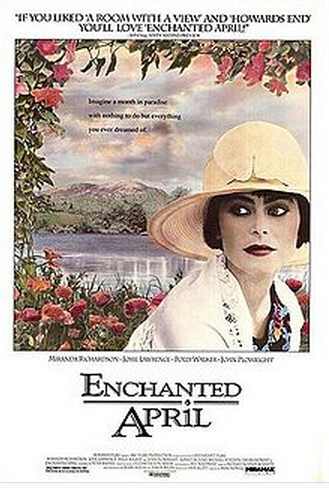
Lottie Wilkins and Rose Arbuthnot, both wishing to escape the drab days of winter, also share a desire to leave the day-to-day drudgery of housekeeping and the struggles of marriage, Lottie to the klutzy Mellersh and Rose to her gawky Frederick. But there is the matter of money, so to share expenses they take on the elderly, crotchety Mrs. Fisher played by Joan Plowright, and the stunning, but aloof Lady Caroline Dester. As the wisteria and sunshine slowly work their magic, the characters are rejuvenated and re-discover hope and love.

Film, 1992  Courtesy Wikipedia image
Film, 1992 Courtesy Wikipedia image featuring Lady Caroline Dester, who is sick of being grabbed by men!

In the early 1920s, just after World War I, author Elizabeth Von Arnim vacationed in the serenity of Portofino, Italy at Castello Brown, the same castle featured in the movie. Inspired by the magnificent medieval castle and the luscious gardens of San Salvatore, Von Arnim wrote “Enchanted April,” the book on which the movie is based.

I discovered a link to a free copy of the book via the Guttenberg Library, where you can search and find links to other books and stories you read as a child.

Want more Elizabeth Von Arnim? Click here for her Collected Works!

Cover image: courtesy Amazon Books

In case you haven’t seen the movie, or if you want to succumb once again to its captivating charms, here is the trailer from Miramax Films:

Quotes from Enchanted April

I want to just sit and not talk and not think . . . .  ~ Caroline

If you wish for something hard enough, it happens!  ~Lottie


Wisteria in patio garden
Patio garden wisteria


When you want to get away from it all, where do you escape?

What is on your bucket list – Where would you like to go right now, or sometime soon?


Coming next: Moments of Discovery # 6 ~ Food for Thought, Stirred with Imagination

Aunt Cecilia is 100 Years Old Today!

A centenarian! That’s what my Aunt Cecelia is today. Born March 28, 1915, Aunt Ceci is one-hundred years old. According to one source, only 7347 U. S. citizens are now 100 years old, and today my aunt has joined their ranks. Special things will happen to her today. Aunt Cecilia Risser Metzler will receive a letter from President Obama. Friends and relatives will send her cards. Her family is planning a reception in her honor. Who knows what else is in store for her.

Last May, when Mother was still alive I wrote a post about her and her sister-in-law Cecilia, then both nonagenarians. You can read it here. Aunt Cecilia is my last remaining aunt on my mother’s side of the family. She’s IT. And what a life she has lived!

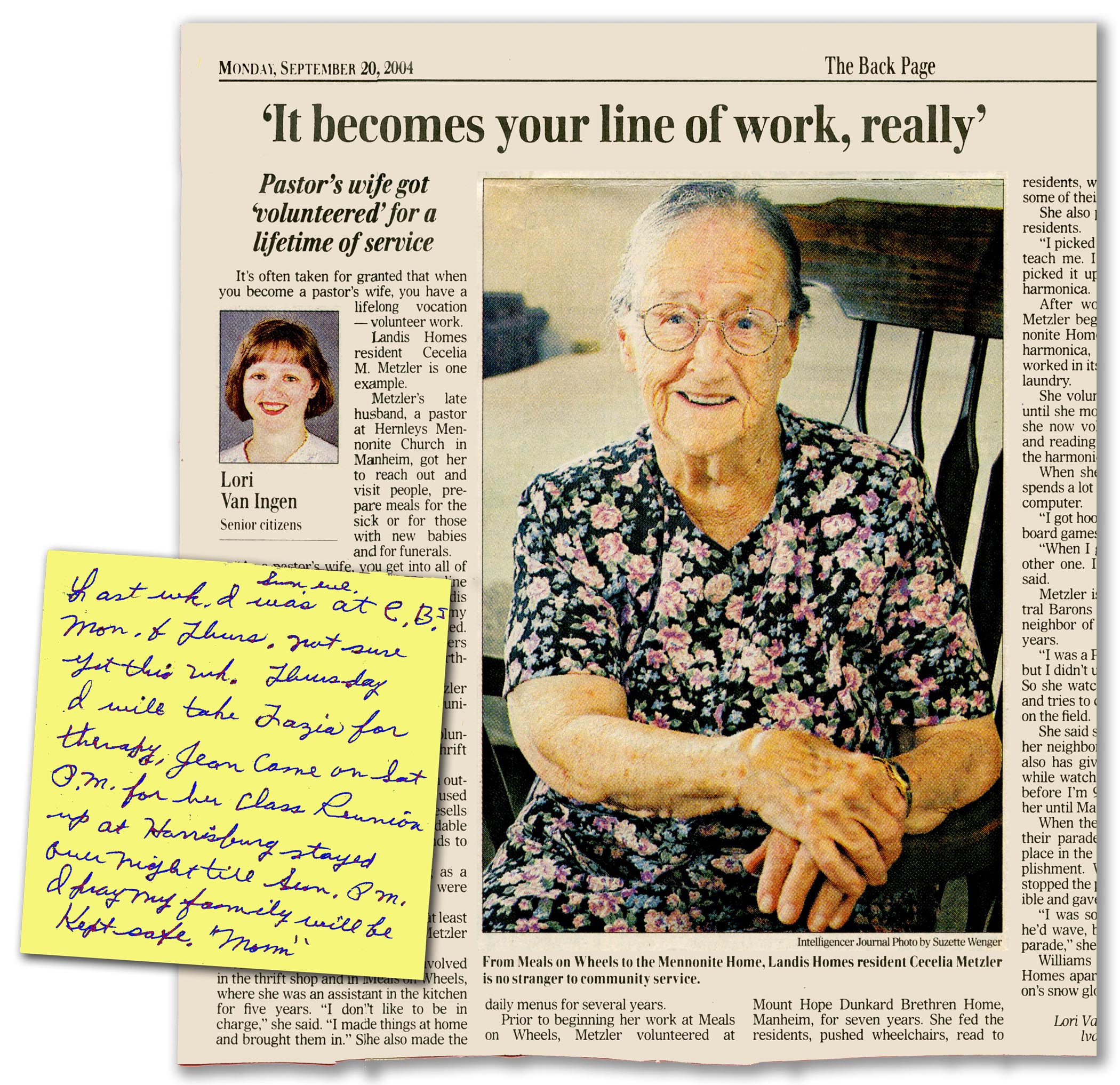
In an article that ran in the Lancaster Intelligencer Journal (Sept. 20, 2004) journalist Lori Van Ingen listed all the volunteer service that has spanned Aunt Cecilia’s life time. Mother sent this article to me with a sticky note referring to her own volunteering at C. B, Choice Books.

2004_0920_The Intelligence+note

Her Service

  • Pastor’s wife with my Uncle, Rev. Clyde Metzler at Hernley’s Mennonite Church near Manheim for 31 years (1943-1974) where visiting members and volunteering got into her blood, where it became “her line of work, really,” she says. She sent out 15-18 birthday cards monthly for many years.
  • Partner with her husband at Mount Joy Furniture Hospital, Mount Joy, PA
  • Volunteer at Nearly Nu Thrift Shop in Manheim, PA.
  • Kitchen Assistant for 5 years for Meals on Wheels where she created menus and was involved in daily food preparation.
  • Served at Mt. Hope Dunkard Brethren Home in Manheim for 7 years, feeding residents, pushing wheelchairs, writing letters for them, and doing some mending. She also played the harmonica for residents, a skill she learned from her dad.
  • Volunteer at The Mennonite Home for 8 years where she fed and read to the residents, worked in the thrift shop at the home and helped in the laundry.

Some Losses

The life of Cecilia Risser Metzler, volunteer extraordinaire, has not been a bed of roses unless one considers that roses have thorns. Her youngest daughter Eunice, engaged to be married to Robert Keener, died suddenly of complications from a congenital heart condition. A few years after Eunice’s death, Clyde and Cecilia drove from their home in Pennsylvania to Goshen, Indiana to attend Robert’s subsequent wedding to Rhoda, but not without misgivings. The Metzlers both had considered Bob a member of the family, so it felt awkward to attend his marriage to someone else, another reminder of the loss of their precious Eunice. In the course of time, however, Bob’s wife Rhoda learned about the death of Cecilia’s husband Clyde only 4 years after their daughter’s death and wanted to know more about Cecilia as a real person, and not just the mother of Eunice, her husband’s former fiancée.

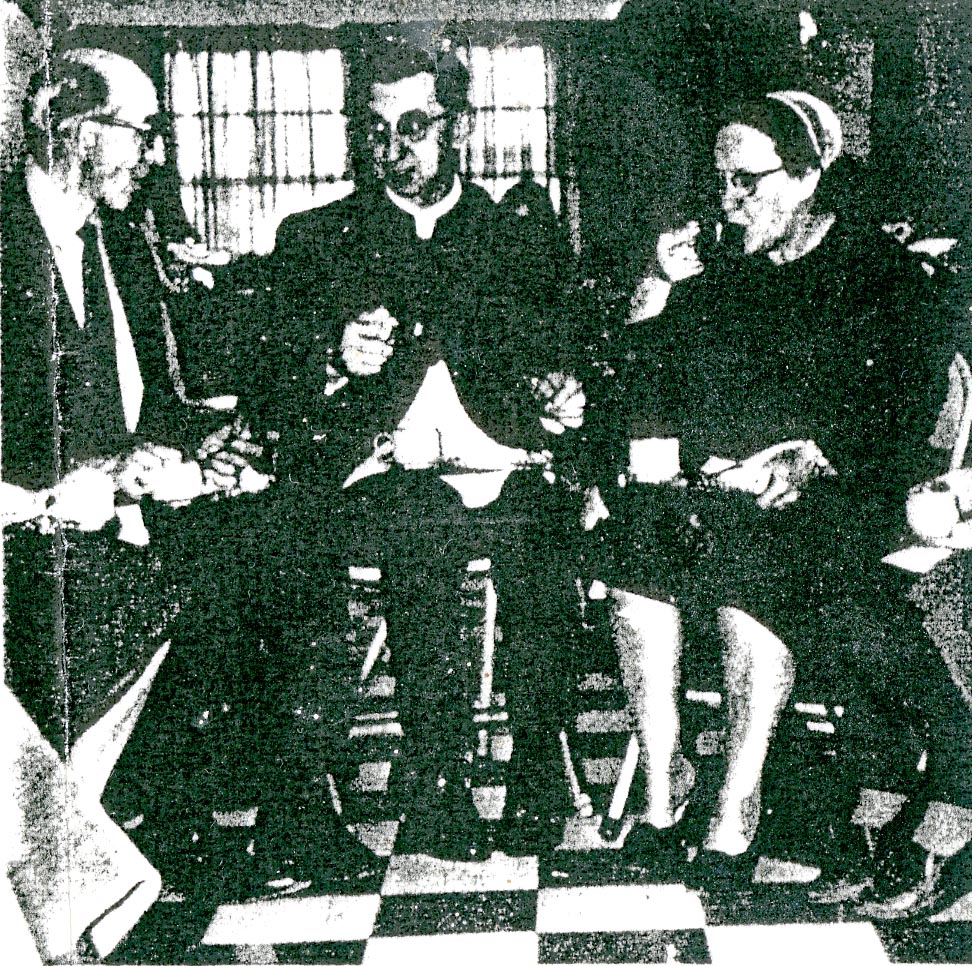
Uncle Clyde and Aunt Cecilia Metzler attending the wedding reception of Robert and Rhoda Keener in Goshen, Indiana - March 18, 1972
Uncle Clyde and Aunt Cecilia Metzler attending the wedding reception of Robert and Rhoda Keener in Goshen, Indiana – March 18, 1972. Illustration in the article “a friendship that might not have been” by Rhoda Keener in Christian Living magazine

Rhoda writes of Cecilia’s strong faith and of how she coped with two losses by organizing a group of seven other widows to do volunteer work, eat out together — even play Pitch and Putt Golf. This jolly group went to the mountains and seashore at Cape May regularly. One year Cecilia attended a Super Bowl game.

Game Girl / Cheerleader

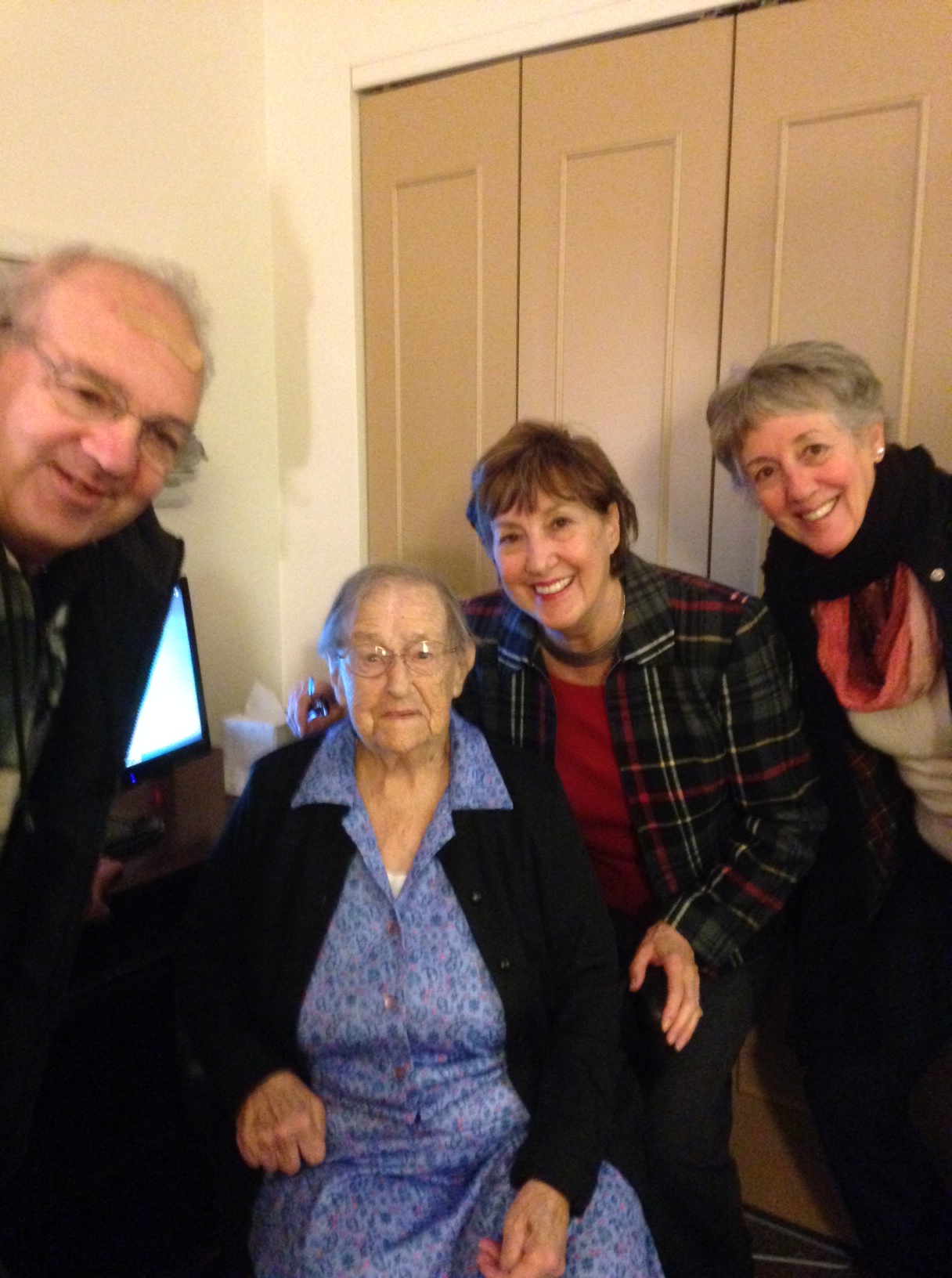
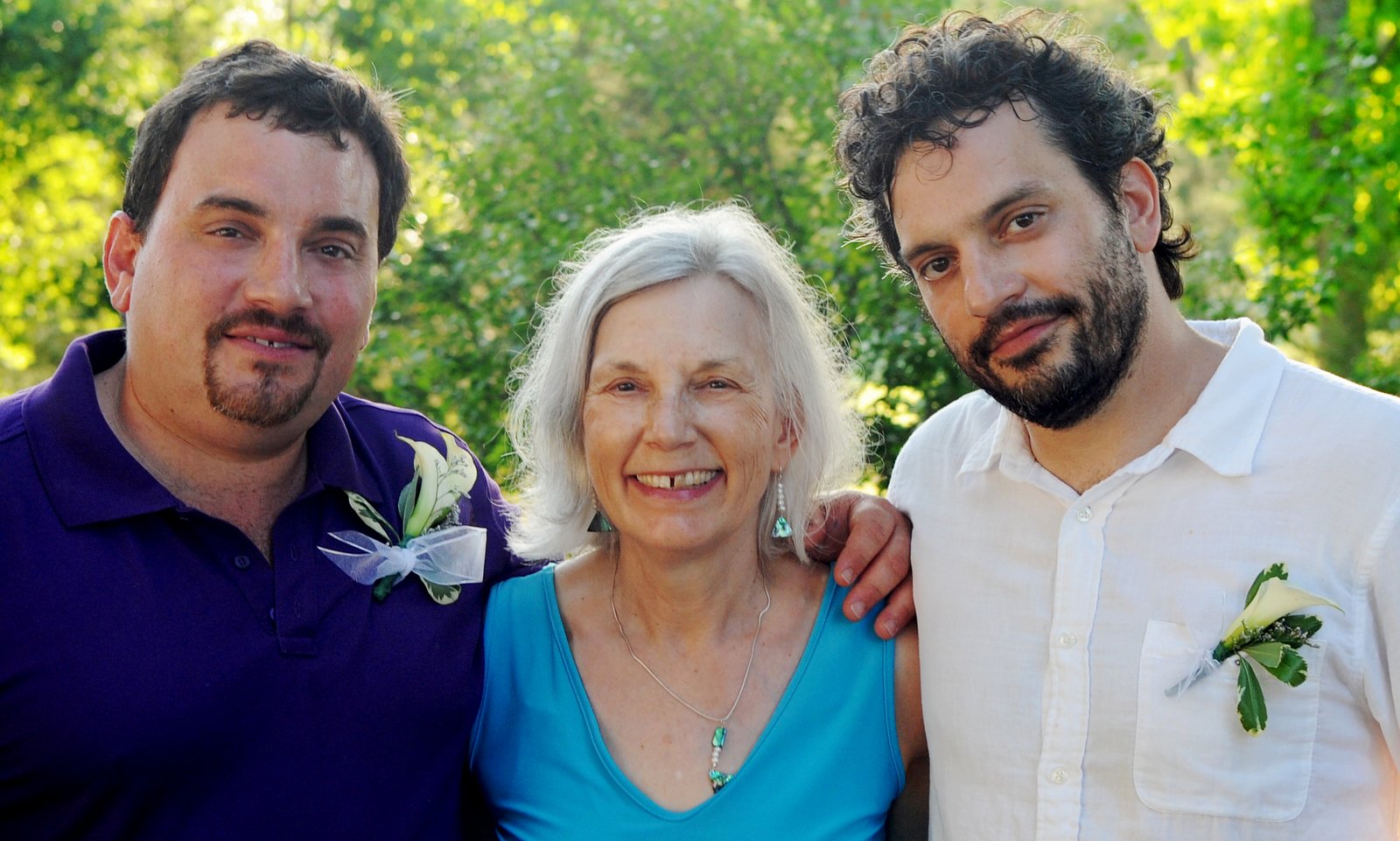
Did I mention Cecilia is a game girl too? Competitive and exuberant by nature, Cecilia loves playing board games, card games, dominoes – even computer card games. She paused long enough in her game of Tumbling Numbers on the computer to have her photo taken with my sister Jan, brother Mark and me last November at Landis Homes.

AuntCecilia

Besides a game girl, some would call Cecilia a cheer-leader too. However, she doesn’t need a short, twirly skirt or megaphone to root for the Phillies’ baseball team or the Philadelphia Eagles. She admits to not quite understanding football though her son Clair has given her some pointers. In her home town, she was also an avid Manheim Central Barons fan because she was a close neighbor of coach Mike Williams for 25 years. When the state champion Barons had their parade in the fall of 2003, Cecilia “took her place in the square to cheer their accomplishment. When Williams saw her, he stopped the parade, got out of his convertible and gave her a big hug.” She said:

I was so amazed, stunned. I thought he’d wave, but didn’t think he’d stop the parade!

Coach Williams also dropped by her Landis Homes apartment to autograph her Baron’s snow globe (quoted from Intelligencer Journal, cited above.)
Words of Wisdom

“What is your secret of a long and productive life, Aunt Cecilia?” we wonder. She has shared two bits of wisdom to overcoming the rough spots in life. Remember this, she says:

  1. Life is a struggle, and
  2. Life is a struggle

“Once we truly know that life is difficult and we truly understand and accept it, then we are no longer overwhelmed by it.”  (Reference: “A friendship that might not have been,” by Rhoda Keener in the Christian Living magazine)
Aunt Cecilia, I think there might be a parade of family and friends coming by your residence at Landis Homes today. Through God’s help, you have triumphed through the dark valleys and inspired us from the mountaintops of your rich experience. And we thank you!

Happy Birthday!

Daughters Erma and Orpha with Aunt Cecilia in 2012
Daughters Erma and Orpha with Aunt Cecilia at Oregon Dairy in 2012
Aunt Cecilia, grand-daughter Tana, daughter Dorcas, and great=grand-daughter __________
Four generations: Aunt Cecilia, grand-daughter Tana Hey, daughter Dorcas Martzall, and great grand-daughter Rosa Hey

Do you have elderly relatives that have hit the age ninety mark? Have any reached 100? What words of wisdom have they given to you?

Coming next: A Robbery, Sad Friday, and a Clump of Daffodils

The Nook: A Different Definition

Where did you study? Was your desk a dining room or kitchen table? The couch? A separate room? Did you listen to music as you studied? Or did you tune out the noise of the household when you crammed for a test or wrote a report? Louise DeSalvo author of The Art of Slow Writing, a book about writing as a meditative, patient process, muses about her own study nook in this excerpt:


My parents valued education, so when I was young, the only time my parents didn’t bother me was when I was doing homework. My father made me a triangular desk that fit into a space at the top of the stairs. . .


Sitting at my desk while I was working, nobody told me what to do. My father was pleased with my industry rather than angry with me. My mother wanted me to study because, no matter how much she needed my help, she wanted me to do well in school.  Sitting at my desk working helped me feel a sense of control in my chaotic household (188, 189).

Louise’s writing desk was triangular probably positioned in a corner. It strikes me that she may have faced the wall, not a window, a rather confining, even claustrophobic view.

As for me as a student at Elizabethtown High, when the noise downstairs around my spread at the dining room table overpowered my ability to concentrate, I’d flee upstairs to a study desk that looks like this, a bedside table with a brown goose-necked lamp. Mother had the table refinished years later and replaced my gooseneck lamp with this one: a faux milk-glass base with a lacy, fluted lampshade.

Study Desk 2

Here’s how I write about this “desk” as a flash of memory:

My books and notebooks are piled on the dining room table. I’m in ninth grade and when the house gets too noisy, I go upstairs to the bedroom I share with my sister Janice and study there. My study table is just a wooden bedside table. It’s tiny, with two of the four legs spaced closer together. There’s space for a little lamp on top and maybe a book or two on the shelf below – a piece of furniture not designed for serious study. There is no place to put my legs really, but I scrunch myself under the teeny table with my knees touching, a brown goose-necked lamp cocked so I can read, take notes on scored 3 x 5 index cards, or write in meticulous cursive in my notebook, one for each subject.


Image: eBay
eBay Image: mid-century goose-neck lamp

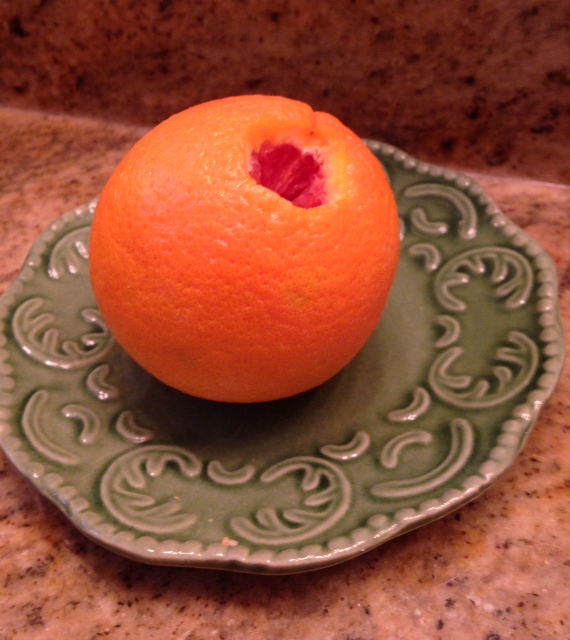
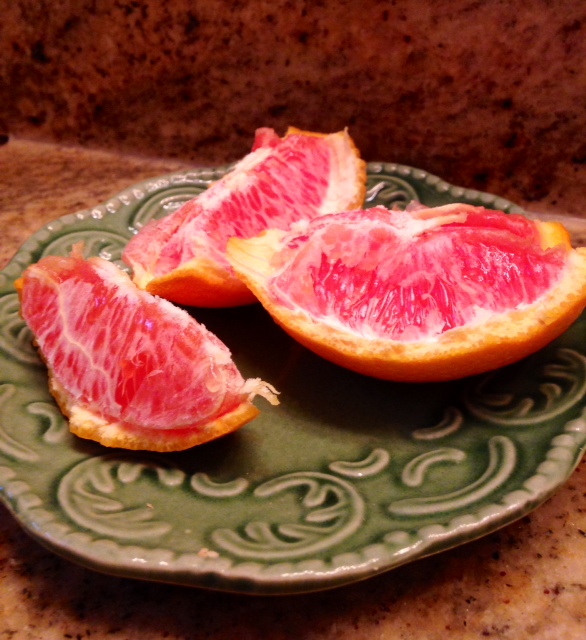
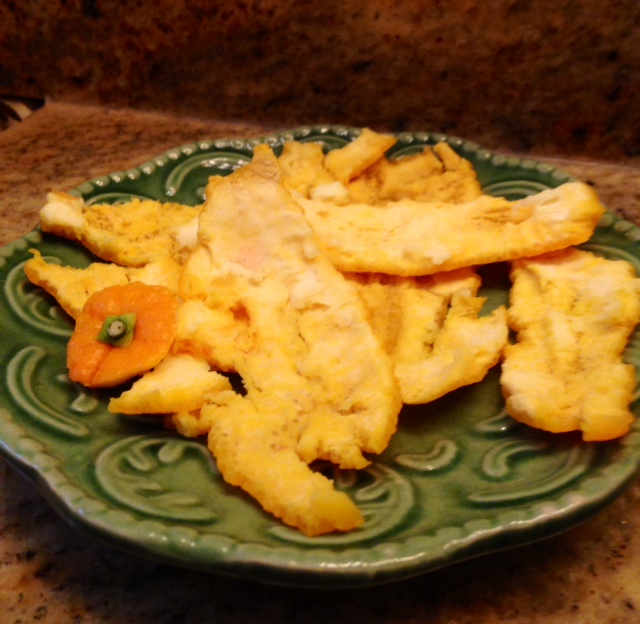
I consumed book chapters, algebraic formulas, and historical data. I also consumed apples, carrots, or oranges. Yes, as I studied, I nibbled. Like a dog worrying a bone, I ate apples to the core, sometimes discovering nothing but apple seeds in the palm of my hand along with the fibrous center hull, when I looked up from the page. Carrots were eaten down to the nubs. And oranges too. First, I sucked out some of the juice, then broke the orange into five or six sections, eating them one by one. Finally, I consumed the white inner rind too, one incisor-dig at a time, only the outer skin remaining.

Orange WholeOrange SectionsOrange Bitten RindOrange Peel


Study – an all-consuming proposition  . . .  

Some books are to be tasted, others to be swallowed, and some few to be chewed and digested.

        ~ Sir Francis Bacon  “Of Studies”


Did you study at home, at the library? Did you have chaos or quiet? Maybe you had a photographic memory and didn’t have to study much.

Were you a nibbler too? Inquiring minds want to know.


Coming next: Purple Passages with a Pop of Pink, March 2015 edition

Happy St. Patrick’s Day from Pollee Ann and Mr. Zip

Did you ever have a Pollyanna? A secret pal back in the days when mail traveled only in paper envelopes with postage?

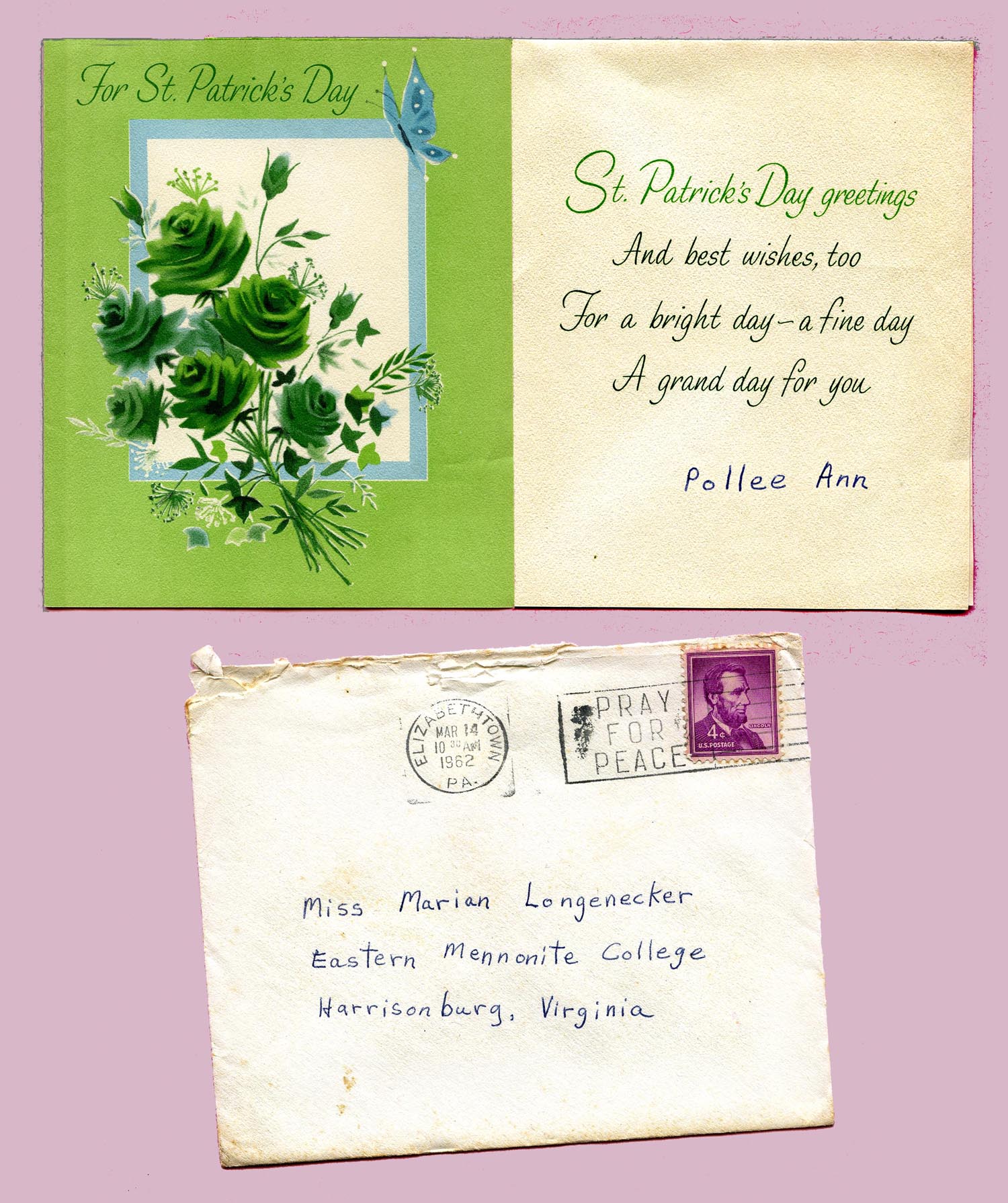
As I was going through one of my Boxes under the Bed, I found this quaint gem sent to me at college in celebration of St. Patrick’s Day, March 17. The charming card is signed Pollee Ann, obviously a reference to the main character in the children’s book series Pollyanna by Eleanor H. Porter, who finds the glad in everything. Though she was tragically orphaned and sent to live in the home of her gruff Aunt Polly, 11-year-old Pollyanna has come to represent eternal optimism as she spreads cheer, sometimes secretly, all around town.

1962_0314_St Patrick Card

My secret pal spells her name “Pollee Ann,” an interesting sobriquet for Pollyanna. And the card reached me in spite of the fact there is no street address or zip code, not introduced into the postal system until 1963. The term ZIP, an acronym for Zone Improvement Plan, was chosen to suggest that “mail travels more efficiently, and therefore more quickly (zipping along), when senders use the code in the postal address.”

Image: Wikipedia
Image: Wikipedia

Have a Zippy St. Patrick’s Day!

Killarney Shamrock_modified_02

Some celebrate St. Patrick’s Day by baking/eating cupcakes or cookies with green icing or wearing a shamrock pin. How do you celebrate St. Patrick’s Day?

Is there Irish in your heritage?

Coming next: The Nook, a Different Definition

Teaser or Cuppa Coffee?

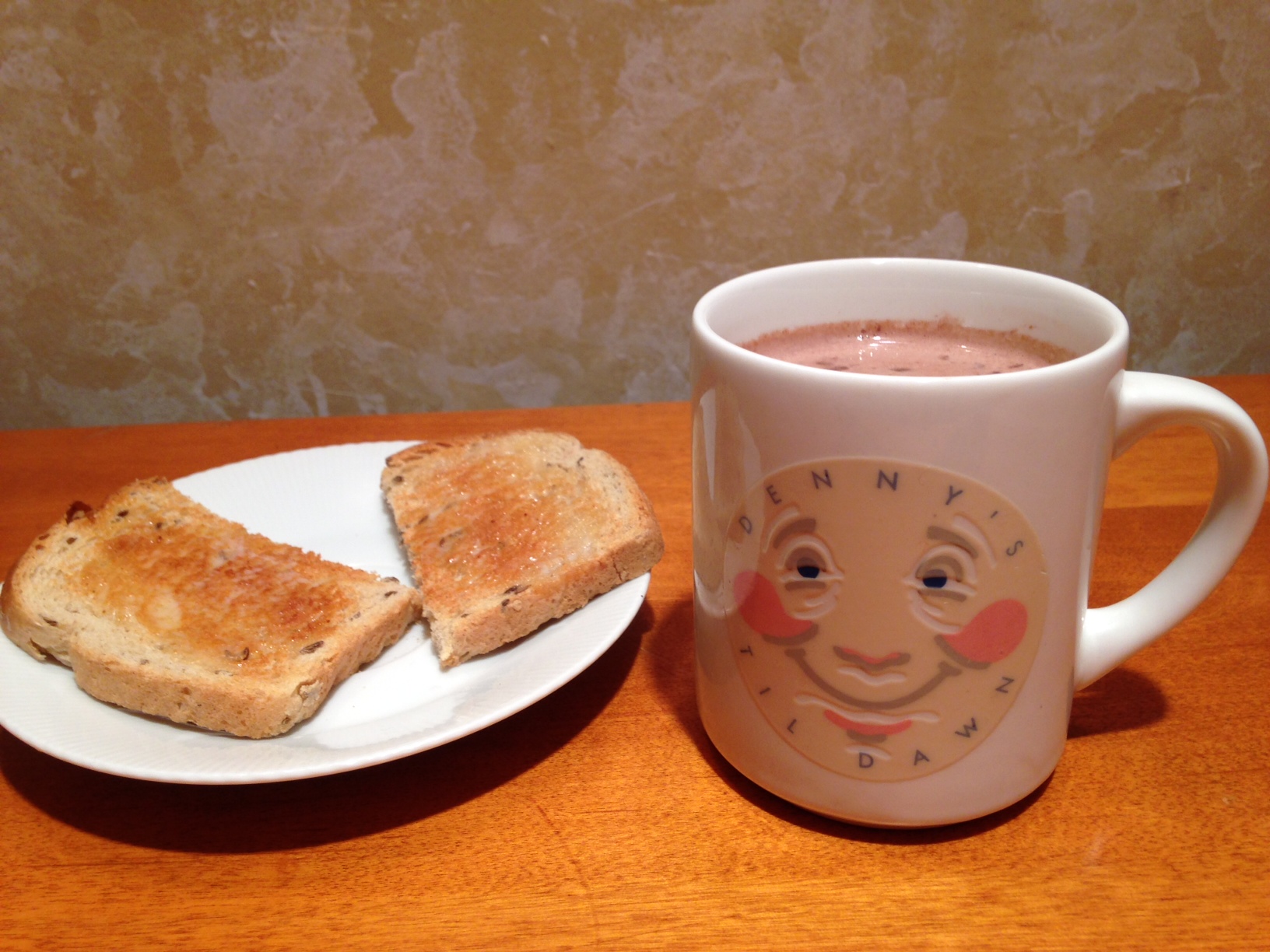
What is your favorite warm beverage? It’s February, and by now you have tweaked the art of finding comfort in a cup. Is it tea, coffee or a hot toddy?

Maybe it’s hot chocolate!

CocoaToast


In promoting the Fifth Season of Downton Abbey, PBS used tea to tantalize. Twitter was chirping with the hashtag #BIGsip and illustrations of how to party like the British:

Screen Shot 2015-01-17 at 3.53.39 PMScreen Shot 2015-01-17 at 3.55.13 PM

The tea at these fancy gatherings was probably brewed through ceramic or metal sieves. I doubt there was a tea bag in sight!

BrewTea

Once I was invited to a tea party at my professor’s home. There was a bold disclaimer on the invitation: Tea will NOT be served. Instead, there were other fanciful beverages, none of which was served warm. Twice I invited faculty to my home, and we actually had flavored tea – and coffee.

tea labels

So, back to the question: What is your favorite warm beverage (and/or treat) this time of year? Spread some sugar, honey, or . . . .

CoffeeFriend

A woman is like a tea bag ~ you can’t tell how strong she is until you put her in hot water.   Eleanor Roosevelt

Bonus: RANDOM ACTS OF COFFEE! Coffee drinker pays it forward ordering coffee for the next 500 (gasp!) customers at Canadian coffee shop. Read all about it here!

Acquainted with Grief: Author Elaine Mansfield Speaks

January 28, 2014 – It is six months to the day since Mother passed away. I feel melancholy now. Maybe the cold weather has something to do with it, but more and more I miss the warmth of our Saturday morning long-distance phone calls and sitting around her dining room table, the tingly warmth of homemade vegetable soup in my belly.

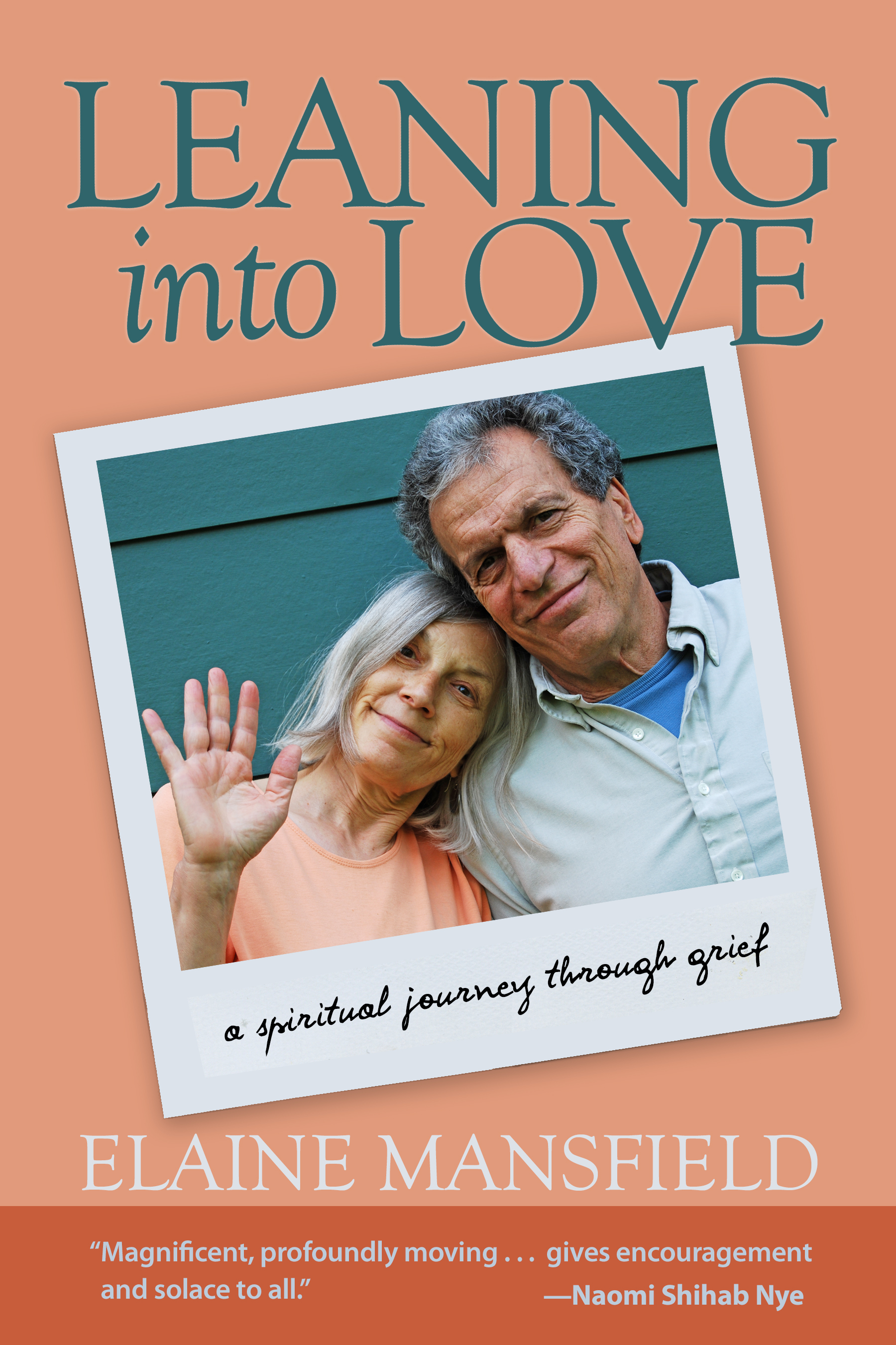
Elaine Mansfield too has experienced loss – of her mother and of her husband both in a 13-month time span. She eloquently records the loss of her husband in a memoir entitled Leaning into Love: A Spiritual Journey through Grief (October 2014)

LeaningIntoLove cover hi res

Elaine and I definitely differ in our world view and philosophy of life, hers based on Jungian psychology and meditation, and mine with a distinctively Christian perspective. Yet pain is pain, and we share the intimate, human experience of grief.

Here is our conversation about Elaine’s unique journey:

MB: How did your mother’s passing in 2007 affect you and Vic?

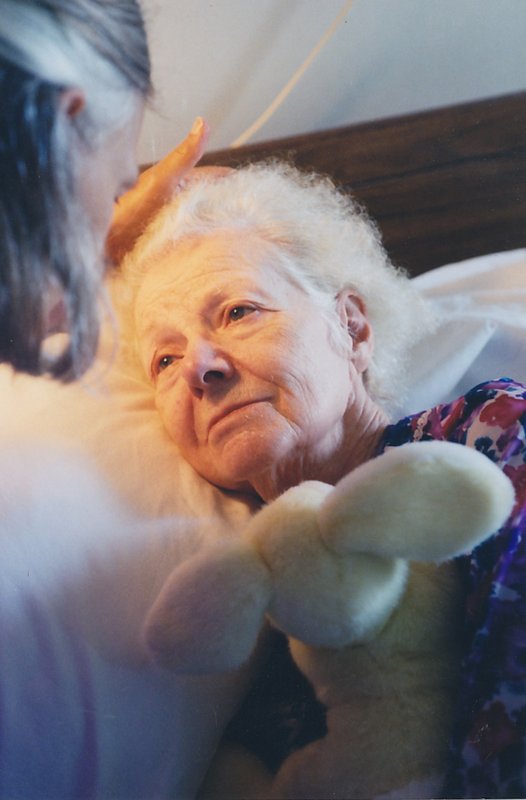
EM: My mom had Alzheimer’s Disease for twelve years. Her body was curled in a fetal position and her eyes were closed. She had been unresponsive for years. She died quietly during a lull in Vic’s cancer treatment, so grieving for my mother merged with anticipatory grief for Vic.

Iva_Elaine 2004


MB: Why did you write Leaning into Love: A Spiritual Journey Through Grief?

EM: At first, I wrote to digest and understand what had happened. When times are rough, I pay attention to life’s lessons. Writing was my way of doing that. During Vic’s illness, I kept journals so I could remember every detail during an emotional time. Five years after his death, my experiences became a book to help others deal with love and loss. I also hoped to create an engaging memoir that would interest any reader.


MB: What is the main theme of your book?

EM: The book is about a strong marriage and the initiation of losing a trusted partner: dissolution of the old order, then a period of confusion and despair, then a slow return to new life and possibility.


Vic & Elaine 1968


MB: In the book you promise your dying husband of 42 years, “I’ll find a way to be all right.”  What lies behind this statement?

EM: Vic and I shared every joy, sorrow, and dream. We’d had an intimate relationship since I met him when I was 21. He was concerned about leaving me and concerned about my grief. Even while I did all I could to help him live, I felt determined to find a way to make life work after his death. He was relieved when I said so. Of course, I had no idea how challenging that would be.


MB: Just like in your blog posts, you use poetic language in your book to describe bereavement and your slow recovery. For example, you describe a group of dolphins as “luminous revelations leaping from the great unconscious sea.” What other descriptive lines from the book are you especially proud of?

EM: “Our first kisses taste of tears and the knowledge that our time together is finite.”

“Mostly he sleeps, but when he’s awake, he whispers words of sweet gratitude.”

“Despite my better judgment, hope floats in, ethereal and transient as a feather.”


MB: What will readers learn from the book? What is the take-away?

EM: Everyone loses things they love—people, jobs, homes, health, dreams. It’s natural to grieve and long for what we cherish. I’ve learned that facing our losses and sorrows makes us more realistic and open-hearted human beings. We understand what matters in life and see that everyone suffers. In this way, sorrow leads us to kindness.


MB: Your book attracts readers who have dealt with or are now dealing with loss. What is your best advice to them?

EM: Experiment and find what comforts you: solitude, friends, nature, music, therapy. The smallest rituals helped me. I left flowers at the gravesite and said prayers there. Writing brought me daily comfort.

Watch for small signs of joy and hope. A bird chirping. The first spring flower. A child’s laughter. Grief is part of life. Give yourself time to feel what you feel. Open to grief and let it open your heart to love.

Elaine with her sons David and Anthony


Her biography

Elaine Mansfield’s book Leaning into Love: A Spiritual Journey through Grief was published by Larson Publications (October 2014). Elaine writes from a spiritual perspective that reflects over forty years as a student of philosophy, Buddhism, Jungian psychology, mythology, and meditation. Elaine gave a TEDx talk called “Good Grief! What I Learned from Loss” on November 8, 2014 with TEDx ChemungRiver at Corning Museum of Glass in Corning, NY.

After a career as a health counselor and writer, Elaine’s work has focused on bereavement and loss since her husband’s death in 2008. Elaine facilitates bereavement support groups at Hospicare and Palliative Care Services in Ithaca, NY and writes for the Hospicare newsletter and website. She also writes a weekly blog about the adventures and lessons of life and loss, leads workshops, and lectures on bereavement topics. Her articles have been published in The Healing Muse, Open to Hope, Shambhala Sunspace, KirstyTV, Caring.com, Alzheimers.net, GriefHealing, and elephantjournal.

About Leaning into Love:

“Reading this beautiful memoir of love and loss and triumph felt to me like a sacred journey into the very heart and soul of the courageous woman who writes it.” Marty Tousley of Grief Healing.

“Not only a touching and courageous memoir about love, illness, death and grief, Elaine Mansfield’s Leaning into Love is a manual for healing that offers us the emotional and spiritual tools needed to grow and even flourish through Life’s deepest crises.” Dale Borglum, Living/Dying Project

Buy the book

See her website

Hear her TEDx talk


They say that “Time assuages” –
Time never did assuage –
An actual suffering strengthens
As Sinews do, with Age –

 Emily Dickinson

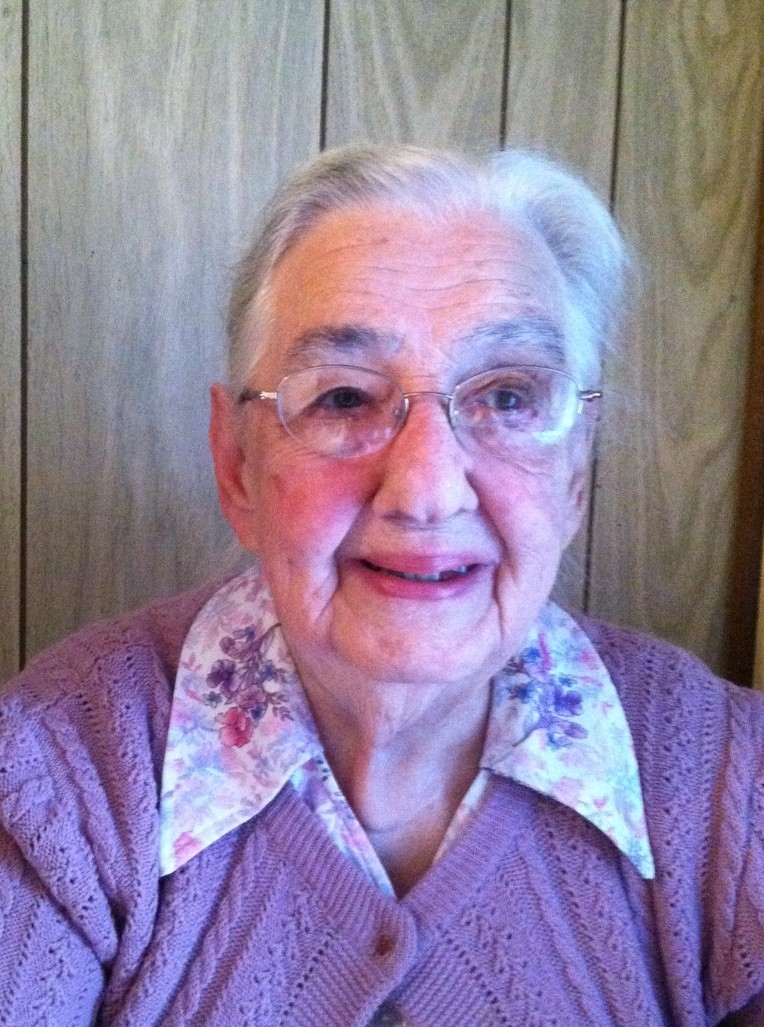
Mother Ruth Metzler Longenecker    1918 - 2014
Mother Ruth Metzler Longenecker  1918 – 2014

How about you? How have you dealt with grief over the loss of a loved one, mother, father, life partner, close relative — a pet, even?

Moments of Discovery # 4: A Flash Bulb and a Doll

A snapshot of a baby boy dressed as a girl and an old flash bulb. Those are some of the items we find clearing out Mother’s house. Last October my sisters and I began the arduous task of sorting, saving, or recycling the accumulated store of her possessions having lived in the same house for over 73 years. You can read about it here.

BoxesPacked

Today’s post features snapshots, both photos and artifacts, from both Mother and Daddy with a surprising find at the end.

MOTHER: Some of what I found from Mother could be filed into 3 categories of nurturing:

Feed

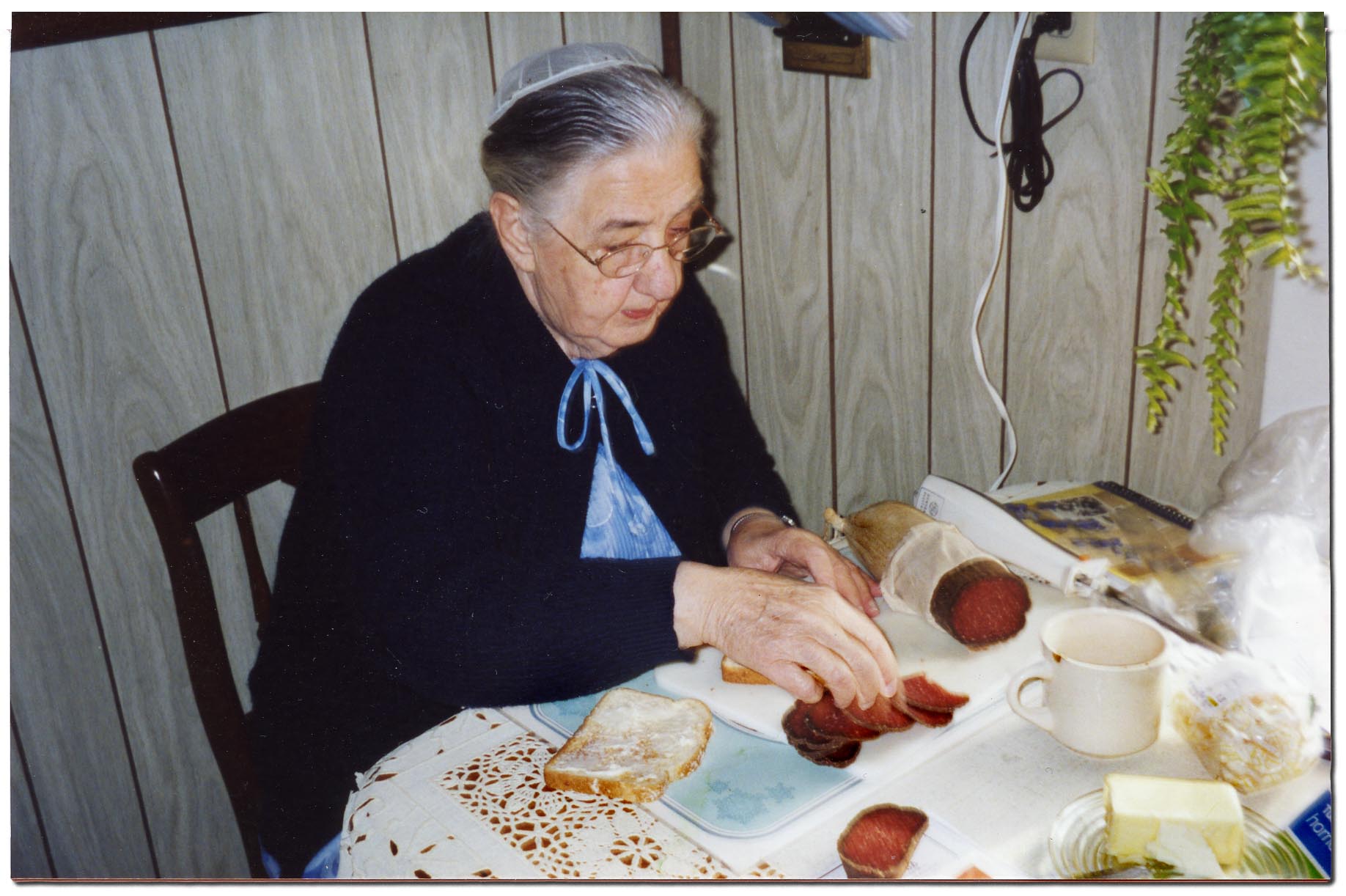
Our metal lunch pails carried many a bologna sandwich, usually Baum’s Bologna from their shop north of E-town. After Mother pulled back the burlap, she sliced thick rounds for sandwiches on buttered bread – always butter . . .

Mother L_balogna sandwiches

Read

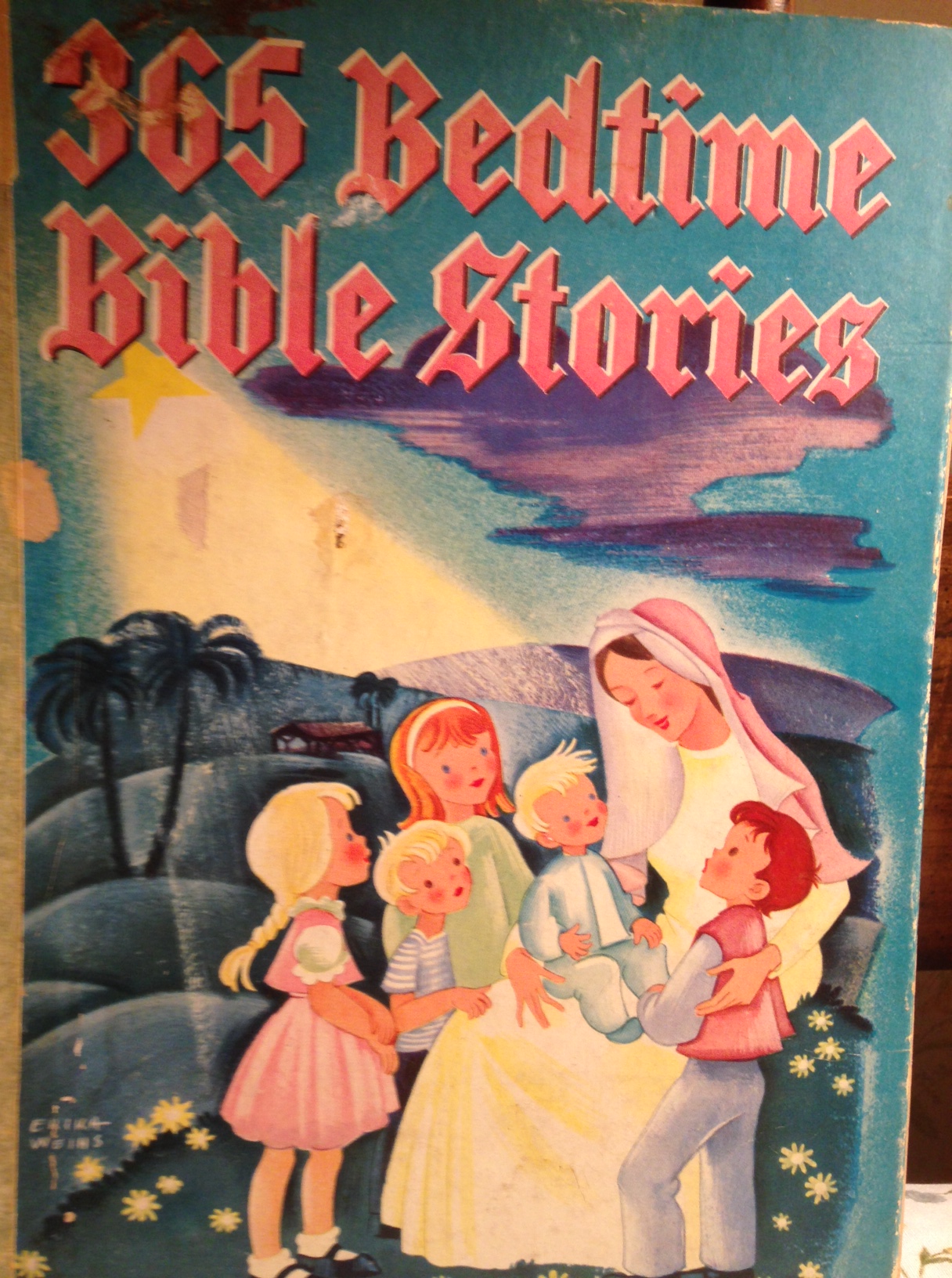
Every picture, every story seems familiar in this Bible Story Book with pages, crackly brown with age. Sniffing into the spine, I roll back in time to the little girl on her lap. I loved the art work then. Now I love its charm even more. Did Daddy read these stories to me too? Maybe so, but I can’t remember.

BedtimeCoverBedtime Preface

Remember

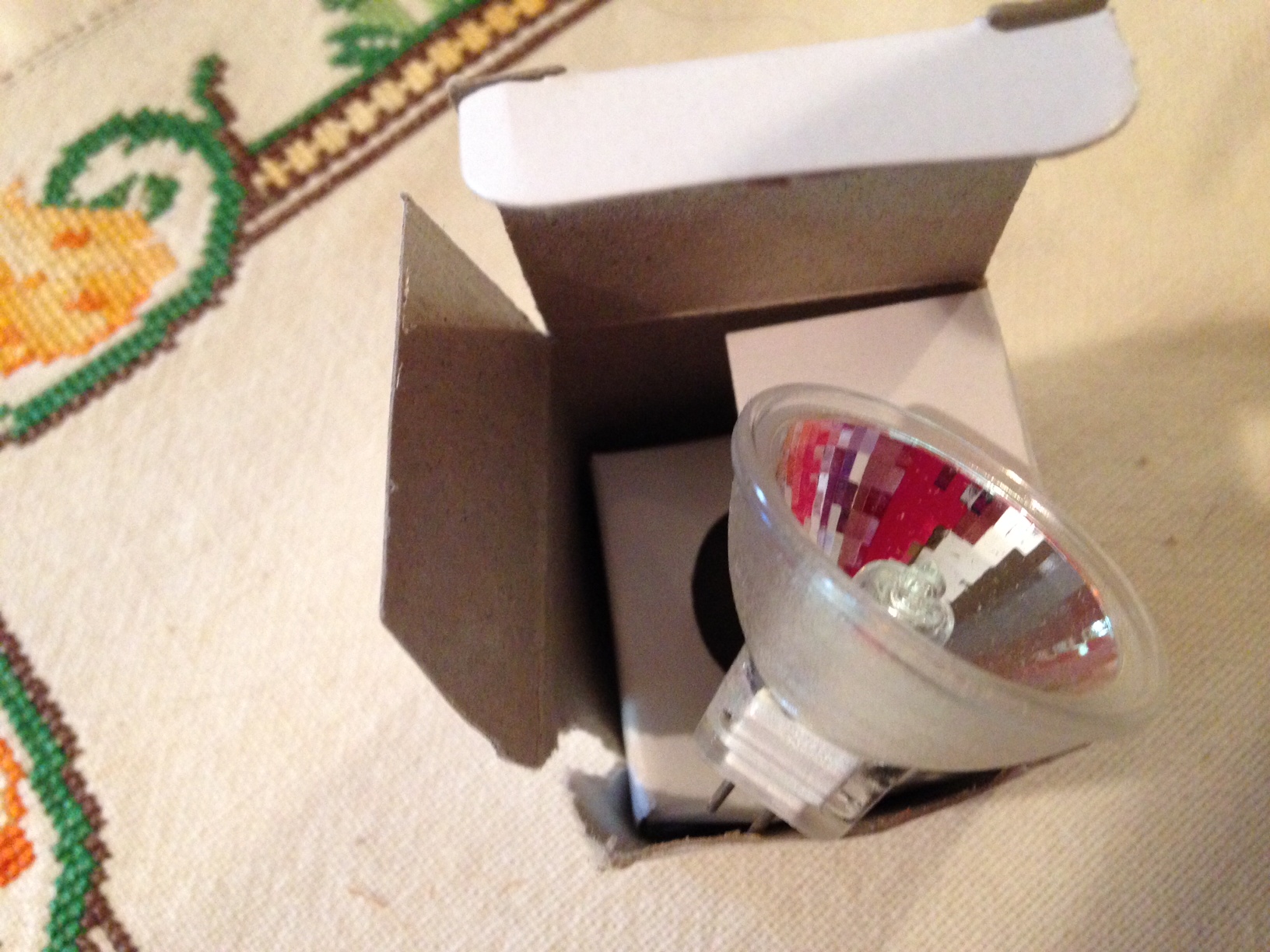
Cameras freeze time, preserving memories. Mother didn’t write in a journal, but she consistently recorded our family’s story over time. The old box camera is long gone, but here is a “flash” of memory possibly from her last camera . . .

FlashBulb

DADDY  Some of what I found representing my father was surprising:

Although I have several photos of Daddy holding me as a baby, my father was a man’s man: a tractor-driving, motor-fixing, field-plowing, deer-hunting guy. He even hammered on the piano keys. His work clothes were of black moleskin cloth, matching the grease he was in close contact with at the shop. I am certain he never wore pink. Yet here he is posed for the camera in a dress, flanked by his parents, Henry and Fannie Longenecker, my Victorian grandma not yet attired in Mennonite garb that would characterize the rest of her life. Daddy’s dress is not a christening outfit. There was no christening among Mennonites. I suspect that babies of both genders wore dresses to make diaper changing easier.

Henry and Fannie Longenecker with son Ray

Needlework

Our scavenging took us to the attic chest filled with treasured quilts. My sister Jean and Mother tagged each one a few years ago, so there would be no doubt as to their provenance. Apparently, Daddy drew his needle through a white quilt, stitching animals in red. I see a camel, sheep, chicken, pig, duck, an elephant. Even an ostrich.

Here is just a teaser. (Look for Daddy’s full quilt on a later post!)

Quilt with animal stitching by my father, Ray M. Longenecker

Nickname

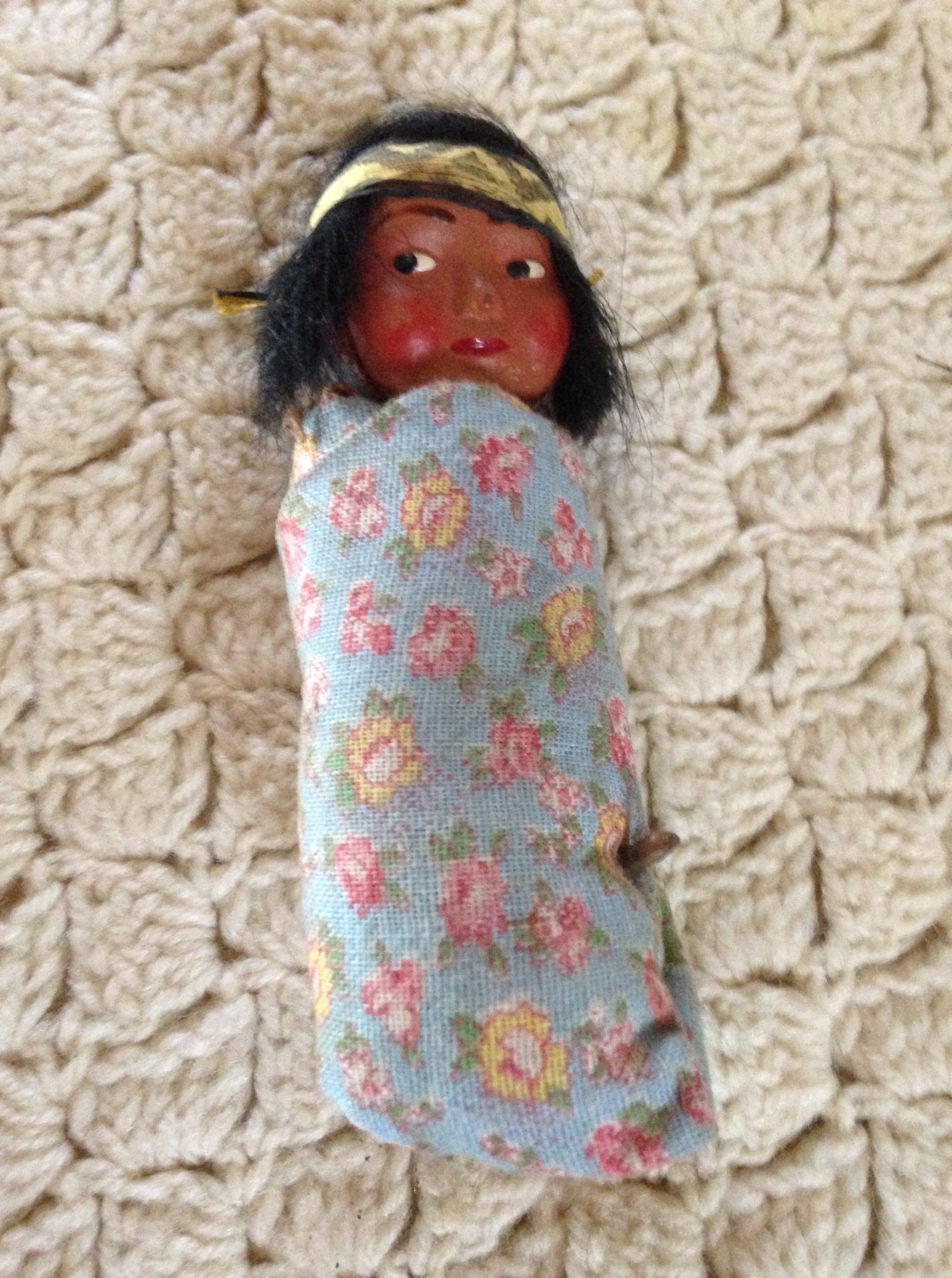
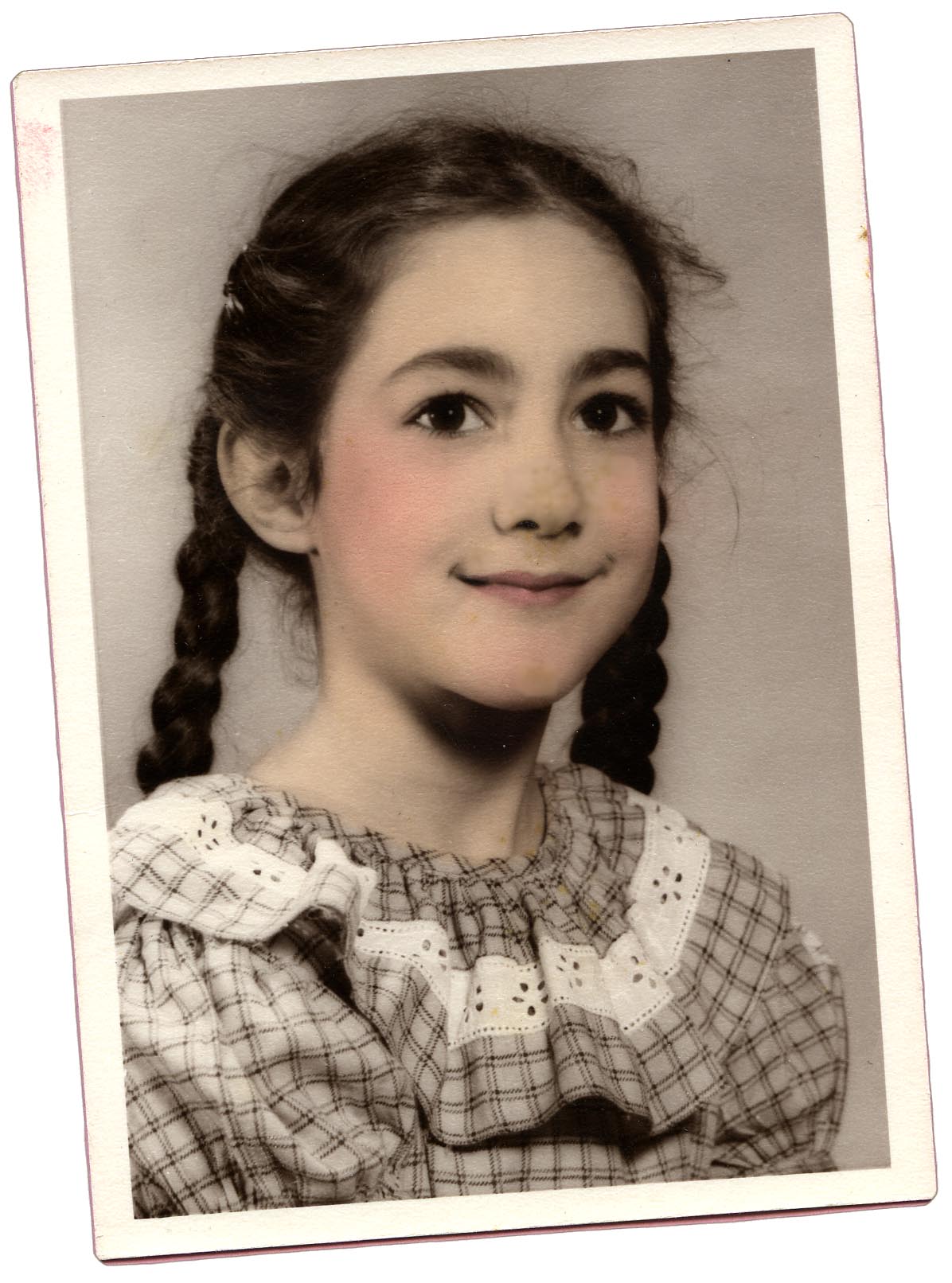
Daddy’s nickname for me was Pocahontas, not so much because I looked native American, but probably because of my thick, dark braids and big eyes. When I found this doll, I decided it shouldn’t be given away, sold, or recycled. It now sits on the dresser in our bedroom with “strubbly” hair, not braided!

Pocahontas

Marian w braids_K-

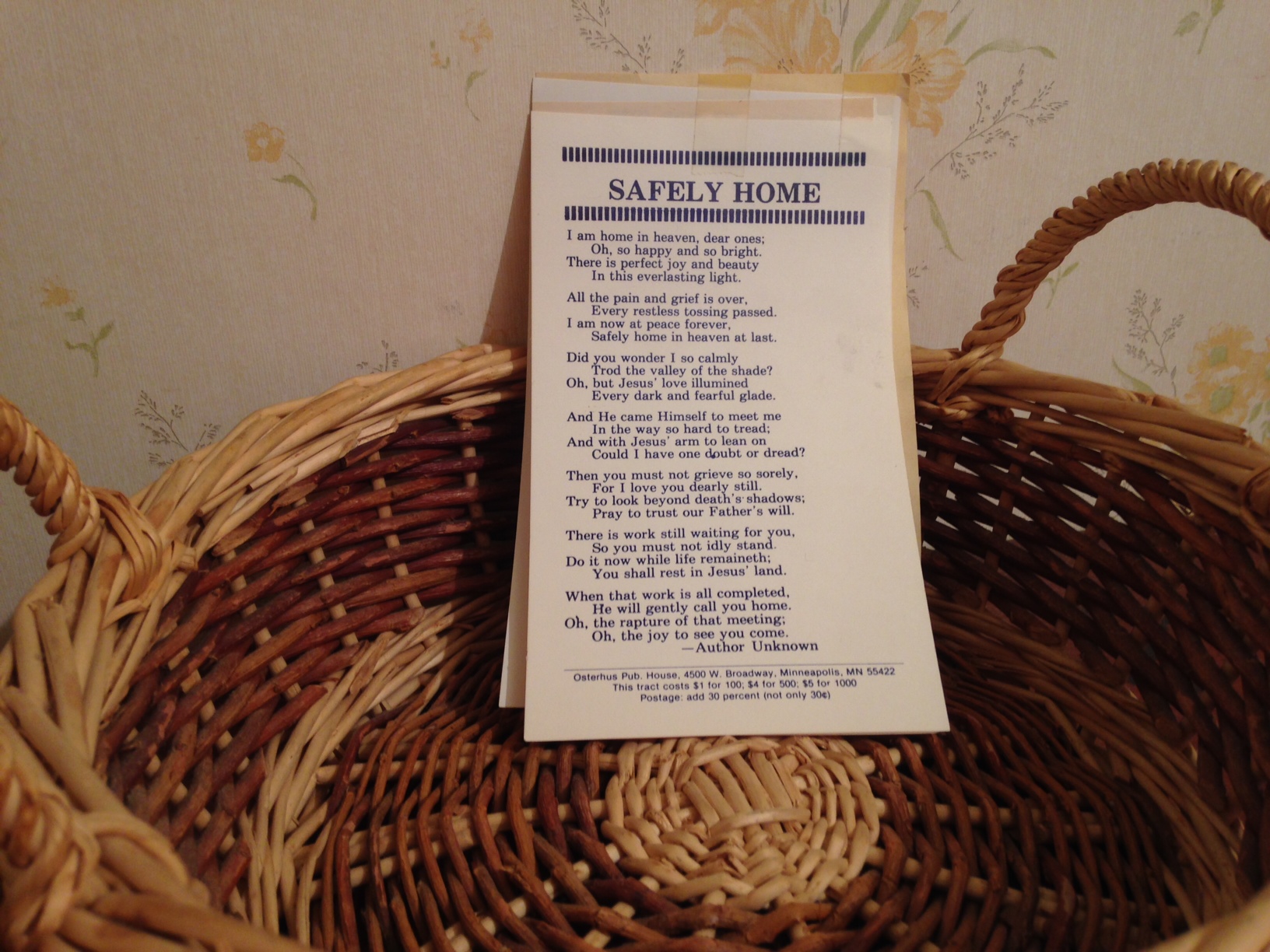
Final Note: A Curious Find   On our first visit to Mother’s house in October after the funeral, we saw a wicker basket on top of a hallway chest with a poem entitled “Safely Home,” something we had never noticed before. Were we blind to it earlier? Having a premonition of what was to come, did Mother put it there for us?

SafelyHomeBasket

I am home in heaven, dear ones; / Oh, so happy and so bright. / There is perfect joy and beauty / In this everlasting light . . . .

 (Anonymous, Osterhus Publishing House)  . . . a mute but eloquent affirmation


Your turn: Are you holding on to something you treasure from a loved one? A photograph? A small gift?